Visual abstracts
New randomized trials and meta-analyses from leading journals at a glance: who was studied, what was compared, and what was found. Every paper is free to read in full.
All specialtiesCardiology 4753Oncology 4008Gastroenterology & Hepatology 1888Infectious Disease 3720Neurology 1843Psychiatry & Mental Health 2207Pulmonology 2092Critical Care 1331Endocrinology & Diabetes 2481Pediatrics 2872Surgery 2485Orthopedics & Sports Medicine 896Neurosurgery 516Cardiothoracic & Vascular Surgery 646Plastic & Reconstructive Surgery 584Nephrology 1073Rheumatology 799Hematology 1081Dermatology 611Ophthalmology 527Obstetrics & Gynecology 1646Public & Global Health 1010Radiology & Imaging 629Anesthesiology 954Urology 746ENT (Otolaryngology) 494Emergency Medicine 494Allergy & Immunology 304Geriatrics 955Family Medicine & Primary Care 549Medical Genetics & Genomics 655Pathology & Laboratory Medicine 154Physical Medicine & Rehabilitation 734Palliative Care 432Nutrition 1527Digital Health & AI 2135General Medicine 312
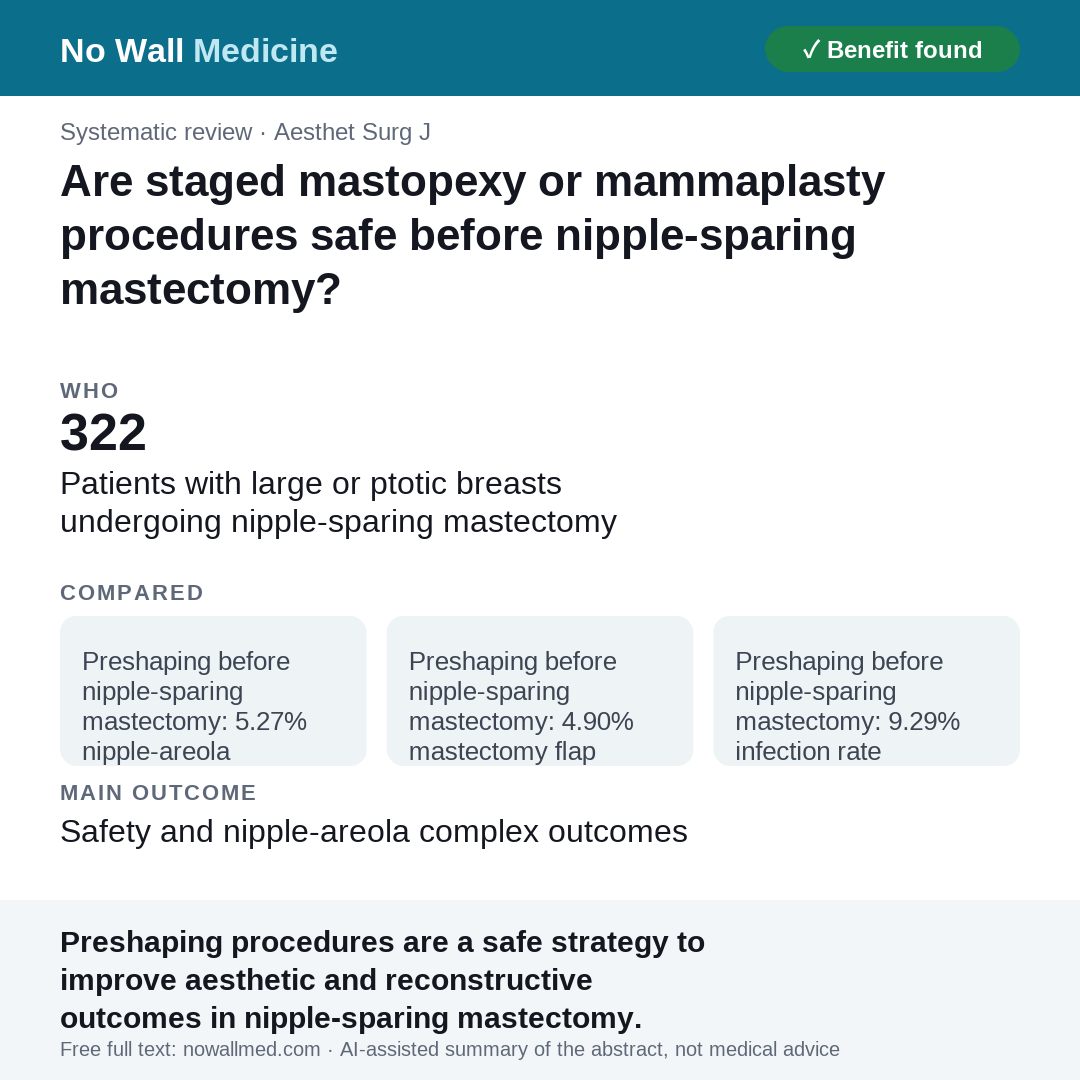
Staged Mastopexy or Mammaplasty Prior to Nipple-Sparing Mastectomy: A Systematic Review of Safety and Nipple-Areola Complex Outcomes
Systematic reviewBenefit found
Are staged mastopexy or mammaplasty procedures safe before nipple-sparing mastectomy?
Who
322
Patients with large or ptotic breasts undergoing nipple-sparing mastectomy
Compared
Preshaping before nipple-sparing mastectomy: 5.27% nipple-areola complex complications
Preshaping before nipple-sparing mastectomy: 4.90% mastectomy flap complications
Preshaping before nipple-sparing mastectomy: 9.29% infection rate
Main outcome
Safety and nipple-areola complex outcomes
Bottom line: Preshaping procedures are a safe strategy to improve aesthetic and reconstructive outcomes in nipple-sparing mastectomy.
Aesthet Surg J · 2025-04-09Download image
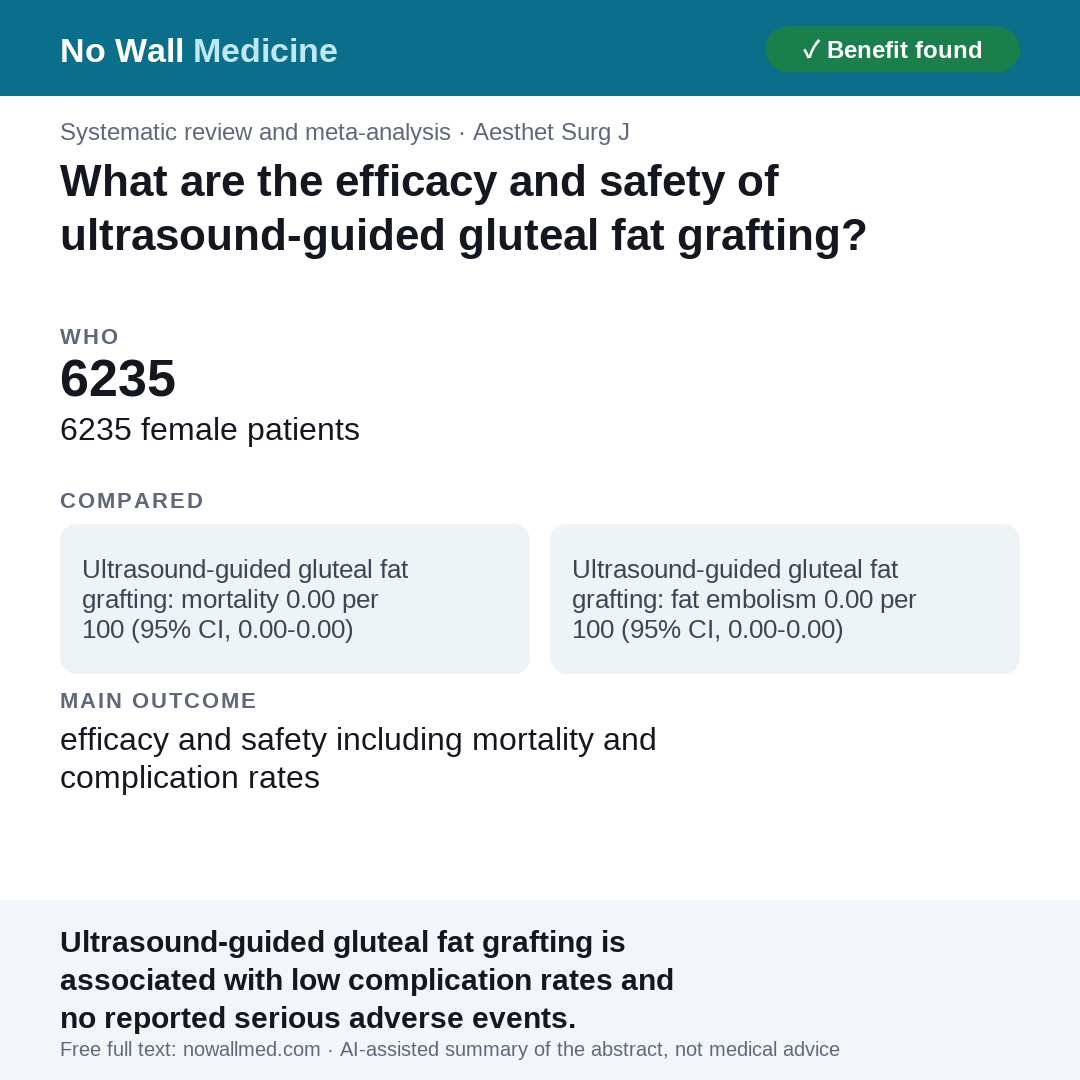
Ultrasound-Guided Gluteal Fat Grafting: What is the Evidence? A Systematic Review and Meta-Analysis
Systematic review and meta-analysisBenefit found
What are the efficacy and safety of ultrasound-guided gluteal fat grafting?
Who
6235
6235 female patients
Compared
Ultrasound-guided gluteal fat grafting: mortality 0.00 per 100 (95% CI, 0.00-0.00)
Ultrasound-guided gluteal fat grafting: fat embolism 0.00 per 100 (95% CI, 0.00-0.00)
Main outcome
efficacy and safety including mortality and complication rates
Bottom line: Ultrasound-guided gluteal fat grafting is associated with low complication rates and no reported serious adverse events.
Aesthet Surg J · 2025-04-09Download image
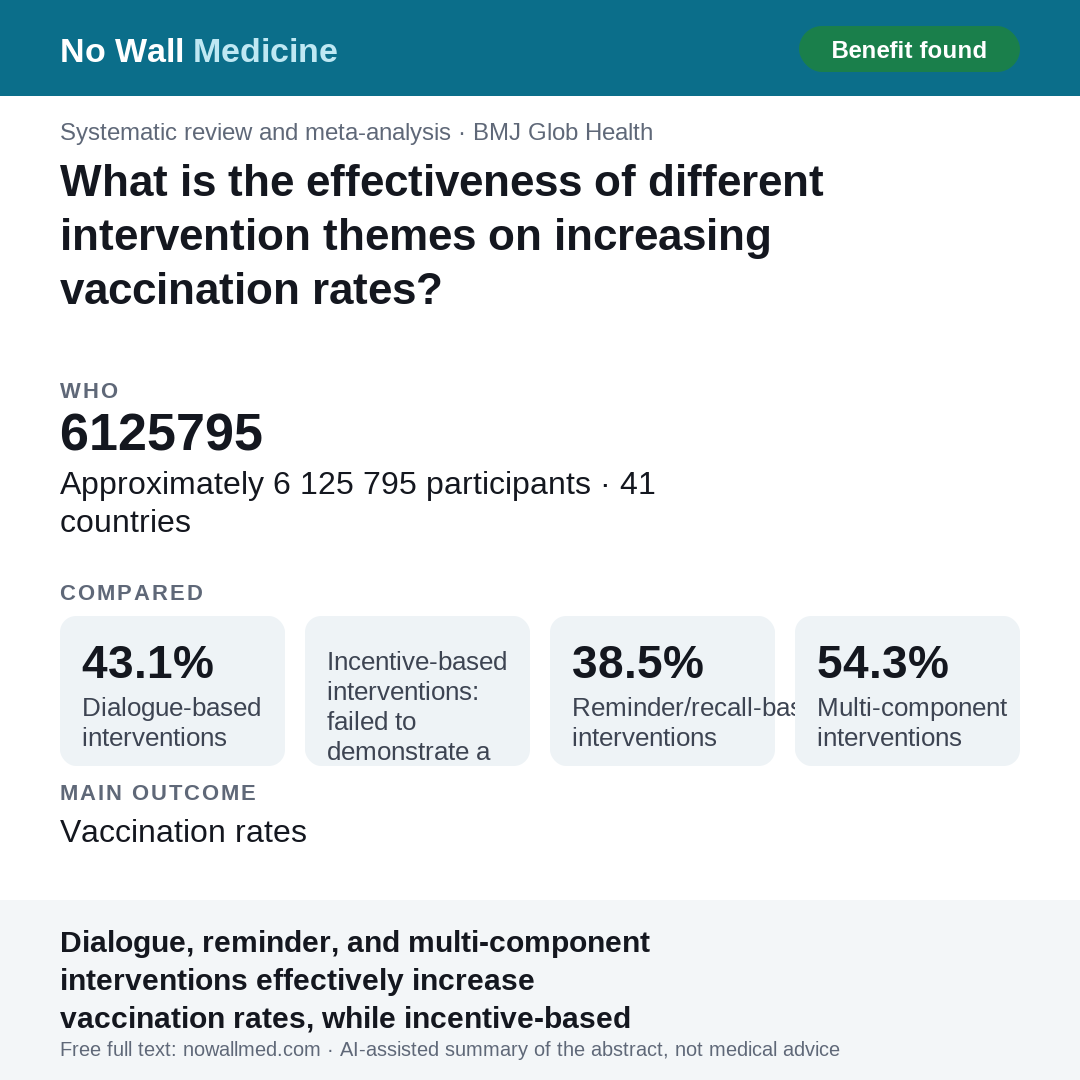
Estimating the effects of interventions on increasing vaccination: systematic review and meta-analysis
Systematic review and meta-analysisBenefit found
What is the effectiveness of different intervention themes on increasing vaccination rates?
Who
6125795
Approximately 6 125 795 participants · 41 countries
Compared
43.1%Dialogue-based interventions (95% CI: 29.8 to 57.9%)
Incentive-based interventions: failed to demonstrate a significant effect
38.5%Reminder/recall-based interventions (95% CI: 28.9 to 48.9%)
54.3%Multi-component interventions (95% CI: 40.5 to 69.6%)
Main outcome
Vaccination rates
Bottom line: Dialogue, reminder, and multi-component interventions effectively increase vaccination rates, while incentive-based interventions showed no significant effect in children.
Limitation: Interventions may not be effective in adolescents or populations with high initial vaccination rates.
BMJ Glob Health · 2025-04-09Download image
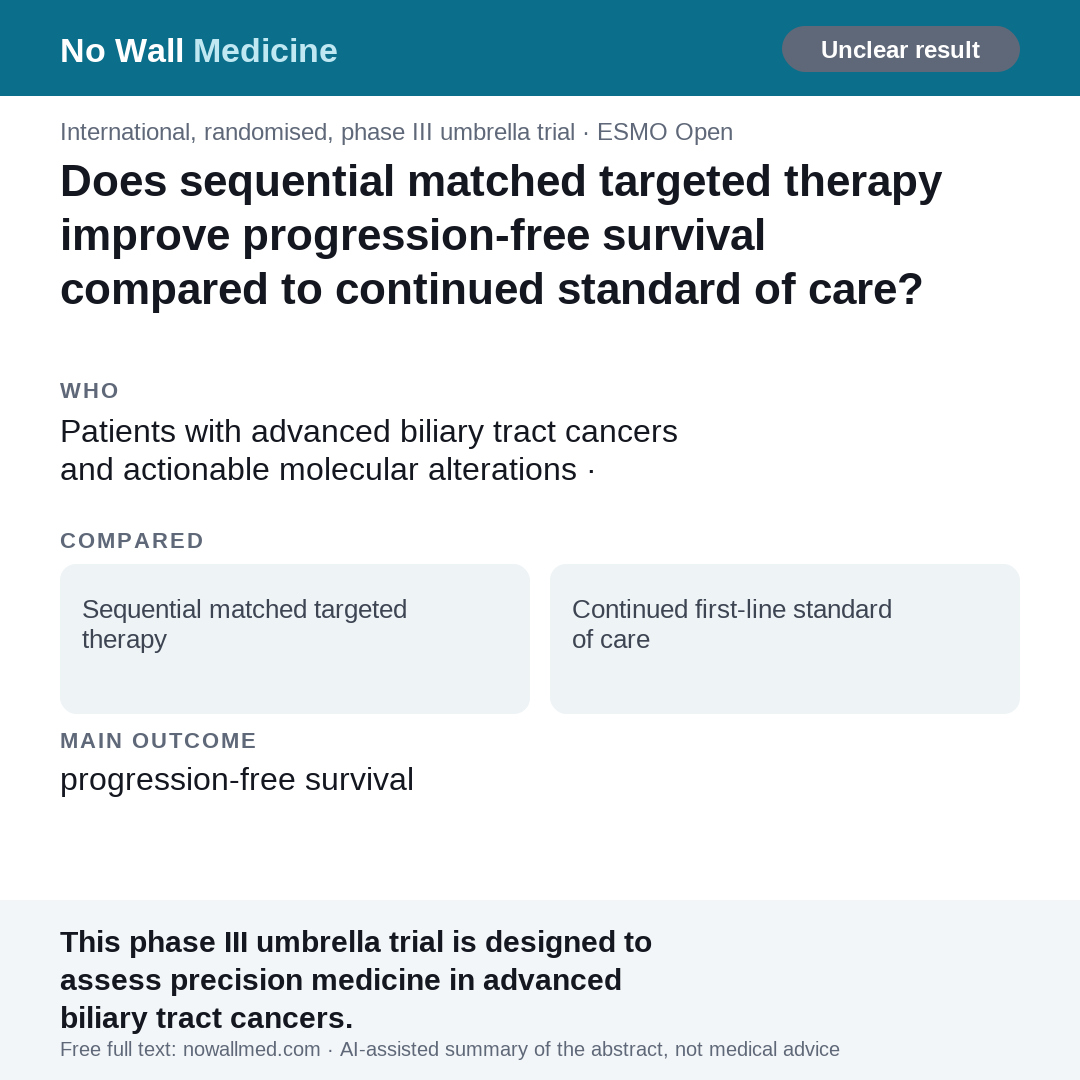
Molecular targeted maintenance therapy versus standard of care in advanced biliary cancer: an international, randomised, controlled, open-label, phase III umbrella trial (SAFIR-ABC10-Precision Medicine)
International, randomised, phase III umbrella trialUnclear result
Does sequential matched targeted therapy improve progression-free survival compared to continued standard of care?
Who
Patients with advanced biliary tract cancers and actionable molecular alterations · International
Compared
Sequential matched targeted therapy
Continued first-line standard of care
Main outcome
progression-free survival
Bottom line: This phase III umbrella trial is designed to assess precision medicine in advanced biliary tract cancers.
ESMO Open · 2025-04-09Download image
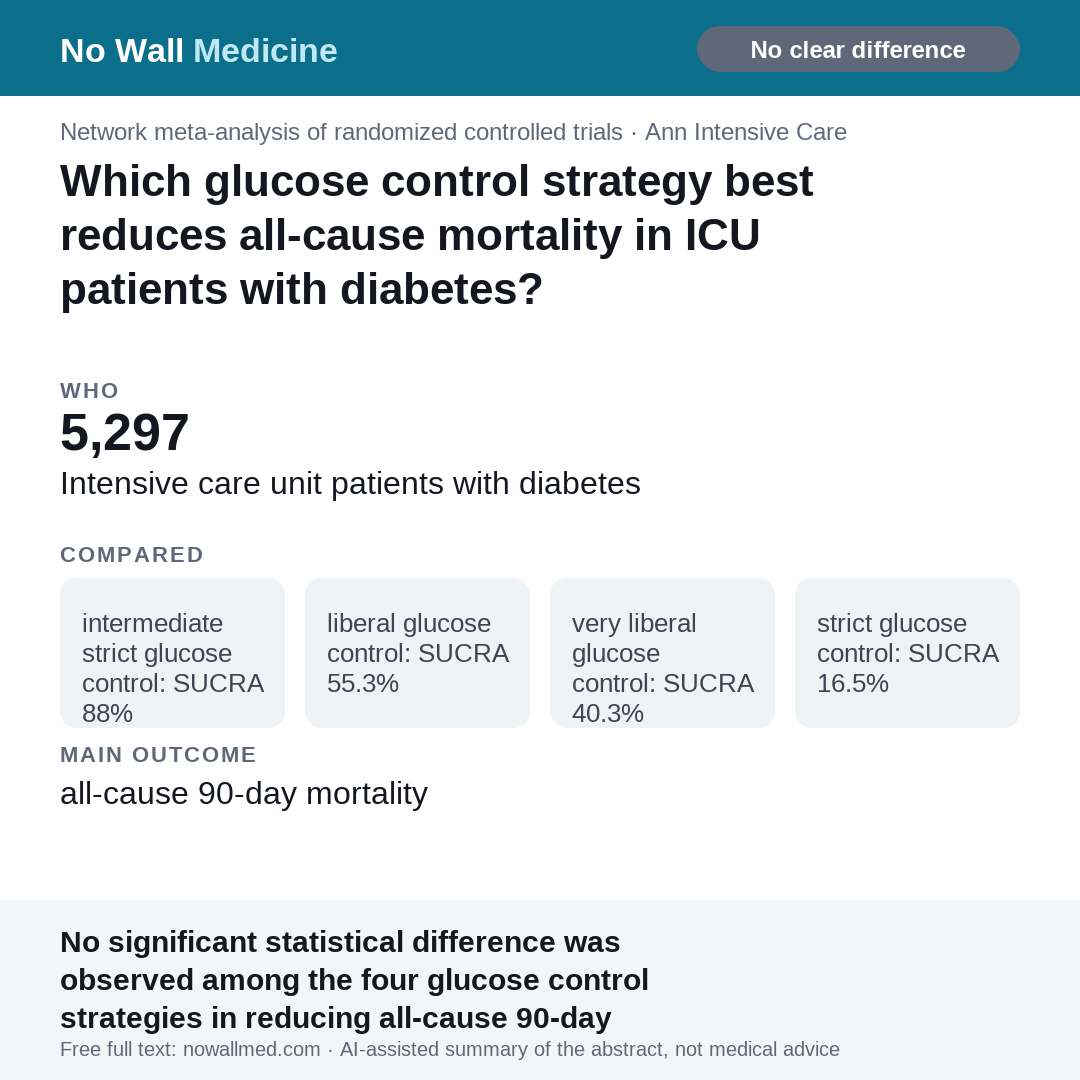
Comparison of all-cause mortality with different blood glucose control strategies in patients with diabetes in the ICU: a network meta-analysis of randomized controlled trials
Network meta-analysis of randomized controlled trialsNo clear difference
Which glucose control strategy best reduces all-cause mortality in ICU patients with diabetes?
Who
5,297
Intensive care unit patients with diabetes
Compared
intermediate strict glucose control: SUCRA 88%
liberal glucose control: SUCRA 55.3%
very liberal glucose control: SUCRA 40.3%
strict glucose control: SUCRA 16.5%
Main outcome
all-cause 90-day mortality
Bottom line: No significant statistical difference was observed among the four glucose control strategies in reducing all-cause 90-day mortality.
Limitation: The SUCRA rankings are hypothesis-generating and require further validation.
Ann Intensive Care · 2025-04-09Download image
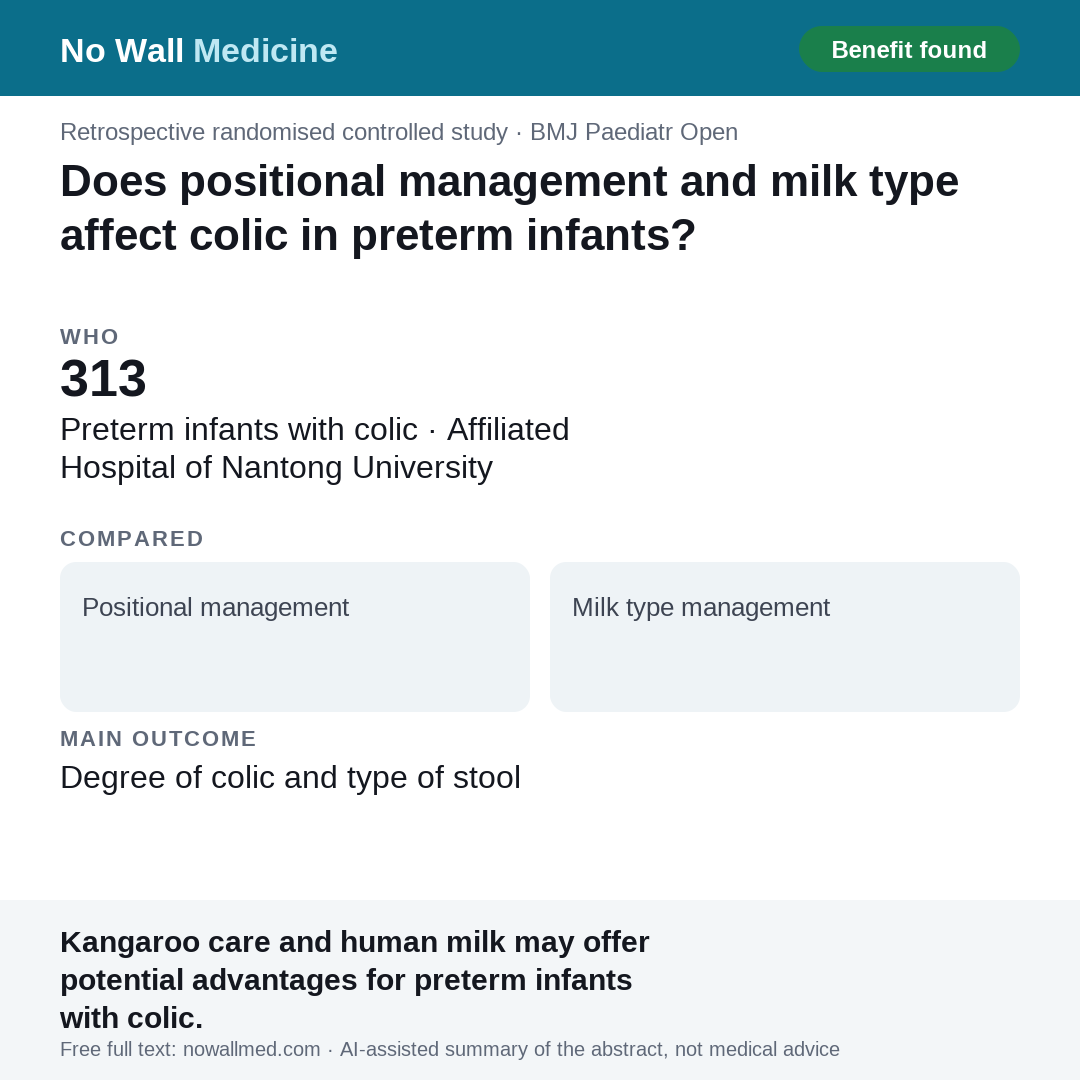
Effect of positional management and milk type on digestive health: a retrospective randomised controlled study on colic in preterm infants
Retrospective randomised controlled studyBenefit found
Does positional management and milk type affect colic in preterm infants?
Who
313
Preterm infants with colic · Affiliated Hospital of Nantong University
Compared
Positional management
Milk type management
Main outcome
Degree of colic and type of stool
Bottom line: Kangaroo care and human milk may offer potential advantages for preterm infants with colic.
BMJ Paediatr Open · 2025-04-09Download image
Comparative efficacy of Bruton tyrosine kinase inhibitors in high-risk relapsed/refractory CLL: a network meta-analysis
Network meta-analysisBenefit found
Which Bruton tyrosine kinase inhibitor is most efficacious for high-risk relapsed/refractory chronic lymphocytic leukemia?
Who
Patients with high-risk relapsed/refractory chronic lymphocytic leukemia
Compared
Zanubrutinib
Ibrutinib
Acalabrutinib
Bendamustine + rituximab or idelalisib + rituximab
Main outcome
Risk of progression or death
Result: hazard ratio 0.49 (95% credible interval 0.31-0.78) vs ibrutinib
Bottom line: Zanubrutinib was the most efficacious treatment for high-risk relapsed/refractory chronic lymphocytic leukemia.
Blood Adv · 2025-04-09Download image

Efficacy of a Personalized mHealth App in Improving Micronutrient Supplement Use Among Pregnant Women in Karachi, Pakistan: Parallel-Group Randomized Controlled Trial
Unblinded randomized controlled trialMixed results
Does a personalized mobile health app improve micronutrient supplement use among pregnant women?
Who
306
First-trimester pregnant women with smartphones and internet connection · Aga Khan University Hospital, Karachi, Pakistan
Compared
Personalized mobile health app intervention: aOR 1.88 (95% CI 1.43-2.47) for vitamin D use
Standard face-to-face counseling
Main outcome
Cumulative supplement use score and vitamin D use
Result: aOR 1.88 (95% CI 1.43-2.47) for vitamin D use
Bottom line: The mobile health app significantly improved vitamin D use but showed insignificant effects on folic acid, iron, and calcium.
J Med Internet Res · 2025-04-09Download image

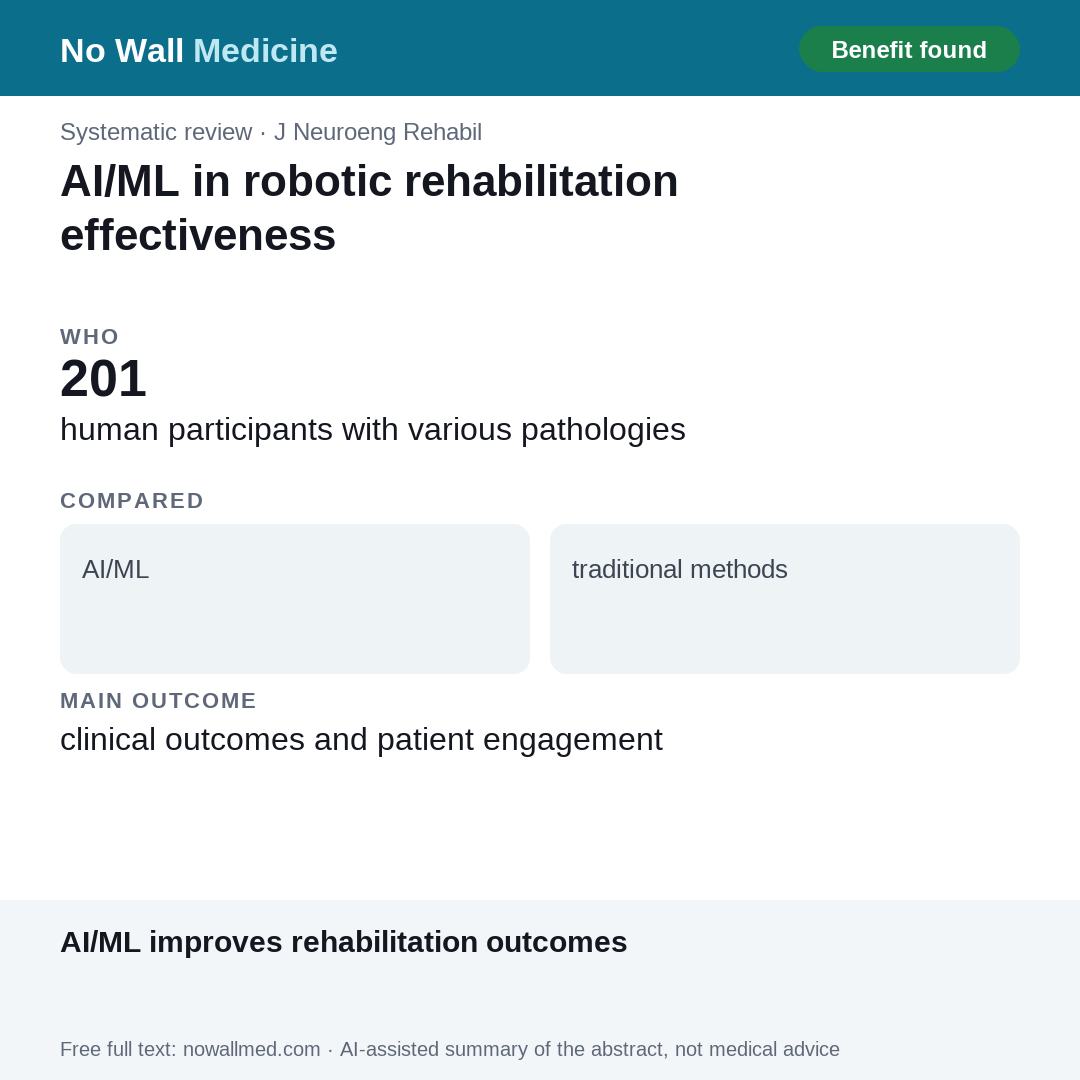
Systematic review of AI/ML applications in multi-domain robotic rehabilitation: trends, gaps, and future directions
Systematic reviewBenefit found
AI/ML in robotic rehabilitation effectiveness
Who
201
human participants with various pathologies
Compared
AI/ML
traditional methods
Main outcome
clinical outcomes and patient engagement
Bottom line: AI/ML improves rehabilitation outcomes
Limitation: explainability issues and poor generalization
J Neuroeng Rehabil · 2025-04-09Download image
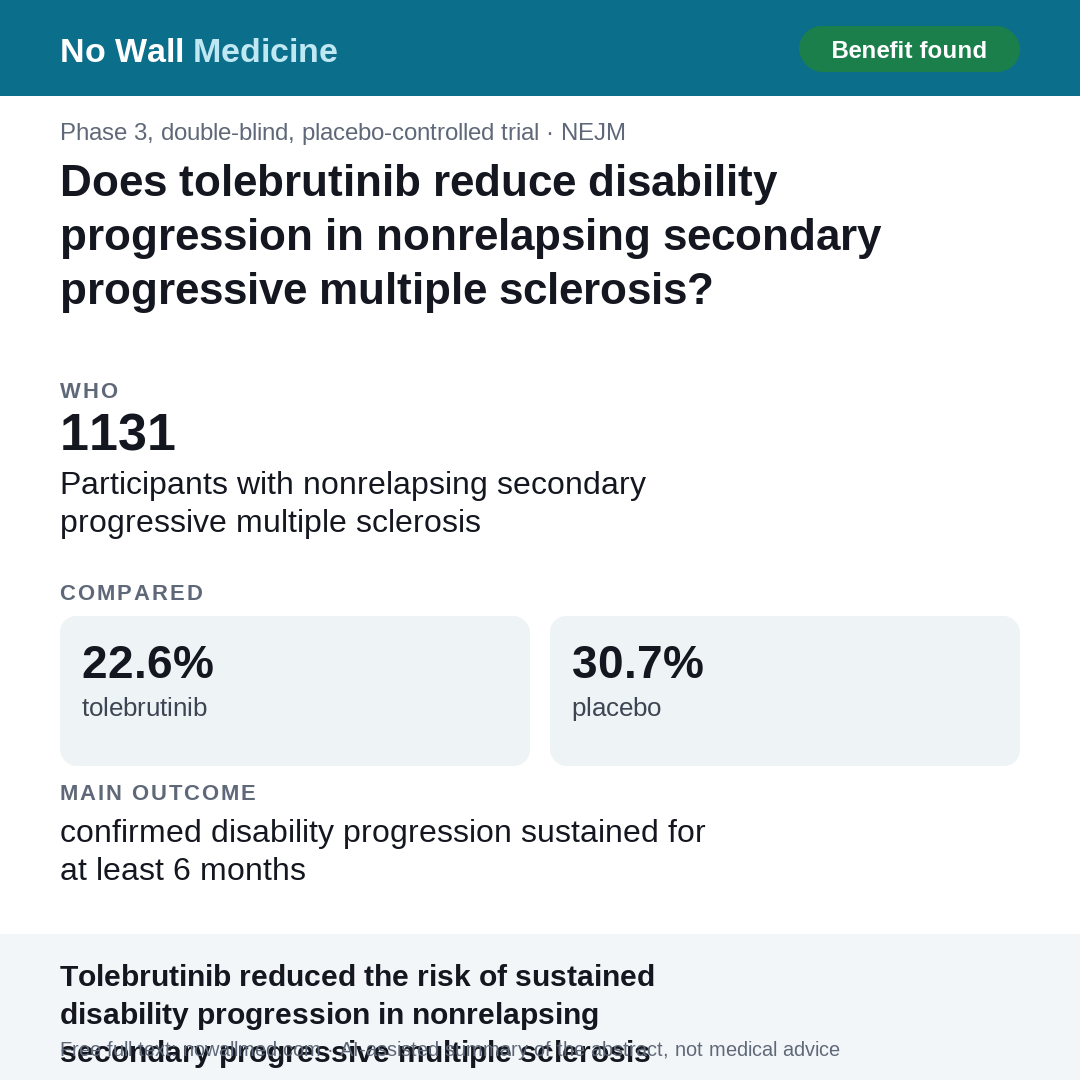
Tolebrutinib in Nonrelapsing Secondary Progressive Multiple Sclerosis
Phase 3, double-blind, placebo-controlled trialBenefit found
Does tolebrutinib reduce disability progression in nonrelapsing secondary progressive multiple sclerosis?
Who
1131
Participants with nonrelapsing secondary progressive multiple sclerosis
Compared
22.6%tolebrutinib
30.7%placebo
Main outcome
confirmed disability progression sustained for at least 6 months
Result: hazard ratio 0.69 (95% CI 0.55 to 0.88)
Bottom line: Tolebrutinib reduced the risk of sustained disability progression in nonrelapsing secondary progressive multiple sclerosis compared to placebo.
Funded by: Sanofi
NEJM · 2025-04-08Download image
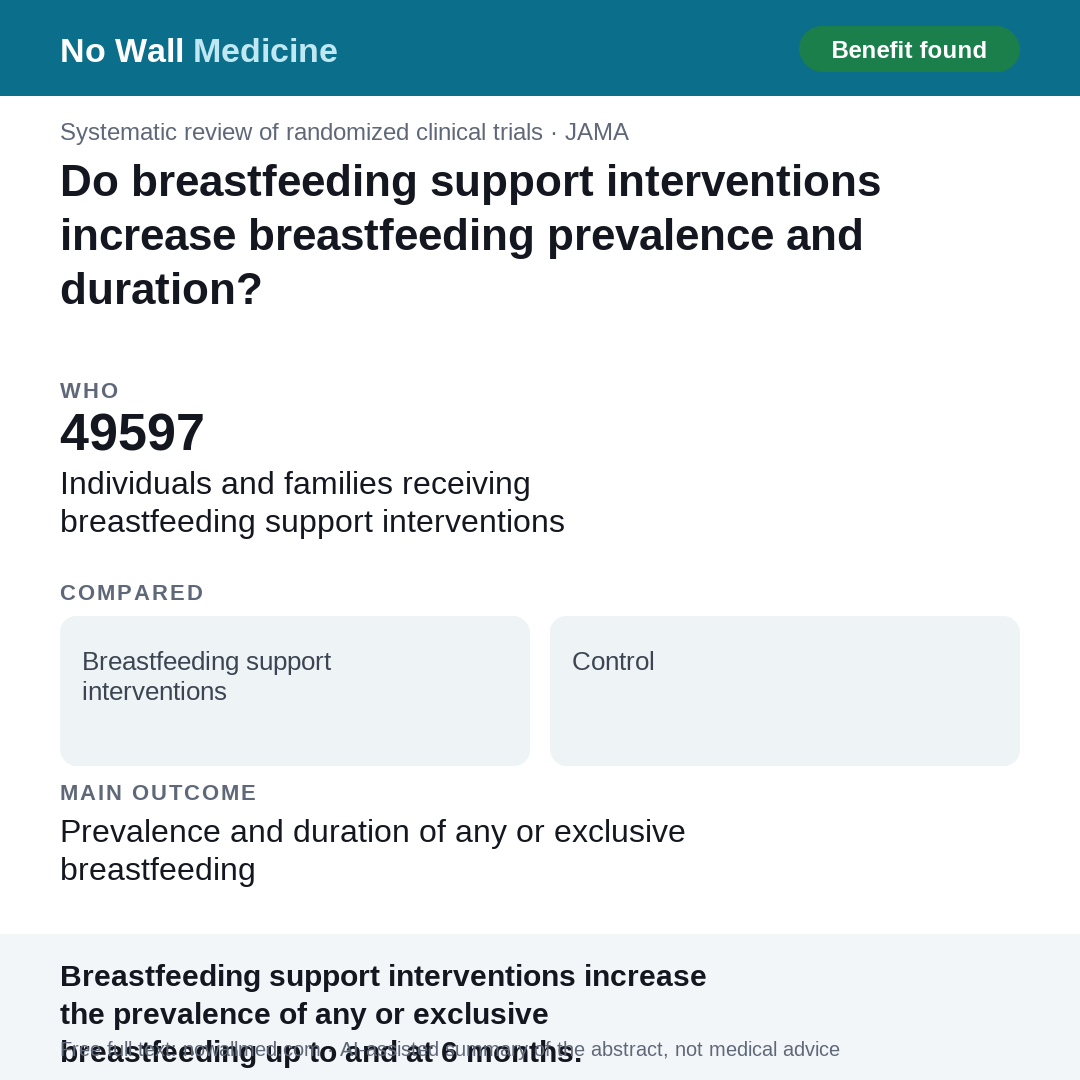
Interventions to Support Breastfeeding: Updated Evidence Report and Systematic Review for the US Preventive Services Task Force
Systematic review of randomized clinical trialsBenefit found
Do breastfeeding support interventions increase breastfeeding prevalence and duration?
Who
49597
Individuals and families receiving breastfeeding support interventions
Compared
Breastfeeding support interventions
Control
Main outcome
Prevalence and duration of any or exclusive breastfeeding
Result: any breastfeeding: risk ratio, 1.13 (95% CI, 1.05-1.22); exclusive breastfeeding: risk ratio, 1.46 (95% CI, 1.20-1.78)
Bottom line: Breastfeeding support interventions increase the prevalence of any or exclusive breastfeeding up to and at 6 months.
Limitation: Limited and mixed evidence on infant health outcomes and maternal mental health symptoms.
JAMA · 2025-04-08Download image
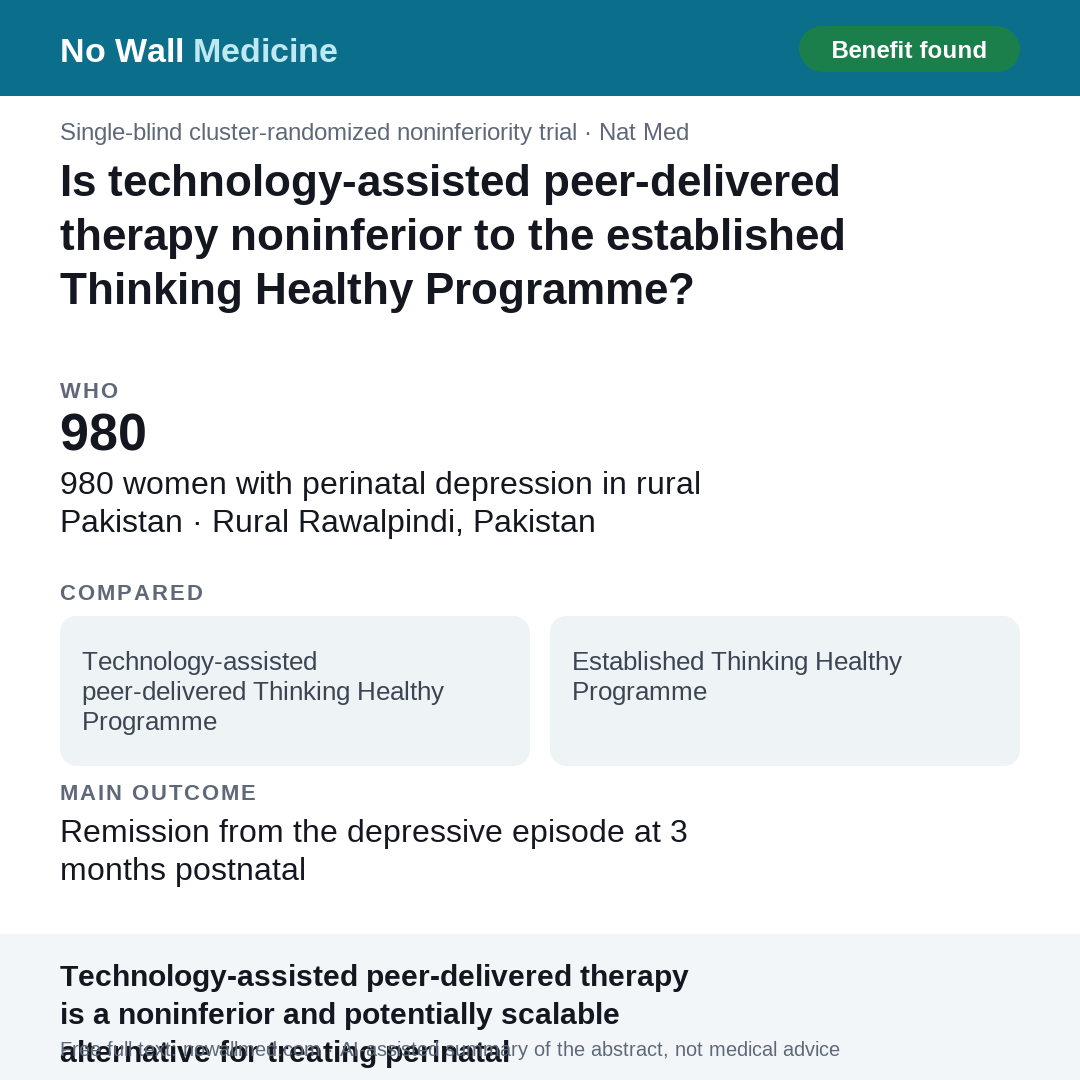
Technology-assisted cognitive-behavioral therapy for perinatal depression delivered by lived-experience peers: a cluster-randomized noninferiority trial
Single-blind cluster-randomized noninferiority trialBenefit found
Is technology-assisted peer-delivered therapy noninferior to the established Thinking Healthy Programme?
Who
980
980 women with perinatal depression in rural Pakistan · Rural Rawalpindi, Pakistan
Compared
Technology-assisted peer-delivered Thinking Healthy Programme
Established Thinking Healthy Programme
Main outcome
Remission from the depressive episode at 3 months postnatal
Result: difference in remission rate 8.91% (97.5% one-sided CI 4.25%)
Bottom line: Technology-assisted peer-delivered therapy is a noninferior and potentially scalable alternative for treating perinatal depression.
Nat Med · 2025-04-08Download image
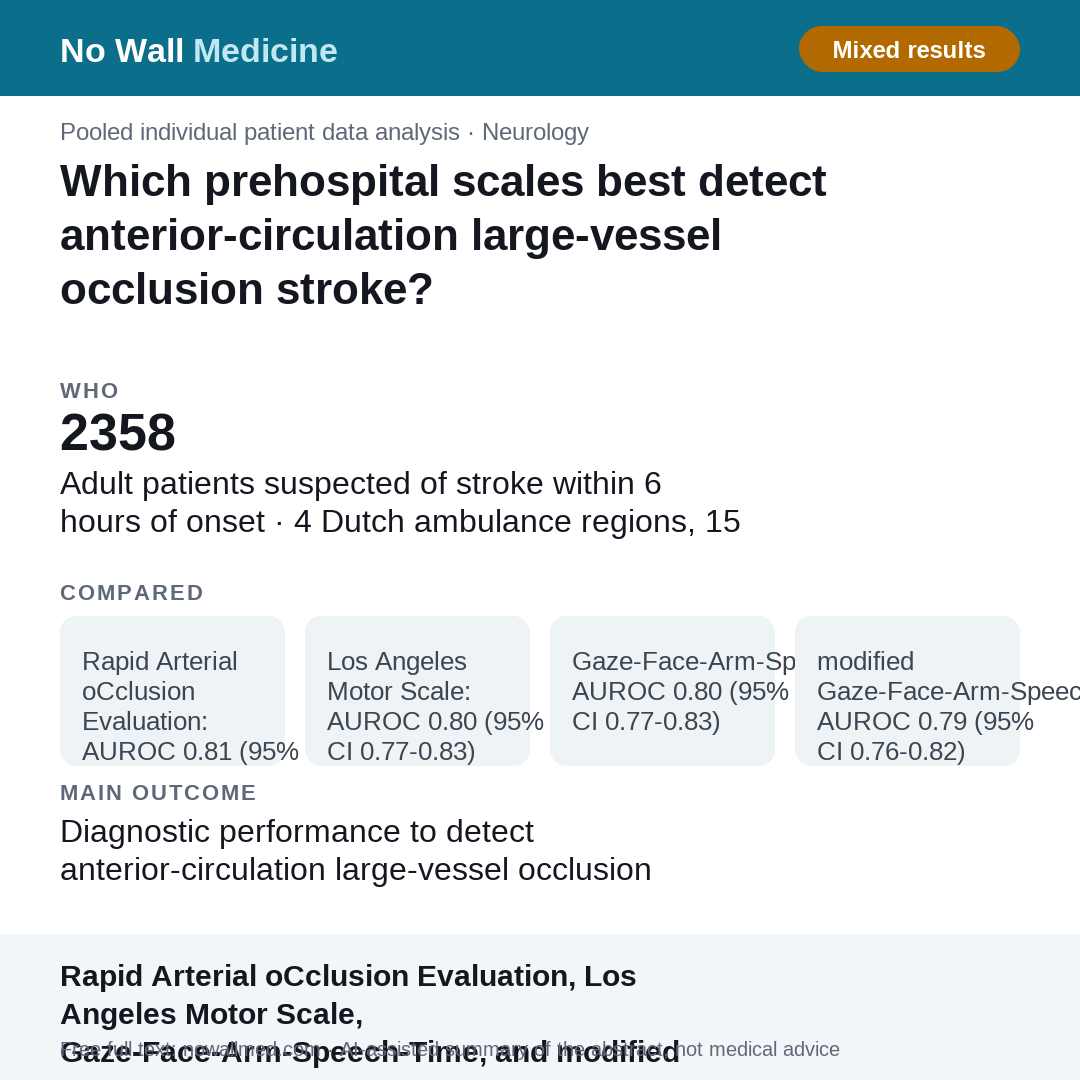
Prehospital Large-Vessel Occlusion Stroke Detection Scales: A Pooled Individual Patient Data Analysis of 2 Prospective Cohorts
Pooled individual patient data analysisMixed results
Which prehospital scales best detect anterior-circulation large-vessel occlusion stroke?
Who
2358
Adult patients suspected of stroke within 6 hours of onset · 4 Dutch ambulance regions, 15 stroke centers
Compared
Rapid Arterial oCclusion Evaluation: AUROC 0.81 (95% CI 0.78-0.84)
Los Angeles Motor Scale: AUROC 0.80 (95% CI 0.77-0.83)
Gaze-Face-Arm-Speech-Time: AUROC 0.80 (95% CI 0.77-0.83)
modified Gaze-Face-Arm-Speech-Time: AUROC 0.79 (95% CI 0.76-0.82)
Main outcome
Diagnostic performance to detect anterior-circulation large-vessel occlusion stroke
Bottom line: Rapid Arterial oCclusion Evaluation, Los Angeles Motor Scale, Gaze-Face-Arm-Speech-Time, and modified Gaze-Face-Arm-Speech-Time are the best-performing scales.
Neurology · 2025-04-08Download image
Objective Criteria for Subtle Cognitive Decline in Aging and Preclinical Alzheimer Disease: A Systematic Review
Systematic reviewUnclear result
What are the approaches used to classify objective subtle cognitive decline?
Who
Participants aged 50+ without mild cognitive impairment or dementia
Compared
Single cognitive test cutoff: n = 6
Cognitive composite score cutoff: n = 9
Multiple neuropsychological measures cutoffs: n = 24
Pre-mild cognitive impairment criteria: n = 12
Main outcome
Approaches used to classify objective subtle cognitive decline
Bottom line: Six classification approaches for objective subtle cognitive decline were identified, with multiple neuropsychological measures and pre-mild cognitive impairment being most common.
Neurology · 2025-04-08Download image

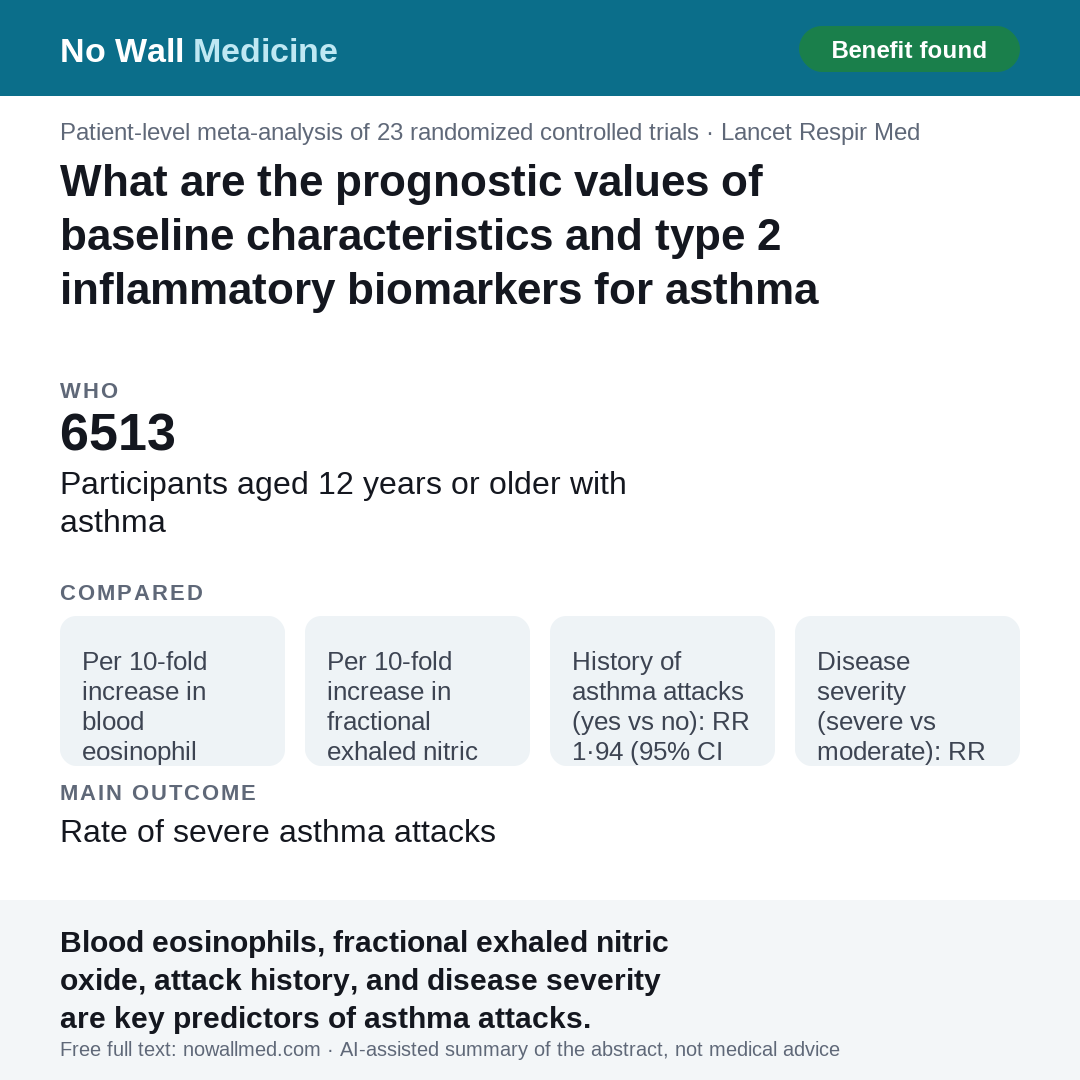
Inflammatory and clinical risk factors for asthma attacks (ORACLE2): a patient-level meta-analysis of control groups of 22 randomised trials
Patient-level meta-analysis of 23 randomized controlled trialsBenefit found
What are the prognostic values of baseline characteristics and type 2 inflammatory biomarkers for asthma attacks?
Who
6513
Participants aged 12 years or older with asthma
Compared
Per 10-fold increase in blood eosinophil count: RR 1·48 (95% CI 1·30-1·68)
Per 10-fold increase in fractional exhaled nitric oxide: RR 1·44 (95% CI 1·26-1·65)
History of asthma attacks (yes vs no): RR 1·94 (95% CI 1·61-2·32)
Disease severity (severe vs moderate): RR 1·57 (95% CI 1·22-2·03)
Main outcome
Rate of severe asthma attacks
Result: RR 1·48 (95% CI 1·30-1·68) for blood eosinophil count
Bottom line: Blood eosinophils, fractional exhaled nitric oxide, attack history, and disease severity are key predictors of asthma attacks.
Limitation: Major differences in patient and disease characteristics between studies were indicated by the concordance statistic.
Lancet Respir Med · 2025-04-08Download image
Deep Learning Applications in Imaging of Acute Ischemic Stroke: A Systematic Review and Narrative Summary
Systematic literature reviewMixed results
What are the current deep learning applications for imaging in acute ischemic stroke?
Who
Adult patients with acute ischemic stroke
Compared
171Stroke lesion segmentation (45.0%)
129Classification and triage (33.9%)
31Outcome prediction (8.2%)
15Generative AI and large language models (3.9%)
Main outcome
Deep learning applications for imaging in acute ischemic stroke
Bottom line: Deep learning is widely used in acute ischemic stroke imaging, primarily for stroke lesion segmentation.
Limitation: Need for standardized protocols, test sets, larger datasets, and real-world validation.
Radiology · 2025-04-08Download image

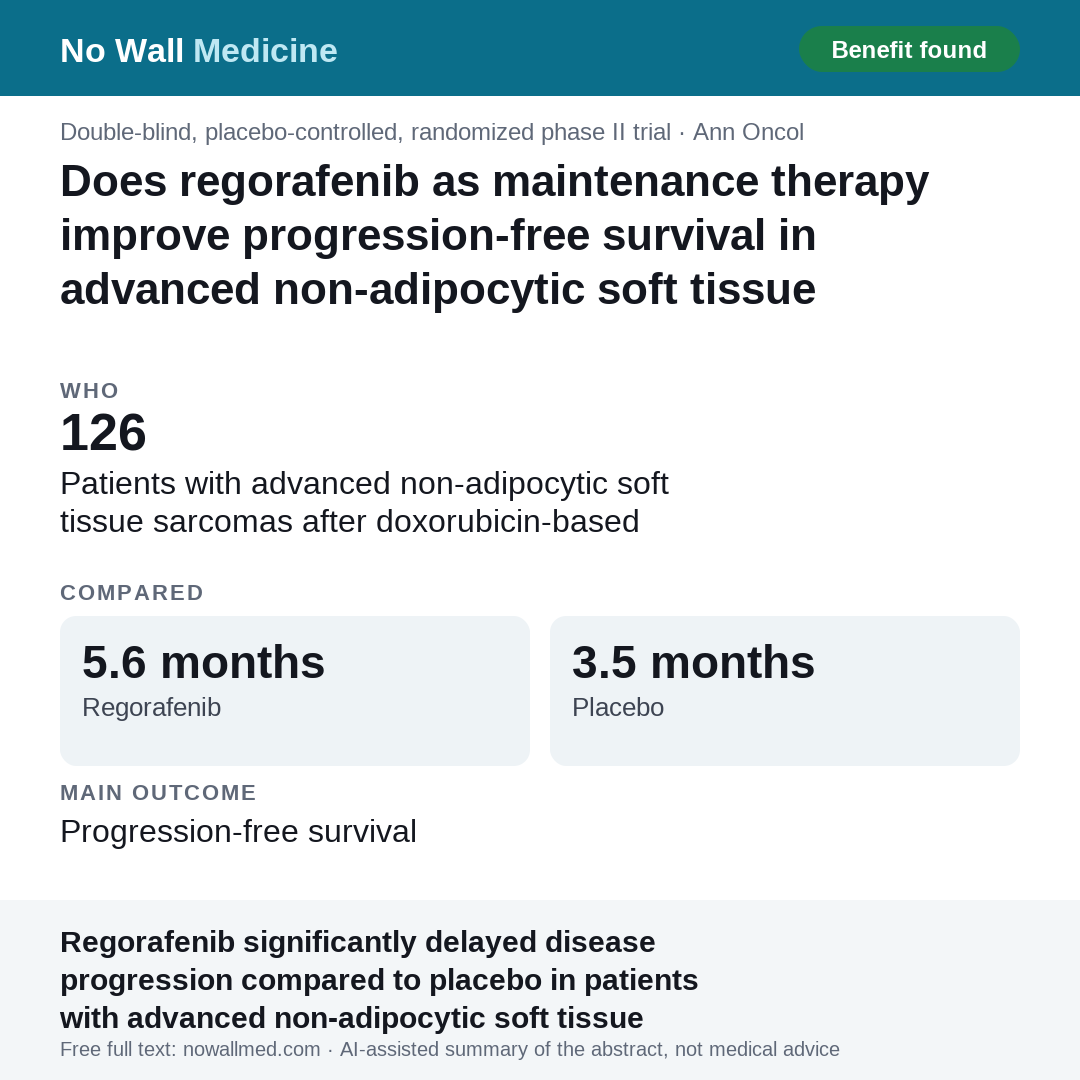
Regorafenib as maintenance therapy after first-line doxorubicin-based chemotherapy in advanced non-adipocytic soft tissue sarcomas patients: a double-blind randomised trial
Double-blind, placebo-controlled, randomized phase II trialBenefit found
Does regorafenib as maintenance therapy improve progression-free survival in advanced non-adipocytic soft tissue sarcomas?
Who
126
Patients with advanced non-adipocytic soft tissue sarcomas after doxorubicin-based chemotherapy · 17 centres
Compared
5.6 monthsRegorafenib
3.5 monthsPlacebo
Main outcome
Progression-free survival
Result: hazard ratio 0.53 (95% CI 0.36-0.78)
Bottom line: Regorafenib significantly delayed disease progression compared to placebo in patients with advanced non-adipocytic soft tissue sarcomas.
Funded by: French National Cancer Institute, patient advocacy group, and Bayer HealthCare
Ann Oncol · 2025-04-08Download image
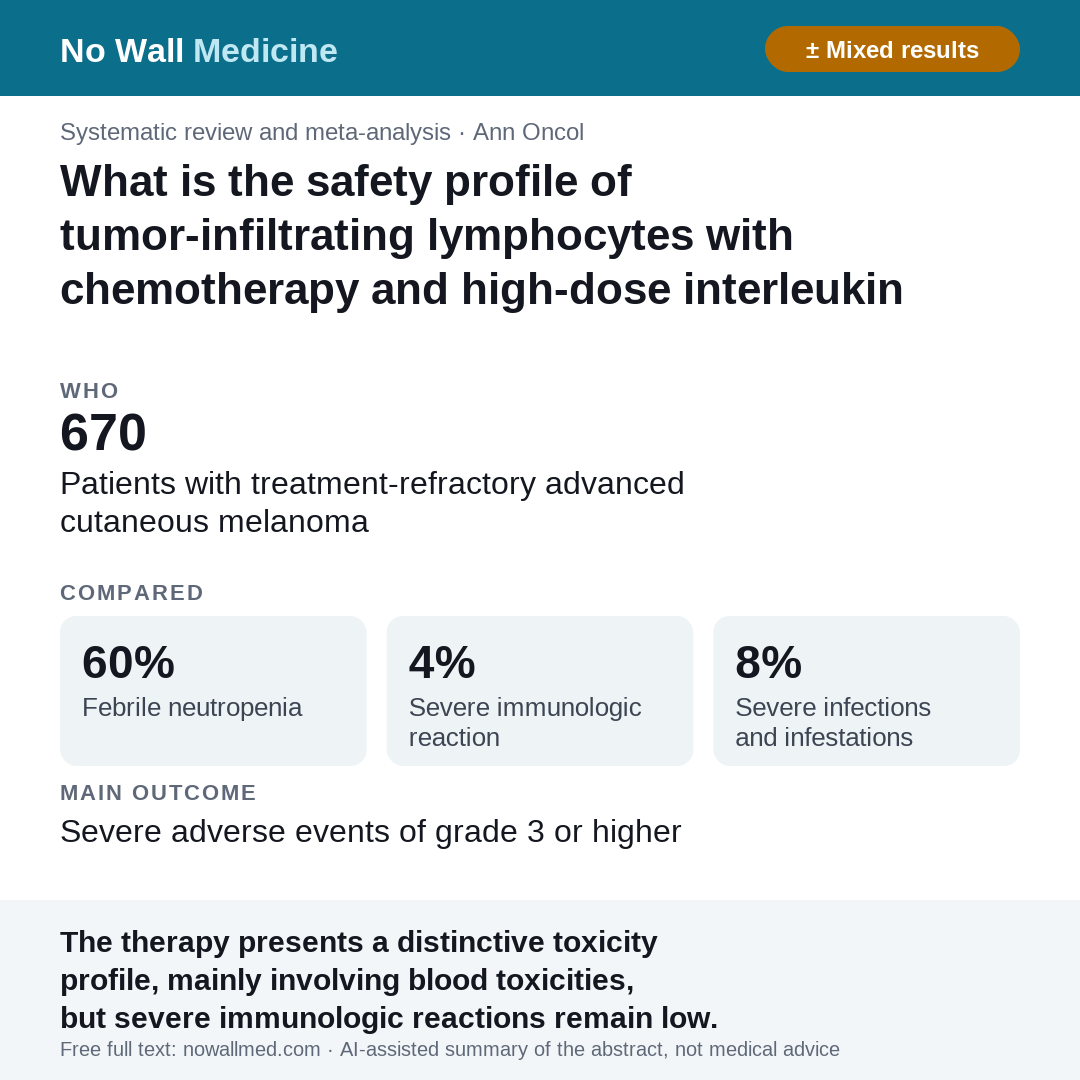
Safety of adoptive therapy with tumor-infiltrating lymphocytes and high-dose recombinant interleukin 2 in advanced cutaneous melanoma: a systematic review and meta-analysis
Systematic review and meta-analysisMixed results
What is the safety profile of tumor-infiltrating lymphocytes with chemotherapy and high-dose interleukin 2?
Who
670
Patients with treatment-refractory advanced cutaneous melanoma
Compared
60%Febrile neutropenia
4%Severe immunologic reaction
8%Severe infections and infestations
Main outcome
Severe adverse events of grade 3 or higher
Bottom line: The therapy presents a distinctive toxicity profile, mainly involving blood toxicities, but severe immunologic reactions remain low.
Ann Oncol · 2025-04-08Download image
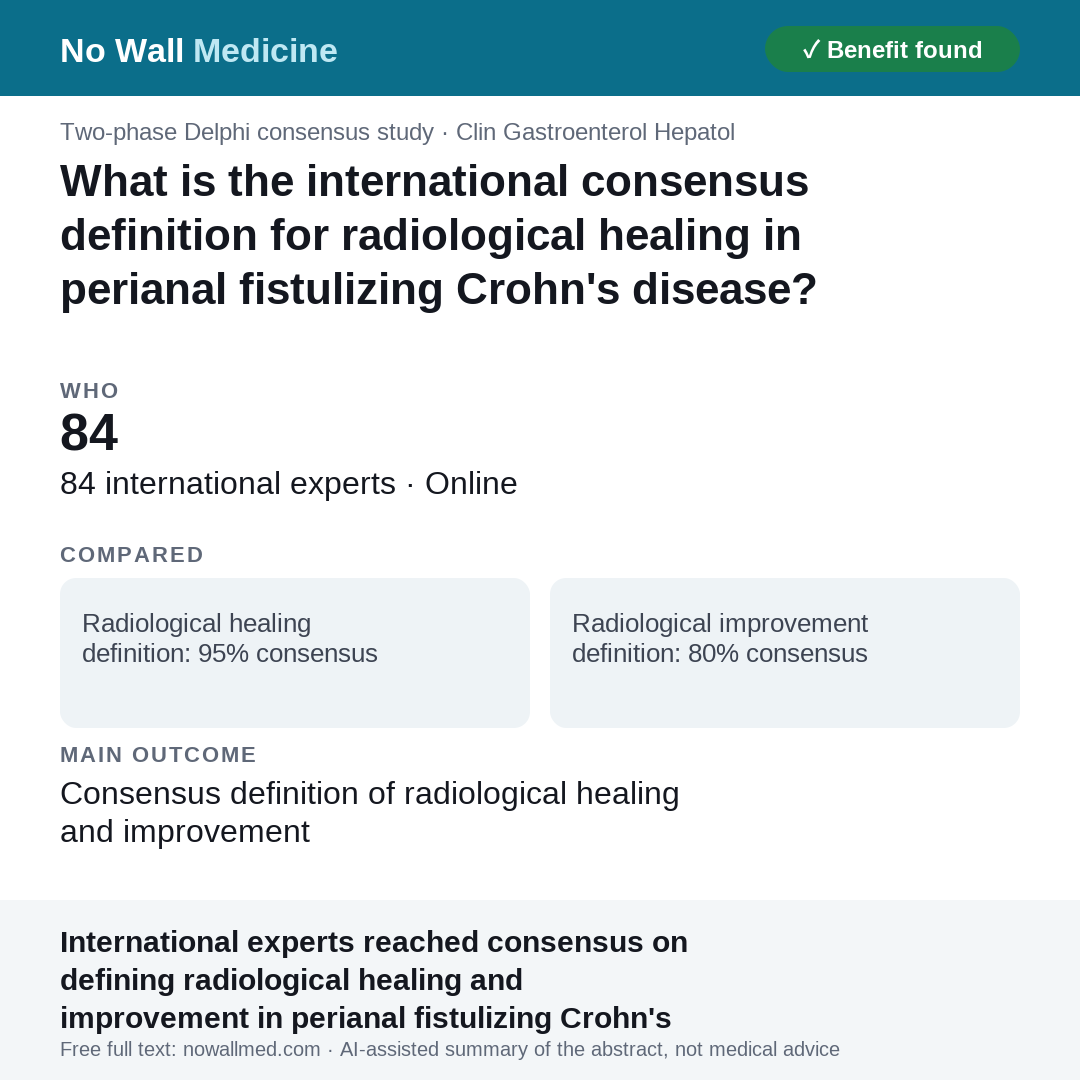
Defining Radiological Healing in Perianal Fistulizing Crohn's Disease: A TOpClass Global Expert Delphi Consensus
Two-phase Delphi consensus studyBenefit found
What is the international consensus definition for radiological healing in perianal fistulizing Crohn's disease?
Who
84
84 international experts · Online
Compared
Radiological healing definition: 95% consensus
Radiological improvement definition: 80% consensus
Main outcome
Consensus definition of radiological healing and improvement
Bottom line: International experts reached consensus on defining radiological healing and improvement in perianal fistulizing Crohn's disease.
Clin Gastroenterol Hepatol · 2025-04-08Download image
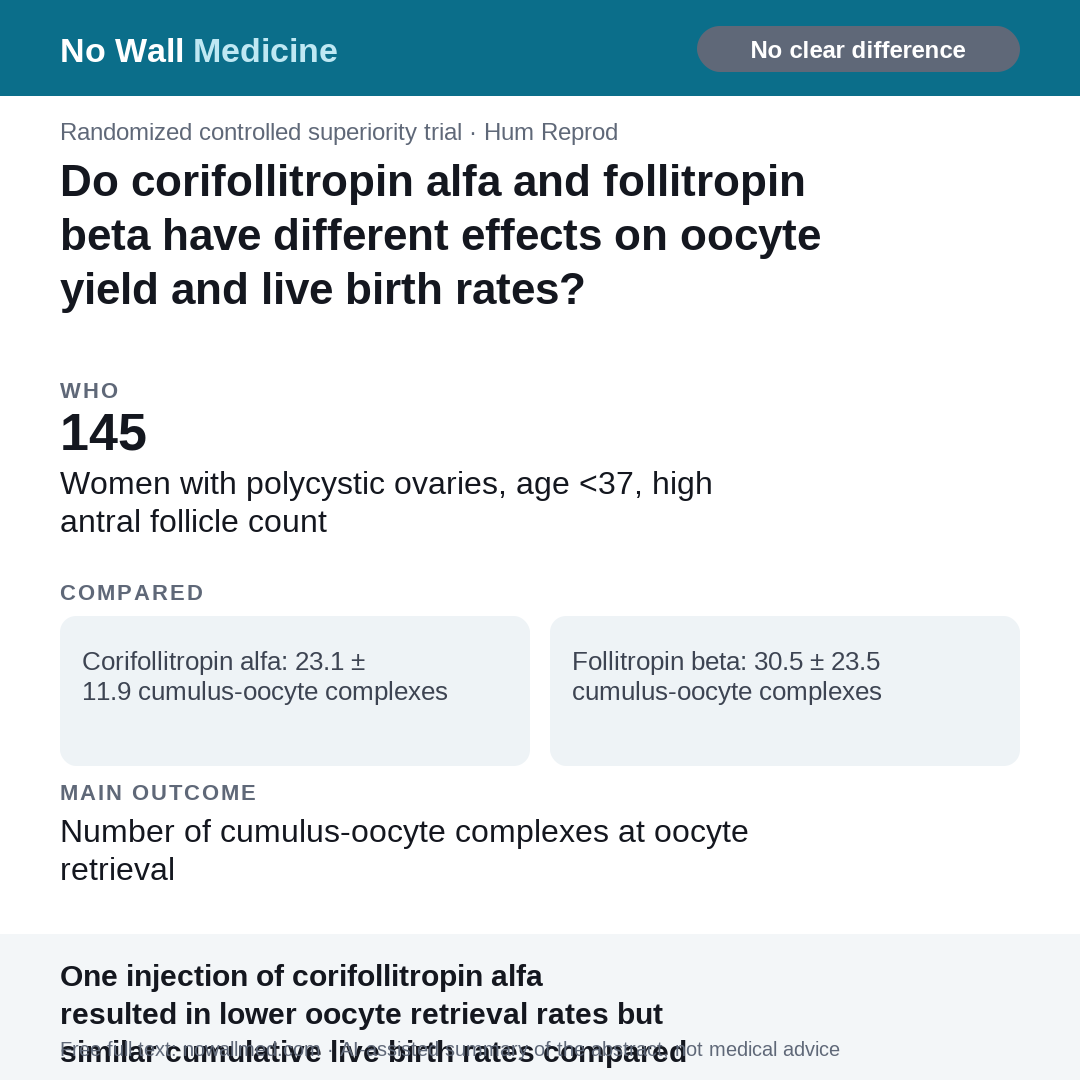
Randomized controlled trial to evaluate the impact of follicle priming on IVM outcomes in women with polycystic ovaries: CFA versus FSH-B
Randomized controlled superiority trialNo clear difference
Do corifollitropin alfa and follitropin beta have different effects on oocyte yield and live birth rates?
Who
145
Women with polycystic ovaries, age <37, high antral follicle count
Compared
Corifollitropin alfa: 23.1 ± 11.9 cumulus-oocyte complexes
Follitropin beta: 30.5 ± 23.5 cumulus-oocyte complexes
Main outcome
Number of cumulus-oocyte complexes at oocyte retrieval
Result: difference -7.4, 95% CI (-13.5 to -1.3)
Bottom line: One injection of corifollitropin alfa resulted in lower oocyte retrieval rates but similar cumulative live birth rates compared to follitropin beta.
Limitation: Results only valid for high antral follicle count patients using monophasic culture; sample size too small for live birth rate conclusions.
Hum Reprod · 2025-04-08Download image