Visual abstracts
New randomized trials and meta-analyses from leading journals at a glance: who was studied, what was compared, and what was found. Every paper is free to read in full.
All specialtiesCardiology 4877Oncology 4138Gastroenterology & Hepatology 1942Infectious Disease 3837Neurology 1905Psychiatry & Mental Health 2273Pulmonology 2143Critical Care 1365Endocrinology & Diabetes 2580Pediatrics 2980Surgery 2559Orthopedics & Sports Medicine 931Neurosurgery 537Cardiothoracic & Vascular Surgery 674Plastic & Reconstructive Surgery 591Nephrology 1133Rheumatology 823Hematology 1109Dermatology 621Ophthalmology 543Obstetrics & Gynecology 1686Public & Global Health 1058Radiology & Imaging 648Anesthesiology 986Urology 764ENT (Otolaryngology) 503Emergency Medicine 511Allergy & Immunology 313Geriatrics 981Family Medicine & Primary Care 562Medical Genetics & Genomics 676Pathology & Laboratory Medicine 159Physical Medicine & Rehabilitation 757Palliative Care 444Nutrition 1588Digital Health & AI 2201General Medicine 321
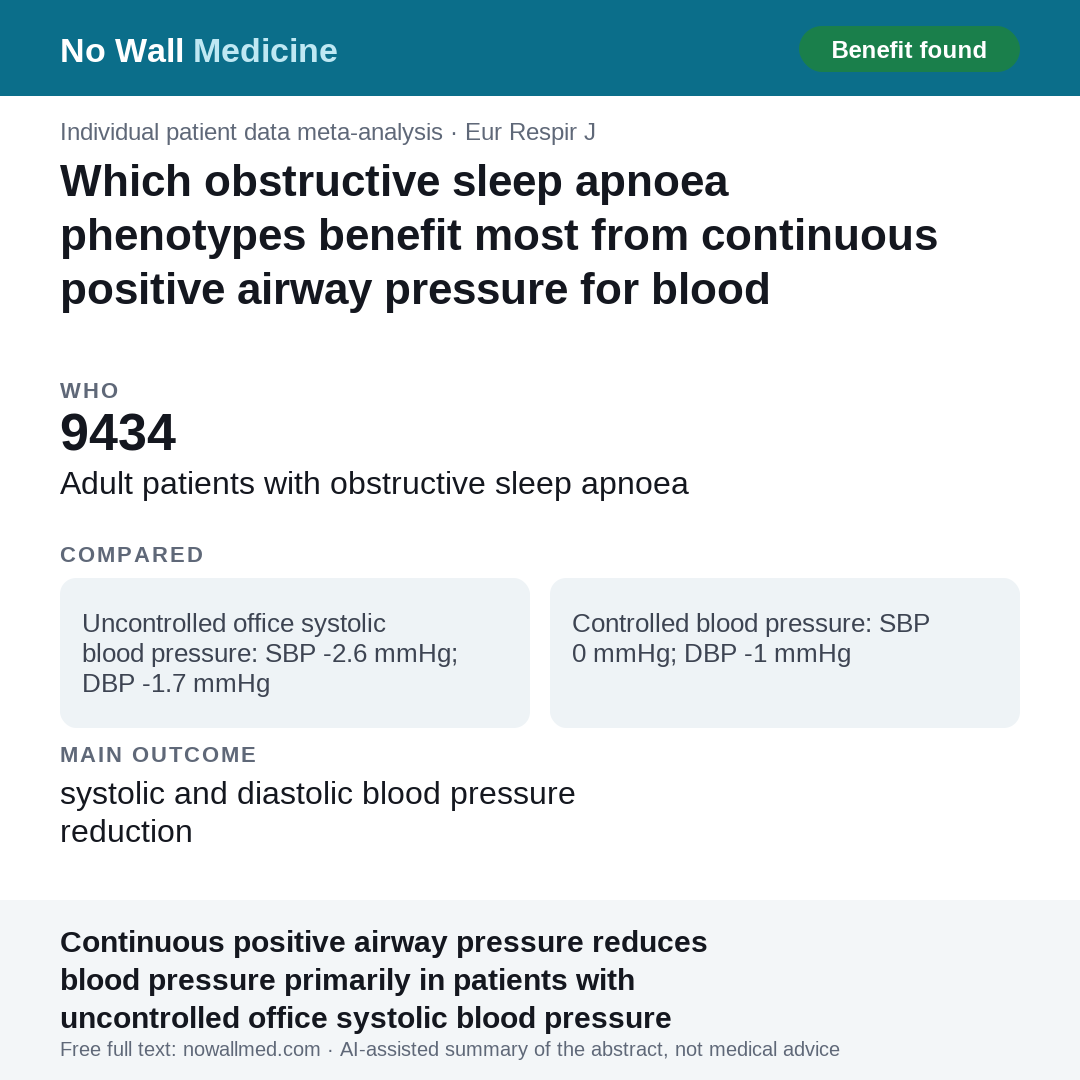
Effect of CPAP therapy on blood pressure in patients with obstructive sleep apnoea: a worldwide individual patient data meta-analysis
Individual patient data meta-analysisBenefit found
Which obstructive sleep apnoea phenotypes benefit most from continuous positive airway pressure for blood pressure reduction?
Who
9434
Adult patients with obstructive sleep apnoea
Compared
Uncontrolled office systolic blood pressure: SBP -2.6 mmHg; DBP -1.7 mmHg
Controlled blood pressure: SBP 0 mmHg; DBP -1 mmHg
Main outcome
systolic and diastolic blood pressure reduction
Bottom line: Continuous positive airway pressure reduces blood pressure primarily in patients with uncontrolled office systolic blood pressure at baseline.
Eur Respir J · 2025-01-02Download image
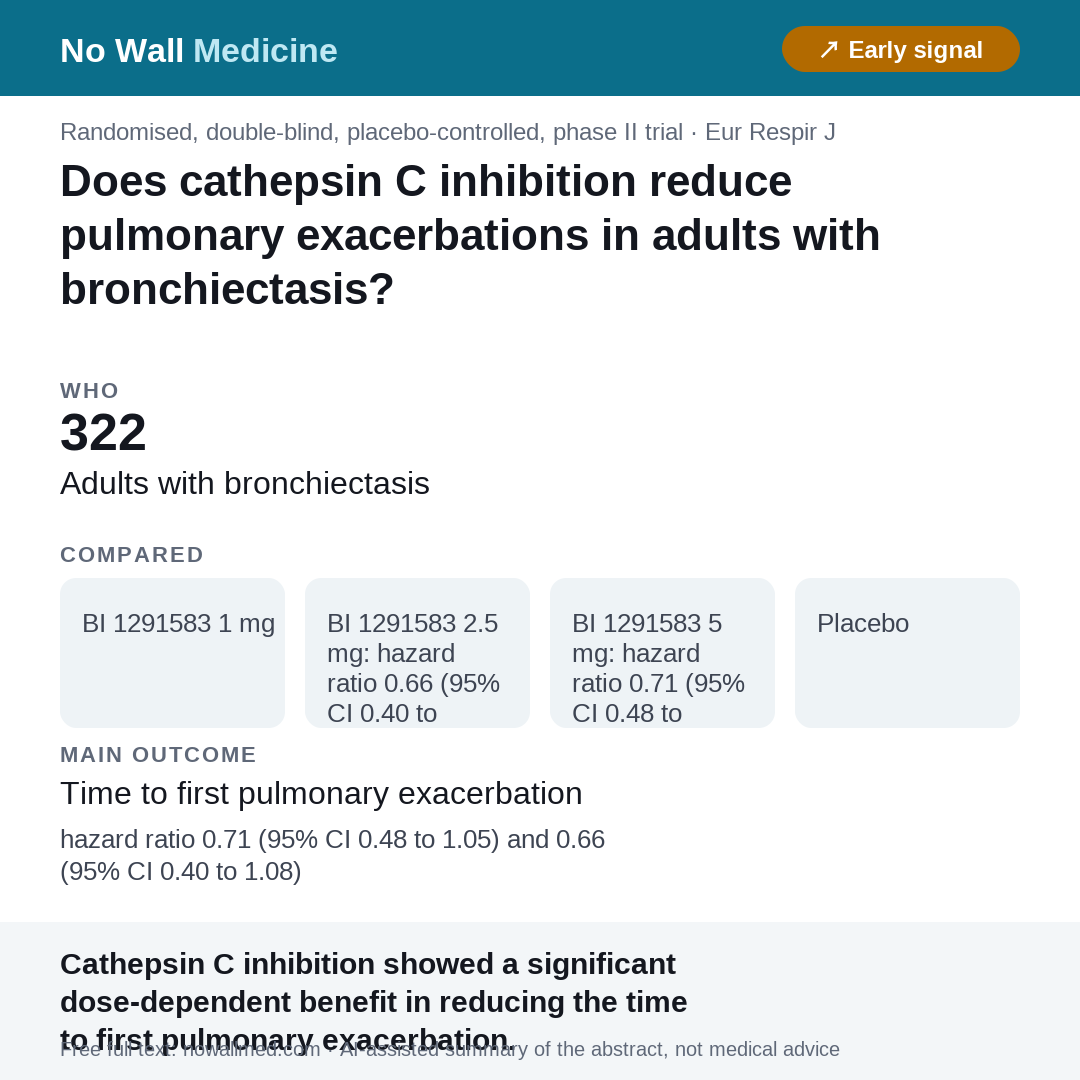
Cathepsin C (dipeptidyl peptidase 1) inhibition in adults with bronchiectasis: AIRLEAF, a phase II randomised, double-blind, placebo-controlled, dose-finding study
Randomised, double-blind, placebo-controlled, phase II trialBenefit found
Does cathepsin C inhibition reduce pulmonary exacerbations in adults with bronchiectasis?
Who
322
Adults with bronchiectasis
Compared
BI 1291583 1 mg
BI 1291583 2.5 mg: hazard ratio 0.66 (95% CI 0.40 to 1.08)
BI 1291583 5 mg: hazard ratio 0.71 (95% CI 0.48 to 1.05)
Placebo
Main outcome
Time to first pulmonary exacerbation
Result: hazard ratio 0.71 (95% CI 0.48 to 1.05) and 0.66 (95% CI 0.40 to 1.08)
Bottom line: Cathepsin C inhibition showed a significant dose-dependent benefit in reducing the time to first pulmonary exacerbation.
Eur Respir J · 2025-01-02Download image
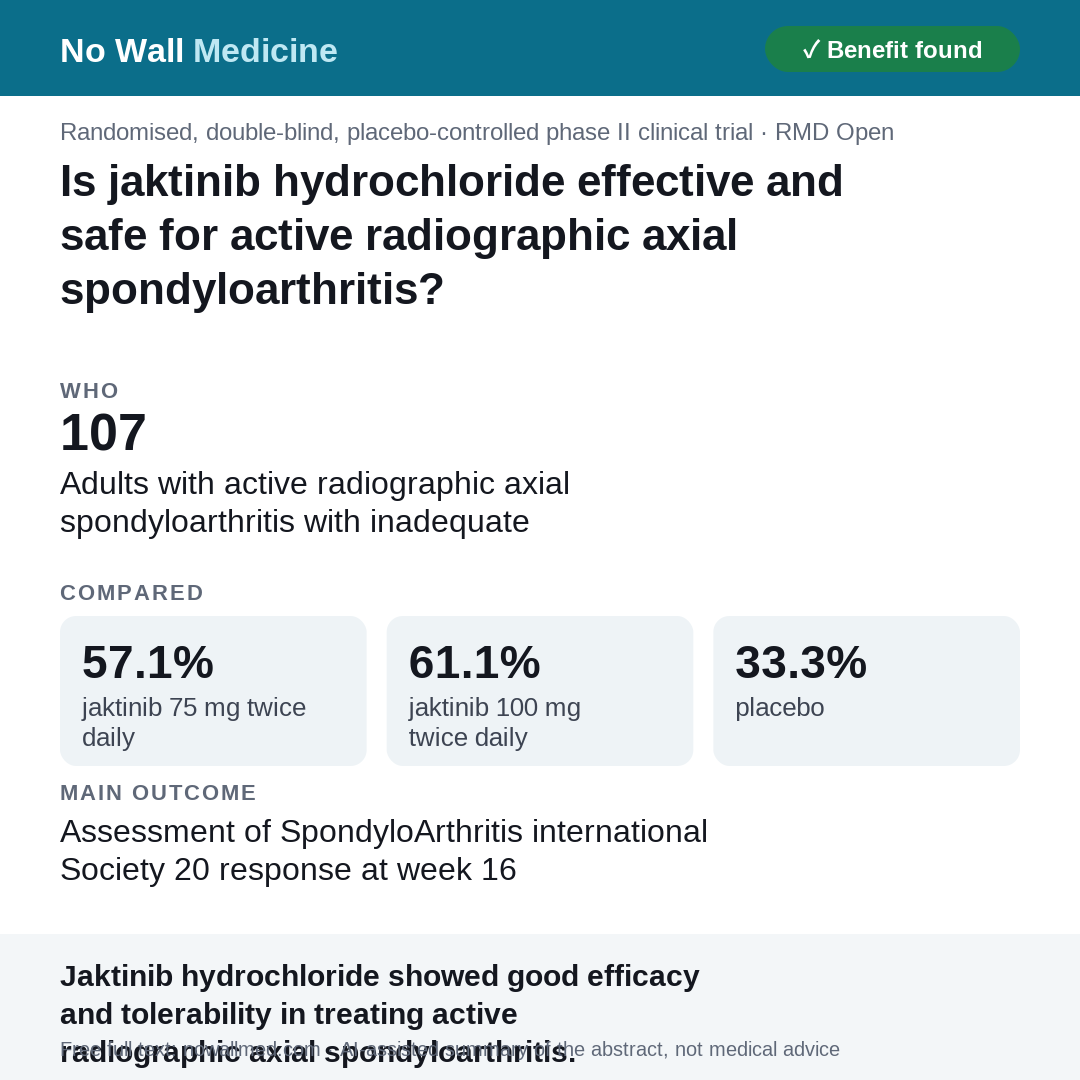
Efficacy and safety of jaktinib hydrochloride tablets in active axial spondyloarthritis: a multicentre, randomised, double-blind, placebo-controlled phase II clinical trial
Randomised, double-blind, placebo-controlled phase II clinical trialBenefit found
Is jaktinib hydrochloride effective and safe for active radiographic axial spondyloarthritis?
Who
107
Adults with active radiographic axial spondyloarthritis with inadequate non-steroidal anti-inflammatory drug response · multicentre
Compared
57.1%jaktinib 75 mg twice daily
61.1%jaktinib 100 mg twice daily
33.3%placebo
Main outcome
Assessment of SpondyloArthritis international Society 20 response at week 16
Bottom line: Jaktinib hydrochloride showed good efficacy and tolerability in treating active radiographic axial spondyloarthritis.
RMD Open · 2025-01-02Download image
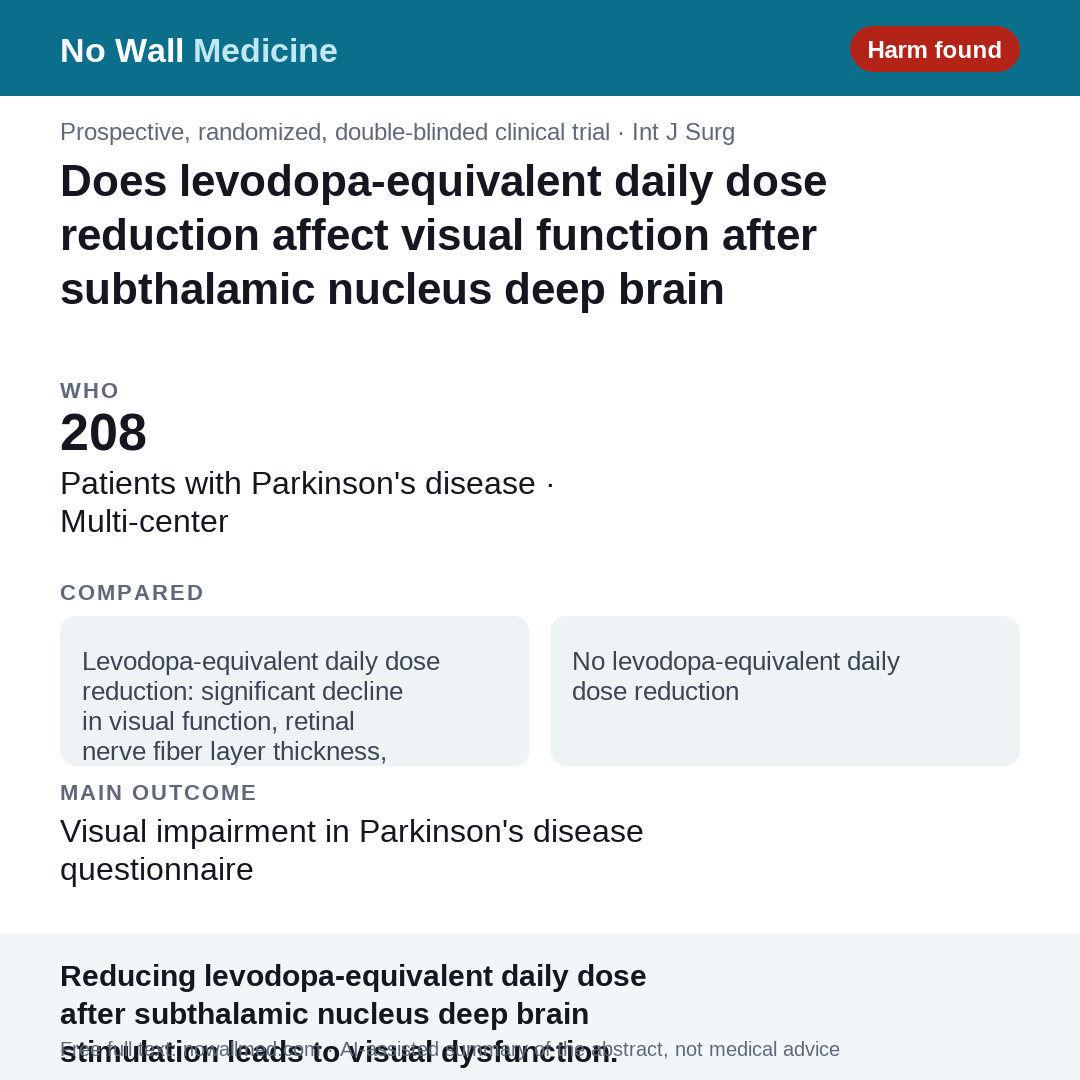
The reduction of LEDD leads to visual dysfunction in patients with PD after STN-DBS: a randomized clinical trial
Prospective, randomized, double-blinded clinical trialHarm found
Does levodopa-equivalent daily dose reduction affect visual function after subthalamic nucleus deep brain stimulation?
Who
208
Patients with Parkinson's disease · Multi-center
Compared
Levodopa-equivalent daily dose reduction: significant decline in visual function, retinal nerve fiber layer thickness, and vessel density
No levodopa-equivalent daily dose reduction
Main outcome
Visual impairment in Parkinson's disease questionnaire
Bottom line: Reducing levodopa-equivalent daily dose after subthalamic nucleus deep brain stimulation leads to visual dysfunction.
Int J Surg · 2025-01-01Download image
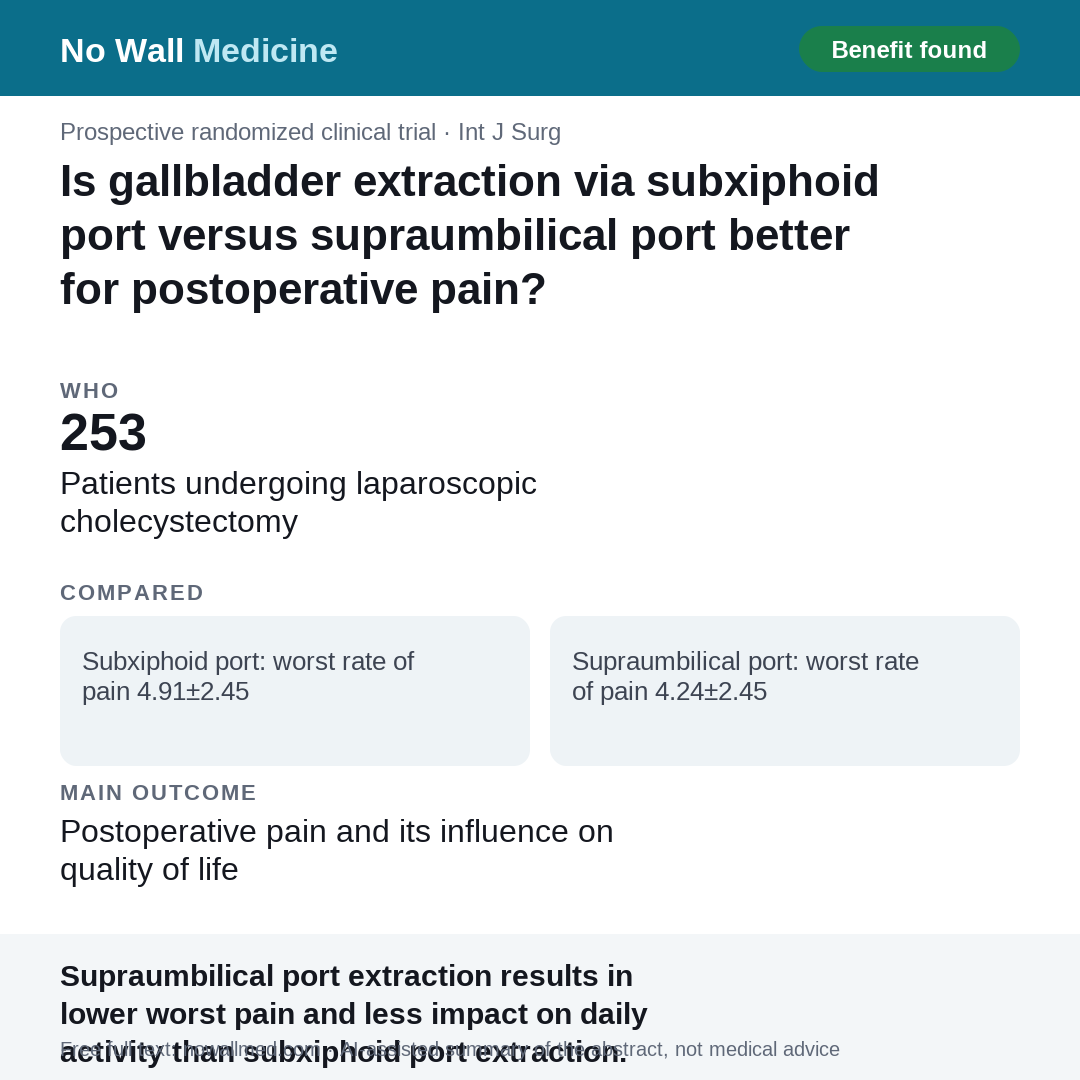
Comparison of gallbladder extraction via the subxiphoid port and the supraumbilical port during laparoscopic cholecystectomy: a prospective randomized clinical trial
Prospective randomized clinical trialBenefit found
Is gallbladder extraction via subxiphoid port versus supraumbilical port better for postoperative pain?
Who
253
Patients undergoing laparoscopic cholecystectomy
Compared
Subxiphoid port: worst rate of pain 4.91±2.45
Supraumbilical port: worst rate of pain 4.24±2.45
Main outcome
Postoperative pain and its influence on quality of life
Bottom line: Supraumbilical port extraction results in lower worst pain and less impact on daily activity than subxiphoid port extraction.
Int J Surg · 2025-01-01Download image
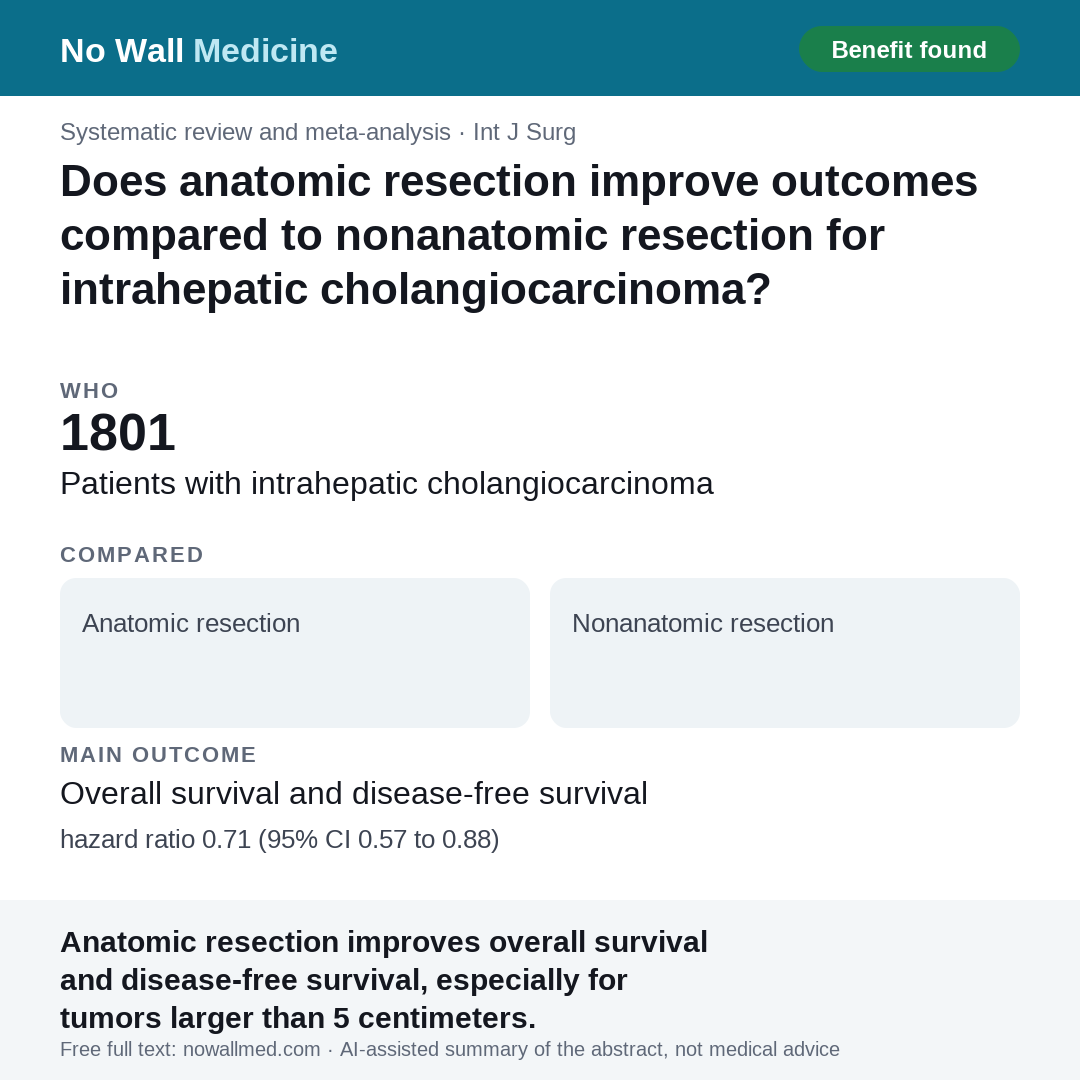
Anatomic versus nonanatomic resection for intrahepatic cholangiocarcinoma: a systematic review and meta-analysis
Systematic review and meta-analysisBenefit found
Does anatomic resection improve outcomes compared to nonanatomic resection for intrahepatic cholangiocarcinoma?
Who
1801
Patients with intrahepatic cholangiocarcinoma
Compared
Anatomic resection
Nonanatomic resection
Main outcome
Overall survival and disease-free survival
Result: hazard ratio 0.71 (95% CI 0.57 to 0.88)
Bottom line: Anatomic resection improves overall survival and disease-free survival, especially for tumors larger than 5 centimeters.
Int J Surg · 2025-01-01Download image
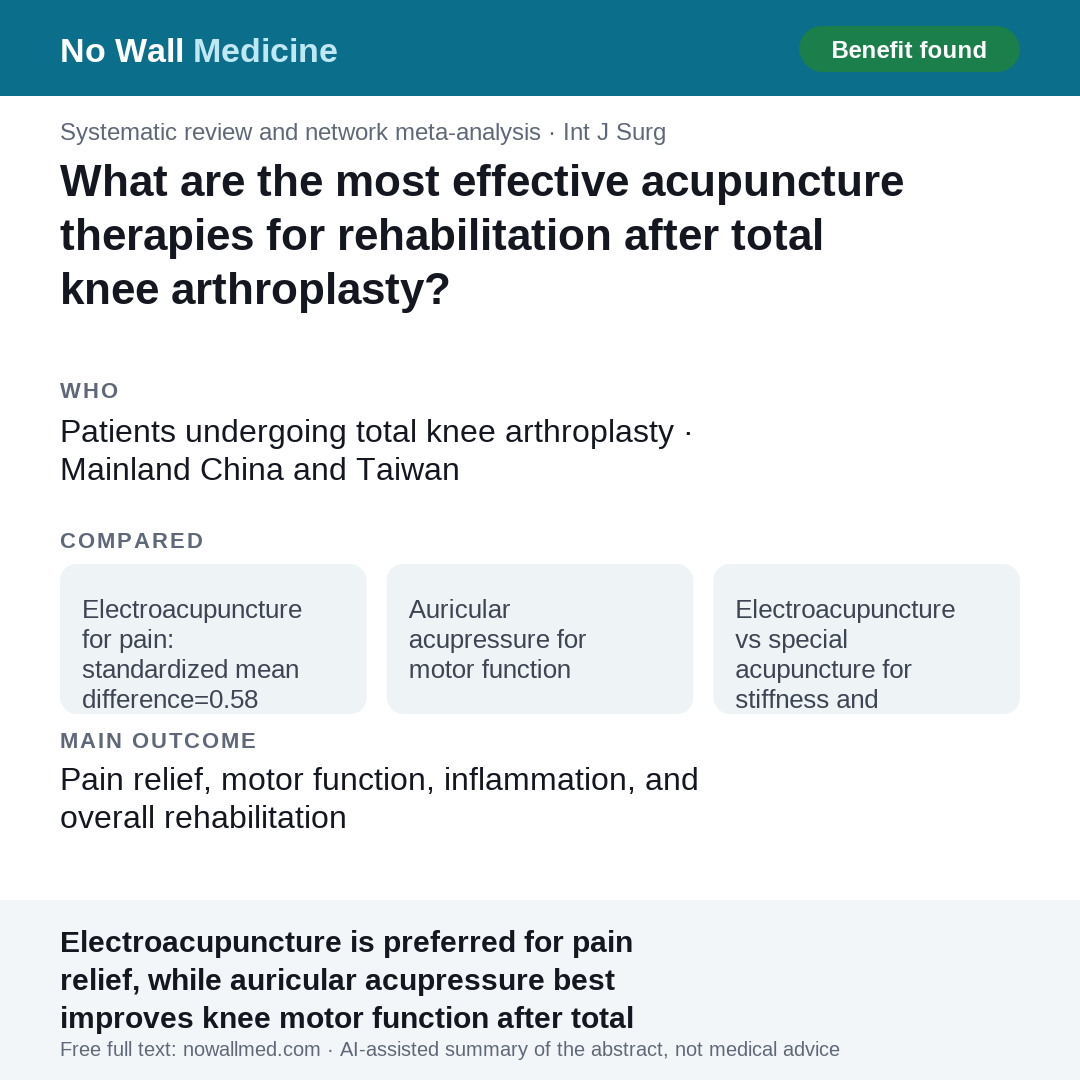
Acupuncture for rehabilitation after total knee arthroplasty: a systematic review and network meta-analysis
Systematic review and network meta-analysisBenefit found
What are the most effective acupuncture therapies for rehabilitation after total knee arthroplasty?
Who
Patients undergoing total knee arthroplasty · Mainland China and Taiwan
Compared
Electroacupuncture for pain: standardized mean difference=0.58
Auricular acupressure for motor function
Electroacupuncture vs special acupuncture for stiffness and inflammation
Main outcome
Pain relief, motor function, inflammation, and overall rehabilitation
Result: standardized mean difference=0.58 (95% CI=0.36-0.81)
Bottom line: Electroacupuncture is preferred for pain relief, while auricular acupressure best improves knee motor function after total knee arthroplasty.
Int J Surg · 2025-01-01Download image
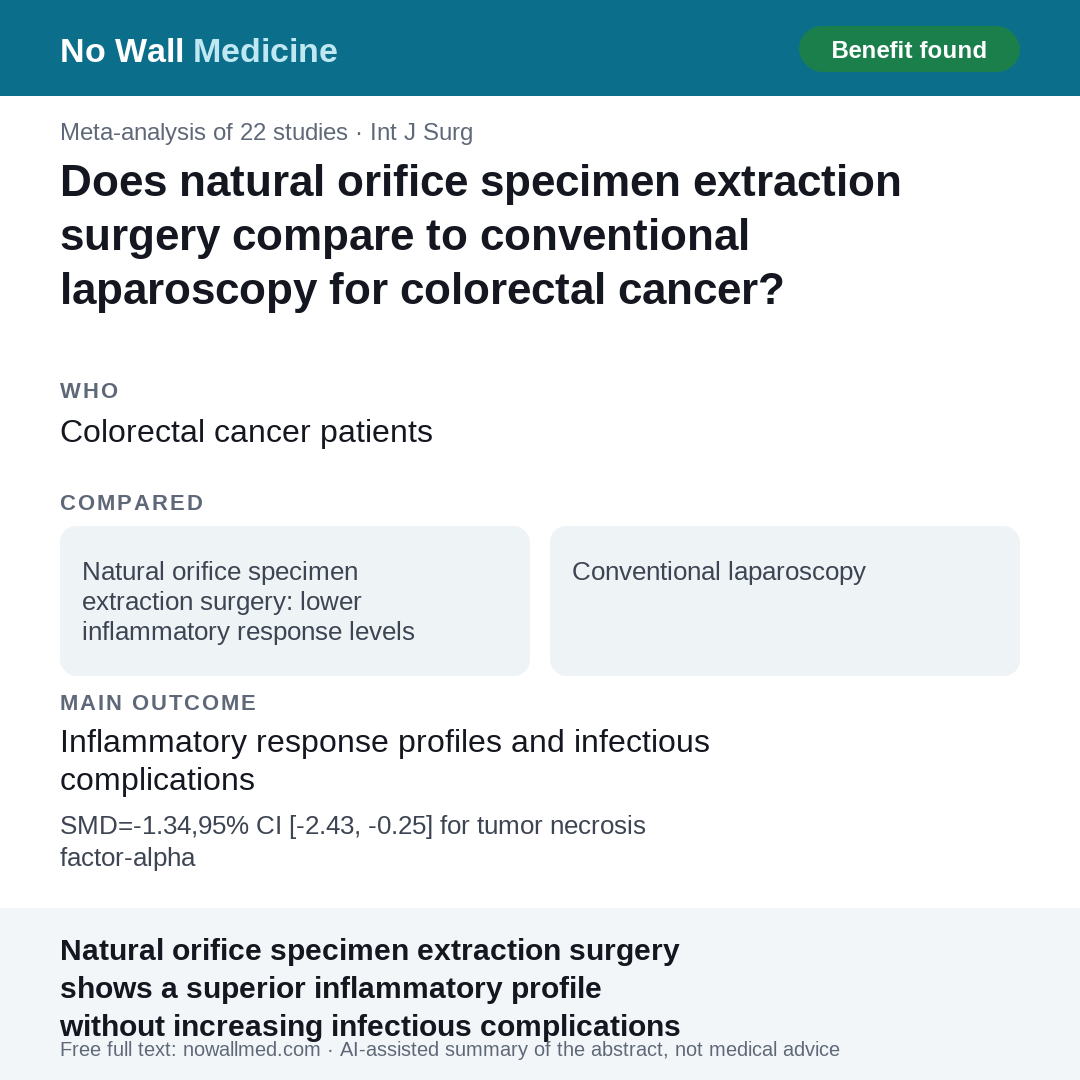
Comparative effectiveness of acupoint stimulation for preventing postoperative nausea and vomiting after general anesthesia: a network meta-analysis of randomized trials
Network meta-analysis of 50 randomized trialsBenefit found
How effective are different acupoint stimulation techniques in preventing postoperative nausea and vomiting?
Who
7372
Participants undergoing general anesthesia
Compared
Control
Antiemetic alone: RR 0.49 (95% CI: 0.36-0.69) for POV
TEAS and electroacupuncture: significantly reduced the incidence of PONV, PON, and POV
Main outcome
Incidence of postoperative nausea and vomiting
Bottom line: Transcutaneous electrical acupoint stimulation and electroacupuncture significantly reduce postoperative nausea and vomiting incidences.
Int J Surg · 2025-01-01Download image
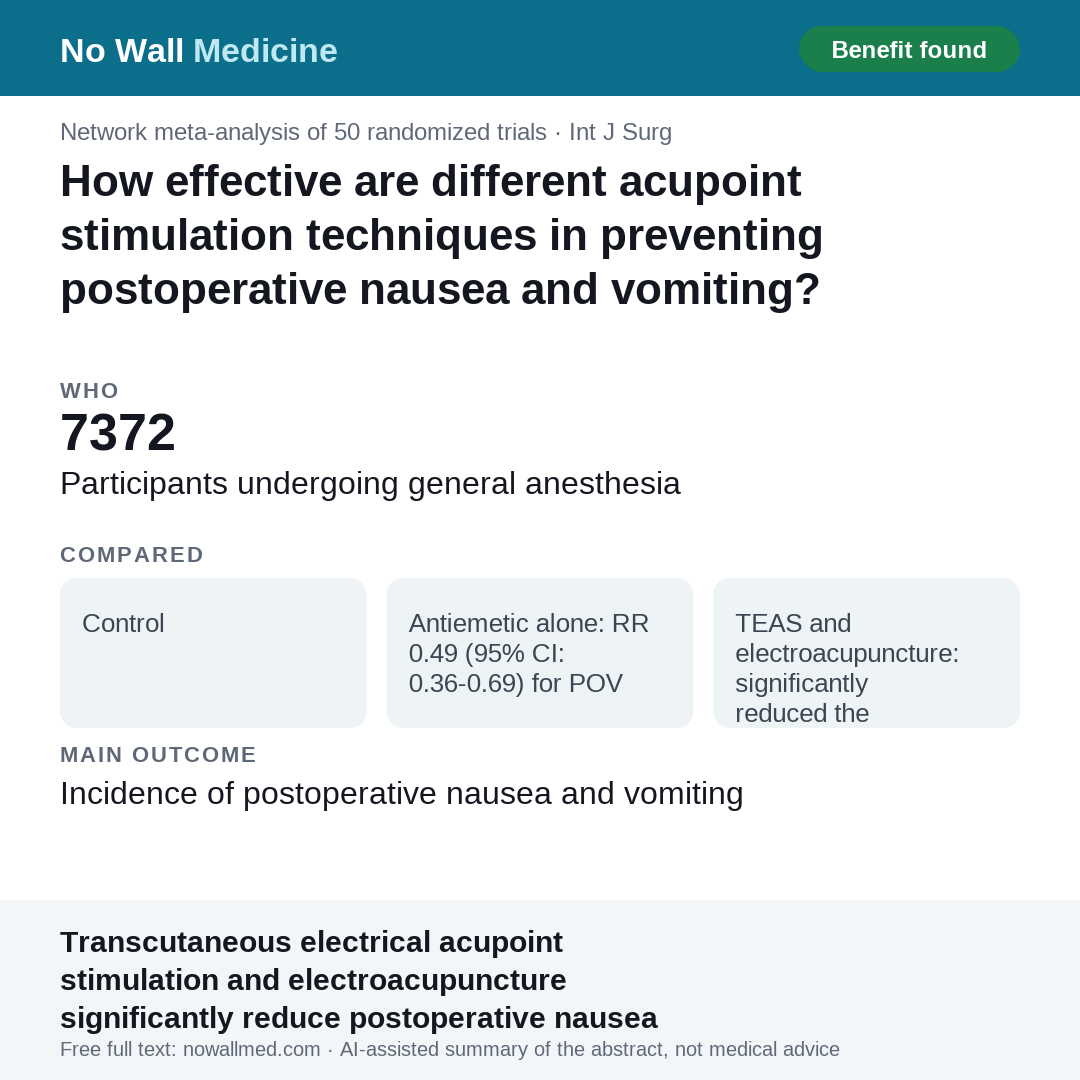
Radiation-emitting metallic stent for unresectable Bismuth type III or IV perihilar cholangiocarcinoma: a multicenter randomized trial
Multicenter randomized controlled trialBenefit found
Does radiation-emitting metallic stent plus chemotherapy improve outcomes in unresectable perihilar cholangiocarcinoma?
Who
126
Patients with unresectable Bismuth type III or IV perihilar cholangiocarcinoma
Compared
10.2 monthsRadiation-emitting metallic stent plus hepatic arterial infusion chemotherapy
6.7 monthsSelf-expandable metallic stent plus hepatic arterial infusion chemotherapy
Main outcome
overall survival
Bottom line: Radiation-emitting metallic stent plus hepatic arterial infusion chemotherapy improved overall survival and stent patency compared to self-expandable metallic stents.
Int J Surg · 2025-01-01Download image
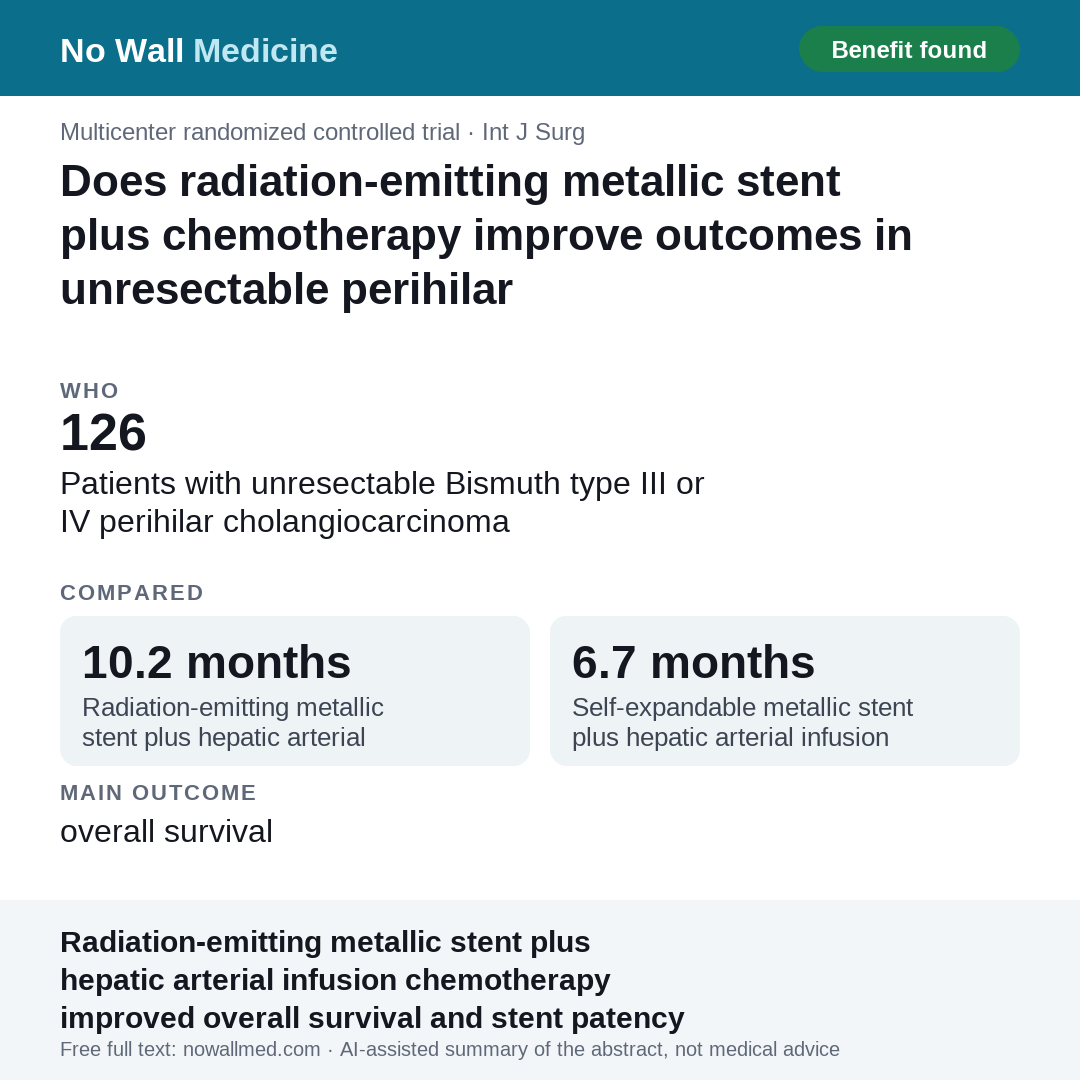
Comparative analysis of characteristics, management, and clinical outcome of blood blister-like aneurysms treated with flow diverter devices: a systematic review and meta-analysis of 30 studies
Systematic review and meta-analysis of 30 studiesBenefit found
What are the characteristics, management, and clinical outcomes of blood blister-like aneurysms treated with flow diverter devices?
Who
783
783 patients with blood blister-like aneurysms
Compared
50%Immediate angiographic occlusion (95% CI: 31-69%)
80%Short-term angiographic occlusion (95% CI: 67-92%)
84%Long-term angiographic occlusion (95% CI: 77-91%)
89%Favorable clinical outcome (mRS 0-2) (95% CI: 85-94%)
Main outcome
Management, characteristics, and clinical and angiographic outcomes
Bottom line: Most blood blister-like aneurysm patients treated with flow diverters achieve favorable clinical outcomes and high long-term occlusion rates.
Int J Surg · 2025-01-01Download image
Efficacy and safety of antireflux surgery in gastroesophageal-related cough: a systematic review and meta-analysis
Systematic review and meta-analysisBenefit found
Are antireflux procedures effective for gastroesophageal-related cough and other reflux symptoms?
Who
7431
Patients with gastroesophageal reflux disease
Compared
Antireflux surgery: 80.0% (95% CI: 75.4-84.2) cough remission rate
87.7%Heartburn remission rate (95% CI: 82.3-92.2)
91.2%Regurgitation remission rate (95% CI: 87.8-94.1)
Main outcome
Remission rates of cough, heartburn, and regurgitation
Bottom line: Antireflux procedures significantly improve gastroesophageal-related cough and other reflux symptoms in patients with gastroesophageal reflux disease.
Int J Surg · 2025-01-01Download image

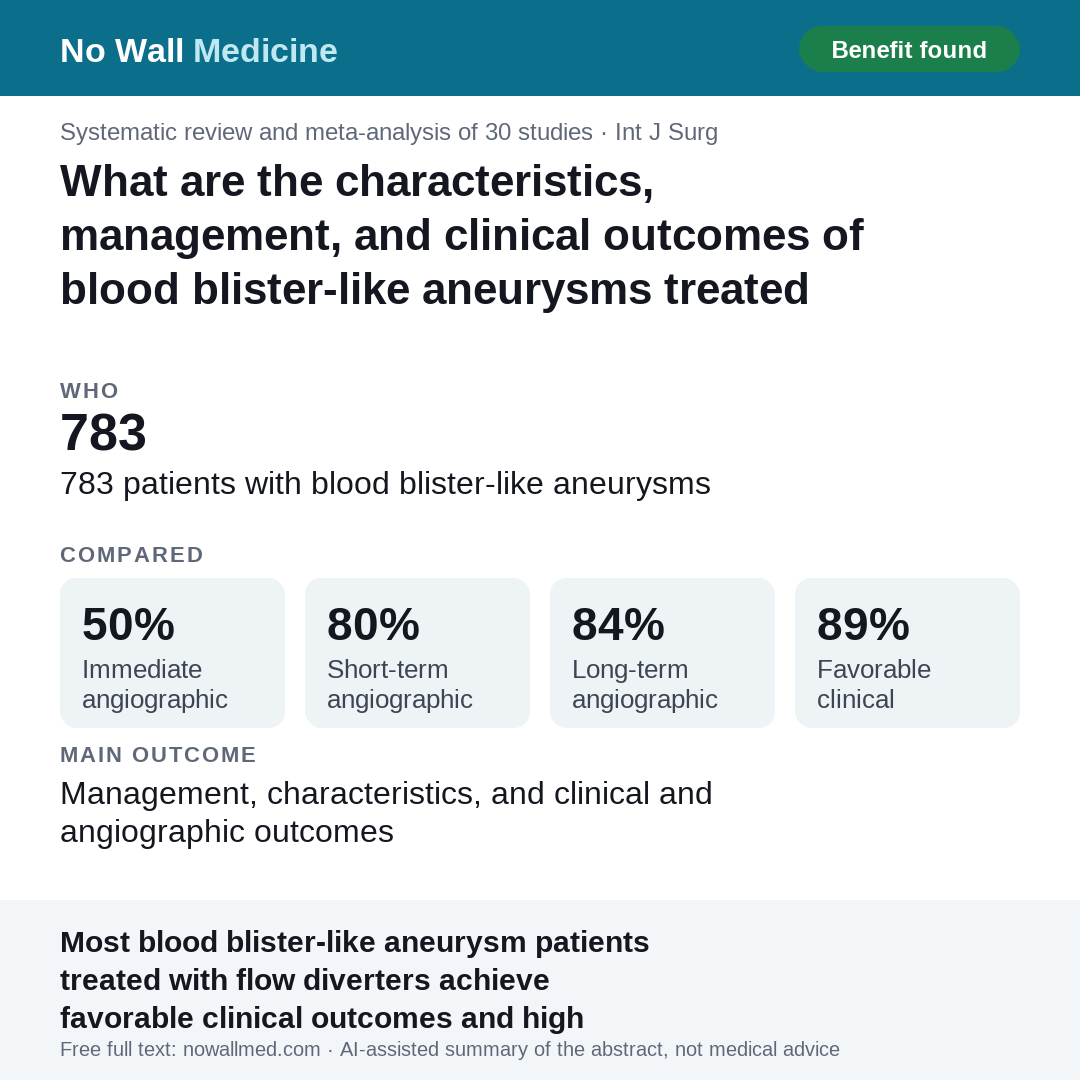
Comparison of postoperative inflammatory response between natural orifice specimen extraction surgery and conventional laparoscopy in the treatment of colorectal cancer: a meta-analysis and systematic review
Meta-analysis of 22 studiesBenefit found
Does natural orifice specimen extraction surgery compare to conventional laparoscopy for colorectal cancer?
Who
Colorectal cancer patients
Compared
Natural orifice specimen extraction surgery: lower inflammatory response levels
Conventional laparoscopy
Main outcome
Inflammatory response profiles and infectious complications
Result: SMD=-1.34,95% CI [-2.43, -0.25] for tumor necrosis factor-alpha
Bottom line: Natural orifice specimen extraction surgery shows a superior inflammatory profile without increasing infectious complications compared to conventional laparoscopy.
Int J Surg · 2025-01-01Download image
Comparison of different tracers in sentinel lymph node detection for endometrial cancer: a systematic review and network meta-analysis
Systematic review and network meta-analysisBenefit found
Which tracer combination is most effective for sentinel lymph node detection in endometrial cancer?
Who
2699
Patients with endometrial cancer undergoing sentinel lymph node biopsy
Compared
Radioactive isotopes and indocyanine green: 80.00% SUCRA for total detection and 86.36% for bilateral
Carbon nanoparticles: 97.77% SUCRA for para-aortic lymph node detection
Main outcome
Total and bilateral sentinel lymph node detection rates
Bottom line: Combining radioactive isotopes and indocyanine green is the optimal tracer combination for sentinel lymph node detection.
Int J Surg · 2025-01-01Download image

Final results of a randomized controlled trial: comparison of the efficacy and safety between totally laparoscopic and laparoscopic-assisted total gastrectomy for advanced Siewert III esophagogastric junction cancer and upper and middle third gastric cancer
Randomized controlled trialBenefit found
Is totally laparoscopic total gastrectomy better than laparoscopic-assisted total gastrectomy for specific gastric cancers?
Who
292
Patients with advanced Siewert III esophagogastric junction cancer and upper and middle third gastric cancer · Single-center
Compared
Totally laparoscopic total gastrectomy overlap: lower overall post-op complication rate
Laparoscopic-assisted total gastrectomy
Main outcome
postoperative complications within 30 days
Result: P=0.047
Bottom line: Totally laparoscopic total gastrectomy with overlap technique shows lower postoperative complication rates and positive short-term outcomes.
Int J Surg · 2025-01-01Download image
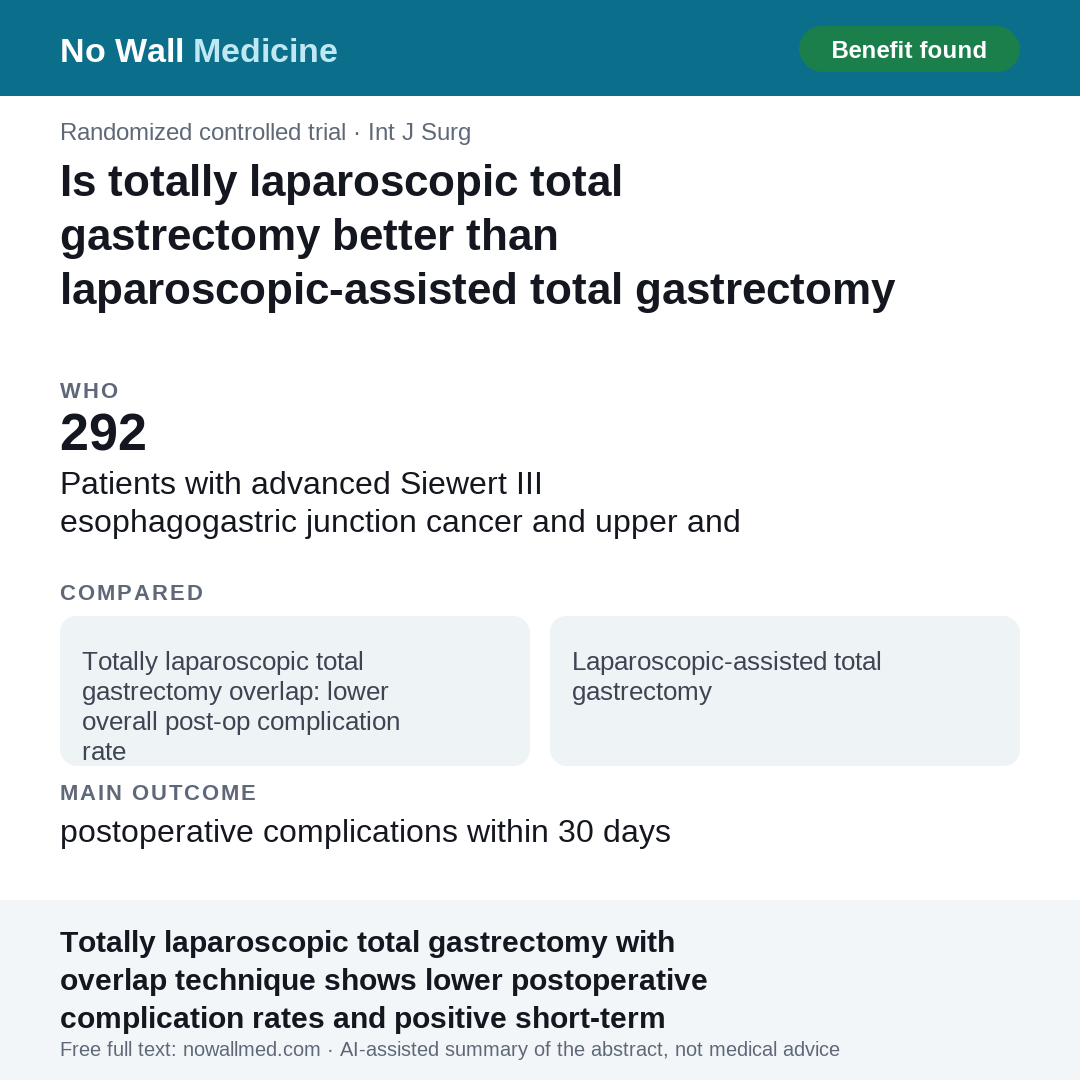
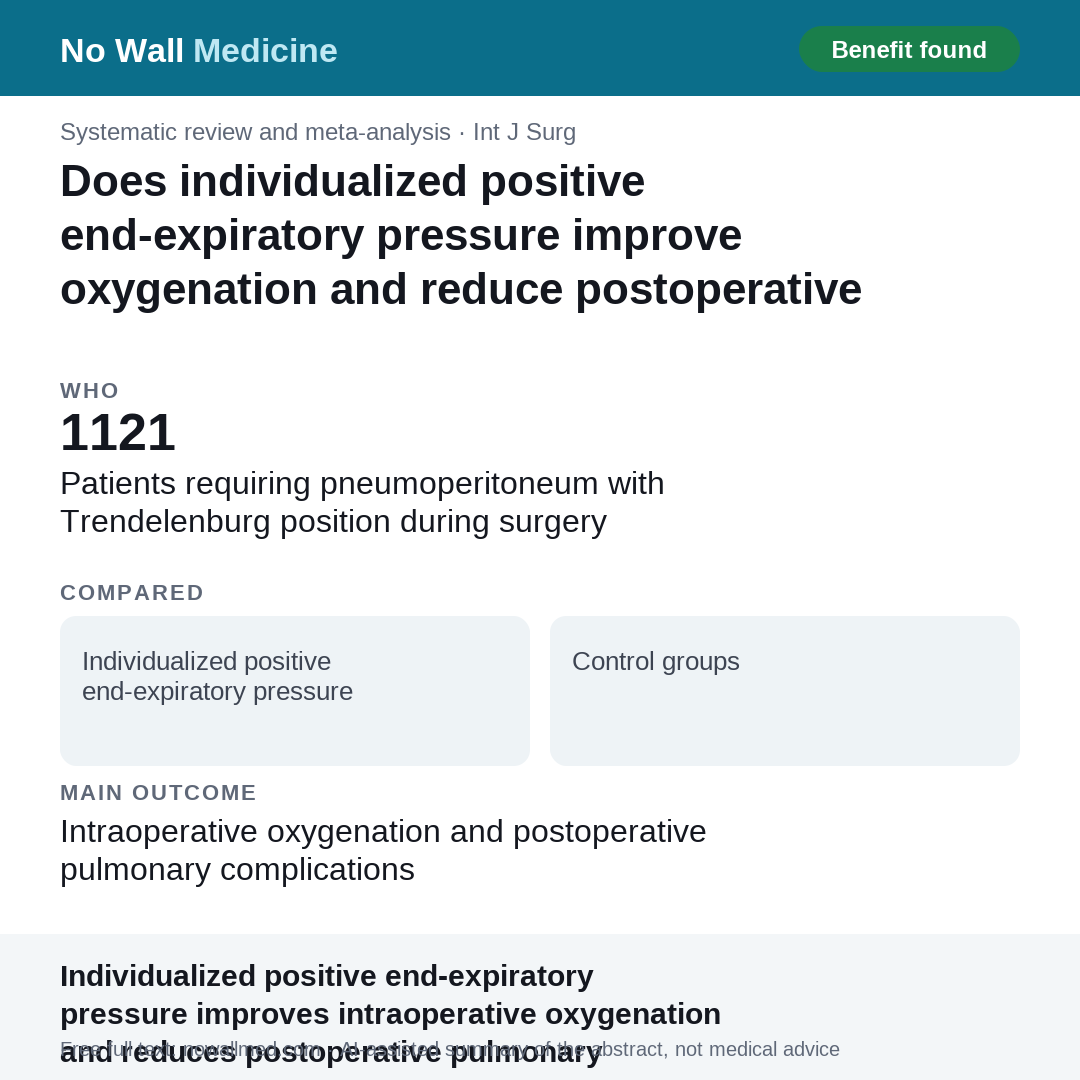
Effects of individualized positive end-expiratory pressure on intraoperative oxygenation and postoperative pulmonary complications in patients requiring pneumoperitoneum with Trendelenburg position: a systematic review and meta-analysis
Systematic review and meta-analysisBenefit found
Does individualized positive end-expiratory pressure improve oxygenation and reduce postoperative pulmonary complications?
Who
1121
Patients requiring pneumoperitoneum with Trendelenburg position during surgery
Compared
Individualized positive end-expiratory pressure
Control groups
Main outcome
Intraoperative oxygenation and postoperative pulmonary complications
Result: PaO2/FiO2 mean difference 56.52 mmHg (95% CI 33.98 to 79.06); PPC log risk ratio -0.50 (95% CI -0.84 to -0.16)
Bottom line: Individualized positive end-expiratory pressure improves intraoperative oxygenation and reduces postoperative pulmonary complications in these patients.
Int J Surg · 2025-01-01Download image
Efficacy and safety of phototherapies for upper lip scars in cleft lip patients: a systematic review and meta-analysis
Systematic review and meta-analysisBenefit found
Are phototherapies effective and safe for treating upper lip scars in cleft lip patients?
Who
Patients with upper lip scars after cleft lip surgery
Compared
Phototherapy
Routine care
Main outcome
Total Vancouver Scar Scale scores
Bottom line: Phototherapy significantly reduces total Vancouver Scar Scale scores for cleft lip scars with no serious complications.
Int J Surg · 2025-01-01Download image

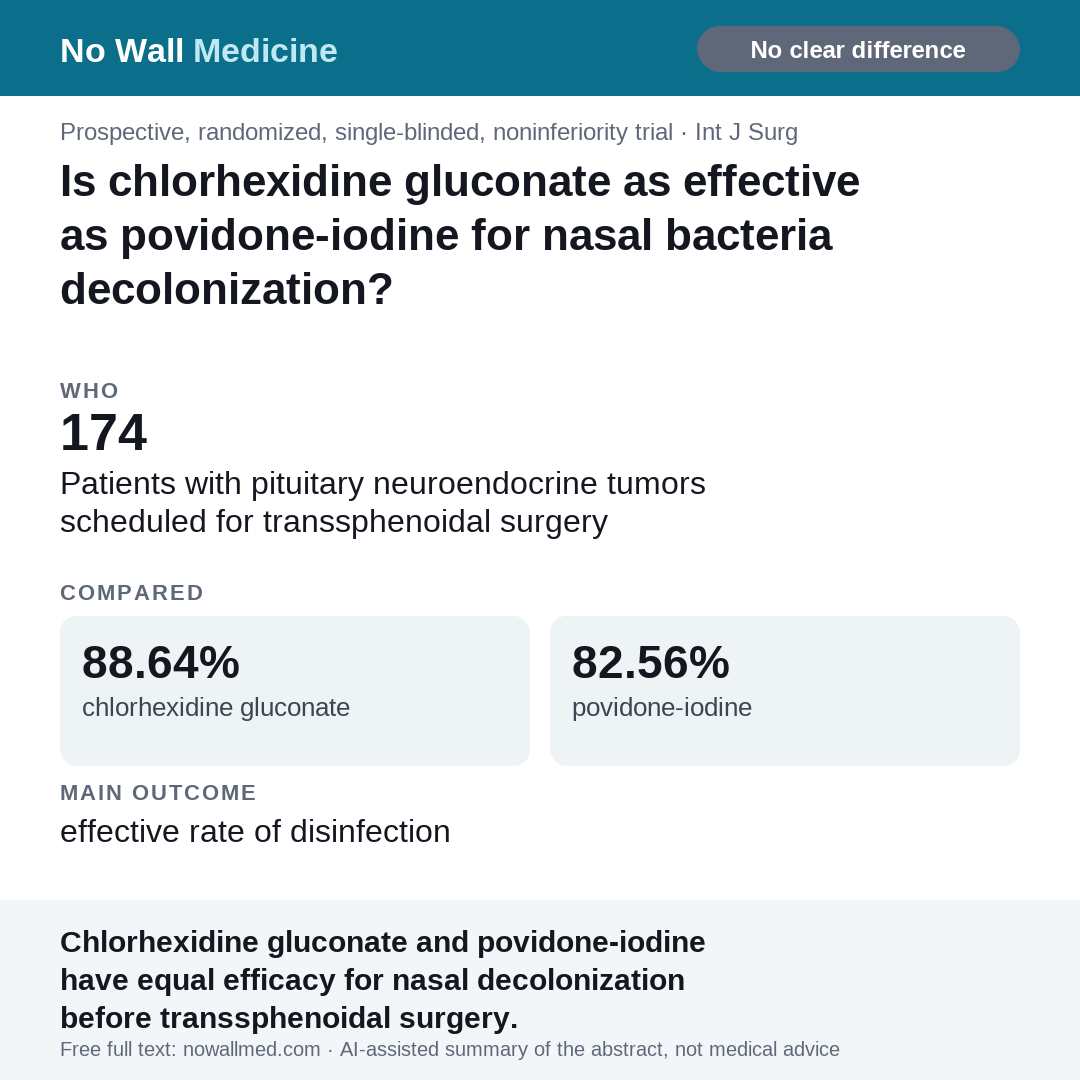
Chlorhexidine gluconate versus povidone-iodine for nasal bacteria decolonization before transsphenoidal surgery in patients with pituitary neuroendocrine tumors: a prospective, randomized, double-blind, noninferiority trial
Prospective, randomized, single-blinded, noninferiority trialNo clear difference
Is chlorhexidine gluconate as effective as povidone-iodine for nasal bacteria decolonization?
Who
174
Patients with pituitary neuroendocrine tumors scheduled for transsphenoidal surgery
Compared
88.64%chlorhexidine gluconate
82.56%povidone-iodine
Main outcome
effective rate of disinfection
Result: between-group difference 6.10% (95% CI -5.30 to 17.50)
Bottom line: Chlorhexidine gluconate and povidone-iodine have equal efficacy for nasal decolonization before transsphenoidal surgery.
Int J Surg · 2025-01-01Download image
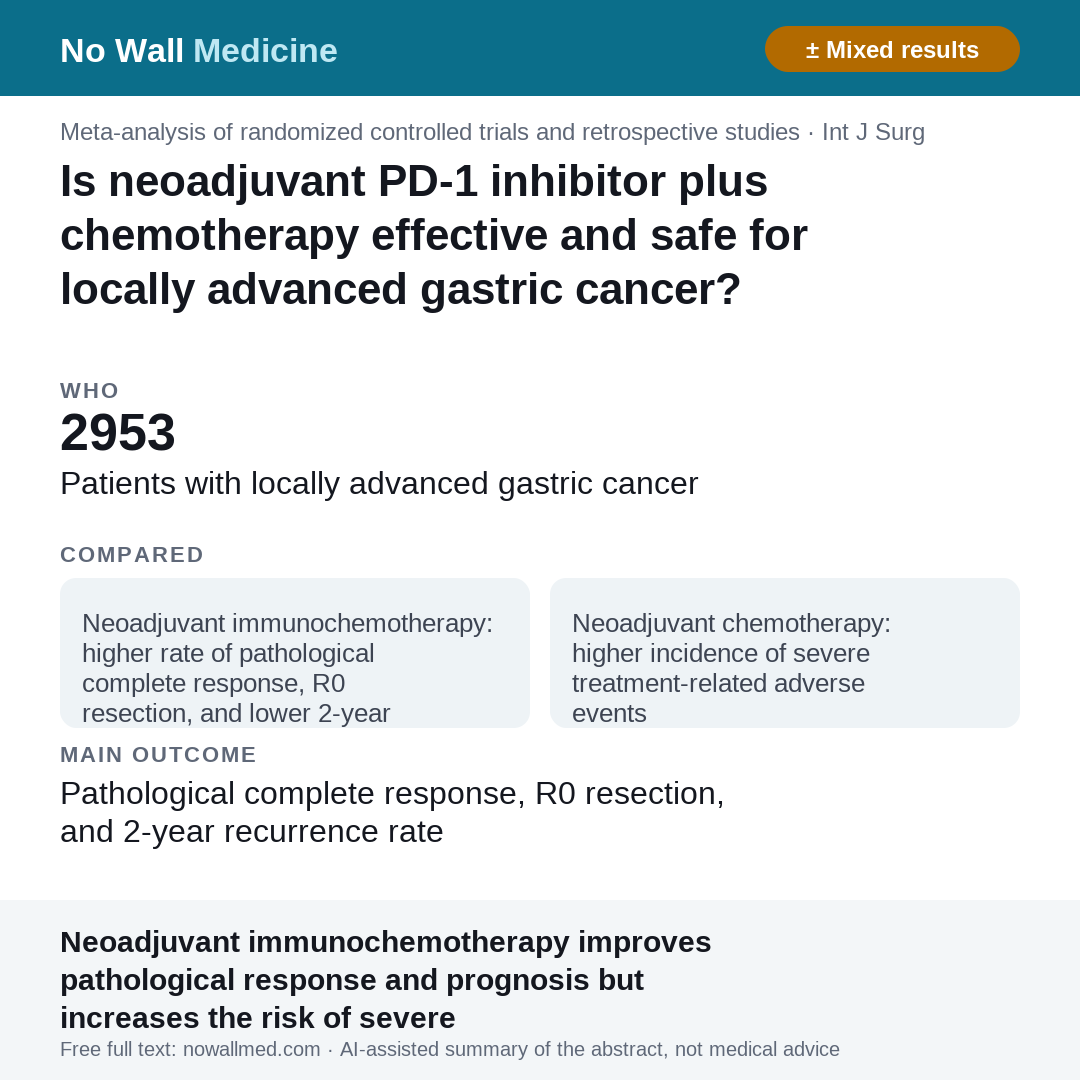
The safety and efficacy of neoadjuvant PD-1 inhibitor plus chemotherapy for patients with locally advanced gastric cancer: a systematic review and meta-analysis
Meta-analysis of randomized controlled trials and retrospective studiesMixed results
Is neoadjuvant PD-1 inhibitor plus chemotherapy effective and safe for locally advanced gastric cancer?
Who
2953
Patients with locally advanced gastric cancer
Compared
Neoadjuvant immunochemotherapy: higher rate of pathological complete response, R0 resection, and lower 2-year recurrence rate
Neoadjuvant chemotherapy: higher incidence of severe treatment-related adverse events
Main outcome
Pathological complete response, R0 resection, and 2-year recurrence rate
Bottom line: Neoadjuvant immunochemotherapy improves pathological response and prognosis but increases the risk of severe treatment-related adverse events.
Int J Surg · 2025-01-01Download image
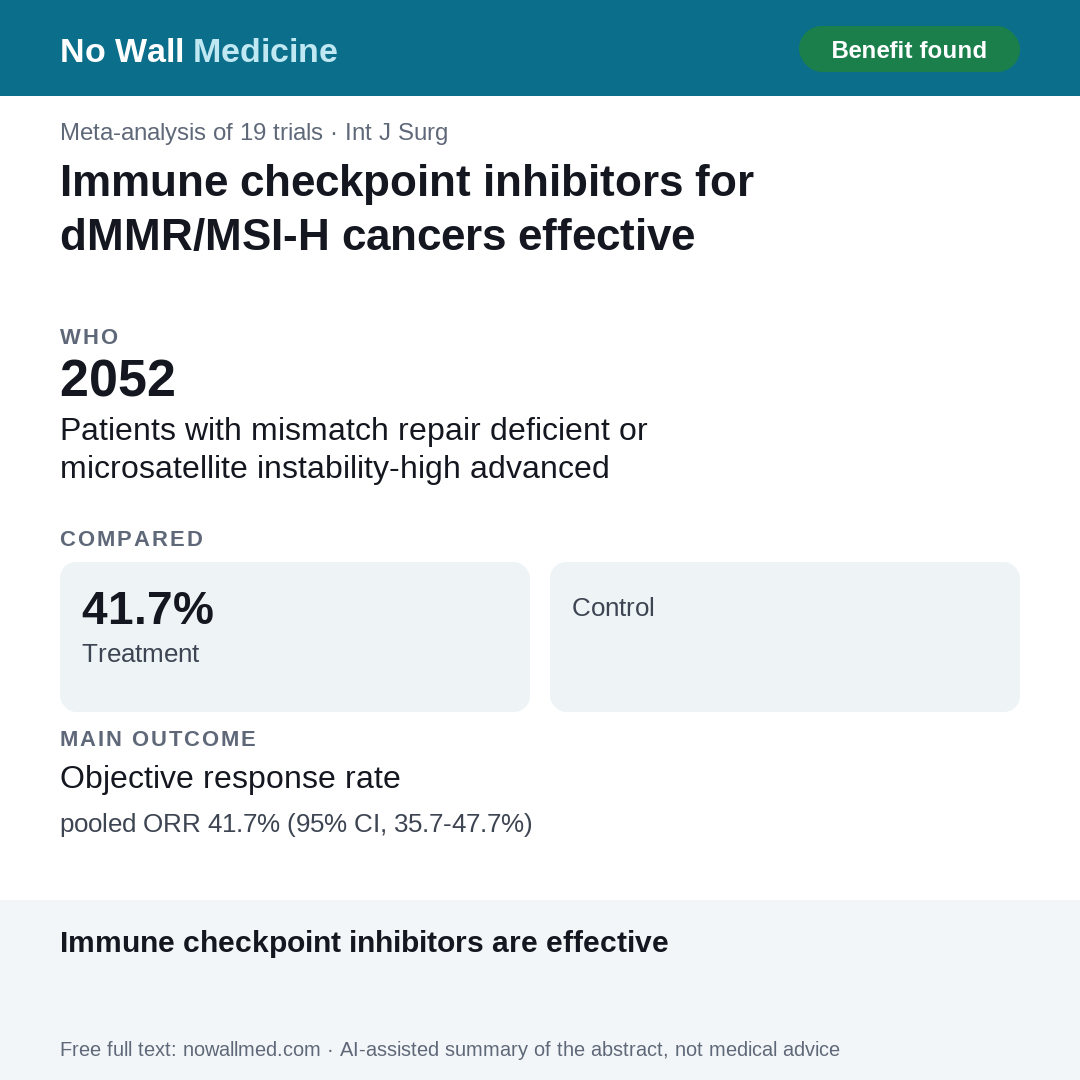
Immune checkpoint inhibitors for patients with mismatch repair deficient or microsatellite instability-high advanced cancers: a meta-analysis of phase I-III clinical trials
Meta-analysis of 19 trialsBenefit found
Immune checkpoint inhibitors for dMMR/MSI-H cancers effective
Who
2052
Patients with mismatch repair deficient or microsatellite instability-high advanced cancers
Compared
41.7%Treatment (95% CI, 35.7-47.7%)
Control
Main outcome
Objective response rate
Result: pooled ORR 41.7% (95% CI, 35.7-47.7%)
Bottom line: Immune checkpoint inhibitors are effective
Limitation: need head-to-head comparisons
Int J Surg · 2025-01-01Download image
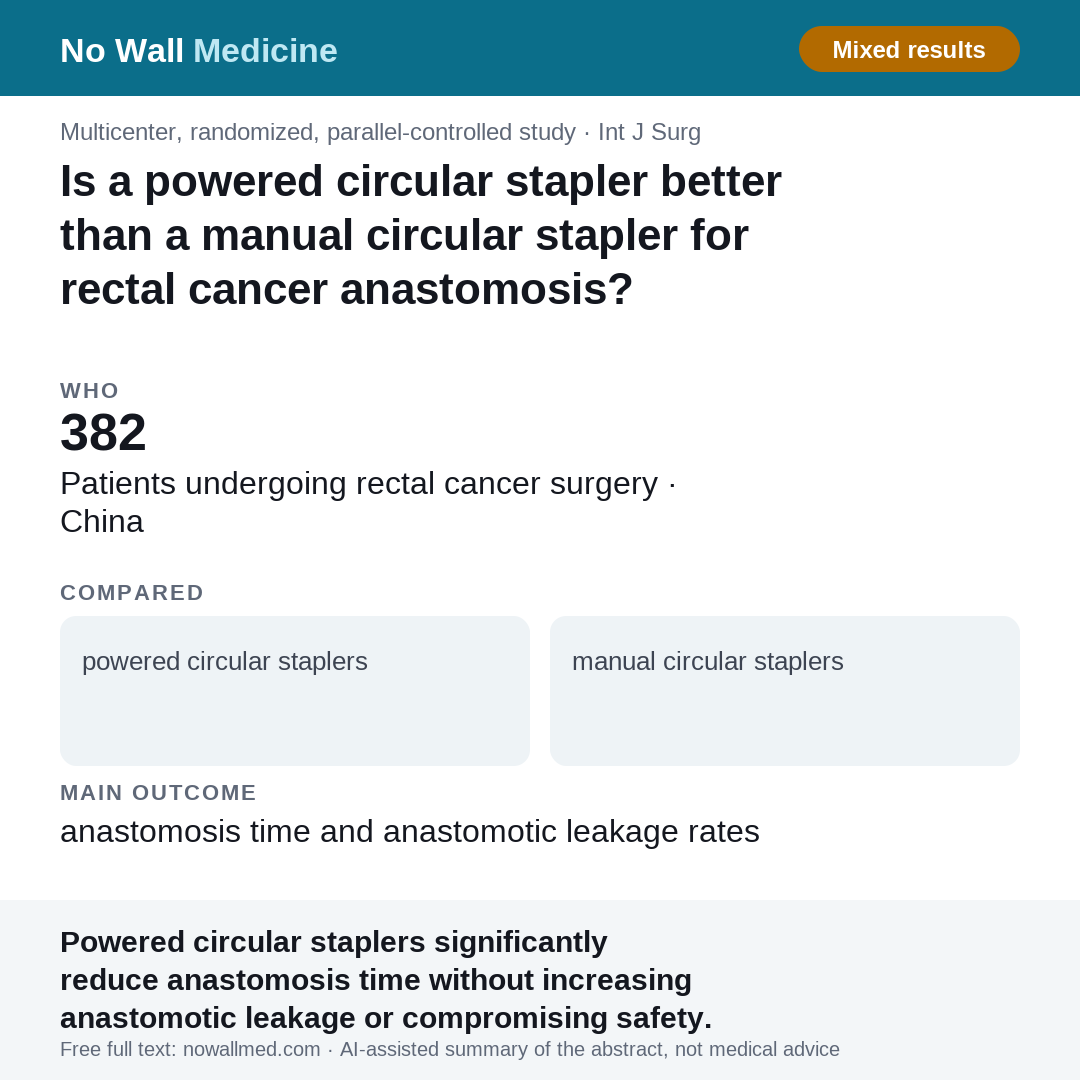
Systemic assessment of manual circular stapler versus powered circular stapler for anastomosis in rectal cancer: a large-scale Chinese multicenter prospective cohort study
Multicenter, randomized, parallel-controlled studyMixed results
Is a powered circular stapler better than a manual circular stapler for rectal cancer anastomosis?
Who
382
Patients undergoing rectal cancer surgery · China
Compared
powered circular staplers
manual circular staplers
Main outcome
anastomosis time and anastomotic leakage rates
Bottom line: Powered circular staplers significantly reduce anastomosis time without increasing anastomotic leakage or compromising safety.
Int J Surg · 2025-01-01Download image