Visual abstracts
New randomized trials and meta-analyses from leading journals at a glance: who was studied, what was compared, and what was found. Every paper is free to read in full.
All specialtiesCardiology 2692Oncology 2271Gastroenterology & Hepatology 1033Infectious Disease 1693Neurology 1073Psychiatry & Mental Health 1246Pulmonology 1130Critical Care 744Endocrinology & Diabetes 1385Pediatrics 1570Surgery 1382Orthopedics & Sports Medicine 495Neurosurgery 331Cardiothoracic & Vascular Surgery 295Plastic & Reconstructive Surgery 401Nephrology 556Rheumatology 413Hematology 583Dermatology 317Ophthalmology 307Obstetrics & Gynecology 882Public & Global Health 492Radiology & Imaging 372Anesthesiology 538Urology 446ENT (Otolaryngology) 318Emergency Medicine 300Allergy & Immunology 174Geriatrics 575Family Medicine & Primary Care 307Medical Genetics & Genomics 303Pathology & Laboratory Medicine 85Physical Medicine & Rehabilitation 438Palliative Care 238Nutrition 716Digital Health & AI 1290General Medicine 193
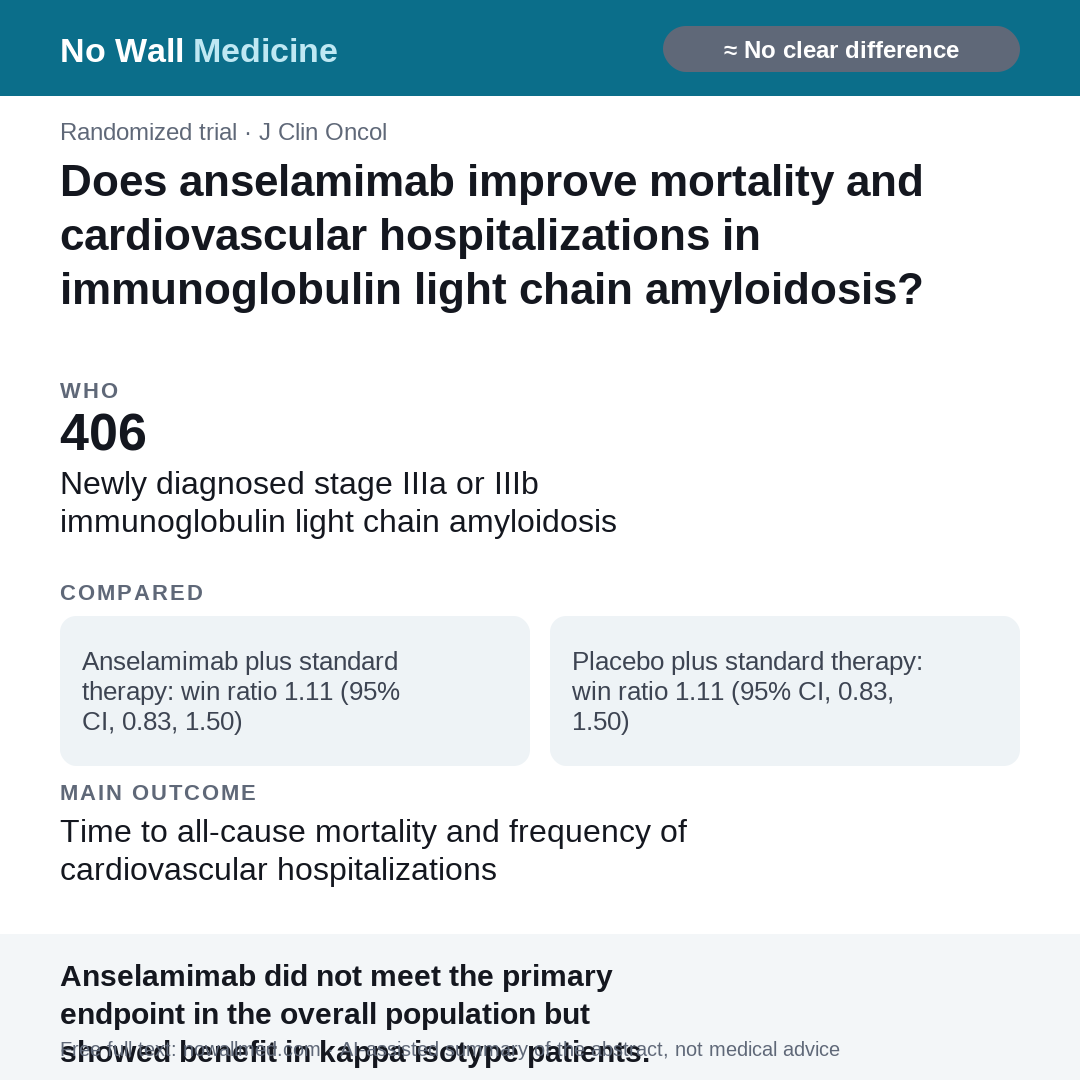
Efficacy and Safety of Anselamimab in Immunoglobulin Light Chain Amyloidosis: Results From the Randomized CARES Trials
Randomized trialNo clear difference
Does anselamimab improve mortality and cardiovascular hospitalizations in immunoglobulin light chain amyloidosis?
Who
406
Newly diagnosed stage IIIa or IIIb immunoglobulin light chain amyloidosis patients
Compared
Anselamimab plus standard therapy: win ratio 1.11 (95% CI, 0.83, 1.50)
Placebo plus standard therapy: win ratio 1.11 (95% CI, 0.83, 1.50)
Main outcome
Time to all-cause mortality and frequency of cardiovascular hospitalizations
Result: win ratio 1.11 (95% CI, 0.83, 1.50)
Bottom line: Anselamimab did not meet the primary endpoint in the overall population but showed benefit in kappa isotype patients.
J Clin Oncol · 2026-05-29Download image
Efficacy and safety of a 4-month quabodepistat, delamanid, and bedaquiline regimen for drug-susceptible pulmonary tuberculosis: a multicentre, open-label, randomised, proof-of-concept, non-inferiority, phase 2b/c trial
Open-label, randomised, non-inferiority, phase 2b/c trialBenefit found
Is a 4-month quabodepistat, delamanid, and bedaquiline regimen non-inferior to 6 months of standard care?
Who
122
Adults with newly diagnosed, drug-susceptible pulmonary tuberculosis · Six clinical research sites in South Africa
Compared
96.0%Pooled DBQ group (96 of 100 participants)
100.0%RHEZ group (all 21 participants)
Main outcome
Sputum culture conversion by the end of treatment
Result: difference -4.0% (80% CI -7.4 to 3.4)
Bottom line: A 4-month regimen of quabodepistat, delamanid, and bedaquiline was non-inferior to 6 months of standard care.
Lancet Infect Dis · 2026-05-29Download image

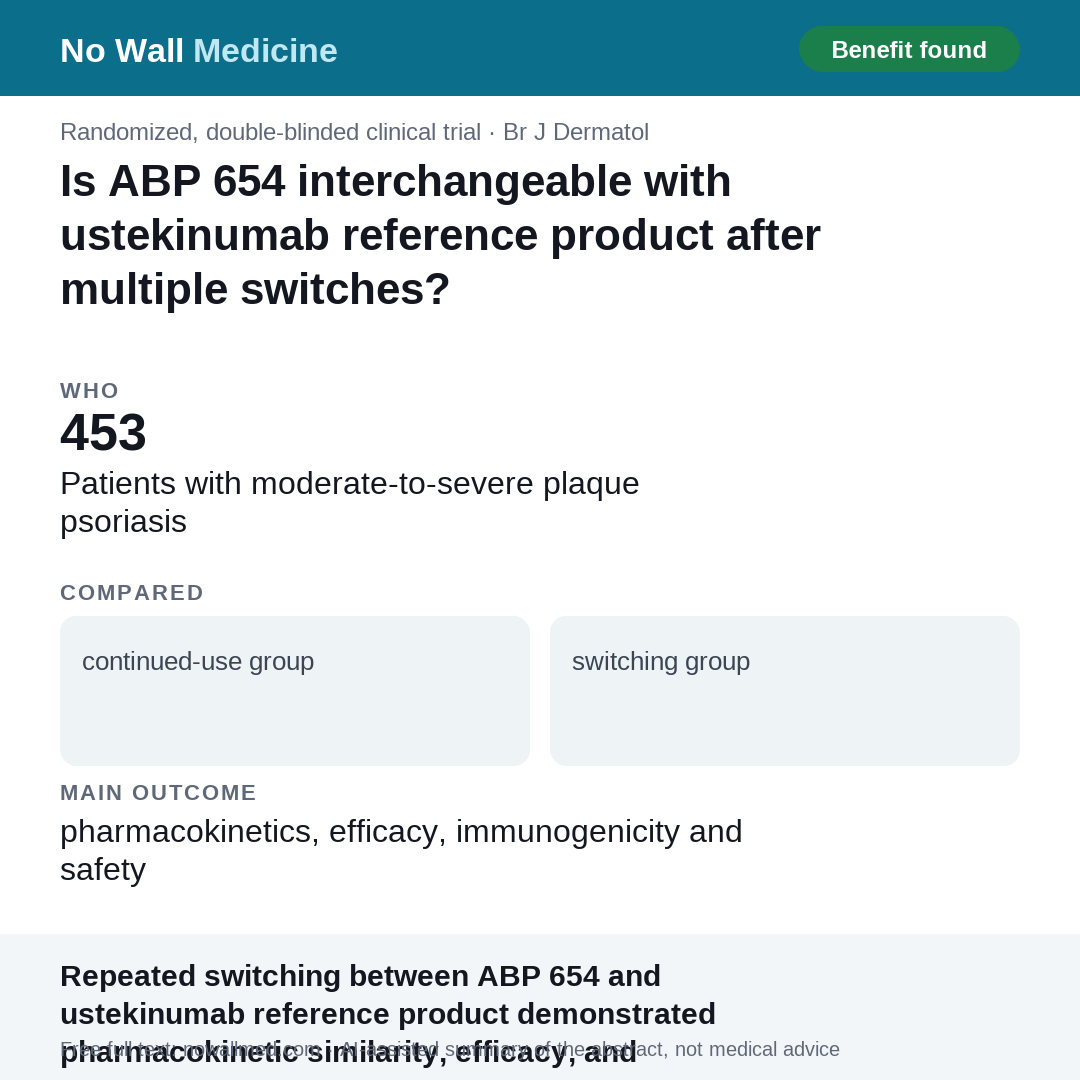
Repeated switching between biosimilar ABP 654 and reference ustekinumab in patients with moderate-to-severe plaque psoriasis: a randomized double-blinded clinical trial to support interchangeability
Randomized, double-blinded clinical trialBenefit found
Is ABP 654 interchangeable with ustekinumab reference product after multiple switches?
Who
453
Patients with moderate-to-severe plaque psoriasis
Compared
continued-use group
switching group
Main outcome
pharmacokinetics, efficacy, immunogenicity and safety
Result: AUCtau geometric mean ratio 0.93 (90% CI 0.89-0.98) and Cmax 0.95 (90% CI 0.90-1.00)
Bottom line: Repeated switching between ABP 654 and ustekinumab reference product demonstrated pharmacokinetic similarity, efficacy, and safety.
Br J Dermatol · 2026-05-29Download image
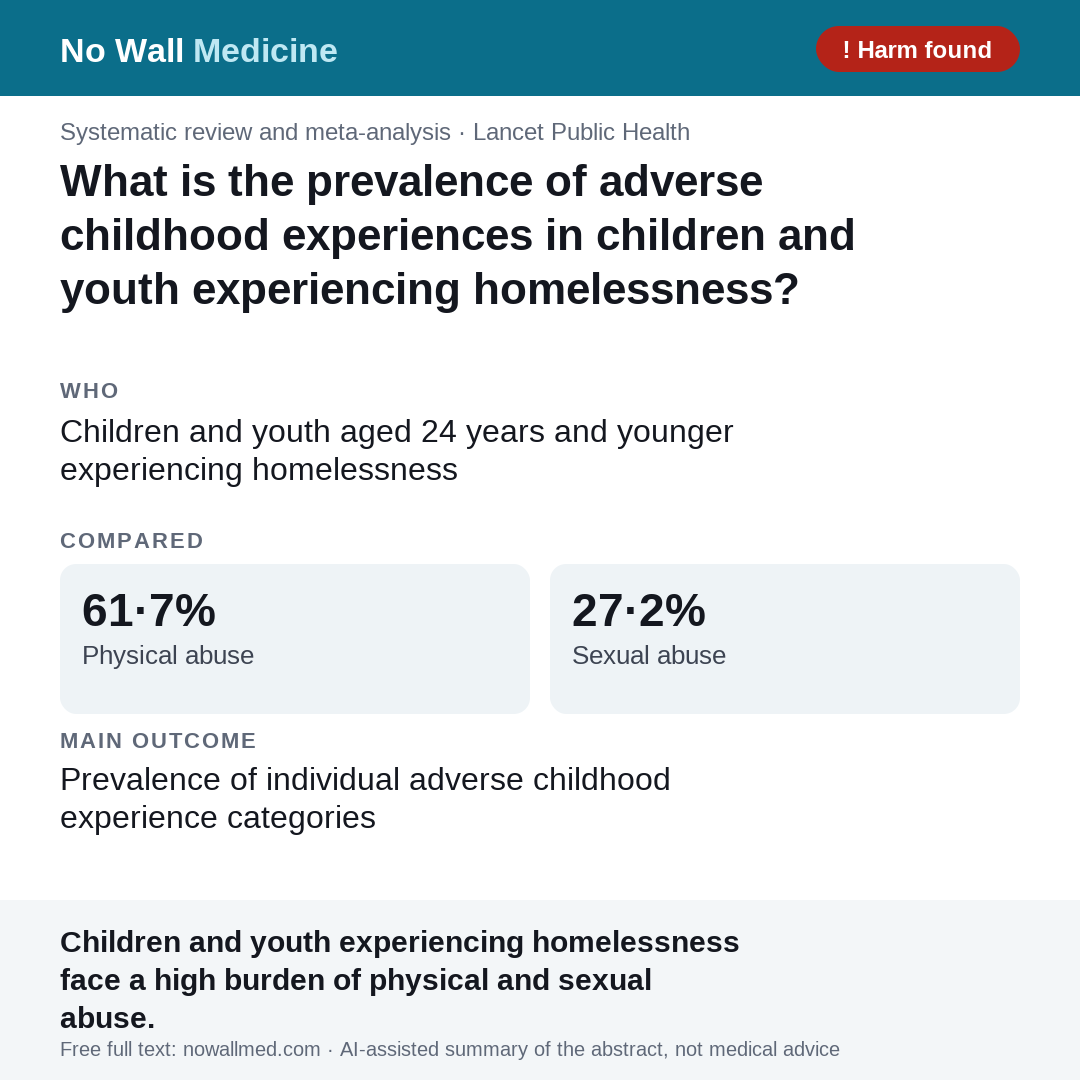
Adverse childhood experiences in children and youth experiencing homelessness: a systematic review and meta-analysis
Systematic review and meta-analysisHarm found
What is the prevalence of adverse childhood experiences in children and youth experiencing homelessness?
Who
Children and youth aged 24 years and younger experiencing homelessness
Compared
61·7%Physical abuse (95% CI 52·9-69·9)
27·2%Sexual abuse (95% CI 23·1-31·8)
Main outcome
Prevalence of individual adverse childhood experience categories
Bottom line: Children and youth experiencing homelessness face a high burden of physical and sexual abuse.
Limitation: Heterogeneity was substantial for both physical and sexual abuse prevalence estimates.
Lancet Public Health · 2026-05-29Download image
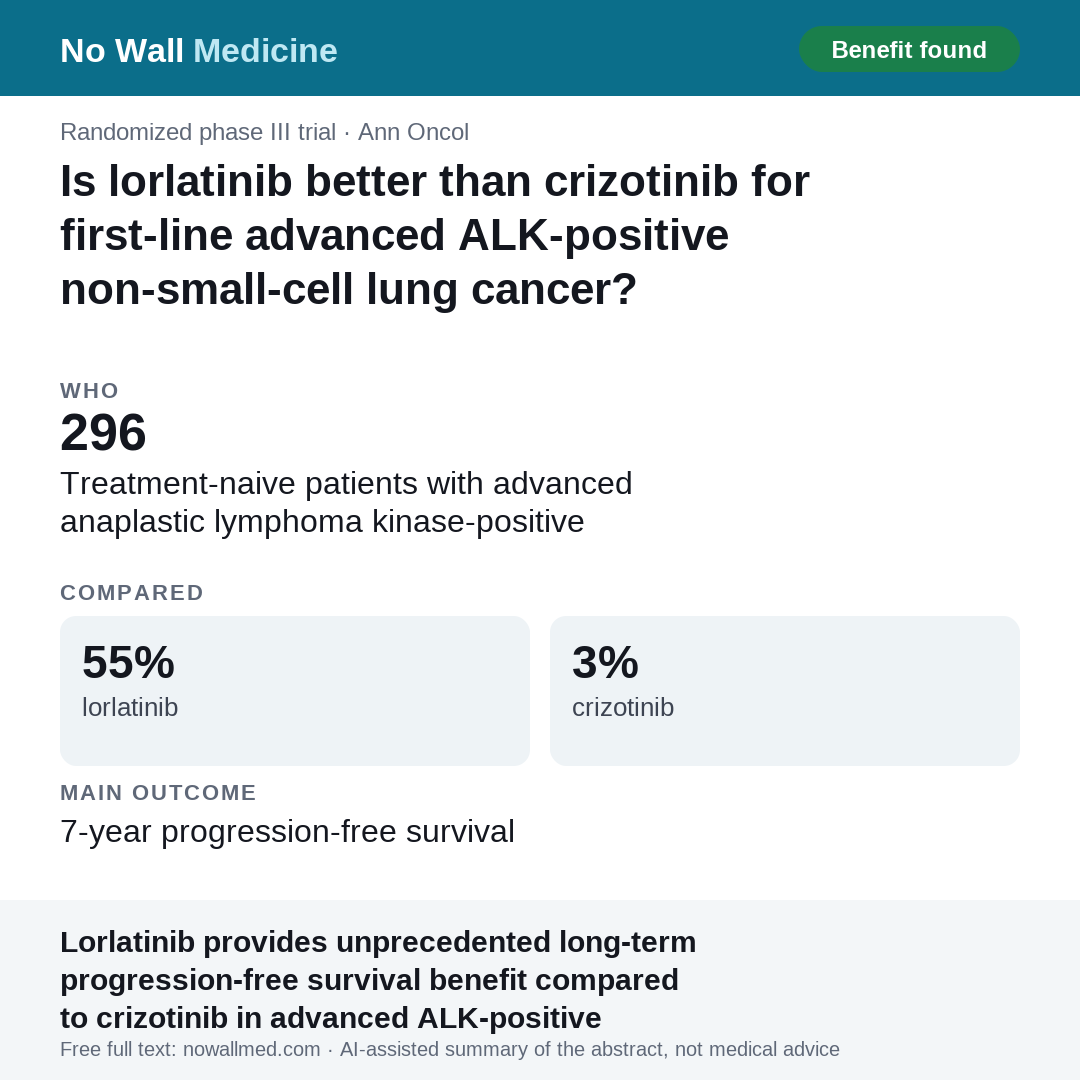
Lorlatinib versus crizotinib as first-line treatment for advanced ALK-positive non-small-cell lung cancer: 7-year update from the phase III CROWN study
Randomized phase III trialBenefit found
Is lorlatinib better than crizotinib for first-line advanced ALK-positive non-small-cell lung cancer?
Who
296
Treatment-naive patients with advanced anaplastic lymphoma kinase-positive non-small-cell lung cancer
Compared
55%lorlatinib
3%crizotinib
Main outcome
7-year progression-free survival
Result: hazard ratio 0.19 (95% CI 0.13 to 0.26)
Bottom line: Lorlatinib provides unprecedented long-term progression-free survival benefit compared to crizotinib in advanced ALK-positive non-small-cell lung cancer.
Ann Oncol · 2026-05-29Download image
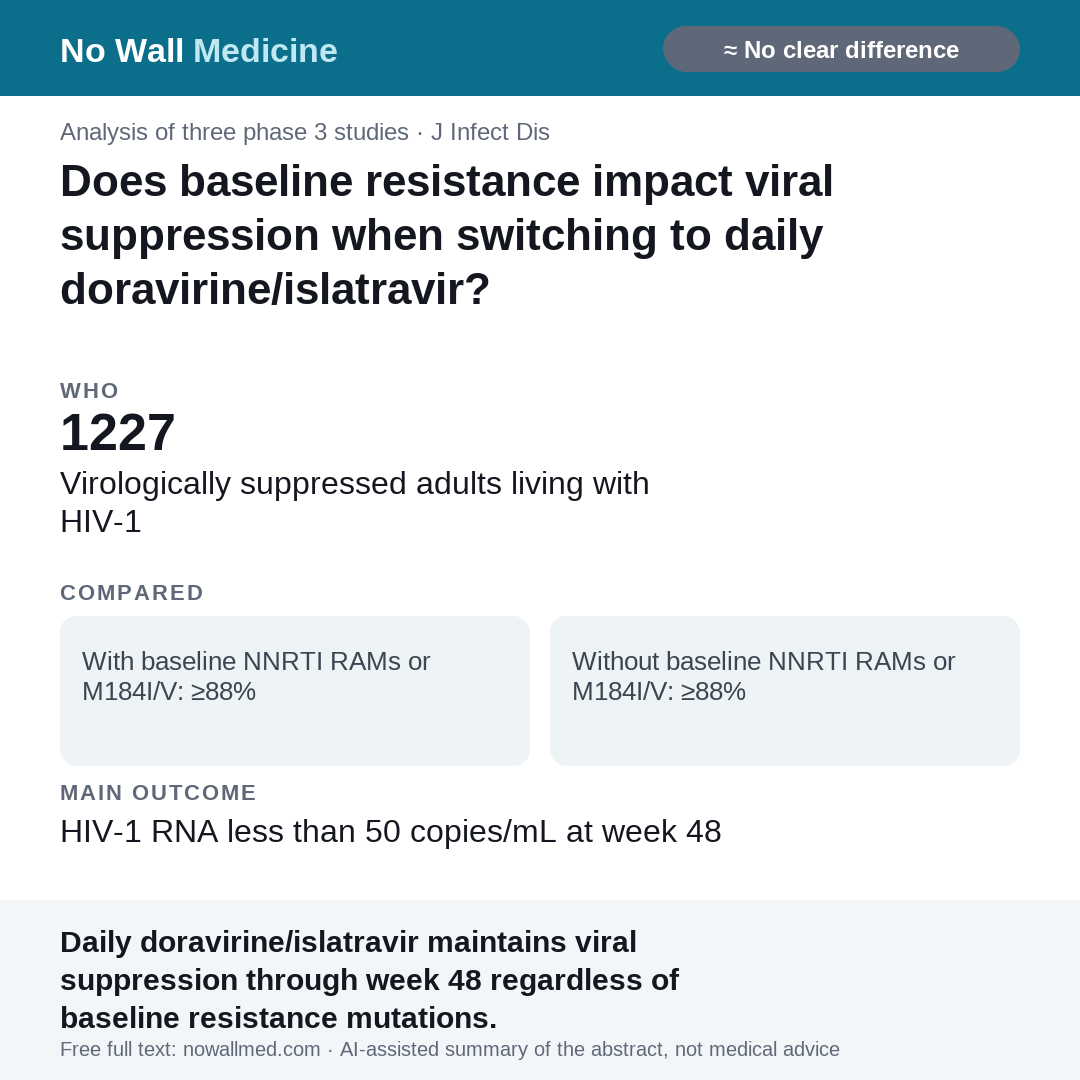
Switching to Daily Doravirine/Islatravir (100/0.25 mg) Maintains Viral Suppression Through Week 48 Despite Baseline Non-Nucleoside Reverse Transcriptase Inhibitor Resistance-Associated Mutations or M184I/V in Proviral DNA
Analysis of three phase 3 studiesNo clear difference
Does baseline resistance impact viral suppression when switching to daily doravirine/islatravir?
Who
1227
Virologically suppressed adults living with HIV-1
Compared
With baseline NNRTI RAMs or M184I/V: ≥88%
Without baseline NNRTI RAMs or M184I/V: ≥88%
Main outcome
HIV-1 RNA less than 50 copies/mL at week 48
Bottom line: Daily doravirine/islatravir maintains viral suppression through week 48 regardless of baseline resistance mutations.
J Infect Dis · 2026-05-29Download image
VRON-0200 alone and in combination with investigational antivirals for participants with chronic hepatitis B virus infection receiving stable nucleos(t)ide therapy: a phase 1b, randomised, open-label, multicentre trial
Phase 1b, randomised, open-label, multicentre trialBenefit found
Is VRON-0200 safe and effective in participants with chronic hepatitis B virus infection?
Who
35
Chronic hepatitis B virus infection patients on stable nucleos(t)ide therapy · multicentre trial
Compared
Groups 1 and 2 (VRON-0200 alone): 85% had sustained or continued HBsAg declines
Group 3 (VRON-0200 with investigational antivirals)
Main outcome
safety, tolerability, immunogenicity, and antiviral efficacy
Bottom line: VRON-0200 was well tolerated and showed sustained hepatitis B surface antigen declines in participants.
Lancet Microbe · 2026-05-29Download image

Micro- and nanoplastics in the human genitourinary system: oncological impact - a systematic review
Systematic reviewMixed results
Are micro- and nanoplastics present in the human genitourinary system and oncological tissues?
Who
Human tissues of the urinary tract and male reproductive organs
Compared
Malignant tissue: significantly higher microplastic concentrations, particle counts or greater polymer diversity
Adjacent non-malignant tissue
Main outcome
Presence and concentration of micro- and nanoplastics in tissues
Bottom line: Micro- and nanoplastics are widely present in genitourinary tissues and show enrichment in urological malignancies.
Limitation: Substantial methodological heterogeneity across studies limits comparability.
BJU Int · 2026-05-29Download image

Agreement Between Molecular Imaging and Adrenal Vein Sampling for Localization in Primary Aldosteronism: A Systematic Review
Systematic reviewMixed results
How well does molecular imaging agree with adrenal vein sampling for localization?
Who
Patients with primary aldosteronism
Compared
Molecular imaging
Adrenal vein sampling
Main outcome
Agreement for localization in primary aldosteronism
Result: positive percent agreement 0.6 to 0.9, negative percent agreement 0.5 to 0.9
Bottom line: Molecular imaging shows moderate and variable agreement with adrenal vein sampling for localization in primary aldosteronism.
Limitation: Patient outcome-based studies are still needed to define clinical utility.
J Am Heart Assoc · 2026-05-29Download image

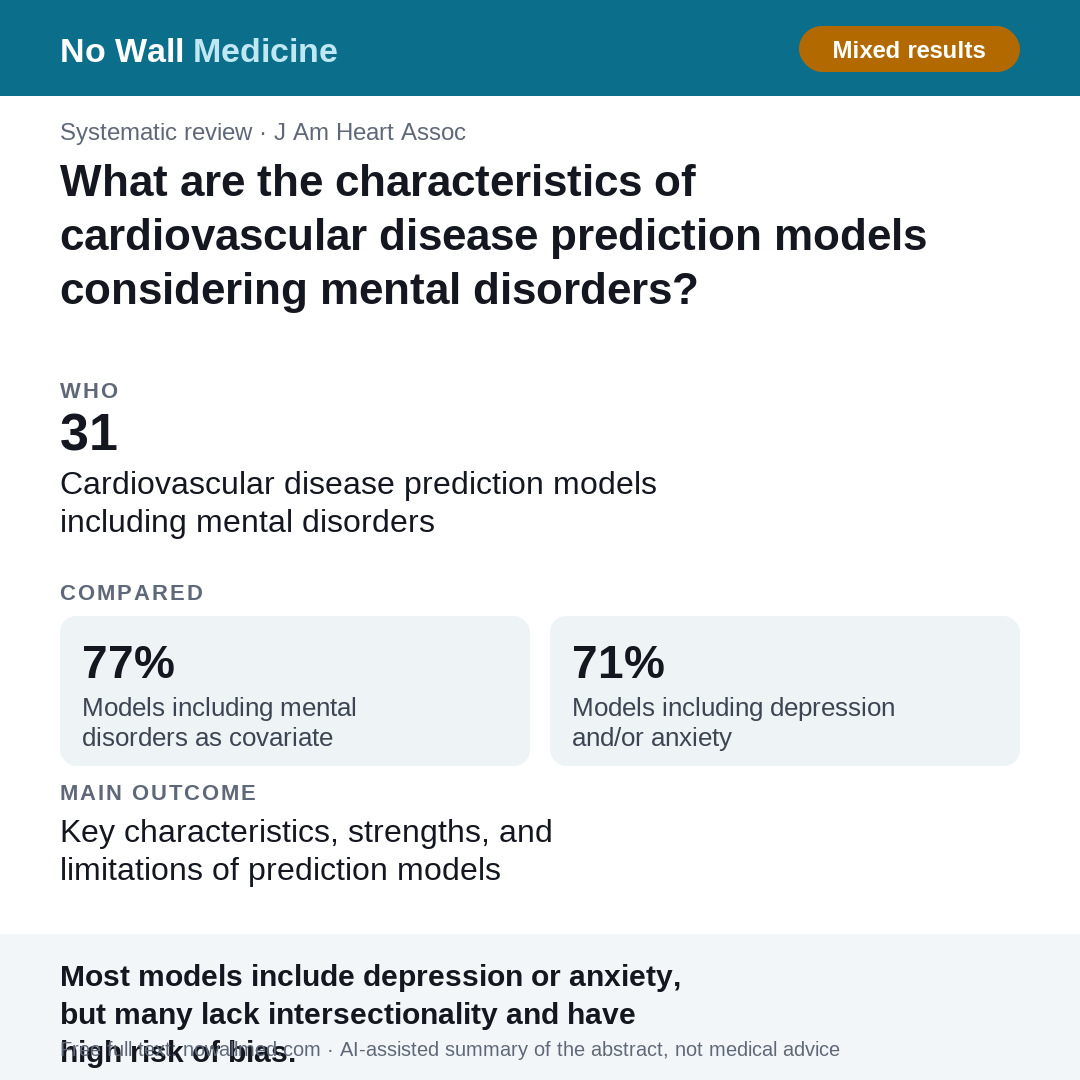
Characteristics of Cardiovascular Disease Prediction Models Considering Mental Disorders: A Systematic Review
Systematic reviewMixed results
What are the characteristics of cardiovascular disease prediction models considering mental disorders?
Who
31
Cardiovascular disease prediction models including mental disorders
Compared
77%Models including mental disorders as covariate
71%Models including depression and/or anxiety
Main outcome
Key characteristics, strengths, and limitations of prediction models
Bottom line: Most models include depression or anxiety, but many lack intersectionality and have high risk of bias.
Limitation: The majority of identified models had analytic concerns and only one had low risk of bias.
J Am Heart Assoc · 2026-05-29Download image
Convergent Hybrid Ablation Versus Catheter Ablation in Patients With Persistent Atrial Fibrillation and Heart Failure: HALT AF Study Protocol and Rationale for a Multicenter Randomized Controlled Trial
Multicenter, prospective, open-label, randomized controlled trialUnclear result
Is hybrid ablation better than catheter ablation for persistent atrial fibrillation and heart failure?
Who
120
Patients with nonparoxysmal atrial fibrillation, left ventricular ejection fraction <50%, and moderate left atrial dilatation · Multicenter
Compared
hybrid ablation
catheter ablation
Main outcome
Freedom from recurrent arrhythmia >30 seconds at 12 months
Bottom line: This study protocol describes a trial to compare hybrid and catheter ablation in patients with heart failure.
J Am Heart Assoc · 2026-05-29Download image

Emotion regulation impairment across psychiatric disorders: a systematic review and meta-analysis
Systematic review and meta-analysisBenefit found
Is emotion regulation impairment a transdiagnostic feature across major psychiatric disorders?
Who
Individuals with psychiatric disorders and healthy controls
Compared
Psychiatric disorders: large and significant differences for all 12 disorders on DERS
Healthy controls
Main outcome
Emotion regulation impairment using various scales
Bottom line: Individuals with major psychiatric disorders demonstrate reduced capacity to regulate emotions across various diagnoses and measures.
Transl Psychiatry · 2026-05-29Download image

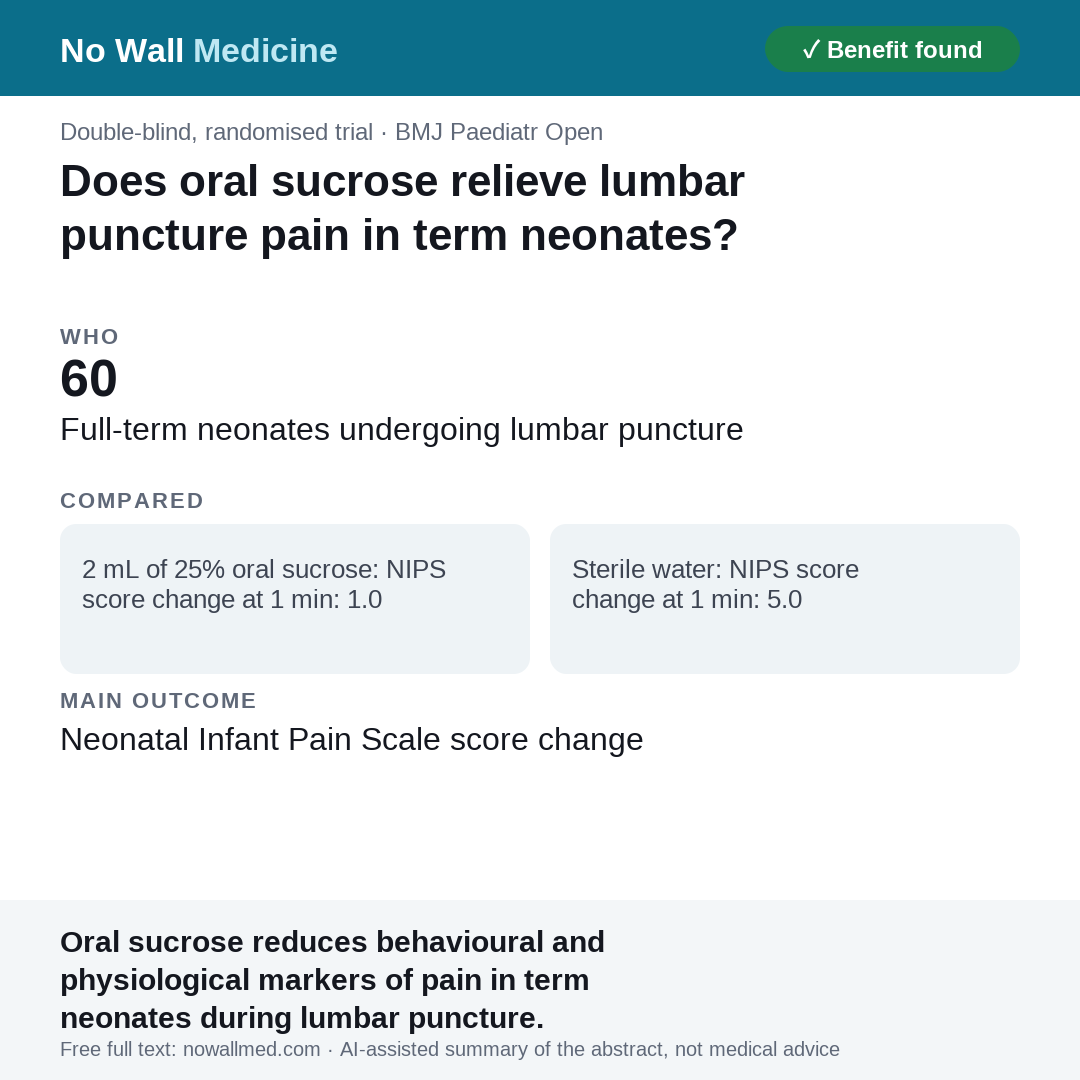
The efficacy of oral sucrose for relieving lumbar puncture pain in neonates: a randomised clinical trial
Double-blind, randomised trialBenefit found
Does oral sucrose relieve lumbar puncture pain in term neonates?
Who
60
Full-term neonates undergoing lumbar puncture
Compared
2 mL of 25% oral sucrose: NIPS score change at 1 min: 1.0
Sterile water: NIPS score change at 1 min: 5.0
Main outcome
Neonatal Infant Pain Scale score change
Bottom line: Oral sucrose reduces behavioural and physiological markers of pain in term neonates during lumbar puncture.
BMJ Paediatr Open · 2026-05-29Download image
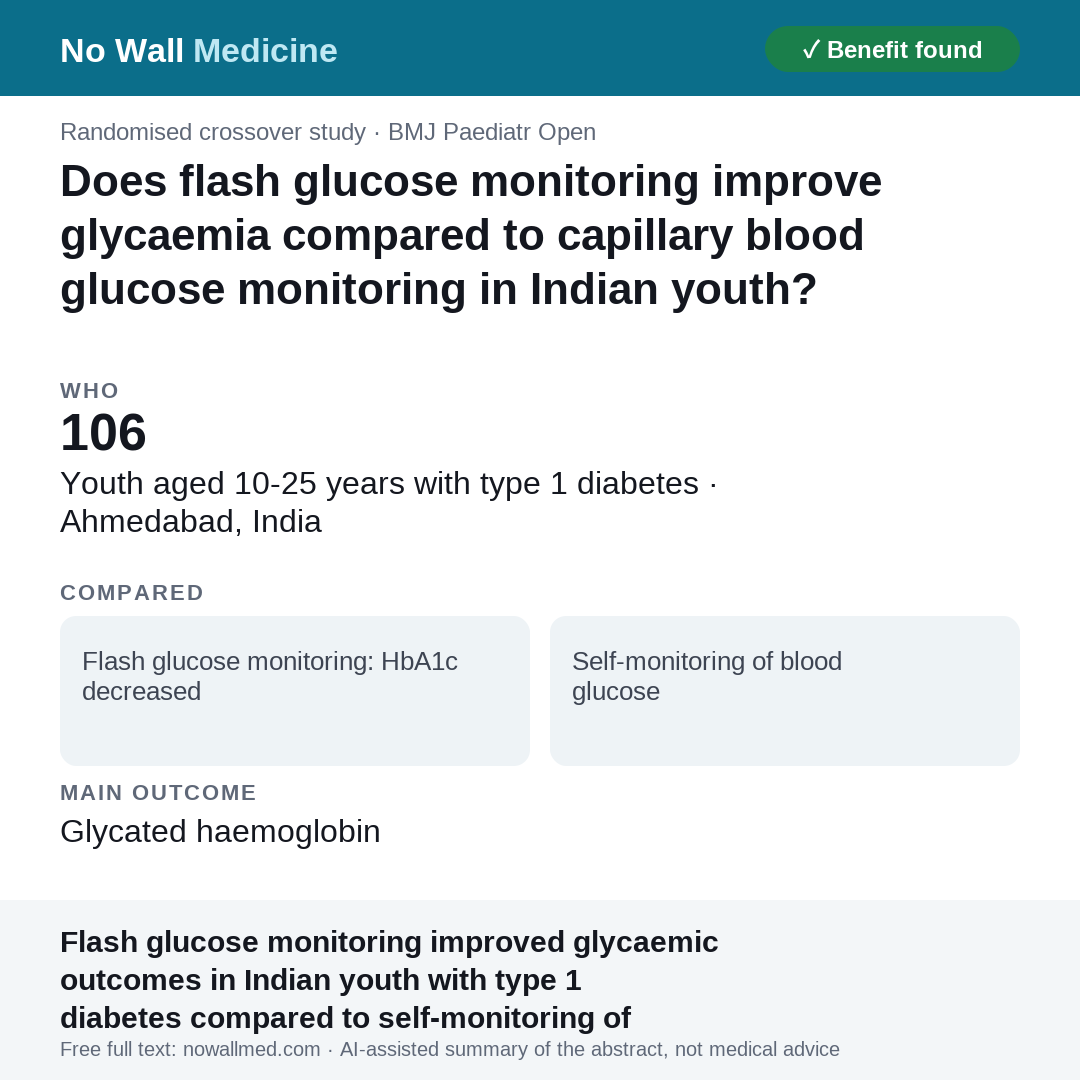
Impact of flash glucose monitoring versus capillary blood glucose monitoring on glycaemia in Indian youth with type 1 diabetes: a randomised crossover study
Randomised crossover studyBenefit found
Does flash glucose monitoring improve glycaemia compared to capillary blood glucose monitoring in Indian youth?
Who
106
Youth aged 10-25 years with type 1 diabetes · Ahmedabad, India
Compared
Flash glucose monitoring: HbA1c decreased
Self-monitoring of blood glucose
Main outcome
Glycated haemoglobin
Result: difference -0.44% (4.8 mmol/mol); p=0.006
Bottom line: Flash glucose monitoring improved glycaemic outcomes in Indian youth with type 1 diabetes compared to self-monitoring of blood glucose.
BMJ Paediatr Open · 2026-05-29Download image
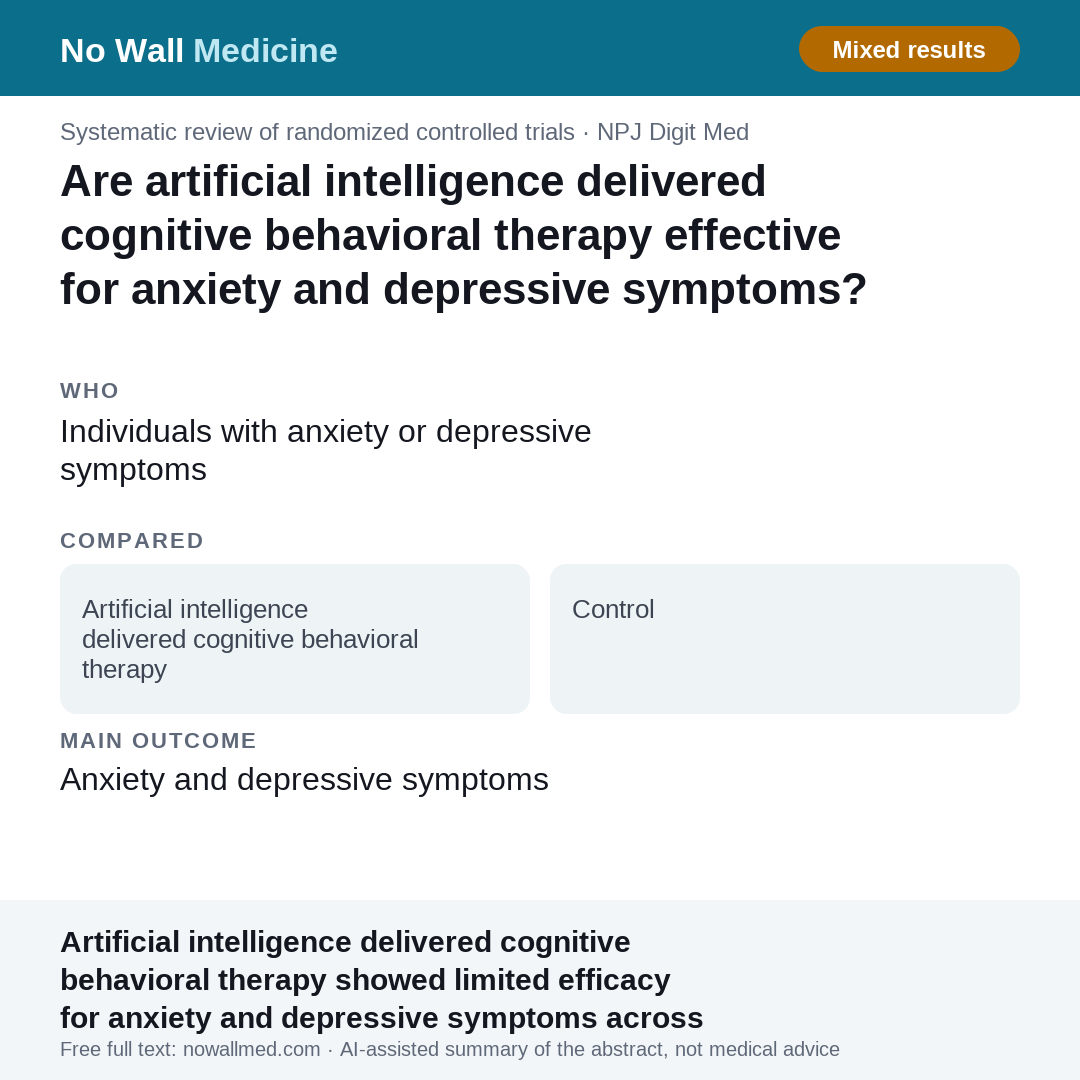
Efficacy of AI-delivered cognitive behavioral therapy interventions for anxiety and depressive symptoms: a systematic review
Systematic review of randomized controlled trialsMixed results
Are artificial intelligence delivered cognitive behavioral therapy effective for anxiety and depressive symptoms?
Who
Individuals with anxiety or depressive symptoms
Compared
Artificial intelligence delivered cognitive behavioral therapy
Control
Main outcome
Anxiety and depressive symptoms
Bottom line: Artificial intelligence delivered cognitive behavioral therapy showed limited efficacy for anxiety and depressive symptoms across reviewed studies.
Limitation: Study quality raised concerns and evidence remains highly preliminary.
NPJ Digit Med · 2026-05-29Download image
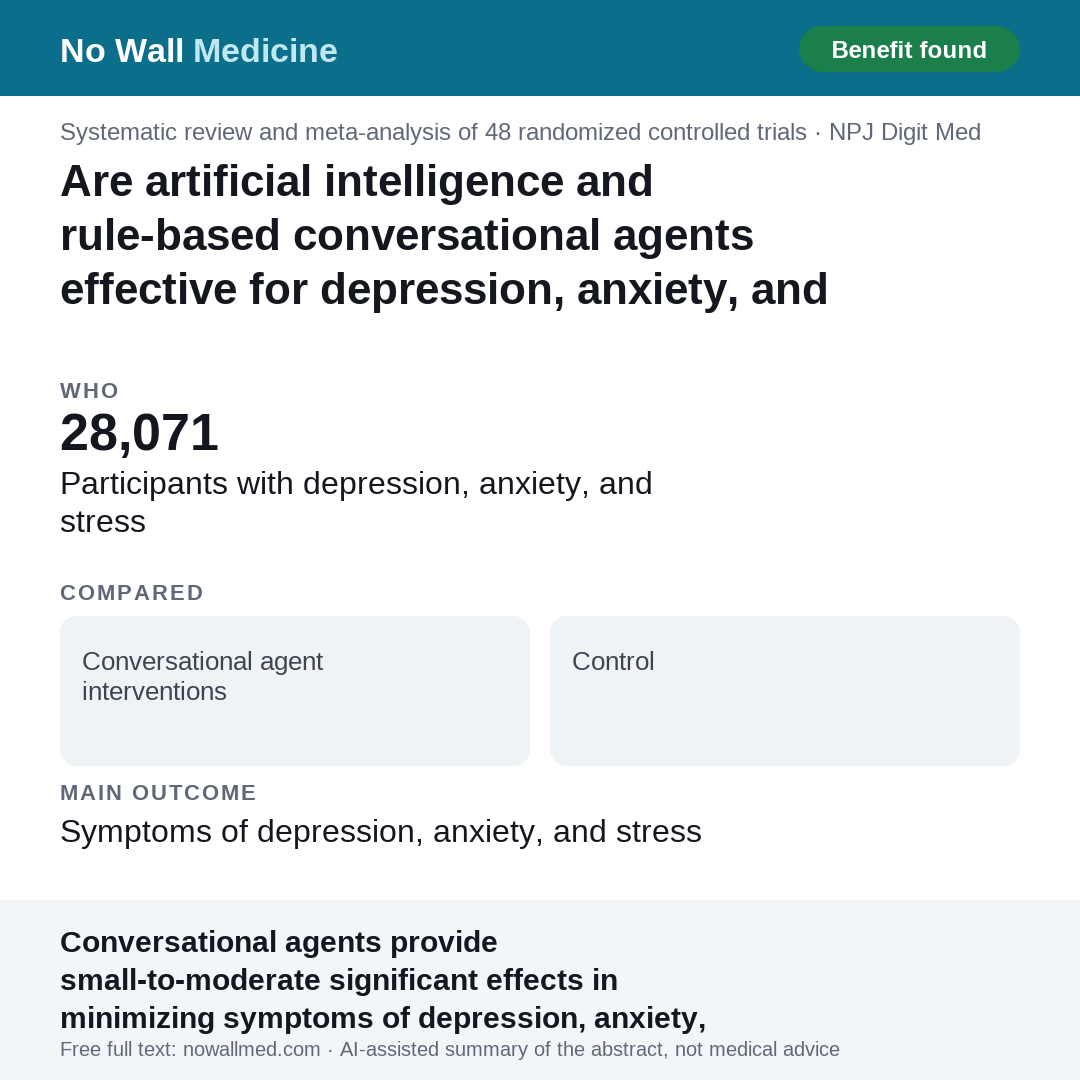
Effectiveness of AI and rule-based conversational agents for depression, anxiety and stress: A meta-analysis
Systematic review and meta-analysis of 48 randomized controlled trialsBenefit found
Are artificial intelligence and rule-based conversational agents effective for depression, anxiety, and stress?
Who
28,071
Participants with depression, anxiety, and stress
Compared
Conversational agent interventions
Control
Main outcome
Symptoms of depression, anxiety, and stress
Result: SMD: -0.27 for depression, -0.20 for anxiety, and -0.26 for stress
Bottom line: Conversational agents provide small-to-moderate significant effects in minimizing symptoms of depression, anxiety, and stress.
Limitation: Some studies had issues due to missing data or selective reporting.
NPJ Digit Med · 2026-05-29Download image
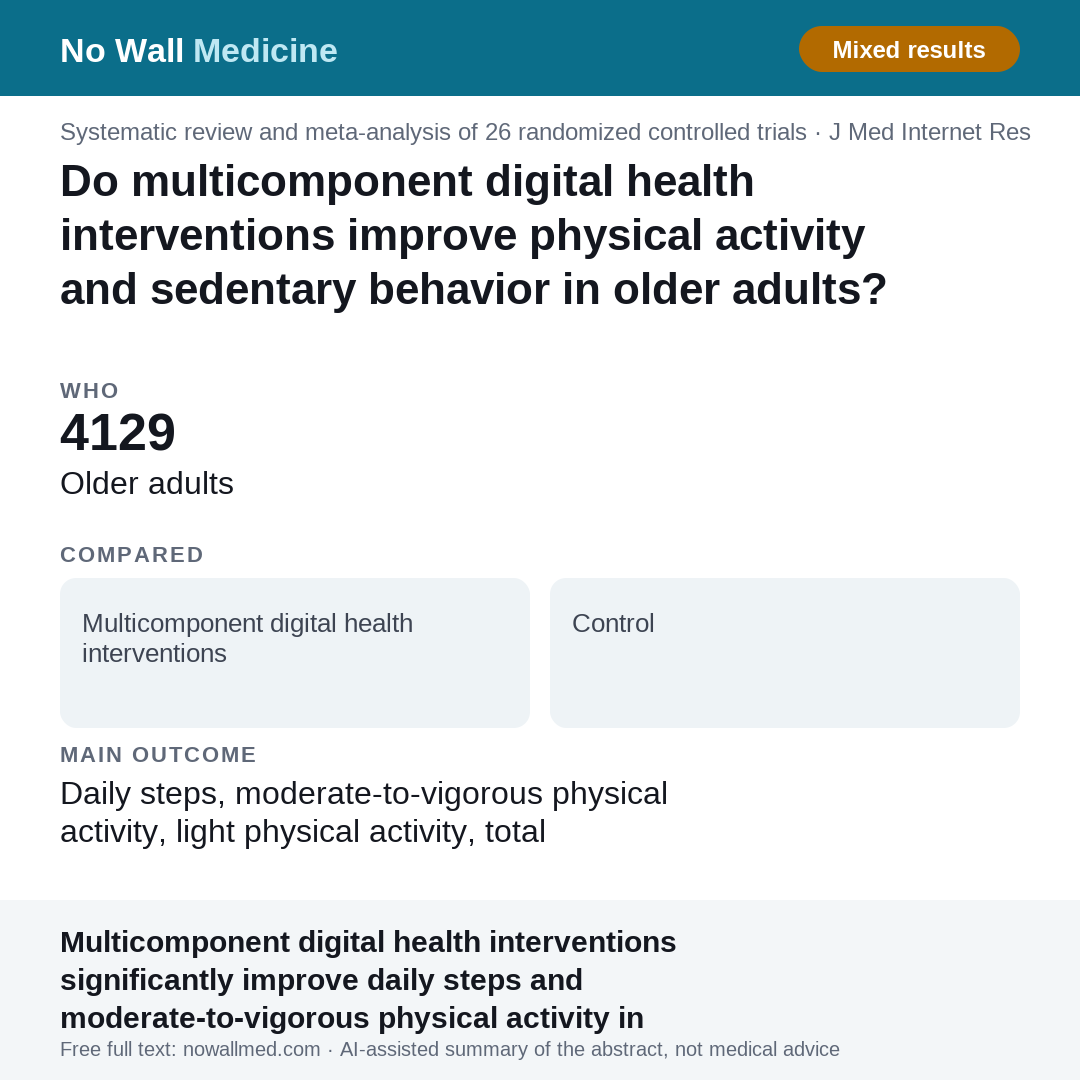
Effects of Multicomponent Digital Health Interventions on Multidimensional Physical Activity in Older Adults: Systematic Review, Meta-Analysis, and Meta-Regression of Randomized Controlled Trials
Systematic review and meta-analysis of 26 randomized controlled trialsMixed results
Do multicomponent digital health interventions improve physical activity and sedentary behavior in older adults?
Who
4129
Older adults
Compared
Multicomponent digital health interventions
Control
Main outcome
Daily steps, moderate-to-vigorous physical activity, light physical activity, total physical activity, and sedentary behavior
Result: daily steps MD 822.8 (95% CI 198.3 to 1447.3 steps/d); MVPA MD 45.9 (95% CI 23.9 to 67.9 min/wk)
Bottom line: Multicomponent digital health interventions significantly improve daily steps and moderate-to-vigorous physical activity in older adults.
Limitation: High heterogeneity, lack of long-term follow-up, and differences between objective and subjective measurement tools.
J Med Internet Res · 2026-05-29Download image
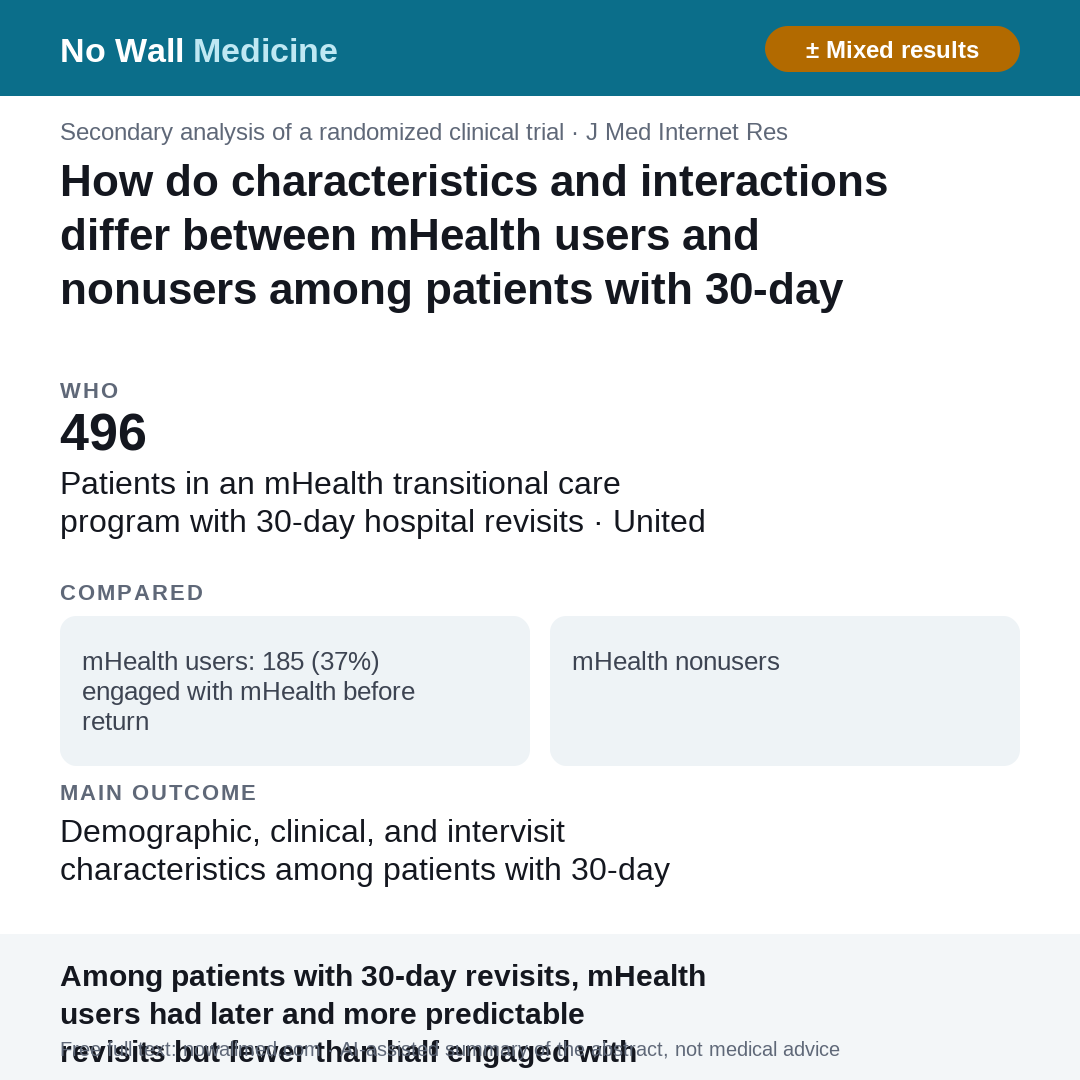
Understanding mHealth Engagement Among Patients With 30-Day Hospital Revisits: Secondary Analysis of a Randomized Clinical Trial
Secondary analysis of a randomized clinical trialMixed results
How do characteristics and interactions differ between mHealth users and nonusers among patients with 30-day hospital revisits?
Who
496
Patients in an mHealth transitional care program with 30-day hospital revisits · United States
Compared
mHealth users: 185 (37%) engaged with mHealth before return
mHealth nonusers
Main outcome
Demographic, clinical, and intervisit characteristics among patients with 30-day revisits
Bottom line: Among patients with 30-day revisits, mHealth users had later and more predictable revisits but fewer than half engaged with mHealth.
J Med Internet Res · 2026-05-29Download image
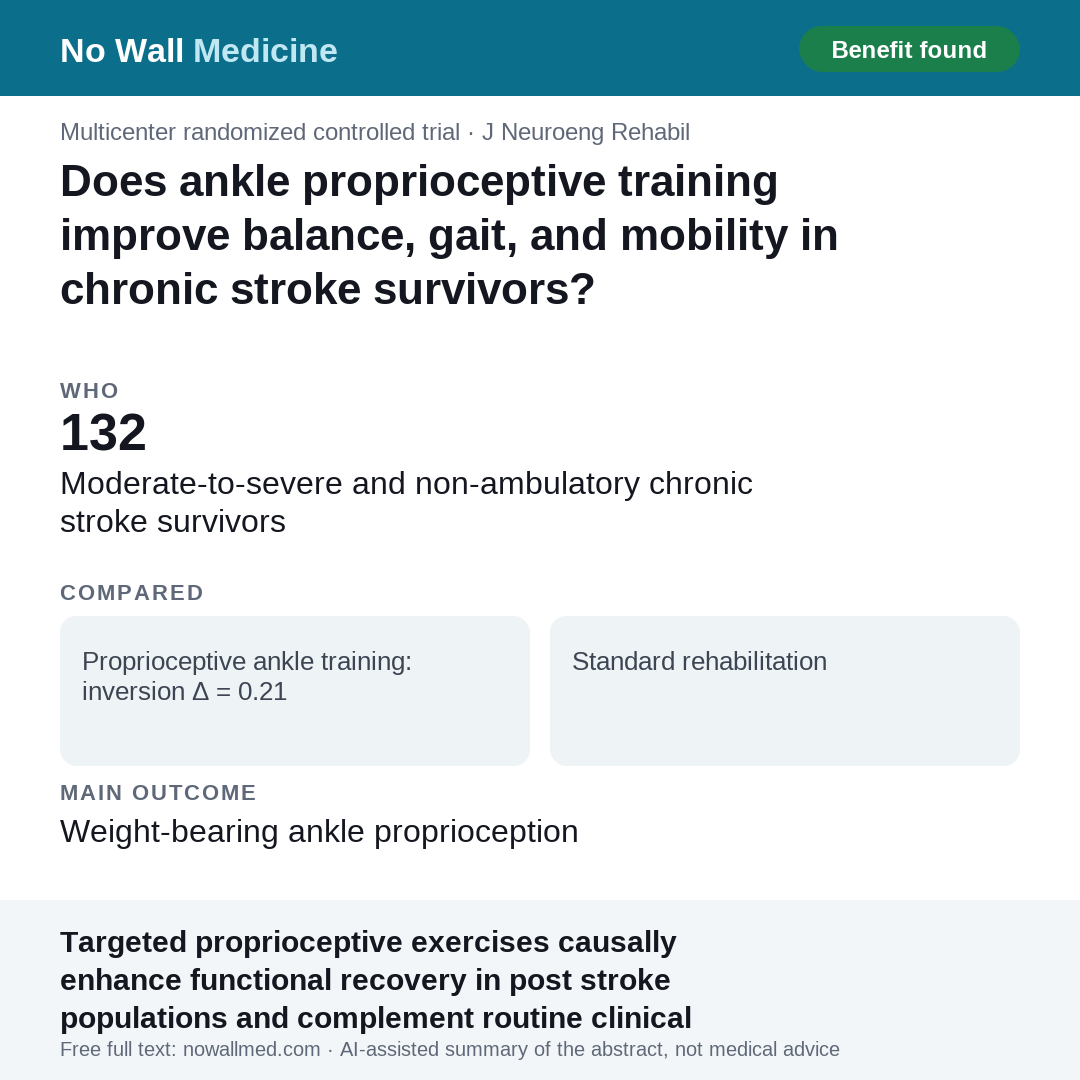
Targeted ankle proprioceptive training improves balance, gait, and functional mobility in chronic stroke survivors: a multicenter randomized controlled trial with longitudinal follow-up
Multicenter randomized controlled trialBenefit found
Does ankle proprioceptive training improve balance, gait, and mobility in chronic stroke survivors?
Who
132
Moderate-to-severe and non-ambulatory chronic stroke survivors
Compared
Proprioceptive ankle training: inversion Δ = 0.21
Standard rehabilitation
Main outcome
Weight-bearing ankle proprioception
Bottom line: Ankle proprioceptive training improves balance, gait, and mobility in chronic stroke survivors, with benefits sustained at 6-month follow-up.
J Neuroeng Rehabil · 2026-05-29Download image
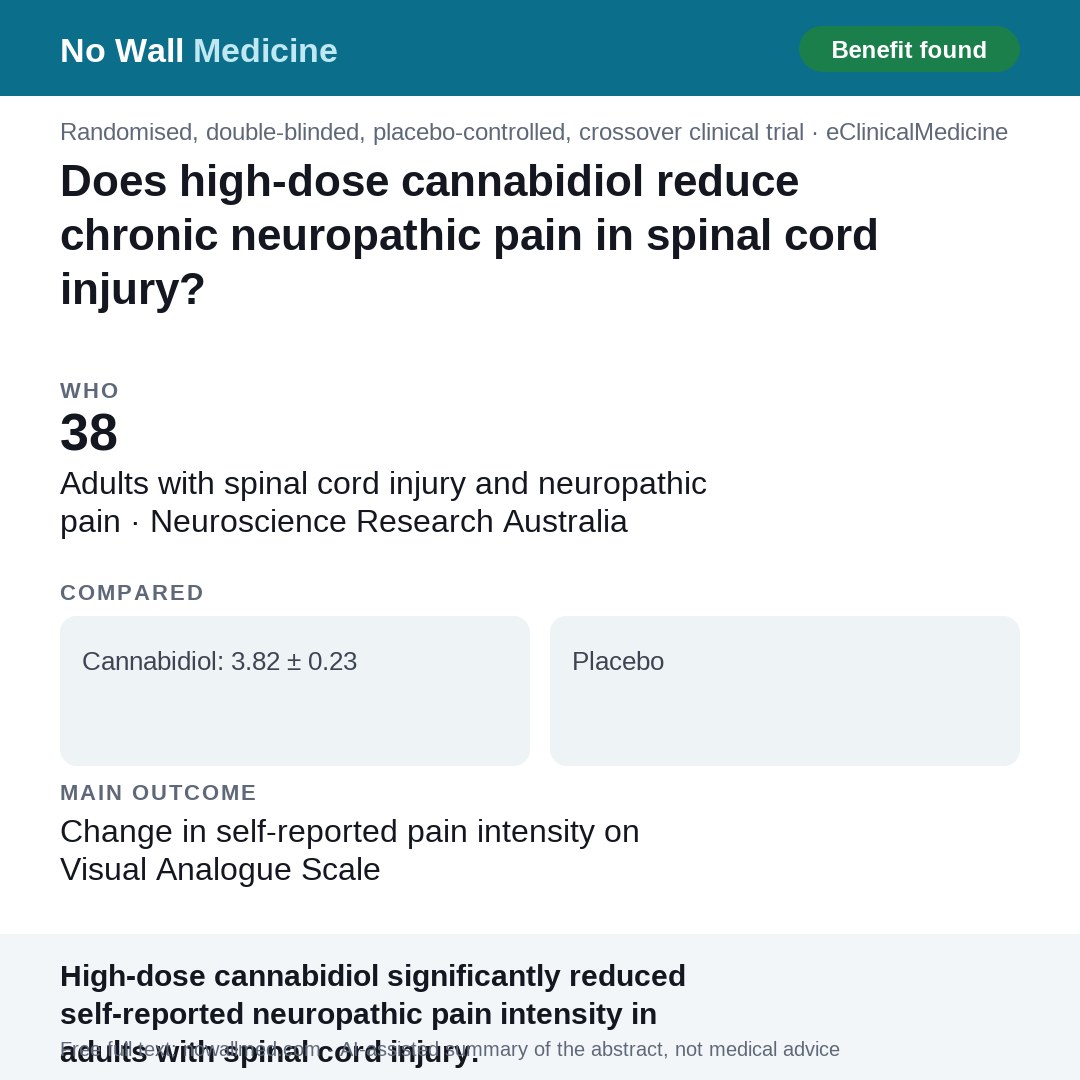
High-dose cannabidiol for chronic neuropathic pain associated with spinal cord injury: a randomised clinical trial
Randomised, double-blinded, placebo-controlled, crossover clinical trialBenefit found
Does high-dose cannabidiol reduce chronic neuropathic pain in spinal cord injury?
Who
38
Adults with spinal cord injury and neuropathic pain · Neuroscience Research Australia
Compared
Cannabidiol: 3.82 ± 0.23
Placebo
Main outcome
Change in self-reported pain intensity on Visual Analogue Scale
Result: mean difference -0.54 (95% CI -0.88 to -0.21)
Bottom line: High-dose cannabidiol significantly reduced self-reported neuropathic pain intensity in adults with spinal cord injury.
Funded by: NSW Health and the Lambert Initiative for Cannabinoid Therapeutics
eClinicalMedicine · 2026-05-28Download image