Visual abstracts
New randomized trials and meta-analyses from leading journals at a glance: who was studied, what was compared, and what was found. Every paper is free to read in full.
All specialtiesCardiology 847Oncology 766Gastroenterology & Hepatology 307Infectious Disease 626Neurology 353Psychiatry & Mental Health 430Pulmonology 368Critical Care 252Endocrinology & Diabetes 480Pediatrics 540Surgery 328Orthopedics & Sports Medicine 163Neurosurgery 100Cardiothoracic & Vascular Surgery 87Plastic & Reconstructive Surgery 132Nephrology 197Rheumatology 108Hematology 182Dermatology 80Ophthalmology 97Obstetrics & Gynecology 262Public & Global Health 167Radiology & Imaging 98Anesthesiology 117Urology 162ENT (Otolaryngology) 100Emergency Medicine 84Allergy & Immunology 58Geriatrics 160Family Medicine & Primary Care 111Medical Genetics & Genomics 91Pathology & Laboratory Medicine 24Physical Medicine & Rehabilitation 148Palliative Care 81Nutrition 223Digital Health & AI 460General Medicine 101
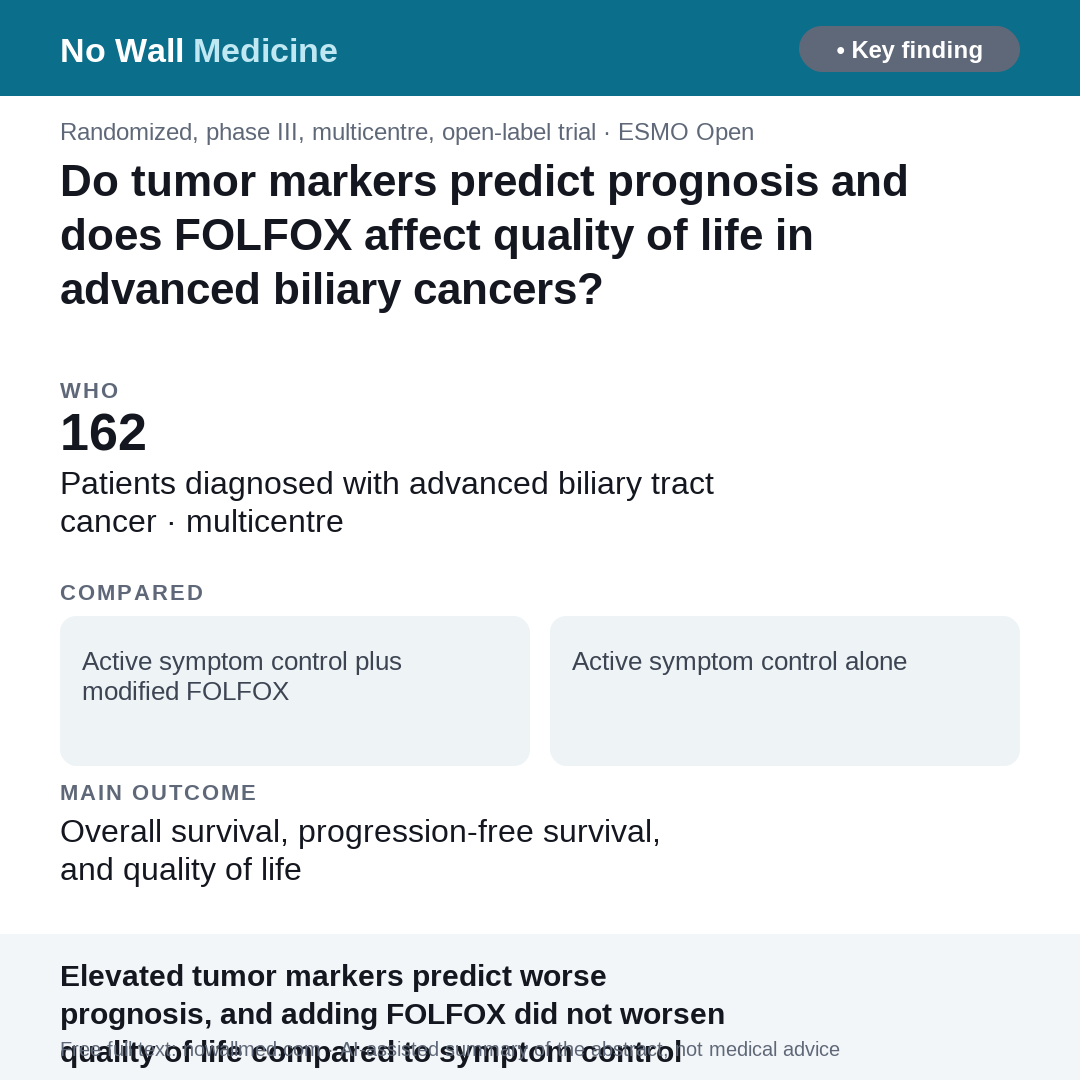
Prognostic markers, quality of life (QoL) and value of health (V-He) in advanced biliary cancers (ABC) treated with second-line active symptom control (ASC) alone or ASC with oxaliplatin-5-FU chemotherapy (ASC + FOLFOX) in the randomised phase III, multicentre, open-label ABC-06 clinical trial
Randomized, phase III, multicentre, open-label trialBenefit found
Do tumor markers predict prognosis and does FOLFOX affect quality of life in advanced biliary cancers?
Who
162
Patients diagnosed with advanced biliary tract cancer · multicentre
Compared
Active symptom control plus modified FOLFOX
Active symptom control alone
Main outcome
Overall survival, progression-free survival, and quality of life
Result: hazard ratio 0.97 (95% CI 0.48 to 1.97) for time to deterioration of quality of life
Bottom line: Elevated tumor markers predict worse prognosis, and adding FOLFOX did not worsen quality of life compared to symptom control alone.
ESMO Open · 2026-06-25Download image
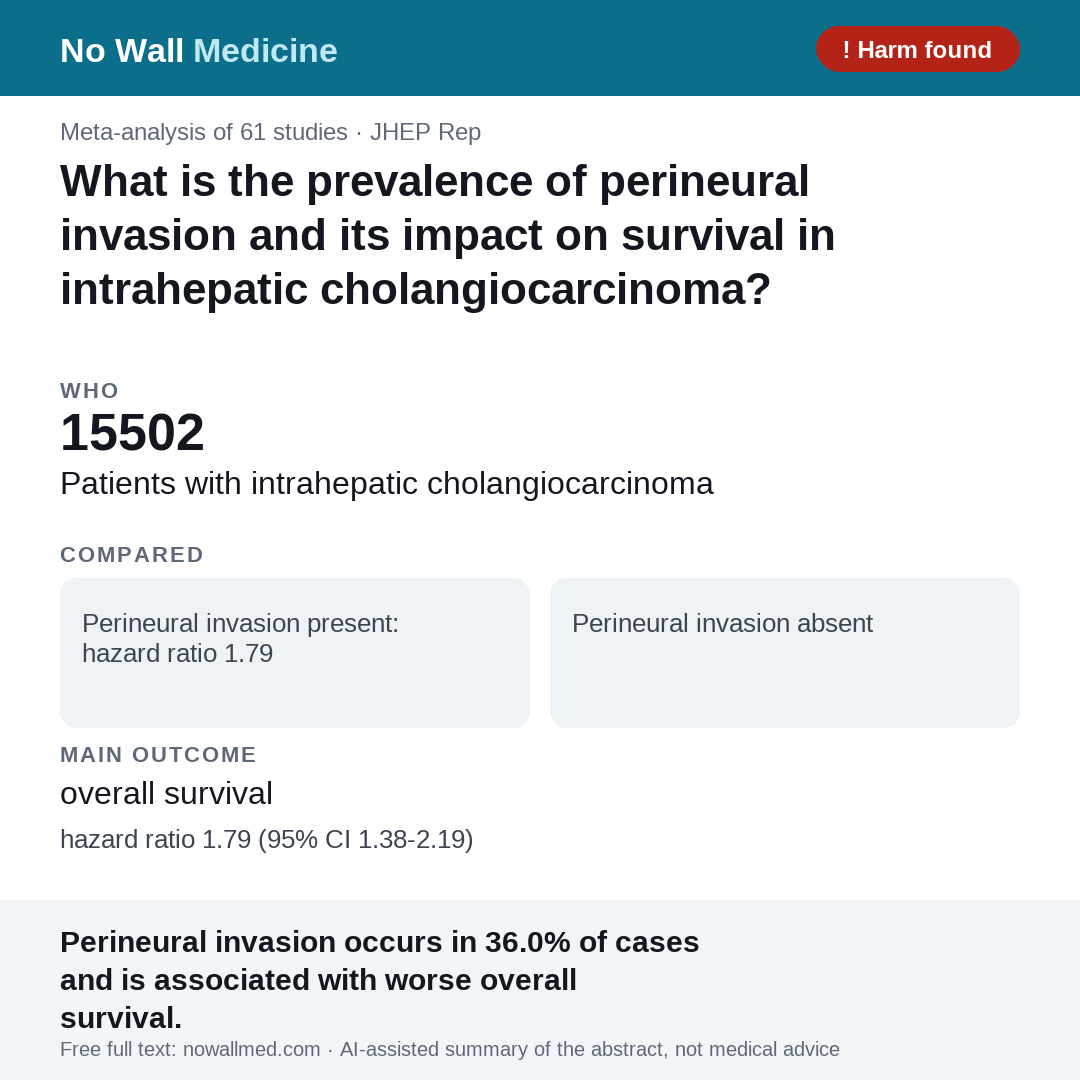
Perineural invasion in intrahepatic cholangiocarcinoma: Meta-analysis of prevalence, association with tumor features, and impact on survival
Meta-analysis of 61 studiesHarm found
What is the prevalence of perineural invasion and its impact on survival in intrahepatic cholangiocarcinoma?
Who
15502
Patients with intrahepatic cholangiocarcinoma
Compared
Perineural invasion present: hazard ratio 1.79
Perineural invasion absent
Main outcome
overall survival
Result: hazard ratio 1.79 (95% CI 1.38-2.19)
Bottom line: Perineural invasion occurs in 36.0% of cases and is associated with worse overall survival.
Limitation: Substantial heterogeneity (I2 = 98.5%) and the need for future standardized prospective studies.
JHEP Rep · 2026-06-25Download image
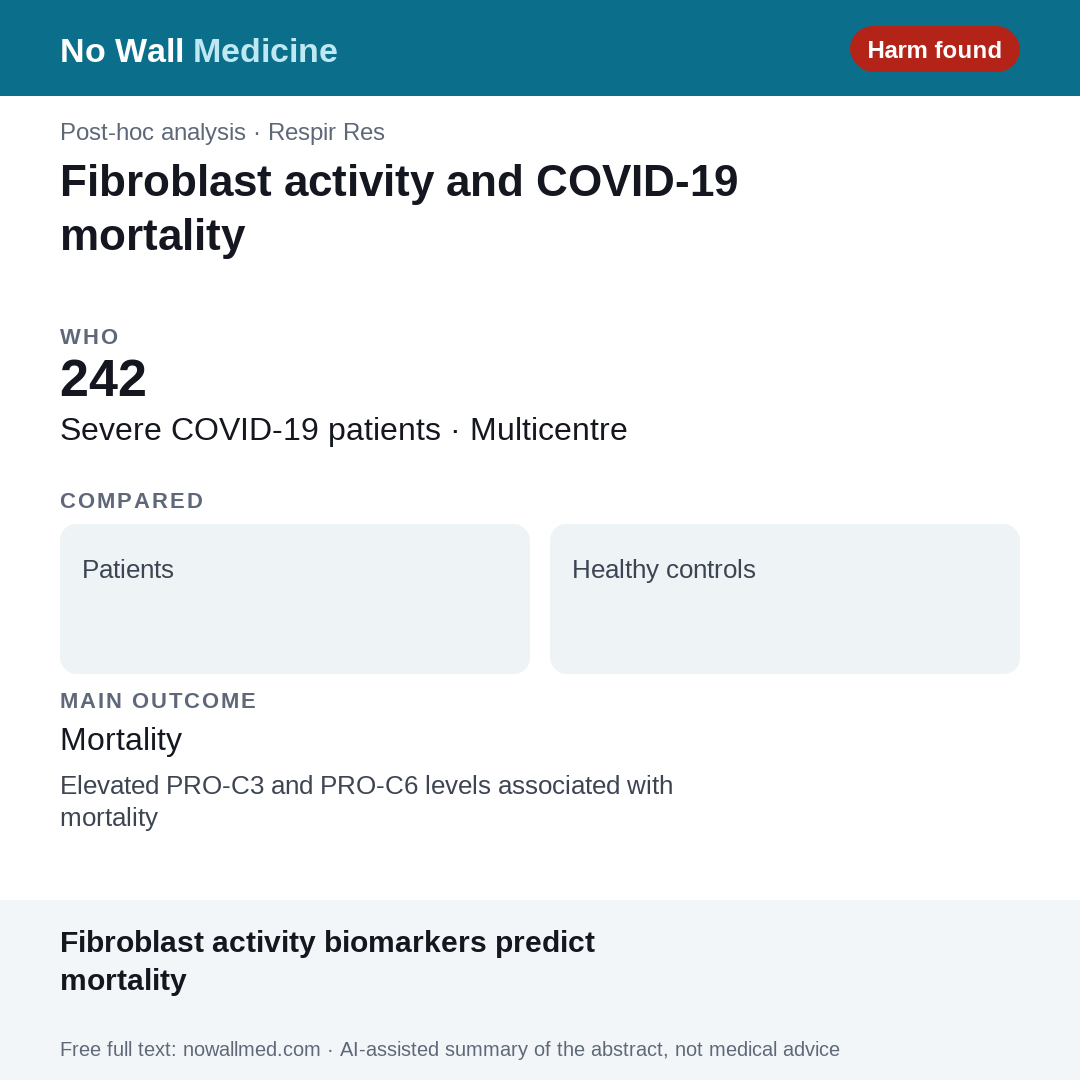
Fibroblast activity biomarkers are associated with mortality in severe COVID-19: a post-hoc analysis of a phase 2 clinical trial
Post-hoc analysis of a randomized, placebo-controlled, double-blind studyBenefit found
Are fibroblast activity biomarkers associated with mortality in severe COVID-19?
Who
242
Placebo-treated patients with severe COVID-19 and healthy controls · Multicentre
Compared
Patients who died or had respiratory failure
Healthy controls
Recovering patients
Main outcome
Mortality
Result: hazard ratio 2.93 (95% CI 1.6-5.4) for PRO-C3 and 3.88 (95% CI 1.96-7.70) for PRO-C6
Bottom line: High PRO-C3 and PRO-C6 levels on day 1 are associated with increased mortality risk in severe COVID-19.
Respir Res · 2026-06-25Download image
Impact of a virtual nurse-led Early paLlIative Care IntervenTion (ELICIT) randomized controlled trial
Randomized controlled trialBenefit found
Does a virtual nurse-led palliative care intervention improve care for chronically ill older adults?
Who
Chronically ill, community-dwelling older adults with varying cognitive impairment · United States
Compared
Nurse-led primary palliative care intervention: 89.1% advance care planning
Usual care: 3.0% advance care planning
Main outcome
Advance care planning and reporting of supportive care needs
Bottom line: A virtual nurse-led palliative care intervention significantly increased advance care planning and supportive care needs reporting.
NPJ Digit Med · 2026-06-25Download image

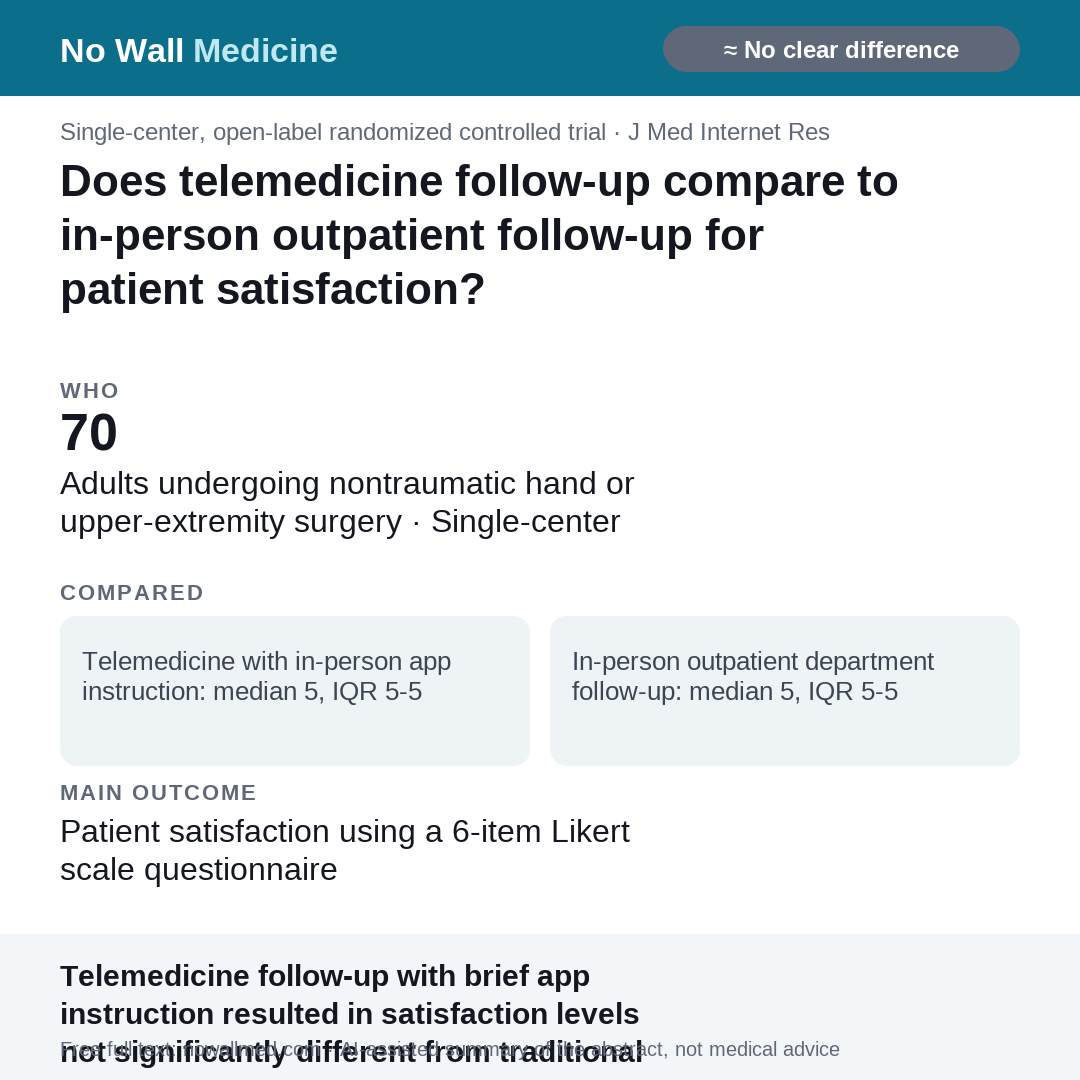
Digital Literacy and Patient Satisfaction in Telemedicine Follow-Up With In-Person App Instruction Versus Outpatient Department Follow-Up After Upper-Extremity Surgery: A Randomized Controlled Trial
Single-center, open-label randomized controlled trialNo clear difference
Does telemedicine follow-up compare to in-person outpatient follow-up for patient satisfaction?
Who
70
Adults undergoing nontraumatic hand or upper-extremity surgery · Single-center
Compared
Telemedicine with in-person app instruction: median 5, IQR 5-5
In-person outpatient department follow-up: median 5, IQR 5-5
Main outcome
Patient satisfaction using a 6-item Likert scale questionnaire
Bottom line: Telemedicine follow-up with brief app instruction resulted in satisfaction levels not significantly different from traditional in-person follow-up.
J Med Internet Res · 2026-06-25Download image
An Internet-Based Mindfulness- and Compassion-Based Intercare Program for Reducing Parental Burnout: Randomized Controlled Trial
3-arm randomized controlled trialBenefit found
Does an internet-based mindfulness and compassion program reduce parental burnout in teleworking mothers?
Who
593
Teleworking mothers aged 18 years or older living with at least 1 child · Chile
Compared
Mindfulness and compassion-based intercare program
Active control
Waitlist
Main outcome
Parental burnout at 9 months
Result: mean difference 0.62 (95% CI 0.09-1.14)
Bottom line: The internet-based program effectively reduced parental burnout compared to a waitlist, though it was not superior to active control.
J Med Internet Res · 2026-06-25Download image

Development of virtual reality in the upper extremities function in children with Cerebral Palsy. A pilot randomized controlled trial
Pilot randomized controlled trialNo clear difference
Does virtual reality improve upper extremities function in children with cerebral palsy?
Who
42
Children with cerebral palsy aged 10 to 15 years
Compared
Virtual reality training: improvements across all measured outcomes
Conventional occupational therapy: improvements across all measured outcomes
Main outcome
upper extremity range of motion, Box and Block Test, and ABILHAND-Kids
Bottom line: Virtual reality did not result in statistically significant improvements in motor function compared with conventional therapy.
J Neuroeng Rehabil · 2026-06-25Download image

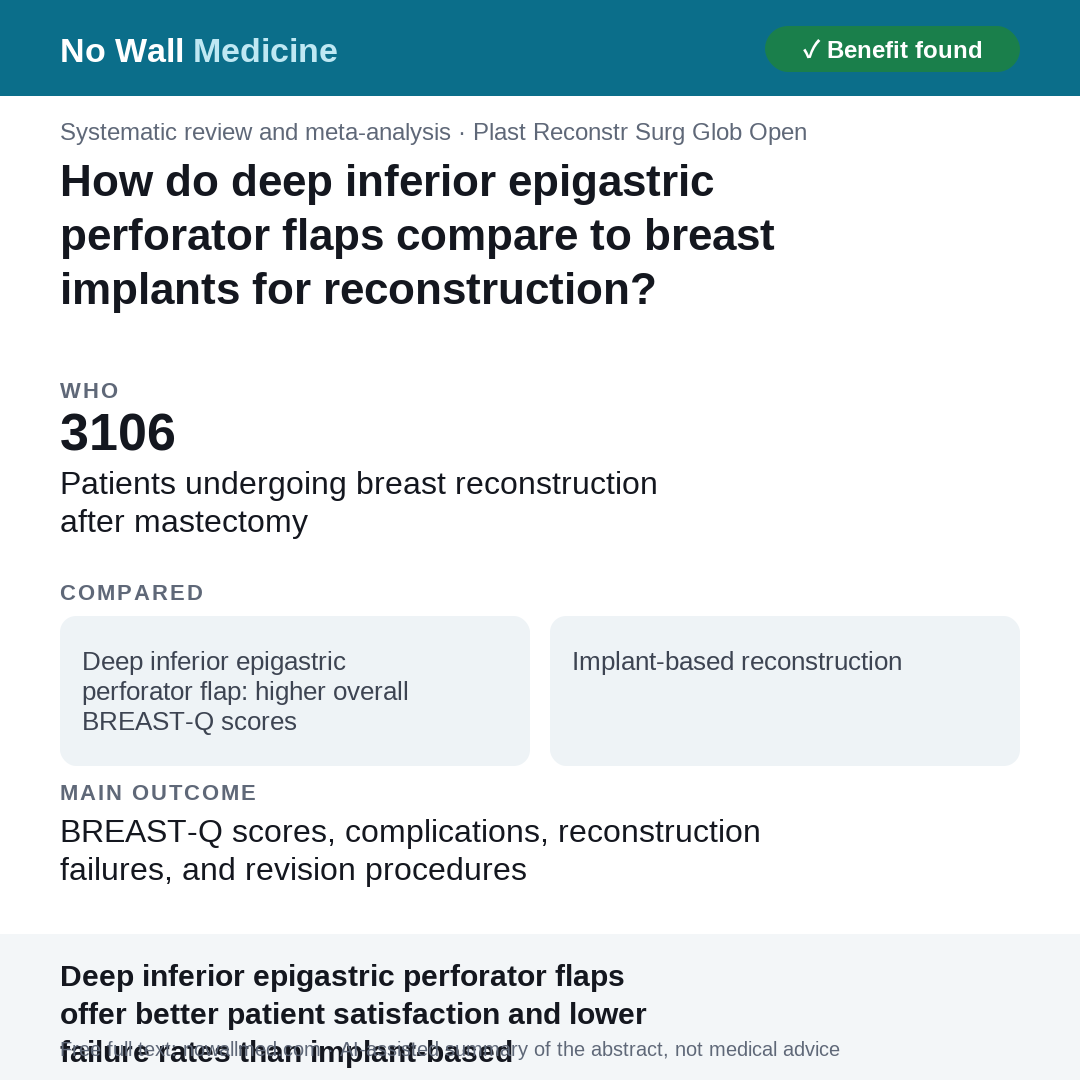
Comparative Outcomes of Deep Inferior Epigastric Perforator Flap and Breast Implants in Breast Reconstruction Postmastectomy: A Systematic Review and Meta-analysis
Systematic review and meta-analysisBenefit found
How do deep inferior epigastric perforator flaps compare to breast implants for reconstruction?
Who
3106
Patients undergoing breast reconstruction after mastectomy
Compared
Deep inferior epigastric perforator flap: higher overall BREAST-Q scores
Implant-based reconstruction
Main outcome
BREAST-Q scores, complications, reconstruction failures, and revision procedures
Result: mean difference +9.28 (95% CI not reported); odds ratio 0.15 (95% CI not reported)
Bottom line: Deep inferior epigastric perforator flaps offer better patient satisfaction and lower failure rates than implant-based reconstruction.
Limitation: High-quality multicenter trials with standardized outcome reporting are needed.
Plast Reconstr Surg Glob Open · 2026-06-25Download image
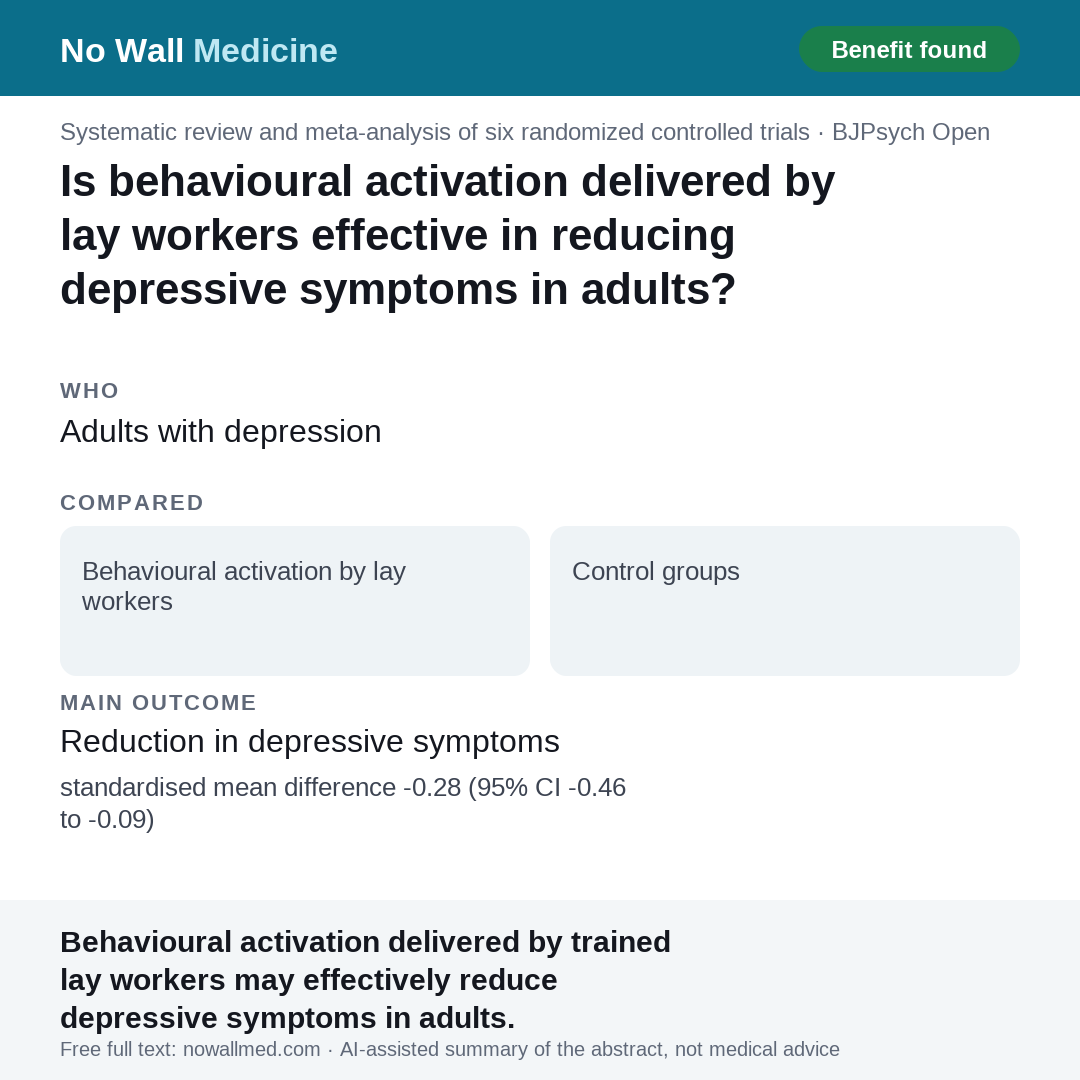
Effectiveness of lay workers delivering behavioural activation for people with depression: systematic review and meta-analysis
Systematic review and meta-analysis of six randomized controlled trialsBenefit found
Is behavioural activation delivered by lay workers effective in reducing depressive symptoms in adults?
Who
Adults with depression
Compared
Behavioural activation by lay workers
Control groups
Main outcome
Reduction in depressive symptoms
Result: standardised mean difference -0.28 (95% CI -0.46 to -0.09)
Bottom line: Behavioural activation delivered by trained lay workers may effectively reduce depressive symptoms in adults.
Limitation: High risk of bias and substantial heterogeneity across the included studies.
BJPsych Open · 2026-06-25Download image
Cutaneous perforator mapping and ink-based perfusion assessment in an ovine model: An anatomical study and systematic review
Anatomical study and systematic reviewBenefit found
What are the perforator anatomy and cutaneous perfusion characteristics in an ovine model?
Who
7
Seven adult ewes
Compared
Deep circumflex iliac: 650 ± 84 cm²
Cranial tibial: 188 ± 36 cm²
Main outcome
Perforator coordinates, pedicle length, vessel diameter, and perfused cutaneous area
Bottom line: The study provides a reproducible framework for anatomical and functional characterization of cutaneous perforators in sheep.
JPRAS Open · 2026-06-25Download image

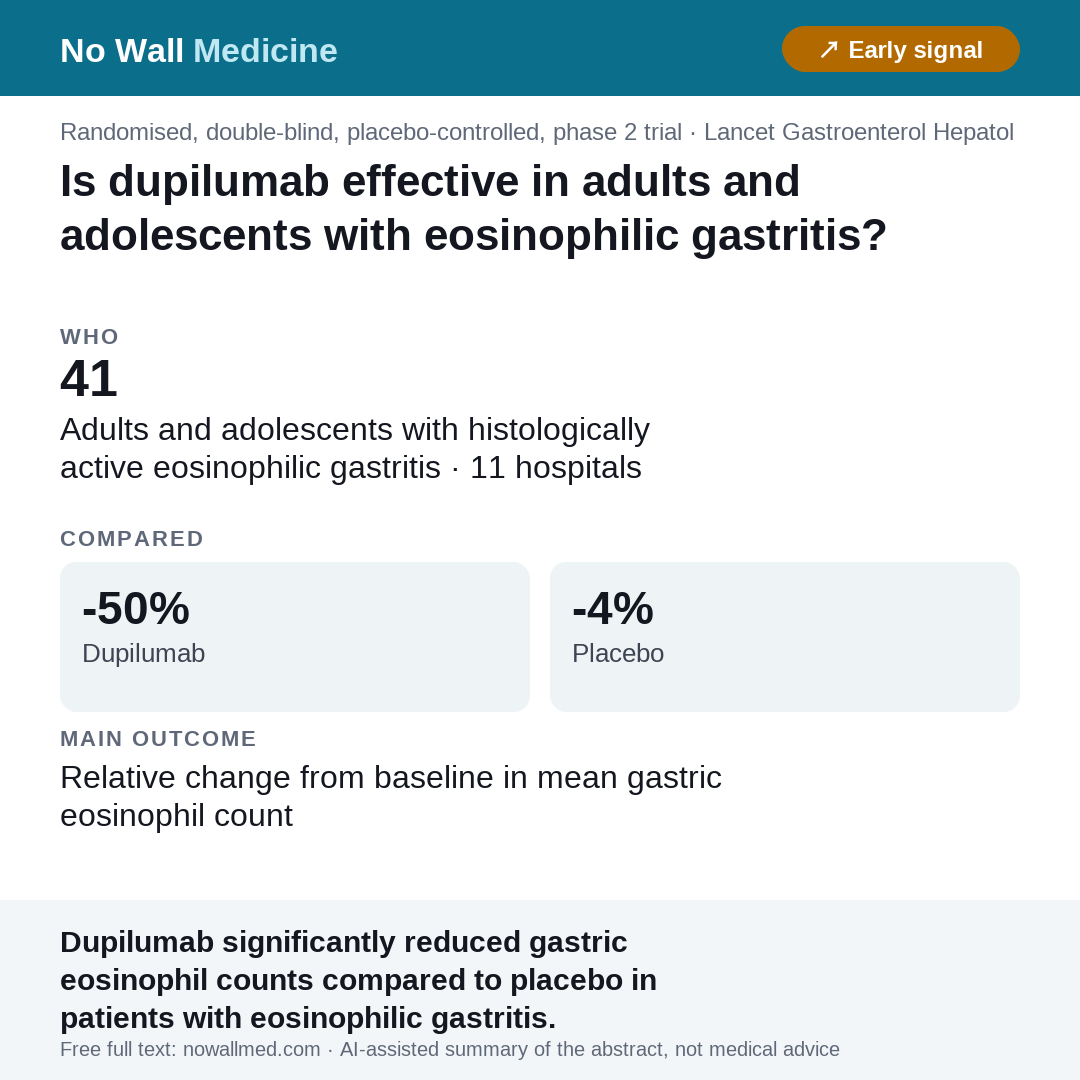
Dupilumab versus placebo in adults and adolescents with eosinophilic gastritis (DEGAS): a double-blind, placebo-controlled, phase 2, multicentre, randomised controlled trial
Randomised, double-blind, placebo-controlled, phase 2 trialBenefit found
Is dupilumab effective in adults and adolescents with eosinophilic gastritis?
Who
41
Adults and adolescents with histologically active eosinophilic gastritis · 11 hospitals in the USA
Compared
-50%Dupilumab (95% CI -66 to -34)
-4%Placebo (-20 to 13)
Main outcome
Relative change from baseline in mean gastric eosinophil count
Result: difference -47 percentage points (95% CI -70 to -24)
Bottom line: Dupilumab significantly reduced gastric eosinophil counts compared to placebo in patients with eosinophilic gastritis.
Lancet Gastroenterol Hepatol · 2026-06-24Download image
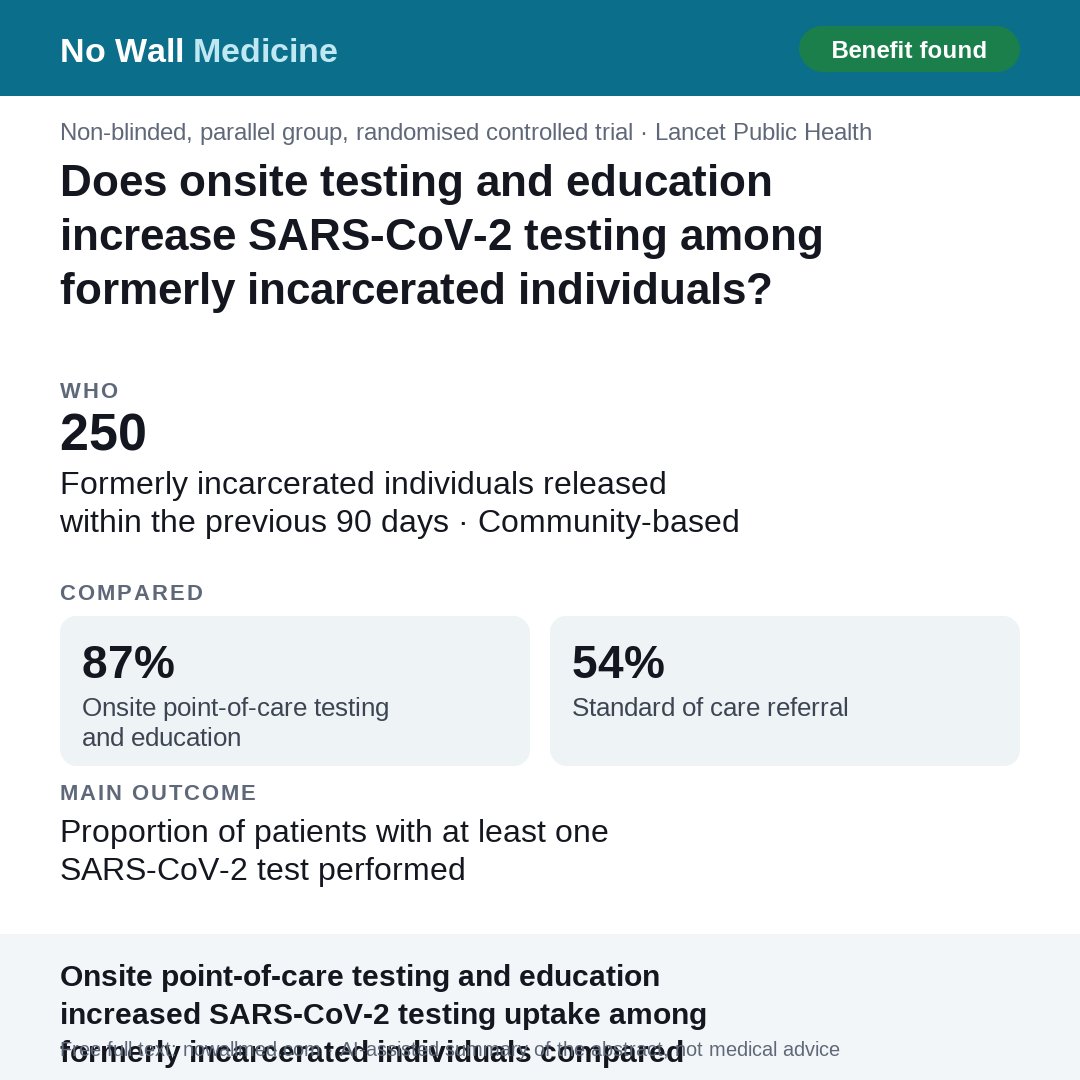
Mitigation of COVID-19 through onsite testing and education among formerly incarcerated individuals (the MOSAIC study): an open-label, single-centre, randomised controlled trial
Non-blinded, parallel group, randomised controlled trialBenefit found
Does onsite testing and education increase SARS-CoV-2 testing among formerly incarcerated individuals?
Who
250
Formerly incarcerated individuals released within the previous 90 days · Community-based organisation in New York City, USA
Compared
87%Onsite point-of-care testing and education
54%Standard of care referral
Main outcome
Proportion of patients with at least one SARS-CoV-2 test performed
Result: odds ratio 5·9 (95% CI 3·1-11·1)
Bottom line: Onsite point-of-care testing and education increased SARS-CoV-2 testing uptake among formerly incarcerated individuals compared to standard referrals.
Funded by: US National Institutes of Health
Lancet Public Health · 2026-06-24Download image
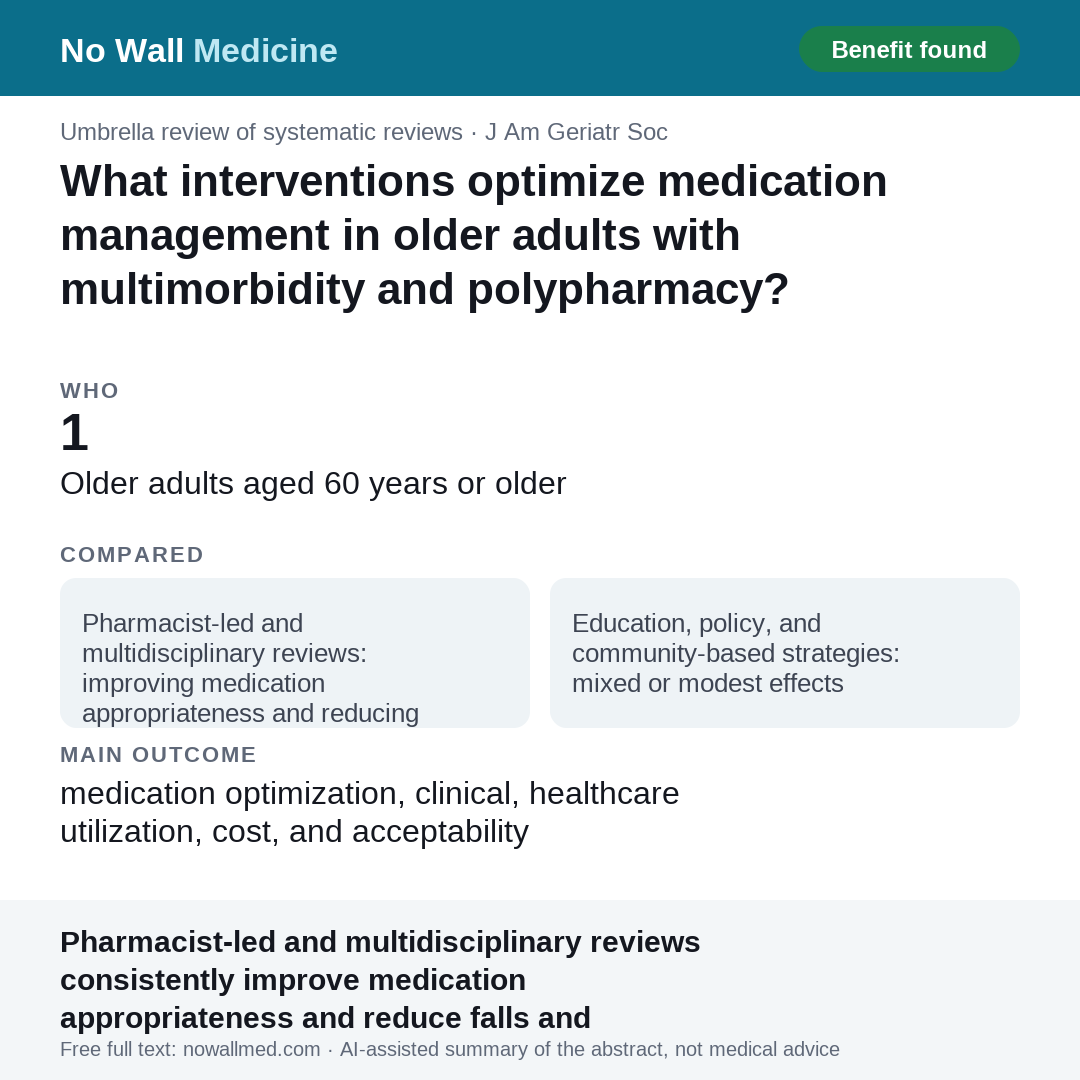
Interventions to Optimize Medication Management in Older Adults: An Umbrella Review of Systematic Reviews
Umbrella review of systematic reviewsBenefit found
What interventions optimize medication management in older adults with multimorbidity and polypharmacy?
Who
1
Older adults aged 60 years or older
Compared
Pharmacist-led and multidisciplinary reviews: improving medication appropriateness and reducing falls and unplanned healthcare use
Education, policy, and community-based strategies: mixed or modest effects
Main outcome
medication optimization, clinical, healthcare utilization, cost, and acceptability
Bottom line: Pharmacist-led and multidisciplinary reviews consistently improve medication appropriateness and reduce falls and unplanned healthcare use.
Limitation: Evidence strength was limited by methodological heterogeneity and variable methodological quality.
J Am Geriatr Soc · 2026-06-24Download image
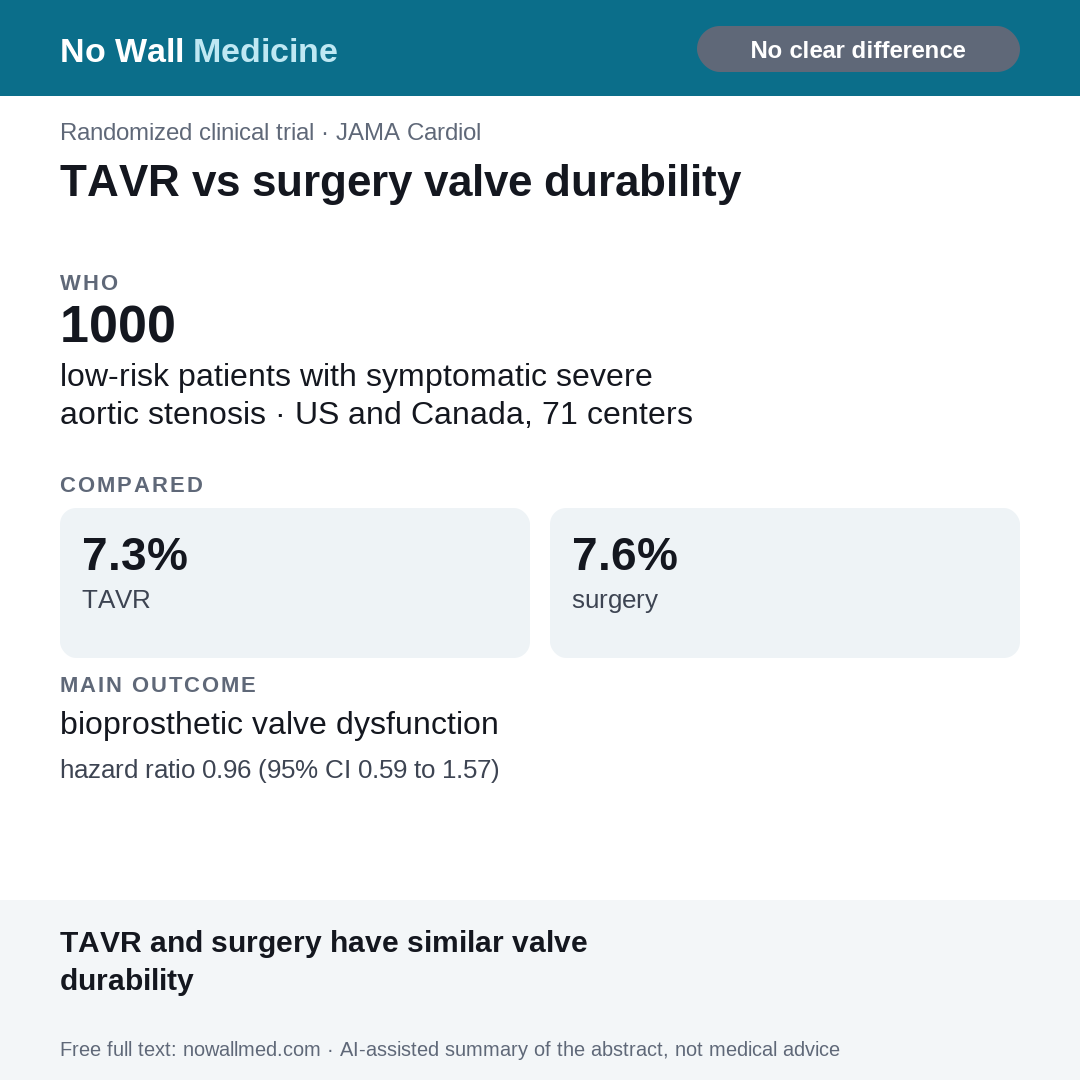
Seven-Year Valve Durability With Transcatheter or Surgical Aortic Valve Replacement: An Ad Hoc Analysis of the PARTNER 3 Randomized Clinical Trial
Randomized clinical trialNo clear difference
TAVR vs surgery valve durability
Who
1000
low-risk patients with symptomatic severe aortic stenosis · US and Canada, 71 centers
Compared
7.3%TAVR
7.6%surgery
Main outcome
bioprosthetic valve dysfunction
Result: hazard ratio 0.96 (95% CI 0.59 to 1.57)
Bottom line: TAVR and surgery have similar valve durability
Limitation: ad hoc analysis
JAMA Cardiol · 2026-06-24Download image
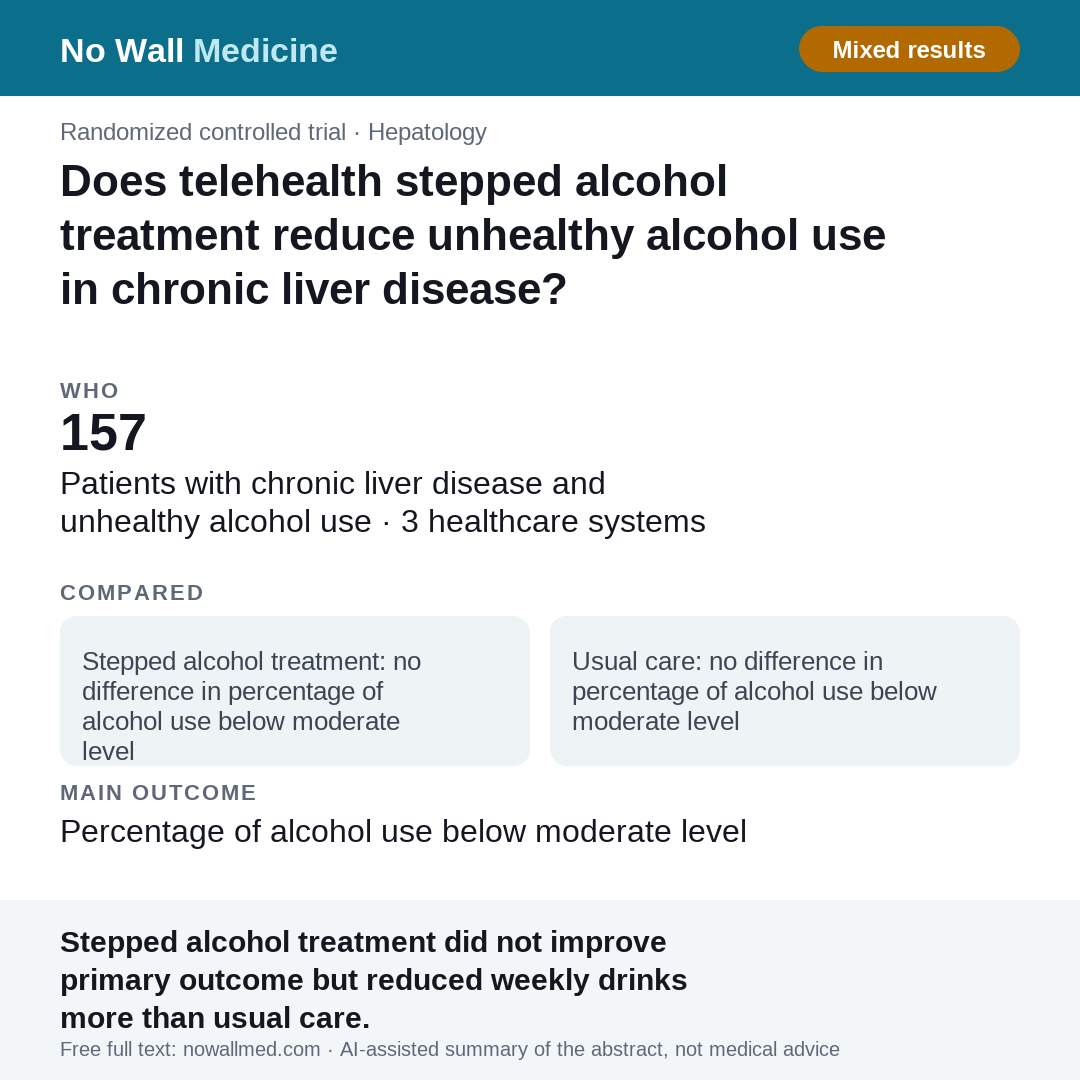
A randomized controlled trial of stepped treatment to reduce unhealthy alcohol use in patients with chronic liver disease
Randomized controlled trialMixed results
Does telehealth stepped alcohol treatment reduce unhealthy alcohol use in chronic liver disease?
Who
157
Patients with chronic liver disease and unhealthy alcohol use · 3 healthcare systems including safety-net and Veterans Affairs clinics
Compared
Stepped alcohol treatment: no difference in percentage of alcohol use below moderate level
Usual care: no difference in percentage of alcohol use below moderate level
Main outcome
Percentage of alcohol use below moderate level
Bottom line: Stepped alcohol treatment did not improve primary outcome but reduced weekly drinks more than usual care.
Hepatology · 2026-06-24Download image
How loneliness and social isolation are linked to cognitive decline among older adults? A systematic review of underlying physiological and psychobehavioral mechanisms
Systematic reviewMixed results
What are the physiological and psychobehavioral mechanisms linking loneliness and social isolation to cognitive decline?
Who
Older adults
Compared
Loneliness and social isolation
Cognitive decline
Main outcome
Mechanisms linking loneliness and social isolation to cognitive decline
Bottom line: Loneliness and social isolation link to cognitive decline through various physiological and psychobehavioral pathways.
Alzheimers Dement · 2026-06-24Download image

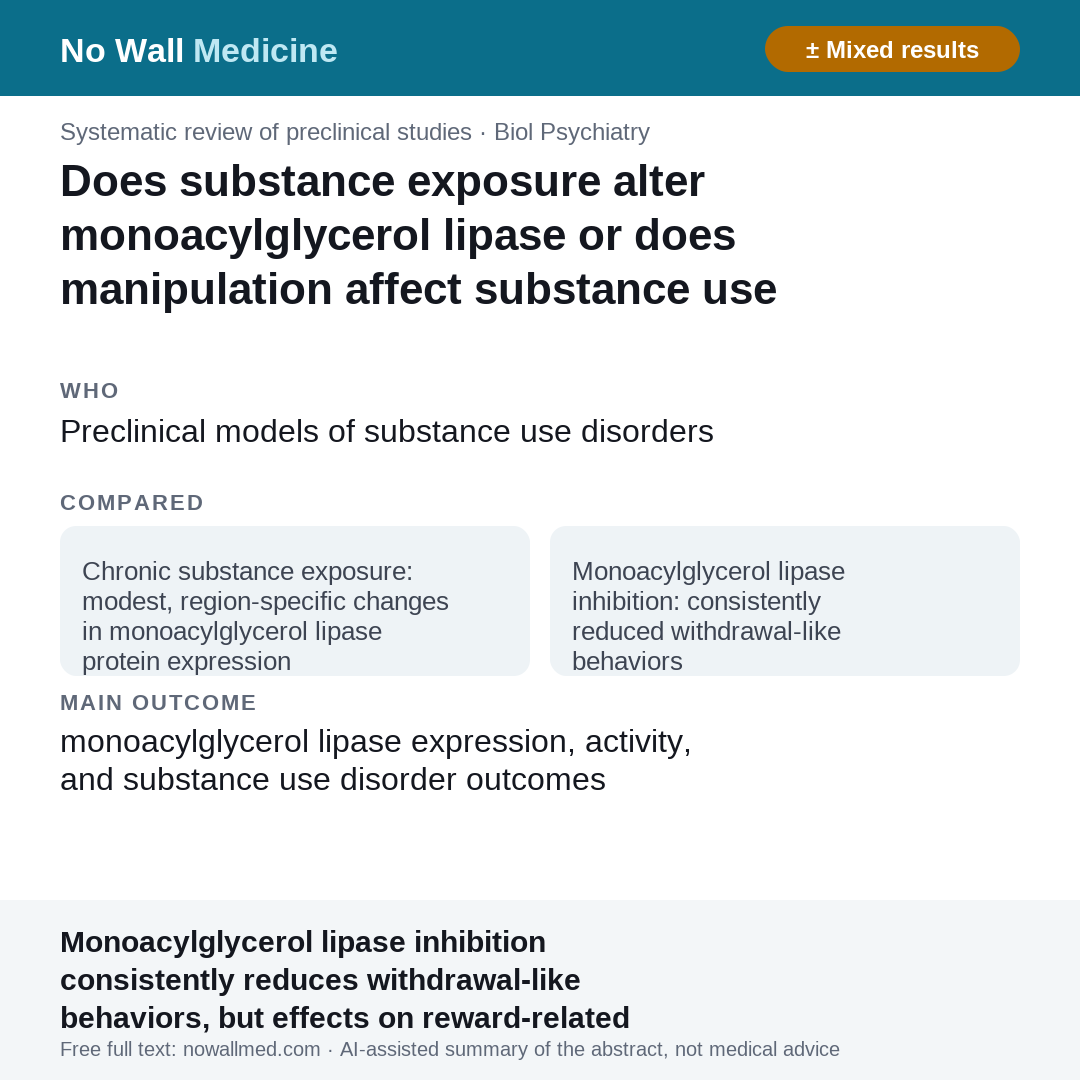
The Role of Monoacylglycerol Lipase in Substance Use: A Systematic Review of Preclinical Studies
Systematic review of preclinical studiesMixed results
Does substance exposure alter monoacylglycerol lipase or does manipulation affect substance use outcomes?
Who
42
Preclinical models of substance use disorders
Compared
Chronic substance exposure: modest, region-specific changes in monoacylglycerol lipase protein expression
Monoacylglycerol lipase inhibition: consistently reduced withdrawal-like behaviors
Main outcome
monoacylglycerol lipase expression, activity, and substance use disorder outcomes
Bottom line: Monoacylglycerol lipase inhibition consistently reduces withdrawal-like behaviors, but effects on reward-related behaviors are more variable.
Biol Psychiatry · 2026-06-24Download image
Sorting the mind: cognitive enhancement through transcutaneous auricular vagus nerve stimulation: a systematic review and meta-analysis
Systematic review and meta-analysisBenefit found
Does transcutaneous auricular vagus nerve stimulation enhance cognitive performance?
Who
1500
Healthy and clinical cohorts
Compared
Transcutaneous auricular vagus nerve stimulation
Control
Main outcome
Cognitive performance
Result: g = 0.41 (95% CI: 0.30-0.53)
Bottom line: Transcutaneous auricular vagus nerve stimulation is associated with improved cognitive performance, particularly for executive functions and learning.
Psychol Med · 2026-06-24Download image

The experiences of living with dementia within an under-served geographical area: a systematic review and qualitative synthesis
Systematic review and qualitative synthesisMixed results
What are the experiences of living with dementia in under-served geographical areas?
Who
15
People living with dementia in rural, coastal or deprived areas · Not specified
Compared
Rural areas
Deprived areas
Main outcome
Experiences of living with dementia
Bottom line: Living with dementia in under-served areas involves navigating stigma, fragmented healthcare, and limited service availability.
Limitation: No included studies were set in coastal areas.
Age Ageing · 2026-06-24Download image

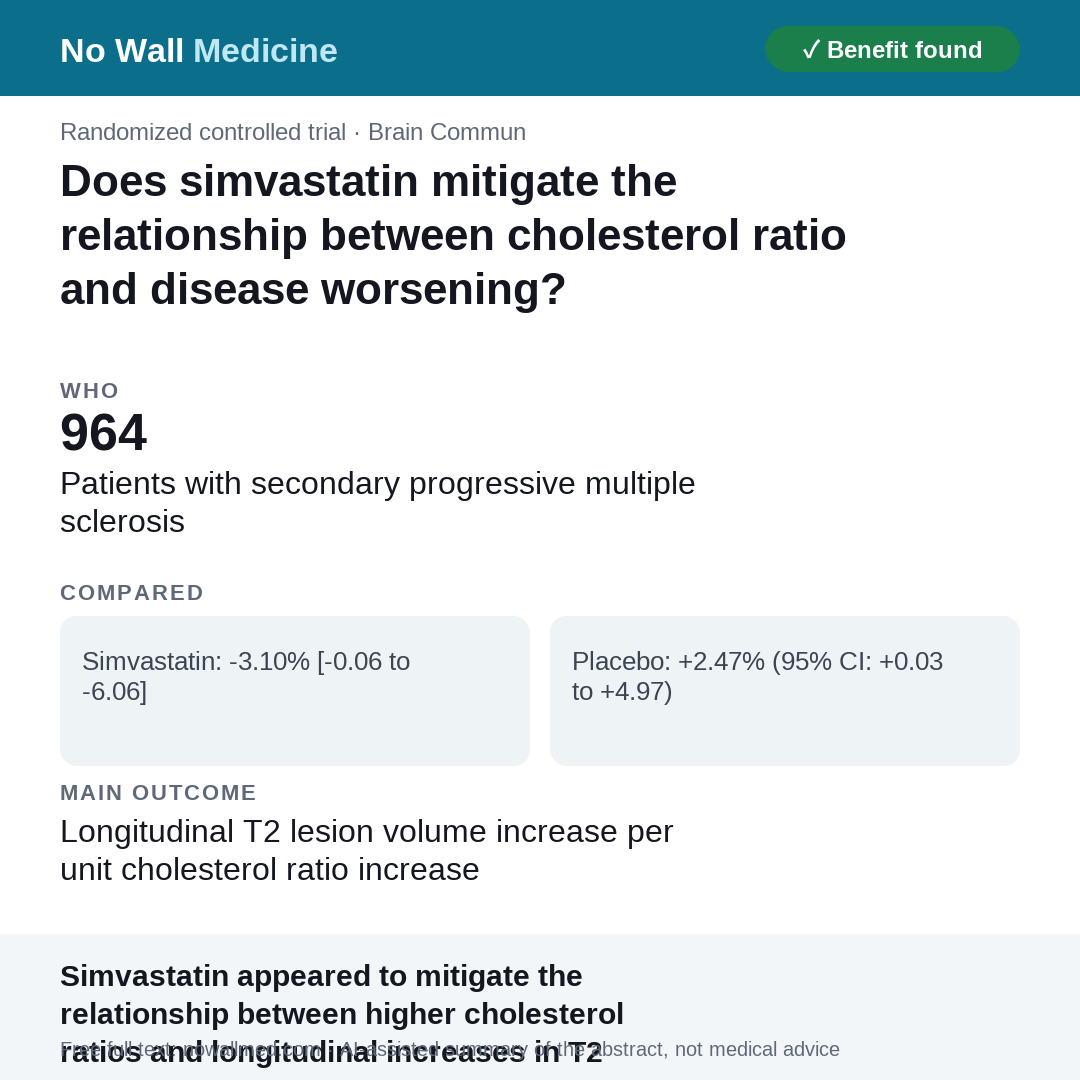
Investigating the treatment of vascular risk with simvastatin in secondary progressive multiple sclerosis: analysis from the MS-STAT2 randomized controlled trial
Randomized controlled trialBenefit found
Does simvastatin mitigate the relationship between cholesterol ratio and disease worsening?
Who
964
Patients with secondary progressive multiple sclerosis
Compared
Simvastatin: -3.10% [-0.06 to -6.06]
Placebo: +2.47% (95% CI: +0.03 to +4.97)
Main outcome
Longitudinal T2 lesion volume increase per unit cholesterol ratio increase
Bottom line: Simvastatin appeared to mitigate the relationship between higher cholesterol ratios and longitudinal increases in T2 lesion volume.
Limitation: This was an exploratory analysis.
Brain Commun · 2026-06-24Download image