Visual abstracts
New randomized trials and meta-analyses from leading journals at a glance: who was studied, what was compared, and what was found. Every paper is free to read in full.
All specialtiesCardiology 4877Oncology 4136Gastroenterology & Hepatology 1942Infectious Disease 3836Neurology 1904Psychiatry & Mental Health 2273Pulmonology 2143Critical Care 1364Endocrinology & Diabetes 2580Pediatrics 2980Surgery 2556Orthopedics & Sports Medicine 931Neurosurgery 537Cardiothoracic & Vascular Surgery 674Plastic & Reconstructive Surgery 591Nephrology 1133Rheumatology 823Hematology 1109Dermatology 621Ophthalmology 543Obstetrics & Gynecology 1686Public & Global Health 1058Radiology & Imaging 648Anesthesiology 986Urology 764ENT (Otolaryngology) 503Emergency Medicine 511Allergy & Immunology 313Geriatrics 979Family Medicine & Primary Care 562Medical Genetics & Genomics 676Pathology & Laboratory Medicine 159Physical Medicine & Rehabilitation 757Palliative Care 444Nutrition 1588Digital Health & AI 2197General Medicine 320
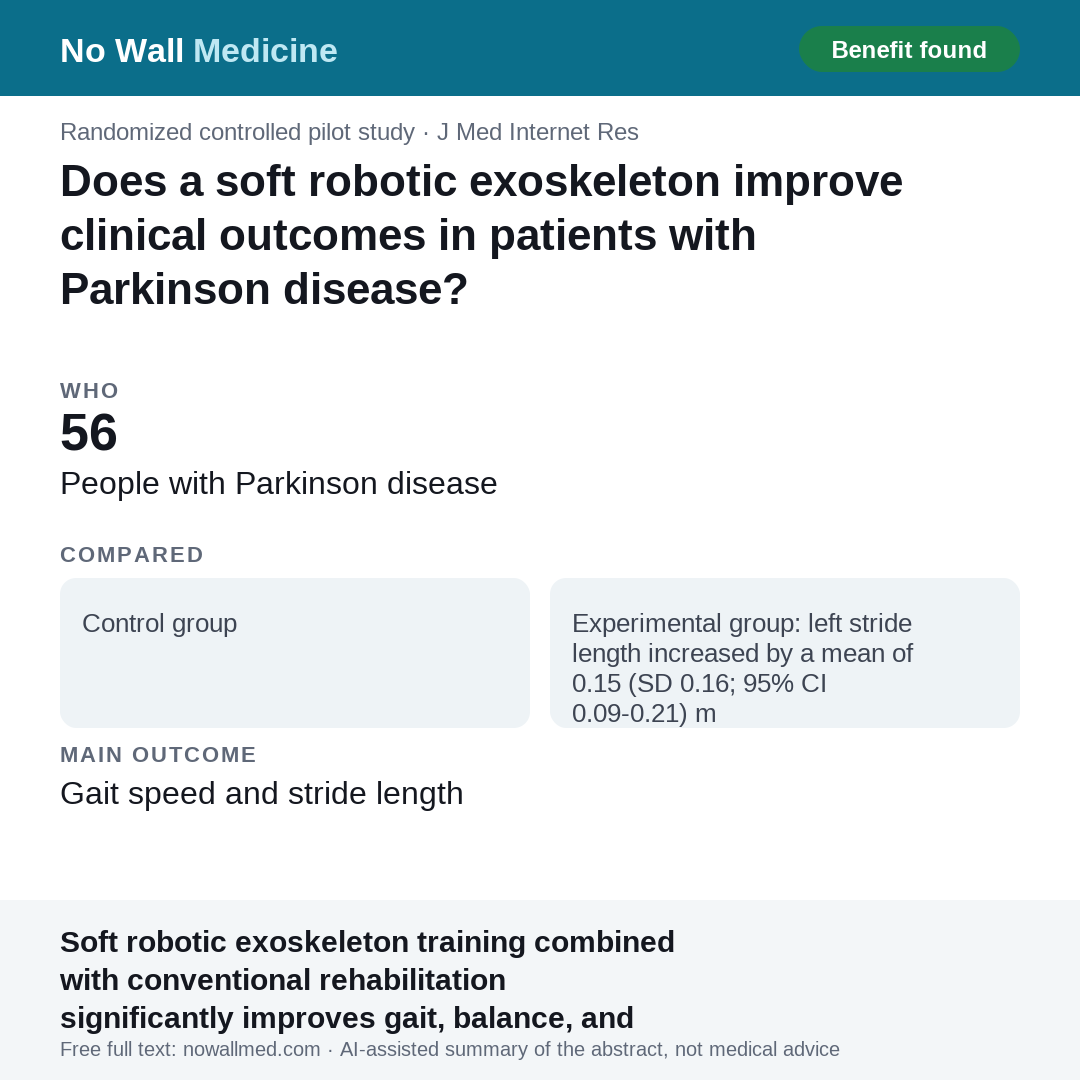
Effects of a Soft Robotic Exoskeleton for Gait Training on Clinical Outcomes in Patients With Parkinson Disease: Randomized Controlled Pilot Study
Randomized controlled pilot studyBenefit found
Does a soft robotic exoskeleton improve clinical outcomes in patients with Parkinson disease?
Who
56
People with Parkinson disease
Compared
Control group
Experimental group: left stride length increased by a mean of 0.15 (SD 0.16; 95% CI 0.09-0.21) m
Main outcome
Gait speed and stride length
Bottom line: Soft robotic exoskeleton training combined with conventional rehabilitation significantly improves gait, balance, and Parkinson disease symptoms.
J Med Internet Res · 2026-04-28Download image
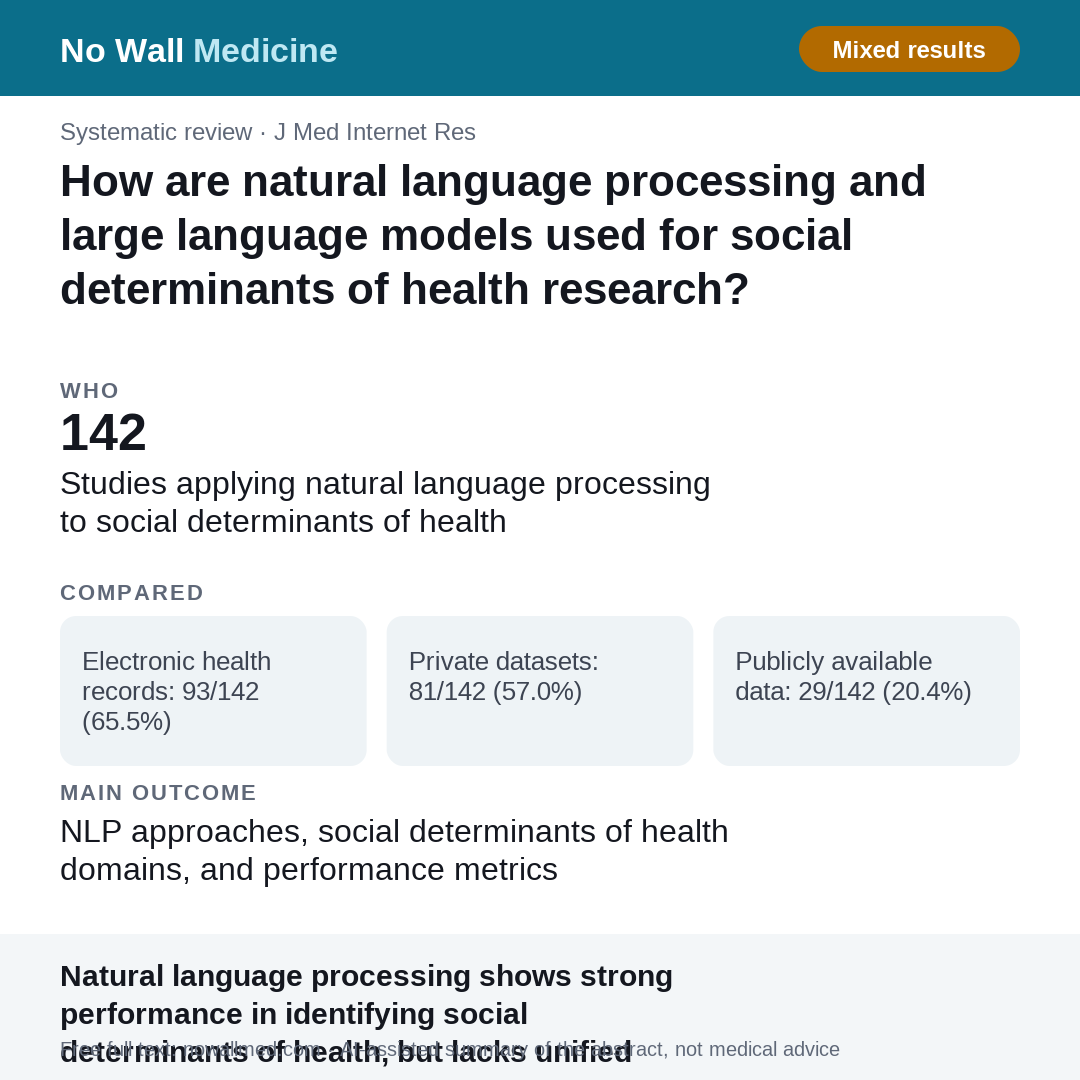
Applications of Natural Language Processing and Large Language Models for Social Determinants of Health: Systematic Review
Systematic reviewMixed results
How are natural language processing and large language models used for social determinants of health research?
Who
142
Studies applying natural language processing to social determinants of health
Compared
Electronic health records: 93/142 (65.5%)
Private datasets: 81/142 (57.0%)
Publicly available data: 29/142 (20.4%)
Main outcome
NLP approaches, social determinants of health domains, and performance metrics
Bottom line: Natural language processing shows strong performance in identifying social determinants of health, but lacks unified frameworks and public benchmarks.
Limitation: Methodological heterogeneity, limited code sharing, and unclear model interpretability or reproducibility practices.
J Med Internet Res · 2026-04-28Download image
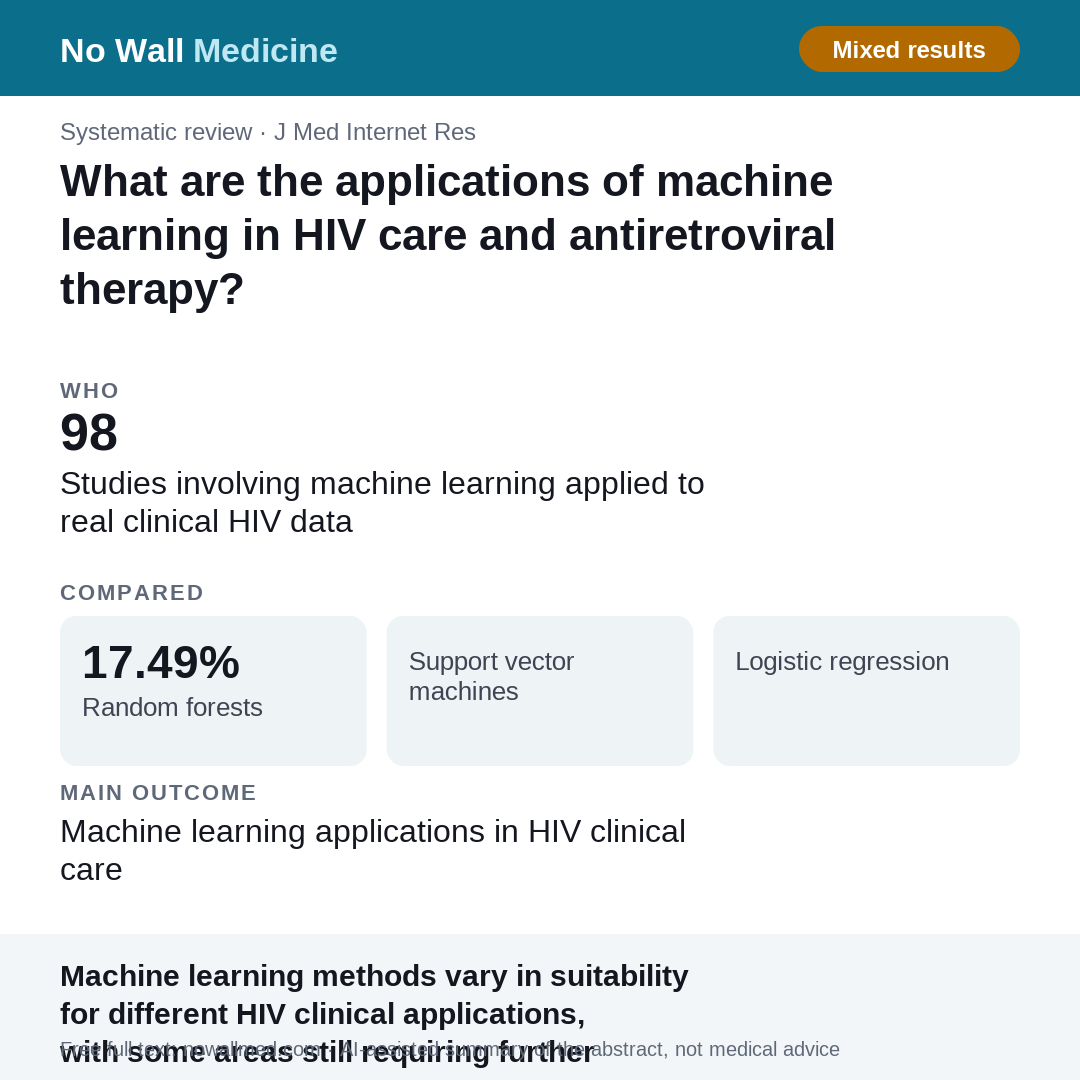
Machine Learning in HIV Care and Antiretroviral Therapy: Systematic Review
Systematic reviewMixed results
What are the applications of machine learning in HIV care and antiretroviral therapy?
Who
98
Studies involving machine learning applied to real clinical HIV data
Compared
17.49%Random forests (43/247)
Support vector machines
Logistic regression
Main outcome
Machine learning applications in HIV clinical care
Bottom line: Machine learning methods vary in suitability for different HIV clinical applications, with some areas still requiring further exploration.
Limitation: Some areas like treatment recommendations and adherence still lack artificial intelligence algorithms.
J Med Internet Res · 2026-04-28Download image
Unpacking cerumen impaction: a systematic review of clinical practice guidelines to support the development of the world health organization package of ear and hearing care interventions
Systematic reviewUnclear result
Cerumen impaction management guidelines
Who
Global population
Compared
AAO-HNS guideline
NICE guideline
Main outcome
Cerumen impaction management
Bottom line: Guidelines have consistent recommendations
BMC Prim Care · 2026-04-28Download image
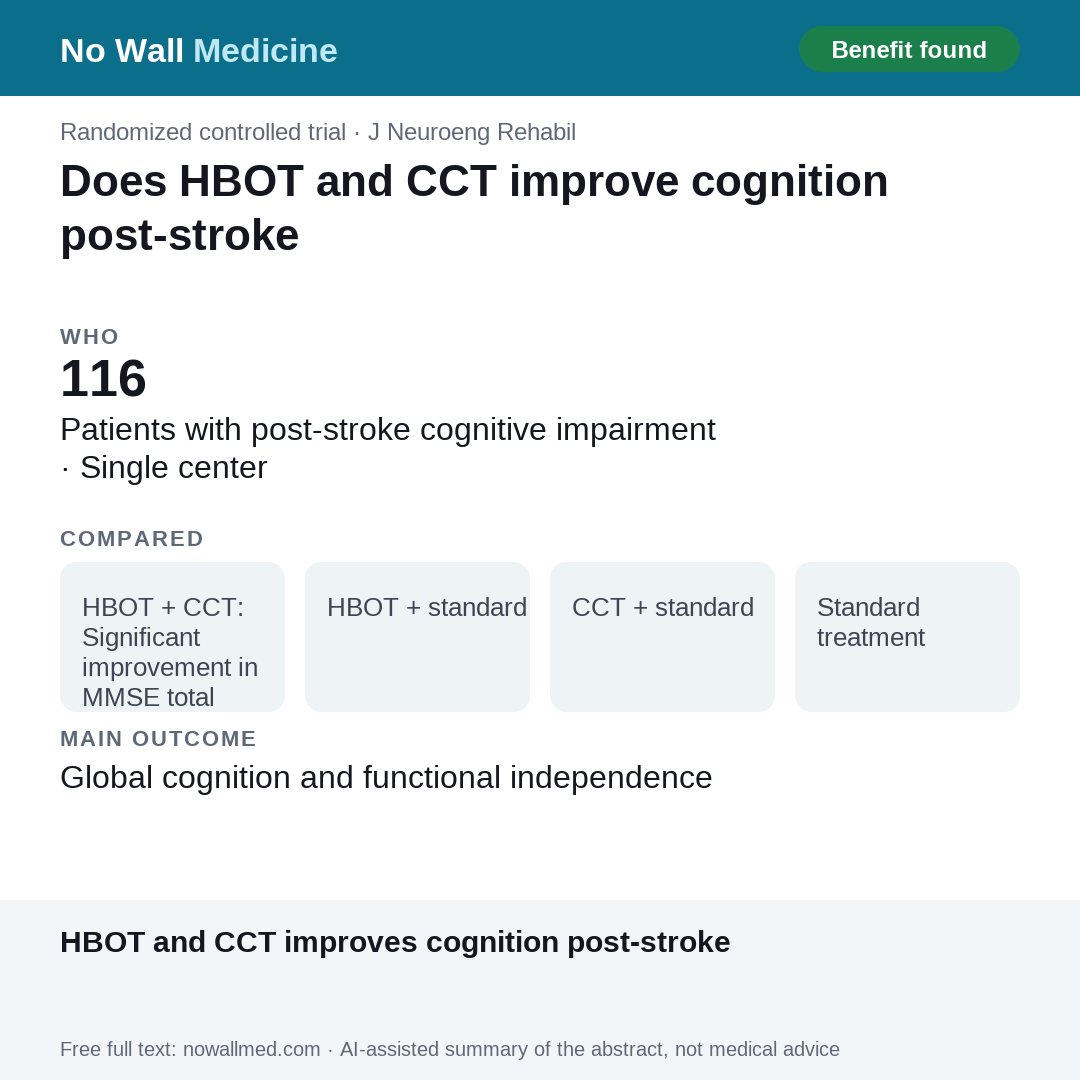
Hyperbaric oxygen therapy combined with computerized cognitive training improves global cognition and functional independence post-stroke: a randomized controlled trial
Randomized controlled trialBenefit found
Does HBOT and CCT improve cognition post-stroke
Who
116
Patients with post-stroke cognitive impairment · Single center
Compared
HBOT + CCT: Significant improvement in MMSE total scores
HBOT + standard
CCT + standard
Standard treatment
Main outcome
Global cognition and functional independence
Bottom line: HBOT and CCT improves cognition post-stroke
J Neuroeng Rehabil · 2026-04-28Download image
Deprescribing decisions in palliative care: a qualitative meta-synthesis of multi-stakeholder experiences and influencing factors
Meta-synthesis of qualitative studiesUnclear result
Deprescribing in palliative care
Who
patients, family caregivers, healthcare professionals · four countries
Compared
patients
healthcare professionals
Main outcome
deprescribing decisions
Bottom line: Communication is critical for deprescribing
BMC Palliat Care · 2026-04-28Download image
Effects of a patient-controlled analgesia pump management model based on a wireless analgesic management system on postoperative pain management in orthopedic patients: a prospective randomized controlled trial protocol
Prospective, randomized controlled trial protocolUnclear result
Does a wireless analgesic management system improve postoperative pain management in orthopedic patients?
Who
150
Patients undergoing orthopedic surgery · Shenzhen Second People's Hospital
Compared
intervention group
control group
Main outcome
postoperative pain assessed using the Numerical Rating Scale
Bottom line: This study protocol aims to evaluate a wireless analgesic management system for postoperative pain management.
Perioper Med · 2026-04-28Download image

Anticipatory charging of the defibrillator: a systematic review
Systematic reviewMixed results
Does anticipatory defibrillator charging improve patient outcomes and resuscitation performance?
Who
Patients and simulation participants in cardiac arrest · MEDLINE, EMBASE, and Cochrane library
Compared
Anticipatory charging: consistently reduced pre-shock and peri-shock pauses
Charging after rhythm analysis
Main outcome
Patient outcomes and resuscitation performance
Bottom line: Anticipatory charging reduces chest compression interruptions but its impact on survival and neurological outcomes remains uncertain.
Limitation: Very low certainty of evidence due to high risk of bias and indirectness.
Resusc Plus · 2026-04-28Download image

Safety and efficacy of the monoclonal antibody L9LS for malaria prevention in children exposed to perennial malaria transmission in Kenya: a randomised, double-blind, placebo-controlled, phase 2 trial
Randomised, double-blind trialBenefit found
Is L9LS safe and effective for malaria prevention
Who
384
Children exposed to perennial malaria transmission · Western Kenya
Compared
66%Two-dose L9LS (70/106)
83%Placebo (91/110)
Main outcome
Plasmodium falciparum infection
Result: protective efficacy 42·7% (95% CI 22·5-57·7)
Bottom line: L9LS prevents malaria in young children
Funded by: Gates Foundation
Lancet · 2026-04-27Download image

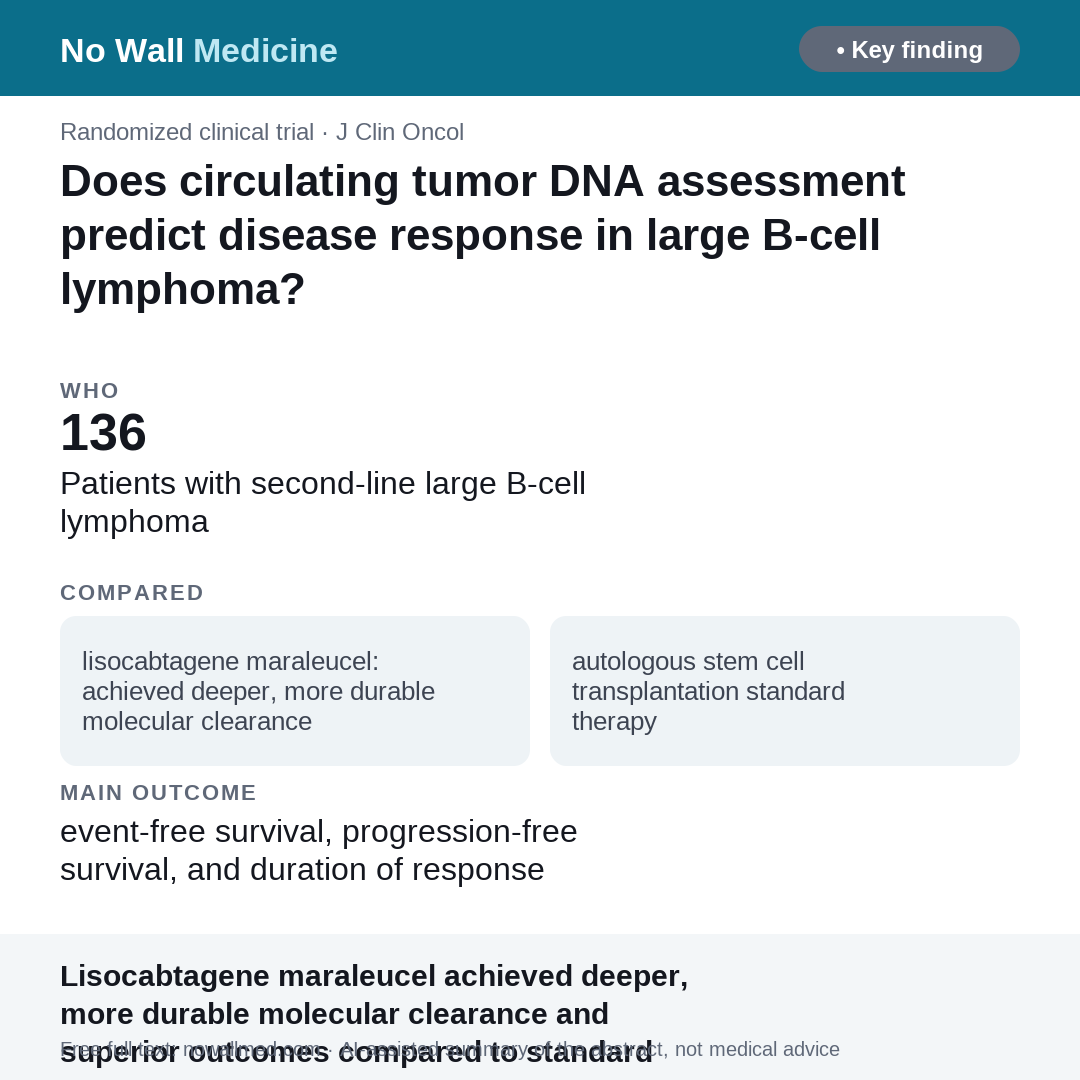
Circulating Tumor DNA Assessment of Disease Response in Large B-Cell Lymphoma: Lisocabtagene Maraleucel Versus Autologous Stem Cell Transplantation Standard Therapy
Randomized clinical trialBenefit found
Does circulating tumor DNA assessment predict disease response in large B-cell lymphoma?
Who
136
Patients with second-line large B-cell lymphoma
Compared
lisocabtagene maraleucel: achieved deeper, more durable molecular clearance
autologous stem cell transplantation standard therapy
Main outcome
event-free survival, progression-free survival, and duration of response
Bottom line: Lisocabtagene maraleucel achieved deeper, more durable molecular clearance and superior outcomes compared to standard therapy.
J Clin Oncol · 2026-04-27Download image
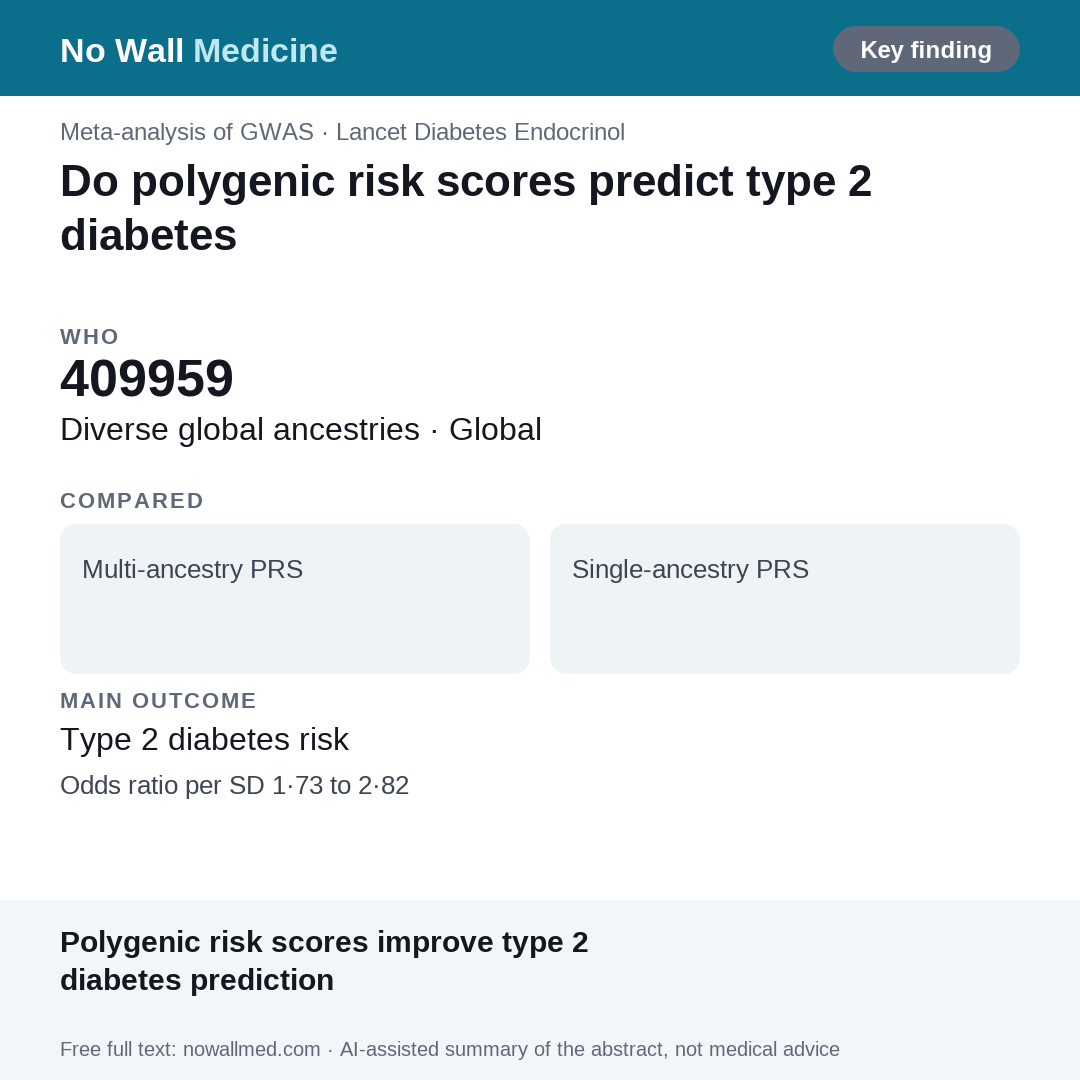
Multi-ancestry polygenic risk scores for the prediction of type 2 diabetes and complications in diverse ancestries
Meta-analysis of GWASBenefit found
Do polygenic risk scores predict type 2 diabetes
Who
409959
Diverse global ancestries · Global
Compared
Multi-ancestry PRS
Single-ancestry PRS
Main outcome
Type 2 diabetes risk
Result: Odds ratio per SD 1·73 to 2·82
Bottom line: Polygenic risk scores improve type 2 diabetes prediction
Limitation: Poor performance in non-European populations
Funded by: National Human Genome Research Institute
Lancet Diabetes Endocrinol · 2026-04-27Download image
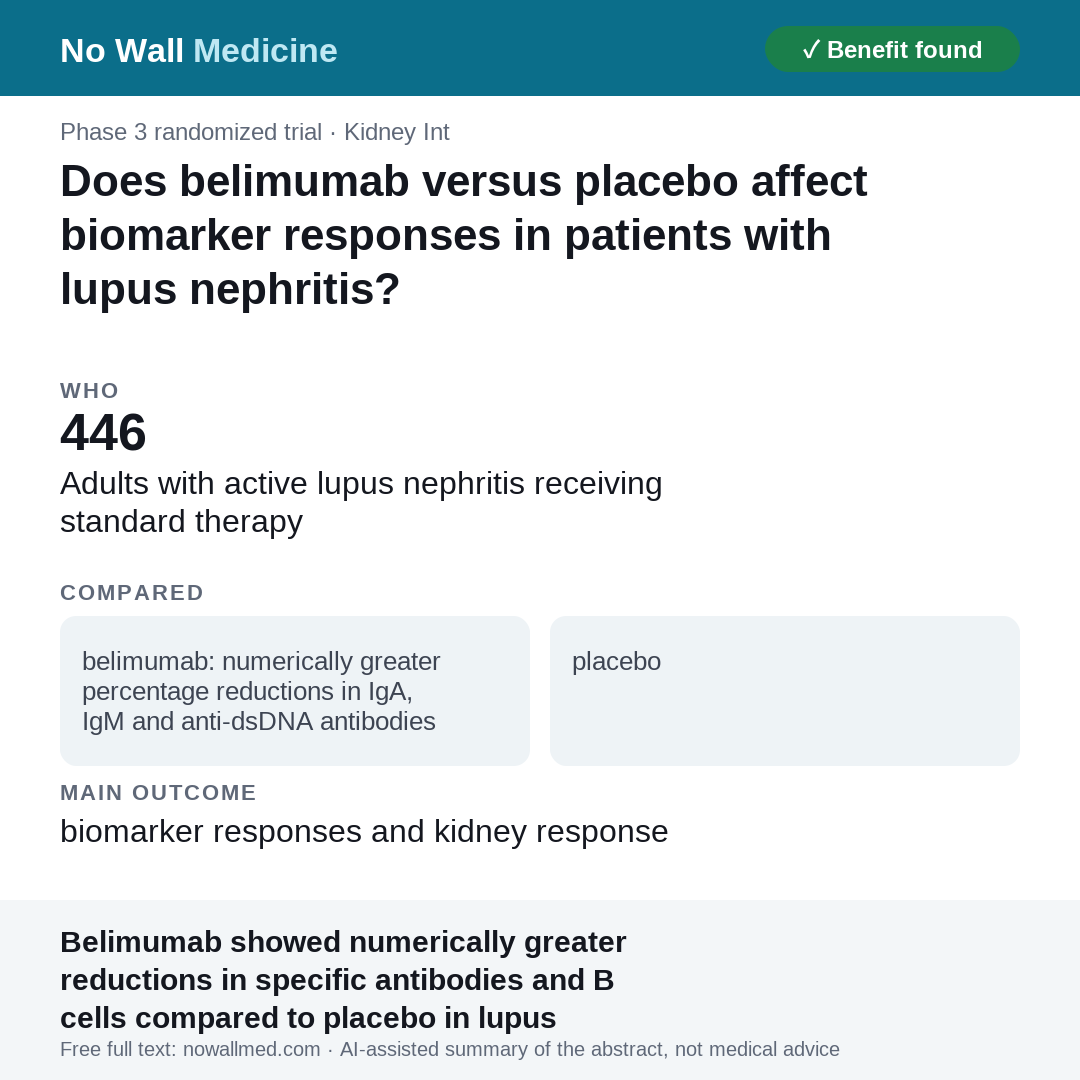
Insights from the BLISS-LN Phase 3 study of biomarker associations with kidney response to belimumab in lupus nephritis
Phase 3 randomized trialBenefit found
Does belimumab versus placebo affect biomarker responses in patients with lupus nephritis?
Who
446
Adults with active lupus nephritis receiving standard therapy
Compared
belimumab: numerically greater percentage reductions in IgA, IgM and anti-dsDNA antibodies
placebo
Main outcome
biomarker responses and kidney response
Bottom line: Belimumab showed numerically greater reductions in specific antibodies and B cells compared to placebo in lupus nephritis.
Kidney Int · 2026-04-27Download image
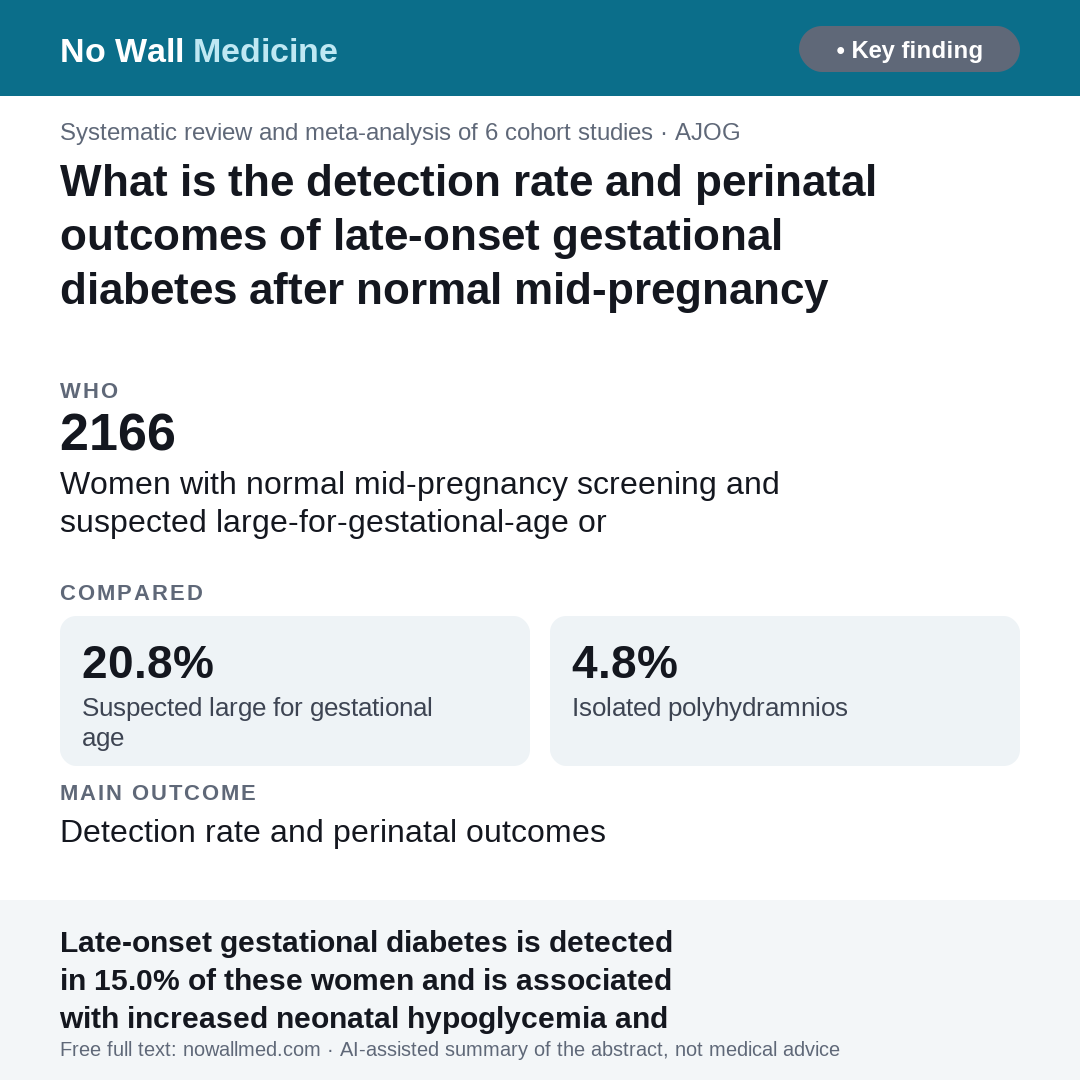
Late-onset diagnosis of gestational diabetes after normal mid-pregnancy screening in women with large for gestational age or polyhydramnios: a systematic review and meta-analysis
Systematic review and meta-analysis of 6 cohort studiesHarm found
What is the detection rate and perinatal outcomes of late-onset gestational diabetes after normal mid-pregnancy screening?
Who
2166
Women with normal mid-pregnancy screening and suspected large-for-gestational-age or polyhydramnios
Compared
20.8%Suspected large for gestational age (95% confidence interval, 17.4%-24.6%)
4.8%Isolated polyhydramnios (95% confidence interval, 2.0%-10.8%)
Main outcome
Detection rate and perinatal outcomes
Result: pooled detection rate 15.0% (95% confidence interval, 9.9%-21.0%)
Bottom line: Late-onset gestational diabetes is detected in 15.0% of these women and is associated with increased neonatal hypoglycemia and cesarean delivery.
AJOG · 2026-04-27Download image
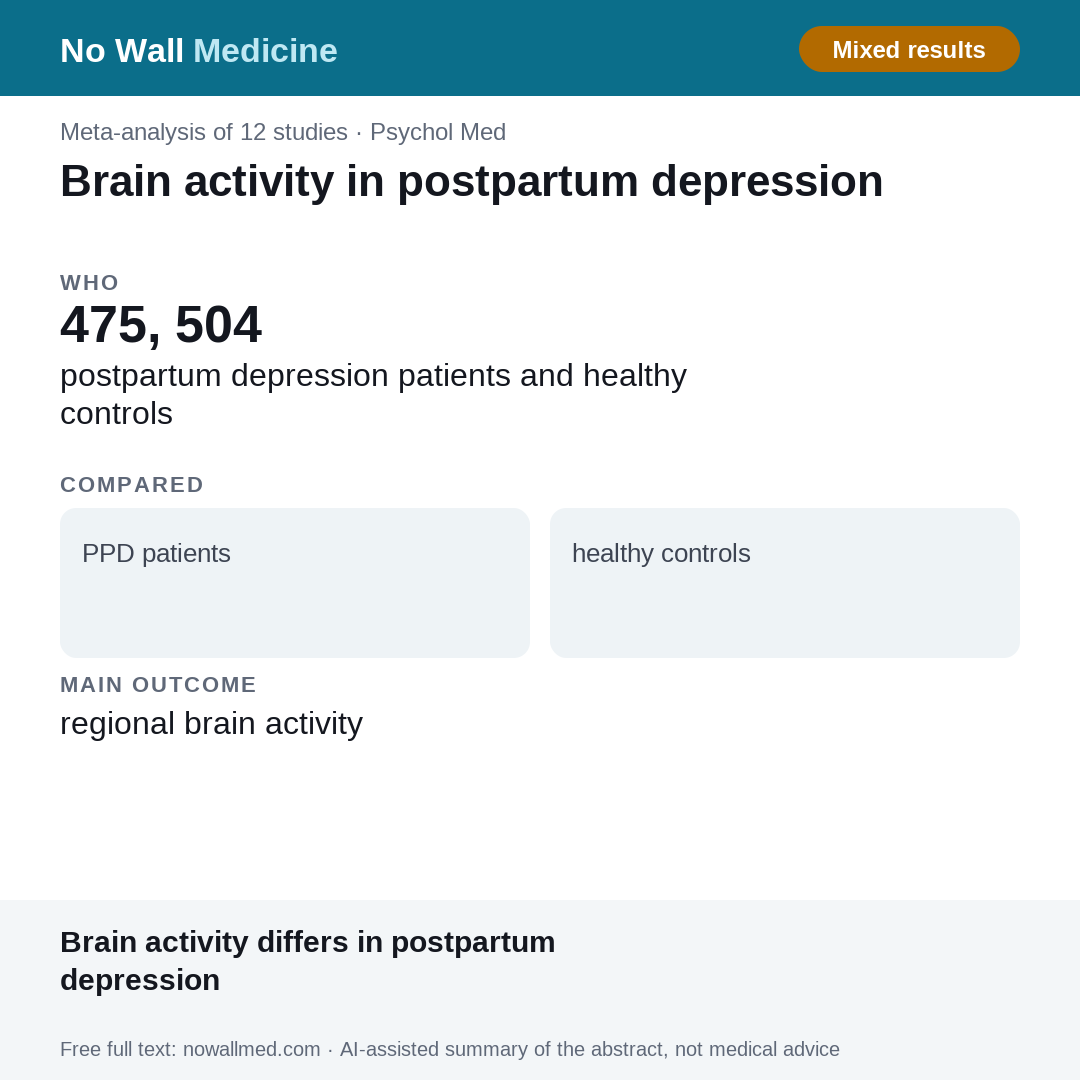
Intrinsic regional brain activity differences and its relationship with neurotransmitter and gene expression in postpartum depression: a voxel-based meta-analysis
Meta-analysis of 12 studiesMixed results
Brain activity in postpartum depression
Who
475, 504
postpartum depression patients and healthy controls
Compared
PPD patients
healthy controls
Main outcome
regional brain activity
Bottom line: Brain activity differs in postpartum depression
Psychol Med · 2026-04-27Download image
Cognitive performance in offspring of parents with severe mental illness: a meta-analysis
Meta-analysis of 109 studiesHarm found
Does parental severe mental illness associate with offspring cognitive and academic performance?
Who
1,586,339
Offspring of parents with schizophrenia, bipolar disorder, or major depressive disorder
Compared
Offspring of parents with severe mental illnesses
Controls
Main outcome
Cognitive and academic performance
Bottom line: Offspring of parents with schizophrenia or bipolar disorder are at increased risk of cognitive difficulties.
Psychol Med · 2026-04-27Download image

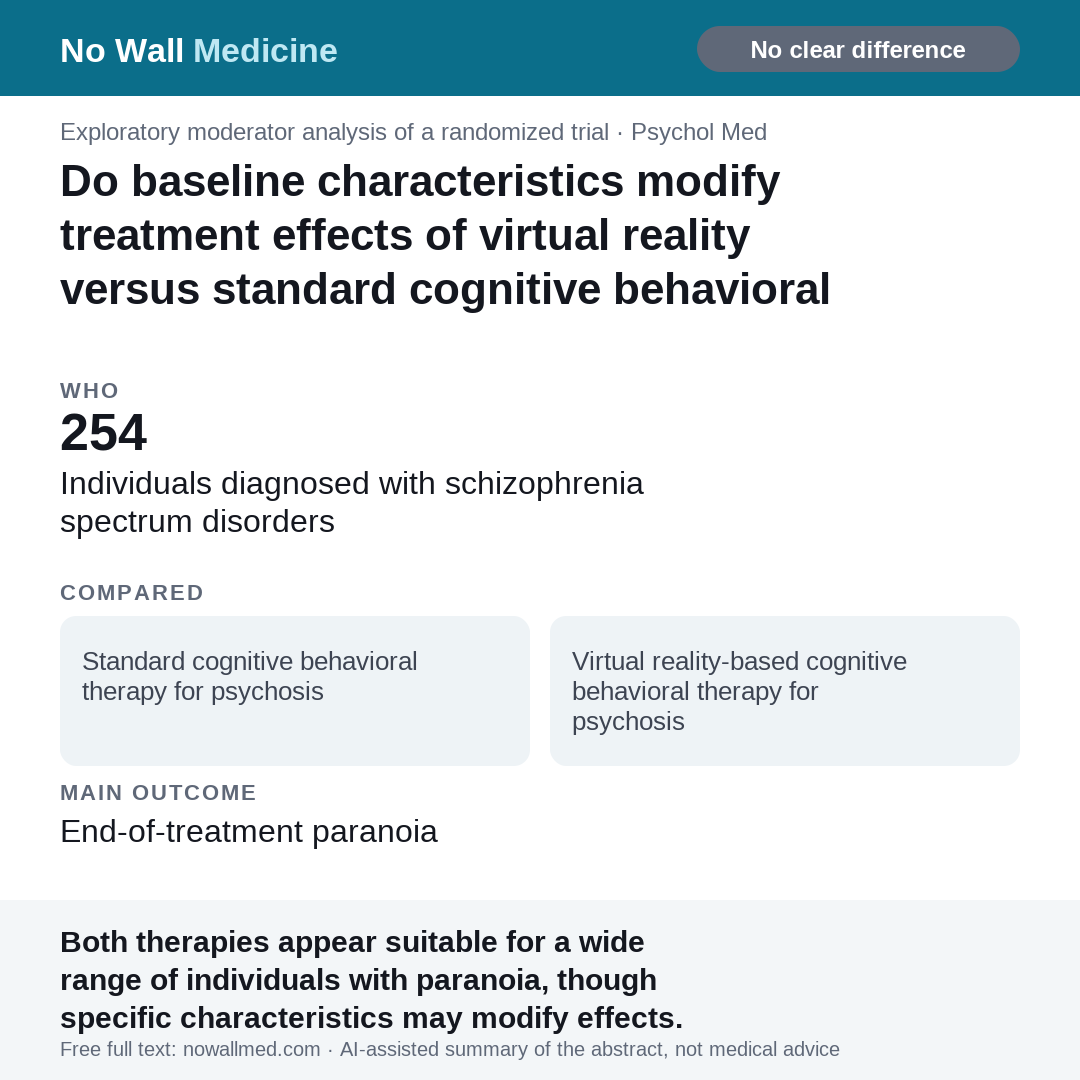
Treatment effect modifiers of virtual reality-based versus standard cognitive behavioral therapy for paranoia in schizophrenia spectrum disorders: an exploratory moderator analysis of clinical and demographic characteristics in the FaceYourFears trial
Exploratory moderator analysis of a randomized trialNo clear difference
Do baseline characteristics modify treatment effects of virtual reality versus standard cognitive behavioral therapy?
Who
254
Individuals diagnosed with schizophrenia spectrum disorders
Compared
Standard cognitive behavioral therapy for psychosis
Virtual reality-based cognitive behavioral therapy for psychosis
Main outcome
End-of-treatment paranoia
Bottom line: Both therapies appear suitable for a wide range of individuals with paranoia, though specific characteristics may modify effects.
Limitation: The study is exploratory with modest effects and largely nonsignificant findings.
Psychol Med · 2026-04-27Download image
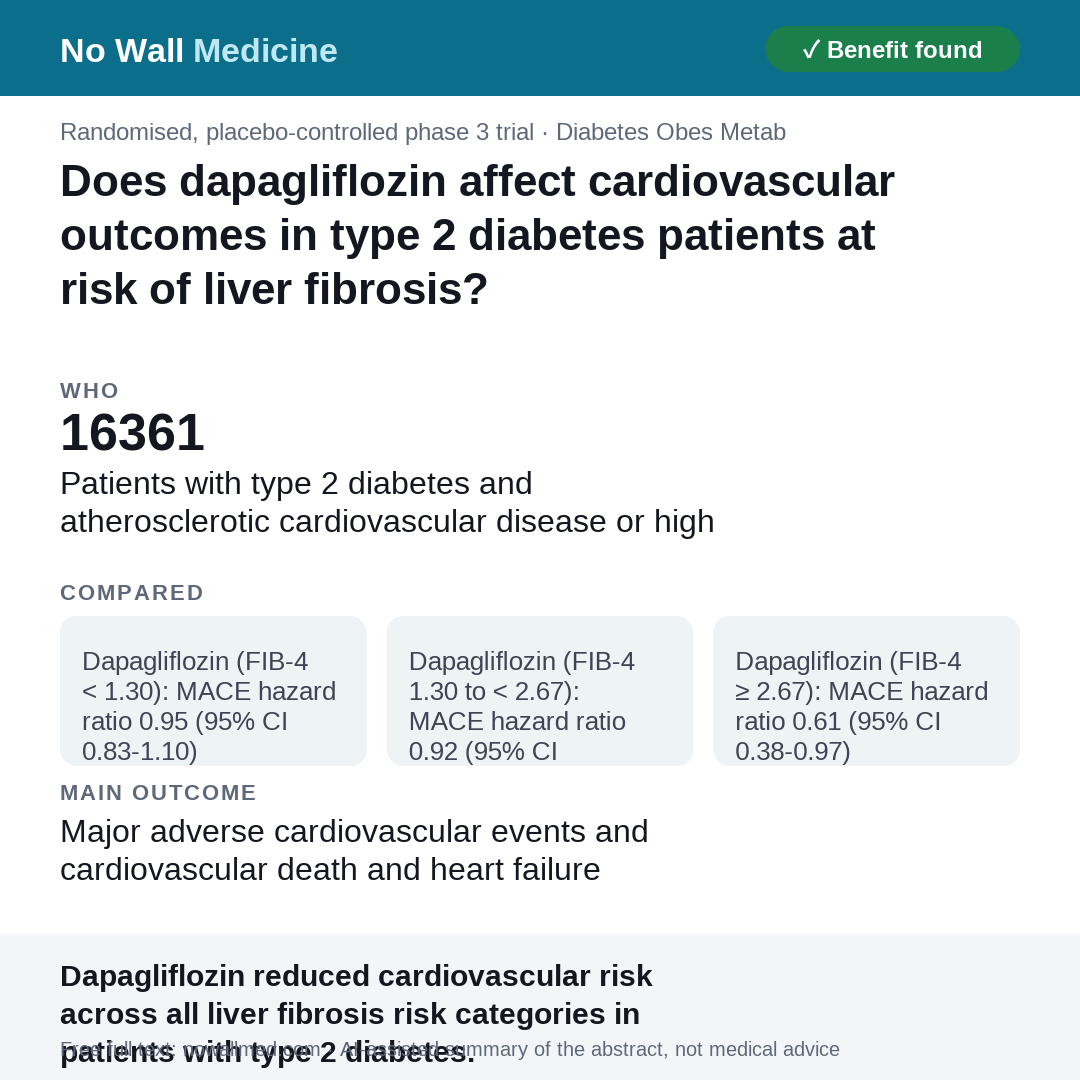
Effects of Dapagliflozin on Cardiovascular Outcomes in Patients With Type 2 Diabetes at Risk of Liver Fibrosis
Randomised, placebo-controlled phase 3 trialBenefit found
Does dapagliflozin affect cardiovascular outcomes in type 2 diabetes patients at risk of liver fibrosis?
Who
16361
Patients with type 2 diabetes and atherosclerotic cardiovascular disease or high risk
Compared
Dapagliflozin (FIB-4 < 1.30): MACE hazard ratio 0.95 (95% CI 0.83-1.10)
Dapagliflozin (FIB-4 1.30 to < 2.67): MACE hazard ratio 0.92 (95% CI 0.79-1.08)
Dapagliflozin (FIB-4 ≥ 2.67): MACE hazard ratio 0.61 (95% CI 0.38-0.97)
Main outcome
Major adverse cardiovascular events and cardiovascular death and heart failure hospitalisation
Result: MACE hazard ratio 0.61 (95% CI 0.38-0.97) in highest FIB-4 group
Bottom line: Dapagliflozin reduced cardiovascular risk across all liver fibrosis risk categories in patients with type 2 diabetes.
Diabetes Obes Metab · 2026-04-27Download image
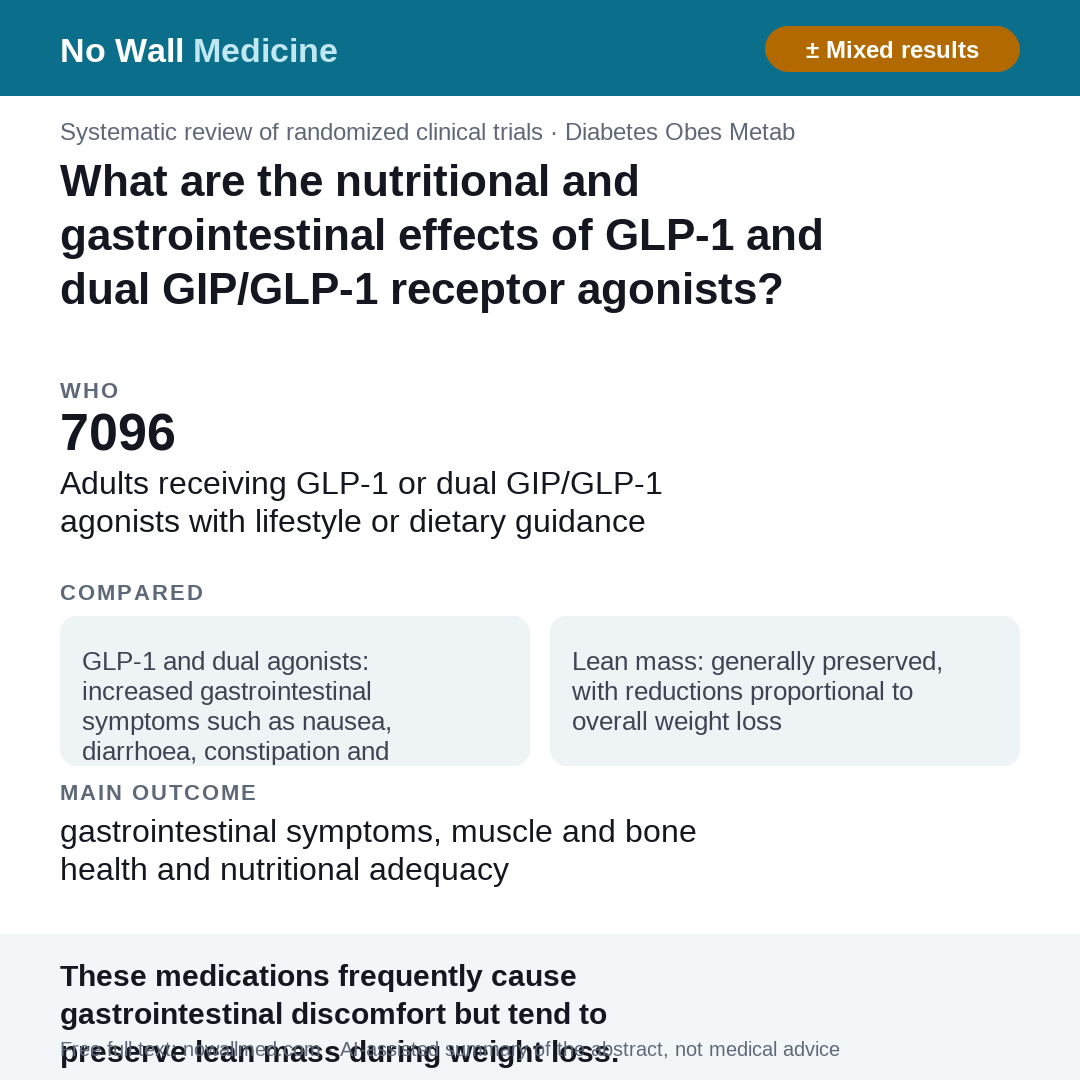
Dietary Strategies and Nutritional Management in Patients Receiving GLP-1 and Dual GIP/GLP-1 Receptor Agonists as Adjuncts to Lifestyle Interventions: A Systematic Review of Randomised Clinical Trials
Systematic review of randomized clinical trialsMixed results
What are the nutritional and gastrointestinal effects of GLP-1 and dual GIP/GLP-1 receptor agonists?
Who
7096
Adults receiving GLP-1 or dual GIP/GLP-1 agonists with lifestyle or dietary guidance
Compared
GLP-1 and dual agonists: increased gastrointestinal symptoms such as nausea, diarrhoea, constipation and vomiting
Lean mass: generally preserved, with reductions proportional to overall weight loss
Main outcome
gastrointestinal symptoms, muscle and bone health and nutritional adequacy
Bottom line: These medications frequently cause gastrointestinal discomfort but tend to preserve lean mass during weight loss.
Limitation: Evidence on optimal nutritional approaches remains limited and no study directly assessed bone health.
Diabetes Obes Metab · 2026-04-27Download image
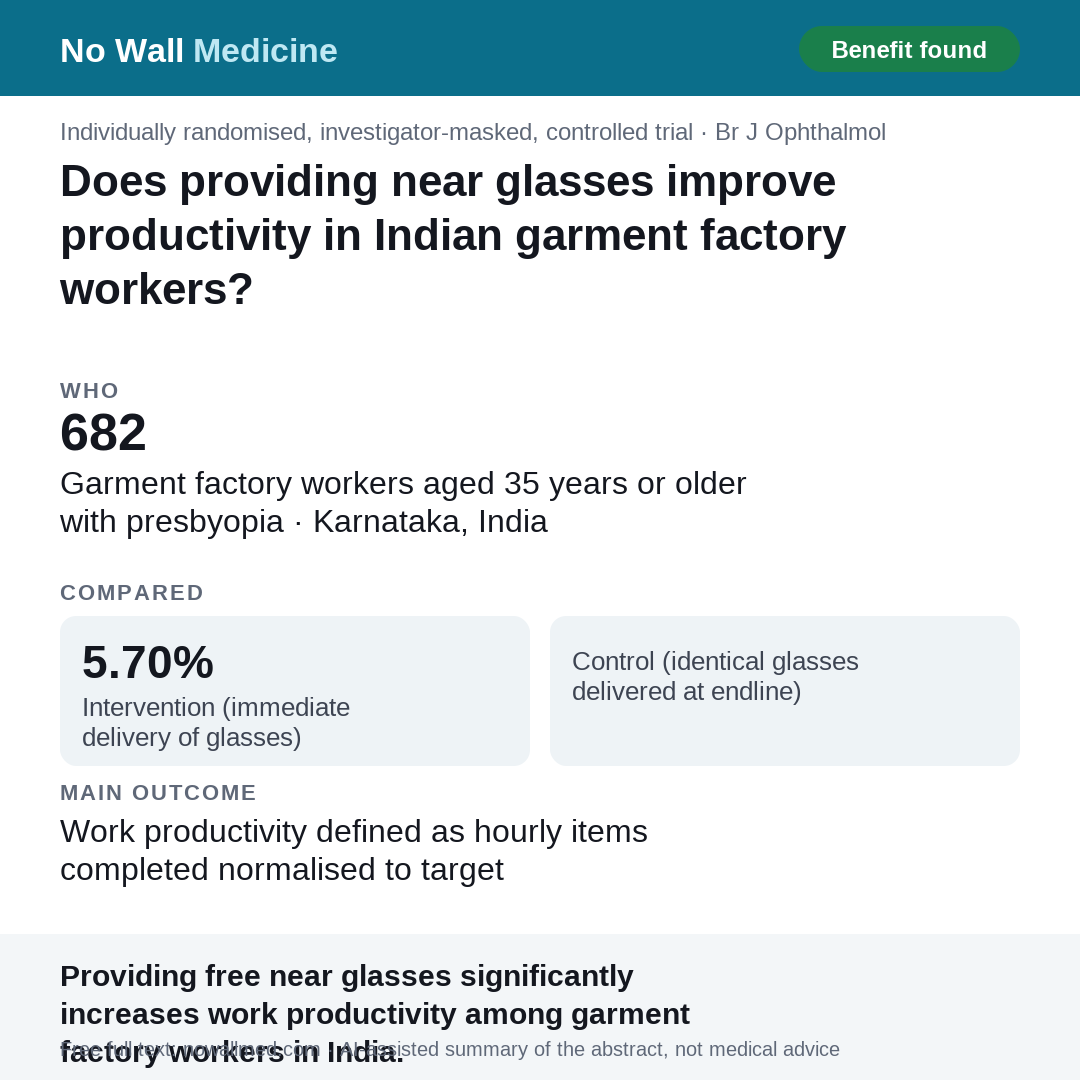
PROductivity Study of Presbyopia Elimination in gaRment workers (PROSPER II): a randomised trial on the productivity impact of providing near glasses to Indian garment factory workers
Individually randomised, investigator-masked, controlled trialBenefit found
Does providing near glasses improve productivity in Indian garment factory workers?
Who
682
Garment factory workers aged 35 years or older with presbyopia · Karnataka, India
Compared
5.70%Intervention (immediate delivery of glasses) (95% CI 1.04% to 10.4%)
Control (identical glasses delivered at endline)
Main outcome
Work productivity defined as hourly items completed normalised to target
Result: 5.70% (95% CI 1.04% to 10.4%)
Bottom line: Providing free near glasses significantly increases work productivity among garment factory workers in India.
Br J Ophthalmol · 2026-04-27Download image
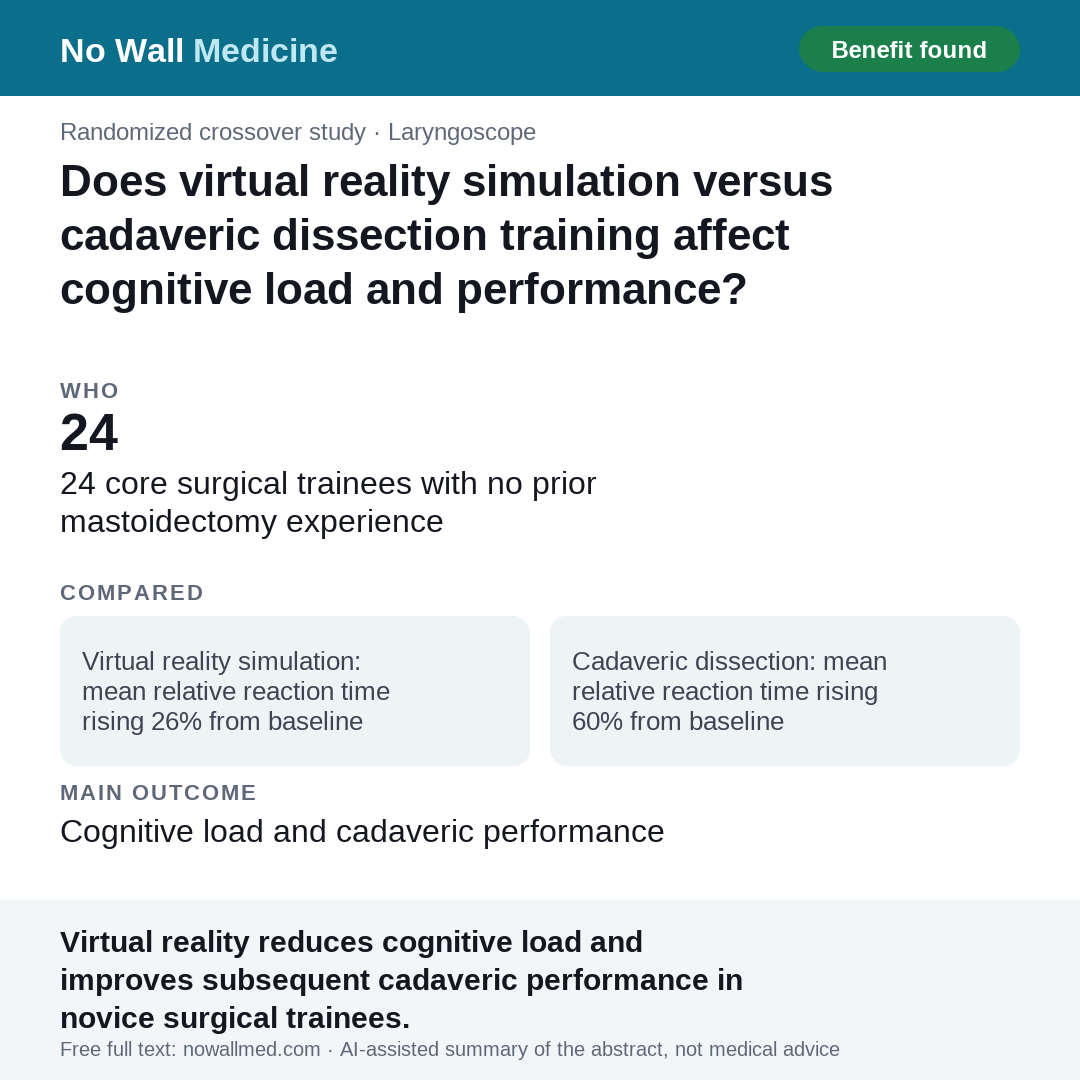
Virtual Reality Mastoidectomy as Precadaver Training for Novices: A Randomized Crossover Study
Randomized crossover studyBenefit found
Does virtual reality simulation versus cadaveric dissection training affect cognitive load and performance?
Who
24
24 core surgical trainees with no prior mastoidectomy experience
Compared
Virtual reality simulation: mean relative reaction time rising 26% from baseline
Cadaveric dissection: mean relative reaction time rising 60% from baseline
Main outcome
Cognitive load and cadaveric performance
Bottom line: Virtual reality reduces cognitive load and improves subsequent cadaveric performance in novice surgical trainees.
Laryngoscope · 2026-04-27Download image