Visual abstracts
New randomized trials and meta-analyses from leading journals at a glance: who was studied, what was compared, and what was found. Every paper is free to read in full.
All specialtiesCardiology 1341Oncology 1205Gastroenterology & Hepatology 483Infectious Disease 880Neurology 556Psychiatry & Mental Health 671Pulmonology 578Critical Care 398Endocrinology & Diabetes 746Pediatrics 802Surgery 638Orthopedics & Sports Medicine 259Neurosurgery 182Cardiothoracic & Vascular Surgery 151Plastic & Reconstructive Surgery 212Nephrology 283Rheumatology 179Hematology 283Dermatology 142Ophthalmology 153Obstetrics & Gynecology 426Public & Global Health 261Radiology & Imaging 173Anesthesiology 257Urology 251ENT (Otolaryngology) 182Emergency Medicine 147Allergy & Immunology 90Geriatrics 281Family Medicine & Primary Care 171Medical Genetics & Genomics 144Pathology & Laboratory Medicine 41Physical Medicine & Rehabilitation 233Palliative Care 122Nutrition 353Digital Health & AI 696General Medicine 123
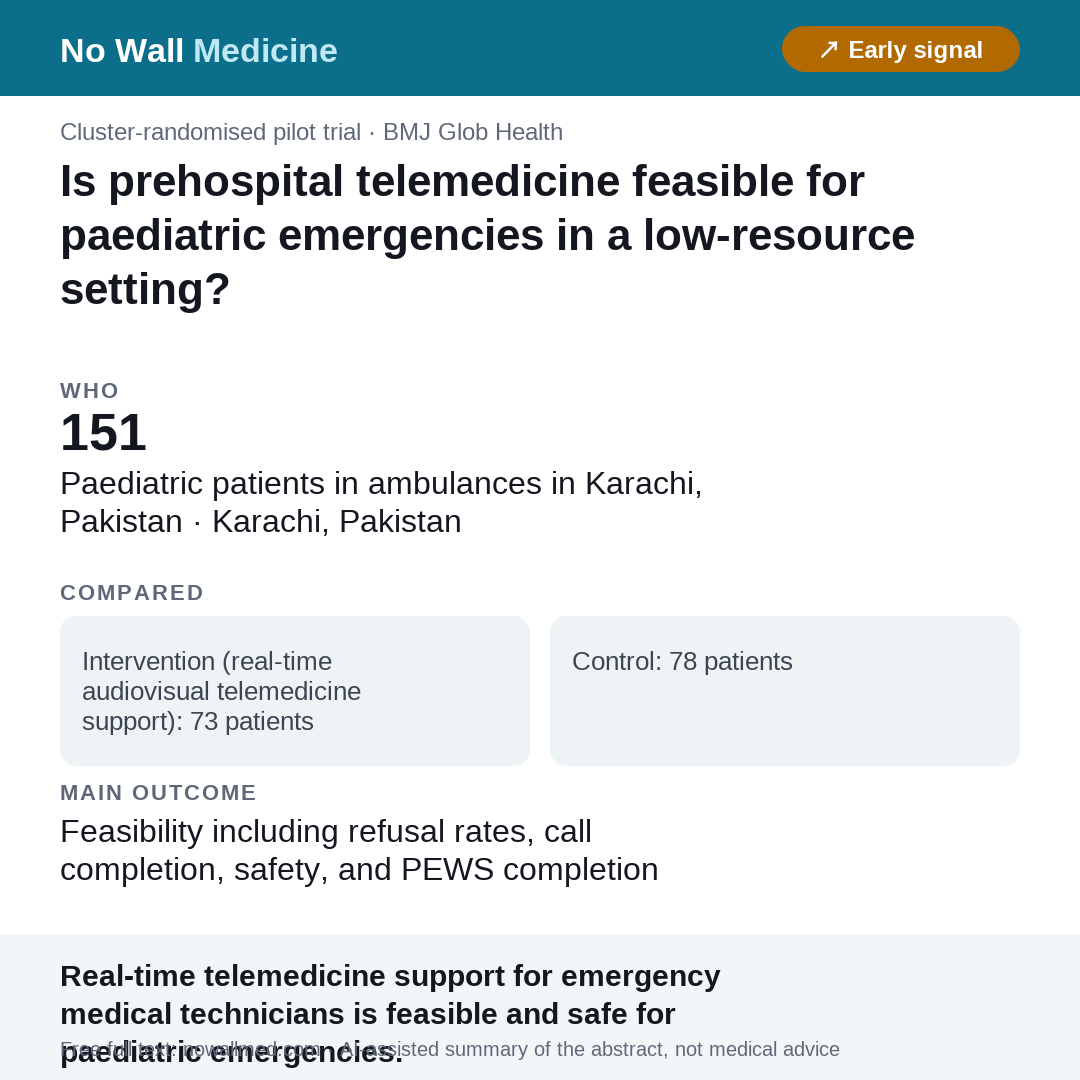
Feasibility of prehospital telemedicine for paediatric emergencies: a cluster-randomised pilot trial in Karachi, Pakistan
Cluster-randomised pilot trialBenefit found
Is prehospital telemedicine feasible for paediatric emergencies in a low-resource setting?
Who
151
Paediatric patients in ambulances in Karachi, Pakistan · Karachi, Pakistan
Compared
Intervention (real-time audiovisual telemedicine support): 73 patients
Control: 78 patients
Main outcome
Feasibility including refusal rates, call completion, safety, and PEWS completion
Bottom line: Real-time telemedicine support for emergency medical technicians is feasible and safe for paediatric emergencies.
BMJ Glob Health · 2026-06-24Download image
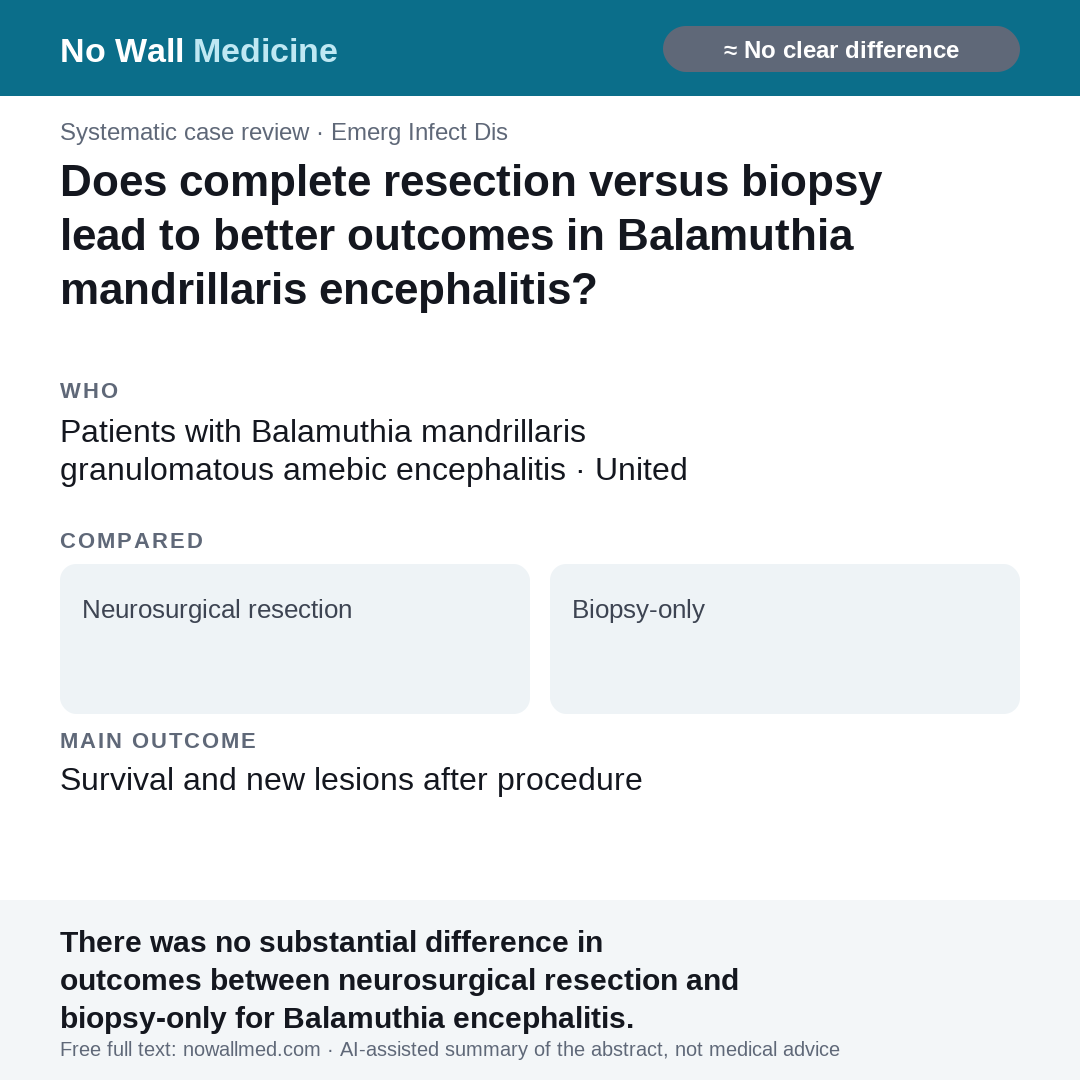
Neurosurgical Biopsy and Resection for Diagnosis and Treatment of Balamuthia mandrillaris Amebic Encephalitis, United States
Systematic case reviewNo clear difference
Does complete resection versus biopsy lead to better outcomes in Balamuthia mandrillaris encephalitis?
Who
Patients with Balamuthia mandrillaris granulomatous amebic encephalitis · United States
Compared
Neurosurgical resection
Biopsy-only
Main outcome
Survival and new lesions after procedure
Bottom line: There was no substantial difference in outcomes between neurosurgical resection and biopsy-only for Balamuthia encephalitis.
Limitation: Case review, number of cases, and incomplete data available.
Emerg Infect Dis · 2026-06-24Download image
Confocal laser endomicroscopy-assisted endobronchial ultrasound-guided needle aspiration in diagnosing mediastinal and/or hilar lymphadenopathy (COLLABORATION-III): protocol for a randomised controlled trial
Prospective, multicentre, stratified, non-inferiority randomised controlled trialUnclear result
Is needle-based confocal laser endomicroscopy-assisted EBUS-TBNA non-inferior to EBUS-TBMC for diagnostic yield?
Who
640
Adult participants with unexplained mediastinal and/or hilar lymphadenopathy · Five centres in China
Compared
nCLE-assisted EBUS-TBNA
EBUS-TBMC
Main outcome
Overall diagnostic yield
Bottom line: This protocol study aims to evaluate if nCLE-assisted EBUS-TBNA is non-inferior to EBUS-TBMC.
BMJ Open Respir Res · 2026-06-24Download image

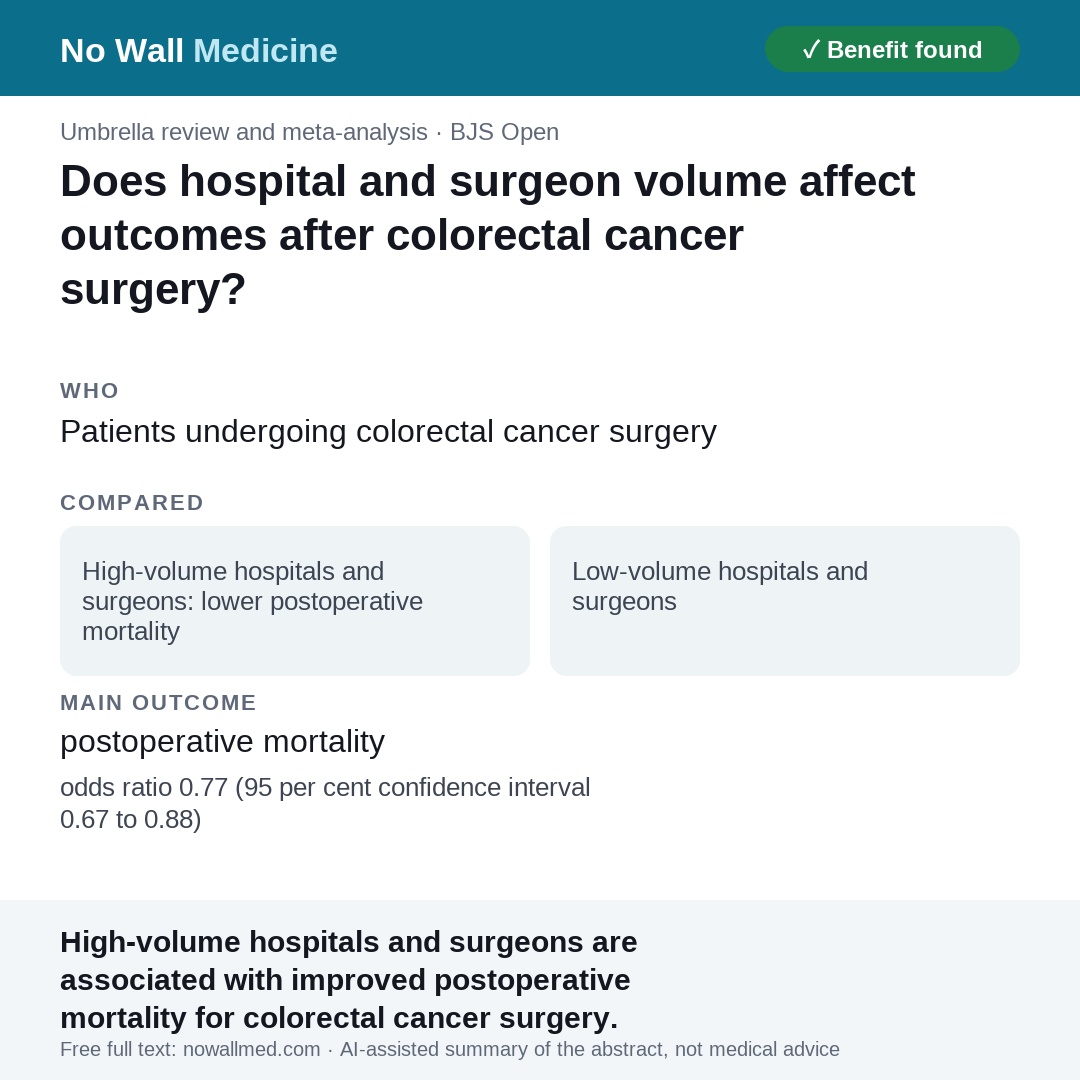
Hospital and surgeon volume versus outcomes after colorectal cancer surgery: umbrella review and meta-analysis
Umbrella review and meta-analysisBenefit found
Does hospital and surgeon volume affect outcomes after colorectal cancer surgery?
Who
Patients undergoing colorectal cancer surgery
Compared
High-volume hospitals and surgeons: lower postoperative mortality
Low-volume hospitals and surgeons
Main outcome
postoperative mortality
Result: odds ratio 0.77 (95 per cent confidence interval 0.67 to 0.88)
Bottom line: High-volume hospitals and surgeons are associated with improved postoperative mortality for colorectal cancer surgery.
Limitation: Heterogeneity of existing volume definitions makes a specific cut-off definition unclear.
BJS Open · 2026-06-24Download image
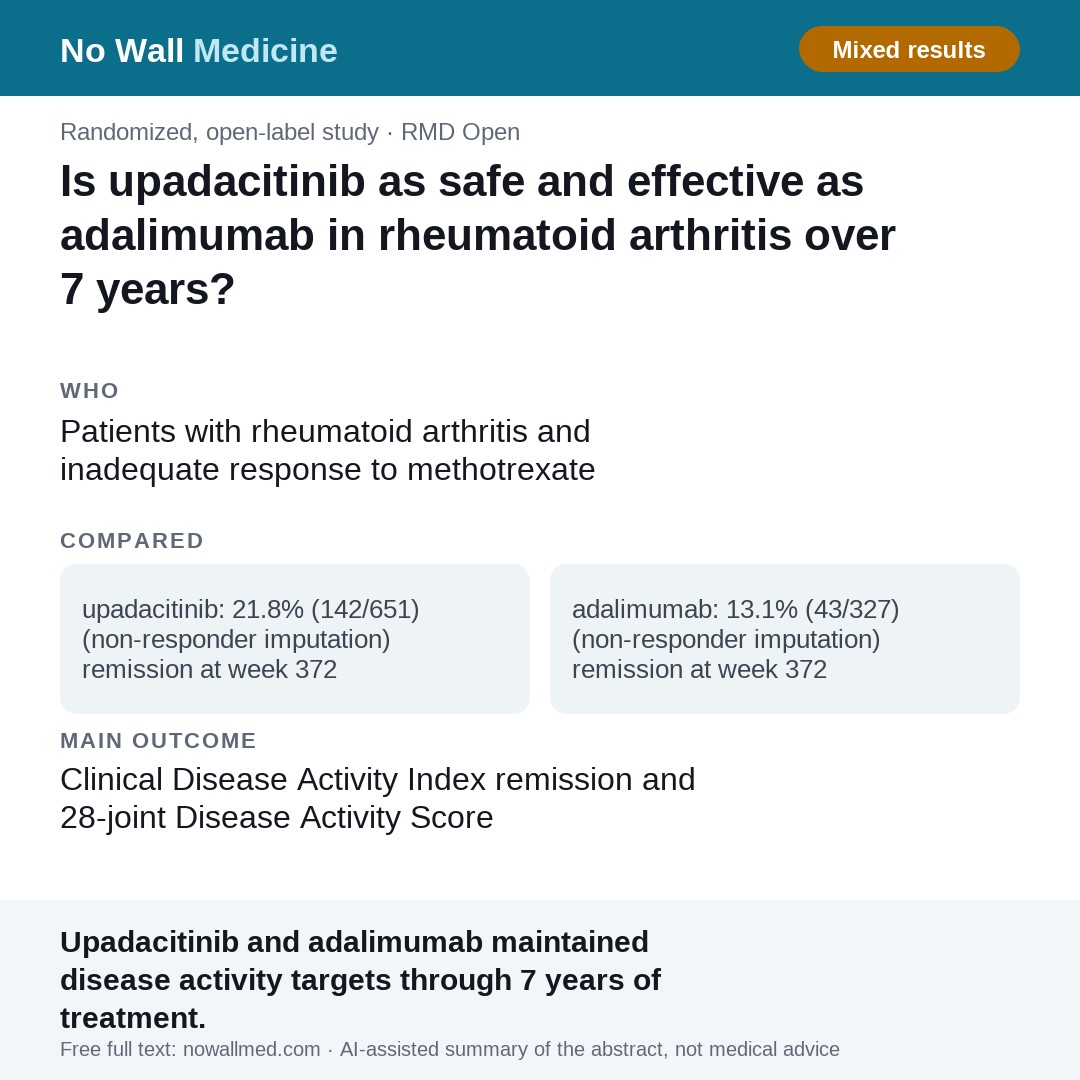
Long-term safety and efficacy of upadacitinib compared with adalimumab in patients with rheumatoid arthritis: 7-year data from the SELECT-COMPARE study
Randomized, open-label studyMixed results
Is upadacitinib as safe and effective as adalimumab in rheumatoid arthritis over 7 years?
Who
Patients with rheumatoid arthritis and inadequate response to methotrexate
Compared
upadacitinib: 21.8% (142/651) (non-responder imputation) remission at week 372
adalimumab: 13.1% (43/327) (non-responder imputation) remission at week 372
Main outcome
Clinical Disease Activity Index remission and 28-joint Disease Activity Score
Bottom line: Upadacitinib and adalimumab maintained disease activity targets through 7 years of treatment.
RMD Open · 2026-06-24Download image
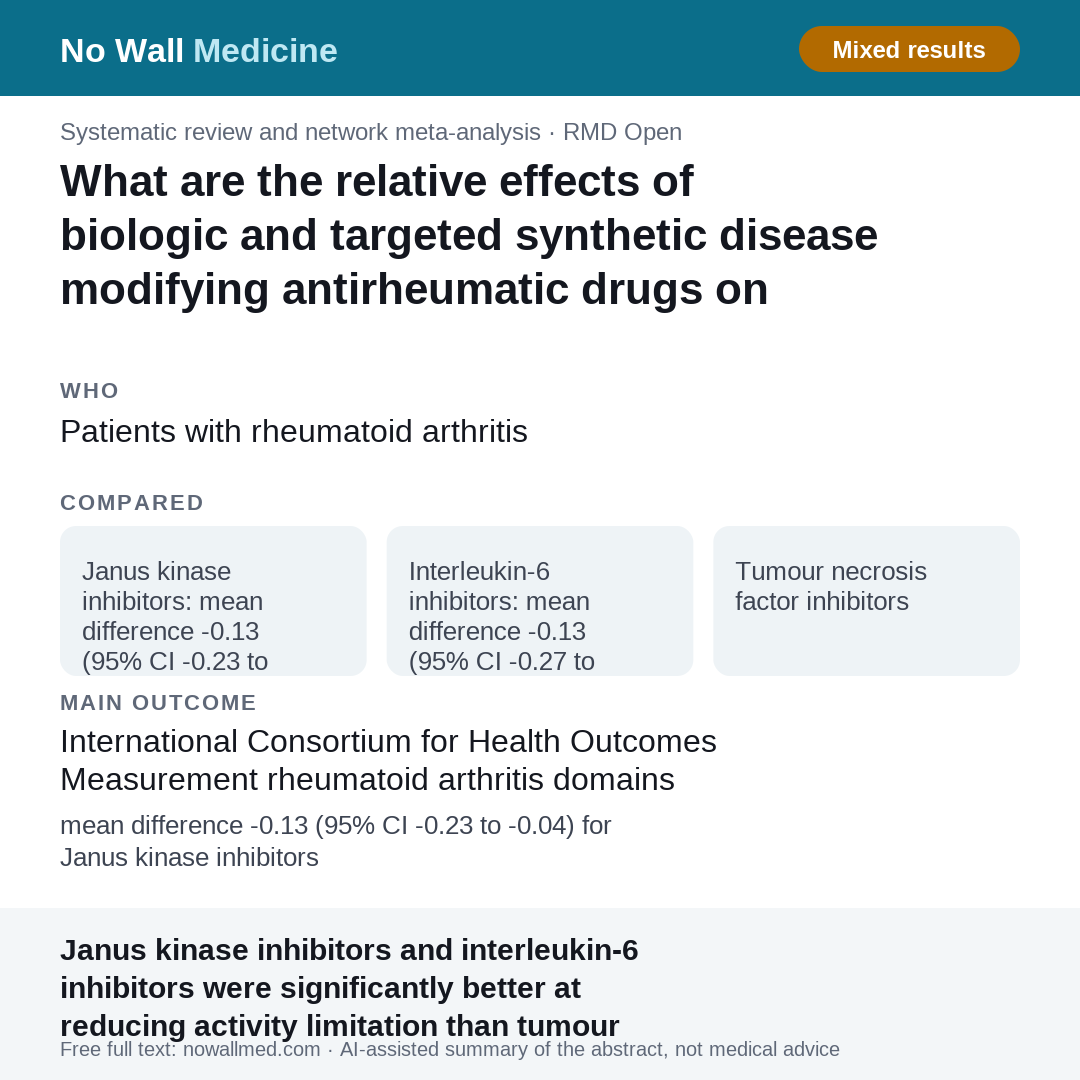
Effects of biologic and targeted synthetic disease modifying antirheumatic drugs (b/tsDMARDs) on patient-reported outcome domains in rheumatoid arthritis: a systematic review and network meta-analyses
Systematic review and network meta-analysisMixed results
What are the relative effects of biologic and targeted synthetic disease modifying antirheumatic drugs on patient-reported outcomes?
Who
Patients with rheumatoid arthritis
Compared
Janus kinase inhibitors: mean difference -0.13 (95% CI -0.23 to -0.04)
Interleukin-6 inhibitors: mean difference -0.13 (95% CI -0.27 to -0.00)
Tumour necrosis factor inhibitors
Main outcome
International Consortium for Health Outcomes Measurement rheumatoid arthritis domains
Result: mean difference -0.13 (95% CI -0.23 to -0.04) for Janus kinase inhibitors
Bottom line: Janus kinase inhibitors and interleukin-6 inhibitors were significantly better at reducing activity limitation than tumour necrosis factor inhibitors.
Limitation: Heterogeneity within comparisons ranged from low to very high (I²=0%-96%).
RMD Open · 2026-06-24Download image
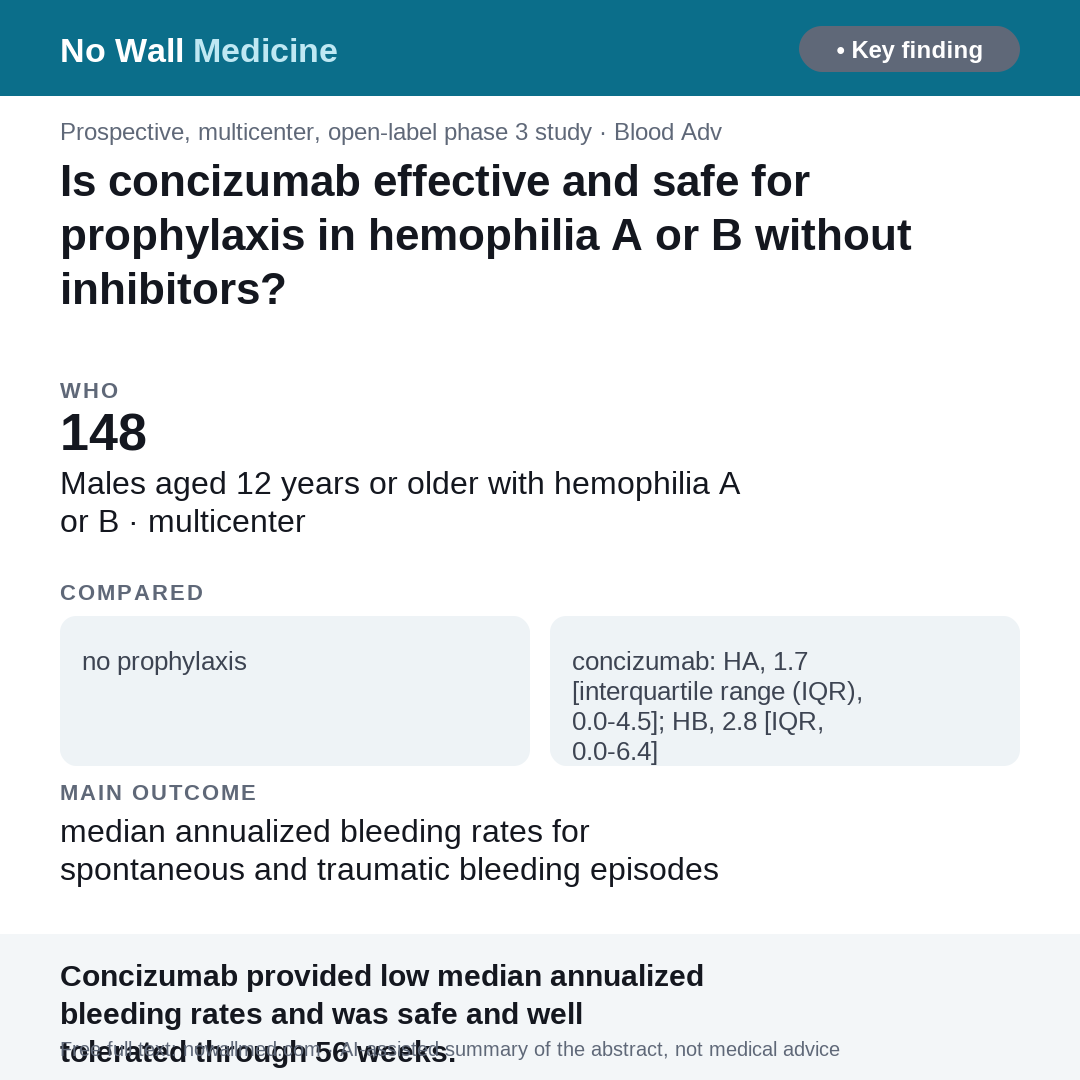
Concizumab in patients with hemophilia A or B without inhibitors: 56-week cutoff results of the phase 3 explorer8 study
Prospective, multicenter, open-label phase 3 studyBenefit found
Is concizumab effective and safe for prophylaxis in hemophilia A or B without inhibitors?
Who
148
Males aged 12 years or older with hemophilia A or B · multicenter
Compared
no prophylaxis
concizumab: HA, 1.7 [interquartile range (IQR), 0.0-4.5]; HB, 2.8 [IQR, 0.0-6.4]
Main outcome
median annualized bleeding rates for spontaneous and traumatic bleeding episodes
Bottom line: Concizumab provided low median annualized bleeding rates and was safe and well tolerated through 56 weeks.
Blood Adv · 2026-06-24Download image
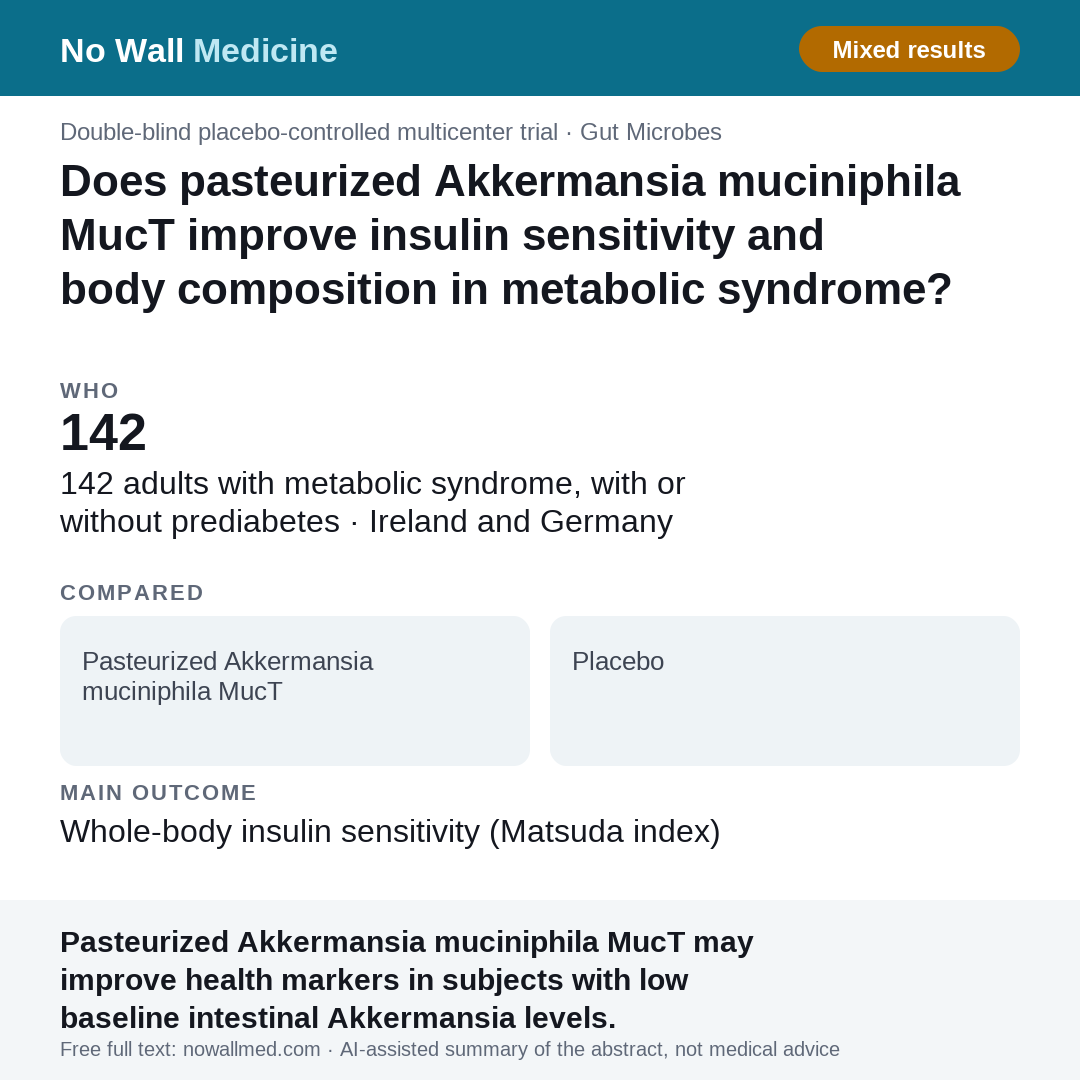
Effect of pasteurized Akkermansia muciniphila MucT on insulin sensitivity, body composition, and GLP-1 production in subjects with metabolic syndrome: impact of low baseline gut Akkermansia levels
Double-blind placebo-controlled multicenter trialMixed results
Does pasteurized Akkermansia muciniphila MucT improve insulin sensitivity and body composition in metabolic syndrome?
Who
142
142 adults with metabolic syndrome, with or without prediabetes · Ireland and Germany
Compared
Pasteurized Akkermansia muciniphila MucT
Placebo
Main outcome
Whole-body insulin sensitivity (Matsuda index)
Bottom line: Pasteurized Akkermansia muciniphila MucT may improve health markers in subjects with low baseline intestinal Akkermansia levels.
Gut Microbes · 2026-06-24Download image
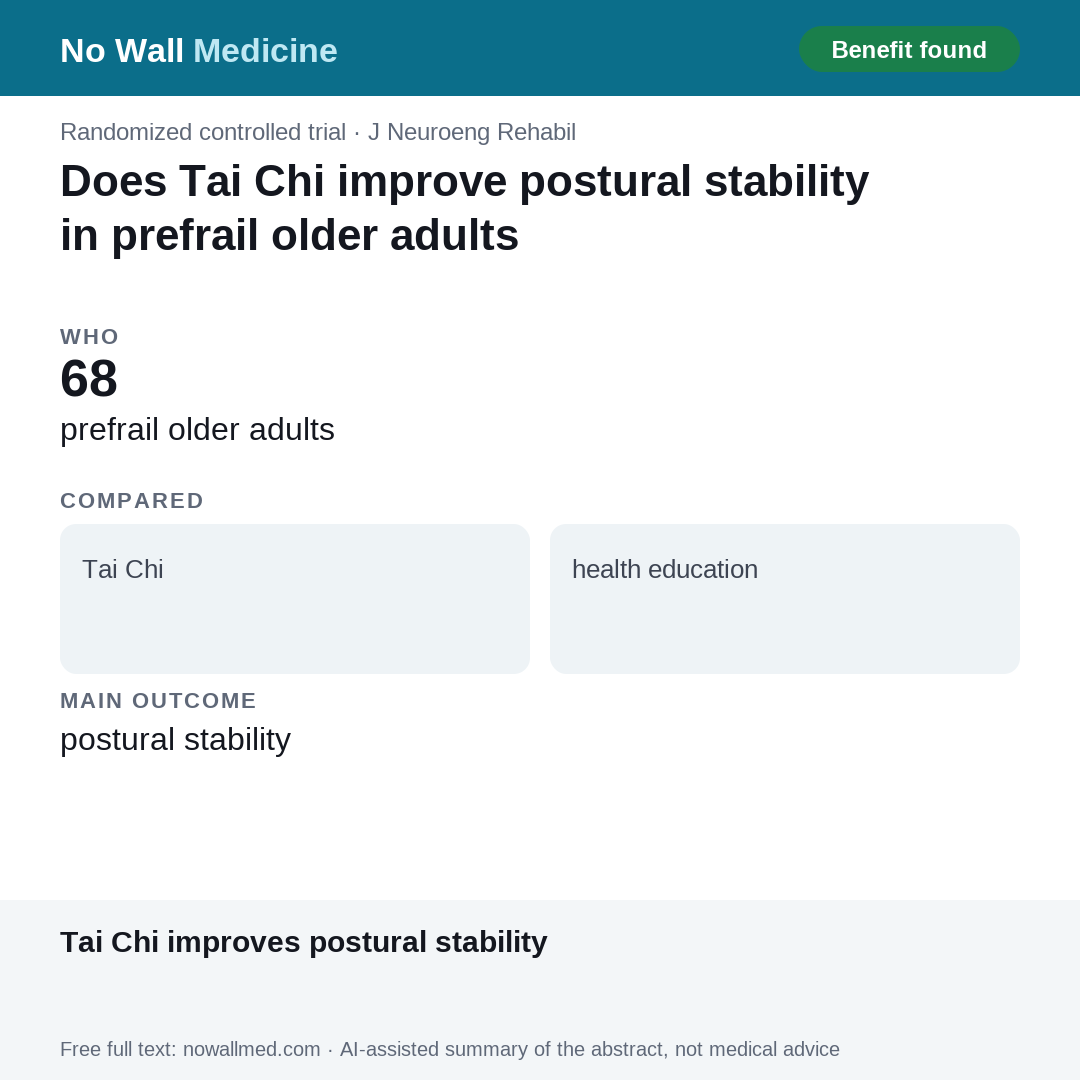
Effects of a 12-week Tai Chi program on postural stability and gait biomechanics in prefrail older adults: a randomized controlled study
Randomized controlled trialBenefit found
Does Tai Chi improve postural stability in prefrail older adults
Who
68
prefrail older adults
Compared
Tai Chi
health education
Main outcome
postural stability
Bottom line: Tai Chi improves postural stability
Limitation: small sample size
J Neuroeng Rehabil · 2026-06-24Download image
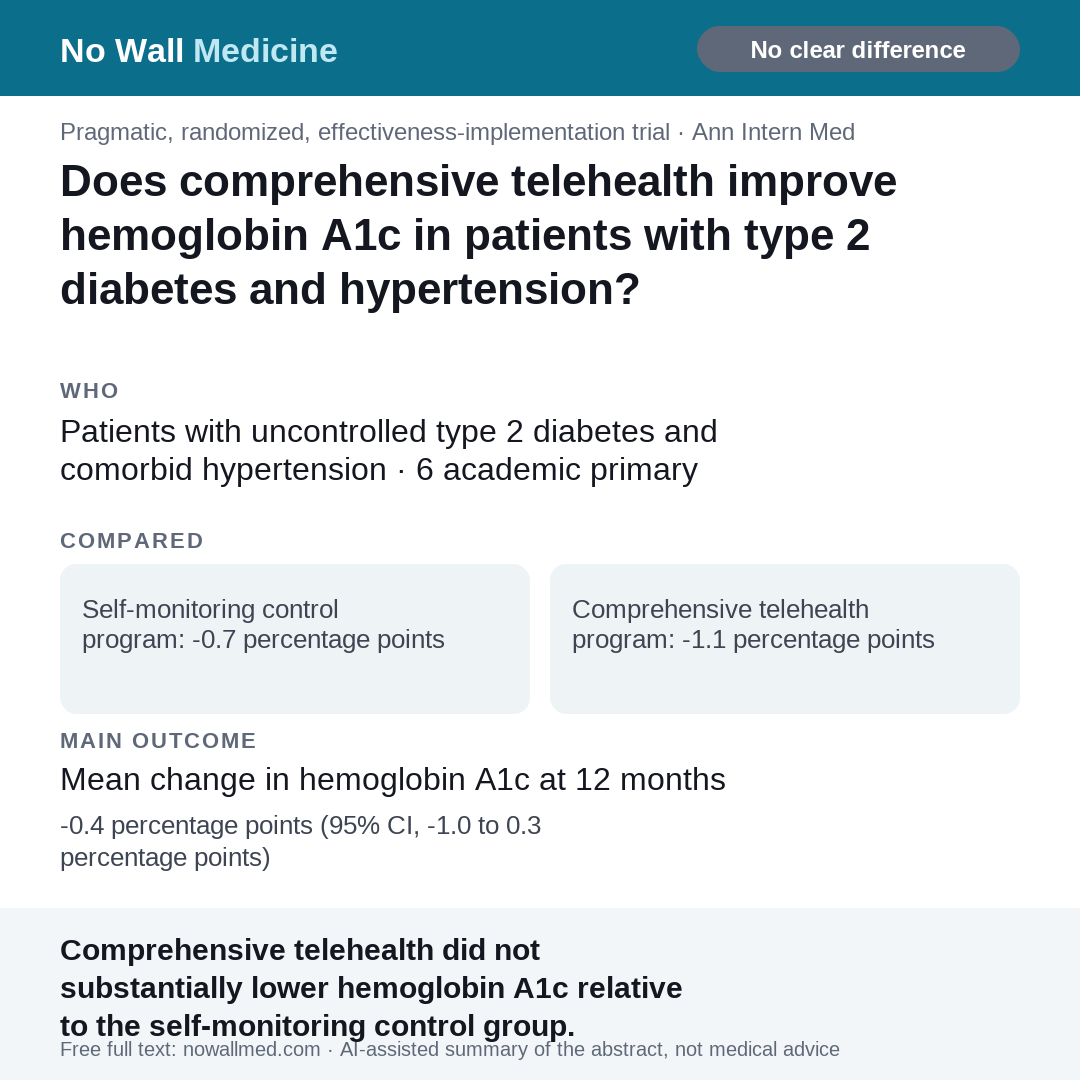
Expanding Technology-Enabled, Nurse-Delivered Chronic Disease Care : A Pragmatic, Randomized, Effectiveness-Implementation Trial
Pragmatic, randomized, effectiveness-implementation trialNo clear difference
Does comprehensive telehealth improve hemoglobin A1c in patients with type 2 diabetes and hypertension?
Who
Patients with uncontrolled type 2 diabetes and comorbid hypertension · 6 academic primary care or endocrinology clinics
Compared
Self-monitoring control program: -0.7 percentage points
Comprehensive telehealth program: -1.1 percentage points
Main outcome
Mean change in hemoglobin A1c at 12 months
Result: -0.4 percentage points (95% CI, -1.0 to 0.3 percentage points)
Bottom line: Comprehensive telehealth did not substantially lower hemoglobin A1c relative to the self-monitoring control group.
Limitation: Generalizability to dissimilar populations and systems lacking telehealth infrastructure may be limited.
Funded by: National Institute of Nursing Research and Duke Clinical & Translational Science Institute
Ann Intern Med · 2026-06-23Download image
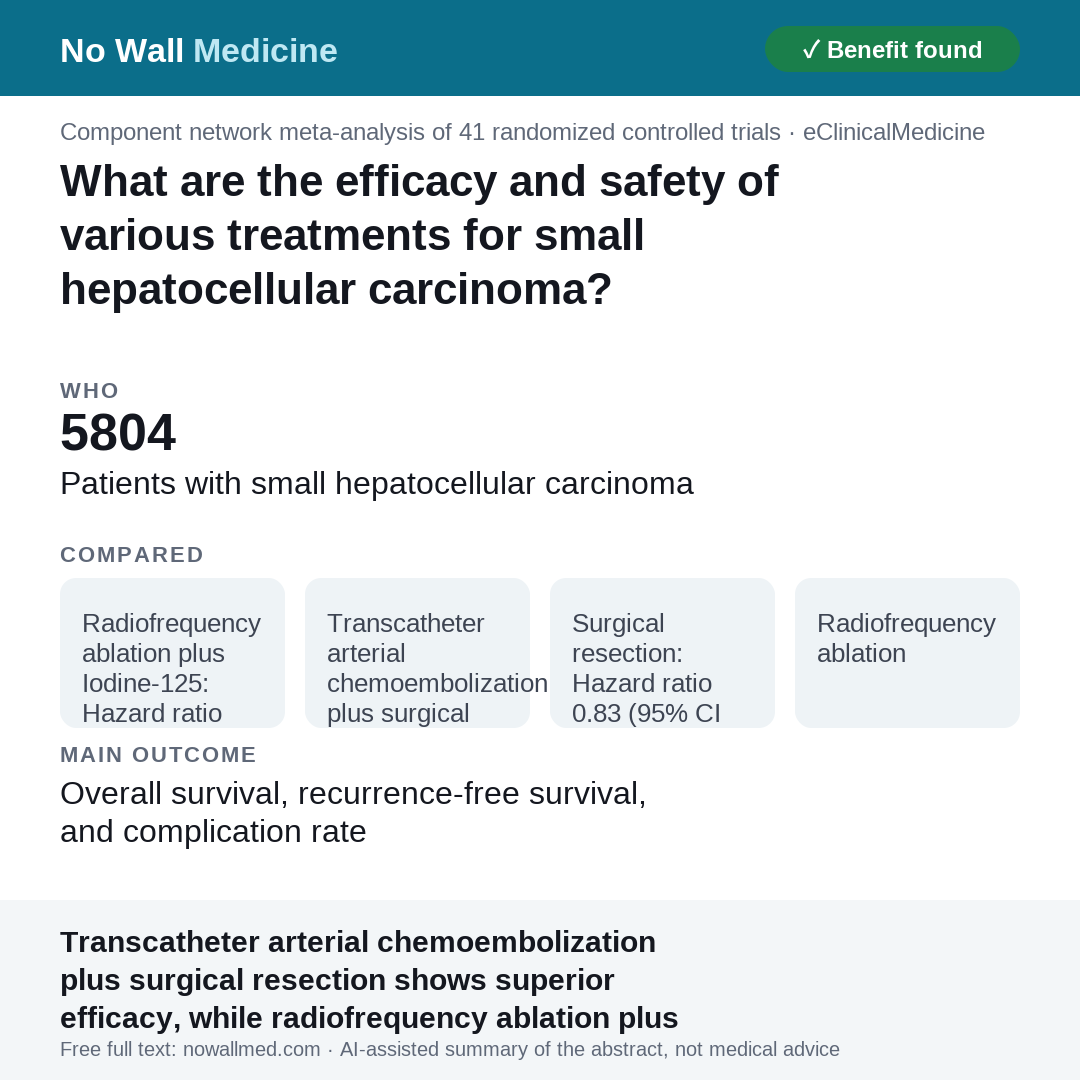
Efficacy and safety of multiple treatments for small hepatocellular carcinoma: an updated systematic review and component network meta analysis
Component network meta-analysis of 41 randomized controlled trialsBenefit found
What are the efficacy and safety of various treatments for small hepatocellular carcinoma?
Who
5804
Patients with small hepatocellular carcinoma
Compared
Radiofrequency ablation plus Iodine-125: Hazard ratio 0.50 (95% CI 0.31-0.81)
Transcatheter arterial chemoembolization plus surgical resection: Hazard ratio 0.30 (95% CI 0.16-0.58)
Surgical resection: Hazard ratio 0.83 (95% CI 0.71-0.98)
Radiofrequency ablation
Main outcome
Overall survival, recurrence-free survival, and complication rate
Bottom line: Transcatheter arterial chemoembolization plus surgical resection shows superior efficacy, while radiofrequency ablation plus Iodine-125 is a potential alternative.
eClinicalMedicine · 2026-06-23Download image
Prevalence and epidemiological patterns of Neisseria gonorrhoeae infection in sub-Saharan Africa, 1964-2025: Systematic review, meta-analyses, and meta-regressions
Systematic review and meta-analysesMixed results
What is the prevalence and epidemiological pattern of Neisseria gonorrhoeae in sub-Saharan Africa?
Who
People in sub-Saharan Africa · sub-Saharan Africa
Compared
3.2%General population urogenital prevalence (95% CI: 2.9-3.5)
11.5%Female sex workers urogenital prevalence (95% CI: 9.9-13.2)
2.8%Men who have sex with men urogenital prevalence (95% CI: 2.4-3.3)
Main outcome
Neisseria gonorrhoeae prevalence
Bottom line: Neisseria gonorrhoeae prevalence is high in sub-Saharan Africa, particularly in key populations, though it has declined over time.
PLOS Med · 2026-06-23Download image

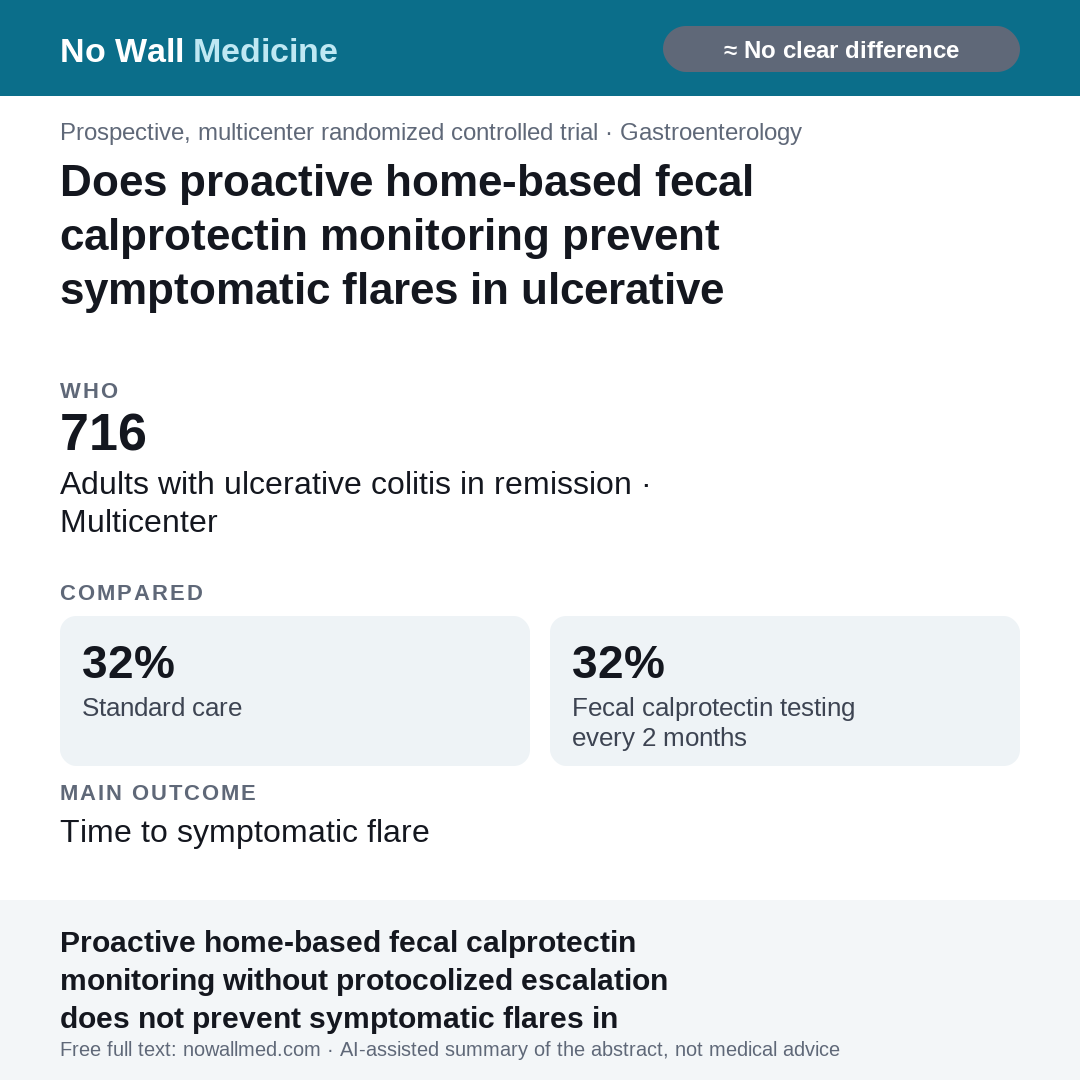
Proactive Fecal Calprotectin Home Monitoring in Ulcerative Colitis: Results of a Prospective Randomized Controlled Trial
Prospective, multicenter randomized controlled trialNo clear difference
Does proactive home-based fecal calprotectin monitoring prevent symptomatic flares in ulcerative colitis?
Who
716
Adults with ulcerative colitis in remission · Multicenter
Compared
32%Standard care
32%Fecal calprotectin testing every 2 months
Main outcome
Time to symptomatic flare
Result: hazard ratio 1.05 (95% confidence interval 0.79-1.40)
Bottom line: Proactive home-based fecal calprotectin monitoring without protocolized escalation does not prevent symptomatic flares in ulcerative colitis.
Gastroenterology · 2026-06-23Download image
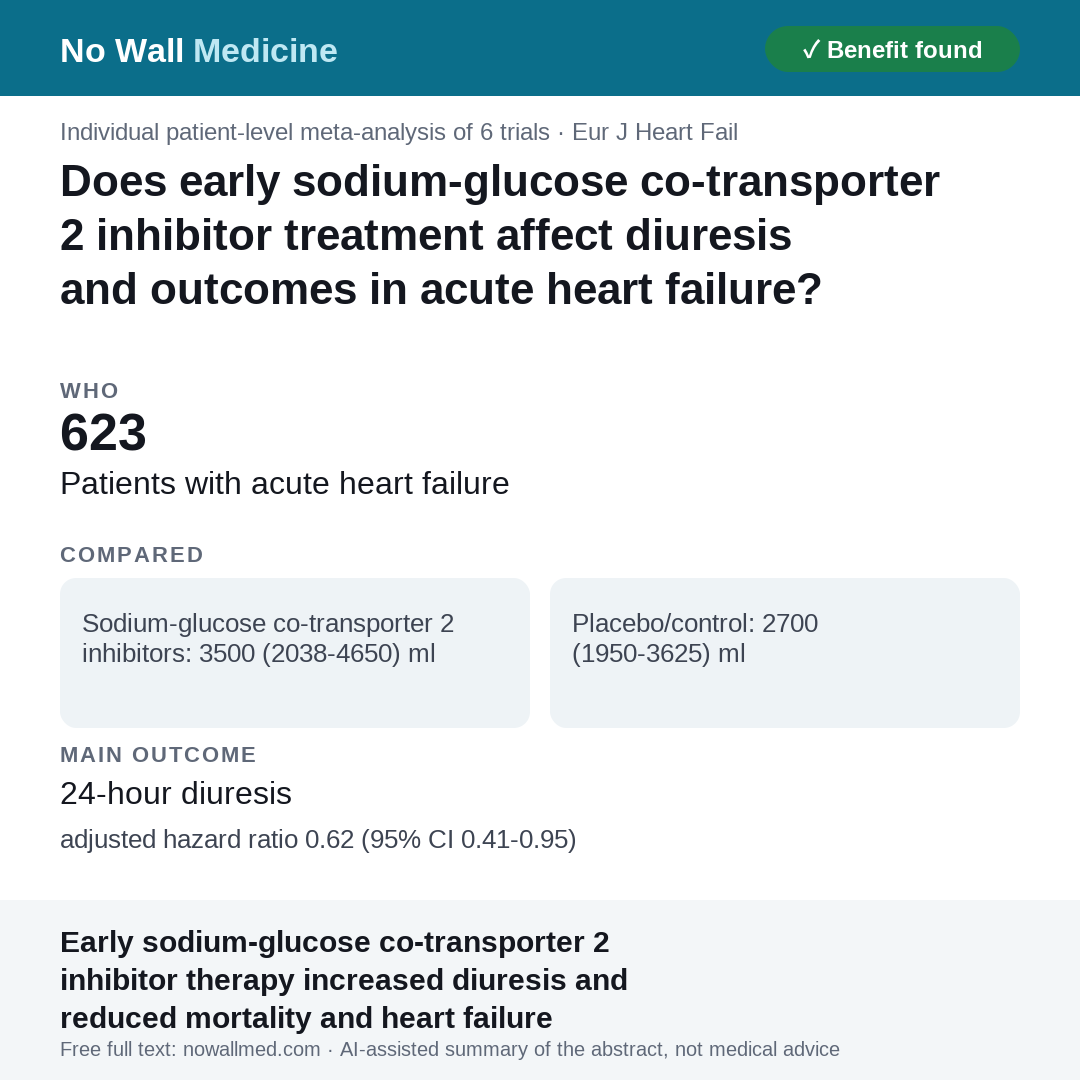
Early effects of SGLT2 inhibitors in acute heart failure: an individual patient-level meta-analysis
Individual patient-level meta-analysis of 6 trialsBenefit found
Does early sodium-glucose co-transporter 2 inhibitor treatment affect diuresis and outcomes in acute heart failure?
Who
623
Patients with acute heart failure
Compared
Sodium-glucose co-transporter 2 inhibitors: 3500 (2038-4650) ml
Placebo/control: 2700 (1950-3625) ml
Main outcome
24-hour diuresis
Result: adjusted hazard ratio 0.62 (95% CI 0.41-0.95)
Bottom line: Early sodium-glucose co-transporter 2 inhibitor therapy increased diuresis and reduced mortality and heart failure rehospitalization risks.
Eur J Heart Fail · 2026-06-23Download image
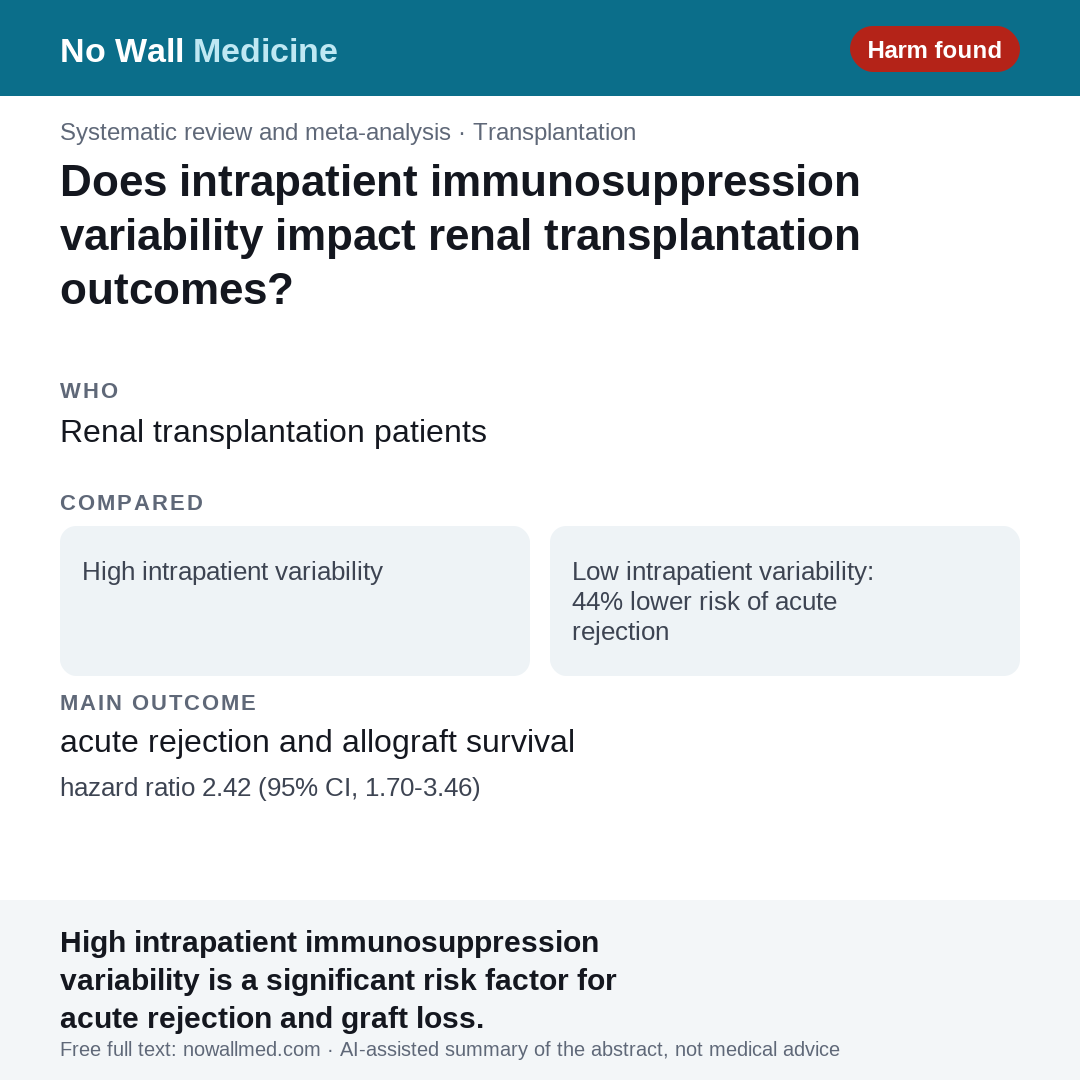
Impact of Intrapatient Immunosuppression Variability in Renal Transplantation Outcomes: A Systematic Review and Meta-analysis
Systematic review and meta-analysisHarm found
Does intrapatient immunosuppression variability impact renal transplantation outcomes?
Who
Renal transplantation patients
Compared
High intrapatient variability
Low intrapatient variability: 44% lower risk of acute rejection
Main outcome
acute rejection and allograft survival
Result: hazard ratio 2.42 (95% CI, 1.70-3.46)
Bottom line: High intrapatient immunosuppression variability is a significant risk factor for acute rejection and graft loss.
Transplantation · 2026-06-23Download image
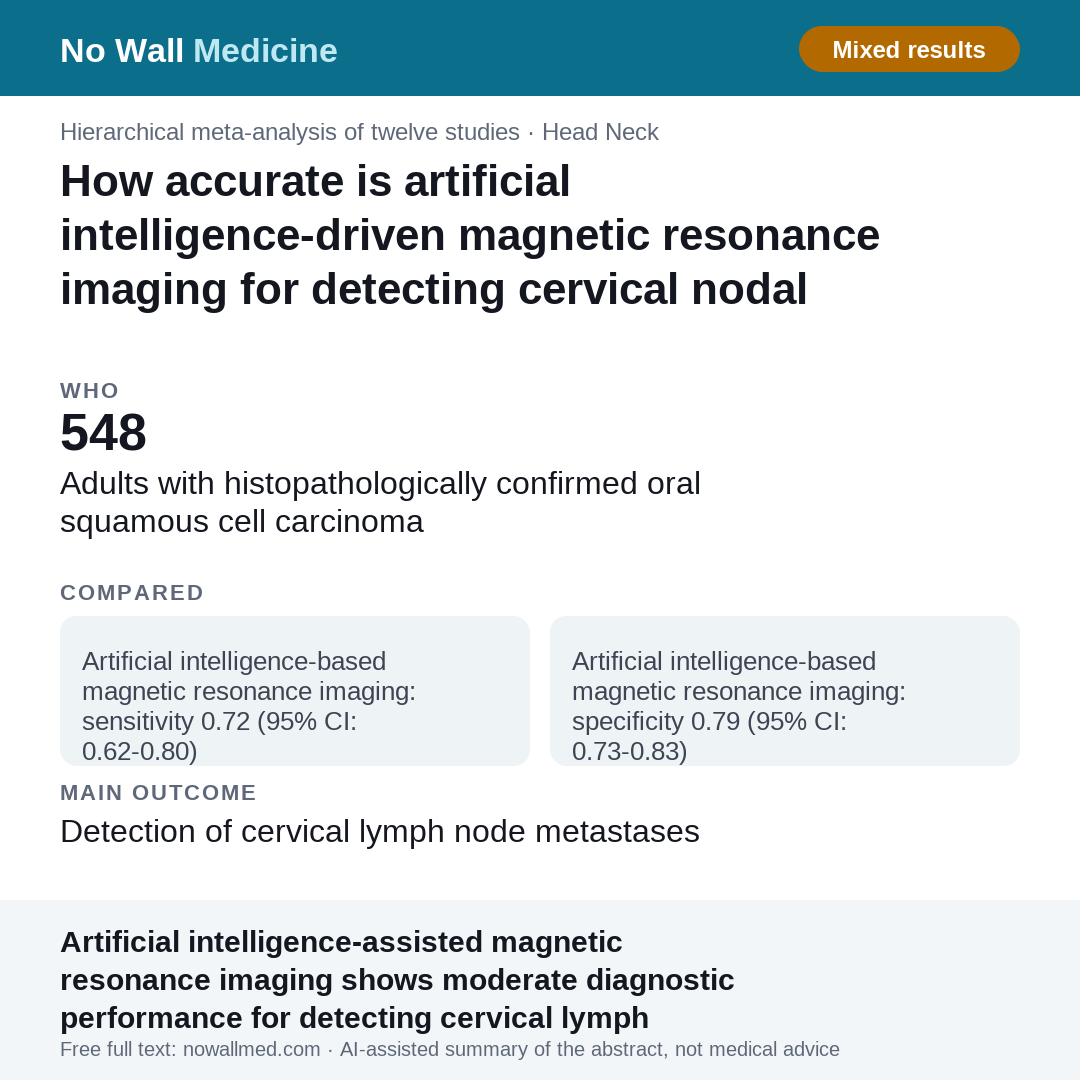
Artificial Intelligence-Driven MRI for Cervical Nodal Metastasis Detection in Oral Squamous Cell Carcinoma: A Hierarchical Meta-Analysis of Diagnostic Accuracy
Hierarchical meta-analysis of twelve studiesMixed results
How accurate is artificial intelligence-driven magnetic resonance imaging for detecting cervical nodal metastasis?
Who
548
Adults with histopathologically confirmed oral squamous cell carcinoma
Compared
Artificial intelligence-based magnetic resonance imaging: sensitivity 0.72 (95% CI: 0.62-0.80)
Artificial intelligence-based magnetic resonance imaging: specificity 0.79 (95% CI: 0.73-0.83)
Main outcome
Detection of cervical lymph node metastases
Result: area under the curve 0.82
Bottom line: Artificial intelligence-assisted magnetic resonance imaging shows moderate diagnostic performance for detecting cervical lymph node metastasis.
Limitation: Evidence certainty was low and multicenter validation is required.
Head Neck · 2026-06-23Download image
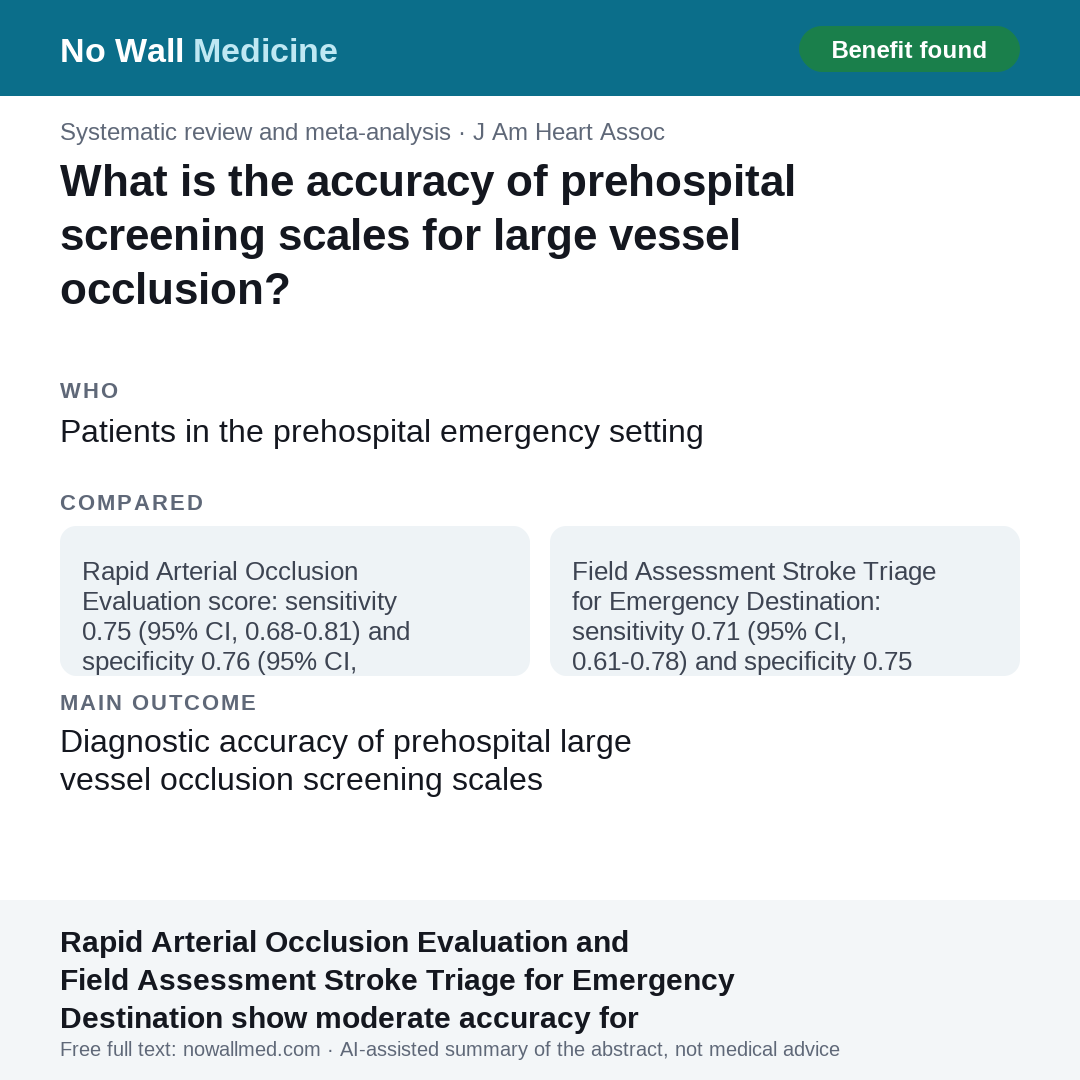
Stroke Scales for Large Vessel Occlusion in the Prehospital Emergency Setting: A Systematic Review and Meta-Analysis
Systematic review and meta-analysisBenefit found
What is the accuracy of prehospital screening scales for large vessel occlusion?
Who
Patients in the prehospital emergency setting
Compared
Rapid Arterial Occlusion Evaluation score: sensitivity 0.75 (95% CI, 0.68-0.81) and specificity 0.76 (95% CI, 0.68-0.84)
Field Assessment Stroke Triage for Emergency Destination: sensitivity 0.71 (95% CI, 0.61-0.78) and specificity 0.75 (95% CI, 0.64-0.83)
Main outcome
Diagnostic accuracy of prehospital large vessel occlusion screening scales
Bottom line: Rapid Arterial Occlusion Evaluation and Field Assessment Stroke Triage for Emergency Destination show moderate accuracy for prehospital large vessel occlusion triage.
Limitation: Need for further validation
J Am Heart Assoc · 2026-06-23Download image
Safety and Efficacy of Nerinetide at Year 1 in Participants Enrolled in ESCAPE-NEXT: A Multicenter, Double-Blind, Randomized Controlled Trial
Multicenter, double-blind, randomized controlled trialMixed results
Does nerinetide improve functional independence at one year after acute ischemic stroke?
Who
513
Participants with acute ischemic stroke undergoing endovascular thrombectomy excluding thrombolysis · Multicenter
Compared
48.0%Nerinetide group (110/229)
47.9%Placebo group (102/213)
Main outcome
Functional independence at Year 1
Result: adjusted odds ratio 1.12 (95% CI 0.74-1.71)
Bottom line: Nerinetide showed benefit in functional independence and survival for early enrollment window participants at one year.
Limitation: The trial was terminated after failing to meet its Day 90 primary end point.
J Am Heart Assoc · 2026-06-23Download image

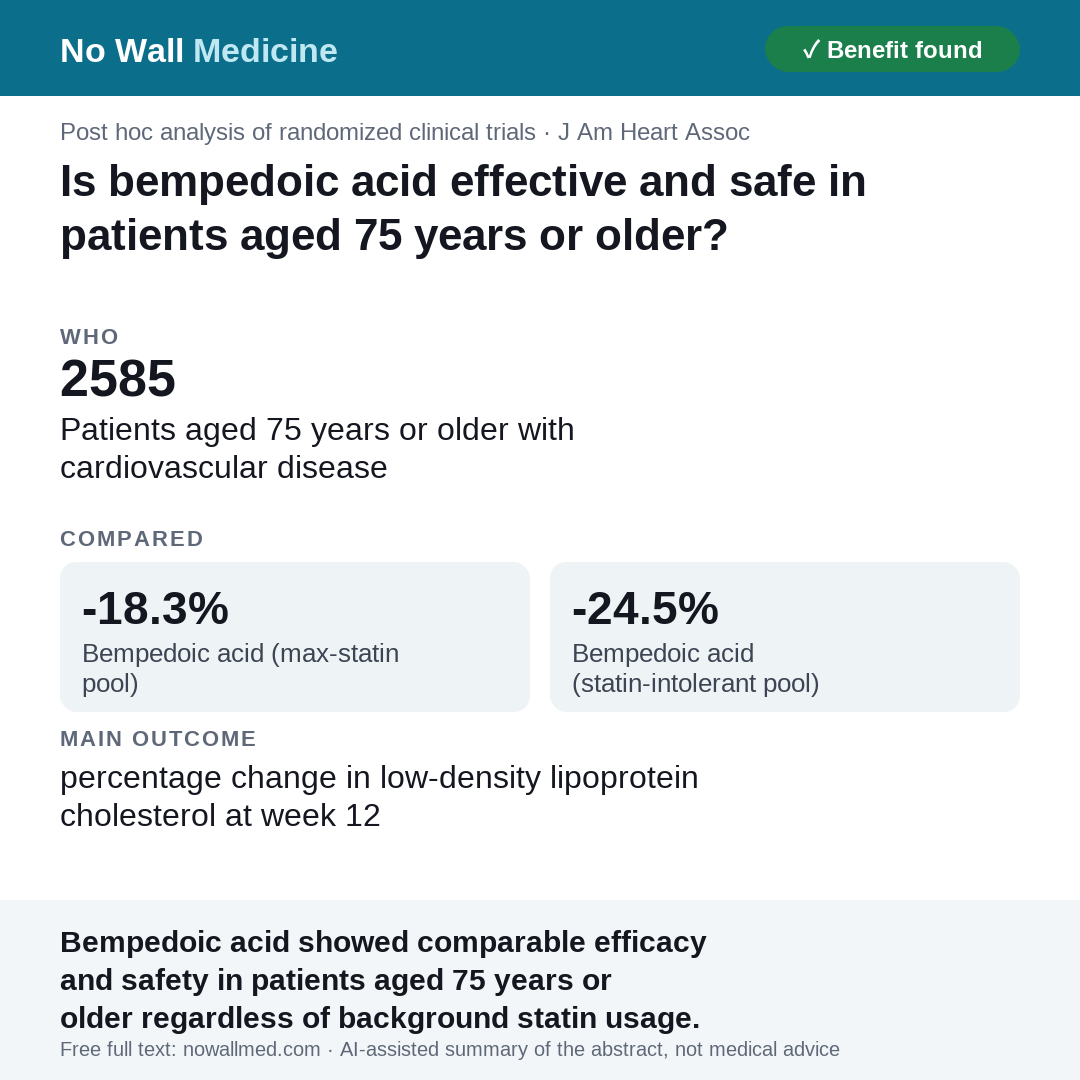
Efficacy and Safety of Bempedoic Acid in Patients Aged ≥75 Years Stratified by Varying Statin Exposure: Results From Phase 3 Studies of Bempedoic Acid
Post hoc analysis of randomized clinical trialsBenefit found
Is bempedoic acid effective and safe in patients aged 75 years or older?
Who
2585
Patients aged 75 years or older with cardiovascular disease
Compared
-18.3%Bempedoic acid (max-statin pool) (95% CI, -22.2 to -14.5)
-24.5%Bempedoic acid (statin-intolerant pool) (95% CI, -26.2 to -22.7)
Main outcome
percentage change in low-density lipoprotein cholesterol at week 12
Bottom line: Bempedoic acid showed comparable efficacy and safety in patients aged 75 years or older regardless of background statin usage.
J Am Heart Assoc · 2026-06-23Download image
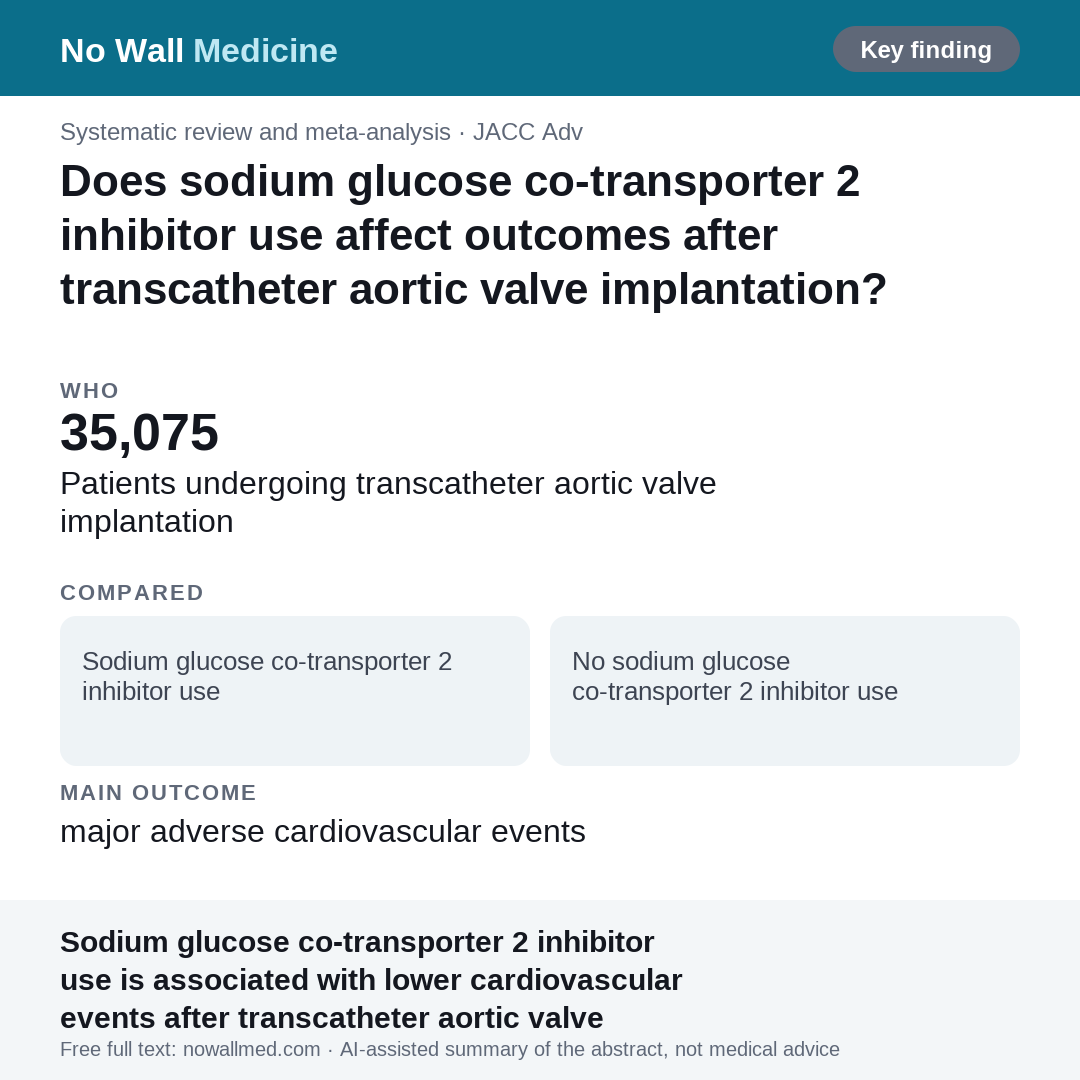
SGLT-2 Inhibitors and Outcomes After Transcatheter Aortic Valve Implantation: A Systematic Review and Meta-Analysis
Systematic review and meta-analysisBenefit found
Does sodium glucose co-transporter 2 inhibitor use affect outcomes after transcatheter aortic valve implantation?
Who
35,075
Patients undergoing transcatheter aortic valve implantation
Compared
Sodium glucose co-transporter 2 inhibitor use
No sodium glucose co-transporter 2 inhibitor use
Main outcome
major adverse cardiovascular events
Result: hazard ratio 0.65 (95% CI 0.44-0.95)
Bottom line: Sodium glucose co-transporter 2 inhibitor use is associated with lower cardiovascular events after transcatheter aortic valve implantation.
Limitation: Low certainty due to predominance of observational studies and potential bias.
JACC Adv · 2026-06-23Download image