Visual abstracts
New randomized trials and meta-analyses from leading journals at a glance: who was studied, what was compared, and what was found. Every paper is free to read in full.
All specialtiesCardiology 4877Oncology 4138Gastroenterology & Hepatology 1942Infectious Disease 3837Neurology 1905Psychiatry & Mental Health 2273Pulmonology 2143Critical Care 1365Endocrinology & Diabetes 2580Pediatrics 2980Surgery 2559Orthopedics & Sports Medicine 931Neurosurgery 537Cardiothoracic & Vascular Surgery 674Plastic & Reconstructive Surgery 591Nephrology 1133Rheumatology 823Hematology 1109Dermatology 621Ophthalmology 543Obstetrics & Gynecology 1686Public & Global Health 1058Radiology & Imaging 648Anesthesiology 986Urology 764ENT (Otolaryngology) 503Emergency Medicine 511Allergy & Immunology 313Geriatrics 981Family Medicine & Primary Care 562Medical Genetics & Genomics 676Pathology & Laboratory Medicine 159Physical Medicine & Rehabilitation 757Palliative Care 444Nutrition 1588Digital Health & AI 2201General Medicine 321
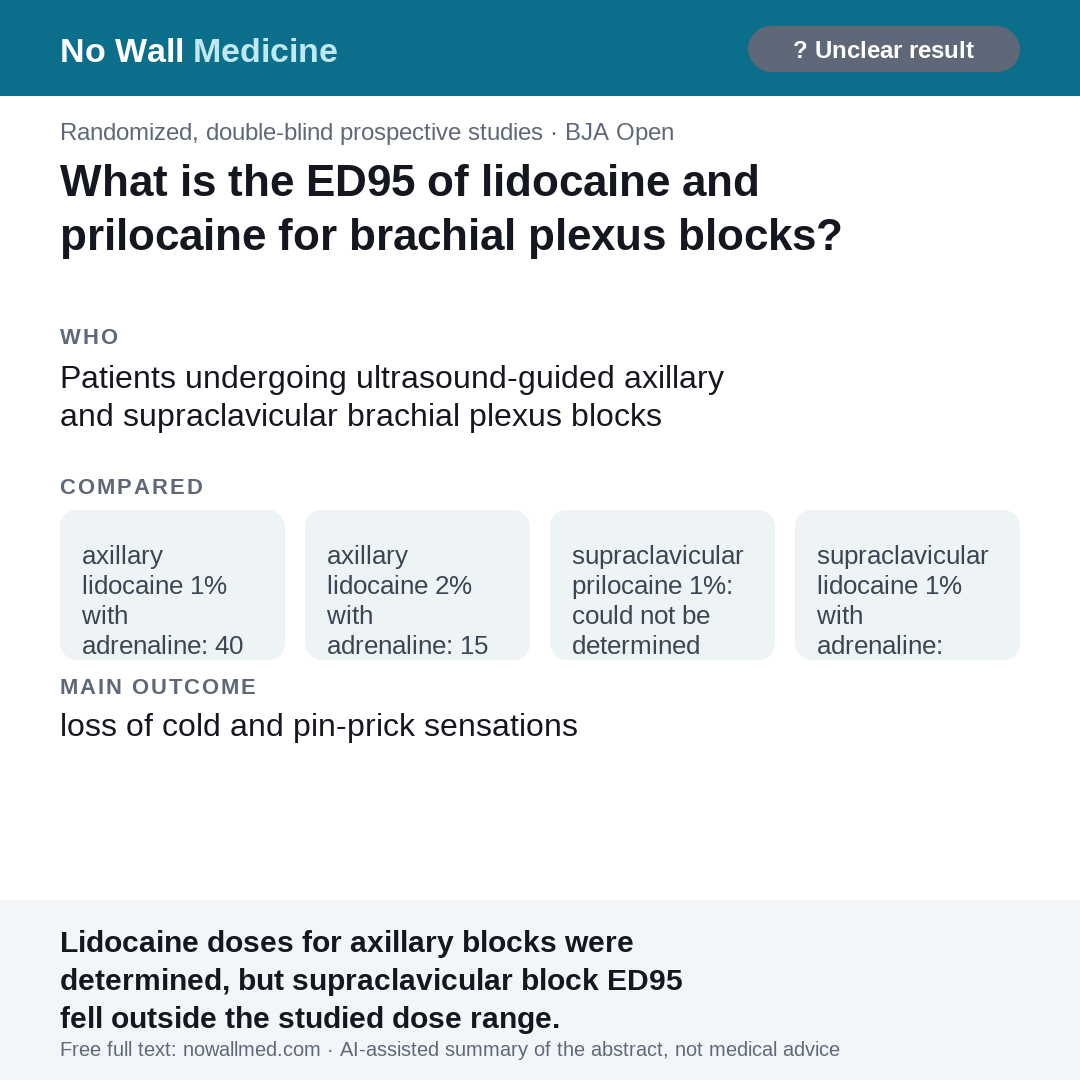
The ED<sub>95</sub> of lidocaine and prilocaine for ultrasound-guided brachial plexus blocks for surgical anaesthesia: a randomised controlled clinical trial
Randomized, double-blind prospective studiesUnclear result
What is the ED95 of lidocaine and prilocaine for brachial plexus blocks?
Who
Patients undergoing ultrasound-guided axillary and supraclavicular brachial plexus blocks
Compared
axillary lidocaine 1% with adrenaline: 40 ml
axillary lidocaine 2% with adrenaline: 15 ml
supraclavicular prilocaine 1%: could not be determined
supraclavicular lidocaine 1% with adrenaline: could not be determined
Main outcome
loss of cold and pin-prick sensations
Bottom line: Lidocaine doses for axillary blocks were determined, but supraclavicular block ED95 fell outside the studied dose range.
BJA Open · 2025-03-14Download image
Association of Digital Health Interventions With Maternal and Neonatal Outcomes: Systematic Review and Meta-Analysis
Systematic review and meta-analysis of 42 randomized controlled trialsBenefit found
Do digital health interventions affect maternal and neonatal outcomes?
Who
148,866
Pregnant women and newborns
Compared
Digital health interventions
Routine care
Main outcome
Gestational weight gain and maternal and neonatal clinical outcomes
Result: standardized mean difference -0.19 (95% CI -0.25 to -0.13)
Bottom line: Digital health interventions reduce excessive gestational weight gain and improve miscarriage, preterm birth, and complex neonatal outcomes.
J Med Internet Res · 2025-03-14Download image

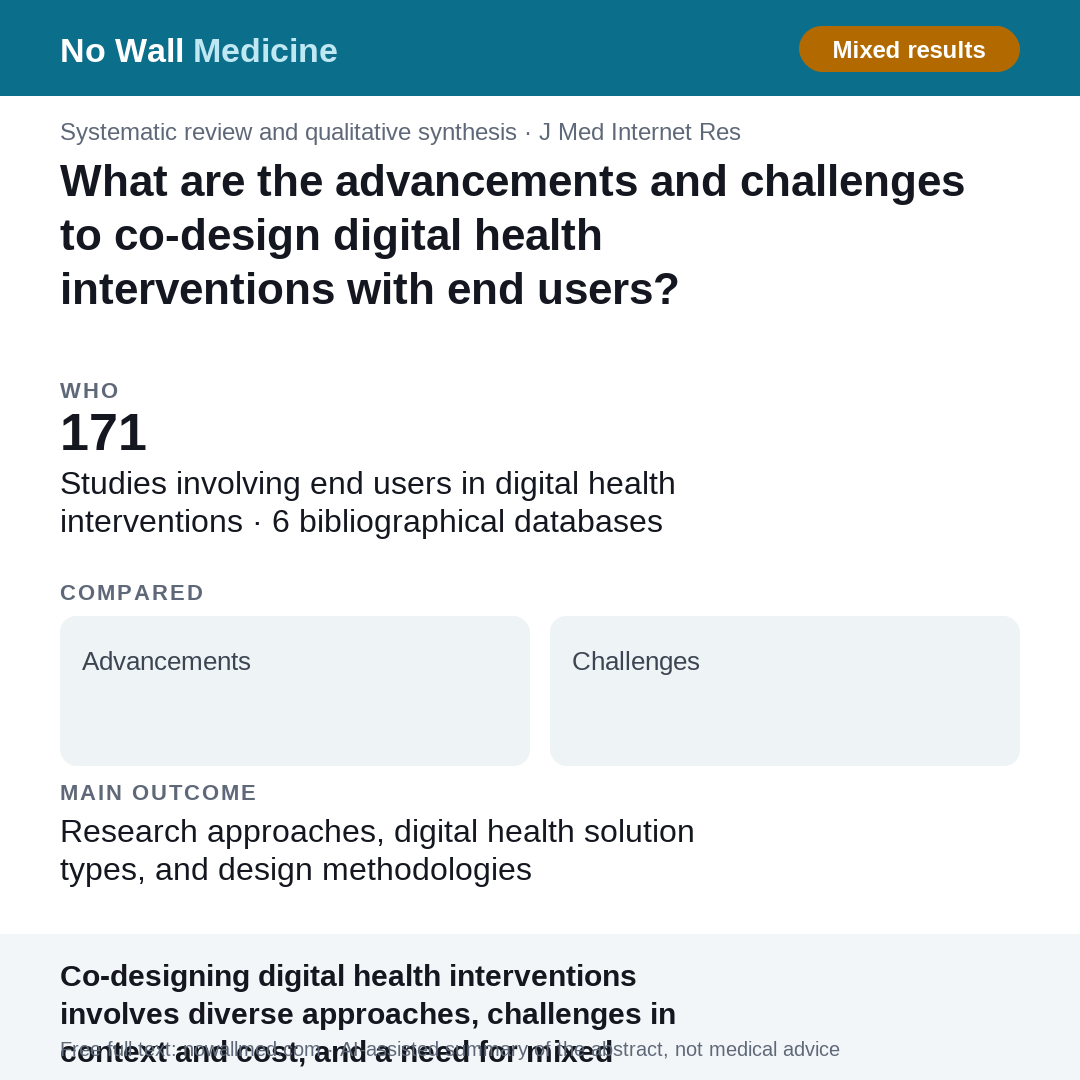
Examining Challenges to Co-Design Digital Health Interventions With End Users: Systematic Review
Systematic review and qualitative synthesisMixed results
What are the advancements and challenges to co-design digital health interventions with end users?
Who
171
Studies involving end users in digital health interventions · 6 bibliographical databases
Compared
Advancements
Challenges
Main outcome
Research approaches, digital health solution types, and design methodologies
Bottom line: Co-designing digital health interventions involves diverse approaches, challenges in context and cost, and a need for mixed methods.
J Med Internet Res · 2025-03-14Download image
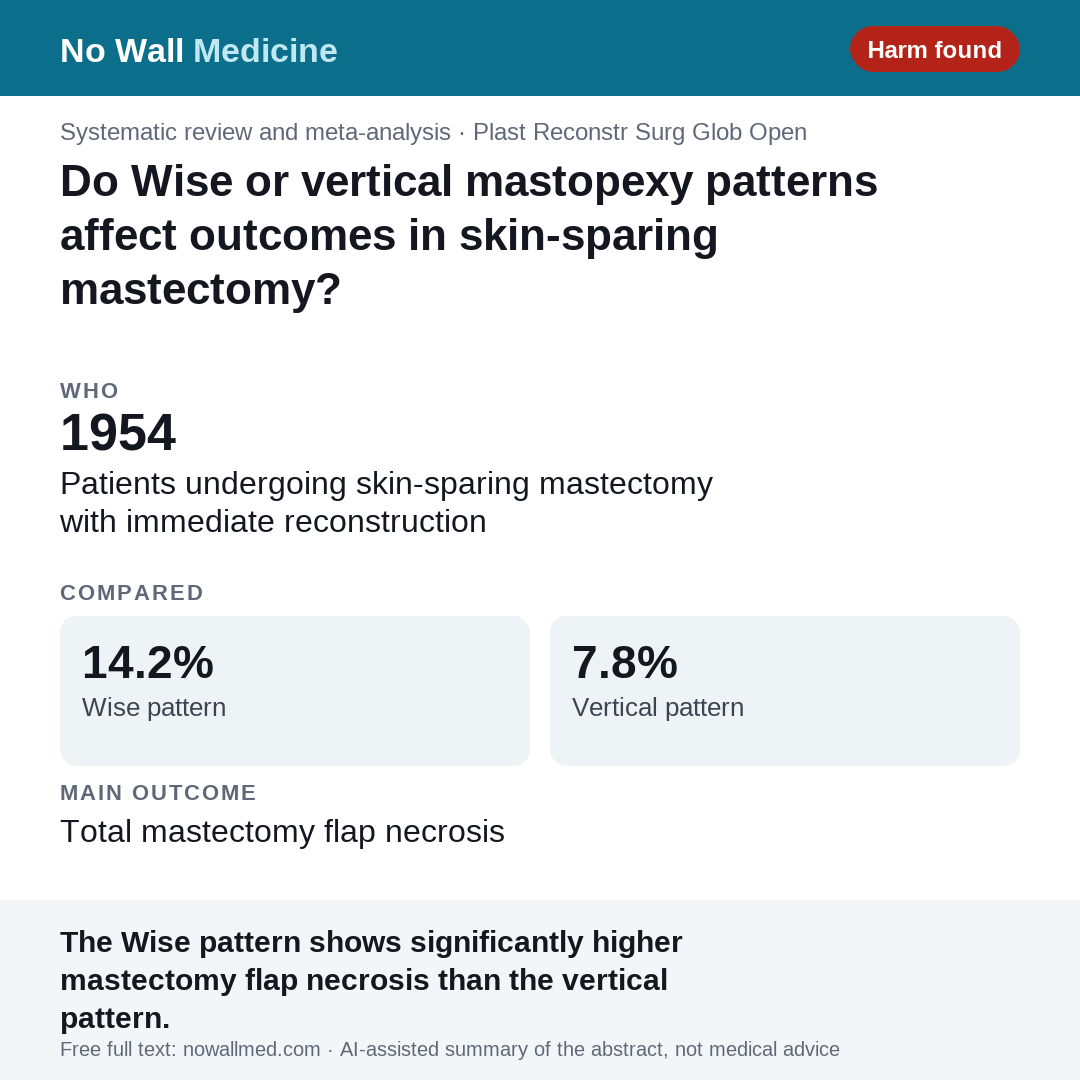
Wise Versus Vertical Mastopexy Pattern Skin-reducing Mastectomy With Immediate Breast Reconstruction: Systematic Review and Meta-analysis
Systematic review and meta-analysisHarm found
Do Wise or vertical mastopexy patterns affect outcomes in skin-sparing mastectomy?
Who
1954
Patients undergoing skin-sparing mastectomy with immediate reconstruction
Compared
14.2%Wise pattern (95% confidence interval: 10%-20%)
7.8%Vertical pattern (95% confidence interval: 5%-12%)
Main outcome
Total mastectomy flap necrosis
Bottom line: The Wise pattern shows significantly higher mastectomy flap necrosis than the vertical pattern.
Limitation: Future studies should focus on larger, high-quality randomized controlled trials.
Plast Reconstr Surg Glob Open · 2025-03-14Download image
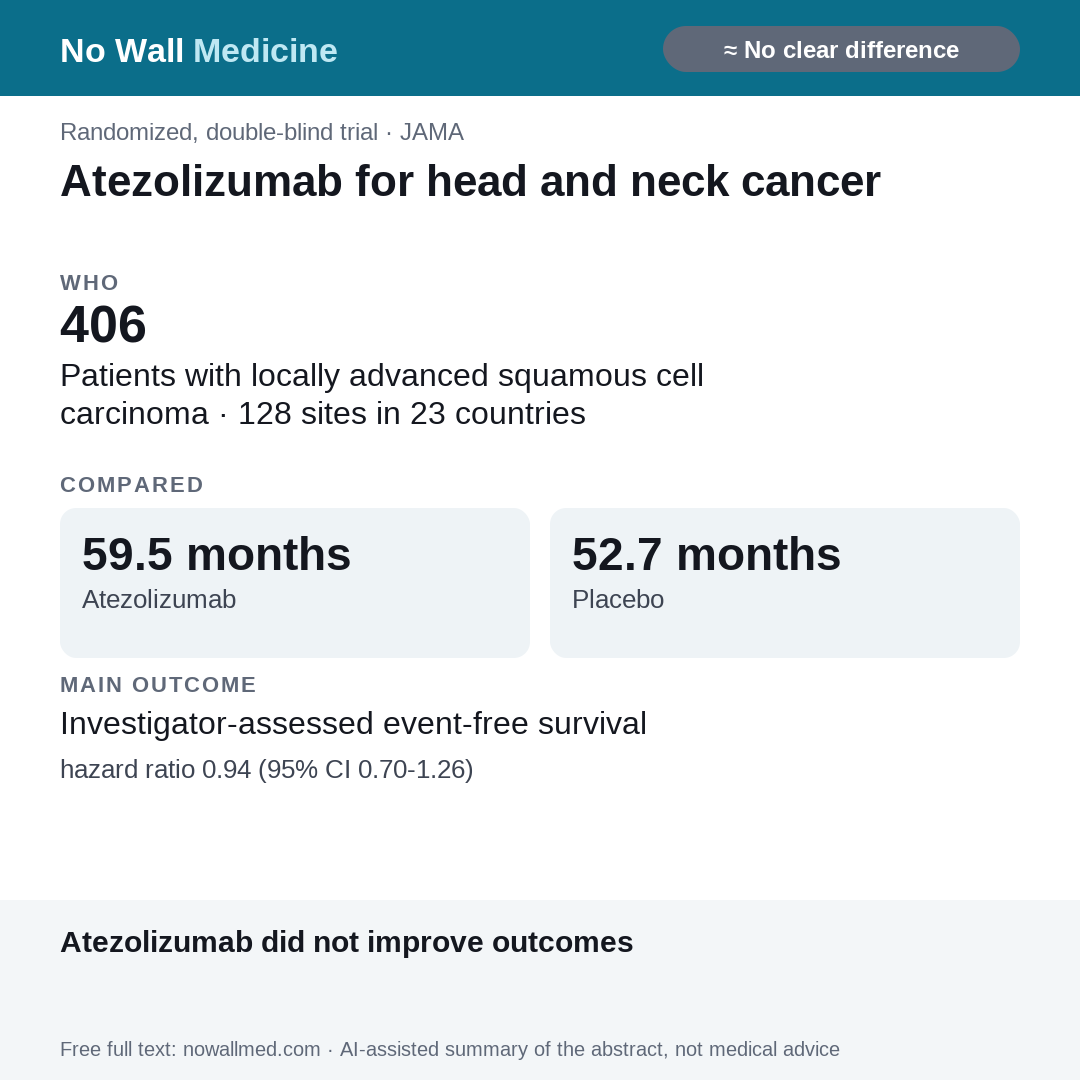
Atezolizumab in High-Risk Locally Advanced Squamous Cell Carcinoma of the Head and Neck: A Randomized Clinical Trial
Randomized, double-blind trialNo clear difference
Atezolizumab for head and neck cancer
Who
406
Patients with locally advanced squamous cell carcinoma · 128 sites in 23 countries
Compared
59.5 monthsAtezolizumab
52.7 monthsPlacebo
Main outcome
Investigator-assessed event-free survival
Result: hazard ratio 0.94 (95% CI 0.70-1.26)
Bottom line: Atezolizumab did not improve outcomes
JAMA · 2025-03-13Download image
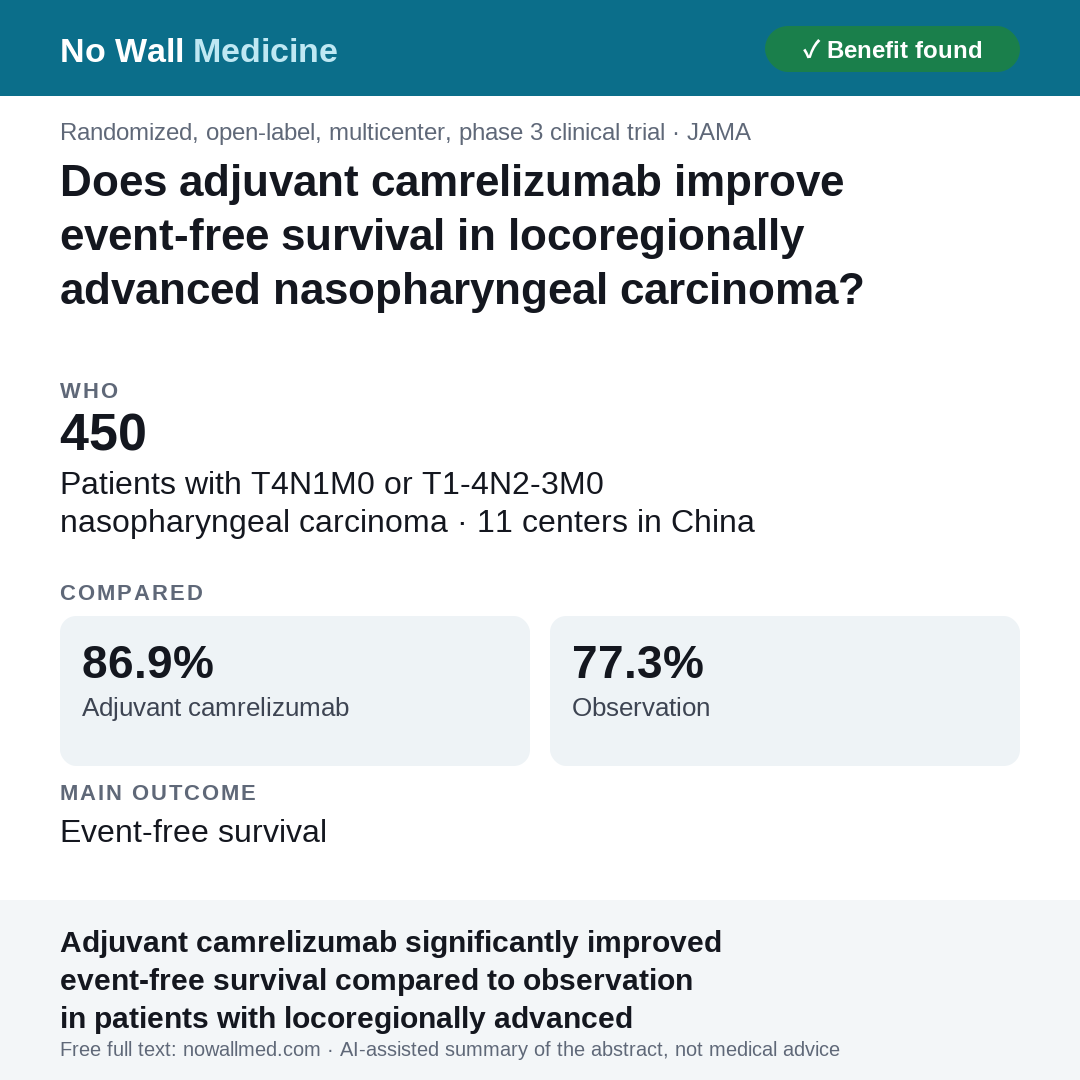
Adjuvant PD-1 Blockade With Camrelizumab for Nasopharyngeal Carcinoma: The DIPPER Randomized Clinical Trial
Randomized, open-label, multicenter, phase 3 clinical trialBenefit found
Does adjuvant camrelizumab improve event-free survival in locoregionally advanced nasopharyngeal carcinoma?
Who
450
Patients with T4N1M0 or T1-4N2-3M0 nasopharyngeal carcinoma · 11 centers in China
Compared
86.9%Adjuvant camrelizumab
77.3%Observation
Main outcome
Event-free survival
Result: stratified hazard ratio 0.56 (95% CI 0.36 to 0.89)
Bottom line: Adjuvant camrelizumab significantly improved event-free survival compared to observation in patients with locoregionally advanced nasopharyngeal carcinoma.
JAMA · 2025-03-13Download image
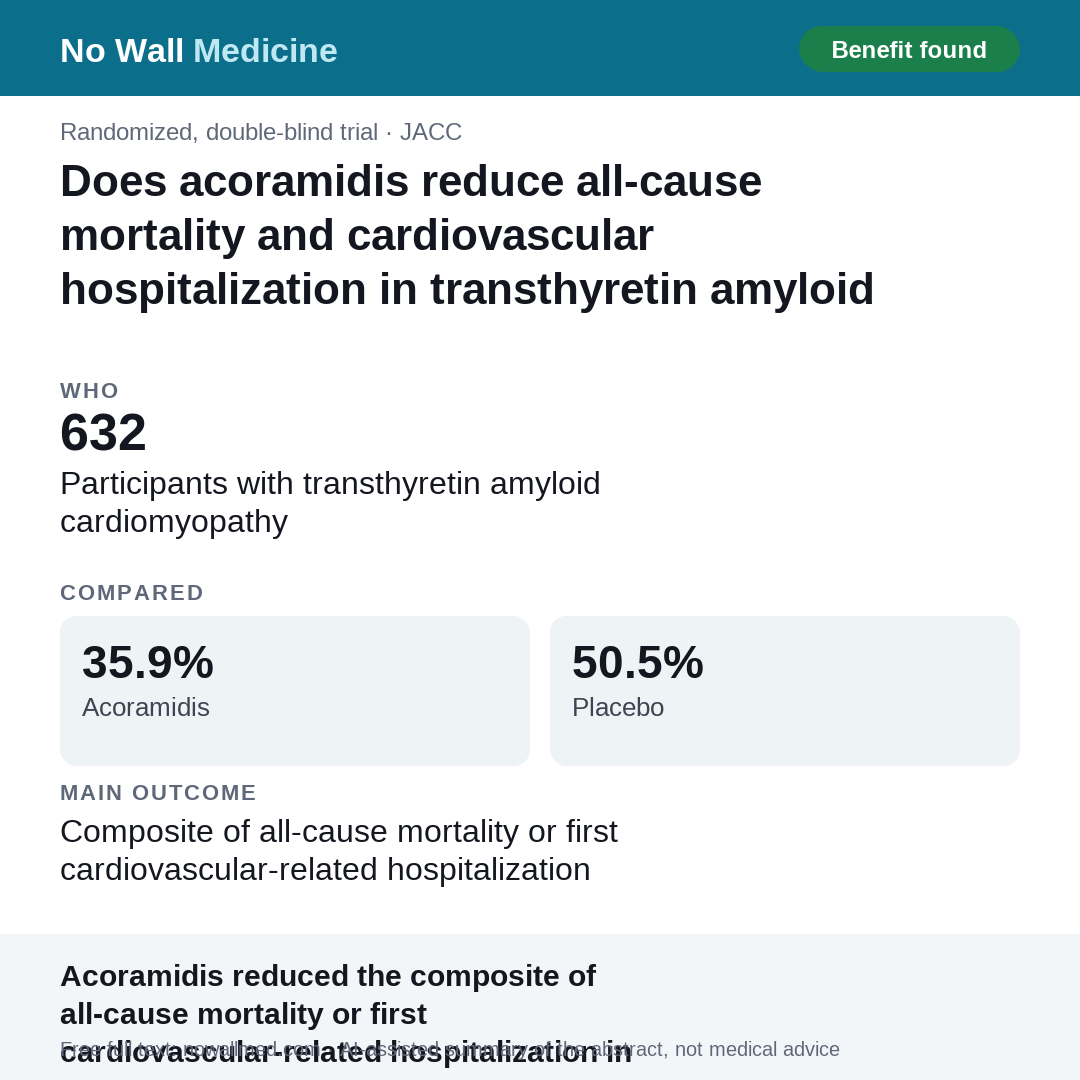
Efficacy of Acoramidis on All-Cause Mortality and Cardiovascular Hospitalization in Transthyretin Amyloid Cardiomyopathy
Randomized, double-blind trialBenefit found
Does acoramidis reduce all-cause mortality and cardiovascular hospitalization in transthyretin amyloid cardiomyopathy?
Who
632
Participants with transthyretin amyloid cardiomyopathy
Compared
35.9%Acoramidis
50.5%Placebo
Main outcome
Composite of all-cause mortality or first cardiovascular-related hospitalization
Result: hazard ratio 0.64 (95% CI 0.50-0.83)
Bottom line: Acoramidis reduced the composite of all-cause mortality or first cardiovascular-related hospitalization in patients with transthyretin amyloid cardiomyopathy.
JACC · 2025-03-13Download image
Software-based versus visual assessment of the minimal ablative margin in patients with liver tumours undergoing percutaneous thermal ablation (COVER-ALL): a randomised phase 2 trial
Randomised, phase 2, superiority trialBenefit found
Does software-based assessment improve the minimal ablative margin compared to visual assessment?
Who
50
Patients aged 18 or older with up to three liver tumours · The University of Texas MD Anderson Cancer Center, USA
Compared
Visual assessment: 2.2 mm (SD 2.8)
Software-based assessment: 5.9 mm (2.7)
Main outcome
Minimal ablative margin on post-ablation intraprocedural computed tomography
Result: p<0.0001
Bottom line: Software-based assessment significantly improves the minimal ablative margin compared to visual assessment during thermal ablation.
Limitation: The trial included a non-randomised experimental group after the interim analysis.
Funded by: US National Institutes of Health and US National Cancer Institute
Lancet Gastroenterol Hepatol · 2025-03-13Download image

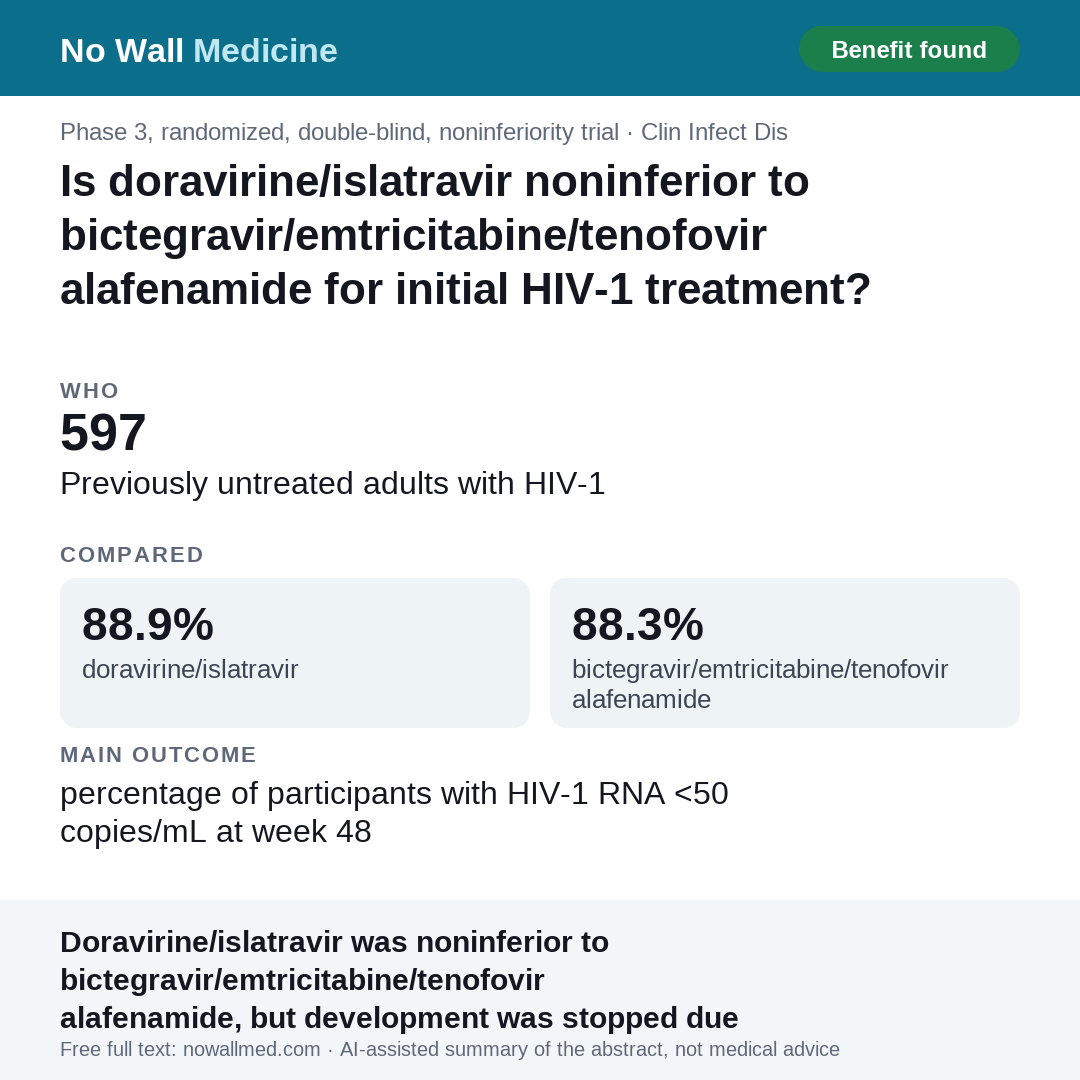
Doravirine/Islatravir (100/0.75 mg) Once-Daily Compared With Bictegravir/Emtricitabine/Tenofovir Alafenamide as Initial HIV-1 Treatment: 48-Week Results From a Phase 3, Randomized, Controlled, Double-Blind, Noninferiority Trial
Phase 3, randomized, double-blind, noninferiority trialBenefit found
Is doravirine/islatravir noninferior to bictegravir/emtricitabine/tenofovir alafenamide for initial HIV-1 treatment?
Who
597
Previously untreated adults with HIV-1
Compared
88.9%doravirine/islatravir (265/298)
88.3%bictegravir/emtricitabine/tenofovir alafenamide (264/299)
Main outcome
percentage of participants with HIV-1 RNA <50 copies/mL at week 48
Result: difference, 0.5%; 95% confidence interval [-4.7, 5.6]
Bottom line: Doravirine/islatravir was noninferior to bictegravir/emtricitabine/tenofovir alafenamide, but development was stopped due to decreased CD4 and lymphocyte counts.
Clin Infect Dis · 2025-03-13Download image
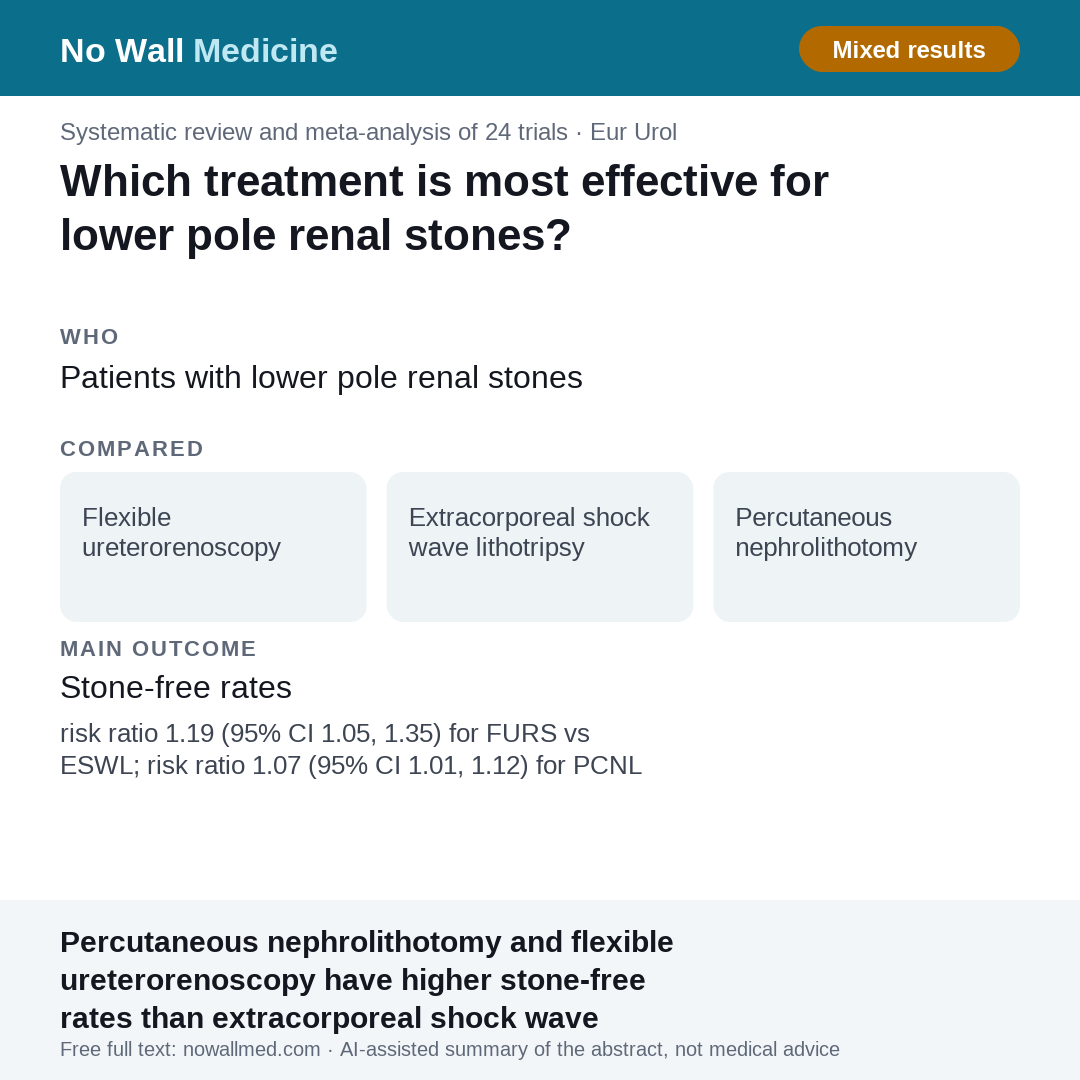
Updated Systematic Review and Meta-analysis of Extracorporeal Shock Wave Lithotripsy, Flexible Ureterorenoscopy, and Percutaneous Nephrolithotomy for Lower Pole Renal Stones
Systematic review and meta-analysis of 24 trialsMixed results
Which treatment is most effective for lower pole renal stones?
Who
Patients with lower pole renal stones
Compared
Flexible ureterorenoscopy
Extracorporeal shock wave lithotripsy
Percutaneous nephrolithotomy
Main outcome
Stone-free rates
Result: risk ratio 1.19 (95% CI 1.05, 1.35) for FURS vs ESWL; risk ratio 1.07 (95% CI 1.01, 1.12) for PCNL vs FURS; risk ratio 1.42 (95% CI 1.28, 1.58) for PCNL vs ESWL
Bottom line: Percutaneous nephrolithotomy and flexible ureterorenoscopy have higher stone-free rates than extracorporeal shock wave lithotripsy.
Eur Urol · 2025-03-13Download image
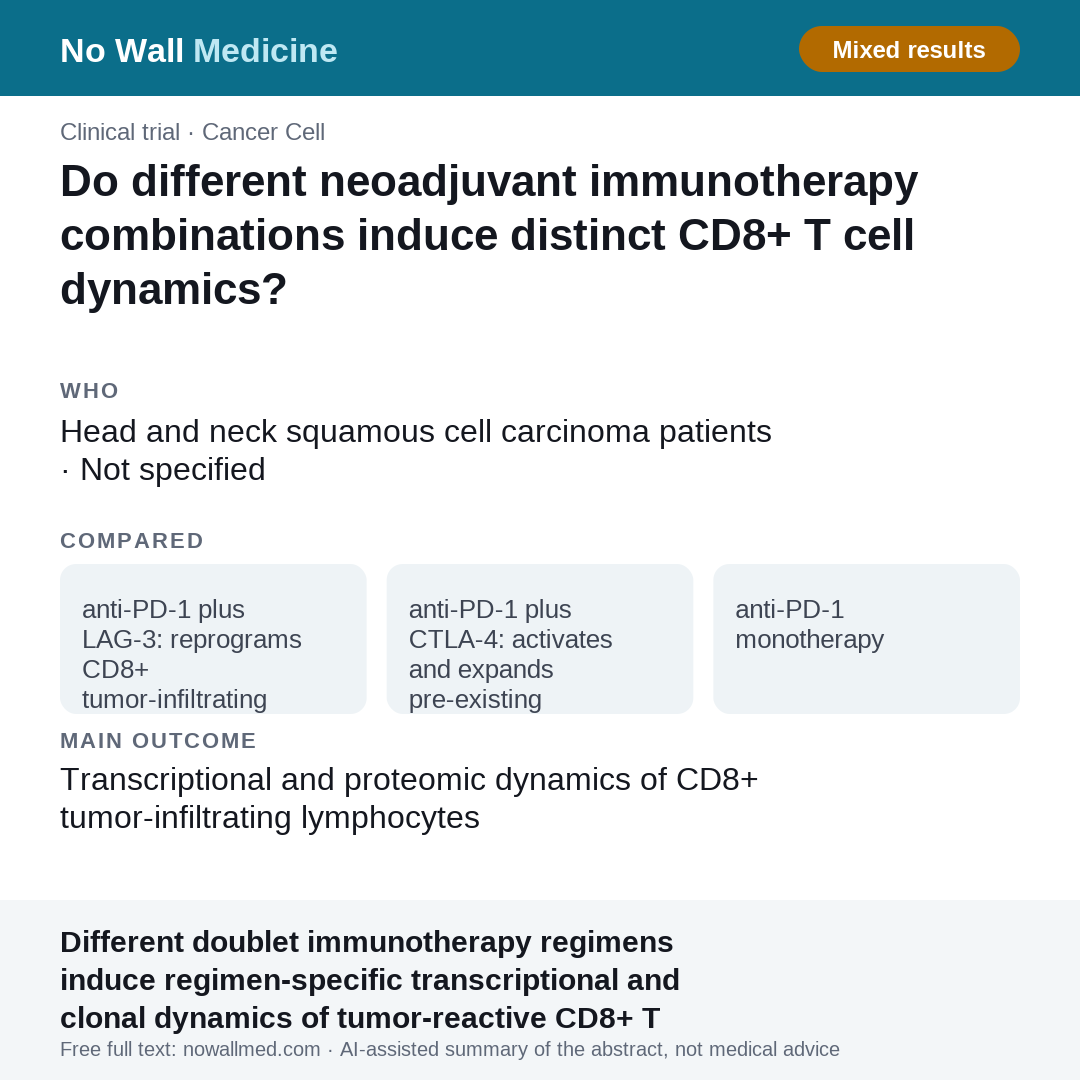
Distinct CD8+ T cell dynamics associate with response to neoadjuvant cancer immunotherapies
Clinical trialMixed results
Do different neoadjuvant immunotherapy combinations induce distinct CD8+ T cell dynamics?
Who
Head and neck squamous cell carcinoma patients · Not specified
Compared
anti-PD-1 plus LAG-3: reprograms CD8+ tumor-infiltrating lymphocytes into effector memory and resident memory
anti-PD-1 plus CTLA-4: activates and expands pre-existing effector memory and resident memory
anti-PD-1 monotherapy
Main outcome
Transcriptional and proteomic dynamics of CD8+ tumor-infiltrating lymphocytes
Bottom line: Different doublet immunotherapy regimens induce regimen-specific transcriptional and clonal dynamics of tumor-reactive CD8+ T cells.
Cancer Cell · 2025-03-13Download image
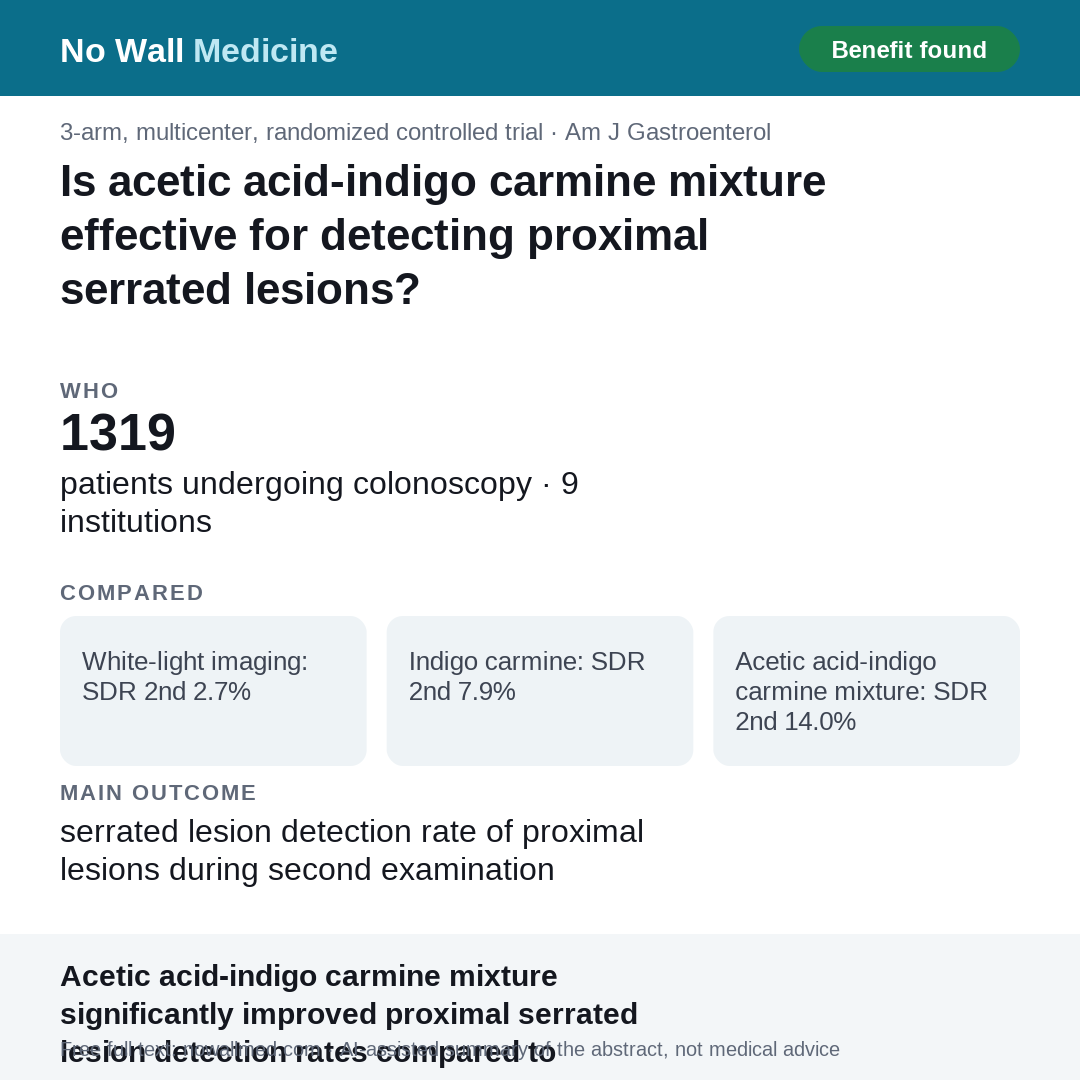
Acetic Acid-Indigo Carmine Chromocolonoscopy for Proximal Serrated Lesions: A Randomized, 3-Arm Colonoscopy Study
3-arm, multicenter, randomized controlled trialBenefit found
Is acetic acid-indigo carmine mixture effective for detecting proximal serrated lesions?
Who
1319
patients undergoing colonoscopy · 9 institutions
Compared
White-light imaging: SDR 2nd 2.7%
Indigo carmine: SDR 2nd 7.9%
Acetic acid-indigo carmine mixture: SDR 2nd 14.0%
Main outcome
serrated lesion detection rate of proximal lesions during second examination
Result: odds ratio 7.79 (95% confidence interval 3.76-17.08)
Bottom line: Acetic acid-indigo carmine mixture significantly improved proximal serrated lesion detection rates compared to white-light imaging or indigo carmine.
Limitation: The relationship between serrated lesion detection and colorectal cancer incidence warrants further investigation.
Am J Gastroenterol · 2025-03-13Download image
Cost-benefit of IAPT Norway and effects on work-related outcomes and health care utilization: results from a randomized controlled trial using registry-based data
Randomized controlled trialBenefit found
Does Prompt Mental Health Care affect work outcomes, health care use, and cost-benefit?
Who
738
Participants with anxiety and/or depression · Two Prompt Mental Health Care sites in Norway
Compared
Prompt Mental Health Care: more likely to be in regular work without welfare benefits
Treatment-as-usual
Main outcome
Work-related outcomes, health care use, and cost-benefit
Result: benefit-cost ratio 5.26 (90%CI -1.28, 11.8)
Bottom line: Prompt Mental Health Care provides societal economic benefits and improves work participation for people with anxiety or depression.
Psychol Med · 2025-03-13Download image

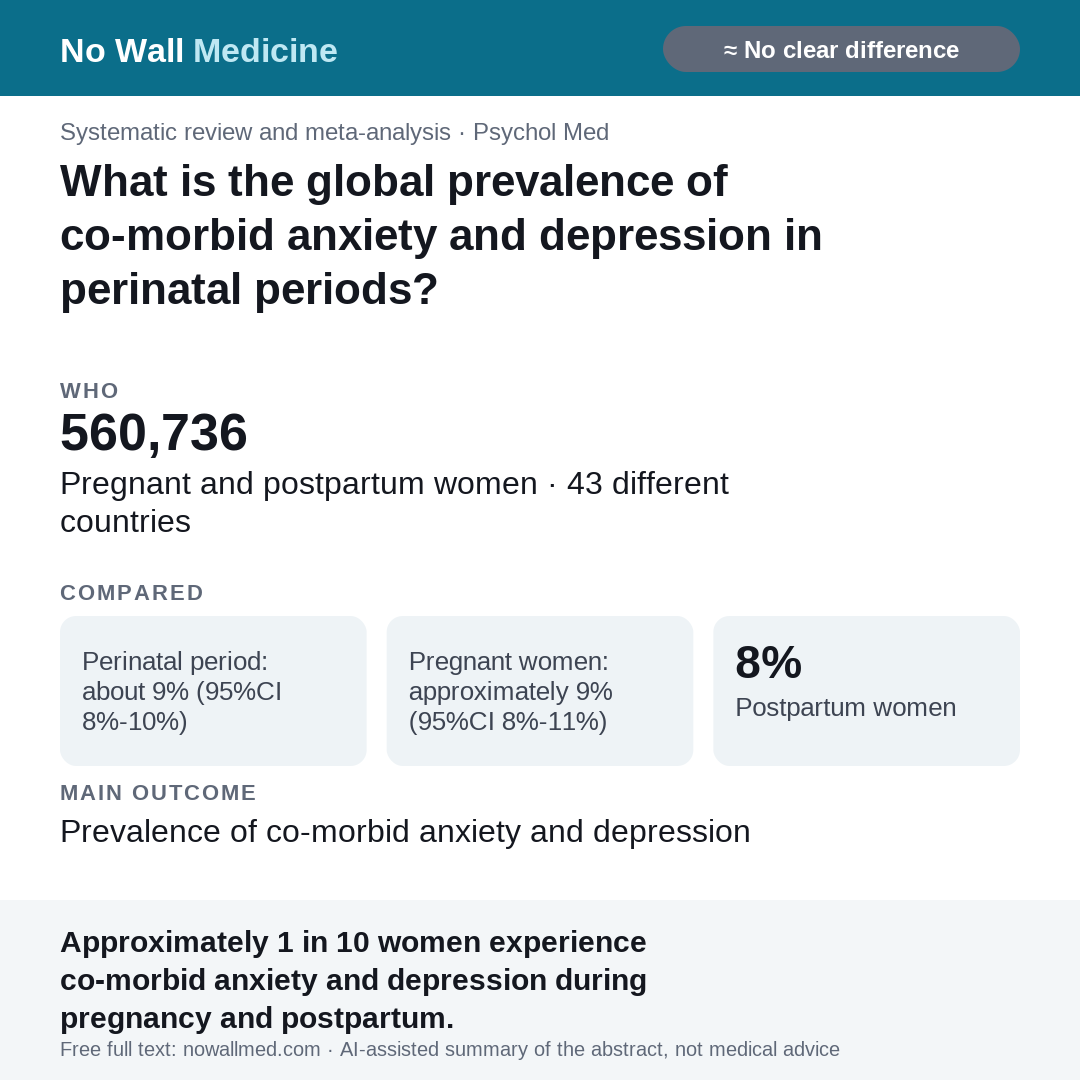
Prevalence of co-morbid anxiety and depression in pregnancy and postpartum: a systematic review and meta-analysis
Systematic review and meta-analysisNo clear difference
What is the global prevalence of co-morbid anxiety and depression in perinatal periods?
Who
560,736
Pregnant and postpartum women · 43 different countries
Compared
Perinatal period: about 9% (95%CI 8%-10%)
Pregnant women: approximately 9% (95%CI 8%-11%)
8%Postpartum women (95%CI 7%-10%)
Main outcome
Prevalence of co-morbid anxiety and depression
Bottom line: Approximately 1 in 10 women experience co-morbid anxiety and depression during pregnancy and postpartum.
Limitation: Prevalence varied significantly by assessment time points, country, study design, and assessment tool.
Psychol Med · 2025-03-13Download image
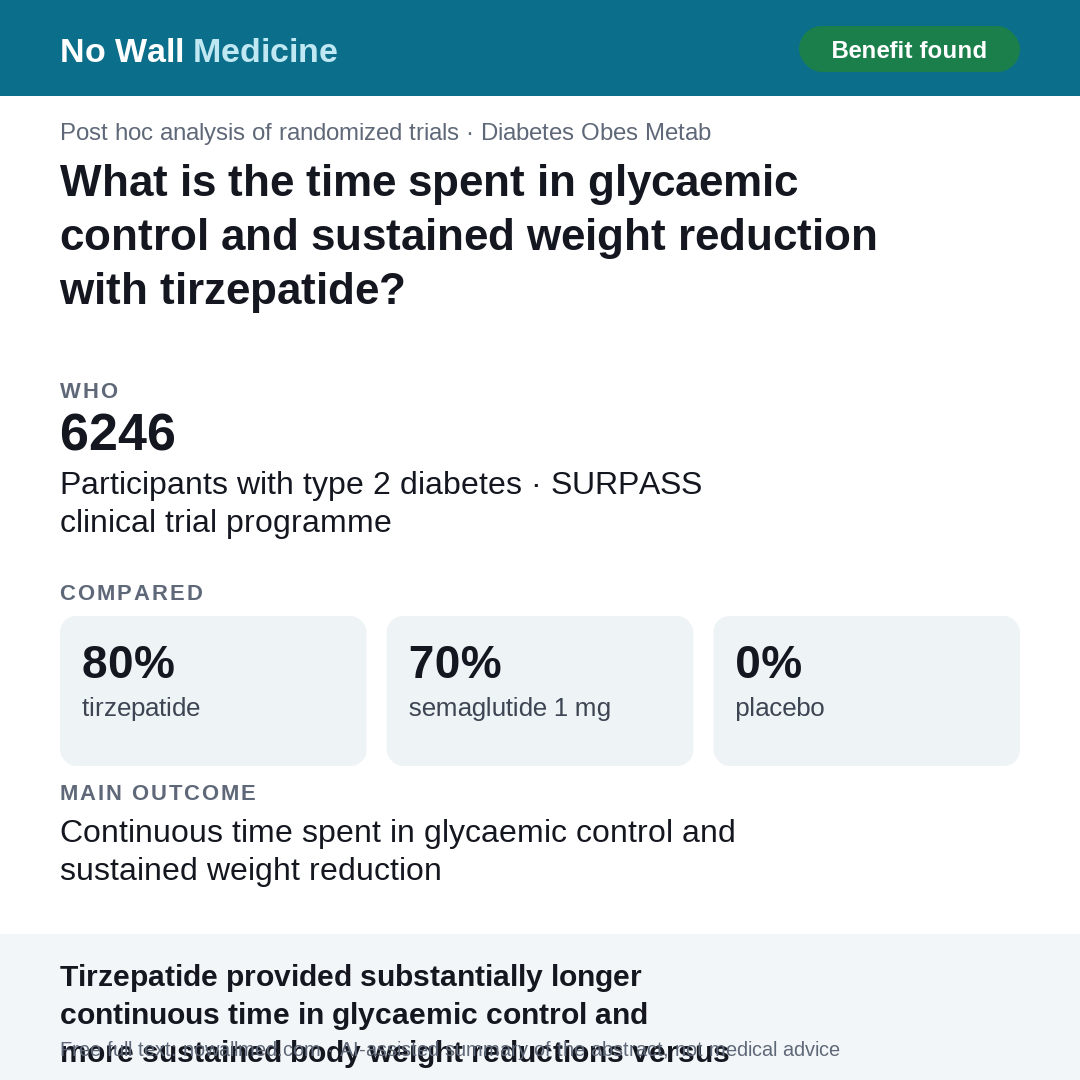
Time spent in glycaemic control with sustained body weight reduction with tirzepatide: A post hoc analysis of the SURPASS clinical trial programme
Post hoc analysis of randomized trialsBenefit found
What is the time spent in glycaemic control and sustained weight reduction with tirzepatide?
Who
6246
Participants with type 2 diabetes · SURPASS clinical trial programme
Compared
80%tirzepatide (40-week studies)
70%semaglutide 1 mg (40-week studies)
0%placebo (40-week studies)
Main outcome
Continuous time spent in glycaemic control and sustained weight reduction
Bottom line: Tirzepatide provided substantially longer continuous time in glycaemic control and more sustained body weight reductions versus comparators.
Diabetes Obes Metab · 2025-03-13Download image
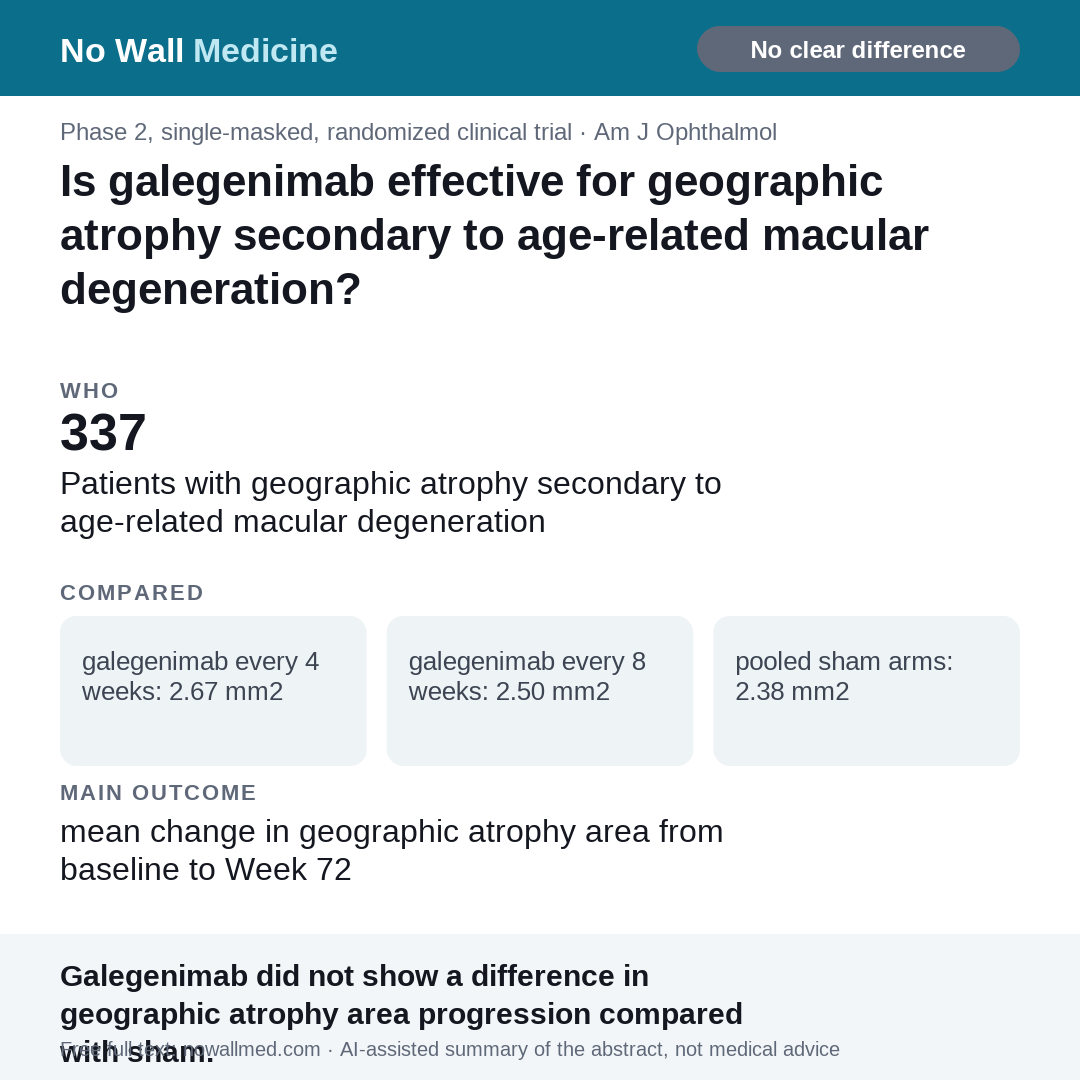
Phase 2 Study of the Anti-High Temperature Requirement A1 (HtrA1) Fab Galegenimab (FHTR2163) in Geographic Atrophy Secondary to Age-Related Macular Degeneration
Phase 2, single-masked, randomized clinical trialNo clear difference
Is galegenimab effective for geographic atrophy secondary to age-related macular degeneration?
Who
337
Patients with geographic atrophy secondary to age-related macular degeneration
Compared
galegenimab every 4 weeks: 2.67 mm2
galegenimab every 8 weeks: 2.50 mm2
pooled sham arms: 2.38 mm2
Main outcome
mean change in geographic atrophy area from baseline to Week 72
Bottom line: Galegenimab did not show a difference in geographic atrophy area progression compared with sham.
Limitation: High rate of intraocular inflammation among treated patients.
Am J Ophthalmol · 2025-03-13Download image
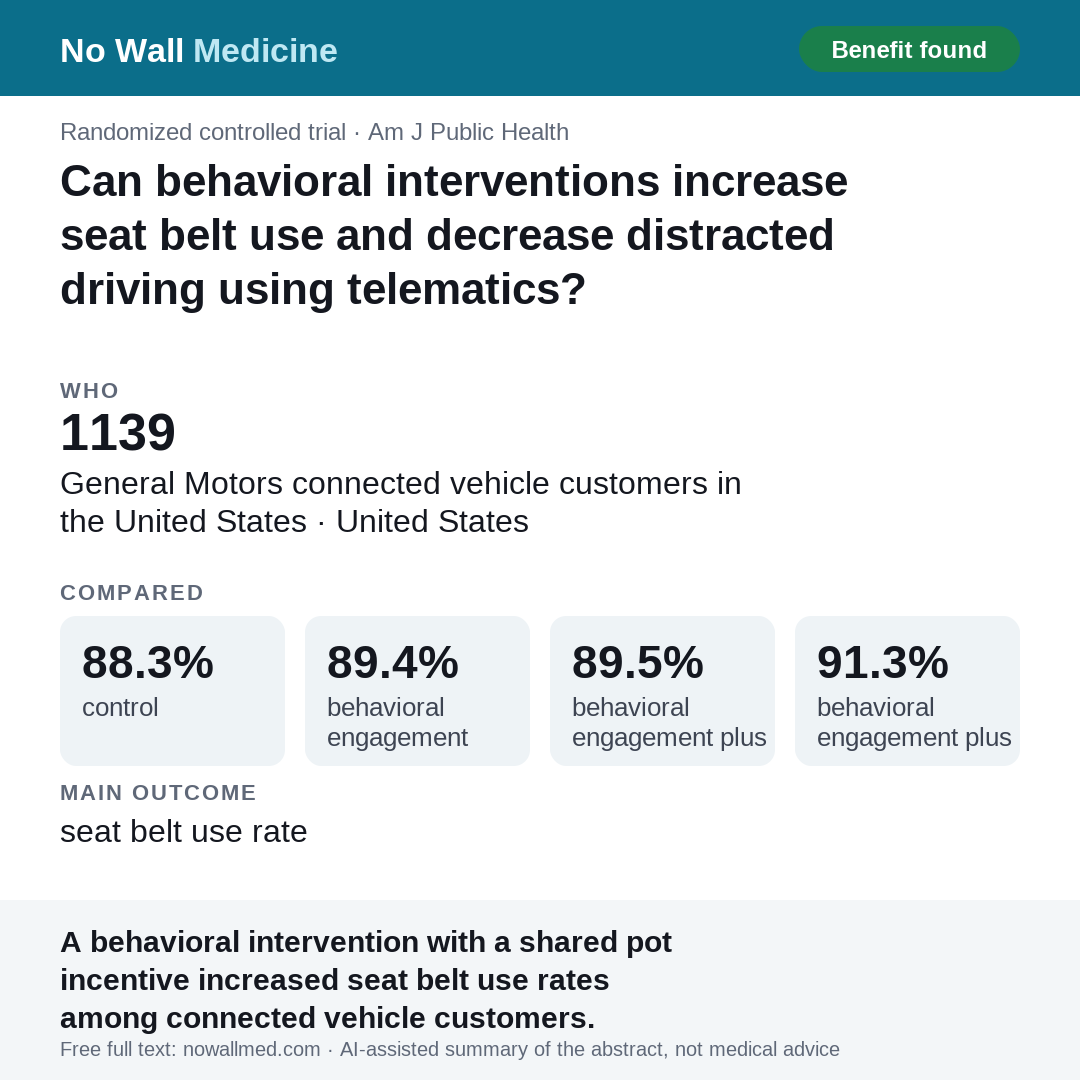
Behavioral Interventions for Increasing Seat Belt Use and Decreasing Distracted Driving Using Telematics: A National Randomized Trial
Randomized controlled trialBenefit found
Can behavioral interventions increase seat belt use and decrease distracted driving using telematics?
Who
1139
General Motors connected vehicle customers in the United States · United States
Compared
88.3%control
89.4%behavioral engagement
89.5%behavioral engagement plus raffle
91.3%behavioral engagement plus shared pot
Main outcome
seat belt use rate
Bottom line: A behavioral intervention with a shared pot incentive increased seat belt use rates among connected vehicle customers.
Am J Public Health · 2025-03-13Download image
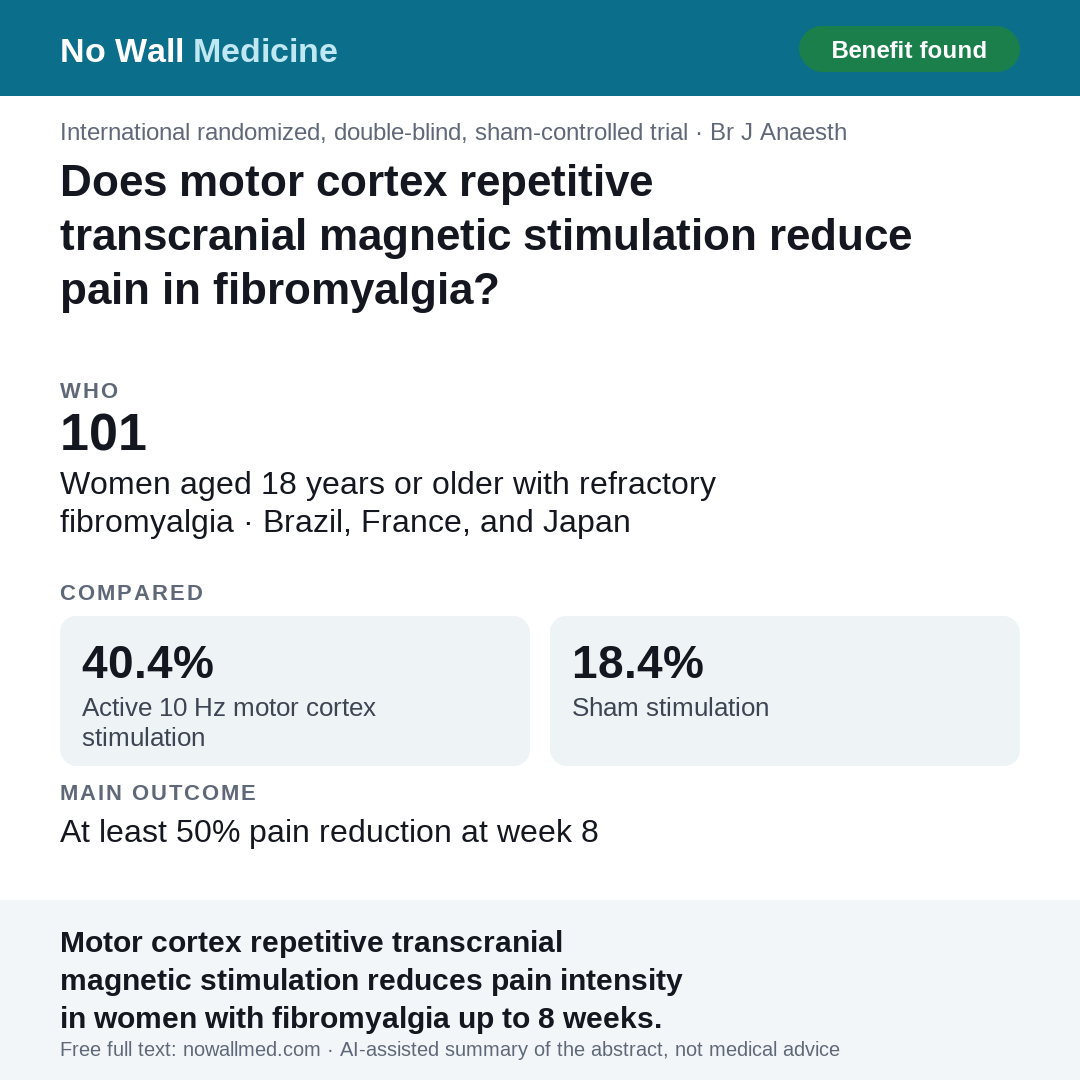
Motor cortex repetitive transcranial magnetic stimulation in fibromyalgia: a multicentre randomised controlled trial
International randomized, double-blind, sham-controlled trialBenefit found
Does motor cortex repetitive transcranial magnetic stimulation reduce pain in fibromyalgia?
Who
101
Women aged 18 years or older with refractory fibromyalgia · Brazil, France, and Japan
Compared
40.4%Active 10 Hz motor cortex stimulation
18.4%Sham stimulation
Main outcome
At least 50% pain reduction at week 8
Result: odds ratio 3.04 (95% credible interval 1.26-8.06)
Bottom line: Motor cortex repetitive transcranial magnetic stimulation reduces pain intensity in women with fibromyalgia up to 8 weeks.
Br J Anaesth · 2025-03-13Download image
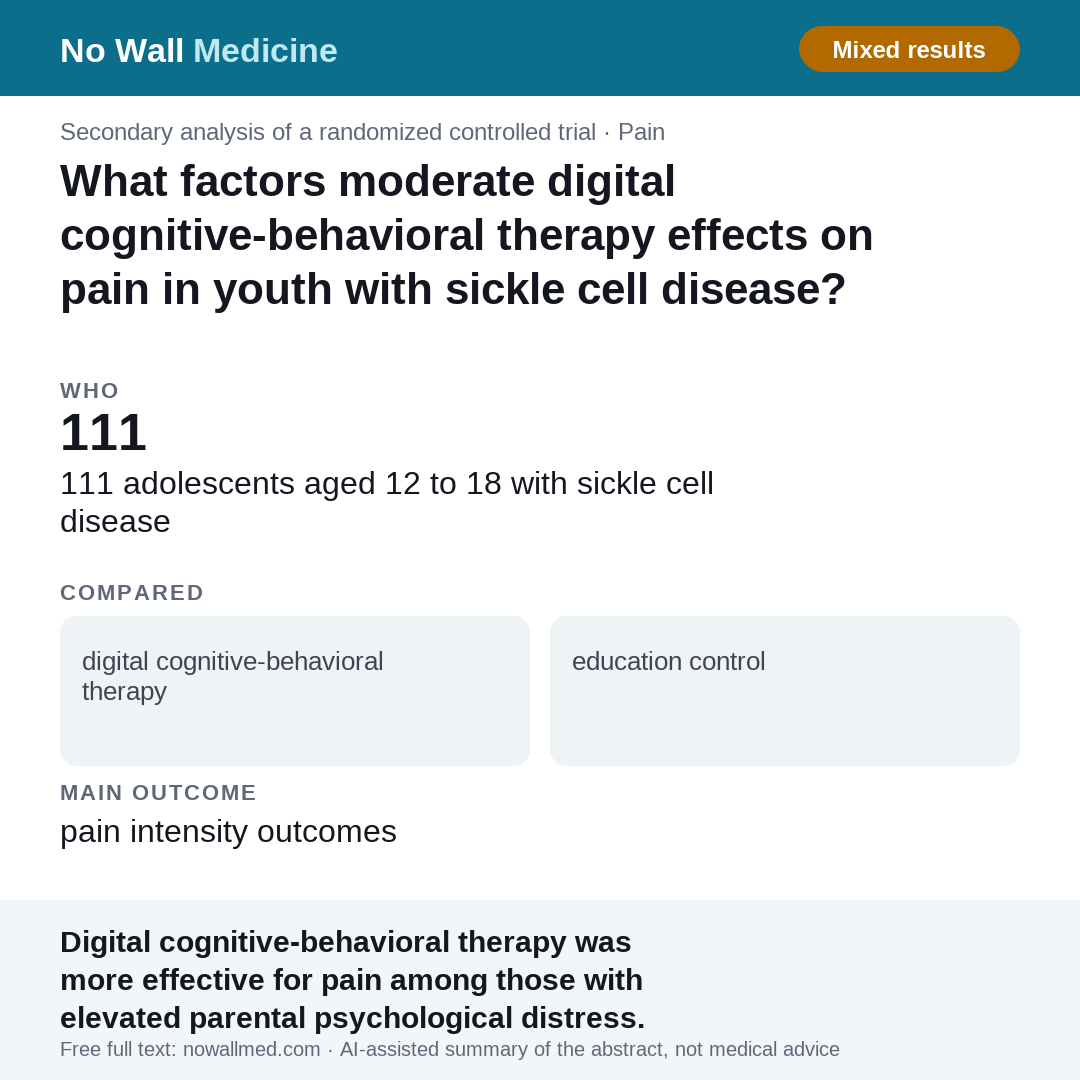
Moderators of digital cognitive-behavioral therapy for youth with sickle cell disease pain: secondary analysis of a randomized controlled trial
Secondary analysis of a randomized controlled trialMixed results
What factors moderate digital cognitive-behavioral therapy effects on pain in youth with sickle cell disease?
Who
111
111 adolescents aged 12 to 18 with sickle cell disease
Compared
digital cognitive-behavioral therapy
education control
Main outcome
pain intensity outcomes
Result: P = 0.012 for pretreatment parent psychological distress
Bottom line: Digital cognitive-behavioral therapy was more effective for pain among those with elevated parental psychological distress.
Pain · 2025-03-13Download image
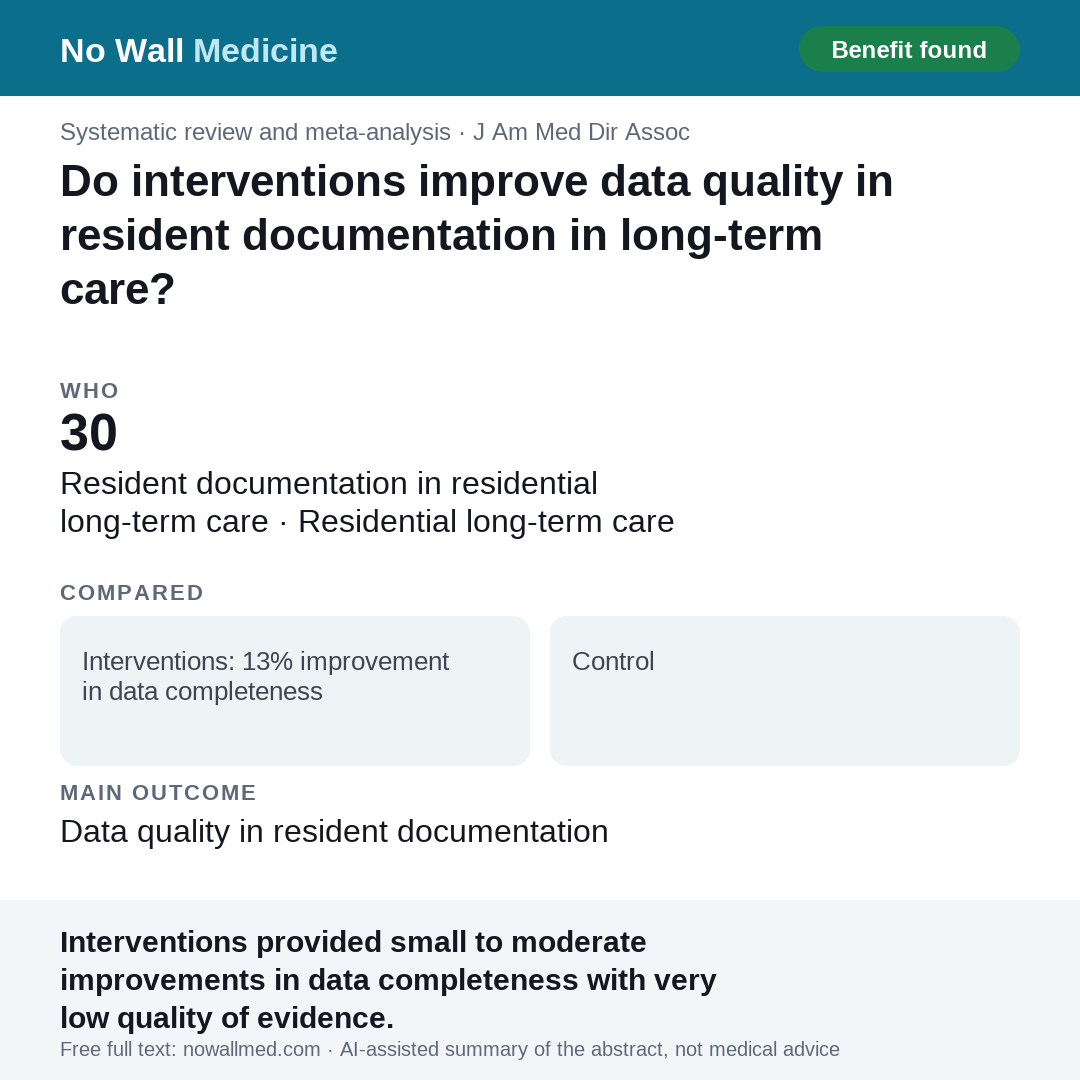
Data Quality of Resident Documentation in Long-Term Care: A Systematic Review and Meta-analysis
Systematic review and meta-analysisBenefit found
Do interventions improve data quality in resident documentation in long-term care?
Who
30
Resident documentation in residential long-term care · Residential long-term care
Compared
Interventions: 13% improvement in data completeness
Control
Main outcome
Data quality in resident documentation
Result: 13% (95% CI, 7%-20%)
Bottom line: Interventions provided small to moderate improvements in data completeness with very low quality of evidence.
Limitation: Most findings were limited to completeness; timeliness and accuracy remain understudied.
J Am Med Dir Assoc · 2025-03-13Download image