Visual abstracts
New randomized trials and meta-analyses from leading journals at a glance: who was studied, what was compared, and what was found. Every paper is free to read in full.
All specialtiesCardiology 935Oncology 840Gastroenterology & Hepatology 345Infectious Disease 661Neurology 382Psychiatry & Mental Health 464Pulmonology 409Critical Care 277Endocrinology & Diabetes 517Pediatrics 588Surgery 383Orthopedics & Sports Medicine 169Neurosurgery 119Cardiothoracic & Vascular Surgery 89Plastic & Reconstructive Surgery 145Nephrology 207Rheumatology 116Hematology 200Dermatology 89Ophthalmology 113Obstetrics & Gynecology 285Public & Global Health 185Radiology & Imaging 117Anesthesiology 150Urology 179ENT (Otolaryngology) 121Emergency Medicine 104Allergy & Immunology 64Geriatrics 171Family Medicine & Primary Care 116Medical Genetics & Genomics 94Pathology & Laboratory Medicine 30Physical Medicine & Rehabilitation 151Palliative Care 83Nutrition 231Digital Health & AI 485General Medicine 105
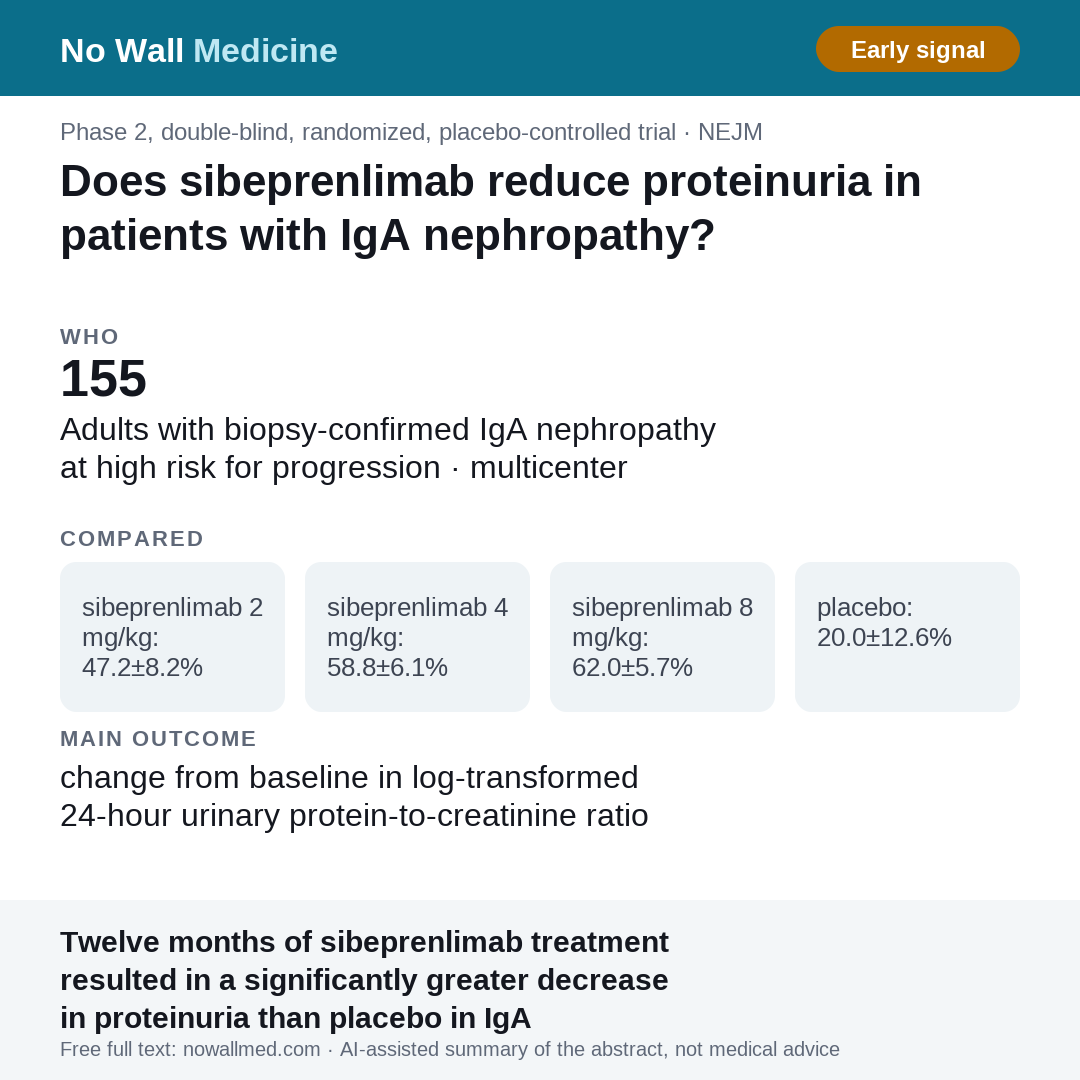
A Phase 2 Trial of Sibeprenlimab in Patients with IgA Nephropathy
Phase 2, double-blind, randomized, placebo-controlled trialBenefit found
Does sibeprenlimab reduce proteinuria in patients with IgA nephropathy?
Who
155
Adults with biopsy-confirmed IgA nephropathy at high risk for progression · multicenter
Compared
sibeprenlimab 2 mg/kg: 47.2±8.2%
sibeprenlimab 4 mg/kg: 58.8±6.1%
sibeprenlimab 8 mg/kg: 62.0±5.7%
placebo: 20.0±12.6%
Main outcome
change from baseline in log-transformed 24-hour urinary protein-to-creatinine ratio
Bottom line: Twelve months of sibeprenlimab treatment resulted in a significantly greater decrease in proteinuria than placebo in IgA nephropathy.
Funded by: Visterra
NEJM · 2023-11-02Download image
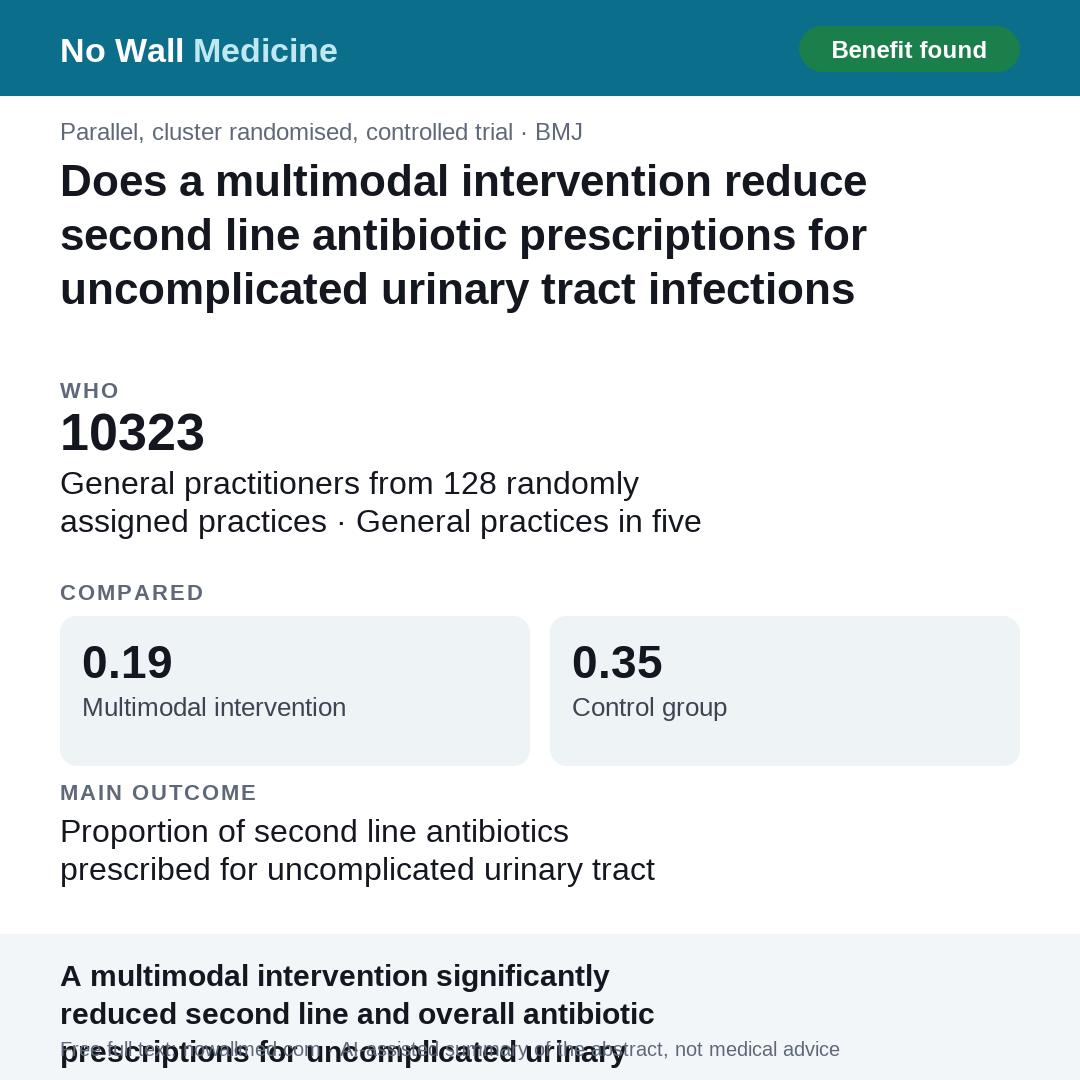
Effects of a multimodal intervention in primary care to reduce second line antibiotic prescriptions for urinary tract infections in women: parallel, cluster randomised, controlled trial
Parallel, cluster randomised, controlled trialBenefit found
Does a multimodal intervention reduce second line antibiotic prescriptions for uncomplicated urinary tract infections in women?
Who
10323
General practitioners from 128 randomly assigned practices · General practices in five regions in Germany
Compared
0.19Multimodal intervention (standard deviation 0.20)
0.35Control group (0.25)
Main outcome
Proportion of second line antibiotics prescribed for uncomplicated urinary tract infections
Result: -0.13 (95% confidence interval -0.21 to -0.06)
Bottom line: A multimodal intervention significantly reduced second line and overall antibiotic prescriptions for uncomplicated urinary tract infections in women.
BMJ · 2023-11-02Download image
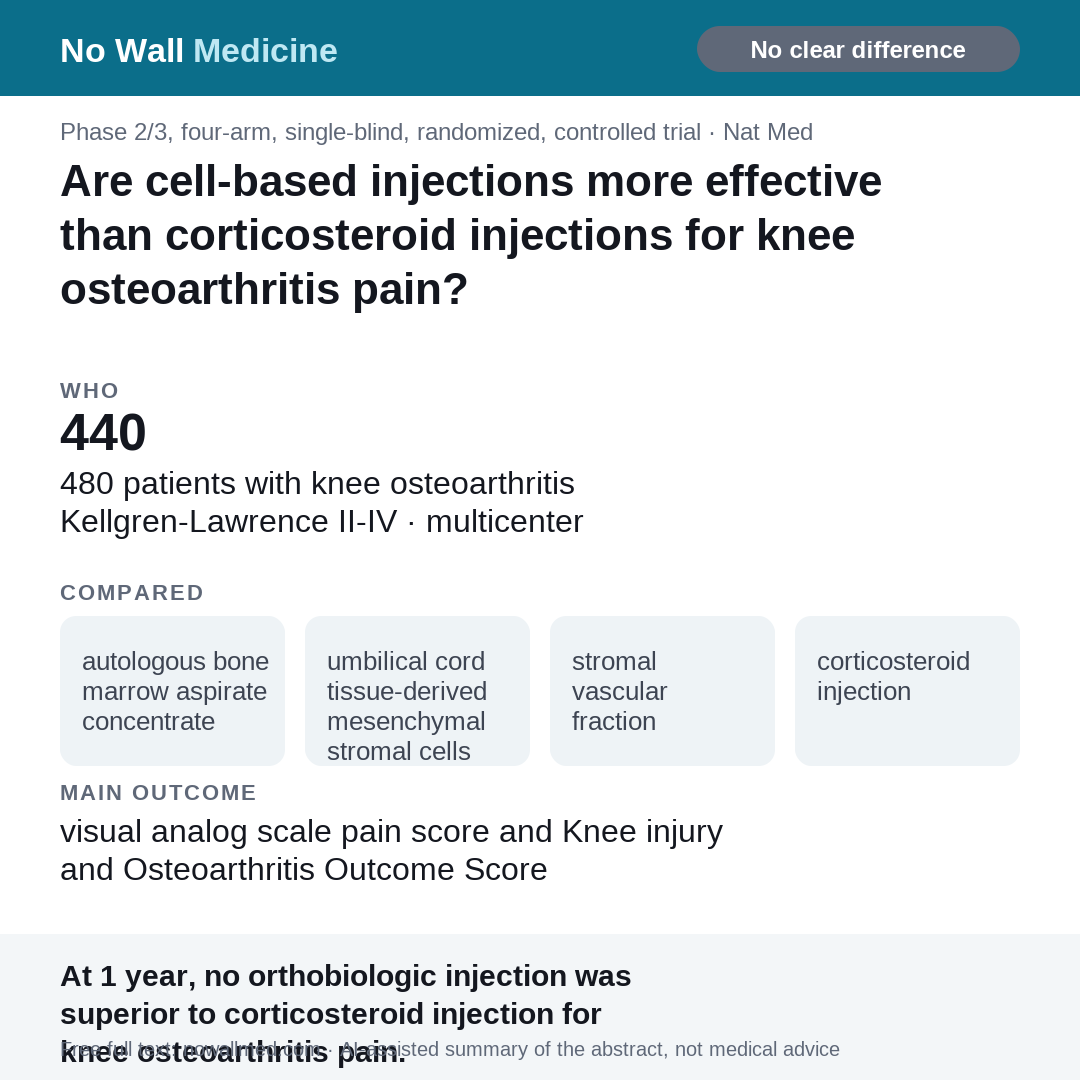
Cell-based versus corticosteroid injections for knee pain in osteoarthritis: a randomized phase 3 trial
Phase 2/3, four-arm, single-blind, randomized, controlled trialNo clear difference
Are cell-based injections more effective than corticosteroid injections for knee osteoarthritis pain?
Who
440
480 patients with knee osteoarthritis Kellgren-Lawrence II-IV · multicenter
Compared
autologous bone marrow aspirate concentrate
umbilical cord tissue-derived mesenchymal stromal cells
stromal vascular fraction
corticosteroid injection
Main outcome
visual analog scale pain score and Knee injury and Osteoarthritis Outcome Score
Bottom line: At 1 year, no orthobiologic injection was superior to corticosteroid injection for knee osteoarthritis pain.
Nat Med · 2023-11-02Download image
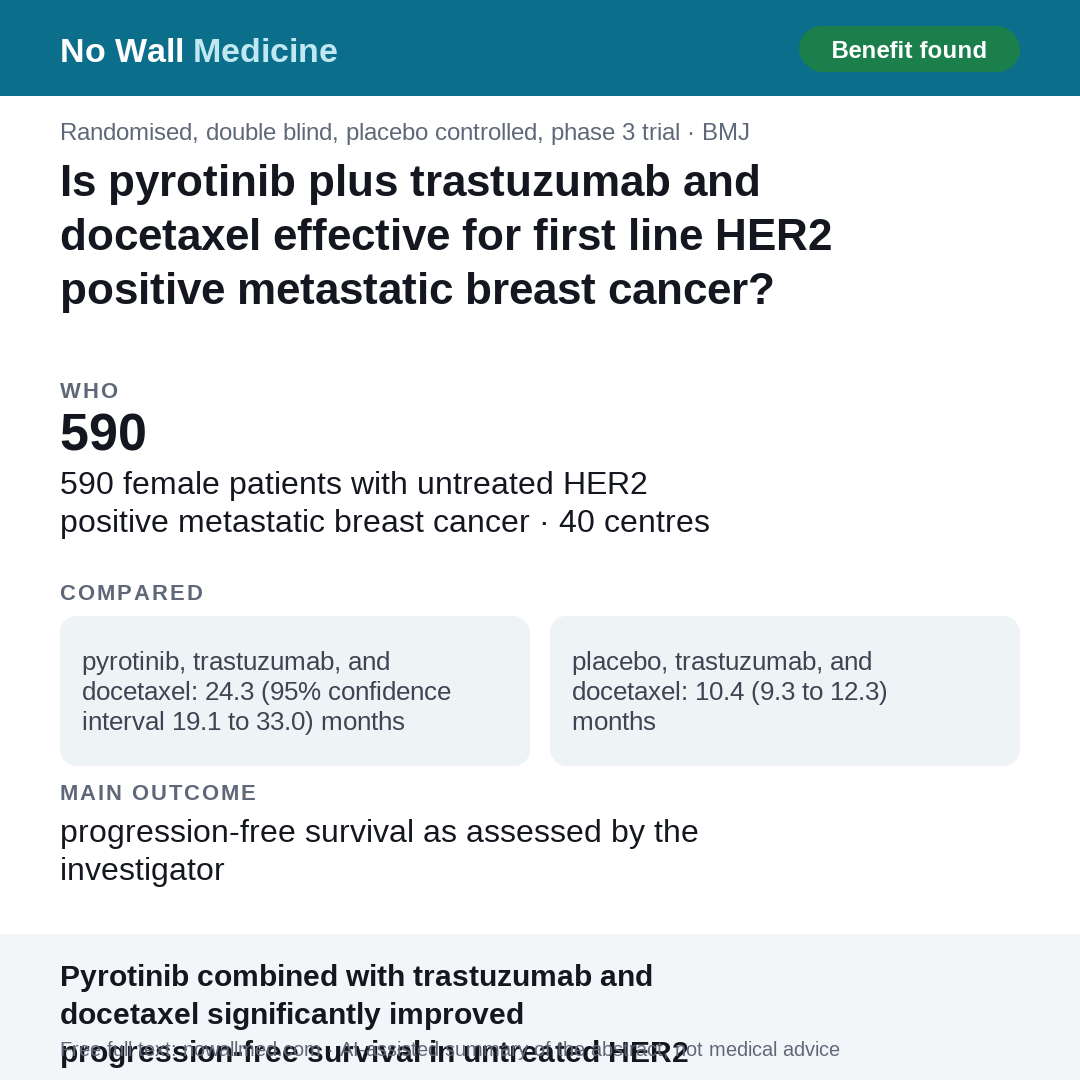
Pyrotinib versus placebo in combination with trastuzumab and docetaxel as first line treatment in patients with HER2 positive metastatic breast cancer (PHILA): randomised, double blind, multicentre, phase 3 trial
Randomised, double blind, placebo controlled, phase 3 trialBenefit found
Is pyrotinib plus trastuzumab and docetaxel effective for first line HER2 positive metastatic breast cancer?
Who
590
590 female patients with untreated HER2 positive metastatic breast cancer · 40 centres in China
Compared
pyrotinib, trastuzumab, and docetaxel: 24.3 (95% confidence interval 19.1 to 33.0) months
placebo, trastuzumab, and docetaxel: 10.4 (9.3 to 12.3) months
Main outcome
progression-free survival as assessed by the investigator
Result: hazard ratio 0.41 (95% confidence interval 0.32 to 0.53)
Bottom line: Pyrotinib combined with trastuzumab and docetaxel significantly improved progression-free survival in untreated HER2 positive metastatic breast cancer.
BMJ · 2023-10-31Download image
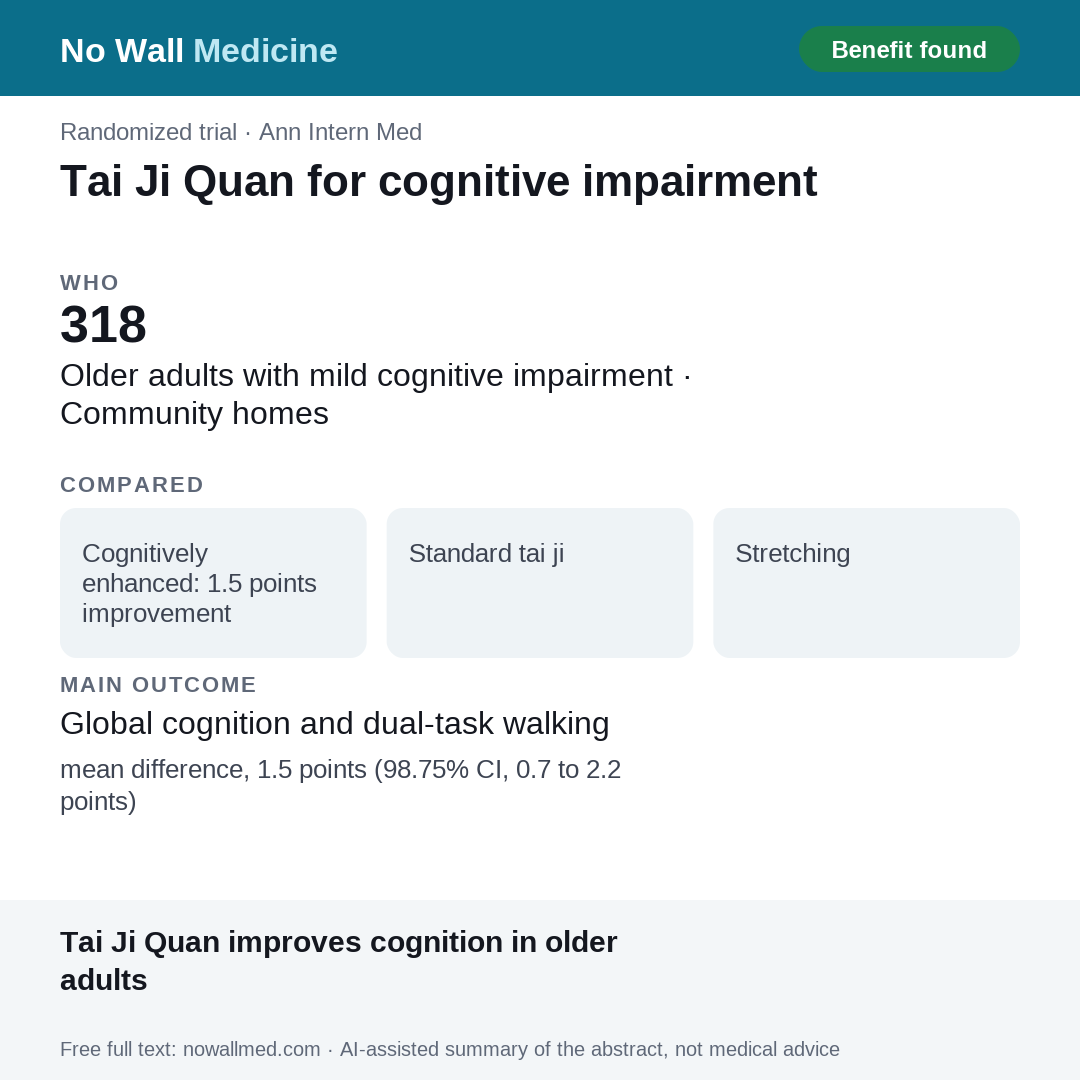
Clinical Effectiveness of Cognitively Enhanced Tai Ji Quan Training on Global Cognition and Dual-Task Performance During Walking in Older Adults With Mild Cognitive Impairment or Self-Reported Memory Concerns : A Randomized Controlled Trial
Randomized trialBenefit found
Tai Ji Quan for cognitive impairment
Who
318
Older adults with mild cognitive impairment · Community homes
Compared
Cognitively enhanced: 1.5 points improvement
Standard tai ji
Stretching
Main outcome
Global cognition and dual-task walking
Result: mean difference, 1.5 points (98.75% CI, 0.7 to 2.2 points)
Bottom line: Tai Ji Quan improves cognition in older adults
Limitation: No nonexercise control group
Funded by: National Institute on Aging
Ann Intern Med · 2023-10-31Download image
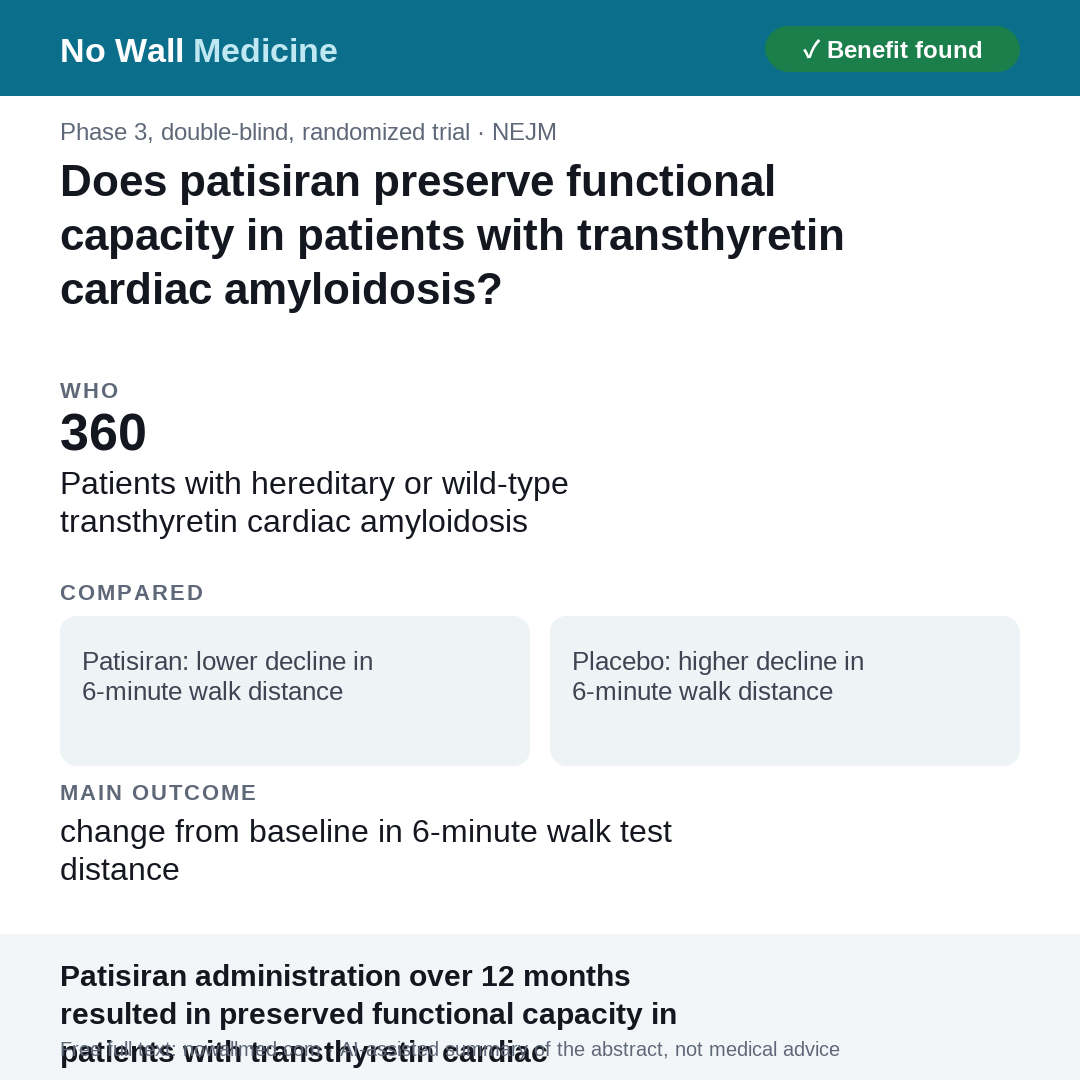
Patisiran Treatment in Patients with Transthyretin Cardiac Amyloidosis
Phase 3, double-blind, randomized trialBenefit found
Does patisiran preserve functional capacity in patients with transthyretin cardiac amyloidosis?
Who
360
Patients with hereditary or wild-type transthyretin cardiac amyloidosis
Compared
Patisiran: lower decline in 6-minute walk distance
Placebo: higher decline in 6-minute walk distance
Main outcome
change from baseline in 6-minute walk test distance
Result: Hodges-Lehmann estimate of median difference, 14.69 m; 95% CI, 0.69 to 28.69
Bottom line: Patisiran administration over 12 months resulted in preserved functional capacity in patients with transthyretin cardiac amyloidosis.
Funded by: Alnylam Pharmaceuticals
NEJM · 2023-10-27Download image
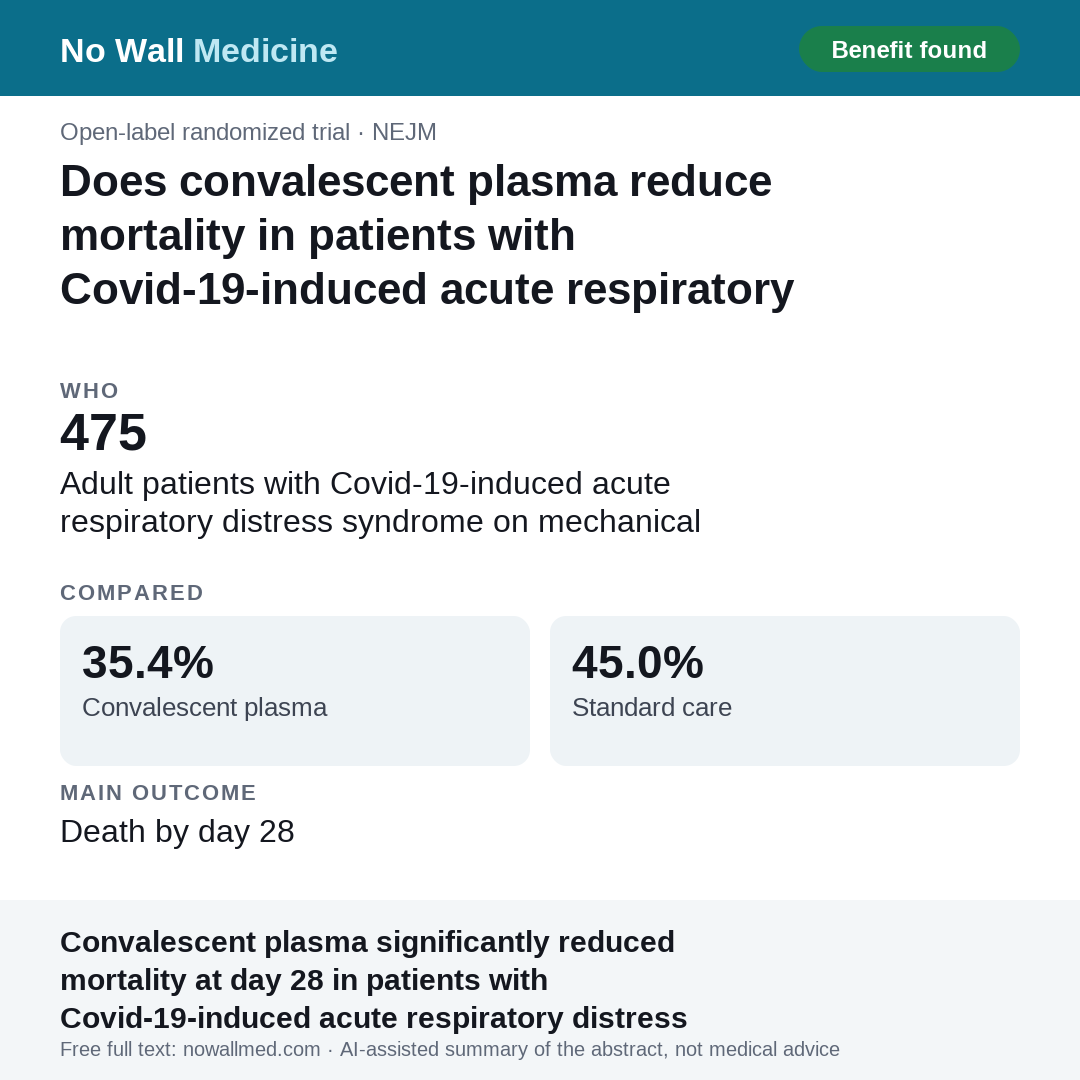
Convalescent Plasma for Covid-19-Induced ARDS in Mechanically Ventilated Patients
Open-label randomized trialBenefit found
Does convalescent plasma reduce mortality in patients with Covid-19-induced acute respiratory distress syndrome?
Who
475
Adult patients with Covid-19-induced acute respiratory distress syndrome on mechanical ventilation
Compared
35.4%Convalescent plasma
45.0%Standard care
Main outcome
Death by day 28
Bottom line: Convalescent plasma significantly reduced mortality at day 28 in patients with Covid-19-induced acute respiratory distress syndrome.
Funded by: Belgian Health Care Knowledge Center
NEJM · 2023-10-25Download image
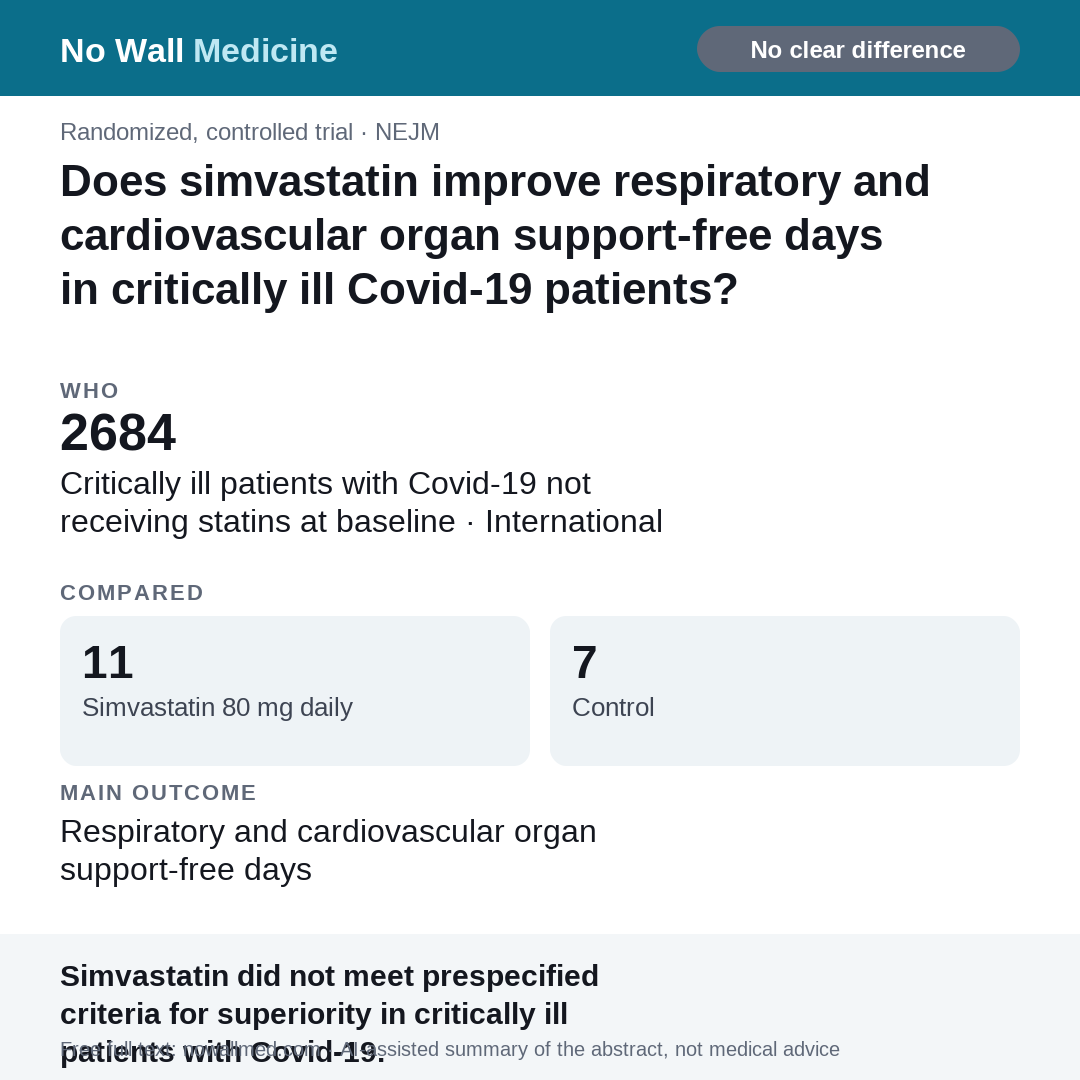
Simvastatin in Critically Ill Patients with Covid-19
Randomized, controlled trialNo clear difference
Does simvastatin improve respiratory and cardiovascular organ support-free days in critically ill Covid-19 patients?
Who
2684
Critically ill patients with Covid-19 not receiving statins at baseline · International
Compared
11Simvastatin 80 mg daily (interquartile range, -1 to 17)
7Control (interquartile range, -1 to 16)
Main outcome
Respiratory and cardiovascular organ support-free days
Result: posterior median adjusted odds ratio 1.15 (95% credible interval, 0.98 to 1.34)
Bottom line: Simvastatin did not meet prespecified criteria for superiority in critically ill patients with Covid-19.
NEJM · 2023-10-25Download image
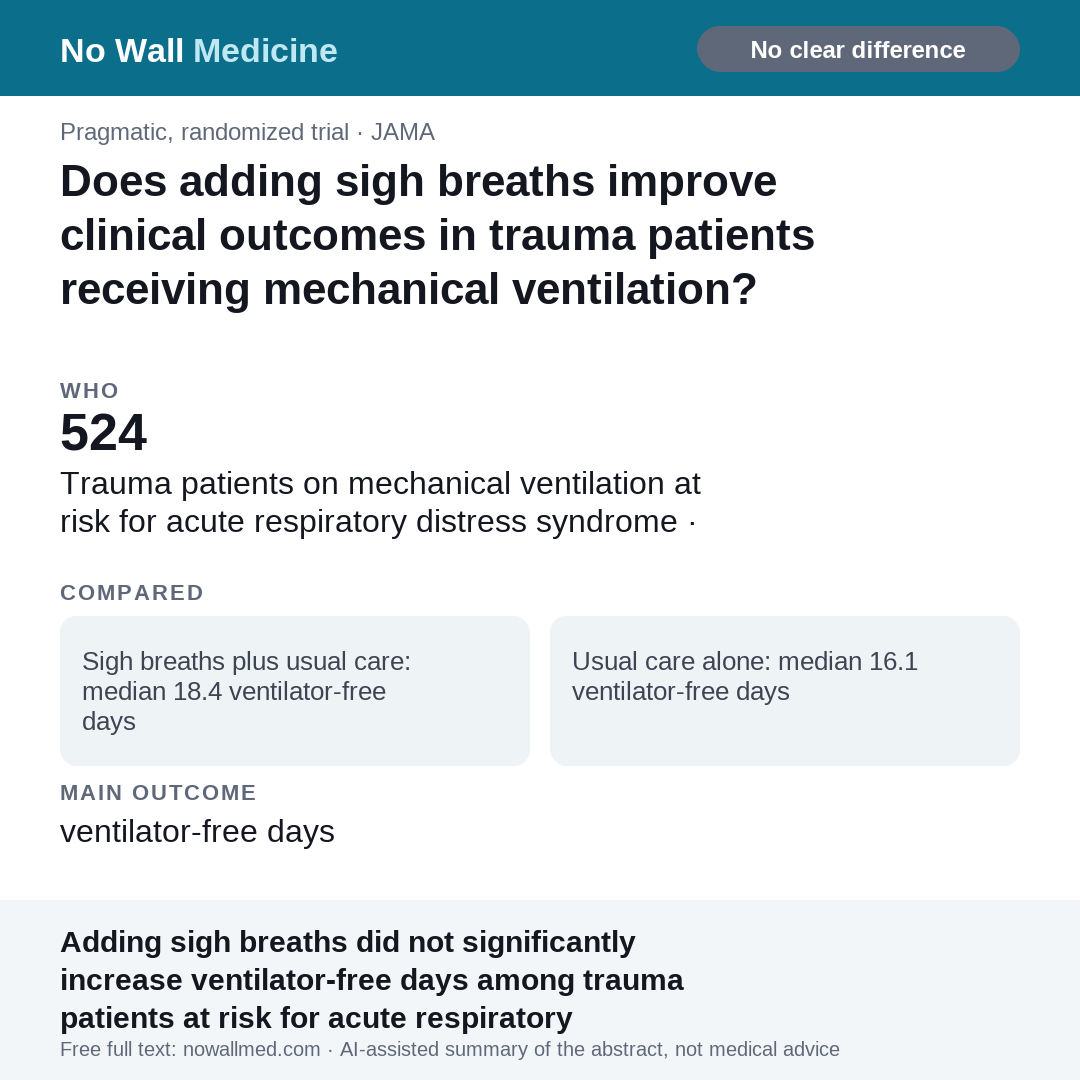
Sigh Ventilation in Patients With Trauma: The SiVent Randomized Clinical Trial
Pragmatic, randomized trialNo clear difference
Does adding sigh breaths improve clinical outcomes in trauma patients receiving mechanical ventilation?
Who
524
Trauma patients on mechanical ventilation at risk for acute respiratory distress syndrome · 15 academic trauma centers in the US
Compared
Sigh breaths plus usual care: median 18.4 ventilator-free days
Usual care alone: median 16.1 ventilator-free days
Main outcome
ventilator-free days
Result: adjusted mean difference 1.4 days (95% CI, -0.2 to 3.0)
Bottom line: Adding sigh breaths did not significantly increase ventilator-free days among trauma patients at risk for acute respiratory distress syndrome.
JAMA · 2023-10-25Download image
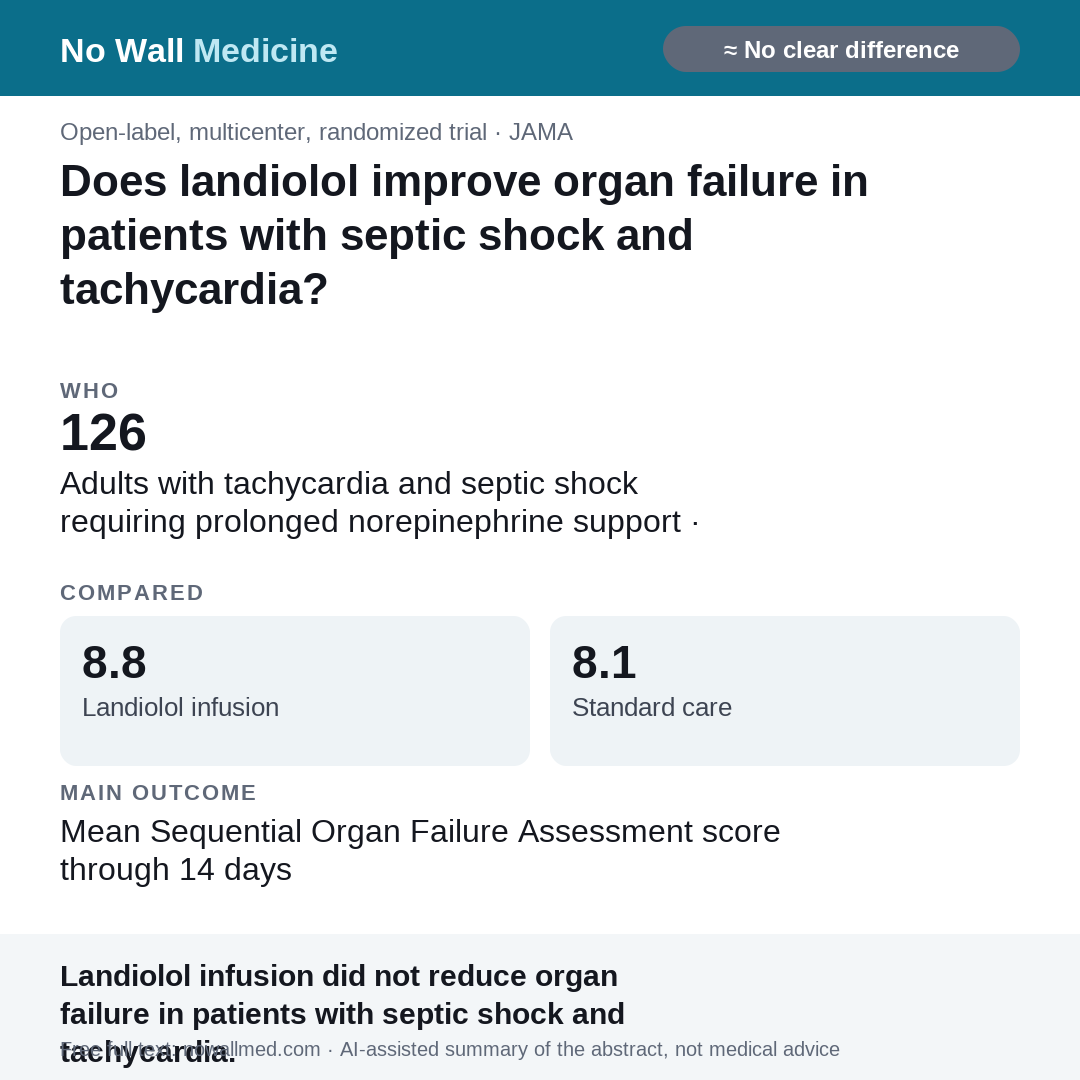
Landiolol and Organ Failure in Patients With Septic Shock: The STRESS-L Randomized Clinical Trial
Open-label, multicenter, randomized trialNo clear difference
Does landiolol improve organ failure in patients with septic shock and tachycardia?
Who
126
Adults with tachycardia and septic shock requiring prolonged norepinephrine support · 40 UK National Health Service intensive care units
Compared
8.8Landiolol infusion (3.9)
8.1Standard care (3.2)
Main outcome
Mean Sequential Organ Failure Assessment score through 14 days
Result: mean difference 0.75 (95% CI -0.49 to 2.0)
Bottom line: Landiolol infusion did not reduce organ failure in patients with septic shock and tachycardia.
JAMA · 2023-10-25Download image
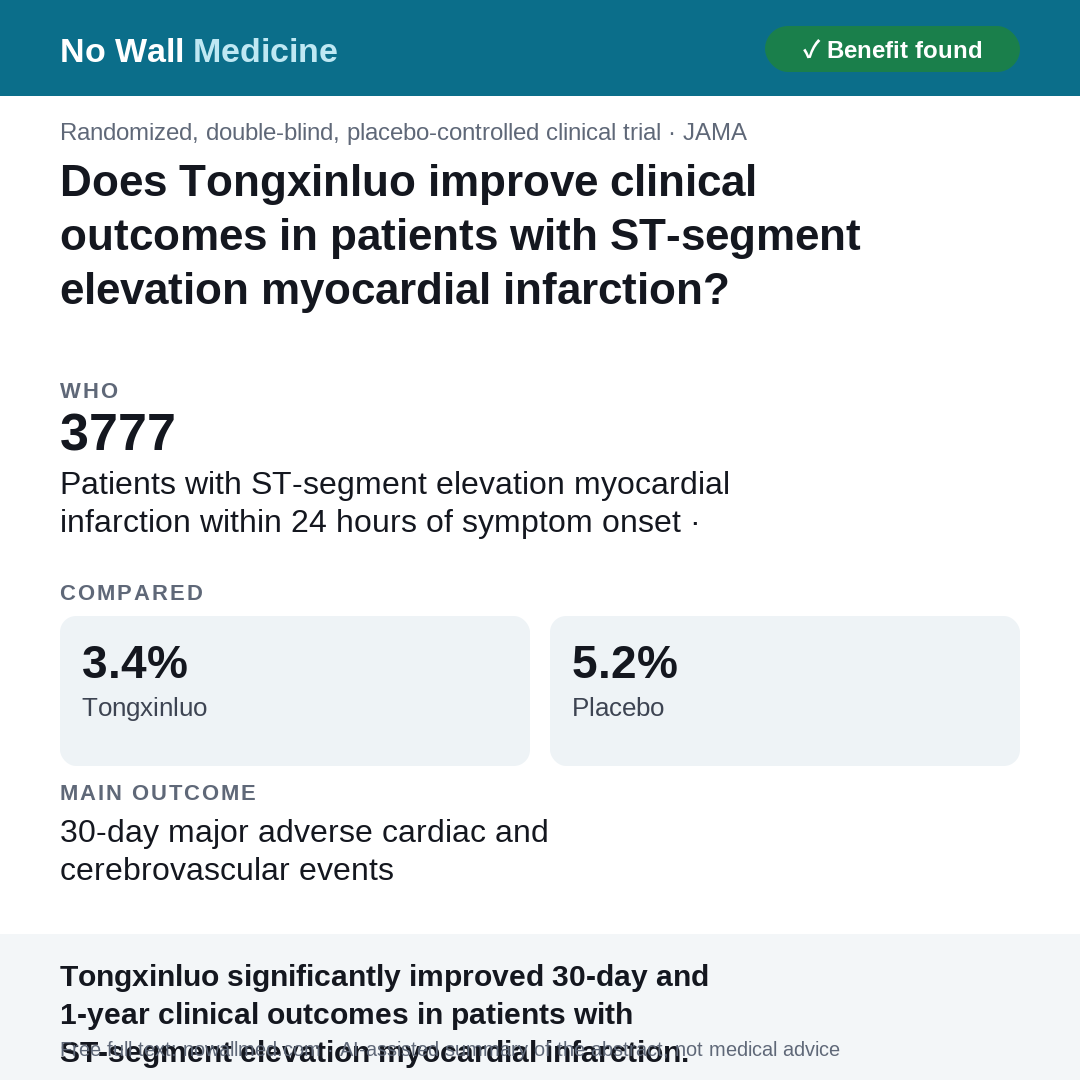
Traditional Chinese Medicine Compound (Tongxinluo) and Clinical Outcomes of Patients With Acute Myocardial Infarction: The CTS-AMI Randomized Clinical Trial
Randomized, double-blind, placebo-controlled clinical trialBenefit found
Does Tongxinluo improve clinical outcomes in patients with ST-segment elevation myocardial infarction?
Who
3777
Patients with ST-segment elevation myocardial infarction within 24 hours of symptom onset · 124 hospitals in China
Compared
3.4%Tongxinluo
5.2%Placebo
Main outcome
30-day major adverse cardiac and cerebrovascular events
Result: relative risk 0.64 (95% CI 0.47 to 0.88)
Bottom line: Tongxinluo significantly improved 30-day and 1-year clinical outcomes in patients with ST-segment elevation myocardial infarction.
JAMA · 2023-10-24Download image
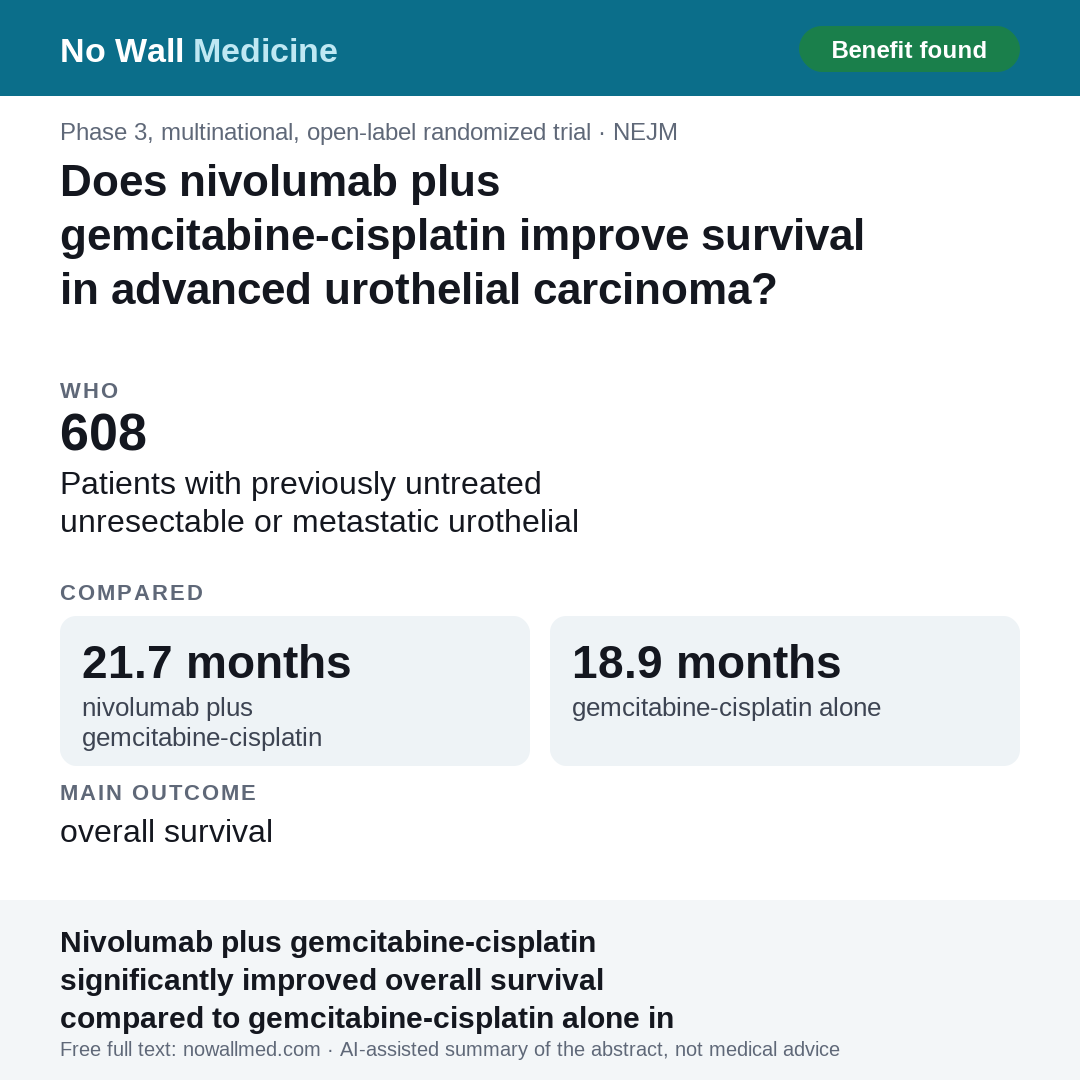
Nivolumab plus Gemcitabine-Cisplatin in Advanced Urothelial Carcinoma
Phase 3, multinational, open-label randomized trialBenefit found
Does nivolumab plus gemcitabine-cisplatin improve survival in advanced urothelial carcinoma?
Who
608
Patients with previously untreated unresectable or metastatic urothelial carcinoma · multinational
Compared
21.7 monthsnivolumab plus gemcitabine-cisplatin
18.9 monthsgemcitabine-cisplatin alone
Main outcome
overall survival
Result: hazard ratio 0.78 (95% CI 0.63 to 0.96)
Bottom line: Nivolumab plus gemcitabine-cisplatin significantly improved overall survival compared to gemcitabine-cisplatin alone in advanced urothelial carcinoma.
Funded by: Bristol Myers Squibb and Ono Pharmaceutical
NEJM · 2023-10-22Download image
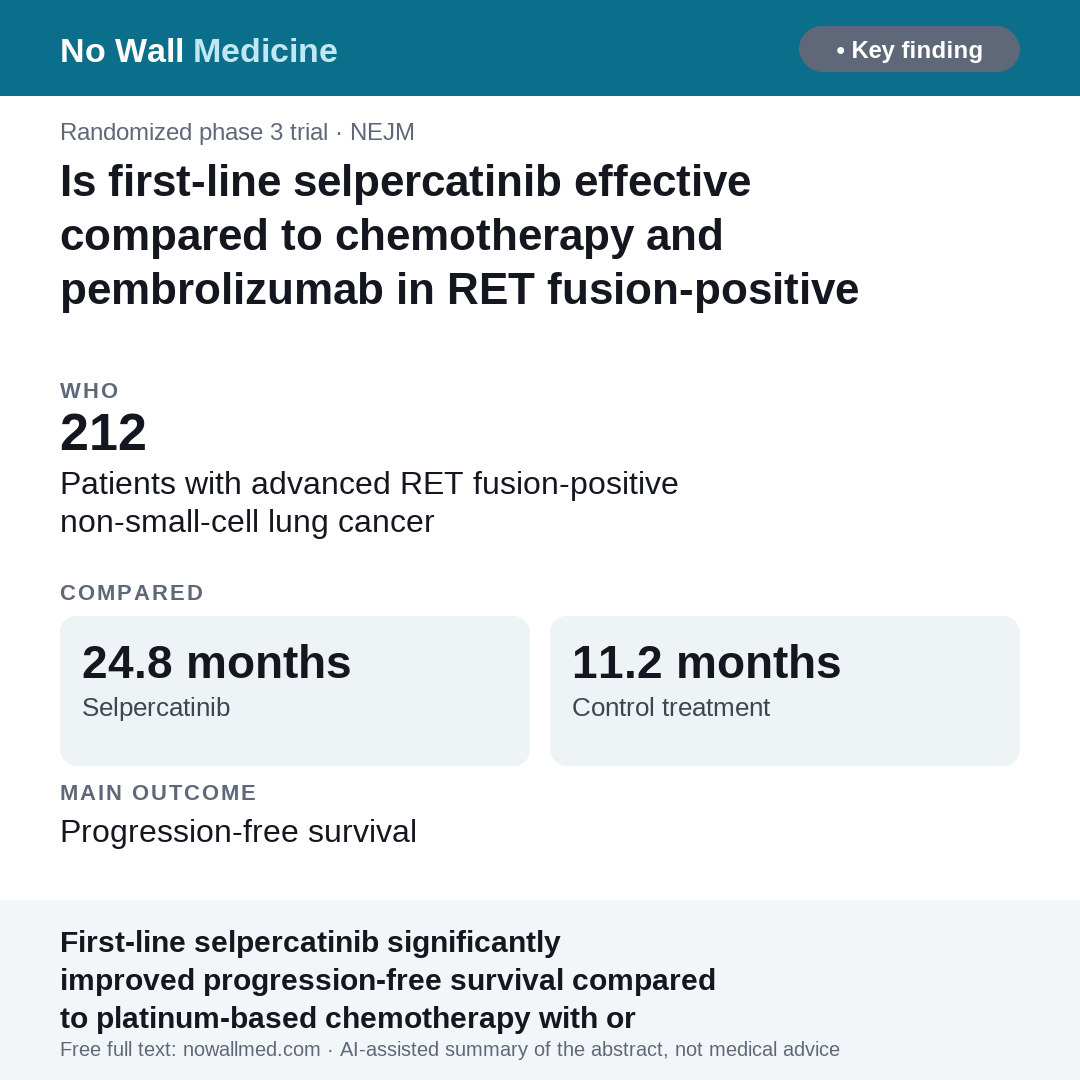
First-Line Selpercatinib or Chemotherapy and Pembrolizumab in RET Fusion-Positive NSCLC
Randomized phase 3 trialBenefit found
Is first-line selpercatinib effective compared to chemotherapy and pembrolizumab in RET fusion-positive NSCLC?
Who
212
Patients with advanced RET fusion-positive non-small-cell lung cancer
Compared
24.8 monthsSelpercatinib (95% CI, 16.9 to not estimable)
11.2 monthsControl treatment (95% CI, 8.8 to 16.8)
Main outcome
Progression-free survival
Result: hazard ratio 0.46 (95% CI, 0.31 to 0.70)
Bottom line: First-line selpercatinib significantly improved progression-free survival compared to platinum-based chemotherapy with or without pembrolizumab.
Funded by: Eli Lilly and others
NEJM · 2023-10-21Download image
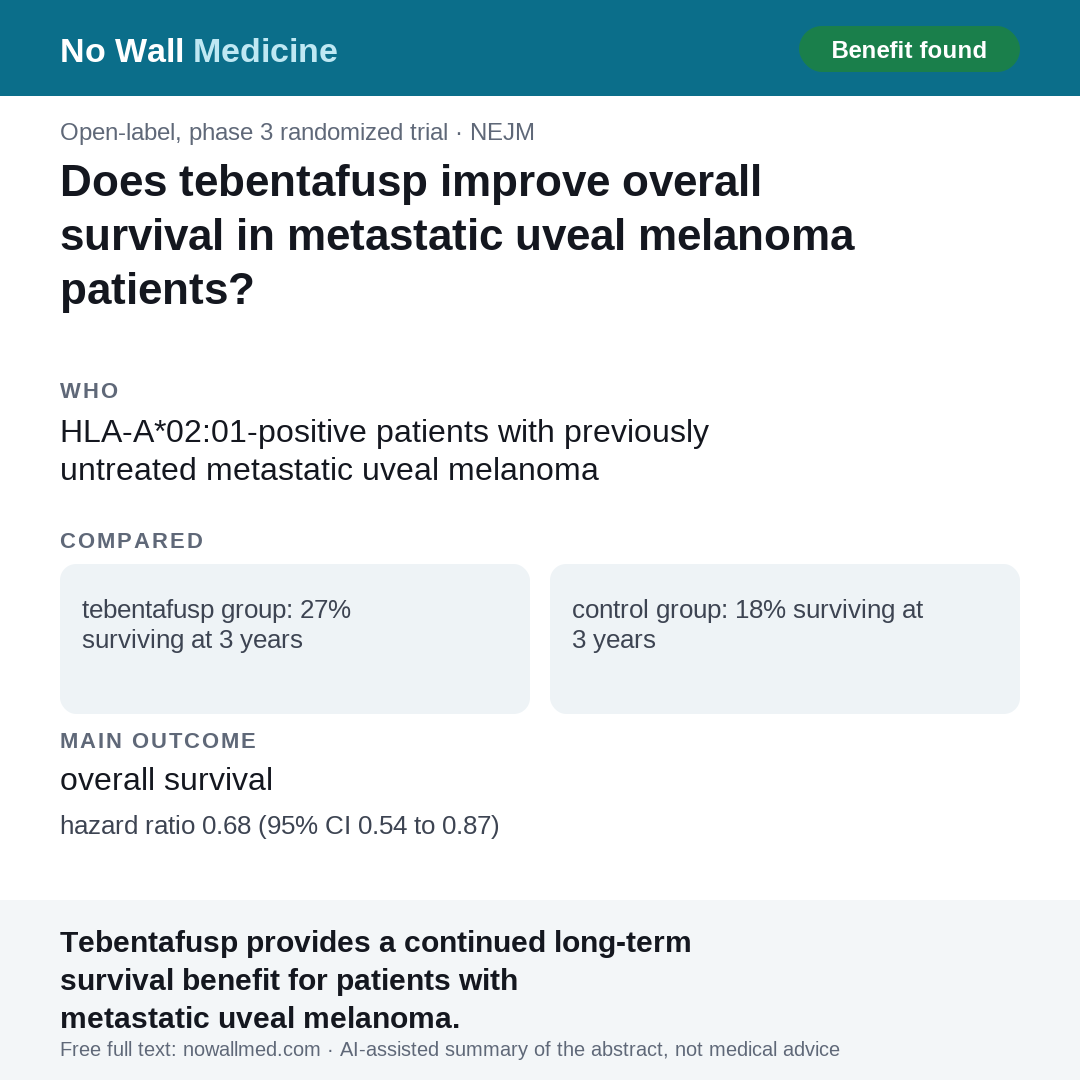
Three-Year Overall Survival with Tebentafusp in Metastatic Uveal Melanoma
Open-label, phase 3 randomized trialBenefit found
Does tebentafusp improve overall survival in metastatic uveal melanoma patients?
Who
HLA-A*02:01-positive patients with previously untreated metastatic uveal melanoma
Compared
tebentafusp group: 27% surviving at 3 years
control group: 18% surviving at 3 years
Main outcome
overall survival
Result: hazard ratio 0.68 (95% CI 0.54 to 0.87)
Bottom line: Tebentafusp provides a continued long-term survival benefit for patients with metastatic uveal melanoma.
Funded by: Immunocore
NEJM · 2023-10-21Download image
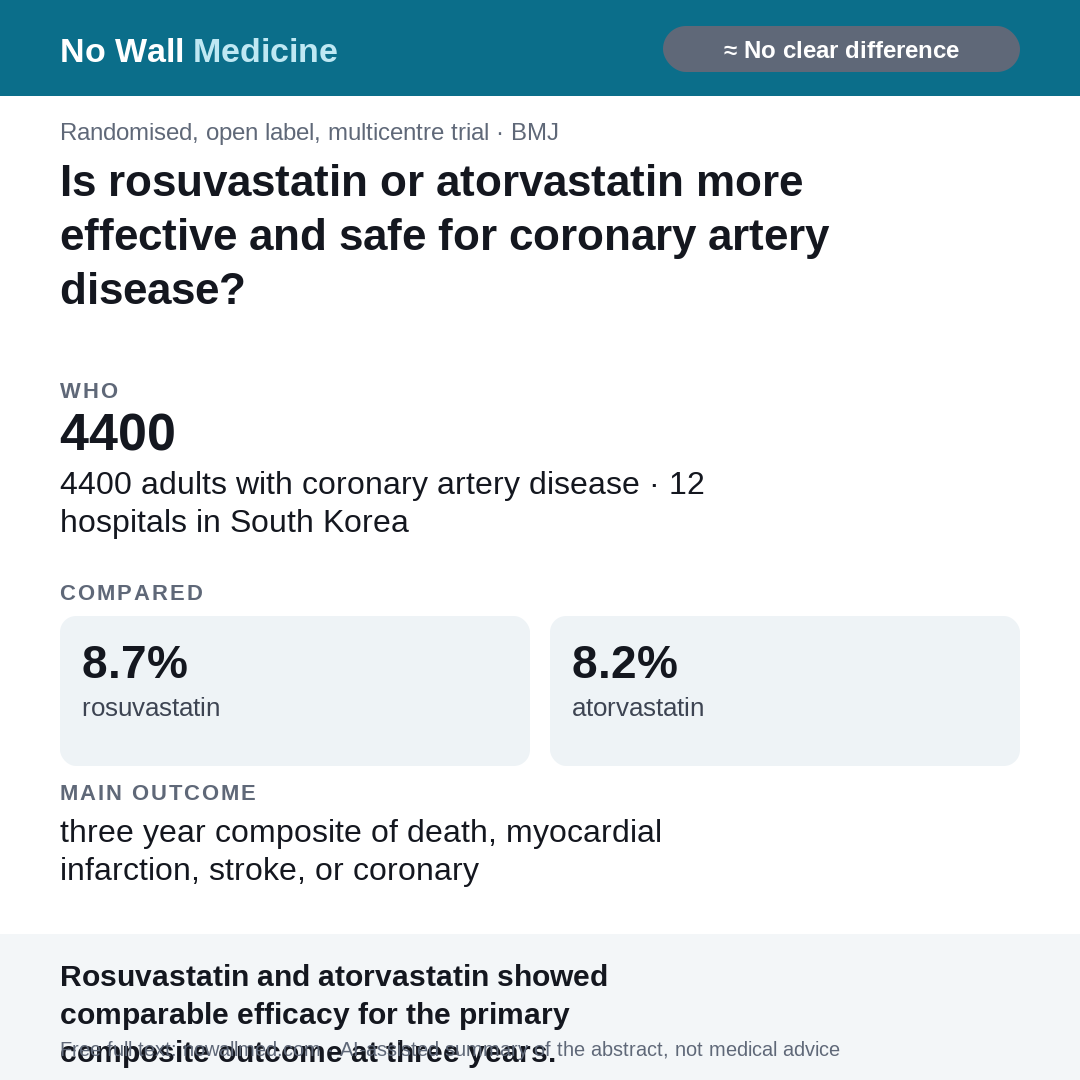
Rosuvastatin versus atorvastatin treatment in adults with coronary artery disease: secondary analysis of the randomised LODESTAR trial
Randomised, open label, multicentre trialNo clear difference
Is rosuvastatin or atorvastatin more effective and safe for coronary artery disease?
Who
4400
4400 adults with coronary artery disease · 12 hospitals in South Korea
Compared
8.7%rosuvastatin
8.2%atorvastatin
Main outcome
three year composite of death, myocardial infarction, stroke, or coronary revascularisation
Result: hazard ratio 1.06 (95% confidence interval 0.86 to 1.30)
Bottom line: Rosuvastatin and atorvastatin showed comparable efficacy for the primary composite outcome at three years.
BMJ · 2023-10-18Download image
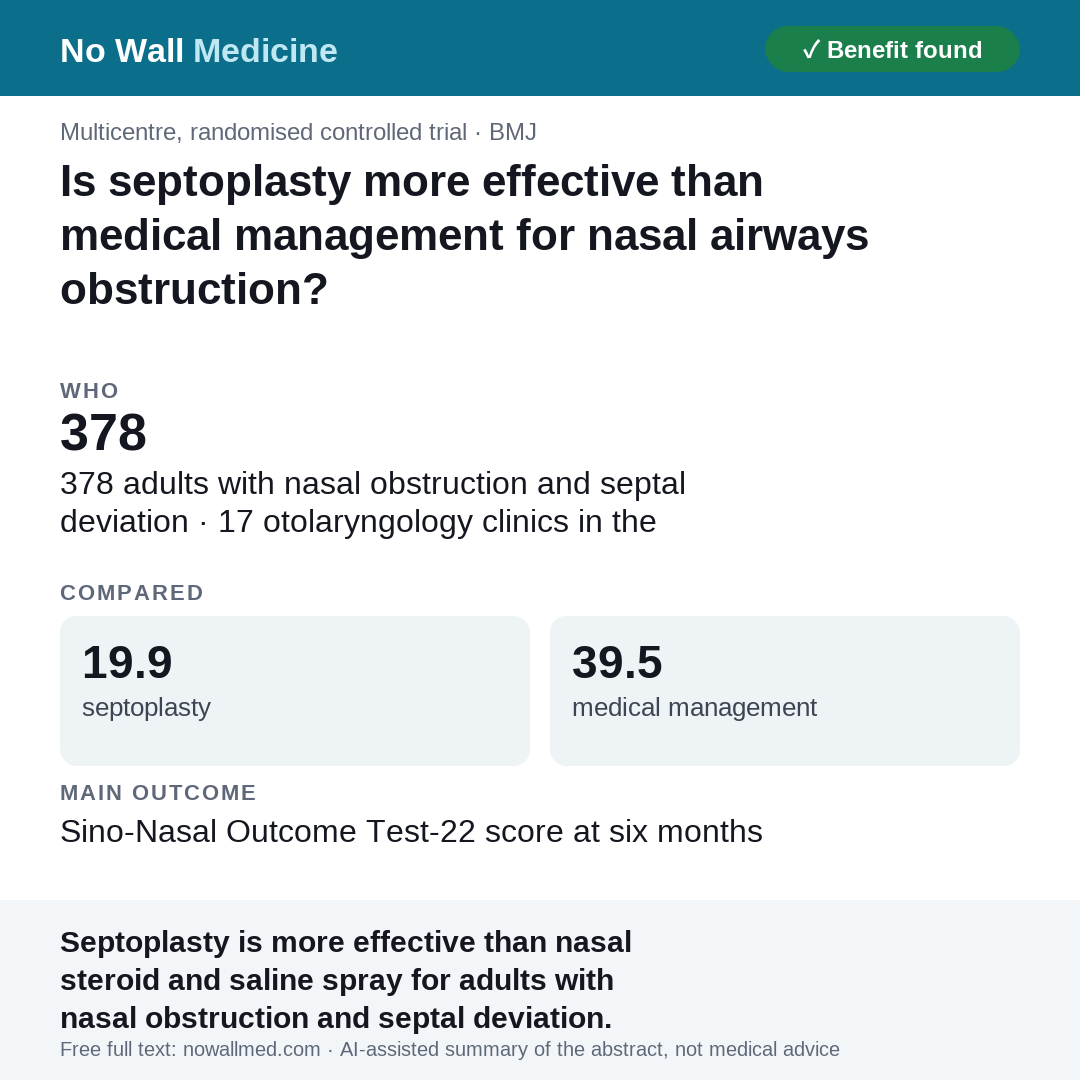
Clinical effectiveness of septoplasty versus medical management for nasal airways obstruction: multicentre, open label, randomised controlled trial
Multicentre, randomised controlled trialBenefit found
Is septoplasty more effective than medical management for nasal airways obstruction?
Who
378
378 adults with nasal obstruction and septal deviation · 17 otolaryngology clinics in the United Kingdom
Compared
19.9septoplasty (95% confidence interval 17.0 to 22.7)
39.5medical management (36.1 to 42.9)
Main outcome
Sino-Nasal Outcome Test-22 score at six months
Result: 20.0 points lower (95% confidence interval 16.4 to 23.6)
Bottom line: Septoplasty is more effective than nasal steroid and saline spray for adults with nasal obstruction and septal deviation.
BMJ · 2023-10-18Download image
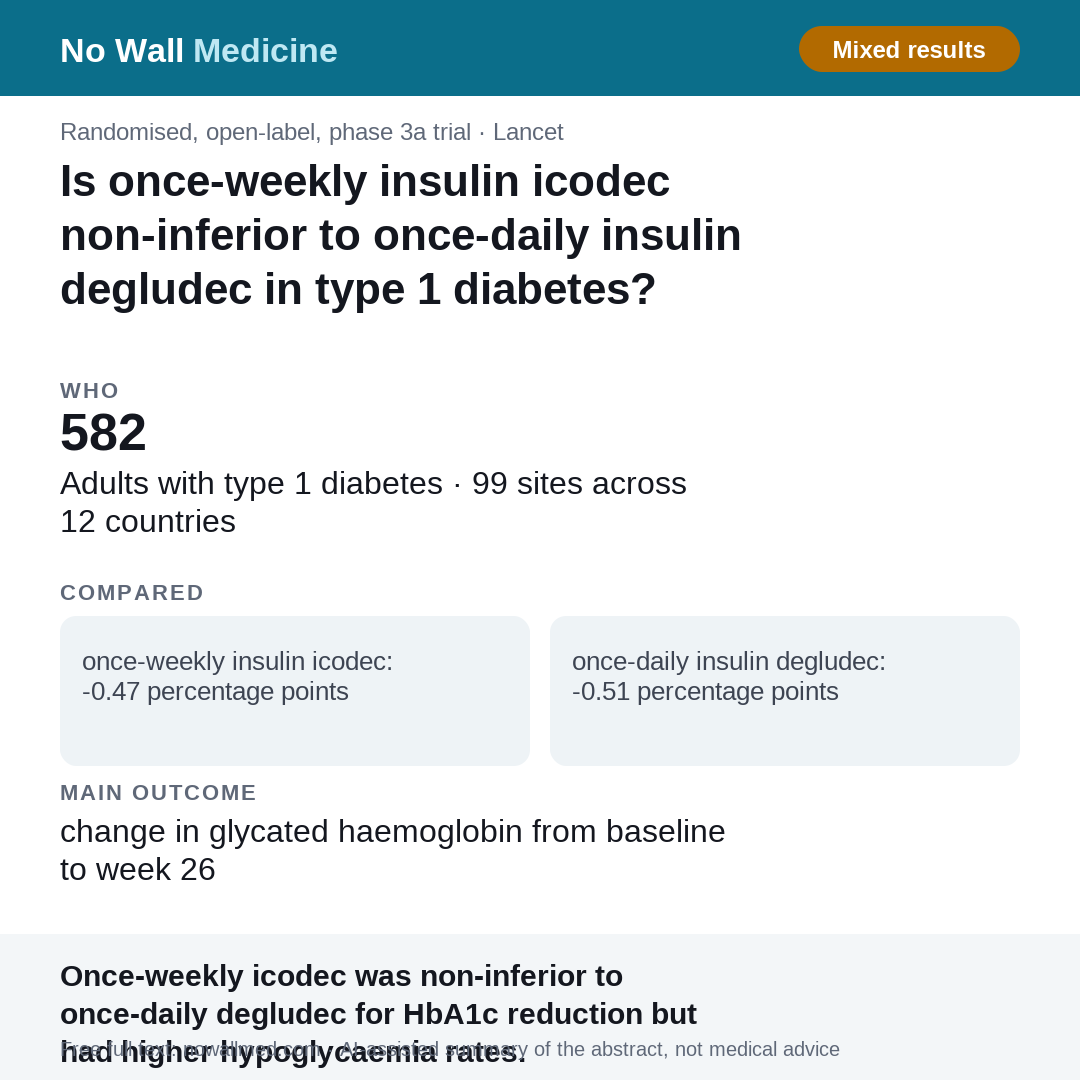
Once-weekly insulin icodec versus once-daily insulin degludec as part of a basal-bolus regimen in individuals with type 1 diabetes (ONWARDS 6): a phase 3a, randomised, open-label, treat-to-target trial
Randomised, open-label, phase 3a trialMixed results
Is once-weekly insulin icodec non-inferior to once-daily insulin degludec in type 1 diabetes?
Who
582
Adults with type 1 diabetes · 99 sites across 12 countries
Compared
once-weekly insulin icodec: -0.47 percentage points
once-daily insulin degludec: -0.51 percentage points
Main outcome
change in glycated haemoglobin from baseline to week 26
Result: estimated treatment difference 0.05 percentage points (95% CI -0.13 to 0.23)
Bottom line: Once-weekly icodec was non-inferior to once-daily degludec for HbA1c reduction but had higher hypoglycaemia rates.
Funded by: Novo Nordisk
Lancet · 2023-10-17Download image
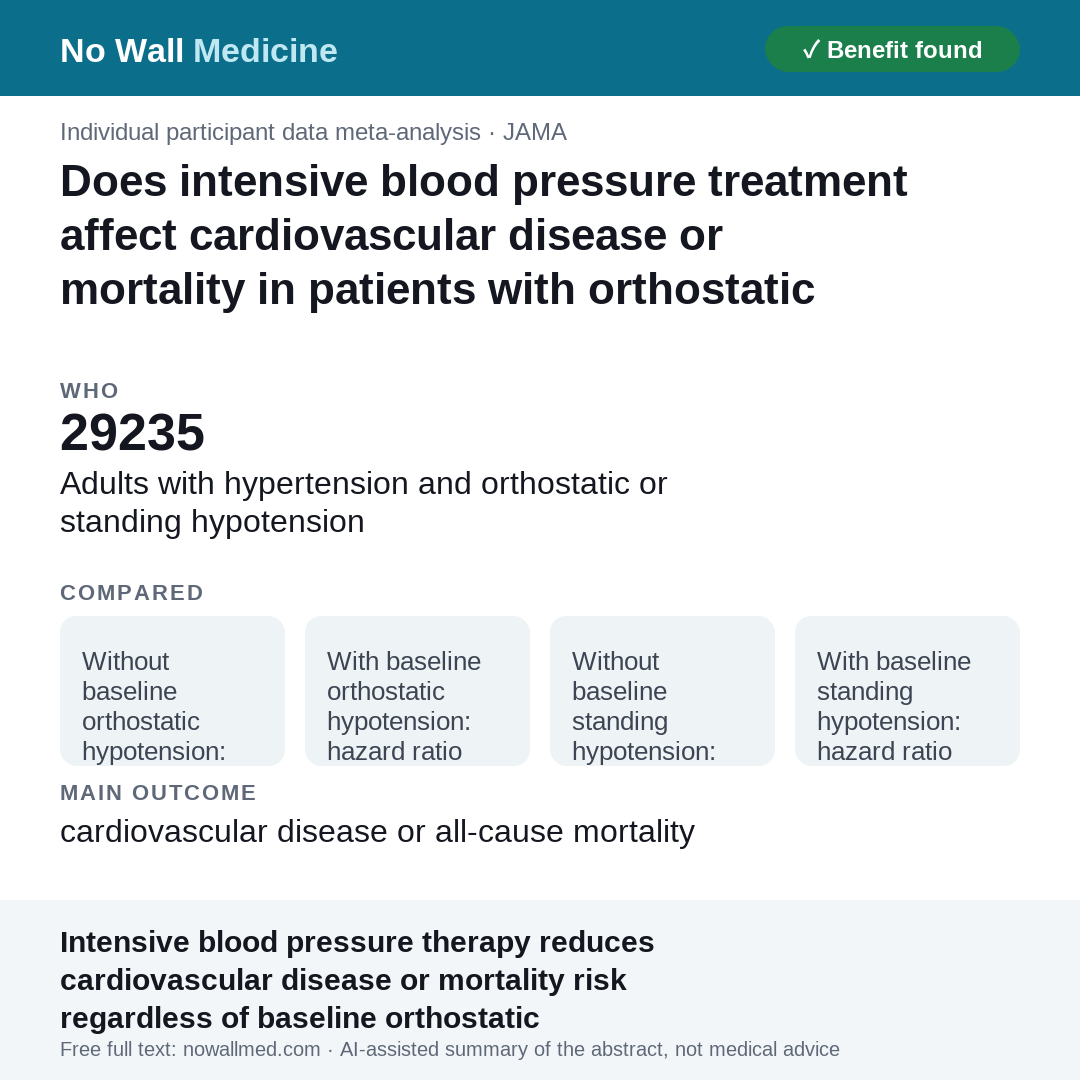
Orthostatic Hypotension, Hypertension Treatment, and Cardiovascular Disease: An Individual Participant Meta-Analysis
Individual participant data meta-analysisBenefit found
Does intensive blood pressure treatment affect cardiovascular disease or mortality in patients with orthostatic hypotension?
Who
29235
Adults with hypertension and orthostatic or standing hypotension
Compared
Without baseline orthostatic hypotension: hazard ratio 0.81 (95% CI, 0.76-0.86)
With baseline orthostatic hypotension: hazard ratio 0.83 (95% CI, 0.70-1.00)
Without baseline standing hypotension: hazard ratio 0.80 (95% CI, 0.75-0.85)
With baseline standing hypotension: hazard ratio 0.94 (95% CI, 0.75-1.18)
Main outcome
cardiovascular disease or all-cause mortality
Result: hazard ratio 0.81 (95% CI, 0.76-0.86) for those without orthostatic hypotension
Bottom line: Intensive blood pressure therapy reduces cardiovascular disease or mortality risk regardless of baseline orthostatic hypotension status.
JAMA · 2023-10-17Download image
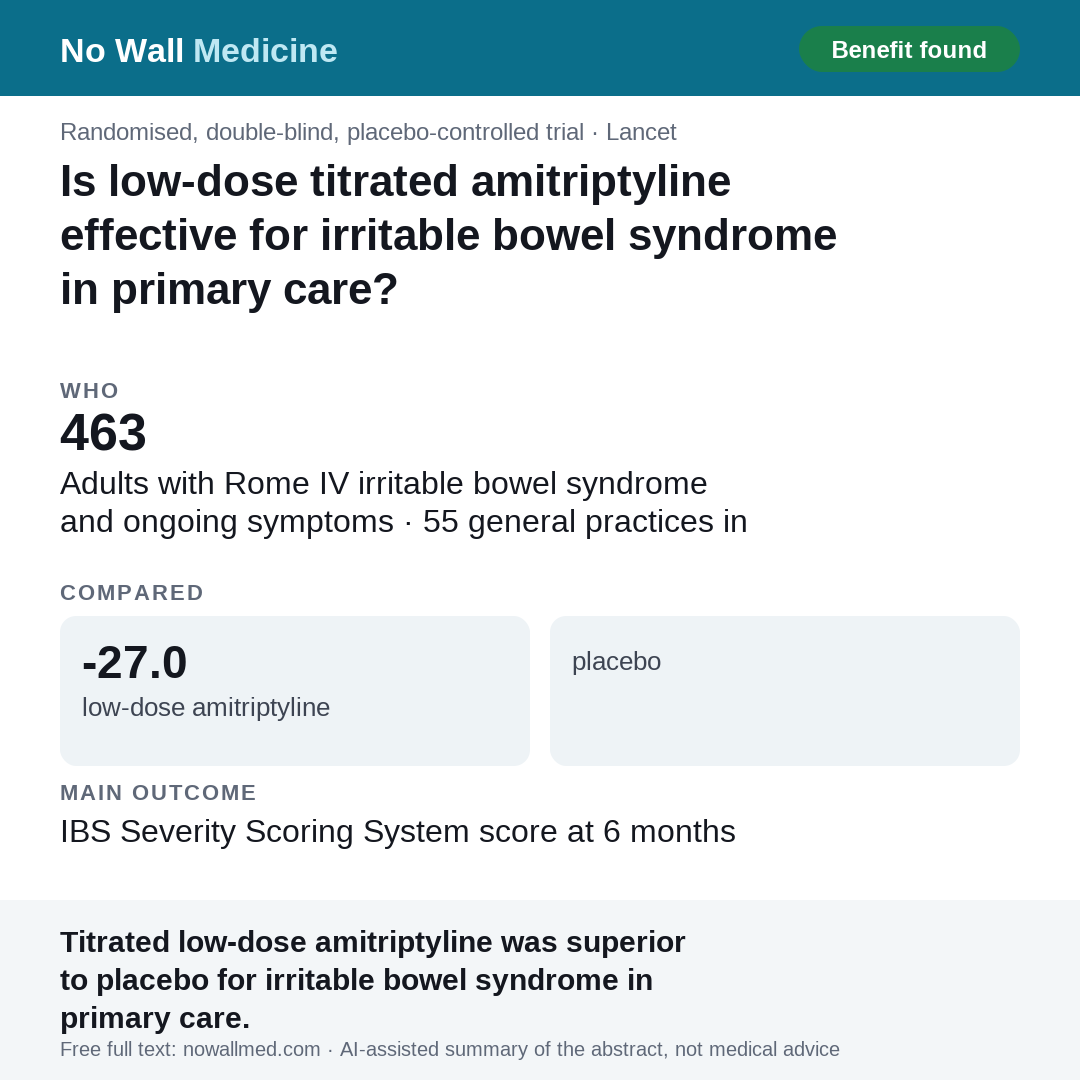
Amitriptyline at Low-Dose and Titrated for Irritable Bowel Syndrome as Second-Line Treatment in primary care (ATLANTIS): a randomised, double-blind, placebo-controlled, phase 3 trial
Randomised, double-blind, placebo-controlled trialBenefit found
Is low-dose titrated amitriptyline effective for irritable bowel syndrome in primary care?
Who
463
Adults with Rome IV irritable bowel syndrome and ongoing symptoms · 55 general practices in England
Compared
-27.0low-dose amitriptyline
placebo
Main outcome
IBS Severity Scoring System score at 6 months
Result: -27.0 (95% CI -46.9 to -7.10)
Bottom line: Titrated low-dose amitriptyline was superior to placebo for irritable bowel syndrome in primary care.
Funded by: National Institute for Health and Care Research
Lancet · 2023-10-16Download image
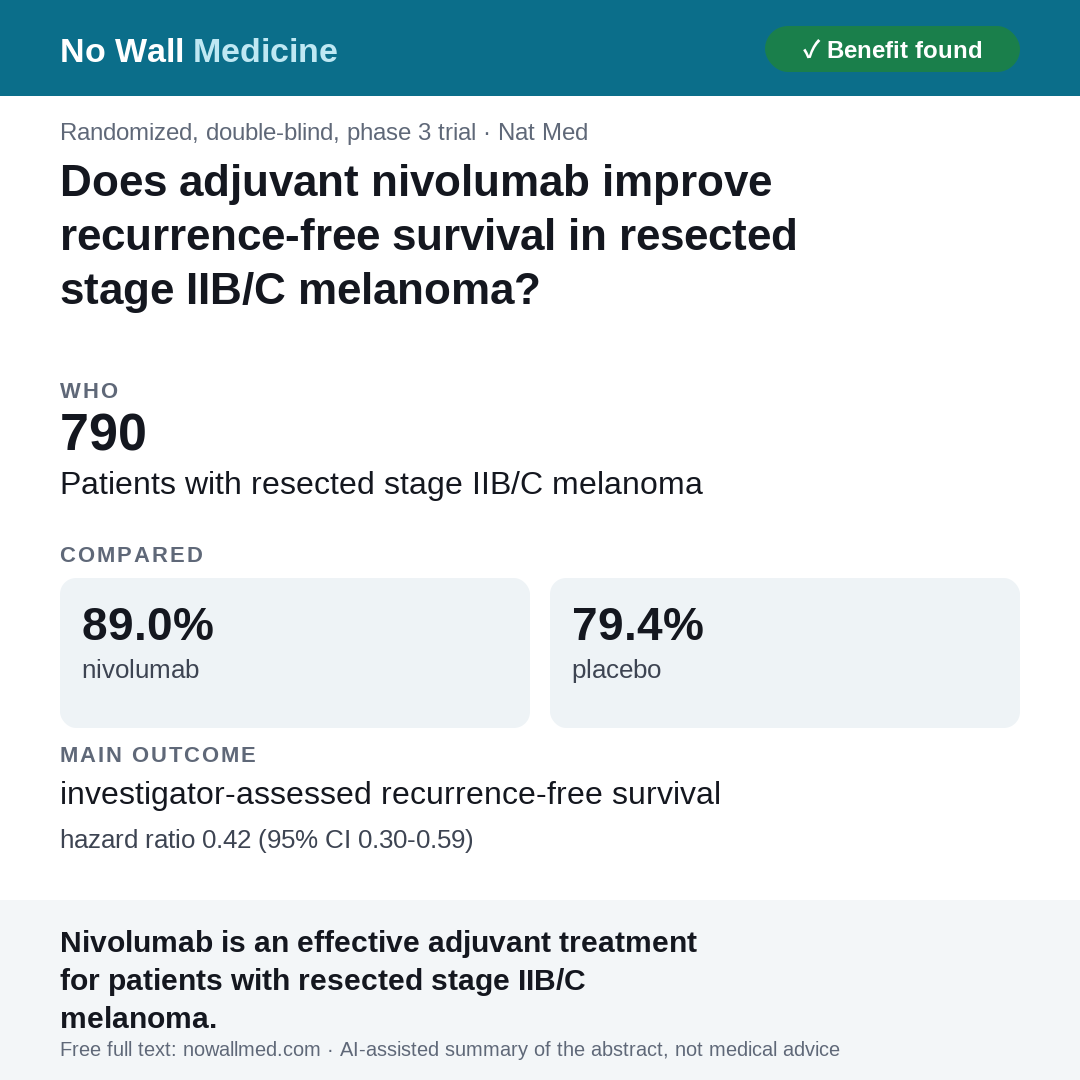
Adjuvant nivolumab in resected stage IIB/C melanoma: primary results from the randomized, phase 3 CheckMate 76K trial
Randomized, double-blind, phase 3 trialBenefit found
Does adjuvant nivolumab improve recurrence-free survival in resected stage IIB/C melanoma?
Who
790
Patients with resected stage IIB/C melanoma
Compared
89.0%nivolumab
79.4%placebo
Main outcome
investigator-assessed recurrence-free survival
Result: hazard ratio 0.42 (95% CI 0.30-0.59)
Bottom line: Nivolumab is an effective adjuvant treatment for patients with resected stage IIB/C melanoma.
Nat Med · 2023-10-16Download image