Visual abstracts
New randomized trials and meta-analyses from leading journals at a glance: who was studied, what was compared, and what was found. Every paper is free to read in full.
All specialtiesCardiology 4877Oncology 4138Gastroenterology & Hepatology 1942Infectious Disease 3837Neurology 1905Psychiatry & Mental Health 2273Pulmonology 2143Critical Care 1365Endocrinology & Diabetes 2580Pediatrics 2980Surgery 2559Orthopedics & Sports Medicine 931Neurosurgery 537Cardiothoracic & Vascular Surgery 674Plastic & Reconstructive Surgery 591Nephrology 1133Rheumatology 823Hematology 1109Dermatology 621Ophthalmology 543Obstetrics & Gynecology 1686Public & Global Health 1058Radiology & Imaging 648Anesthesiology 986Urology 764ENT (Otolaryngology) 503Emergency Medicine 511Allergy & Immunology 313Geriatrics 981Family Medicine & Primary Care 562Medical Genetics & Genomics 676Pathology & Laboratory Medicine 159Physical Medicine & Rehabilitation 757Palliative Care 444Nutrition 1588Digital Health & AI 2201General Medicine 321
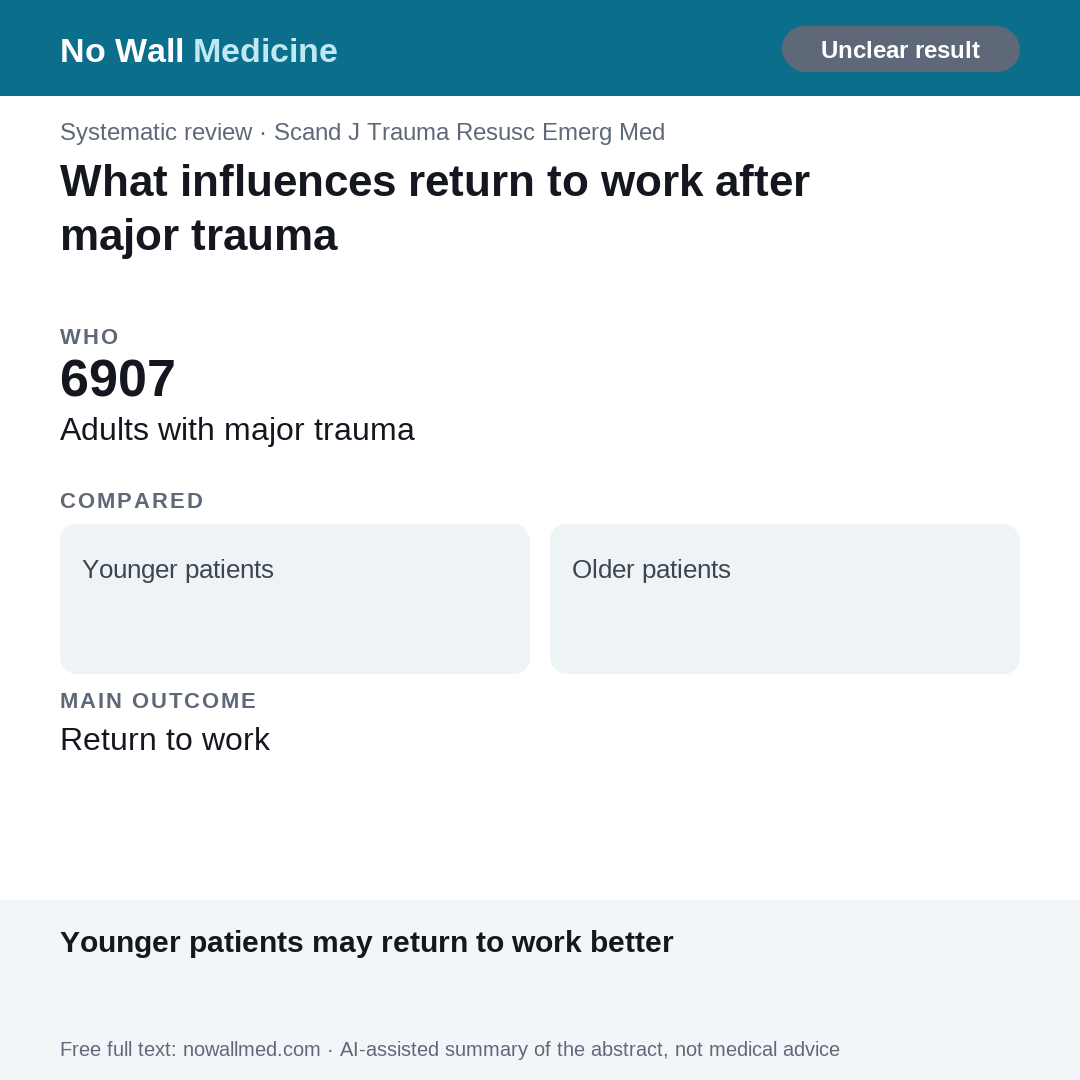
Return to work after major trauma: a systematic review
Systematic reviewUnclear result
What influences return to work after major trauma
Who
6907
Adults with major trauma
Compared
Younger patients
Older patients
Main outcome
Return to work
Bottom line: Younger patients may return to work better
Limitation: High risk of bias in study confounding
Scand J Trauma Resusc Emerg Med · 2025-03-17Download image
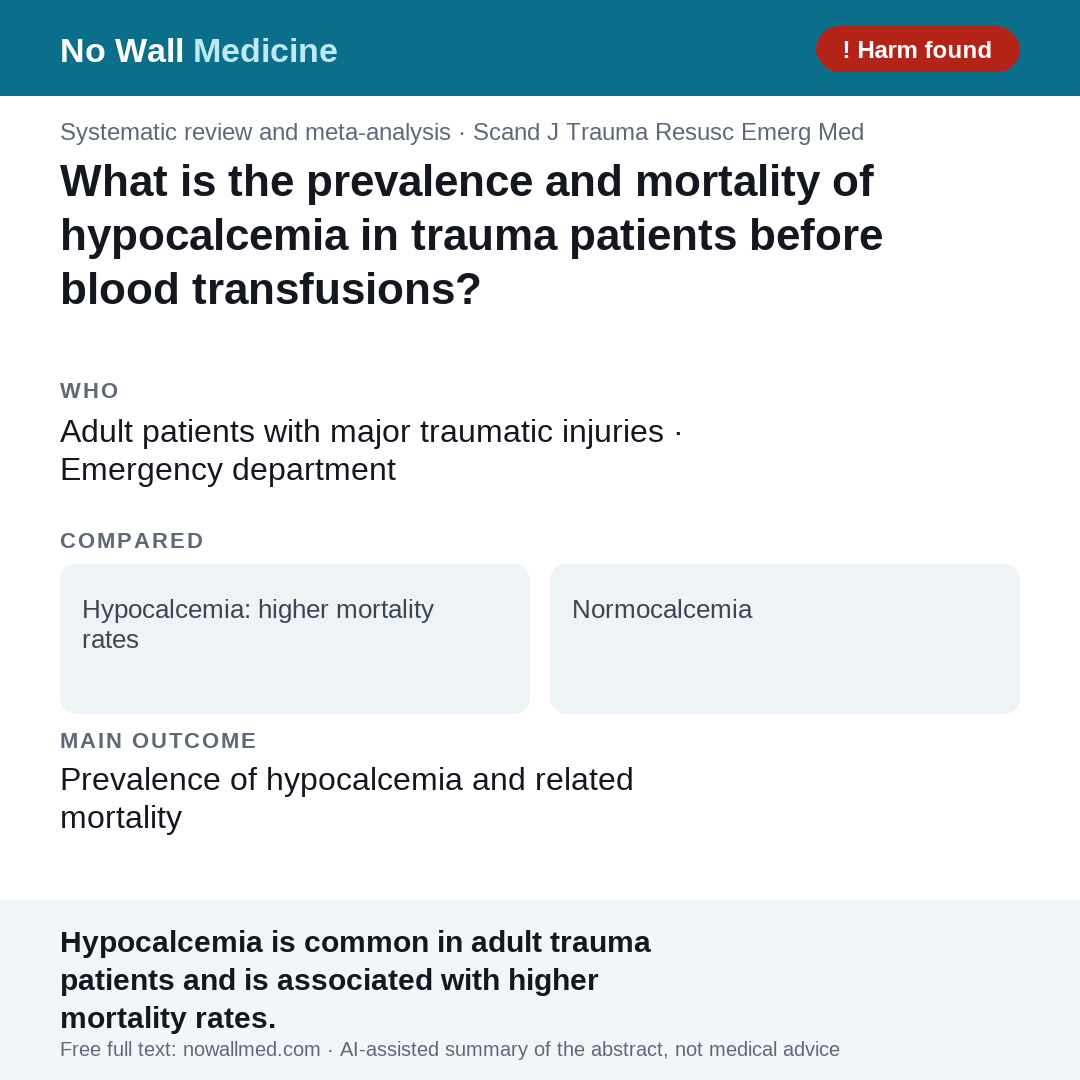
Prevalence and outcomes of hypocalcemia on ED arrival in traumatic patients before blood transfusions: a systematic review and meta-analysis
Systematic review and meta-analysisHarm found
What is the prevalence and mortality of hypocalcemia in trauma patients before blood transfusions?
Who
Adult patients with major traumatic injuries · Emergency department
Compared
Hypocalcemia: higher mortality rates
Normocalcemia
Main outcome
Prevalence of hypocalcemia and related mortality
Result: odds ratio 2.44 (95% CI 1.76-3.40)
Bottom line: Hypocalcemia is common in adult trauma patients and is associated with higher mortality rates.
Limitation: high heterogeneity (I2 99.8%) observed
Scand J Trauma Resusc Emerg Med · 2025-03-17Download image
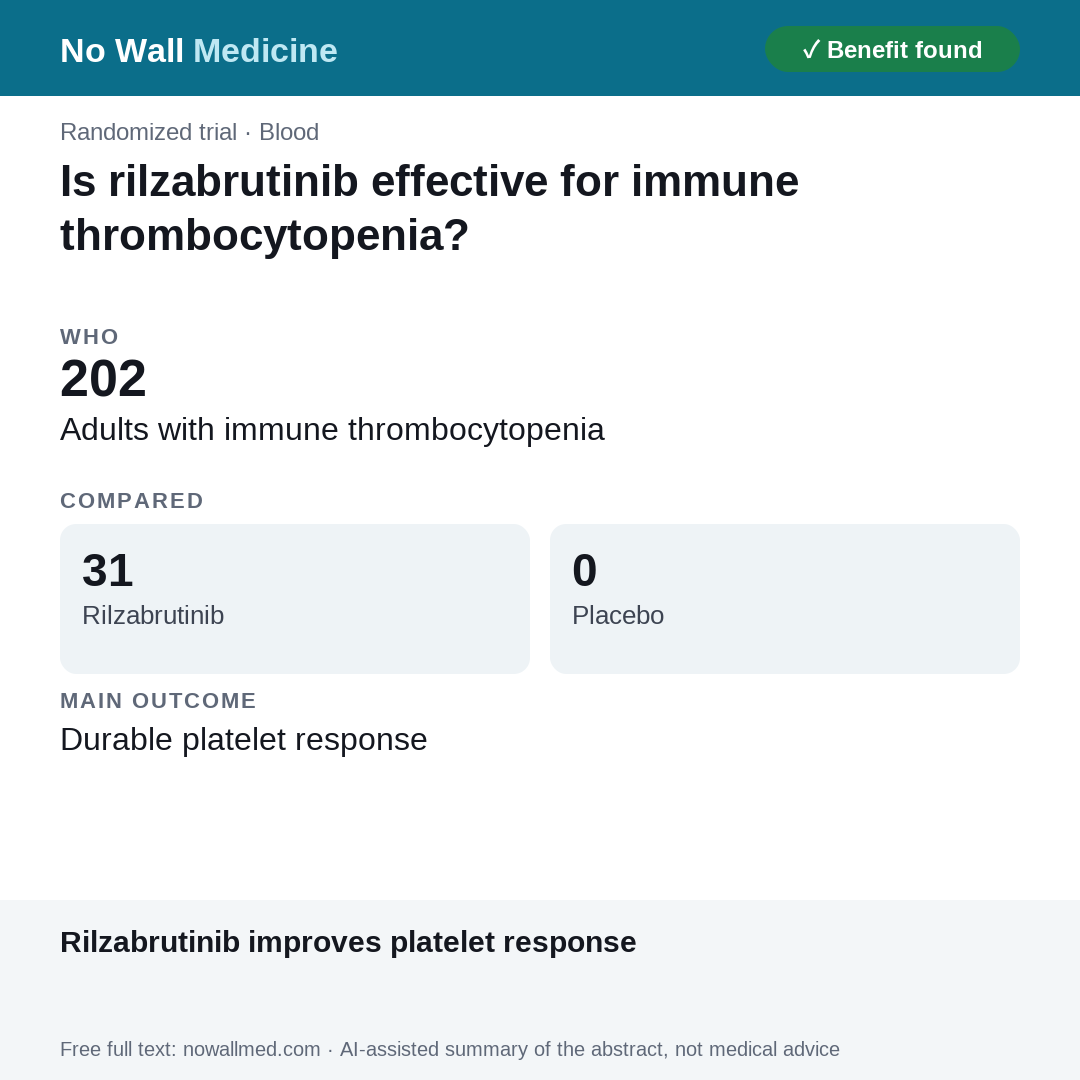
Safety and efficacy of rilzabrutinib vs placebo in adults with immune thrombocytopenia: the phase 3 LUNA3 study
Randomized trialBenefit found
Is rilzabrutinib effective for immune thrombocytopenia?
Who
202
Adults with immune thrombocytopenia
Compared
31Rilzabrutinib (23%)
0Placebo
Main outcome
Durable platelet response
Bottom line: Rilzabrutinib improves platelet response
Blood · 2025-03-16Download image
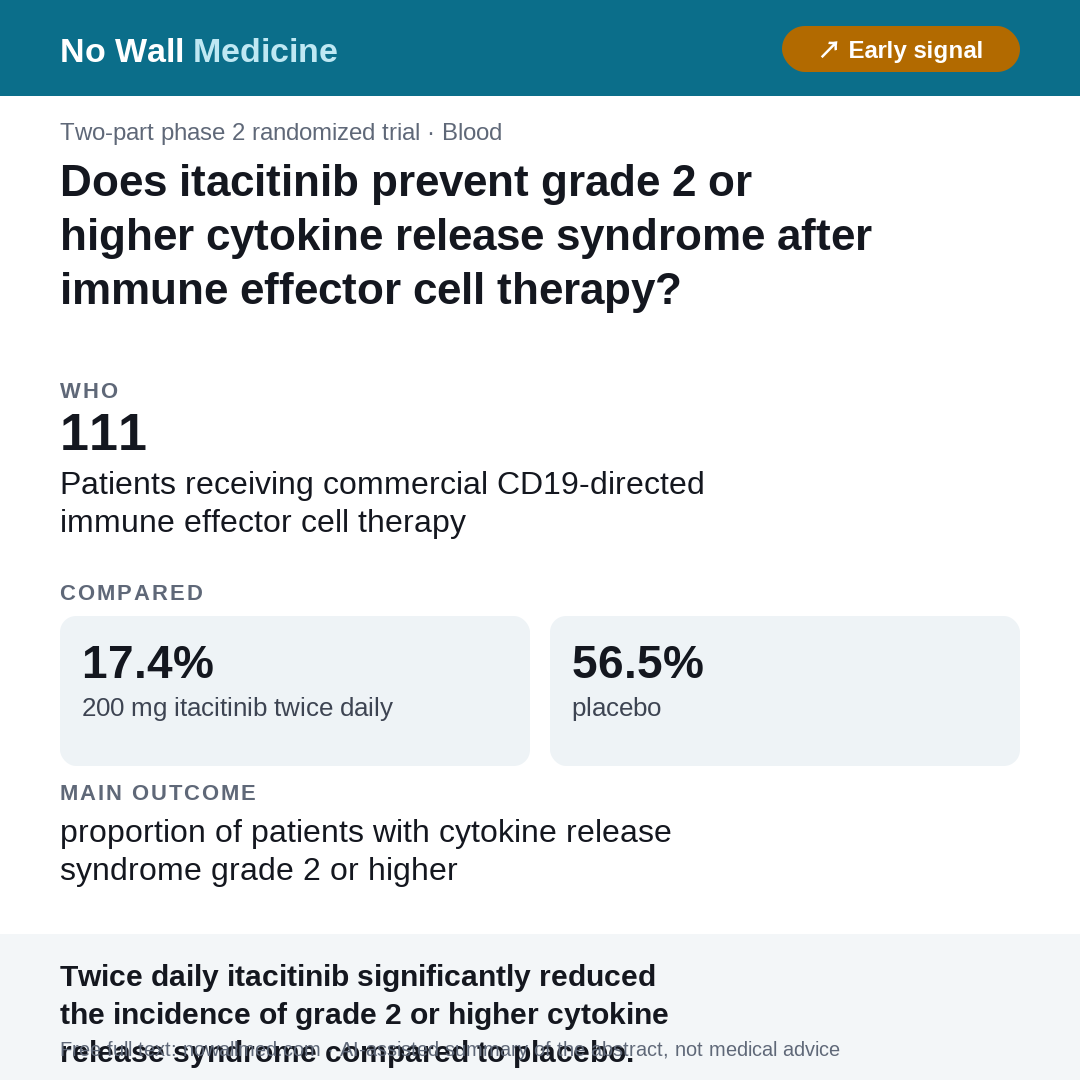
Itacitinib for the prevention of IEC therapy-associated CRS: results from the 2-part phase 2 INCB 39110-211 study
Two-part phase 2 randomized trialBenefit found
Does itacitinib prevent grade 2 or higher cytokine release syndrome after immune effector cell therapy?
Who
111
Patients receiving commercial CD19-directed immune effector cell therapy
Compared
17.4%200 mg itacitinib twice daily
56.5%placebo
Main outcome
proportion of patients with cytokine release syndrome grade 2 or higher
Bottom line: Twice daily itacitinib significantly reduced the incidence of grade 2 or higher cytokine release syndrome compared to placebo.
Blood · 2025-03-16Download image
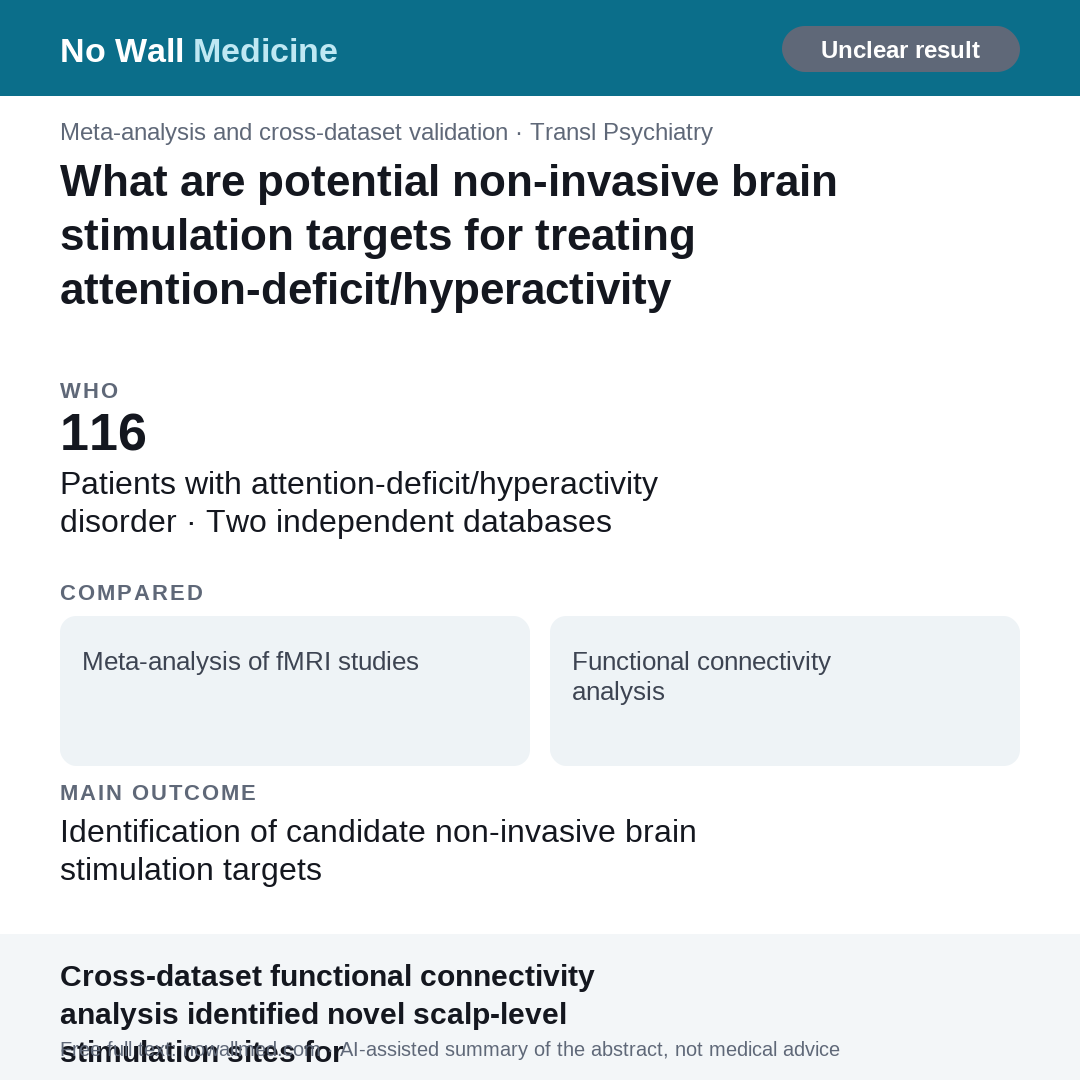
Potential locations for non-invasive brain stimulation in treating ADHD: Results from a cross-dataset validation of functional connectivity analysis
Meta-analysis and cross-dataset validationUnclear result
What are potential non-invasive brain stimulation targets for treating attention-deficit/hyperactivity disorder?
Who
116
Patients with attention-deficit/hyperactivity disorder · Two independent databases
Compared
Meta-analysis of fMRI studies
Functional connectivity analysis
Main outcome
Identification of candidate non-invasive brain stimulation targets
Bottom line: Cross-dataset functional connectivity analysis identified novel scalp-level stimulation sites for attention-deficit/hyperactivity disorder.
Transl Psychiatry · 2025-03-15Download image
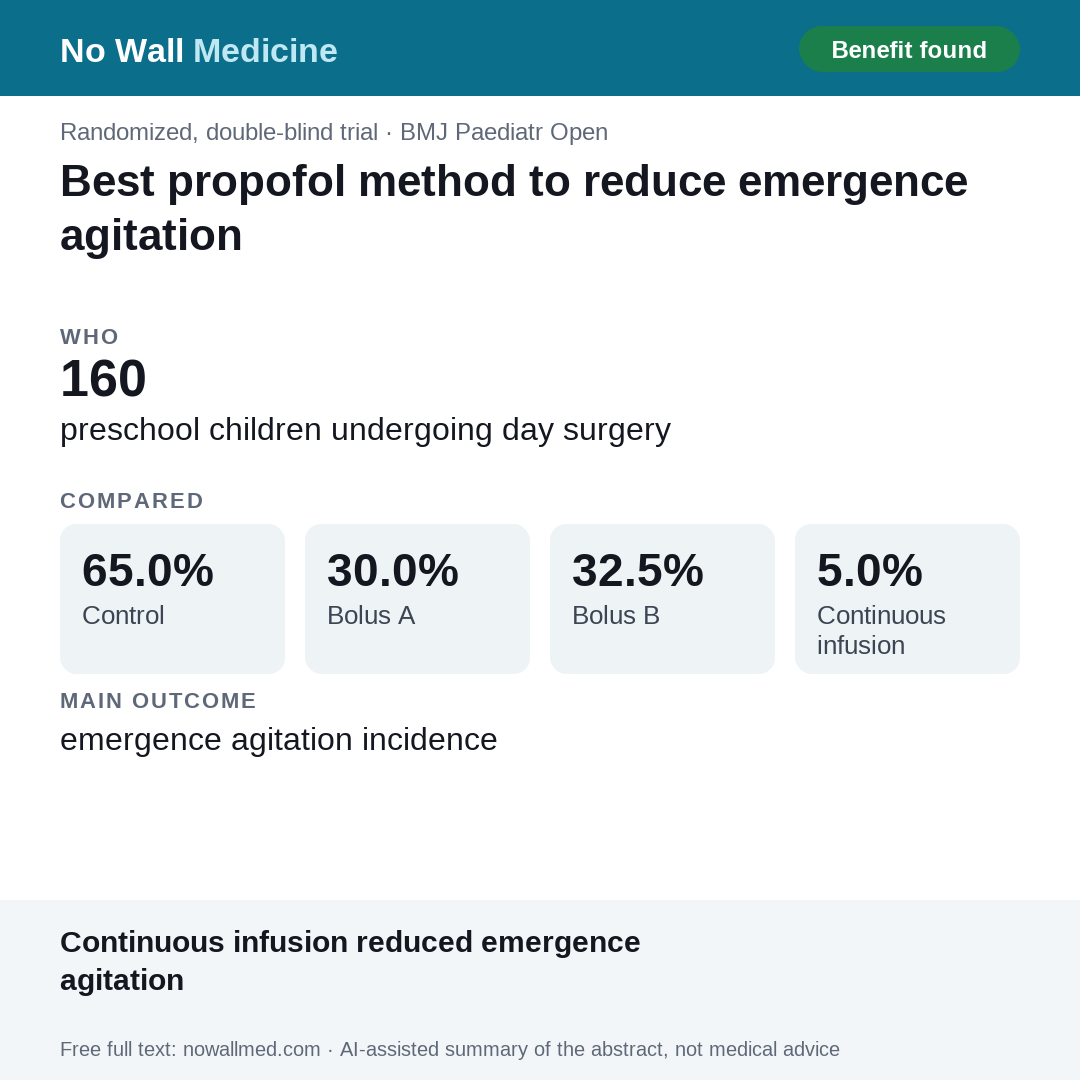
Comparing different administration methods of subanaesthetic propofol to mitigate emergence agitation in preschool children undergoing day surgery: a double-blind, randomised controlled study
Randomized, double-blind trialBenefit found
Best propofol method to reduce emergence agitation
Who
160
preschool children undergoing day surgery
Compared
65.0%Control
30.0%Bolus A
32.5%Bolus B
5.0%Continuous infusion
Main outcome
emergence agitation incidence
Bottom line: Continuous infusion reduced emergence agitation
BMJ Paediatr Open · 2025-03-15Download image
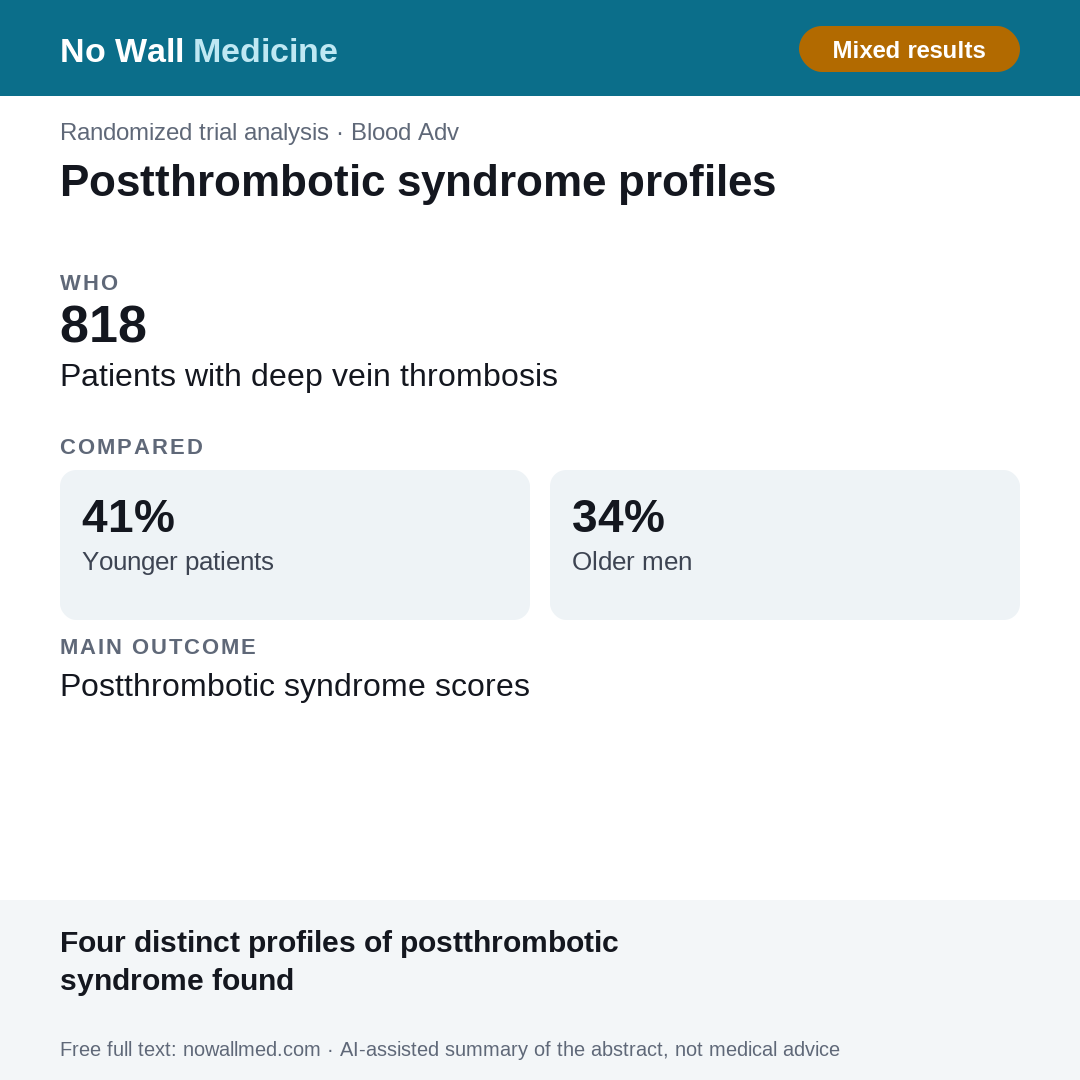
Untangling profiles of postthrombotic syndrome using unsupervised machine learning
Randomized trial analysisMixed results
Postthrombotic syndrome profiles
Who
818
Patients with deep vein thrombosis
Compared
41%Younger patients (≥ 3 symptoms)
34%Older men (≥ 3 signs)
Main outcome
Postthrombotic syndrome scores
Bottom line: Four distinct profiles of postthrombotic syndrome found
Blood Adv · 2025-03-15Download image
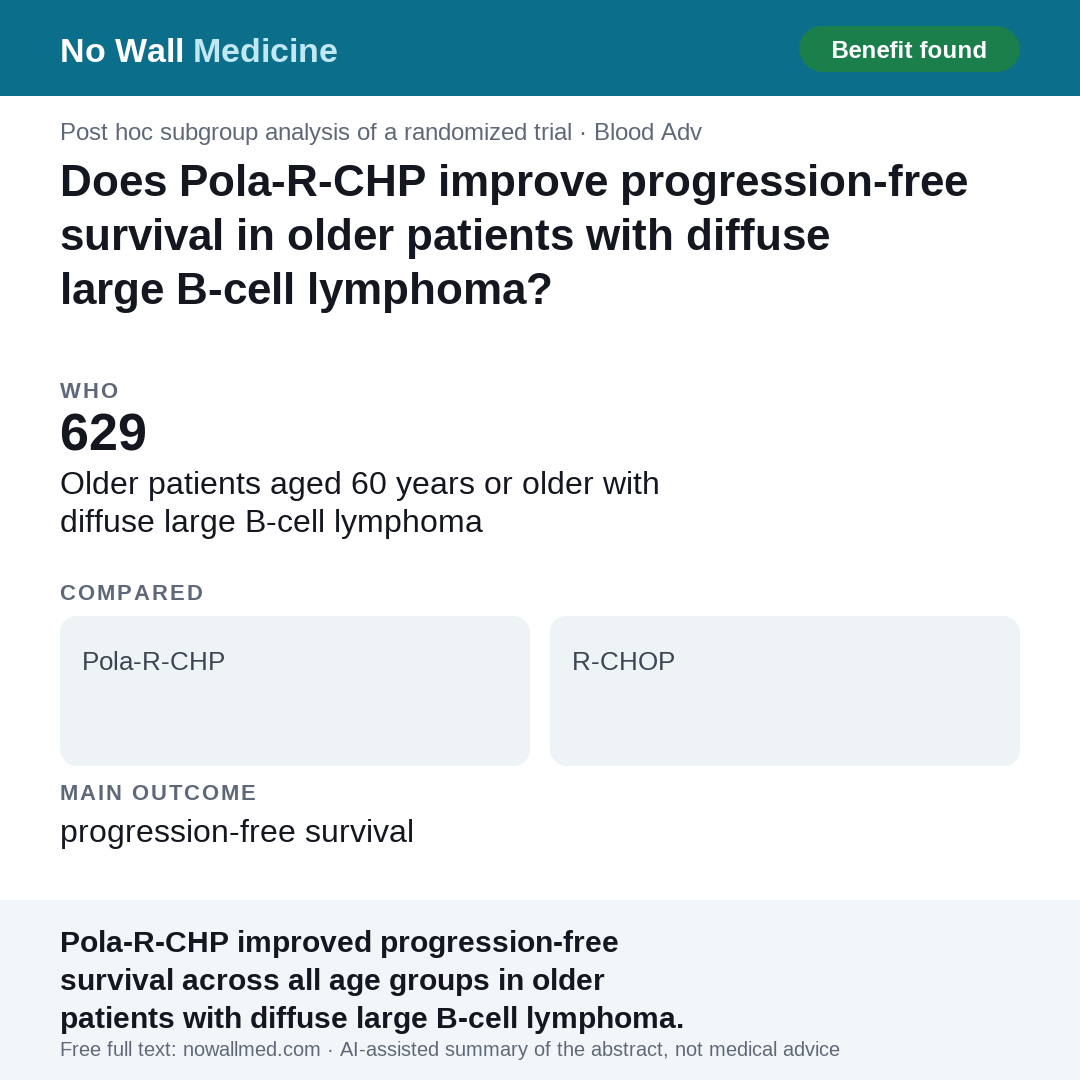
Subgroup analysis of older patients ≥60 years with diffuse large B-cell lymphoma in the phase 3 POLARIX study
Post hoc subgroup analysis of a randomized trialBenefit found
Does Pola-R-CHP improve progression-free survival in older patients with diffuse large B-cell lymphoma?
Who
629
Older patients aged 60 years or older with diffuse large B-cell lymphoma
Compared
Pola-R-CHP
R-CHOP
Main outcome
progression-free survival
Result: hazard ratio 0.63 (95% CI 0.41-0.96) in patients aged ≥70 years
Bottom line: Pola-R-CHP improved progression-free survival across all age groups in older patients with diffuse large B-cell lymphoma.
Blood Adv · 2025-03-15Download image
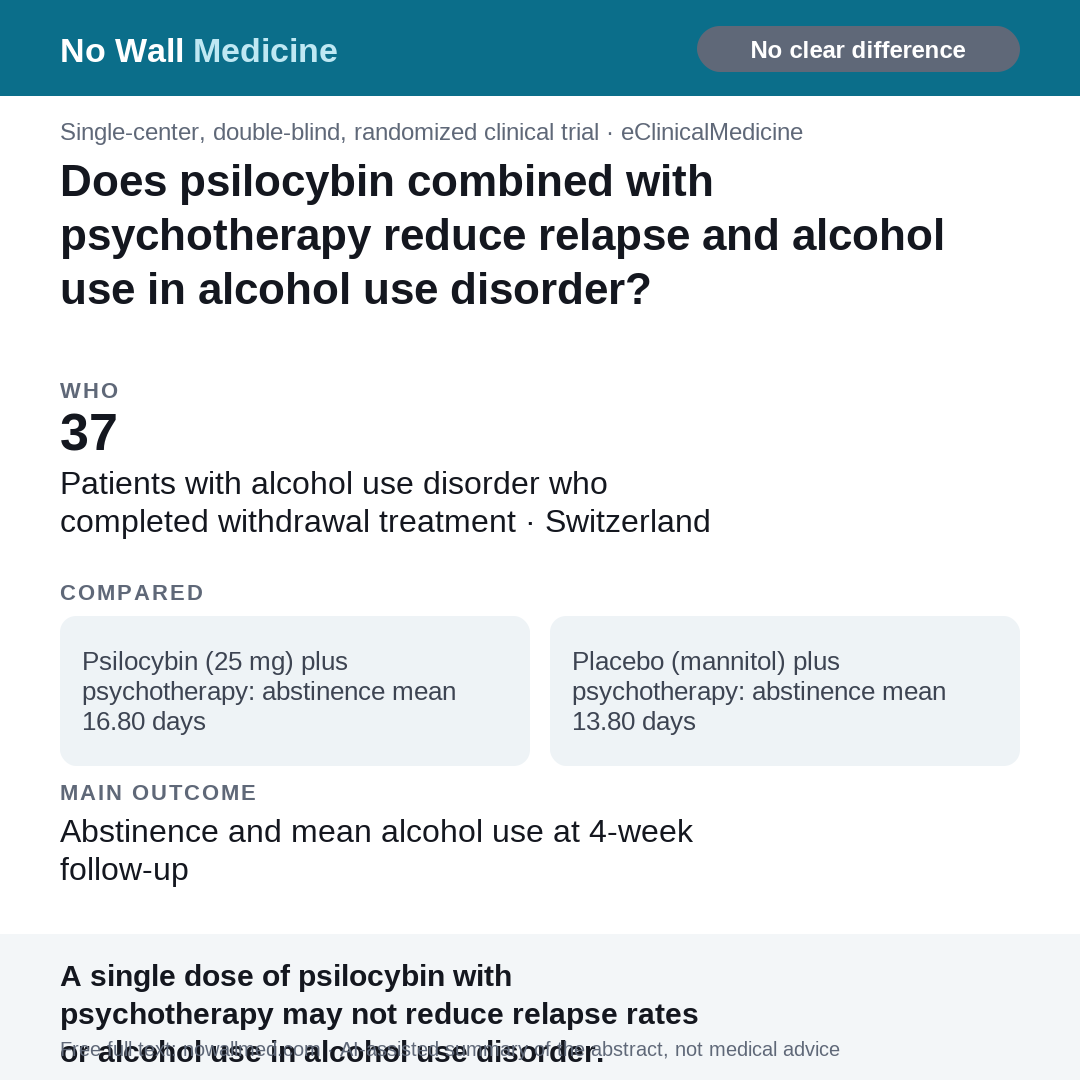
Psilocybin-assisted therapy for relapse prevention in alcohol use disorder: a phase 2 randomized clinical trial
Single-center, double-blind, randomized clinical trialNo clear difference
Does psilocybin combined with psychotherapy reduce relapse and alcohol use in alcohol use disorder?
Who
37
Patients with alcohol use disorder who completed withdrawal treatment · Switzerland
Compared
Psilocybin (25 mg) plus psychotherapy: abstinence mean 16.80 days
Placebo (mannitol) plus psychotherapy: abstinence mean 13.80 days
Main outcome
Abstinence and mean alcohol use at 4-week follow-up
Bottom line: A single dose of psilocybin with psychotherapy may not reduce relapse rates or alcohol use in alcohol use disorder.
Limitation: Limited sample size
Funded by: Swiss National Science Foundation, Swiss Neuromatrix Foundation, Heffter Young Investigator Fellowship
eClinicalMedicine · 2025-03-14Download image
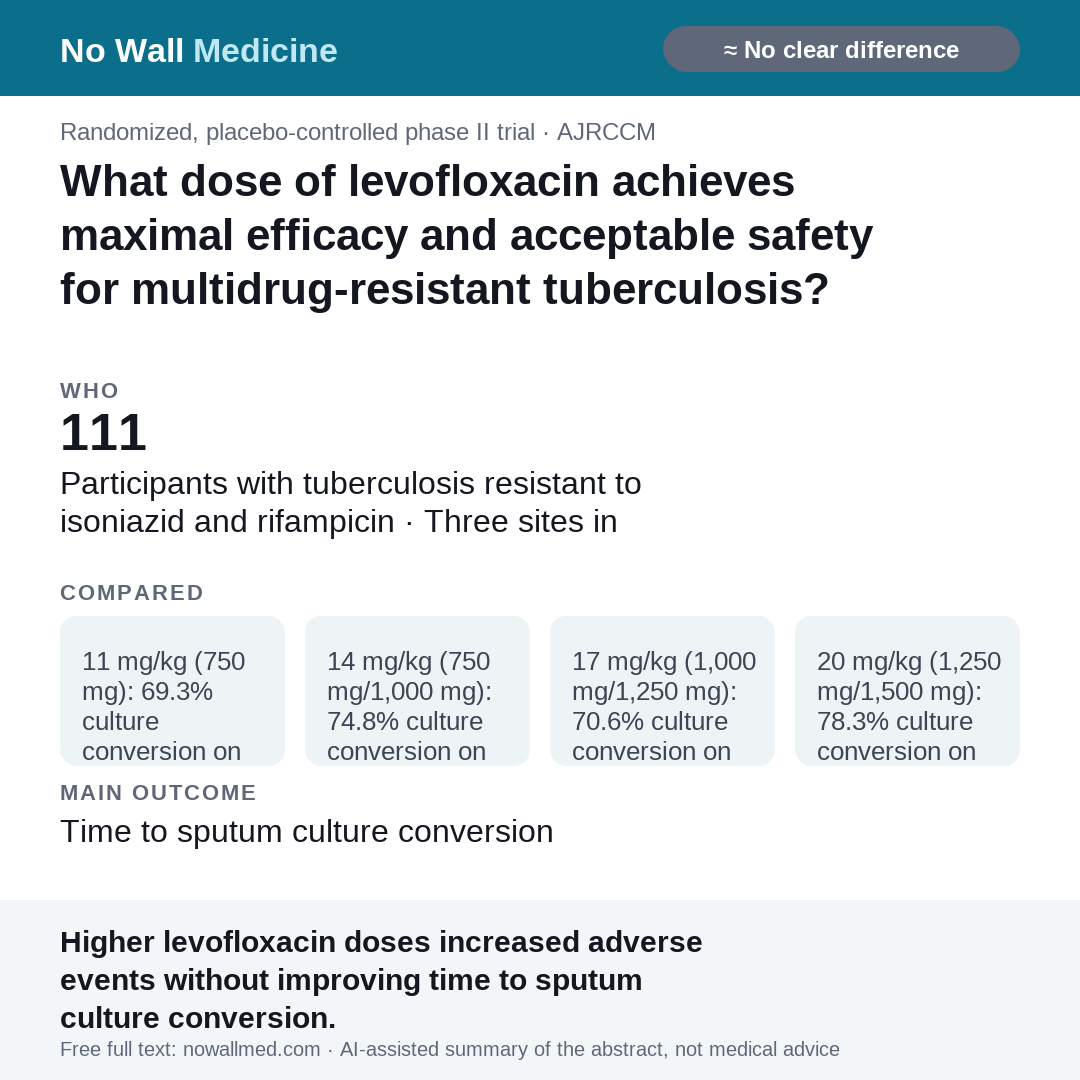
Efficacy and Safety of Higher Doses of Levofloxacin for Multidrug-resistant Tuberculosis: A Randomized, Placebo-controlled Phase II Clinical Trial
Randomized, placebo-controlled phase II trialNo clear difference
What dose of levofloxacin achieves maximal efficacy and acceptable safety for multidrug-resistant tuberculosis?
Who
111
Participants with tuberculosis resistant to isoniazid and rifampicin · Three sites in South Africa and Peru
Compared
11 mg/kg (750 mg): 69.3% culture conversion on solid media
14 mg/kg (750 mg/1,000 mg): 74.8% culture conversion on solid media
17 mg/kg (1,000 mg/1,250 mg): 70.6% culture conversion on solid media
20 mg/kg (1,250 mg/1,500 mg): 78.3% culture conversion on solid media
Main outcome
Time to sputum culture conversion
Bottom line: Higher levofloxacin doses increased adverse events without improving time to sputum culture conversion.
AJRCCM · 2025-03-14Download image
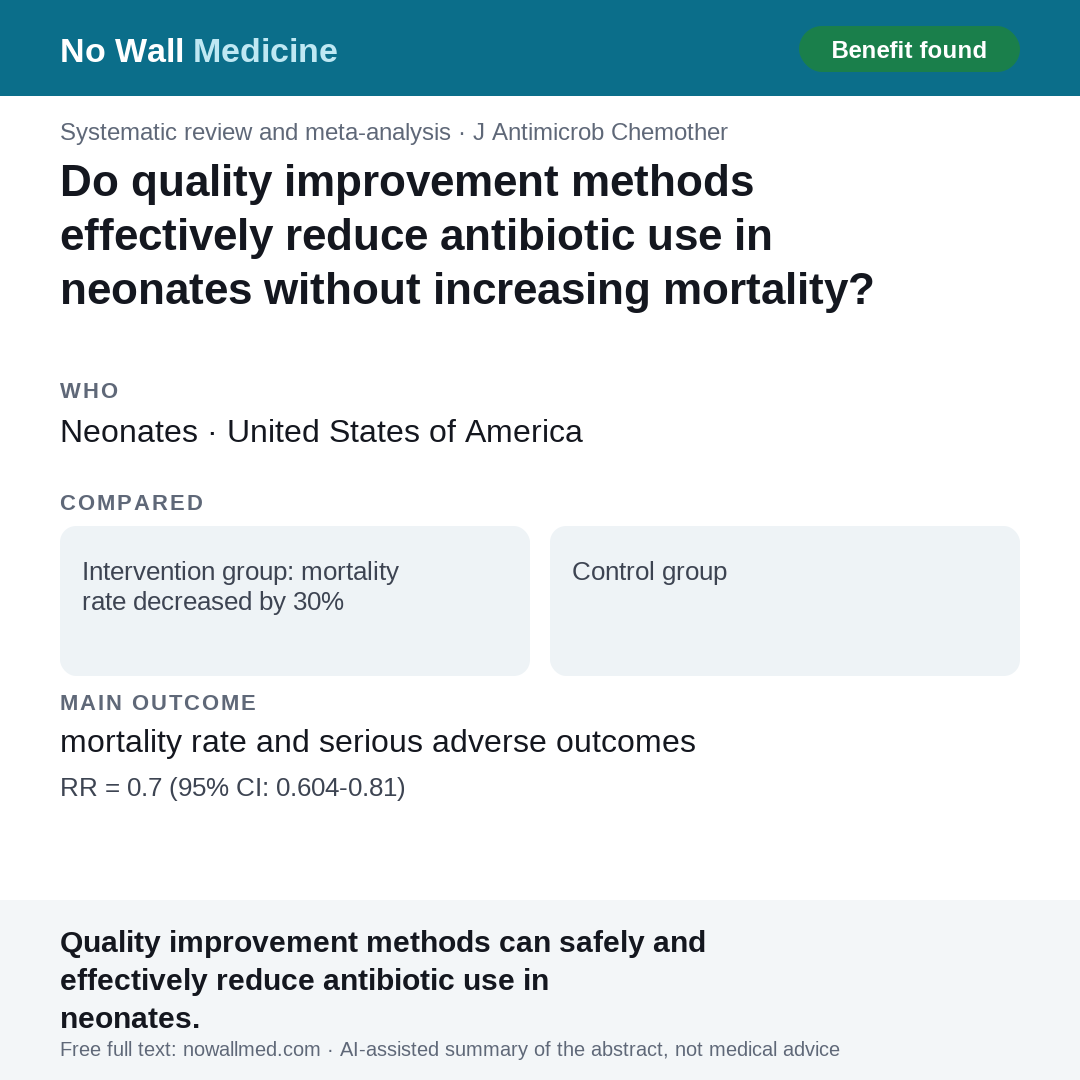
Applying quality improvement methods to reduce antibiotic use in neonates: a systematic review and meta-analysis
Systematic review and meta-analysisBenefit found
Do quality improvement methods effectively reduce antibiotic use in neonates without increasing mortality?
Who
Neonates · United States of America
Compared
Intervention group: mortality rate decreased by 30%
Control group
Main outcome
mortality rate and serious adverse outcomes
Result: RR = 0.7 (95% CI: 0.604-0.81)
Bottom line: Quality improvement methods can safely and effectively reduce antibiotic use in neonates.
J Antimicrob Chemother · 2025-03-14Download image
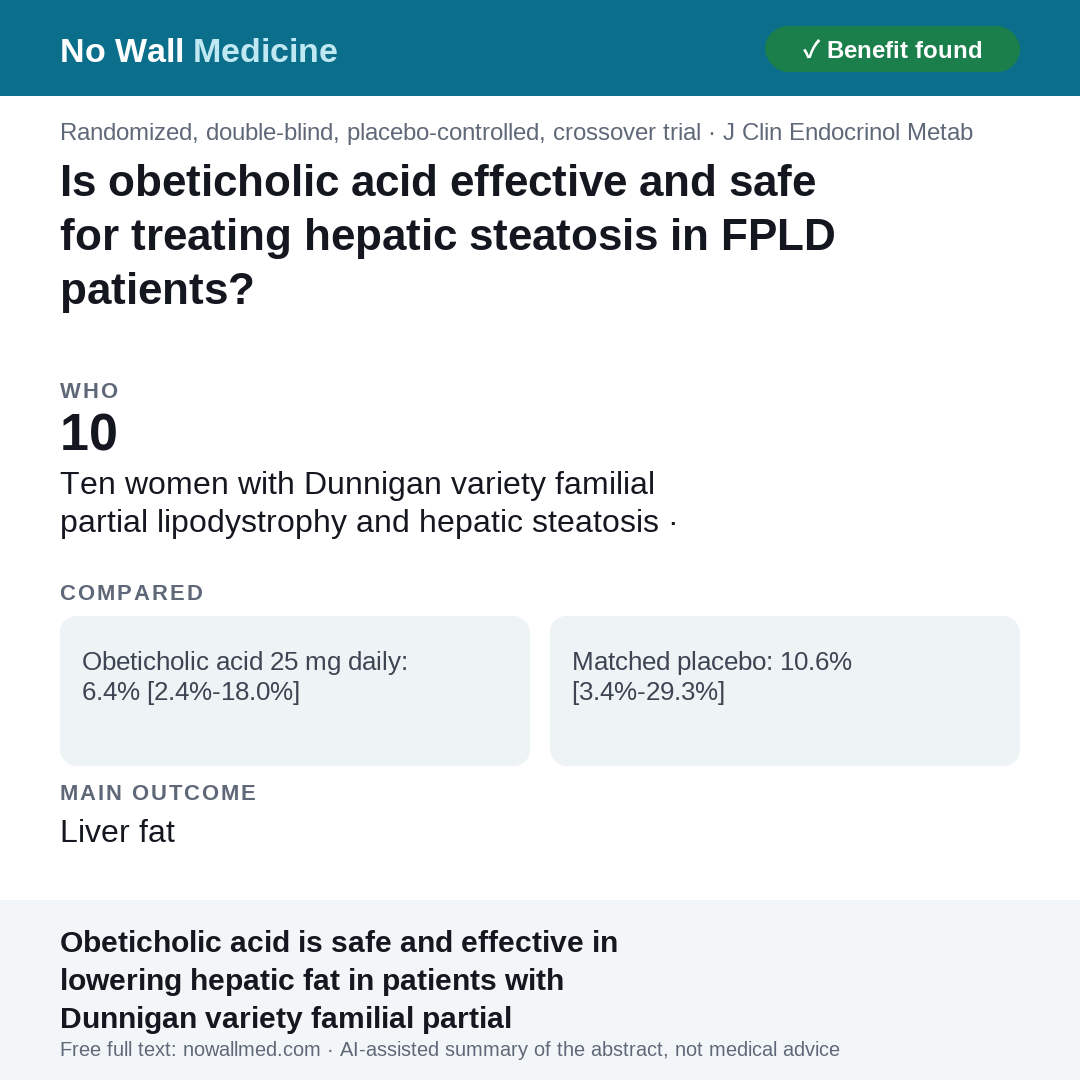
Efficacy and Safety of Obeticholic Acid for Treating Hepatic Steatosis in Patients With Familial Partial Lipodystrophy
Randomized, double-blind, placebo-controlled, crossover trialBenefit found
Is obeticholic acid effective and safe for treating hepatic steatosis in FPLD patients?
Who
10
Ten women with Dunnigan variety familial partial lipodystrophy and hepatic steatosis · Academic referral center
Compared
Obeticholic acid 25 mg daily: 6.4% [2.4%-18.0%]
Matched placebo: 10.6% [3.4%-29.3%]
Main outcome
Liver fat
Bottom line: Obeticholic acid is safe and effective in lowering hepatic fat in patients with Dunnigan variety familial partial lipodystrophy.
J Clin Endocrinol Metab · 2025-03-14Download image
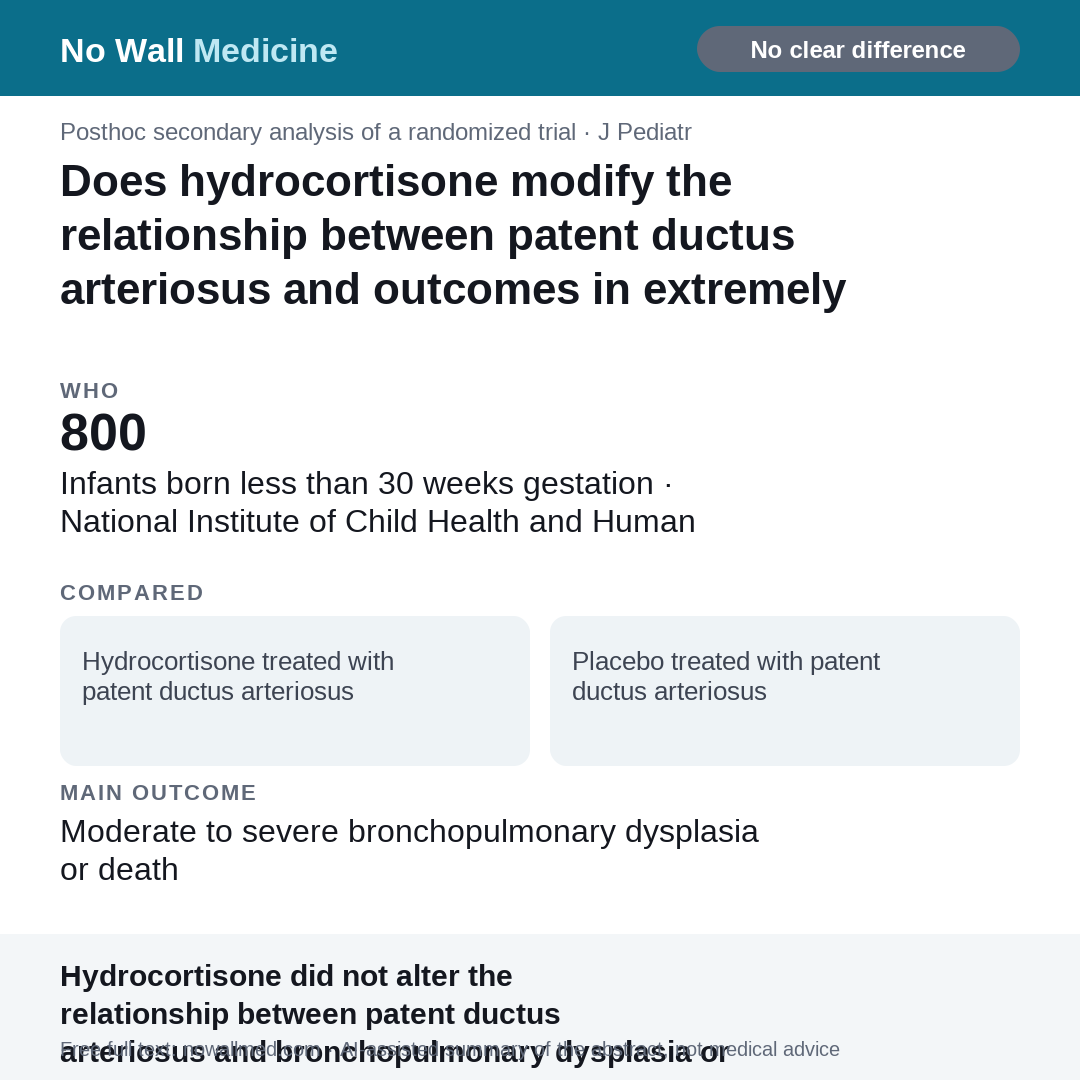
Patent Ductus Arteriosus, Hydrocortisone, and Outcome among Infants Born Extremely Preterm: Secondary Analysis of the Hydrocortisone Trial
Posthoc secondary analysis of a randomized trialNo clear difference
Does hydrocortisone modify the relationship between patent ductus arteriosus and outcomes in extremely preterm infants?
Who
800
Infants born less than 30 weeks gestation · National Institute of Child Health and Human Development Neonatal Research Network
Compared
Hydrocortisone treated with patent ductus arteriosus
Placebo treated with patent ductus arteriosus
Main outcome
Moderate to severe bronchopulmonary dysplasia or death
Bottom line: Hydrocortisone did not alter the relationship between patent ductus arteriosus and bronchopulmonary dysplasia or death.
J Pediatr · 2025-03-14Download image
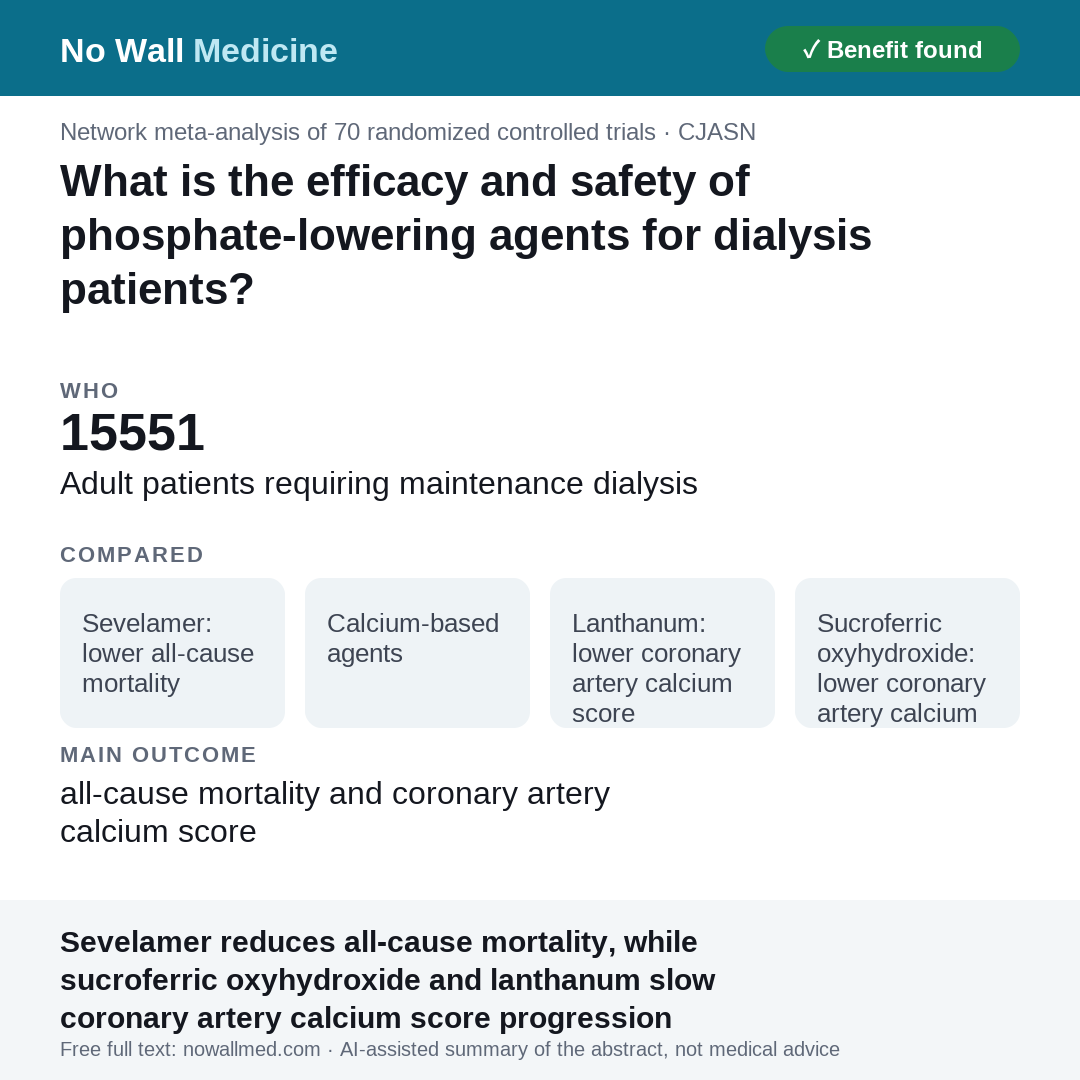
Efficacy and Safety of Phosphate-Lowering Agents for Adult Patients with CKD Requiring Dialysis: A Network Meta-Analysis
Network meta-analysis of 70 randomized controlled trialsBenefit found
What is the efficacy and safety of phosphate-lowering agents for dialysis patients?
Who
15551
Adult patients requiring maintenance dialysis
Compared
Sevelamer: lower all-cause mortality
Calcium-based agents
Lanthanum: lower coronary artery calcium score
Sucroferric oxyhydroxide: lower coronary artery calcium score
Main outcome
all-cause mortality and coronary artery calcium score
Result: risk ratio 0.59 (95% confidence interval 0.37 to 0.94)
Bottom line: Sevelamer reduces all-cause mortality, while sucroferric oxyhydroxide and lanthanum slow coronary artery calcium score progression compared to calcium-based agents.
CJASN · 2025-03-14Download image
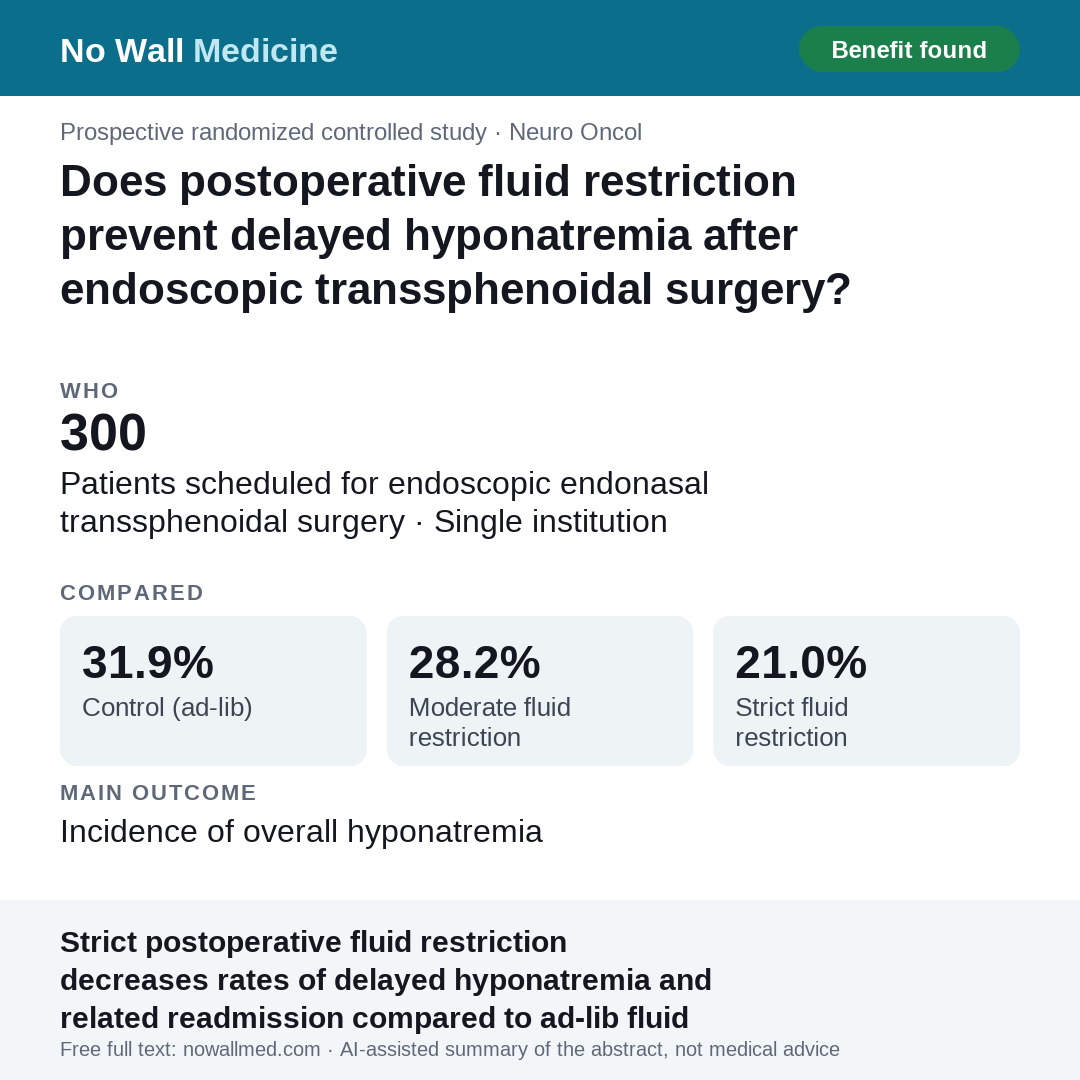
Postoperative fluid restriction to prevent delayed hyponatremia after endoscopic transsphenoidal surgery
Prospective randomized controlled studyBenefit found
Does postoperative fluid restriction prevent delayed hyponatremia after endoscopic transsphenoidal surgery?
Who
300
Patients scheduled for endoscopic endonasal transsphenoidal surgery · Single institution
Compared
31.9%Control (ad-lib)
28.2%Moderate fluid restriction
21.0%Strict fluid restriction
Main outcome
Incidence of overall hyponatremia
Result: Nadir sodium level higher (1.81 mEq/L; 95% CI, 0.34 to 3.27)
Bottom line: Strict postoperative fluid restriction decreases rates of delayed hyponatremia and related readmission compared to ad-lib fluid intake.
Neuro Oncol · 2025-03-14Download image
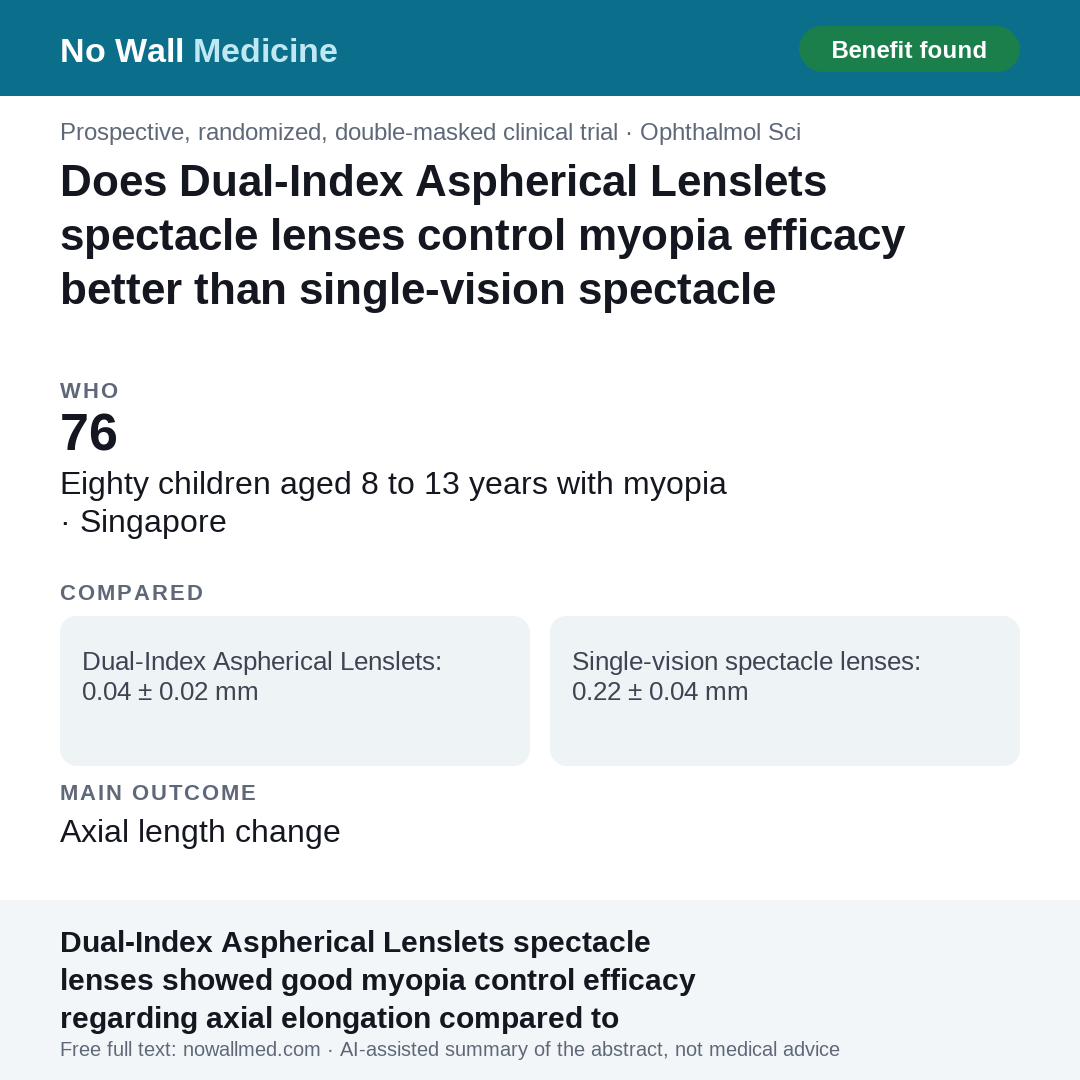
Myopia Control Efficacy of Spectacle Lenses with Dual-Index Aspherical Lenslets: A 1-Year Randomized Clinical Trial
Prospective, randomized, double-masked clinical trialBenefit found
Does Dual-Index Aspherical Lenslets spectacle lenses control myopia efficacy better than single-vision spectacle lenses?
Who
76
Eighty children aged 8 to 13 years with myopia · Singapore
Compared
Dual-Index Aspherical Lenslets: 0.04 ± 0.02 mm
Single-vision spectacle lenses: 0.22 ± 0.04 mm
Main outcome
Axial length change
Result: -0.18 mm (95% CI, -0.26 to -0.10 mm)
Bottom line: Dual-Index Aspherical Lenslets spectacle lenses showed good myopia control efficacy regarding axial elongation compared to single-vision spectacle lenses.
Ophthalmol Sci · 2025-03-14Download image
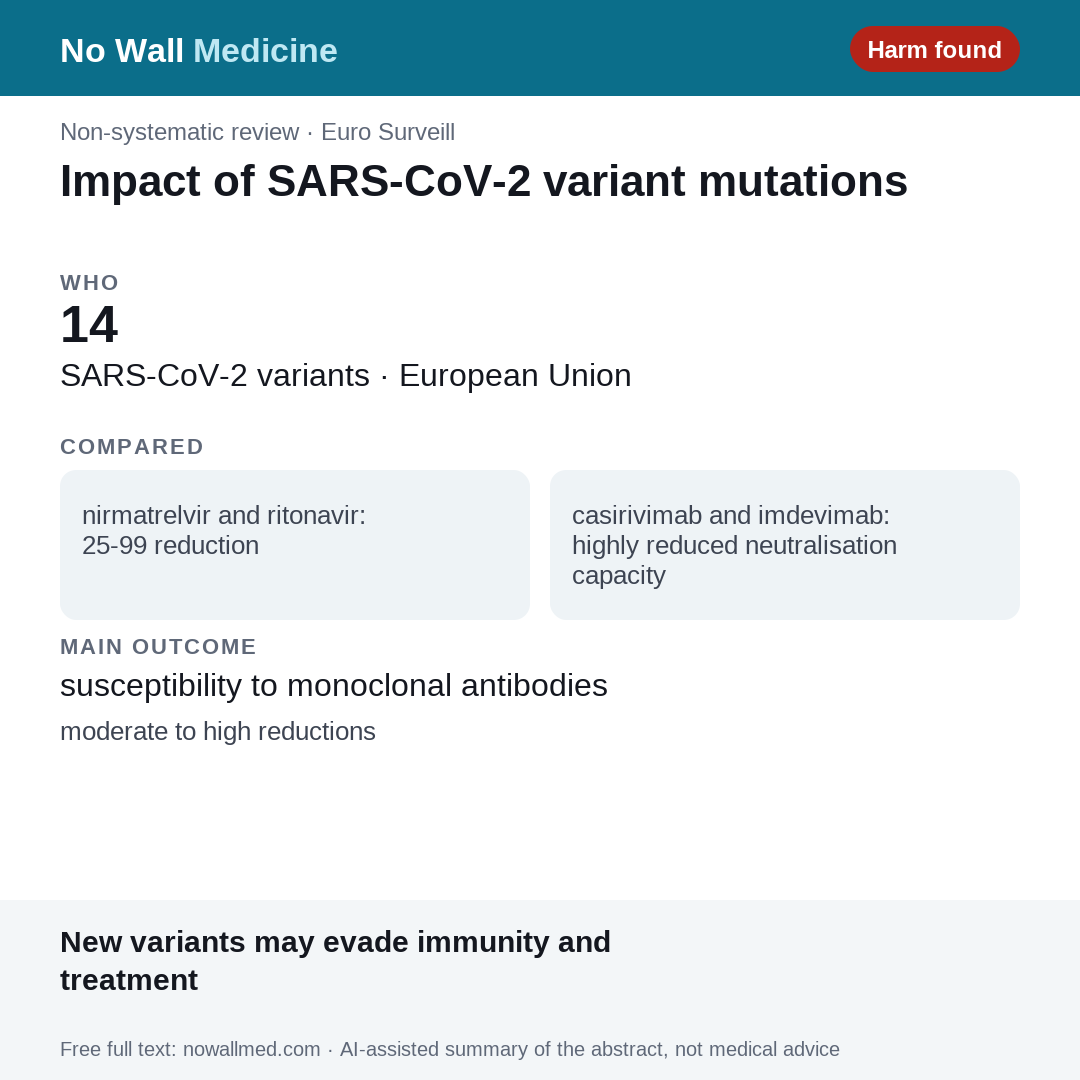
Impact of SARS-CoV-2 variant mutations on susceptibility to monoclonal antibodies and antiviral drugs: a non-systematic review, April 2022 to October 2024
Non-systematic reviewHarm found
Impact of SARS-CoV-2 variant mutations
Who
14
SARS-CoV-2 variants · European Union
Compared
nirmatrelvir and ritonavir: 25-99 reduction
casirivimab and imdevimab: highly reduced neutralisation capacity
Main outcome
susceptibility to monoclonal antibodies
Result: moderate to high reductions
Bottom line: New variants may evade immunity and treatment
Euro Surveill · 2025-03-14Download image
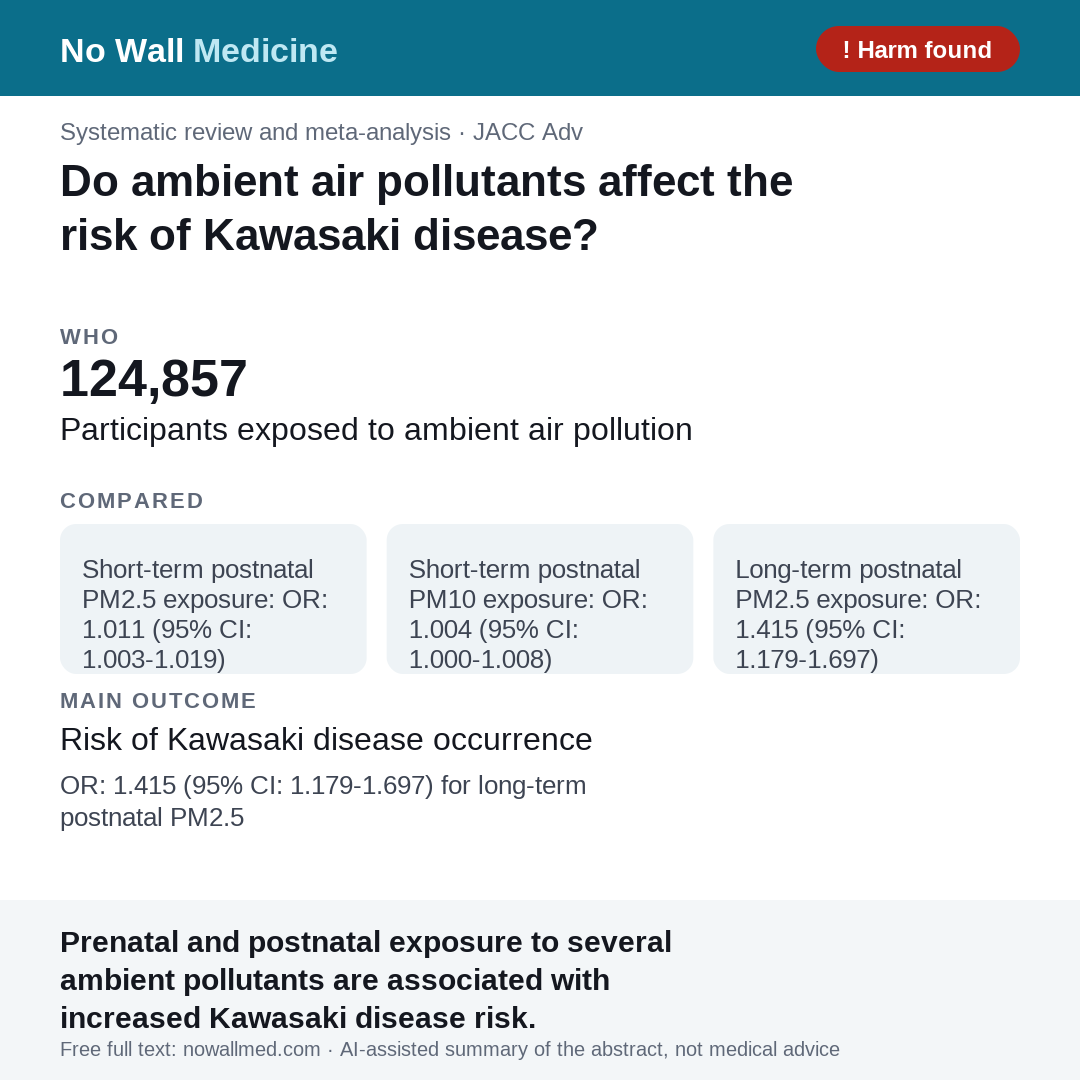
Prenatal and Postnatal Ambient Air Pollution and Kawasaki Disease: A Systematic Review and Meta-Analysis
Systematic review and meta-analysisHarm found
Do ambient air pollutants affect the risk of Kawasaki disease?
Who
124,857
Participants exposed to ambient air pollution
Compared
Short-term postnatal PM2.5 exposure: OR: 1.011 (95% CI: 1.003-1.019)
Short-term postnatal PM10 exposure: OR: 1.004 (95% CI: 1.000-1.008)
Long-term postnatal PM2.5 exposure: OR: 1.415 (95% CI: 1.179-1.697)
Main outcome
Risk of Kawasaki disease occurrence
Result: OR: 1.415 (95% CI: 1.179-1.697) for long-term postnatal PM2.5
Bottom line: Prenatal and postnatal exposure to several ambient pollutants are associated with increased Kawasaki disease risk.
Limitation: Seven studies were at high risk of bias.
JACC Adv · 2025-03-14Download image
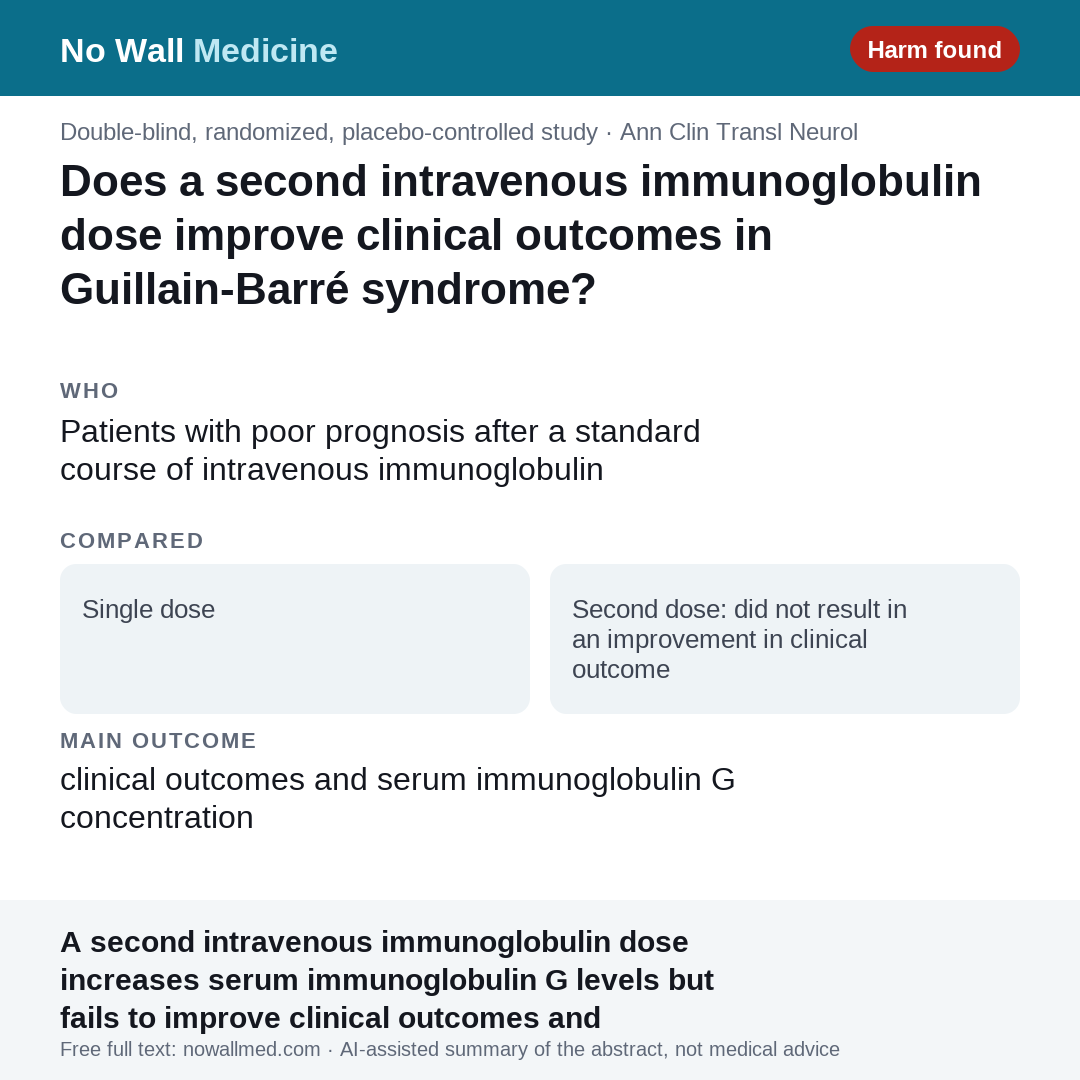
If it does not help, it might hurt: Pharmacodynamics of a second IVIg course in Guillain-Barré syndrome
Double-blind, randomized, placebo-controlled studyHarm found
Does a second intravenous immunoglobulin dose improve clinical outcomes in Guillain-Barré syndrome?
Who
Patients with poor prognosis after a standard course of intravenous immunoglobulin
Compared
Single dose
Second dose: did not result in an improvement in clinical outcome
Main outcome
clinical outcomes and serum immunoglobulin G concentration
Bottom line: A second intravenous immunoglobulin dose increases serum immunoglobulin G levels but fails to improve clinical outcomes and increases serious adverse events.
Ann Clin Transl Neurol · 2025-03-14Download image
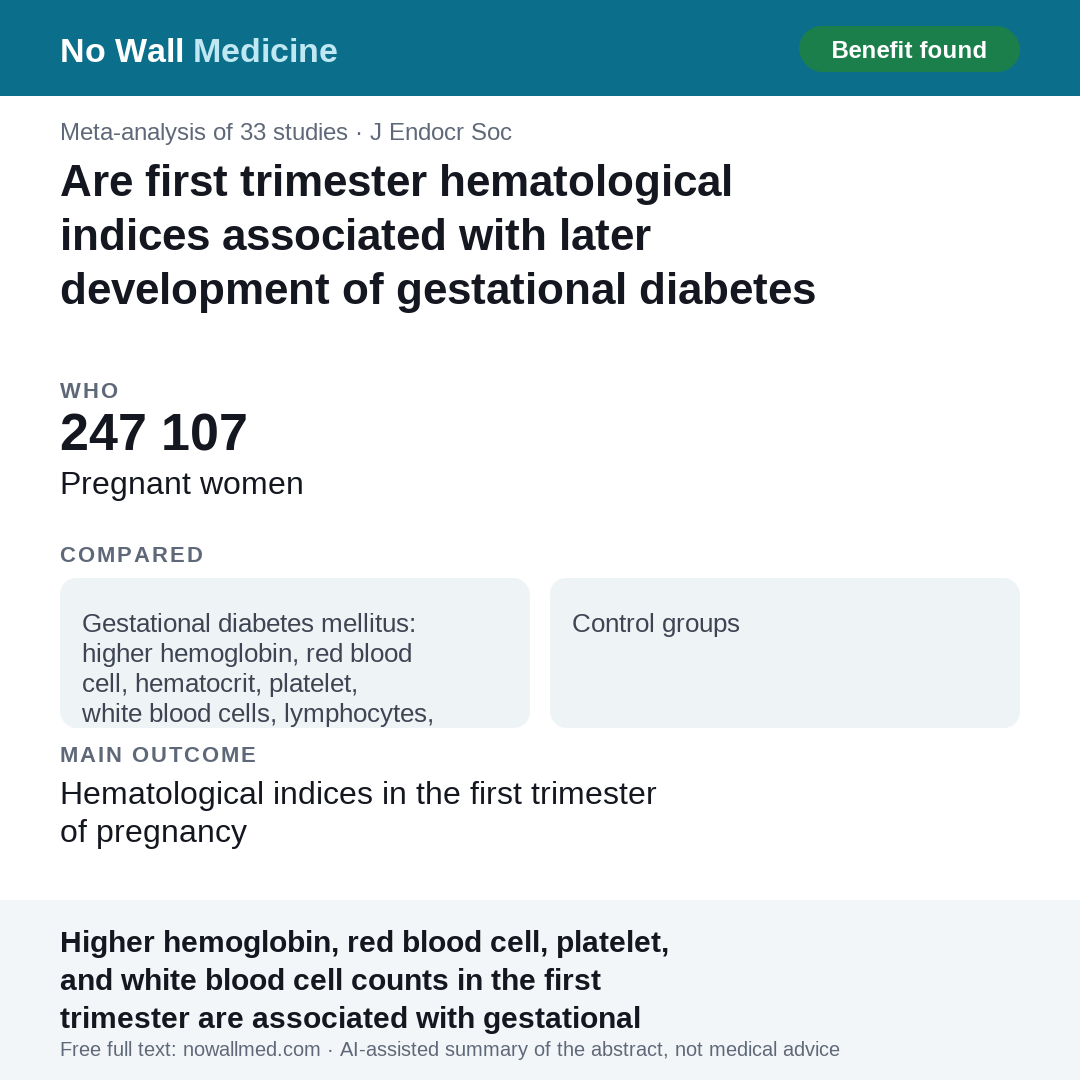
First Trimester Hematological Indices in Gestational Diabetes Mellitus: A Meta-Analysis
Meta-analysis of 33 studiesBenefit found
Are first trimester hematological indices associated with later development of gestational diabetes mellitus?
Who
247 107
Pregnant women
Compared
Gestational diabetes mellitus: higher hemoglobin, red blood cell, hematocrit, platelet, white blood cells, lymphocytes, neutrophils, and neutrophil-lymphocyte ratio
Control groups
Main outcome
Hematological indices in the first trimester of pregnancy
Result: standardized mean differences (95% CI) provided for multiple indices
Bottom line: Higher hemoglobin, red blood cell, platelet, and white blood cell counts in the first trimester are associated with gestational diabetes.
J Endocr Soc · 2025-03-14Download image