Visual abstracts
New randomized trials and meta-analyses from leading journals at a glance: who was studied, what was compared, and what was found. Every paper is free to read in full.
All specialtiesCardiology 1297Oncology 1125Gastroenterology & Hepatology 458Infectious Disease 851Neurology 529Psychiatry & Mental Health 645Pulmonology 555Critical Care 381Endocrinology & Diabetes 720Pediatrics 764Surgery 595Orthopedics & Sports Medicine 246Neurosurgery 174Cardiothoracic & Vascular Surgery 144Plastic & Reconstructive Surgery 199Nephrology 274Rheumatology 172Hematology 269Dermatology 135Ophthalmology 143Obstetrics & Gynecology 404Public & Global Health 251Radiology & Imaging 166Anesthesiology 241Urology 237ENT (Otolaryngology) 177Emergency Medicine 139Allergy & Immunology 89Geriatrics 266Family Medicine & Primary Care 164Medical Genetics & Genomics 137Pathology & Laboratory Medicine 39Physical Medicine & Rehabilitation 224Palliative Care 115Nutrition 335Digital Health & AI 658General Medicine 121
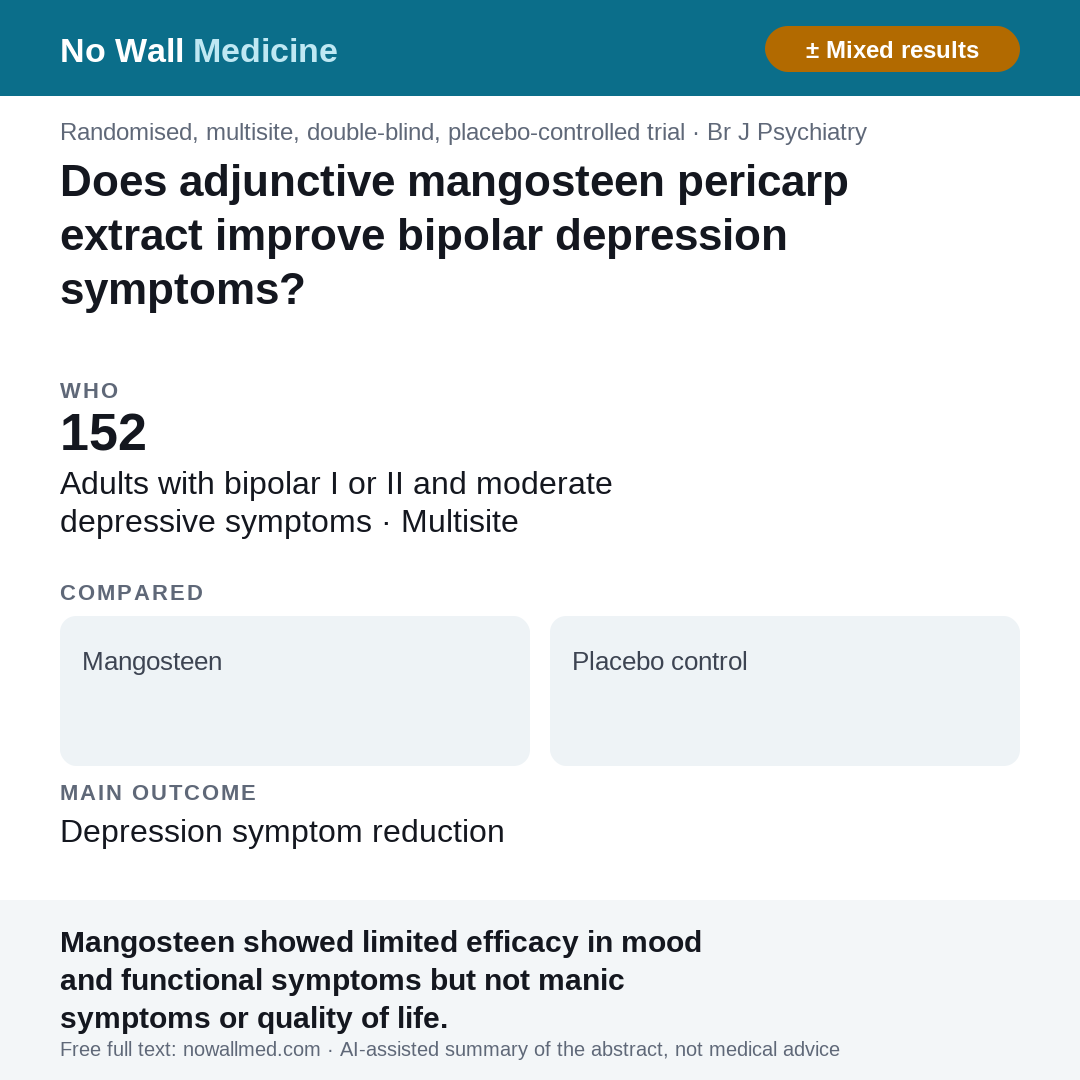
The efficacy of adjunctive Garcinia mangostana Linn. (mangosteen) pericarp extract for bipolar depression: 24-week randomised controlled trial
Randomised, multisite, double-blind, placebo-controlled trialMixed results
Does adjunctive mangosteen pericarp extract improve bipolar depression symptoms?
Who
152
Adults with bipolar I or II and moderate depressive symptoms · Multisite
Compared
Mangosteen
Placebo control
Main outcome
Depression symptom reduction
Bottom line: Mangosteen showed limited efficacy in mood and functional symptoms but not manic symptoms or quality of life.
Limitation: Differences were attenuated at week 28 post-discontinuation assessment.
Br J Psychiatry · 2025-07-10Download image
Axial Growth and Meridian Modulation of Cornea Power in Children Wearing Orthokeratology Lenses of Different Back Optic Zone Diameters
Randomized, double-blinded, controlled clinical trialBenefit found
How do different back optic zone diameters affect axial length growth and corneal refraction power shift?
Who
Children aged 8 to 15 years with refraction of -1.00 to -4.00 diopters
Compared
5.0 mm back optic zone diameter: 0.15 ± 0.13 mm axial length growth
6.2 mm back optic zone diameter: 0.24 ± 0.17 mm axial length growth
Main outcome
axial length growth and relative corneal refraction power shift
Bottom line: Children wearing orthokeratology lenses with a smaller back optic zone diameter had slower axial length growth.
Am J Ophthalmol · 2025-07-10Download image

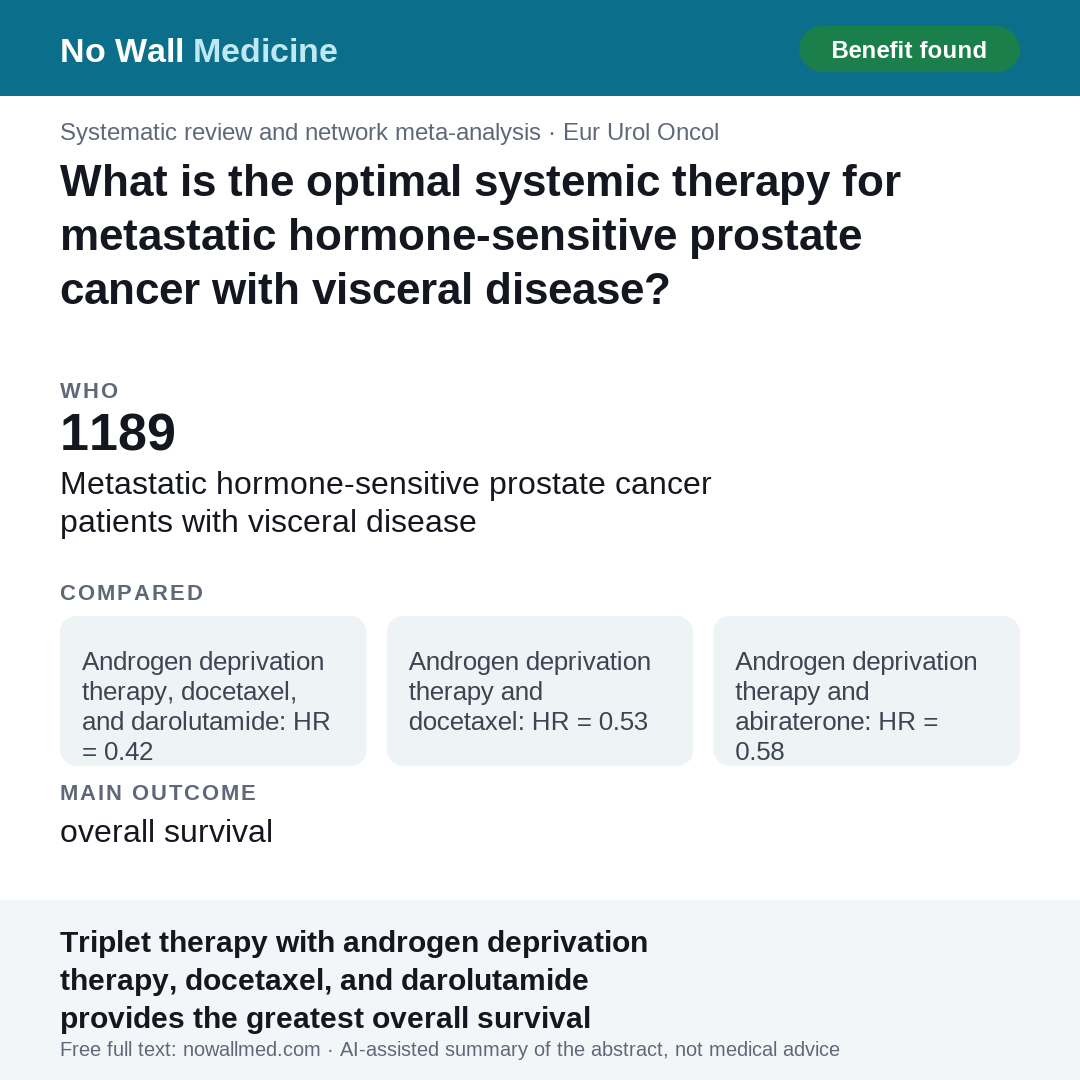
Evaluating Treatment Efficacy in Metastatic Hormone-sensitive Prostate Cancer Patients with Visceral Disease: A Systematic Review and Network Meta-analysis
Systematic review and network meta-analysisBenefit found
What is the optimal systemic therapy for metastatic hormone-sensitive prostate cancer with visceral disease?
Who
1189
Metastatic hormone-sensitive prostate cancer patients with visceral disease
Compared
Androgen deprivation therapy, docetaxel, and darolutamide: HR = 0.42
Androgen deprivation therapy and docetaxel: HR = 0.53
Androgen deprivation therapy and abiraterone: HR = 0.58
Main outcome
overall survival
Result: hazard ratio 0.42 (95% CI: 0.21-0.82)
Bottom line: Triplet therapy with androgen deprivation therapy, docetaxel, and darolutamide provides the greatest overall survival benefit.
Limitation: Absence of individual patient data and lack of efficacy data stratified by metastatic site.
Eur Urol Oncol · 2025-07-10Download image
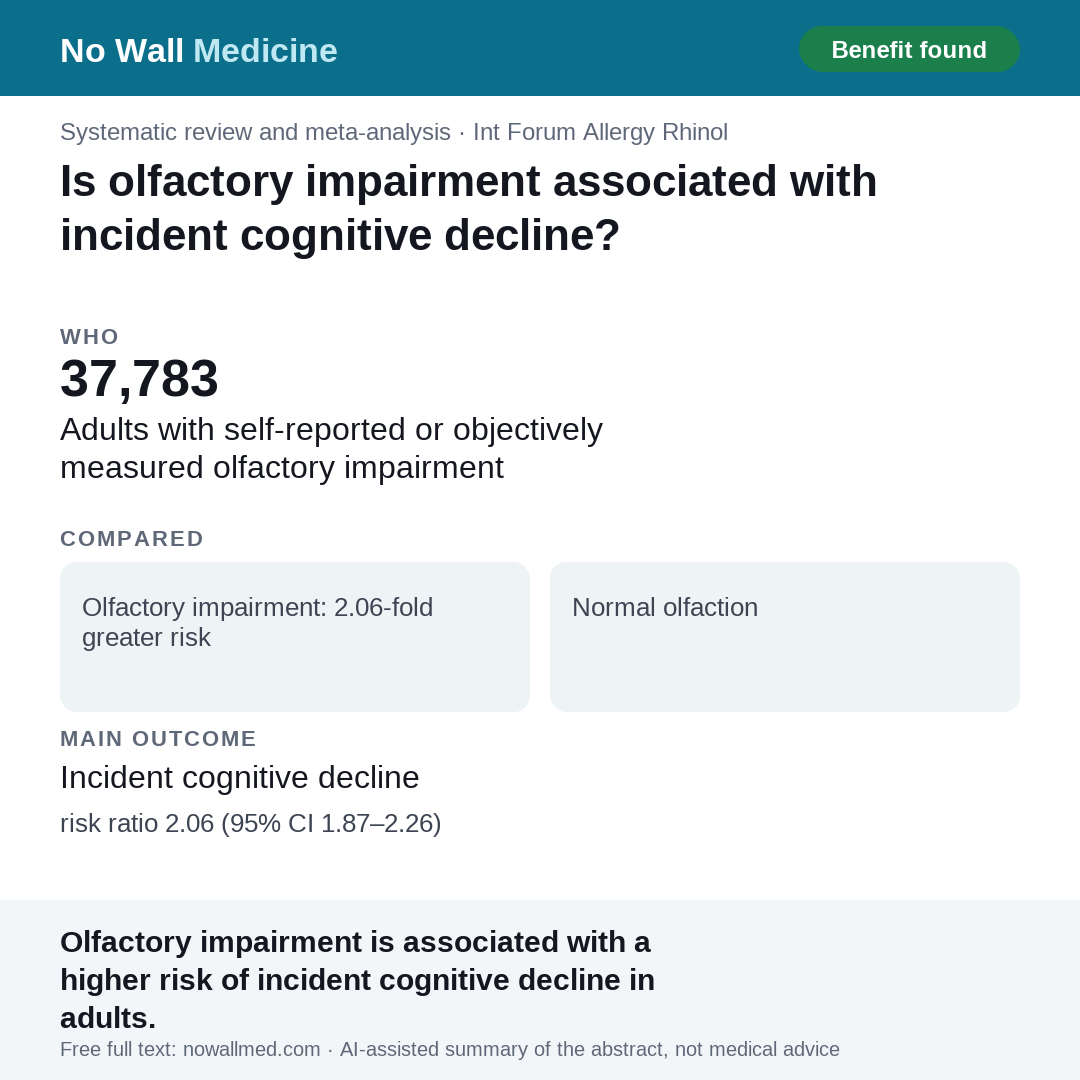
Olfactory Impairment and Incident Cognitive Decline: A Systematic Review and Meta-Analysis
Systematic review and meta-analysisBenefit found
Is olfactory impairment associated with incident cognitive decline?
Who
37,783
Adults with self-reported or objectively measured olfactory impairment
Compared
Olfactory impairment: 2.06-fold greater risk
Normal olfaction
Main outcome
Incident cognitive decline
Result: risk ratio 2.06 (95% CI 1.87‒2.26)
Bottom line: Olfactory impairment is associated with a higher risk of incident cognitive decline in adults.
Int Forum Allergy Rhinol · 2025-07-10Download image
Effects of pre- and post-surgery physical activity interventions on physical activity and sedentary behaviour levels following knee and hip arthroplasty: A systematic review and meta-analysis of randomised controlled trials
Systematic review and meta-analysis of randomised controlled trialsMixed results
Do physical activity interventions improve physical activity or reduce sedentary behaviour after knee or hip arthroplasty?
Who
1265
Total knee or hip arthroplasty patients
Compared
Physical activity interventions: SMD=0.16 (95% CI: 0.01 to 0.30)
Sedentary behaviour interventions: SMD=-0.19 (95% CI: -0.66 to 0.29)
Main outcome
Physical activity and sedentary behaviour levels
Result: SMD=0.16 (95% CI: 0.01 to 0.30) for physical activity
Bottom line: Interventions improve physical activity, especially with wearable trackers, but effects on sedentary behaviour are unclear.
Limitation: Very low certainty of evidence for sedentary behaviour outcomes.
Osteoarthritis Cartilage · 2025-07-10Download image
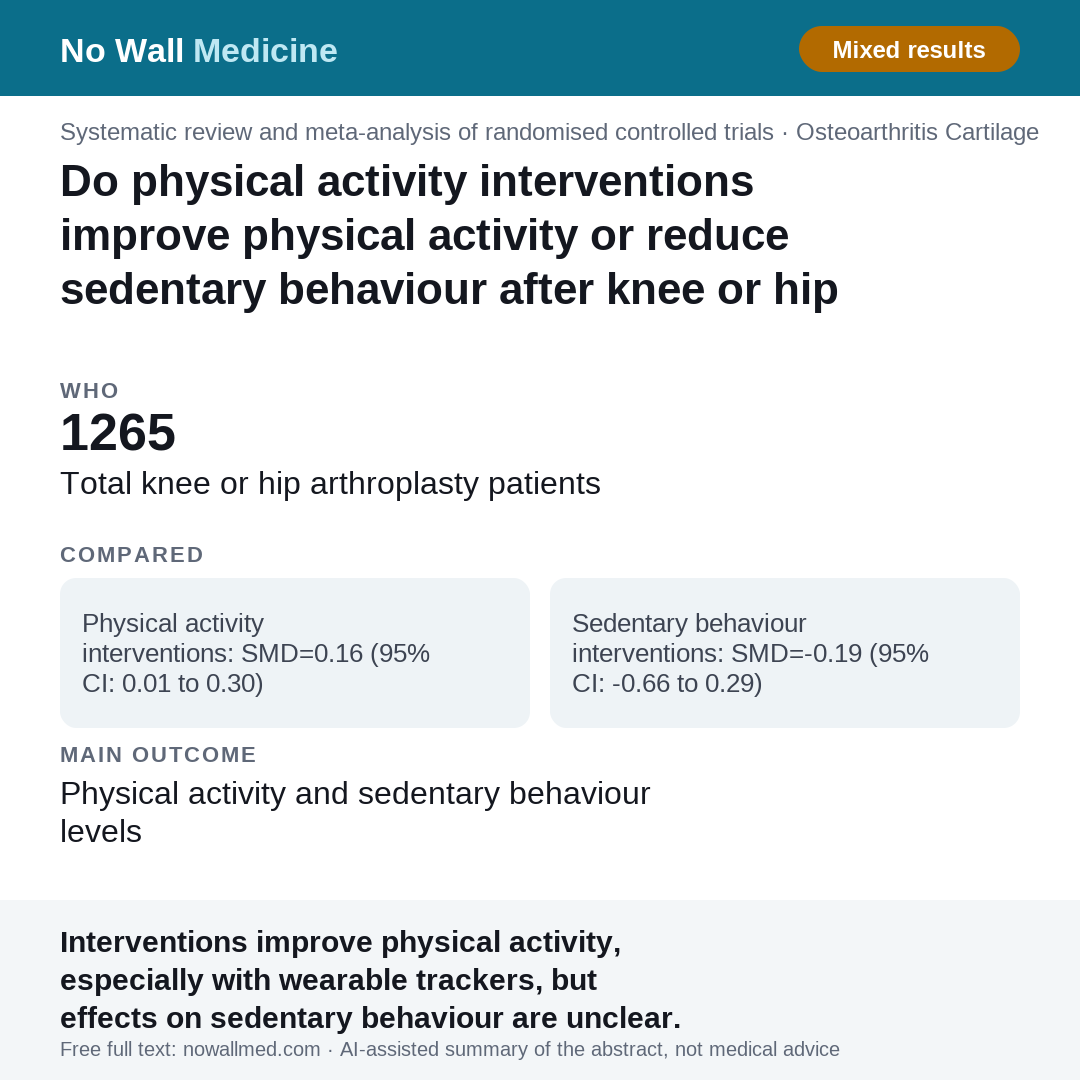
Feasibility and Sensitivity of Wearable Sensors for Daily Activity Monitoring in Spinal Cord Injury Trials
Multicenter, randomized, placebo-controlled trialBenefit found
Are wearable sensors sensitive for monitoring activity in spinal cord injury trials?
Who
69
Individuals with acute, traumatic cervical spinal cord injury · Multicenter
Compared
verum: ΔEE = 11.6 kcal/day/week, 95% CI [1.5, 21.8]
placebo: no significant group differences
Main outcome
Average daily energy expenditure, Upper Extremity Motor Scores, and Spinal Cord Independence Measures
Bottom line: Sensor-based monitoring provides sensitive insights into physical changes, complementing periodic clinical assessments in spinal cord injury trials.
Neurorehabil Neural Repair · 2025-07-10Download image
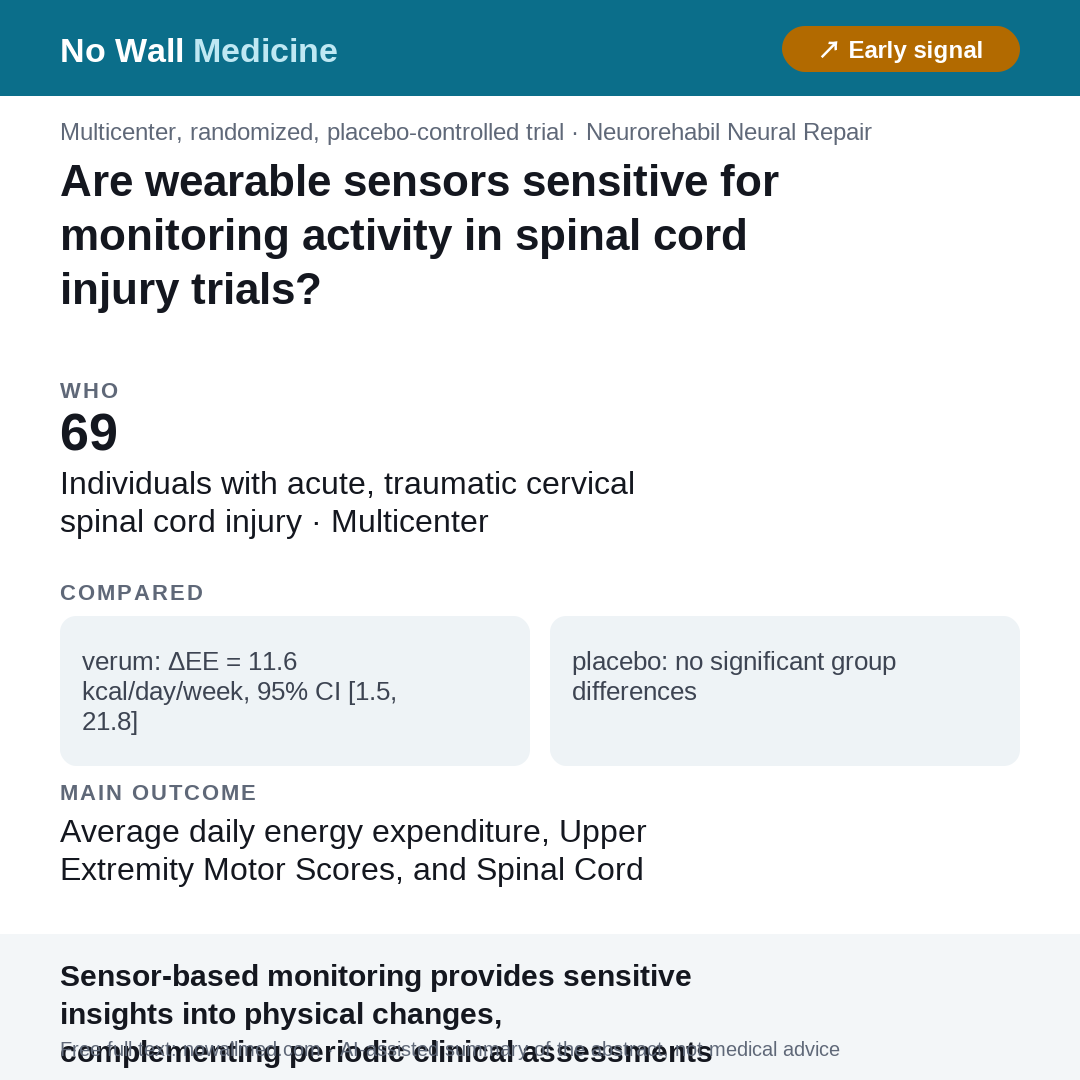
Maintenance of Improvements in Walking Activity in Individuals with Chronic Stroke: Follow-Up From the PROWALKS Randomized Controlled Trial
Randomized controlled trialHarm found
Are walking activity improvements maintained 6 and 12 months after intervention?
Who
200
Individuals with chronic stroke
Compared
High-intensity gait training: decreased by mean[SE] 610[280] at 12 months
Step activity monitoring: decreased by mean[SE] 1072[306] at 12 months
High-intensity gait training plus step activity monitoring: decreased by mean[SE] 568[313] at 12 months
Main outcome
steps per day change
Bottom line: All intervention groups showed significant declines in daily steps between post-intervention and 6 or 12 months.
Neurorehabil Neural Repair · 2025-07-10Download image
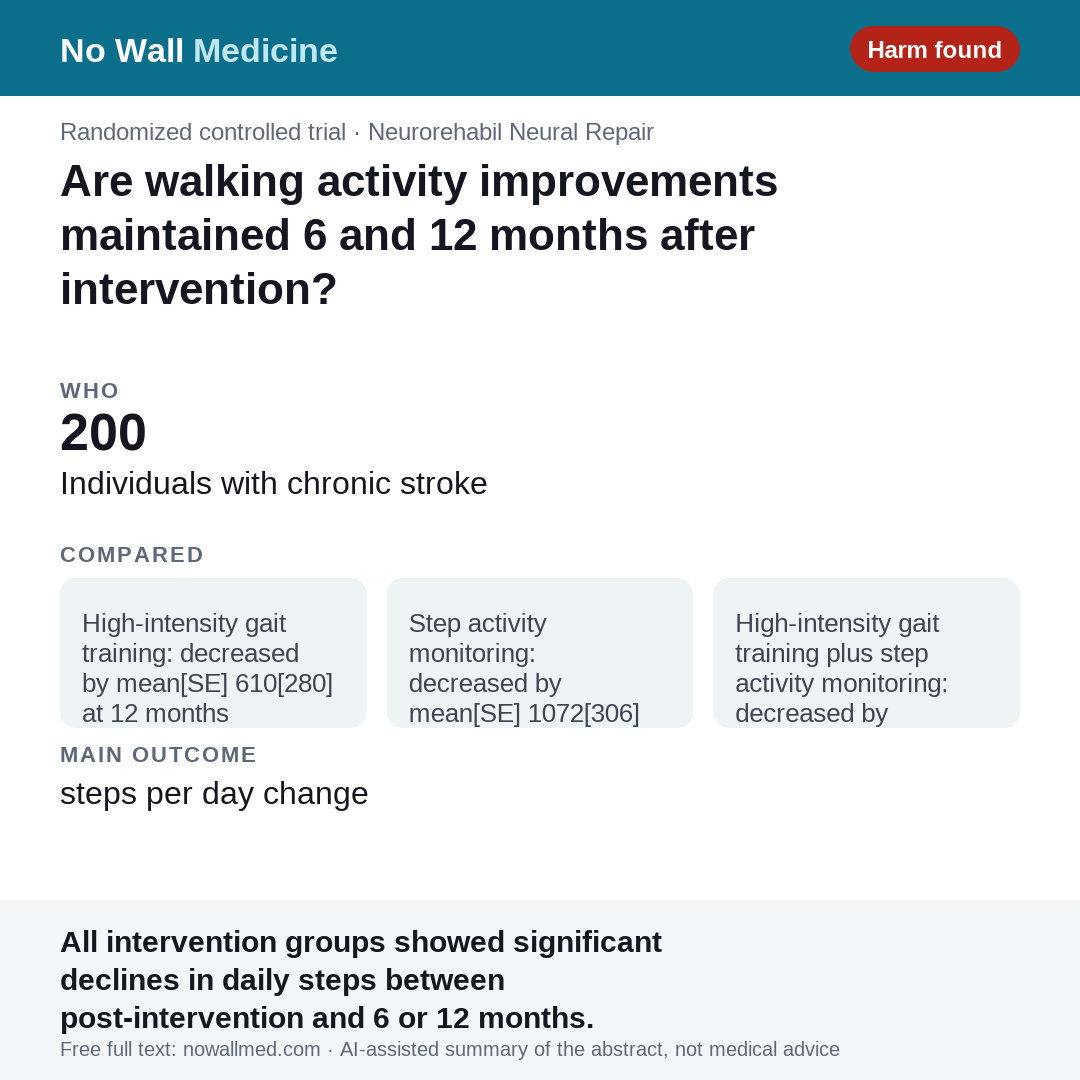
Cross-lagged assessment between indices of leisure time physical activity and domains of quality of life after electrical stimulation training in persons with spinal cord injury: An exploratory trial
Longitudinal exploratory trialMixed results
What are the relationships between leisure time physical activity and quality of life domains?
Who
31
Participants with chronic spinal cord injury · Veterans Affairs medical center and SCI center
Compared
Neuromuscular electrical stimulation-resistance training and cycling
Passive movement training and cycling
Main outcome
Leisure time physical activity and quality of life domains
Bottom line: Electrical stimulation did not directly enhance leisure time physical activity, but activity may influence psychological and social quality of life.
Limitation: Exploratory trial using a convenience sample
PM R · 2025-07-10Download image
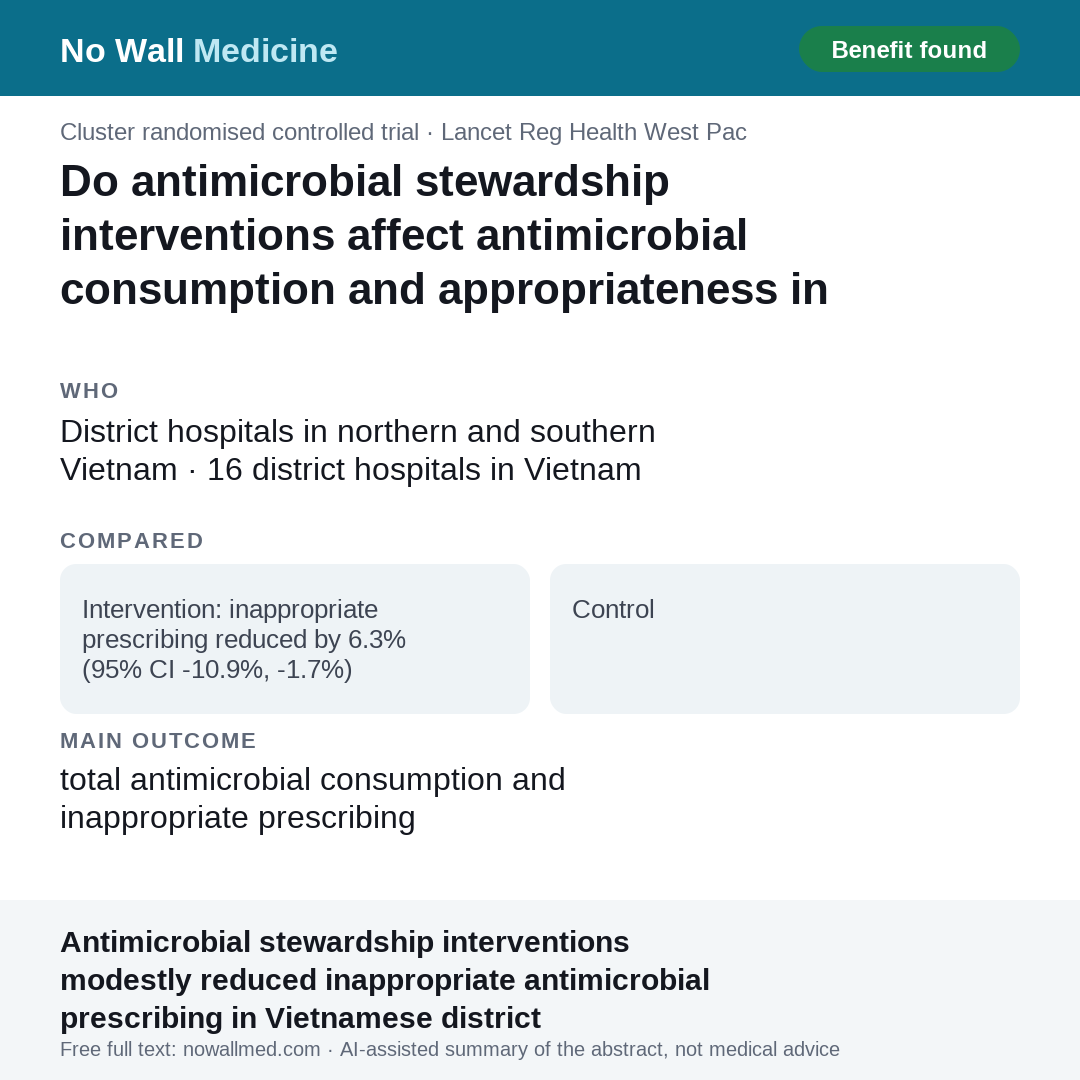
The effect of antimicrobial stewardship interventions upon antimicrobial consumption and appropriateness in Vietnamese district hospitals: a cluster randomised trial
Cluster randomised controlled trialBenefit found
Do antimicrobial stewardship interventions affect antimicrobial consumption and appropriateness in Vietnamese district hospitals?
Who
District hospitals in northern and southern Vietnam · 16 district hospitals in Vietnam
Compared
Intervention: inappropriate prescribing reduced by 6.3% (95% CI -10.9%, -1.7%)
Control
Main outcome
total antimicrobial consumption and inappropriate prescribing
Result: 6.3% (95% CI -10.9%, -1.7%) reduction in inappropriate prescribing
Bottom line: Antimicrobial stewardship interventions modestly reduced inappropriate antimicrobial prescribing in Vietnamese district hospitals.
Funded by: Australian Department of Foreign Affairs and Trade
Lancet Reg Health West Pac · 2025-07-10Download image
Enhancing outcomes in medically inoperable early-stage NSCLC with gut-targeted antibiotics and stereotactic body radiotherapy: results from a randomized pilot study
Randomized, open-label pilot studyBenefit found
Does combining oral vancomycin with stereotactic body radiotherapy improve outcomes in early-stage NSCLC?
Who
Patients with early-stage non-small cell lung cancer
Compared
Vancomycin and stereotactic body radiotherapy
Control
Main outcome
Progression-free survival and overall survival
Result: hazard ratio 0.42 (95% CI 0.18 to 0.96) for progression-free survival
Bottom line: Combining oral vancomycin with stereotactic body radiotherapy may improve progression-free and overall survival in early-stage non-small cell lung cancer.
J Immunother Cancer · 2025-07-10Download image

Neuroimaging insights into the psychosocial impact of the COVID-19 pandemic: a systematic review
Systematic reviewUnclear result
Neural substrates of COVID-19 mental health impact
Who
people with COVID-19 mental health problems
Compared
COVID-19 related
not specified
Main outcome
mental health problems
Bottom line: COVID-19 affects brain structure and function
Transl Psychiatry · 2025-07-10Download image

Application progress of machine learning in patient-ventilator asynchrony during mechanical ventilation: a systematic review
Systematic reviewBenefit found
Machine learning for patient-ventilator asynchrony
Who
adult patients on mechanical ventilation
Compared
Machine learning models
Traditional methods
Main outcome
patient-ventilator asynchrony detection
Bottom line: Machine learning detects asynchrony accurately
Limitation: limited external validation
Crit Care · 2025-07-10Download image

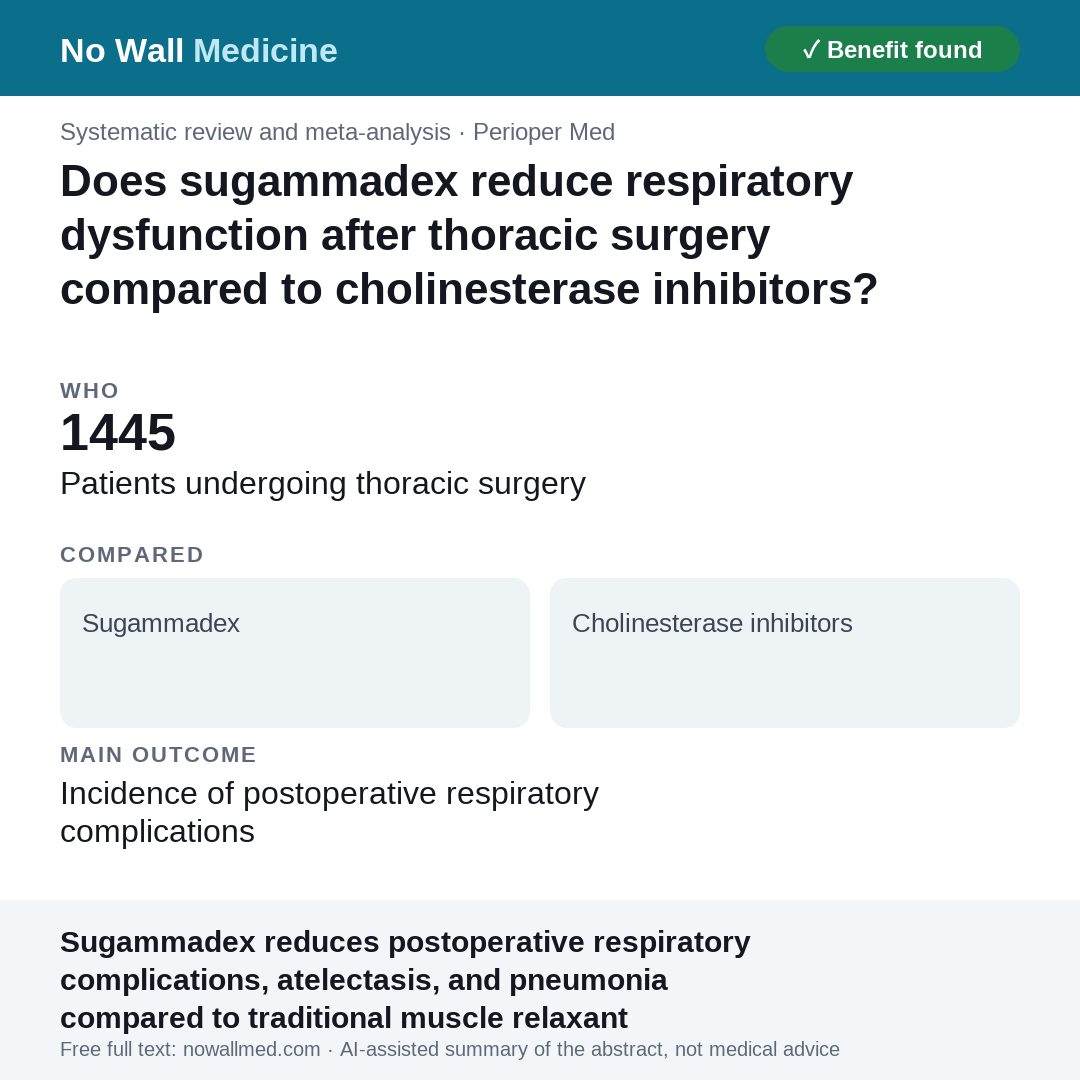
Sugammadex versus cholinesterase inhibitors to antagonize respiratory dysfunction after neuromuscular blockade in patients undergoing pulmonary surgery: a systematic review and meta-analysis
Systematic review and meta-analysisBenefit found
Does sugammadex reduce respiratory dysfunction after thoracic surgery compared to cholinesterase inhibitors?
Who
1445
Patients undergoing thoracic surgery
Compared
Sugammadex
Cholinesterase inhibitors
Main outcome
Incidence of postoperative respiratory complications
Result: risk ratio 0.77 (95% CI: 0.66-0.90)
Bottom line: Sugammadex reduces postoperative respiratory complications, atelectasis, and pneumonia compared to traditional muscle relaxant antagonists after thoracic surgery.
Limitation: Differences in hospitalization and chest tube dwelling duration remain to be clarified.
Perioper Med · 2025-07-10Download image
Hepatitis C Screening in Emergency Departments: The DETECT Hep C Randomized Clinical Trial
Prospective, multicenter, pragmatic randomized clinical trialBenefit found
Does nontargeted screening identify more new hepatitis C diagnoses than targeted screening in emergency departments?
Who
147498
Patients 18 years or older in urban emergency departments · 3 urban emergency departments in Colorado, Maryland, and Mississippi
Compared
Nontargeted screening: 154 new hepatitis C diagnoses
Targeted screening: 115 new hepatitis C diagnoses
Main outcome
Newly diagnosed hepatitis C virus infection
Result: relative risk 1.34 (95% CI 1.05-1.70)
Bottom line: Nontargeted screening in emergency departments identified significantly more new hepatitis C infections than targeted screening.
Limitation: Small proportions of newly diagnosed patients were linked to follow-up care and treatment.
JAMA · 2025-07-09Download image

Firesorb bioresorbable scaffold for de novo coronary artery disease: 1-year clinical outcomes
Pooled, patient-level analysis of randomized trial and registryBenefit found
What are the 1-year clinical outcomes of Firesorb bioresorbable scaffold for de novo coronary artery disease?
Who
1205
Patients with de novo coronary lesions
Compared
1.67%Firesorb bioresorbable scaffold (95% CI 2.57% upper limit)
6.6%Objective performance criterion goal
Main outcome
1-year target lesion failure
Bottom line: Firesorb bioresorbable scaffold showed promising 1-year efficacy and safety for target lesion failure in non-complex lesions.
Limitation: Findings are only applicable to non-complex lesions.
BMC Med · 2025-07-09Download image

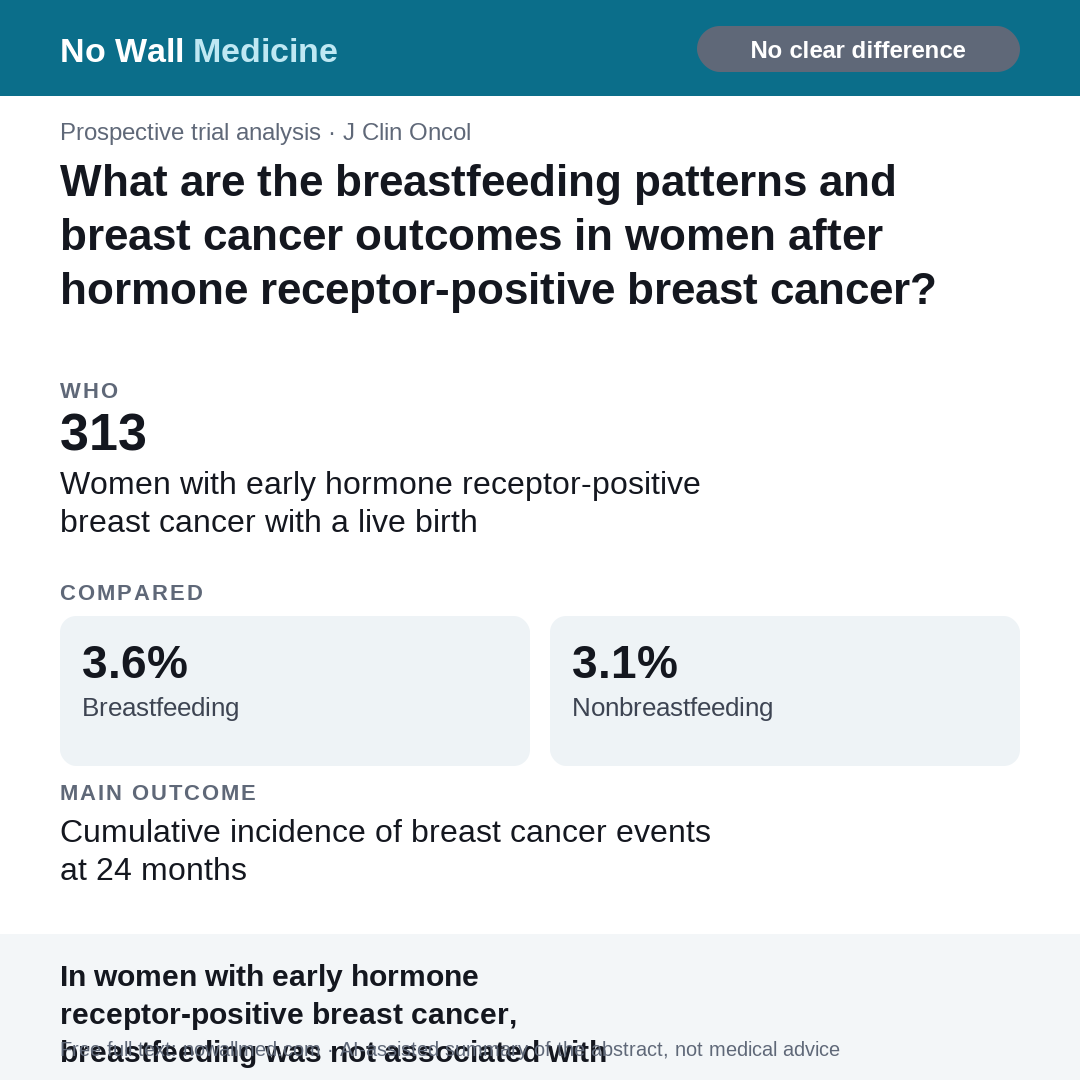
Breastfeeding After Hormone Receptor-Positive Breast Cancer: Results From the POSITIVE Trial
Prospective trial analysisNo clear difference
What are the breastfeeding patterns and breast cancer outcomes in women after hormone receptor-positive breast cancer?
Who
313
Women with early hormone receptor-positive breast cancer with a live birth
Compared
3.6%Breastfeeding
3.1%Nonbreastfeeding
Main outcome
Cumulative incidence of breast cancer events at 24 months
Result: 0.5% difference (95% CI, -4.3% to 5.2%)
Bottom line: In women with early hormone receptor-positive breast cancer, breastfeeding was not associated with different breast cancer event rates.
J Clin Oncol · 2025-07-09Download image
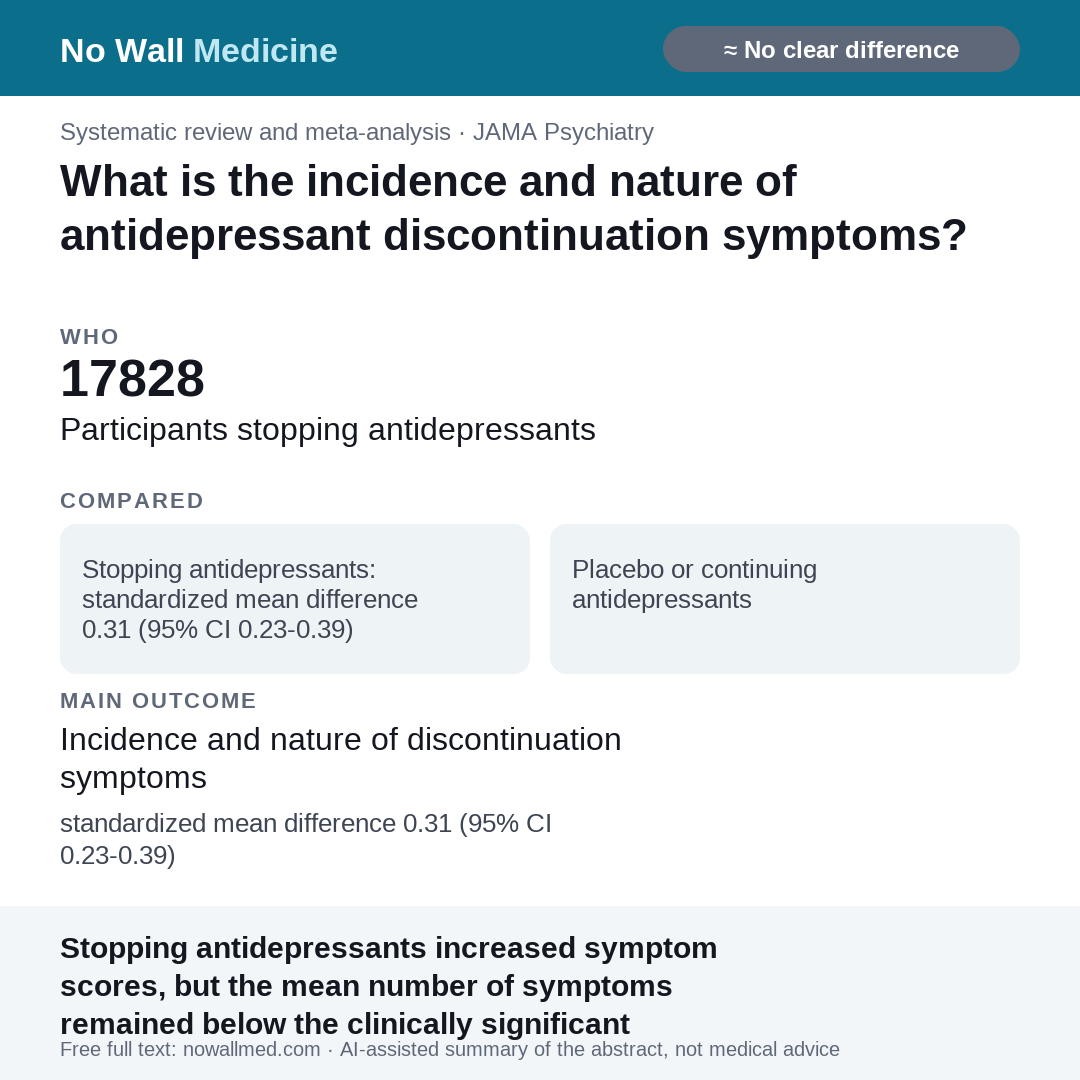
Incidence and Nature of Antidepressant Discontinuation Symptoms: A Systematic Review and Meta-Analysis
Systematic review and meta-analysisNo clear difference
What is the incidence and nature of antidepressant discontinuation symptoms?
Who
17828
Participants stopping antidepressants
Compared
Stopping antidepressants: standardized mean difference 0.31 (95% CI 0.23-0.39)
Placebo or continuing antidepressants
Main outcome
Incidence and nature of discontinuation symptoms
Result: standardized mean difference 0.31 (95% CI 0.23-0.39)
Bottom line: Stopping antidepressants increased symptom scores, but the mean number of symptoms remained below the clinically significant threshold.
JAMA Psychiatry · 2025-07-09Download image
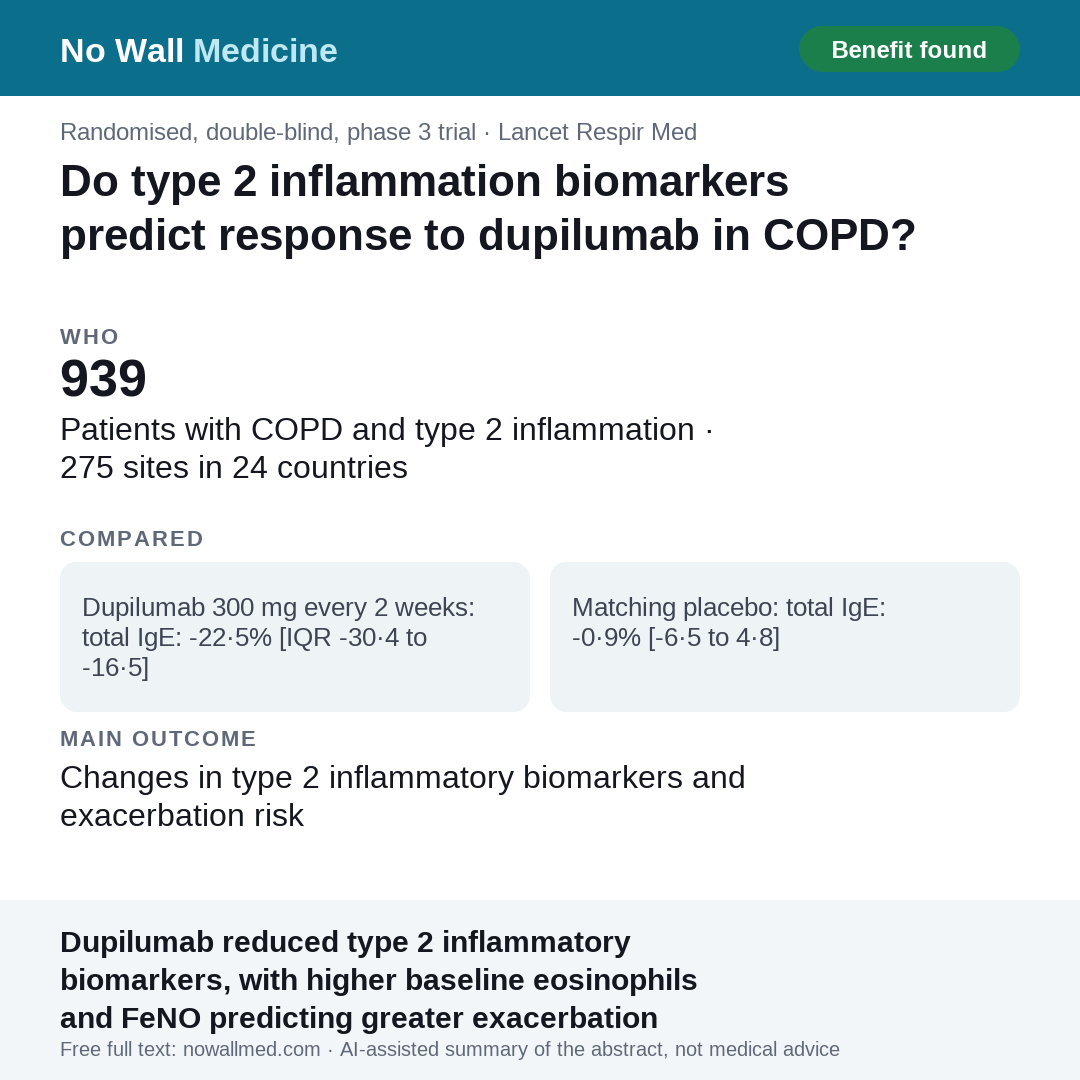
Type 2 inflammation biomarkers and their association with response to dupilumab in COPD (BOREAS): an analysis of a randomised, placebo-controlled, phase 3 trial
Randomised, double-blind, phase 3 trialBenefit found
Do type 2 inflammation biomarkers predict response to dupilumab in COPD?
Who
939
Patients with COPD and type 2 inflammation · 275 sites in 24 countries
Compared
Dupilumab 300 mg every 2 weeks: total IgE: -22·5% [IQR -30·4 to -16·5]
Matching placebo: total IgE: -0·9% [-6·5 to 4·8]
Main outcome
Changes in type 2 inflammatory biomarkers and exacerbation risk
Bottom line: Dupilumab reduced type 2 inflammatory biomarkers, with higher baseline eosinophils and FeNO predicting greater exacerbation reduction.
Funded by: Sanofi and Regeneron Pharmaceuticals
Lancet Respir Med · 2025-07-09Download image
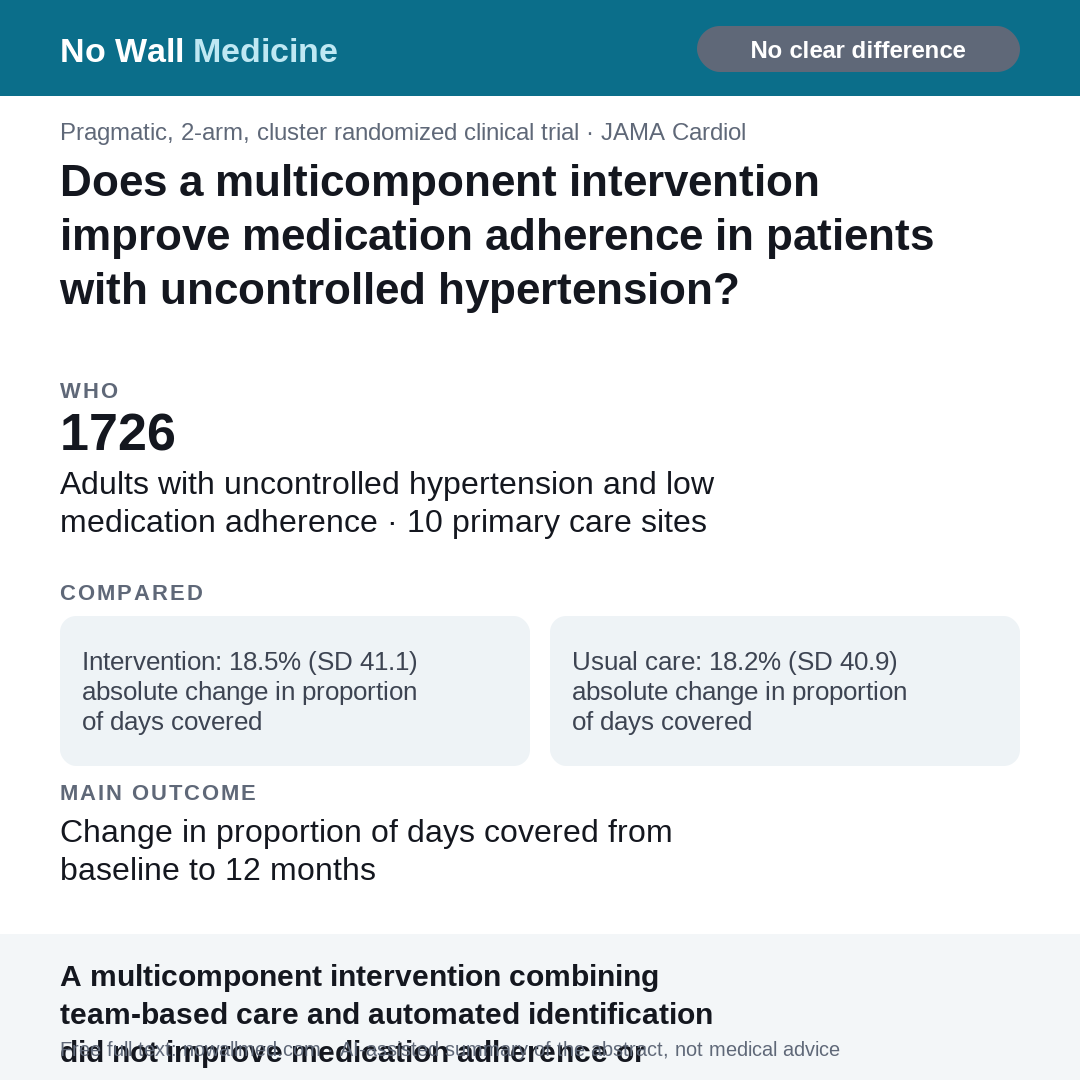
Medication Adherence in Hypertension: A Cluster Randomized Clinical Trial
Pragmatic, 2-arm, cluster randomized clinical trialNo clear difference
Does a multicomponent intervention improve medication adherence in patients with uncontrolled hypertension?
Who
1726
Adults with uncontrolled hypertension and low medication adherence · 10 primary care sites in New York
Compared
Intervention: 18.5% (SD 41.1) absolute change in proportion of days covered
Usual care: 18.2% (SD 40.9) absolute change in proportion of days covered
Main outcome
Change in proportion of days covered from baseline to 12 months
Result: -0.15 percentage point (95% CI, -4.06 to 3.76 percentage points)
Bottom line: A multicomponent intervention combining team-based care and automated identification did not improve medication adherence or blood pressure.
JAMA Cardiol · 2025-07-09Download image
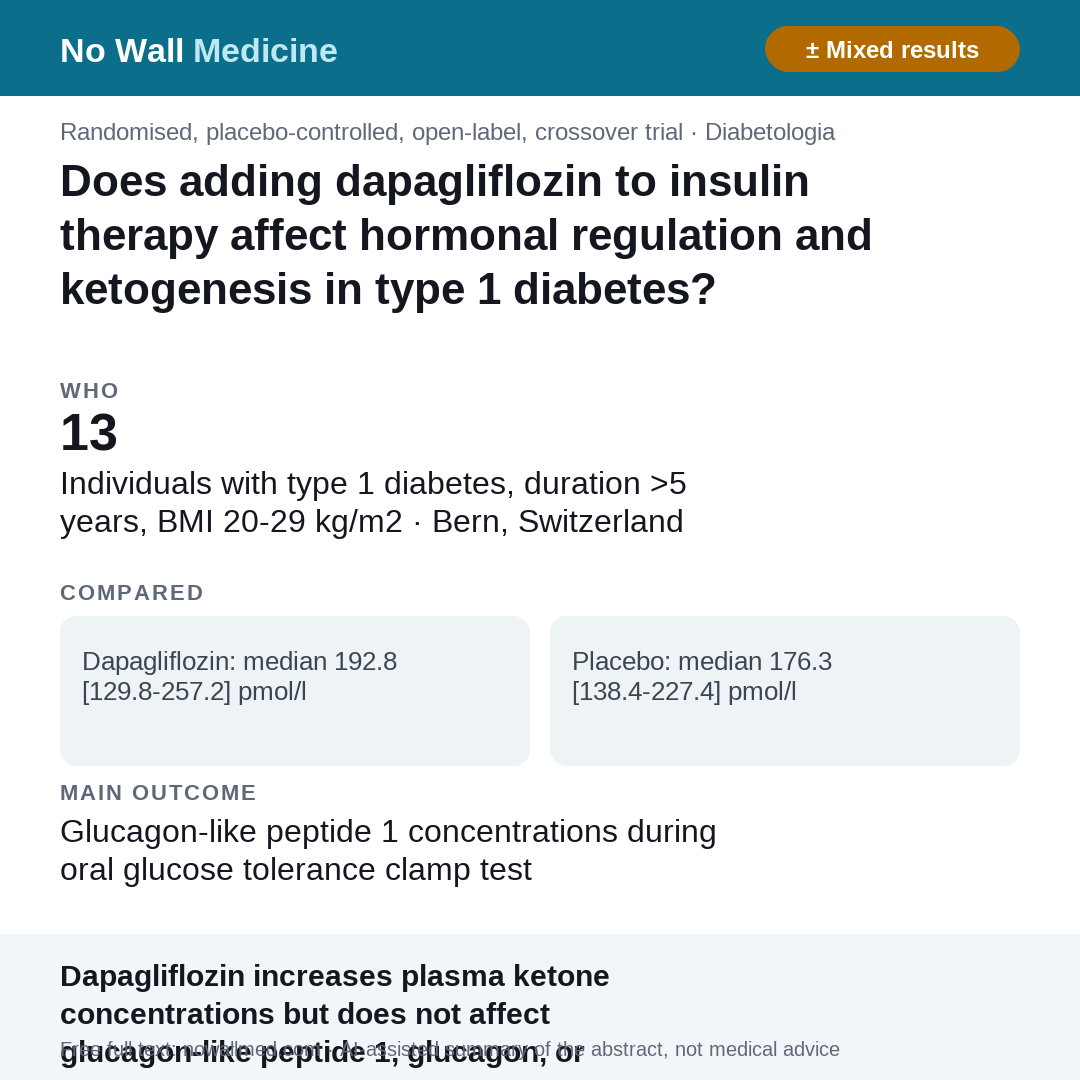
Dapagliflozin's impact on hormonal regulation and ketogenesis in type 1 diabetes: a randomised controlled crossover trial
Randomised, placebo-controlled, open-label, crossover trialMixed results
Does adding dapagliflozin to insulin therapy affect hormonal regulation and ketogenesis in type 1 diabetes?
Who
13
Individuals with type 1 diabetes, duration >5 years, BMI 20-29 kg/m2 · Bern, Switzerland
Compared
Dapagliflozin: median 192.8 [129.8-257.2] pmol/l
Placebo: median 176.3 [138.4-227.4] pmol/l
Main outcome
Glucagon-like peptide 1 concentrations during oral glucose tolerance clamp test
Bottom line: Dapagliflozin increases plasma ketone concentrations but does not affect glucagon-like peptide 1, glucagon, or somatostatin secretion.
Funded by: Swiss National Science Foundation
Diabetologia · 2025-07-09Download image