Visual abstracts
New randomized trials and meta-analyses from leading journals at a glance: who was studied, what was compared, and what was found. Every paper is free to read in full.
All specialtiesCardiology 4763Oncology 4042Gastroenterology & Hepatology 1902Infectious Disease 3756Neurology 1872Psychiatry & Mental Health 2214Pulmonology 2042Critical Care 1319Endocrinology & Diabetes 2544Pediatrics 2889Surgery 2479Orthopedics & Sports Medicine 917Neurosurgery 525Cardiothoracic & Vascular Surgery 656Plastic & Reconstructive Surgery 574Nephrology 1107Rheumatology 810Hematology 1090Dermatology 611Ophthalmology 532Obstetrics & Gynecology 1645Public & Global Health 1037Radiology & Imaging 617Anesthesiology 957Urology 745ENT (Otolaryngology) 494Emergency Medicine 481Allergy & Immunology 309Geriatrics 972Family Medicine & Primary Care 533Medical Genetics & Genomics 659Pathology & Laboratory Medicine 156Physical Medicine & Rehabilitation 734Palliative Care 421Nutrition 1560Digital Health & AI 2133General Medicine 318
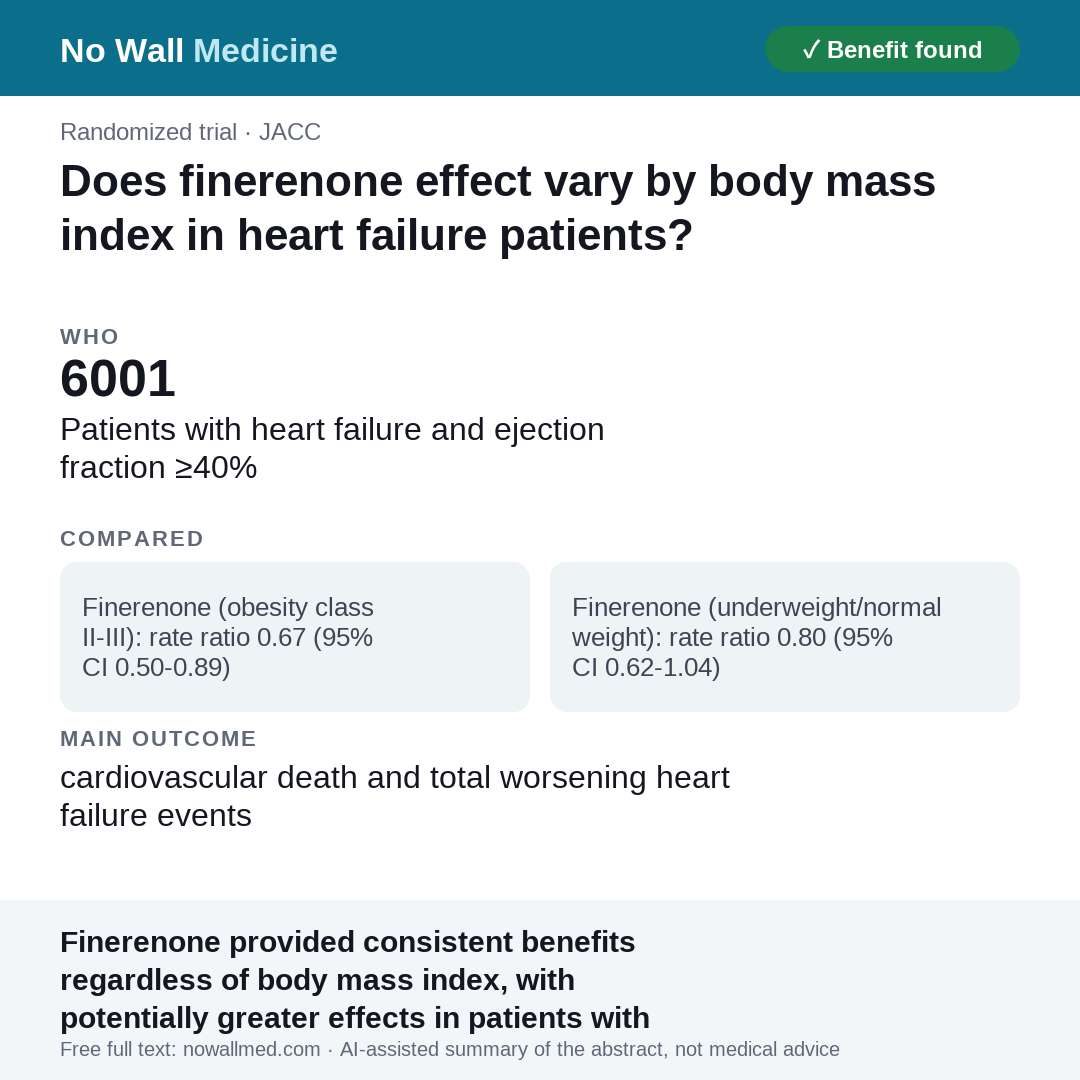
Finerenone, Obesity, and Heart Failure With Mildly Reduced/Preserved Ejection Fraction: Prespecified Analysis of FINEARTS-HF
Randomized trialBenefit found
Does finerenone effect vary by body mass index in heart failure patients?
Who
6001
Patients with heart failure and ejection fraction ≥40%
Compared
Finerenone (obesity class II-III): rate ratio 0.67 (95% CI 0.50-0.89)
Finerenone (underweight/normal weight): rate ratio 0.80 (95% CI 0.62-1.04)
Main outcome
cardiovascular death and total worsening heart failure events
Result: rate ratio 0.67 (95% CI 0.50-0.89) for obesity class II-III
Bottom line: Finerenone provided consistent benefits regardless of body mass index, with potentially greater effects in patients with higher BMI.
JACC · 2024-12-10Download image
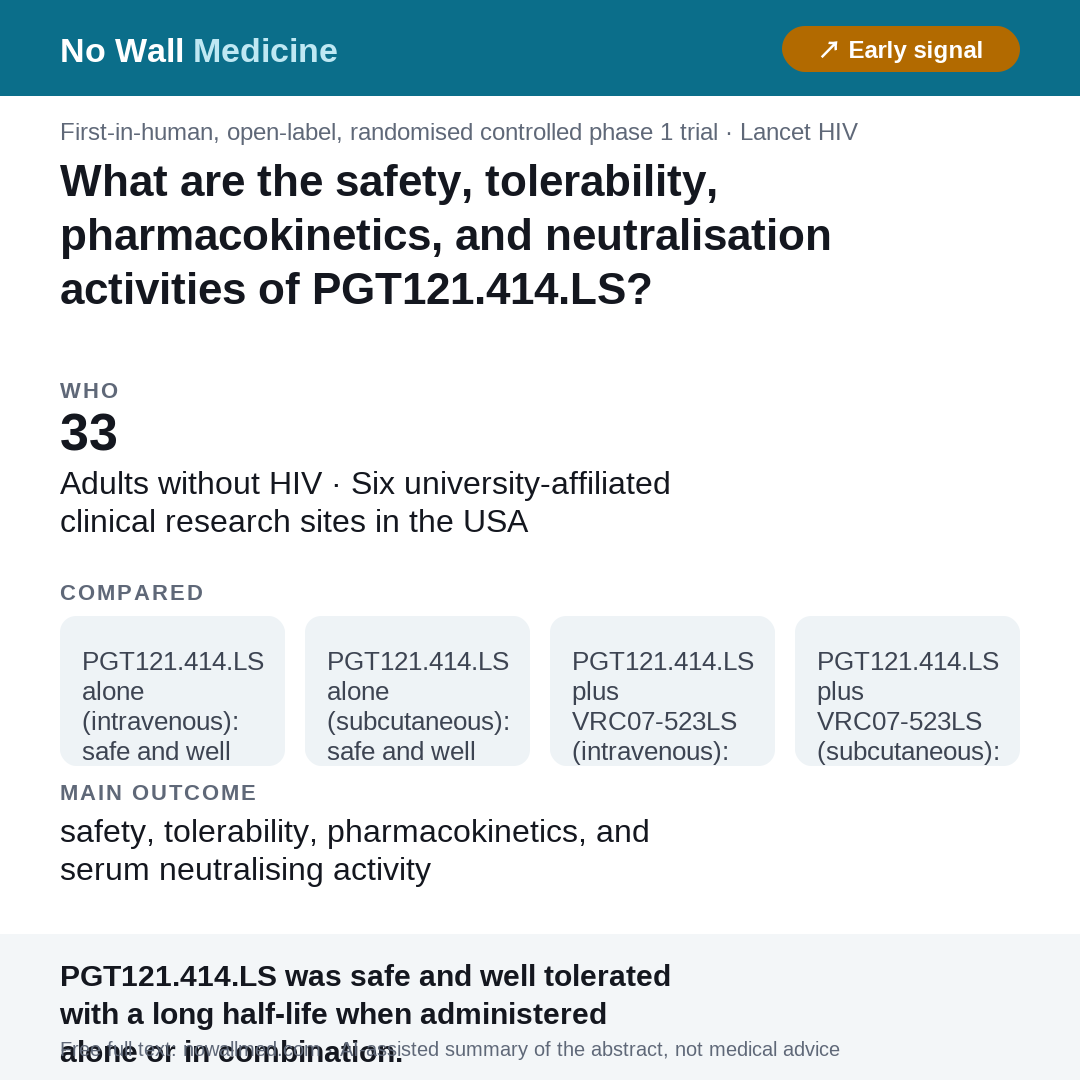
Safety, tolerability, pharmacokinetics, and neutralisation activities of the anti-HIV-1 monoclonal antibody PGT121.414.LS administered alone and in combination with VRC07-523LS in adults without HIV in the USA (HVTN 136/HPTN 092): a first-in-human, open-label, randomised controlled phase 1 trial
First-in-human, open-label, randomised controlled phase 1 trialEarly signal
What are the safety, tolerability, pharmacokinetics, and neutralisation activities of PGT121.414.LS?
Who
33
Adults without HIV · Six university-affiliated clinical research sites in the USA
Compared
PGT121.414.LS alone (intravenous): safe and well tolerated
PGT121.414.LS alone (subcutaneous): safe and well tolerated
PGT121.414.LS plus VRC07-523LS (intravenous): safe and well tolerated
PGT121.414.LS plus VRC07-523LS (subcutaneous): safe and well tolerated
Main outcome
safety, tolerability, pharmacokinetics, and serum neutralising activity
Result: elimination half-life 71 days (95% CI 66-75)
Bottom line: PGT121.414.LS was safe and well tolerated with a long half-life when administered alone or in combination.
Funded by: US National Institute of Allergy and Infectious Diseases and US National Institutes of Health
Lancet HIV · 2024-12-10Download image
The role of deep learning in diagnostic imaging of spondyloarthropathies: a systematic review
Systematic reviewKey finding
How can deep learning models improve diagnostic accuracy in imaging for spondyloarthropathies?
Who
Patients undergoing MRI, CT, and X-ray imaging for spondyloarthropathies
Compared
Deep learning models: AUCs up to 0.98
Traditional methods and experts
Main outcome
Diagnostic accuracy in spondyloarthropathies imaging
Bottom line: Deep learning models show high diagnostic accuracy in spondyloarthropathies imaging across multiple modalities, potentially matching expert radiologists.
Limitation: Small sample sizes in some studies and need for prospective and external validation.
Eur Radiol · 2024-12-10Download image

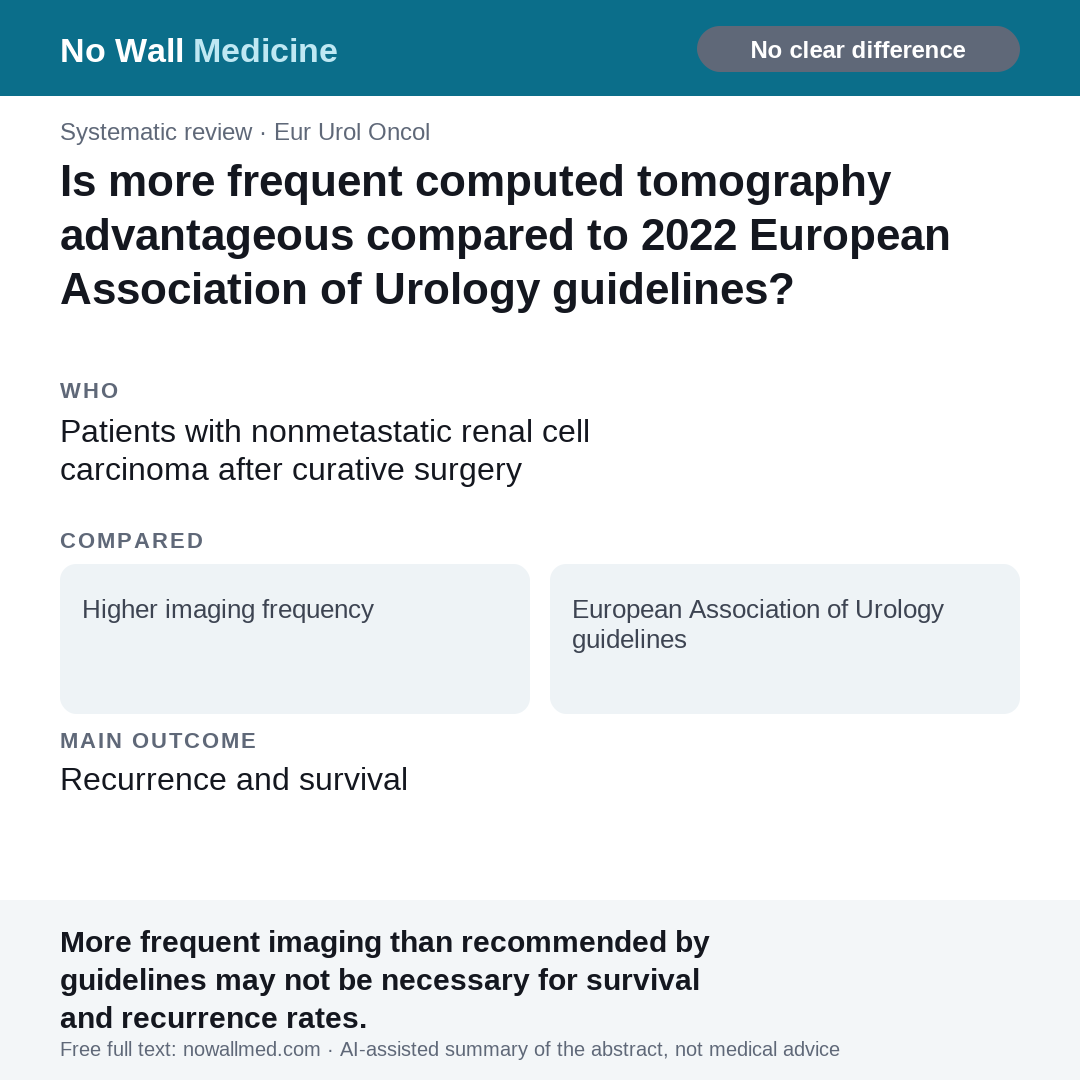
Is Frequent Imaging Necessary? Impact of Computed Tomography During Follow-up After Surgical Treatment for Nonmetastatic Renal Cell Carcinoma: A Systematic Review
Systematic reviewNo clear difference
Is more frequent computed tomography advantageous compared to 2022 European Association of Urology guidelines?
Who
Patients with nonmetastatic renal cell carcinoma after curative surgery
Compared
Higher imaging frequency
European Association of Urology guidelines
Main outcome
Recurrence and survival
Bottom line: More frequent imaging than recommended by guidelines may not be necessary for survival and recurrence rates.
Limitation: A meta-analysis was not suited due to clinical diversity and high risk of bias.
Eur Urol Oncol · 2024-12-10Download image
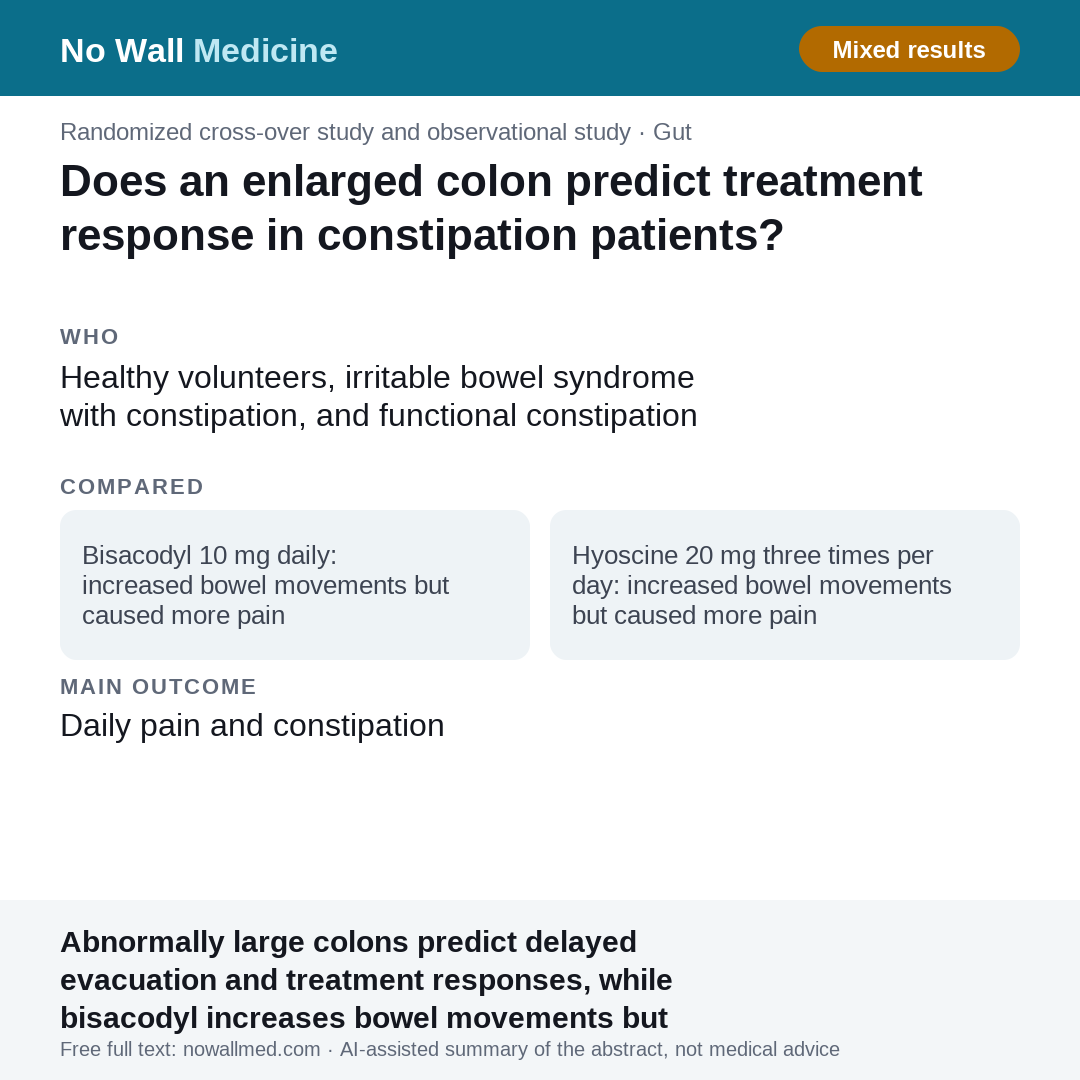
Combined MRI, high-resolution manometry and a randomised trial of bisacodyl versus hyoscine show the significance of an enlarged colon in constipation: the RECLAIM study
Randomized cross-over study and observational studyMixed results
Does an enlarged colon predict treatment response in constipation patients?
Who
Healthy volunteers, irritable bowel syndrome with constipation, and functional constipation patients
Compared
Bisacodyl 10 mg daily: increased bowel movements but caused more pain
Hyoscine 20 mg three times per day: increased bowel movements but caused more pain
Main outcome
Daily pain and constipation
Bottom line: Abnormally large colons predict delayed evacuation and treatment responses, while bisacodyl increases bowel movements but causes more pain.
Gut · 2024-12-10Download image
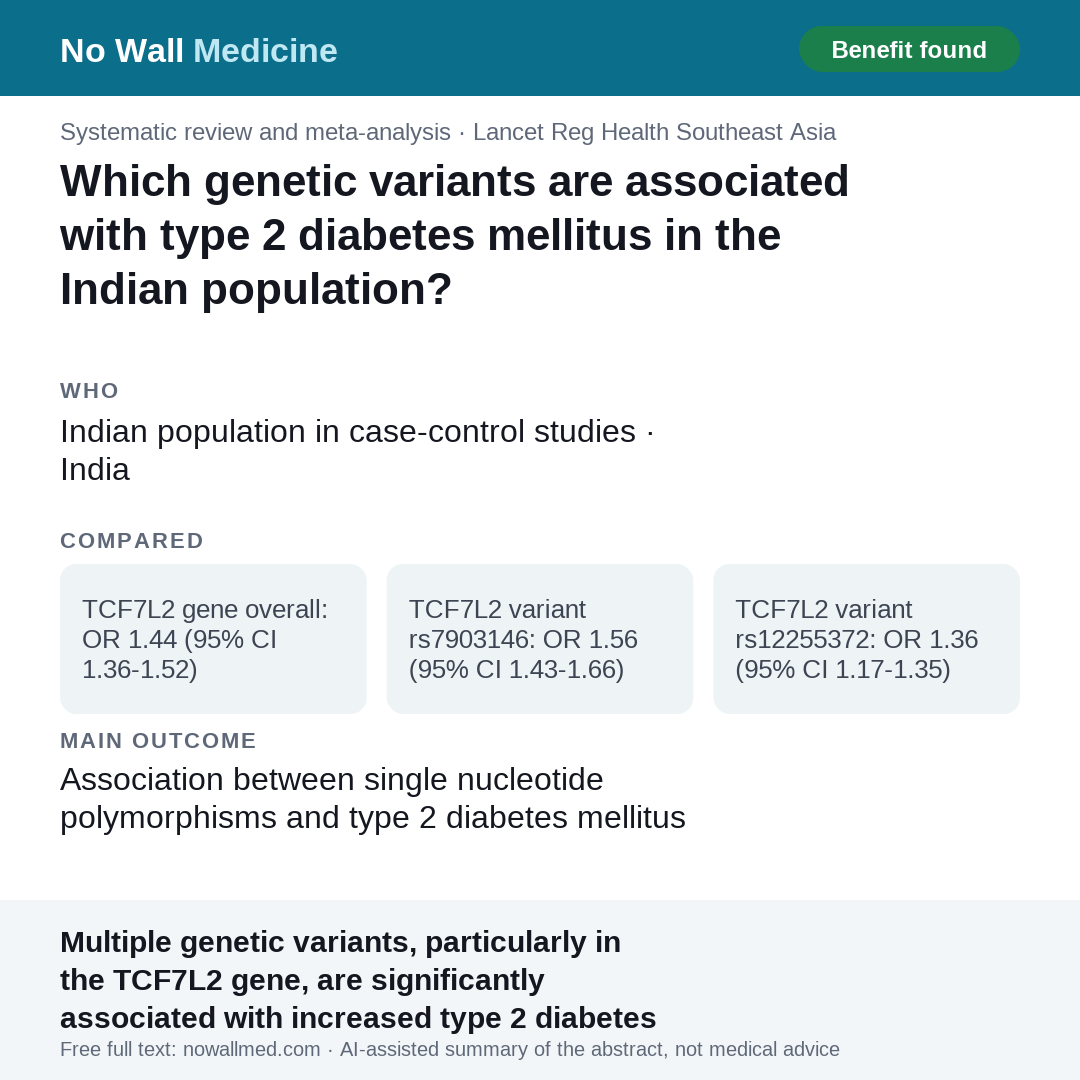
Genetic variants and type 2 diabetes in India: a systematic review and meta-analysis of associated polymorphisms in case-control studies
Systematic review and meta-analysisKey finding
Which genetic variants are associated with type 2 diabetes mellitus in the Indian population?
Who
Indian population in case-control studies · India
Compared
TCF7L2 gene overall: OR 1.44 (95% CI 1.36-1.52)
TCF7L2 variant rs7903146: OR 1.56 (95% CI 1.43-1.66)
TCF7L2 variant rs12255372: OR 1.36 (95% CI 1.17-1.35)
Main outcome
Association between single nucleotide polymorphisms and type 2 diabetes mellitus risk
Result: OR 1.44 (95% CI 1.36-1.52)
Bottom line: Multiple genetic variants, particularly in the TCF7L2 gene, are significantly associated with increased type 2 diabetes risk in Indians.
Funded by: Department of Biotechnology and Indian Council of Medical Research
Lancet Reg Health Southeast Asia · 2024-12-10Download image
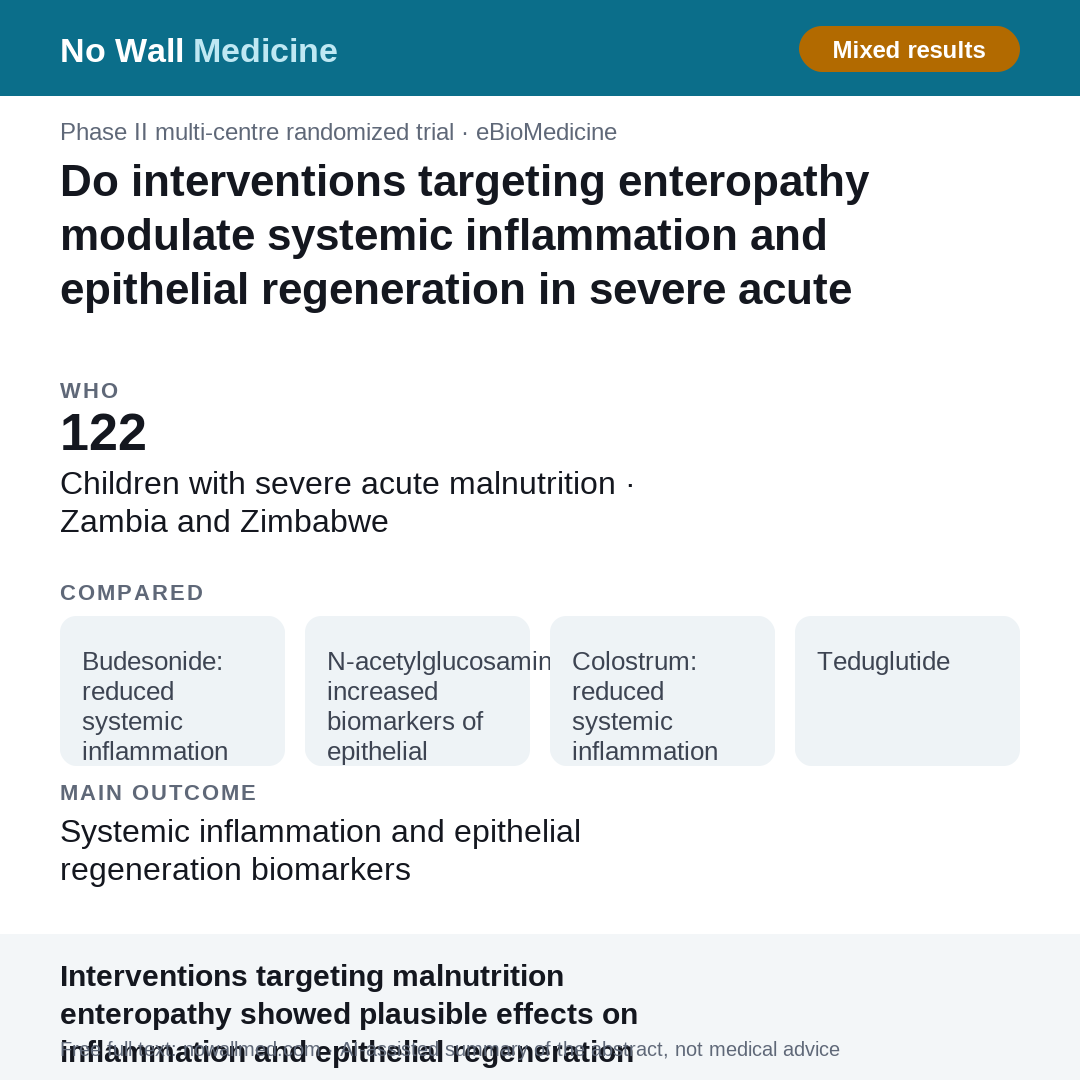
Therapeutic interventions targeting enteropathy in severe acute malnutrition modulate systemic and vascular inflammation and epithelial regeneration
Phase II multi-centre randomized trialMixed results
Do interventions targeting enteropathy modulate systemic inflammation and epithelial regeneration in severe acute malnutrition?
Who
122
Children with severe acute malnutrition · Zambia and Zimbabwe
Compared
Budesonide: reduced systemic inflammation
N-acetylglucosamine: increased biomarkers of epithelial regeneration and circulating growth factors
Colostrum: reduced systemic inflammation and suggested better restoration of epithelial barrier function
Teduglutide
Main outcome
Systemic inflammation and epithelial regeneration biomarkers
Bottom line: Interventions targeting malnutrition enteropathy showed plausible effects on inflammation and epithelial regeneration biomarkers in children.
Funded by: Wellcome, Medical Research Council (UK), and Takeda UK
eBioMedicine · 2024-12-10Download image
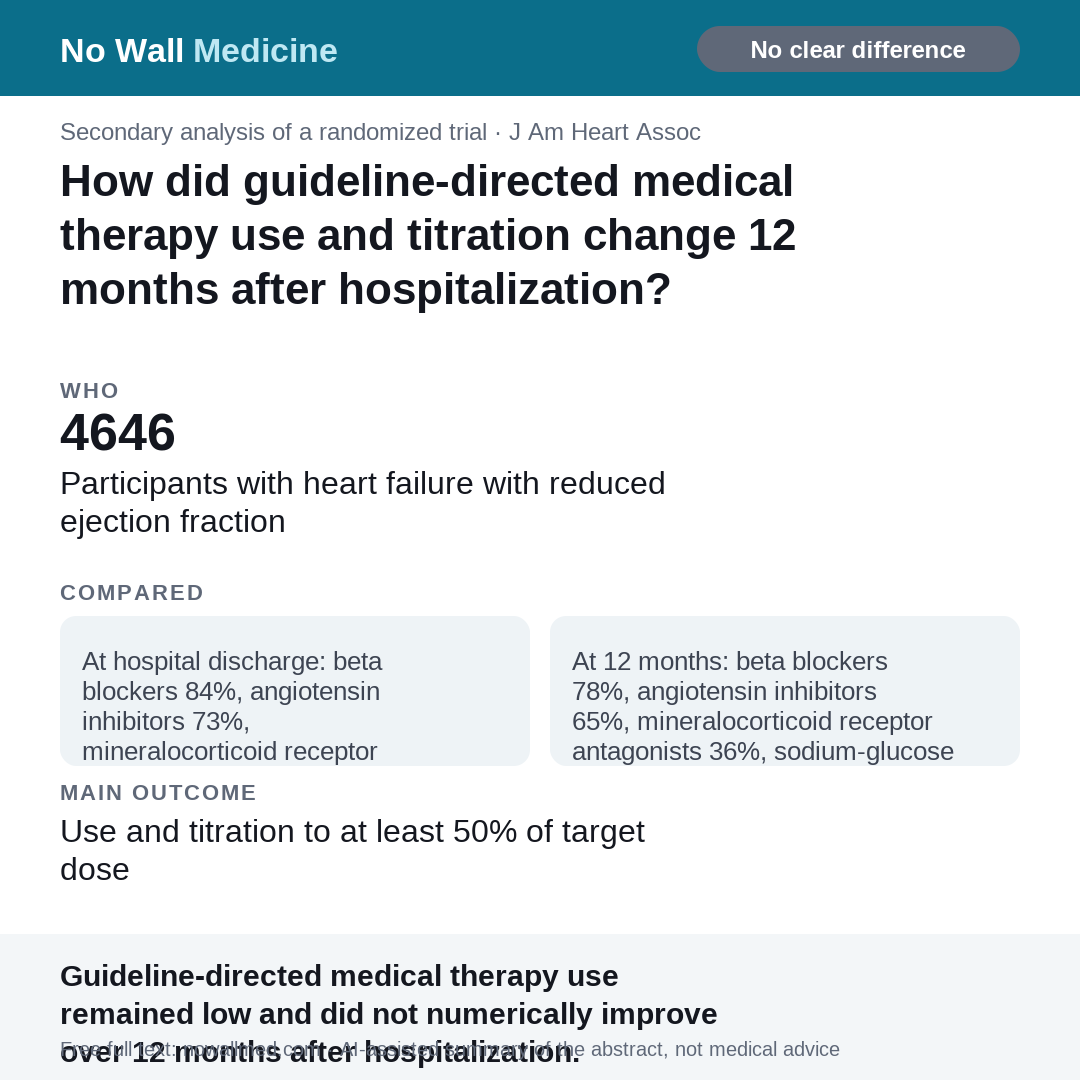
Guideline-Directed Medical Therapy After Hospitalization for Acute Heart Failure: Insights From the CONNECT-HF
Secondary analysis of a randomized trialNo clear difference
How did guideline-directed medical therapy use and titration change 12 months after hospitalization?
Who
4646
Participants with heart failure with reduced ejection fraction
Compared
At hospital discharge: beta blockers 84%, angiotensin inhibitors 73%, mineralocorticoid receptor antagonists 39%, sodium-glucose cotransporter 2 inhibitors 1.5%
At 12 months: beta blockers 78%, angiotensin inhibitors 65%, mineralocorticoid receptor antagonists 36%, sodium-glucose cotransporter 2 inhibitors 2.1%
Main outcome
Use and titration to at least 50% of target dose
Bottom line: Guideline-directed medical therapy use remained low and did not numerically improve over 12 months after hospitalization.
J Am Heart Assoc · 2024-12-10Download image
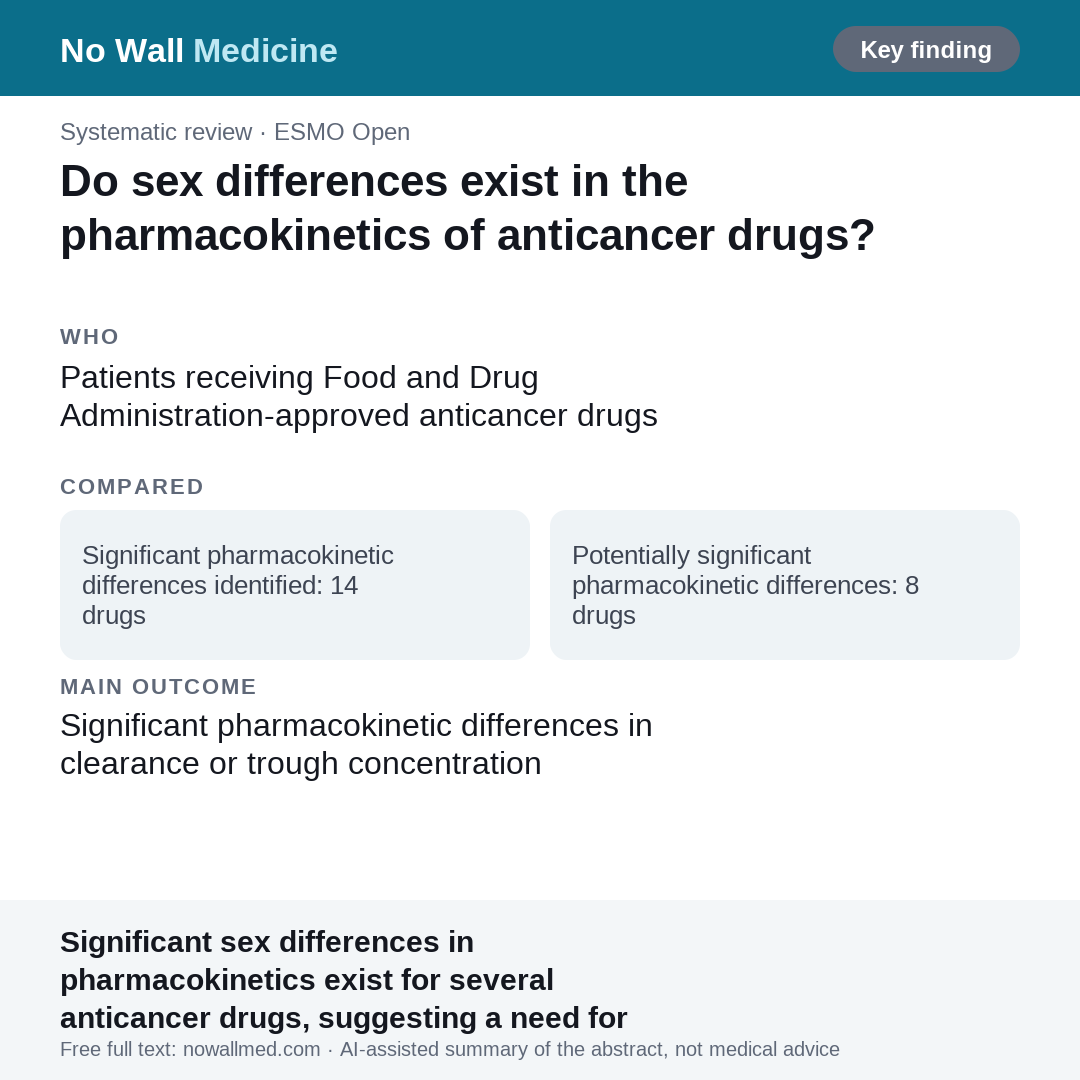
Sex differences in the pharmacokinetics of anticancer drugs: a systematic review
Systematic reviewKey finding
Do sex differences exist in the pharmacokinetics of anticancer drugs?
Who
Patients receiving Food and Drug Administration-approved anticancer drugs
Compared
Significant pharmacokinetic differences identified: 14 drugs
Potentially significant pharmacokinetic differences: 8 drugs
Main outcome
Significant pharmacokinetic differences in clearance or trough concentration
Bottom line: Significant sex differences in pharmacokinetics exist for several anticancer drugs, suggesting a need for sex-specific dosing strategies.
Limitation: None of the studies included sex-based summaries to assess impact on efficacy or safety.
ESMO Open · 2024-12-10Download image
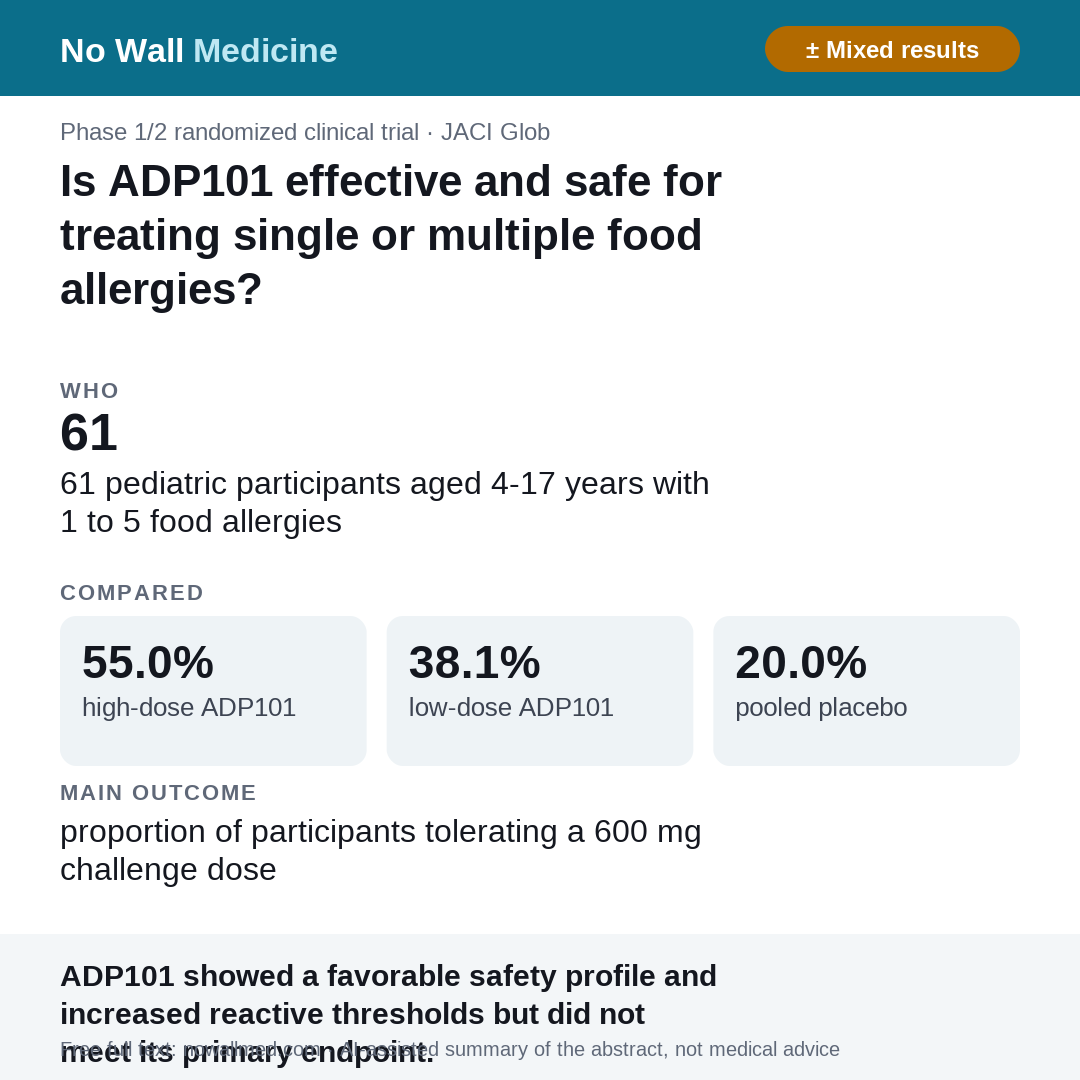
ADP101 multifood oral immunotherapy for food-allergic patients: Harmony phase 1/2 randomized clinical trial
Phase 1/2 randomized clinical trialMixed results
Is ADP101 effective and safe for treating single or multiple food allergies?
Who
61
61 pediatric participants aged 4-17 years with 1 to 5 food allergies
Compared
55.0%high-dose ADP101
38.1%low-dose ADP101
20.0%pooled placebo
Main outcome
proportion of participants tolerating a 600 mg challenge dose
Bottom line: ADP101 showed a favorable safety profile and increased reactive thresholds but did not meet its primary endpoint.
Limitation: The study did not meet its primary endpoint after adjusting for multiple comparisons.
JACI Glob · 2024-12-10Download image
Characteristics and Popularity of Videos of Abusive Head Trauma Prevention: Systematic Appraisal
Systematic appraisalMixed results
What are the characteristics and popularity of abusive head trauma prevention videos?
Who
53
English or French videos of abusive head trauma prevention · Internet
Compared
Depicting infant being shaken: β=1.74, 95% CI 1.06-2.85
Use of text or headers: β=2.15, 95% CI 1.08-4.26
Main outcome
Video Power Index popularity
Bottom line: Prevention videos were high quality but popularity was associated with depicting shaking and using text or headers.
J Med Internet Res · 2024-12-10Download image

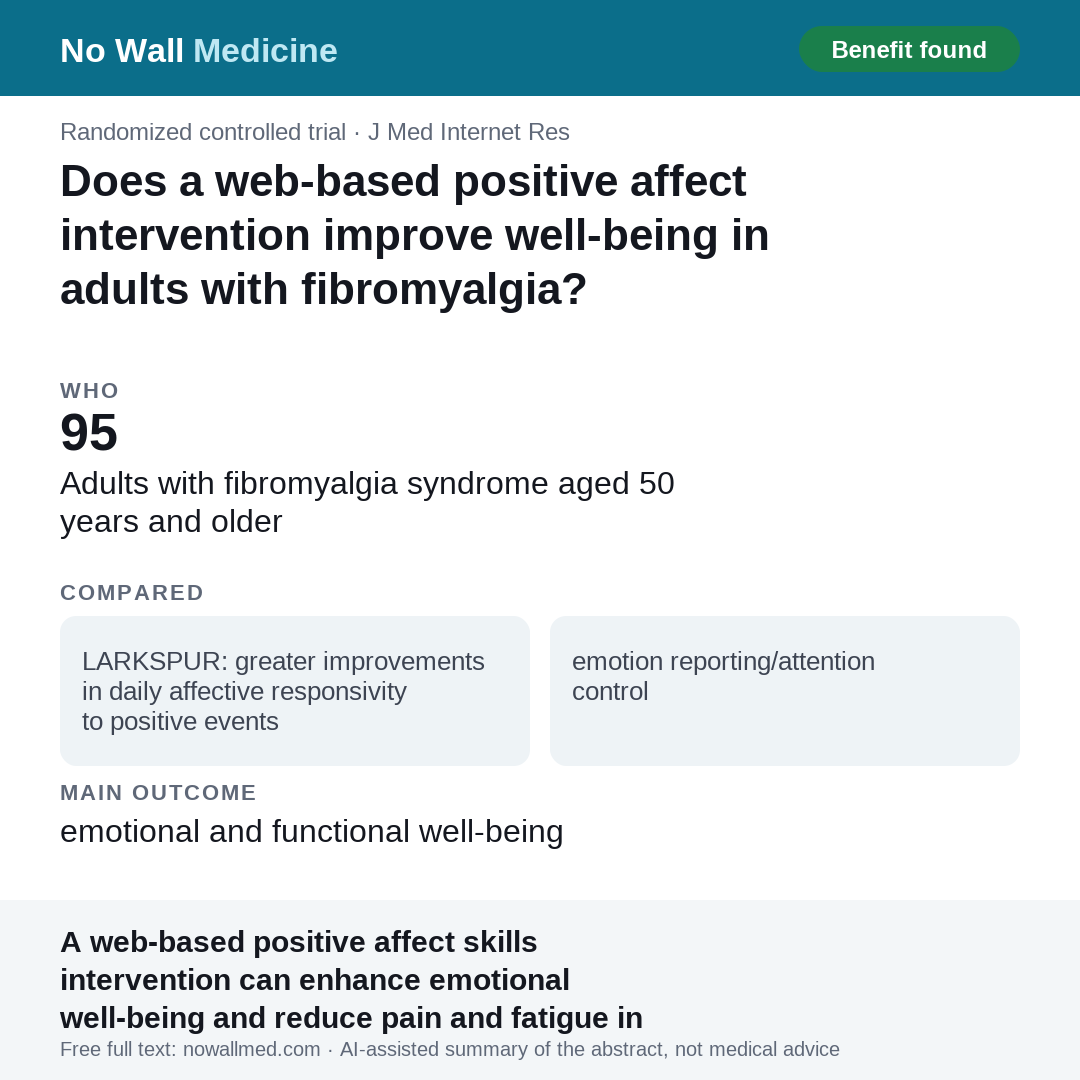
Targeting Daily Positive Events to Improve Emotional and Functional Well-Being in Adults With Fibromyalgia: Insights From the LARKSPUR Randomized Controlled Trial
Randomized controlled trialBenefit found
Does a web-based positive affect intervention improve well-being in adults with fibromyalgia?
Who
95
Adults with fibromyalgia syndrome aged 50 years and older
Compared
LARKSPUR: greater improvements in daily affective responsivity to positive events
emotion reporting/attention control
Main outcome
emotional and functional well-being
Result: negative affect bL-bC=-0.06, 95% HPD -0.10 to -0.02; positive affect bL-bC=0.10, 95% HPD 0.02-0.19
Bottom line: A web-based positive affect skills intervention can enhance emotional well-being and reduce pain and fatigue in fibromyalgia.
J Med Internet Res · 2024-12-10Download image
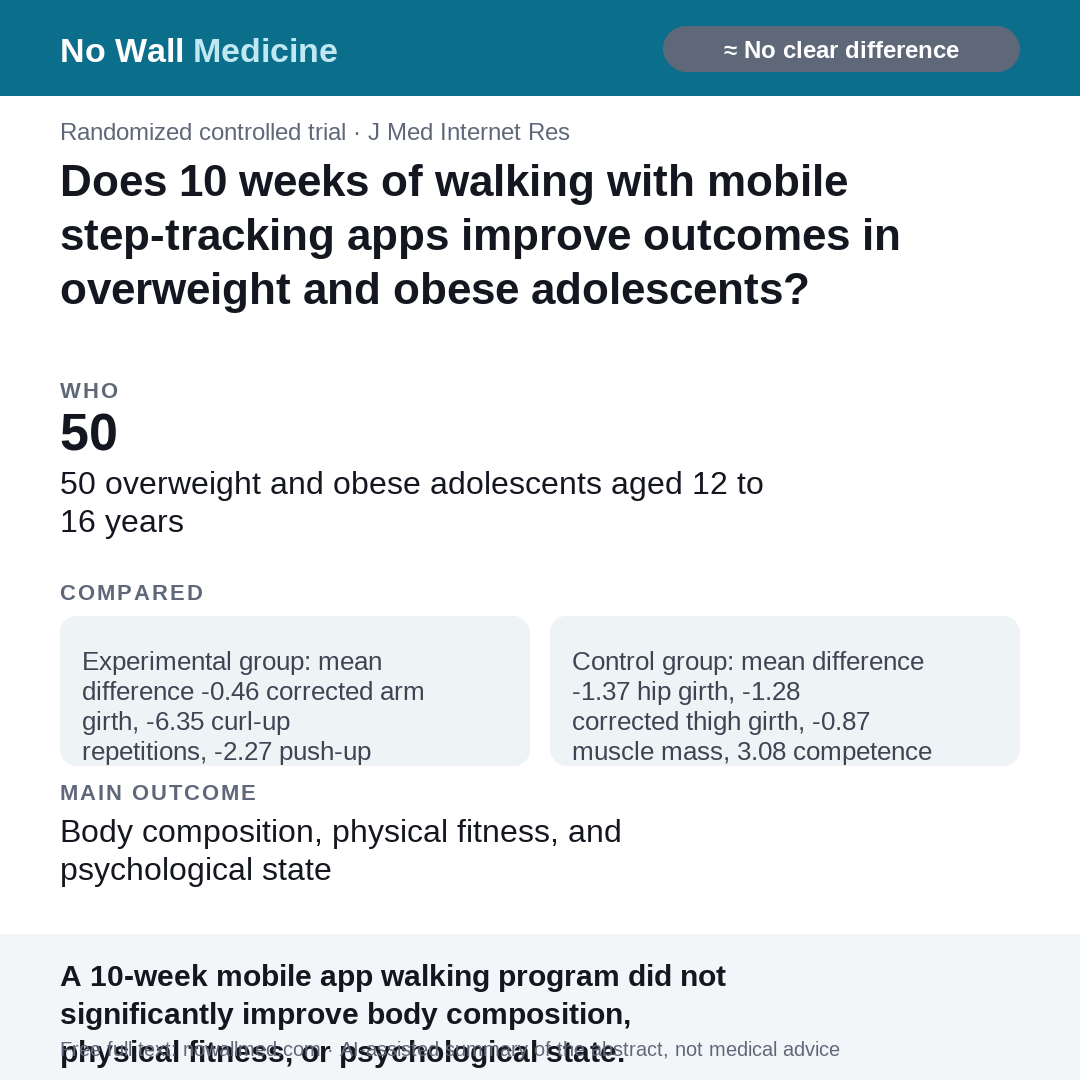
Effects of 10 Weeks of Walking With Mobile Step-Tracking Apps on Body Composition, Fitness, and Psychological State in Adolescents Who Are Overweight and Obese: Randomized Controlled Trial
Randomized controlled trialNo clear difference
Does 10 weeks of walking with mobile step-tracking apps improve outcomes in overweight and obese adolescents?
Who
50
50 overweight and obese adolescents aged 12 to 16 years
Compared
Experimental group: mean difference -0.46 corrected arm girth, -6.35 curl-up repetitions, -2.27 push-up repetitions
Control group: mean difference -1.37 hip girth, -1.28 corrected thigh girth, -0.87 muscle mass, 3.08 competence
Main outcome
Body composition, physical fitness, and psychological state
Bottom line: A 10-week mobile app walking program did not significantly improve body composition, physical fitness, or psychological state.
J Med Internet Res · 2024-12-10Download image
Biomarker-Guided Antibiotic Duration for Hospitalized Patients With Suspected Sepsis: The ADAPT-Sepsis Randomized Clinical Trial
Multicenter, intervention-concealed randomized clinical trialBenefit found
Does procalcitonin or C-reactive protein monitoring reduce antibiotic duration safely?
Who
2760
Hospitalized adults with suspected sepsis requiring intensive care · 41 United Kingdom National Health Service intensive care units
Compared
Daily procalcitonin-guided protocol: 9.8 [SD, 7.2] days
Daily C-reactive protein-guided protocol: 10.6 [7.7] days
Standard care: 10.7 [SD, 7.6] days
Main outcome
Total duration of antibiotics and 28-day all-cause mortality
Result: mean difference 0.88 days (95% CI, 0.19 to 1.58)
Bottom line: Daily procalcitonin-guided protocols safely reduce antibiotic duration compared to standard care, whereas C-reactive protein guidance does not.
JAMA · 2024-12-09Download image

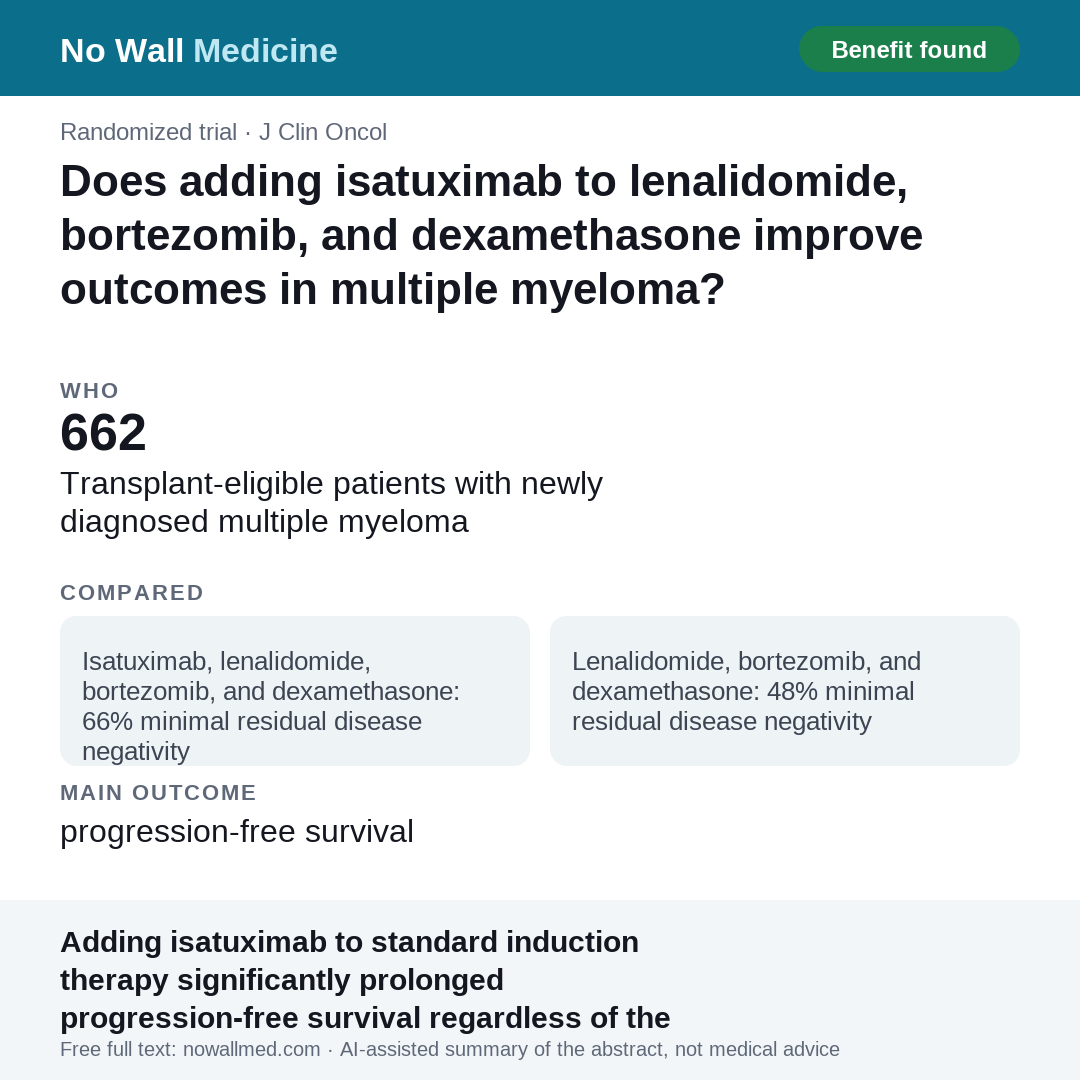
Isatuximab, Lenalidomide, Bortezomib, and Dexamethasone Induction Therapy for Transplant-Eligible Newly Diagnosed Multiple Myeloma: Final Part 1 Analysis of the GMMG-HD7 Trial
Randomized trialBenefit found
Does adding isatuximab to lenalidomide, bortezomib, and dexamethasone improve outcomes in multiple myeloma?
Who
662
Transplant-eligible patients with newly diagnosed multiple myeloma
Compared
Isatuximab, lenalidomide, bortezomib, and dexamethasone: 66% minimal residual disease negativity
Lenalidomide, bortezomib, and dexamethasone: 48% minimal residual disease negativity
Main outcome
progression-free survival
Result: hazard ratio 0.70 (95% CI 0.52 to 0.95)
Bottom line: Adding isatuximab to standard induction therapy significantly prolonged progression-free survival regardless of the maintenance strategy used.
J Clin Oncol · 2024-12-09Download image
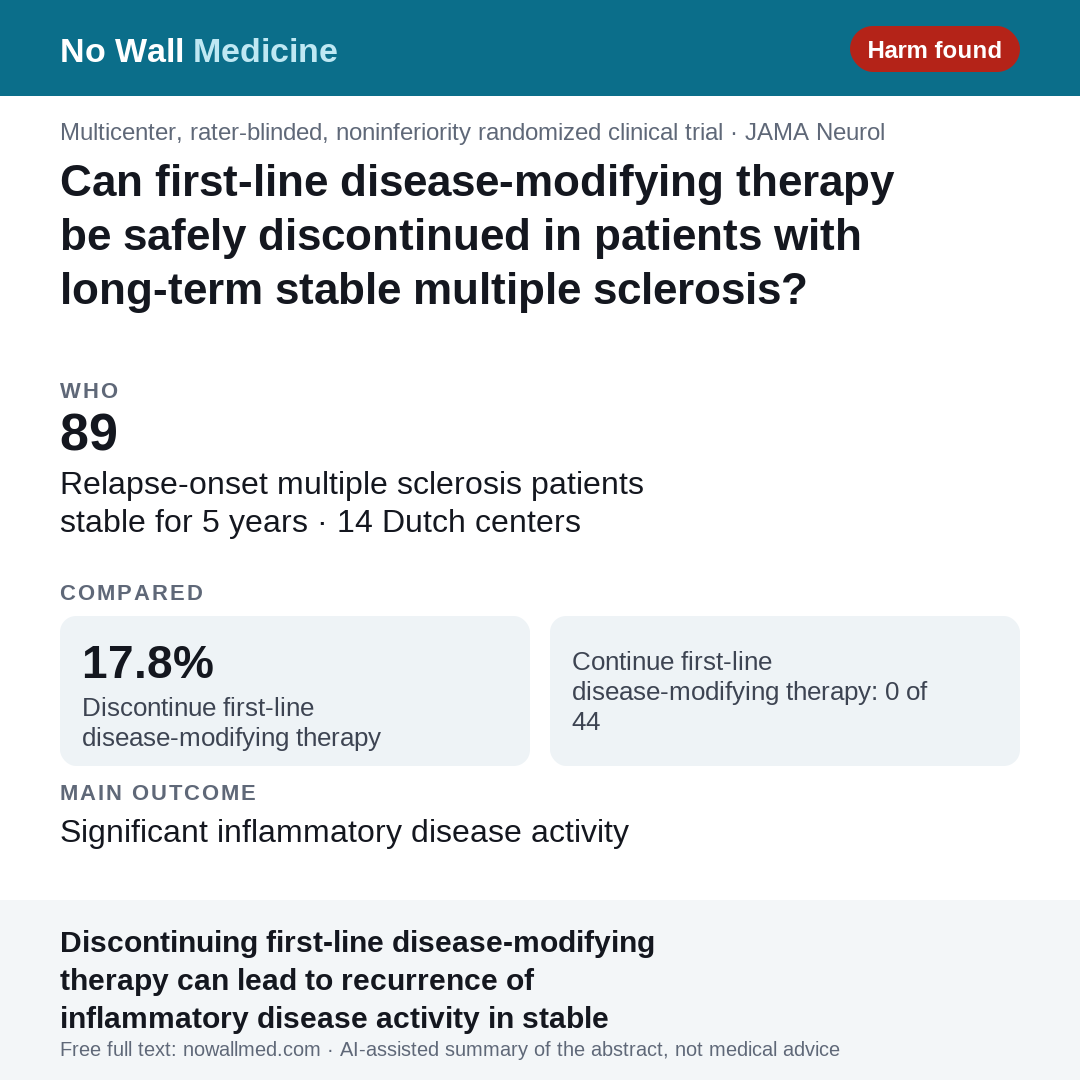
Discontinuation of First-Line Disease-Modifying Therapy in Patients With Stable Multiple Sclerosis: The DOT-MS Randomized Clinical Trial
Multicenter, rater-blinded, noninferiority randomized clinical trialHarm found
Can first-line disease-modifying therapy be safely discontinued in patients with long-term stable multiple sclerosis?
Who
89
Relapse-onset multiple sclerosis patients stable for 5 years · 14 Dutch centers
Compared
17.8%Discontinue first-line disease-modifying therapy
Continue first-line disease-modifying therapy: 0 of 44
Main outcome
Significant inflammatory disease activity
Bottom line: Discontinuing first-line disease-modifying therapy can lead to recurrence of inflammatory disease activity in stable multiple sclerosis patients.
JAMA Neurol · 2024-12-09Download image
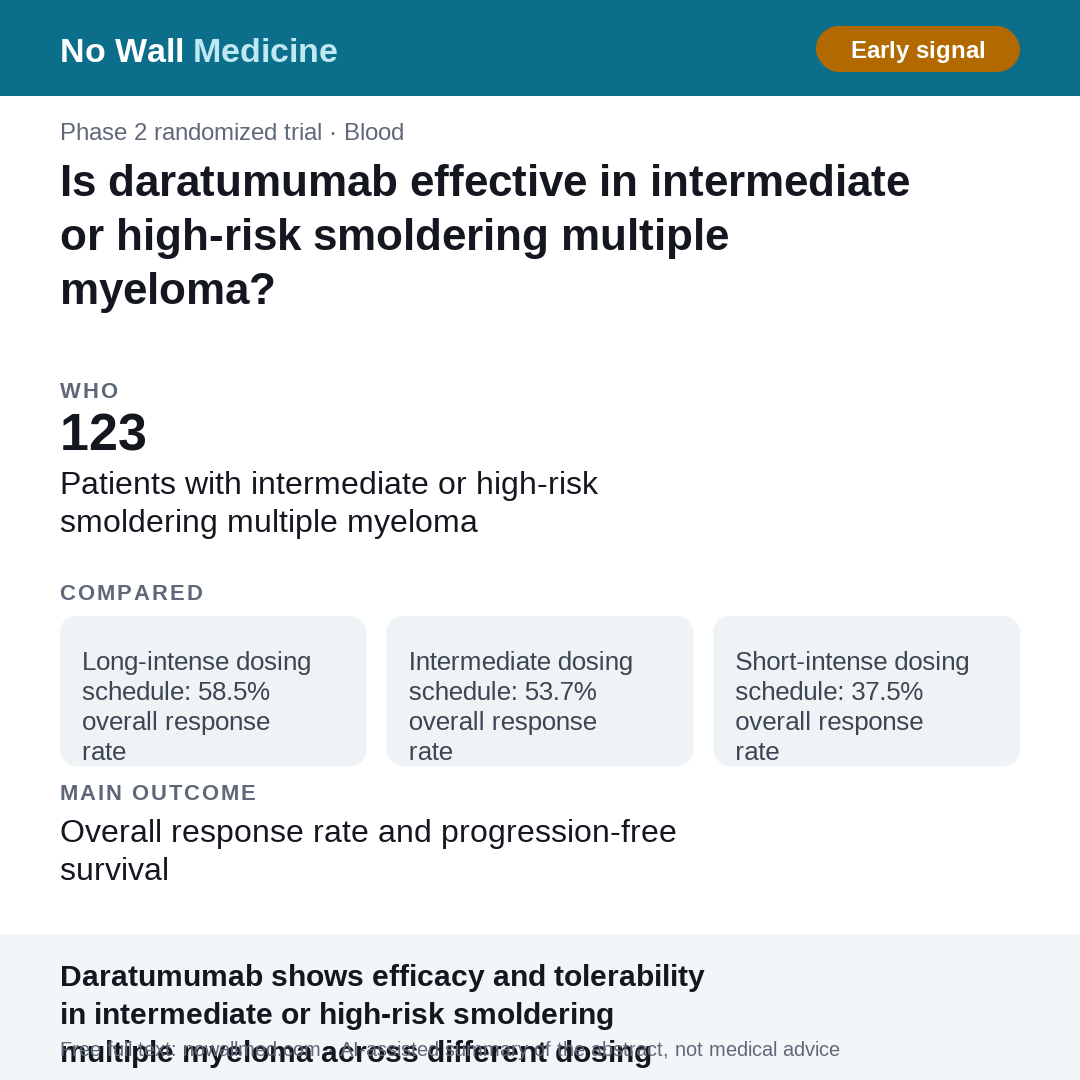
Efficacy and safety of daratumumab in intermediate/high-risk smoldering multiple myeloma: final analysis of CENTAURUS
Phase 2 randomized trialEarly signal
Is daratumumab effective in intermediate or high-risk smoldering multiple myeloma?
Who
123
Patients with intermediate or high-risk smoldering multiple myeloma
Compared
Long-intense dosing schedule: 58.5% overall response rate
Intermediate dosing schedule: 53.7% overall response rate
Short-intense dosing schedule: 37.5% overall response rate
Main outcome
Overall response rate and progression-free survival
Bottom line: Daratumumab shows efficacy and tolerability in intermediate or high-risk smoldering multiple myeloma across different dosing schedules.
Blood · 2024-12-09Download image
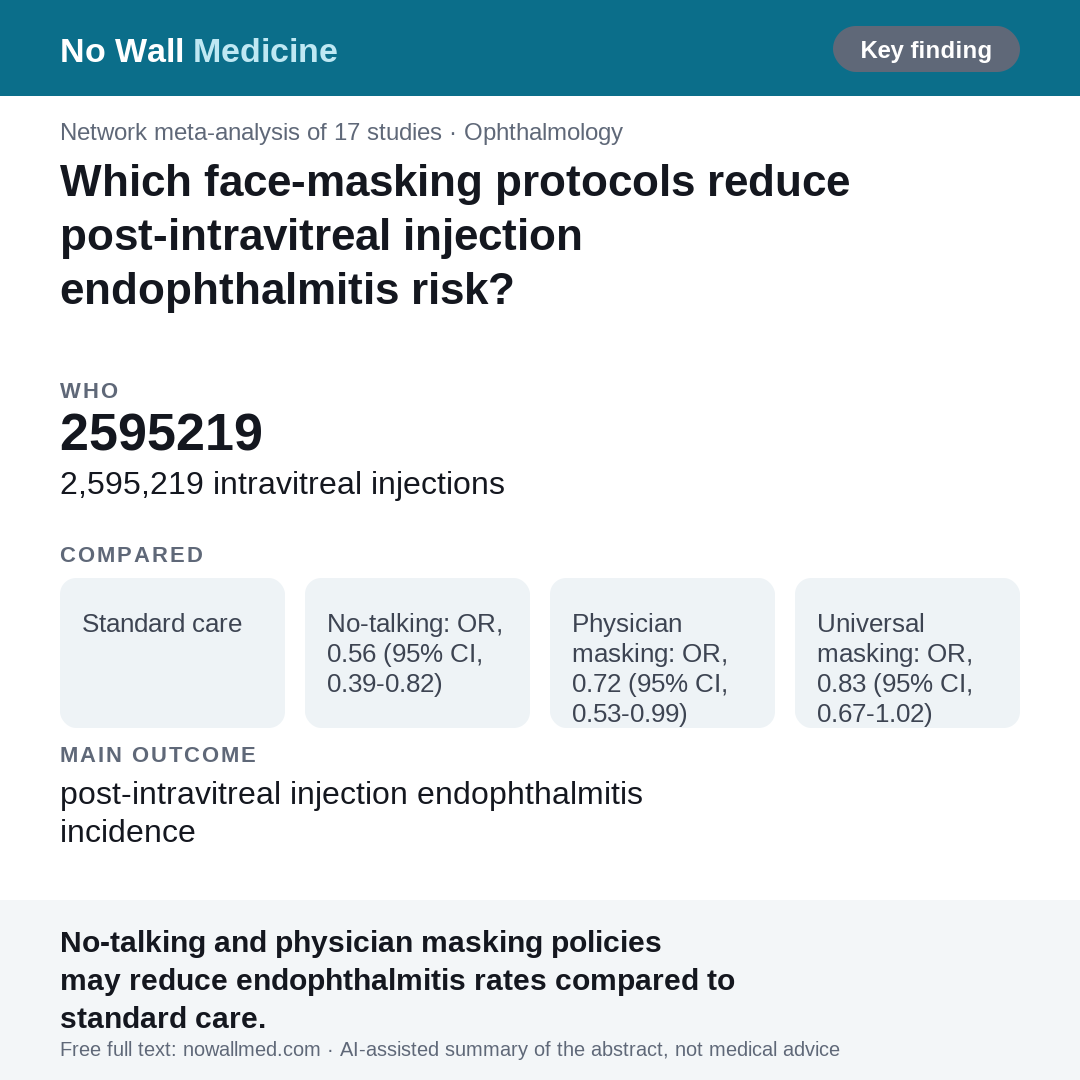
Face Masking and Risk of Endophthalmitis after Intravitreal Injection: A Network Meta-analysis of 2.6 Million Injections
Network meta-analysis of 17 studiesKey finding
Which face-masking protocols reduce post-intravitreal injection endophthalmitis risk?
Who
2595219
2,595,219 intravitreal injections
Compared
Standard care
No-talking: OR, 0.56 (95% CI, 0.39-0.82)
Physician masking: OR, 0.72 (95% CI, 0.53-0.99)
Universal masking: OR, 0.83 (95% CI, 0.67-1.02)
Main outcome
post-intravitreal injection endophthalmitis incidence
Result: no-talking OR, 0.56 (95% CI, 0.39-0.82)
Bottom line: No-talking and physician masking policies may reduce endophthalmitis rates compared to standard care.
Limitation: Low- or very low-certainty evidence and limited study power for specific culture outcomes.
Ophthalmology · 2024-12-09Download image
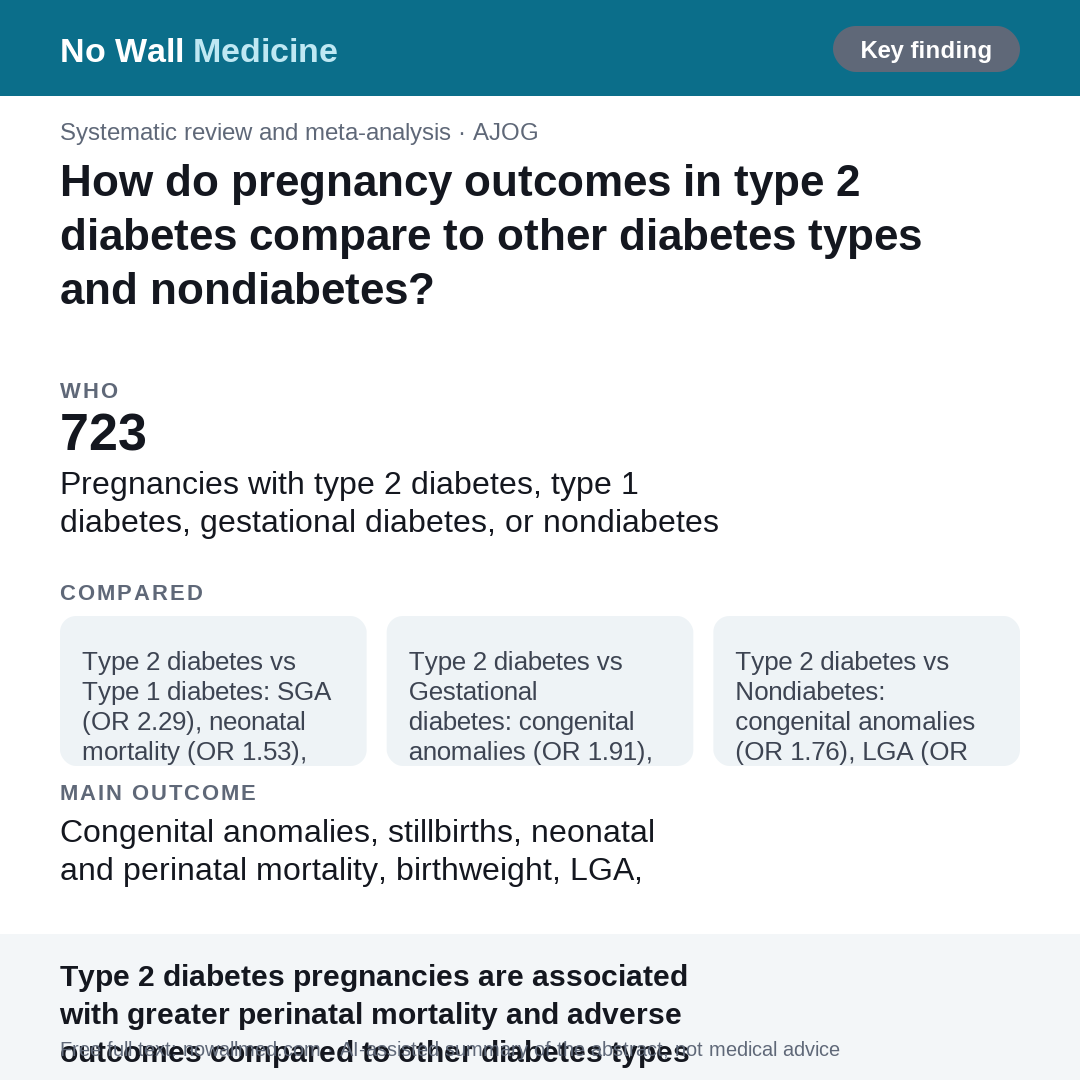
Pregnancy outcomes in type 2 diabetes: a systematic review and meta-analysis
Systematic review and meta-analysisKey finding
How do pregnancy outcomes in type 2 diabetes compare to other diabetes types and nondiabetes?
Who
723
Pregnancies with type 2 diabetes, type 1 diabetes, gestational diabetes, or nondiabetes
Compared
Type 2 diabetes vs Type 1 diabetes: SGA (OR 2.29), neonatal mortality (OR 1.53), perinatal mortality (OR 1.31)
Type 2 diabetes vs Gestational diabetes: congenital anomalies (OR 1.91), LGA (OR 3.49), neonatal mortality (OR 3.96), stillbirth (OR 16.55)
Type 2 diabetes vs Nondiabetes: congenital anomalies (OR 1.76), LGA (OR 2.79), perinatal mortality (OR 4.18), stillbirth (OR 7.27)
Main outcome
Congenital anomalies, stillbirths, neonatal and perinatal mortality, birthweight, LGA, SGA, and macrosomia
Bottom line: Type 2 diabetes pregnancies are associated with greater perinatal mortality and adverse outcomes compared to other diabetes types and nondiabetes.
AJOG · 2024-12-09Download image
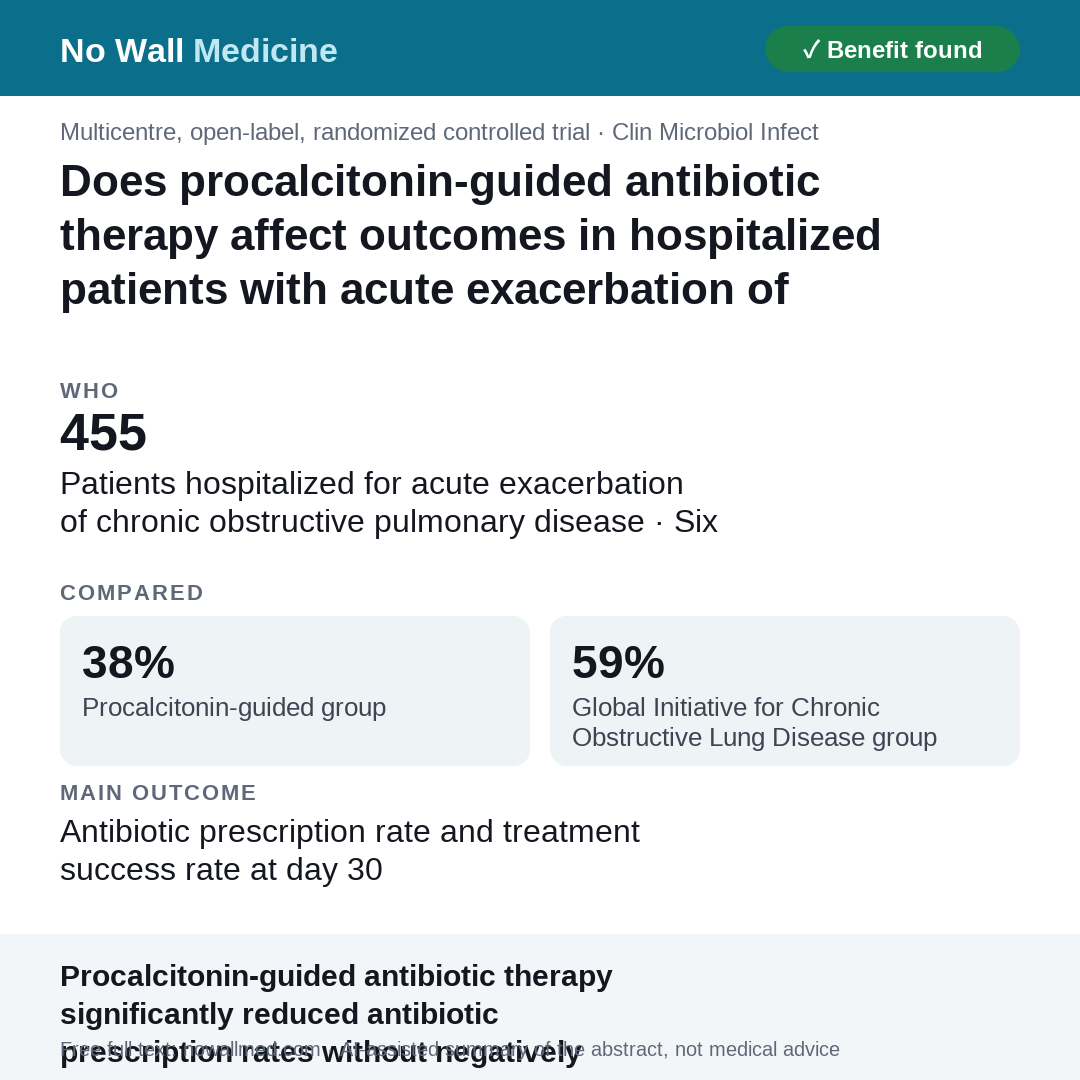
Procalcitonin-guided use of antibiotic in hospitalized patients with acute exacerbation of chronic obstructive pulmonary disease: a randomized clinical trial
Multicentre, open-label, randomized controlled trialBenefit found
Does procalcitonin-guided antibiotic therapy affect outcomes in hospitalized patients with acute exacerbation of chronic obstructive pulmonary disease?
Who
455
Patients hospitalized for acute exacerbation of chronic obstructive pulmonary disease · Six hospitals in China
Compared
38%Procalcitonin-guided group (88/229)
59%Global Initiative for Chronic Obstructive Lung Disease group (134/226)
Main outcome
Antibiotic prescription rate and treatment success rate at day 30
Result: difference -21%; 95% CI: -30% to -12%
Bottom line: Procalcitonin-guided antibiotic therapy significantly reduced antibiotic prescription rates without negatively affecting treatment success in patients with acute exacerbation of chronic obstructive pulmonary disease.
Clin Microbiol Infect · 2024-12-09Download image