Visual abstracts
New randomized trials and meta-analyses from leading journals at a glance: who was studied, what was compared, and what was found. Every paper is free to read in full.
All specialtiesCardiology 2286Oncology 1942Gastroenterology & Hepatology 862Infectious Disease 1424Neurology 916Psychiatry & Mental Health 1085Pulmonology 954Critical Care 633Endocrinology & Diabetes 1198Pediatrics 1335Surgery 1152Orthopedics & Sports Medicine 415Neurosurgery 282Cardiothoracic & Vascular Surgery 246Plastic & Reconstructive Surgery 346Nephrology 480Rheumatology 317Hematology 491Dermatology 265Ophthalmology 268Obstetrics & Gynecology 753Public & Global Health 423Radiology & Imaging 315Anesthesiology 455Urology 387ENT (Otolaryngology) 293Emergency Medicine 258Allergy & Immunology 140Geriatrics 486Family Medicine & Primary Care 268Medical Genetics & Genomics 243Pathology & Laboratory Medicine 75Physical Medicine & Rehabilitation 389Palliative Care 192Nutrition 598Digital Health & AI 1145General Medicine 171
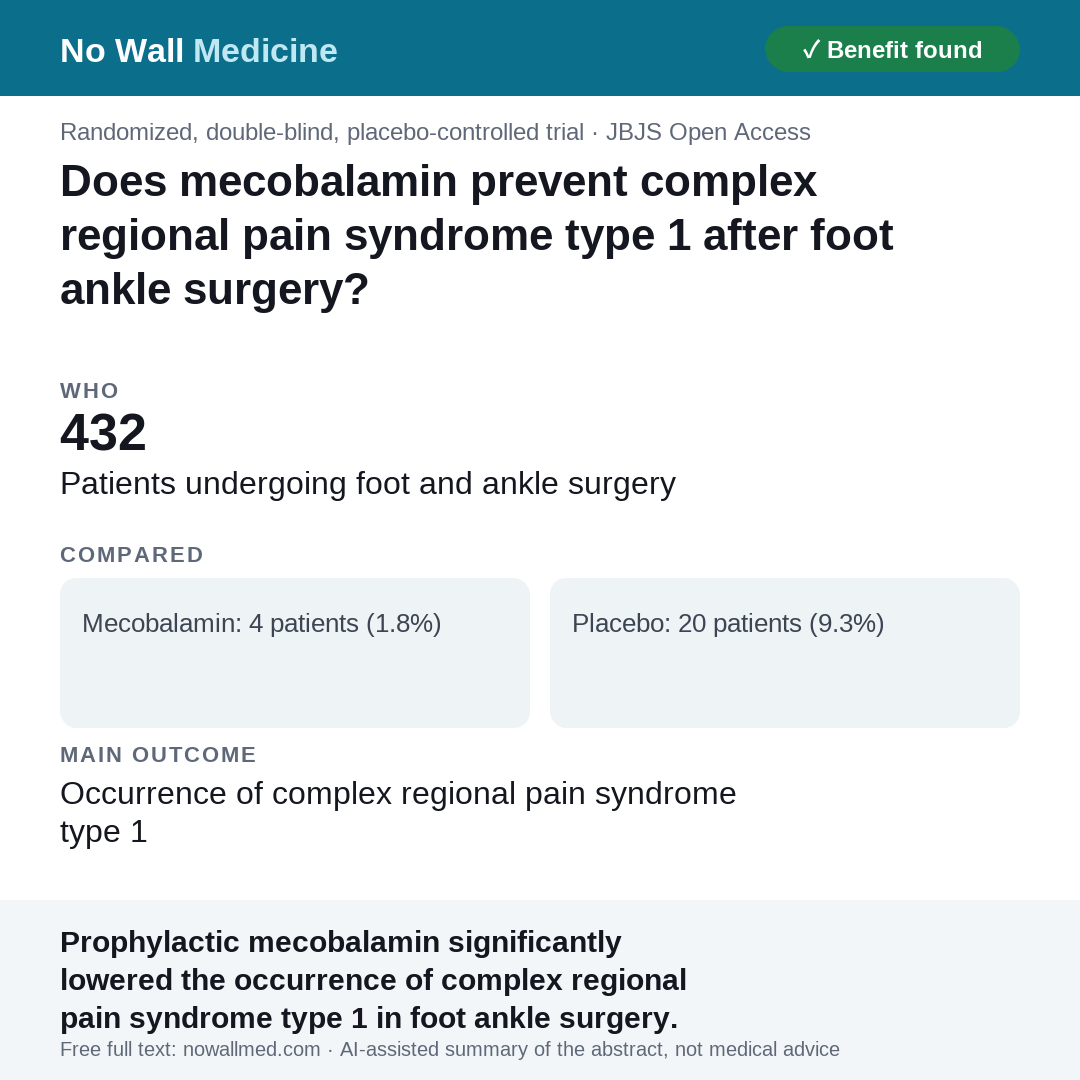
Effects of Mecobalamin on the Prevention of Complex Regional Pain Syndrome Type 1 Following Foot Ankle Surgery: A Randomized, Double-Blinded, Placebo-Controlled Trial
Randomized, double-blind, placebo-controlled trialBenefit found
Does mecobalamin prevent complex regional pain syndrome type 1 after foot ankle surgery?
Who
432
Patients undergoing foot and ankle surgery
Compared
Mecobalamin: 4 patients (1.8%)
Placebo: 20 patients (9.3%)
Main outcome
Occurrence of complex regional pain syndrome type 1
Result: risk difference -8.1% (95% confidence interval: -12.4 to -3.8)
Bottom line: Prophylactic mecobalamin significantly lowered the occurrence of complex regional pain syndrome type 1 in foot ankle surgery.
JBJS Open Access · 2026-06-15Download image
A Web-Based Virtual Environment Behavioral Intervention as Cardiovascular Disease and Metabolic Disease Prevention Education in Persons With HIV: Evaluation of the LEARN Randomized Controlled Trial
Randomized controlled trialBenefit found
Is virtual environment feasible for HIV patients?
Who
78
Men living with HIV
Compared
Virtual environment
Waitlist control
Main outcome
Cardiovascular health indicators
Bottom line: Virtual environment is feasible and acceptable
J Med Internet Res · 2026-06-15Download image

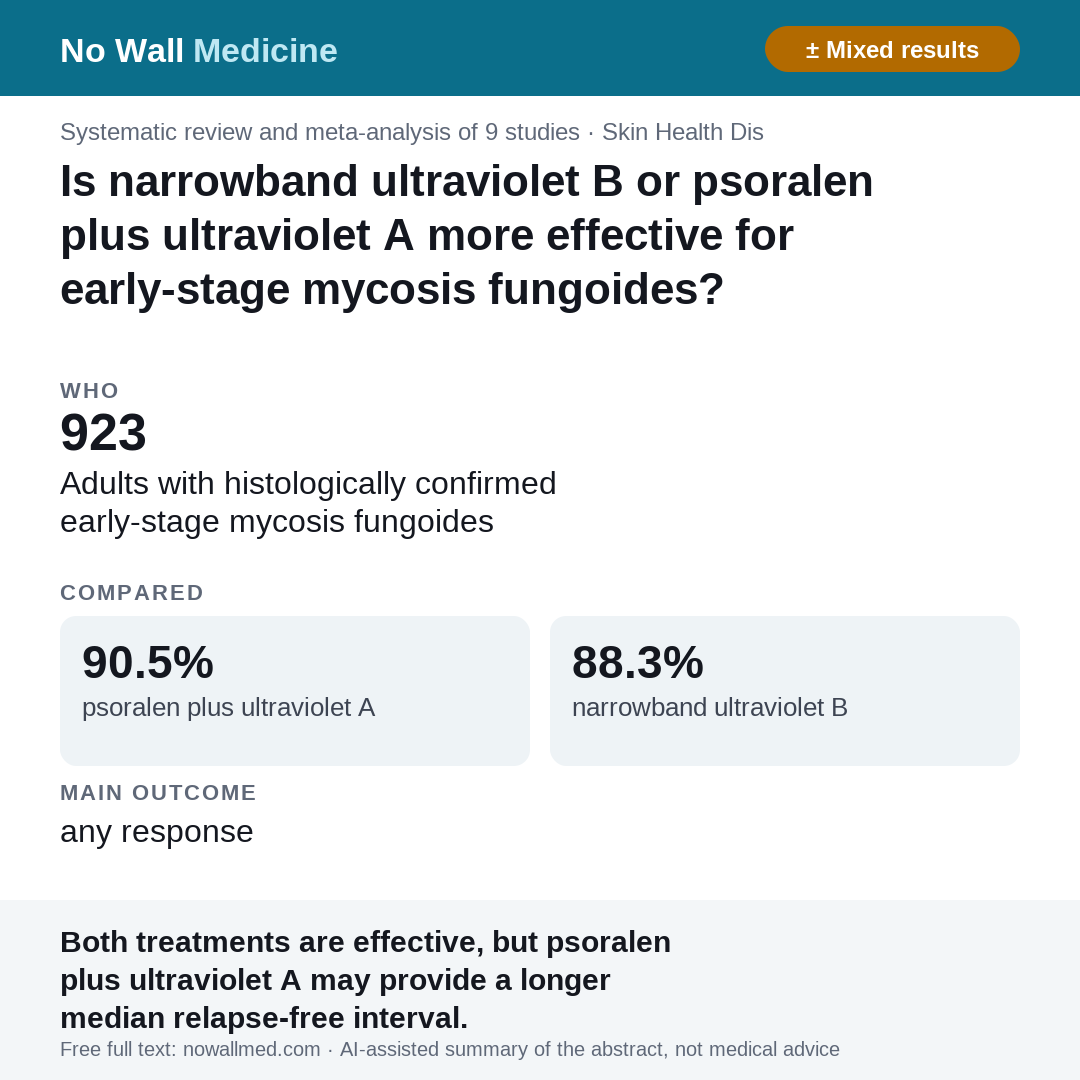
Comparison of narrowband ultraviolet B with psoralen plus ultraviolet A phototherapy for patients with early-stage mycosis fungoides: a systematic review and meta-analysis
Systematic review and meta-analysis of 9 studiesMixed results
Is narrowband ultraviolet B or psoralen plus ultraviolet A more effective for early-stage mycosis fungoides?
Who
923
Adults with histologically confirmed early-stage mycosis fungoides
Compared
90.5%psoralen plus ultraviolet A
88.3%narrowband ultraviolet B
Main outcome
any response
Result: odds ratio 1.18 (95% CI 0.73-1.90)
Bottom line: Both treatments are effective, but psoralen plus ultraviolet A may provide a longer median relapse-free interval.
Skin Health Dis · 2026-06-15Download image
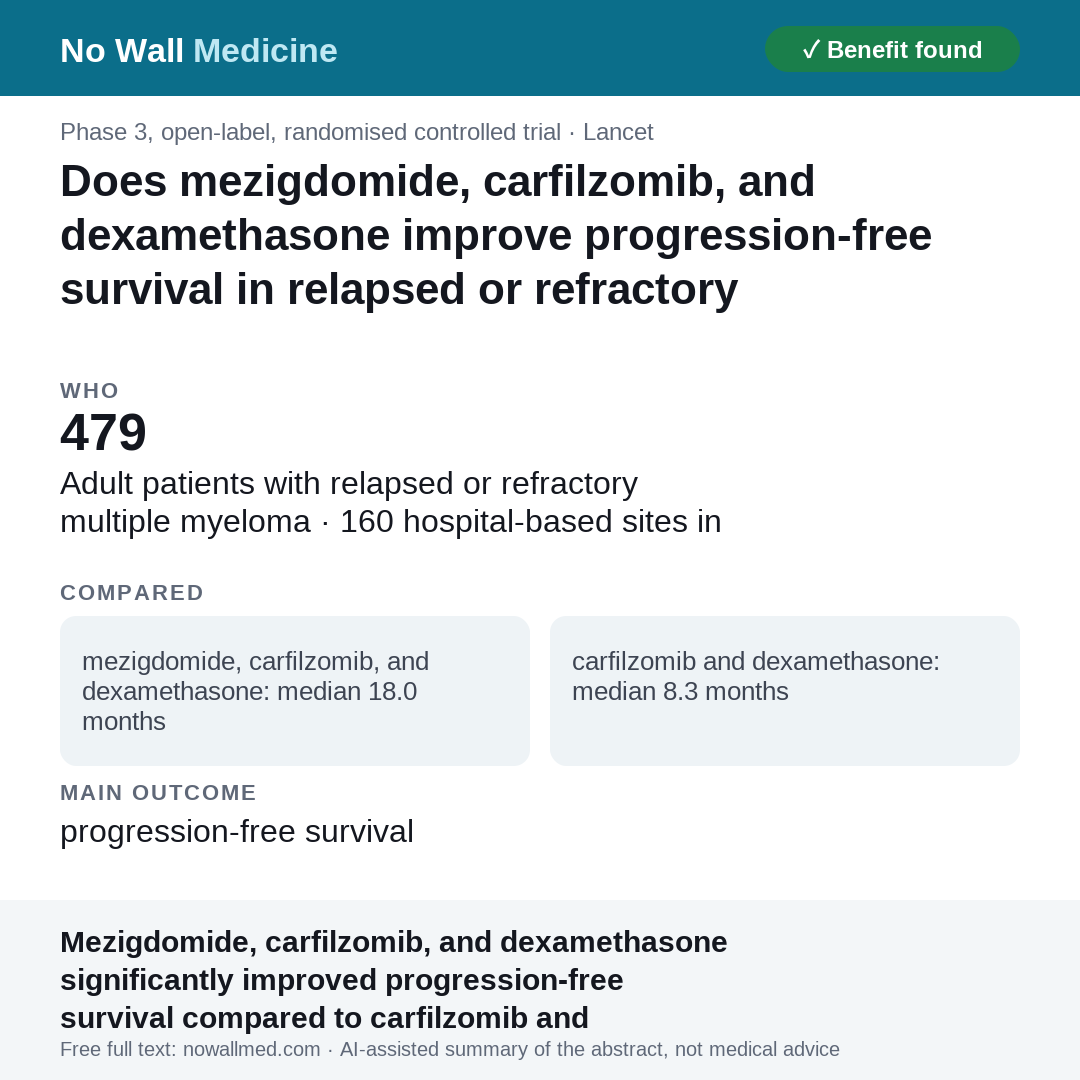
Mezigdomide, carfilzomib, and dexamethasone versus carfilzomib and dexamethasone in patients with relapsed or refractory multiple myeloma (SUCCESSOR-2): a phase 3, open-label, randomised controlled trial
Phase 3, open-label, randomised controlled trialBenefit found
Does mezigdomide, carfilzomib, and dexamethasone improve progression-free survival in relapsed or refractory multiple myeloma?
Who
479
Adult patients with relapsed or refractory multiple myeloma · 160 hospital-based sites in 26 countries
Compared
mezigdomide, carfilzomib, and dexamethasone: median 18.0 months
carfilzomib and dexamethasone: median 8.3 months
Main outcome
progression-free survival
Result: hazard ratio 0.48 (95% CI 0.36-0.63)
Bottom line: Mezigdomide, carfilzomib, and dexamethasone significantly improved progression-free survival compared to carfilzomib and dexamethasone alone.
Lancet · 2026-06-14Download image
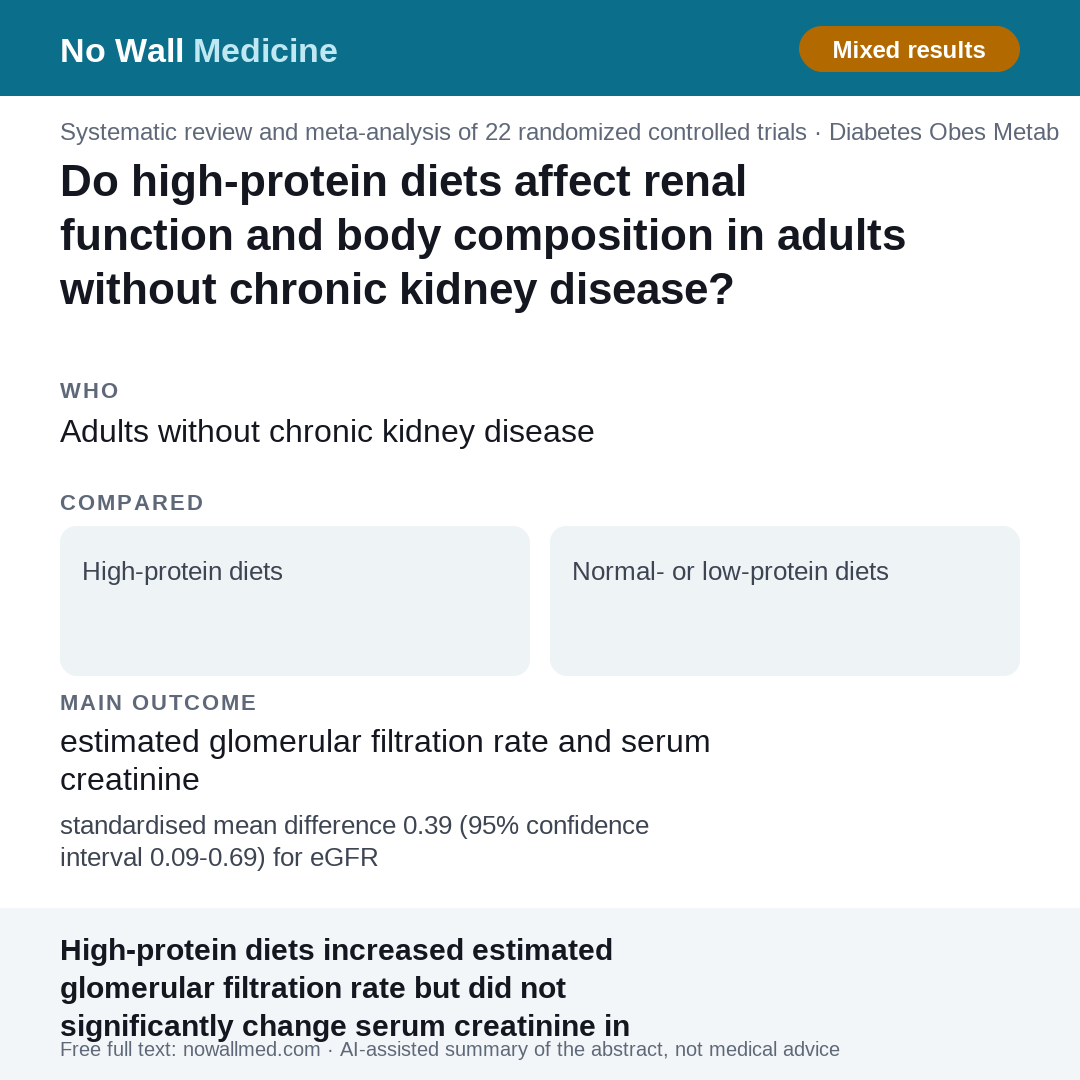
Effects of High-Protein Diets on Renal Function and Body Composition in Adults Without Chronic Kidney Disease: A Systematic Review and Meta-Analysis of Randomised Trials
Systematic review and meta-analysis of 22 randomized controlled trialsMixed results
Do high-protein diets affect renal function and body composition in adults without chronic kidney disease?
Who
Adults without chronic kidney disease
Compared
High-protein diets
Normal- or low-protein diets
Main outcome
estimated glomerular filtration rate and serum creatinine
Result: standardised mean difference 0.39 (95% confidence interval 0.09-0.69) for eGFR
Bottom line: High-protein diets increased estimated glomerular filtration rate but did not significantly change serum creatinine in adults without chronic kidney disease.
Limitation: Most studies were relatively short duration and relied on creatinine-based estimates of renal function.
Diabetes Obes Metab · 2026-06-14Download image
Paediatric penile length: a systematic review and meta-analysis
Systematic review and meta-analysisHarm found
What are the geographical variations and temporal trends in prepubertal boys' stretched penile length?
Who
31915
Prepubertal boys
Compared
2000s cohort: 3.46 to 6.46 cm
2020s cohort: 2.90 to 4.77 cm
Main outcome
Stretched penile length
Bottom line: Stretched penile length in prepubertal boys showed significant geographical variation and a possible decline over the past two decades.
BJU Int · 2026-06-14Download image

Critical care delivery models in emergency departments: a systematic review of the literature and meta-analysis of related outcome effects
Systematic review and meta-analysisMixed results
What are the outcome effects of different critical care delivery models in emergency departments?
Who
Critically ill emergency department patients
Compared
Dedicated critical care areas: lower ICU admission rates [OR 0.83 (0.76-0.91)]
Usual care
Main outcome
Mortality, intensive care unit admission, and length of stay
Result: OR 0.83 (95% CI 0.76 to 0.91)
Bottom line: Dedicated critical care areas may reduce intensive care unit admission rates and hospital length of stay but increase intensive care unit length of stay.
Scand J Trauma Resusc Emerg Med · 2026-06-14Download image

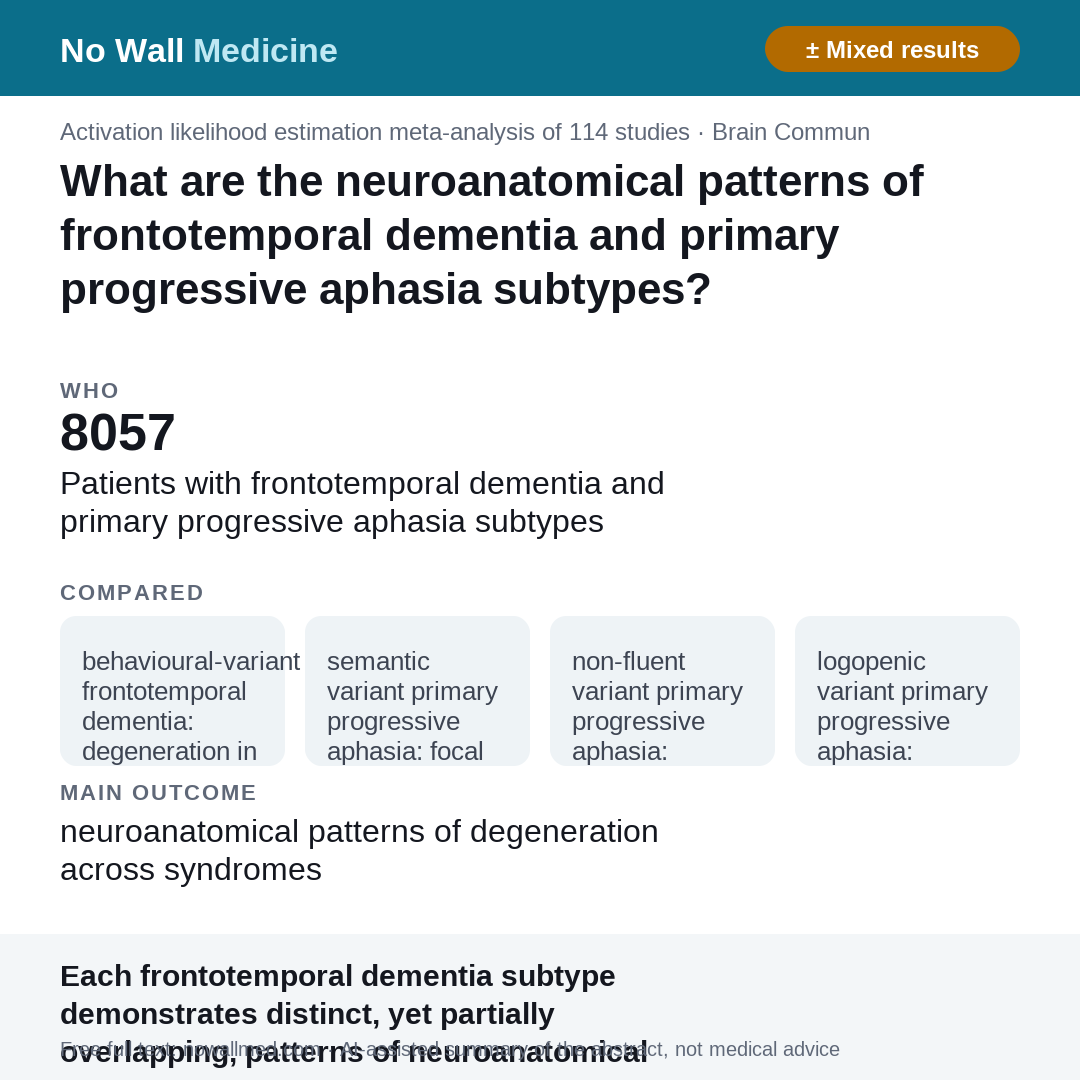
The neural bases of frontotemporal dementia and primary progressive aphasia subtypes: insights from activation likelihood estimation meta-analyses of 8057 patients
Activation likelihood estimation meta-analysis of 114 studiesMixed results
What are the neuroanatomical patterns of frontotemporal dementia and primary progressive aphasia subtypes?
Who
8057
Patients with frontotemporal dementia and primary progressive aphasia subtypes
Compared
behavioural-variant frontotemporal dementia: degeneration in the frontal and medial temporal lobes, insula, cingulate cortex and limbic system
semantic variant primary progressive aphasia: focal atrophy in the anterior temporal lobes
non-fluent variant primary progressive aphasia: degeneration in the speech production network, particularly the insula and inferior frontal gyrus
logopenic variant primary progressive aphasia: left-lateralized abnormalities in the posterior temporal and inferior parietal lobes
Main outcome
neuroanatomical patterns of degeneration across syndromes
Bottom line: Each frontotemporal dementia subtype demonstrates distinct, yet partially overlapping, patterns of neuroanatomical degeneration.
Brain Commun · 2026-06-13Download image
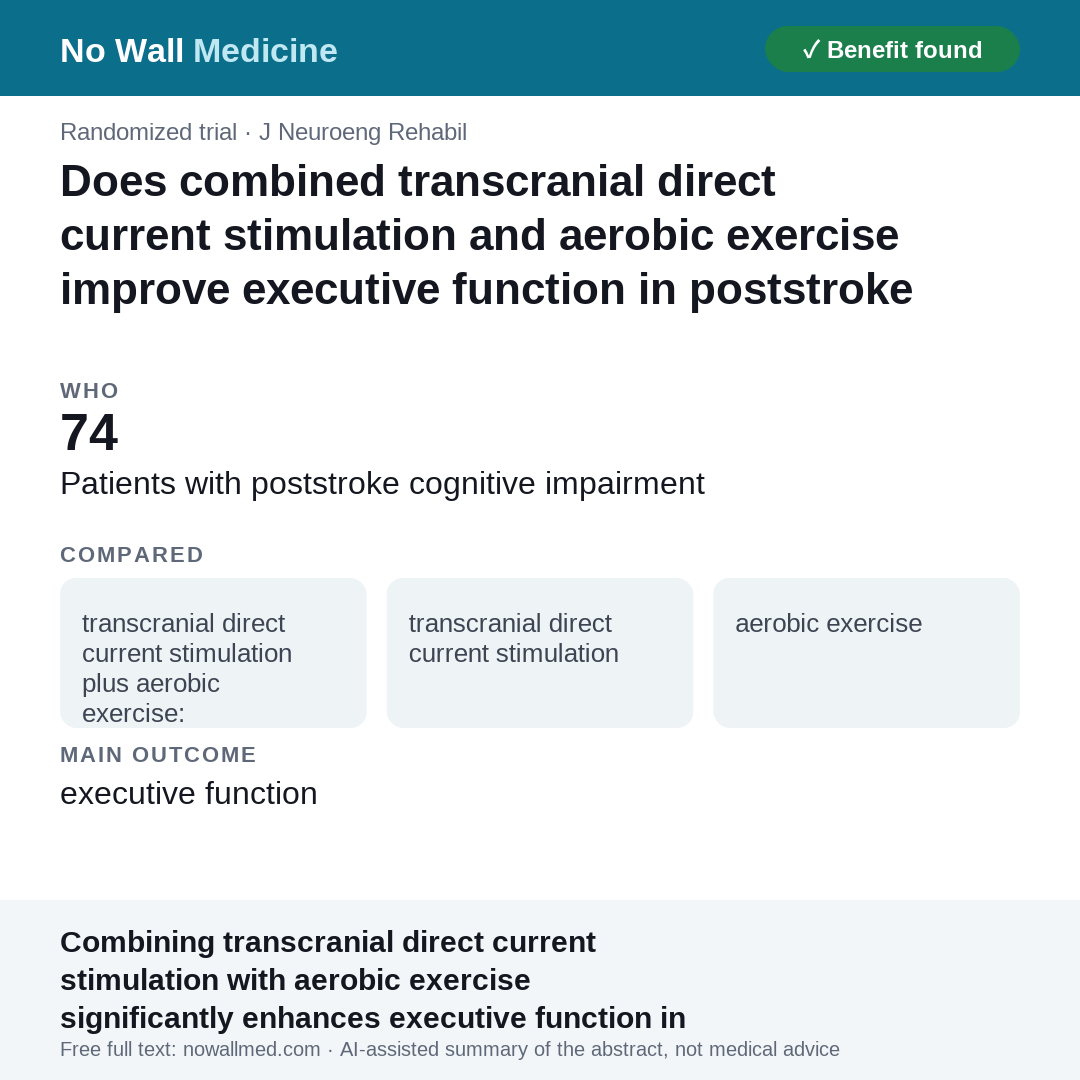
Efficacy and hematological markers of tDCS combined with aerobic exercise in improving executive function in patients with PSCI
Randomized trialBenefit found
Does combined transcranial direct current stimulation and aerobic exercise improve executive function in poststroke cognitive impairment?
Who
74
Patients with poststroke cognitive impairment
Compared
transcranial direct current stimulation plus aerobic exercise: significantly improved
transcranial direct current stimulation
aerobic exercise
Main outcome
executive function
Bottom line: Combining transcranial direct current stimulation with aerobic exercise significantly enhances executive function in poststroke cognitive impairment patients.
J Neuroeng Rehabil · 2026-06-13Download image
Efficacy and target engagement of dopamine agonist pramipexole for anhedonic depression: a randomized placebo-controlled trial
Randomized, double-blind, placebo-controlled trialBenefit found
Does pramipexole improve anhedonia in patients with mood disorders?
Who
82
Adults with major depressive disorder, dysthymia or bipolar depression and elevated Snaith-Hamilton Pleasure Scale scores · Single-center
Compared
Pramipexole
Placebo
Main outcome
Change in Snaith-Hamilton Pleasure Scale score from baseline to week 9
Result: mean difference: -4.04, 95% confidence interval: -6.89 to -1.18
Bottom line: Pramipexole as add-on treatment significantly improved anhedonia compared to placebo in patients with mood disorders.
Nat Med · 2026-06-12Download image

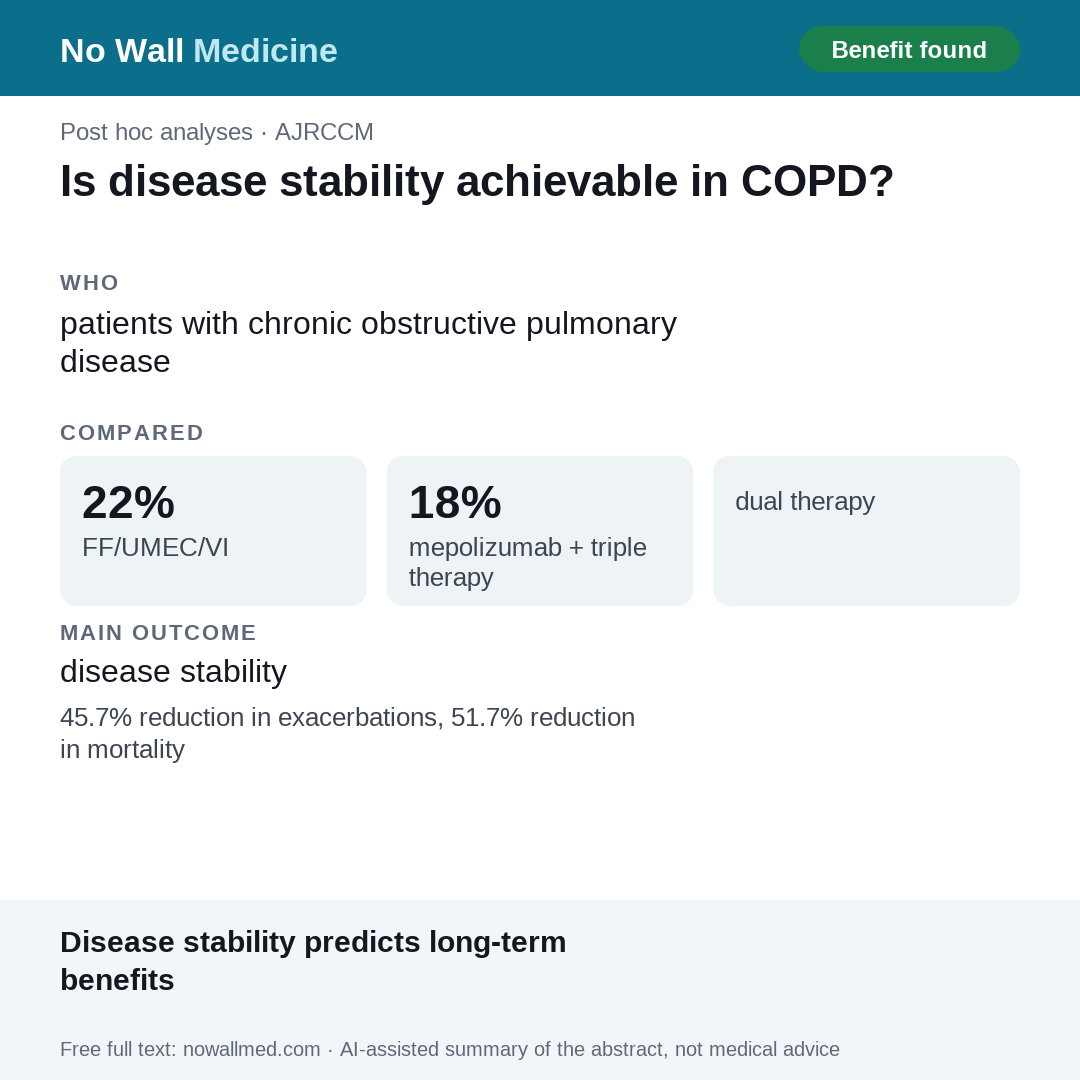
Defining disease stability in chronic obstructive pulmonary disease: evidence from phase 3 clinical trials
Post hoc analysesBenefit found
Is disease stability achievable in COPD?
Who
patients with chronic obstructive pulmonary disease
Compared
22%FF/UMEC/VI
18%mepolizumab + triple therapy
dual therapy
Main outcome
disease stability
Result: 45.7% reduction in exacerbations, 51.7% reduction in mortality
Bottom line: Disease stability predicts long-term benefits
AJRCCM · 2026-06-12Download image
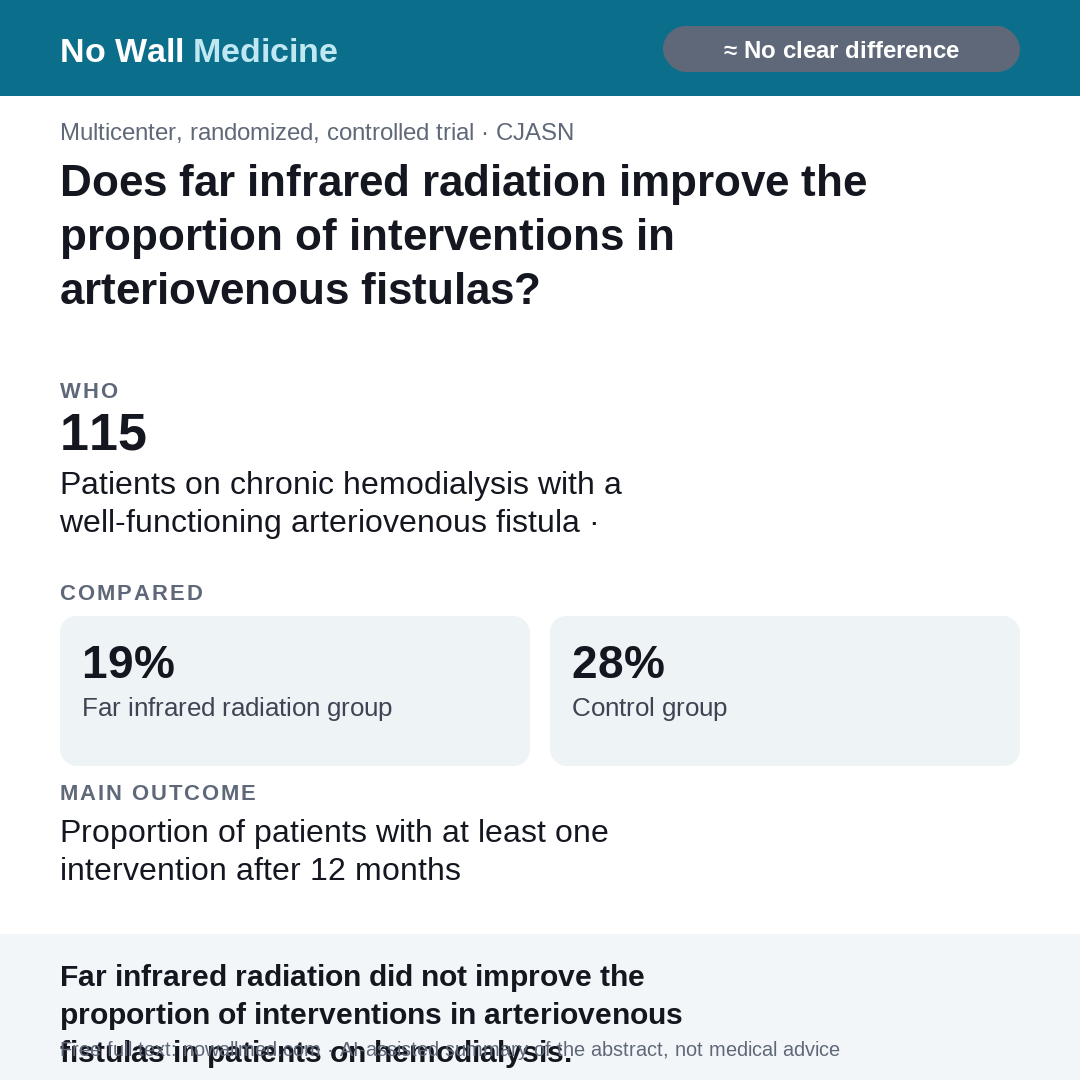
Effect of Far Infrared Radiation on the Proportion of Interventions in Arteriovenous Fistulas in Patients on Hemodialysis: A Randomized Trial
Multicenter, randomized, controlled trialNo clear difference
Does far infrared radiation improve the proportion of interventions in arteriovenous fistulas?
Who
115
Patients on chronic hemodialysis with a well-functioning arteriovenous fistula · Multicenter
Compared
19%Far infrared radiation group
28%Control group
Main outcome
Proportion of patients with at least one intervention after 12 months
Bottom line: Far infrared radiation did not improve the proportion of interventions in arteriovenous fistulas in patients on hemodialysis.
CJASN · 2026-06-12Download image
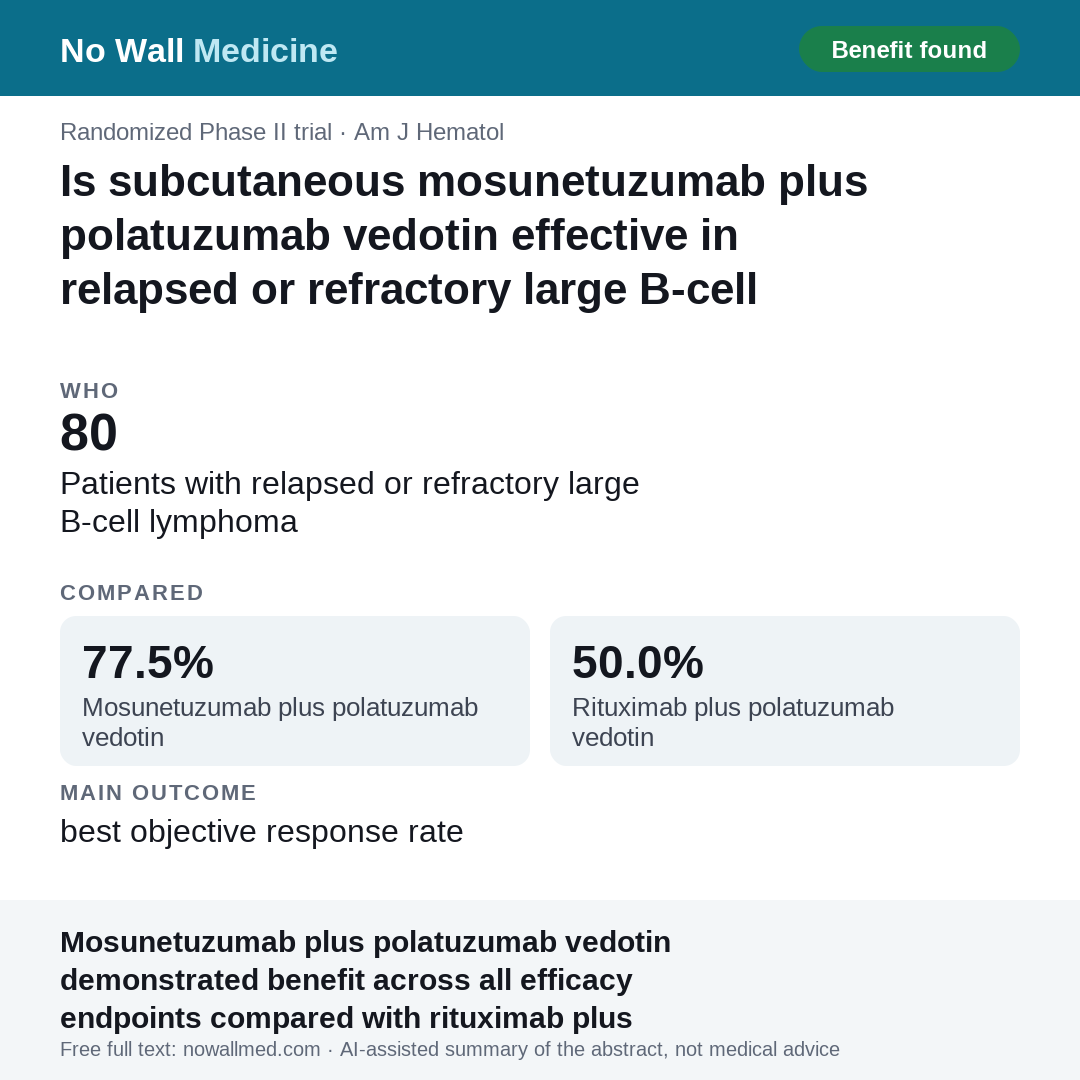
A Randomized Phase II Study of Subcutaneous Mosunetuzumab in Combination With Polatuzumab Vedotin Compared With Rituximab Plus Polatuzumab Vedotin in Patients With Relapsed or Refractory Large B-Cell Lymphoma
Randomized Phase II trialBenefit found
Is subcutaneous mosunetuzumab plus polatuzumab vedotin effective in relapsed or refractory large B-cell lymphoma?
Who
80
Patients with relapsed or refractory large B-cell lymphoma
Compared
77.5%Mosunetuzumab plus polatuzumab vedotin (95% CI 61.6-89.2)
50.0%Rituximab plus polatuzumab vedotin (95% CI: 33.8-66.2)
Main outcome
best objective response rate
Result: hazard ratio 0.47
Bottom line: Mosunetuzumab plus polatuzumab vedotin demonstrated benefit across all efficacy endpoints compared with rituximab plus polatuzumab vedotin.
Am J Hematol · 2026-06-12Download image
School-based Motor Skill Interventions for Children and Adolescents with Developmental Coordination Disorder: A Systematic Review and Meta-Analysis
Systematic review and meta-analysisBenefit found
Do school-based interventions improve motor performance in children and adolescents with developmental coordination disorder?
Who
Children and adolescents aged 5 to 19 years with developmental coordination disorder · School settings
Compared
Motor skill training
Nontraining control group
Main outcome
Motor performance
Result: Hedges g=1.06 (95% CI, 0.60-1.53)
Bottom line: School-based motor skill interventions significantly improve motor performance in children and adolescents with developmental coordination disorder.
Arch Phys Med Rehabil · 2026-06-12Download image

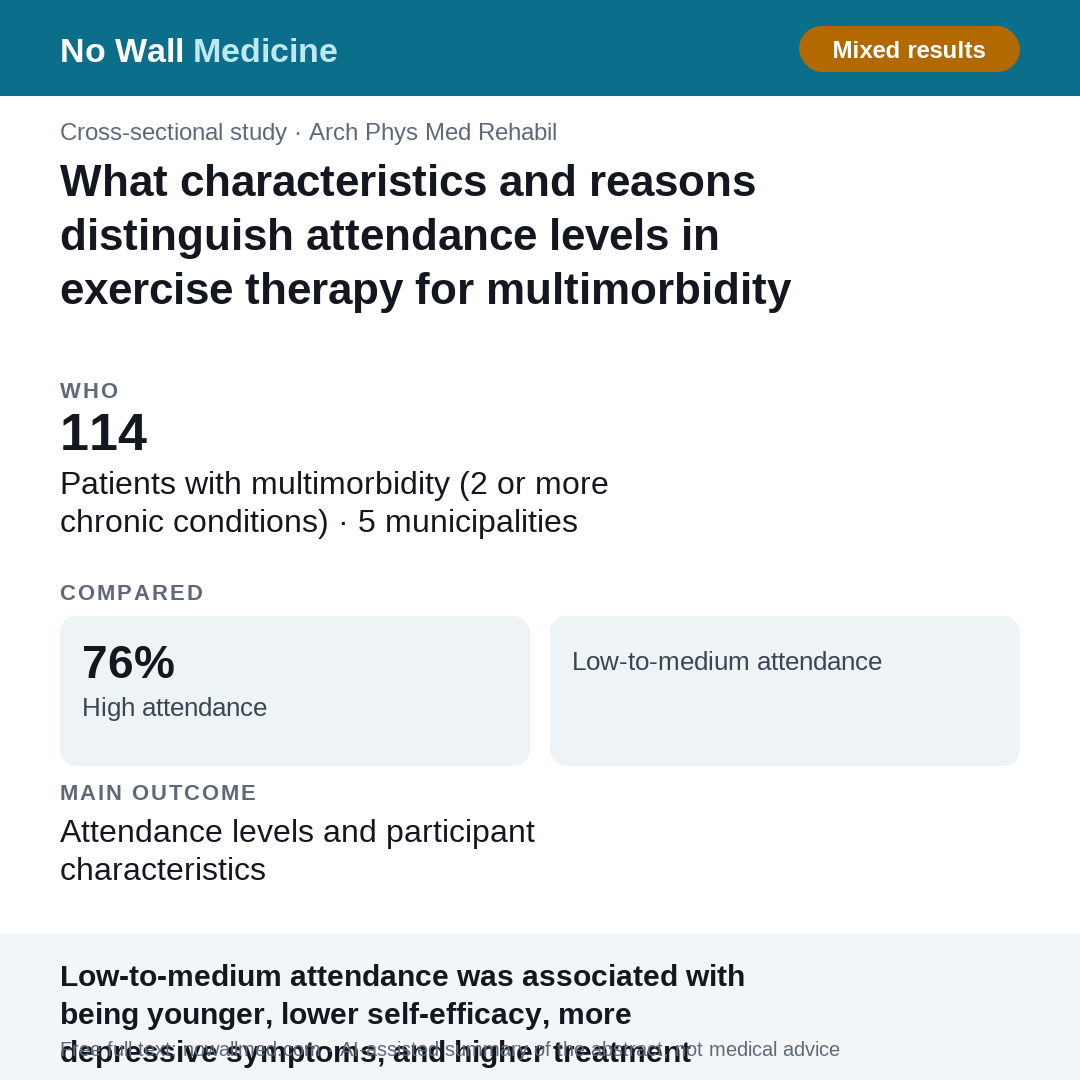
Characteristics and Reasons for Non-attendance at Exercise Therapy and Self-Management Support Among Patients With Multimorbidity. An Exploratory Cross-sectional Study From the MOBILIZE Trial
Cross-sectional studyMixed results
What characteristics and reasons distinguish attendance levels in exercise therapy for multimorbidity patients?
Who
114
Patients with multimorbidity (2 or more chronic conditions) · 5 municipalities
Compared
76%High attendance
Low-to-medium attendance
Main outcome
Attendance levels and participant characteristics
Bottom line: Low-to-medium attendance was associated with being younger, lower self-efficacy, more depressive symptoms, and higher treatment burden.
Arch Phys Med Rehabil · 2026-06-12Download image
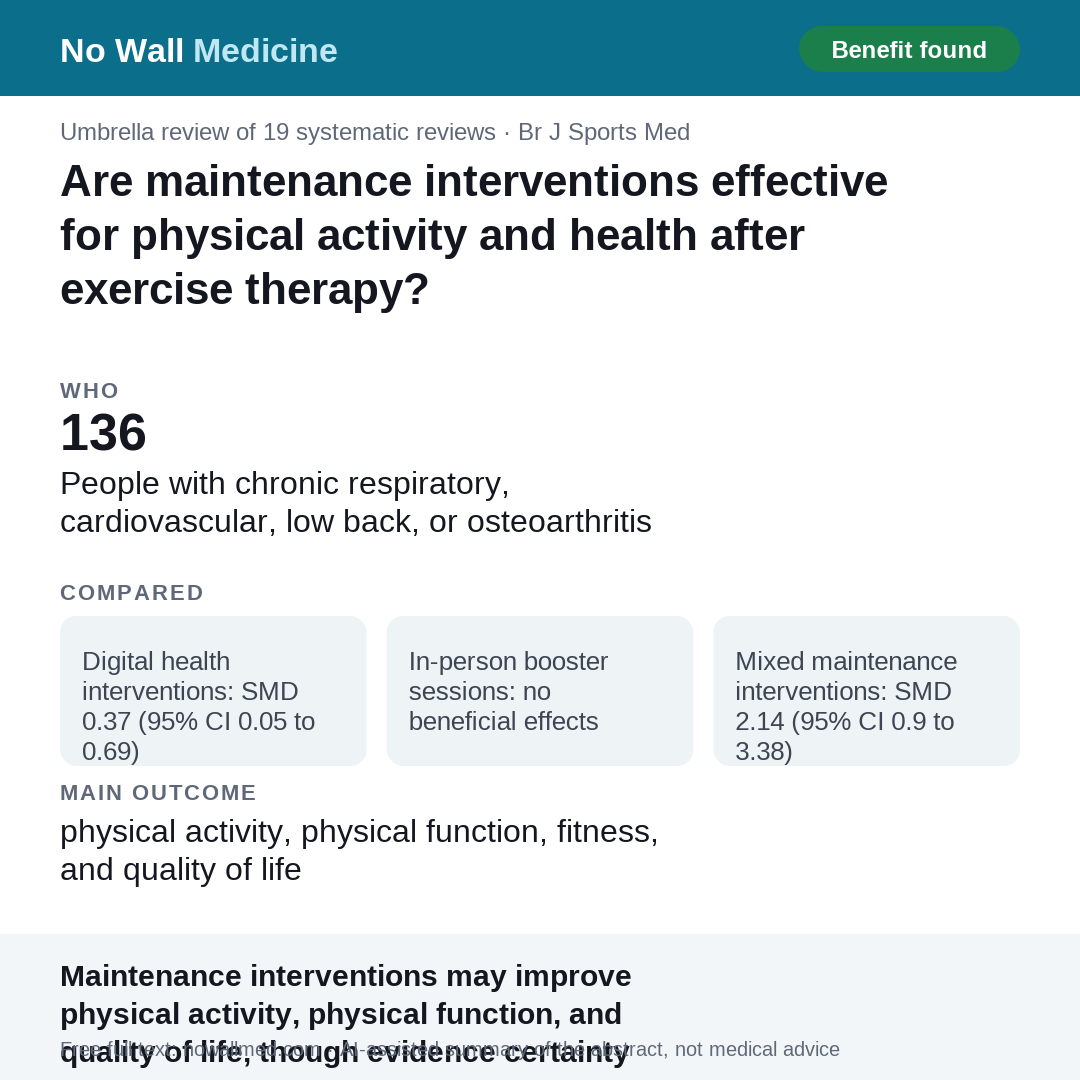
Effectiveness of maintenance interventions promoting physical activity following exercise therapy for chronic conditions: an umbrella review
Umbrella review of 19 systematic reviewsBenefit found
Are maintenance interventions effective for physical activity and health after exercise therapy?
Who
136
People with chronic respiratory, cardiovascular, low back, or osteoarthritis
Compared
Digital health interventions: SMD 0.37 (95% CI 0.05 to 0.69)
In-person booster sessions: no beneficial effects
Mixed maintenance interventions: SMD 2.14 (95% CI 0.9 to 3.38)
Main outcome
physical activity, physical function, fitness, and quality of life
Result: SMD 0.37 (95% CI 0.05 to 0.69)
Bottom line: Maintenance interventions may improve physical activity, physical function, and quality of life, though evidence certainty is low.
Limitation: Most reviews had an unclear risk of bias and evidence certainty was low.
Br J Sports Med · 2026-06-12Download image
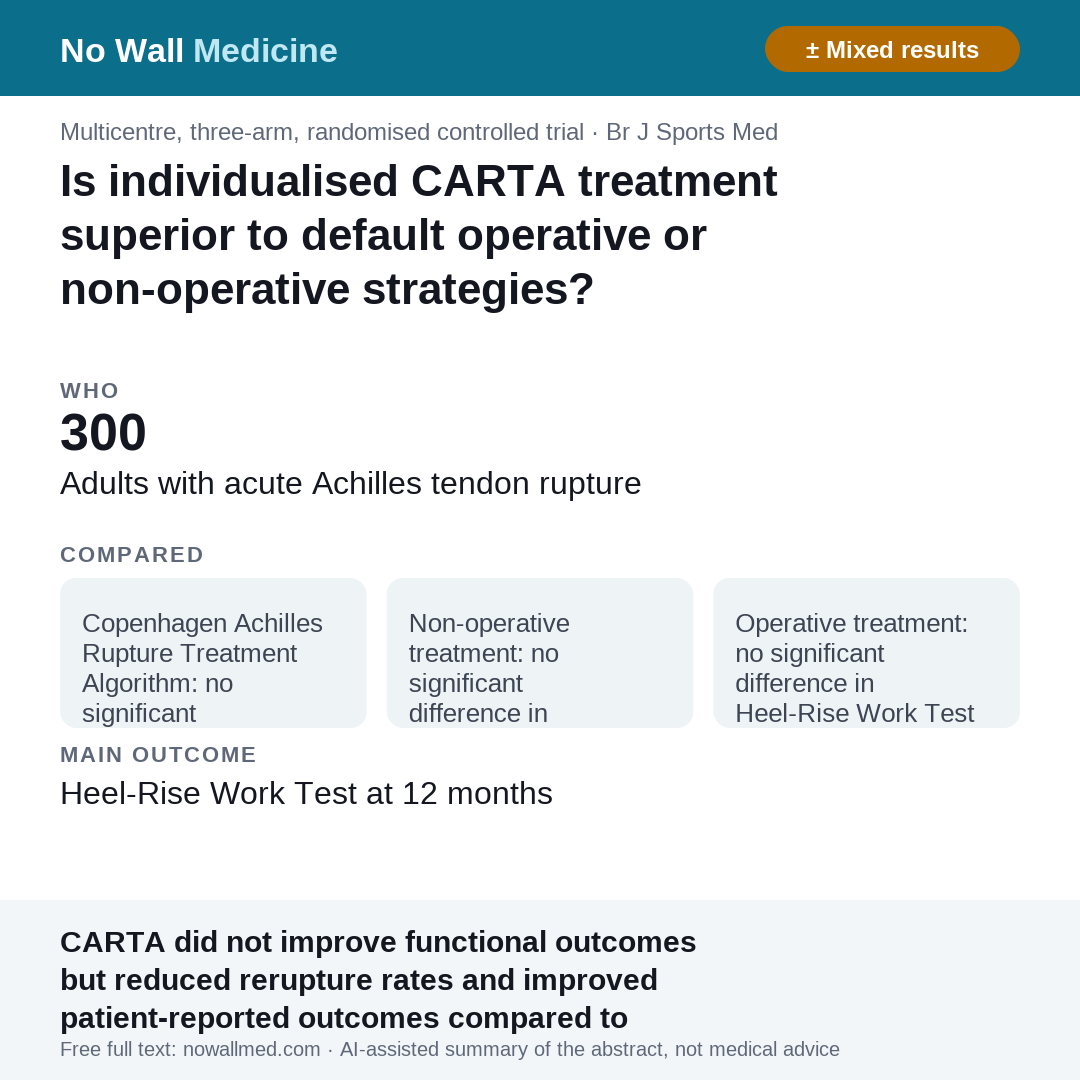
Randomised three-armed trial investigation of the Copenhagen Achilles tendon Rupture Treatment Algorithm (CARTA) for individualised treatment of acute Achilles tendon rupture
Multicentre, three-arm, randomised controlled trialMixed results
Is individualised CARTA treatment superior to default operative or non-operative strategies?
Who
300
Adults with acute Achilles tendon rupture
Compared
Copenhagen Achilles Rupture Treatment Algorithm: no significant difference in Heel-Rise Work Test
Non-operative treatment: no significant difference in Heel-Rise Work Test
Operative treatment: no significant difference in Heel-Rise Work Test
Main outcome
Heel-Rise Work Test at 12 months
Bottom line: CARTA did not improve functional outcomes but reduced rerupture rates and improved patient-reported outcomes compared to non-operative treatment.
Br J Sports Med · 2026-06-12Download image
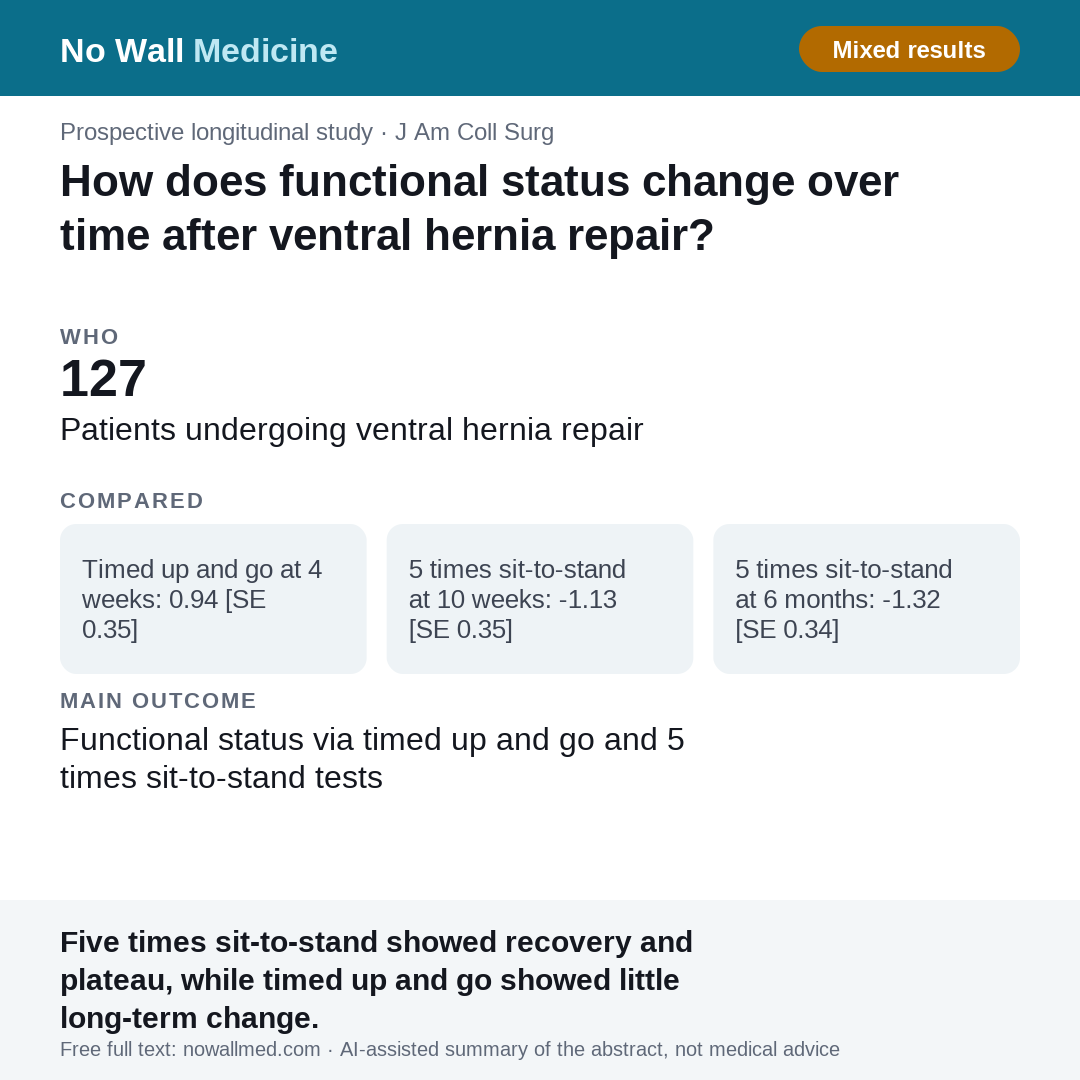
Functional Status after Ventral Hernia Repair: Longitudinal Trends and the Limits of Improvement
Prospective longitudinal studyMixed results
How does functional status change over time after ventral hernia repair?
Who
127
Patients undergoing ventral hernia repair
Compared
Timed up and go test: little long-term change
5 times sit-to-stand test: plateau by 1 year
Main outcome
Functional status via timed up and go and 5 times sit-to-stand tests
Bottom line: Five times sit-to-stand showed early decline, progressive recovery, and a plateau, while timed up and go showed little change.
J Am Coll Surg · 2026-06-12Download image
Effects of polygenic risk score communication on short term health outcomes: systematic review and meta-analysis
Systematic review and meta-analysisNo clear difference
Does communicating polygenic risk scores change short term health outcomes?
Who
27
Human participants in randomized controlled trials
Compared
Polygenic risk score disclosure
No genetic information provided
Main outcome
Behavioural, psychological, or clinical health outcomes
Bottom line: Communicating polygenic risk scores did not result in meaningful changes in behavioural, psychological, or clinical measures.
Limitation: High risk of bias in nine trials and significant heterogeneity.
BMJ Med · 2026-06-12Download image

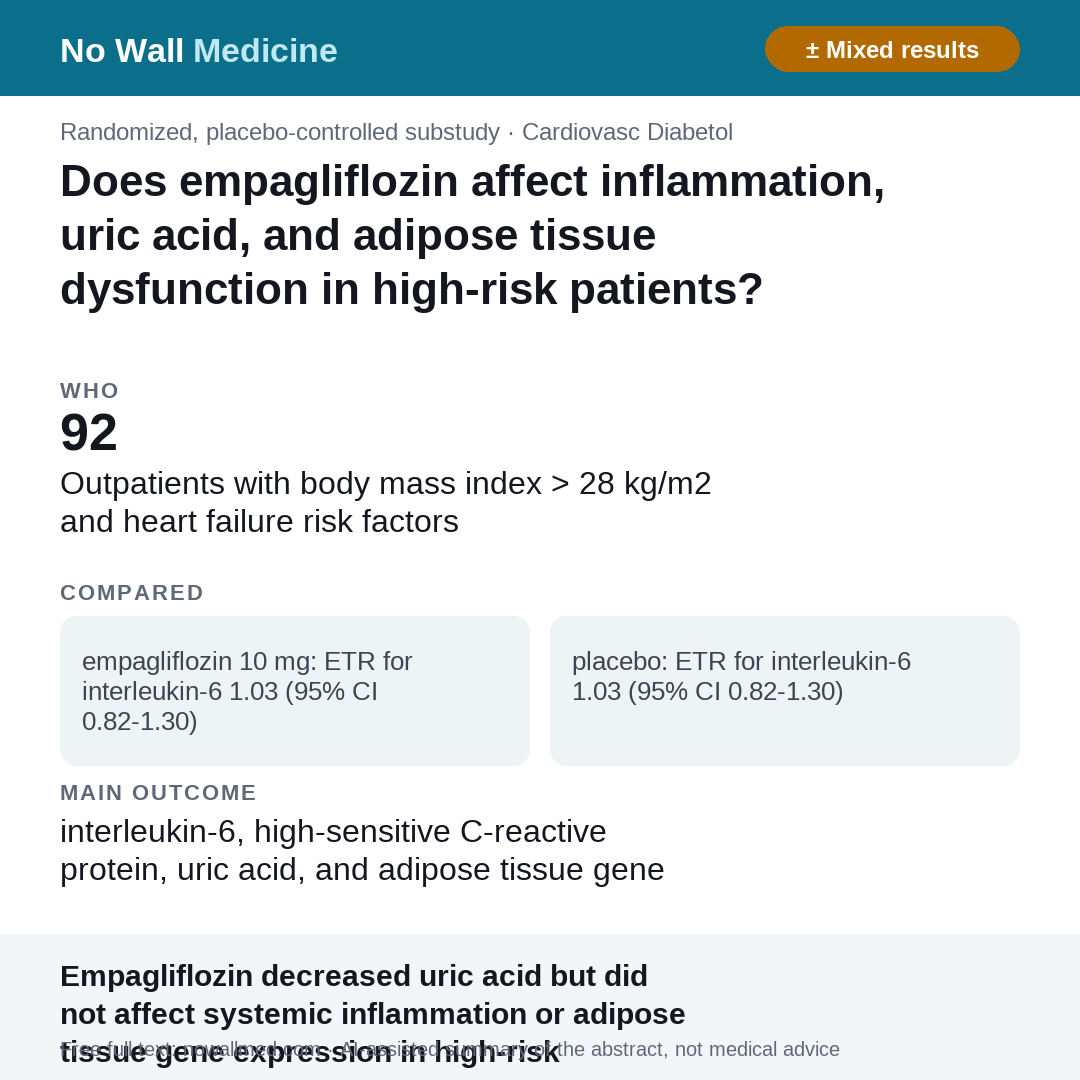
The effect of empagliflozin on inflammation in patients with overweight or obesity and risk of heart failure: a substudy from the Empire Prevent Metabolic trial
Randomized, placebo-controlled substudyMixed results
Does empagliflozin affect inflammation, uric acid, and adipose tissue dysfunction in high-risk patients?
Who
92
Outpatients with body mass index > 28 kg/m2 and heart failure risk factors
Compared
empagliflozin 10 mg: ETR for interleukin-6 1.03 (95% CI 0.82-1.30)
placebo: ETR for interleukin-6 1.03 (95% CI 0.82-1.30)
Main outcome
interleukin-6, high-sensitive C-reactive protein, uric acid, and adipose tissue gene expression
Result: ETD for uric acid -0.06 mmol/l (95% CI -0.08 to -0.04)
Bottom line: Empagliflozin decreased uric acid but did not affect systemic inflammation or adipose tissue gene expression in high-risk patients.
Cardiovasc Diabetol · 2026-06-12Download image