Visual abstracts
New randomized trials and meta-analyses from leading journals at a glance: who was studied, what was compared, and what was found. Every paper is free to read in full.
All specialtiesCardiology 4763Oncology 4042Gastroenterology & Hepatology 1902Infectious Disease 3756Neurology 1872Psychiatry & Mental Health 2214Pulmonology 2042Critical Care 1319Endocrinology & Diabetes 2544Pediatrics 2889Surgery 2479Orthopedics & Sports Medicine 917Neurosurgery 525Cardiothoracic & Vascular Surgery 656Plastic & Reconstructive Surgery 574Nephrology 1107Rheumatology 810Hematology 1090Dermatology 611Ophthalmology 532Obstetrics & Gynecology 1645Public & Global Health 1037Radiology & Imaging 617Anesthesiology 957Urology 745ENT (Otolaryngology) 494Emergency Medicine 481Allergy & Immunology 309Geriatrics 972Family Medicine & Primary Care 533Medical Genetics & Genomics 659Pathology & Laboratory Medicine 156Physical Medicine & Rehabilitation 734Palliative Care 421Nutrition 1560Digital Health & AI 2133General Medicine 318
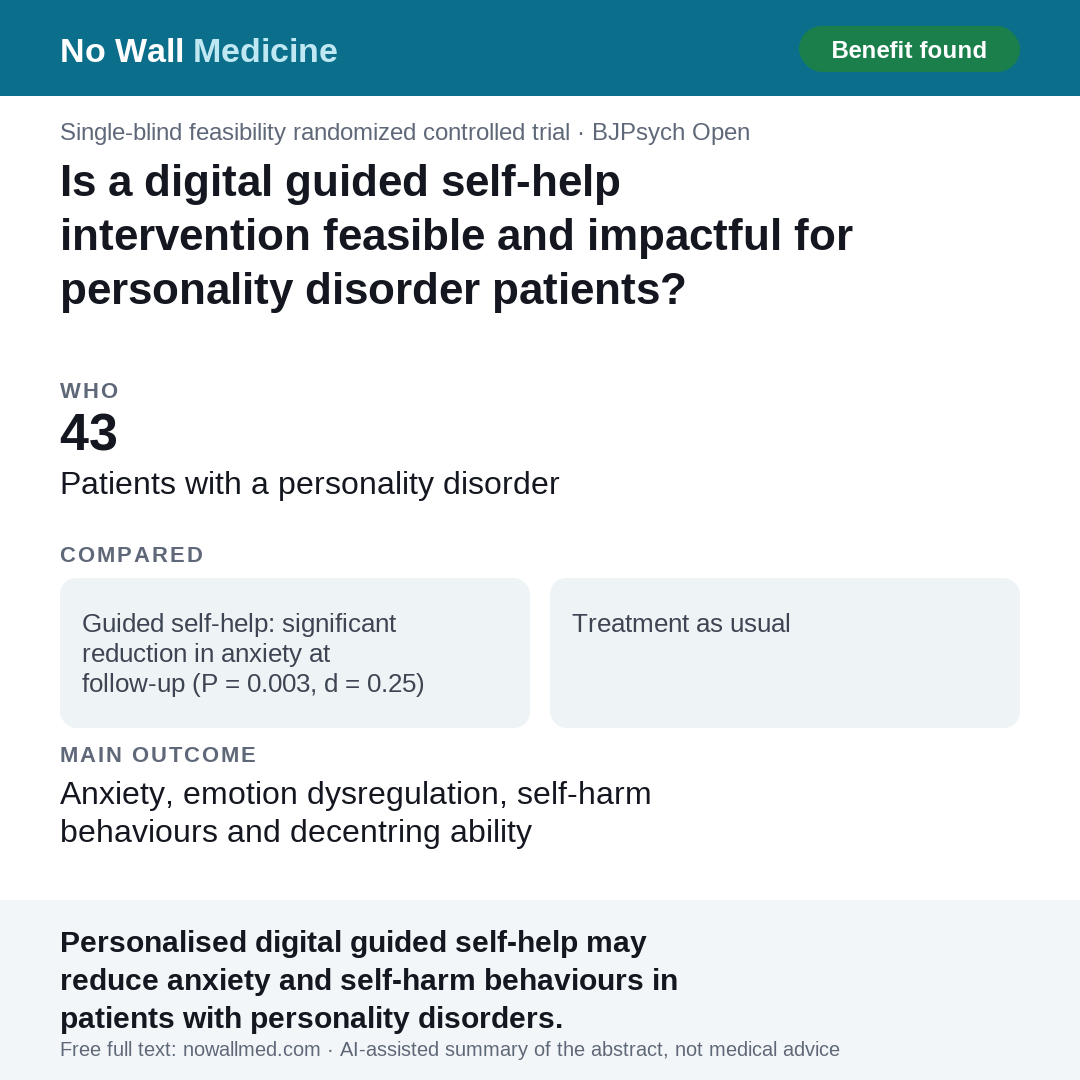
Recovery-focused self-help intervention using vodcasts for patients with personality disorder: feasibility randomised controlled trial
Single-blind feasibility randomized controlled trialEarly signal
Is a digital guided self-help intervention feasible and impactful for personality disorder patients?
Who
43
Patients with a personality disorder
Compared
Guided self-help: significant reduction in anxiety at follow-up (P = 0.003, d = 0.25)
Treatment as usual
Main outcome
Anxiety, emotion dysregulation, self-harm behaviours and decentring ability
Bottom line: Personalised digital guided self-help may reduce anxiety and self-harm behaviours in patients with personality disorders.
BJPsych Open · 2024-01-17Download image
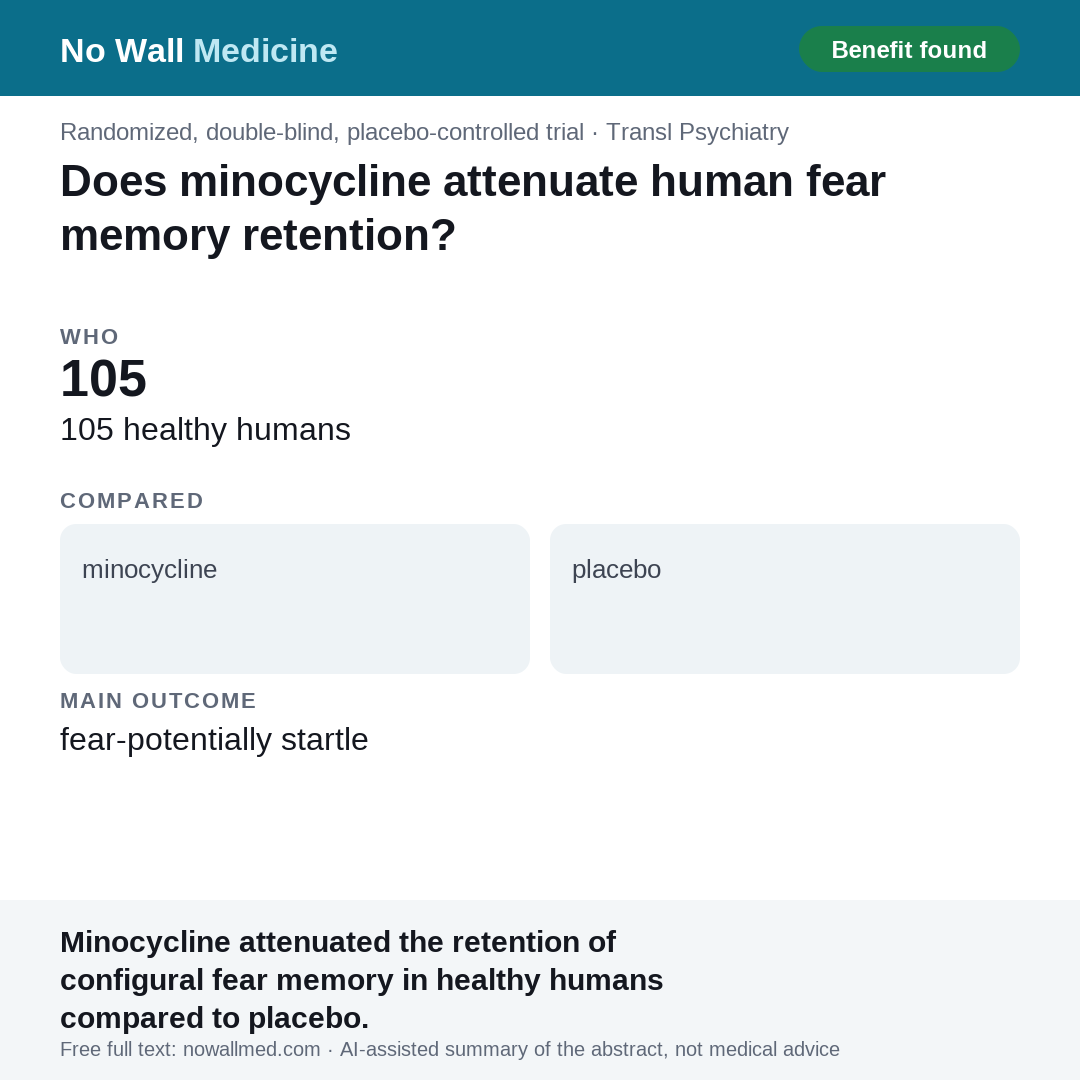
Attenuating human fear memory retention with minocycline: a randomized placebo-controlled trial
Randomized, double-blind, placebo-controlled trialBenefit found
Does minocycline attenuate human fear memory retention?
Who
105
105 healthy humans
Compared
minocycline
placebo
Main outcome
fear-potentially startle
Bottom line: Minocycline attenuated the retention of configural fear memory in healthy humans compared to placebo.
Transl Psychiatry · 2024-01-17Download image
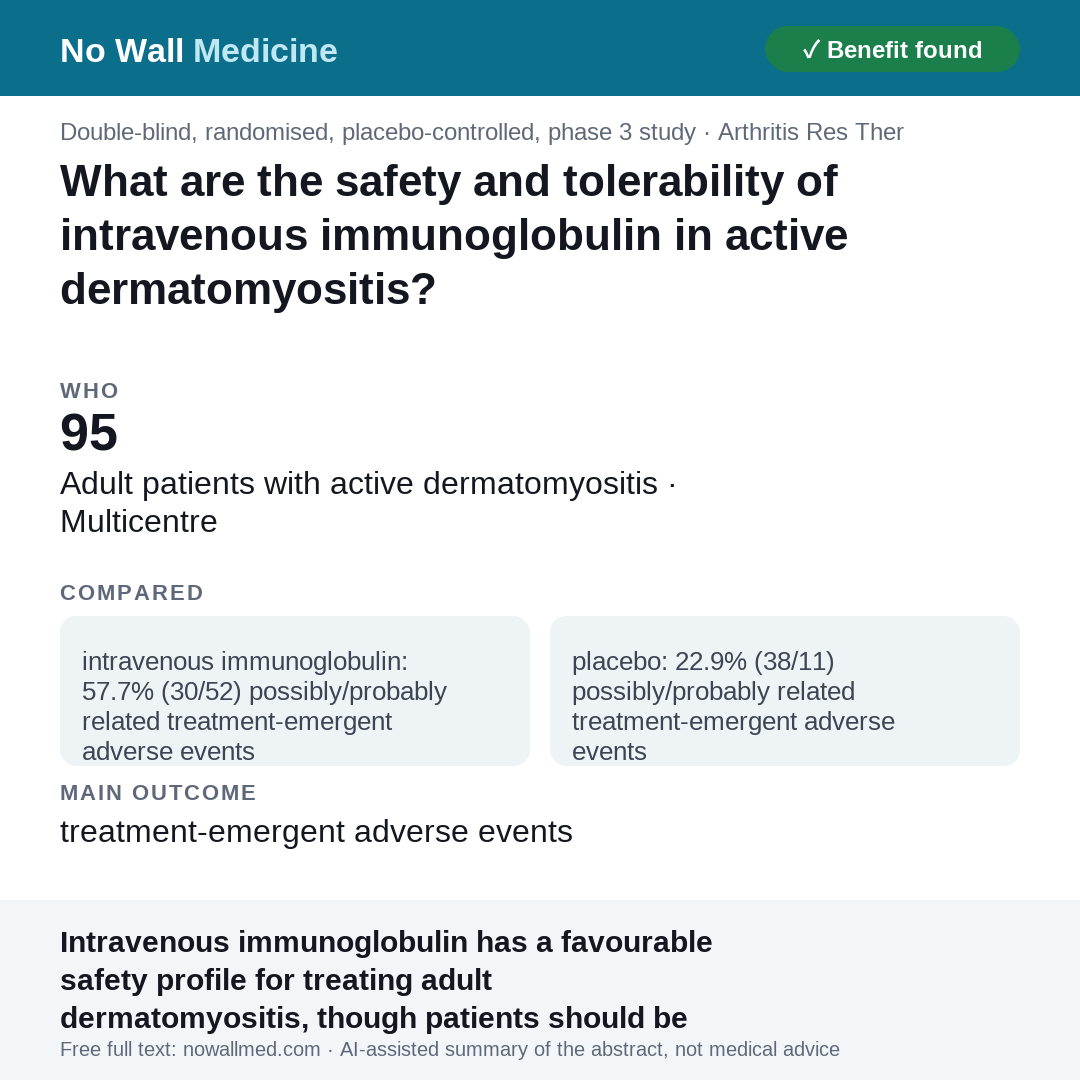
Safety and tolerability of intravenous immunoglobulin in patients with active dermatomyositis: results from the randomised, placebo-controlled ProDERM study
Double-blind, randomised, placebo-controlled, phase 3 studyBenefit found
What are the safety and tolerability of intravenous immunoglobulin in active dermatomyositis?
Who
95
Adult patients with active dermatomyositis · Multicentre
Compared
intravenous immunoglobulin: 57.7% (30/52) possibly/probably related treatment-emergent adverse events
placebo: 22.9% (38/11) possibly/probably related treatment-emergent adverse events
Main outcome
treatment-emergent adverse events
Bottom line: Intravenous immunoglobulin has a favourable safety profile for treating adult dermatomyositis, though patients should be monitored for thromboembolic events.
Arthritis Res Ther · 2024-01-17Download image
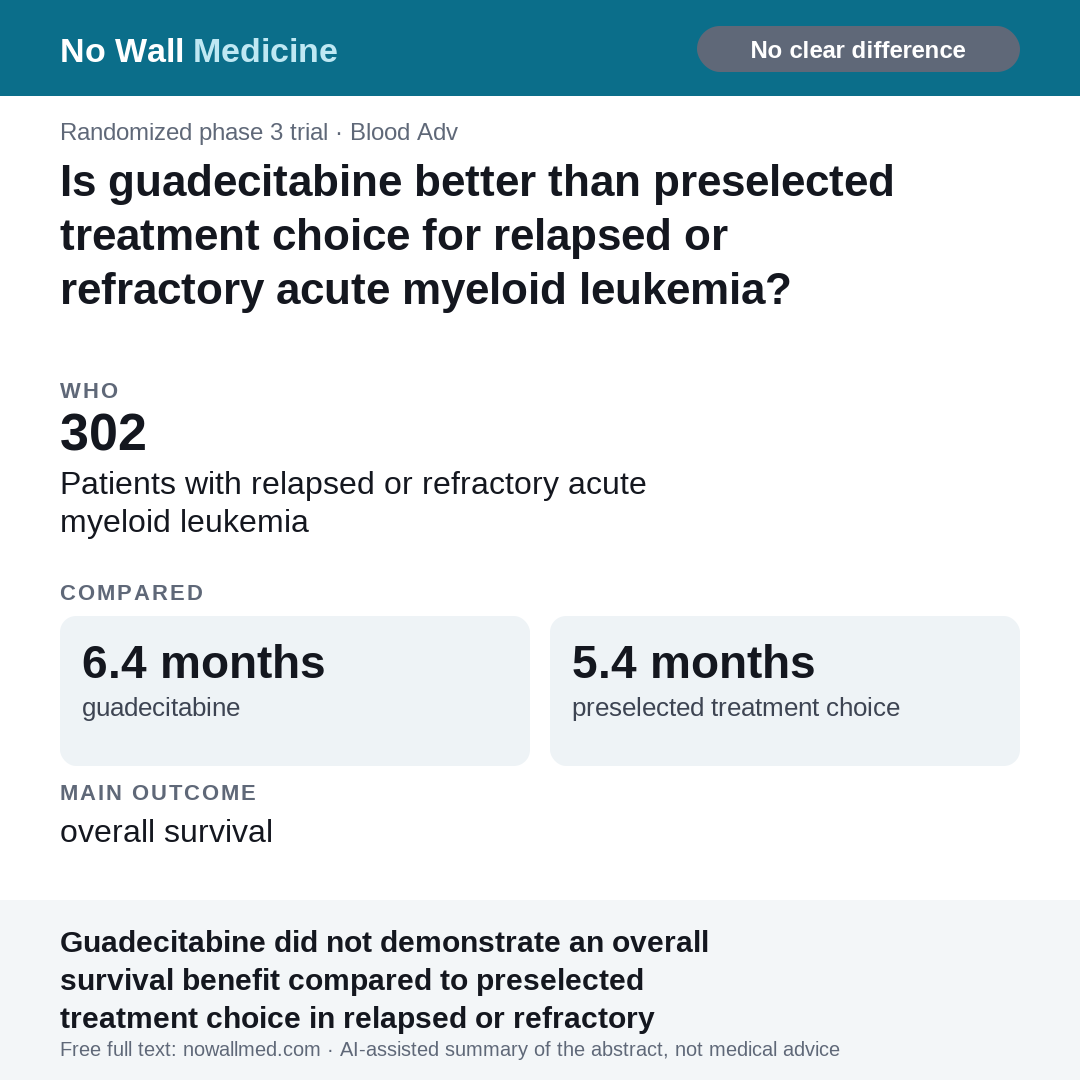
Guadecitabine vs TC in relapsed/refractory AML after intensive chemotherapy: a randomized phase 3 ASTRAL-2 trial
Randomized phase 3 trialNo clear difference
Is guadecitabine better than preselected treatment choice for relapsed or refractory acute myeloid leukemia?
Who
302
Patients with relapsed or refractory acute myeloid leukemia
Compared
6.4 monthsguadecitabine
5.4 monthspreselected treatment choice
Main outcome
overall survival
Result: hazard ratio 0.88 (95% confidence interval, 0.67-1.14)
Bottom line: Guadecitabine did not demonstrate an overall survival benefit compared to preselected treatment choice in relapsed or refractory acute myeloid leukemia.
Blood Adv · 2024-01-17Download image
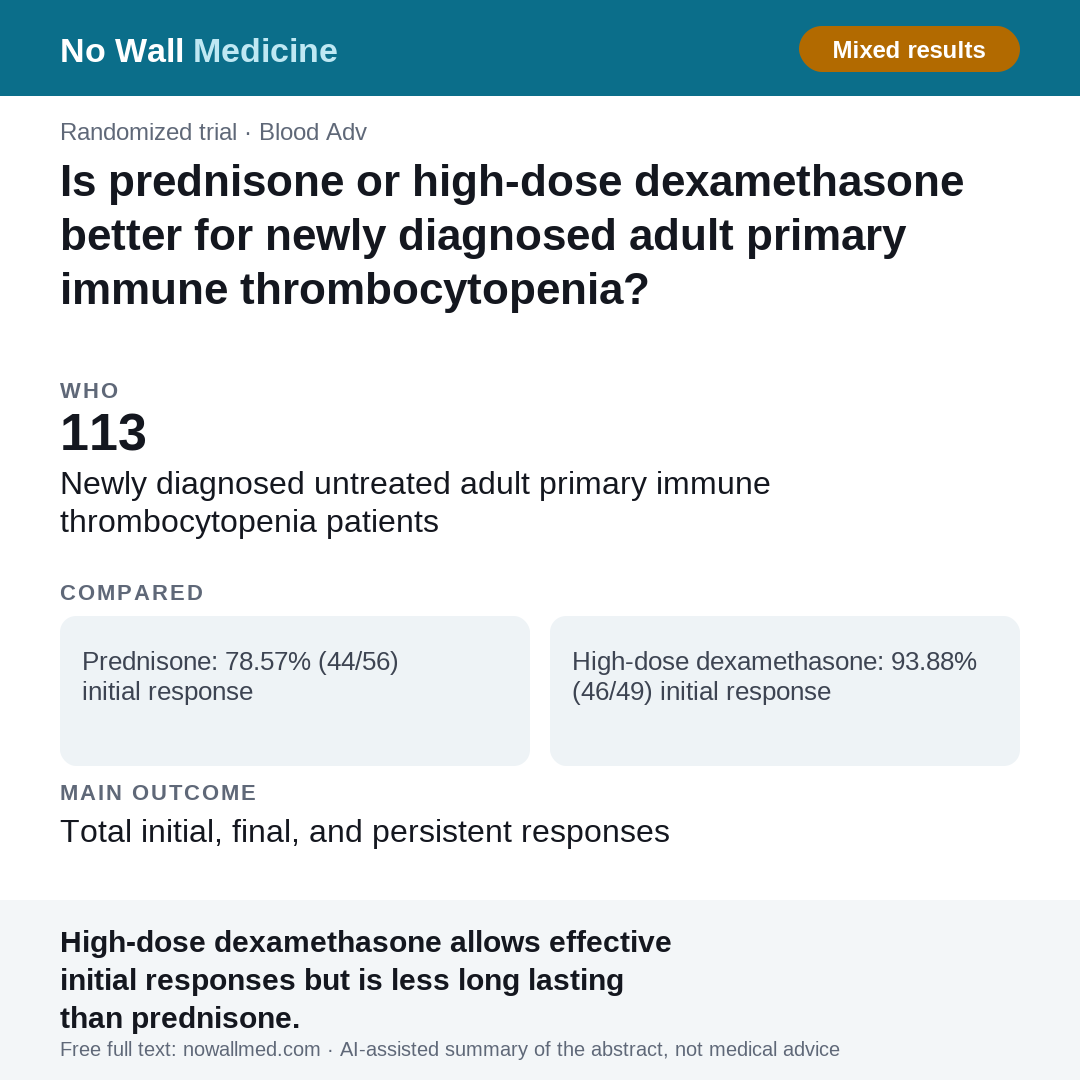
Prednisone vs high-dose dexamethasone in newly diagnosed adult primary immune thrombocytopenia: a randomized trial
Randomized trialMixed results
Is prednisone or high-dose dexamethasone better for newly diagnosed adult primary immune thrombocytopenia?
Who
113
Newly diagnosed untreated adult primary immune thrombocytopenia patients
Compared
Prednisone: 78.57% (44/56) initial response
High-dose dexamethasone: 93.88% (46/49) initial response
Main outcome
Total initial, final, and persistent responses
Bottom line: High-dose dexamethasone allows effective initial responses but is less long lasting than prednisone.
Blood Adv · 2024-01-17Download image
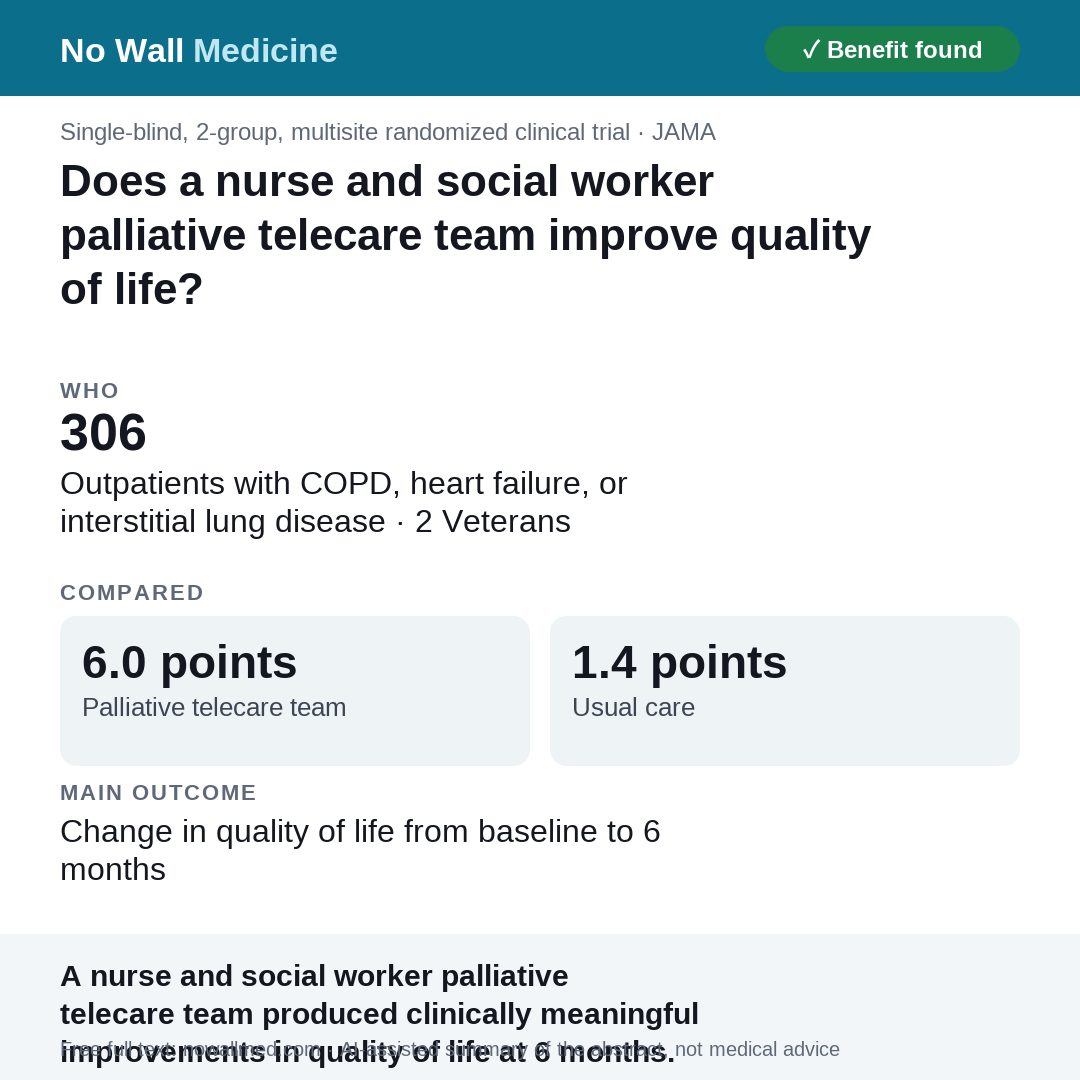
Nurse and Social Worker Palliative Telecare Team and Quality of Life in Patients With COPD, Heart Failure, or Interstitial Lung Disease: The ADAPT Randomized Clinical Trial
Single-blind, 2-group, multisite randomized clinical trialBenefit found
Does a nurse and social worker palliative telecare team improve quality of life?
Who
306
Outpatients with COPD, heart failure, or interstitial lung disease · 2 Veterans Administration health care systems
Compared
6.0 pointsPalliative telecare team
1.4 pointsUsual care
Main outcome
Change in quality of life from baseline to 6 months
Result: difference, 4.6 points [95% CI, 1.8-7.4]
Bottom line: A nurse and social worker palliative telecare team produced clinically meaningful improvements in quality of life at 6 months.
JAMA · 2024-01-16Download image
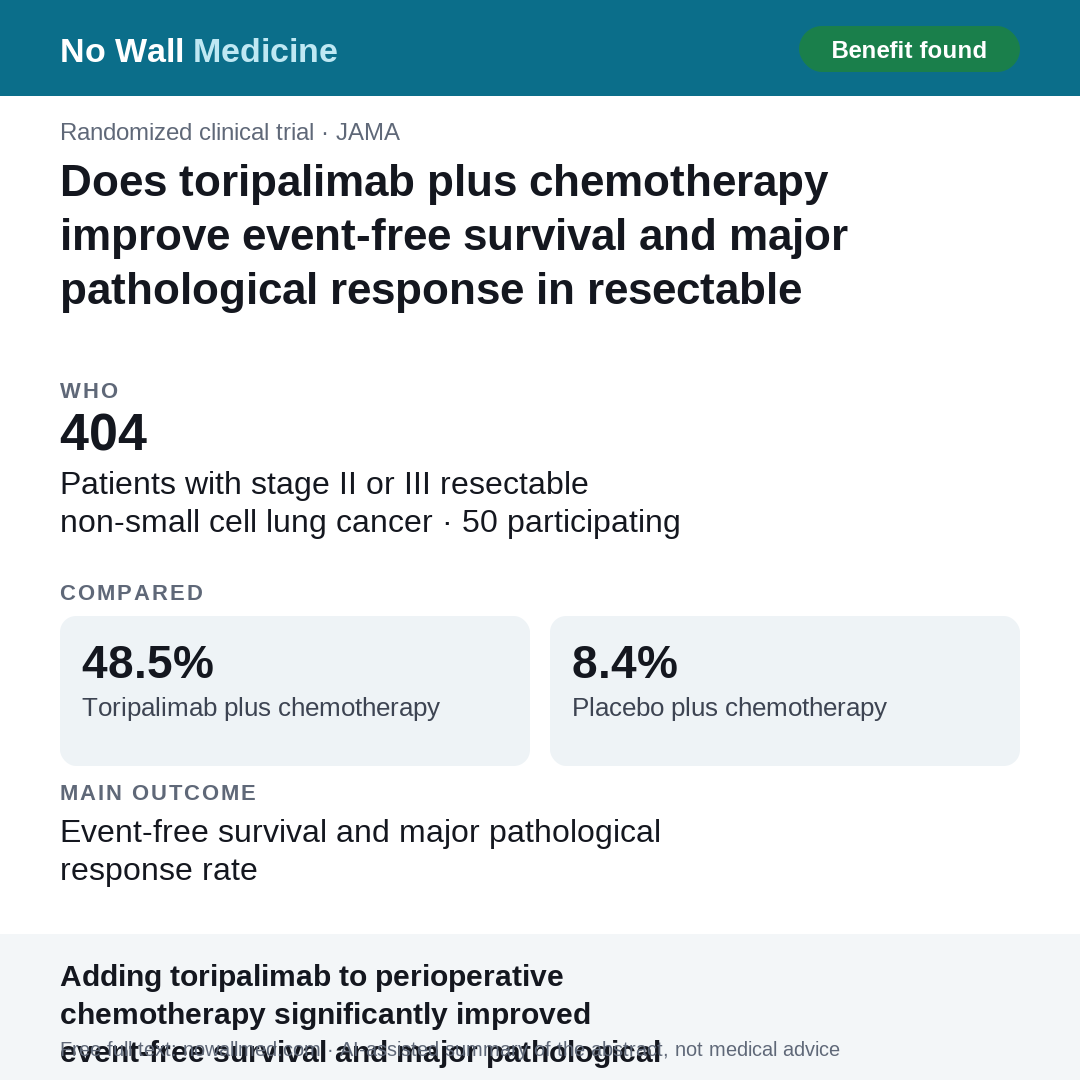
Perioperative Toripalimab Plus Chemotherapy for Patients With Resectable Non-Small Cell Lung Cancer: The Neotorch Randomized Clinical Trial
Randomized clinical trialBenefit found
Does toripalimab plus chemotherapy improve event-free survival and major pathological response in resectable NSCLC?
Who
404
Patients with stage II or III resectable non-small cell lung cancer · 50 participating hospitals in China
Compared
48.5%Toripalimab plus chemotherapy (95% CI, 41.4%-55.6%)
8.4%Placebo plus chemotherapy (95% CI, 5.0%-13.1%)
Main outcome
Event-free survival and major pathological response rate
Result: hazard ratio, 0.40 (95% CI, 0.28-0.57)
Bottom line: Adding toripalimab to perioperative chemotherapy significantly improved event-free survival and major pathological response in stage III non-small cell lung cancer.
Limitation: This interim analysis excluded 97 patients with stage II non-small cell lung cancer.
JAMA · 2024-01-16Download image
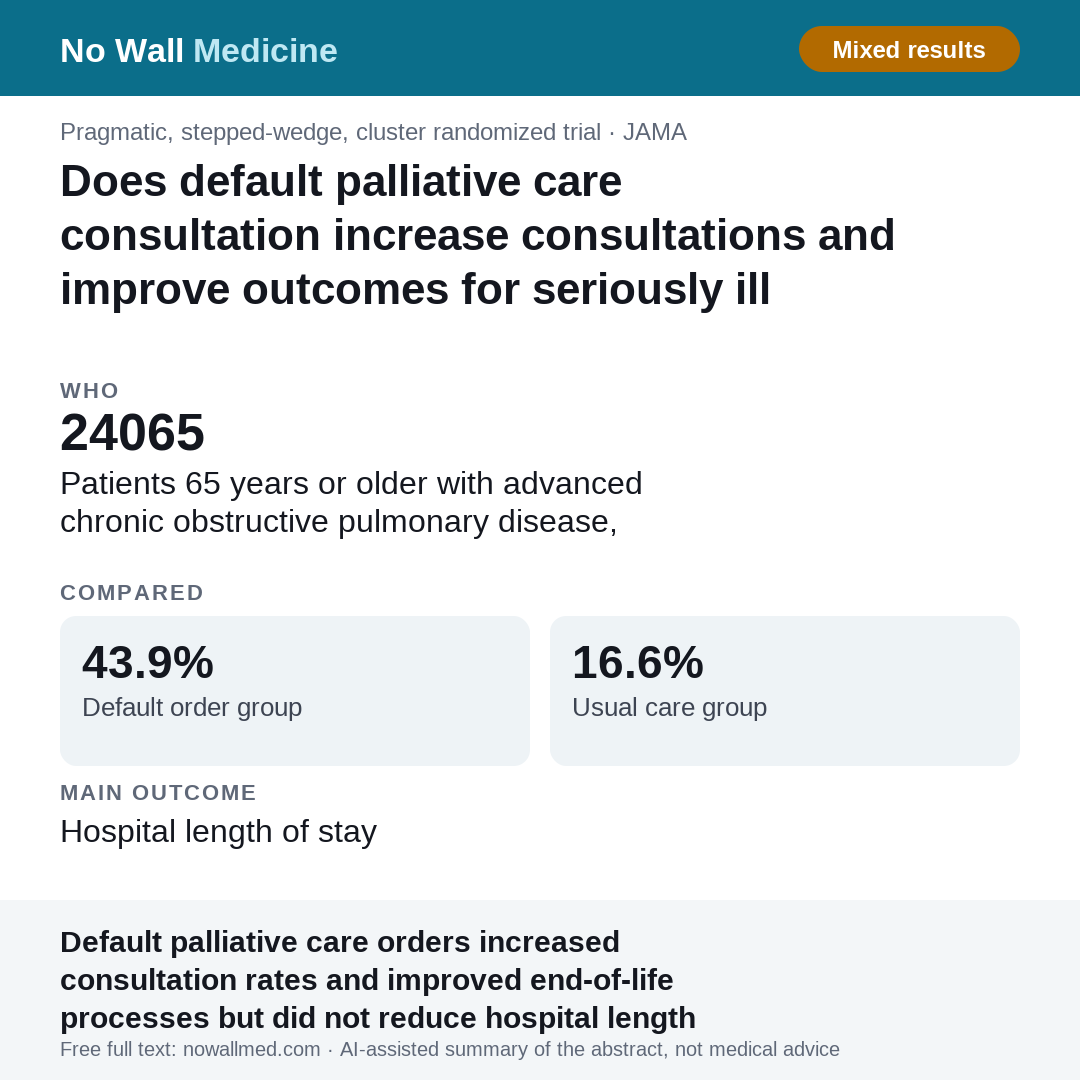
Default Palliative Care Consultation for Seriously Ill Hospitalized Patients: A Pragmatic Cluster Randomized Trial
Pragmatic, stepped-wedge, cluster randomized trialMixed results
Does default palliative care consultation increase consultations and improve outcomes for seriously ill hospitalized patients?
Who
24065
Patients 65 years or older with advanced chronic obstructive pulmonary disease, dementia, or kidney failure · 11 US hospitals
Compared
43.9%Default order group
16.6%Usual care group
Main outcome
Hospital length of stay
Result: percent difference in median length of stay, -0.53% (95% CI, -3.51% to 2.53%)
Bottom line: Default palliative care orders increased consultation rates and improved end-of-life processes but did not reduce hospital length of stay.
JAMA · 2024-01-16Download image
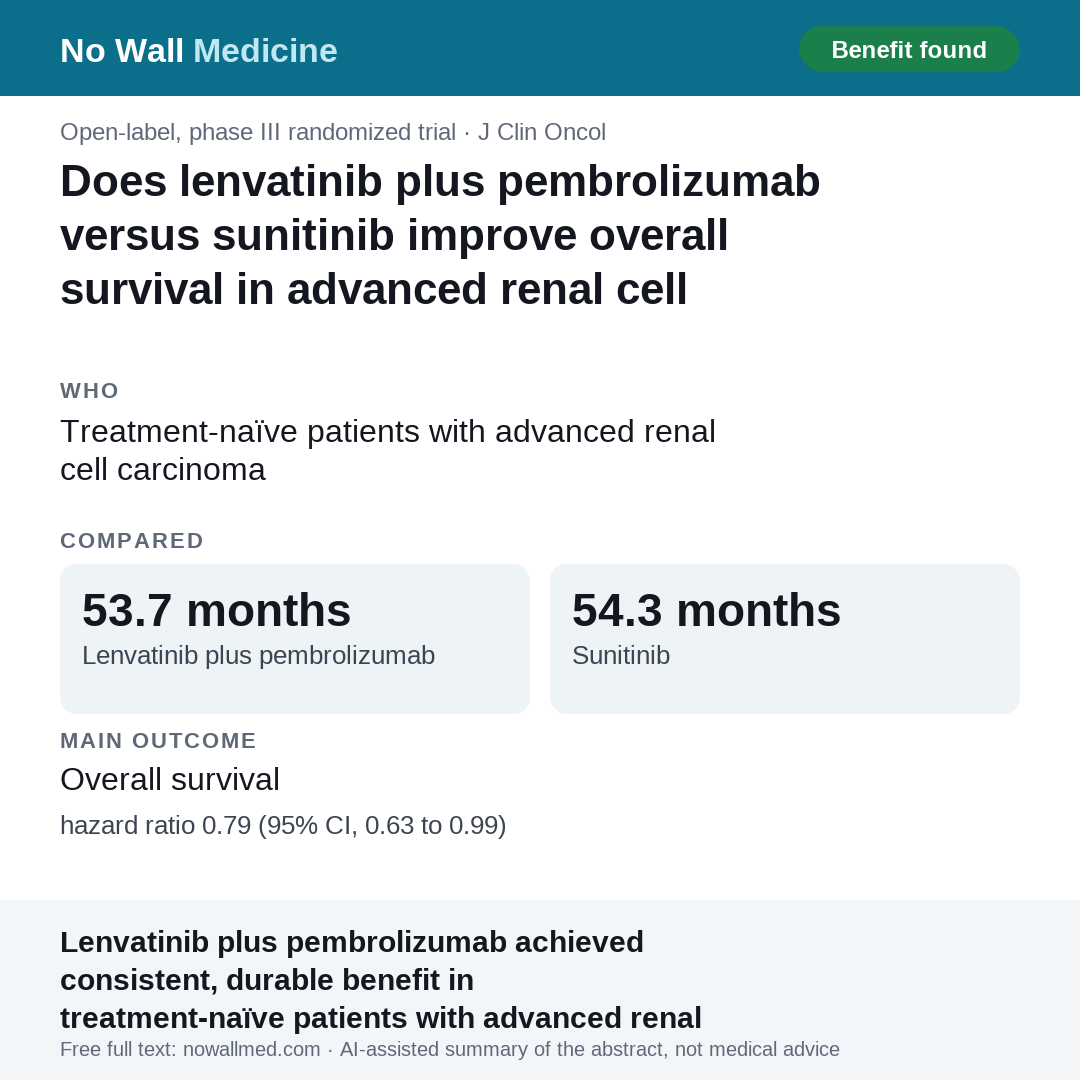
Lenvatinib Plus Pembrolizumab Versus Sunitinib in First-Line Treatment of Advanced Renal Cell Carcinoma: Final Prespecified Overall Survival Analysis of CLEAR, a Phase III Study
Open-label, phase III randomized trialBenefit found
Does lenvatinib plus pembrolizumab versus sunitinib improve overall survival in advanced renal cell carcinoma?
Who
Treatment-naïve patients with advanced renal cell carcinoma
Compared
53.7 monthsLenvatinib plus pembrolizumab
54.3 monthsSunitinib
Main outcome
Overall survival
Result: hazard ratio 0.79 (95% CI, 0.63 to 0.99)
Bottom line: Lenvatinib plus pembrolizumab achieved consistent, durable benefit in treatment-naïve patients with advanced renal cell carcinoma.
J Clin Oncol · 2024-01-16Download image
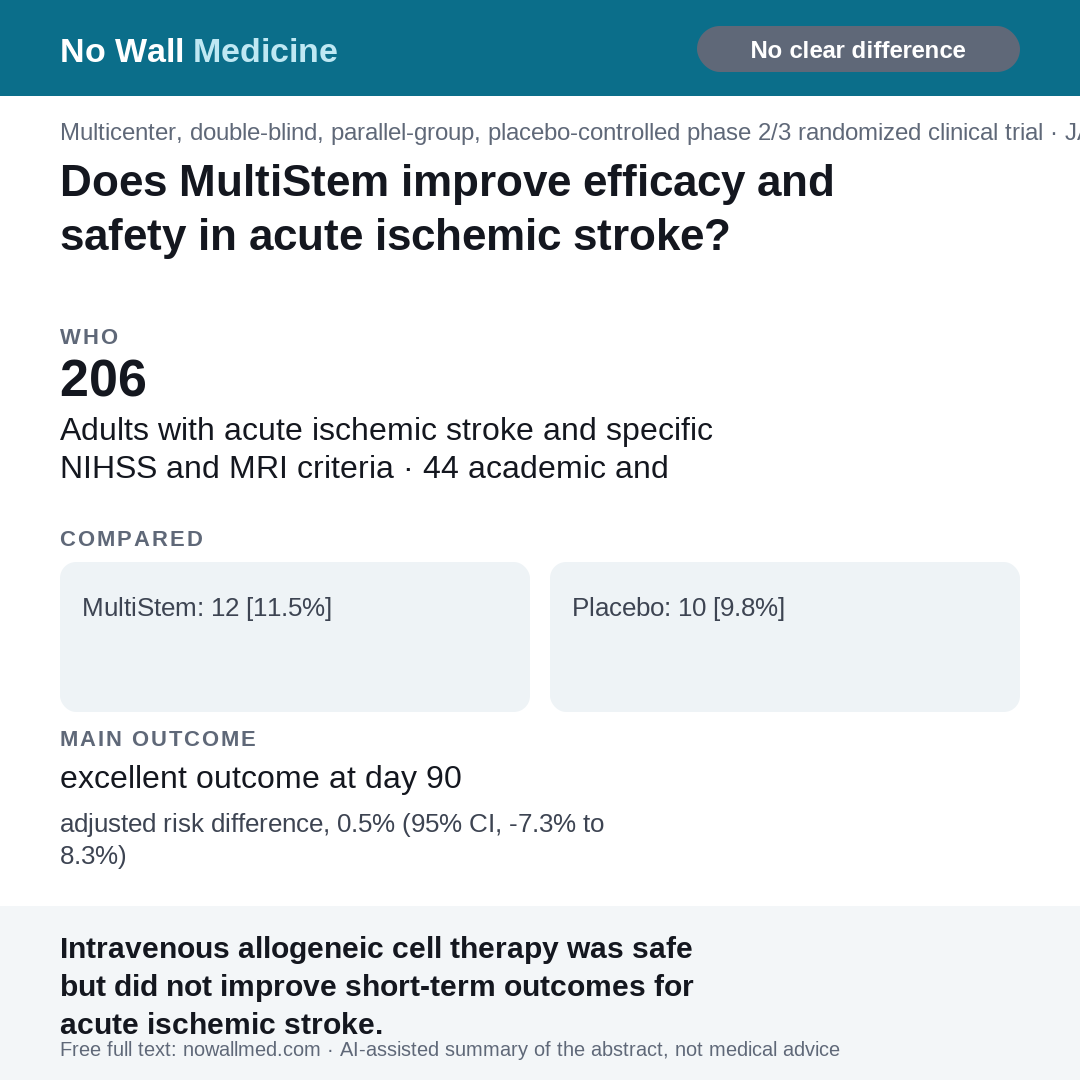
Allogeneic Stem Cell Therapy for Acute Ischemic Stroke: The Phase 2/3 TREASURE Randomized Clinical Trial
Multicenter, double-blind, parallel-group, placebo-controlled phase 2/3 randomized clinical trialNo clear difference
Does MultiStem improve efficacy and safety in acute ischemic stroke?
Who
206
Adults with acute ischemic stroke and specific NIHSS and MRI criteria · 44 academic and clinical centers in Japan
Compared
MultiStem: 12 [11.5%]
Placebo: 10 [9.8%]
Main outcome
excellent outcome at day 90
Result: adjusted risk difference, 0.5% (95% CI, -7.3% to 8.3%)
Bottom line: Intravenous allogeneic cell therapy was safe but did not improve short-term outcomes for acute ischemic stroke.
Limitation: Further research is needed to determine if therapy benefits patients meeting specific criteria.
JAMA Neurol · 2024-01-16Download image
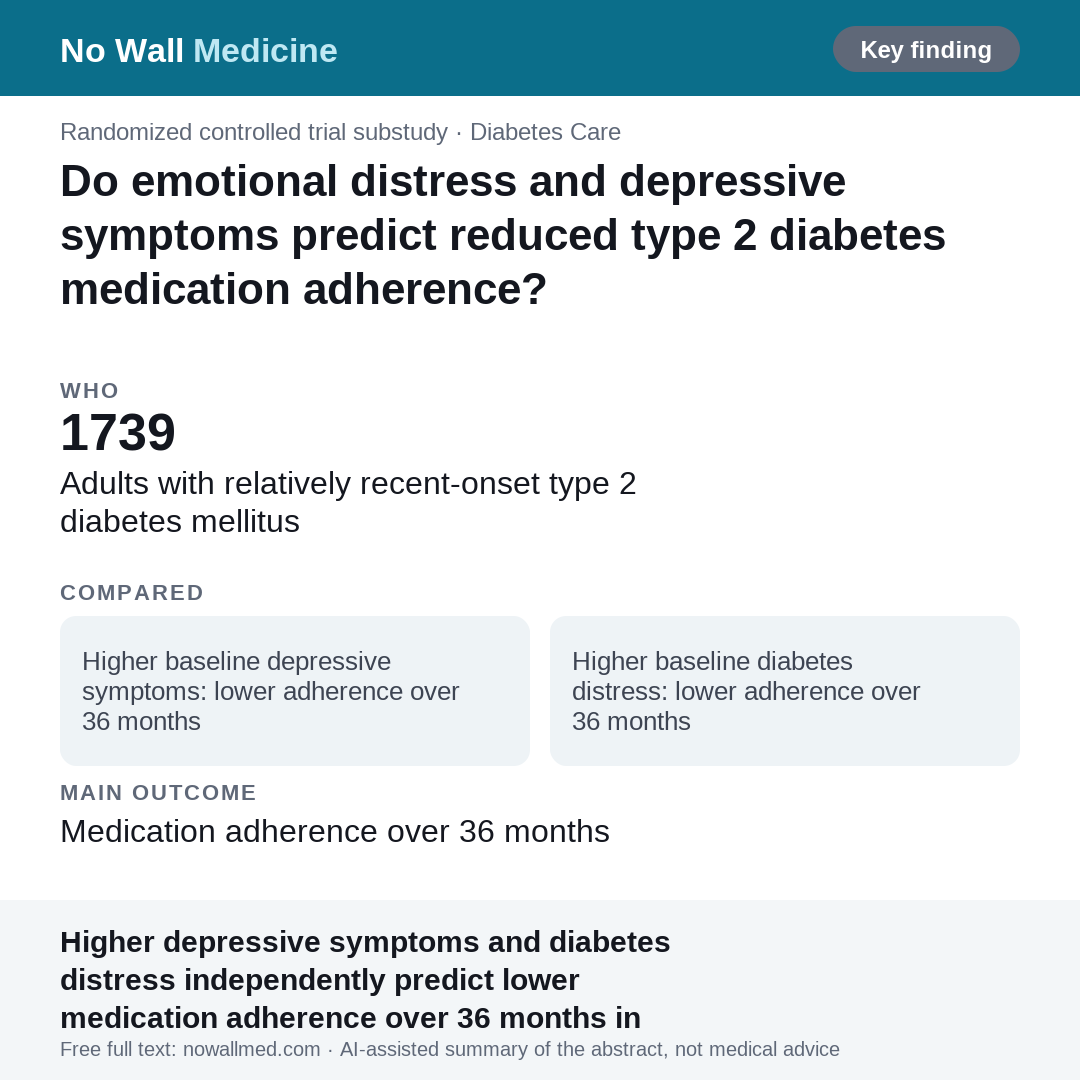
Emotional Distress Predicts Reduced Type 2 Diabetes Treatment Adherence in the Glycemia Reduction Approaches in Diabetes: A Comparative Effectiveness Study (GRADE)
Randomized controlled trial substudyKey finding
Do emotional distress and depressive symptoms predict reduced type 2 diabetes medication adherence?
Who
1739
Adults with relatively recent-onset type 2 diabetes mellitus
Compared
Higher baseline depressive symptoms: lower adherence over 36 months
Higher baseline diabetes distress: lower adherence over 36 months
Main outcome
Medication adherence over 36 months
Bottom line: Higher depressive symptoms and diabetes distress independently predict lower medication adherence over 36 months in adults with type 2 diabetes.
Diabetes Care · 2024-01-16Download image
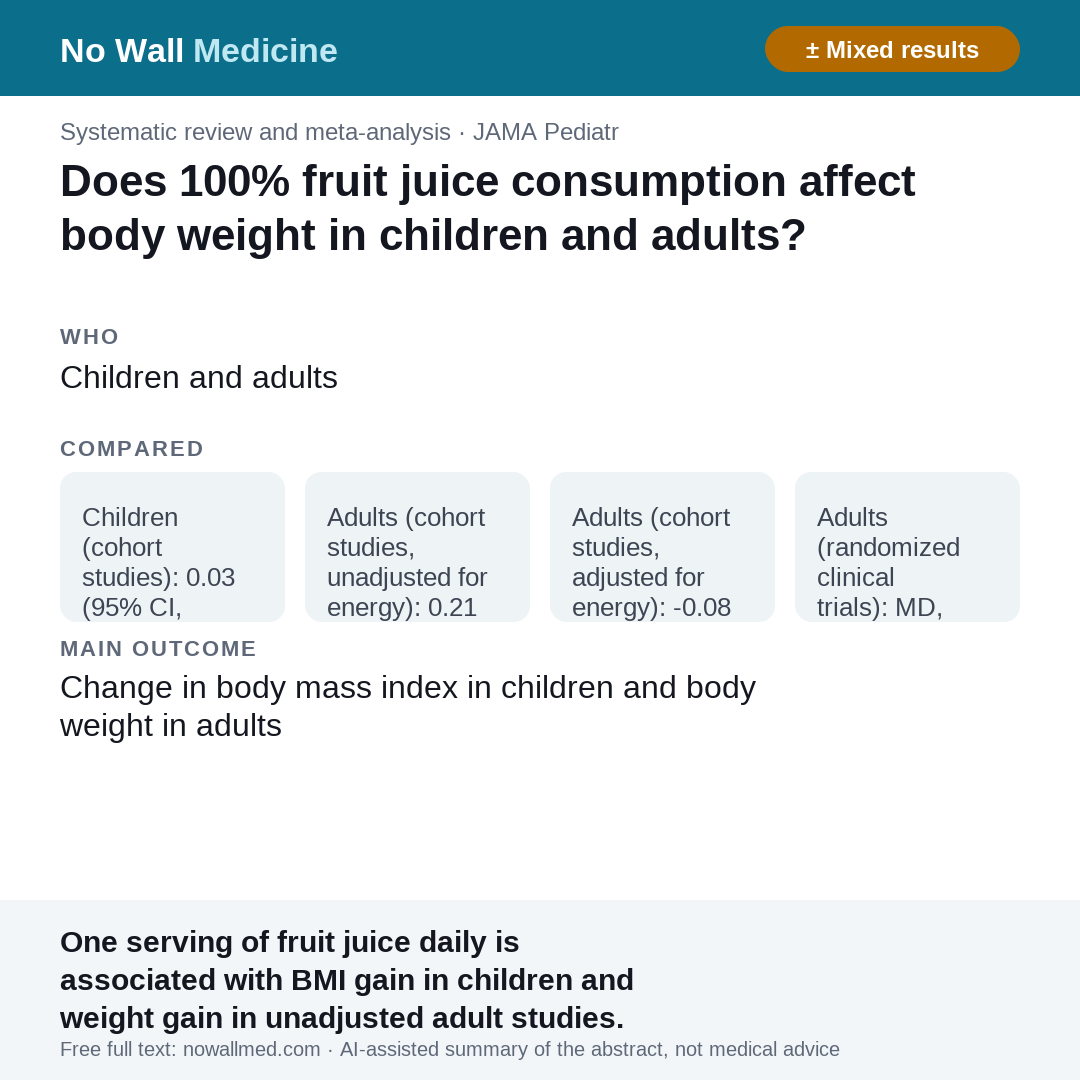
Consumption of 100% Fruit Juice and Body Weight in Children and Adults: A Systematic Review and Meta-Analysis
Systematic review and meta-analysisMixed results
Does 100% fruit juice consumption affect body weight in children and adults?
Who
Children and adults
Compared
Children (cohort studies): 0.03 (95% CI, 0.01-0.05) higher BMI change
Adults (cohort studies, unadjusted for energy): 0.21 kg; 95% CI, 0.15-0.27 kg
Adults (cohort studies, adjusted for energy): -0.08 kg; 95% CI, -0.11 to -0.05 kg
Adults (randomized clinical trials): MD, -0.53 kg; 95% CI, -1.55 to 0.48 kg
Main outcome
Change in body mass index in children and body weight in adults
Bottom line: One serving of fruit juice daily is associated with BMI gain in children and weight gain in unadjusted adult studies.
JAMA Pediatr · 2024-01-16Download image
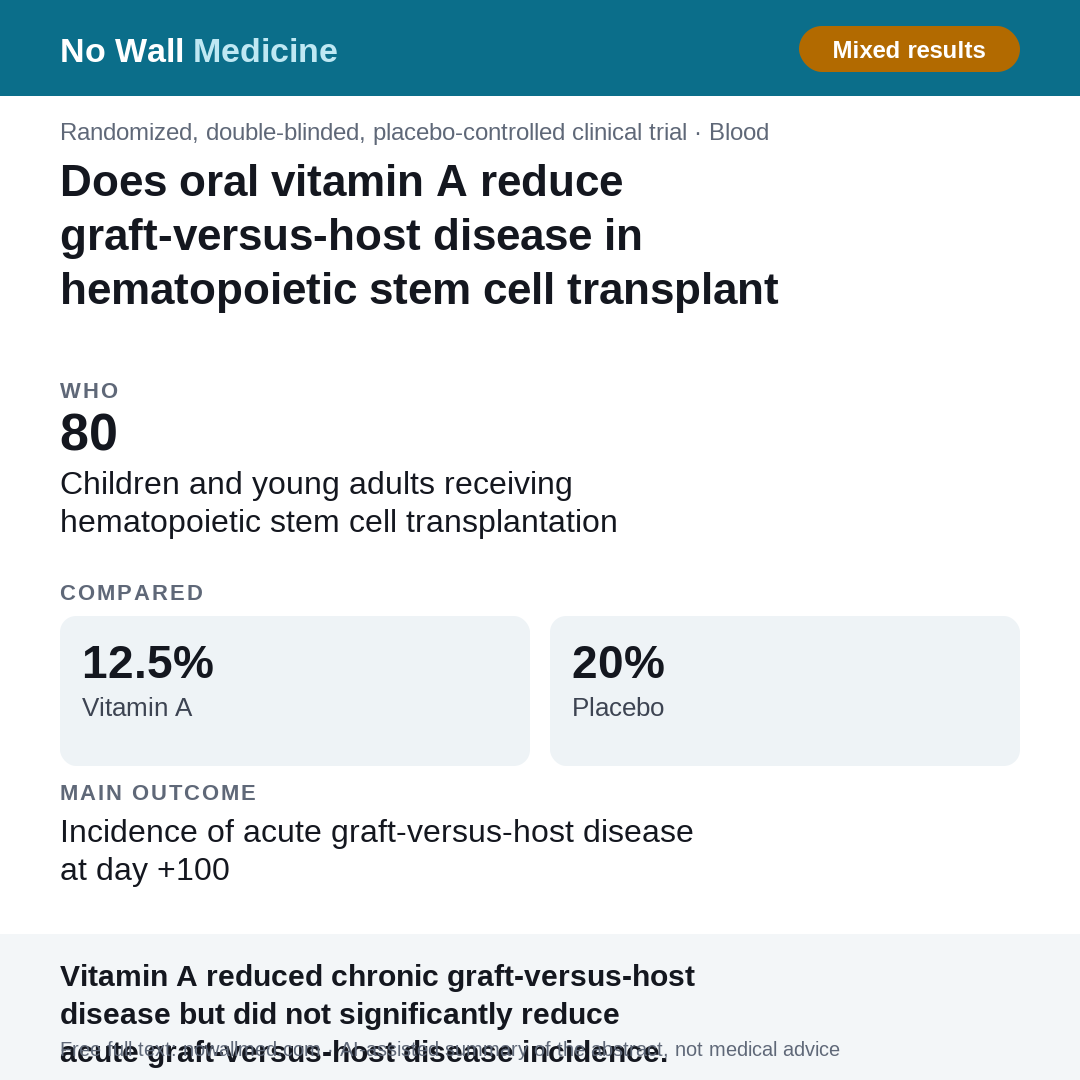
A randomized phase 2 trial of oral vitamin A for graft-versus-host disease in children and young adults
Randomized, double-blinded, placebo-controlled clinical trialMixed results
Does oral vitamin A reduce graft-versus-host disease in hematopoietic stem cell transplant recipients?
Who
80
Children and young adults receiving hematopoietic stem cell transplantation
Compared
12.5%Vitamin A
20%Placebo
Main outcome
Incidence of acute graft-versus-host disease at day +100
Bottom line: Vitamin A reduced chronic graft-versus-host disease but did not significantly reduce acute graft-versus-host disease incidence.
Blood · 2024-01-16Download image
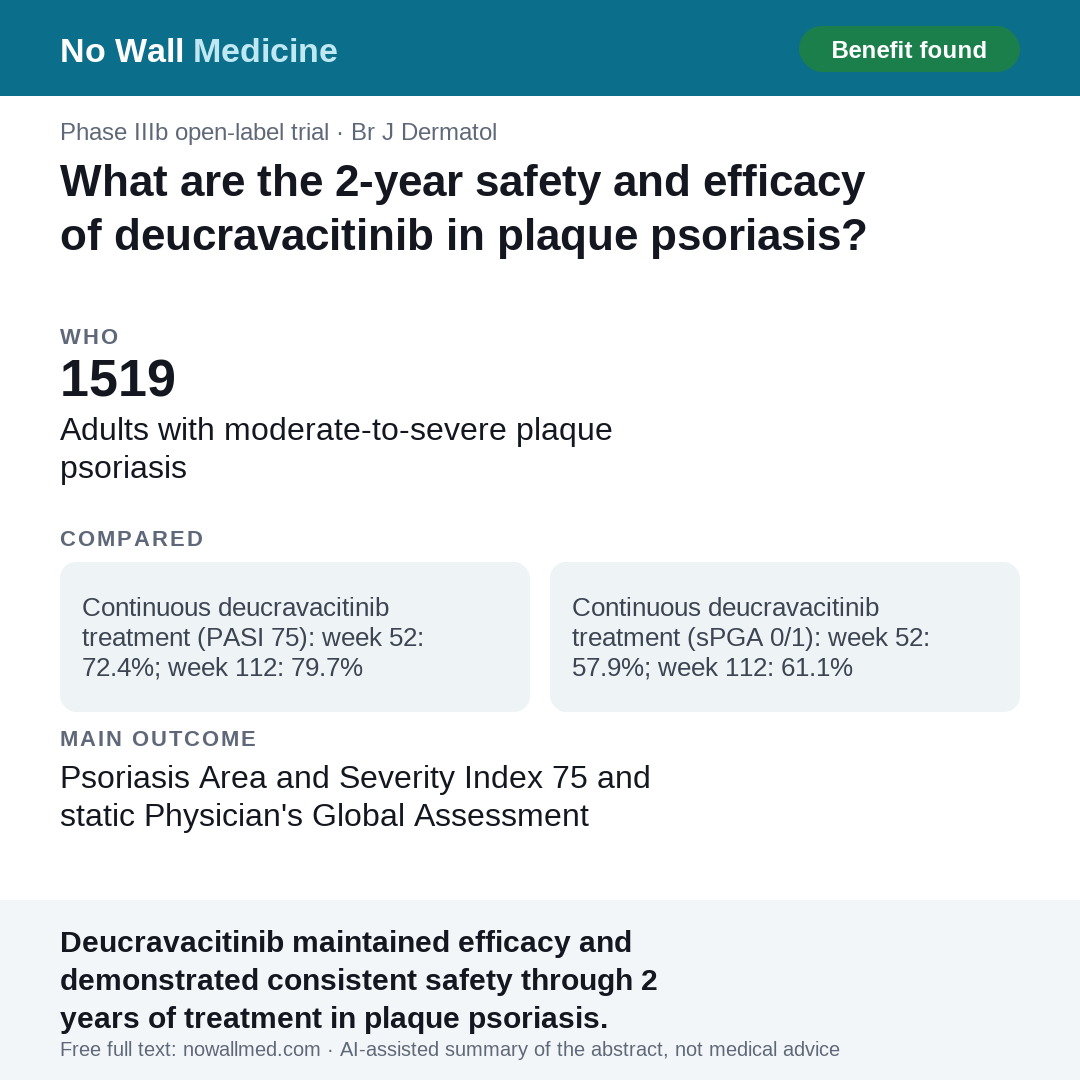
Deucravacitinib in plaque psoriasis: 2-year safety and efficacy results from the phase III POETYK trials
Phase IIIb open-label trialBenefit found
What are the 2-year safety and efficacy of deucravacitinib in plaque psoriasis?
Who
1519
Adults with moderate-to-severe plaque psoriasis
Compared
Continuous deucravacitinib treatment (PASI 75): week 52: 72.4%; week 112: 79.7%
Continuous deucravacitinib treatment (sPGA 0/1): week 52: 57.9%; week 112: 61.1%
Main outcome
Psoriasis Area and Severity Index 75 and static Physician's Global Assessment
Bottom line: Deucravacitinib maintained efficacy and demonstrated consistent safety through 2 years of treatment in plaque psoriasis.
Br J Dermatol · 2024-01-16Download image
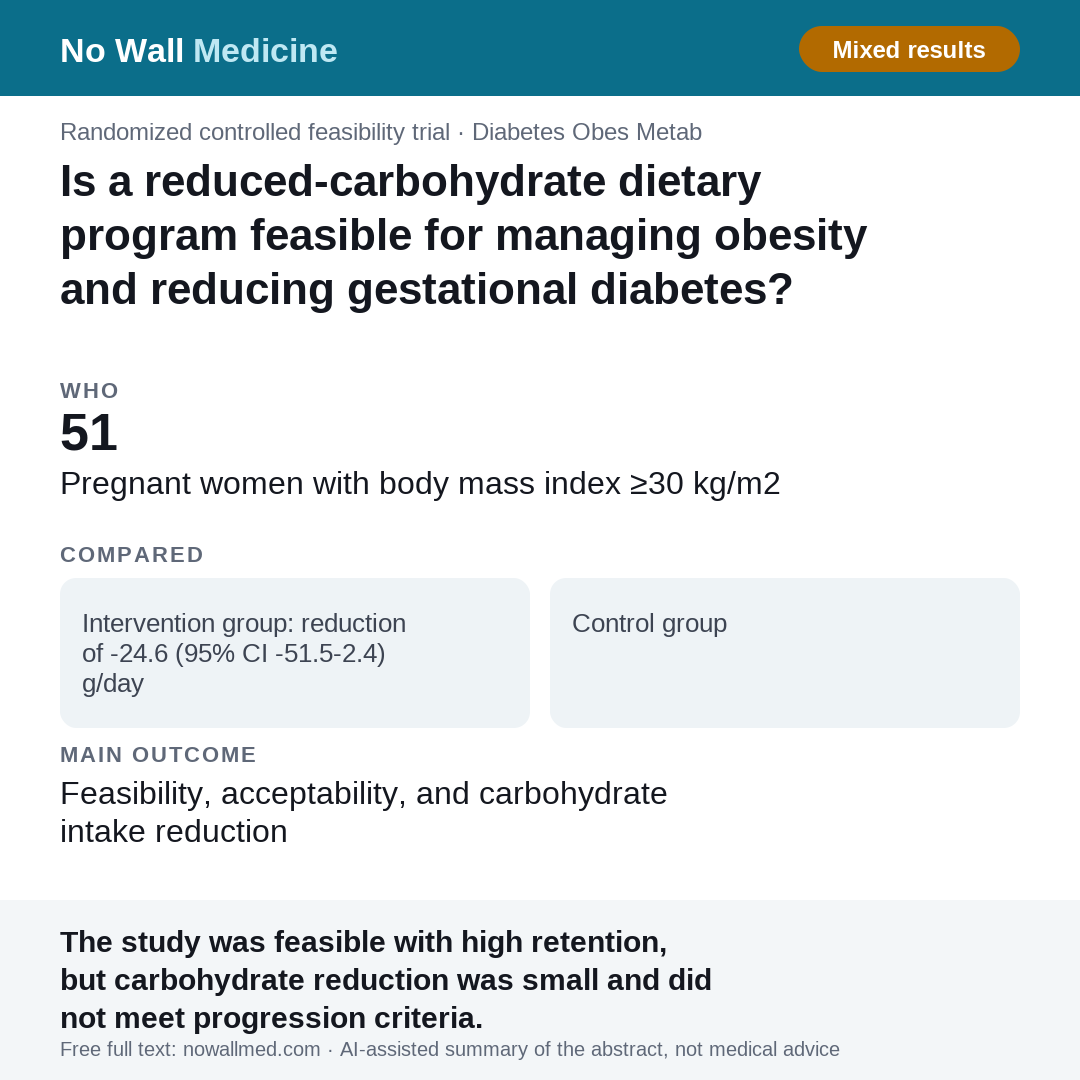
REduced-Carbohydrate intervention for managing Obesity and Reduction of gestational Diabetes (RECORD): A randomized controlled feasibility trial
Randomized controlled feasibility trialMixed results
Is a reduced-carbohydrate dietary program feasible for managing obesity and reducing gestational diabetes?
Who
51
Pregnant women with body mass index ≥30 kg/m2
Compared
Intervention group: reduction of -24.6 (95% CI -51.5-2.4) g/day
Control group
Main outcome
Feasibility, acceptability, and carbohydrate intake reduction
Bottom line: The study was feasible with high retention, but carbohydrate reduction was small and did not meet progression criteria.
Diabetes Obes Metab · 2024-01-16Download image
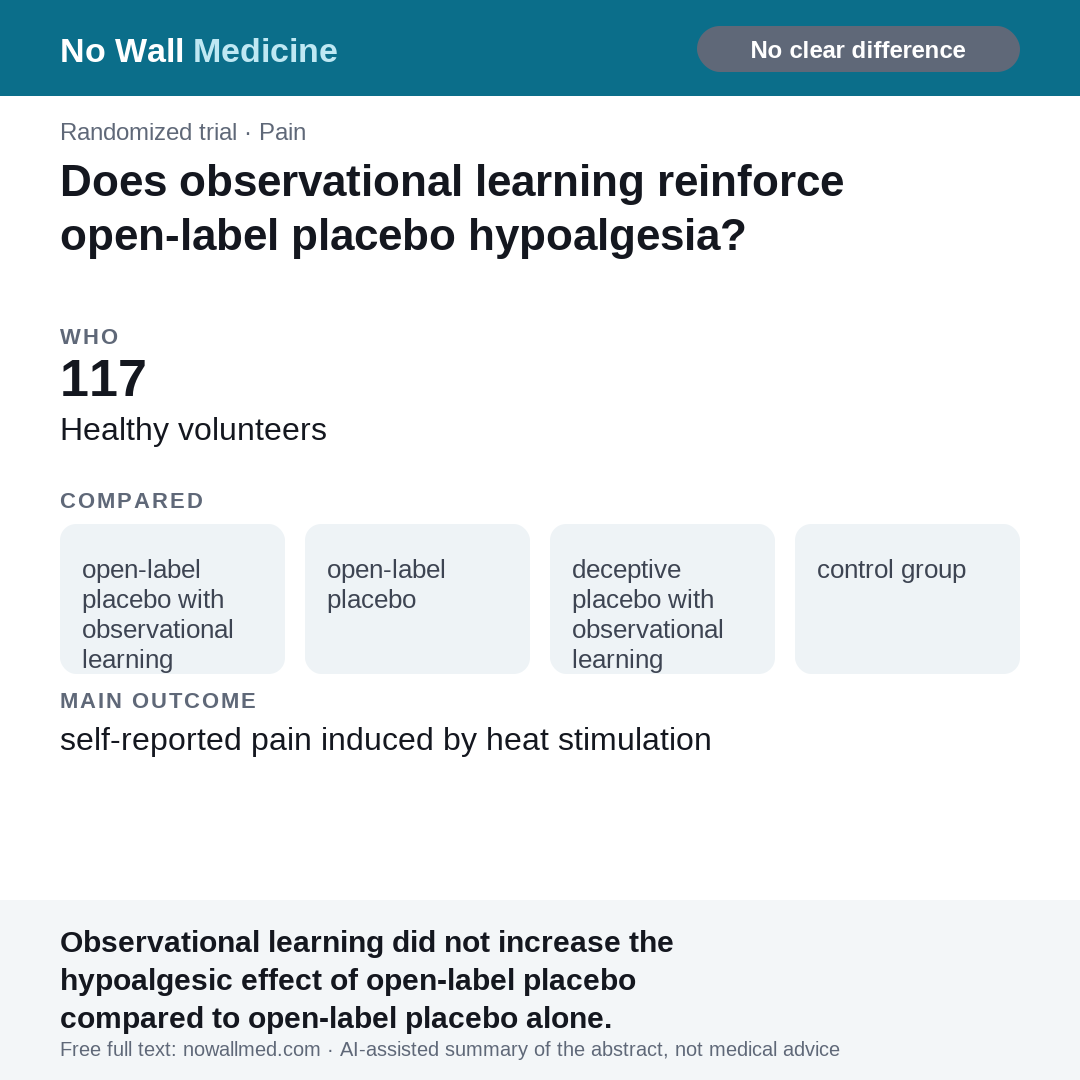
Can observational learning reinforce open-label placebo hypoalgesia?
Randomized trialNo clear difference
Does observational learning reinforce open-label placebo hypoalgesia?
Who
117
Healthy volunteers
Compared
open-label placebo with observational learning
open-label placebo
deceptive placebo with observational learning
control group
Main outcome
self-reported pain induced by heat stimulation
Bottom line: Observational learning did not increase the hypoalgesic effect of open-label placebo compared to open-label placebo alone.
Limitation: more research is needed to confirm these findings
Pain · 2024-01-16Download image
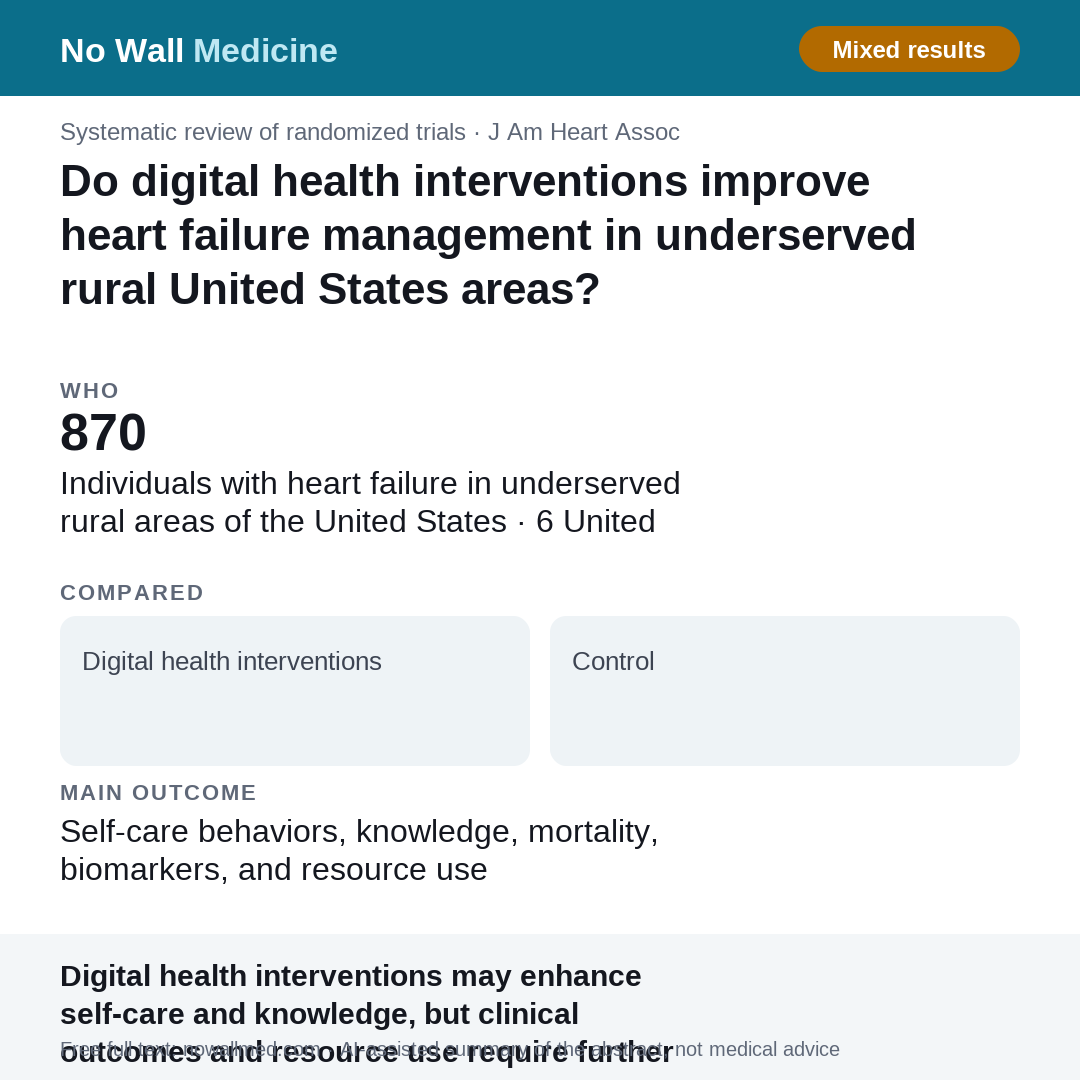
Digital Health Interventions for Heart Failure Management in Underserved Rural Areas of the United States: A Systematic Review of Randomized Trials
Systematic review of randomized trialsMixed results
Do digital health interventions improve heart failure management in underserved rural United States areas?
Who
870
Individuals with heart failure in underserved rural areas of the United States · 6 United States states
Compared
Digital health interventions
Control
Main outcome
Self-care behaviors, knowledge, mortality, biomarkers, and resource use
Bottom line: Digital health interventions may enhance self-care and knowledge, but clinical outcomes and resource use require further research.
Limitation: Further research is necessary to evaluate impact on clinical outcomes, biomarkers, and health care resource use.
J Am Heart Assoc · 2024-01-16Download image
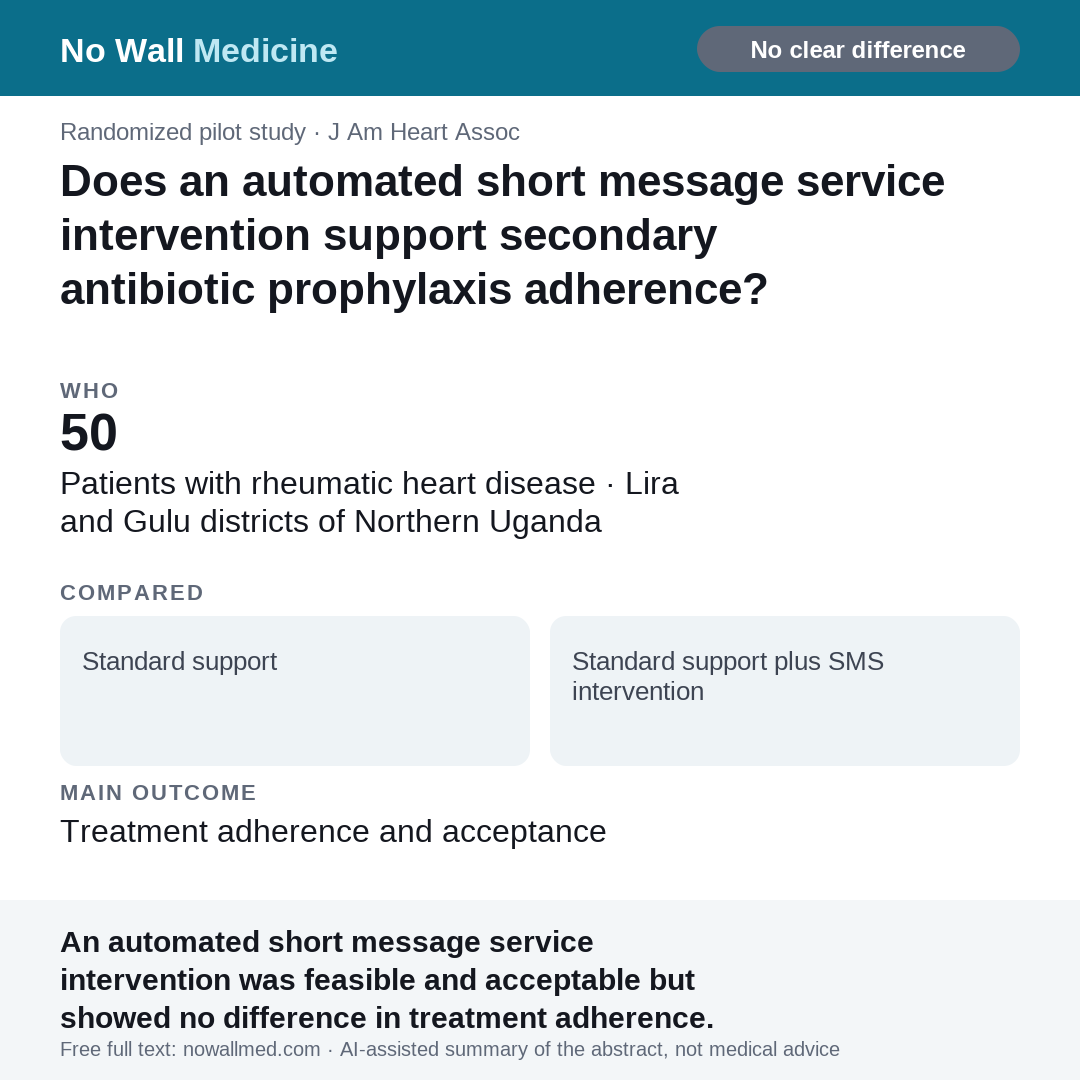
User-Centered Design to Develop Automated Short Message Service Messaging for Patient Support of Rheumatic Heart Disease Secondary Antibiotic Prophylaxis
Randomized pilot studyNo clear difference
Does an automated short message service intervention support secondary antibiotic prophylaxis adherence?
Who
50
Patients with rheumatic heart disease · Lira and Gulu districts of Northern Uganda
Compared
Standard support
Standard support plus SMS intervention
Main outcome
Treatment adherence and acceptance
Bottom line: An automated short message service intervention was feasible and acceptable but showed no difference in treatment adherence.
J Am Heart Assoc · 2024-01-16Download image
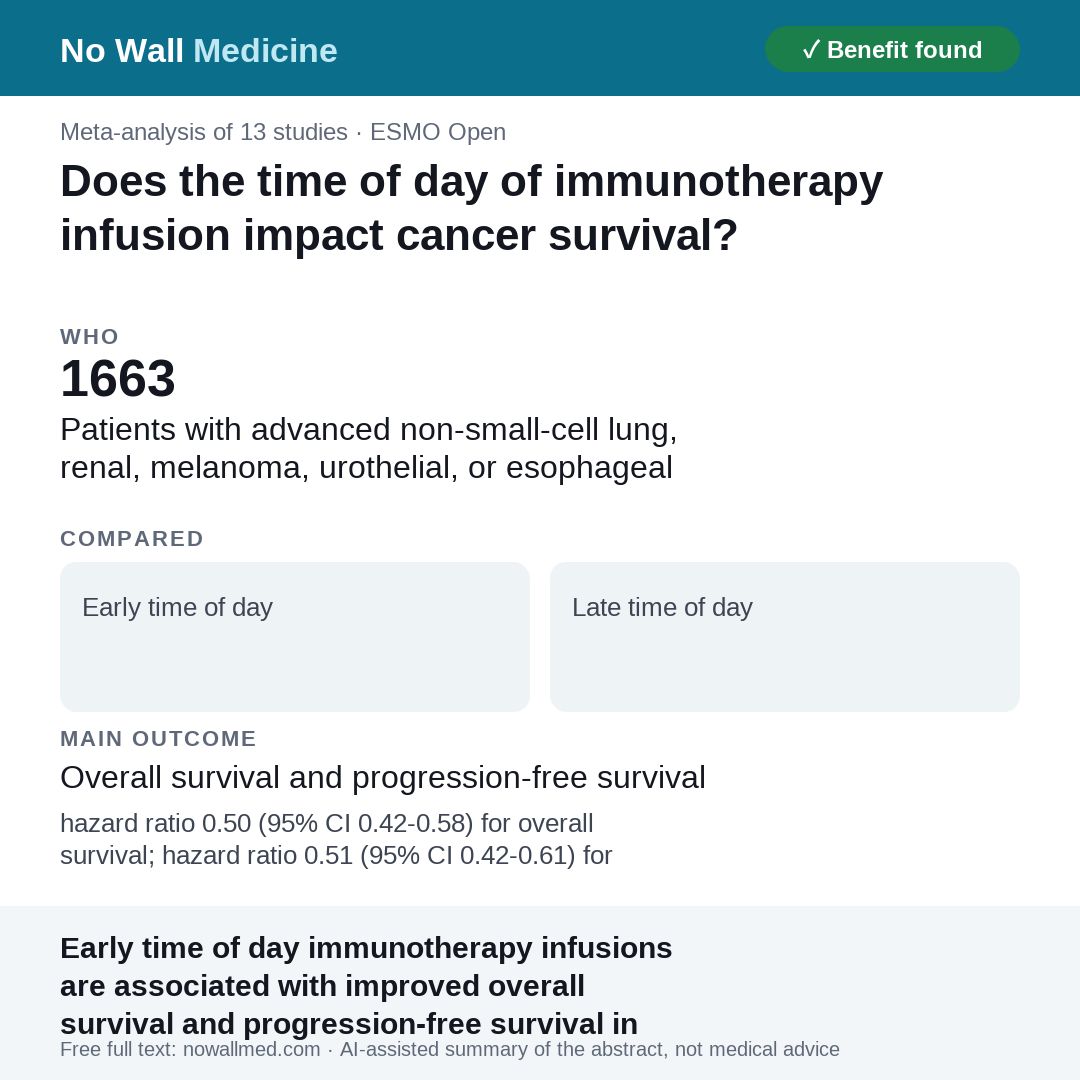
Effect of immunotherapy-infusion time of day on survival of patients with advanced cancers: a study-level meta-analysis
Meta-analysis of 13 studiesBenefit found
Does the time of day of immunotherapy infusion impact cancer survival?
Who
1663
Patients with advanced non-small-cell lung, renal, melanoma, urothelial, or esophageal cancers
Compared
Early time of day
Late time of day
Main outcome
Overall survival and progression-free survival
Result: hazard ratio 0.50 (95% CI 0.42-0.58) for overall survival; hazard ratio 0.51 (95% CI 0.42-0.61) for progression-free survival
Bottom line: Early time of day immunotherapy infusions are associated with improved overall survival and progression-free survival in advanced cancer patients.
ESMO Open · 2024-01-16Download image
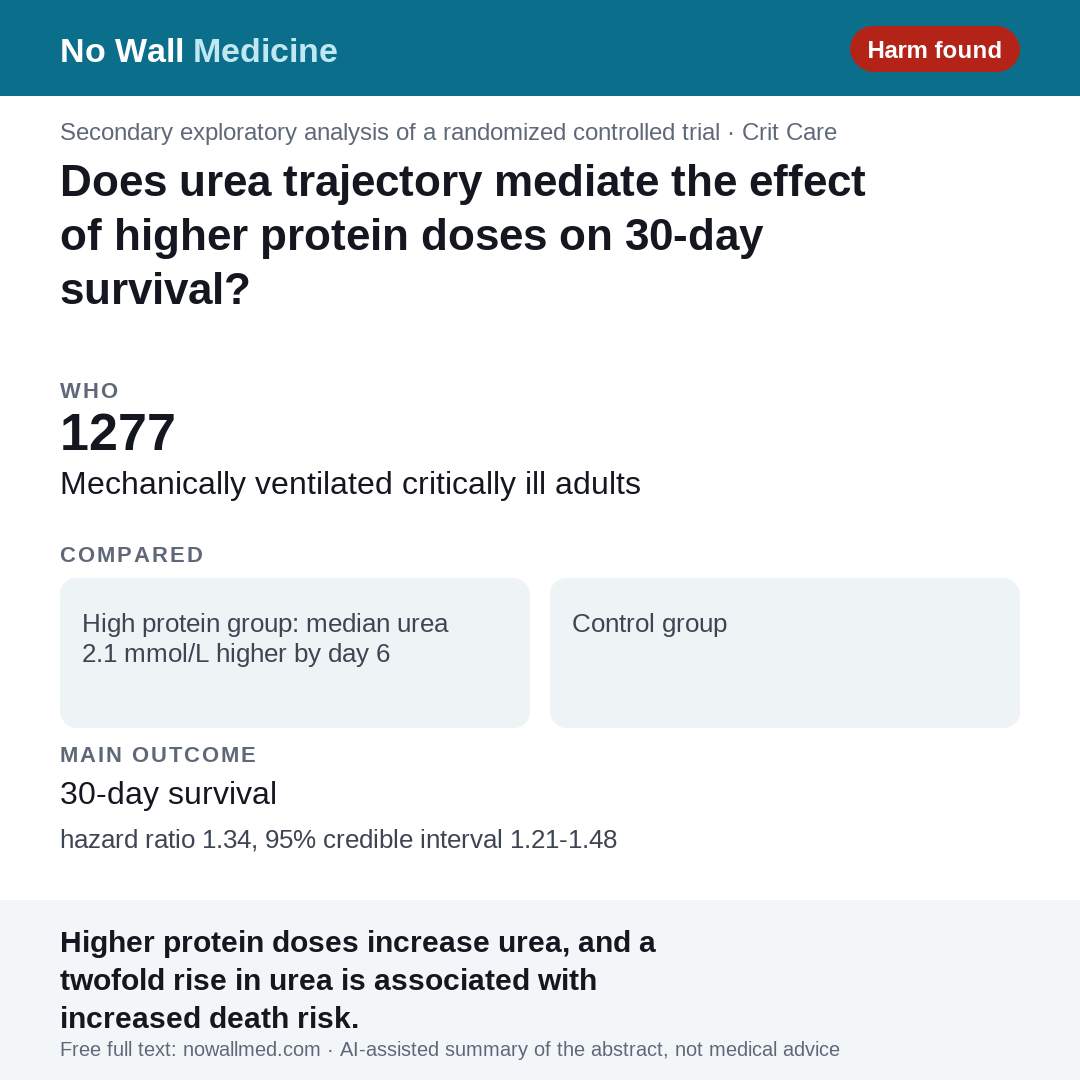
Association between urea trajectory and protein dose in critically ill adults: a secondary exploratory analysis of the effort protein trial (RE-EFFORT)
Secondary exploratory analysis of a randomized controlled trialHarm found
Does urea trajectory mediate the effect of higher protein doses on 30-day survival?
Who
1277
Mechanically ventilated critically ill adults
Compared
High protein group: median urea 2.1 mmol/L higher by day 6
Control group
Main outcome
30-day survival
Result: hazard ratio 1.34, 95% credible interval 1.21-1.48
Bottom line: Higher protein doses increase urea, and a twofold rise in urea is associated with increased death risk.
Crit Care · 2024-01-16Download image