Visual abstracts
New randomized trials and meta-analyses from leading journals at a glance: who was studied, what was compared, and what was found. Every paper is free to read in full.
All specialtiesCardiology 2020Oncology 1742Gastroenterology & Hepatology 768Infectious Disease 1281Neurology 832Psychiatry & Mental Health 992Pulmonology 865Critical Care 576Endocrinology & Diabetes 1078Pediatrics 1201Surgery 1024Orthopedics & Sports Medicine 376Neurosurgery 251Cardiothoracic & Vascular Surgery 216Plastic & Reconstructive Surgery 309Nephrology 420Rheumatology 285Hematology 444Dermatology 231Ophthalmology 232Obstetrics & Gynecology 657Public & Global Health 391Radiology & Imaging 278Anesthesiology 404Urology 357ENT (Otolaryngology) 269Emergency Medicine 223Allergy & Immunology 128Geriatrics 433Family Medicine & Primary Care 238Medical Genetics & Genomics 219Pathology & Laboratory Medicine 66Physical Medicine & Rehabilitation 356Palliative Care 174Nutrition 550Digital Health & AI 1051General Medicine 155
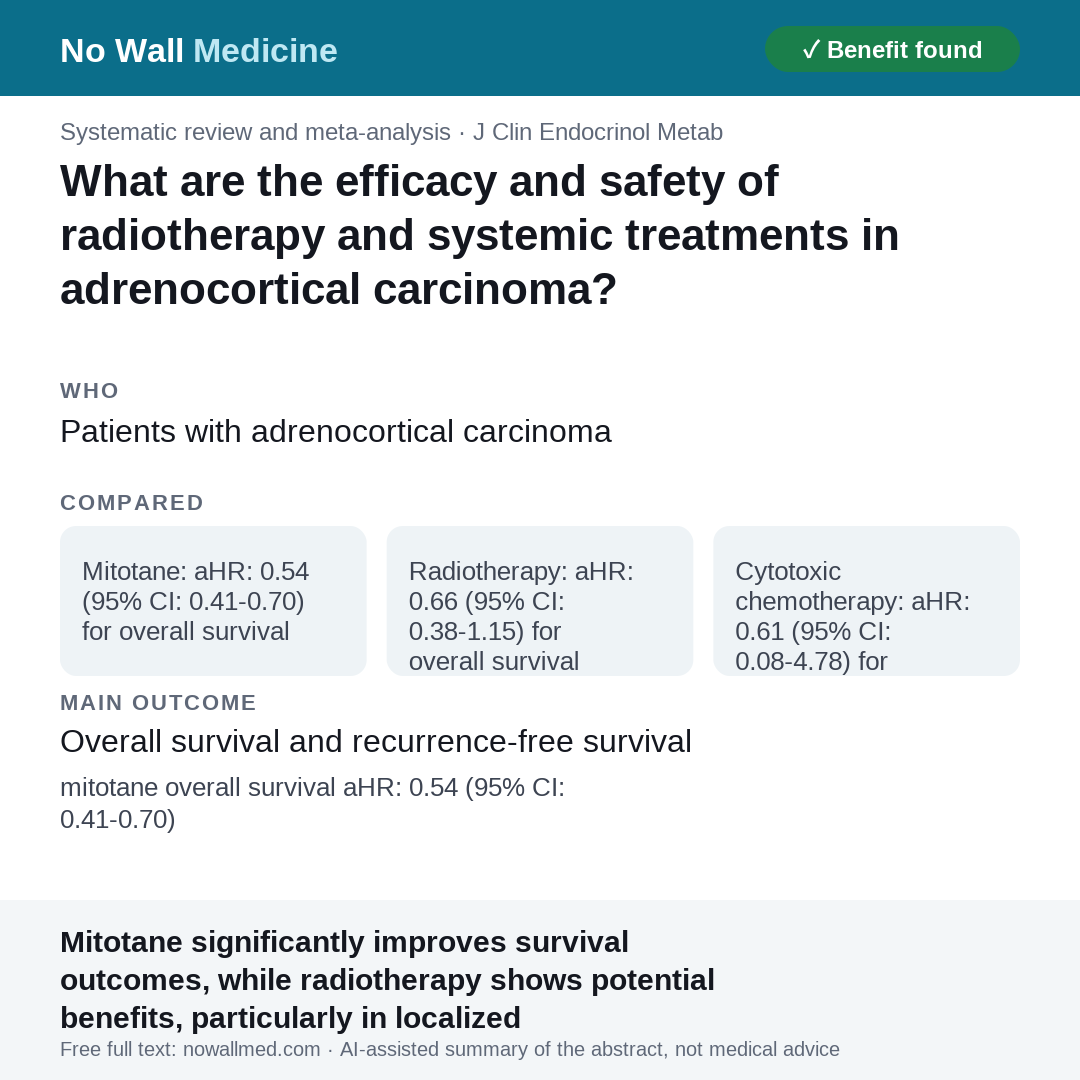
Efficacy and Safety of Radiotherapy and Systemic Treatments in Adrenocortical Carcinoma: Systematic Review and Meta-Analysis
Systematic review and meta-analysisBenefit found
What are the efficacy and safety of radiotherapy and systemic treatments in adrenocortical carcinoma?
Who
Patients with adrenocortical carcinoma
Compared
Mitotane: aHR: 0.54 (95% CI: 0.41-0.70) for overall survival
Radiotherapy: aHR: 0.66 (95% CI: 0.38-1.15) for overall survival
Cytotoxic chemotherapy: aHR: 0.61 (95% CI: 0.08-4.78) for overall survival
Main outcome
Overall survival and recurrence-free survival
Result: mitotane overall survival aHR: 0.54 (95% CI: 0.41-0.70)
Bottom line: Mitotane significantly improves survival outcomes, while radiotherapy shows potential benefits, particularly in localized adrenocortical carcinoma.
J Clin Endocrinol Metab · 2025-08-13Download image
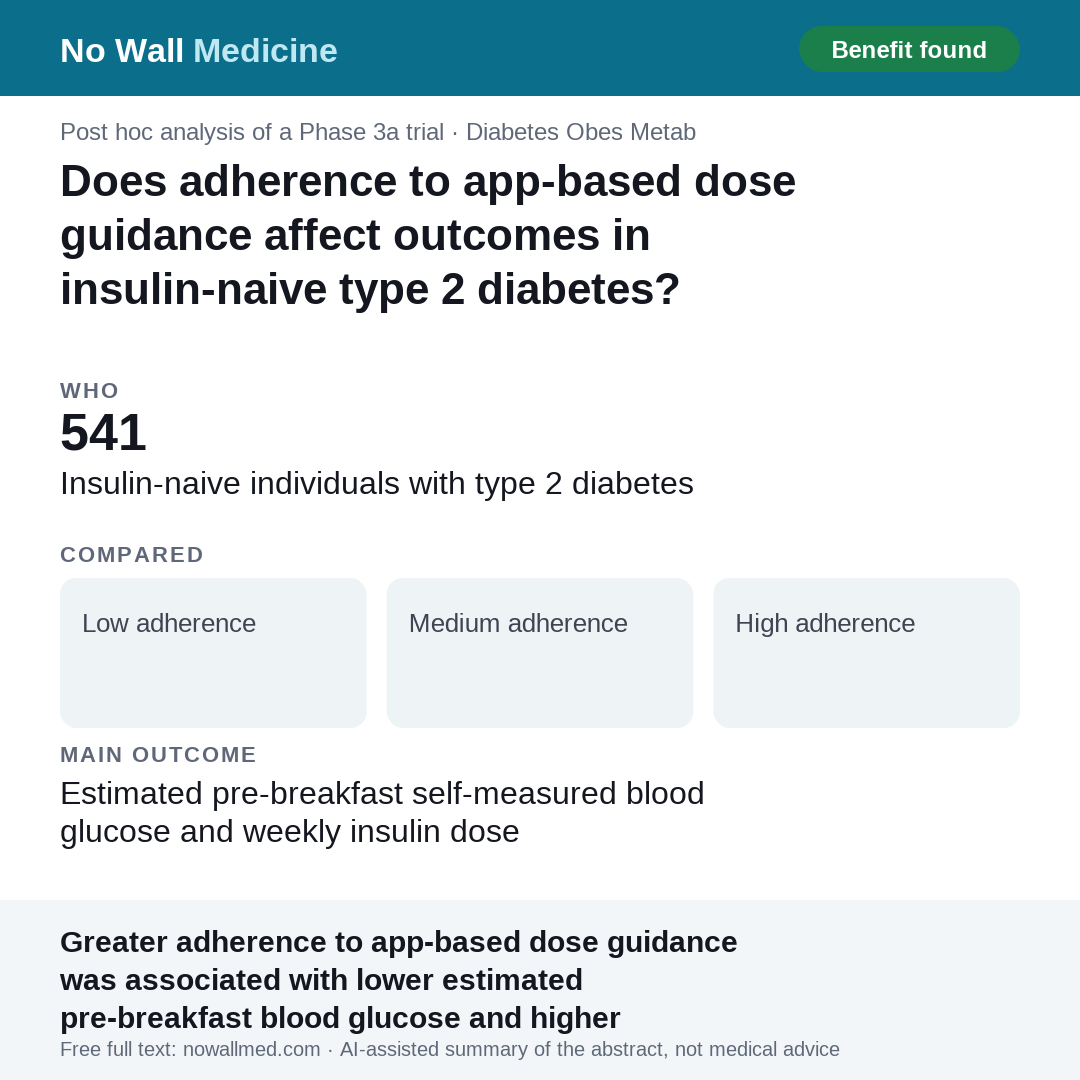
Adherence to app-based dose guidance for once-weekly insulin icodec in insulin-naive individuals with type 2 diabetes: Post hoc analysis of ONWARDS 5
Post hoc analysis of a Phase 3a trialBenefit found
Does adherence to app-based dose guidance affect outcomes in insulin-naive type 2 diabetes?
Who
541
Insulin-naive individuals with type 2 diabetes
Compared
Low adherence
Medium adherence
High adherence
Main outcome
Estimated pre-breakfast self-measured blood glucose and weekly insulin dose
Bottom line: Greater adherence to app-based dose guidance was associated with lower estimated pre-breakfast blood glucose and higher weekly insulin dose.
Diabetes Obes Metab · 2025-08-13Download image
Evaluating Intervention Rates for Dysfunctional Arteriovenous Fistulas: Post-hoc Analysis of the IN.PACT AV Access Trial
Post-hoc analysis of a randomized clinical trialBenefit found
Does drug-coated balloon use reduce interventions and thrombosis compared to standard angioplasty?
Who
330
Outpatient adult hemodialysis patients with matured arteriovenous fistulas · United States, Japan, and New Zealand
Compared
drug-coated balloon: 1.39 interventions per AVF-year
standard percutaneous transluminal angioplasty: 1.66 interventions per AVF-year
Main outcome
Interventions to maintain access patency and access circuit thrombosis rate
Result: rate difference, -0.28 (95% CI, -0.47 to -0.08)
Bottom line: Drug-coated balloons reduced the rate of interventions to maintain arteriovenous fistula patency compared to standard angioplasty.
Limitation: Exclusion of arteriovenous fistulas with prior thrombosis and small sample size at 36 months.
Am J Kidney Dis · 2025-08-13Download image

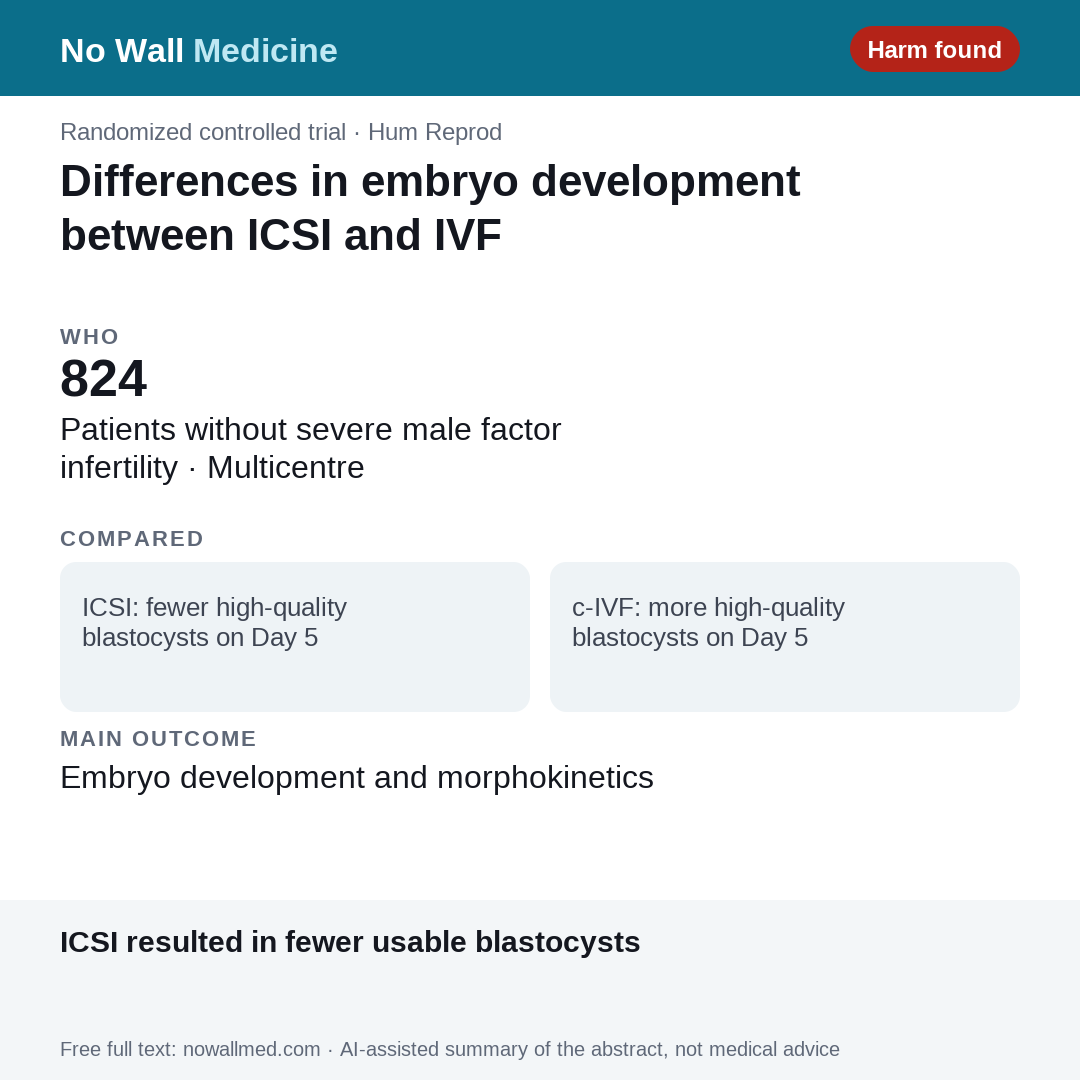
Early embryo developmental kinetics following IVF versus ICSI in patients without severe male factor infertility: a secondary analysis of a multicentre, randomized controlled trial (INVICSI)
Randomized controlled trialHarm found
Differences in embryo development between ICSI and IVF
Who
824
Patients without severe male factor infertility · Multicentre
Compared
ICSI: fewer high-quality blastocysts on Day 5
c-IVF: more high-quality blastocysts on Day 5
Main outcome
Embryo development and morphokinetics
Bottom line: ICSI resulted in fewer usable blastocysts
Limitation: Did not assess sperm DNA fragmentation
Funded by: INVICSI
Hum Reprod · 2025-08-13Download image
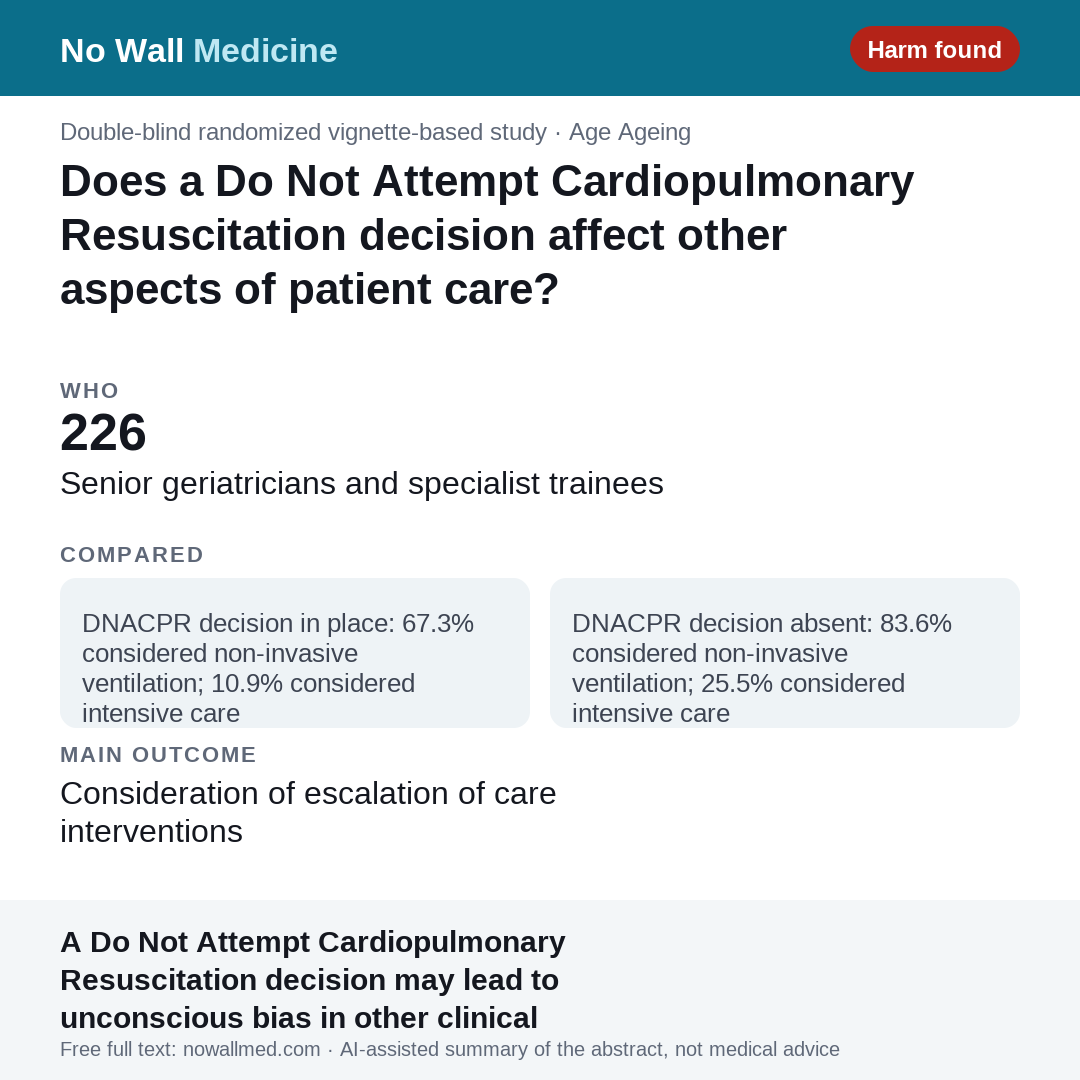
How might a 'Do Not Attempt Cardiopulmonary Resuscitation' (DNACPR) decision affect other aspects of patient care? A vignette-based randomised study
Double-blind randomized vignette-based studyHarm found
Does a Do Not Attempt Cardiopulmonary Resuscitation decision affect other aspects of patient care?
Who
226
Senior geriatricians and specialist trainees
Compared
DNACPR decision in place: 67.3% considered non-invasive ventilation; 10.9% considered intensive care
DNACPR decision absent: 83.6% considered non-invasive ventilation; 25.5% considered intensive care
Main outcome
Consideration of escalation of care interventions
Bottom line: A Do Not Attempt Cardiopulmonary Resuscitation decision may lead to unconscious bias in other clinical escalation decisions.
Age Ageing · 2025-08-13Download image
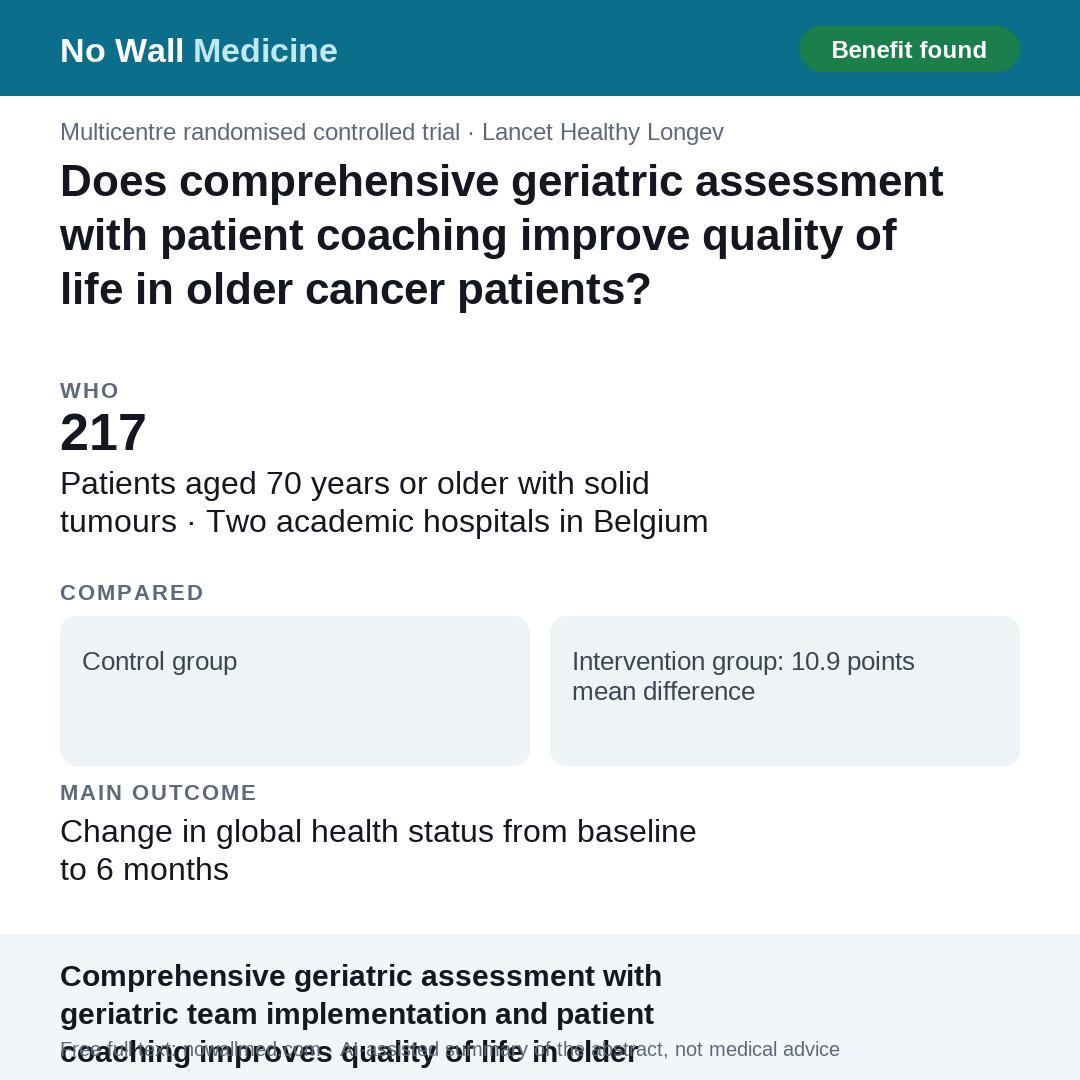
Effectiveness of comprehensive geriatric assessment with extensive patient coaching for improving quality of life in older patients with solid tumours receiving systemic therapy (G-oncoCOACH): a multicentre randomised controlled trial
Multicentre randomised controlled trialBenefit found
Does comprehensive geriatric assessment with patient coaching improve quality of life in older cancer patients?
Who
217
Patients aged 70 years or older with solid tumours · Two academic hospitals in Belgium
Compared
Control group
Intervention group: 10.9 points mean difference
Main outcome
Change in global health status from baseline to 6 months
Result: mean difference 10.9 points (95% CI 3.7-18.0)
Bottom line: Comprehensive geriatric assessment with geriatric team implementation and patient coaching improves quality of life in older cancer patients.
Funded by: Stand Up to Cancer (Kom op tegen Kanker)
Lancet Healthy Longev · 2025-08-13Download image
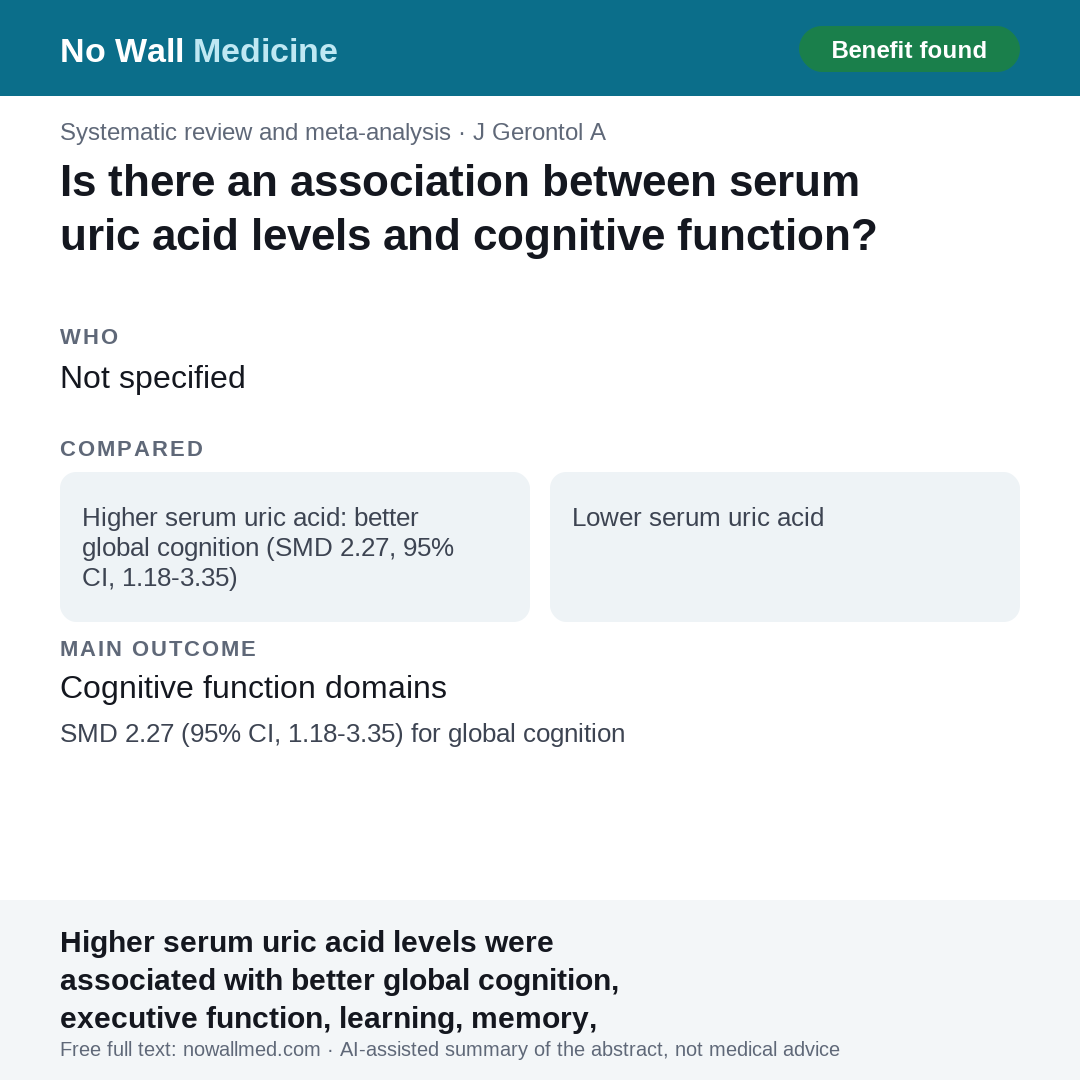
Association between higher serum uric acid levels and cognitive function: a systematic review and meta-analysis
Systematic review and meta-analysisBenefit found
Is there an association between serum uric acid levels and cognitive function?
Who
Not specified
Compared
Higher serum uric acid: better global cognition (SMD 2.27, 95% CI, 1.18-3.35)
Lower serum uric acid
Main outcome
Cognitive function domains
Result: SMD 2.27 (95% CI, 1.18-3.35) for global cognition
Bottom line: Higher serum uric acid levels were associated with better global cognition, executive function, learning, memory, attention, and language.
J Gerontol A · 2025-08-13Download image
Improvement of Lower Facial Shape after Treatment with OnabotulinumtoxinA: Secondary Results from a Phase 2 Dose Escalation Study
Phase 2, randomized, placebo-controlled studyBenefit found
Does onabotulinumtoxinA improve lower facial shape in individuals with masseter muscle prominence?
Who
187
Subjects with marked or very marked masseter muscle prominence
Compared
OnabotulinumtoxinA (24, 48, 72, or 96 units): significant reductions from baseline in lower facial width and mandibular angle
Placebo
Main outcome
Changes in lower facial width and mandibular facial angle
Bottom line: OnabotulinumtoxinA improves lower facial shape and patient satisfaction for at least 6 months.
Plast Reconstr Surg · 2025-08-13Download image

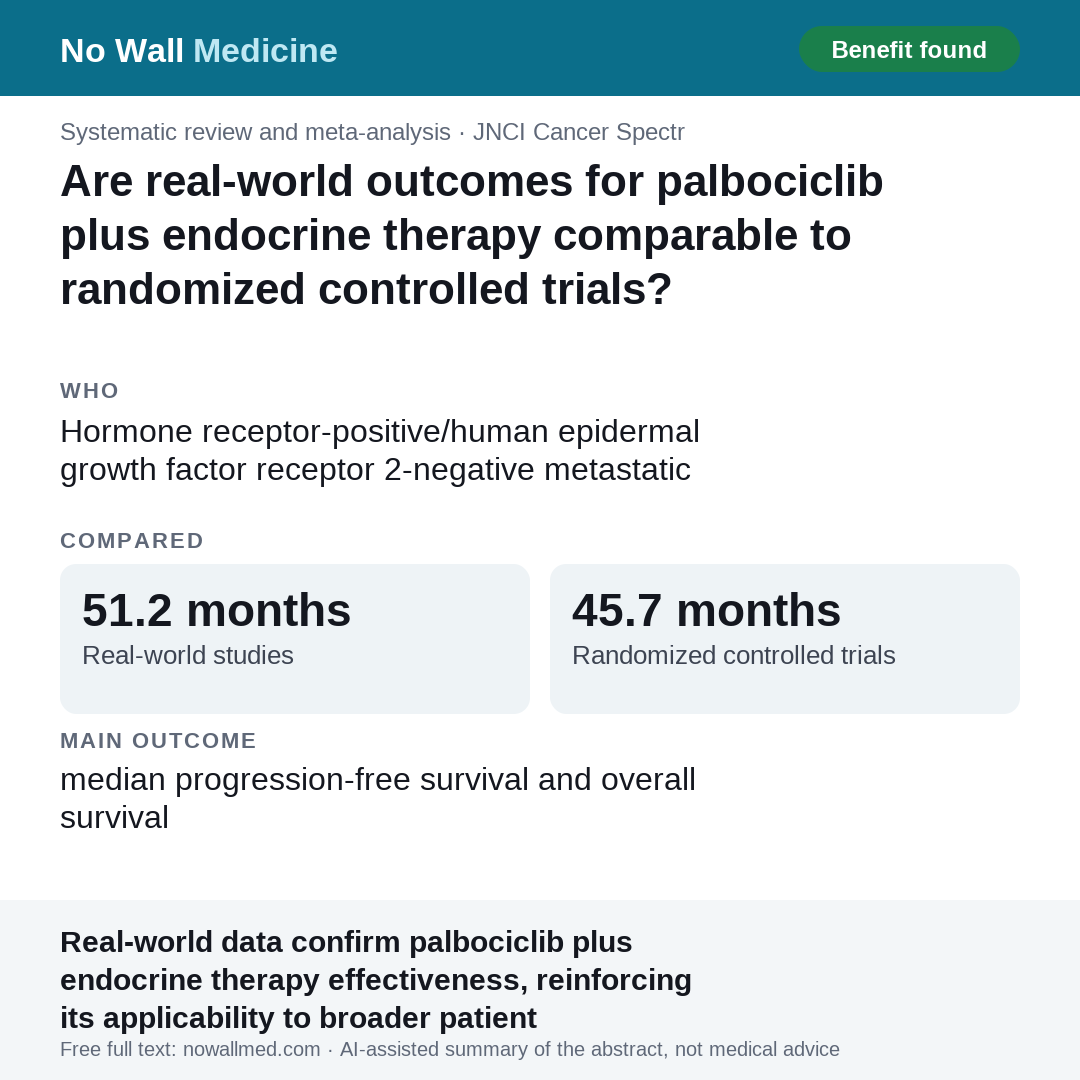
Comparative efficacy between real-world and randomized studies of palbociclib+endocrine therapy in HR-positive/HER2-negative metastatic breast cancer: systematic review and meta-analysis
Systematic review and meta-analysisBenefit found
Are real-world outcomes for palbociclib plus endocrine therapy comparable to randomized controlled trials?
Who
Hormone receptor-positive/human epidermal growth factor receptor 2-negative metastatic breast cancer
Compared
51.2 monthsReal-world studies (95% CI 49.1 to 53.3)
45.7 monthsRandomized controlled trials (95% CI 37.5 to 53.8)
Main outcome
median progression-free survival and overall survival
Bottom line: Real-world data confirm palbociclib plus endocrine therapy effectiveness, reinforcing its applicability to broader patient populations.
JNCI Cancer Spectr · 2025-08-13Download image
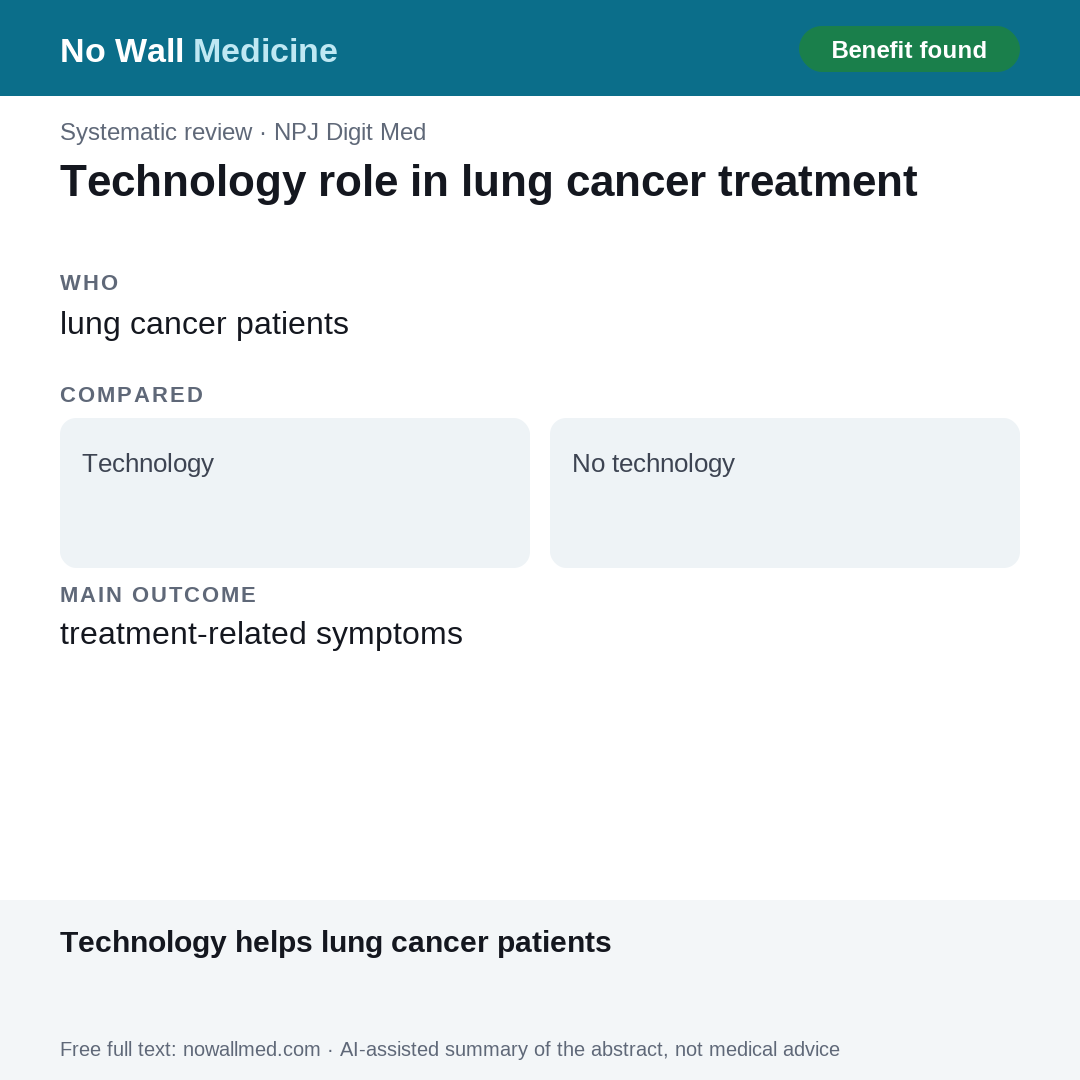
Systematic review on the technology's role in supporting lung cancer patients in the treatment journey
Systematic reviewBenefit found
Technology role in lung cancer treatment
Who
lung cancer patients
Compared
Technology
No technology
Main outcome
treatment-related symptoms
Bottom line: Technology helps lung cancer patients
Limitation: low digital literacy
NPJ Digit Med · 2025-08-13Download image
The Flipped Classroom in Medical Education: Systematic Review and Meta-Analysis
Systematic review and meta-analysisBenefit found
Is flipped classroom instruction more effective than traditional methods in medical education?
Who
21171
Medical education students
Compared
Flipped classroom
Traditional learning
Main outcome
Knowledge assessment and students' satisfaction
Result: SMD 0.90 (95% CI 0.59-1.20) for knowledge; SMD 0.82 (95% CI 0.45-1.19) for satisfaction
Bottom line: Flipped classrooms are associated with better knowledge achievement and greater student satisfaction than traditional approaches in medical education.
Limitation: Substantial heterogeneity among included studies and high asymmetry in the funnel plot.
J Med Internet Res · 2025-08-13Download image

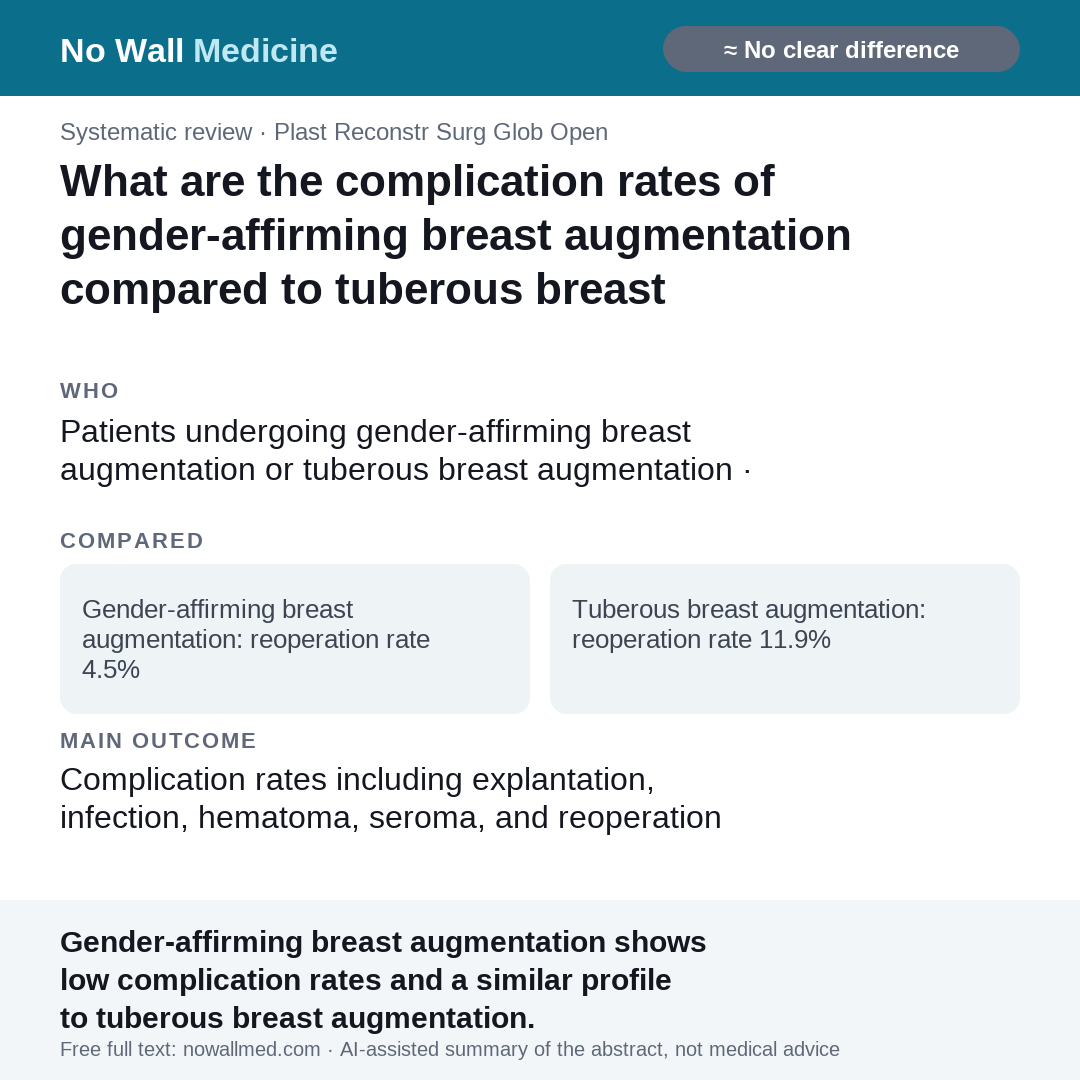
Systematic Review of Complication Rates of Gender-affirming Breast Augmentation and Its Closest Analogue: Tuberous Breast Augmentation
Systematic reviewNo clear difference
What are the complication rates of gender-affirming breast augmentation compared to tuberous breast augmentation?
Who
Patients undergoing gender-affirming breast augmentation or tuberous breast augmentation · PubMed/MEDLINE, Scopus, and Cochrane Database of Controlled Trials
Compared
Gender-affirming breast augmentation: reoperation rate 4.5%
Tuberous breast augmentation: reoperation rate 11.9%
Main outcome
Complication rates including explantation, infection, hematoma, seroma, and reoperation
Bottom line: Gender-affirming breast augmentation shows low complication rates and a similar profile to tuberous breast augmentation.
Plast Reconstr Surg Glob Open · 2025-08-13Download image
High variability in reporting of right ventricle contouring technique and body surface area methodology in cardiac magnetic resonance studies of patients with repaired tetralogy of Fallot: A systematic review
Systematic reviewUnclear result
How are right ventricle contouring and body surface area methodologies reported in cardiac magnetic resonance studies?
Who
27
Adults with repaired tetralogy of Fallot · Electronic databases Embase and MEDLINE
Compared
Included studies: 81% (22/27) did not specify right ventricle contouring technique
Included studies: none defined the right ventricle basal slice
Included studies: No studies reported the formula used to calculate actual body surface area
Main outcome
Reporting of right ventricle contouring and body surface area methodology
Bottom line: Reporting of right ventricle contouring and body surface area methodology in cardiac magnetic resonance studies is poor and lacks standardization.
Limitation: All studies were of only level III or level IV levels of evidence.
J Cardiovasc Magn Reson · 2025-08-13Download image

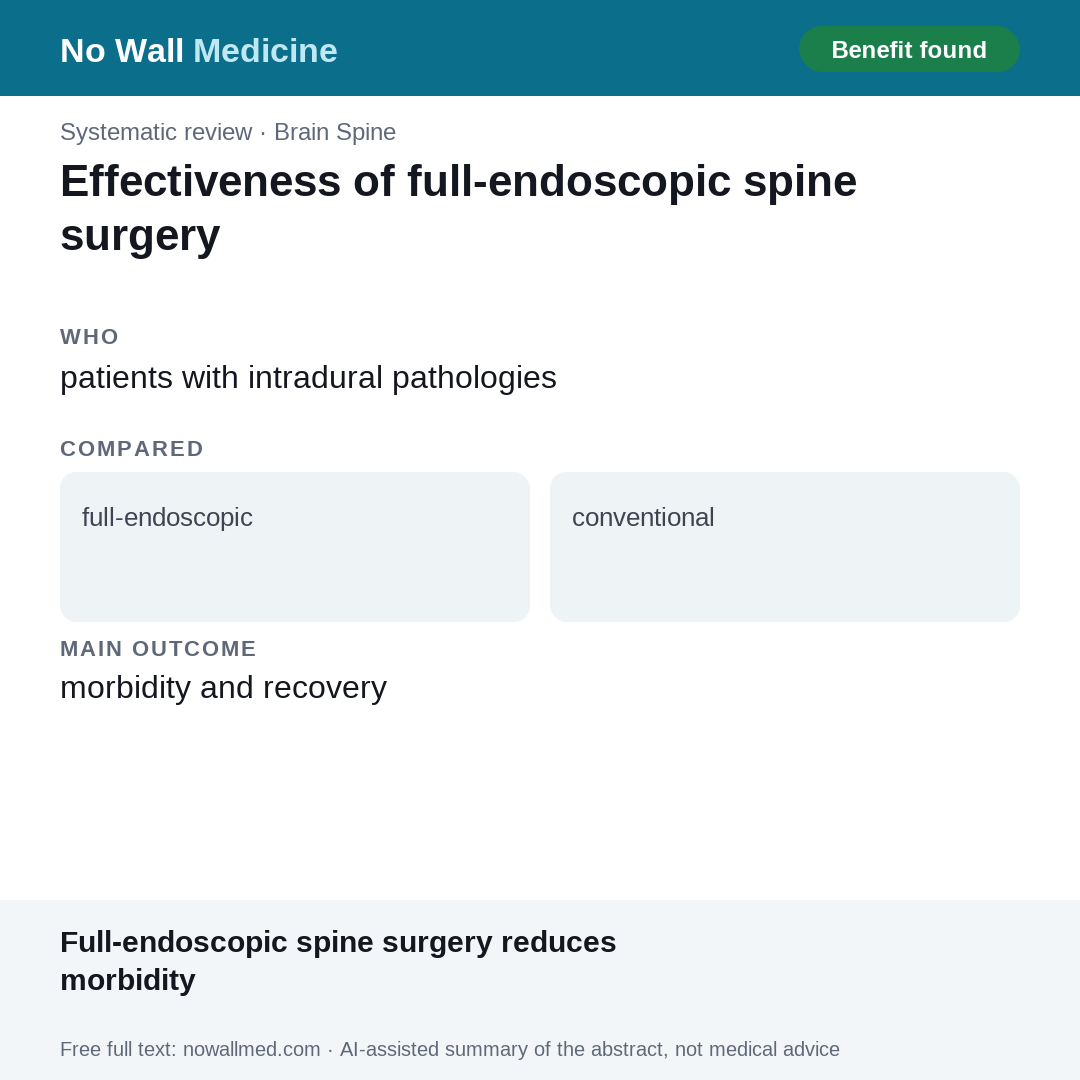
Full-endoscopic spine surgery for intradural pathologies: A systematic review of innovations, challenges, and future prospects
Systematic reviewBenefit found
Effectiveness of full-endoscopic spine surgery
Who
patients with intradural pathologies
Compared
full-endoscopic
conventional
Main outcome
morbidity and recovery
Bottom line: Full-endoscopic spine surgery reduces morbidity
Limitation: technical challenges
Brain Spine · 2025-08-13Download image
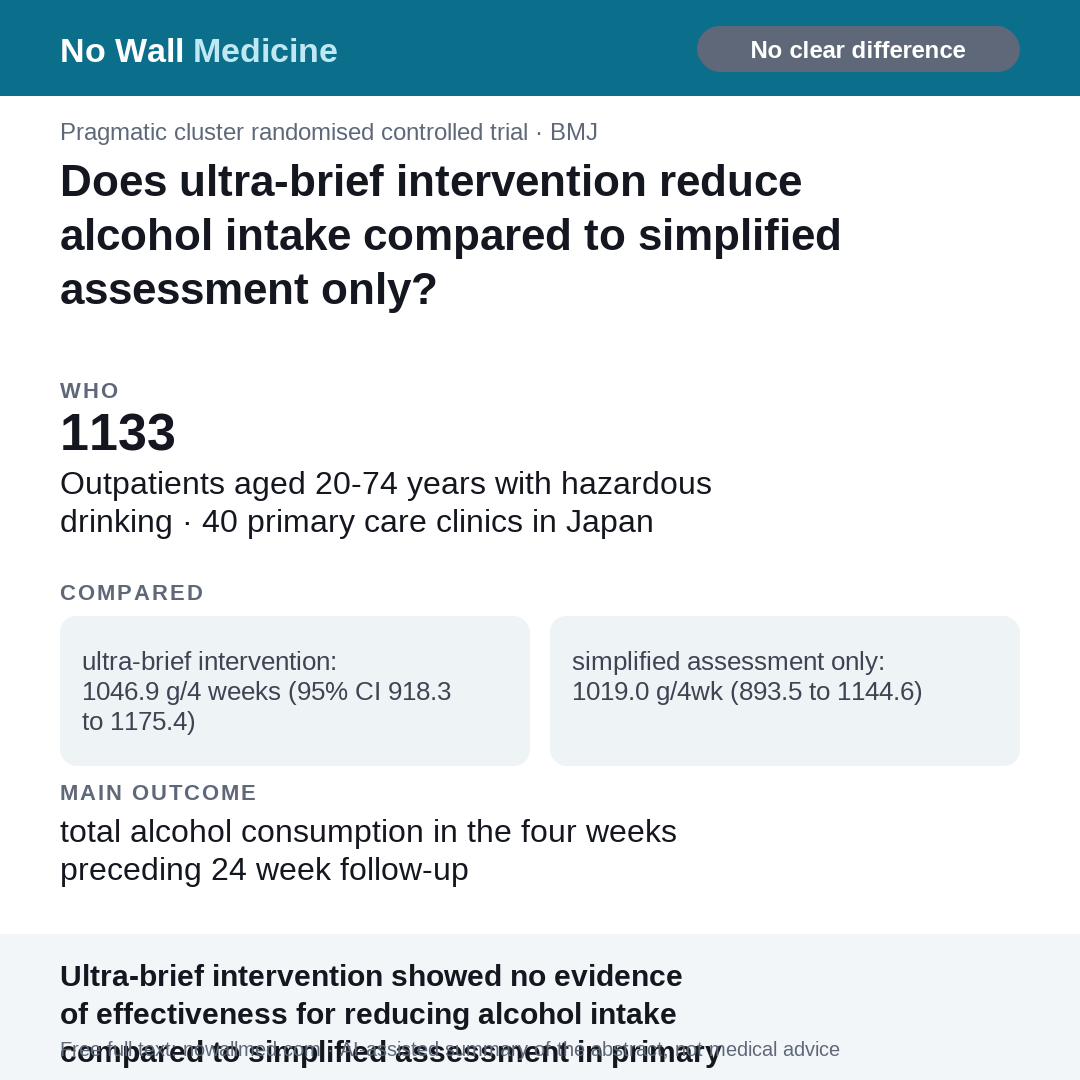
Effectiveness of screening and ultra-brief intervention for hazardous drinking in primary care: pragmatic cluster randomised controlled trial
Pragmatic cluster randomised controlled trialNo clear difference
Does ultra-brief intervention reduce alcohol intake compared to simplified assessment only?
Who
1133
Outpatients aged 20-74 years with hazardous drinking · 40 primary care clinics in Japan
Compared
ultra-brief intervention: 1046.9 g/4 weeks (95% CI 918.3 to 1175.4)
simplified assessment only: 1019.0 g/4wk (893.5 to 1144.6)
Main outcome
total alcohol consumption in the four weeks preceding 24 week follow-up
Result: difference 27.8 g/4wk (-149.7 to 205.4, P=0.75)
Bottom line: Ultra-brief intervention showed no evidence of effectiveness for reducing alcohol intake compared to simplified assessment in primary care.
BMJ · 2025-08-12Download image
The Effect of Weight Loss Before In Vitro Fertilization on Reproductive Outcomes in Women With Obesity : A Systematic Review and Meta-analysis
Systematic review and meta-analysis of randomized controlled trialsBenefit found
Does weight loss before in vitro fertilization improve reproductive outcomes in women with obesity?
Who
1921
Women with obesity undergoing planned in vitro fertilization
Compared
Weight loss intervention
Control
Main outcome
Pregnancy and live birth rates
Result: risk ratio 1.21 (95% CI, 1.02 to 1.44)
Bottom line: Weight loss interventions before in vitro fertilization increase total pregnancy rates and unassisted conception rates in women with obesity.
Limitation: Small studies, high risk of bias, and substantial unexplained clinical and methodological heterogeneity.
Funded by: National Institute for Health and Care Research
Ann Intern Med · 2025-08-12Download image

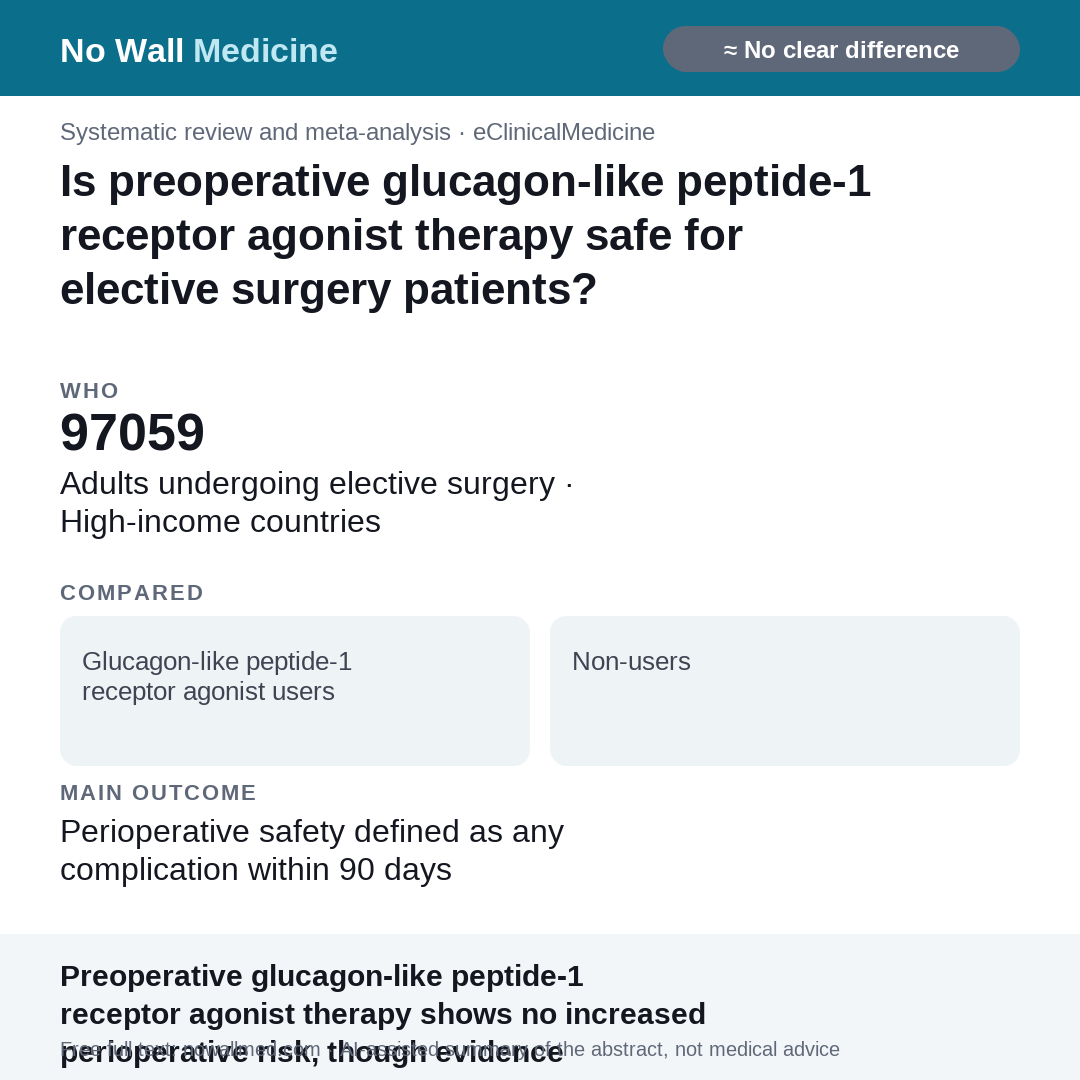
Evaluation of safety of preoperative GLP-1 receptor agonists in patients undergoing elective surgery: a systematic review, meta-analysis and meta-regression
Systematic review and meta-analysisNo clear difference
Is preoperative glucagon-like peptide-1 receptor agonist therapy safe for elective surgery patients?
Who
97059
Adults undergoing elective surgery · High-income countries
Compared
Glucagon-like peptide-1 receptor agonist users
Non-users
Main outcome
Perioperative safety defined as any complication within 90 days
Result: odds ratio 0.78 (95% CI 0.59-1.05)
Bottom line: Preoperative glucagon-like peptide-1 receptor agonist therapy shows no increased perioperative risk, though evidence certainty is very low.
Limitation: Most studies were observational in design and the certainty of evidence was very low.
Funded by: NIHR Doctoral Research Fellowship and NIHR Exeter Biomedical Research Centre
eClinicalMedicine · 2025-08-12Download image
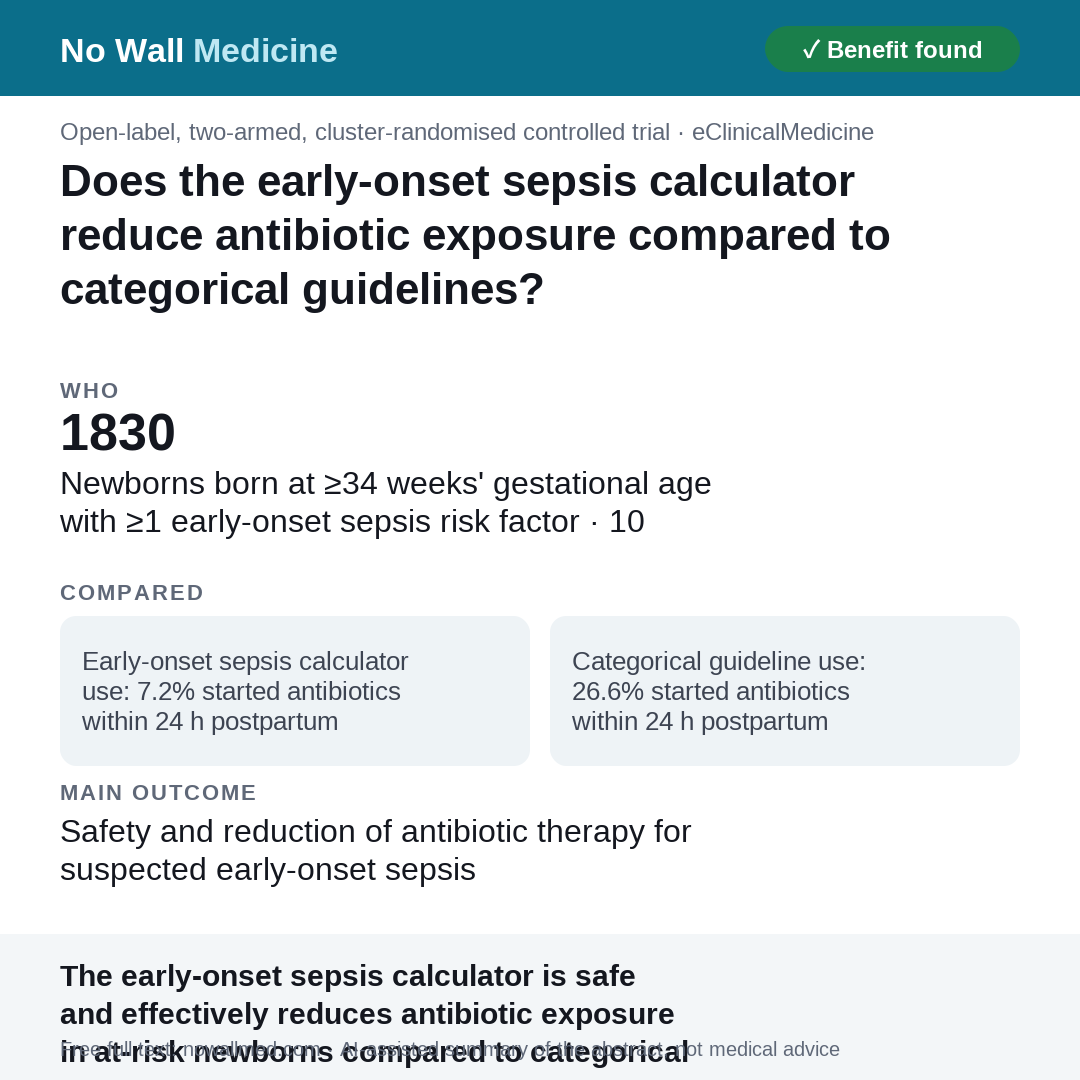
Safety and effectiveness of the early-onset sepsis calculator to reduce antibiotic exposure in at-risk newborns: a cluster-randomised controlled trial
Open-label, two-armed, cluster-randomised controlled trialBenefit found
Does the early-onset sepsis calculator reduce antibiotic exposure compared to categorical guidelines?
Who
1830
Newborns born at ≥34 weeks' gestational age with ≥1 early-onset sepsis risk factor · 10 hospitals
Compared
Early-onset sepsis calculator use: 7.2% started antibiotics within 24 h postpartum
Categorical guideline use: 26.6% started antibiotics within 24 h postpartum
Main outcome
Safety and reduction of antibiotic therapy for suspected early-onset sepsis
Result: relative risk 0.48 (95% CI 0.36-0.63)
Bottom line: The early-onset sepsis calculator is safe and effectively reduces antibiotic exposure in at-risk newborns compared to categorical guidelines.
Funded by: SPIN, General Paediatrics Research Network of the Dutch Association for Paediatrics
eClinicalMedicine · 2025-08-12Download image
Testing the effect of a dynamic descriptive social norm message on meat-free food selection in worksite cafeterias: a randomized controlled trial
Randomized controlled trialNo clear difference
Does a dynamic descriptive social norm message increase meat-free food selection in worksite cafeterias?
Who
25
Worksite cafeterias · Worksite cafeterias
Compared
Intervention
Control
Main outcome
Change in weekly percentage of meat-free meal sales
Result: -2.22 percentage point change, 95% CIs [-7.33, 2.90]
Bottom line: Dynamic descriptive social norm messages did not increase meat-free meal sales in worksite cafeterias.
BMC Med · 2025-08-12Download image

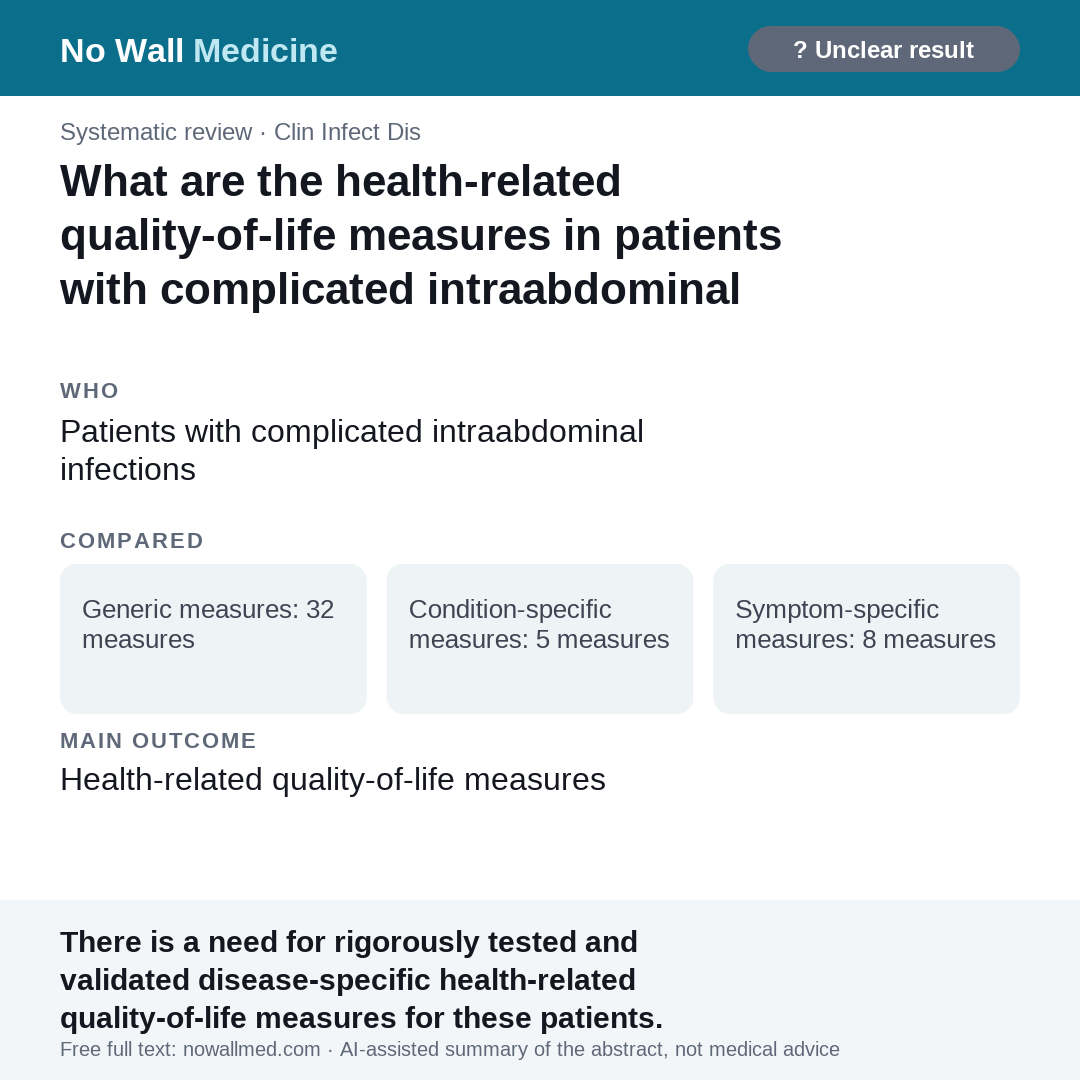
A Systematic Review of Health-Related Quality-of-Life Measurement in Patients With Complicated Intraabdominal Infections
Systematic reviewUnclear result
What are the health-related quality-of-life measures in patients with complicated intraabdominal infections?
Who
Patients with complicated intraabdominal infections
Compared
Generic measures: 32 measures
Condition-specific measures: 5 measures
Symptom-specific measures: 8 measures
Main outcome
Health-related quality-of-life measures
Bottom line: There is a need for rigorously tested and validated disease-specific health-related quality-of-life measures for these patients.
Clin Infect Dis · 2025-08-12Download image