Visual abstracts
New randomized trials and meta-analyses from leading journals at a glance: who was studied, what was compared, and what was found. Every paper is free to read in full.
All specialtiesCardiology 2226Oncology 1905Gastroenterology & Hepatology 844Infectious Disease 1399Neurology 903Psychiatry & Mental Health 1067Pulmonology 936Critical Care 621Endocrinology & Diabetes 1173Pediatrics 1300Surgery 1123Orthopedics & Sports Medicine 410Neurosurgery 275Cardiothoracic & Vascular Surgery 241Plastic & Reconstructive Surgery 341Nephrology 473Rheumatology 309Hematology 485Dermatology 260Ophthalmology 263Obstetrics & Gynecology 732Public & Global Health 419Radiology & Imaging 310Anesthesiology 443Urology 385ENT (Otolaryngology) 287Emergency Medicine 245Allergy & Immunology 136Geriatrics 475Family Medicine & Primary Care 258Medical Genetics & Genomics 239Pathology & Laboratory Medicine 74Physical Medicine & Rehabilitation 382Palliative Care 191Nutrition 590Digital Health & AI 1130General Medicine 170
Primary Aldosteronism and Risk of Cardiovascular Outcomes: Genome-Wide Association and Mendelian Randomization Study
Mendelian randomization studyHarm found
Does primary aldosteronism cause increased risk of coronary artery disease, heart failure, and stroke?
Who
East Asian and European ancestry populations
Compared
Primary aldosteronism: odds ratio 1.07 (95% CI, 1.03-1.11) for coronary artery disease
Primary aldosteronism: odds ratio 1.10 (95% CI, 1.01-1.20) for congestive heart failure
Primary aldosteronism: odds ratio 1.13 (95% CI, 1.09-1.18) for stroke
Main outcome
risk of coronary artery disease, congestive heart failure, and stroke
Bottom line: Primary aldosteronism is causally associated with increased risks of coronary artery disease, congestive heart failure, and stroke.
J Am Heart Assoc · 2024-08-05Download image

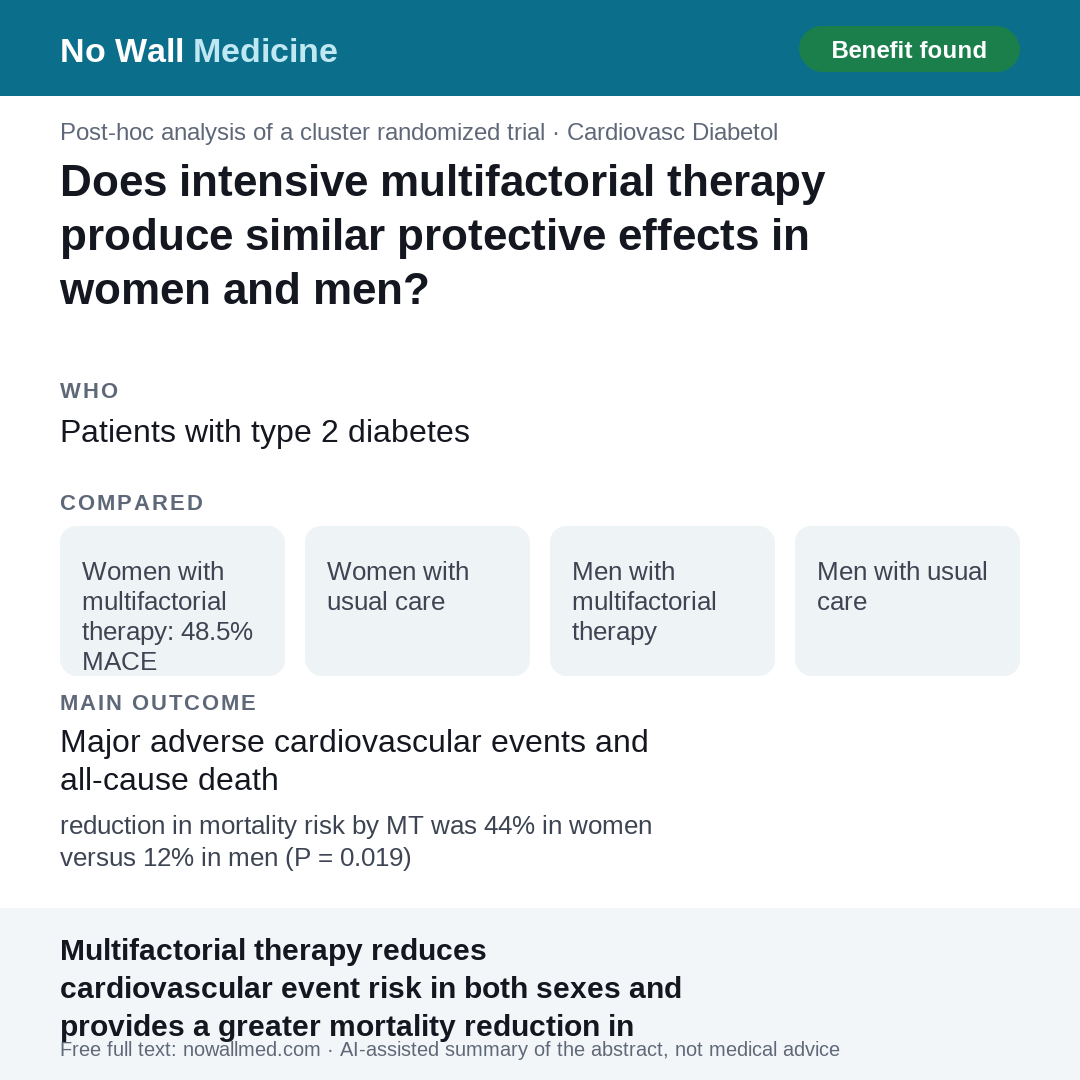
Sex-difference of multifactorial intervention on cardiovascular and mortality risk in DKD: post-hoc analysis of a randomised clinical trial
Post-hoc analysis of a cluster randomized trialBenefit found
Does intensive multifactorial therapy produce similar protective effects in women and men?
Who
Patients with type 2 diabetes
Compared
Women with multifactorial therapy: 48.5% MACE
Women with usual care
Men with multifactorial therapy
Men with usual care
Main outcome
Major adverse cardiovascular events and all-cause death
Result: reduction in mortality risk by MT was 44% in women versus 12% in men (P = 0.019)
Bottom line: Multifactorial therapy reduces cardiovascular event risk in both sexes and provides a greater mortality reduction in women.
Cardiovasc Diabetol · 2024-08-05Download image
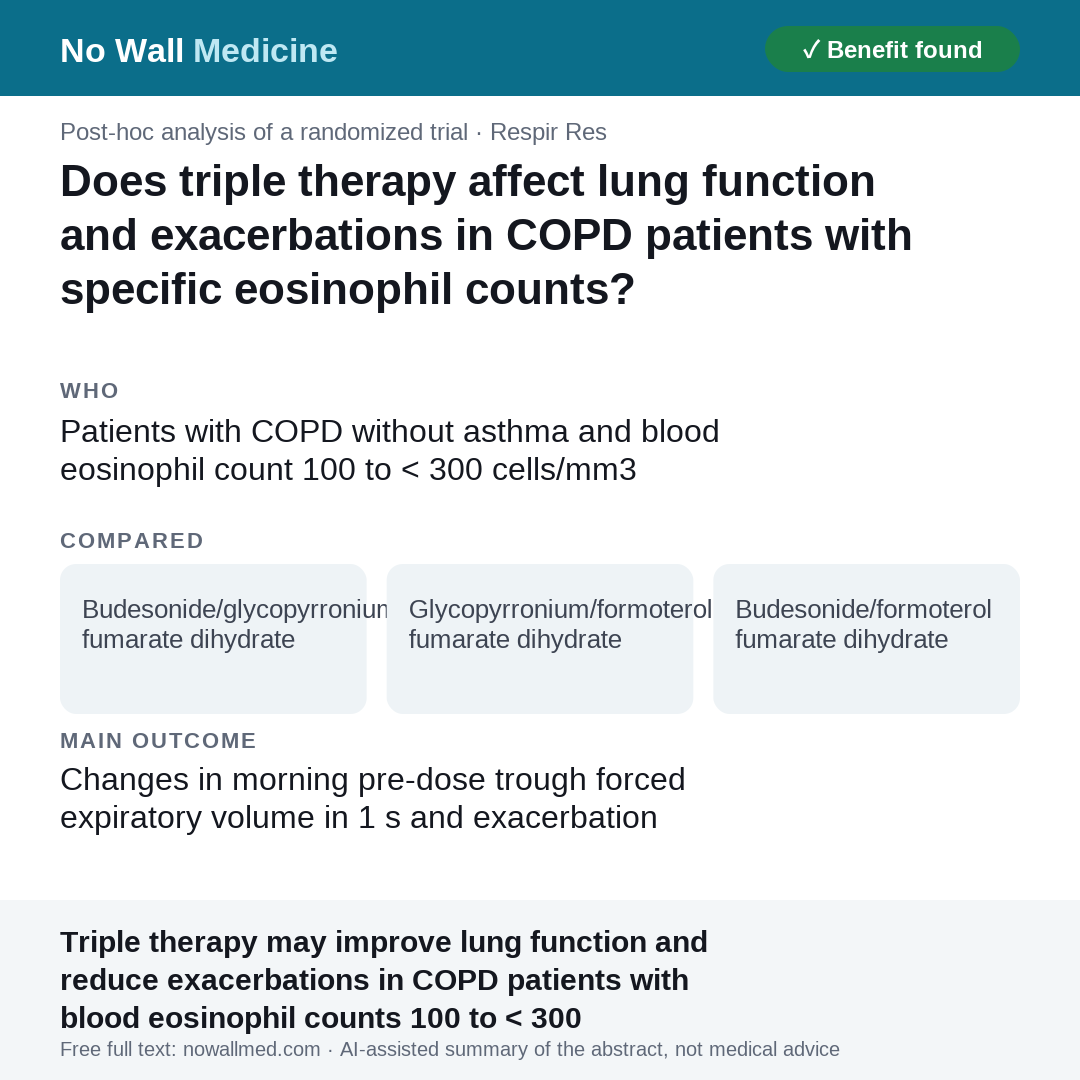
Benefits of budesonide/glycopyrronium/formoterol fumarate dihydrate on lung function and exacerbations of COPD: a post-hoc analysis of the KRONOS study by blood eosinophil level and exacerbation history
Post-hoc analysis of a randomized trialBenefit found
Does triple therapy affect lung function and exacerbations in COPD patients with specific eosinophil counts?
Who
Patients with COPD without asthma and blood eosinophil count 100 to < 300 cells/mm3
Compared
Budesonide/glycopyrronium/formoterol fumarate dihydrate
Glycopyrronium/formoterol fumarate dihydrate
Budesonide/formoterol fumarate dihydrate
Main outcome
Changes in morning pre-dose trough forced expiratory volume in 1 s and exacerbation rates
Bottom line: Triple therapy may improve lung function and reduce exacerbations in COPD patients with blood eosinophil counts 100 to < 300 cells/mm3.
Respir Res · 2024-08-05Download image
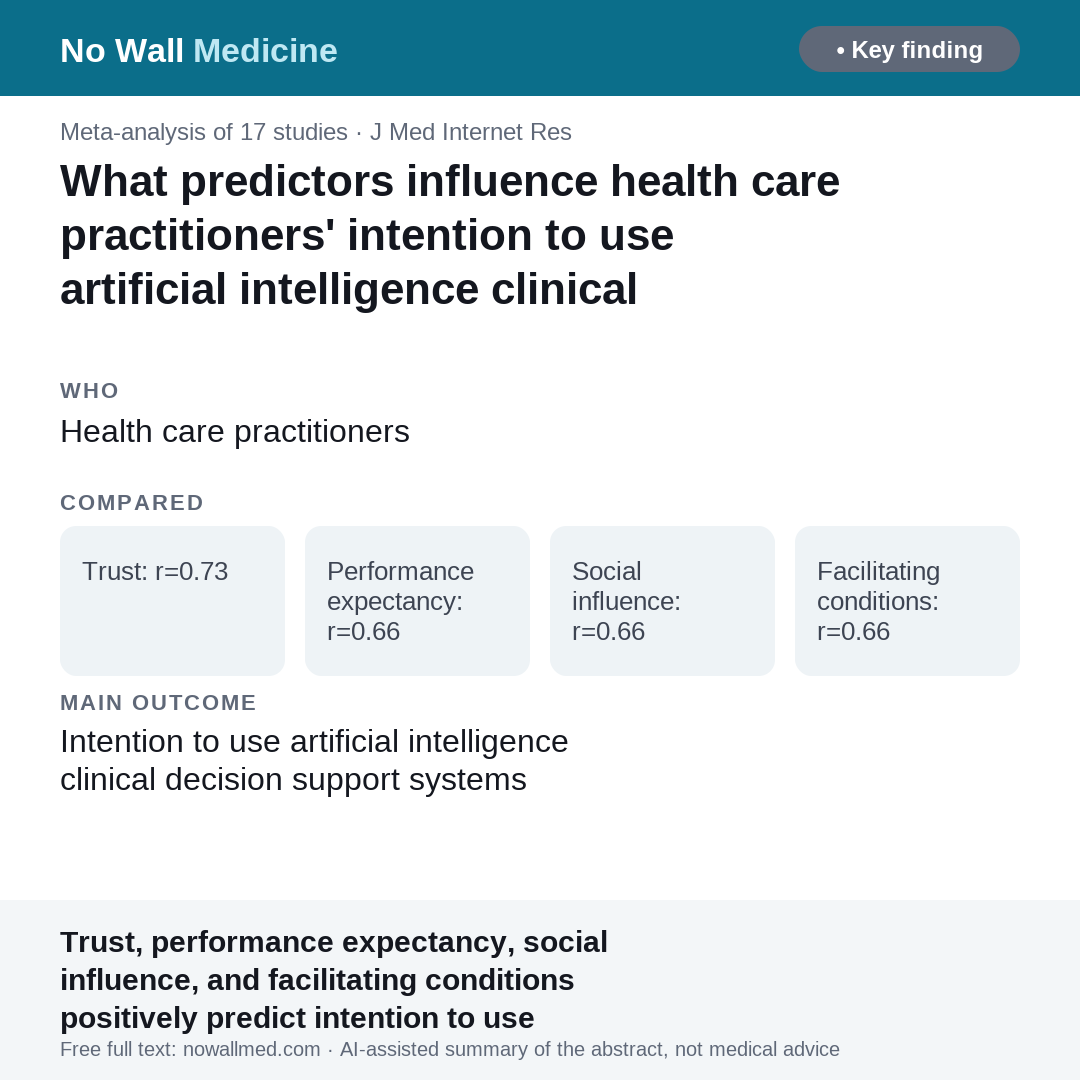
Predictors of Health Care Practitioners' Intention to Use AI-Enabled Clinical Decision Support Systems: Meta-Analysis Based on the Unified Theory of Acceptance and Use of Technology
Meta-analysis of 17 studiesBenefit found
What predictors influence health care practitioners' intention to use artificial intelligence clinical decision support systems?
Who
Health care practitioners
Compared
Trust: r=0.73
Performance expectancy: r=0.66
Social influence: r=0.66
Facilitating conditions: r=0.66
Main outcome
Intention to use artificial intelligence clinical decision support systems
Bottom line: Trust, performance expectancy, social influence, and facilitating conditions positively predict intention to use artificial intelligence clinical decision support systems.
Limitation: More research is needed to substantiate identified relationships and explain observed variations in effect sizes.
J Med Internet Res · 2024-08-05Download image
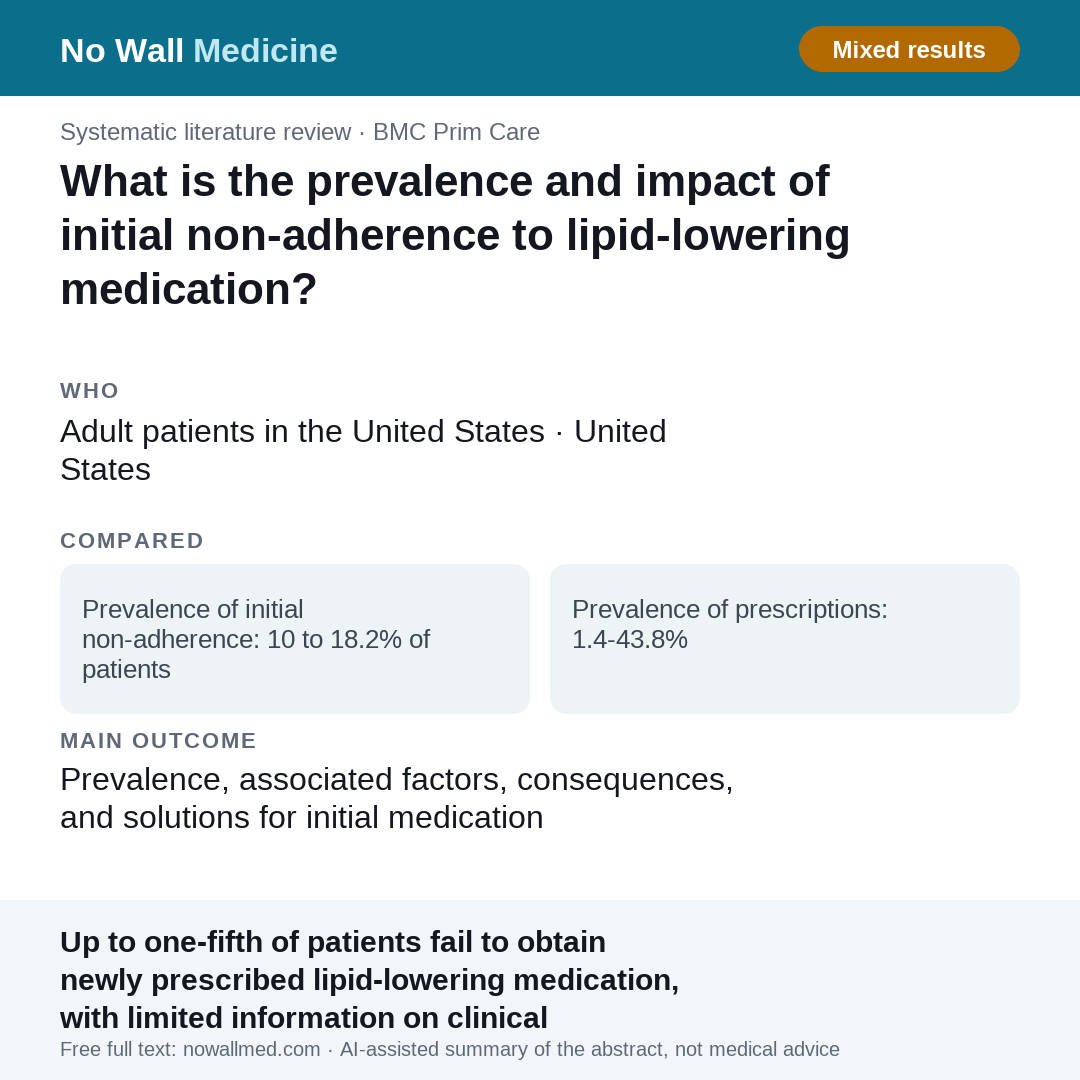
Initial non-adherence to lipid-lowering medication: a systematic literature review
Systematic literature reviewMixed results
What is the prevalence and impact of initial non-adherence to lipid-lowering medication?
Who
Adult patients in the United States · United States
Compared
Prevalence of initial non-adherence: 10 to 18.2% of patients
Prevalence of prescriptions: 1.4-43.8%
Main outcome
Prevalence, associated factors, consequences, and solutions for initial medication nonadherence
Bottom line: Up to one-fifth of patients fail to obtain newly prescribed lipid-lowering medication, with limited information on clinical consequences.
Limitation: Limited information about the clinical consequences of initial medication nonadherence.
BMC Prim Care · 2024-08-05Download image
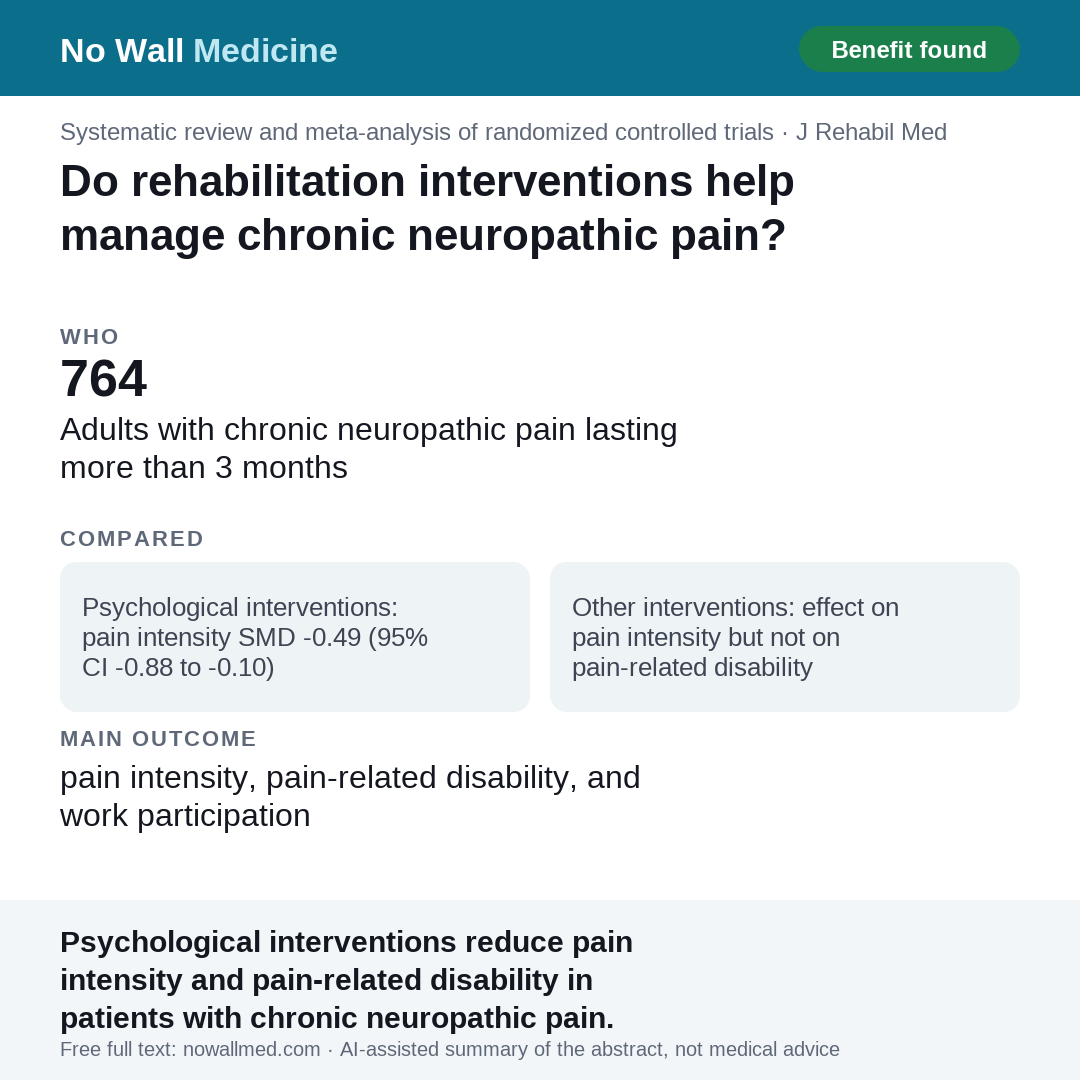
Rehabilitation interventions for neuropathic pain: a systematic review and meta-analysis of randomized controlled trials
Systematic review and meta-analysis of randomized controlled trialsBenefit found
Do rehabilitation interventions help manage chronic neuropathic pain?
Who
764
Adults with chronic neuropathic pain lasting more than 3 months
Compared
Psychological interventions: pain intensity SMD -0.49 (95% CI -0.88 to -0.10)
Other interventions: effect on pain intensity but not on pain-related disability
Main outcome
pain intensity, pain-related disability, and work participation
Result: SMD -0.49 (95% CI -0.88 to -0.10) for pain intensity
Bottom line: Psychological interventions reduce pain intensity and pain-related disability in patients with chronic neuropathic pain.
J Rehabil Med · 2024-08-05Download image
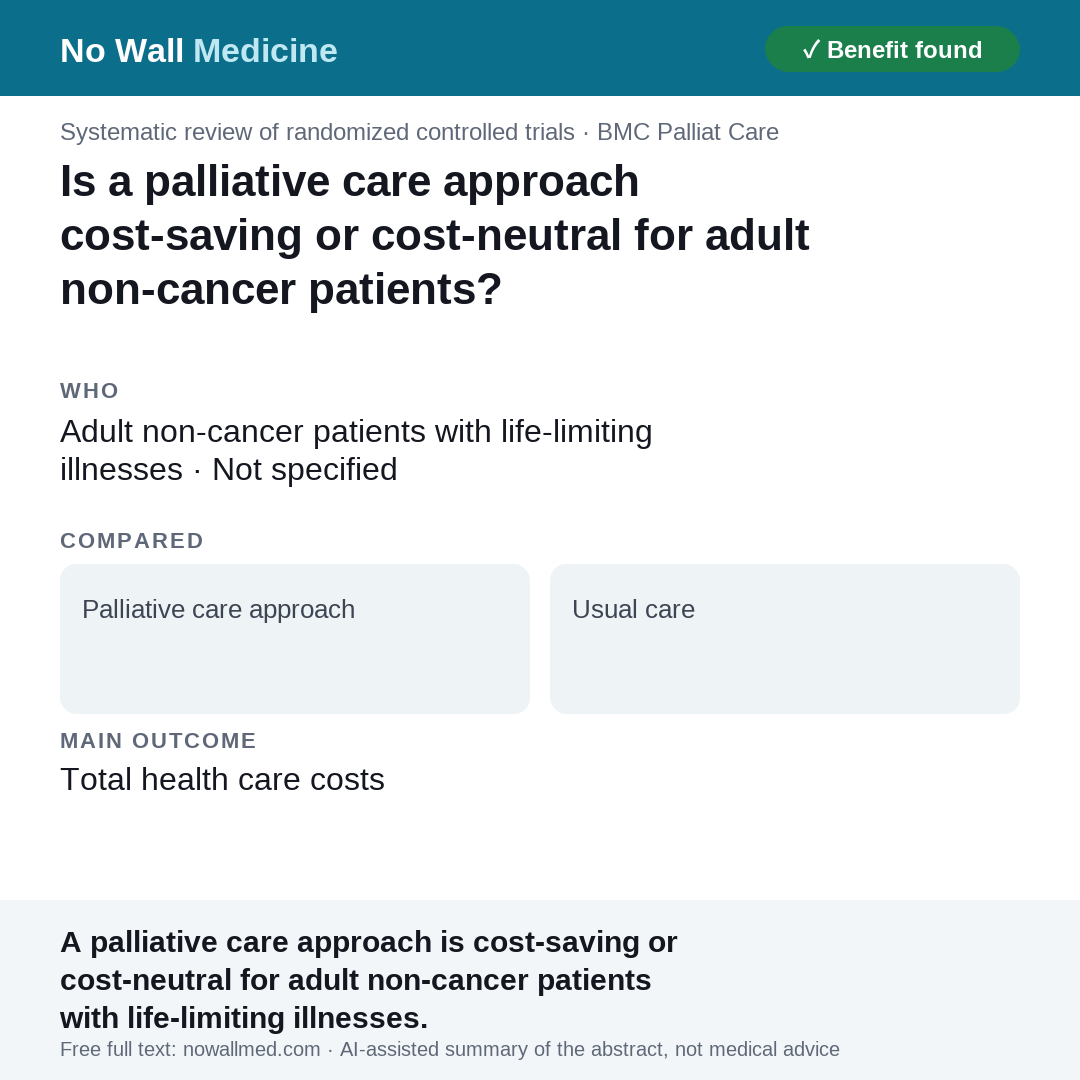
A palliative care approach for adult non-cancer patients with life-limiting illnesses is cost-saving or cost-neutral: a systematic review of RCTs
Systematic review of randomized controlled trialsBenefit found
Is a palliative care approach cost-saving or cost-neutral for adult non-cancer patients?
Who
Adult non-cancer patients with life-limiting illnesses · Not specified
Compared
Palliative care approach
Usual care
Main outcome
Total health care costs
Bottom line: A palliative care approach is cost-saving or cost-neutral for adult non-cancer patients with life-limiting illnesses.
BMC Palliat Care · 2024-08-05Download image
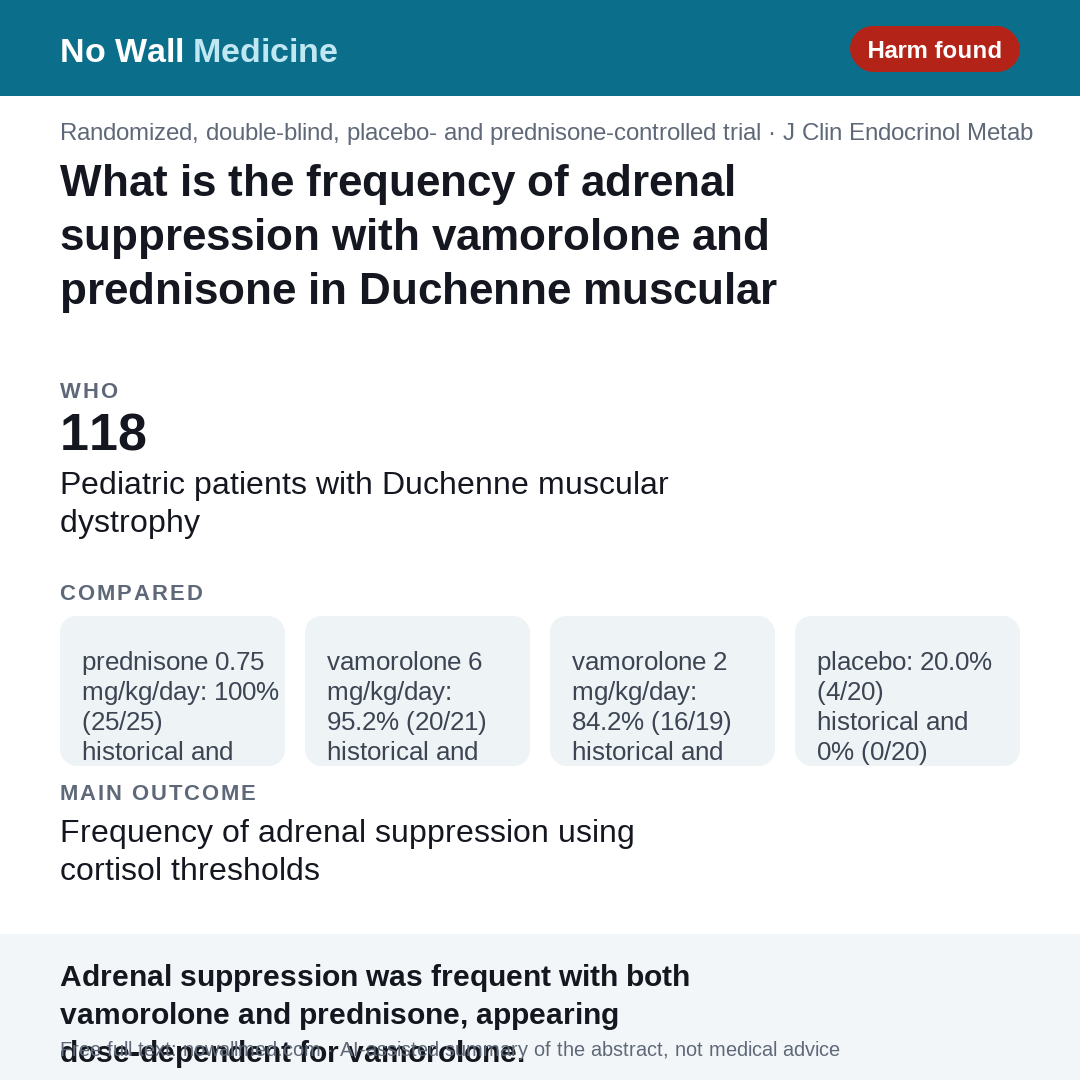
Adrenal Suppression From Vamorolone and Prednisone in Duchenne Muscular Dystrophy: Results From the Phase 2b Clinical Trial
Randomized, double-blind, placebo- and prednisone-controlled trialHarm found
What is the frequency of adrenal suppression with vamorolone and prednisone in Duchenne muscular dystrophy?
Who
118
Pediatric patients with Duchenne muscular dystrophy
Compared
prednisone 0.75 mg/kg/day: 100% (25/25) historical and 92.0% (23/25) revised threshold
vamorolone 6 mg/kg/day: 95.2% (20/21) historical and 90.5% (19/21) revised threshold
vamorolone 2 mg/kg/day: 84.2% (16/19) historical and 47.5% (9/19) revised threshold
placebo: 20.0% (4/20) historical and 0% (0/20) revised threshold
Main outcome
Frequency of adrenal suppression using cortisol thresholds
Bottom line: Adrenal suppression was frequent with both vamorolone and prednisone, appearing dose-dependent for vamorolone.
J Clin Endocrinol Metab · 2024-08-04Download image
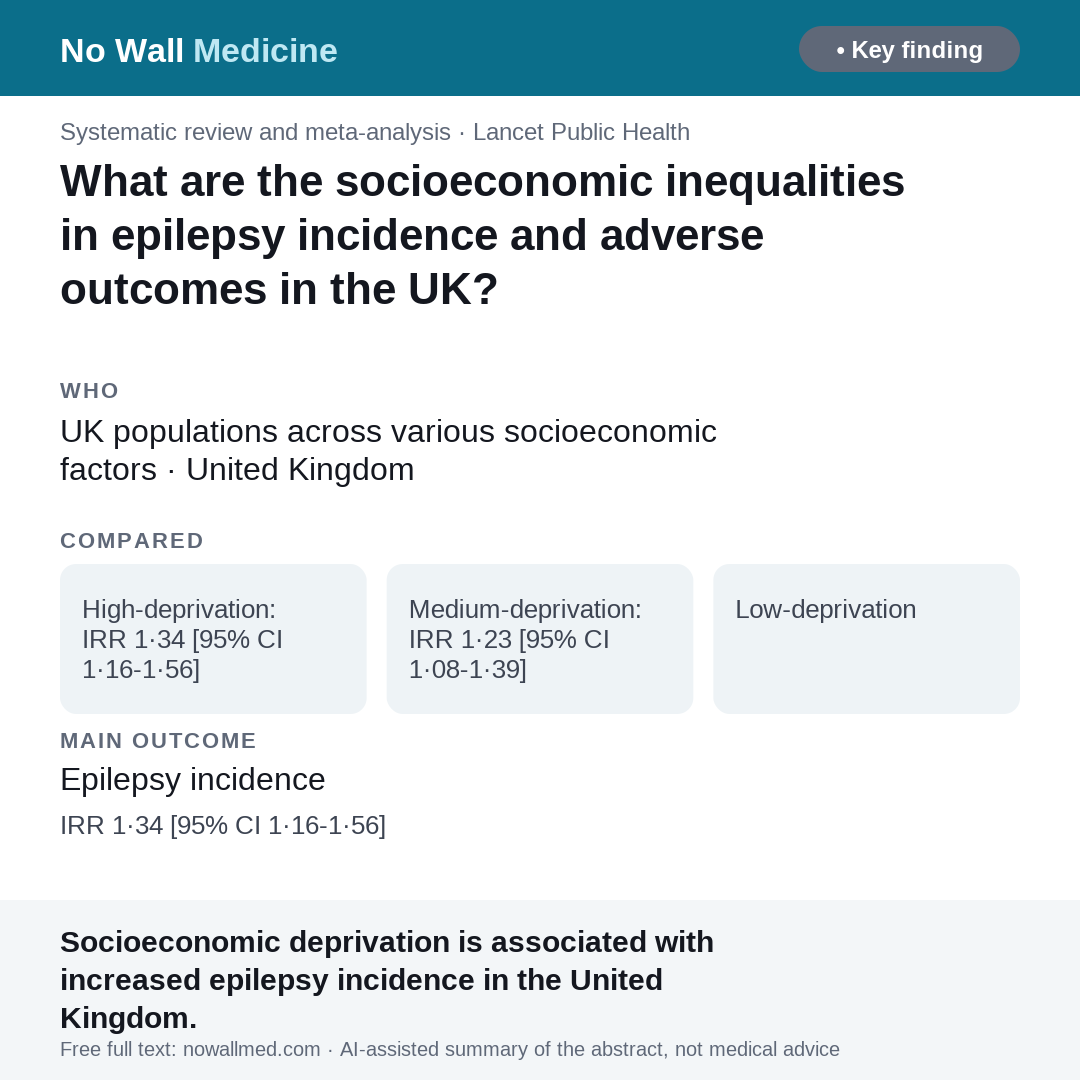
Assessing the extent and determinants of socioeconomic inequalities in epilepsy in the UK: a systematic review and meta-analysis of evidence
Systematic review and meta-analysisHarm found
What are the socioeconomic inequalities in epilepsy incidence and adverse outcomes in the UK?
Who
26
UK populations across various socioeconomic factors · United Kingdom
Compared
High-deprivation: IRR 1·34 [95% CI 1·16-1·56]
Medium-deprivation: IRR 1·23 [95% CI 1·08-1·39]
Low-deprivation
Main outcome
Epilepsy incidence
Result: IRR 1·34 [95% CI 1·16-1·56]
Bottom line: Socioeconomic deprivation is associated with increased epilepsy incidence in the United Kingdom.
Limitation: Misclassification, participation, and interpretive biases were identified as study quality limitations.
Funded by: Epilepsy Research Institute UK
Lancet Public Health · 2024-08-03Download image
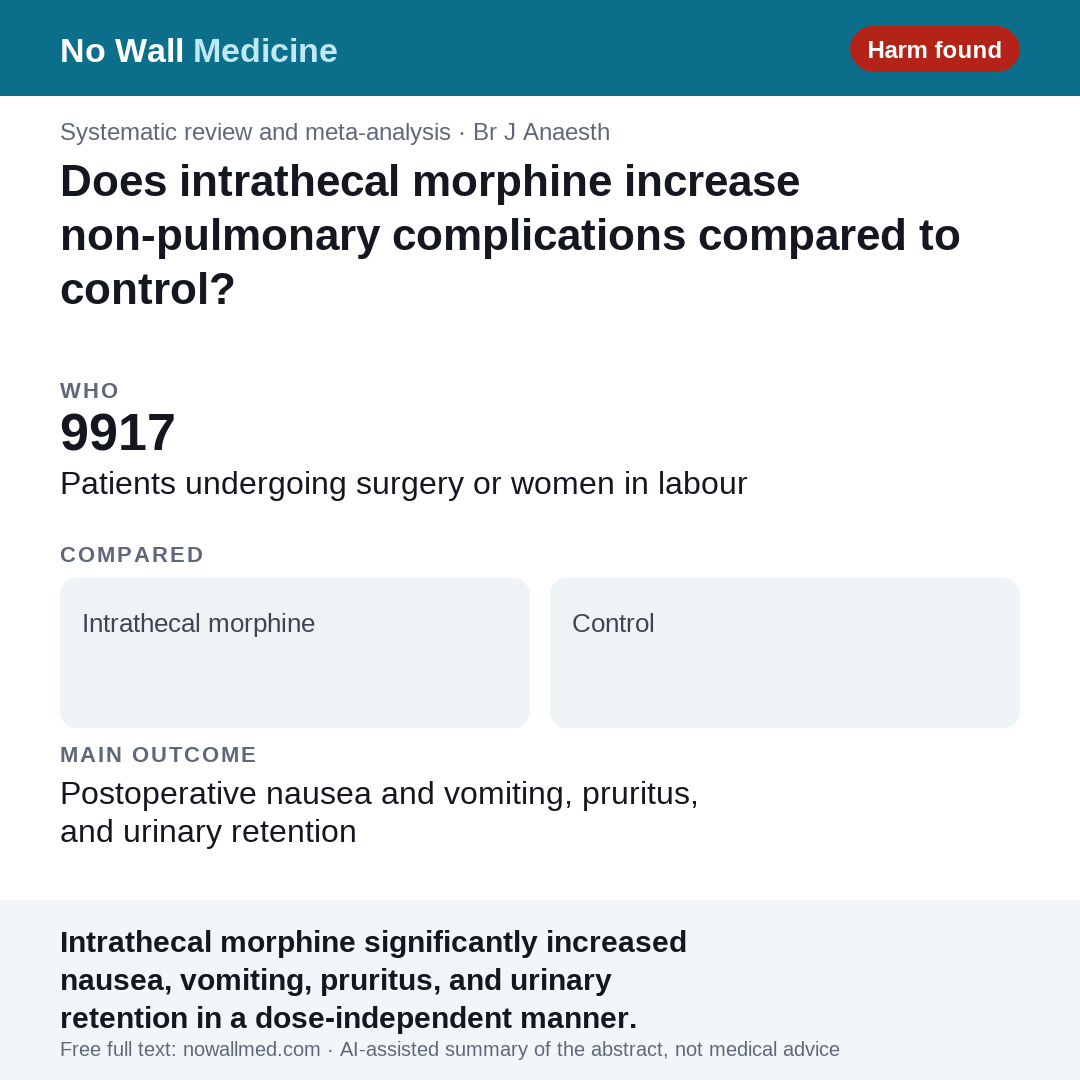
Non-pulmonary complications of intrathecal morphine administration: a systematic review and meta-analysis with meta-regression
Systematic review and meta-analysisHarm found
Does intrathecal morphine increase non-pulmonary complications compared to control?
Who
9917
Patients undergoing surgery or women in labour
Compared
Intrathecal morphine
Control
Main outcome
Postoperative nausea and vomiting, pruritus, and urinary retention
Result: odds ratio 1.52 (95% CI 1.29-1.79) for nausea and vomiting; 6.11 (5.25-7.10) for pruritus; 1.73 (1.17-2.56) for urinary retention
Bottom line: Intrathecal morphine significantly increased nausea, vomiting, pruritus, and urinary retention in a dose-independent manner.
Limitation: The quality of evidence was low
Br J Anaesth · 2024-08-03Download image
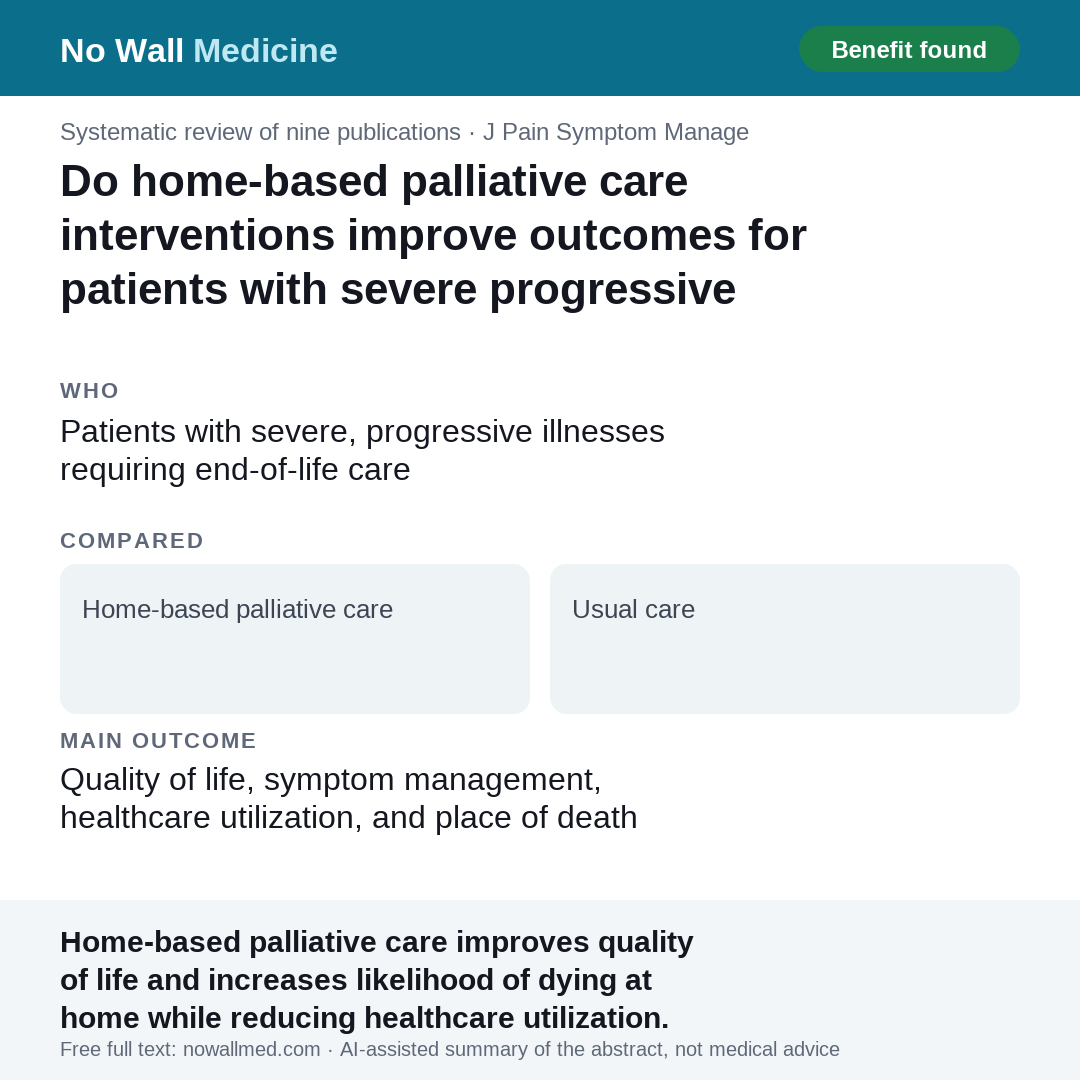
Enhancing End-of-Life Care With Home-Based Palliative Interventions: A Systematic Review
Systematic review of nine publicationsBenefit found
Do home-based palliative care interventions improve outcomes for patients with severe progressive illnesses?
Who
Patients with severe, progressive illnesses requiring end-of-life care
Compared
Home-based palliative care
Usual care
Main outcome
Quality of life, symptom management, healthcare utilization, and place of death
Bottom line: Home-based palliative care improves quality of life and increases likelihood of dying at home while reducing healthcare utilization.
J Pain Symptom Manage · 2024-08-03Download image
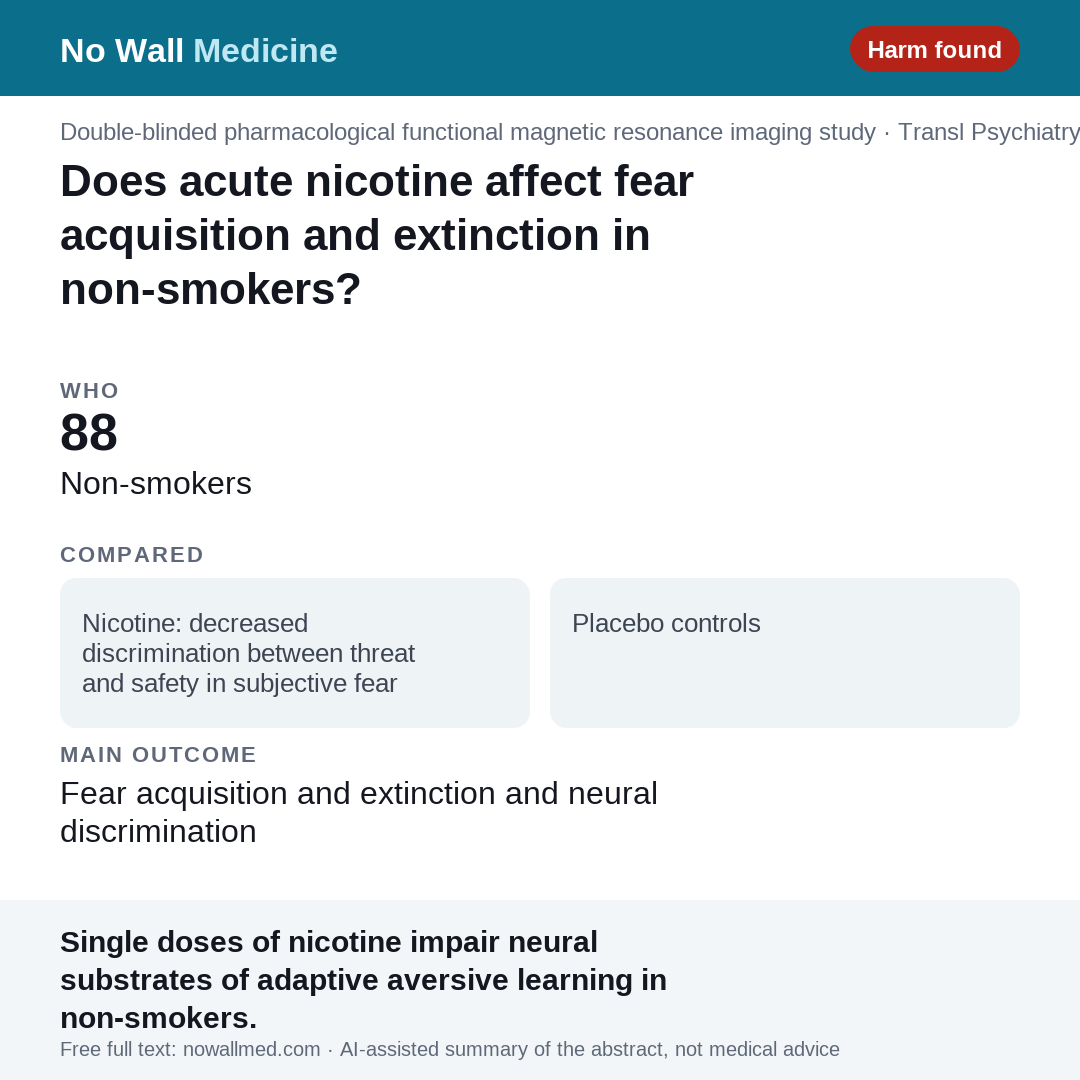
Nicotine reduces discrimination between threat and safety in the hippocampus, nucleus accumbens and amygdala
Double-blinded pharmacological functional magnetic resonance imaging studyHarm found
Does acute nicotine affect fear acquisition and extinction in non-smokers?
Who
88
Non-smokers
Compared
Nicotine: decreased discrimination between threat and safety in subjective fear
Placebo controls
Main outcome
Fear acquisition and extinction and neural discrimination
Bottom line: Single doses of nicotine impair neural substrates of adaptive aversive learning in non-smokers.
Transl Psychiatry · 2024-08-03Download image
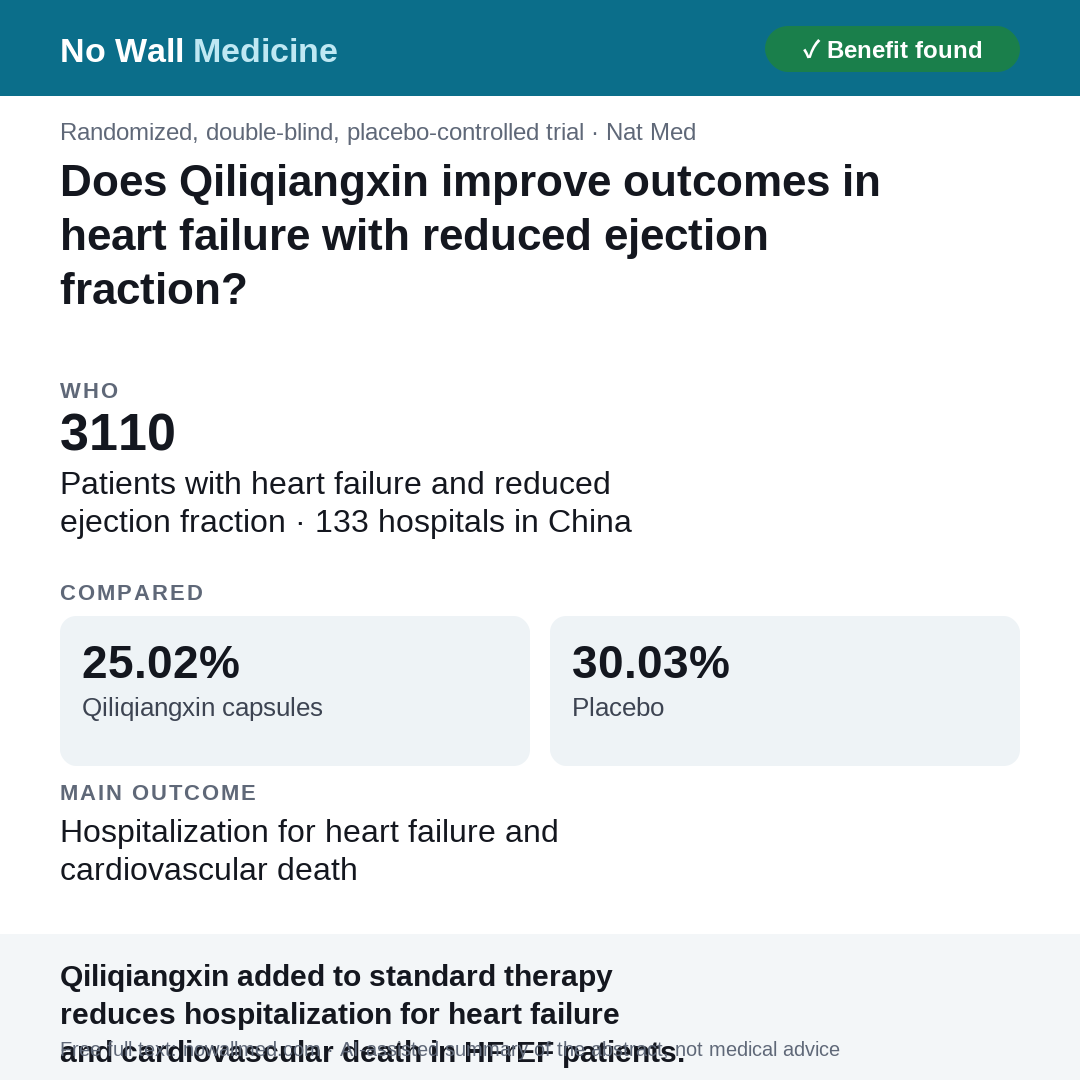
The traditional Chinese medicine Qiliqiangxin in heart failure with reduced ejection fraction: a randomized, double-blind, placebo-controlled trial
Randomized, double-blind, placebo-controlled trialBenefit found
Does Qiliqiangxin improve outcomes in heart failure with reduced ejection fraction?
Who
3110
Patients with heart failure and reduced ejection fraction · 133 hospitals in China
Compared
25.02%Qiliqiangxin capsules
30.03%Placebo
Main outcome
Hospitalization for heart failure and cardiovascular death
Result: hazard ratio 0.78 (95% CI 0.68-0.90)
Bottom line: Qiliqiangxin added to standard therapy reduces hospitalization for heart failure and cardiovascular death in HFrEF patients.
Nat Med · 2024-08-02Download image
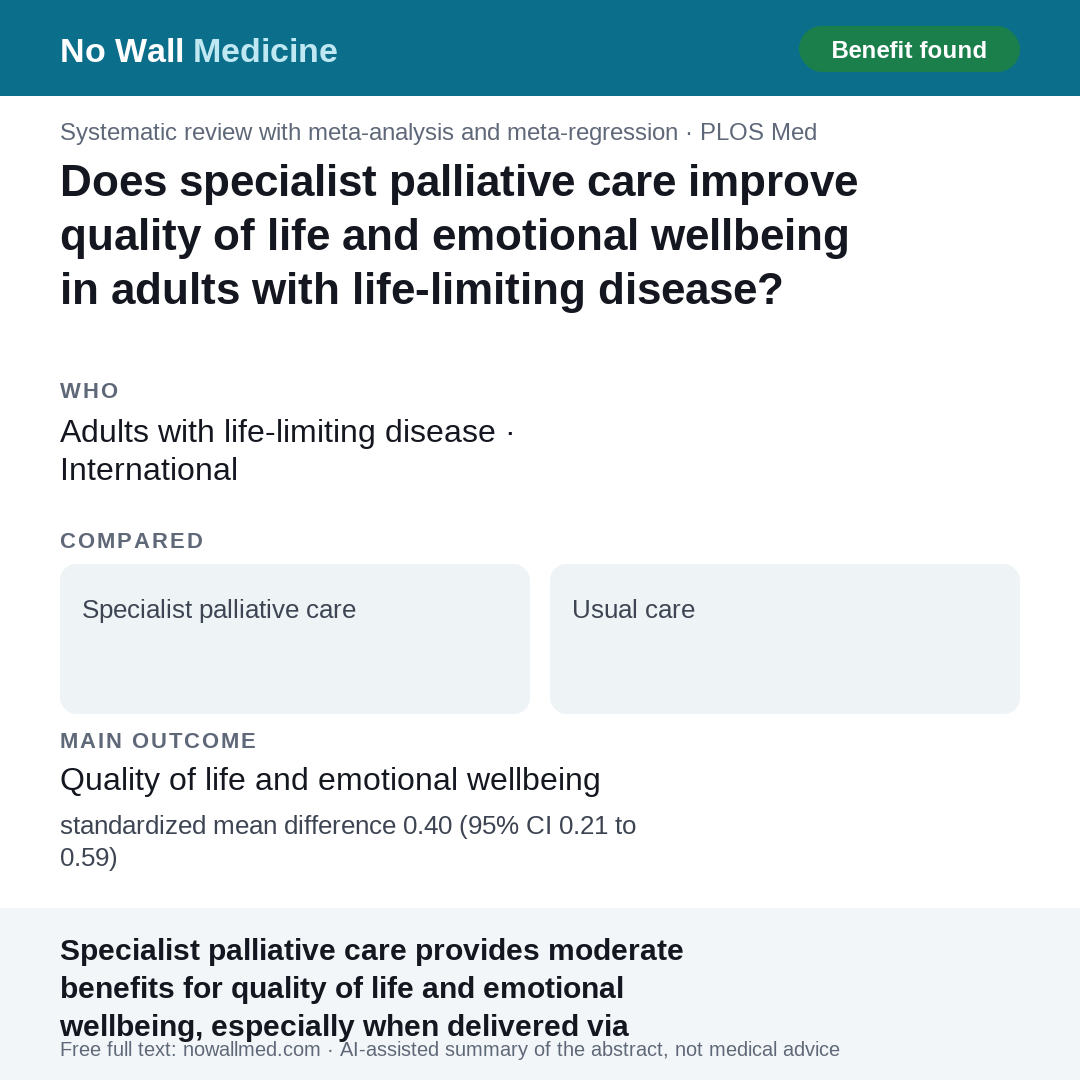
Benefits of specialist palliative care by identifying active ingredients of service composition, structure, and delivery model: A systematic review with meta-analysis and meta-regression
Systematic review with meta-analysis and meta-regressionBenefit found
Does specialist palliative care improve quality of life and emotional wellbeing in adults with life-limiting disease?
Who
Adults with life-limiting disease · International
Compared
Specialist palliative care
Usual care
Main outcome
Quality of life and emotional wellbeing
Result: standardized mean difference 0.40 (95% CI 0.21 to 0.59)
Bottom line: Specialist palliative care provides moderate benefits for quality of life and emotional wellbeing, especially when delivered via multidisciplinary models.
Limitation: Minimally clinically important difference effect sizes may be biased by relying on non-palliative care samples.
PLOS Med · 2024-08-02Download image
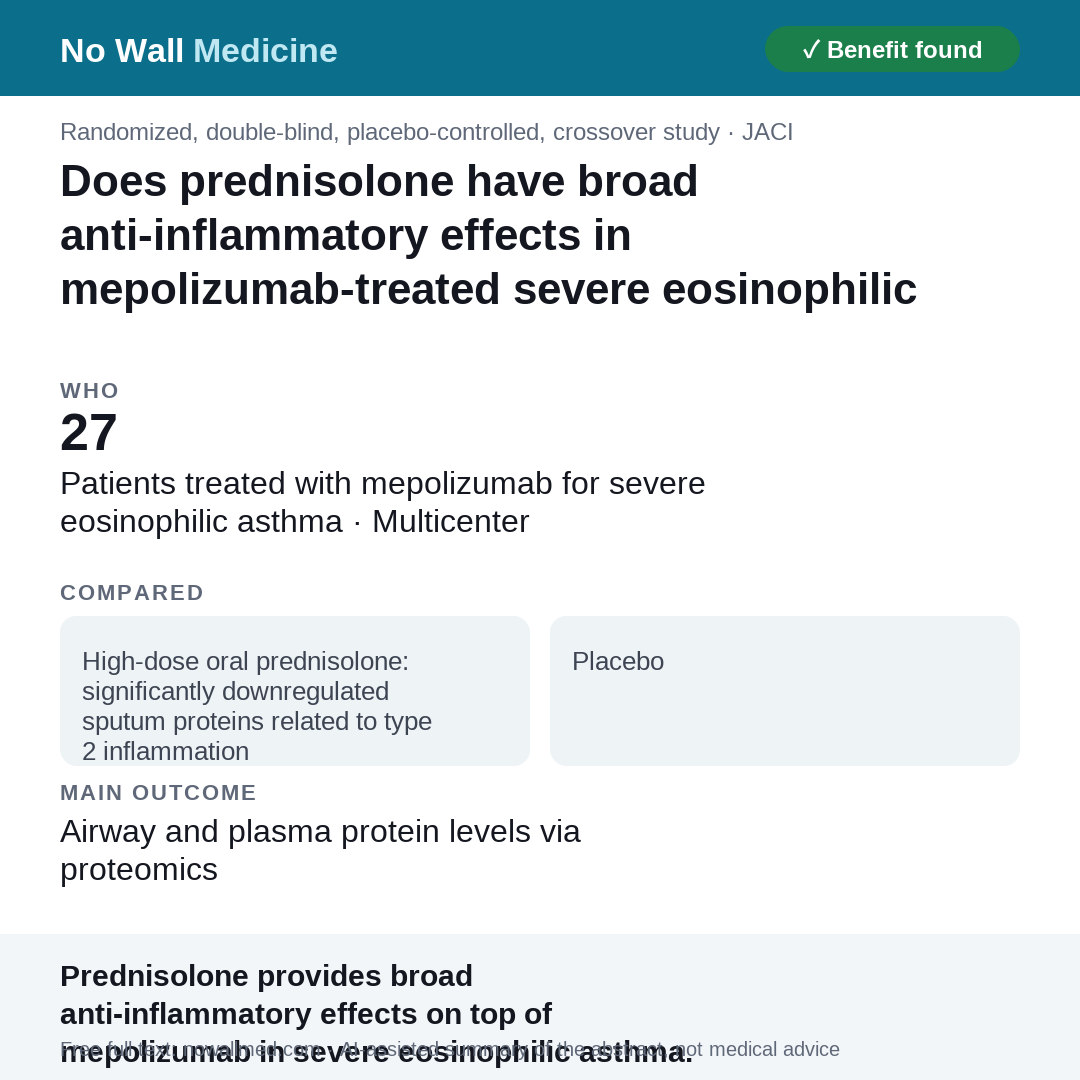
Airway proteomics reveals broad residual anti-inflammatory effects of prednisolone in mepolizumab-treated asthma
Randomized, double-blind, placebo-controlled, crossover studyBenefit found
Does prednisolone have broad anti-inflammatory effects in mepolizumab-treated severe eosinophilic asthma?
Who
27
Patients treated with mepolizumab for severe eosinophilic asthma · Multicenter
Compared
High-dose oral prednisolone: significantly downregulated sputum proteins related to type 2 inflammation
Placebo
Main outcome
Airway and plasma protein levels via proteomics
Bottom line: Prednisolone provides broad anti-inflammatory effects on top of mepolizumab in severe eosinophilic asthma.
JACI · 2024-08-02Download image
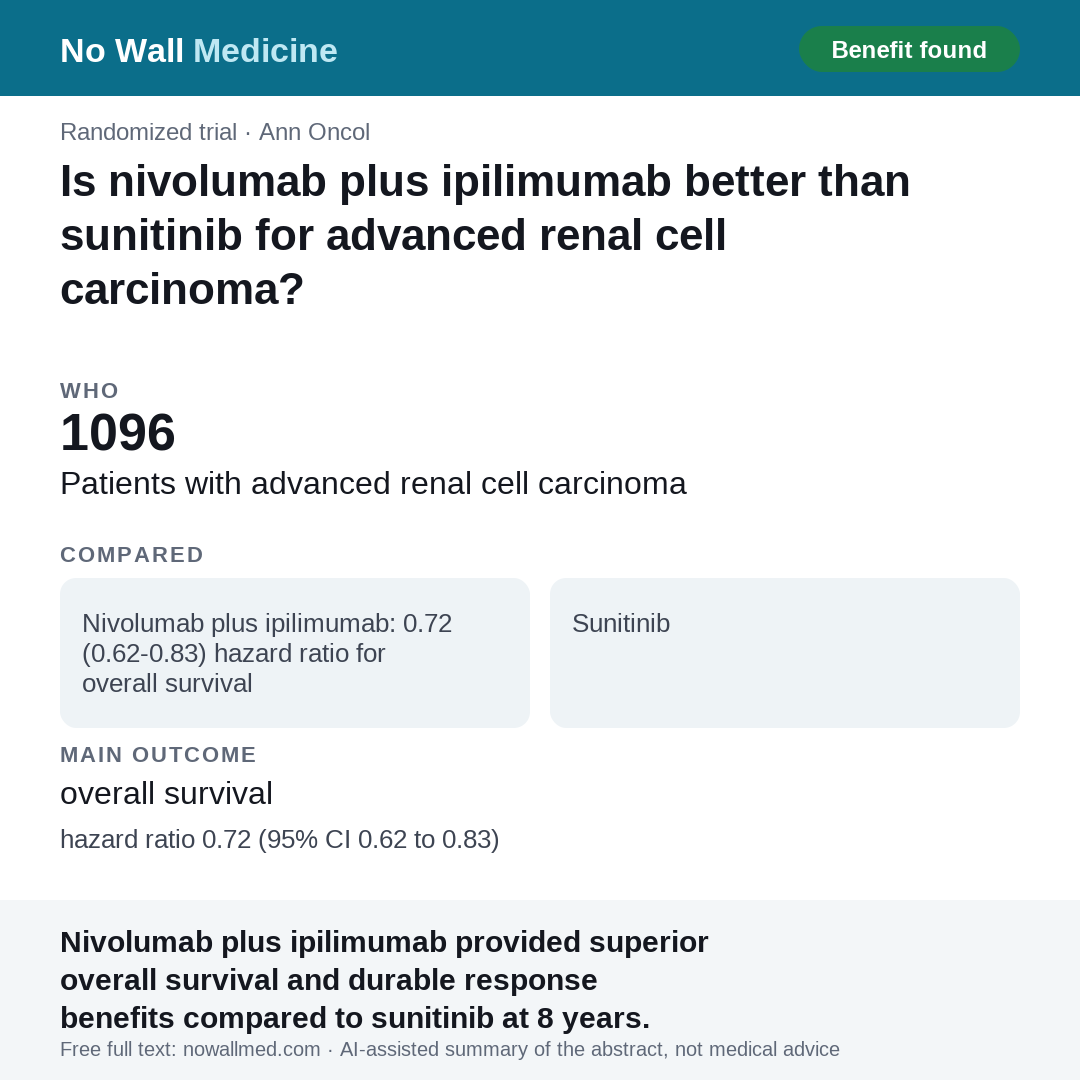
Nivolumab plus ipilimumab versus sunitinib for first-line treatment of advanced renal cell carcinoma: extended 8-year follow-up results of efficacy and safety from the phase III CheckMate 214 trial
Randomized trialBenefit found
Is nivolumab plus ipilimumab better than sunitinib for advanced renal cell carcinoma?
Who
1096
Patients with advanced renal cell carcinoma
Compared
Nivolumab plus ipilimumab: 0.72 (0.62-0.83) hazard ratio for overall survival
Sunitinib
Main outcome
overall survival
Result: hazard ratio 0.72 (95% CI 0.62 to 0.83)
Bottom line: Nivolumab plus ipilimumab provided superior overall survival and durable response benefits compared to sunitinib at 8 years.
Ann Oncol · 2024-08-02Download image
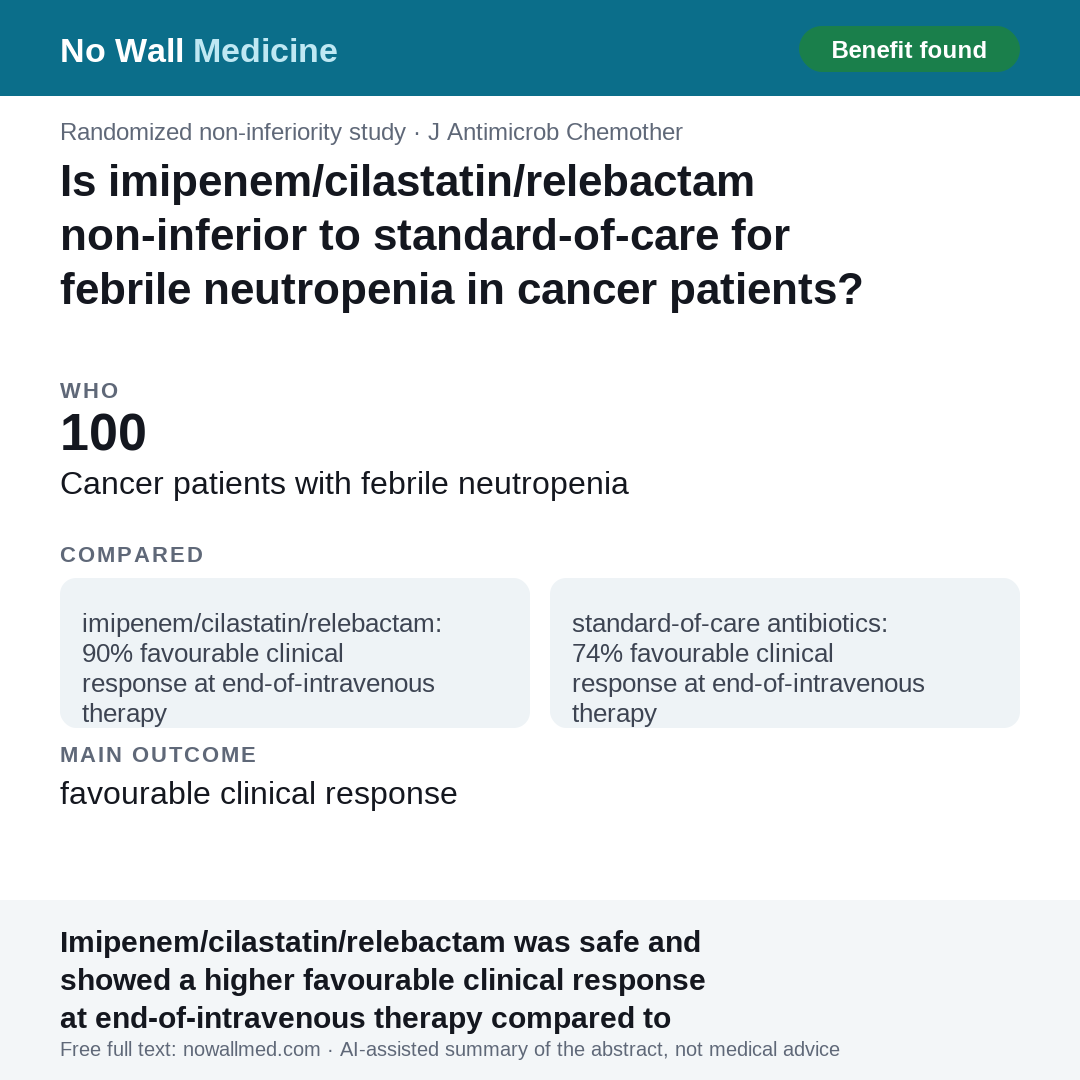
A randomized non-inferiority study comparing imipenem/cilastatin/relebactam with standard-of-care Gram-negative coverage in cancer patients with febrile neutropenia
Randomized non-inferiority studyBenefit found
Is imipenem/cilastatin/relebactam non-inferior to standard-of-care for febrile neutropenia in cancer patients?
Who
100
Cancer patients with febrile neutropenia
Compared
imipenem/cilastatin/relebactam: 90% favourable clinical response at end-of-intravenous therapy
standard-of-care antibiotics: 74% favourable clinical response at end-of-intravenous therapy
Main outcome
favourable clinical response
Bottom line: Imipenem/cilastatin/relebactam was safe and showed a higher favourable clinical response at end-of-intravenous therapy compared to standard-of-care.
J Antimicrob Chemother · 2024-08-02Download image
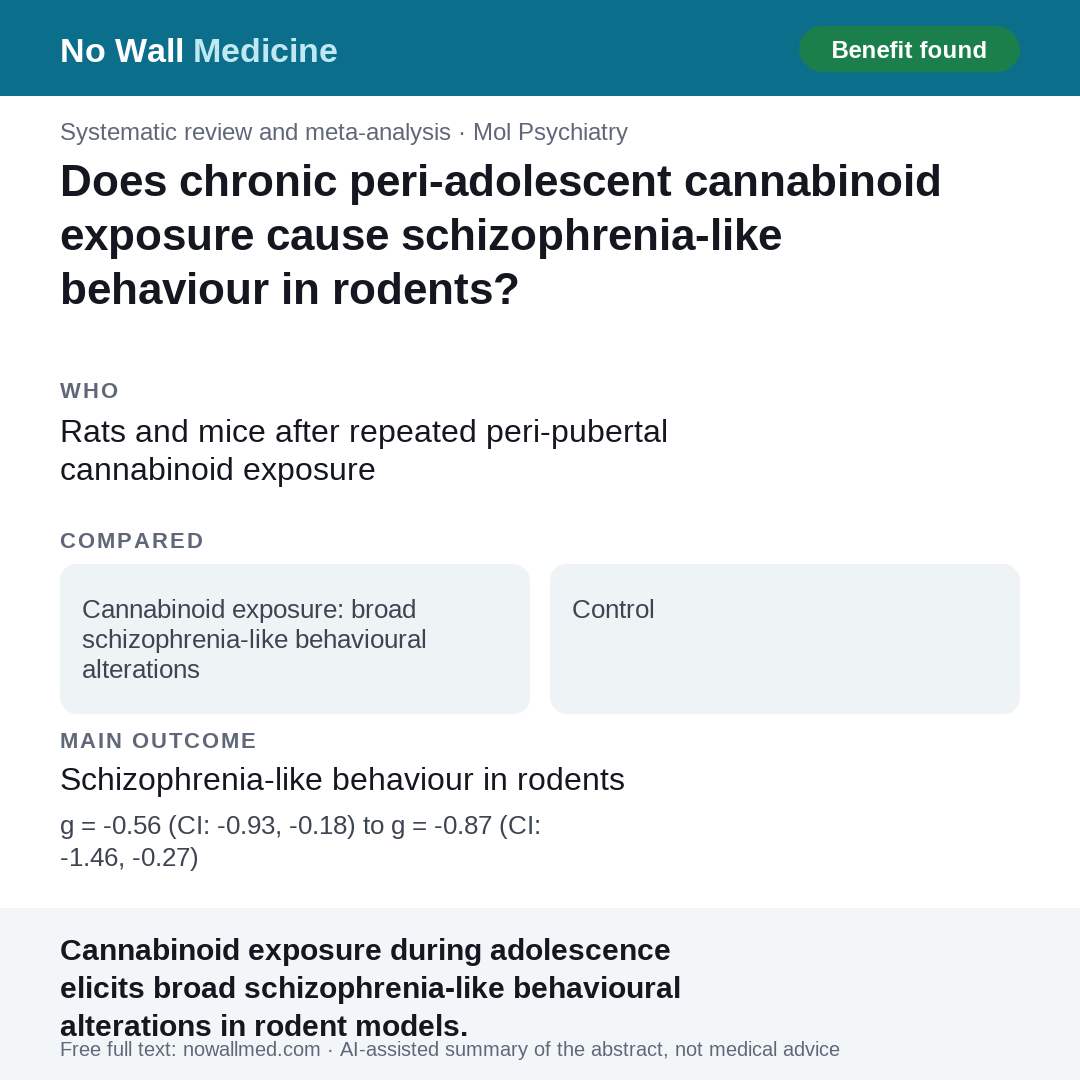
Systematic review and meta-analysis on the effects of chronic peri-adolescent cannabinoid exposure on schizophrenia-like behaviour in rodents
Systematic review and meta-analysisBenefit found
Does chronic peri-adolescent cannabinoid exposure cause schizophrenia-like behaviour in rodents?
Who
Rats and mice after repeated peri-pubertal cannabinoid exposure
Compared
Cannabinoid exposure: broad schizophrenia-like behavioural alterations
Control
Main outcome
Schizophrenia-like behaviour in rodents
Result: g = -0.56 (CI: -0.93, -0.18) to g = -0.87 (CI: -1.46, -0.27)
Bottom line: Cannabinoid exposure during adolescence elicits broad schizophrenia-like behavioural alterations in rodent models.
Limitation: Substantial variance in protocols and moderate-to-high heterogeneity in behavioural outcomes.
Mol Psychiatry · 2024-08-02Download image
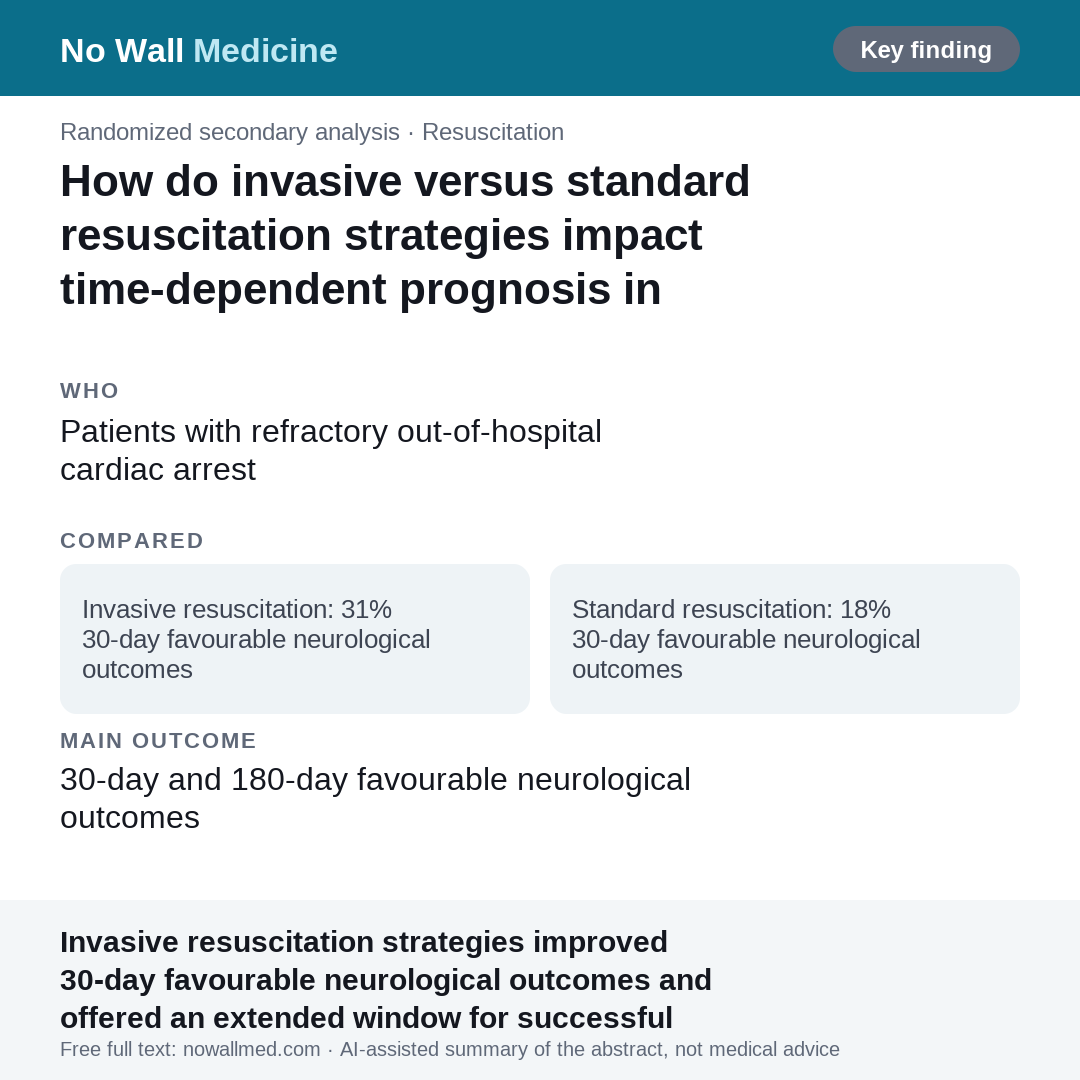
The time-dependent yield of invasive vs. standard resuscitation strategies: A secondary analysis of the Prague out-of-hospital cardiac arrest study
Randomized secondary analysisBenefit found
How do invasive versus standard resuscitation strategies impact time-dependent prognosis in out-of-hospital cardiac arrest?
Who
Patients with refractory out-of-hospital cardiac arrest
Compared
Invasive resuscitation: 31% 30-day favourable neurological outcomes
Standard resuscitation: 18% 30-day favourable neurological outcomes
Main outcome
30-day and 180-day favourable neurological outcomes
Result: difference 12%; 95%CI 2.0, 23
Bottom line: Invasive resuscitation strategies improved 30-day favourable neurological outcomes and offered an extended window for successful resuscitation.
Resuscitation · 2024-08-02Download image
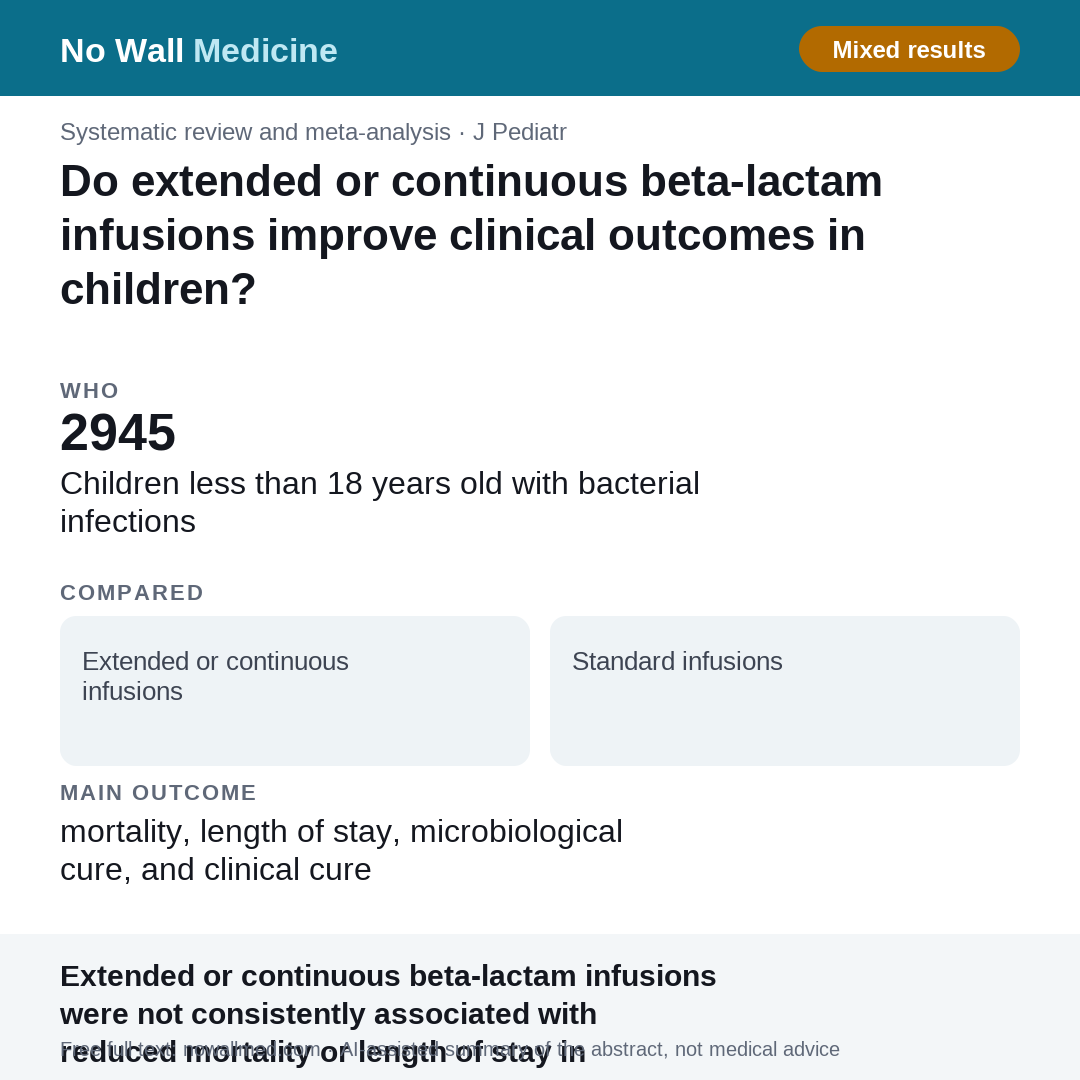
Prolonged Beta-Lactam Infusions in Children: A Systematic Review and Meta-Analysis
Systematic review and meta-analysisMixed results
Do extended or continuous beta-lactam infusions improve clinical outcomes in children?
Who
2945
Children less than 18 years old with bacterial infections
Compared
Extended or continuous infusions
Standard infusions
Main outcome
mortality, length of stay, microbiological cure, and clinical cure
Result: RR 0.93 (95% CI 0.71, 1.21) in randomized control trials
Bottom line: Extended or continuous beta-lactam infusions were not consistently associated with reduced mortality or length of stay in children.
J Pediatr · 2024-08-02Download image