Visual abstracts
New randomized trials and meta-analyses from leading journals at a glance: who was studied, what was compared, and what was found. Every paper is free to read in full.
All specialtiesCardiology 4763Oncology 4043Gastroenterology & Hepatology 1903Infectious Disease 3756Neurology 1872Psychiatry & Mental Health 2216Pulmonology 2044Critical Care 1319Endocrinology & Diabetes 2544Pediatrics 2889Surgery 2480Orthopedics & Sports Medicine 917Neurosurgery 525Cardiothoracic & Vascular Surgery 656Plastic & Reconstructive Surgery 574Nephrology 1107Rheumatology 810Hematology 1090Dermatology 611Ophthalmology 532Obstetrics & Gynecology 1645Public & Global Health 1037Radiology & Imaging 619Anesthesiology 958Urology 745ENT (Otolaryngology) 494Emergency Medicine 481Allergy & Immunology 309Geriatrics 972Family Medicine & Primary Care 534Medical Genetics & Genomics 659Pathology & Laboratory Medicine 156Physical Medicine & Rehabilitation 734Palliative Care 421Nutrition 1560Digital Health & AI 2137General Medicine 318
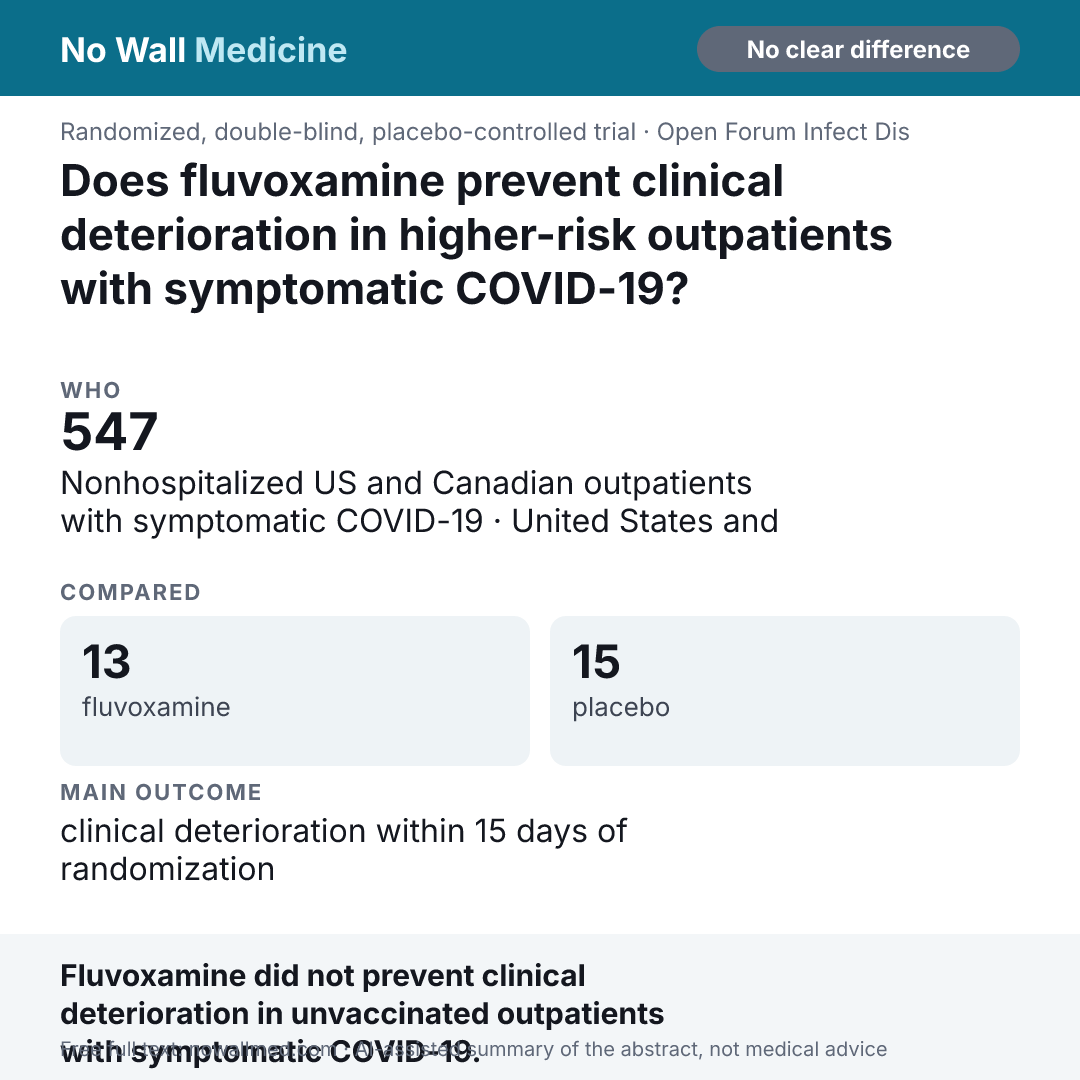
The STOP COVID 2 Study: Fluvoxamine vs Placebo for Outpatients With Symptomatic COVID-19, a Fully Remote Randomized Controlled Trial
Randomized, double-blind, placebo-controlled trialNo clear difference
Does fluvoxamine prevent clinical deterioration in higher-risk outpatients with symptomatic COVID-19?
Who
547
Nonhospitalized US and Canadian outpatients with symptomatic COVID-19 · United States and Canada
Compared
13fluvoxamine (4.8%)
15placebo (5.5%)
Main outcome
clinical deterioration within 15 days of randomization
Result: absolute difference 0.68% (95% CI, -3.0% to 4.4%)
Bottom line: Fluvoxamine did not prevent clinical deterioration in unvaccinated outpatients with symptomatic COVID-19.
Open Forum Infect Dis · 2023-08-08 · Save PNG
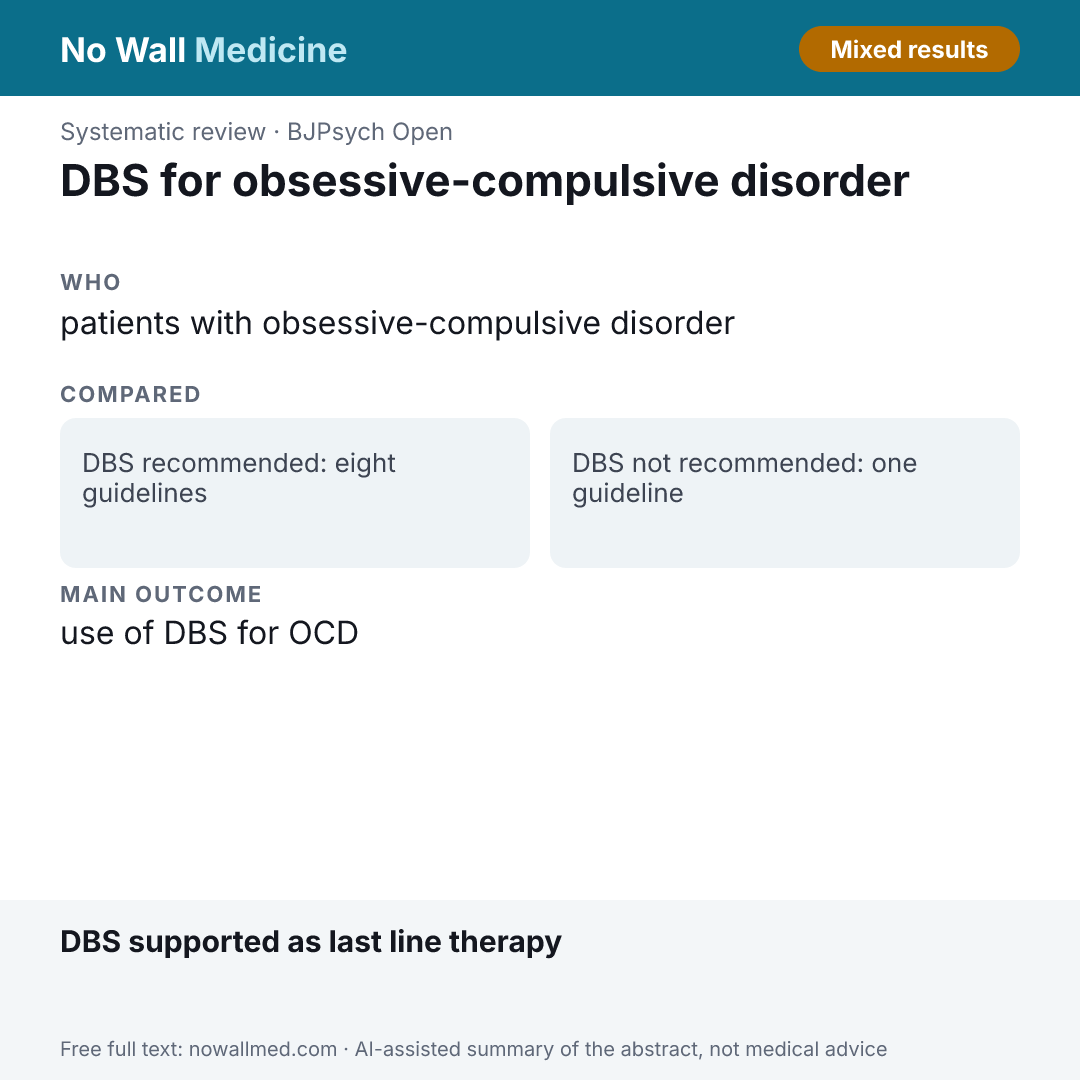
Clinical practice guidelines on the use of deep brain stimulation for the treatment of obsessive-compulsive disorder: systematic review
Systematic reviewMixed results
DBS for obsessive-compulsive disorder
Who
patients with obsessive-compulsive disorder
Compared
DBS recommended: eight guidelines
DBS not recommended: one guideline
Main outcome
use of DBS for OCD
Bottom line: DBS supported as last line therapy
Limitation: limited evidence base
BJPsych Open · 2023-08-08 · Save PNG
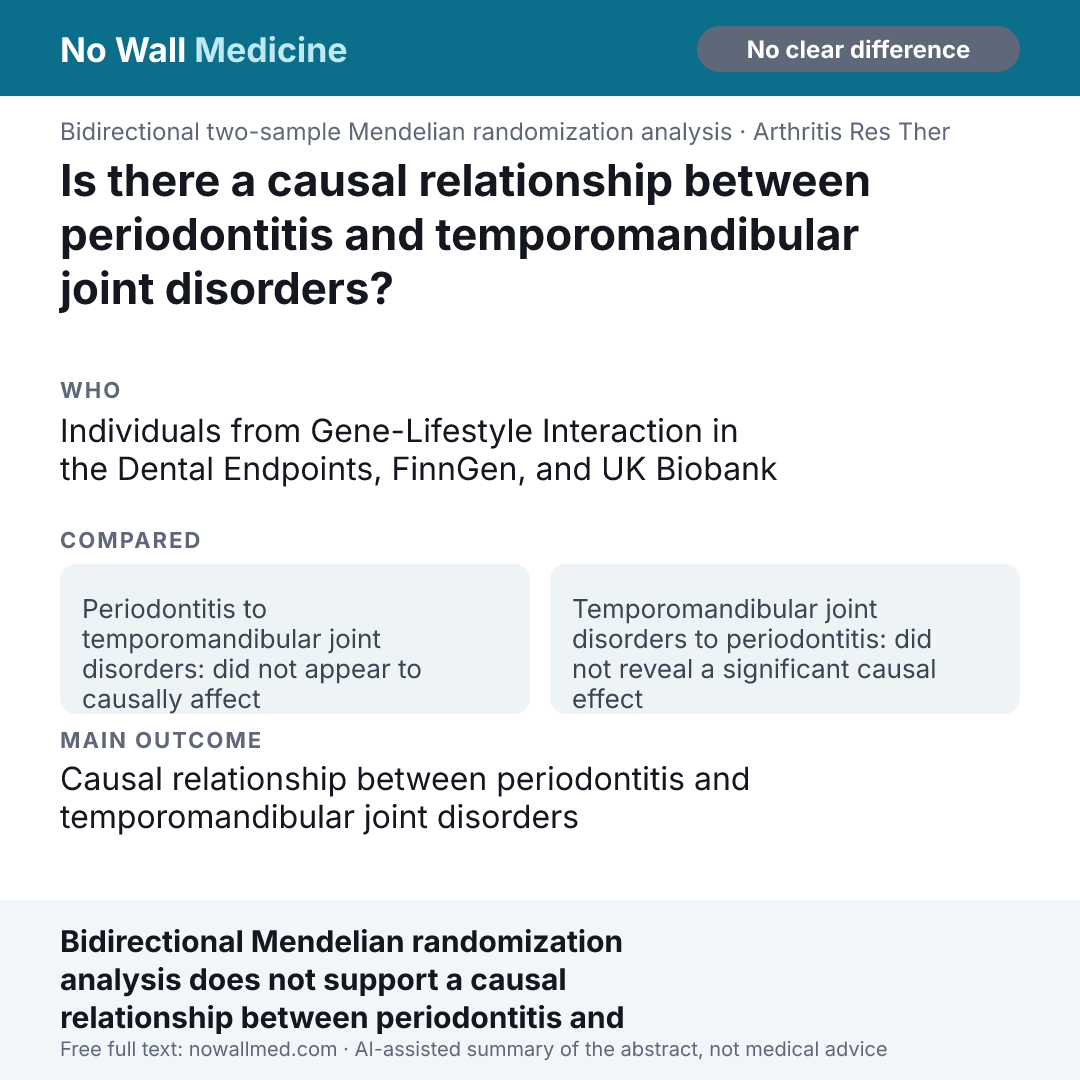
Association between periodontitis and temporomandibular joint disorders
Bidirectional two-sample Mendelian randomization analysisNo clear difference
Is there a causal relationship between periodontitis and temporomandibular joint disorders?
Who
Individuals from Gene-Lifestyle Interaction in the Dental Endpoints, FinnGen, and UK Biobank
Compared
Periodontitis to temporomandibular joint disorders: did not appear to causally affect
Temporomandibular joint disorders to periodontitis: did not reveal a significant causal effect
Main outcome
Causal relationship between periodontitis and temporomandibular joint disorders
Bottom line: Bidirectional Mendelian randomization analysis does not support a causal relationship between periodontitis and temporomandibular joint disorders.
Arthritis Res Ther · 2023-08-08 · Save PNG
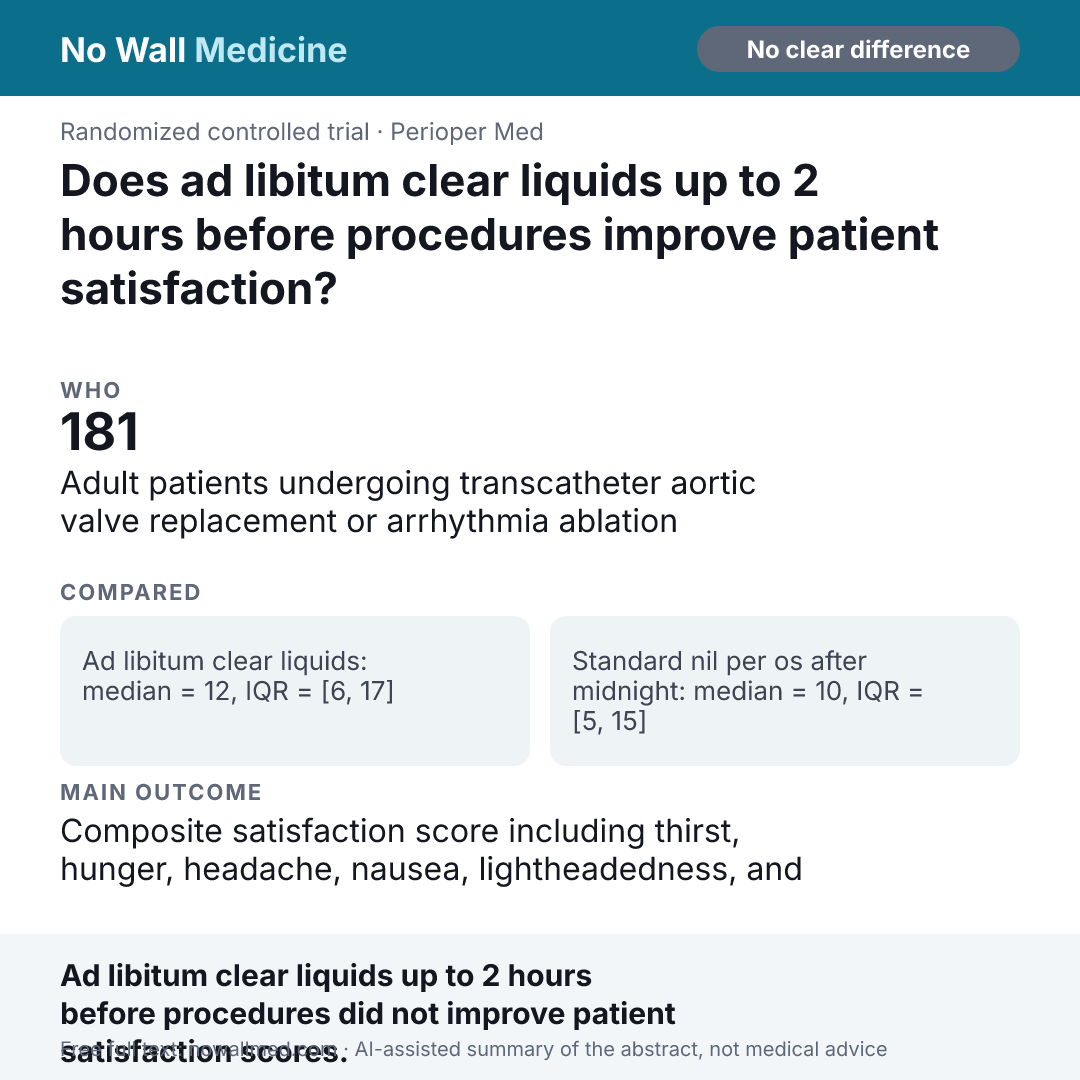
Randomized controlled trial of liberal vs. standard fasting instructions in percutaneous cardiac procedures
Randomized controlled trialNo clear difference
Does ad libitum clear liquids up to 2 hours before procedures improve patient satisfaction?
Who
181
Adult patients undergoing transcatheter aortic valve replacement or arrhythmia ablation
Compared
Ad libitum clear liquids: median = 12, IQR = [6, 17]
Standard nil per os after midnight: median = 10, IQR = [5, 15]
Main outcome
Composite satisfaction score including thirst, hunger, headache, nausea, lightheadedness, and anxiousness
Result: 95% CI = [-1, 4]
Bottom line: Ad libitum clear liquids up to 2 hours before procedures did not improve patient satisfaction scores.
Perioper Med · 2023-08-08 · Save PNG
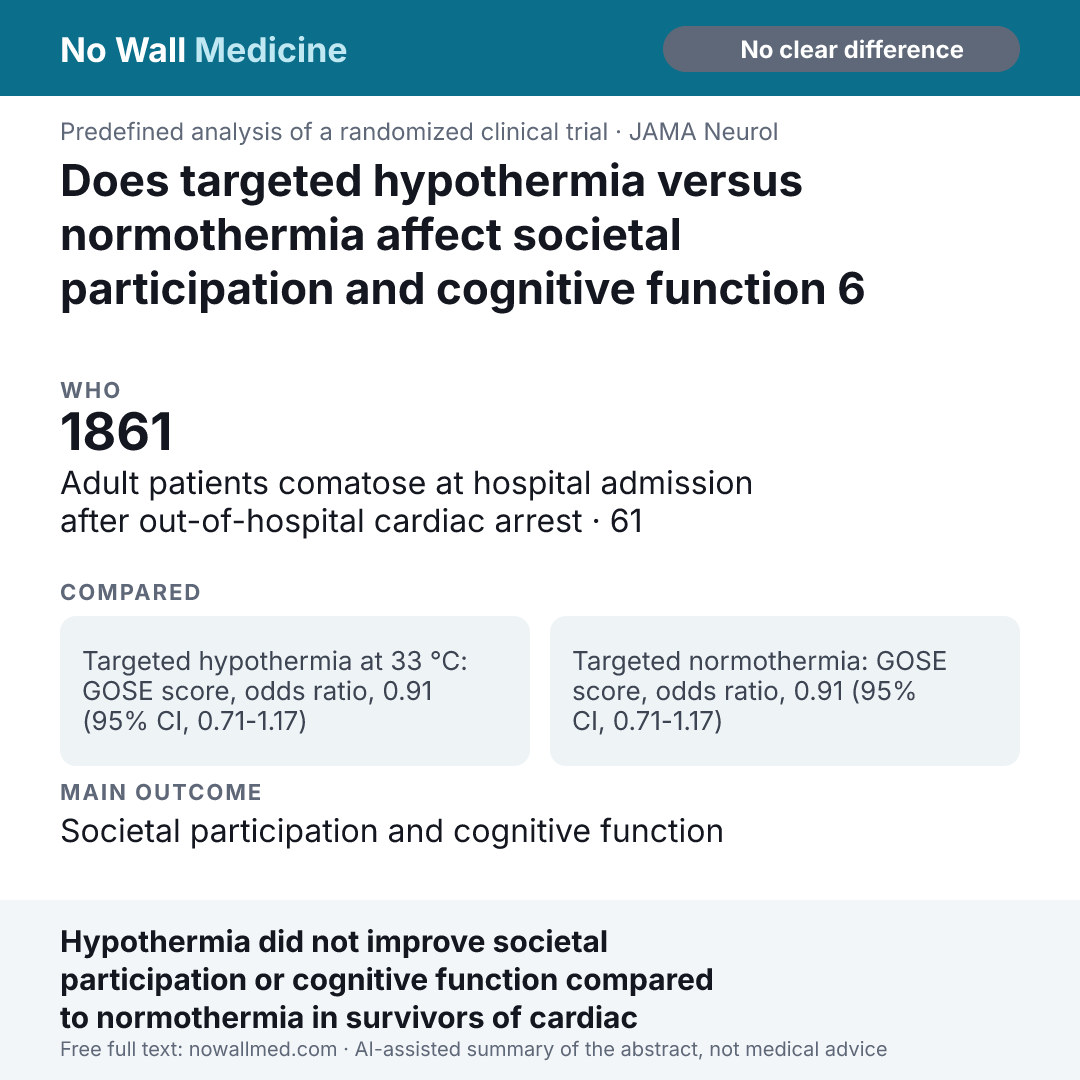
Effects of Hypothermia vs Normothermia on Societal Participation and Cognitive Function at 6 Months in Survivors After Out-of-Hospital Cardiac Arrest: A Predefined Analysis of the TTM2 Randomized Clinical Trial
Predefined analysis of a randomized clinical trialNo clear difference
Does targeted hypothermia versus normothermia affect societal participation and cognitive function 6 months after cardiac arrest?
Who
1861
Adult patients comatose at hospital admission after out-of-hospital cardiac arrest · 61 hospitals in 14 countries
Compared
Targeted hypothermia at 33 °C: GOSE score, odds ratio, 0.91 (95% CI, 0.71-1.17)
Targeted normothermia: GOSE score, odds ratio, 0.91 (95% CI, 0.71-1.17)
Main outcome
Societal participation and cognitive function
Result: odds ratio 0.91 (95% CI 0.71 to 1.17)
Bottom line: Hypothermia did not improve societal participation or cognitive function compared to normothermia in survivors of cardiac arrest.
Limitation: Limitations in societal participation were common regardless of intervention.
JAMA Neurol · 2023-08-07 · Save PNG
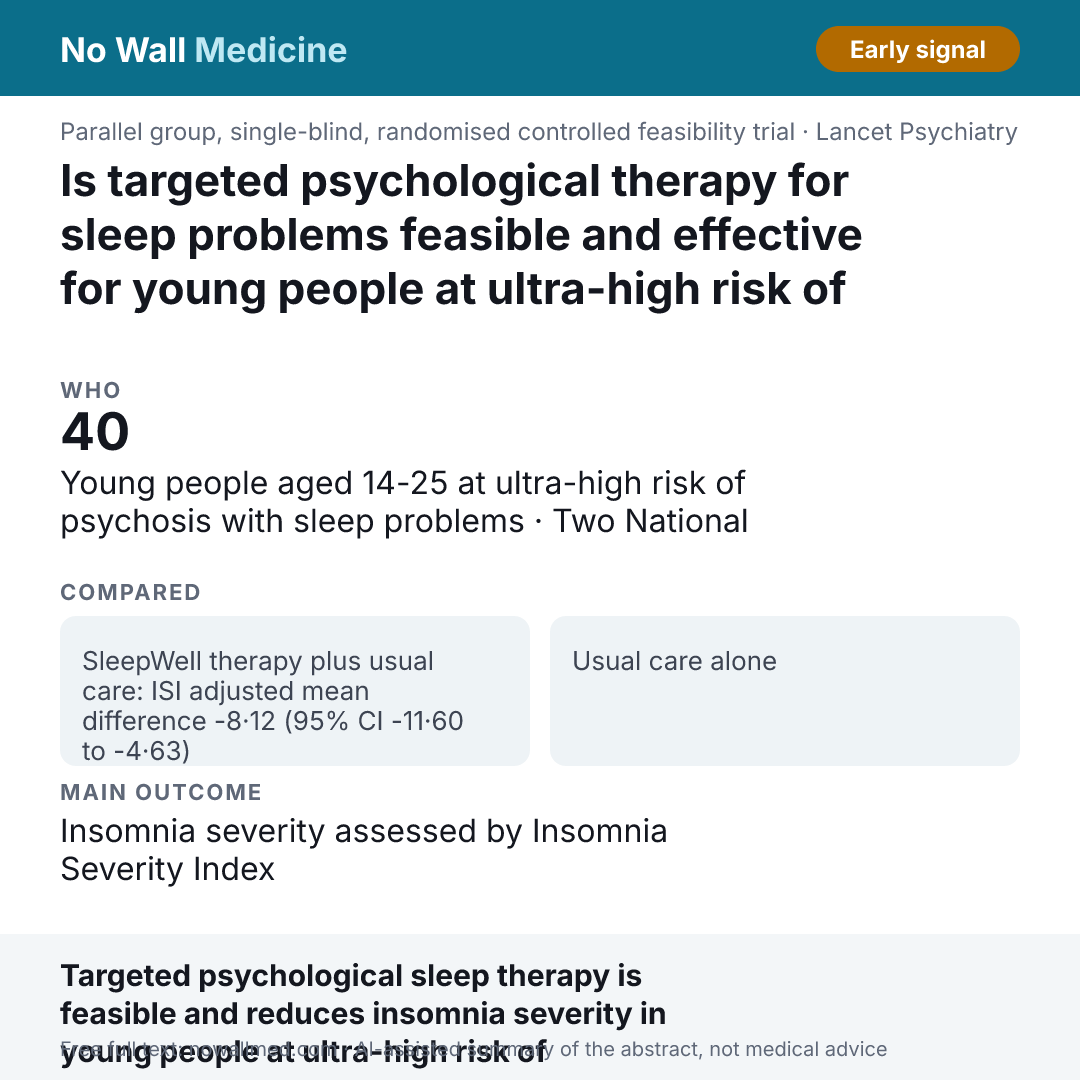
A targeted psychological treatment for sleep problems in young people at ultra-high risk of psychosis in England (SleepWell): a parallel group, single-blind, randomised controlled feasibility trial
Parallel group, single-blind, randomised controlled feasibility trialEarly signal
Is targeted psychological therapy for sleep problems feasible and effective for young people at ultra-high risk of psychosis?
Who
40
Young people aged 14-25 at ultra-high risk of psychosis with sleep problems · Two National Health Service trusts in England
Compared
SleepWell therapy plus usual care: ISI adjusted mean difference -8·12 (95% CI -11·60 to -4·63)
Usual care alone
Main outcome
Insomnia severity assessed by Insomnia Severity Index
Result: ISI adjusted mean difference -8·12 (95% CI -11·60 to -4·63)
Bottom line: Targeted psychological sleep therapy is feasible and reduces insomnia severity in young people at ultra-high risk of psychosis.
Lancet Psychiatry · 2023-08-07 · Save PNG
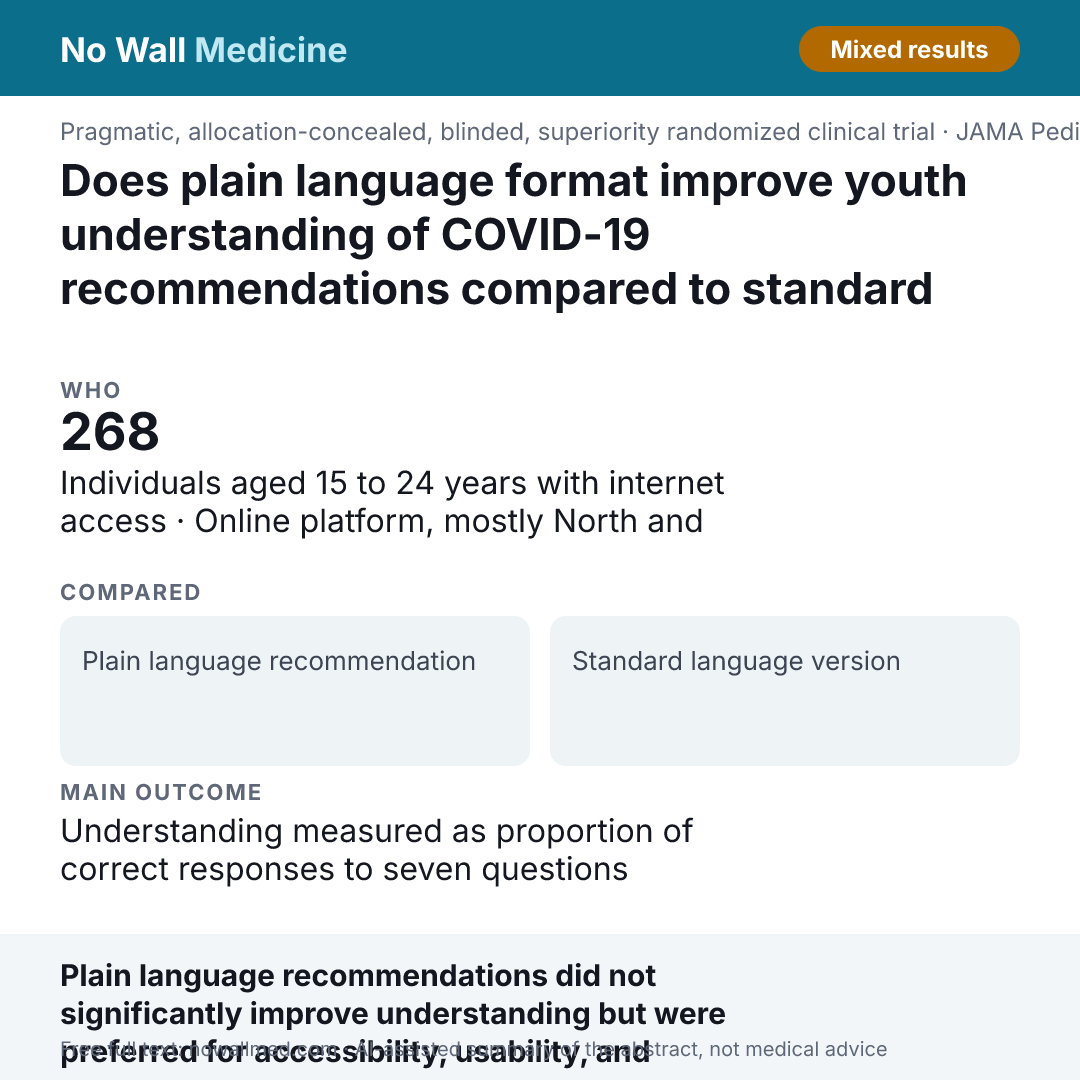
Plain Language vs Standard Format for Youth Understanding of COVID-19 Recommendations: A Randomized Clinical Trial
Pragmatic, allocation-concealed, blinded, superiority randomized clinical trialMixed results
Does plain language format improve youth understanding of COVID-19 recommendations compared to standard language?
Who
268
Individuals aged 15 to 24 years with internet access · Online platform, mostly North and South America
Compared
Plain language recommendation
Standard language version
Main outcome
Understanding measured as proportion of correct responses to seven questions
Result: mean difference, 5.2%; 95% CI, -1.2% to 11.6%
Bottom line: Plain language recommendations did not significantly improve understanding but were preferred for accessibility, usability, and satisfaction.
JAMA Pediatr · 2023-08-07 · Save PNG
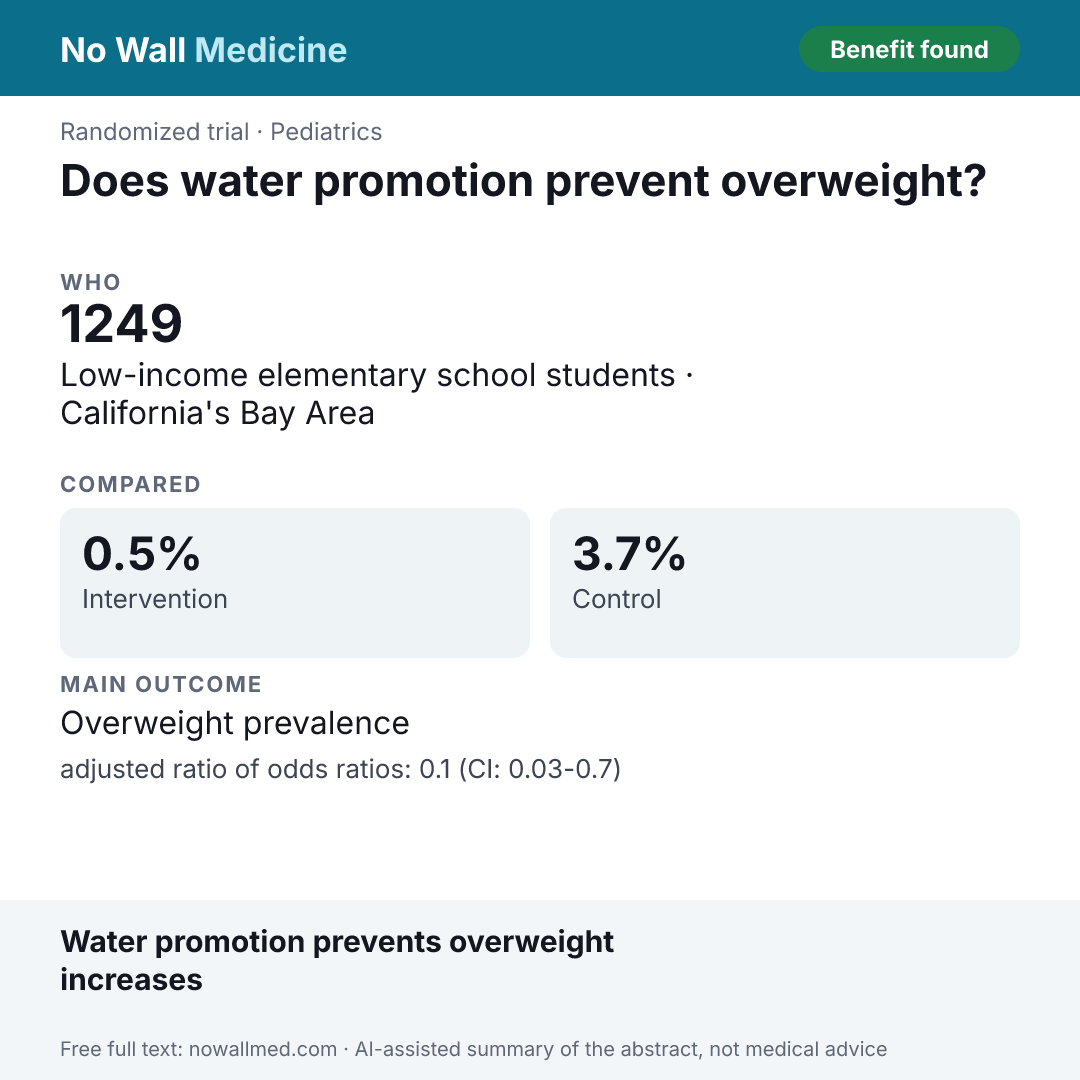
Effectiveness of a School Drinking Water Promotion and Access Program for Overweight Prevention
Randomized trialBenefit found
Does water promotion prevent overweight?
Who
1249
Low-income elementary school students · California's Bay Area
Compared
0.5%Intervention
3.7%Control
Main outcome
Overweight prevalence
Result: adjusted ratio of odds ratios: 0.1 (CI: 0.03-0.7)
Bottom line: Water promotion prevents overweight increases
Pediatrics · 2023-08-07 · Save PNG
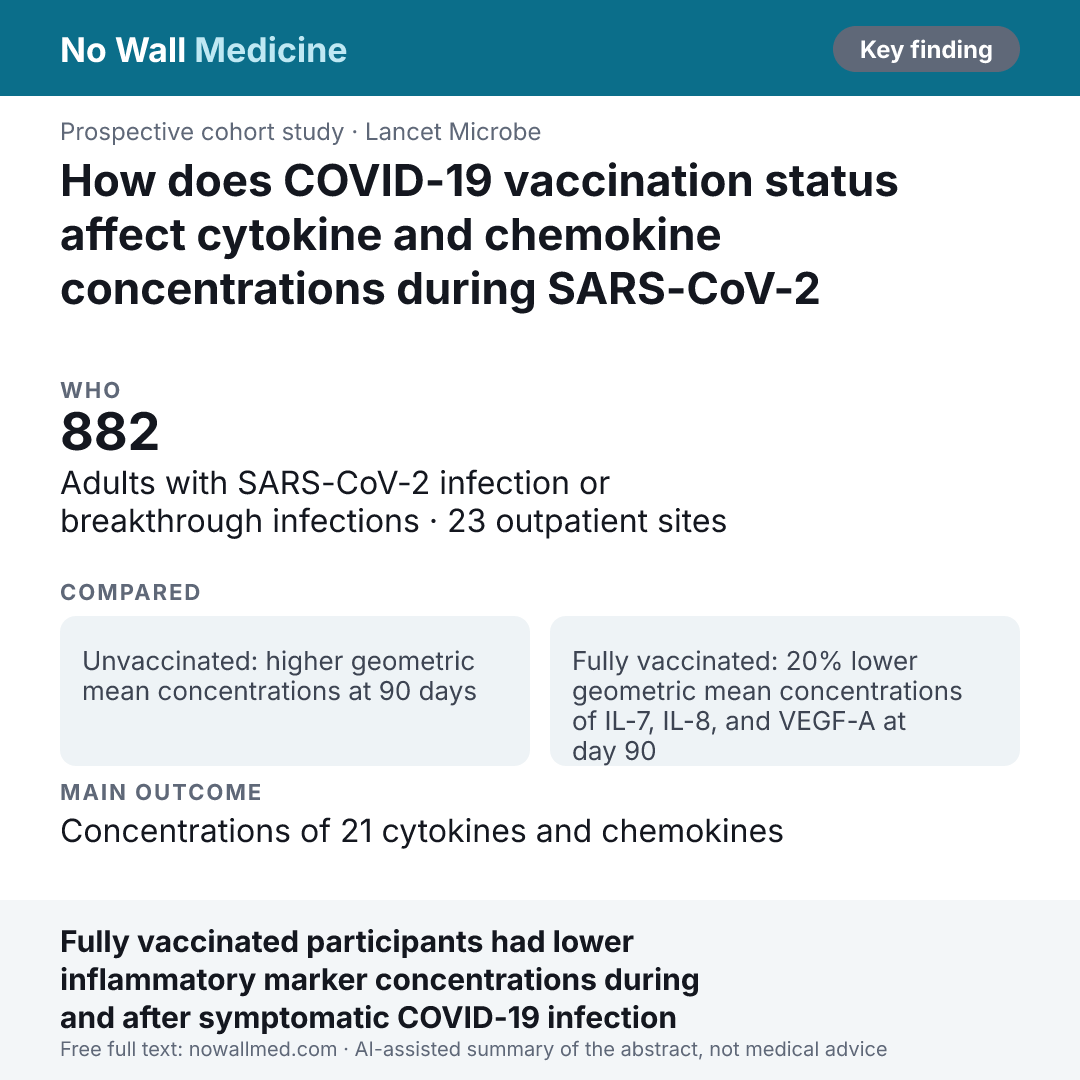
Dynamics of inflammatory responses after SARS-CoV-2 infection by vaccination status in the USA: a prospective cohort study
Prospective cohort studyKey finding
How does COVID-19 vaccination status affect cytokine and chemokine concentrations during SARS-CoV-2 infection?
Who
882
Adults with SARS-CoV-2 infection or breakthrough infections · 23 outpatient sites in the USA
Compared
Unvaccinated: higher geometric mean concentrations at 90 days
Fully vaccinated: 20% lower geometric mean concentrations of IL-7, IL-8, and VEGF-A at day 90
Main outcome
Concentrations of 21 cytokines and chemokines
Bottom line: Fully vaccinated participants had lower inflammatory marker concentrations during and after symptomatic COVID-19 infection compared to unvaccinated participants.
Funded by: US Department of Defense, NIH, Bloomberg Philanthropies, and others
Lancet Microbe · 2023-08-07 · Save PNG
Cluster Headache Genomewide Association Study and Meta-Analysis Identifies Eight Loci and Implicates Smoking as Causal Risk Factor
Genomewide association study meta-analysisKey finding
What are the genetic risk variants and biological insights for cluster headache?
Who
4,777 cases and 21,729 controls · 10 European and 1 East Asian cohorts
Compared
Cases
Controls
Main outcome
Identification of genetic risk variants and biological insights
Bottom line: Meta-analysis identified eight loci and indicated that cigarette smoking is a causal risk factor for cluster headache.
Ann Neurol · 2023-08-07 · Save PNG

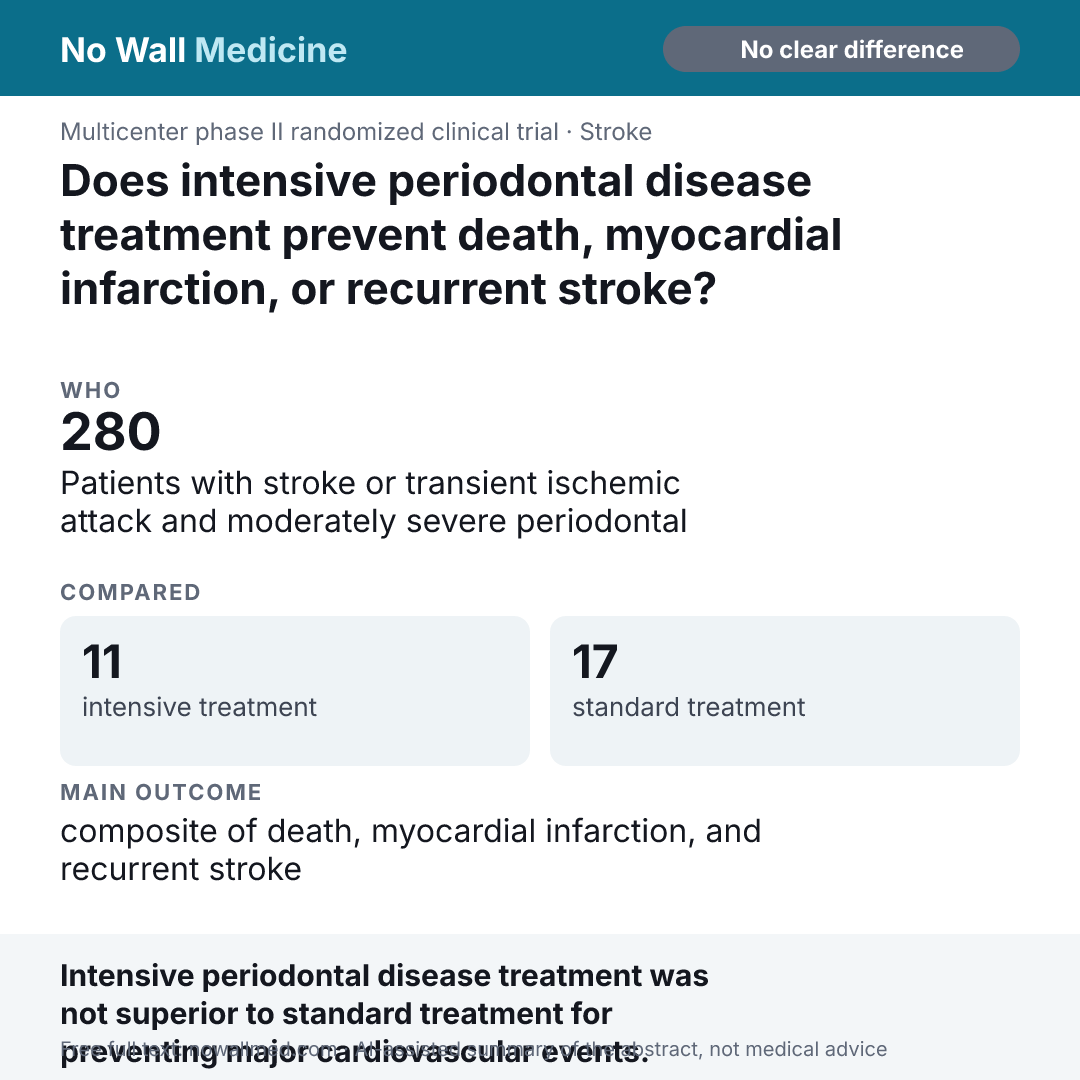
Periodontal Disease Treatment After Stroke or Transient Ischemic Attack: The PREMIERS Study, a Randomized Clinical Trial
Multicenter phase II randomized clinical trialNo clear difference
Does intensive periodontal disease treatment prevent death, myocardial infarction, or recurrent stroke?
Who
280
Patients with stroke or transient ischemic attack and moderately severe periodontal disease · Multicenter
Compared
11intensive treatment (8%)
17standard treatment (12%)
Main outcome
composite of death, myocardial infarction, and recurrent stroke
Result: hazard ratio 0.65 (95% CI 0.30-1.38)
Bottom line: Intensive periodontal disease treatment was not superior to standard treatment for preventing major cardiovascular events.
Stroke · 2023-08-07 · Save PNG
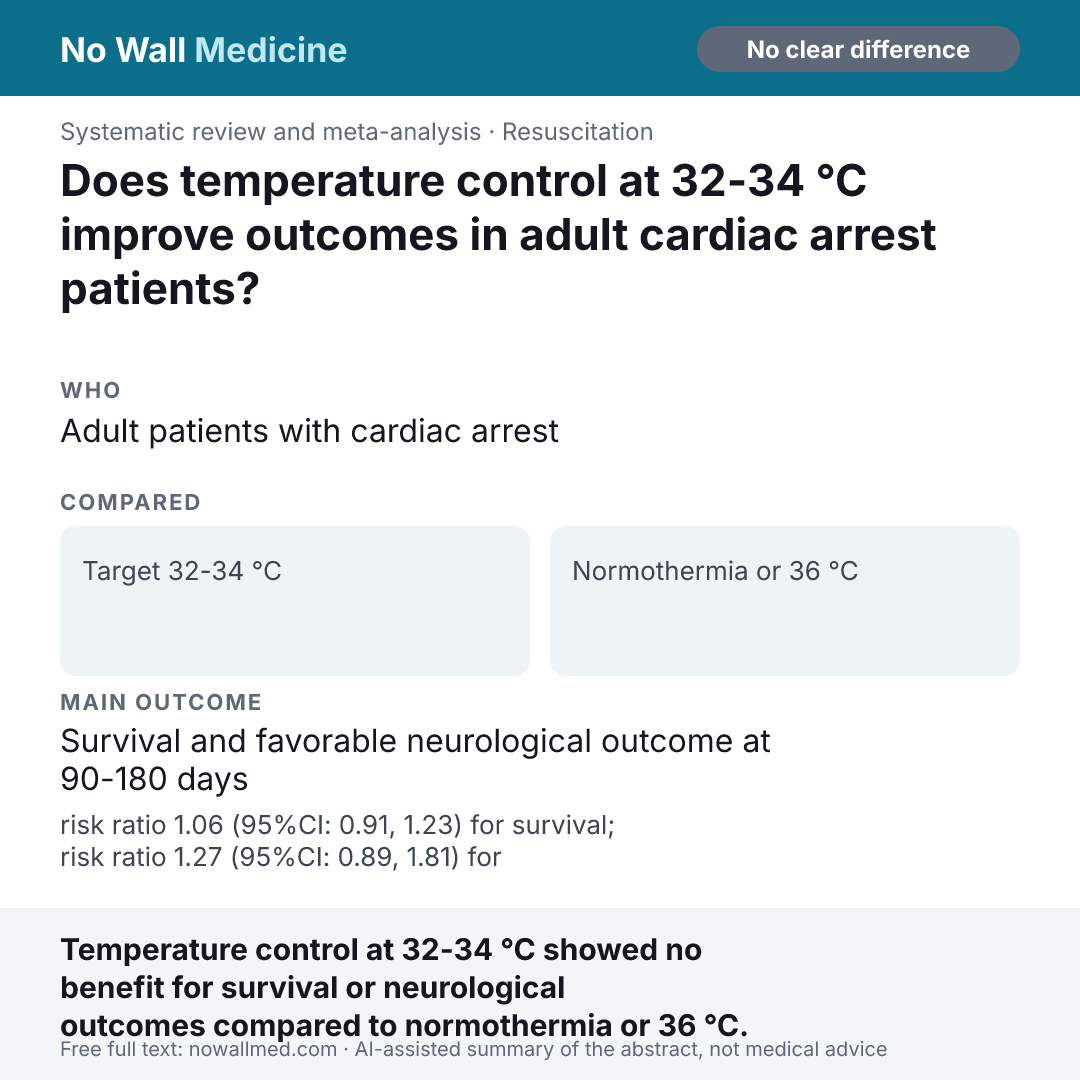
Temperature control after adult cardiac arrest: An updated systematic review and meta-analysis
Systematic review and meta-analysisNo clear difference
Does temperature control at 32-34 °C improve outcomes in adult cardiac arrest patients?
Who
Adult patients with cardiac arrest
Compared
Target 32-34 °C
Normothermia or 36 °C
Main outcome
Survival and favorable neurological outcome at 90-180 days
Result: risk ratio 1.06 (95%CI: 0.91, 1.23) for survival; risk ratio 1.27 (95%CI: 0.89, 1.81) for neurological outcome
Bottom line: Temperature control at 32-34 °C showed no benefit for survival or neurological outcomes compared to normothermia or 36 °C.
Limitation: Low certainty evidence and knowledge gaps exist regarding temperature targets, rewarming rates, and fever control.
Resuscitation · 2023-08-07 · Save PNG
Treatment of Low-grade Intermediate-risk Nonmuscle-invasive Bladder Cancer With UGN-102 ± Transurethral Resection of Bladder Tumor Compared to Transurethral Resection of Bladder Tumor Monotherapy: A Randomized, Controlled, Phase 3 Trial (ATLAS)
Randomized, controlled, phase 3 trialBenefit found
Is UGN-102 with or without resection better than resection monotherapy for bladder cancer?
Who
282
Patients with low-grade intermediate-risk nonmuscle-invasive bladder cancer
Compared
72%UGN-102 plus or without resection
50%Transurethral resection of bladder tumor monotherapy
Main outcome
Disease-free survival
Result: hazard ratio 0.45
Bottom line: UGN-102 offers a potential therapeutic alternative to transurethral resection of bladder tumor monotherapy for this cancer.
J Urol · 2023-08-07 · Save PNG
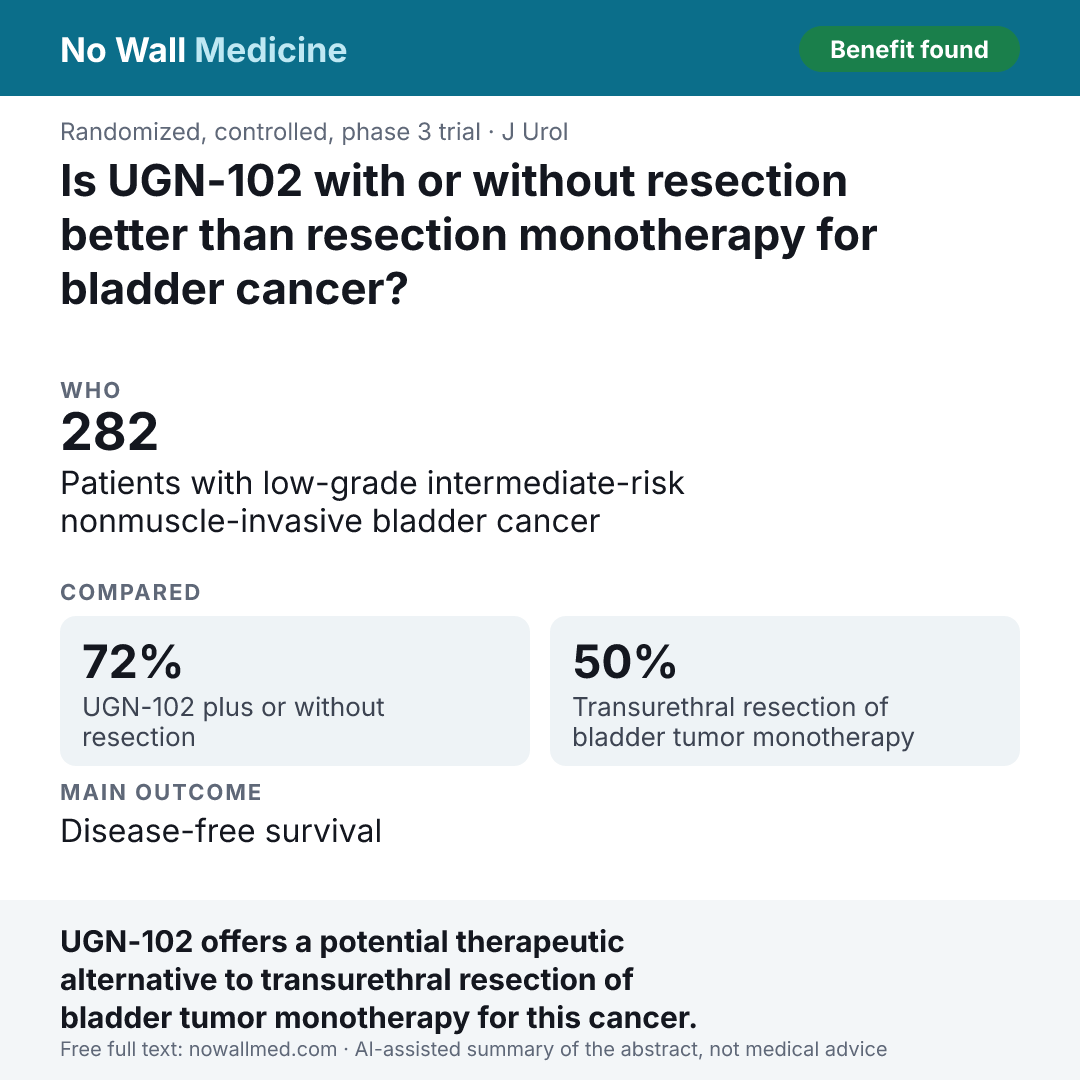
The Impact of a Mobile Support Group on Distress and Physical Activity in Breast Cancer Survivors: Randomized, Parallel-Group, Open-Label, Controlled Trial
Randomized controlled trialBenefit found
Mobile support group impact on breast cancer survivors
Who
202
Women with stage 0 to III breast cancer · Single center
Compared
Intervention: odds ratio 0.572
Control
Main outcome
Moderate to severe distress
Result: odds ratio 0.572
Bottom line: Mobile community reduces distress and increases activity
J Med Internet Res · 2023-08-07 · Save PNG
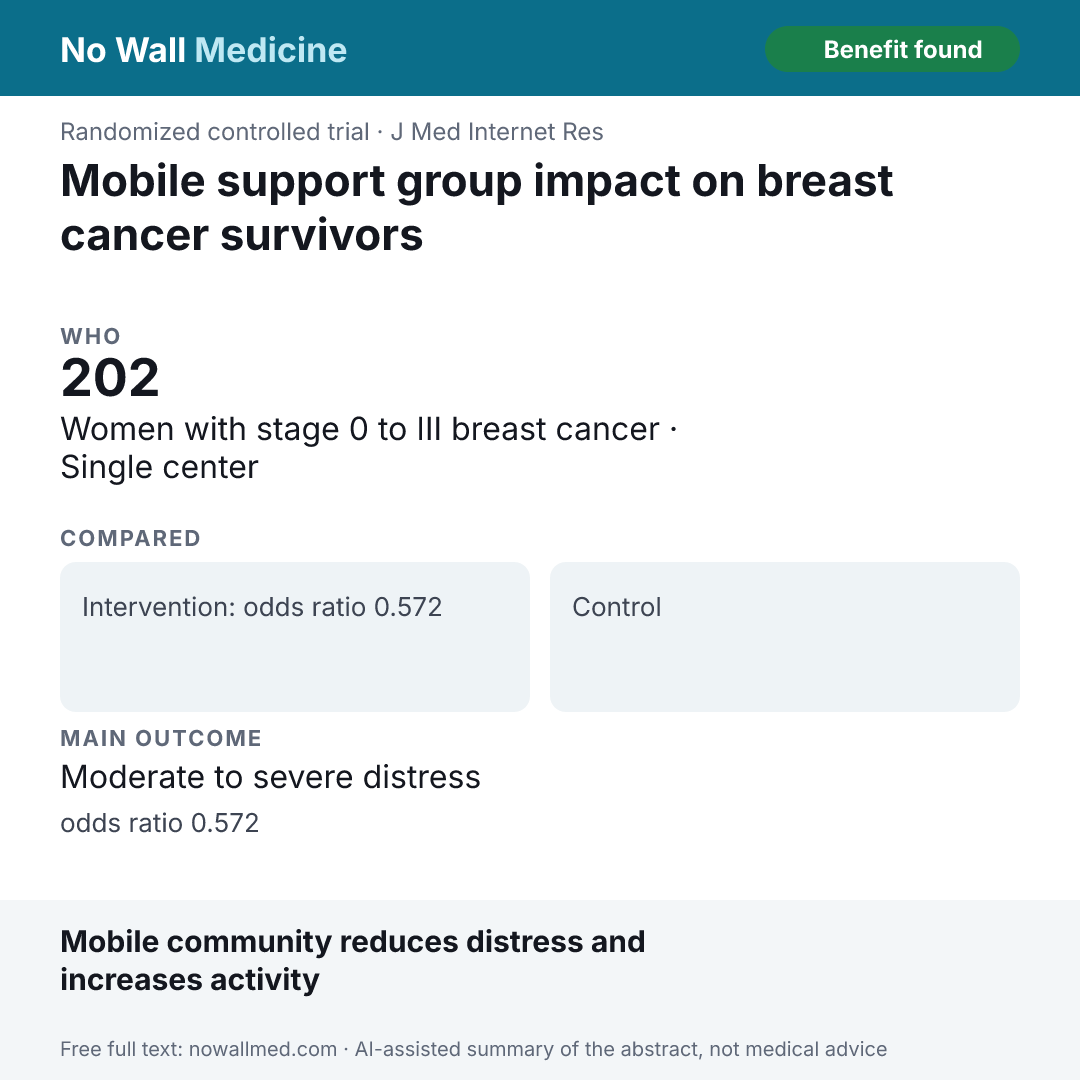
Comparing the Effect of Implanted Peroneal Nerve Stimulation and Ankle-Foot Orthosis on Gait Kinematics in Chronic Hemiparesis: A Randomized Controlled Trial
Randomized controlled trialNo clear difference
How do peroneal nerve stimulation and ankle-foot orthosis compare for gait kinematics in hemiparesis?
Who
27
Subjects with chronic hemiparesis
Compared
Ankle-foot orthosis: -60% ankle dorsiflexion speed at month 6
Semi-implanted selective functional electrical stimulation: non significant ankle dorsiflexion speed change
Main outcome
Gait kinematics
Bottom line: Both treatments similarly impacted gait kinematics, though ankle-foot orthosis showed deteriorated ankle dorsiflexion speed at six months.
J Rehabil Med · 2023-08-07 · Save PNG
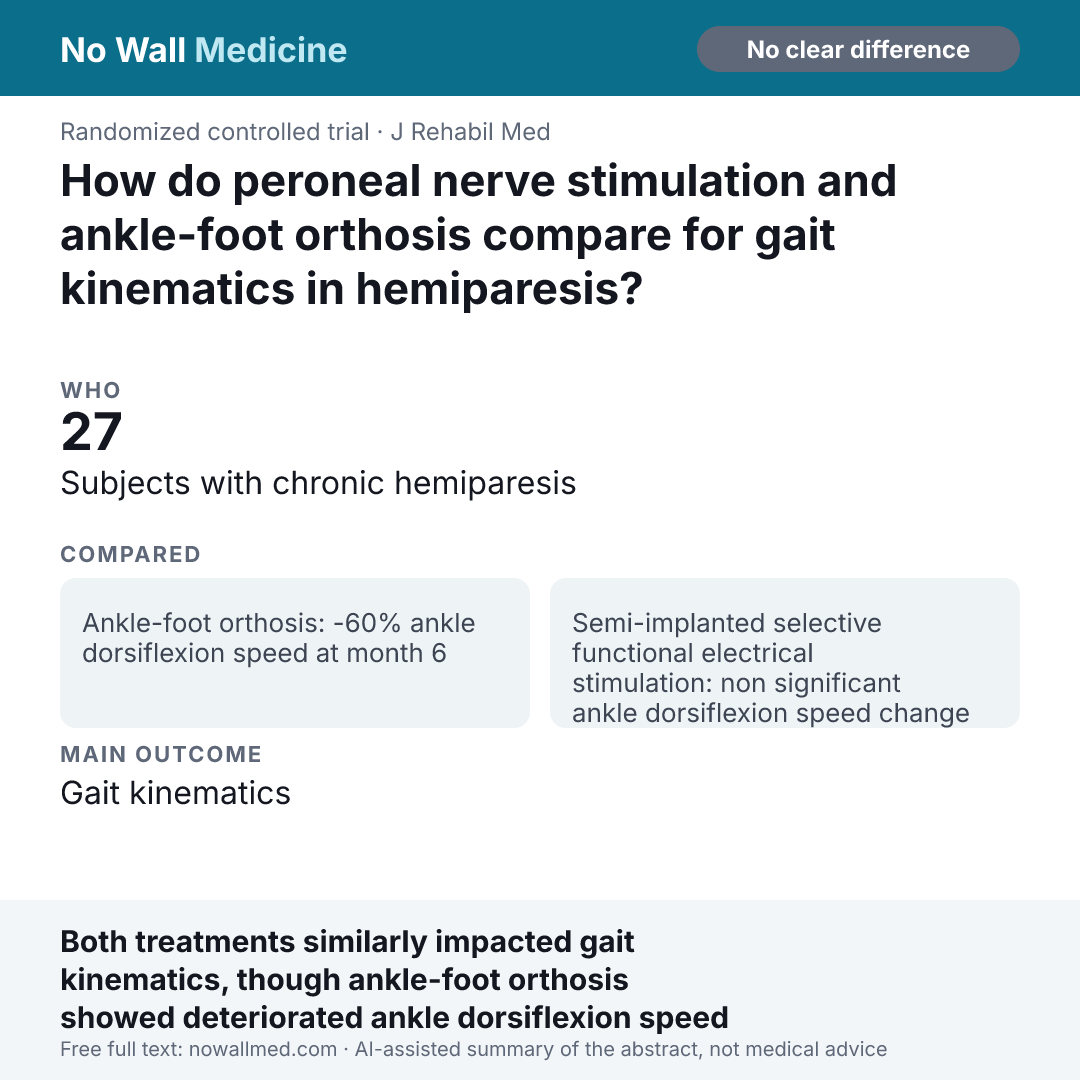
Endoscopic Ultrasound-Guided Biliary Drainage of First Intent With a Lumen-Apposing Metal Stent vs Endoscopic Retrograde Cholangiopancreatography in Malignant Distal Biliary Obstruction: A Multicenter Randomized Controlled Study (ELEMENT Trial)
Multicenter randomized controlled trialNo clear difference
Is lumen-apposing metal stent better than endoscopic retrograde cholangiopancreatography for malignant distal biliary obstruction?
Who
144
Patients with malignant distal biliary obstruction from peri-ampullary cancers · 10 Canadian and 1 French institutions
Compared
9.6%Lumen-apposing metal stent
9.9%Endoscopic retrograde cholangiopancreatography with metal stenting
Main outcome
Rate of stent dysfunction at 1 year
Bottom line: Lumen-apposing metal stent is an efficient and safe alternative to endoscopic retrograde cholangiopancreatography for malignant distal biliary obstruction.
Gastroenterology · 2023-08-06 · Save PNG
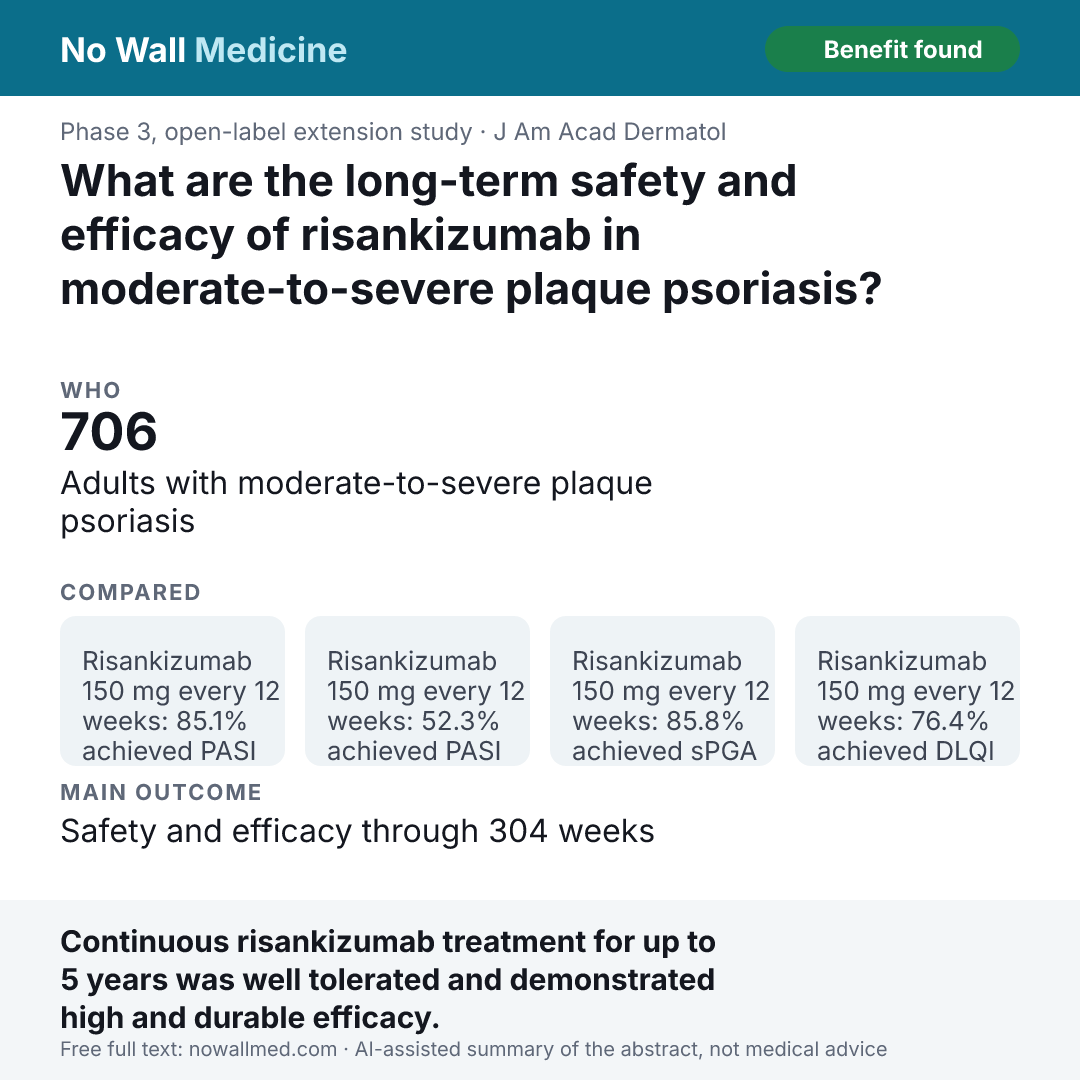
Long-term safety and efficacy of risankizumab for the treatment of moderate-to-severe plaque psoriasis: Interim analysis of the LIMMitless open-label extension trial up to 5 years of follow-up
Phase 3, open-label extension studyBenefit found
What are the long-term safety and efficacy of risankizumab in moderate-to-severe plaque psoriasis?
Who
706
Adults with moderate-to-severe plaque psoriasis
Compared
Risankizumab 150 mg every 12 weeks: 85.1% achieved PASI 90 at week 256
Risankizumab 150 mg every 12 weeks: 52.3% achieved PASI 100 at week 256
Risankizumab 150 mg every 12 weeks: 85.8% achieved sPGA 0/1 at week 256
Risankizumab 150 mg every 12 weeks: 76.4% achieved DLQI 0/1 at week 256
Main outcome
Safety and efficacy through 304 weeks
Bottom line: Continuous risankizumab treatment for up to 5 years was well tolerated and demonstrated high and durable efficacy.
Limitation: Open-label study with no placebo or active-comparator group.
J Am Acad Dermatol · 2023-08-06 · Save PNG
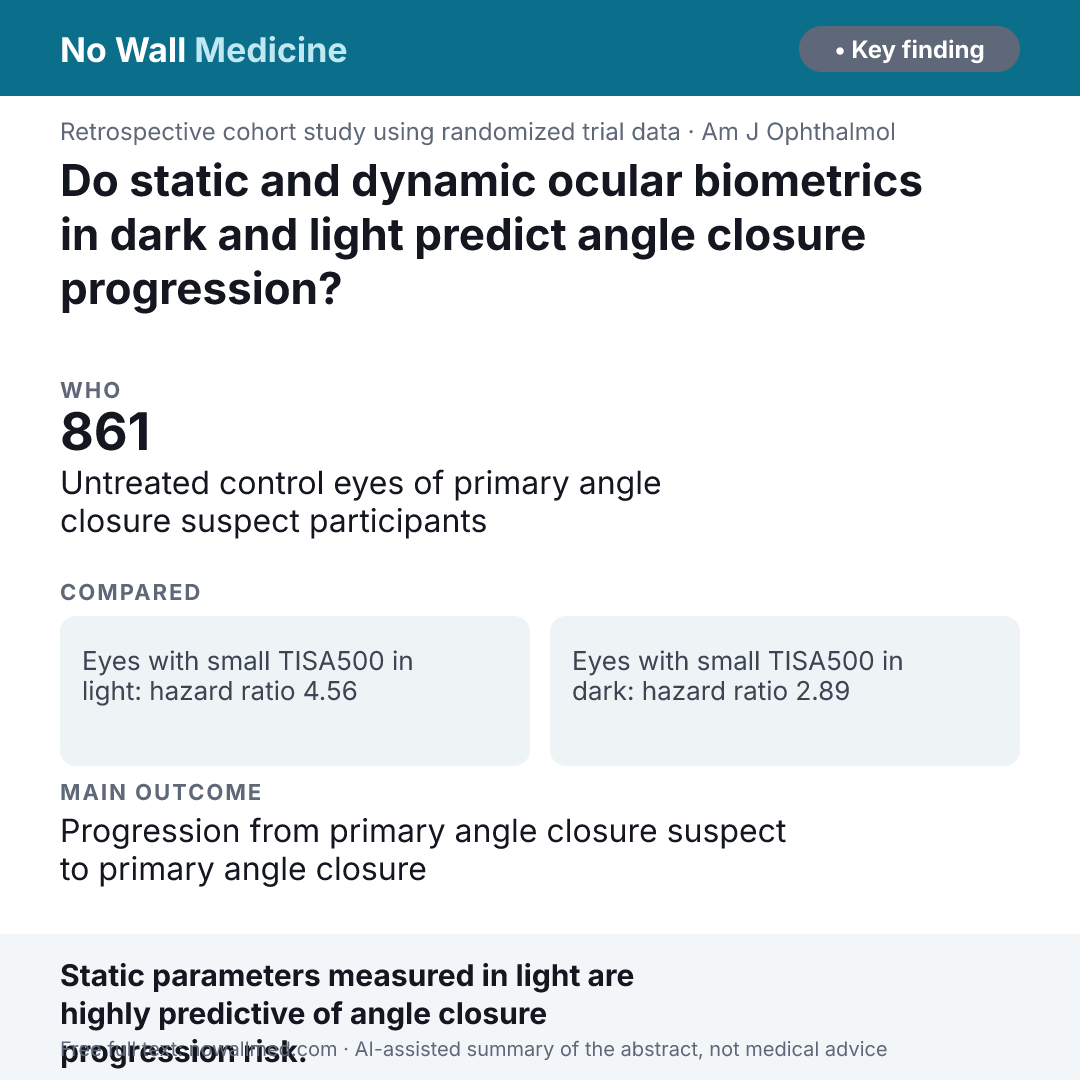
Role of Static and Dynamic Ocular Biometrics Measured in the Dark and Light as Risk Factors for Angle Closure Progression
Retrospective cohort study using randomized trial dataKey finding
Do static and dynamic ocular biometrics in dark and light predict angle closure progression?
Who
861
Untreated control eyes of primary angle closure suspect participants
Compared
Eyes with small TISA500 in light: hazard ratio 4.56
Eyes with small TISA500 in dark: hazard ratio 2.89
Main outcome
Progression from primary angle closure suspect to primary angle closure
Result: hazard ratio 1.28 per 0.01 mm2 for TISA500 in the light
Bottom line: Static parameters measured in light are highly predictive of angle closure progression risk.
Am J Ophthalmol · 2023-08-06 · Save PNG
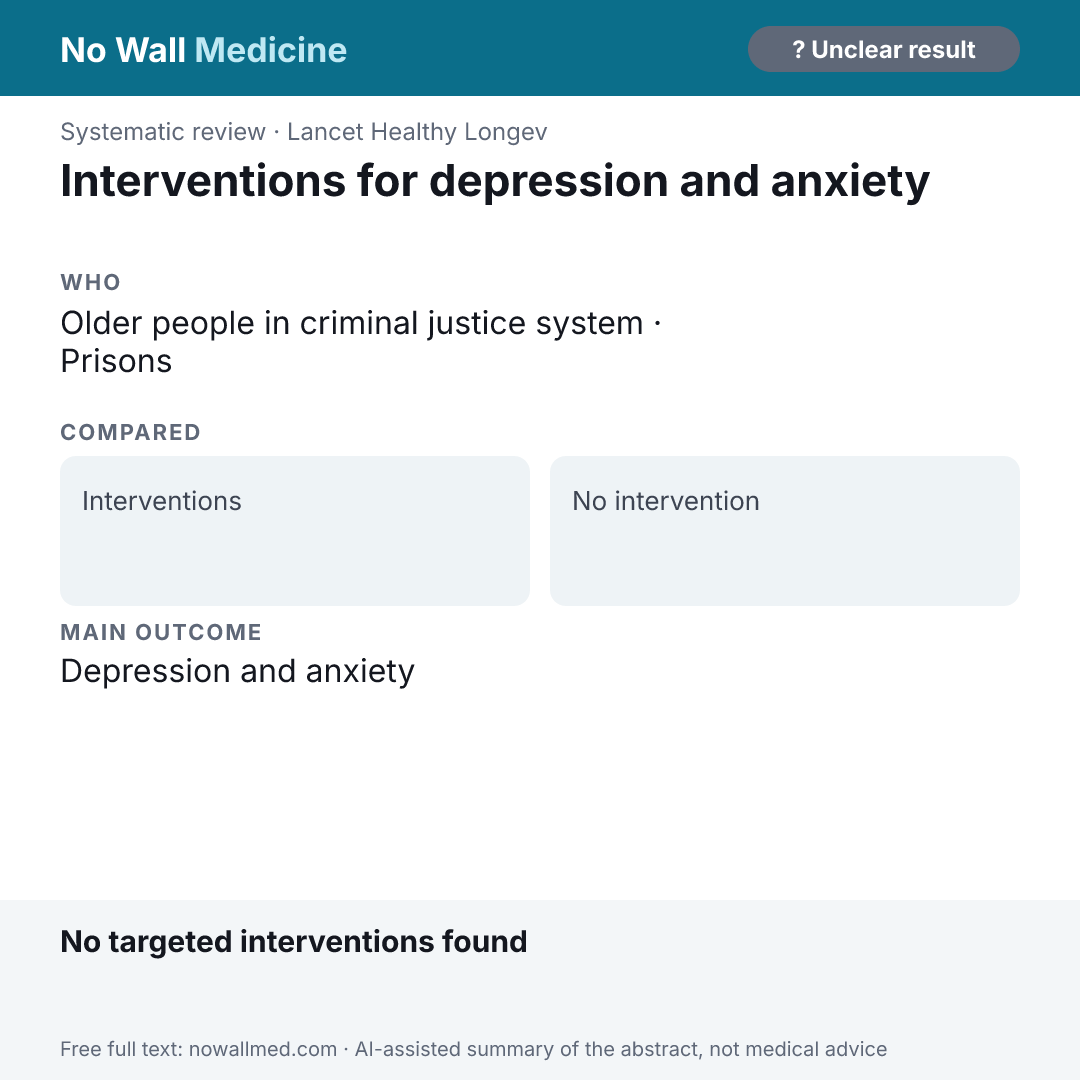
Effects of interventions on depression and anxiety in older people with physical health problems in the criminal justice system: a systematic review
Systematic reviewUnclear result
Interventions for depression and anxiety
Who
Older people in criminal justice system · Prisons
Compared
Interventions
No intervention
Main outcome
Depression and anxiety
Bottom line: No targeted interventions found
Lancet Healthy Longev · 2023-08-06 · Save PNG
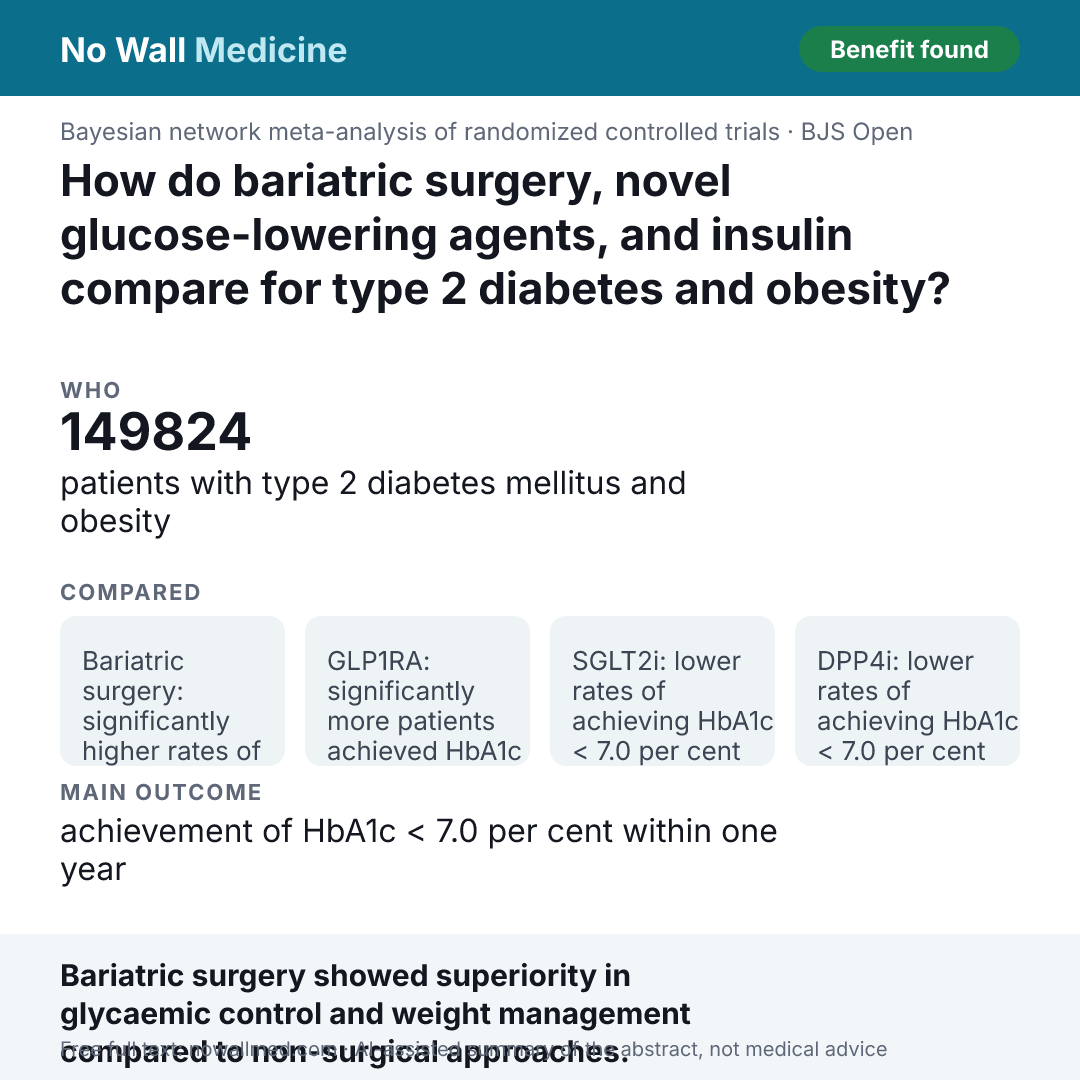
Bariatric surgery, novel glucose-lowering agents, and insulin for type 2 diabetes and obesity: Bayesian network meta-analysis of randomized controlled trials
Bayesian network meta-analysis of randomized controlled trialsBenefit found
How do bariatric surgery, novel glucose-lowering agents, and insulin compare for type 2 diabetes and obesity?
Who
149824
patients with type 2 diabetes mellitus and obesity
Compared
Bariatric surgery: significantly higher rates of achieving HbA1c < 7.0 per cent
GLP1RA: significantly more patients achieved HbA1c < 7.0 per cent
SGLT2i: lower rates of achieving HbA1c < 7.0 per cent
DPP4i: lower rates of achieving HbA1c < 7.0 per cent
Main outcome
achievement of HbA1c < 7.0 per cent within one year
Bottom line: Bariatric surgery showed superiority in glycaemic control and weight management compared to non-surgical approaches.
BJS Open · 2023-08-06 · Save PNG