Visual abstracts
New randomized trials and meta-analyses from leading journals at a glance: who was studied, what was compared, and what was found. Every paper is free to read in full.
All specialtiesCardiology 4877Oncology 4138Gastroenterology & Hepatology 1942Infectious Disease 3837Neurology 1905Psychiatry & Mental Health 2273Pulmonology 2143Critical Care 1365Endocrinology & Diabetes 2580Pediatrics 2980Surgery 2559Orthopedics & Sports Medicine 931Neurosurgery 537Cardiothoracic & Vascular Surgery 674Plastic & Reconstructive Surgery 591Nephrology 1133Rheumatology 823Hematology 1109Dermatology 621Ophthalmology 543Obstetrics & Gynecology 1686Public & Global Health 1058Radiology & Imaging 648Anesthesiology 986Urology 764ENT (Otolaryngology) 503Emergency Medicine 511Allergy & Immunology 313Geriatrics 981Family Medicine & Primary Care 562Medical Genetics & Genomics 676Pathology & Laboratory Medicine 159Physical Medicine & Rehabilitation 757Palliative Care 444Nutrition 1588Digital Health & AI 2201General Medicine 321
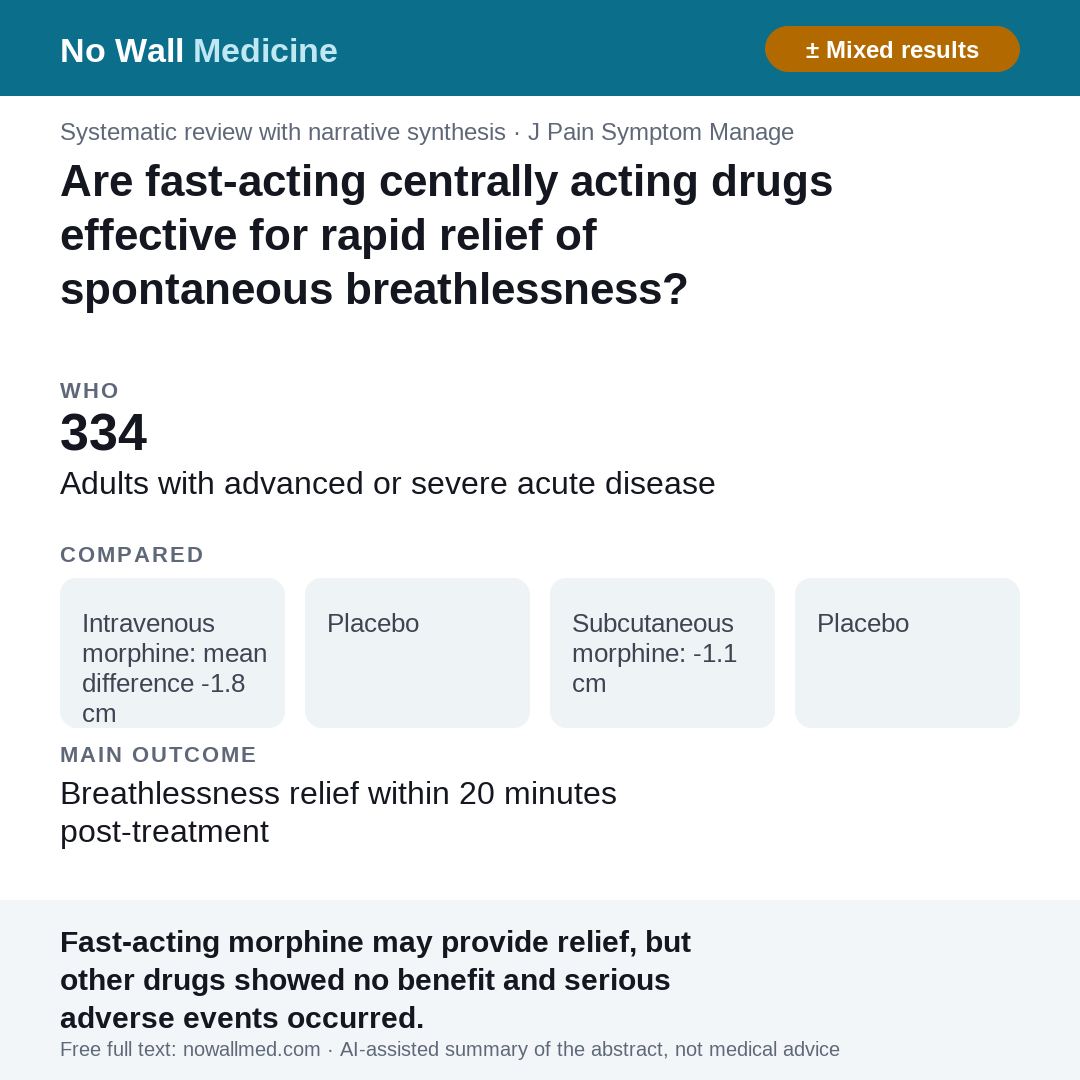
Rapid Relief of Breathlessness With Fast-Acting Opioids and Benzodiazepines: A Systematic Review
Systematic review with narrative synthesisMixed results
Are fast-acting centrally acting drugs effective for rapid relief of spontaneous breathlessness?
Who
334
Adults with advanced or severe acute disease
Compared
Intravenous morphine: mean difference -1.8 cm
Placebo
Subcutaneous morphine: -1.1 cm
Placebo
Main outcome
Breathlessness relief within 20 minutes post-treatment
Result: mean difference -1.8 cm (95% CI -3.0 to -0.6) and -1.1 cm (95% CI -1.9 to -0.3)
Bottom line: Fast-acting morphine may provide relief, but other drugs showed no benefit and serious adverse events occurred.
Limitation: Mostly small crossover trials, varying route, dose, and setting; limited adverse-event monitoring.
J Pain Symptom Manage · 2026-05-15Download image
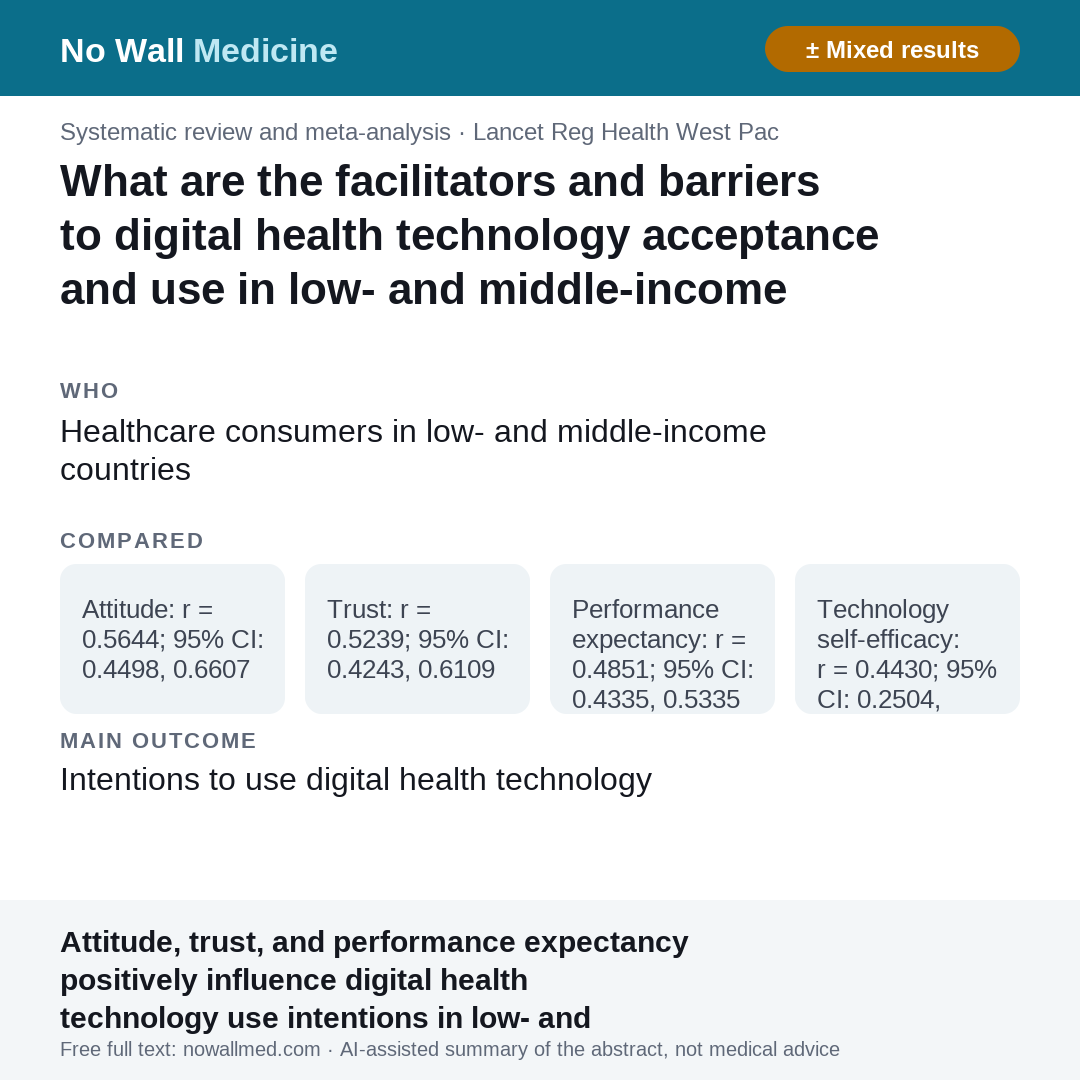
Healthcare consumers' acceptance and use of digital health technology in LMICs and the role of self-efficacy and facilitating conditions: a systematic review and meta-analysis
Systematic review and meta-analysisMixed results
What are the facilitators and barriers to digital health technology acceptance and use in low- and middle-income countries?
Who
78
Healthcare consumers in low- and middle-income countries
Compared
Attitude: r = 0.5644; 95% CI: 0.4498, 0.6607
Trust: r = 0.5239; 95% CI: 0.4243, 0.6109
Performance expectancy: r = 0.4851; 95% CI: 0.4335, 0.5335
Technology self-efficacy: r = 0.4430; 95% CI: 0.2504, 0.6018
Main outcome
Intentions to use digital health technology
Bottom line: Attitude, trust, and performance expectancy positively influence digital health technology use intentions in low- and middle-income countries.
Lancet Reg Health West Pac · 2026-05-15Download image
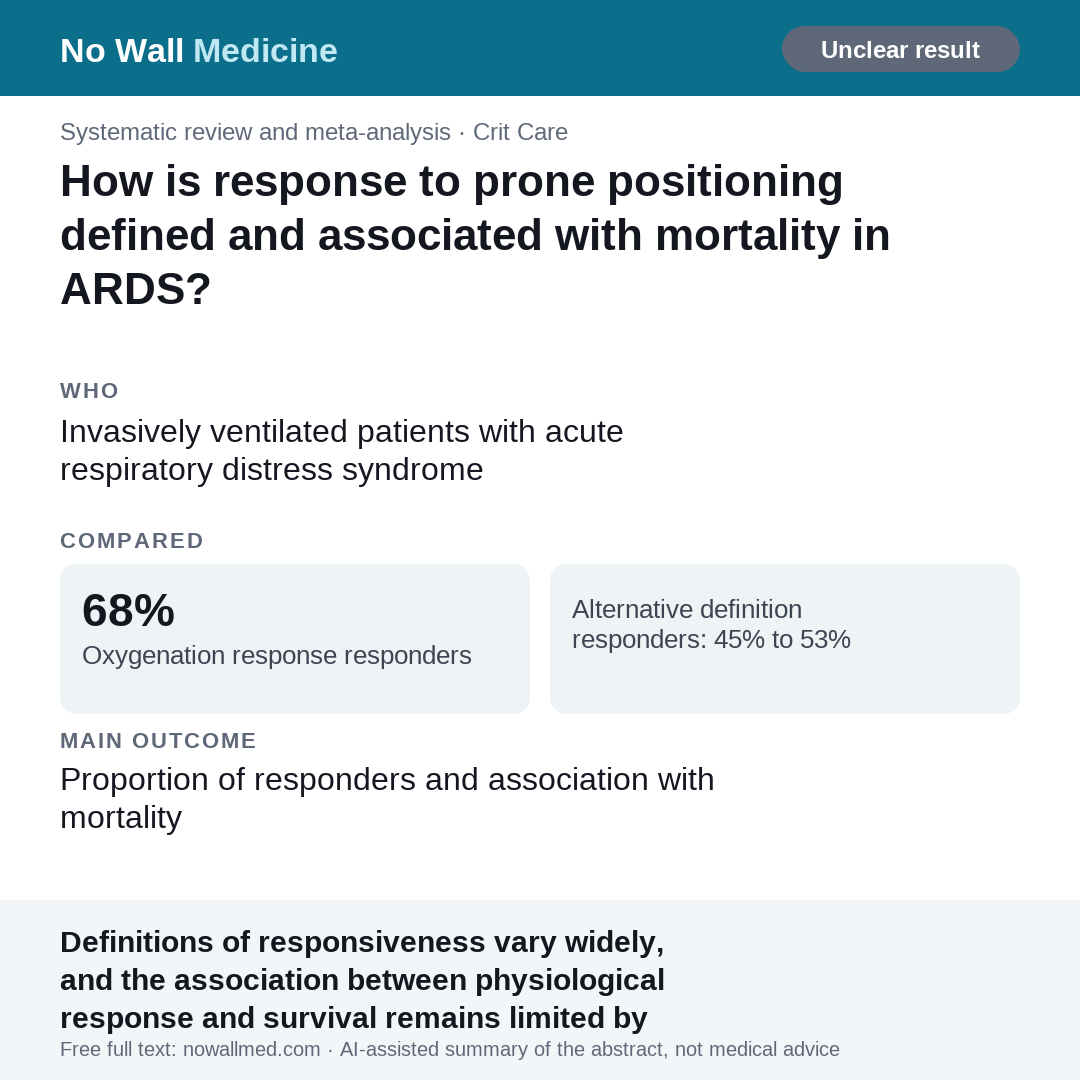
Definition and prognostic value of response to prone positioning in ARDS: a systematic review and meta-analysis
Systematic review and meta-analysisUnclear result
How is response to prone positioning defined and associated with mortality in ARDS?
Who
Invasively ventilated patients with acute respiratory distress syndrome
Compared
68%Oxygenation response responders (95% C.I. 63-72%)
Alternative definition responders: 45% to 53%
Main outcome
Proportion of responders and association with mortality
Result: OR 0.41 (95% CI 0.25-0.68)
Bottom line: Definitions of responsiveness vary widely, and the association between physiological response and survival remains limited by bias and heterogeneity.
Limitation: High risk of bias, residual confounding, and substantial between-study heterogeneity.
Crit Care · 2026-05-15Download image
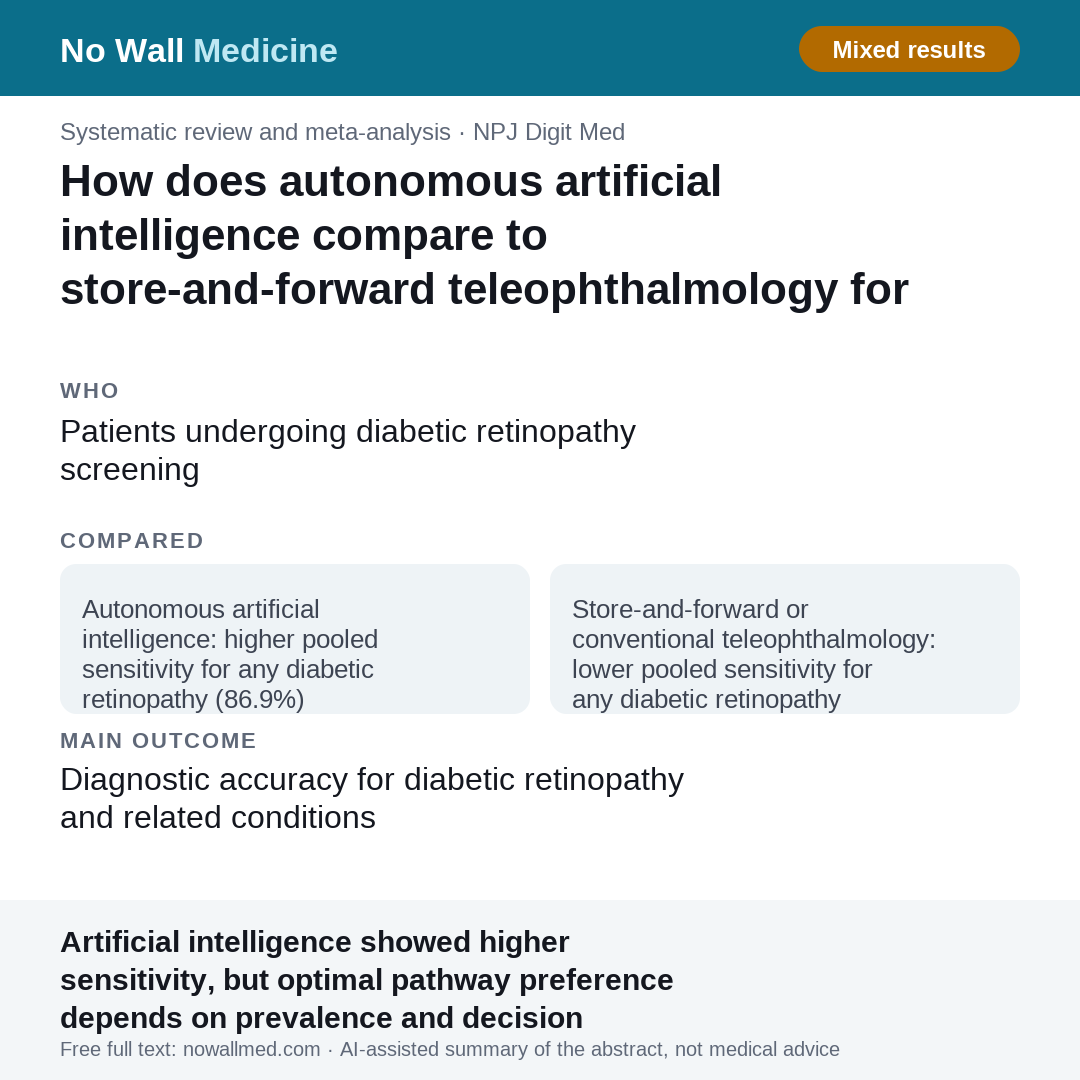
Clinical setting-dependent diagnostic accuracy of artificial intelligence and store-and-forward diabetic retinopathy screening: a systematic review and meta-analysis
Systematic review and meta-analysisMixed results
How does autonomous artificial intelligence compare to store-and-forward teleophthalmology for diabetic retinopathy screening?
Who
Patients undergoing diabetic retinopathy screening
Compared
Autonomous artificial intelligence: higher pooled sensitivity for any diabetic retinopathy (86.9%)
Store-and-forward or conventional teleophthalmology: lower pooled sensitivity for any diabetic retinopathy (80.9%)
Main outcome
Diagnostic accuracy for diabetic retinopathy and related conditions
Bottom line: Artificial intelligence showed higher sensitivity, but optimal pathway preference depends on prevalence and decision thresholds.
NPJ Digit Med · 2026-05-15Download image
Concerns of Using Large Language Models in Health Care Research and Practice: Umbrella Review
Umbrella reviewMixed results
What are the concerns of health care professionals and researchers regarding large language models?
Who
42
Researchers and clinicians in various medical specialties
Compared
Technical capability
Ethical, legal, and societal
Costs
Main outcome
Commonly raised concerns regarding large language model use
Bottom line: Concerns include technical capability, ethical, legal, and societal issues, and costs regarding large language model use in health care.
Limitation: The included reviews were of very poor quality and overlap between primary studies could not be determined.
J Med Internet Res · 2026-05-15Download image

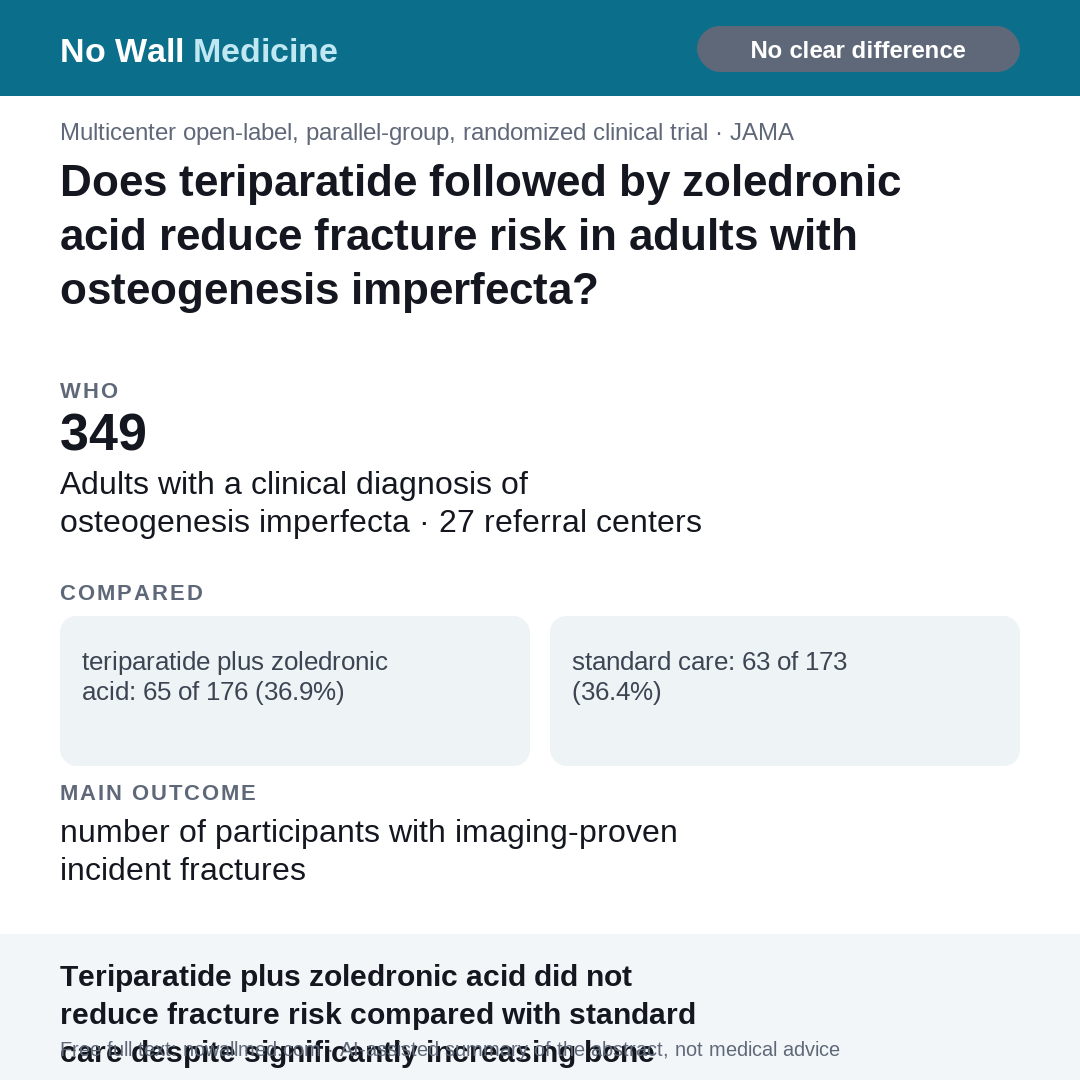
Teriparatide Plus Zoledronic Acid for Osteogenesis Imperfecta: A Randomized Clinical Trial
Multicenter open-label, parallel-group, randomized clinical trialNo clear difference
Does teriparatide followed by zoledronic acid reduce fracture risk in adults with osteogenesis imperfecta?
Who
349
Adults with a clinical diagnosis of osteogenesis imperfecta · 27 referral centers
Compared
teriparatide plus zoledronic acid: 65 of 176 (36.9%)
standard care: 63 of 173 (36.4%)
Main outcome
number of participants with imaging-proven incident fractures
Result: hazard ratio 0.97 (95% CI 0.68 to 1.38)
Bottom line: Teriparatide plus zoledronic acid did not reduce fracture risk compared with standard care despite significantly increasing bone mineral density.
JAMA · 2026-05-14Download image
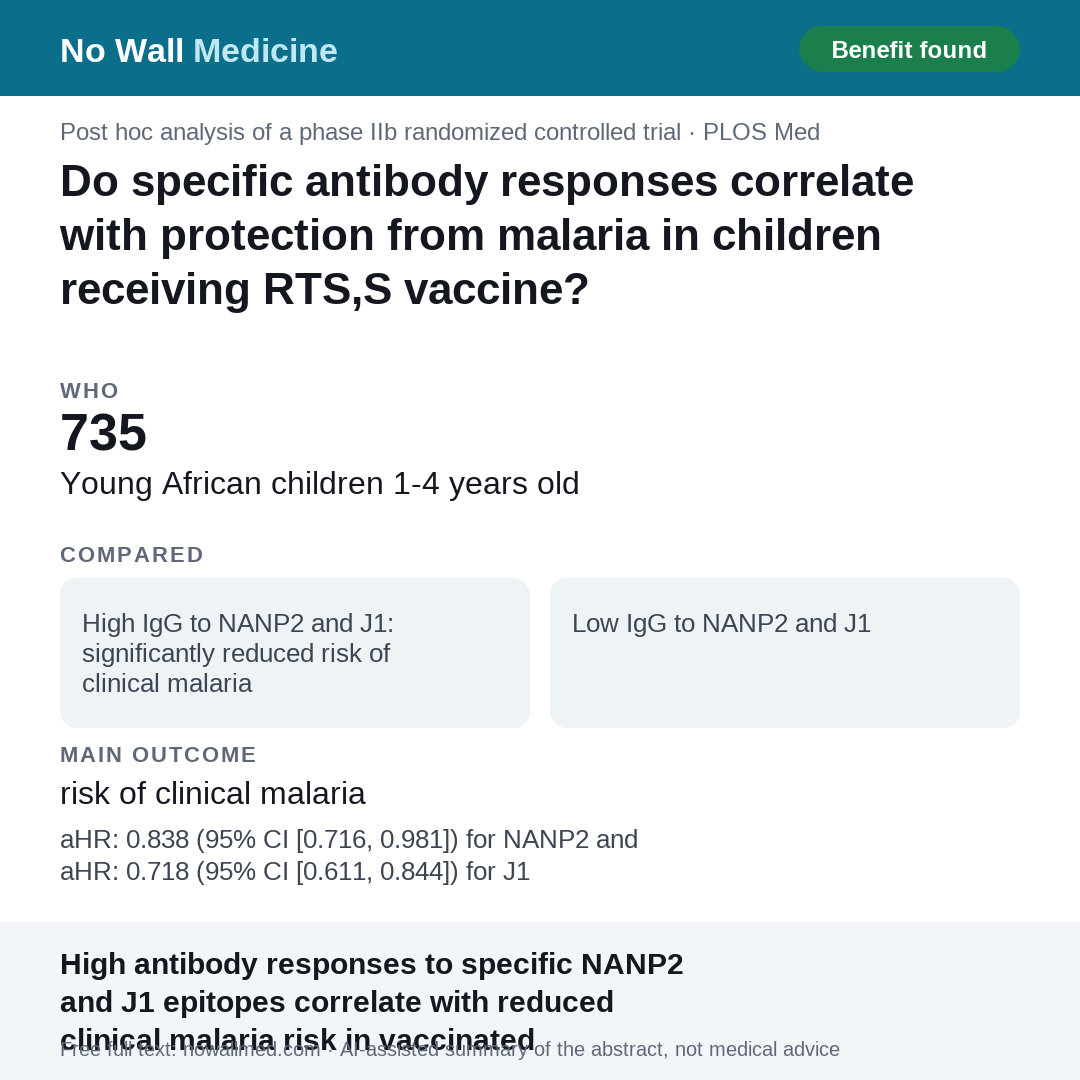
Antibody fine specificity correlates with protection from malaria for the RTS,S vaccine in young African children: A post hoc analysis of a phase IIb randomised controlled trial
Post hoc analysis of a phase IIb randomized controlled trialBenefit found
Do specific antibody responses correlate with protection from malaria in children receiving RTS,S vaccine?
Who
735
Young African children 1-4 years old
Compared
High IgG to NANP2 and J1: significantly reduced risk of clinical malaria
Low IgG to NANP2 and J1
Main outcome
risk of clinical malaria
Result: aHR: 0.838 (95% CI [0.716, 0.981]) for NANP2 and aHR: 0.718 (95% CI [0.611, 0.844]) for J1
Bottom line: High antibody responses to specific NANP2 and J1 epitopes correlate with reduced clinical malaria risk in vaccinated children.
PLOS Med · 2026-05-14Download image
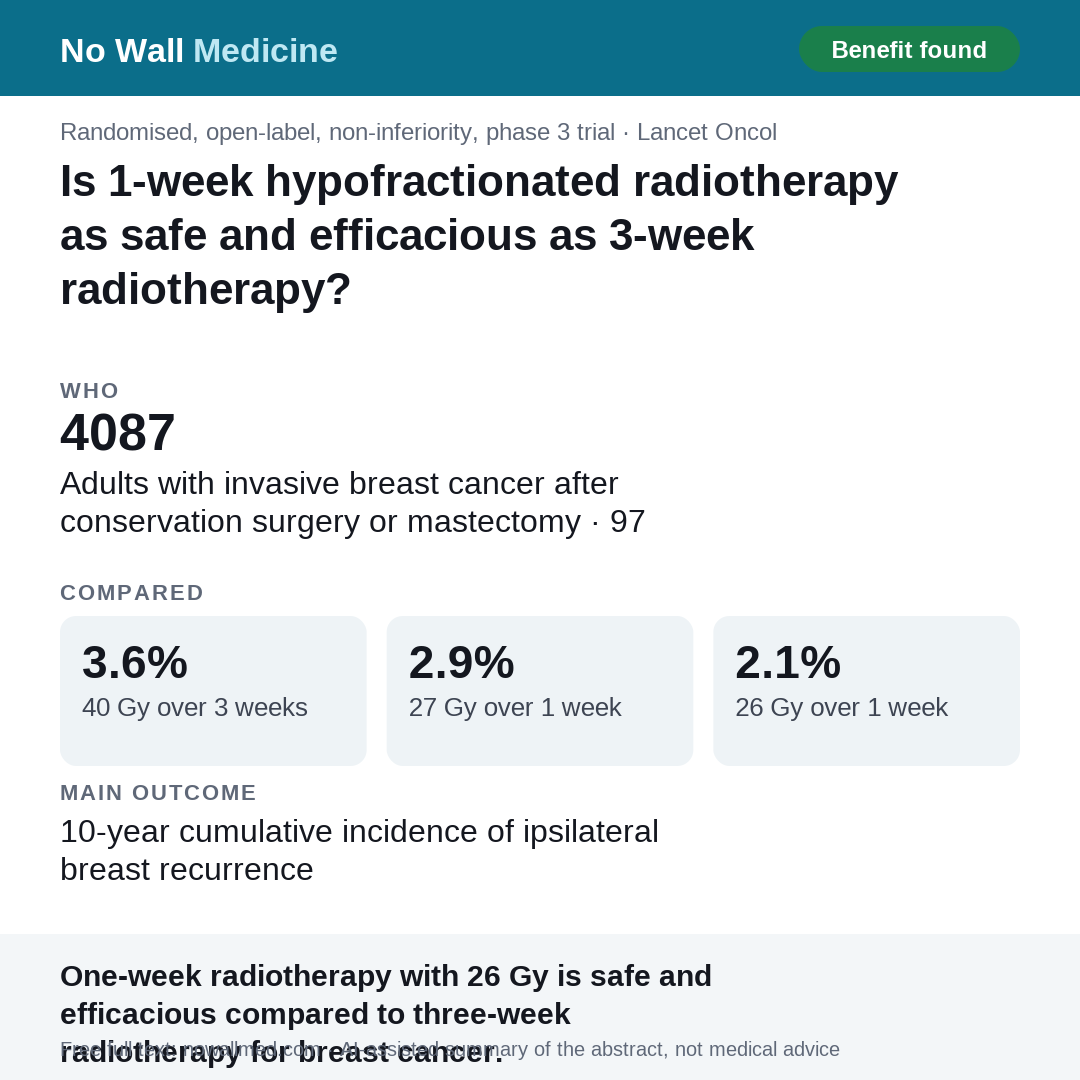
Hypofractionated breast radiotherapy for 1 week versus 3 weeks (FAST-Forward): 10-year efficacy and late normal tissue effects from a multicentre, open-label, non-inferiority, phase 3, randomised controlled trial and 5-year efficacy results from a randomised axillary substudy
Randomised, open-label, non-inferiority, phase 3 trialBenefit found
Is 1-week hypofractionated radiotherapy as safe and efficacious as 3-week radiotherapy?
Who
4087
Adults with invasive breast cancer after conservation surgery or mastectomy · 97 hospitals in the United Kingdom
Compared
3.6%40 Gy over 3 weeks (95% CI 2.7-4.9)
2.9%27 Gy over 1 week (2.1-4.0)
2.1%26 Gy over 1 week (1.5-3.1)
Main outcome
10-year cumulative incidence of ipsilateral breast recurrence
Bottom line: One-week radiotherapy with 26 Gy is safe and efficacious compared to three-week radiotherapy for breast cancer.
Limitation: Sample size limits precision of estimation for the axillary nodal radiotherapy subgroup.
Funded by: UK National Institute for Health and Care Research
Lancet Oncol · 2026-05-14Download image
Hepatocellular carcinoma attributable to hepatitis B, hepatitis C and other risk factors at global, regional and national levels: an updated systematic review and meta-analysis
Systematic review and meta-analysisBenefit found
What is the global, regional, and national hepatocellular carcinoma burden attributable to hepatitis B and C?
Who
Patients with hepatocellular carcinoma in 81 countries or territories · 81 countries or territories
Compared
Hepatitis B virus: 52% attributable fraction
Hepatitis C virus: 21% attributable fraction
Main outcome
Hepatocellular carcinoma attributable fraction and age-standardised incidence rates
Bottom line: Hepatitis B and C viruses contribute to approximately three-quarters of the global hepatocellular carcinoma burden.
Gut · 2026-05-14Download image

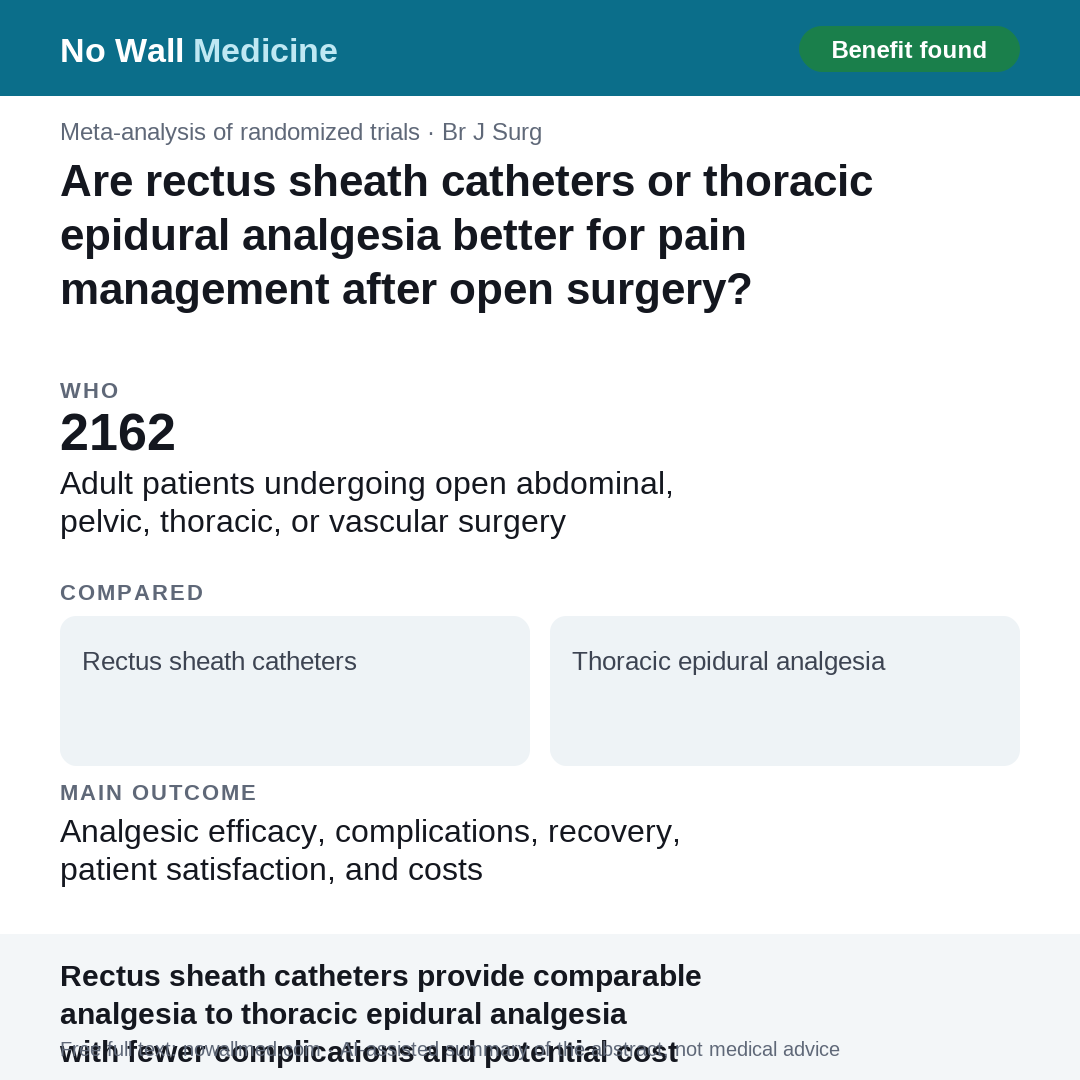
Rectus sheath catheters versus thoracic epidural analgesia for pain management after open surgery: systematic review and meta-analysis
Meta-analysis of randomized trialsBenefit found
Are rectus sheath catheters or thoracic epidural analgesia better for pain management after open surgery?
Who
2162
Adult patients undergoing open abdominal, pelvic, thoracic, or vascular surgery
Compared
Rectus sheath catheters
Thoracic epidural analgesia
Main outcome
Analgesic efficacy, complications, recovery, patient satisfaction, and costs
Result: standardized mean difference -0.35 (95% c.i. -2.01 to 1.32) for postoperative pain
Bottom line: Rectus sheath catheters provide comparable analgesia to thoracic epidural analgesia with fewer complications and potential cost savings.
Br J Surg · 2026-05-14Download image
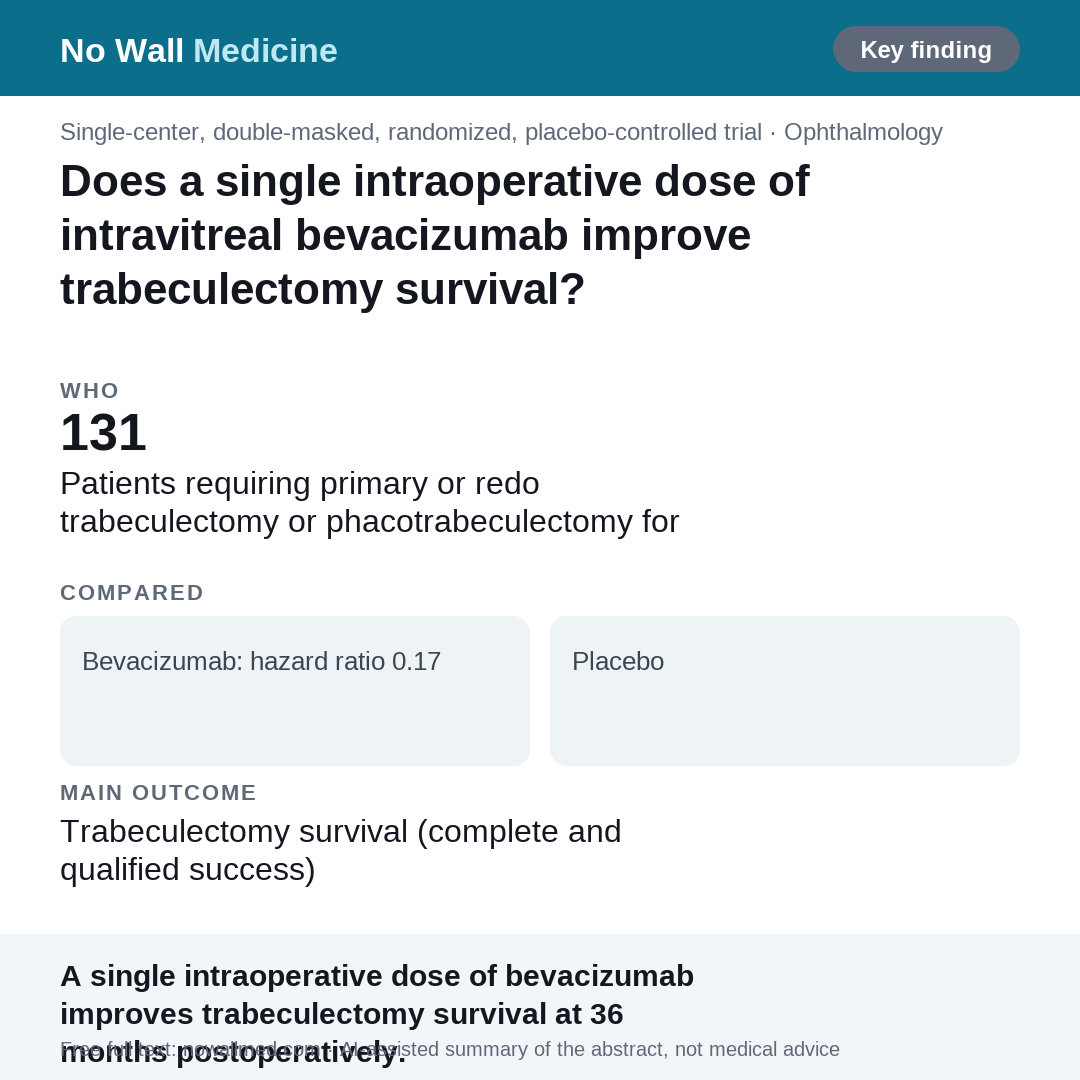
Intravitreal Bevacizumab Improves Trabeculectomy Survival at 3 Years: Long-term Follow-up from the Bevacizumab in Trabeculectomy Study
Single-center, double-masked, randomized, placebo-controlled trialBenefit found
Does a single intraoperative dose of intravitreal bevacizumab improve trabeculectomy survival?
Who
131
Patients requiring primary or redo trabeculectomy or phacotrabeculectomy for progressing glaucoma · Single ophthalmic outpatient referral center
Compared
Bevacizumab: hazard ratio 0.17
Placebo
Main outcome
Trabeculectomy survival (complete and qualified success)
Result: hazard ratio 0.17 (P = 0.002)
Bottom line: A single intraoperative dose of bevacizumab improves trabeculectomy survival at 36 months postoperatively.
Ophthalmology · 2026-05-14Download image
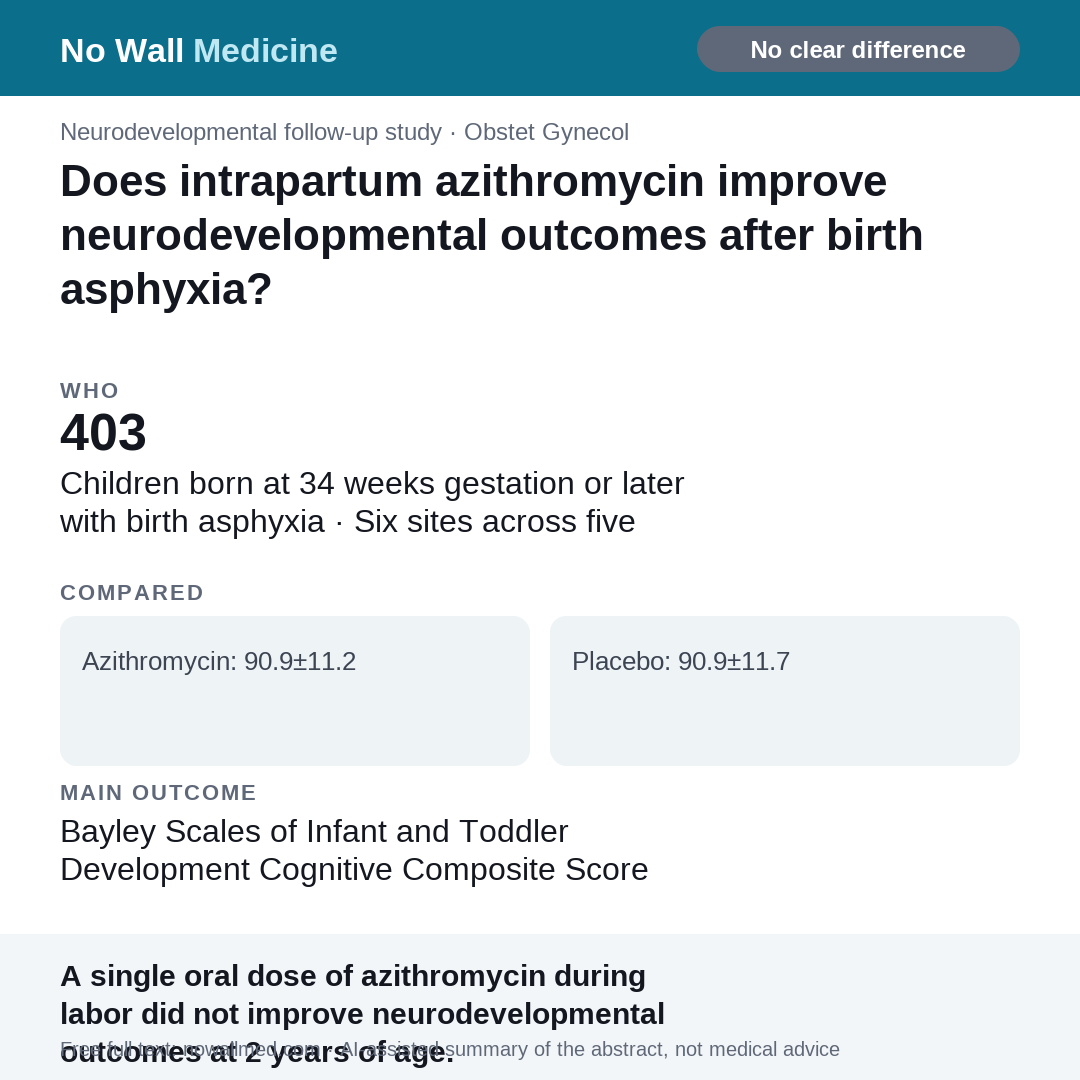
Neurodevelopmental Pediatric Follow-Up After the Azithromycin Prevention in Labor Use Study
Neurodevelopmental follow-up studyNo clear difference
Does intrapartum azithromycin improve neurodevelopmental outcomes after birth asphyxia?
Who
403
Children born at 34 weeks gestation or later with birth asphyxia · Six sites across five countries
Compared
Azithromycin: 90.9±11.2
Placebo: 90.9±11.7
Main outcome
Bayley Scales of Infant and Toddler Development Cognitive Composite Score
Result: mean difference: 0.29; 95% CI, -1.77 to 2.34
Bottom line: A single oral dose of azithromycin during labor did not improve neurodevelopmental outcomes at 2 years of age.
Obstet Gynecol · 2026-05-14Download image
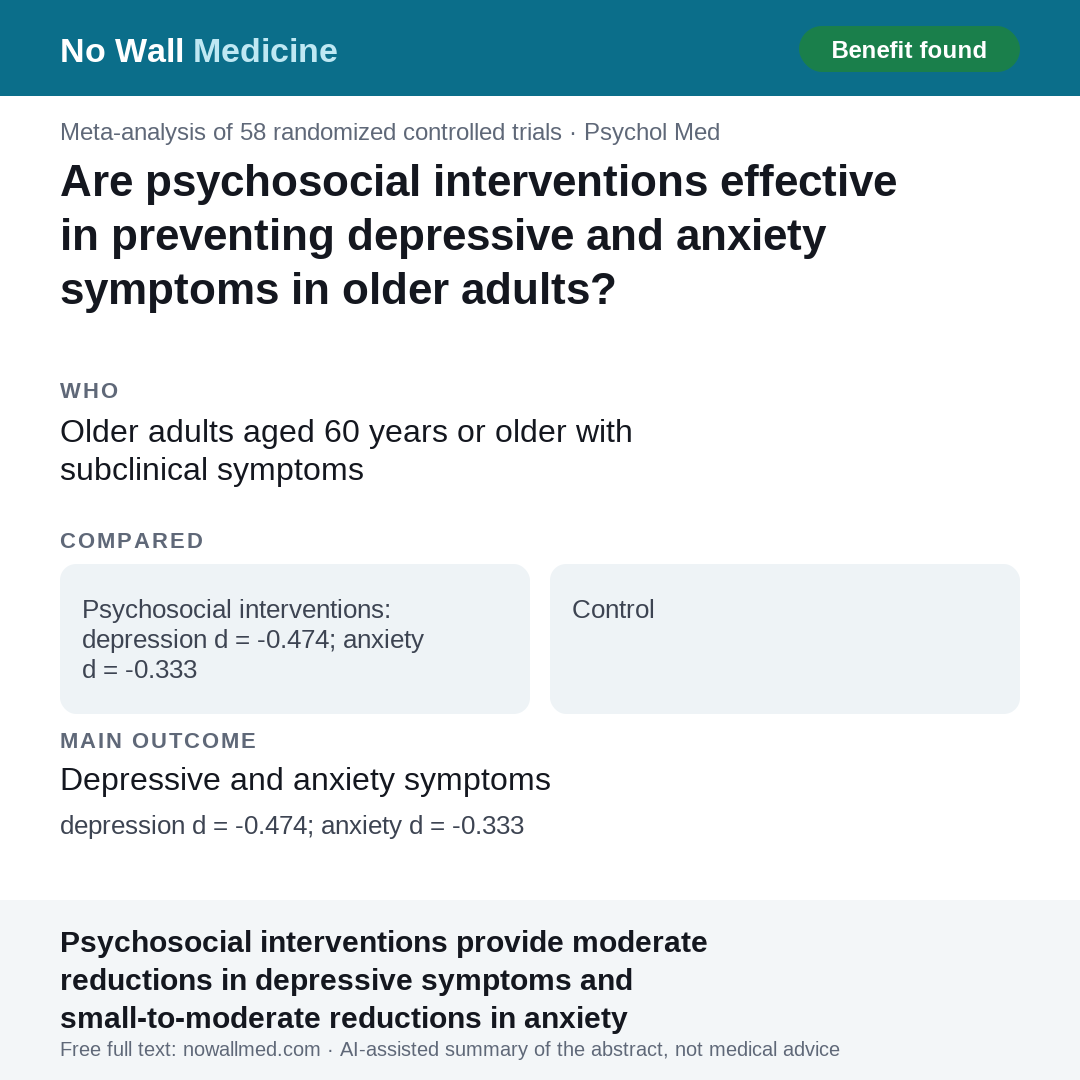
A meta-analysis of preventive psychosocial interventions against depressive and anxiety symptoms in older adults
Meta-analysis of 58 randomized controlled trialsBenefit found
Are psychosocial interventions effective in preventing depressive and anxiety symptoms in older adults?
Who
Older adults aged 60 years or older with subclinical symptoms
Compared
Psychosocial interventions: depression d = -0.474; anxiety d = -0.333
Control
Main outcome
Depressive and anxiety symptoms
Result: depression d = -0.474; anxiety d = -0.333
Bottom line: Psychosocial interventions provide moderate reductions in depressive symptoms and small-to-moderate reductions in anxiety symptoms in older adults.
Psychol Med · 2026-05-14Download image
Shared genetic architecture of gray matter deficits in schizophrenia and bipolar disorder: evidence from structural neuroimaging-genetic analyses
Meta-analysis and genome-wide association studiesBenefit found
What are the shared genetic and neuroanatomical mechanisms of gray matter deficits in schizophrenia and bipolar disorder?
Who
Patients with schizophrenia and bipolar disorder · UK Biobank
Compared
Schizophrenia and bipolar disorder patients: consistent overlapping gray matter volume reductions
Controls
Main outcome
Gray matter volume alterations and genetic associations
Bottom line: Schizophrenia and bipolar disorder share overlapping gray matter volume reductions linked to specific genetic risk and pleiotropic single nucleotide polymorphisms.
Psychol Med · 2026-05-14Download image

The Effect of Peribulbar Block Volume on Intraocular Pressure Change: A Randomized Prospective Study
Prospective, controlled, 1:1 randomized, interventional studyBenefit found
Does peribulbar block volume affect intraocular pressure change and anesthesia effect?
Who
50
Ambulatory patients aged 18 to 79 undergoing planned intraocular surgery · Two ambulatory surgical centers
Compared
4 mL block volume
7 mL block volume: significantly higher surgeon satisfaction score
Main outcome
Intraocular pressure changes and surgeon anesthesia satisfaction rating
Bottom line: A 7 mL peribulbar block is safe and provides higher surgeon satisfaction than 4 mL.
Am J Ophthalmol · 2026-05-14Download image

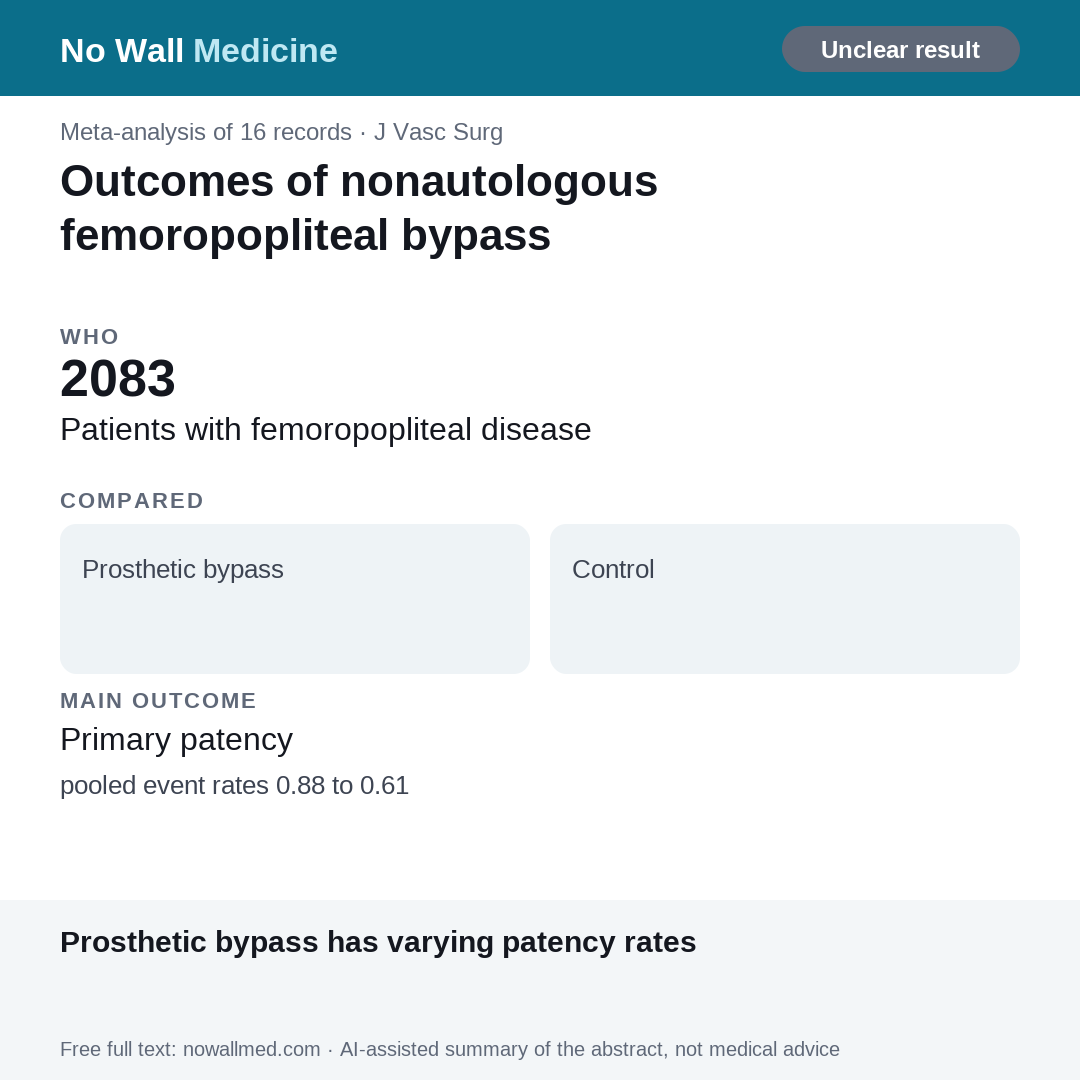
Contemporary systematic review and meta-analysis of outcomes associated with femoropopliteal above-the-knee nonautologous surgical bypass
Meta-analysis of 16 recordsUnclear result
Outcomes of nonautologous femoropopliteal bypass
Who
2083
Patients with femoropopliteal disease
Compared
Prosthetic bypass
Control
Main outcome
Primary patency
Result: pooled event rates 0.88 to 0.61
Bottom line: Prosthetic bypass has varying patency rates
J Vasc Surg · 2026-05-14Download image
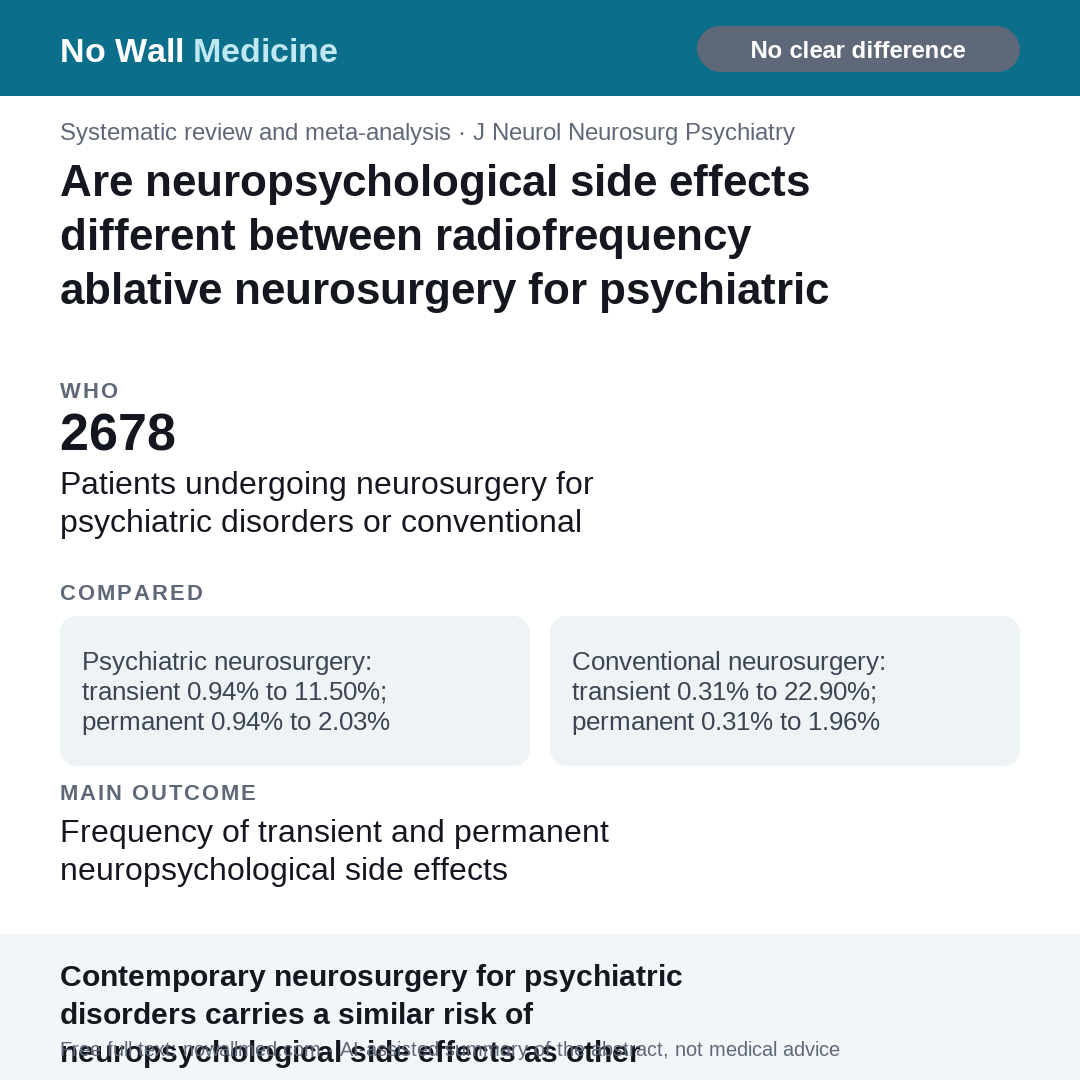
Comparison of neuropsychological side effects between contemporary radiofrequency ablative neurosurgery for psychiatric disorders and conventional neurosurgical procedures: systematic review and meta-analysis
Systematic review and meta-analysisNo clear difference
Are neuropsychological side effects different between radiofrequency ablative neurosurgery for psychiatric disorders and conventional neurosurgery?
Who
2678
Patients undergoing neurosurgery for psychiatric disorders or conventional neurosurgical procedures
Compared
Psychiatric neurosurgery: transient 0.94% to 11.50%; permanent 0.94% to 2.03%
Conventional neurosurgery: transient 0.31% to 22.90%; permanent 0.31% to 1.96%
Main outcome
Frequency of transient and permanent neuropsychological side effects
Bottom line: Contemporary neurosurgery for psychiatric disorders carries a similar risk of neuropsychological side effects as other conventional neurosurgical procedures.
J Neurol Neurosurg Psychiatry · 2026-05-14Download image
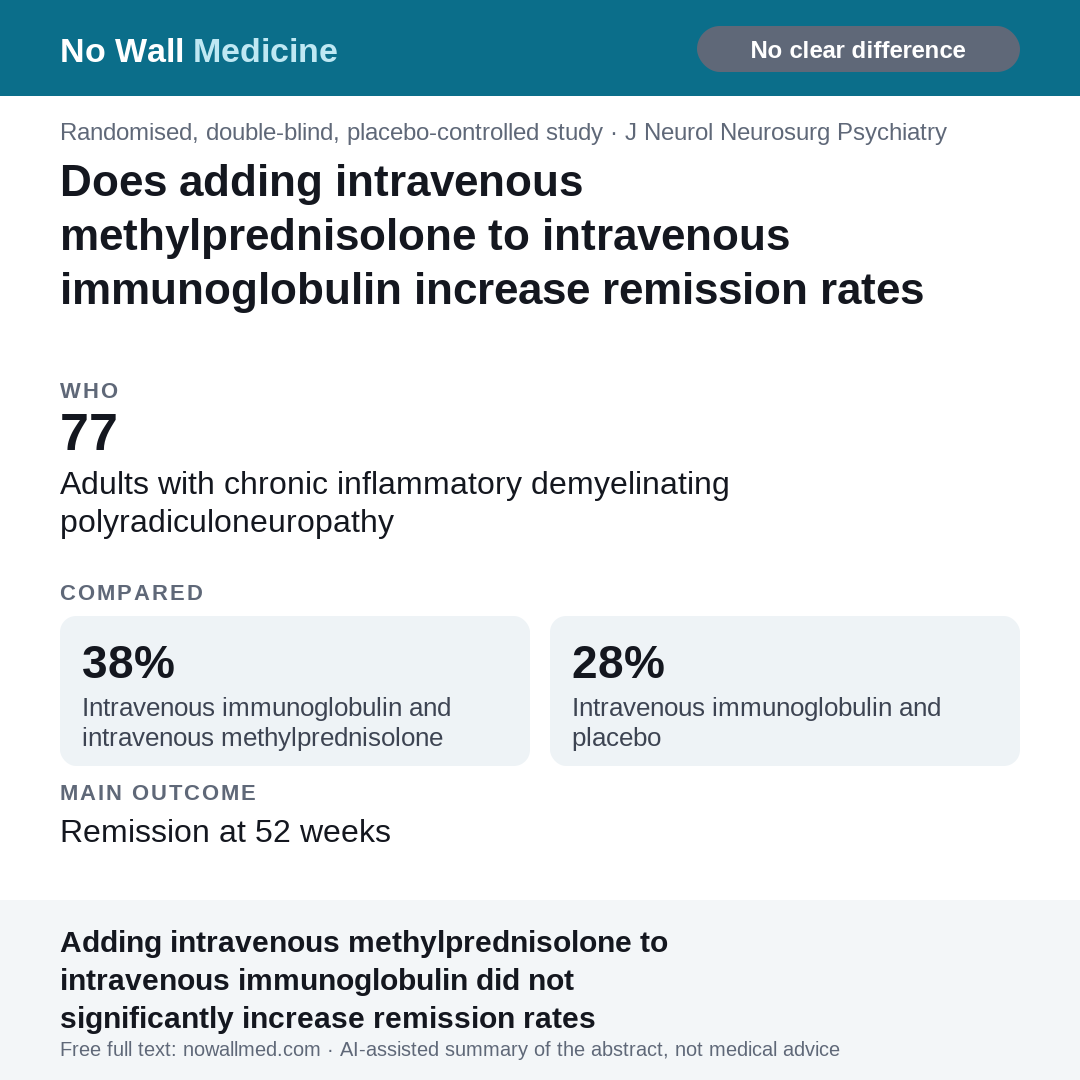
Intravenous methylprednisolone as add-on induction therapy for chronic inflammatory demyelinating polyradiculoneuropathy: a randomised controlled trial
Randomised, double-blind, placebo-controlled studyNo clear difference
Does adding intravenous methylprednisolone to intravenous immunoglobulin increase remission rates in CIDP?
Who
77
Adults with chronic inflammatory demyelinating polyradiculoneuropathy
Compared
38%Intravenous immunoglobulin and intravenous methylprednisolone (14/37)
28%Intravenous immunoglobulin and placebo (11/40)
Main outcome
Remission at 52 weeks
Result: difference of 10% (95% CI -11 to 31; p=0.47)
Bottom line: Adding intravenous methylprednisolone to intravenous immunoglobulin did not significantly increase remission rates compared to intravenous immunoglobulin alone.
J Neurol Neurosurg Psychiatry · 2026-05-14Download image
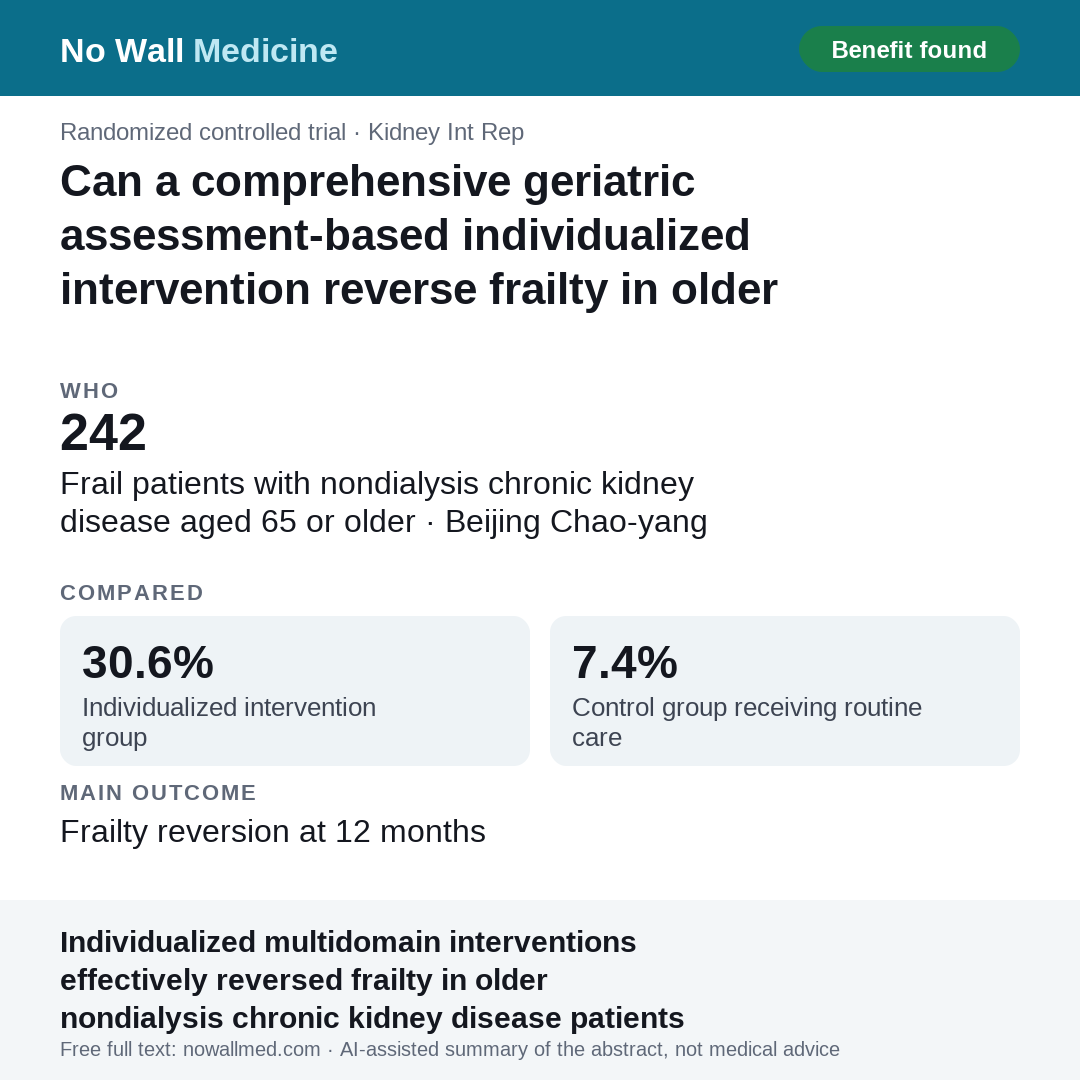
Randomized Controlled Trial of Individualized Intervention for Frailty Reversal in Older Patients With Nondialysis CKD
Randomized controlled trialBenefit found
Can a comprehensive geriatric assessment-based individualized intervention reverse frailty in older nondialysis chronic kidney disease patients?
Who
242
Frail patients with nondialysis chronic kidney disease aged 65 or older · Beijing Chao-yang Hospital
Compared
30.6%Individualized intervention group
7.4%Control group receiving routine care
Main outcome
Frailty reversion at 12 months
Result: odds ratio 5.22 (95% CI 2.37-11.49)
Bottom line: Individualized multidomain interventions effectively reversed frailty in older nondialysis chronic kidney disease patients at 12 months.
Limitation: Findings may not be generalizable to patients with more advanced chronic kidney disease.
Kidney Int Rep · 2026-05-14Download image
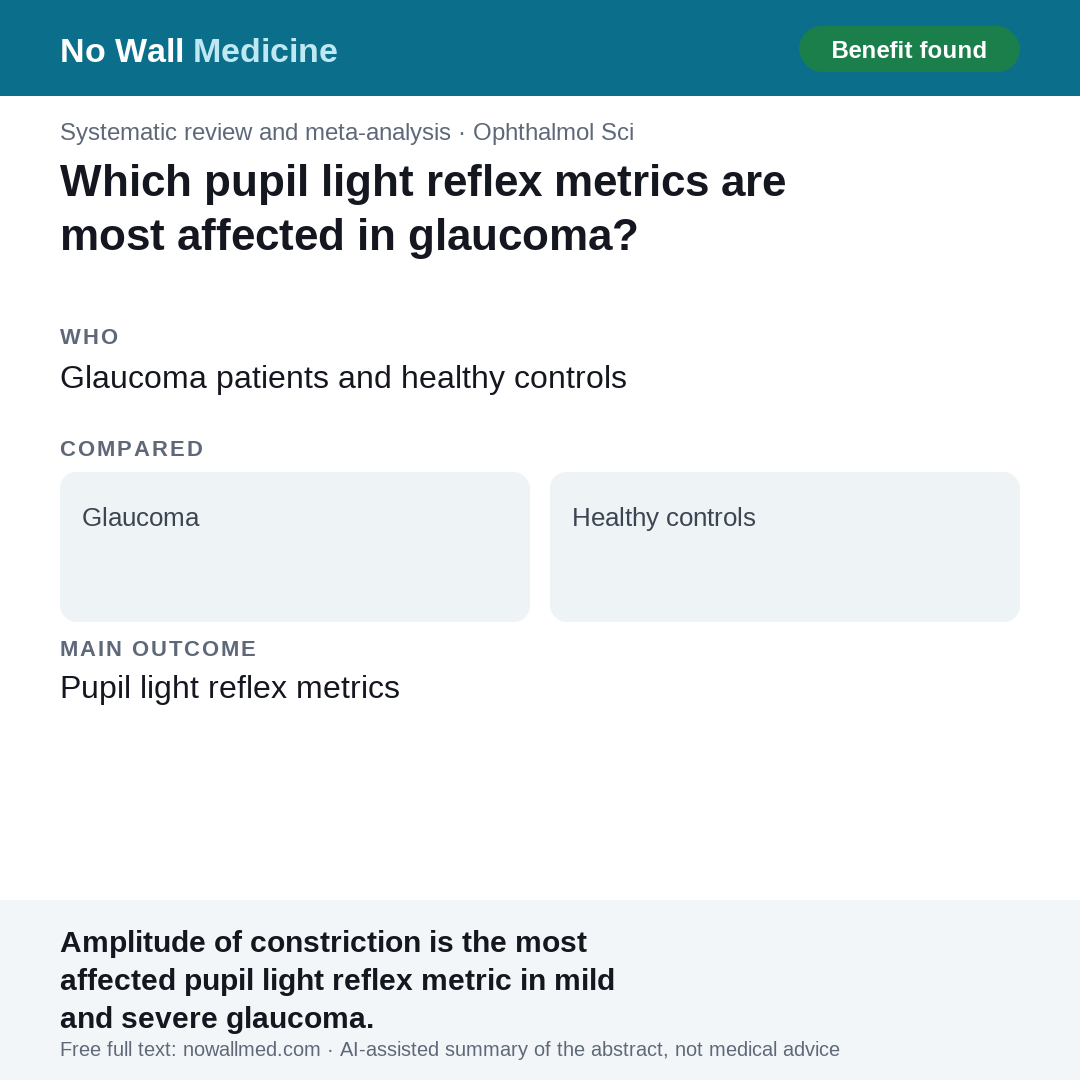
Assessing Pupil Light Reflex Metrics in Glaucoma: Insights from a Systematic Review and Meta-Analysis
Systematic review and meta-analysisBenefit found
Which pupil light reflex metrics are most affected in glaucoma?
Who
Glaucoma patients and healthy controls
Compared
Glaucoma
Healthy controls
Main outcome
Pupil light reflex metrics
Bottom line: Amplitude of constriction is the most affected pupil light reflex metric in mild and severe glaucoma.
Ophthalmol Sci · 2026-05-14Download image