Visual abstracts
New randomized trials and meta-analyses from leading journals at a glance: who was studied, what was compared, and what was found. Every paper is free to read in full.
All specialtiesCardiology 4877Oncology 4138Gastroenterology & Hepatology 1942Infectious Disease 3837Neurology 1905Psychiatry & Mental Health 2273Pulmonology 2143Critical Care 1365Endocrinology & Diabetes 2580Pediatrics 2980Surgery 2559Orthopedics & Sports Medicine 931Neurosurgery 537Cardiothoracic & Vascular Surgery 674Plastic & Reconstructive Surgery 591Nephrology 1133Rheumatology 823Hematology 1109Dermatology 621Ophthalmology 543Obstetrics & Gynecology 1686Public & Global Health 1058Radiology & Imaging 648Anesthesiology 986Urology 764ENT (Otolaryngology) 503Emergency Medicine 511Allergy & Immunology 313Geriatrics 981Family Medicine & Primary Care 562Medical Genetics & Genomics 676Pathology & Laboratory Medicine 159Physical Medicine & Rehabilitation 757Palliative Care 444Nutrition 1588Digital Health & AI 2201General Medicine 321
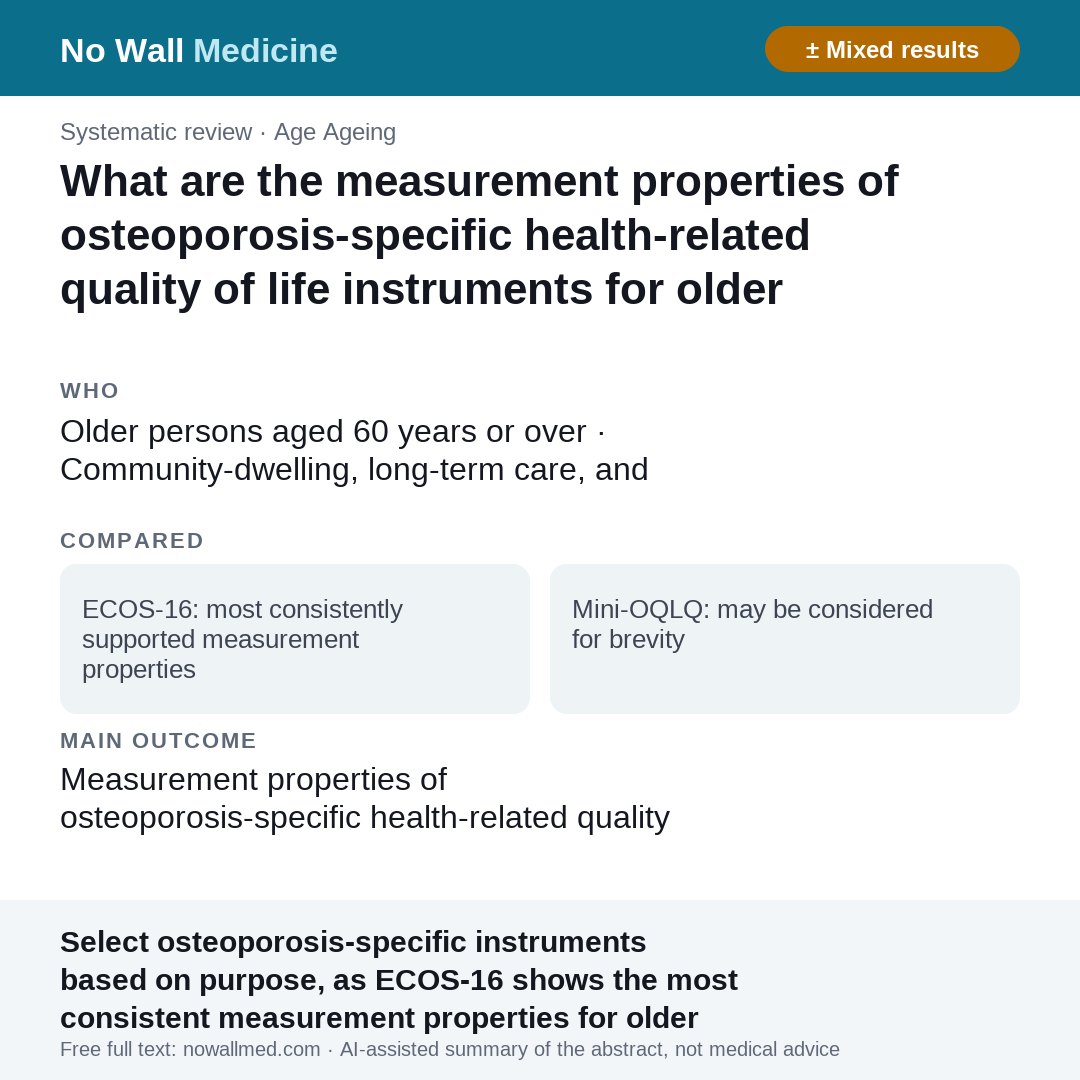
Health-related quality of life instruments for older persons with osteoporosis: a WHO-BOHEG systematic review of measurement properties for use in clinical trials and routine practice
Systematic reviewMixed results
What are the measurement properties of osteoporosis-specific health-related quality of life instruments for older adults?
Who
Older persons aged 60 years or over · Community-dwelling, long-term care, and primary care facilities
Compared
ECOS-16: most consistently supported measurement properties
Mini-OQLQ: may be considered for brevity
Main outcome
Measurement properties of osteoporosis-specific health-related quality of life instruments
Bottom line: Select osteoporosis-specific instruments based on purpose, as ECOS-16 shows the most consistent measurement properties for older adults.
Limitation: Content validity, measurement error, and cross-cultural validity are major evidence gaps.
Age Ageing · 2026-05-12Download image
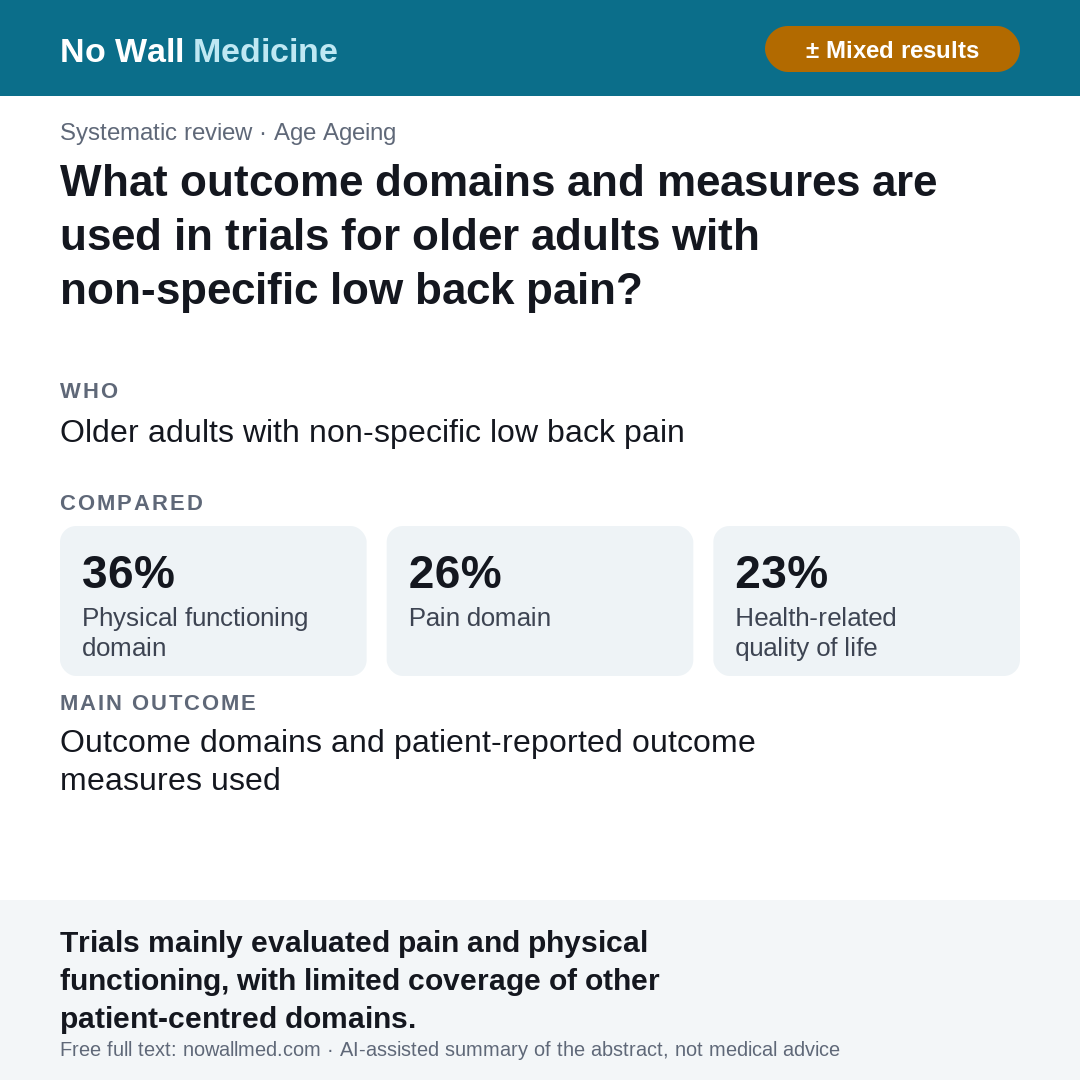
Outcome domains of patient-reported outcome measures used in randomised controlled trials for older adults with non-specific low back pain: a systematic review
Systematic reviewMixed results
What outcome domains and measures are used in trials for older adults with non-specific low back pain?
Who
57
Older adults with non-specific low back pain
Compared
36%Physical functioning domain
26%Pain domain
23%Health-related quality of life domain
Main outcome
Outcome domains and patient-reported outcome measures used
Bottom line: Trials mainly evaluated pain and physical functioning, with limited coverage of other patient-centred domains.
Age Ageing · 2026-05-12Download image
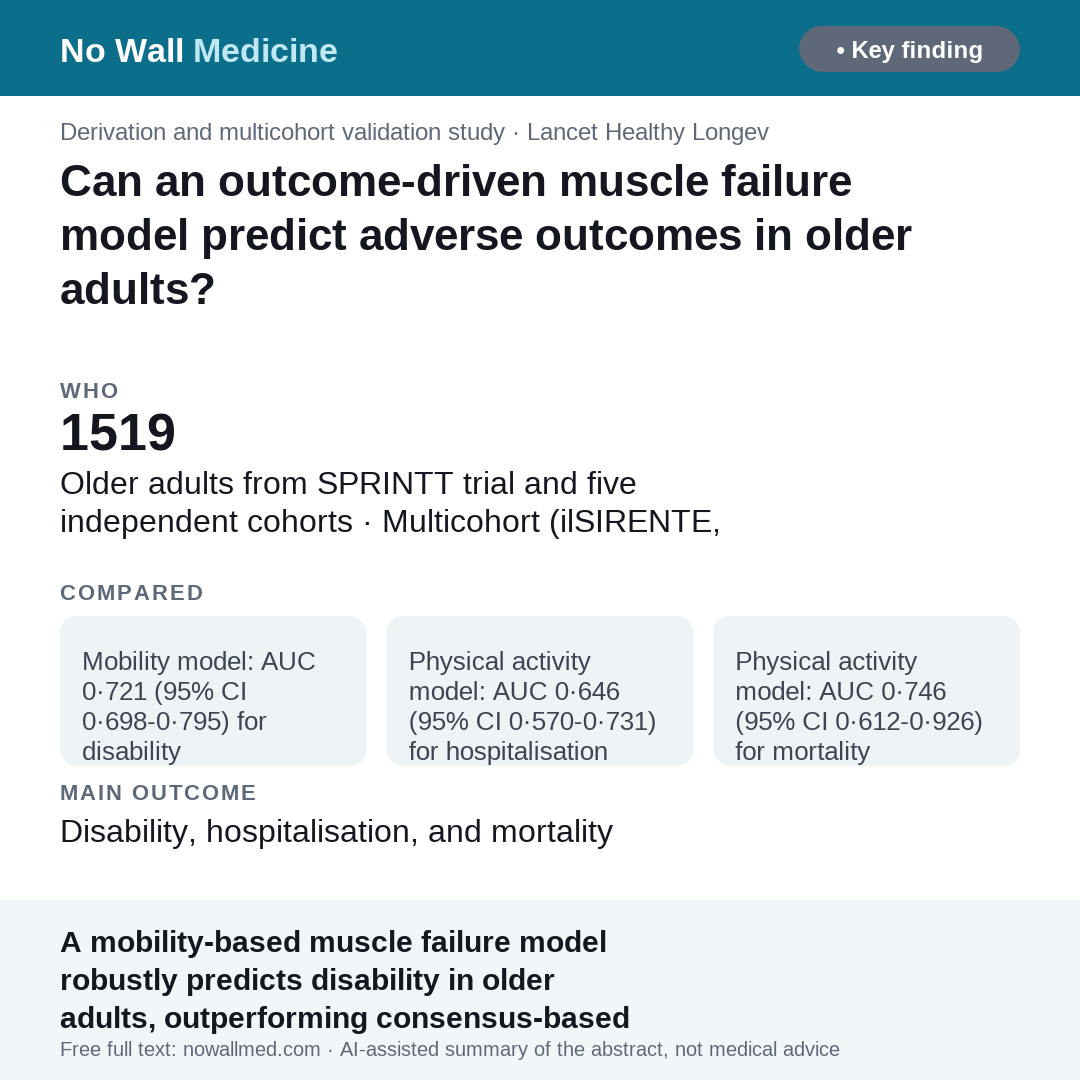
Muscle failure and risk of adverse outcomes in older adults: a derivation and multicohort validation study
Derivation and multicohort validation studyBenefit found
Can an outcome-driven muscle failure model predict adverse outcomes in older adults?
Who
1519
Older adults from SPRINTT trial and five independent cohorts · Multicohort (ilSIRENTE, NHANES, HRS, ELSA, and CHARLS)
Compared
Mobility model: AUC 0·721 (95% CI 0·698-0·795) for disability
Physical activity model: AUC 0·646 (95% CI 0·570-0·731) for hospitalisation
Physical activity model: AUC 0·746 (95% CI 0·612-0·926) for mortality
Main outcome
Disability, hospitalisation, and mortality
Result: AUC 0·721 (95% CI 0·698-0·795) for disability prediction
Bottom line: A mobility-based muscle failure model robustly predicts disability in older adults, outperforming consensus-based sarcopenia definitions.
Lancet Healthy Longev · 2026-05-12Download image
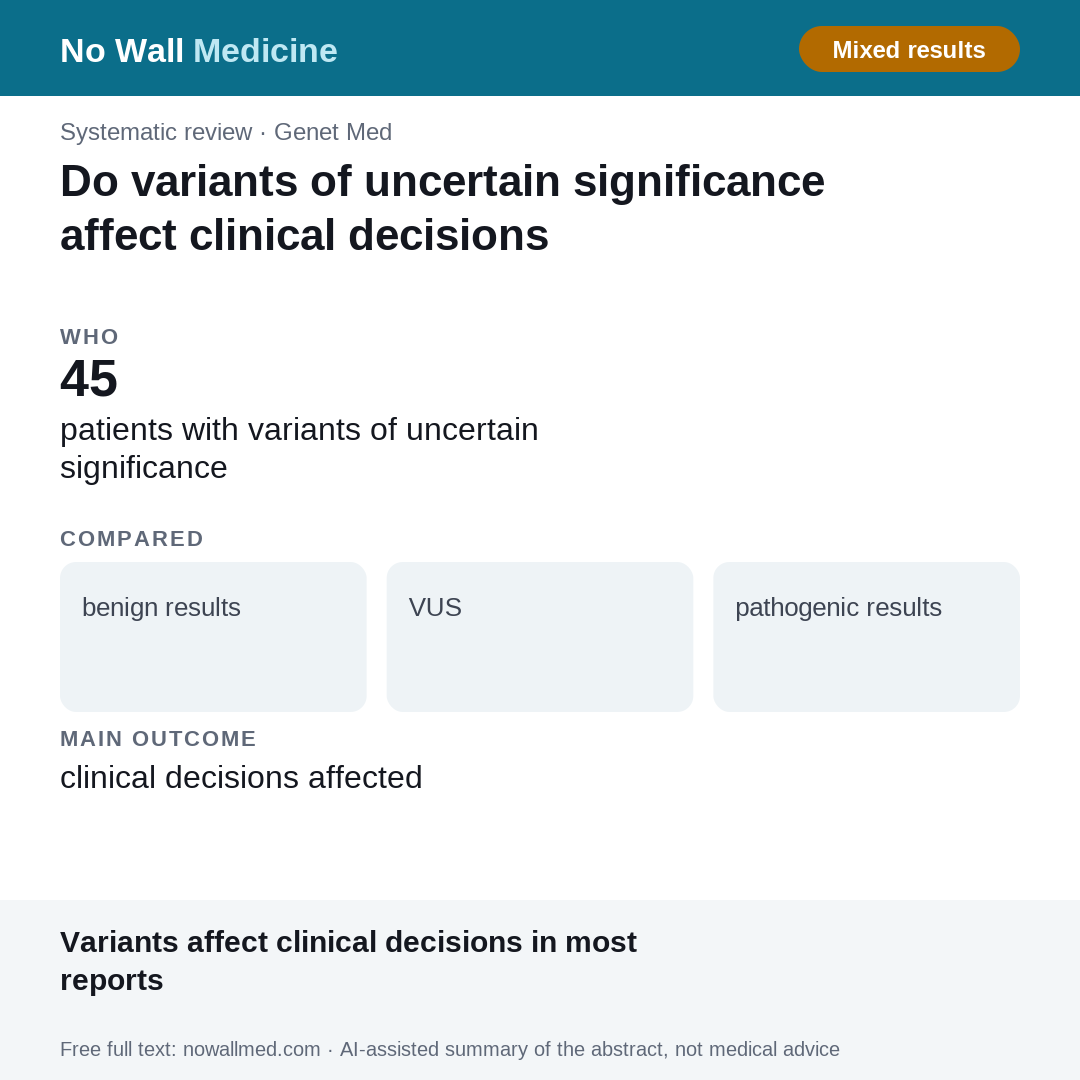
How variants of uncertain significance affect clinical decisions: A systematic review
Systematic reviewMixed results
Do variants of uncertain significance affect clinical decisions
Who
45
patients with variants of uncertain significance
Compared
benign results
VUS
pathogenic results
Main outcome
clinical decisions affected
Bottom line: Variants affect clinical decisions in most reports
Limitation: small, heterogeneous studies
Genet Med · 2026-05-12Download image
Intraoperative Anti-VEGF vs. Photocoagulation during Vitrectomy for Branch Retinal Vein Occlusion with Vitreous Hemorrhage: A Randomized Clinical Trial
Randomized, parallel-group clinical trialBenefit found
Does intraoperative anti-VEGF or photocoagulation improve outcomes for branch retinal vein occlusion?
Who
34
Patients diagnosed with branch retinal vein occlusion complicated by vitreous hemorrhage
Compared
anti-VEGF group: -8.5 ± 4.6 dB
laser group: -15.1 ± 3.5 dB
Main outcome
Mean deviation of the visual field at 12 months
Result: P < 0.01
Bottom line: Intraoperative anti-VEGF therapy preserves the visual field better than sectoral retinal laser photocoagulation after vitrectomy.
Ophthalmol Sci · 2026-05-12Download image

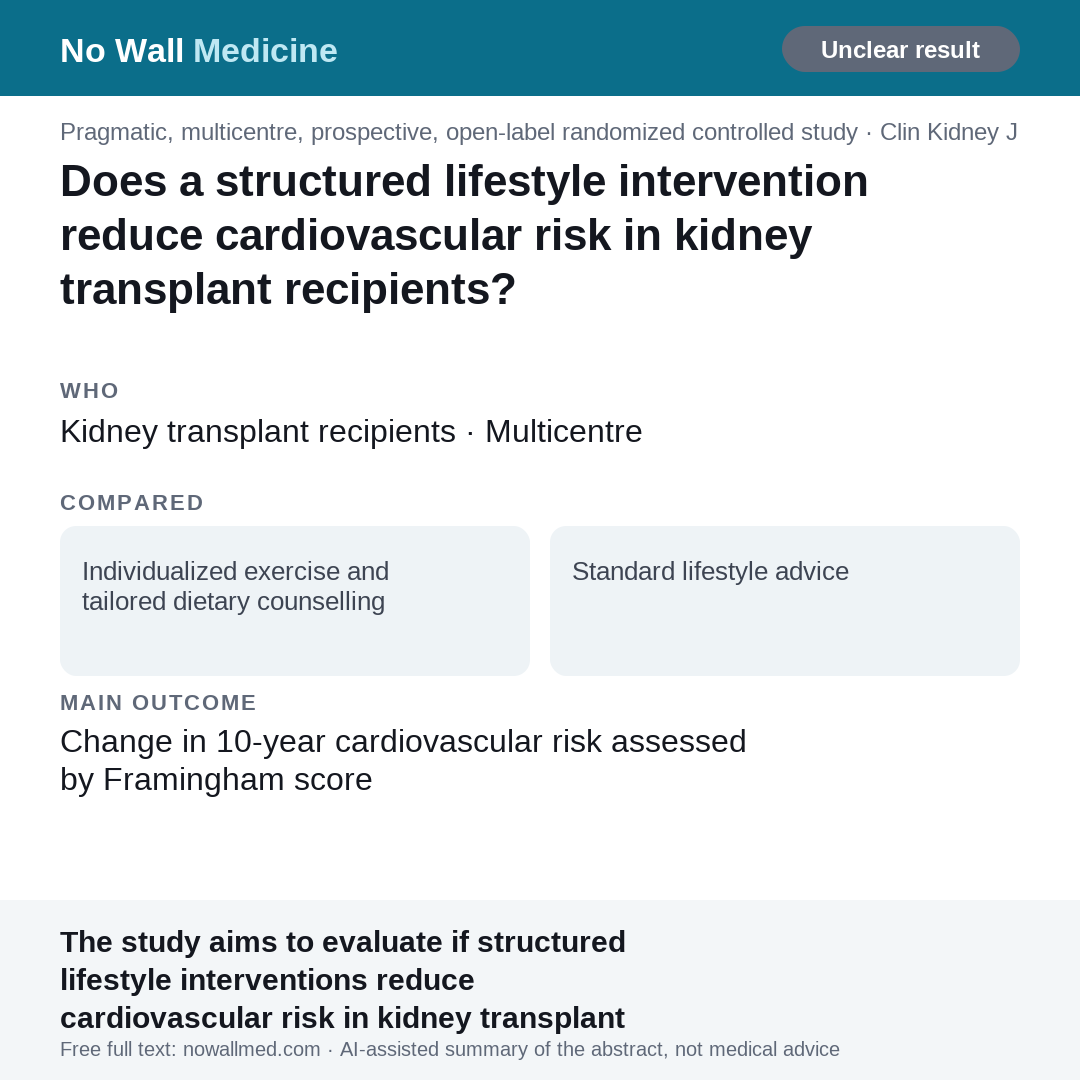
Lifestyle intervention to reduce cardiovascular risk in kidney transplant recipients: the KT-LIFESTYLE multicentre randomized controlled trial
Pragmatic, multicentre, prospective, open-label randomized controlled studyUnclear result
Does a structured lifestyle intervention reduce cardiovascular risk in kidney transplant recipients?
Who
Kidney transplant recipients · Multicentre
Compared
Individualized exercise and tailored dietary counselling
Standard lifestyle advice
Main outcome
Change in 10-year cardiovascular risk assessed by Framingham score
Bottom line: The study aims to evaluate if structured lifestyle interventions reduce cardiovascular risk in kidney transplant recipients.
Clin Kidney J · 2026-05-12Download image
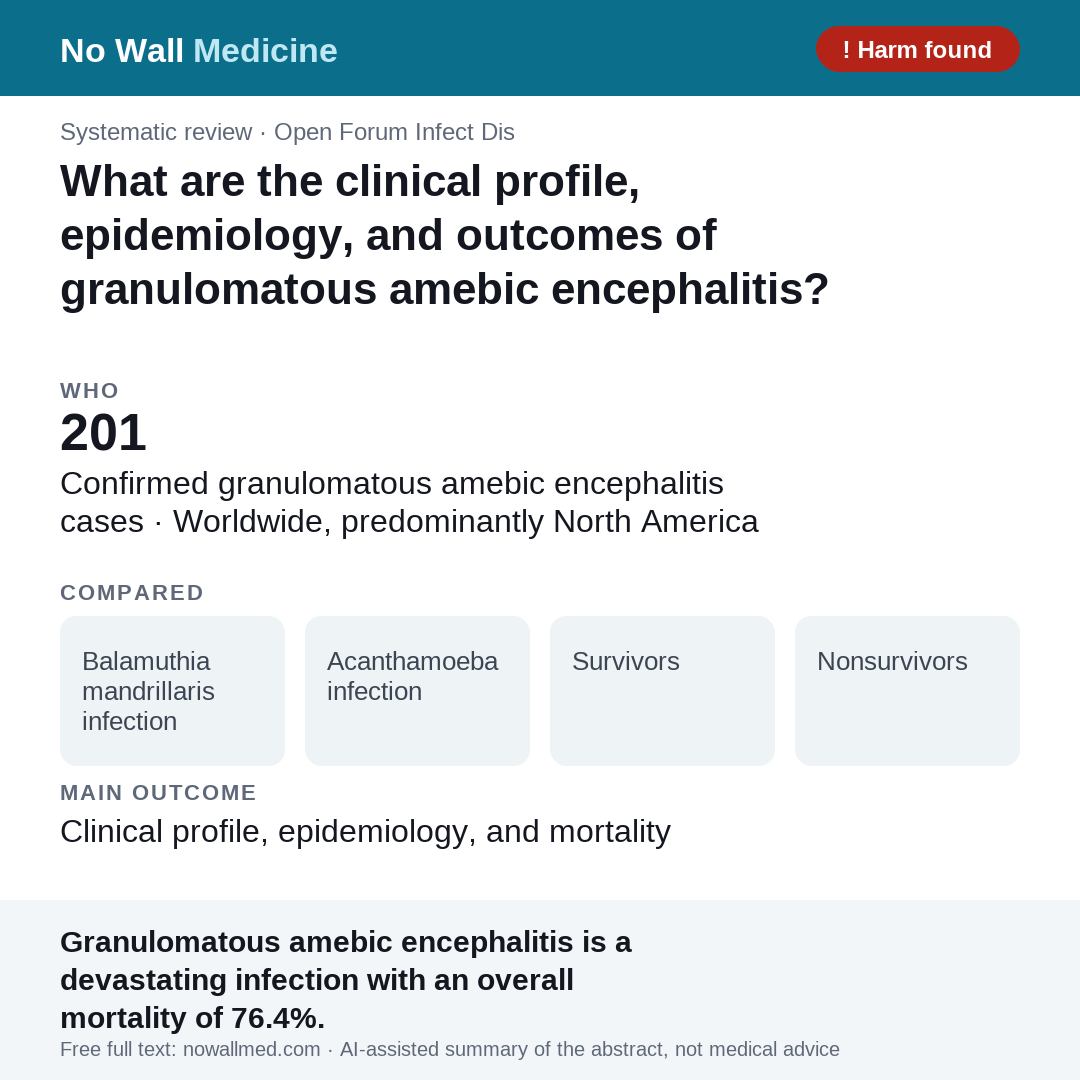
Clinical Profile, Epidemiology, and Outcomes of Granulomatous Amebic Encephalitis: A Systematic Review
Systematic reviewHarm found
What are the clinical profile, epidemiology, and outcomes of granulomatous amebic encephalitis?
Who
201
Confirmed granulomatous amebic encephalitis cases · Worldwide, predominantly North America and Asia
Compared
Balamuthia mandrillaris infection
Acanthamoeba infection
Survivors
Nonsurvivors
Main outcome
Clinical profile, epidemiology, and mortality
Bottom line: Granulomatous amebic encephalitis is a devastating infection with an overall mortality of 76.4%.
Limitation: Survivor bias may affect antimicrobial agent efficacy observations.
Open Forum Infect Dis · 2026-05-12Download image
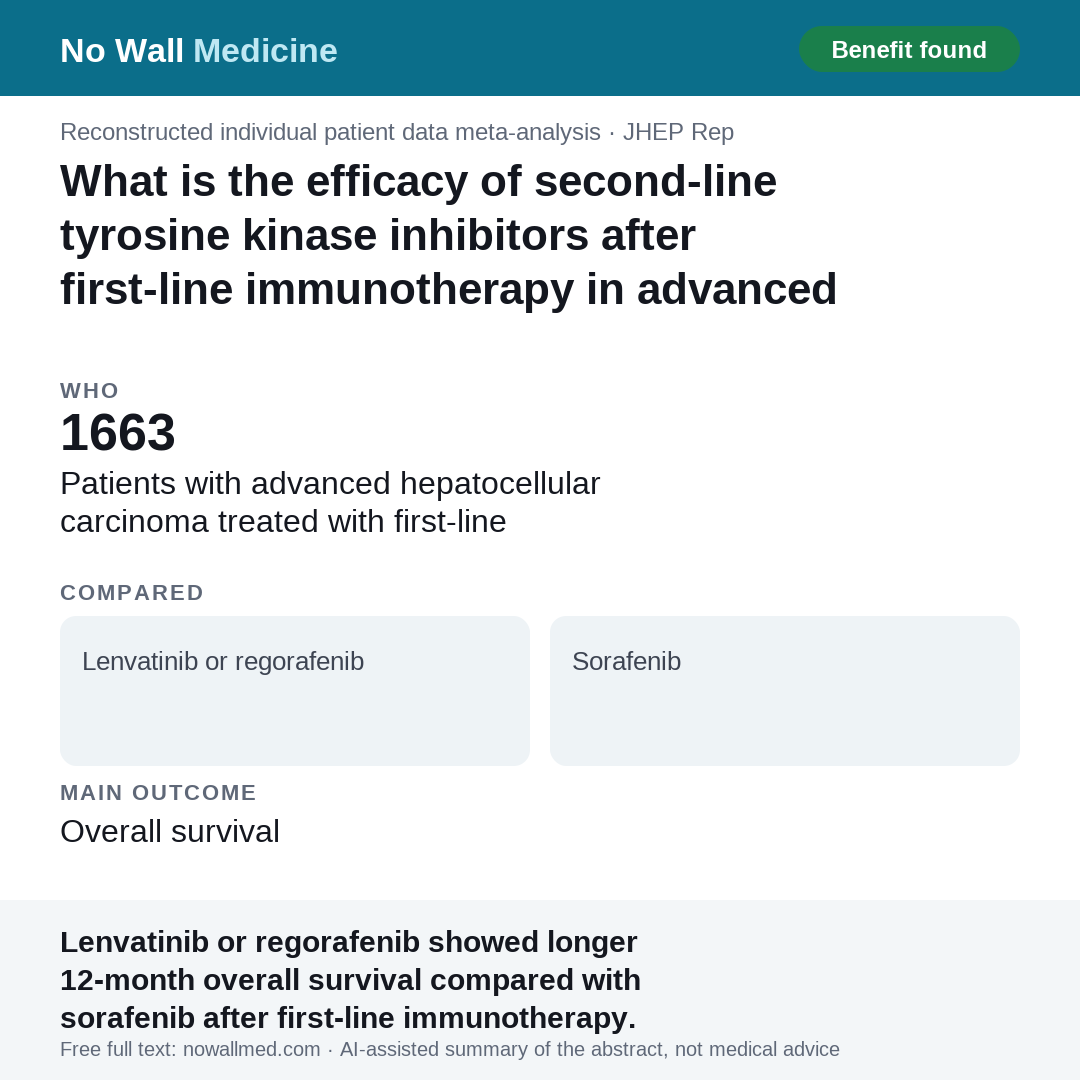
Second-line TKI after first-line immunotherapy-based treatment in advanced HCC: Reconstructed IPD meta-analysis
Reconstructed individual patient data meta-analysisBenefit found
How effective are second-line tyrosine kinase inhibitors after first-line immunotherapy in advanced hepatocellular carcinoma?
Who
1663
Patients with advanced hepatocellular carcinoma treated with first-line immunotherapy
Compared
Lenvatinib or regorafenib: 12-month overall survival significantly longer than sorafenib
Sorafenib
Main outcome
Overall survival and progression-free survival
Result: ΔRMST 1.49 months (95% CI 1.10-1.88) for lenvatinib or regorafenib vs sorafenib
Bottom line: Lenvatinib or regorafenib showed longer survival than sorafenib after first-line immunotherapy in advanced hepatocellular carcinoma.
Limitation: Observational nature of the data and potential residual confounding.
JHEP Rep · 2026-05-12Download image
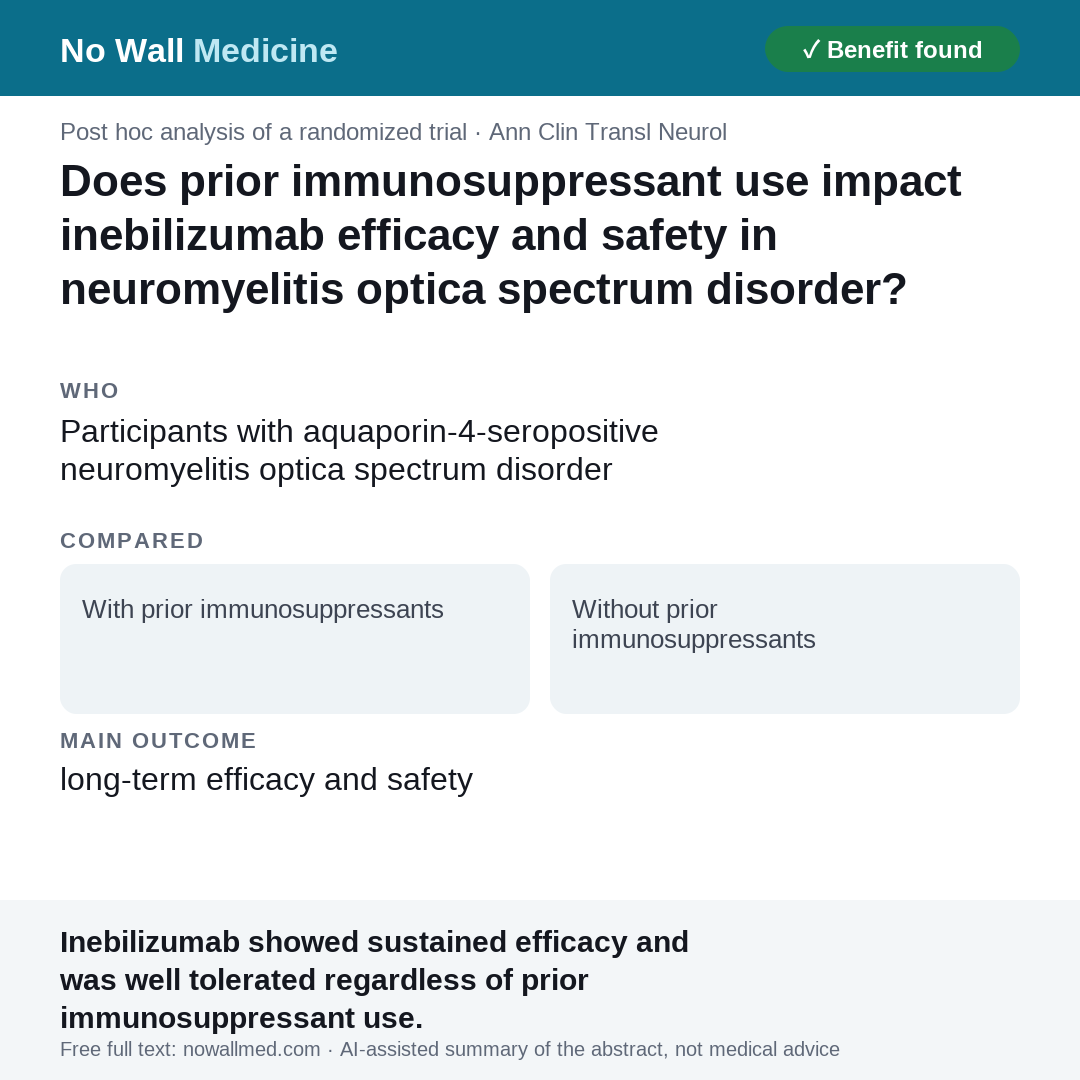
Efficacy of Inebilizumab in N-MOmentum Trial Participants With or Without Prior Immunosuppressants
Post hoc analysis of a randomized trialBenefit found
Does prior immunosuppressant use impact inebilizumab efficacy and safety in neuromyelitis optica spectrum disorder?
Who
Participants with aquaporin-4-seropositive neuromyelitis optica spectrum disorder
Compared
With prior immunosuppressants
Without prior immunosuppressants
Main outcome
long-term efficacy and safety
Bottom line: Inebilizumab showed sustained efficacy and was well tolerated regardless of prior immunosuppressant use.
Ann Clin Transl Neurol · 2026-05-12Download image
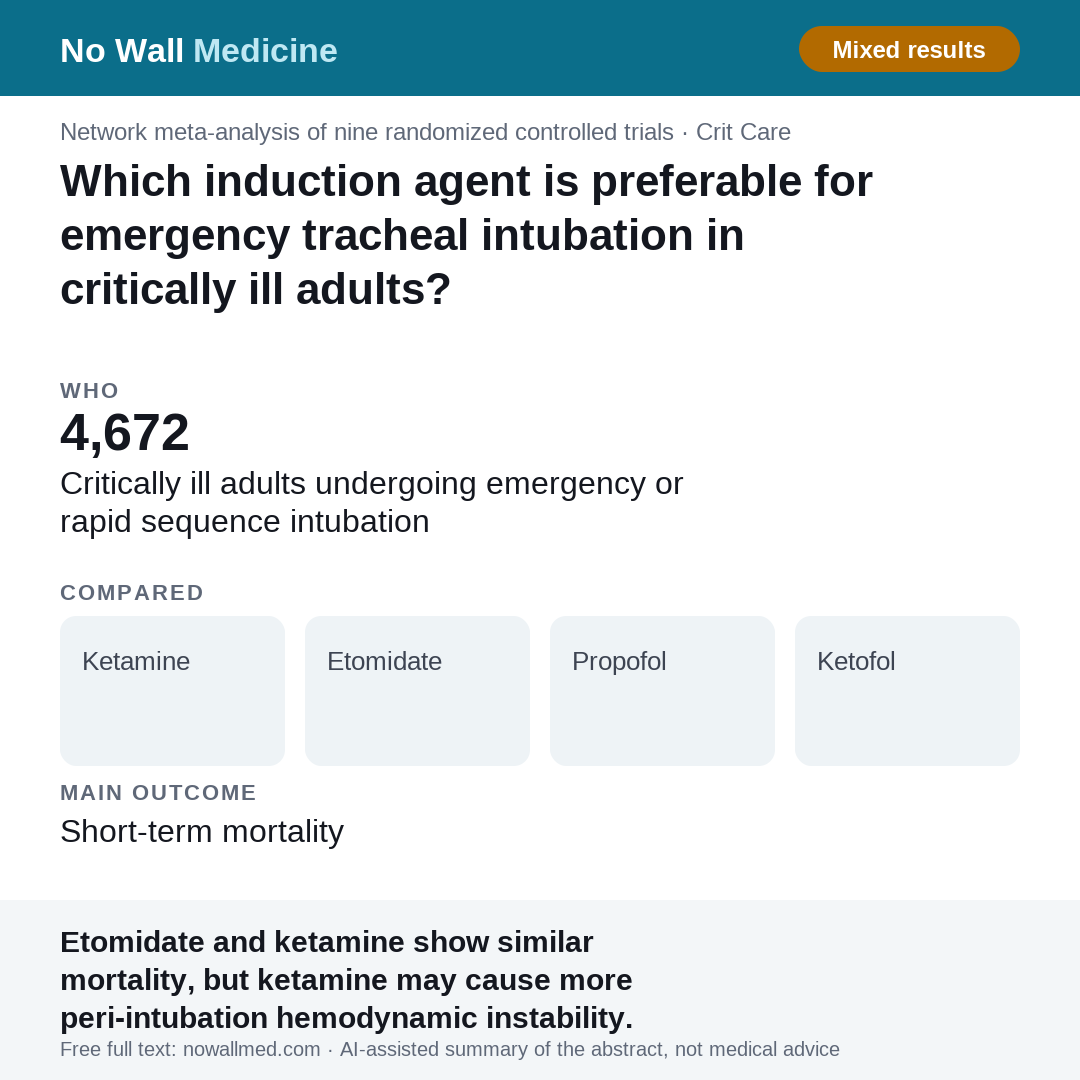
Induction agents for emergency tracheal intubation in critically ill adults: a systematic review and network meta-analysis
Network meta-analysis of nine randomized controlled trialsMixed results
Which induction agent is preferable for emergency tracheal intubation in critically ill adults?
Who
4,672
Critically ill adults undergoing emergency or rapid sequence intubation
Compared
Ketamine
Etomidate
Propofol
Ketofol
Main outcome
Short-term mortality
Result: OR 0.96 (95% CI 0.80-1.16) for ketamine vs etomidate
Bottom line: Etomidate and ketamine show similar mortality, but ketamine may cause more peri-intubation hemodynamic instability.
Crit Care · 2026-05-12Download image
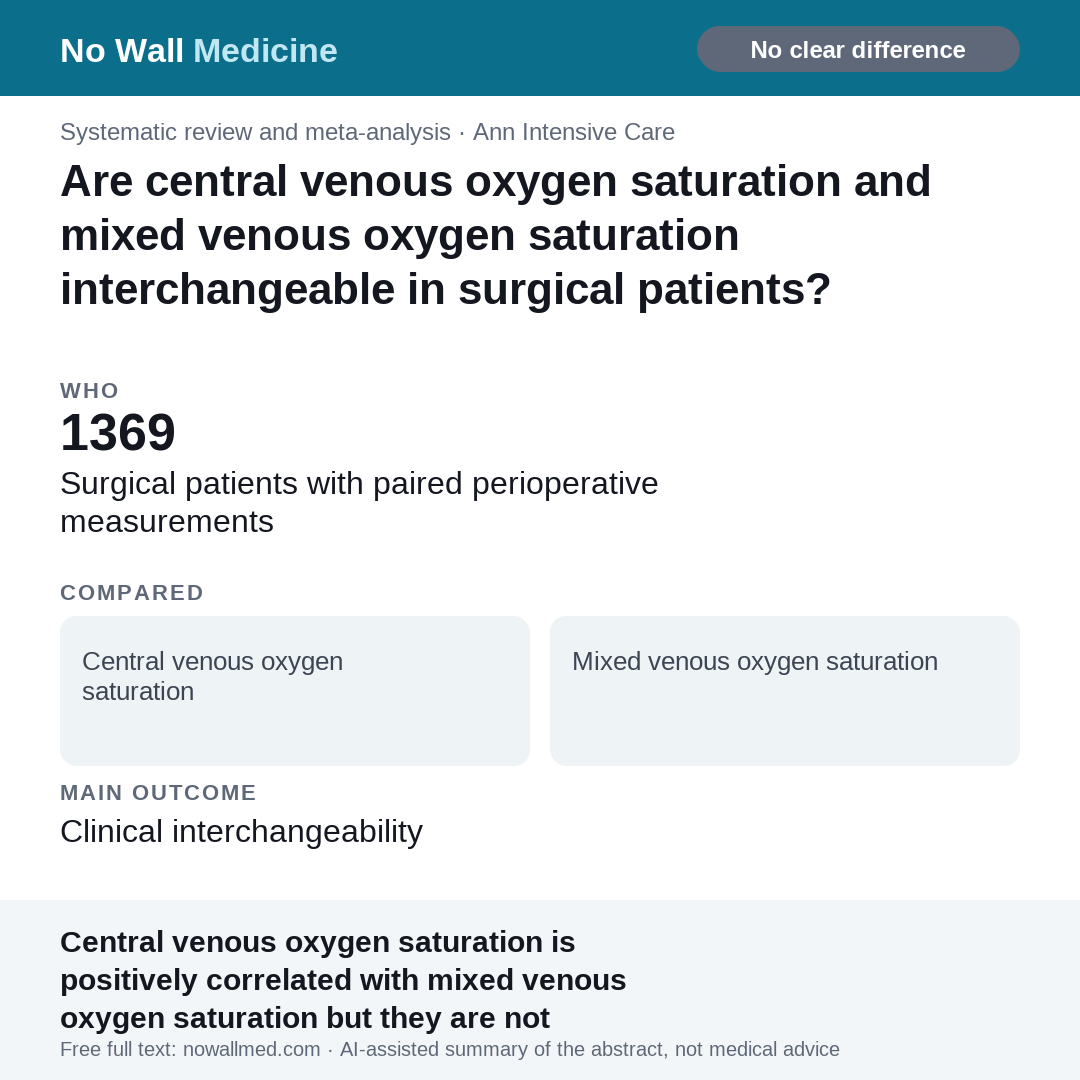
Correlation between central venous oxygen saturation and mixed venous oxygen saturation in surgical patients: A systematic review and meta-analysis
Systematic review and meta-analysisNo clear difference
Are central venous oxygen saturation and mixed venous oxygen saturation interchangeable in surgical patients?
Who
1369
Surgical patients with paired perioperative measurements
Compared
Central venous oxygen saturation
Mixed venous oxygen saturation
Main outcome
Clinical interchangeability
Result: mean difference -0.49% (95% CI, -1.34 to 0.35)
Bottom line: Central venous oxygen saturation is positively correlated with mixed venous oxygen saturation but they are not clinically interchangeable.
Ann Intensive Care · 2026-05-12Download image
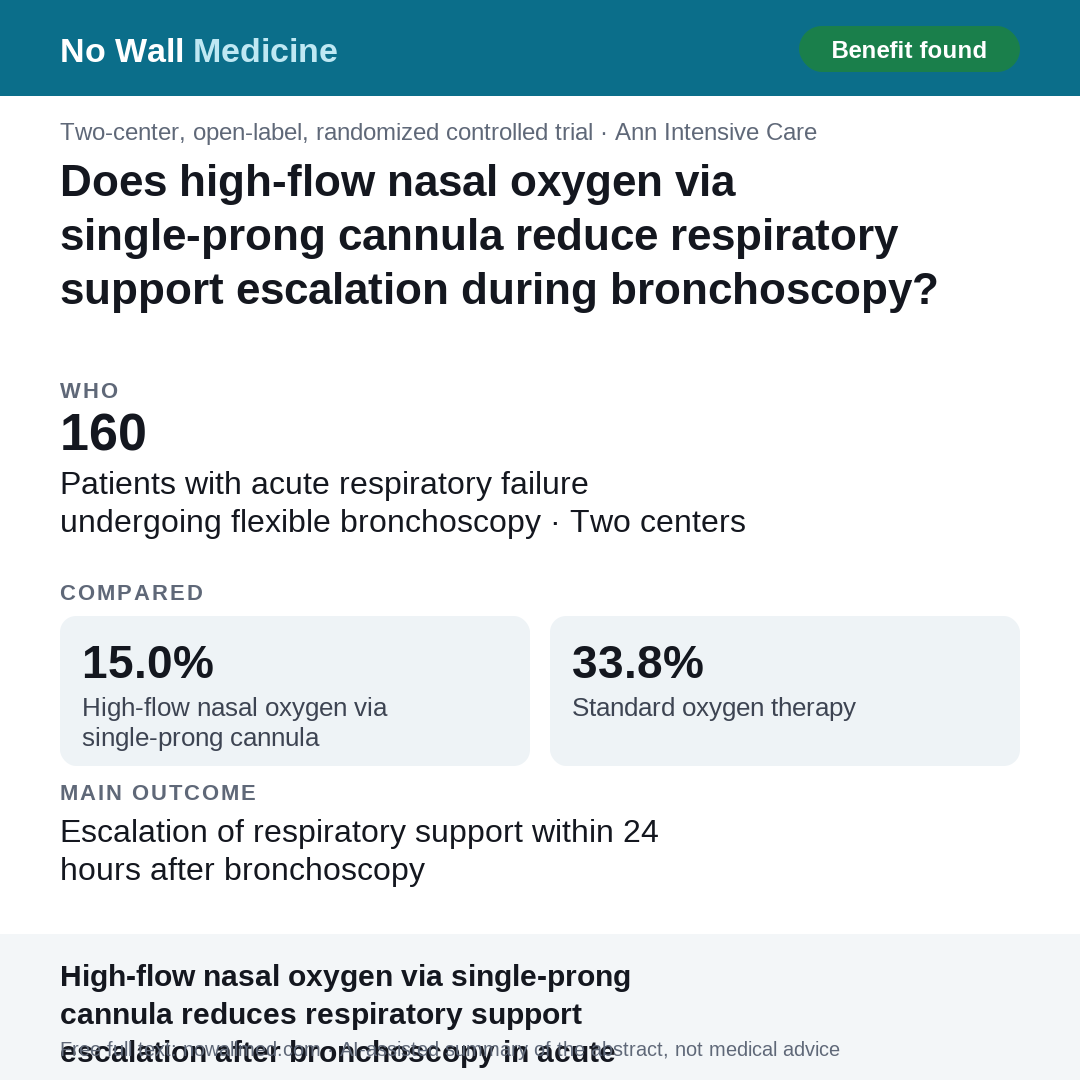
High-flow nasal oxygen therapy via a single-prong cannula interface during bronchoscopy in patients with acute respiratory failure: a two-center, open-label, randomized controlled trial
Two-center, open-label, randomized controlled trialBenefit found
Does high-flow nasal oxygen via single-prong cannula reduce respiratory support escalation during bronchoscopy?
Who
160
Patients with acute respiratory failure undergoing flexible bronchoscopy · Two centers
Compared
15.0%High-flow nasal oxygen via single-prong cannula
33.8%Standard oxygen therapy
Main outcome
Escalation of respiratory support within 24 hours after bronchoscopy
Bottom line: High-flow nasal oxygen via single-prong cannula reduces respiratory support escalation after bronchoscopy in acute respiratory failure patients.
Ann Intensive Care · 2026-05-12Download image
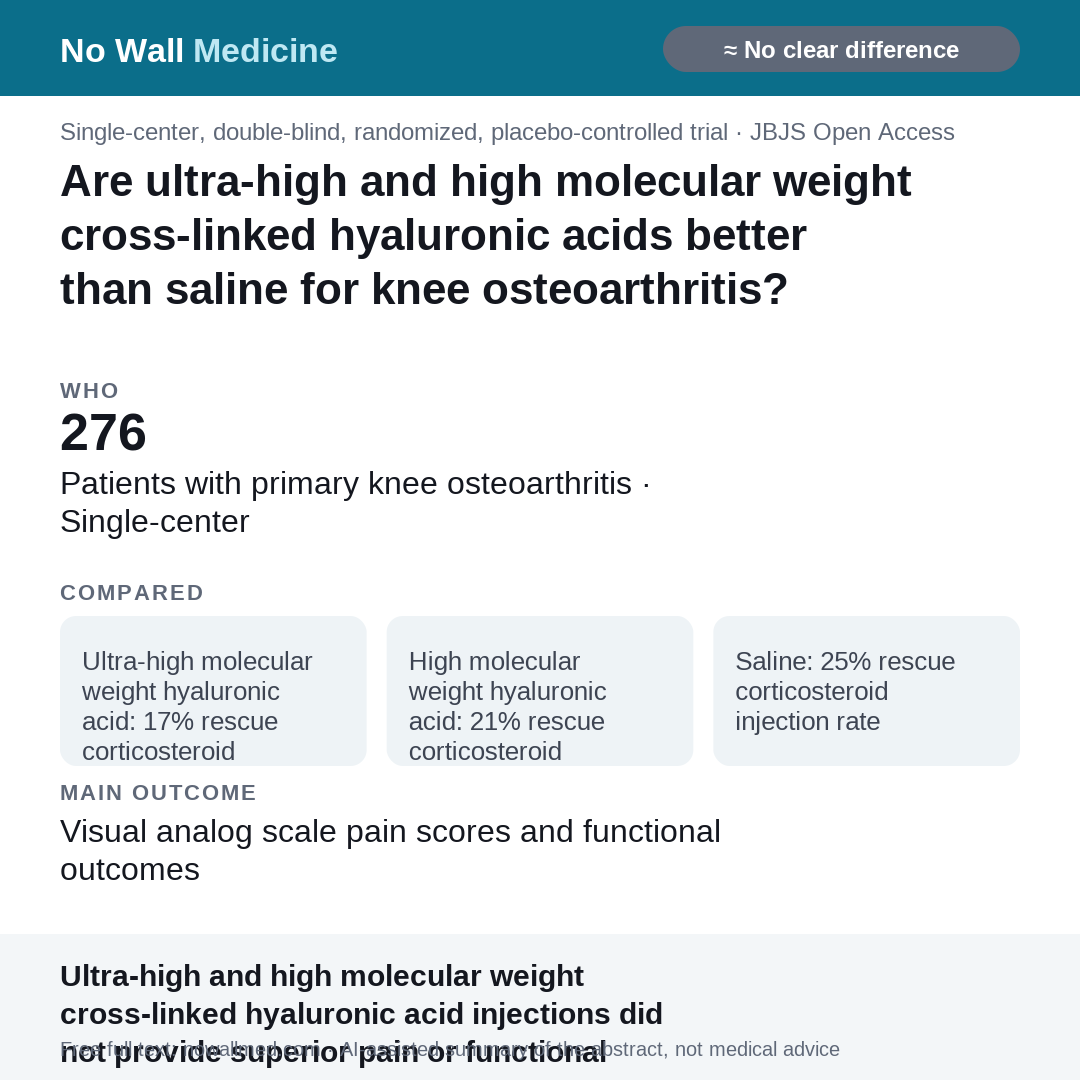
Efficacy of Ultra-high and High Molecular Weight Cross-Linked Hyaluronic Acids Compared with Saline in Knee Osteoarthritis: A Randomized Controlled Trial
Single-center, double-blind, randomized, placebo-controlled trialNo clear difference
Are ultra-high and high molecular weight cross-linked hyaluronic acids better than saline for knee osteoarthritis?
Who
276
Patients with primary knee osteoarthritis · Single-center
Compared
Ultra-high molecular weight hyaluronic acid: 17% rescue corticosteroid injection rate
High molecular weight hyaluronic acid: 21% rescue corticosteroid injection rate
Saline: 25% rescue corticosteroid injection rate
Main outcome
Visual analog scale pain scores and functional outcomes
Bottom line: Ultra-high and high molecular weight cross-linked hyaluronic acid injections did not provide superior pain or functional outcomes compared with saline.
JBJS Open Access · 2026-05-12Download image
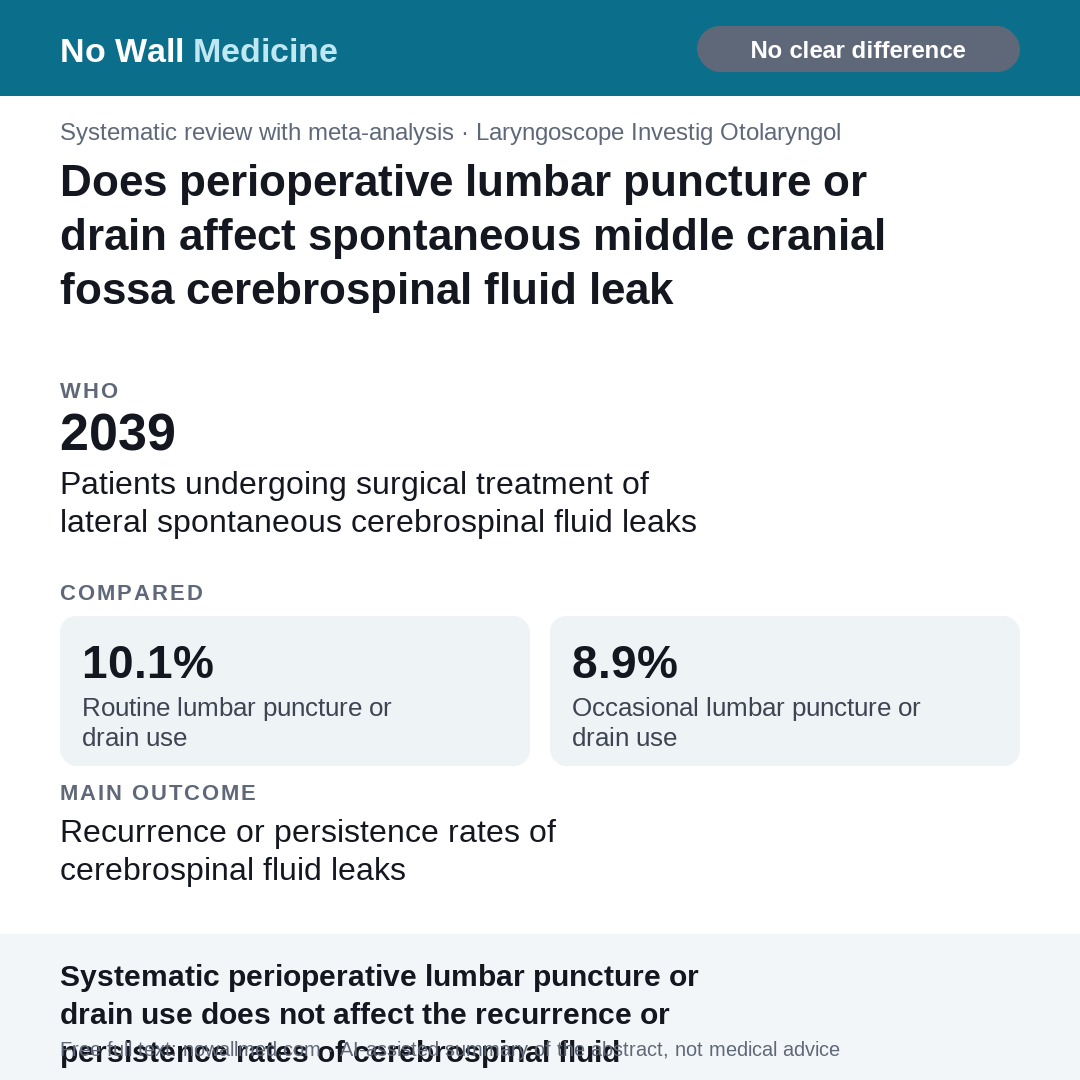
Spontaneous Middle Cranial Fossa Cerebrospinal Fluid Leaks and Intracranial Hypertension: Systematic Review With Meta-Analysis
Systematic review with meta-analysisNo clear difference
Does perioperative lumbar puncture or drain affect spontaneous middle cranial fossa cerebrospinal fluid leak recurrence?
Who
2039
Patients undergoing surgical treatment of lateral spontaneous cerebrospinal fluid leaks
Compared
10.1%Routine lumbar puncture or drain use
8.9%Occasional lumbar puncture or drain use
Main outcome
Recurrence or persistence rates of cerebrospinal fluid leaks
Bottom line: Systematic perioperative lumbar puncture or drain use does not affect the recurrence or persistence rates of cerebrospinal fluid leaks.
Limitation: Decision making for lumbar puncture, drain, acetazolamide, or shunt use is inconsistently reported.
Laryngoscope Investig Otolaryngol · 2026-05-12Download image
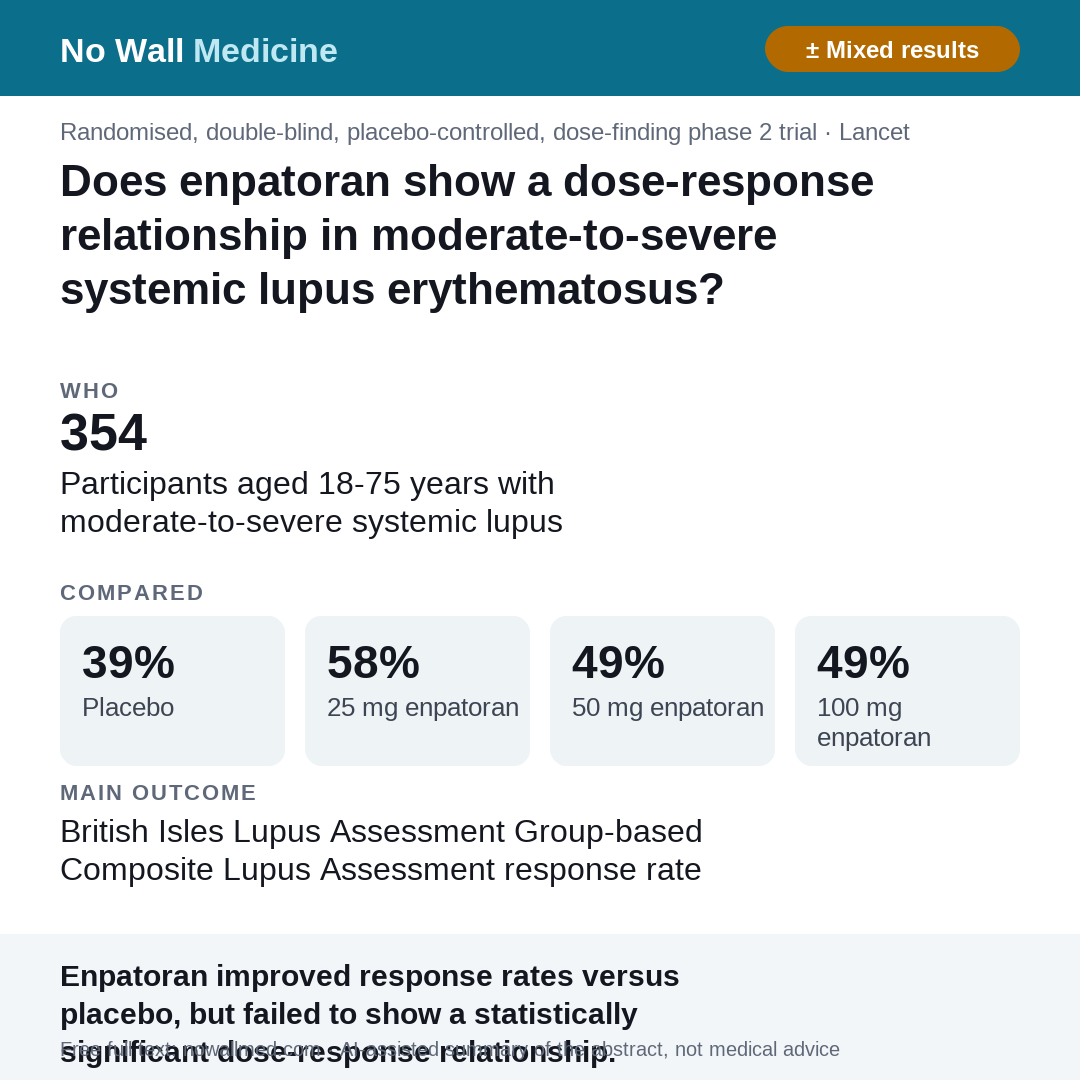
Enpatoran, a Toll-like receptor 7/8 inhibitor, in moderate-to-severe systemic lupus erythematosus: findings from Cohort B of a multicentre, international, double-blind, placebo-controlled dose-finding phase 2 trial
Randomised, double-blind, placebo-controlled, dose-finding phase 2 trialMixed results
Does enpatoran show a dose-response relationship in moderate-to-severe systemic lupus erythematosus?
Who
354
Participants aged 18-75 years with moderate-to-severe systemic lupus erythematosus · 132 centres in 22 countries
Compared
39%Placebo
58%25 mg enpatoran
49%50 mg enpatoran
49%100 mg enpatoran
Main outcome
British Isles Lupus Assessment Group-based Composite Lupus Assessment response rate
Result: p=0·14
Bottom line: Enpatoran improved response rates versus placebo, but failed to show a statistically significant dose-response relationship.
Funded by: Merck Healthcare
Lancet · 2026-05-11Download image
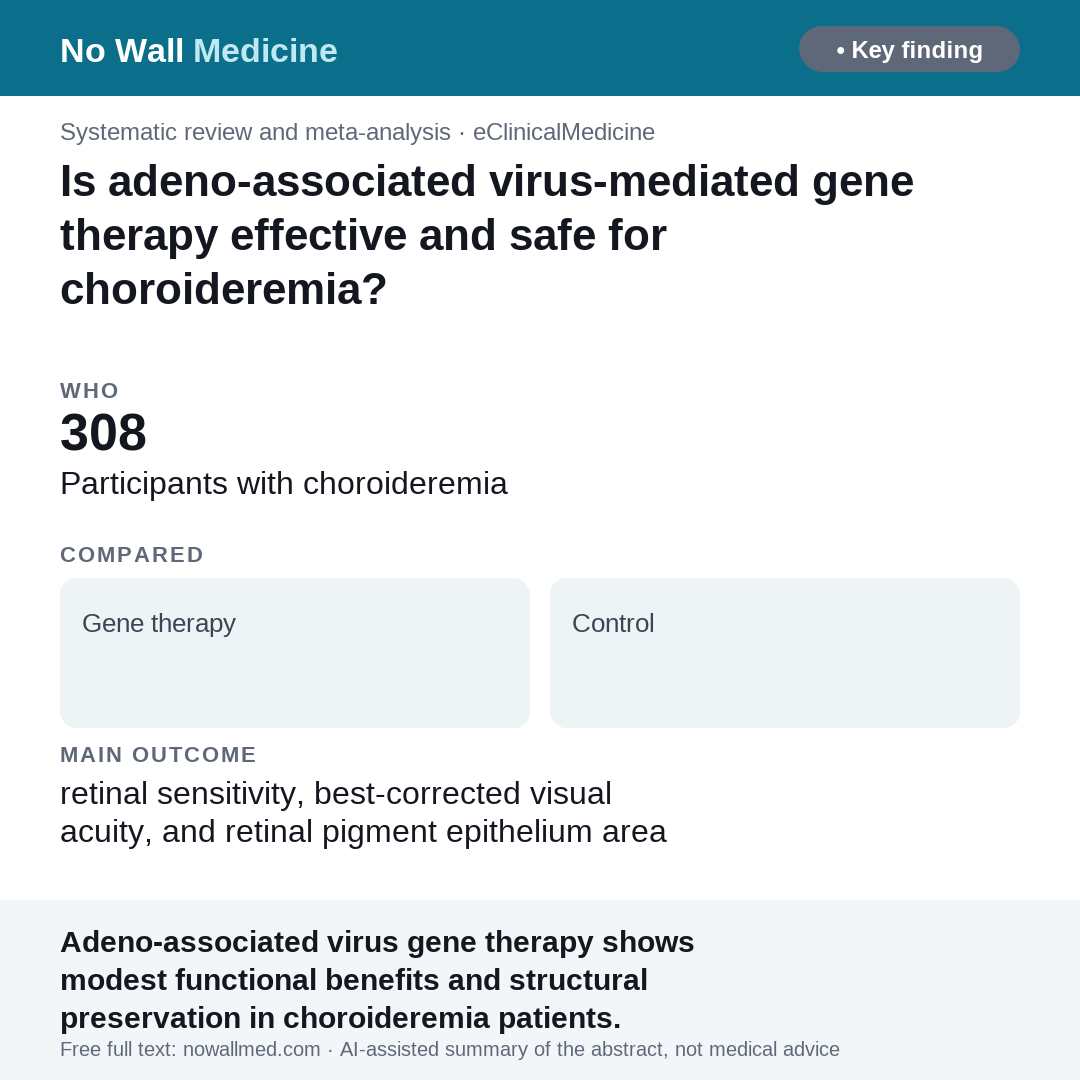
Efficacy and safety of AAV-mediated gene therapy for choroideremia: a systematic review and meta-analysis
Systematic review and meta-analysisBenefit found
Is adeno-associated virus-mediated gene therapy effective and safe for choroideremia?
Who
308
Participants with choroideremia
Compared
Gene therapy
Control
Main outcome
retinal sensitivity, best-corrected visual acuity, and retinal pigment epithelium area
Result: mean difference 0.78 dB (95% CI: 0.58-0.99) for retinal sensitivity
Bottom line: Adeno-associated virus gene therapy shows modest functional benefits and structural preservation in choroideremia patients.
eClinicalMedicine · 2026-05-11Download image
Long-term mortality in women with a history of hypertensive disorders of pregnancy: a systematic review and meta-analysis
Systematic review and meta-analysisHarm found
What is the risk of all-cause and cause-specific mortality in women with hypertensive disorders of pregnancy?
Who
14221347
Women with a history of hypertensive disorders of pregnancy
Compared
Hypertensive disorders of pregnancy: 45% increased risk of all-cause mortality
Preeclampsia or eclampsia: 64% increased risk of all-cause mortality
Gestational hypertension: 34% increased risk of all-cause mortality
Main outcome
All-cause and cause-specific mortality
Result: RR = 1.45, 95% CI = 1.30-1.61
Bottom line: Women with a history of hypertensive disorders of pregnancy, especially preeclampsia or eclampsia, face increased all-cause and cause-specific mortality risks.
Limitation: Certainty of evidence was rated as very low certainty and heterogeneity was substantial.
Funded by: Noncommunicable Chronic Diseases-National Science and Technology Major Project
eClinicalMedicine · 2026-05-11Download image

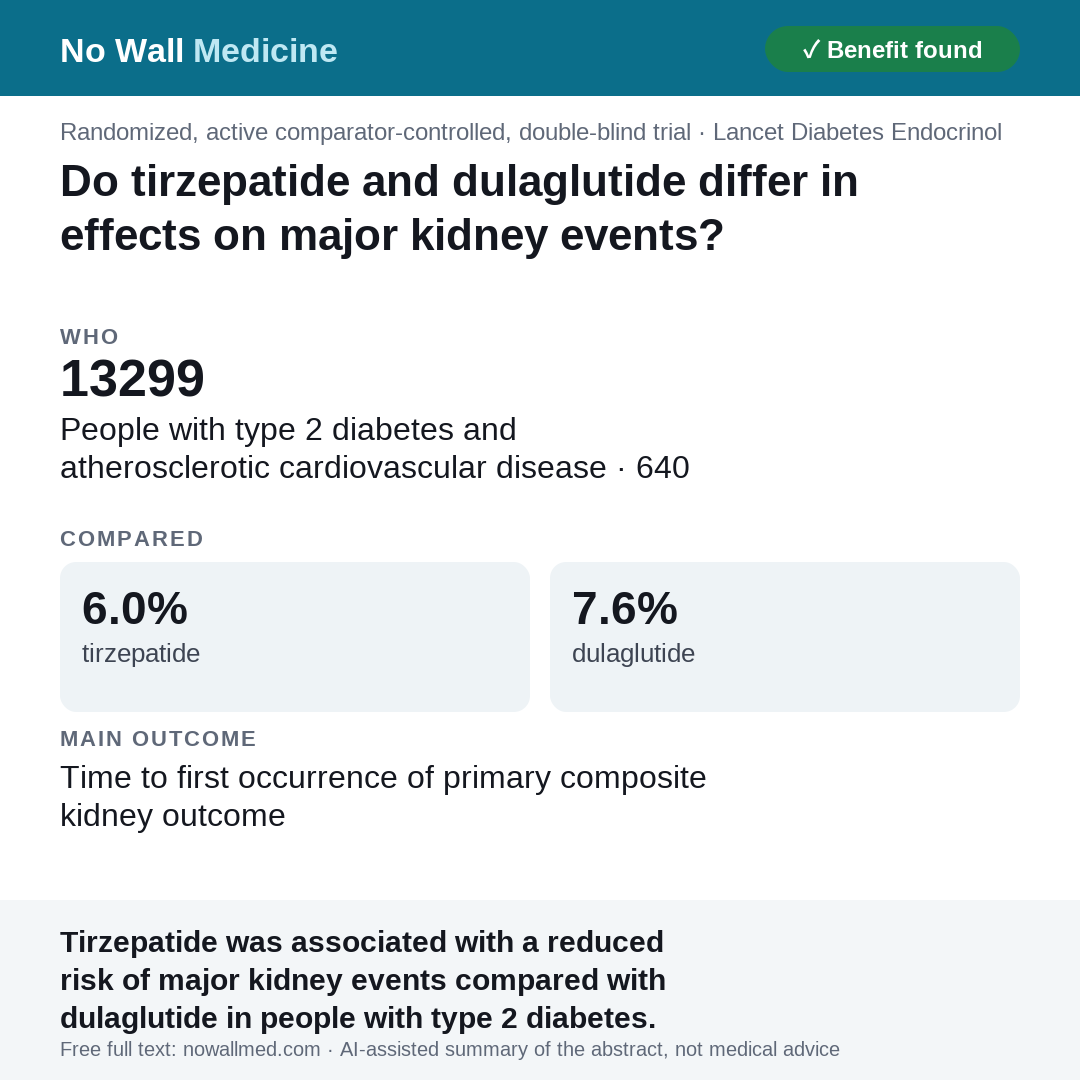
A comparison of the effects of tirzepatide and dulaglutide on major kidney events in people with type 2 diabetes: pre-specified exploratory analyses of the SURPASS-CVOT trial
Randomized, active comparator-controlled, double-blind trialBenefit found
Do tirzepatide and dulaglutide differ in effects on major kidney events?
Who
13299
People with type 2 diabetes and atherosclerotic cardiovascular disease · 640 sites in 30 countries
Compared
6.0%tirzepatide
7.6%dulaglutide
Main outcome
Time to first occurrence of primary composite kidney outcome
Result: hazard ratio 0.77 (95% CI 0.68 to 0.88)
Bottom line: Tirzepatide was associated with a reduced risk of major kidney events compared with dulaglutide in people with type 2 diabetes.
Lancet Diabetes Endocrinol · 2026-05-11Download image
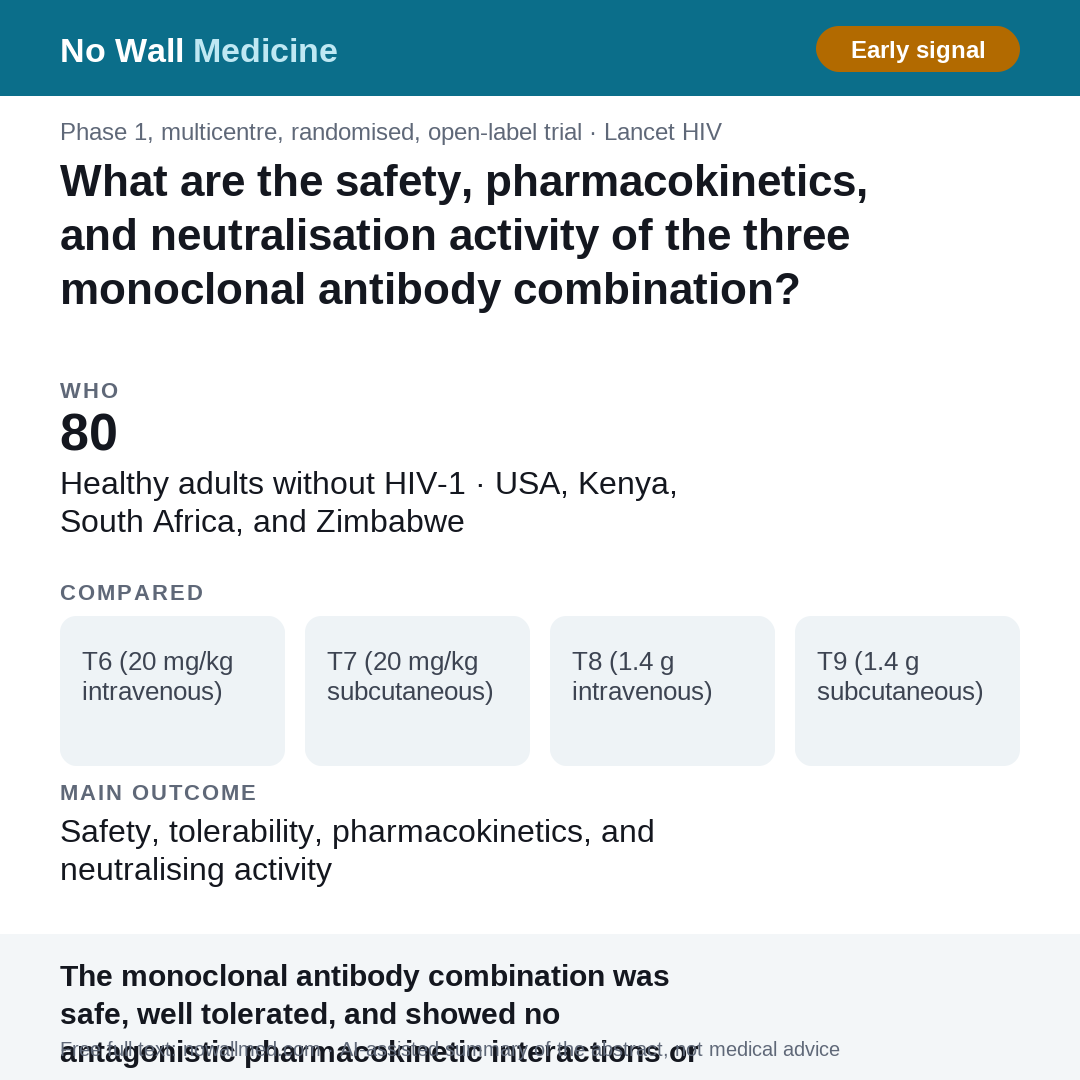
Safety, pharmacokinetics, and neutralisation activity of PGDM1400LS, VRC07-523LS, and PGT121.414.LS infused intravenously or subcutaneously (HVTN 140/HPTN 101 part B): a phase 1, randomised trial
Phase 1, multicentre, randomised, open-label trialBenefit found
What are the safety, pharmacokinetics, and neutralisation activity of the three monoclonal antibody combination?
Who
80
Healthy adults without HIV-1 · USA, Kenya, South Africa, and Zimbabwe
Compared
T6 (20 mg/kg intravenous)
T7 (20 mg/kg subcutaneous)
T8 (1.4 g intravenous)
T9 (1.4 g subcutaneous)
Main outcome
Safety, tolerability, pharmacokinetics, and neutralising activity
Bottom line: The monoclonal antibody combination was safe, well tolerated, and showed no antagonistic pharmacokinetic interactions or loss of neutralisation activity.
Funded by: National Institute of Allergy and Infectious Diseases-National Institutes of Health
Lancet HIV · 2026-05-11Download image
Antimicrobial resistance in bacterial pathogens causing community-acquired and hospital-acquired lower respiratory tract infections (2010-24): a systematic review and meta-analysis
Systematic review and meta-analysisHarm found
What is the prevalence of antimicrobial resistance in bacterial pathogens causing lower respiratory tract infections?
Who
336389
Individuals with microbiologically confirmed lower respiratory tract infections · 51 countries
Compared
23.7%Community-acquired lower respiratory tract infections
47.4%Hospital-acquired lower respiratory tract infections
Main outcome
Antimicrobial resistance prevalence for target bacterial pathogens
Bottom line: Antimicrobial resistance in lower respiratory tract infections is concerningly high, with significant regional and socioeconomic disparities observed.
Funded by: Fleming Fund, US Centers for Disease Control and Prevention, WHO
Lancet Microbe · 2026-05-11Download image