Visual abstracts
New randomized trials and meta-analyses from leading journals at a glance: who was studied, what was compared, and what was found. Every paper is free to read in full.
All specialtiesCardiology 4877Oncology 4138Gastroenterology & Hepatology 1942Infectious Disease 3837Neurology 1905Psychiatry & Mental Health 2273Pulmonology 2143Critical Care 1365Endocrinology & Diabetes 2580Pediatrics 2980Surgery 2559Orthopedics & Sports Medicine 931Neurosurgery 537Cardiothoracic & Vascular Surgery 674Plastic & Reconstructive Surgery 591Nephrology 1133Rheumatology 823Hematology 1109Dermatology 621Ophthalmology 543Obstetrics & Gynecology 1686Public & Global Health 1058Radiology & Imaging 648Anesthesiology 986Urology 764ENT (Otolaryngology) 503Emergency Medicine 511Allergy & Immunology 313Geriatrics 981Family Medicine & Primary Care 562Medical Genetics & Genomics 676Pathology & Laboratory Medicine 159Physical Medicine & Rehabilitation 757Palliative Care 444Nutrition 1588Digital Health & AI 2201General Medicine 321
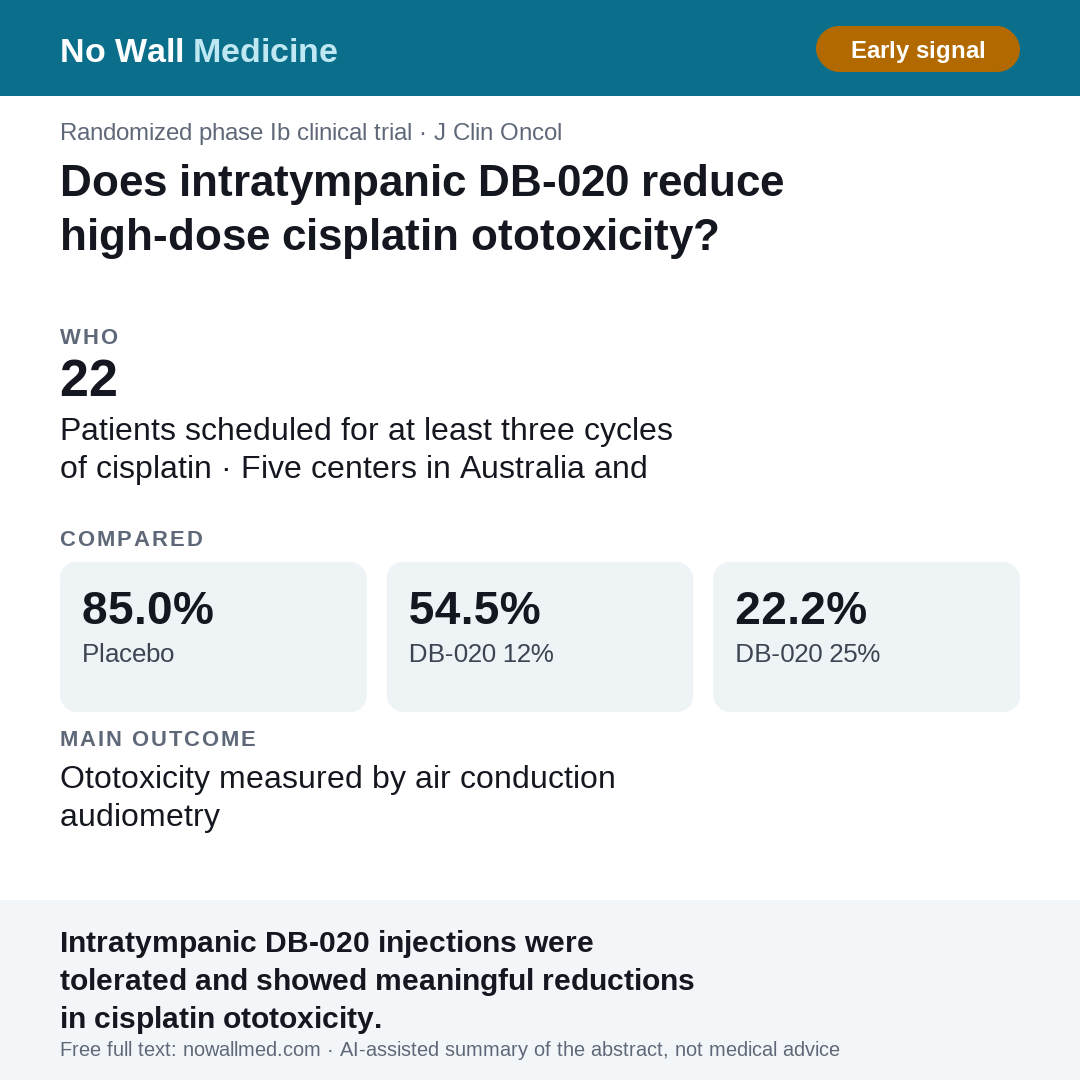
Randomized Phase Ib Clinical Trial of DB-020 Intratympanic Injections to Reduce High-Dose Cisplatin Ototoxicity
Randomized phase Ib clinical trialBenefit found
Does intratympanic DB-020 reduce high-dose cisplatin ototoxicity?
Who
22
Patients scheduled for at least three cycles of cisplatin · Five centers in Australia and the United States
Compared
85.0%Placebo
54.5%DB-020 12%
22.2%DB-020 25%
Main outcome
Ototoxicity measured by air conduction audiometry
Bottom line: Intratympanic DB-020 injections were tolerated and showed meaningful reductions in cisplatin ototoxicity.
J Clin Oncol · 2025-05-22Download image
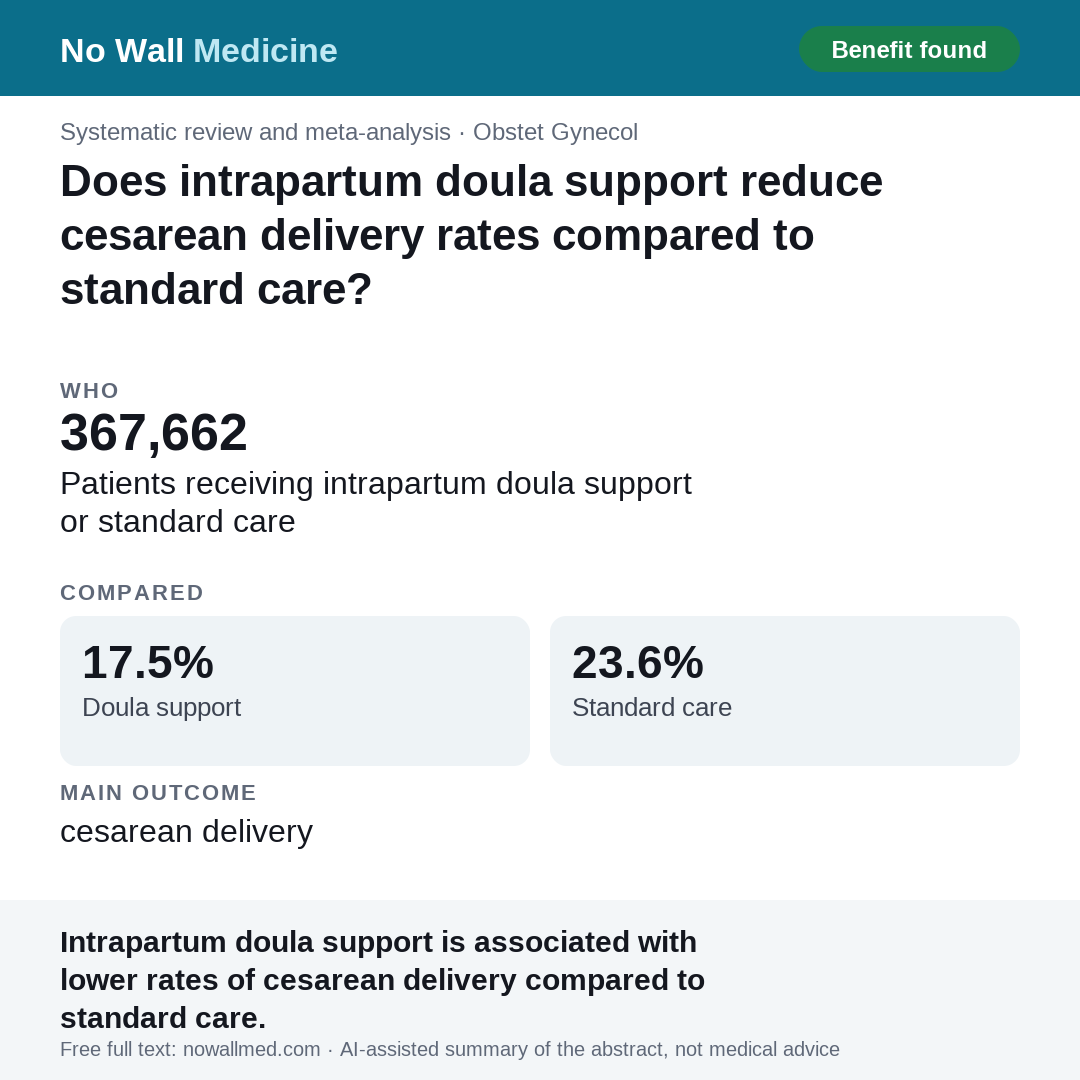
Intrapartum Doula Support and Cesarean Delivery Rates: A Systematic Review and Meta-analysis
Systematic review and meta-analysisBenefit found
Does intrapartum doula support reduce cesarean delivery rates compared to standard care?
Who
367,662
Patients receiving intrapartum doula support or standard care
Compared
17.5%Doula support
23.6%Standard care
Main outcome
cesarean delivery
Result: relative risk 0.71 (95% CI 0.53-0.95)
Bottom line: Intrapartum doula support is associated with lower rates of cesarean delivery compared to standard care.
Limitation: substantial study heterogeneity and borderline evidence of small-study effects suggesting publication bias
Obstet Gynecol · 2025-05-22Download image
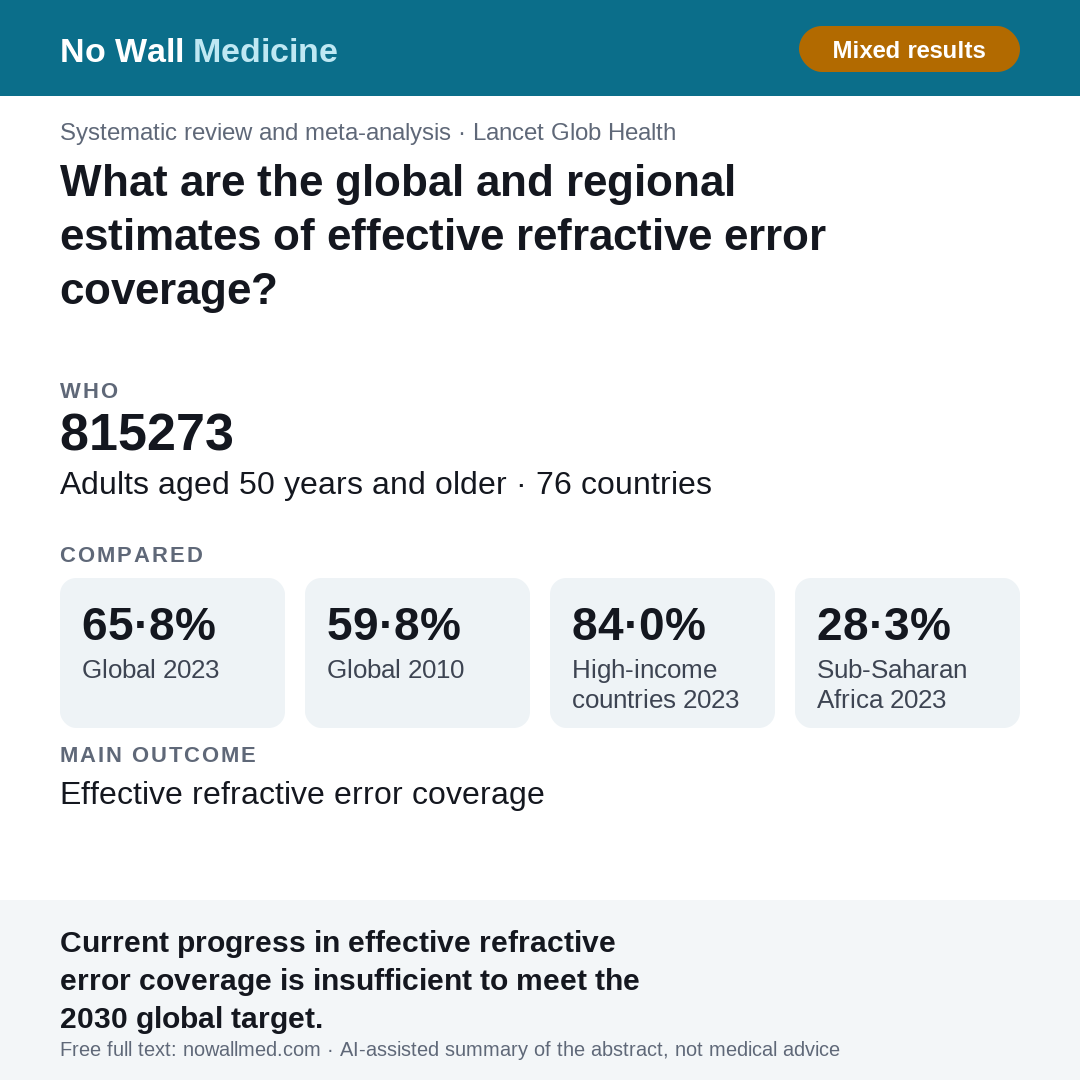
Effective refractive error coverage in adults: a systematic review and meta-analysis of updated estimates from population-based surveys in 76 countries modelling the path towards the 2030 global target
Systematic review and meta-analysisMixed results
What are the global and regional estimates of effective refractive error coverage?
Who
815273
Adults aged 50 years and older · 76 countries
Compared
65·8%Global 2023 (95% uncertainty interval 64·7-66·8)
59·8%Global 2010 (59·4-60·2)
84·0%High-income countries 2023 (95% uncertainty interval 83·0-85·0)
28·3%Sub-Saharan Africa 2023 (26·4-30·4)
Main outcome
Effective refractive error coverage
Bottom line: Current progress in effective refractive error coverage is insufficient to meet the 2030 global target.
Lancet Glob Health · 2025-05-22Download image
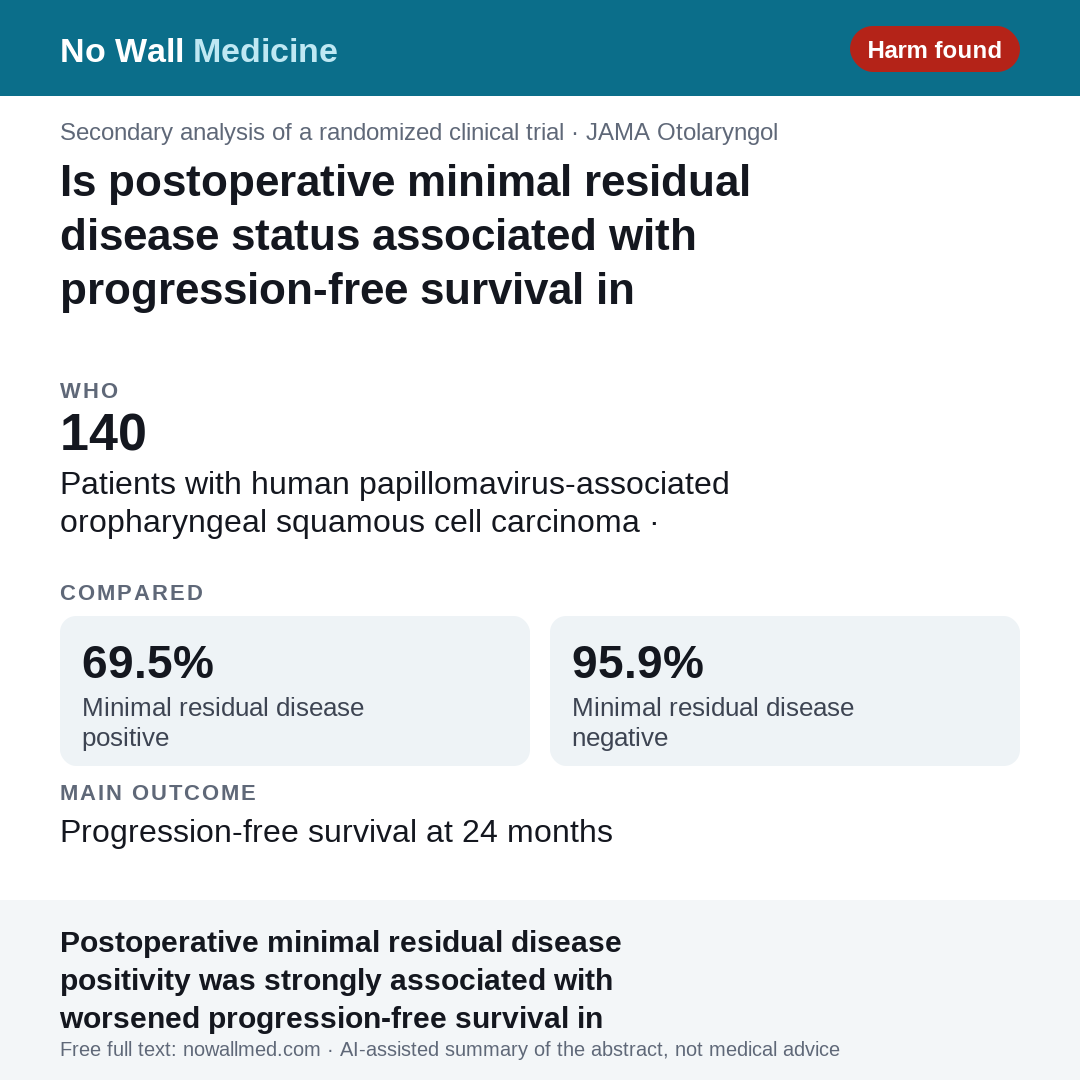
ctDNA and Recurrence Risk for Adjuvant De-Escalation in HPV-Positive Oropharyngeal Carcinoma: A Secondary Analysis of the DART Phase 3 Randomized Clinical Trial
Secondary analysis of a randomized clinical trialHarm found
Is postoperative minimal residual disease status associated with progression-free survival in HPV-positive oropharyngeal squamous cell carcinoma?
Who
140
Patients with human papillomavirus-associated oropharyngeal squamous cell carcinoma · Multiple sites in the United States
Compared
69.5%Minimal residual disease positive
95.9%Minimal residual disease negative
Main outcome
Progression-free survival at 24 months
Result: hazard ratio 0.19 (95% CI, 0.06-0.59)
Bottom line: Postoperative minimal residual disease positivity was strongly associated with worsened progression-free survival in patients with human papillomavirus-associated oropharyngeal squamous cell carcinoma.
JAMA Otolaryngol · 2025-05-22Download image
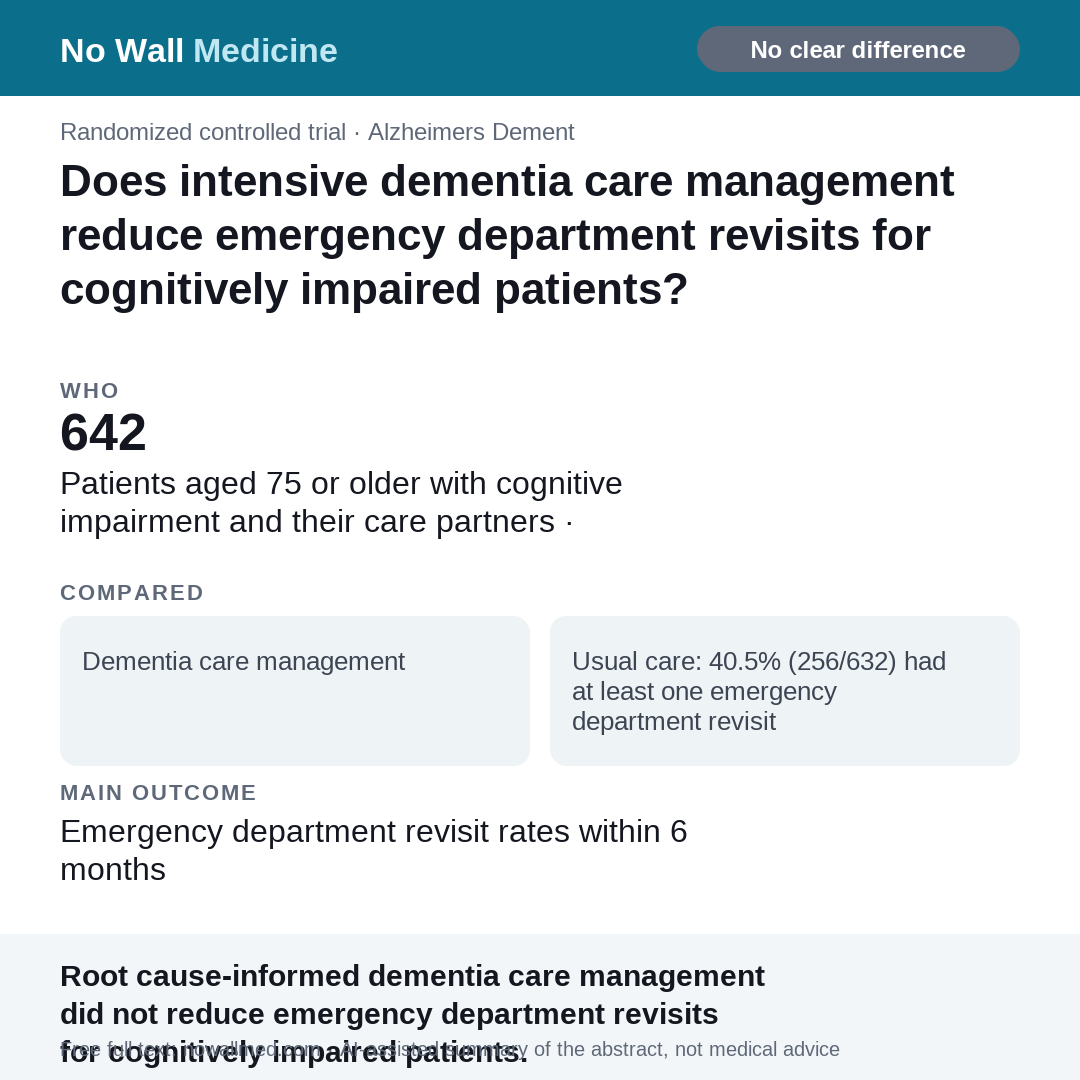
Program of intensive support in emergency departments for care partners of cognitively impaired patients: A randomized controlled trial
Randomized controlled trialNo clear difference
Does intensive dementia care management reduce emergency department revisits for cognitively impaired patients?
Who
642
Patients aged 75 or older with cognitive impairment and their care partners · Academically affiliated emergency departments in New York and Indiana
Compared
Dementia care management
Usual care: 40.5% (256/632) had at least one emergency department revisit
Main outcome
Emergency department revisit rates within 6 months
Bottom line: Root cause-informed dementia care management did not reduce emergency department revisits for cognitively impaired patients.
Alzheimers Dement · 2025-05-22Download image
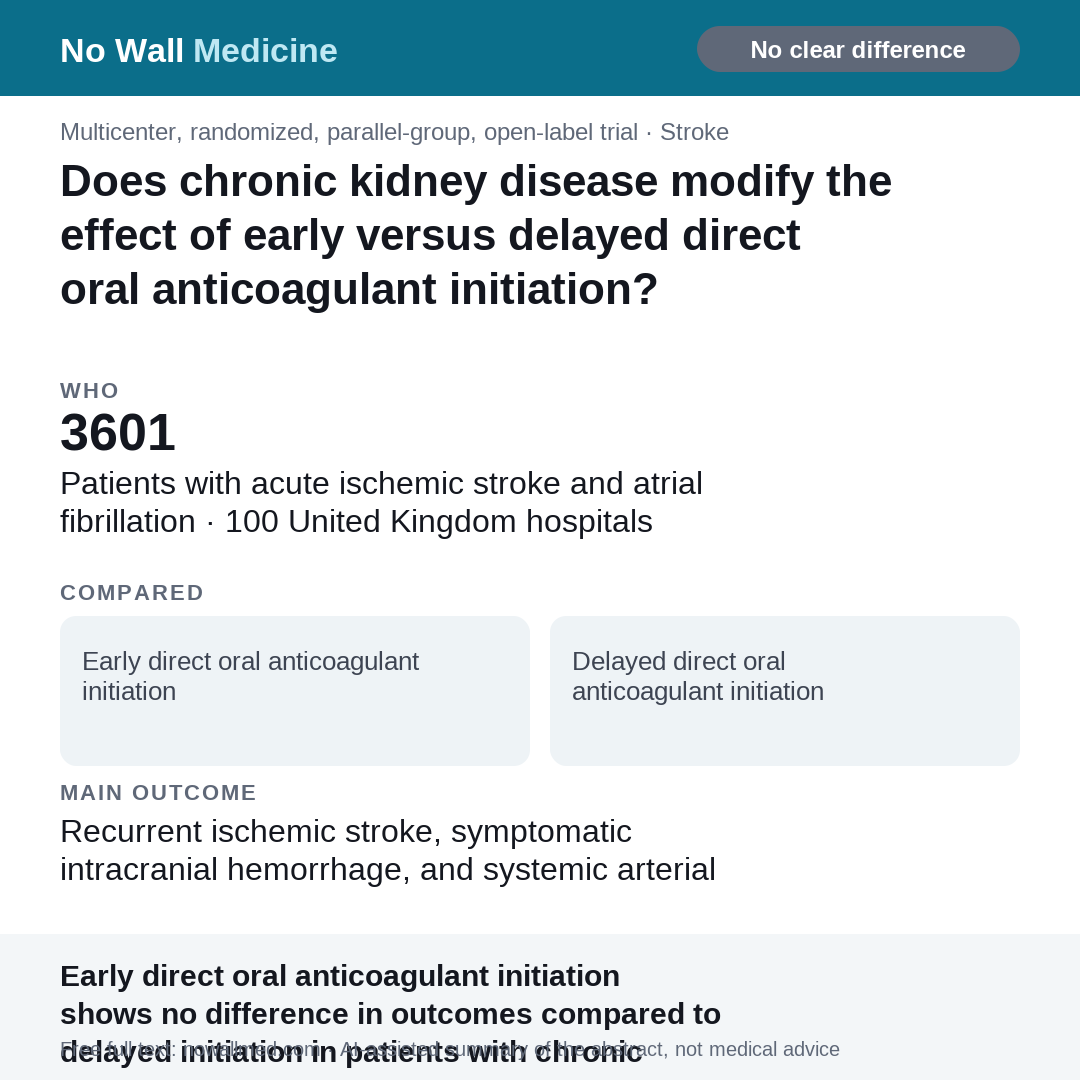
Anticoagulation Timing in Acute Stroke With Atrial Fibrillation According to Chronic Kidney Disease: The OPTIMAS Trial
Multicenter, randomized, parallel-group, open-label trialNo clear difference
Does chronic kidney disease modify the effect of early versus delayed direct oral anticoagulant initiation?
Who
3601
Patients with acute ischemic stroke and atrial fibrillation · 100 United Kingdom hospitals
Compared
Early direct oral anticoagulant initiation
Delayed direct oral anticoagulant initiation
Main outcome
Recurrent ischemic stroke, symptomatic intracranial hemorrhage, and systemic arterial embolism
Result: odds ratio 1.01 (95% CI 0.67-1.51) in normal kidney function; odds ratio 0.90 (95% CI 0.36-2.25) in chronic kidney disease
Bottom line: Early direct oral anticoagulant initiation shows no difference in outcomes compared to delayed initiation in patients with chronic kidney disease.
Stroke · 2025-05-22Download image
PTSD subtypes and their underlying neural biomarkers: a systematic review
Systematic reviewUnclear result
PTSD subtypes and neural biomarkers
Who
53
people with posttraumatic stress disorder
Compared
symptom-based
data-driven
Main outcome
neural biomarkers
Bottom line: PTSD subtypes have various neural biomarkers
Limitation: limited validation of biotypes
Psychol Med · 2025-05-22Download image
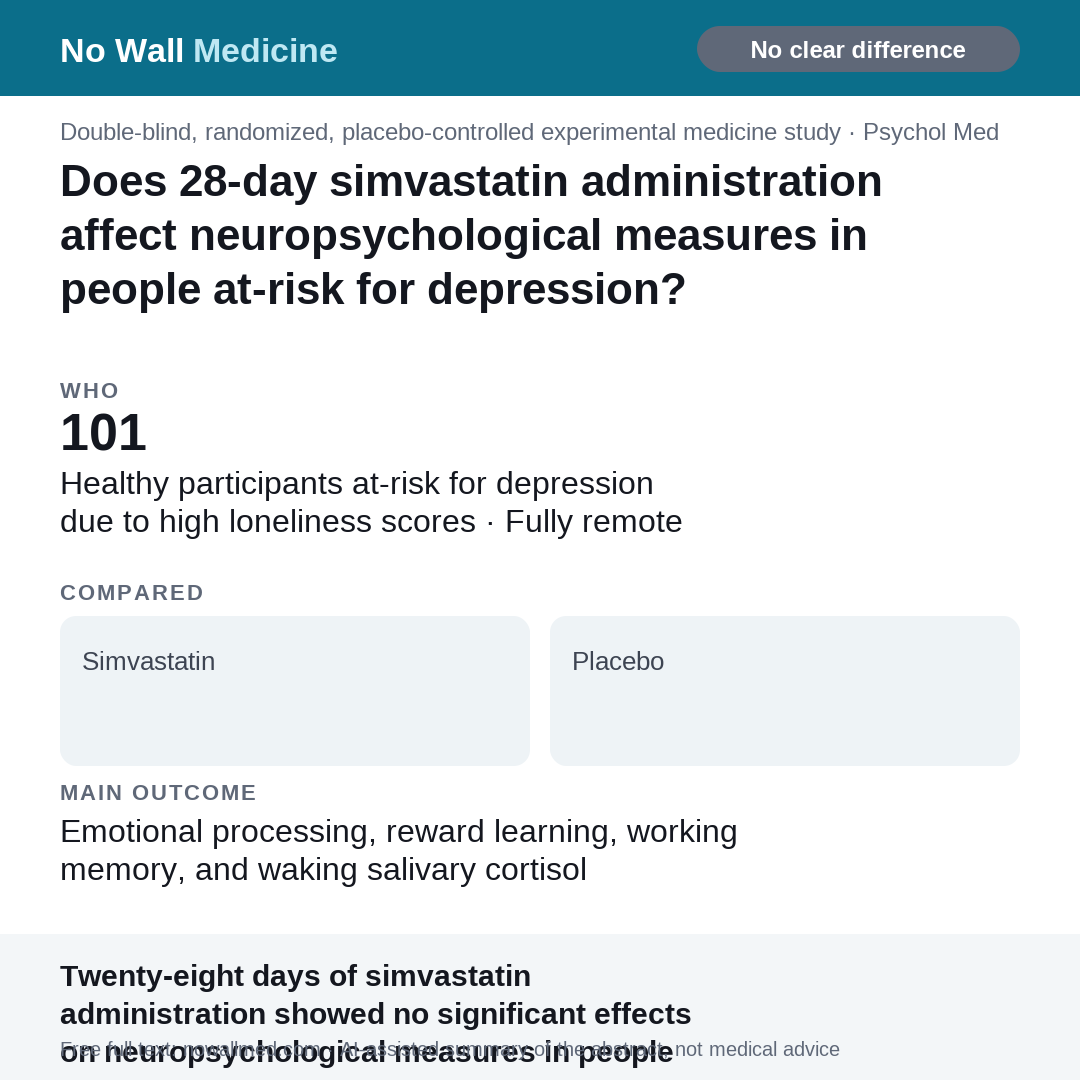
Effects of 28-day simvastatin administration on emotional processing, reward learning, working memory, and salivary cortisol in healthy participants at-risk for depression: OxSTEP, an online experimental medicine trial
Double-blind, randomized, placebo-controlled experimental medicine studyNo clear difference
Does 28-day simvastatin administration affect neuropsychological measures in people at-risk for depression?
Who
101
Healthy participants at-risk for depression due to high loneliness scores · Fully remote design within a United Kingdom-wide sample
Compared
Simvastatin
Placebo
Main outcome
Emotional processing, reward learning, working memory, and waking salivary cortisol
Bottom line: Twenty-eight days of simvastatin administration showed no significant effects on neuropsychological measures in people at-risk for depression.
Limitation: Other unmeasured cognitive processes may be involved.
Psychol Med · 2025-05-22Download image
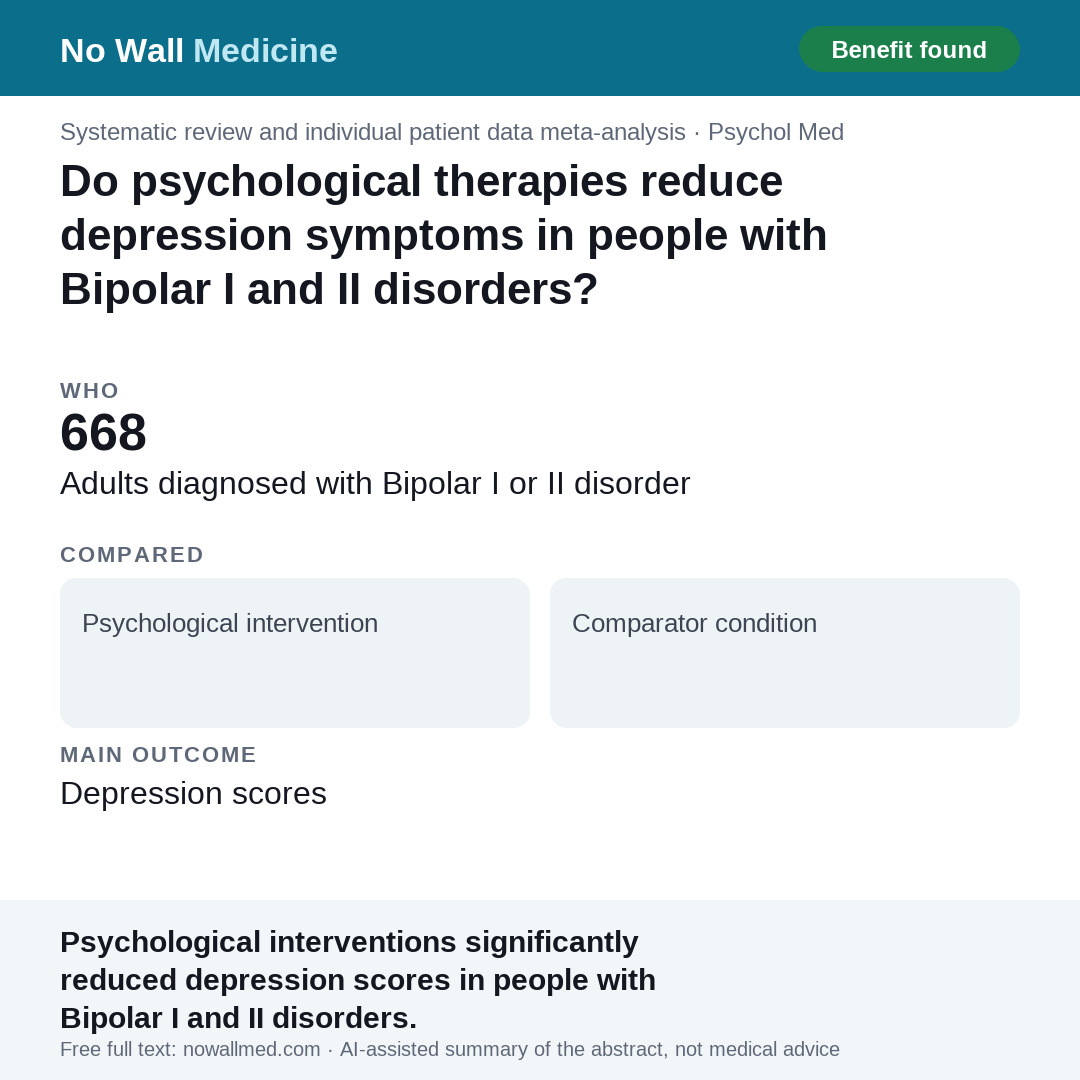
The clinical efficacy of psychological interventions for bipolar depression: a systematic review and individual patient data (IPD) meta-analysis
Systematic review and individual patient data meta-analysisBenefit found
Do psychological therapies reduce depression symptoms in people with Bipolar I and II disorders?
Who
668
Adults diagnosed with Bipolar I or II disorder
Compared
Psychological intervention
Comparator condition
Main outcome
Depression scores
Bottom line: Psychological interventions significantly reduced depression scores in people with Bipolar I and II disorders.
Limitation: Included studies were heterogeneous in intervention type, outcome measure, and comparators.
Psychol Med · 2025-05-22Download image
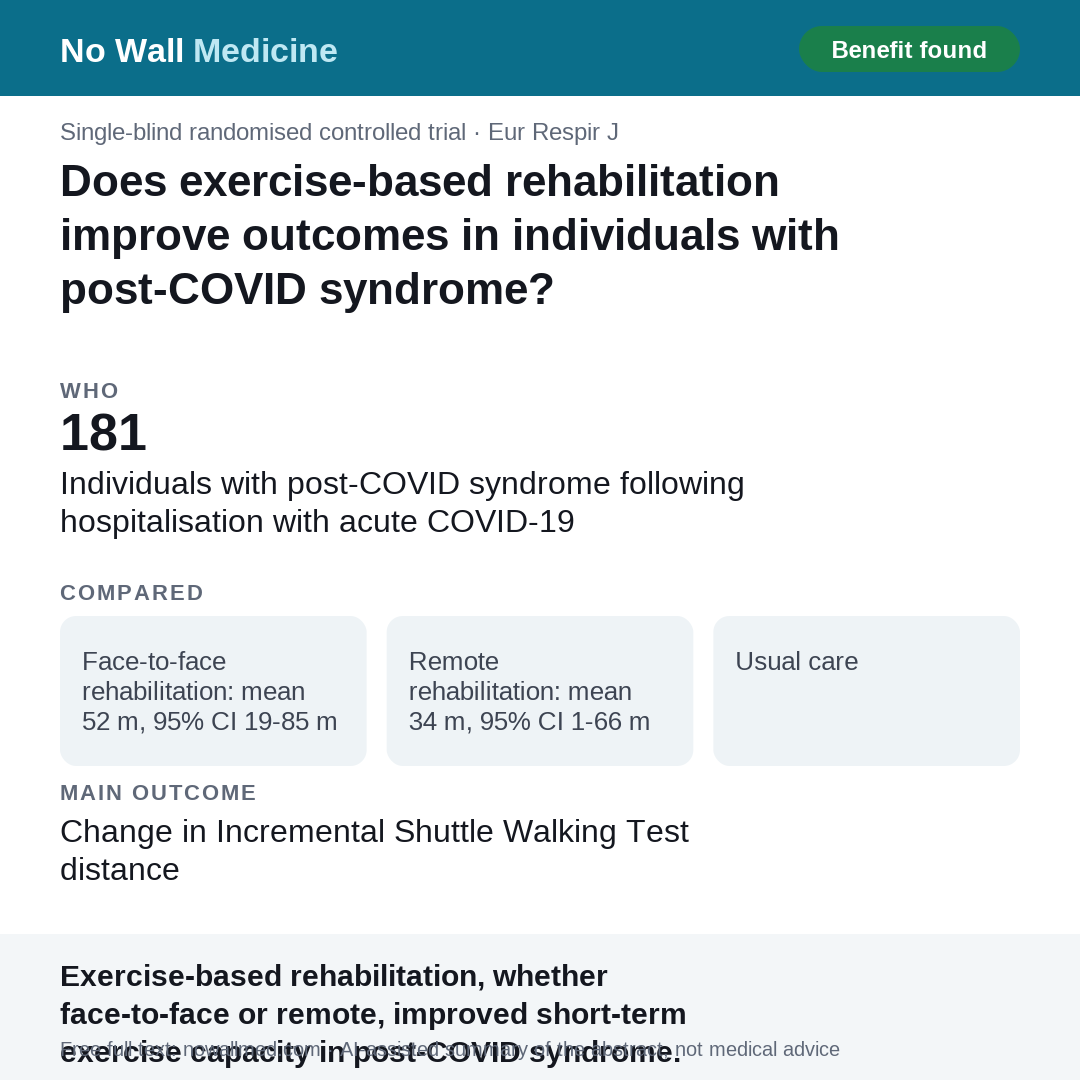
Post-Hospitalisation COVID-19 Rehabilitation (PHOSP-R): a randomised controlled trial of exercise-based rehabilitation
Single-blind randomised controlled trialBenefit found
Does exercise-based rehabilitation improve outcomes in individuals with post-COVID syndrome?
Who
181
Individuals with post-COVID syndrome following hospitalisation with acute COVID-19
Compared
Face-to-face rehabilitation: mean 52 m, 95% CI 19-85 m
Remote rehabilitation: mean 34 m, 95% CI 1-66 m
Usual care
Main outcome
Change in Incremental Shuttle Walking Test distance
Bottom line: Exercise-based rehabilitation, whether face-to-face or remote, improved short-term exercise capacity in post-COVID syndrome.
Eur Respir J · 2025-05-22Download image
Self-directed learning versus traditional instructor-led learning for education on a new anaesthesia workstation: a noninferiority, randomised, controlled trial
Single-centre, noninferiority, randomised, controlled trialBenefit found
Is self-directed learning noninferior to instructor-led learning for new anaesthesia workstation education?
Who
222
Anaesthesia nurses and physicians · Single-centre, large university-based anaesthesia department
Compared
Self-directed learning
Instructor-led workshop
Main outcome
Success rates on 12 competences at an examination station
Result: -0.9% (90% confidence interval: -3.8%-1.7%)
Bottom line: Self-directed learning using a video was not inferior to traditional instructor-led instruction for workstation education.
Br J Anaesth · 2025-05-22Download image

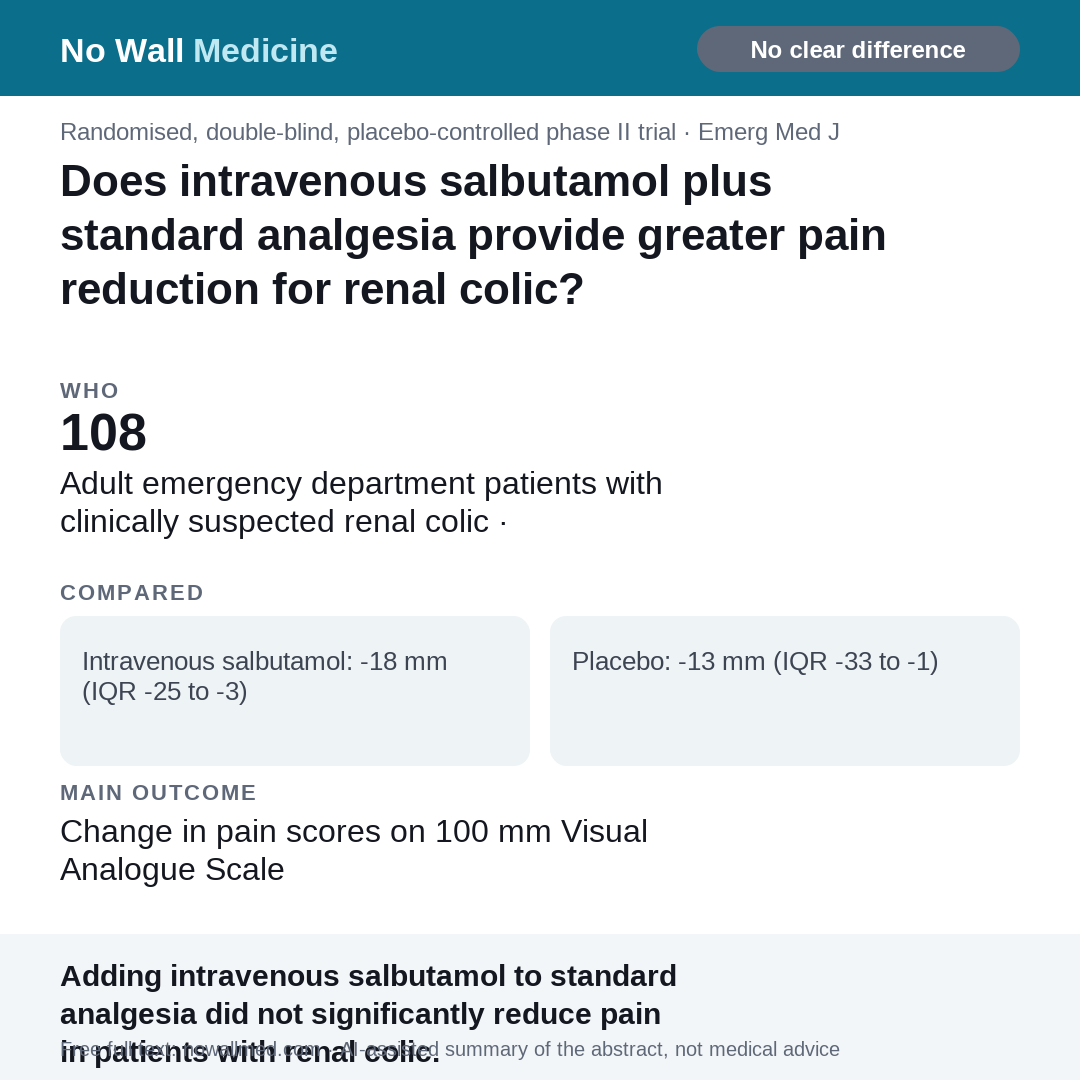
Salbutamol for analgesia in renal colic: a prospective, randomised, placebo-controlled phase II trial
Randomised, double-blind, placebo-controlled phase II trialNo clear difference
Does intravenous salbutamol plus standard analgesia provide greater pain reduction for renal colic?
Who
108
Adult emergency department patients with clinically suspected renal colic · Single-centre
Compared
Intravenous salbutamol: -18 mm (IQR -25 to -3)
Placebo: -13 mm (IQR -33 to -1)
Main outcome
Change in pain scores on 100 mm Visual Analogue Scale
Result: difference 5 mm (95% CI -16 to 6, p=0.575)
Bottom line: Adding intravenous salbutamol to standard analgesia did not significantly reduce pain in patients with renal colic.
Emerg Med J · 2025-05-22Download image
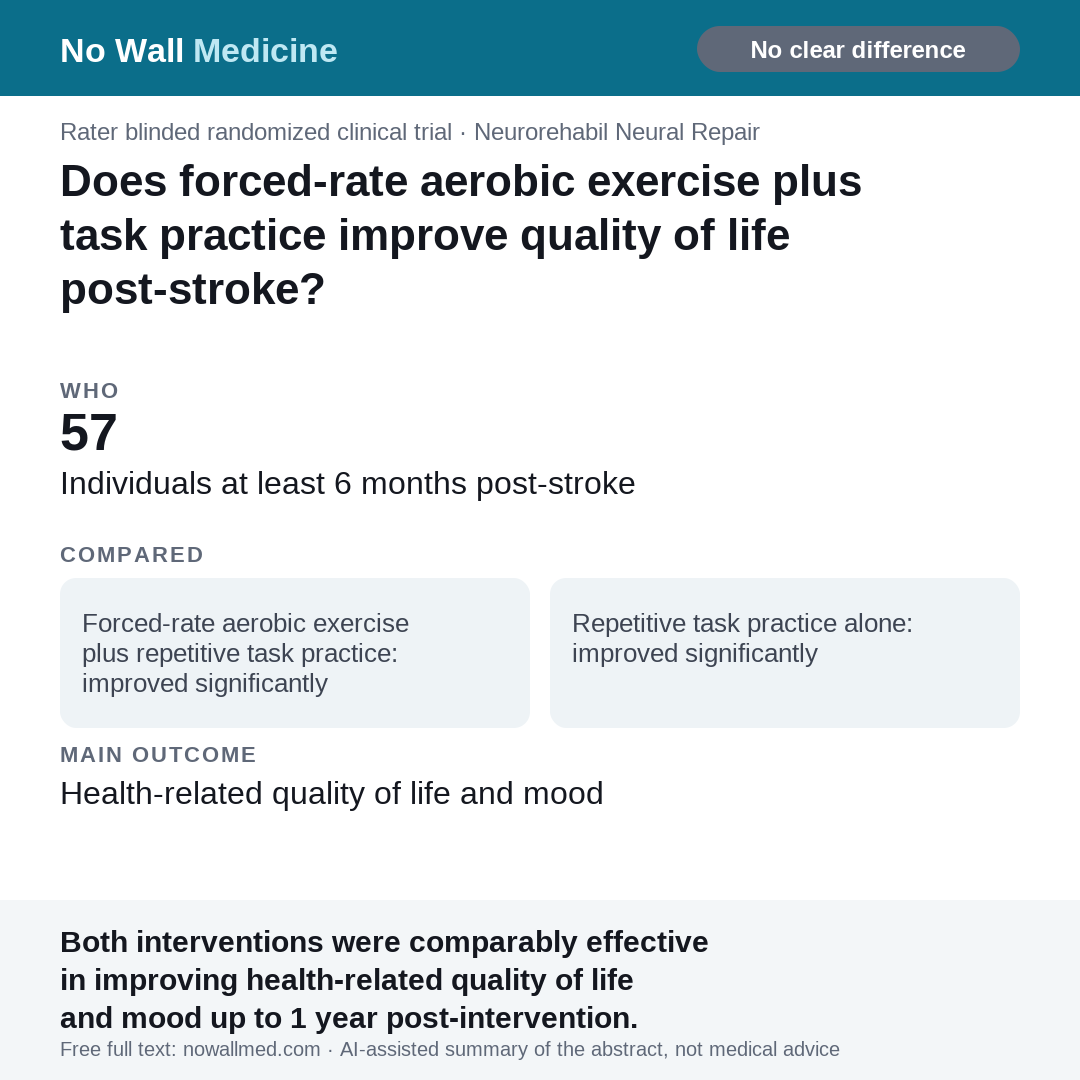
Task Practice With and Without Aerobic Exercise Improves Health-related Quality of Life and Social Participation Post-stroke: A Randomized Clinical Trial
Rater blinded randomized clinical trialNo clear difference
Does forced-rate aerobic exercise plus task practice improve quality of life post-stroke?
Who
57
Individuals at least 6 months post-stroke
Compared
Forced-rate aerobic exercise plus repetitive task practice: improved significantly
Repetitive task practice alone: improved significantly
Main outcome
Health-related quality of life and mood
Bottom line: Both interventions were comparably effective in improving health-related quality of life and mood up to 1 year post-intervention.
Neurorehabil Neural Repair · 2025-05-22Download image
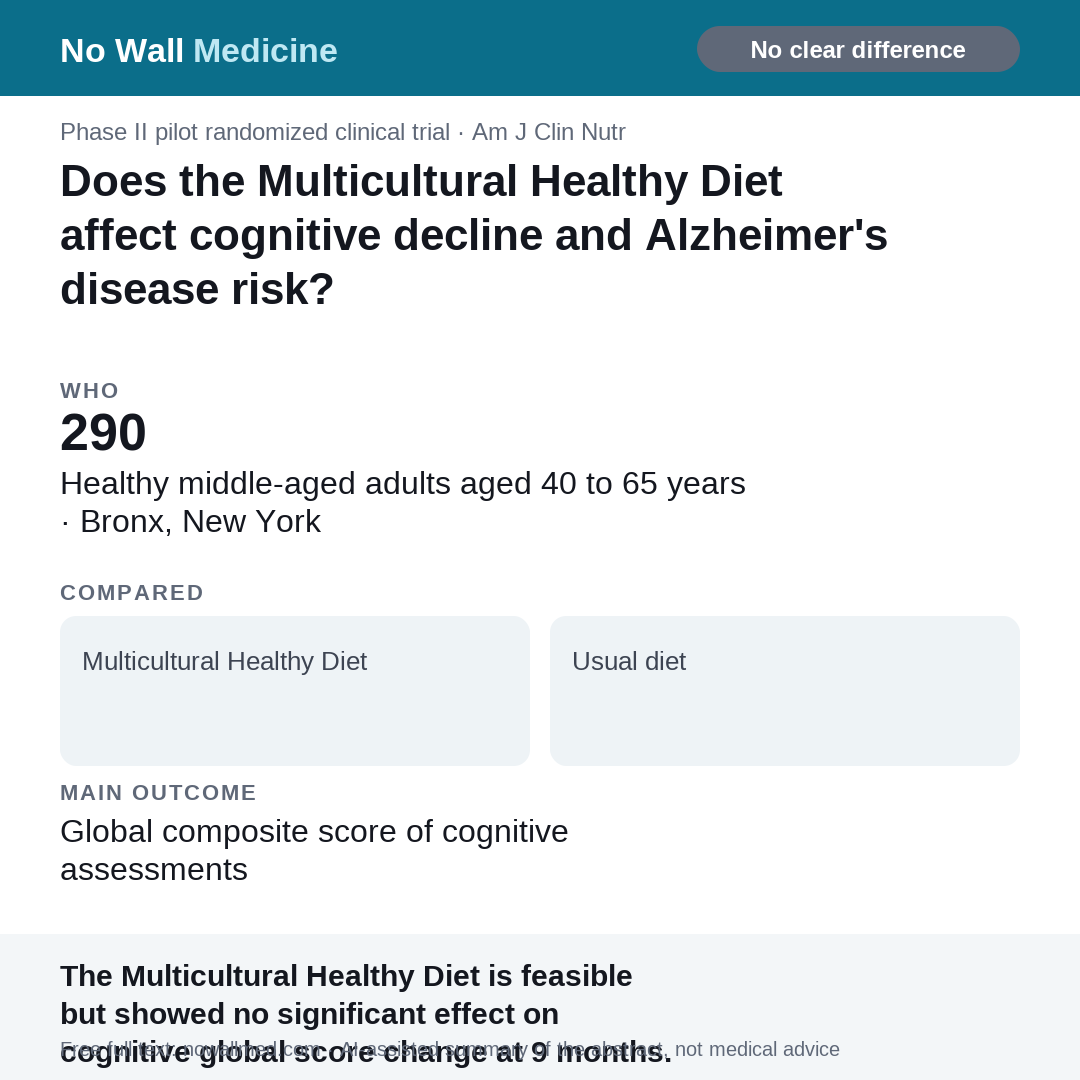
The effects of the Multicultural Healthy Diet on cognitive decline and Alzheimer's disease risk: a phase II randomized controlled trial in middle-aged adults
Phase II pilot randomized clinical trialNo clear difference
Does the Multicultural Healthy Diet affect cognitive decline and Alzheimer's disease risk?
Who
290
Healthy middle-aged adults aged 40 to 65 years · Bronx, New York
Compared
Multicultural Healthy Diet
Usual diet
Main outcome
Global composite score of cognitive assessments
Result: -0.06 (95% CI -0.15, 0.04)
Bottom line: The Multicultural Healthy Diet is feasible but showed no significant effect on cognitive global score change at 9 months.
Limitation: Additional research using other measures like day-to-day variability is warranted.
Am J Clin Nutr · 2025-05-22Download image
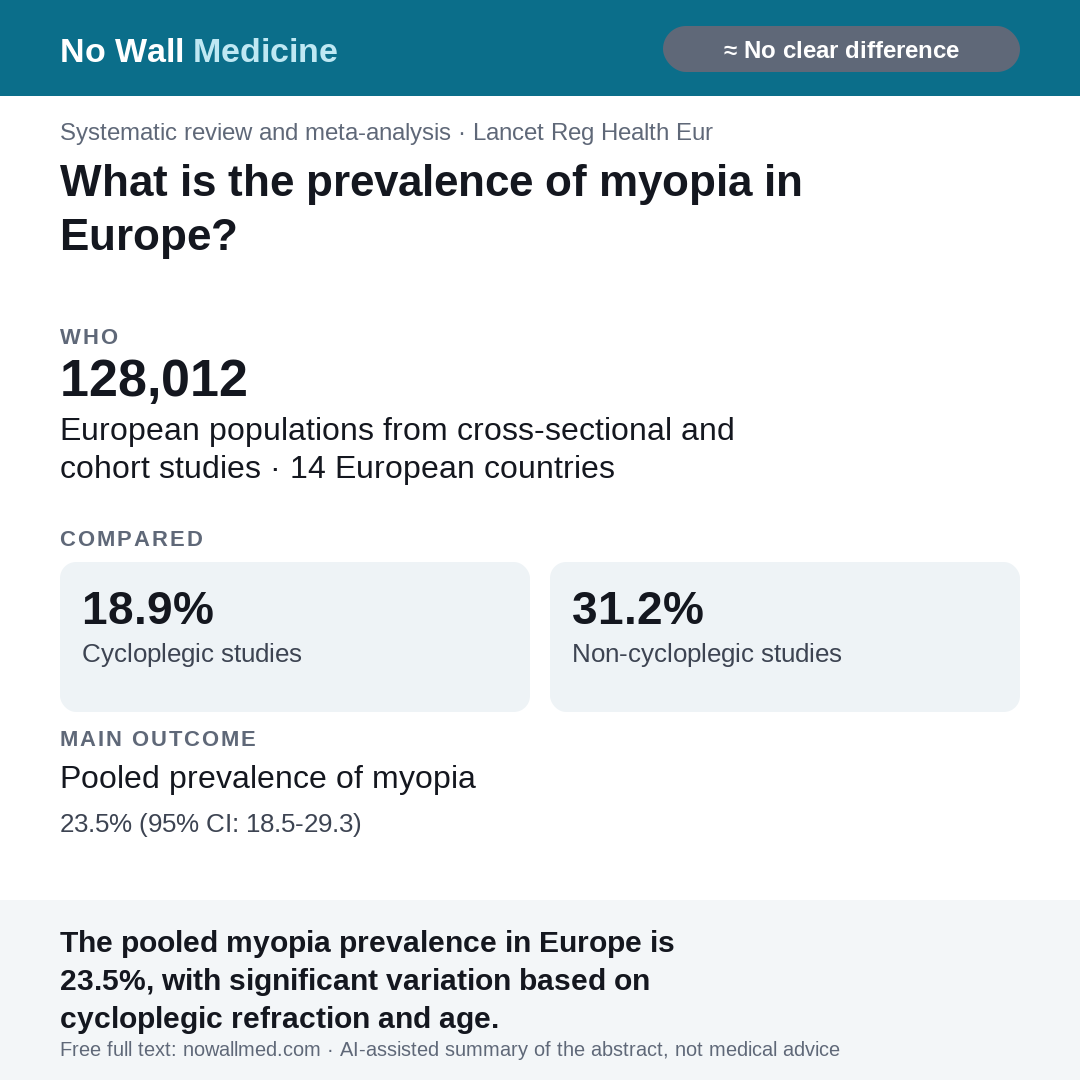
Prevalence of myopia in Europe: a systematic review and meta-analysis of data from 14 countries
Systematic review and meta-analysisNo clear difference
What is the prevalence of myopia in Europe?
Who
128,012
European populations from cross-sectional and cohort studies · 14 European countries
Compared
18.9%Cycloplegic studies (95% CI: 13.2-26.5%)
31.2%Non-cycloplegic studies (95% CI: 24.9-38.3%)
Main outcome
Pooled prevalence of myopia
Result: 23.5% (95% CI: 18.5-29.3)
Bottom line: The pooled myopia prevalence in Europe is 23.5%, with significant variation based on cycloplegic refraction and age.
Funded by: Fundação Ciência e Tecnologia, IP
Lancet Reg Health Eur · 2025-05-22Download image
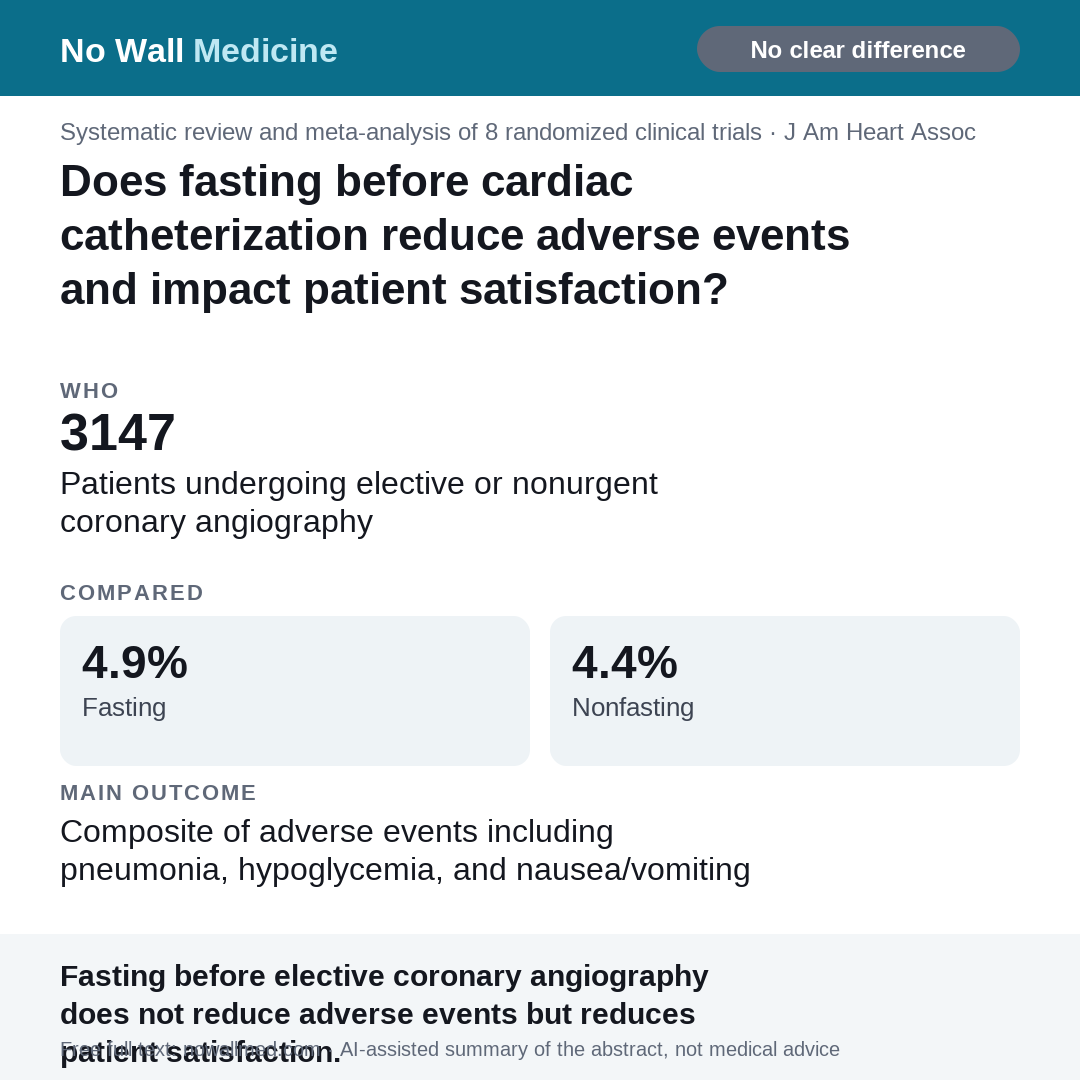
Fasting Before Cardiac Catheterization: Still Necessary? A Systematic Review and Meta-Analysis of Randomized Clinical Trials
Systematic review and meta-analysis of 8 randomized clinical trialsNo clear difference
Does fasting before cardiac catheterization reduce adverse events and impact patient satisfaction?
Who
3147
Patients undergoing elective or nonurgent coronary angiography
Compared
4.9%Fasting
4.4%Nonfasting
Main outcome
Composite of adverse events including pneumonia, hypoglycemia, and nausea/vomiting
Result: odds ratio 1.08 (95% CI 0.78-1.51)
Bottom line: Fasting before elective coronary angiography does not reduce adverse events but reduces patient satisfaction.
J Am Heart Assoc · 2025-05-22Download image
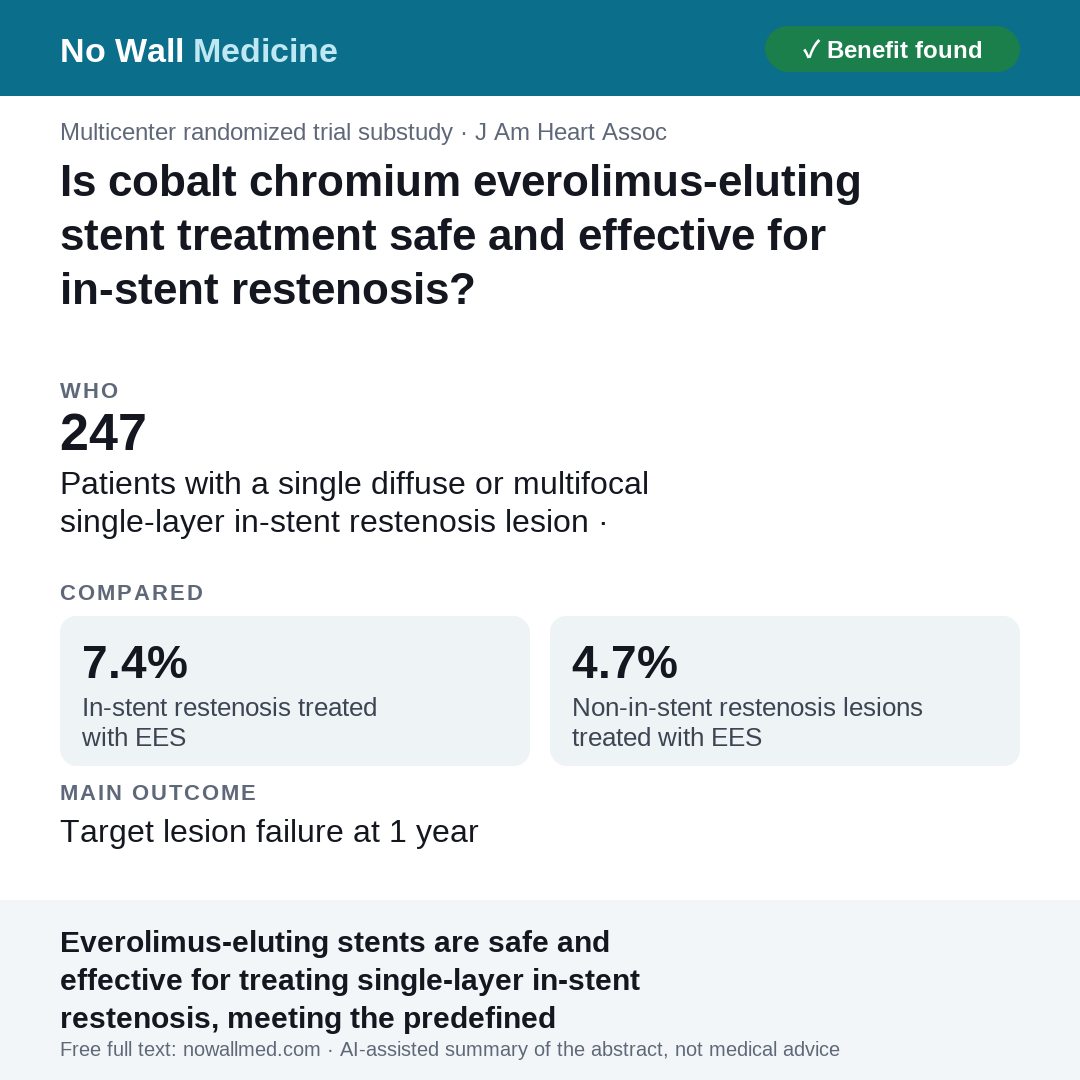
Safety and Efficacy of Cobalt Chromium Everolimus-Eluting Stents for Treatment of In-Stent Restenosis: An ILUMIEN IV Substudy
Multicenter randomized trial substudyBenefit found
Is cobalt chromium everolimus-eluting stent treatment safe and effective for in-stent restenosis?
Who
247
Patients with a single diffuse or multifocal single-layer in-stent restenosis lesion · Multicenter
Compared
7.4%In-stent restenosis treated with EES (18 patients)
4.7%Non-in-stent restenosis lesions treated with EES
Main outcome
Target lesion failure at 1 year
Result: hazard ratio 1.58 (95% CI 0.95-2.61)
Bottom line: Everolimus-eluting stents are safe and effective for treating single-layer in-stent restenosis, meeting the predefined performance goal.
J Am Heart Assoc · 2025-05-22Download image
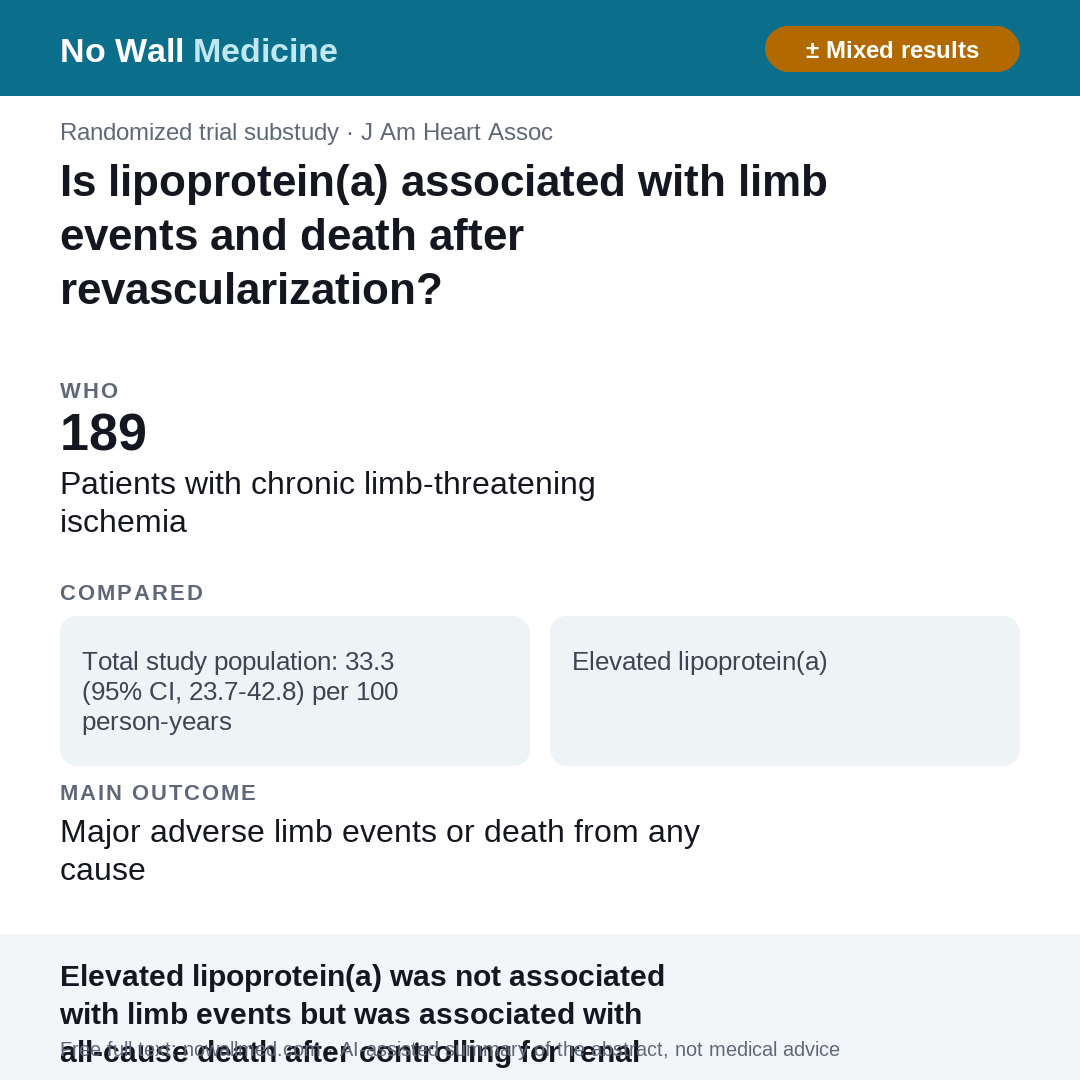
Association of Lipoprotein(a) With Major Adverse Limb Events and All-Cause Mortality Following Revascularization for Chronic Limb-Threatening Ischemia: A Substudy of the BEST-CLI Trial
Randomized trial substudyMixed results
Is lipoprotein(a) associated with limb events and death after revascularization?
Who
189
Patients with chronic limb-threatening ischemia
Compared
Total study population: 33.3 (95% CI, 23.7-42.8) per 100 person-years
Elevated lipoprotein(a)
Main outcome
Major adverse limb events or death from any cause
Result: hazard ratio 1.00 (95% CI 0.99-1.00)
Bottom line: Elevated lipoprotein(a) was not associated with limb events but was associated with all-cause death after controlling for renal function.
J Am Heart Assoc · 2025-05-22Download image
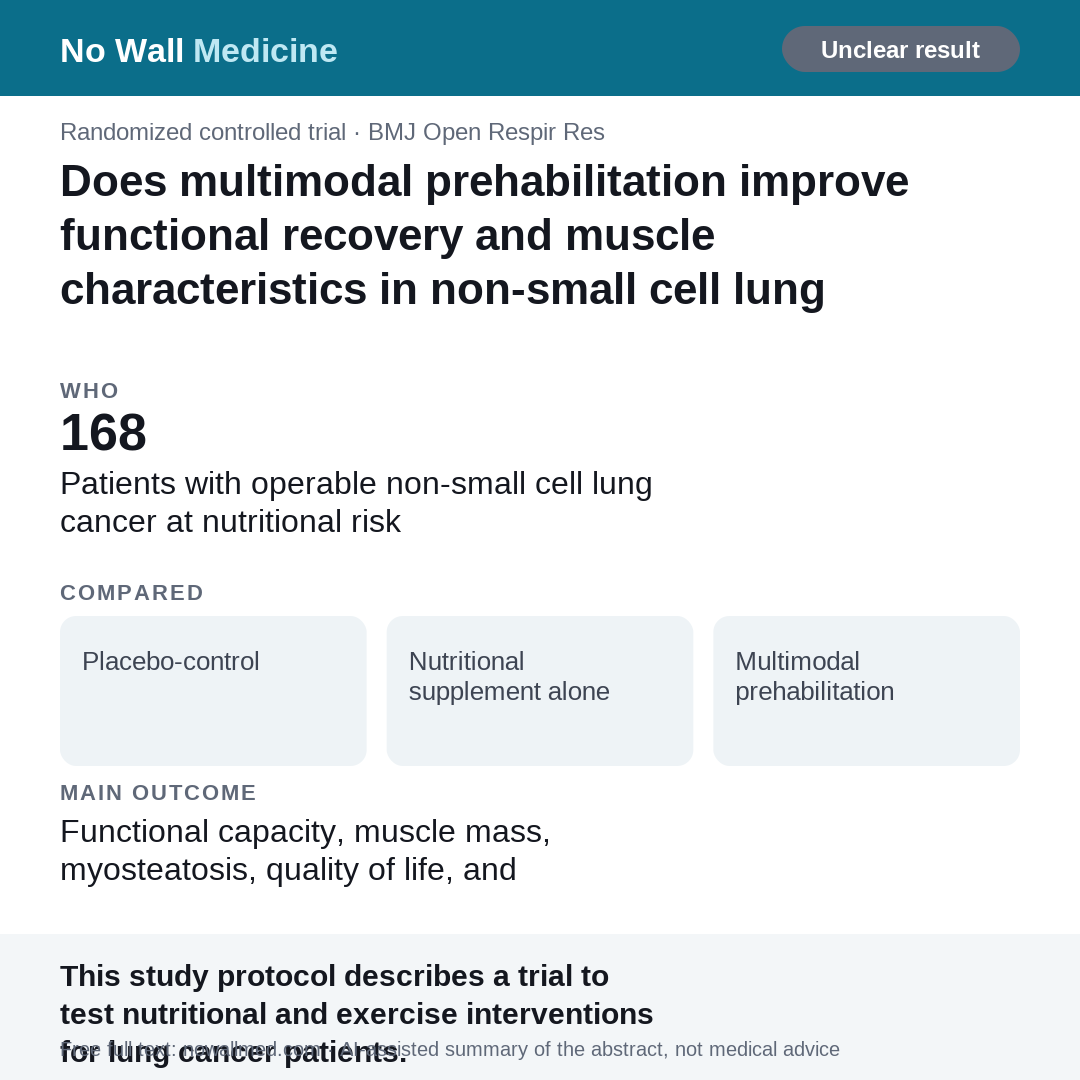
Novel multimodal intervention for surgical prehabilitation on functional recovery and muscle characteristics in patients with non-small cell lung cancer: study protocol for a randomised controlled trial (MMP-LUNG)
Randomized controlled trialUnclear result
Does multimodal prehabilitation improve functional recovery and muscle characteristics in non-small cell lung cancer patients?
Who
168
Patients with operable non-small cell lung cancer at nutritional risk
Compared
Placebo-control
Nutritional supplement alone
Multimodal prehabilitation
Main outcome
Functional capacity, muscle mass, myosteatosis, quality of life, and complications
Bottom line: This study protocol describes a trial to test nutritional and exercise interventions for lung cancer patients.
BMJ Open Respir Res · 2025-05-22Download image
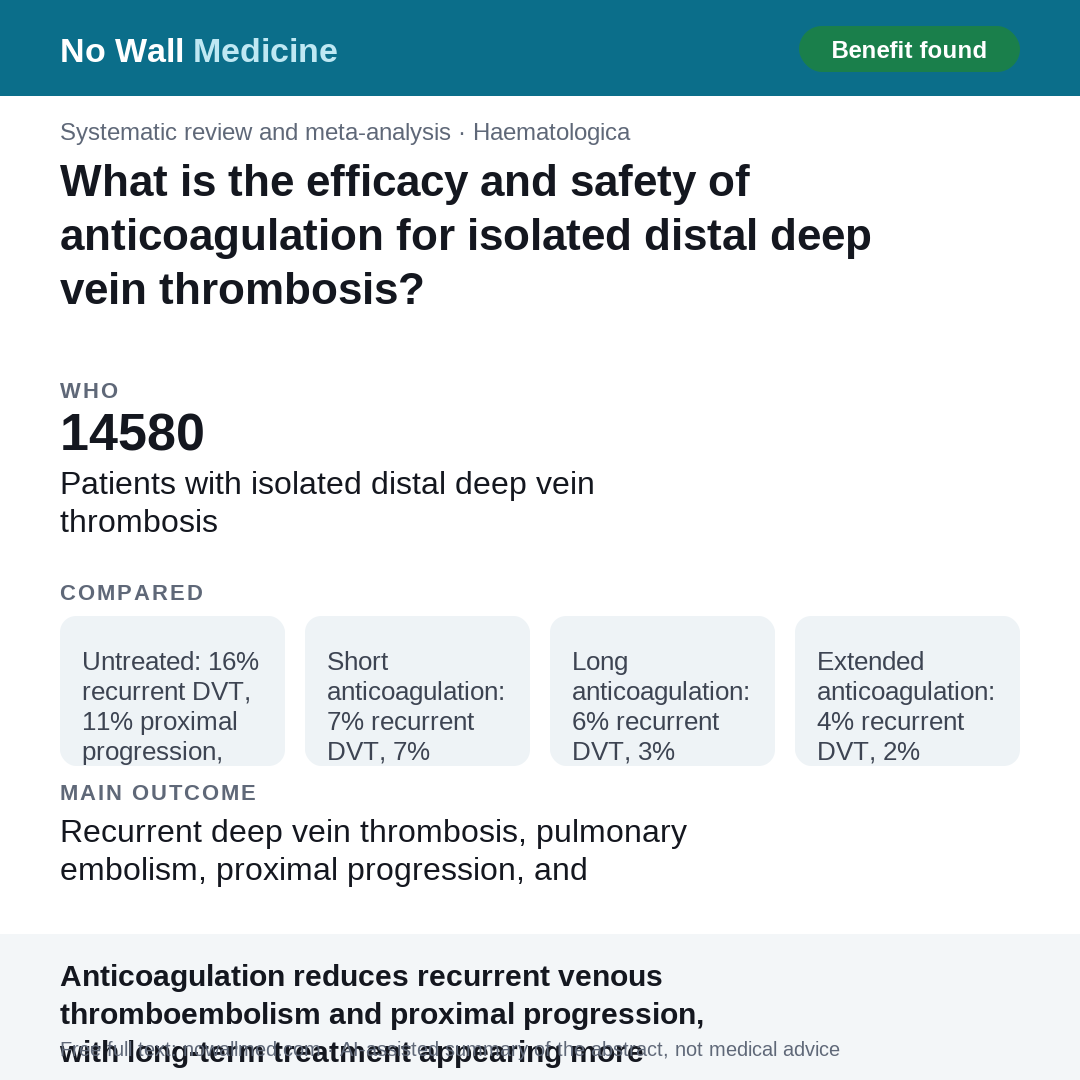
Anticoagulant treatment for isolated distal deep vein thrombosis: a systematic review and meta-analysis
Systematic review and meta-analysisBenefit found
What is the efficacy and safety of anticoagulation for isolated distal deep vein thrombosis?
Who
14580
Patients with isolated distal deep vein thrombosis
Compared
Untreated: 16% recurrent DVT, 11% proximal progression, 30% post-thrombotic syndrome
Short anticoagulation: 7% recurrent DVT, 7% proximal progression, 11% post-thrombotic syndrome
Long anticoagulation: 6% recurrent DVT, 3% proximal progression, 0% post-thrombotic syndrome
Extended anticoagulation: 4% recurrent DVT, 2% proximal progression
Main outcome
Recurrent deep vein thrombosis, pulmonary embolism, proximal progression, and post-thrombotic syndrome
Result: RR 2.72 (95% CI: 1.19-6.23) for recurrent venous thromboembolism
Bottom line: Anticoagulation reduces recurrent venous thromboembolism and proximal progression, with long-term treatment appearing more effective.
Haematologica · 2025-05-22Download image