Visual abstracts
New randomized trials and meta-analyses from leading journals at a glance: who was studied, what was compared, and what was found. Every paper is free to read in full.
All specialtiesCardiology 1953Oncology 1672Gastroenterology & Hepatology 742Infectious Disease 1240Neurology 808Psychiatry & Mental Health 955Pulmonology 840Critical Care 565Endocrinology & Diabetes 1050Pediatrics 1171Surgery 985Orthopedics & Sports Medicine 364Neurosurgery 248Cardiothoracic & Vascular Surgery 214Plastic & Reconstructive Surgery 304Nephrology 406Rheumatology 279Hematology 423Dermatology 223Ophthalmology 229Obstetrics & Gynecology 635Public & Global Health 382Radiology & Imaging 270Anesthesiology 392Urology 339ENT (Otolaryngology) 263Emergency Medicine 219Allergy & Immunology 126Geriatrics 414Family Medicine & Primary Care 230Medical Genetics & Genomics 212Pathology & Laboratory Medicine 64Physical Medicine & Rehabilitation 340Palliative Care 171Nutrition 526Digital Health & AI 1026General Medicine 152
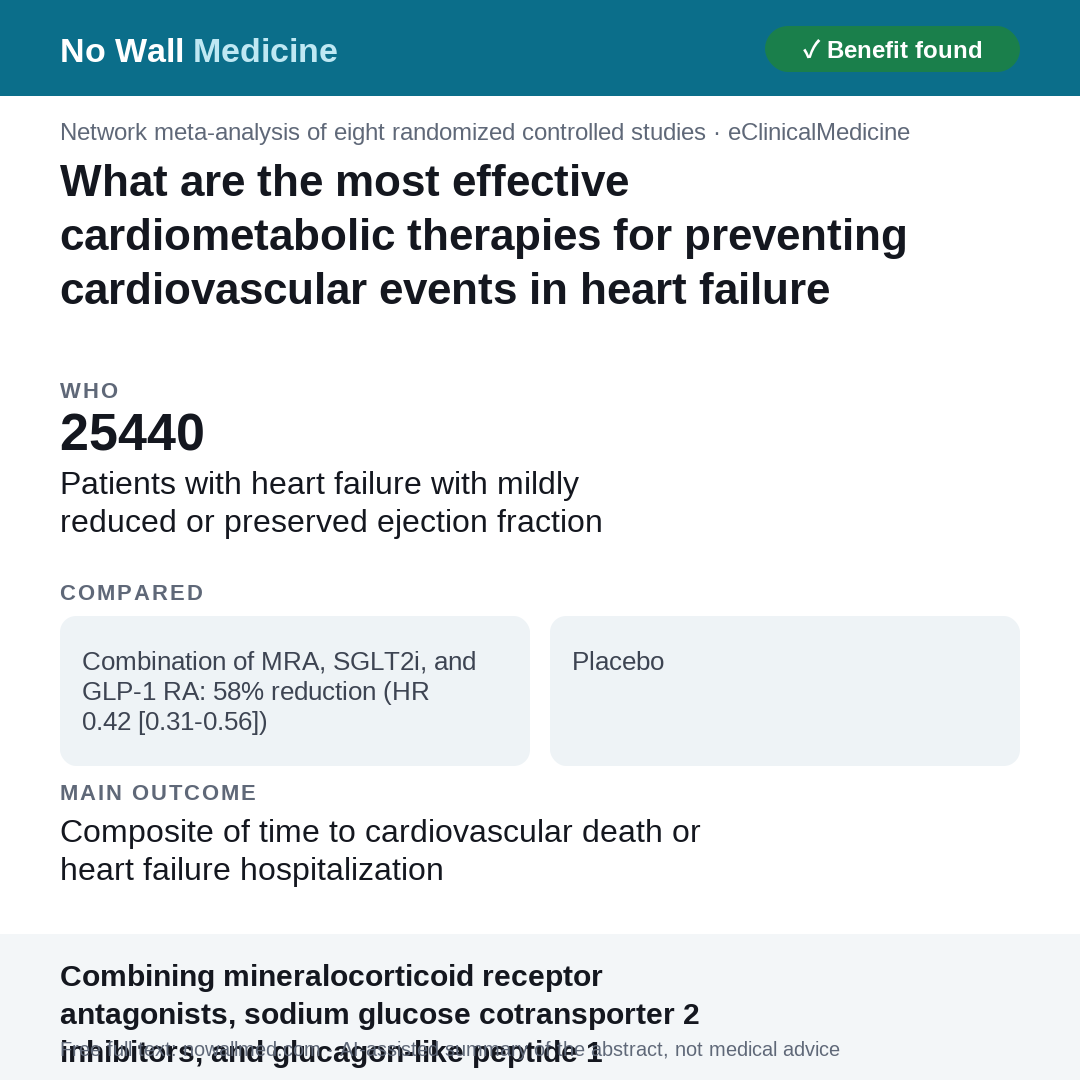
Prevention of cardiovascular events in heart failure with mildly reduced or preserved ejection fraction: a comprehensive network meta-analysis of eight randomized controlled trials using reconstructed individual patient's data
Network meta-analysis of eight randomized controlled trialsBenefit found
What are the most effective cardiometabolic therapies for preventing cardiovascular events in heart failure patients?
Who
25440
Patients with heart failure with mildly reduced or preserved ejection fraction
Compared
Combination of MRA, SGLT2i, and GLP-1 RA: 58% reduction (HR 0.42 [0.31-0.56])
Placebo
Main outcome
Composite of time to cardiovascular death or heart failure hospitalization
Result: hazard ratio 0.42 (95% CI 0.31 to 0.56)
Bottom line: Combining mineralocorticoid receptor antagonists, sodium glucose cotransporter 2 inhibitors, and glucagon-like peptide 1 receptor agonists reduces cardiovascular events.
Limitation: Large-scale randomized combination therapies with extended follow-up are needed to confirm these findings.
eClinicalMedicine · 2025-09-12Download image
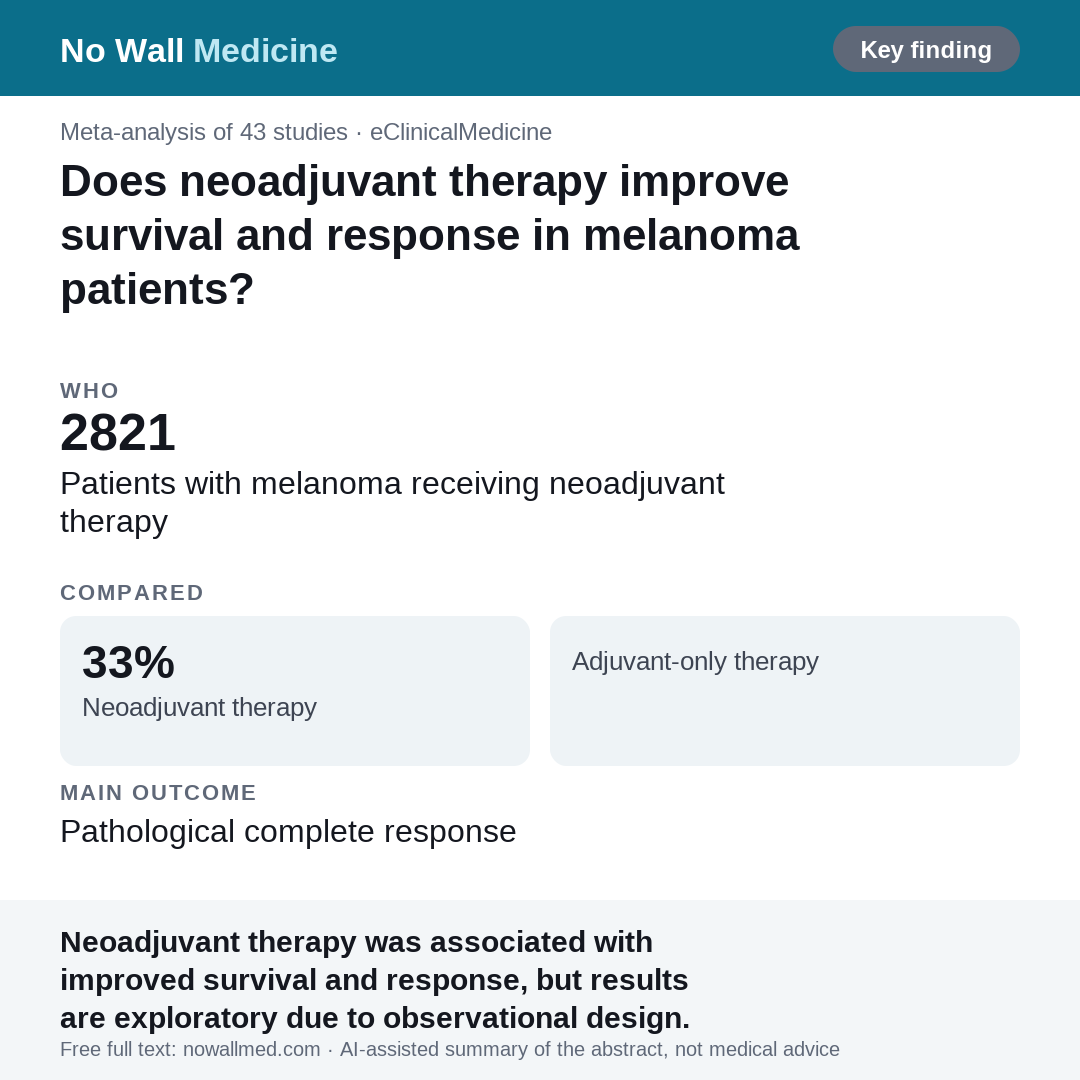
Effect of neoadjuvant therapy on survival outcomes in patients with melanoma: a systematic review and meta-analysis
Systematic review and meta-analysisBenefit found
What are the efficacy and safety of neoadjuvant therapy in melanoma patients?
Who
2821
Patients with melanoma receiving neoadjuvant therapy
Compared
Neoadjuvant therapy
Adjuvant-only therapy
Main outcome
Pathological complete response, radiological complete response, survival, and adverse events
Result: hazard ratio 0.58 (95% CI 0.39-0.87) for progression-free survival; hazard ratio 0.64 (95% CI 0.41-0.99) for overall survival
Bottom line: Neoadjuvant therapy shows promising survival benefits and favorable complete response rates compared to adjuvant-only therapy in melanoma.
Limitation: The majority of included studies are single-arm or observational studies.
eClinicalMedicine · 2025-09-12Download image
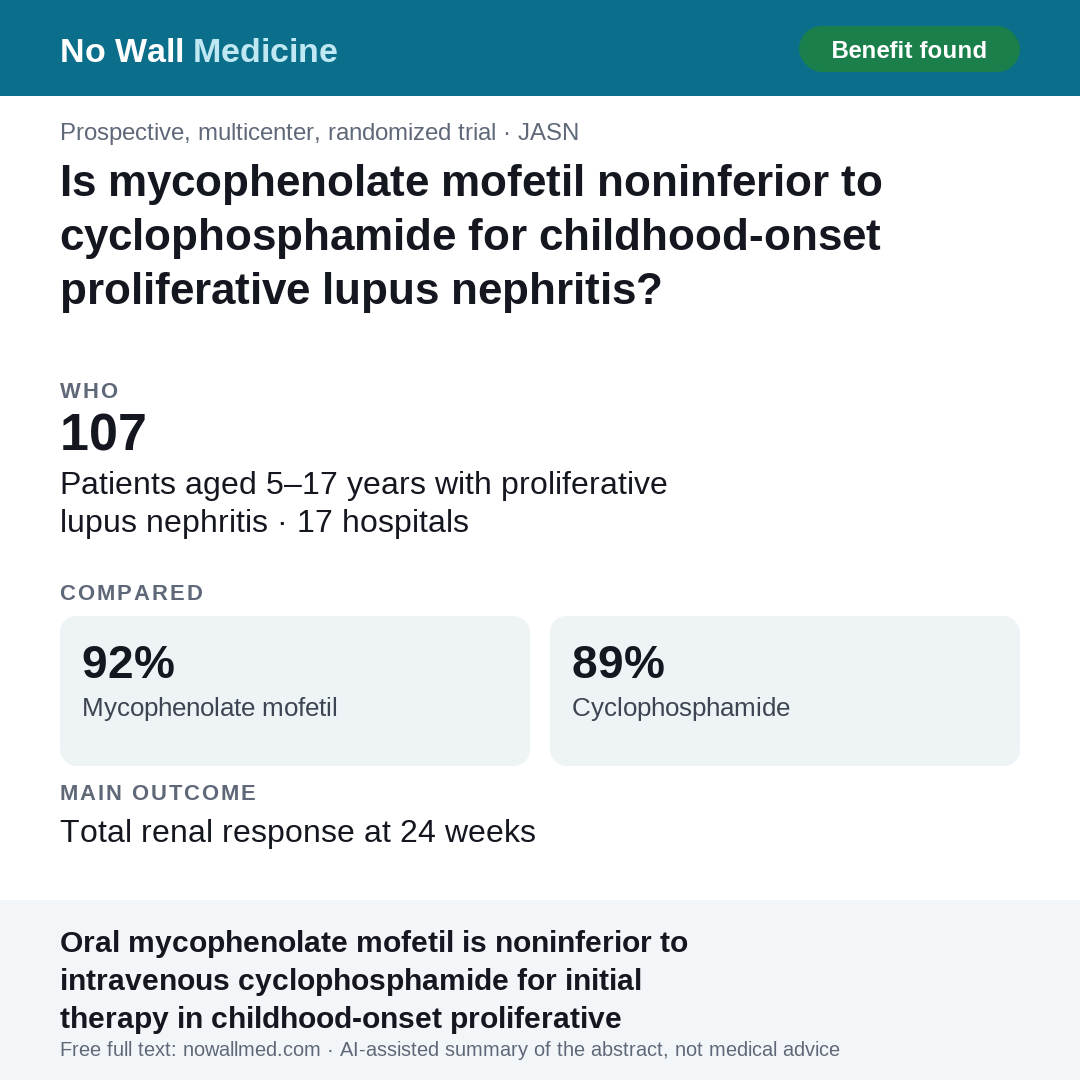
Mycophenolate Mofetil versus Cyclophosphamide for Initial Therapy in Childhood-Onset Proliferative Lupus Nephritis: A Prospective, Multicenter, Randomized Trial
Prospective, multicenter, randomized trialBenefit found
Is mycophenolate mofetil noninferior to cyclophosphamide for childhood-onset proliferative lupus nephritis?
Who
107
Patients aged 5–17 years with proliferative lupus nephritis · 17 hospitals
Compared
92%Mycophenolate mofetil
89%Cyclophosphamide
Main outcome
Total renal response at 24 weeks
Result: difference 3% (95% confidence interval, −9% to 15%)
Bottom line: Oral mycophenolate mofetil is noninferior to intravenous cyclophosphamide for initial therapy in childhood-onset proliferative lupus nephritis.
JASN · 2025-09-12Download image
Effectiveness and safety of assisted vaginal birth and second-stage cesarean section: a systematic review and meta-analysis of real-world contemporary data
Systematic review and meta-analysisBenefit found
What are the effectiveness and safety of assisted vaginal birth and second-stage cesarean section?
Who
751,242
Women undergoing operative procedures in the second stage of labor
Compared
Assisted vaginal birth
Second-stage cesarean section: 17.18% neonatal intensive care unit admission
Main outcome
Effectiveness and maternal and neonatal adverse outcomes
Bottom line: Assisted vaginal birth may offer advantages over emergency second-stage cesarean section, particularly regarding neonatal outcomes.
AJOG · 2025-09-12Download image

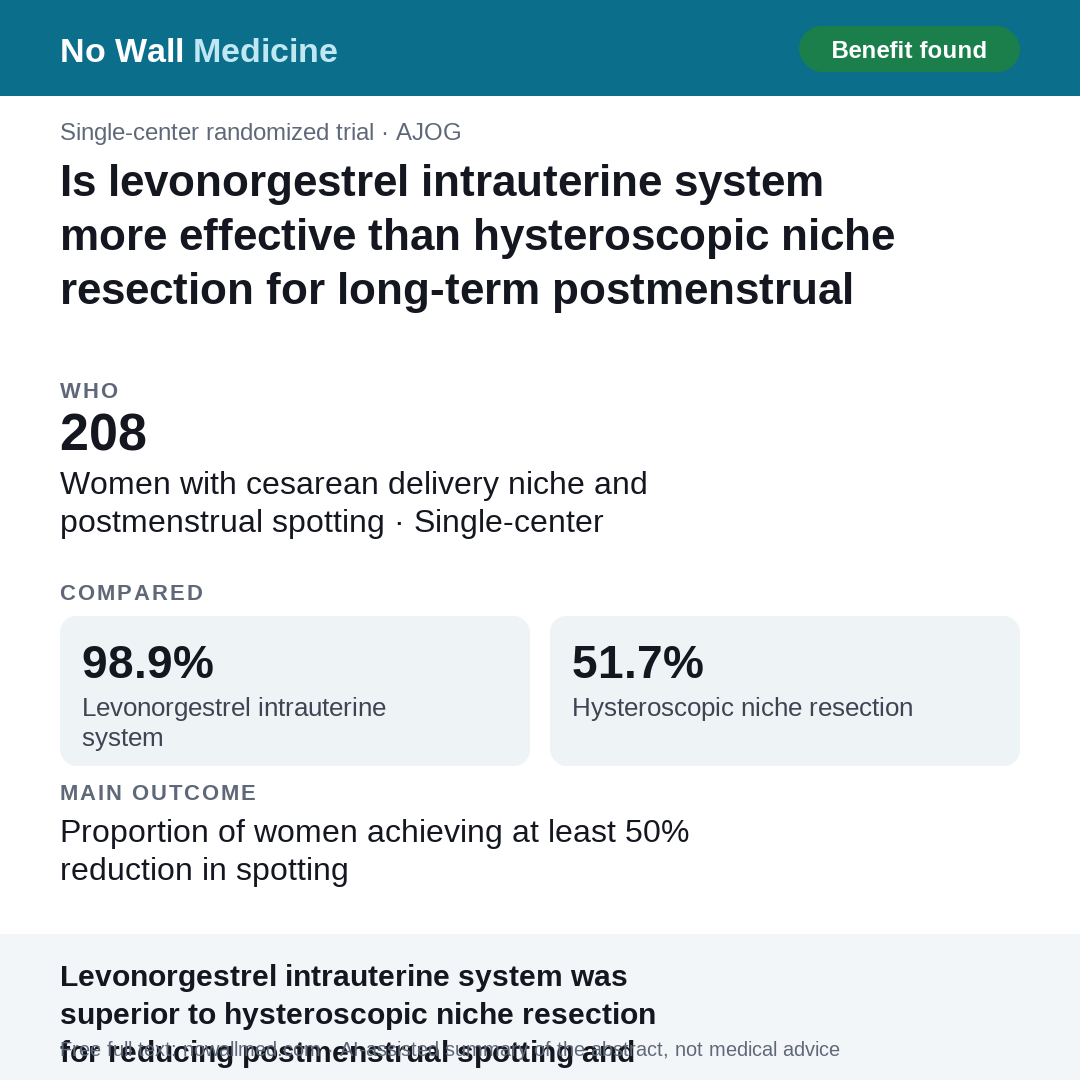
Levonorgestrel intrauterine system vs hysteroscopic niche resection for postmenstrual spotting: a 3-year randomized trial follow-up
Single-center randomized trialBenefit found
Is levonorgestrel intrauterine system more effective than hysteroscopic niche resection for long-term postmenstrual spotting reduction?
Who
208
Women with cesarean delivery niche and postmenstrual spotting · Single-center
Compared
98.9%Levonorgestrel intrauterine system
51.7%Hysteroscopic niche resection
Main outcome
Proportion of women achieving at least 50% reduction in spotting
Result: relative risk, 1.91 (95% confidence interval, 1.56-2.34)
Bottom line: Levonorgestrel intrauterine system was superior to hysteroscopic niche resection for reducing postmenstrual spotting and pelvic pain over 36 months.
AJOG · 2025-09-12Download image
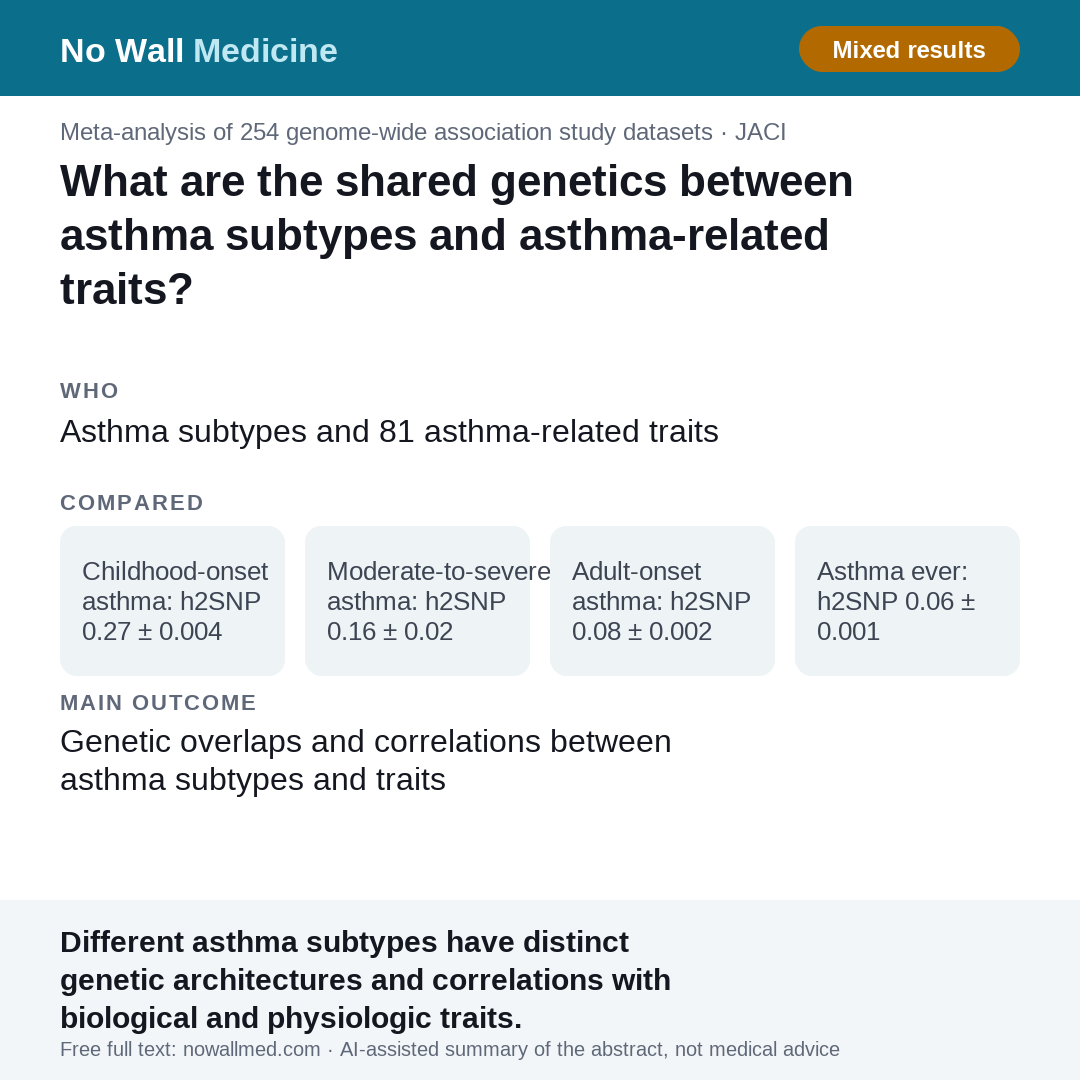
Unraveling shared genetics across asthma subtypes and 81 asthma-related traits
Meta-analysis of 254 genome-wide association study datasetsMixed results
What are the shared genetics between asthma subtypes and asthma-related traits?
Who
Asthma subtypes and 81 asthma-related traits
Compared
Childhood-onset asthma: h2SNP 0.27 ± 0.004
Moderate-to-severe asthma: h2SNP 0.16 ± 0.02
Adult-onset asthma: h2SNP 0.08 ± 0.002
Asthma ever: h2SNP 0.06 ± 0.001
Main outcome
Genetic overlaps and correlations between asthma subtypes and traits
Bottom line: Different asthma subtypes have distinct genetic architectures and correlations with biological and physiologic traits.
JACI · 2025-09-12Download image
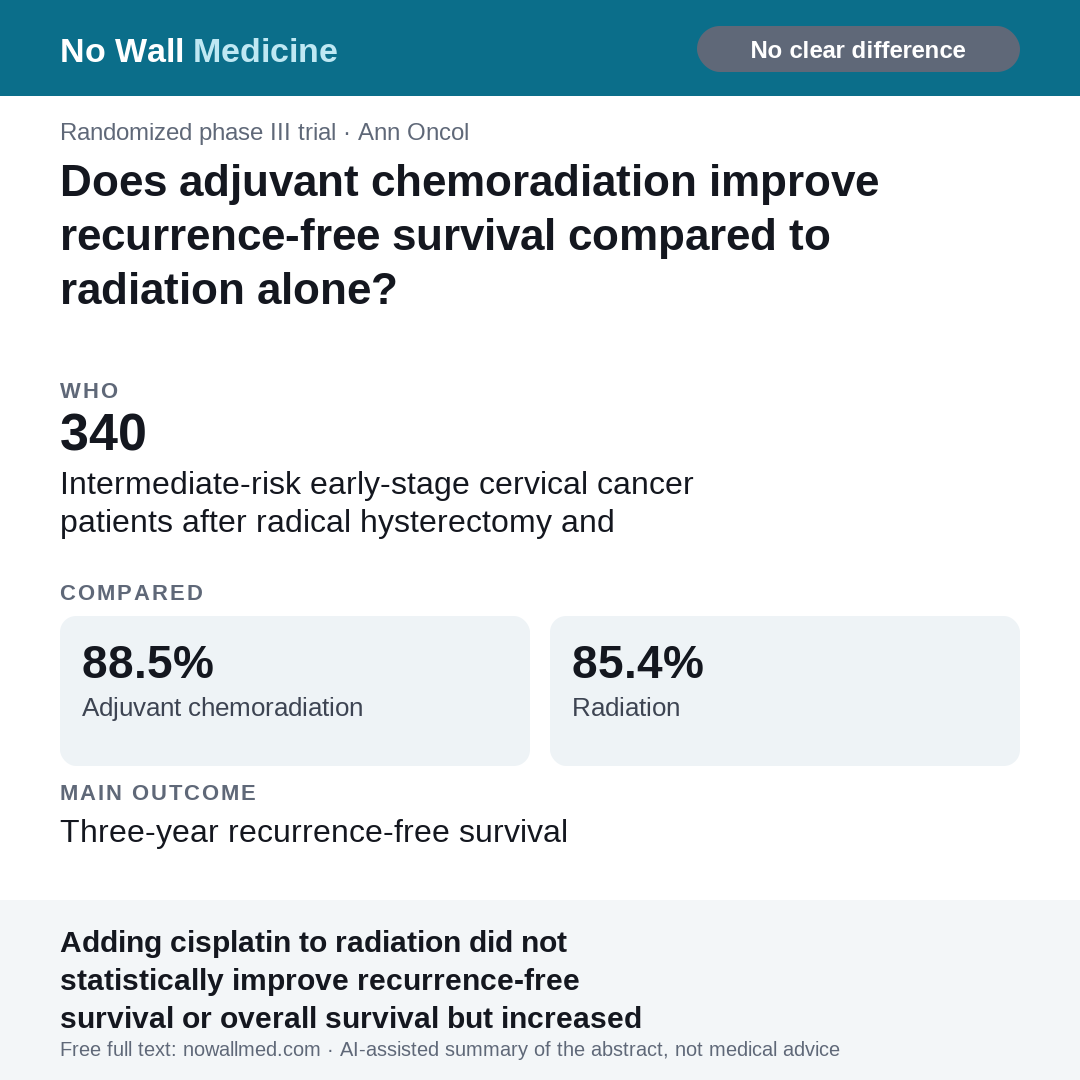
Randomized phase III trial of adjuvant radiation versus chemoradiation in intermediate-risk, early-stage cervical cancer following radical hysterectomy and lymphadenectomy: results from NRG Oncology/GOG-263/KGOG 1008
Randomized phase III trialNo clear difference
Does adjuvant chemoradiation improve recurrence-free survival compared to radiation alone?
Who
340
Intermediate-risk early-stage cervical cancer patients after radical hysterectomy and lymphadenectomy
Compared
88.5%Adjuvant chemoradiation
85.4%Radiation
Main outcome
Three-year recurrence-free survival
Result: hazard ratio 0.698, 95% confidence interval 0.408-1.192
Bottom line: Adding cisplatin to radiation did not statistically improve recurrence-free survival or overall survival but increased severe adverse events.
Ann Oncol · 2025-09-12Download image
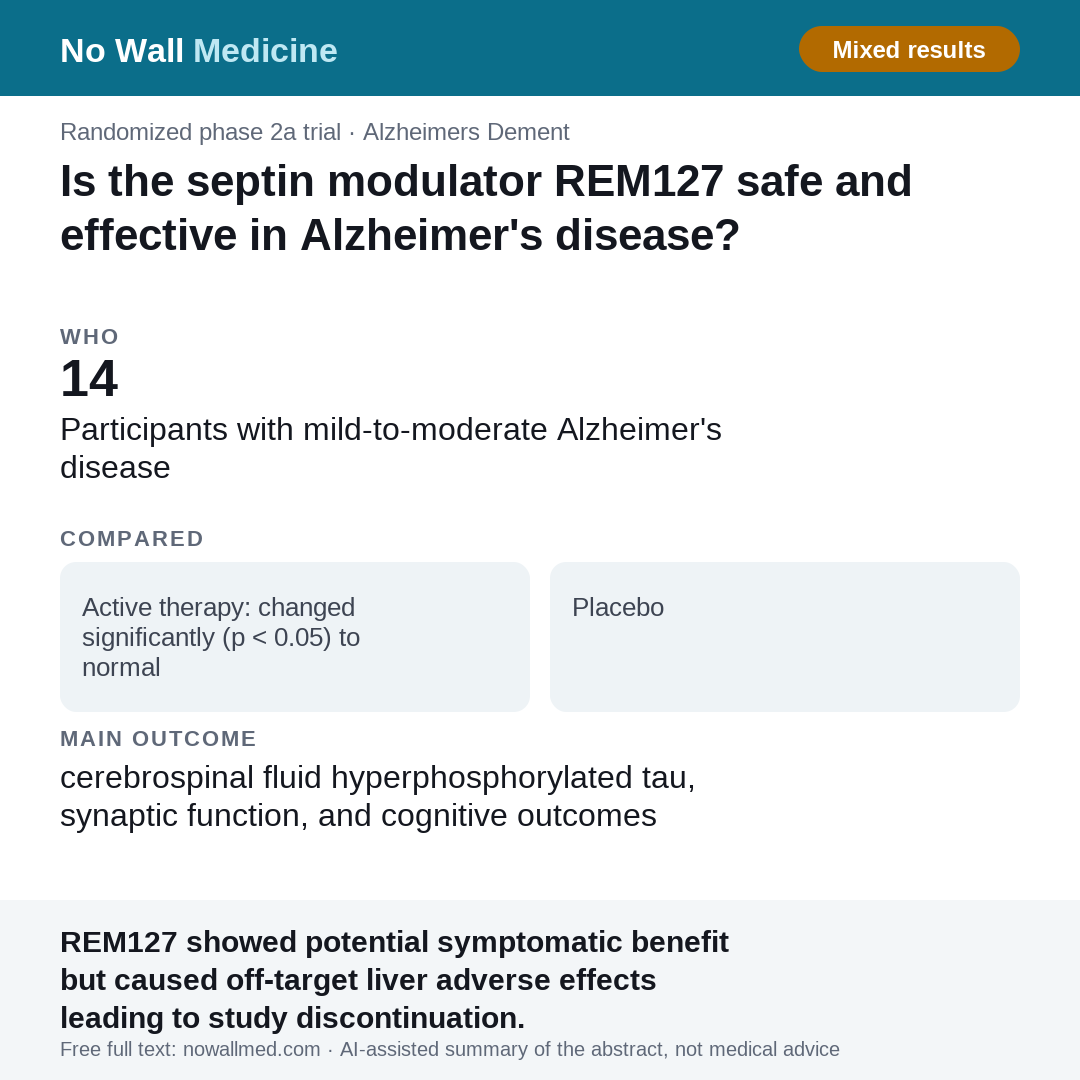
Randomized phase 2a trial assessing a novel septin molecular glue in Alzheimer's disease
Randomized phase 2a trialMixed results
Is the septin modulator REM127 safe and effective in Alzheimer's disease?
Who
14
Participants with mild-to-moderate Alzheimer's disease
Compared
Active therapy: changed significantly (p < 0.05) to normal
Placebo
Main outcome
cerebrospinal fluid hyperphosphorylated tau, synaptic function, and cognitive outcomes
Bottom line: REM127 showed potential symptomatic benefit but caused off-target liver adverse effects leading to study discontinuation.
Limitation: Results are exploratory as statistical power is constrained due to small sample size.
Alzheimers Dement · 2025-09-12Download image
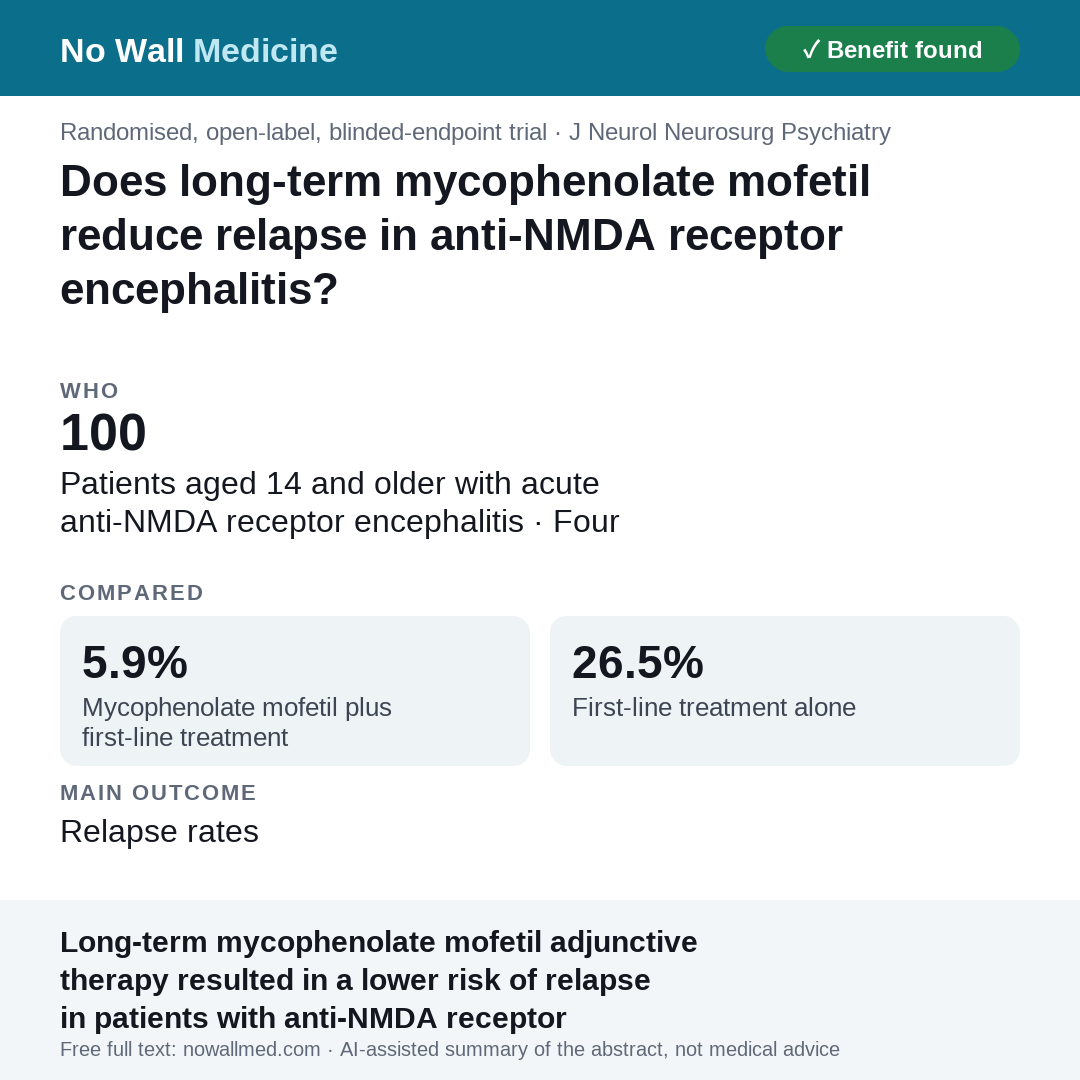
Long-term maintenance of mycophenolate mofetil in anti-NMDA receptor encephalitis (LEARN): a multicentre, open-label, blinded-endpoint, randomised controlled trial
Randomised, open-label, blinded-endpoint trialBenefit found
Does long-term mycophenolate mofetil reduce relapse in anti-NMDA receptor encephalitis?
Who
100
Patients aged 14 and older with acute anti-NMDA receptor encephalitis · Four academic centres in China
Compared
5.9%Mycophenolate mofetil plus first-line treatment
26.5%First-line treatment alone
Main outcome
Relapse rates
Bottom line: Long-term mycophenolate mofetil adjunctive therapy resulted in a lower risk of relapse in patients with anti-NMDA receptor encephalitis.
J Neurol Neurosurg Psychiatry · 2025-09-12Download image
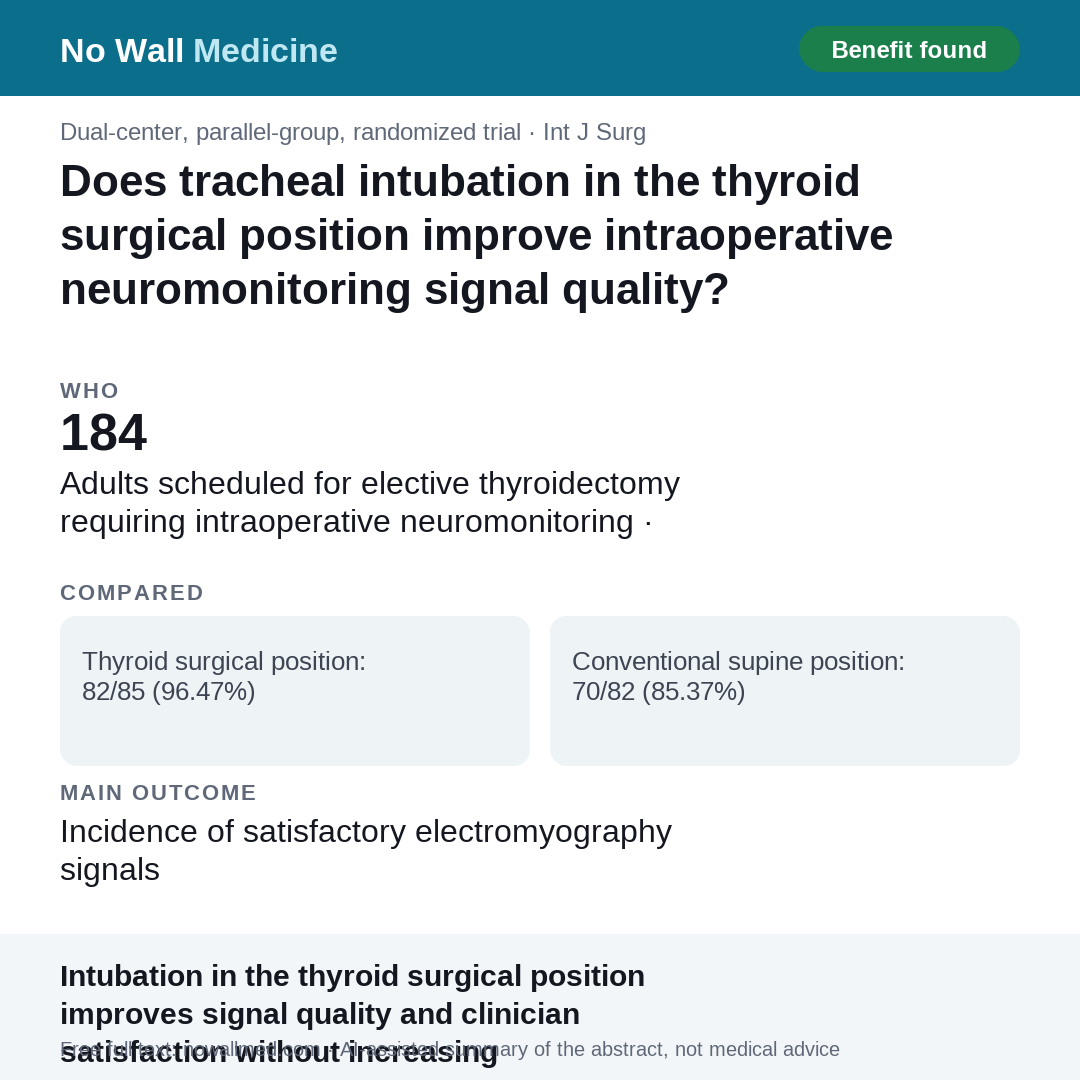
Tracheal intubation in the thyroid surgical position improves recurrent laryngeal nerve monitoring: a dual-center randomized trial
Dual-center, parallel-group, randomized trialBenefit found
Does tracheal intubation in the thyroid surgical position improve intraoperative neuromonitoring signal quality?
Who
184
Adults scheduled for elective thyroidectomy requiring intraoperative neuromonitoring · Dual-center
Compared
Thyroid surgical position: 82/85 (96.47%)
Conventional supine position: 70/82 (85.37%)
Main outcome
Incidence of satisfactory electromyography signals
Result: relative risk 1.13 (95% CI 1.03-1.24)
Bottom line: Intubation in the thyroid surgical position improves signal quality and clinician satisfaction without increasing complications.
Int J Surg · 2025-09-12Download image
Unveiling the genetic overlap and causal links between gastroesophageal reflux disease and asthma
Mendelian randomization and cross-trait meta-analysisBenefit found
What are the genetic overlap and causal links between gastroesophageal reflux disease and asthma?
Who
Individuals from genome-wide association studies for gastroesophageal reflux disease and asthma
Compared
Gastroesophageal reflux disease: odds ratio 1.22
Asthma
Main outcome
Genetic correlation and causal relationship
Result: odds ratio 1.22, P = 1.54 × 10 -5
Bottom line: Gastroesophageal reflux disease has a significant causal effect on asthma with shared genetic loci and genes identified.
Int J Surg · 2025-09-12Download image

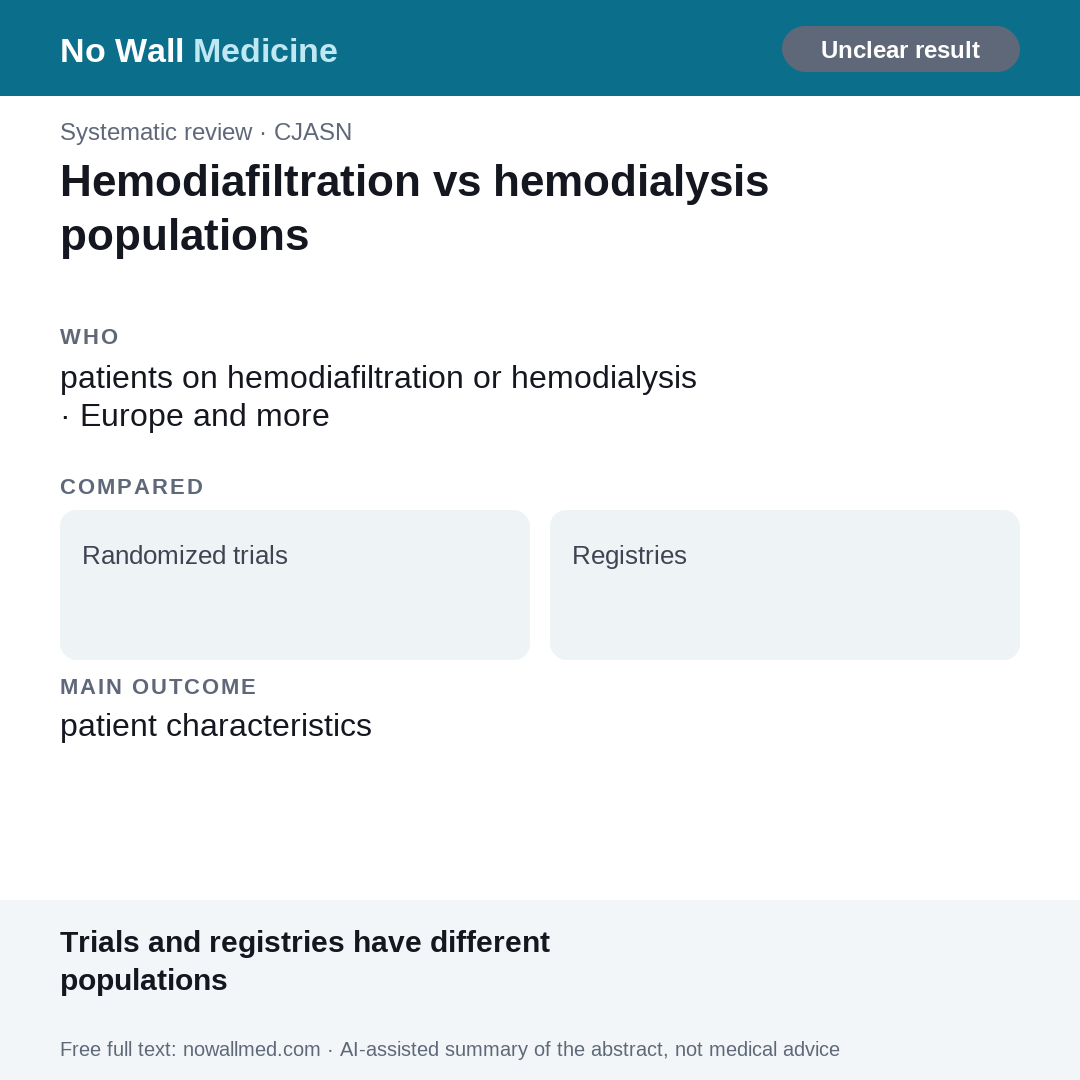
Characteristics of Populations Included in Randomized Controlled Trials of Hemodiafiltration and Registry Real-Life Populations: A Systematic Review
Systematic reviewUnclear result
Hemodiafiltration vs hemodialysis populations
Who
patients on hemodiafiltration or hemodialysis · Europe and more
Compared
Randomized trials
Registries
Main outcome
patient characteristics
Bottom line: Trials and registries have different populations
Limitation: incomplete patient characteristics
CJASN · 2025-09-12Download image
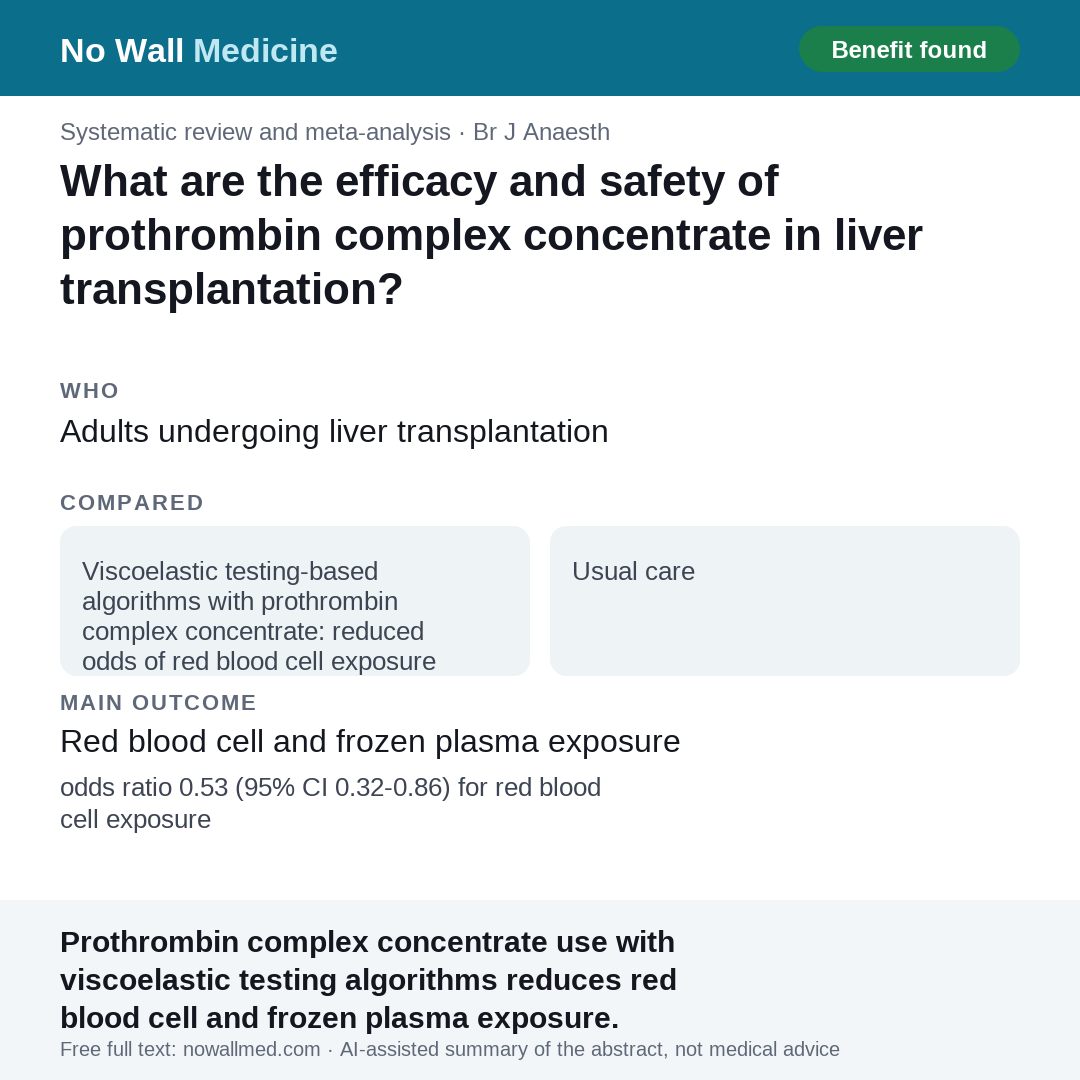
Use of prothrombin complex concentrates in liver transplantation: a systematic review and meta-analysis
Systematic review and meta-analysisBenefit found
What are the efficacy and safety of prothrombin complex concentrate in liver transplantation?
Who
Adults undergoing liver transplantation
Compared
Viscoelastic testing-based algorithms with prothrombin complex concentrate: reduced odds of red blood cell exposure
Usual care
Main outcome
Red blood cell and frozen plasma exposure
Result: odds ratio 0.53 (95% CI 0.32-0.86) for red blood cell exposure
Bottom line: Prothrombin complex concentrate use with viscoelastic testing algorithms reduces red blood cell and frozen plasma exposure.
Br J Anaesth · 2025-09-12Download image
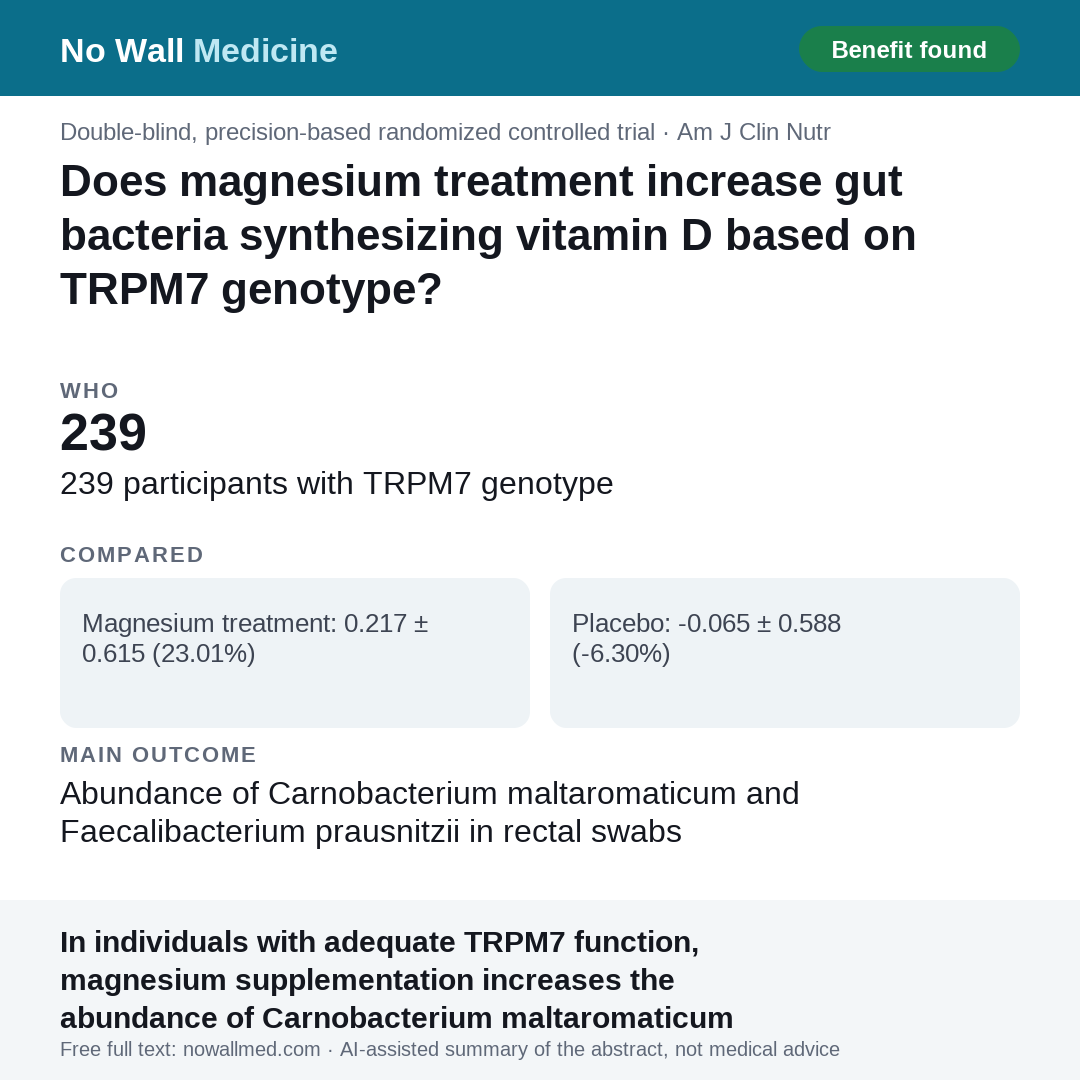
Magnesium treatment increases gut microbiome synthesizing vitamin D and inhibiting colorectal cancer: results from a double-blind precision-based randomized placebo-controlled trial
Double-blind, precision-based randomized controlled trialBenefit found
Does magnesium treatment increase gut bacteria synthesizing vitamin D based on TRPM7 genotype?
Who
239
239 participants with TRPM7 genotype
Compared
Magnesium treatment: 0.217 ± 0.615 (23.01%)
Placebo: -0.065 ± 0.588 (-6.30%)
Main outcome
Abundance of Carnobacterium maltaromaticum and Faecalibacterium prausnitzii in rectal swabs
Result: P = 0.006 for Carnobacterium maltaromaticum; P = 0.04 for Faecalibacterium prausnitzii
Bottom line: In individuals with adequate TRPM7 function, magnesium supplementation increases the abundance of Carnobacterium maltaromaticum and Faecalibacterium prausnitzii.
Am J Clin Nutr · 2025-09-12Download image
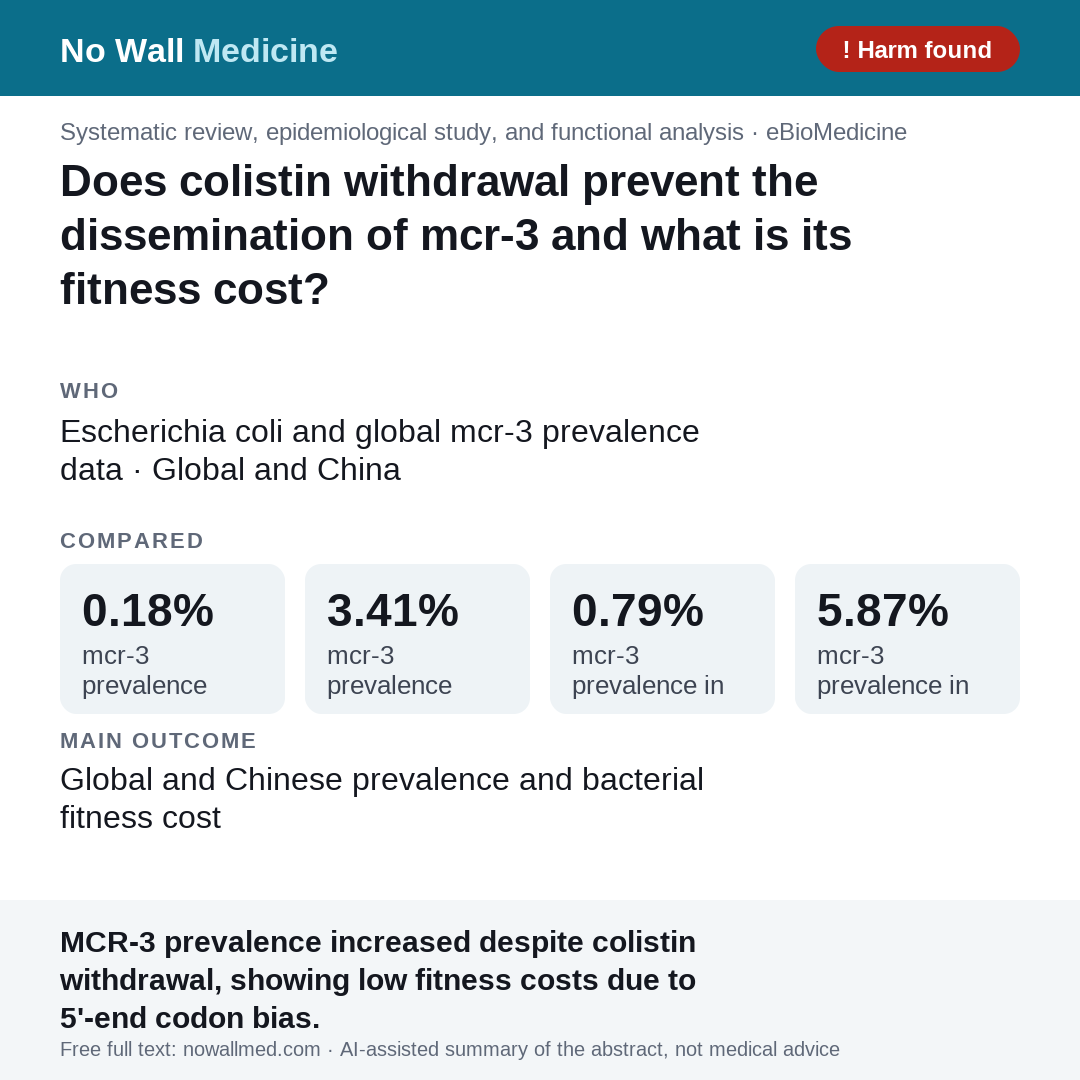
Fitness costs of mobilised colistin resistance gene 3 (mcr-3): systematic review, epidemiological study, and functional analysis
Systematic review, epidemiological study, and functional analysisHarm found
Does colistin withdrawal prevent the dissemination of mcr-3 and what is its fitness cost?
Who
Escherichia coli and global mcr-3 prevalence data · Global and China
Compared
0.18%mcr-3 prevalence 2005-2014
3.41%mcr-3 prevalence 2020-2022
0.79%mcr-3 prevalence in China 2016
5.87%mcr-3 prevalence in China 2019
Main outcome
Global and Chinese prevalence and bacterial fitness cost
Bottom line: MCR-3 prevalence increased despite colistin withdrawal, showing low fitness costs due to 5'-end codon bias.
Funded by: Natural Science Foundation of China, National Key Research and Development Programme of China
eBioMedicine · 2025-09-12Download image
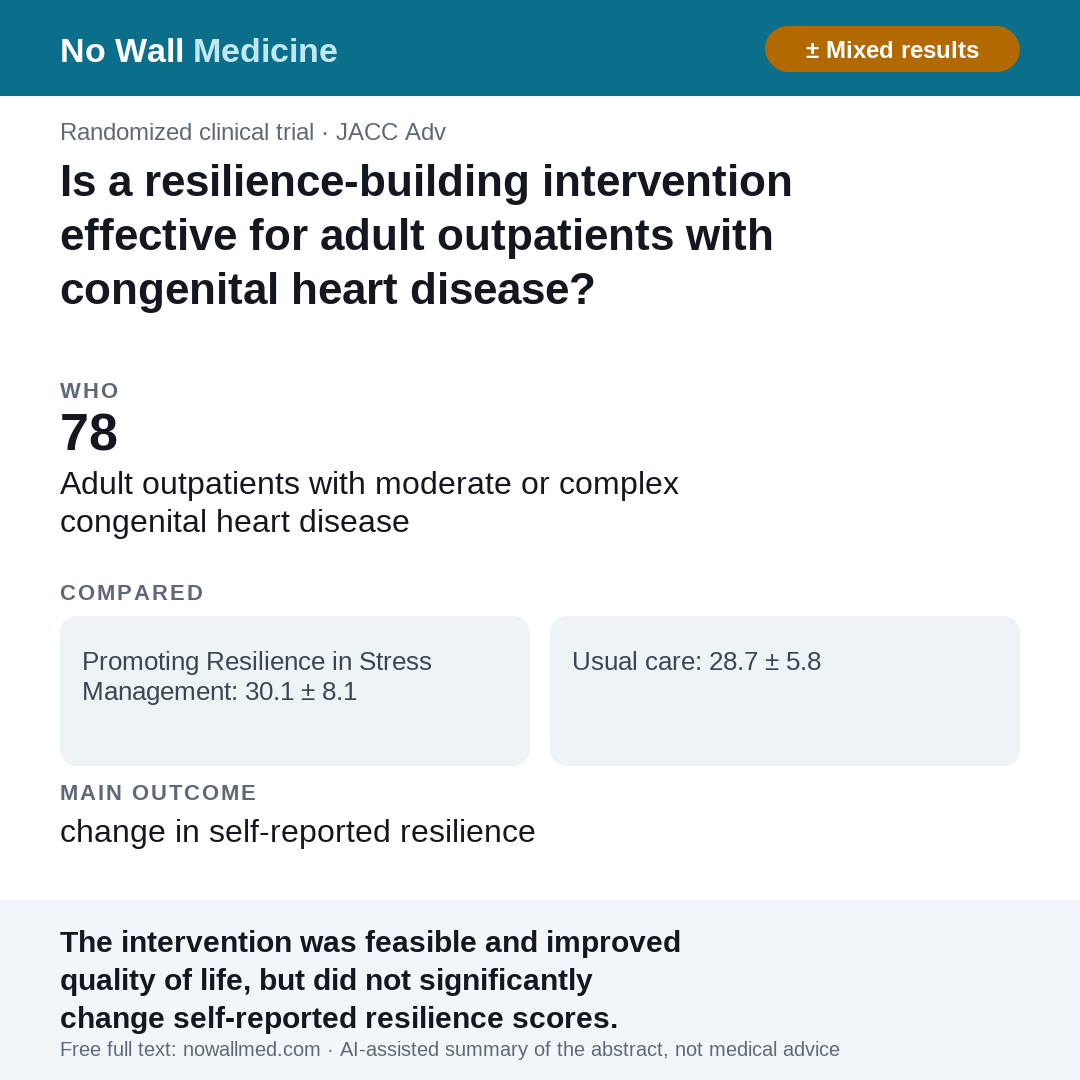
A Randomized Trial of a Resilience-Building Intervention in Adult Outpatients With Congenital Heart Disease: Feasibility and Efficacy
Randomized clinical trialMixed results
Is a resilience-building intervention effective for adult outpatients with congenital heart disease?
Who
78
Adult outpatients with moderate or complex congenital heart disease
Compared
Promoting Resilience in Stress Management: 30.1 ± 8.1
Usual care: 28.7 ± 5.8
Main outcome
change in self-reported resilience
Bottom line: The intervention was feasible and improved quality of life, but did not significantly change self-reported resilience scores.
JACC Adv · 2025-09-12Download image
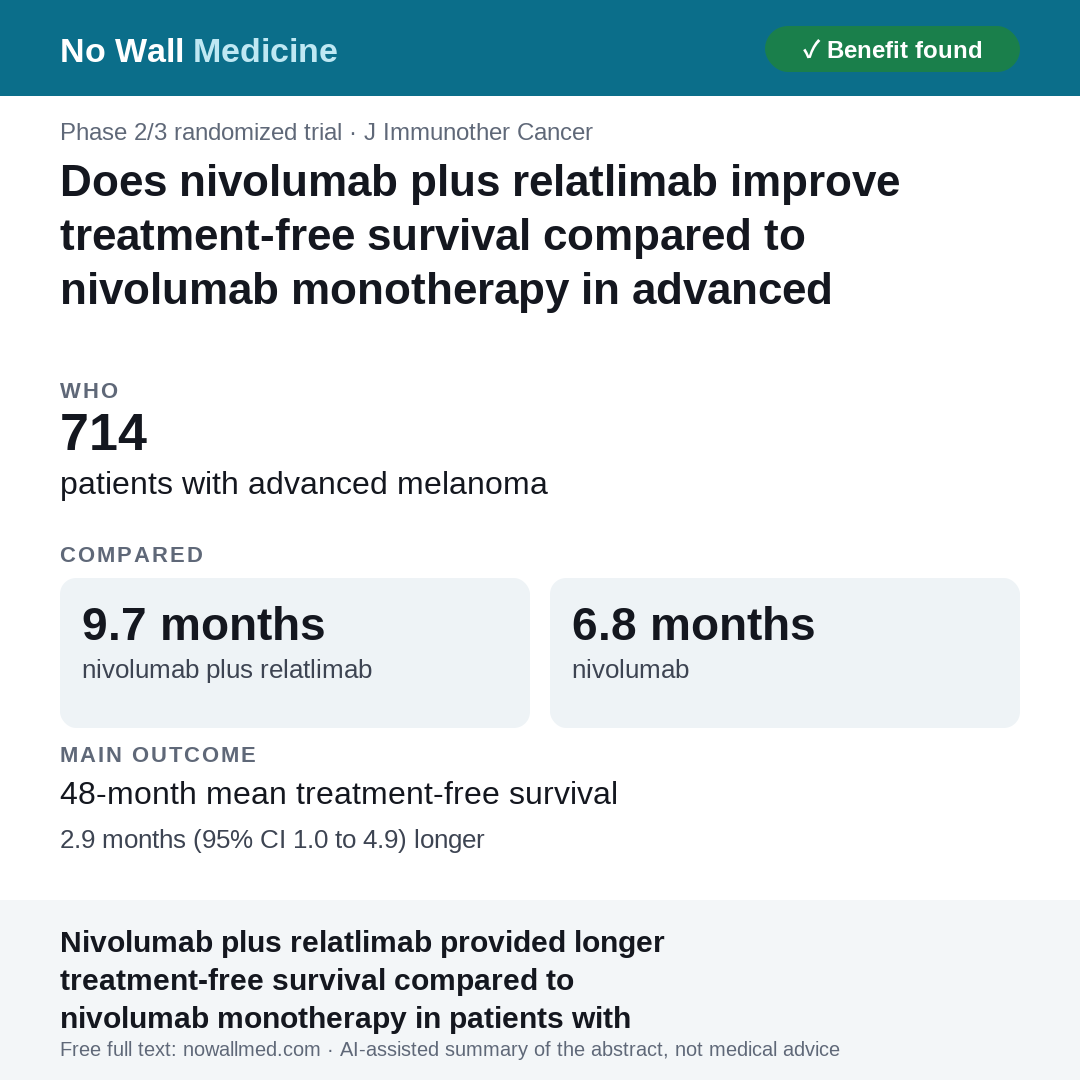
Analysis of treatment-free survival of patients with advanced melanoma receiving nivolumab as monotherapy or in combination with relatlimab in RELATIVITY-047
Phase 2/3 randomized trialBenefit found
Does nivolumab plus relatlimab improve treatment-free survival compared to nivolumab monotherapy in advanced melanoma?
Who
714
patients with advanced melanoma
Compared
9.7 monthsnivolumab plus relatlimab
6.8 monthsnivolumab
Main outcome
48-month mean treatment-free survival
Result: 2.9 months (95% CI 1.0 to 4.9) longer
Bottom line: Nivolumab plus relatlimab provided longer treatment-free survival compared to nivolumab monotherapy in patients with advanced melanoma.
J Immunother Cancer · 2025-09-12Download image
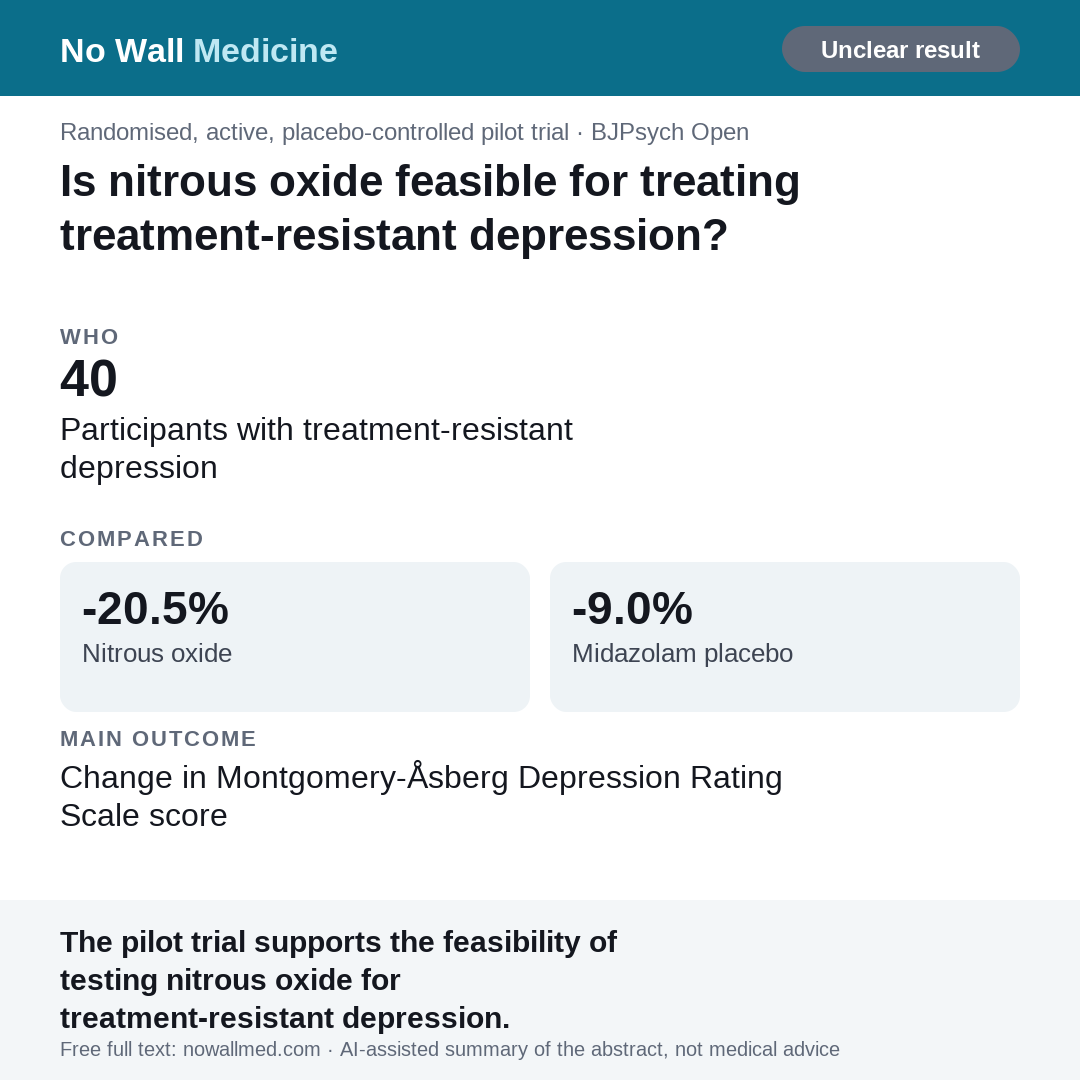
Sustained mood improvement with laughing gas exposure (SMILE): a randomised, placebo-controlled pilot trial of nitrous oxide for treatment-resistant depression
Randomised, active, placebo-controlled pilot trialUnclear result
Is nitrous oxide feasible for treating treatment-resistant depression?
Who
40
Participants with treatment-resistant depression
Compared
-20.5%Nitrous oxide (95% CI -39.6 to -1.3)
-9.0%Midazolam placebo (95% CI -22.6 to 4.6)
Main outcome
Change in Montgomery-Åsberg Depression Rating Scale score
Bottom line: The pilot trial supports the feasibility of testing nitrous oxide for treatment-resistant depression.
Limitation: This was a pilot trial.
BJPsych Open · 2025-09-12Download image
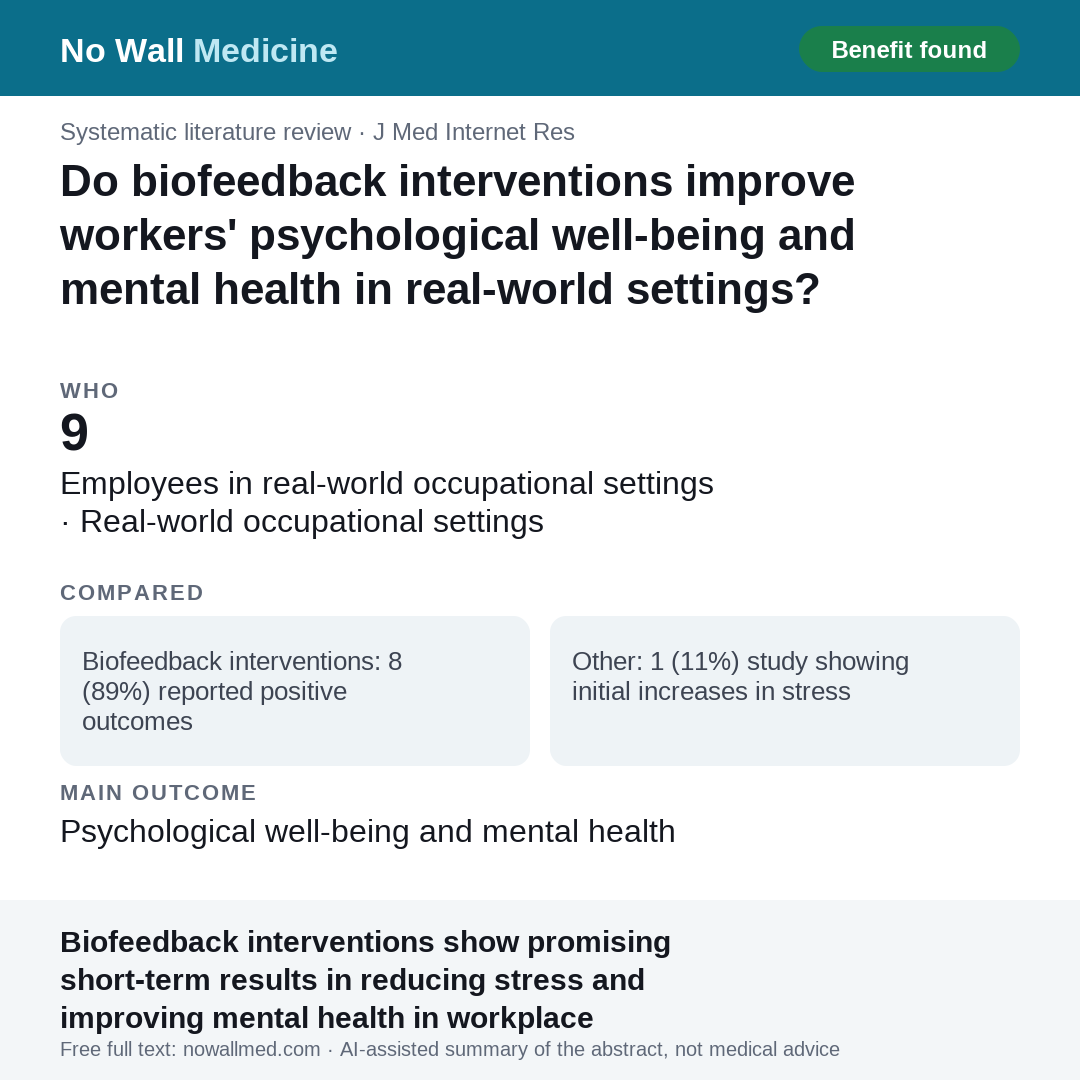
Interventions Based on Biofeedback Systems to Improve Workers' Psychological Well-Being, Mental Health, and Safety: Systematic Literature Review
Systematic literature reviewBenefit found
Do biofeedback interventions improve workers' psychological well-being and mental health in real-world settings?
Who
9
Employees in real-world occupational settings · Real-world occupational settings
Compared
Biofeedback interventions: 8 (89%) reported positive outcomes
Other: 1 (11%) study showing initial increases in stress
Main outcome
Psychological well-being and mental health
Bottom line: Biofeedback interventions show promising short-term results in reducing stress and improving mental health in workplace settings.
Limitation: Sample sizes were generally small, and long-term follow-up data were limited.
J Med Internet Res · 2025-09-12Download image
A Systematic Review of Health Disparities in Chronic Rhinosinusitis in the United States
Systematic reviewMixed results
What are the health disparities in chronic rhinosinusitis in the United States?
Who
26
Patients with chronic rhinosinusitis in the United States · United States
Compared
Lower socioeconomic status: reduced treatment adherence, poorer endoscopic findings and quality of life
Hispanic patients: more symptomatic than non-Hispanic patients
Black patients: fewer health visits, leading to worse outcomes
Main outcome
Incidence, severity, and treatment choice
Bottom line: Socioeconomic status, race, gender, age, and geographic region all influence chronic rhinosinusitis presentation and progression.
OTO Open · 2025-09-12Download image