Visual abstracts
New randomized trials and meta-analyses from leading journals at a glance: who was studied, what was compared, and what was found. Every paper is free to read in full.
All specialtiesCardiology 4877Oncology 4138Gastroenterology & Hepatology 1942Infectious Disease 3837Neurology 1905Psychiatry & Mental Health 2273Pulmonology 2143Critical Care 1365Endocrinology & Diabetes 2580Pediatrics 2980Surgery 2559Orthopedics & Sports Medicine 931Neurosurgery 537Cardiothoracic & Vascular Surgery 674Plastic & Reconstructive Surgery 591Nephrology 1133Rheumatology 823Hematology 1109Dermatology 621Ophthalmology 543Obstetrics & Gynecology 1686Public & Global Health 1058Radiology & Imaging 648Anesthesiology 986Urology 764ENT (Otolaryngology) 503Emergency Medicine 511Allergy & Immunology 313Geriatrics 981Family Medicine & Primary Care 562Medical Genetics & Genomics 676Pathology & Laboratory Medicine 159Physical Medicine & Rehabilitation 757Palliative Care 444Nutrition 1588Digital Health & AI 2201General Medicine 321
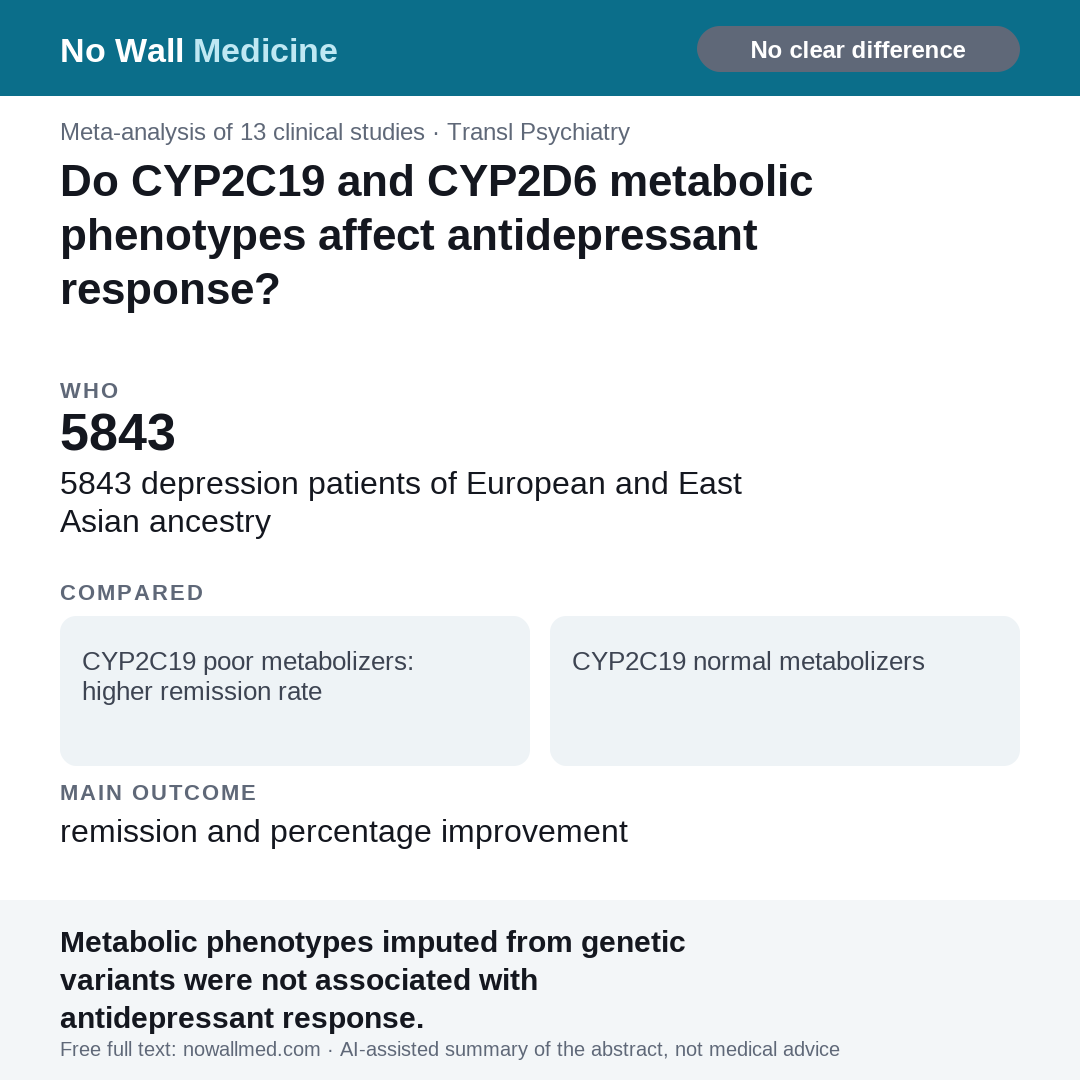
Metabolic activity of CYP2C19 and CYP2D6 on antidepressant response from 13 clinical studies using genotype imputation: a meta-analysis
Meta-analysis of 13 clinical studiesNo clear difference
Do CYP2C19 and CYP2D6 metabolic phenotypes affect antidepressant response?
Who
5843
5843 depression patients of European and East Asian ancestry
Compared
CYP2C19 poor metabolizers: higher remission rate
CYP2C19 normal metabolizers
Main outcome
remission and percentage improvement
Result: odds ratio 1.46 (95% CI 1.03 to 2.06)
Bottom line: Metabolic phenotypes imputed from genetic variants were not associated with antidepressant response.
Transl Psychiatry · 2024-07-19Download image
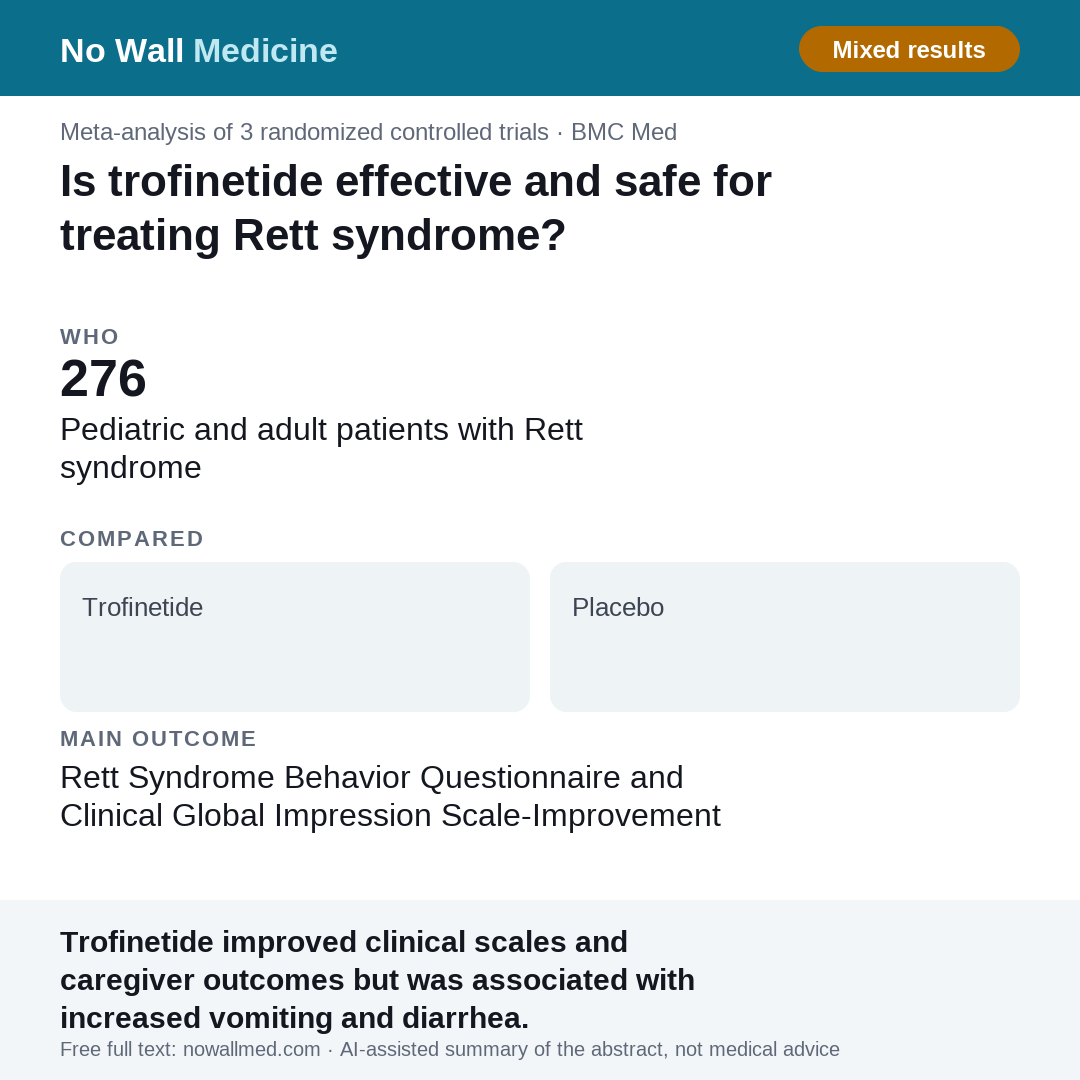
Is trofinetide a future treatment for Rett syndrome? A comprehensive systematic review and meta-analysis of randomized controlled trials
Meta-analysis of 3 randomized controlled trialsMixed results
Is trofinetide effective and safe for treating Rett syndrome?
Who
276
Pediatric and adult patients with Rett syndrome
Compared
Trofinetide
Placebo
Main outcome
Rett Syndrome Behavior Questionnaire and Clinical Global Impression Scale-Improvement
Result: mean difference -3.46 points (95% CI -5.63 to -1.27) for RSBQ
Bottom line: Trofinetide improved clinical scales and caregiver outcomes but was associated with increased vomiting and diarrhea.
Limitation: Heterogeneity in diarrhea results and need for larger cohorts including male patients.
BMC Med · 2024-07-18Download image
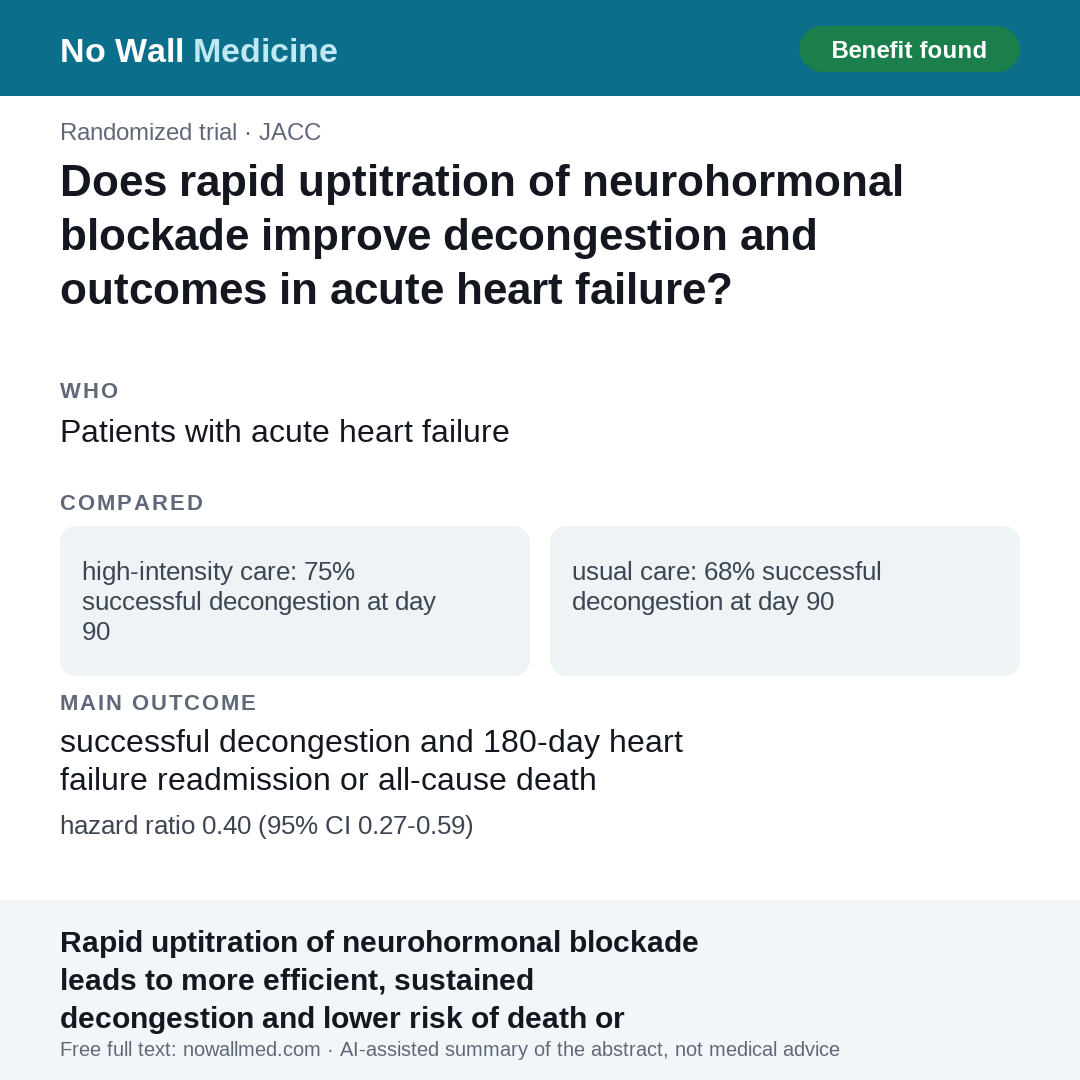
Effects of Rapid Uptitration of Neurohormonal Blockade on Effective, Sustainable Decongestion and Outcomes in STRONG-HF
Randomized trialBenefit found
Does rapid uptitration of neurohormonal blockade improve decongestion and outcomes in acute heart failure?
Who
Patients with acute heart failure
Compared
high-intensity care: 75% successful decongestion at day 90
usual care: 68% successful decongestion at day 90
Main outcome
successful decongestion and 180-day heart failure readmission or all-cause death
Result: hazard ratio 0.40 (95% CI 0.27-0.59)
Bottom line: Rapid uptitration of neurohormonal blockade leads to more efficient, sustained decongestion and lower risk of death or readmission.
JACC · 2024-07-18Download image
Filgotinib in Active Noninfectious Uveitis: The HUMBOLDT Randomized Clinical Trial
Double-masked, placebo-controlled, phase 2, randomized clinical trialBenefit found
Is filgotinib effective for treating active noninfectious uveitis?
Who
74
Adults with active noninfectious intermediate, posterior, or panuveitis · 26 centers in 7 countries
Compared
37.5%filgotinib
67.6%placebo
Main outcome
proportion of participants experiencing treatment failure by week 24
Result: difference vs placebo -30.1%; 95% CI, -56.2% to -4.1%
Bottom line: Filgotinib lowered the risk of treatment failure in participants with active noninfectious uveitis compared to placebo.
JAMA Ophthalmol · 2024-07-18Download image
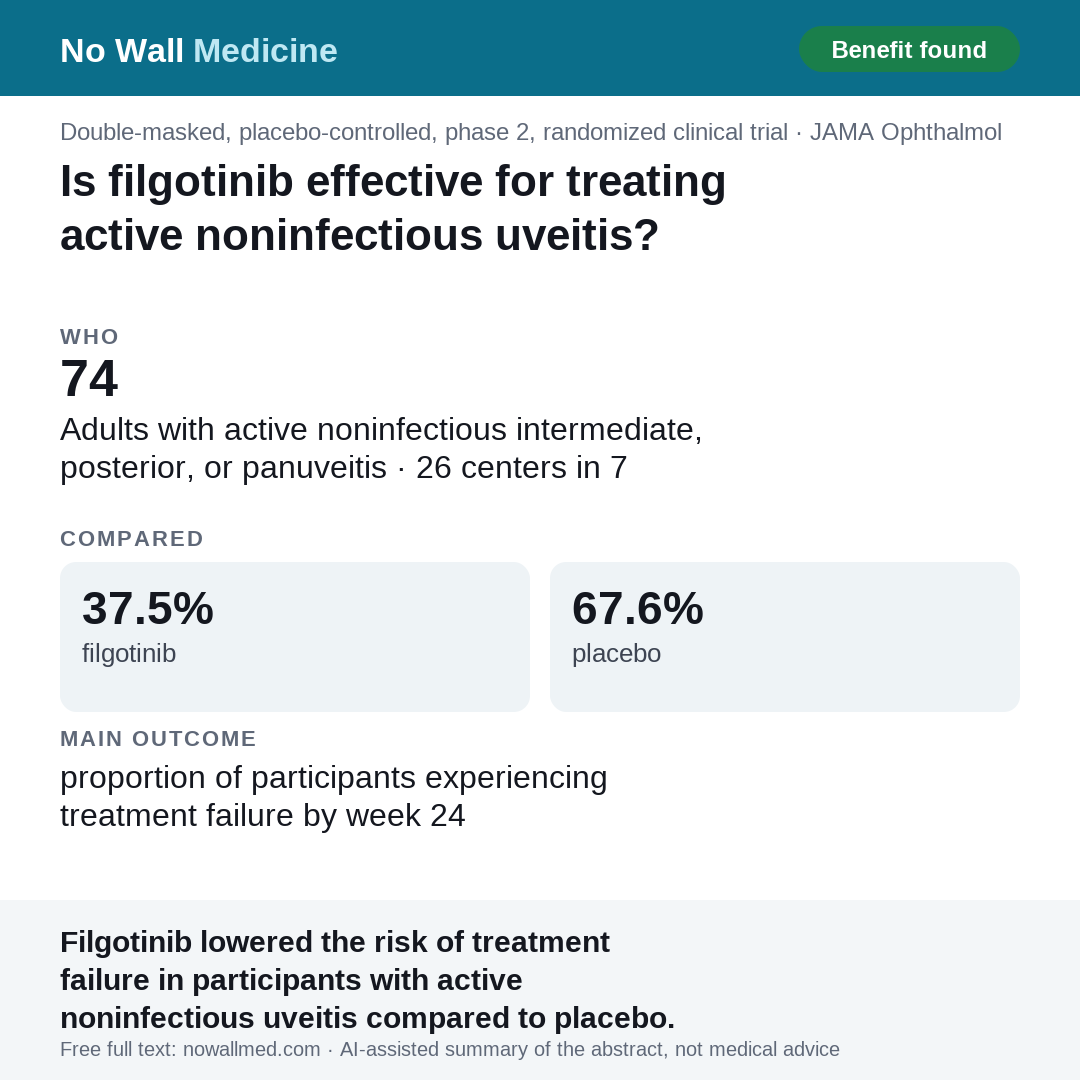
Predictors of the efficacy of His bundle pacing in patients with a prolonged PR interval: A stratified analysis of the HOPE-HF randomized controlled trial
Randomized, double-blind, placebo-controlled trial secondary analysisBenefit found
Does acute haemodynamic response predict benefit from His bundle pacing in specific patients?
Who
167
Patients with ejection fraction ≤40%, PR interval ≥200 ms
Compared
Acute haemodynamic response: beneficial interaction for VO2 (Pr 99.9%)
Baseline PR interval and E-A fusion: did not have this reliable ability to predict
Main outcome
peak oxygen uptake, quality of life, and activity measures
Bottom line: Acute haemodynamic response to pacing reliably identifies patients who obtain clinical benefit from His bundle pacing.
Limitation: requires high-precision AV-optimized haemodynamic assessment to be performed
Eur J Heart Fail · 2024-07-18Download image
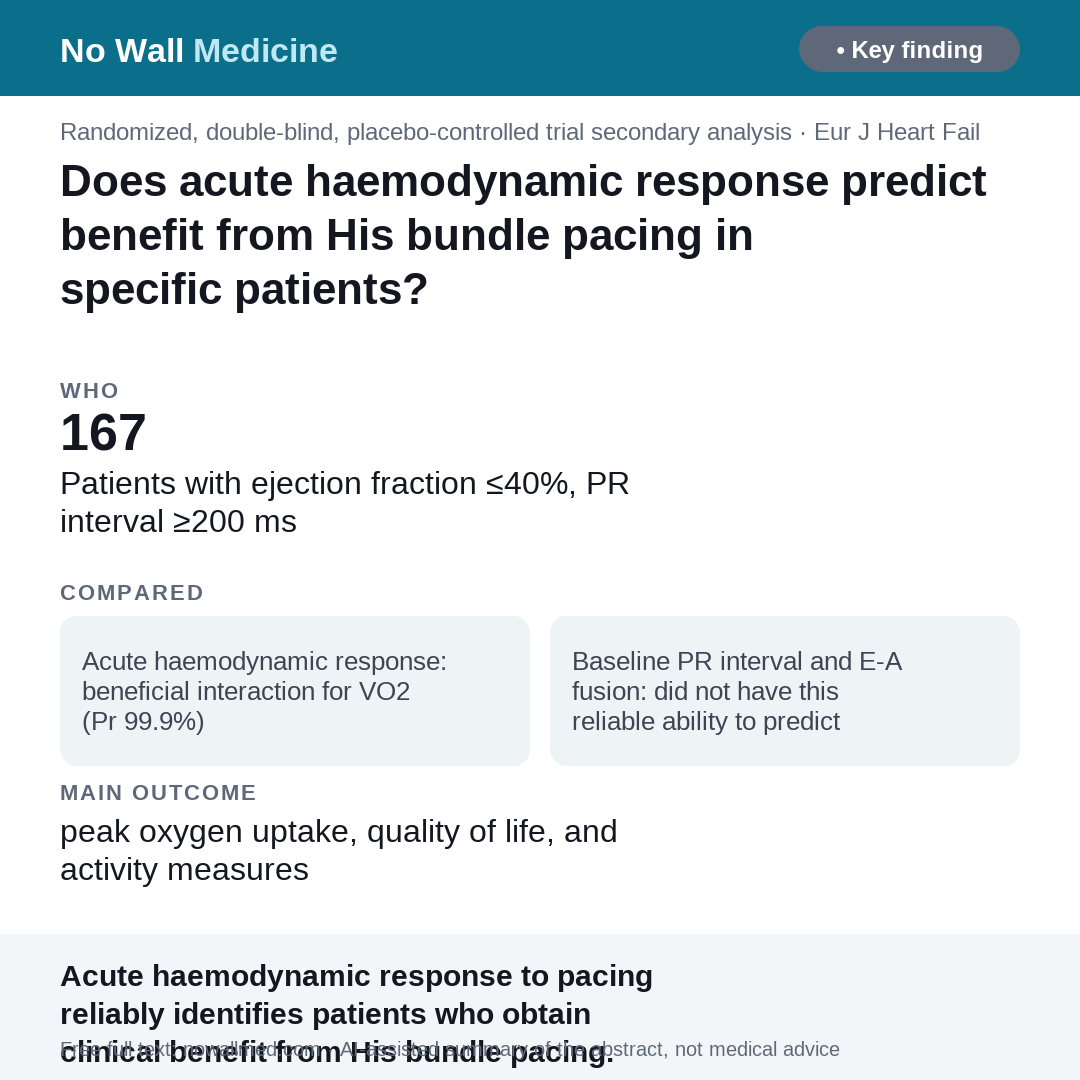
Gravity- vs Wall Suction-Driven Large-Volume Thoracentesis: A Randomized Controlled Study
Multicenter, single-blinded, randomized controlled trialNo clear difference
Does wall suction drainage result in more chest discomfort compared with gravity drainage?
Who
221
Patients with large free-flowing effusions of 500 mL or more · Multicenter
Compared
Wall suction
Gravity drainage
Main outcome
Postprocedural chest discomfort at 5 minutes
Bottom line: Wall suction and gravity drainage result in similar levels of procedural discomfort and dyspnea improvement.
Chest · 2024-07-18Download image

Hospital falls clinical practice guidelines: a global analysis and systematic review
Systematic reviewUnclear result
Hospital falls guidelines effective
Who
hospital patients · global
Compared
high quality guidelines
low quality guidelines
Main outcome
falls prevention
Bottom line: Guidelines available, implementation limited
Limitation: implementation barriers
Age Ageing · 2024-07-18Download image
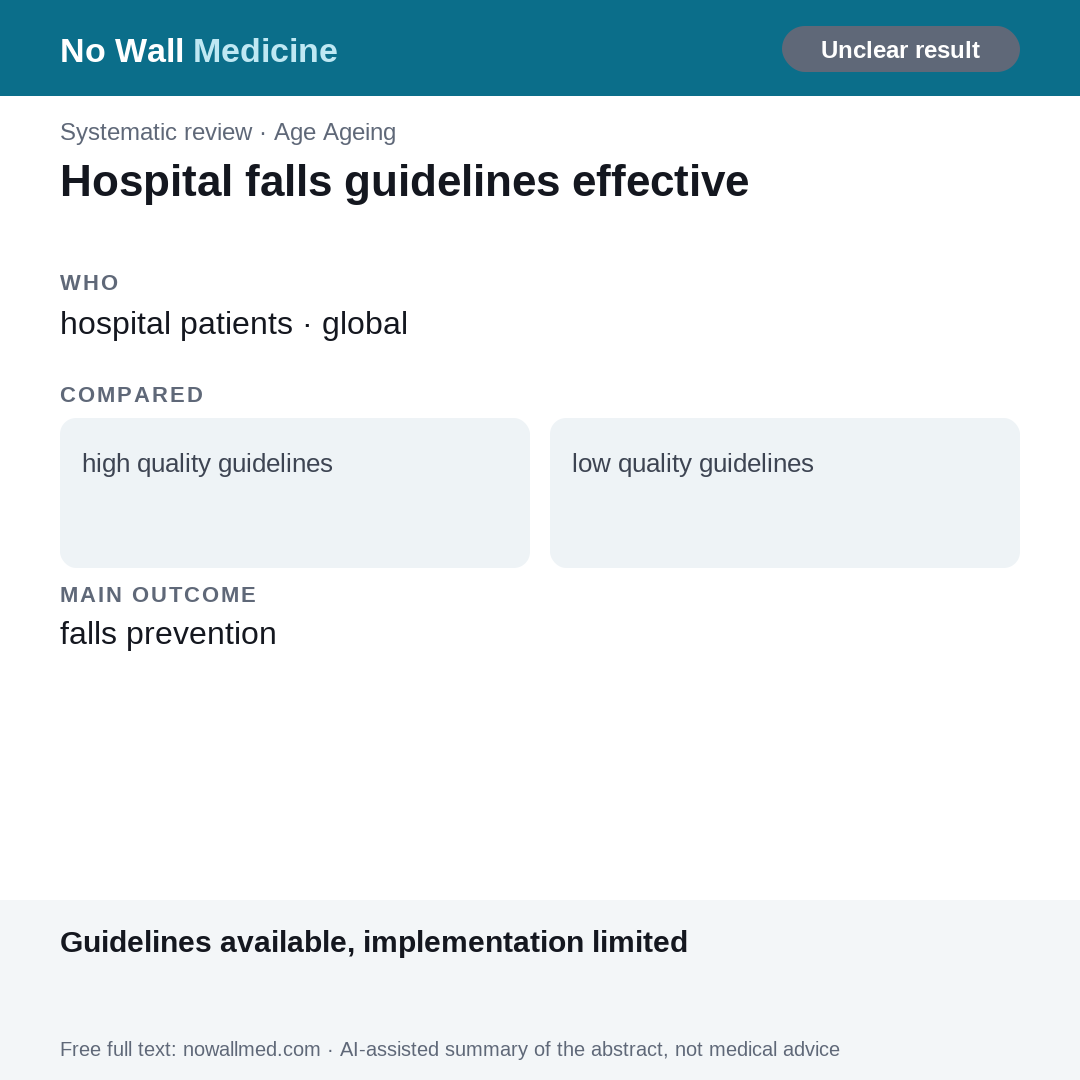
Alfentanil versus fentanyl for emergency department rapid sequence induction with ketamine: A-FAKT, a pilot randomized trial
Double-blind pilot randomized controlled trialNo clear difference
Does alfentanil or fentanyl affect post-induction hemodynamic changes during rapid sequence induction?
Who
61
Adult patients requiring rapid sequence induction in the emergency department · Three urban Australian hospitals
Compared
58%Alfentanil
50%Fentanyl
Main outcome
At least one post-induction systolic blood pressure outside 100-160mmHg
Result: difference 8%, 95% confidence interval: -17% to 33%
Bottom line: Alfentanil and fentanyl produced comparable post-induction hemodynamic changes when used as adjuncts to ketamine.
Am J Emerg Med · 2024-07-18Download image
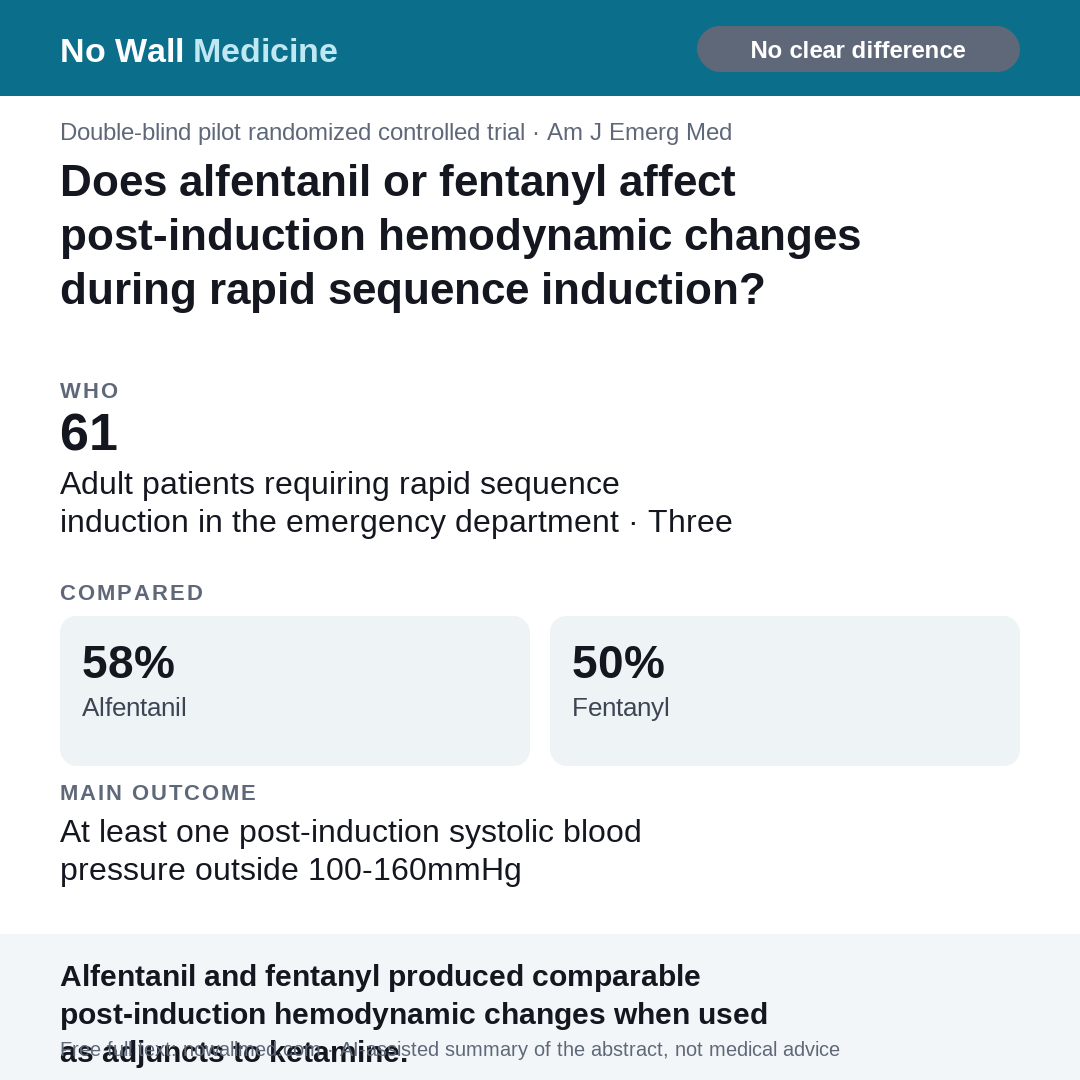
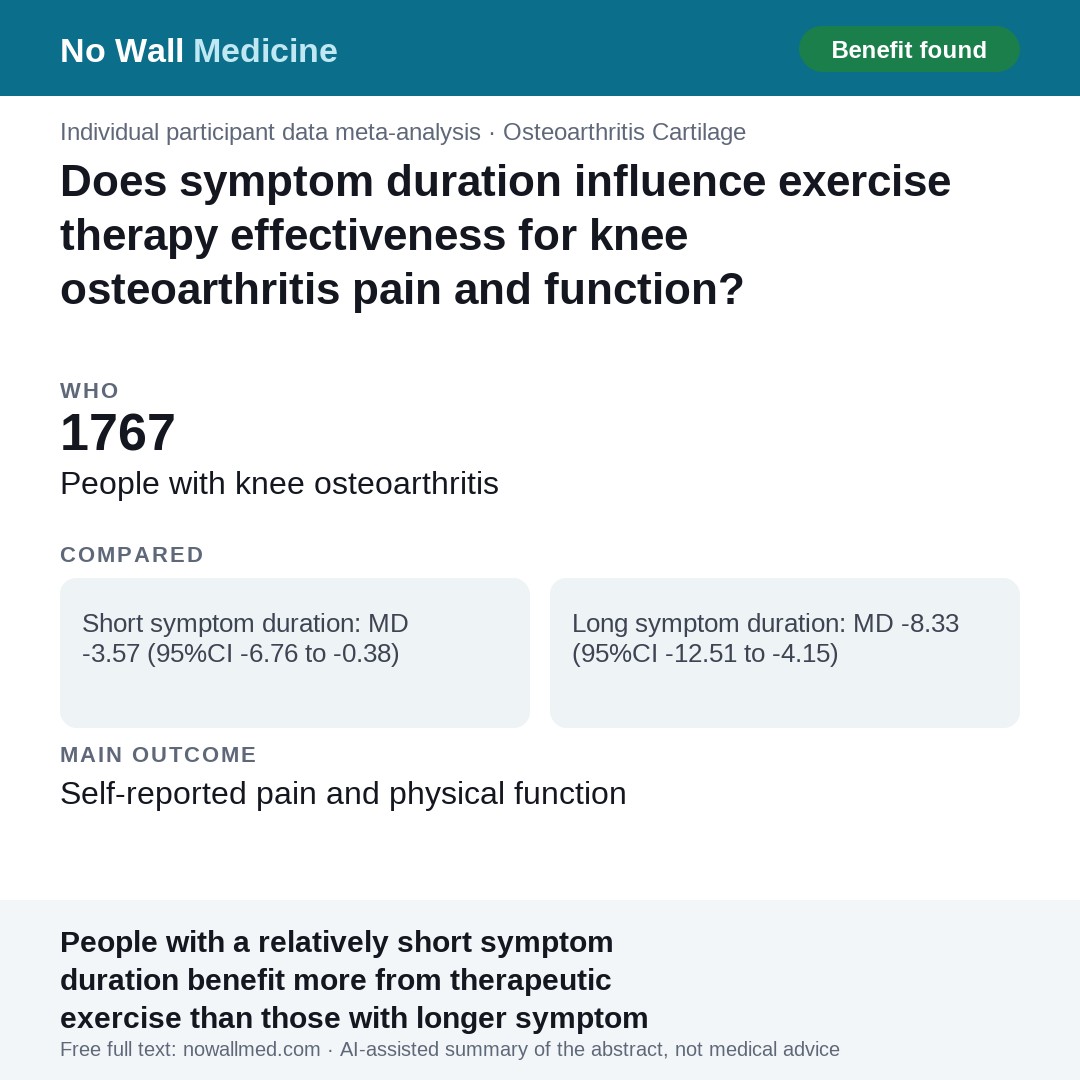
People with short symptom duration of knee osteoarthritis benefit more from exercise therapy than people with longer symptom duration: An individual participant data meta-analysis from the OA trial bank
Individual participant data meta-analysisBenefit found
Does symptom duration influence exercise therapy effectiveness for knee osteoarthritis pain and function?
Who
1767
People with knee osteoarthritis
Compared
Short symptom duration: MD -3.57 (95%CI -6.76 to -0.38)
Long symptom duration: MD -8.33 (95%CI -12.51 to -4.15)
Main outcome
Self-reported pain and physical function
Bottom line: People with a relatively short symptom duration benefit more from therapeutic exercise than those with longer symptom duration.
Osteoarthritis Cartilage · 2024-07-18Download image
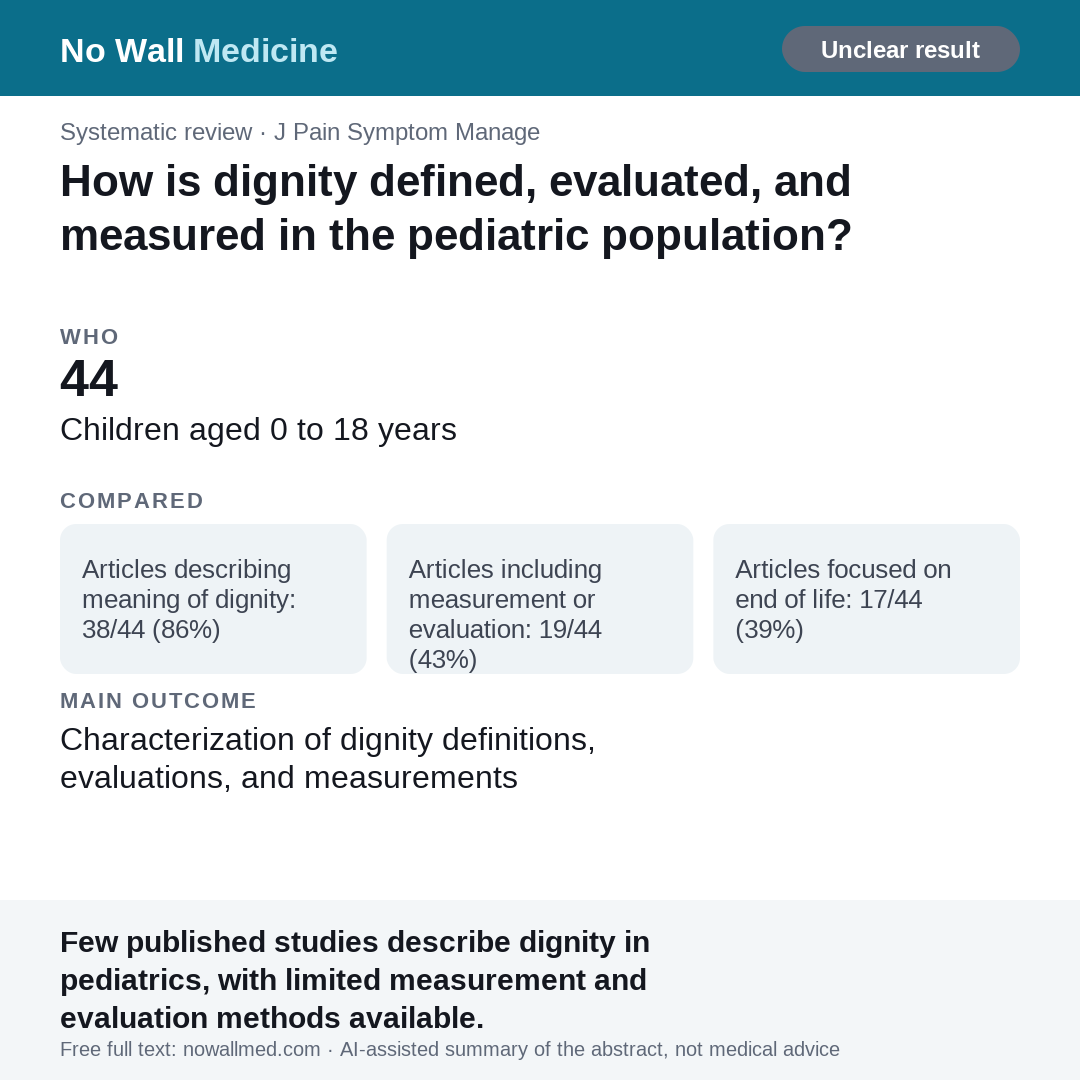
Dignity in the Pediatric Population: A Systematic Review
Systematic reviewUnclear result
How is dignity defined, evaluated, and measured in the pediatric population?
Who
44
Children aged 0 to 18 years
Compared
Articles describing meaning of dignity: 38/44 (86%)
Articles including measurement or evaluation: 19/44 (43%)
Articles focused on end of life: 17/44 (39%)
Main outcome
Characterization of dignity definitions, evaluations, and measurements
Bottom line: Few published studies describe dignity in pediatrics, with limited measurement and evaluation methods available.
J Pain Symptom Manage · 2024-07-18Download image
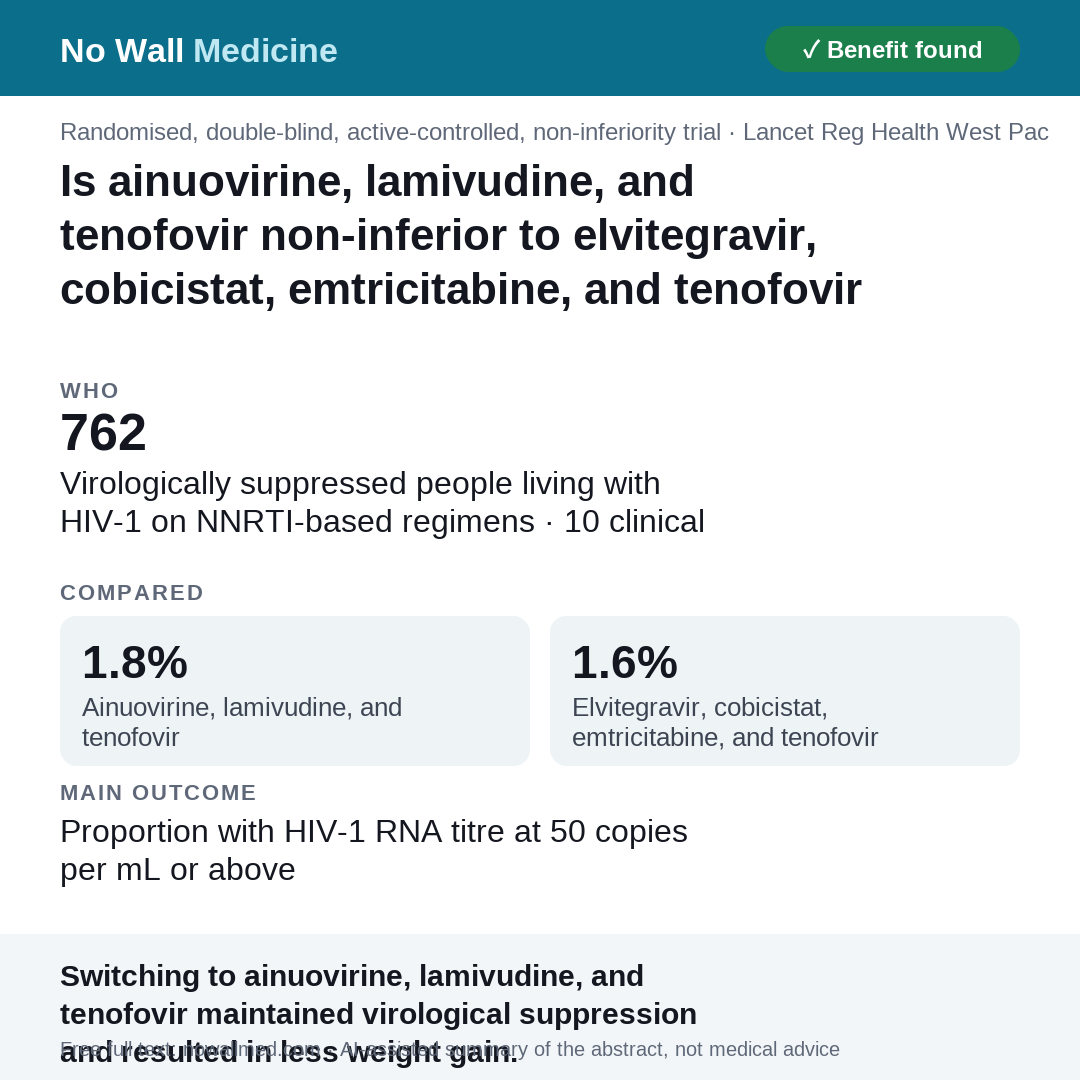
Switch to fixed-dose ainuovirine, lamivudine, and tenofovir DF versus elvitegravir, cobicistat, emtricitabine, and tenofovir alafenamide in virologically suppressed people living with HIV-1: the 48-week results of the SPRINT trial, a multi-centre, randomised, double-blind, active-controlled, phase 3, non-inferiority trial
Randomised, double-blind, active-controlled, non-inferiority trialBenefit found
Is ainuovirine, lamivudine, and tenofovir non-inferior to elvitegravir, cobicistat, emtricitabine, and tenofovir alafenamide?
Who
762
Virologically suppressed people living with HIV-1 on NNRTI-based regimens · 10 clinical centres across China
Compared
1.8%Ainuovirine, lamivudine, and tenofovir
1.6%Elvitegravir, cobicistat, emtricitabine, and tenofovir alafenamide
Main outcome
Proportion with HIV-1 RNA titre at 50 copies per mL or above
Result: estimated treatment difference 0.3%, 95% CI -1.6 to 2.1
Bottom line: Switching to ainuovirine, lamivudine, and tenofovir maintained virological suppression and resulted in less weight gain.
Funded by: Jiangsu Aidea Pharmaceutical and Chinese Ministry of Science and Technology
Lancet Reg Health West Pac · 2024-07-18Download image
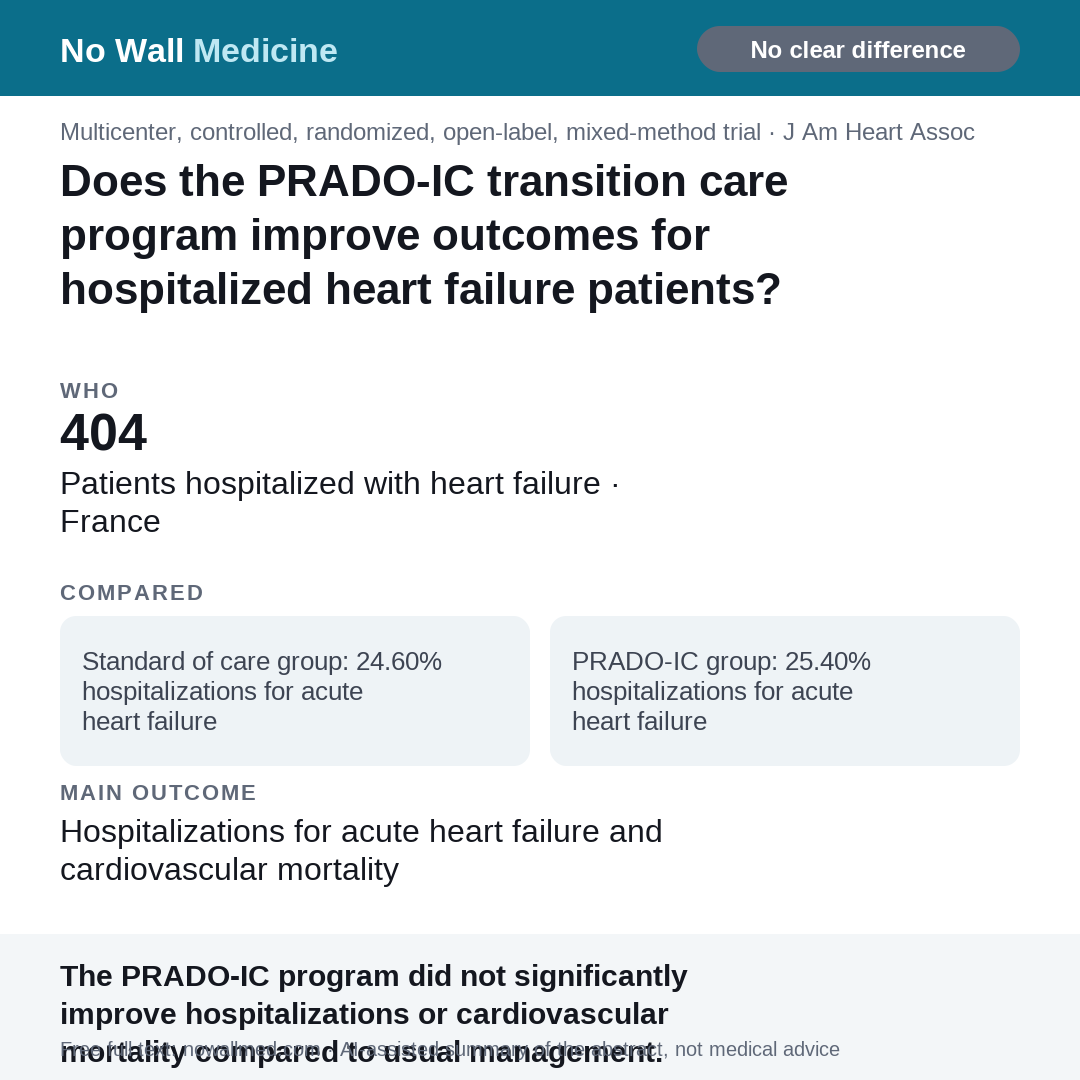
PRADOC: A Multicenter Randomized Controlled Trial to Assess the Efficiency of PRADO-IC, a Nationwide Pragmatic Transition Care Management Plan for Hospitalized Patients With Heart Failure in France
Multicenter, controlled, randomized, open-label, mixed-method trialNo clear difference
Does the PRADO-IC transition care program improve outcomes for hospitalized heart failure patients?
Who
404
Patients hospitalized with heart failure · France
Compared
Standard of care group: 24.60% hospitalizations for acute heart failure
PRADO-IC group: 25.40% hospitalizations for acute heart failure
Main outcome
Hospitalizations for acute heart failure and cardiovascular mortality
Result: hazard ratio 1.04 (95% CI 0.69-1.56)
Bottom line: The PRADO-IC program did not significantly improve hospitalizations or cardiovascular mortality compared to usual management.
J Am Heart Assoc · 2024-07-18Download image
Neurochemical and genetic factors in panic disorder: a systematic review
Systematic reviewUnclear result
What are the neurochemical, genetic, and epigenetic factors associated with panic disorder?
Who
Human and animal studies on panic disorder
Compared
Neurochemical factors
Genetic and epigenetic factors
Main outcome
Neurochemical, genetic, and epigenetic associations with panic disorder
Bottom line: Panic disorder involves complex alterations in neurotransmission, the hypothalamic-pituitary-adrenal axis, neuroplasticity, and genetic factors.
Transl Psychiatry · 2024-07-18Download image

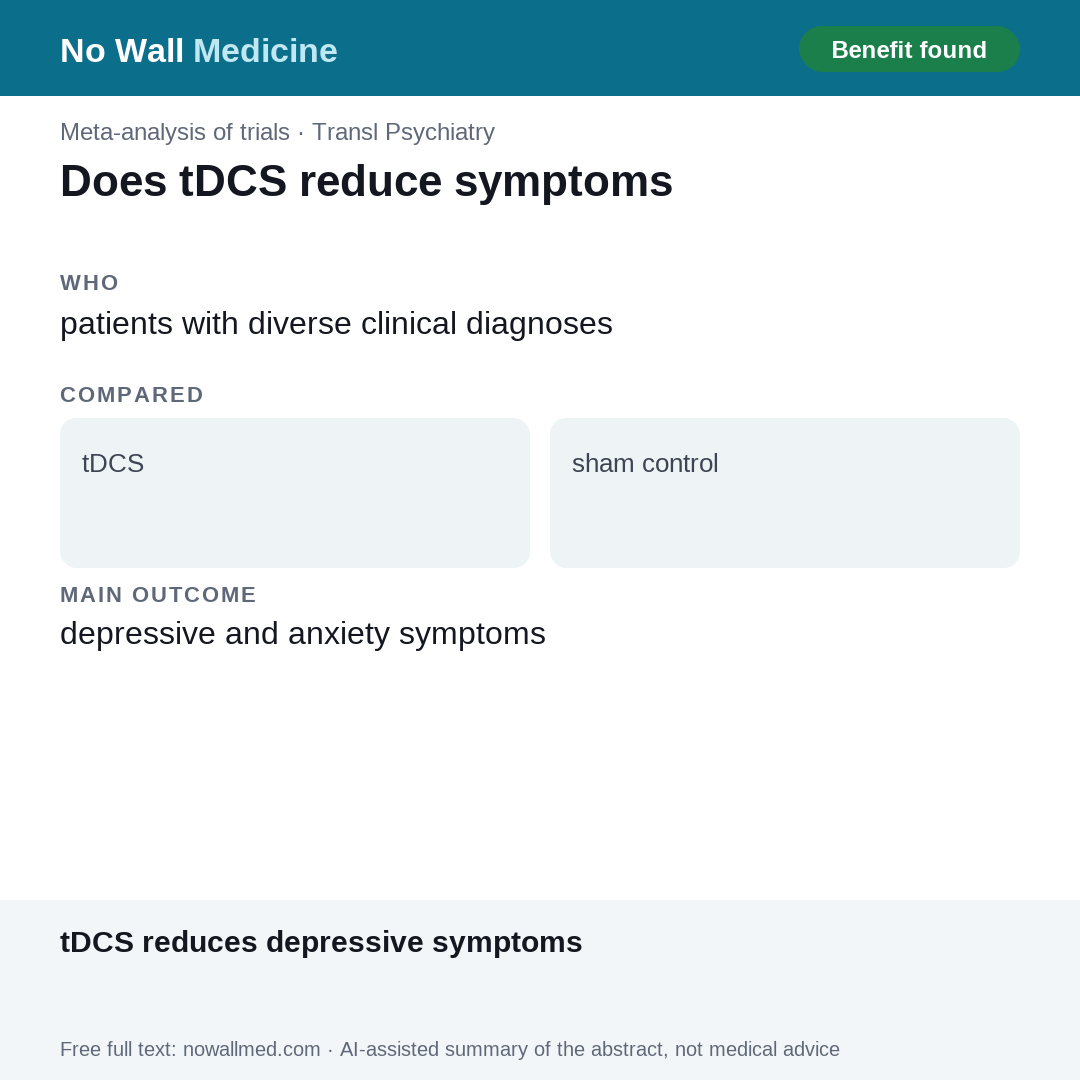
Evaluating the effects of tDCS on depressive and anxiety symptoms from a transdiagnostic perspective: a systematic review and meta-analysis of randomized controlled trials
Meta-analysis of trialsBenefit found
Does tDCS reduce symptoms
Who
patients with diverse clinical diagnoses
Compared
tDCS
sham control
Main outcome
depressive and anxiety symptoms
Bottom line: tDCS reduces depressive symptoms
Transl Psychiatry · 2024-07-18Download image
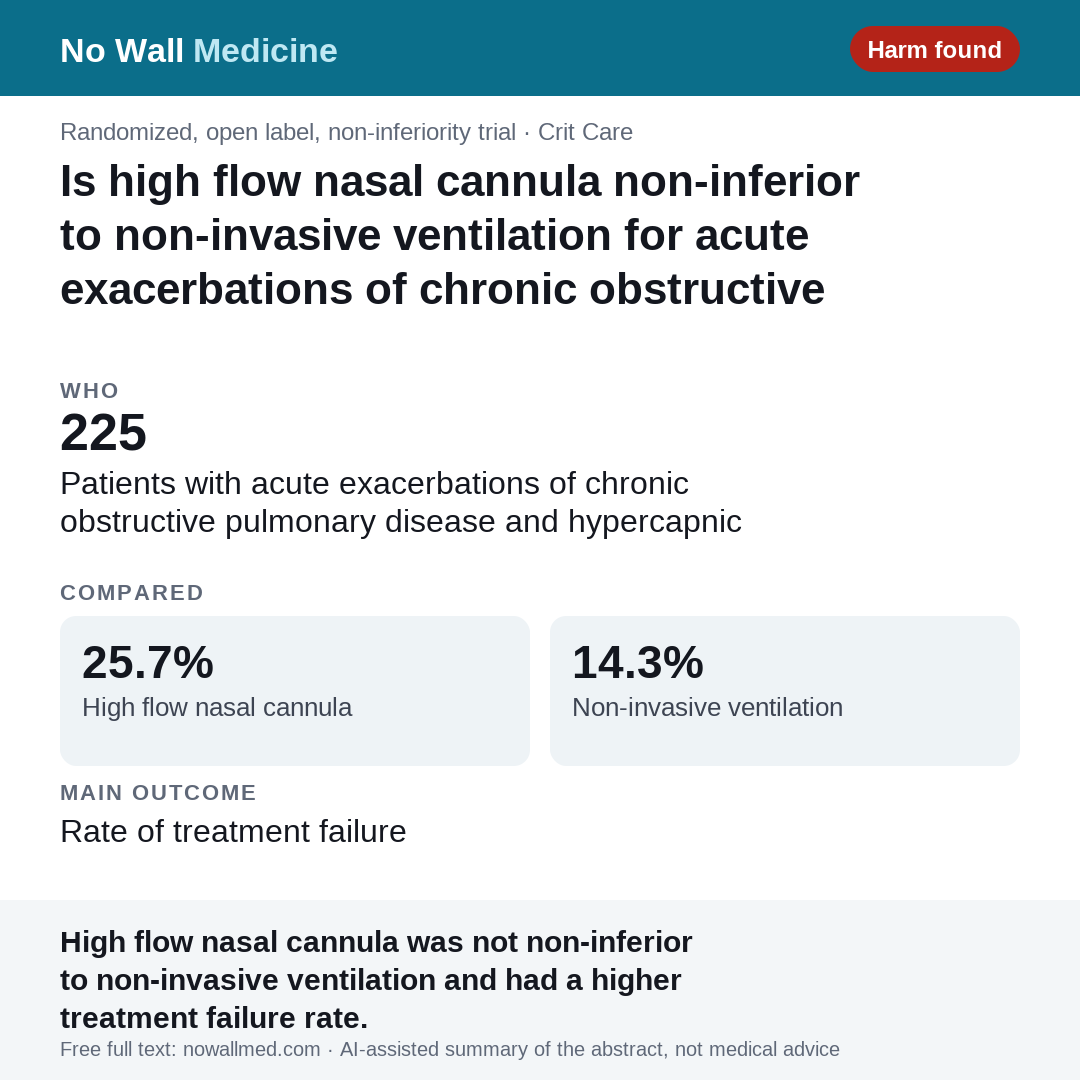
High flow nasal cannula oxygen therapy versus non-invasive ventilation for acute exacerbations of chronic obstructive pulmonary disease with acute-moderate hypercapnic respiratory failure: a randomized controlled non-inferiority trial
Randomized, open label, non-inferiority trialHarm found
Is high flow nasal cannula non-inferior to non-invasive ventilation for acute exacerbations of chronic obstructive pulmonary disease?
Who
225
Patients with acute exacerbations of chronic obstructive pulmonary disease and hypercapnic respiratory failure · Two intensive care units at a large tertiary academic teaching hospital
Compared
25.7%High flow nasal cannula
14.3%Non-invasive ventilation
Main outcome
Rate of treatment failure
Result: risk difference 11.38% (95% CI 0.25-21.20)
Bottom line: High flow nasal cannula was not non-inferior to non-invasive ventilation and had a higher treatment failure rate.
Crit Care · 2024-07-18Download image
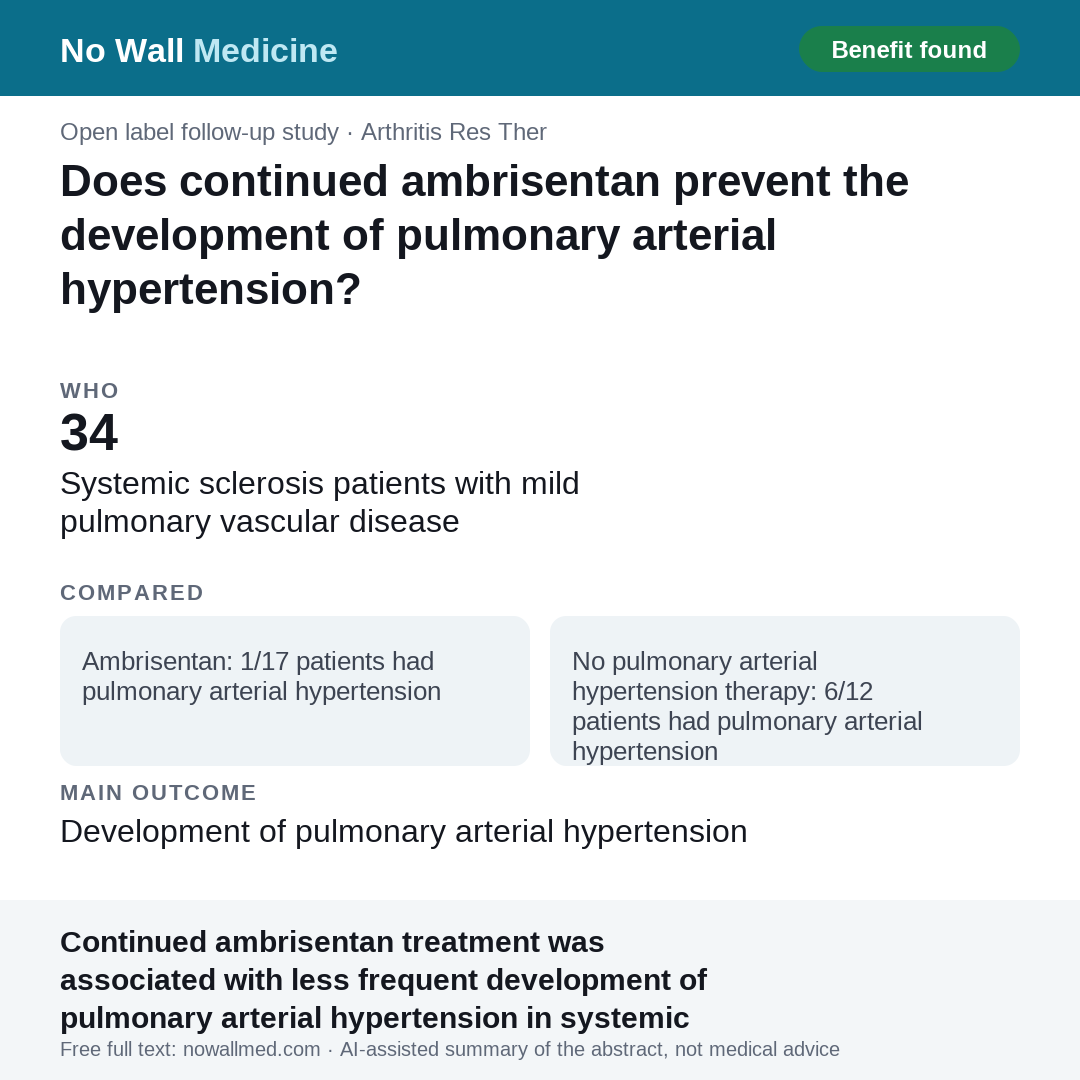
Effect of ambrisentan in patients with systemic sclerosis and mild pulmonary arterial hypertension: long-term follow-up data from EDITA study
Open label follow-up studyBenefit found
Does continued ambrisentan prevent the development of pulmonary arterial hypertension?
Who
34
Systemic sclerosis patients with mild pulmonary vascular disease
Compared
Ambrisentan: 1/17 patients had pulmonary arterial hypertension
No pulmonary arterial hypertension therapy: 6/12 patients had pulmonary arterial hypertension
Main outcome
Development of pulmonary arterial hypertension
Bottom line: Continued ambrisentan treatment was associated with less frequent development of pulmonary arterial hypertension in systemic sclerosis patients.
Arthritis Res Ther · 2024-07-18Download image
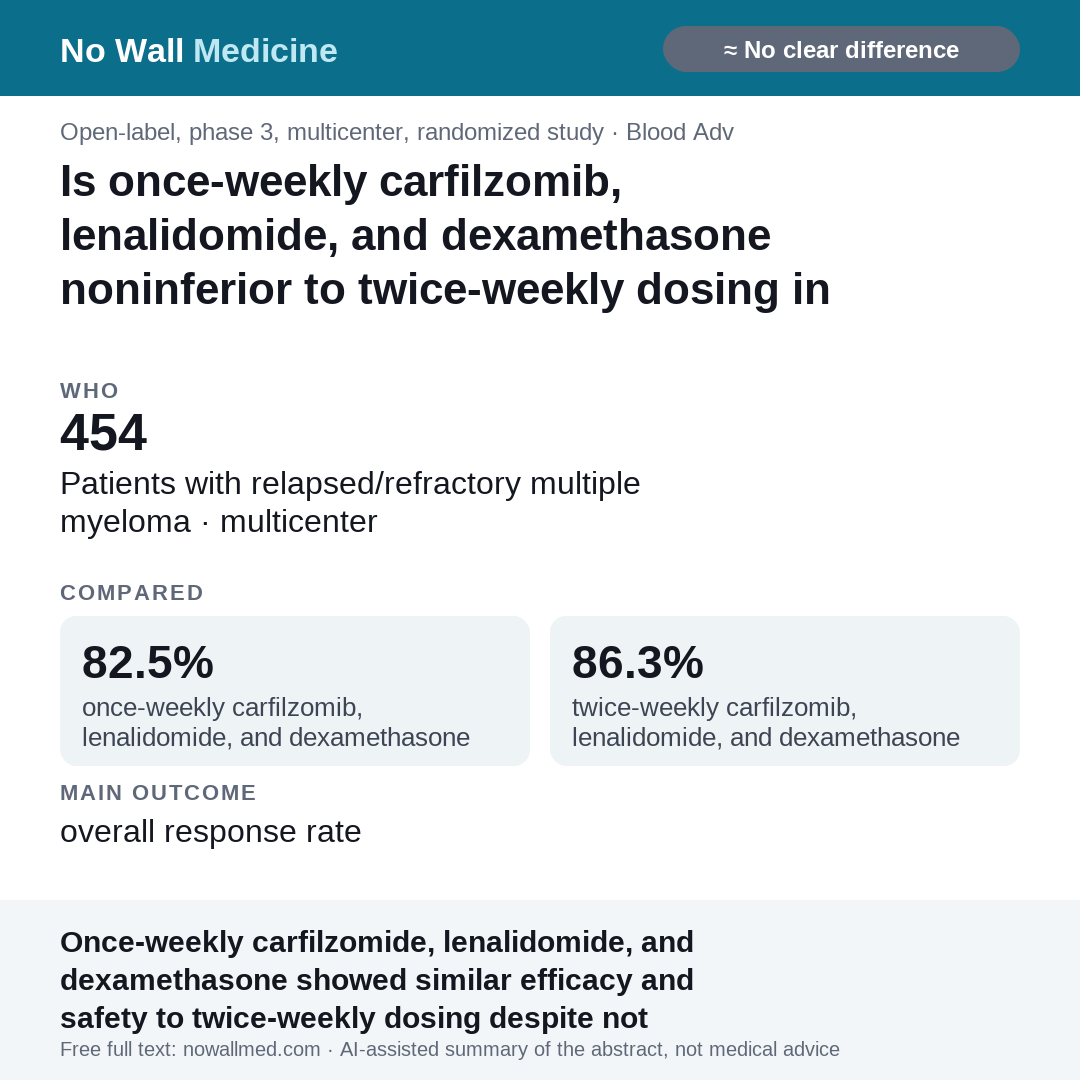
A.R.R.O.W.2: once- vs twice-weekly carfilzomib, lenalidomide, and dexamethasone in relapsed/refractory multiple myeloma
Open-label, phase 3, multicenter, randomized studyNo clear difference
Is once-weekly carfilzomib, lenalidomide, and dexamethasone noninferior to twice-weekly dosing in relapsed/refractory multiple myeloma?
Who
454
Patients with relapsed/refractory multiple myeloma · multicenter
Compared
82.5%once-weekly carfilzomib, lenalidomide, and dexamethasone (95% confidence interval 76.9-87.2)
86.3%twice-weekly carfilzomib, lenalidomide, and dexamethasone (95% CI 81.1-90.5)
Main outcome
overall response rate
Result: risk ratio 0.954 (95% CI 0.882-1.032)
Bottom line: Once-weekly carfilzomide, lenalidomide, and dexamethasone showed similar efficacy and safety to twice-weekly dosing despite not meeting noninferiority.
Blood Adv · 2024-07-18Download image
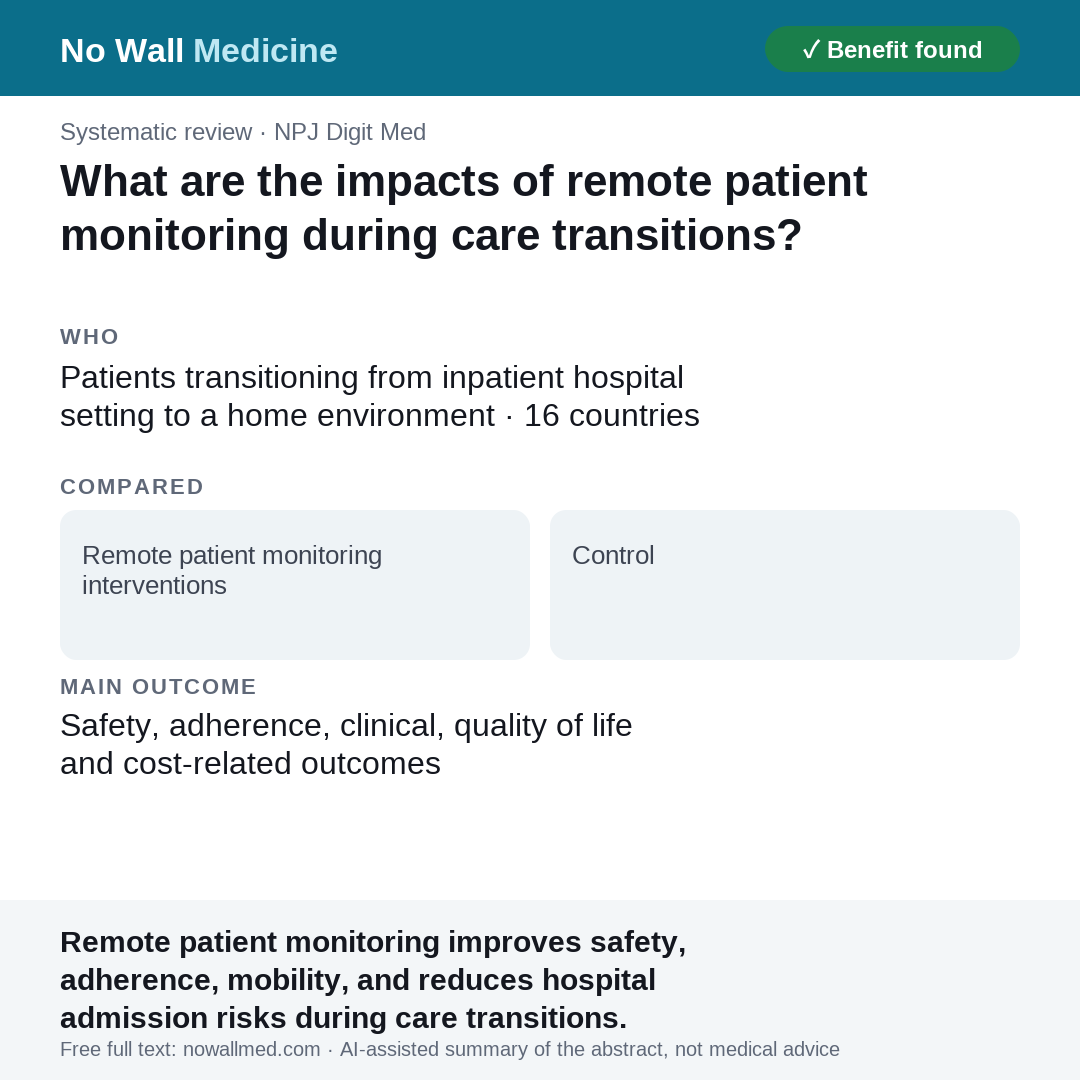
A systematic review of the impacts of remote patient monitoring (RPM) interventions on safety, adherence, quality-of-life and cost-related outcomes
Systematic reviewBenefit found
What are the impacts of remote patient monitoring during care transitions?
Who
Patients transitioning from inpatient hospital setting to a home environment · 16 countries
Compared
Remote patient monitoring interventions
Control
Main outcome
Safety, adherence, clinical, quality of life and cost-related outcomes
Bottom line: Remote patient monitoring improves safety, adherence, mobility, and reduces hospital admission risks during care transitions.
NPJ Digit Med · 2024-07-18Download image
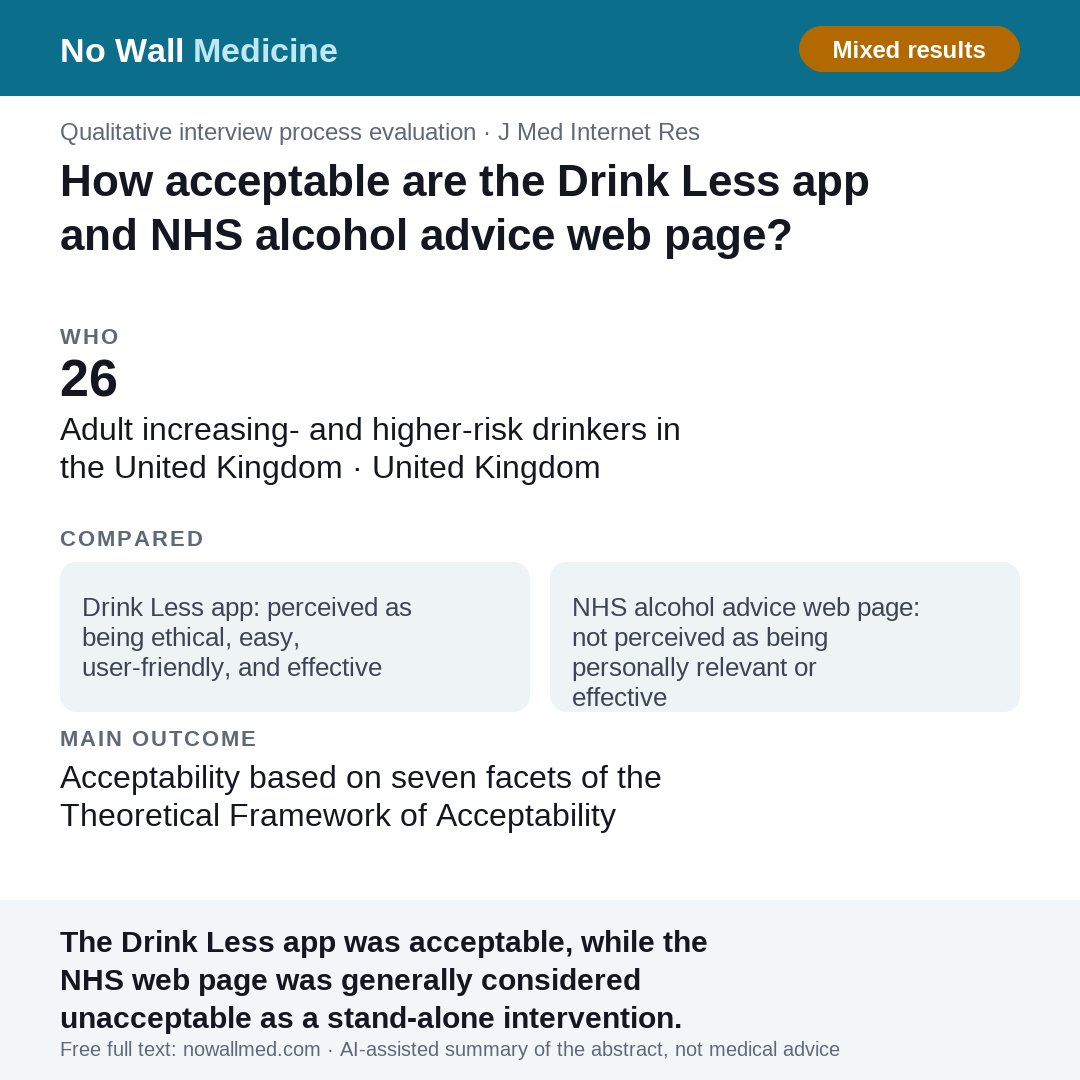
Evaluating the Acceptability of the Drink Less App and the National Health Service Alcohol Advice Web Page: Qualitative Interview Process Evaluation
Qualitative interview process evaluationMixed results
How acceptable are the Drink Less app and NHS alcohol advice web page?
Who
26
Adult increasing- and higher-risk drinkers in the United Kingdom · United Kingdom
Compared
Drink Less app: perceived as being ethical, easy, user-friendly, and effective
NHS alcohol advice web page: not perceived as being personally relevant or effective
Main outcome
Acceptability based on seven facets of the Theoretical Framework of Acceptability
Bottom line: The Drink Less app was acceptable, while the NHS web page was generally considered unacceptable as a stand-alone intervention.
Limitation: The study used a small subsample of 26 participants.
J Med Internet Res · 2024-07-18Download image
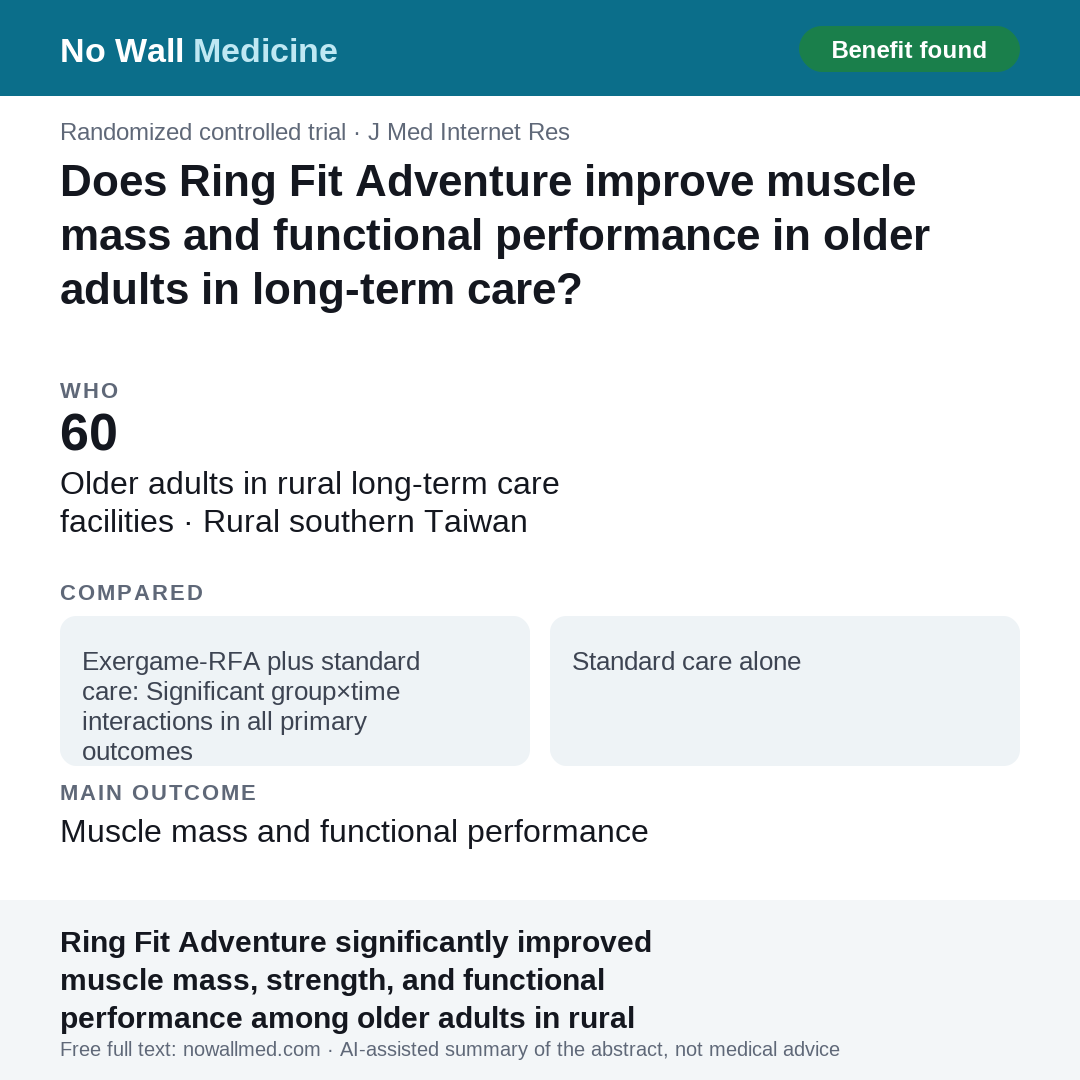
Assessing the Clinical Effectiveness of an Exergame-Based Exercise Training Program Using Ring Fit Adventure to Prevent and Postpone Frailty and Sarcopenia Among Older Adults in Rural Long-Term Care Facilities: Randomized Controlled Trial
Randomized controlled trialBenefit found
Does Ring Fit Adventure improve muscle mass and functional performance in older adults in long-term care?
Who
60
Older adults in rural long-term care facilities · Rural southern Taiwan
Compared
Exergame-RFA plus standard care: Significant group×time interactions in all primary outcomes
Standard care alone
Main outcome
Muscle mass and functional performance
Bottom line: Ring Fit Adventure significantly improved muscle mass, strength, and functional performance among older adults in rural long-term care facilities.
J Med Internet Res · 2024-07-18Download image