Visual abstracts
New randomized trials and meta-analyses from leading journals at a glance: who was studied, what was compared, and what was found. Every paper is free to read in full.
All specialtiesCardiology 857Oncology 770Gastroenterology & Hepatology 311Infectious Disease 626Neurology 354Psychiatry & Mental Health 430Pulmonology 370Critical Care 260Endocrinology & Diabetes 484Pediatrics 542Surgery 351Orthopedics & Sports Medicine 166Neurosurgery 115Cardiothoracic & Vascular Surgery 87Plastic & Reconstructive Surgery 144Nephrology 197Rheumatology 108Hematology 183Dermatology 82Ophthalmology 97Obstetrics & Gynecology 266Public & Global Health 168Radiology & Imaging 105Anesthesiology 130Urology 162ENT (Otolaryngology) 115Emergency Medicine 103Allergy & Immunology 58Geriatrics 160Family Medicine & Primary Care 111Medical Genetics & Genomics 91Pathology & Laboratory Medicine 27Physical Medicine & Rehabilitation 149Palliative Care 81Nutrition 223Digital Health & AI 462General Medicine 101
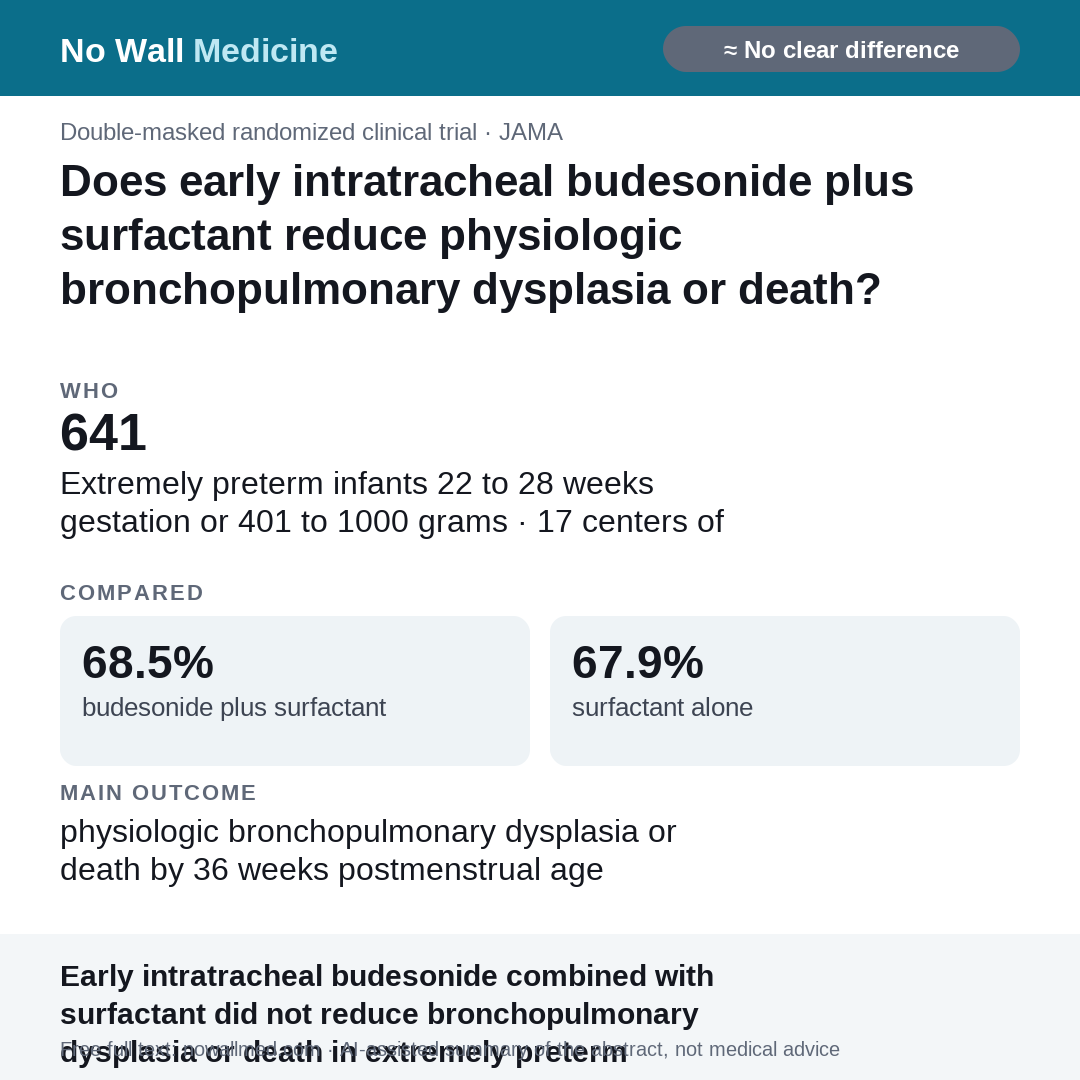
Early Intratracheal Budesonide to Reduce Bronchopulmonary Dysplasia in Extremely Preterm Infants: The Budesonide in Babies (BiB) Randomized Clinical Trial
Double-masked randomized clinical trialNo clear difference
Does early intratracheal budesonide plus surfactant reduce physiologic bronchopulmonary dysplasia or death?
Who
641
Extremely preterm infants 22 to 28 weeks gestation or 401 to 1000 grams · 17 centers of the United States Neonatal Research Network
Compared
68.5%budesonide plus surfactant
67.9%surfactant alone
Main outcome
physiologic bronchopulmonary dysplasia or death by 36 weeks postmenstrual age
Result: adjusted relative risk 1.00 (95% CI 0.90-1.11)
Bottom line: Early intratracheal budesonide combined with surfactant did not reduce bronchopulmonary dysplasia or death in extremely preterm infants.
JAMA · 2025-09-30Download image
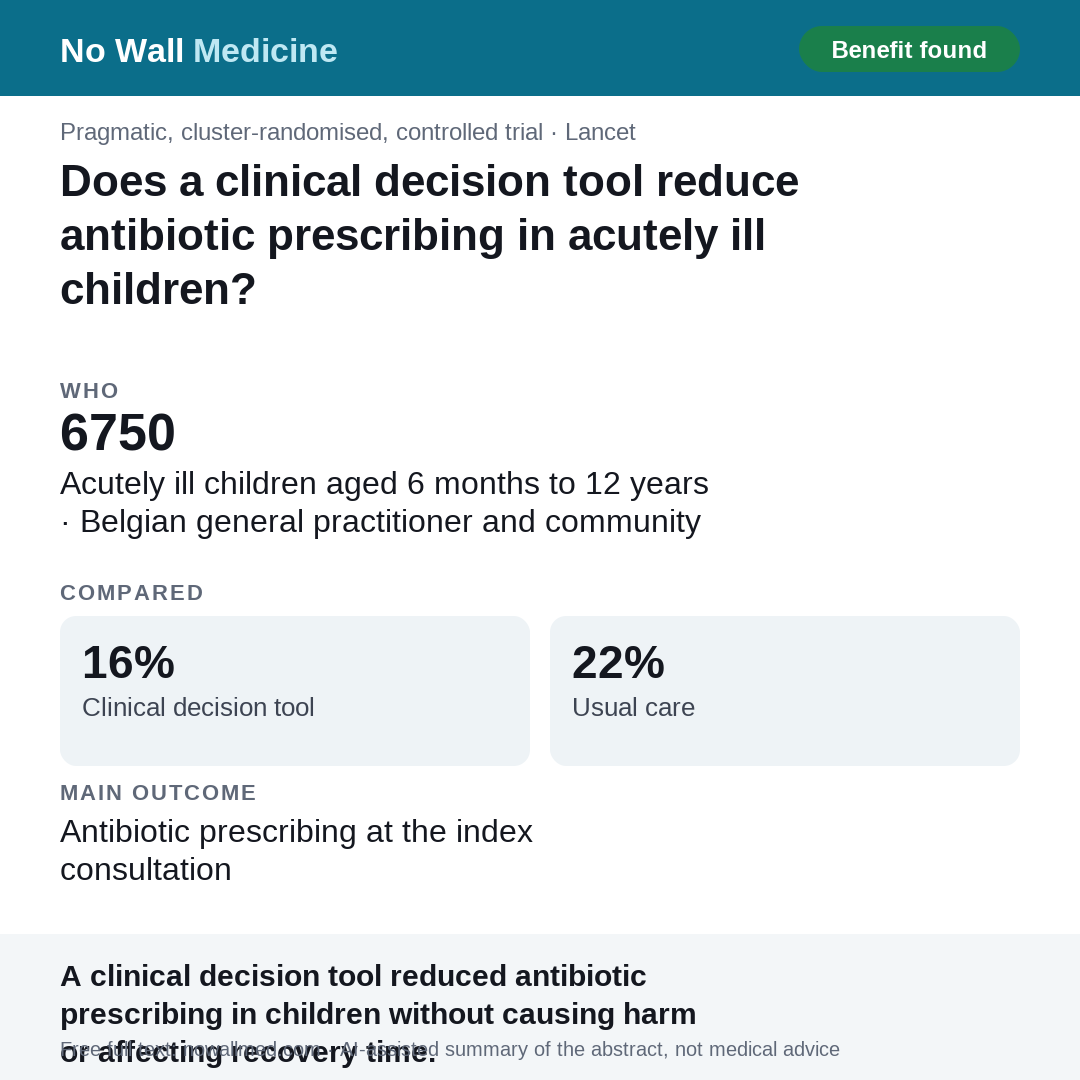
A clinical decision tool including a decision tree, point-of-care testing of CRP, and safety-netting advice to guide antibiotic prescribing in acutely ill children in primary care in Belgium (ARON): a pragmatic, cluster-randomised, controlled trial
Pragmatic, cluster-randomised, controlled trialBenefit found
Does a clinical decision tool reduce antibiotic prescribing in acutely ill children?
Who
6750
Acutely ill children aged 6 months to 12 years · Belgian general practitioner and community paediatrician practices
Compared
16%Clinical decision tool
22%Usual care
Main outcome
Antibiotic prescribing at the index consultation
Result: adjusted odds ratio 0·72 (95% CI 0·55-0·94)
Bottom line: A clinical decision tool reduced antibiotic prescribing in children without causing harm or affecting recovery time.
Funded by: Belgian Health Care Knowledge Centre
Lancet · 2025-09-25Download image
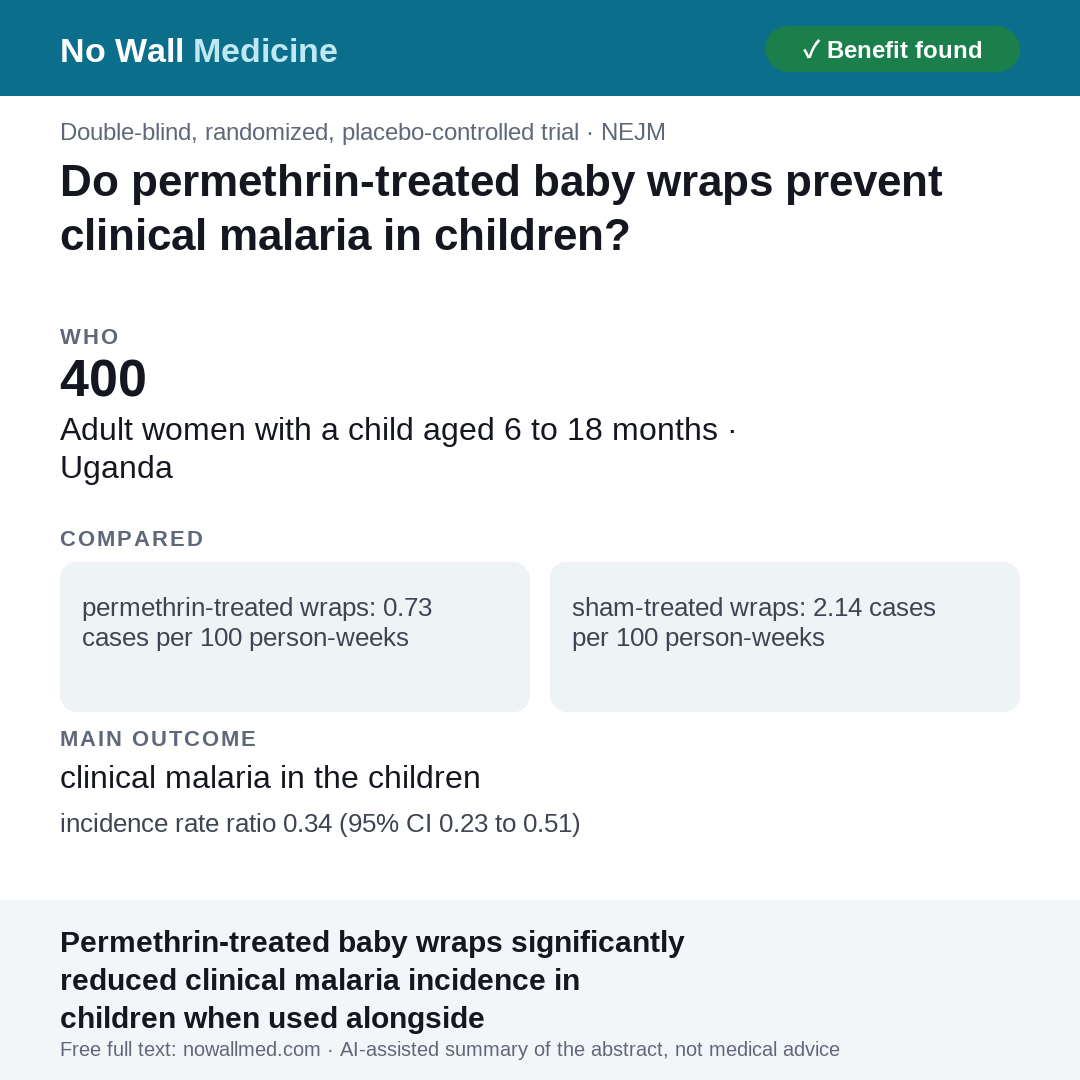
Permethrin-Treated Baby Wraps for the Prevention of Malaria
Double-blind, randomized, placebo-controlled trialBenefit found
Do permethrin-treated baby wraps prevent clinical malaria in children?
Who
400
Adult women with a child aged 6 to 18 months · Uganda
Compared
permethrin-treated wraps: 0.73 cases per 100 person-weeks
sham-treated wraps: 2.14 cases per 100 person-weeks
Main outcome
clinical malaria in the children
Result: incidence rate ratio 0.34 (95% CI 0.23 to 0.51)
Bottom line: Permethrin-treated baby wraps significantly reduced clinical malaria incidence in children when used alongside insecticide-treated bed nets.
Funded by: Doris Duke Foundation and others
NEJM · 2025-09-24Download image
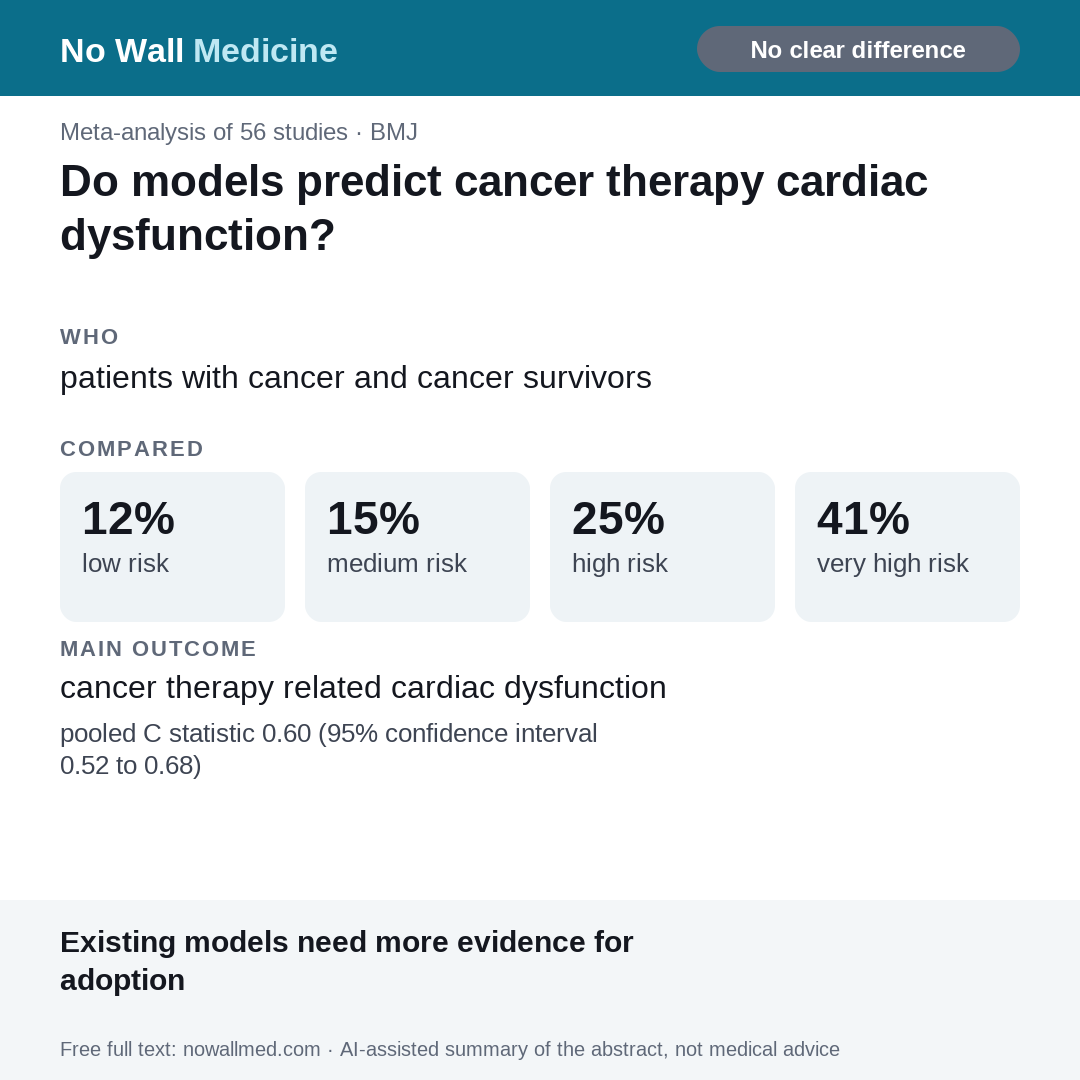
Risk prediction models for cancer therapy related cardiac dysfunction in patients with cancer and cancer survivors: systematic review and meta-analysis
Meta-analysis of 56 studiesNo clear difference
Do models predict cancer therapy cardiac dysfunction?
Who
patients with cancer and cancer survivors
Compared
12%low risk
15%medium risk
25%high risk
41%very high risk
Main outcome
cancer therapy related cardiac dysfunction
Result: pooled C statistic 0.60 (95% confidence interval 0.52 to 0.68)
Bottom line: Existing models need more evidence for adoption
Limitation: poor reporting and limited validation
BMJ · 2025-09-23Download image
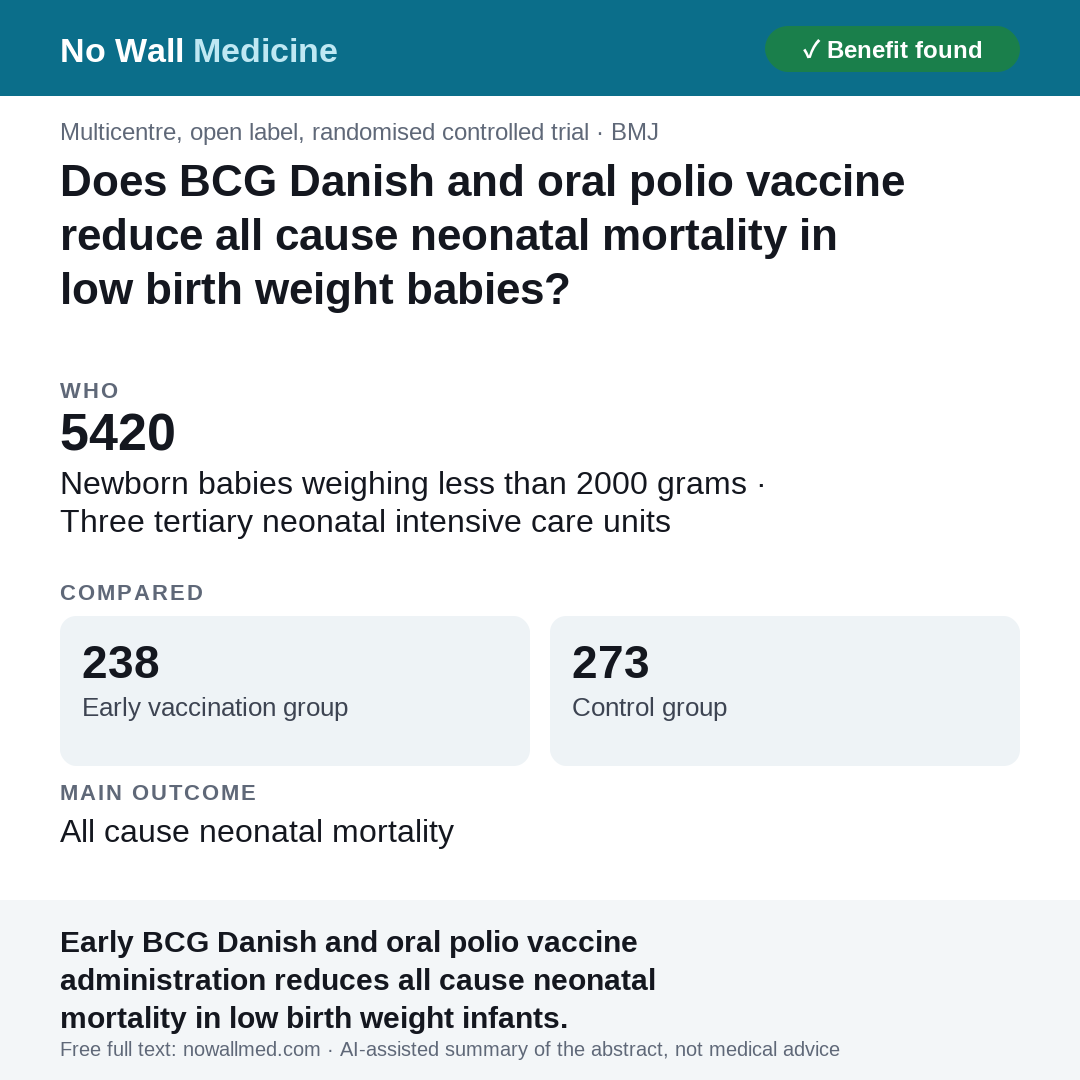
Effect of BCG Danish and oral polio vaccine on neonatal mortality in newborn babies weighing less than 2000 g in India: multicentre open label randomised controlled trial (BLOW2)
Multicentre, open label, randomised controlled trialBenefit found
Does BCG Danish and oral polio vaccine reduce all cause neonatal mortality in low birth weight babies?
Who
5420
Newborn babies weighing less than 2000 grams · Three tertiary neonatal intensive care units in southeast India
Compared
238Early vaccination group (8.8%)
273Control group (10.1%)
Main outcome
All cause neonatal mortality
Result: adjusted hazard ratio 0.83 (95% CI 0.69 to 0.98)
Bottom line: Early BCG Danish and oral polio vaccine administration reduces all cause neonatal mortality in low birth weight infants.
BMJ · 2025-09-22Download image
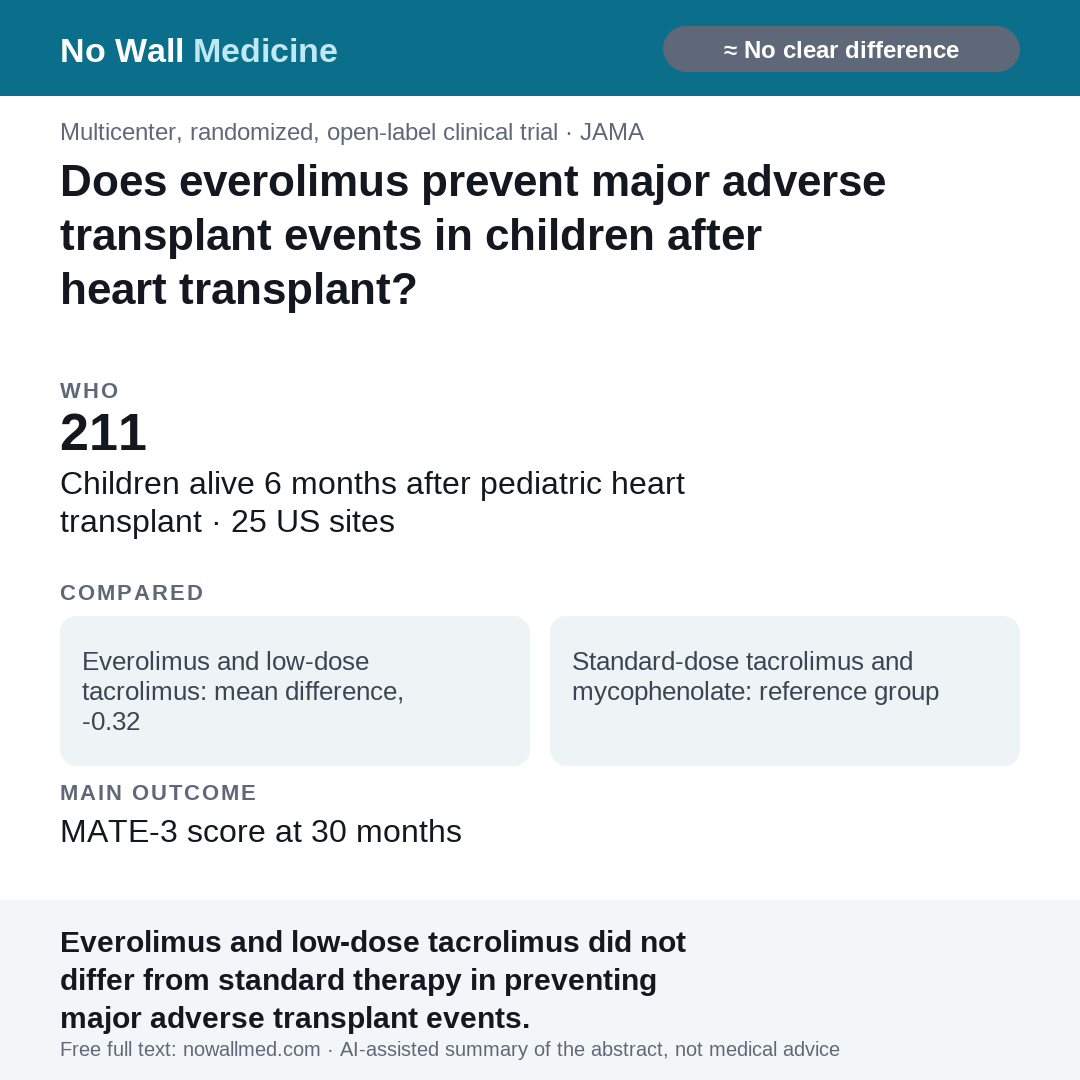
Everolimus and Low-Dose Tacrolimus After Heart Transplant in Children: A Randomized Clinical Trial
Multicenter, randomized, open-label, clinical trialNo clear difference
Is everolimus and low-dose tacrolimus safe and effective for preventing major adverse transplant events in children?
Who
211
Children alive 6 months after pediatric heart transplant · 25 US sites
Compared
everolimus and low-dose tacrolimus
standard-dose tacrolimus and mycophenolate mofetil
Main outcome
MATE-3 score (acute cellular rejection, CAV, and CKD)
Result: mean difference, -0.32 (95% CI, -0.90 to 0.20)
Bottom line: Everolimus and low-dose tacrolimus were safe and noninferior to standard therapy for preventing major adverse transplant events.
JAMA · 2025-09-17Download image
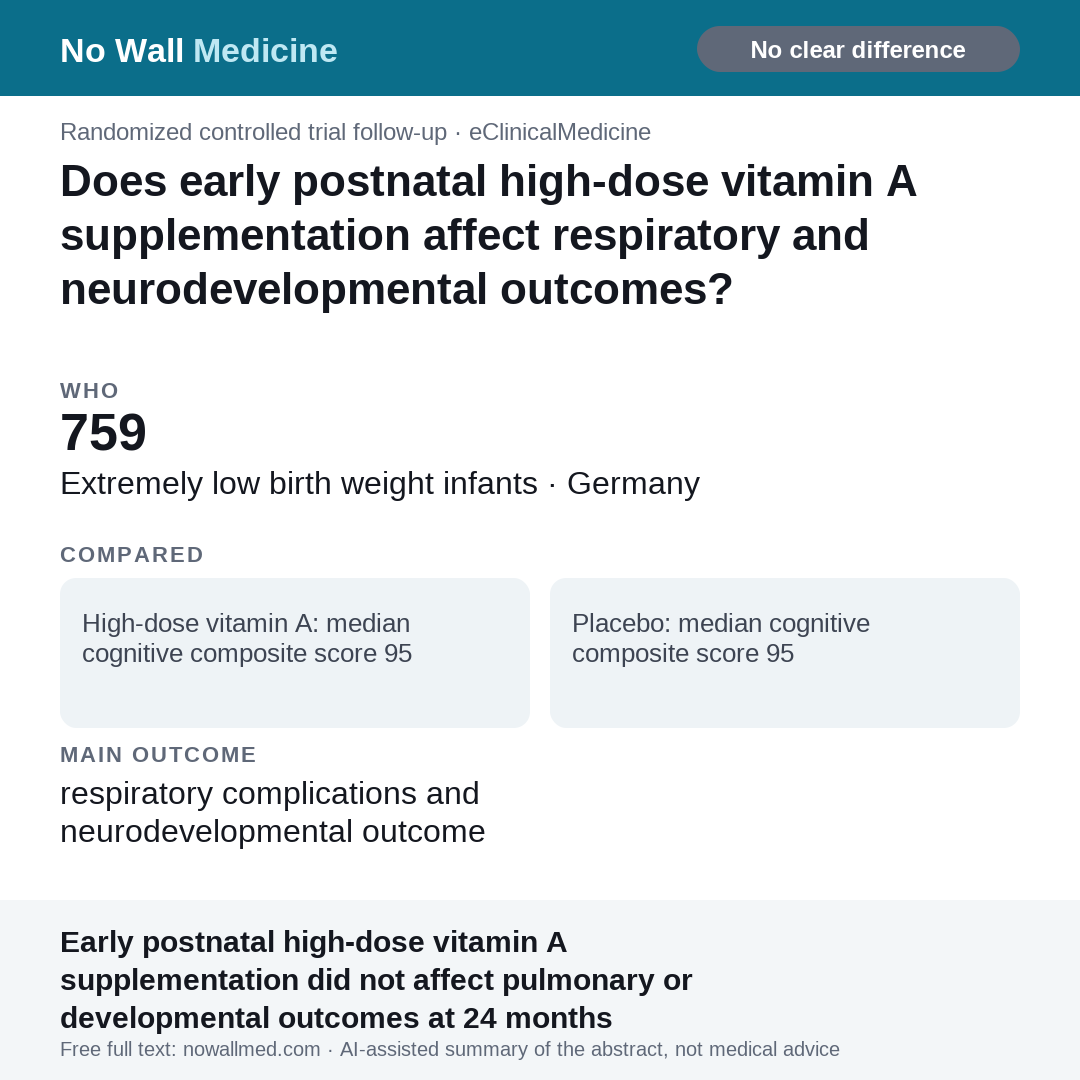
Two-year outcomes after early postnatal high-dose fat-soluble enteral vitamin A supplementation in extremely low birth weight infants: follow-up of the NeoVitaA randomized controlled trial
Randomized controlled trial follow-upNo clear difference
Does early postnatal high-dose vitamin A supplementation affect respiratory and neurodevelopmental outcomes?
Who
759
Extremely low birth weight infants · Germany
Compared
High-dose vitamin A: median cognitive composite score 95
Placebo: median cognitive composite score 95
Main outcome
respiratory complications and neurodevelopmental outcome
Result: median difference 0.0 (95%-CI -5.0 to 0.0)
Bottom line: Early postnatal high-dose vitamin A supplementation did not affect pulmonary or developmental outcomes at 24 months corrected age.
Funded by: Deutsche Forschungsgemeinschaft and European Clinical Research Infrastructures Network
eClinicalMedicine · 2025-09-15Download image
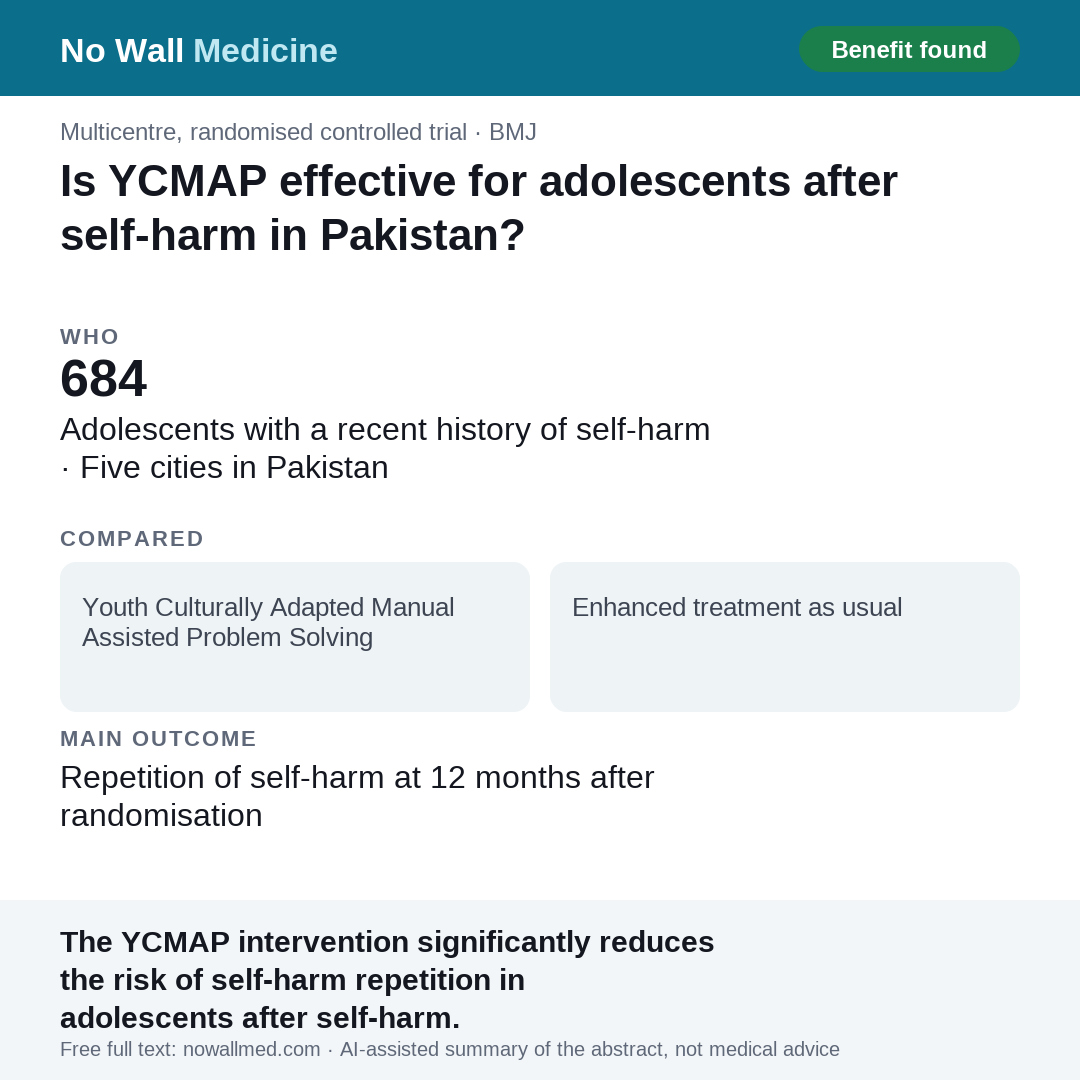
Effectiveness of YCMAP (youth culturally adapted manual assisted problem solving) intervention in adolescents after self-harm in Pakistan: multicentre, randomised controlled trial
Multicentre, randomised controlled trialBenefit found
Is YCMAP effective for adolescents after self-harm in Pakistan?
Who
684
Adolescents with a recent history of self-harm · Five cities in Pakistan
Compared
Youth Culturally Adapted Manual Assisted Problem Solving
Enhanced treatment as usual
Main outcome
Repetition of self-harm at 12 months after randomisation
Result: odds ratio 0.20 (95% confidence interval 0.06 to 0.70)
Bottom line: The YCMAP intervention significantly reduces the risk of self-harm repetition in adolescents after self-harm.
BMJ · 2025-09-12Download image
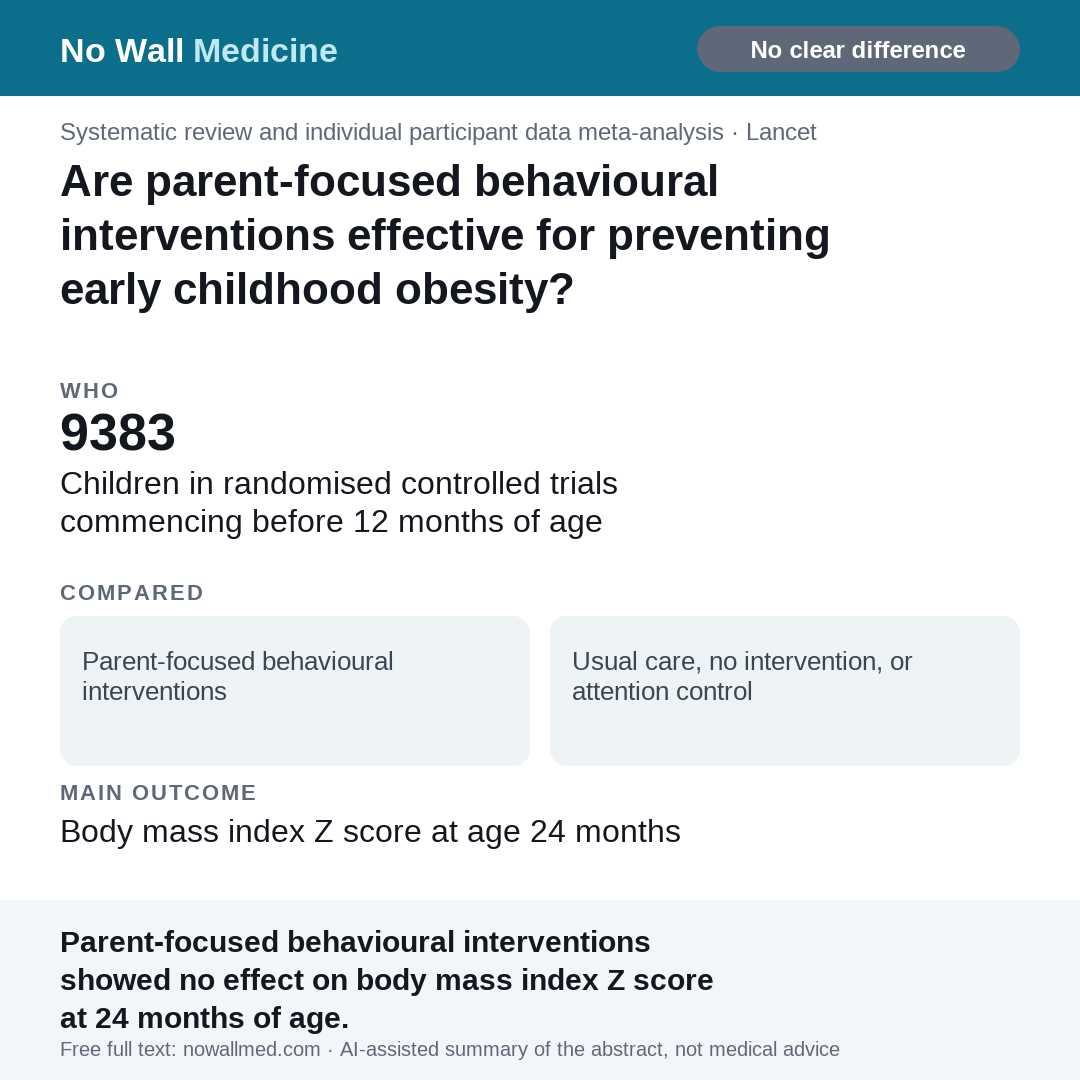
Parent-focused behavioural interventions for the prevention of early childhood obesity (TOPCHILD): a systematic review and individual participant data meta-analysis
Systematic review and individual participant data meta-analysisNo clear difference
Are parent-focused behavioural interventions effective for preventing early childhood obesity?
Who
9383
Children in randomised controlled trials commencing before 12 months of age
Compared
Parent-focused behavioural interventions
Usual care, no intervention, or attention control
Main outcome
Body mass index Z score at age 24 months
Result: mean difference -0·01 (95% CI -0·08 to 0·05)
Bottom line: Parent-focused behavioural interventions showed no effect on body mass index Z score at 24 months of age.
Limitation: 2623 participants had missing data for the primary outcome.
Funded by: Australian National Health and Medical Research Council
Lancet · 2025-09-10Download image
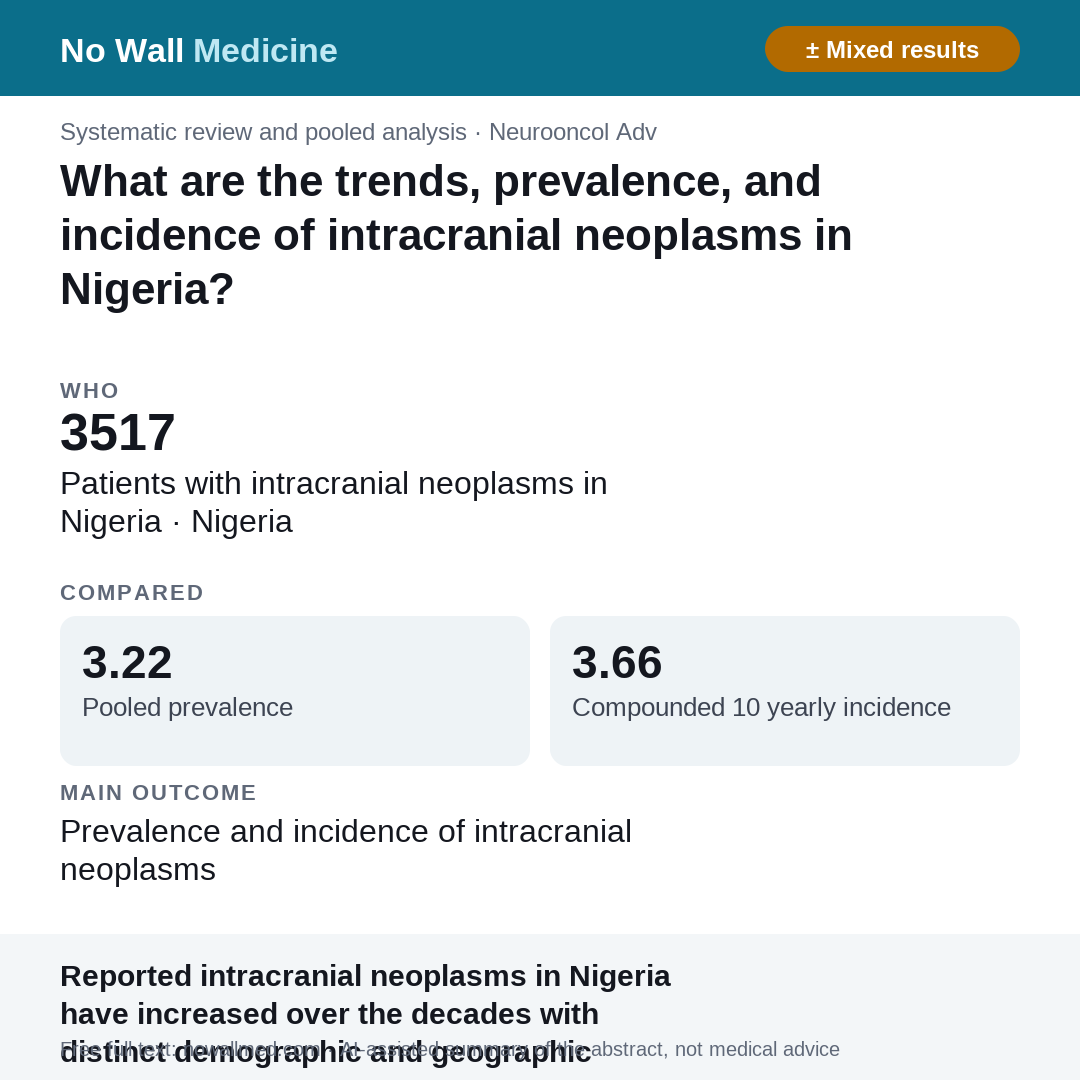
Trends of hospital-based reporting of intracranial neoplasms in Nigeria from 1960 to 2024: A systematic review and pooled analysis of literatures
Systematic review and pooled analysisMixed results
What are the trends, prevalence, and incidence of intracranial neoplasms in Nigeria?
Who
3517
Patients with intracranial neoplasms in Nigeria · Nigeria
Compared
3.22Pooled prevalence (95% CI: 1.66-5.22)
3.66Compounded 10 yearly incidence (95% CI: 1.67-6.32)
Main outcome
Prevalence and incidence of intracranial neoplasms
Bottom line: Reported intracranial neoplasms in Nigeria have increased over the decades with distinct demographic and geographic patterns.
Neurooncol Adv · 2025-09-02Download image
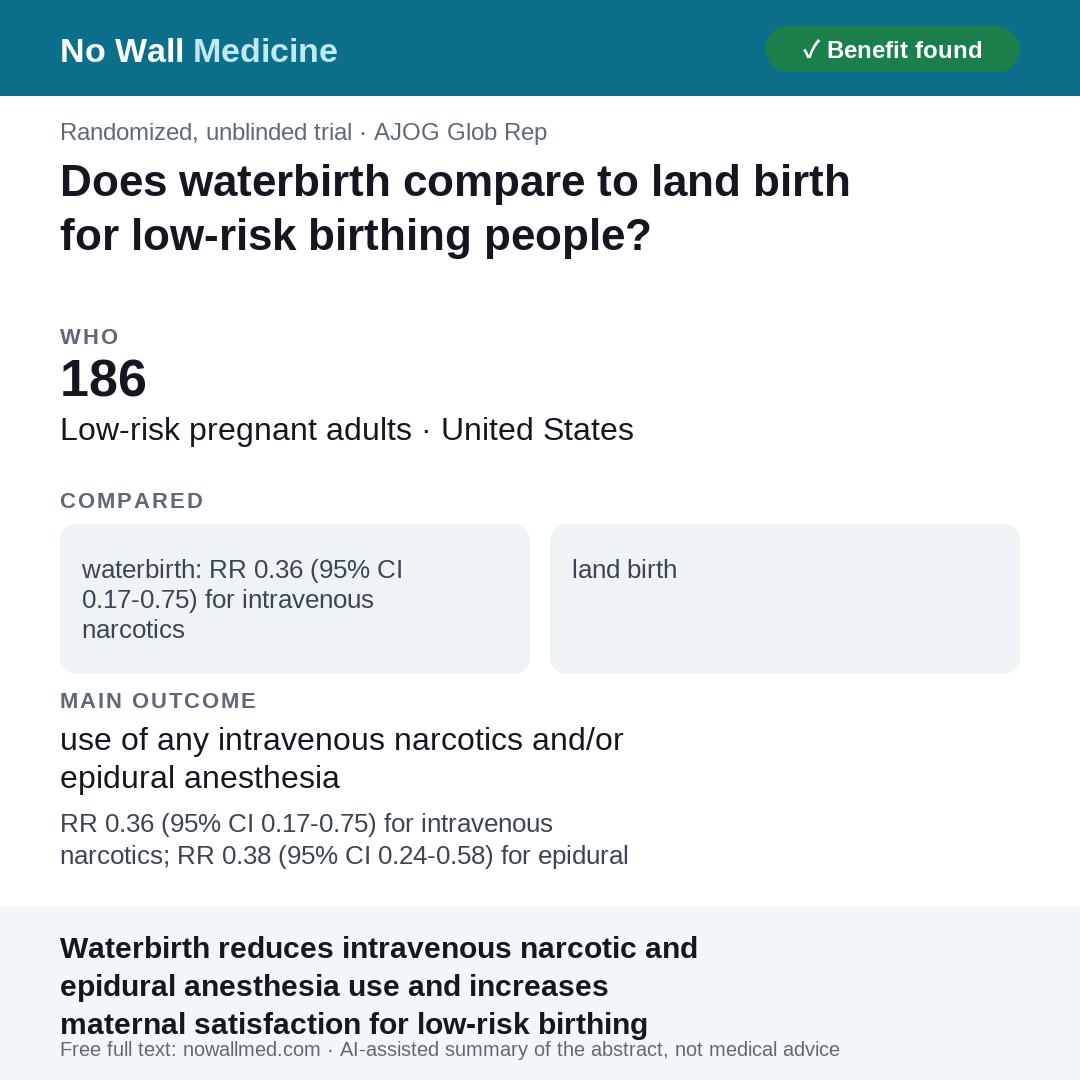
Hospital waterbirth for low-risk birthing people: findings of a randomized controlled trial
Randomized, unblinded trialBenefit found
Does waterbirth compare to land birth for low-risk birthing people?
Who
186
Low-risk pregnant adults · United States
Compared
waterbirth: RR 0.36 (95% CI 0.17-0.75) for intravenous narcotics
land birth
Main outcome
use of any intravenous narcotics and/or epidural anesthesia
Result: RR 0.36 (95% CI 0.17-0.75) for intravenous narcotics; RR 0.38 (95% CI 0.24-0.58) for epidural analgesia
Bottom line: Waterbirth reduces intravenous narcotic and epidural anesthesia use and increases maternal satisfaction for low-risk birthing people.
Limitation: Attrition was 39%.
AJOG Glob Rep · 2025-08-14Download image
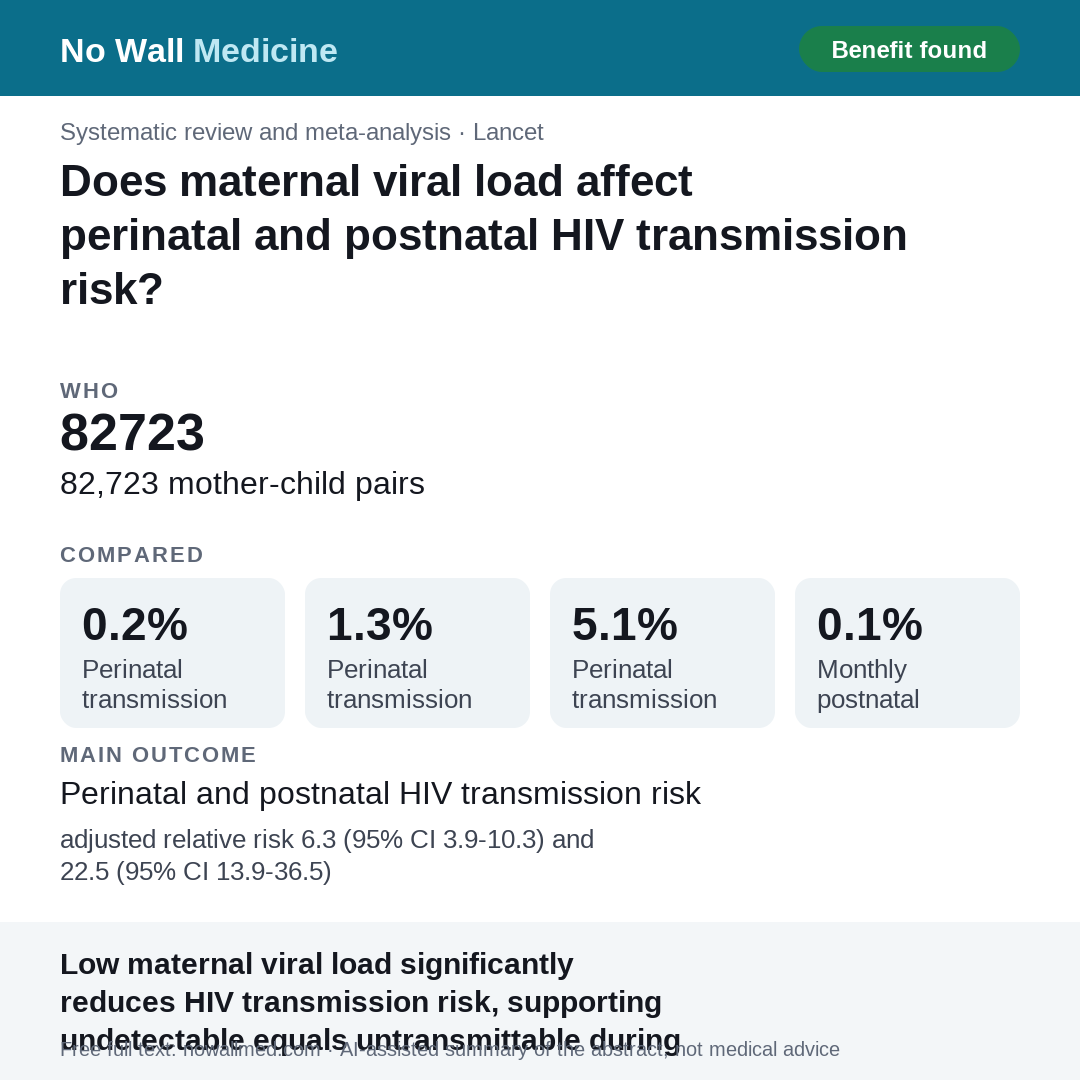
Estimating the effect of maternal viral load on perinatal and postnatal HIV transmission: a systematic review and meta-analysis
Systematic review and meta-analysisBenefit found
Does maternal viral load affect perinatal and postnatal HIV transmission risk?
Who
82723
82,723 mother-child pairs
Compared
0.2%Perinatal transmission <50 copies per mL (95% CI 0.2-0.3)
1.3%Perinatal transmission 50-999 copies per mL (1.0-1.7)
5.1%Perinatal transmission ≥1000 copies per mL (2.6-7.9)
0.1%Monthly postnatal transmission <50 copies per mL (0.0-0.4)
Main outcome
Perinatal and postnatal HIV transmission risk
Result: adjusted relative risk 6.3 (95% CI 3.9-10.3) and 22.5 (95% CI 13.9-36.5)
Bottom line: Low maternal viral load significantly reduces HIV transmission risk, supporting undetectable equals untransmittable during pregnancy and birth.
Funded by: National Institutes of Health, WHO, and Massachusetts General Hospital
Lancet · 2025-07-10Download image
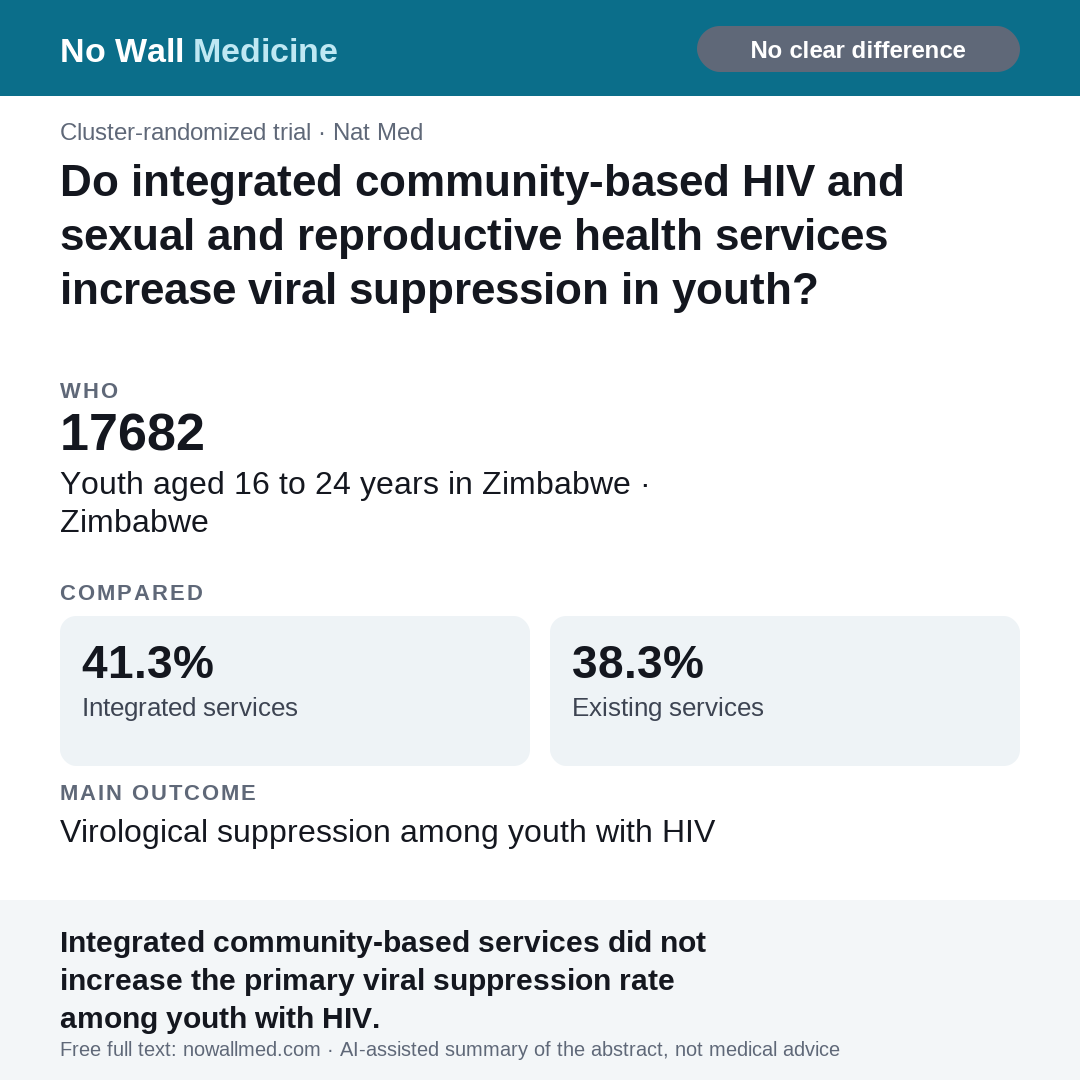
Integrated community-based HIV and sexual and reproductive health services for youth: a cluster-randomized trial
Cluster-randomized trialNo clear difference
Do integrated community-based HIV and sexual and reproductive health services increase viral suppression in youth?
Who
17682
Youth aged 16 to 24 years in Zimbabwe · Zimbabwe
Compared
41.3%Integrated services
38.3%Existing services
Main outcome
Virological suppression among youth with HIV
Result: risk ratio 1.07 (95% confidence interval 0.88 to 1.30)
Bottom line: Integrated community-based services did not increase the primary viral suppression rate among youth with HIV.
Nat Med · 2025-06-24Download image
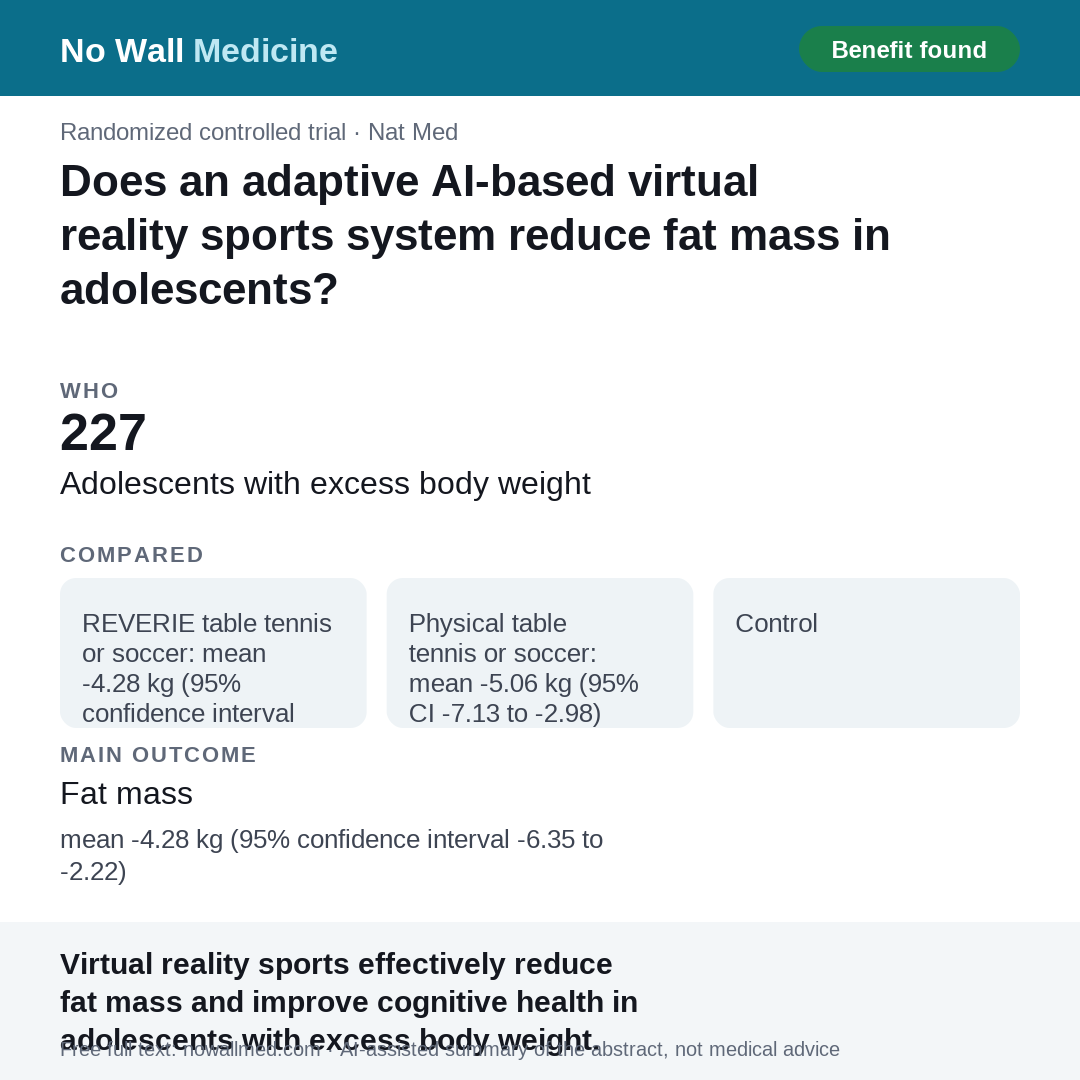
An adaptive AI-based virtual reality sports system for adolescents with excess body weight: a randomized controlled trial
Randomized controlled trialBenefit found
Does an adaptive AI-based virtual reality sports system reduce fat mass in adolescents?
Who
227
Adolescents with excess body weight
Compared
REVERIE table tennis or soccer: mean -4.28 kg (95% confidence interval -6.35 to -2.22)
Physical table tennis or soccer: mean -5.06 kg (95% CI -7.13 to -2.98)
Control
Main outcome
Fat mass
Result: mean -4.28 kg (95% confidence interval -6.35 to -2.22)
Bottom line: Virtual reality sports effectively reduce fat mass and improve cognitive health in adolescents with excess body weight.
Nat Med · 2025-06-23Download image
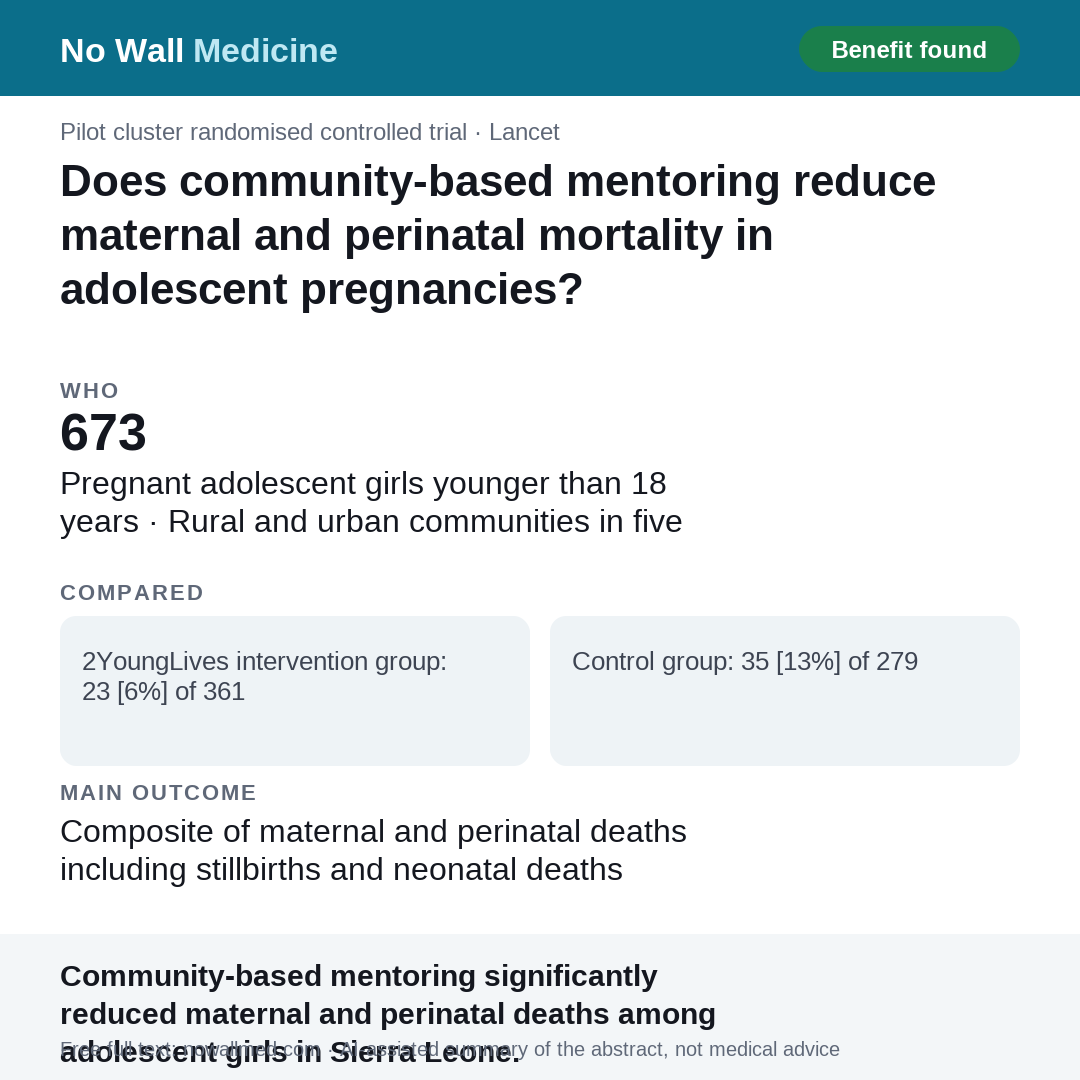
Community-based mentoring to reduce maternal and perinatal mortality in adolescent pregnancies in Sierra Leone (2YoungLives): a pilot cluster-randomised controlled trial
Pilot cluster randomised controlled trialBenefit found
Does community-based mentoring reduce maternal and perinatal mortality in adolescent pregnancies?
Who
673
Pregnant adolescent girls younger than 18 years · Rural and urban communities in five districts of Sierra Leone
Compared
2YoungLives intervention group: 23 [6%] of 361
Control group: 35 [13%] of 279
Main outcome
Composite of maternal and perinatal deaths including stillbirths and neonatal deaths
Result: adjusted risk ratio 0·52, 95% CI 0·34 to 0·81
Bottom line: Community-based mentoring significantly reduced maternal and perinatal deaths among adolescent girls in Sierra Leone.
Funded by: UK National Institute for Health and Care Research
Lancet · 2025-06-18Download image
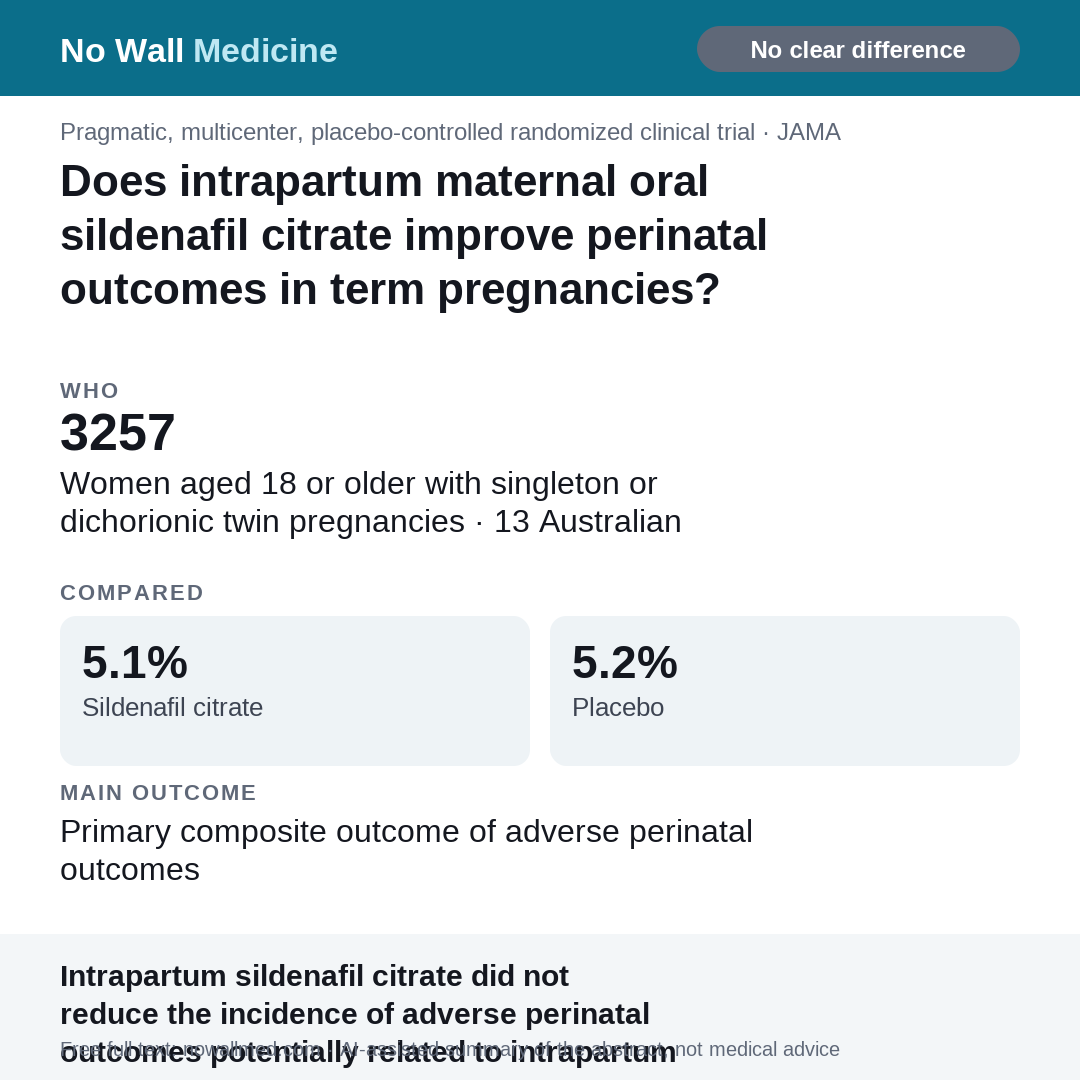
Intrapartum Sildenafil to Improve Perinatal Outcomes: A Randomized Clinical Trial
Pragmatic, multicenter, placebo-controlled randomized clinical trialNo clear difference
Does intrapartum maternal oral sildenafil citrate improve perinatal outcomes in term pregnancies?
Who
3257
Women aged 18 or older with singleton or dichorionic twin pregnancies · 13 Australian hospitals
Compared
5.1%Sildenafil citrate (83/1625)
5.2%Placebo (84/1625)
Main outcome
Primary composite outcome of adverse perinatal outcomes
Result: relative risk 1.02 (95% CI 0.75-1.37)
Bottom line: Intrapartum sildenafil citrate did not reduce the incidence of adverse perinatal outcomes potentially related to intrapartum hypoxia.
JAMA · 2025-06-09Download image
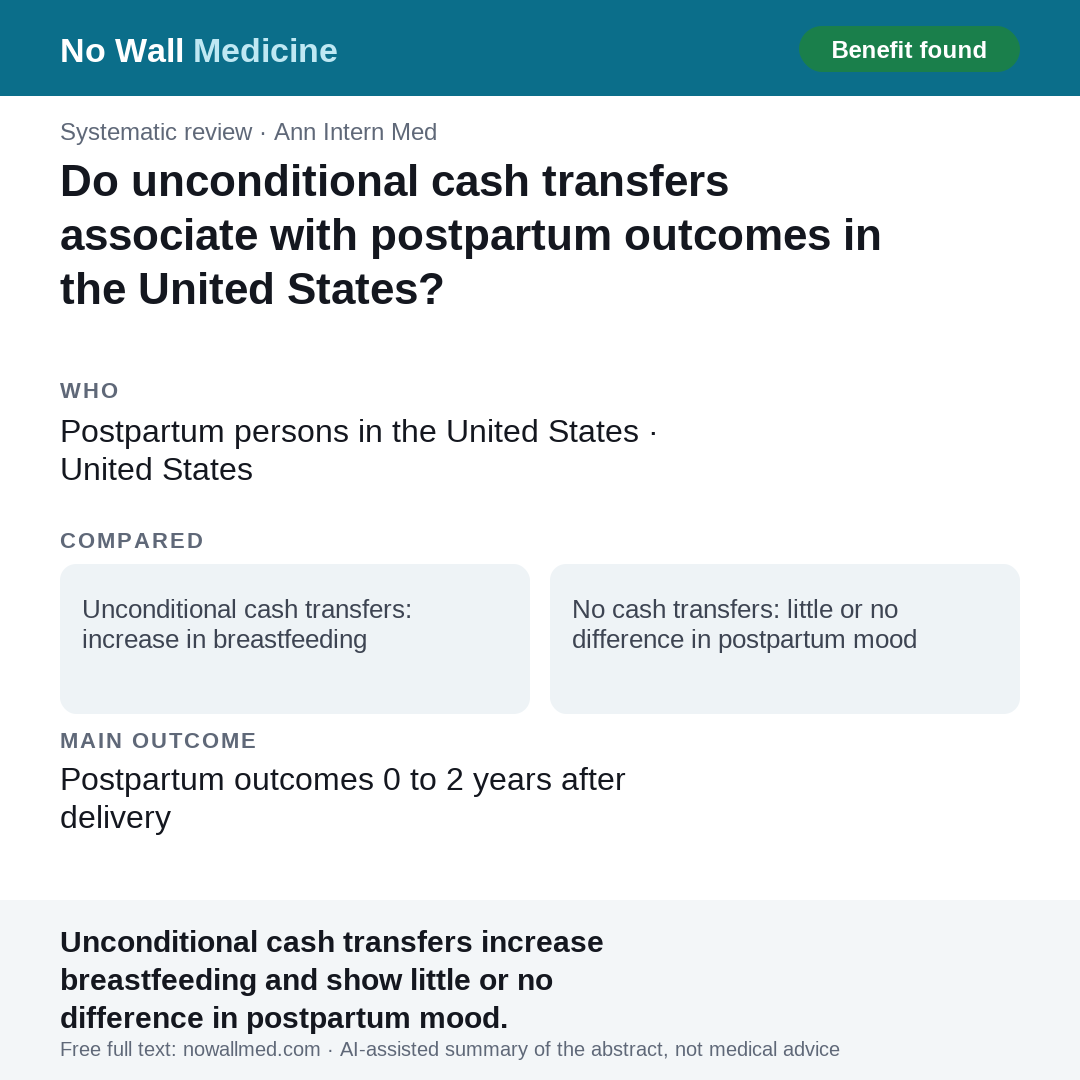
Associations Between Unconditional Cash Transfers and Postpartum Outcomes in the United States : A Systematic Review
Systematic reviewBenefit found
Do unconditional cash transfers associate with postpartum outcomes in the United States?
Who
Postpartum persons in the United States · United States
Compared
Unconditional cash transfers: increase in breastfeeding
No cash transfers: little or no difference in postpartum mood
Main outcome
Postpartum outcomes 0 to 2 years after delivery
Bottom line: Unconditional cash transfers increase breastfeeding and show little or no difference in postpartum mood.
Limitation: Unpublished studies, non-English studies, and nonrandomized study bias may have been present.
Ann Intern Med · 2025-05-27Download image
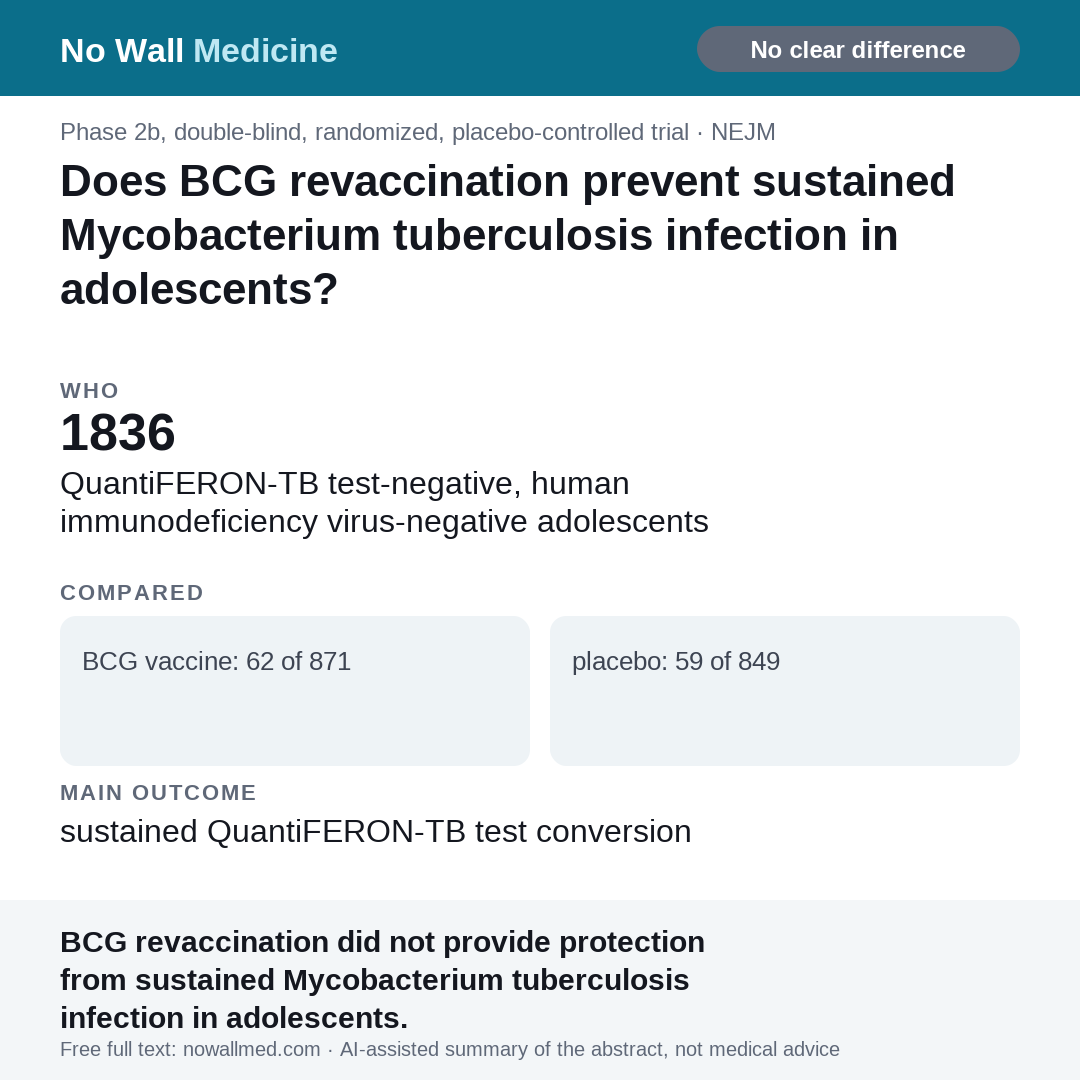
BCG Revaccination for the Prevention of Mycobacterium tuberculosis Infection
Phase 2b, double-blind, randomized, placebo-controlled trialNo clear difference
Does BCG revaccination prevent sustained Mycobacterium tuberculosis infection in adolescents?
Who
1836
QuantiFERON-TB test-negative, human immunodeficiency virus-negative adolescents
Compared
BCG vaccine: 62 of 871
placebo: 59 of 849
Main outcome
sustained QuantiFERON-TB test conversion
Result: hazard ratio 1.04 (95% CI, 0.73 to 1.48)
Bottom line: BCG revaccination did not provide protection from sustained Mycobacterium tuberculosis infection in adolescents.
Funded by: Gates Foundation
NEJM · 2025-05-07Download image
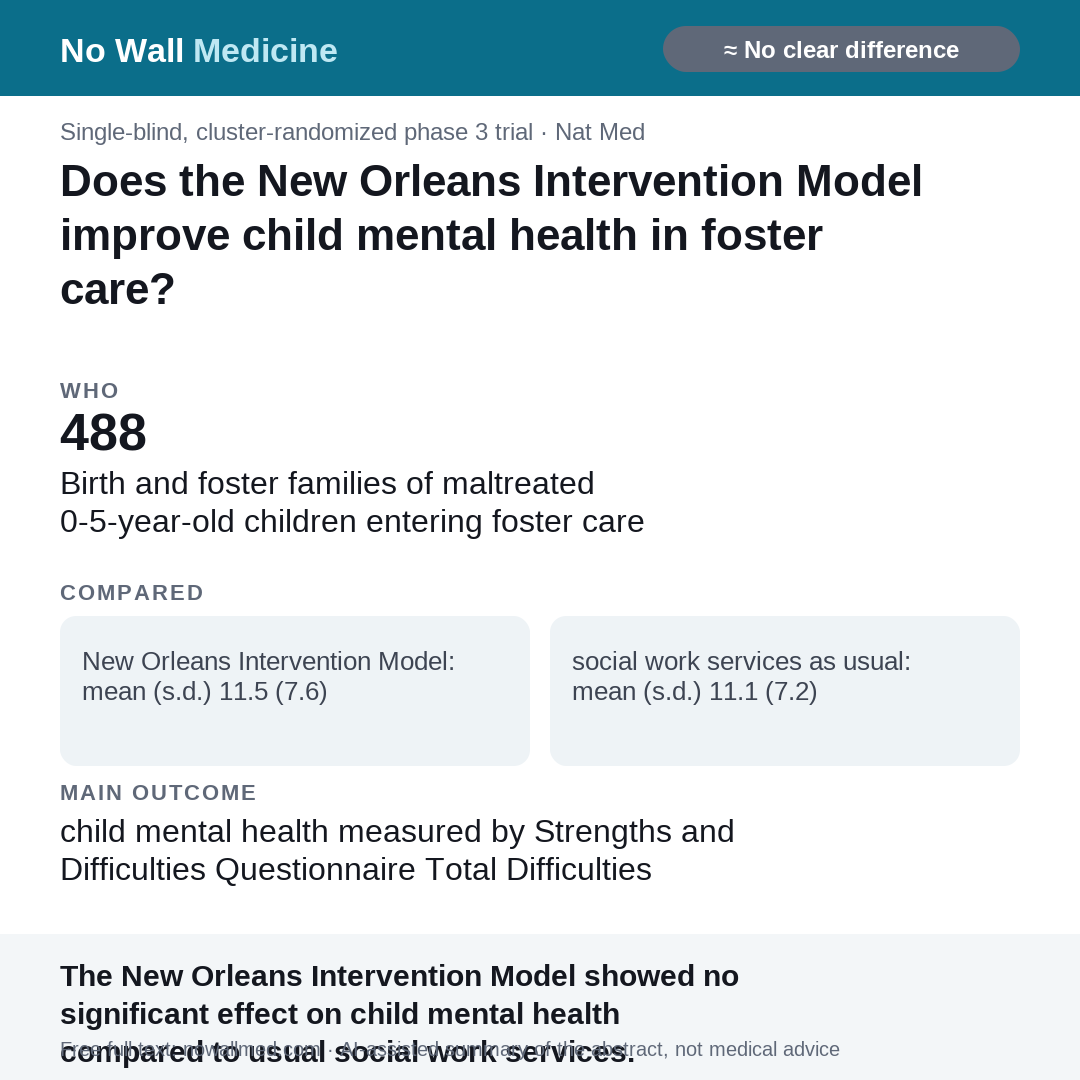
Infant mental health services for birth and foster families of maltreated pre-school children in foster care (BeST?): a cluster-randomized phase 3 clinical effectiveness trial
Single-blind, cluster-randomized phase 3 trialNo clear difference
Does the New Orleans Intervention Model improve child mental health in foster care?
Who
488
Birth and foster families of maltreated 0-5-year-old children entering foster care
Compared
New Orleans Intervention Model: mean (s.d.) 11.5 (7.6)
social work services as usual: mean (s.d.) 11.1 (7.2)
Main outcome
child mental health measured by Strengths and Difficulties Questionnaire Total Difficulties scale
Result: adjusted mean difference 1.4 (95% CI -0.63, 3.53)
Bottom line: The New Orleans Intervention Model showed no significant effect on child mental health compared to usual social work services.
Nat Med · 2025-05-01Download image
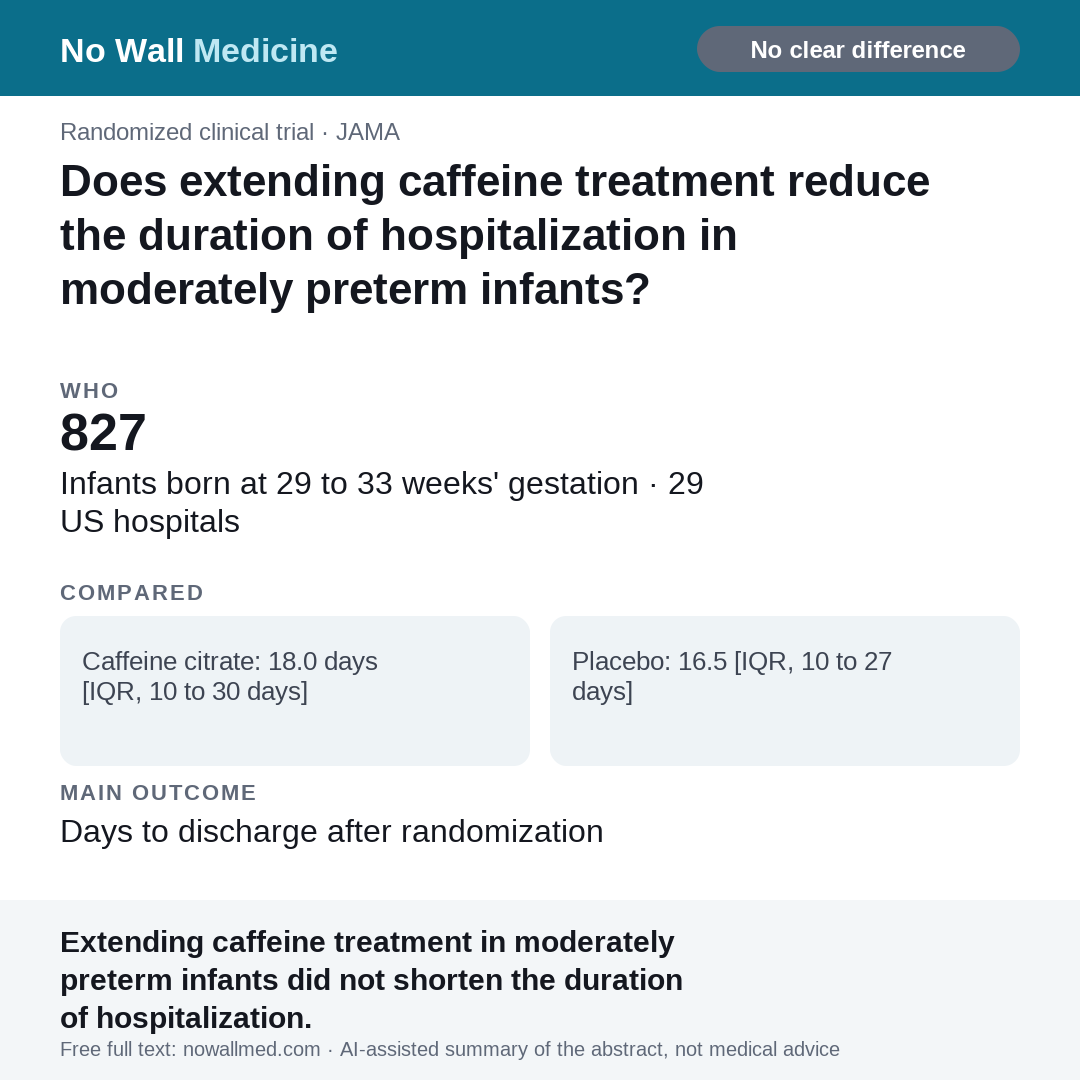
Extended Caffeine for Apnea in Moderately Preterm Infants: The MoCHA Randomized Clinical Trial
Randomized clinical trialNo clear difference
Does extending caffeine treatment reduce the duration of hospitalization in moderately preterm infants?
Who
827
Infants born at 29 to 33 weeks' gestation · 29 US hospitals
Compared
Caffeine citrate: 18.0 days [IQR, 10 to 30 days]
Placebo: 16.5 [IQR, 10 to 27 days]
Main outcome
Days to discharge after randomization
Result: adjusted median difference, 0 days (95% CI, -1.7 to 1.7 days)
Bottom line: Extending caffeine treatment in moderately preterm infants did not shorten the duration of hospitalization.
JAMA · 2025-04-28Download image