Visual abstracts
New randomized trials and meta-analyses from leading journals at a glance: who was studied, what was compared, and what was found. Every paper is free to read in full.
All specialtiesCardiology 4763Oncology 4043Gastroenterology & Hepatology 1903Infectious Disease 3756Neurology 1872Psychiatry & Mental Health 2216Pulmonology 2044Critical Care 1319Endocrinology & Diabetes 2544Pediatrics 2889Surgery 2480Orthopedics & Sports Medicine 917Neurosurgery 525Cardiothoracic & Vascular Surgery 656Plastic & Reconstructive Surgery 574Nephrology 1107Rheumatology 810Hematology 1090Dermatology 611Ophthalmology 532Obstetrics & Gynecology 1645Public & Global Health 1037Radiology & Imaging 619Anesthesiology 958Urology 745ENT (Otolaryngology) 494Emergency Medicine 481Allergy & Immunology 309Geriatrics 972Family Medicine & Primary Care 534Medical Genetics & Genomics 659Pathology & Laboratory Medicine 156Physical Medicine & Rehabilitation 734Palliative Care 421Nutrition 1560Digital Health & AI 2137General Medicine 318
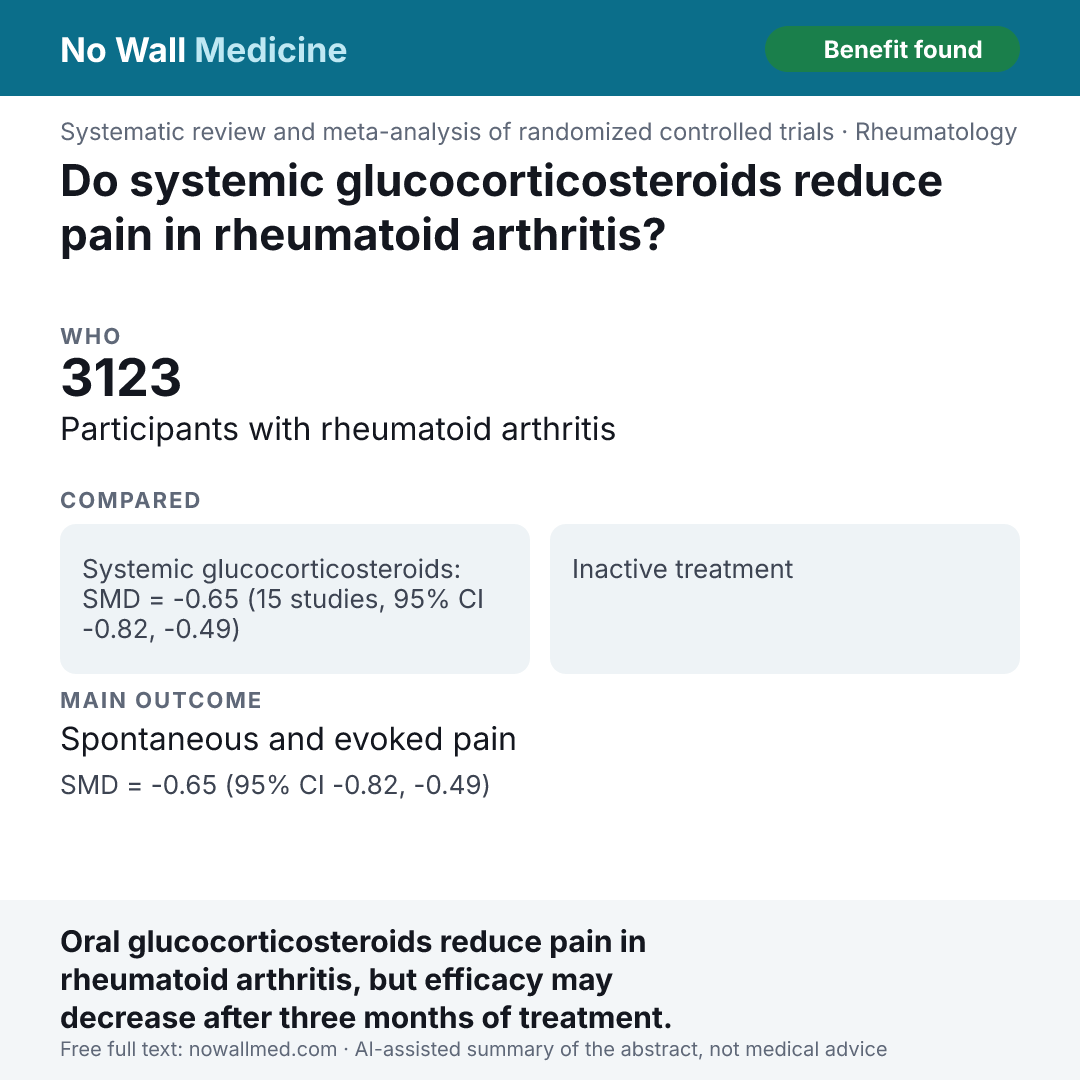
The efficacy of systemic glucocorticosteroids for pain in rheumatoid arthritis: a systematic literature review and meta-analysis
Systematic review and meta-analysis of randomized controlled trialsBenefit found
Do systemic glucocorticosteroids reduce pain in rheumatoid arthritis?
Who
3123
Participants with rheumatoid arthritis
Compared
Systemic glucocorticosteroids: SMD = -0.65 (15 studies, 95% CI -0.82, -0.49)
Inactive treatment
Main outcome
Spontaneous and evoked pain
Result: SMD = -0.65 (95% CI -0.82, -0.49)
Bottom line: Oral glucocorticosteroids reduce pain in rheumatoid arthritis, but efficacy may decrease after three months of treatment.
Limitation: Significant heterogeneity was observed in the spontaneous pain results.
Rheumatology · 2021-07-03 · Save PNG
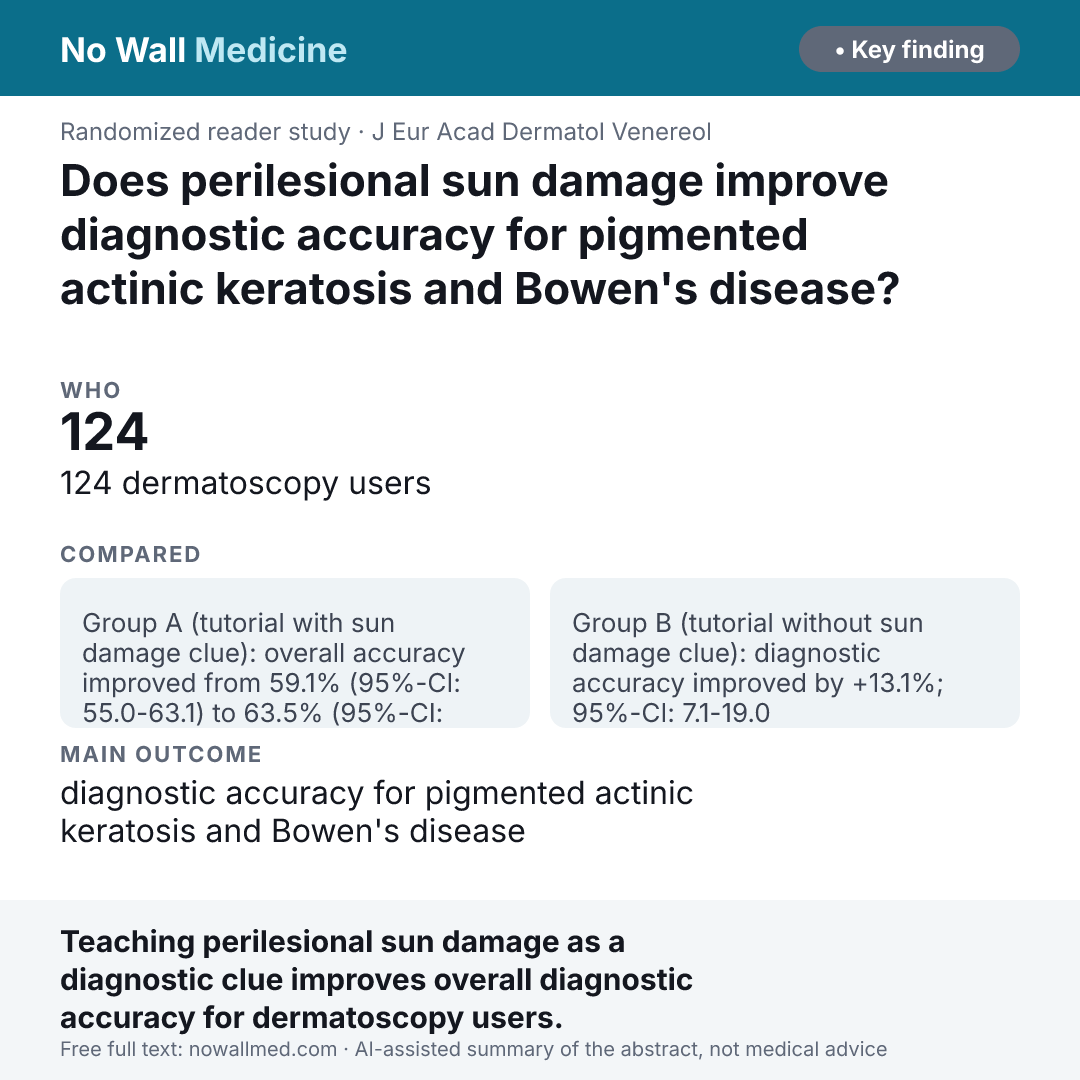
Perilesional sun damage as a diagnostic clue for pigmented actinic keratosis and Bowen's disease
Randomized reader studyKey finding
Does perilesional sun damage improve diagnostic accuracy for pigmented actinic keratosis and Bowen's disease?
Who
124
124 dermatoscopy users
Compared
Group A (tutorial with sun damage clue): overall accuracy improved from 59.1% (95%-CI: 55.0-63.1) to 63.5% (95%-CI: 59.5-67.6)
Group B (tutorial without sun damage clue): diagnostic accuracy improved by +13.1%; 95%-CI: 7.1-19.0
Main outcome
diagnostic accuracy for pigmented actinic keratosis and Bowen's disease
Bottom line: Teaching perilesional sun damage as a diagnostic clue improves overall diagnostic accuracy for dermatoscopy users.
J Eur Acad Dermatol Venereol · 2021-07-03 · Save PNG
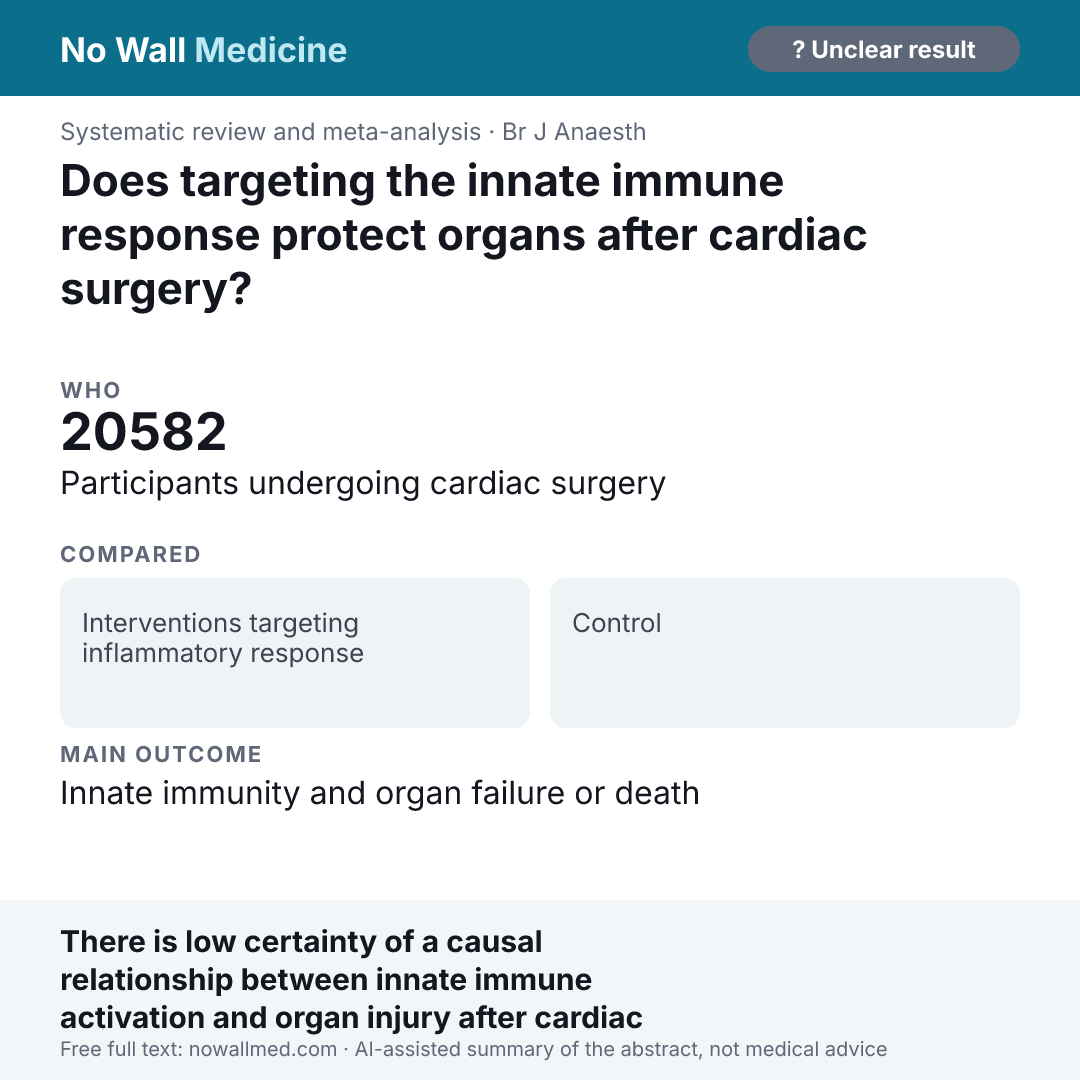
Activation of the innate immune response and organ injury after cardiac surgery: a systematic review and meta-analysis of randomised trials and analysis of individual patient data from randomised and non-randomised studies
Systematic review and meta-analysisUnclear result
Does targeting the innate immune response protect organs after cardiac surgery?
Who
20582
Participants undergoing cardiac surgery
Compared
Interventions targeting inflammatory response
Control
Main outcome
Innate immunity and organ failure or death
Bottom line: There is low certainty of a causal relationship between innate immune activation and organ injury after cardiac surgery.
Limitation: Methodological limitations of included trials and heterogeneity of treatment effects limited interpretation.
Br J Anaesth · 2021-07-03 · Save PNG
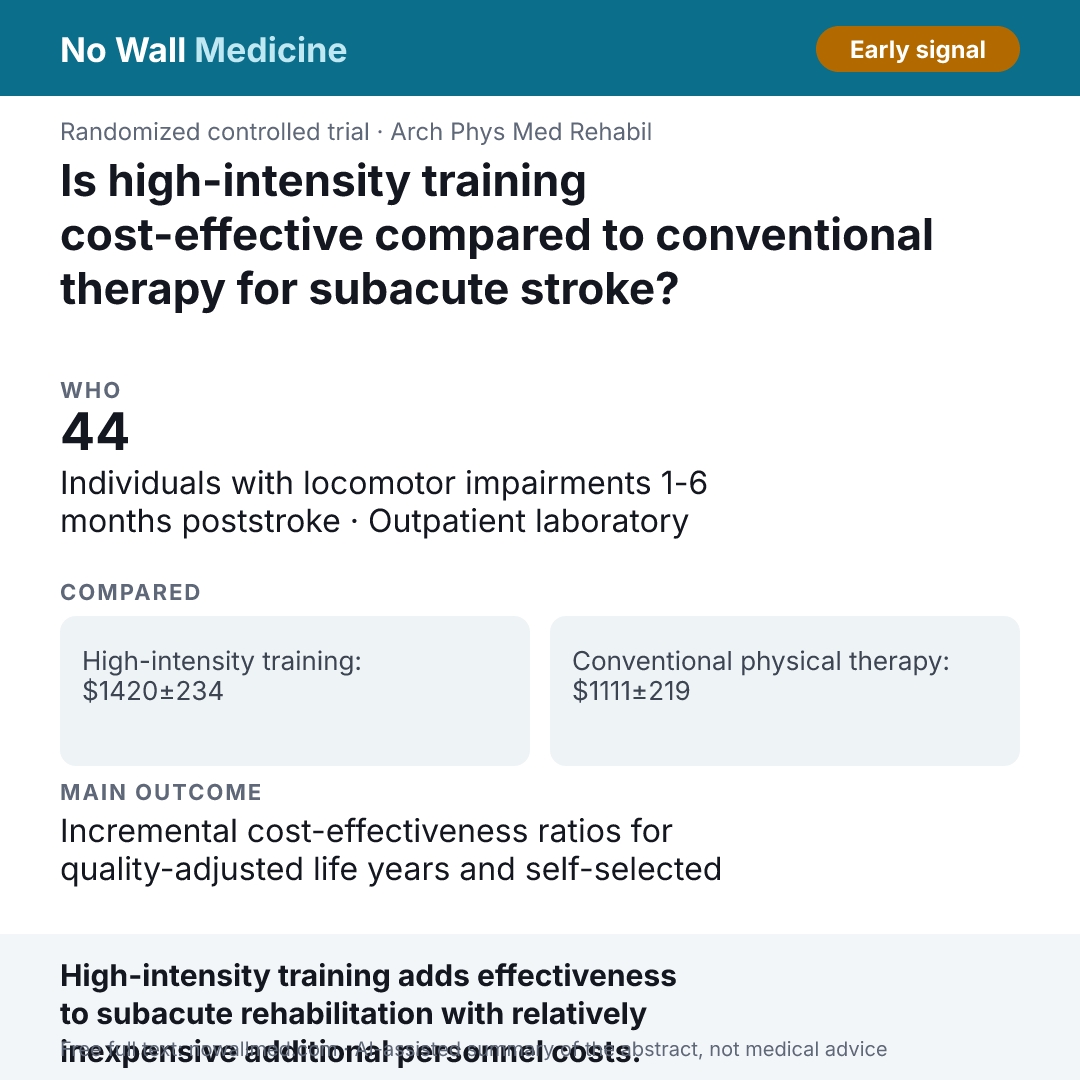
Cost-Effectiveness of High-intensity Training vs Conventional Therapy for Individuals With Subacute Stroke
Randomized controlled trialEarly signal
Is high-intensity training cost-effective compared to conventional therapy for subacute stroke?
Who
44
Individuals with locomotor impairments 1-6 months poststroke · Outpatient laboratory setting
Compared
High-intensity training: $1420±234
Conventional physical therapy: $1111±219
Main outcome
Incremental cost-effectiveness ratios for quality-adjusted life years and self-selected speeds
Result: $6180 (95% CI -$96,364 to $123,211) per quality-adjusted life year
Bottom line: High-intensity training adds effectiveness to subacute rehabilitation with relatively inexpensive additional personnel costs.
Arch Phys Med Rehabil · 2021-07-03 · Save PNG
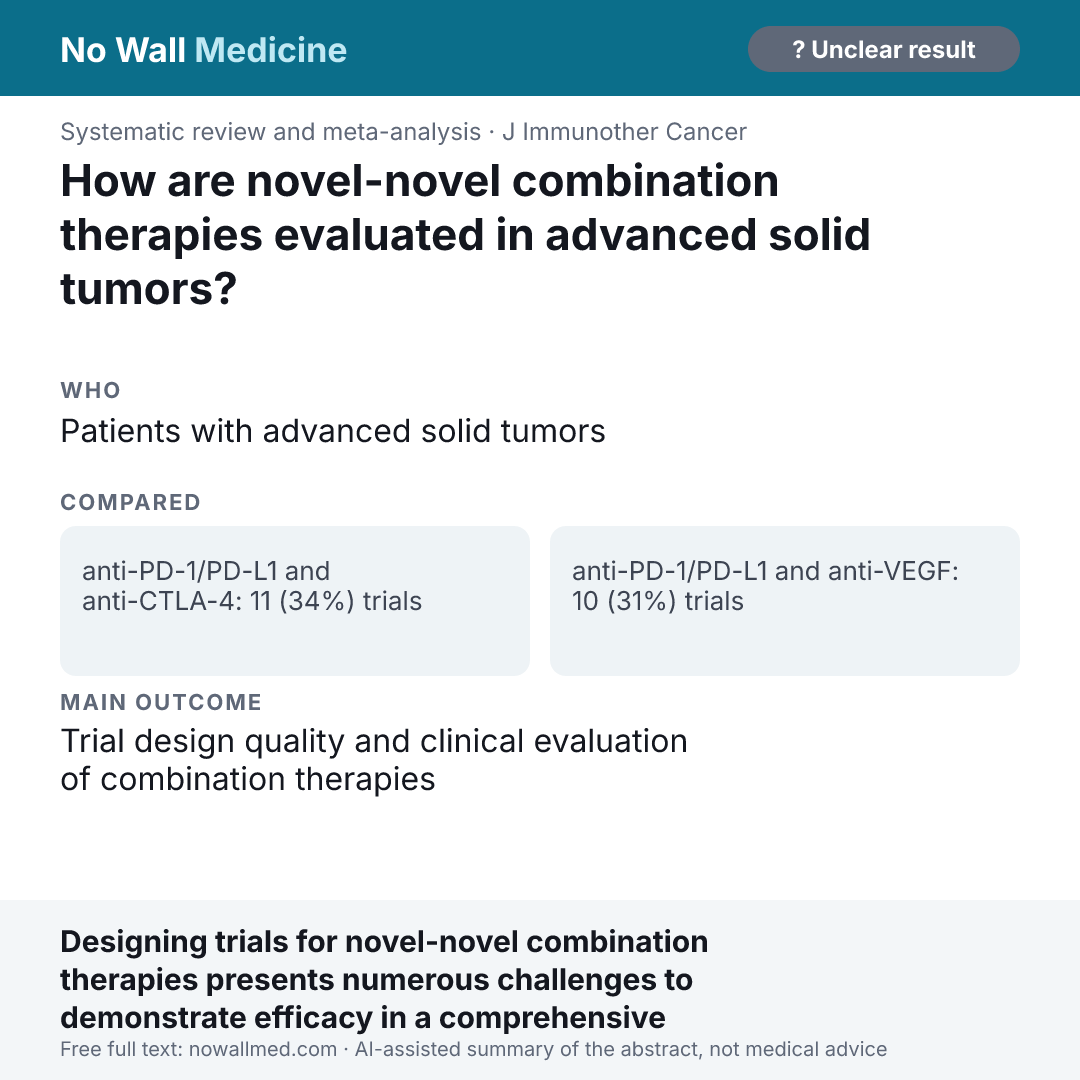
Systematic review of combinations of targeted or immunotherapy in advanced solid tumors
Systematic review and meta-analysisUnclear result
How are novel-novel combination therapies evaluated in advanced solid tumors?
Who
Patients with advanced solid tumors
Compared
anti-PD-1/PD-L1 and anti-CTLA-4: 11 (34%) trials
anti-PD-1/PD-L1 and anti-VEGF: 10 (31%) trials
Main outcome
Trial design quality and clinical evaluation of combination therapies
Bottom line: Designing trials for novel-novel combination therapies presents numerous challenges to demonstrate efficacy in a comprehensive manner.
J Immunother Cancer · 2021-07-03 · Save PNG
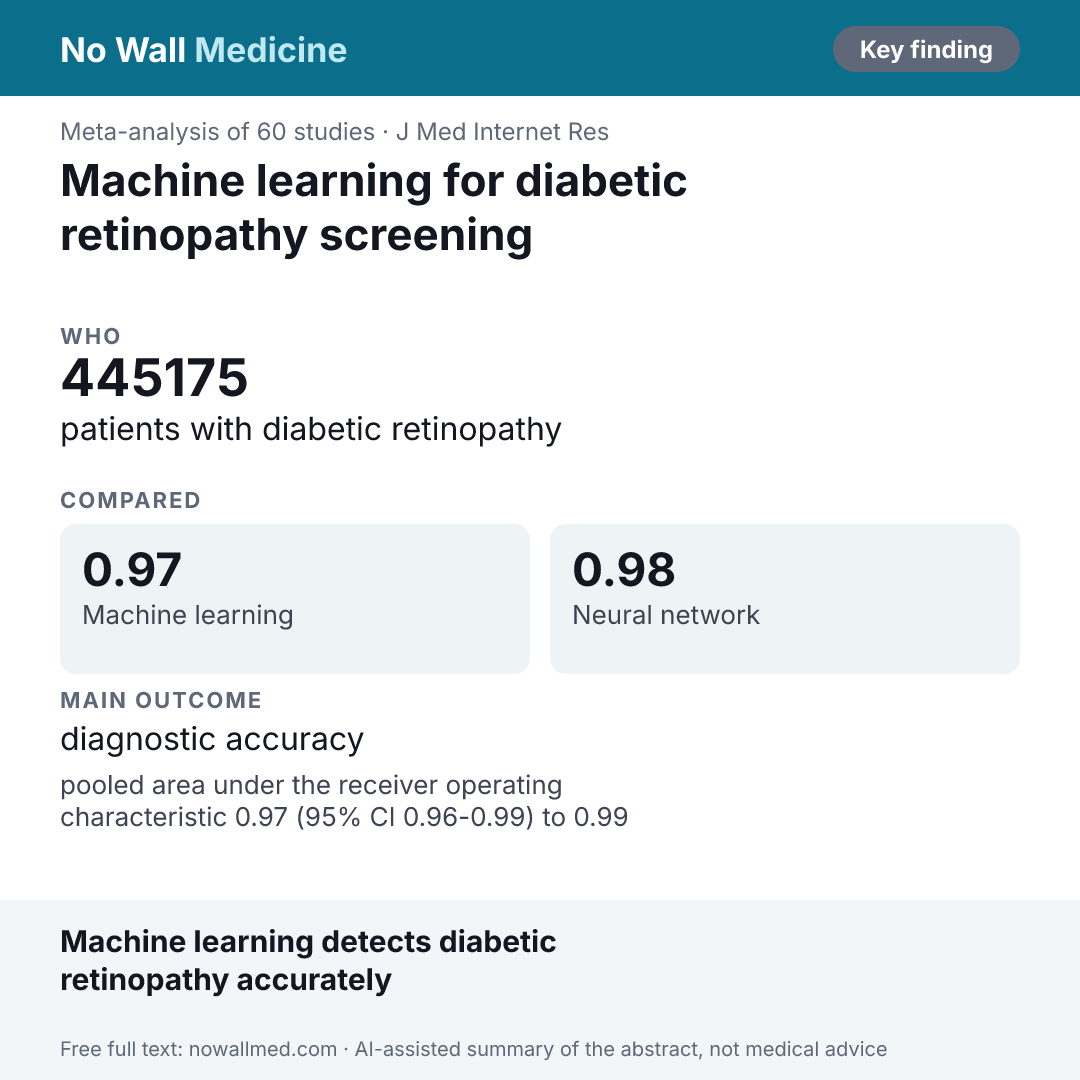
Performance and Limitation of Machine Learning Algorithms for Diabetic Retinopathy Screening: Meta-analysis
Meta-analysis of 60 studiesKey finding
Machine learning for diabetic retinopathy screening
Who
445175
patients with diabetic retinopathy
Compared
0.97Machine learning (95% CI 0.96-0.99)
0.98Neural network (95% CI 0.96-0.99)
Main outcome
diagnostic accuracy
Result: pooled area under the receiver operating characteristic 0.97 (95% CI 0.96-0.99) to 0.99 (95% CI 0.98-1.00)
Bottom line: Machine learning detects diabetic retinopathy accurately
Limitation: methodology flaws in earlier studies
J Med Internet Res · 2021-07-03 · Save PNG
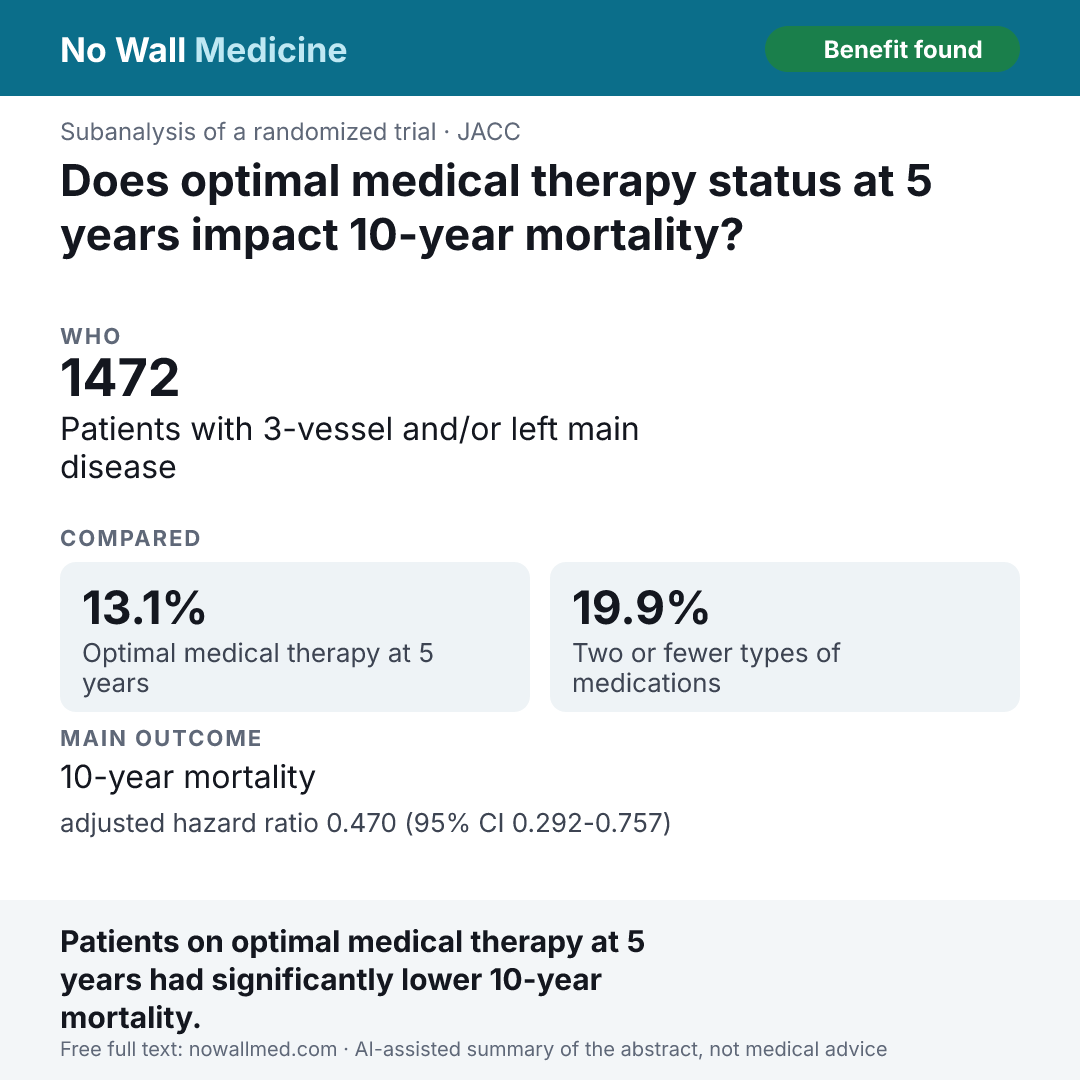
Impact of Optimal Medical Therapy on 10-Year Mortality After Coronary Revascularization
Subanalysis of a randomized trialBenefit found
Does optimal medical therapy status at 5 years impact 10-year mortality?
Who
1472
Patients with 3-vessel and/or left main disease
Compared
13.1%Optimal medical therapy at 5 years
19.9%Two or fewer types of medications
Main outcome
10-year mortality
Result: adjusted hazard ratio 0.470 (95% CI 0.292-0.757)
Bottom line: Patients on optimal medical therapy at 5 years had significantly lower 10-year mortality.
JACC · 2021-07-02 · Save PNG
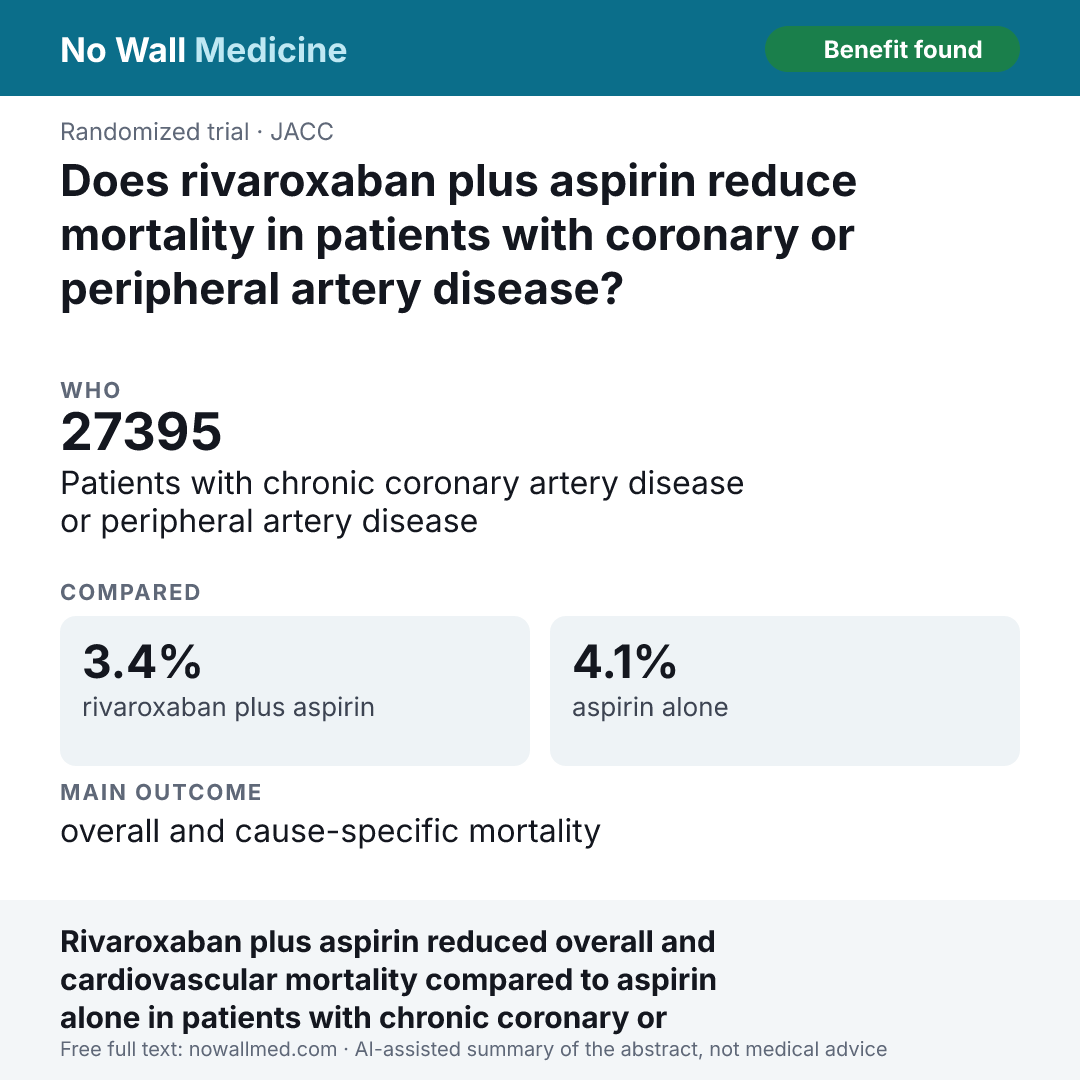
Mortality Benefit of Rivaroxaban Plus Aspirin in Patients With Chronic Coronary or Peripheral Artery Disease
Randomized trialBenefit found
Does rivaroxaban plus aspirin reduce mortality in patients with coronary or peripheral artery disease?
Who
27395
Patients with chronic coronary artery disease or peripheral artery disease
Compared
3.4%rivaroxaban plus aspirin
4.1%aspirin alone
Main outcome
overall and cause-specific mortality
Result: hazard ratio 0.82 (95% CI 0.71-0.96)
Bottom line: Rivaroxaban plus aspirin reduced overall and cardiovascular mortality compared to aspirin alone in patients with chronic coronary or peripheral artery disease.
JACC · 2021-07-02 · Save PNG
Use of Total Neoadjuvant Therapy for Locally Advanced Rectal Cancer: Initial Results From the Pembrolizumab Arm of a Phase 2 Randomized Clinical Trial
Randomized clinical trialNo clear difference
Pembrolizumab improves rectal cancer treatment
Who
185
Patients with locally advanced rectal cancer · Academic and private practice settings
Compared
31.9%Pembrolizumab arm
29.4%Control arm
Main outcome
Pathologic complete response rate
Bottom line: Pembrolizumab does not improve treatment
JAMA Oncol · 2021-07-02 · Save PNG

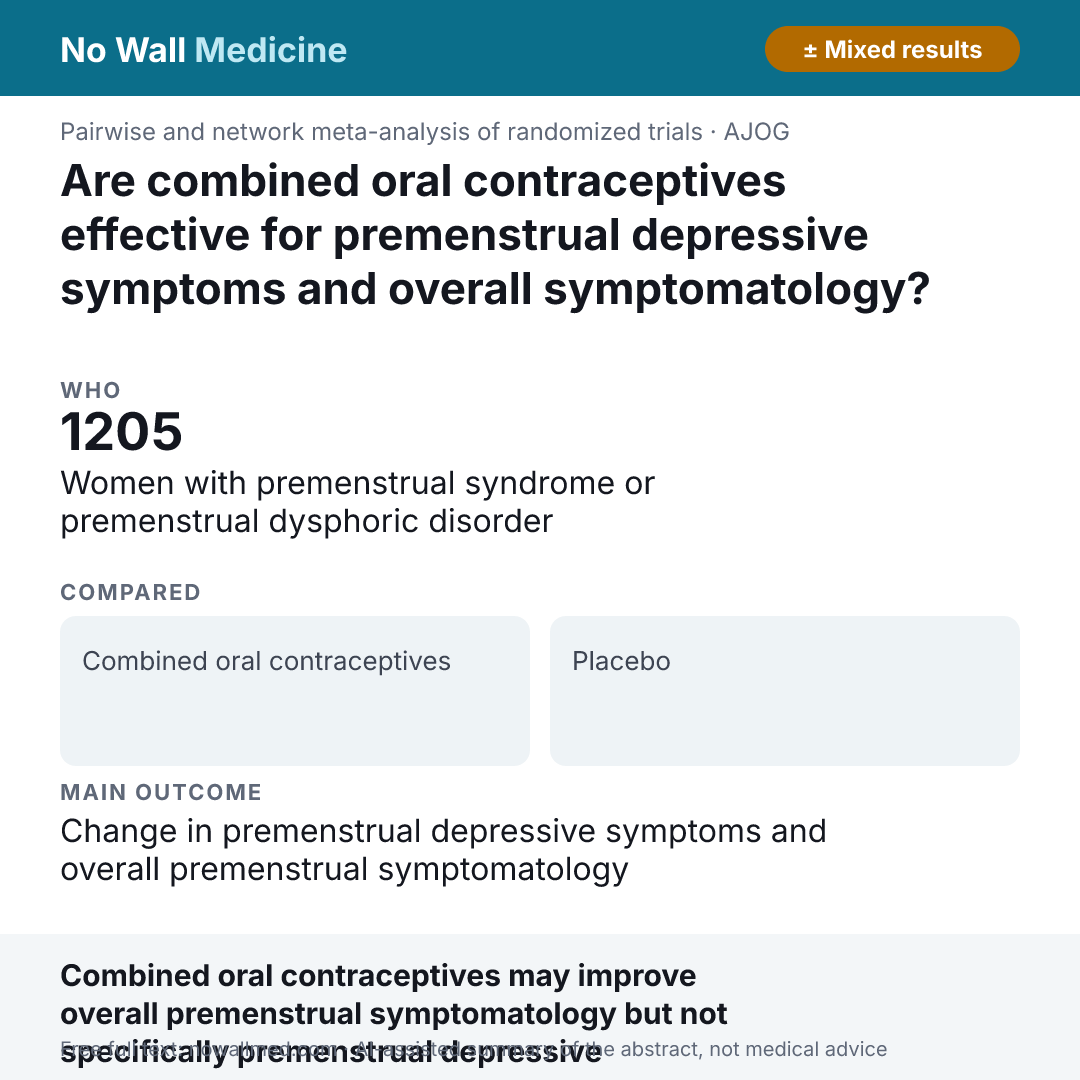
Efficacy of combined oral contraceptives for depressive symptoms and overall symptomatology in premenstrual syndrome: pairwise and network meta-analysis of randomized trials
Pairwise and network meta-analysis of randomized trialsMixed results
Are combined oral contraceptives effective for premenstrual depressive symptoms and overall symptomatology?
Who
1205
Women with premenstrual syndrome or premenstrual dysphoric disorder
Compared
Combined oral contraceptives
Placebo
Main outcome
Change in premenstrual depressive symptoms and overall premenstrual symptomatology
Result: overall symptomatology standardized mean difference 0.41 (95% credible interval 0.17-0.67)
Bottom line: Combined oral contraceptives may improve overall premenstrual symptomatology but not specifically premenstrual depressive symptoms.
AJOG · 2021-07-02 · Save PNG
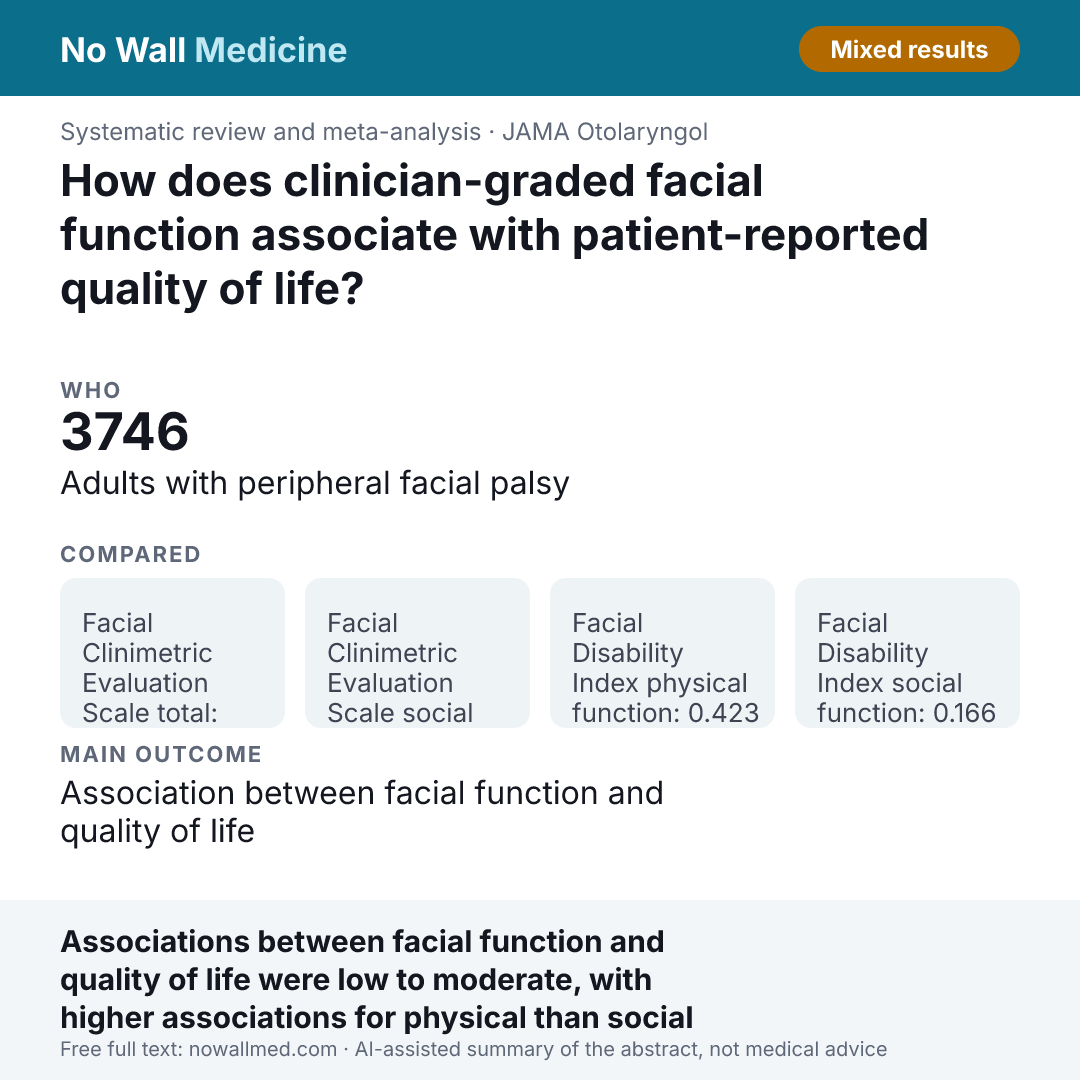
Associations Between Clinician-Graded Facial Function and Patient-Reported Quality of Life in Adults With Peripheral Facial Palsy: A Systematic Review and Meta-analysis
Systematic review and meta-analysisMixed results
How does clinician-graded facial function associate with patient-reported quality of life?
Who
3746
Adults with peripheral facial palsy
Compared
Facial Clinimetric Evaluation Scale total: 0.424 (95% CI, 0.375-0.471) to 0.533 (95% CI, 0.447-0.610)
Facial Clinimetric Evaluation Scale social function: 0.324 (95% CI, 0.128-0.495) to 0.397 (95% CI, 0.242-0.532)
Facial Disability Index physical function: 0.423 (95% CI, 0.322-0.514) to 0.605 (95% CI, -0.124-0.910)
Facial Disability Index social function: 0.166 (95% CI, 0.044-0.283) to 0.208 (95% CI, 0.031-0.373)
Main outcome
Association between facial function and quality of life
Bottom line: Associations between facial function and quality of life were low to moderate, with higher associations for physical than social function.
JAMA Otolaryngol · 2021-07-02 · Save PNG
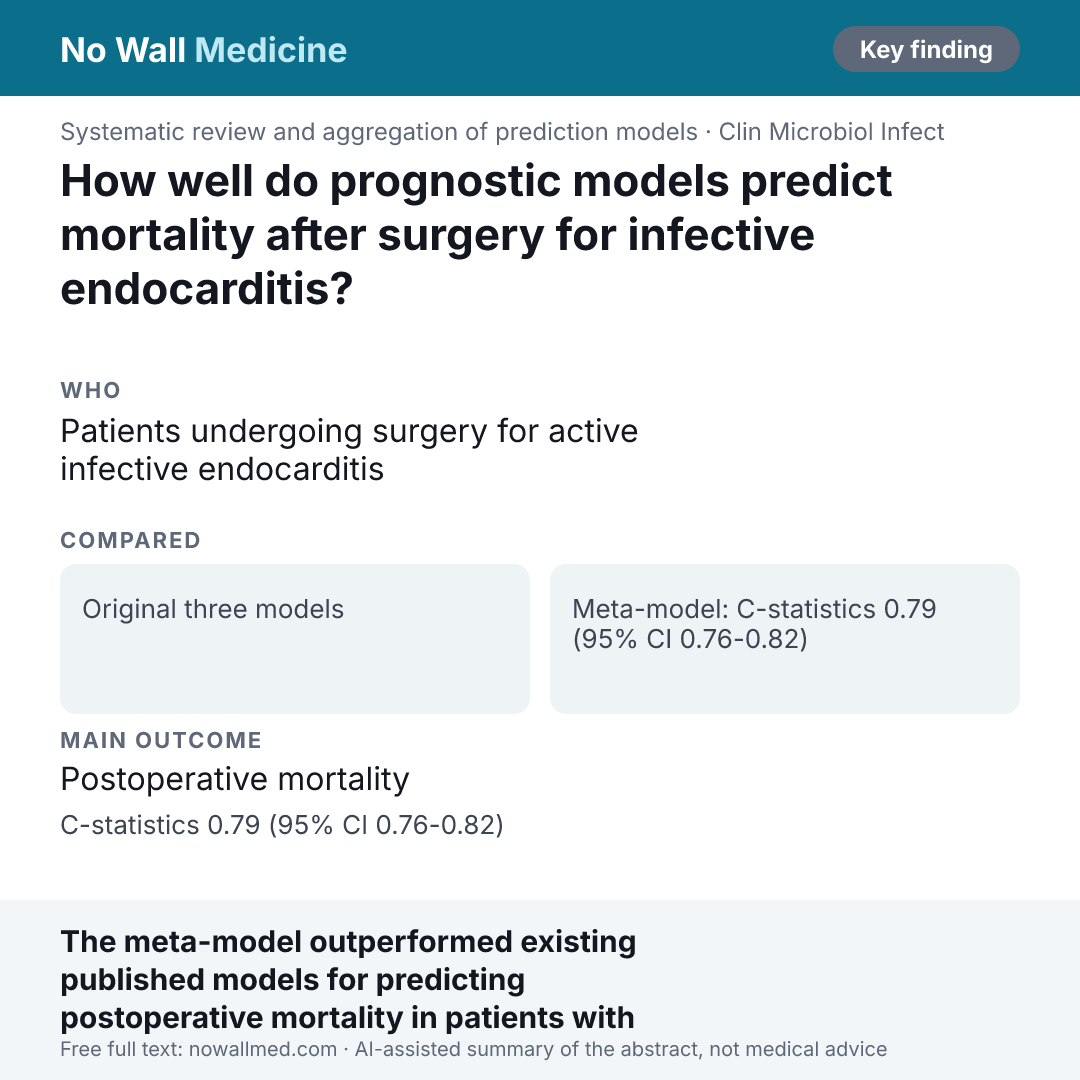
Prognostic models for mortality after cardiac surgery in patients with infective endocarditis: a systematic review and aggregation of prediction models
Systematic review and aggregation of prediction modelsKey finding
How well do prognostic models predict mortality after surgery for infective endocarditis?
Who
Patients undergoing surgery for active infective endocarditis
Compared
Original three models
Meta-model: C-statistics 0.79 (95% CI 0.76-0.82)
Main outcome
Postoperative mortality
Result: C-statistics 0.79 (95% CI 0.76-0.82)
Bottom line: The meta-model outperformed existing published models for predicting postoperative mortality in patients with infective endocarditis.
Limitation: Eight of the eleven identified prognostic models had a high risk of bias.
Clin Microbiol Infect · 2021-07-02 · Save PNG
Repetitive transcranial magnetic stimulation for neuropathic pain: a randomized multicentre sham-controlled trial
Randomized, double-blind, placebo-controlled trialMixed results
Is neuronavigated repetitive transcranial magnetic stimulation effective for neuropathic pain?
Who
152
Patients aged 18-75 years with peripheral neuropathic pain · Four outpatient clinics in France
Compared
Primary motor cortex repetitive transcranial magnetic stimulation: -0.048 ± 0.02
Dorsolateral prefrontal cortex repetitive transcranial magnetic stimulation: -0.003 ± 0.01
Sham repetitive transcranial magnetic stimulation
Main outcome
Change in average pain intensity on the Brief Pain Inventory
Result: estimate for Group × Session interaction: -0.048 ± 0.02 (95% CI: -0.09 to -0.01)
Bottom line: Primary motor cortex stimulation reduces neuropathic pain intensity, but dorsolateral prefrontal cortex stimulation does not.
Brain · 2021-07-02 · Save PNG

The Effect of Overdose Education and Naloxone Distribution: An Umbrella Review of Systematic Reviews
Umbrella review of systematic reviewsBenefit found
What is the effect and feasibility of overdose education and naloxone distribution?
Who
Persons who use heroin · North America
Compared
Overdose education and naloxone distribution: effectively reduce opioid-related mortality
High-concentration intranasal naloxone: as effective as intramuscular naloxone
Main outcome
opioid-related mortality and program effectiveness
Bottom line: Overdose education and naloxone distribution programs effectively reduce opioid-related mortality and improve participant knowledge and attitudes.
Limitation: additional high-quality research is required to optimize program delivery
Am J Public Health · 2021-07-02 · Save PNG

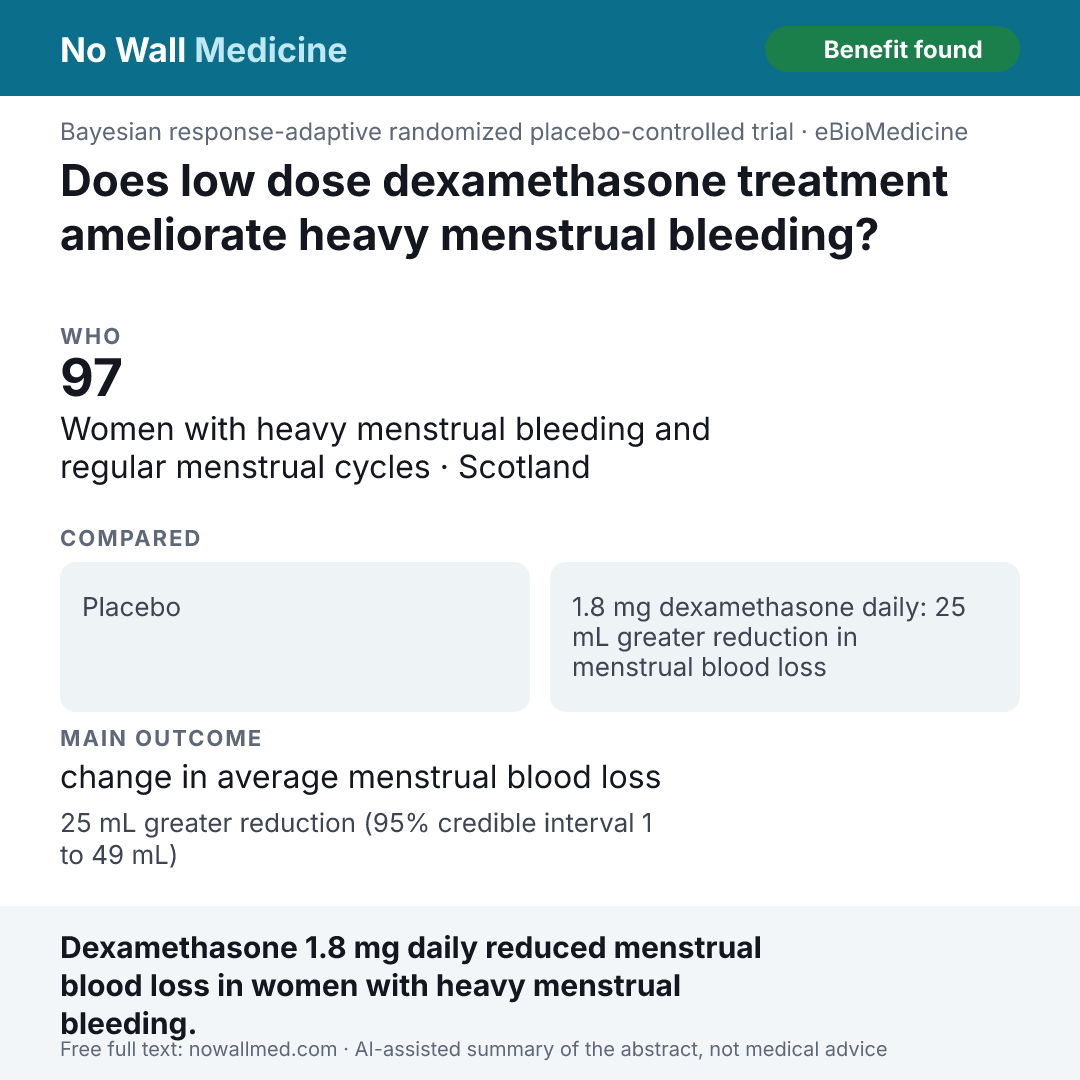
Low dose dexamethasone as treatment for women with heavy menstrual bleeding: A response-adaptive randomised placebo-controlled dose-finding parallel group trial (DexFEM)
Bayesian response-adaptive randomized placebo-controlled trialBenefit found
Does low dose dexamethasone treatment ameliorate heavy menstrual bleeding?
Who
97
Women with heavy menstrual bleeding and regular menstrual cycles · Scotland
Compared
Placebo
1.8 mg dexamethasone daily: 25 mL greater reduction in menstrual blood loss
Main outcome
change in average menstrual blood loss
Result: 25 mL greater reduction (95% credible interval 1 to 49 mL)
Bottom line: Dexamethasone 1.8 mg daily reduced menstrual blood loss in women with heavy menstrual bleeding.
Funded by: UK MRC
eBioMedicine · 2021-07-02 · Save PNG
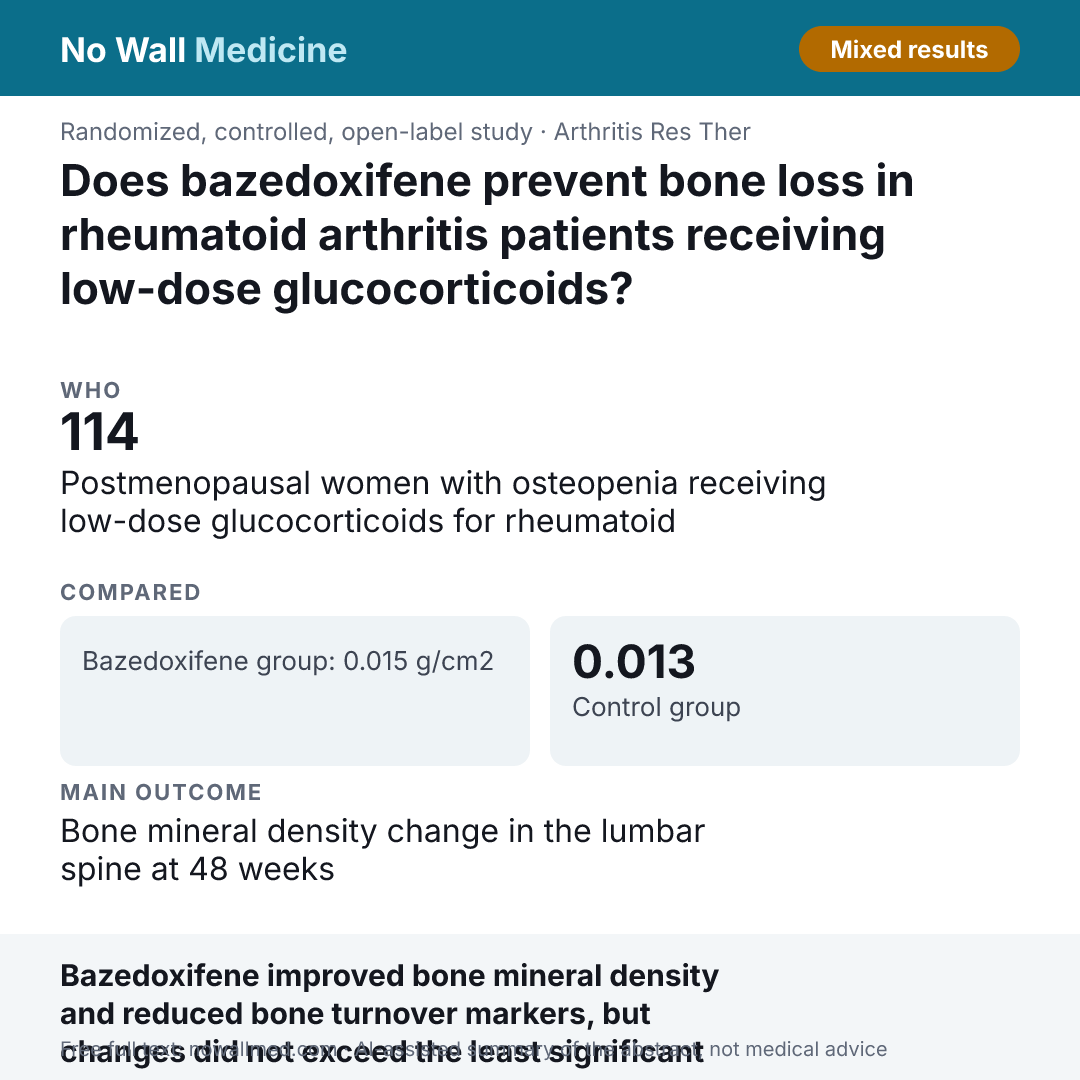
Effectiveness of bazedoxifene in preventing glucocorticoid-induced bone loss in rheumatoid arthritis patients
Randomized, controlled, open-label studyMixed results
Does bazedoxifene prevent bone loss in rheumatoid arthritis patients receiving low-dose glucocorticoids?
Who
114
Postmenopausal women with osteopenia receiving low-dose glucocorticoids for rheumatoid arthritis
Compared
Bazedoxifene group: 0.015 g/cm2
0.013Control group
Main outcome
Bone mineral density change in the lumbar spine at 48 weeks
Result: 0.013, 95% CI 0.0003-0.026
Bottom line: Bazedoxifene improved bone mineral density and reduced bone turnover markers, but changes did not exceed the least significant change.
Limitation: The change in bone mineral density did not exceed the least significant change.
Arthritis Res Ther · 2021-07-02 · Save PNG
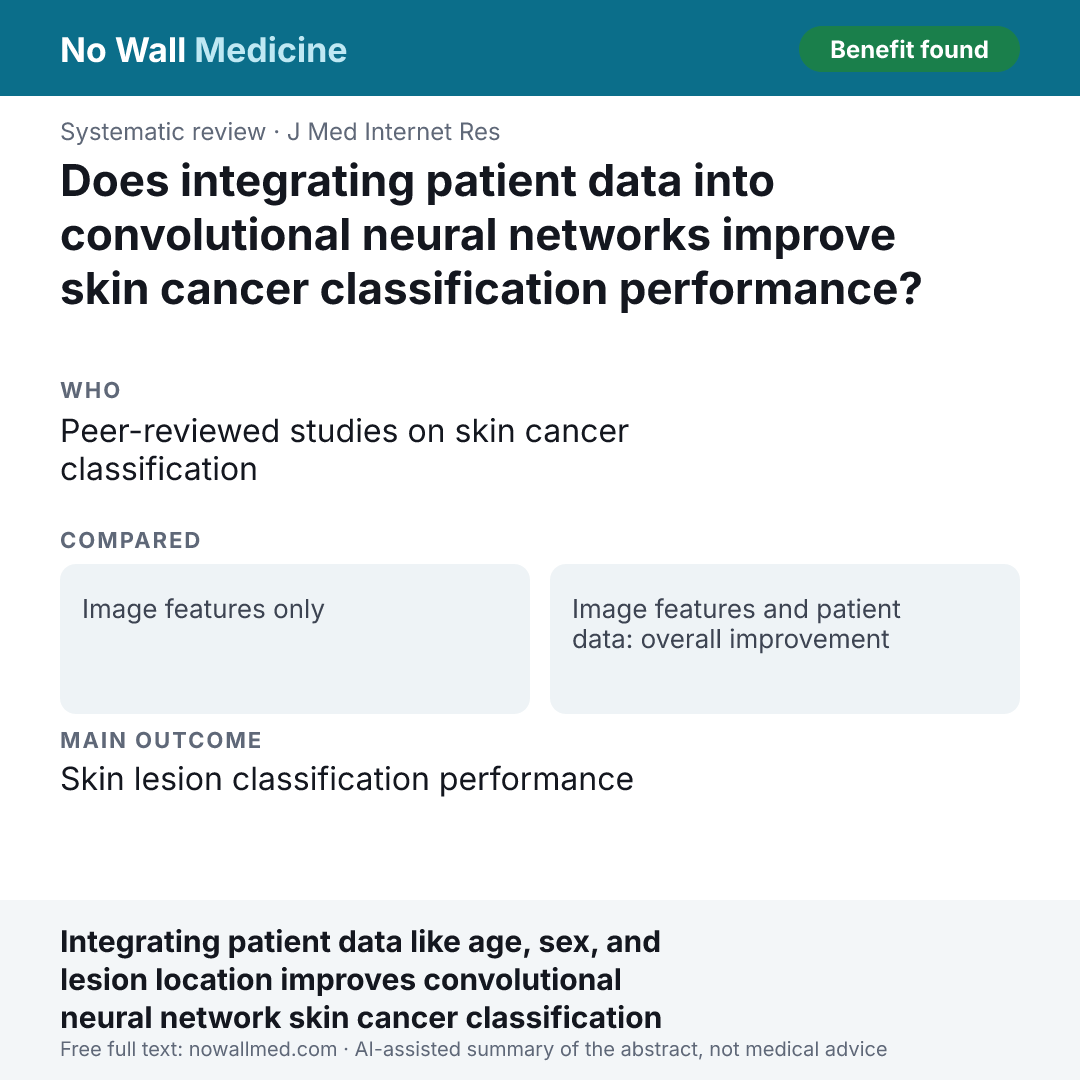
Integrating Patient Data Into Skin Cancer Classification Using Convolutional Neural Networks: Systematic Review
Systematic reviewBenefit found
Does integrating patient data into convolutional neural networks improve skin cancer classification performance?
Who
Peer-reviewed studies on skin cancer classification
Compared
Image features only
Image features and patient data: overall improvement
Main outcome
Skin lesion classification performance
Bottom line: Integrating patient data like age, sex, and lesion location improves convolutional neural network skin cancer classification performance.
Limitation: How individual patient data enhance multiclass classification performance remains unclear.
J Med Internet Res · 2021-07-02 · Save PNG
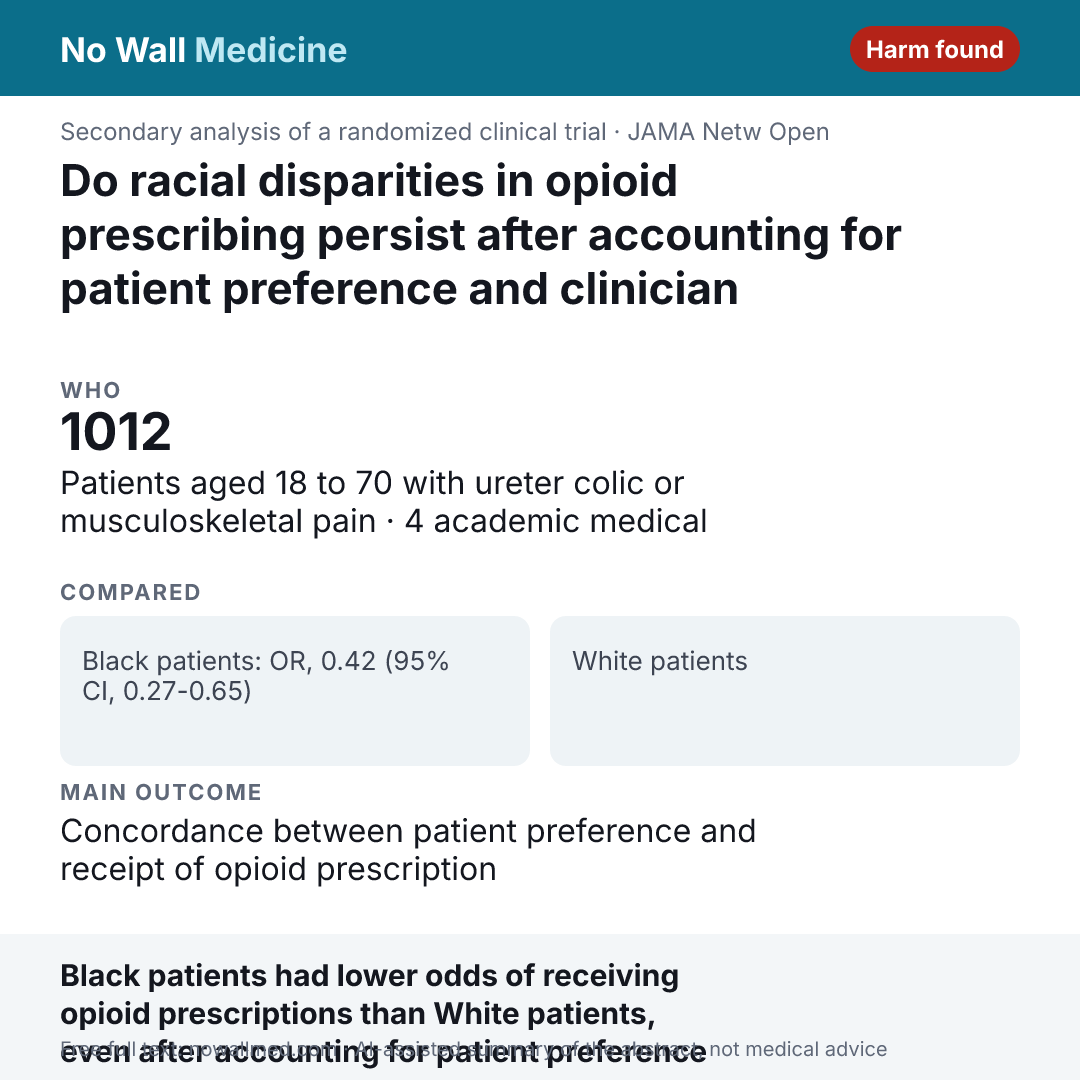
Patient Preference and Risk Assessment in Opioid Prescribing Disparities: A Secondary Analysis of a Randomized Clinical Trial
Secondary analysis of a randomized clinical trialHarm found
Do racial disparities in opioid prescribing persist after accounting for patient preference and clinician information?
Who
1012
Patients aged 18 to 70 with ureter colic or musculoskeletal pain · 4 academic medical center emergency departments
Compared
Black patients: OR, 0.42 (95% CI, 0.27-0.65)
White patients
Main outcome
Concordance between patient preference and receipt of opioid prescription
Result: odds ratio 0.42 (95% CI 0.27-0.65)
Bottom line: Black patients had lower odds of receiving opioid prescriptions than White patients, even after accounting for patient preference and clinician information.
JAMA Netw Open · 2021-07-01 · Save PNG
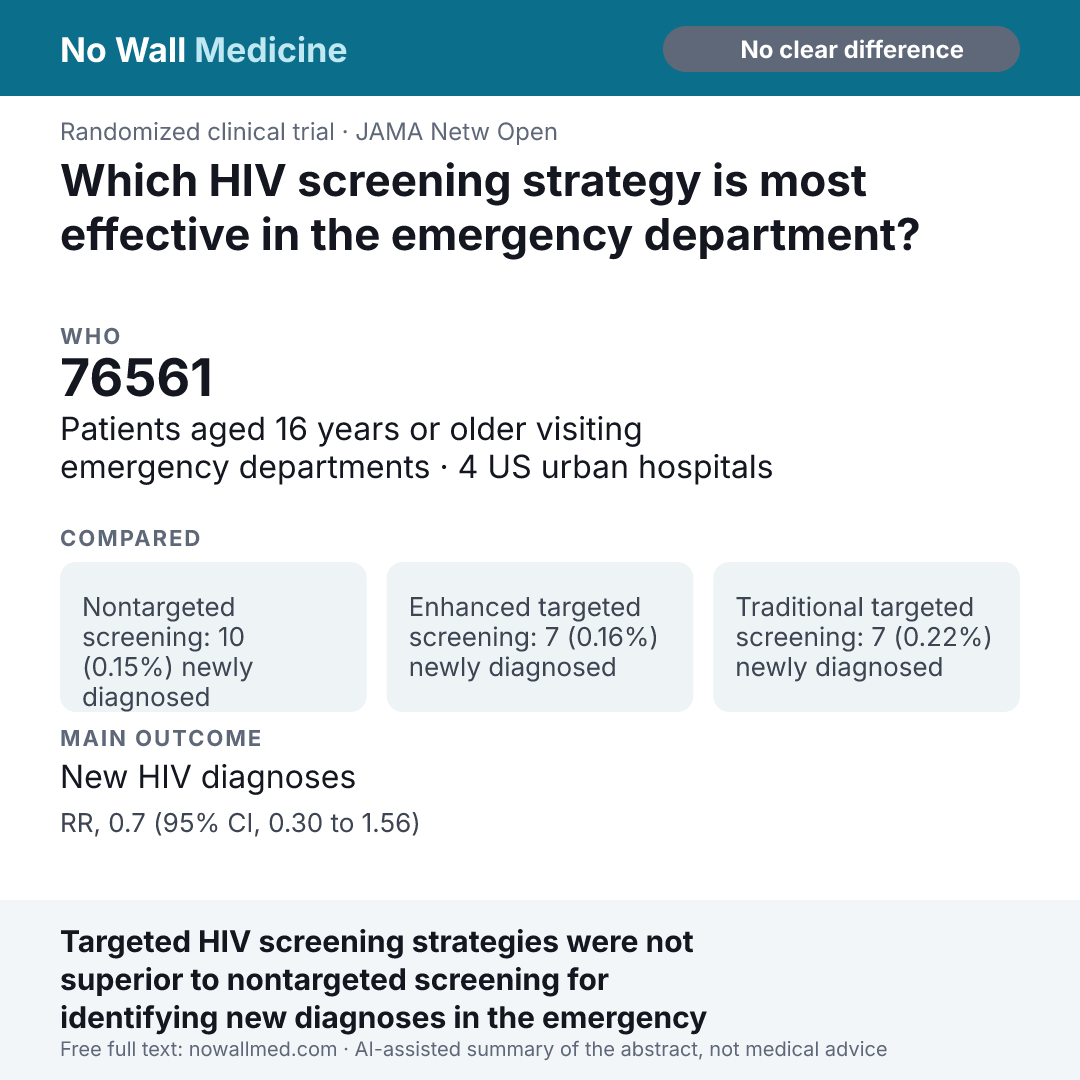
Comparison of HIV Screening Strategies in the Emergency Department: A Randomized Clinical Trial
Randomized clinical trialNo clear difference
Which HIV screening strategy is most effective in the emergency department?
Who
76561
Patients aged 16 years or older visiting emergency departments · 4 US urban hospitals
Compared
Nontargeted screening: 10 (0.15%) newly diagnosed
Enhanced targeted screening: 7 (0.16%) newly diagnosed
Traditional targeted screening: 7 (0.22%) newly diagnosed
Main outcome
New HIV diagnoses
Result: RR, 0.7 (95% CI, 0.30 to 1.56)
Bottom line: Targeted HIV screening strategies were not superior to nontargeted screening for identifying new diagnoses in the emergency department.
JAMA Netw Open · 2021-07-01 · Save PNG
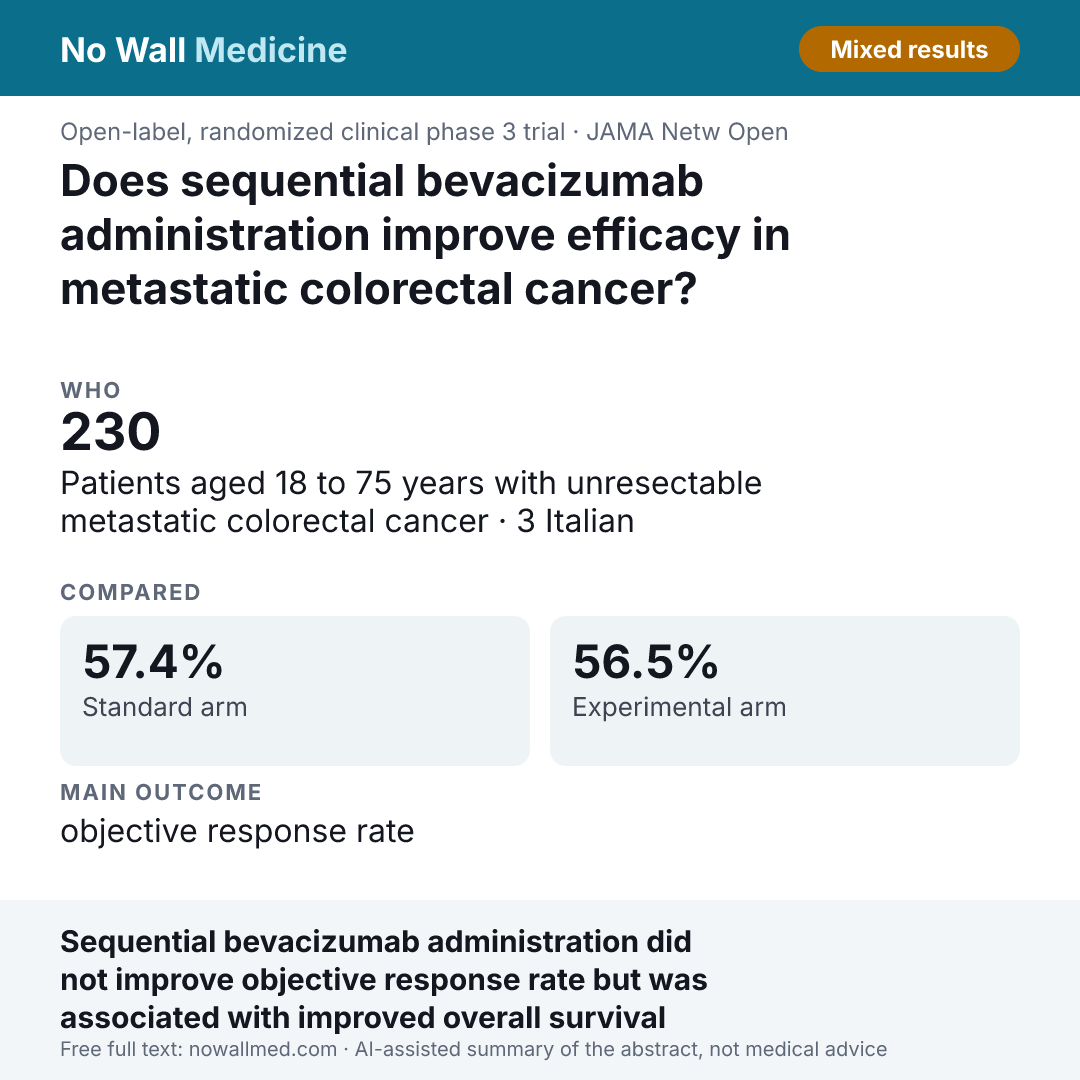
Effect of Bevacizumab in Combination With Standard Oxaliplatin-Based Regimens in Patients With Metastatic Colorectal Cancer: A Randomized Clinical Trial
Open-label, randomized clinical phase 3 trialMixed results
Does sequential bevacizumab administration improve efficacy in metastatic colorectal cancer?
Who
230
Patients aged 18 to 75 years with unresectable metastatic colorectal cancer · 3 Italian centers
Compared
57.4%Standard arm (95% CI, 47.8%-66.6%)
56.5%Experimental arm (95% CI, 47.0-65.7%)
Main outcome
objective response rate
Result: adjusted hazard ratio, 0.73 (95% CI, 0.54-0.99)
Bottom line: Sequential bevacizumab administration did not improve objective response rate but was associated with improved overall survival and fewer adverse effects.
JAMA Netw Open · 2021-07-01 · Save PNG