Visual abstracts
New randomized trials and meta-analyses from leading journals at a glance: who was studied, what was compared, and what was found. Every paper is free to read in full.
All specialtiesCardiology 4832Oncology 4114Gastroenterology & Hepatology 1934Infectious Disease 3824Neurology 1899Psychiatry & Mental Health 2256Pulmonology 2082Critical Care 1345Endocrinology & Diabetes 2572Pediatrics 2940Surgery 2525Orthopedics & Sports Medicine 926Neurosurgery 534Cardiothoracic & Vascular Surgery 671Plastic & Reconstructive Surgery 591Nephrology 1124Rheumatology 823Hematology 1104Dermatology 620Ophthalmology 543Obstetrics & Gynecology 1684Public & Global Health 1056Radiology & Imaging 641Anesthesiology 962Urology 754ENT (Otolaryngology) 503Emergency Medicine 489Allergy & Immunology 313Geriatrics 981Family Medicine & Primary Care 541Medical Genetics & Genomics 675Pathology & Laboratory Medicine 157Physical Medicine & Rehabilitation 751Palliative Care 424Nutrition 1580Digital Health & AI 2195General Medicine 321
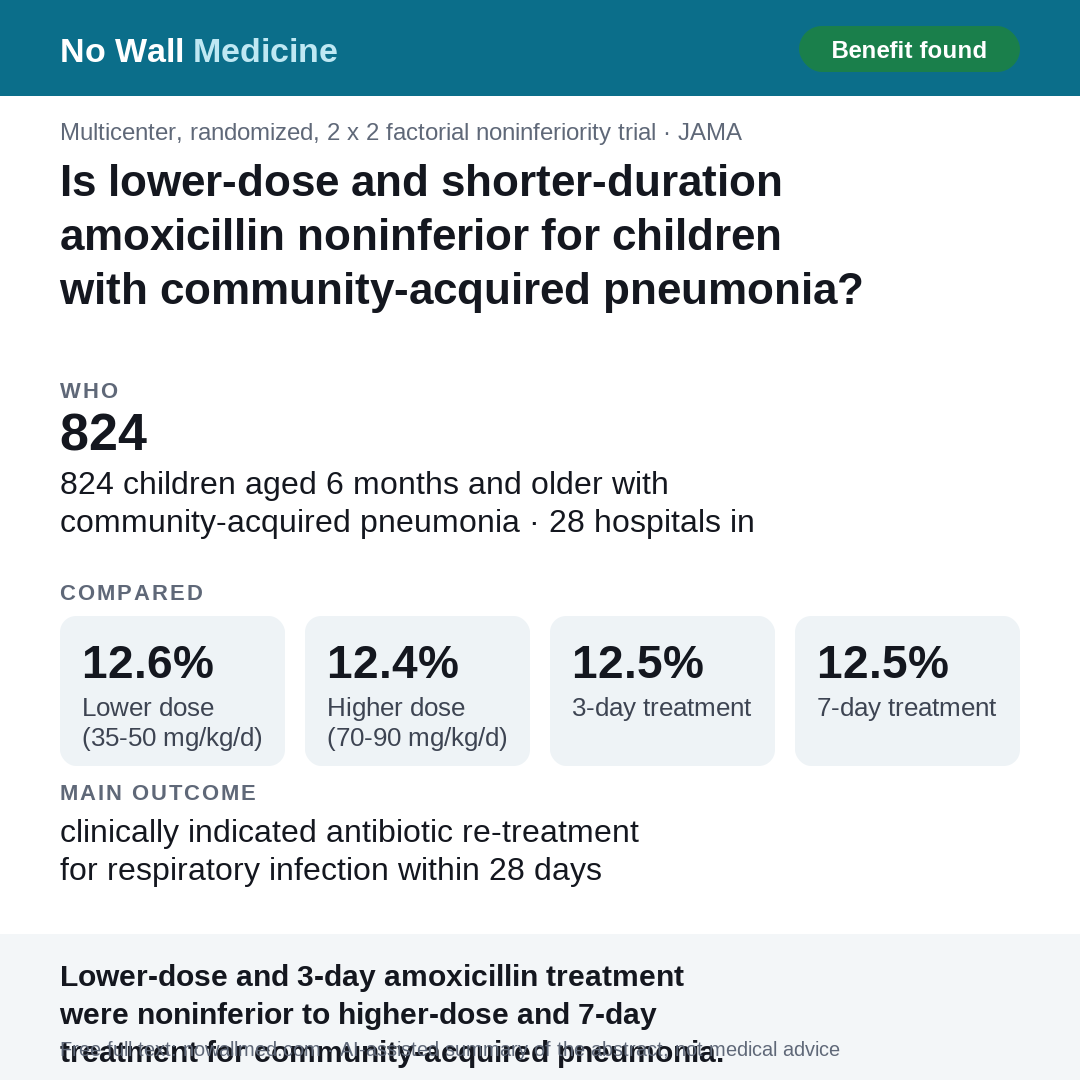
Effect of Amoxicillin Dose and Treatment Duration on the Need for Antibiotic Re-treatment in Children With Community-Acquired Pneumonia: The CAP-IT Randomized Clinical Trial
Multicenter, randomized, 2 x 2 factorial noninferiority trialBenefit found
Is lower-dose and shorter-duration amoxicillin noninferior for children with community-acquired pneumonia?
Who
824
824 children aged 6 months and older with community-acquired pneumonia · 28 hospitals in the UK and 1 in Ireland
Compared
12.6%Lower dose (35-50 mg/kg/d)
12.4%Higher dose (70-90 mg/kg/d)
12.5%3-day treatment
12.5%7-day treatment
Main outcome
clinically indicated antibiotic re-treatment for respiratory infection within 28 days
Result: difference 0.2% (1-sided 95% CI -∞ to 4.0%) for dose; difference 0.1% (1-sided 95% CI -∞ to 3.9) for duration
Bottom line: Lower-dose and 3-day amoxicillin treatment were noninferior to higher-dose and 7-day treatment for community-acquired pneumonia.
Limitation: Disease severity, treatment setting, prior antibiotics, and noninferiority margin acceptability require consideration.
JAMA · 2021-11-02Download image
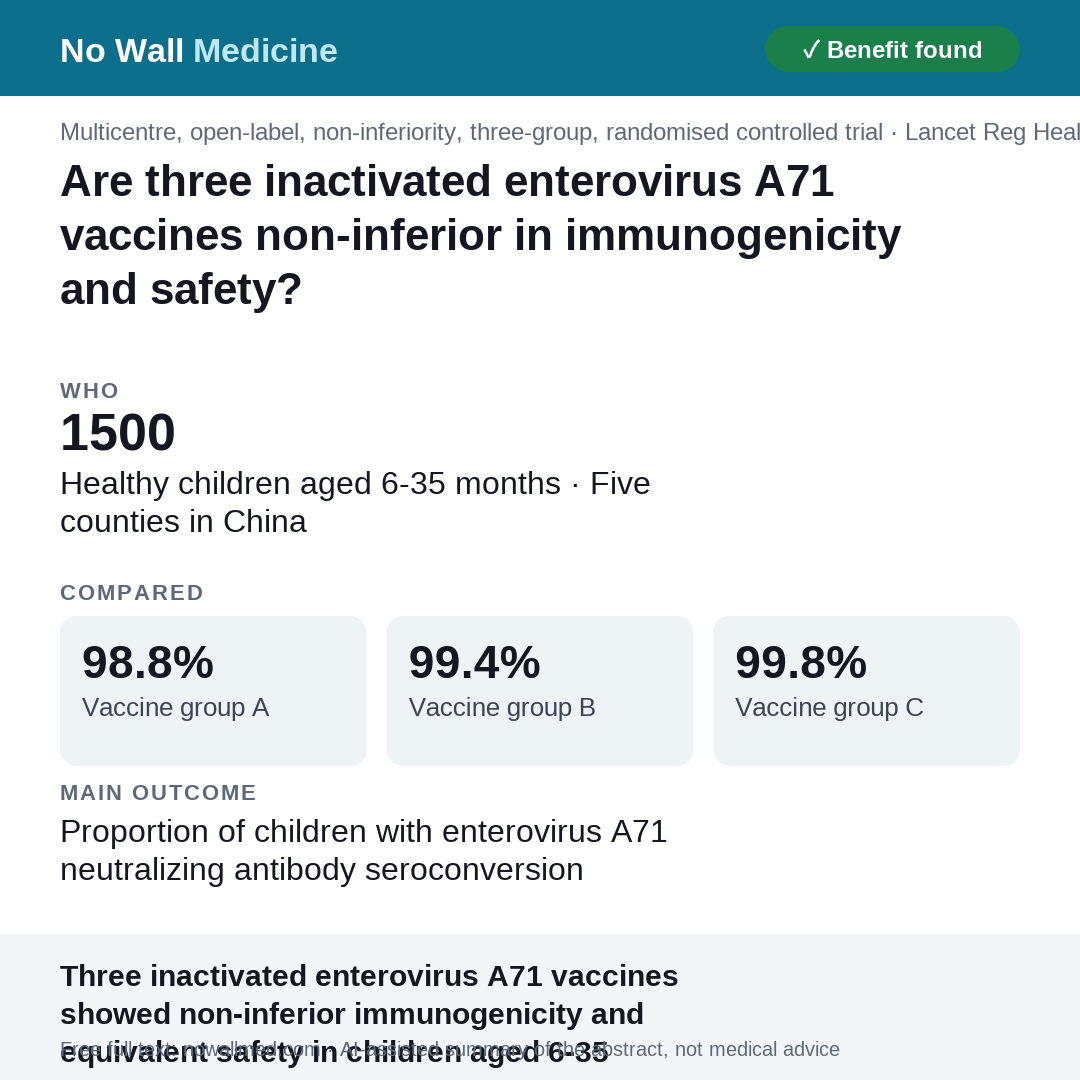
Immunogenicity and safety of inactivated enterovirus A71 vaccines in children aged 6-35 months in China: a non-inferiority, randomised controlled trial
Multicentre, open-label, non-inferiority, three-group, randomised controlled trialBenefit found
Are three inactivated enterovirus A71 vaccines non-inferior in immunogenicity and safety?
Who
1500
Healthy children aged 6-35 months · Five counties in China
Compared
98.8%Vaccine group A
99.4%Vaccine group B
99.8%Vaccine group C
Main outcome
Proportion of children with enterovirus A71 neutralizing antibody seroconversion
Bottom line: Three inactivated enterovirus A71 vaccines showed non-inferior immunogenicity and equivalent safety in children aged 6-35 months.
Lancet Reg Health West Pac · 2021-11-02Download image
Examining the Effectiveness of 3D Virtual Reality Training on Problem-solving, Self-efficacy, and Teamwork Among Inexperienced Volunteers Helping With Drug Use Prevention: Randomized Controlled Trial
Randomized controlled trialMixed results
Does spherical video-based virtual reality training improve problem-solving, self-efficacy, and teamwork?
Who
68
Inexperienced volunteers helping with drug use prevention
Compared
Experimental group: significant posttraining improvements in problem-solving and self-efficacy
Control group
Main outcome
Problem-solving, self-efficacy, and teamwork
Bottom line: Spherical video-based virtual reality training improved problem-solving and self-efficacy but not teamwork among volunteers.
Limitation: Future studies are suggested to develop effective virtual reality to assist in enhancing teamwork abilities.
J Med Internet Res · 2021-11-02Download image

The Use of Postnatal Weight Gain Algorithms to Predict Severe or Type 1 Retinopathy of Prematurity: A Systematic Review and Meta-analysis
Systematic review and meta-analysisBenefit found
Can postnatal weight gain-based algorithms predict type 1 or severe retinopathy of prematurity?
Who
37000
More than 37,000 infants
Compared
WINROP algorithm: sensitivity 0.89 (95% CI, 0.85-0.92)
G-ROP algorithm: sensitivity 1.00 (95% CI, 0.88-1.00)
CHOP ROP algorithm: sensitivity 0.95 (95% CI, 0.71-0.99)
ROPScore algorithm: sensitivity 0.99 (95% CI, 0.73-1.00)
Main outcome
Prediction of type 1 or severe retinopathy of prematurity
Bottom line: Weight gain-based algorithms show adequate sensitivity to help rule out severe retinopathy of prematurity in infants.
JAMA Netw Open · 2021-11-01Download image

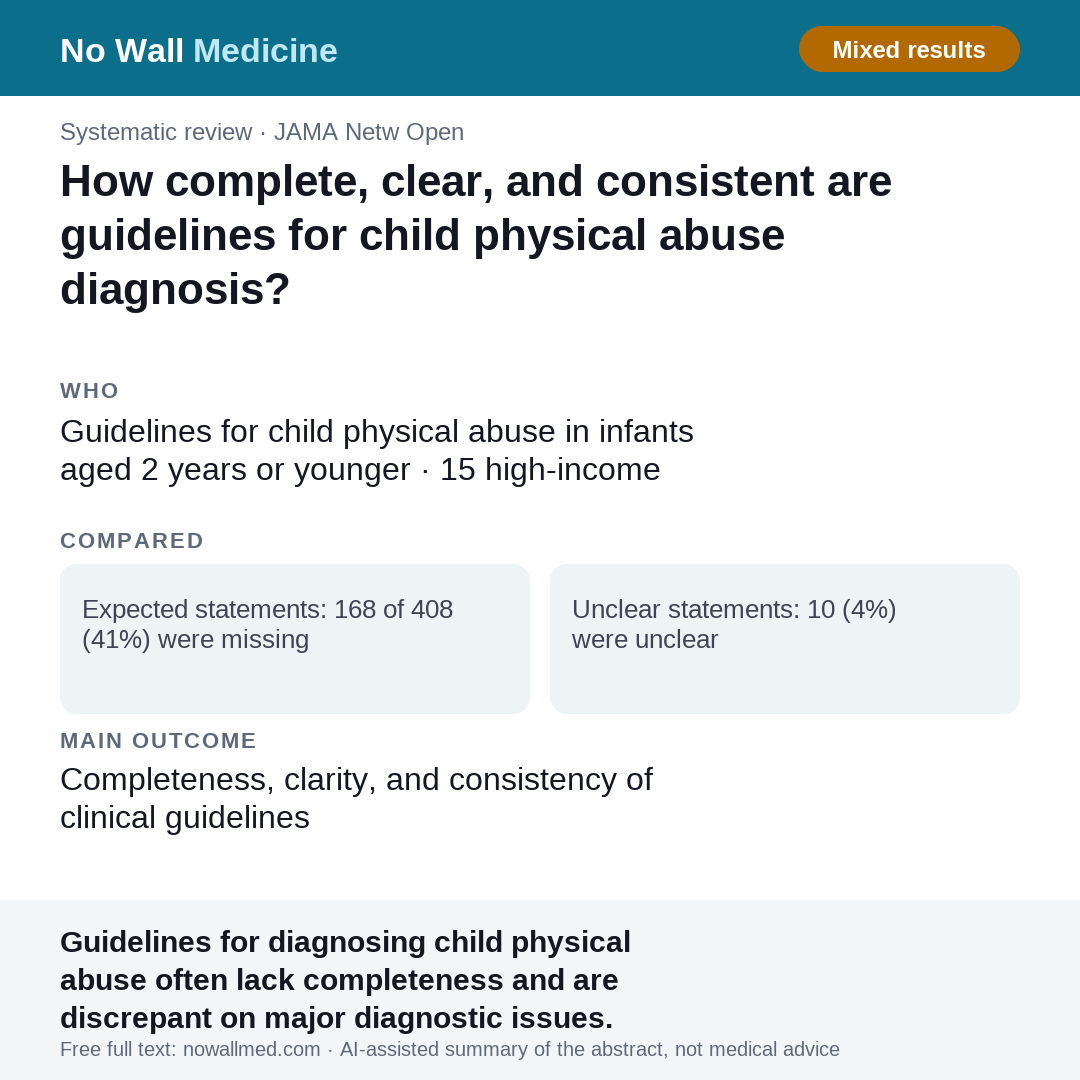
Variations in Guidelines for Diagnosis of Child Physical Abuse in High-Income Countries: A Systematic Review
Systematic reviewMixed results
How complete, clear, and consistent are guidelines for child physical abuse diagnosis?
Who
Guidelines for child physical abuse in infants aged 2 years or younger · 15 high-income countries
Compared
Expected statements: 168 of 408 (41%) were missing
Unclear statements: 10 (4%) were unclear
Main outcome
Completeness, clarity, and consistency of clinical guidelines
Bottom line: Guidelines for diagnosing child physical abuse often lack completeness and are discrepant on major diagnostic issues.
JAMA Netw Open · 2021-11-01Download image
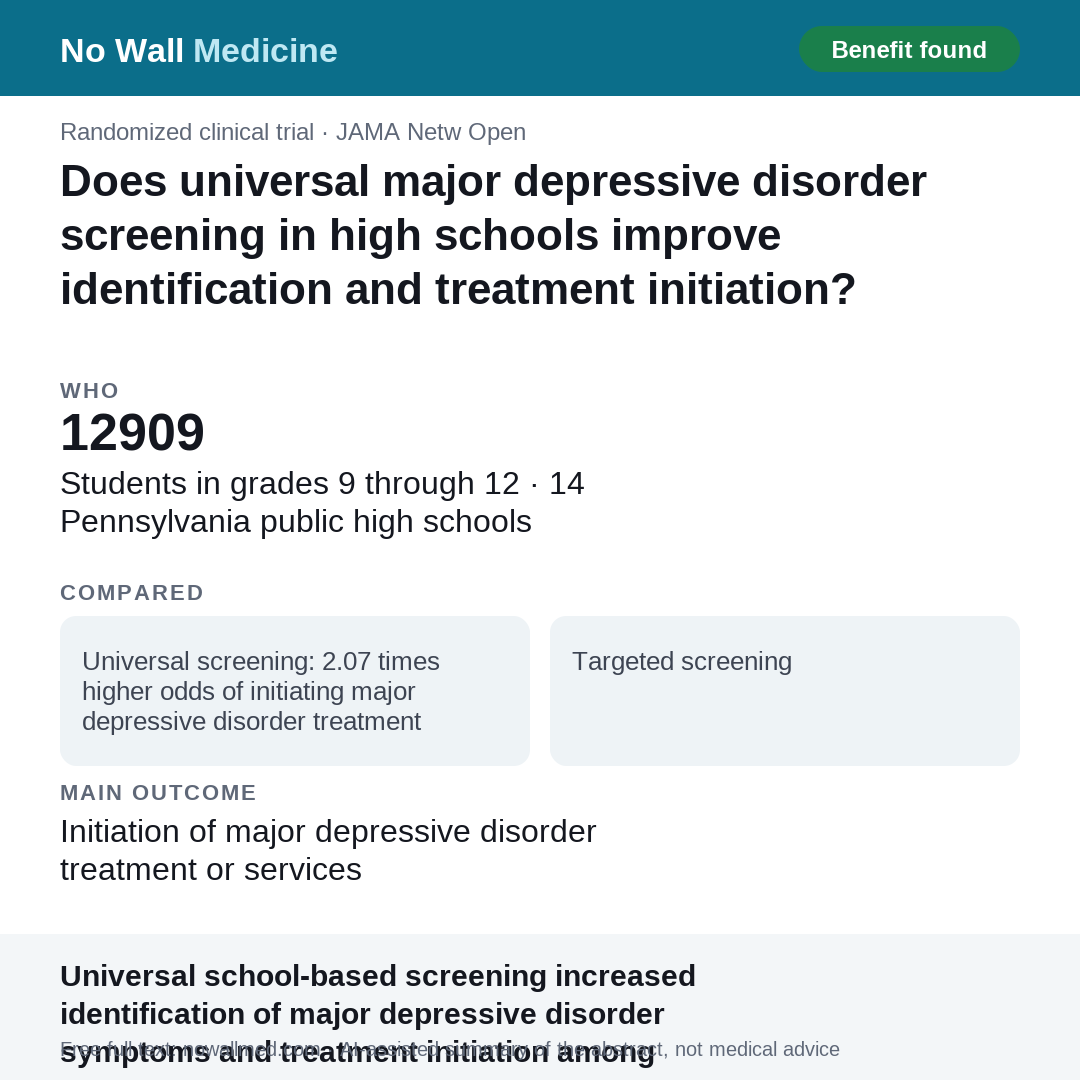
Screening in High Schools to Identify, Evaluate, and Lower Depression Among Adolescents: A Randomized Clinical Trial
Randomized clinical trialBenefit found
Does universal major depressive disorder screening in high schools improve identification and treatment initiation?
Who
12909
Students in grades 9 through 12 · 14 Pennsylvania public high schools
Compared
Universal screening: 2.07 times higher odds of initiating major depressive disorder treatment
Targeted screening
Main outcome
Initiation of major depressive disorder treatment or services
Result: odds ratio 2.07 (95% CI 1.39 to 3.10)
Bottom line: Universal school-based screening increased identification of major depressive disorder symptoms and treatment initiation among adolescents.
JAMA Netw Open · 2021-11-01Download image
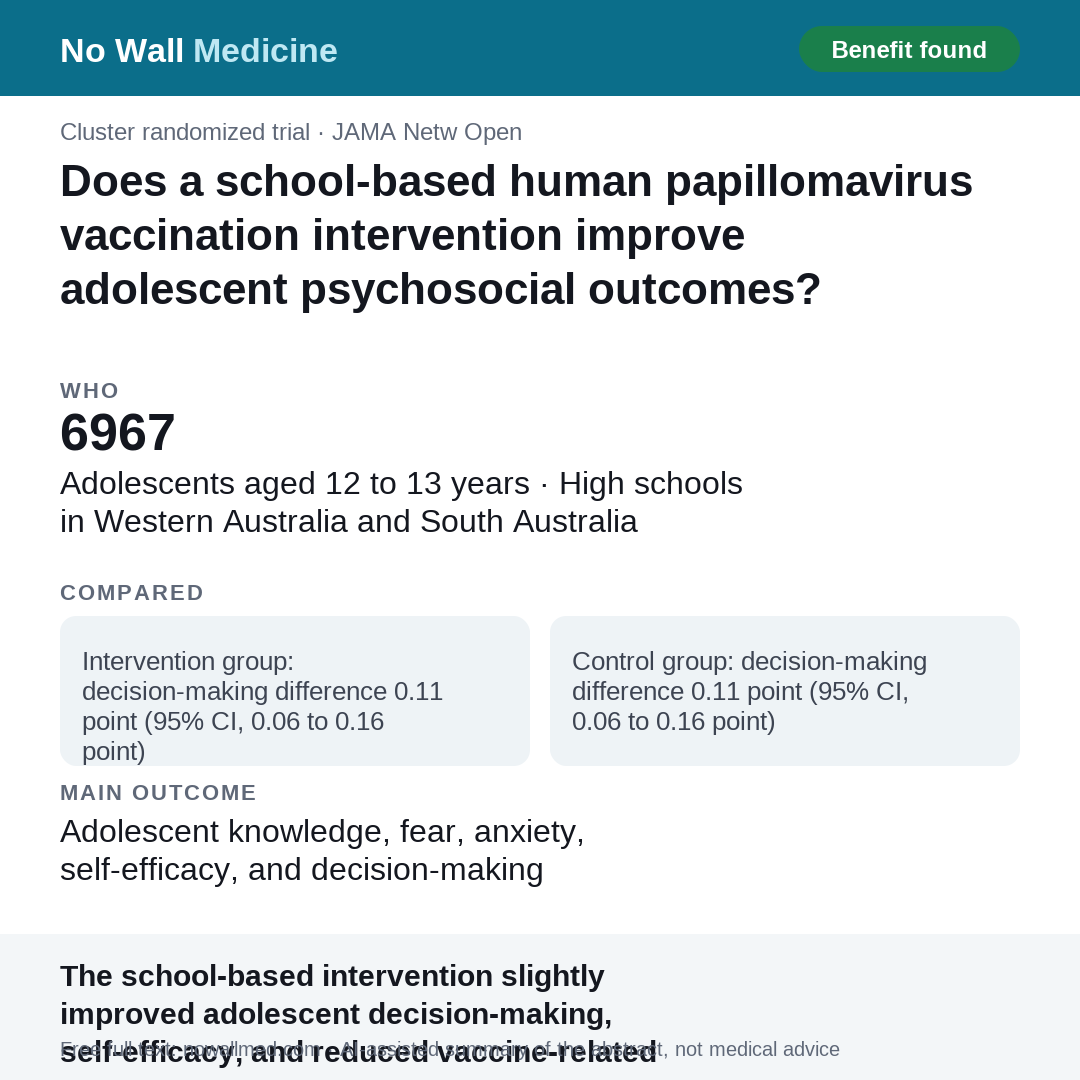
Effect of a School-Based Educational Intervention About the Human Papillomavirus Vaccine on Psychosocial Outcomes Among Adolescents: Analysis of Secondary Outcomes of a Cluster Randomized Trial
Cluster randomized trialBenefit found
Does a school-based human papillomavirus vaccination intervention improve adolescent psychosocial outcomes?
Who
6967
Adolescents aged 12 to 13 years · High schools in Western Australia and South Australia
Compared
Intervention group: decision-making difference 0.11 point (95% CI, 0.06 to 0.16 point)
Control group: decision-making difference 0.11 point (95% CI, 0.06 to 0.16 point)
Main outcome
Adolescent knowledge, fear, anxiety, self-efficacy, and decision-making
Result: decision-making difference 0.11 point (95% CI, 0.06 to 0.16 point)
Bottom line: The school-based intervention slightly improved adolescent decision-making, self-efficacy, and reduced vaccine-related anxiety throughout the vaccination course.
JAMA Netw Open · 2021-11-01Download image
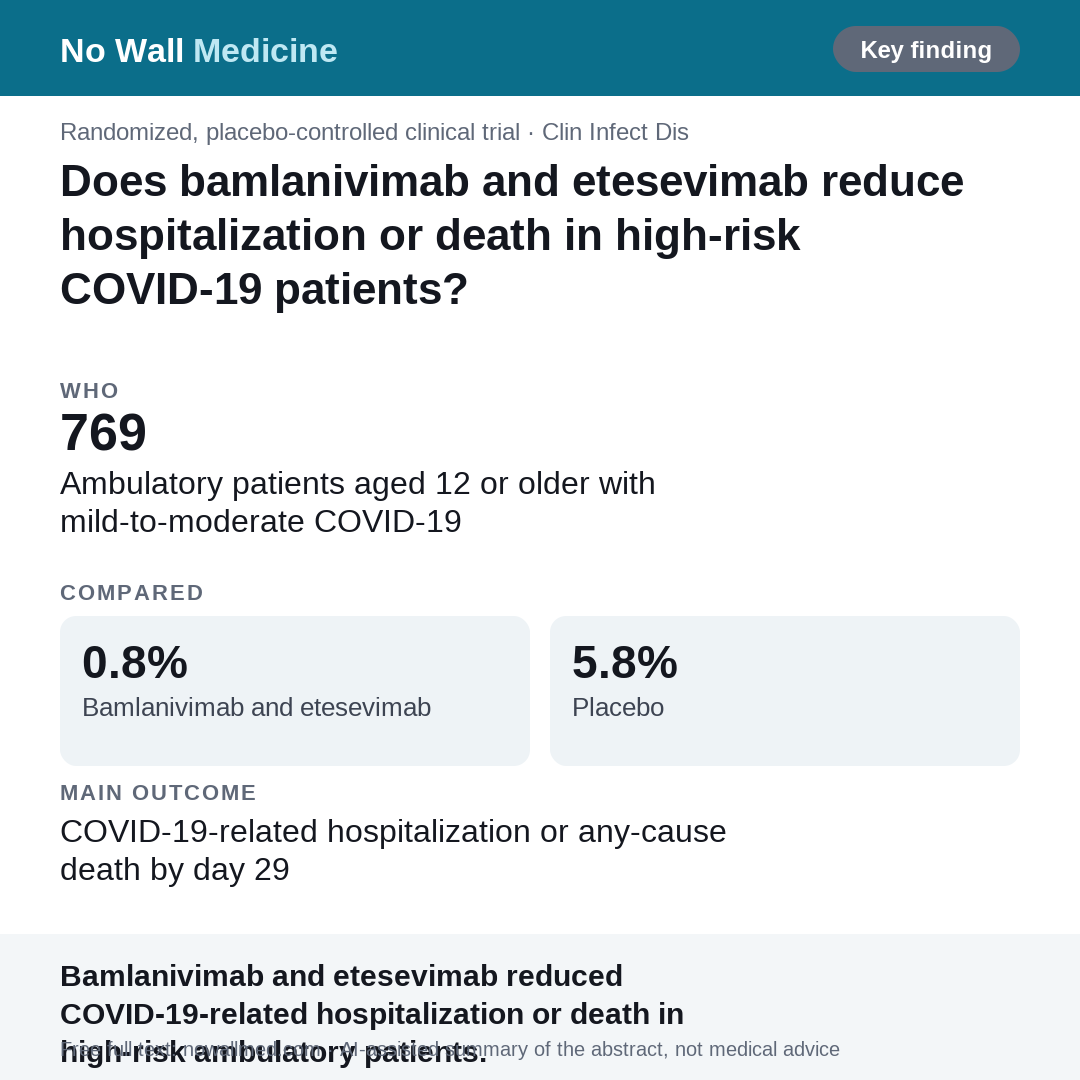
A Randomized, Placebo-Controlled Clinical Trial of Bamlanivimab and Etesevimab Together in High-Risk Ambulatory Patients With COVID-19 and Validation of the Prognostic Value of Persistently High Viral Load
Randomized, placebo-controlled clinical trialBenefit found
Does bamlanivimab and etesevimab reduce hospitalization or death in high-risk COVID-19 patients?
Who
769
Ambulatory patients aged 12 or older with mild-to-moderate COVID-19
Compared
0.8%Bamlanivimab and etesevimab (4/511)
5.8%Placebo (15/258)
Main outcome
COVID-19-related hospitalization or any-cause death by day 29
Result: Δ -5.0 (95% CI -8.0 to -2.1)
Bottom line: Bamlanivimab and etesevimab reduced COVID-19-related hospitalization or death in high-risk ambulatory patients.
Clin Infect Dis · 2021-11-01Download image
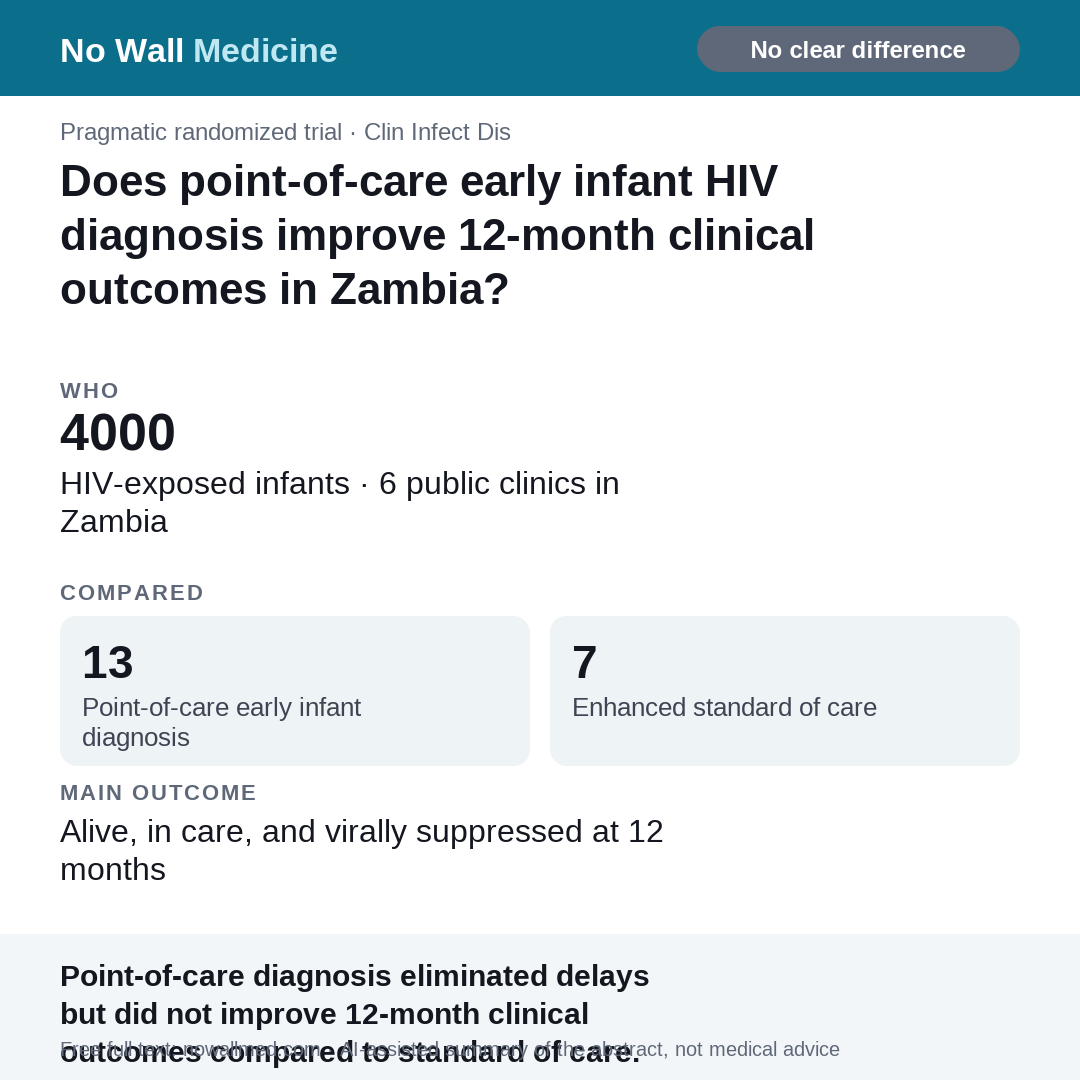
A Randomized Trial of Point-of-Care Early Infant Human Immunodeficiency Virus (HIV) Diagnosis in Zambia
Pragmatic randomized trialNo clear difference
Does point-of-care early infant HIV diagnosis improve 12-month clinical outcomes in Zambia?
Who
4000
HIV-exposed infants · 6 public clinics in Zambia
Compared
13Point-of-care early infant diagnosis (30%; 16-43%)
7Enhanced standard of care (19%; 6-32%)
Main outcome
Alive, in care, and virally suppressed at 12 months
Result: RR: 1.56; .7-3.50
Bottom line: Point-of-care diagnosis eliminated delays but did not improve 12-month clinical outcomes compared to standard of care.
Clin Infect Dis · 2021-11-01Download image
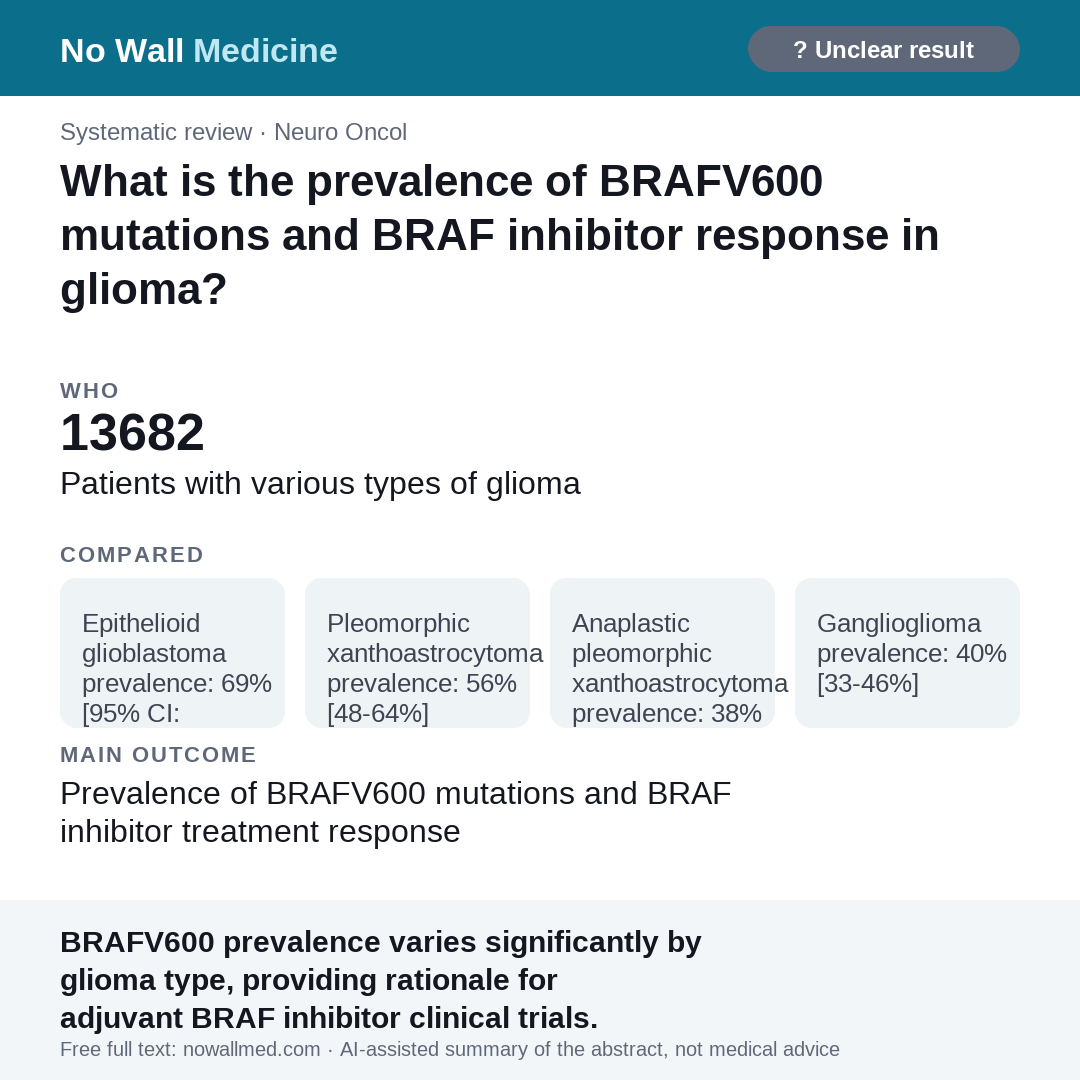
Effect of Preemptive Intervention on Developmental Outcomes Among Infants Showing Early Signs of Autism: A Randomized Clinical Trial of Outcomes to Diagnosis
Single rater-blinded randomized clinical trialBenefit found
Does preemptive intervention for infants showing early signs of autism improve developmental outcomes?
Who
104
104 infants aged 9 to 14 months showing early autism behaviors · 2 Australian research centers
Compared
Preemptive intervention plus usual care: 3 of 45 participants [6.7%] ASD classification
Usual care only: 9 of 44 participants [20.5%] ASD classification
Main outcome
Combined blinded measure of autism spectrum disorder behavior severity
Result: odds ratio 0.18 (95% CI 0-0.68)
Bottom line: Preemptive intervention for infants showing early autism signs reduced symptom severity and the odds of autism diagnosis at age 3.
JAMA Pediatr · 2021-11-01Download image
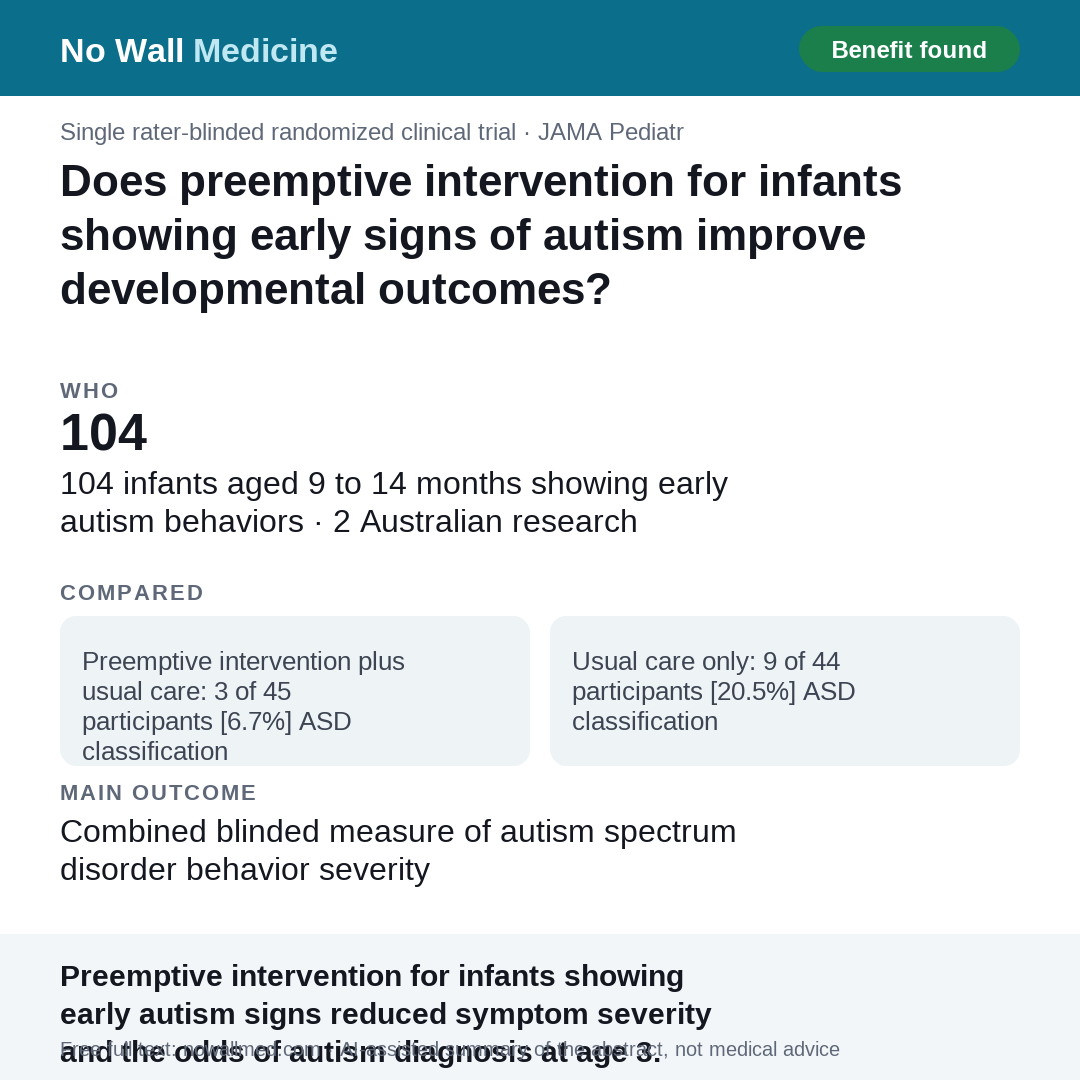
Associations of Early-Life Threat and Deprivation With Executive Functioning in Childhood and Adolescence: A Systematic Review and Meta-analysis
Systematic review and meta-analysisMixed results
Are deprivation experiences more strongly associated with reduced executive functioning than threat experiences?
Who
31188
Children and adolescents
Compared
Deprivation: Hedges g = -0.43 (inhibitory control); Hedges g = -0.54 (working memory)
Threat: Hedges g = -0.27 (inhibitory control); Hedges g = -0.28 (working memory)
Main outcome
Executive functioning domains: cognitive flexibility, inhibitory control, and working memory
Result: inhibitory control Hedges g = -0.43 (95% CI, -0.57 to -0.29) vs threat Hedges g = -0.27 (95% CI, -0.46 to -0.08)
Bottom line: Deprivation is more strongly associated with reduced inhibitory control and working memory than threat in children and adolescents.
JAMA Pediatr · 2021-11-01Download image
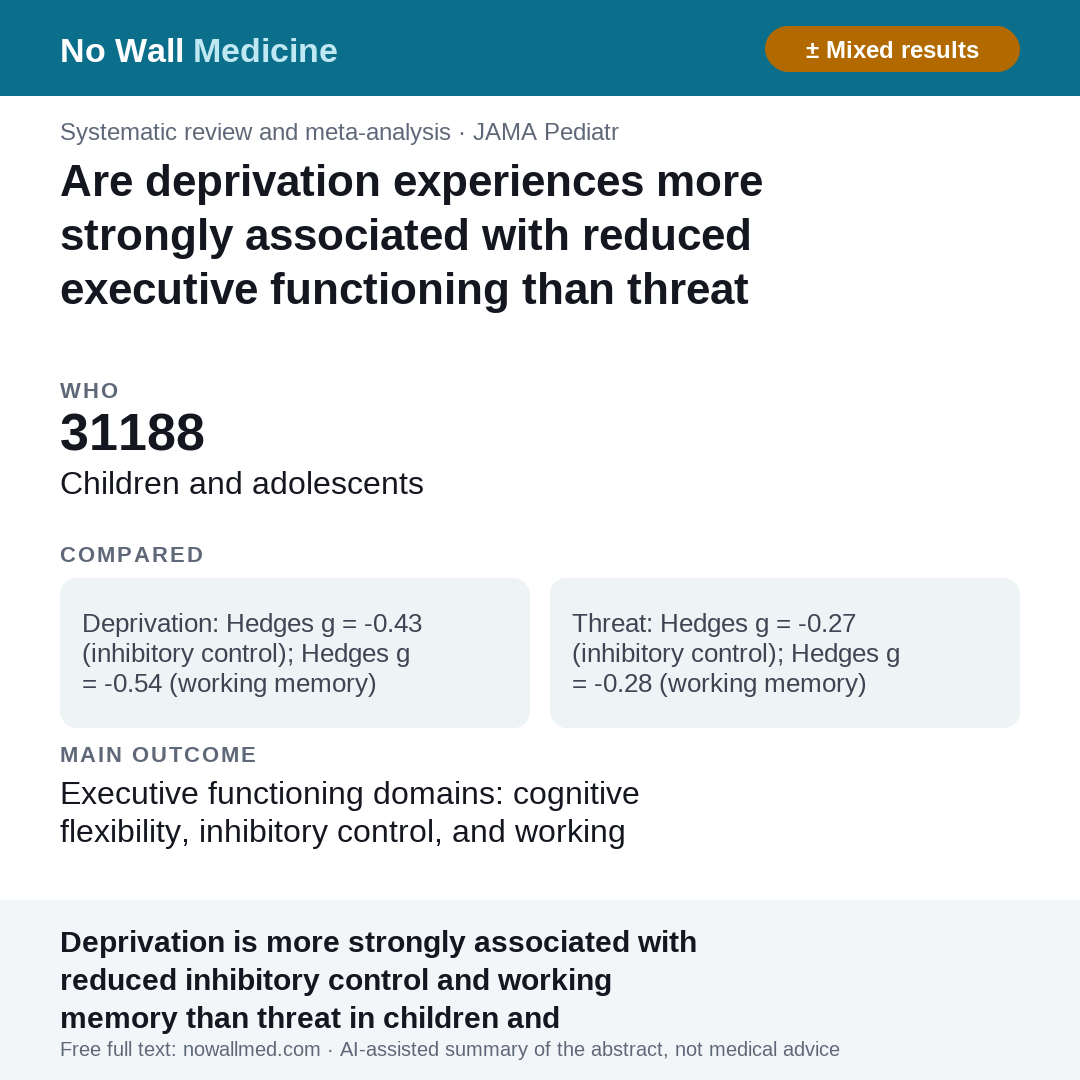
Outcomes in adolescent and young adult patients (16 to 30 years) compared to younger patients treated for high-risk B-lymphoblastic leukemia: report from Children's Oncology Group Study AALL0232
Phase 3 randomized trialHarm found
Are outcomes in adolescent and young adult patients different from younger patients with high-risk B-lymphoblastic leukemia?
Who
3040
Patients aged 1 to 30 years with high-risk B-lymphoblastic leukemia · Children's Oncology Group
Compared
Adolescent and young adult (16-30 years): 5-year event-free survival 65.4±2.2%
Younger patients: 5-year event-free survival 78.1±0.9%
Main outcome
5-year event-free survival and overall survival
Bottom line: Adolescent and young adult patients have significantly inferior survival and higher relapse rates compared to younger patients.
Leukemia · 2021-11-01Download image
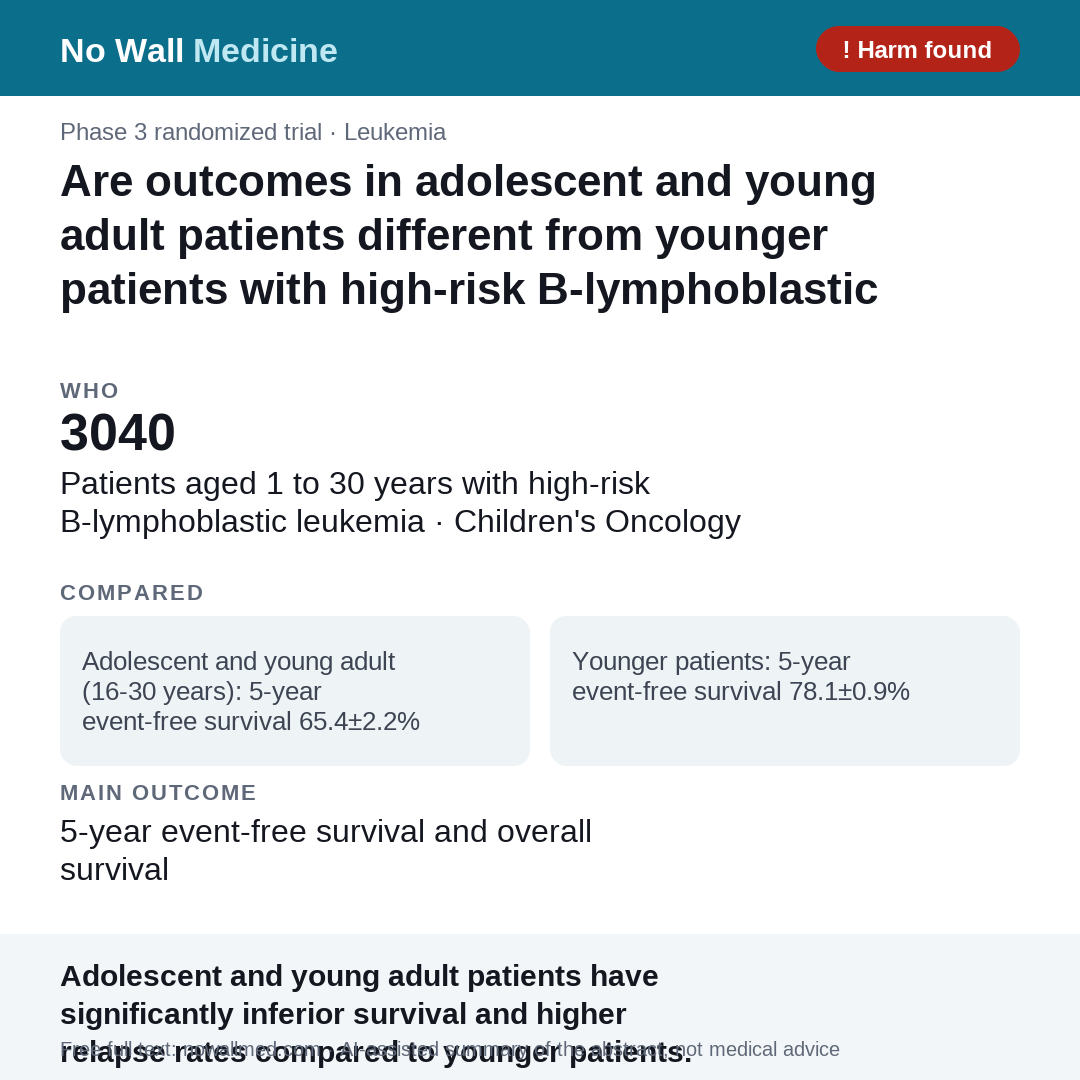
Prevalence of BRAFV600 in glioma and use of BRAF Inhibitors in patients with BRAFV600 mutation-positive glioma: systematic review
Systematic reviewUnclear result
What is the prevalence of BRAFV600 mutations and BRAF inhibitor response in glioma?
Who
13682
Patients with various types of glioma
Compared
Epithelioid glioblastoma prevalence: 69% [95% CI: 45-89%]
Pleomorphic xanthoastrocytoma prevalence: 56% [48-64%]
Anaplastic pleomorphic xanthoastrocytoma prevalence: 38% [23-54%]
Ganglioglioma prevalence: 40% [33-46%]
Main outcome
Prevalence of BRAFV600 mutations and BRAF inhibitor treatment response
Bottom line: BRAFV600 prevalence varies significantly by glioma type, providing rationale for adjuvant BRAF inhibitor clinical trials.
Neuro Oncol · 2021-11-01Download image
Countermarketing About Fruit Drinks, Alone or With Water Promotion: A 2019 Randomized Controlled Trial in Latinx Parents
3-arm randomized controlled online trialBenefit found
Do fruit drink countermarketing messages alone or with water promotion reduce fruit drink purchases?
Who
1628
Latinx parents in the United States · United States
Compared
fruit drink-only group: decreased by 13.7 percentage points
combination group: decreased by 19.2 percentage points
control
Main outcome
parental beverage choices from a simulated online store
Bottom line: Countermarketing messages alone or combined with water promotion significantly decreased parental selection of fruit drinks.
Am J Public Health · 2021-10-28Download image
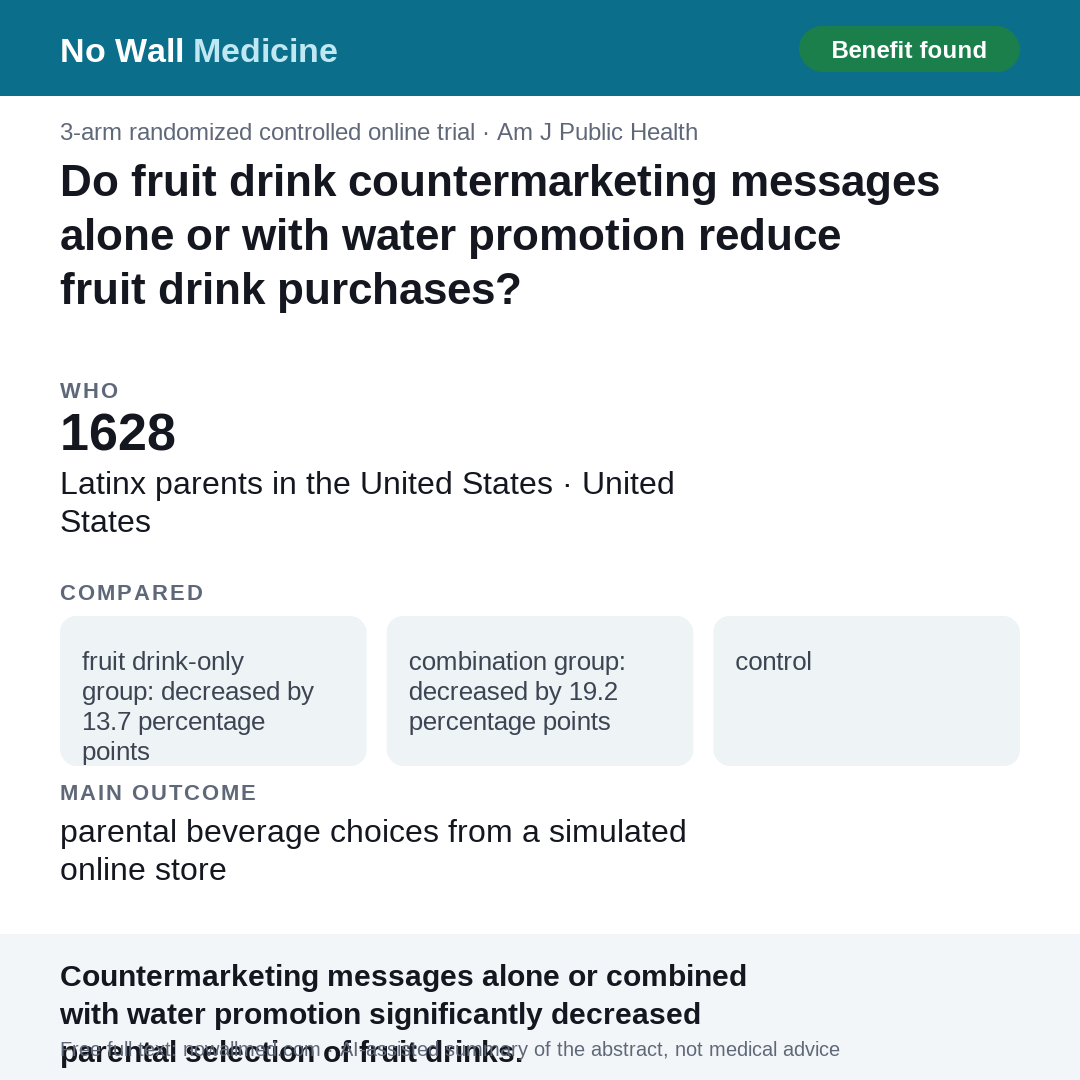
Infliximab versus second intravenous immunoglobulin for treatment of resistant Kawasaki disease in the USA (KIDCARE): a randomised, multicentre comparative effectiveness trial
Randomised, multicentre comparative effectiveness trialBenefit found
Is infliximab more effective than a second intravenous immunoglobulin infusion for resistant Kawasaki disease?
Who
105
Patients aged 4 weeks to 17 years with intravenous immunoglobulin resistant Kawasaki disease · 30 hospitals across the USA
Compared
intravenous infliximab: 40 (77%) of 52 patients
second intravenous immunoglobulin: 25 (51%) of 49 patients
Main outcome
Resolution of fever at 24 h with no recurrence within 7 days
Result: odds ratio 0·31, 95% CI 0·13-0·73
Bottom line: Infliximab is more effective than a second intravenous immunoglobulin infusion for treating resistant Kawasaki disease.
Funded by: Patient Centered Outcomes Research Institute
Lancet Child Adolesc Health · 2021-10-27Download image
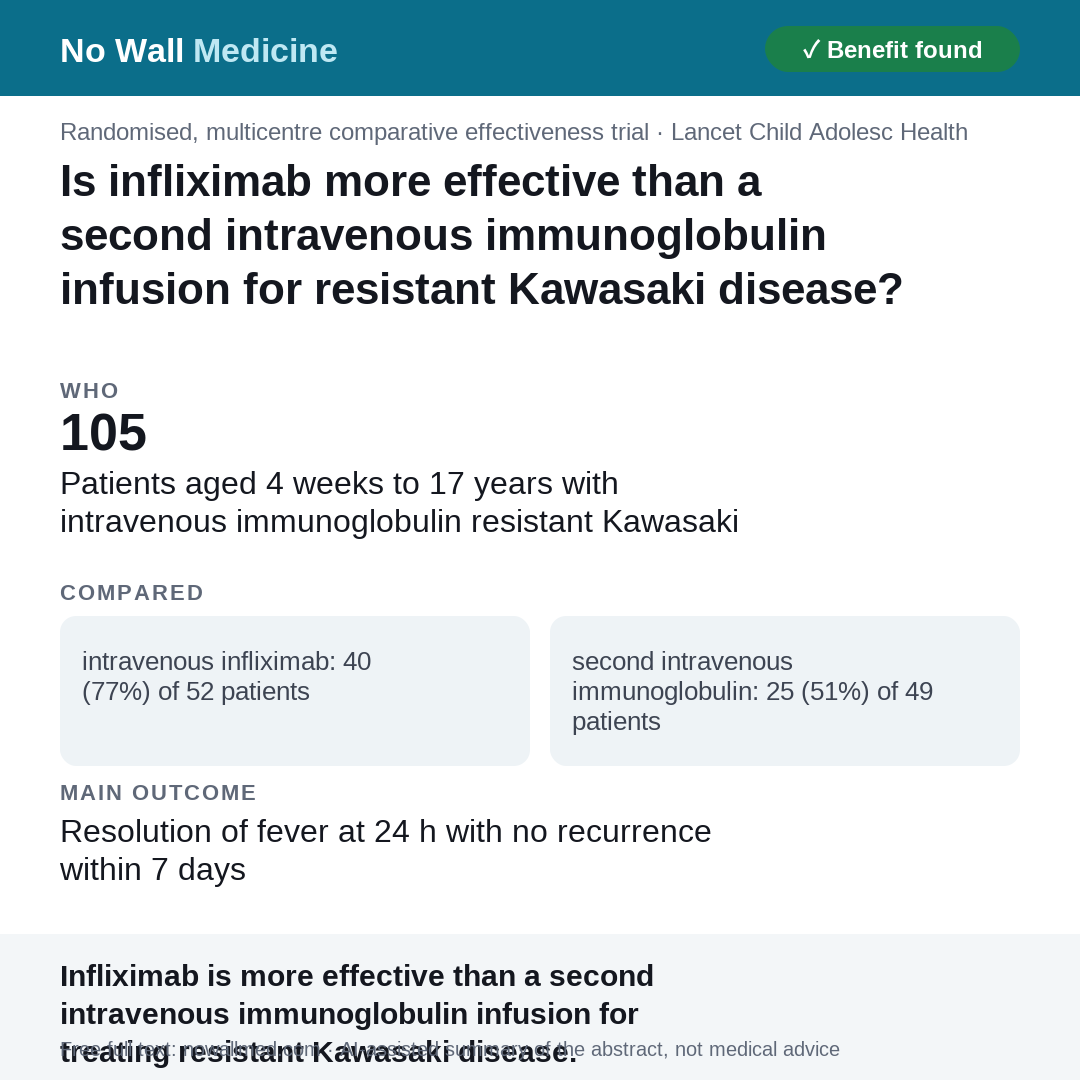
Duration of cooling with water for thermal burns as a first aid intervention: A systematic review
Systematic review of four observational studiesNo clear difference
Does cooling thermal burns with running water for 20 minutes or more improve outcomes?
Who
Adults and children with thermal burns
Compared
Cooling for 20 minutes or more
Cooling for any other duration
Main outcome
Burn size, depth, re-epithelialization, skin grafting, pain, or hypothermia
Bottom line: No benefit was found for cooling thermal burns for 20 minutes or more compared to shorter durations.
Limitation: Very low certainty due to study design, risk of bias, and indirectness.
Burns · 2021-10-26Download image
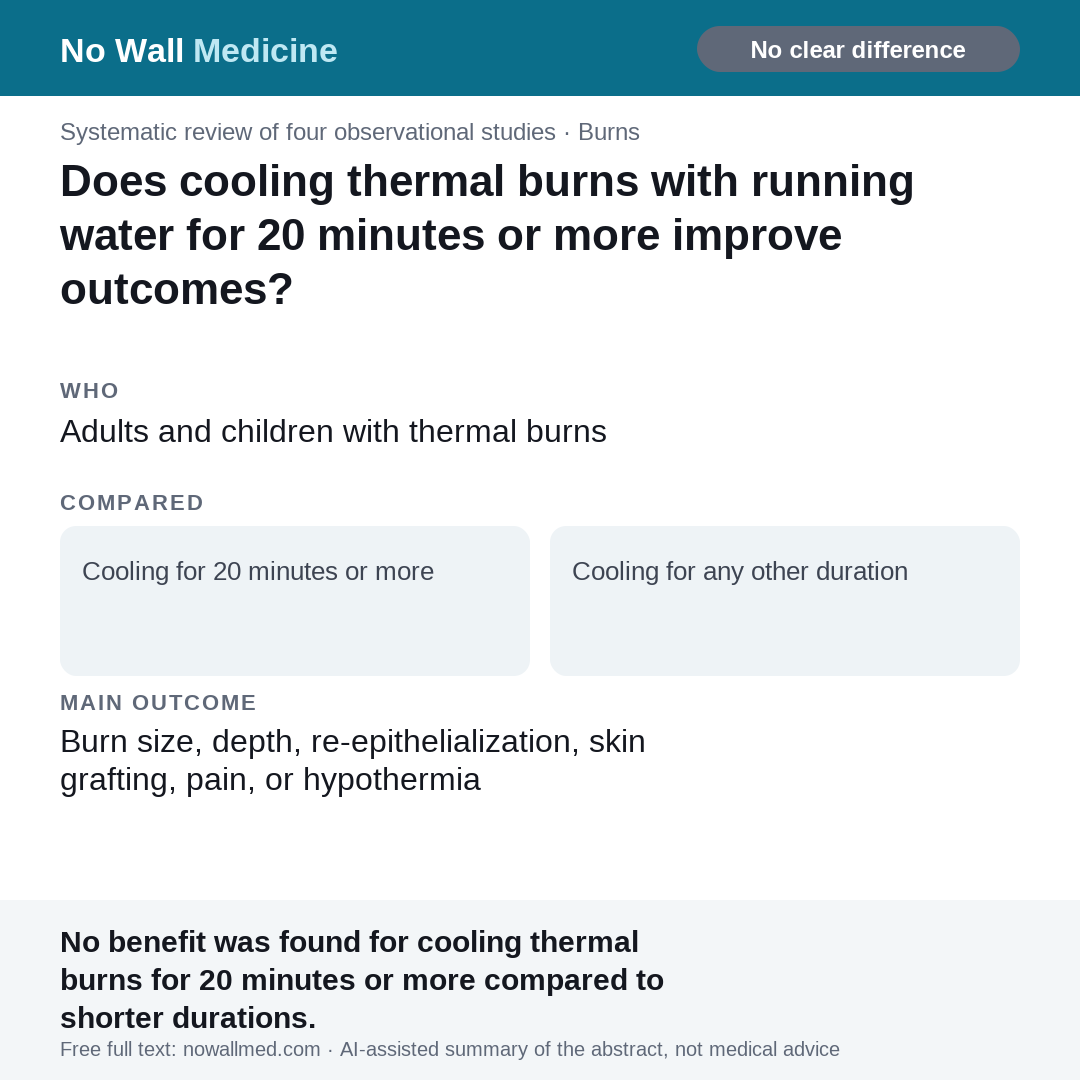
Prevalence of Adolescent Cannabis Vaping: A Systematic Review and Meta-analysis of US and Canadian Studies
Systematic review and meta-analysisHarm found
What is the global prevalence of cannabis vaping in adolescents by year and grade?
Who
198 845
Adolescents in the general population · United States and Canada
Compared
6.1%Lifetime use 2013-2016
13.6%Lifetime use 2019-2020
7.2%Past 12-month use 2017-2018
13.2%Past 12-month use 2019-2020
Main outcome
Prevalence of cannabis vaping
Bottom line: The prevalence of cannabis vaping has increased among adolescents in the United States and Canada.
Limitation: Heterogeneity across studies was large.
JAMA Pediatr · 2021-10-26Download image
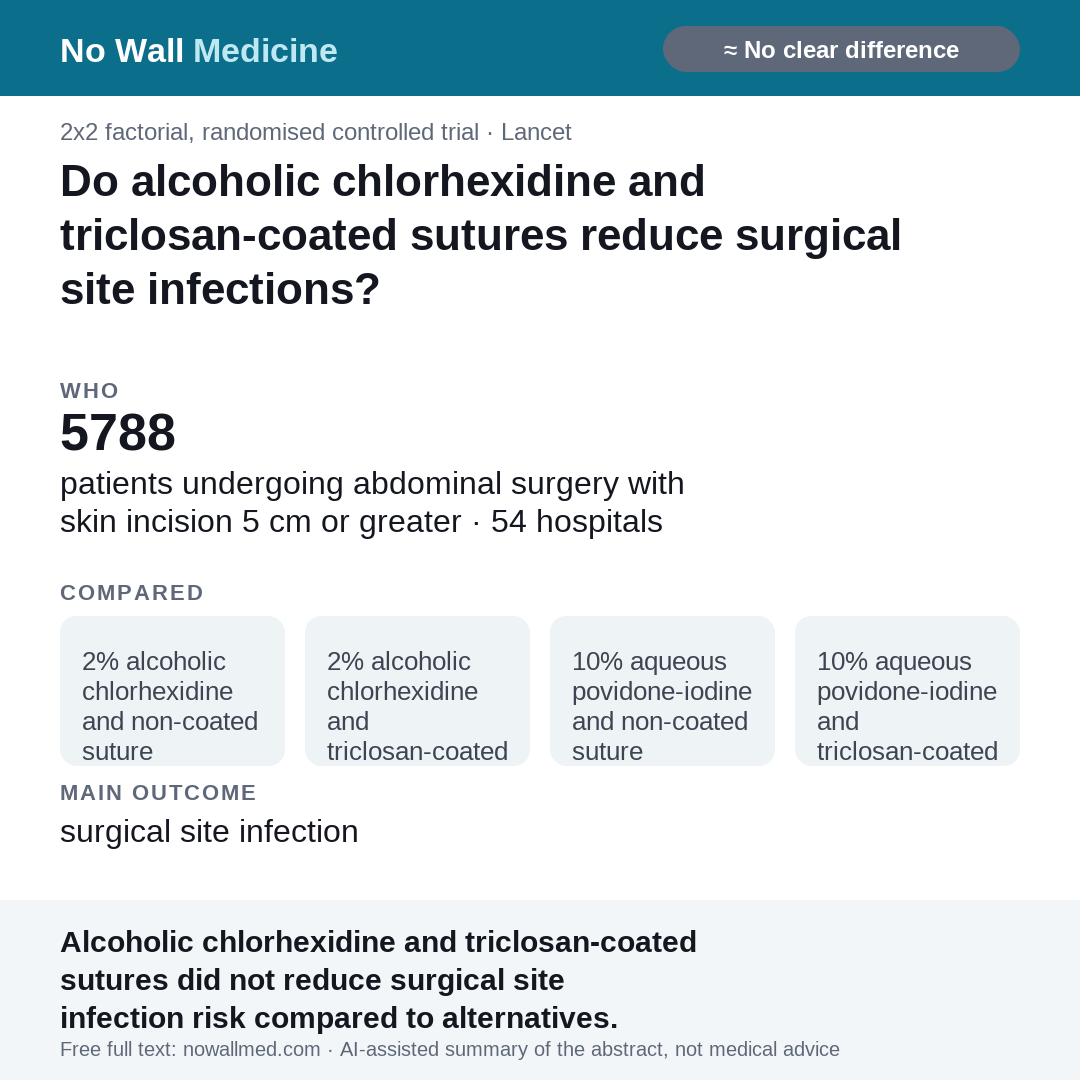
Reducing surgical site infections in low-income and middle-income countries (FALCON): a pragmatic, multicentre, stratified, randomised controlled trial
2x2 factorial, randomised controlled trialNo clear difference
Do alcoholic chlorhexidine and triclosan-coated sutures reduce surgical site infections?
Who
5788
patients undergoing abdominal surgery with skin incision 5 cm or greater · 54 hospitals in seven countries
Compared
2% alcoholic chlorhexidine and non-coated suture
2% alcoholic chlorhexidine and triclosan-coated suture
10% aqueous povidone-iodine and non-coated suture
10% aqueous povidone-iodine and triclosan-coated suture
Main outcome
surgical site infection
Bottom line: Alcoholic chlorhexidine and triclosan-coated sutures did not reduce surgical site infection risk compared to alternatives.
Funded by: National Institute for Health Research Global Health Research Unit Grant
Lancet · 2021-10-25Download image
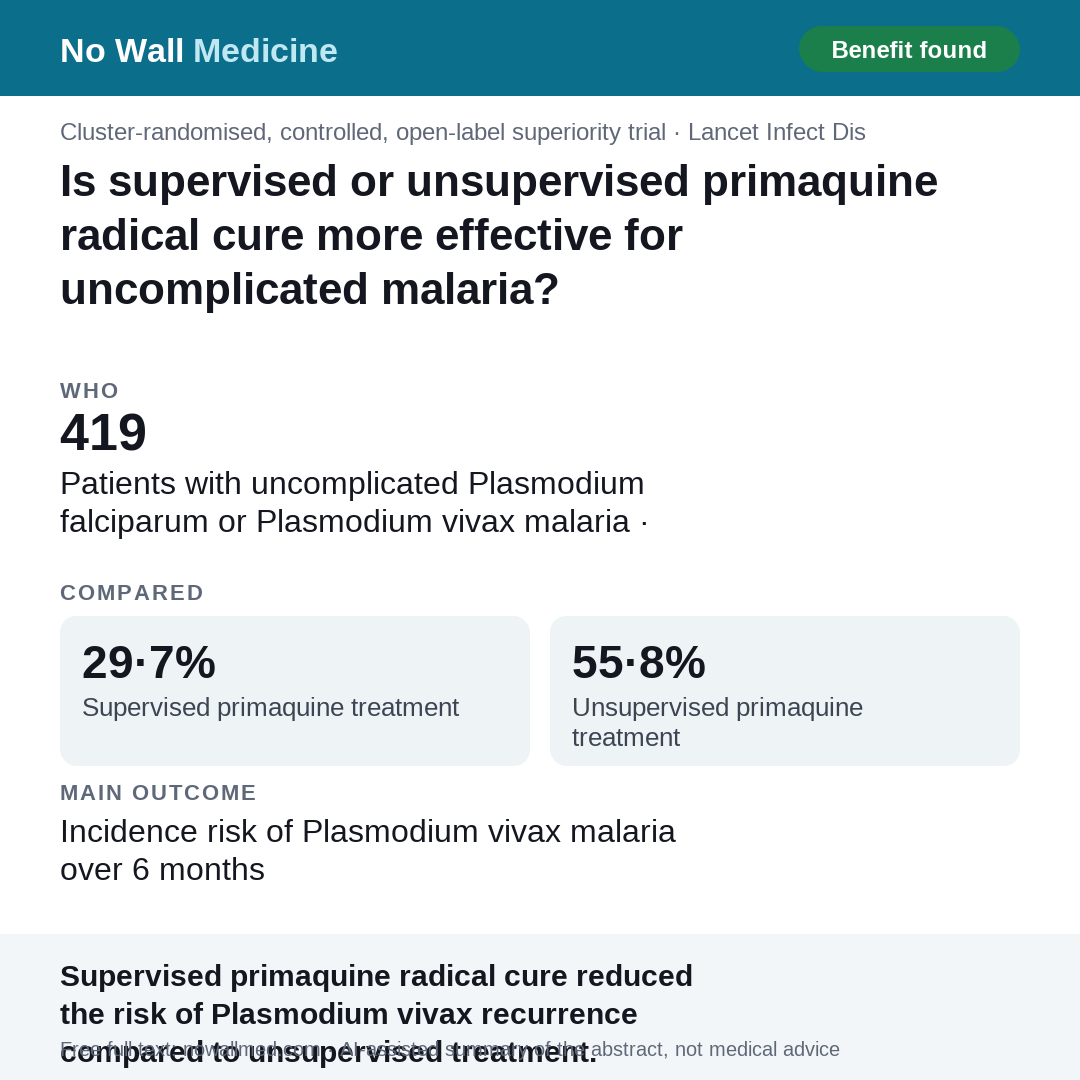
Supervised versus unsupervised primaquine radical cure for the treatment of falciparum and vivax malaria in Papua, Indonesia: a cluster-randomised, controlled, open-label superiority trial
Cluster-randomised, controlled, open-label superiority trialBenefit found
Is supervised or unsupervised primaquine radical cure more effective for uncomplicated malaria?
Who
419
Patients with uncomplicated Plasmodium falciparum or Plasmodium vivax malaria · Papua, Indonesia
Compared
29·7%Supervised primaquine treatment (95% CI 16·4-49·9)
55·8%Unsupervised primaquine treatment (32·3-81·8)
Main outcome
Incidence risk of Plasmodium vivax malaria over 6 months
Result: hazard ratio 0·23 (95% CI 0·07-0·76)
Bottom line: Supervised primaquine radical cure reduced the risk of Plasmodium vivax recurrence compared to unsupervised treatment.
Funded by: Bill & Melinda Gates Foundation, Wellcome Trust, Australian Government
Lancet Infect Dis · 2021-10-25Download image
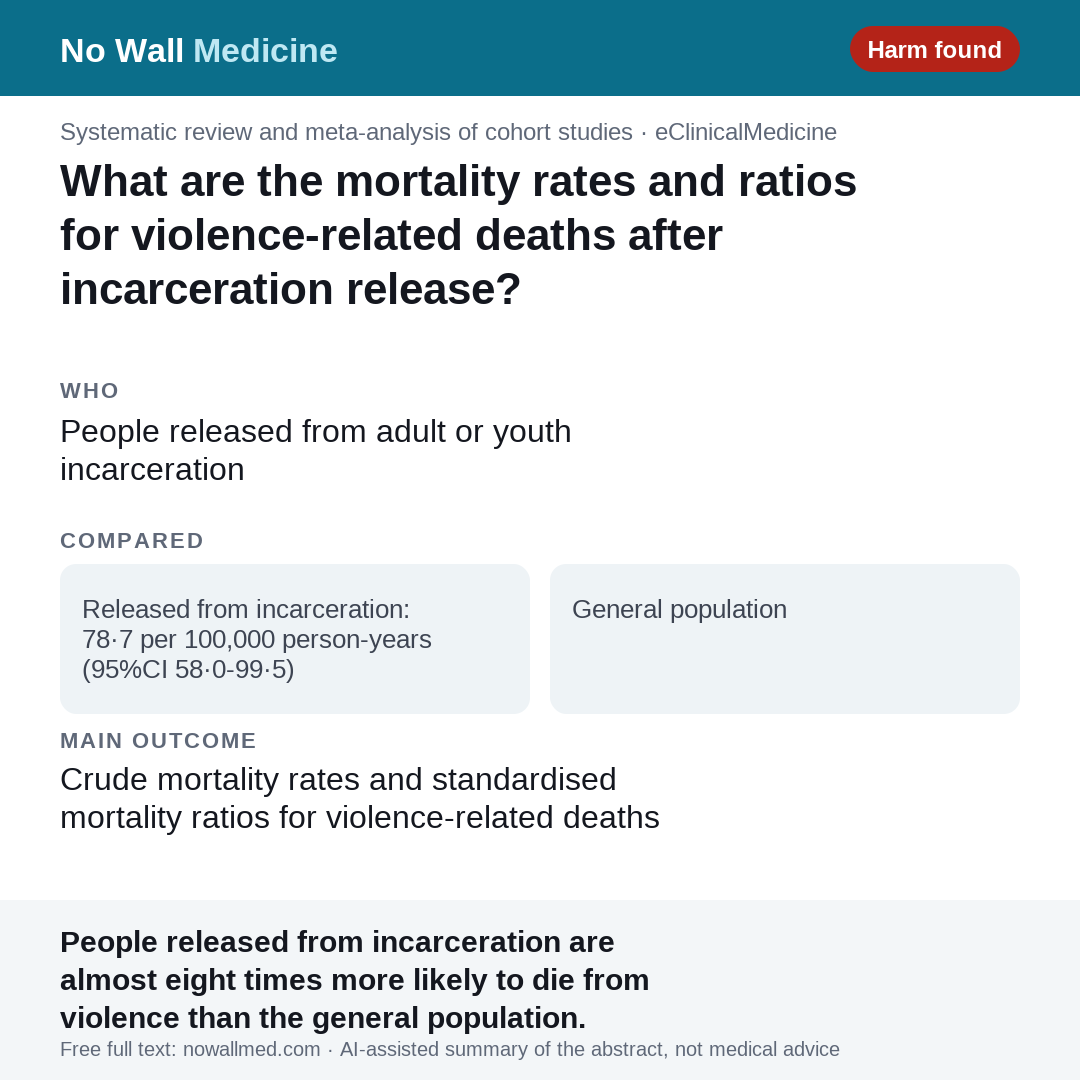
Violence-related deaths among people released from incarceration: systematic review and meta-analysis of cohort studies
Systematic review and meta-analysis of cohort studiesHarm found
What are the mortality rates and ratios for violence-related deaths after incarceration release?
Who
People released from adult or youth incarceration
Compared
Released from incarceration: 78·7 per 100,000 person-years (95%CI 58·0-99·5)
General population
Main outcome
Crude mortality rates and standardised mortality ratios for violence-related deaths
Result: standardised mortality ratio 7·6 (95%CI 2·4-12·8)
Bottom line: People released from incarceration are almost eight times more likely to die from violence than the general population.
eClinicalMedicine · 2021-10-24Download image