Visual abstracts
New randomized trials and meta-analyses from leading journals at a glance: who was studied, what was compared, and what was found. Every paper is free to read in full.
All specialtiesCardiology 4763Oncology 4043Gastroenterology & Hepatology 1903Infectious Disease 3756Neurology 1872Psychiatry & Mental Health 2216Pulmonology 2044Critical Care 1319Endocrinology & Diabetes 2544Pediatrics 2889Surgery 2480Orthopedics & Sports Medicine 917Neurosurgery 525Cardiothoracic & Vascular Surgery 656Plastic & Reconstructive Surgery 574Nephrology 1107Rheumatology 810Hematology 1090Dermatology 611Ophthalmology 532Obstetrics & Gynecology 1645Public & Global Health 1037Radiology & Imaging 619Anesthesiology 958Urology 745ENT (Otolaryngology) 494Emergency Medicine 481Allergy & Immunology 309Geriatrics 972Family Medicine & Primary Care 534Medical Genetics & Genomics 659Pathology & Laboratory Medicine 156Physical Medicine & Rehabilitation 734Palliative Care 421Nutrition 1560Digital Health & AI 2137General Medicine 318
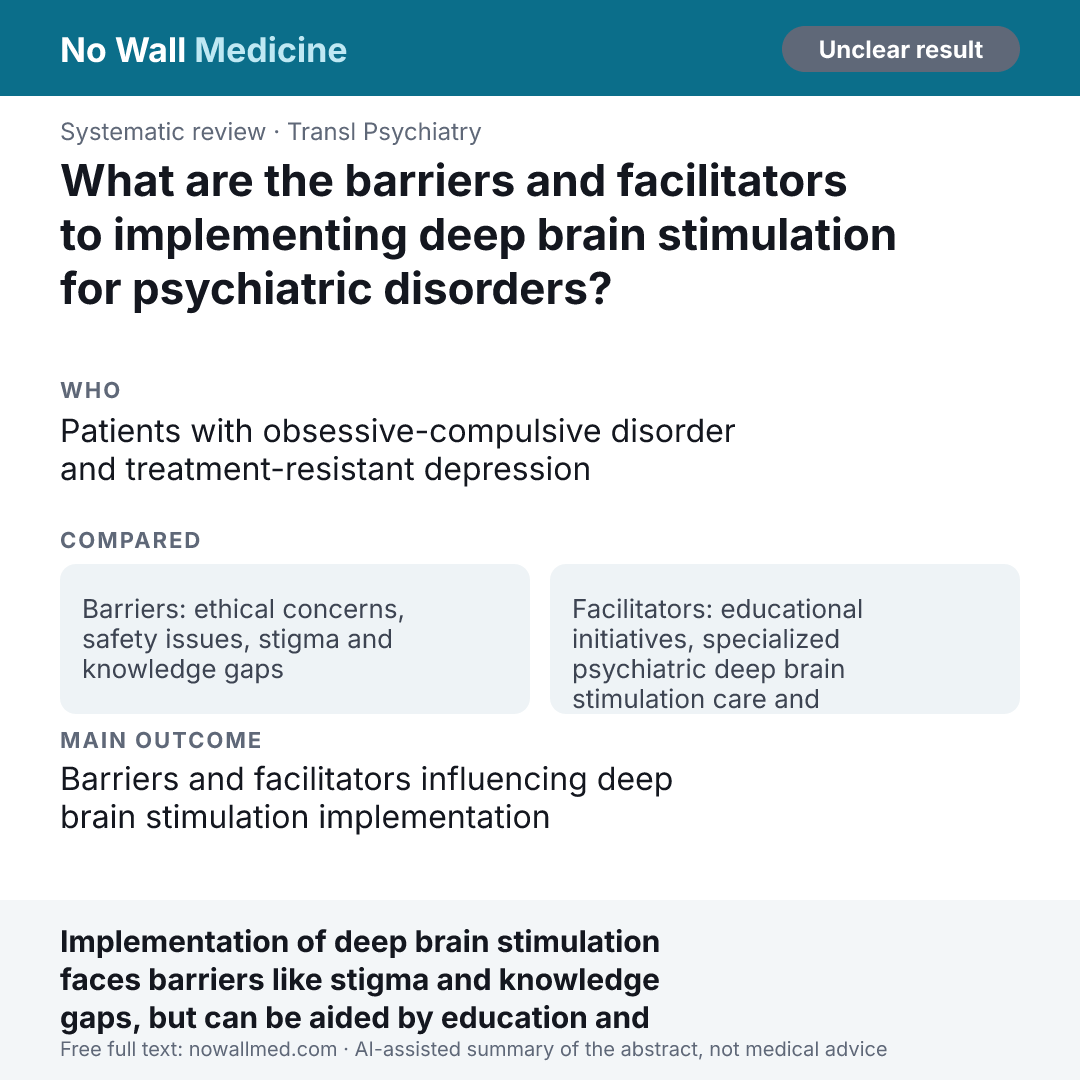
Barriers and facilitators to implementing deep brain stimulation for psychiatric disorders: a systematic review
Systematic reviewUnclear result
What are the barriers and facilitators to implementing deep brain stimulation for psychiatric disorders?
Who
Patients with obsessive-compulsive disorder and treatment-resistant depression
Compared
Barriers: ethical concerns, safety issues, stigma and knowledge gaps
Facilitators: educational initiatives, specialized psychiatric deep brain stimulation care and stakeholder engagement
Main outcome
Barriers and facilitators influencing deep brain stimulation implementation
Bottom line: Implementation of deep brain stimulation faces barriers like stigma and knowledge gaps, but can be aided by education and specialized care.
Limitation: Large portion of articles from same contributors and predominance of United States based studies.
Transl Psychiatry · 2026-05-13 · Save PNG
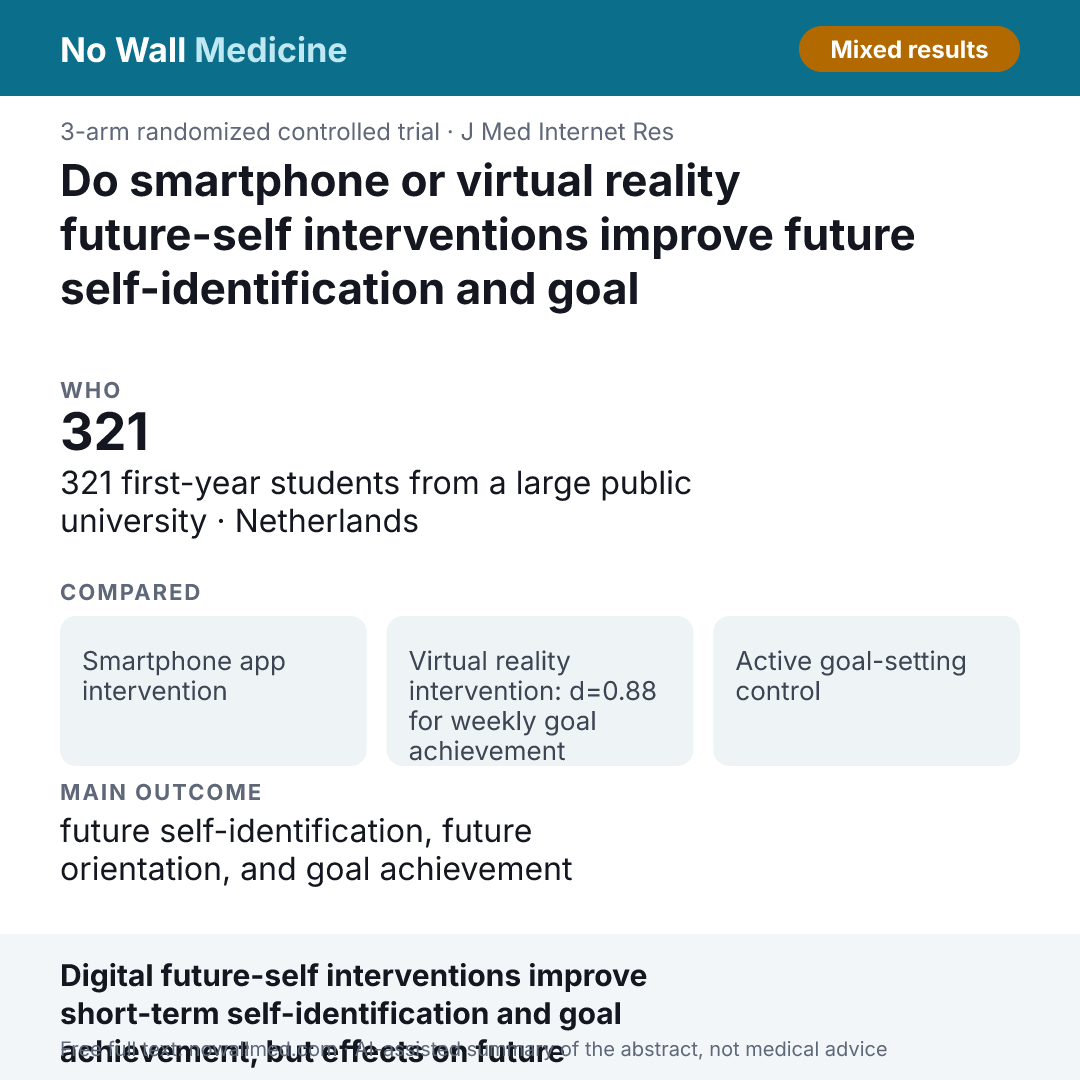
Stimulating Future-Oriented Thinking and Goal-Achievement Through the Future Self Using Virtual Reality and a Smartphone App: Randomized Controlled Trial
3-arm randomized controlled trialMixed results
Do smartphone or virtual reality future-self interventions improve future self-identification and goal achievement?
Who
321
321 first-year students from a large public university · Netherlands
Compared
Smartphone app intervention
Virtual reality intervention: d=0.88 for weekly goal achievement
Active goal-setting control
Main outcome
future self-identification, future orientation, and goal achievement
Bottom line: Digital future-self interventions improve short-term self-identification and goal achievement, but effects on future orientation were not sustained.
Limitation: Due to the nature of the intervention, blinding was not possible.
J Med Internet Res · 2026-05-13 · Save PNG
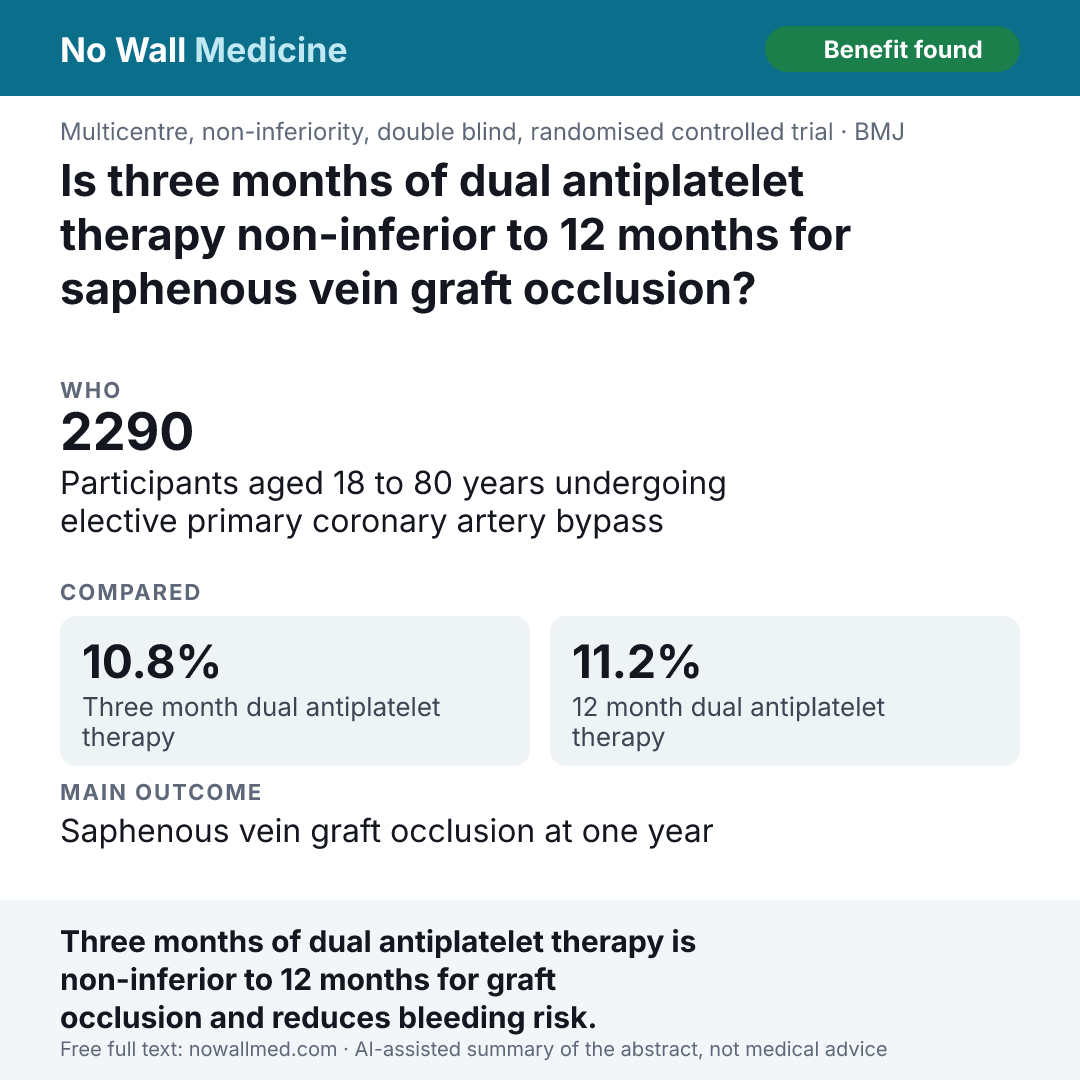
Efficacy of dual antiplatelet therapy for three months versus 12 months after coronary artery bypass grafting: multicentre, double blinded, randomised controlled trial
Multicentre, non-inferiority, double blind, randomised controlled trialBenefit found
Is three months of dual antiplatelet therapy non-inferior to 12 months for saphenous vein graft occlusion?
Who
2290
Participants aged 18 to 80 years undergoing elective primary coronary artery bypass grafting · 13 cardiac surgery centres in China
Compared
10.8%Three month dual antiplatelet therapy (280/2596)
11.2%12 month dual antiplatelet therapy (283/2529)
Main outcome
Saphenous vein graft occlusion at one year
Result: absolute difference -0.31%, 95% confidence interval -3.13% to 2.52%
Bottom line: Three months of dual antiplatelet therapy is non-inferior to 12 months for graft occlusion and reduces bleeding risk.
BMJ · 2026-05-12 · Save PNG
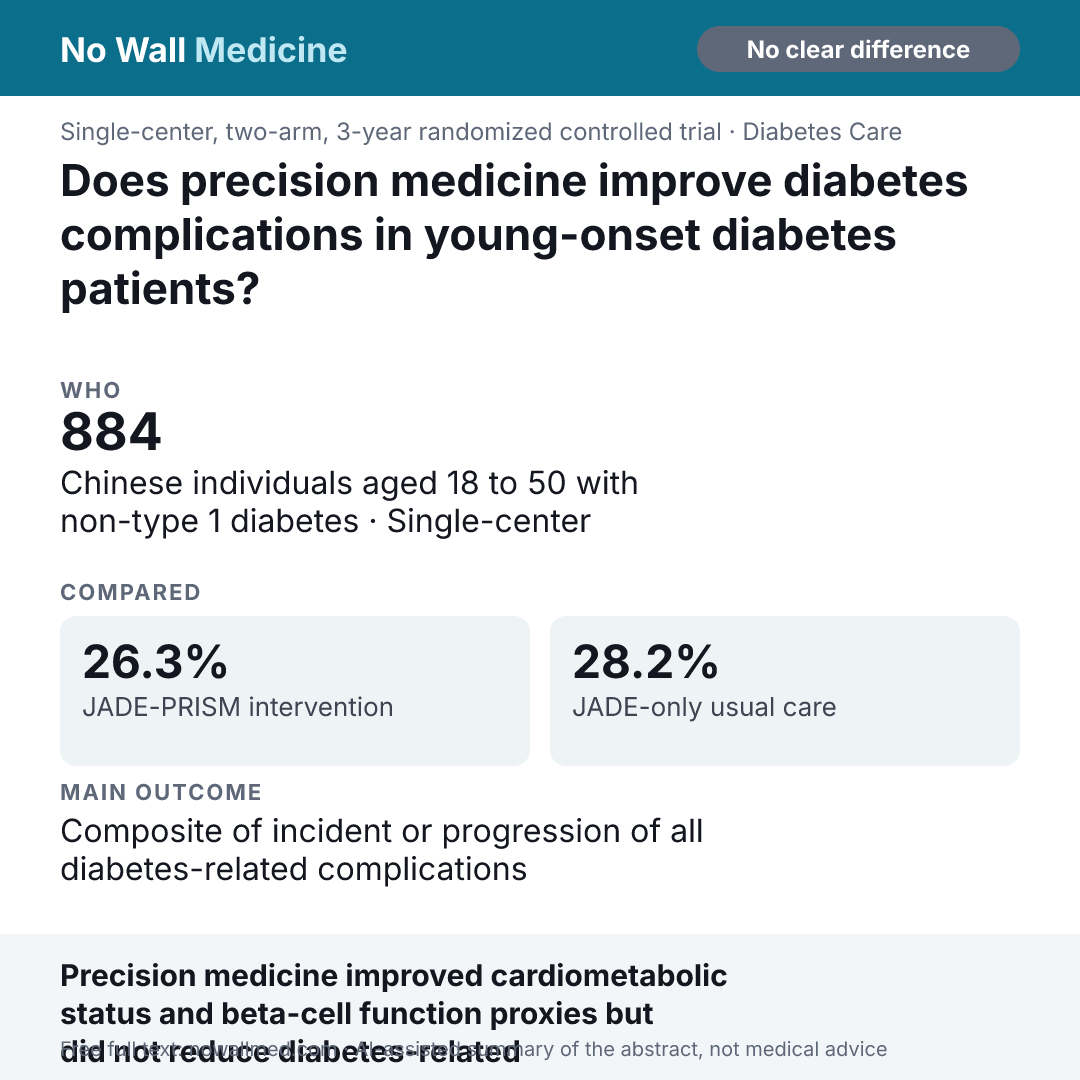
Precision Medicine to Redefine Insulin Secretion and Monogenic Diabetes (PRISM): A Randomized Controlled Trial in Chinese Patients With Young-Onset Diabetes
Single-center, two-arm, 3-year randomized controlled trialNo clear difference
Does precision medicine improve diabetes complications in young-onset diabetes patients?
Who
884
Chinese individuals aged 18 to 50 with non-type 1 diabetes · Single-center
Compared
26.3%JADE-PRISM intervention
28.2%JADE-only usual care
Main outcome
Composite of incident or progression of all diabetes-related complications
Result: odds ratio 0.908 (95% CI 0.675-1.221)
Bottom line: Precision medicine improved cardiometabolic status and beta-cell function proxies but did not reduce diabetes-related complications.
Diabetes Care · 2026-05-12 · Save PNG
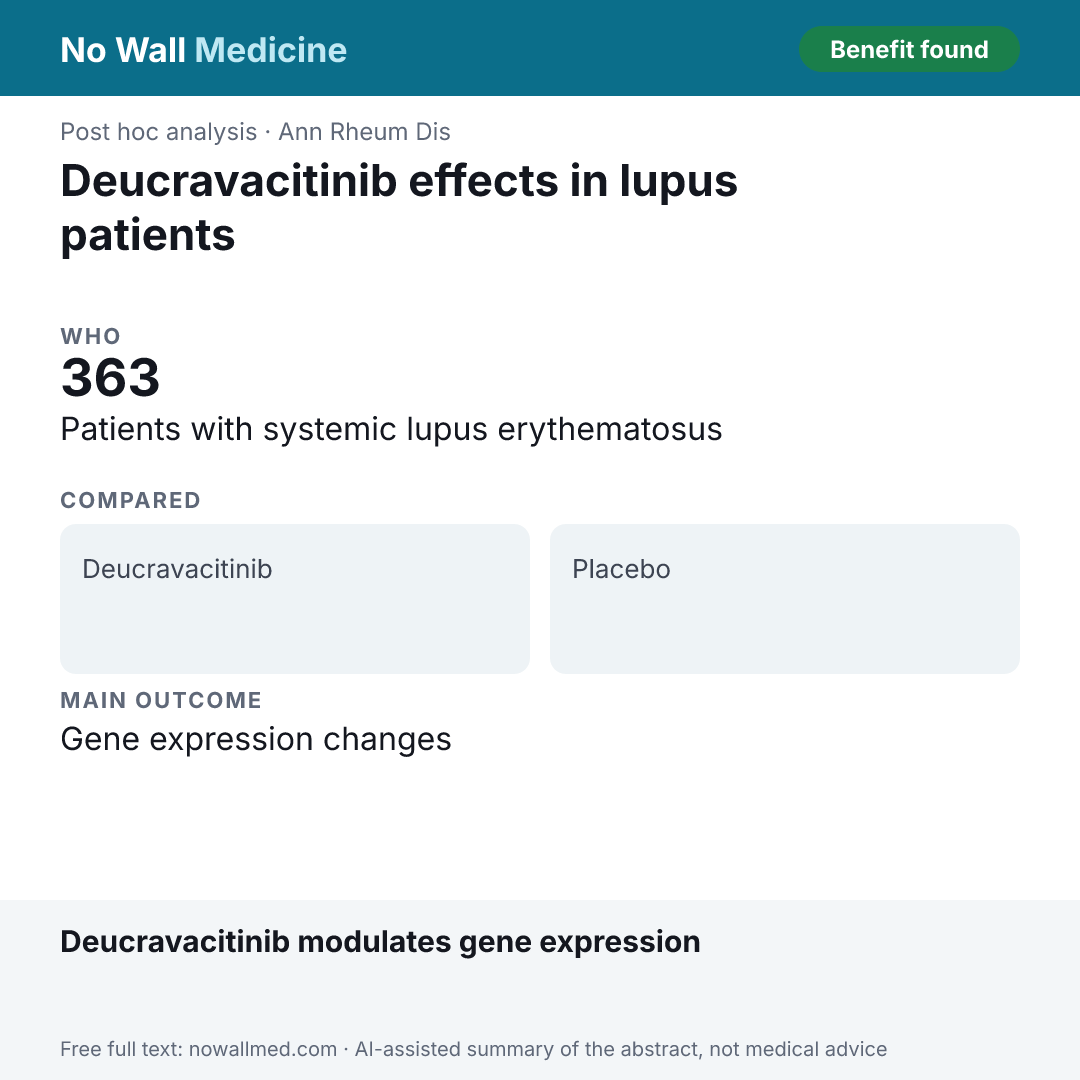
Whole blood transcriptome profiling in patients treated with deucravacitinib and novel mechanistic insights into TYK2 inhibition in lupus: results from a post hoc analysis of the PAISLEY SLE phase 2 trial
Post hoc analysisBenefit found
Deucravacitinib effects in lupus patients
Who
363
Patients with systemic lupus erythematosus
Compared
Deucravacitinib
Placebo
Main outcome
Gene expression changes
Bottom line: Deucravacitinib modulates gene expression
Ann Rheum Dis · 2026-05-12 · Save PNG
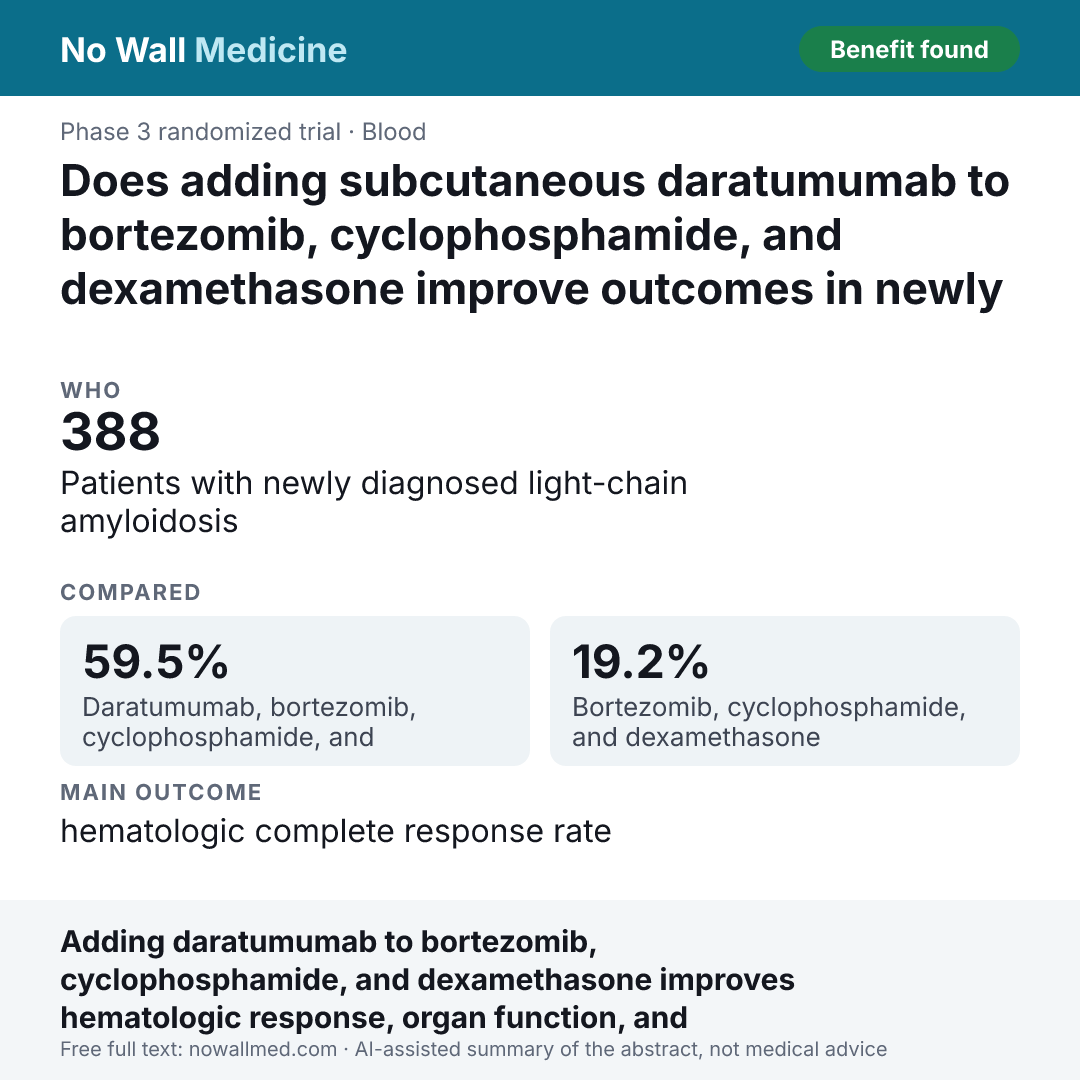
Daratumumab-bortezomib-cyclophosphamide-dexamethasone for newly diagnosed amyloidosis: ANDROMEDA final survival analysis
Phase 3 randomized trialBenefit found
Does adding subcutaneous daratumumab to bortezomib, cyclophosphamide, and dexamethasone improve outcomes in newly diagnosed AL amyloidosis?
Who
388
Patients with newly diagnosed light-chain amyloidosis
Compared
59.5%Daratumumab, bortezomib, cyclophosphamide, and dexamethasone
19.2%Bortezomib, cyclophosphamide, and dexamethasone
Main outcome
hematologic complete response rate
Result: hazard ratio 0.62 (95% CI 0.42-0.90)
Bottom line: Adding daratumumab to bortezomib, cyclophosphamide, and dexamethasone improves hematologic response, organ function, and overall survival.
Blood · 2026-05-12 · Save PNG
Choosing wisely in neuroradiology: evaluating CT and MR utilization trends in Europe
Descriptive analysis of Eurostat and OECD dataMixed results
Have computed tomography and magnetic resonance neuroimaging utilization rates changed across Europe?
Who
29 European countries · Europe
Compared
Computed tomography exam rates 2015: 10,872 per 100,000 population
Computed tomography exam rates 2022: 15,312 per 100,000 population
Magnetic resonance scan rates 2015: 5746 per 100,000 population
Magnetic resonance scan rates 2022: 8244 per 100,000 population
Main outcome
Computed tomography and magnetic resonance examination volumes
Bottom line: Neuroimaging utilization increased substantially across Europe from 2015 to 2022, with growth outpacing scanner availability.
Eur Radiol · 2026-05-12 · Save PNG

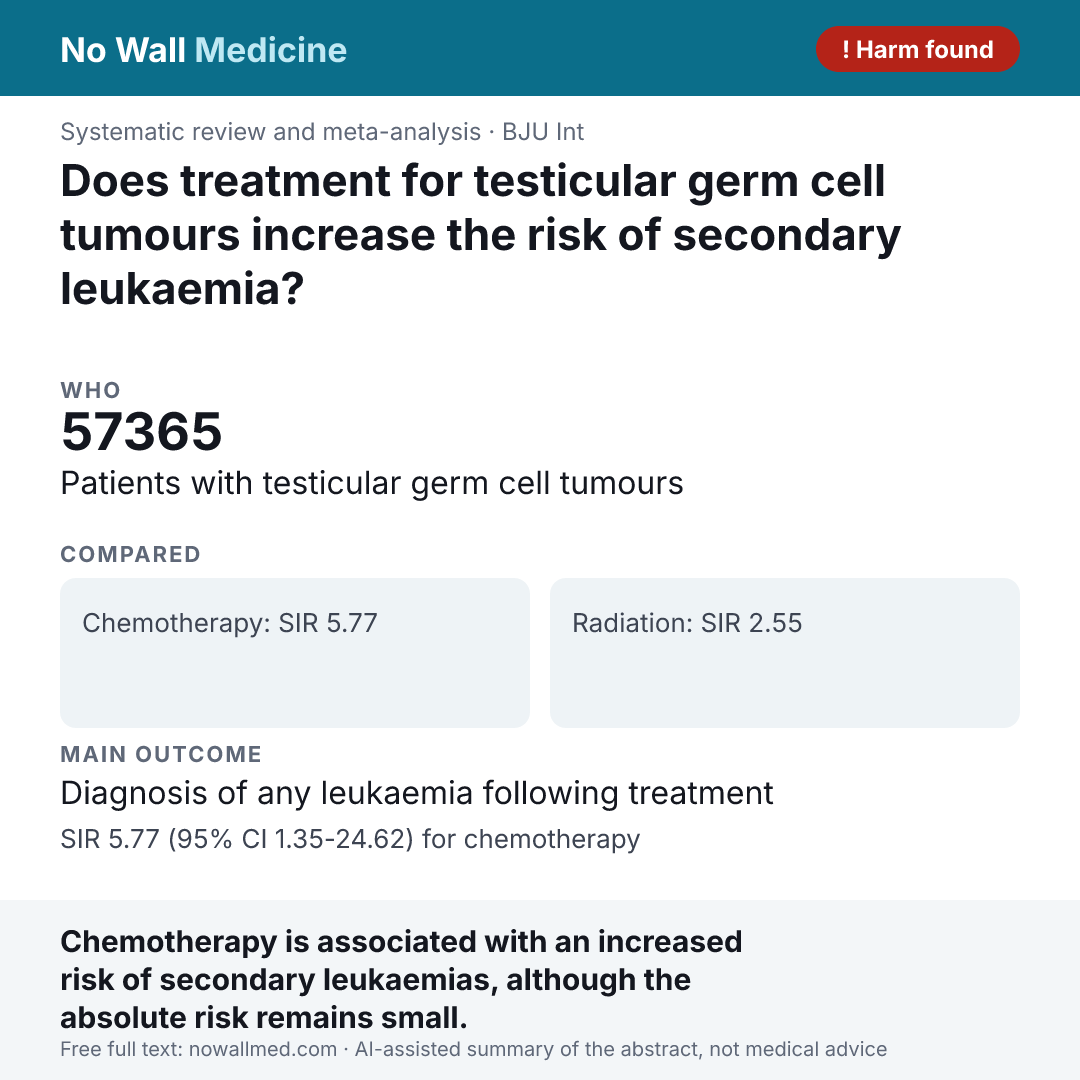
Secondary leukaemia after testicular germ cell tumour treatment: a systematic review and meta-analysis
Systematic review and meta-analysisHarm found
Does treatment for testicular germ cell tumours increase the risk of secondary leukaemia?
Who
57365
Patients with testicular germ cell tumours
Compared
Chemotherapy: SIR 5.77
Radiation: SIR 2.55
Main outcome
Diagnosis of any leukaemia following treatment
Result: SIR 5.77 (95% CI 1.35-24.62) for chemotherapy
Bottom line: Chemotherapy is associated with an increased risk of secondary leukaemias, although the absolute risk remains small.
BJU Int · 2026-05-12 · Save PNG
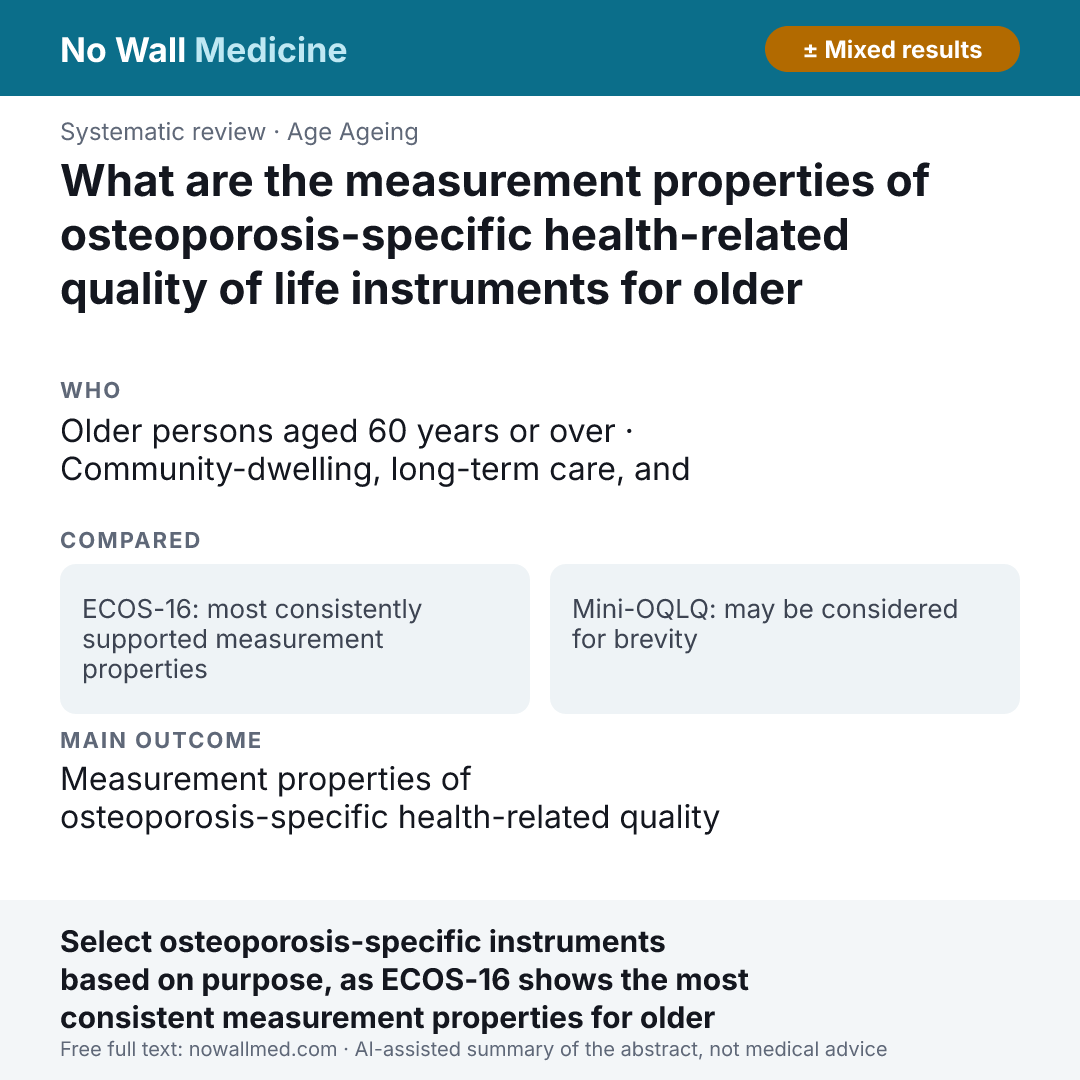
Health-related quality of life instruments for older persons with osteoporosis: a WHO-BOHEG systematic review of measurement properties for use in clinical trials and routine practice
Systematic reviewMixed results
What are the measurement properties of osteoporosis-specific health-related quality of life instruments for older adults?
Who
Older persons aged 60 years or over · Community-dwelling, long-term care, and primary care facilities
Compared
ECOS-16: most consistently supported measurement properties
Mini-OQLQ: may be considered for brevity
Main outcome
Measurement properties of osteoporosis-specific health-related quality of life instruments
Bottom line: Select osteoporosis-specific instruments based on purpose, as ECOS-16 shows the most consistent measurement properties for older adults.
Limitation: Content validity, measurement error, and cross-cultural validity are major evidence gaps.
Age Ageing · 2026-05-12 · Save PNG
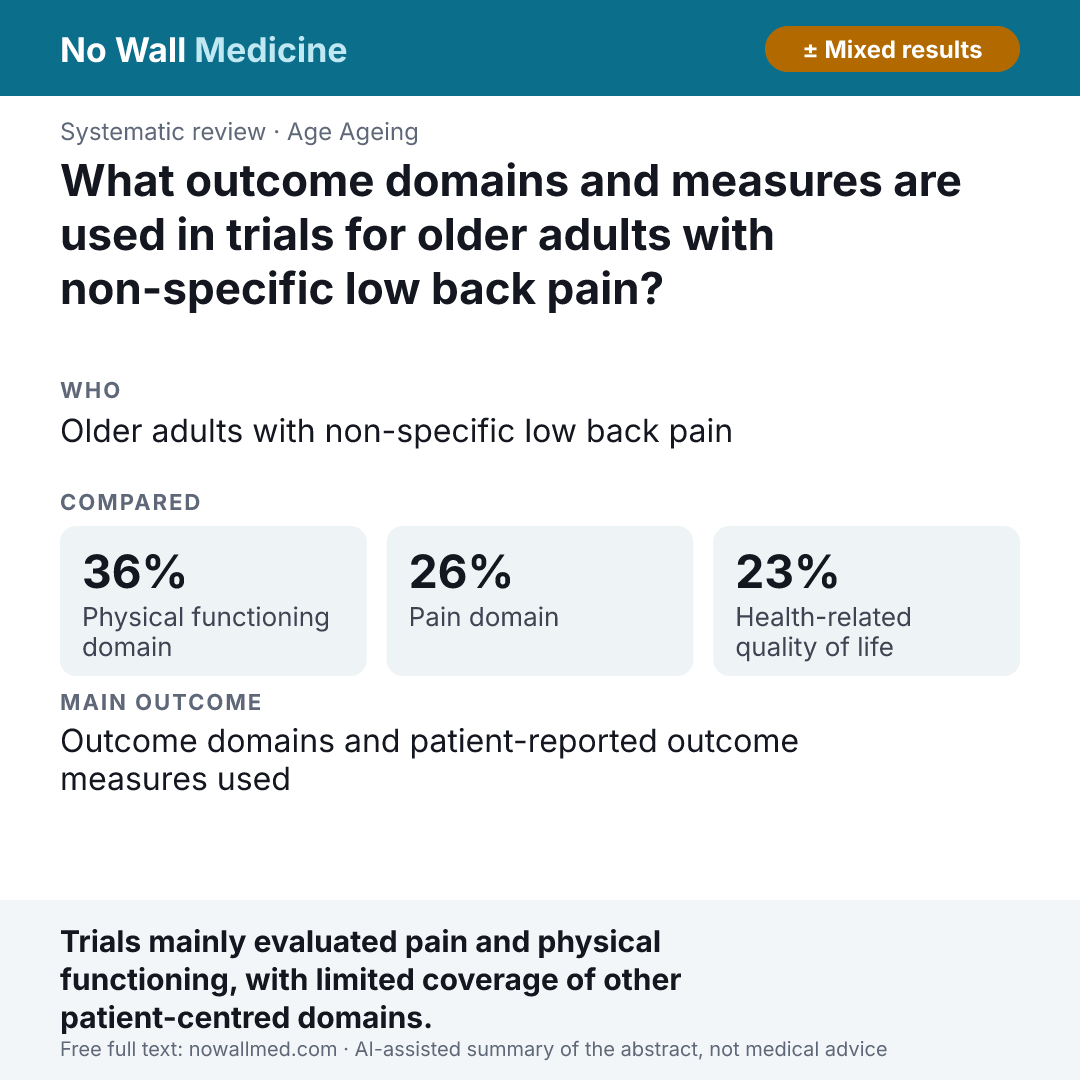
Outcome domains of patient-reported outcome measures used in randomised controlled trials for older adults with non-specific low back pain: a systematic review
Systematic reviewMixed results
What outcome domains and measures are used in trials for older adults with non-specific low back pain?
Who
Older adults with non-specific low back pain
Compared
36%Physical functioning domain
26%Pain domain
23%Health-related quality of life domain
Main outcome
Outcome domains and patient-reported outcome measures used
Bottom line: Trials mainly evaluated pain and physical functioning, with limited coverage of other patient-centred domains.
Age Ageing · 2026-05-12 · Save PNG
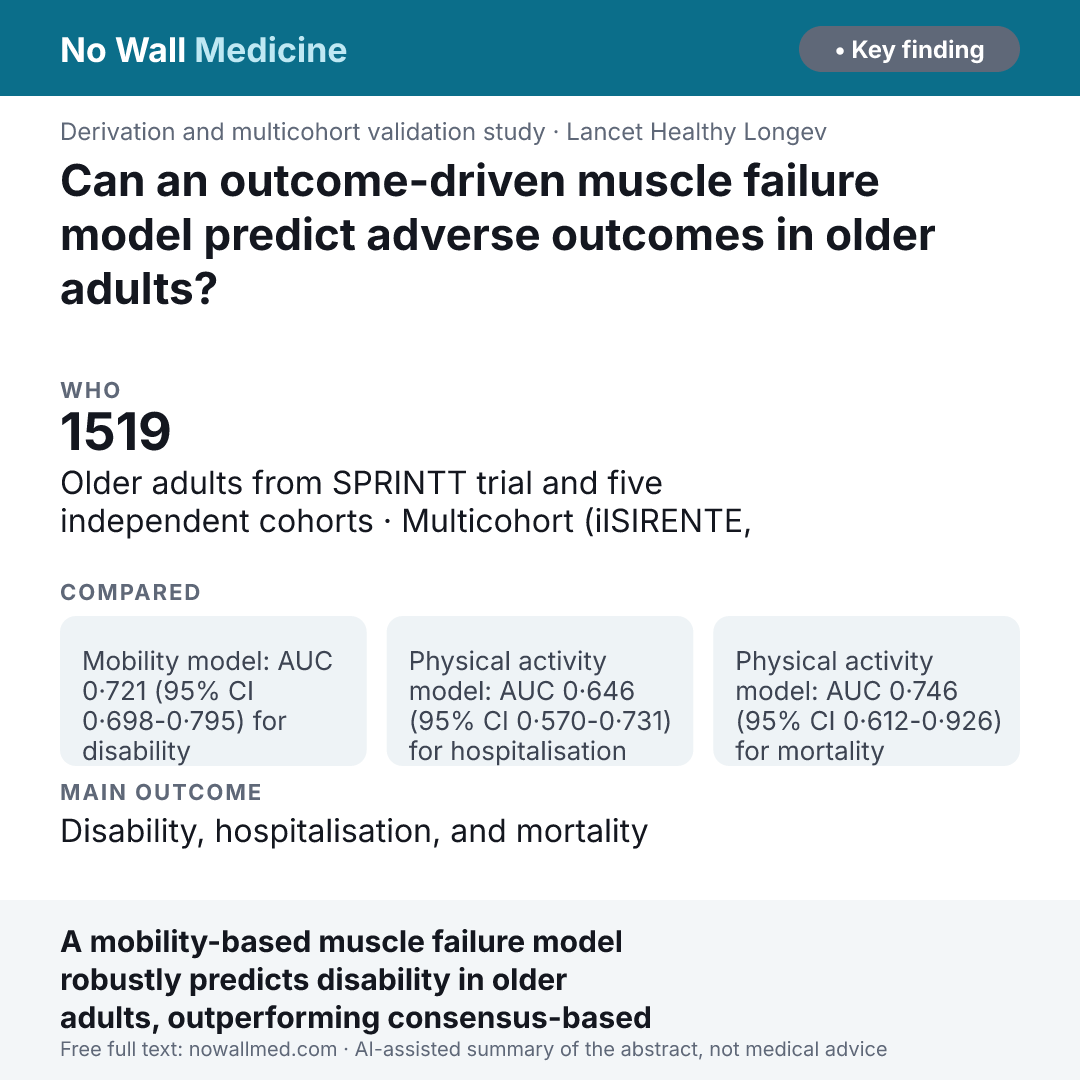
Muscle failure and risk of adverse outcomes in older adults: a derivation and multicohort validation study
Derivation and multicohort validation studyKey finding
Can an outcome-driven muscle failure model predict adverse outcomes in older adults?
Who
1519
Older adults from SPRINTT trial and five independent cohorts · Multicohort (ilSIRENTE, NHANES, HRS, ELSA, and CHARLS)
Compared
Mobility model: AUC 0·721 (95% CI 0·698-0·795) for disability
Physical activity model: AUC 0·646 (95% CI 0·570-0·731) for hospitalisation
Physical activity model: AUC 0·746 (95% CI 0·612-0·926) for mortality
Main outcome
Disability, hospitalisation, and mortality
Result: AUC 0·721 (95% CI 0·698-0·795) for disability prediction
Bottom line: A mobility-based muscle failure model robustly predicts disability in older adults, outperforming consensus-based sarcopenia definitions.
Lancet Healthy Longev · 2026-05-12 · Save PNG
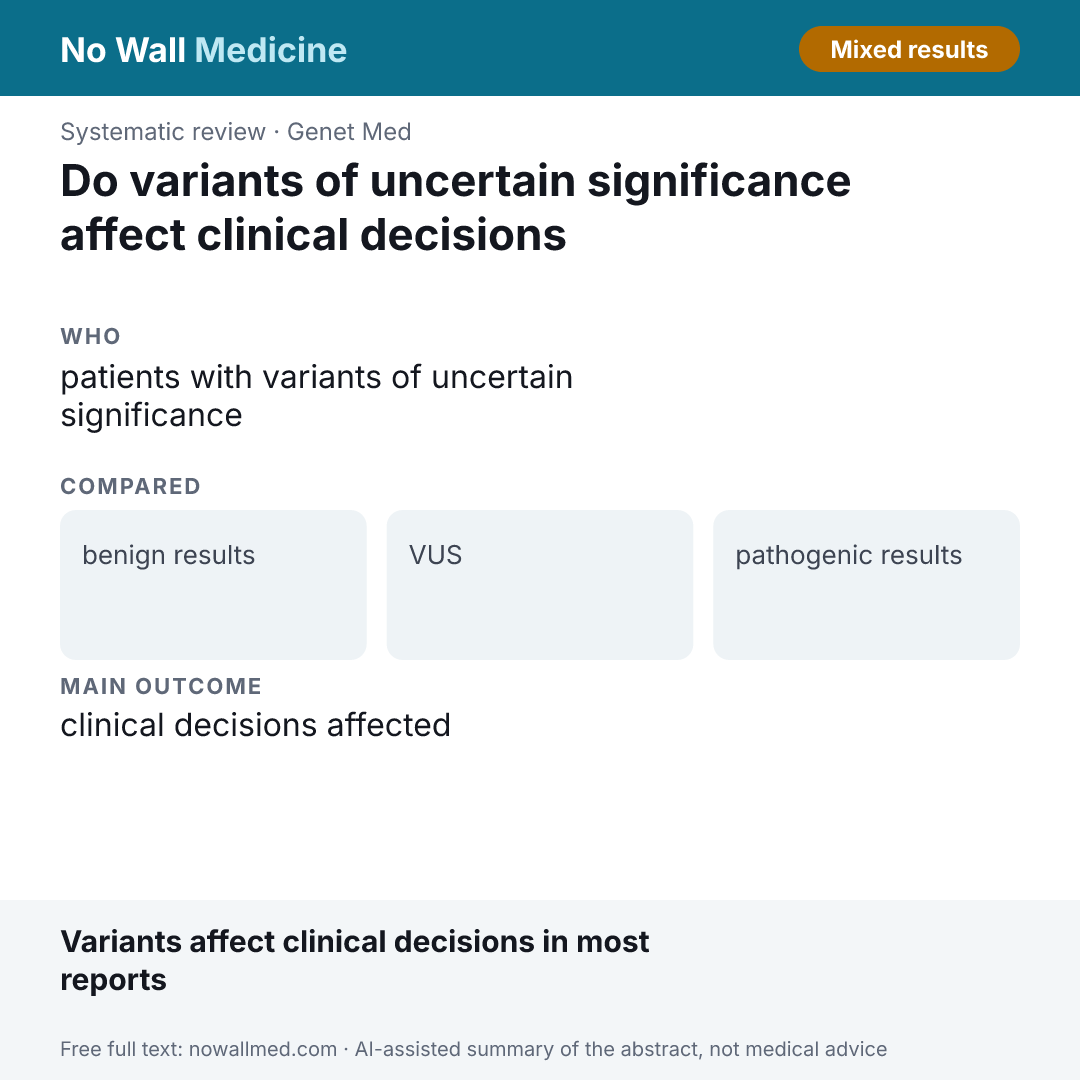
How variants of uncertain significance affect clinical decisions: A systematic review
Systematic reviewMixed results
Do variants of uncertain significance affect clinical decisions
Who
patients with variants of uncertain significance
Compared
benign results
VUS
pathogenic results
Main outcome
clinical decisions affected
Bottom line: Variants affect clinical decisions in most reports
Limitation: small, heterogeneous studies
Genet Med · 2026-05-12 · Save PNG
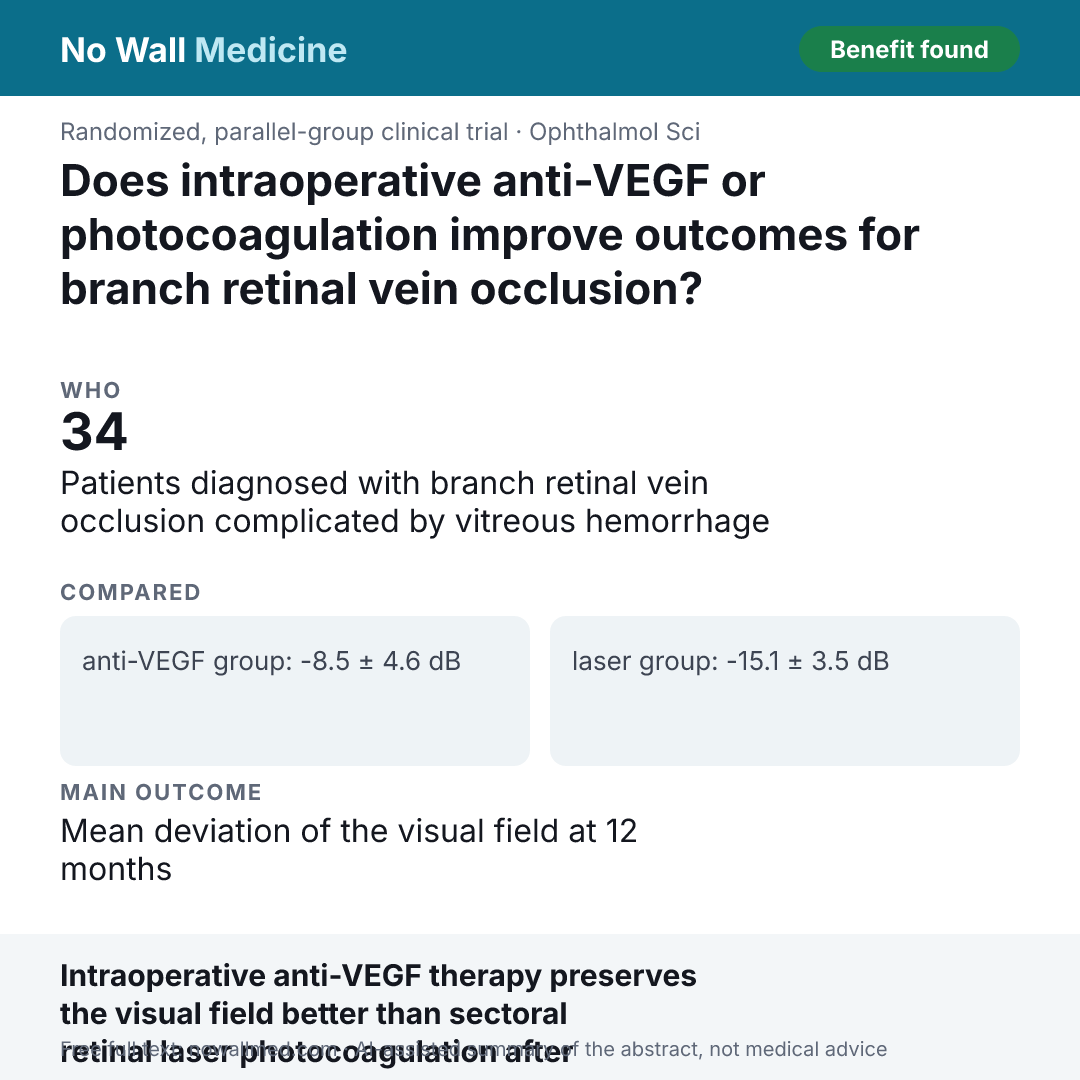
Intraoperative Anti-VEGF vs. Photocoagulation during Vitrectomy for Branch Retinal Vein Occlusion with Vitreous Hemorrhage: A Randomized Clinical Trial
Randomized, parallel-group clinical trialBenefit found
Does intraoperative anti-VEGF or photocoagulation improve outcomes for branch retinal vein occlusion?
Who
34
Patients diagnosed with branch retinal vein occlusion complicated by vitreous hemorrhage
Compared
anti-VEGF group: -8.5 ± 4.6 dB
laser group: -15.1 ± 3.5 dB
Main outcome
Mean deviation of the visual field at 12 months
Result: P < 0.01
Bottom line: Intraoperative anti-VEGF therapy preserves the visual field better than sectoral retinal laser photocoagulation after vitrectomy.
Ophthalmol Sci · 2026-05-12 · Save PNG
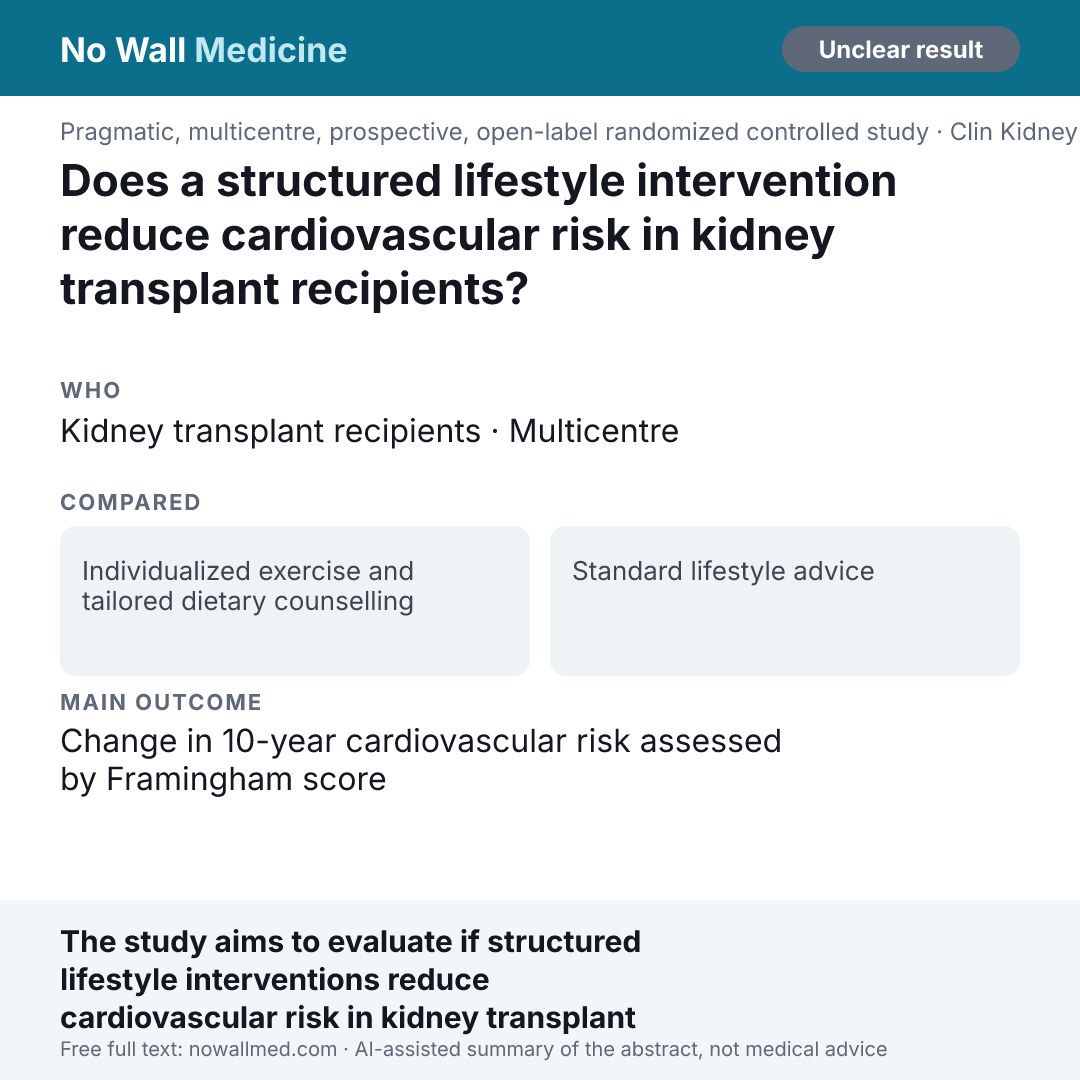
Lifestyle intervention to reduce cardiovascular risk in kidney transplant recipients: the KT-LIFESTYLE multicentre randomized controlled trial
Pragmatic, multicentre, prospective, open-label randomized controlled studyUnclear result
Does a structured lifestyle intervention reduce cardiovascular risk in kidney transplant recipients?
Who
Kidney transplant recipients · Multicentre
Compared
Individualized exercise and tailored dietary counselling
Standard lifestyle advice
Main outcome
Change in 10-year cardiovascular risk assessed by Framingham score
Bottom line: The study aims to evaluate if structured lifestyle interventions reduce cardiovascular risk in kidney transplant recipients.
Clin Kidney J · 2026-05-12 · Save PNG
Clinical Profile, Epidemiology, and Outcomes of Granulomatous Amebic Encephalitis: A Systematic Review
Systematic reviewHarm found
What are the clinical profile, epidemiology, and outcomes of granulomatous amebic encephalitis?
Who
201
Confirmed granulomatous amebic encephalitis cases · Worldwide, predominantly North America and Asia
Compared
Balamuthia mandrillaris infection
Acanthamoeba infection
Survivors
Nonsurvivors
Main outcome
Clinical profile, epidemiology, and mortality
Bottom line: Granulomatous amebic encephalitis is a devastating infection with an overall mortality of 76.4%.
Limitation: Survivor bias may affect antimicrobial agent efficacy observations.
Open Forum Infect Dis · 2026-05-12 · Save PNG

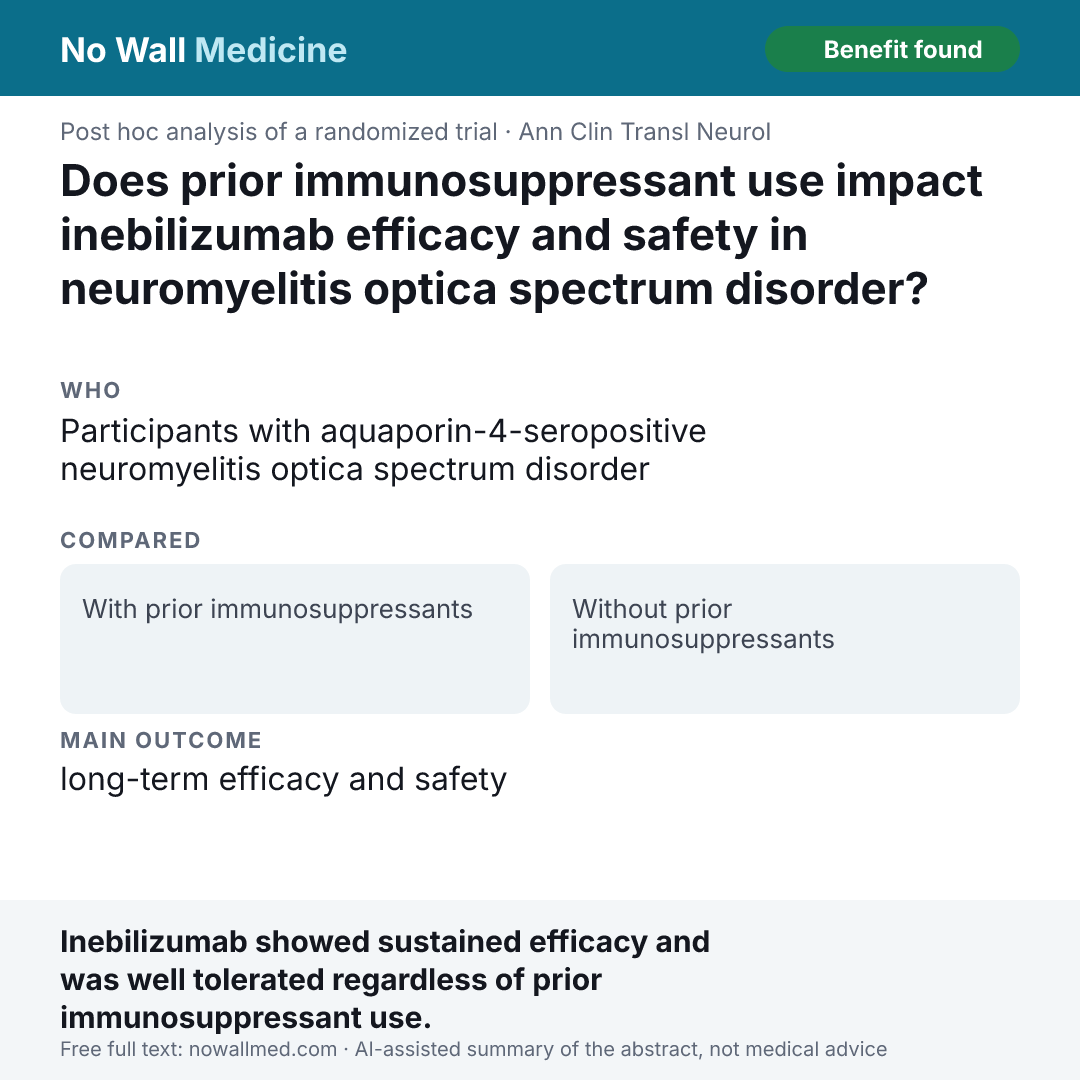
Efficacy of Inebilizumab in N-MOmentum Trial Participants With or Without Prior Immunosuppressants
Post hoc analysis of a randomized trialBenefit found
Does prior immunosuppressant use impact inebilizumab efficacy and safety in neuromyelitis optica spectrum disorder?
Who
Participants with aquaporin-4-seropositive neuromyelitis optica spectrum disorder
Compared
With prior immunosuppressants
Without prior immunosuppressants
Main outcome
long-term efficacy and safety
Bottom line: Inebilizumab showed sustained efficacy and was well tolerated regardless of prior immunosuppressant use.
Ann Clin Transl Neurol · 2026-05-12 · Save PNG
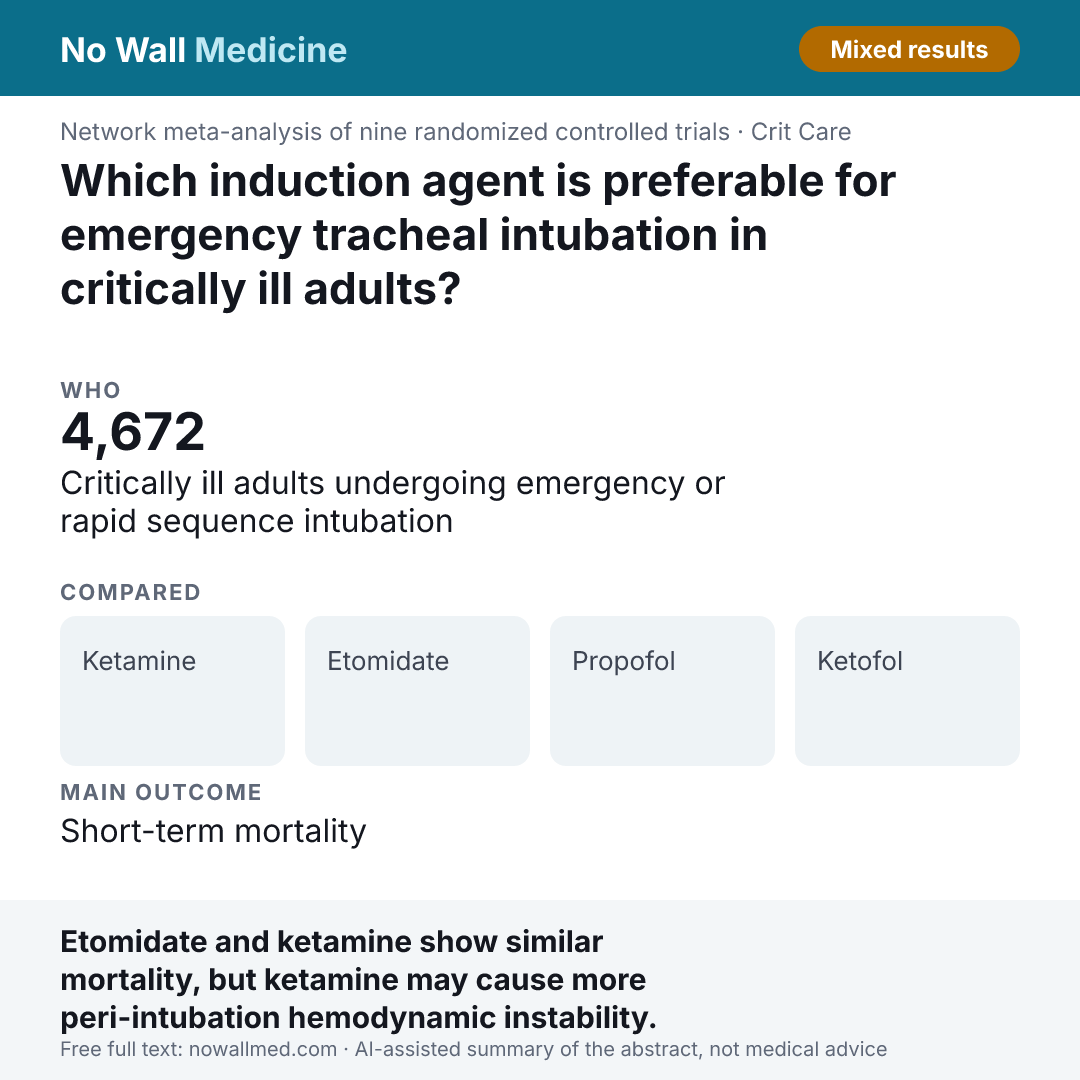
Induction agents for emergency tracheal intubation in critically ill adults: a systematic review and network meta-analysis
Network meta-analysis of nine randomized controlled trialsMixed results
Which induction agent is preferable for emergency tracheal intubation in critically ill adults?
Who
4,672
Critically ill adults undergoing emergency or rapid sequence intubation
Compared
Ketamine
Etomidate
Propofol
Ketofol
Main outcome
Short-term mortality
Result: OR 0.96 (95% CI 0.80-1.16) for ketamine vs etomidate
Bottom line: Etomidate and ketamine show similar mortality, but ketamine may cause more peri-intubation hemodynamic instability.
Crit Care · 2026-05-12 · Save PNG
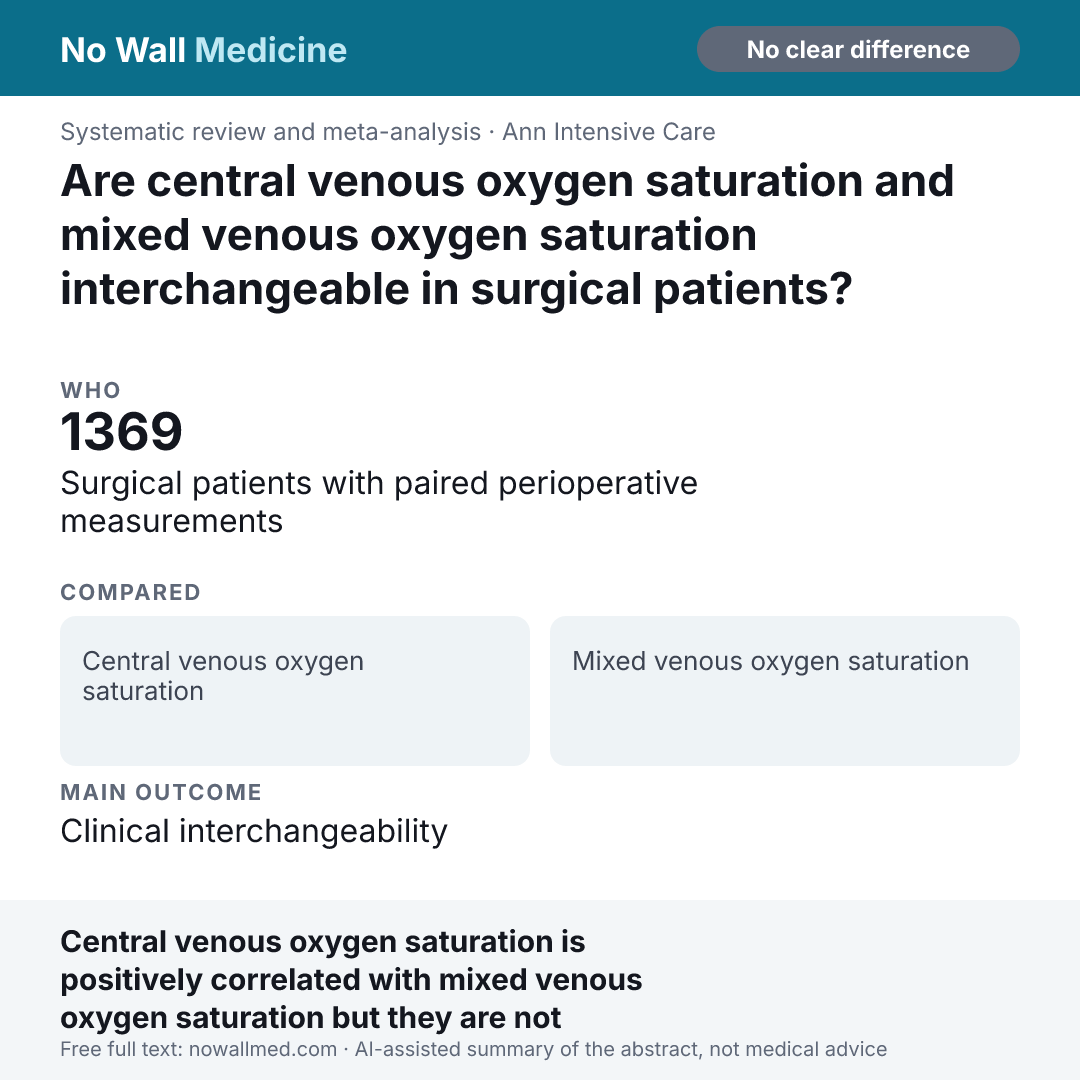
Correlation between central venous oxygen saturation and mixed venous oxygen saturation in surgical patients: A systematic review and meta-analysis
Systematic review and meta-analysisNo clear difference
Are central venous oxygen saturation and mixed venous oxygen saturation interchangeable in surgical patients?
Who
1369
Surgical patients with paired perioperative measurements
Compared
Central venous oxygen saturation
Mixed venous oxygen saturation
Main outcome
Clinical interchangeability
Result: mean difference -0.49% (95% CI, -1.34 to 0.35)
Bottom line: Central venous oxygen saturation is positively correlated with mixed venous oxygen saturation but they are not clinically interchangeable.
Ann Intensive Care · 2026-05-12 · Save PNG
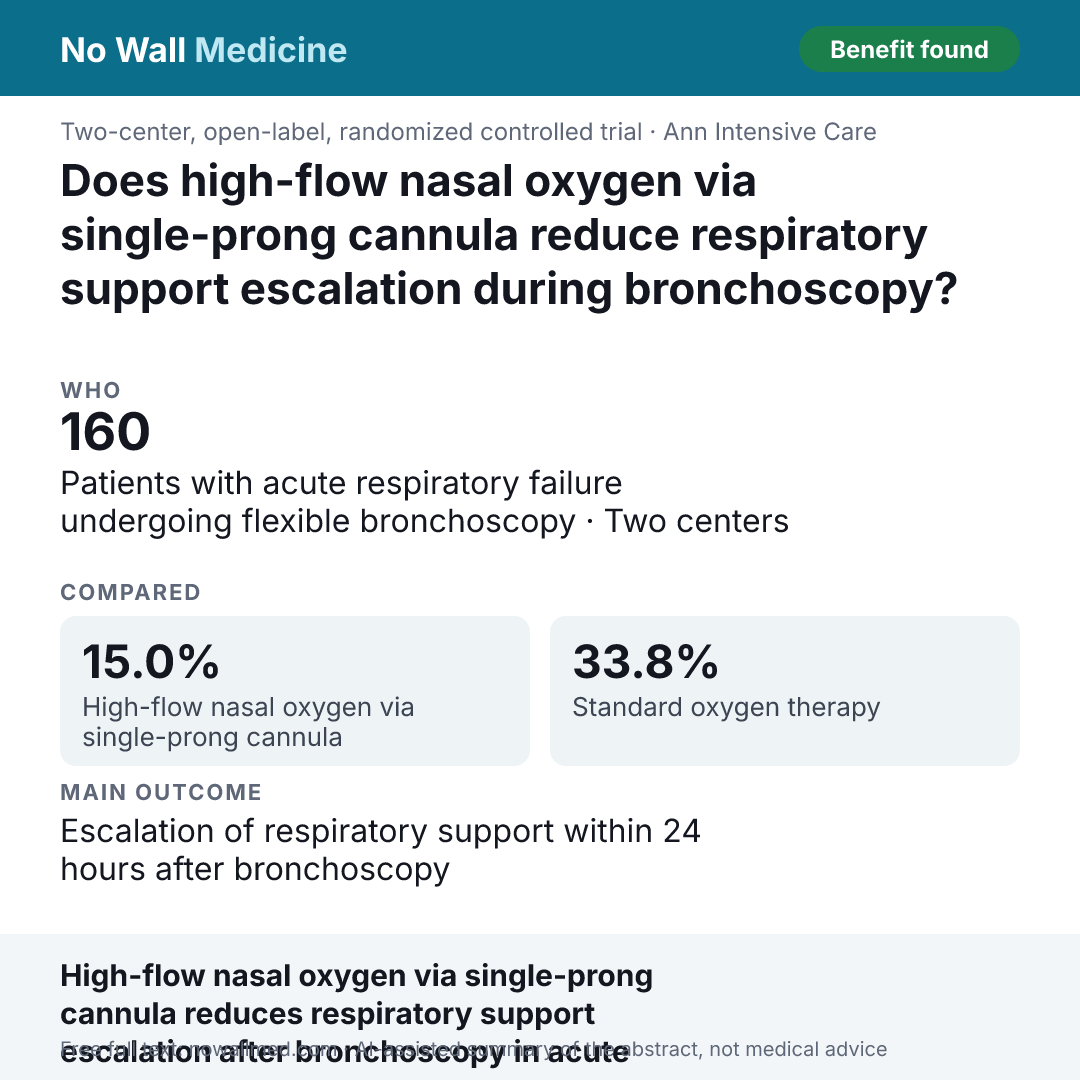
High-flow nasal oxygen therapy via a single-prong cannula interface during bronchoscopy in patients with acute respiratory failure: a two-center, open-label, randomized controlled trial
Two-center, open-label, randomized controlled trialBenefit found
Does high-flow nasal oxygen via single-prong cannula reduce respiratory support escalation during bronchoscopy?
Who
160
Patients with acute respiratory failure undergoing flexible bronchoscopy · Two centers
Compared
15.0%High-flow nasal oxygen via single-prong cannula
33.8%Standard oxygen therapy
Main outcome
Escalation of respiratory support within 24 hours after bronchoscopy
Bottom line: High-flow nasal oxygen via single-prong cannula reduces respiratory support escalation after bronchoscopy in acute respiratory failure patients.
Ann Intensive Care · 2026-05-12 · Save PNG
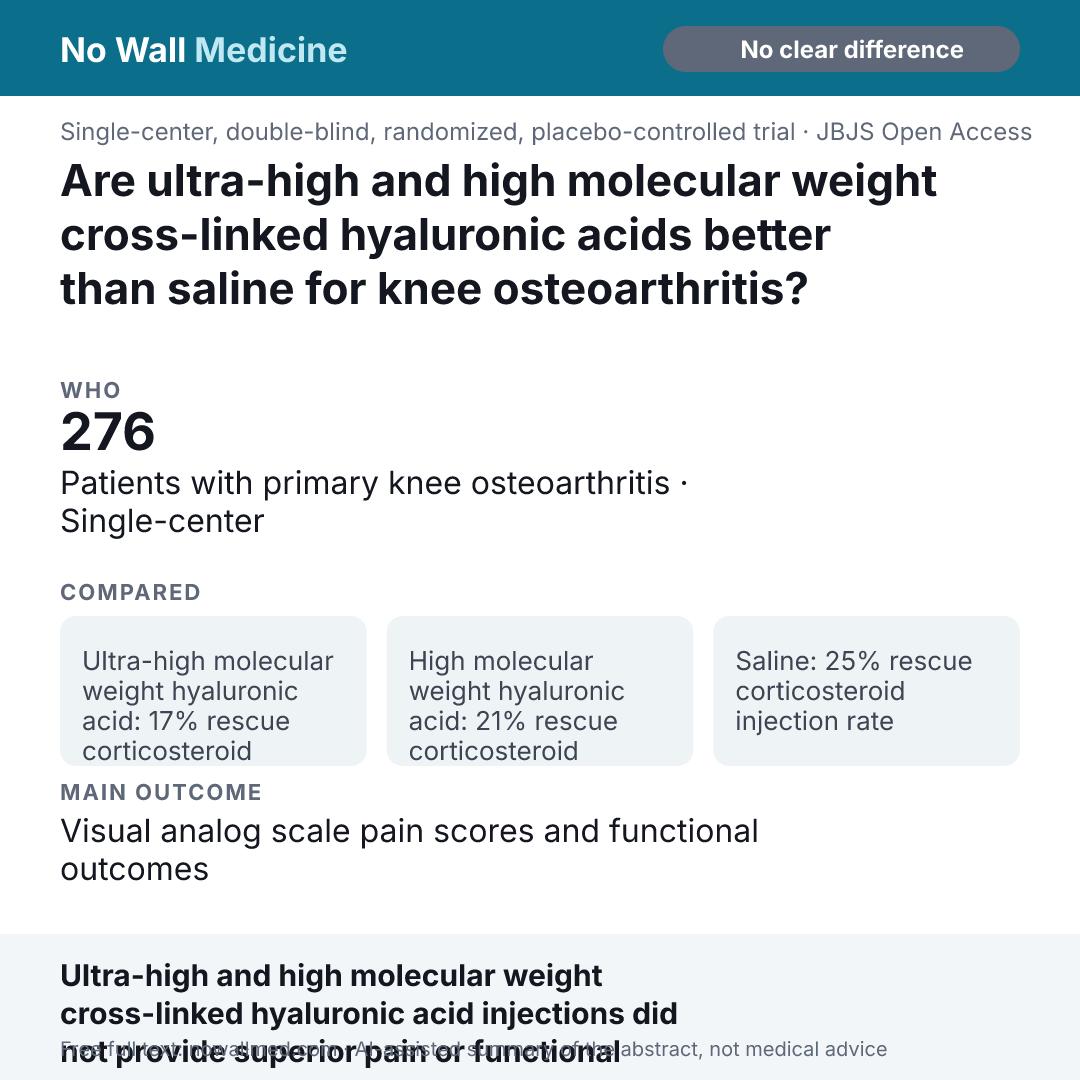
Efficacy of Ultra-high and High Molecular Weight Cross-Linked Hyaluronic Acids Compared with Saline in Knee Osteoarthritis: A Randomized Controlled Trial
Single-center, double-blind, randomized, placebo-controlled trialNo clear difference
Are ultra-high and high molecular weight cross-linked hyaluronic acids better than saline for knee osteoarthritis?
Who
276
Patients with primary knee osteoarthritis · Single-center
Compared
Ultra-high molecular weight hyaluronic acid: 17% rescue corticosteroid injection rate
High molecular weight hyaluronic acid: 21% rescue corticosteroid injection rate
Saline: 25% rescue corticosteroid injection rate
Main outcome
Visual analog scale pain scores and functional outcomes
Bottom line: Ultra-high and high molecular weight cross-linked hyaluronic acid injections did not provide superior pain or functional outcomes compared with saline.
JBJS Open Access · 2026-05-12 · Save PNG