Visual abstracts
New randomized trials and meta-analyses from leading journals at a glance: who was studied, what was compared, and what was found. Every paper is free to read in full.
All specialtiesCardiology 4763Oncology 4043Gastroenterology & Hepatology 1903Infectious Disease 3756Neurology 1872Psychiatry & Mental Health 2216Pulmonology 2044Critical Care 1319Endocrinology & Diabetes 2544Pediatrics 2889Surgery 2480Orthopedics & Sports Medicine 917Neurosurgery 525Cardiothoracic & Vascular Surgery 656Plastic & Reconstructive Surgery 574Nephrology 1107Rheumatology 810Hematology 1090Dermatology 611Ophthalmology 532Obstetrics & Gynecology 1645Public & Global Health 1037Radiology & Imaging 619Anesthesiology 958Urology 745ENT (Otolaryngology) 494Emergency Medicine 481Allergy & Immunology 309Geriatrics 972Family Medicine & Primary Care 534Medical Genetics & Genomics 659Pathology & Laboratory Medicine 156Physical Medicine & Rehabilitation 734Palliative Care 421Nutrition 1560Digital Health & AI 2137General Medicine 318
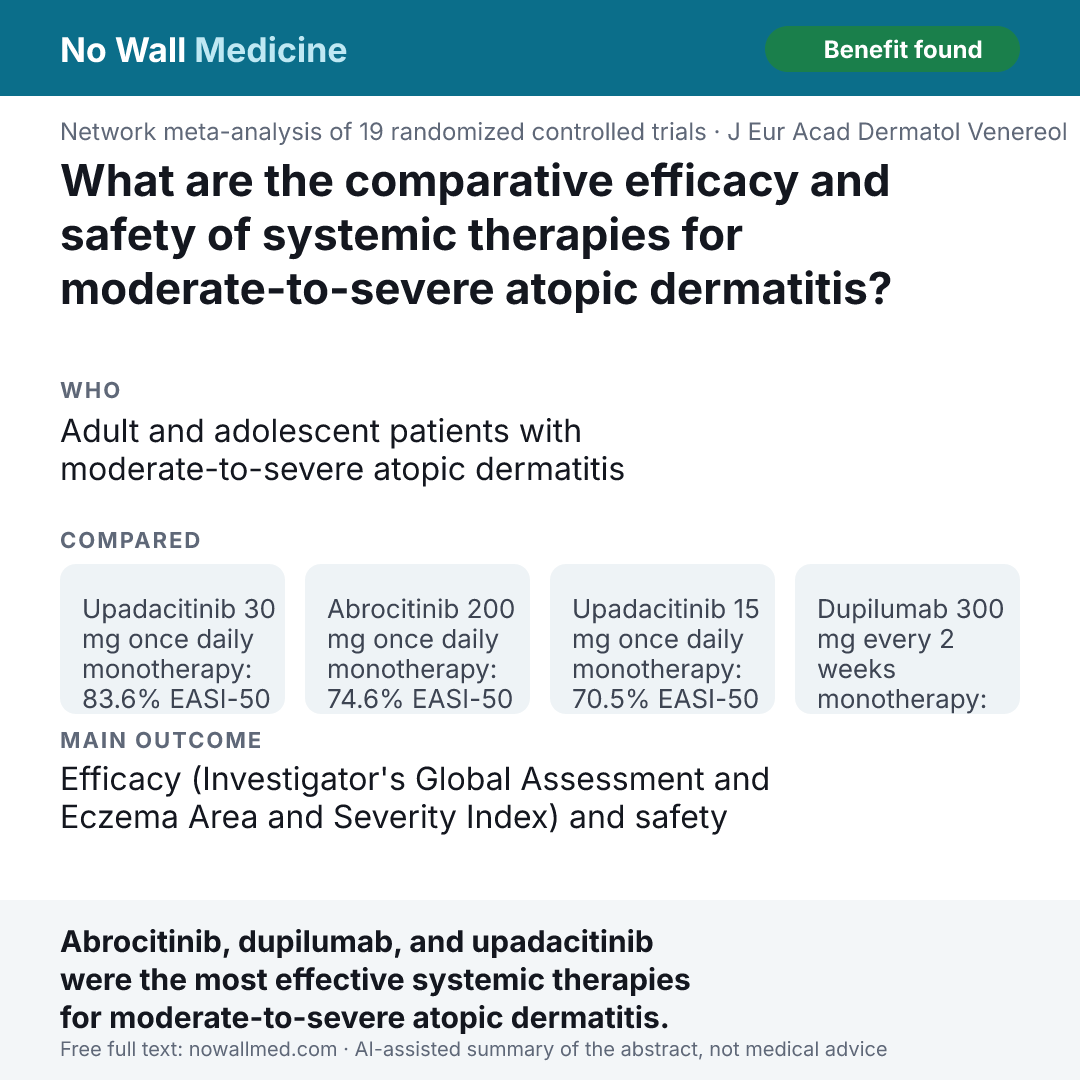
Comparative efficacy and safety of systemic therapies used in moderate-to-severe atopic dermatitis: a systematic literature review and network meta-analysis
Network meta-analysis of 19 randomized controlled trialsBenefit found
What are the comparative efficacy and safety of systemic therapies for moderate-to-severe atopic dermatitis?
Who
Adult and adolescent patients with moderate-to-severe atopic dermatitis
Compared
Upadacitinib 30 mg once daily monotherapy: 83.6% EASI-50 response
Abrocitinib 200 mg once daily monotherapy: 74.6% EASI-50 response
Upadacitinib 15 mg once daily monotherapy: 70.5% EASI-50 response
Dupilumab 300 mg every 2 weeks monotherapy: 63.4% EASI-50 response
Main outcome
Efficacy (Investigator's Global Assessment and Eczema Area and Severity Index) and safety
Bottom line: Abrocitinib, dupilumab, and upadacitinib were the most effective systemic therapies for moderate-to-severe atopic dermatitis.
J Eur Acad Dermatol Venereol · 2021-06-12 · Save PNG
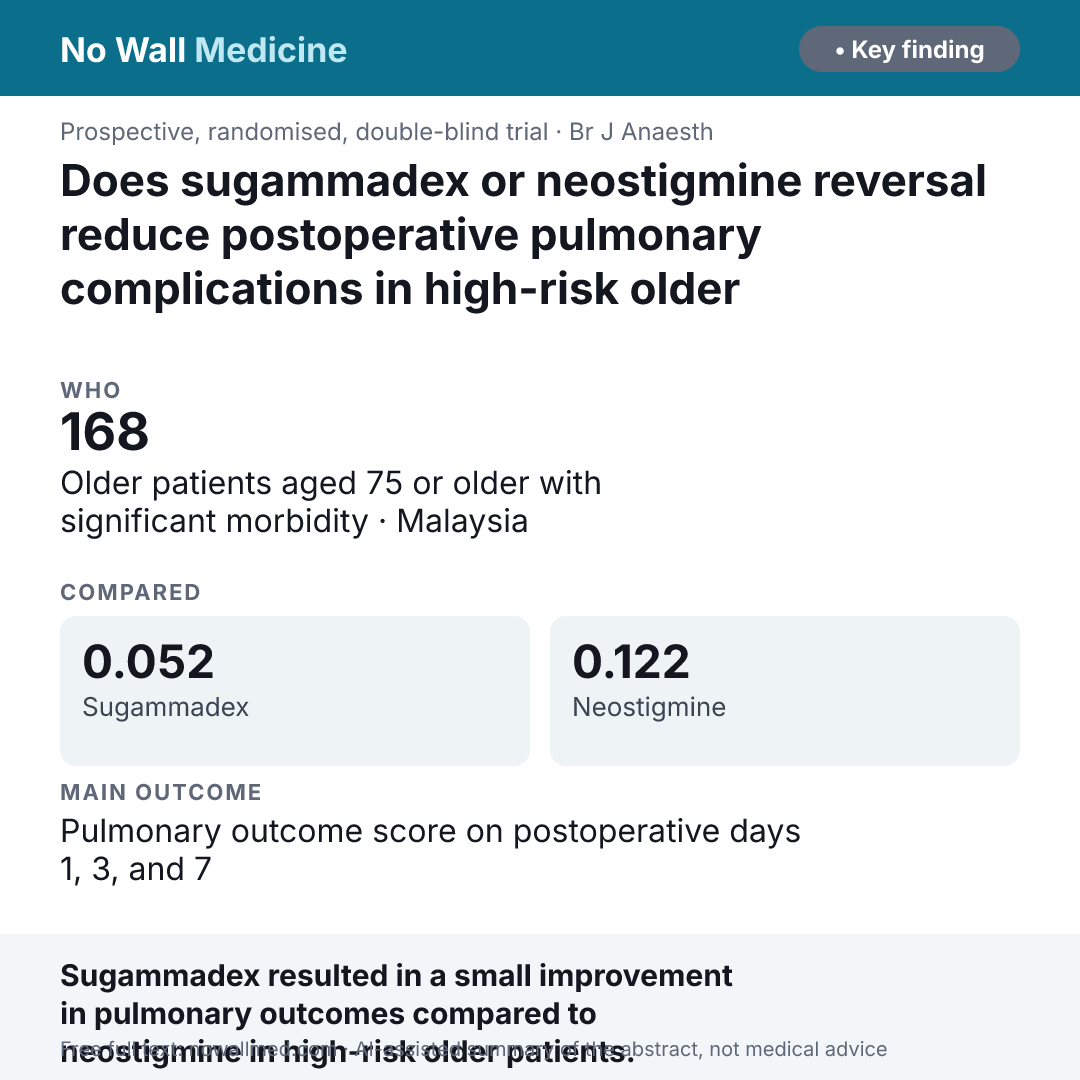
Reversal of residual neuromuscular block with neostigmine or sugammadex and postoperative pulmonary complications: a prospective, randomised, double-blind trial in high-risk older patients
Prospective, randomised, double-blind trialKey finding
Does sugammadex or neostigmine reversal reduce postoperative pulmonary complications in high-risk older patients?
Who
168
Older patients aged 75 or older with significant morbidity · Malaysia
Compared
0.052Sugammadex
0.122Neostigmine
Main outcome
Pulmonary outcome score on postoperative days 1, 3, and 7
Bottom line: Sugammadex resulted in a small improvement in pulmonary outcomes compared to neostigmine in high-risk older patients.
Br J Anaesth · 2021-06-12 · Save PNG
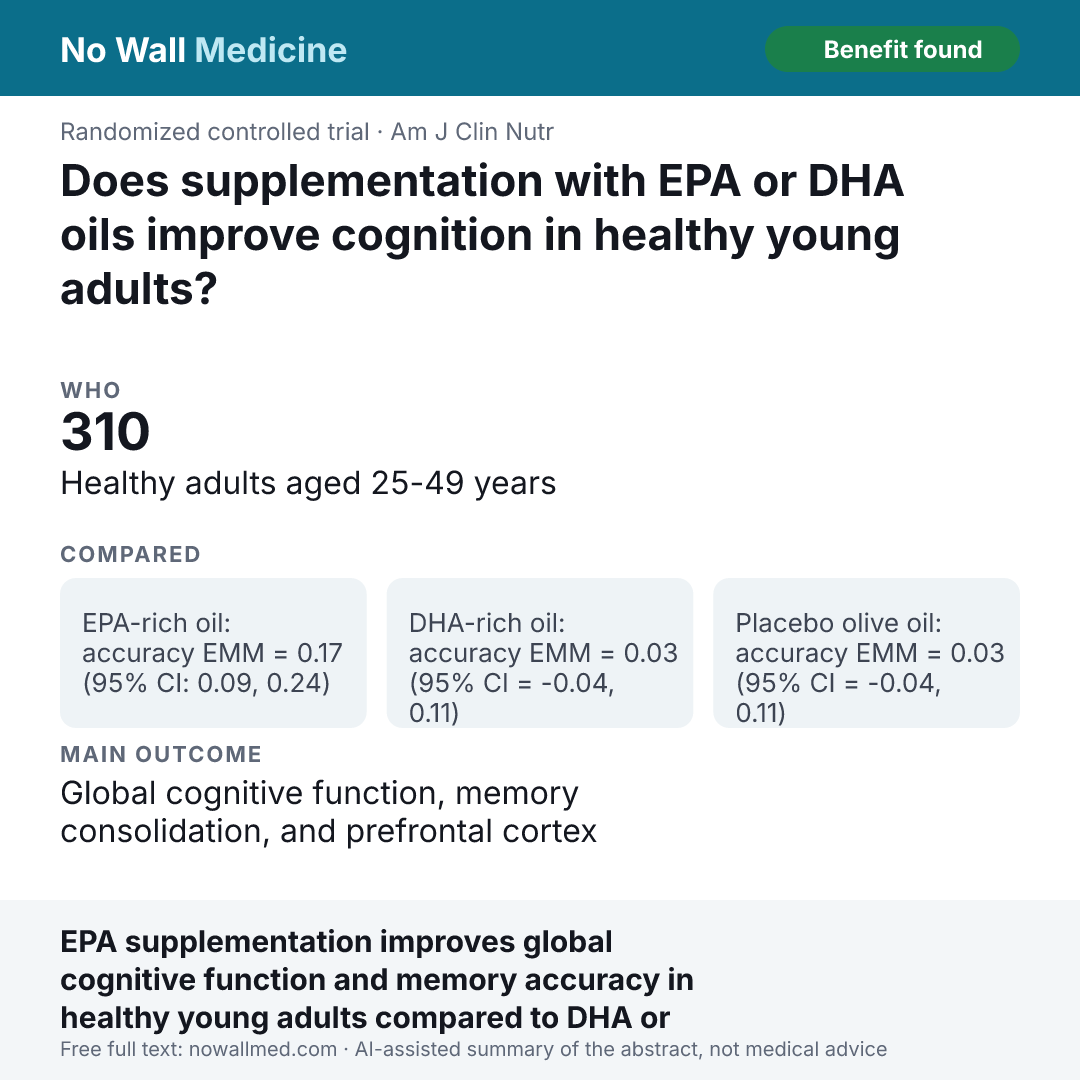
Supplementation with oil rich in eicosapentaenoic acid, but not in docosahexaenoic acid, improves global cognitive function in healthy, young adults: results from randomized controlled trials
Randomized controlled trialBenefit found
Does supplementation with EPA or DHA oils improve cognition in healthy young adults?
Who
310
Healthy adults aged 25-49 years
Compared
EPA-rich oil: accuracy EMM = 0.17 (95% CI: 0.09, 0.24)
DHA-rich oil: accuracy EMM = 0.03 (95% CI = -0.04, 0.11)
Placebo olive oil: accuracy EMM = 0.03 (95% CI = -0.04, 0.11)
Main outcome
Global cognitive function, memory consolidation, and prefrontal cortex hemoglobin oxygenation
Result: EPA vs. placebo accuracy: EMM = 0.17 (95% CI: 0.09, 0.24) vs. EMM = 0.03 (95% CI = -0.04, 0.11)
Bottom line: EPA supplementation improves global cognitive function and memory accuracy in healthy young adults compared to DHA or placebo.
Am J Clin Nutr · 2021-06-12 · Save PNG
Dietary Approaches to Improve Efficacy and Control Side Effects of Levodopa Therapy in Parkinson's Disease: A Systematic Review
Systematic reviewBenefit found
Can dietary approaches optimize levodopa efficacy and control side effects in Parkinson's disease?
Who
Human Parkinson's disease patients
Compared
Protein redistribution, fiber, vitamin C, caffeine: improved levodopa absorption
Vitamin B-12, B-6, and folic acid: reduced high homocysteine concentrations
Main outcome
Levodopa efficacy and control of side effects
Bottom line: Dietary interventions like protein redistribution and specific vitamins can optimize levodopa efficacy and manage side effects.
Adv Nutr · 2021-06-12 · Save PNG
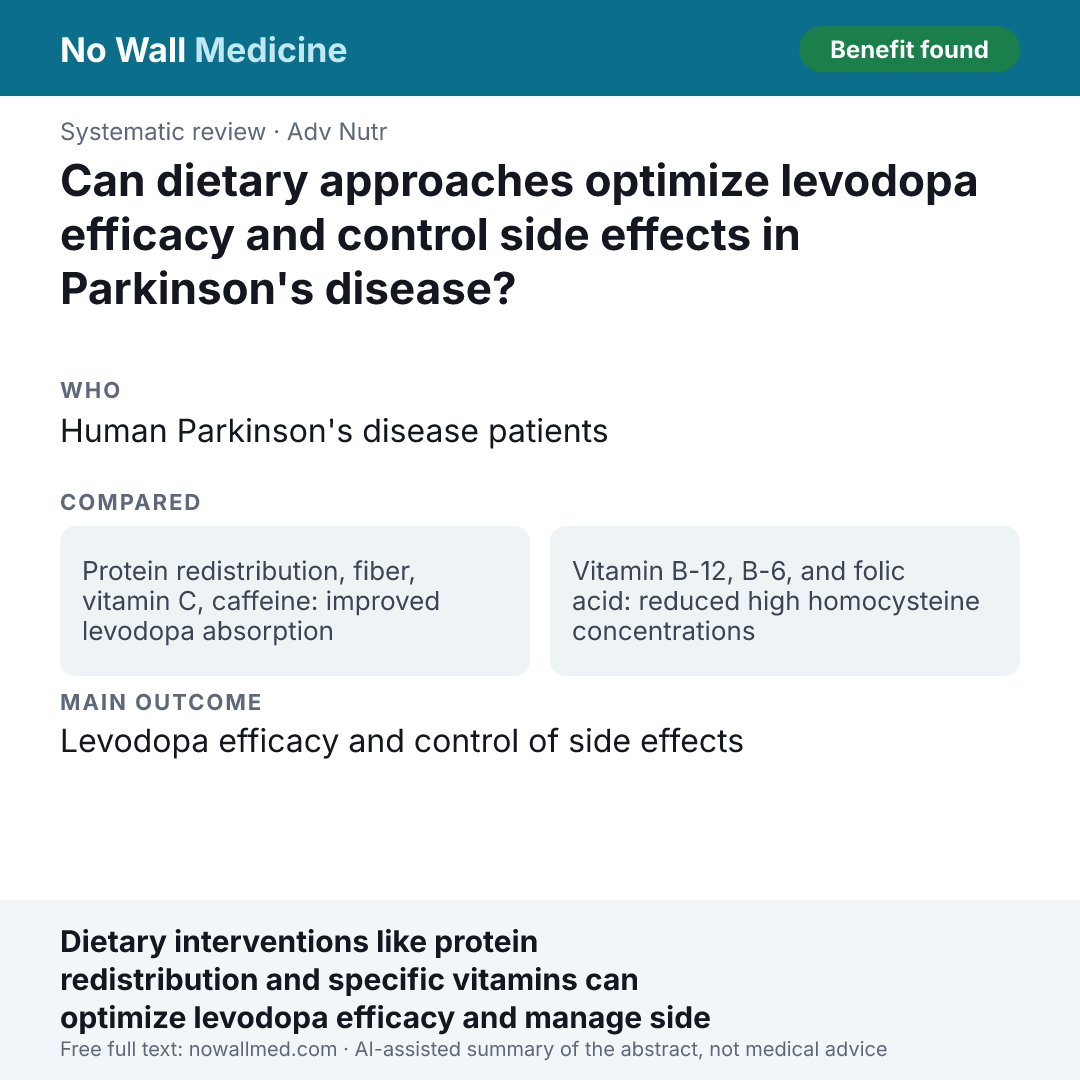
Interventions to improve district-level routine health data in low-income and middle-income countries: a systematic review
Systematic reviewBenefit found
What interventions improve district-level routine health data in low-income and middle-income countries?
Who
Routine health information systems in low-income and middle-income countries · Low-income and middle-income countries
Compared
Pre-post or controlled trial studies: 93% showed improvements in one or more data quality outputs
68%Studies meeting 80% quality standard
Main outcome
Data quality outputs
Bottom line: Holistic interventions addressing multiple technical, organisational, and behavioural determinants improve routine health information system data quality.
BMJ Glob Health · 2021-06-12 · Save PNG
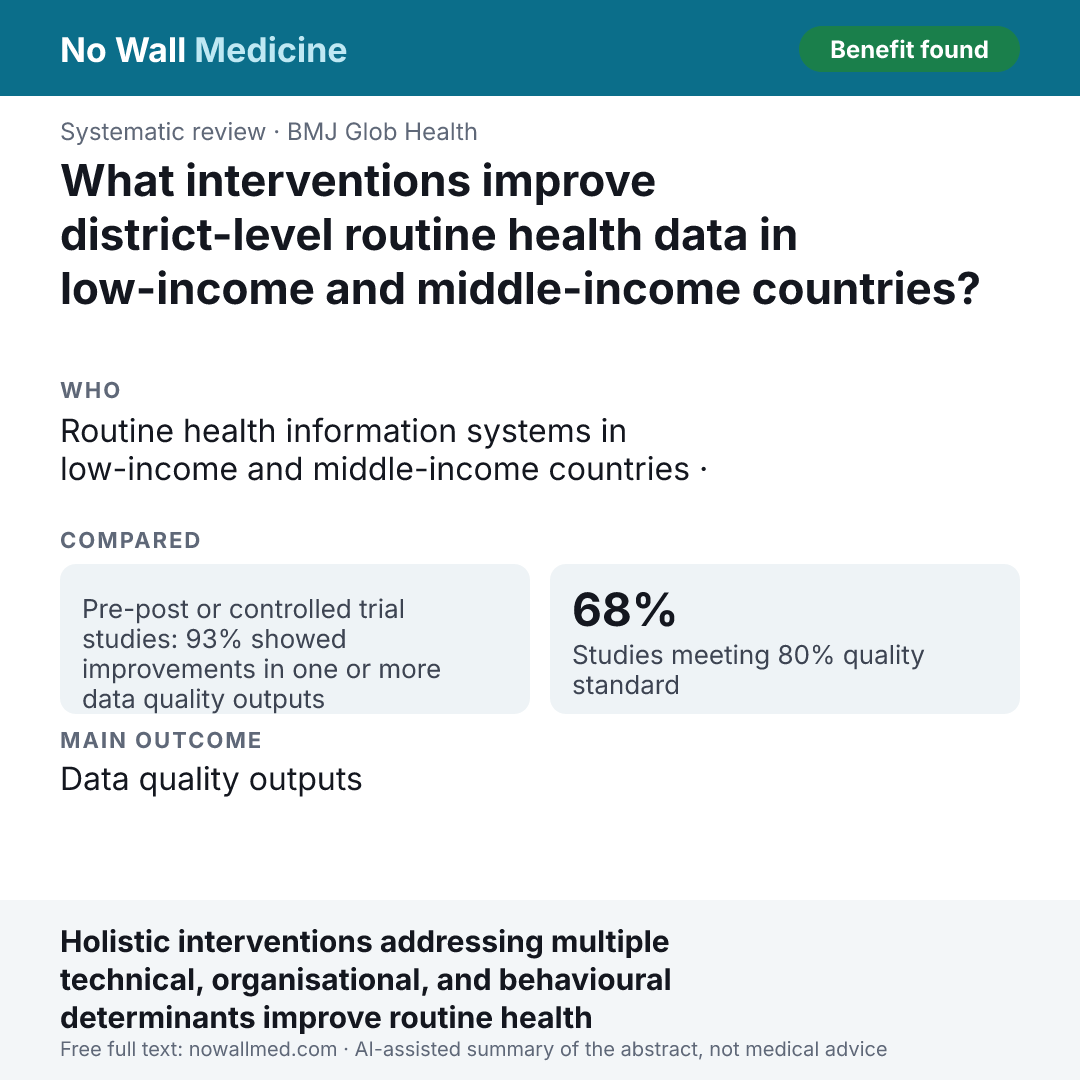
Effects of levosimendan on renal blood flow and glomerular filtration in patients with acute kidney injury after cardiac surgery: a double blind, randomized placebo-controlled study
Double-blind, randomized controlled studyBenefit found
Does levosimendan improve renal blood flow and glomerular filtration in acute kidney injury after cardiac surgery?
Who
29
Adult patients with postoperative acute kidney injury after cardiac surgery · Single-center
Compared
Levosimendan: 15% increase in renal blood flow
Placebo: 3% increase in renal blood flow
Main outcome
Renal blood flow and glomerular filtration rate
Bottom line: In hemodynamically stable patients with acute kidney injury after cardiac surgery, levosimendan increases renal blood flow through renal vasodilatation.
Crit Care · 2021-06-12 · Save PNG
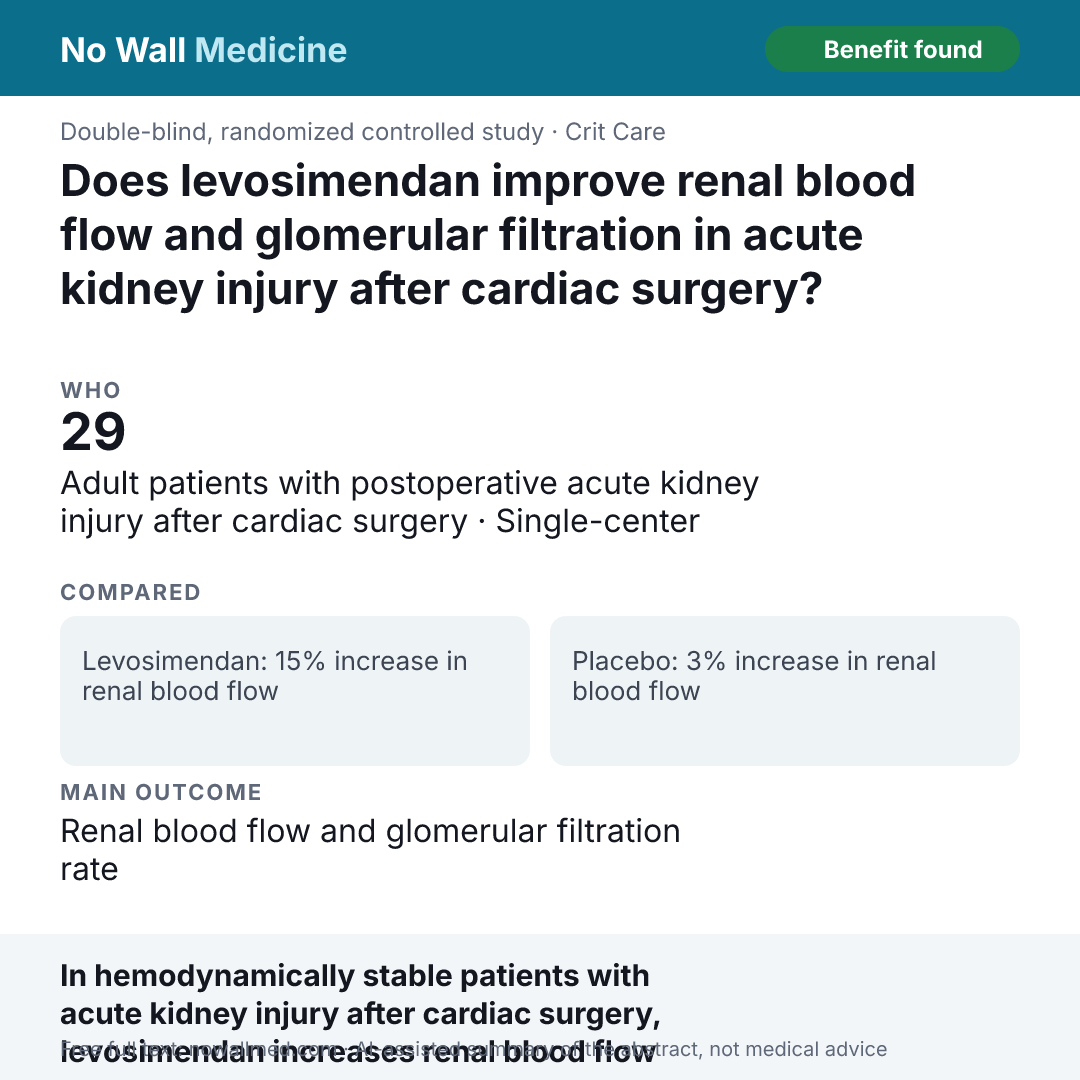
Functional electrical stimulation cycling exercise after spinal cord injury: a systematic review of health and fitness-related outcomes
Systematic reviewBenefit found
Does functional electrical stimulation cycling exercise improve health and fitness after spinal cord injury?
Who
999
Adults with spinal cord injury
Compared
Functional electrical stimulation cycling
Control
Main outcome
Muscle health, power output, and aerobic fitness
Bottom line: Functional electrical stimulation cycling improves muscle health and may increase power output and aerobic fitness in adults with spinal cord injury.
Limitation: Lacking Level 1-2 studies for power output and aerobic fitness outcomes.
J Neuroeng Rehabil · 2021-06-12 · Save PNG
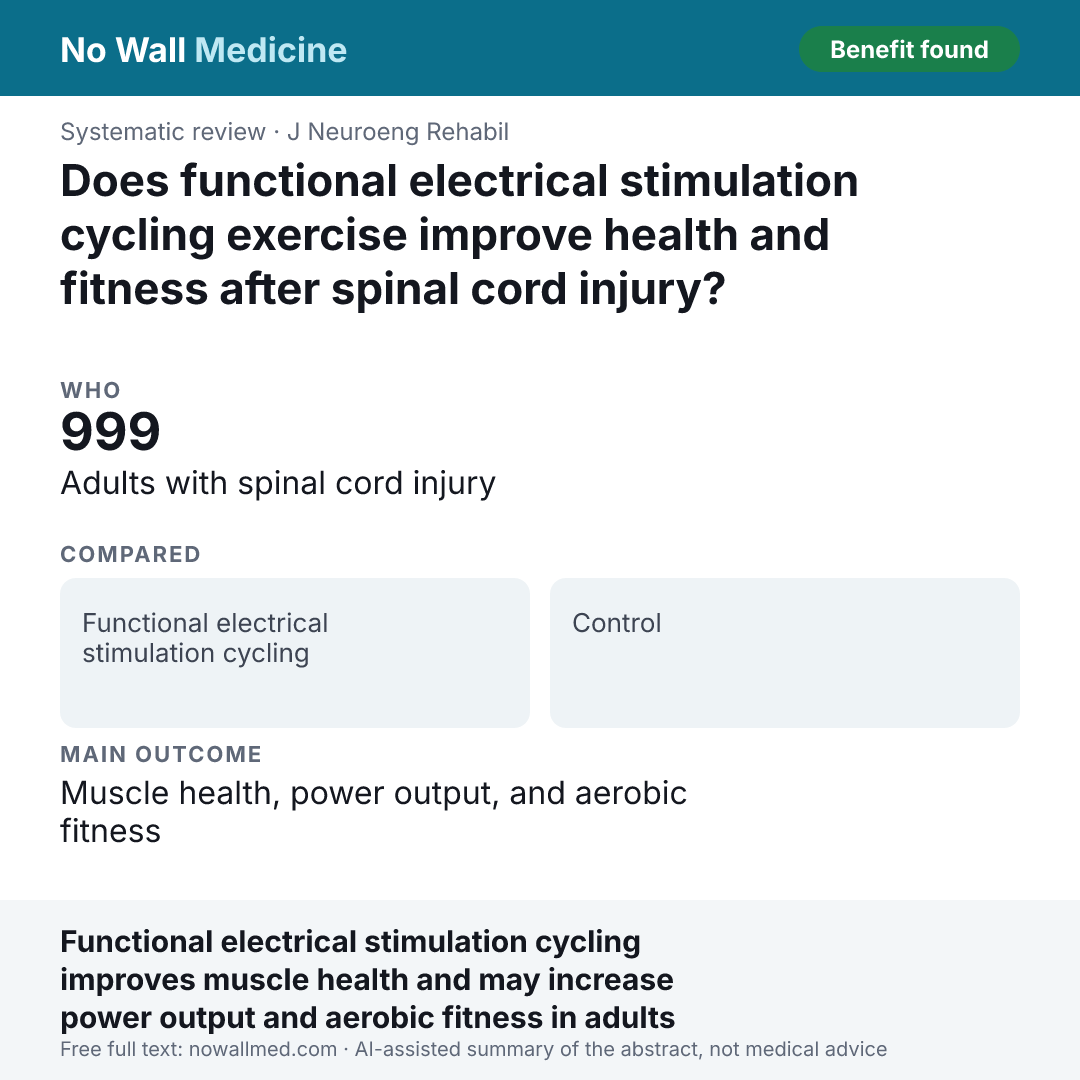
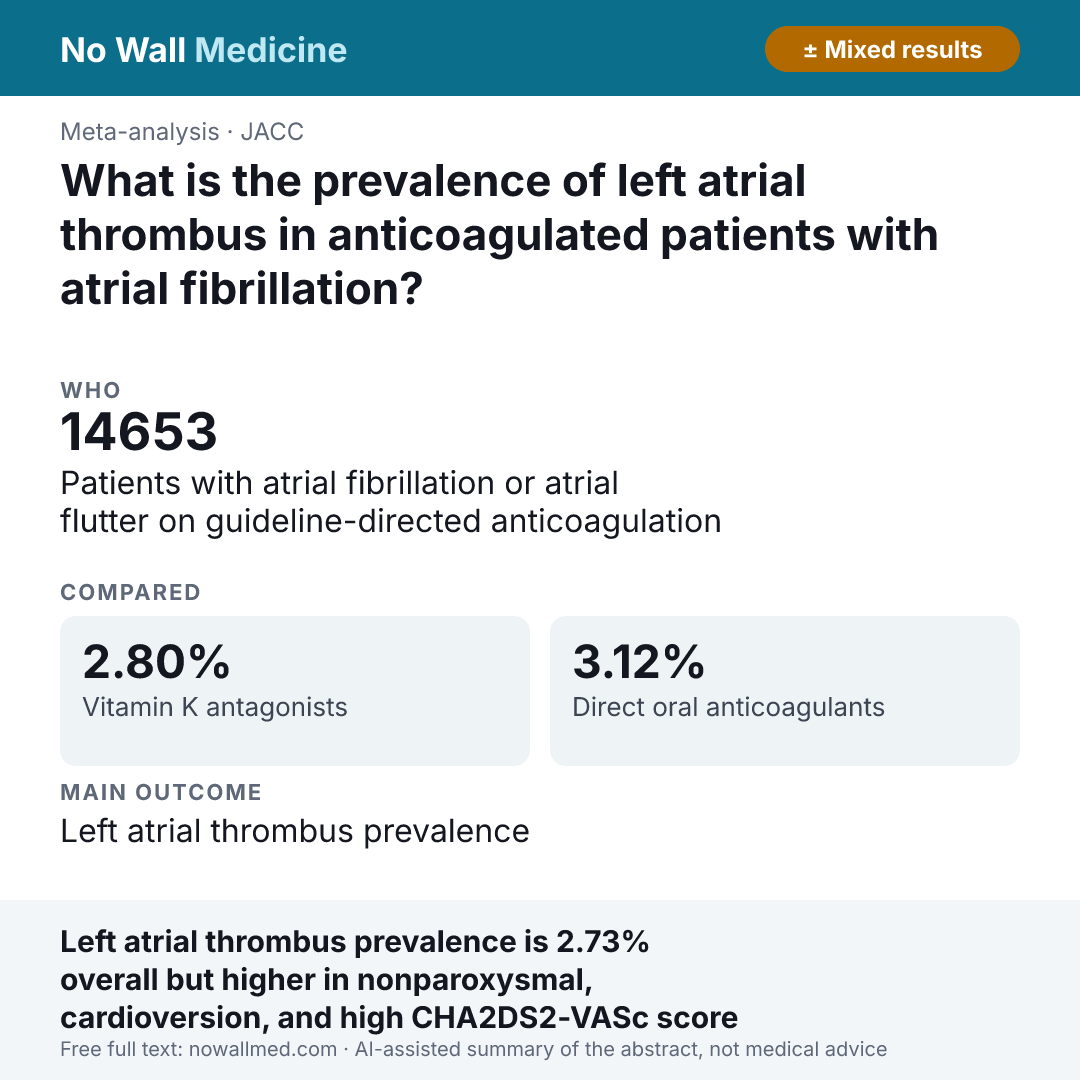
Prevalence of Left Atrial Thrombus in Anticoagulated Patients With Atrial Fibrillation
Meta-analysisMixed results
What is the prevalence of left atrial thrombus in anticoagulated patients with atrial fibrillation?
Who
14653
Patients with atrial fibrillation or atrial flutter on guideline-directed anticoagulation
Compared
2.80%Vitamin K antagonists (95% CI: 1.86% to 4.21%)
3.12%Direct oral anticoagulants (95% CI: 1.92% to 5.03%)
Main outcome
Left atrial thrombus prevalence
Result: 2.73% (95% CI: 1.95% to 3.80%)
Bottom line: Left atrial thrombus prevalence is 2.73% overall but higher in nonparoxysmal, cardioversion, and high CHA2DS2-VASc score subgroups.
JACC · 2021-06-11 · Save PNG
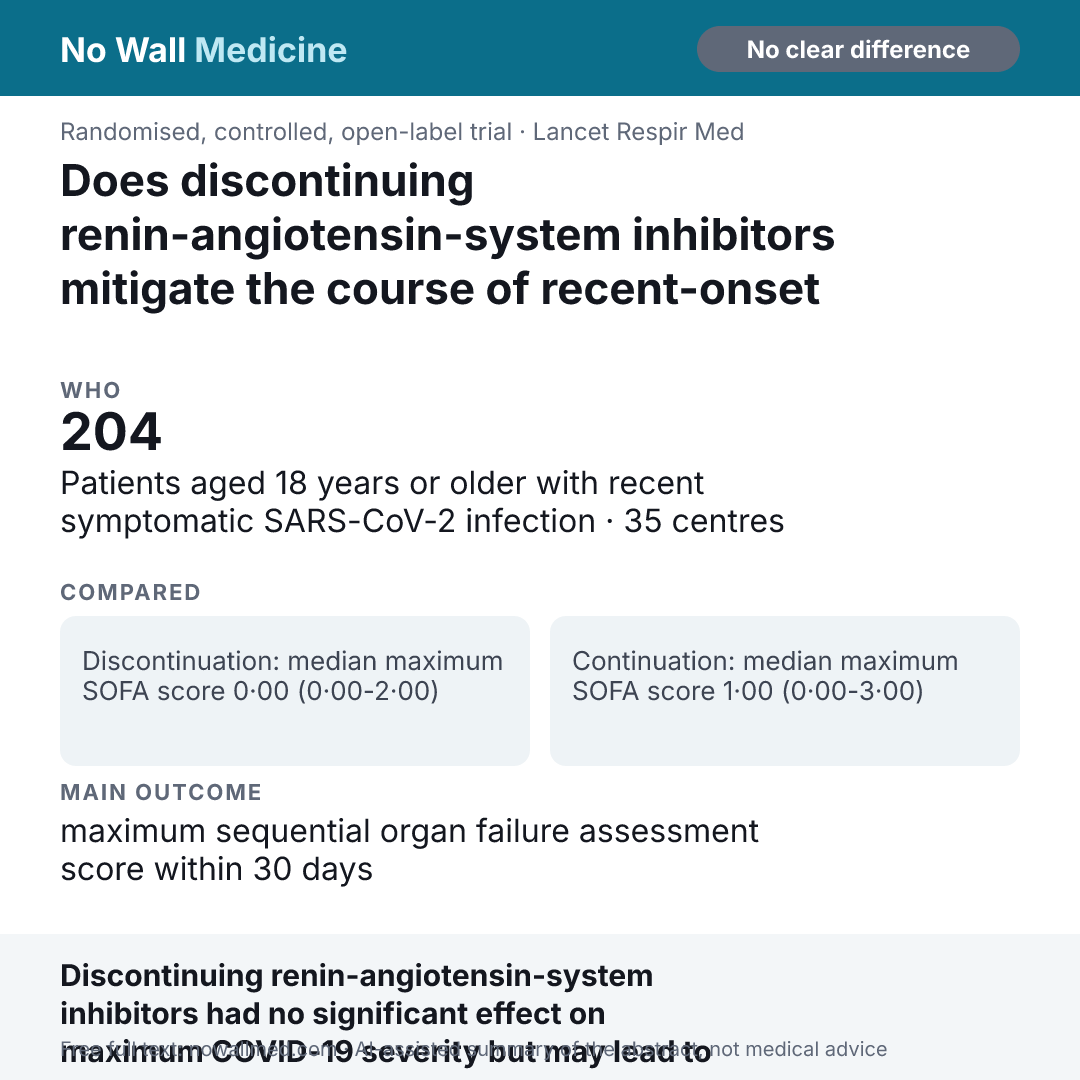
Discontinuation versus continuation of renin-angiotensin-system inhibitors in COVID-19 (ACEI-COVID): a prospective, parallel group, randomised, controlled, open-label trial
Randomised, controlled, open-label trialNo clear difference
Does discontinuing renin-angiotensin-system inhibitors mitigate the course of recent-onset COVID-19?
Who
204
Patients aged 18 years or older with recent symptomatic SARS-CoV-2 infection · 35 centres in Austria and Germany
Compared
Discontinuation: median maximum SOFA score 0·00 (0·00-2·00)
Continuation: median maximum SOFA score 1·00 (0·00-3·00)
Main outcome
maximum sequential organ failure assessment score within 30 days
Result: p=0·12
Bottom line: Discontinuing renin-angiotensin-system inhibitors had no significant effect on maximum COVID-19 severity but may lead to faster recovery.
Funded by: Austrian Science Fund and German Center for Cardiovascular Research
Lancet Respir Med · 2021-06-11 · Save PNG
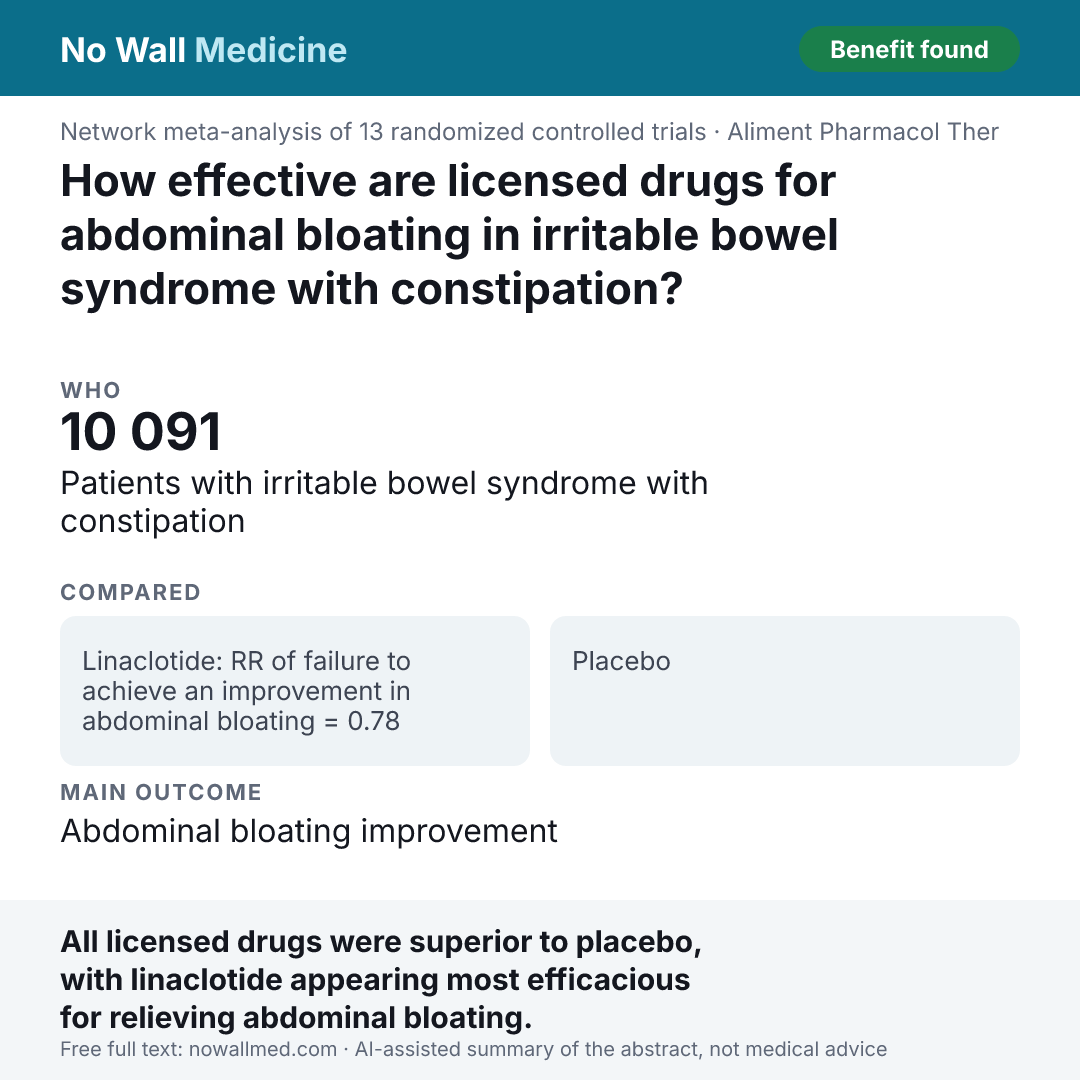
Systematic review and network meta-analysis: efficacy of licensed drugs for abdominal bloating in irritable bowel syndrome with constipation
Network meta-analysis of 13 randomized controlled trialsBenefit found
How effective are licensed drugs for abdominal bloating in irritable bowel syndrome with constipation?
Who
10 091
Patients with irritable bowel syndrome with constipation
Compared
Linaclotide: RR of failure to achieve an improvement in abdominal bloating = 0.78
Placebo
Main outcome
Abdominal bloating improvement
Result: RR of failure to achieve an improvement in abdominal bloating = 0.78 (95% CI 0.74-0.83)
Bottom line: All licensed drugs were superior to placebo, with linaclotide appearing most efficacious for relieving abdominal bloating.
Aliment Pharmacol Ther · 2021-06-11 · Save PNG
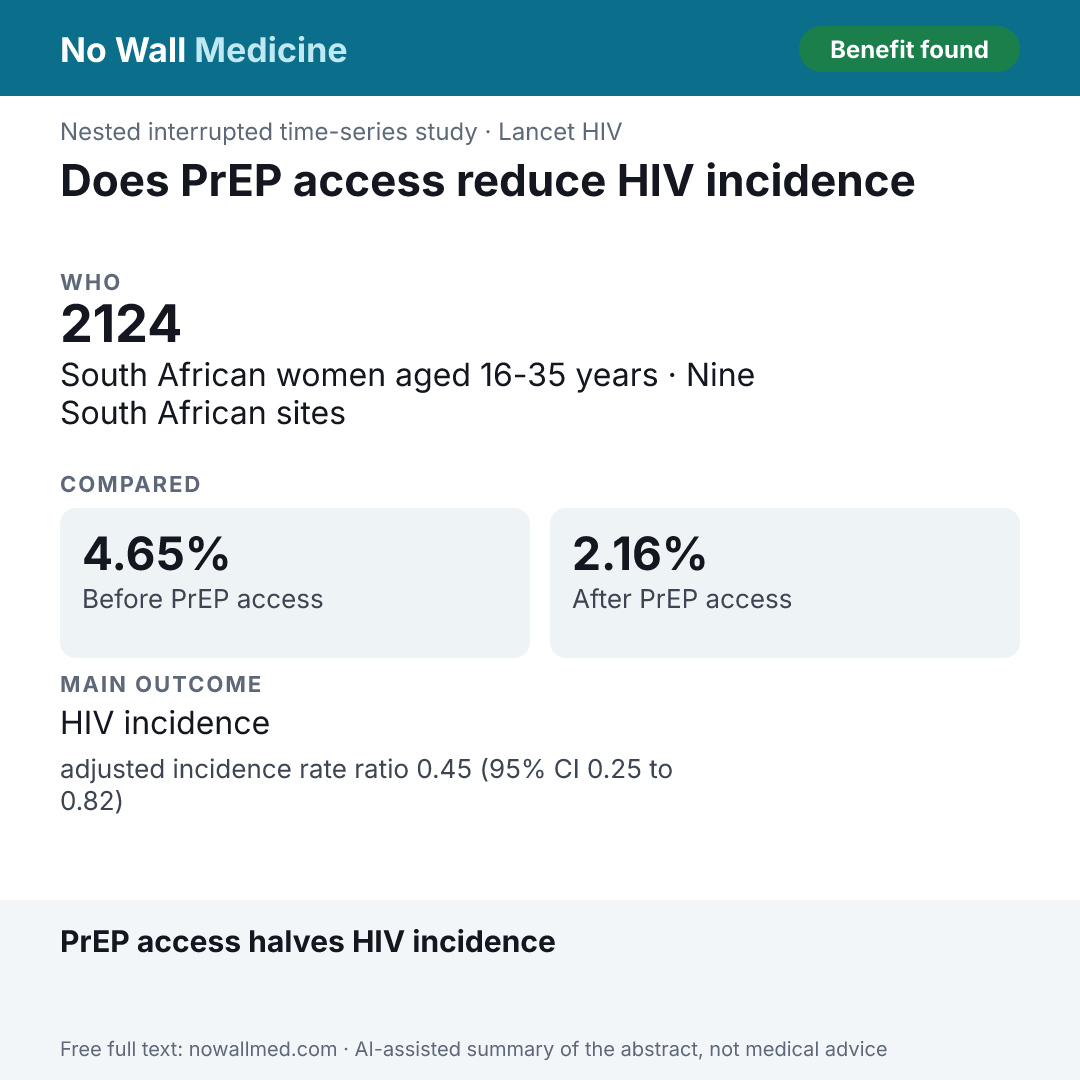
Incorporating oral PrEP into standard prevention services for South African women: a nested interrupted time-series study
Nested interrupted time-series studyBenefit found
Does PrEP access reduce HIV incidence
Who
2124
South African women aged 16-35 years · Nine South African sites
Compared
4.65%Before PrEP access
2.16%After PrEP access
Main outcome
HIV incidence
Result: adjusted incidence rate ratio 0.45 (95% CI 0.25 to 0.82)
Bottom line: PrEP access halves HIV incidence
Funded by: Bill & Melinda Gates Foundation
Lancet HIV · 2021-06-11 · Save PNG
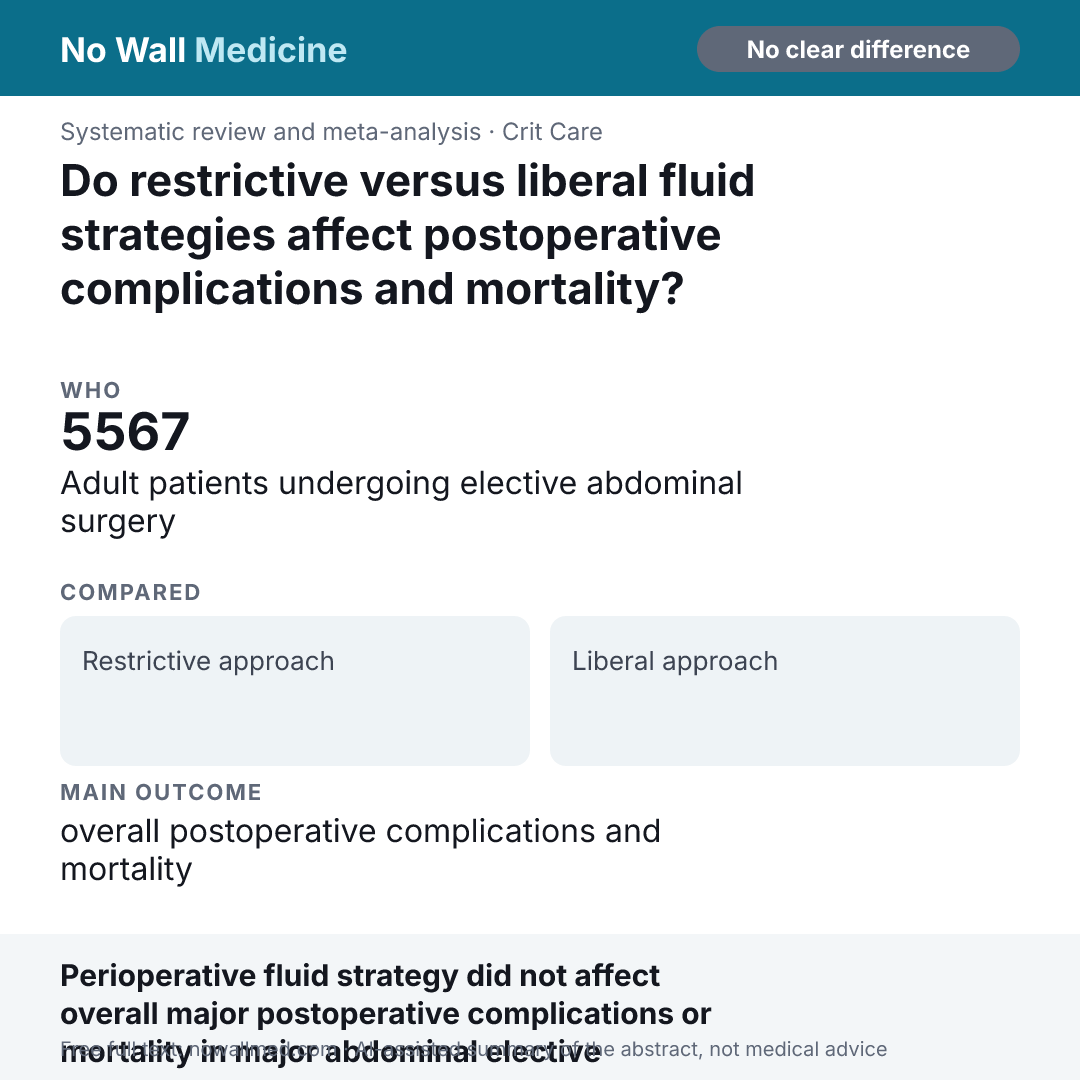
Cost-effectiveness of the i-gel supraglottic airway device compared to tracheal intubation during out-of-hospital cardiac arrest: Findings from the AIRWAYS-2 randomised controlled trial
Cluster randomised controlled trialNo clear difference
Is the i-gel supraglottic airway device cost-effective compared to tracheal intubation?
Who
9296
Adults with non-traumatic out-of-hospital cardiac arrest · United Kingdom
Compared
i-gel supraglottic airway: 0.03 QALYs
tracheal intubation: 0.03 QALYs
Main outcome
Quality-adjusted life years and total costs
Result: difference -0.0015 (95% CI -0.0059 to 0.0028) for QALYs
Bottom line: There was no difference in cost-effectiveness between the i-gel and tracheal intubation for initial airway management.
Limitation: Differences were small and there was great uncertainty around these results.
Resuscitation · 2021-06-11 · Save PNG
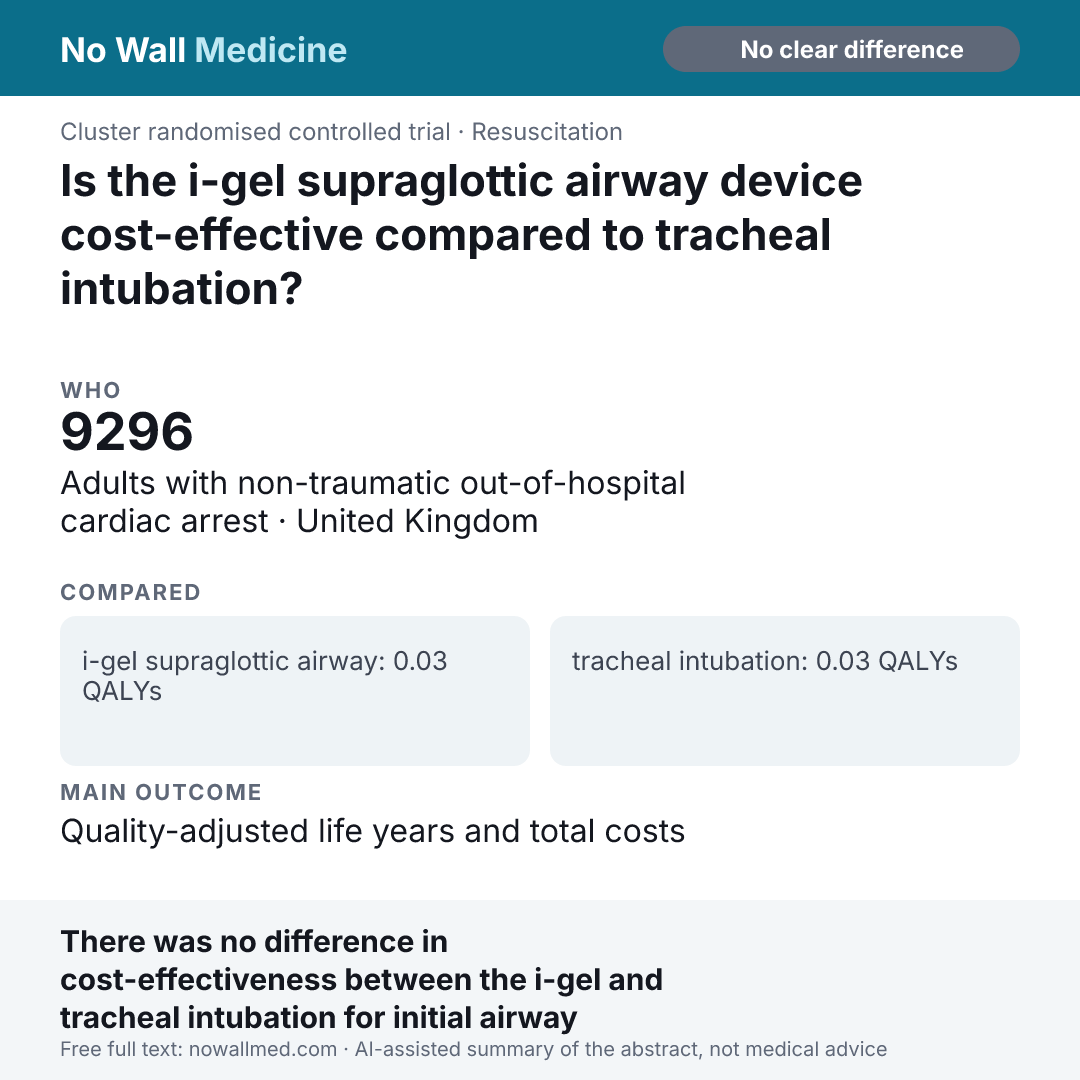
Efficacy and Safety of Mineralocorticoid Receptor Antagonists in Kidney Failure Patients Treated with Dialysis: A Systematic Review and Meta-Analysis
Systematic review and meta-analysis of 14 randomized controlled trialsBenefit found
Are mineralocorticoid receptor antagonists effective and safe for kidney failure patients on dialysis?
Who
1309
Patients with kidney failure treated with dialysis
Compared
Mineralocorticoid receptor antagonists
Placebo or no treatment
Main outcome
Cardiovascular mortality, all-cause mortality, and hyperkalemia risk
Result: relative risk 0.41 (95% confidence interval, 0.24 to 0.70) for cardiovascular mortality
Bottom line: Mineralocorticoid receptor antagonists may improve mortality without significantly increasing hyperkalemia risk in dialysis patients.
CJASN · 2021-06-11 · Save PNG
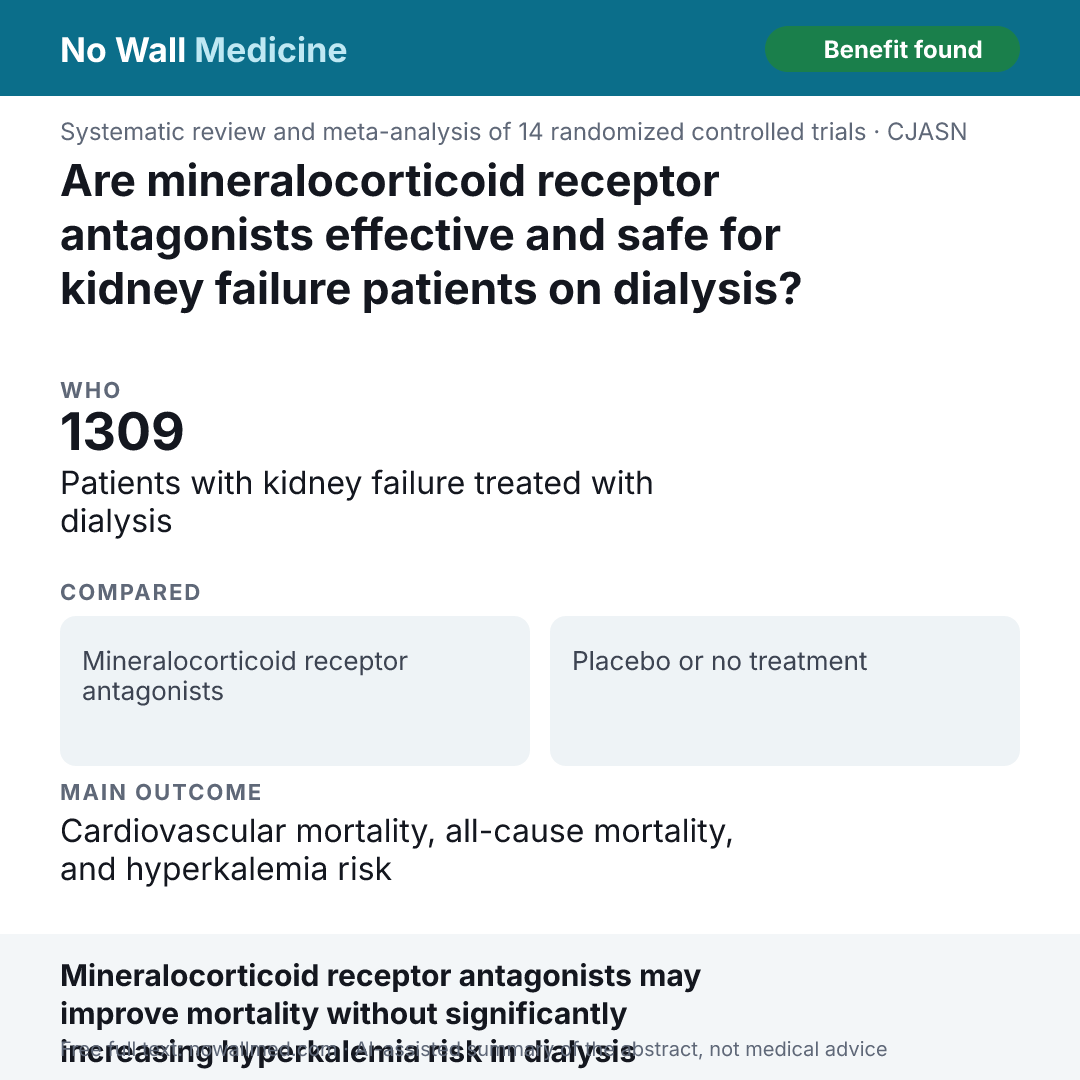
Direct supplementation with Urolithin A overcomes limitations of dietary exposure and gut microbiome variability in healthy adults to achieve consistent levels across the population
Randomized trialBenefit found
Can direct urolithin A supplementation overcome microbiome and dietary variability?
Who
100
Healthy adults
Compared
Pomegranate juice: ~40% converted precursor compounds into urolithin A
Direct urolithin A supplementation: >6-fold exposure to urolithin A vs. pomegranate juice
Main outcome
Plasma levels of urolithin A and its conjugates
Bottom line: Direct urolithin A supplementation provides significantly higher exposure than pomegranate juice, overcoming microbiome and dietary variability.
Eur J Clin Nutr · 2021-06-11 · Save PNG
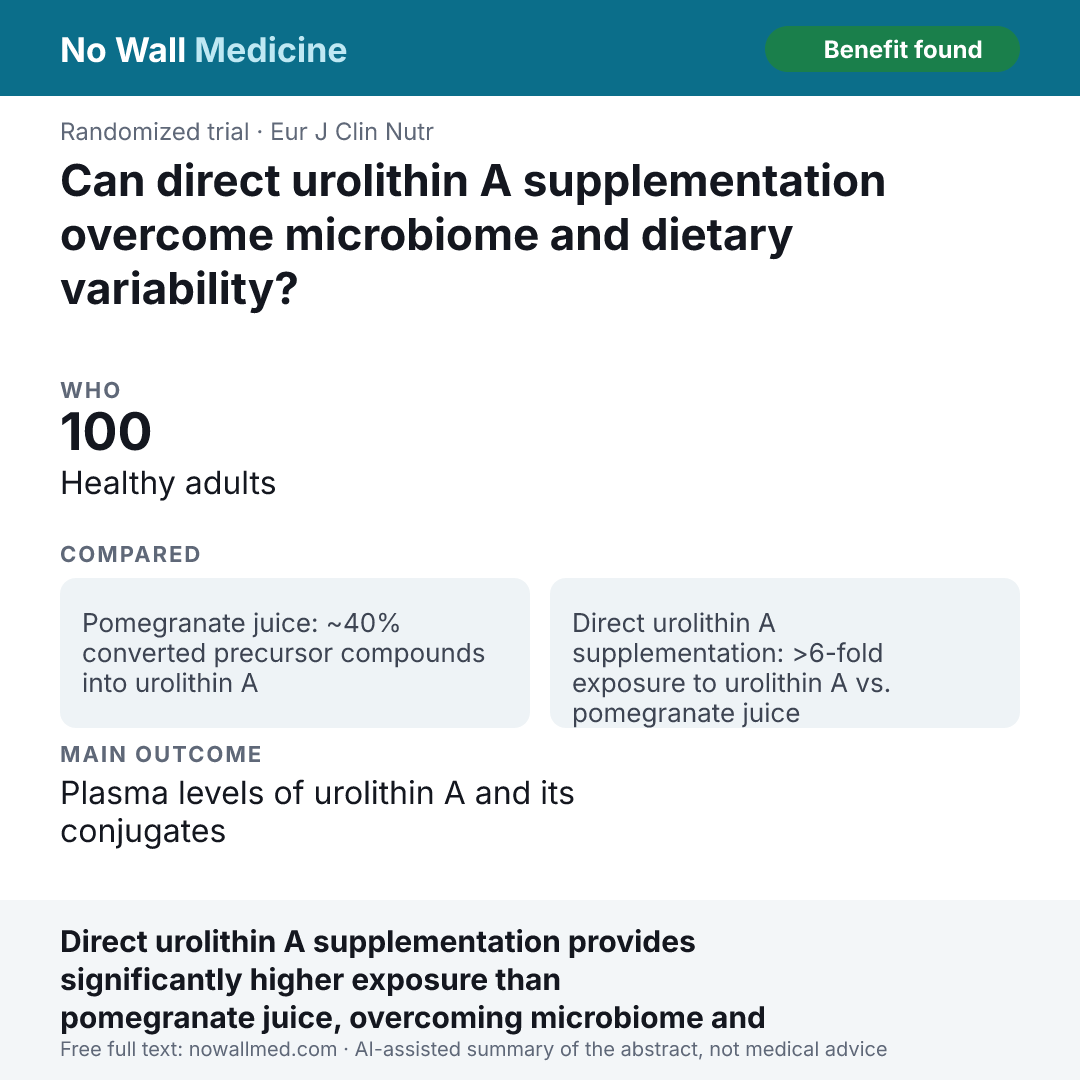
Perioperative liberal versus restrictive fluid strategies and postoperative outcomes: a systematic review and metanalysis on randomised-controlled trials in major abdominal elective surgery
Systematic review and meta-analysisNo clear difference
Do restrictive versus liberal fluid strategies affect postoperative complications and mortality?
Who
5567
Adult patients undergoing elective abdominal surgery
Compared
Restrictive approach
Liberal approach
Main outcome
overall postoperative complications and mortality
Result: risk difference (95% CI) = 0.009 (-0.02; 0.04)
Bottom line: Perioperative fluid strategy did not affect overall major postoperative complications or mortality in major abdominal elective surgery.
Crit Care · 2021-06-11 · Save PNG
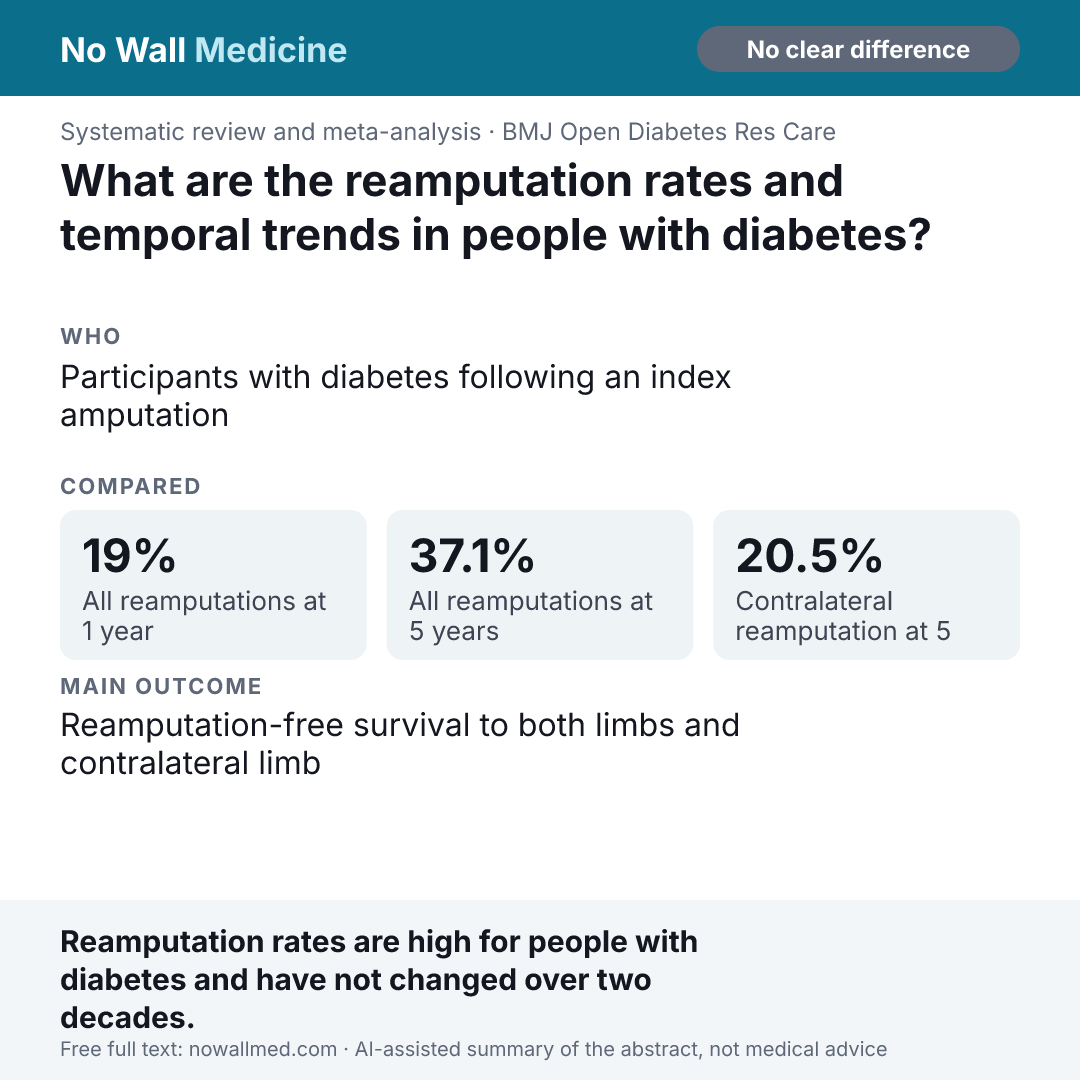
Lower extremity reamputation in people with diabetes: a systematic review and meta-analysis
Systematic review and meta-analysisNo clear difference
What are the reamputation rates and temporal trends in people with diabetes?
Who
Participants with diabetes following an index amputation
Compared
19%All reamputations at 1 year (IQR=5.1%-31.6%)
37.1%All reamputations at 5 years (IQR=27.0%-47.2%)
20.5%Contralateral reamputation at 5 years (IQR=13.3%-27.2%)
Main outcome
Reamputation-free survival to both limbs and contralateral limb
Bottom line: Reamputation rates are high for people with diabetes and have not changed over two decades.
BMJ Open Diabetes Res Care · 2021-06-11 · Save PNG
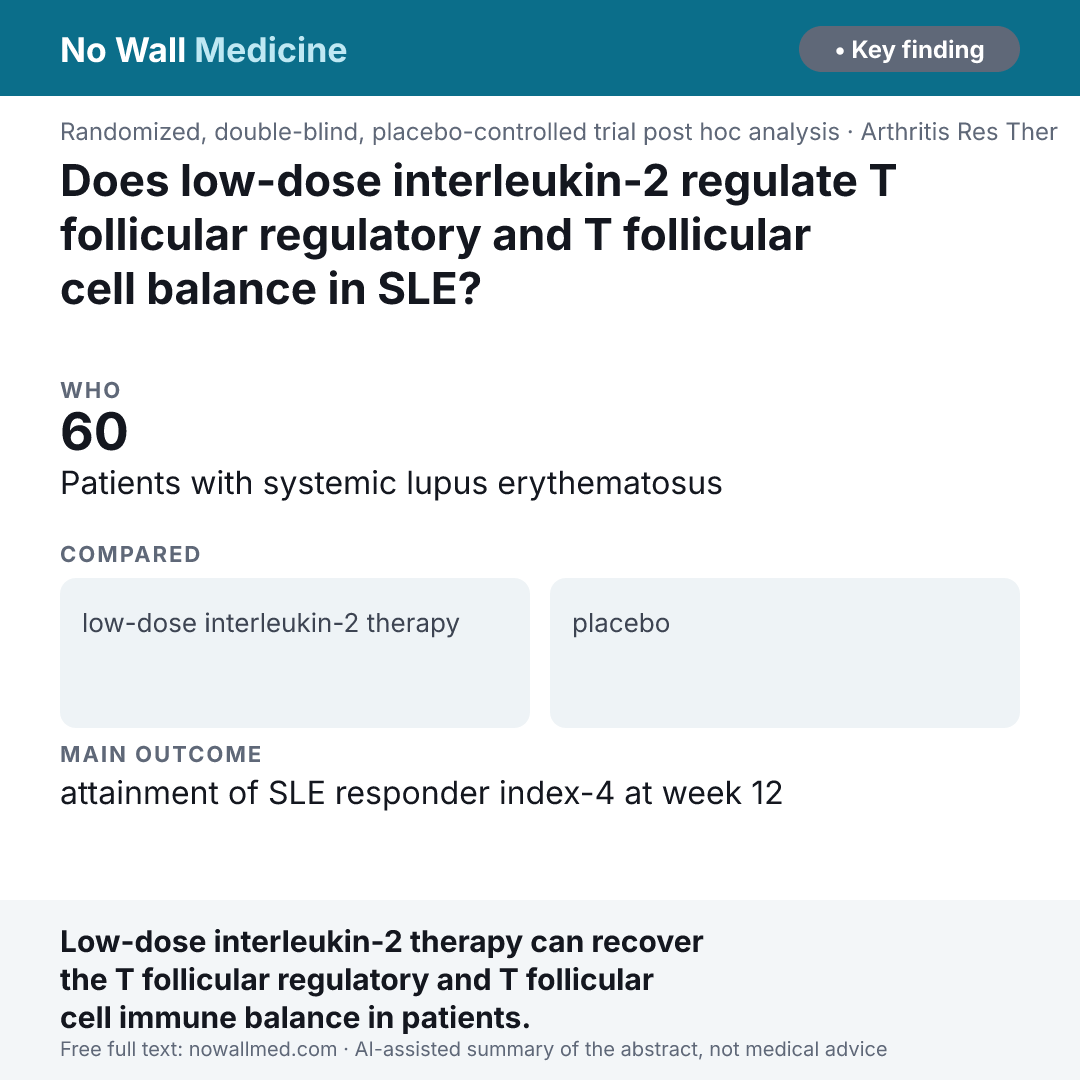
Therapeutic potential of targeting Tfr/Tfh cell balance by low-dose-IL-2 in active SLE: a post hoc analysis from a double-blind RCT study
Randomized, double-blind, placebo-controlled trial post hoc analysisKey finding
Does low-dose interleukin-2 regulate T follicular regulatory and T follicular cell balance in SLE?
Who
60
Patients with systemic lupus erythematosus
Compared
low-dose interleukin-2 therapy
placebo
Main outcome
attainment of SLE responder index-4 at week 12
Bottom line: Low-dose interleukin-2 therapy can recover the T follicular regulatory and T follicular cell immune balance in patients.
Arthritis Res Ther · 2021-06-11 · Save PNG
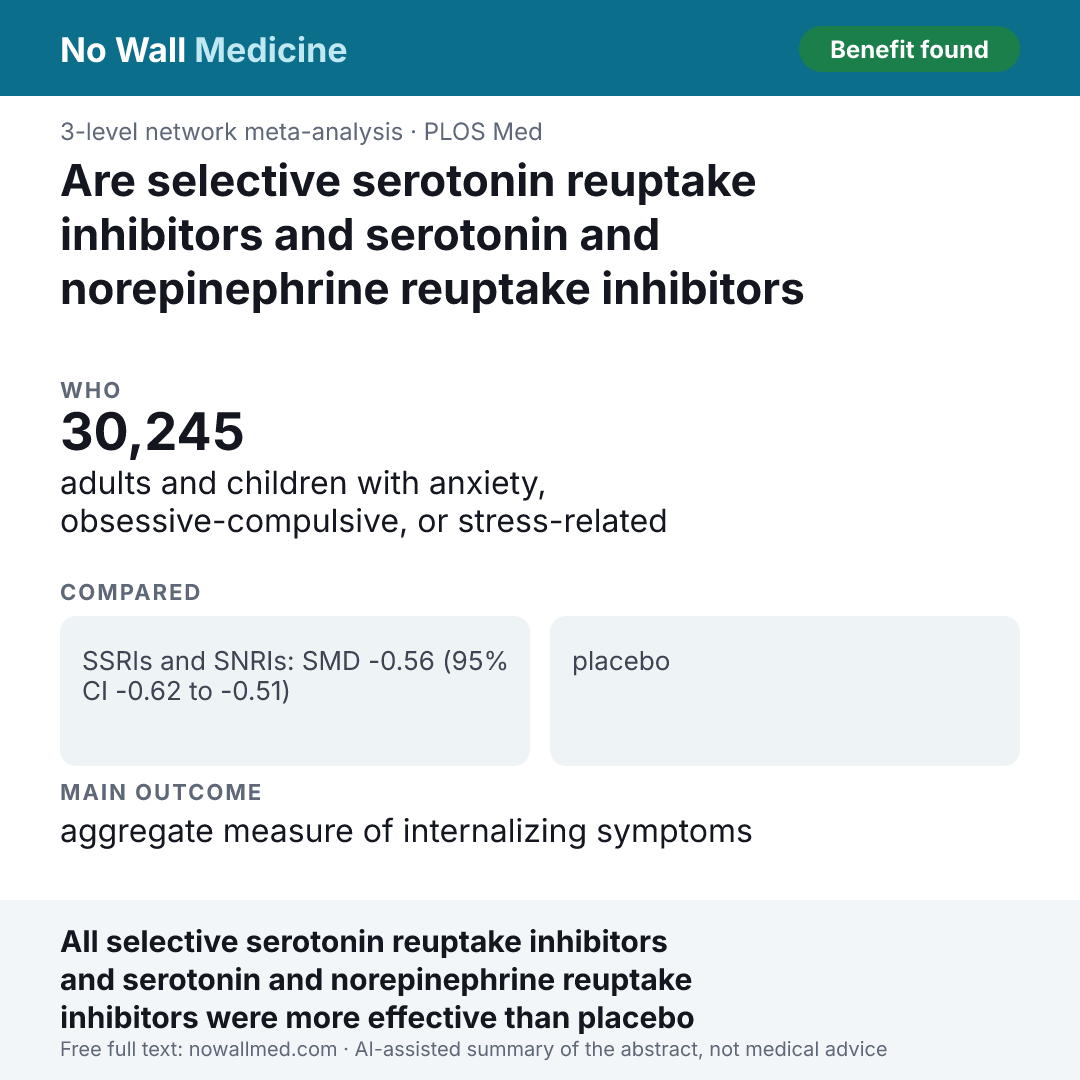
Selective serotonin reuptake inhibitors, and serotonin and norepinephrine reuptake inhibitors for anxiety, obsessive-compulsive, and stress disorders: A 3-level network meta-analysis
3-level network meta-analysisBenefit found
Are selective serotonin reuptake inhibitors and serotonin and norepinephrine reuptake inhibitors effective for anxiety, obsessive-compulsive, and stress disorders?
Who
30,245
adults and children with anxiety, obsessive-compulsive, or stress-related disorders
Compared
SSRIs and SNRIs: SMD -0.56 (95% CI -0.62 to -0.51)
placebo
Main outcome
aggregate measure of internalizing symptoms
Result: SMD -0.56 (95% CI -0.62 to -0.51)
Bottom line: All selective serotonin reuptake inhibitors and serotonin and norepinephrine reuptake inhibitors were more effective than placebo for internalizing symptoms.
Limitation: moderate heterogeneity and moderate risk of bias identified in most trials
PLOS Med · 2021-06-10 · Save PNG
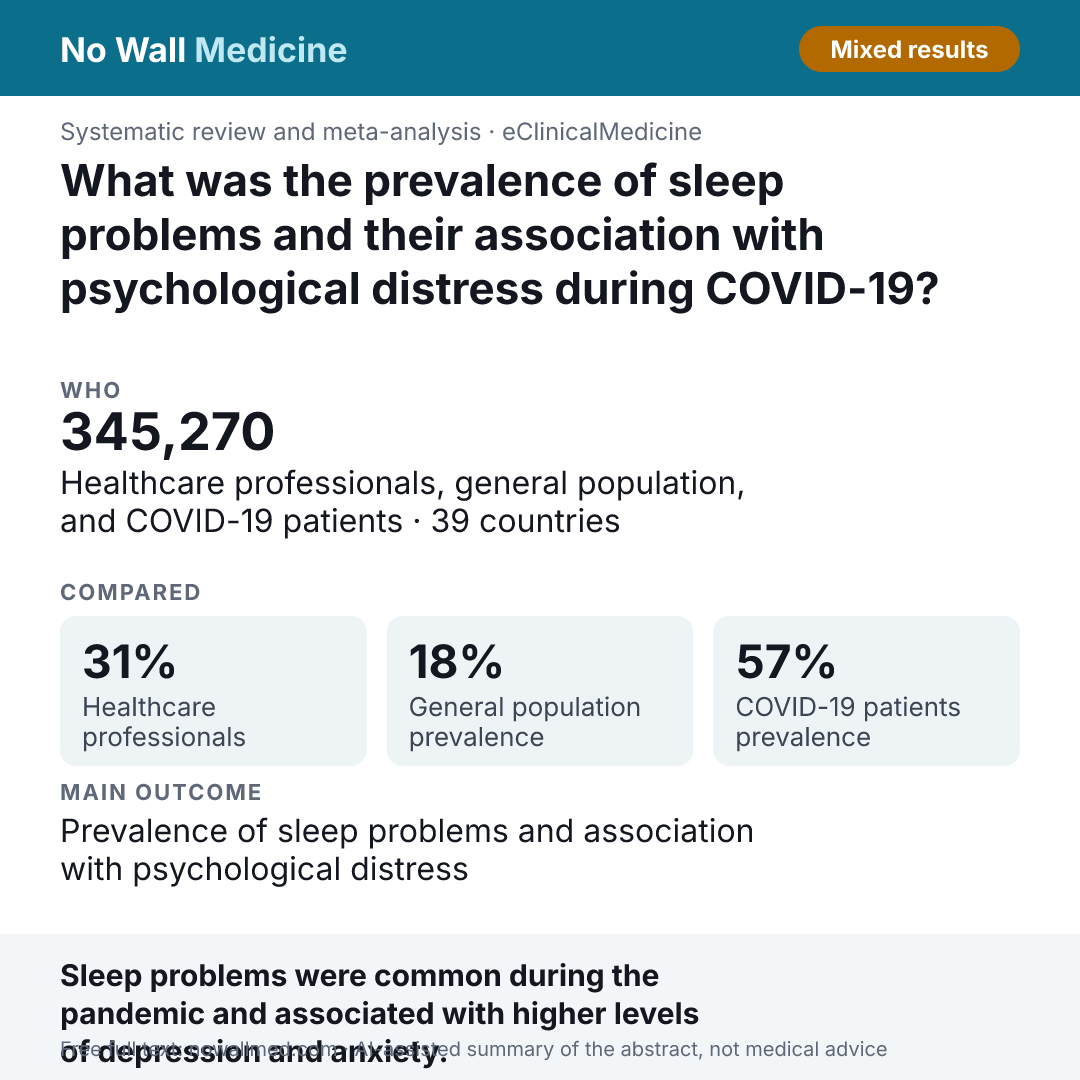
Sleep problems during COVID-19 pandemic and its' association to psychological distress: A systematic review and meta-analysis
Systematic review and meta-analysisMixed results
What was the prevalence of sleep problems and their association with psychological distress during COVID-19?
Who
345,270
Healthcare professionals, general population, and COVID-19 patients · 39 countries
Compared
31%Healthcare professionals prevalence
18%General population prevalence
57%COVID-19 patients prevalence
Main outcome
Prevalence of sleep problems and association with psychological distress
Bottom line: Sleep problems were common during the pandemic and associated with higher levels of depression and anxiety.
eClinicalMedicine · 2021-06-10 · Save PNG
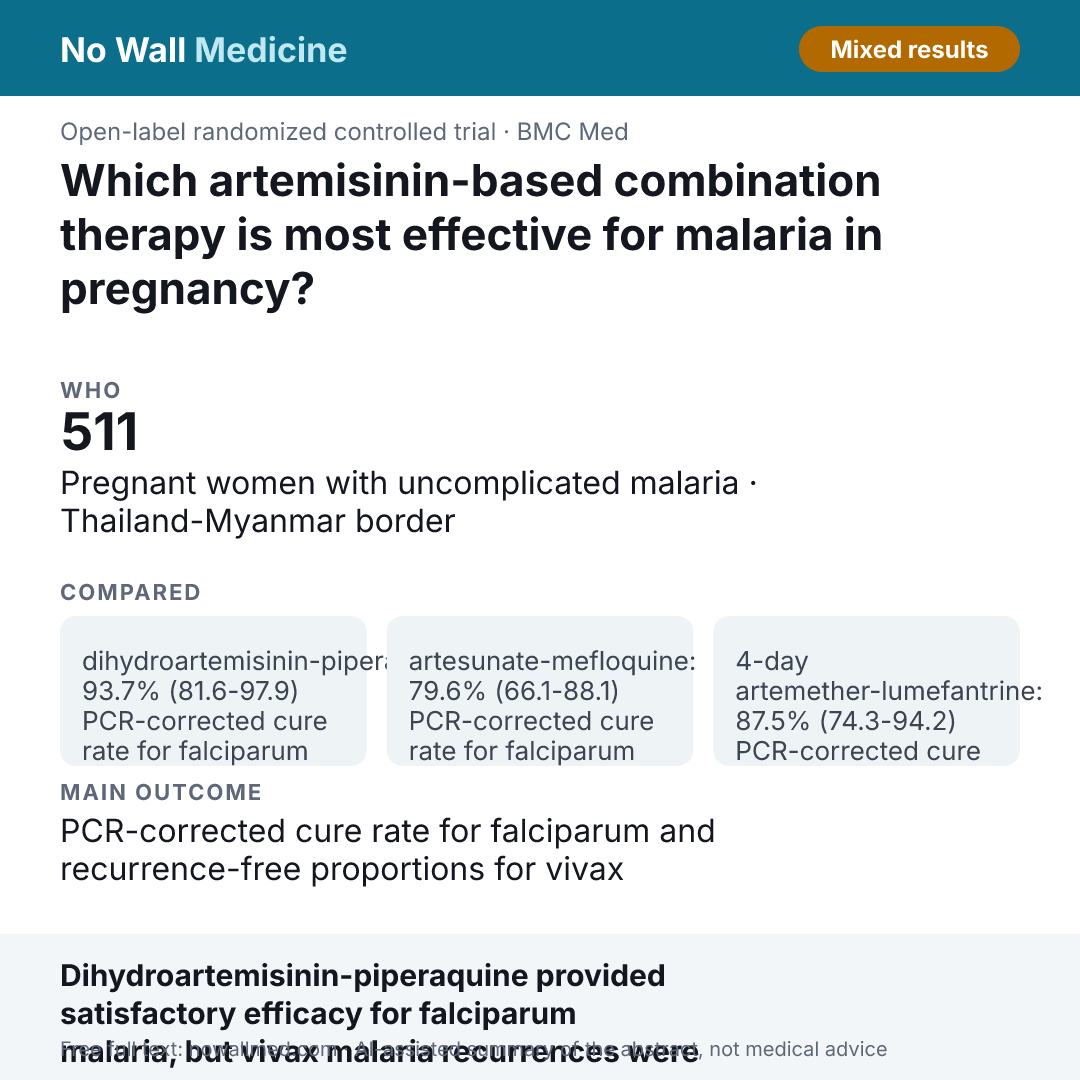
A randomized controlled trial of dihydroartemisinin-piperaquine, artesunate-mefloquine and extended artemether-lumefantrine treatments for malaria in pregnancy on the Thailand-Myanmar border
Open-label randomized controlled trialMixed results
Which artemisinin-based combination therapy is most effective for malaria in pregnancy?
Who
511
Pregnant women with uncomplicated malaria · Thailand-Myanmar border
Compared
dihydroartemisinin-piperaquine: 93.7% (81.6-97.9) PCR-corrected cure rate for falciparum
artesunate-mefloquine: 79.6% (66.1-88.1) PCR-corrected cure rate for falciparum
4-day artemether-lumefantrine: 87.5% (74.3-94.2) PCR-corrected cure rate for falciparum
Main outcome
PCR-corrected cure rate for falciparum and recurrence-free proportions for vivax
Bottom line: Dihydroartemisinin-piperaquine provided satisfactory efficacy for falciparum malaria, but vivax malaria recurrences were very common across all treatments.
BMC Med · 2021-06-10 · Save PNG