Visual abstracts
New randomized trials and meta-analyses from leading journals at a glance: who was studied, what was compared, and what was found. Every paper is free to read in full.
All specialtiesCardiology 4795Oncology 4083Gastroenterology & Hepatology 1916Infectious Disease 3786Neurology 1885Psychiatry & Mental Health 2240Pulmonology 2061Critical Care 1334Endocrinology & Diabetes 2553Pediatrics 2913Surgery 2498Orthopedics & Sports Medicine 922Neurosurgery 532Cardiothoracic & Vascular Surgery 665Plastic & Reconstructive Surgery 585Nephrology 1114Rheumatology 814Hematology 1097Dermatology 619Ophthalmology 539Obstetrics & Gynecology 1659Public & Global Health 1042Radiology & Imaging 637Anesthesiology 959Urology 751ENT (Otolaryngology) 497Emergency Medicine 484Allergy & Immunology 310Geriatrics 974Family Medicine & Primary Care 538Medical Genetics & Genomics 662Pathology & Laboratory Medicine 156Physical Medicine & Rehabilitation 746Palliative Care 422Nutrition 1566Digital Health & AI 2190General Medicine 319
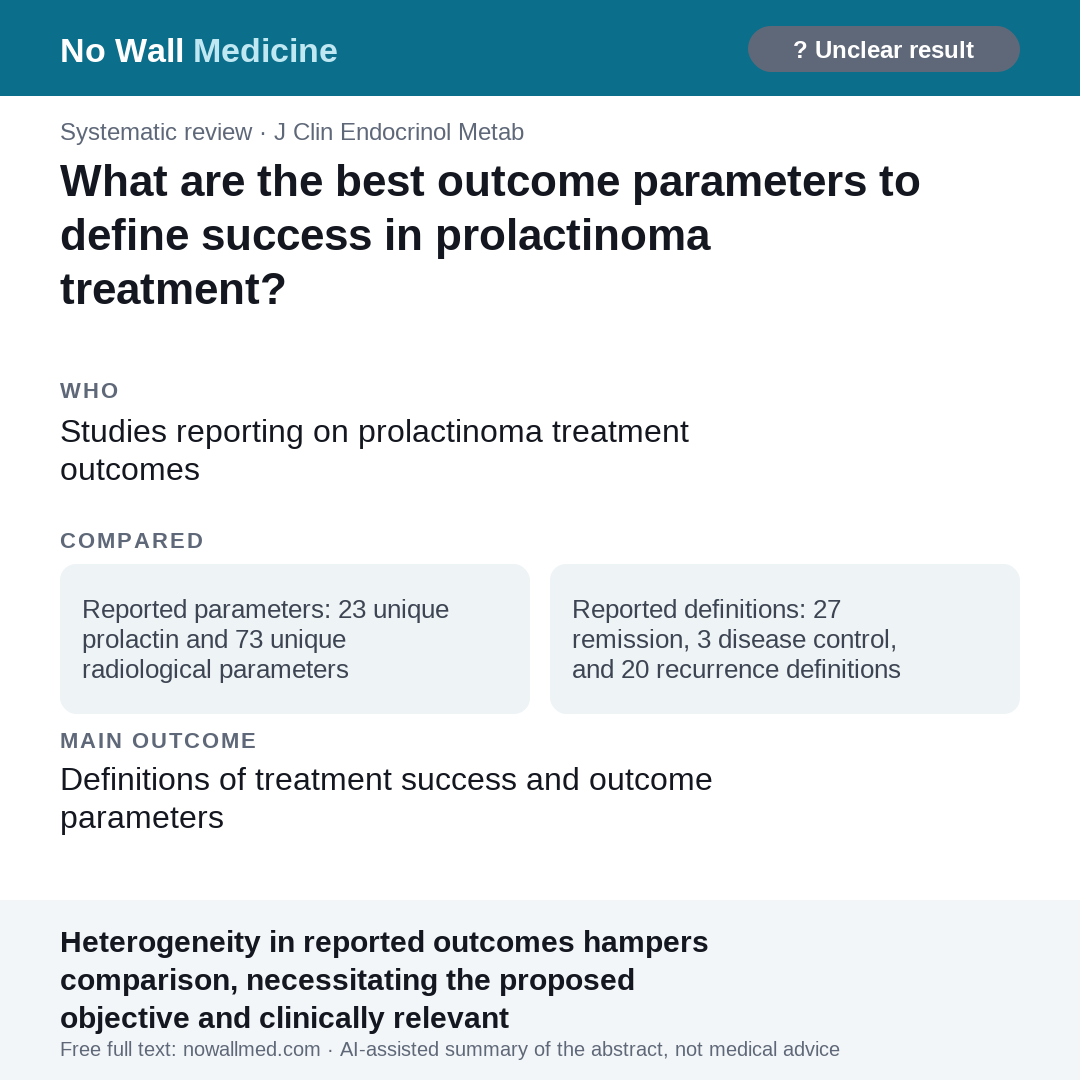
How to Define Success in Prolactinoma Treatment-A Systematic Review and Theoretical Framework
Systematic reviewUnclear result
What are the best outcome parameters to define success in prolactinoma treatment?
Who
Studies reporting on prolactinoma treatment outcomes
Compared
Reported parameters: 23 unique prolactin and 73 unique radiological parameters
Reported definitions: 27 remission, 3 disease control, and 20 recurrence definitions
Main outcome
Definitions of treatment success and outcome parameters
Bottom line: Heterogeneity in reported outcomes hampers comparison, necessitating the proposed objective and clinically relevant definitions for prolactinoma treatment success.
J Clin Endocrinol Metab · 2025-09-29Download image
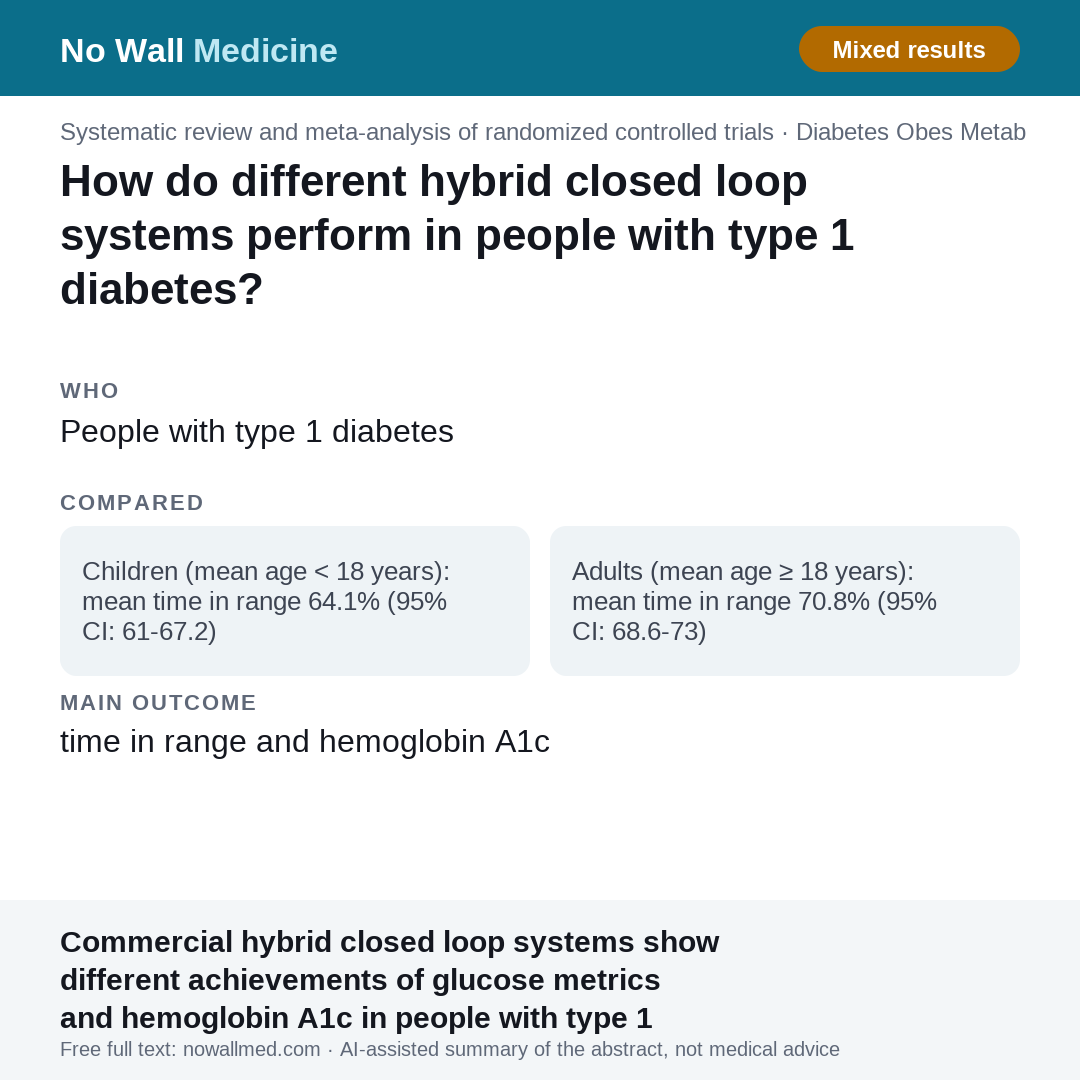
Glycaemic control and variability with different commercially available hybrid closed loop systems in people with type 1 diabetes: A systematic review and meta-analysis of randomized controlled trials
Systematic review and meta-analysis of randomized controlled trialsMixed results
How do different hybrid closed loop systems perform in people with type 1 diabetes?
Who
People with type 1 diabetes
Compared
Children (mean age < 18 years): mean time in range 64.1% (95% CI: 61-67.2)
Adults (mean age ≥ 18 years): mean time in range 70.8% (95% CI: 68.6-73)
Main outcome
time in range and hemoglobin A1c
Bottom line: Commercial hybrid closed loop systems show different achievements of glucose metrics and hemoglobin A1c in people with type 1 diabetes.
Diabetes Obes Metab · 2025-09-29Download image
Dietary Intake Trajectories from Early Life and Associated Health Outcomes: A Systematic Review
Systematic reviewMixed results
Dietary intake trajectories impact health
Who
children and adolescents
Compared
unhealthy diet
healthy diet
Main outcome
health outcomes
Bottom line: Dietary intake trajectories impact health outcomes
Adv Nutr · 2025-09-29Download image
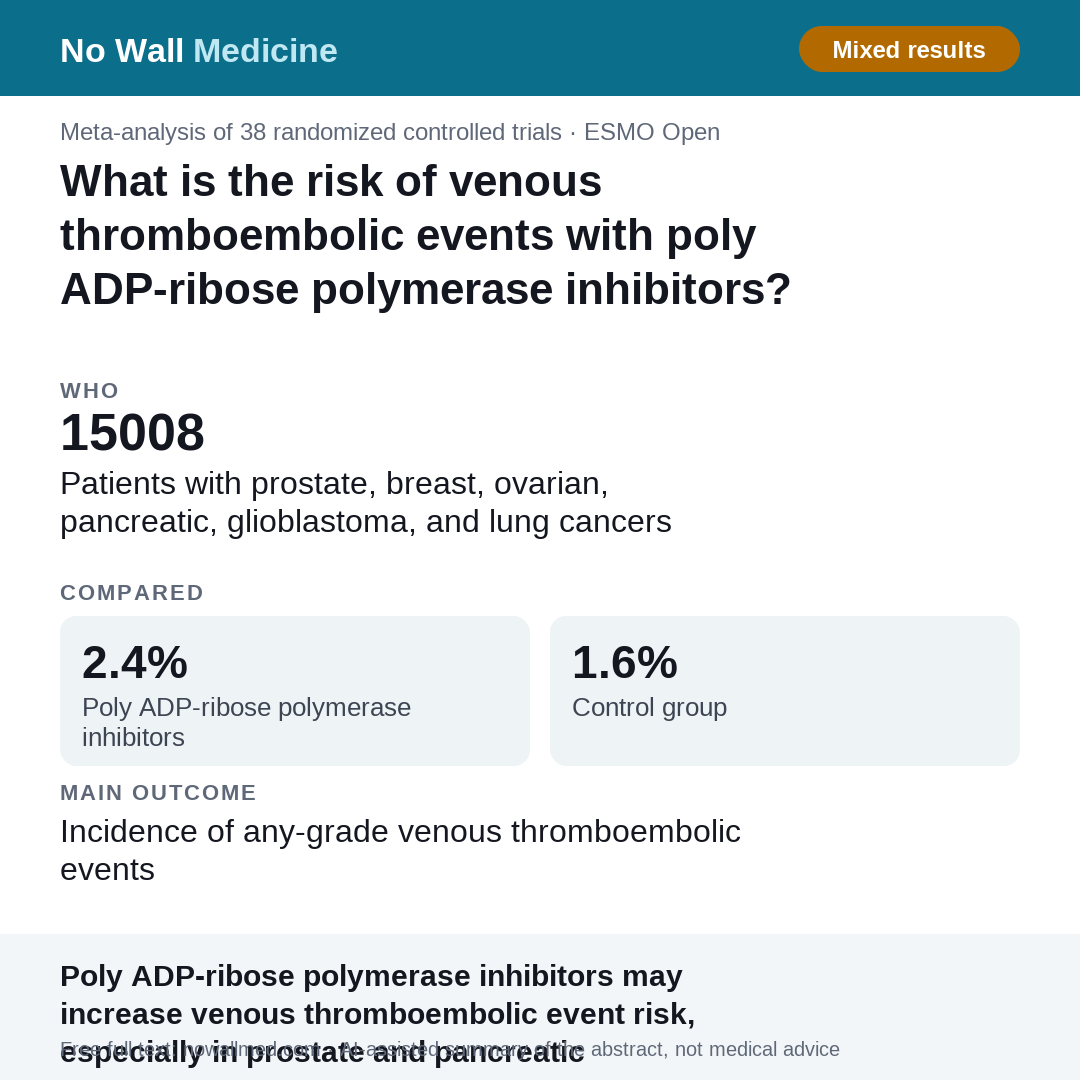
Venous thromboembolic event risk with PARP inhibitors in solid tumors: a systematic review and meta-analysis
Meta-analysis of 38 randomized controlled trialsMixed results
What is the risk of venous thromboembolic events with poly ADP-ribose polymerase inhibitors?
Who
15008
Patients with prostate, breast, ovarian, pancreatic, glioblastoma, and lung cancers
Compared
2.4%Poly ADP-ribose polymerase inhibitors
1.6%Control group
Main outcome
Incidence of any-grade venous thromboembolic events
Result: odds ratio 1.37 (95% CI 1.00-1.88)
Bottom line: Poly ADP-ribose polymerase inhibitors may increase venous thromboembolic event risk, especially in prostate and pancreatic cancer.
Limitation: Study heterogeneity, wide confidence intervals, and absence of patient-level data.
ESMO Open · 2025-09-29Download image
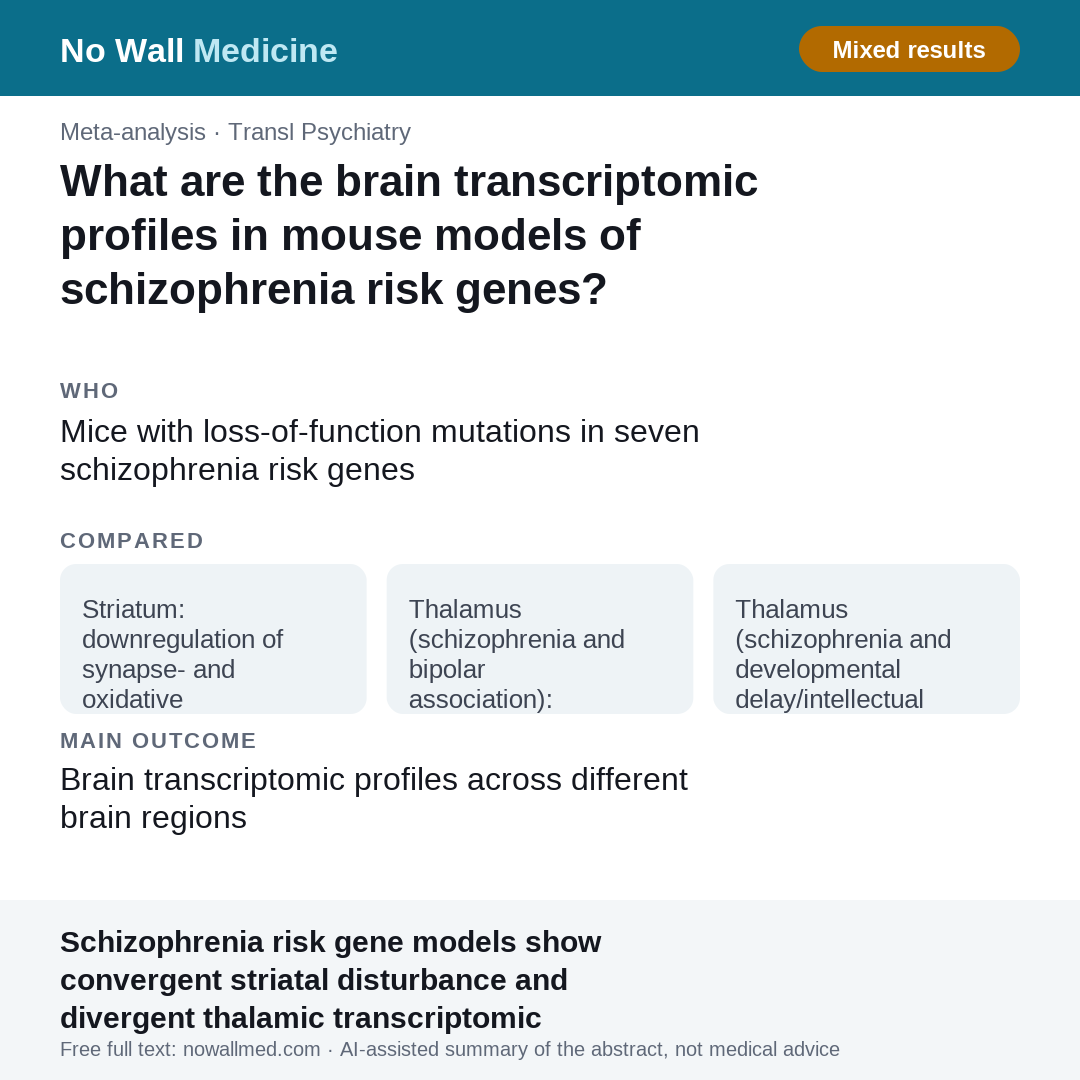
Meta-analysis of the brain transcriptomes of multiple genetic mouse models of schizophrenia highlights dysregulation in striatum and thalamus
Meta-analysisMixed results
What are the brain transcriptomic profiles in mouse models of schizophrenia risk genes?
Who
Mice with loss-of-function mutations in seven schizophrenia risk genes
Compared
Striatum: downregulation of synapse- and oxidative phosphorylation-related gene sets
Thalamus (schizophrenia and bipolar association): synapse-related gene sets were upregulated
Thalamus (schizophrenia and developmental delay/intellectual disability): synapse-related gene sets were downregulated
Main outcome
Brain transcriptomic profiles across different brain regions
Bottom line: Schizophrenia risk gene models show convergent striatal disturbance and divergent thalamic transcriptomic phenotypes.
Transl Psychiatry · 2025-09-29Download image
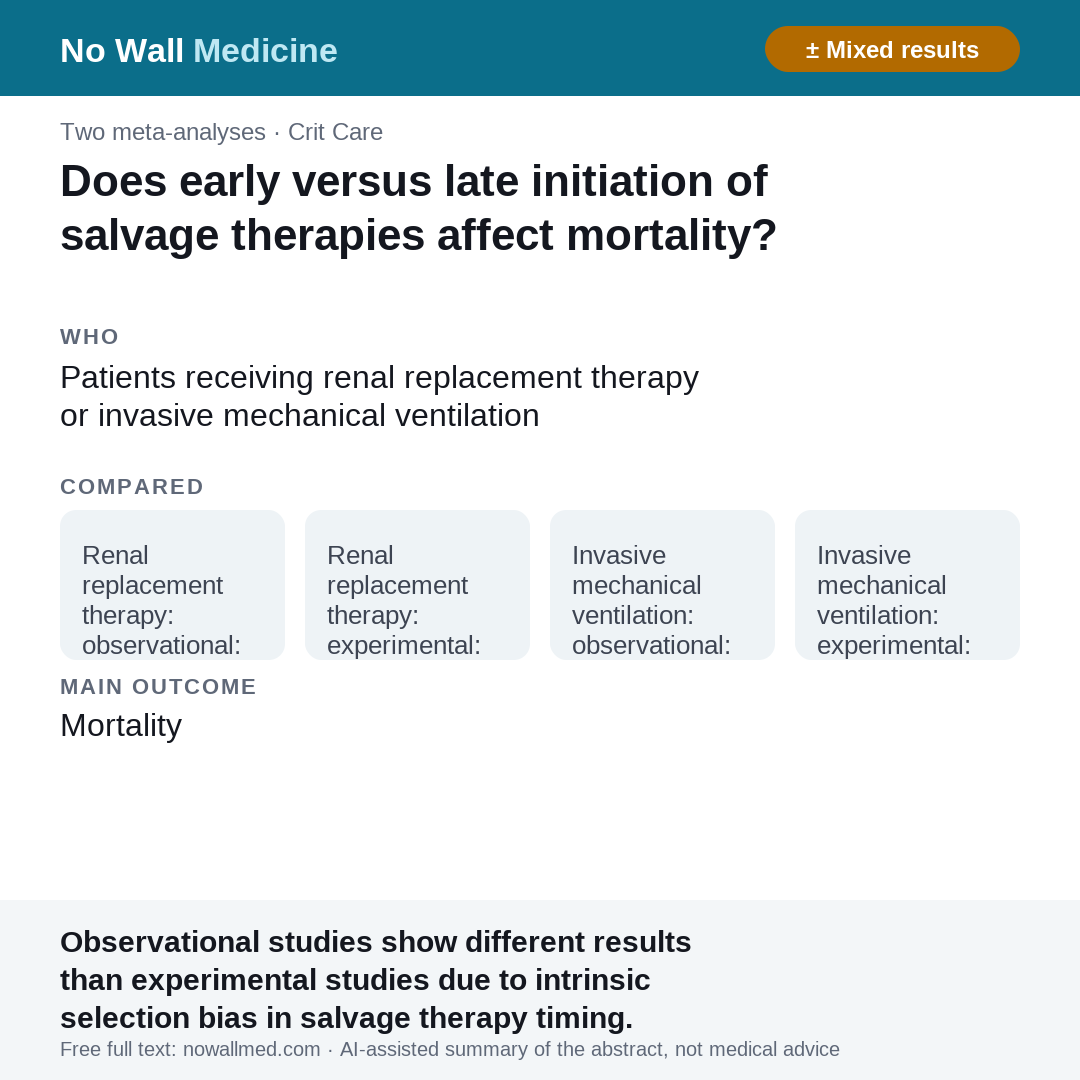
Observational studies of early versus late salvage therapies in critical care exhibit intrinsic selection bias: two meta-analyses
Two meta-analysesMixed results
Does early versus late initiation of salvage therapies affect mortality?
Who
Patients receiving renal replacement therapy or invasive mechanical ventilation
Compared
Renal replacement therapy: observational: OR 0.52 (95% CI 0.42-0.63)
Renal replacement therapy: experimental: OR 0.94 (95% CI 0.76-1.17)
Invasive mechanical ventilation: observational: OR 1.25 (95% CI 1.03-1.52)
Invasive mechanical ventilation: experimental: OR 1.86 (95% CI 0.90-3.86)
Main outcome
Mortality
Bottom line: Observational studies show different results than experimental studies due to intrinsic selection bias in salvage therapy timing.
Limitation: Selection bias in observational studies, worsened by only including subjects who receive the therapy.
Crit Care · 2025-09-29Download image
Does educating a patient about lumbar disc herniation affect the treatment compliance and outcome? A systematic review
Systematic reviewUnclear result
Does educating lumbar disc herniation patients affect treatment compliance and outcome?
Who
1046
Patients with lumbar disc herniation
Compared
Education
Control
Main outcome
Treatment compliance and functional and symptomatic outcomes
Bottom line: The review found heterogeneity in outcomes and scarce information regarding the effect of patient education on treatment compliance.
Limitation: Heterogeneity of selection criteria and outcomes limits accurate evidence.
Brain Spine · 2025-09-28Download image
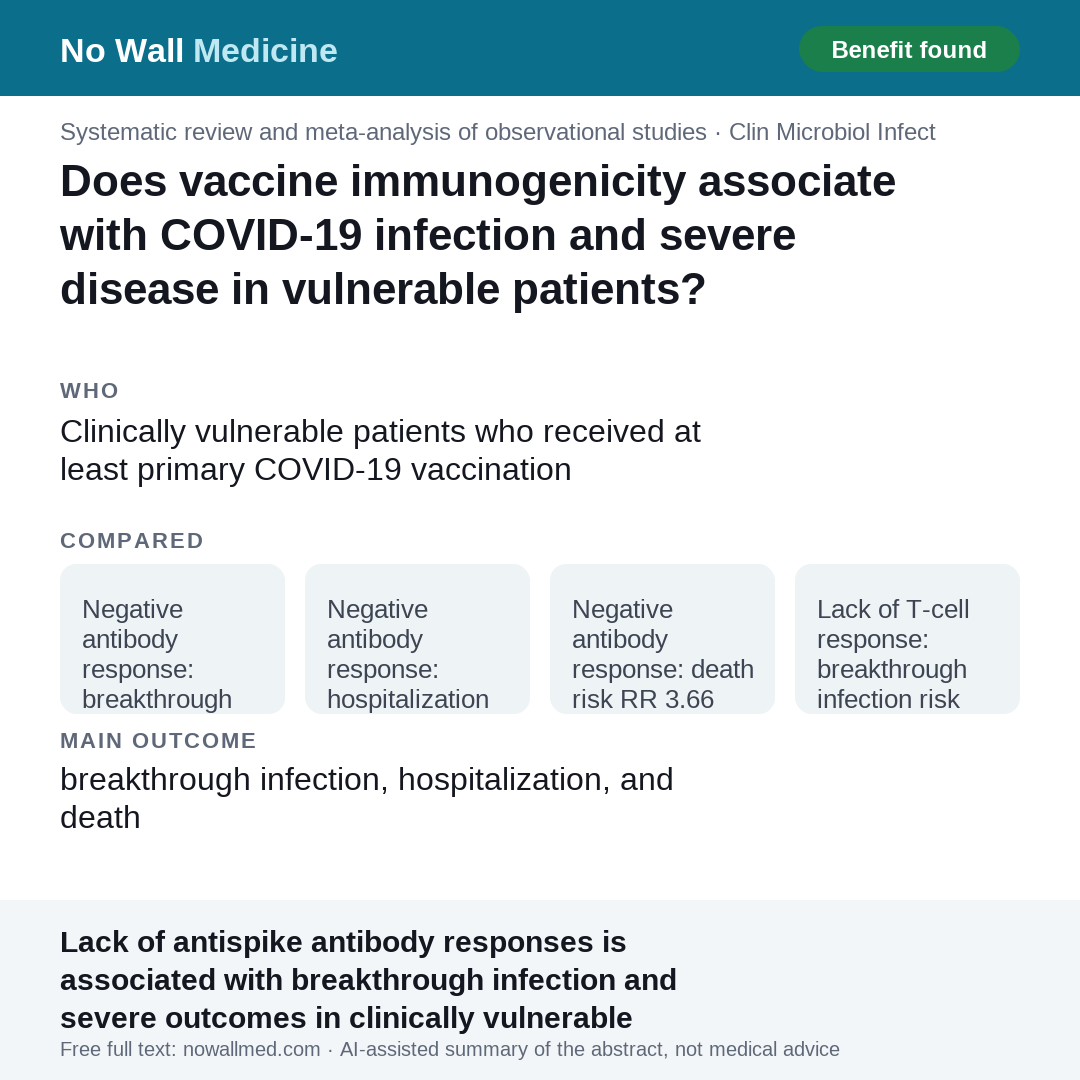
Association between COVID-19 vaccine immunogenicity and protection against infection and severe disease in clinically vulnerable patient populations: a systematic review and meta-analysis of observational studies
Systematic review and meta-analysis of observational studiesBenefit found
Does vaccine immunogenicity associate with COVID-19 infection and severe disease in vulnerable patients?
Who
Clinically vulnerable patients who received at least primary COVID-19 vaccination
Compared
Negative antibody response: breakthrough infection risk RR 1.82 (1.45-2.29)
Negative antibody response: hospitalization risk RR 5.88 (4.08-8.47)
Negative antibody response: death risk RR 3.66 (1.87-7.15)
Lack of T-cell response: breakthrough infection risk RR 2.08 (1.08-4.04)
Main outcome
breakthrough infection, hospitalization, and death
Bottom line: Lack of antispike antibody responses is associated with breakthrough infection and severe outcomes in clinically vulnerable populations.
Limitation: Most included studies were of poor quality according to the Newcastle-Ottawa Quality Assessment Scale.
Clin Microbiol Infect · 2025-09-27Download image
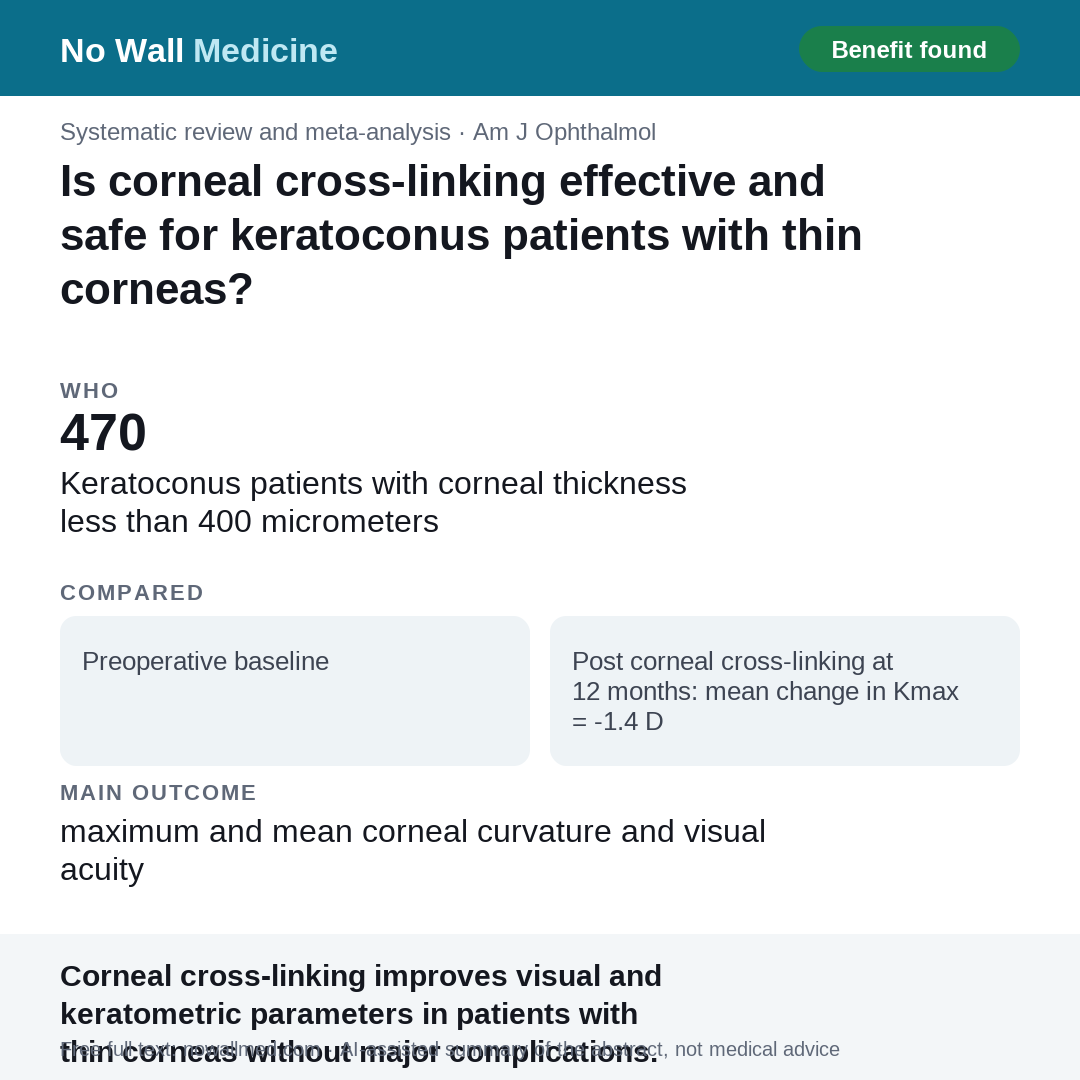
Effectiveness and Safety of Cross-Linking in Keratoconus Patients With Corneal Thickness <400 µm: A Systematic Review and Meta-analysis
Systematic review and meta-analysisBenefit found
Is corneal cross-linking effective and safe for keratoconus patients with thin corneas?
Who
470
Keratoconus patients with corneal thickness less than 400 micrometers
Compared
Preoperative baseline
Post corneal cross-linking at 12 months: mean change in Kmax = -1.4 D
Main outcome
maximum and mean corneal curvature and visual acuity
Result: mean change in Kmax = -1.4 D (95% CI -2.0, -0.9)
Bottom line: Corneal cross-linking improves visual and keratometric parameters in patients with thin corneas without major complications.
Limitation: Most studies were retrospective case series with substantial potential for bias and heterogeneity.
Am J Ophthalmol · 2025-09-27Download image
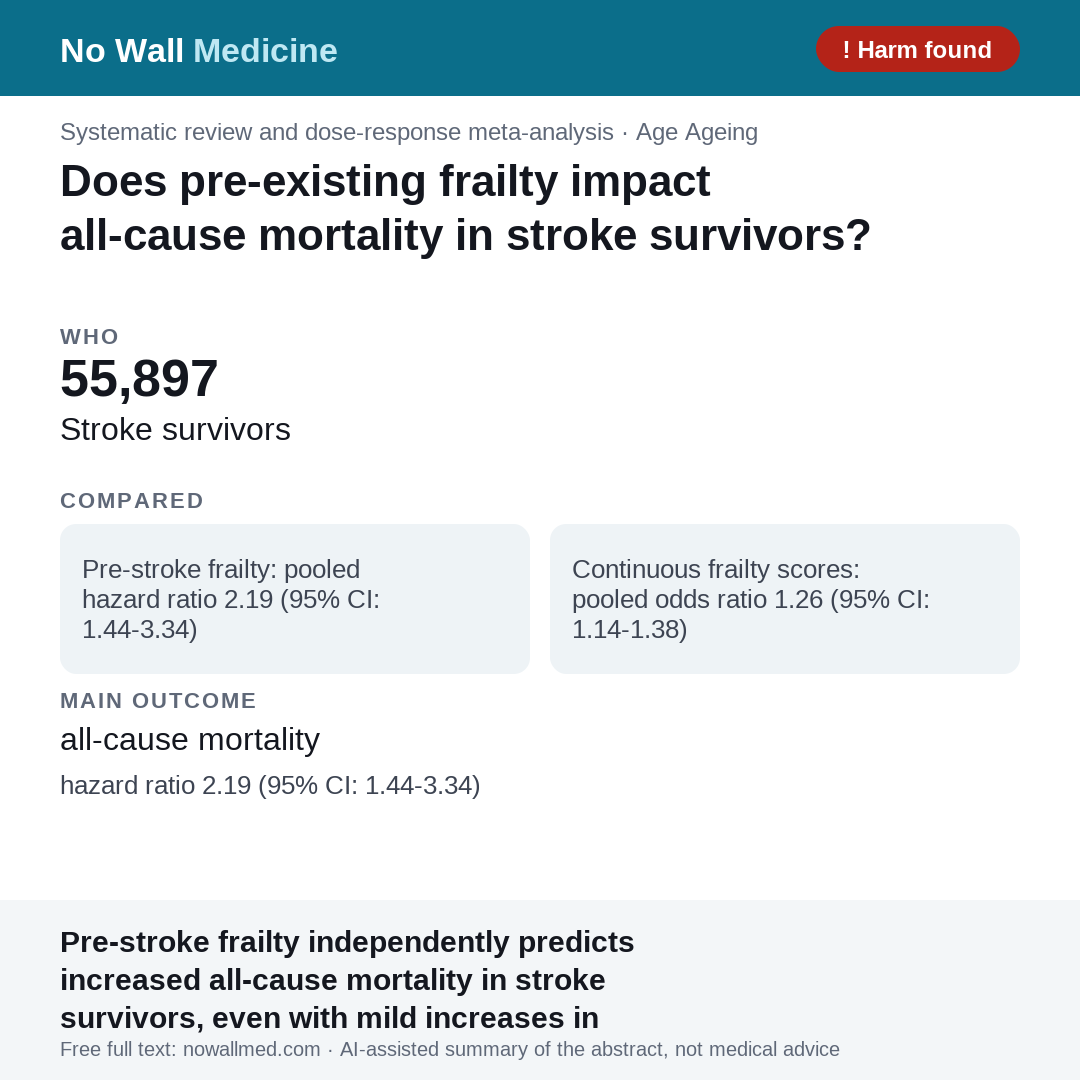
Impact of pre-existing frailty on all-cause mortality in stroke survivors: a systematic review and dose-response meta-analysis
Systematic review and dose-response meta-analysisHarm found
Does pre-existing frailty impact all-cause mortality in stroke survivors?
Who
55,897
Stroke survivors
Compared
Pre-stroke frailty: pooled hazard ratio 2.19 (95% CI: 1.44-3.34)
Continuous frailty scores: pooled odds ratio 1.26 (95% CI: 1.14-1.38)
Main outcome
all-cause mortality
Result: hazard ratio 2.19 (95% CI: 1.44-3.34)
Bottom line: Pre-stroke frailty independently predicts increased all-cause mortality in stroke survivors, even with mild increases in frailty burden.
Age Ageing · 2025-09-27Download image
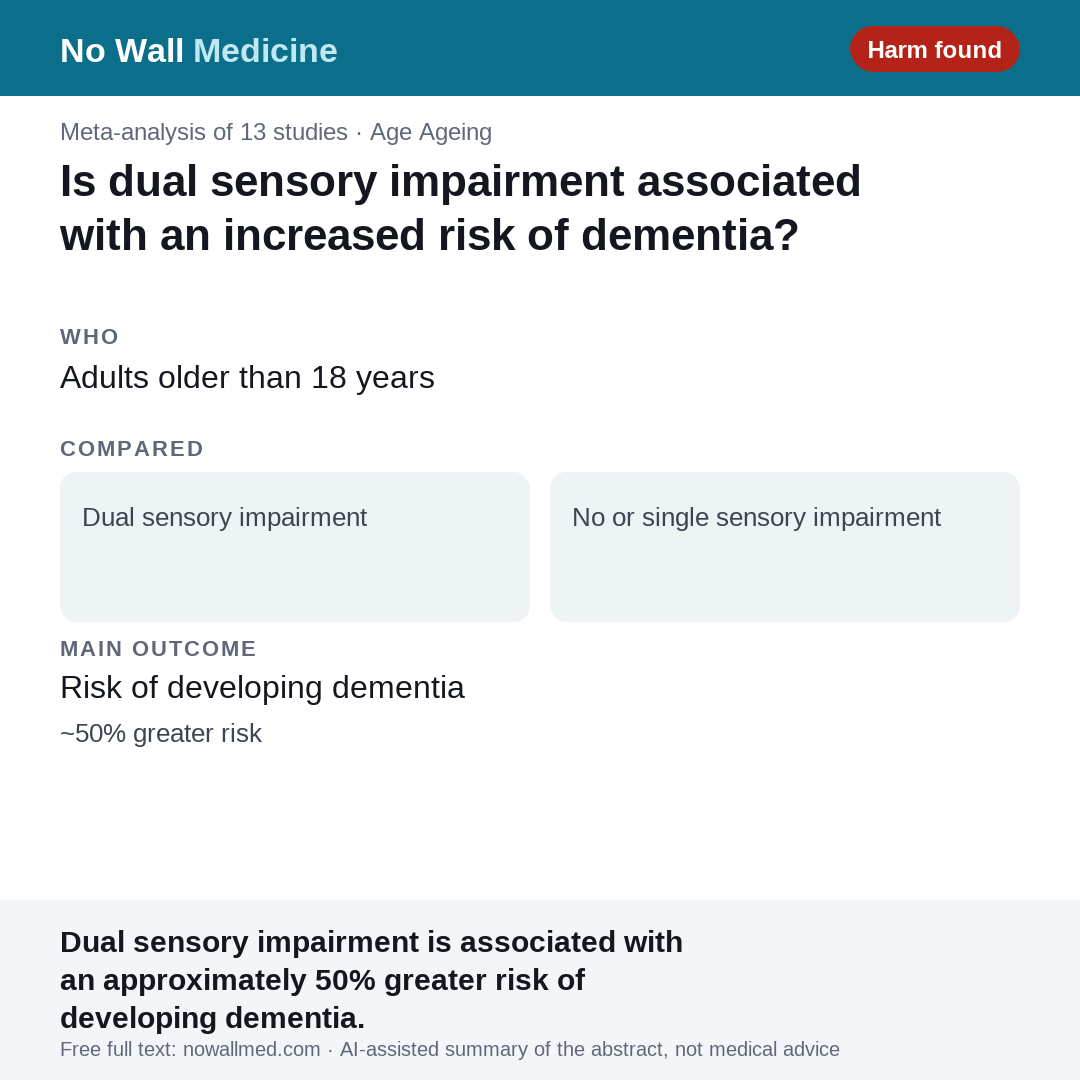
The association between dual sensory impairment and dementia: a meta-analysis and systematic review of the literature
Meta-analysis of 13 studiesHarm found
Is dual sensory impairment associated with an increased risk of dementia?
Who
Adults older than 18 years
Compared
Dual sensory impairment
No or single sensory impairment
Main outcome
Risk of developing dementia
Result: ~50% greater risk
Bottom line: Dual sensory impairment is associated with an approximately 50% greater risk of developing dementia.
Age Ageing · 2025-09-27Download image
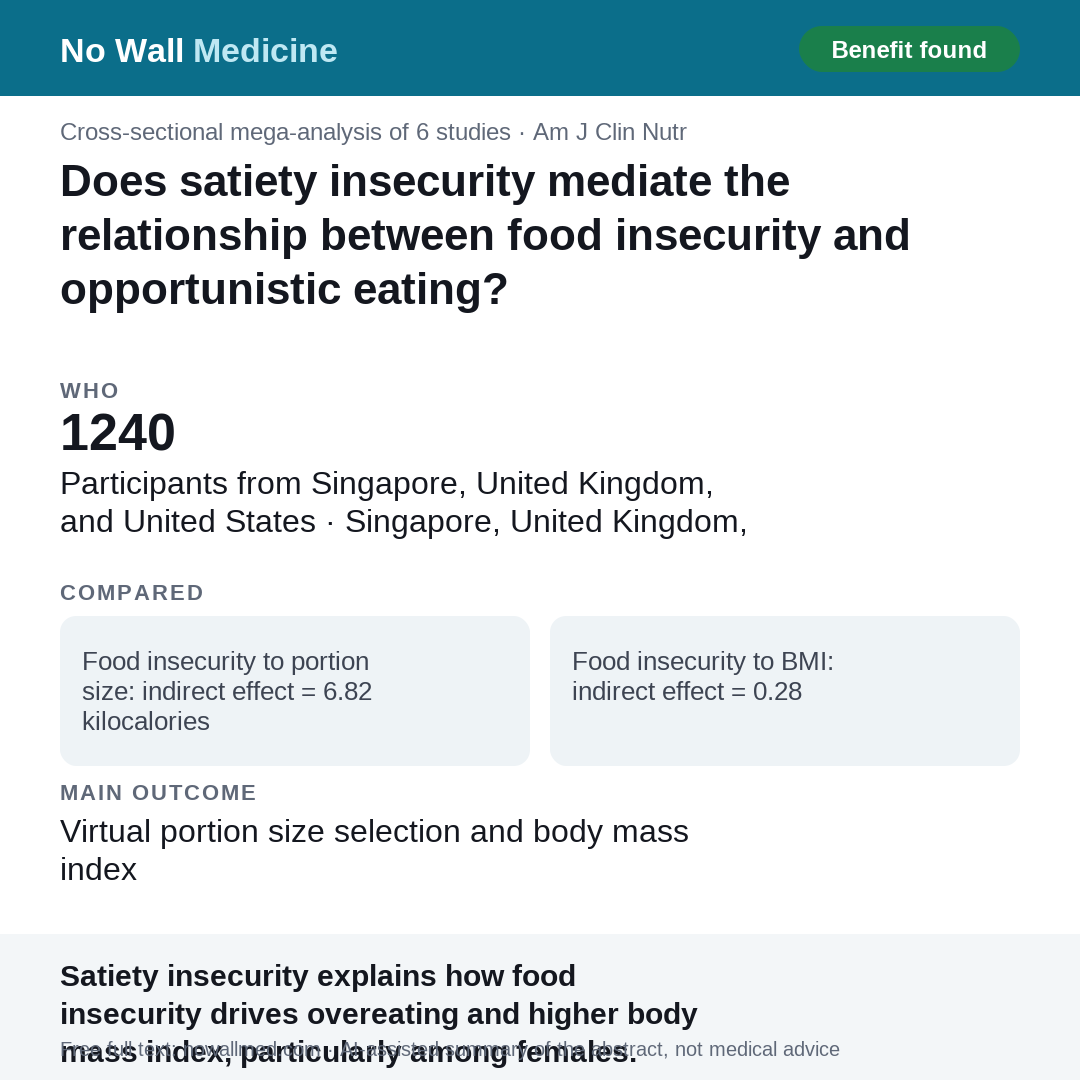
Food insecurity may promote opportunistic eating through heightened satiety insecurity: A cross-sectional mega-analysis study
Cross-sectional mega-analysis of 6 studiesBenefit found
Does satiety insecurity mediate the relationship between food insecurity and opportunistic eating?
Who
1240
Participants from Singapore, United Kingdom, and United States · Singapore, United Kingdom, and United States
Compared
Food insecurity to portion size: indirect effect = 6.82 kilocalories
Food insecurity to BMI: indirect effect = 0.28
Main outcome
Virtual portion size selection and body mass index
Result: indirect effect 6.82 kilocalories (95% CI 4.15, 9.50); indirect effect 0.28 (95% CI 0.14, 0.42)
Bottom line: Satiety insecurity explains how food insecurity drives overeating and higher body mass index, particularly among females.
Am J Clin Nutr · 2025-09-27Download image
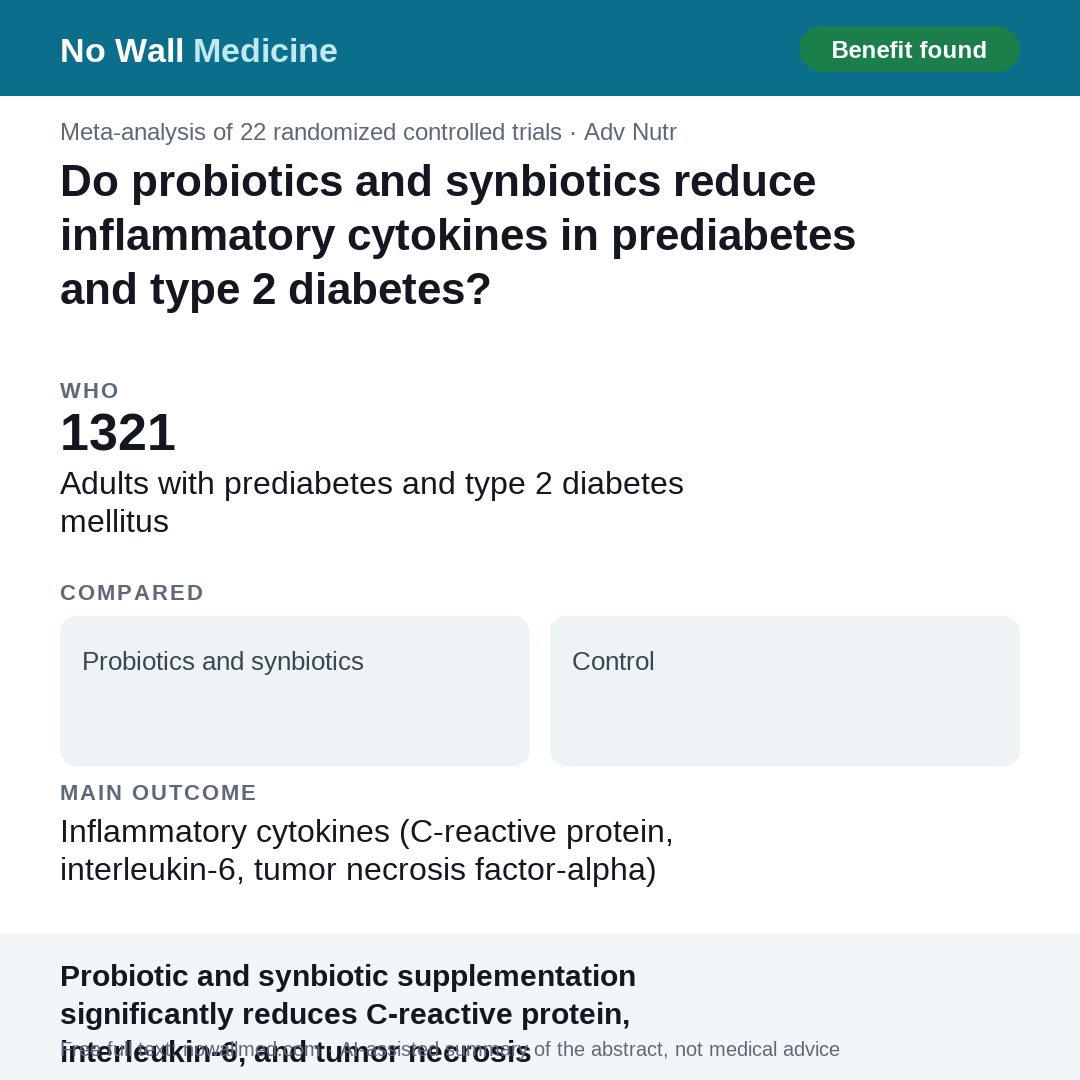
Probiotics and Synbiotics Supplementation Reduce Inflammatory Cytokines in Individuals with Prediabetes and Type 2 Diabetes Mellitus: Findings from a Systematic Review Meta-analysis
Meta-analysis of 22 randomized controlled trialsBenefit found
Do probiotics and synbiotics reduce inflammatory cytokines in prediabetes and type 2 diabetes?
Who
1321
Adults with prediabetes and type 2 diabetes mellitus
Compared
Probiotics and synbiotics
Control
Main outcome
Inflammatory cytokines (C-reactive protein, interleukin-6, tumor necrosis factor-alpha)
Result: WMD: -0.46 mg/L (95% CI: [-0.77, -0.15]) for CRP; -0.43 pg/ml (95% CI: [-0.76, -0.09]) for IL-6; -1.42 pg/ml (95% CI: [-2.15, -0.69]) for TNF-alpha
Bottom line: Probiotic and synbiotic supplementation significantly reduces C-reactive protein, interleukin-6, and tumor necrosis factor-alpha in prediabetes and type 2 diabetes.
Adv Nutr · 2025-09-27Download image
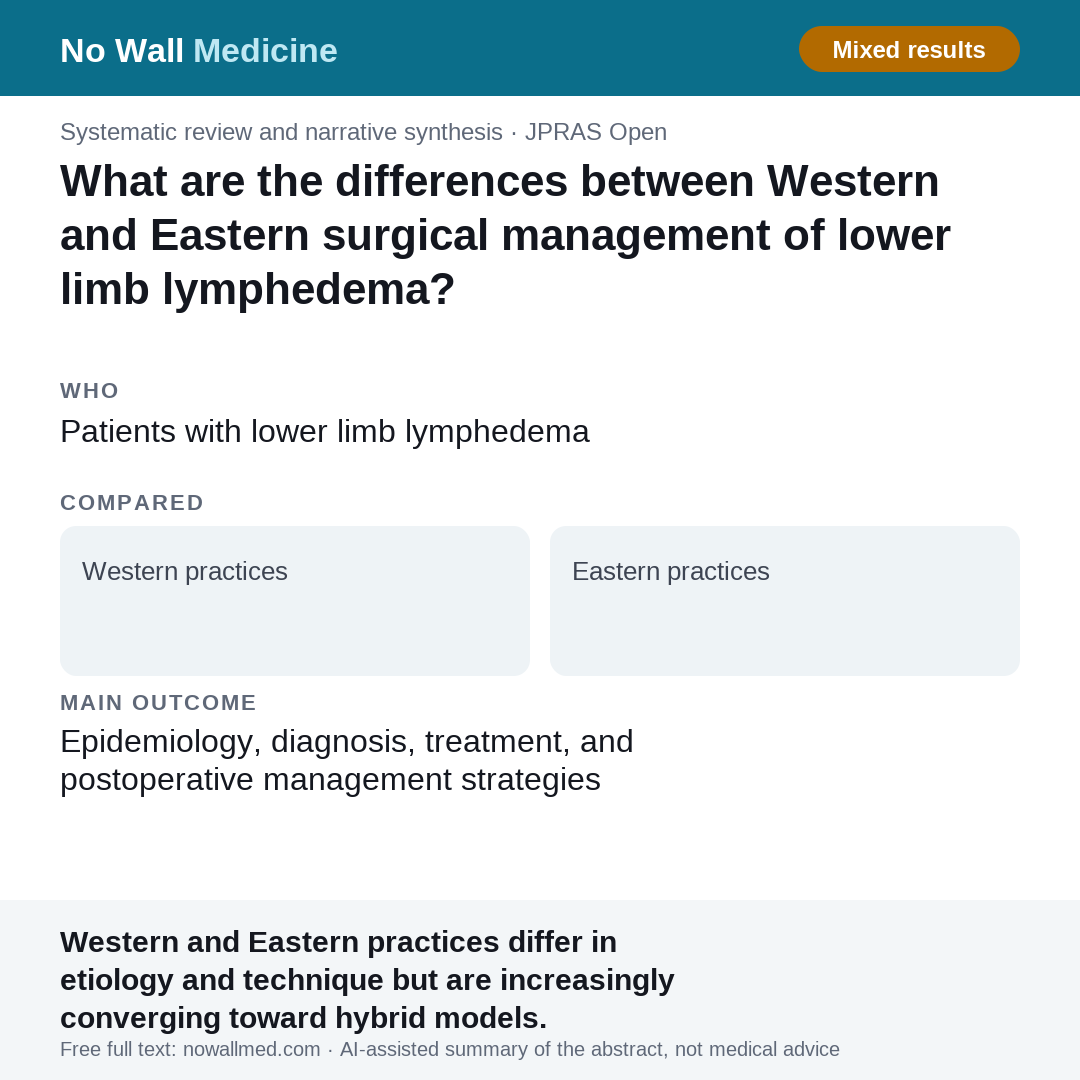
Insights and contrasts between Western and Eastern practices of surgical management of lower limb lymphedema: A systematic review and narrative synthesis
Systematic review and narrative synthesisMixed results
What are the differences between Western and Eastern surgical management of lower limb lymphedema?
Who
58
Patients with lower limb lymphedema
Compared
Western practices
Eastern practices
Main outcome
Epidemiology, diagnosis, treatment, and postoperative management strategies
Bottom line: Western and Eastern practices differ in etiology and technique but are increasingly converging toward hybrid models.
JPRAS Open · 2025-09-27Download image
The effect of disease-modifying therapies on brain volume loss and disability accumulation in multiple sclerosis: a systematic review and network meta-analysis
Systematic review and network meta-analysisBenefit found
How do disease-modifying therapies compare in reducing brain volume loss and disability in multiple sclerosis?
Who
26,247
Adults with multiple sclerosis
Compared
Disease-modifying therapies
Placebo
Main outcome
Brain volume loss
Bottom line: Several disease-modifying therapies significantly reduce brain volume loss, which correlates with reduced disability accumulation in multiple sclerosis.
Lancet Reg Health Eur · 2025-09-27Download image

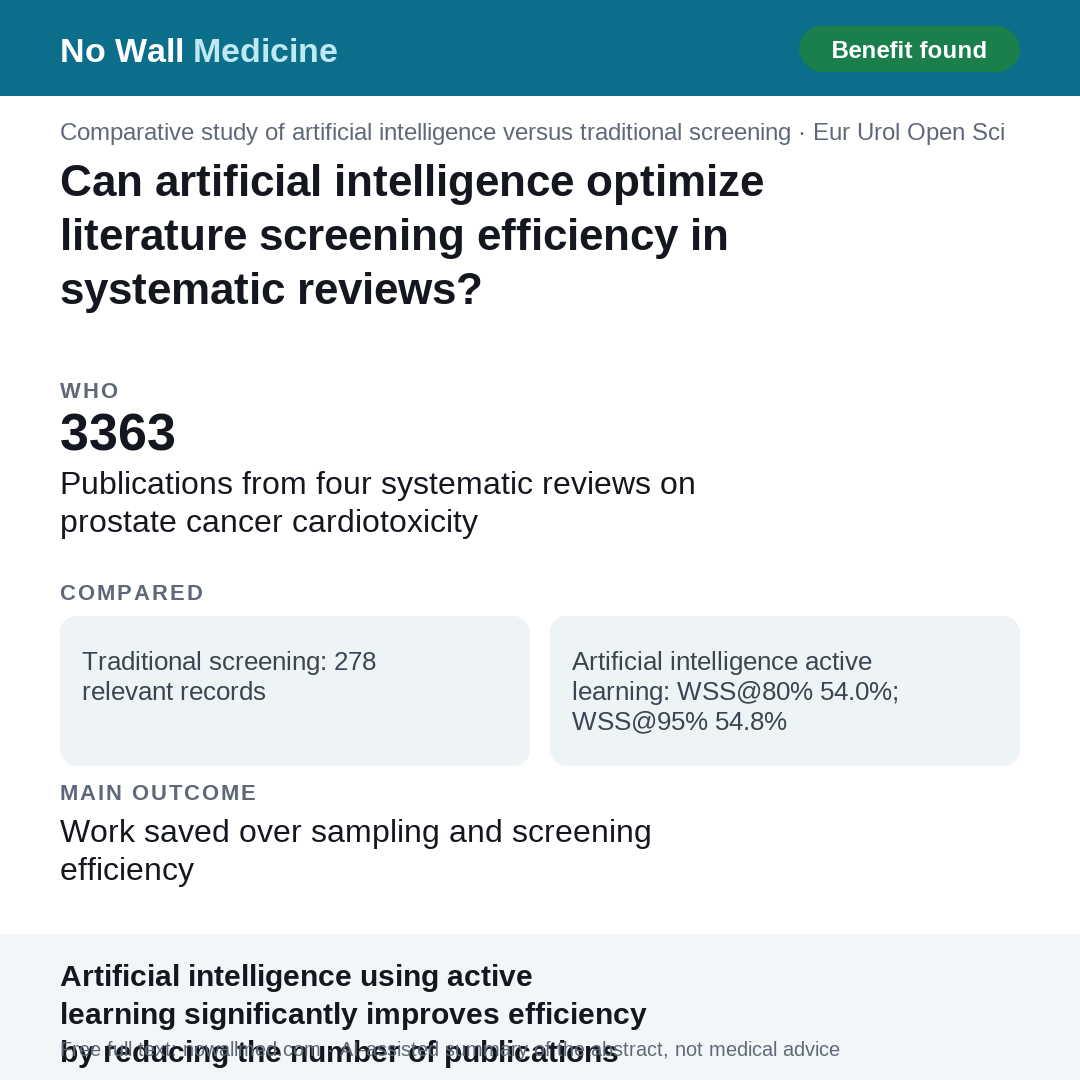
Using Artificial Intelligence for Text Screening in a Systematic Review of Cardiotoxicity
Comparative study of artificial intelligence versus traditional screeningBenefit found
Can artificial intelligence optimize literature screening efficiency in systematic reviews?
Who
3363
Publications from four systematic reviews on prostate cancer cardiotoxicity
Compared
Traditional screening: 278 relevant records
Artificial intelligence active learning: WSS@80% 54.0%; WSS@95% 54.8%
Main outcome
Work saved over sampling and screening efficiency
Bottom line: Artificial intelligence using active learning significantly improves efficiency by reducing the number of publications required for screening.
Eur Urol Open Sci · 2025-09-27Download image
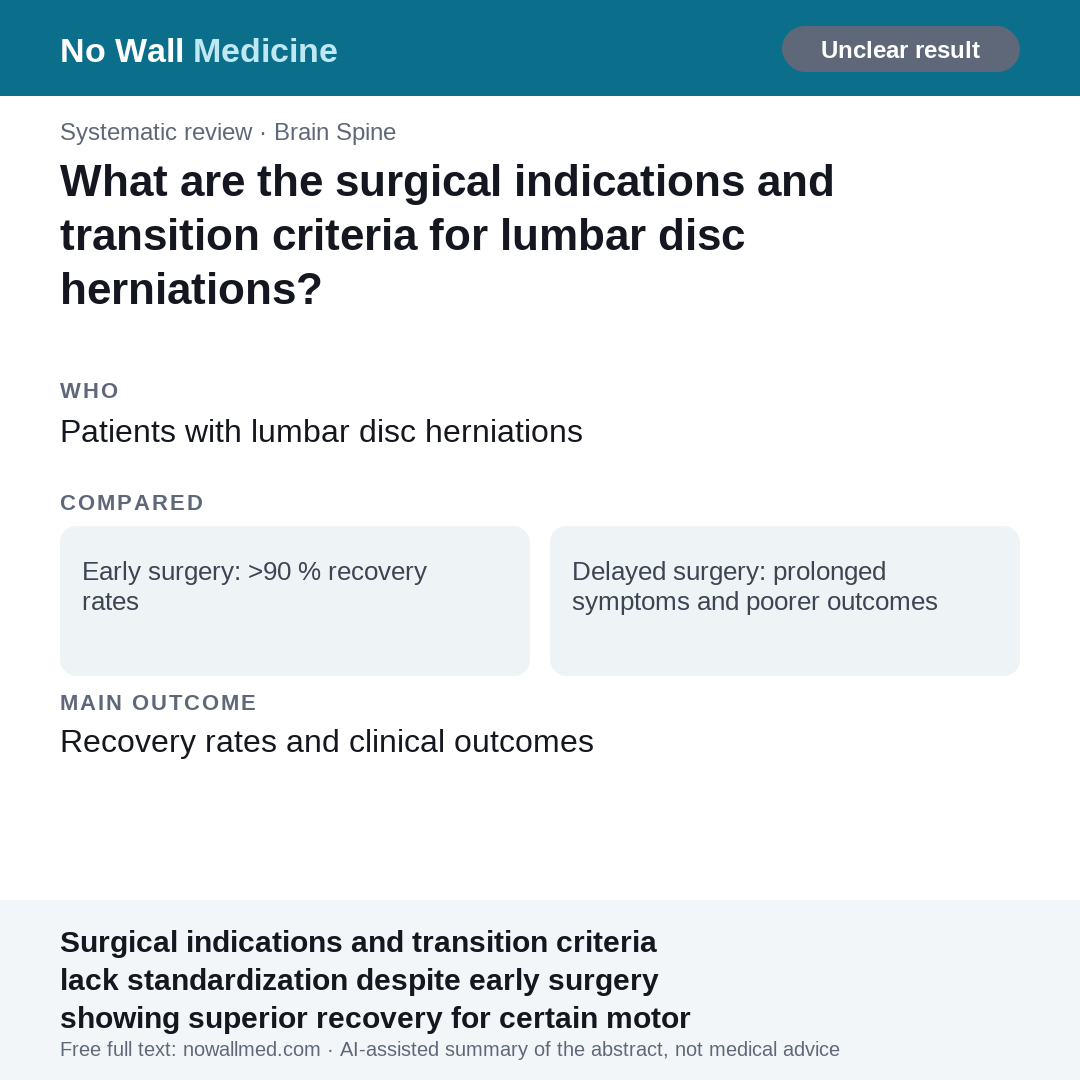
Indications for surgery versus conservative treatment in the management of lumbar disc herniations: A systematic review
Systematic reviewUnclear result
What are the surgical indications and transition criteria for lumbar disc herniations?
Who
Patients with lumbar disc herniations
Compared
Early surgery: >90 % recovery rates
Delayed surgery: prolonged symptoms and poorer outcomes
Main outcome
Recovery rates and clinical outcomes
Bottom line: Surgical indications and transition criteria lack standardization despite early surgery showing superior recovery for certain motor deficits.
Limitation: Significant heterogeneity in surgical indications, timing, and decision-making criteria.
Brain Spine · 2025-09-27Download image
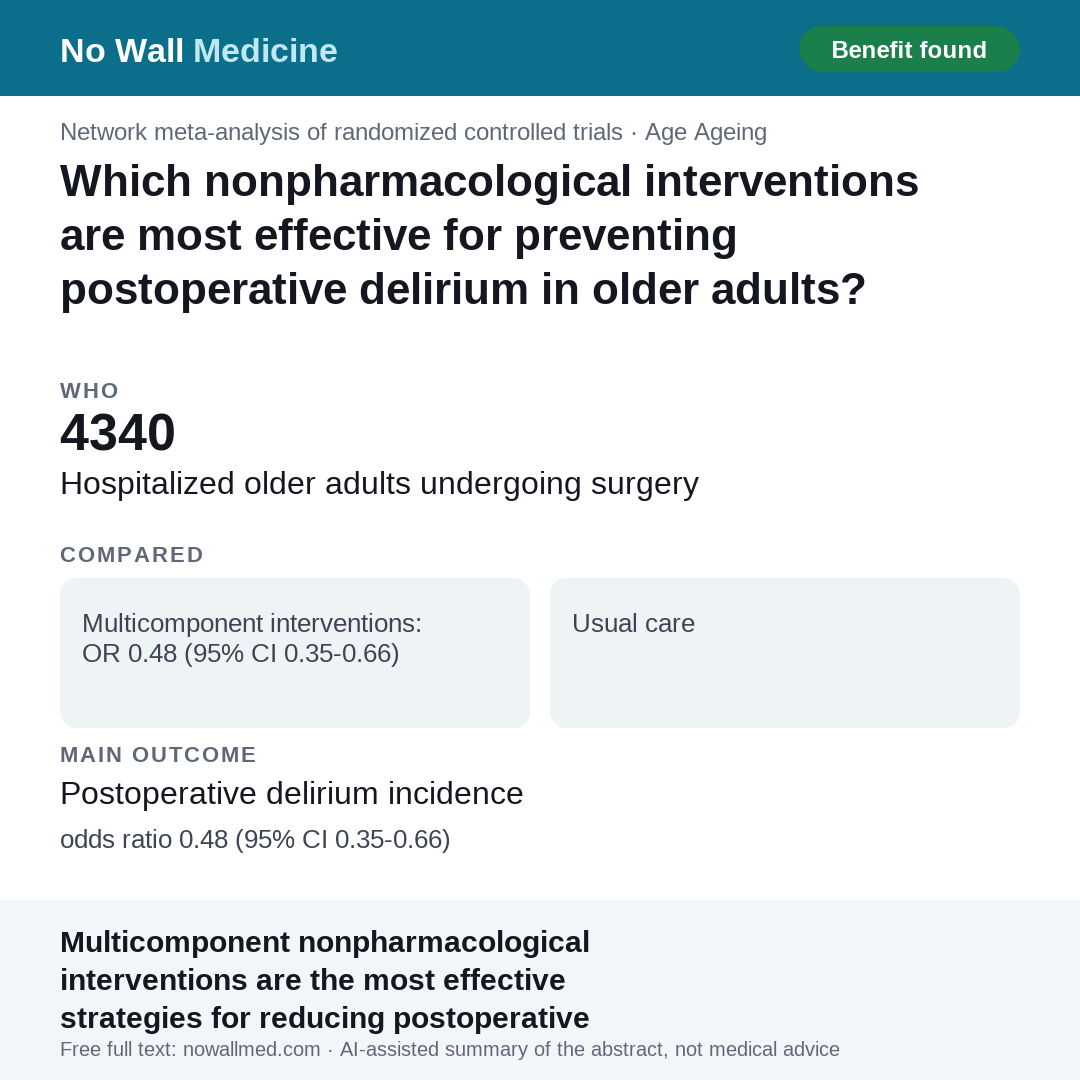
Comparative efficacy of nonpharmacological interventions for preventing postoperative delirium in hospitalized older adults: a systematic review and network meta-analysis
Network meta-analysis of randomized controlled trialsBenefit found
Which nonpharmacological interventions are most effective for preventing postoperative delirium in older adults?
Who
4340
Hospitalized older adults undergoing surgery
Compared
Multicomponent interventions: OR 0.48 (95% CI 0.35-0.66)
Usual care
Main outcome
Postoperative delirium incidence
Result: odds ratio 0.48 (95% CI 0.35-0.66)
Bottom line: Multicomponent nonpharmacological interventions are the most effective strategies for reducing postoperative delirium incidence in hospitalized older adults.
Age Ageing · 2025-09-26Download image
The Effect of Community-based Group Activities on Psychological Well-Being in People Living With Dementia: A Systematic Review
Systematic reviewBenefit found
Do community-based group activities improve psychological well-being in people living with dementia?
Who
18
People living with dementia in community settings · Community settings
Compared
Community-based group activities
Control
Main outcome
Psychological well-being
Bottom line: Community-based group activities show a positive trend in improving psychological well-being for people living with dementia.
Limitation: Limited research and need for more high-quality research to understand effectiveness.
J Am Med Dir Assoc · 2025-09-26Download image

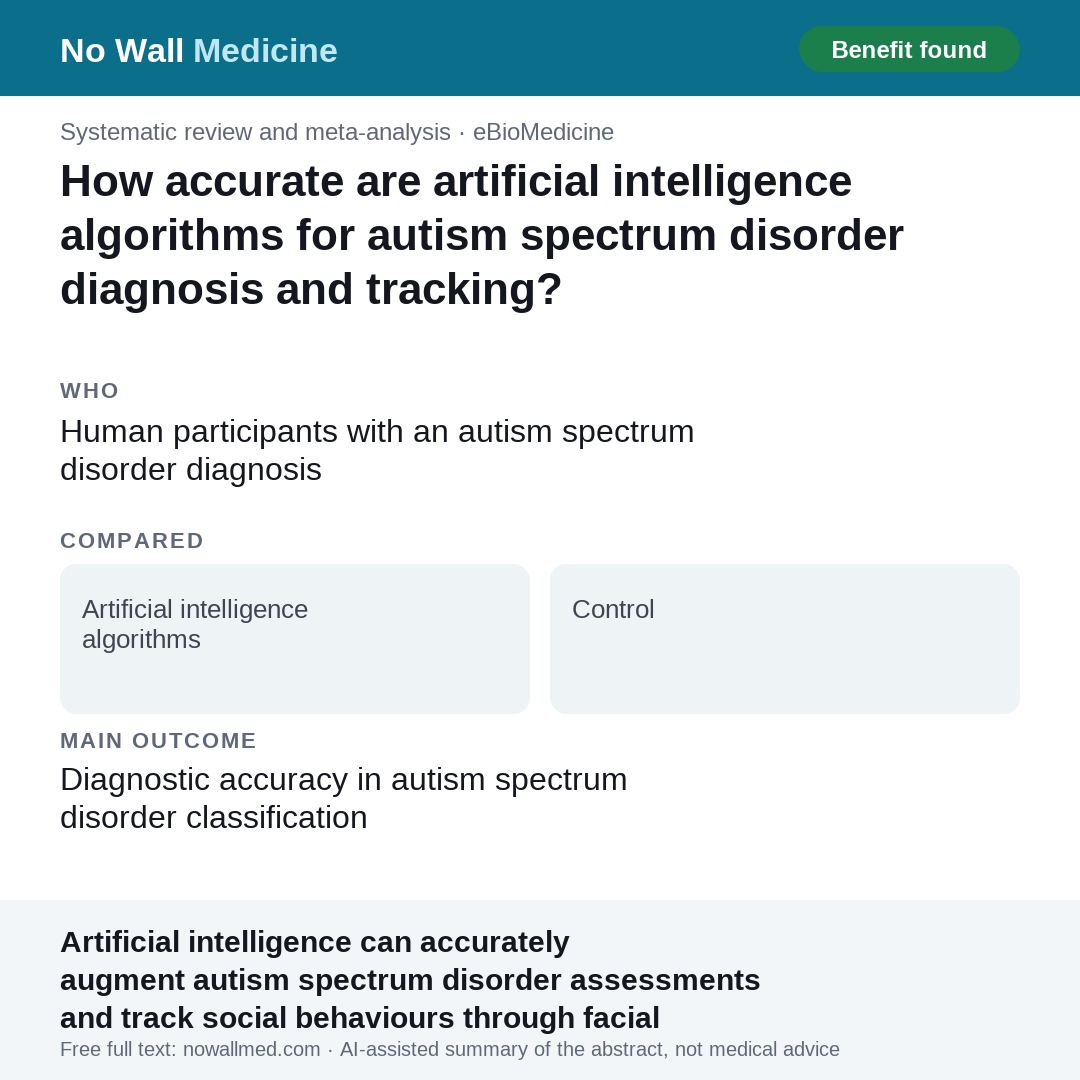
Artificial intelligence for tracking social behaviours and supporting an autism spectrum disorder diagnosis: systematic review and meta-analysis
Systematic review and meta-analysisBenefit found
How accurate are artificial intelligence algorithms for autism spectrum disorder diagnosis and tracking?
Who
Human participants with an autism spectrum disorder diagnosis
Compared
Artificial intelligence algorithms
Control
Main outcome
Diagnostic accuracy in autism spectrum disorder classification
Result: diagnostic odds ratio 15.917 (95% CI 4.775 to 53.059)
Bottom line: Artificial intelligence can accurately augment autism spectrum disorder assessments and track social behaviours through facial information.
Limitation: Further validation in diverse populations is needed to ensure clinical applicability and ethical use.
eBioMedicine · 2025-09-26Download image