Visual abstracts
New randomized trials and meta-analyses from leading journals at a glance: who was studied, what was compared, and what was found. Every paper is free to read in full.
All specialtiesCardiology 4832Oncology 4114Gastroenterology & Hepatology 1934Infectious Disease 3824Neurology 1899Psychiatry & Mental Health 2256Pulmonology 2082Critical Care 1345Endocrinology & Diabetes 2572Pediatrics 2940Surgery 2525Orthopedics & Sports Medicine 926Neurosurgery 534Cardiothoracic & Vascular Surgery 671Plastic & Reconstructive Surgery 591Nephrology 1124Rheumatology 823Hematology 1104Dermatology 620Ophthalmology 543Obstetrics & Gynecology 1684Public & Global Health 1056Radiology & Imaging 641Anesthesiology 962Urology 754ENT (Otolaryngology) 503Emergency Medicine 489Allergy & Immunology 313Geriatrics 981Family Medicine & Primary Care 541Medical Genetics & Genomics 675Pathology & Laboratory Medicine 157Physical Medicine & Rehabilitation 751Palliative Care 424Nutrition 1580Digital Health & AI 2195General Medicine 321
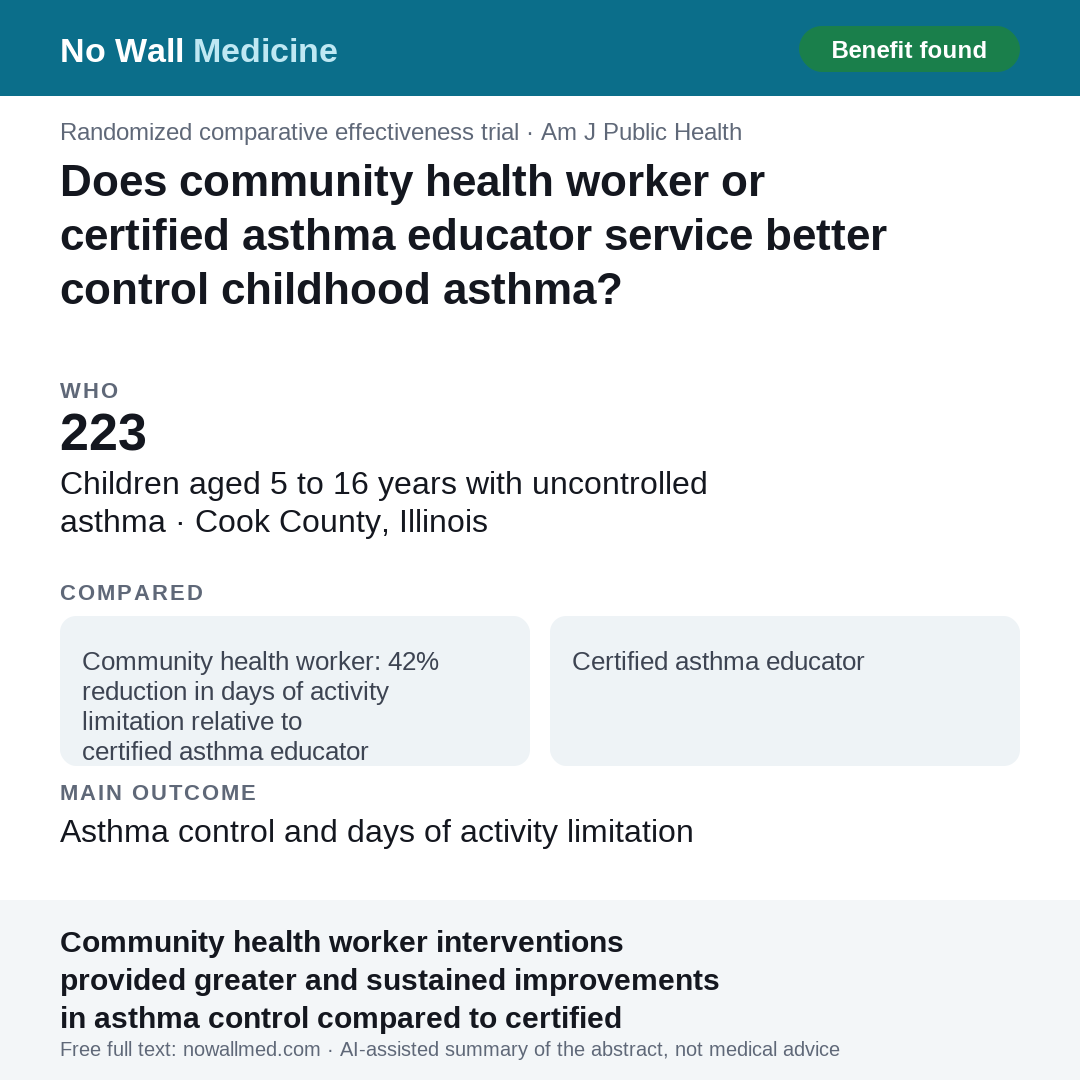
Community Health Worker Asthma Interventions for Children: Results From a Clinically Integrated Randomized Comparative Effectiveness Trial (2016‒2019)
Randomized comparative effectiveness trialBenefit found
Does community health worker or certified asthma educator service better control childhood asthma?
Who
223
Children aged 5 to 16 years with uncontrolled asthma · Cook County, Illinois
Compared
Community health worker: 42% reduction in days of activity limitation relative to certified asthma educator
Certified asthma educator
Main outcome
Asthma control and days of activity limitation
Result: b 0.58 (95% confidence interval 0.35, 0.96)
Bottom line: Community health worker interventions provided greater and sustained improvements in asthma control compared to certified asthma educators.
Am J Public Health · 2021-06-10Download image
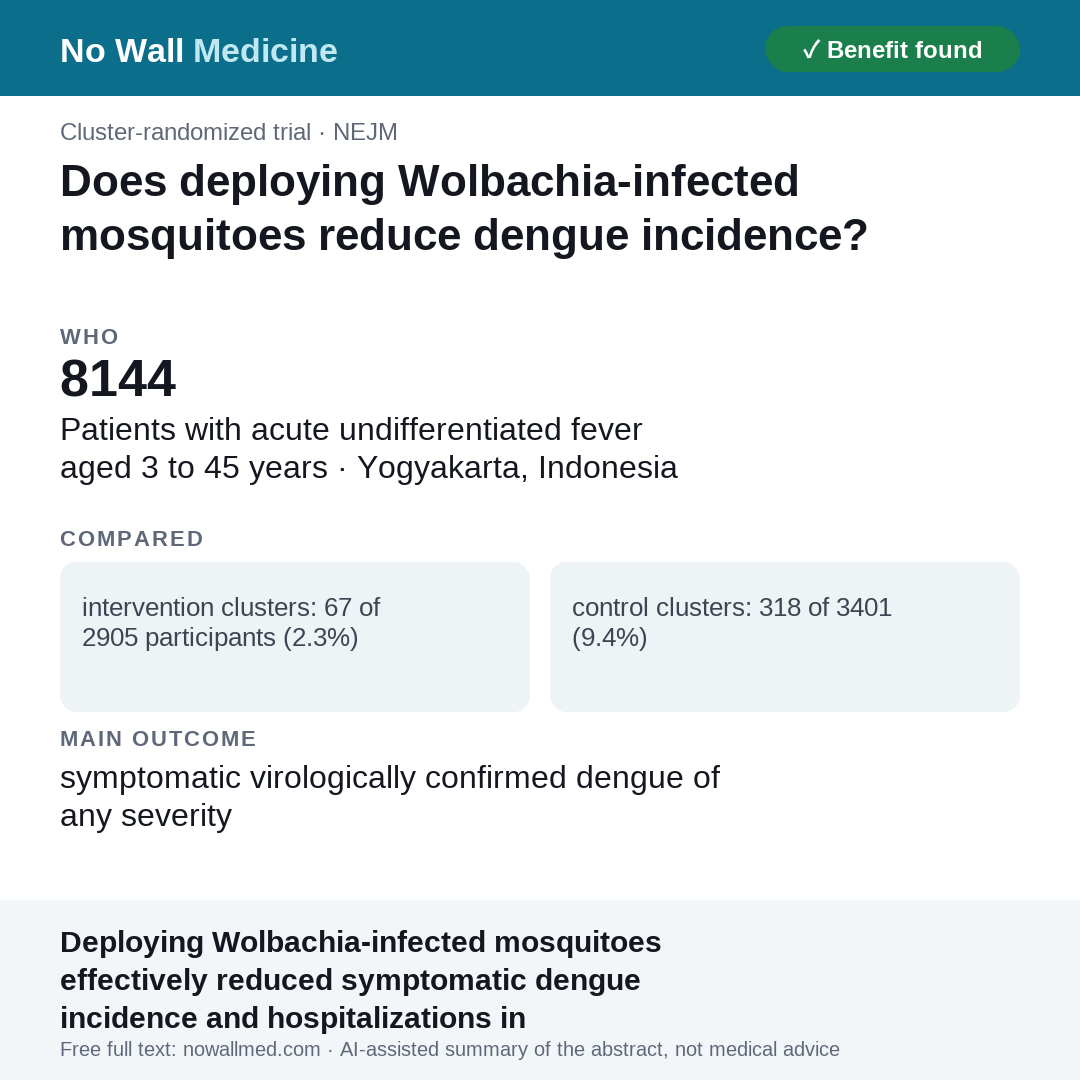
Efficacy of Wolbachia-Infected Mosquito Deployments for the Control of Dengue
Cluster-randomized trialBenefit found
Does deploying Wolbachia-infected mosquitoes reduce dengue incidence?
Who
8144
Patients with acute undifferentiated fever aged 3 to 45 years · Yogyakarta, Indonesia
Compared
intervention clusters: 67 of 2905 participants (2.3%)
control clusters: 318 of 3401 (9.4%)
Main outcome
symptomatic virologically confirmed dengue of any severity
Result: protective efficacy 77.1% (95% CI, 65.3 to 84.9)
Bottom line: Deploying Wolbachia-infected mosquitoes effectively reduced symptomatic dengue incidence and hospitalizations in Yogyakarta, Indonesia.
Funded by: Tahija Foundation and others
NEJM · 2021-06-09Download image
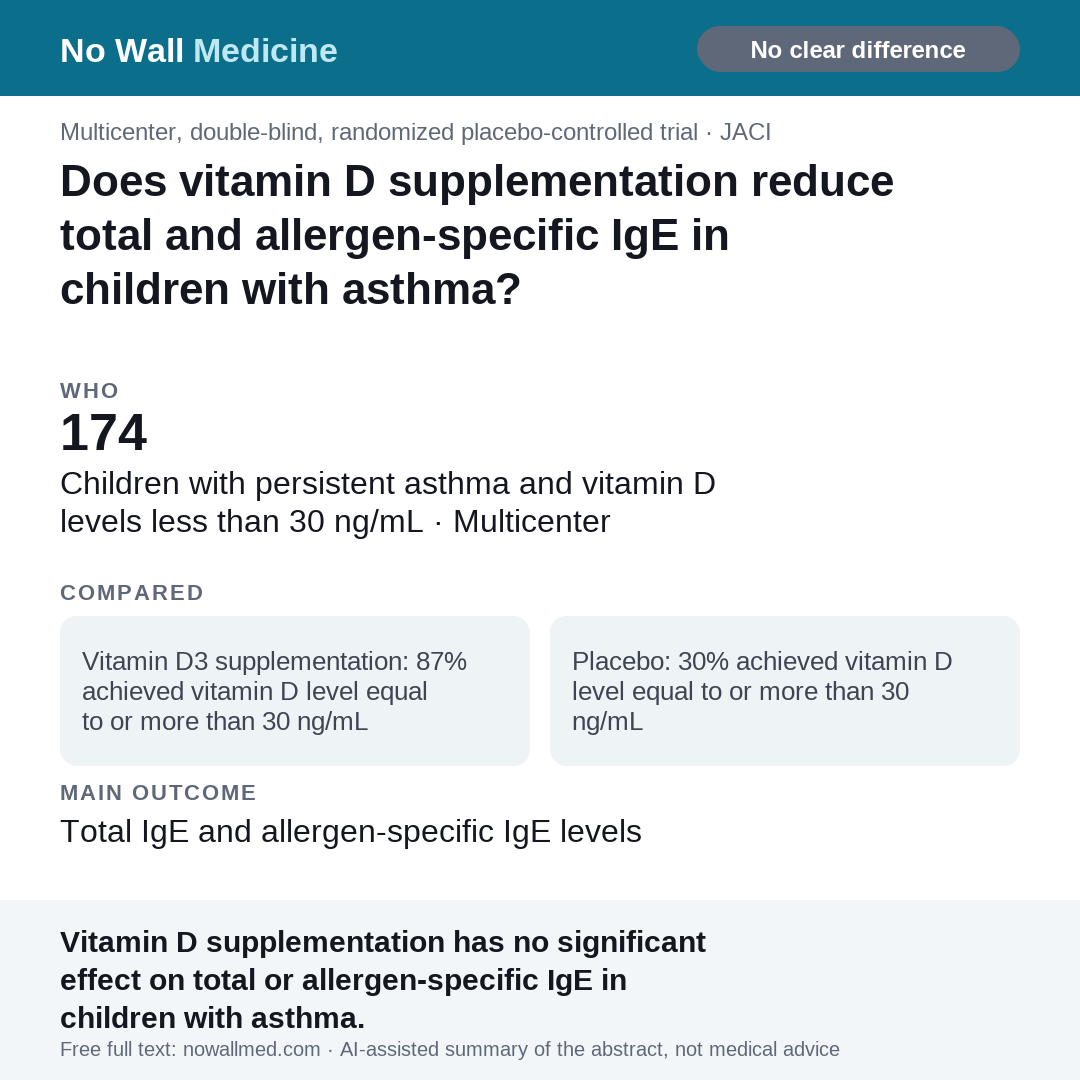
Effect of vitamin D supplementation on total and allergen-specific IgE in children with asthma and low vitamin D levels
Multicenter, double-blind, randomized placebo-controlled trialNo clear difference
Does vitamin D supplementation reduce total and allergen-specific IgE in children with asthma?
Who
174
Children with persistent asthma and vitamin D levels less than 30 ng/mL · Multicenter
Compared
Vitamin D3 supplementation: 87% achieved vitamin D level equal to or more than 30 ng/mL
Placebo: 30% achieved vitamin D level equal to or more than 30 ng/mL
Main outcome
Total IgE and allergen-specific IgE levels
Result: log10 total IgE, β = 0.007; 95% CI, -0.061 to 0.074
Bottom line: Vitamin D supplementation has no significant effect on total or allergen-specific IgE in children with asthma.
JACI · 2021-06-09Download image
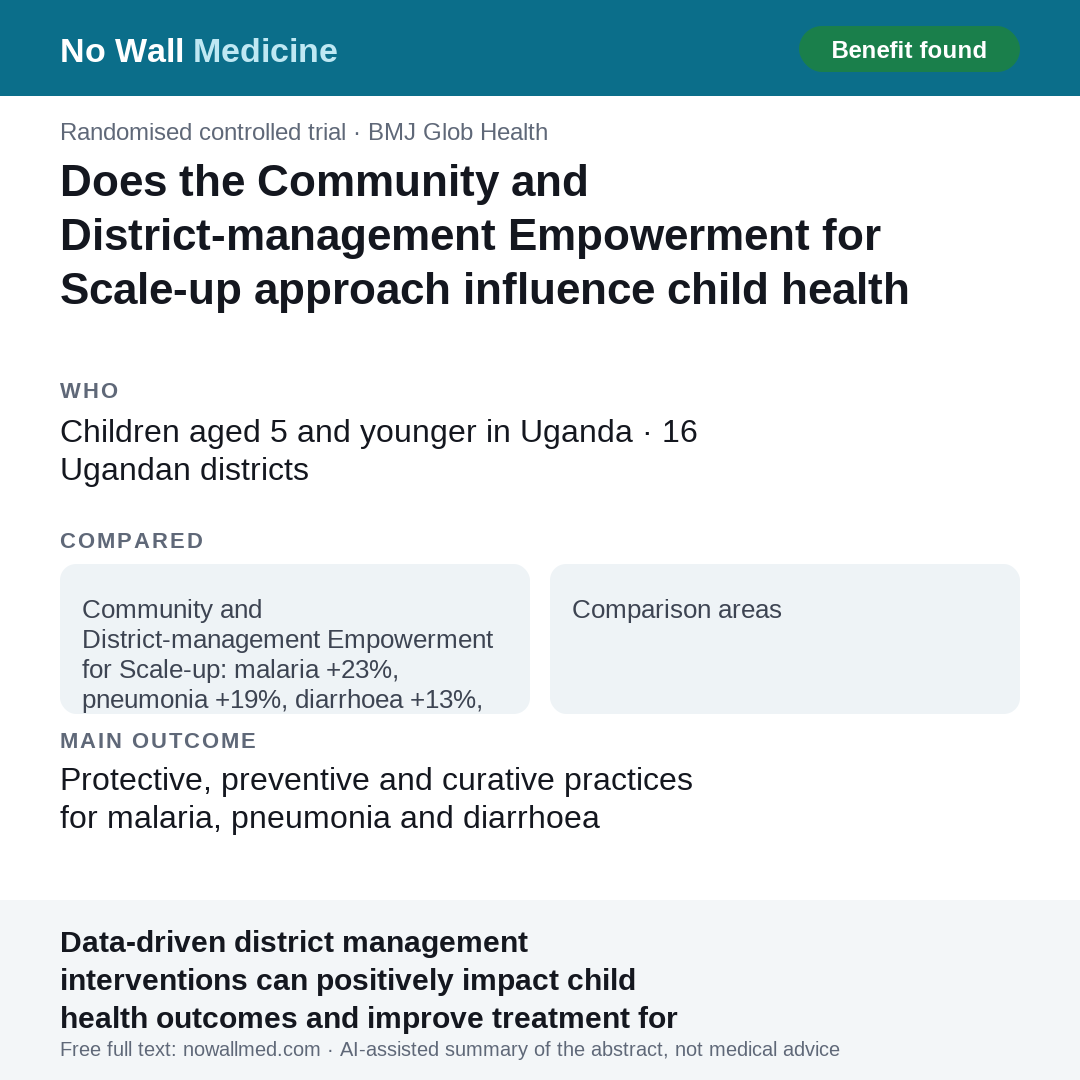
Child health and the implementation of Community and District-management Empowerment for Scale-up (CODES) in Uganda: a randomised controlled trial
Randomised controlled trialBenefit found
Does the Community and District-management Empowerment for Scale-up approach influence child health services?
Who
Children aged 5 and younger in Uganda · 16 Ugandan districts
Compared
Community and District-management Empowerment for Scale-up: malaria +23%, pneumonia +19%, diarrhoea +13%, stool disposal +10%
Comparison areas
Main outcome
Protective, preventive and curative practices for malaria, pneumonia and diarrhoea
Bottom line: Data-driven district management interventions can positively impact child health outcomes and improve treatment for malaria, pneumonia, and diarrhoea.
Limitation: Limited fiscal space constrained district managers' ability to implement solutions identified through the approach.
BMJ Glob Health · 2021-06-09Download image
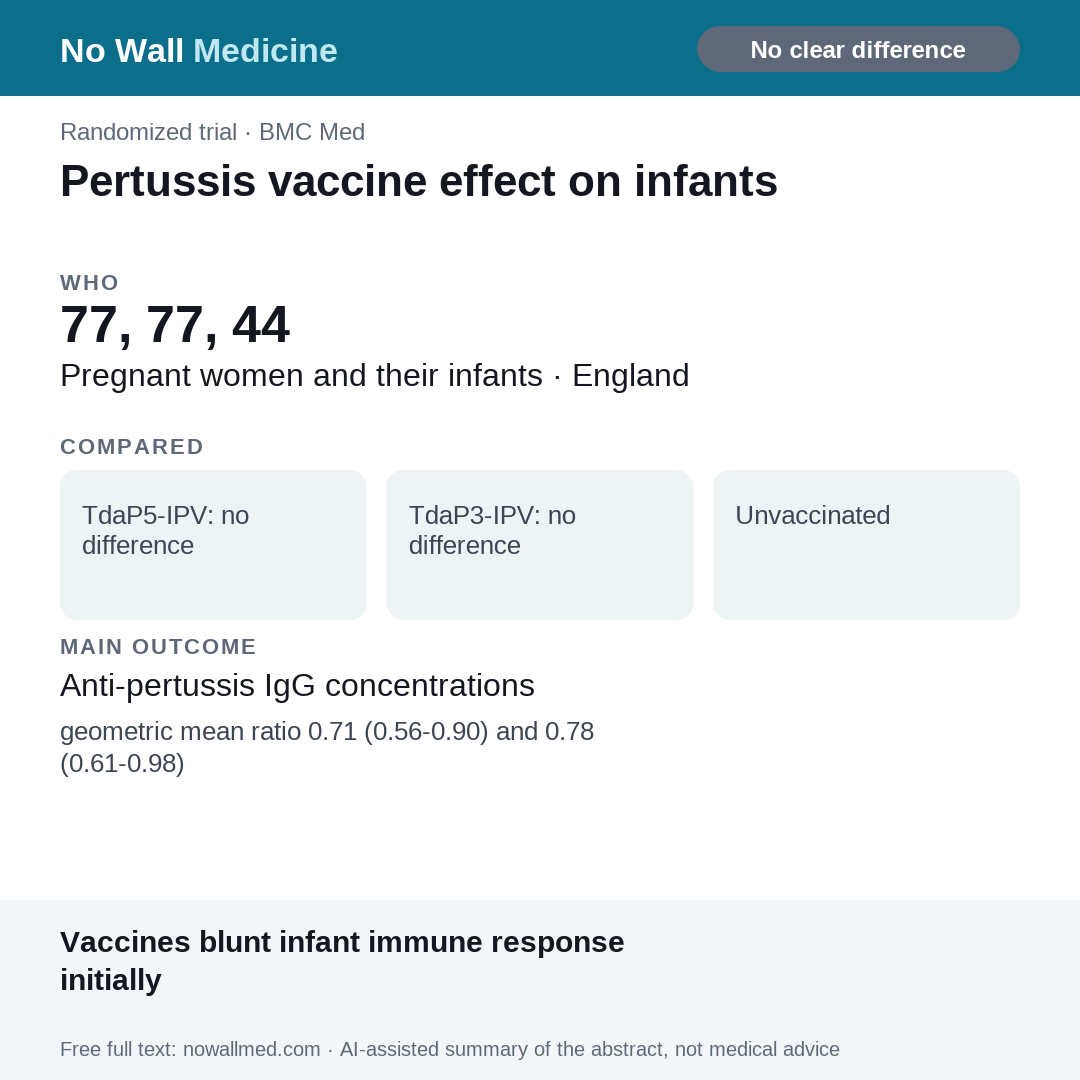
A phase IV, multi-centre, randomized clinical trial comparing two pertussis-containing vaccines in pregnant women in England and vaccine responses in their infants
Randomized trialNo clear difference
Pertussis vaccine effect on infants
Who
77, 77, 44
Pregnant women and their infants · England
Compared
TdaP5-IPV: no difference
TdaP3-IPV: no difference
Unvaccinated
Main outcome
Anti-pertussis IgG concentrations
Result: geometric mean ratio 0.71 (0.56-0.90) and 0.78 (0.61-0.98)
Bottom line: Vaccines blunt infant immune response initially
BMC Med · 2021-06-08Download image
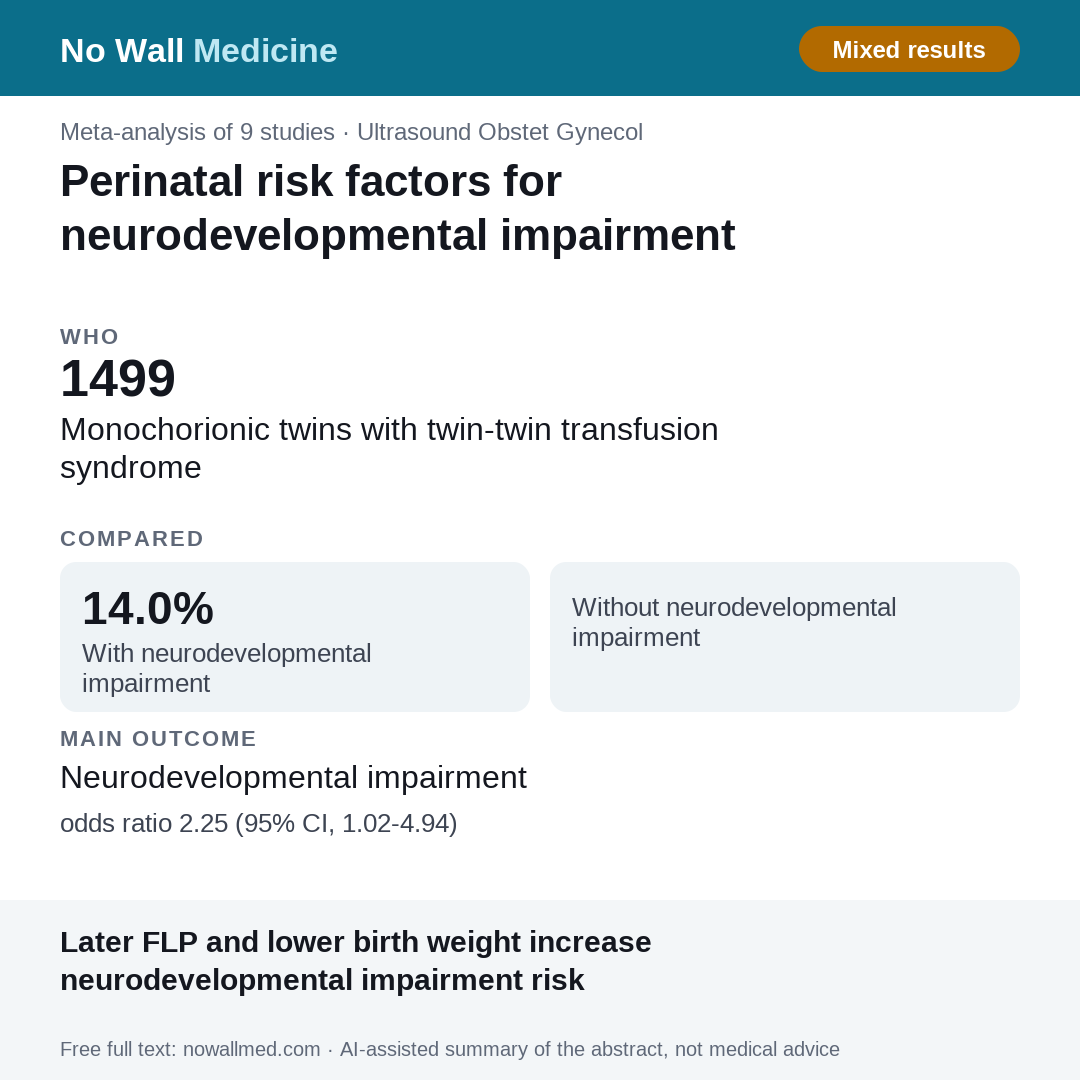
Perinatal risk factors of neurodevelopmental impairment after fetoscopic laser photocoagulation for twin-twin transfusion syndrome: systematic review and meta-analysis
Meta-analysis of 9 studiesMixed results
Perinatal risk factors for neurodevelopmental impairment
Who
1499
Monochorionic twins with twin-twin transfusion syndrome
Compared
14.0%With neurodevelopmental impairment (95% CI, 9.0-18.0%)
Without neurodevelopmental impairment
Main outcome
Neurodevelopmental impairment
Result: odds ratio 2.25 (95% CI, 1.02-4.94)
Bottom line: Later FLP and lower birth weight increase neurodevelopmental impairment risk
Ultrasound Obstet Gynecol · 2021-06-08Download image
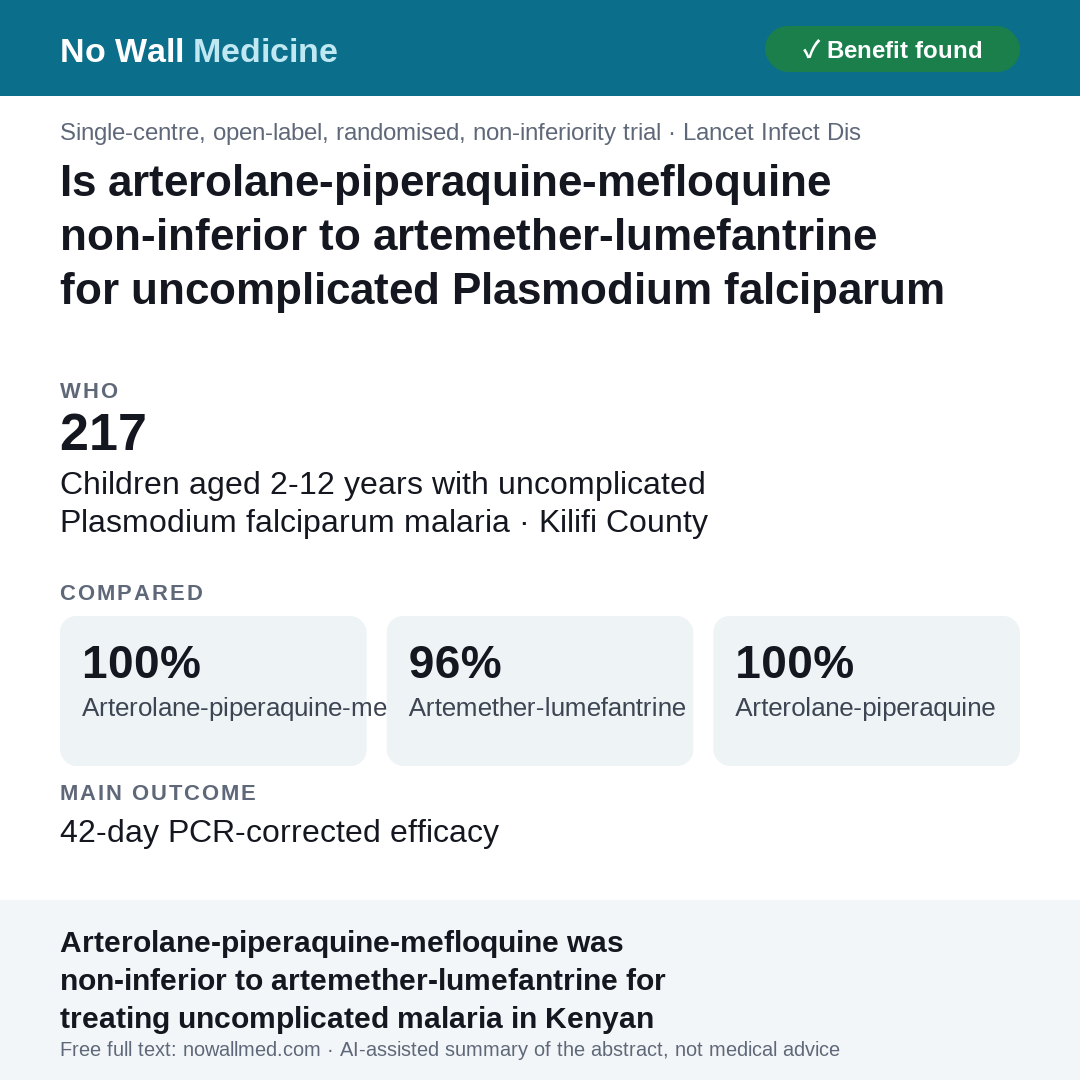
Arterolane-piperaquine-mefloquine versus arterolane-piperaquine and artemether-lumefantrine in the treatment of uncomplicated Plasmodium falciparum malaria in Kenyan children: a single-centre, open-label, randomised, non-inferiority trial
Single-centre, open-label, randomised, non-inferiority trialBenefit found
Is arterolane-piperaquine-mefloquine non-inferior to artemether-lumefantrine for uncomplicated Plasmodium falciparum malaria in children?
Who
217
Children aged 2-12 years with uncomplicated Plasmodium falciparum malaria · Kilifi County Hospital, coastal Kenya
Compared
100%Arterolane-piperaquine-mefloquine (72/72)
96%Artemether-lumefantrine (69/72)
100%Arterolane-piperaquine (73/73)
Main outcome
42-day PCR-corrected efficacy
Result: risk difference 4%, 95% CI 0-9
Bottom line: Arterolane-piperaquine-mefloquine was non-inferior to artemether-lumefantrine for treating uncomplicated malaria in Kenyan children.
Lancet Infect Dis · 2021-06-07Download image
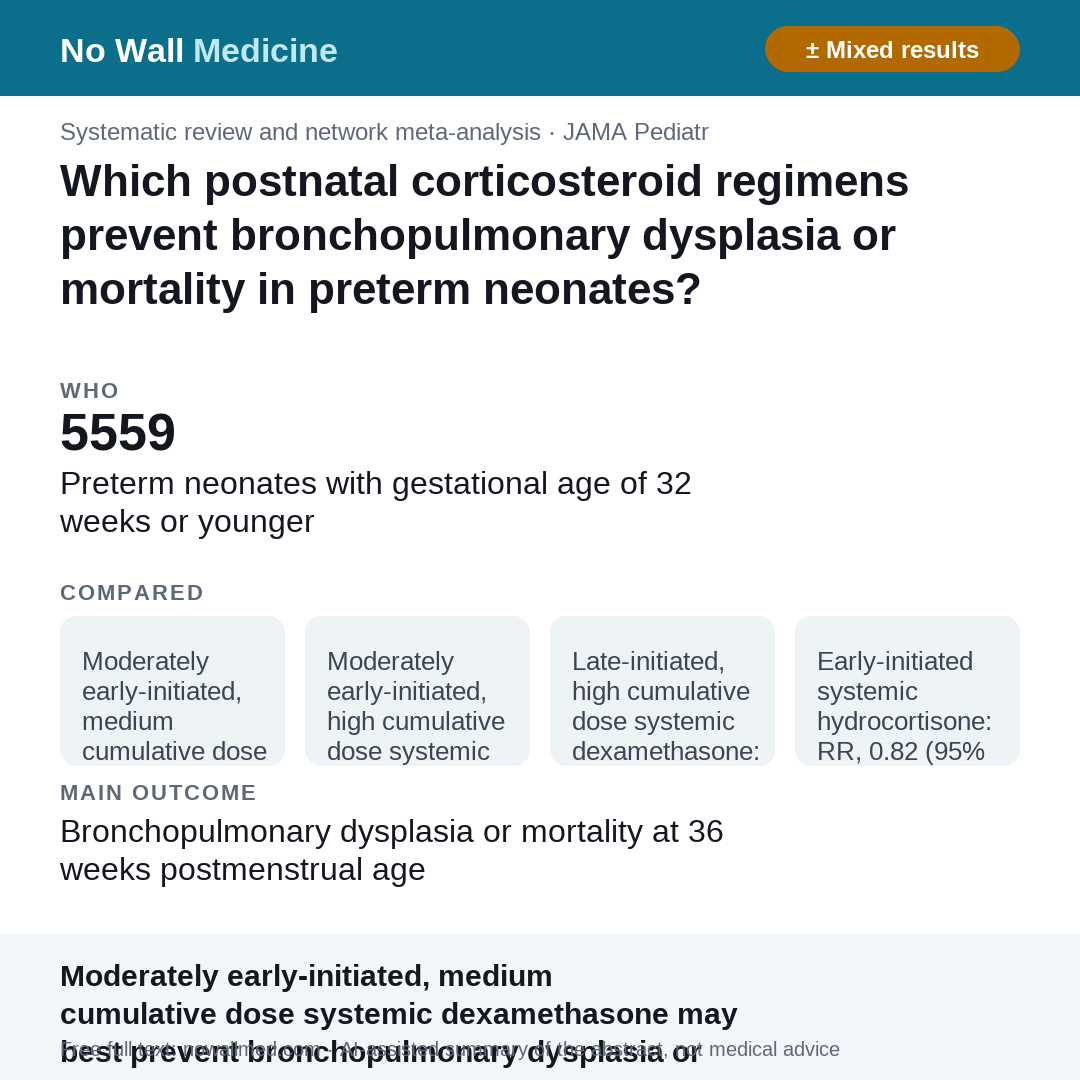
Assessment of Postnatal Corticosteroids for the Prevention of Bronchopulmonary Dysplasia in Preterm Neonates: A Systematic Review and Network Meta-analysis
Systematic review and network meta-analysisMixed results
Which postnatal corticosteroid regimens prevent bronchopulmonary dysplasia or mortality in preterm neonates?
Who
5559
Preterm neonates with gestational age of 32 weeks or younger
Compared
Moderately early-initiated, medium cumulative dose systemic dexamethasone: RR, 0.61 (95% CrI, 0.45-0.79)
Moderately early-initiated, high cumulative dose systemic dexamethasone: RR, 0.64 (95% CrI, 0.48-0.82)
Late-initiated, high cumulative dose systemic dexamethasone: RR, 0.70 (95% CrI, 0.54-0.87)
Early-initiated systemic hydrocortisone: RR, 0.82 (95% CrI, 0.68-0.97)
Main outcome
Bronchopulmonary dysplasia or mortality at 36 weeks postmenstrual age
Bottom line: Moderately early-initiated, medium cumulative dose systemic dexamethasone may best prevent bronchopulmonary dysplasia or mortality, despite hypertension risks.
JAMA Pediatr · 2021-06-07Download image
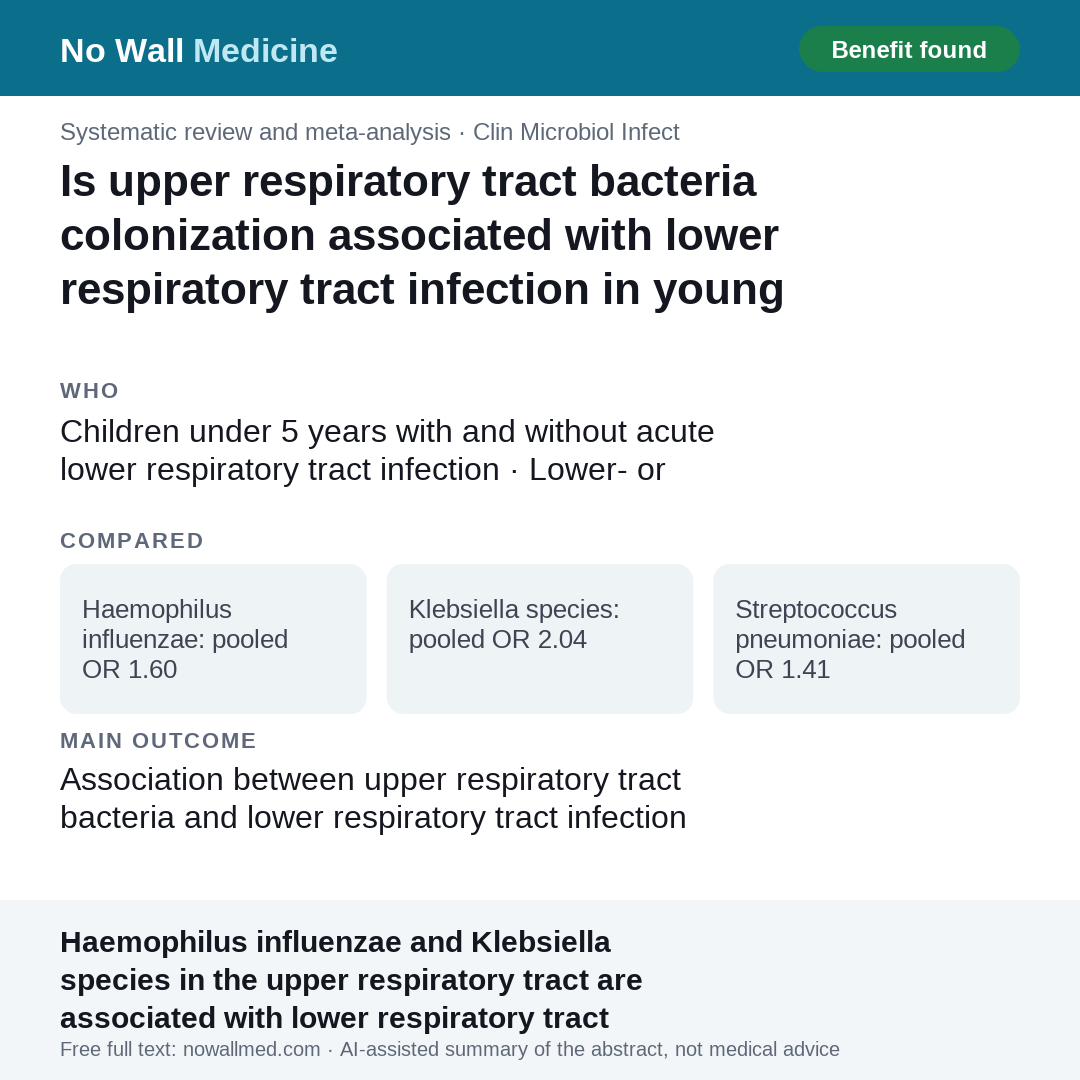
The association between bacteria colonizing the upper respiratory tract and lower respiratory tract infection in young children: a systematic review and meta-analysis
Systematic review and meta-analysisBenefit found
Is upper respiratory tract bacteria colonization associated with lower respiratory tract infection in young children?
Who
Children under 5 years with and without acute lower respiratory tract infection · Lower- or lower-middle-income countries
Compared
Haemophilus influenzae: pooled OR 1.60
Klebsiella species: pooled OR 2.04
Streptococcus pneumoniae: pooled OR 1.41
Main outcome
Association between upper respiratory tract bacteria and lower respiratory tract infection
Result: Haemophilus influenzae OR 1.60 (95% CI 1.23-2.07), Klebsiella spp. OR 2.04 (95% CI 1.17-3.55), Streptococcus pneumoniae OR 1.41 (95% CI 1.04-1.90)
Bottom line: Haemophilus influenzae and Klebsiella species in the upper respiratory tract are associated with lower respiratory tract infection in young children.
Clin Microbiol Infect · 2021-06-07Download image
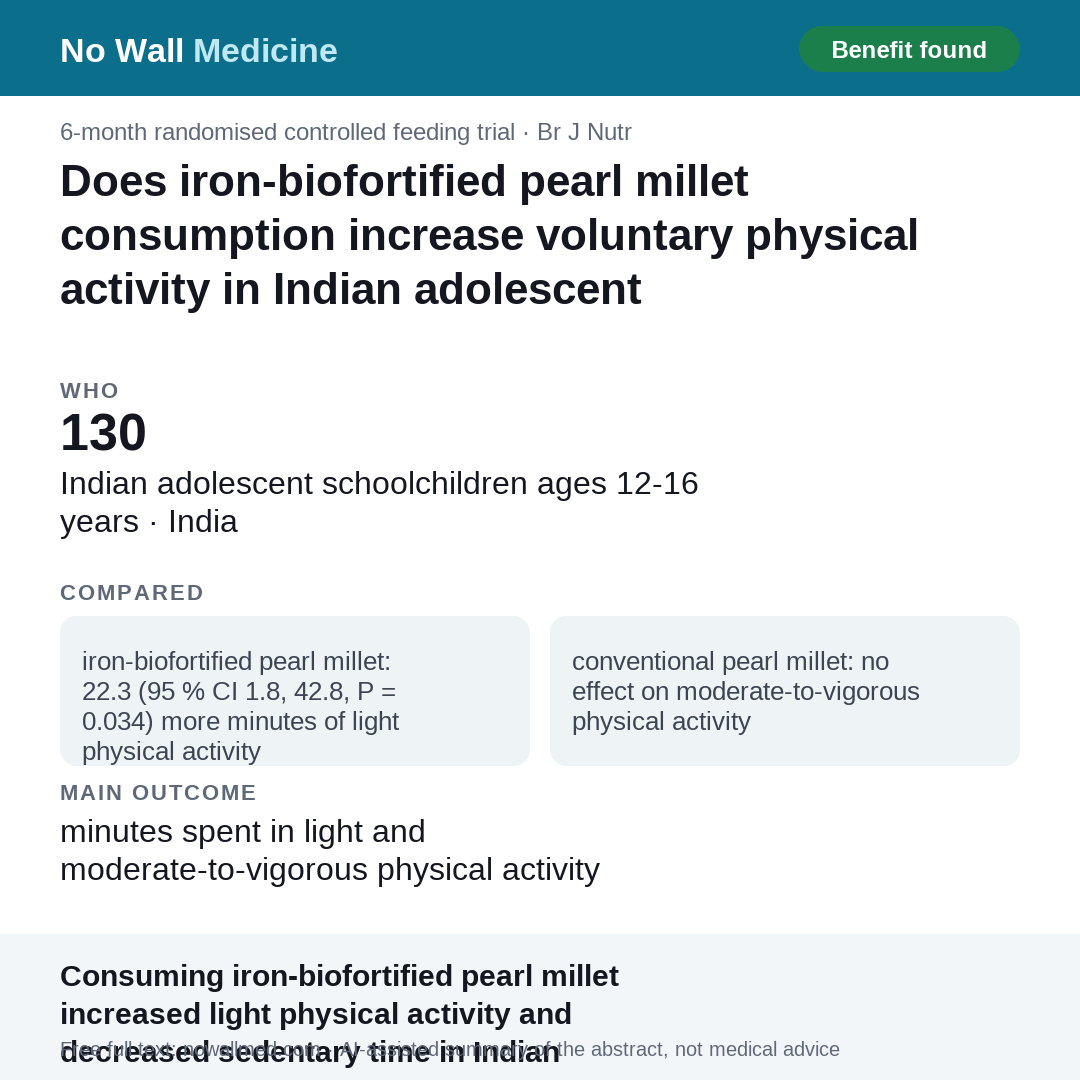
Iron-biofortified pearl millet consumption increases physical activity in Indian adolescent schoolchildren after a 6-month randomised feeding trial
6-month randomised controlled feeding trialBenefit found
Does iron-biofortified pearl millet consumption increase voluntary physical activity in Indian adolescent schoolchildren?
Who
130
Indian adolescent schoolchildren ages 12-16 years · India
Compared
iron-biofortified pearl millet: 22.3 (95 % CI 1.8, 42.8, P = 0.034) more minutes of light physical activity
conventional pearl millet: no effect on moderate-to-vigorous physical activity
Main outcome
minutes spent in light and moderate-to-vigorous physical activity
Result: 22.3 (95 % CI 1.8, 42.8, P = 0.034) more minutes of light physical activity
Bottom line: Consuming iron-biofortified pearl millet increased light physical activity and decreased sedentary time in Indian schoolchildren.
Br J Nutr · 2021-06-03Download image
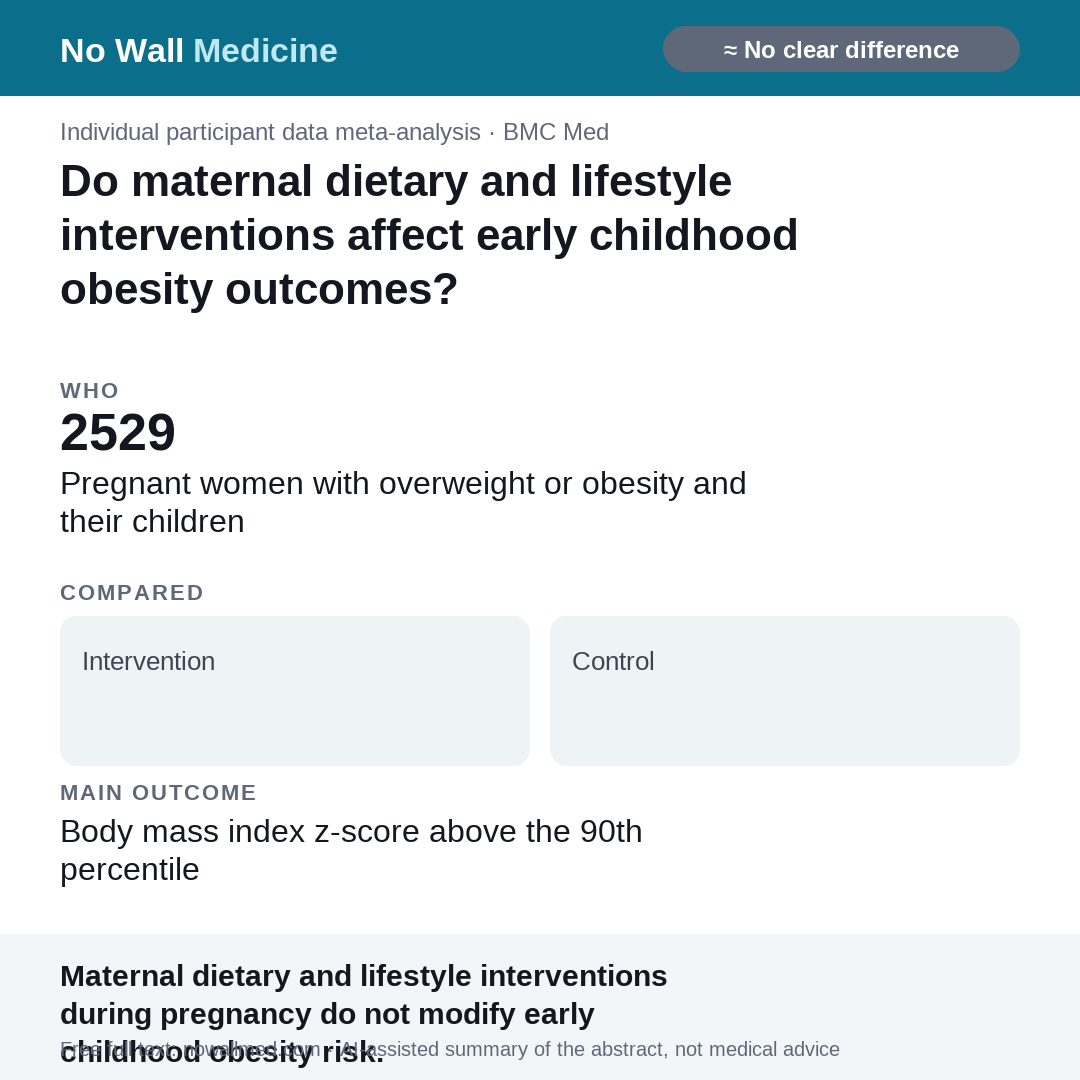
The effects of dietary and lifestyle interventions among pregnant women with overweight or obesity on early childhood outcomes: an individual participant data meta-analysis from randomised trials
Individual participant data meta-analysisNo clear difference
Do maternal dietary and lifestyle interventions affect early childhood obesity outcomes?
Who
2529
Pregnant women with overweight or obesity and their children
Compared
Intervention
Control
Main outcome
Body mass index z-score above the 90th percentile
Result: aRR 0.97 (95% CI 0.87, 1.08)
Bottom line: Maternal dietary and lifestyle interventions during pregnancy do not modify early childhood obesity risk.
Limitation: Future research may need to target the pre-conception period.
BMC Med · 2021-06-02Download image
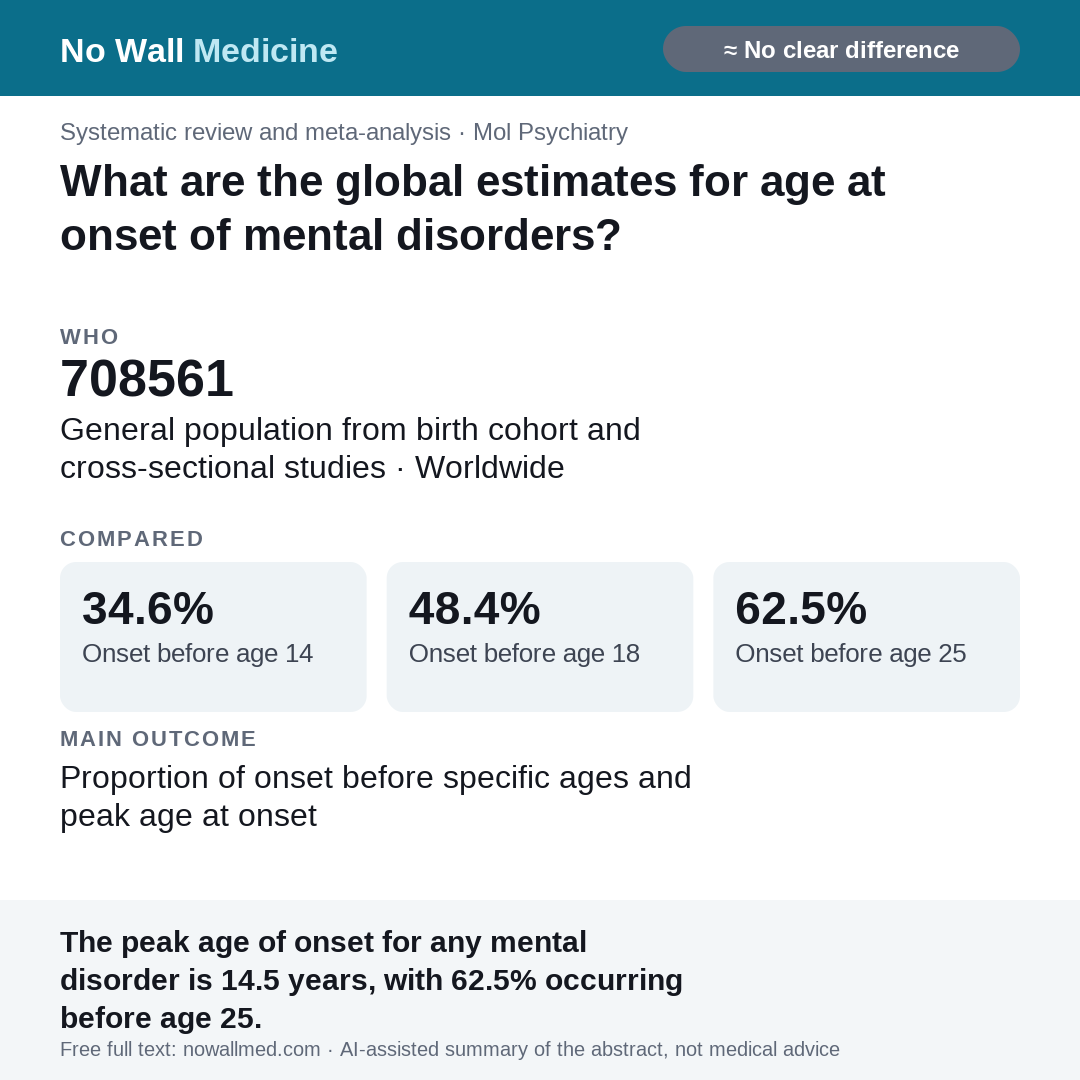
Age at onset of mental disorders worldwide: large-scale meta-analysis of 192 epidemiological studies
Systematic review and meta-analysisNo clear difference
What are the global estimates for age at onset of mental disorders?
Who
708561
General population from birth cohort and cross-sectional studies · Worldwide
Compared
34.6%Onset before age 14
48.4%Onset before age 18
62.5%Onset before age 25
Main outcome
Proportion of onset before specific ages and peak age at onset
Result: peak age was 14.5 years
Bottom line: The peak age of onset for any mental disorder is 14.5 years, with 62.5% occurring before age 25.
Mol Psychiatry · 2021-06-02Download image
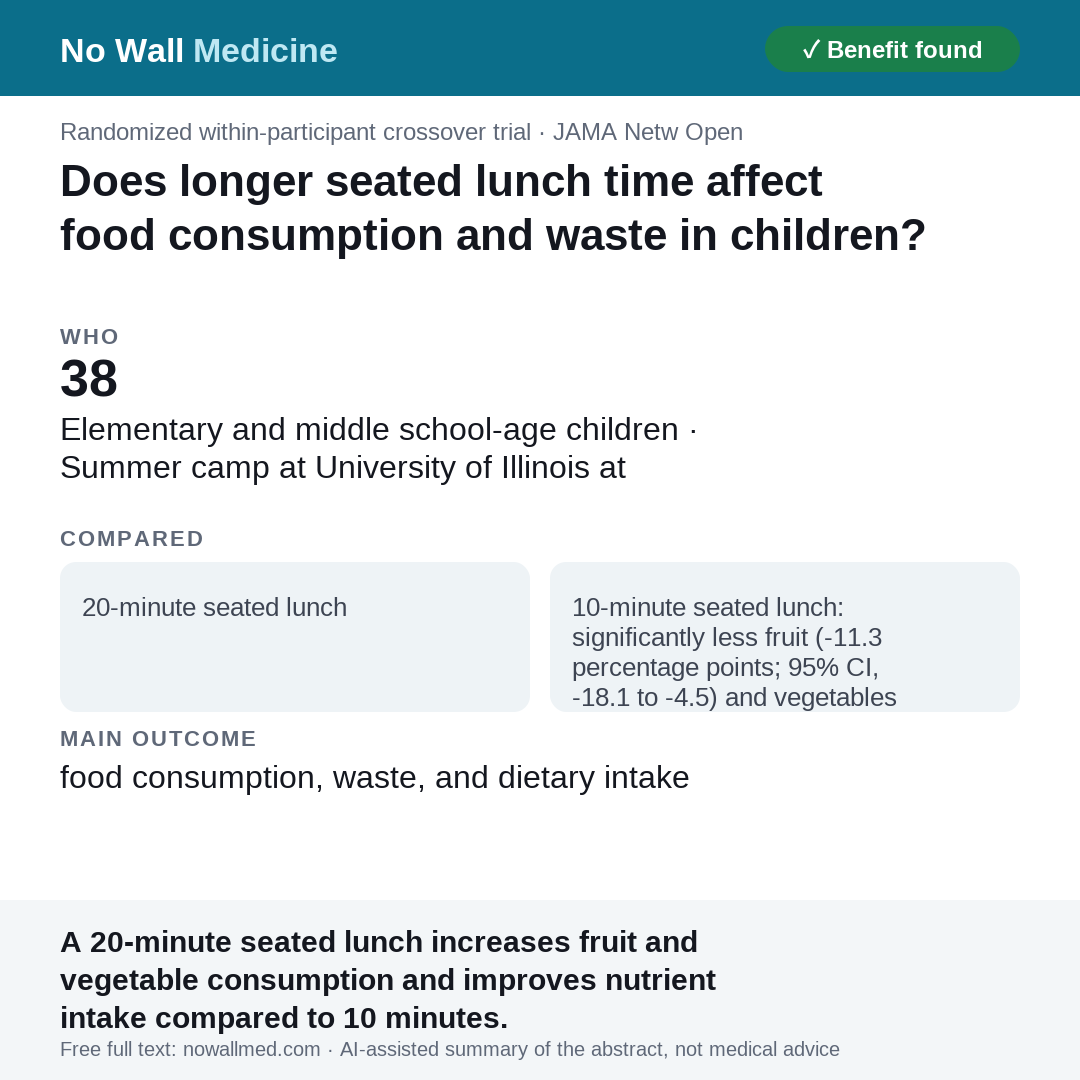
Effects of Longer Seated Lunch Time on Food Consumption and Waste in Elementary and Middle School-age Children: A Randomized Clinical Trial
Randomized within-participant crossover trialBenefit found
Does longer seated lunch time affect food consumption and waste in children?
Who
38
Elementary and middle school-age children · Summer camp at University of Illinois at Urbana-Champaign
Compared
20-minute seated lunch
10-minute seated lunch: significantly less fruit (-11.3 percentage points; 95% CI, -18.1 to -4.5) and vegetables (-14.1 percentage points; 95% CI, -22.7 to -5.7)
Main outcome
food consumption, waste, and dietary intake
Bottom line: A 20-minute seated lunch increases fruit and vegetable consumption and improves nutrient intake compared to 10 minutes.
JAMA Netw Open · 2021-06-01Download image
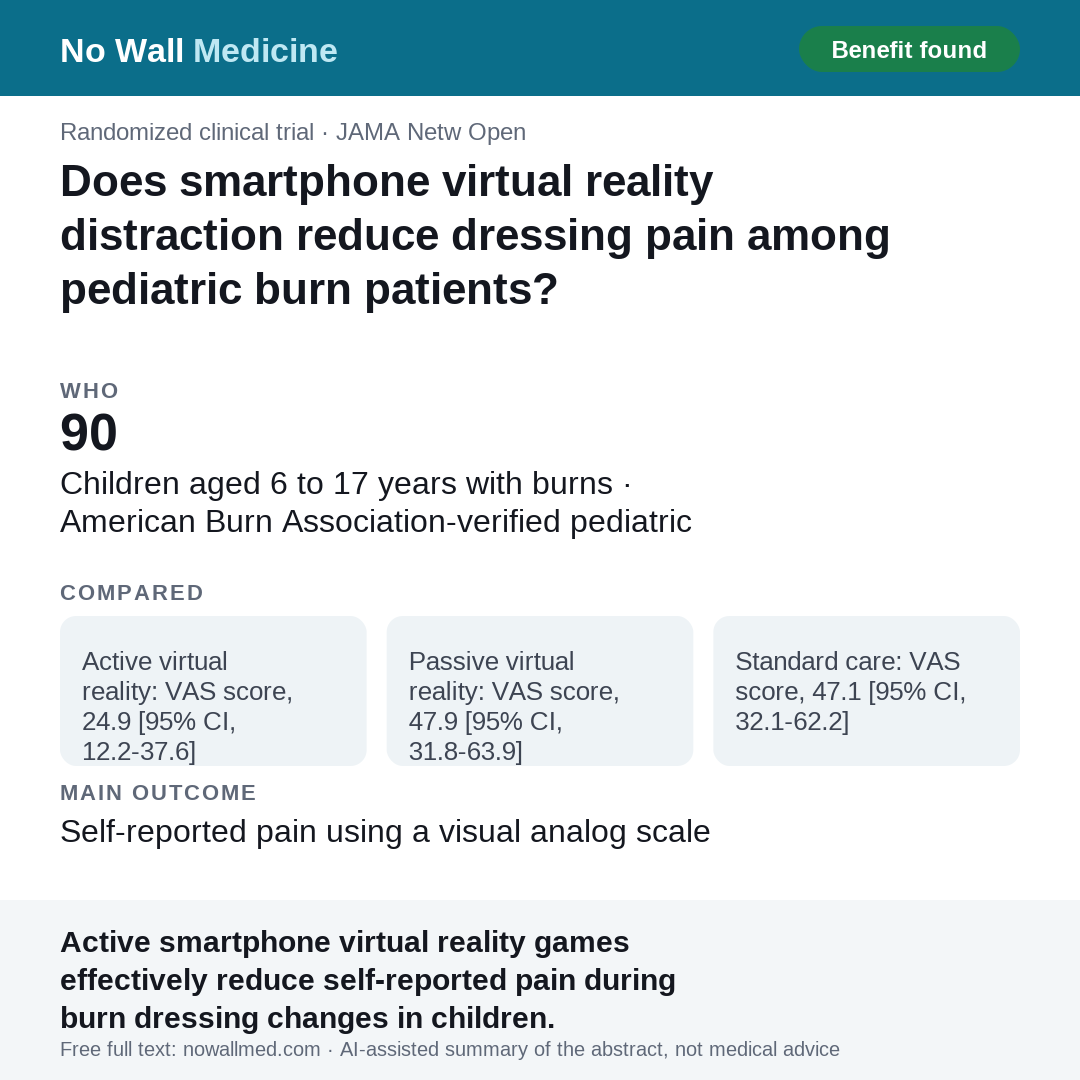
Efficacy of Smartphone Active and Passive Virtual Reality Distraction vs Standard Care on Burn Pain Among Pediatric Patients: A Randomized Clinical Trial
Randomized clinical trialBenefit found
Does smartphone virtual reality distraction reduce dressing pain among pediatric burn patients?
Who
90
Children aged 6 to 17 years with burns · American Burn Association-verified pediatric burn center
Compared
Active virtual reality: VAS score, 24.9 [95% CI, 12.2-37.6]
Passive virtual reality: VAS score, 47.9 [95% CI, 31.8-63.9]
Standard care: VAS score, 47.1 [95% CI, 32.1-62.2]
Main outcome
Self-reported pain using a visual analog scale
Bottom line: Active smartphone virtual reality games effectively reduce self-reported pain during burn dressing changes in children.
JAMA Netw Open · 2021-06-01Download image
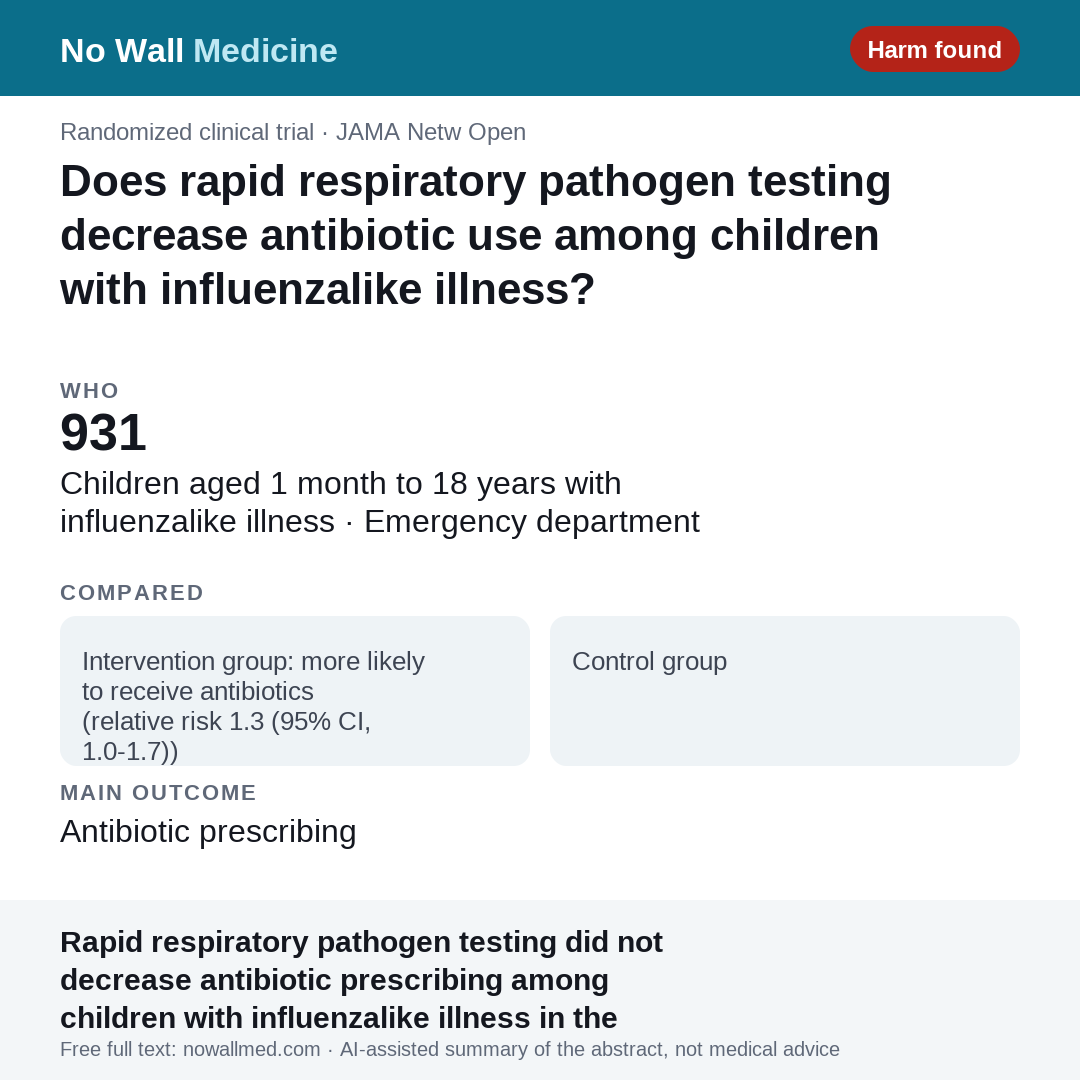
Effect of Rapid Respiratory Virus Testing on Antibiotic Prescribing Among Children Presenting to the Emergency Department With Acute Respiratory Illness: A Randomized Clinical Trial
Randomized clinical trialHarm found
Does rapid respiratory pathogen testing decrease antibiotic use among children with influenzalike illness?
Who
931
Children aged 1 month to 18 years with influenzalike illness · Emergency department
Compared
Intervention group: more likely to receive antibiotics (relative risk 1.3 (95% CI, 1.0-1.7))
Control group
Main outcome
Antibiotic prescribing
Result: relative risk 1.3 (95% CI, 1.0-1.7)
Bottom line: Rapid respiratory pathogen testing did not decrease antibiotic prescribing among children with influenzalike illness in the emergency department.
JAMA Netw Open · 2021-06-01Download image
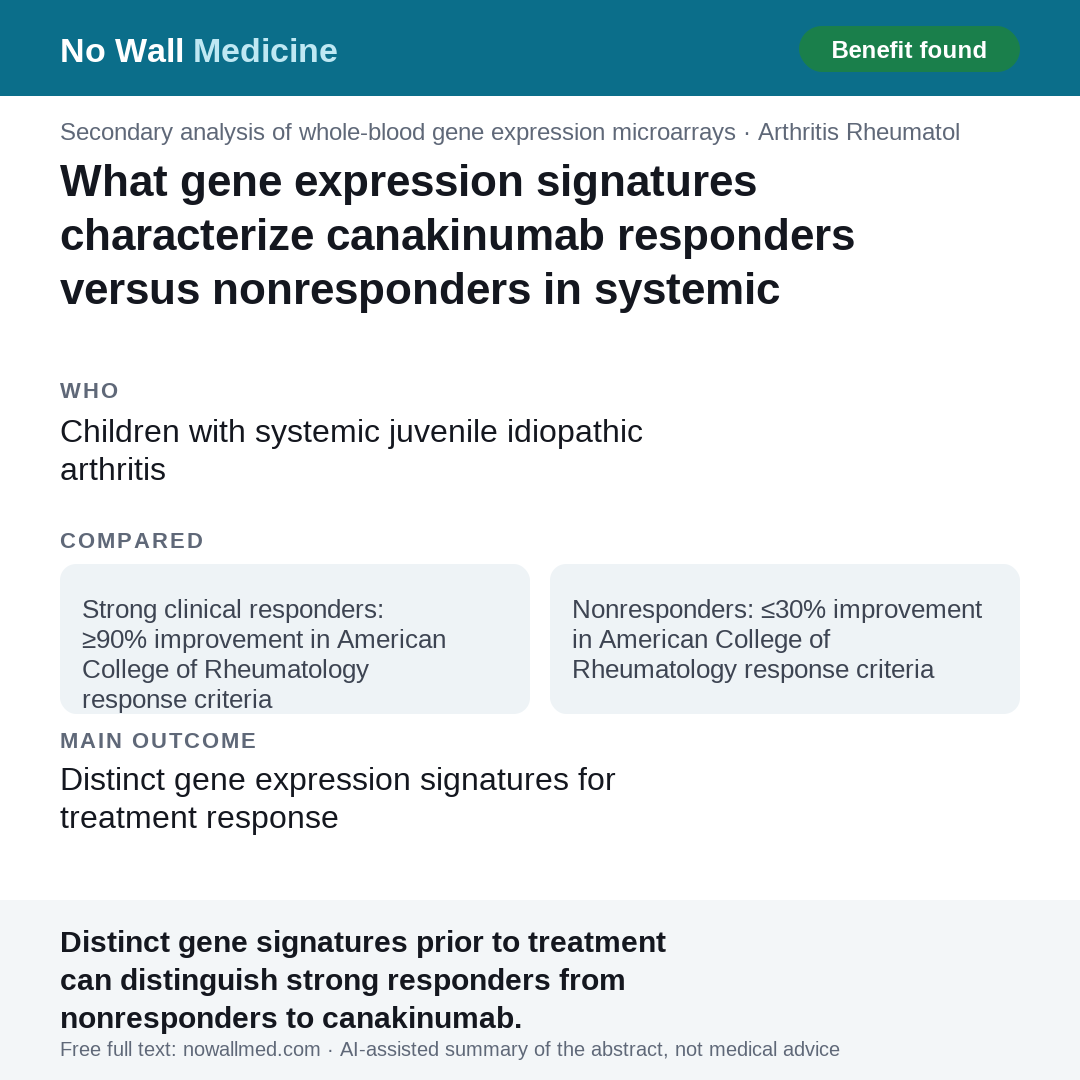
Distinct Gene Expression Signatures Characterize Strong Clinical Responders Versus Nonresponders to Canakinumab in Children With Systemic Juvenile Idiopathic Arthritis
Secondary analysis of whole-blood gene expression microarraysBenefit found
What gene expression signatures characterize canakinumab responders versus nonresponders in systemic juvenile idiopathic arthritis?
Who
Children with systemic juvenile idiopathic arthritis
Compared
Strong clinical responders: ≥90% improvement in American College of Rheumatology response criteria
Nonresponders: ≤30% improvement in American College of Rheumatology response criteria
Main outcome
Distinct gene expression signatures for treatment response
Bottom line: Distinct gene signatures prior to treatment can distinguish strong responders from nonresponders to canakinumab.
Arthritis Rheumatol · 2021-05-31Download image
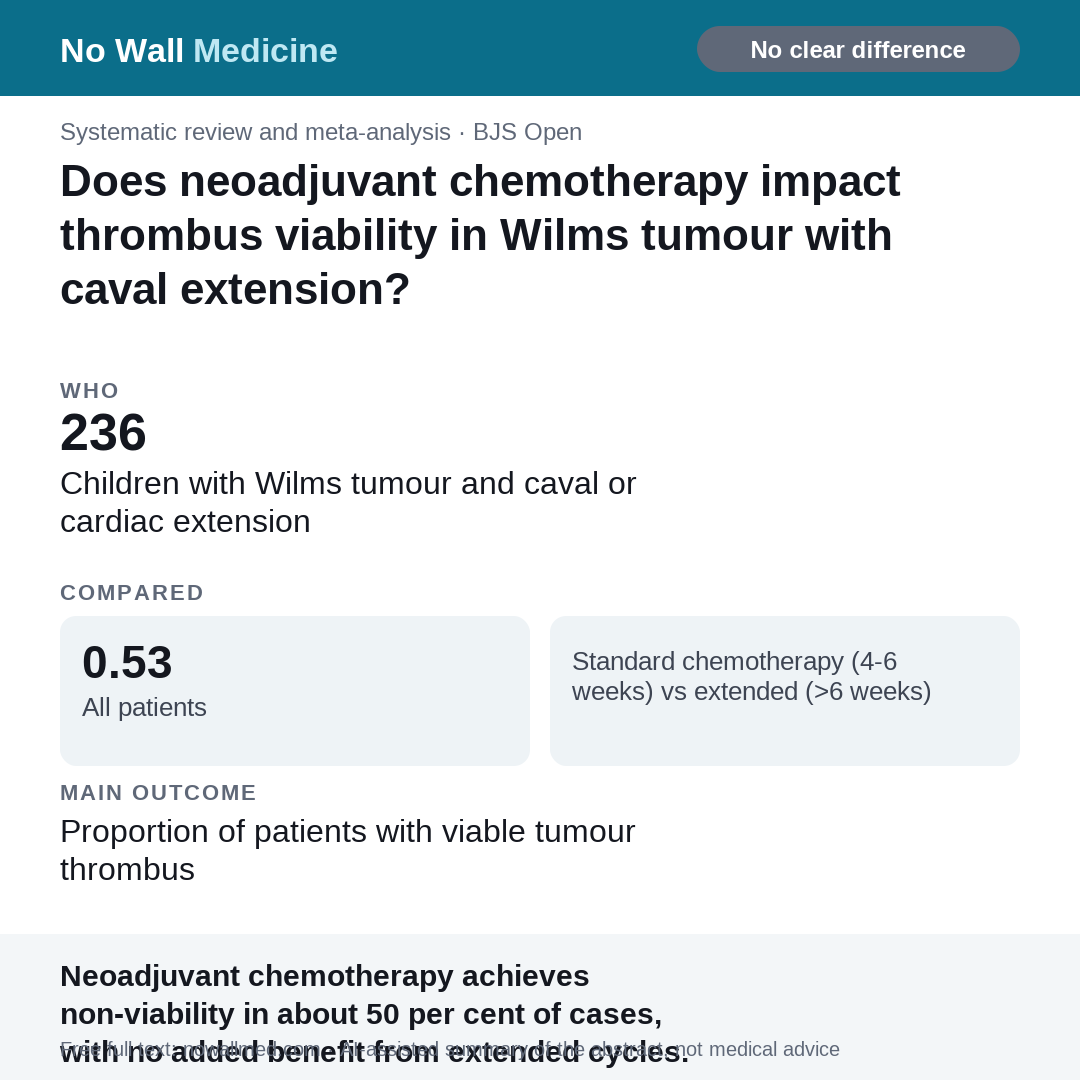
Impact of neoadjuvant chemotherapy on thrombus viability in patients with Wilms tumour and caval extension: systematic review with meta-analysis
Systematic review and meta-analysisNo clear difference
Does neoadjuvant chemotherapy impact thrombus viability in Wilms tumour with caval extension?
Who
236
Children with Wilms tumour and caval or cardiac extension
Compared
0.53All patients (0.43-0.63)
Standard chemotherapy (4-6 weeks) vs extended (>6 weeks)
Main outcome
Proportion of patients with viable tumour thrombus
Result: odds ratio 3.14 (95 per cent c.i. 0.97 to 10.16)
Bottom line: Neoadjuvant chemotherapy achieves non-viability in about 50 per cent of cases, with no added benefit from extended cycles.
BJS Open · 2021-05-30Download image
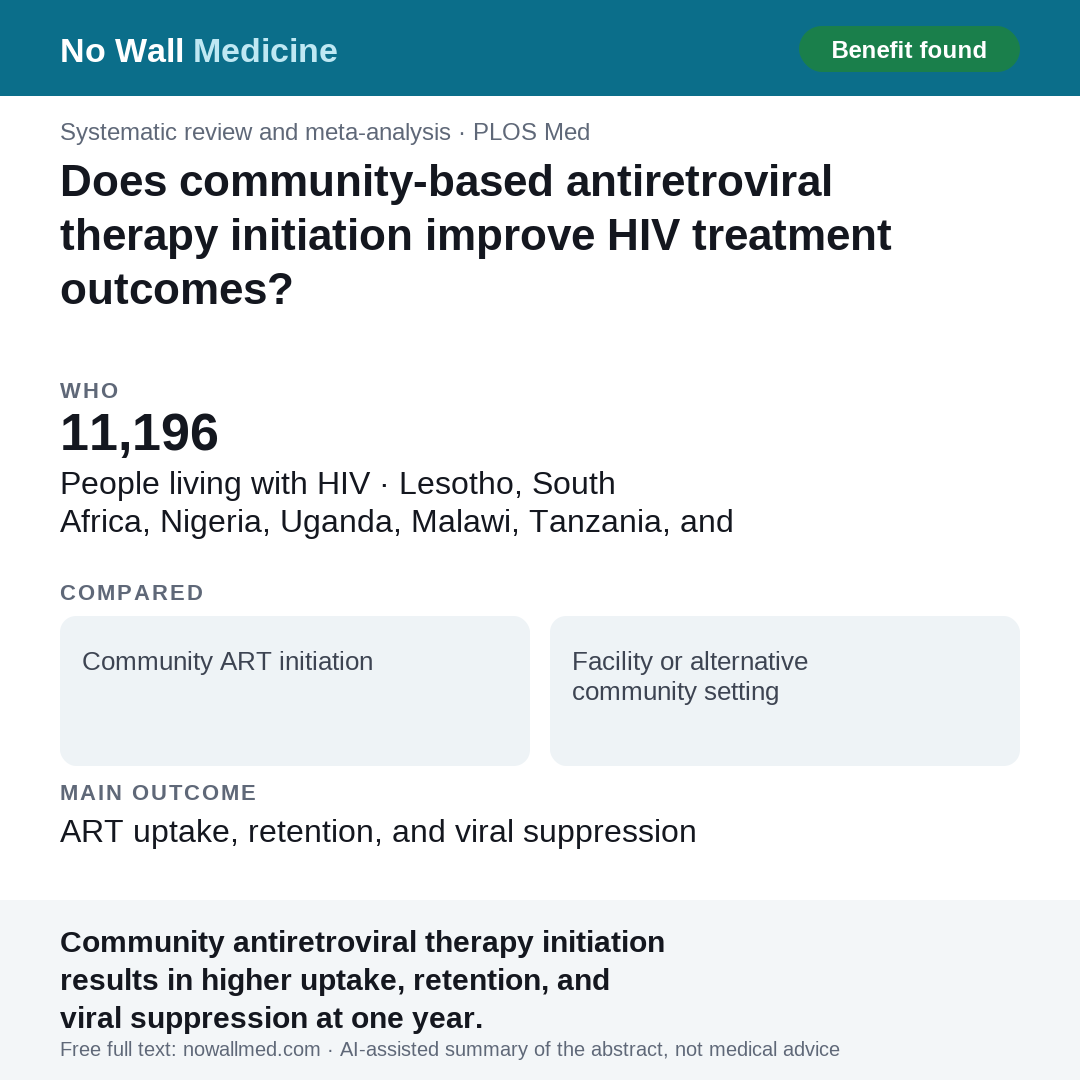
Effects of community-based antiretroviral therapy initiation models on HIV treatment outcomes: A systematic review and meta-analysis
Systematic review and meta-analysisBenefit found
Does community-based antiretroviral therapy initiation improve HIV treatment outcomes?
Who
11,196
People living with HIV · Lesotho, South Africa, Nigeria, Uganda, Malawi, Tanzania, and Haiti
Compared
Community ART initiation
Facility or alternative community setting
Main outcome
ART uptake, retention, and viral suppression
Result: RR 1.73 (95% CI 1.22 to 2.45) for ART uptake
Bottom line: Community antiretroviral therapy initiation results in higher uptake, retention, and viral suppression at one year.
Limitation: Few studies for inclusion, poor-quality observational data, and short-term outcomes.
PLOS Med · 2021-05-28Download image
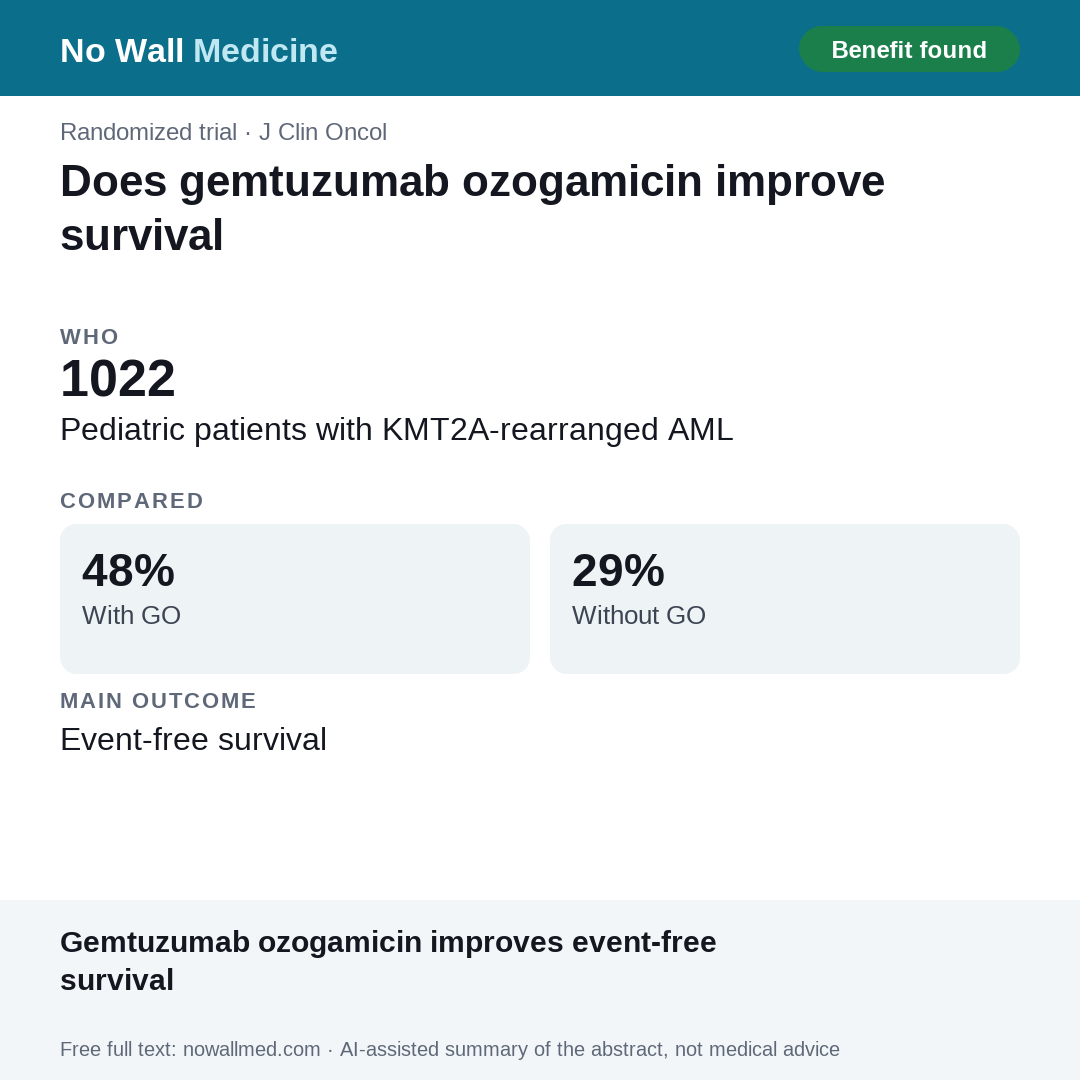
Gemtuzumab Ozogamicin Improves Event-Free Survival and Reduces Relapse in Pediatric KMT2A-Rearranged AML: Results From the Phase III Children's Oncology Group Trial AAML0531
Randomized trialBenefit found
Does gemtuzumab ozogamicin improve survival
Who
1022
Pediatric patients with KMT2A-rearranged AML
Compared
48%With GO
29%Without GO
Main outcome
Event-free survival
Bottom line: Gemtuzumab ozogamicin improves event-free survival
J Clin Oncol · 2021-05-28Download image
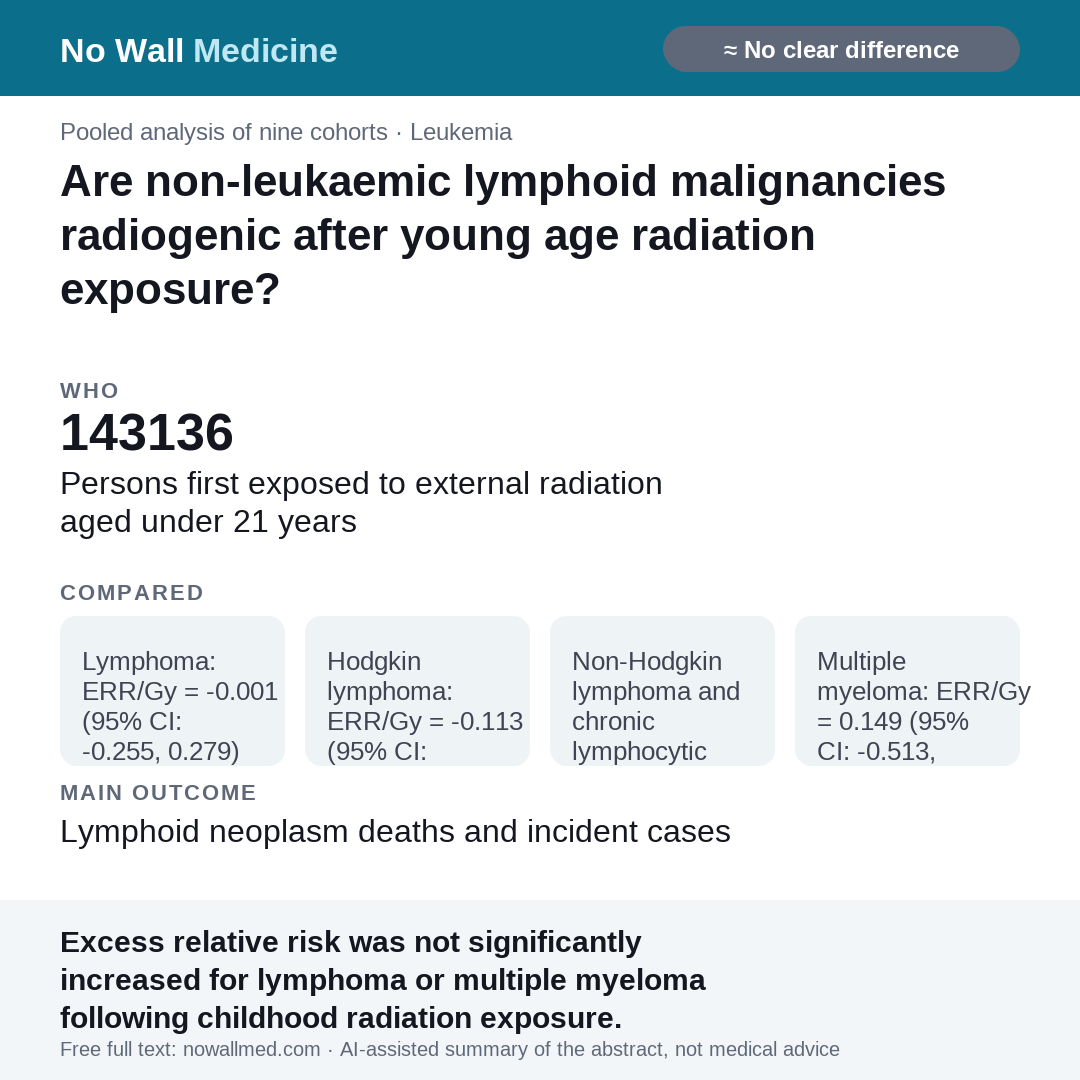
Lymphoma and multiple myeloma in cohorts of persons exposed to ionising radiation at a young age
Pooled analysis of nine cohortsNo clear difference
Are non-leukaemic lymphoid malignancies radiogenic after young age radiation exposure?
Who
143136
Persons first exposed to external radiation aged under 21 years
Compared
Lymphoma: ERR/Gy = -0.001 (95% CI: -0.255, 0.279)
Hodgkin lymphoma: ERR/Gy = -0.113 (95% CI: -0.669, 0.709)
Non-Hodgkin lymphoma and chronic lymphocytic leukaemia: ERR/Gy = 0.099 (95% CI: -0.149, 0.433)
Multiple myeloma: ERR/Gy = 0.149 (95% CI: -0.513, 1.063)
Main outcome
Lymphoid neoplasm deaths and incident cases
Result: ERR/Gy = -0.001 (95% CI: -0.255, 0.279) for lymphoma
Bottom line: Excess relative risk was not significantly increased for lymphoma or multiple myeloma following childhood radiation exposure.
Limitation: Need for longer follow-up, central outcome review, and assessment of radiation doses to lymphoid tissues.
Leukemia · 2021-05-28Download image