Visual abstracts
New randomized trials and meta-analyses from leading journals at a glance: who was studied, what was compared, and what was found. Every paper is free to read in full.
All specialtiesCardiology 4877Oncology 4138Gastroenterology & Hepatology 1942Infectious Disease 3837Neurology 1905Psychiatry & Mental Health 2273Pulmonology 2143Critical Care 1365Endocrinology & Diabetes 2580Pediatrics 2980Surgery 2559Orthopedics & Sports Medicine 931Neurosurgery 537Cardiothoracic & Vascular Surgery 674Plastic & Reconstructive Surgery 591Nephrology 1133Rheumatology 823Hematology 1109Dermatology 621Ophthalmology 543Obstetrics & Gynecology 1686Public & Global Health 1058Radiology & Imaging 648Anesthesiology 986Urology 764ENT (Otolaryngology) 503Emergency Medicine 511Allergy & Immunology 313Geriatrics 981Family Medicine & Primary Care 562Medical Genetics & Genomics 676Pathology & Laboratory Medicine 159Physical Medicine & Rehabilitation 757Palliative Care 444Nutrition 1588Digital Health & AI 2201General Medicine 321
Deep learning-based breast cancer diagnosis in breast MRI: systematic review and meta-analysis
Meta-analysis of 40 studiesBenefit found
Can deep learning improve breast cancer diagnosis?
Who
40
breast cancer patients
Compared
0.90Deep learning models (95% CI: 0.87, 0.93)
Control
Main outcome
diagnostic accuracy
Result: area under the curve 0.90 (95% CI: 0.87, 0.93)
Bottom line: Deep learning improves breast cancer diagnosis
Limitation: considerable inherent variability
Eur Radiol · 2025-02-05Download image

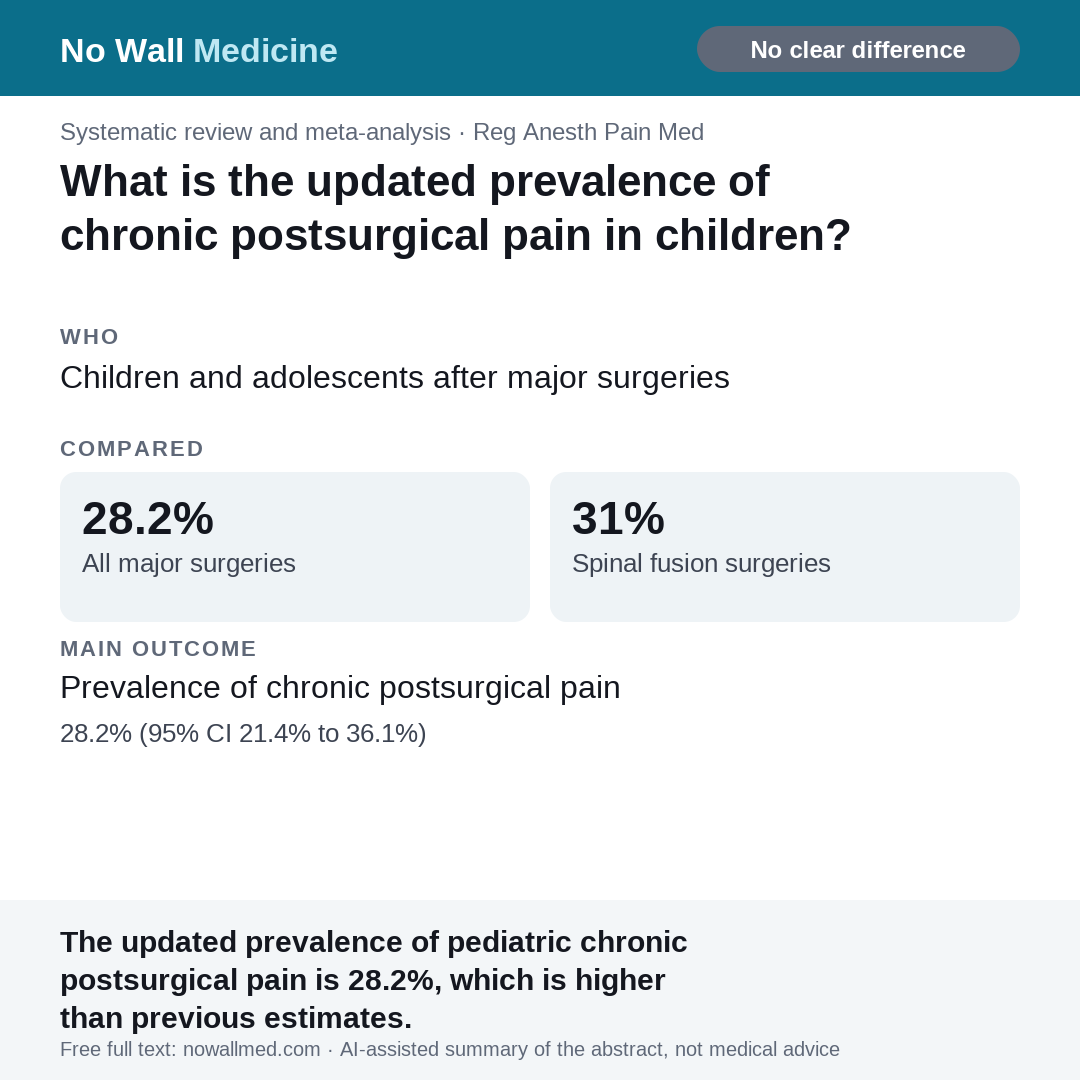
Prevalence of and recommendation for measuring chronic postsurgical pain in children: an updated systematic review and meta-analysis
Systematic review and meta-analysisNo clear difference
What is the updated prevalence of chronic postsurgical pain in children?
Who
Children and adolescents after major surgeries
Compared
28.2%All major surgeries (95% CI 21.4% to 36.1%)
31%Spinal fusion surgeries (95% CI 21.4% to 43.5%)
Main outcome
Prevalence of chronic postsurgical pain
Result: 28.2% (95% CI 21.4% to 36.1%)
Bottom line: The updated prevalence of pediatric chronic postsurgical pain is 28.2%, which is higher than previous estimates.
Limitation: Studies often used pain intensity measures without pain interference or quality of life measures.
Reg Anesth Pain Med · 2025-02-05Download image
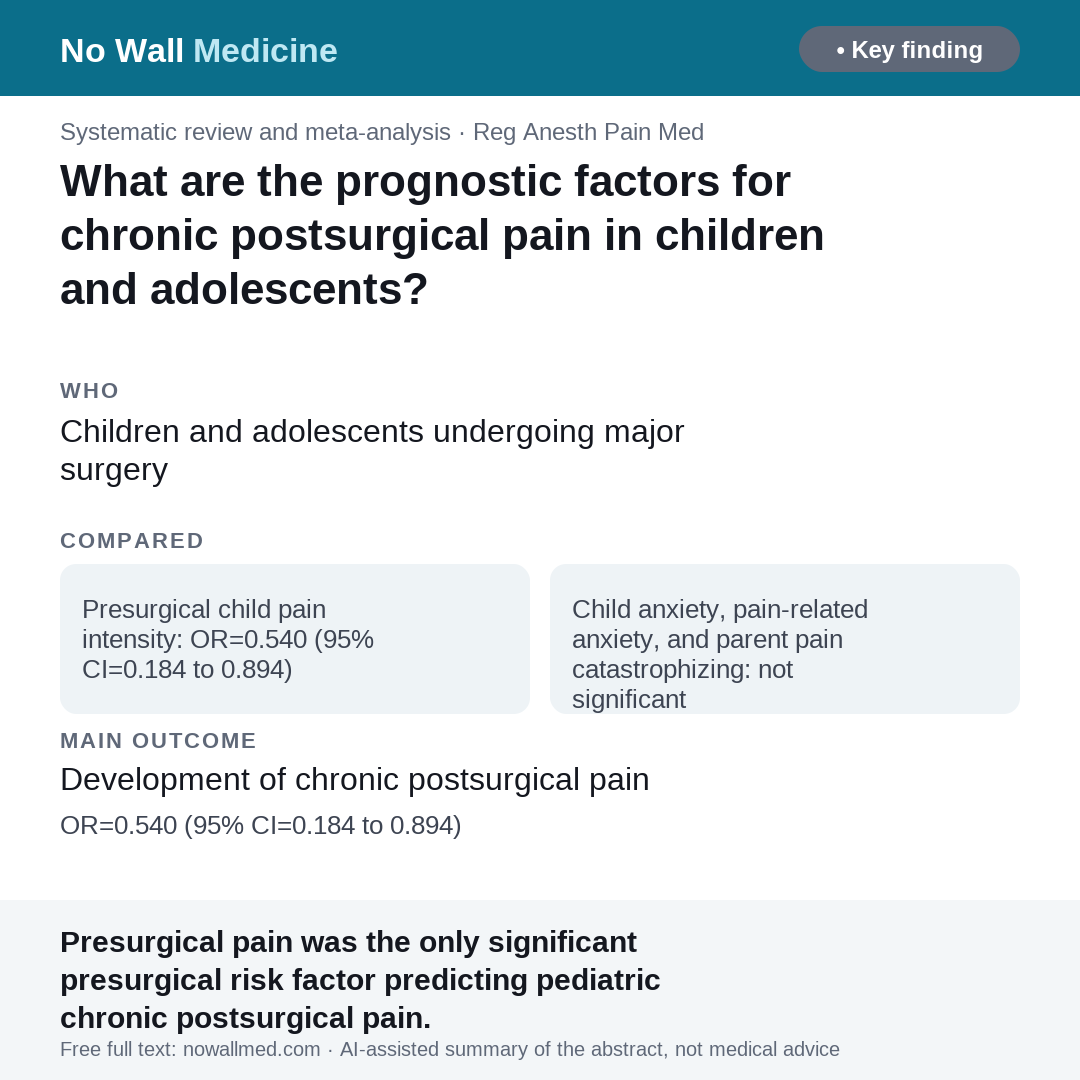
Prognostic factors of chronic postsurgical pain in children and adolescents: a systematic review and meta-analysis
Systematic review and meta-analysisBenefit found
What are the prognostic factors for chronic postsurgical pain in children and adolescents?
Who
Children and adolescents undergoing major surgery
Compared
Presurgical child pain intensity: OR=0.540 (95% CI=0.184 to 0.894)
Child anxiety, pain-related anxiety, and parent pain catastrophizing: not significant
Main outcome
Development of chronic postsurgical pain
Result: OR=0.540 (95% CI=0.184 to 0.894)
Bottom line: Presurgical pain was the only significant presurgical risk factor predicting pediatric chronic postsurgical pain.
Limitation: Insufficient data or unvalidated measures prevented assessment of depressive symptoms and sleep disturbance.
Reg Anesth Pain Med · 2025-02-05Download image
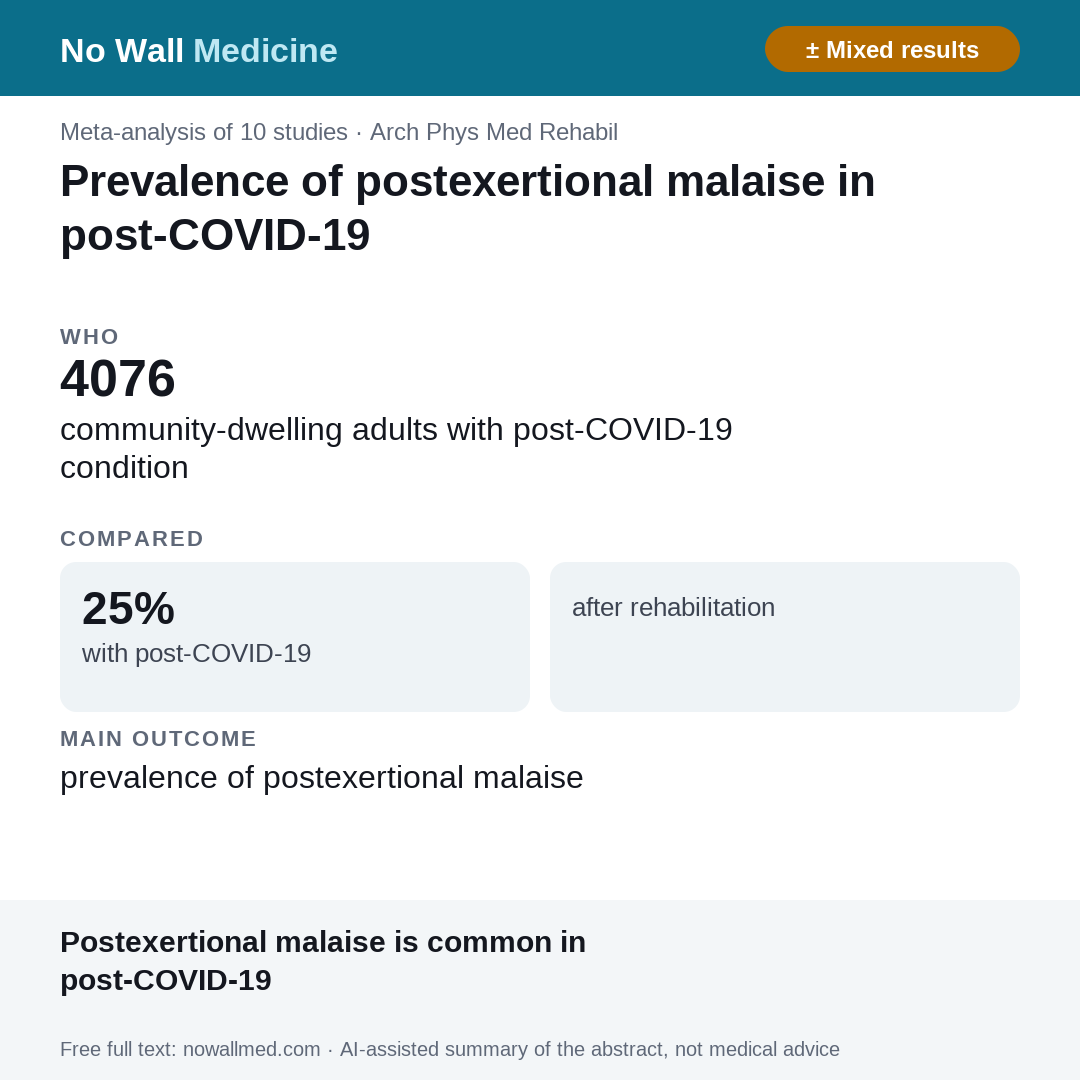
Prevalence and Impact of Postexertional Malaise on Recovery in Adults With Post-COVID-19 Condition: A Systematic Review With Meta-analysis
Meta-analysis of 10 studiesMixed results
Prevalence of postexertional malaise in post-COVID-19
Who
4076
community-dwelling adults with post-COVID-19 condition
Compared
25%with post-COVID-19 (95% CI: 0.17-0.36)
after rehabilitation
Main outcome
prevalence of postexertional malaise
Bottom line: Postexertional malaise is common in post-COVID-19
Limitation: high risk of bias and insufficient reporting
Arch Phys Med Rehabil · 2025-02-05Download image
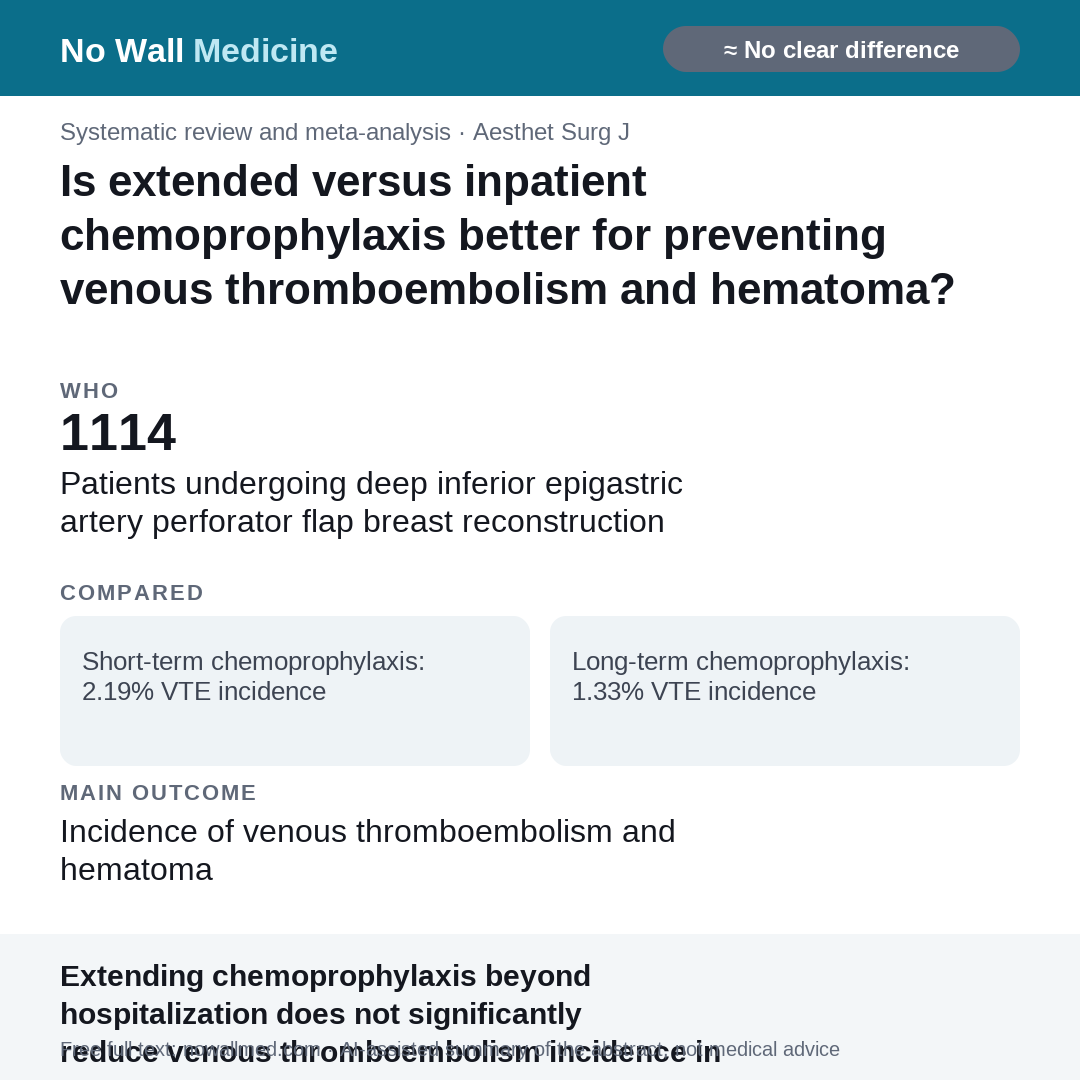
Extended vs Inpatient Chemoprophylaxis for Venous Thromboembolism in DIEP Flap Breast Reconstruction: A Systematic Review and Meta-analysis
Systematic review and meta-analysisNo clear difference
Is extended versus inpatient chemoprophylaxis better for preventing venous thromboembolism and hematoma?
Who
1114
Patients undergoing deep inferior epigastric artery perforator flap breast reconstruction
Compared
Short-term chemoprophylaxis: 2.19% VTE incidence
Long-term chemoprophylaxis: 1.33% VTE incidence
Main outcome
Incidence of venous thromboembolism and hematoma
Result: risk ratio 1.42 for short-term compared to long-term
Bottom line: Extending chemoprophylaxis beyond hospitalization does not significantly reduce venous thromboembolism incidence in DIEP flap reconstruction.
Aesthet Surg J · 2025-02-05Download image
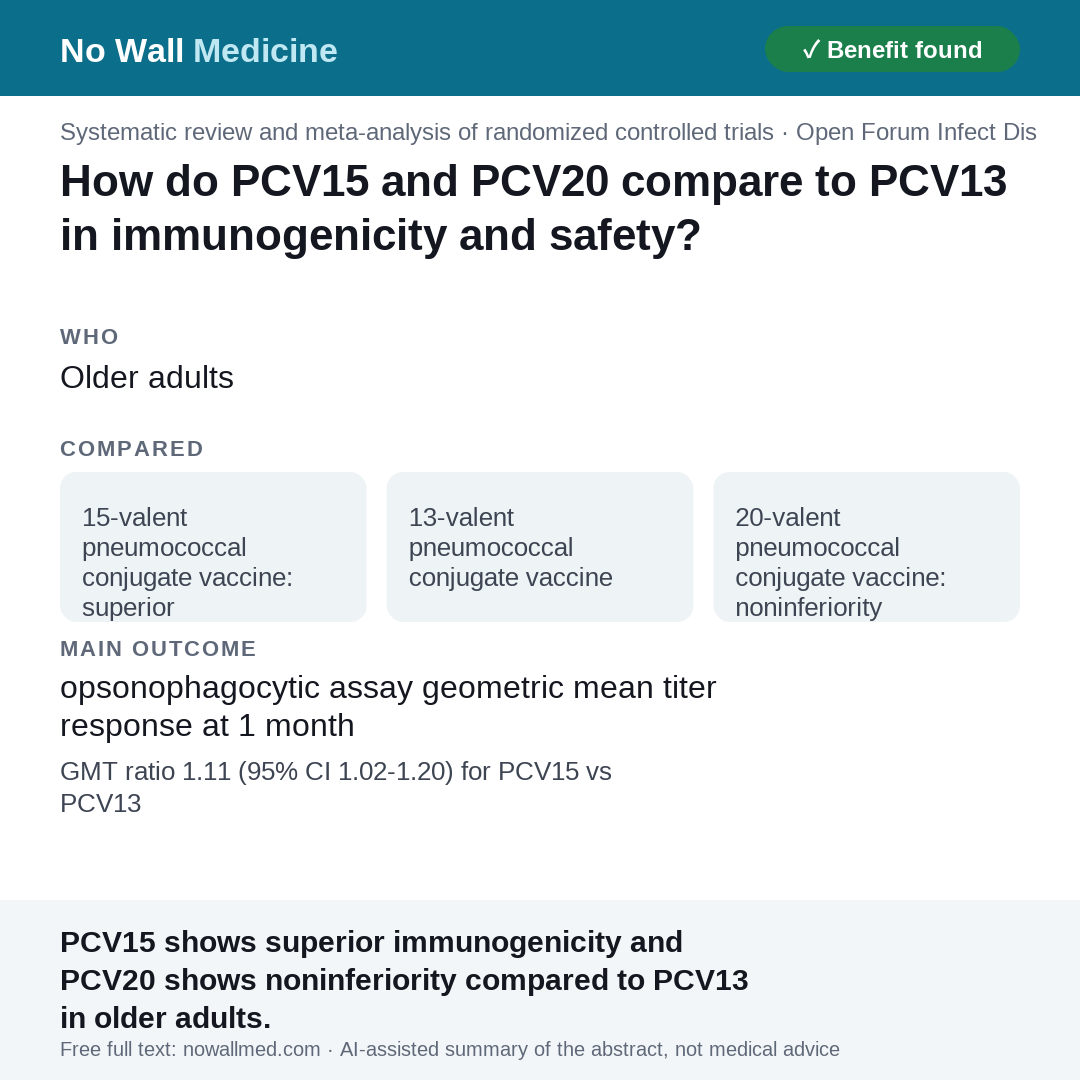
Immunogenicity and Safety of the Higher-Valent Pneumococcal Conjugate Vaccine vs the 13-Valent Pneumococcal Conjugate Vaccine in Older Adults: A Systematic Review and Meta-analysis of Randomized Controlled Trials
Systematic review and meta-analysis of randomized controlled trialsBenefit found
How do PCV15 and PCV20 compare to PCV13 in immunogenicity and safety?
Who
Older adults
Compared
15-valent pneumococcal conjugate vaccine: superior immunogenicity
13-valent pneumococcal conjugate vaccine
20-valent pneumococcal conjugate vaccine: noninferiority
Main outcome
opsonophagocytic assay geometric mean titer response at 1 month
Result: GMT ratio 1.11 (95% CI 1.02-1.20) for PCV15 vs PCV13
Bottom line: PCV15 shows superior immunogenicity and PCV20 shows noninferiority compared to PCV13 in older adults.
Open Forum Infect Dis · 2025-02-05Download image
Novel Approaches to Treatment of Immune-Mediated Chronic Intestinal Pseudo-Obstruction
Case series and systematic reviewBenefit found
What are the effects of vedolizumab and rituximab in autoimmune chronic intestinal pseudo-obstruction?
Who
4
Patients with autoimmune chronic intestinal pseudo-obstruction refractory to steroids or intravenous immunoglobulins
Compared
Vedolizumab: effective in 2 of 3 patients
Rituximab: complete clinical response in 1 case
Main outcome
clinical response to biological agents
Bottom line: Vedolizumab and rituximab show potential efficacy in managing autoimmune chronic intestinal pseudo-obstruction refractory to first-line treatments.
Limitation: lack of clinical trials and small number of patients
Neurol Neuroimmunol Neuroinflamm · 2025-02-05Download image

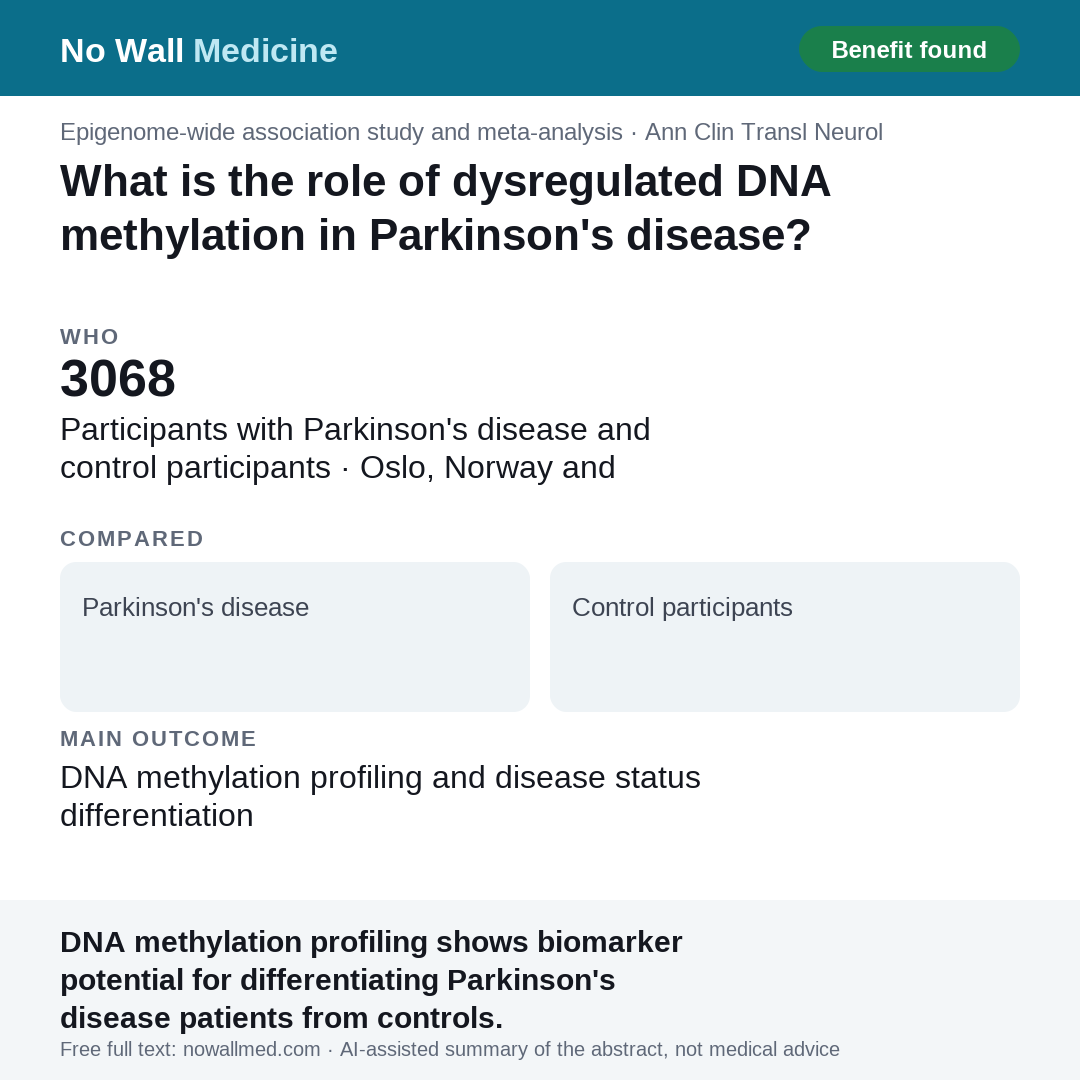
Epigenome-wide association study, meta-analysis, and multiscore profiling of whole blood in Parkinson's disease
Epigenome-wide association study and meta-analysisBenefit found
What is the role of dysregulated DNA methylation in Parkinson's disease?
Who
3068
Participants with Parkinson's disease and control participants · Oslo, Norway and Parkinson's Progression Markers Initiative
Compared
Parkinson's disease
Control participants
Main outcome
DNA methylation profiling and disease status differentiation
Result: area under the receiver-operator curve of 0.82 in Oslo and 0.65 in PPMI
Bottom line: DNA methylation profiling shows biomarker potential for differentiating Parkinson's disease patients from controls.
Limitation: Reproducibility of specific differentially methylated CpG across data sets was limited.
Ann Clin Transl Neurol · 2025-02-05Download image
AI for IMPACTS Framework for Evaluating the Long-Term Real-World Impacts of AI-Powered Clinician Tools: Systematic Review and Narrative Synthesis
Systematic review and narrative synthesisBenefit found
How can the long-term real-world impacts of artificial intelligence tools be evaluated?
Who
44
Studies evaluating artificial intelligence in health care · PubMed, Cochrane, Scopus, and IEEE Xplore databases
Compared
Traditional technical metrics
AI for IMPACTS framework
Main outcome
A framework for assessing long-term real-world impact
Bottom line: The AI for IMPACTS framework provides a holistic approach to evaluate artificial intelligence tools beyond technical metrics.
Limitation: Many assessors lack the necessary multidisciplinary training for assessment.
J Med Internet Res · 2025-02-05Download image

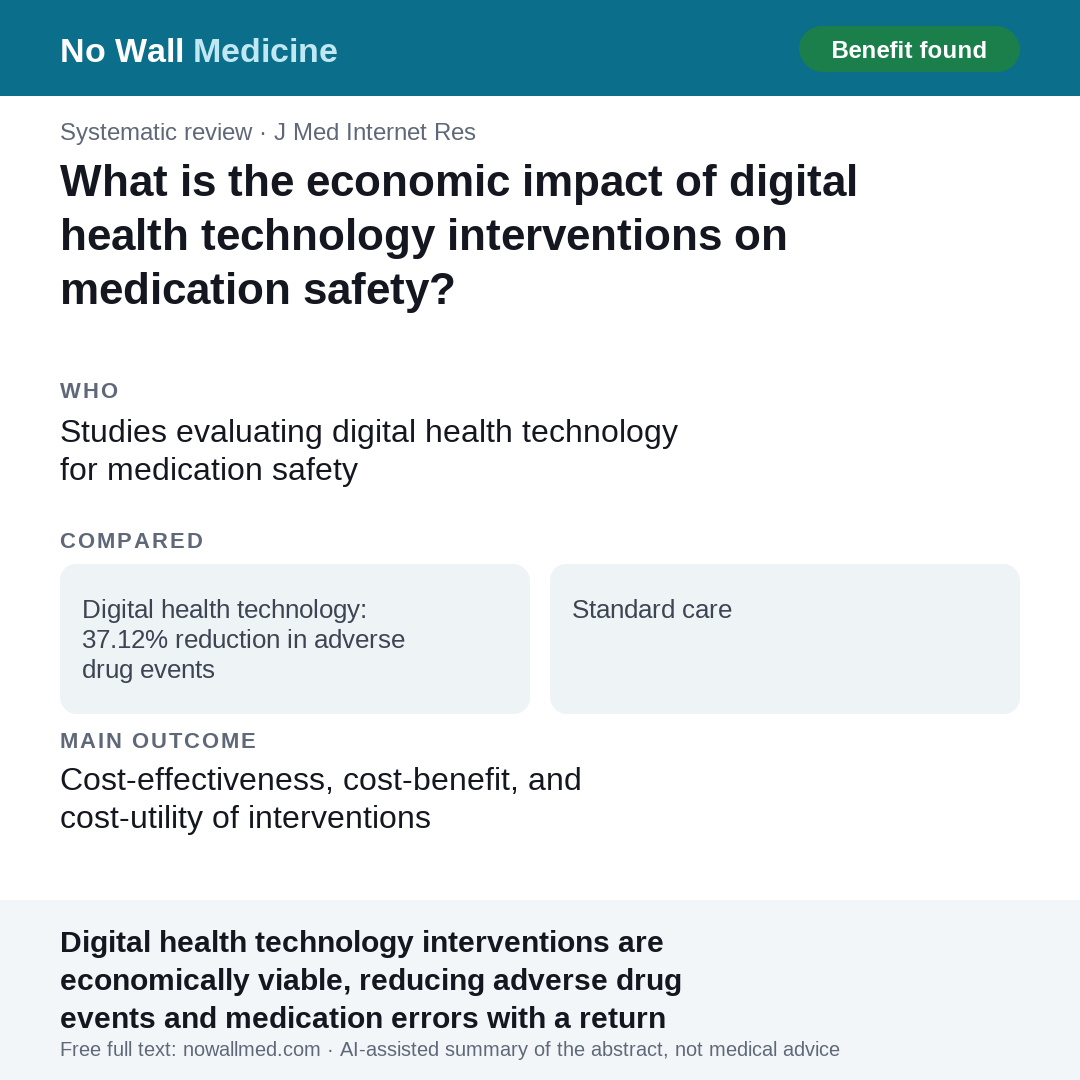
Digital Health Technology Interventions for Improving Medication Safety: Systematic Review of Economic Evaluations
Systematic reviewBenefit found
What is the economic impact of digital health technology interventions on medication safety?
Who
Studies evaluating digital health technology for medication safety
Compared
Digital health technology: 37.12% reduction in adverse drug events
Standard care
Main outcome
Cost-effectiveness, cost-benefit, and cost-utility of interventions
Bottom line: Digital health technology interventions are economically viable, reducing adverse drug events and medication errors with a return on investment.
J Med Internet Res · 2025-02-05Download image
Detection of Alzheimer Disease in Neuroimages Using Vision Transformers: Systematic Review and Meta-Analysis
Systematic review and meta-analysisBenefit found
How accurate are vision transformers in detecting Alzheimer disease from neuroimages?
Who
Patients with Alzheimer disease versus healthy controls
Compared
Vision transformers: sensitivity 0.925 (95% CI 0.892-0.959)
Healthy controls
Main outcome
Diagnostic accuracy of vision transformers
Result: area under the curve 0.924
Bottom line: Vision transformers show high diagnostic accuracy for detecting Alzheimer disease using neuroimaging data.
J Med Internet Res · 2025-02-05Download image

Effectiveness of Virtual Reality Technology Interventions in Improving the Social Skills of Children and Adolescents With Autism: Systematic Review
Systematic reviewBenefit found
Are virtual reality technology interventions effective in improving social skills in autism?
Who
14
Children and adolescents with autism spectrum disorder
Compared
Virtual reality interventions
Control
Main outcome
Social skills improvement
Bottom line: Virtual reality interventions positively impact social skills in children and adolescents with autism spectrum disorder.
Limitation: Potential adverse side effects include dizziness, eye fatigue, and sensory overload.
J Med Internet Res · 2025-02-05Download image

Efficacy of non-invasive brain stimulation interventions on cognitive impairment: an umbrella review of meta-analyses of randomized controlled trials
Umbrella review of meta-analysesBenefit found
Do noninvasive brain stimulation interventions improve cognitive and mental outcomes in Alzheimer's and mild cognitive impairment?
Who
Patients with Alzheimer's disease and mild cognitive impairment
Compared
Repetitive transcranial magnetic stimulation: short-term global cognition SMD 0.44 (95% CI 0.02-0.86)
Transcranial direct current stimulation: memory SMD 0.60 (95% CI 0.32-0.89)
Main outcome
Cognitive and mental outcomes
Bottom line: Noninvasive brain stimulation can significantly improve global cognition, language, executive function, and memory in these patients.
Limitation: Results should be interpreted cautiously due to study heterogeneity and methodological limitations.
J Neuroeng Rehabil · 2025-02-05Download image

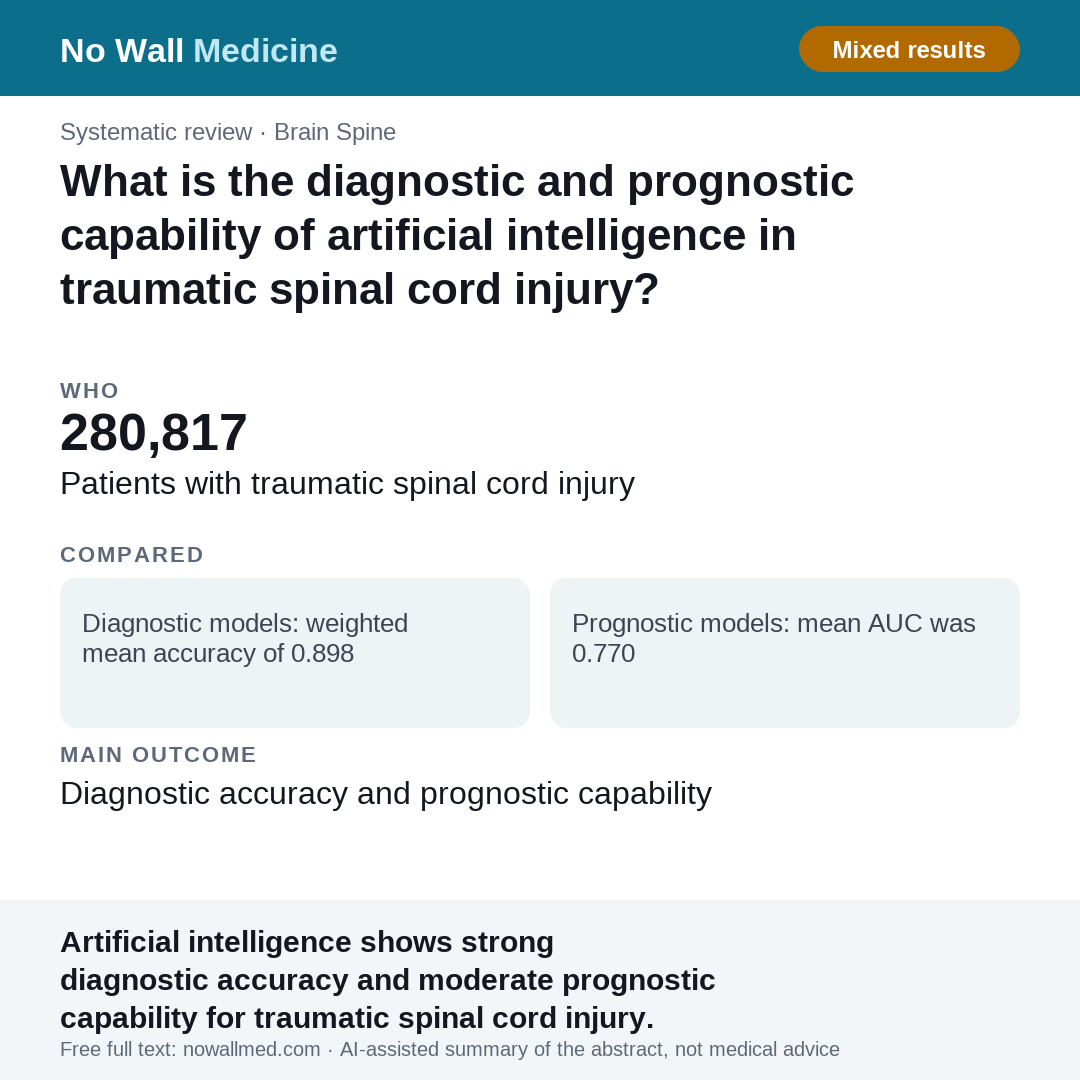
The diagnostic and prognostic capability of artificial intelligence in spinal cord injury: A systematic review
Systematic reviewMixed results
What is the diagnostic and prognostic capability of artificial intelligence in traumatic spinal cord injury?
Who
280,817
Patients with traumatic spinal cord injury
Compared
Diagnostic models: weighted mean accuracy of 0.898
Prognostic models: mean AUC was 0.770
Main outcome
Diagnostic accuracy and prognostic capability
Bottom line: Artificial intelligence shows strong diagnostic accuracy and moderate prognostic capability for traumatic spinal cord injury.
Limitation: Lack of standardised frameworks and external validation limits clinical applicability.
Brain Spine · 2025-02-05Download image
Comparison of pharmacological therapies in metabolic dysfunction-associated steatohepatitis for fibrosis regression and MASH resolution: Systematic review and network meta-analysis
Systematic review and network meta-analysisMixed results
What is the comparative efficacy of pharmacological agents for MASH fibrosis regression and resolution?
Who
9324
Patients with biopsy-proven metabolic dysfunction-associated steatohepatitis
Compared
Pharmacological interventions
Placebo
Main outcome
Fibrosis improvement and MASH resolution without worsening fibrosis
Bottom line: Various pharmacological agents show efficacy, with pegozafermin, survodutide, and tirzepatide ranking highest for MASH resolution.
Hepatology · 2025-02-04Download image

Enhancing Hepatitis C Virus Testing, Linkage to Care, and Treatment Commencement in Hospitals: A Systematic Review and Meta-analysis
Systematic review and random-effects meta-analysisMixed results
Do hospital-led interventions improve hepatitis C virus testing, linkage to care, and treatment?
Who
Patients in inpatient units, outpatient clinics, or emergency departments · Hospitals
Compared
Hospital-led interventions
Usual care or control
Main outcome
Hepatitis C virus testing, linkage to care, and treatment commencement
Result: antibody testing uptake pOR 5.83 (95% CI 2.49-13.61); RNA testing uptake pOR 10.65 (95% CI 1.70-66.50); linkage to care pOR 1.75 (95% CI 1.10-2.79)
Bottom line: Hospital-led interventions increase hepatitis C virus testing and linkage to care, but no intervention increased uptake at all steps.
Open Forum Infect Dis · 2025-02-04Download image

Challenges and Opportunities for Data Sharing Related to Artificial Intelligence Tools in Health Care in Low- and Middle-Income Countries: Systematic Review and Case Study From Thailand
Systematic review and case studyMixed results
What are the barriers and enablers to data sharing for artificial intelligence in low- and middle-income countries?
Who
Studies in low- and middle-income countries and stakeholders in Thailand · Low- and middle-income countries and Thailand
Compared
Systematic review findings
Thailand stakeholder interviews
Main outcome
Barriers and enablers to data sharing for artificial intelligence
Bottom line: Low- and middle-income countries face technical, political, legal, and organizational barriers to data sharing for artificial intelligence development.
Limitation: Findings might not be generalizable to other contexts.
J Med Internet Res · 2025-02-04Download image

Ethics and end-of-life in pediatric and neonatal ICUs: a systematic review of recommendations
Systematic reviewUnclear result
Ethics in pediatric and neonatal ICUs
Who
9
Children in intensive care units
Compared
NICU
PICU
Main outcome
End-of-life decision-making
Bottom line: Beneficence guides end-of-life decisions
BMC Palliat Care · 2025-02-04Download image

Age and Sex Differences in Efficacy of Treatments for Type 2 Diabetes: A Network Meta-Analysis
Network meta-analysisMixed results
Do age or sex affect efficacy of SGLT2, GLP-1, and DPP4 inhibitors?
Who
309503
Adults with type 2 diabetes
Compared
SGLT2 inhibitors
GLP-1 receptor agonists
DPP4 inhibitors
Main outcome
Hemoglobin A1c and major adverse cardiovascular events
Result: hazard ratio 0.76 (95% CrI 0.62 to 0.93) for SGLT2 MACEs in older participants
Bottom line: SGLT2 inhibitors were more cardioprotective in older people, while GLP-1 receptor agonists were more cardioprotective in younger people.
JAMA · 2025-02-03Download image

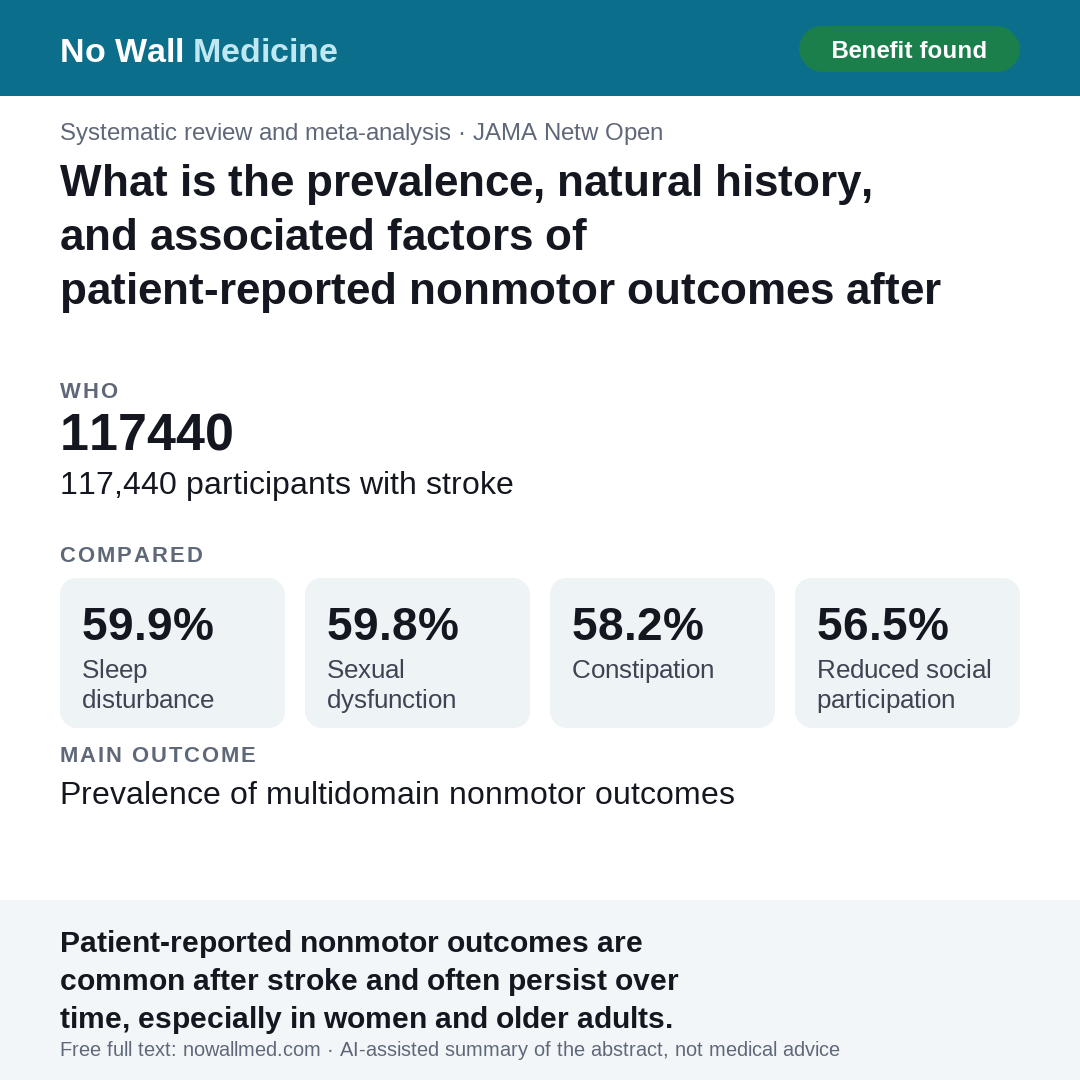
Prevalence, Trajectory, and Factors Associated With Patient-Reported Nonmotor Outcomes After Stroke: A Systematic Review and Meta-Analysis
Systematic review and meta-analysisBenefit found
What is the prevalence, natural history, and associated factors of patient-reported nonmotor outcomes after stroke?
Who
117440
117,440 participants with stroke
Compared
59.9%Sleep disturbance (95% CI, 53.9%-63.9%)
59.8%Sexual dysfunction (95% CI, 50.0%-69.5%)
58.2%Constipation (95% CI, 53.9%-62.6%)
56.5%Reduced social participation (95% CI, 52.1%-60.8%)
Main outcome
Prevalence of multidomain nonmotor outcomes
Bottom line: Patient-reported nonmotor outcomes are common after stroke and often persist over time, especially in women and older adults.
Limitation: The heterogeneity ranged between 52% and 98% across all studies.
JAMA Netw Open · 2025-02-03Download image