Visual abstracts
New randomized trials and meta-analyses from leading journals at a glance: who was studied, what was compared, and what was found. Every paper is free to read in full.
All specialtiesCardiology 975Oncology 867Gastroenterology & Hepatology 354Infectious Disease 670Neurology 408Psychiatry & Mental Health 495Pulmonology 429Critical Care 292Endocrinology & Diabetes 546Pediatrics 610Surgery 414Orthopedics & Sports Medicine 187Neurosurgery 142Cardiothoracic & Vascular Surgery 101Plastic & Reconstructive Surgery 159Nephrology 219Rheumatology 127Hematology 208Dermatology 91Ophthalmology 117Obstetrics & Gynecology 298Public & Global Health 187Radiology & Imaging 120Anesthesiology 164Urology 186ENT (Otolaryngology) 133Emergency Medicine 110Allergy & Immunology 67Geriatrics 189Family Medicine & Primary Care 131Medical Genetics & Genomics 99Pathology & Laboratory Medicine 30Physical Medicine & Rehabilitation 171Palliative Care 91Nutrition 247Digital Health & AI 509General Medicine 105
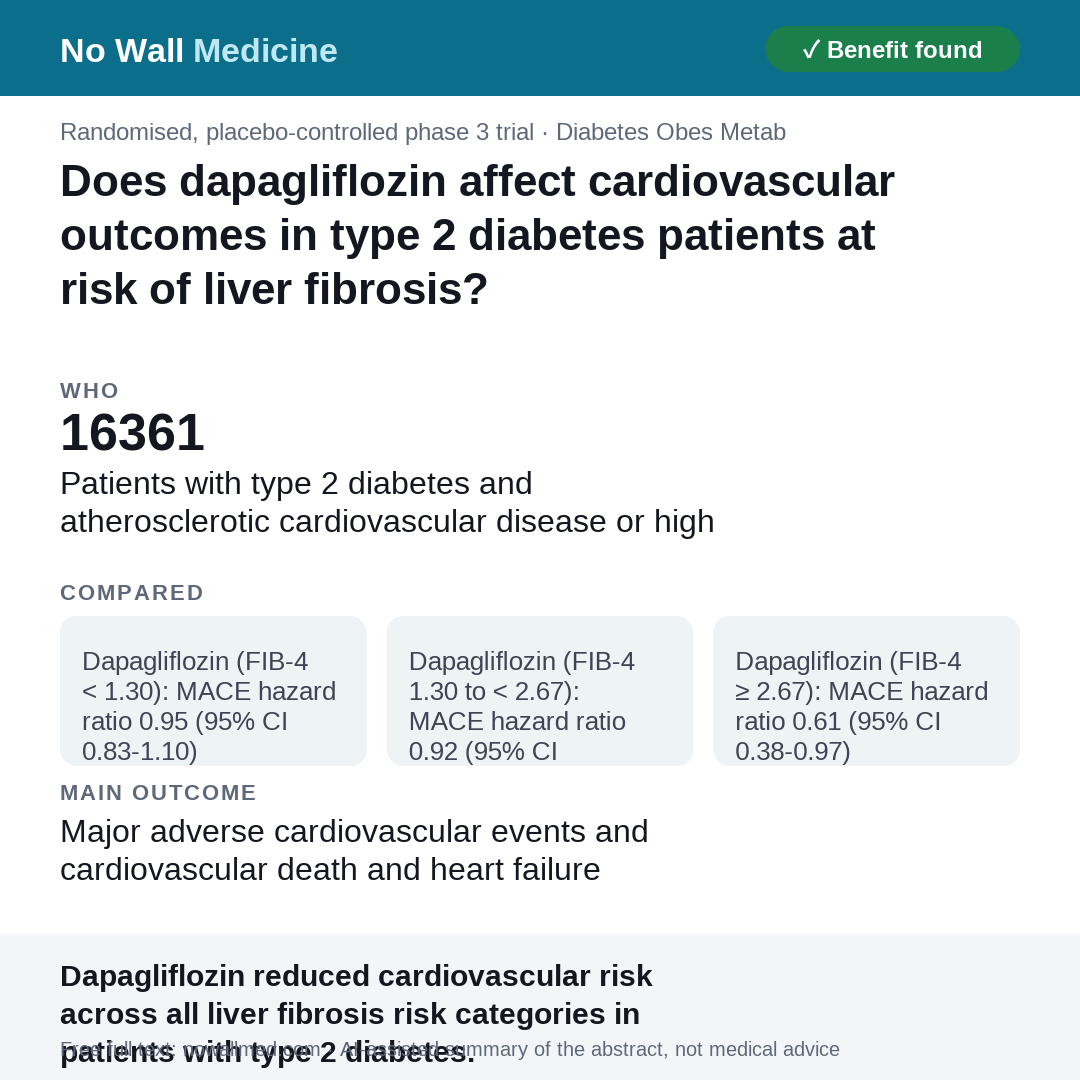
Effects of Dapagliflozin on Cardiovascular Outcomes in Patients With Type 2 Diabetes at Risk of Liver Fibrosis
Randomised, placebo-controlled phase 3 trialBenefit found
Does dapagliflozin affect cardiovascular outcomes in type 2 diabetes patients at risk of liver fibrosis?
Who
16361
Patients with type 2 diabetes and atherosclerotic cardiovascular disease or high risk
Compared
Dapagliflozin (FIB-4 < 1.30): MACE hazard ratio 0.95 (95% CI 0.83-1.10)
Dapagliflozin (FIB-4 1.30 to < 2.67): MACE hazard ratio 0.92 (95% CI 0.79-1.08)
Dapagliflozin (FIB-4 ≥ 2.67): MACE hazard ratio 0.61 (95% CI 0.38-0.97)
Main outcome
Major adverse cardiovascular events and cardiovascular death and heart failure hospitalisation
Result: MACE hazard ratio 0.61 (95% CI 0.38-0.97) in highest FIB-4 group
Bottom line: Dapagliflozin reduced cardiovascular risk across all liver fibrosis risk categories in patients with type 2 diabetes.
Diabetes Obes Metab · 2026-04-27Download image
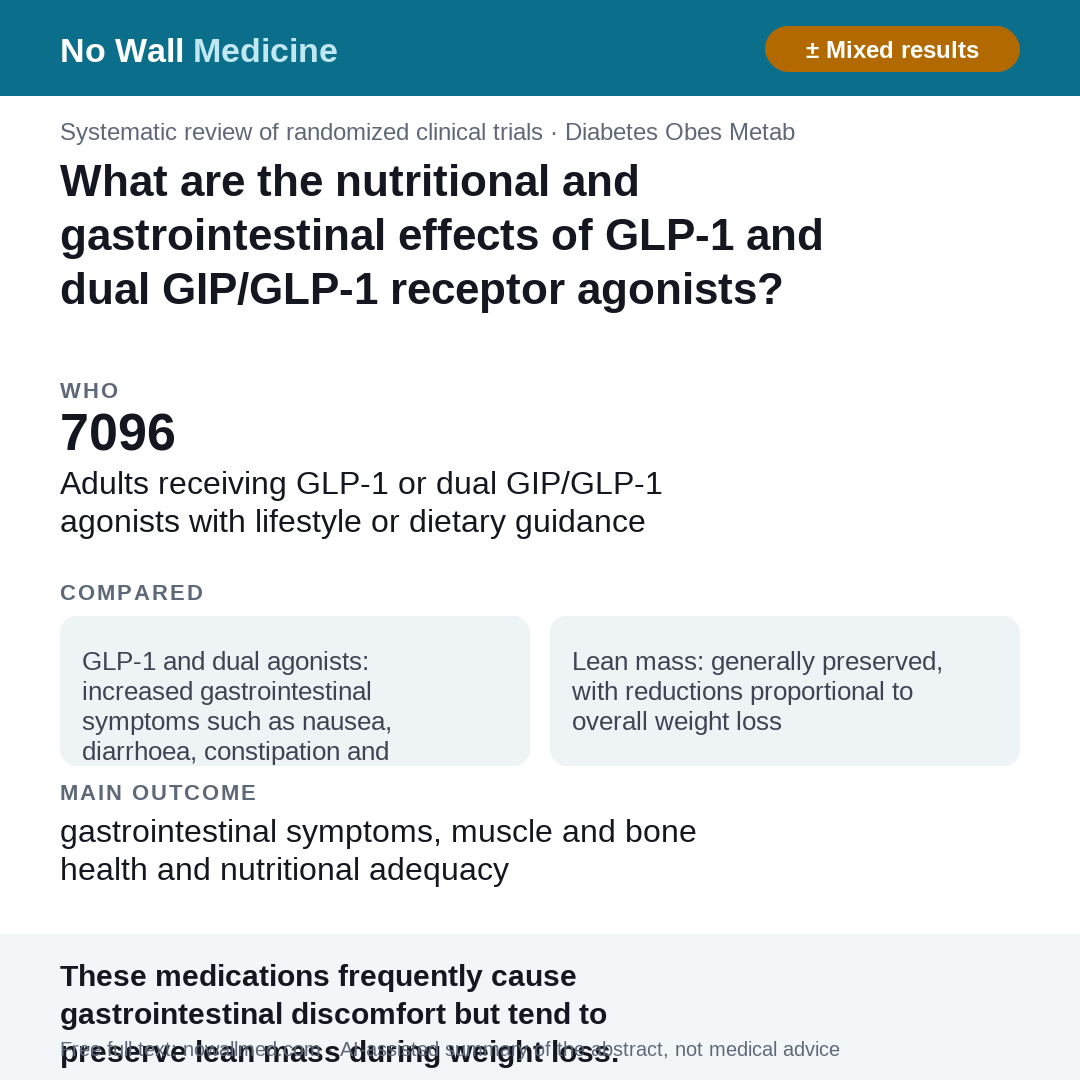
Dietary Strategies and Nutritional Management in Patients Receiving GLP-1 and Dual GIP/GLP-1 Receptor Agonists as Adjuncts to Lifestyle Interventions: A Systematic Review of Randomised Clinical Trials
Systematic review of randomized clinical trialsMixed results
What are the nutritional and gastrointestinal effects of GLP-1 and dual GIP/GLP-1 receptor agonists?
Who
7096
Adults receiving GLP-1 or dual GIP/GLP-1 agonists with lifestyle or dietary guidance
Compared
GLP-1 and dual agonists: increased gastrointestinal symptoms such as nausea, diarrhoea, constipation and vomiting
Lean mass: generally preserved, with reductions proportional to overall weight loss
Main outcome
gastrointestinal symptoms, muscle and bone health and nutritional adequacy
Bottom line: These medications frequently cause gastrointestinal discomfort but tend to preserve lean mass during weight loss.
Limitation: Evidence on optimal nutritional approaches remains limited and no study directly assessed bone health.
Diabetes Obes Metab · 2026-04-27Download image
PROductivity Study of Presbyopia Elimination in gaRment workers (PROSPER II): a randomised trial on the productivity impact of providing near glasses to Indian garment factory workers
Individually randomised, investigator-masked, controlled trialBenefit found
Does providing near glasses improve productivity in Indian garment factory workers?
Who
682
Garment factory workers aged 35 years or older with presbyopia · Karnataka, India
Compared
5.70%Intervention (immediate delivery of glasses) (95% CI 1.04% to 10.4%)
Control (identical glasses delivered at endline)
Main outcome
Work productivity defined as hourly items completed normalised to target
Result: 5.70% (95% CI 1.04% to 10.4%)
Bottom line: Providing free near glasses significantly increases work productivity among garment factory workers in India.
Br J Ophthalmol · 2026-04-27Download image

Virtual Reality Mastoidectomy as Precadaver Training for Novices: A Randomized Crossover Study
Randomized crossover studyBenefit found
Does virtual reality simulation versus cadaveric dissection training affect cognitive load and performance?
Who
24
24 core surgical trainees with no prior mastoidectomy experience
Compared
Virtual reality simulation: mean relative reaction time rising 26% from baseline
Cadaveric dissection: mean relative reaction time rising 60% from baseline
Main outcome
Cognitive load and cadaveric performance
Bottom line: Virtual reality reduces cognitive load and improves subsequent cadaveric performance in novice surgical trainees.
Laryngoscope · 2026-04-27Download image

Bacterial Lysates Add-On Therapy to Reduce Postoperative Recurrence in Nasal Polyps
Single-center randomized prospective studyBenefit found
Does OM-85 add-on therapy reduce postoperative nasal polyp recurrence?
Who
77
Patients with nasal polyps · Single-center
Compared
8.82%OM-85 add-on
27.91%Control group
Main outcome
Polyp recurrence rate
Bottom line: Adding OM-85 therapy significantly reduces postoperative nasal polyp recurrence and improves symptom scores.
Laryngoscope · 2026-04-27Download image

Effects of vitamin D on biochemical markers of osteoporosis: a meta-analysis of randomised trials
Meta-analysis of randomized trialsBenefit found
What are the effects of vitamin D supplements on bone turnover markers?
Who
2695
Participants in trials of vitamin D versus placebo
Compared
Vitamin D
Placebo
Main outcome
Plasma levels of P1NP and CTX
Result: -3.3 % (95 % CI -5.6, -1.0) for P1NP and -3.8 % (95 % CI -6.8, -0.8) for CTX
Bottom line: Vitamin D supplementation was associated with modest reductions in both P1NP and CTX bone turnover markers.
Br J Nutr · 2026-04-27Download image

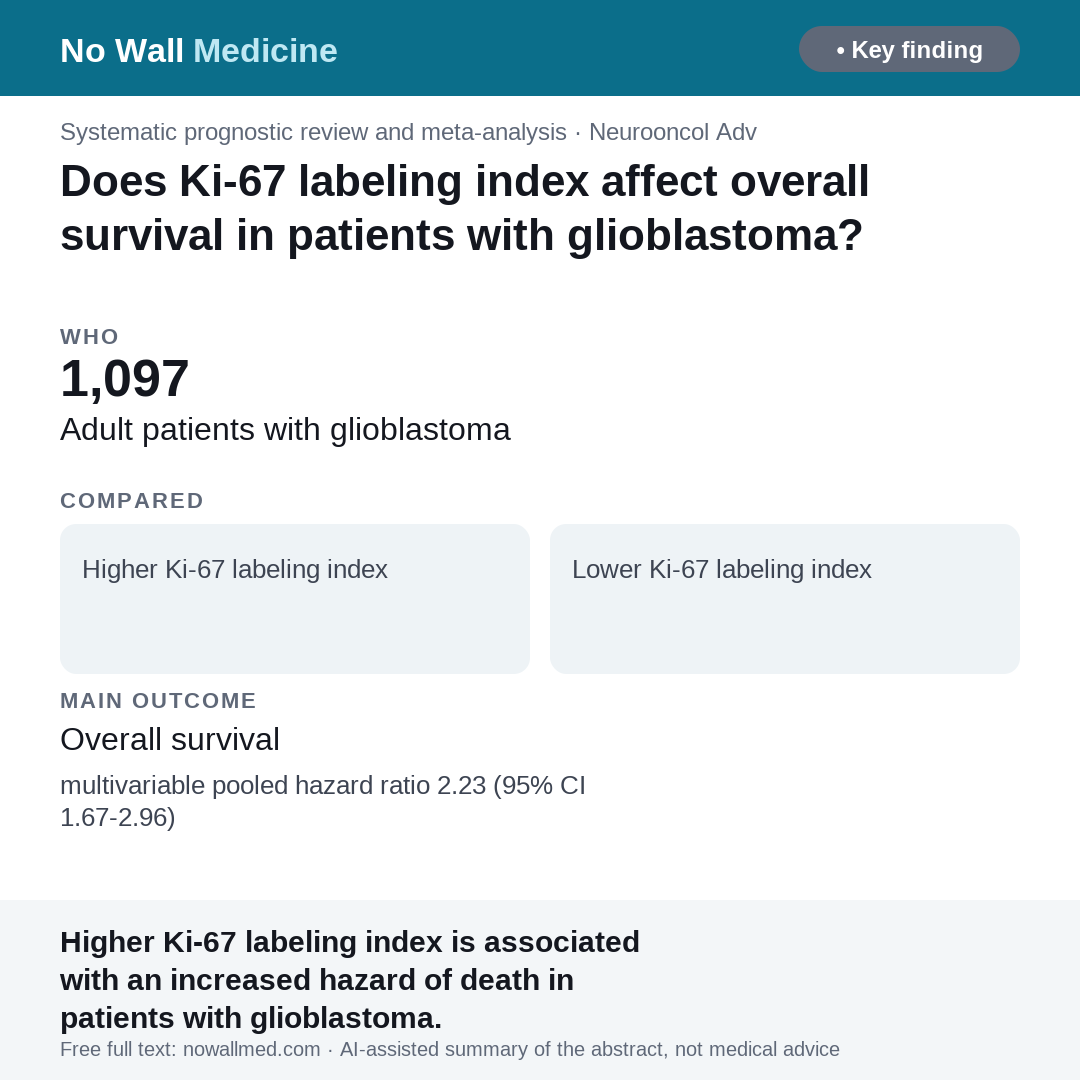
Ki-67 and overall survival in patients with glioblastoma: A systematic prognostic review and meta-analysis
Systematic prognostic review and meta-analysisHarm found
Does Ki-67 labeling index affect overall survival in patients with glioblastoma?
Who
1,097
Adult patients with glioblastoma
Compared
Higher Ki-67 labeling index
Lower Ki-67 labeling index
Main outcome
Overall survival
Result: multivariable pooled hazard ratio 2.23 (95% CI 1.67-2.96)
Bottom line: Higher Ki-67 labeling index is associated with an increased hazard of death in patients with glioblastoma.
Limitation: Concerns for selective study participation and heterogeneous Ki-67 cutoffs.
Neurooncol Adv · 2026-04-27Download image
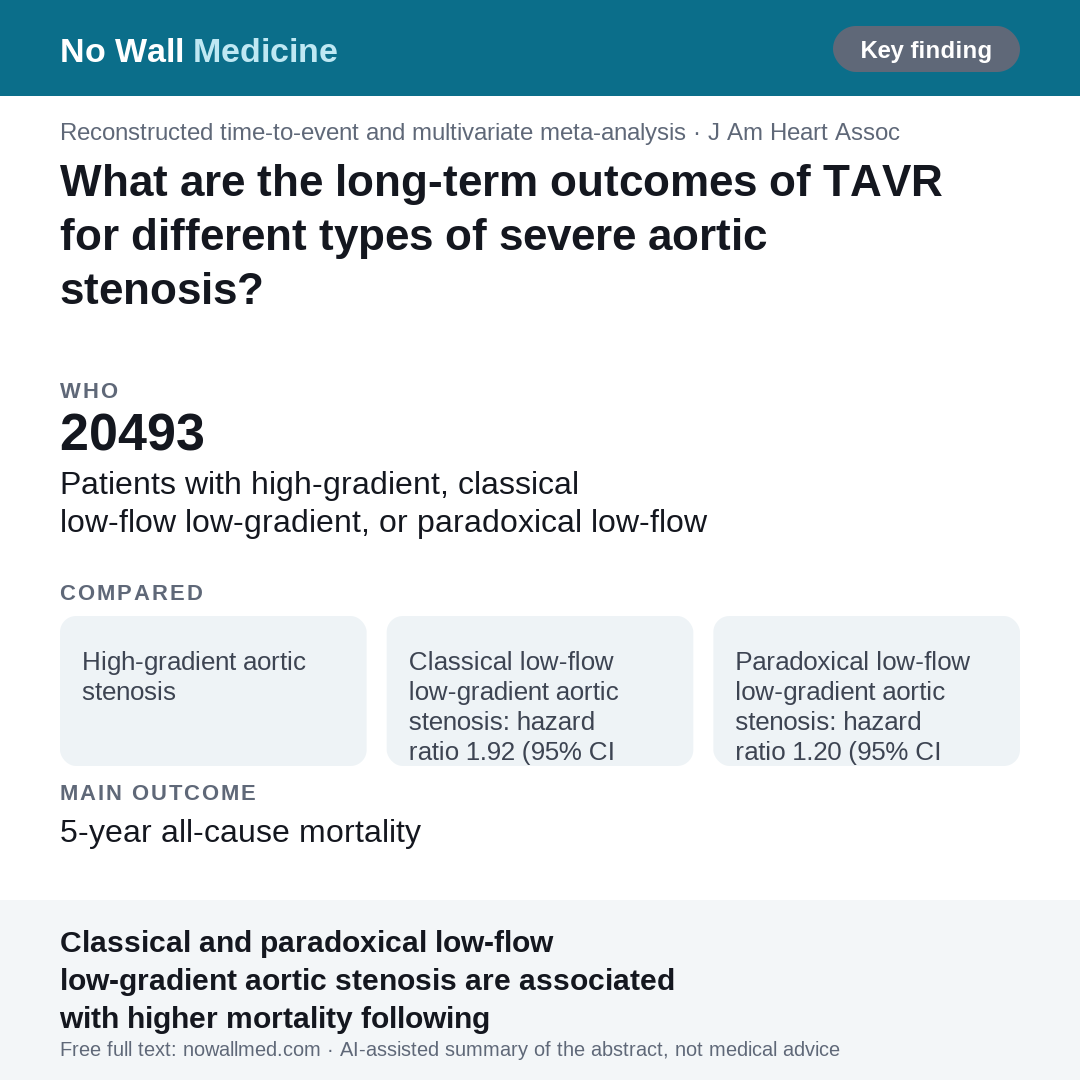
Long-Term Outcomes of Transcatheter Aortic Valve Replacement in Low-Flow Low-Gradient Aortic Stenosis: A Reconstructed Time-to-Event and Multivariate Meta-Analysis
Reconstructed time-to-event and multivariate meta-analysisHarm found
What are the long-term outcomes of TAVR for different types of severe aortic stenosis?
Who
20493
Patients with high-gradient, classical low-flow low-gradient, or paradoxical low-flow low-gradient aortic stenosis
Compared
High-gradient aortic stenosis
Classical low-flow low-gradient aortic stenosis: hazard ratio 1.92 (95% CI 1.62-2.27)
Paradoxical low-flow low-gradient aortic stenosis: hazard ratio 1.20 (95% CI 1.07-1.34)
Main outcome
5-year all-cause mortality
Result: hazard ratio 1.92 (95% CI 1.62-2.27) for classical and 1.20 (95% CI 1.07-1.34) for paradoxical
Bottom line: Classical and paradoxical low-flow low-gradient aortic stenosis are associated with higher mortality following transcatheter aortic valve replacement.
J Am Heart Assoc · 2026-04-27Download image
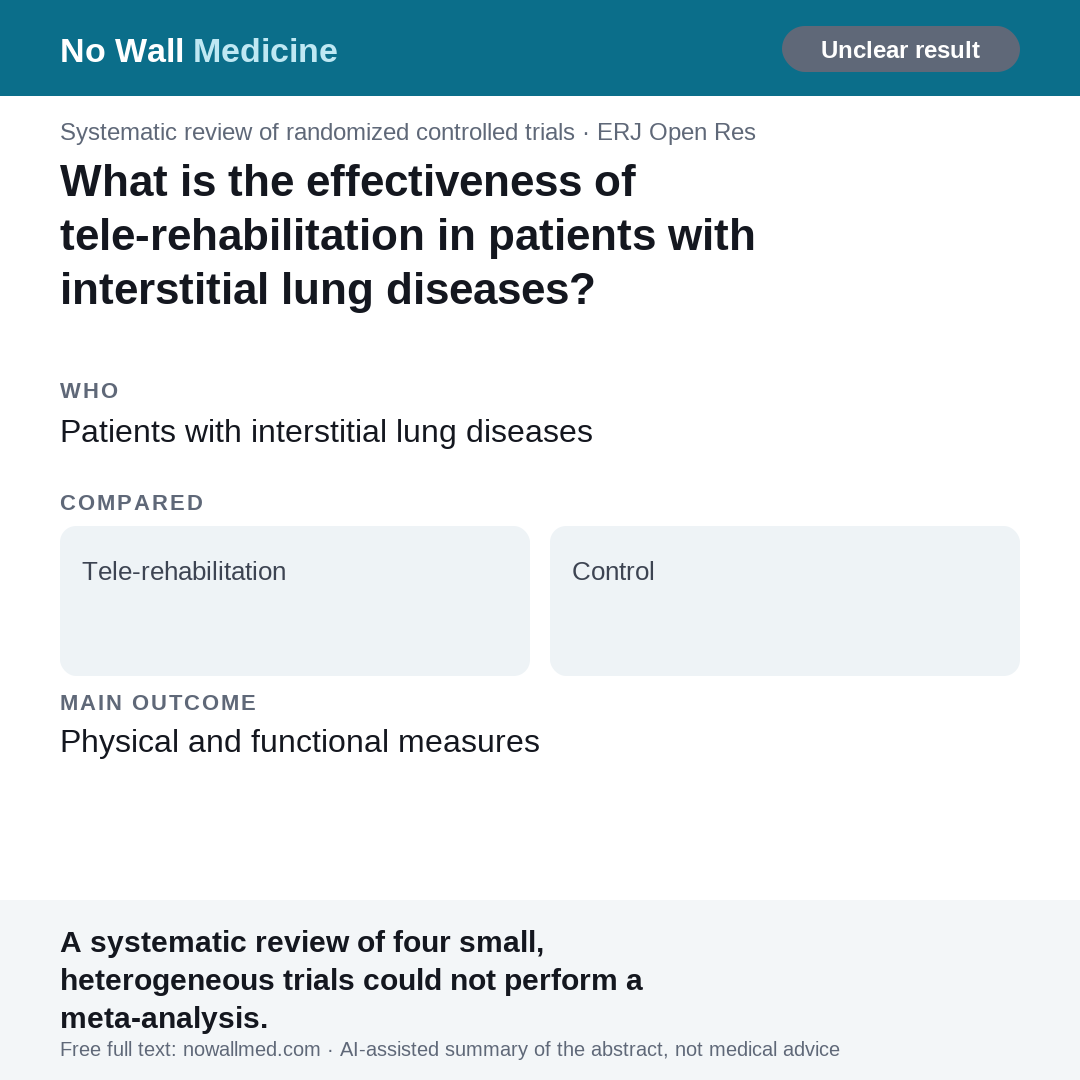
Home-based rehabilitation in interstitial lung disease: picturing the present and drawing the future through a systematic review of the literature
Systematic review of randomized controlled trialsUnclear result
What is the effectiveness of tele-rehabilitation in patients with interstitial lung diseases?
Who
Patients with interstitial lung diseases
Compared
Tele-rehabilitation
Control
Main outcome
Physical and functional measures
Bottom line: A systematic review of four small, heterogeneous trials could not perform a meta-analysis.
ERJ Open Res · 2026-04-27Download image
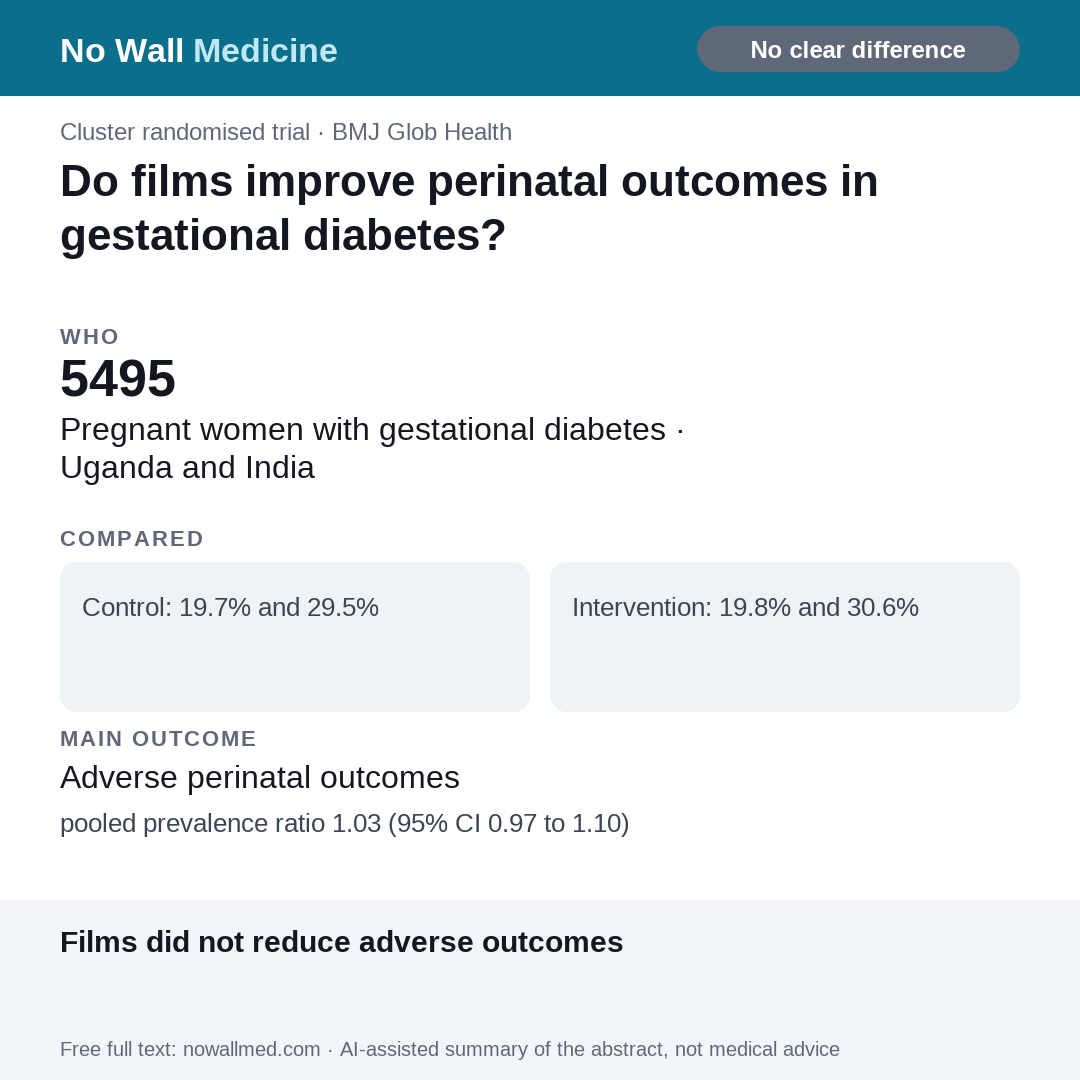
Educational films for improving perinatal outcomes associated with gestational diabetes in Uganda and India: a cluster randomised trial
Cluster randomised trialNo clear difference
Do films improve perinatal outcomes in gestational diabetes?
Who
5495
Pregnant women with gestational diabetes · Uganda and India
Compared
Control: 19.7% and 29.5%
Intervention: 19.8% and 30.6%
Main outcome
Adverse perinatal outcomes
Result: pooled prevalence ratio 1.03 (95% CI 0.97 to 1.10)
Bottom line: Films did not reduce adverse outcomes
BMJ Glob Health · 2026-04-27Download image
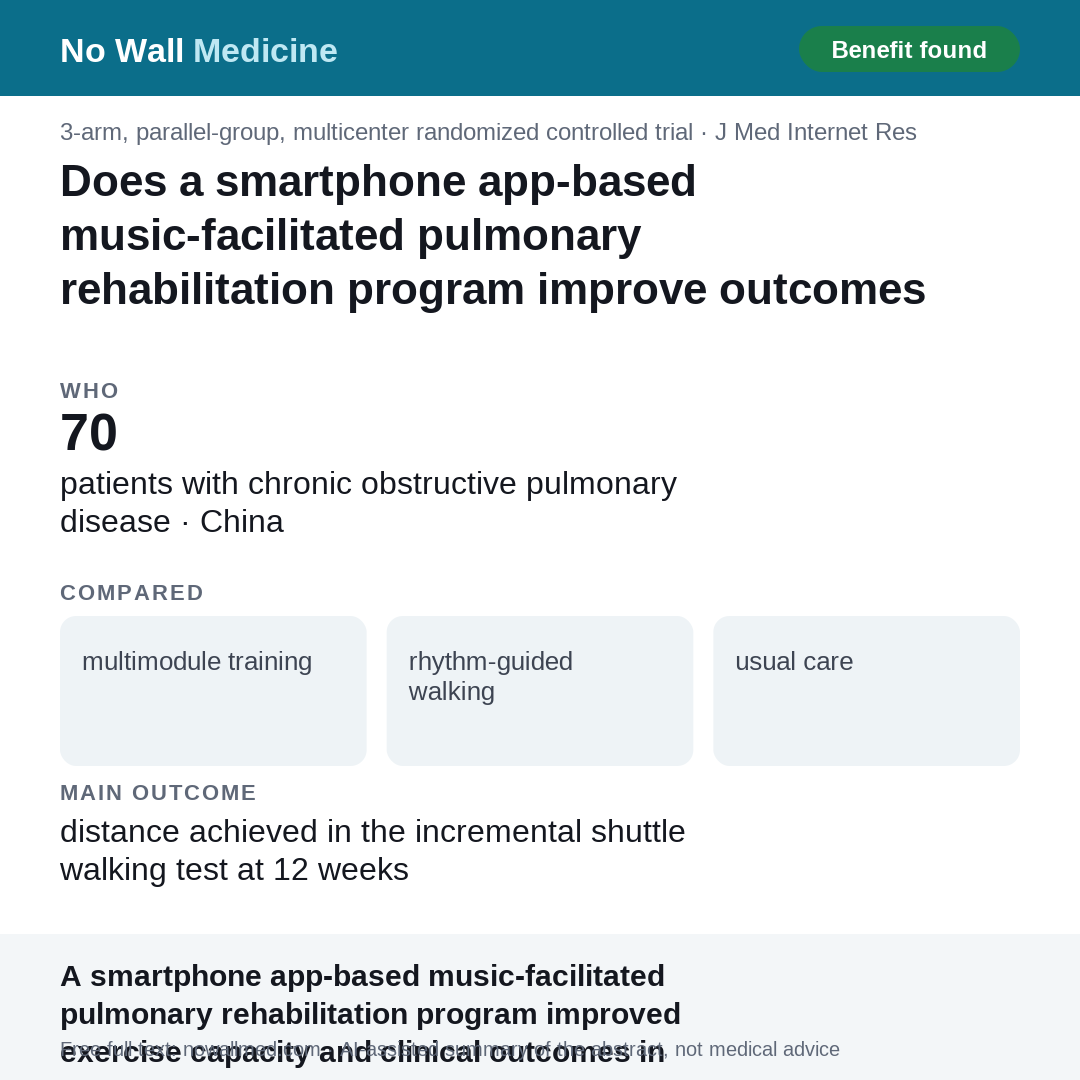
Smartphone App-Based Music-Facilitated Pulmonary Rehabilitation Program Integrating Rhythm-Guided Walking and Singing for Patients With Chronic Obstructive Pulmonary Disease: Multicenter Randomized Controlled Trial
3-arm, parallel-group, multicenter randomized controlled trialBenefit found
Does a smartphone app-based music-facilitated pulmonary rehabilitation program improve outcomes in COPD patients?
Who
70
patients with chronic obstructive pulmonary disease · China
Compared
multimodule training
rhythm-guided walking
usual care
Main outcome
distance achieved in the incremental shuttle walking test at 12 weeks
Result: mean difference 56.35 m, 95% CI 6.66-106.04 m
Bottom line: A smartphone app-based music-facilitated pulmonary rehabilitation program improved exercise capacity and clinical outcomes in patients with COPD.
J Med Internet Res · 2026-04-27Download image
The past, present and future of control architectures in lower-limb cable-driven robots for gait rehabilitation
Systematic reviewMixed results
What are the control strategies for lower-limb cable-driven rehabilitation robots?
Who
70
Lower-limb cable-driven rehabilitation robots
Compared
Traditional classical control
Personalized adaptive and learning-based methods
Main outcome
Control strategies and their evolution
Bottom line: Control strategies are evolving from traditional classical methods toward personalized, adaptive, and intention-driven frameworks.
J Neuroeng Rehabil · 2026-04-27Download image

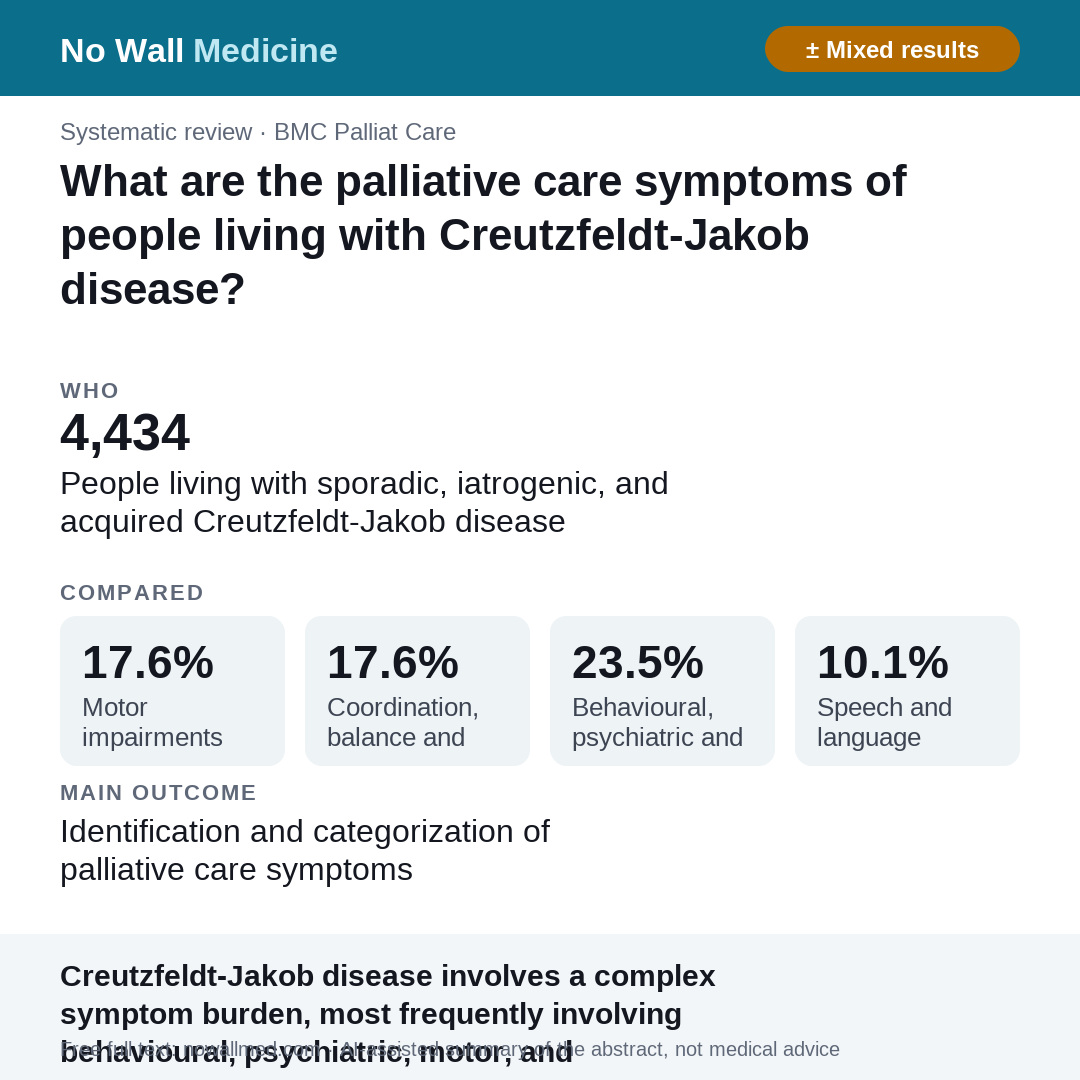
Palliative care symptoms of people living with rapidly progressive prion diseases: a systematic review
Systematic reviewMixed results
What are the palliative care symptoms of people living with Creutzfeldt-Jakob disease?
Who
4,434
People living with sporadic, iatrogenic, and acquired Creutzfeldt-Jakob disease
Compared
17.6%Motor impairments
17.6%Coordination, balance and vestibular issues
23.5%Behavioural, psychiatric and emotional symptoms
10.1%Speech and language disorders
Main outcome
Identification and categorization of palliative care symptoms
Bottom line: Creutzfeldt-Jakob disease involves a complex symptom burden, most frequently involving behavioural, psychiatric, motor, and coordination impairments.
Limitation: Limited evidence regarding social or spiritual symptoms, quality of life, or symptom progression.
BMC Palliat Care · 2026-04-27Download image
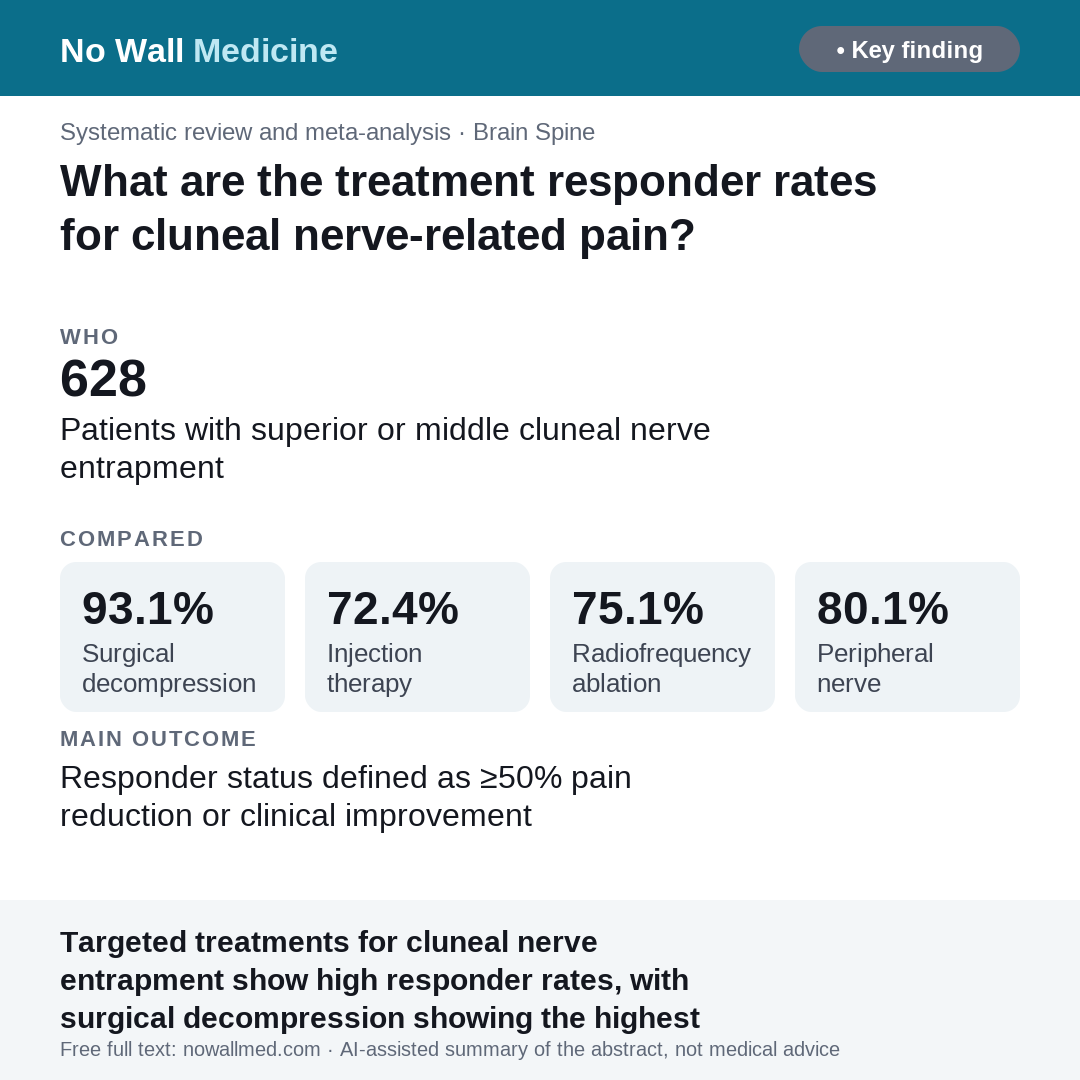
Treatment outcomes for cluneal neuropathy: a systematic review and meta-analysis
Systematic review and meta-analysisBenefit found
What are the treatment responder rates for cluneal nerve-related pain?
Who
628
Patients with superior or middle cluneal nerve entrapment
Compared
93.1%Surgical decompression (95% CI 84.9-97.0)
72.4%Injection therapy (95% CI 65.9-78.1)
75.1%Radiofrequency ablation (95% CI 62.1-84.7)
80.1%Peripheral nerve stimulation (95% CI 58.5-92.0)
Main outcome
Responder status defined as ≥50% pain reduction or clinical improvement
Result: 78.3% (95% CI 72.9-82.9) at ≥3 months
Bottom line: Targeted treatments for cluneal nerve entrapment show high responder rates, with surgical decompression showing the highest proportion.
Limitation: Predominantly observational, non-comparative evidence with heterogeneity in diagnostic criteria and potential confounding by indication.
Brain Spine · 2026-04-27Download image
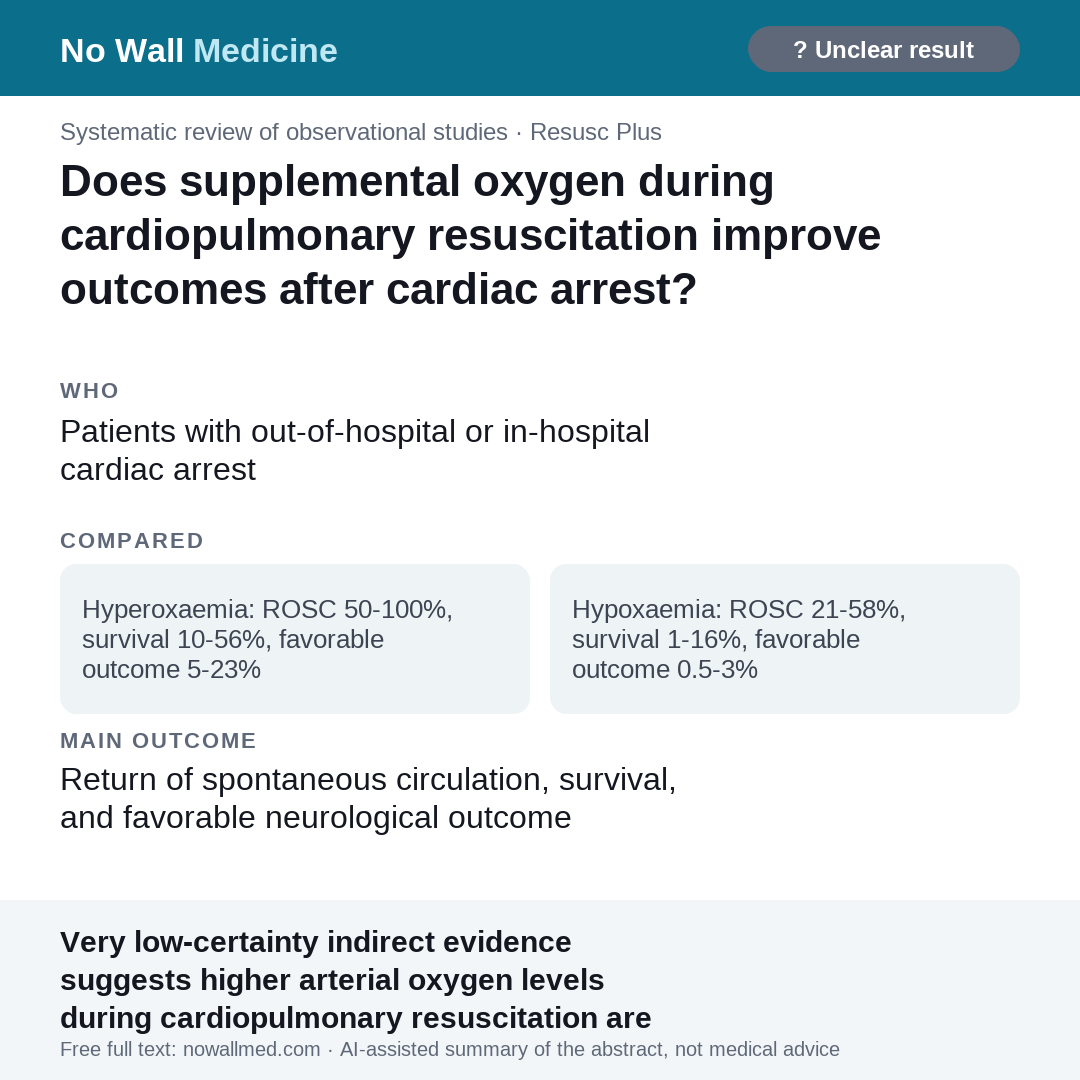
The use of supplemental oxygen during cardiopulmonary resuscitation - a systematic review of the literature
Systematic review of observational studiesUnclear result
Does supplemental oxygen during cardiopulmonary resuscitation improve outcomes after cardiac arrest?
Who
Patients with out-of-hospital or in-hospital cardiac arrest
Compared
Hyperoxaemia: ROSC 50-100%, survival 10-56%, favorable outcome 5-23%
Hypoxaemia: ROSC 21-58%, survival 1-16%, favorable outcome 0.5-3%
Main outcome
Return of spontaneous circulation, survival, and favorable neurological outcome
Bottom line: Very low-certainty indirect evidence suggests higher arterial oxygen levels during cardiopulmonary resuscitation are associated with improved outcomes.
Limitation: All included studies were observational and judged to be at critical risk of bias.
Resusc Plus · 2026-04-27Download image
Symptom-Based Dosing for Neonatal Opioid Withdrawal: The OPTimize NOW Randomized Clinical Trial
Cluster, crossover randomized clinical trialBenefit found
Does symptom-based dosing reduce time to medical readiness for discharge in infants with neonatal opioid withdrawal?
Who
626
Infants with moderate to severe neonatal opioid withdrawal syndrome · 23 United States hospitals
Compared
9.18 daysSymptom-based dosing
11.61 daysScheduled opioid taper
Main outcome
Time from birth to medical readiness for discharge
Result: adjusted mean ratio 0.79 (95% CI 0.65-0.96)
Bottom line: Among infants using the Eat, Sleep, Console approach, symptom-based dosing decreased time to medical readiness for discharge.
JAMA · 2026-04-26Download image

Longitudinal Computed Tomographic Evaluation of Mandibular Bone Morphology Following OnabotulinumtoxinA Treatment of Masseter Muscle Prominence: Results of a 12-Month, Repeat-Treatment, Placebo-Controlled Study in Healthy Adults
12-month, double-blind, placebo-controlled, Phase 2 studyNo clear difference
Does onabotulinumtoxinA treatment for masseter muscle prominence change mandibular bone morphology?
Who
187
healthy adults with bilateral masseter muscle prominence
Compared
onabotulinumtoxinA: no differences
placebo: no differences
Main outcome
mandibular morphology indicators via computed tomography
Bottom line: OnabotulinumtoxinA treatment for masseter muscle prominence showed no detectable changes in mandibular bone morphology over 12 months.
Limitation: Late-emerging effects beyond 12 months cannot be excluded.
Aesthet Surg J · 2026-04-26Download image

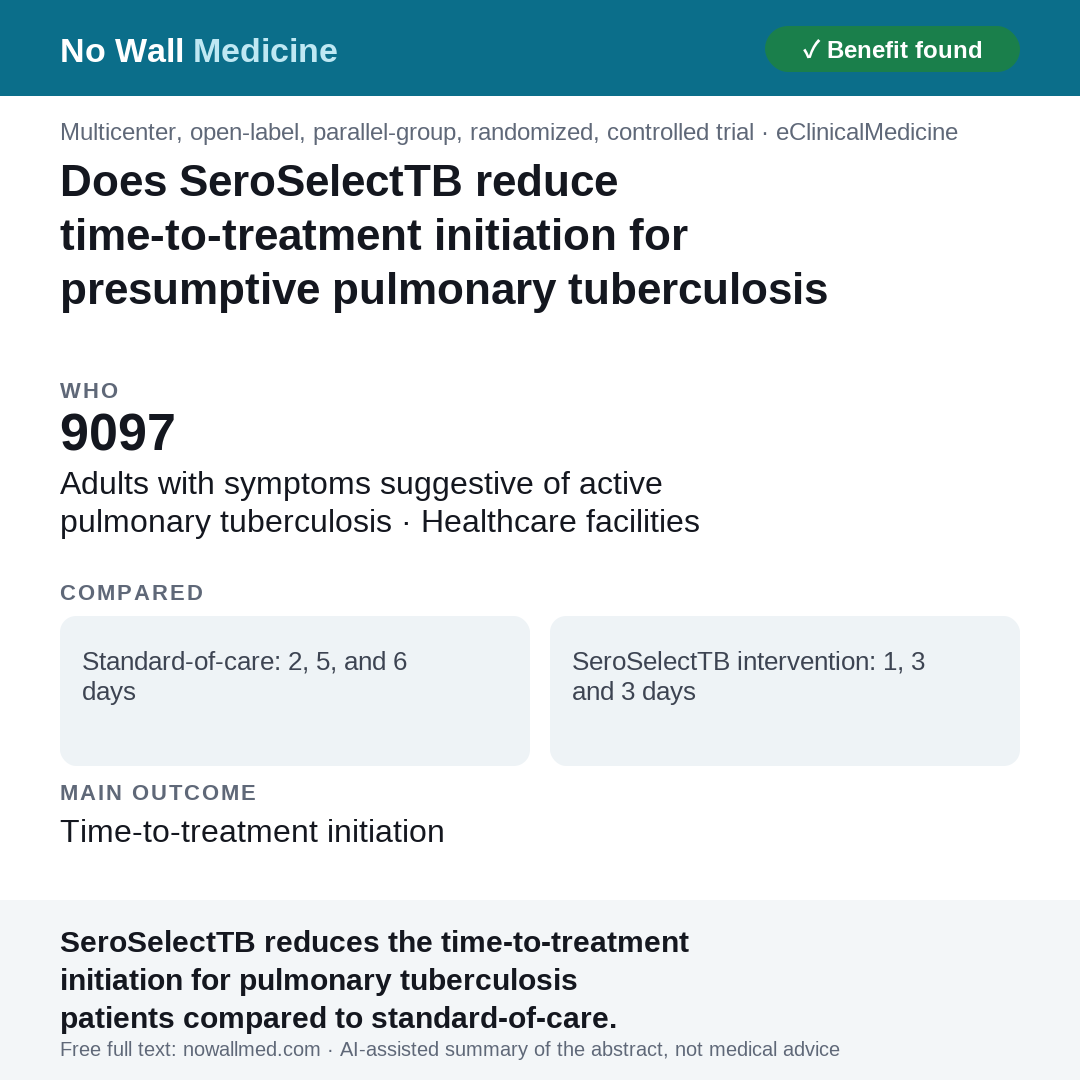
Feasibility, accuracy, and effect of a rapid point-of-care serological test (SeroSelectTB) to identify presumptive pulmonary TB patients for confirmatory testing in Ethiopia, South Africa, and Tanzania: a multicenter, open-label, parallel-group, randomized, controlled trial
Multicenter, open-label, parallel-group, randomized, controlled trialBenefit found
Does SeroSelectTB reduce time-to-treatment initiation for presumptive pulmonary tuberculosis patients?
Who
9097
Adults with symptoms suggestive of active pulmonary tuberculosis · Healthcare facilities in Ethiopia, South Africa, and Tanzania
Compared
Standard-of-care: 2, 5, and 6 days
SeroSelectTB intervention: 1, 3 and 3 days
Main outcome
Time-to-treatment initiation
Result: crude hazard ratio 1.20 (95% CI 1.06-1.35)
Bottom line: SeroSelectTB reduces the time-to-treatment initiation for pulmonary tuberculosis patients compared to standard-of-care.
Funded by: EDCTP2 Programme, European Union, and UK NIHR
eClinicalMedicine · 2026-04-25Download image
Global complications among patients with mpox: a systematic review and meta-analysis
Systematic review and meta-analysisMixed results
What is the incidence of complications among patients with mpox?
Who
127,564
Patients with laboratory-confirmed mpox of all ages · Global
Compared
Non-severe mpox: hospitalization occurred in 4.4%
Severe mpox: All-cause mortality, abscess, sepsis, tonsillitis, keratitis, and mechanical ventilation occurred in 2.5%-5.5%
Main outcome
Incidence of complications among patients with mpox
Bottom line: Non-severe mpox has low complication rates, while severe disease carries substantial risks of life-threatening complications and death.
Limitation: low certainty evidence for hospitalization rates
Funded by: World Health Organization
eClinicalMedicine · 2026-04-25Download image

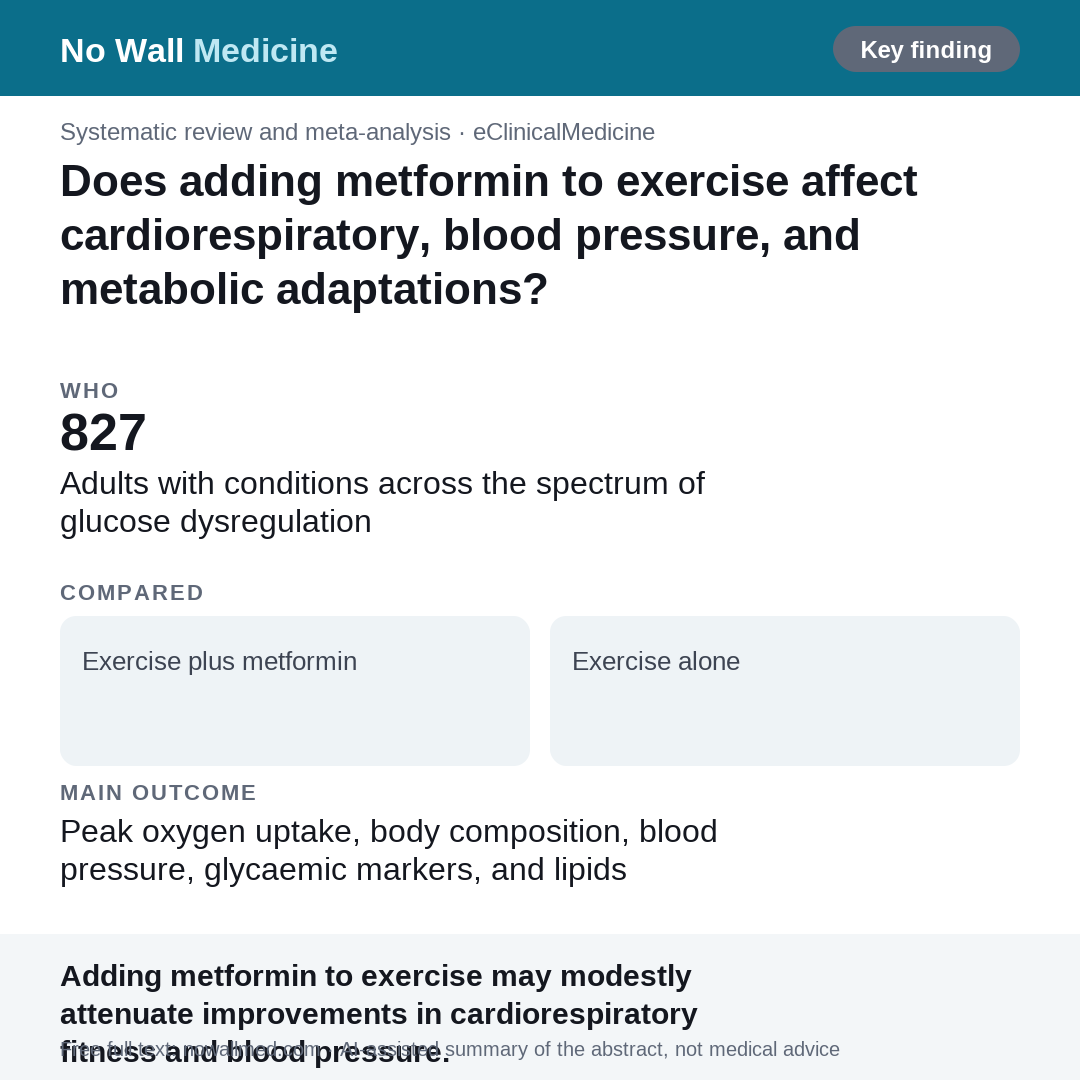
The effects of metformin and exercise training on cardiorespiratory, blood pressure, and metabolic adaptations across the spectrum of glucose dysregulation: a systematic review and meta-analysis
Systematic review and meta-analysisHarm found
Does adding metformin to exercise affect cardiorespiratory, blood pressure, and metabolic adaptations?
Who
827
Adults with conditions across the spectrum of glucose dysregulation
Compared
Exercise plus metformin
Exercise alone
Main outcome
Peak oxygen uptake, body composition, blood pressure, glycaemic markers, and lipids
Result: mean difference -1.19 (95% CI -2.33 to -0.04) for VO2peak
Bottom line: Adding metformin to exercise may modestly attenuate improvements in cardiorespiratory fitness and blood pressure.
Limitation: Certainty of evidence was low to very low for most glycaemic and lipid markers.
eClinicalMedicine · 2026-04-25Download image