Visual abstracts
New randomized trials and meta-analyses from leading journals at a glance: who was studied, what was compared, and what was found. Every paper is free to read in full.
All specialtiesCardiology 4763Oncology 4042Gastroenterology & Hepatology 1902Infectious Disease 3756Neurology 1872Psychiatry & Mental Health 2214Pulmonology 2042Critical Care 1319Endocrinology & Diabetes 2544Pediatrics 2889Surgery 2479Orthopedics & Sports Medicine 917Neurosurgery 525Cardiothoracic & Vascular Surgery 656Plastic & Reconstructive Surgery 574Nephrology 1107Rheumatology 810Hematology 1090Dermatology 611Ophthalmology 532Obstetrics & Gynecology 1645Public & Global Health 1037Radiology & Imaging 617Anesthesiology 957Urology 745ENT (Otolaryngology) 494Emergency Medicine 481Allergy & Immunology 309Geriatrics 972Family Medicine & Primary Care 533Medical Genetics & Genomics 659Pathology & Laboratory Medicine 156Physical Medicine & Rehabilitation 734Palliative Care 421Nutrition 1560Digital Health & AI 2133General Medicine 318
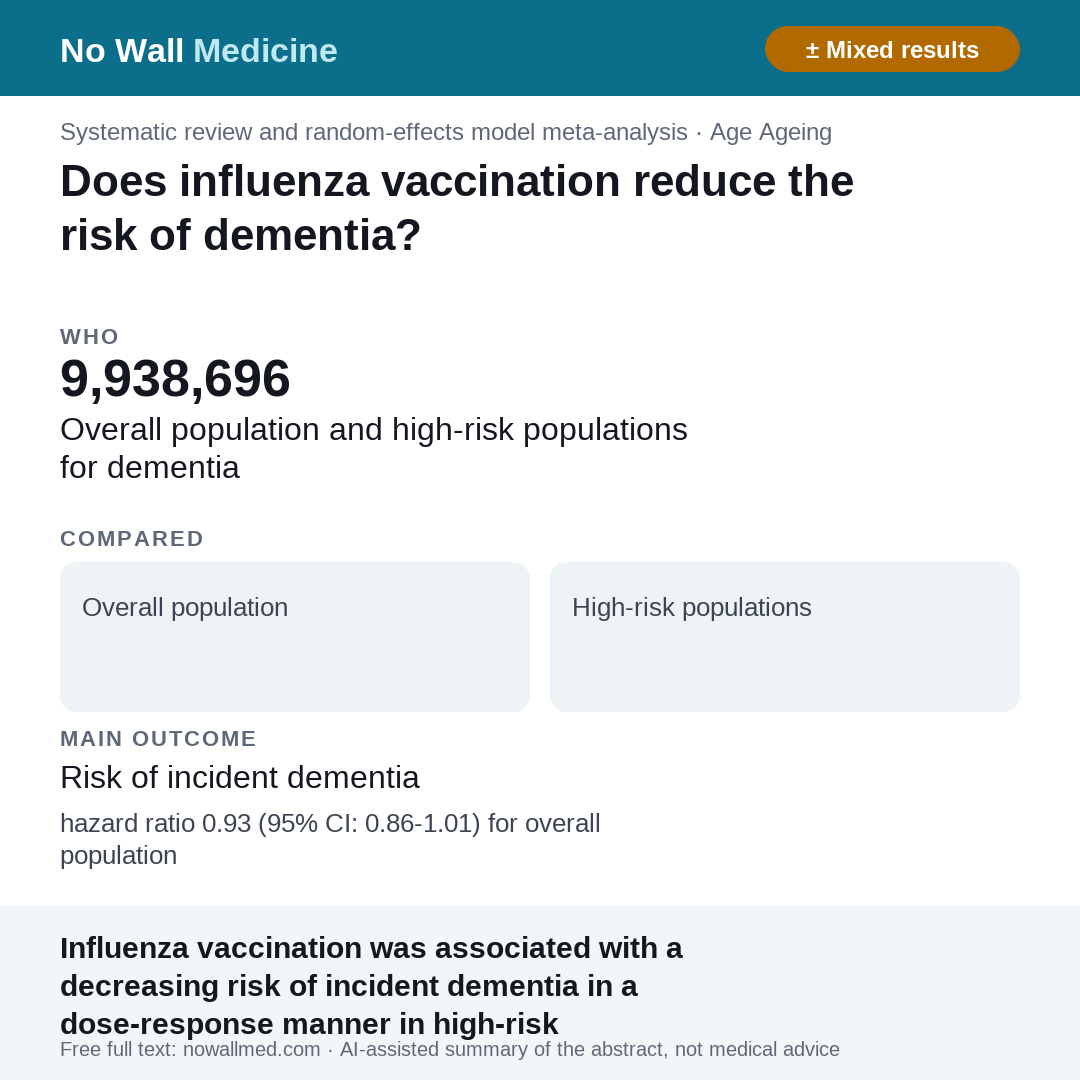
Influenza vaccination and risk of dementia: a systematic review and meta-analysis
Systematic review and random-effects model meta-analysisMixed results
Does influenza vaccination reduce the risk of dementia?
Who
9,938,696
Overall population and high-risk populations for dementia
Compared
Overall population
High-risk populations
Main outcome
Risk of incident dementia
Result: hazard ratio 0.93 (95% CI: 0.86-1.01) for overall population
Bottom line: Influenza vaccination was associated with a decreasing risk of incident dementia in a dose-response manner in high-risk populations.
Age Ageing · 2025-07-02Download image
A systematic review of consumers' knowledge, attitudes and experiences of primary health professionals' role in genomic medicine
Systematic reviewMixed results
Consumers' views on genomic medicine
Who
3557
consumers of primary health services · primary care
Compared
positive experience
negative experience
Main outcome
consumer experiences
Bottom line: Consumers have mixed views on genomic medicine
Eur J Hum Genet · 2025-07-02Download image

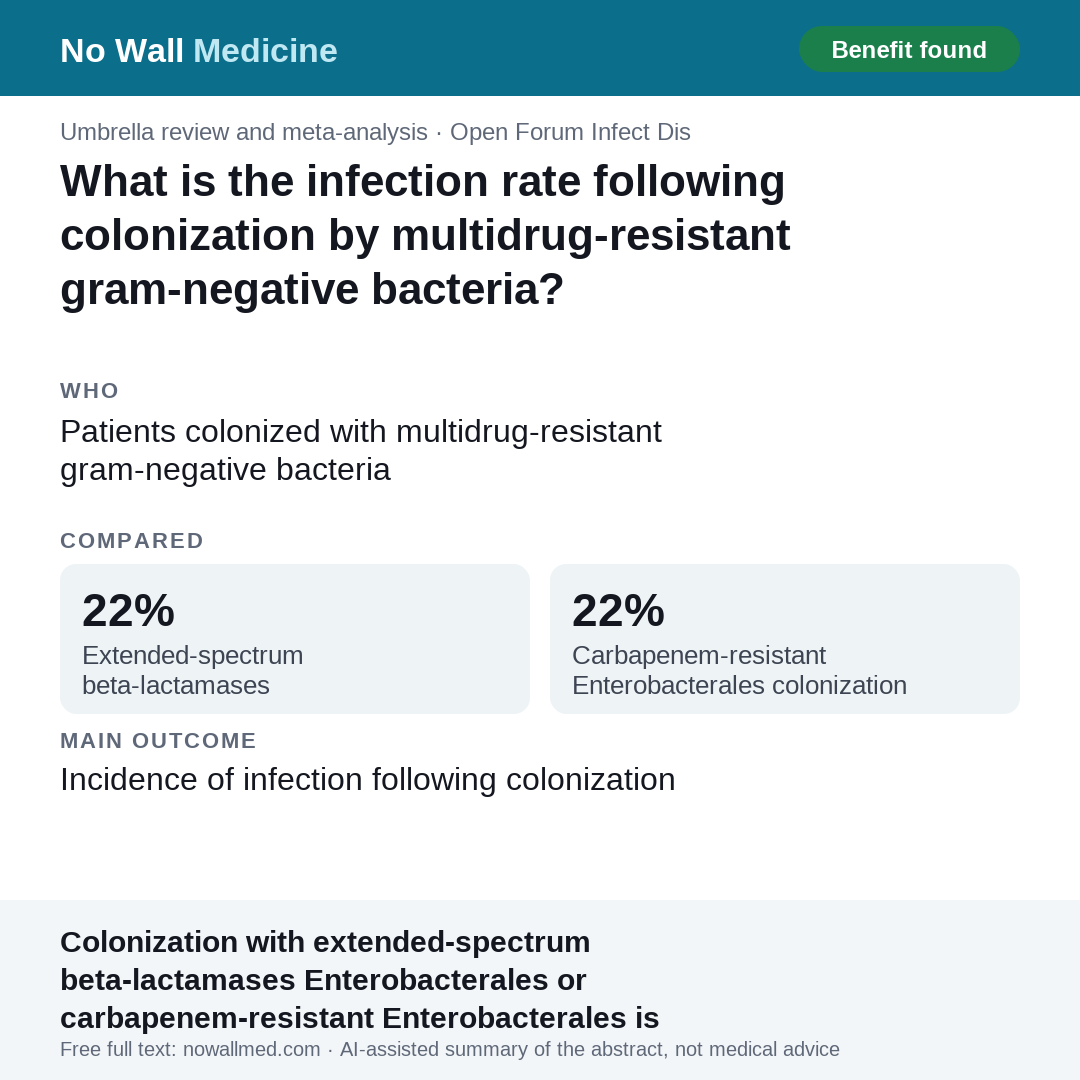
Infection Risk Associated With Colonization by Multidrug-Resistant Gram-Negative Bacteria: An Umbrella Review and Meta-analysis
Umbrella review and meta-analysisBenefit found
What is the infection rate following colonization by multidrug-resistant gram-negative bacteria?
Who
Patients colonized with multidrug-resistant gram-negative bacteria
Compared
22%Extended-spectrum beta-lactamases Enterobacterales colonization
22%Carbapenem-resistant Enterobacterales colonization
Main outcome
Incidence of infection following colonization
Bottom line: Colonization with extended-spectrum beta-lactamases Enterobacterales or carbapenem-resistant Enterobacterales is associated with a 22% infection rate.
Limitation: Heterogeneity of the included populations may limit the generalizability of these findings.
Open Forum Infect Dis · 2025-07-02Download image
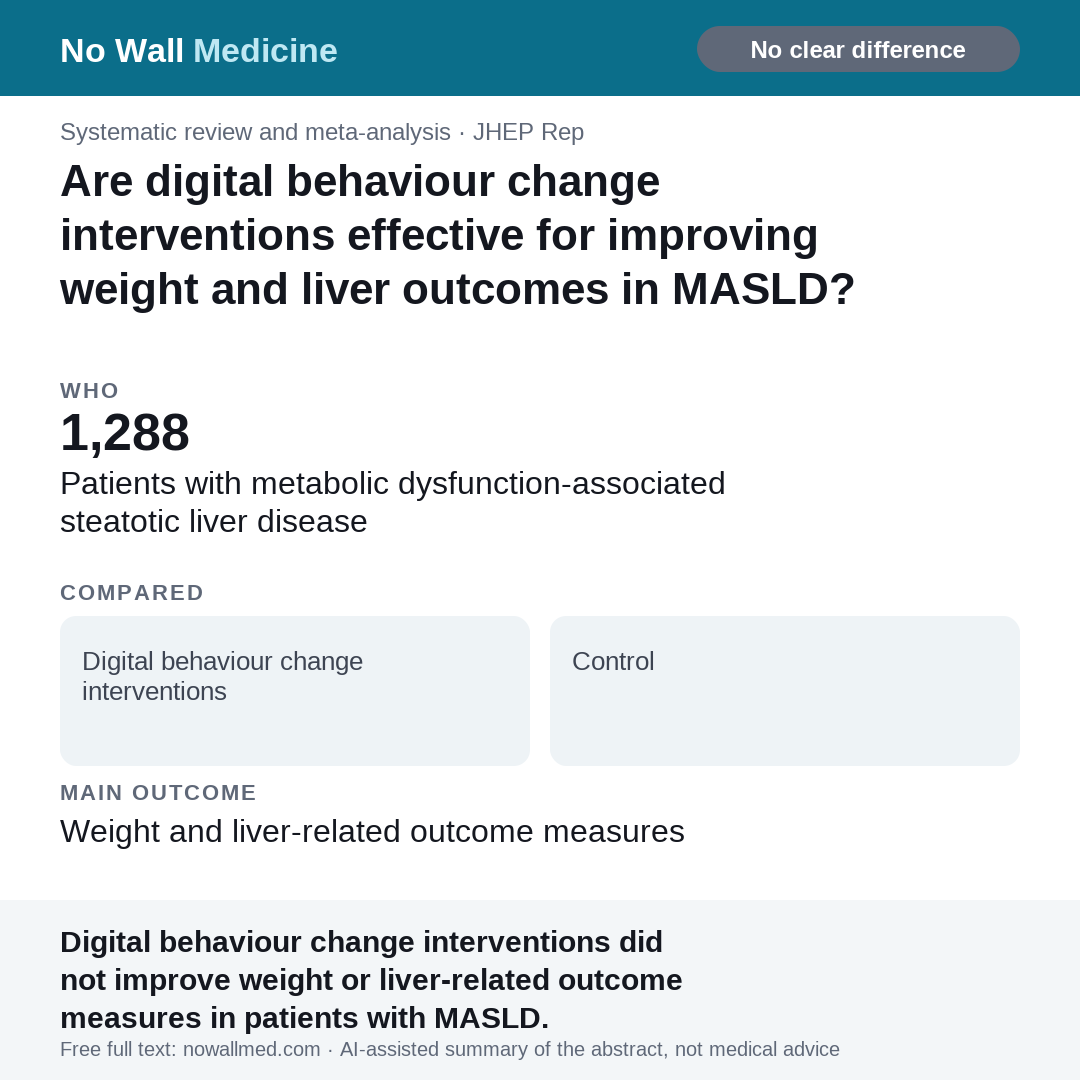
Effectiveness and active ingredients of digital behaviour change interventions for MASLD: A systematic review and meta-analysis
Systematic review and meta-analysisNo clear difference
Are digital behaviour change interventions effective for improving weight and liver outcomes in MASLD?
Who
1,288
Patients with metabolic dysfunction-associated steatotic liver disease
Compared
Digital behaviour change interventions
Control
Main outcome
Weight and liver-related outcome measures
Result: weighted mean difference -2.07 kg [-6.08 to 1.94 kg]
Bottom line: Digital behaviour change interventions did not improve weight or liver-related outcome measures in patients with MASLD.
Limitation: Significant heterogeneity between interventions in delivery, content, duration, and frequency.
JHEP Rep · 2025-07-02Download image
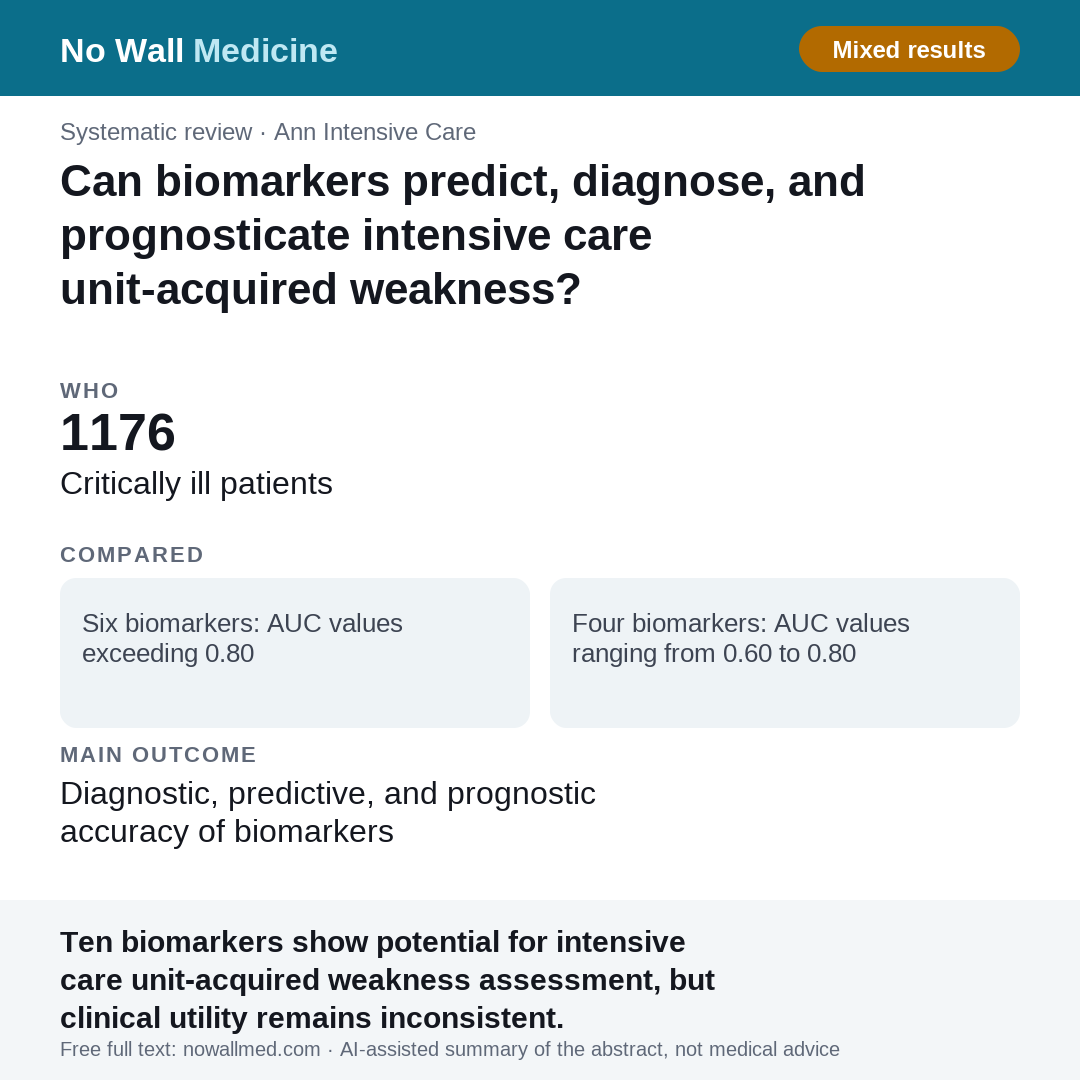
Biomarkers for intensive care unit-acquired weakness: a systematic review for prediction, diagnosis and prognosis
Systematic reviewMixed results
Can biomarkers predict, diagnose, and prognosticate intensive care unit-acquired weakness?
Who
1176
Critically ill patients
Compared
Six biomarkers: AUC values exceeding 0.80
Four biomarkers: AUC values ranging from 0.60 to 0.80
Main outcome
Diagnostic, predictive, and prognostic accuracy of biomarkers
Bottom line: Ten biomarkers show potential for intensive care unit-acquired weakness assessment, but clinical utility remains inconsistent.
Ann Intensive Care · 2025-07-02Download image
eHealth Literacy and Its Outcomes Among Postsecondary Students: Systematic Review
Systematic review of 89 cross-sectional studiesKey finding
What are the eHealth literacy levels and associated outcomes among postsecondary students?
Who
Postsecondary students
Compared
Cognitive outcomes: positively associated
Emotional outcomes: linked to higher psychosocial well-being and positive emotions
Behavioral outcomes: associated with greater use of electronic information and disease prevention
Main outcome
eHealth literacy levels and associated cognitive, emotional, and behavioral outcomes
Bottom line: eHealth literacy is positively associated with cognitive, emotional, and behavioral health outcomes among postsecondary students.
Limitation: Variations in results due to inconsistent assessment tools.
J Med Internet Res · 2025-07-02Download image

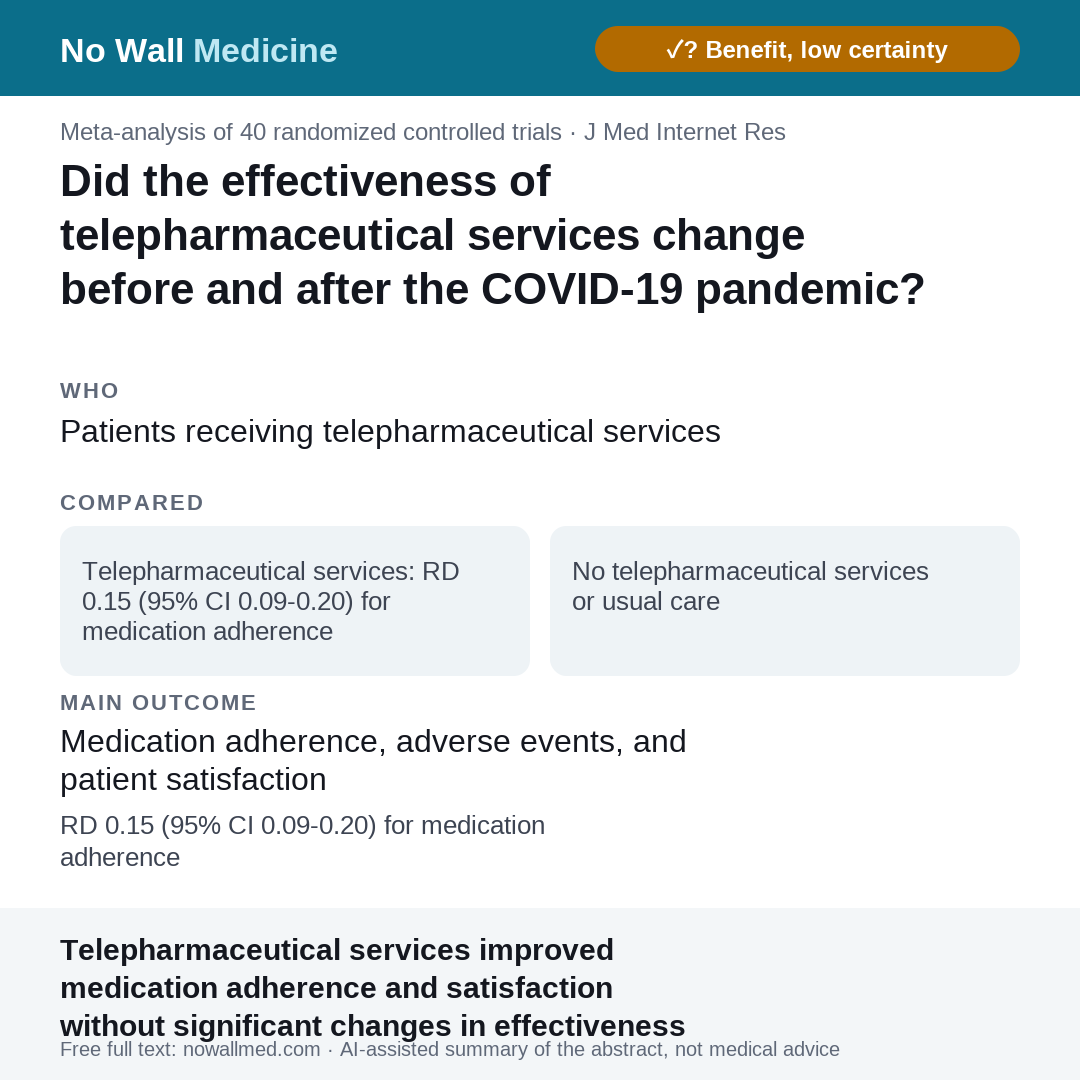
Evaluating the Impact of the COVID-19 Pandemic on Telepharmaceutical Service Effectiveness: Systematic Review and Meta-Analysis
Meta-analysis of 40 randomized controlled trialsBenefit, low certainty
Did the effectiveness of telepharmaceutical services change before and after the COVID-19 pandemic?
Who
Patients receiving telepharmaceutical services
Compared
Telepharmaceutical services: RD 0.15 (95% CI 0.09-0.20) for medication adherence
No telepharmaceutical services or usual care
Main outcome
Medication adherence, adverse events, and patient satisfaction
Result: RD 0.15 (95% CI 0.09-0.20) for medication adherence
Bottom line: Telepharmaceutical services improved medication adherence and satisfaction without significant changes in effectiveness after the COVID-19 pandemic outbreak.
J Med Internet Res · 2025-07-02Download image
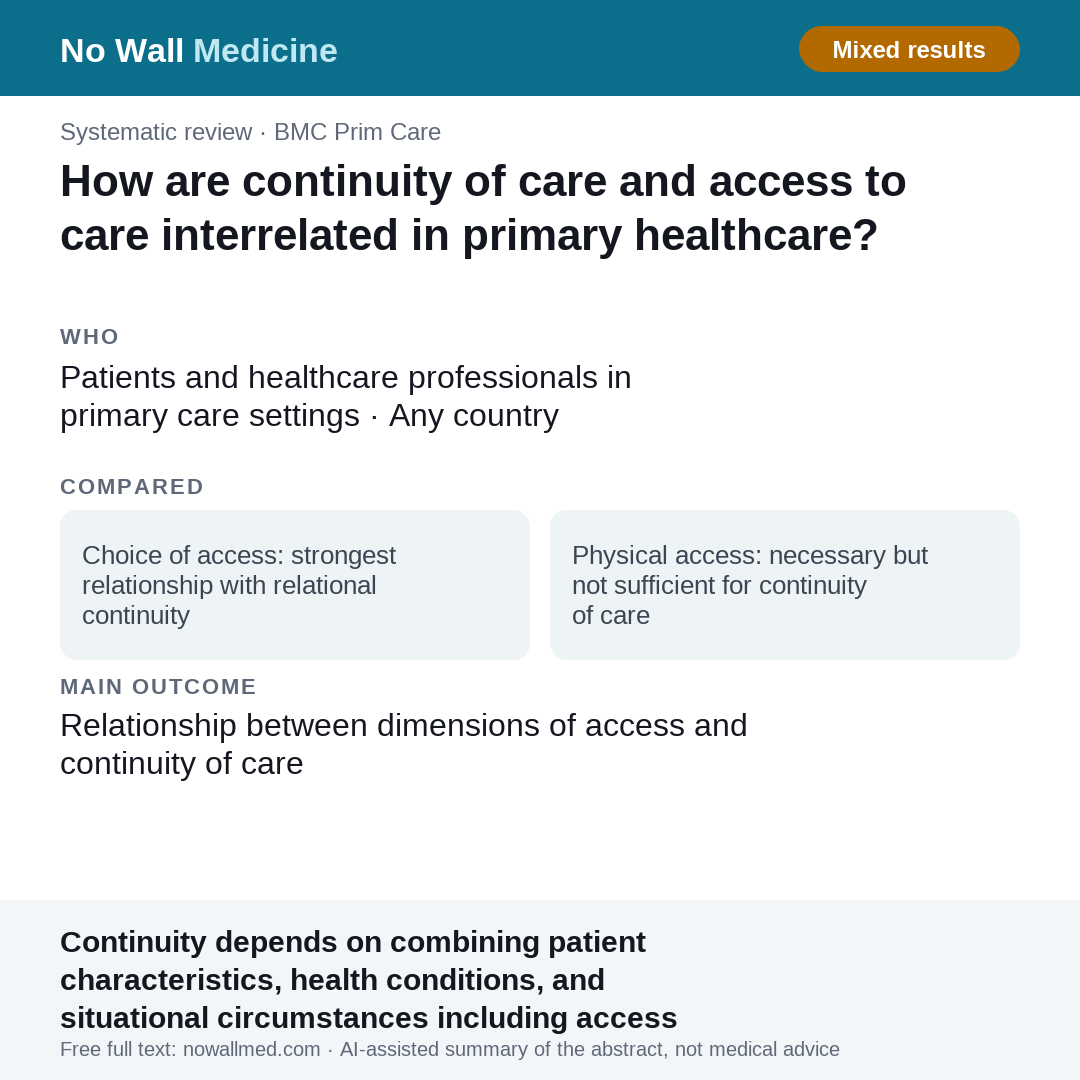
Access or continuity: a zero sum game? A systematic review of the literature examining the relationship between access and continuity in primary healthcare
Systematic reviewMixed results
How are continuity of care and access to care interrelated in primary healthcare?
Who
Patients and healthcare professionals in primary care settings · Any country
Compared
Choice of access: strongest relationship with relational continuity
Physical access: necessary but not sufficient for continuity of care
Main outcome
Relationship between dimensions of access and continuity of care
Bottom line: Continuity depends on combining patient characteristics, health conditions, and situational circumstances including access dimensions.
BMC Prim Care · 2025-07-02Download image
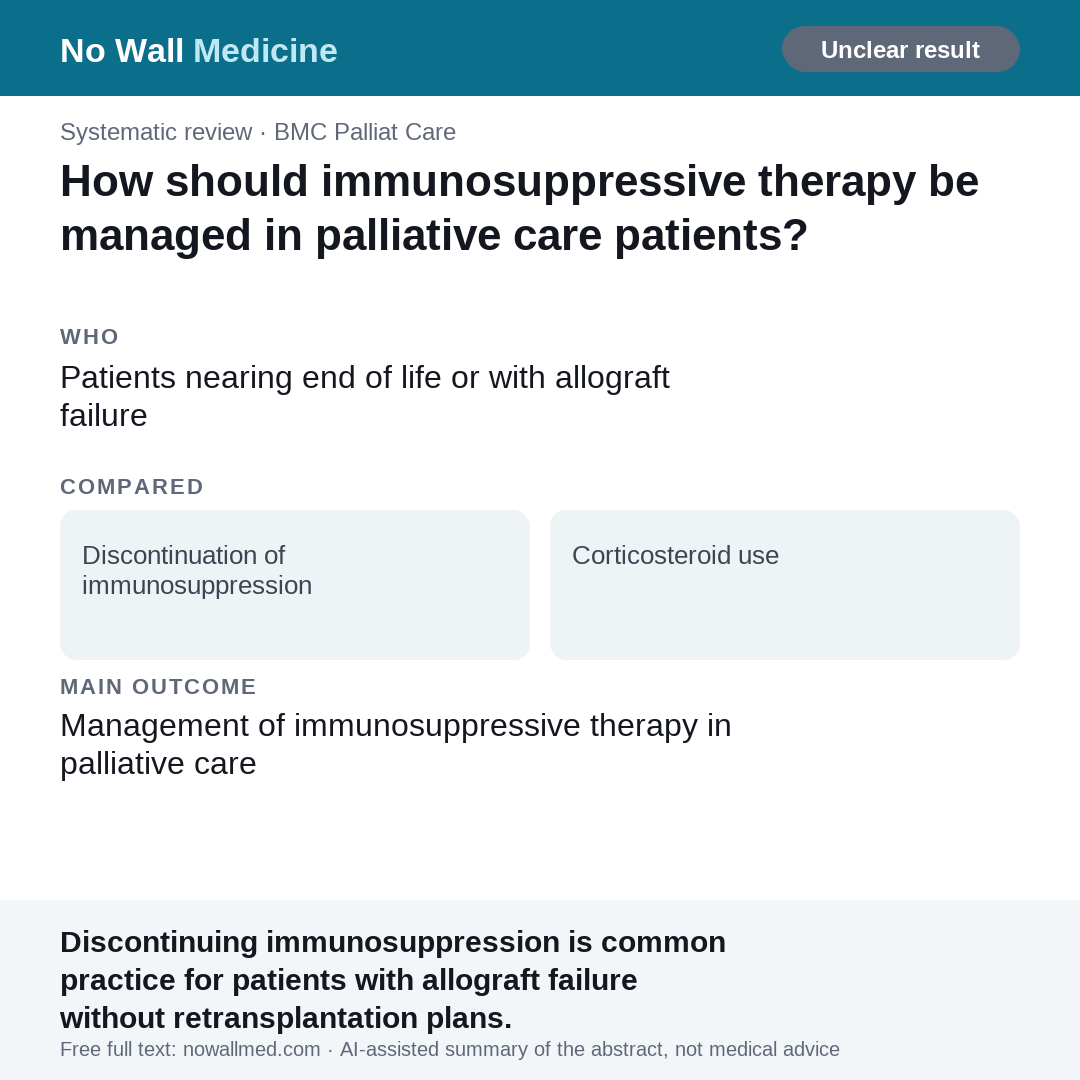
Immunosuppressant management in palliative care: a systematic review
Systematic reviewUnclear result
How should immunosuppressive therapy be managed in palliative care patients?
Who
Patients nearing end of life or with allograft failure
Compared
Discontinuation of immunosuppression
Corticosteroid use
Main outcome
Management of immunosuppressive therapy in palliative care
Bottom line: Discontinuing immunosuppression is common practice for patients with allograft failure without retransplantation plans.
BMC Palliat Care · 2025-07-02Download image
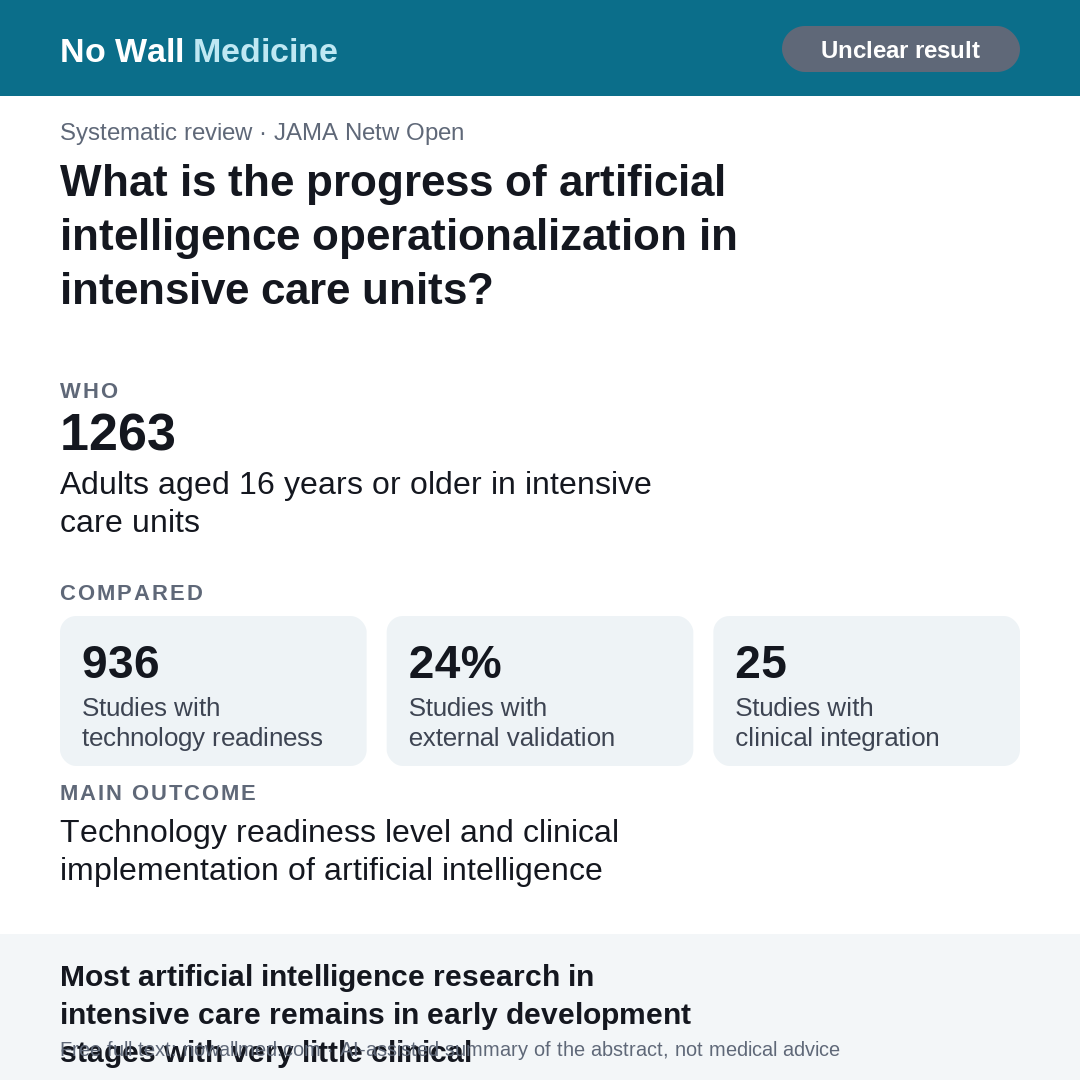
Operationalization of Artificial Intelligence Applications in the Intensive Care Unit: A Systematic Review
Systematic reviewUnclear result
What is the progress of artificial intelligence operationalization in intensive care units?
Who
Adults aged 16 years or older in intensive care units
Compared
936Studies with technology readiness level 4 or below (74%)
24%Studies with external validation
25Studies with clinical integration (2%)
Main outcome
Technology readiness level and clinical implementation of artificial intelligence
Bottom line: Most artificial intelligence research in intensive care remains in early development stages with very little clinical implementation.
Limitation: High risk of bias was identified in 53% of studies due to methodological shortcomings.
JAMA Netw Open · 2025-07-01Download image
Guidelines on Placenta Accreta Spectrum Disorders: A Systematic Review
Systematic reviewMixed results
What are the areas of consensus and gaps in placenta accreta spectrum clinical practice guidelines?
Who
Clinical practice guidelines for placenta accreta spectrum · Global, including high-income and low- to middle-income countries
Compared
High agreement areas: specialized expertise (100%), antenatal management (88.9%), diagnosis (76.9%), and epidemiology (75.0%)
Poor consensus areas: cesarean hysterectomy management (38.5% insufficient evidence and 23.0% disagreement)
Main outcome
Consensus and evidence levels in clinical practice guidelines
Bottom line: Guidelines show high consensus in diagnosis and antenatal management but significant gaps in hemorrhage and postnatal management evidence.
Limitation: Only 5.6% of articles specifically addressed low- to middle-income countries.
JAMA Netw Open · 2025-07-01Download image

Strategies to Increase Professional Interpreting in Clinical Settings: A Systematic Review
Systematic reviewMixed results
Strategies to increase professional interpreting
Who
Patients using languages other than English · Medical settings
Compared
Intervention
Control
Main outcome
Professional interpreting measures
Bottom line: Most studies showed increase in interpreting measures
Limitation: Heterogeneity and risk of bias
JAMA Netw Open · 2025-07-01Download image

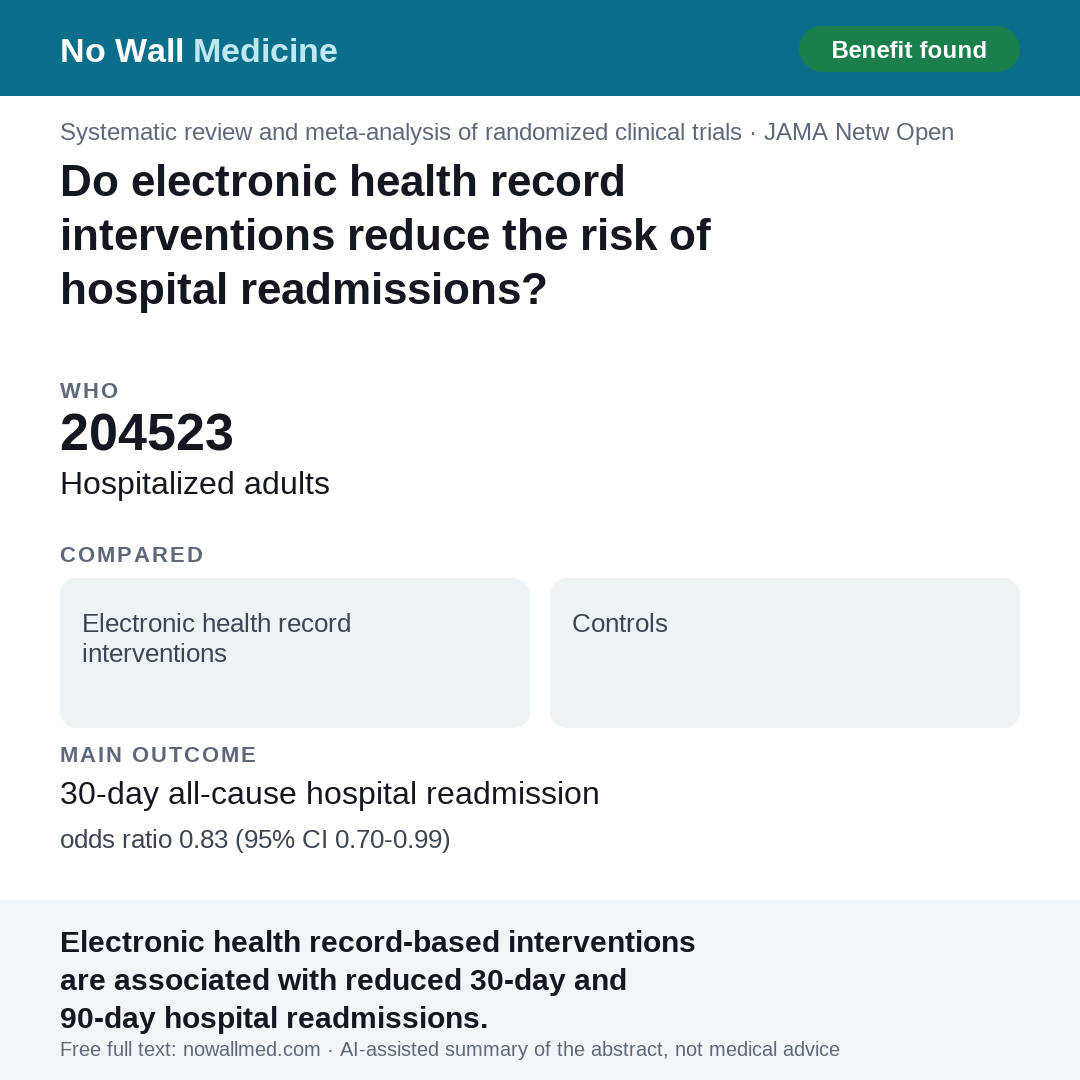
Electronic Health Record Interventions to Reduce Risk of Hospital Readmissions: A Systematic Review and Meta-Analysis
Systematic review and meta-analysis of randomized clinical trialsBenefit found
Do electronic health record interventions reduce the risk of hospital readmissions?
Who
204523
Hospitalized adults
Compared
Electronic health record interventions
Controls
Main outcome
30-day all-cause hospital readmission
Result: odds ratio 0.83 (95% CI 0.70-0.99)
Bottom line: Electronic health record-based interventions are associated with reduced 30-day and 90-day hospital readmissions.
Limitation: Future research should examine additional components to understand remaining gaps in effectiveness.
JAMA Netw Open · 2025-07-01Download image
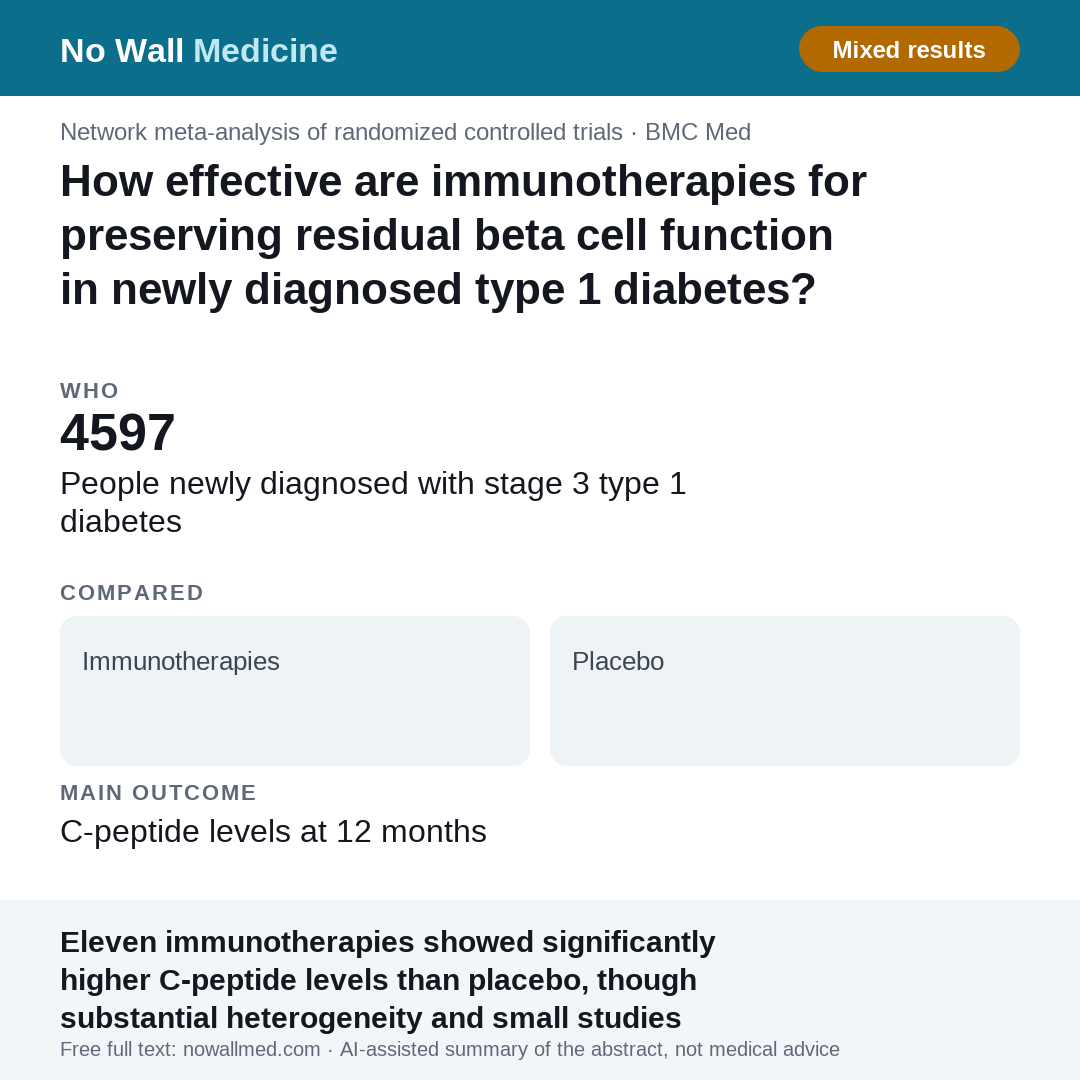
A systematic review and network meta-analysis of interventions to preserve insulin-secreting beta cell function in people newly diagnosed with type 1 diabetes: results from randomised controlled trials of immunomodulatory therapies
Network meta-analysis of randomized controlled trialsMixed results
How effective are immunotherapies for preserving residual beta cell function in newly diagnosed type 1 diabetes?
Who
4597
People newly diagnosed with stage 3 type 1 diabetes
Compared
Immunotherapies
Placebo
Main outcome
C-peptide levels at 12 months
Bottom line: Eleven immunotherapies showed significantly higher C-peptide levels than placebo, though substantial heterogeneity and small studies exist.
Limitation: Substantial heterogeneity and data for some interventions originated from small studies.
BMC Med · 2025-07-01Download image
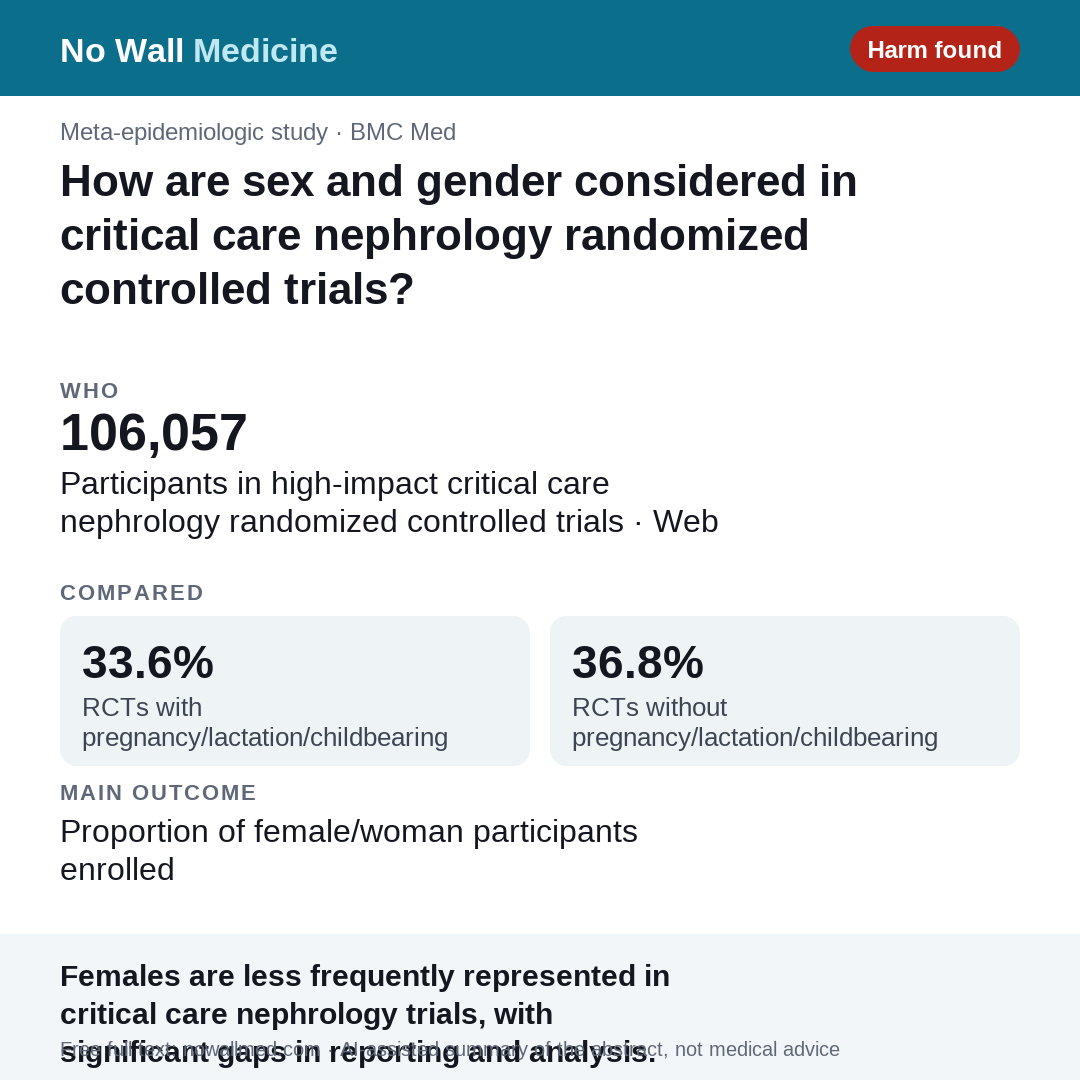
Sex and gender considerations in randomized controlled trials in critical care nephrology: a meta-epidemiologic study
Meta-epidemiologic studyHarm found
How are sex and gender considered in critical care nephrology randomized controlled trials?
Who
106,057
Participants in high-impact critical care nephrology randomized controlled trials · Web of Science Core Collection
Compared
33.6%RCTs with pregnancy/lactation/childbearing age exclusion
36.8%RCTs without pregnancy/lactation/childbearing age exclusion
Main outcome
Proportion of female/woman participants enrolled
Bottom line: Females are less frequently represented in critical care nephrology trials, with significant gaps in reporting and analysis.
BMC Med · 2025-07-01Download image
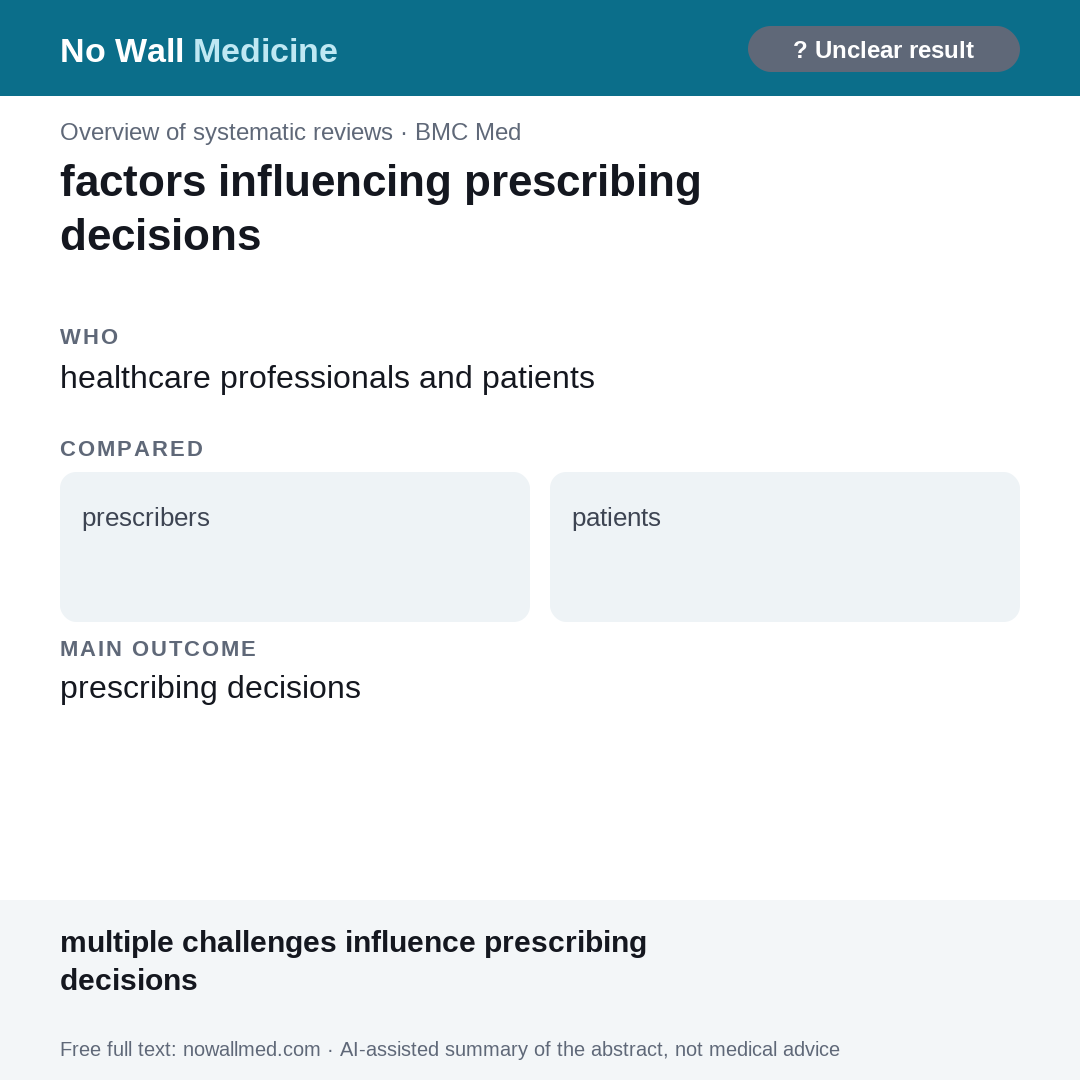
A conceptual model of factors potentially influencing prescribing decisions for chronic conditions: an overview of systematic reviews
Overview of systematic reviewsUnclear result
factors influencing prescribing decisions
Who
healthcare professionals and patients
Compared
prescribers
patients
Main outcome
prescribing decisions
Bottom line: multiple challenges influence prescribing decisions
BMC Med · 2025-07-01Download image
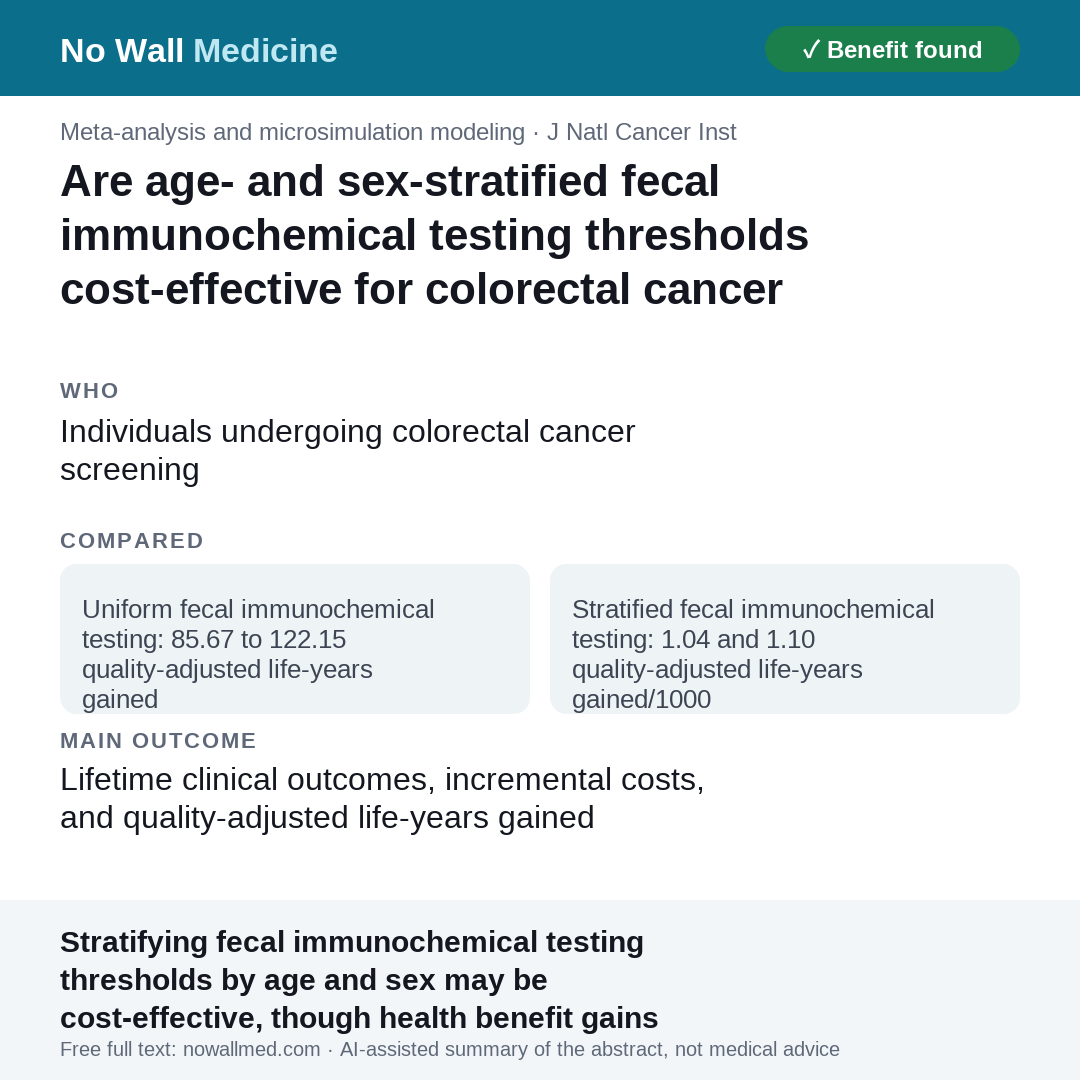
Benefits of colorectal cancer screening using fecal immunochemical testing with varying positivity thresholds by age and sex
Meta-analysis and microsimulation modelingBenefit found
Are age- and sex-stratified fecal immunochemical testing thresholds cost-effective for colorectal cancer screening?
Who
Individuals undergoing colorectal cancer screening
Compared
Uniform fecal immunochemical testing: 85.67 to 122.15 quality-adjusted life-years gained
Stratified fecal immunochemical testing: 1.04 and 1.10 quality-adjusted life-years gained/1000
Main outcome
Lifetime clinical outcomes, incremental costs, and quality-adjusted life-years gained
Bottom line: Stratifying fecal immunochemical testing thresholds by age and sex may be cost-effective, though health benefit gains are likely small.
Limitation: Results were sensitive to fecal immunochemical test performance characteristics and one-time setup costs.
J Natl Cancer Inst · 2025-07-01Download image
Bioelectrical impedance analysis for sarcopenia: a systematic review and meta-analysis of diagnostic accuracy
Systematic review and meta-analysisKey finding
What is the diagnostic performance of bioelectrical impedance analysis for detecting sarcopenia?
Who
6239
Diverse populations across 27 studies
Compared
Bioelectrical impedance analysis: sensitivity 79% (95% CI, 75%-82%)
Sarcopenia detection: specificity 72% (95% CI, 68%-75%)
Main outcome
Diagnostic accuracy for detecting sarcopenia
Result: area under the curve of summary receiver operating characteristic 0.82 (95% CI, 0.78-0.85)
Bottom line: Bioelectrical impedance analysis has moderate diagnostic accuracy and practical clinical utility as a screening tool for sarcopenia.
Age Ageing · 2025-07-01Download image

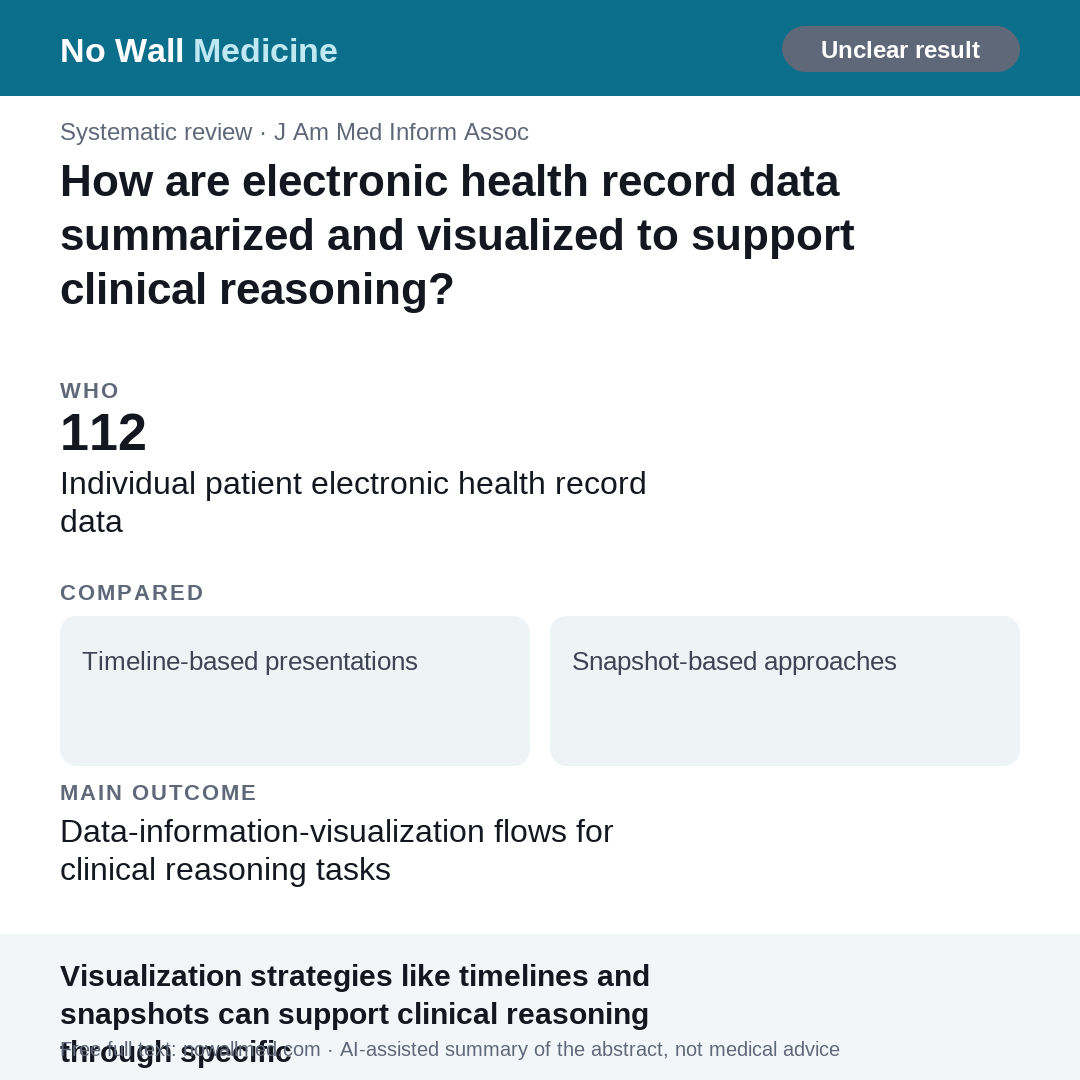
Supporting clinical reasoning through visual summarization and presentation of patient data: a systematic review
Systematic reviewUnclear result
How are electronic health record data summarized and visualized to support clinical reasoning?
Who
Individual patient electronic health record data
Compared
Timeline-based presentations
Snapshot-based approaches
Main outcome
Data-information-visualization flows for clinical reasoning tasks
Bottom line: Visualization strategies like timelines and snapshots can support clinical reasoning through specific data-information-visualization flows.
J Am Med Inform Assoc · 2025-07-01Download image
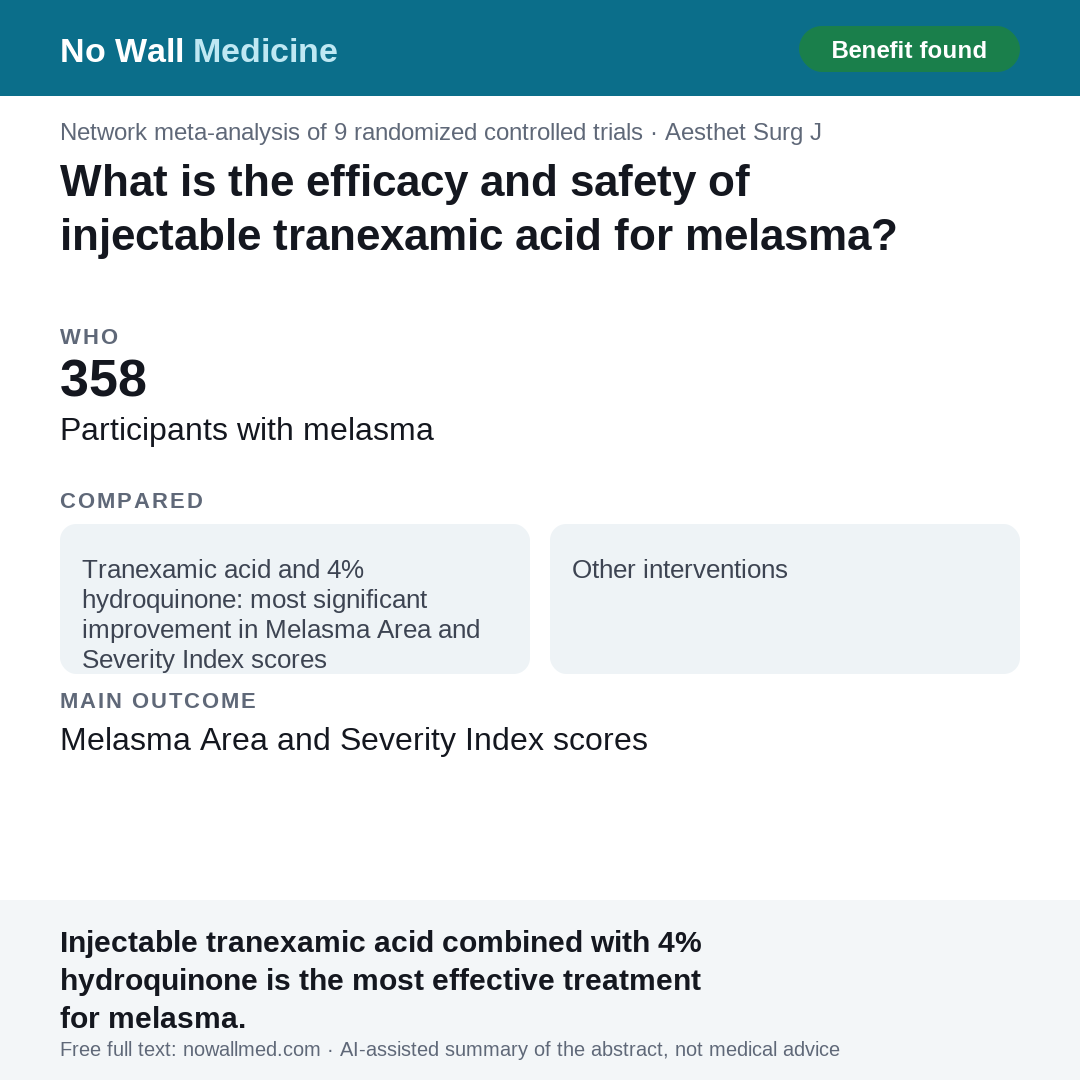
Comparative Efficacy and Safety of Injectable Tranexamic Acid Combination Therapies for Melasma: A Network Meta-analysis of Randomized Controlled Trials
Network meta-analysis of 9 randomized controlled trialsBenefit found
What is the efficacy and safety of injectable tranexamic acid for melasma?
Who
358
Participants with melasma
Compared
Tranexamic acid and 4% hydroquinone: most significant improvement in Melasma Area and Severity Index scores
Other interventions
Main outcome
Melasma Area and Severity Index scores
Bottom line: Injectable tranexamic acid combined with 4% hydroquinone is the most effective treatment for melasma.
Aesthet Surg J · 2025-07-01Download image