Visual abstracts
New randomized trials and meta-analyses from leading journals at a glance: who was studied, what was compared, and what was found. Every paper is free to read in full.
All specialtiesCardiology 4877Oncology 4138Gastroenterology & Hepatology 1942Infectious Disease 3837Neurology 1905Psychiatry & Mental Health 2273Pulmonology 2143Critical Care 1365Endocrinology & Diabetes 2580Pediatrics 2980Surgery 2559Orthopedics & Sports Medicine 931Neurosurgery 537Cardiothoracic & Vascular Surgery 674Plastic & Reconstructive Surgery 591Nephrology 1133Rheumatology 823Hematology 1109Dermatology 621Ophthalmology 543Obstetrics & Gynecology 1686Public & Global Health 1058Radiology & Imaging 648Anesthesiology 986Urology 764ENT (Otolaryngology) 503Emergency Medicine 511Allergy & Immunology 313Geriatrics 981Family Medicine & Primary Care 562Medical Genetics & Genomics 676Pathology & Laboratory Medicine 159Physical Medicine & Rehabilitation 757Palliative Care 444Nutrition 1588Digital Health & AI 2201General Medicine 321
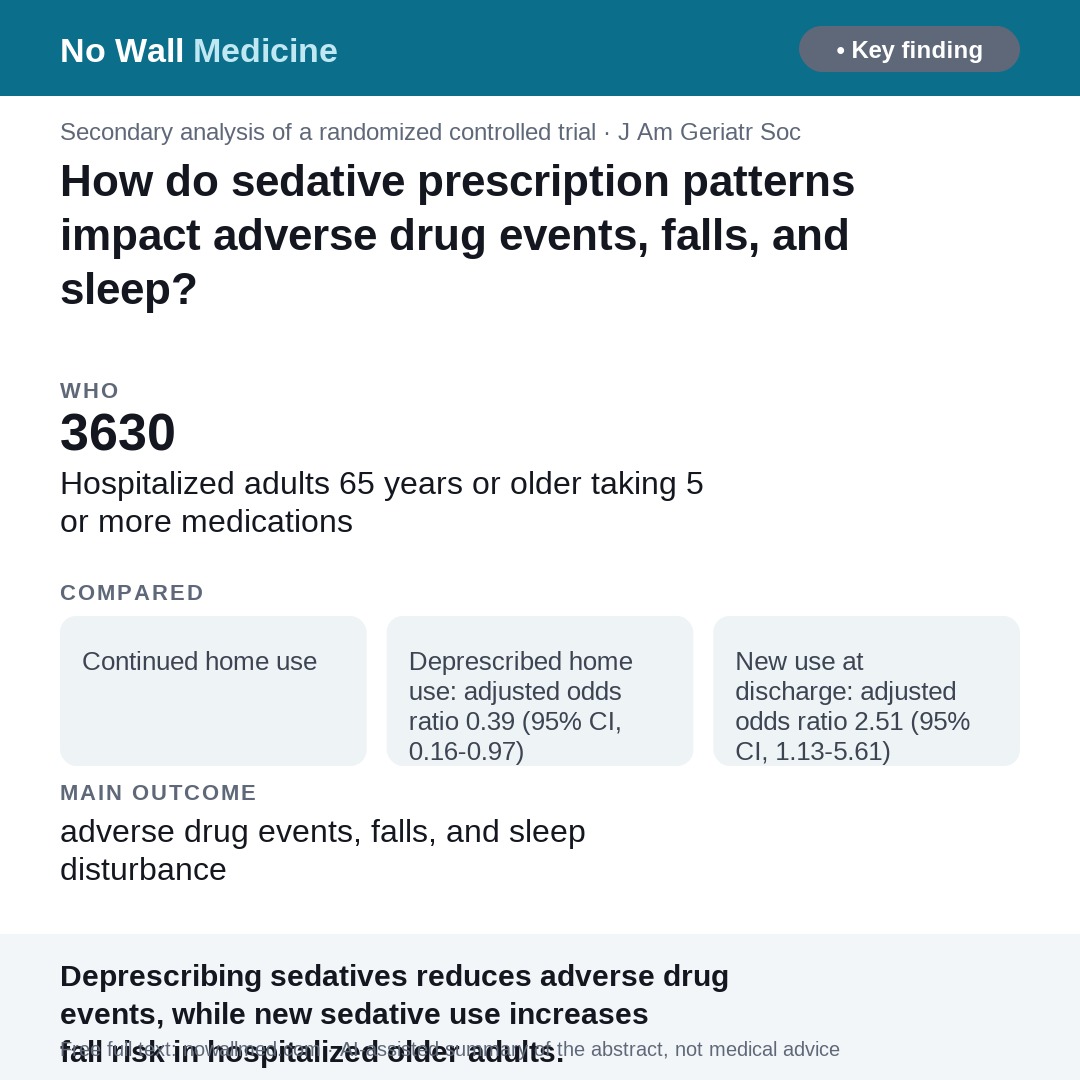
Prescribing Patterns and Impact of Sedatives in Hospitalized Older Adults: A Secondary Analysis of the MedSafer Study
Secondary analysis of a randomized controlled trialBenefit found
How do sedative prescription patterns impact adverse drug events, falls, and sleep?
Who
3630
Hospitalized adults 65 years or older taking 5 or more medications
Compared
Continued home use
Deprescribed home use: adjusted odds ratio 0.39 (95% CI, 0.16-0.97)
New use at discharge: adjusted odds ratio 2.51 (95% CI, 1.13-5.61)
Main outcome
adverse drug events, falls, and sleep disturbance
Result: adjusted odds ratio 0.39 (95% CI, 0.16-0.97) for ADEs
Bottom line: Deprescribing sedatives reduces adverse drug events, while new sedative use increases fall risk in hospitalized older adults.
J Am Geriatr Soc · 2025-03-23Download image
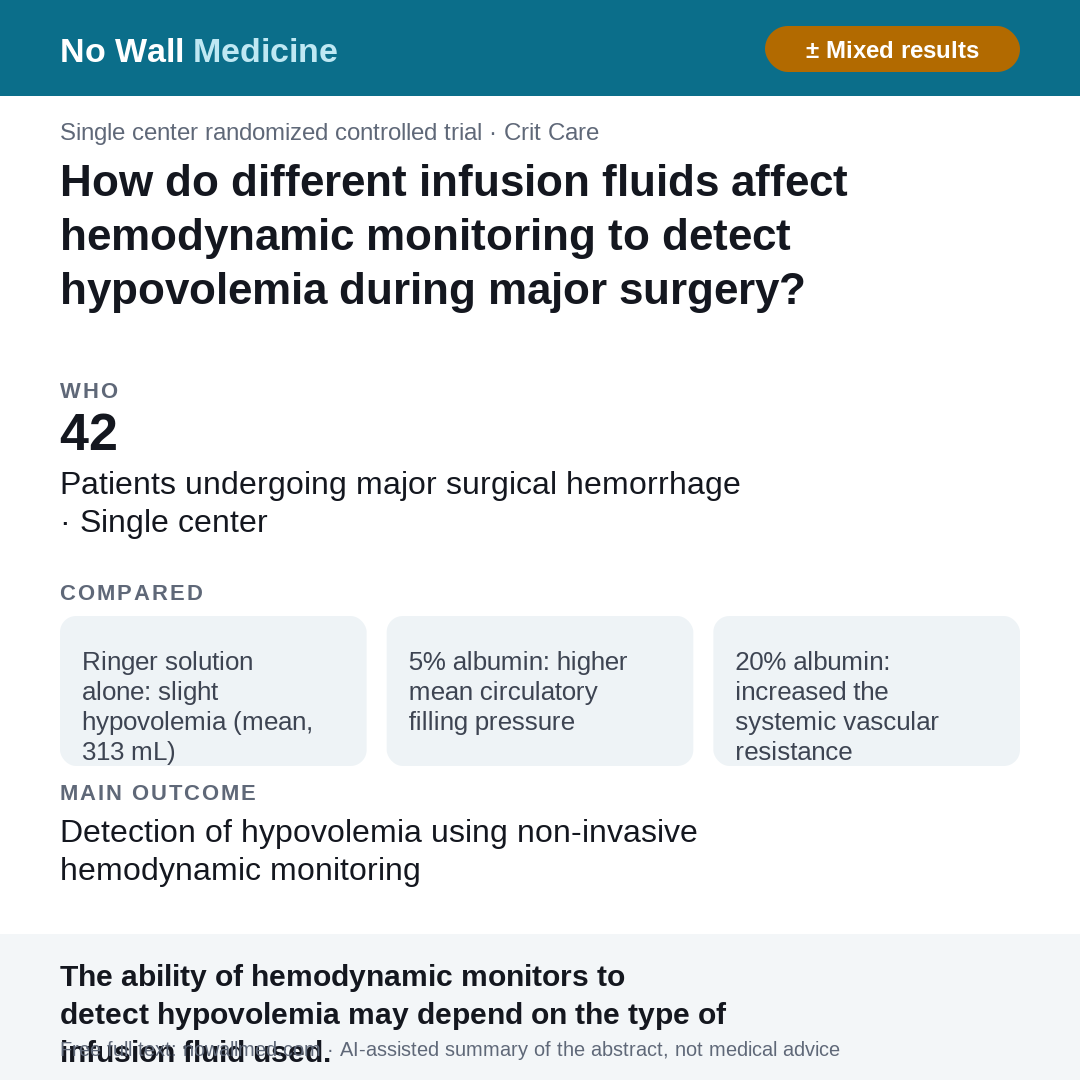
Detection of hypovolemia by non-invasive hemodynamic monitoring during major surgery using Ringer´s solution, 5% albumin, or 20% albumin as infusion fluid: a post-hoc analysis of a randomized clinical trial
Single center randomized controlled trialMixed results
How do different infusion fluids affect hemodynamic monitoring to detect hypovolemia during major surgery?
Who
42
Patients undergoing major surgical hemorrhage · Single center
Compared
Ringer solution alone: slight hypovolemia (mean, 313 mL)
5% albumin: higher mean circulatory filling pressure
20% albumin: increased the systemic vascular resistance
Main outcome
Detection of hypovolemia using non-invasive hemodynamic monitoring
Bottom line: The ability of hemodynamic monitors to detect hypovolemia may depend on the type of infusion fluid used.
Crit Care · 2025-03-23Download image
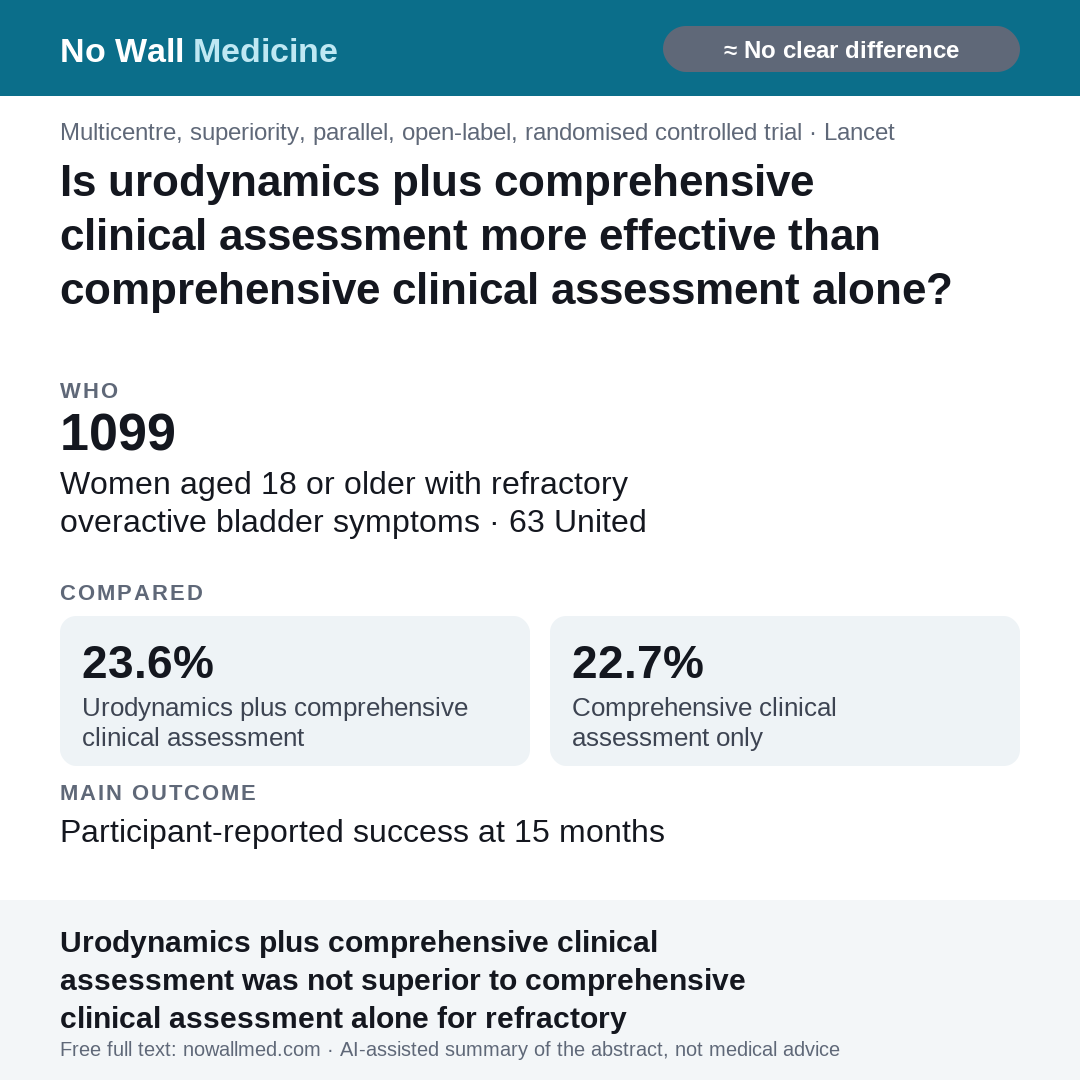
Invasive urodynamic investigations in the management of women with refractory overactive bladder symptoms (FUTURE) in the UK: a multicentre, superiority, parallel, open-label, randomised controlled trial
Multicentre, superiority, parallel, open-label, randomised controlled trialNo clear difference
Is urodynamics plus comprehensive clinical assessment more effective than comprehensive clinical assessment alone?
Who
1099
Women aged 18 or older with refractory overactive bladder symptoms · 63 United Kingdom hospitals
Compared
23.6%Urodynamics plus comprehensive clinical assessment (117/496)
22.7%Comprehensive clinical assessment only (114/503)
Main outcome
Participant-reported success at 15 months
Result: adjusted odds ratio 1.12 (95% CI 0.73 to 1.74)
Bottom line: Urodynamics plus comprehensive clinical assessment was not superior to comprehensive clinical assessment alone for refractory overactive bladder symptoms.
Funded by: UK National Institute for Health and Care Research
Lancet · 2025-03-22Download image
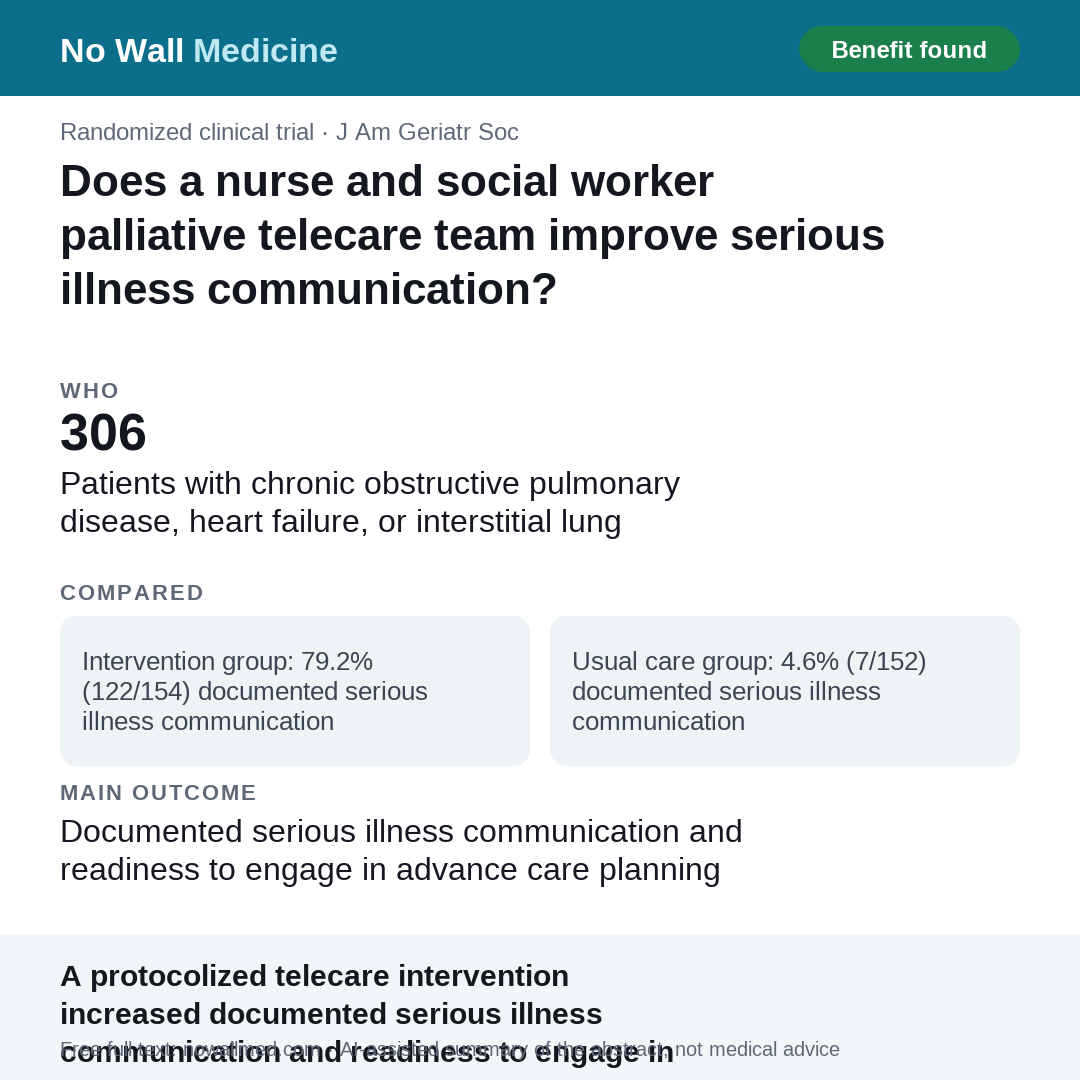
Serious Illness Communication in a Randomized Trial of a Nurse and Social Worker Palliative Telecare Team
Randomized clinical trialBenefit found
Does a nurse and social worker palliative telecare team improve serious illness communication?
Who
306
Patients with chronic obstructive pulmonary disease, heart failure, or interstitial lung disease
Compared
Intervention group: 79.2% (122/154) documented serious illness communication
Usual care group: 4.6% (7/152) documented serious illness communication
Main outcome
Documented serious illness communication and readiness to engage in advance care planning
Result: adjusted difference in proportions 74.6% (95% CI 67.3-81.9)
Bottom line: A protocolized telecare intervention increased documented serious illness communication and readiness to engage in advance care planning.
Limitation: Future research should evaluate how documented serious illness communication affects downstream healthcare decisions and patient well-being.
J Am Geriatr Soc · 2025-03-22Download image
Evaluation of Cellular Immune Responses After mRNA-1273 Vaccination in Children 6 Months to 11 Years of Age
Randomized trialBenefit found
What are the cellular immune responses after mRNA-1273 vaccination in children?
Who
68
Children aged 6 months to 11 years
Compared
mRNA-1273 primary series: higher frequencies of S-specific polyfunctional CD4+ T cells at day 43
Placebo
Main outcome
SARS-CoV-2 spike protein T-cell responses
Bottom line: The two-dose mRNA-1273 primary series elicited robust and durable Th1-biased CD4+ T-cell responses in children.
Limitation: S-protein-specific CD8+ T-cell responses were less frequently detected in children under 5 years.
J Infect Dis · 2025-03-22Download image

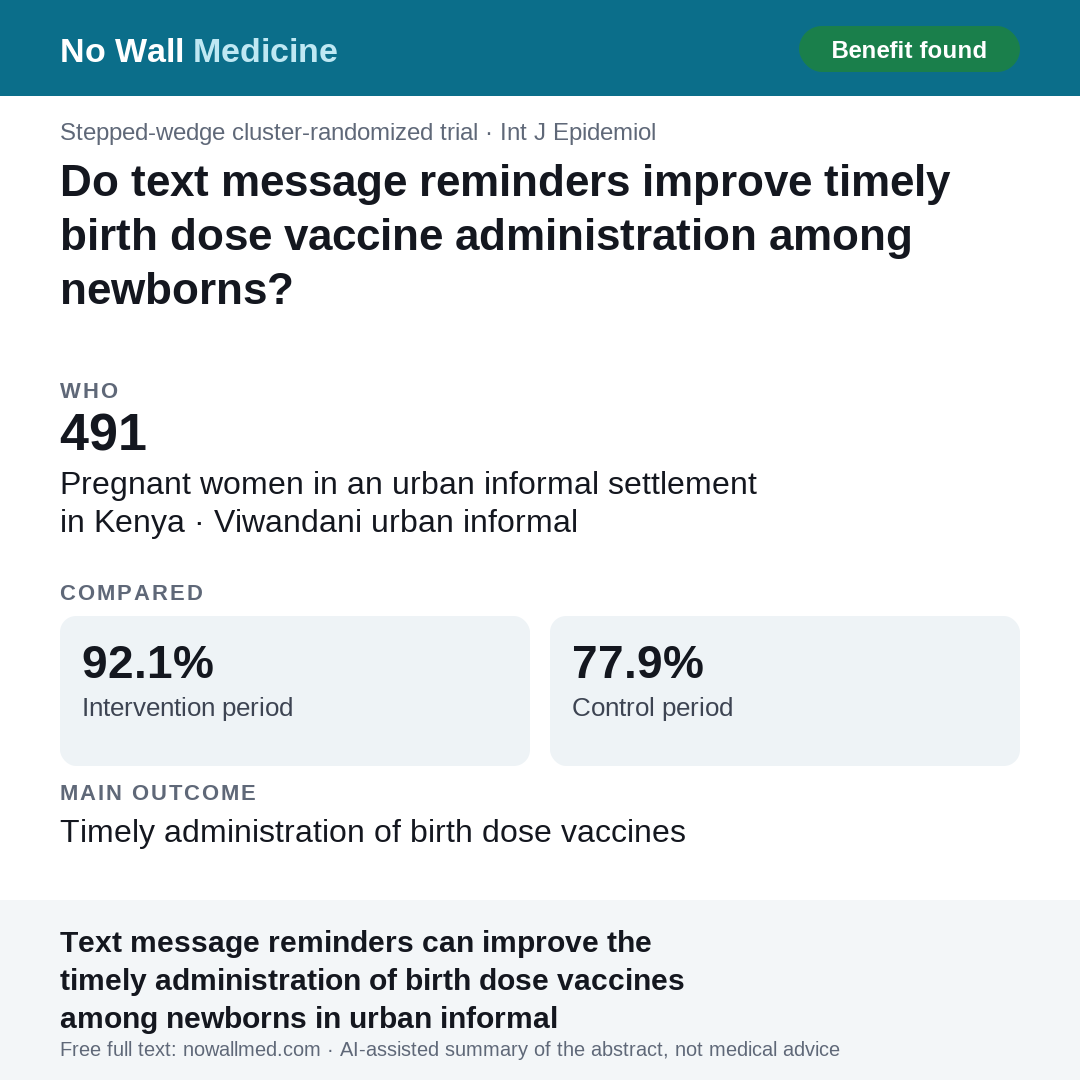
Text message reminders to improve the timeliness of birth dose vaccine administration among newborns in an urban informal settlement in Kenya
Stepped-wedge cluster-randomized trialBenefit found
Do text message reminders improve timely birth dose vaccine administration among newborns?
Who
491
Pregnant women in an urban informal settlement in Kenya · Viwandani urban informal settlement, Nairobi County, Kenya
Compared
92.1%Intervention period (OPV 0 or BCG)
77.9%Control period (OPV 0 or BCG)
Main outcome
Timely administration of birth dose vaccines
Result: adjusted relative risk 1.19 (95% CI 1.00-1.43)
Bottom line: Text message reminders can improve the timely administration of birth dose vaccines among newborns in urban informal settlements.
Int J Epidemiol · 2025-03-22Download image
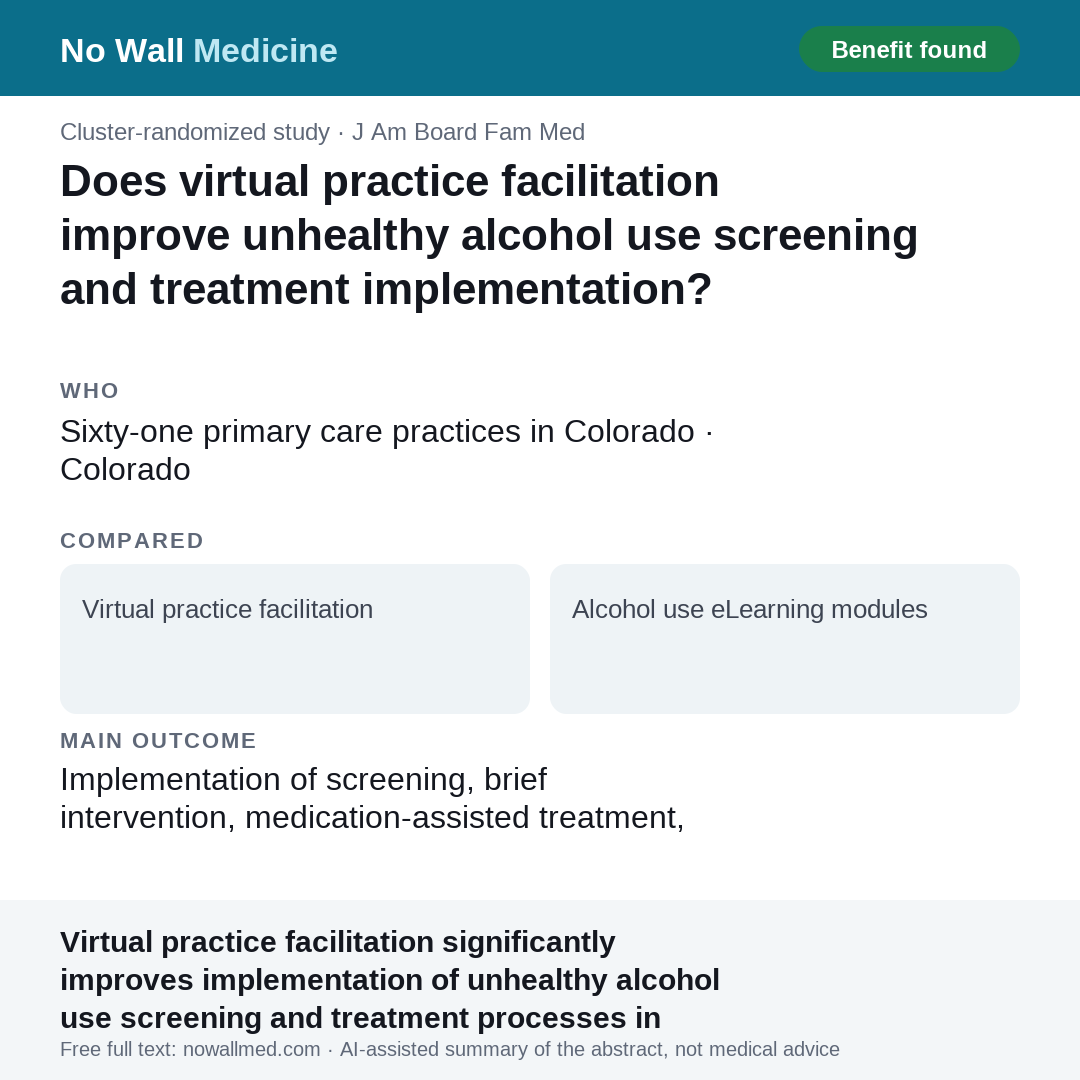
Improving Care for Unhealthy Alcohol Use: Results from the Facilitating Alcohol Screening and Treatment (FAST) Colorado Study
Cluster-randomized studyBenefit found
Does virtual practice facilitation improve unhealthy alcohol use screening and treatment implementation?
Who
Sixty-one primary care practices in Colorado · Colorado
Compared
Virtual practice facilitation
Alcohol use eLearning modules
Main outcome
Implementation of screening, brief intervention, medication-assisted treatment, or referral
Bottom line: Virtual practice facilitation significantly improves implementation of unhealthy alcohol use screening and treatment processes in primary care.
J Am Board Fam Med · 2025-03-22Download image
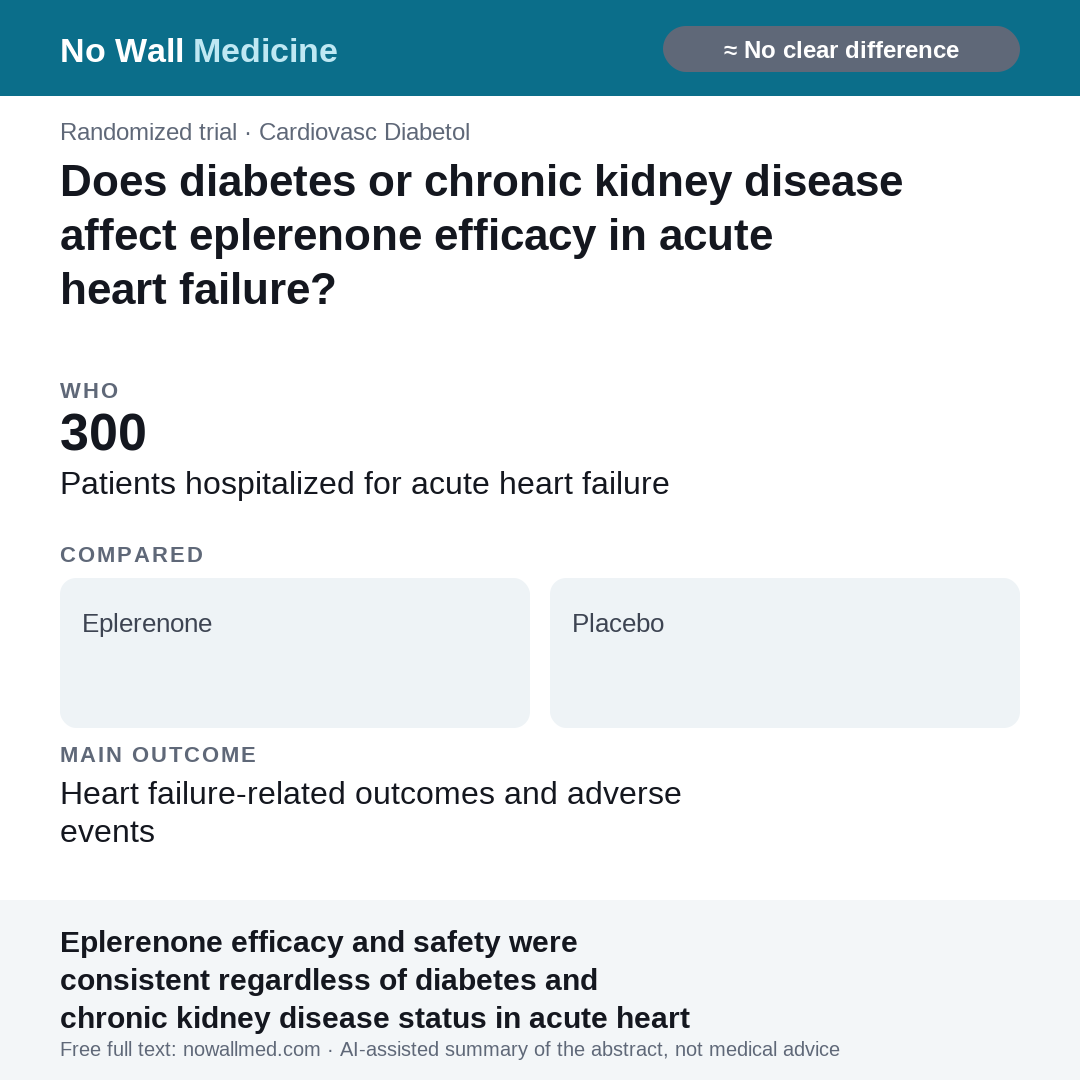
Eplerenone, diabetes, and chronic kidney disease in patients hospitalized for acute heart failure: findings from the EARLIER trial
Randomized trialNo clear difference
Does diabetes or chronic kidney disease affect eplerenone efficacy in acute heart failure?
Who
300
Patients hospitalized for acute heart failure
Compared
Eplerenone
Placebo
Main outcome
Heart failure-related outcomes and adverse events
Bottom line: Eplerenone efficacy and safety were consistent regardless of diabetes and chronic kidney disease status in acute heart failure.
Cardiovasc Diabetol · 2025-03-22Download image
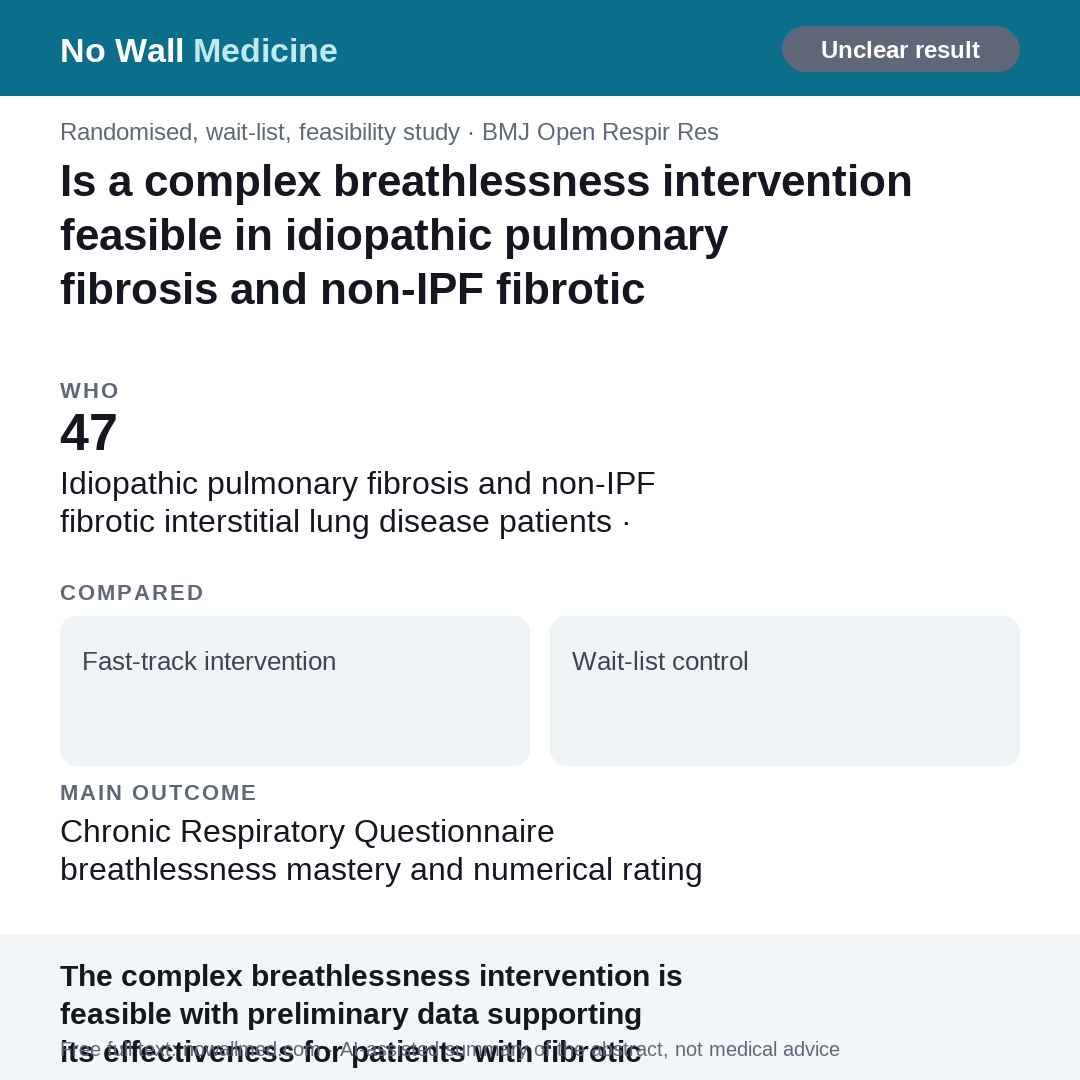
Complex breathlessness intervention in idiopathic pulmonary fibrosis (BREEZE-IPF): a feasibility, wait-list design randomised controlled trial
Randomised, wait-list, feasibility studyUnclear result
Is a complex breathlessness intervention feasible in idiopathic pulmonary fibrosis and non-IPF fibrotic interstitial lung disease?
Who
47
Idiopathic pulmonary fibrosis and non-IPF fibrotic interstitial lung disease patients · Multicentre, three sites
Compared
Fast-track intervention
Wait-list control
Main outcome
Chronic Respiratory Questionnaire breathlessness mastery and numerical rating scales
Result: Chronic Respiratory Questionnaire breathlessness mastery domain 0.45 (95% CI -0.07, 0.97)
Bottom line: The complex breathlessness intervention is feasible with preliminary data supporting its effectiveness for patients with fibrotic lung diseases.
BMJ Open Respir Res · 2025-03-22Download image
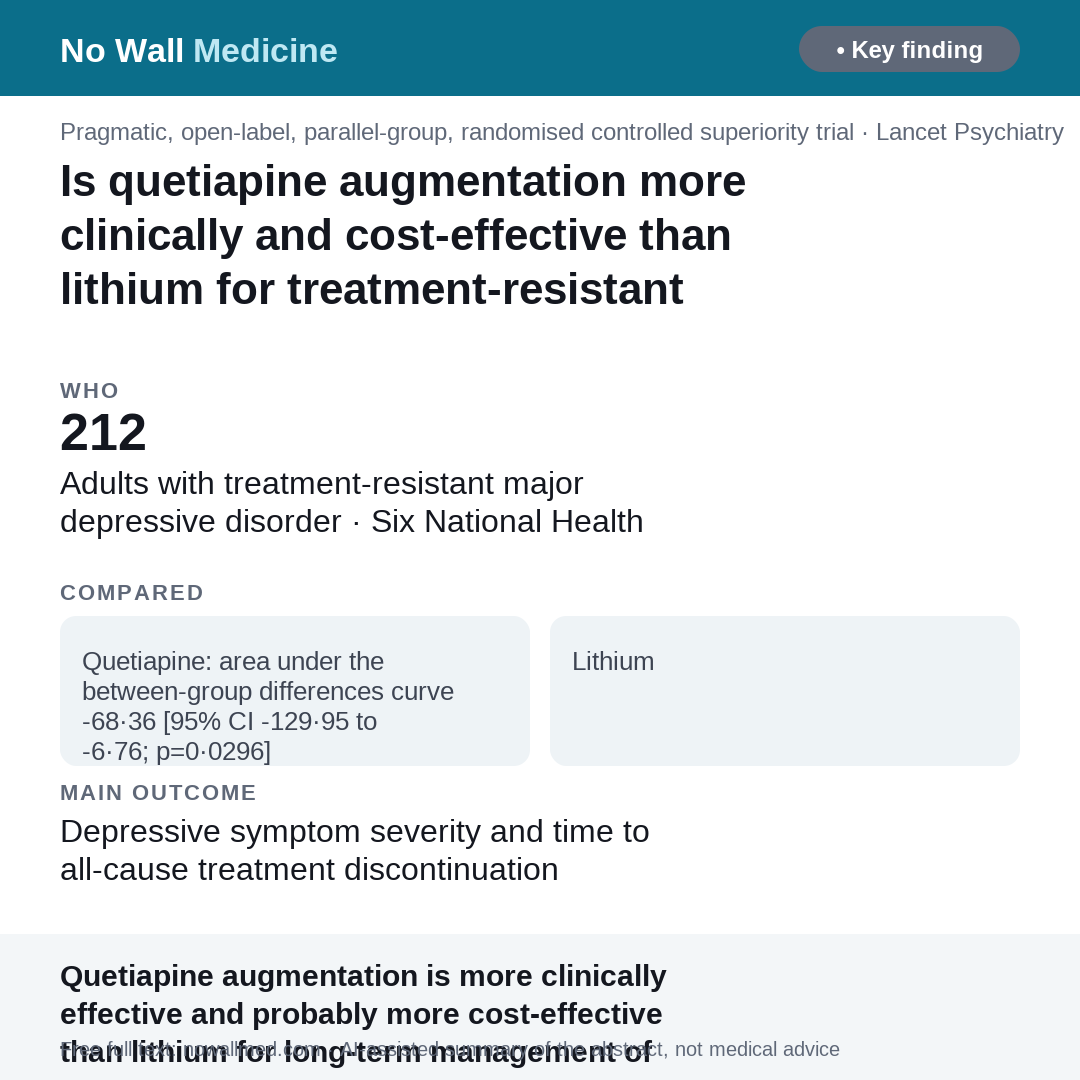
Clinical and cost-effectiveness of lithium versus quetiapine augmentation for treatment-resistant depression: a pragmatic, open-label, parallel-group, randomised controlled superiority trial in the UK
Pragmatic, open-label, parallel-group, randomised controlled superiority trialBenefit found
Is quetiapine augmentation more clinically and cost-effective than lithium for treatment-resistant depression?
Who
212
Adults with treatment-resistant major depressive disorder · Six National Health Service trusts in England
Compared
Quetiapine: area under the between-group differences curve -68·36 [95% CI -129·95 to -6·76; p=0·0296]
Lithium
Main outcome
Depressive symptom severity and time to all-cause treatment discontinuation
Result: area under the between-group differences curve -68·36 (95% CI -129·95 to -6·76)
Bottom line: Quetiapine augmentation is more clinically effective and probably more cost-effective than lithium for long-term management of treatment-resistant depression.
Funded by: National Institute for Health and Care Research
Lancet Psychiatry · 2025-03-21Download image
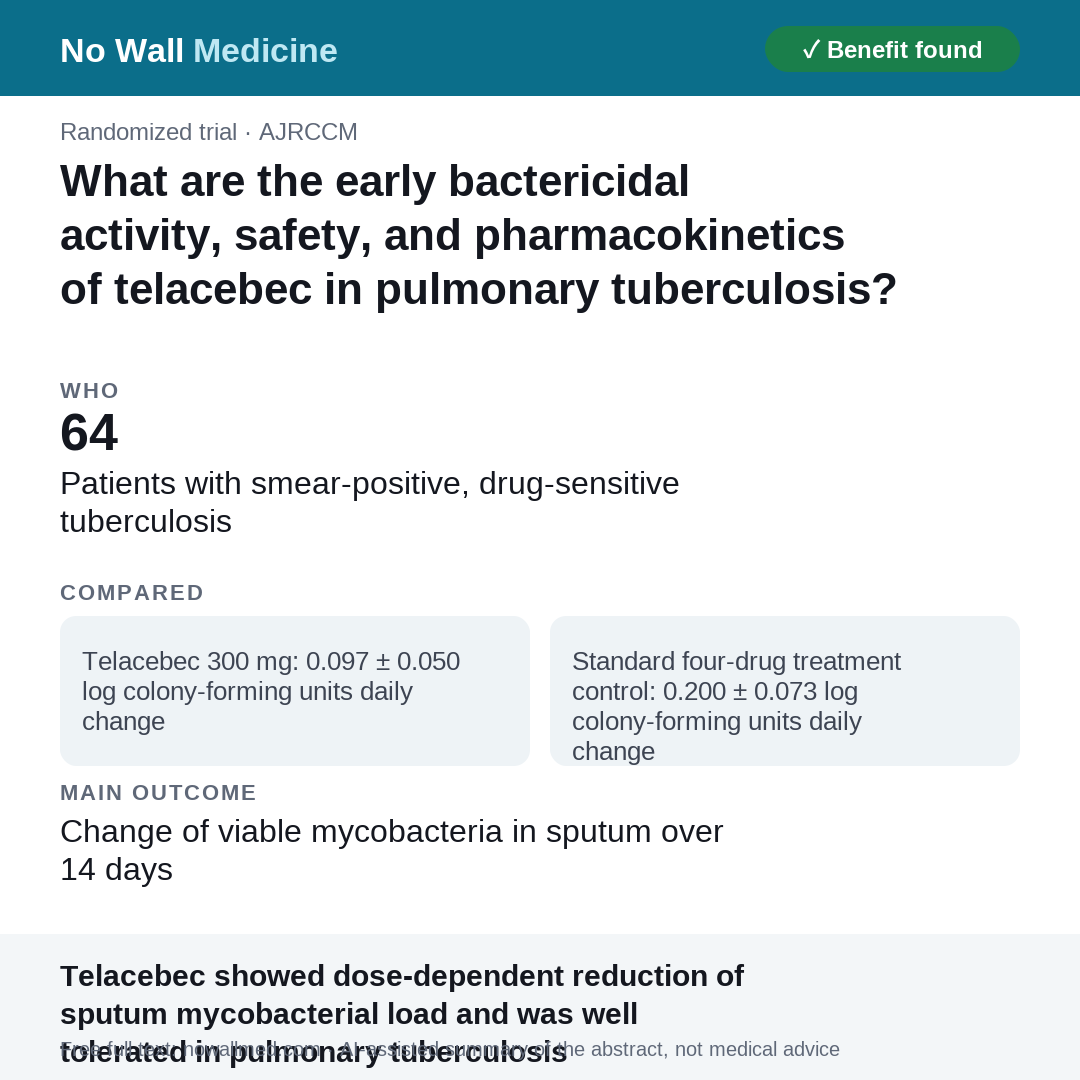
Telacebec, a Potent Agent in the Fight against Tuberculosis: Findings from a Randomized, Phase 2 Clinical Trial and Beyond
Randomized trialBenefit found
What are the early bactericidal activity, safety, and pharmacokinetics of telacebec in pulmonary tuberculosis?
Who
64
Patients with smear-positive, drug-sensitive tuberculosis
Compared
Telacebec 300 mg: 0.097 ± 0.050 log colony-forming units daily change
Standard four-drug treatment control: 0.200 ± 0.073 log colony-forming units daily change
Main outcome
Change of viable mycobacteria in sputum over 14 days
Bottom line: Telacebec showed dose-dependent reduction of sputum mycobacterial load and was well tolerated in pulmonary tuberculosis patients.
AJRCCM · 2025-03-21Download image
Long-term (68 weeks) administration of nemolizumab and topical corticosteroids for prurigo nodularis in patients aged ≥ 13 years: efficacy and safety data from a phase II/III study
Randomized trialBenefit found
What is the long-term impact of nemolizumab on prurigo nodularis?
Who
226
Asian patients aged 13 years or older with prurigo nodularis · Japan
Compared
Nemolizumab 30 mg: 78.6% decrease in Peak Pruritus Numerical Rating Scale at week 68
Nemolizumab 60 mg: 76.5% decrease in Peak Pruritus Numerical Rating Scale at week 68
Main outcome
Peak Pruritus Numerical Rating Scale, disease severity, and quality of life
Bottom line: Nemolizumab provided continuous and durable improvements in pruritus, disease severity, and quality of life over 68 weeks.
Br J Dermatol · 2025-03-21Download image

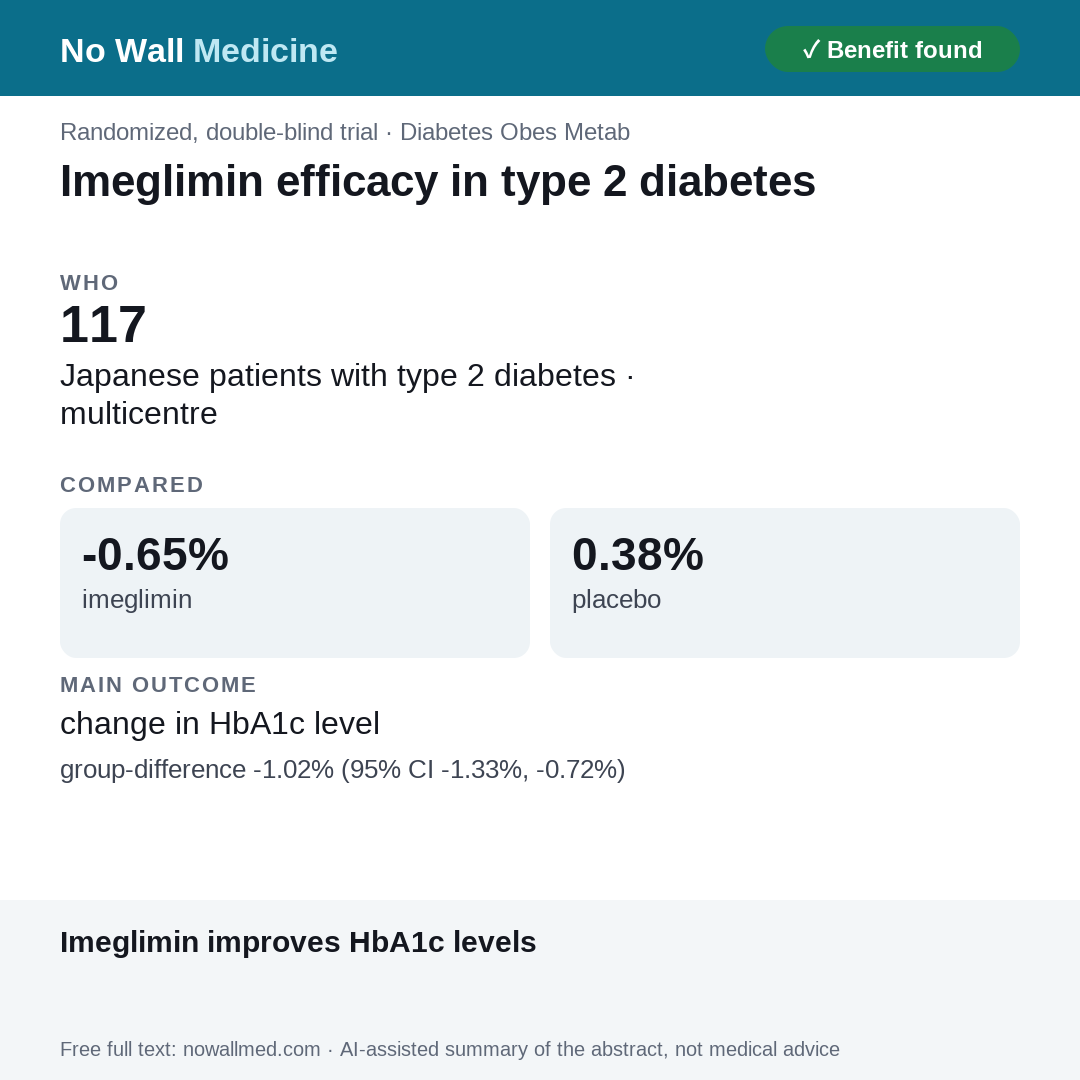
Efficacy and safety of imeglimin add-on to DPP-4 inhibitor therapy in Japanese patients with type 2 diabetes mellitus: An interim analysis of the randomised, double-blind FAMILIAR trial
Randomized, double-blind trialBenefit found
Imeglimin efficacy in type 2 diabetes
Who
117
Japanese patients with type 2 diabetes · multicentre
Compared
-0.65%imeglimin (0.11%)
0.38%placebo (0.11%)
Main outcome
change in HbA1c level
Result: group-difference -1.02% (95% CI -1.33%, -0.72%)
Bottom line: Imeglimin improves HbA1c levels
Diabetes Obes Metab · 2025-03-21Download image
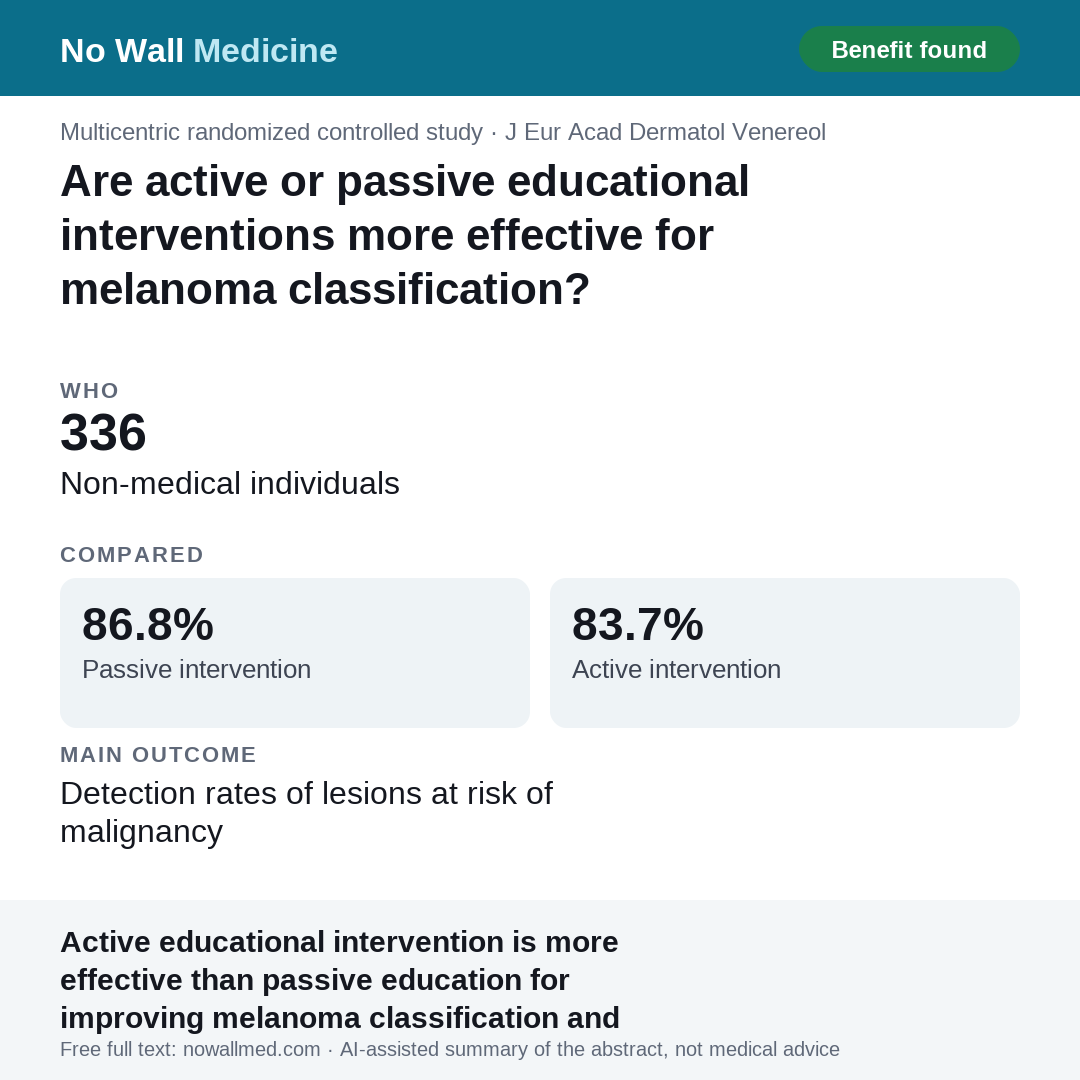
Passive versus active educational interventions for nevus and melanoma classification: A randomized controlled study
Multicentric randomized controlled studyBenefit found
Are active or passive educational interventions more effective for melanoma classification?
Who
336
Non-medical individuals
Compared
86.8%Passive intervention
83.7%Active intervention
Main outcome
Detection rates of lesions at risk of malignancy
Bottom line: Active educational intervention is more effective than passive education for improving melanoma classification and correct rule application.
J Eur Acad Dermatol Venereol · 2025-03-21Download image
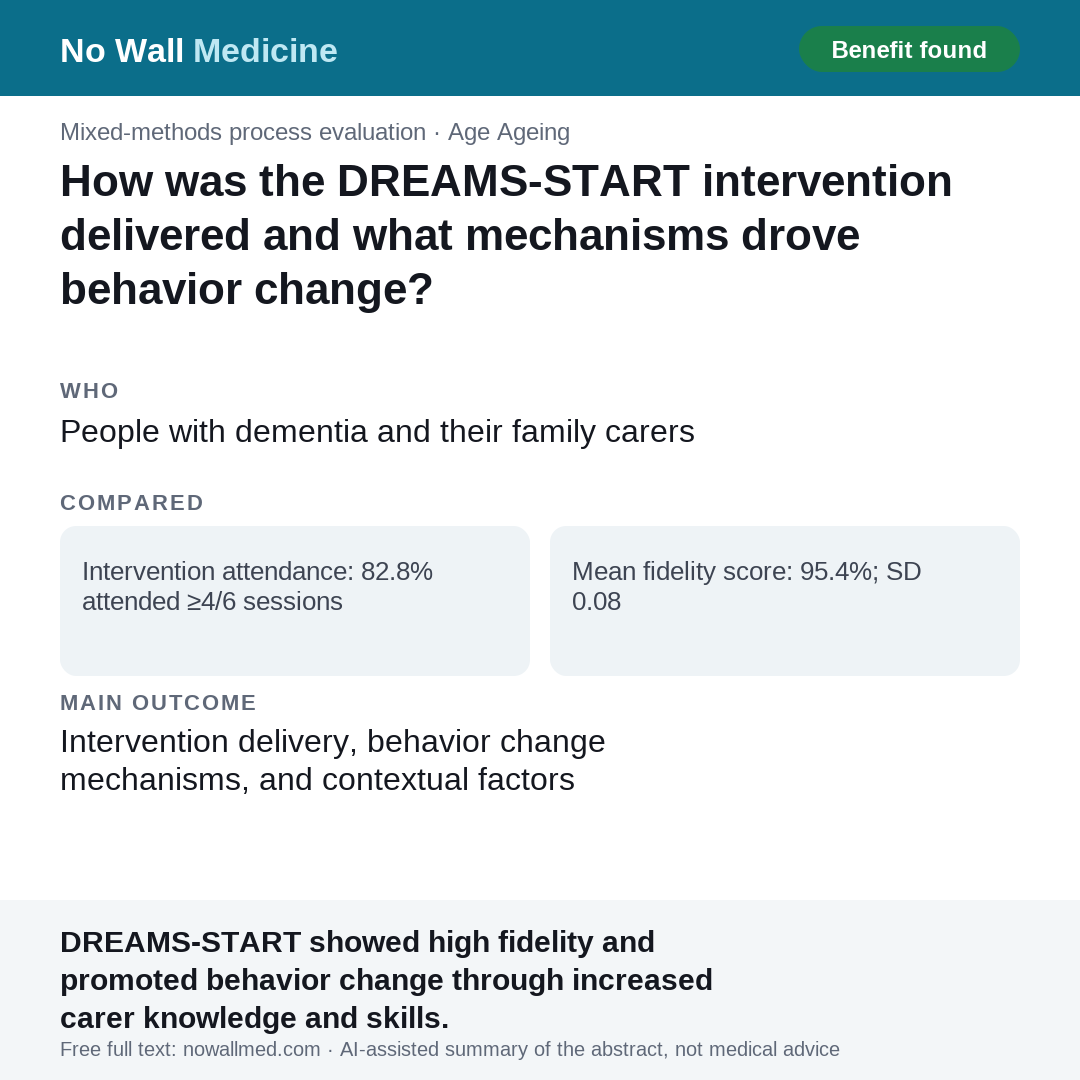
Process evaluation in a randomised controlled trial of DREAMS-START (dementia related manual for sleep; strategies for relatives) for sleep disturbance in people with dementia and their carers
Mixed-methods process evaluationBenefit found
How was the DREAMS-START intervention delivered and what mechanisms drove behavior change?
Who
People with dementia and their family carers
Compared
Intervention attendance: 82.8% attended ≥4/6 sessions
Mean fidelity score: 95.4%; SD 0.08
Main outcome
Intervention delivery, behavior change mechanisms, and contextual factors
Bottom line: DREAMS-START showed high fidelity and promoted behavior change through increased carer knowledge and skills.
Age Ageing · 2025-03-21Download image
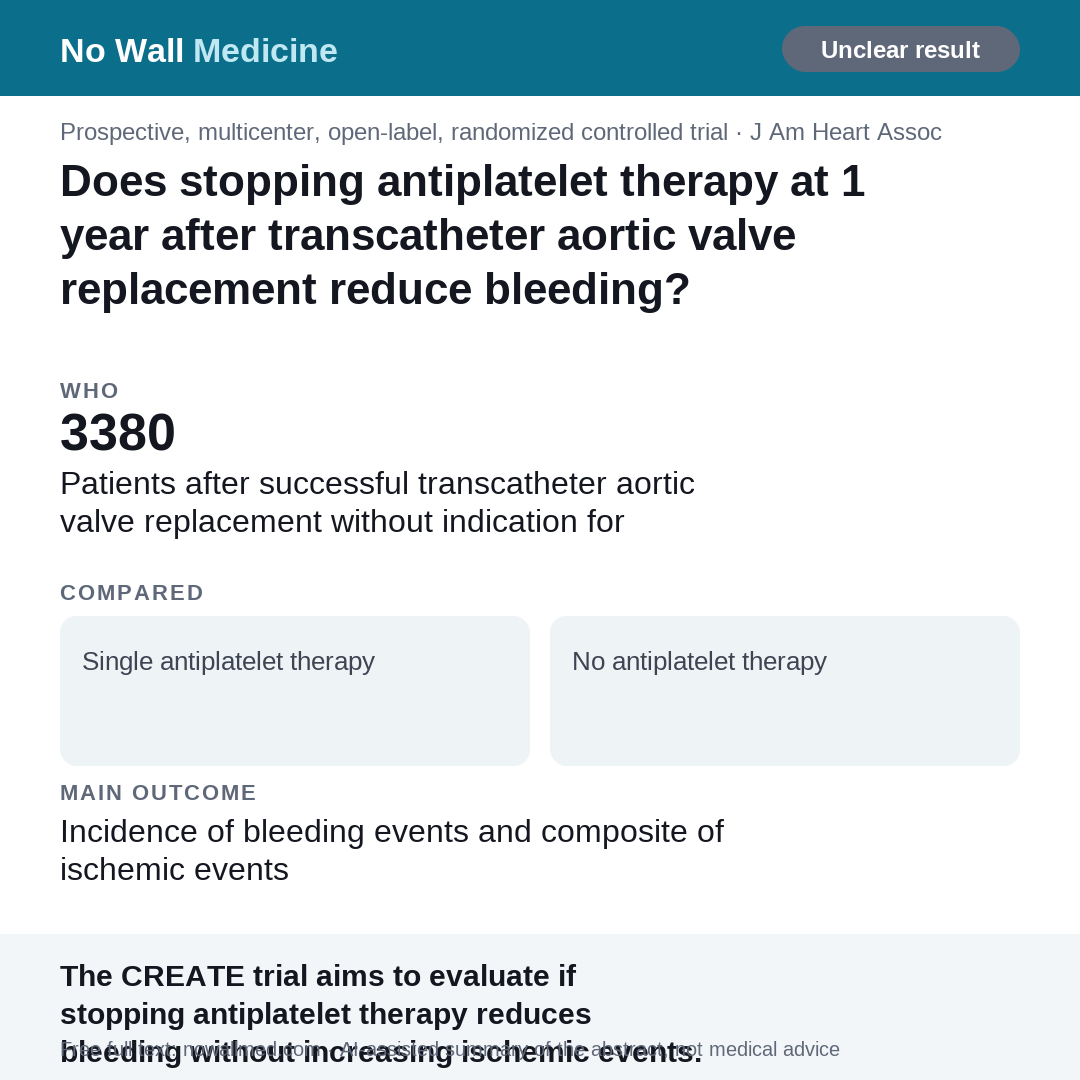
Rationale and Design of the CREATE Trial: A Multicenter, Randomized Comparison of Continuation or Cessation of Single Antithrombotic Therapy at 1 Year After Transcatheter Aortic Valve Replacement
Prospective, multicenter, open-label, randomized controlled trialUnclear result
Does stopping antiplatelet therapy at 1 year after transcatheter aortic valve replacement reduce bleeding?
Who
3380
Patients after successful transcatheter aortic valve replacement without indication for anticoagulation · Multicenter
Compared
Single antiplatelet therapy
No antiplatelet therapy
Main outcome
Incidence of bleeding events and composite of ischemic events
Bottom line: The CREATE trial aims to evaluate if stopping antiplatelet therapy reduces bleeding without increasing ischemic events.
J Am Heart Assoc · 2025-03-21Download image
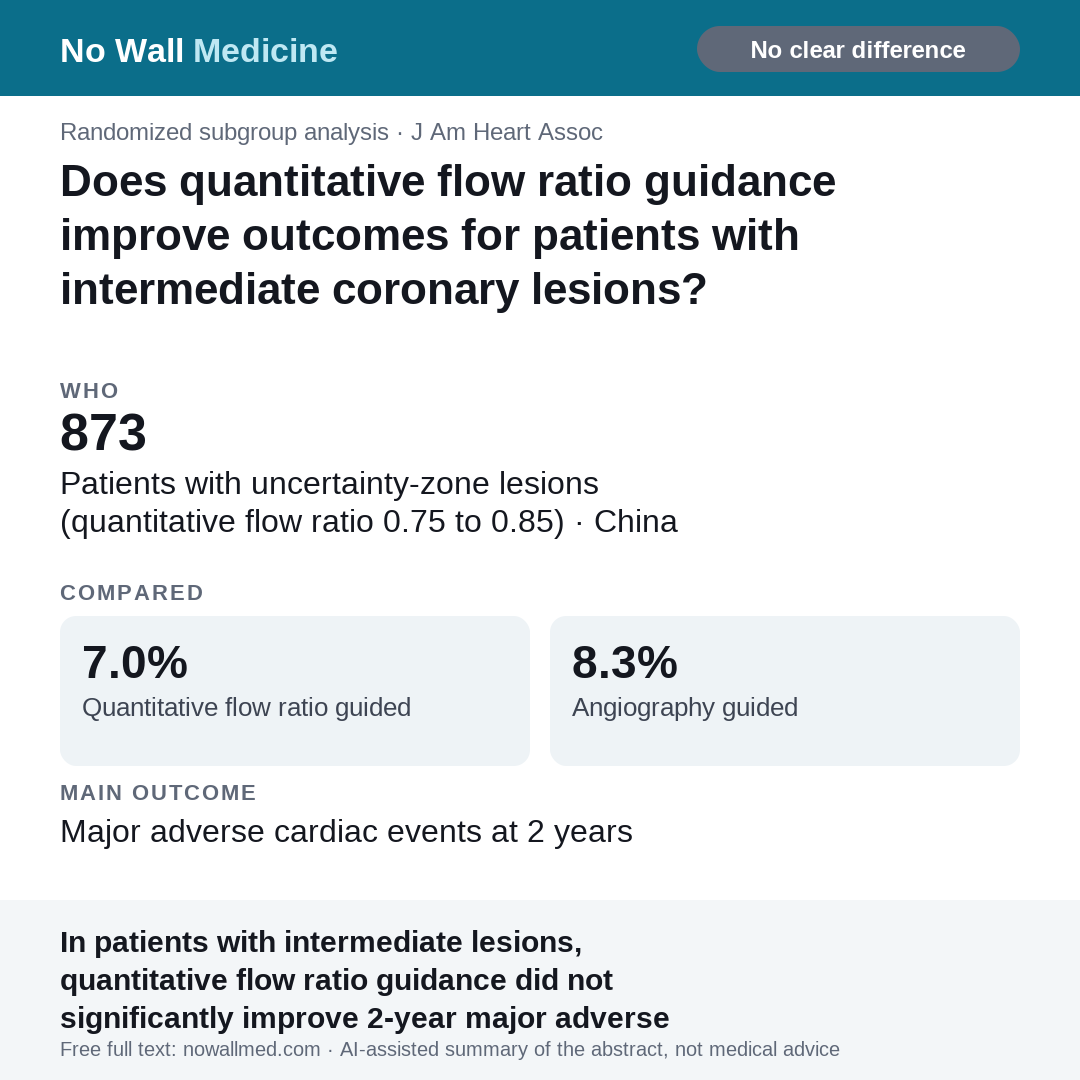
Angiographic Quantitative Flow Ratio-Guided Treatment of Patients With Physiologically Intermediate Coronary Lesions
Randomized subgroup analysisNo clear difference
Does quantitative flow ratio guidance improve outcomes for patients with intermediate coronary lesions?
Who
873
Patients with uncertainty-zone lesions (quantitative flow ratio 0.75 to 0.85) · China
Compared
7.0%Quantitative flow ratio guided
8.3%Angiography guided
Main outcome
Major adverse cardiac events at 2 years
Result: hazard ratio 0.85 (95% CI 0.52-1.37)
Bottom line: In patients with intermediate lesions, quantitative flow ratio guidance did not significantly improve 2-year major adverse cardiac events.
J Am Heart Assoc · 2025-03-21Download image
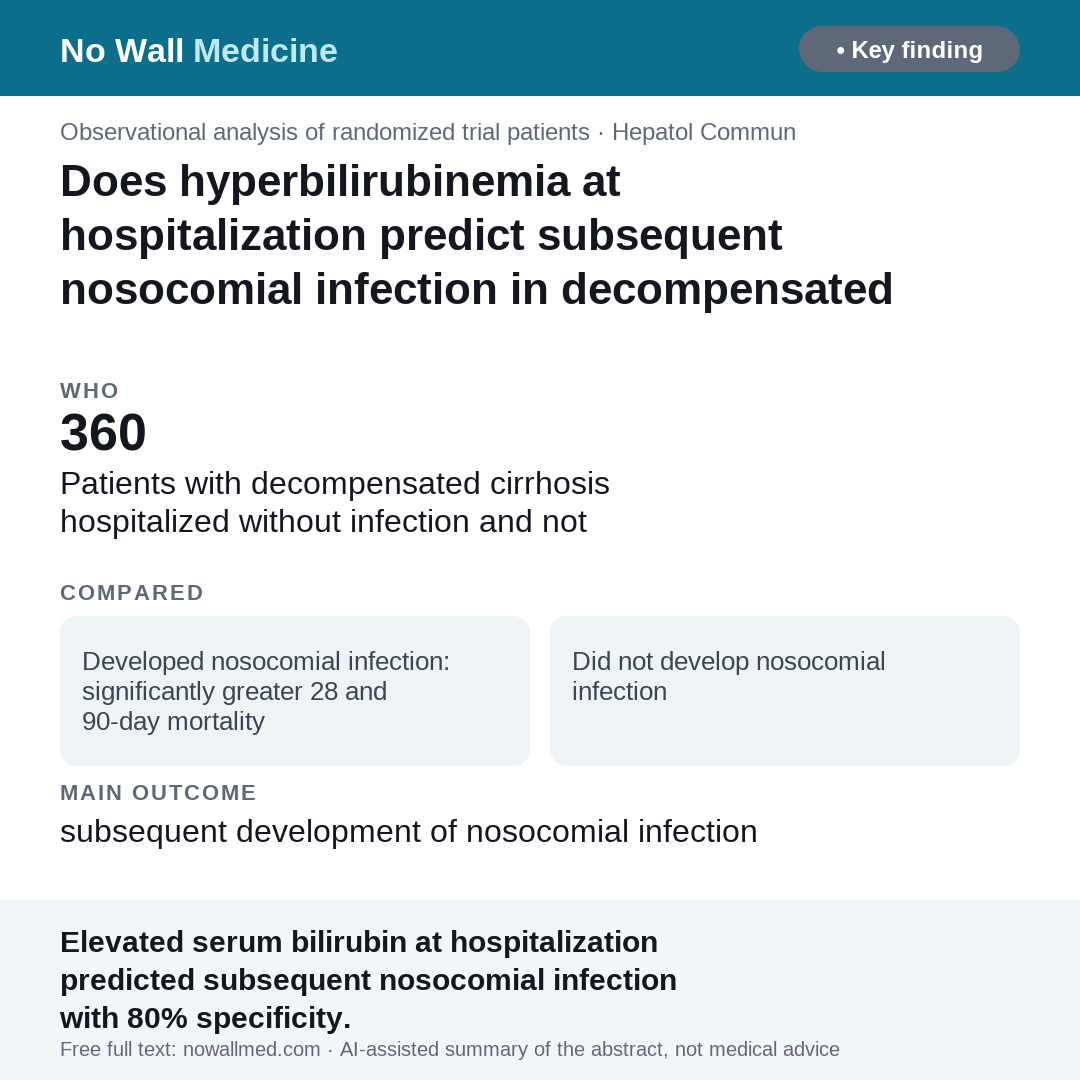
Hyperbilirubinemia at hospitalization predicts nosocomial infection in decompensated cirrhosis: Data from ATTIRE trial
Observational analysis of randomized trial patientsBenefit found
Does hyperbilirubinemia at hospitalization predict subsequent nosocomial infection in decompensated cirrhosis?
Who
360
Patients with decompensated cirrhosis hospitalized without infection and not prescribed antibiotics
Compared
Developed nosocomial infection: significantly greater 28 and 90-day mortality
Did not develop nosocomial infection
Main outcome
subsequent development of nosocomial infection
Bottom line: Elevated serum bilirubin at hospitalization predicted subsequent nosocomial infection with 80% specificity.
Hepatol Commun · 2025-03-21Download image
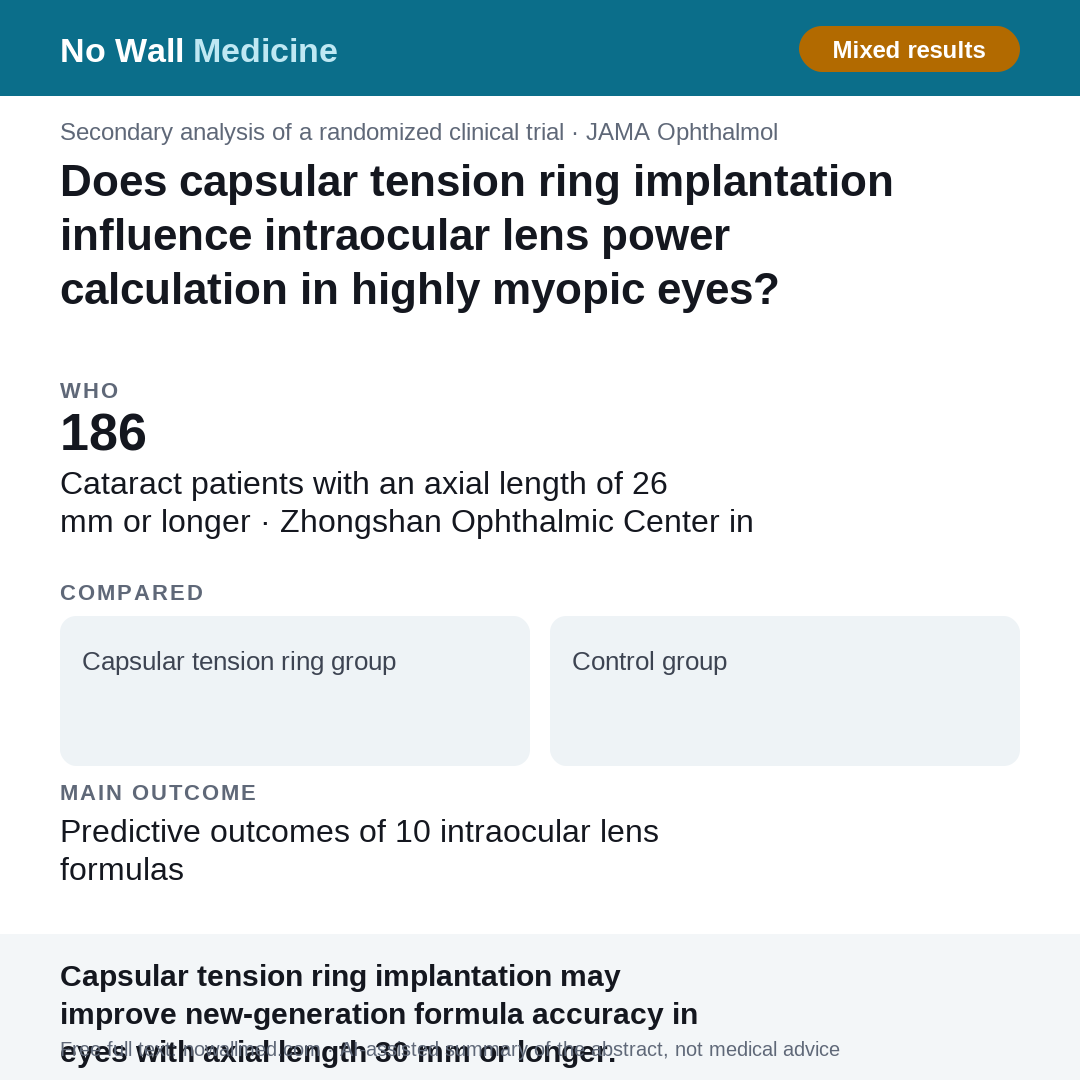
Capsular Tension Ring Implantation for Intraocular Lens Power Calculation in Highly Myopic Eyes: Secondary Analysis of a Randomized Clinical Trial
Secondary analysis of a randomized clinical trialMixed results
Does capsular tension ring implantation influence intraocular lens power calculation in highly myopic eyes?
Who
186
Cataract patients with an axial length of 26 mm or longer · Zhongshan Ophthalmic Center in Guangzhou, China
Compared
Capsular tension ring group
Control group
Main outcome
Predictive outcomes of 10 intraocular lens formulas
Bottom line: Capsular tension ring implantation may improve new-generation formula accuracy in eyes with axial length 30 mm or longer.
Limitation: This is a prespecified secondary analysis of outcomes from a randomized clinical trial.
JAMA Ophthalmol · 2025-03-20Download image
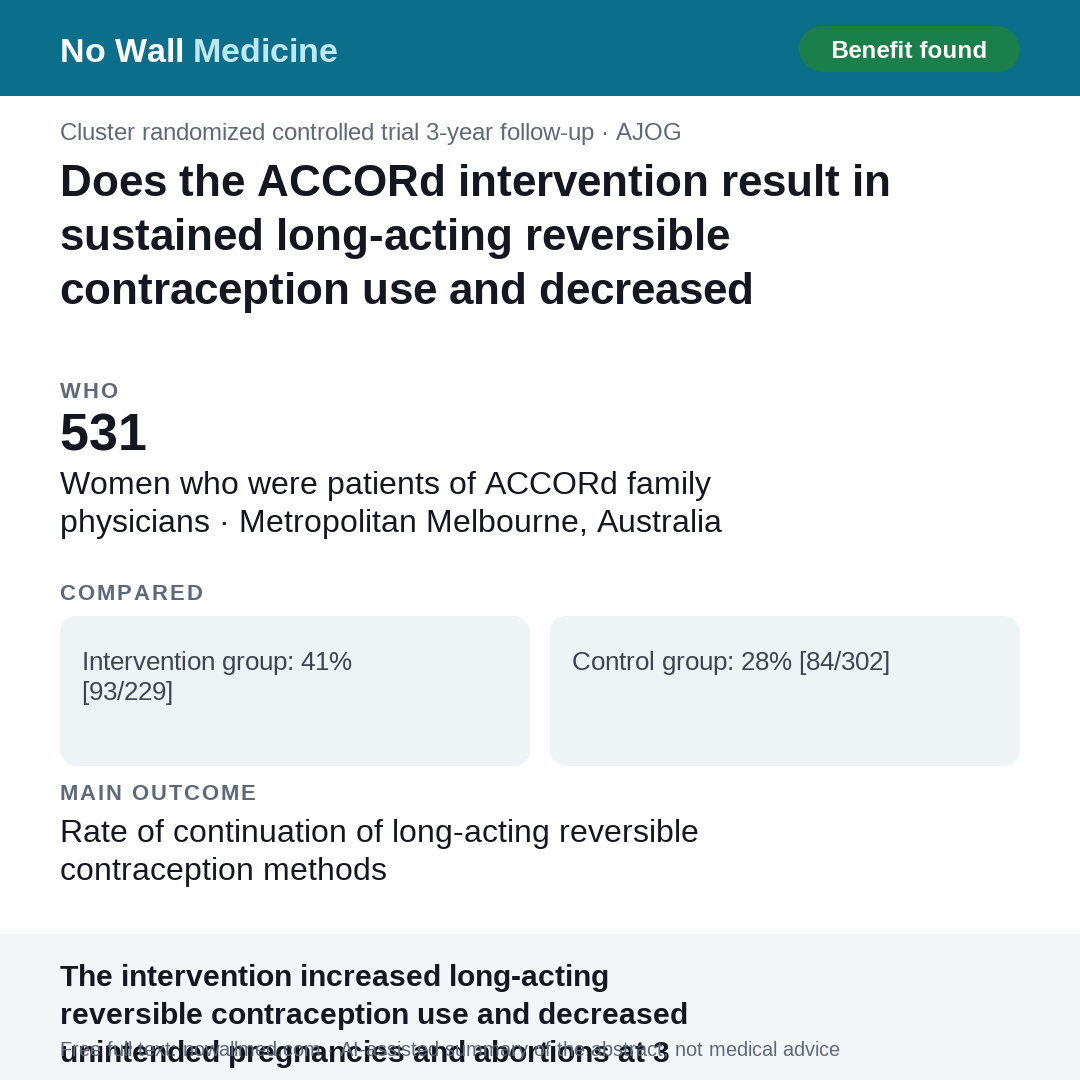
Increasing the uptake of long-acting reversible contraception through family practice: the Australian Contraceptive ChOice pRoject (ACCORd) cluster randomized controlled trial 3-year follow-up
Cluster randomized controlled trial 3-year follow-upBenefit found
Does the ACCORd intervention result in sustained long-acting reversible contraception use and decreased unplanned pregnancies?
Who
531
Women who were patients of ACCORd family physicians · Metropolitan Melbourne, Australia
Compared
Intervention group: 41% [93/229]
Control group: 28% [84/302]
Main outcome
Rate of continuation of long-acting reversible contraception methods
Result: odds ratio 0.38 [95% confidence interval, 0.16-0.86]
Bottom line: The intervention increased long-acting reversible contraception use and decreased unintended pregnancies and abortions at 3 years.
AJOG · 2025-03-20Download image