Visual abstracts
New randomized trials and meta-analyses from leading journals at a glance: who was studied, what was compared, and what was found. Every paper is free to read in full.
All specialtiesCardiology 913Oncology 821Gastroenterology & Hepatology 337Infectious Disease 654Neurology 374Psychiatry & Mental Health 448Pulmonology 393Critical Care 271Endocrinology & Diabetes 500Pediatrics 572Surgery 368Orthopedics & Sports Medicine 168Neurosurgery 117Cardiothoracic & Vascular Surgery 88Plastic & Reconstructive Surgery 145Nephrology 203Rheumatology 111Hematology 195Dermatology 87Ophthalmology 106Obstetrics & Gynecology 278Public & Global Health 183Radiology & Imaging 111Anesthesiology 136Urology 171ENT (Otolaryngology) 117Emergency Medicine 104Allergy & Immunology 63Geriatrics 166Family Medicine & Primary Care 116Medical Genetics & Genomics 93Pathology & Laboratory Medicine 28Physical Medicine & Rehabilitation 149Palliative Care 82Nutrition 228Digital Health & AI 466General Medicine 105
Virtual Reality Interventions for Pediatric Pain and Anxiety Management During Emergency Department Procedures: A Systematic Review and Meta-Analysis
Systematic review and meta-analysisBenefit found
Does virtual reality reduce pediatric procedural pain and anxiety in emergency departments?
Who
1929
Children undergoing procedures in emergency departments · Emergency departments
Compared
Virtual reality
Routine care
Active or other interventions
Main outcome
Self-reported peak procedural pain and anxiety
Result: mean difference -0.76 (95% CI -1.25 to -0.27) for pain vs routine care
Bottom line: Virtual reality shows moderate reductions in pediatric procedural pain and anxiety in emergency departments.
Limitation: Study heterogeneity and methodological limitations reduce confidence in these findings.
JACEP Open · 2026-09-09Download image

Effectiveness, Safety, and Workflow Burden of Large Language Model-Based Medical Report Generation: Systematic Review
Systematic reviewMixed results
What are the effectiveness, safety, and workflow burden of large language model-based medical report generation?
Who
Studies evaluating large language models for medical report generation · Multiple databases including PubMed, Embase, and Web of Science
Compared
AI reports (chest x-ray): 70.5% (6047/8580) acceptance
Radiologist reports (chest x-ray): 73.3% (6288/8580) acceptance
Main outcome
Effectiveness, safety, and workflow burden of medical report generation
Bottom line: Large language models show assistive value in expert acceptance, but safety and workflow effects remain heterogeneous and inconsistent.
Limitation: Evidence is too heterogeneous, biased, and sparse on case-level end points to support pooled meta-analysis.
J Med Internet Res · 2026-09-09Download image

Comparative Efficacy of Different AI Systems for Polyp Detection by Size During Colonoscopy: Systematic Review and Network Meta-Analysis
Systematic review and network meta-analysisMixed results
How do different artificial intelligence systems compare to standard colonoscopy for polyp detection by size?
Who
4156
Adults aged 18 years or older
Compared
Artificial intelligence-assisted colonoscopy
Standard colonoscopy
Main outcome
Mean polyp detection counts stratified by size
Result: diminutive polyps (≤5 mm) SMD 0.21 (95% CI 0.07 to 0.35)
Bottom line: Artificial intelligence may modestly enhance diminutive polyp detection, but effects on small and large polyps are minimal.
Limitation: All cross-platform comparisons are indirect and certainty of evidence is very low to low.
J Med Internet Res · 2026-09-09Download image

Randomised phase III trials of cancer prevention drugs: a systematic review and prediction of trial success
Systematic reviewMixed results
What are the predictors of success in phase III cancer prevention drug trials?
Who
659904
Cancer-free adults in phase III randomised controlled trials
Compared
46Successful trials (50.0%)
Unsuccessful trials
Main outcome
Meeting the prespecified cancer risk reduction-related endpoint
Bottom line: Half of cancer prevention trials were successful, driven by pharmaceutical sponsorship, targeted strategies, and strong preliminary evidence.
ESMO Open · 2026-09-09Download image

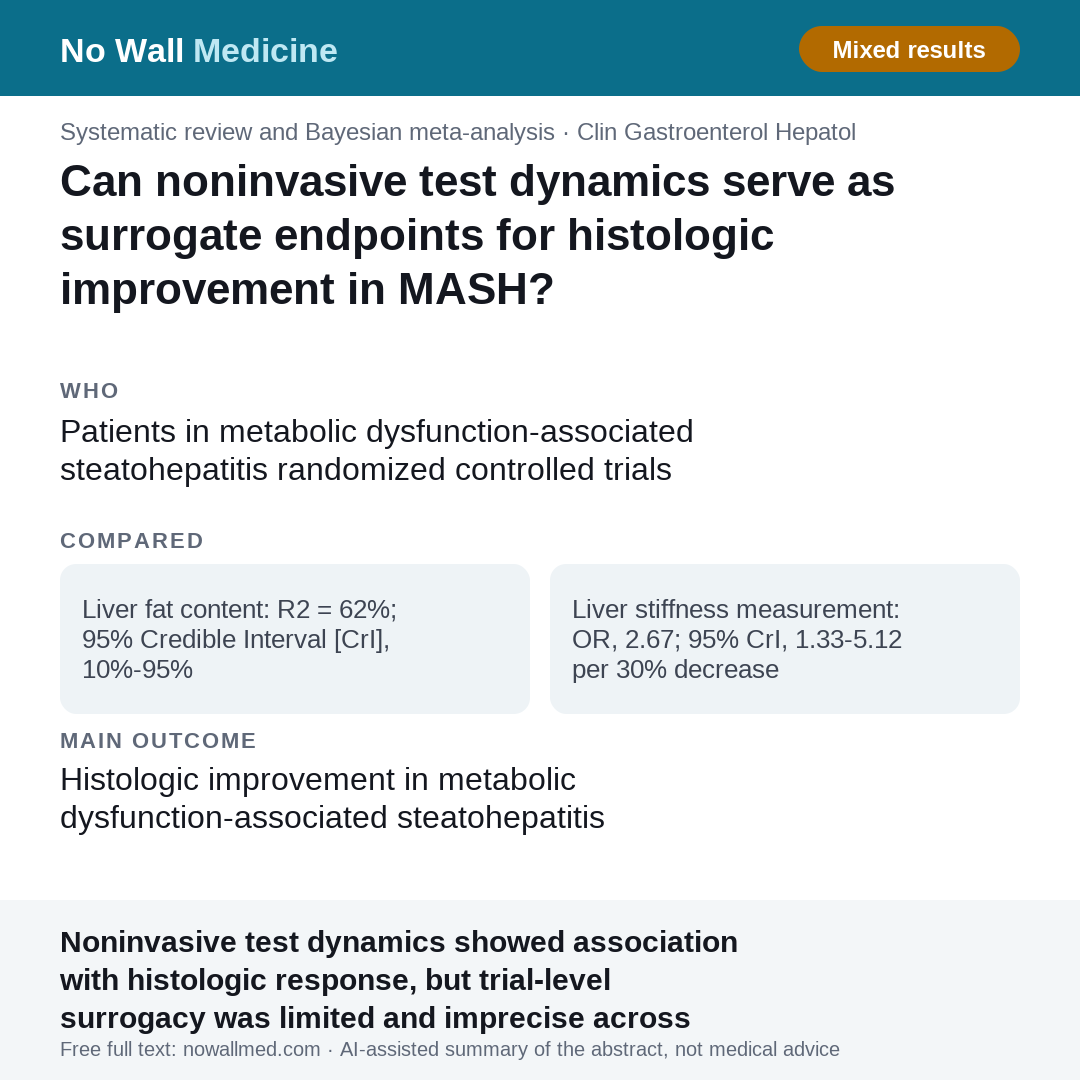
Can Noninvasive Test Dynamics Serve as Surrogate End Points for Histologic Improvement in Metabolic Dysfunction-Associated Steatohepatitis? A Systematic Review and Bayesian Meta-Analysis
Systematic review and Bayesian meta-analysisMixed results
Can noninvasive test dynamics serve as surrogate endpoints for histologic improvement in MASH?
Who
Patients in metabolic dysfunction-associated steatohepatitis randomized controlled trials
Compared
Liver fat content: R2 = 62%; 95% Credible Interval [CrI], 10%-95%
Liver stiffness measurement: OR, 2.67; 95% CrI, 1.33-5.12 per 30% decrease
Main outcome
Histologic improvement in metabolic dysfunction-associated steatohepatitis
Result: surrogacy was limited and imprecise across biomarkers
Bottom line: Noninvasive test dynamics showed association with histologic response, but trial-level surrogacy was limited and imprecise across biomarkers.
Clin Gastroenterol Hepatol · 2026-09-08Download image
Potential Harms of Ocular and Periorbital Topical Vitamin A Application: A Systematic Review and Meta-Analysis
Systematic review and meta-analysisHarm found
Do topical vitamin A products cause ophthalmic and periorbital harms?
Who
10,794
People using topical vitamin A on the ocular surface or periorbital region
Compared
Topical vitamin A derivatives: any harm (OR = 1.71)
Controls
Main outcome
Ophthalmic and periorbital harms
Result: odds ratio 1.71 (95% CI not reported)
Bottom line: Topical vitamin A products increase odds of pain, dryness, burning, and any harm.
Limitation: Evidence certainty ranged from very low to low.
Invest Ophthalmol Vis Sci · 2026-09-08Download image

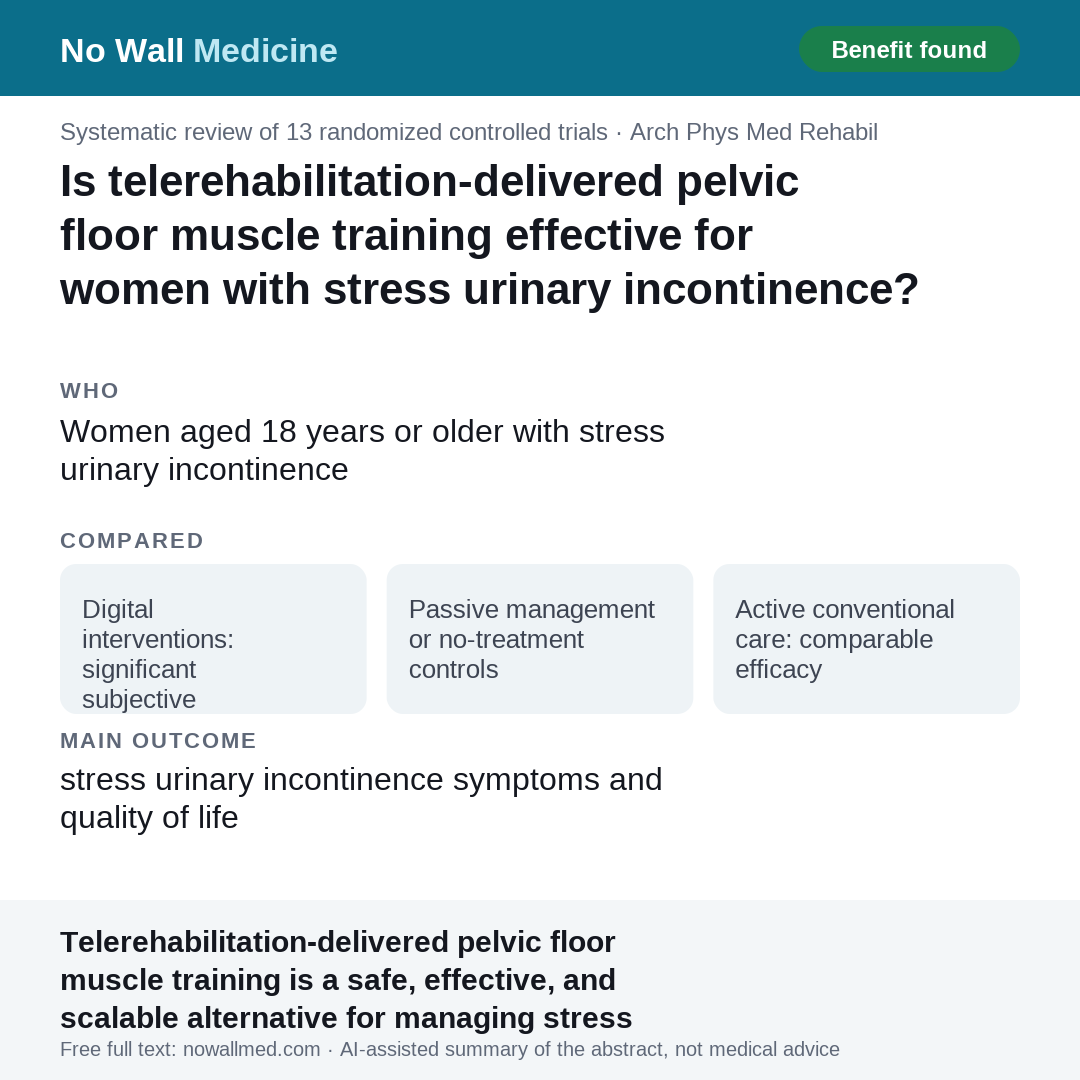
Novel Telerehabilitation Interventions for Stress Urinary Incontinence: A Systematic Review of Randomized Controlled Trials
Systematic review of 13 randomized controlled trialsBenefit found
Is telerehabilitation-delivered pelvic floor muscle training effective for women with stress urinary incontinence?
Who
Women aged 18 years or older with stress urinary incontinence
Compared
Digital interventions: significant subjective reductions in symptoms and improved quality of life
Passive management or no-treatment controls
Active conventional care: comparable efficacy
Main outcome
stress urinary incontinence symptoms and quality of life
Bottom line: Telerehabilitation-delivered pelvic floor muscle training is a safe, effective, and scalable alternative for managing stress urinary incontinence.
Limitation: Substantial methodological and clinical heterogeneity
Arch Phys Med Rehabil · 2026-09-08Download image
European Association of Palliative Care White Paper on research priorities for family caregiving in palliative care: A systematic review of reviews
Systematic review of reviewsUnclear result
Research priorities for family caregiving in palliative care
Who
Family carers in palliative care
Compared
Improving methods
Carer centred research
Health systems research
Carer roles research
Main outcome
Research priorities for family caregiving
Bottom line: Gaps remain in supporting family carers
Palliat Med · 2026-09-08Download image

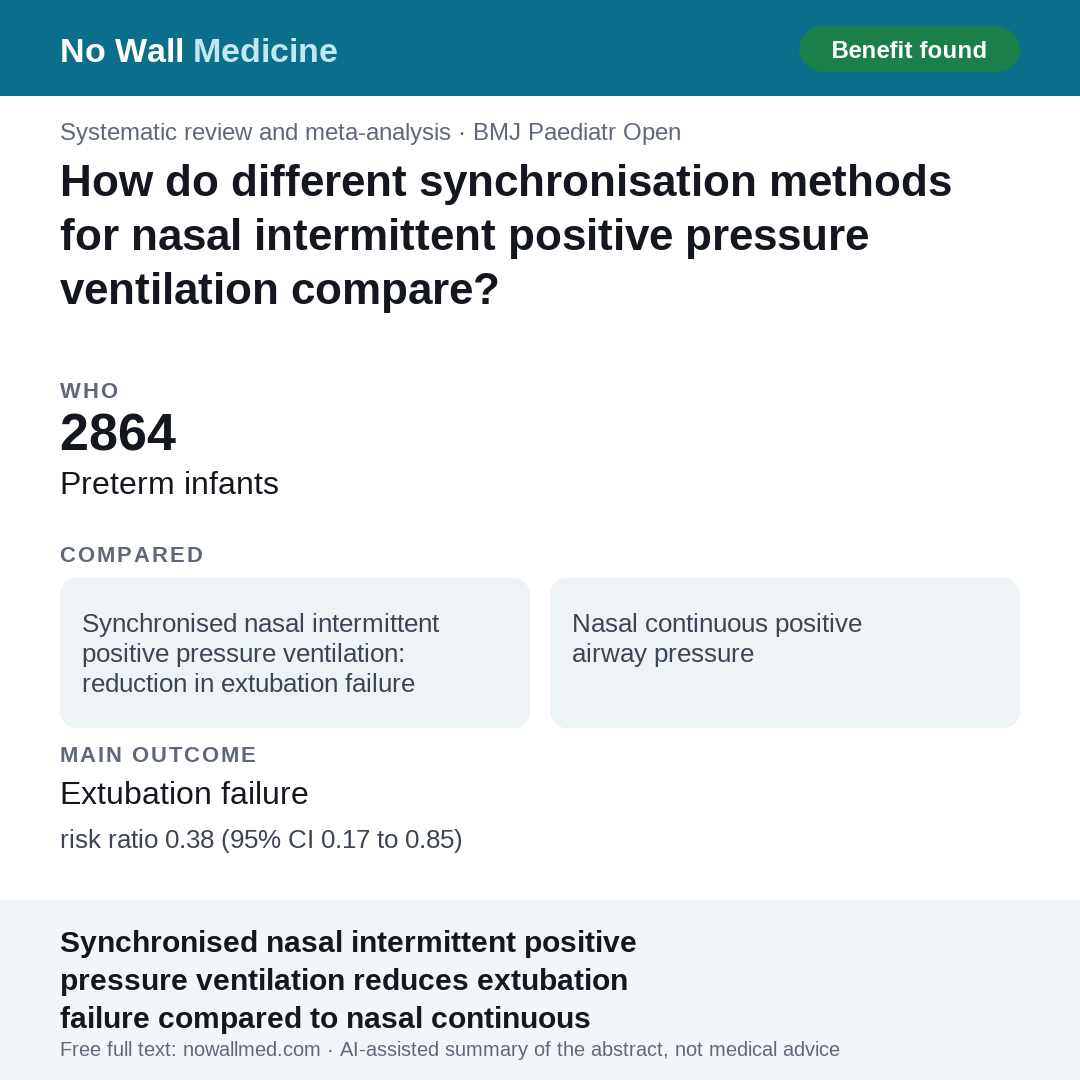
Triggering modalities to synchronise non-invasive respiratory support in preterm infants: a systematic review and meta-analysis
Systematic review and meta-analysisBenefit found
How do different synchronisation methods for nasal intermittent positive pressure ventilation compare?
Who
2864
Preterm infants
Compared
Synchronised nasal intermittent positive pressure ventilation: reduction in extubation failure
Nasal continuous positive airway pressure
Main outcome
Extubation failure
Result: risk ratio 0.38 (95% CI 0.17 to 0.85)
Bottom line: Synchronised nasal intermittent positive pressure ventilation reduces extubation failure compared to nasal continuous positive airway pressure.
Limitation: Evidence on positive effects on long-term major clinical outcomes remains limited.
BMJ Paediatr Open · 2026-09-08Download image
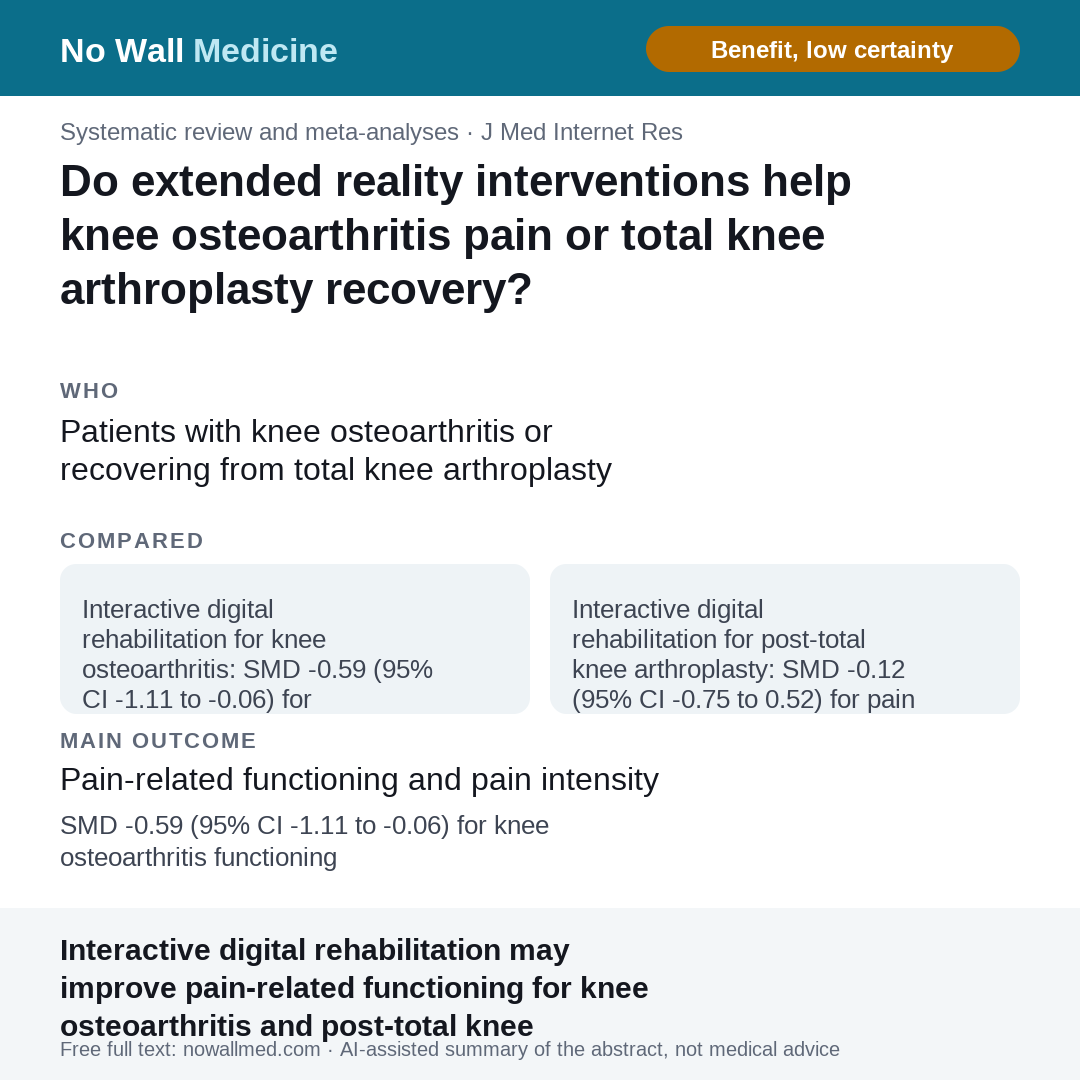
Extended Reality Interventions for Osteoarthritis of the Knee and Recovery After Total Knee Arthroplasty: Systematic Review and Meta-Analyses
Systematic review and meta-analysesBenefit found
Do extended reality interventions help knee osteoarthritis pain or total knee arthroplasty recovery?
Who
Patients with knee osteoarthritis or recovering from total knee arthroplasty
Compared
Interactive digital rehabilitation for knee osteoarthritis: SMD -0.59 (95% CI -1.11 to -0.06) for pain-related functioning
Interactive digital rehabilitation for post-total knee arthroplasty: SMD -0.12 (95% CI -0.75 to 0.52) for pain intensity
Main outcome
Pain-related functioning and pain intensity
Result: SMD -0.59 (95% CI -1.11 to -0.06) for knee osteoarthritis functioning
Bottom line: Interactive digital rehabilitation may improve pain-related functioning for knee osteoarthritis and post-total knee arthroplasty recovery.
J Med Internet Res · 2026-09-08Download image
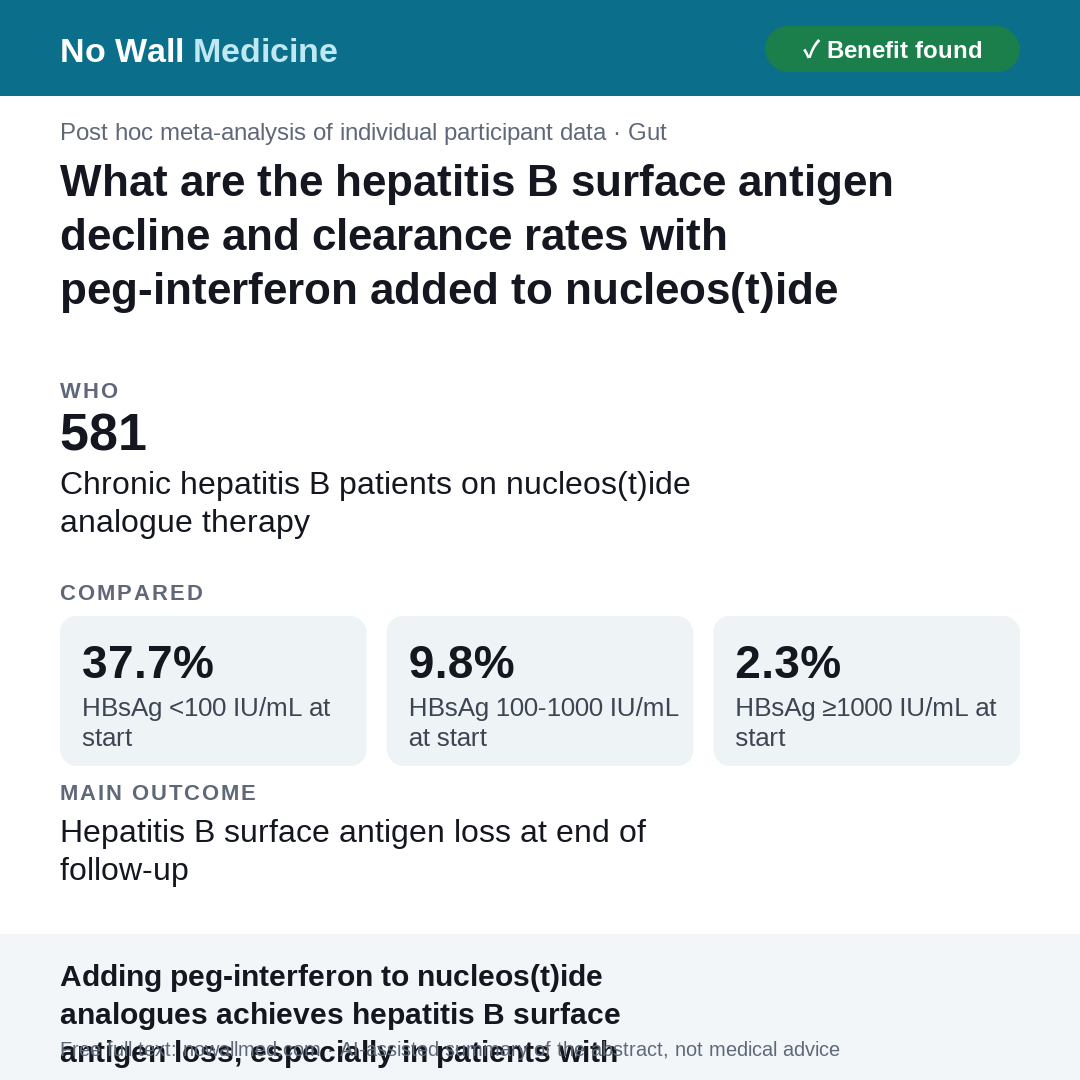
HBsAg decline and clearance with peg-IFN therapy added to nucleos(t)ide analogues: an individual participant data meta-analysis of prospective trials (PROSPER)
Post hoc meta-analysis of individual participant dataBenefit found
What are the hepatitis B surface antigen decline and clearance rates with peg-interferon added to nucleos(t)ide analogue therapy?
Who
581
Chronic hepatitis B patients on nucleos(t)ide analogue therapy
Compared
37.7%HBsAg <100 IU/mL at start
9.8%HBsAg 100-1000 IU/mL at start
2.3%HBsAg ≥1000 IU/mL at start
Main outcome
Hepatitis B surface antigen loss at end of follow-up
Bottom line: Adding peg-interferon to nucleos(t)ide analogues achieves hepatitis B surface antigen loss, especially in patients with lower initial antigen levels.
Gut · 2026-09-07Download image
Mental health outcomes and associated factors among Myanmar refugees: systematic review
Systematic reviewMixed results
What are the common mental disorders and associated factors among Myanmar refugees?
Who
10800
Myanmar refugees in regional host countries · Bangladesh, Thailand and Malaysia
Compared
Depression prevalence: 30.0-89.0%
Anxiety prevalence: 39.3-41.8%
Post-traumatic stress disorder prevalence: 3.7-61.2%
Main outcome
Prevalence of common mental disorders
Bottom line: Myanmar refugees face a high burden of depression, anxiety, and post-traumatic stress disorder driven by various stressors.
BJPsych Open · 2026-09-07Download image

High-intensity focused ultrasound (HIFU) and low-intensity focused ultrasound (LIFU) as neurosurgical approaches in psychiatry: A systematic review of current clinical evidence
Systematic reviewBenefit found
What is the clinical evidence for high-intensity and low-intensity focused ultrasound in psychiatry?
Who
Adults with psychiatric or neuropsychiatric disorders
Compared
High-intensity focused ultrasound: improvements in several psychiatric rating scales
Low-intensity focused ultrasound: improvements in several psychiatric rating scales
Main outcome
clinical outcomes and safety
Bottom line: High-intensity and low-intensity focused ultrasound may improve symptoms in selected psychiatric populations.
Limitation: Small sample sizes, heterogeneous diagnoses, variable follow-up, and risk of bias.
Brain Spine · 2026-09-07Download image

Risk of bias in network meta-analyses of interventions for knee and hip osteoarthritis published in leading general medical and specialty journals: A methodological study using the RoB NMA tool
Methodological studyHarm found
What is the risk of bias in network meta-analyses for knee and hip osteoarthritis?
Who
21
Network meta-analyses of interventions for knee and hip osteoarthritis · 22 leading general and specialty journals
Compared
62%High risk of bias
19%Some concerns
19%Low risk
Main outcome
Risk of bias using ROBIS and RoB NMA tools
Bottom line: Most network meta-analyses for knee and hip osteoarthritis in leading journals exhibit a high risk of bias.
Limitation: The study used a restricted sample of systematic reviews.
Osteoarthritis Cartilage · 2026-09-06Download image

Autologous Fat Grafting for Breast Augmentation and Breast Remodeling: A Systematic Review and Meta-analysis of Complications, Radiologic Outcomes, Graft Retention, and Patient-Reported Satisfaction
Systematic review and meta-analysis of 40 studiesBenefit found
What are the complications, radiologic outcomes, graft retention, and satisfaction of autologous fat grafting?
Who
5684
5,684 patients undergoing autologous fat grafting
Compared
All autologous fat grafting: 25.9% (95% CI, 22.4-29.6) complication rate
SVF/PRP-enriched grafts: 68.9% volume retention
Non-enriched grafts: 56.1% volume retention
Main outcome
Complications, radiologic outcomes, graft retention, and patient satisfaction
Result: 61.3% (95% CI, 57.1-65.4) twelve-month volume retention
Bottom line: Autologous fat grafting shows favorable safety, 61.3% volume retention, and 93.1% patient satisfaction.
Limitation: Oncologic outcomes were not quantitatively pooled and evidence was heterogeneous.
Aesthet Surg J · 2026-09-05Download image

Management of the Iliac Bifurcation during Endovascular Aneurysm Repair: A Systematic Review and Network Meta-analysis
Systematic review and network meta-analysisBenefit found
Endovascular strategies for iliac bifurcation management safety
Who
6291
patients undergoing endovascular aneurysm repair
Compared
Iliac branch devices
Coil and cover
Main outcome
iliac related re-interventions and endoleaks
Result: risk ratio 0.46 (95% credible intervals 0.15 - 0.93)
Bottom line: Iliac branch devices reduce re-interventions
Eur J Vasc Endovasc Surg · 2026-09-05Download image

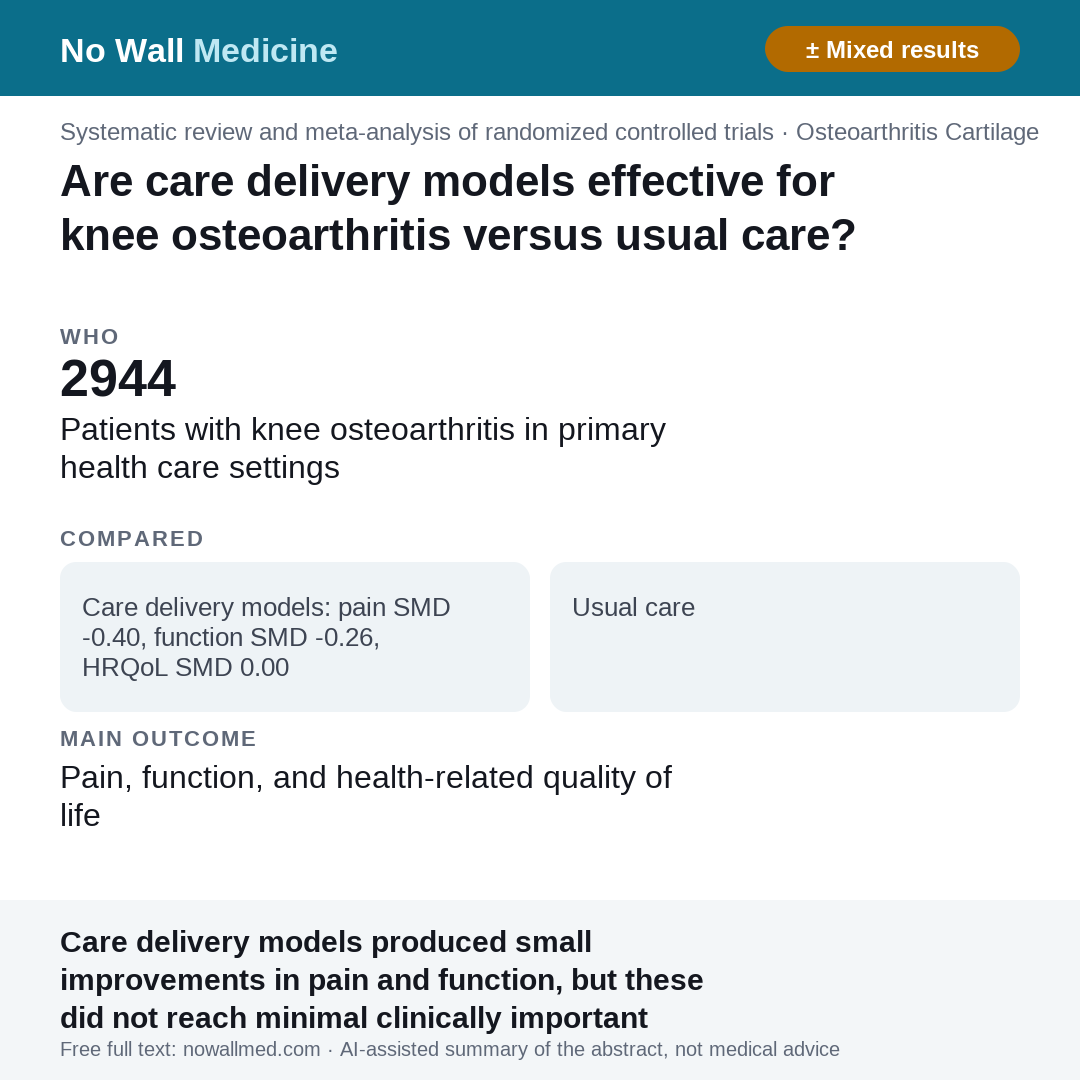
Effectiveness of care delivery models for knee osteoarthritis in primary healthcare settings: A systematic review and meta-analysis of randomized controlled trials
Systematic review and meta-analysis of randomized controlled trialsMixed results
Are care delivery models effective for knee osteoarthritis versus usual care?
Who
2944
Patients with knee osteoarthritis in primary health care settings
Compared
Care delivery models: pain SMD -0.40, function SMD -0.26, HRQoL SMD 0.00
Usual care
Main outcome
Pain, function, and health-related quality of life
Result: pain SMD -0.40 (95% CI -0.63 to -0.16), function SMD -0.26 (95% CI -0.39 to -0.14), HRQoL SMD 0.00 (-0.10 to 0.09)
Bottom line: Care delivery models produced small improvements in pain and function, but these did not reach minimal clinically important differences.
Limitation: Only 15 trials were included and subgroup findings should be interpreted cautiously.
Osteoarthritis Cartilage · 2026-09-04Download image
Costs of surgeries in low- and middle-income countries: a systematic literature review
Systematic literature reviewMixed results
What are the costs of surgical procedures in low- and middle-income countries?
Who
Surgical procedures in low- and middle-income countries · 29 countries
Compared
Caesarean section in Tanzania: I$1.54
Paediatric cataract surgery in Zambia: I$618 098
Main outcome
Costs of minor and major therapeutic surgical procedures
Bottom line: Surgical costs vary widely by procedure, specialty, and country across low- and middle-income countries.
Limitation: Limited data (10%) from low-income settings and most studies originated from upper-middle-income countries.
BMJ Glob Health · 2026-09-04Download image

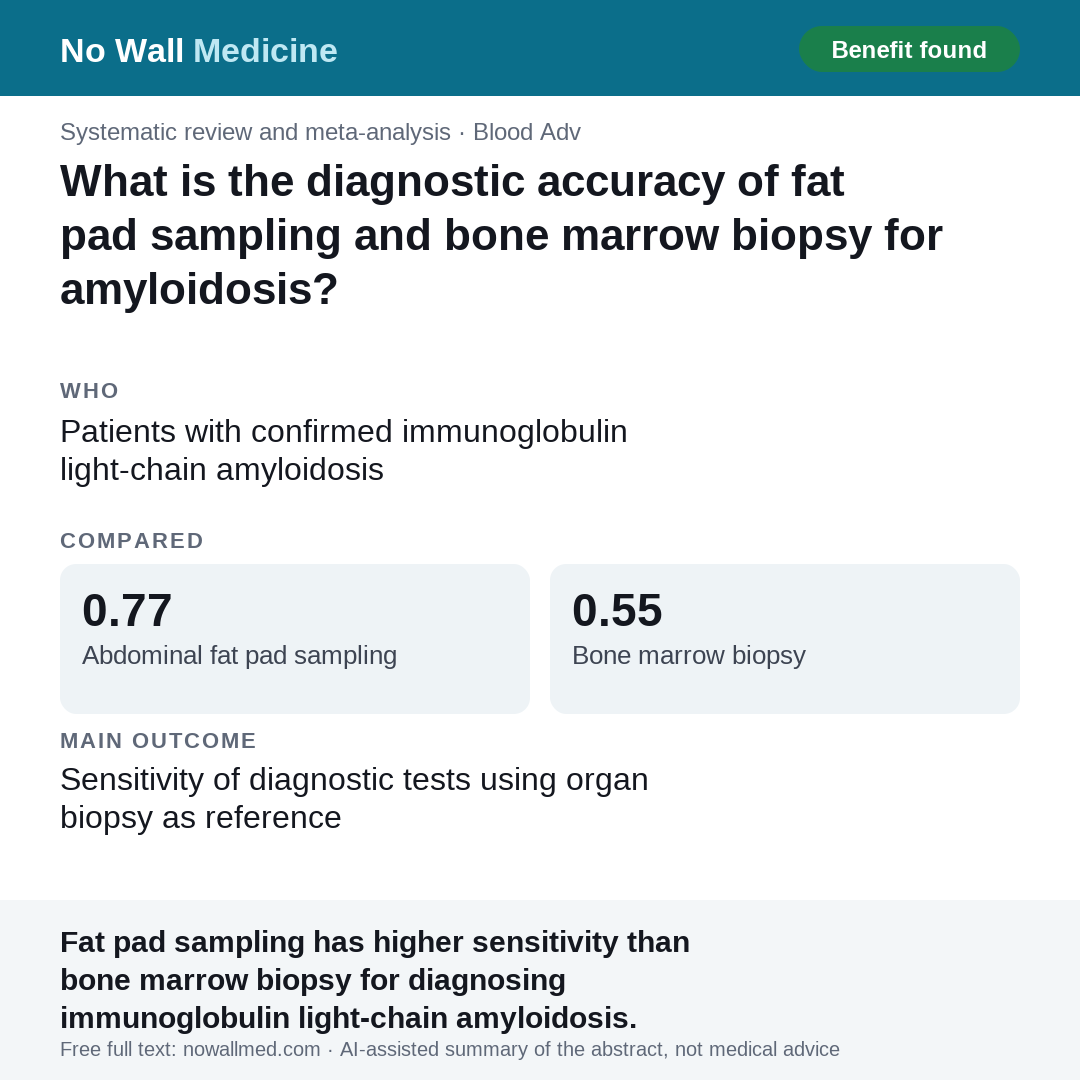
Diagnostic accuracy of fat pad sampling and bone marrow biopsy for AL amyloidosis: a systematic review and meta-analysis
Systematic review and meta-analysisBenefit found
What is the diagnostic accuracy of fat pad sampling and bone marrow biopsy for amyloidosis?
Who
Patients with confirmed immunoglobulin light-chain amyloidosis
Compared
0.77Abdominal fat pad sampling (95% confidence interval, 0.72-0.81)
0.55Bone marrow biopsy (0.46-0.63)
Main outcome
Sensitivity of diagnostic tests using organ biopsy as reference
Bottom line: Fat pad sampling has higher sensitivity than bone marrow biopsy for diagnosing immunoglobulin light-chain amyloidosis.
Limitation: Specificity was not reported in the included studies.
Blood Adv · 2026-09-04Download image
Diagnostic Performance of Machine Learning for Systemic Lupus Erythematosus: Systematic Review and Meta-Analysis
Systematic review and meta-analysisBenefit found
What is the diagnostic performance of machine learning for systemic lupus erythematosus related tasks?
Who
29
Patients with systemic lupus erythematosus, lupus nephritis, or neuropsychiatric involvement
Compared
Deep learning models: sensitivity 0.93 and specificity 0.95
Traditional machine learning models: sensitivity 0.88 and specificity 0.94
Main outcome
Diagnostic accuracy for SLE classification, lupus nephritis, and neuropsychiatric discrimination
Result: pooled sensitivity 0.91 (95% CI 0.86-0.94) and pooled specificity 0.94 (95% CI 0.91-0.96)
Bottom line: Machine learning shows promising diagnostic accuracy, but limited external validation and high risk of bias restrict real-world generalizability.
Limitation: All studies were retrospective, limited external validation, and high or unclear risk of bias in most studies.
J Med Internet Res · 2026-09-04Download image