Visual abstracts
New randomized trials and meta-analyses from leading journals at a glance: who was studied, what was compared, and what was found. Every paper is free to read in full.
All specialtiesCardiology 4763Oncology 4043Gastroenterology & Hepatology 1903Infectious Disease 3756Neurology 1872Psychiatry & Mental Health 2216Pulmonology 2044Critical Care 1319Endocrinology & Diabetes 2544Pediatrics 2889Surgery 2480Orthopedics & Sports Medicine 917Neurosurgery 525Cardiothoracic & Vascular Surgery 656Plastic & Reconstructive Surgery 574Nephrology 1107Rheumatology 810Hematology 1090Dermatology 611Ophthalmology 532Obstetrics & Gynecology 1645Public & Global Health 1037Radiology & Imaging 619Anesthesiology 958Urology 745ENT (Otolaryngology) 494Emergency Medicine 481Allergy & Immunology 309Geriatrics 972Family Medicine & Primary Care 534Medical Genetics & Genomics 659Pathology & Laboratory Medicine 156Physical Medicine & Rehabilitation 734Palliative Care 421Nutrition 1560Digital Health & AI 2137General Medicine 318
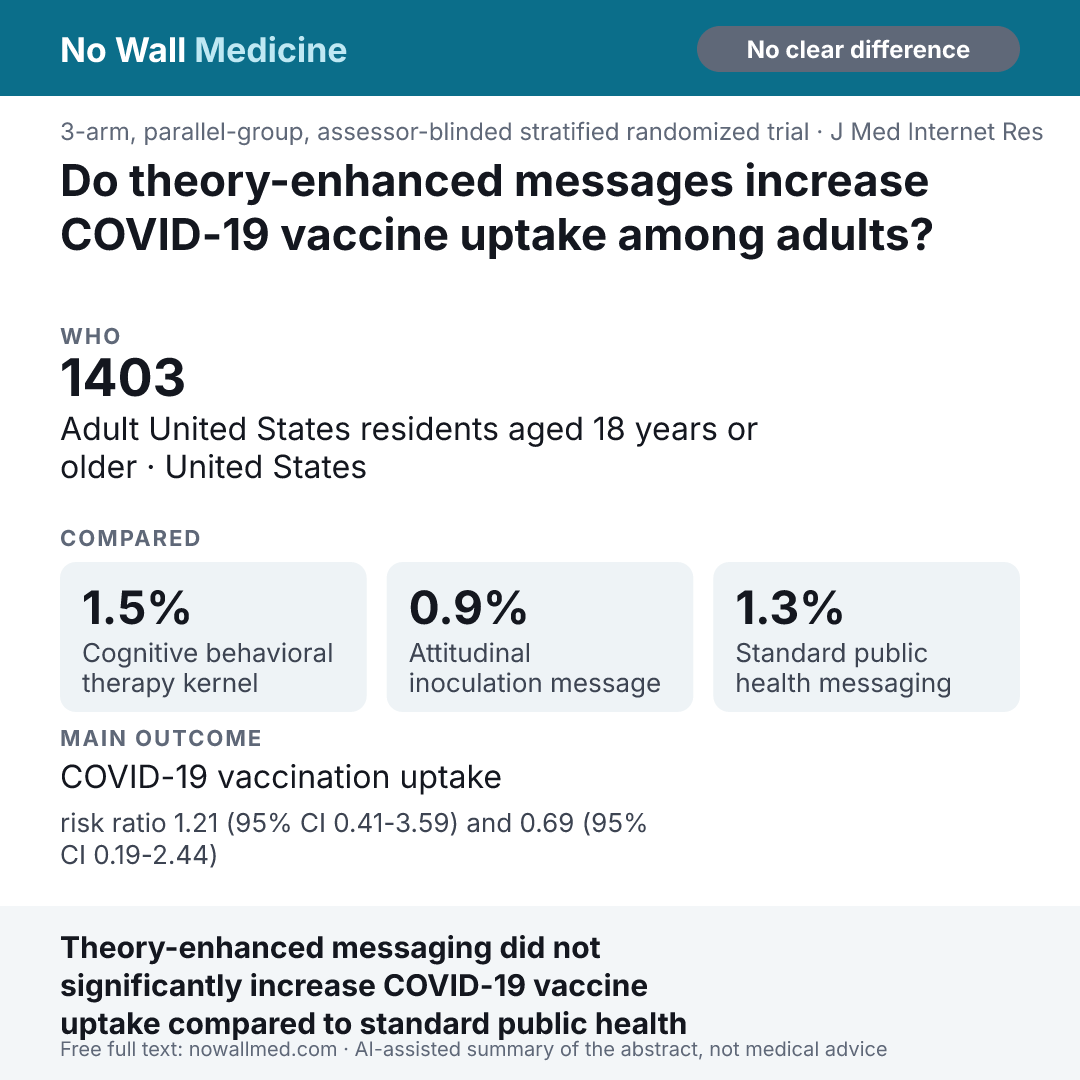
Testing Theory-Enhanced Messaging to Promote COVID-19 Vaccination Among Adults: Randomized Controlled Trial
3-arm, parallel-group, assessor-blinded stratified randomized trialNo clear difference
Do theory-enhanced messages increase COVID-19 vaccine uptake among adults?
Who
1403
Adult United States residents aged 18 years or older · United States
Compared
1.5%Cognitive behavioral therapy kernel messaging (7/469)
0.9%Attitudinal inoculation message (4/466)
1.3%Standard public health messaging (6/468)
Main outcome
COVID-19 vaccination uptake
Result: risk ratio 1.21 (95% CI 0.41-3.59) and 0.69 (95% CI 0.19-2.44)
Bottom line: Theory-enhanced messaging did not significantly increase COVID-19 vaccine uptake compared to standard public health messaging.
J Med Internet Res · 2025-10-07 · Save PNG
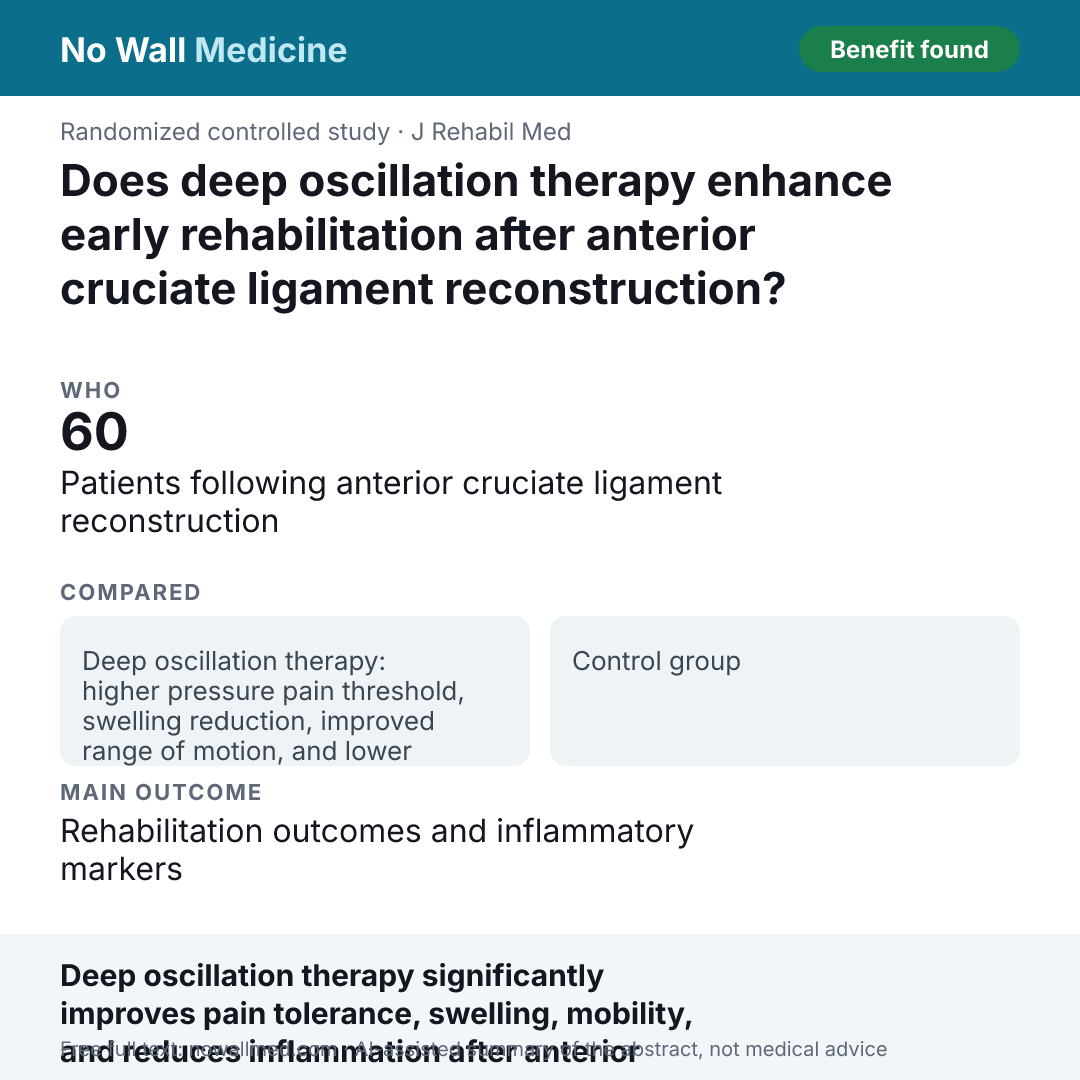
Deep oscillation therapy enhances early rehabilitation after ACL reconstruction: a randomized controlled trial
Randomized controlled studyBenefit found
Does deep oscillation therapy enhance early rehabilitation after anterior cruciate ligament reconstruction?
Who
60
Patients following anterior cruciate ligament reconstruction
Compared
Deep oscillation therapy: higher pressure pain threshold, swelling reduction, improved range of motion, and lower inflammatory markers
Control group
Main outcome
Rehabilitation outcomes and inflammatory markers
Bottom line: Deep oscillation therapy significantly improves pain tolerance, swelling, mobility, and reduces inflammation after anterior cruciate ligament reconstruction.
J Rehabil Med · 2025-10-07 · Save PNG
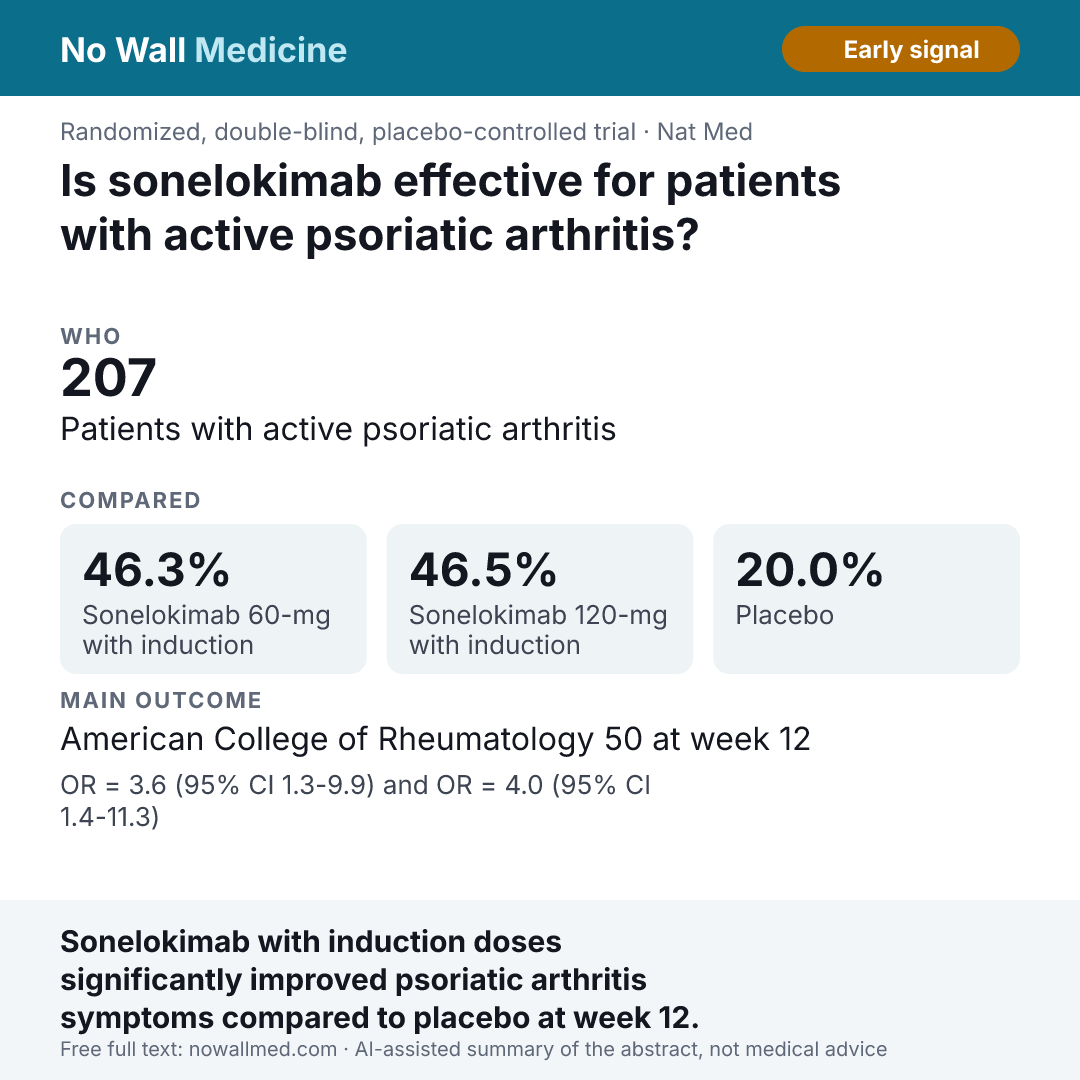
Sonelokimab, an IL-17A/IL-17F-inhibiting nanobody for active psoriatic arthritis: a randomized, placebo-controlled phase 2 trial
Randomized, double-blind, placebo-controlled trialEarly signal
Is sonelokimab effective for patients with active psoriatic arthritis?
Who
207
Patients with active psoriatic arthritis
Compared
46.3%Sonelokimab 60-mg with induction (19/41)
46.5%Sonelokimab 120-mg with induction (20/43)
20.0%Placebo (8/40)
Main outcome
American College of Rheumatology 50 at week 12
Result: OR = 3.6 (95% CI 1.3-9.9) and OR = 4.0 (95% CI 1.4-11.3)
Bottom line: Sonelokimab with induction doses significantly improved psoriatic arthritis symptoms compared to placebo at week 12.
Nat Med · 2025-10-06 · Save PNG
Changes in frailty, intensive blood pressure treatment, and risks of adverse clinical outcomes: a post hoc analysis of the SPRINT trial
Post hoc analysis of a randomized trialBenefit found
How do changes in frailty status affect clinical outcomes and intensive blood pressure treatment effects?
Who
7924
Systolic Blood Pressure Intervention Trial participants
Compared
Stable-robust
Robust-to-frail: 70% increased risk of cardiovascular disease
Frail-to-robust: 52% decreased risk of all-cause mortality
Stable-frail
Main outcome
incident cardiovascular disease, all-cause mortality, and serious adverse events
Bottom line: Changes in frailty status affect clinical risks, but intensive blood pressure treatment reduces mortality regardless of frailty changes.
BMC Med · 2025-10-06 · Save PNG
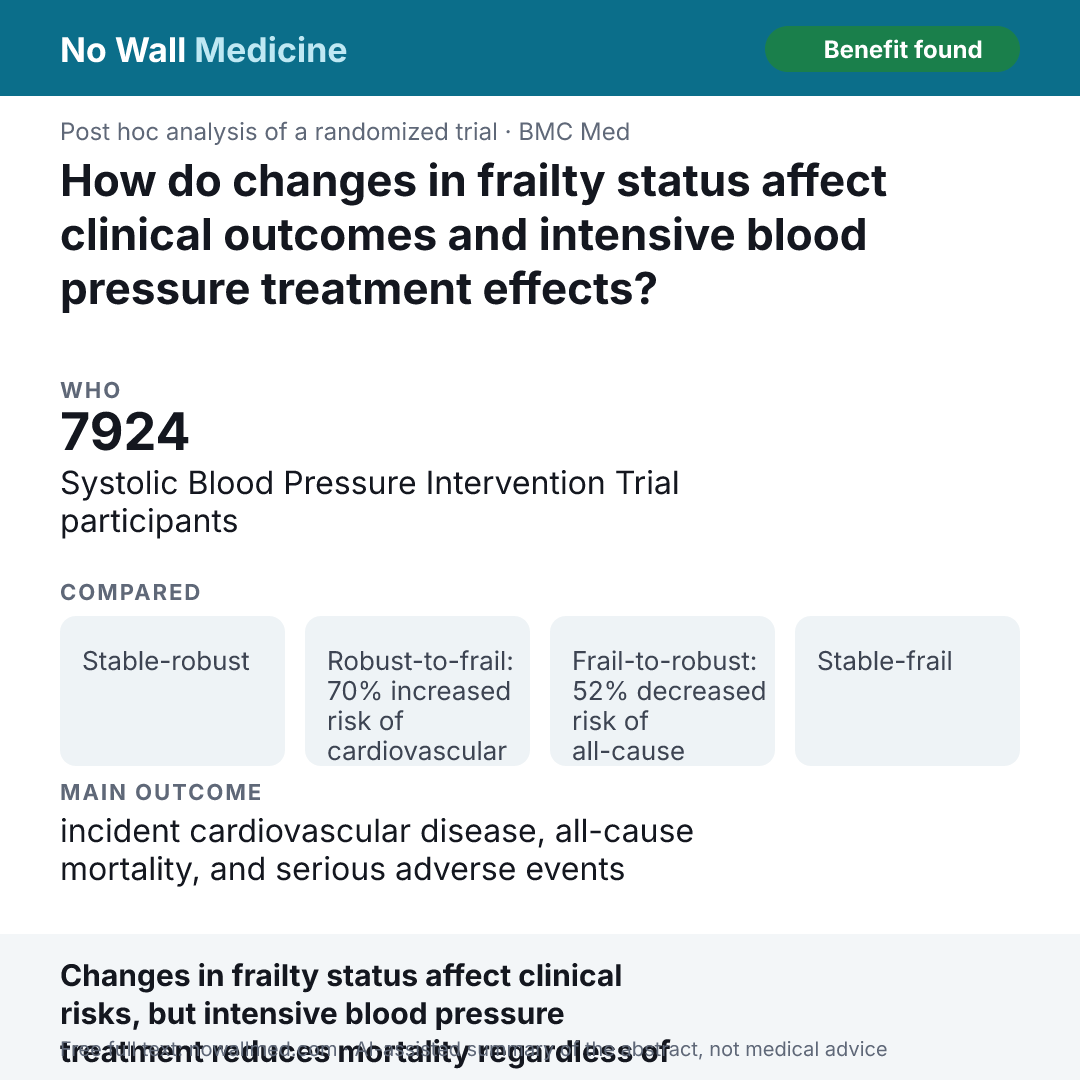
Optimal Antithrombotics for Ischemic Stroke and Concurrent Atrial Fibrillation and Atherosclerosis: A Randomized Clinical Trial
Multicenter, open-label randomized clinical trialNo clear difference
Does adding an antiplatelet agent to anticoagulant therapy improve net clinical benefit?
Who
316
Patients with ischemic stroke or transient ischemic attack, nonvalvular atrial fibrillation, and atherosclerotic cardiovascular disease · 41 sites across Japan
Compared
17.8%Combination therapy
19.6%Monotherapy
Main outcome
Composite of ischemic cardiovascular events and major bleeding within 2 years
Result: hazard ratio 0.91 (95% CI 0.53-1.55)
Bottom line: Adding an antiplatelet agent to anticoagulant therapy provided no net clinical benefit and increased bleeding risk.
JAMA Neurol · 2025-10-06 · Save PNG
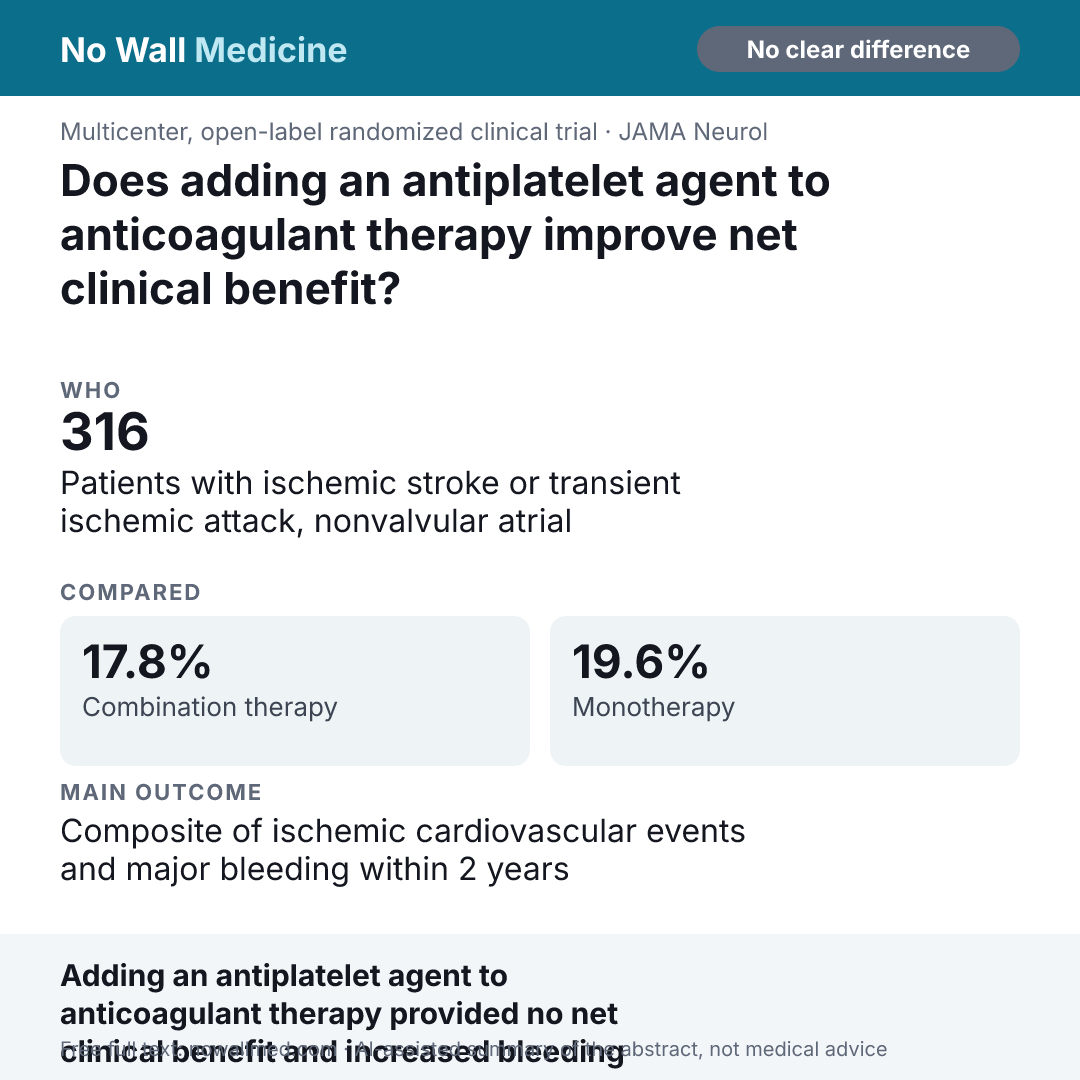
Effects of The Caregiver Pathway intervention on symptoms of post-intensive care syndrome among family caregivers to critically ill patients: long-term results from a randomized controlled trial
Single-center non-blinded randomized controlled trialBenefit found
Does The Caregiver Pathway reduce post-intensive care syndrome symptoms among family caregivers?
Who
196
Family caregivers to critically ill patients · Single-center
Compared
Intervention: mean IES-R score: 25.8 [95% CI 21.9-29.7]
Control: mean IES-R score: 30.9 [95% CI 26.7-35.0]
Main outcome
Symptoms of post-traumatic stress disorder, anxiety, depression, and quality of life
Result: mean IES-R score: 25.8 [95% CI 21.9-29.7] versus 30.9 [95% CI 26.7-35.0], p = 0.009
Bottom line: The Caregiver Pathway potentially reduces post-traumatic stress disorder symptoms among family caregivers, especially when the patient survives.
Intensive Care Med · 2025-10-06 · Save PNG
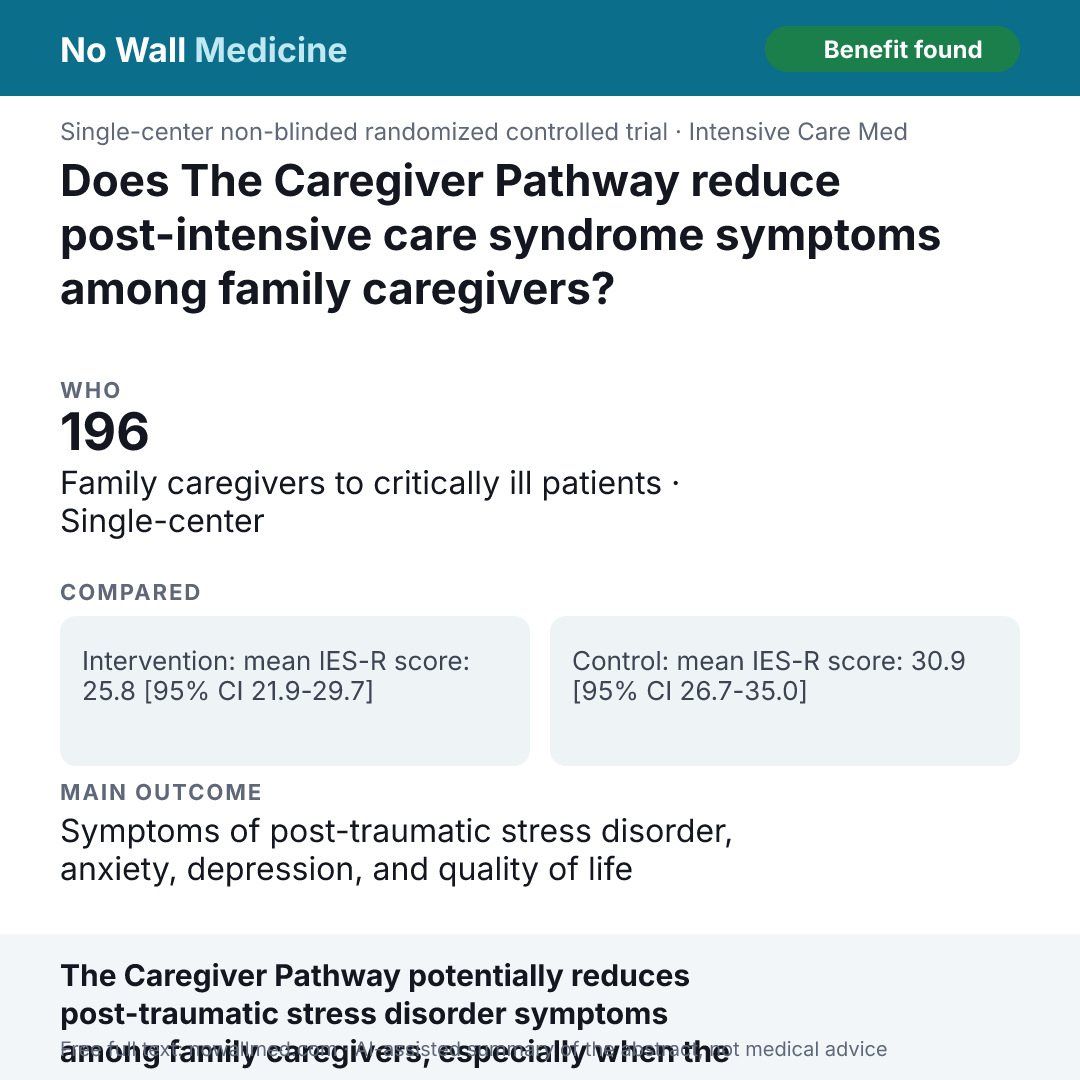
Dapagliflozin reduces epicardial adipose tissue in patients with heart failure and type 2 diabetes
Pooled data from two randomized, double-blind, placebo-controlled trialsEarly signal
Does dapagliflozin reduce epicardial adipose tissue in patients with type 2 diabetes and heart failure?
Who
122
Adults with type 2 diabetes and stage B or C heart failure · Scotland
Compared
dapagliflozin 10 mg once daily: -1.16 ± 0.18 cm2
placebo: +0.36 ± 0.19 cm2
Main outcome
epicardial adipose tissue
Bottom line: Dapagliflozin reduces epicardial adipose tissue and left ventricular mass independently of body mass index.
Diabetes Obes Metab · 2025-10-06 · Save PNG
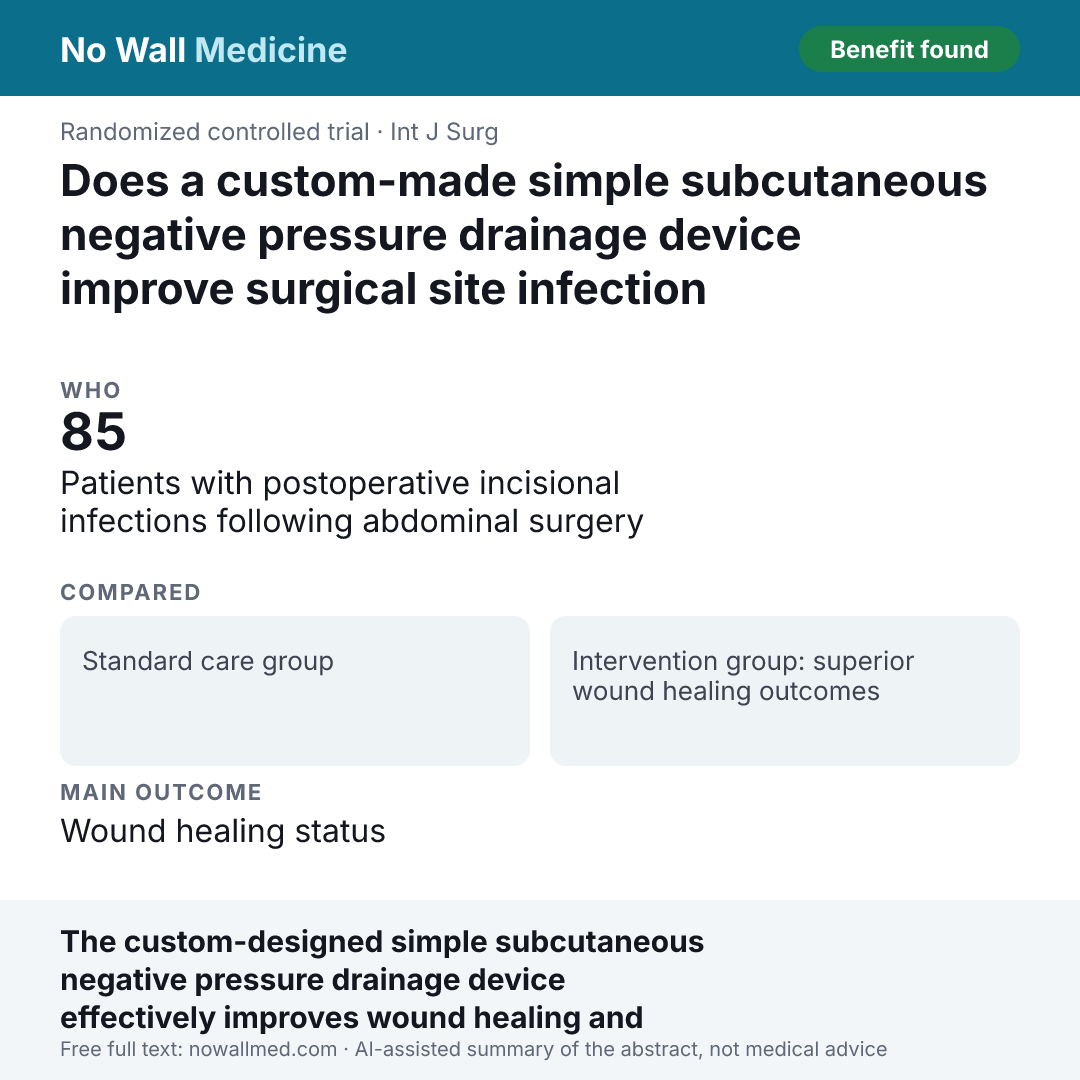
Clinical application of a custom-made simple subcutaneous negative pressure drainage device for the treatment of SSI after abdominal surgery: a randomized controlled trial
Randomized controlled trialBenefit found
Does a custom-made simple subcutaneous negative pressure drainage device improve surgical site infection treatment?
Who
85
Patients with postoperative incisional infections following abdominal surgery
Compared
Standard care group
Intervention group: superior wound healing outcomes
Main outcome
Wound healing status
Bottom line: The custom-designed simple subcutaneous negative pressure drainage device effectively improves wound healing and reduces costs and hospital stays.
Int J Surg · 2025-10-06 · Save PNG
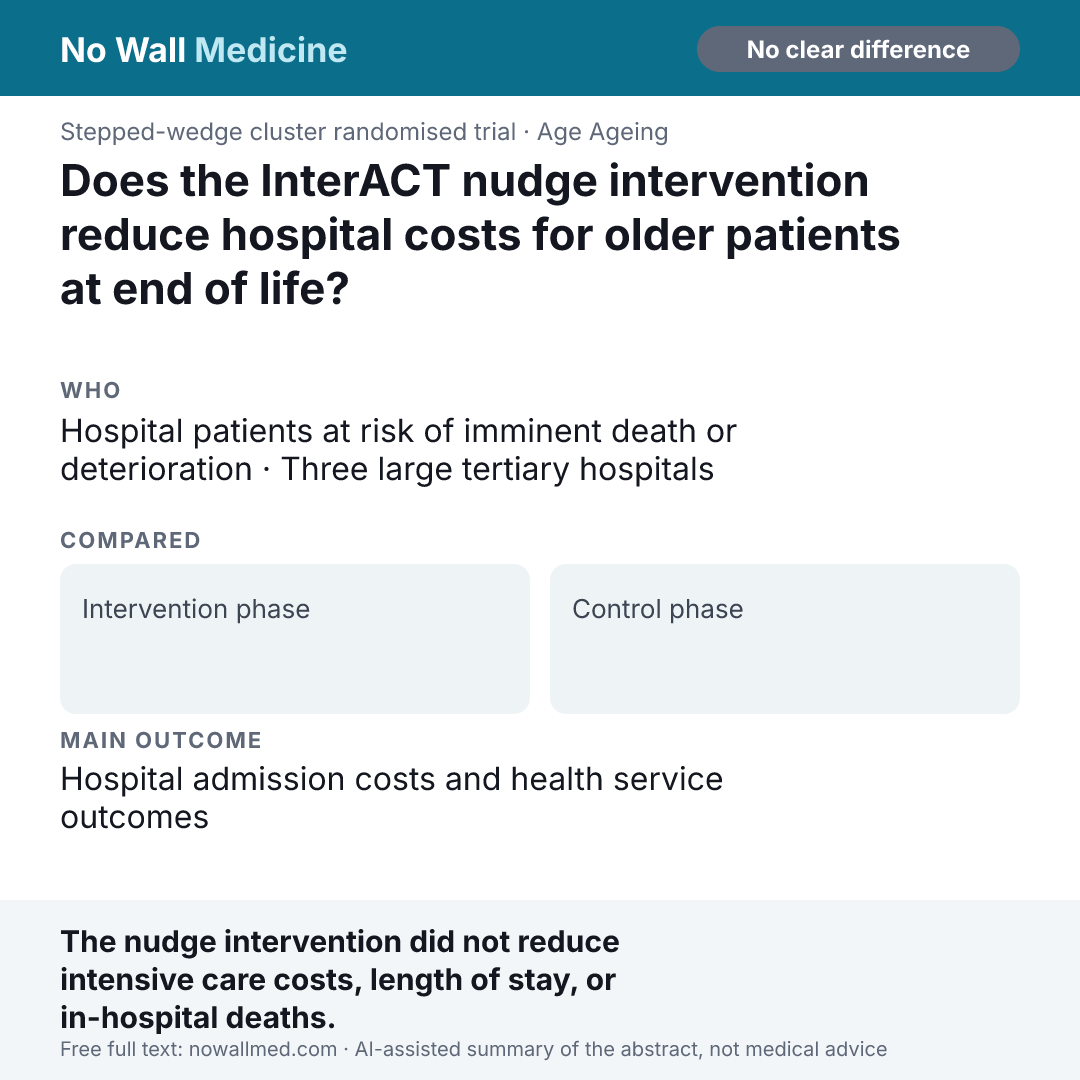
A cost-consequence analysis of a nudge intervention to improve hospital care of older people at the end of life: results from a stepped-wedge cluster randomised trial
Stepped-wedge cluster randomised trialNo clear difference
Does the InterACT nudge intervention reduce hospital costs for older patients at end of life?
Who
Hospital patients at risk of imminent death or deterioration · Three large tertiary hospitals in Australia
Compared
Intervention phase
Control phase
Main outcome
Hospital admission costs and health service outcomes
Result: 95% CI: -$2264 to $3312
Bottom line: The nudge intervention did not reduce intensive care costs, length of stay, or in-hospital deaths.
Age Ageing · 2025-10-06 · Save PNG
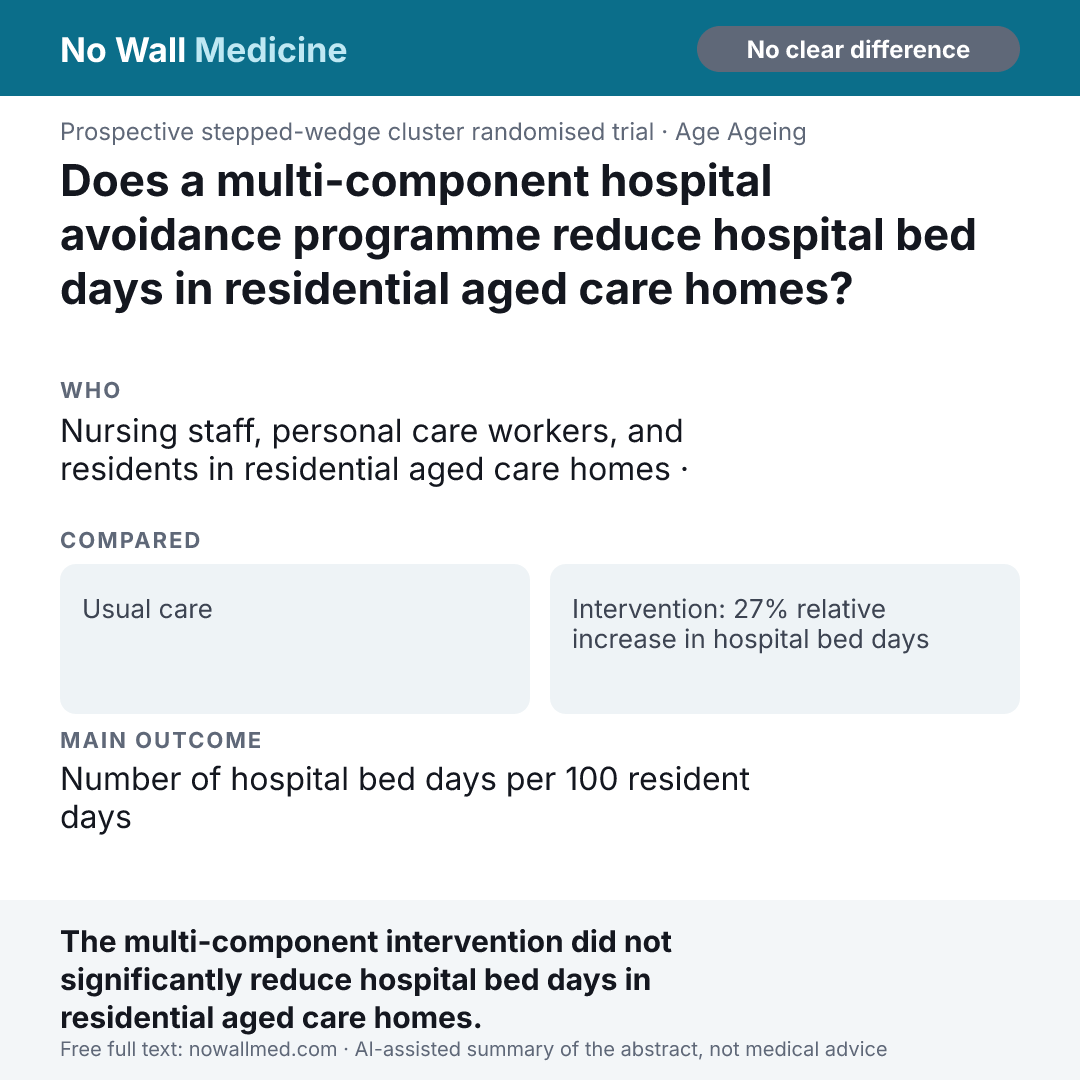
The impact of a multi-component hospital avoidance programme in residential aged care homes: a stepped-wedge cluster randomised trial
Prospective stepped-wedge cluster randomised trialNo clear difference
Does a multi-component hospital avoidance programme reduce hospital bed days in residential aged care homes?
Who
Nursing staff, personal care workers, and residents in residential aged care homes · Eleven residential aged care homes in Queensland, Australia
Compared
Usual care
Intervention: 27% relative increase in hospital bed days
Main outcome
Number of hospital bed days per 100 resident days
Result: Estimate, 95% CI: 1.13, 0.93-1.74
Bottom line: The multi-component intervention did not significantly reduce hospital bed days in residential aged care homes.
Age Ageing · 2025-10-06 · Save PNG
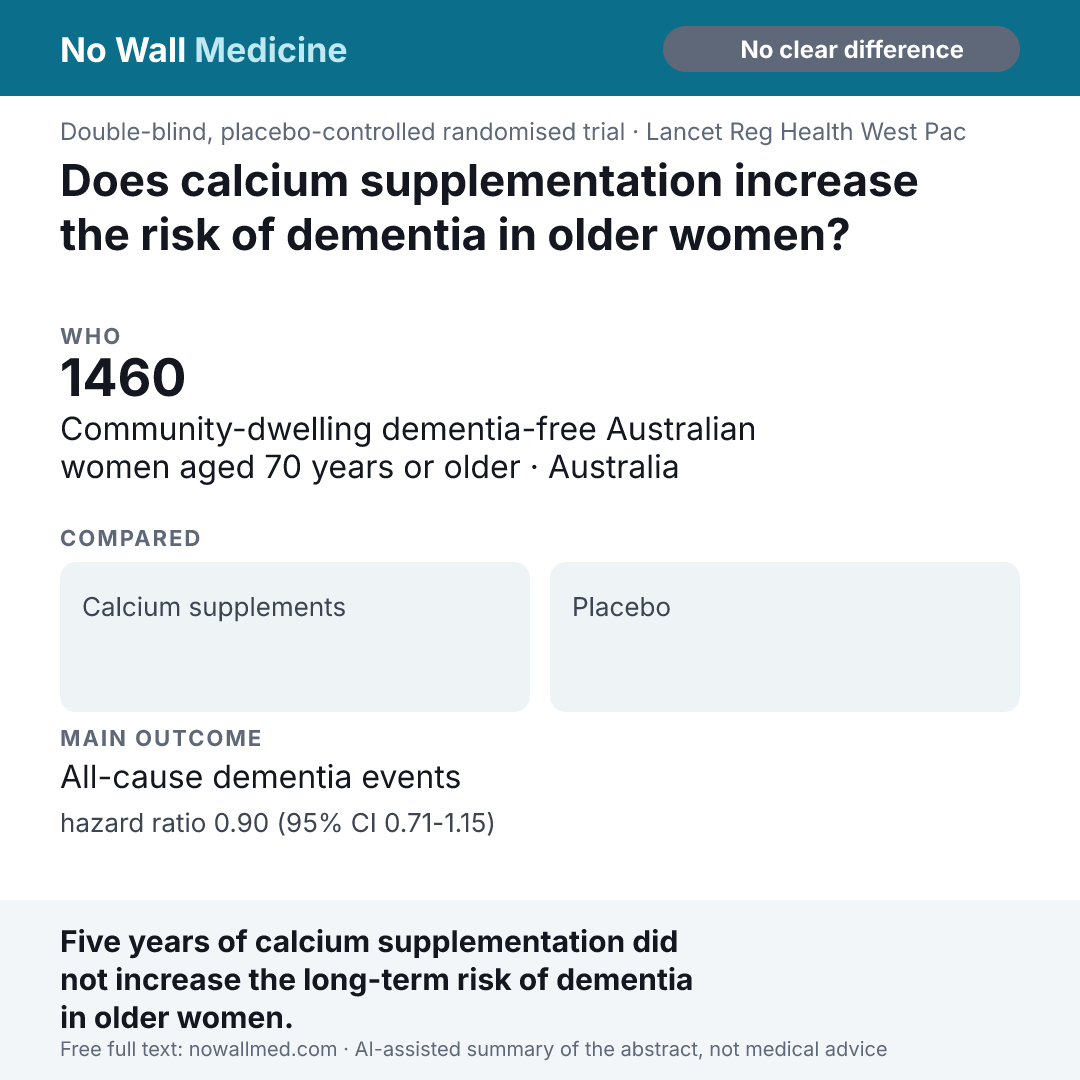
Calcium supplementation and the risk of dementia in the Perth Longitudinal Study of Aging Women: a post-hoc analysis of a randomised clinical trial for fracture prevention
Double-blind, placebo-controlled randomised trialNo clear difference
Does calcium supplementation increase the risk of dementia in older women?
Who
1460
Community-dwelling dementia-free Australian women aged 70 years or older · Australia
Compared
Calcium supplements
Placebo
Main outcome
All-cause dementia events
Result: hazard ratio 0.90 (95% CI 0.71-1.15)
Bottom line: Five years of calcium supplementation did not increase the long-term risk of dementia in older women.
Funded by: National Health and Medical Research Council of Australia
Lancet Reg Health West Pac · 2025-10-06 · Save PNG
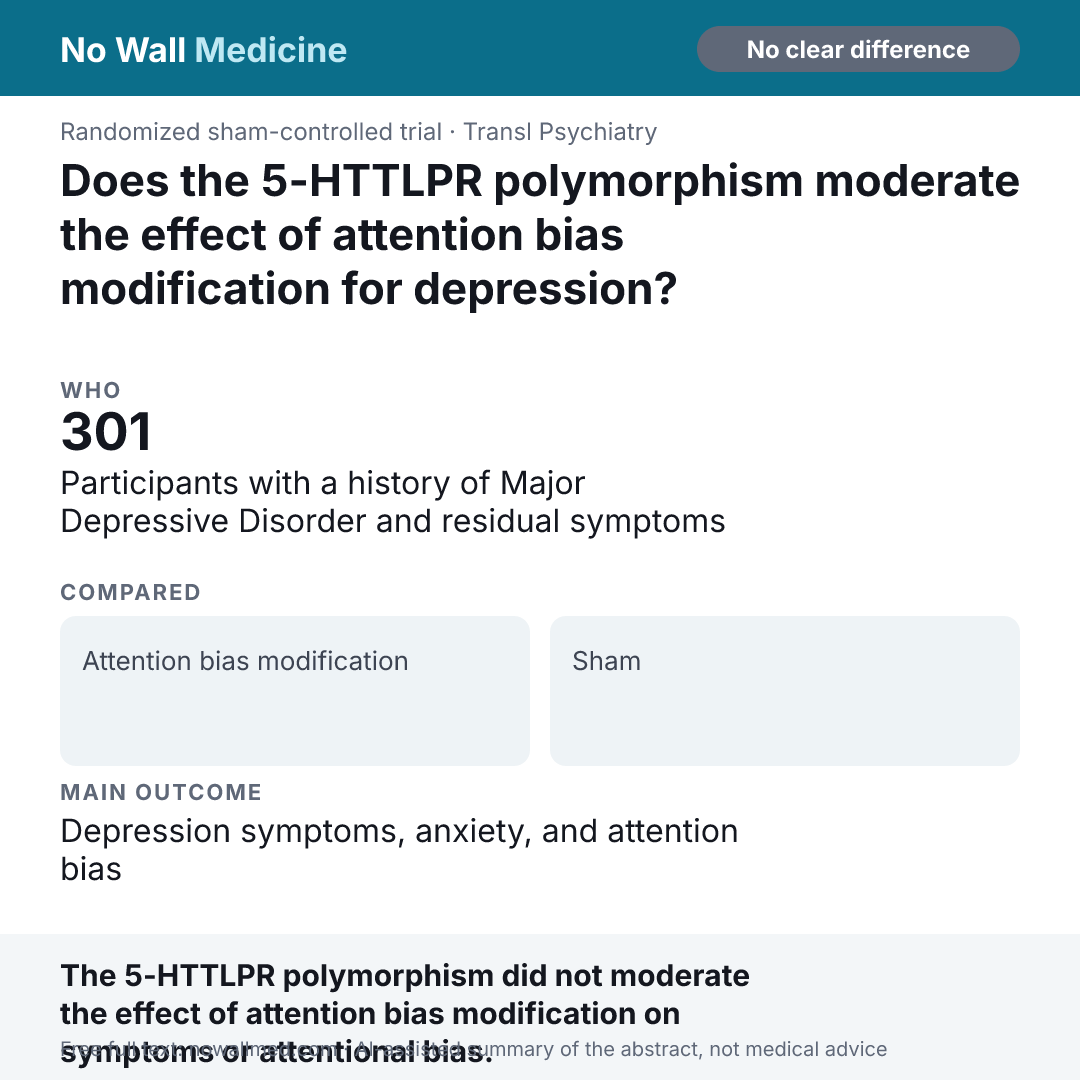
5-HTTLPR does not moderate the effect of attention bias modification for depression: a randomized sham-controlled trial
Randomized sham-controlled trialNo clear difference
Does the 5-HTTLPR polymorphism moderate the effect of attention bias modification for depression?
Who
301
Participants with a history of Major Depressive Disorder and residual symptoms
Compared
Attention bias modification
Sham
Main outcome
Depression symptoms, anxiety, and attention bias
Bottom line: The 5-HTTLPR polymorphism did not moderate the effect of attention bias modification on symptoms or attentional bias.
Limitation: Low level of depressive symptoms, lack of ethnicity data, and missing stress or trauma history.
Transl Psychiatry · 2025-10-06 · Save PNG
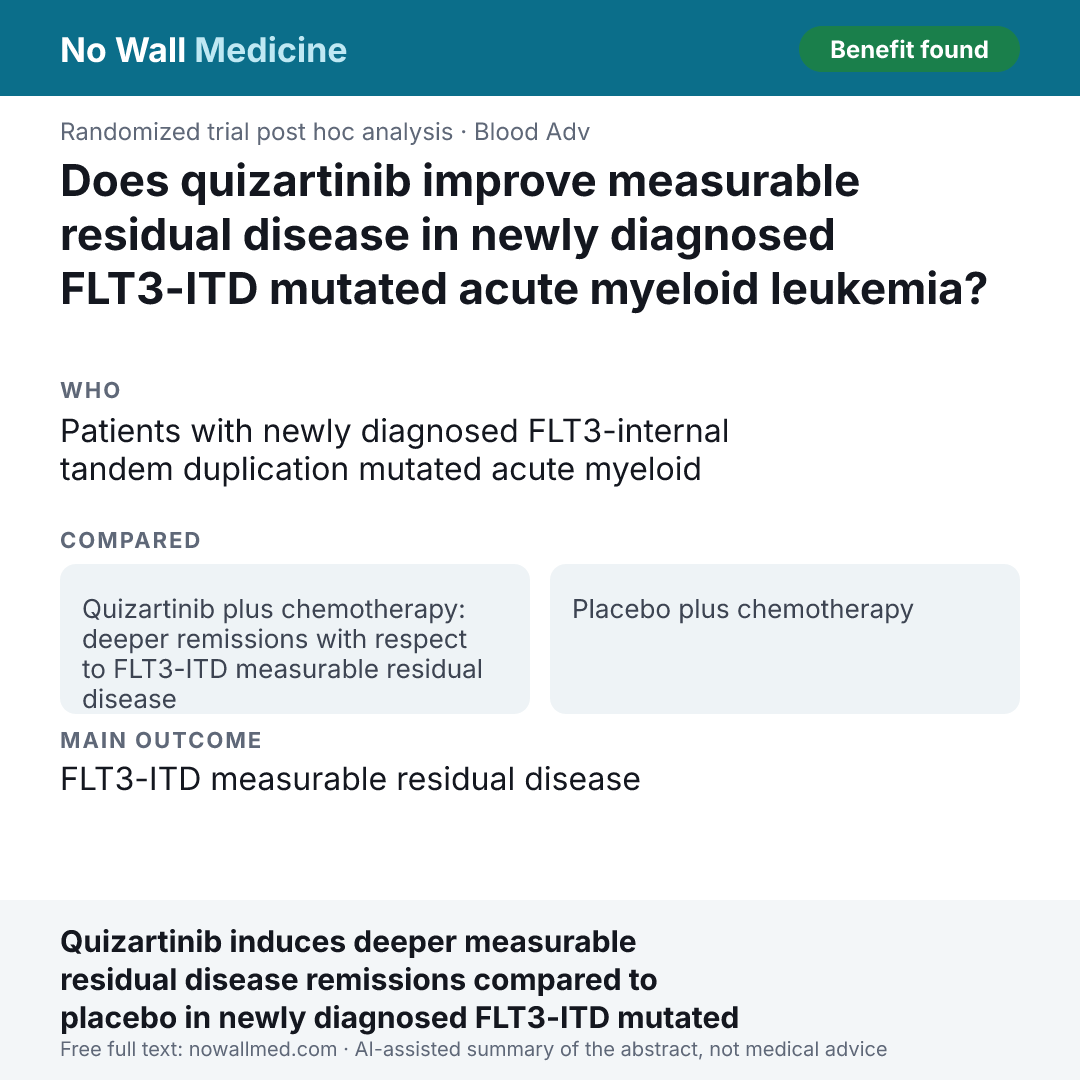
FLT3-ITD measurable residual disease from the QuANTUM-First trial
Randomized trial post hoc analysisBenefit found
Does quizartinib improve measurable residual disease in newly diagnosed FLT3-ITD mutated acute myeloid leukemia?
Who
Patients with newly diagnosed FLT3-internal tandem duplication mutated acute myeloid leukemia
Compared
Quizartinib plus chemotherapy: deeper remissions with respect to FLT3-ITD measurable residual disease
Placebo plus chemotherapy
Main outcome
FLT3-ITD measurable residual disease
Bottom line: Quizartinib induces deeper measurable residual disease remissions compared to placebo in newly diagnosed FLT3-ITD mutated acute myeloid leukemia.
Blood Adv · 2025-10-06 · Save PNG
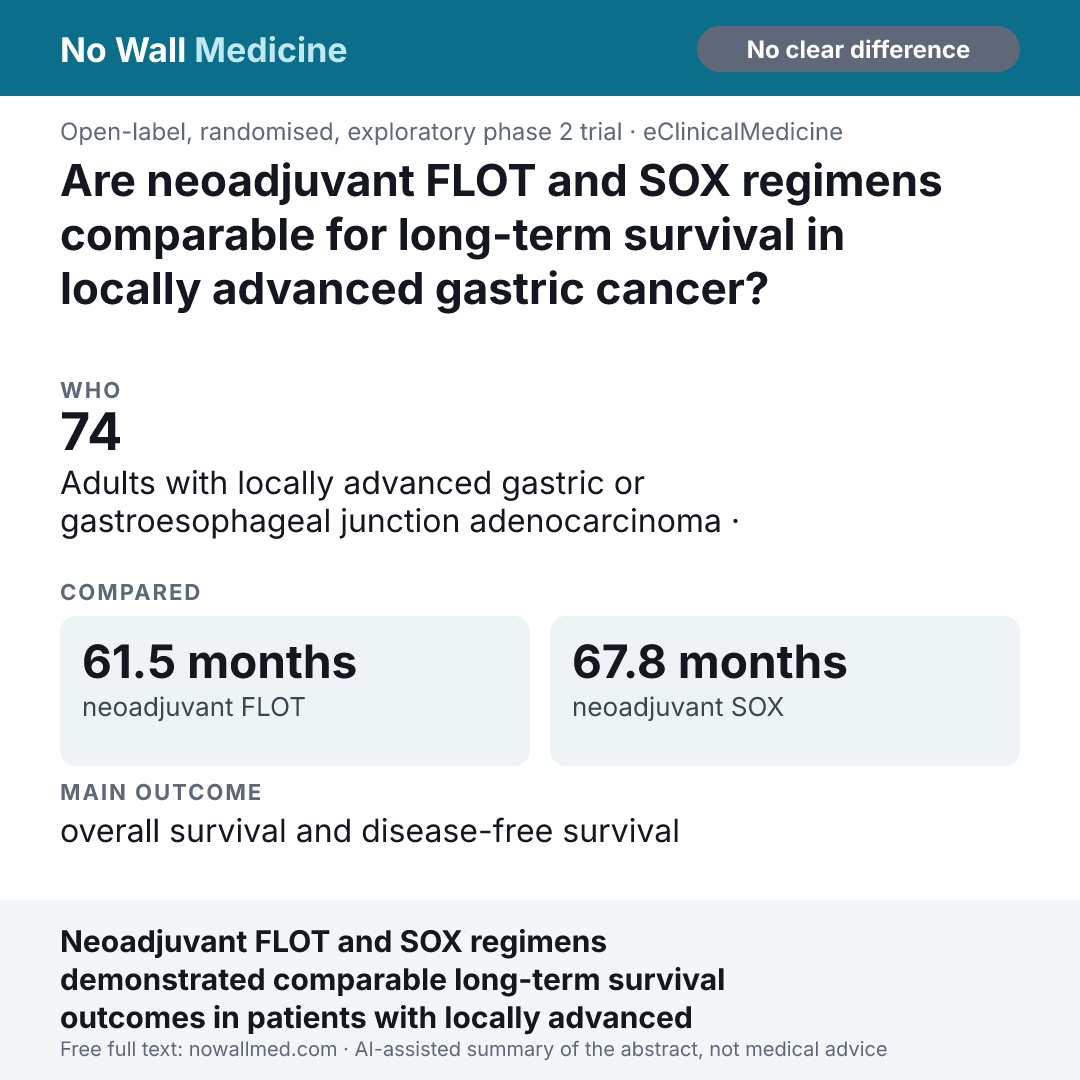
Neoadjuvant FLOT versus SOX chemotherapy in locally advanced gastric cancer: secondary outcomes of a single-centre, open-label, randomised, exploratory phase 2 trial
Open-label, randomised, exploratory phase 2 trialNo clear difference
Are neoadjuvant FLOT and SOX regimens comparable for long-term survival in locally advanced gastric cancer?
Who
74
Adults with locally advanced gastric or gastroesophageal junction adenocarcinoma · Single hospital in China
Compared
61.5 monthsneoadjuvant FLOT
67.8 monthsneoadjuvant SOX
Main outcome
overall survival and disease-free survival
Result: hazard ratio 1.101 (95% CI 0.595 to 2.036)
Bottom line: Neoadjuvant FLOT and SOX regimens demonstrated comparable long-term survival outcomes in patients with locally advanced gastric cancer.
Limitation: Small sample size, single centre, and lack of formal power calculations for survival endpoints.
eClinicalMedicine · 2025-10-05 · Save PNG
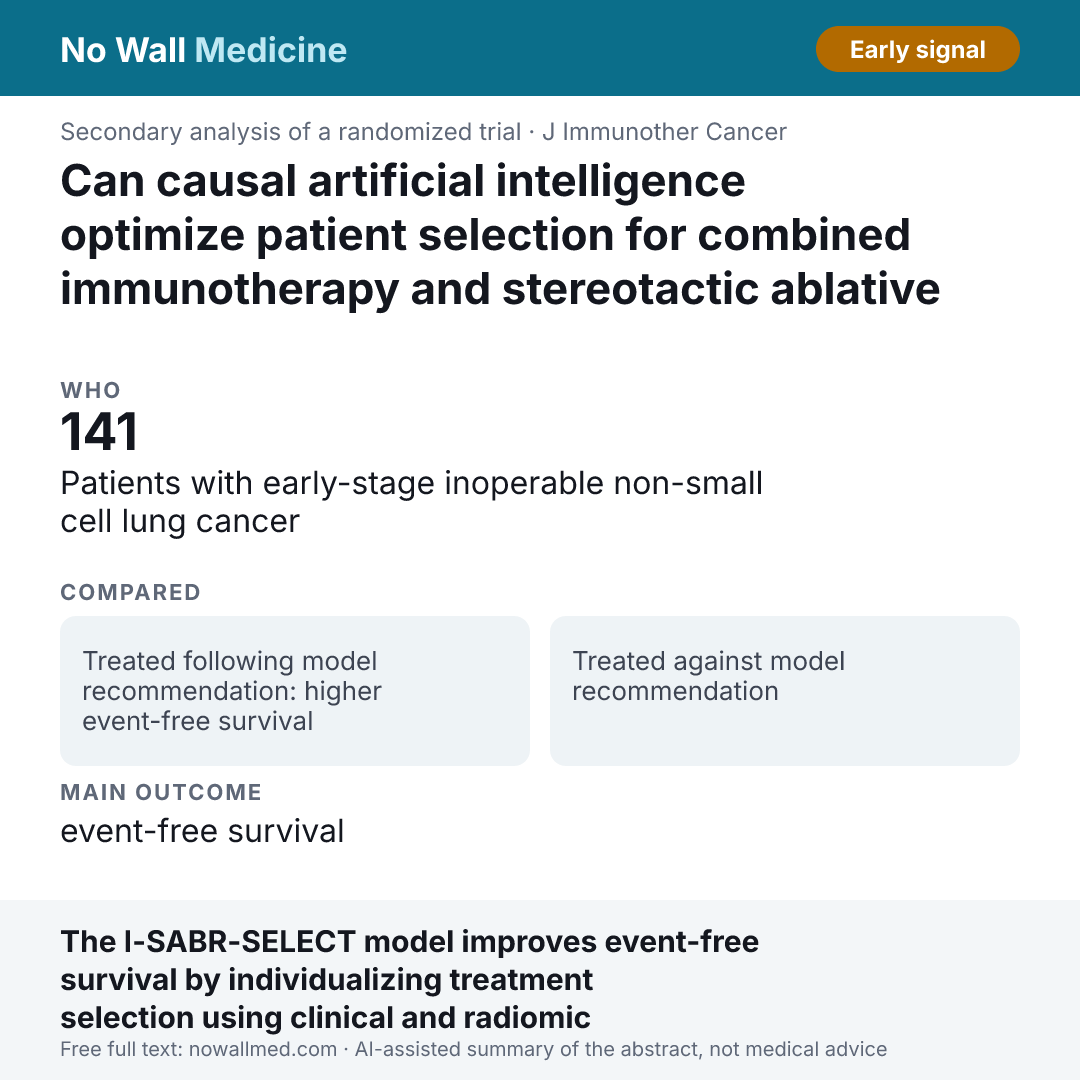
Causal AI-based clinical and radiomic analysis for optimizing patient selection in combined immunotherapy and SABR in early-stage NSCLC: a secondary analysis of the phase II I-SABR trial
Secondary analysis of a randomized trialEarly signal
Can causal artificial intelligence optimize patient selection for combined immunotherapy and stereotactic ablative radiotherapy?
Who
141
Patients with early-stage inoperable non-small cell lung cancer
Compared
Treated following model recommendation: higher event-free survival
Treated against model recommendation
Main outcome
event-free survival
Result: hazard ratio 0.06 (p<0.001) in I-SABR arm
Bottom line: The I-SABR-SELECT model improves event-free survival by individualizing treatment selection using clinical and radiomic factors.
Limitation: The model requires further validation to serve as a foundation for digital twins.
J Immunother Cancer · 2025-10-05 · Save PNG
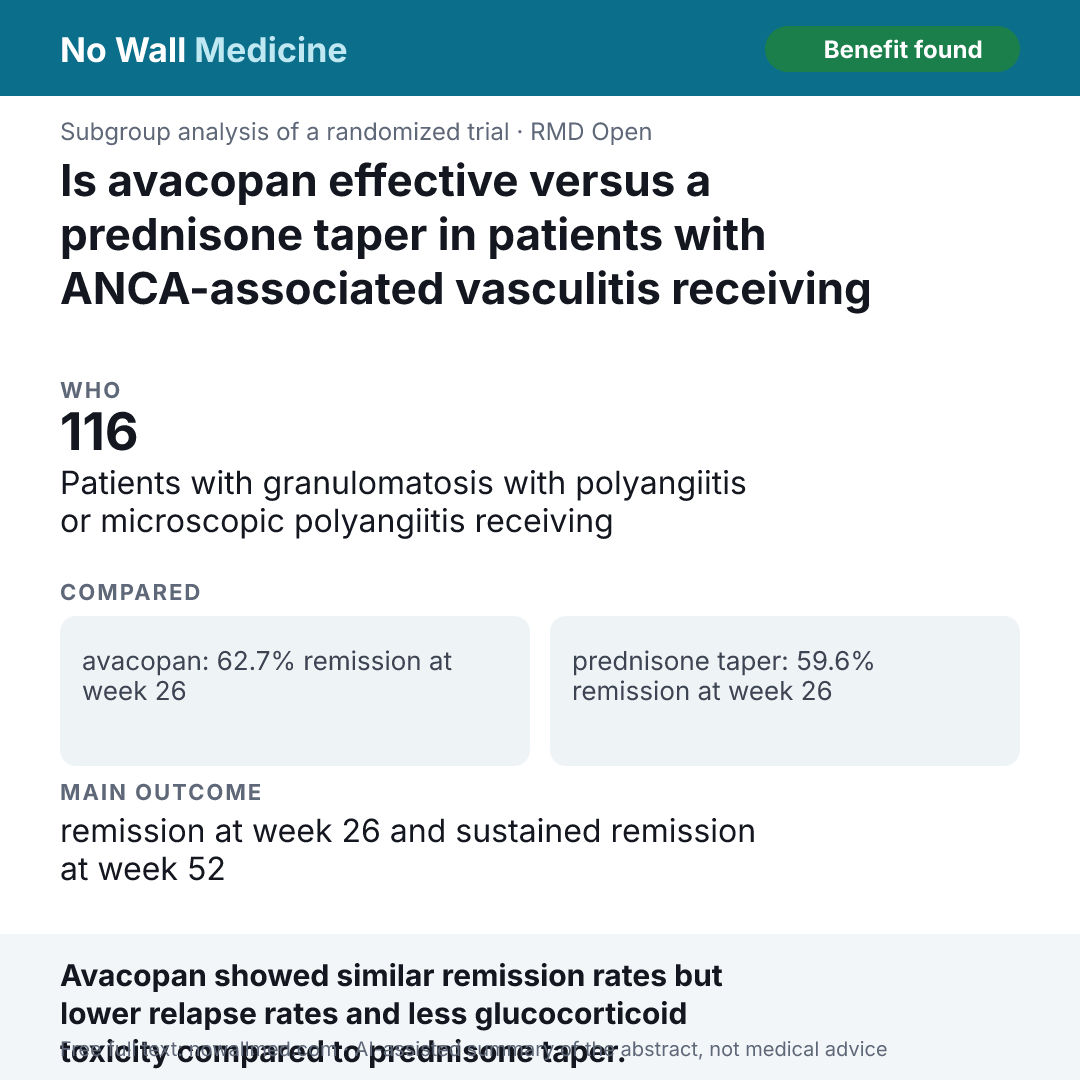
Efficacy and safety of avacopan for treatment of patients with ANCA-associated vasculitis receiving cyclophosphamide
Subgroup analysis of a randomized trialBenefit found
Is avacopan effective versus a prednisone taper in patients with ANCA-associated vasculitis receiving cyclophosphamide?
Who
116
Patients with granulomatosis with polyangiitis or microscopic polyangiitis receiving cyclophosphamide
Compared
avacopan: 62.7% remission at week 26
prednisone taper: 59.6% remission at week 26
Main outcome
remission at week 26 and sustained remission at week 52
Bottom line: Avacopan showed similar remission rates but lower relapse rates and less glucocorticoid toxicity compared to prednisone taper.
RMD Open · 2025-10-05 · Save PNG
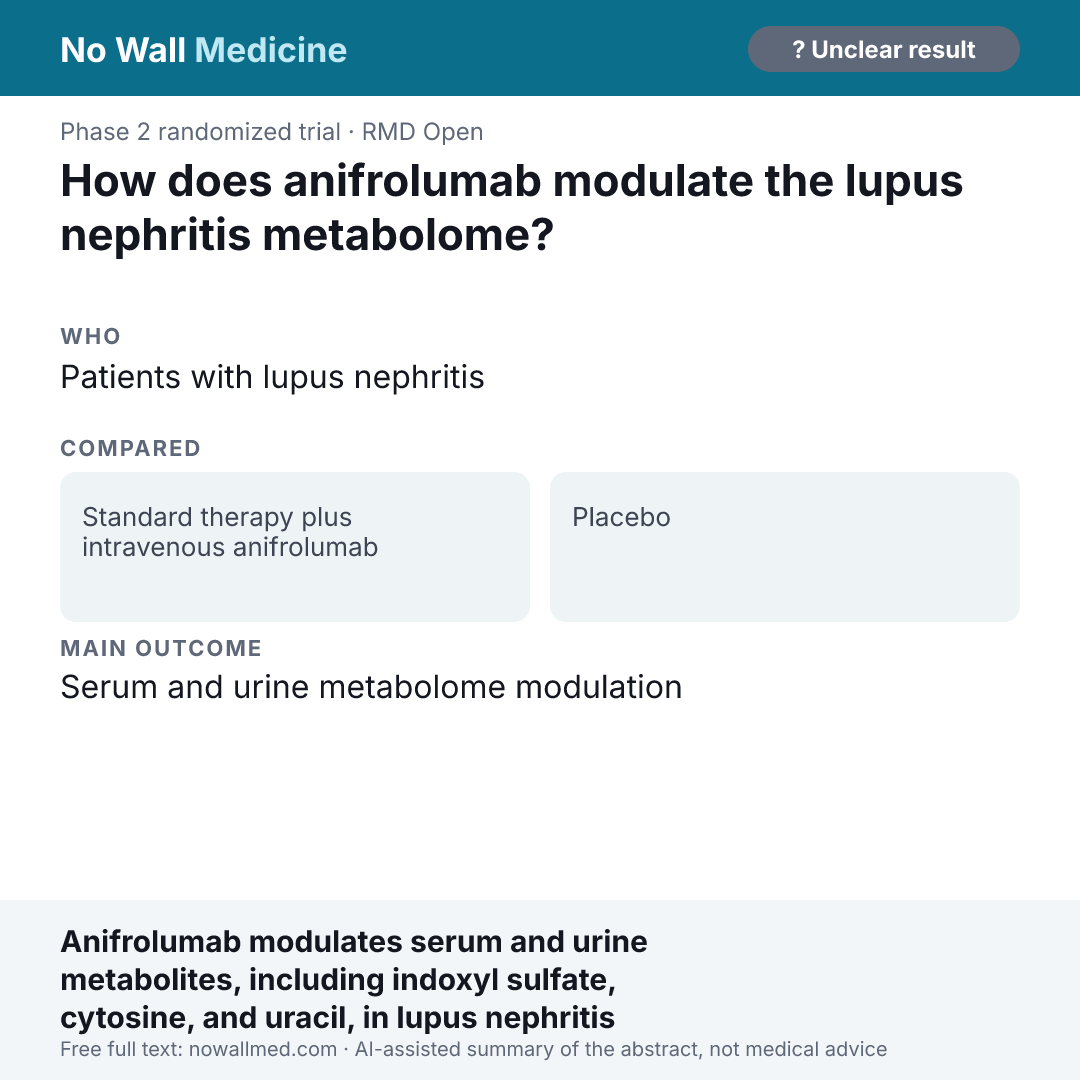
Metabolomic profiling of patients with lupus nephritis reveals unique metabolites that are modulated through type I interferon inhibition by anifrolumab treatment in a phase 2 trial
Phase 2 randomized trialUnclear result
How does anifrolumab modulate the lupus nephritis metabolome?
Who
Patients with lupus nephritis
Compared
Standard therapy plus intravenous anifrolumab
Placebo
Main outcome
Serum and urine metabolome modulation
Bottom line: Anifrolumab modulates serum and urine metabolites, including indoxyl sulfate, cytosine, and uracil, in lupus nephritis patients.
RMD Open · 2025-10-05 · Save PNG
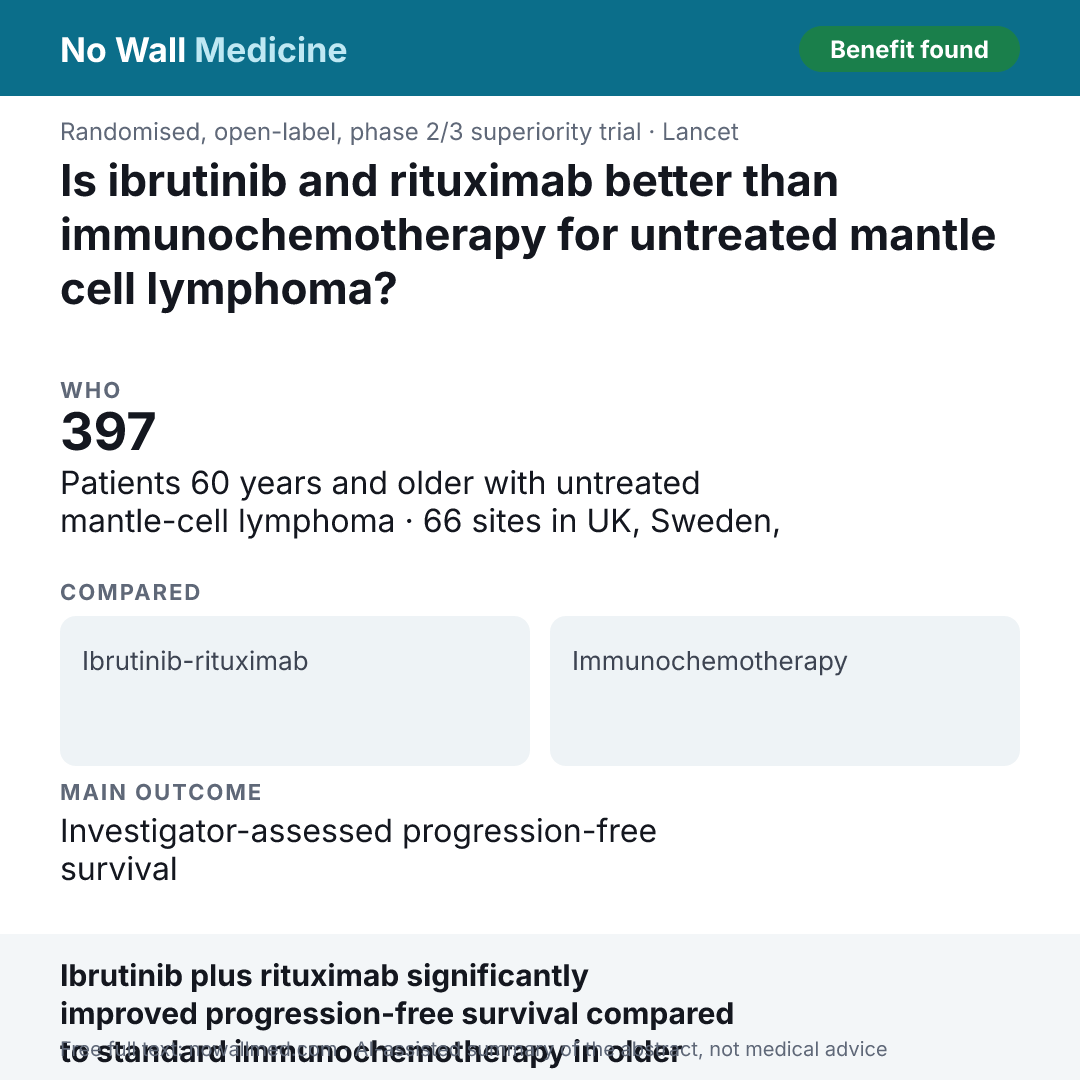
Ibrutinib and rituximab versus immunochemotherapy in patients with previously untreated mantle cell lymphoma (ENRICH): a randomised, open-label, phase 2/3 superiority trial
Randomised, open-label, phase 2/3 superiority trialBenefit found
Is ibrutinib and rituximab better than immunochemotherapy for untreated mantle cell lymphoma?
Who
397
Patients 60 years and older with untreated mantle-cell lymphoma · 66 sites in UK, Sweden, Norway, Finland, and Denmark
Compared
Ibrutinib-rituximab
Immunochemotherapy
Main outcome
Investigator-assessed progression-free survival
Result: hazard ratio 0·69 (95% CI 0·52-0·90)
Bottom line: Ibrutinib plus rituximab significantly improved progression-free survival compared to standard immunochemotherapy in older patients with untreated mantle-cell lymphoma.
Funded by: Cancer Research UK and Johnson and Johnson Pharmaceuticals
Lancet · 2025-10-03 · Save PNG
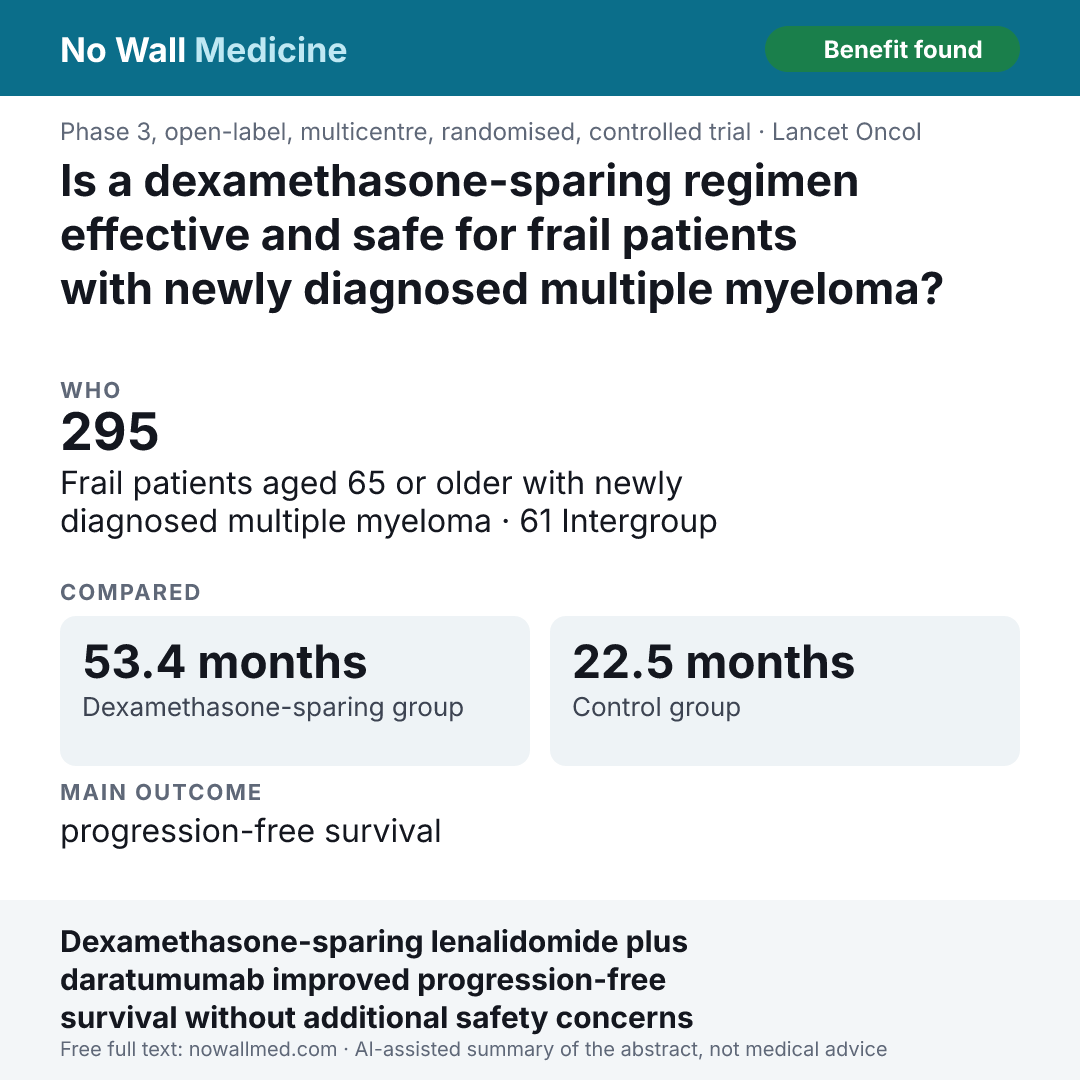
Safety and efficacy of a dexamethasone-sparing regimen with daratumumab and lenalidomide in patients with frailty and newly diagnosed multiple myeloma (IFM2017-03): a phase 3, open-label, multicentre, randomised, controlled trial
Phase 3, open-label, multicentre, randomised, controlled trialBenefit found
Is a dexamethasone-sparing regimen effective and safe for frail patients with newly diagnosed multiple myeloma?
Who
295
Frail patients aged 65 or older with newly diagnosed multiple myeloma · 61 Intergroup Francophone of Myeloma centres
Compared
53.4 monthsDexamethasone-sparing group
22.5 monthsControl group
Main outcome
progression-free survival
Result: hazard ratio 0.51, 95% CI 0.37-0.70
Bottom line: Dexamethasone-sparing lenalidomide plus daratumumab improved progression-free survival without additional safety concerns in frail patients.
Funded by: Johnson & Johnson
Lancet Oncol · 2025-10-03 · Save PNG
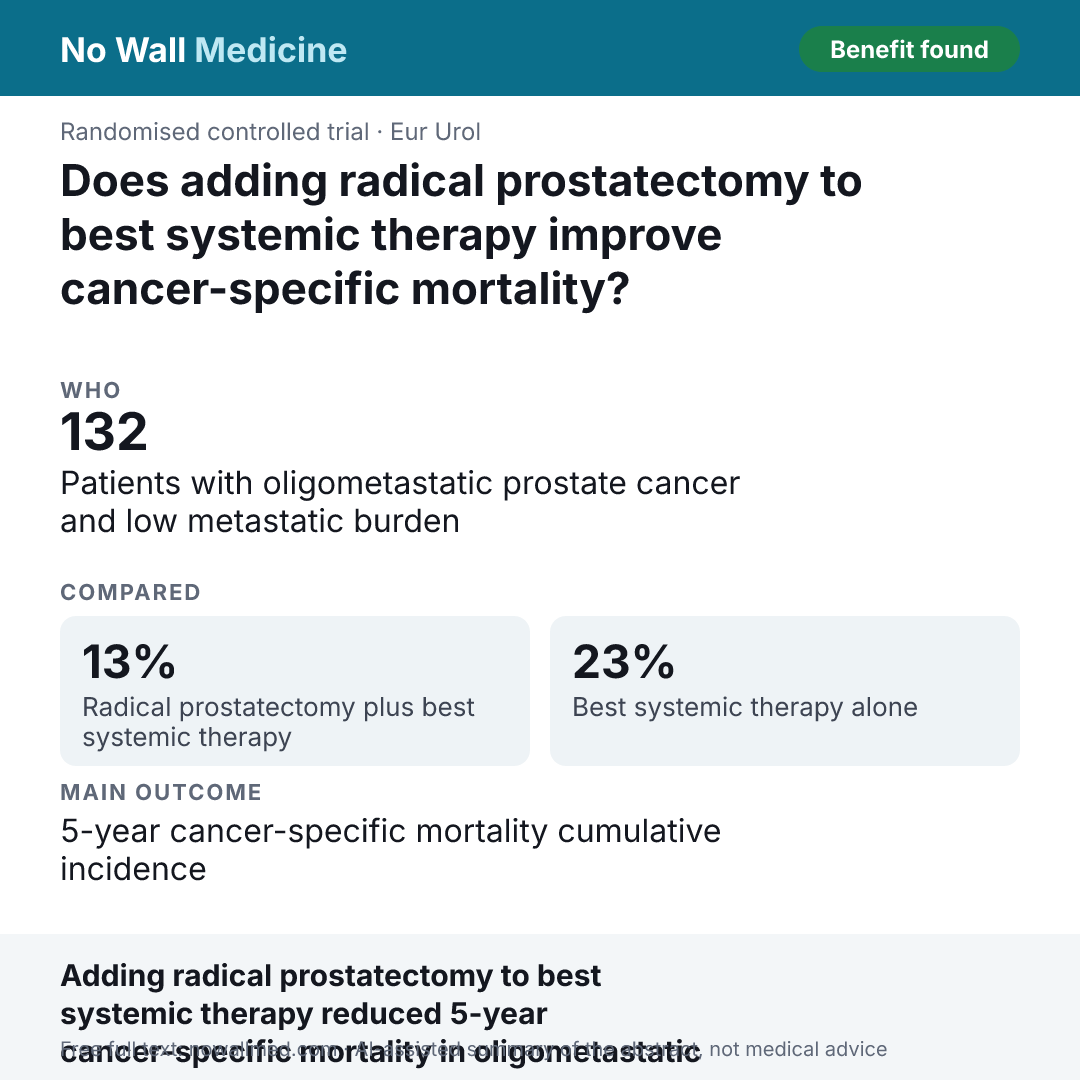
Best Systemic Therapy With or Without Radical Prostatectomy in the Management of Men With Oligometastatic Prostate Cancer: The RAMPP Randomised Controlled Trial
Randomised controlled trialBenefit found
Does adding radical prostatectomy to best systemic therapy improve cancer-specific mortality?
Who
132
Patients with oligometastatic prostate cancer and low metastatic burden
Compared
13%Radical prostatectomy plus best systemic therapy
23%Best systemic therapy alone
Main outcome
5-year cancer-specific mortality cumulative incidence
Result: hazard ratio 0.39 (95% confidence interval 0.16-0.98)
Bottom line: Adding radical prostatectomy to best systemic therapy reduced 5-year cancer-specific mortality in oligometastatic prostate cancer.
Limitation: Early discontinuation of study accrual and lack of statistical significance for overall survival benefit.
Eur Urol · 2025-10-03 · Save PNG