Visual abstracts
New randomized trials and meta-analyses from leading journals at a glance: who was studied, what was compared, and what was found. Every paper is free to read in full.
All specialtiesCardiology 4763Oncology 4041Gastroenterology & Hepatology 1902Infectious Disease 3756Neurology 1872Psychiatry & Mental Health 2214Pulmonology 2042Critical Care 1319Endocrinology & Diabetes 2544Pediatrics 2889Surgery 2479Orthopedics & Sports Medicine 917Neurosurgery 525Cardiothoracic & Vascular Surgery 656Plastic & Reconstructive Surgery 574Nephrology 1107Rheumatology 810Hematology 1090Dermatology 611Ophthalmology 532Obstetrics & Gynecology 1645Public & Global Health 1037Radiology & Imaging 617Anesthesiology 957Urology 744ENT (Otolaryngology) 494Emergency Medicine 481Allergy & Immunology 309Geriatrics 972Family Medicine & Primary Care 533Medical Genetics & Genomics 659Pathology & Laboratory Medicine 155Physical Medicine & Rehabilitation 734Palliative Care 421Nutrition 1560Digital Health & AI 2133General Medicine 318
A systematic review of the effectiveness and safety of droperidol for pediatric agitation in acute care settings
Systematic reviewBenefit found
Is parenteral droperidol effective and safe for pediatric agitation in acute care settings?
Who
Patients aged 21 years or younger with acute agitation · Prehospital, emergency department, and inpatient hospital settings
Compared
Droperidol effectiveness: 8%-22% required a second dose
Droperidol safety: dystonic reactions and transient hypotension
Main outcome
effectiveness and safety of parenteral droperidol
Bottom line: Droperidol is effective and safe for managing acute, severe agitation in children.
Limitation: Study designs included may introduce moderate to critical risk of bias.
Acad Emerg Med · 2022-05-22Download image

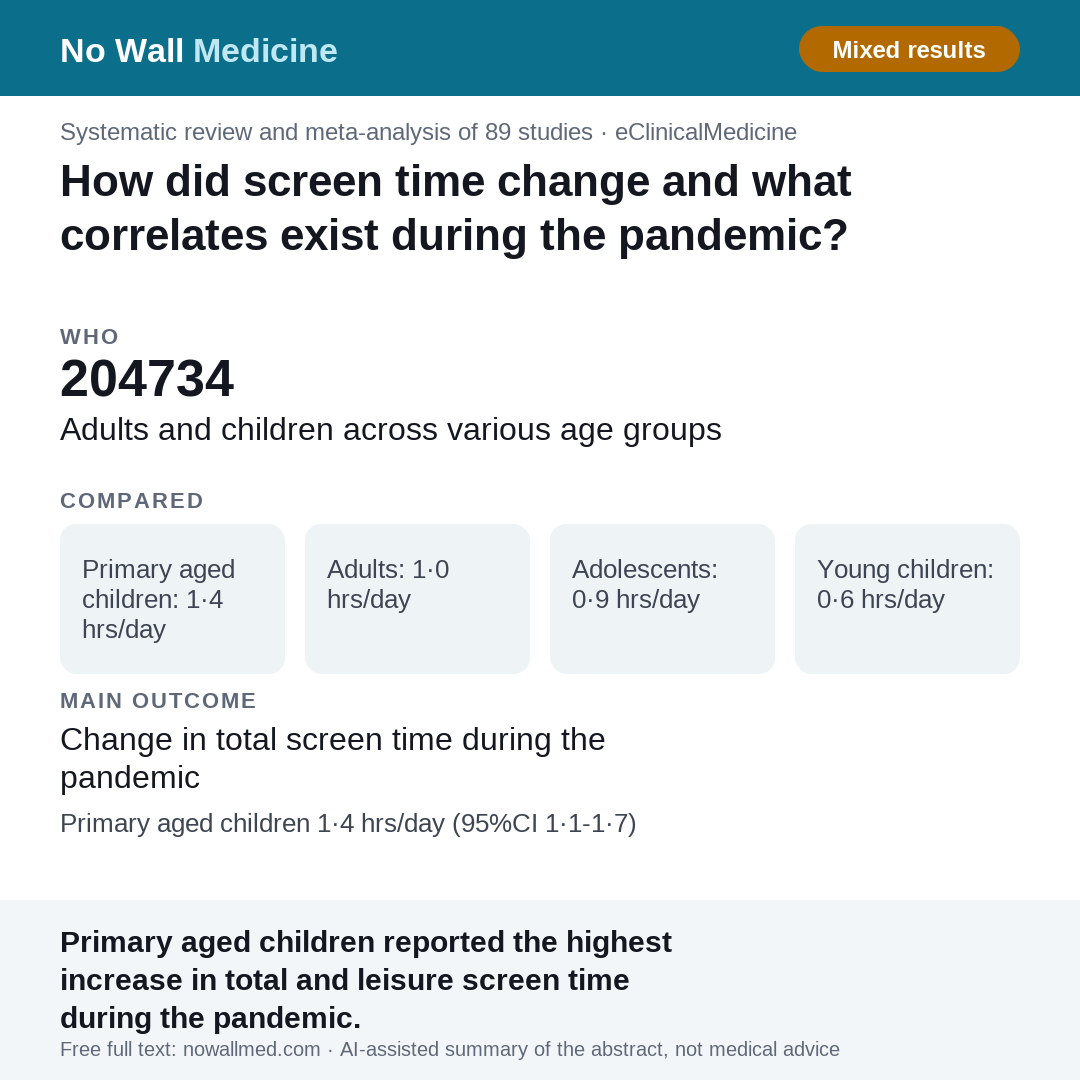
Changes and correlates of screen time in adults and children during the COVID-19 pandemic: A systematic review and meta-analysis
Systematic review and meta-analysis of 89 studiesMixed results
How did screen time change and what correlates exist during the pandemic?
Who
204734
Adults and children across various age groups
Compared
Primary aged children: 1·4 hrs/day
Adults: 1·0 hrs/day
Adolescents: 0·9 hrs/day
Young children: 0·6 hrs/day
Main outcome
Change in total screen time during the pandemic
Result: Primary aged children 1·4 hrs/day (95%CI 1·1-1·7)
Bottom line: Primary aged children reported the highest increase in total and leisure screen time during the pandemic.
Limitation: The majority of studies were cross-sectional.
Funded by: No funding was received
eClinicalMedicine · 2022-05-21Download image
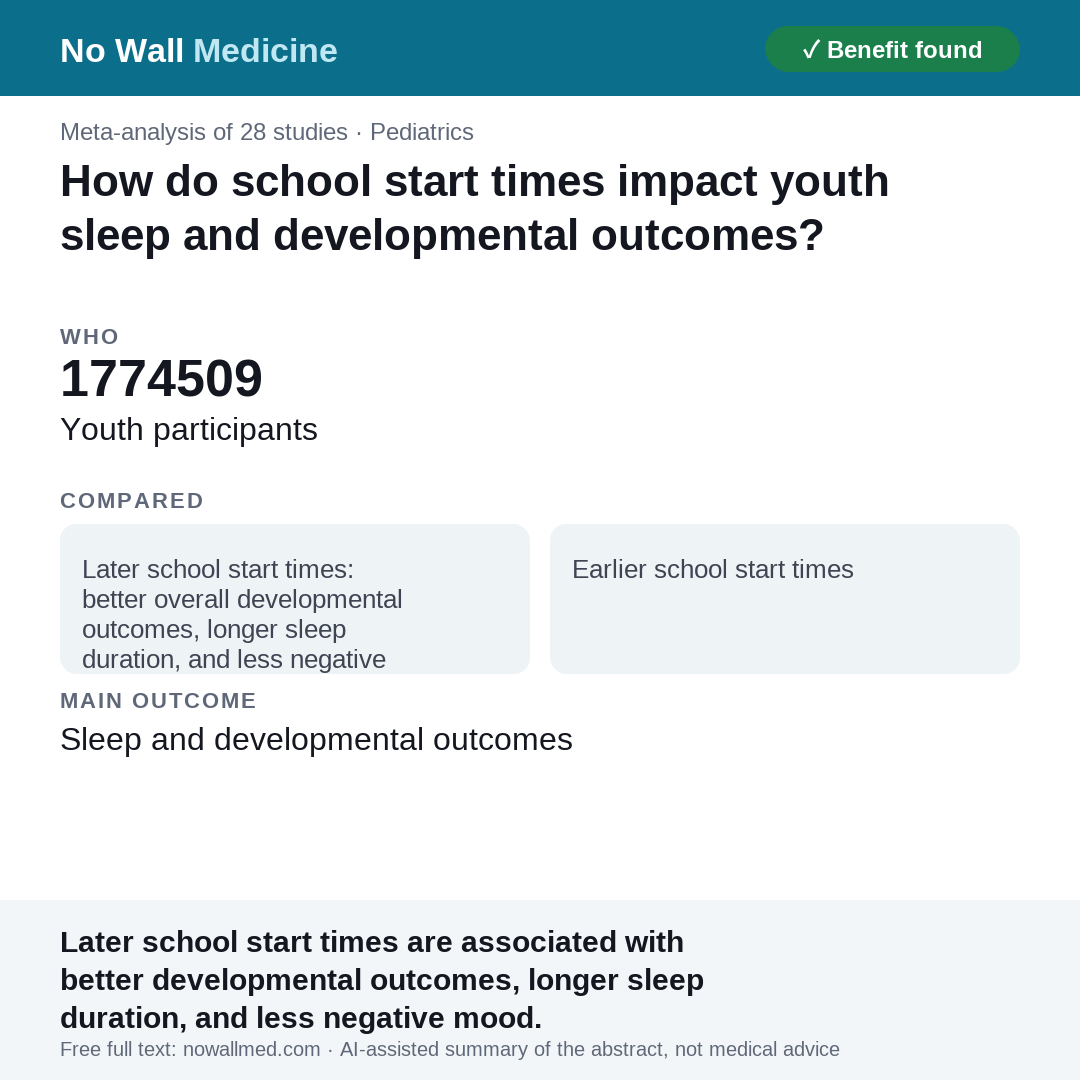
School Start Times, Sleep, and Youth Outcomes: A Meta-analysis
Meta-analysis of 28 studiesBenefit found
How do school start times impact youth sleep and developmental outcomes?
Who
1774509
Youth participants
Compared
Later school start times: better overall developmental outcomes, longer sleep duration, and less negative mood
Earlier school start times
Main outcome
Sleep and developmental outcomes
Bottom line: Later school start times are associated with better developmental outcomes, longer sleep duration, and less negative mood.
Limitation: Limited research to test sleep hygiene, naps, and behavioral and physical health outcomes.
Pediatrics · 2022-05-21Download image
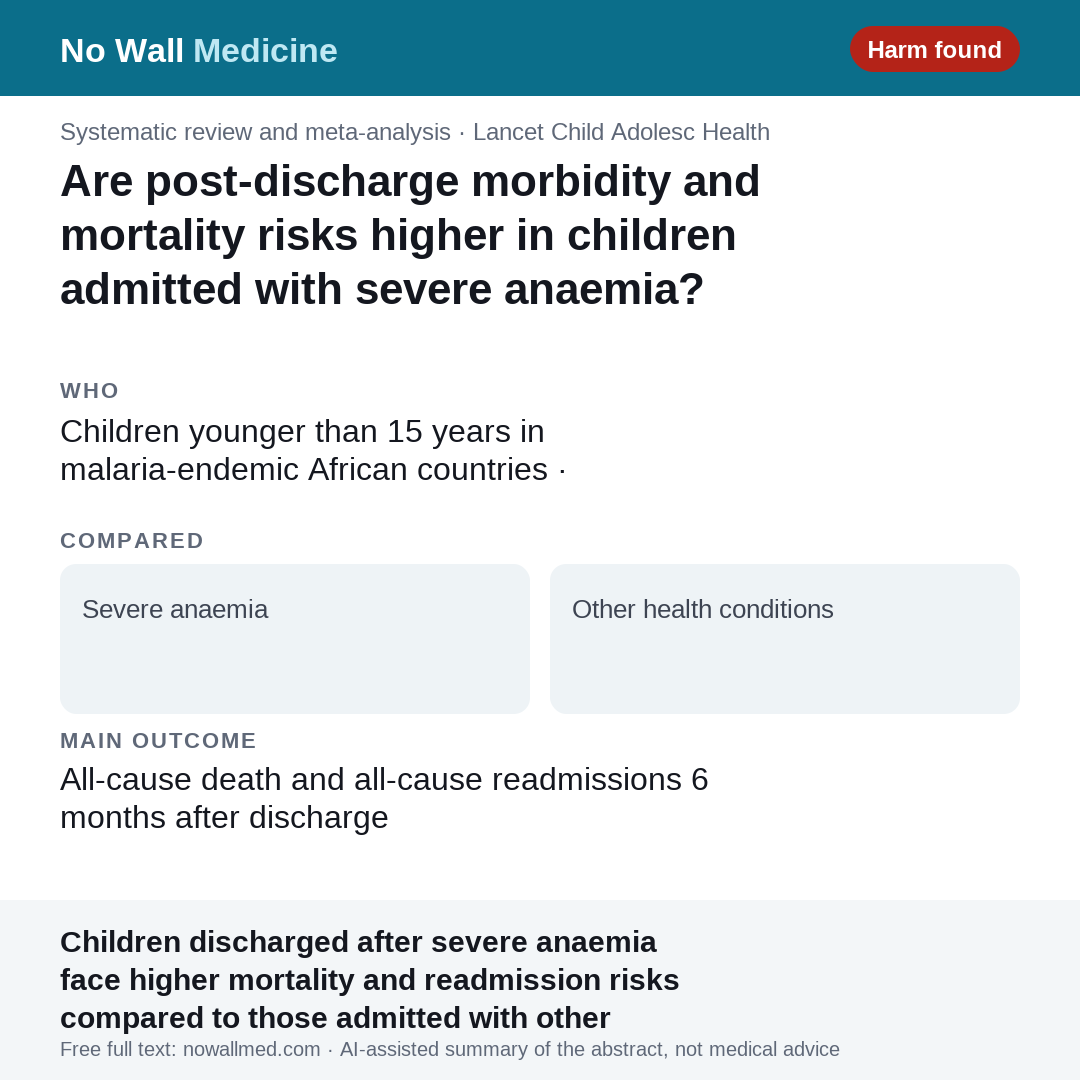
Post-discharge morbidity and mortality in children admitted with severe anaemia and other health conditions in malaria-endemic settings in Africa: a systematic review and meta-analysis
Systematic review and meta-analysisHarm found
Are post-discharge morbidity and mortality risks higher in children admitted with severe anaemia?
Who
Children younger than 15 years in malaria-endemic African countries · Malaria-endemic settings in Africa
Compared
Severe anaemia
Other health conditions
Main outcome
All-cause death and all-cause readmissions 6 months after discharge
Result: relative risk 2.69 (95% CI 1.59-4.53)
Bottom line: Children discharged after severe anaemia face higher mortality and readmission risks compared to those admitted with other conditions.
Funded by: Research Council of Norway and US Centers for Disease Control and Prevention
Lancet Child Adolesc Health · 2022-05-21Download image
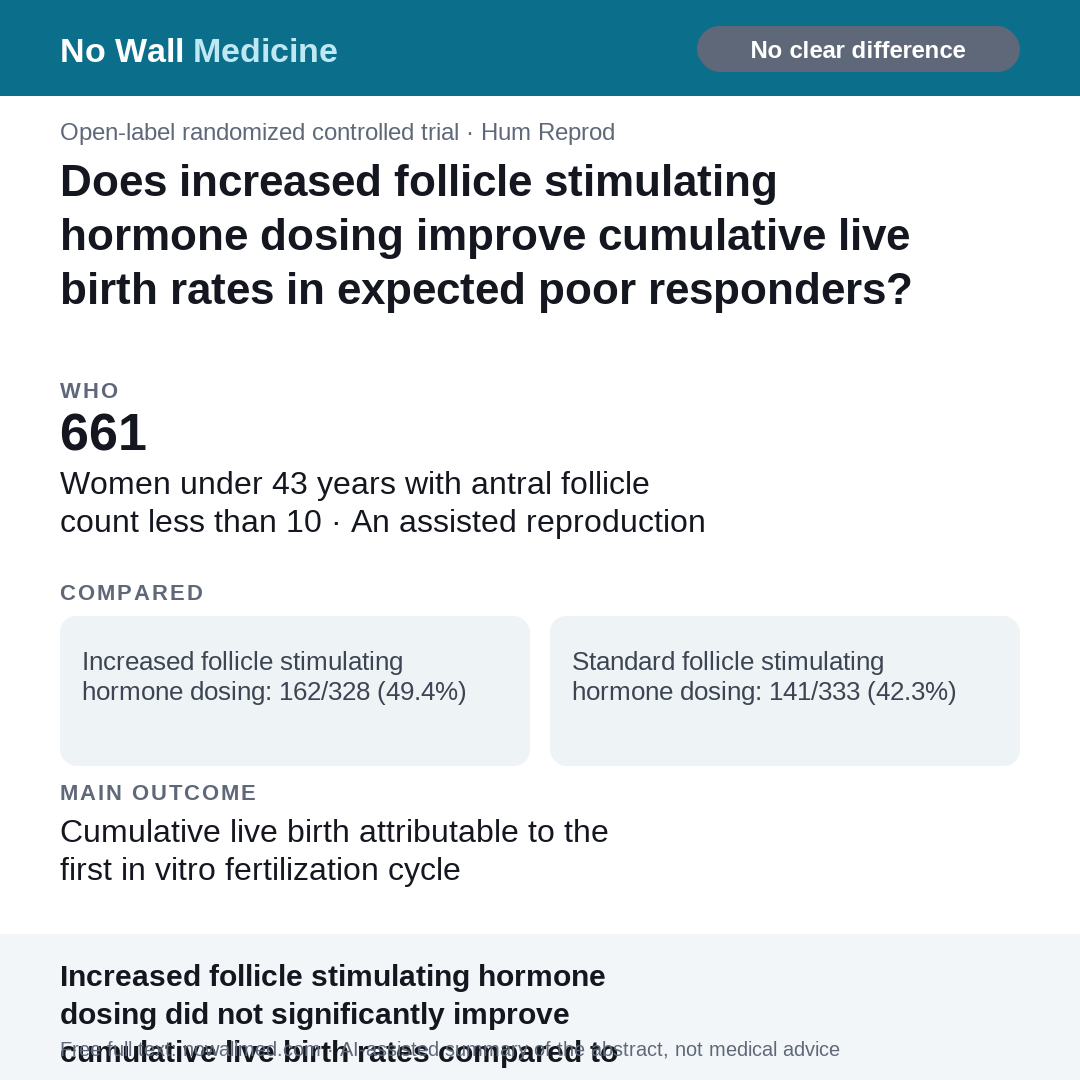
Increased versus standard gonadotrophin dosing in predicted poor responders of IVF: an open-label randomized controlled trial
Open-label randomized controlled trialNo clear difference
Does increased follicle stimulating hormone dosing improve cumulative live birth rates in expected poor responders?
Who
661
Women under 43 years with antral follicle count less than 10 · An assisted reproduction centre
Compared
Increased follicle stimulating hormone dosing: 162/328 (49.4%)
Standard follicle stimulating hormone dosing: 141/333 (42.3%)
Main outcome
Cumulative live birth attributable to the first in vitro fertilization cycle
Result: risk ratio 1.17 (95% CI, 0.99-1.38)
Bottom line: Increased follicle stimulating hormone dosing did not significantly improve cumulative live birth rates compared to standard dosing in predicted poor responders.
Limitation: The open-label design could have led to potential selective cancelling and small dose adjustments.
Funded by: General Projects of Social Development in Shaanxi Province
Hum Reprod · 2022-05-21Download image
Development of children born from IVM versus IVF: 2-year follow-up of a randomized controlled trial
Randomized controlled trialNo clear difference
Is IVM different from IVF in child development?
Who
231
Children born after fertility treatment
Compared
IVM
IVF
Main outcome
Developmental outcomes
Bottom line: IVM and IVF have similar child development
Limitation: Open-label follow-up and potential bias
Funded by: Vietnam National Foundation
Hum Reprod · 2022-05-21Download image
Associating factors of suicide and repetition following self-harm: A systematic review and meta-analysis of longitudinal studies
Meta-analysis of 62 longitudinal studiesMixed results
What factors associate with suicide and repetition following self-harm?
Who
Individuals following self-harm
Compared
Self-harm repetition factors: multiple risk factors identified
Suicide following self-harm factors: multiple risk factors identified
Main outcome
Risk of suicide and repetition following self-harm
Bottom line: Various sociodemographic and clinical factors are associated with increased risks of suicide and self-harm repetition.
Limitation: Substantial heterogeneity for clinical factors of suicide and repetition following self-harm.
Funded by: National Natural Science Foundation of China
eClinicalMedicine · 2022-05-20Download image
The global burden of sore throat and group A Streptococcus pharyngitis: A systematic review and meta-analysis
Systematic review and meta-analysisBenefit found
What is the global burden of sore throat and group A Streptococcus pharyngitis?
Who
Children and adults globally · Global
Compared
Sore throat in children: 82.2 episodes per 100 child-years (95% CI 25.2-286.3)
Streptococcus A sore throat in children: 22.1 episodes per 100 child-years (95% CI 14.7-33.1)
Main outcome
Incidence rates of sore throat and Streptococcus A pharyngitis
Bottom line: Streptococcus A sore throat represents a considerable global burden in children.
Limitation: Significant methodological and statistical heterogeneity among studies and risk of bias in some studies.
Funded by: Wellcome Trust
eClinicalMedicine · 2022-05-20Download image

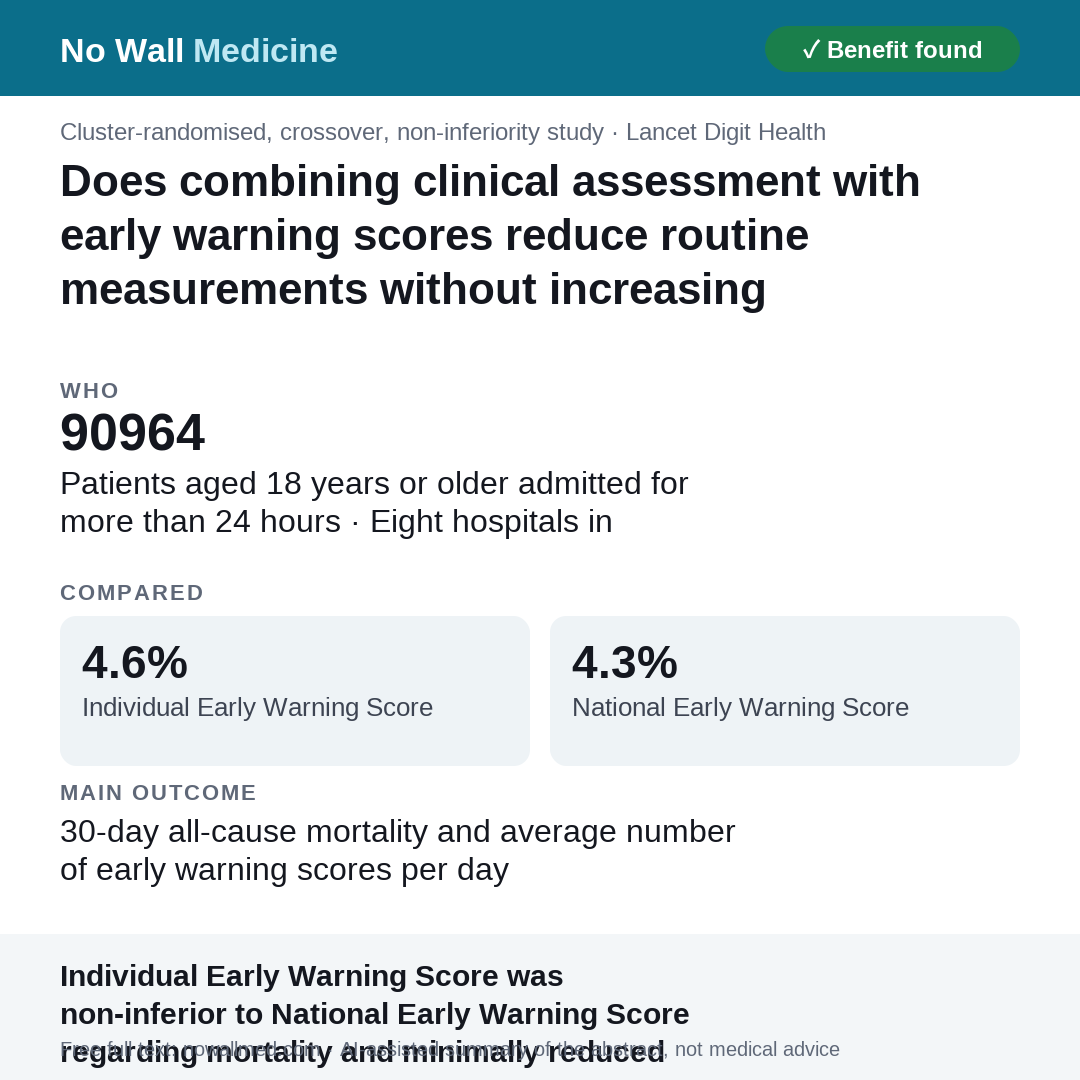
Clinical assessment as a part of an early warning score-a Danish cluster-randomised, multicentre study of an individual early warning score
Cluster-randomised, crossover, non-inferiority studyBenefit found
Does combining clinical assessment with early warning scores reduce routine measurements without increasing mortality?
Who
90964
Patients aged 18 years or older admitted for more than 24 hours · Eight hospitals in Denmark
Compared
4.6%Individual Early Warning Score
4.3%National Early Warning Score
Main outcome
30-day all-cause mortality and average number of early warning scores per day
Result: risk difference 0.22% (95% CI -0.04 to 0.48)
Bottom line: Individual Early Warning Score was non-inferior to National Early Warning Score regarding mortality and minimally reduced routine measurements.
Limitation: Increased 30-day mortality observed in surgical patients and during fall-winter seasonality.
Funded by: Capital Region Research Foundation and others
Lancet Digit Health · 2022-05-19Download image
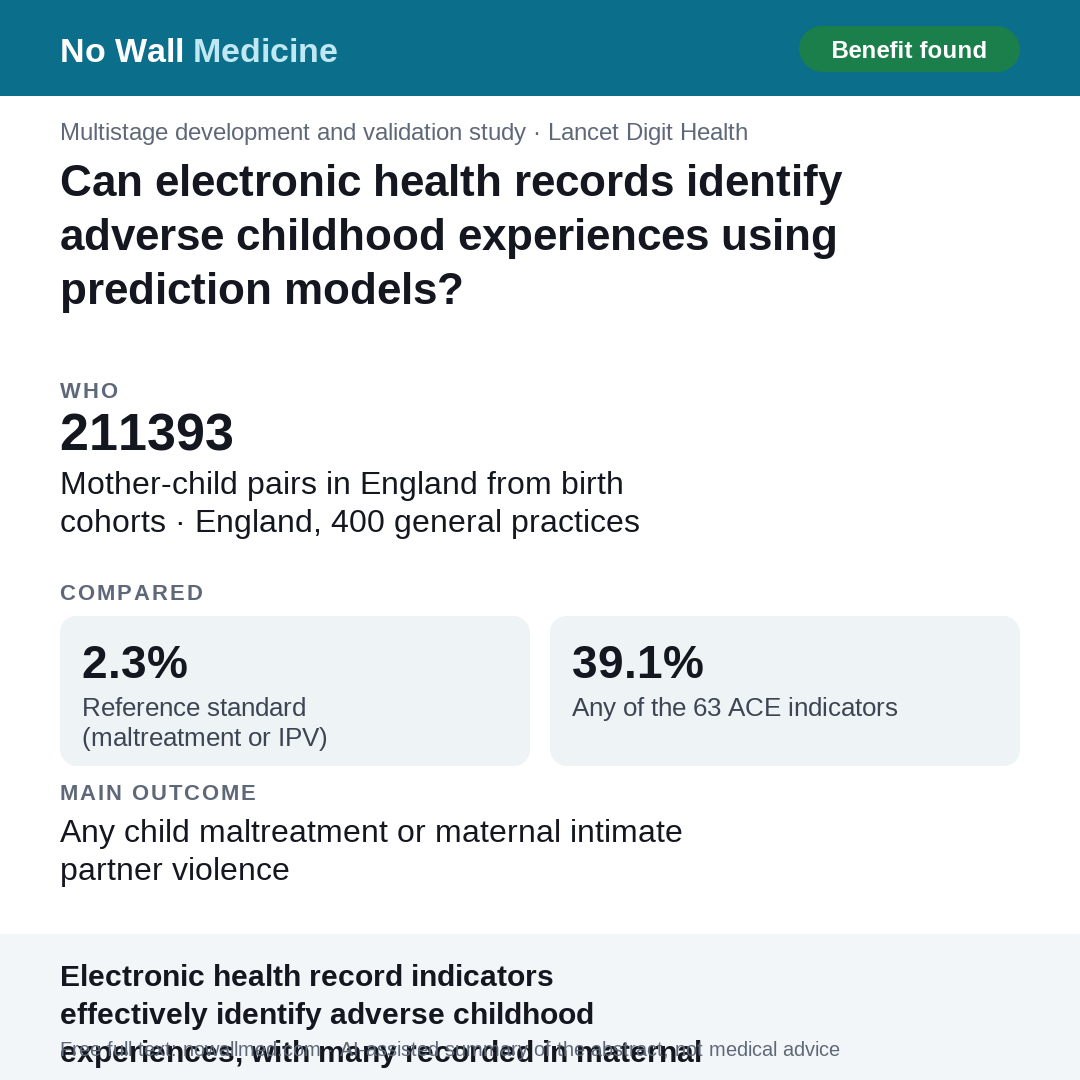
Identifying adverse childhood experiences with electronic health records of linked mothers and children in England: a multistage development and validation study
Multistage development and validation studyKey finding
Can electronic health records identify adverse childhood experiences using prediction models?
Who
211393
Mother-child pairs in England from birth cohorts · England, 400 general practices
Compared
2.3%Reference standard (maltreatment or IPV)
39.1%Any of the 63 ACE indicators (95% CI 38.7-39.5)
Main outcome
Any child maltreatment or maternal intimate partner violence
Result: area under the receiver operating characteristic curve 0.85 (95% CI 0.84-0.86)
Bottom line: Electronic health record indicators effectively identify adverse childhood experiences, with many recorded in maternal primary care records.
Lancet Digit Health · 2022-05-17Download image
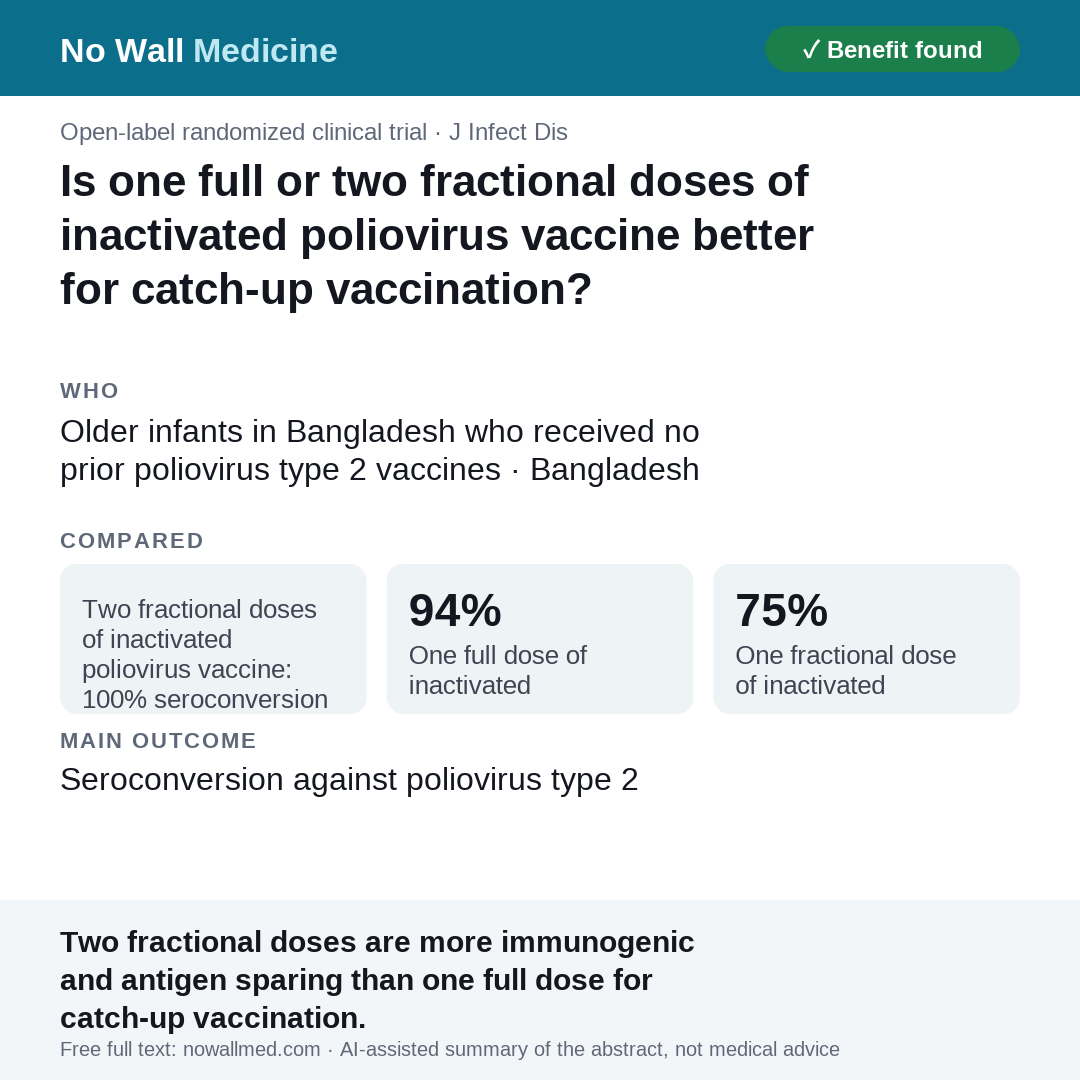
One Full or Two Fractional Doses of Inactivated Poliovirus Vaccine for Catch-up Vaccination in Older Infants: A Randomized Clinical Trial in Bangladesh
Open-label randomized clinical trialBenefit found
Is one full or two fractional doses of inactivated poliovirus vaccine better for catch-up vaccination?
Who
Older infants in Bangladesh who received no prior poliovirus type 2 vaccines · Bangladesh
Compared
Two fractional doses of inactivated poliovirus vaccine: 100% seroconversion
94%One full dose of inactivated poliovirus vaccine (95% CI, 89%-97%)
75%One fractional dose of inactivated poliovirus vaccine (95% CI, 6%-82%)
Main outcome
Seroconversion against poliovirus type 2
Bottom line: Two fractional doses are more immunogenic and antigen sparing than one full dose for catch-up vaccination.
J Infect Dis · 2022-05-17Download image
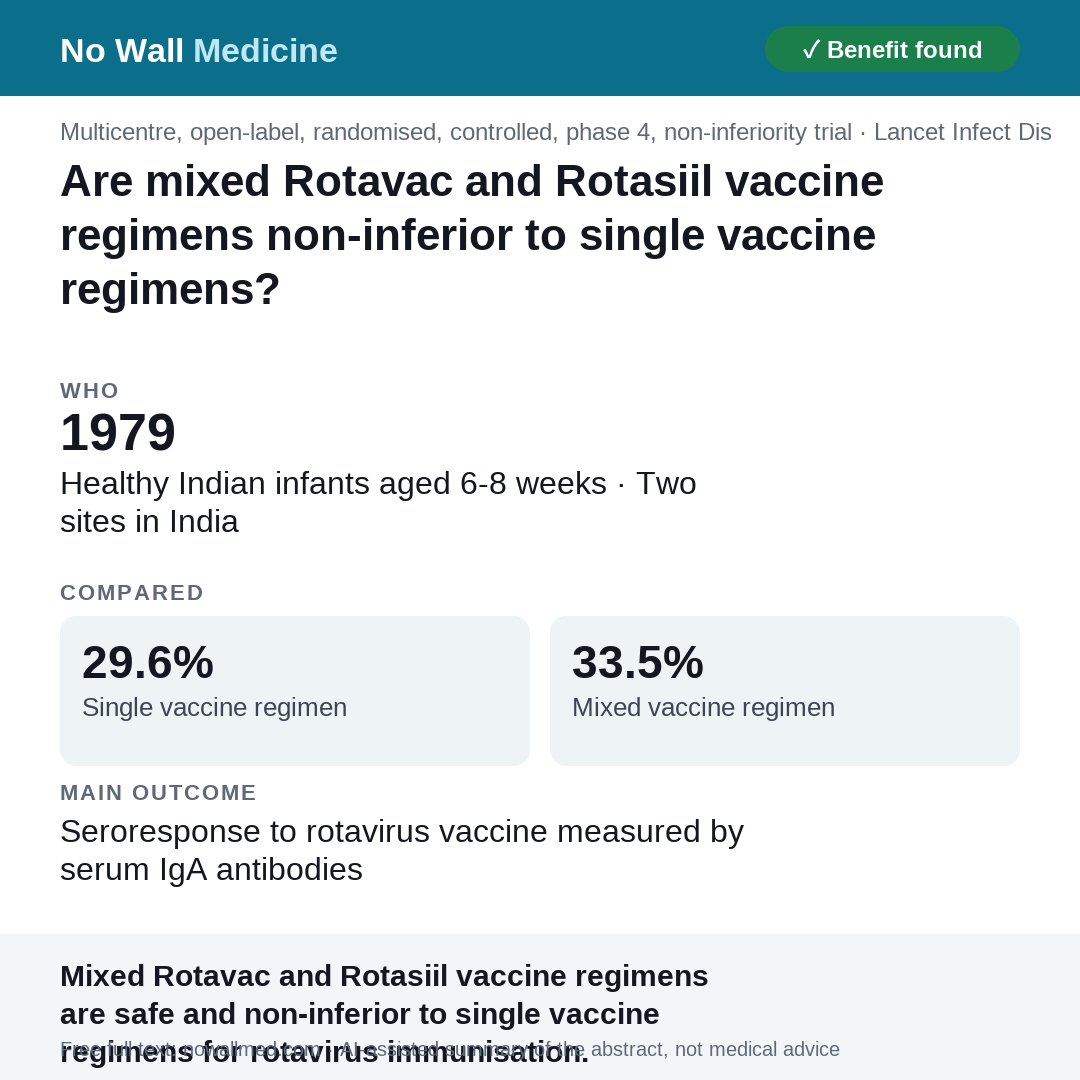
Safety and immunogenicity of the Rotavac and Rotasiil rotavirus vaccines administered in an interchangeable dosing schedule among healthy Indian infants: a multicentre, open-label, randomised, controlled, phase 4, non-inferiority trial
Multicentre, open-label, randomised, controlled, phase 4, non-inferiority trialBenefit found
Are mixed Rotavac and Rotasiil vaccine regimens non-inferior to single vaccine regimens?
Who
1979
Healthy Indian infants aged 6-8 weeks · Two sites in India
Compared
29.6%Single vaccine regimen (95% CI 26.1-33.4)
33.5%Mixed vaccine regimen (95% CI 30.9-36.2)
Main outcome
Seroresponse to rotavirus vaccine measured by serum IgA antibodies
Result: seroresponse rate difference 3.9% (95% CI -0.7 to 8.3)
Bottom line: Mixed Rotavac and Rotasiil vaccine regimens are safe and non-inferior to single vaccine regimens for rotavirus immunisation.
Funded by: Ministry of Health and Family Welfare, Government of India
Lancet Infect Dis · 2022-05-16Download image
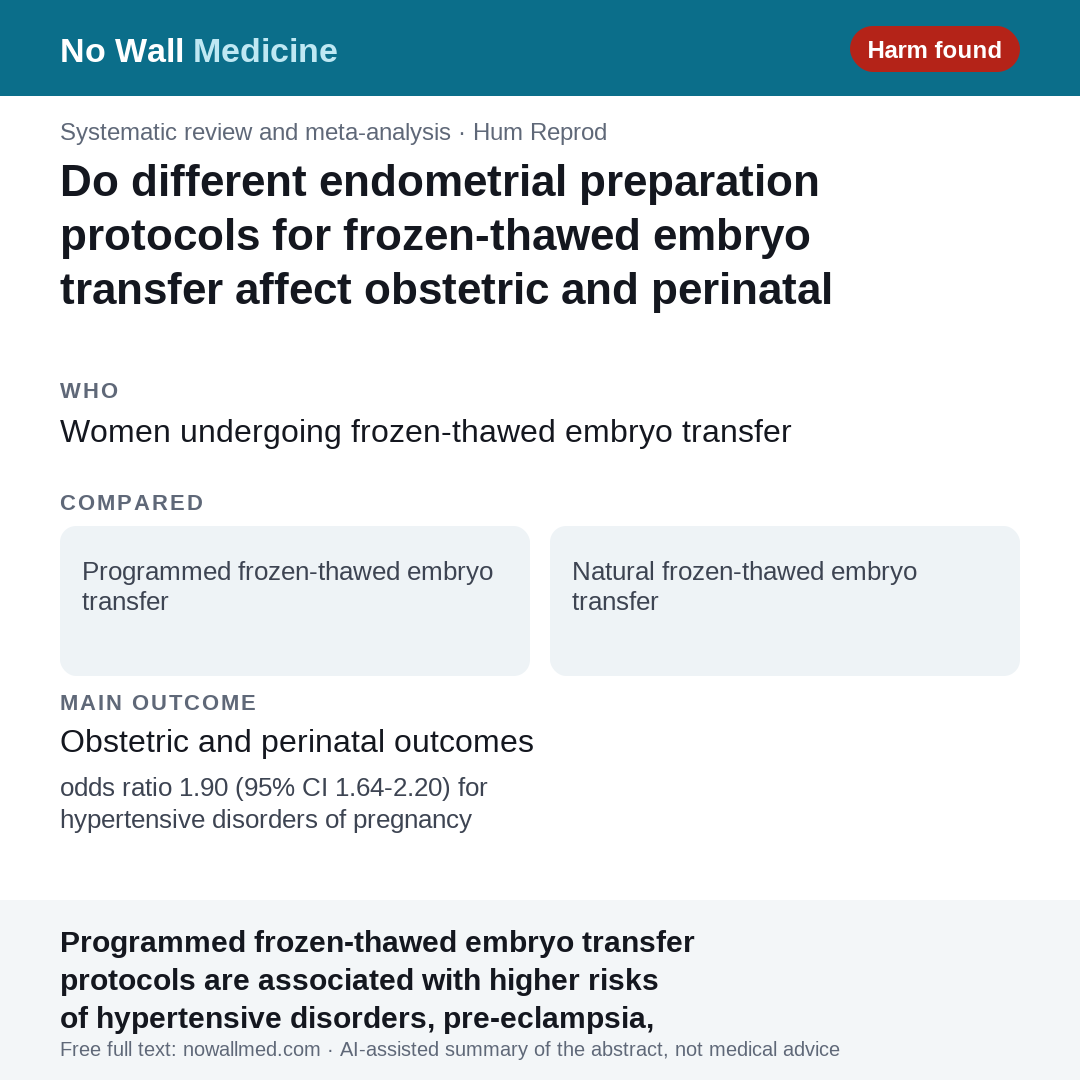
Obstetric and perinatal outcomes following programmed compared to natural frozen-thawed embryo transfer cycles: a systematic review and meta-analysis
Systematic review and meta-analysisHarm found
Do different endometrial preparation protocols for frozen-thawed embryo transfer affect obstetric and perinatal outcomes?
Who
Women undergoing frozen-thawed embryo transfer
Compared
Programmed frozen-thawed embryo transfer
Natural frozen-thawed embryo transfer
Main outcome
Obstetric and perinatal outcomes
Result: odds ratio 1.90 (95% CI 1.64-2.20) for hypertensive disorders of pregnancy
Bottom line: Programmed frozen-thawed embryo transfer protocols are associated with higher risks of hypertensive disorders, pre-eclampsia, hemorrhage, and cesarean section.
Limitation: Heterogeneity across studies regarding hormone replacement therapy timing, dosage, embryo stage, and genetic testing inclusion.
Hum Reprod · 2022-05-14Download image
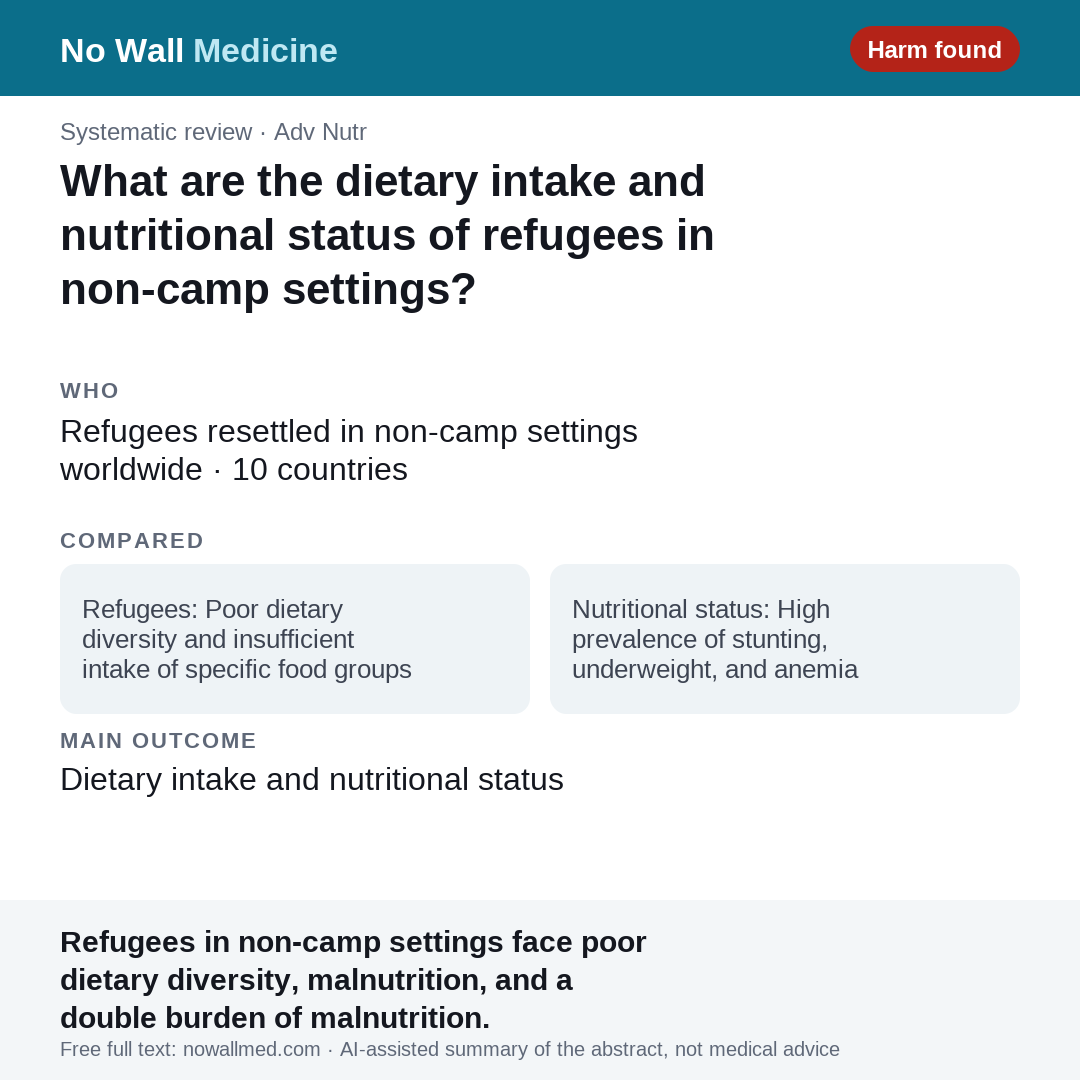
Dietary Intake and Nutritional Status among Refugees in Host Countries: A Systematic Review
Systematic reviewHarm found
What are the dietary intake and nutritional status of refugees in non-camp settings?
Who
Refugees resettled in non-camp settings worldwide · 10 countries
Compared
Refugees: Poor dietary diversity and insufficient intake of specific food groups
Nutritional status: High prevalence of stunting, underweight, and anemia
Main outcome
Dietary intake and nutritional status
Bottom line: Refugees in non-camp settings face poor dietary diversity, malnutrition, and a double burden of malnutrition.
Adv Nutr · 2022-05-14Download image
Prenatal fortified balanced energy-protein supplementation and birth outcomes in rural Burkina Faso: A randomized controlled efficacy trial
Randomized controlled efficacy trialMixed results
Does fortified balanced energy-protein supplementation improve birth outcomes compared to iron-folic acid?
Who
1897
Pregnant women aged 15 to 40 years in rural Burkina Faso · 6 health center catchment areas in rural Burkina Faso
Compared
Fortified balanced energy-protein and iron-folic acid: 3.1 percentage points reduction in small-for-gestational age
Iron-folic acid
Main outcome
Prevalence of small-for-gestational age
Result: -3.1 percentage points (95% CI -7.39 to 1.16)
Bottom line: Supplementation did not reduce small-for-gestational age but improved birth weight, length, and gestational duration.
Limitation: Nonblinded administration of supplements and lack of information on other prognostic factors.
PLOS Med · 2022-05-13Download image

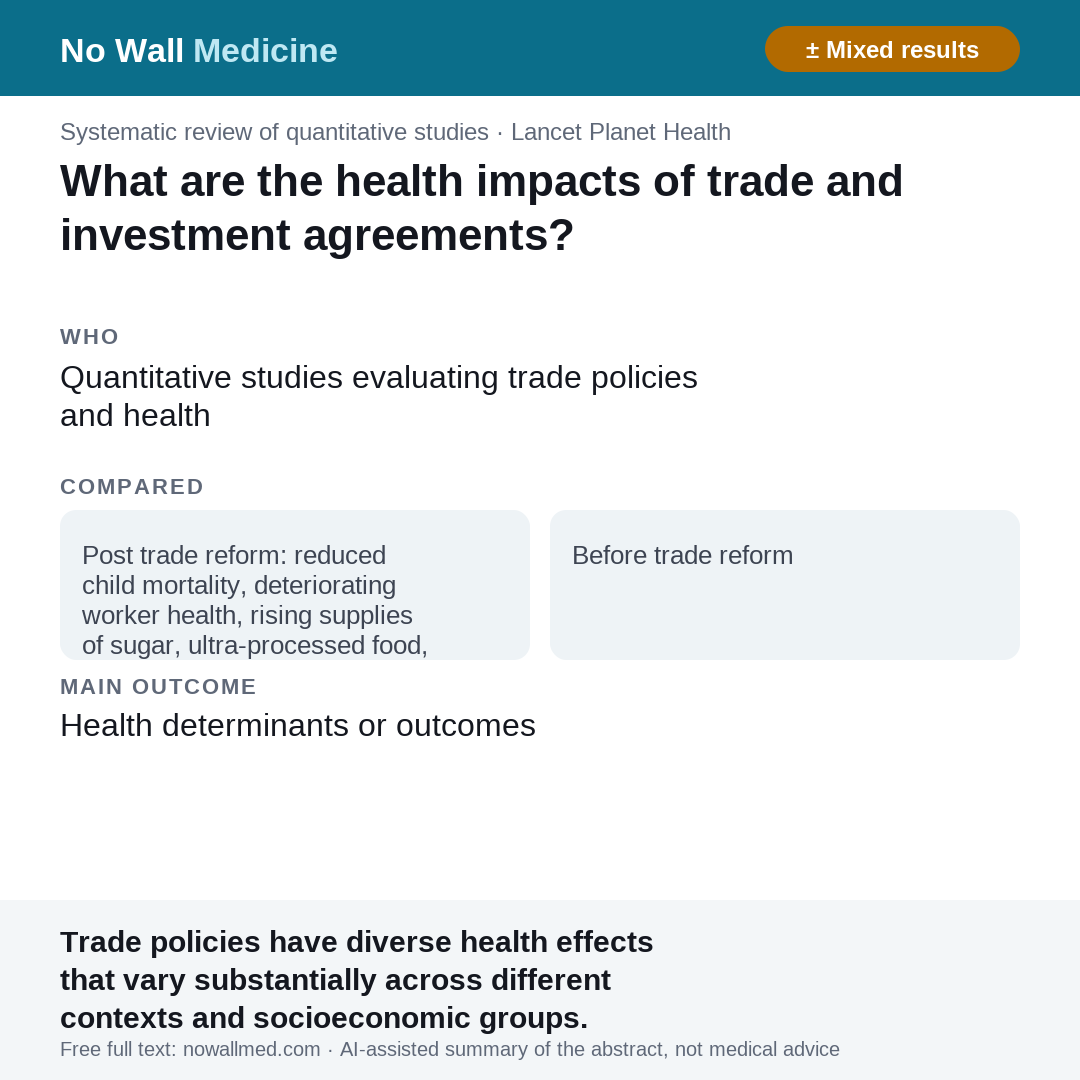
Reassessing the health impacts of trade and investment agreements: a systematic review of quantitative studies, 2016-20
Systematic review of quantitative studiesMixed results
What are the health impacts of trade and investment agreements?
Who
Quantitative studies evaluating trade policies and health
Compared
Post trade reform: reduced child mortality, deteriorating worker health, rising supplies of sugar, ultra-processed food, tobacco, and alcohol supplies, and increased drug overdoses
Before trade reform
Main outcome
Health determinants or outcomes
Bottom line: Trade policies have diverse health effects that vary substantially across different contexts and socioeconomic groups.
Limitation: Associations varied substantially across contexts and socioeconomic characteristics.
Lancet Planet Health · 2022-05-13Download image
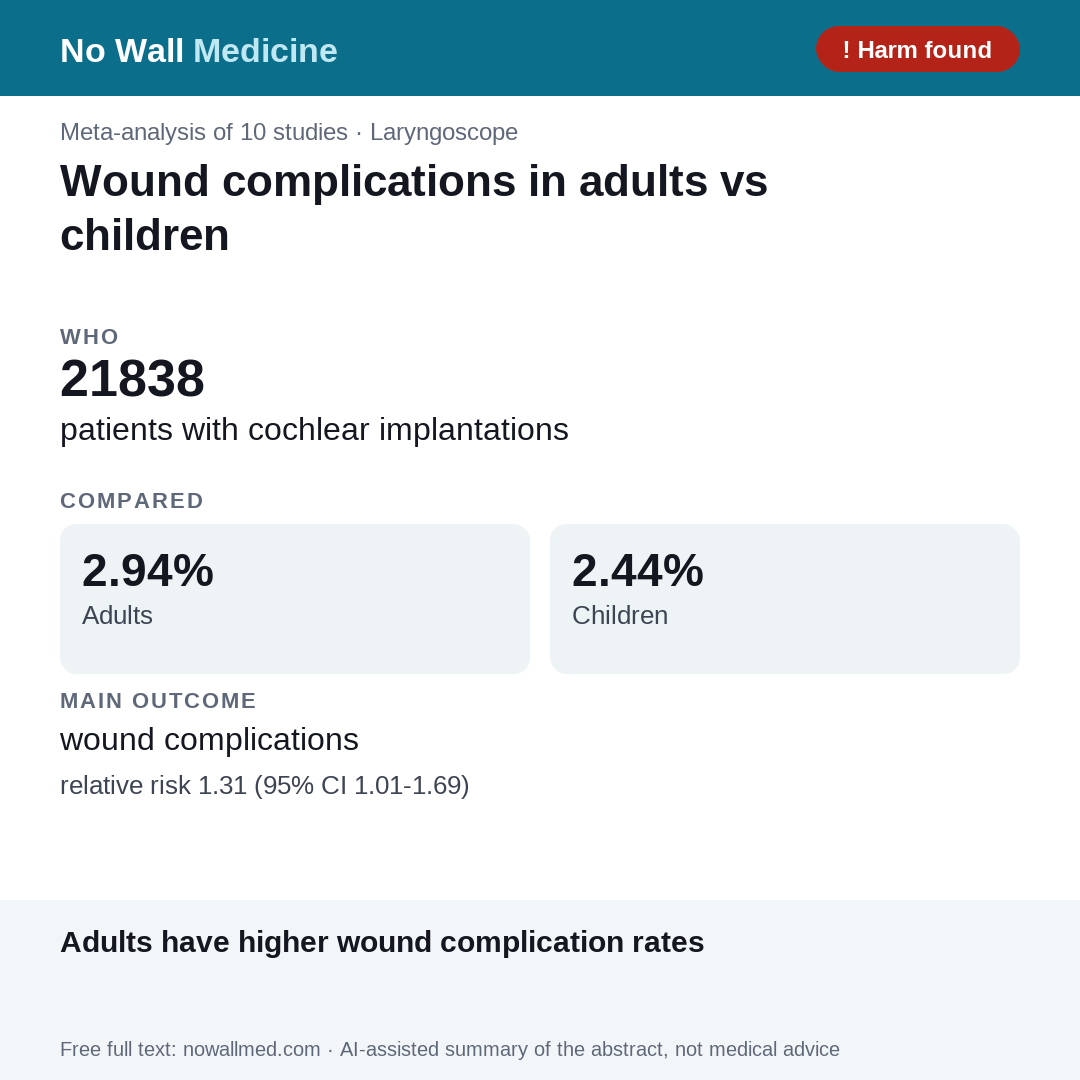
Comparison of Adult and Pediatric Cochlear Implant Wound Complications: A Meta-Analysis
Meta-analysis of 10 studiesHarm found
Wound complications in adults vs children
Who
21838
patients with cochlear implantations
Compared
2.94%Adults
2.44%Children
Main outcome
wound complications
Result: relative risk 1.31 (95% CI 1.01-1.69)
Bottom line: Adults have higher wound complication rates
Limitation: gap in consistently reporting complications
Laryngoscope · 2022-05-13Download image
Two-year follow-up of infant and maternal outcomes after planned early delivery or expectant management for late preterm pre-eclampsia (PHOENIX): A randomised controlled trial
Parallel-group, non-masked, randomised controlled trialNo clear difference
What is the best time to initiate delivery for late preterm pre-eclampsia?
Who
901
Women with pre-eclampsia between 34+0 and 36+6 weeks gestation · Forty-six maternity units in the United Kingdom
Compared
89.5planned delivery (SD 18.2)
91.9expectant management (SD 18.4)
Main outcome
Infant neurodevelopmental outcome at 2 years of age
Result: -2.4 points (95% CI -5.4 to 0.5 points)
Bottom line: Infant neurodevelopmental scores at 2 years are within the normal range regardless of delivery timing.
Limitation: Lower than anticipated follow-up rate limited power to demonstrate no difference.
BJOG · 2022-05-12Download image

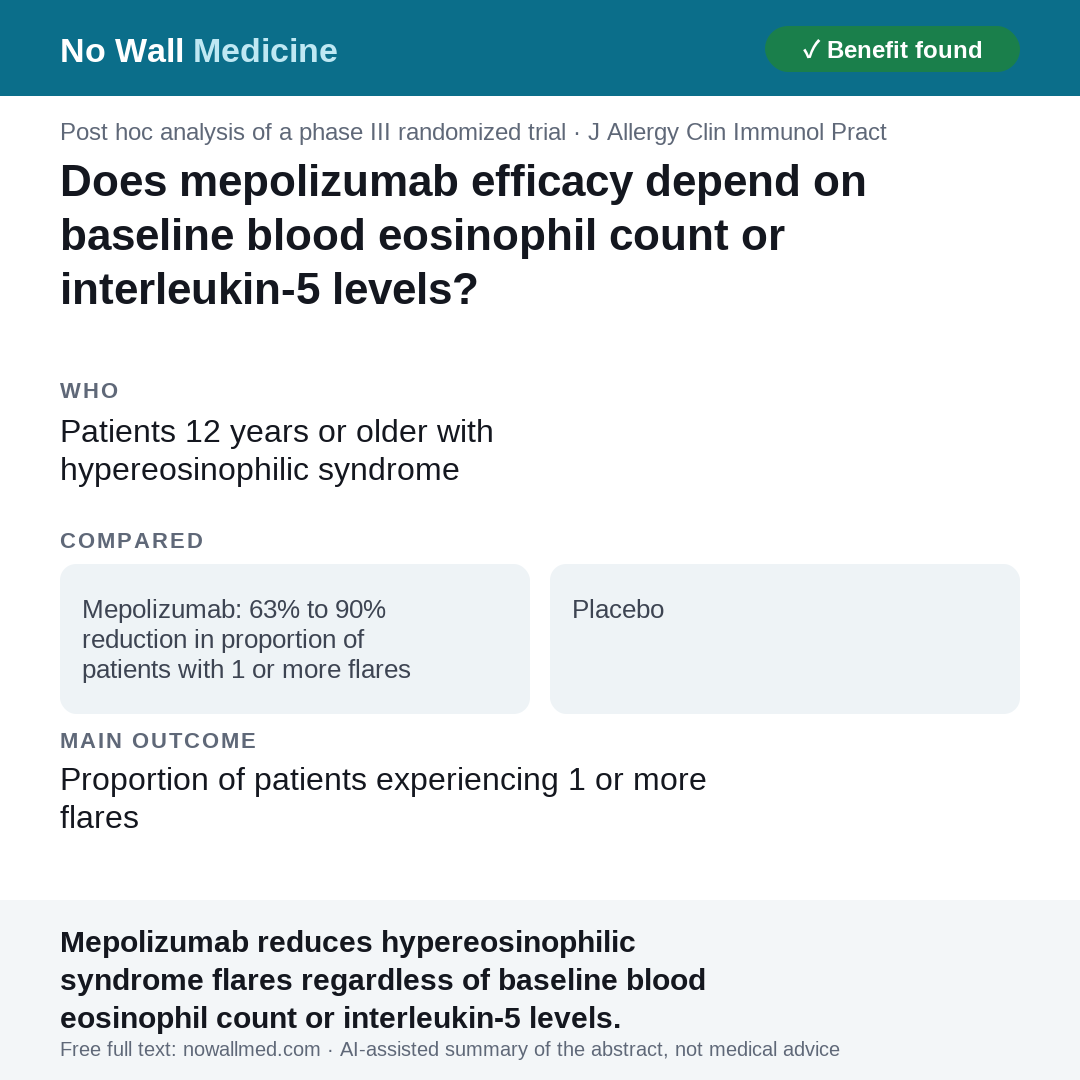
Mepolizumab Reduces Hypereosinophilic Syndrome Flares Irrespective of Blood Eosinophil Count and Interleukin-5
Post hoc analysis of a phase III randomized trialBenefit found
Does mepolizumab efficacy depend on baseline blood eosinophil count or interleukin-5 levels?
Who
Patients 12 years or older with hypereosinophilic syndrome
Compared
Mepolizumab: 63% to 90% reduction in proportion of patients with 1 or more flares
Placebo
Main outcome
Proportion of patients experiencing 1 or more flares
Bottom line: Mepolizumab reduces hypereosinophilic syndrome flares regardless of baseline blood eosinophil count or interleukin-5 levels.
J Allergy Clin Immunol Pract · 2022-05-12Download image
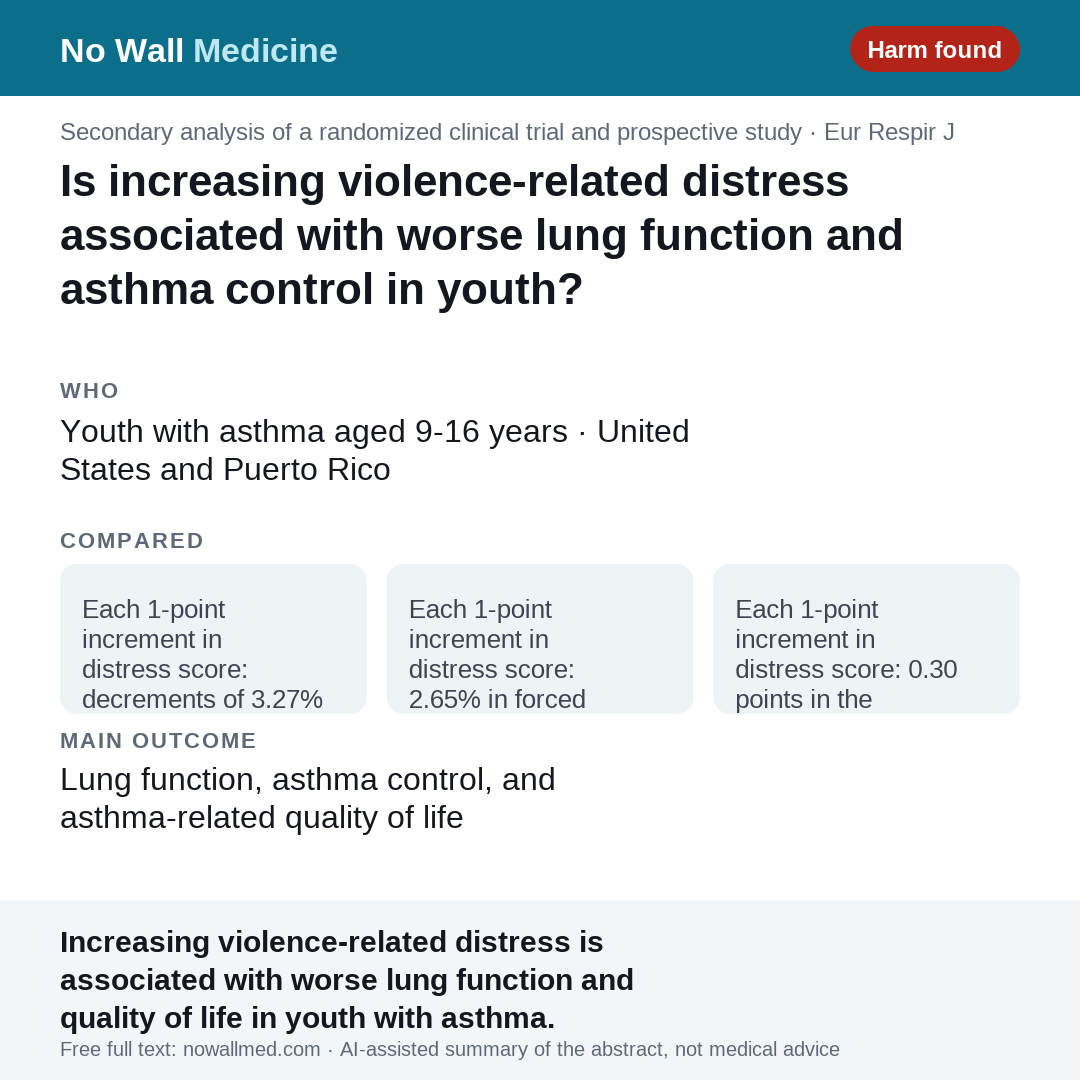
Violence-related distress and lung function in two longitudinal studies of youth
Secondary analysis of a randomized clinical trial and prospective studyHarm found
Is increasing violence-related distress associated with worse lung function and asthma control in youth?
Who
Youth with asthma aged 9-16 years · United States and Puerto Rico
Compared
Each 1-point increment in distress score: decrements of 3.27% in forced expiratory volume in 1 s % pred
Each 1-point increment in distress score: 2.65% in forced vital capacity % pred
Each 1-point increment in distress score: 0.30 points in the overall Pediatric Asthma Quality of Life Questionnaire score
Main outcome
Lung function, asthma control, and asthma-related quality of life
Result: FEV1 % pred 95% CI -6.44 to -0.22%
Bottom line: Increasing violence-related distress is associated with worse lung function and quality of life in youth with asthma.
Eur Respir J · 2022-05-12Download image