Visual abstracts
New randomized trials and meta-analyses from leading journals at a glance: who was studied, what was compared, and what was found. Every paper is free to read in full.
All specialtiesCardiology 4877Oncology 4138Gastroenterology & Hepatology 1942Infectious Disease 3837Neurology 1905Psychiatry & Mental Health 2273Pulmonology 2143Critical Care 1365Endocrinology & Diabetes 2580Pediatrics 2980Surgery 2559Orthopedics & Sports Medicine 931Neurosurgery 537Cardiothoracic & Vascular Surgery 674Plastic & Reconstructive Surgery 591Nephrology 1133Rheumatology 823Hematology 1109Dermatology 621Ophthalmology 543Obstetrics & Gynecology 1686Public & Global Health 1058Radiology & Imaging 648Anesthesiology 986Urology 764ENT (Otolaryngology) 503Emergency Medicine 511Allergy & Immunology 313Geriatrics 981Family Medicine & Primary Care 562Medical Genetics & Genomics 676Pathology & Laboratory Medicine 159Physical Medicine & Rehabilitation 757Palliative Care 444Nutrition 1588Digital Health & AI 2201General Medicine 321
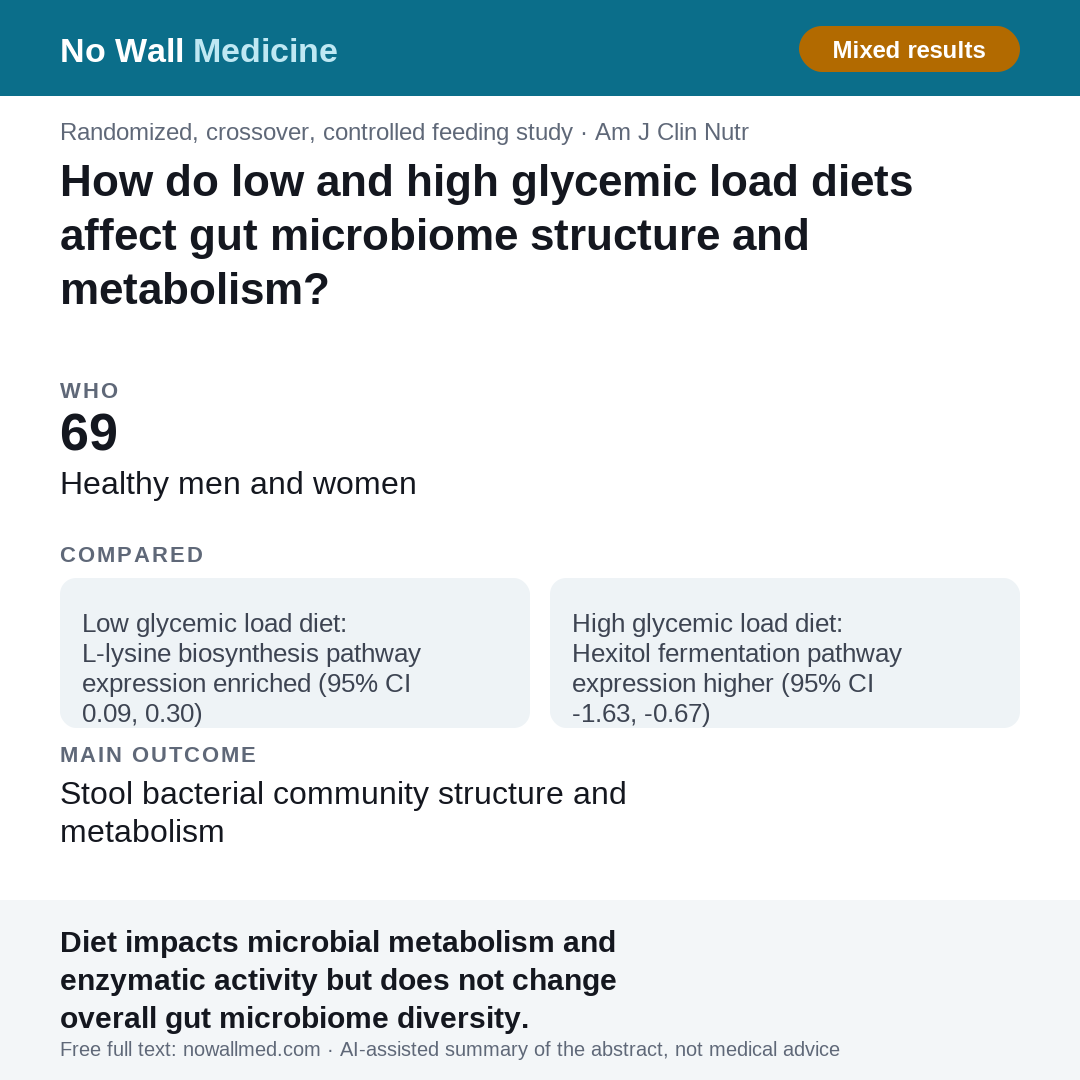
Metabolic plasticity of the gut microbiome in response to diets differing in glycemic load in a randomized, crossover, controlled feeding study
Randomized, crossover, controlled feeding studyMixed results
How do low and high glycemic load diets affect gut microbiome structure and metabolism?
Who
69
Healthy men and women
Compared
Low glycemic load diet: L-lysine biosynthesis pathway expression enriched (95% CI 0.09, 0.30)
High glycemic load diet: Hexitol fermentation pathway expression higher (95% CI -1.63, -0.67)
Main outcome
Stool bacterial community structure and metabolism
Bottom line: Diet impacts microbial metabolism and enzymatic activity but does not change overall gut microbiome diversity.
Am J Clin Nutr · 2025-07-05Download image
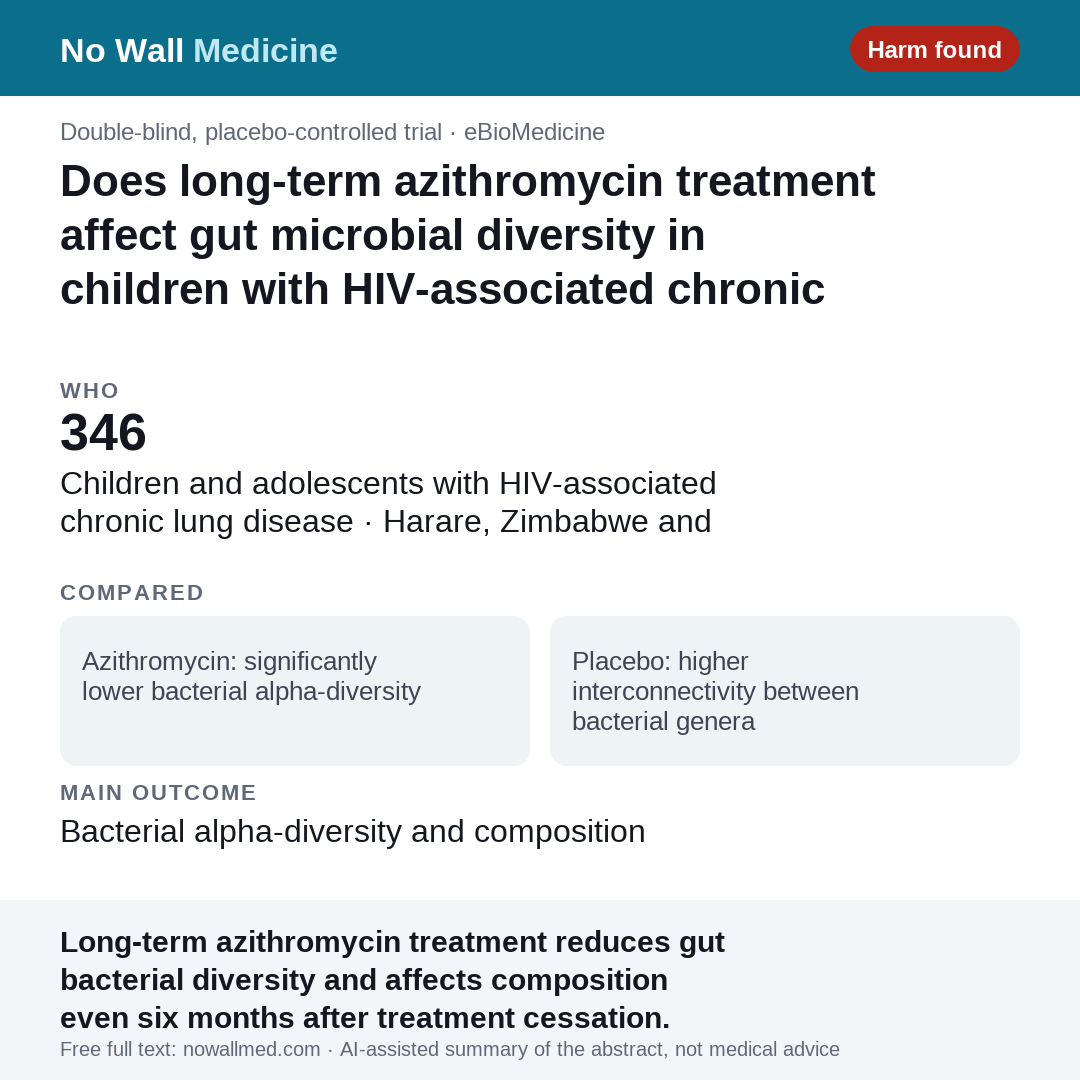
Effect of long-term azithromycin treatment on gut microbial diversity in children and adolescents with HIV-associated chronic lung disease
Double-blind, placebo-controlled trialHarm found
Does long-term azithromycin treatment affect gut microbial diversity in children with HIV-associated chronic lung disease?
Who
346
Children and adolescents with HIV-associated chronic lung disease · Harare, Zimbabwe and Blantyre, Malawi
Compared
Azithromycin: significantly lower bacterial alpha-diversity
Placebo: higher interconnectivity between bacterial genera
Main outcome
Bacterial alpha-diversity and composition
Bottom line: Long-term azithromycin treatment reduces gut bacterial diversity and affects composition even six months after treatment cessation.
Limitation: Consequences of reduced bacterial diversity need further investigation.
Funded by: Norwegian Research Council and Helse Nord
eBioMedicine · 2025-07-05Download image
Prediction of generalized anxiety disorder treatment outcomes with neurobehavioral responses to approach-avoidance conflict: a randomized clinical trial
Randomized clinical trialMixed results
Do pre-treatment neurobehavioral indices predict generalized anxiety disorder treatment outcomes?
Who
56
Treatment-seeking adults meeting criteria for generalized anxiety disorder
Compared
Behavioral activation
Exposure therapy
Main outcome
Generalized anxiety disorder and depressive symptoms
Bottom line: Pre-treatment avoidance and prefrontal cortex activation predicted symptom reduction across both behavioral therapies.
Limitation: Larger, longitudinal studies in clinical settings are warranted.
Transl Psychiatry · 2025-07-05Download image

A systematic review of machine learning approaches in cochlear implant outcomes
Systematic reviewBenefit found
How can machine learning techniques predict cochlear implant outcomes?
Who
20
Individuals with cochlear implants
Compared
Imaging-based studies: high predictive accuracy
Neural function measures: feasible way to assess functional status
Speech enhancement algorithms: showed promise
Main outcome
prediction of cochlear implant outcomes
Bottom line: Machine learning shows promise in predicting outcomes and enhancing speech recognition for cochlear implant users.
NPJ Digit Med · 2025-07-05Download image

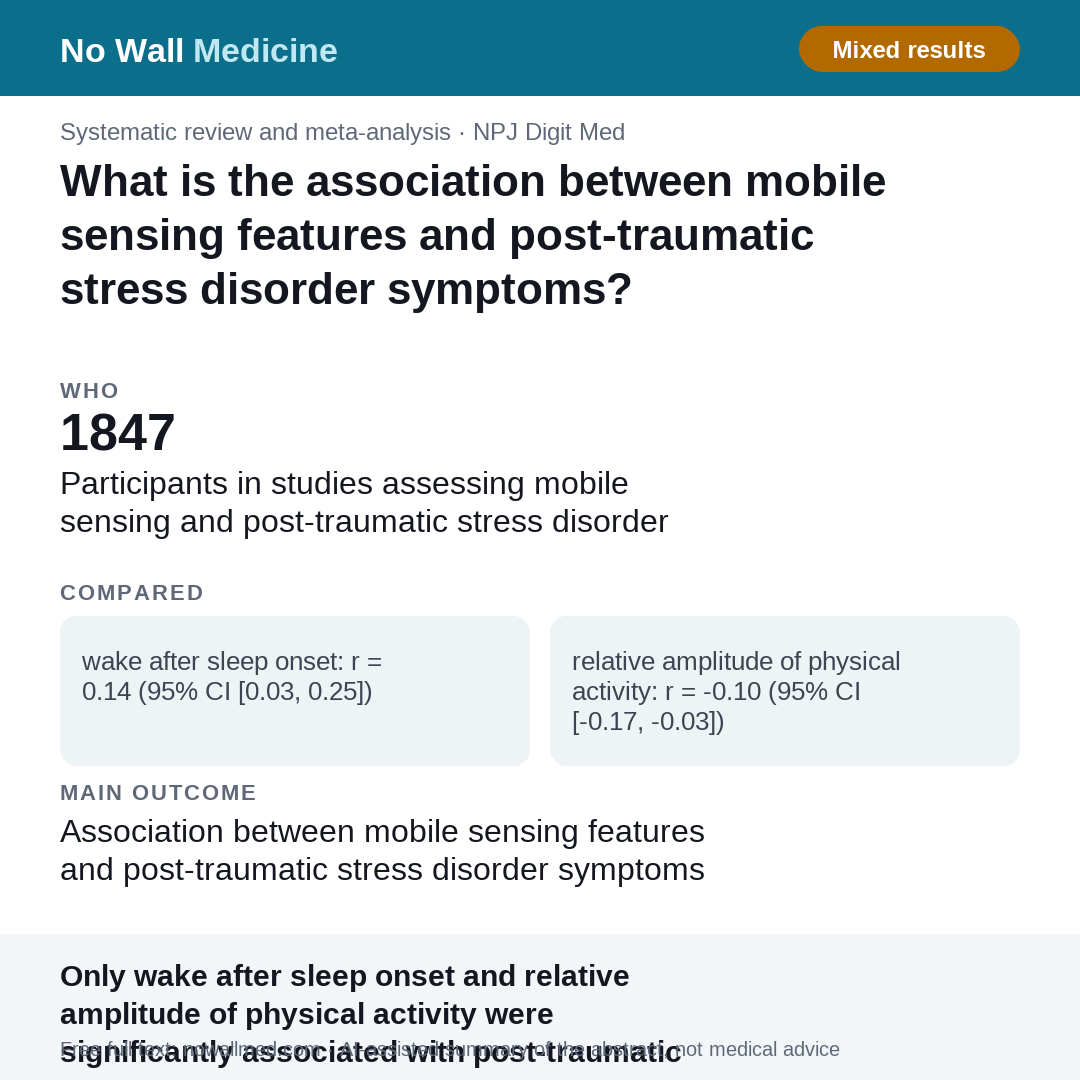
The relation between passively collected data and PTSD: a systematic review and meta-analysis
Systematic review and meta-analysisMixed results
What is the association between mobile sensing features and post-traumatic stress disorder symptoms?
Who
1847
Participants in studies assessing mobile sensing and post-traumatic stress disorder
Compared
wake after sleep onset: r = 0.14 (95% CI [0.03, 0.25])
relative amplitude of physical activity: r = -0.10 (95% CI [-0.17, -0.03])
Main outcome
Association between mobile sensing features and post-traumatic stress disorder symptoms
Bottom line: Only wake after sleep onset and relative amplitude of physical activity were significantly associated with post-traumatic stress disorder symptoms.
NPJ Digit Med · 2025-07-05Download image
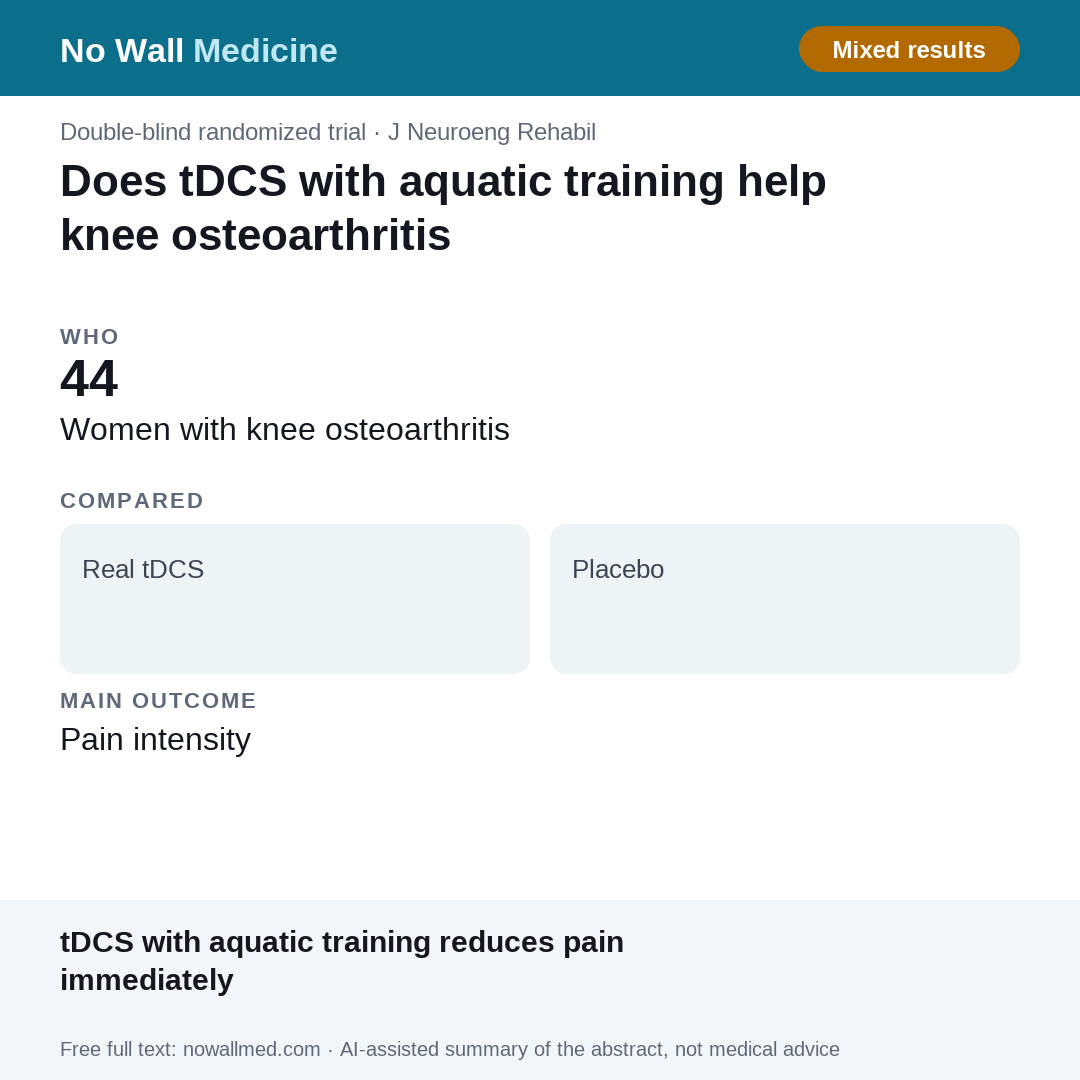
The impacts of transcranial direct current stimulation combined with aquatic neuromuscular training on pain, function, kinesiophobia, knee instability, and quality of life in knee osteoarthritis: a double-blind randomized trial
Double-blind randomized trialMixed results
Does tDCS with aquatic training help knee osteoarthritis
Who
44
Women with knee osteoarthritis
Compared
Real tDCS
Placebo
Main outcome
Pain intensity
Bottom line: tDCS with aquatic training reduces pain immediately
J Neuroeng Rehabil · 2025-07-05Download image
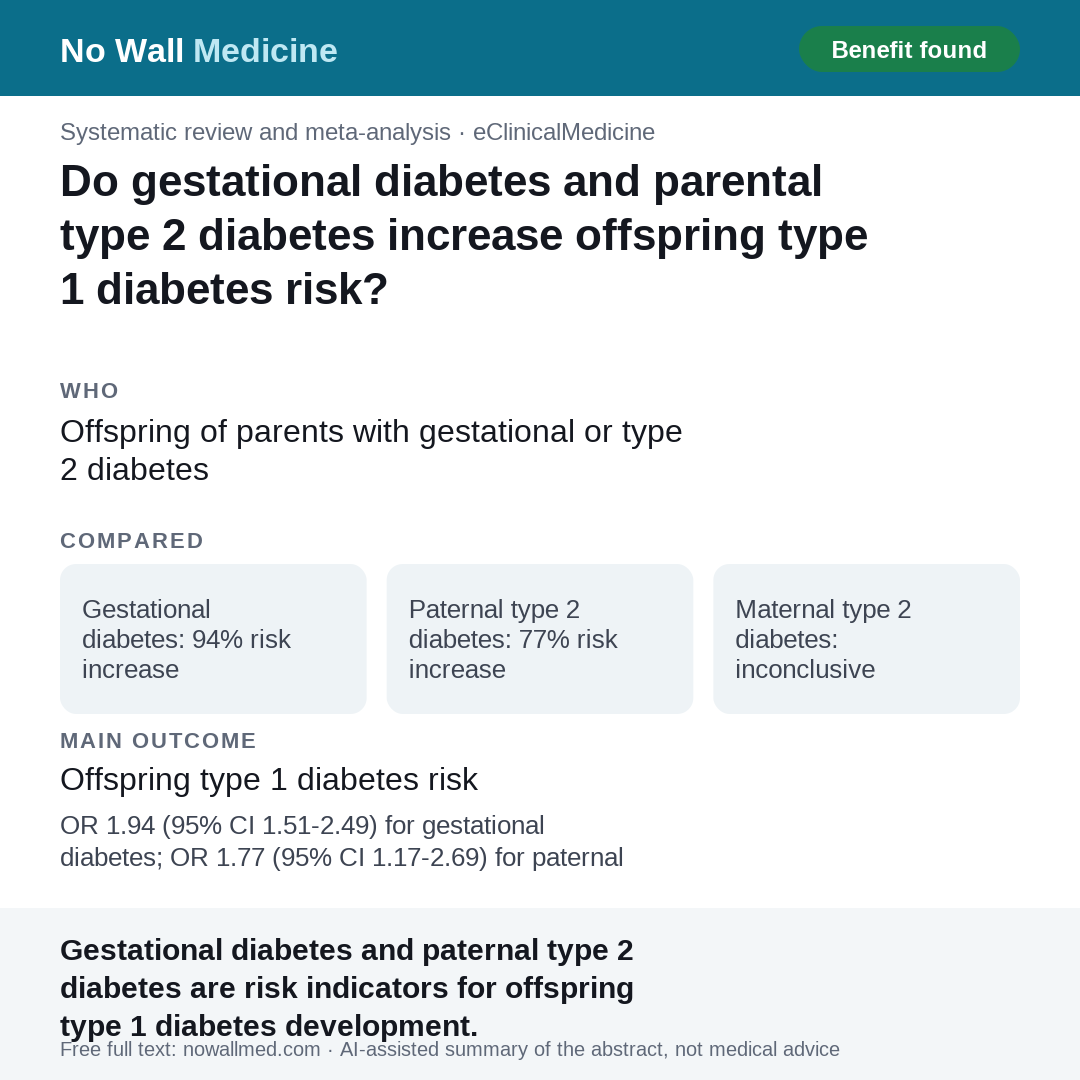
Gestational diabetes and parental type 2 diabetes as risk indicators for type 1 diabetes in offspring: a systematic review and meta-analysis
Systematic review and meta-analysisBenefit found
Do gestational diabetes and parental type 2 diabetes increase offspring type 1 diabetes risk?
Who
Offspring of parents with gestational or type 2 diabetes
Compared
Gestational diabetes: 94% risk increase
Paternal type 2 diabetes: 77% risk increase
Maternal type 2 diabetes: inconclusive
Main outcome
Offspring type 1 diabetes risk
Result: OR 1.94 (95% CI 1.51-2.49) for gestational diabetes; OR 1.77 (95% CI 1.17-2.69) for paternal type 2 diabetes
Bottom line: Gestational diabetes and paternal type 2 diabetes are risk indicators for offspring type 1 diabetes development.
eClinicalMedicine · 2025-07-04Download image
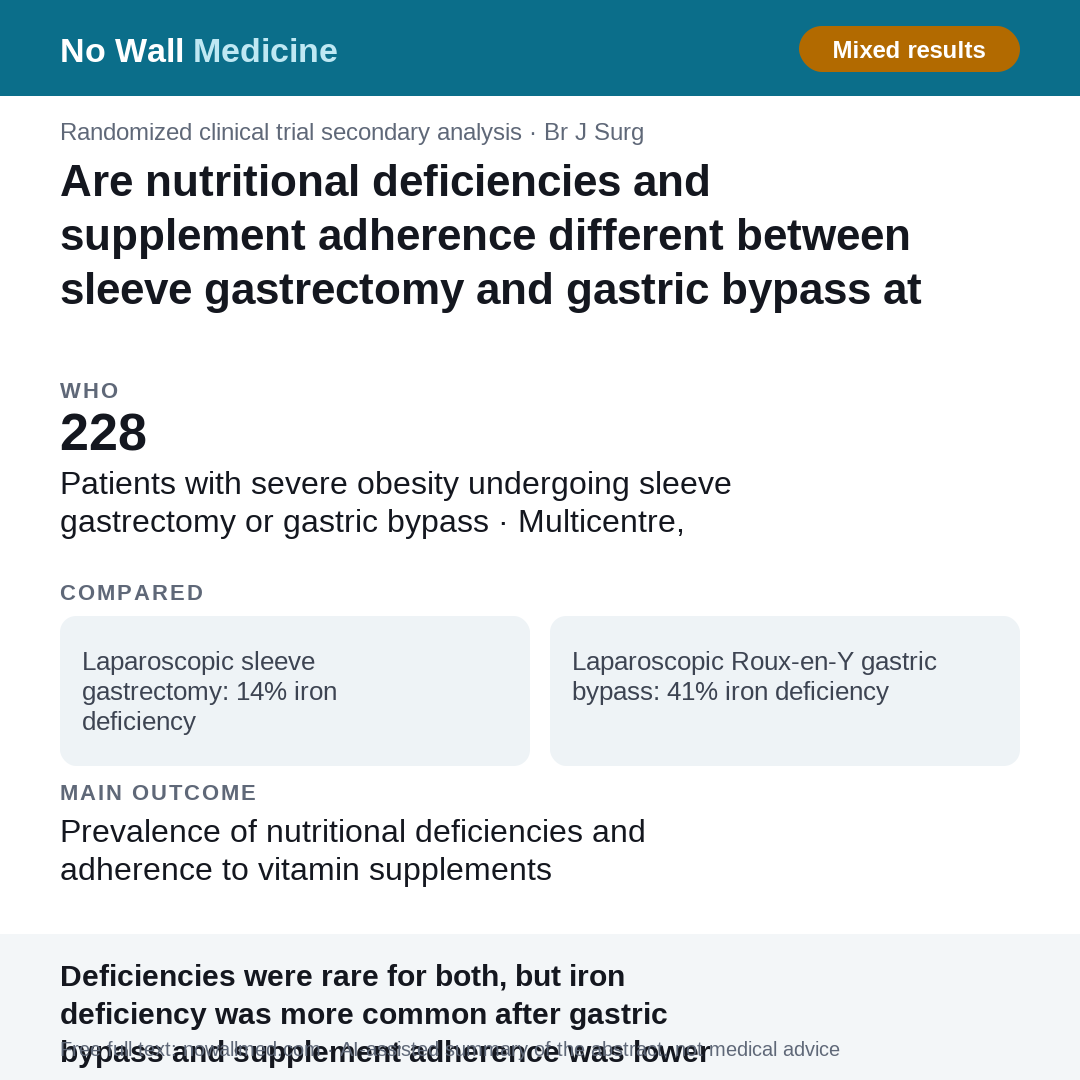
Nutritional deficiencies after sleeve gastrectomy and Roux-en-Y gastric bypass at 10 years: secondary analysis of the SLEEVEPASS randomized clinical trial
Randomized clinical trial secondary analysisMixed results
Are nutritional deficiencies and supplement adherence different between sleeve gastrectomy and gastric bypass at 10 years?
Who
228
Patients with severe obesity undergoing sleeve gastrectomy or gastric bypass · Multicentre, Finland
Compared
Laparoscopic sleeve gastrectomy: 14% iron deficiency
Laparoscopic Roux-en-Y gastric bypass: 41% iron deficiency
Main outcome
Prevalence of nutritional deficiencies and adherence to vitamin supplements
Bottom line: Deficiencies were rare for both, but iron deficiency was more common after gastric bypass and supplement adherence was lower after sleeve gastrectomy.
Br J Surg · 2025-07-04Download image
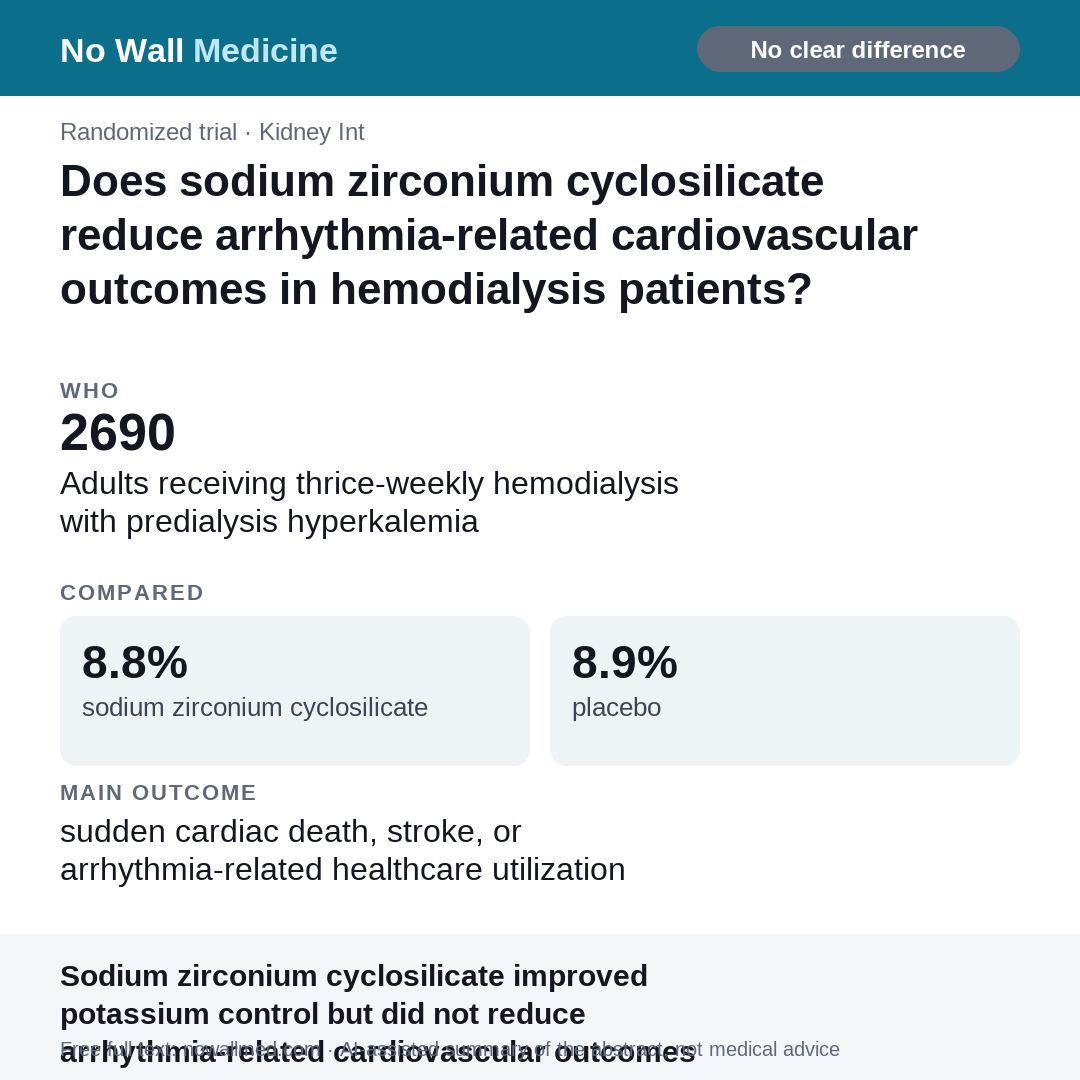
The randomized DIALIZE-Outcomes trial evaluated sodium zirconium cyclosilicate in hemodialysis
Randomized trialNo clear difference
Does sodium zirconium cyclosilicate reduce arrhythmia-related cardiovascular outcomes in hemodialysis patients?
Who
2690
Adults receiving thrice-weekly hemodialysis with predialysis hyperkalemia
Compared
8.8%sodium zirconium cyclosilicate (119 patients)
8.9%placebo (119 patients)
Main outcome
sudden cardiac death, stroke, or arrhythmia-related healthcare utilization
Result: hazard ratio 0.98 (95% confidence interval 0.76-1.26)
Bottom line: Sodium zirconium cyclosilicate improved potassium control but did not reduce arrhythmia-related cardiovascular outcomes in hemodialysis patients.
Limitation: Early termination due to low event rates and high medication discontinuation rates.
Kidney Int · 2025-07-04Download image
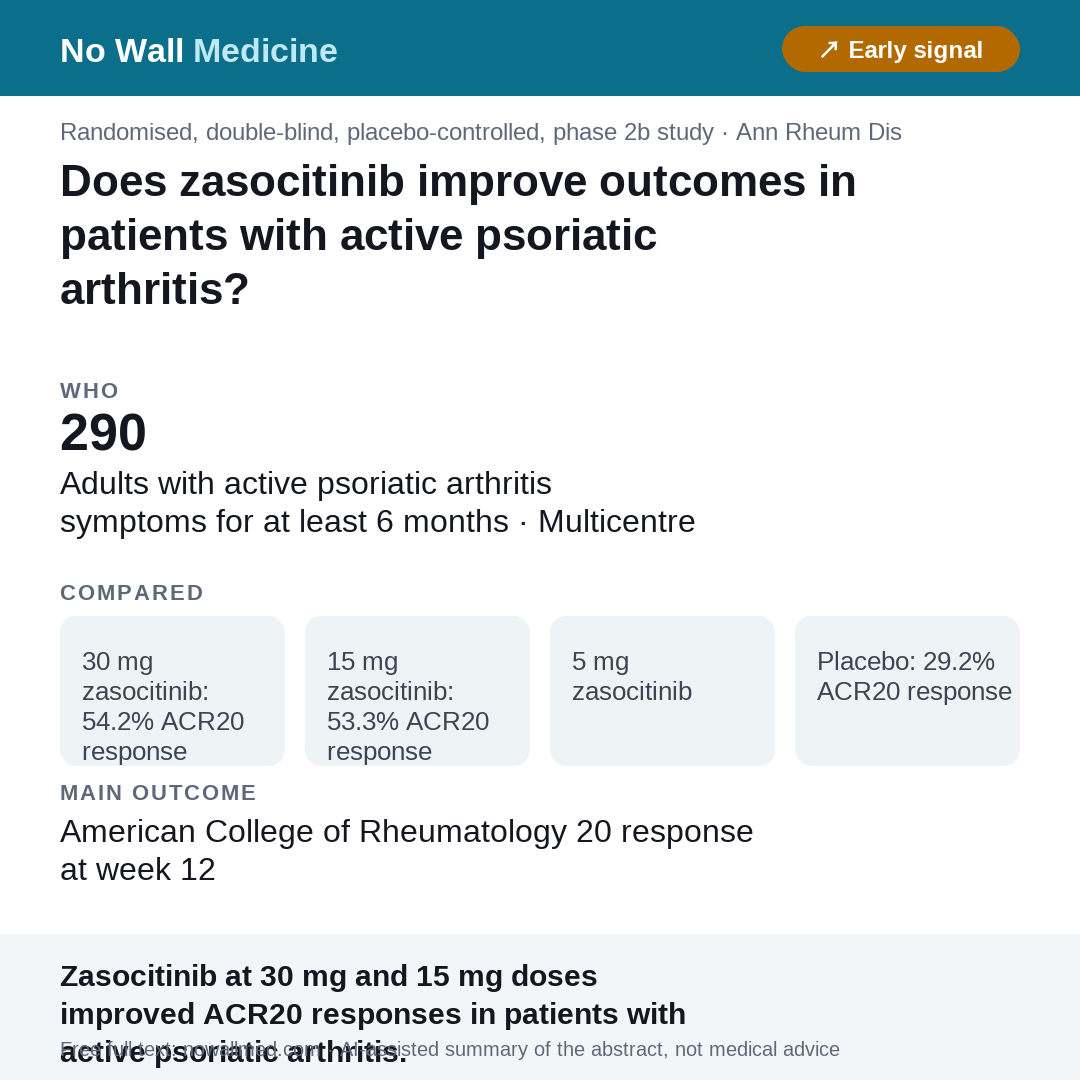
Highly selective tyrosine kinase 2 inhibition with zasocitinib (TAK-279) improves outcomes in patients with active psoriatic arthritis: a randomised phase 2b study
Randomised, double-blind, placebo-controlled, phase 2b studyBenefit found
Does zasocitinib improve outcomes in patients with active psoriatic arthritis?
Who
290
Adults with active psoriatic arthritis symptoms for at least 6 months · Multicentre
Compared
30 mg zasocitinib: 54.2% ACR20 response
15 mg zasocitinib: 53.3% ACR20 response
5 mg zasocitinib
Placebo: 29.2% ACR20 response
Main outcome
American College of Rheumatology 20 response at week 12
Bottom line: Zasocitinib at 30 mg and 15 mg doses improved ACR20 responses in patients with active psoriatic arthritis.
Limitation: Small study of limited duration and small sample size.
Ann Rheum Dis · 2025-07-04Download image
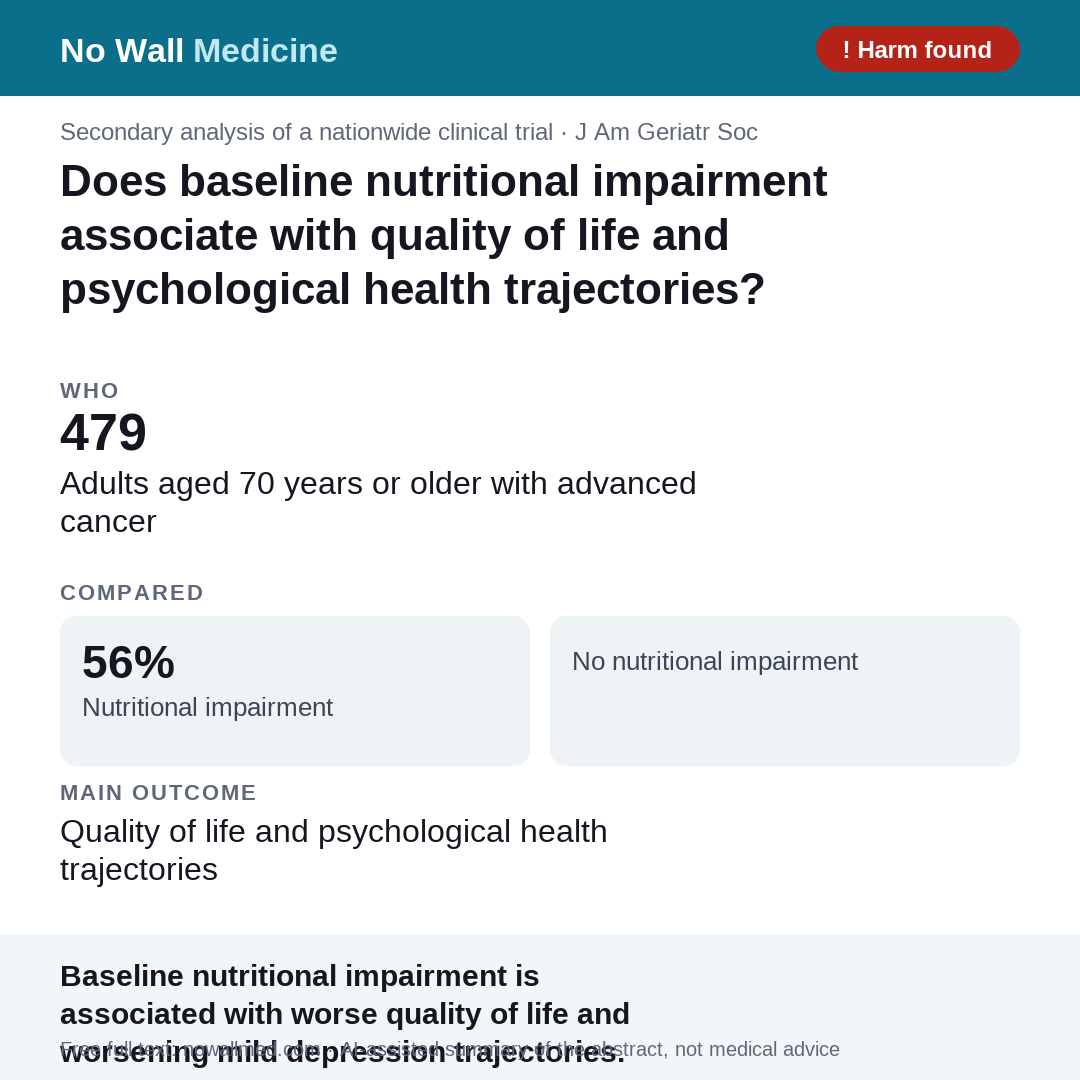
Nutritional Impairment and Quality of Life Trajectories Among Older Adults With Advanced Cancer
Secondary analysis of a nationwide clinical trialHarm found
Does baseline nutritional impairment associate with quality of life and psychological health trajectories?
Who
479
Adults aged 70 years or older with advanced cancer
Compared
56%Nutritional impairment
No nutritional impairment
Main outcome
Quality of life and psychological health trajectories
Result: OR 4.2 (95% CI 2.0-8.9) for Lowest QOL
Bottom line: Baseline nutritional impairment is associated with worse quality of life and worsening mild depression trajectories.
J Am Geriatr Soc · 2025-07-04Download image
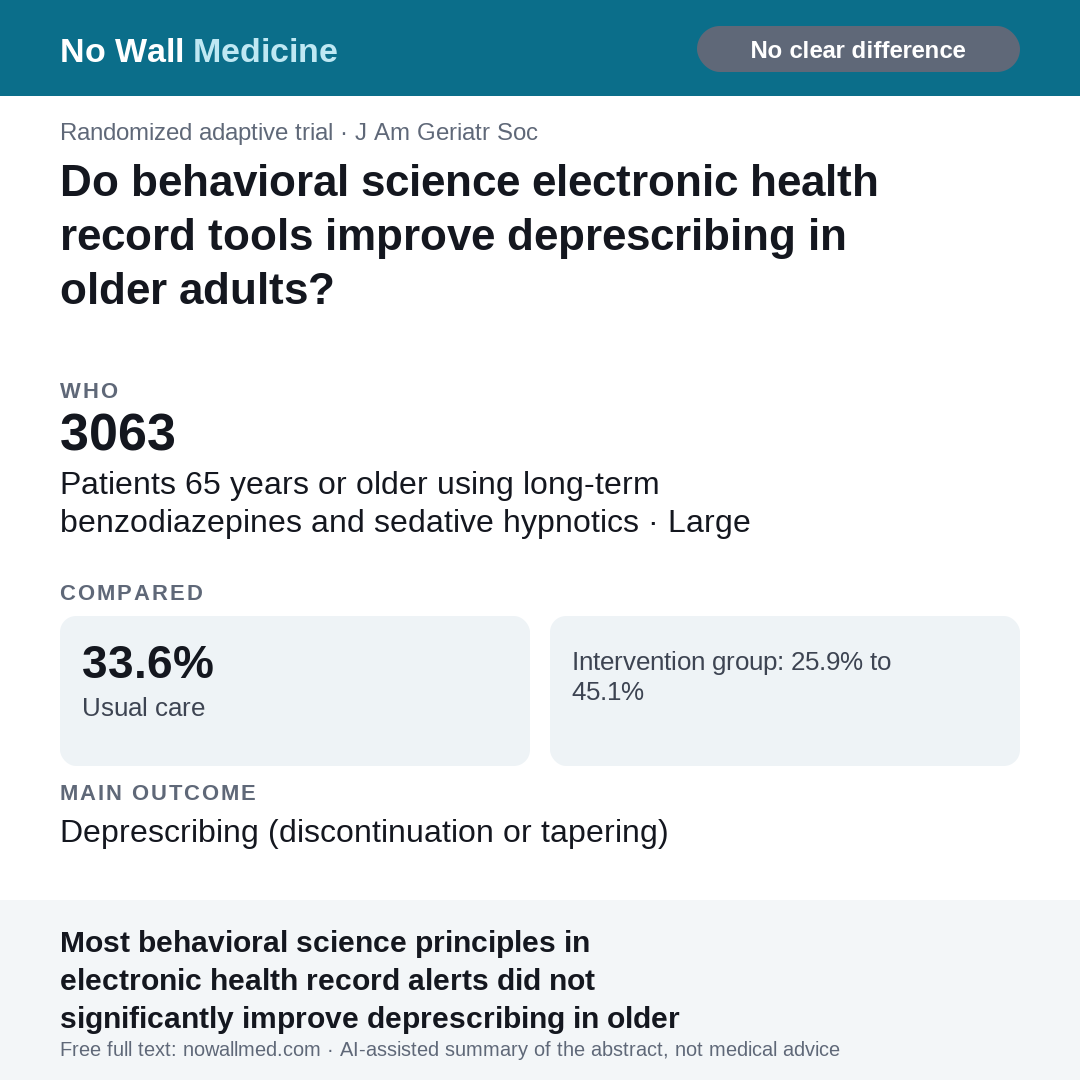
Comparing Fourteen Behavioral Science Electronic Health Record Deprescribing Tools in Older Adults: NUDGE-EHR Adaptive Trial
Randomized adaptive trialNo clear difference
Do behavioral science electronic health record tools improve deprescribing in older adults?
Who
3063
Patients 65 years or older using long-term benzodiazepines and sedative hypnotics · Large healthcare system
Compared
33.6%Usual care
Intervention group: 25.9% to 45.1%
Main outcome
Deprescribing (discontinuation or tapering)
Bottom line: Most behavioral science principles in electronic health record alerts did not significantly improve deprescribing in older adults.
J Am Geriatr Soc · 2025-07-04Download image
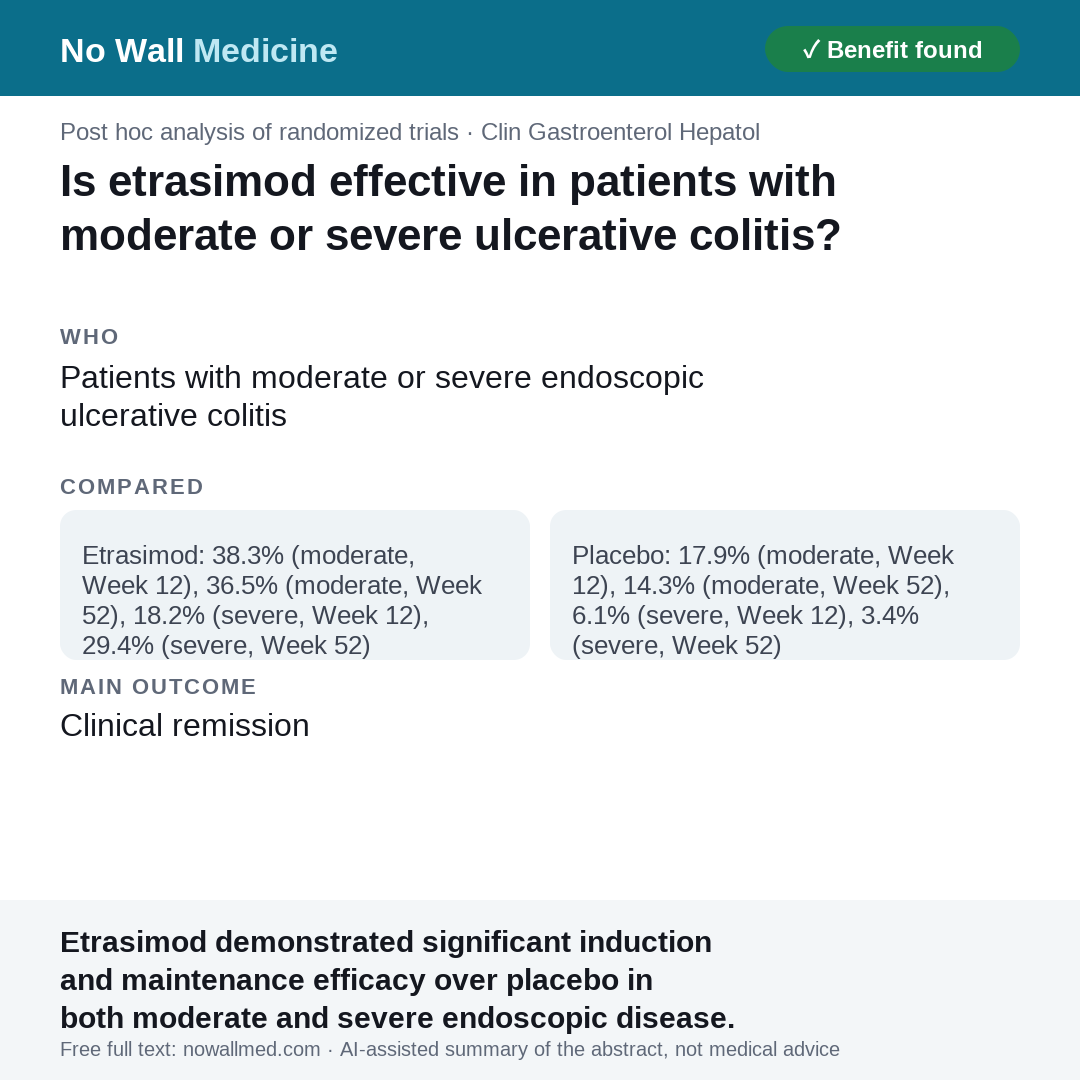
Efficacy of Etrasimod in Ulcerative Colitis: Analysis of ELEVATE UC 52 and ELEVATE UC 12 by Baseline Endoscopic Severity
Post hoc analysis of randomized trialsBenefit found
Is etrasimod effective in patients with moderate or severe ulcerative colitis?
Who
Patients with moderate or severe endoscopic ulcerative colitis
Compared
Etrasimod: 38.3% (moderate, Week 12), 36.5% (moderate, Week 52), 18.2% (severe, Week 12), 29.4% (severe, Week 52)
Placebo: 17.9% (moderate, Week 12), 14.3% (moderate, Week 52), 6.1% (severe, Week 12), 3.4% (severe, Week 52)
Main outcome
Clinical remission
Bottom line: Etrasimod demonstrated significant induction and maintenance efficacy over placebo in both moderate and severe endoscopic disease.
Clin Gastroenterol Hepatol · 2025-07-04Download image
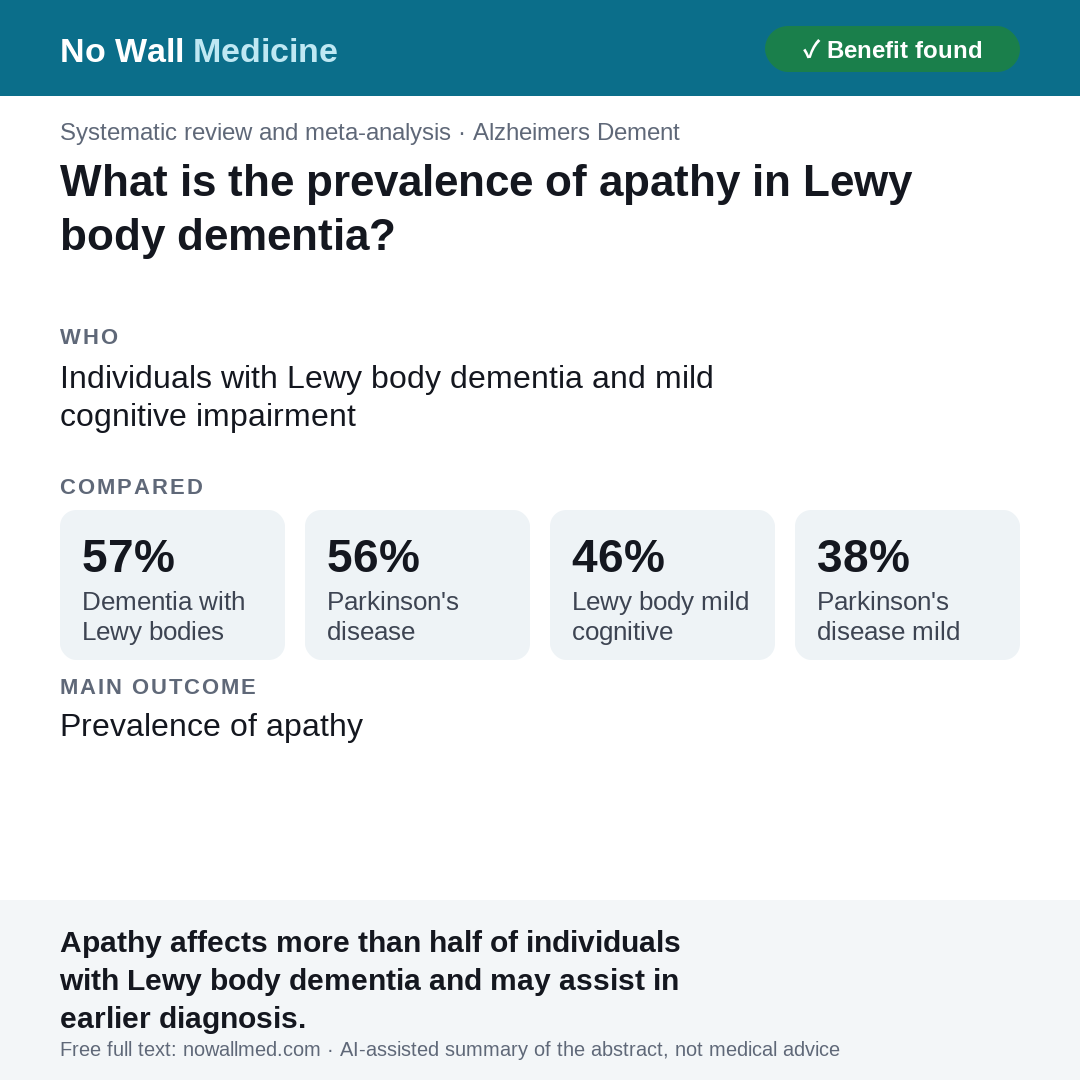
The prevalence of apathy in Lewy body dementia: A systematic review and meta-analysis
Systematic review and meta-analysisBenefit found
What is the prevalence of apathy in Lewy body dementia?
Who
Individuals with Lewy body dementia and mild cognitive impairment
Compared
57%Dementia with Lewy bodies (95% confidence interval 52%-63%)
56%Parkinson's disease dementia (95% CI 43%-70%)
46%Lewy body mild cognitive impairment (95% CI 32%-61%)
38%Parkinson's disease mild cognitive impairment (95% CI 25%-50%)
Main outcome
Prevalence of apathy
Bottom line: Apathy affects more than half of individuals with Lewy body dementia and may assist in earlier diagnosis.
Alzheimers Dement · 2025-07-04Download image
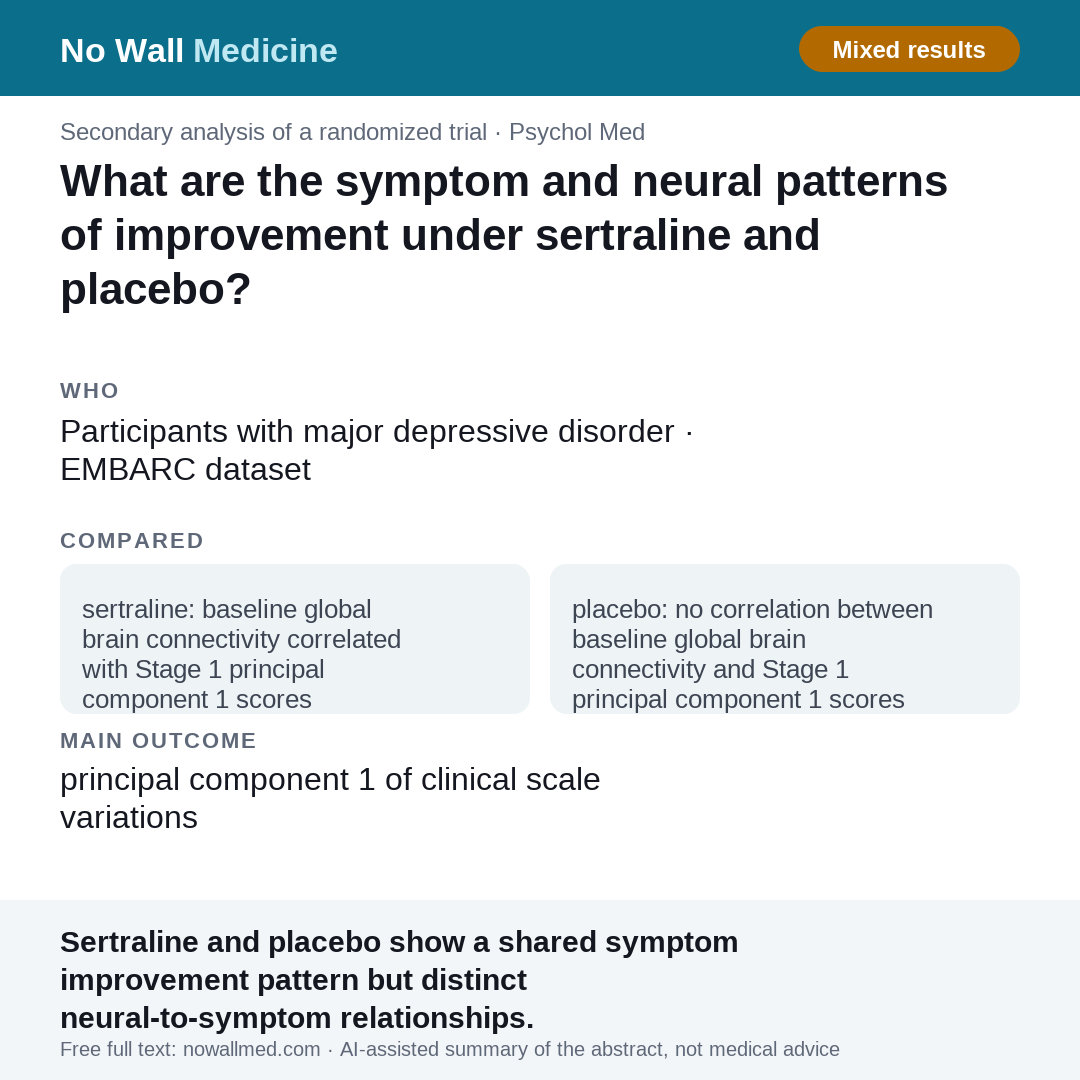
A common symptom geometry of mood improvement under sertraline and placebo associated with distinct neural patterns
Secondary analysis of a randomized trialMixed results
What are the symptom and neural patterns of improvement under sertraline and placebo?
Who
Participants with major depressive disorder · EMBARC dataset
Compared
sertraline: baseline global brain connectivity correlated with Stage 1 principal component 1 scores
placebo: no correlation between baseline global brain connectivity and Stage 1 principal component 1 scores
Main outcome
principal component 1 of clinical scale variations
Bottom line: Sertraline and placebo show a shared symptom improvement pattern but distinct neural-to-symptom relationships.
Psychol Med · 2025-07-04Download image
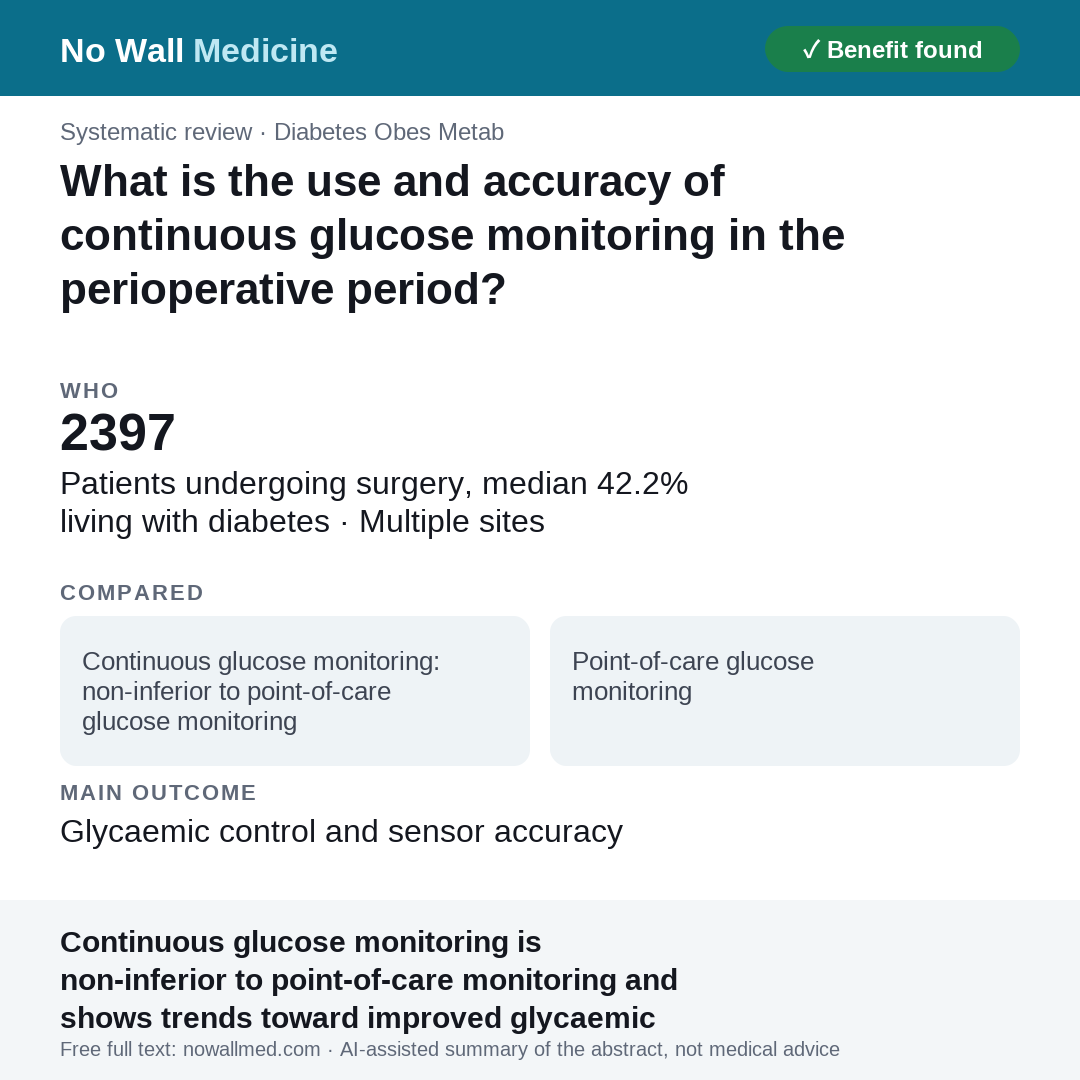
Perioperative use and accuracy of continuous glucose monitoring: A systematic review
Systematic reviewBenefit found
What is the use and accuracy of continuous glucose monitoring in the perioperative period?
Who
2397
Patients undergoing surgery, median 42.2% living with diabetes · Multiple sites including operating room and intensive care unit
Compared
Continuous glucose monitoring: non-inferior to point-of-care glucose monitoring
Point-of-care glucose monitoring
Main outcome
Glycaemic control and sensor accuracy
Bottom line: Continuous glucose monitoring is non-inferior to point-of-care monitoring and shows trends toward improved glycaemic control.
Limitation: Clinical interest remains to be proven by high quality randomized controlled trials regarding technical issues.
Diabetes Obes Metab · 2025-07-04Download image
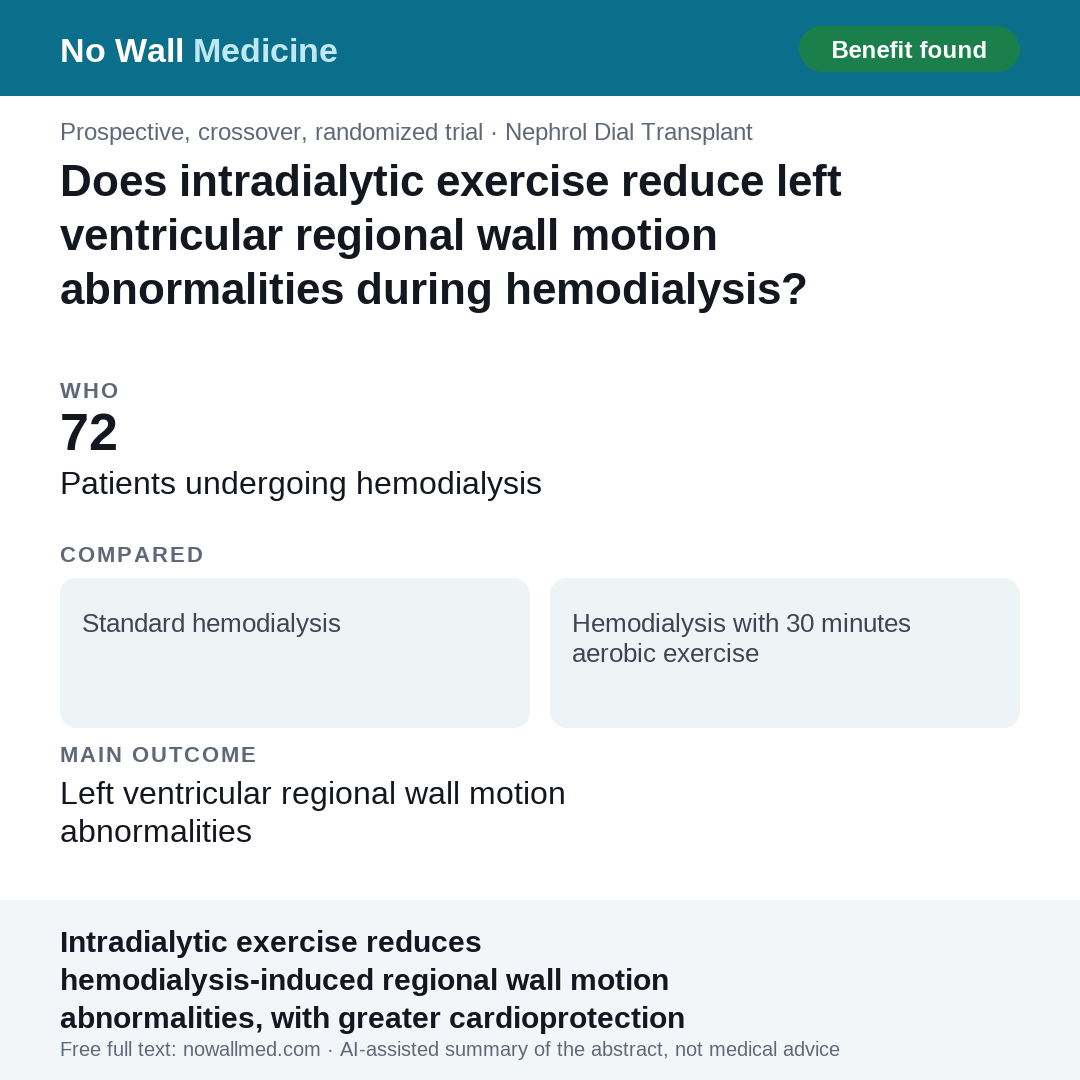
Cardioprotection from intradialytic exercise: a randomized trial
Prospective, crossover, randomized trialBenefit found
Does intradialytic exercise reduce left ventricular regional wall motion abnormalities during hemodialysis?
Who
72
Patients undergoing hemodialysis
Compared
Standard hemodialysis
Hemodialysis with 30 minutes aerobic exercise
Main outcome
Left ventricular regional wall motion abnormalities
Result: estimated difference: 1.1 segment, 95%CI: 0.33/1.90
Bottom line: Intradialytic exercise reduces hemodialysis-induced regional wall motion abnormalities, with greater cardioprotection observed at the apex.
Limitation: Further studies are needed to elucidate the mechanisms underlying the heterogeneous benefits.
Nephrol Dial Transplant · 2025-07-04Download image
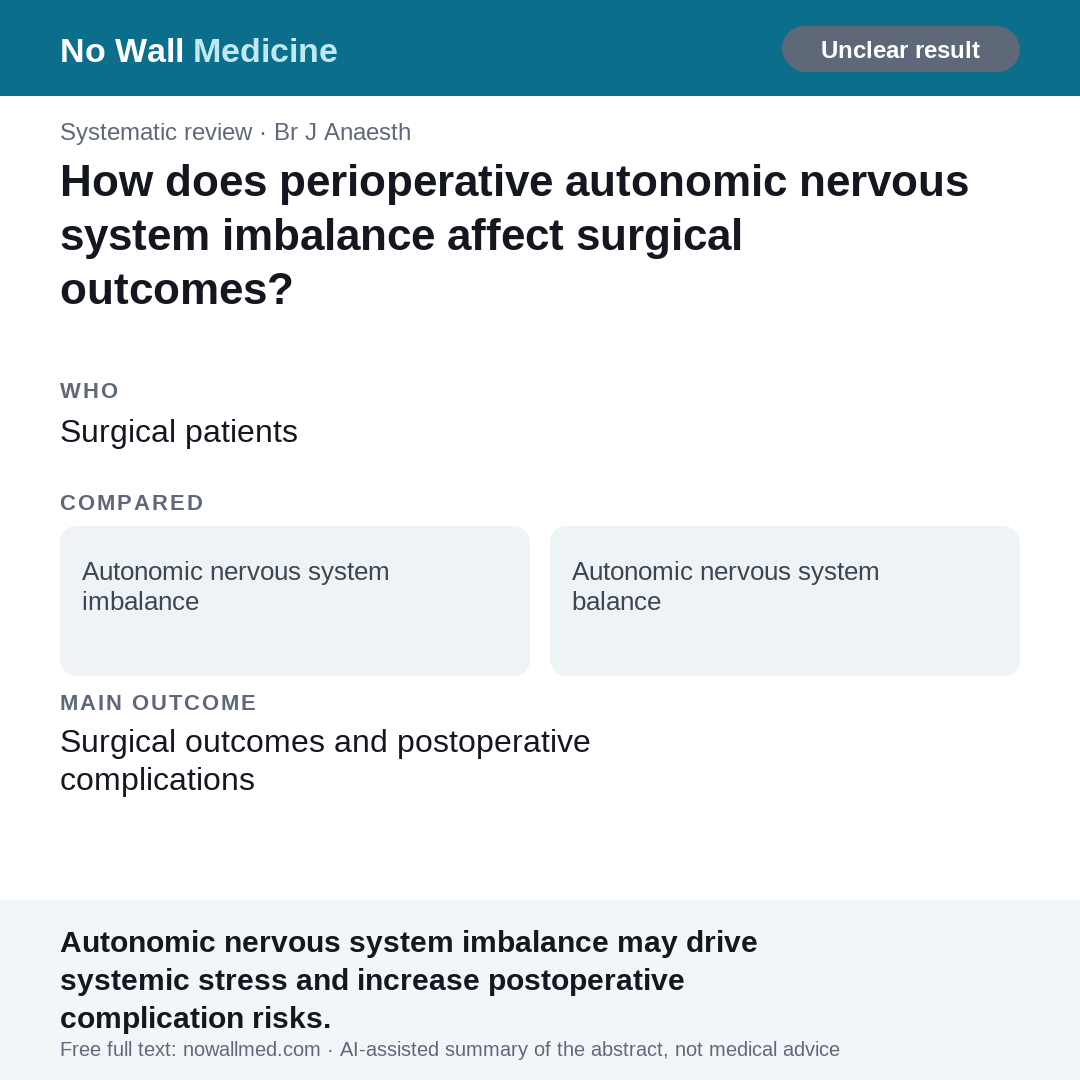
Effect of perioperative autonomic nervous system imbalance on surgical outcomes: a systematic review
Systematic reviewUnclear result
How does perioperative autonomic nervous system imbalance affect surgical outcomes?
Who
Surgical patients
Compared
Autonomic nervous system imbalance
Autonomic nervous system balance
Main outcome
Surgical outcomes and postoperative complications
Bottom line: Autonomic nervous system imbalance may drive systemic stress and increase postoperative complication risks.
Br J Anaesth · 2025-07-04Download image
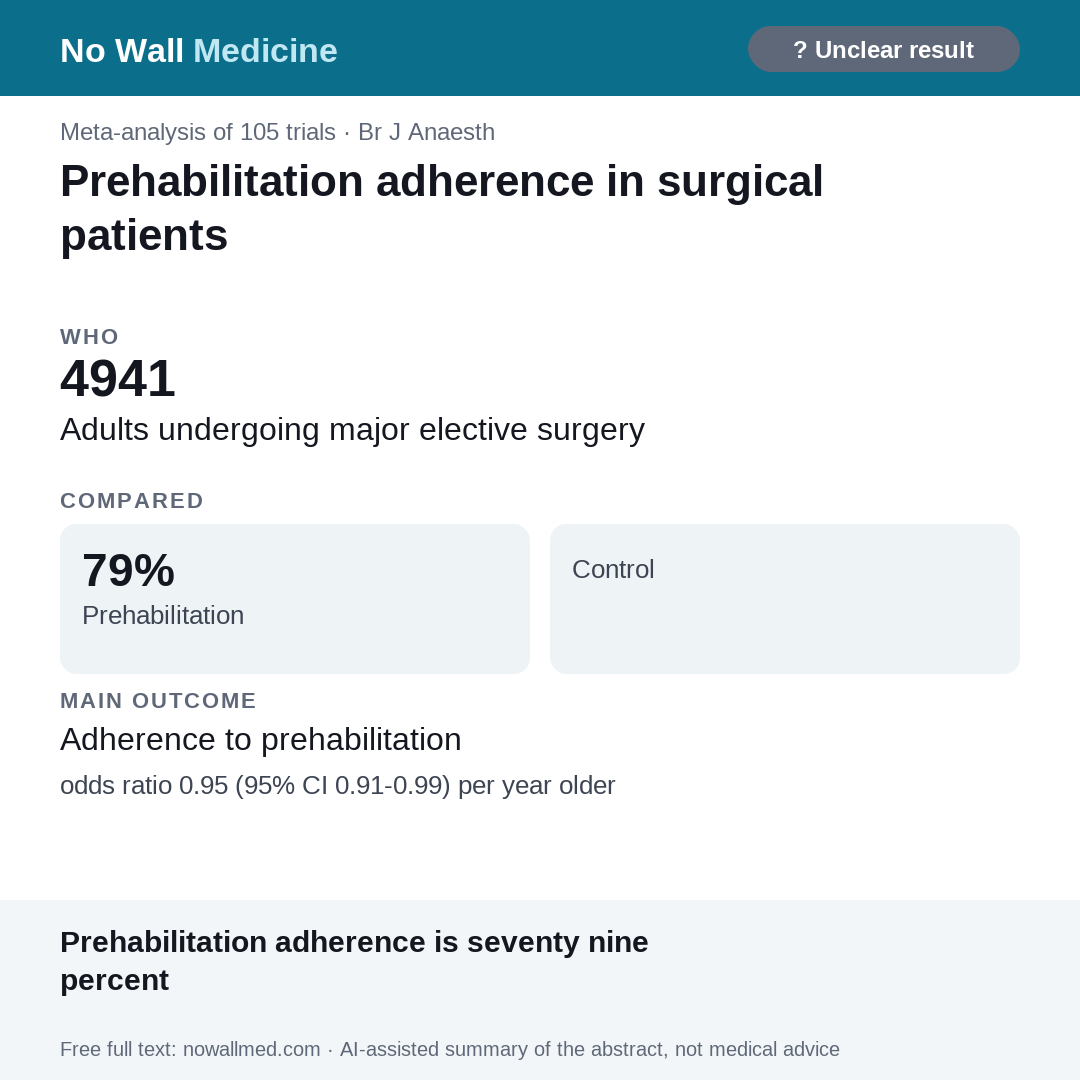
Adherence to prehabilitation in adult surgical patients: a systematic review, meta-analysis, meta-regression, and qualitative synthesis
Meta-analysis of 105 trialsUnclear result
Prehabilitation adherence in surgical patients
Who
4941
Adults undergoing major elective surgery
Compared
79%Prehabilitation (95% CI 70-88)
Control
Main outcome
Adherence to prehabilitation
Result: odds ratio 0.95 (95% CI 0.91-0.99) per year older
Bottom line: Prehabilitation adherence is seventy nine percent
Limitation: Variable adherence metrics across trials
Br J Anaesth · 2025-07-04Download image
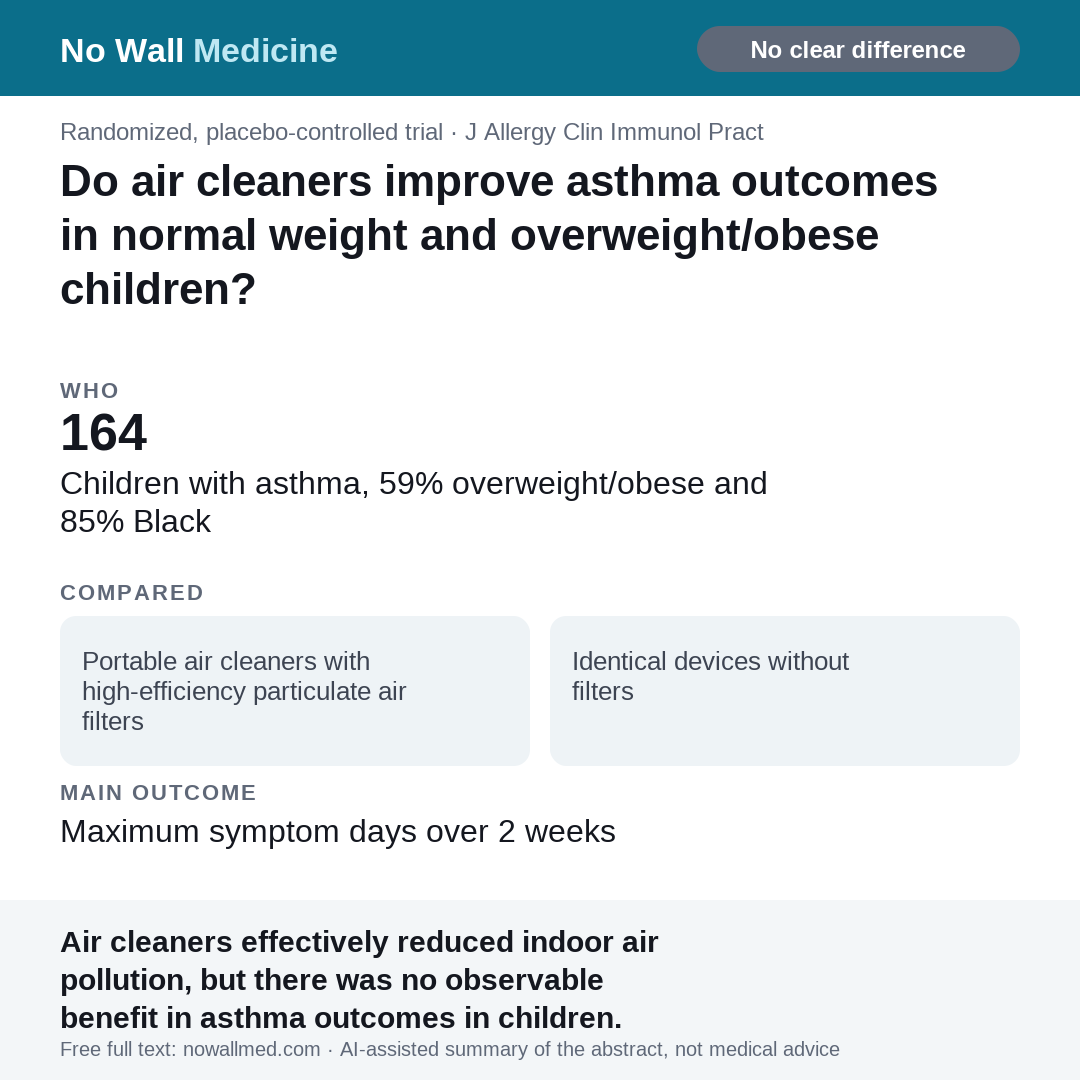
AIRWEIGHS: A Randomized Controlled Trial of Air Cleaners in Normal Weight and Overweight/Obese Children With Asthma
Randomized, placebo-controlled trialNo clear difference
Do air cleaners improve asthma outcomes in normal weight and overweight/obese children?
Who
164
Children with asthma, 59% overweight/obese and 85% Black
Compared
Portable air cleaners with high-efficiency particulate air filters
Identical devices without filters
Main outcome
Maximum symptom days over 2 weeks
Bottom line: Air cleaners effectively reduced indoor air pollution, but there was no observable benefit in asthma outcomes in children.
J Allergy Clin Immunol Pract · 2025-07-04Download image