Visual abstracts
New randomized trials and meta-analyses from leading journals at a glance: who was studied, what was compared, and what was found. Every paper is free to read in full.
All specialtiesCardiology 4877Oncology 4138Gastroenterology & Hepatology 1942Infectious Disease 3837Neurology 1905Psychiatry & Mental Health 2273Pulmonology 2143Critical Care 1365Endocrinology & Diabetes 2580Pediatrics 2980Surgery 2559Orthopedics & Sports Medicine 931Neurosurgery 537Cardiothoracic & Vascular Surgery 674Plastic & Reconstructive Surgery 591Nephrology 1133Rheumatology 823Hematology 1109Dermatology 621Ophthalmology 543Obstetrics & Gynecology 1686Public & Global Health 1058Radiology & Imaging 648Anesthesiology 986Urology 764ENT (Otolaryngology) 503Emergency Medicine 511Allergy & Immunology 313Geriatrics 981Family Medicine & Primary Care 562Medical Genetics & Genomics 676Pathology & Laboratory Medicine 159Physical Medicine & Rehabilitation 757Palliative Care 444Nutrition 1588Digital Health & AI 2201General Medicine 321
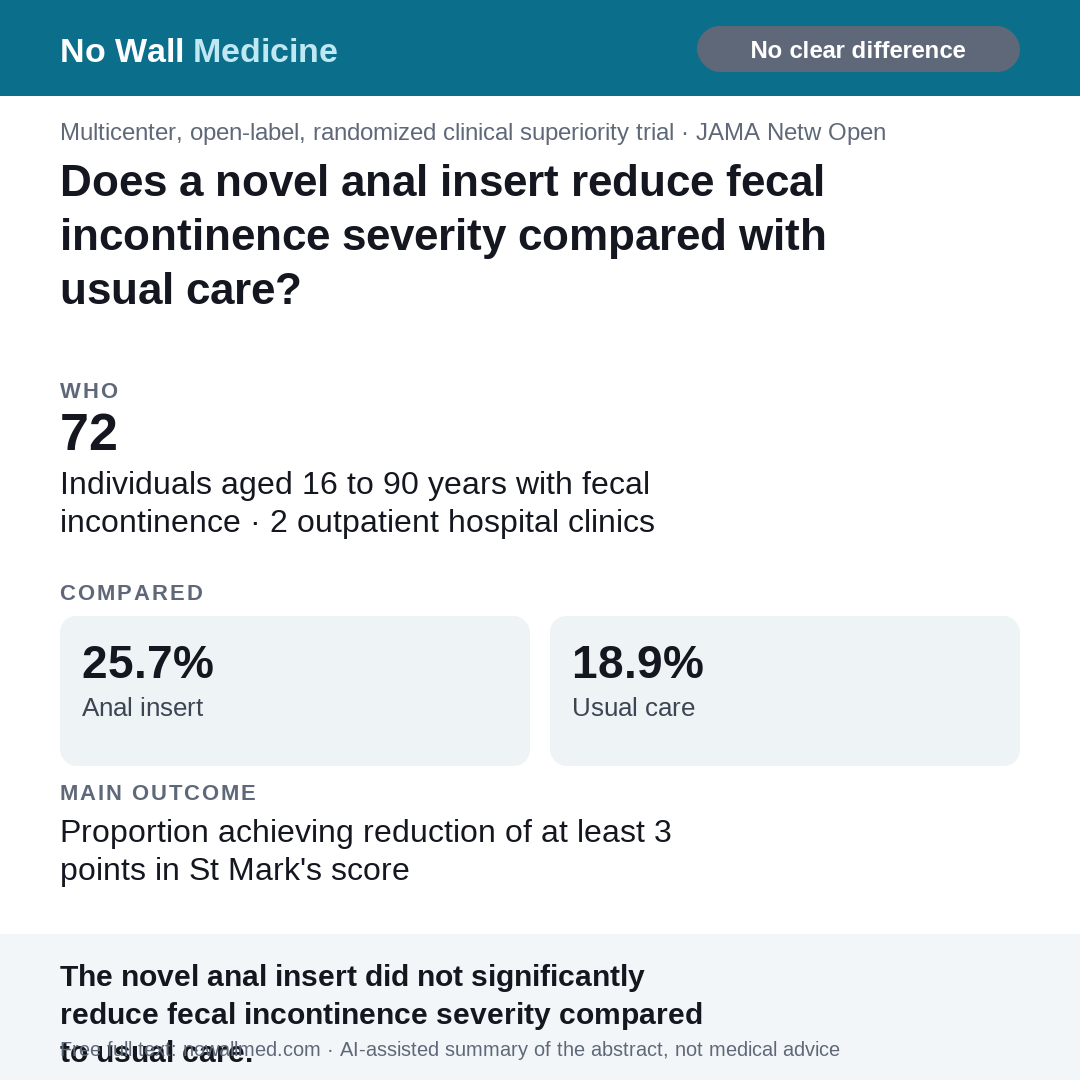
Controlling Fecal Incontinence With a Novel Anal Device: A Randomized Clinical Trial
Multicenter, open-label, randomized clinical superiority trialNo clear difference
Does a novel anal insert reduce fecal incontinence severity compared with usual care?
Who
72
Individuals aged 16 to 90 years with fecal incontinence · 2 outpatient hospital clinics in the Netherlands
Compared
25.7%Anal insert (9/35)
18.9%Usual care (7/37)
Main outcome
Proportion achieving reduction of at least 3 points in St Mark's score
Result: relative risk 1.36 (95% CI 0.57 to 3.25)
Bottom line: The novel anal insert did not significantly reduce fecal incontinence severity compared to usual care.
JAMA Netw Open · 2026-04-01Download image
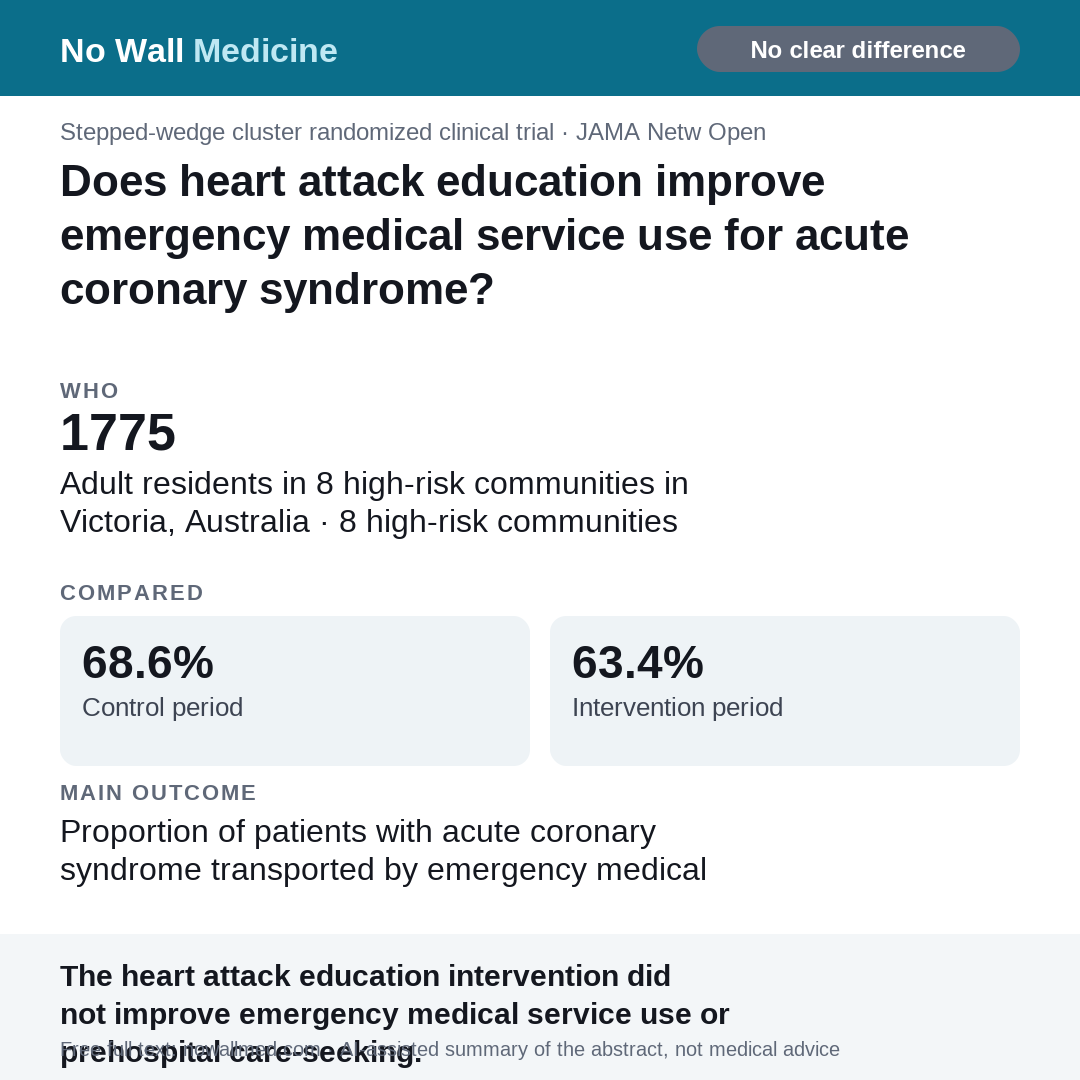
Heart Attack Education and EMS Response in High-Risk, Low EMS Usage Areas: A Stepped-Wedge Cluster-Randomized Trial
Stepped-wedge cluster randomized clinical trialNo clear difference
Does heart attack education improve emergency medical service use for acute coronary syndrome?
Who
1775
Adult residents in 8 high-risk communities in Victoria, Australia · 8 high-risk communities in Victoria, Australia
Compared
68.6%Control period
63.4%Intervention period
Main outcome
Proportion of patients with acute coronary syndrome transported by emergency medical services
Result: adjusted risk difference -8.98% (95% CI -17.50% to -0.46%)
Bottom line: The heart attack education intervention did not improve emergency medical service use or prehospital care-seeking.
JAMA Netw Open · 2026-04-01Download image
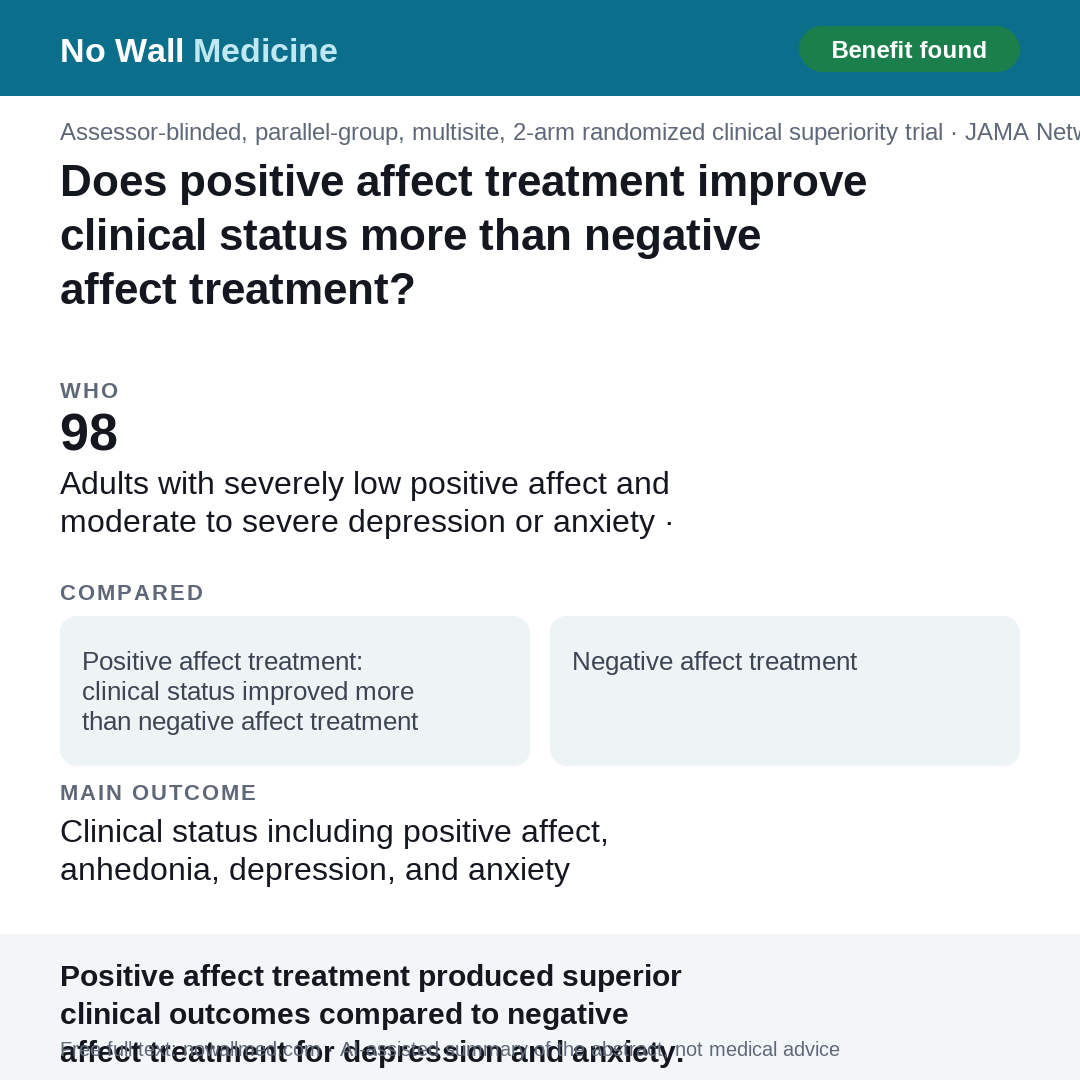
Positive Affect Treatment for Depression, Anxiety, and Low Positive Affect: A Randomized Clinical Trial
Assessor-blinded, parallel-group, multisite, 2-arm randomized clinical superiority trialBenefit found
Does positive affect treatment improve clinical status more than negative affect treatment?
Who
98
Adults with severely low positive affect and moderate to severe depression or anxiety · Academic outpatient treatment centers in California and Texas
Compared
Positive affect treatment: clinical status improved more than negative affect treatment
Negative affect treatment
Main outcome
Clinical status including positive affect, anhedonia, depression, and anxiety
Result: b = -0.06 (95% CI, -0.11 to -0.01)
Bottom line: Positive affect treatment produced superior clinical outcomes compared to negative affect treatment for depression and anxiety.
JAMA Netw Open · 2026-04-01Download image
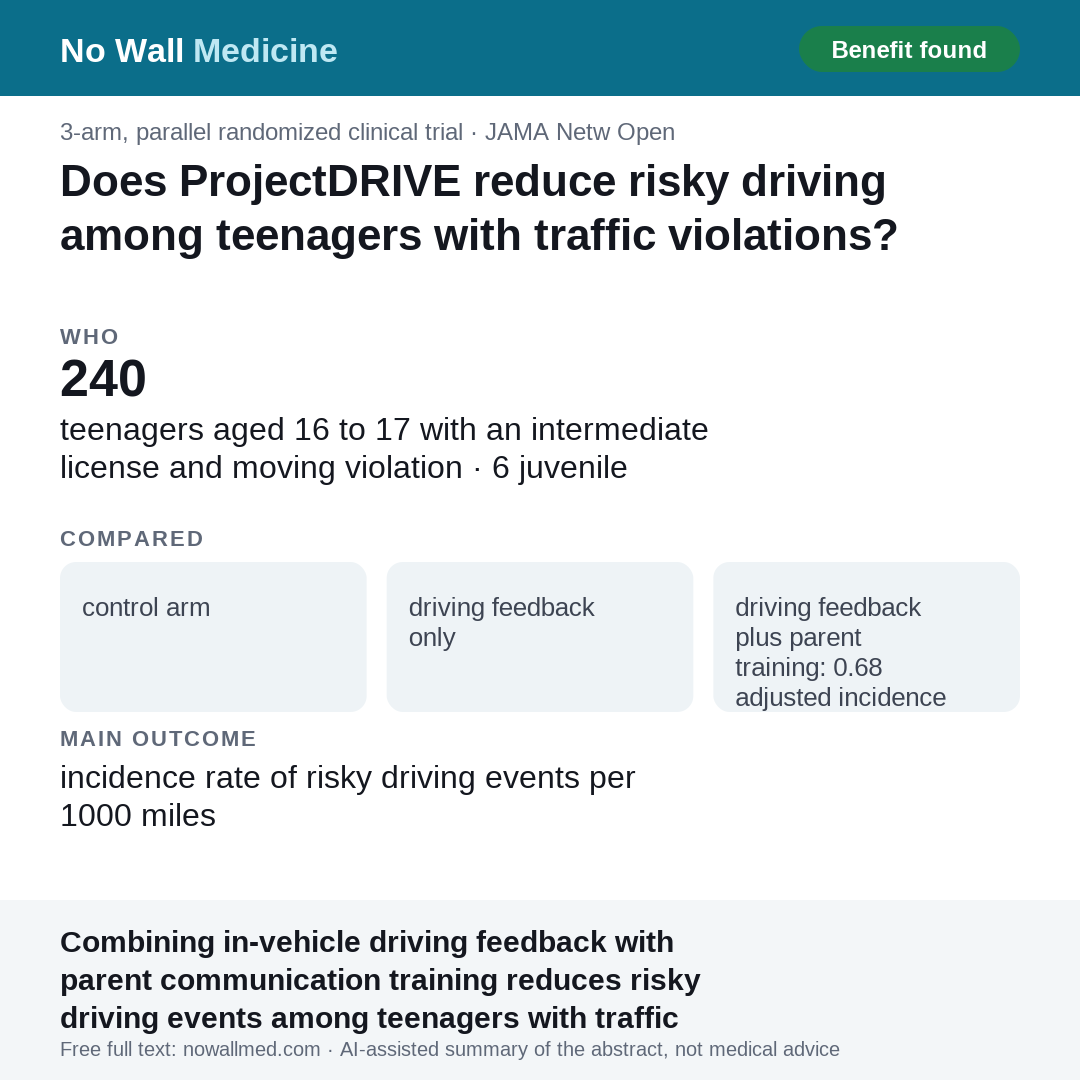
In-Vehicle Feedback With or Without Parent Communication Training and Teenage Driving Behaviors: A Randomized Clinical Trial
3-arm, parallel randomized clinical trialBenefit found
Does ProjectDRIVE reduce risky driving among teenagers with traffic violations?
Who
240
teenagers aged 16 to 17 with an intermediate license and moving violation · 6 juvenile traffic courts across Ohio
Compared
control arm
driving feedback only
driving feedback plus parent training: 0.68 adjusted incidence rate ratio
Main outcome
incidence rate of risky driving events per 1000 miles
Result: adjusted incidence rate ratio 0.68 (97.5% CI 0.51 to 0.90)
Bottom line: Combining in-vehicle driving feedback with parent communication training reduces risky driving events among teenagers with traffic violations.
JAMA Netw Open · 2026-04-01Download image
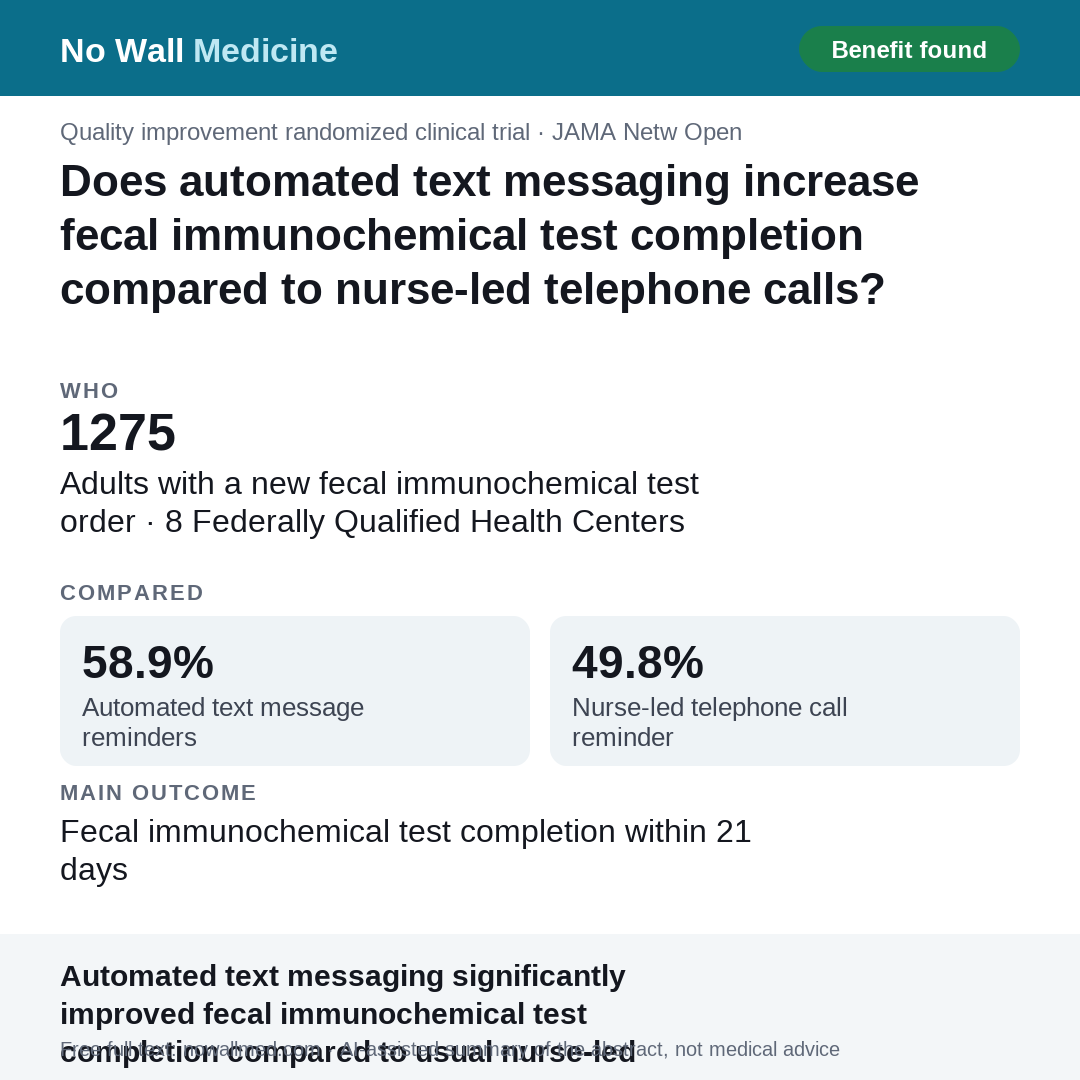
Behaviorally Informed Text Messaging to Promote Colon Cancer Screening: A Quality Improvement Randomized Clinical Trial
Quality improvement randomized clinical trialBenefit found
Does automated text messaging increase fecal immunochemical test completion compared to nurse-led telephone calls?
Who
1275
Adults with a new fecal immunochemical test order · 8 Federally Qualified Health Centers in Brooklyn, New York
Compared
58.9%Automated text message reminders
49.8%Nurse-led telephone call reminder
Main outcome
Fecal immunochemical test completion within 21 days
Result: absolute difference of 9.0 percentage points (95% CI, 3.6-14.5 percentage points)
Bottom line: Automated text messaging significantly improved fecal immunochemical test completion compared to usual nurse-led telephone outreach.
JAMA Netw Open · 2026-04-01Download image
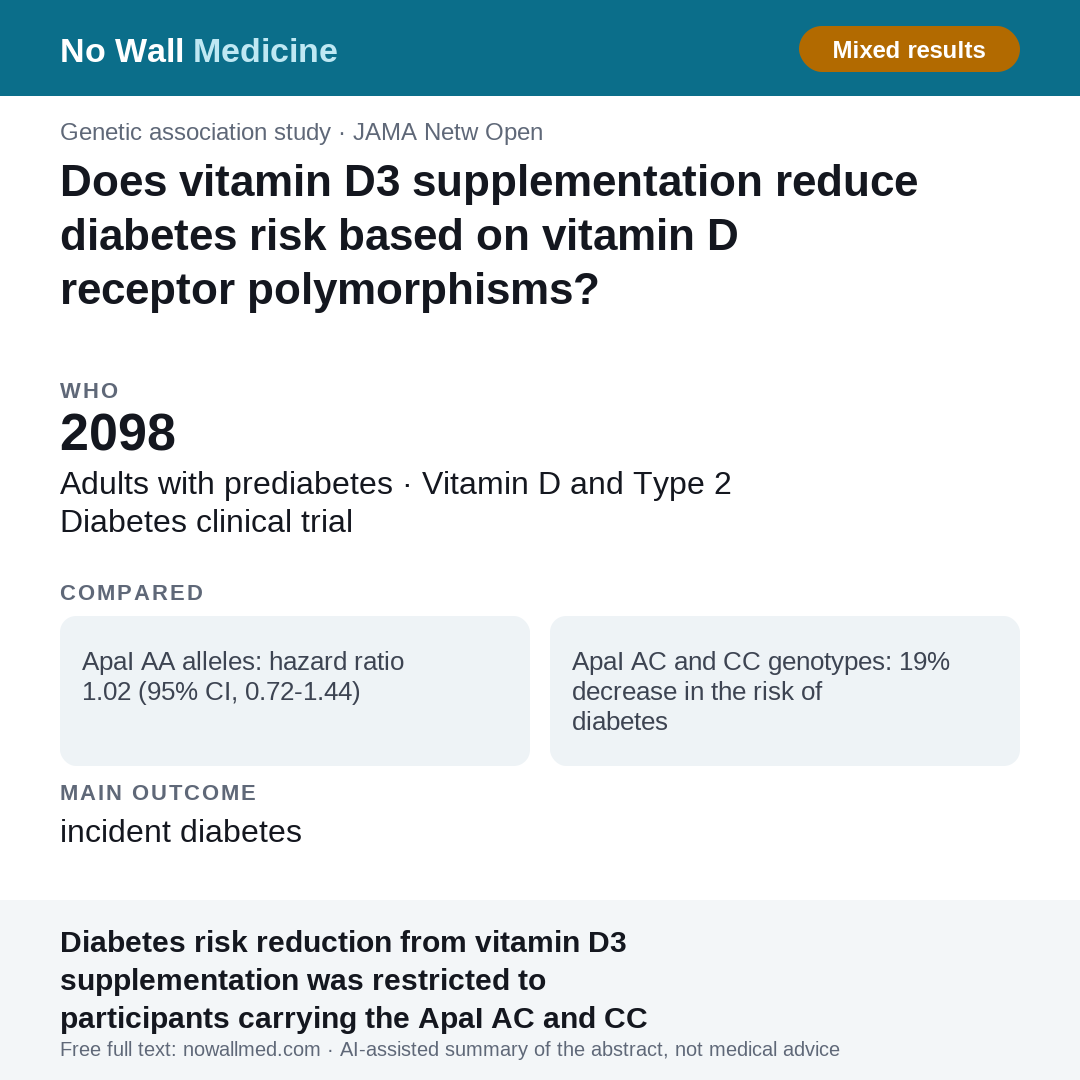
Vitamin D Receptor Polymorphisms and the Effect of Vitamin D Supplementation on Diabetes Risk Among Adults With Prediabetes
Genetic association studyMixed results
Does vitamin D3 supplementation reduce diabetes risk based on vitamin D receptor polymorphisms?
Who
2098
Adults with prediabetes · Vitamin D and Type 2 Diabetes clinical trial
Compared
ApaI AA alleles: hazard ratio 1.02 (95% CI, 0.72-1.44)
ApaI AC and CC genotypes: 19% decrease in the risk of diabetes
Main outcome
incident diabetes
Result: hazard ratio 0.81 (95% CI, 0.66-0.99)
Bottom line: Diabetes risk reduction from vitamin D3 supplementation was restricted to participants carrying the ApaI AC and CC alleles.
JAMA Netw Open · 2026-04-01Download image
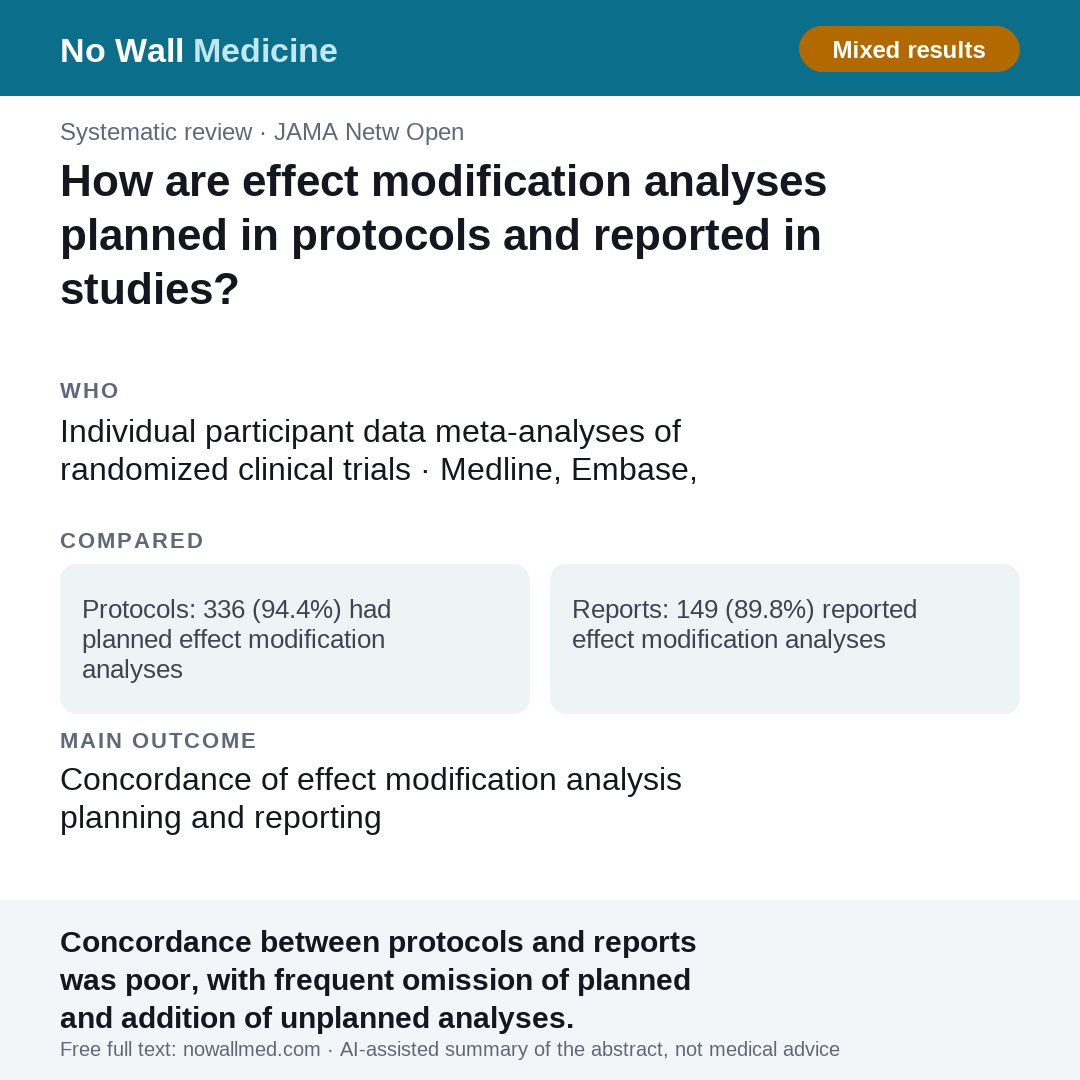
Effect Modification Analyses in Individual Participant Data Meta-Analyses: A Systematic Review
Systematic reviewMixed results
How are effect modification analyses planned in protocols and reported in studies?
Who
Individual participant data meta-analyses of randomized clinical trials · Medline, Embase, Cochrane Database, and PROSPERO
Compared
Protocols: 336 (94.4%) had planned effect modification analyses
Reports: 149 (89.8%) reported effect modification analyses
Main outcome
Concordance of effect modification analysis planning and reporting
Bottom line: Concordance between protocols and reports was poor, with frequent omission of planned and addition of unplanned analyses.
JAMA Netw Open · 2026-04-01Download image
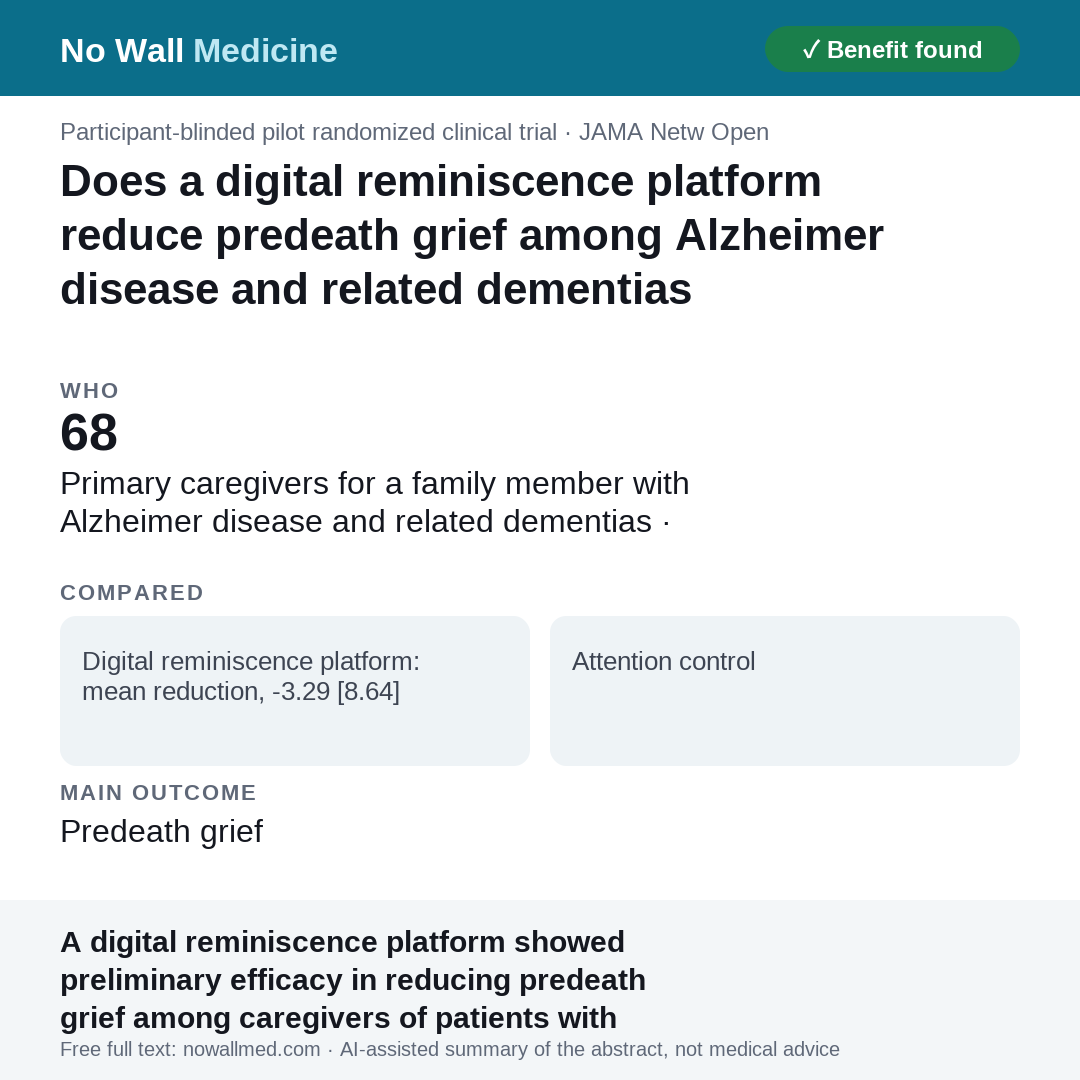
Digital Reminiscence for Predeath Grief Among Family Caregivers of Patients With Dementia: A Pilot Randomized Clinical Trial
Participant-blinded pilot randomized clinical trialBenefit found
Does a digital reminiscence platform reduce predeath grief among Alzheimer disease and related dementias caregivers?
Who
68
Primary caregivers for a family member with Alzheimer disease and related dementias · Virtual, New York and Los Angeles
Compared
Digital reminiscence platform: mean reduction, -3.29 [8.64]
Attention control
Main outcome
Predeath grief
Result: Cohen d = -0.38
Bottom line: A digital reminiscence platform showed preliminary efficacy in reducing predeath grief among caregivers of patients with dementia.
JAMA Netw Open · 2026-04-01Download image
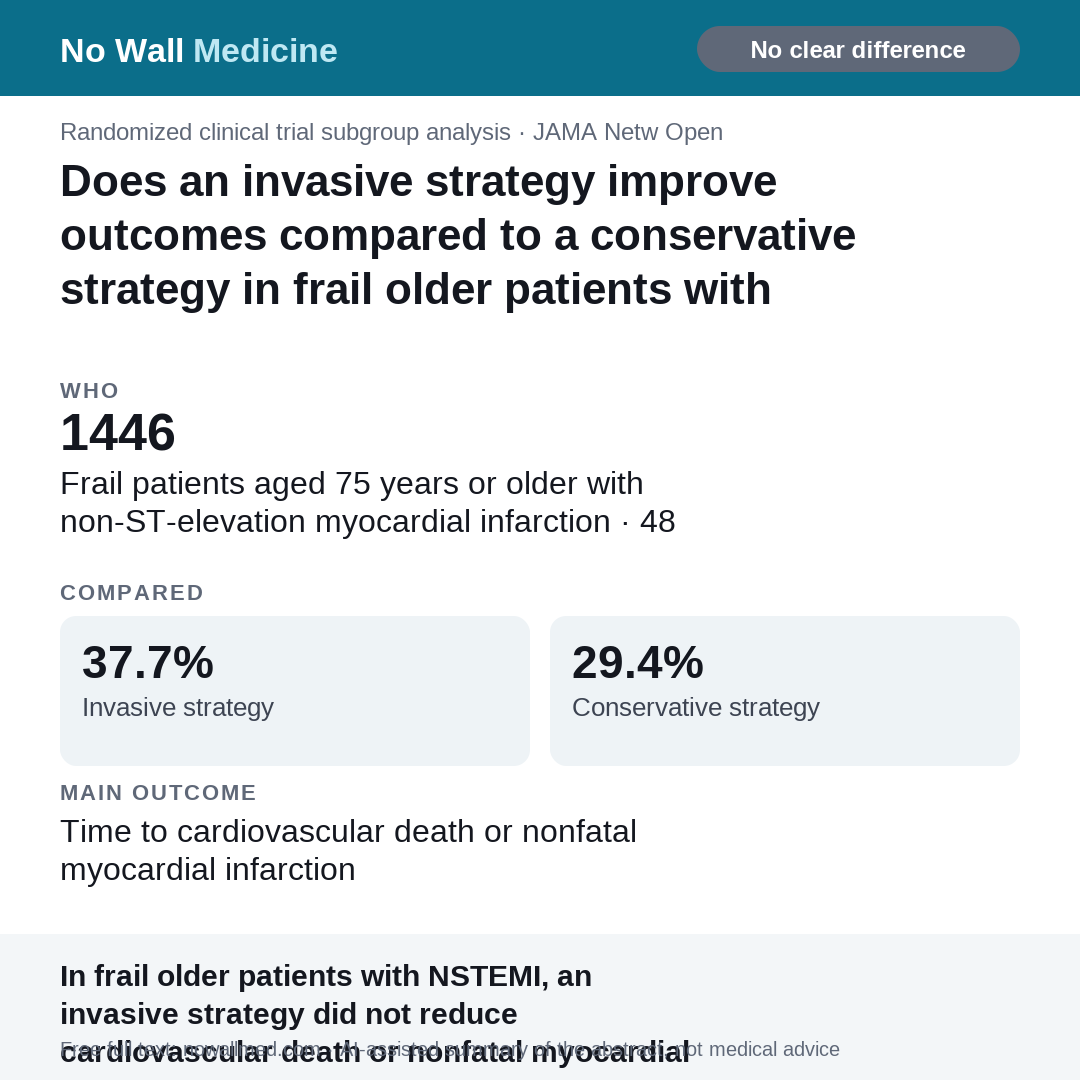
Invasive vs Conservative Strategy for Frail Older Patients With Myocardial Infarction: A Secondary Analysis of the SENIOR-RITA Randomized Clinical Trial
Randomized clinical trial subgroup analysisNo clear difference
Does an invasive strategy improve outcomes compared to a conservative strategy in frail older patients with NSTEMI?
Who
1446
Frail patients aged 75 years or older with non-ST-elevation myocardial infarction · 48 National Health Service trusts in England and Scotland
Compared
37.7%Invasive strategy (87/231)
29.4%Conservative strategy (70/238)
Main outcome
Time to cardiovascular death or nonfatal myocardial infarction
Result: hazard ratio 1.21 (95% CI, 0.88-1.67)
Bottom line: In frail older patients with NSTEMI, an invasive strategy did not reduce cardiovascular death or nonfatal myocardial infarction risk.
JAMA Netw Open · 2026-04-01Download image
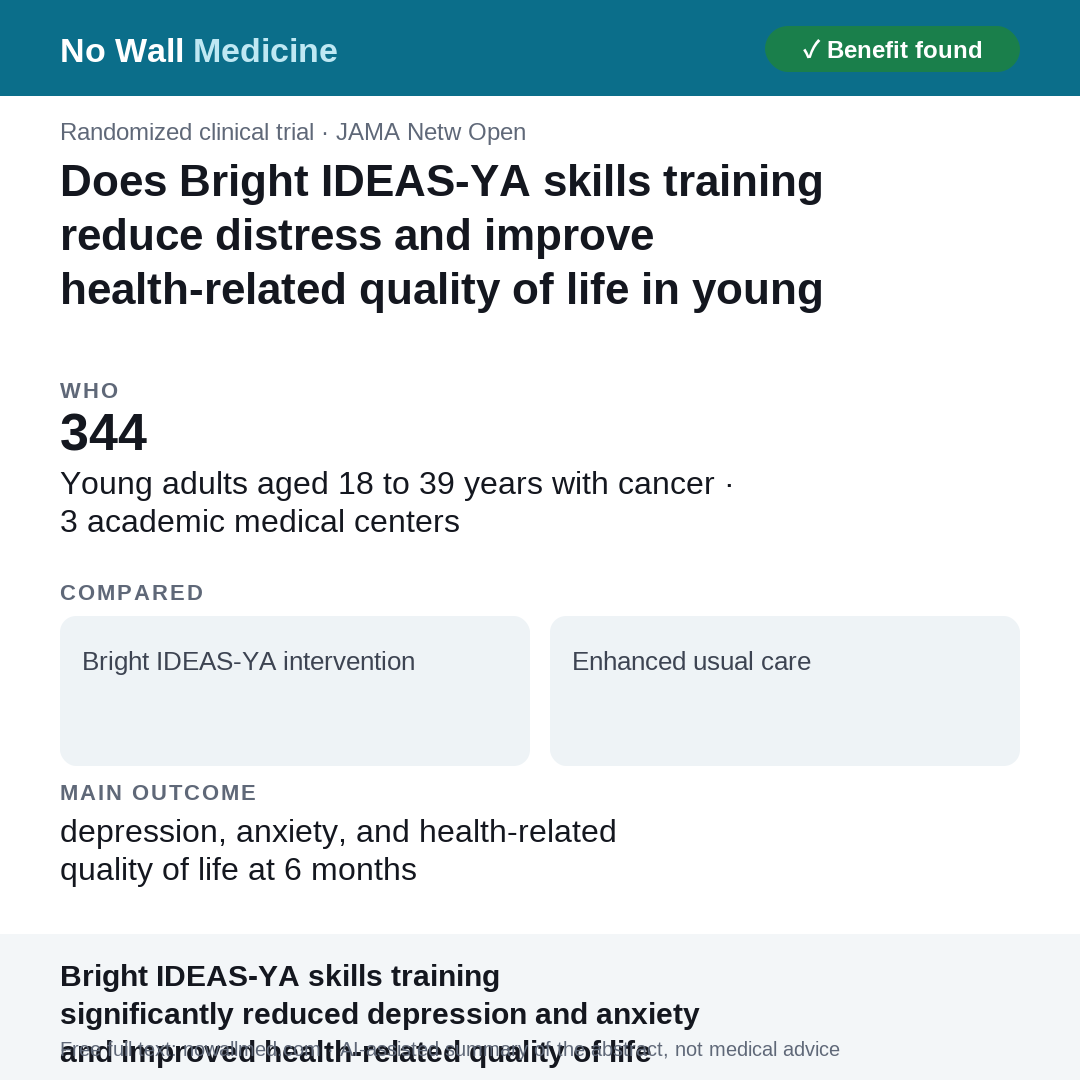
Bright IDEAS-YA Skills Training and Psychosocial Outcomes of Young Adults With Cancer: A Randomized Clinical Trial
Randomized clinical trialBenefit found
Does Bright IDEAS-YA skills training reduce distress and improve health-related quality of life in young adults with cancer?
Who
344
Young adults aged 18 to 39 years with cancer · 3 academic medical centers
Compared
Bright IDEAS-YA intervention
Enhanced usual care
Main outcome
depression, anxiety, and health-related quality of life at 6 months
Result: depression effect size -3.23 (95% CI -4.93 to -1.53); anxiety effect size -2.43 (95% CI -4.05 to -0.81); HRQOL effect size 3.40 (95% CI 0.34 to 6.45)
Bottom line: Bright IDEAS-YA skills training significantly reduced depression and anxiety and improved health-related quality of life in young adults with cancer.
JAMA Netw Open · 2026-04-01Download image
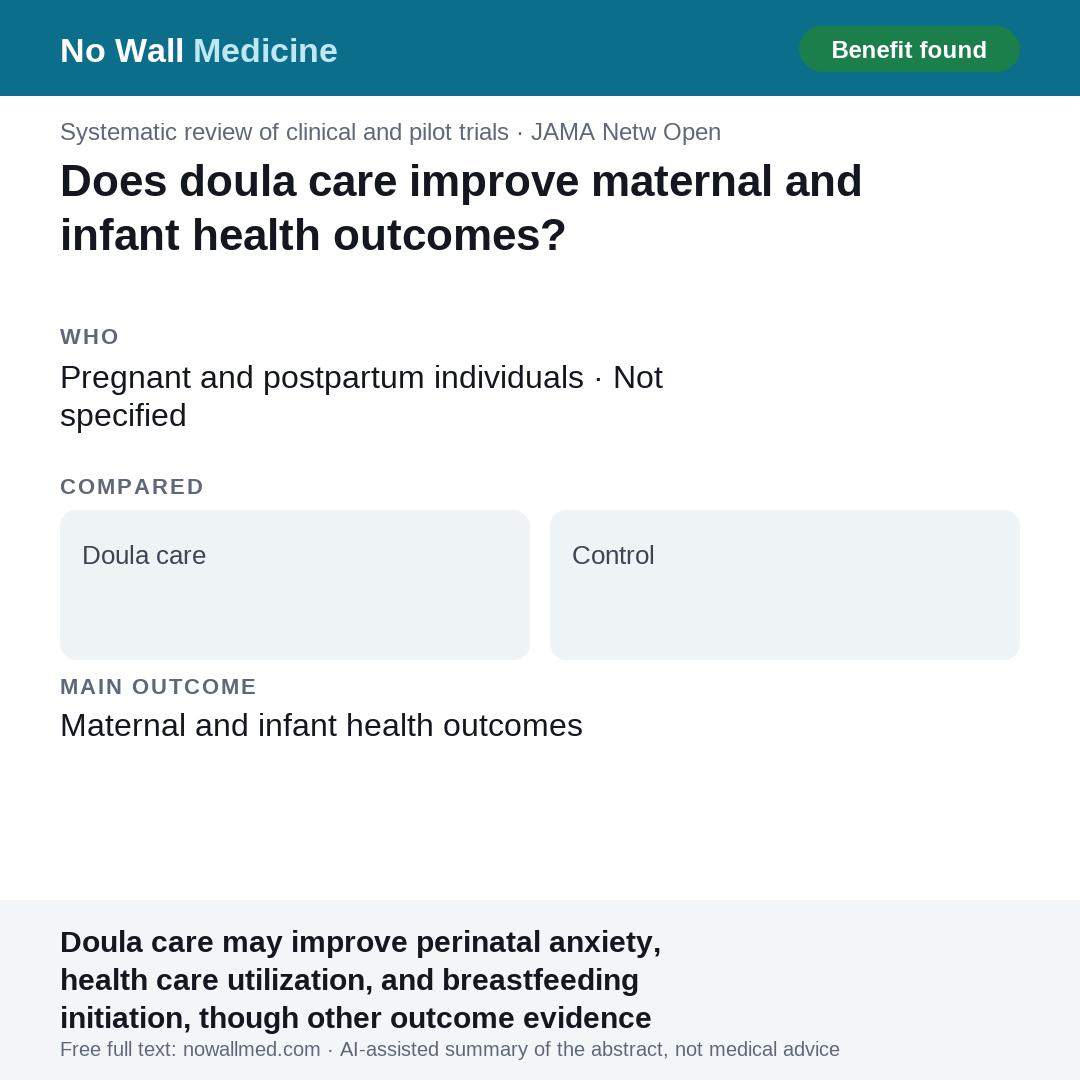
Doula Care and Health Outcomes: A Systematic Review
Systematic review of clinical and pilot trialsBenefit found
Does doula care improve maternal and infant health outcomes?
Who
Pregnant and postpartum individuals · Not specified
Compared
Doula care
Control
Main outcome
Maternal and infant health outcomes
Bottom line: Doula care may improve perinatal anxiety, health care utilization, and breastfeeding initiation, though other outcome evidence was inconsistent.
Limitation: Underrepresentation of marginalized populations and limited reporting of fidelity and implementation.
JAMA Netw Open · 2026-04-01Download image
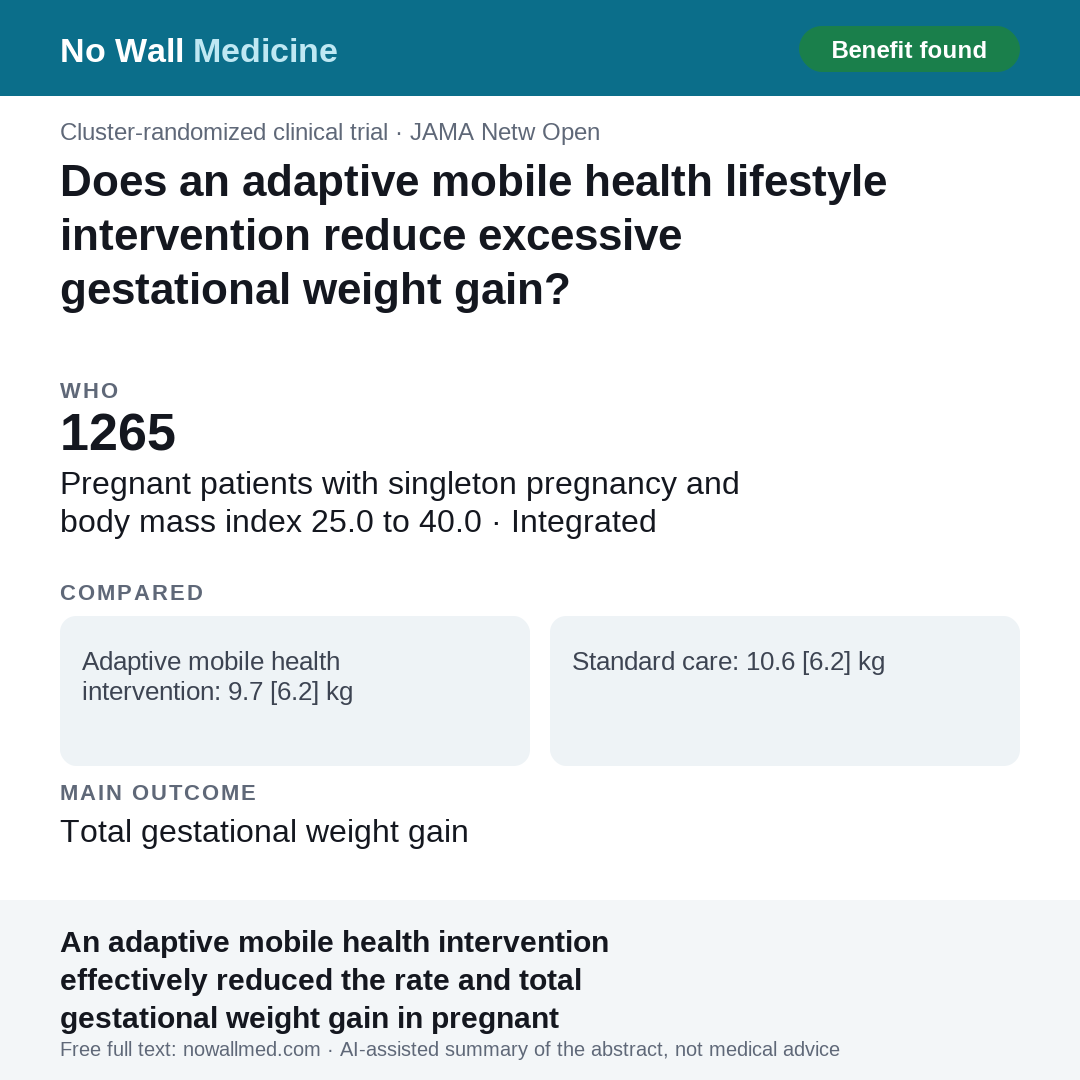
Adaptive Mobile Health Intervention to Reduce Excess Gestational Weight Gain: A Cluster-Randomized Clinical Trial
Cluster-randomized clinical trialBenefit found
Does an adaptive mobile health lifestyle intervention reduce excessive gestational weight gain?
Who
1265
Pregnant patients with singleton pregnancy and body mass index 25.0 to 40.0 · Integrated health system
Compared
Adaptive mobile health intervention: 9.7 [6.2] kg
Standard care: 10.6 [6.2] kg
Main outcome
Total gestational weight gain
Result: mean between-group difference, -0.87 [95% CI, -1.40 to -0.34] kg
Bottom line: An adaptive mobile health intervention effectively reduced the rate and total gestational weight gain in pregnant patients.
JAMA Netw Open · 2026-04-01Download image
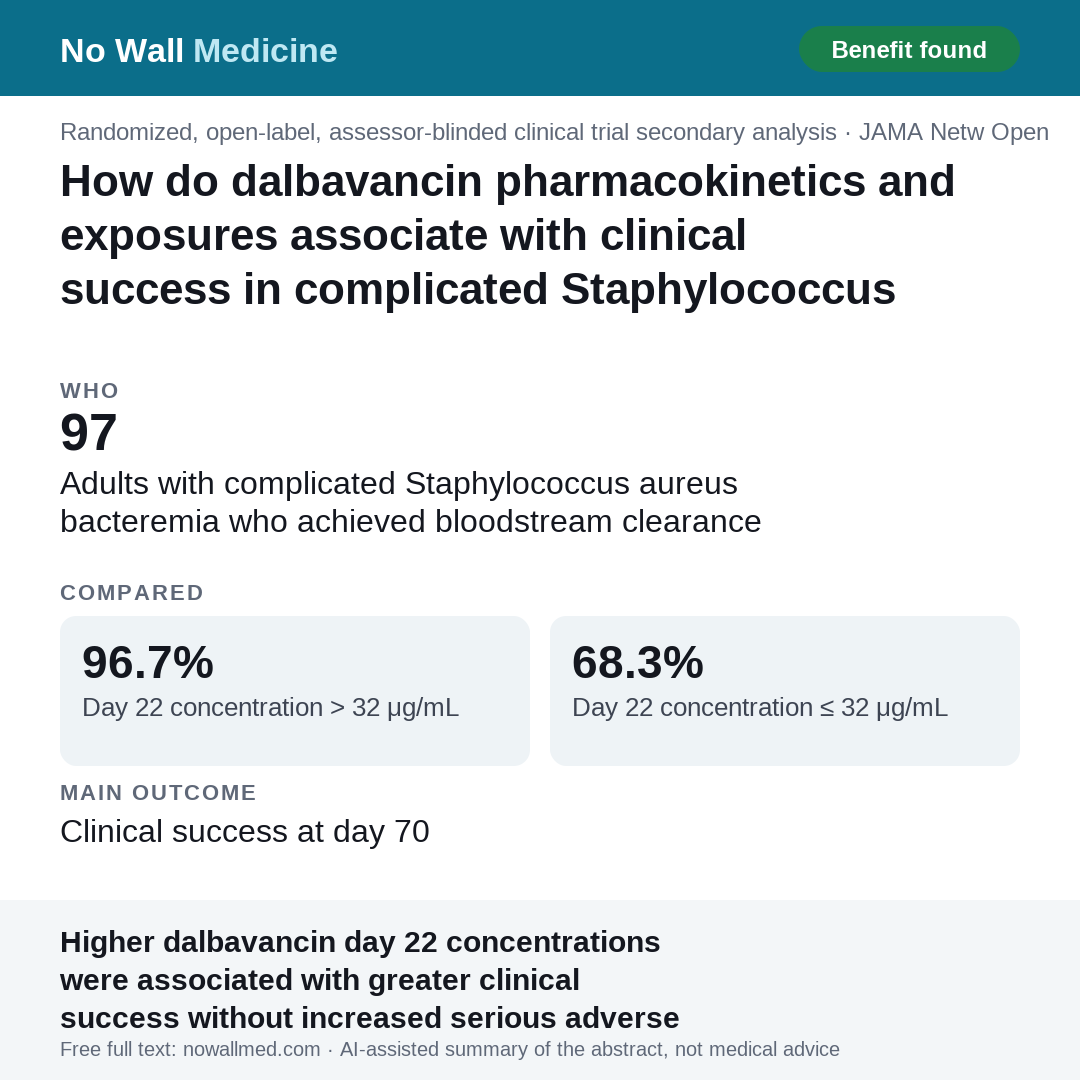
Pharmacokinetics of Dalbavancin in Complicated Staphylococcus aureus Bacteremia: A Secondary Analysis of the DOTS Randomized Clinical Trial
Randomized, open-label, assessor-blinded clinical trial secondary analysisBenefit found
How do dalbavancin pharmacokinetics and exposures associate with clinical success in complicated Staphylococcus aureus bacteremia?
Who
97
Adults with complicated Staphylococcus aureus bacteremia who achieved bloodstream clearance · Multicenter
Compared
96.7%Day 22 concentration > 32 μg/mL
68.3%Day 22 concentration ≤ 32 μg/mL
Main outcome
Clinical success at day 70
Result: adjusted difference, 25.3 percentage points; 95% CI, 3.5-47.0 percentage points
Bottom line: Higher dalbavancin day 22 concentrations were associated with greater clinical success without increased serious adverse events.
JAMA Netw Open · 2026-04-01Download image
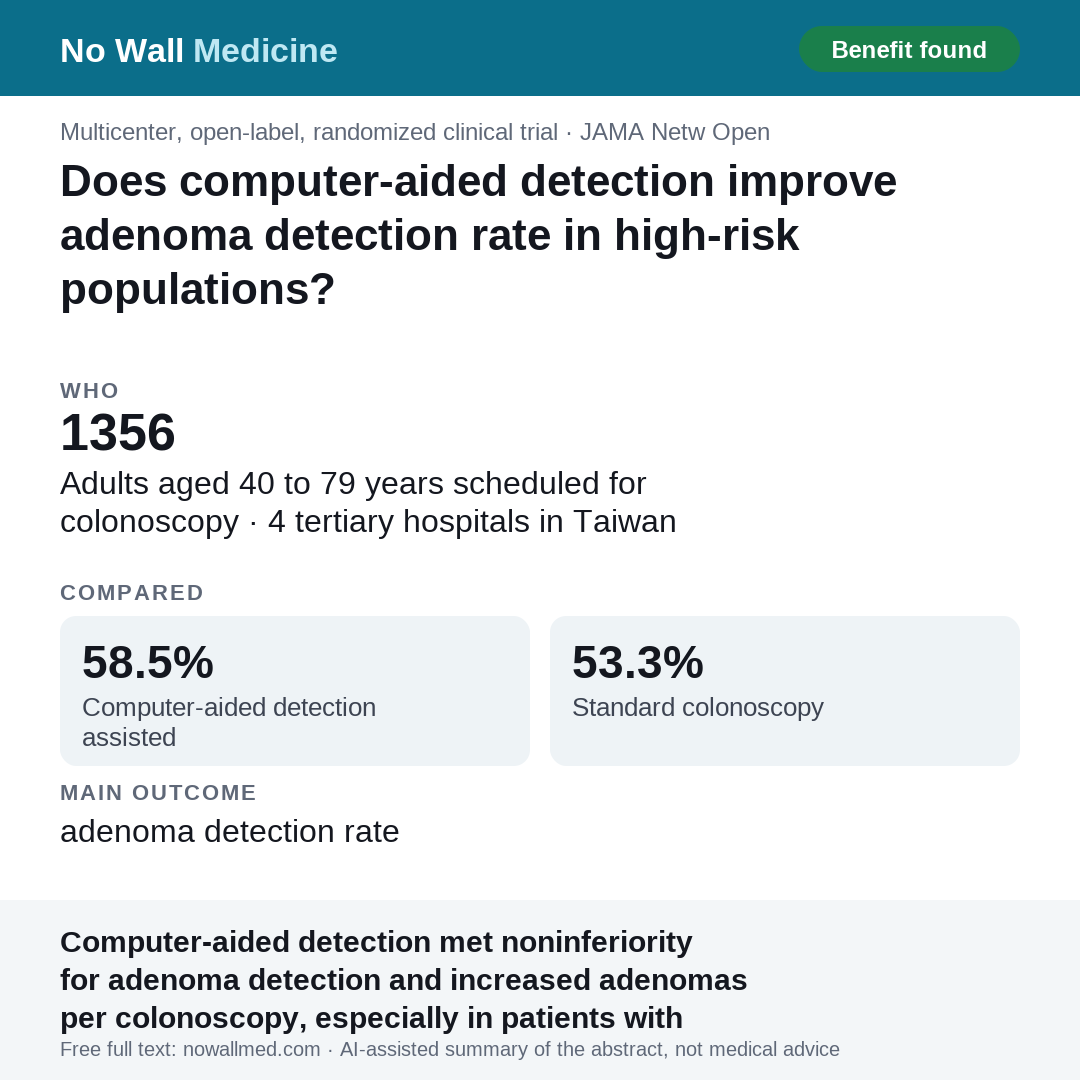
Computer-Assisted Colonoscopy in High-Adenoma Detection Rate Settings in a High-Risk Population: A Randomized Clinical Trial
Multicenter, open-label, randomized clinical trialBenefit found
Does computer-aided detection improve adenoma detection rate in high-risk populations?
Who
1356
Adults aged 40 to 79 years scheduled for colonoscopy · 4 tertiary hospitals in Taiwan
Compared
58.5%Computer-aided detection assisted
53.3%Standard colonoscopy
Main outcome
adenoma detection rate
Result: absolute difference, 5.2 percentage points [95% CI, -0.1 to 10.5 percentage points]
Bottom line: Computer-aided detection met noninferiority for adenoma detection and increased adenomas per colonoscopy, especially in patients with positive fecal immunochemical test.
Limitation: The incremental benefit of computer-aided detection in reducing interval cancer risk requires further investigation.
JAMA Netw Open · 2026-04-01Download image
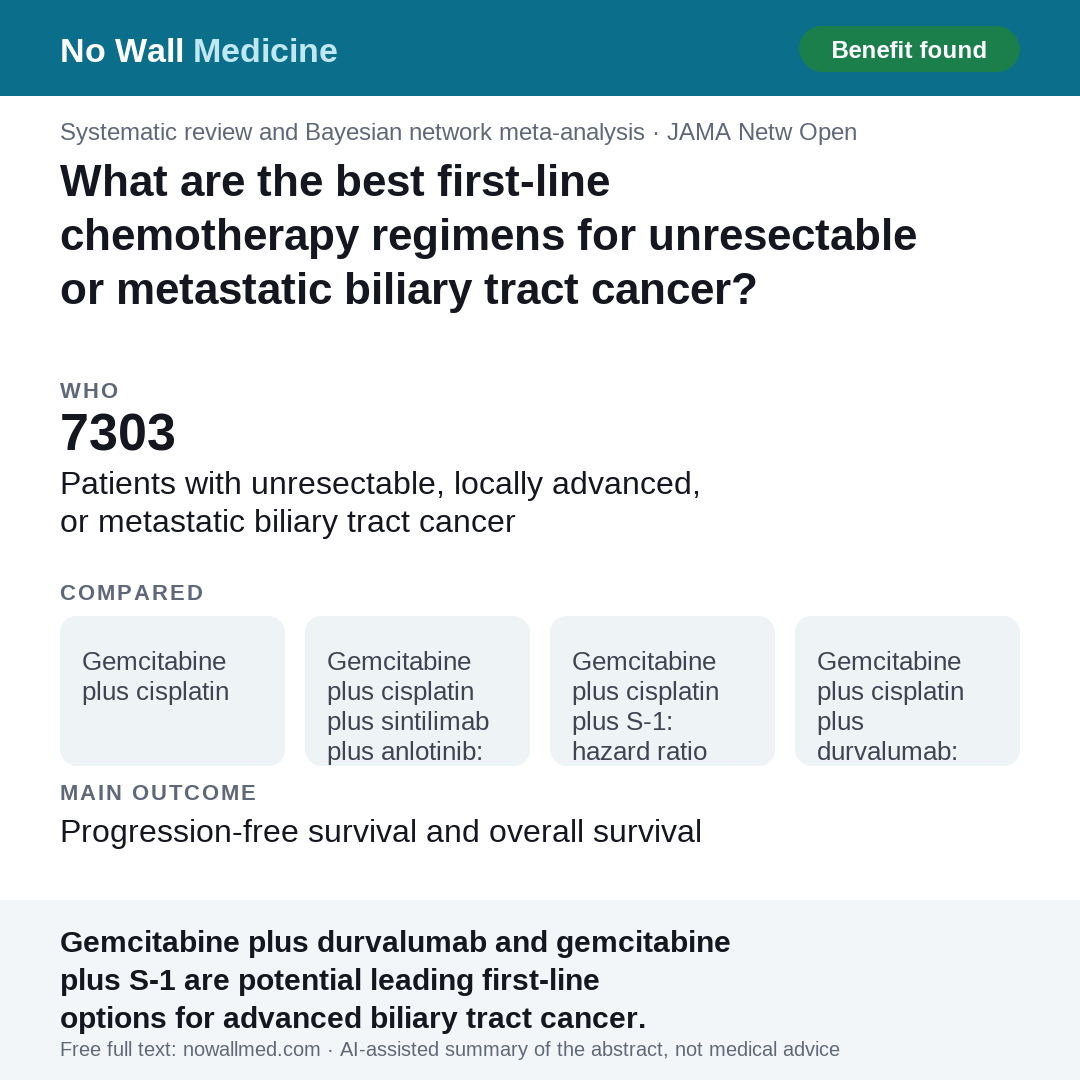
First-Line Chemotherapy Regimens for Unresectable Locally Advanced or Metastatic Biliary Tract Cancer: A Systematic Review and Bayesian Network Meta-Analysis
Systematic review and Bayesian network meta-analysisBenefit found
What are the best first-line chemotherapy regimens for unresectable or metastatic biliary tract cancer?
Who
7303
Patients with unresectable, locally advanced, or metastatic biliary tract cancer
Compared
Gemcitabine plus cisplatin
Gemcitabine plus cisplatin plus sintilimab plus anlotinib: hazard ratio 0.47 (95% CI 0.28-0.80)
Gemcitabine plus cisplatin plus S-1: hazard ratio 0.75 (95% CI 0.59-0.97)
Gemcitabine plus cisplatin plus durvalumab: hazard ratio 0.80 (95% CI 0.66-0.97)
Main outcome
Progression-free survival and overall survival
Result: hazard ratio 0.47 (95% CI 0.28-0.80)
Bottom line: Gemcitabine plus durvalumab and gemcitabine plus S-1 are potential leading first-line options for advanced biliary tract cancer.
JAMA Netw Open · 2026-04-01Download image
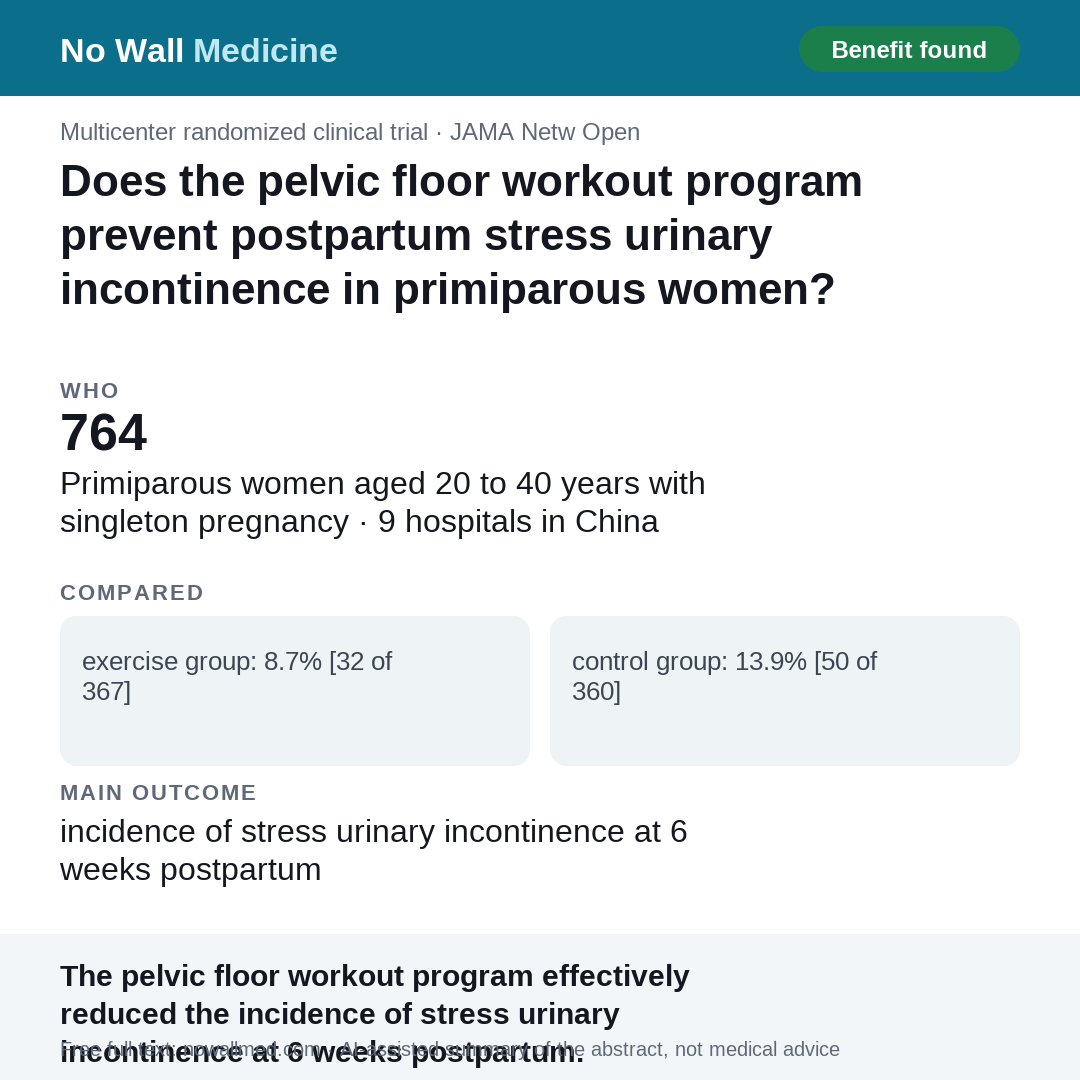
Pelvic Floor Workout for Preventing Stress Urinary Incontinence in Primiparous Women: A Randomized Clinical Trial
Multicenter randomized clinical trialBenefit found
Does the pelvic floor workout program prevent postpartum stress urinary incontinence in primiparous women?
Who
764
Primiparous women aged 20 to 40 years with singleton pregnancy · 9 hospitals in China
Compared
exercise group: 8.7% [32 of 367]
control group: 13.9% [50 of 360]
Main outcome
incidence of stress urinary incontinence at 6 weeks postpartum
Result: risk difference 5.17 (95% CI, 0.36-10.03) percentage points
Bottom line: The pelvic floor workout program effectively reduced the incidence of stress urinary incontinence at 6 weeks postpartum.
JAMA Netw Open · 2026-04-01Download image
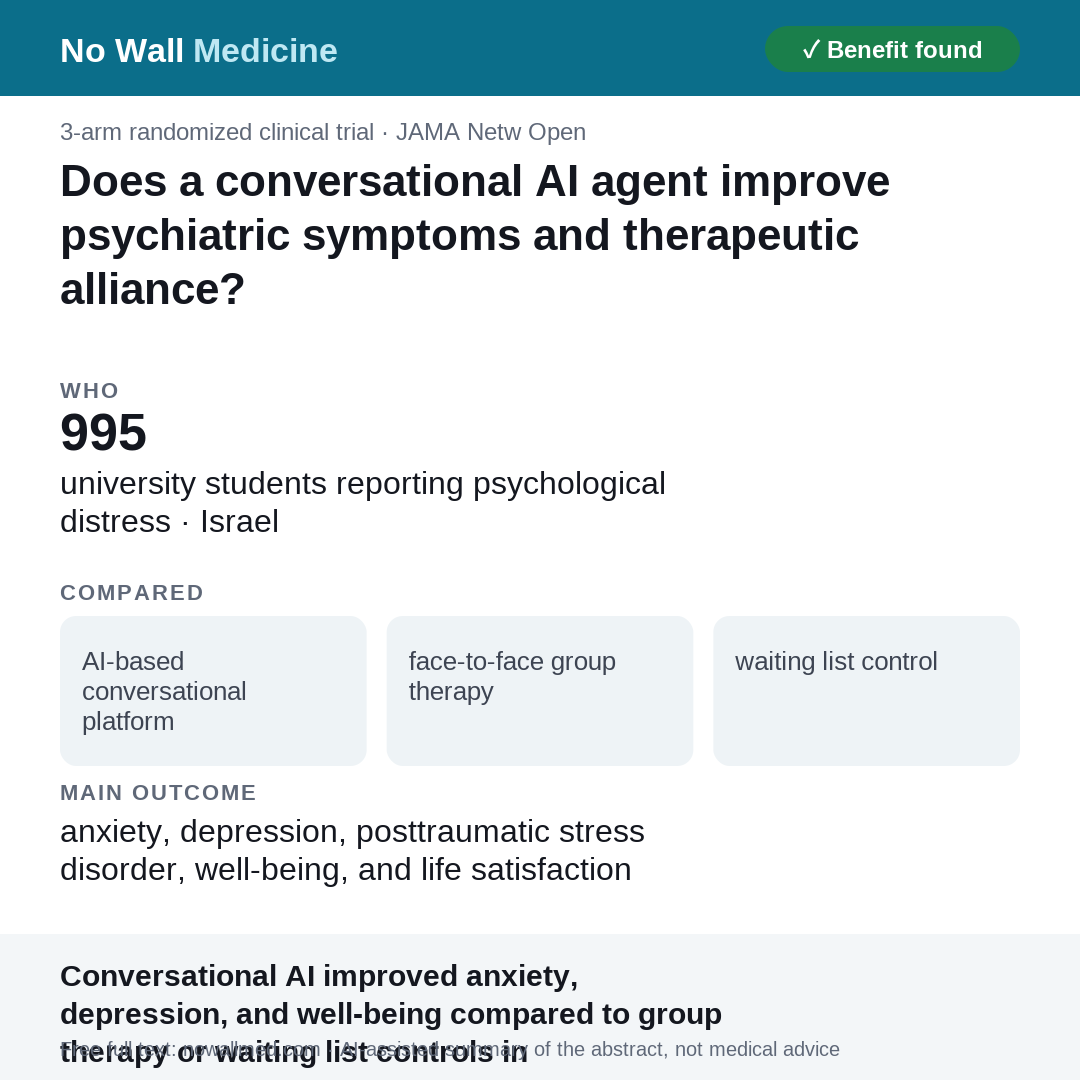
Efficacy of a Conversational AI Agent for Psychiatric Symptoms and Digital Therapeutic Alliance: A Randomized Clinical Trial
3-arm randomized clinical trialBenefit found
Does a conversational AI agent improve psychiatric symptoms and therapeutic alliance?
Who
995
university students reporting psychological distress · Israel
Compared
AI-based conversational platform
face-to-face group therapy
waiting list control
Main outcome
anxiety, depression, posttraumatic stress disorder, well-being, and life satisfaction
Result: anxiety reduction MD -2.17 (95% CI -2.67 to -1.67) vs group therapy
Bottom line: Conversational AI improved anxiety, depression, and well-being compared to group therapy or waiting list controls in university students.
JAMA Netw Open · 2026-04-01Download image
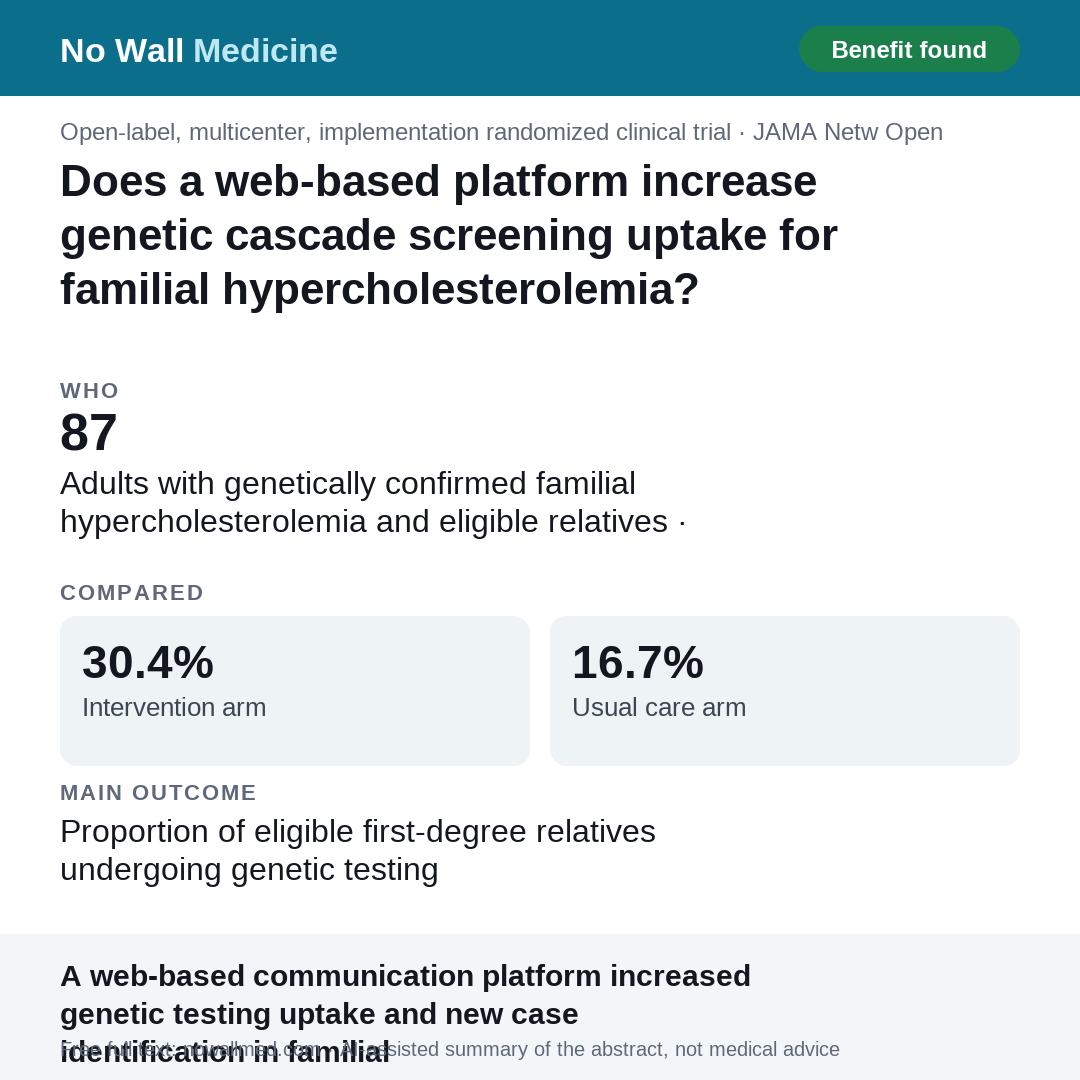
Genetic Cascade Screening for Familial Hypercholesterolemia: A Randomized Clinical Trial
Open-label, multicenter, implementation randomized clinical trialBenefit found
Does a web-based platform increase genetic cascade screening uptake for familial hypercholesterolemia?
Who
87
Adults with genetically confirmed familial hypercholesterolemia and eligible relatives · 7 cardiovascular prevention or lipid clinics across Switzerland
Compared
30.4%Intervention arm
16.7%Usual care arm
Main outcome
Proportion of eligible first-degree relatives undergoing genetic testing
Result: odds ratio 2.18 (95% CI, 1.06-4.51)
Bottom line: A web-based communication platform increased genetic testing uptake and new case identification in familial hypercholesterolemia screening.
JAMA Netw Open · 2026-04-01Download image
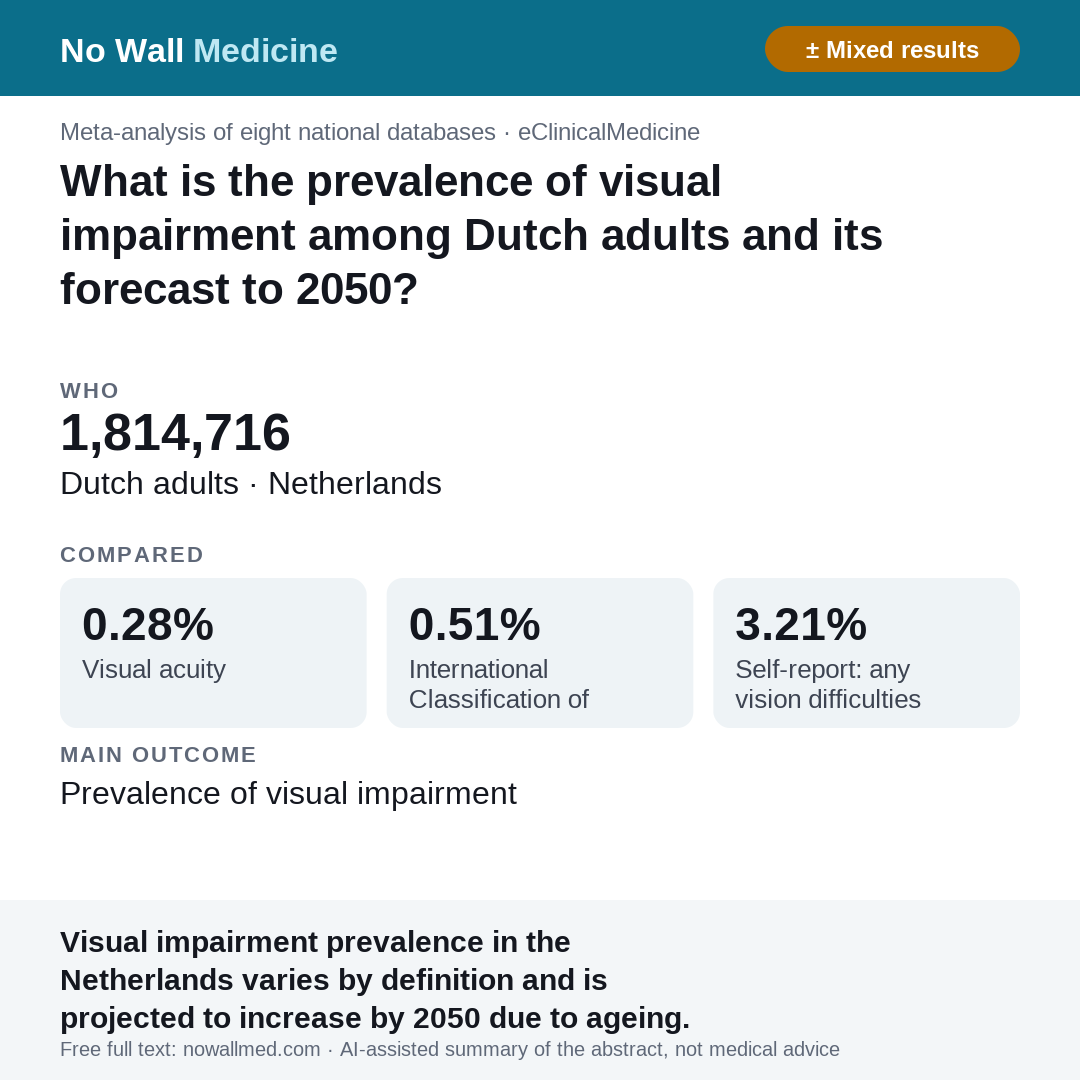
Estimating the prevalence of visual impairment in the Netherlands, with forecasts up to 2050: a meta-analysis of national databases
Meta-analysis of eight national databasesMixed results
What is the prevalence of visual impairment among Dutch adults and its forecast to 2050?
Who
1,814,716
Dutch adults · Netherlands
Compared
0.28%Visual acuity (95% CI: 0.11-0.73)
0.51%International Classification of Primary Care codes (95% CI: 0.50-0.52)
3.21%Self-report: any vision difficulties (95% CI: 2.15-4.77)
Main outcome
Prevalence of visual impairment
Bottom line: Visual impairment prevalence in the Netherlands varies by definition and is projected to increase by 2050 due to ageing.
Limitation: Substantial heterogeneity and databases mostly containing self-reported data on visual functioning.
Funded by: Dutch Eye Foundation (Oogfonds)
eClinicalMedicine · 2026-04-01Download image
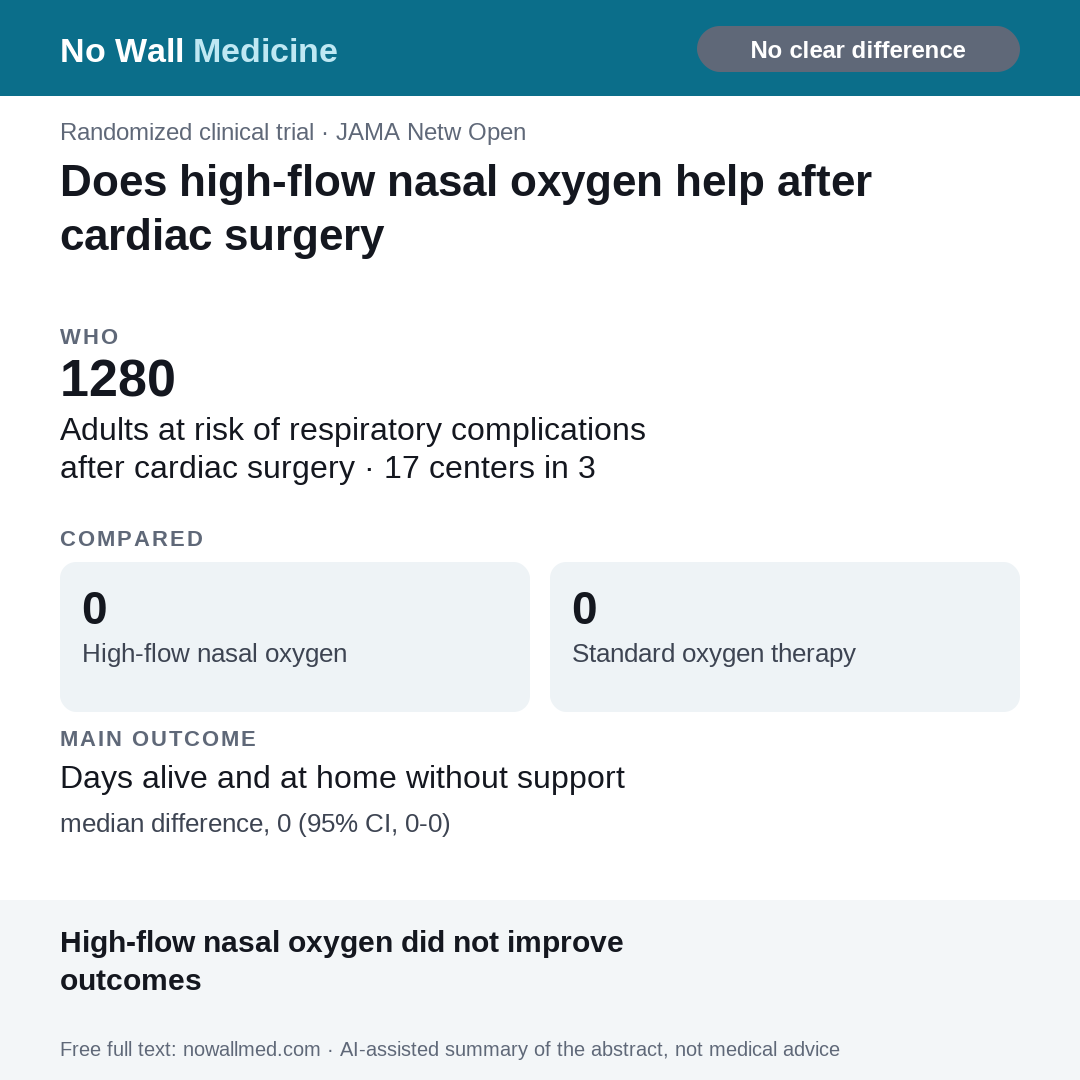
High-Flow Nasal Oxygen Therapy After Cardiac Surgery: A Randomized Clinical Trial
Randomized clinical trialNo clear difference
Does high-flow nasal oxygen help after cardiac surgery
Who
1280
Adults at risk of respiratory complications after cardiac surgery · 17 centers in 3 countries
Compared
0High-flow nasal oxygen (IQR, 0-79)
0Standard oxygen therapy (IQR, 0-87)
Main outcome
Days alive and at home without support
Result: median difference, 0 (95% CI, 0-0)
Bottom line: High-flow nasal oxygen did not improve outcomes
JAMA Netw Open · 2026-04-01Download image