Visual abstracts
New randomized trials and meta-analyses from leading journals at a glance: who was studied, what was compared, and what was found. Every paper is free to read in full.
All specialtiesCardiology 4877Oncology 4138Gastroenterology & Hepatology 1942Infectious Disease 3837Neurology 1905Psychiatry & Mental Health 2273Pulmonology 2143Critical Care 1365Endocrinology & Diabetes 2580Pediatrics 2980Surgery 2559Orthopedics & Sports Medicine 931Neurosurgery 537Cardiothoracic & Vascular Surgery 674Plastic & Reconstructive Surgery 591Nephrology 1133Rheumatology 823Hematology 1109Dermatology 621Ophthalmology 543Obstetrics & Gynecology 1686Public & Global Health 1058Radiology & Imaging 648Anesthesiology 986Urology 764ENT (Otolaryngology) 503Emergency Medicine 511Allergy & Immunology 313Geriatrics 981Family Medicine & Primary Care 562Medical Genetics & Genomics 676Pathology & Laboratory Medicine 159Physical Medicine & Rehabilitation 757Palliative Care 444Nutrition 1588Digital Health & AI 2201General Medicine 321
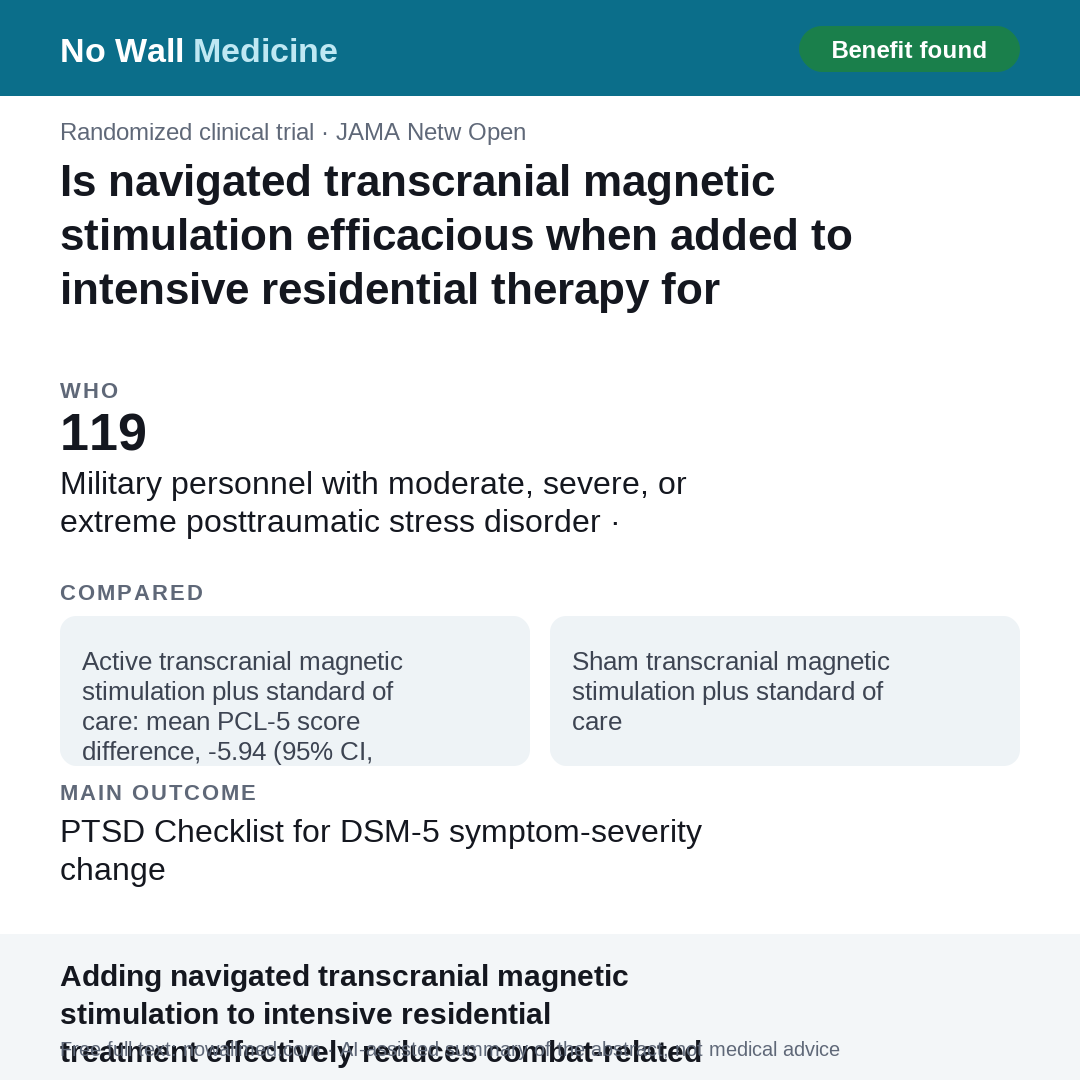
Residential Therapy With Navigated Transcranial Magnetic Stimulation for Combat-Related PTSD: A Randomized Clinical Trial
Randomized clinical trialBenefit found
Is navigated transcranial magnetic stimulation efficacious when added to intensive residential therapy for combat-related PTSD?
Who
119
Military personnel with moderate, severe, or extreme posttraumatic stress disorder · Residential facility specializing in military mental health
Compared
Active transcranial magnetic stimulation plus standard of care: mean PCL-5 score difference, -5.94 (95% CI, -11.77 to -0.10)
Sham transcranial magnetic stimulation plus standard of care
Main outcome
PTSD Checklist for DSM-5 symptom-severity change
Result: mean PCL-5 score difference, -5.94 (95% CI, -11.77 to -0.10)
Bottom line: Adding navigated transcranial magnetic stimulation to intensive residential treatment effectively reduces combat-related posttraumatic stress disorder symptoms.
JAMA Netw Open · 2026-04-01Download image
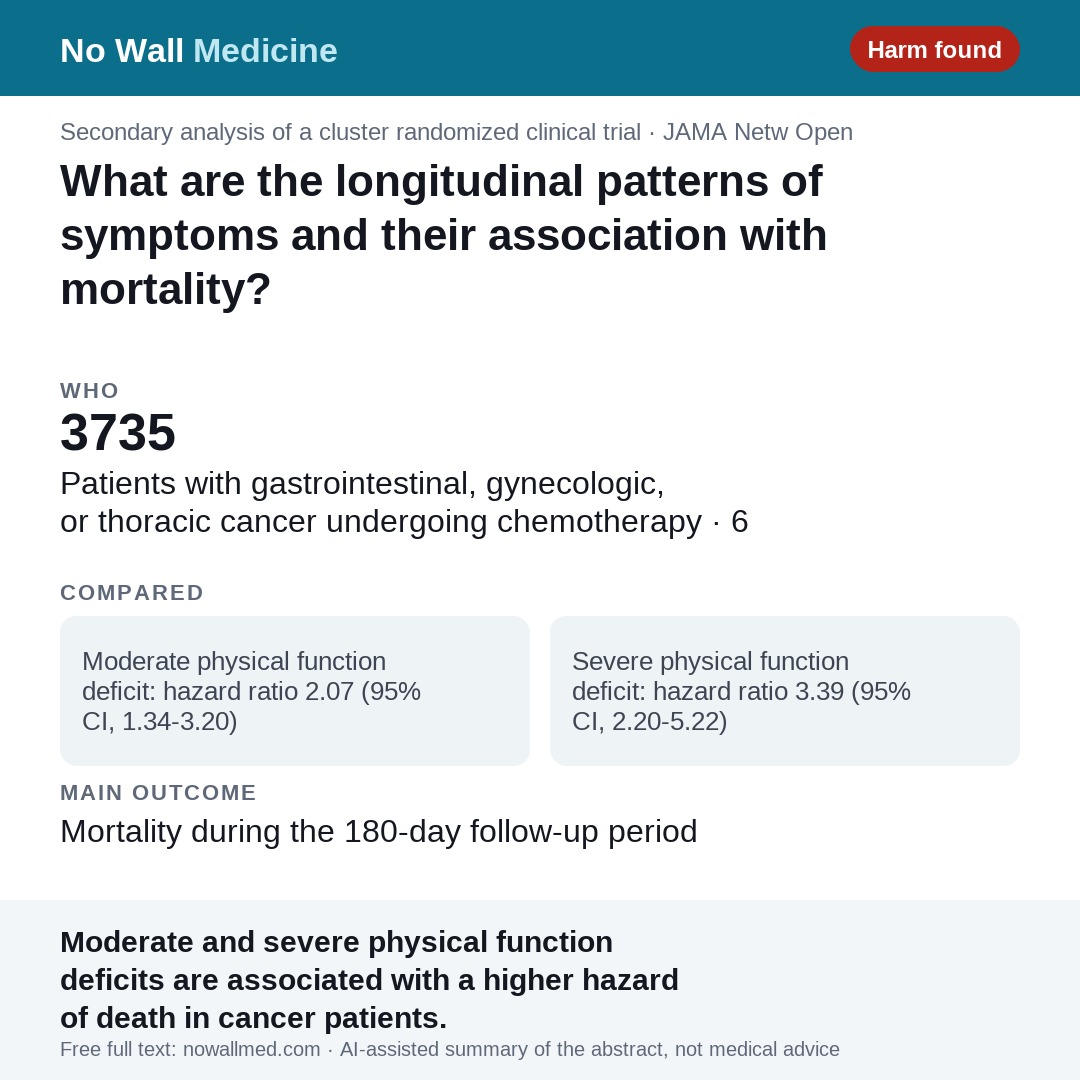
Longitudinal Patterns of Symptoms in Patients Undergoing Chemotherapy: A Secondary Analysis of a Cluster Randomized Clinical Trial
Secondary analysis of a cluster randomized clinical trialHarm found
What are the longitudinal patterns of symptoms and their association with mortality?
Who
3735
Patients with gastrointestinal, gynecologic, or thoracic cancer undergoing chemotherapy · 6 hospitals in Northeast and Southern United States
Compared
Moderate physical function deficit: hazard ratio 2.07 (95% CI, 1.34-3.20)
Severe physical function deficit: hazard ratio 3.39 (95% CI, 2.20-5.22)
Main outcome
Mortality during the 180-day follow-up period
Result: hazard ratio 2.07 (95% CI, 1.34-3.20)
Bottom line: Moderate and severe physical function deficits are associated with a higher hazard of death in cancer patients.
JAMA Netw Open · 2026-04-01Download image
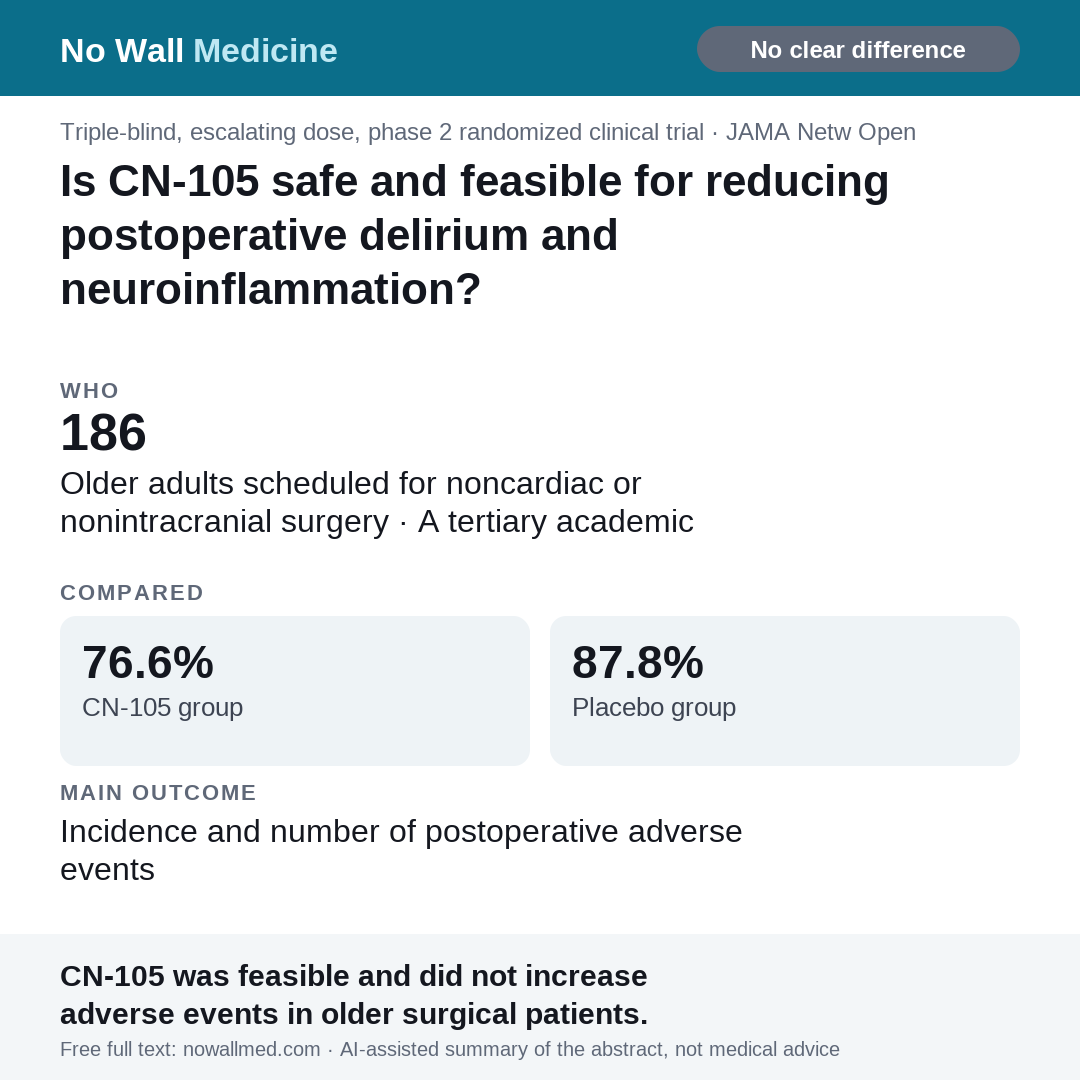
Apolipoprotein E Mimetic Peptide CN-105 and Postoperative Delirium in Older Patients: The Phase 2 MARBLE Randomized Clinical Trial
Triple-blind, escalating dose, phase 2 randomized clinical trialNo clear difference
Is CN-105 safe and feasible for reducing postoperative delirium and neuroinflammation?
Who
186
Older adults scheduled for noncardiac or nonintracranial surgery · A tertiary academic medical center
Compared
76.6%CN-105 group
87.8%Placebo group
Main outcome
Incidence and number of postoperative adverse events
Result: relative risk 0.87 (95% CI, 0.76-1.00)
Bottom line: CN-105 was feasible and did not increase adverse events in older surgical patients.
Limitation: A phase 3 trial is warranted to further evaluate efficacy for reducing postoperative delirium.
JAMA Netw Open · 2026-04-01Download image
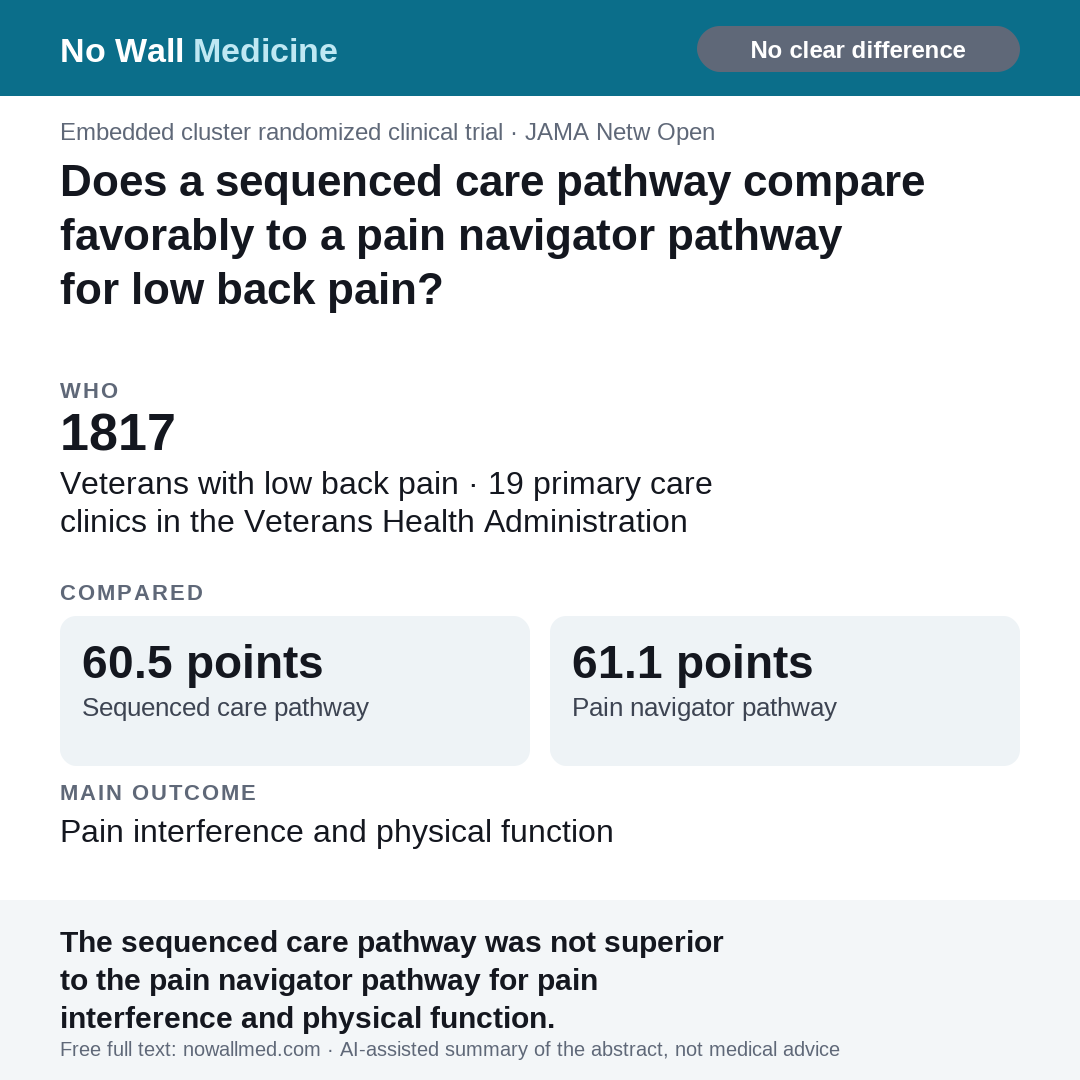
Sequenced Care Pathway vs Pain Navigator Pathway for Veterans With Low Back Pain: The AIM-Back Cluster Randomized Clinical Trial
Embedded cluster randomized clinical trialNo clear difference
Does a sequenced care pathway compare favorably to a pain navigator pathway for low back pain?
Who
1817
Veterans with low back pain · 19 primary care clinics in the Veterans Health Administration
Compared
60.5 pointsSequenced care pathway (97.5% CI, 59.7-61.3 points)
61.1 pointsPain navigator pathway (97.5% CI, 60.4-61.8 points)
Main outcome
Pain interference and physical function
Result: -0.6 points (97.5% CI, -1.6 to 0.4 points) for pain interference
Bottom line: The sequenced care pathway was not superior to the pain navigator pathway for pain interference and physical function.
Limitation: Future research should consider designs that optimize pathway adherence and assess effectiveness in other settings.
JAMA Netw Open · 2026-04-01Download image
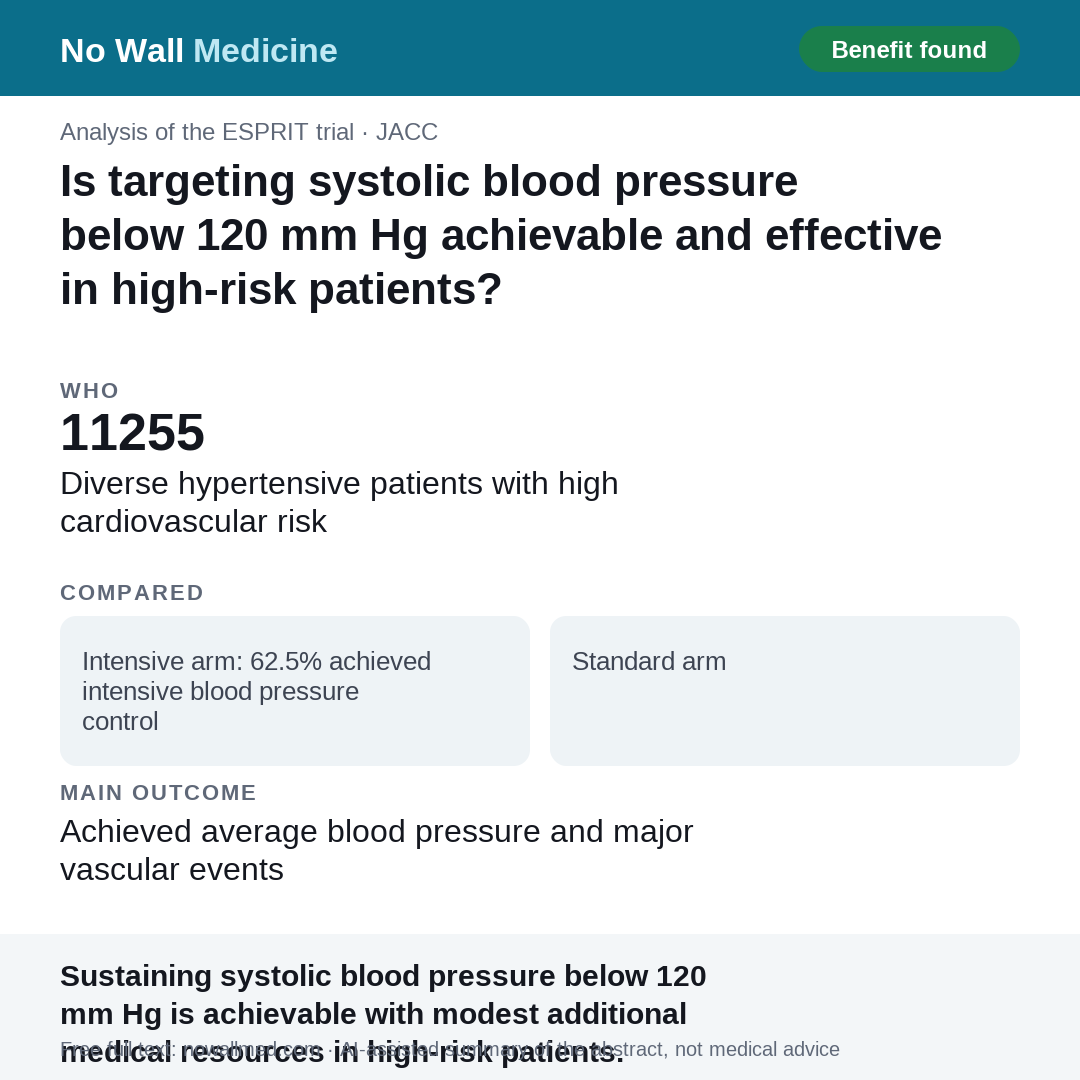
Achieving Intensive Blood Pressure Control in High-Risk Patients: Implementation Insights From the ESPRIT Trial
Analysis of the ESPRIT trialBenefit found
Is targeting systolic blood pressure below 120 mm Hg achievable and effective in high-risk patients?
Who
11255
Diverse hypertensive patients with high cardiovascular risk
Compared
Intensive arm: 62.5% achieved intensive blood pressure control
Standard arm
Main outcome
Achieved average blood pressure and major vascular events
Bottom line: Sustaining systolic blood pressure below 120 mm Hg is achievable with modest additional medical resources in high-risk patients.
JACC · 2026-04-01Download image
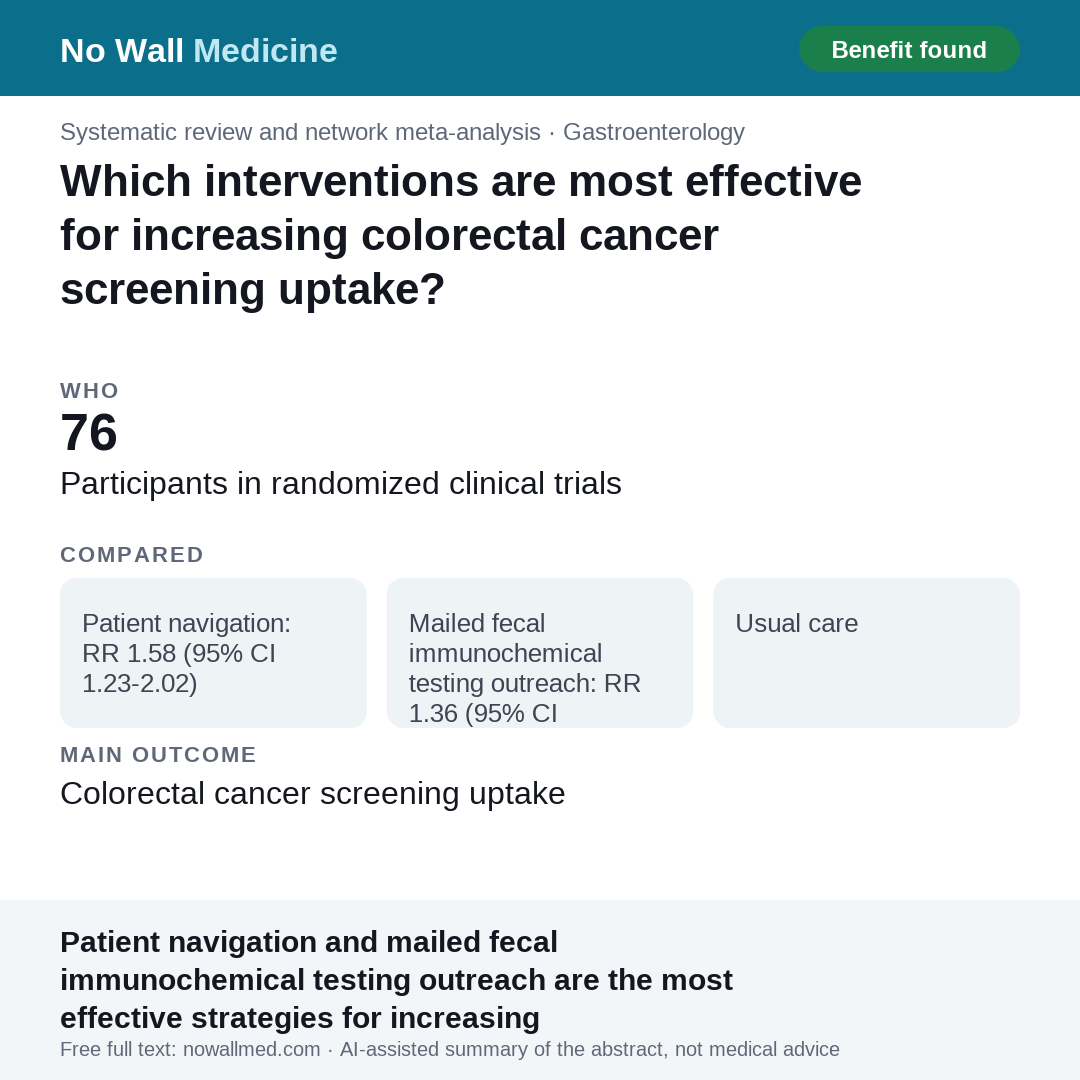
Interventions for Increasing Colorectal Cancer Screening Uptake: A Systematic Review and Network Meta-Analysis
Systematic review and network meta-analysisBenefit found
Which interventions are most effective for increasing colorectal cancer screening uptake?
Who
76
Participants in randomized clinical trials
Compared
Patient navigation: RR 1.58 (95% CI 1.23-2.02)
Mailed fecal immunochemical testing outreach: RR 1.36 (95% CI 1.07-1.74)
Usual care
Main outcome
Colorectal cancer screening uptake
Bottom line: Patient navigation and mailed fecal immunochemical testing outreach are the most effective strategies for increasing colorectal cancer screening uptake.
Limitation: The certainty of evidence mostly ranged from moderate to low.
Gastroenterology · 2026-04-01Download image
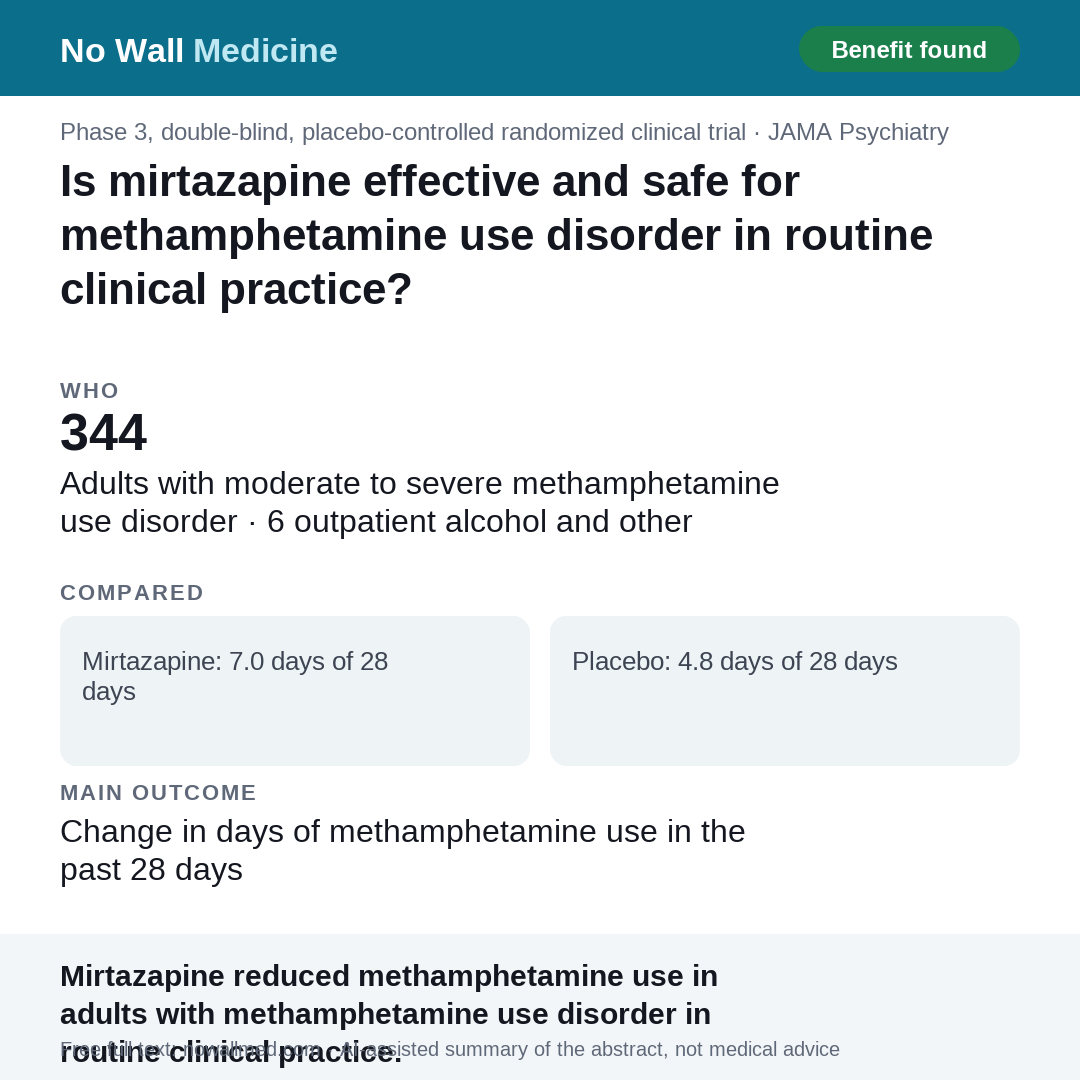
Mirtazapine for Methamphetamine Use Disorder: A Randomized Clinical Trial
Phase 3, double-blind, placebo-controlled randomized clinical trialBenefit found
Is mirtazapine effective and safe for methamphetamine use disorder in routine clinical practice?
Who
344
Adults with moderate to severe methamphetamine use disorder · 6 outpatient alcohol and other drug clinics in Australia
Compared
Mirtazapine: 7.0 days of 28 days
Placebo: 4.8 days of 28 days
Main outcome
Change in days of methamphetamine use in the past 28 days
Result: mean difference, 2.2 days; 95% CI, -4.2 to -0.2 days
Bottom line: Mirtazapine reduced methamphetamine use in adults with methamphetamine use disorder in routine clinical practice.
JAMA Psychiatry · 2026-04-01Download image
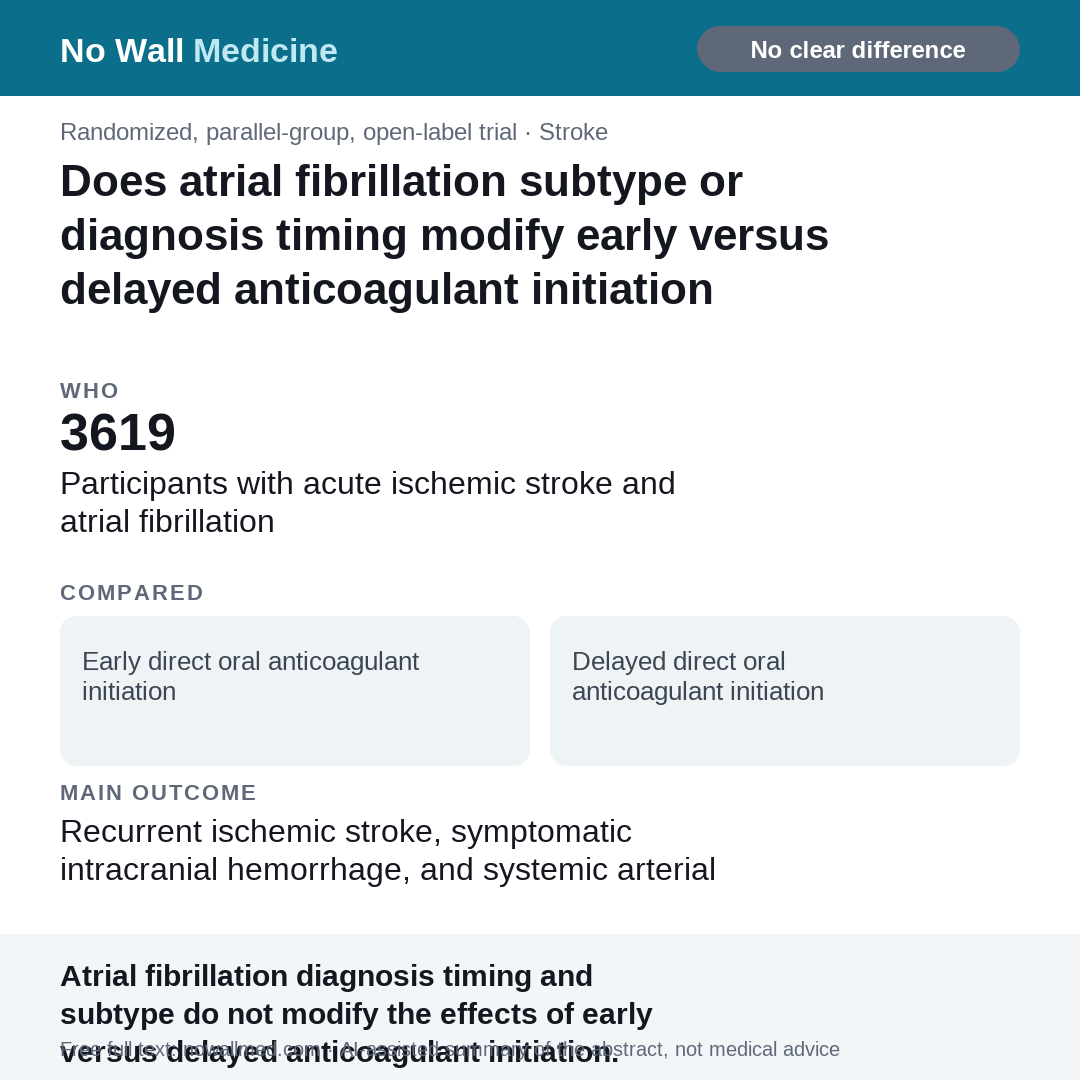
Early Versus Delayed Anticoagulation in Acute Ischemic Stroke According to Atrial Fibrillation Subtype and Time of Diagnosis: Subgroup Analysis of the OPTIMAS Randomized Controlled Trial
Randomized, parallel-group, open-label trialNo clear difference
Does atrial fibrillation subtype or diagnosis timing modify early versus delayed anticoagulant initiation effects?
Who
3619
Participants with acute ischemic stroke and atrial fibrillation
Compared
Early direct oral anticoagulant initiation
Delayed direct oral anticoagulant initiation
Main outcome
Recurrent ischemic stroke, symptomatic intracranial hemorrhage, and systemic arterial embolism
Bottom line: Atrial fibrillation diagnosis timing and subtype do not modify the effects of early versus delayed anticoagulant initiation.
Stroke · 2026-04-01Download image
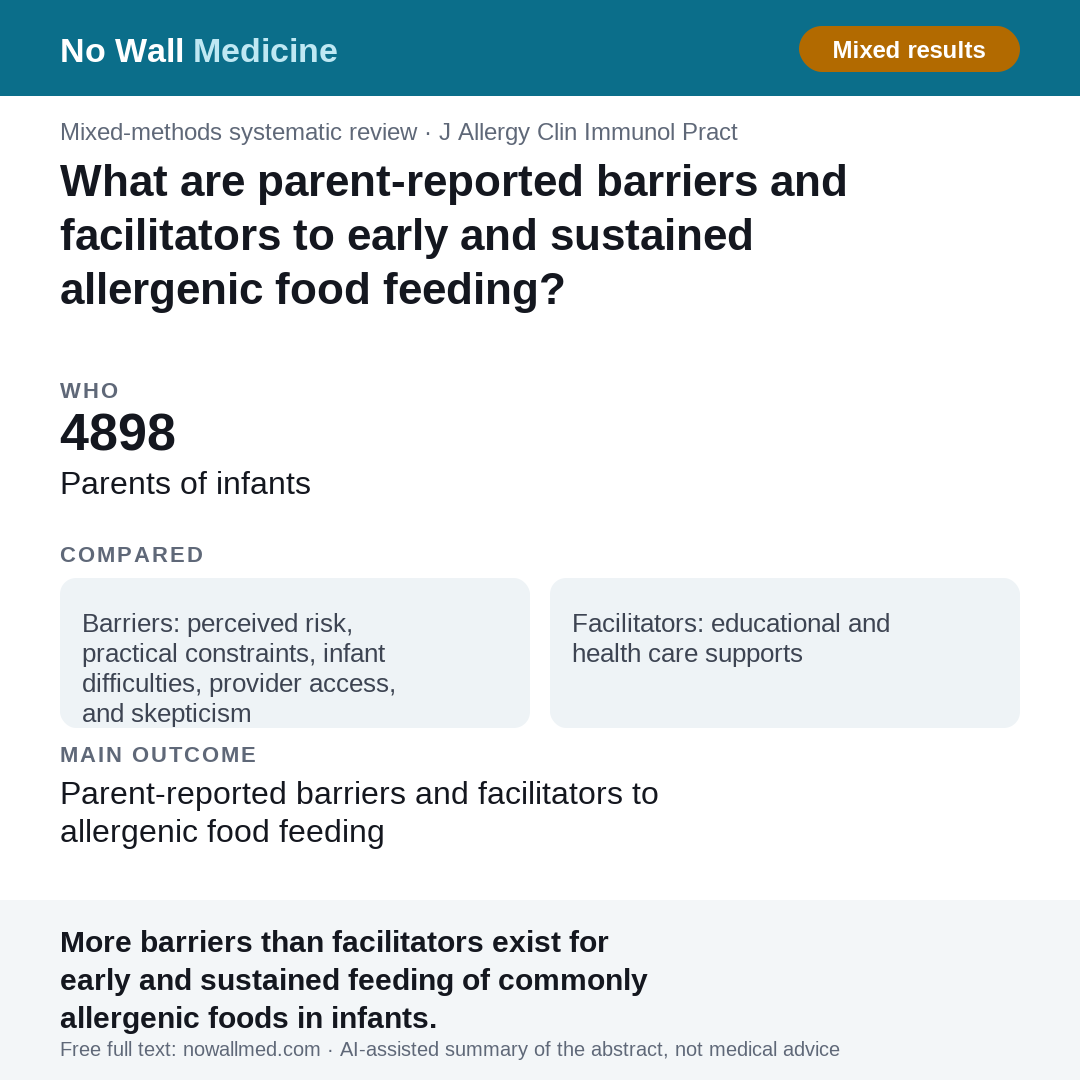
Parent-Reported Barriers and Facilitators to Early and Sustained Feeding of Allergenic Foods: A Mixed-Methods Systematic Review
Mixed-methods systematic reviewMixed results
What are parent-reported barriers and facilitators to early and sustained allergenic food feeding?
Who
4898
Parents of infants
Compared
Barriers: perceived risk, practical constraints, infant difficulties, provider access, and skepticism
Facilitators: educational and health care supports
Main outcome
Parent-reported barriers and facilitators to allergenic food feeding
Bottom line: More barriers than facilitators exist for early and sustained feeding of commonly allergenic foods in infants.
Limitation: Future research is warranted to understand facilitators across sociocultural contexts.
J Allergy Clin Immunol Pract · 2026-04-01Download image
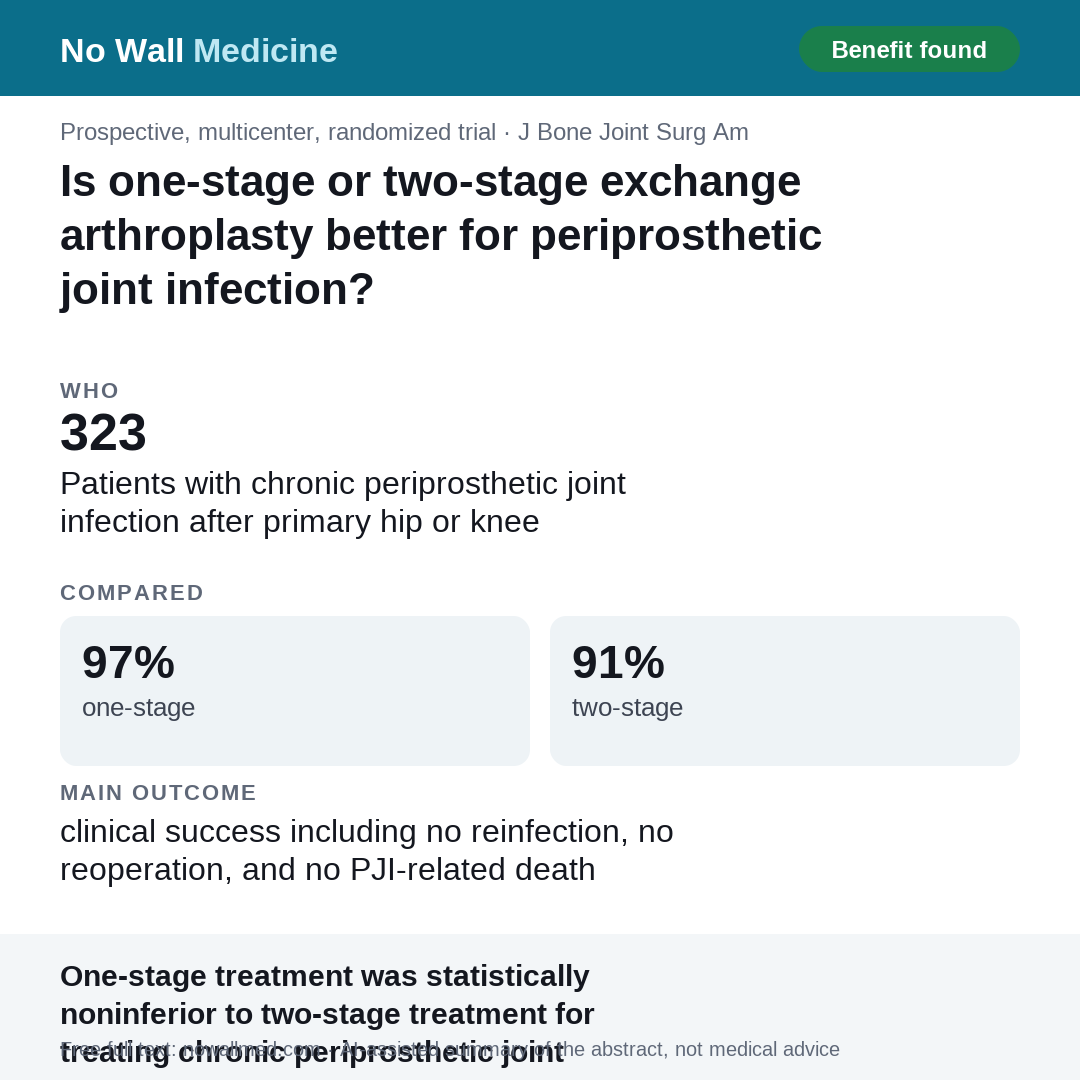
One-Stage Versus Two-Stage Exchange Arthroplasty for Periprosthetic Joint Infection: A Prospective Randomized Trial
Prospective, multicenter, randomized trialBenefit found
Is one-stage or two-stage exchange arthroplasty better for periprosthetic joint infection?
Who
323
Patients with chronic periprosthetic joint infection after primary hip or knee arthroplasty · multicenter
Compared
97%one-stage (131 of 135)
91%two-stage (112 of 123)
Main outcome
clinical success including no reinfection, no reoperation, and no PJI-related death
Result: unadjusted odds ratio = 3.22 (95% confidence interval = 1.0 to 10.38)
Bottom line: One-stage treatment was statistically noninferior to two-stage treatment for treating chronic periprosthetic joint infection at 2-year follow-up.
J Bone Joint Surg Am · 2026-04-01Download image
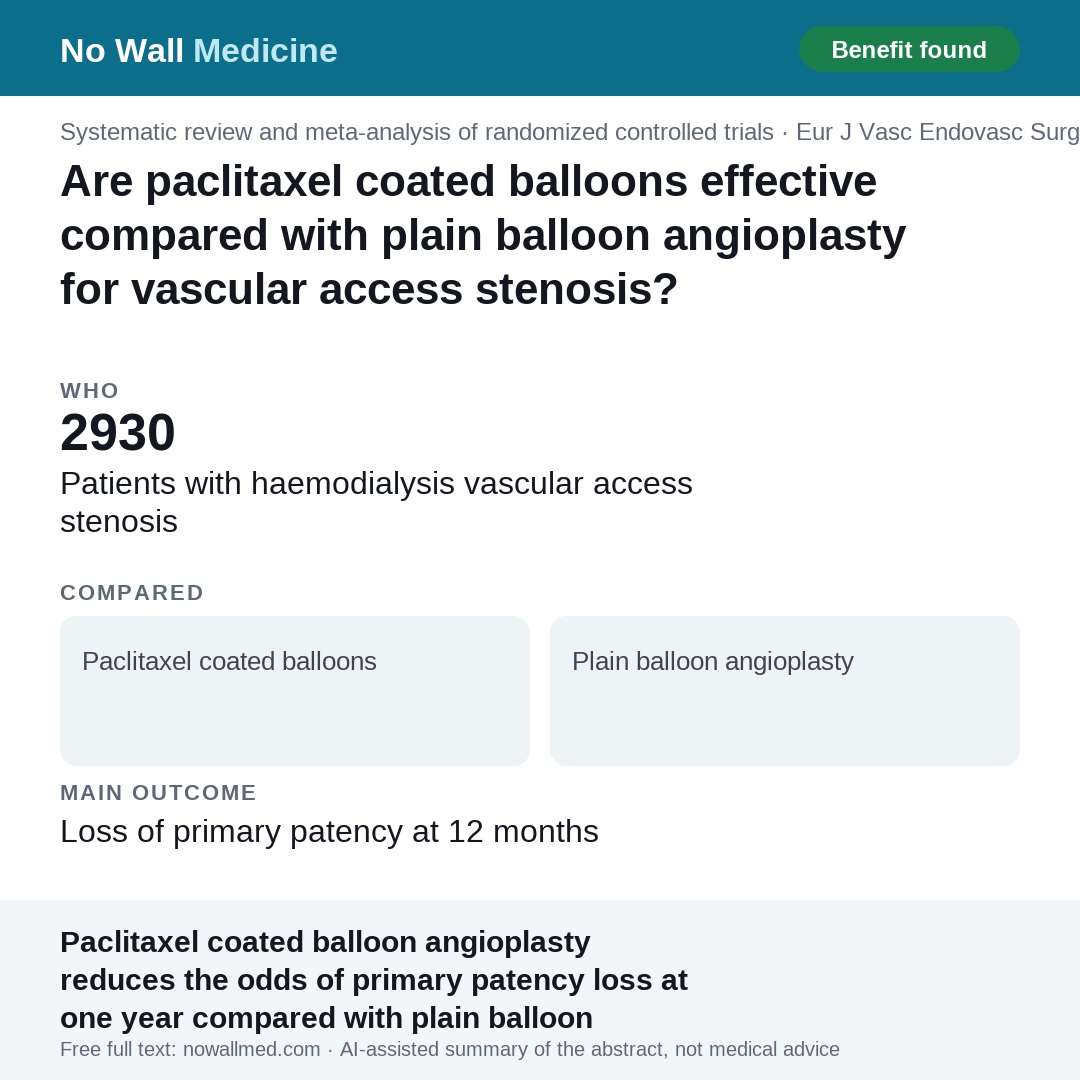
Paclitaxel Coated Balloons for Haemodialysis Vascular Access Stenosis: A Systematic Review and Meta-analysis of Randomised Controlled Trials
Systematic review and meta-analysis of randomized controlled trialsBenefit found
Are paclitaxel coated balloons effective compared with plain balloon angioplasty for vascular access stenosis?
Who
2930
Patients with haemodialysis vascular access stenosis
Compared
Paclitaxel coated balloons
Plain balloon angioplasty
Main outcome
Loss of primary patency at 12 months
Result: odds ratio 0.54 (95% CI 0.44 - 0.66)
Bottom line: Paclitaxel coated balloon angioplasty reduces the odds of primary patency loss at one year compared with plain balloon angioplasty.
Limitation: Certainty of evidence was low for vascular access thrombosis and abandonment.
Eur J Vasc Endovasc Surg · 2026-04-01Download image
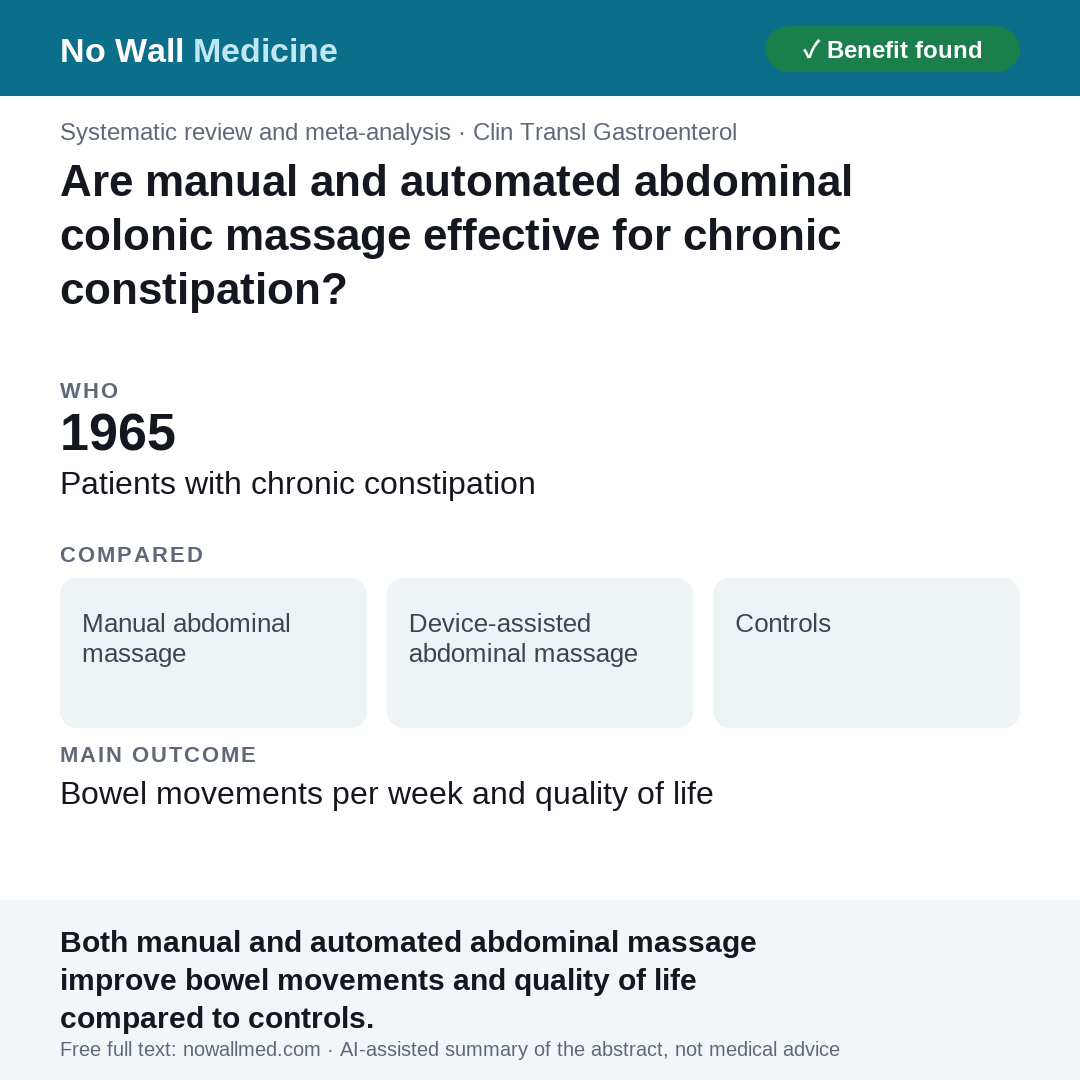
Safety and Efficacy of Manual and Automated Abdominal Colonic Massage for Chronic Constipation: A Systematic Review and Meta-Analysis
Systematic review and meta-analysisBenefit found
Are manual and automated abdominal colonic massage effective for chronic constipation?
Who
1965
Patients with chronic constipation
Compared
Manual abdominal massage
Device-assisted abdominal massage
Controls
Main outcome
Bowel movements per week and quality of life
Bottom line: Both manual and automated abdominal massage improve bowel movements and quality of life compared to controls.
Limitation: Meta-analysis for neurogenic bowel dysfunction was not feasible due to limited studies.
Clin Transl Gastroenterol · 2026-04-01Download image
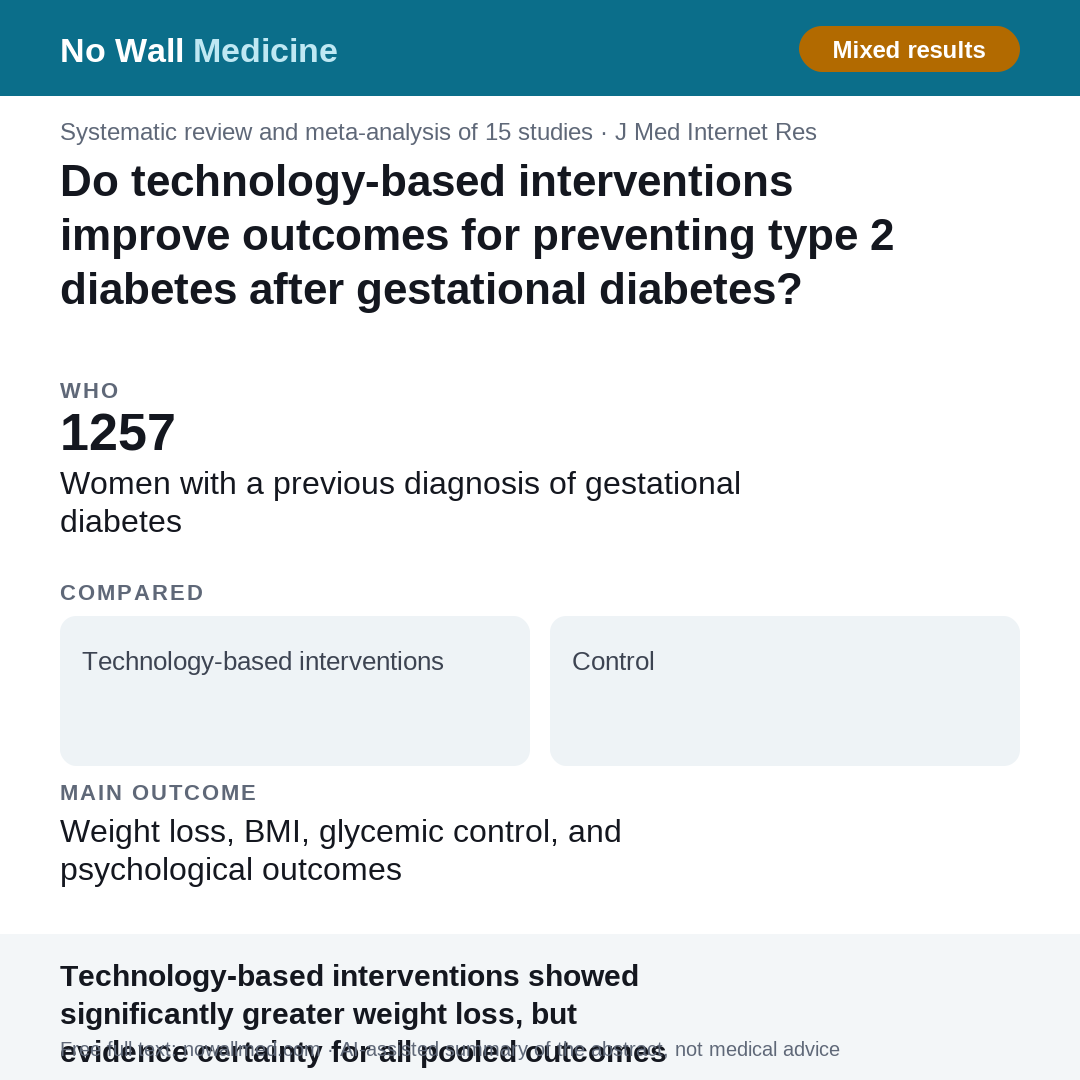
Technology-Based Interventions for Prevention of Type 2 Diabetes Following Gestational Diabetes: Systematic Review and Meta-Analysis
Systematic review and meta-analysis of 15 studiesMixed results
Do technology-based interventions improve outcomes for preventing type 2 diabetes after gestational diabetes?
Who
1257
Women with a previous diagnosis of gestational diabetes
Compared
Technology-based interventions
Control
Main outcome
Weight loss, BMI, glycemic control, and psychological outcomes
Result: mean difference -1.01, SE 0.35, 95% CI -1.86 to -0.16 kg
Bottom line: Technology-based interventions showed significantly greater weight loss, but evidence certainty for all pooled outcomes was very low.
Limitation: Substantial heterogeneity, significant risk of bias, and very low certainty in the evidence.
J Med Internet Res · 2026-04-01Download image
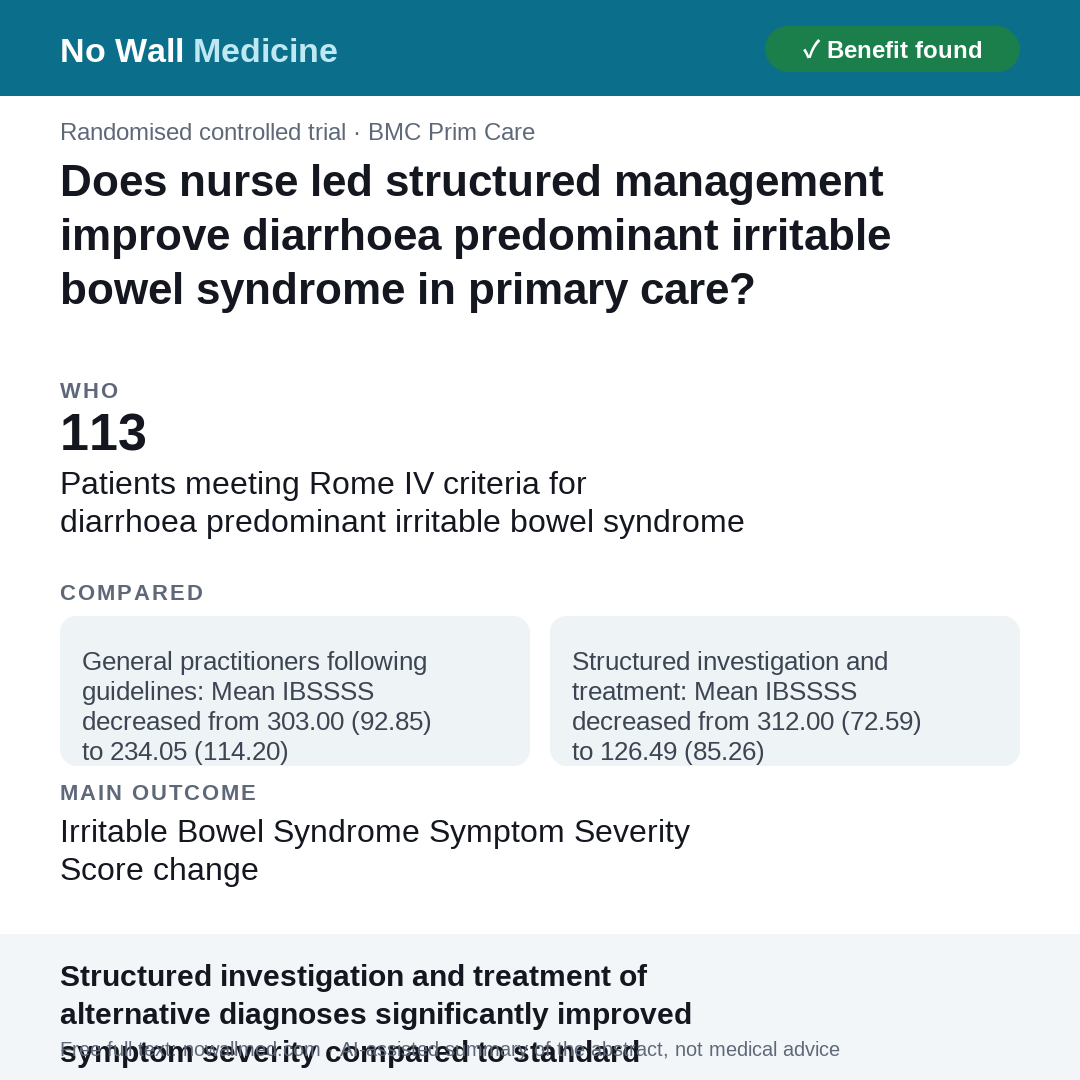
Clinical and cost effectiveness of nurse led-structured management of diarrhoea predominant irritable bowel syndrome in primary care (Lincolnshire POACHER study); a randomised control trial
Randomised controlled trialBenefit found
Does nurse led structured management improve diarrhoea predominant irritable bowel syndrome in primary care?
Who
113
Patients meeting Rome IV criteria for diarrhoea predominant irritable bowel syndrome · 44 Lincolnshire primary care practices
Compared
General practitioners following guidelines: Mean IBSSSS decreased from 303.00 (92.85) to 234.05 (114.20)
Structured investigation and treatment: Mean IBSSSS decreased from 312.00 (72.59) to 126.49 (85.26)
Main outcome
Irritable Bowel Syndrome Symptom Severity Score change
Result: -112.29 points (95% CI -151.68 to -72.91)
Bottom line: Structured investigation and treatment of alternative diagnoses significantly improved symptom severity compared to standard general practitioner management.
BMC Prim Care · 2026-04-01Download image
Association of Coffee Intake With Risk of Gastroesophageal Reflux Disease and Complications: A Systematic Review and Meta-Analysis
Systematic review and meta-analysisHarm found
Is coffee intake associated with risk of gastroesophageal reflux disease and complications?
Who
122074
Patients in 40 studies
Compared
coffee drinkers: 34.9% [CI: 28.5-41.8]
nondrinkers: 30.7% [CI: 25.2-36.7]
Main outcome
gastroesophageal reflux disease
Result: OR: 1.18 [CI: 1.03-1.36]
Bottom line: Coffee use was associated with a small, statistically significant increased rate of gastroesophageal reflux disease, but not Barrett's esophagus.
Limitation: The magnitude of this effect is of unclear clinical significance.
Clin Transl Gastroenterol · 2026-04-01Download image

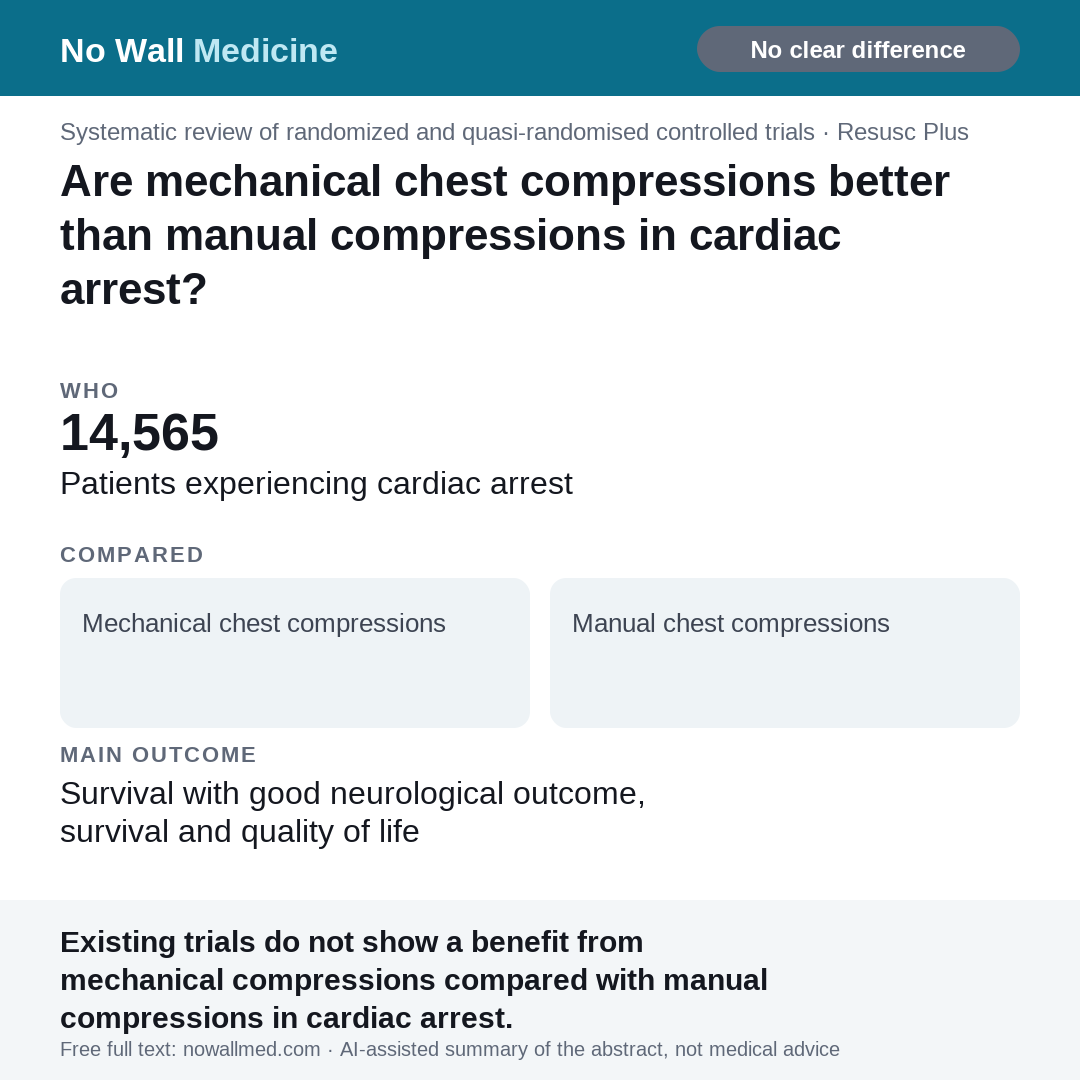
Mechanical versus manual chest compression in cardiac arrest: a systematic review
Systematic review of randomized and quasi-randomised controlled trialsNo clear difference
Are mechanical chest compressions better than manual compressions in cardiac arrest?
Who
14,565
Patients experiencing cardiac arrest
Compared
Mechanical chest compressions
Manual chest compressions
Main outcome
Survival with good neurological outcome, survival and quality of life
Bottom line: Existing trials do not show a benefit from mechanical compressions compared with manual compressions in cardiac arrest.
Limitation: Substantial methodological and clinical heterogeneity between the studies precluded meta-analysis.
Resusc Plus · 2026-04-01Download image
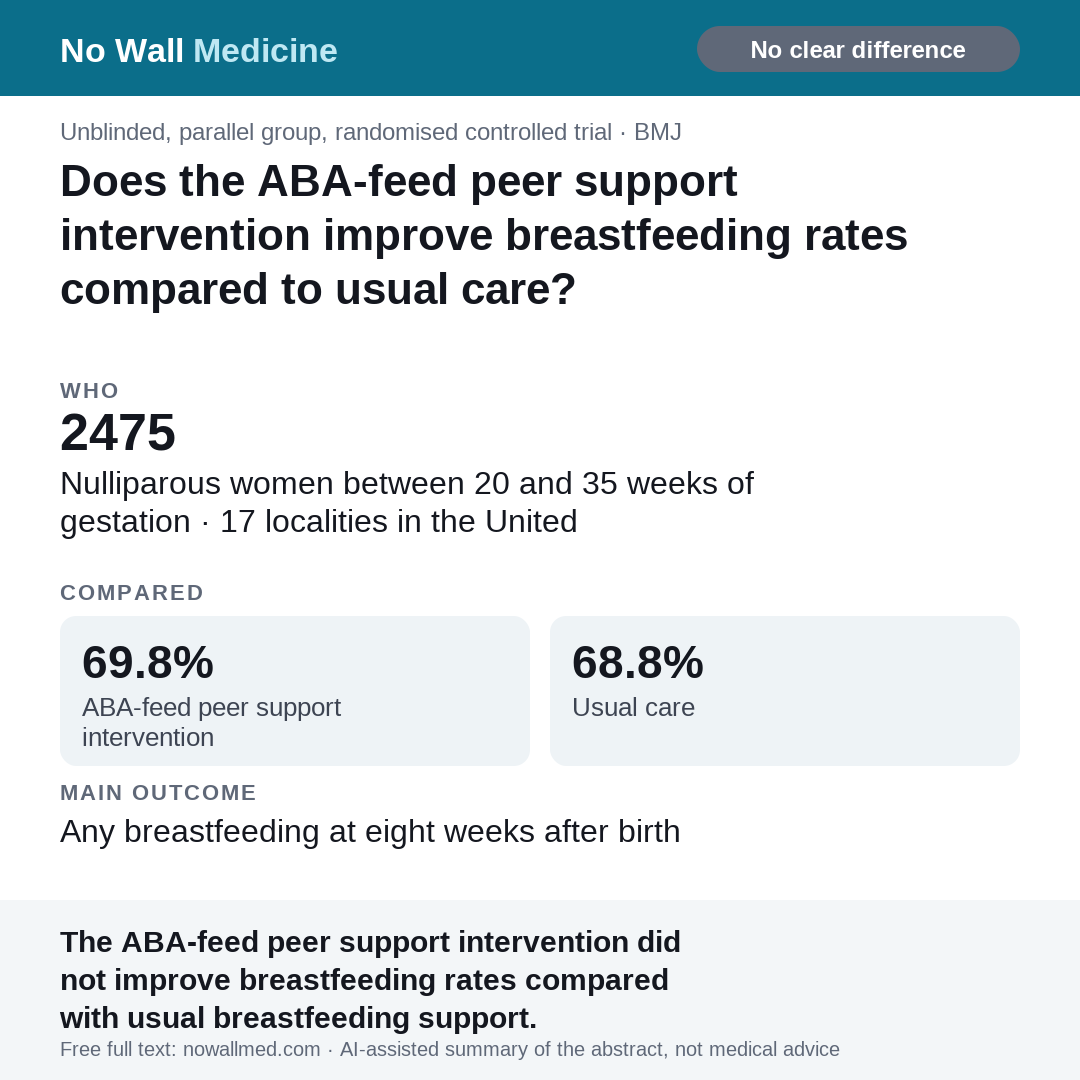
Peer support intervention (ABA-feed) to improve breastfeeding: UK based, multicentre, parallel group, randomised controlled trial
Unblinded, parallel group, randomised controlled trialNo clear difference
Does the ABA-feed peer support intervention improve breastfeeding rates compared to usual care?
Who
2475
Nulliparous women between 20 and 35 weeks of gestation · 17 localities in the United Kingdom
Compared
69.8%ABA-feed peer support intervention (1013/1452)
68.8%Usual care (698/1015)
Main outcome
Any breastfeeding at eight weeks after birth
Result: adjusted risk difference 0.01, 95% confidence interval -0.03 to 0.04
Bottom line: The ABA-feed peer support intervention did not improve breastfeeding rates compared with usual breastfeeding support.
BMJ · 2026-03-31Download image
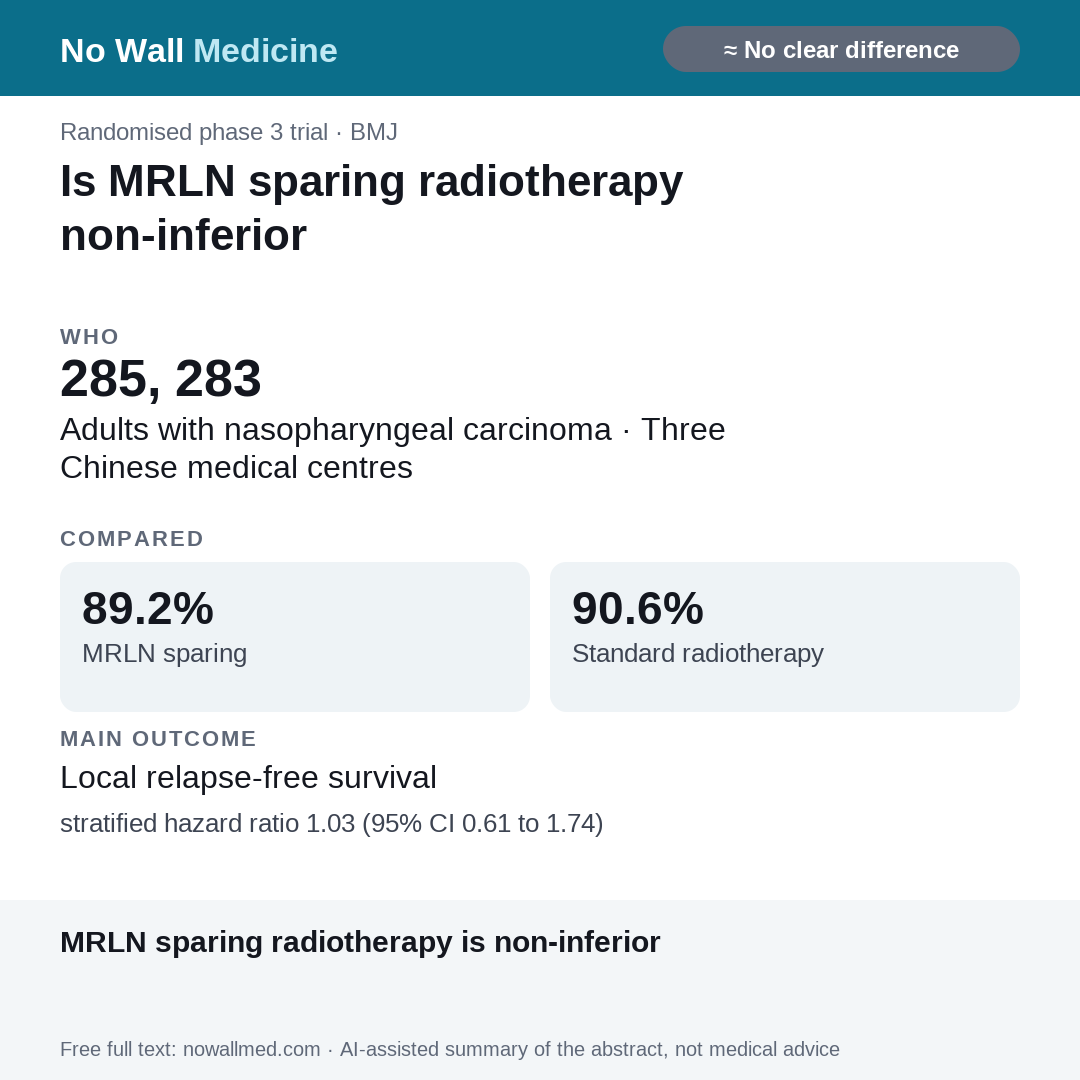
Medial retropharyngeal nodal region sparing radiotherapy in nasopharyngeal carcinoma: five year analysis of open label, non-inferiority, multicentre, randomised phase 3 trial
Randomised phase 3 trialNo clear difference
Is MRLN sparing radiotherapy non-inferior
Who
285, 283
Adults with nasopharyngeal carcinoma · Three Chinese medical centres
Compared
89.2%MRLN sparing (95% CI 85% to 92%)
90.6%Standard radiotherapy (87% to 94%)
Main outcome
Local relapse-free survival
Result: stratified hazard ratio 1.03 (95% CI 0.61 to 1.74)
Bottom line: MRLN sparing radiotherapy is non-inferior
BMJ · 2026-03-31Download image
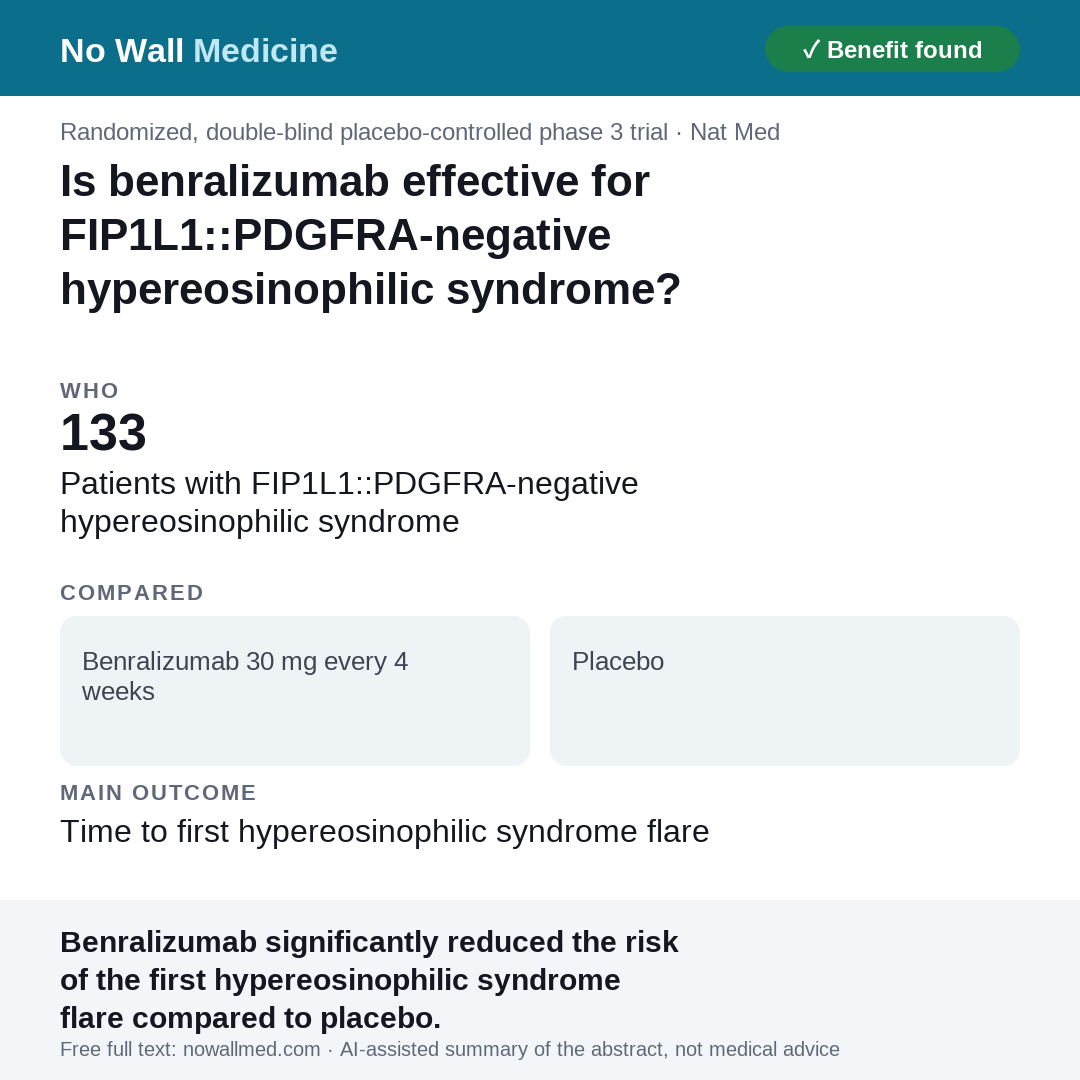
Benralizumab versus placebo for hypereosinophilic syndrome: a randomized, placebo-controlled phase 3 trial
Randomized, double-blind placebo-controlled phase 3 trialBenefit found
Is benralizumab effective for FIP1L1::PDGFRA-negative hypereosinophilic syndrome?
Who
133
Patients with FIP1L1::PDGFRA-negative hypereosinophilic syndrome
Compared
Benralizumab 30 mg every 4 weeks
Placebo
Main outcome
Time to first hypereosinophilic syndrome flare
Result: hazard ratio 0.35 (95% CI 0.18 to 0.69)
Bottom line: Benralizumab significantly reduced the risk of the first hypereosinophilic syndrome flare compared to placebo.
Nat Med · 2026-03-31Download image
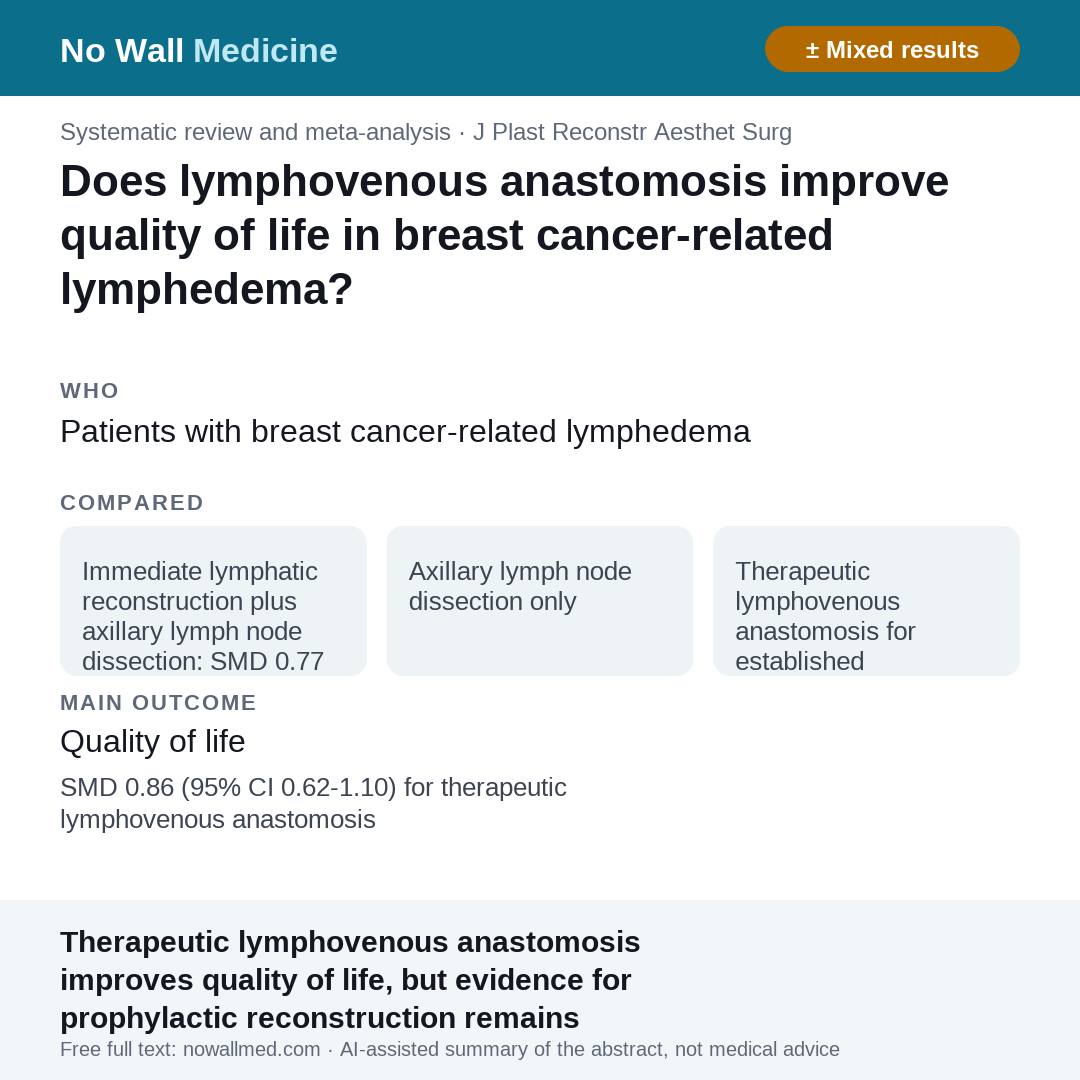
Quality-of-life impact of lymphovenous anastomosis in breast cancer-related lymphedema: A systematic review and meta-analysis
Systematic review and meta-analysisMixed results
Does lymphovenous anastomosis improve quality of life in breast cancer-related lymphedema?
Who
Patients with breast cancer-related lymphedema
Compared
Immediate lymphatic reconstruction plus axillary lymph node dissection: SMD 0.77 (95% CI -1.17 to 2.70)
Axillary lymph node dissection only
Therapeutic lymphovenous anastomosis for established lymphedema: SMD 0.86 (95% CI 0.62-1.10)
Main outcome
Quality of life
Result: SMD 0.86 (95% CI 0.62-1.10) for therapeutic lymphovenous anastomosis
Bottom line: Therapeutic lymphovenous anastomosis improves quality of life, but evidence for prophylactic reconstruction remains insufficient.
Limitation: Few studies, substantial heterogeneity, and inclusion of all axillary lymph node dissection patients.
J Plast Reconstr Aesthet Surg · 2026-03-31Download image