Visual abstracts
New randomized trials and meta-analyses from leading journals at a glance: who was studied, what was compared, and what was found. Every paper is free to read in full.
All specialtiesCardiology 202Oncology 170Gastroenterology & Hepatology 97Infectious Disease 169Neurology 97Psychiatry & Mental Health 139Pulmonology 95Critical Care 54Endocrinology & Diabetes 134Pediatrics 90Surgery 64Orthopedics & Sports Medicine 39Neurosurgery 7Cardiothoracic & Vascular Surgery 21Plastic & Reconstructive Surgery 49Nephrology 38Rheumatology 39Hematology 49Dermatology 24Ophthalmology 37Obstetrics & Gynecology 53Public & Global Health 61Radiology & Imaging 16Anesthesiology 34Urology 49ENT (Otolaryngology) 26Emergency Medicine 21Allergy & Immunology 16Geriatrics 62Family Medicine & Primary Care 28Medical Genetics & Genomics 22Pathology & Laboratory Medicine 5Physical Medicine & Rehabilitation 53Palliative Care 26Nutrition 72Digital Health & AI 185General Medicine 29
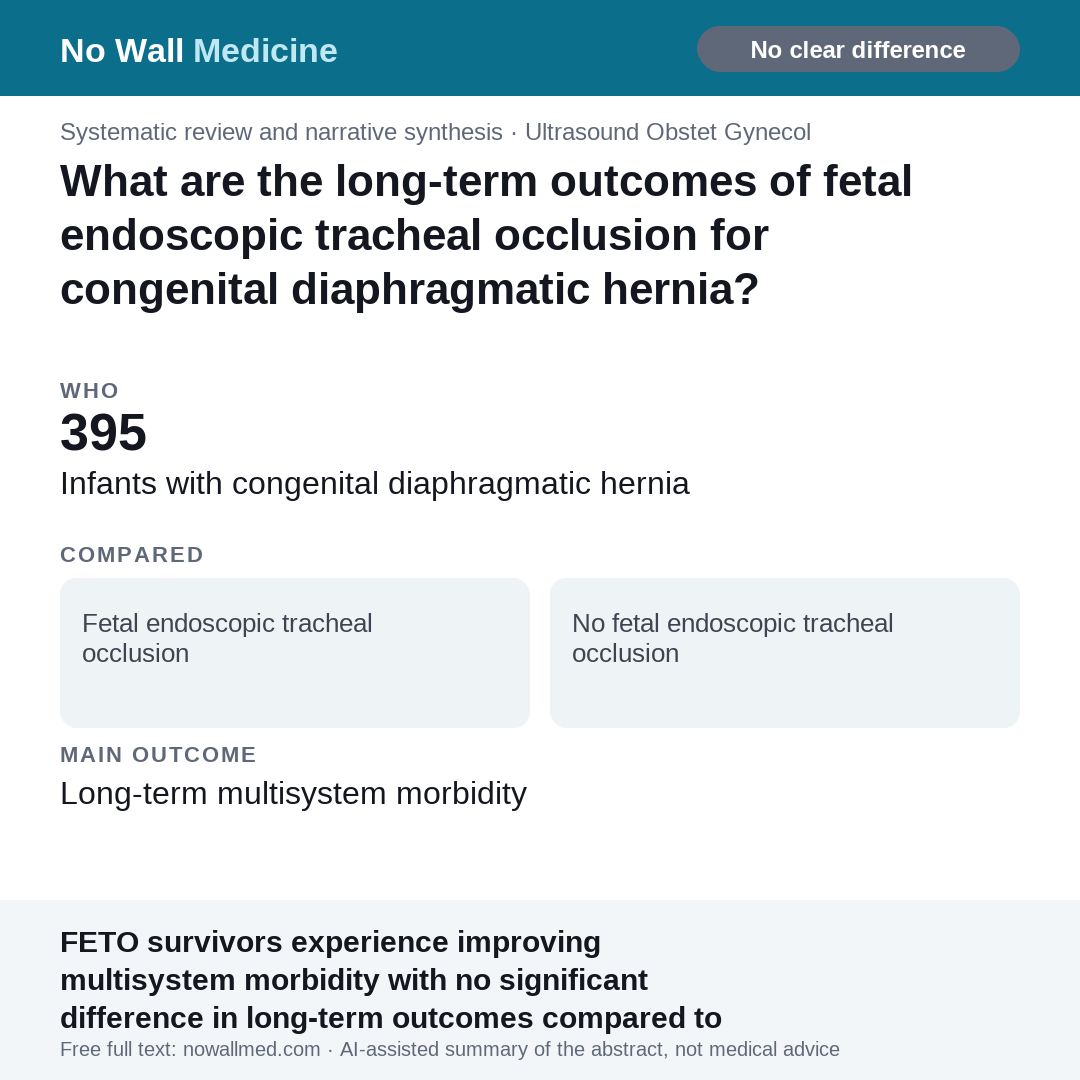
Long-term outcome after fetal endoscopic tracheal occlusion for congenital diaphragmatic hernia: systematic review
Systematic review and narrative synthesisNo clear difference
What are the long-term outcomes of fetal endoscopic tracheal occlusion for congenital diaphragmatic hernia?
Who
395
Infants with congenital diaphragmatic hernia
Compared
Fetal endoscopic tracheal occlusion
No fetal endoscopic tracheal occlusion
Main outcome
Long-term multisystem morbidity
Bottom line: FETO survivors experience improving multisystem morbidity with no significant difference in long-term outcomes compared to non-FETO infants.
Limitation: Meta-analysis was not performed due to outcome heterogeneity.
Ultrasound Obstet Gynecol · 2026-08-29Download image
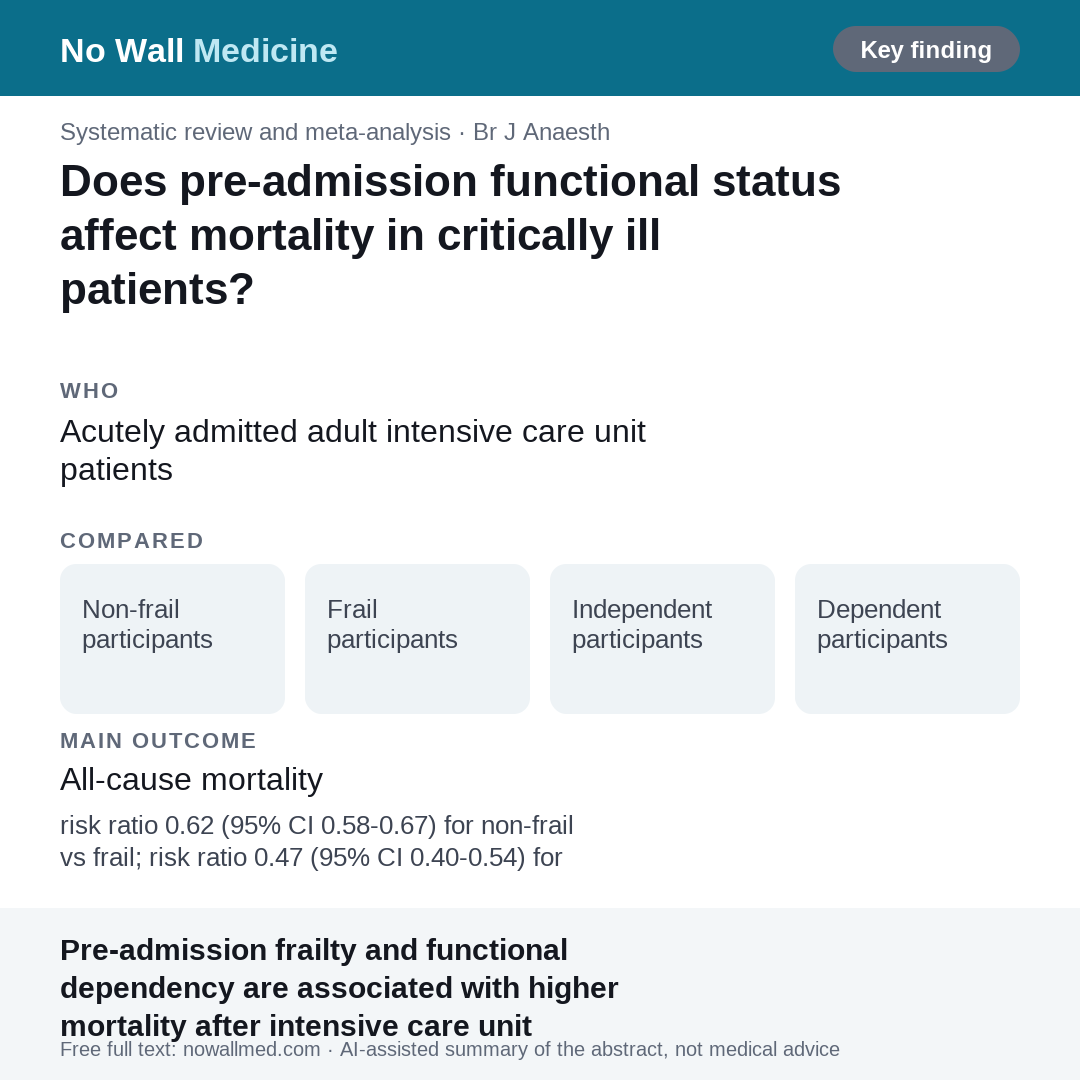
Impact of pre-admission functional status on intensive care patient outcomes: a systematic review and meta-analysis
Systematic review and meta-analysisHarm found
Does pre-admission functional status affect mortality in critically ill patients?
Who
Acutely admitted adult intensive care unit patients
Compared
Pre-admission frailty and functional dependency
Control
Main outcome
Mortality after intensive care unit admission
Result: risk ratio 0.62 (95% confidence interval 0.58-0.67)
Bottom line: Pre-admission frailty and functional dependency are associated with higher mortality after intensive care unit admission.
Limitation: The evidence is very uncertain and the true effect could differ substantially.
Br J Anaesth · 2026-08-29Download image
Prevalence and Clinical Relevance of Antiphospholipid Antibodies in Ischemic Stroke: A Systematic Review and Meta-Analysis
Systematic review and meta-analysisBenefit found
What is the prevalence and association of antiphospholipid antibodies in ischemic stroke?
Who
9438
Patients with ischemic stroke
Compared
19.1%Patients with any antiphospholipid antibodies (95% CI, 15.4%-23.0%)
First ischemic stroke risk: OR, 2.93 [95% CI, 2.31-3.73]
Main outcome
Prevalence and risk of ischemic stroke
Result: OR, 2.93 [95% CI, 2.31-3.73]
Bottom line: Antiphospholipid antibody seropositivity is present in 19.1% of ischemic stroke patients and increases risk of first stroke.
Stroke · 2026-08-28Download image

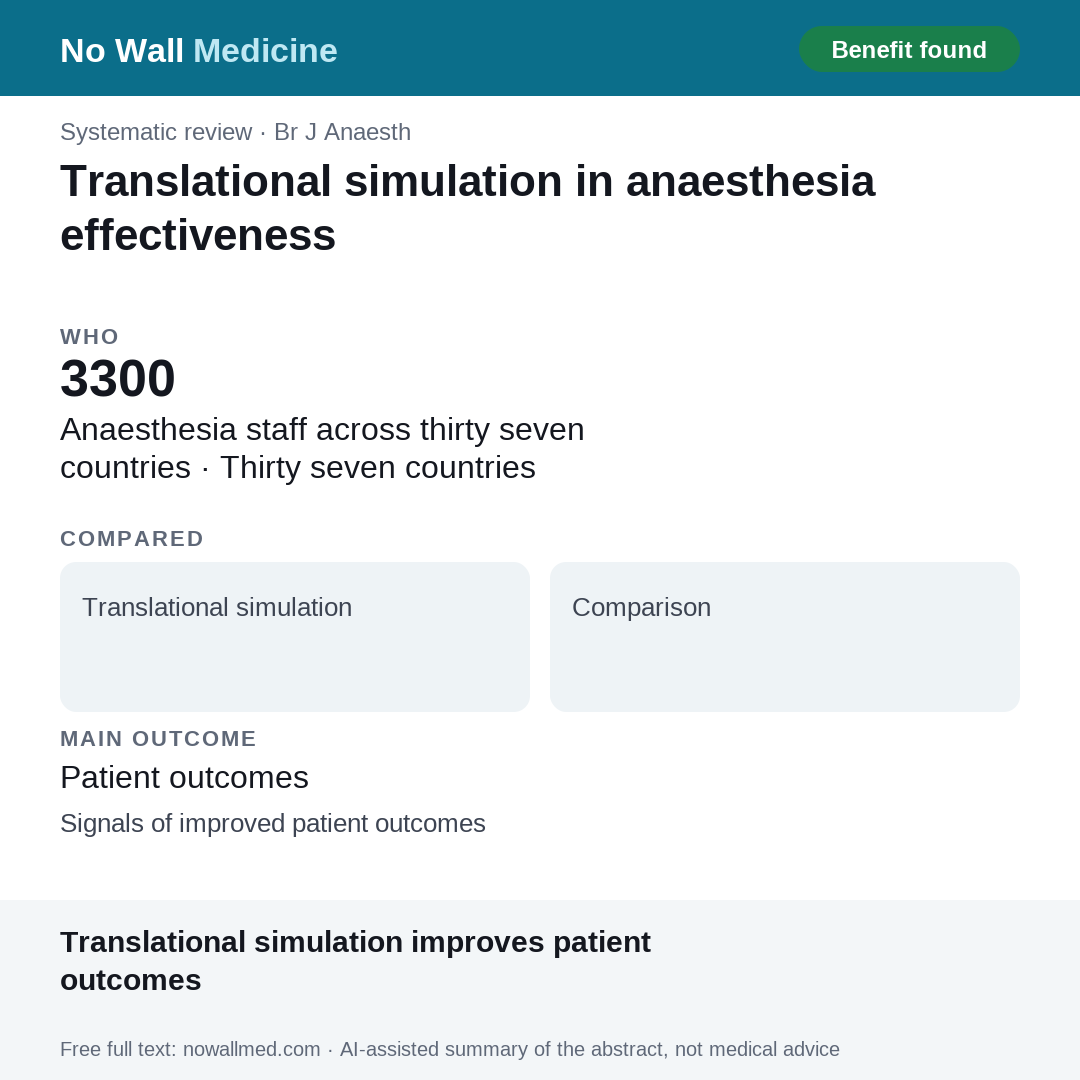
Translational simulation in anaesthesia: a systematic review of applications, processes, outcomes, and implementation factors
Systematic reviewBenefit found
Translational simulation in anaesthesia effectiveness
Who
3300
Anaesthesia staff across thirty seven countries · Thirty seven countries
Compared
Translational simulation
Comparison
Main outcome
Patient outcomes
Result: Signals of improved patient outcomes
Bottom line: Translational simulation improves patient outcomes
Limitation: Quasi-experimental designs
Br J Anaesth · 2026-08-28Download image
Palliative care needs and experiences of patients with advanced heart failure and family caregivers in Asia: A mixed methods systematic review
Mixed methods systematic reviewUnclear result
Palliative care needs in Asia for heart failure
Who
patients with advanced heart failure and family caregivers · Asia
Compared
patients
family caregivers
Main outcome
palliative care needs and experiences
Bottom line: Palliative care needs are similar among Asian countries
Palliat Med · 2026-08-28Download image
What is the evidence for physical interventions for people living with advanced dementia in the community? A meta-review
Umbrella review of systematic reviewsUnclear result
What is the effectiveness of physical interventions for people with advanced dementia?
Who
People with dementia nearing end of life, carers, or staff · Health and social care settings
Compared
Nutrition and hydration
Physical activities
Main outcome
Effectiveness of physical interventions
Bottom line: Evidence quality was generally low with no conclusive findings on the effectiveness of physical interventions.
Limitation: Evidence quality was generally low, with no conclusive findings on effectiveness.
BMJ Support Palliat Care · 2026-08-28Download image
Comparative Effectiveness of Noninvasive Brain-Computer Interface-Based Interventions for Upper Limb Rehabilitation in Poststroke Hemiplegia: Systematic Review and Network Meta-Analysis of Randomized Controlled Trials
Systematic review and network meta-analysisBenefit found
What is the comparative effectiveness of noninvasive brain-computer interface interventions for poststroke upper limb rehabilitation?
Who
2906
Patients with stroke
Compared
Brain-computer interface interventions
Control groups
Main outcome
Fugl-Meyer Assessment of Upper Extremity, ARAT, WMFT, and MBI
Result: mean difference 5.33 (95% CI 4.28 to 6.38) for FMA-UE
Bottom line: Noninvasive brain-computer interface interventions significantly improve poststroke upper limb rehabilitation across body functions and activities.
Limitation: Low to moderate evidence certainty and substantial heterogeneity make findings exploratory.
J Med Internet Res · 2026-08-28Download image
Application of Digital Health Technologies in Scoliosis Rehabilitation: Systematic Review Based on the Technology Classification Framework
Systematic reviewBenefit found
What is the efficacy and implementation of digital health technologies in scoliosis rehabilitation?
Who
574
Patients with any type of scoliosis · 5 countries
Compared
Digital health interventions: generally favorable direction for Cobb angle and flexibility
Implementation outcomes: least favorable overall direction of effect
Main outcome
clinical, functional, patient-reported quality-of-life, and implementation outcomes
Bottom line: Digital health interventions show favorable effects on spinal alignment, function, and quality of life, though evidence certainty is low.
Limitation: The overall certainty of evidence was low.
J Med Internet Res · 2026-08-28Download image
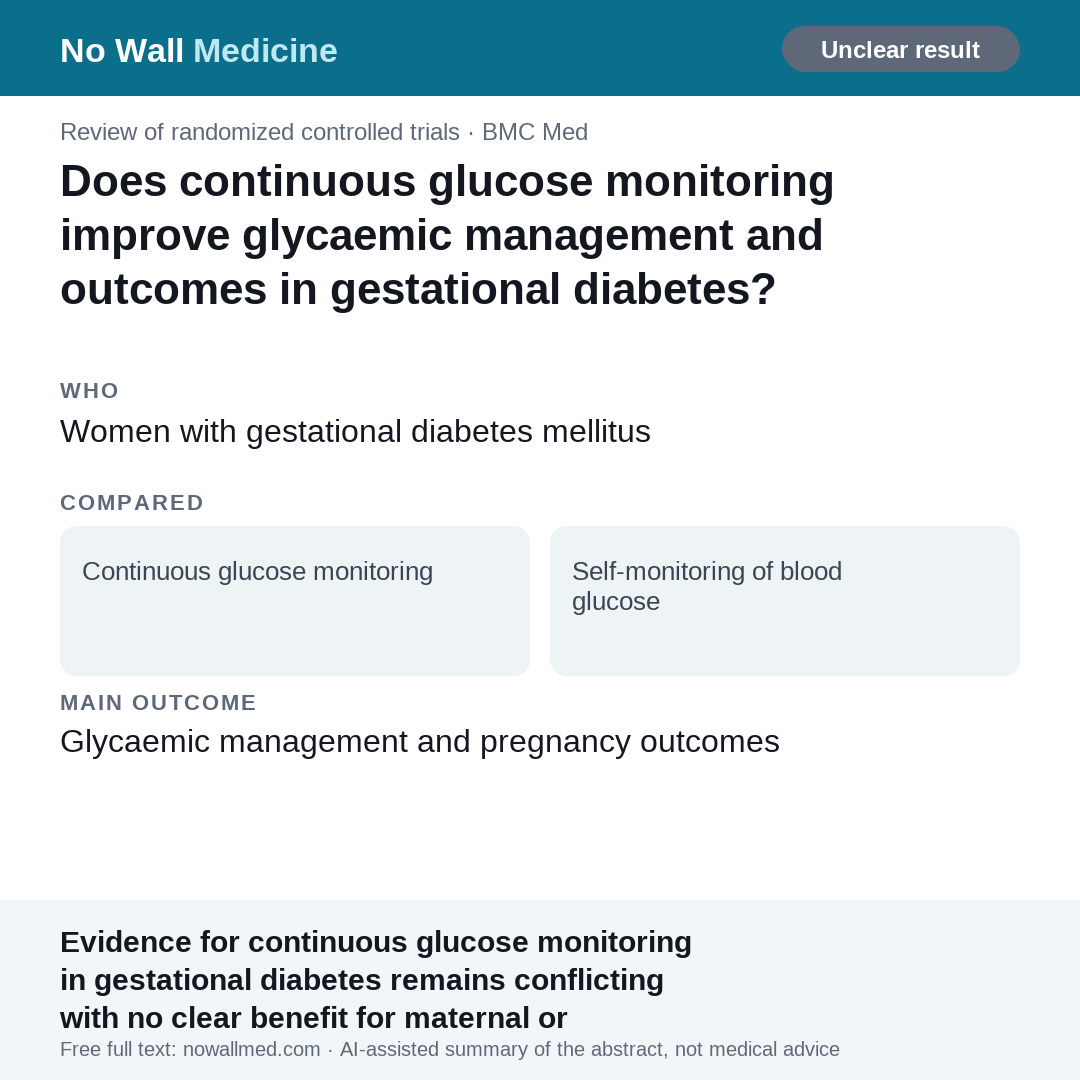
Conflicting evidence for continuous glucose monitoring in gestational diabetes: current challenges and the imperative for individual participant data meta-analysis
Review of randomized controlled trialsUnclear result
Does continuous glucose monitoring improve glycaemic management and outcomes in gestational diabetes?
Who
Women with gestational diabetes mellitus
Compared
Continuous glucose monitoring
Self-monitoring of blood glucose
Main outcome
Glycaemic management and pregnancy outcomes
Bottom line: Evidence for continuous glucose monitoring in gestational diabetes remains conflicting with no clear benefit for maternal or neonatal outcomes.
Limitation: Absence of validated continuous glucose monitoring-based glycaemic targets specific to gestational diabetes.
BMC Med · 2026-08-27Download image
Does acute pyelonephritis skew outcomes in registrational trials of novel antibiotics for complicated urinary tract infections? A systematic review and meta-analysis
Systematic review and meta-analysisBenefit found
Do outcomes differ between acute pyelonephritis and other complicated urinary tract infections?
Who
5,971
Patients with acute pyelonephritis or other complicated urinary tract infections
Compared
Acute pyelonephritis
Other complicated urinary tract infections
Main outcome
Clinical cure plus microbiologic eradication at test-of-cure
Result: risk ratio 1.12 (95% CI 1.03-1.23)
Bottom line: Acute pyelonephritis achieved higher cure rates at test-of-cure than other complicated urinary tract infections.
Limitation: Heterogeneity in definitions and limited stratified reporting reduce interstudy comparability.
Clin Infect Dis · 2026-08-27Download image

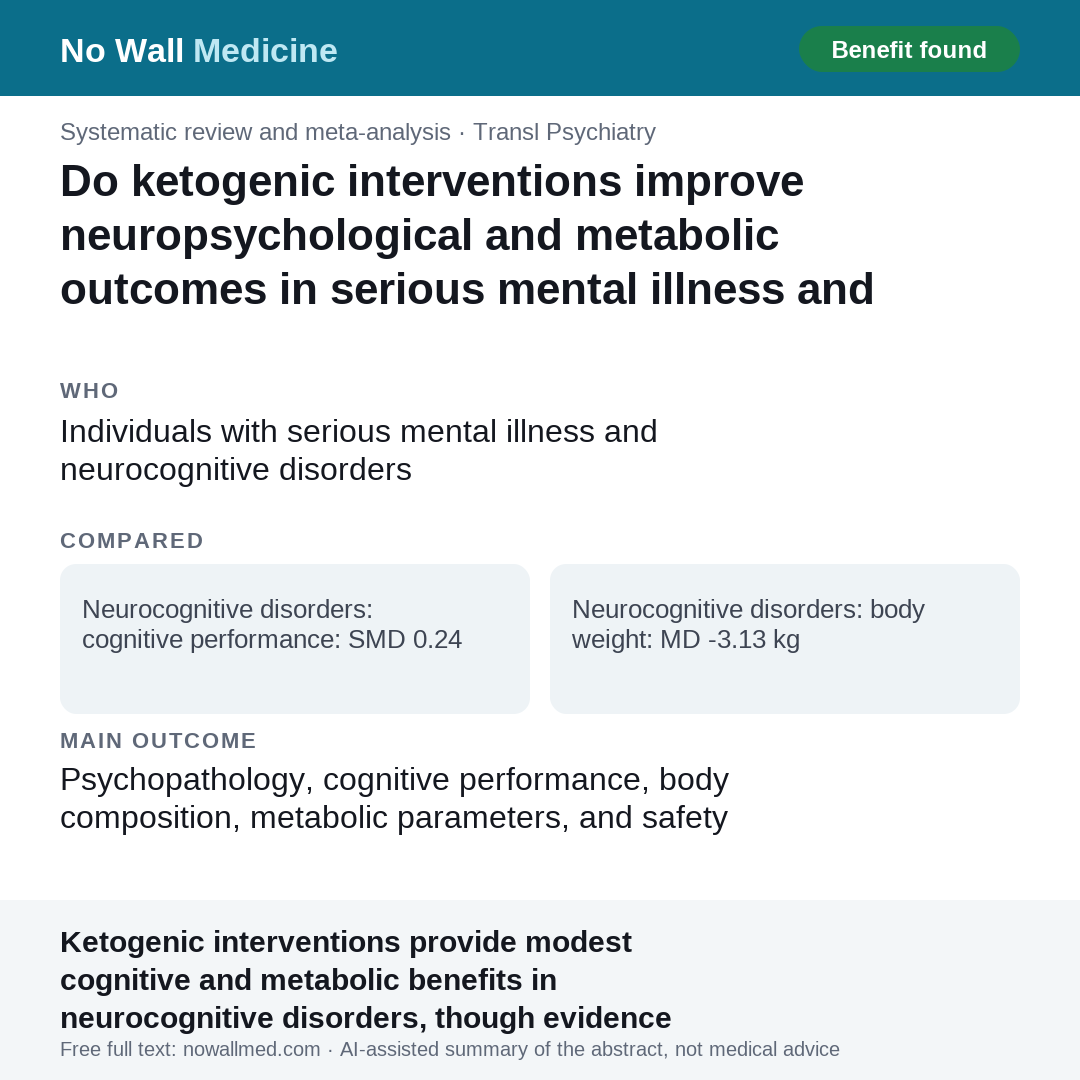
The efficacy of ketogenic interventions on neuropsychological & metabolic outcomes in serious mental illness & neurocognitive disorders: a systematic review & meta-analysis
Systematic review and meta-analysisBenefit found
Do ketogenic interventions improve neuropsychological and metabolic outcomes in serious mental illness and neurocognitive disorders?
Who
Individuals with serious mental illness and neurocognitive disorders
Compared
Neurocognitive disorders: cognitive performance: SMD 0.24
Neurocognitive disorders: body weight: MD -3.13 kg
Main outcome
Psychopathology, cognitive performance, body composition, metabolic parameters, and safety
Result: SMD 0.24 (95% CI 0.06 to 0.43) for cognitive performance
Bottom line: Ketogenic interventions provide modest cognitive and metabolic benefits in neurocognitive disorders, though evidence for serious mental illness is preliminary.
Limitation: Evidence in serious mental illness was largely limited to case reports and single-arm trials.
Transl Psychiatry · 2026-08-27Download image
Comparative efficacy and safety of glucagon-like peptide 1 based drugs for weight loss in adults with overweight or obesity without diabetes: network meta-analysis of randomised controlled trials
Network meta-analysis of randomised controlled trialsBenefit found
Which glucagon-like peptide 1 based drugs are most effective for weight loss?
Who
24214
Adults with overweight or obesity without diabetes
Compared
-22.10%retatrutide (95% confidence interval -25.60% to -18.60%)
-19.28%tirzepatide (-20.39% to -18.16%)
-17.32%CagriSema (-19.32% to -15.32%)
placebo
Main outcome
weight loss
Bottom line: Next generation incretin based treatments achieved greater weight loss than conventional glucagon-like peptide 1 receptor agonists.
Limitation: Differences in tolerability, limited head-to-head evidence, and residual uncertainty.
BMJ Med · 2026-08-27Download image

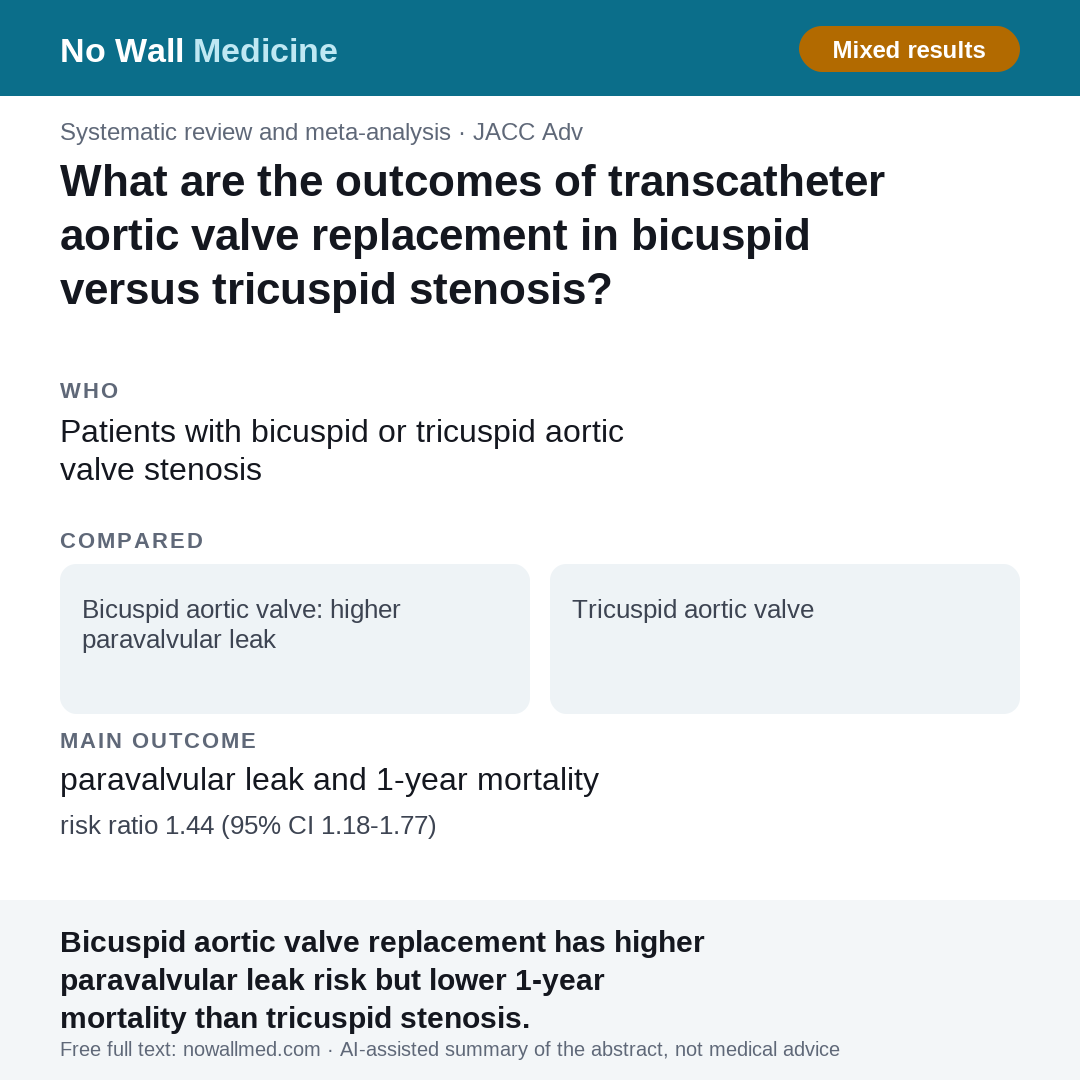
Transcatheter Aortic Valve Replacement for Severe Bicuspid Aortic Valve Stenosis: A Systematic Review and Meta-Analysis
Systematic review and meta-analysisMixed results
What are the outcomes of transcatheter aortic valve replacement in bicuspid versus tricuspid stenosis?
Who
Patients with bicuspid or tricuspid aortic valve stenosis
Compared
Bicuspid aortic valve: higher paravalvular leak
Tricuspid aortic valve
Main outcome
paravalvular leak and 1-year mortality
Result: risk ratio 1.44 (95% CI 1.18-1.77)
Bottom line: Bicuspid aortic valve replacement has higher paravalvular leak risk but lower 1-year mortality than tricuspid stenosis.
JACC Adv · 2026-08-27Download image
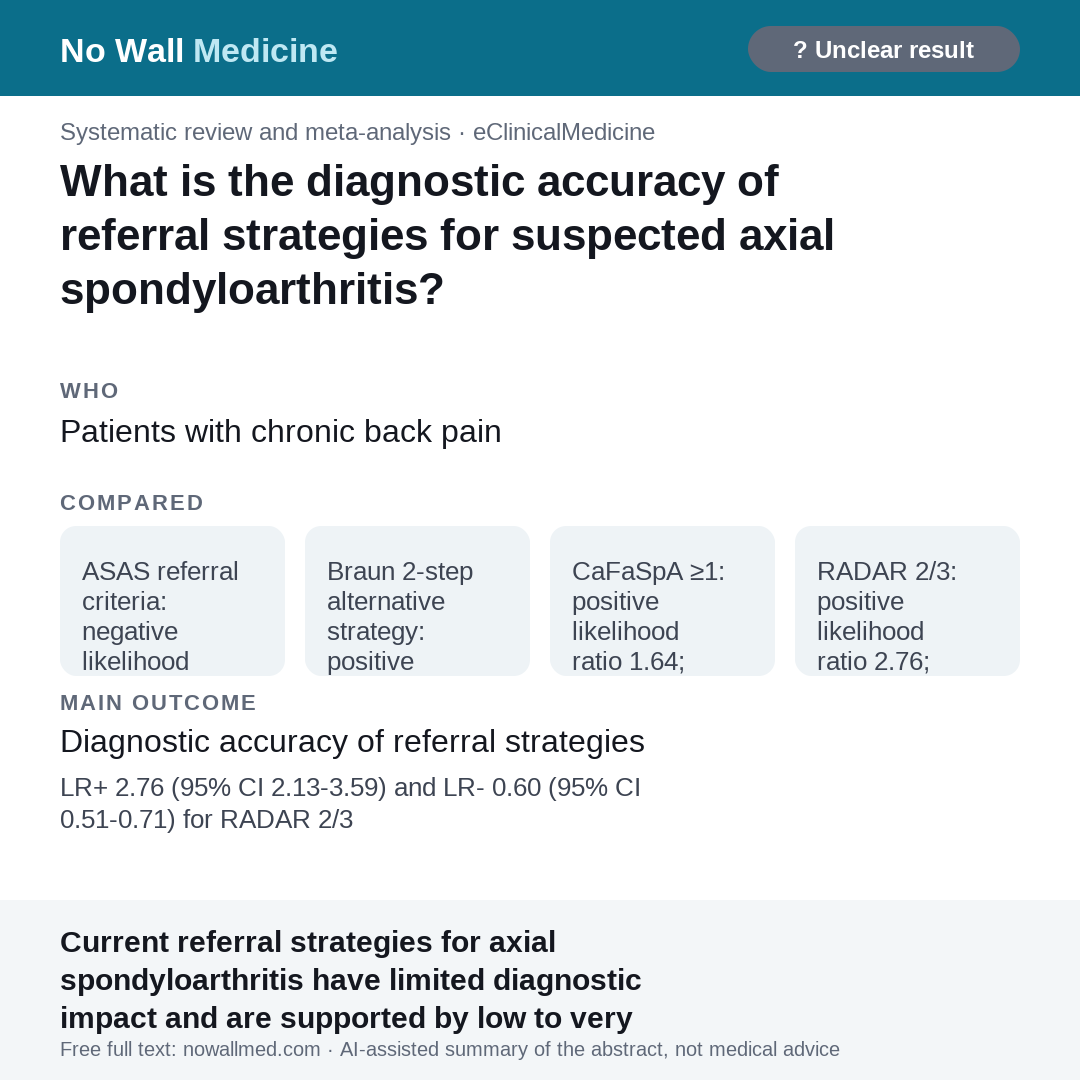
Performance of referral strategies for patients with suspected axial spondyloarthritis: a systematic review with meta-analysis
Systematic review and meta-analysisNo clear difference
What is the diagnostic accuracy of referral strategies for suspected axial spondyloarthritis?
Who
Patients with chronic back pain
Compared
ASAS referral criteria: negative likelihood ratio 0.18
Braun 2-step alternative strategy: positive likelihood ratio 2.02
CaFaSpA ≥1: positive likelihood ratio 1.64
RADAR 2/3: positive likelihood ratio 2.76
Main outcome
Diagnostic accuracy of referral strategies
Result: pooled likelihood ratios did not meet thresholds
Bottom line: Current referral strategies for axial spondyloarthritis have limited diagnostic impact and are supported by low to very low-certainty evidence.
Limitation: Risk of bias was high across all strategies, resulting in low to very low certainty of evidence.
eClinicalMedicine · 2026-08-26Download image
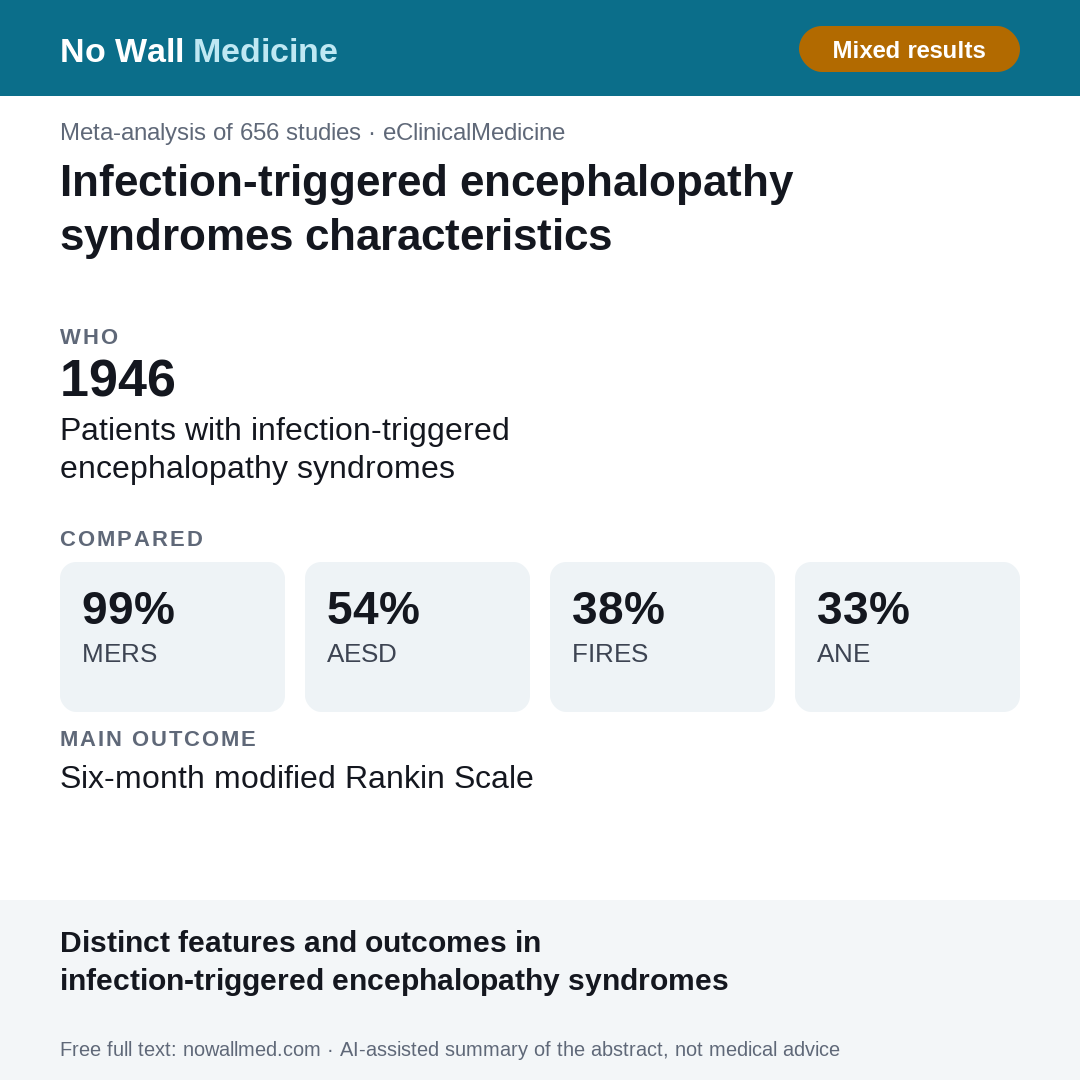
Infection-triggered encephalopathy syndromes: a meta-analysis of clinical characteristics and outcomes in 1946 cases
Meta-analysis of 656 studiesMixed results
What are the clinical characteristics and outcomes of infection-triggered encephalopathy syndromes?
Who
1946
Patients with infection-triggered encephalopathy syndromes
Compared
AESD
ANE
ASEM
HHE
Main outcome
six-month modified Rankin Scale
Bottom line: Infection-triggered encephalopathy syndromes show distinct demographic, clinico-radiological features and outcomes across different syndromes.
Funded by: No funding was received for this work
eClinicalMedicine · 2026-08-26Download image
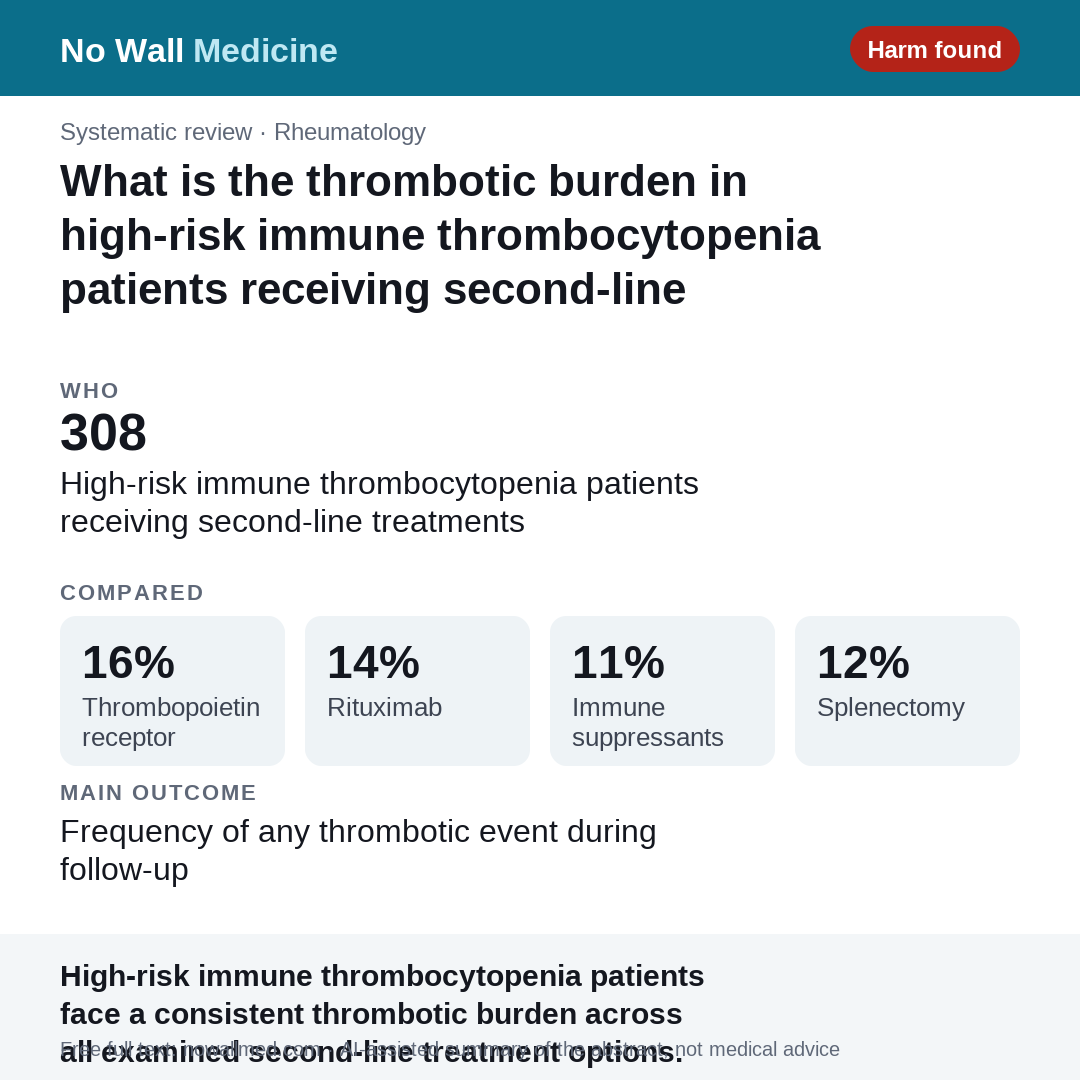
The thrombotic burden of high-risk immune thrombocytopenia patients receiving second-line treatments: a systematic review
Systematic reviewHarm found
What is the thrombotic burden in high-risk immune thrombocytopenia patients receiving second-line treatments?
Who
308
High-risk immune thrombocytopenia patients receiving second-line treatments
Compared
16%Thrombopoietin receptor agonists (95% CI 11-22)
14%Rituximab (95% CI 3-35)
11%Immune suppressants (95% CI 2-28)
12%Splenectomy (95% CI 4-24)
Main outcome
Frequency of any thrombotic event during follow-up
Result: 10% (95% CI 5-19)
Bottom line: High-risk immune thrombocytopenia patients face a consistent thrombotic burden across all examined second-line treatment options.
Rheumatology · 2026-08-26Download image
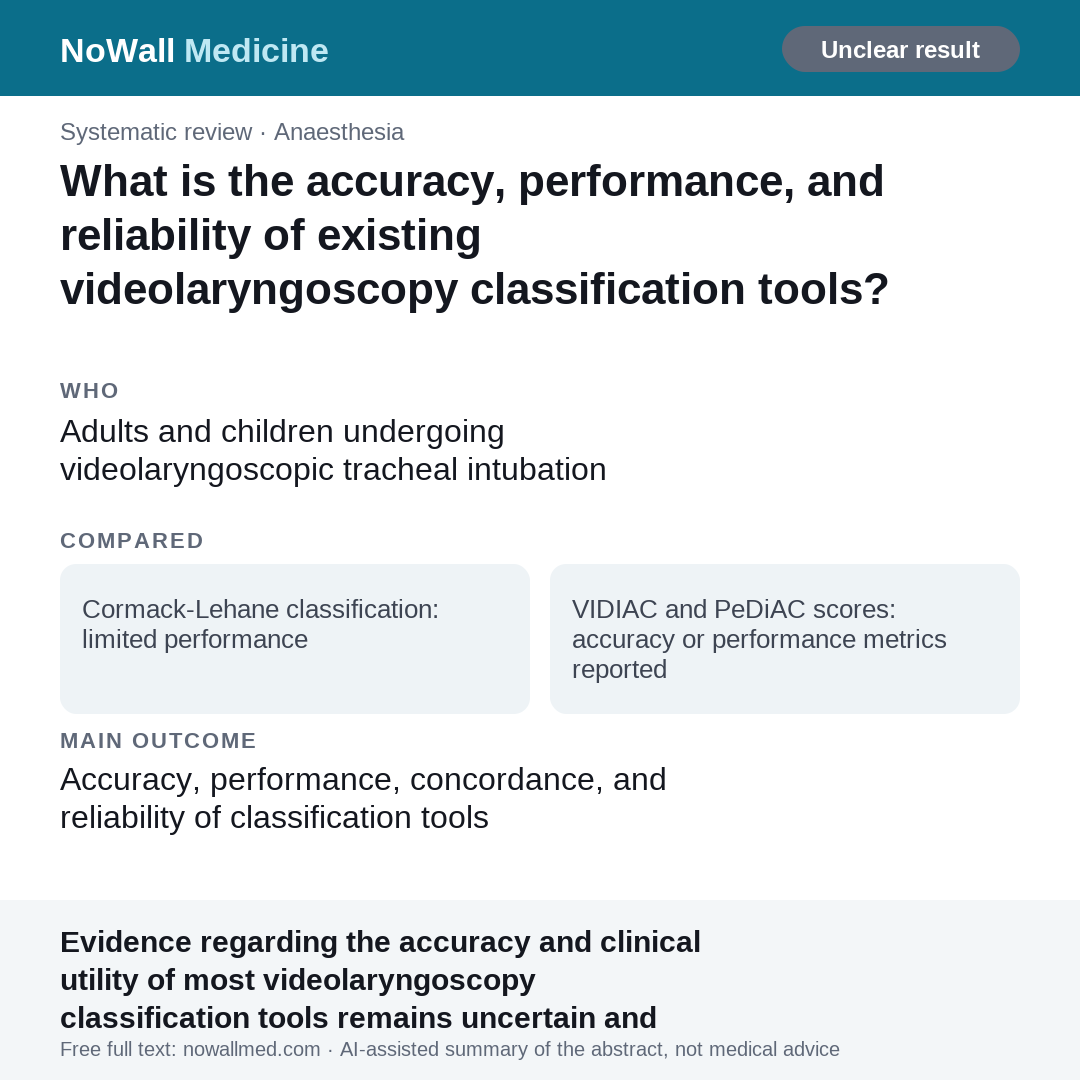
Classification of videolaryngoscopy: a systematic review
Systematic reviewUnclear result
What is the accuracy, performance, and reliability of existing videolaryngoscopy classification tools?
Who
Adults and children undergoing videolaryngoscopic tracheal intubation
Compared
Cormack-Lehane classification: limited performance
VIDIAC and PeDiAC scores: accuracy or performance metrics reported
Main outcome
Accuracy, performance, concordance, and reliability of classification tools
Bottom line: Evidence regarding the accuracy and clinical utility of most videolaryngoscopy classification tools remains uncertain and limited.
Limitation: High risk of bias regarding reference standard, flow, timing, and substantial applicability concerns.
Anaesthesia · 2026-08-26Download image
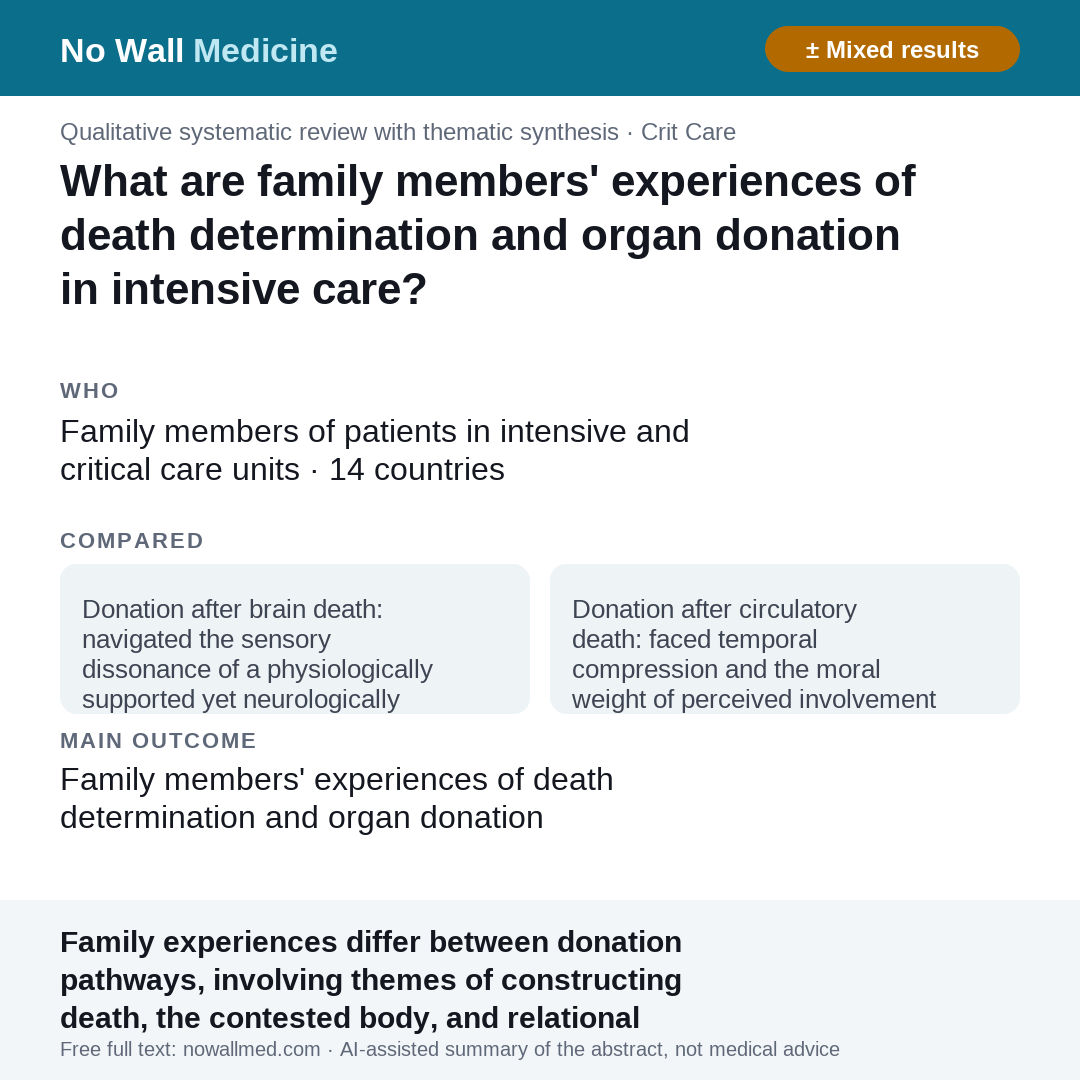
Family members' experiences of death and organ donation in intensive and critical care units: a qualitative systematic review with thematic synthesis
Qualitative systematic review with thematic synthesisMixed results
What are family members' experiences of death determination and organ donation in intensive care?
Who
Family members of patients in intensive and critical care units · 14 countries
Compared
Donation after brain death: navigated the sensory dissonance of a physiologically supported yet neurologically dead loved one
Donation after circulatory death: faced temporal compression and the moral weight of perceived involvement
Main outcome
Family members' experiences of death determination and organ donation
Bottom line: Family experiences differ between donation pathways, involving themes of constructing death, the contested body, and relational meaning-making.
Crit Care · 2026-08-26Download image
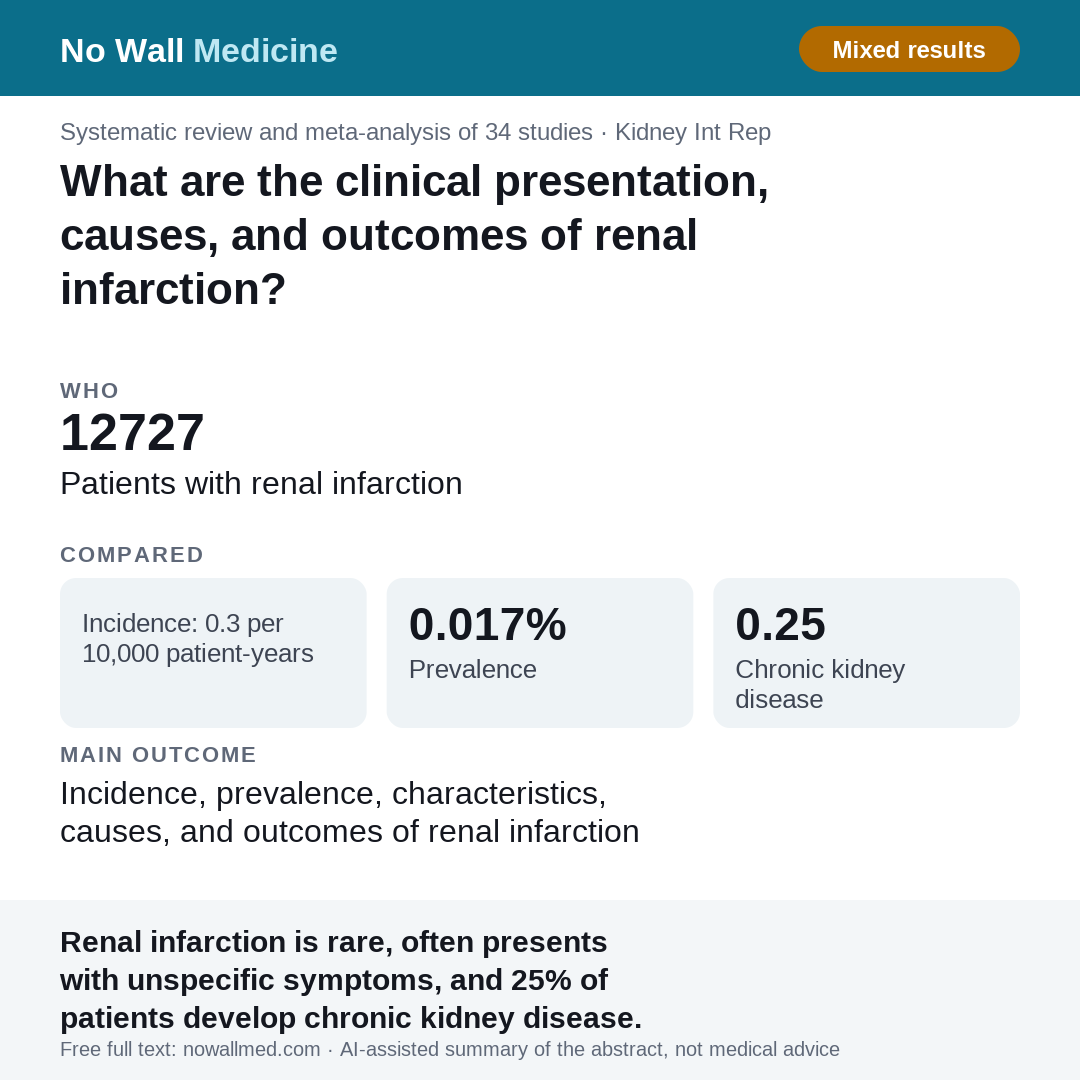
Systematic Review of Renal Infarction Clinical Presentation, Causes, and Outcomes
Systematic review and meta-analysis of 34 studiesMixed results
What are the clinical presentation, causes, and outcomes of renal infarction?
Who
12727
Patients with renal infarction
Compared
Incidence: 0.3 per 10,000 patient-years
0.017%Prevalence
0.25Chronic kidney disease
Main outcome
Incidence, prevalence, characteristics, causes, and outcomes of renal infarction
Bottom line: Renal infarction is rare, often presents with unspecific symptoms, and 25% of patients develop chronic kidney disease.
Kidney Int Rep · 2026-08-26Download image
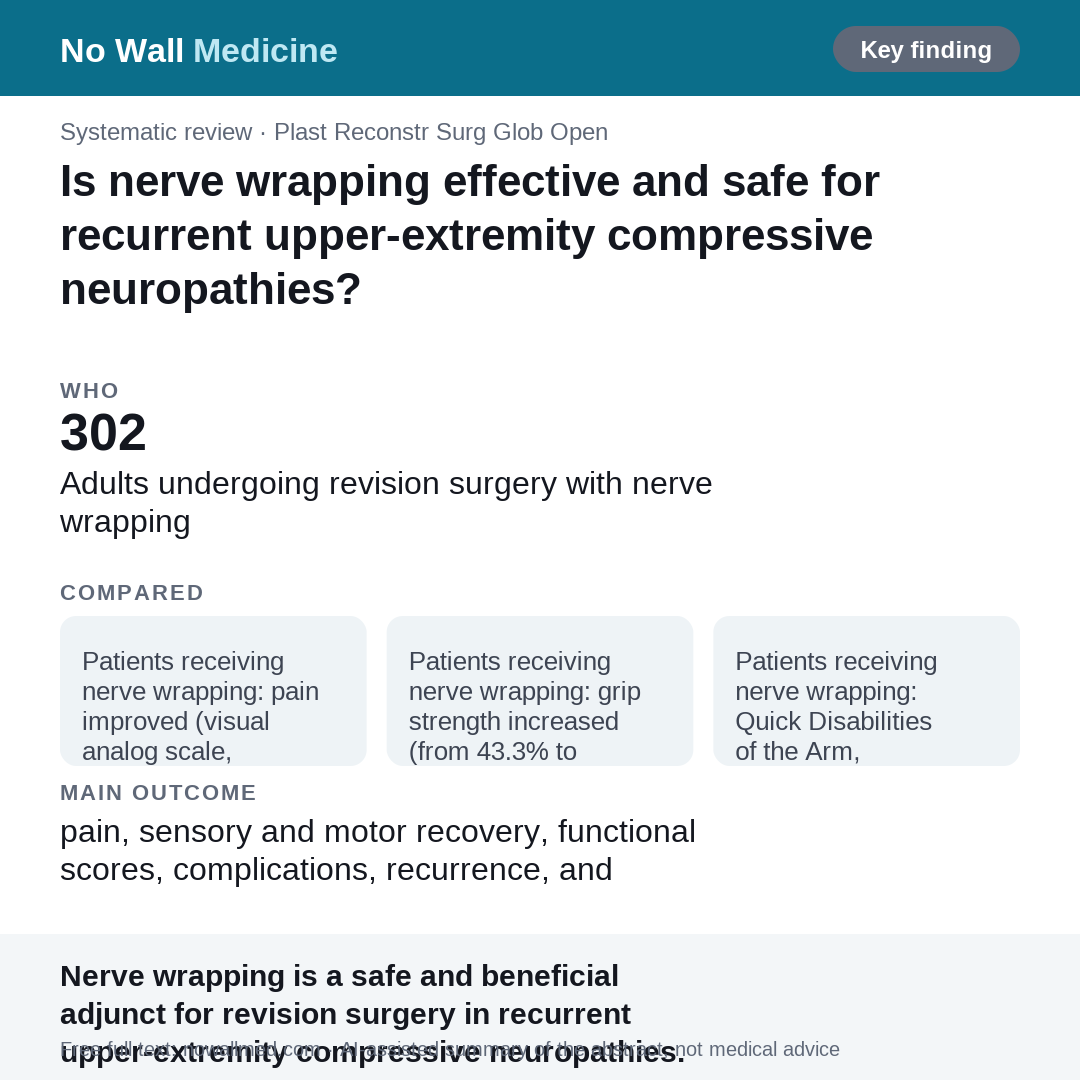
Efficacy and Safety of Nerve Wrapping in Recurrent Upper-extremity Compressive Neuropathies: A Systematic Review
Systematic reviewBenefit found
Is nerve wrapping effective and safe for recurrent upper-extremity compressive neuropathies?
Who
302
Adults undergoing revision surgery with nerve wrapping
Compared
Nerve wrapping: pain improved (visual analog scale, 6.2-2.0)
Nerve wrapping: grip strength increased (from 43.3% to 77.0%)
Nerve wrapping: Quick Disabilities of the Arm, Shoulder, and Hand scores decreased (from 59.9 to 28.0)
Main outcome
pain, sensory and motor recovery, functional scores, complications, recurrence, and satisfaction
Bottom line: Nerve wrapping is a safe and beneficial adjunct for revision surgery in recurrent upper-extremity compressive neuropathies.
Plast Reconstr Surg Glob Open · 2026-08-26Download image