Visual abstracts
New randomized trials and meta-analyses from leading journals at a glance: who was studied, what was compared, and what was found. Every paper is free to read in full.
All specialtiesCardiology 4877Oncology 4138Gastroenterology & Hepatology 1942Infectious Disease 3837Neurology 1905Psychiatry & Mental Health 2273Pulmonology 2143Critical Care 1365Endocrinology & Diabetes 2580Pediatrics 2980Surgery 2559Orthopedics & Sports Medicine 931Neurosurgery 537Cardiothoracic & Vascular Surgery 674Plastic & Reconstructive Surgery 591Nephrology 1133Rheumatology 823Hematology 1109Dermatology 621Ophthalmology 543Obstetrics & Gynecology 1686Public & Global Health 1058Radiology & Imaging 648Anesthesiology 986Urology 764ENT (Otolaryngology) 503Emergency Medicine 511Allergy & Immunology 313Geriatrics 981Family Medicine & Primary Care 562Medical Genetics & Genomics 676Pathology & Laboratory Medicine 159Physical Medicine & Rehabilitation 757Palliative Care 444Nutrition 1588Digital Health & AI 2201General Medicine 321
Natural history of treated and untreated renal oncocytoma: a systematic review and meta-analysis
Systematic review and meta-analysisBenefit found
What is the natural history of treated and untreated renal oncocytoma?
Who
Adult patients with histologically confirmed renal oncocytoma
Compared
Active surveillance: 14% transition to active treatment
Treated: negligible metastatic oncocytoma and disease-related death
Main outcome
Distant metastases, disease-related death, and tumor growth
Bottom line: Active surveillance is oncologically safe and allows patients to avoid treatment morbidity and mortality.
Limitation: Lack of prospective cohort studies reporting surveillance protocols and clinical outcomes.
BJU Int · 2025-07-07Download image

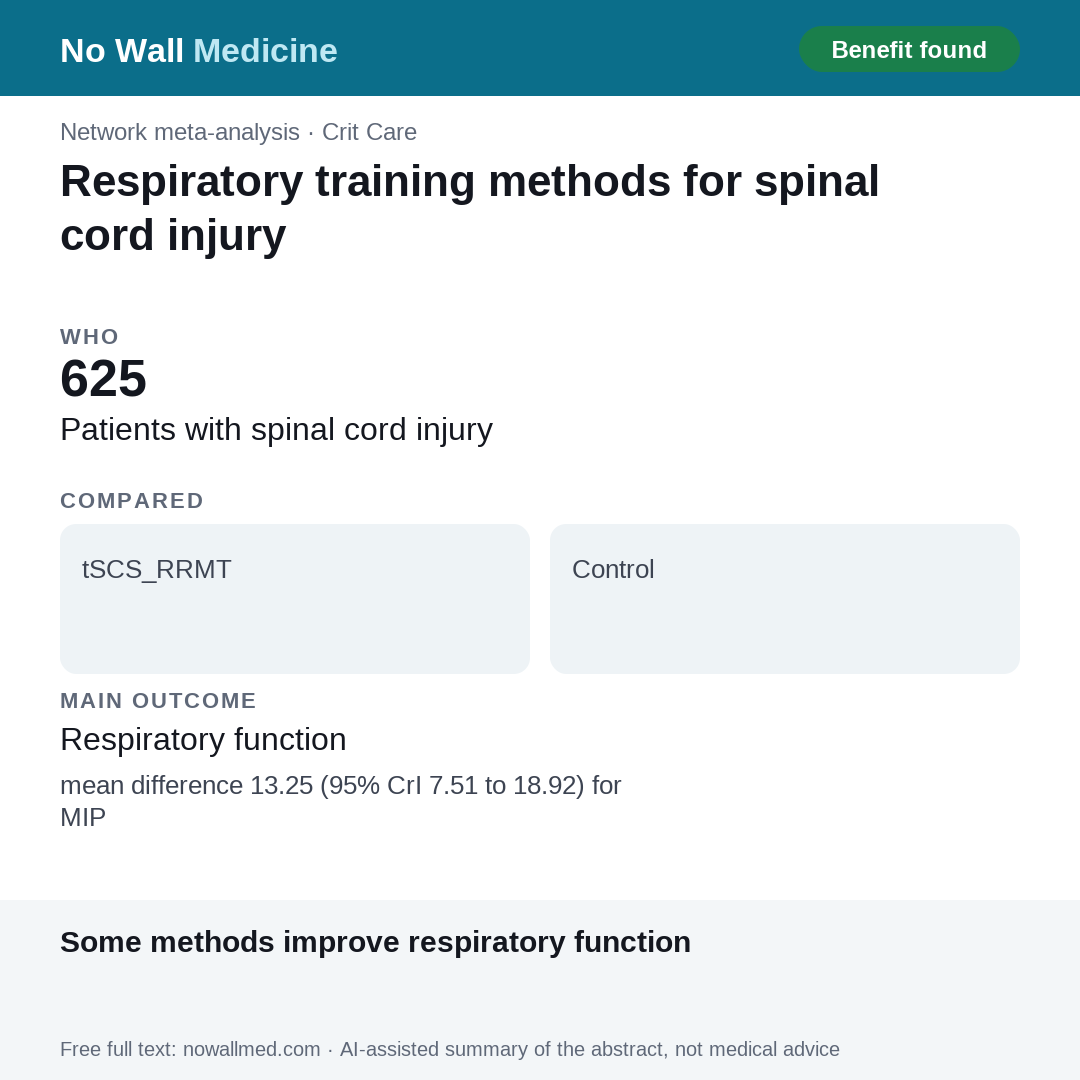
Effects of different respiratory training methods on respiratory function in patients with spinal cord injury: a network meta-analysis of randomized controlled trials
Network meta-analysisBenefit found
Respiratory training methods for spinal cord injury
Who
625
Patients with spinal cord injury
Compared
tSCS_RRMT
Control
Main outcome
Respiratory function
Result: mean difference 13.25 (95% CrI 7.51 to 18.92) for MIP
Bottom line: Some methods improve respiratory function
Limitation: Irreconcilable heterogeneity and imprecision
Crit Care · 2025-07-07Download image
Sylvian fissure meningioma: A case report and systematic review of clinical and surgical insights
Systematic review and meta-analysisUnclear result
What are the clinical and surgical characteristics of Sylvian fissure meningiomas?
Who
40
Patients with Sylvian fissure meningioma
Compared
25Gross total resection (71.4%)
10Subtotal resection (28.6%)
Main outcome
Surgical resection outcomes and clinical presentation
Bottom line: Sylvian fissure meningiomas commonly present with seizures and surgery is the cornerstone of therapy.
Brain Spine · 2025-07-07Download image

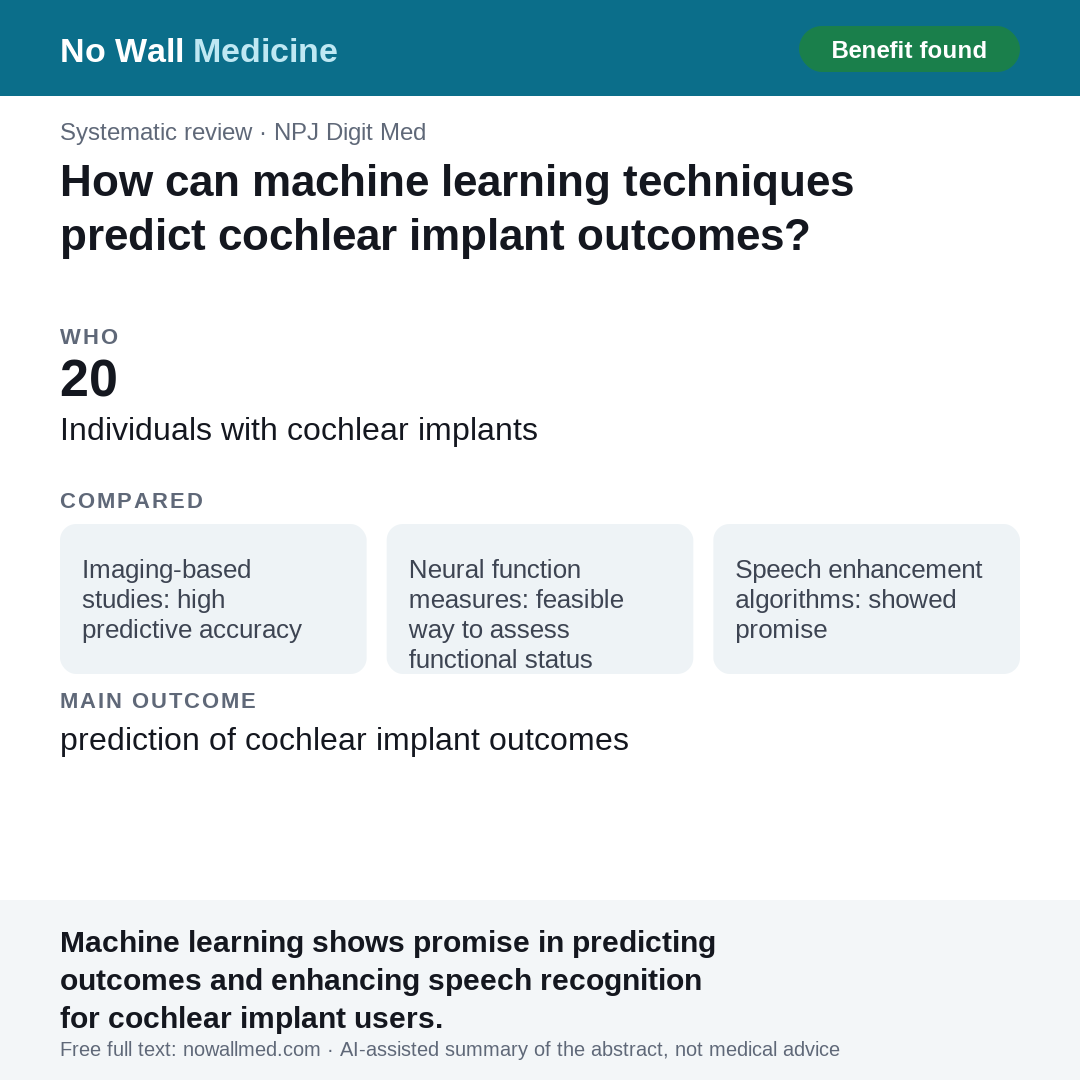
A systematic review of machine learning approaches in cochlear implant outcomes
Systematic reviewBenefit found
How can machine learning techniques predict cochlear implant outcomes?
Who
20
Individuals with cochlear implants
Compared
Imaging-based studies: high predictive accuracy
Neural function measures: feasible way to assess functional status
Speech enhancement algorithms: showed promise
Main outcome
prediction of cochlear implant outcomes
Bottom line: Machine learning shows promise in predicting outcomes and enhancing speech recognition for cochlear implant users.
NPJ Digit Med · 2025-07-05Download image
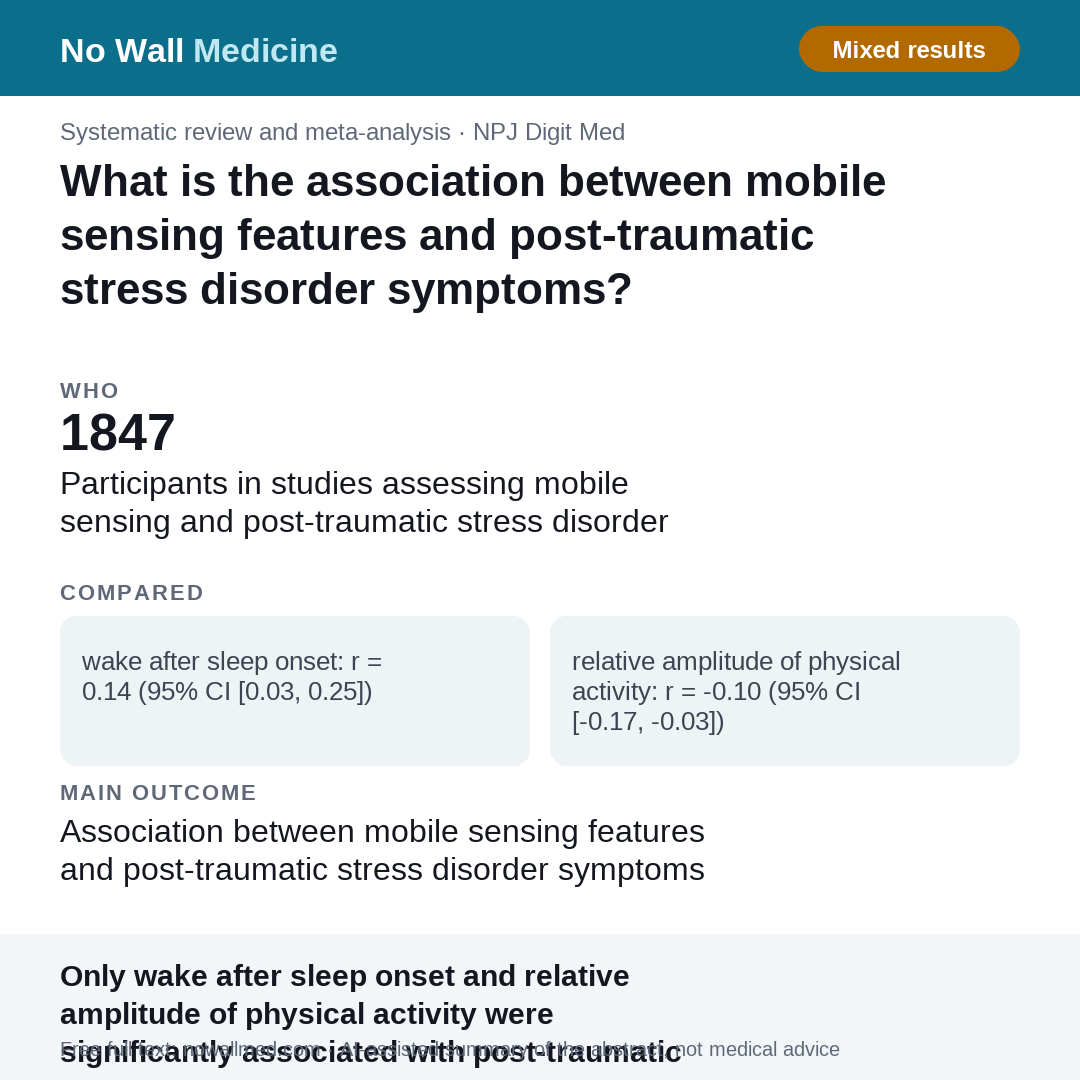
The relation between passively collected data and PTSD: a systematic review and meta-analysis
Systematic review and meta-analysisMixed results
What is the association between mobile sensing features and post-traumatic stress disorder symptoms?
Who
1847
Participants in studies assessing mobile sensing and post-traumatic stress disorder
Compared
wake after sleep onset: r = 0.14 (95% CI [0.03, 0.25])
relative amplitude of physical activity: r = -0.10 (95% CI [-0.17, -0.03])
Main outcome
Association between mobile sensing features and post-traumatic stress disorder symptoms
Bottom line: Only wake after sleep onset and relative amplitude of physical activity were significantly associated with post-traumatic stress disorder symptoms.
NPJ Digit Med · 2025-07-05Download image
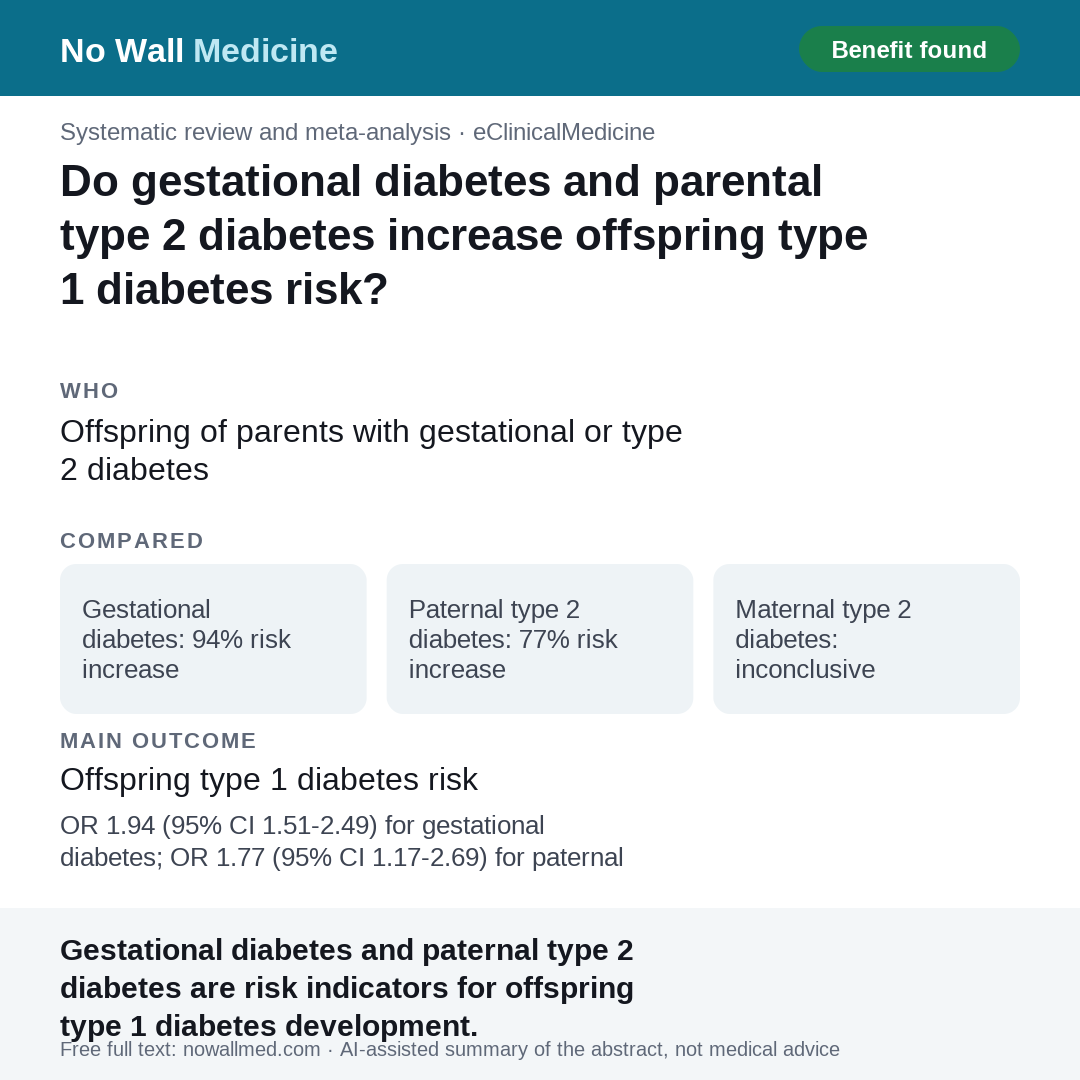
Gestational diabetes and parental type 2 diabetes as risk indicators for type 1 diabetes in offspring: a systematic review and meta-analysis
Systematic review and meta-analysisBenefit found
Do gestational diabetes and parental type 2 diabetes increase offspring type 1 diabetes risk?
Who
Offspring of parents with gestational or type 2 diabetes
Compared
Gestational diabetes: 94% risk increase
Paternal type 2 diabetes: 77% risk increase
Maternal type 2 diabetes: inconclusive
Main outcome
Offspring type 1 diabetes risk
Result: OR 1.94 (95% CI 1.51-2.49) for gestational diabetes; OR 1.77 (95% CI 1.17-2.69) for paternal type 2 diabetes
Bottom line: Gestational diabetes and paternal type 2 diabetes are risk indicators for offspring type 1 diabetes development.
eClinicalMedicine · 2025-07-04Download image
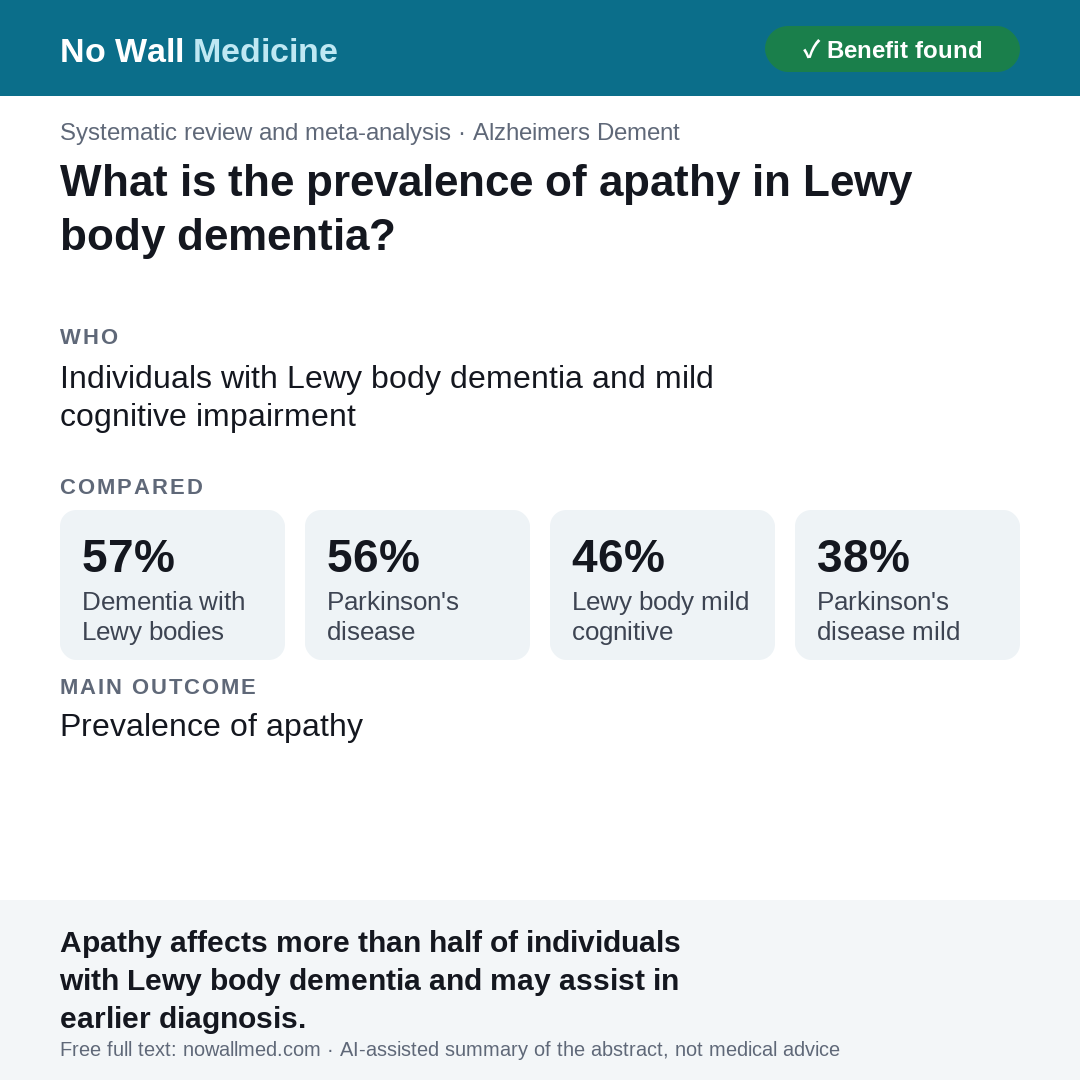
The prevalence of apathy in Lewy body dementia: A systematic review and meta-analysis
Systematic review and meta-analysisBenefit found
What is the prevalence of apathy in Lewy body dementia?
Who
Individuals with Lewy body dementia and mild cognitive impairment
Compared
57%Dementia with Lewy bodies (95% confidence interval 52%-63%)
56%Parkinson's disease dementia (95% CI 43%-70%)
46%Lewy body mild cognitive impairment (95% CI 32%-61%)
38%Parkinson's disease mild cognitive impairment (95% CI 25%-50%)
Main outcome
Prevalence of apathy
Bottom line: Apathy affects more than half of individuals with Lewy body dementia and may assist in earlier diagnosis.
Alzheimers Dement · 2025-07-04Download image
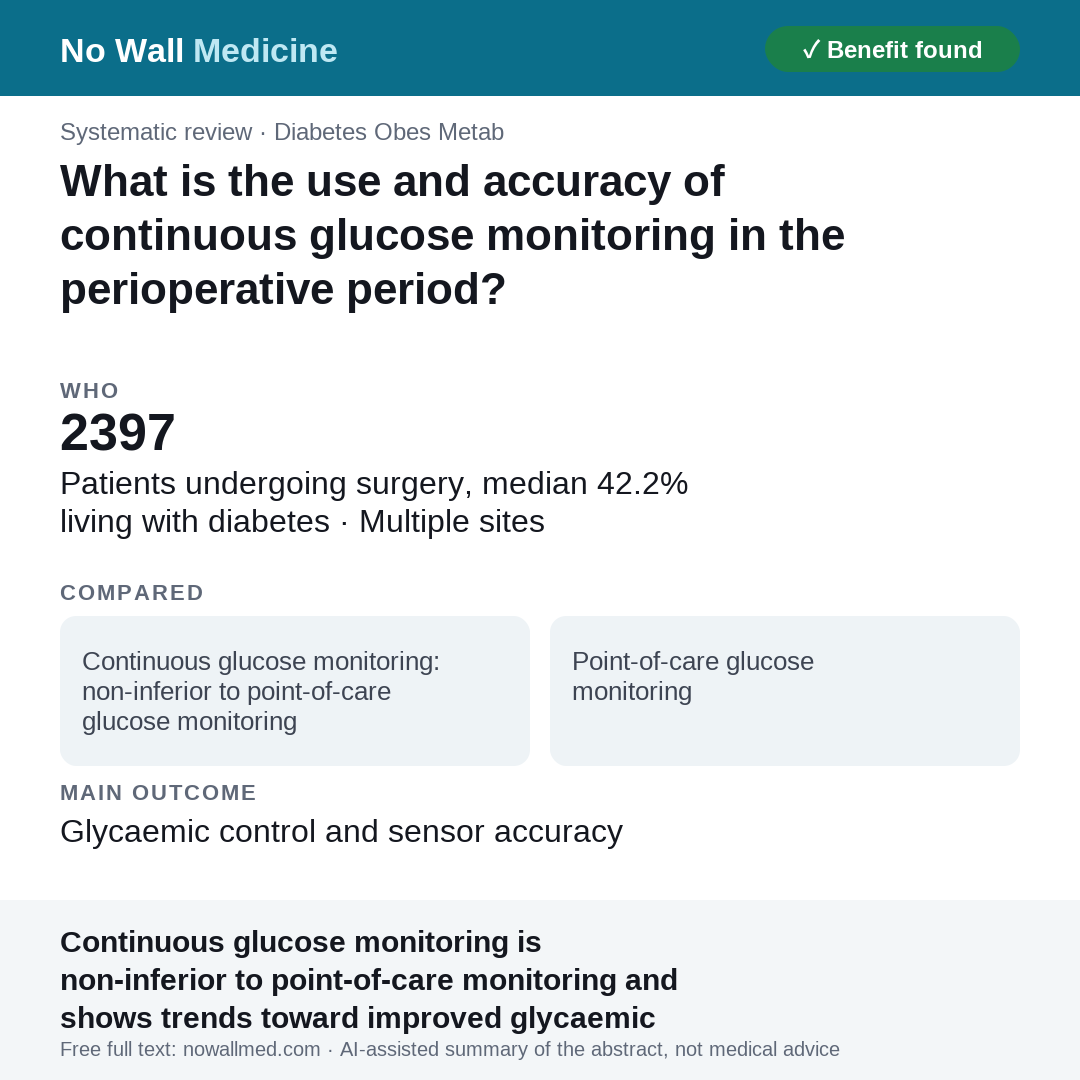
Perioperative use and accuracy of continuous glucose monitoring: A systematic review
Systematic reviewBenefit found
What is the use and accuracy of continuous glucose monitoring in the perioperative period?
Who
2397
Patients undergoing surgery, median 42.2% living with diabetes · Multiple sites including operating room and intensive care unit
Compared
Continuous glucose monitoring: non-inferior to point-of-care glucose monitoring
Point-of-care glucose monitoring
Main outcome
Glycaemic control and sensor accuracy
Bottom line: Continuous glucose monitoring is non-inferior to point-of-care monitoring and shows trends toward improved glycaemic control.
Limitation: Clinical interest remains to be proven by high quality randomized controlled trials regarding technical issues.
Diabetes Obes Metab · 2025-07-04Download image
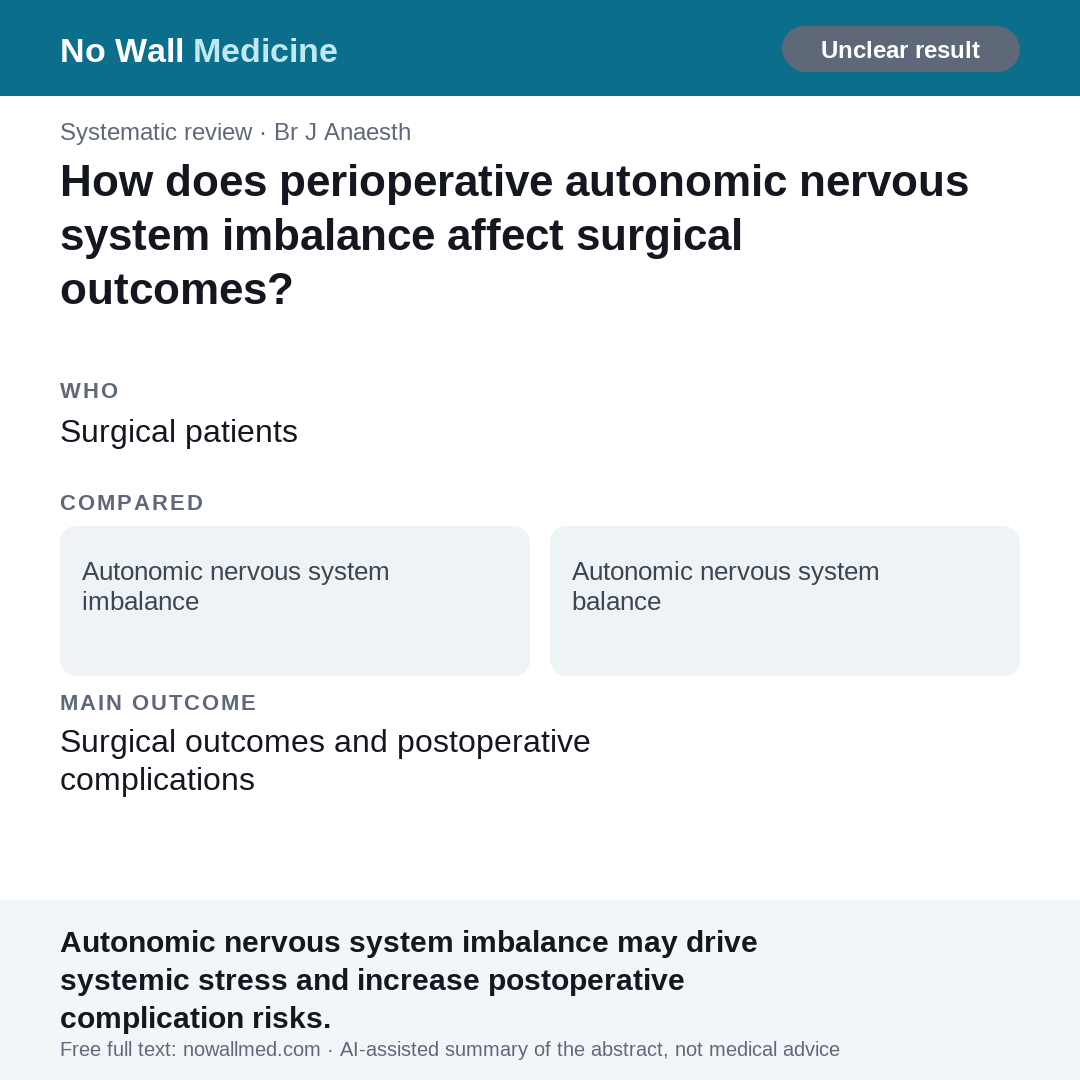
Effect of perioperative autonomic nervous system imbalance on surgical outcomes: a systematic review
Systematic reviewUnclear result
How does perioperative autonomic nervous system imbalance affect surgical outcomes?
Who
Surgical patients
Compared
Autonomic nervous system imbalance
Autonomic nervous system balance
Main outcome
Surgical outcomes and postoperative complications
Bottom line: Autonomic nervous system imbalance may drive systemic stress and increase postoperative complication risks.
Br J Anaesth · 2025-07-04Download image
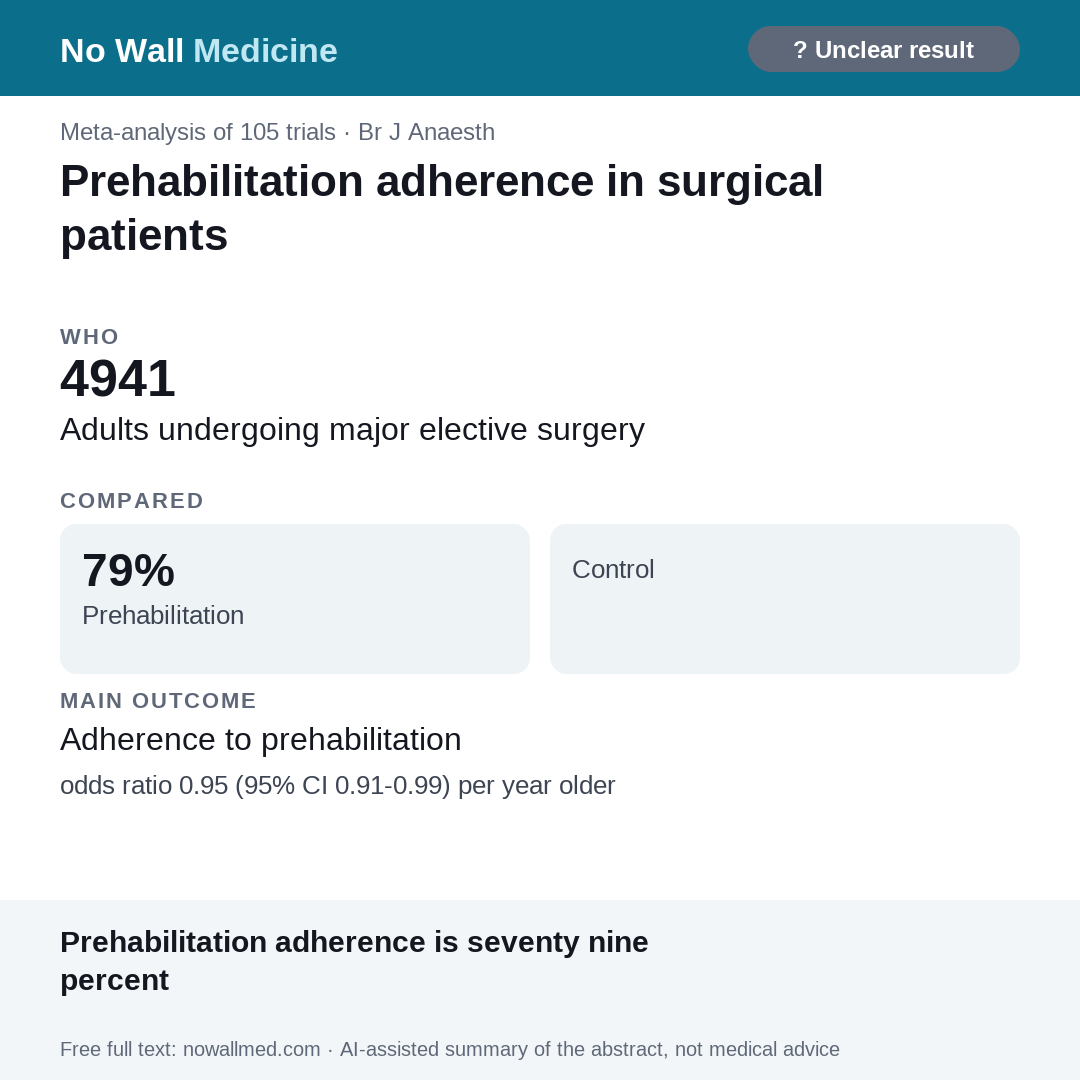
Adherence to prehabilitation in adult surgical patients: a systematic review, meta-analysis, meta-regression, and qualitative synthesis
Meta-analysis of 105 trialsUnclear result
Prehabilitation adherence in surgical patients
Who
4941
Adults undergoing major elective surgery
Compared
79%Prehabilitation (95% CI 70-88)
Control
Main outcome
Adherence to prehabilitation
Result: odds ratio 0.95 (95% CI 0.91-0.99) per year older
Bottom line: Prehabilitation adherence is seventy nine percent
Limitation: Variable adherence metrics across trials
Br J Anaesth · 2025-07-04Download image
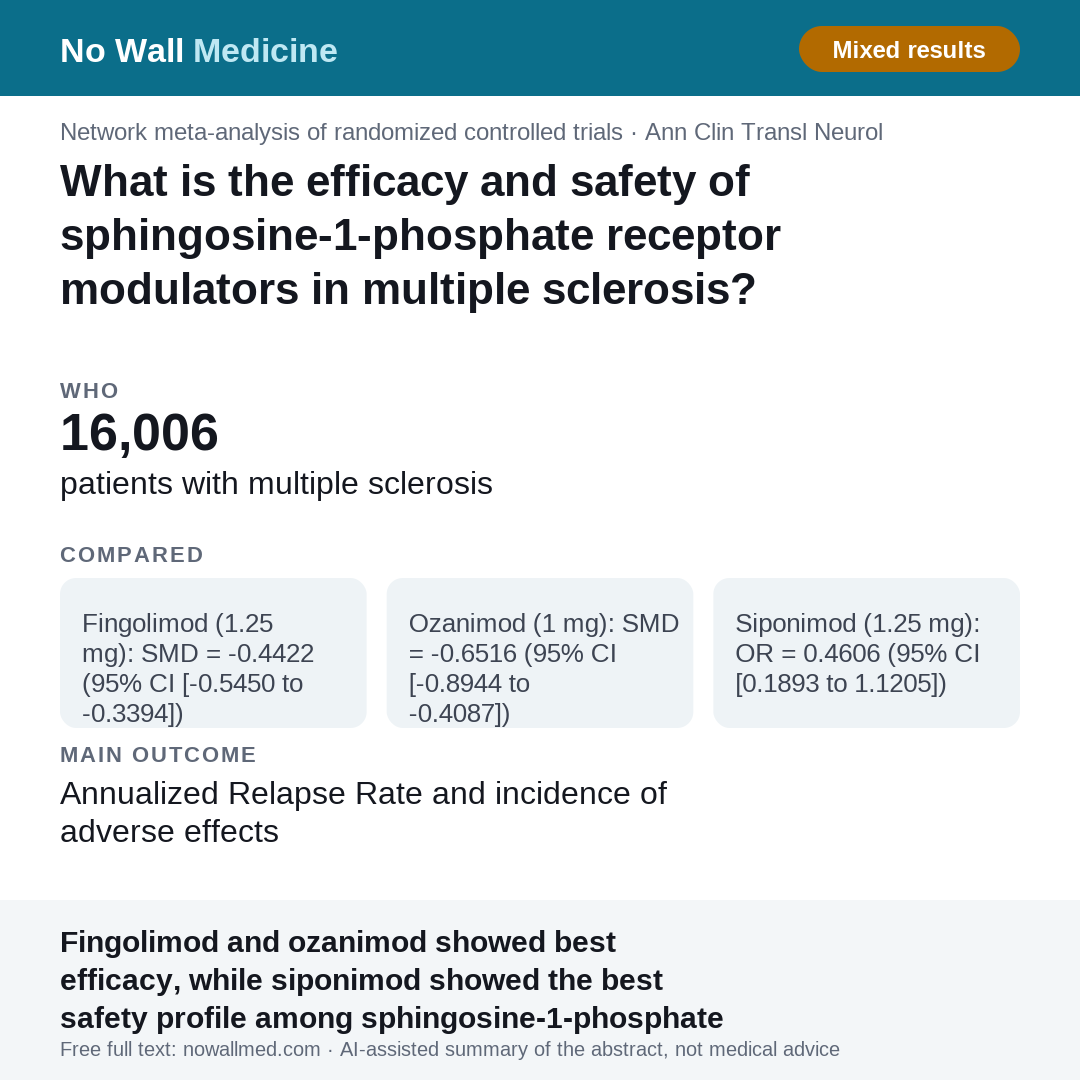
The Comparative Effectiveness and Tolerability of Sphingosine-1-Phosphate Receptor Modulators in Patients With Multiple Sclerosis: A Network Meta-Analysis of Randomized Controlled Trials
Network meta-analysis of randomized controlled trialsMixed results
What is the efficacy and safety of sphingosine-1-phosphate receptor modulators in multiple sclerosis?
Who
16,006
patients with multiple sclerosis
Compared
Fingolimod (1.25 mg): SMD = -0.4422 (95% CI [-0.5450 to -0.3394])
Ozanimod (1 mg): SMD = -0.6516 (95% CI [-0.8944 to -0.4087])
Siponimod (1.25 mg): OR = 0.4606 (95% CI [0.1893 to 1.1205])
Main outcome
Annualized Relapse Rate and incidence of adverse effects
Bottom line: Fingolimod and ozanimod showed best efficacy, while siponimod showed the best safety profile among sphingosine-1-phosphate receptor modulators.
Limitation: Further longitudinal studies should be conducted to assess long-term effects on patient-reported outcomes.
Ann Clin Transl Neurol · 2025-07-04Download image
A PRISMA systematic review through time on predictive musculoskeletal simulations
PRISMA systematic reviewUnclear result
What are the current methods and trends in predictive musculoskeletal simulations?
Who
literature on predictive musculoskeletal simulations
Compared
Neural models
Optimization methods
Main outcome
methods, accuracies, simulation times, and limitations of predictive simulations
Bottom line: The review categorizes predictive musculoskeletal simulation methods into neural models and optimization-based approaches.
Limitation: The review calls for quantitative validation to establish comprehensive comparisons between methods.
J Neuroeng Rehabil · 2025-07-04Download image

Impact of physician assistants on quality of care: rapid review
Rapid systematic reviewMixed results
How do physician assistants compare with physicians regarding quality of care?
Who
40
Patients in economically developed countries · Economically developed countries
Compared
Physician assistants
Physicians
Main outcome
Safety, effectiveness, patient centredness, timeliness, efficiency, and equity
Bottom line: Physician assistants practice safely and effectively under direct supervision, but evidence for indirect supervision in undifferentiated settings is limited.
Limitation: Most studies were retrospective observational studies of weak quality and no post-covid-19 data were found.
BMJ · 2025-07-03Download image

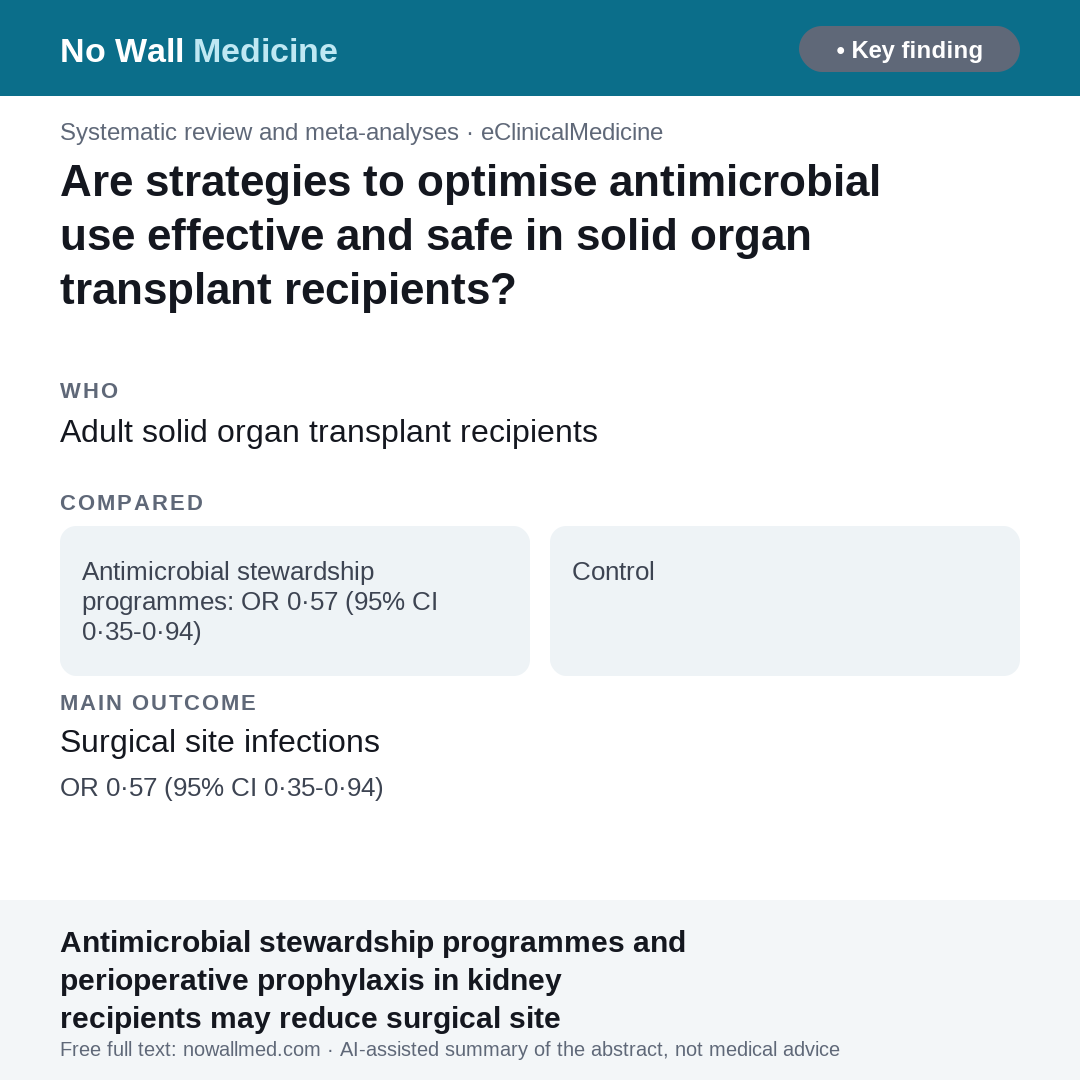
Effectiveness and safety of strategies to optimise antimicrobial use in solid organ transplant recipients. Systematic review and meta-analyses
Systematic review and meta-analysesBenefit found
Are strategies to optimise antimicrobial use effective and safe in solid organ transplant recipients?
Who
Adult solid organ transplant recipients
Compared
Antimicrobial stewardship programmes: OR 0·57 (95% CI 0·35-0·94)
Control
Main outcome
Surgical site infections
Result: OR 0·57 (95% CI 0·35-0·94)
Bottom line: Antimicrobial stewardship programmes and perioperative prophylaxis in kidney recipients may reduce surgical site infections without increasing complications.
Limitation: All included studies had a moderate or high risk of bias.
Funded by: Instituto de Salud Carlos III and CIBERINFEC
eClinicalMedicine · 2025-07-03Download image
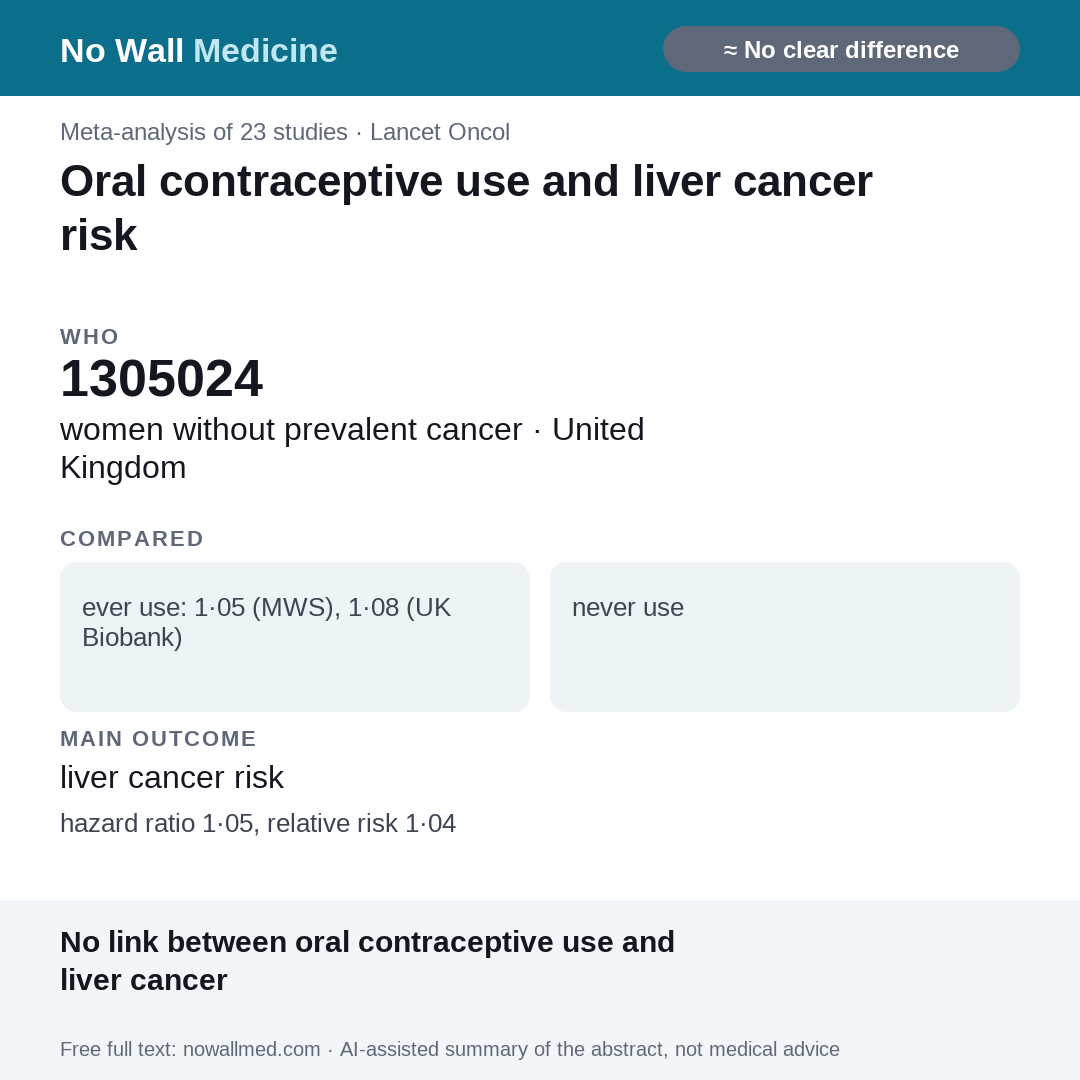
Oral contraceptive use and risk of liver cancer: a population-based study, systematic review, and meta-analysis
Meta-analysis of 23 studiesNo clear difference
Oral contraceptive use and liver cancer risk
Who
1305024
women without prevalent cancer · United Kingdom
Compared
ever use: 1·05 (MWS), 1·08 (UK Biobank)
never use
Main outcome
liver cancer risk
Result: hazard ratio 1·05, relative risk 1·04
Bottom line: No link between oral contraceptive use and liver cancer
Limitation: residual confounding cannot be ruled out
Funded by: Canadian Institutes of Health Research
Lancet Oncol · 2025-07-03Download image
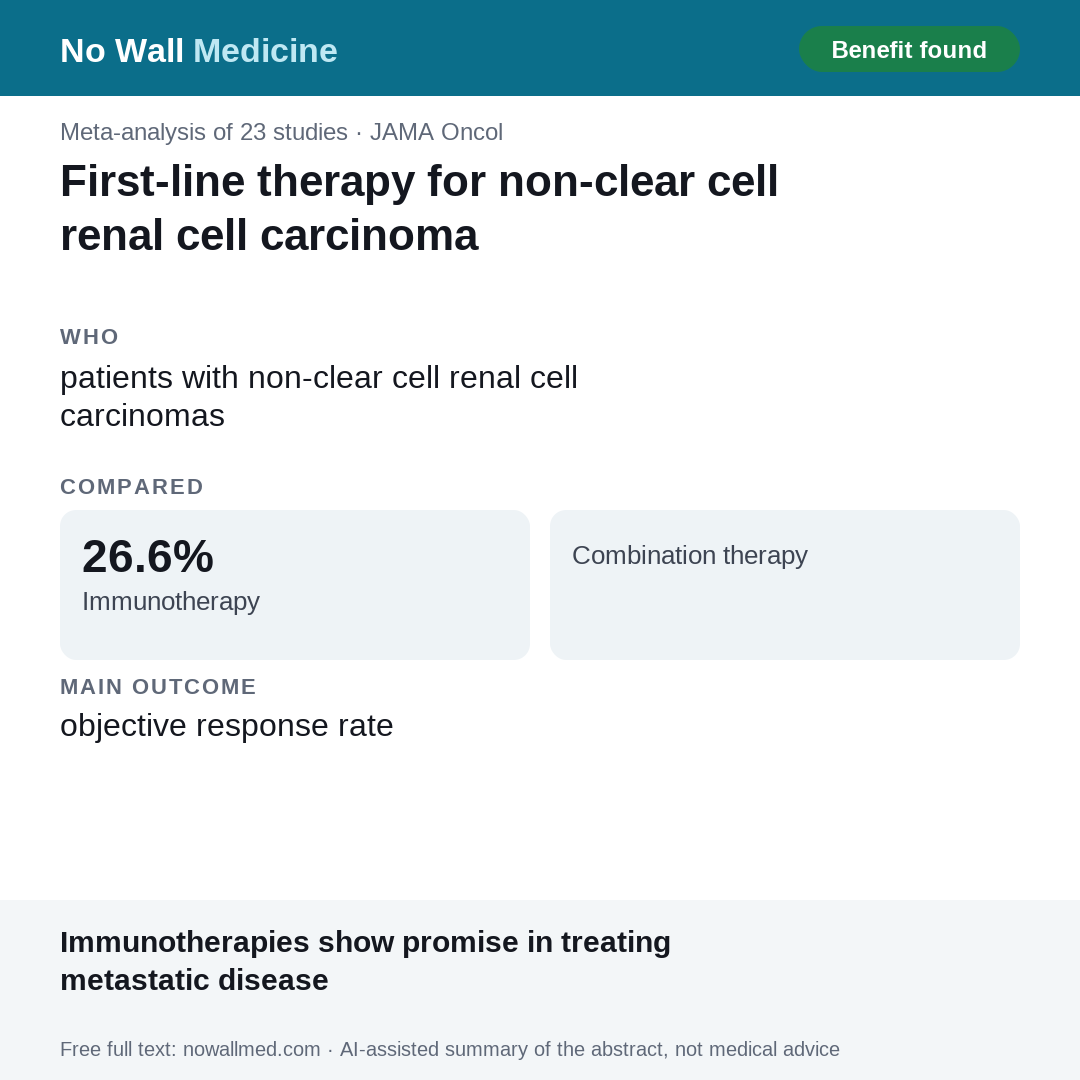
First-Line Therapy For Advanced Non-Clear Cell Renal Cell Carcinoma: A Systematic Review and Meta-Analysis
Meta-analysis of 23 studiesBenefit found
First-line therapy for non-clear cell renal cell carcinoma
Who
patients with non-clear cell renal cell carcinomas
Compared
26.6%Immunotherapy
Combination therapy
Main outcome
objective response rate
Bottom line: Immunotherapies show promise in treating metastatic disease
JAMA Oncol · 2025-07-03Download image
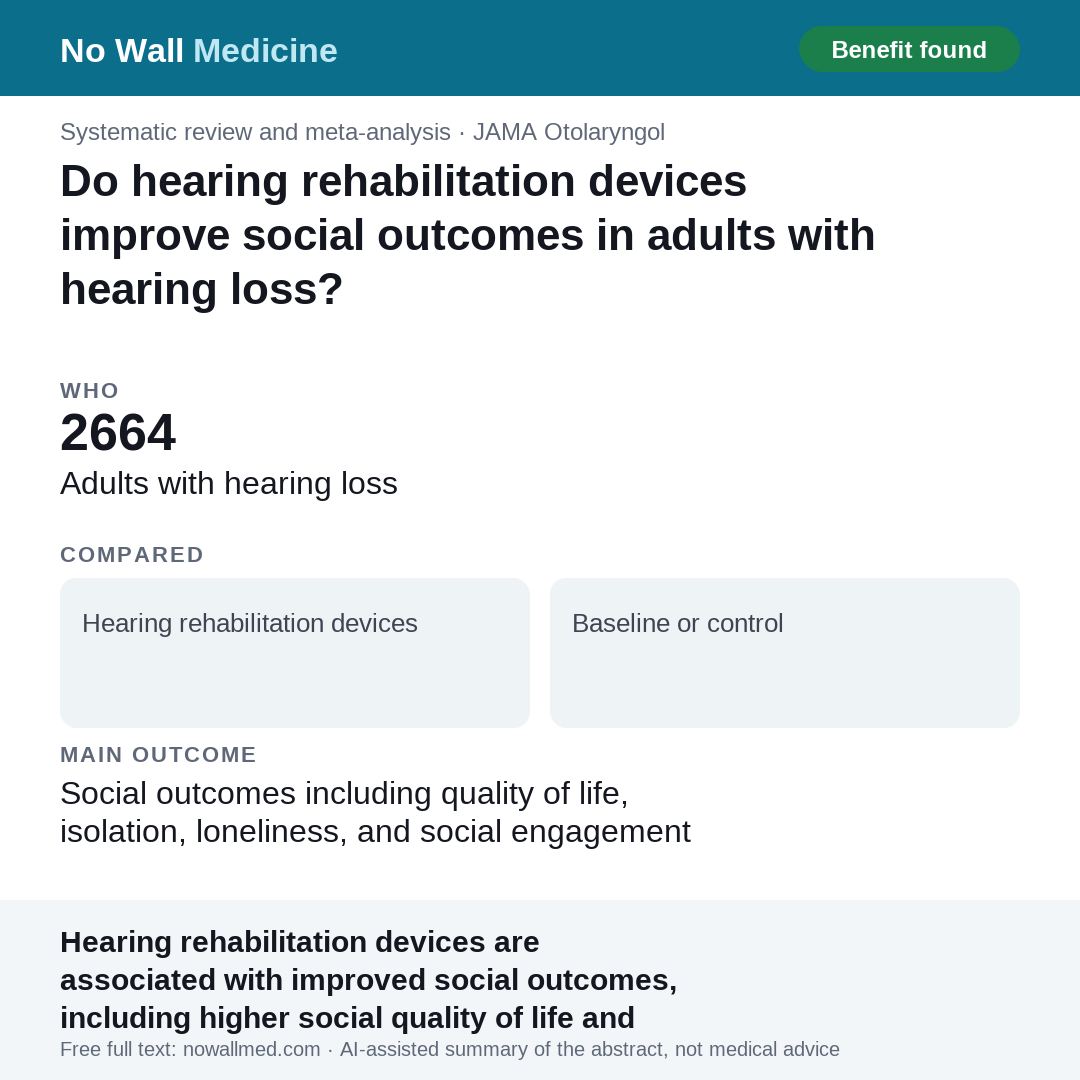
Social Outcomes Among Adults With Hearing Aids and Cochlear Implants: A Systematic Review and Meta-Analysis
Systematic review and meta-analysisBenefit found
Do hearing rehabilitation devices improve social outcomes in adults with hearing loss?
Who
2664
Adults with hearing loss
Compared
Hearing rehabilitation devices
Baseline or control
Main outcome
Social outcomes including quality of life, isolation, loneliness, and social engagement
Result: SMD, 1.22; 95% CI, 0.88-1.57
Bottom line: Hearing rehabilitation devices are associated with improved social outcomes, including higher social quality of life and decreased social handicap.
Limitation: Findings on loneliness were inconclusive due to the limited number of studies.
JAMA Otolaryngol · 2025-07-03Download image
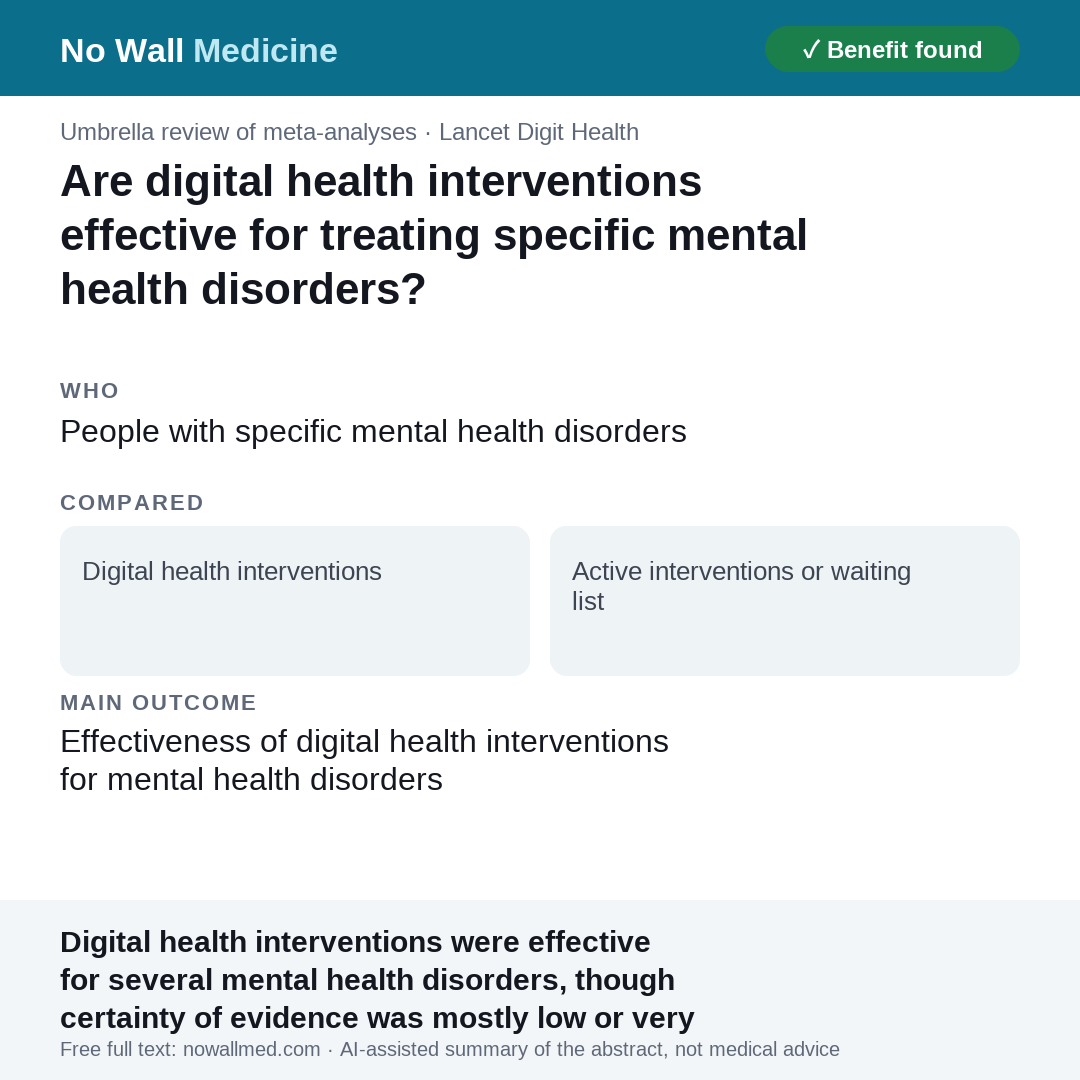
Digital health interventions for mental health disorders: an umbrella review of meta-analyses of randomised controlled trials
Umbrella review of meta-analysesBenefit found
Are digital health interventions effective for treating specific mental health disorders?
Who
People with specific mental health disorders
Compared
Digital health interventions
Active interventions or waiting list
Main outcome
Effectiveness of digital health interventions for mental health disorders
Bottom line: Digital health interventions were effective for several mental health disorders, though certainty of evidence was mostly low or very low.
Limitation: Certainty of evidence was rated as very low or low in most cases.
Lancet Digit Health · 2025-07-03Download image
A systematic review on anti-Xa monitoring in the therapeutic use of low-molecular-weight heparins
Systematic review of 48 studiesNo clear difference
Is anti-Xa monitoring and dose adjustment useful for low-molecular-weight heparin therapy?
Who
Patients using low-molecular-weight heparins, including renal impairment, pregnancy, and obesity
Compared
Patients with anti-Xa monitoring
Patients without anti-Xa monitoring
Main outcome
Incidence of clinical events like major bleeding and venous thromboembolism
Bottom line: Measuring anti-Xa levels for dose adjustments in low-molecular-weight heparin therapy is currently not justified.
Limitation: All included studies had a high risk of bias.
J Thromb Haemost · 2025-07-03Download image

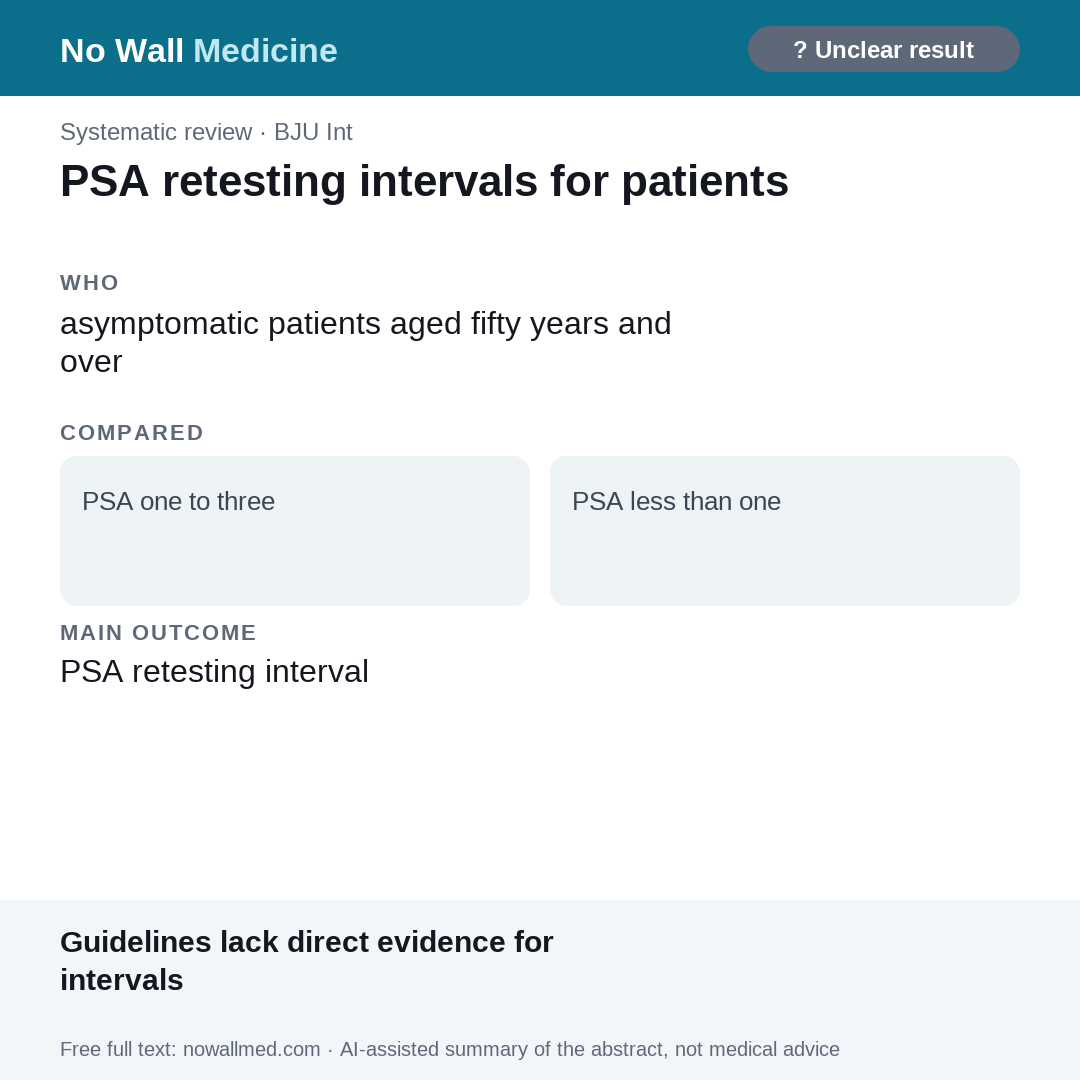
Guideline of guidelines: a critical appraisal of the evidence for PSA retesting intervals
Systematic reviewUnclear result
PSA retesting intervals for patients
Who
asymptomatic patients aged fifty years and over
Compared
PSA one to three
PSA less than one
Main outcome
PSA retesting interval
Bottom line: Guidelines lack direct evidence for intervals
BJU Int · 2025-07-03Download image