Visual abstracts
New randomized trials and meta-analyses from leading journals at a glance: who was studied, what was compared, and what was found. Every paper is free to read in full.
All specialtiesCardiology 949Oncology 846Gastroenterology & Hepatology 348Infectious Disease 663Neurology 389Psychiatry & Mental Health 475Pulmonology 415Critical Care 283Endocrinology & Diabetes 527Pediatrics 594Surgery 392Orthopedics & Sports Medicine 170Neurosurgery 121Cardiothoracic & Vascular Surgery 90Plastic & Reconstructive Surgery 145Nephrology 211Rheumatology 119Hematology 205Dermatology 89Ophthalmology 113Obstetrics & Gynecology 292Public & Global Health 185Radiology & Imaging 117Anesthesiology 152Urology 182ENT (Otolaryngology) 121Emergency Medicine 105Allergy & Immunology 65Geriatrics 176Family Medicine & Primary Care 117Medical Genetics & Genomics 94Pathology & Laboratory Medicine 30Physical Medicine & Rehabilitation 150Palliative Care 83Nutrition 230Digital Health & AI 489General Medicine 105
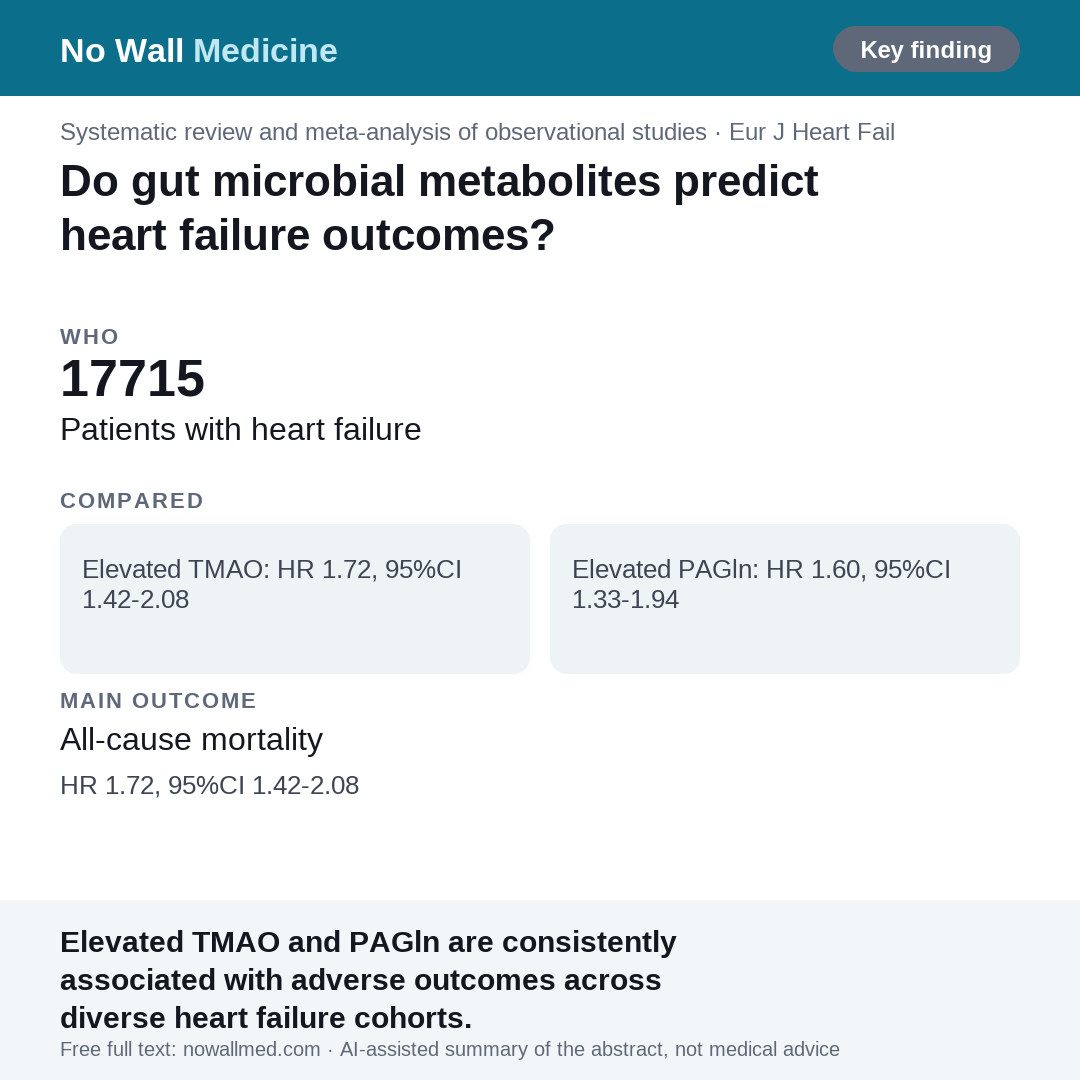
Gut microbiome-derived metabolites as prognostic biomarkers in heart failure: a systematic review and meta-analysis
Systematic review and meta-analysisBenefit found
Are gut microbiome-derived metabolites prognostic biomarkers in heart failure?
Who
17,715
Patients with heart failure
Compared
Elevated trimethylamine-N-oxide: hazard ratio 1.72 (95%CI 1.42-2.08)
Elevated phenylacetylglutamine: hazard ratio 1.60 (95%CI 1.33-1.94)
Main outcome
all-cause mortality and major adverse cardiac events
Result: hazard ratio 1.72 (95%CI 1.42-2.08)
Bottom line: Elevated trimethylamine-N-oxide and phenylacetylglutamine are consistently associated with increased mortality and major adverse cardiac events in heart failure.
Eur J Heart Fail · 2026-09-01Download image
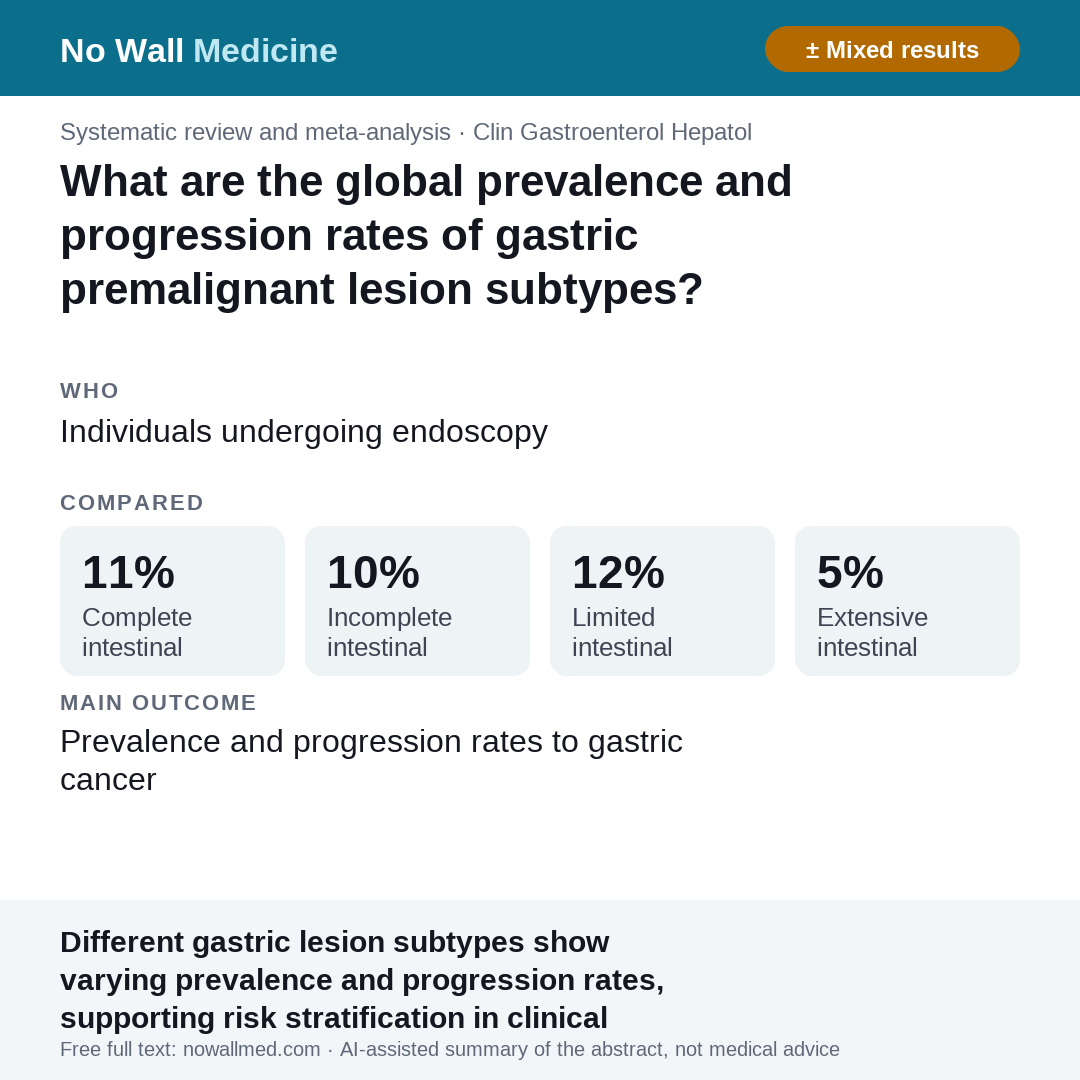
Prevalence and Progression of Subtypes of Gastric Premalignant Lesions: A Systematic Review and Meta-Analysis
Systematic review and meta-analysisMixed results
What are the global prevalence and progression rates of gastric premalignant lesion subtypes?
Who
Individuals undergoing endoscopy
Compared
11%Complete intestinal metaplasia (95% CI, 8%-15%)
10%Incomplete intestinal metaplasia (95% CI, 6%-14%)
12%Limited intestinal metaplasia (95% CI, 8%-17%)
5%Extensive intestinal metaplasia (95% CI, 4%-8%)
Main outcome
Prevalence and progression rates to gastric cancer
Bottom line: Different gastric lesion subtypes show varying prevalence and progression rates, supporting risk stratification in clinical management.
Limitation: Substantial heterogeneity was observed for all estimates.
Clin Gastroenterol Hepatol · 2026-09-01Download image
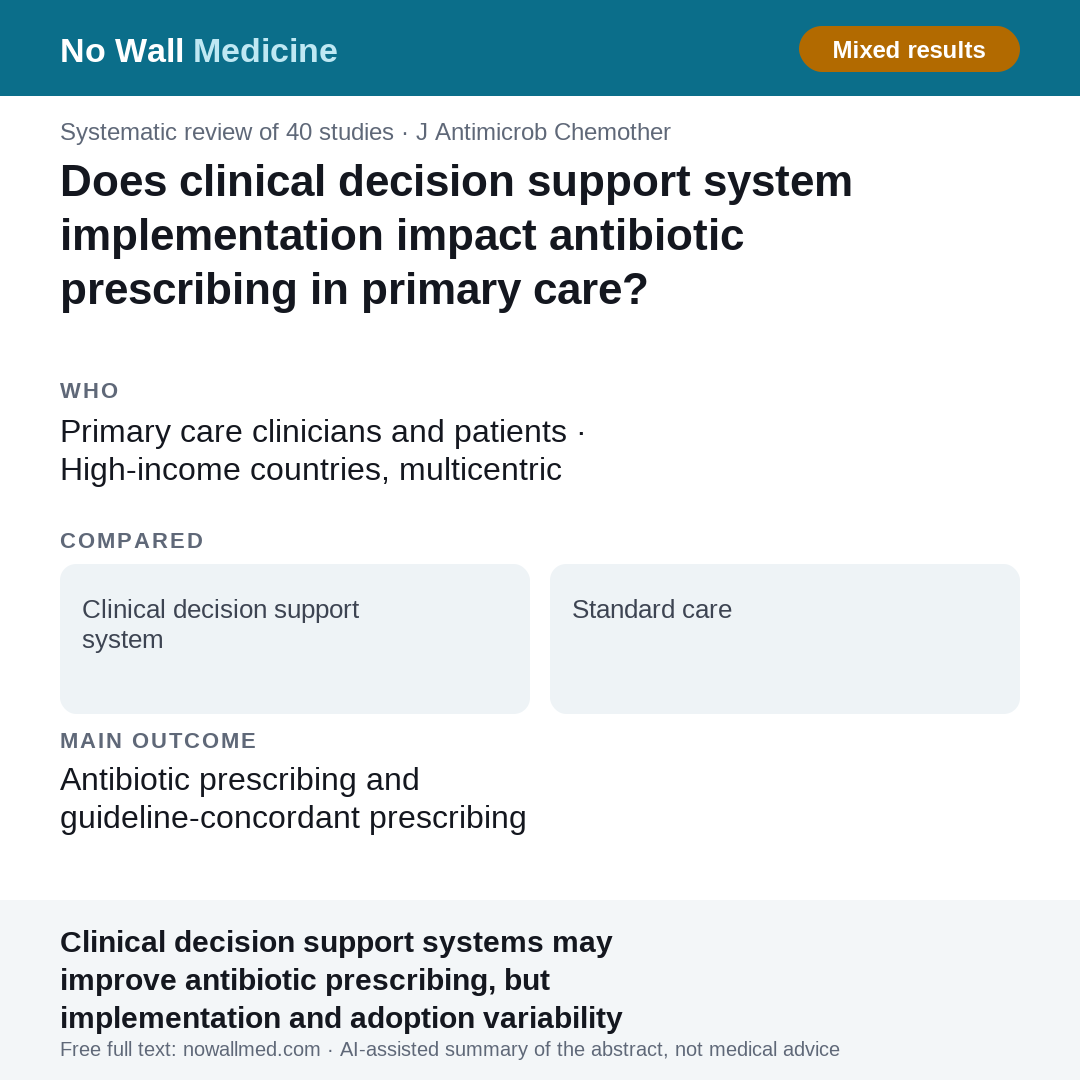
Implementation, adoption and impact of clinical decision support system for antibiotic prescribing in primary care: a systematic review
Systematic review of 40 studiesMixed results
Does clinical decision support system implementation impact antibiotic prescribing in primary care?
Who
Primary care clinicians and patients · High-income countries, multicentric
Compared
Clinical decision support system
Standard care
Main outcome
Antibiotic prescribing and guideline-concordant prescribing
Bottom line: Clinical decision support systems may improve antibiotic prescribing, but implementation and adoption variability limits scalability.
Limitation: Wide variability in implementation and real-world adoption limits generalizability and scalability.
J Antimicrob Chemother · 2026-09-01Download image
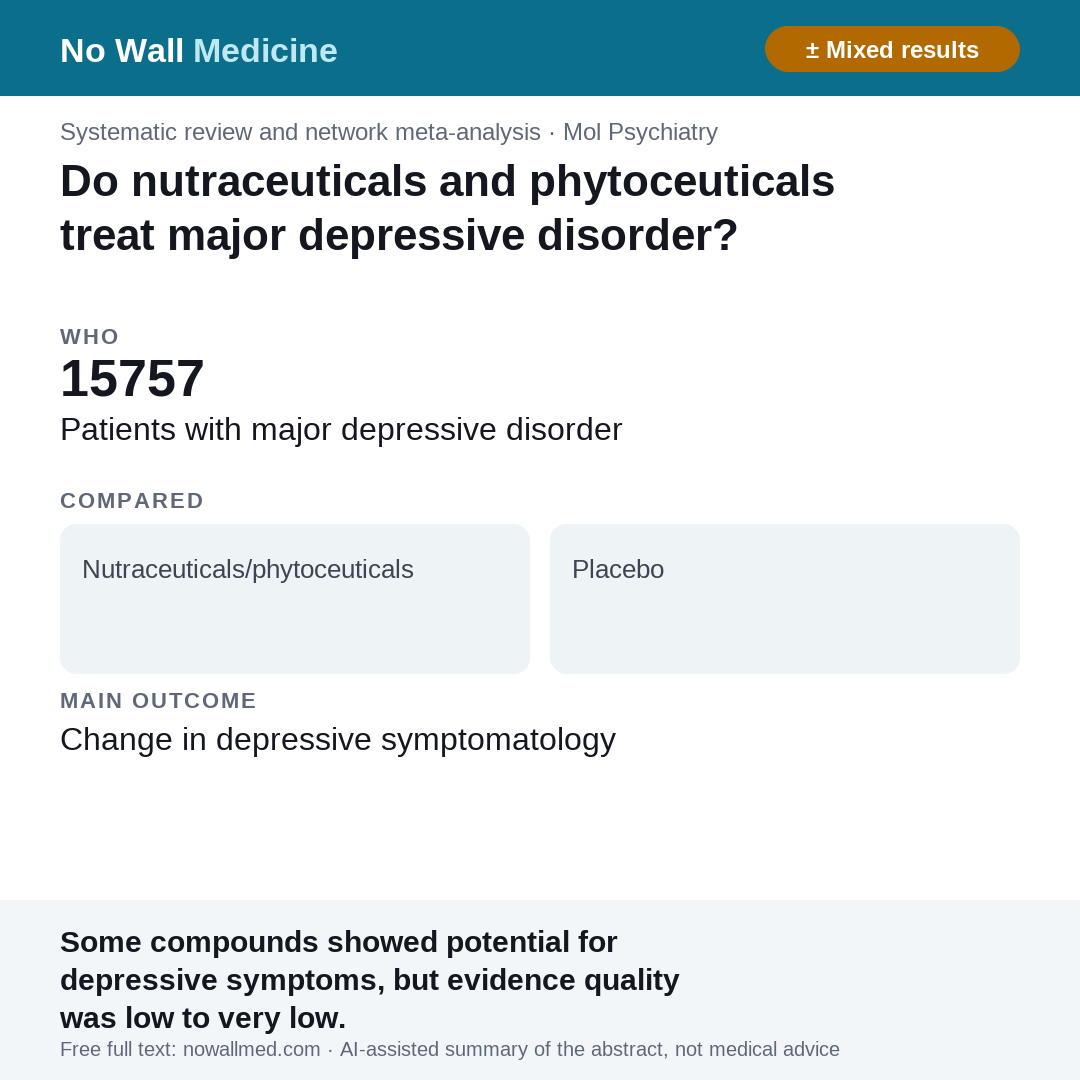
Nutraceuticals and phytoceuticals for the treatment of major depressive disorder: a systematic review and network meta-analysis
Systematic review and network meta-analysisMixed results
Do nutraceuticals and phytoceuticals treat major depressive disorder?
Who
15757
Patients with major depressive disorder
Compared
Nutraceuticals/phytoceuticals
Placebo
Main outcome
Change in depressive symptomatology
Bottom line: Some compounds showed potential for depressive symptoms, but evidence quality was low to very low.
Limitation: Larger effect sizes were associated with lower study quality and substantial heterogeneity emerged.
Mol Psychiatry · 2026-09-01Download image
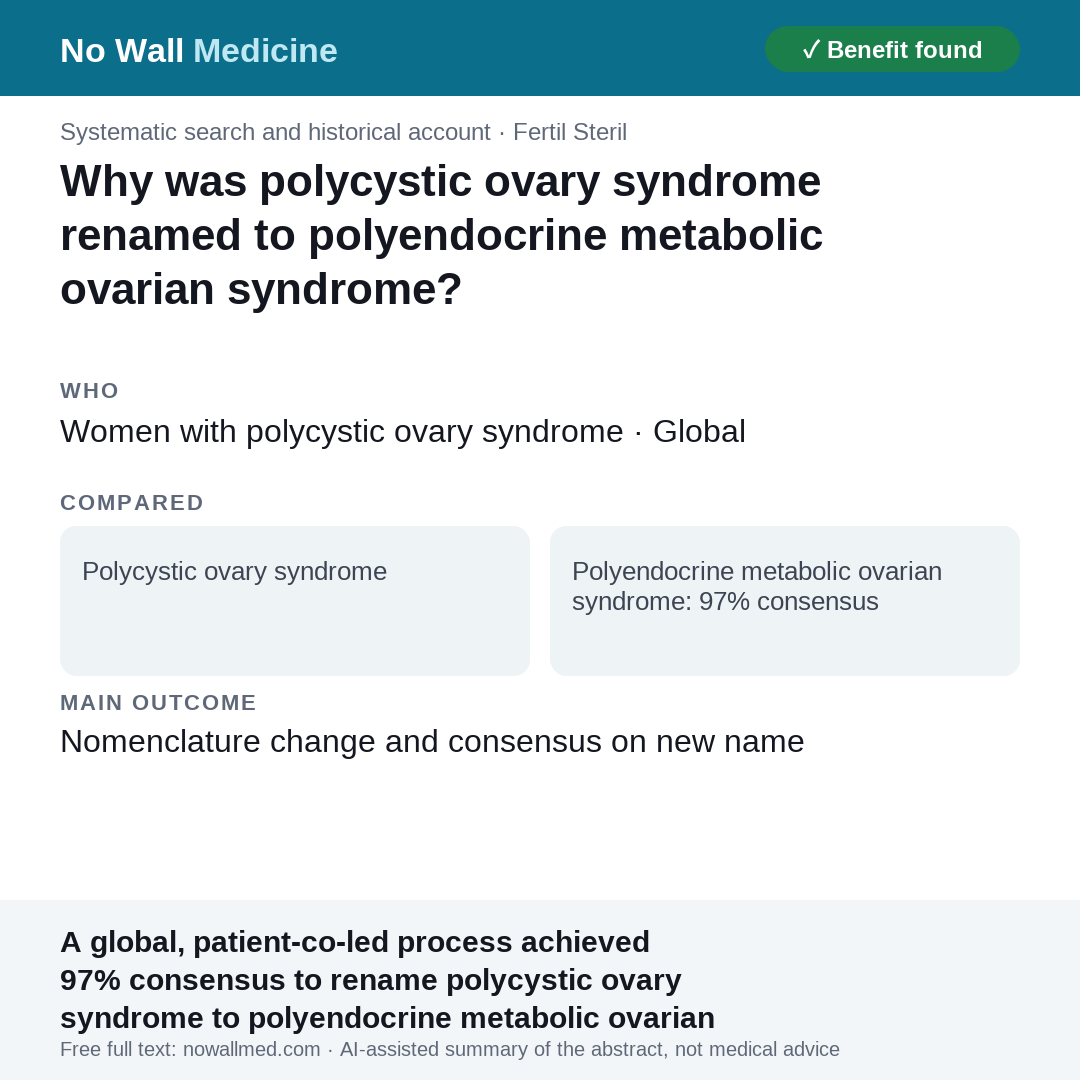
From polycystic ovary syndrome to polyendocrine metabolic ovarian syndrome: a systematic search and historical account of the renaming of polycystic ovary syndrome
Systematic search and historical accountBenefit found
Why was polycystic ovary syndrome renamed to polyendocrine metabolic ovarian syndrome?
Who
Women with polycystic ovary syndrome · Global
Compared
Polycystic ovary syndrome
Polyendocrine metabolic ovarian syndrome: 97% consensus
Main outcome
Nomenclature change and consensus on new name
Bottom line: A global, patient-co-led process achieved 97% consensus to rename polycystic ovary syndrome to polyendocrine metabolic ovarian syndrome.
Fertil Steril · 2026-09-01Download image
Effectiveness of digital health technologies for post-discharge follow-up and management in older adults: a systematic review
Systematic reviewMixed results
Are digital health technologies effective for post-discharge follow-up and management in older adults?
Who
Older adults aged 65 years or older · Not specified
Compared
Digital health technologies
Traditional care
Main outcome
Rehospitalisation, quality of life, mental health, adherence, and patient satisfaction
Bottom line: Digital interventions are feasible and well-received, but show mixed findings for rehospitalisation and mental health outcomes.
Lancet Healthy Longev · 2026-09-01Download image

A systematic review of the impact of Mental Health First Aid on medical, nursing and allied healthcare professional students
Systematic review and narrative synthesisMixed results
What is the impact of Mental Health First Aid on healthcare professional students?
Who
Medical, nursing and allied healthcare professional students
Compared
Mental Health First Aid training
No training
Main outcome
Mental health literacy, confidence, intentions, stigma, peer support and self-care
Bottom line: Mental Health First Aid shows promise in enhancing mental health literacy and confidence, though evidence for stigma reduction was mixed.
Limitation: Peer support, self-care and student well-being were infrequently examined.
BJPsych Open · 2026-09-01Download image

Does involving volunteers in the provision of palliative care make a difference to patient, family, and unpaid carer wellbeing and service use? A systematic review
Mixed studies systematic reviewBenefit found
Does involving volunteers in palliative care impact wellbeing and service use?
Who
Adults with terminal illness, family members, or unpaid carers
Compared
Volunteering interventions: positively impacted patients' hedonic wellbeing, quality of life, and mental health
Unpaid carers: limited quantitative evidence of impact on wellbeing
Main outcome
wellbeing, mental health, physical health, satisfaction, and service use
Bottom line: Volunteering interventions positively impacted patient wellbeing and quality of life, though evidence for unpaid carers remains limited.
Limitation: Quantitative studies were limited by small sample sizes
Palliat Med · 2026-08-31Download image

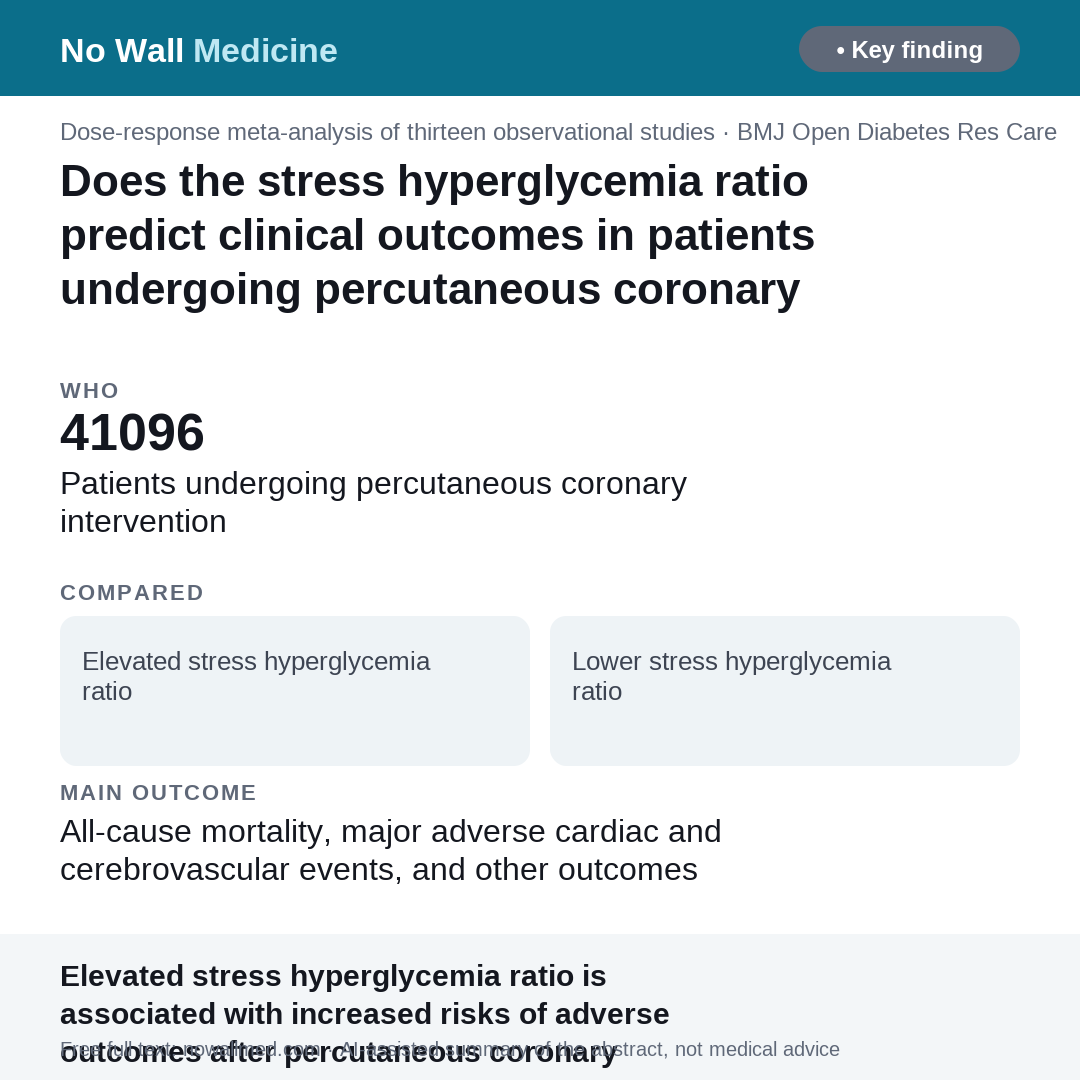
Prognostic significance of stress hyperglycemia ratio in patients undergoing percutaneous coronary intervention: a dose-response meta-analysis
Dose-response meta-analysis of thirteen observational studiesHarm found
Does the stress hyperglycemia ratio predict clinical outcomes in patients undergoing percutaneous coronary intervention?
Who
41096
Patients undergoing percutaneous coronary intervention
Compared
Elevated stress hyperglycemia ratio
Lower stress hyperglycemia ratio
Main outcome
All-cause mortality, major adverse cardiac and cerebrovascular events, and other outcomes
Bottom line: Elevated stress hyperglycemia ratio is associated with increased risks of adverse outcomes after percutaneous coronary intervention.
Limitation: Most studies were observational, definitions varied, and residual confounding cannot be excluded.
BMJ Open Diabetes Res Care · 2026-08-31Download image
Antithrombotic therapy after percutaneous coronary intervention in patients with atrial fibrillation: an individual patient data network meta-analysis
Individual patient data network meta-analysisMixed results
What antithrombotic strategies are best for atrial fibrillation patients after percutaneous coronary intervention?
Who
10634
Patients with atrial fibrillation undergoing percutaneous coronary intervention
Compared
Direct oral anticoagulant plus P2Y12 inhibitor: HR 1.16 (95%CI 0.97-1.41)
Vitamin K antagonist plus dual antiplatelet therapy: Reference
Vitamin K antagonist plus single antiplatelet therapy: HR 1.14 (95%CI 0.85-1.54)
Direct oral anticoagulant plus dual antiplatelet therapy: HR 0.99 (95%CI 0.75-1.30)
Main outcome
Cardiovascular death, myocardial infarction, or stroke
Result: HR 1.16 (95%CI 0.97-1.41)
Bottom line: Antithrombotic strategies showed similar efficacy, but direct oral anticoagulants reduced bleeding risk compared to vitamin K antagonists.
Limitation: A modest increase in risk with single compared with dual antiplatelet therapy cannot be excluded.
Eur Heart J · 2026-08-30Download image

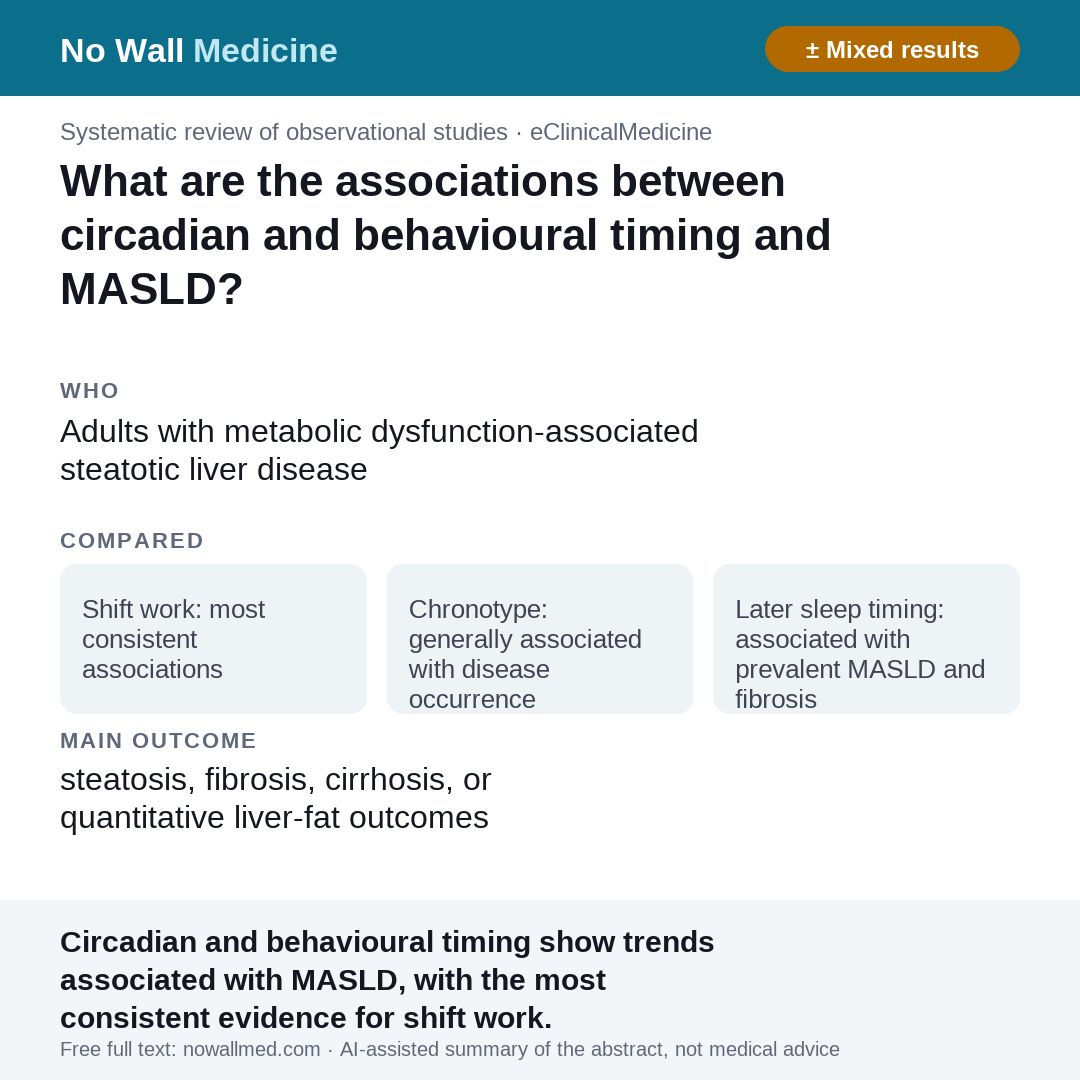
Circadian and behavioral timing in MASLD: a systematic review of human observational studies
Systematic review of observational studiesMixed results
What are the associations between circadian and behavioural timing and MASLD?
Who
Adults with metabolic dysfunction-associated steatotic liver disease
Compared
Shift work: most consistent associations
Chronotype: generally associated with disease occurrence
Later sleep timing: associated with prevalent MASLD and fibrosis
Main outcome
steatosis, fibrosis, cirrhosis, or quantitative liver-fat outcomes
Bottom line: Circadian and behavioural timing show trends associated with MASLD, with the most consistent evidence for shift work.
Limitation: Residual confounding, cross-sectional designs, self-reported exposures, heterogeneous outcomes, and reverse causality.
eClinicalMedicine · 2026-08-29Download image
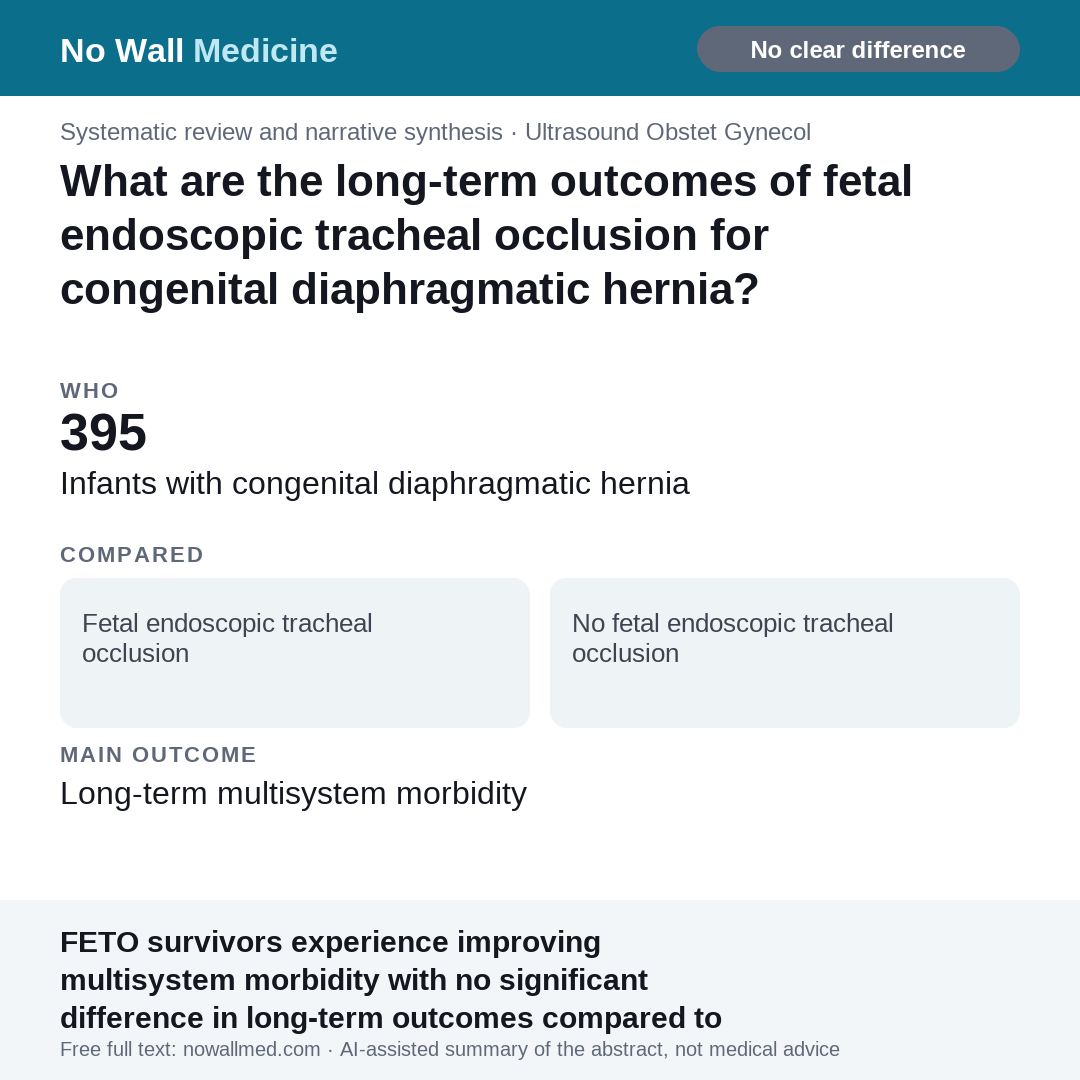
Long-term outcome after fetal endoscopic tracheal occlusion for congenital diaphragmatic hernia: systematic review
Systematic review and narrative synthesisNo clear difference
What are the long-term outcomes of fetal endoscopic tracheal occlusion for congenital diaphragmatic hernia?
Who
395
Infants with congenital diaphragmatic hernia
Compared
Fetal endoscopic tracheal occlusion
No fetal endoscopic tracheal occlusion
Main outcome
Long-term multisystem morbidity
Bottom line: FETO survivors experience improving multisystem morbidity with no significant difference in long-term outcomes compared to non-FETO infants.
Limitation: Meta-analysis was not performed due to outcome heterogeneity.
Ultrasound Obstet Gynecol · 2026-08-29Download image
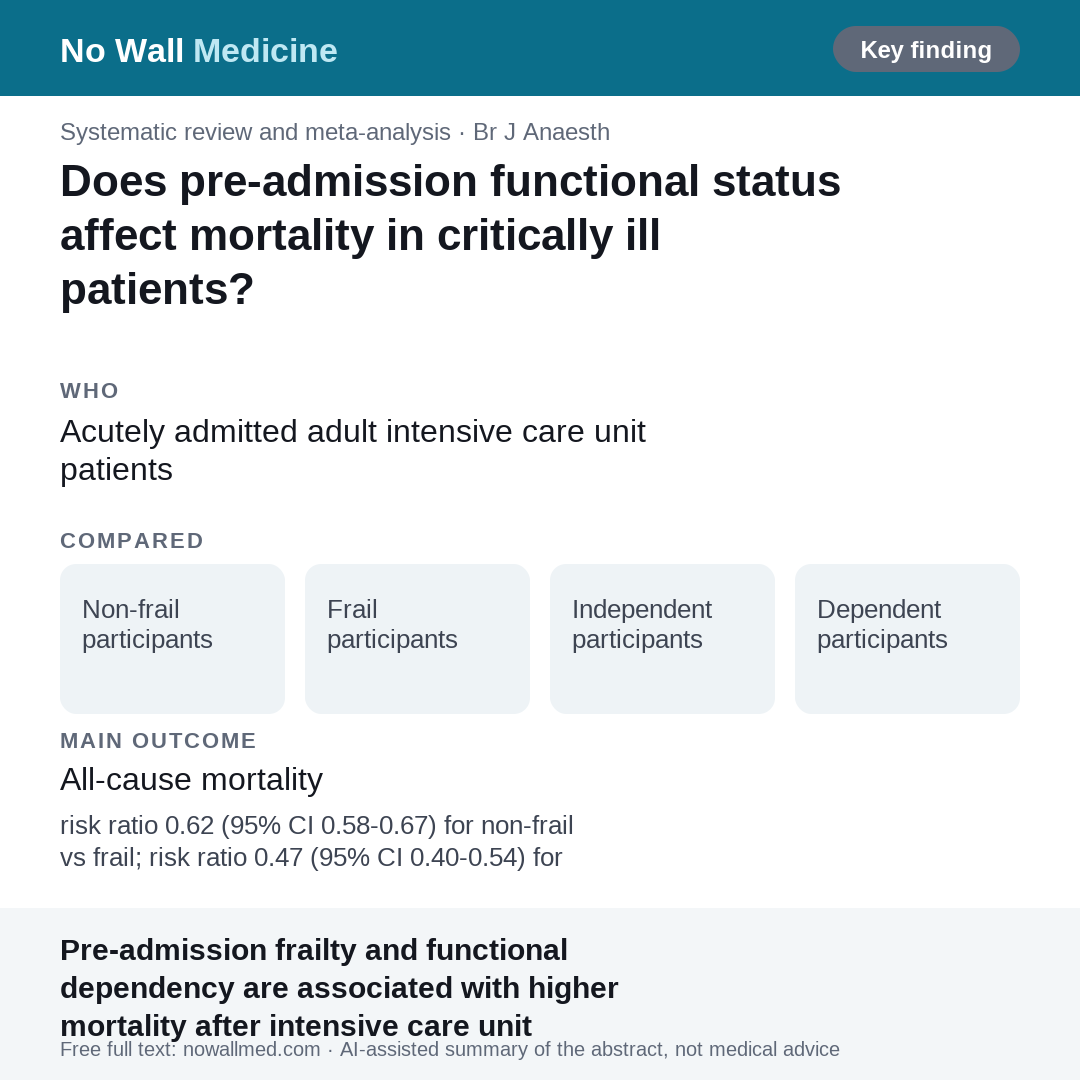
Impact of pre-admission functional status on intensive care patient outcomes: a systematic review and meta-analysis
Systematic review and meta-analysisHarm found
Does pre-admission functional status affect mortality in critically ill patients?
Who
Acutely admitted adult intensive care unit patients
Compared
Non-frail participants
Frail participants
Independent participants
Dependent participants
Main outcome
All-cause mortality
Result: risk ratio 0.62 (95% CI 0.58-0.67) for non-frail vs frail; risk ratio 0.47 (95% CI 0.40-0.54) for independent vs dependent
Bottom line: Pre-admission frailty and functional dependency are associated with higher mortality after intensive care unit admission.
Limitation: Substantial statistical and clinical heterogeneity and very low certainty of evidence.
Br J Anaesth · 2026-08-29Download image
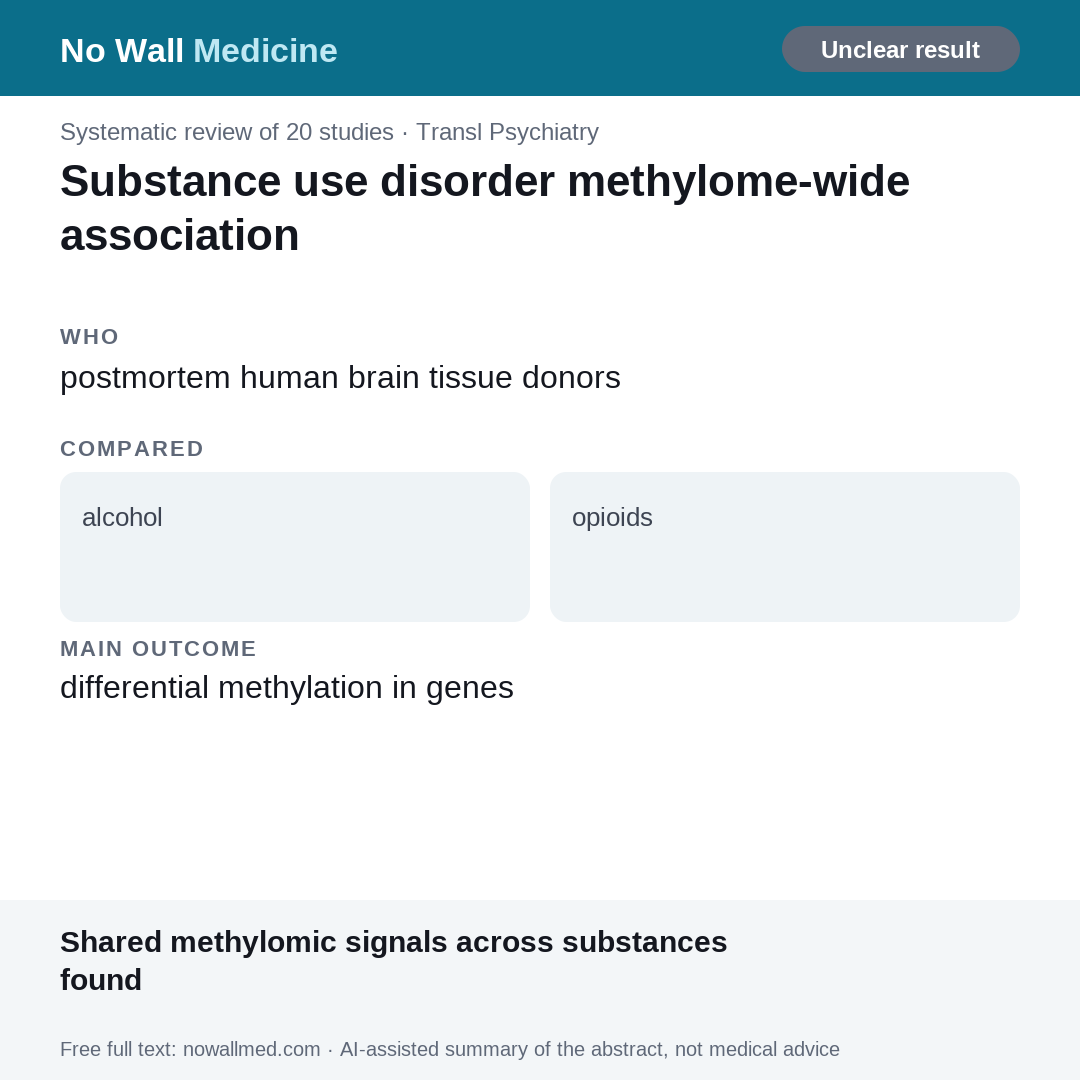
A systematic review of substance use disorder methylome-wide association studies in postmortem human brain
Systematic review of 20 studiesUnclear result
Substance use disorder methylome-wide association
Who
postmortem human brain tissue donors
Compared
alcohol
opioids
Main outcome
differential methylation in genes
Bottom line: Shared methylomic signals across substances found
Limitation: limited sample size and generalizability
Transl Psychiatry · 2026-08-29Download image
Prevalence and Clinical Relevance of Antiphospholipid Antibodies in Ischemic Stroke: A Systematic Review and Meta-Analysis
Systematic review and meta-analysisBenefit found
What is the prevalence and association of antiphospholipid antibodies in ischemic stroke?
Who
9438
Patients with ischemic stroke
Compared
19.1%Patients with any antiphospholipid antibodies (95% CI, 15.4%-23.0%)
First ischemic stroke risk: OR, 2.93 [95% CI, 2.31-3.73]
Main outcome
Prevalence and risk of ischemic stroke
Result: OR, 2.93 [95% CI, 2.31-3.73]
Bottom line: Antiphospholipid antibody seropositivity is present in 19.1% of ischemic stroke patients and increases risk of first stroke.
Stroke · 2026-08-28Download image

Translational simulation in anaesthesia: a systematic review of applications, processes, outcomes, and implementation factors
Systematic reviewBenefit found
Translational simulation in anaesthesia effectiveness
Who
3300
Anaesthesia staff across thirty seven countries · Thirty seven countries
Compared
Translational simulation
Comparison
Main outcome
Patient outcomes
Result: Signals of improved patient outcomes
Bottom line: Translational simulation improves patient outcomes
Limitation: Quasi-experimental designs
Br J Anaesth · 2026-08-28Download image

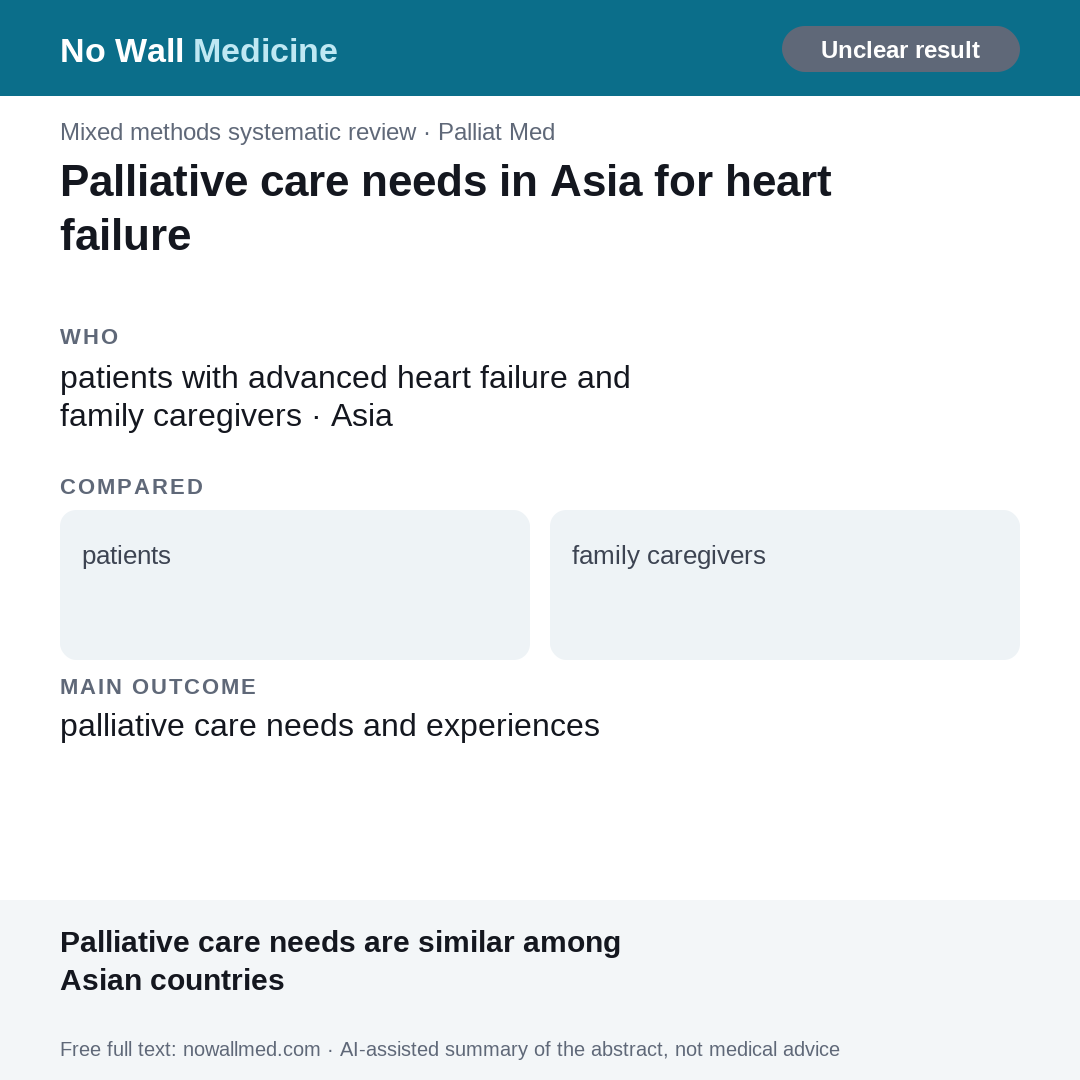
Palliative care needs and experiences of patients with advanced heart failure and family caregivers in Asia: A mixed methods systematic review
Mixed methods systematic reviewUnclear result
Palliative care needs in Asia for heart failure
Who
patients with advanced heart failure and family caregivers · Asia
Compared
patients
family caregivers
Main outcome
palliative care needs and experiences
Bottom line: Palliative care needs are similar among Asian countries
Palliat Med · 2026-08-28Download image
What is the evidence for physical interventions for people living with advanced dementia in the community? A meta-review
Umbrella review of systematic reviewsUnclear result
What is the effectiveness of physical interventions for people with advanced dementia?
Who
People with dementia nearing end of life, carers, or staff · Health and social care settings
Compared
Nutrition and hydration
Physical activities
Main outcome
Effectiveness of physical interventions
Bottom line: Evidence quality was generally low with no conclusive findings on the effectiveness of physical interventions.
Limitation: Evidence quality was generally low, with no conclusive findings on effectiveness.
BMJ Support Palliat Care · 2026-08-28Download image

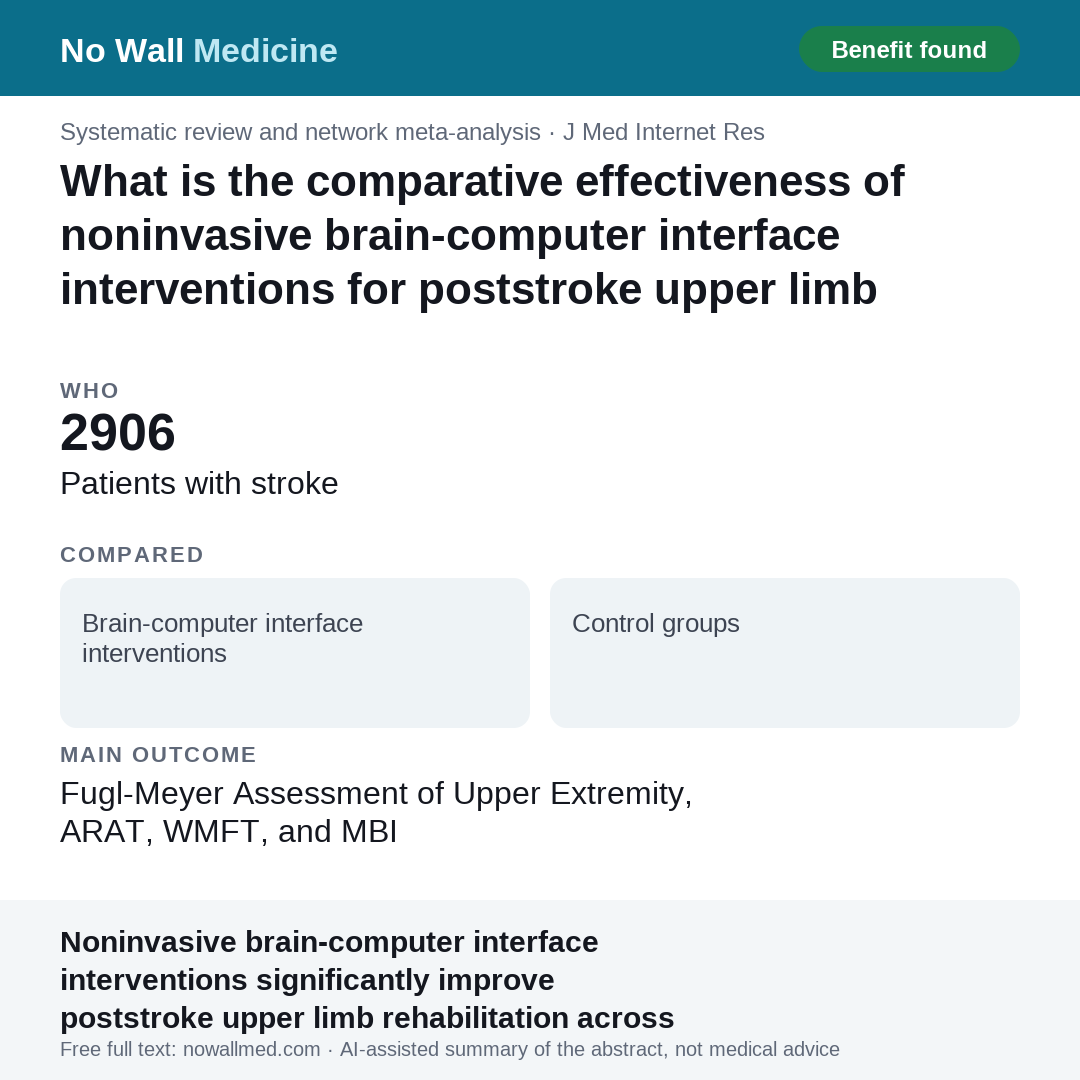
Comparative Effectiveness of Noninvasive Brain-Computer Interface-Based Interventions for Upper Limb Rehabilitation in Poststroke Hemiplegia: Systematic Review and Network Meta-Analysis of Randomized Controlled Trials
Systematic review and network meta-analysisBenefit found
What is the comparative effectiveness of noninvasive brain-computer interface interventions for poststroke upper limb rehabilitation?
Who
2906
Patients with stroke
Compared
Brain-computer interface interventions
Control groups
Main outcome
Fugl-Meyer Assessment of Upper Extremity, ARAT, WMFT, and MBI
Result: mean difference 5.33 (95% CI 4.28 to 6.38) for FMA-UE
Bottom line: Noninvasive brain-computer interface interventions significantly improve poststroke upper limb rehabilitation across body functions and activities.
Limitation: Low to moderate evidence certainty and substantial heterogeneity make findings exploratory.
J Med Internet Res · 2026-08-28Download image
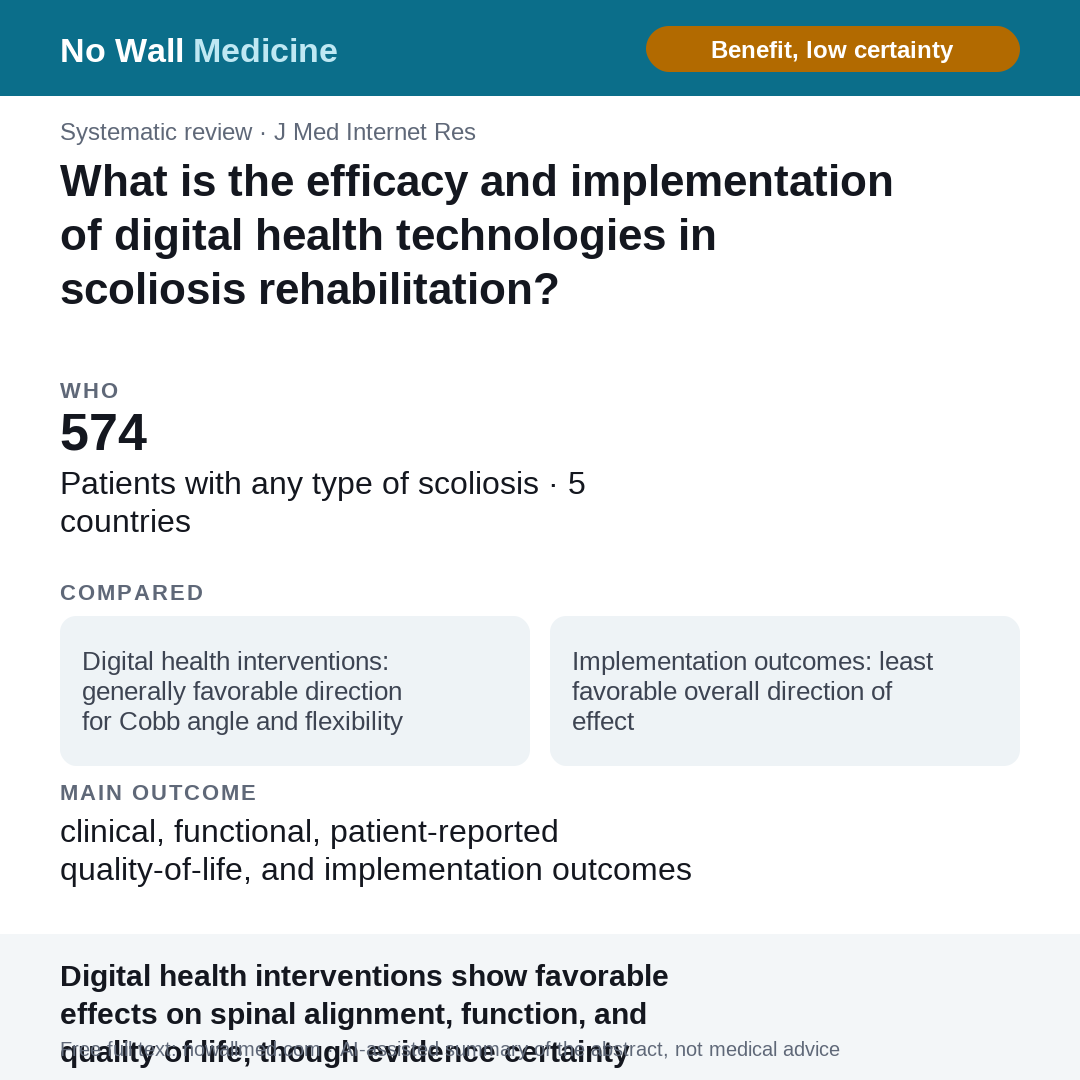
Application of Digital Health Technologies in Scoliosis Rehabilitation: Systematic Review Based on the Technology Classification Framework
Systematic reviewBenefit found
What is the efficacy and implementation of digital health technologies in scoliosis rehabilitation?
Who
574
Patients with any type of scoliosis · 5 countries
Compared
Digital health interventions: generally favorable direction for Cobb angle and flexibility
Implementation outcomes: least favorable overall direction of effect
Main outcome
clinical, functional, patient-reported quality-of-life, and implementation outcomes
Bottom line: Digital health interventions show favorable effects on spinal alignment, function, and quality of life, though evidence certainty is low.
Limitation: The overall certainty of evidence was low.
J Med Internet Res · 2026-08-28Download image