Visual abstracts
New randomized trials and meta-analyses from leading journals at a glance: who was studied, what was compared, and what was found. Every paper is free to read in full.
All specialtiesCardiology 4763Oncology 4043Gastroenterology & Hepatology 1903Infectious Disease 3756Neurology 1872Psychiatry & Mental Health 2216Pulmonology 2044Critical Care 1319Endocrinology & Diabetes 2544Pediatrics 2889Surgery 2480Orthopedics & Sports Medicine 917Neurosurgery 525Cardiothoracic & Vascular Surgery 656Plastic & Reconstructive Surgery 574Nephrology 1107Rheumatology 810Hematology 1090Dermatology 611Ophthalmology 532Obstetrics & Gynecology 1645Public & Global Health 1037Radiology & Imaging 619Anesthesiology 958Urology 745ENT (Otolaryngology) 494Emergency Medicine 481Allergy & Immunology 309Geriatrics 972Family Medicine & Primary Care 534Medical Genetics & Genomics 659Pathology & Laboratory Medicine 156Physical Medicine & Rehabilitation 734Palliative Care 421Nutrition 1560Digital Health & AI 2137General Medicine 318
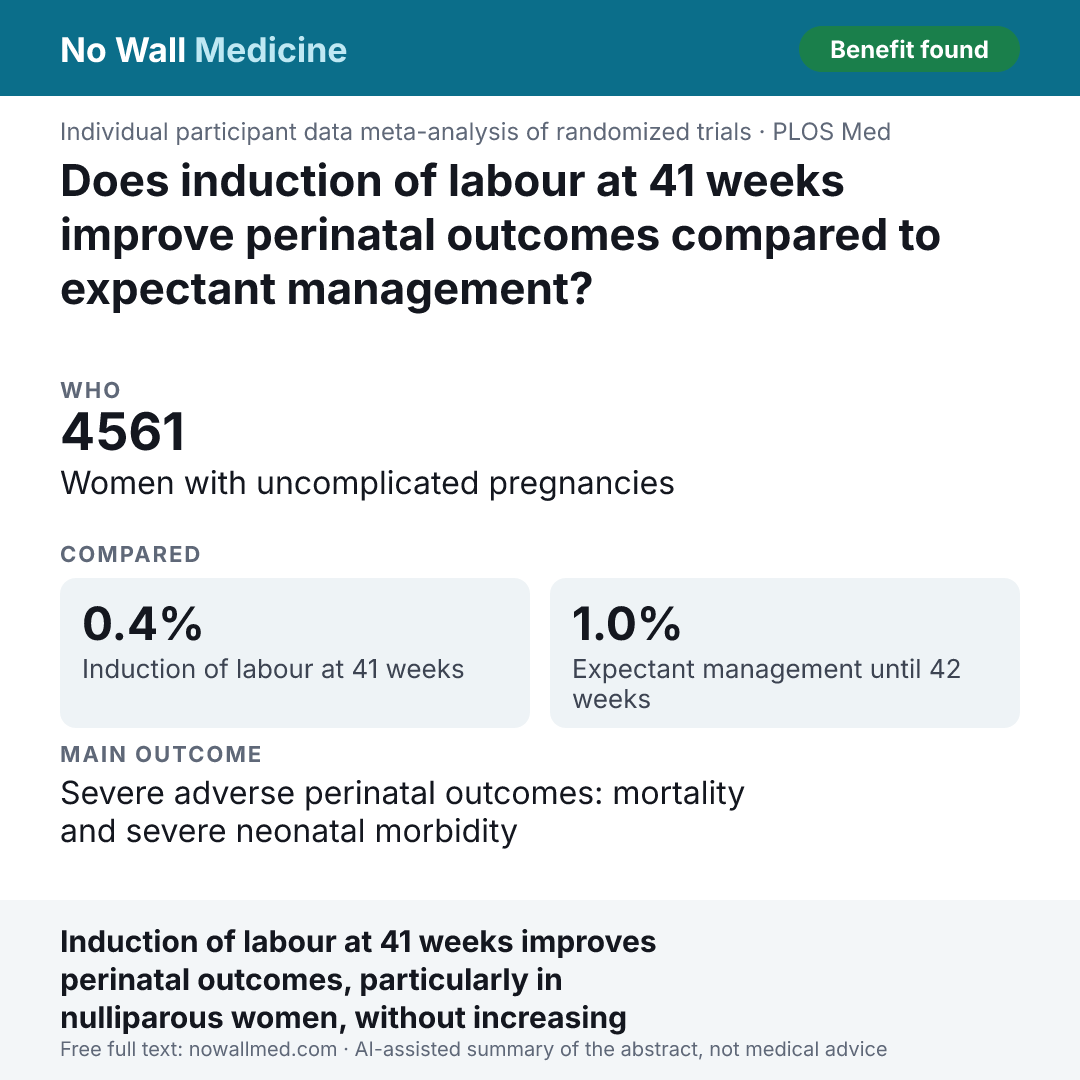
Induction of labour at 41 weeks or expectant management until 42 weeks: A systematic review and an individual participant data meta-analysis of randomised trials
Individual participant data meta-analysis of randomized trialsBenefit found
Does induction of labour at 41 weeks improve perinatal outcomes compared to expectant management?
Who
4561
Women with uncomplicated pregnancies
Compared
0.4%Induction of labour at 41 weeks (10/2,281)
1.0%Expectant management until 42 weeks (23/2,280)
Main outcome
Severe adverse perinatal outcomes: mortality and severe neonatal morbidity
Result: relative risk 0.43 (95% CI 0.21 to 0.91)
Bottom line: Induction of labour at 41 weeks improves perinatal outcomes, particularly in nulliparous women, without increasing cesarean delivery rates.
Limitation: Risk of overestimating effect on perinatal mortality due to early stopping of the largest trial for safety.
PLOS Med · 2020-12-08 · Save PNG
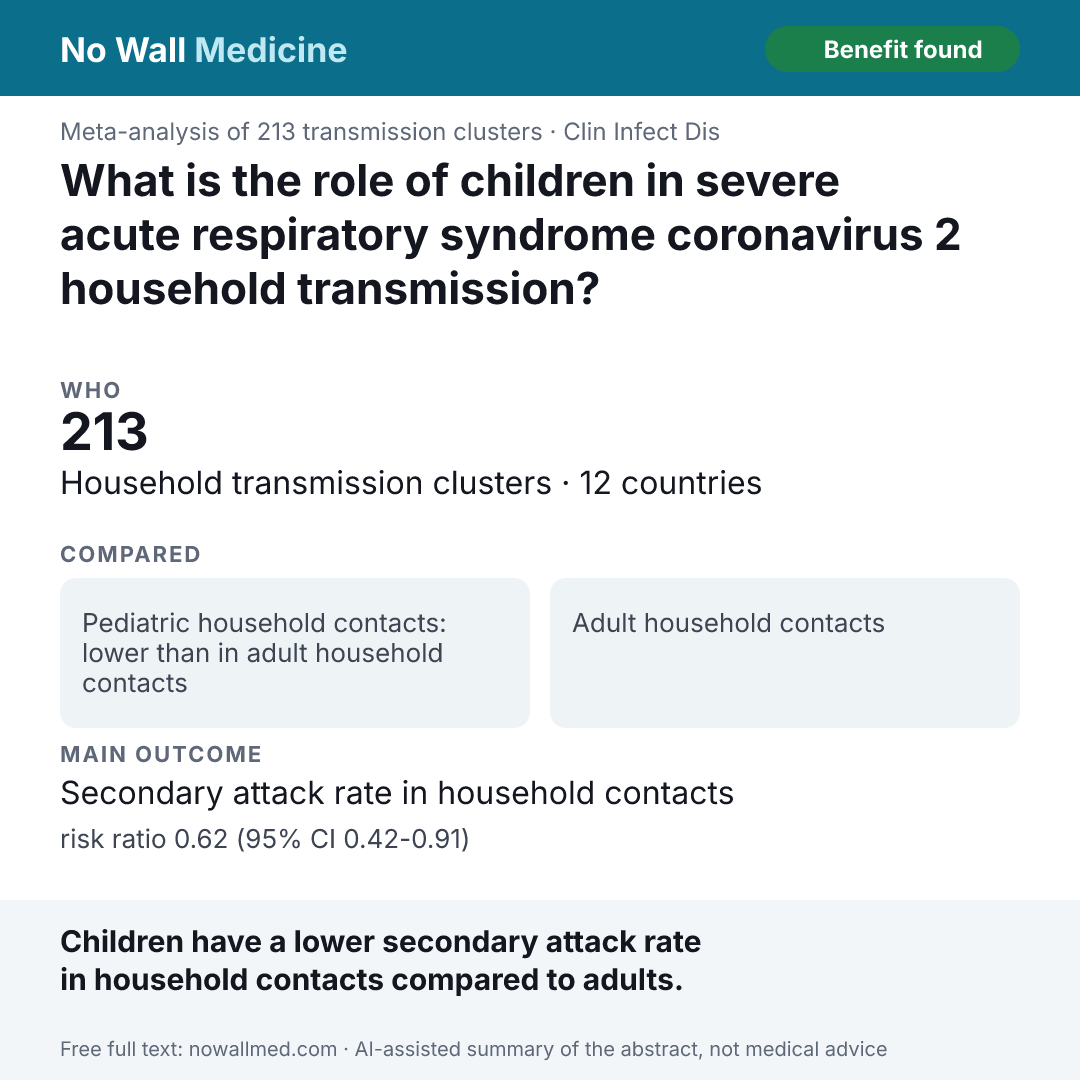
A Meta-analysis on the Role of Children in Severe Acute Respiratory Syndrome Coronavirus 2 in Household Transmission Clusters
Meta-analysis of 213 transmission clustersBenefit found
What is the role of children in severe acute respiratory syndrome coronavirus 2 household transmission?
Who
213
Household transmission clusters · 12 countries
Compared
Pediatric household contacts: lower than in adult household contacts
Adult household contacts
Main outcome
Secondary attack rate in household contacts
Result: risk ratio 0.62 (95% CI 0.42-0.91)
Bottom line: Children have a lower secondary attack rate in household contacts compared to adults.
Clin Infect Dis · 2020-12-08 · Save PNG
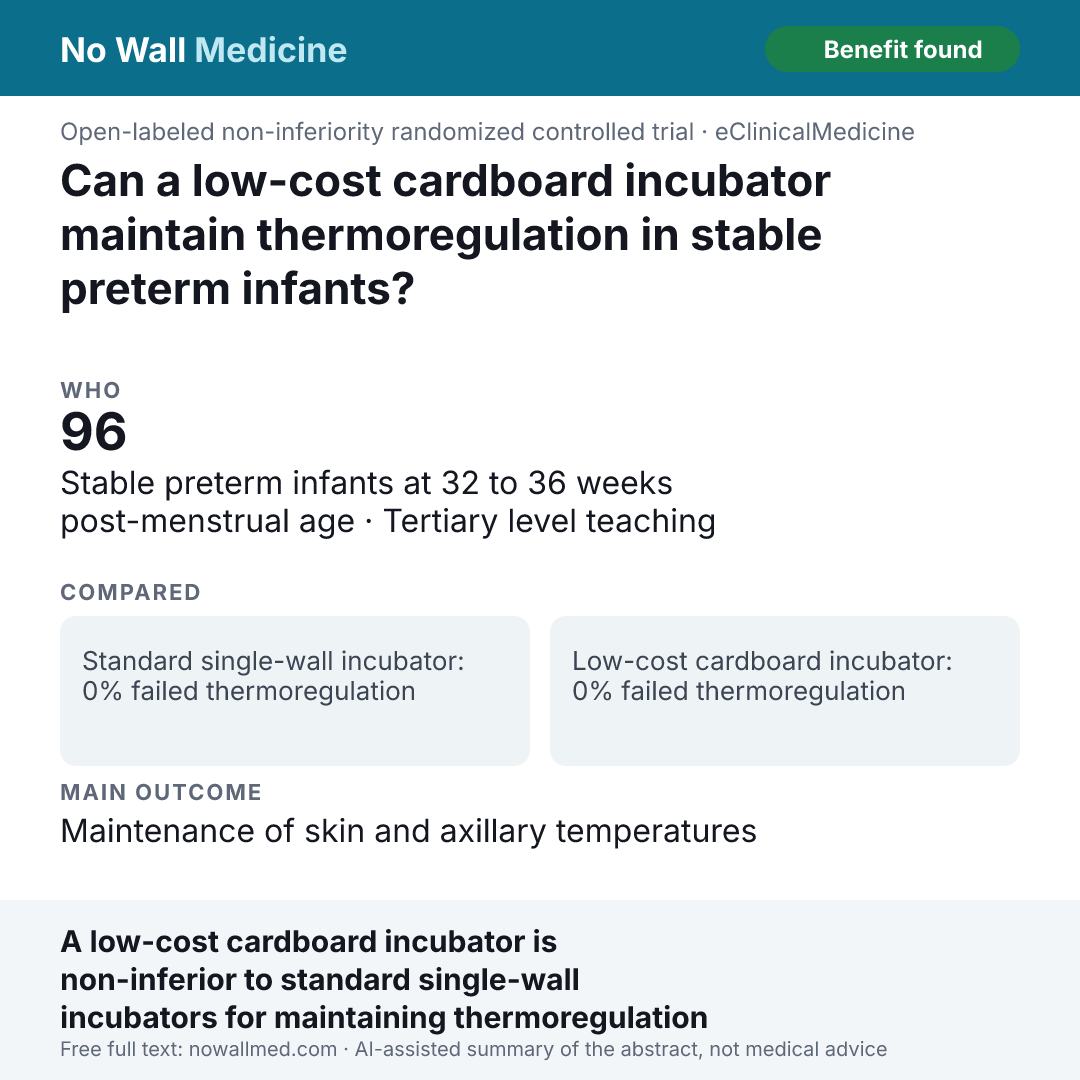
Disposable low-cost cardboard incubator for thermoregulation of stable preterm infant - a randomized controlled non-inferiority trial
Open-labeled non-inferiority randomized controlled trialBenefit found
Can a low-cost cardboard incubator maintain thermoregulation in stable preterm infants?
Who
96
Stable preterm infants at 32 to 36 weeks post-menstrual age · Tertiary level teaching hospital in India
Compared
Standard single-wall incubator: 0% failed thermoregulation
Low-cost cardboard incubator: 0% failed thermoregulation
Main outcome
Maintenance of skin and axillary temperatures
Result: -0.07 °C (95% CI -0.11 to -0.04) for skin and -0.06 °C (95% CI -0.095 to -0.02) for axillary
Bottom line: A low-cost cardboard incubator is non-inferior to standard single-wall incubators for maintaining thermoregulation in stable preterm infants.
Funded by: Food and Drug Administration
eClinicalMedicine · 2020-12-07 · Save PNG
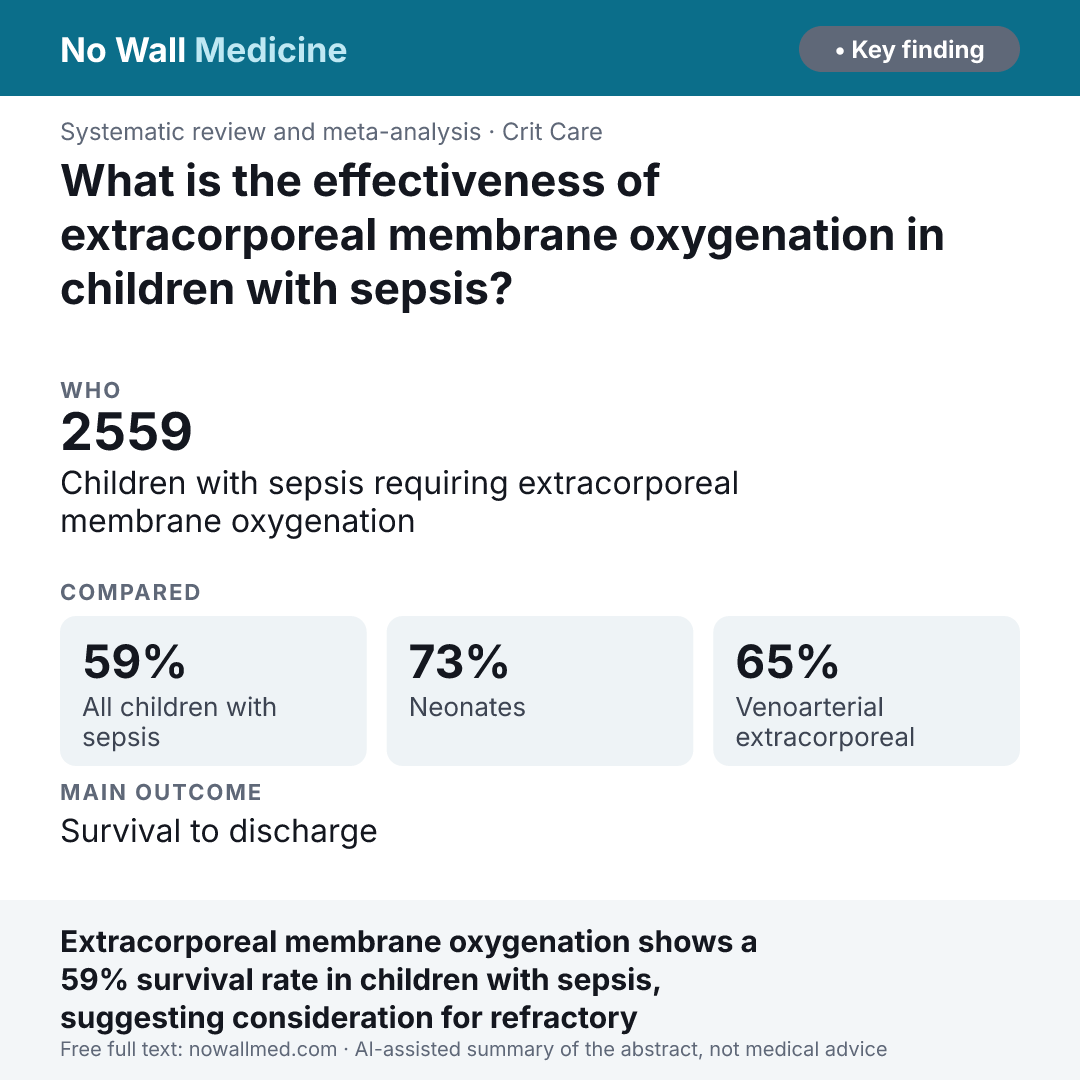
Role of extracorporeal membrane oxygenation in children with sepsis: a systematic review and meta-analysis
Systematic review and meta-analysisKey finding
What is the effectiveness of extracorporeal membrane oxygenation in children with sepsis?
Who
2559
Children with sepsis requiring extracorporeal membrane oxygenation
Compared
59%All children with sepsis (95%CI: 51-67%)
73%Neonates (95%CI: 56- 87%)
65%Venoarterial extracorporeal membrane oxygenation (95%CI: 50-80%)
Main outcome
Survival to discharge
Bottom line: Extracorporeal membrane oxygenation shows a 59% survival rate in children with sepsis, suggesting consideration for refractory septic shock.
Crit Care · 2020-12-07 · Save PNG
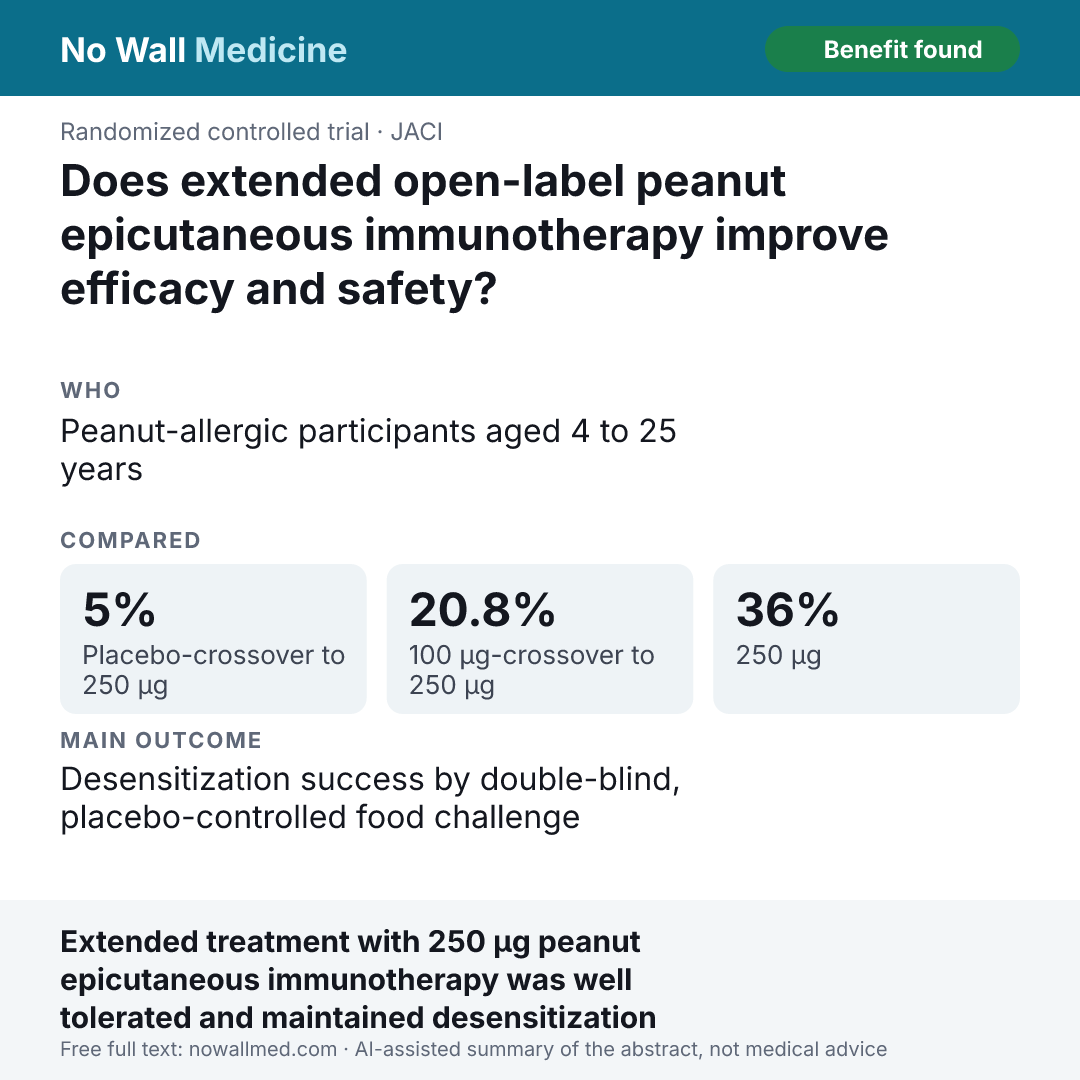
Epicutaneous immunotherapy for treatment of peanut allergy: Follow-up from the Consortium for Food Allergy Research
Randomized controlled trialBenefit found
Does extended open-label peanut epicutaneous immunotherapy improve efficacy and safety?
Who
Peanut-allergic participants aged 4 to 25 years
Compared
5%Placebo-crossover to 250 μg (1/20)
20.8%100 μg-crossover to 250 μg (5/24)
36%250 μg (9/25)
Main outcome
Desensitization success by double-blind, placebo-controlled food challenge
Bottom line: Extended treatment with 250 μg peanut epicutaneous immunotherapy was well tolerated and maintained desensitization success.
JACI · 2020-12-05 · Save PNG
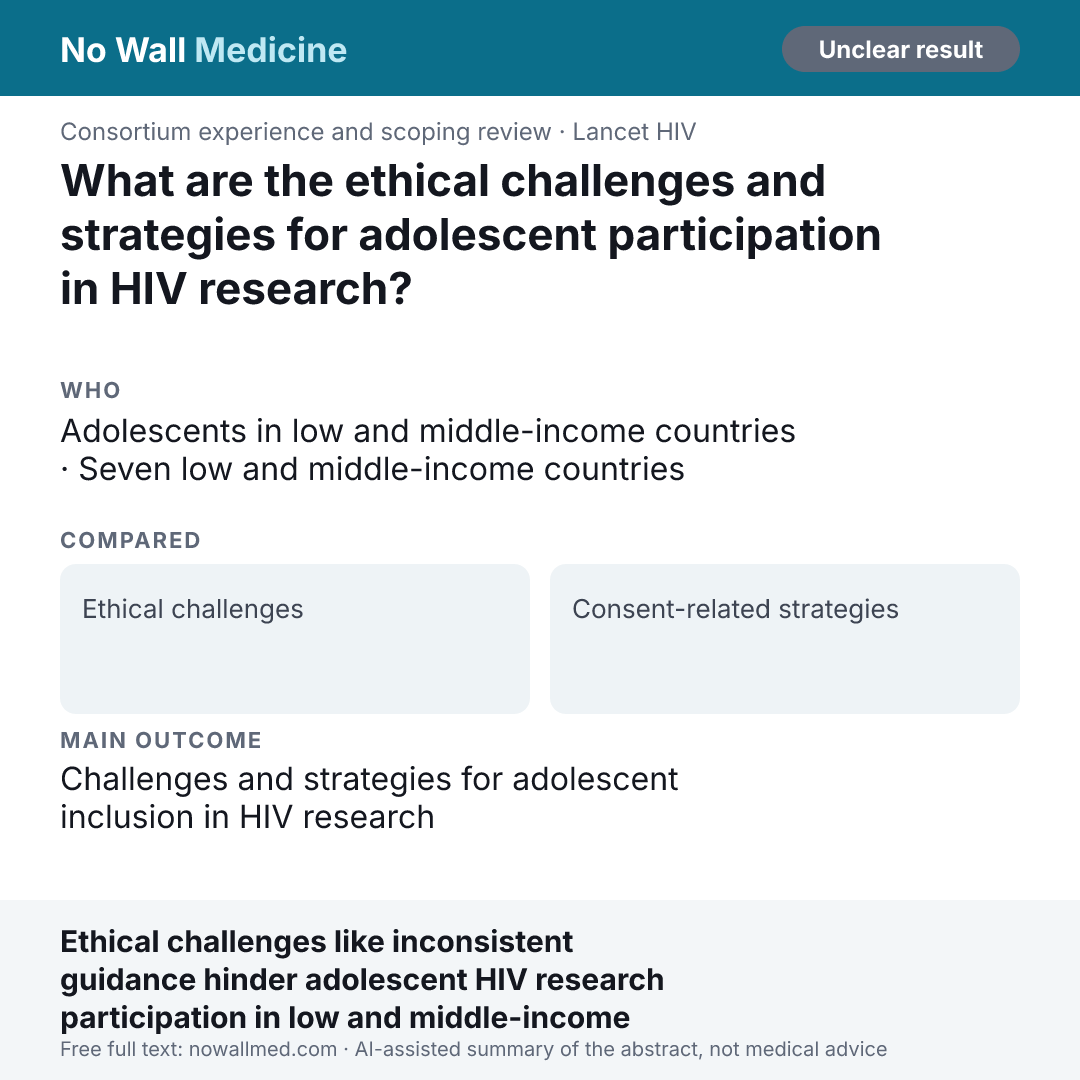
Adolescent participation in HIV research: consortium experience in low and middle-income countries and scoping review
Consortium experience and scoping reviewUnclear result
What are the ethical challenges and strategies for adolescent participation in HIV research?
Who
Adolescents in low and middle-income countries · Seven low and middle-income countries
Compared
Ethical challenges
Consent-related strategies
Main outcome
Challenges and strategies for adolescent inclusion in HIV research
Bottom line: Ethical challenges like inconsistent guidance hinder adolescent HIV research participation in low and middle-income countries.
Lancet HIV · 2020-12-04 · Save PNG
Students' preparedness for disasters in schools: a systematic review protocol
Systematic reviewUnclear result
Effects of school interventions for disasters
Who
schoolchildren four to seventeen years old
Compared
intervention
control
Main outcome
disaster preparedness
Bottom line: Reviewing school interventions for disaster preparedness
BMJ Paediatr Open · 2020-12-04 · Save PNG
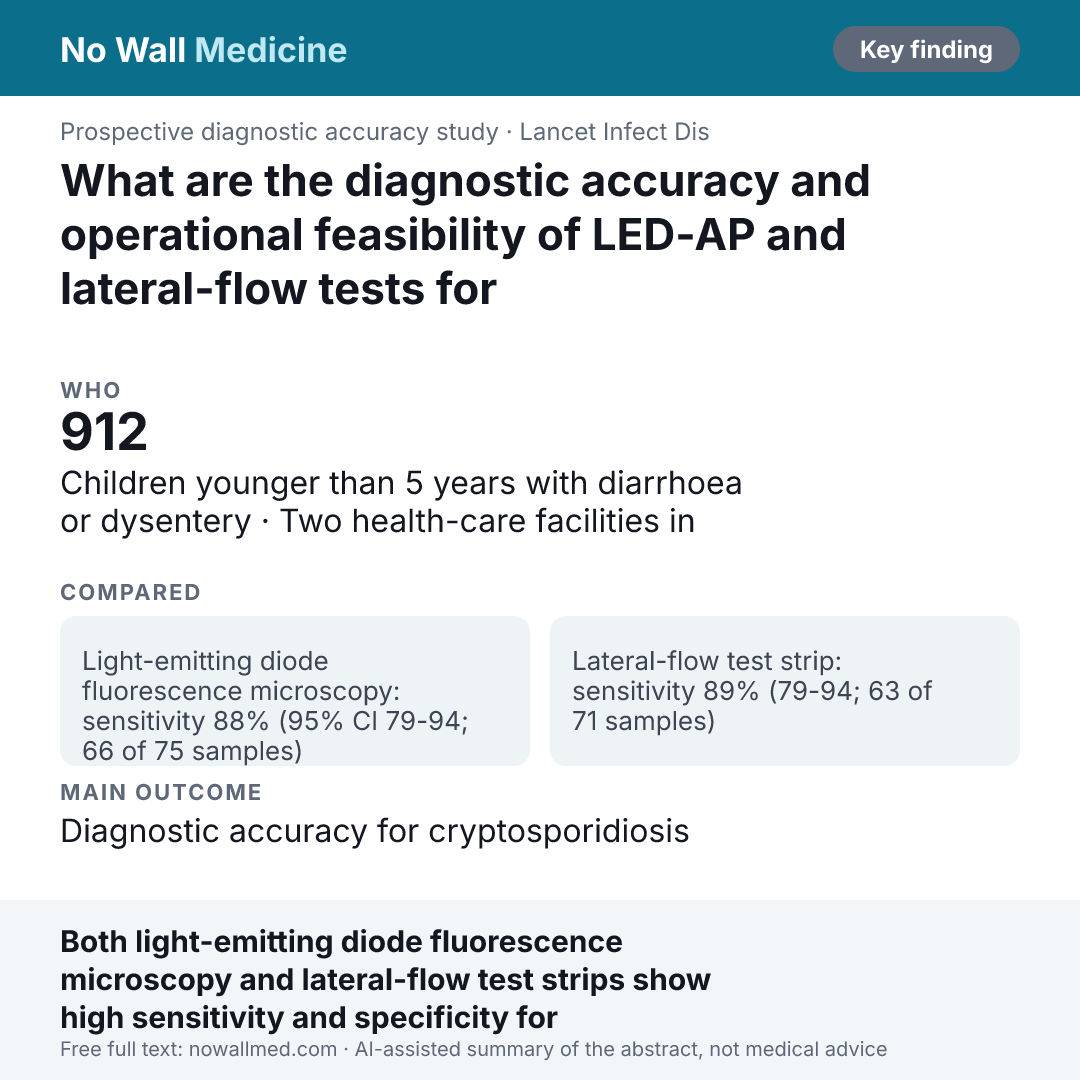
Performance and operational feasibility of two diagnostic tests for cryptosporidiosis in children (CRYPTO-POC): a clinical, prospective, diagnostic accuracy study
Prospective diagnostic accuracy studyKey finding
What are the diagnostic accuracy and operational feasibility of LED-AP and lateral-flow tests for cryptosporidiosis?
Who
912
Children younger than 5 years with diarrhoea or dysentery · Two health-care facilities in Ethiopia
Compared
Light-emitting diode fluorescence microscopy: sensitivity 88% (95% CI 79-94; 66 of 75 samples)
Lateral-flow test strip: sensitivity 89% (79-94; 63 of 71 samples)
Main outcome
Diagnostic accuracy for cryptosporidiosis
Bottom line: Both light-emitting diode fluorescence microscopy and lateral-flow test strips show high sensitivity and specificity for detecting cryptosporidiosis in children.
Funded by: Norwegian Research Council, Bill & Melinda Gates Foundation, and others
Lancet Infect Dis · 2020-12-03 · Save PNG
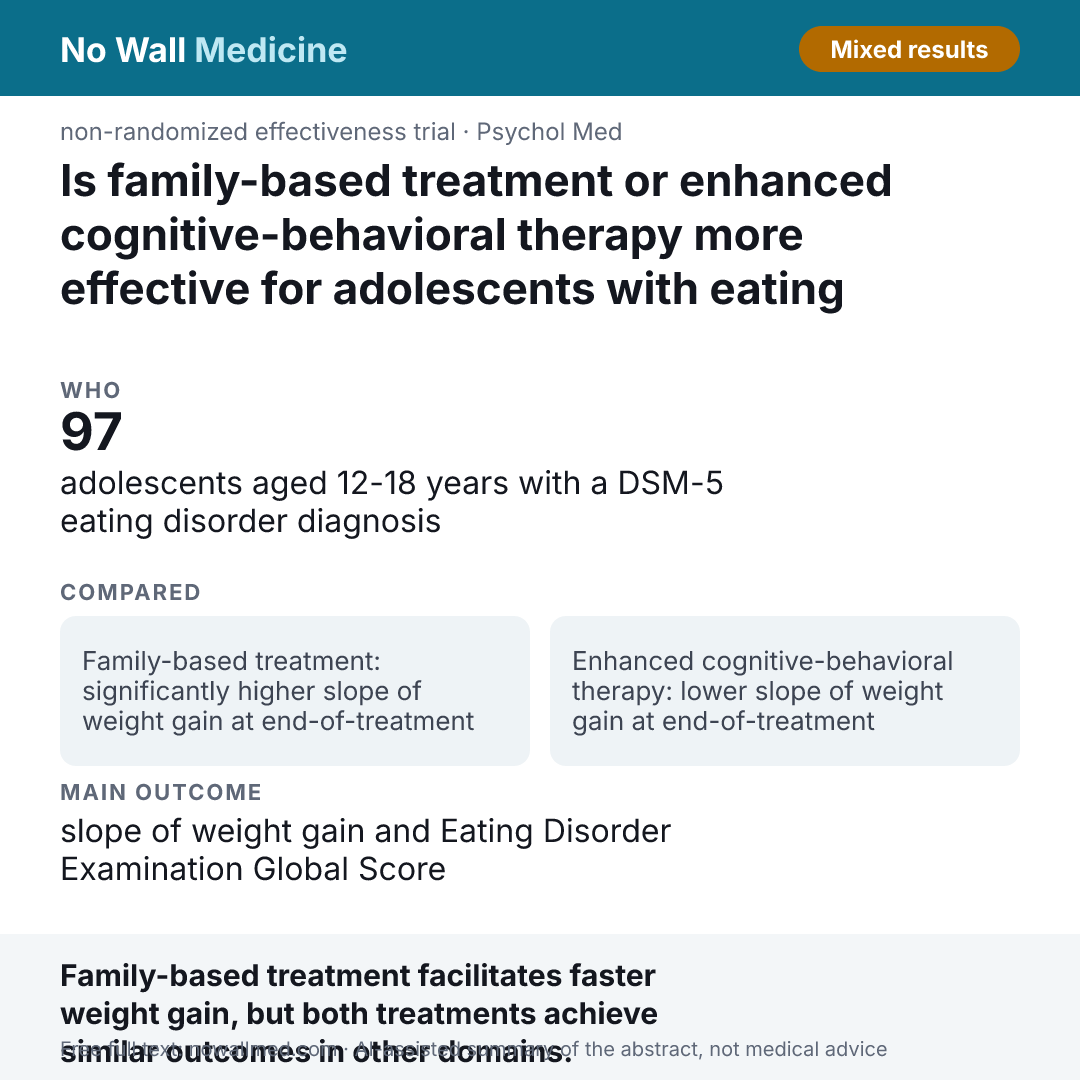
Enhanced cognitive-behavior therapy and family-based treatment for adolescents with an eating disorder: a non-randomized effectiveness trial
non-randomized effectiveness trialMixed results
Is family-based treatment or enhanced cognitive-behavioral therapy more effective for adolescents with eating disorders?
Who
97
adolescents aged 12-18 years with a DSM-5 eating disorder diagnosis
Compared
Family-based treatment: significantly higher slope of weight gain at end-of-treatment
Enhanced cognitive-behavioral therapy: lower slope of weight gain at end-of-treatment
Main outcome
slope of weight gain and Eating Disorder Examination Global Score
Bottom line: Family-based treatment facilitates faster weight gain, but both treatments achieve similar outcomes in other domains.
Psychol Med · 2020-12-03 · Save PNG
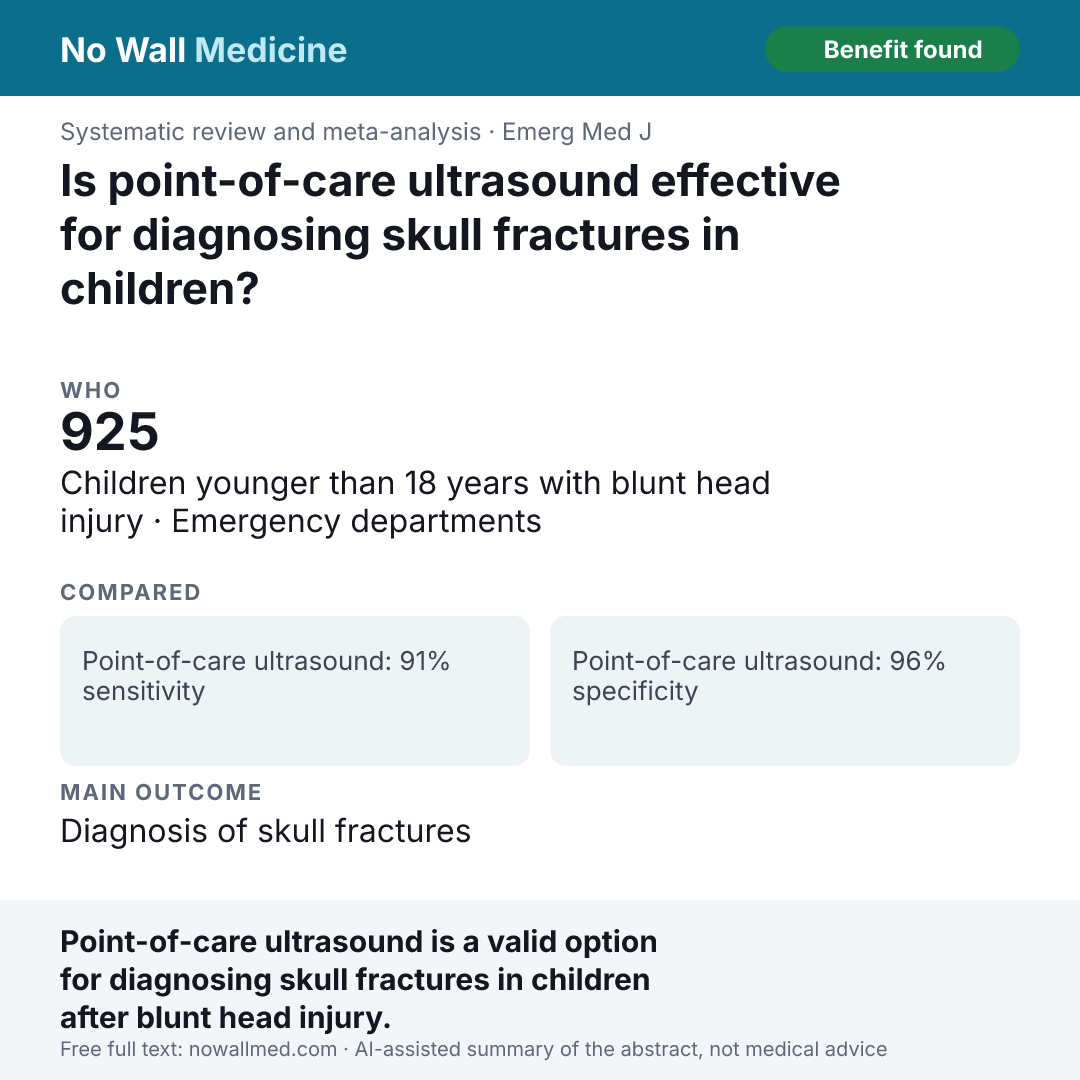
Evidence base for point-of-care ultrasound (POCUS) for diagnosis of skull fractures in children: a systematic review and meta-analysis
Systematic review and meta-analysisBenefit found
Is point-of-care ultrasound effective for diagnosing skull fractures in children?
Who
925
Children younger than 18 years with blunt head injury · Emergency departments
Compared
Point-of-care ultrasound: 91% sensitivity
Point-of-care ultrasound: 96% specificity
Main outcome
Diagnosis of skull fractures
Bottom line: Point-of-care ultrasound is a valid option for diagnosing skull fractures in children after blunt head injury.
Limitation: The included studies demonstrate minor methodological limitations.
Emerg Med J · 2020-12-03 · Save PNG
Effectiveness, Acceptability, and Feasibility of Digital Health Interventions for LGBTIQ+ Young People: Systematic Review
Systematic reviewBenefit found
Do digital health interventions help LGBTIQ+ young people?
Who
LGBTIQ+ young people aged 12-25 years
Compared
Digital interventions
Control
Main outcome
Mental, physical, sexual health
Bottom line: Digital interventions may help LGBTIQ+ young people
Limitation: Quality of evidence often lacking
J Med Internet Res · 2020-12-03 · Save PNG
Malaria Chemoprevention in the Postdischarge Management of Severe Anemia
Multicenter, two-group, randomized, placebo-controlled trialBenefit found
Does 3 months of malaria chemoprevention reduce morbidity and mortality after severe anemia discharge?
Who
1049
Children younger than 5 years admitted with severe anemia · Nine hospitals in Kenya and Uganda
Compared
chemoprevention group: 184 events
placebo group: 316 events
Main outcome
Hospital readmissions for any reason or death
Result: hazard ratio 0.65 (95% CI 0.54 to 0.78)
Bottom line: Three months of malaria chemoprevention prevented more deaths or readmissions in children recently treated for severe anemia.
Funded by: Research Council of Norway and Centers for Disease Control and Prevention
NEJM · 2020-12-02 · Save PNG
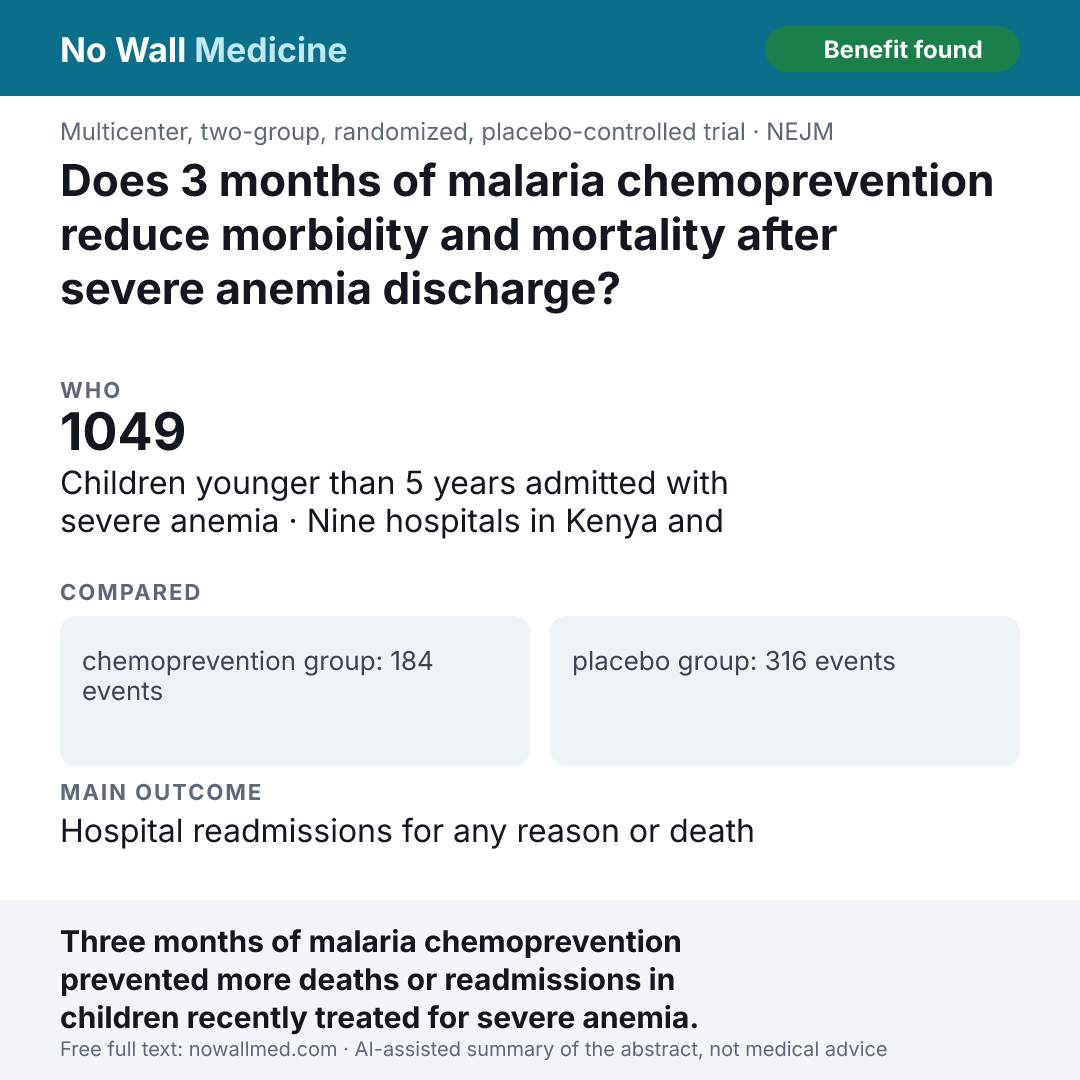
Foley catheter vs oral misoprostol for induction of labor: individual participant data meta-analysis
Individual participant data meta-analysisMixed results
Is Foley catheter or oral misoprostol more effective and safe for induction of labor?
Who
2815
Women undergoing induction of labor in viable singleton gestations
Compared
Foley catheter: slightly decreased chance of vaginal birth
Oral misoprostol
Main outcome
Vaginal birth, adverse perinatal outcome, and adverse maternal outcome
Result: risk ratio 0.95 (95% CI, 0.91-0.99) for vaginal birth
Bottom line: Foley catheter is less effective for vaginal birth but may reduce adverse perinatal outcomes compared to oral misoprostol.
Limitation: Low-certainty evidence for composite adverse perinatal outcomes
Ultrasound Obstet Gynecol · 2020-12-02 · Save PNG
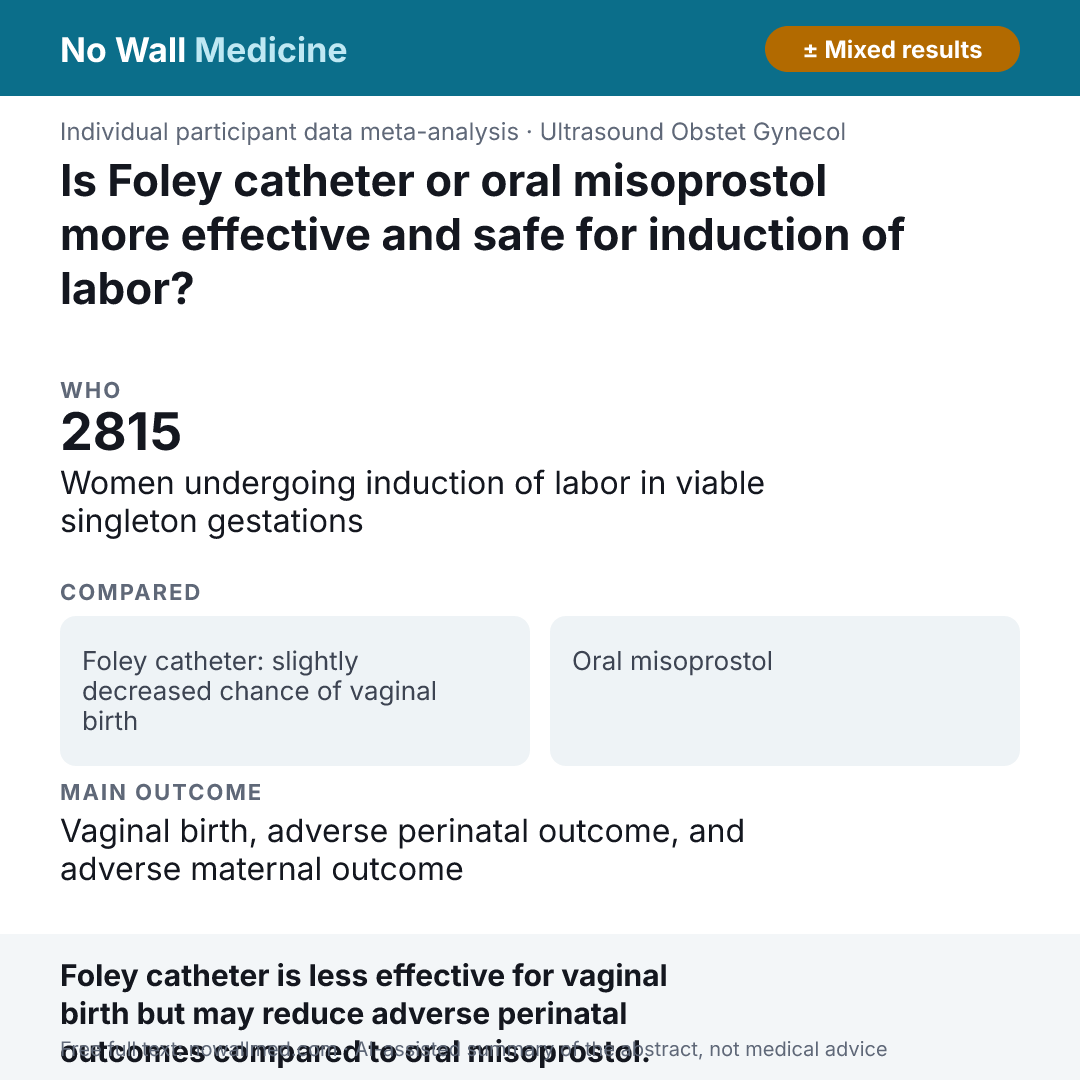
Effect of a Community-Based Gender Norms Program on Sexual Violence Perpetration by Adolescent Boys and Young Men: A Cluster Randomized Clinical Trial
Unblinded cluster randomized clinical trialNo clear difference
Does the Manhood 2.0 program reduce sexual violence or adolescent relationship abuse perpetration?
Who
866
Pittsburgh-based adolescent boys and young men ages 13 to 19 years · 20 Pittsburgh, Pennsylvania neighborhoods and 1 centrally located site
Compared
Manhood 2.0 intervention: 52% reported any sexual violence or adolescent relationship abuse perpetration at T3
Job-readiness training control: 41% reported any sexual violence or adolescent relationship abuse perpetration at T3
Main outcome
Change in participant-level perpetration of sexual violence or adolescent relationship abuse
Result: adjusted odds ratio 1.32 (95% CI 0.86-2.01)
Bottom line: The Manhood 2.0 program did not significantly reduce sexual violence or adolescent relationship abuse perpetration compared to job-readiness training.
JAMA Netw Open · 2020-12-01 · Save PNG
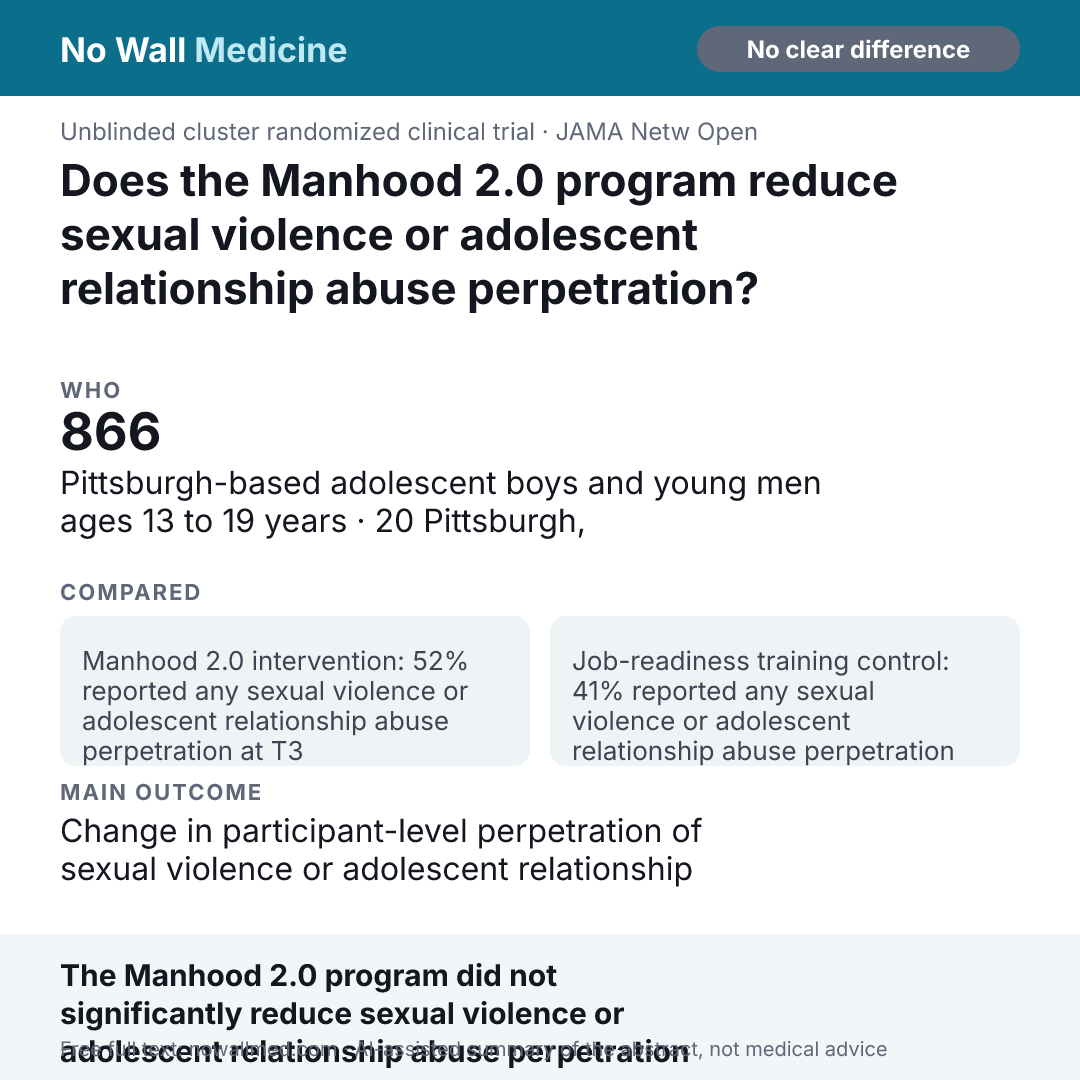
Effects of Fecal Microbiome Transfer in Adolescents With Obesity: The Gut Bugs Randomized Controlled Trial
Randomized, double-masked, placebo-controlled trialNo clear difference
Does fecal microbiome transfer improve metabolism and treat adolescent obesity?
Who
87
Adolescents aged 14 to 18 years with body mass index 30 or more · Auckland, New Zealand
Compared
Fecal microbiome transfer
Placebo
Main outcome
Body mass index standard deviation score at 6 weeks
Result: adjusted mean difference -0.026 (95% CI -0.074, 0.022)
Bottom line: Fecal microbiome transfer did not affect body mass index standard deviation score in adolescents with obesity.
JAMA Netw Open · 2020-12-01 · Save PNG
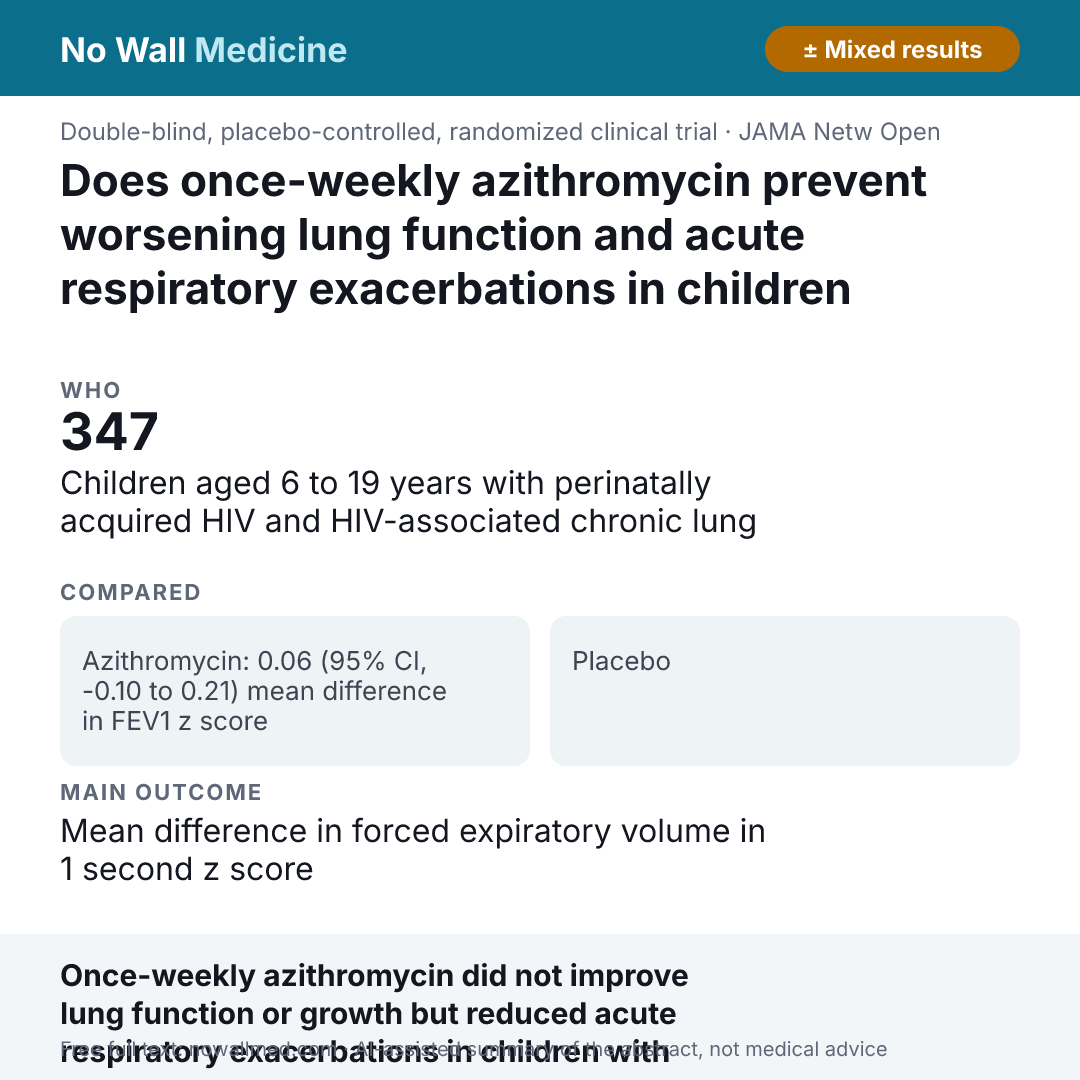
Effect of Once-Weekly Azithromycin vs Placebo in Children With HIV-Associated Chronic Lung Disease: The BREATHE Randomized Clinical Trial
Double-blind, placebo-controlled, randomized clinical trialMixed results
Does once-weekly azithromycin prevent worsening lung function and acute respiratory exacerbations in children with HIV-associated chronic lung disease?
Who
347
Children aged 6 to 19 years with perinatally acquired HIV and HIV-associated chronic lung disease · Outpatient HIV clinics in 2 public sector hospitals in Malawi and Zimbabwe
Compared
Azithromycin: 0.06 (95% CI, -0.10 to 0.21) mean difference in FEV1 z score
Placebo
Main outcome
Mean difference in forced expiratory volume in 1 second z score
Result: hazard ratio 0.50 (95% CI 0.27 to 0.93) for acute respiratory exacerbations
Bottom line: Once-weekly azithromycin did not improve lung function or growth but reduced acute respiratory exacerbations in children with HIV-associated chronic lung disease.
JAMA Netw Open · 2020-12-01 · Save PNG
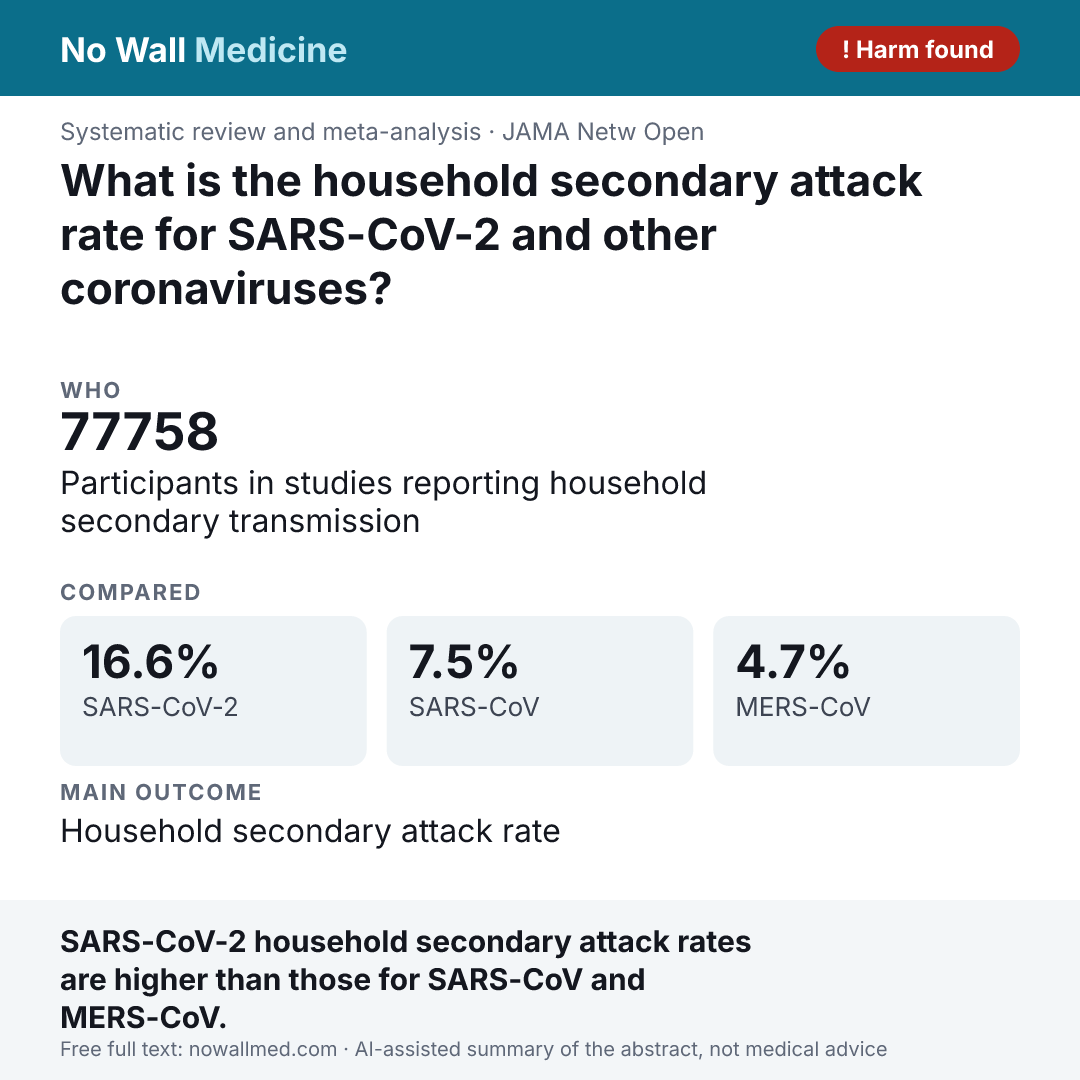
Household Transmission of SARS-CoV-2: A Systematic Review and Meta-analysis
Systematic review and meta-analysisHarm found
What is the household secondary attack rate for SARS-CoV-2 and other coronaviruses?
Who
77758
Participants in studies reporting household secondary transmission
Compared
16.6%SARS-CoV-2 (95% CI, 14.0%-19.3%)
7.5%SARS-CoV (95% CI, 4.8%-10.7%)
4.7%MERS-CoV (95% CI, 0.9%-10.7%)
Main outcome
Household secondary attack rate
Bottom line: SARS-CoV-2 household secondary attack rates are higher than those for SARS-CoV and MERS-CoV.
JAMA Netw Open · 2020-12-01 · Save PNG
High-Dose Vitamin D Supplementation in Pregnancy and Neurodevelopment in Childhood: A Prespecified Secondary Analysis of a Randomized Clinical Trial
Double-blinded, placebo-controlled randomized clinical trialNo clear difference
Does high-dose vitamin D supplementation during pregnancy improve offspring neurodevelopment up to age 6?
Who
623
Pregnant women and their offspring in Denmark · Single-center research unit in Denmark
Compared
High-dose vitamin D3: score difference: 0.34 [95% CI, -1.32 to 1.99]
Standard dose placebo: score difference: 0.34 [95% CI, -1.32 to 1.99]
Main outcome
Cognitive development assessed at 2.5 years
Result: score difference: 0.34 (95% CI -1.32 to 1.99)
Bottom line: High-dose vitamin D3 supplementation during pregnancy did not improve neurodevelopmental outcomes in offspring during the first 6 years.
JAMA Netw Open · 2020-12-01 · Save PNG

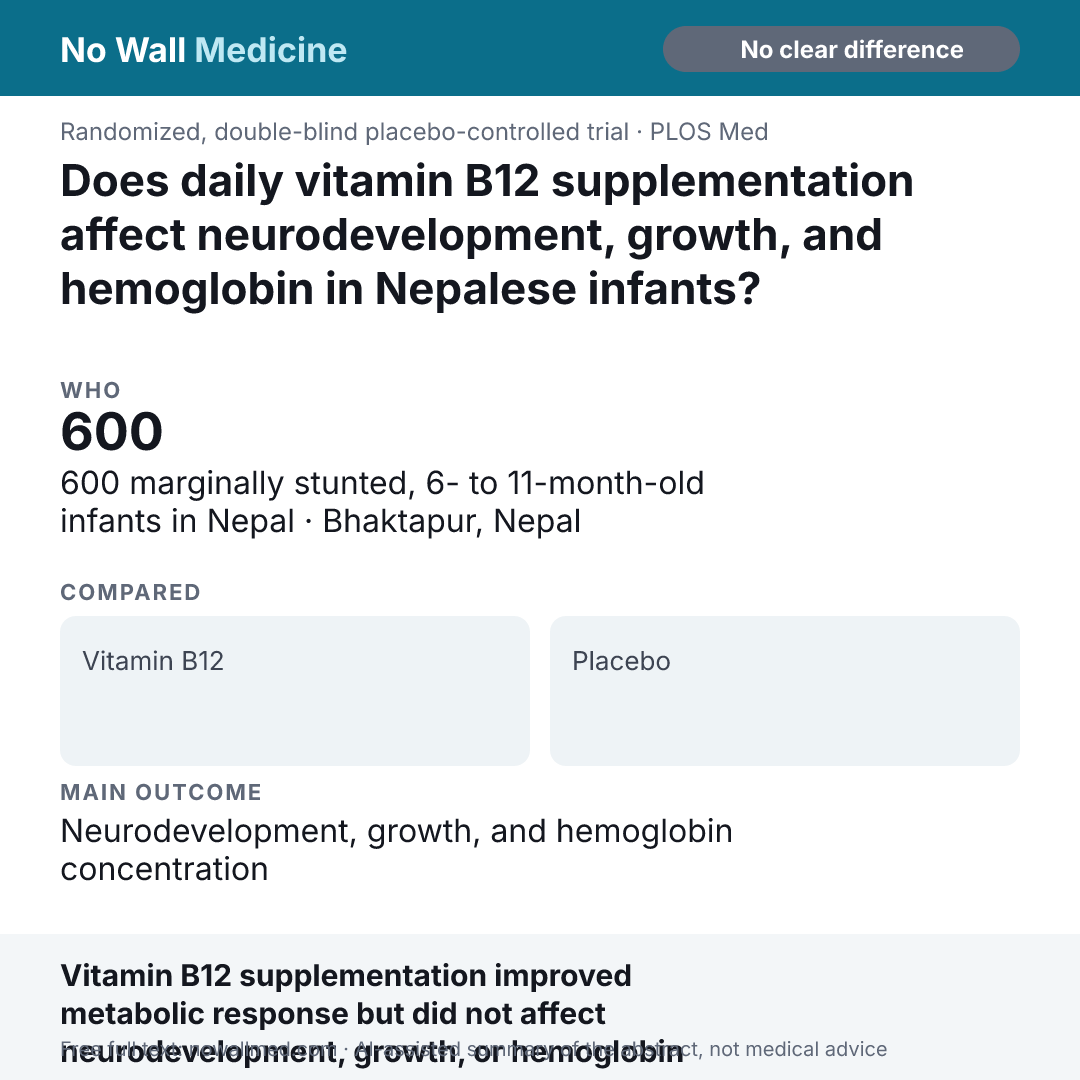
Effects of vitamin B12 supplementation on neurodevelopment and growth in Nepalese Infants: A randomized controlled trial
Randomized, double-blind placebo-controlled trialNo clear difference
Does daily vitamin B12 supplementation affect neurodevelopment, growth, and hemoglobin in Nepalese infants?
Who
600
600 marginally stunted, 6- to 11-month-old infants in Nepal · Bhaktapur, Nepal
Compared
Vitamin B12
Placebo
Main outcome
Neurodevelopment, growth, and hemoglobin concentration
Result: mean difference in growth 0.20 cm (95% CI: -0.23 to 0.63)
Bottom line: Vitamin B12 supplementation improved metabolic response but did not affect neurodevelopment, growth, or hemoglobin concentration in infants.
Limitation: Strict inclusion criteria and the supplementation period might not have covered critical developmental windows.
PLOS Med · 2020-12-01 · Save PNG
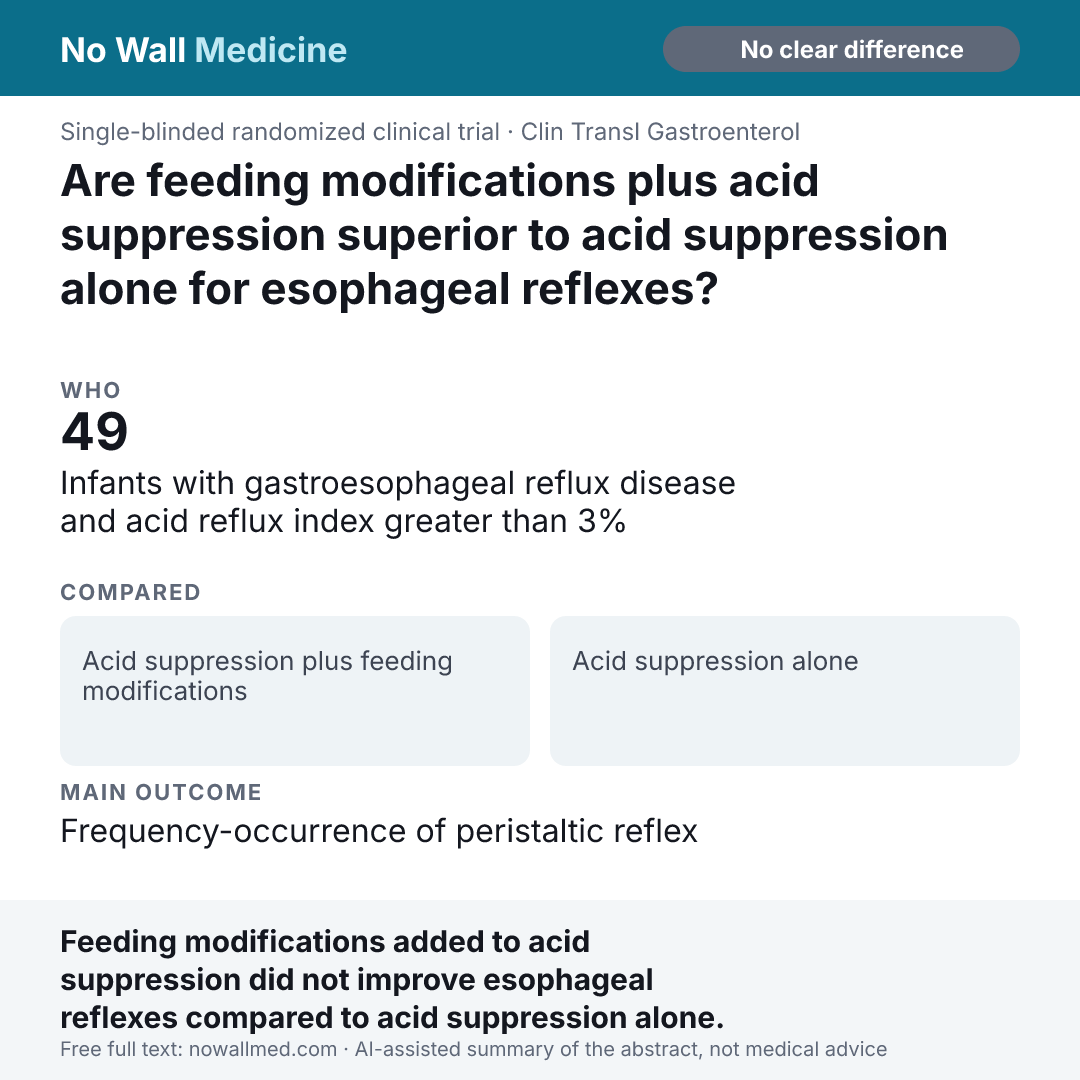
Impact of Feeding Strategies With Acid Suppression on Esophageal Reflexes in Human Neonates With Gastroesophageal Reflux Disease: A Single-Blinded Randomized Clinical Trial
Single-blinded randomized clinical trialNo clear difference
Are feeding modifications plus acid suppression superior to acid suppression alone for esophageal reflexes?
Who
49
Infants with gastroesophageal reflux disease and acid reflux index greater than 3%
Compared
Acid suppression plus feeding modifications
Acid suppression alone
Main outcome
Frequency-occurrence of peristaltic reflex
Result: odds ratio 0.8 (95% confidence interval 0.4-1.6)
Bottom line: Feeding modifications added to acid suppression did not improve esophageal reflexes compared to acid suppression alone.
Clin Transl Gastroenterol · 2020-12-01 · Save PNG