Visual abstracts
New randomized trials and meta-analyses from leading journals at a glance: who was studied, what was compared, and what was found. Every paper is free to read in full.
All specialtiesCardiology 206Oncology 174Gastroenterology & Hepatology 100Infectious Disease 170Neurology 97Psychiatry & Mental Health 141Pulmonology 97Critical Care 55Endocrinology & Diabetes 140Pediatrics 90Surgery 67Orthopedics & Sports Medicine 40Neurosurgery 7Cardiothoracic & Vascular Surgery 21Plastic & Reconstructive Surgery 52Nephrology 41Rheumatology 40Hematology 50Dermatology 24Ophthalmology 38Obstetrics & Gynecology 54Public & Global Health 61Radiology & Imaging 17Anesthesiology 35Urology 50ENT (Otolaryngology) 27Emergency Medicine 21Allergy & Immunology 17Geriatrics 65Family Medicine & Primary Care 29Medical Genetics & Genomics 22Pathology & Laboratory Medicine 5Physical Medicine & Rehabilitation 54Palliative Care 26Nutrition 75Digital Health & AI 191General Medicine 30
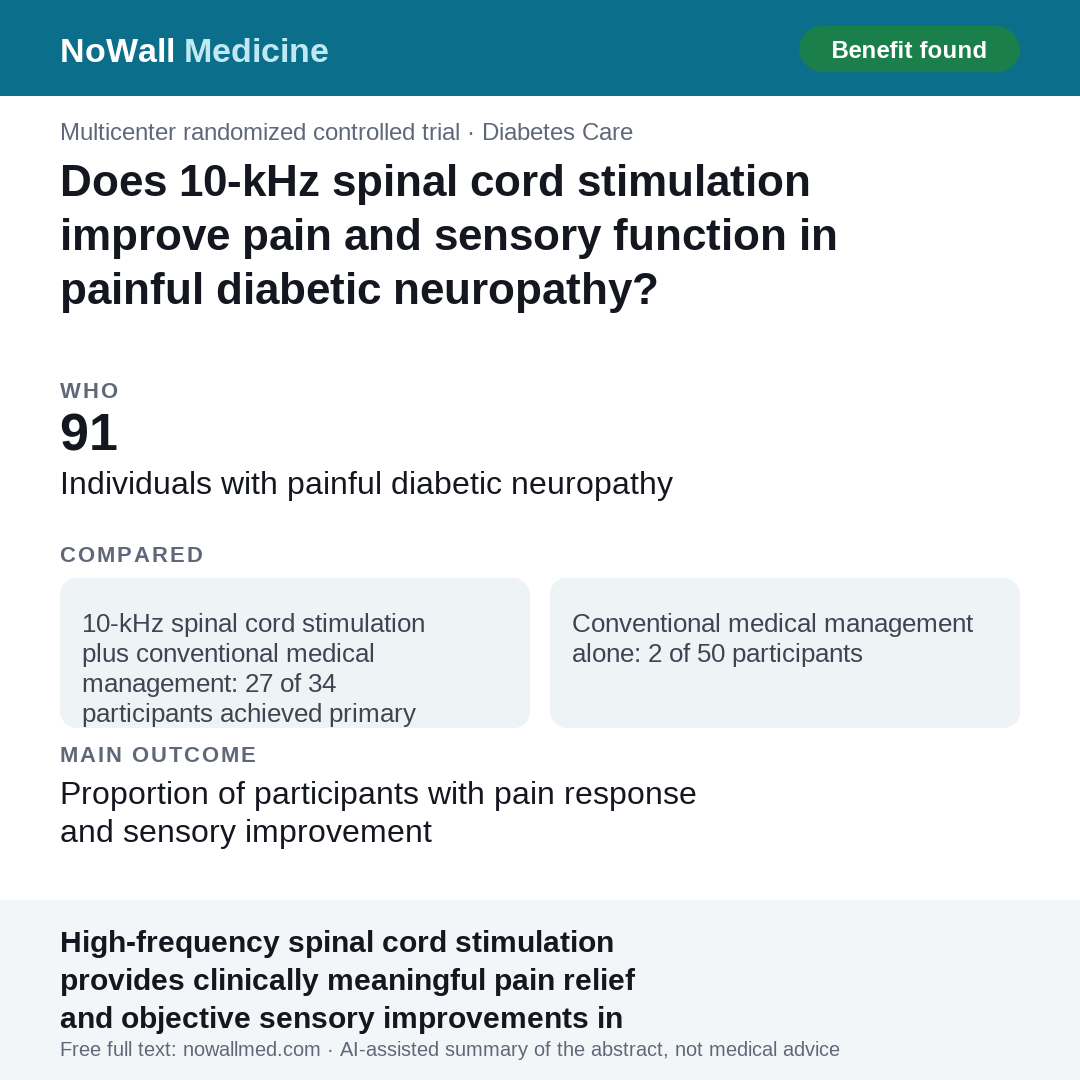
Evaluating Improvement in Pain and Sensory Function When Using High-Frequency (10-kHz) Spinal Cord Stimulation in Individuals With Painful Diabetic Neuropathy: A Multicenter Randomized Controlled Trial (PDN-Sensory)
Multicenter randomized controlled trialBenefit found
Does 10-kHz spinal cord stimulation improve pain and sensory function in painful diabetic neuropathy?
Who
91
Individuals with painful diabetic neuropathy
Compared
10-kHz spinal cord stimulation plus conventional medical management: 27 of 34 participants achieved primary outcome
Conventional medical management alone: 2 of 50 participants
Main outcome
Proportion of participants with pain response and sensory improvement
Bottom line: High-frequency spinal cord stimulation provides clinically meaningful pain relief and objective sensory improvements in painful diabetic neuropathy.
Diabetes Care · 2026-09-09Download image
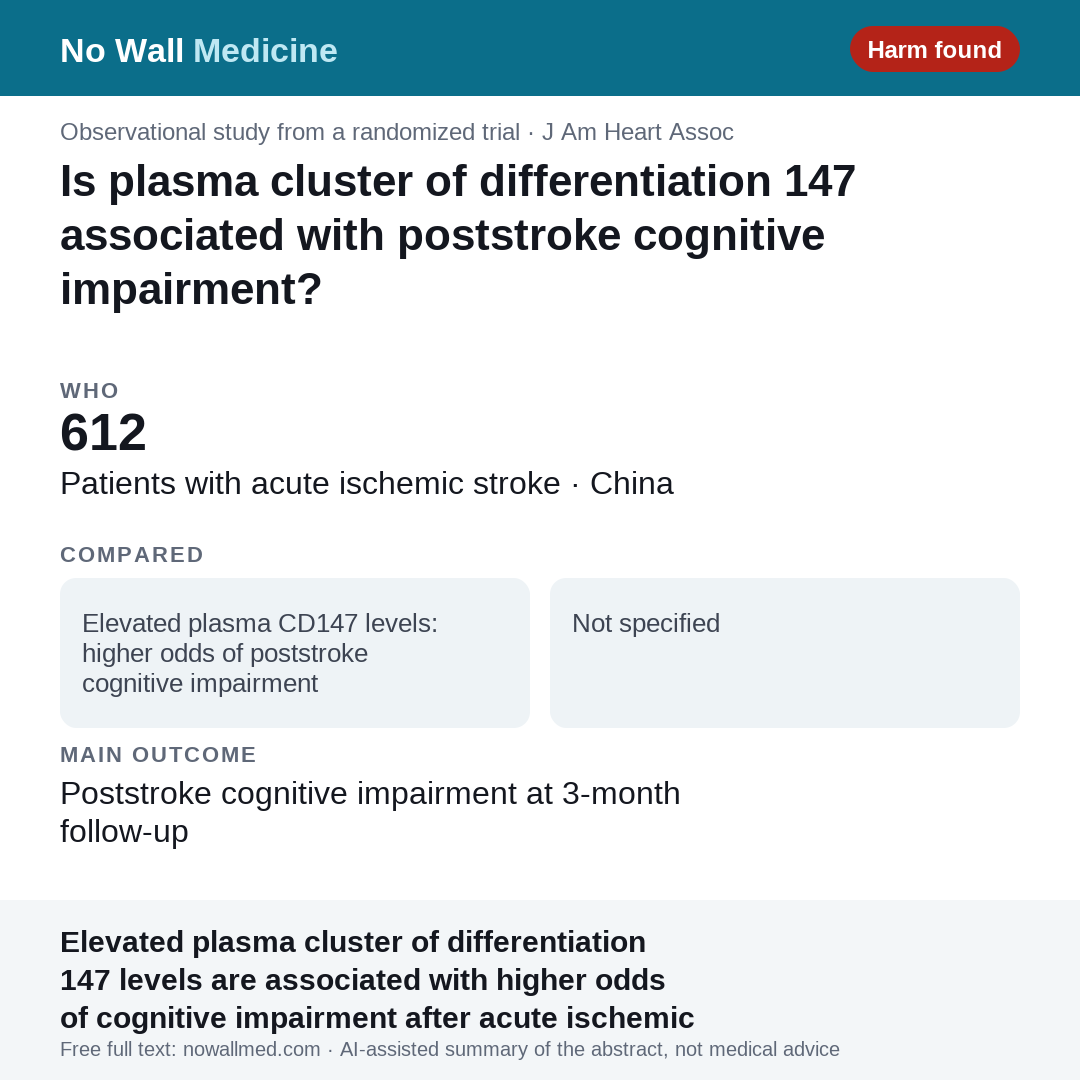
Plasma Cluster of Differentiation 147 and Cognitive Impairment After Acute Ischemic Stroke
Observational study from a randomized trialHarm found
Does elevated plasma cluster of differentiation 147 associate with poststroke cognitive impairment?
Who
612
Patients with acute ischemic stroke · China
Compared
Elevated plasma CD147: higher odds of PSCI
Normal plasma CD147
Main outcome
Poststroke cognitive impairment at 3-month follow-up
Result: odds ratio 1.75 (95% CI 1.21-2.51)
Bottom line: Elevated plasma cluster of differentiation 147 levels are associated with higher odds of cognitive impairment after acute ischemic stroke.
J Am Heart Assoc · 2026-09-09Download image
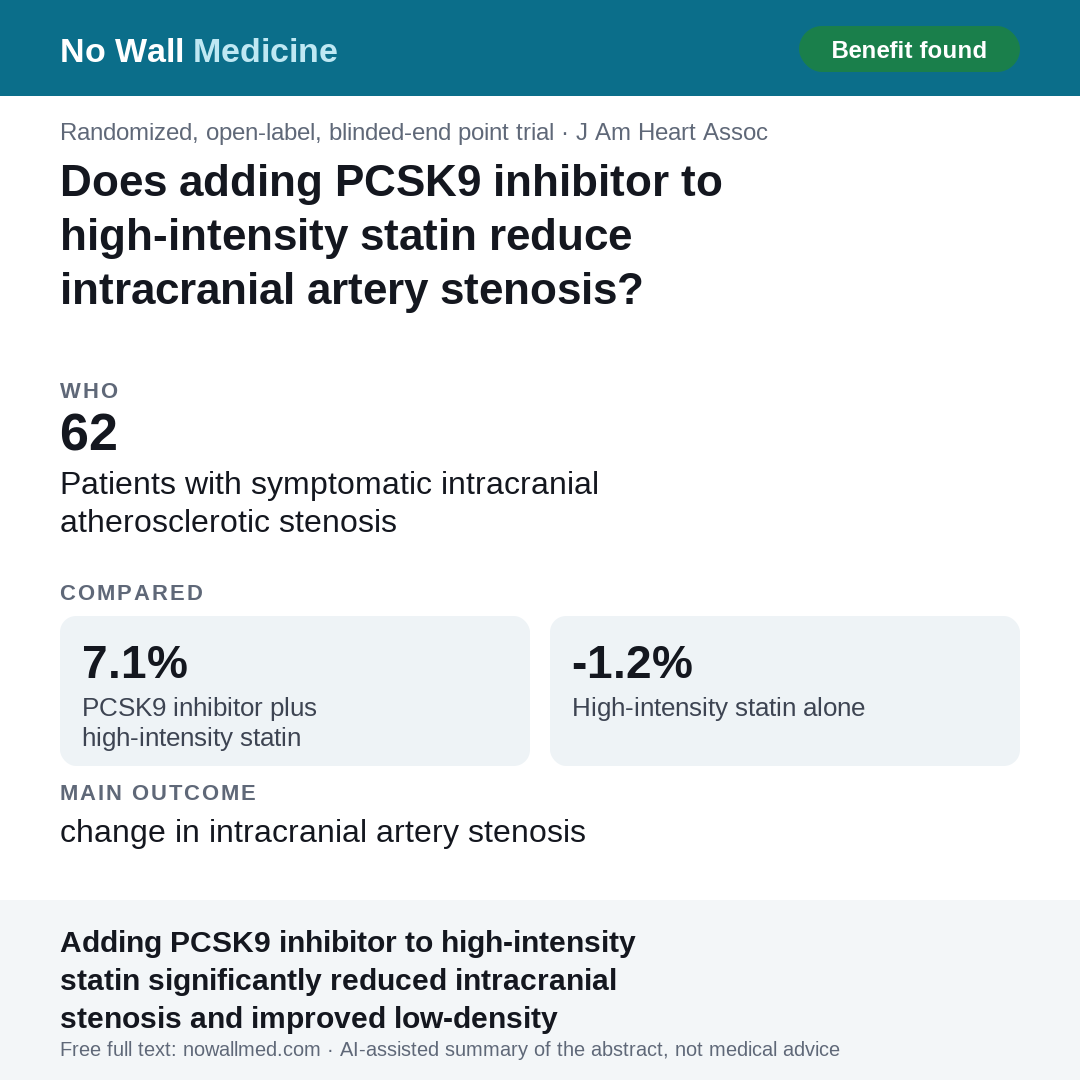
Add-On PCSK9 Inhibitor Therapy for Acute Stroke Attributable to Intracranial Atherosclerosis: A Randomized Clinical Trial
Randomized, open-label, blinded-end point trialBenefit found
Does adding PCSK9 inhibitor to high-intensity statin reduce intracranial artery stenosis?
Who
62
Patients with symptomatic intracranial atherosclerotic stenosis
Compared
7.1%PCSK9 inhibitor plus high-intensity statin (interquartile range, 3.6-12.8%)
-1.2%High-intensity statin alone (interquartile range, -4.9-4.5%)
Main outcome
Change in intracranial artery stenosis
Bottom line: Adding PCSK9 inhibitor to high-intensity statin significantly reduced intracranial stenosis in symptomatic patients.
J Am Heart Assoc · 2026-09-09Download image
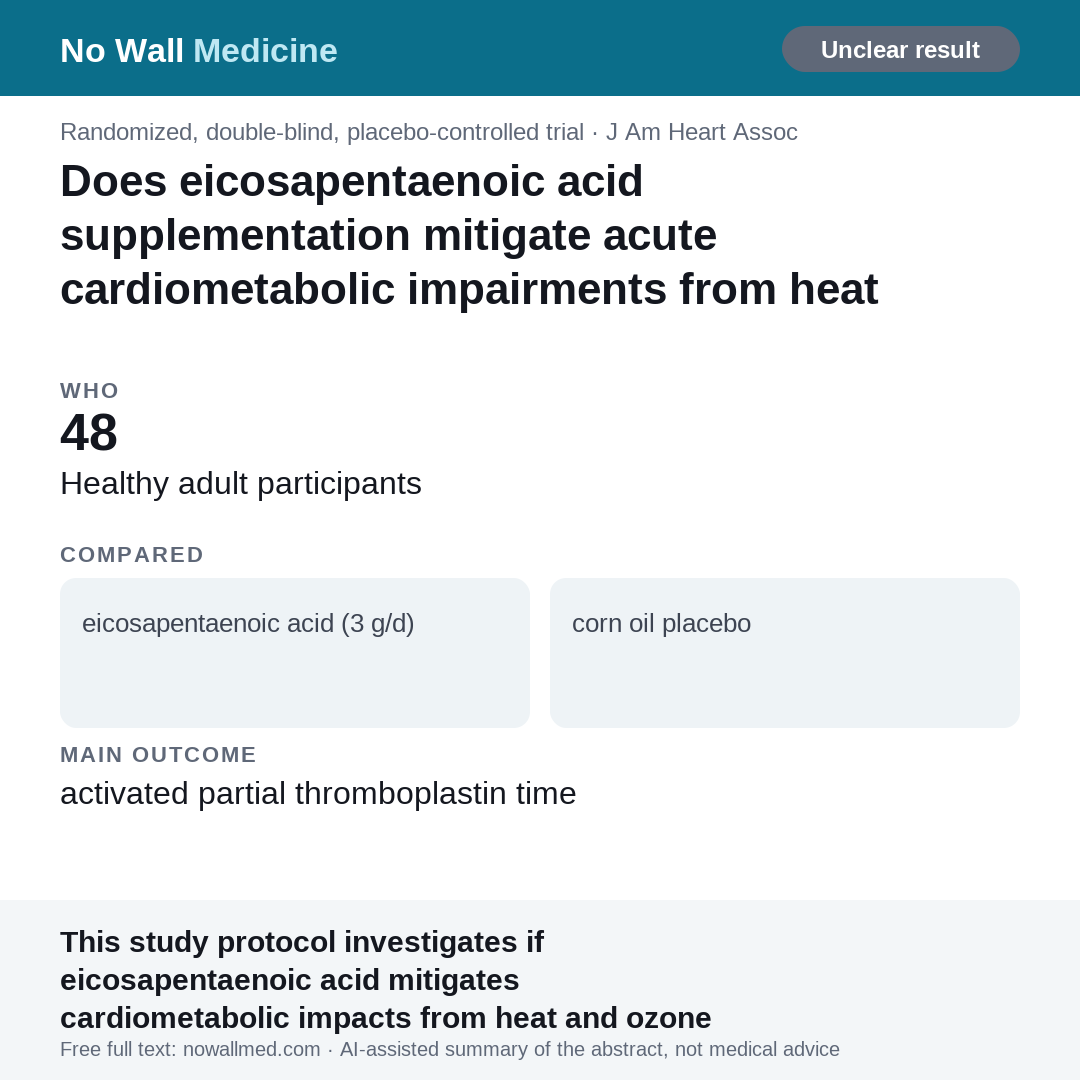
Study Protocol for a Randomized Controlled Trial Investigating Acute Cardiometabolic Responses to Heat-Ozone Coexposure and the Interventional Role of Omega-3 Eicosapentaenoic Acid: The HOEPA Study
Randomized, double-blind, placebo-controlled trialUnclear result
Does eicosapentaenoic acid supplementation mitigate acute cardiometabolic impairments from heat and ozone coexposure?
Who
48
Healthy adult participants
Compared
eicosapentaenoic acid (3 g/d)
corn oil placebo
Main outcome
activated partial thromboplastin time
Bottom line: This study protocol investigates if eicosapentaenoic acid mitigates cardiometabolic impacts from heat and ozone exposure.
J Am Heart Assoc · 2026-09-09Download image
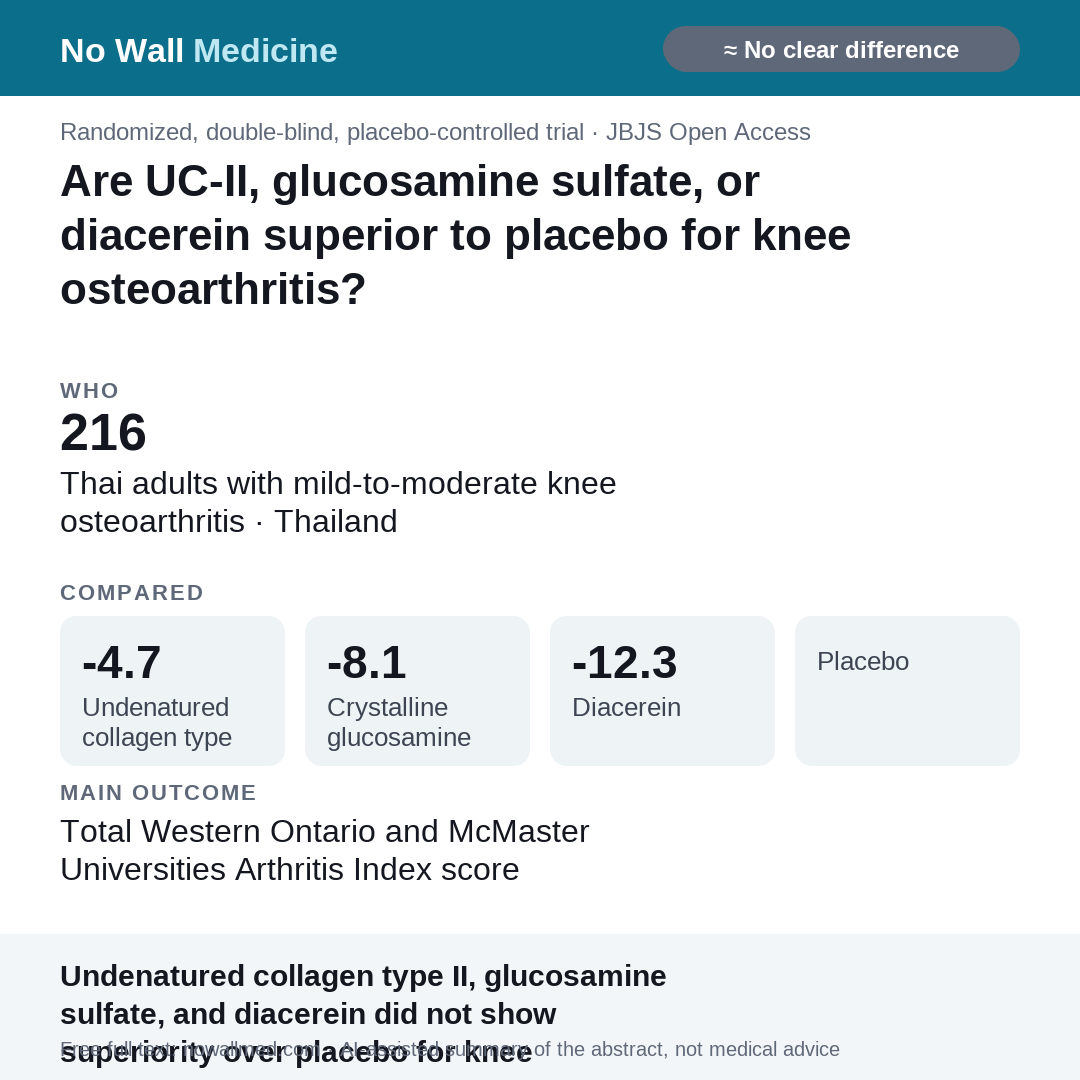
A Comparison of Clinical Outcomes Among Undenatured Collagen Type II, Glucosamine Sulfate, and Diacerein on Osteoarthritic Knee Treatment: A Randomized Clinical Trial
Randomized, double-blind, placebo-controlled trialNo clear difference
Are UC-II, glucosamine sulfate, or diacerein superior to placebo for knee osteoarthritis?
Who
216
Thai adults with mild-to-moderate knee osteoarthritis · Thailand
Compared
-4.7Undenatured collagen type II (95% CI -18.6 to 9.1)
-8.1Crystalline glucosamine sulfate (95% CI -21.8 to 5.7)
-12.3Diacerein (95% CI -25.9 to 1.3)
Placebo
Main outcome
Total Western Ontario and McMaster Universities Arthritis Index score
Bottom line: Undenatured collagen type II, glucosamine sulfate, and diacerein did not show superiority over placebo for knee osteoarthritis.
JBJS Open Access · 2026-09-09Download image
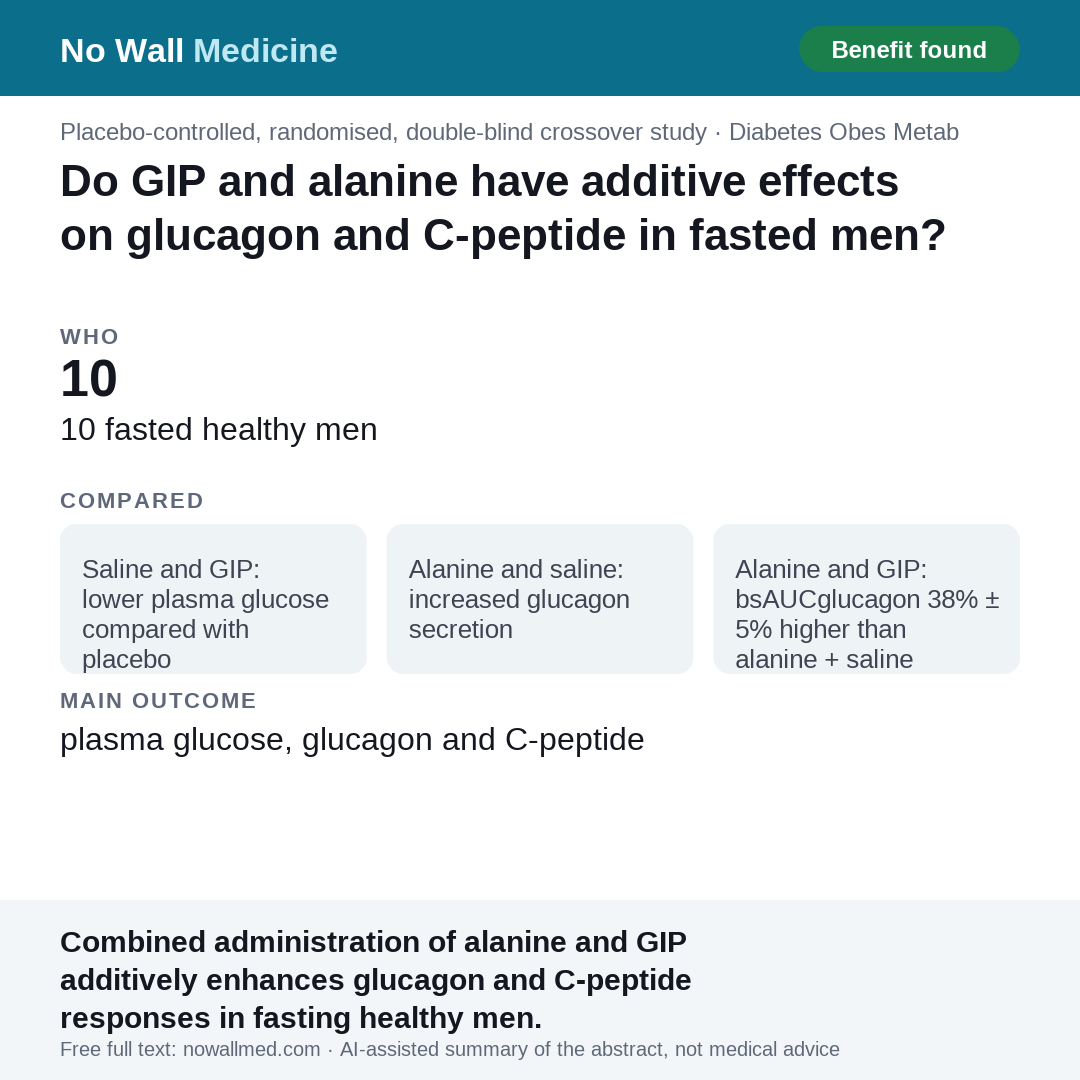
Additive Glucagonotropic and Insulinotropic Effects of Glucose-Dependent Insulinotropic Polypeptide and Alanine in Fasted Healthy Men
Randomised, double-blind crossover studyBenefit found
Do GIP and alanine have additive effects on glucagon and C-peptide in fasted men?
Who
10
10 fasted healthy men
Compared
Alanine and GIP: bsAUCglucagon 38% ± 5% higher than alanine + saline
Alanine and saline
Saline and GIP: bsAUCglucagon 83% ± 7% lower than alanine + GIP
Saline and saline
Main outcome
plasma glucose, glucagon and C-peptide
Bottom line: Combined administration of glucose-dependent insulinotropic polypeptide and alanine additively enhances glucagon and C-peptide responses in fasting healthy men.
Diabetes Obes Metab · 2026-09-08Download image
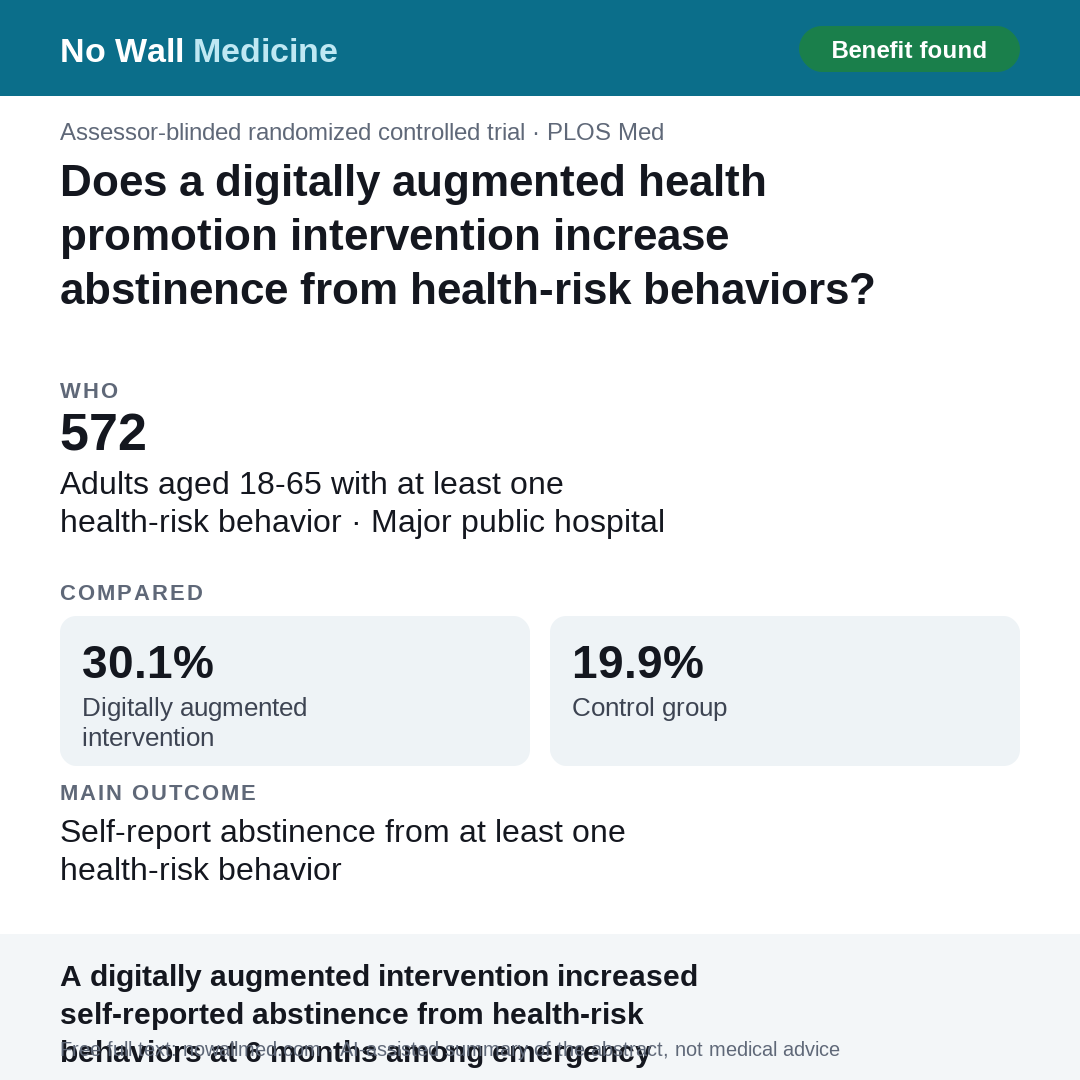
Effect of a digitally augmented general health promotion intervention on abstinence from health-risk behaviors among emergency department discharge patients: A randomized controlled trial
Assessor-blinded randomized controlled trialBenefit found
Does a digitally augmented health promotion intervention increase abstinence from health-risk behaviors?
Who
572
Adults aged 18-65 with at least one health-risk behavior · Major public hospital emergency department in Hong Kong
Compared
30.1%Digitally augmented intervention
19.9%Control group
Main outcome
Self-report abstinence from at least one health-risk behavior
Result: relative risk 1.51 (95% CI 1.13-2.02)
Bottom line: A digitally augmented intervention increased self-reported abstinence from health-risk behaviors at 6 months among emergency department patients.
Limitation: Absence of a sustained effect at 12 months suggests extended support may be required.
PLOS Med · 2026-09-08Download image
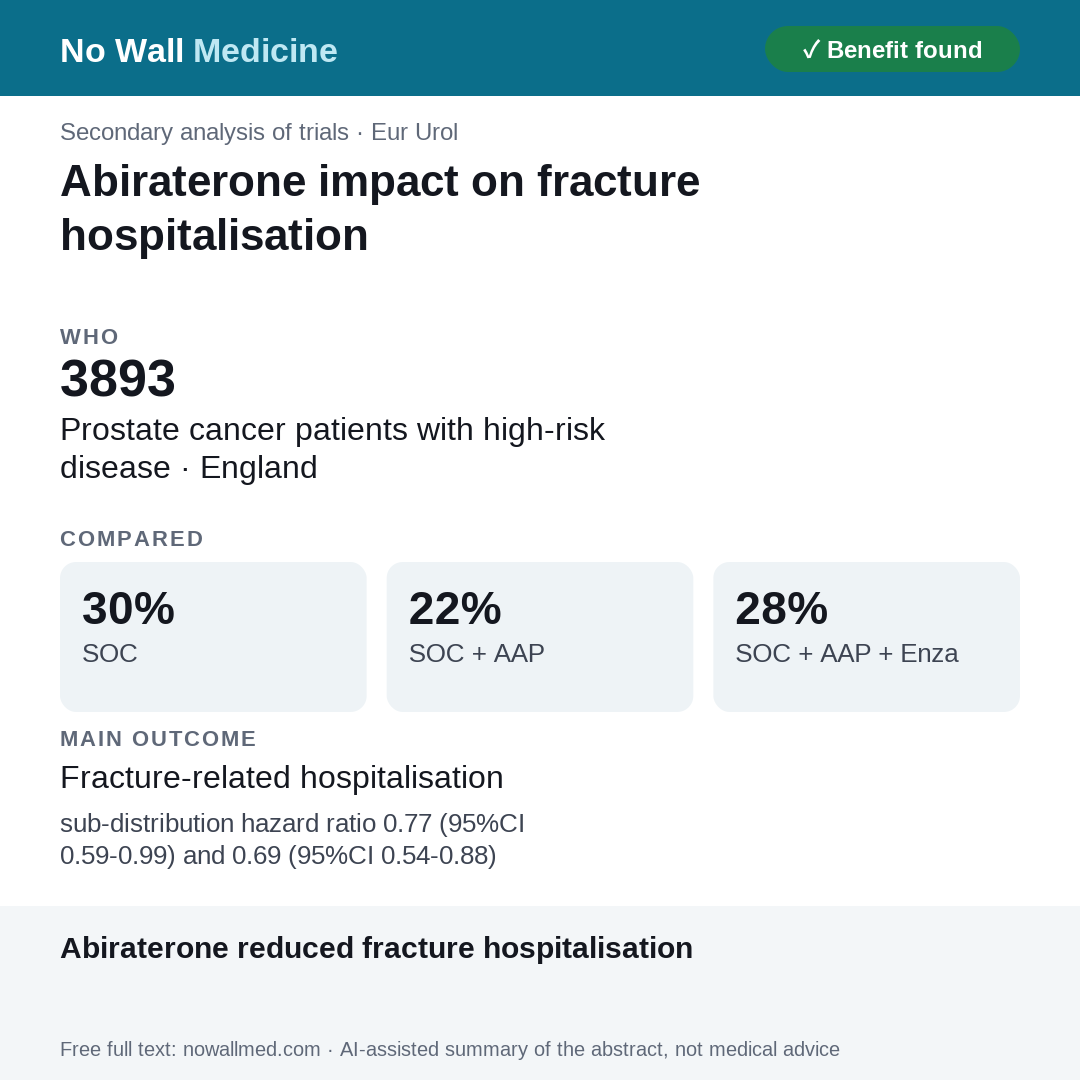
Impact of Treatment Intensification with Abiraterone on Fracture-related Hospitalisation in Newly Diagnosed Prostate Cancer: A Secondary Analysis of Two Randomised Phase 3 Trials Within the STAMPEDE Trial Platform
Secondary analysis of trialsBenefit found
Abiraterone impact on fracture hospitalisation
Who
3893
Prostate cancer patients with high-risk disease · England
Compared
30%SOC
22%SOC + AAP
28%SOC + AAP + Enza
Main outcome
Fracture-related hospitalisation
Result: sub-distribution hazard ratio 0.77 (95%CI 0.59-0.99) and 0.69 (95%CI 0.54-0.88)
Bottom line: Abiraterone reduced fracture hospitalisation
Limitation: under-estimation of total fracture burden
Eur Urol · 2026-09-08Download image
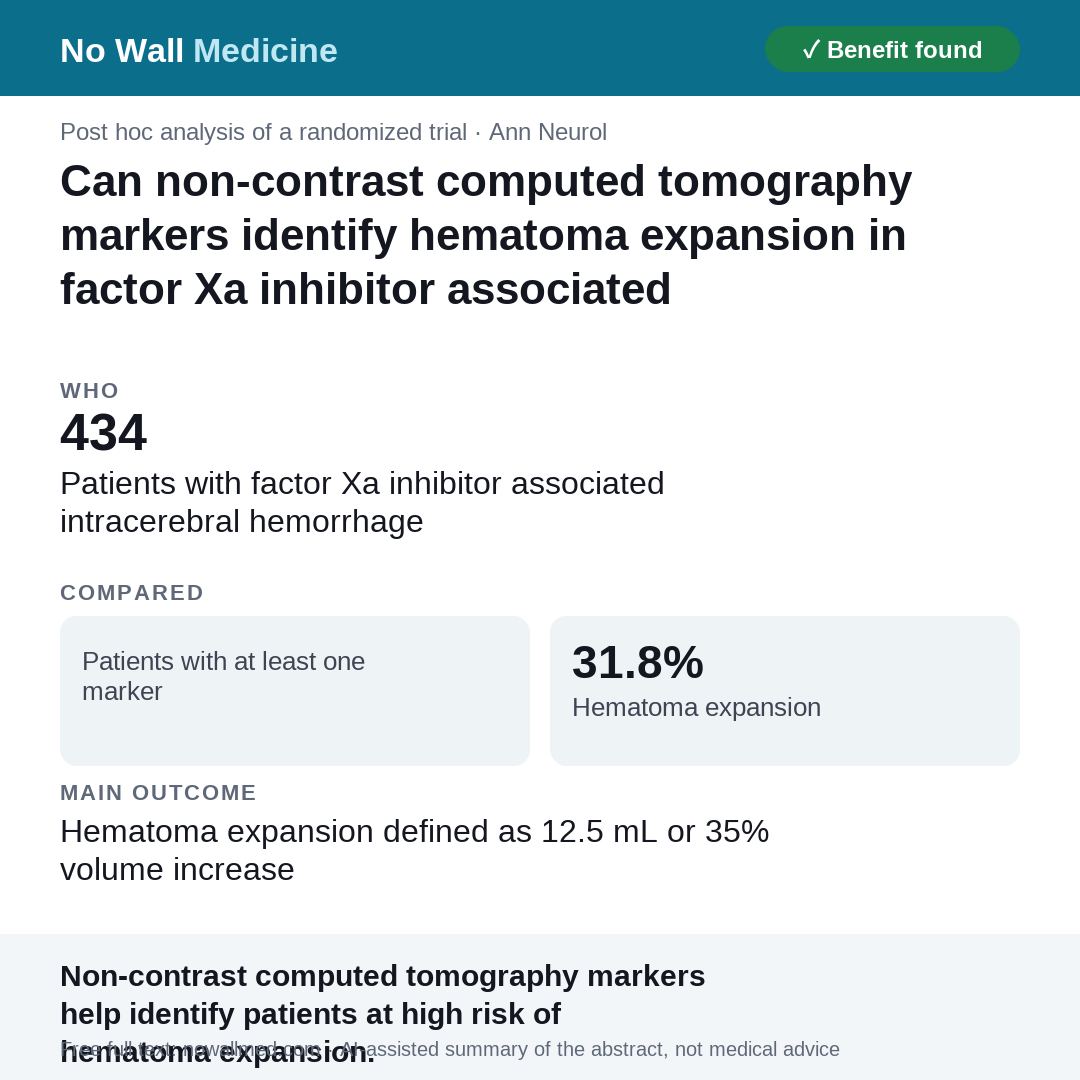
Non-contrast CT Markers of Hematoma Expansion and Andexanet Response in Factor Xa Inhibitor-Associated Intracerebral Hemorrhage: An Analysis from ANNEXa-I Trial
Post hoc analysis of a randomized trialBenefit found
Can non-contrast computed tomography markers identify hematoma expansion in factor Xa inhibitor associated hemorrhage?
Who
434
Patients with factor Xa inhibitor associated intracerebral hemorrhage
Compared
Patients with at least one marker
31.8%Hematoma expansion
Main outcome
Hematoma expansion defined as 12.5 mL or 35% volume increase
Bottom line: Non-contrast computed tomography markers help identify patients at high risk of hematoma expansion.
Ann Neurol · 2026-09-08Download image
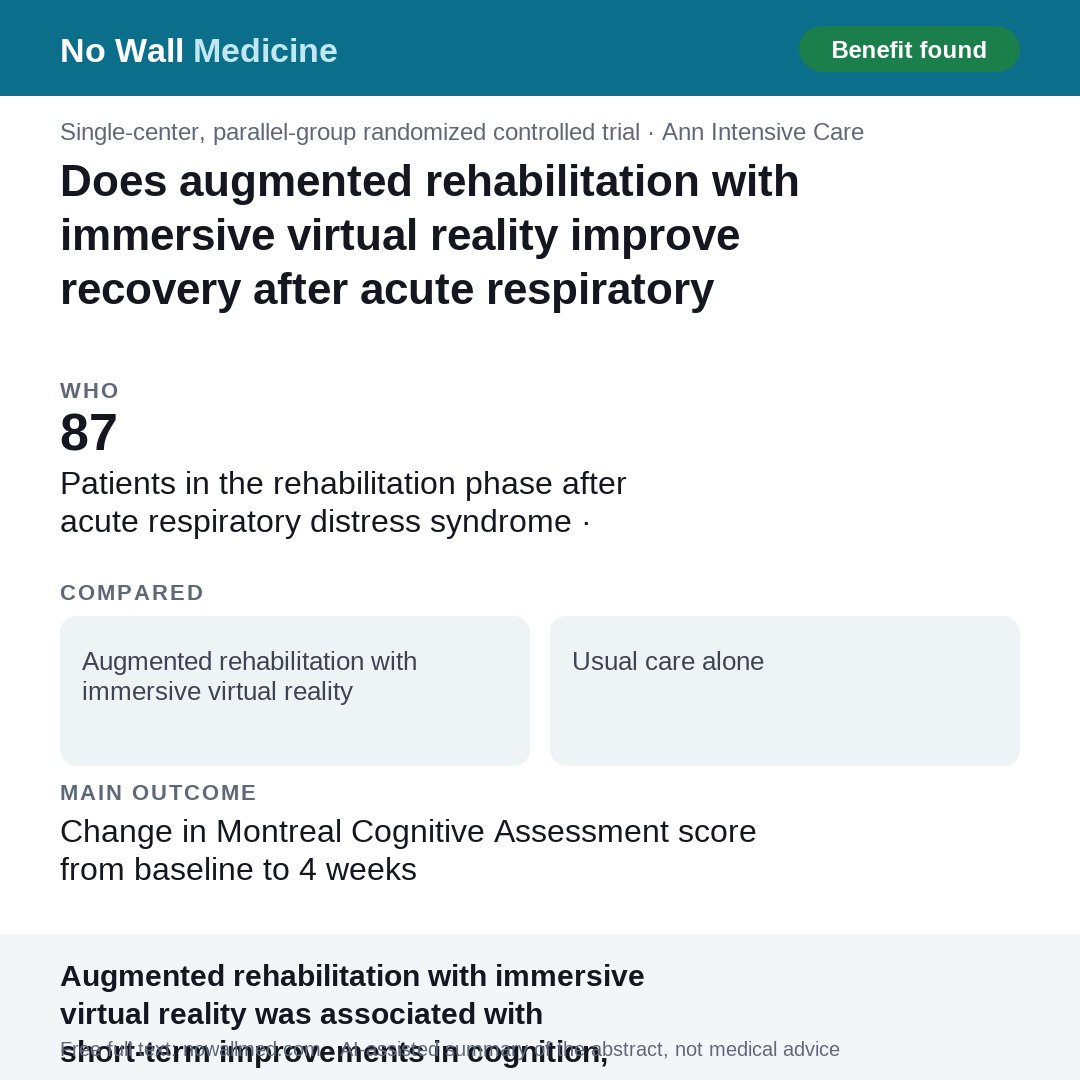
An augmented rehabilitation package incorporating immersive virtual reality during early recovery after ARDS: A randomized controlled trial
Single-center, parallel-group randomized controlled trialBenefit found
Does augmented rehabilitation with immersive virtual reality improve recovery after acute respiratory distress syndrome?
Who
87
Patients in the rehabilitation phase after acute respiratory distress syndrome · Single-center
Compared
Augmented rehabilitation with immersive virtual reality
Usual care alone
Main outcome
Change in Montreal Cognitive Assessment score from baseline to 4 weeks
Result: adjusted between-group effect: 1.42, 95% CI 0.86-1.98
Bottom line: Augmented rehabilitation with immersive virtual reality was associated with short-term improvements in cognition, quality of life, and anxiety.
Limitation: Differences cannot be attributed specifically to virtual reality because the control was not time- or attention-matched.
Ann Intensive Care · 2026-09-08Download image
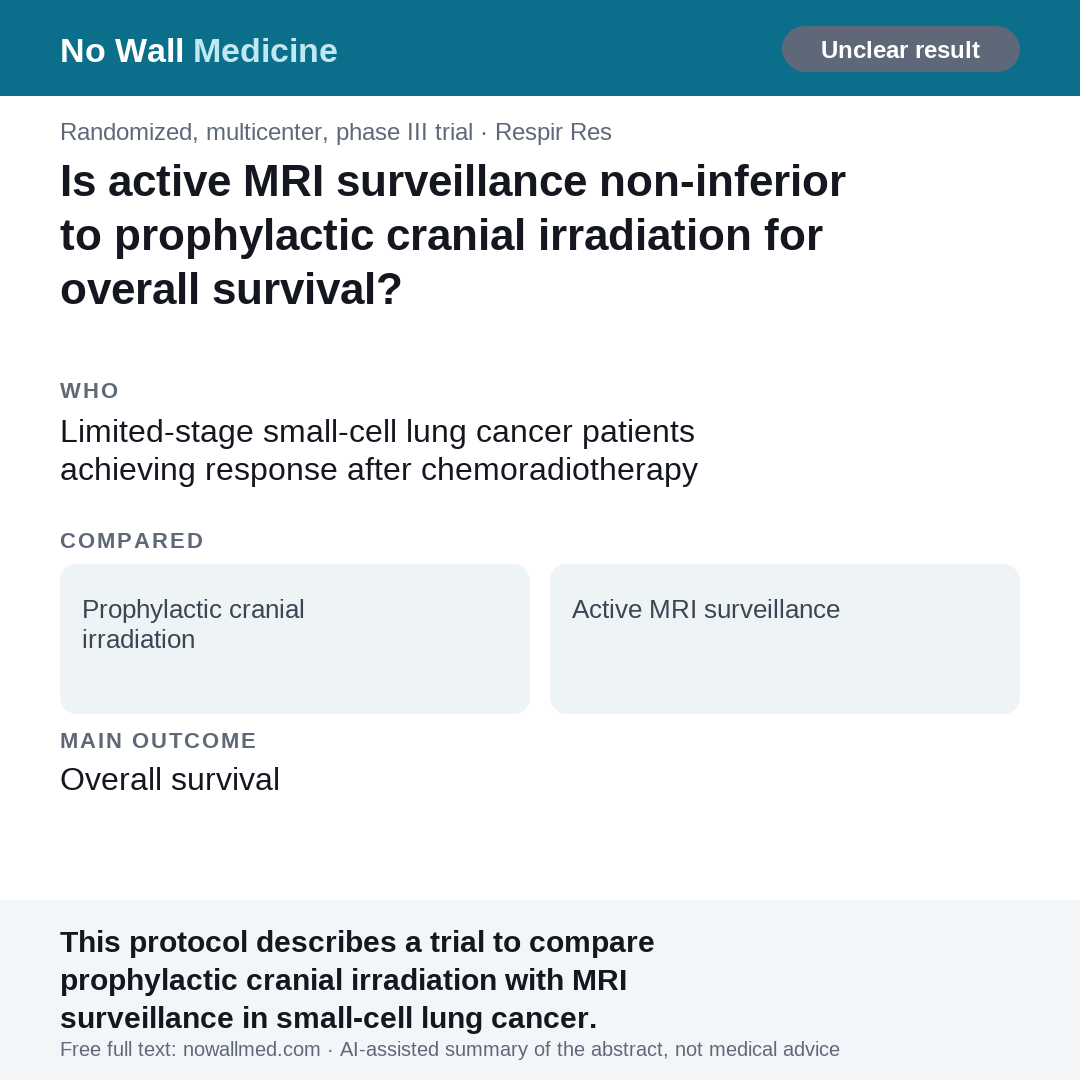
Prophylactic cranial irradiation versus active MRI surveillance for limited-stage small-cell lung cancer achieving response after chemoradiotherapy: a protocol for a randomized, controlled, multicenter, phase III trial
Randomized, multicenter, phase III trialUnclear result
Is active MRI surveillance non-inferior to prophylactic cranial irradiation for overall survival?
Who
Limited-stage small-cell lung cancer patients achieving response after chemoradiotherapy
Compared
Prophylactic cranial irradiation
Active MRI surveillance
Main outcome
Overall survival
Bottom line: This protocol describes a trial to compare prophylactic cranial irradiation with MRI surveillance in small-cell lung cancer.
Respir Res · 2026-09-08Download image
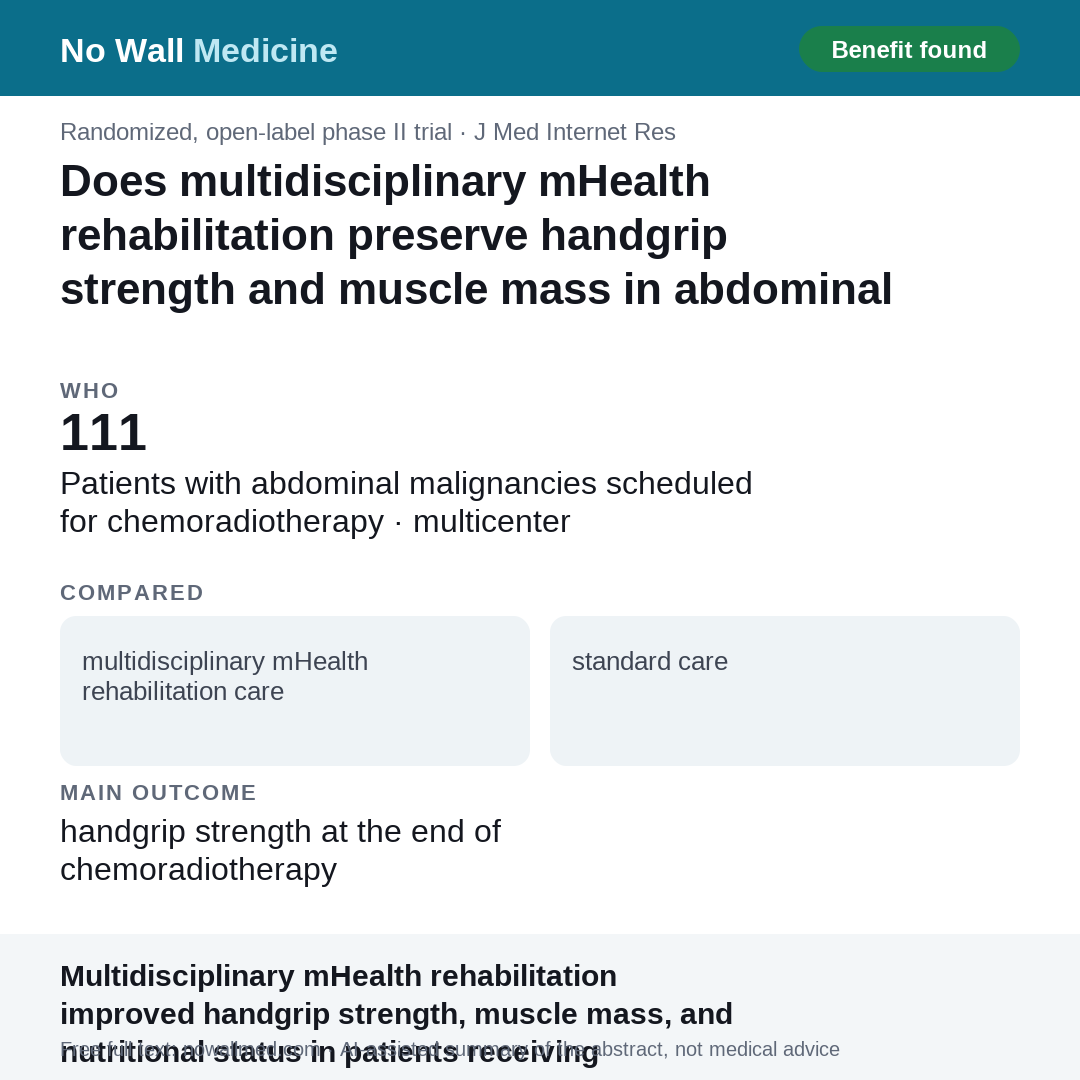
Multidisciplinary mHealth Rehabilitation for Patients With Abdominal Cancer Who Are Receiving Chemoradiotherapy: Randomized Phase II Trial
Randomized, open-label phase II trialBenefit found
Does multidisciplinary mHealth rehabilitation preserve handgrip strength in abdominal cancer patients receiving chemoradiotherapy?
Who
111
Patients with abdominal malignancies scheduled for concurrent chemoradiotherapy · Multicenter
Compared
multidisciplinary mHealth rehabilitation care
standard care
Main outcome
handgrip strength at the end of chemoradiotherapy
Result: adjusted mean difference 4.87 kg, 95% CI 3.36-6.38
Bottom line: Multidisciplinary mHealth rehabilitation was associated with better preservation of handgrip strength in abdominal cancer patients.
Limitation: Open-label design, heterogeneity of tumor types, and short follow-up.
J Med Internet Res · 2026-09-08Download image
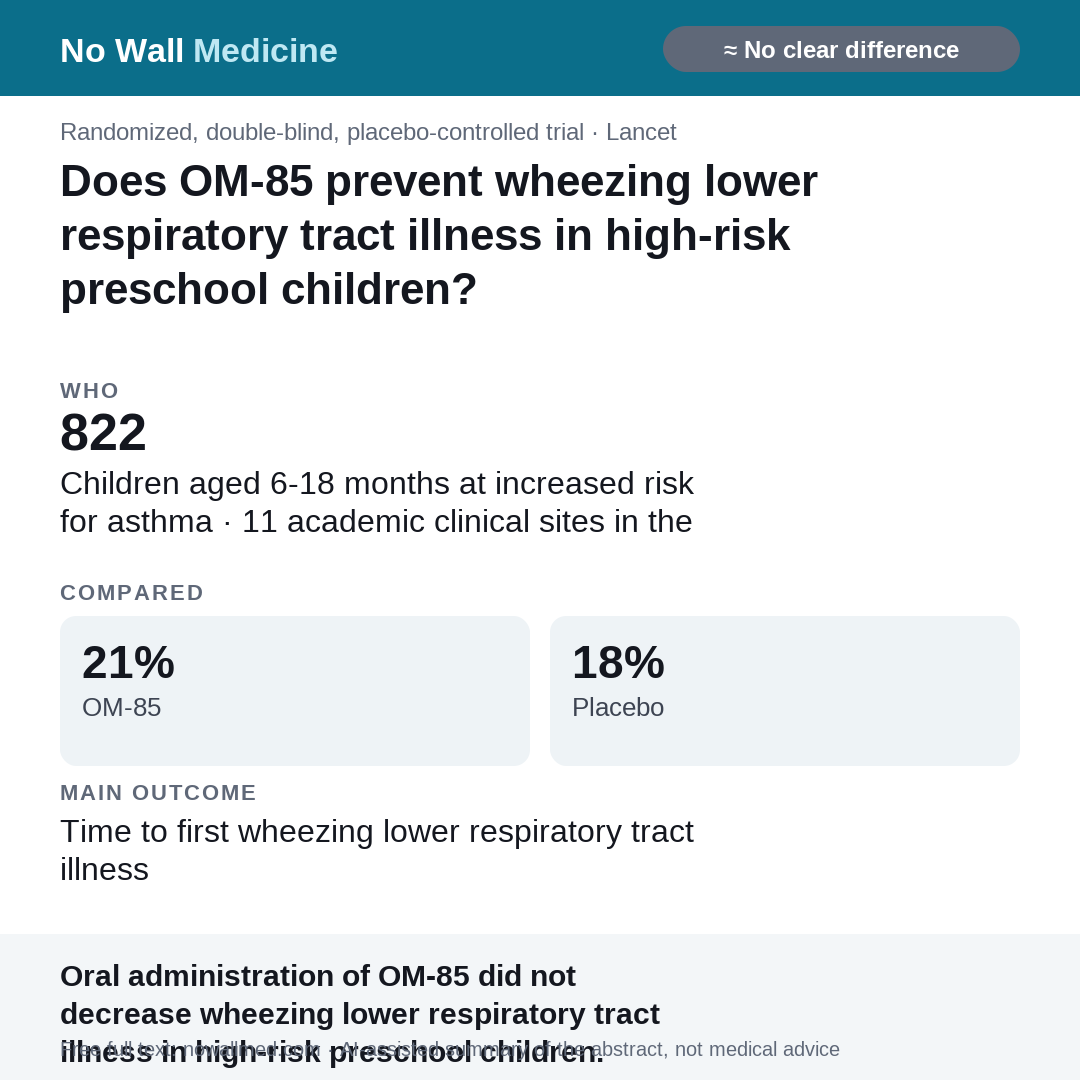
Use of the bacterial lysate OM-85 for the primary prevention of wheezing lower respiratory illness in preschool children: a randomised, placebo-controlled trial
Randomized, double-blind, placebo-controlled trialNo clear difference
Does OM-85 prevent wheezing lower respiratory tract illness in high-risk preschool children?
Who
822
Children aged 6-18 months at increased risk for asthma · 11 academic clinical sites in the USA
Compared
21%OM-85 (71/342)
18%Placebo (61/339)
Main outcome
Time to first wheezing lower respiratory tract illness
Result: hazard ratio 1.16 (95% CI 0.82-1.64)
Bottom line: Oral administration of OM-85 did not decrease wheezing lower respiratory tract illness in high-risk preschool children.
Funded by: National Heart, Lung, and Blood Institute and OM Pharma
Lancet · 2026-09-07Download image
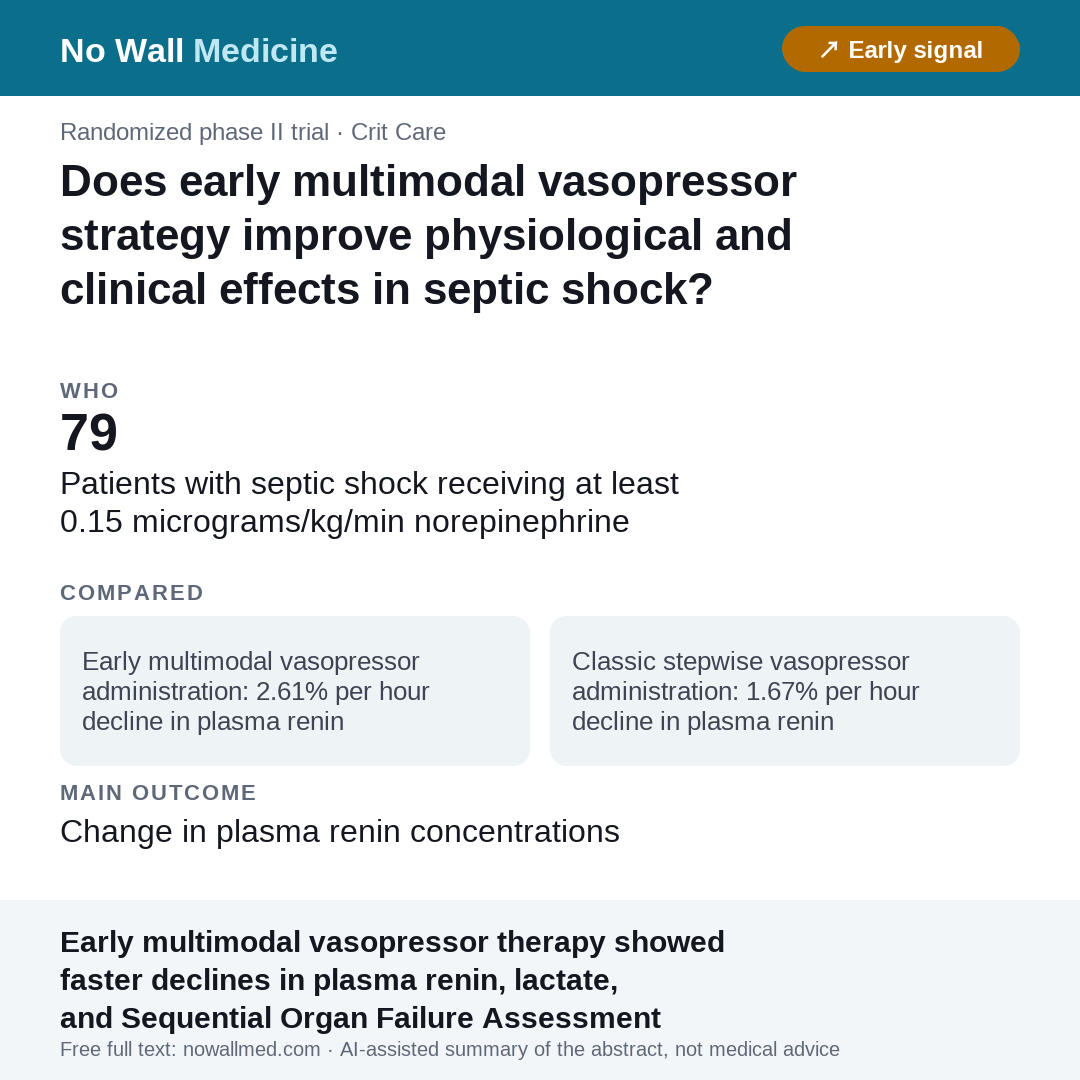
Early multimodal vasopressor strategy in septic shock: results of the TRICYCLE randomized controlled trial
Randomized phase II trialBenefit found
Does early multimodal vasopressor strategy improve physiological effects in septic shock?
Who
79
Patients with septic shock receiving at least 0.15 micrograms/kg/min norepinephrine
Compared
Early multimodal vasopressor administration: 2.61% per hour decline in plasma renin
Classic stepwise vasopressor administration: 1.67% per hour decline in plasma renin
Main outcome
Change in plasma renin concentrations
Bottom line: Early multimodal vasopressor therapy showed faster declines in plasma renin, lactate, and Sequential Organ Failure Assessment scores.
Crit Care · 2026-09-07Download image
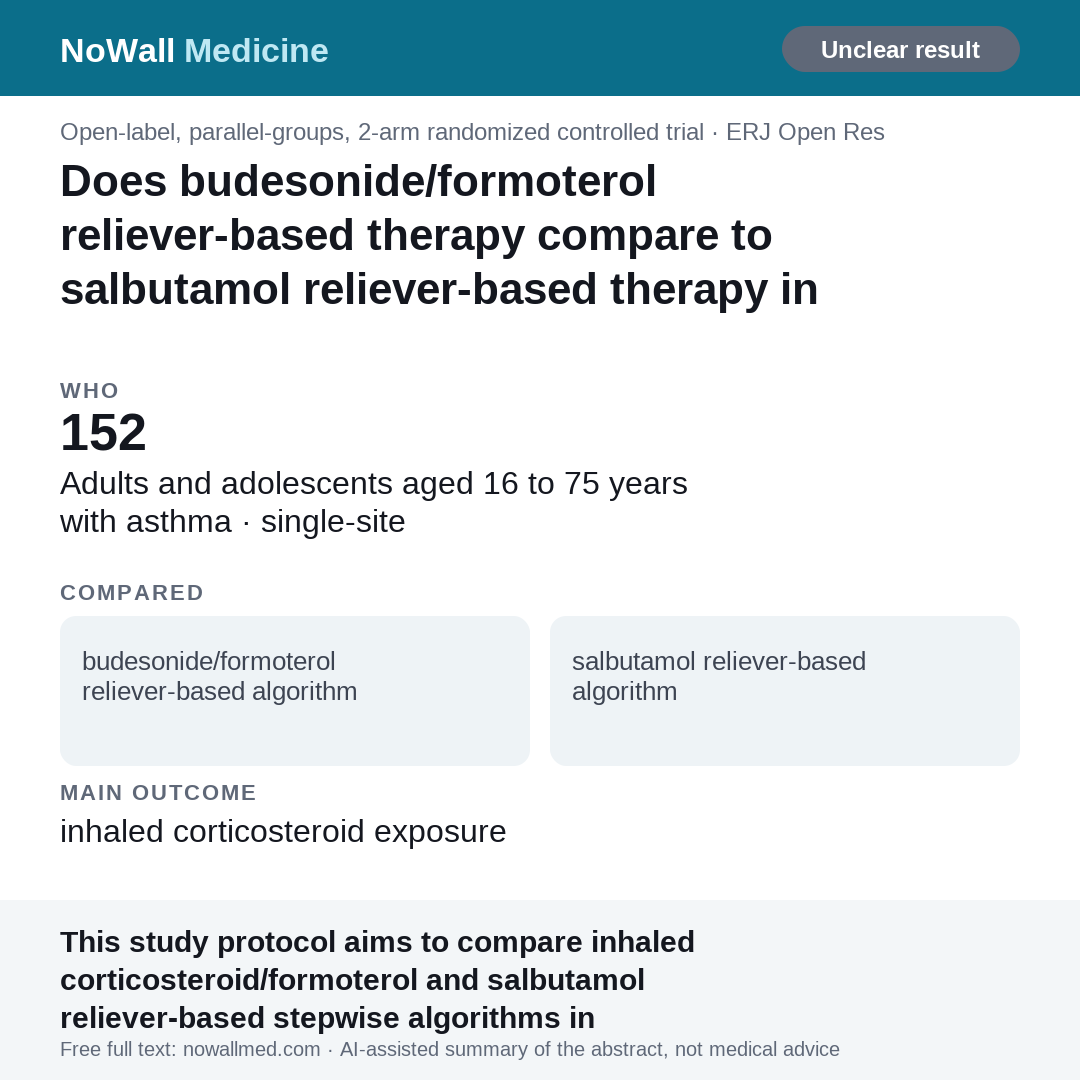
A study protocol for a randomised controlled trial of two stepwise pharmacological treatment approaches to adult asthma: inhaled corticosteroid/formoterol reliever- versus short-acting β2-agonist reliever-based therapy - Asthma on TRACK
Open-label, parallel-groups, 2-arm randomized controlled trialUnclear result
Does budesonide/formoterol reliever-based therapy compare to salbutamol reliever-based therapy in asthma?
Who
152
Adults and adolescents aged 16 to 75 years with asthma · single-site
Compared
budesonide/formoterol reliever-based algorithm
salbutamol reliever-based algorithm
Main outcome
inhaled corticosteroid exposure
Bottom line: This study protocol aims to compare inhaled corticosteroid/formoterol and salbutamol reliever-based stepwise algorithms in asthma.
ERJ Open Res · 2026-09-07Download image
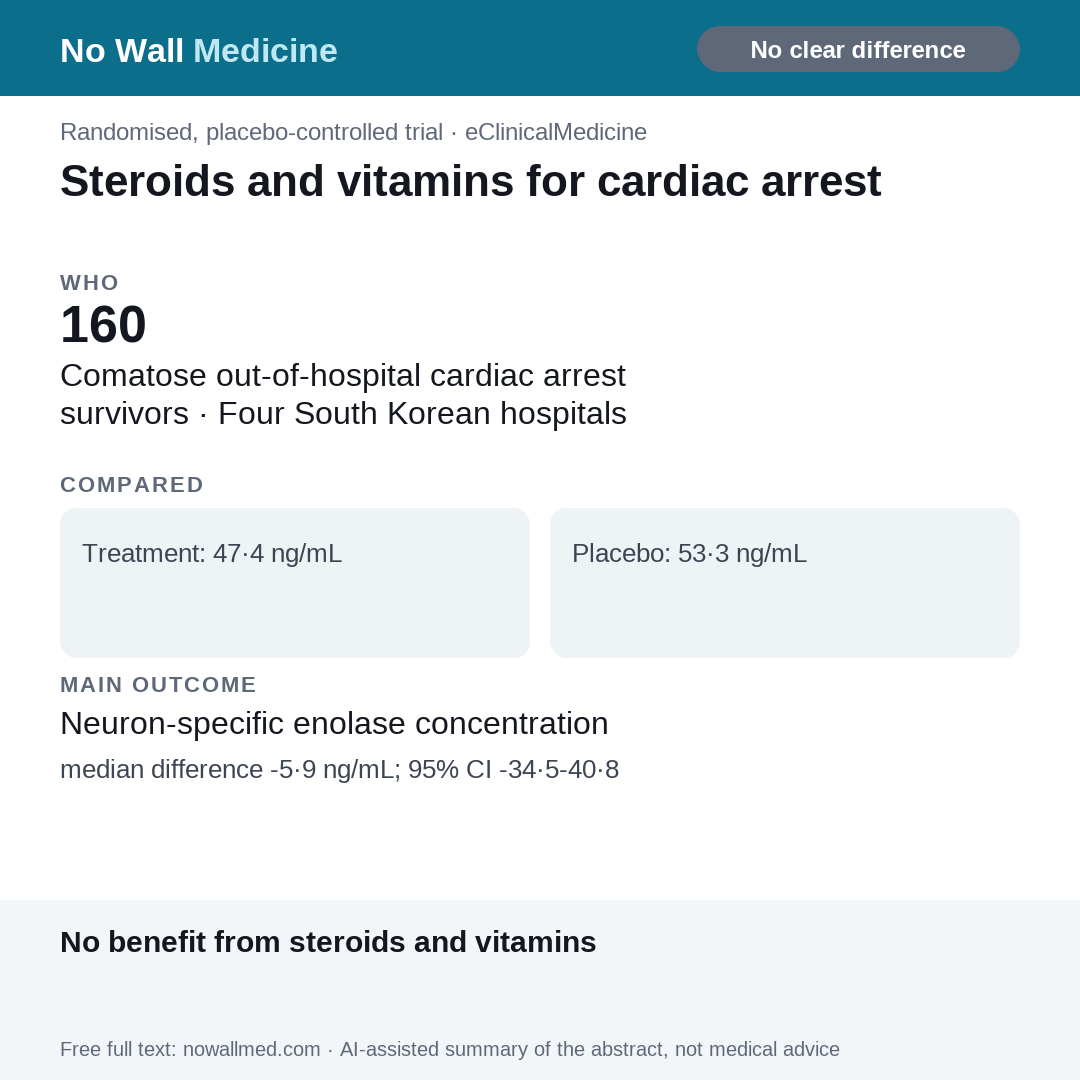
Steroid, thiamine, and ascorbic acid for comatose out-of-hospital cardiac arrest survivors (STAR): a randomised, placebo-controlled, phase 2 trial
Randomised, placebo-controlled trialNo clear difference
Steroids and vitamins for cardiac arrest
Who
160
Comatose out-of-hospital cardiac arrest survivors · Four South Korean hospitals
Compared
Treatment: 47·4 ng/mL
Placebo: 53·3 ng/mL
Main outcome
Neuron-specific enolase concentration
Result: median difference -5·9 ng/mL; 95% CI -34·5-40·8
Bottom line: No benefit from steroids and vitamins
Funded by: National Research Foundation of Korea
eClinicalMedicine · 2026-09-05Download image
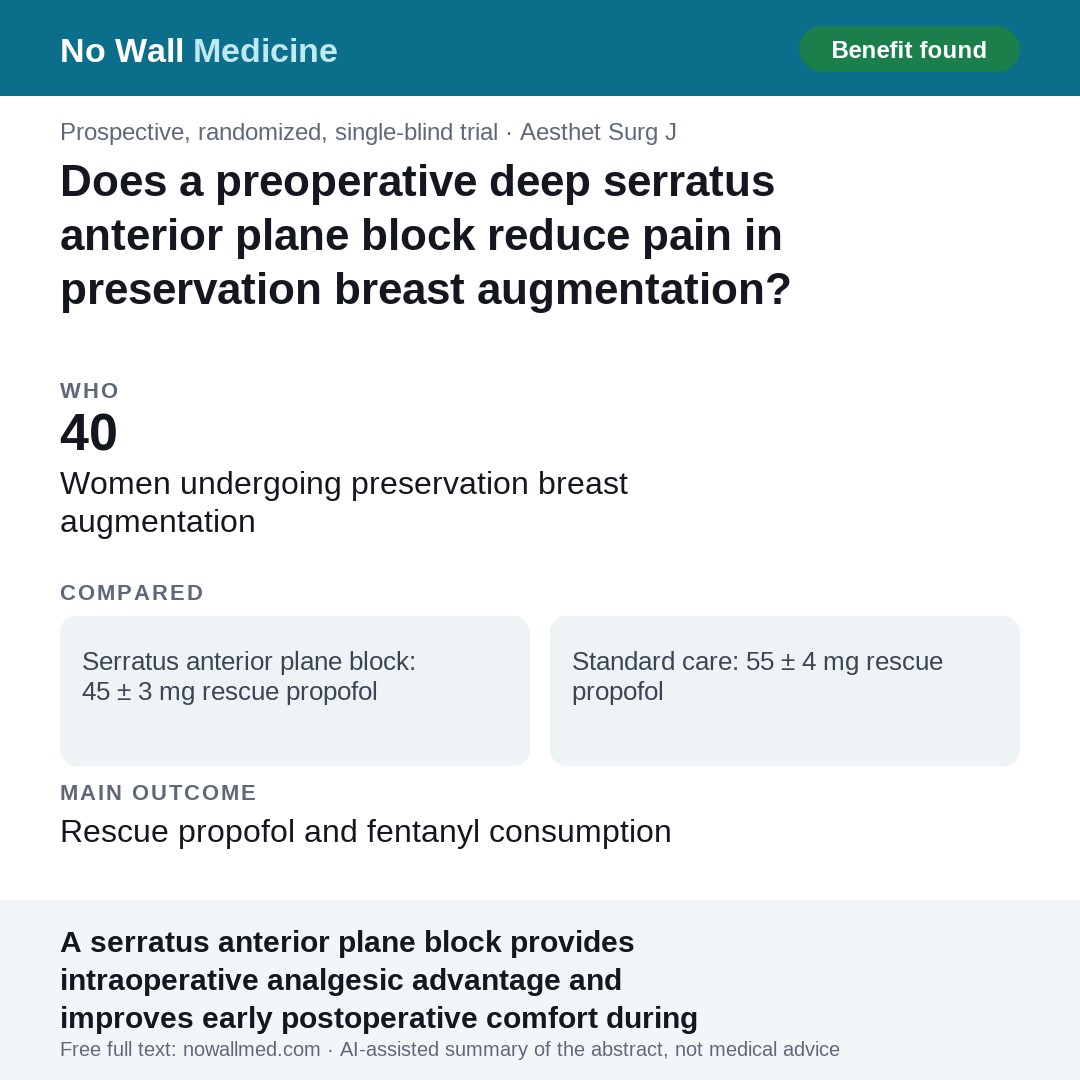
Preservation Breast Augmentation Under Sedation Is a Low-Pain Procedure: A Randomized Controlled Trial of Serratus Anterior Plane Block as an Adjunct
Prospective, randomized, single-blind trialBenefit found
Does a preoperative deep serratus anterior plane block reduce pain in preservation breast augmentation?
Who
40
Women undergoing preservation breast augmentation
Compared
Serratus anterior plane block: 45 ± 3 mg rescue propofol
Standard care: 55 ± 4 mg rescue propofol
Main outcome
Rescue propofol and fentanyl consumption
Bottom line: A serratus anterior plane block provides intraoperative analgesic advantage and improves early postoperative comfort during preservation breast augmentation.
Aesthet Surg J · 2026-09-05Download image
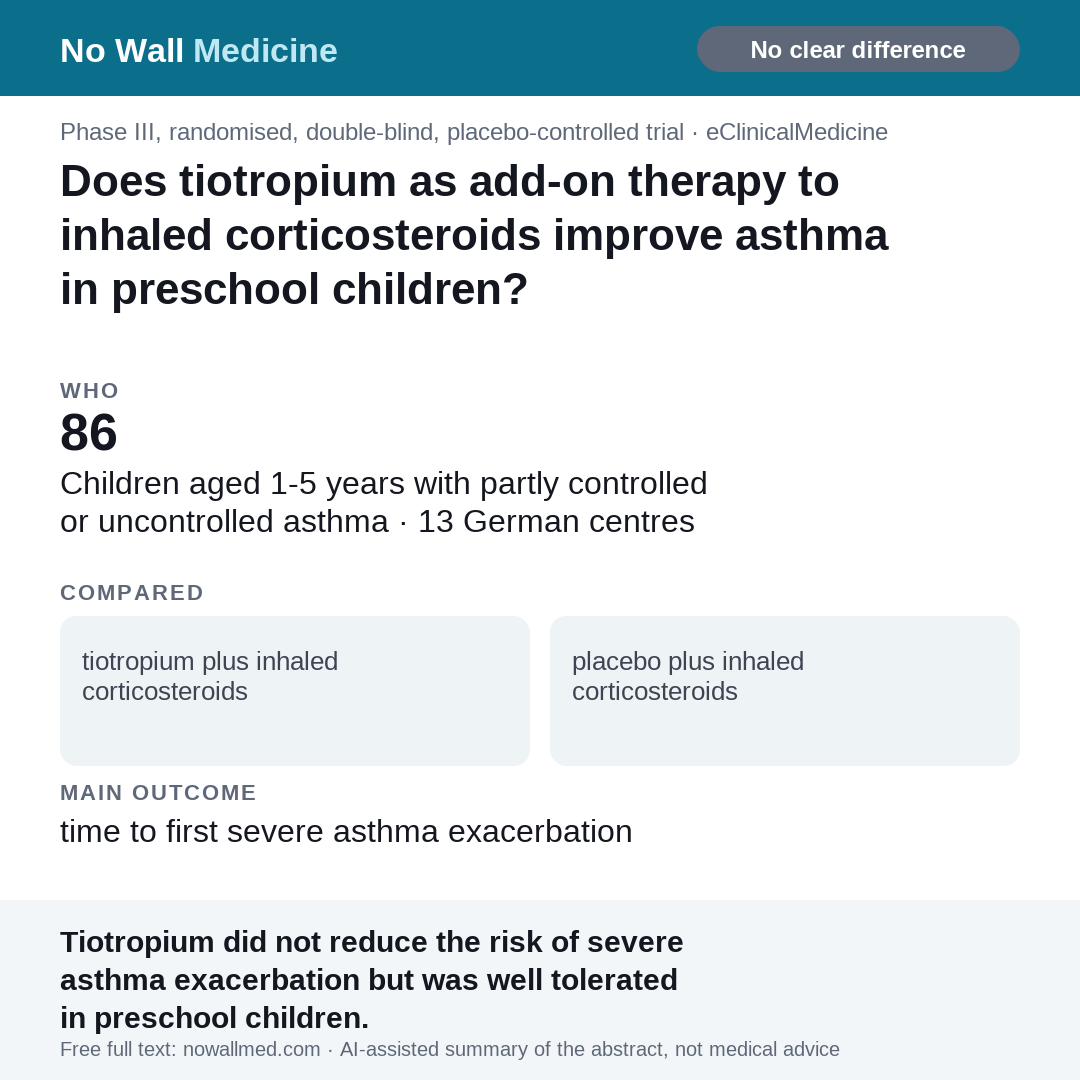
Efficacy and safety of tiotropium in partial and uncontrolled preschool asthma (TIPP): a phase III, multicentre, randomised, double-blind, placebo-controlled trial
Phase III, randomised, double-blind, placebo-controlled trialNo clear difference
Does tiotropium as add-on therapy to inhaled corticosteroids improve asthma in preschool children?
Who
86
Children aged 1-5 years with partly controlled or uncontrolled asthma · 13 German centres
Compared
tiotropium plus inhaled corticosteroids
placebo plus inhaled corticosteroids
Main outcome
time to first severe asthma exacerbation
Result: hazard ratio 0.99 (95% CI 0.51 to 1.92)
Bottom line: Tiotropium did not reduce the risk of severe asthma exacerbation but was well tolerated in preschool children.
Limitation: Only 100 of the planned 204 children were enrolled
Funded by: German Federal Ministry of Education and Research
eClinicalMedicine · 2026-09-04Download image
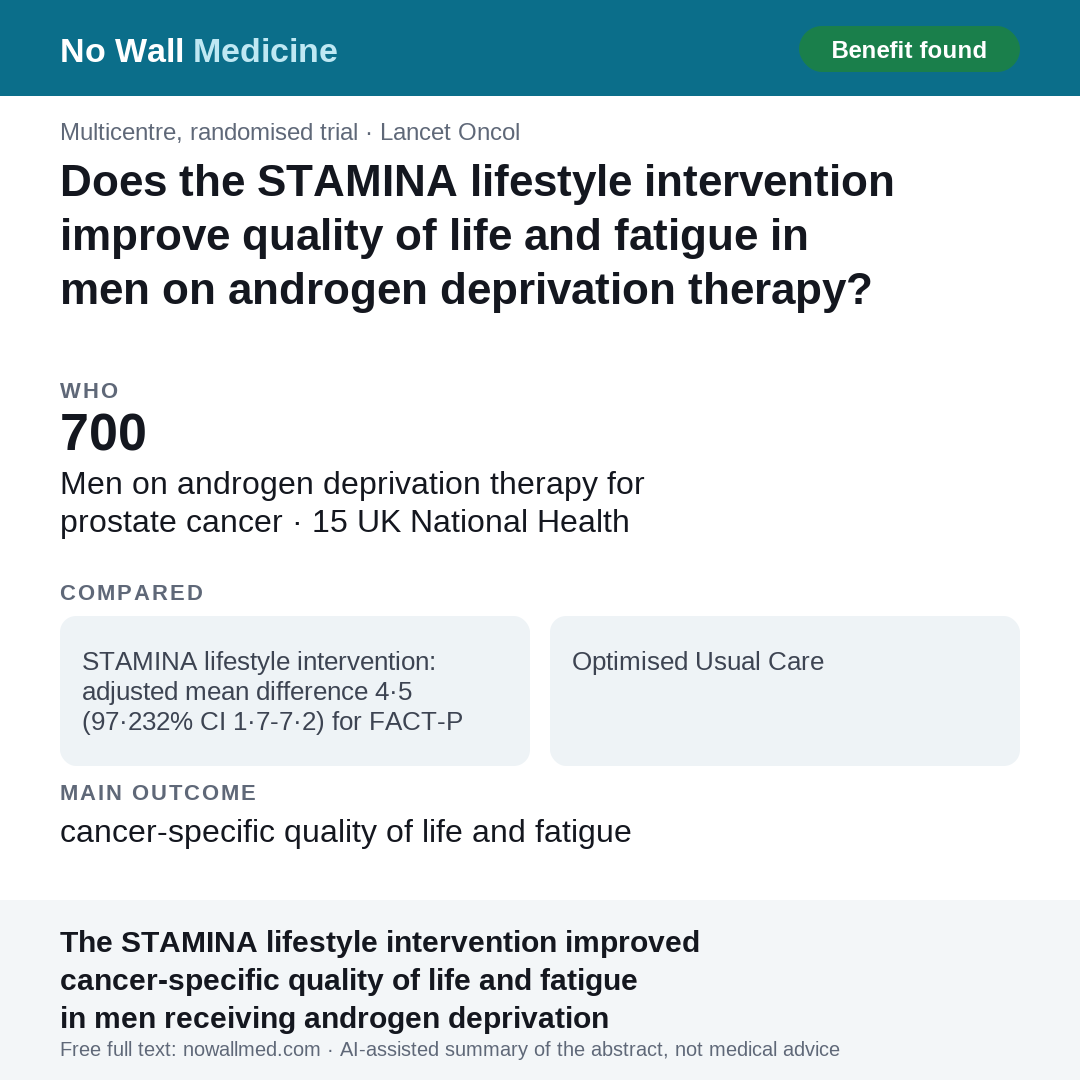
An integrated lifestyle intervention for mitigation of adverse effects associated with androgen deprivation therapy for prostate cancer (STAMINA): a multicentre, randomised trial
Multicentre, randomised trialBenefit found
Does the STAMINA lifestyle intervention improve quality of life and fatigue in men on androgen deprivation therapy?
Who
700
Men on androgen deprivation therapy for prostate cancer · 15 UK National Health Service trusts in England
Compared
STAMINA lifestyle intervention: adjusted mean difference 4·5 (97·232% CI 1·7-7·2) for FACT-P
Optimised Usual Care
Main outcome
cancer-specific quality of life and fatigue
Result: adjusted mean difference 4·5 (97·232% CI 1·7-7·2) for FACT-P; 1·9 (0·4-3·4) for FACIT-F
Bottom line: The STAMINA lifestyle intervention improved cancer-specific quality of life and fatigue in men receiving androgen deprivation therapy.
Funded by: National Institute for Health Research
Lancet Oncol · 2026-09-04Download image
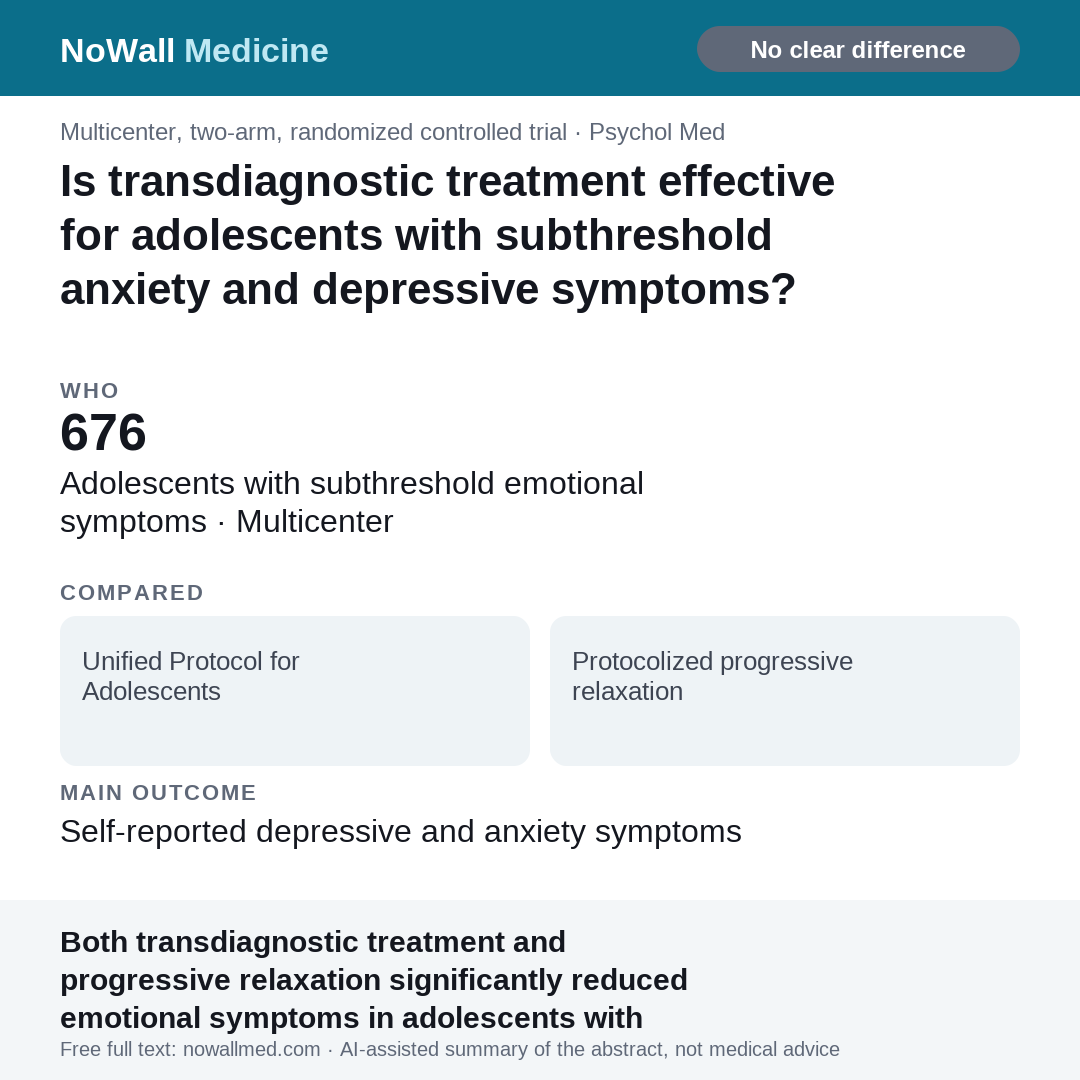
A multicenter randomized controlled effectiveness trial of transdiagnostic treatment for adolescents with subthreshold anxiety and depressive symptoms
Multicenter, two-arm, randomized controlled trialNo clear difference
Is transdiagnostic treatment effective for adolescents with subthreshold anxiety and depressive symptoms?
Who
676
Adolescents with subthreshold emotional symptoms · Multicenter
Compared
Unified Protocol for Adolescents
Protocolized progressive relaxation
Main outcome
Self-reported depressive and anxiety symptoms
Bottom line: Both transdiagnostic treatment and progressive relaxation significantly reduced emotional symptoms in adolescents with subthreshold presentations.
Psychol Med · 2026-09-04Download image