Visual abstracts
New randomized trials and meta-analyses from leading journals at a glance: who was studied, what was compared, and what was found. Every paper is free to read in full.
All specialtiesCardiology 1132Oncology 988Gastroenterology & Hepatology 395Infectious Disease 739Neurology 466Psychiatry & Mental Health 574Pulmonology 483Critical Care 328Endocrinology & Diabetes 634Pediatrics 680Surgery 496Orthopedics & Sports Medicine 219Neurosurgery 153Cardiothoracic & Vascular Surgery 121Plastic & Reconstructive Surgery 177Nephrology 243Rheumatology 147Hematology 229Dermatology 107Ophthalmology 126Obstetrics & Gynecology 347Public & Global Health 219Radiology & Imaging 139Anesthesiology 201Urology 207ENT (Otolaryngology) 155Emergency Medicine 122Allergy & Immunology 76Geriatrics 226Family Medicine & Primary Care 143Medical Genetics & Genomics 118Pathology & Laboratory Medicine 33Physical Medicine & Rehabilitation 193Palliative Care 105Nutrition 294Digital Health & AI 561General Medicine 109
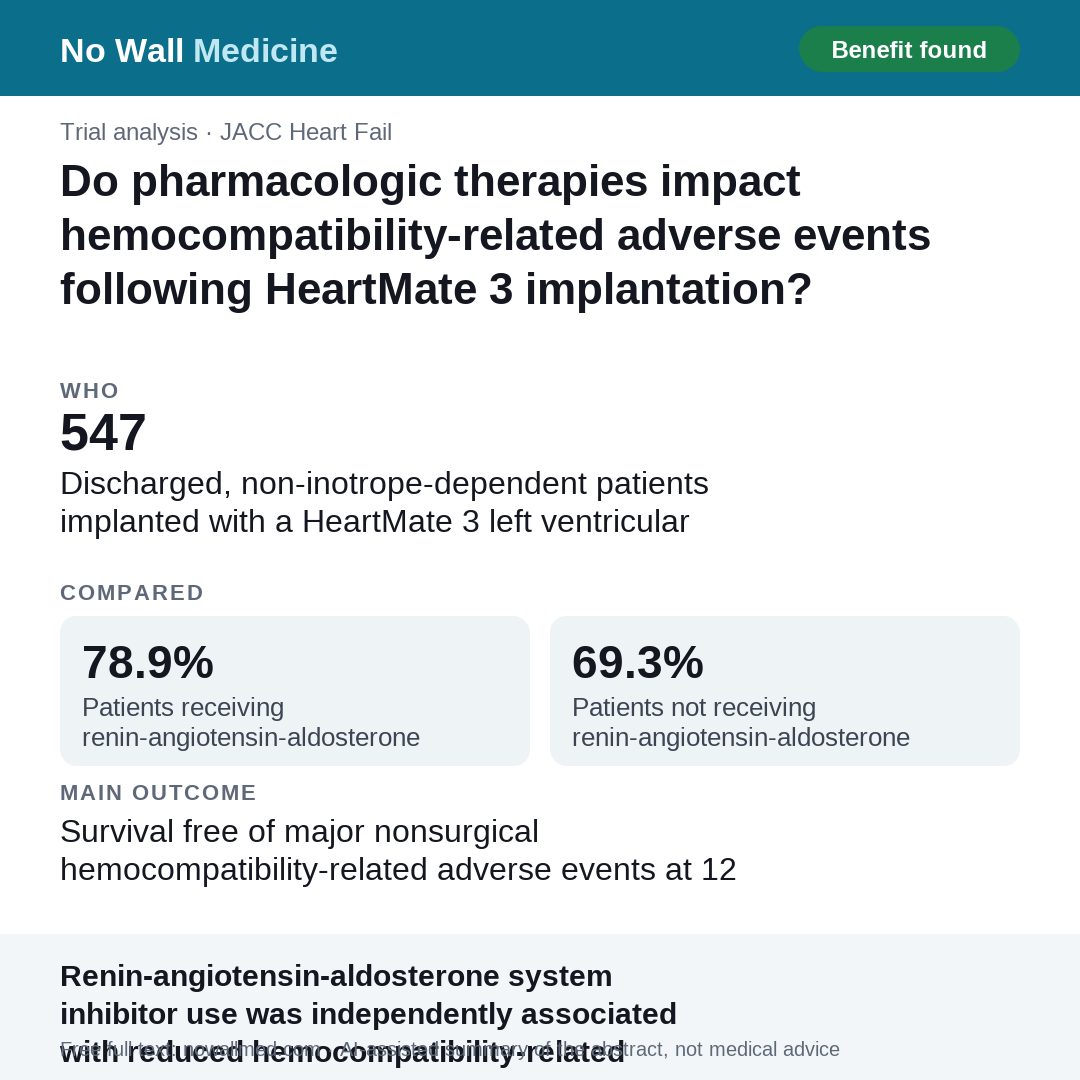
Hemocompatibility Outcomes With Pharmacological Therapy Following LVAD Implantation: Insights From the ARIES-HM3 Trial
Trial analysisBenefit found
Do pharmacologic therapies impact hemocompatibility-related adverse events following HeartMate 3 implantation?
Who
547
Discharged, non-inotrope-dependent patients implanted with a HeartMate 3 left ventricular assist device
Compared
78.9%Patients receiving renin-angiotensin-aldosterone system inhibitors
69.3%Patients not receiving renin-angiotensin-aldosterone system inhibitors
Main outcome
Survival free of major nonsurgical hemocompatibility-related adverse events at 12 months
Result: hazard ratio 0.61 (95% CI 0.37-1.01)
Bottom line: Renin-angiotensin-aldosterone system inhibitor use was independently associated with reduced hemocompatibility-related adverse events.
Limitation: These were exploratory observations.
JACC Heart Fail · 2025-11-19Download image
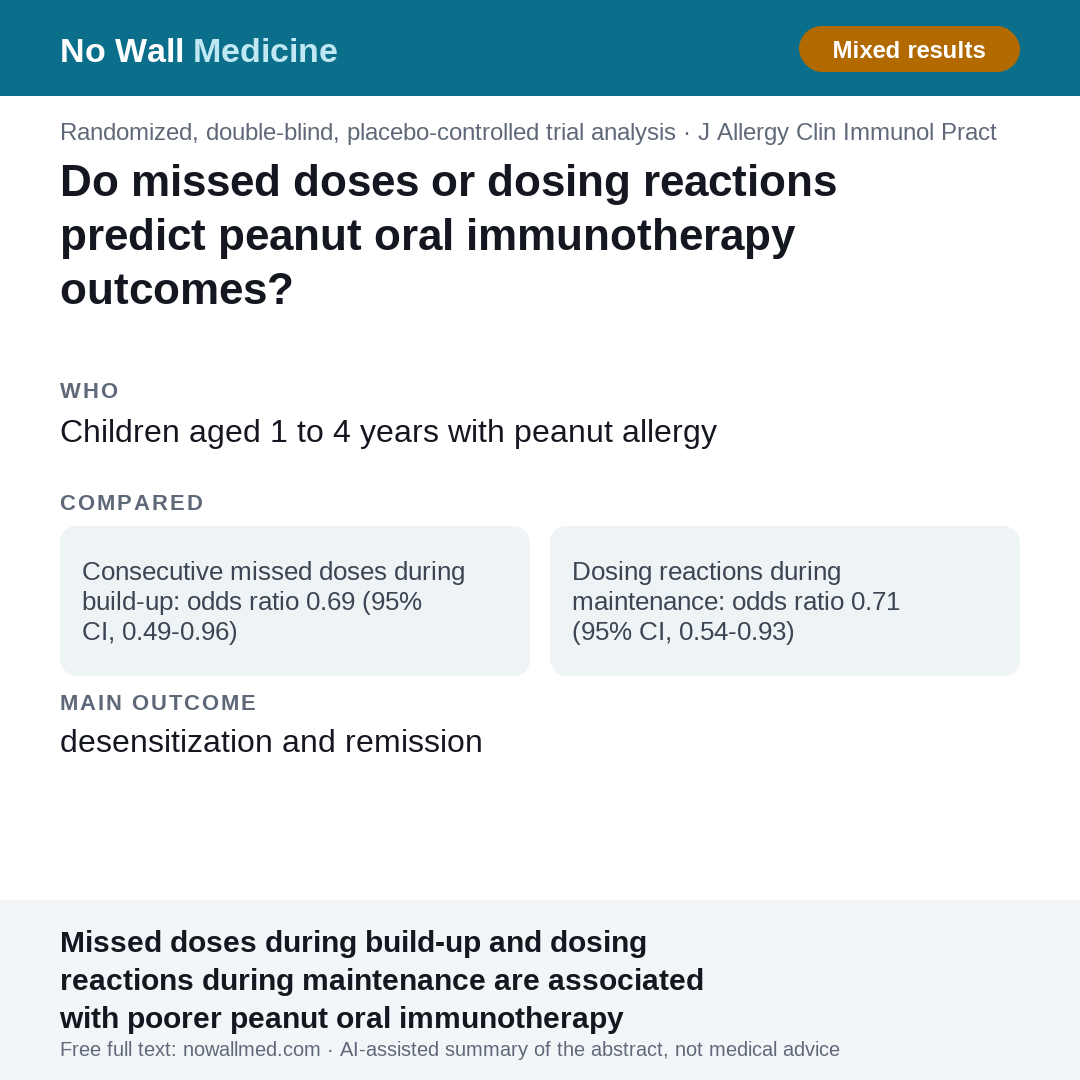
Dosing Reactions and Missed Doses Affect Peanut Oral Immunotherapy Outcomes
Randomized, double-blind, placebo-controlled trial analysisMixed results
Do missed doses or dosing reactions predict peanut oral immunotherapy outcomes?
Who
Children aged 1 to 4 years with peanut allergy
Compared
Consecutive missed doses during build-up: odds ratio 0.69 (95% CI, 0.49-0.96)
Dosing reactions during maintenance: odds ratio 0.71 (95% CI, 0.54-0.93)
Main outcome
desensitization and remission
Bottom line: Missed doses during build-up and dosing reactions during maintenance are associated with poorer peanut oral immunotherapy outcomes.
J Allergy Clin Immunol Pract · 2025-11-19Download image
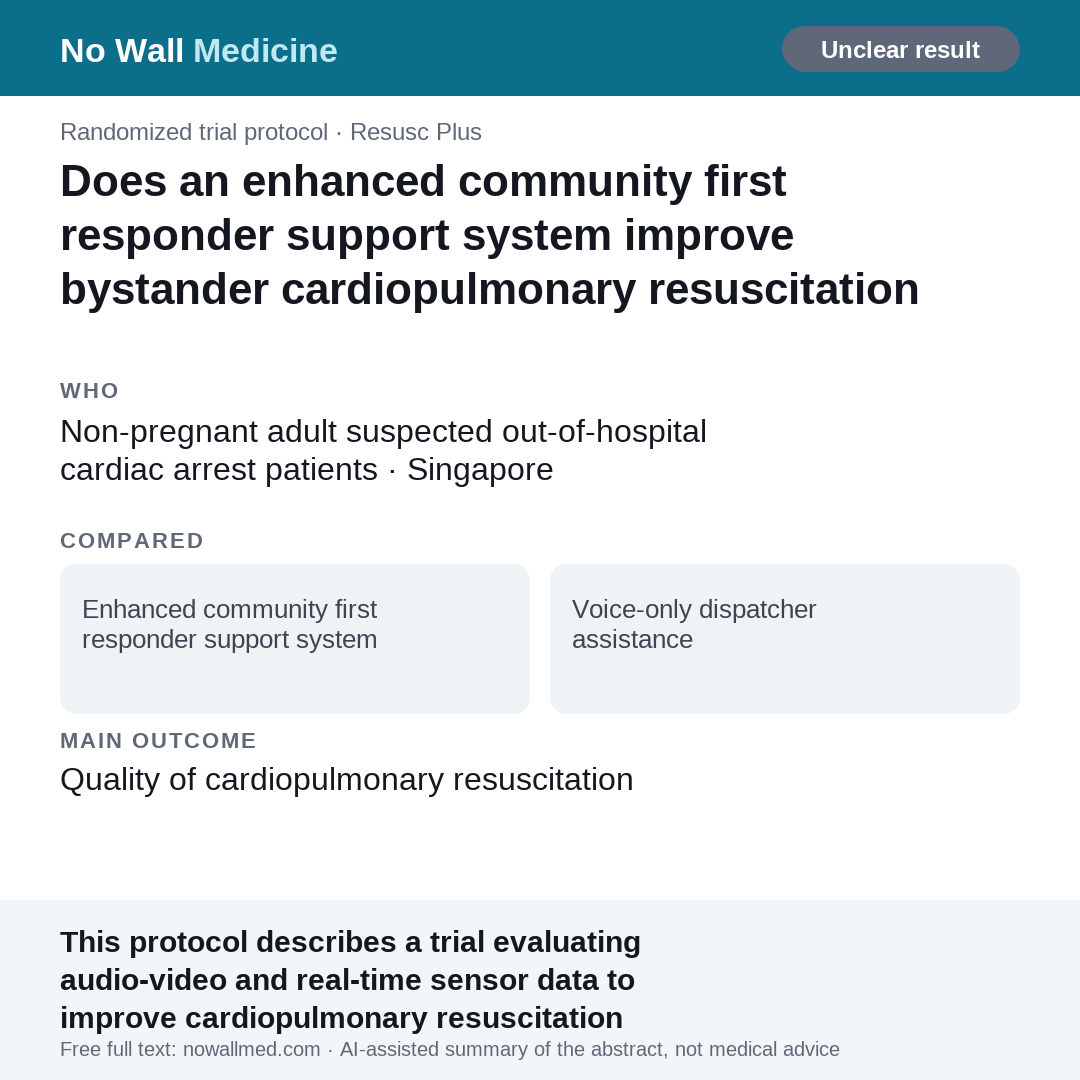
Enhanced community first responder support system: protocol of a randomized trial to improve bystander cardiopulmonary resuscitation quality for out-of-hospital cardiac arrest patients
Randomized trial protocolUnclear result
Does an enhanced community first responder support system improve bystander cardiopulmonary resuscitation quality?
Who
Non-pregnant adult suspected out-of-hospital cardiac arrest patients · Singapore
Compared
Enhanced community first responder support system
Voice-only dispatcher assistance
Main outcome
Quality of cardiopulmonary resuscitation
Bottom line: This protocol describes a trial evaluating audio-video and real-time sensor data to improve cardiopulmonary resuscitation quality.
Funded by: Singapore Civic Defence Force
Resusc Plus · 2025-11-19Download image
Enhancing theoretical BLS knowledge with virtual reality: a randomized controlled trial in medical students
Single blind randomized controlled trialMixed results
Does a virtual reality session enhance basic life support knowledge and performance?
Who
126
Fourth-year medical students with prior basic life support training
Compared
Intervention group with virtual reality: significantly greater gains in knowledge at post-course and follow-up
Control group receiving standard preparation: no significant differences in OSCE performance
Main outcome
Theoretical knowledge and practical performance of basic life support skills
Bottom line: A virtual reality session enhanced theoretical knowledge but did not significantly affect practical performance in medical students.
Limitation: Further research is needed to evaluate long-term impact and optimal integration methods.
Resusc Plus · 2025-11-19Download image

An extended cost-effectiveness analysis of decentralised TB diagnostic testing with Molbio Truenat MTB/RIF versus hub-and-spoke GeneXpert MTB/RIF in Mozambique and Tanzania
Multicentre real-world cluster-randomised controlled trialBenefit found
Is decentralised Molbio Truenat TB testing cost-effective compared to hub-and-spoke GeneXpert?
Who
Socioeconomic status groups in Tanzania and Mozambique · Tanzania and Mozambique
Compared
Molbio Truenat platform: US$8.82
hub-and-spoke Xpert MTB/RIF Ultra model: US$13.61
Main outcome
Average out-of-pocket expenditures and treatment initiation
Bottom line: Decentralised Molbio Truenat testing reduced patient costs and improved outcomes across socioeconomic groups compared to the hub-and-spoke model.
BMJ Glob Health · 2025-11-19Download image

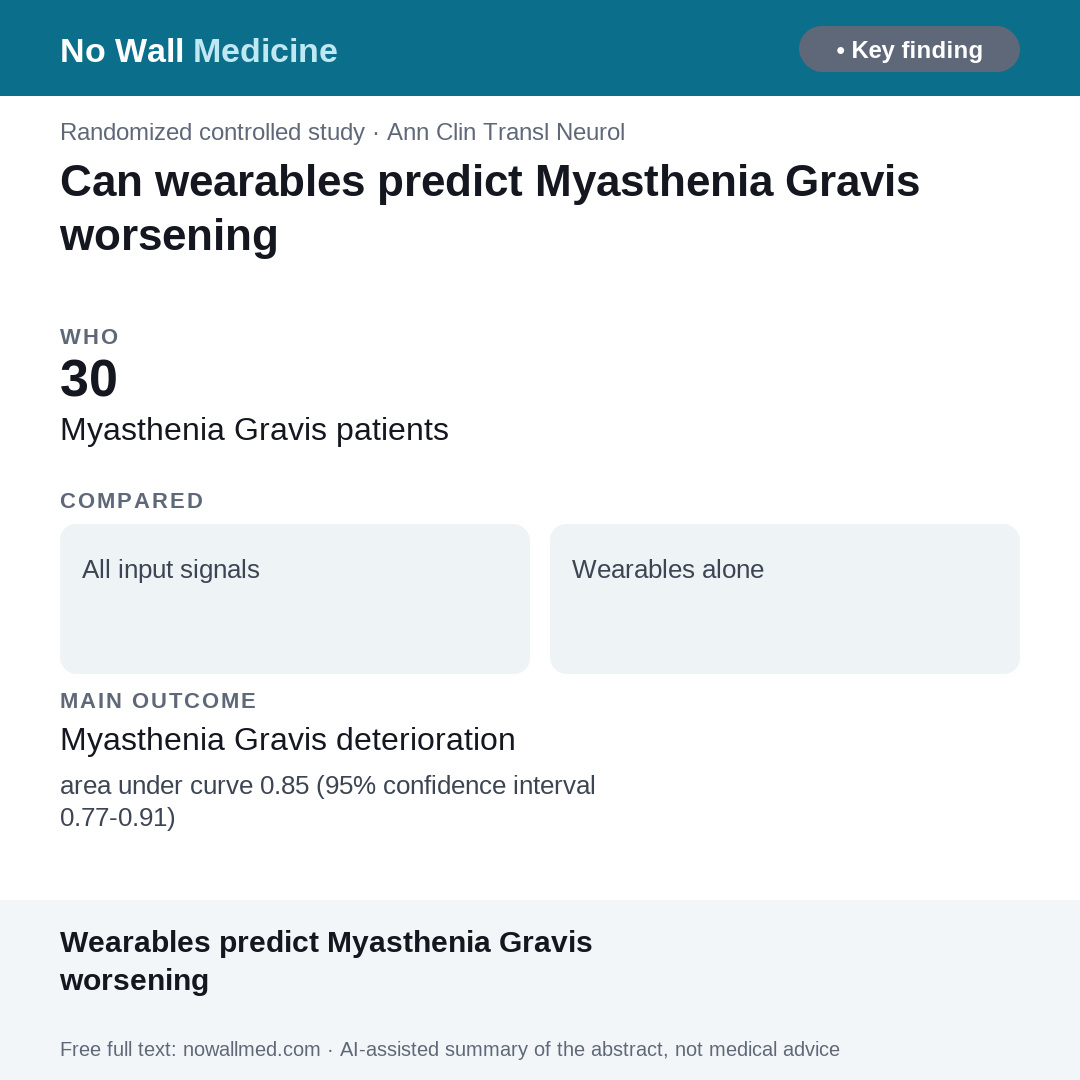
Prediction of Myasthenia Gravis Worsening: A Machine Learning Algorithm Using Wearables and Patient-Reported Measures
Randomized controlled studyBenefit found
Can wearables predict Myasthenia Gravis worsening
Who
30
Myasthenia Gravis patients
Compared
All input signals
Wearables alone
Main outcome
Myasthenia Gravis deterioration
Result: area under curve 0.85 (95% confidence interval 0.77-0.91)
Bottom line: Wearables predict Myasthenia Gravis worsening
Ann Clin Transl Neurol · 2025-11-19Download image
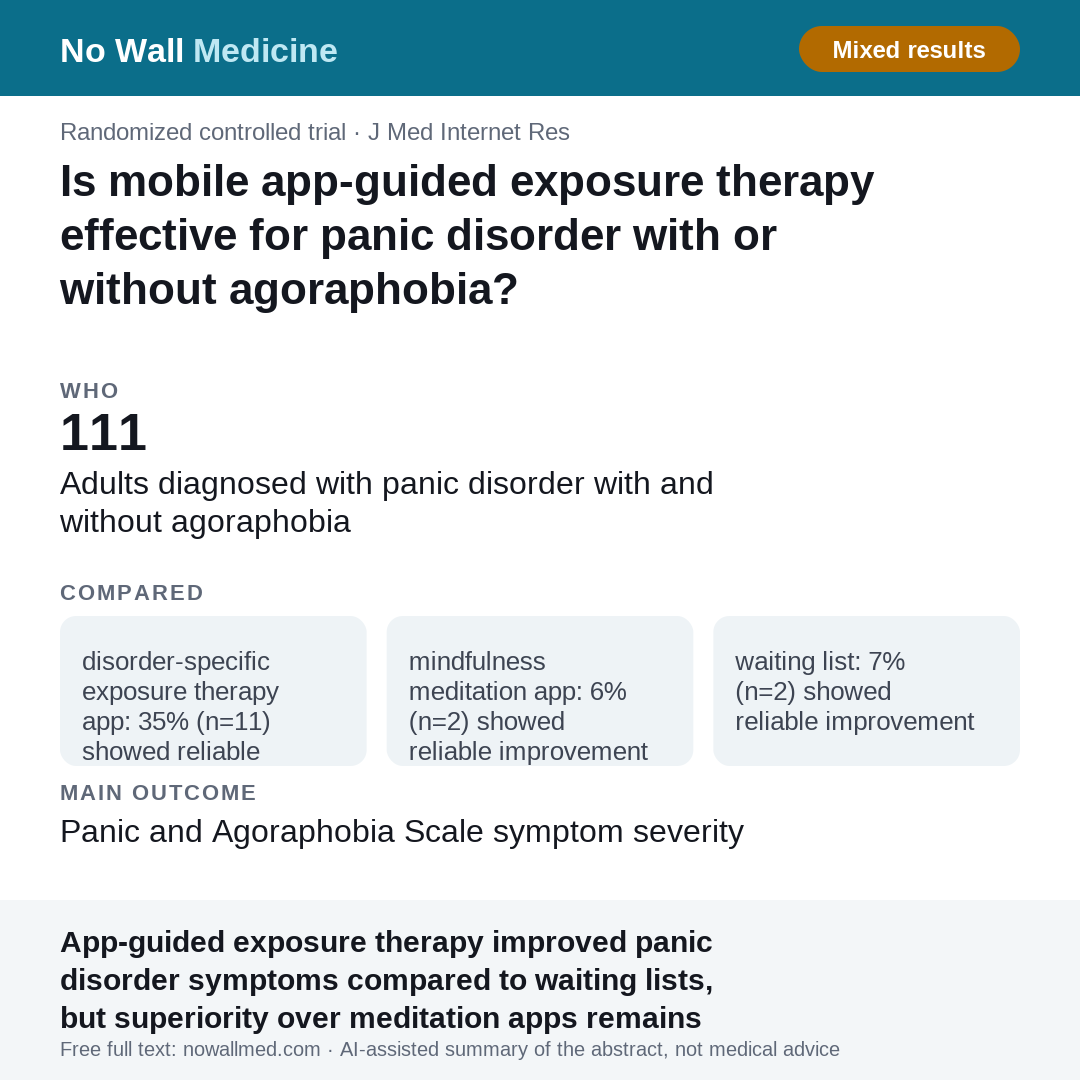
Mobile App-Guided Exposure Therapy for Panic Disorder With and Without Agoraphobia: Randomized Controlled Trial
Randomized controlled trialMixed results
Is mobile app-guided exposure therapy effective for panic disorder with or without agoraphobia?
Who
111
Adults diagnosed with panic disorder with and without agoraphobia
Compared
disorder-specific exposure therapy app: 35% (n=11) showed reliable improvement
mindfulness meditation app: 6% (n=2) showed reliable improvement
waiting list: 7% (n=2) showed reliable improvement
Main outcome
Panic and Agoraphobia Scale symptom severity
Result: Cohen d=0.55 (post-treatment) and Cohen d=0.60 (follow-up) vs waiting list
Bottom line: App-guided exposure therapy improved panic disorder symptoms compared to waiting lists, but superiority over meditation apps remains unclear.
Limitation: Superiority compared to the disorder-unspecific meditation app remains unclear.
J Med Internet Res · 2025-11-19Download image
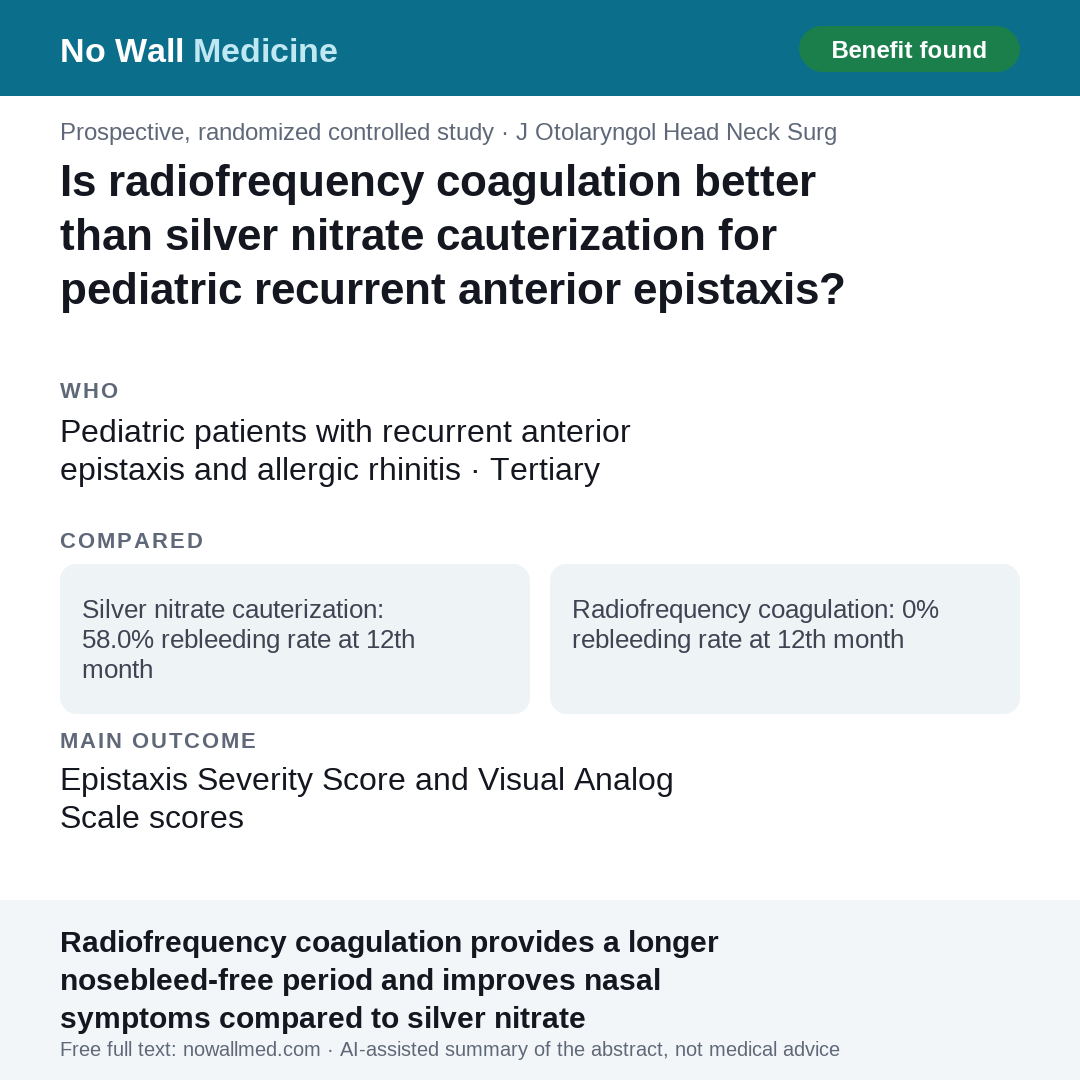
Comparison of Radiofrequency Coagulation and Silver Nitrate Cauterization for the Treatment of Recurrent Anterior Epistaxis Associated With Allergic Rhinitis in Pediatric Patients
Prospective, randomized controlled studyBenefit found
Is radiofrequency coagulation better than silver nitrate cauterization for pediatric recurrent anterior epistaxis?
Who
Pediatric patients with recurrent anterior epistaxis and allergic rhinitis · Tertiary referral center
Compared
Silver nitrate cauterization: 58.0% rebleeding rate at 12th month
Radiofrequency coagulation: 0% rebleeding rate at 12th month
Main outcome
Epistaxis Severity Score and Visual Analog Scale scores
Bottom line: Radiofrequency coagulation provides a longer nosebleed-free period and improves nasal symptoms compared to silver nitrate cauterization.
Limitation: Septal perforation occurred in 1 patient among the 4 who underwent radiofrequency coagulation using ablation mode.
J Otolaryngol Head Neck Surg · 2025-11-19Download image
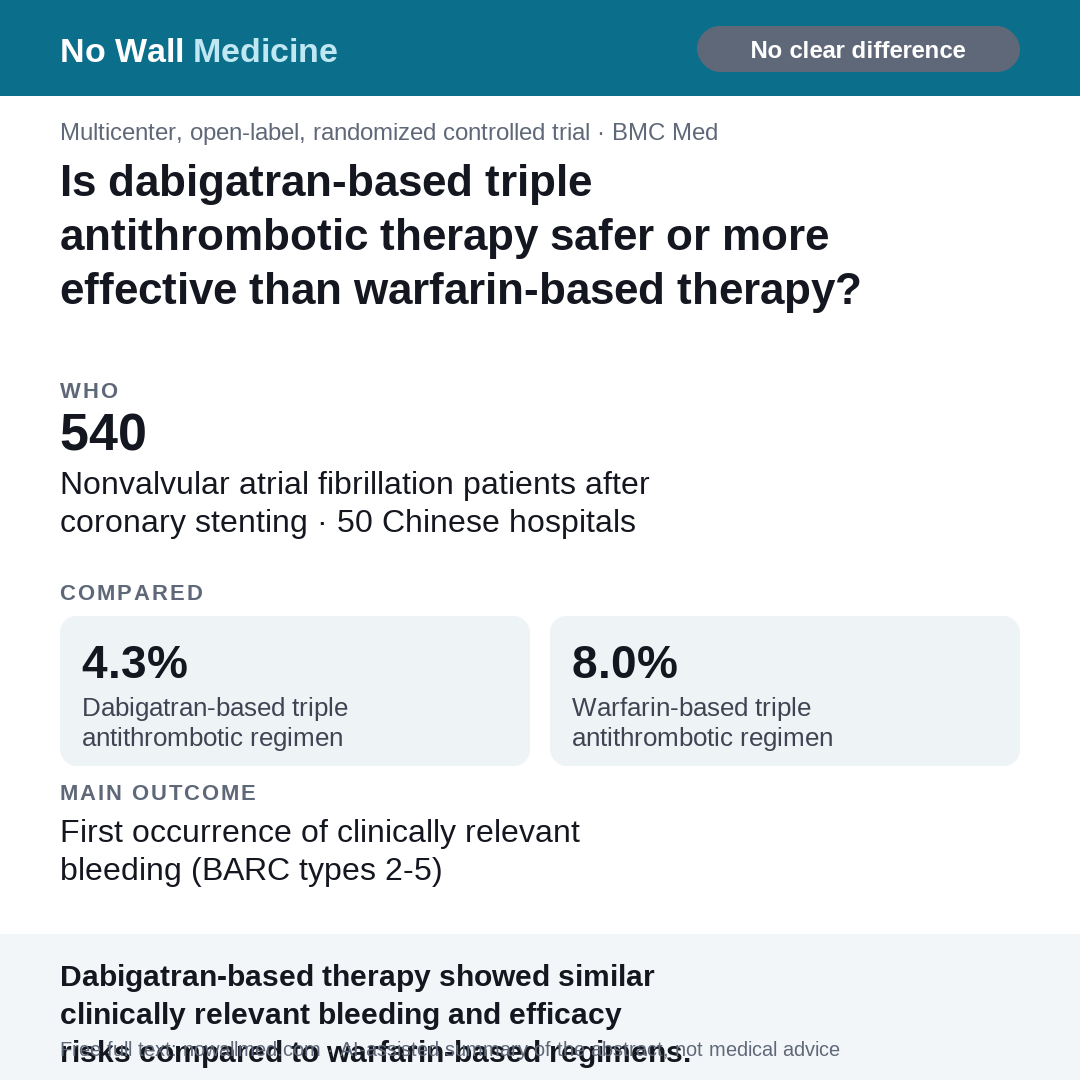
Dabigatran-based versus warfarin-based triple antithrombotic regimen with a 1-month intensification after coronary stenting in patients with nonvalvular atrial fibrillation (COACH-AF PCI)
Multicenter, open-label, randomized controlled trialNo clear difference
Is dabigatran-based triple antithrombotic therapy safer or more effective than warfarin-based therapy?
Who
540
Nonvalvular atrial fibrillation patients after coronary stenting · 50 Chinese hospitals
Compared
4.3%Dabigatran-based triple antithrombotic regimen
8.0%Warfarin-based triple antithrombotic regimen
Main outcome
First occurrence of clinically relevant bleeding (BARC types 2-5)
Result: hazard ratio 0.54 (95% CI 0.26-1.09)
Bottom line: Dabigatran-based therapy showed similar clinically relevant bleeding and efficacy risks compared to warfarin-based regimens.
BMC Med · 2025-11-18Download image
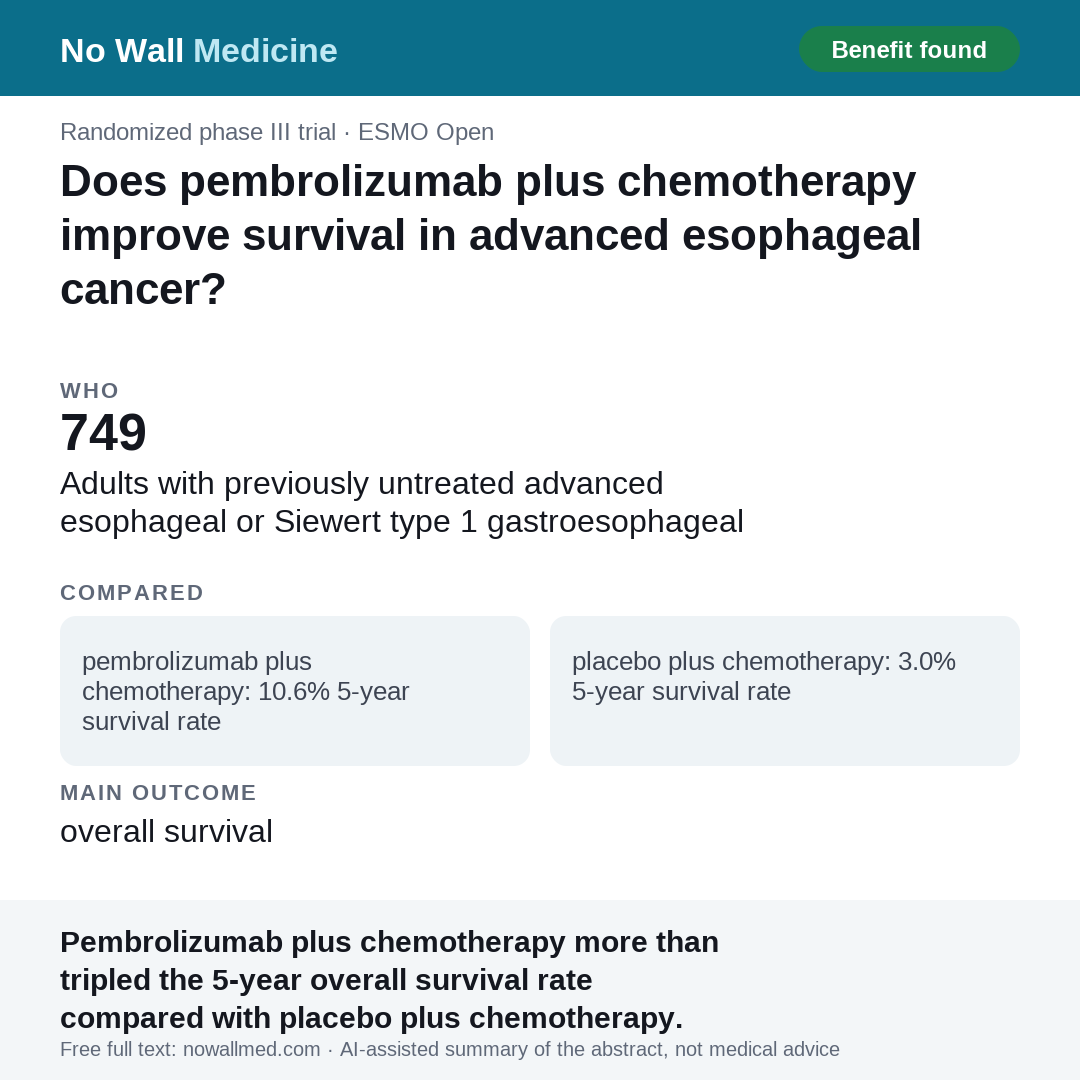
Assessing clinical and cost effectiveness of total versus partial knee replacement (TOPKAT): 10-year follow-up of a multicentre, randomised controlled trial
Multicentre, randomised, pragmatic comparative effectiveness trialNo clear difference
Is total knee replacement or partial knee replacement more effective and cost-effective at 10 years?
Who
528
Patients with medial compartment knee osteoarthritis · 27 United Kingdom National Health Service hospitals
Compared
Partial knee replacement: mean difference 0.27 (95% CI -1.59 to 2.13)
Total knee replacement: mean difference 0.27 (95% CI -1.59 to 2.13)
Main outcome
Oxford Knee Score at 10 years
Result: mean difference 0.27 (95% CI -1.59 to 2.13)
Bottom line: At 10 years, partial and total knee replacement show similar clinical outcomes, but partial replacement is more cost-effective.
Funded by: National Institute for Health and Care Research
Lancet Rheumatol · 2025-11-18Download image
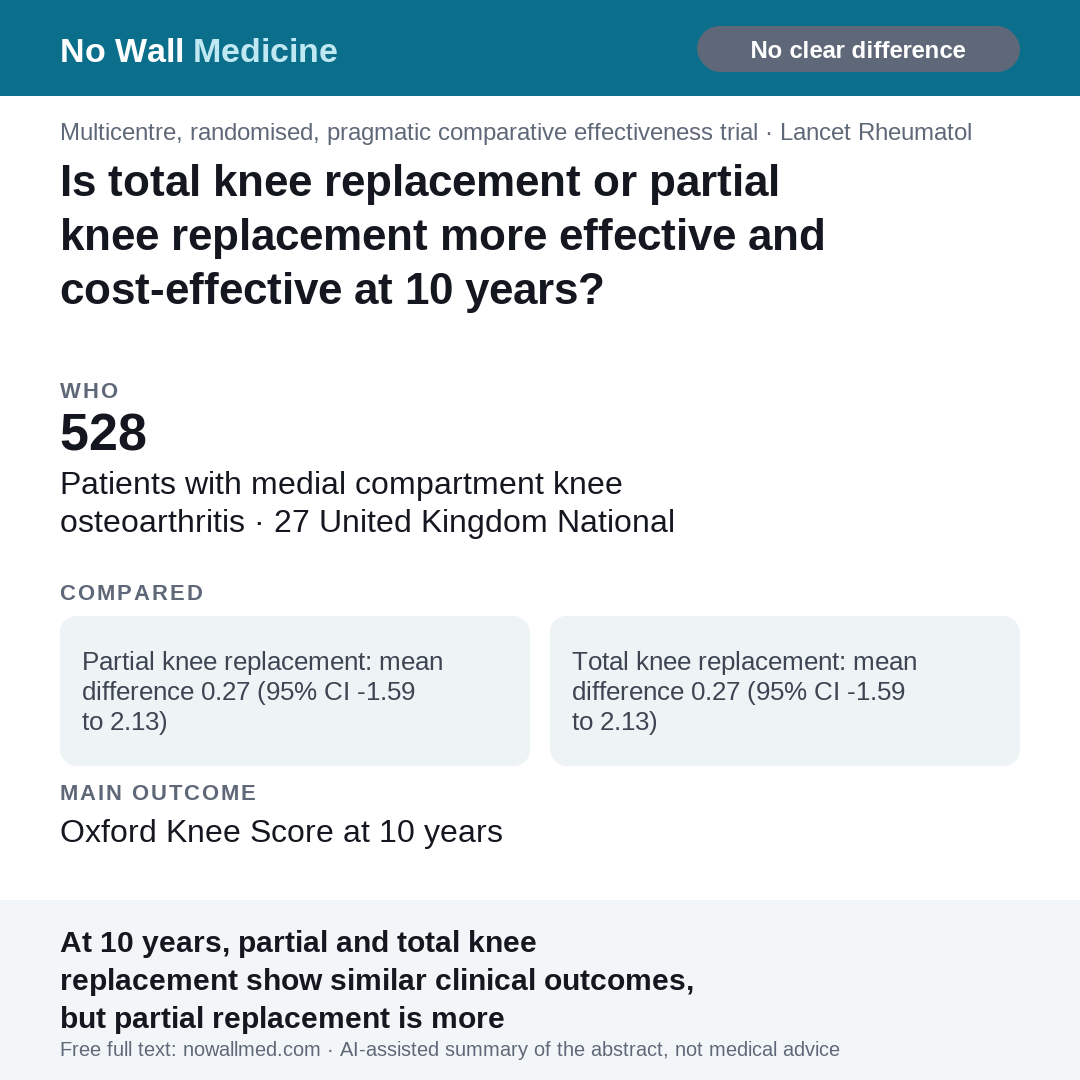
Nilotinib versus imatinib with early switch from imatinib to nilotinib to obtain treatment-free remission in newly diagnosed chronic myeloid leukemia patients: the analysis of the first co-primary endpoint
Randomized trialBenefit found
Is nilotinib more effective than imatinib followed by a switch to nilotinib for deep molecular response?
Who
448
Newly diagnosed chronic myeloid leukemia patients
Compared
65nilotinib
42imatinib followed by switch to nilotinib
Main outcome
patients reaching an MR4.5 response at 24 months
Result: 65 vs 42; p = 0.02
Bottom line: Nilotinib therapy is more effective than imatinib followed by an early switch to induce deep molecular response.
Leukemia · 2025-11-18Download image
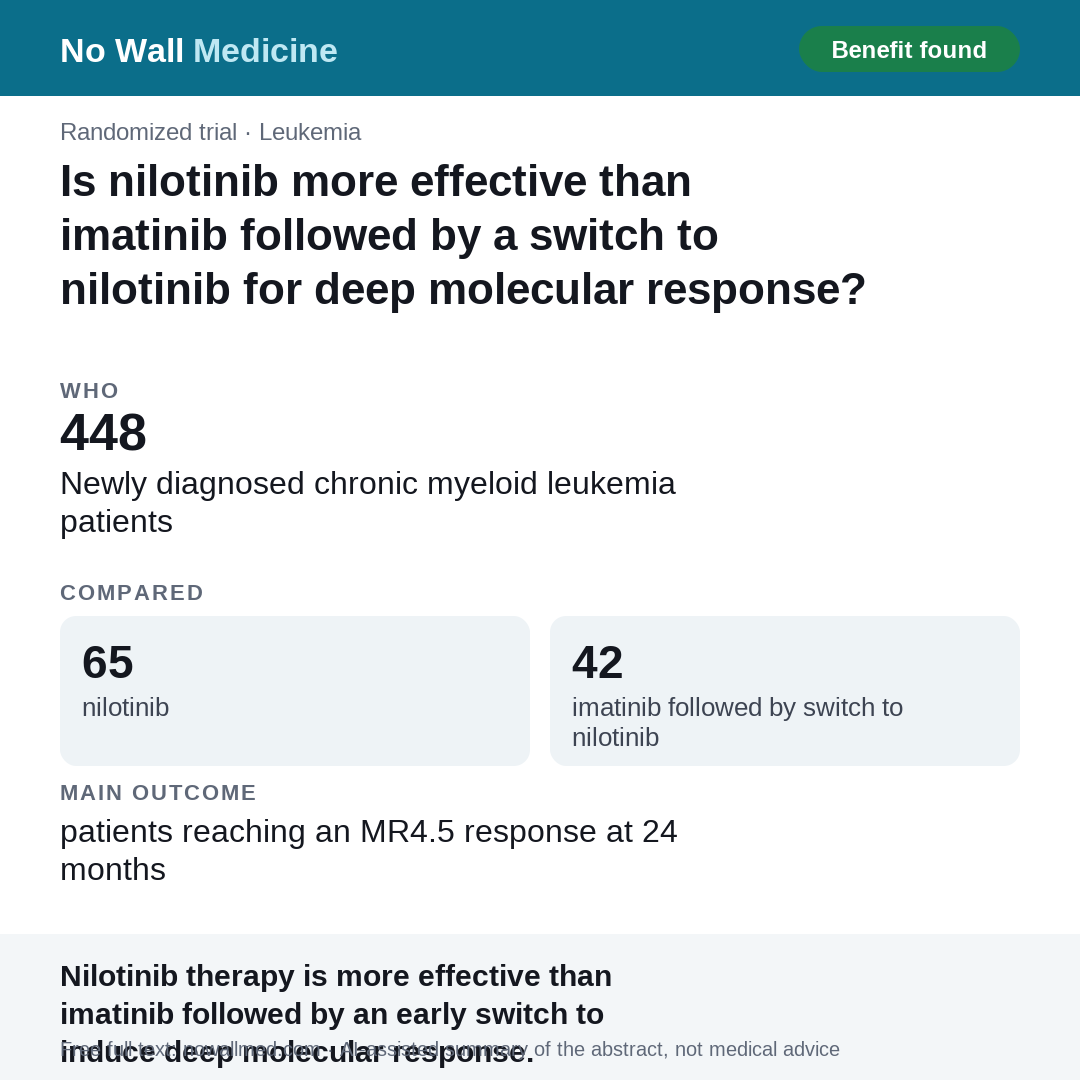
A Randomised Clinical Trial Comparing Two Biopsy Templates and Follow-up Schedules for Men on Active Surveillance for Low-risk Prostate Cancer: SAMS
Randomized clinical trialNo clear difference
Does an extended biopsy and less intense follow-up affect curative treatment rates?
Who
328
Men aged 40-75 with low-risk prostate cancer · Sweden
Compared
42%Standard confirmatory systematic biopsy and standard follow-up
36%Extended confirmatory systematic biopsy and less intense follow-up
Main outcome
Decision to initiate curative treatment within 5 years
Bottom line: Extended initial biopsy and less intensive monitoring resulted in similar 5-year treatment rates for low-risk prostate cancer.
Limitation: Inclusion was stopped before the target of 500 men was reached.
Eur Urol Open Sci · 2025-11-18Download image
Vasopressin, steroids, and epinephrine in out-of-hospital cardiac arrest - a protocol for a randomized controlled trial (OHCA REVIVES trial)
Multicenter, superiority cluster randomized controlled trialUnclear result
Does triple therapy improve clinical outcomes in out-of-hospital cardiac arrest?
Who
1344
Adult non-traumatic patients with out-of-hospital cardiac arrest · Taipei and New Taipei City, Taiwan
Compared
Vasopressin, epinephrine, and steroid combined therapy
Standard care
Main outcome
Sustained return of spontaneous circulation at least 2 hours
Bottom line: This protocol study aims to evaluate triple therapy versus standard care for out-of-hospital cardiac arrest.
Resusc Plus · 2025-11-18Download image

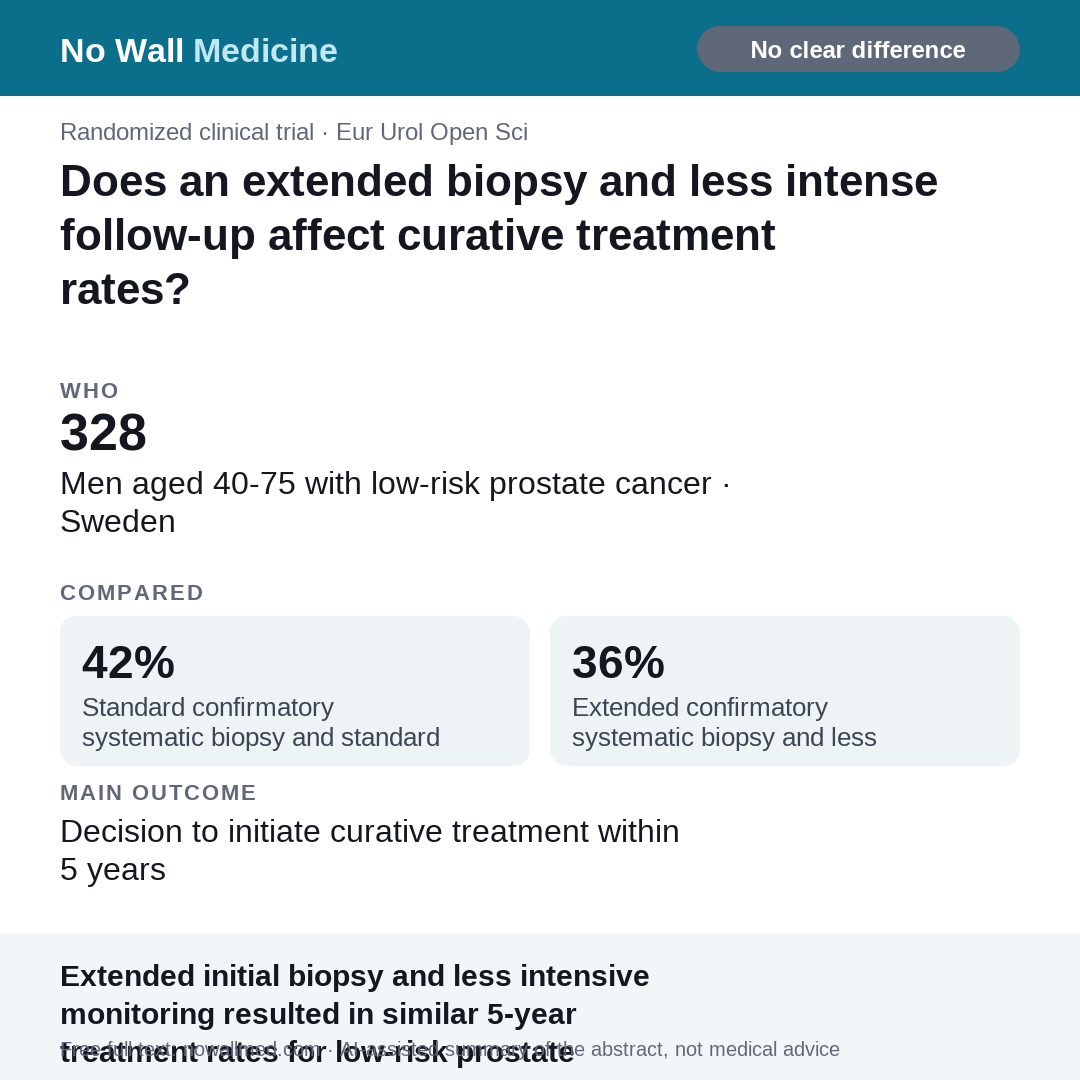
Pembrolizumab plus chemotherapy versus chemotherapy for advanced esophageal cancer: 5-year extended follow-up for the randomized phase III KEYNOTE-590 study
Randomized phase III trialBenefit found
Does pembrolizumab plus chemotherapy improve survival in advanced esophageal cancer?
Who
749
Adults with previously untreated advanced esophageal or Siewert type 1 gastroesophageal junction cancer
Compared
pembrolizumab plus chemotherapy: 10.6% 5-year survival rate
placebo plus chemotherapy: 3.0% 5-year survival rate
Main outcome
overall survival
Result: hazard ratio 0.72 (95% CI 0.62-0.84)
Bottom line: Pembrolizumab plus chemotherapy more than tripled the 5-year overall survival rate compared with placebo plus chemotherapy.
ESMO Open · 2025-11-18Download image
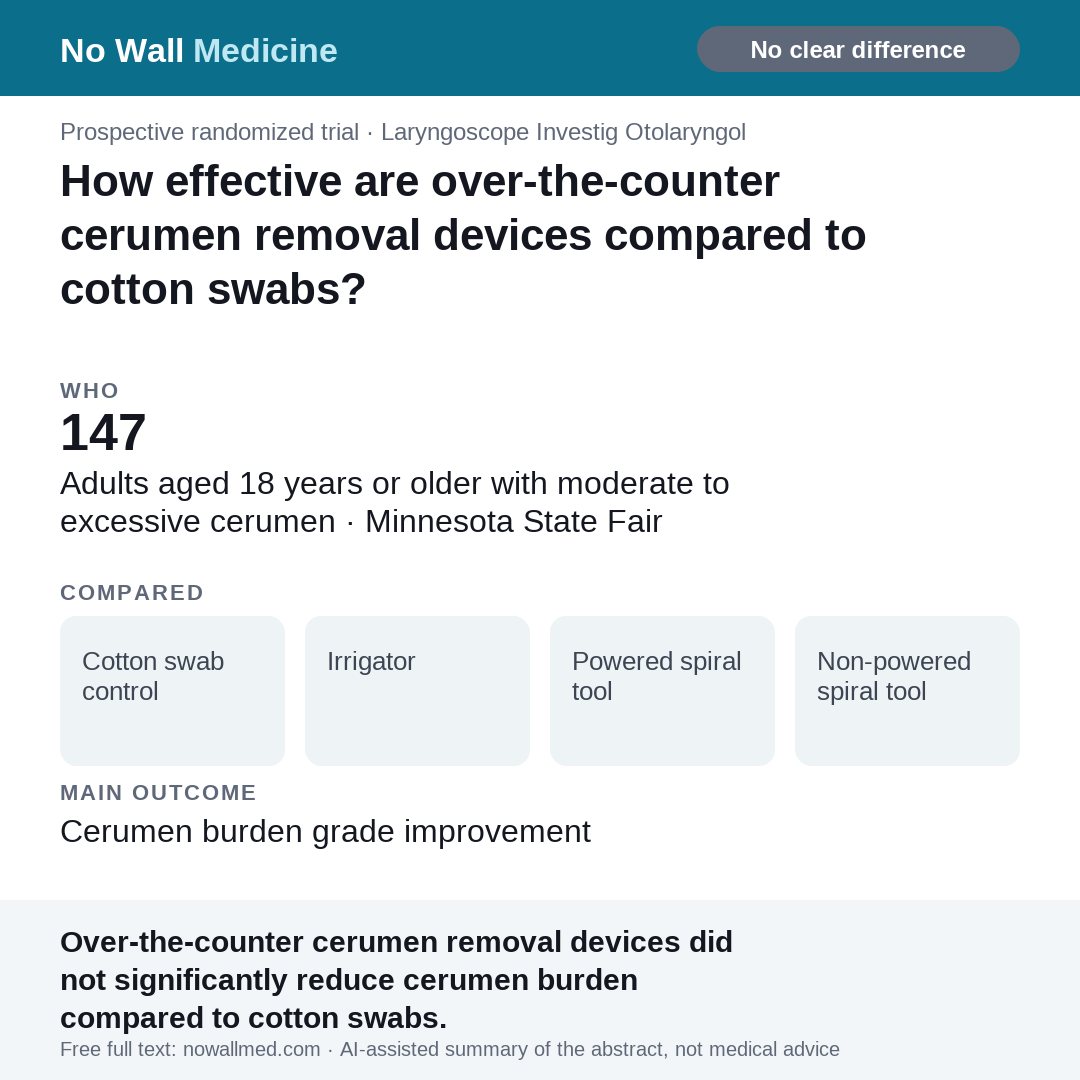
Efficacy of Over-the-Counter Cerumen Removal Devices: A Randomized Trial
Prospective randomized trialNo clear difference
How effective are over-the-counter cerumen removal devices compared to cotton swabs?
Who
147
Adults aged 18 years or older with moderate to excessive cerumen · Minnesota State Fair
Compared
Cotton swab control
Irrigator
Powered spiral tool
Non-powered spiral tool
Main outcome
Cerumen burden grade improvement
Bottom line: Over-the-counter cerumen removal devices did not significantly reduce cerumen burden compared to cotton swabs.
Laryngoscope Investig Otolaryngol · 2025-11-18Download image
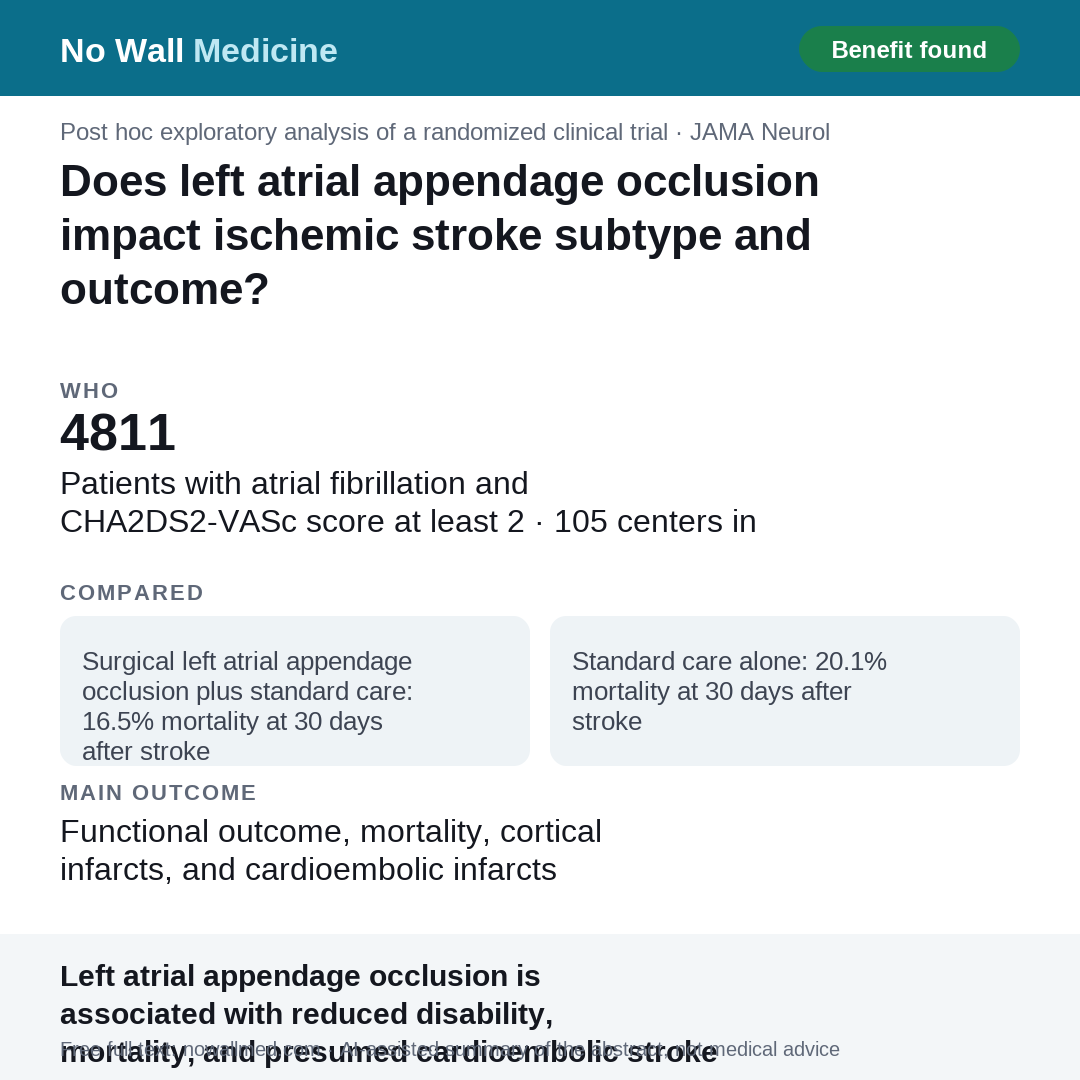
Stroke Mechanism and Severity After Left Atrial Appendage Occlusion: Insights From the LAAOS III Randomized Clinical Trial
Post hoc exploratory analysis of a randomized clinical trialBenefit found
Does left atrial appendage occlusion impact ischemic stroke subtype and outcome?
Who
4811
Patients with atrial fibrillation and CHA2DS2-VASc score at least 2 · 105 centers in 27 countries
Compared
Surgical left atrial appendage occlusion plus standard care: 16.5% mortality at 30 days after stroke
Standard care alone: 20.1% mortality at 30 days after stroke
Main outcome
Functional outcome, mortality, cortical infarcts, and cardioembolic infarcts
Result: hazard ratio 0.55 (95% CI, 0.31-0.97)
Bottom line: Left atrial appendage occlusion is associated with reduced disability, mortality, and presumed cardioembolic stroke in patients with atrial fibrillation.
JAMA Neurol · 2025-11-17Download image
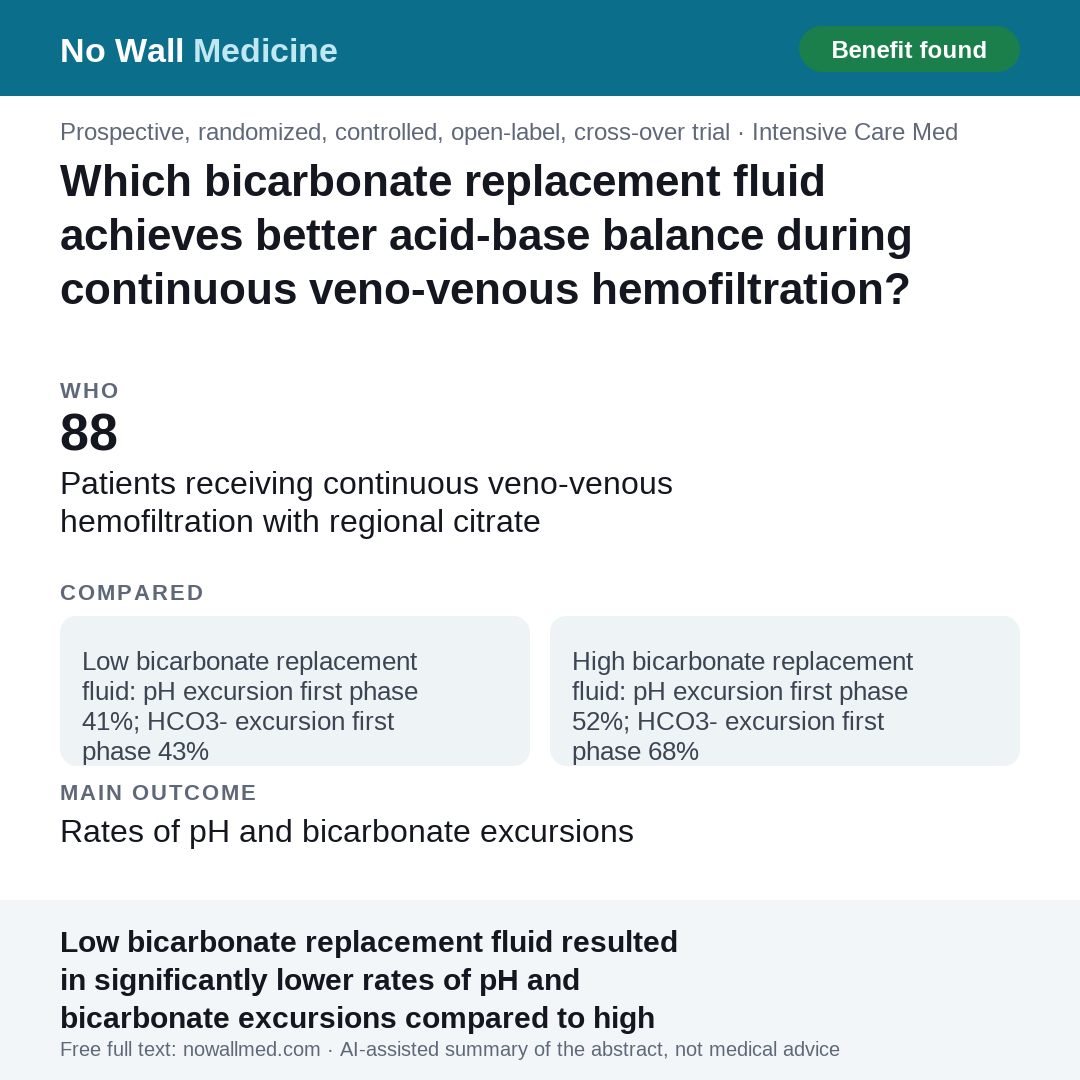
Comparison of two different bicarbonate replacement fluids during CVVH with RCA: a prospective, randomized, controlled trial
Prospective, randomized, controlled, open-label, cross-over trialBenefit found
Which bicarbonate replacement fluid achieves better acid-base balance during continuous veno-venous hemofiltration?
Who
88
Patients receiving continuous veno-venous hemofiltration with regional citrate anticoagulation · single-center trial
Compared
Low bicarbonate replacement fluid: pH excursion first phase 41%; HCO3- excursion first phase 43%
High bicarbonate replacement fluid: pH excursion first phase 52%; HCO3- excursion first phase 68%
Main outcome
Rates of pH and bicarbonate excursions
Result: odds ratio 1.78 (95% CI 1.12-2.82) for pH; 3.60 (95% CI 2.16-5.99) for HCO3-
Bottom line: Low bicarbonate replacement fluid resulted in significantly lower rates of pH and bicarbonate excursions compared to high bicarbonate replacement fluid.
Intensive Care Med · 2025-11-17Download image
Once-Weekly Navepegritide in Children With Achondroplasia: The APPROACH Randomized Clinical Trial
Randomized, double-blind trialBenefit found
Navepegritide efficacy in children with achondroplasia
Who
84
Children with achondroplasia aged two to eleven years · Ten hospitals in seven countries
Compared
Navepegritide: annualized growth velocity increase of 1.49 cm/y
Placebo
Main outcome
Annualized growth velocity
Result: least-squares mean treatment difference of 1.49 cm/y (95% CI 1.05 to 1.93)
Bottom line: Navepegritide increased growth velocity in children
JAMA Pediatr · 2025-11-17Download image

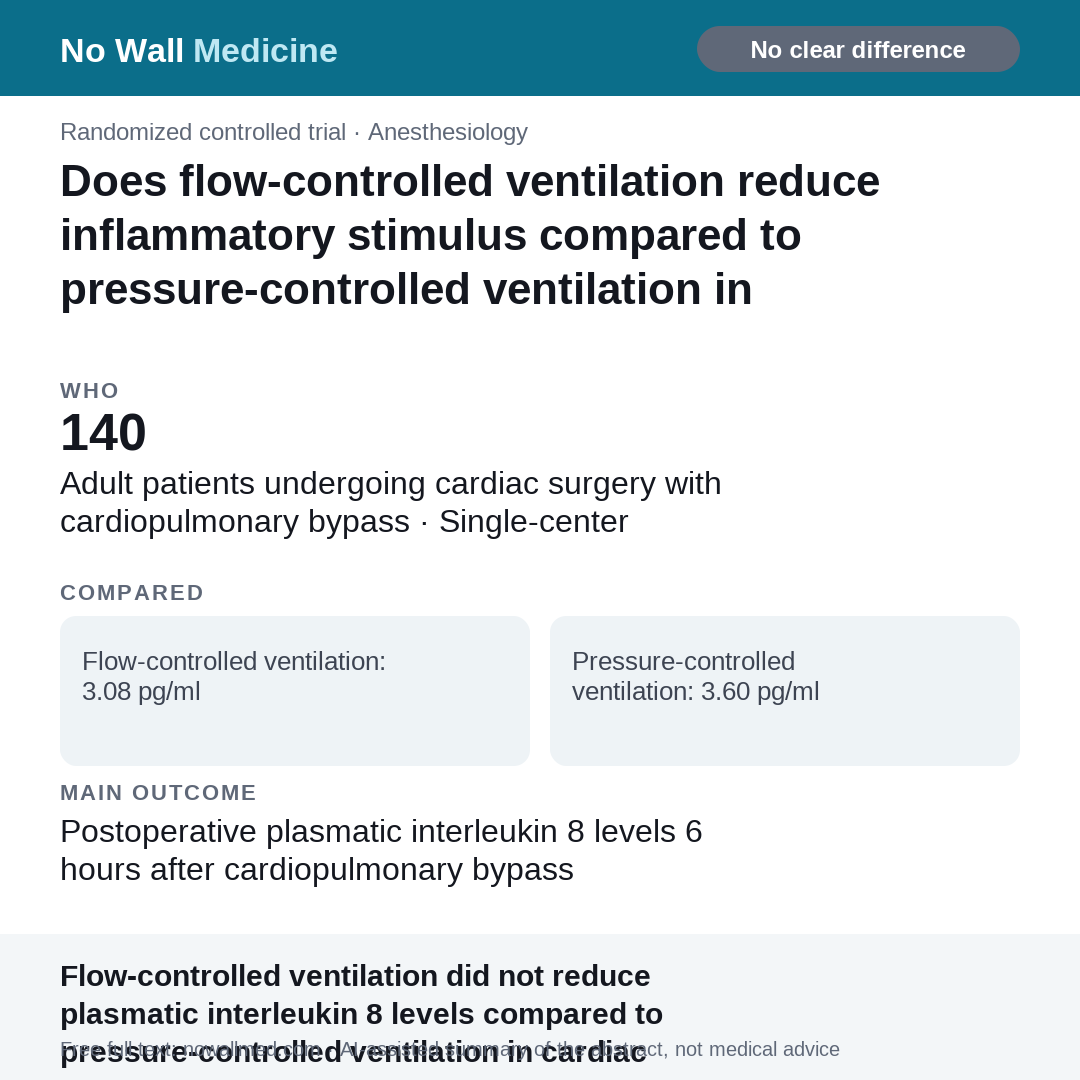
Individualized Flow-controlled versus Pressure-controlled Ventilation in Cardiac Surgery: A Randomized Controlled Trial
Randomized controlled trialNo clear difference
Does flow-controlled ventilation reduce inflammatory stimulus compared to pressure-controlled ventilation in cardiac surgery?
Who
140
Adult patients undergoing cardiac surgery with cardiopulmonary bypass · Single-center
Compared
Flow-controlled ventilation: 3.08 pg/ml
Pressure-controlled ventilation: 3.60 pg/ml
Main outcome
Postoperative plasmatic interleukin 8 levels 6 hours after cardiopulmonary bypass
Result: β, 0.08 pg/ml; 95% CI, -0.17 to 0.33
Bottom line: Flow-controlled ventilation did not reduce plasmatic interleukin 8 levels compared to pressure-controlled ventilation in cardiac surgery patients.
Limitation: Secondary outcomes including pulmonary and extrapulmonary complications were explorative.
Anesthesiology · 2025-11-17Download image
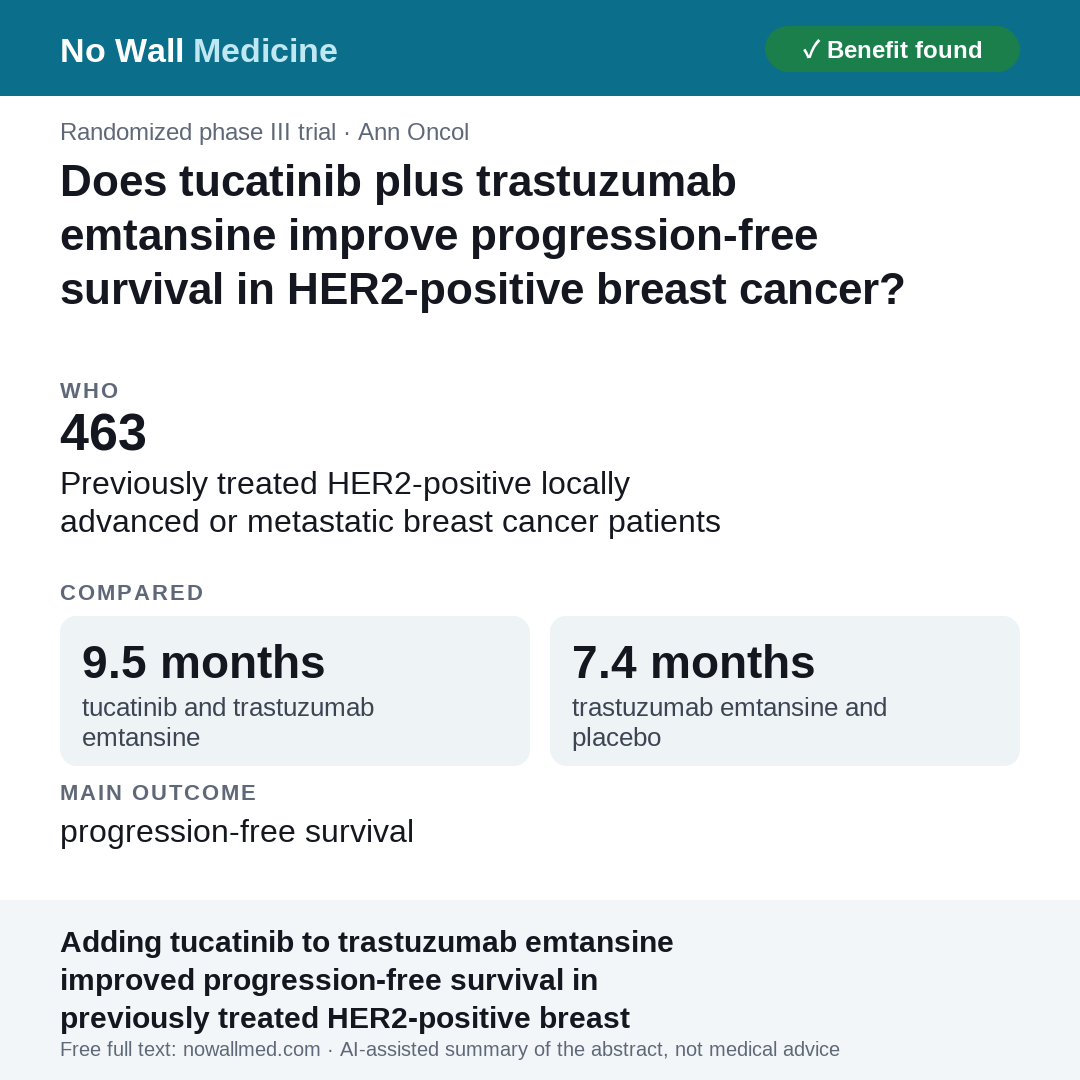
Tucatinib and trastuzumab emtansine for patients with previously treated HER2-positive locally advanced and metastatic breast cancer: primary analysis of the randomized phase III trial HER2CLIMB-02
Randomized phase III trialBenefit found
Does tucatinib plus trastuzumab emtansine improve progression-free survival in HER2-positive breast cancer?
Who
463
Previously treated HER2-positive locally advanced or metastatic breast cancer patients
Compared
9.5 monthstucatinib and trastuzumab emtansine
7.4 monthstrastuzumab emtansine and placebo
Main outcome
progression-free survival
Result: hazard ratio 0.76 (95% CI 0.61-0.95)
Bottom line: Adding tucatinib to trastuzumab emtansine improved progression-free survival in previously treated HER2-positive breast cancer patients.
Ann Oncol · 2025-11-17Download image