Visual abstracts
New randomized trials and meta-analyses from leading journals at a glance: who was studied, what was compared, and what was found. Every paper is free to read in full.
All specialtiesCardiology 4763Oncology 4043Gastroenterology & Hepatology 1903Infectious Disease 3756Neurology 1872Psychiatry & Mental Health 2216Pulmonology 2044Critical Care 1319Endocrinology & Diabetes 2544Pediatrics 2889Surgery 2480Orthopedics & Sports Medicine 917Neurosurgery 525Cardiothoracic & Vascular Surgery 656Plastic & Reconstructive Surgery 574Nephrology 1107Rheumatology 810Hematology 1090Dermatology 611Ophthalmology 532Obstetrics & Gynecology 1645Public & Global Health 1037Radiology & Imaging 619Anesthesiology 958Urology 745ENT (Otolaryngology) 494Emergency Medicine 481Allergy & Immunology 309Geriatrics 972Family Medicine & Primary Care 534Medical Genetics & Genomics 659Pathology & Laboratory Medicine 156Physical Medicine & Rehabilitation 734Palliative Care 421Nutrition 1560Digital Health & AI 2137General Medicine 318
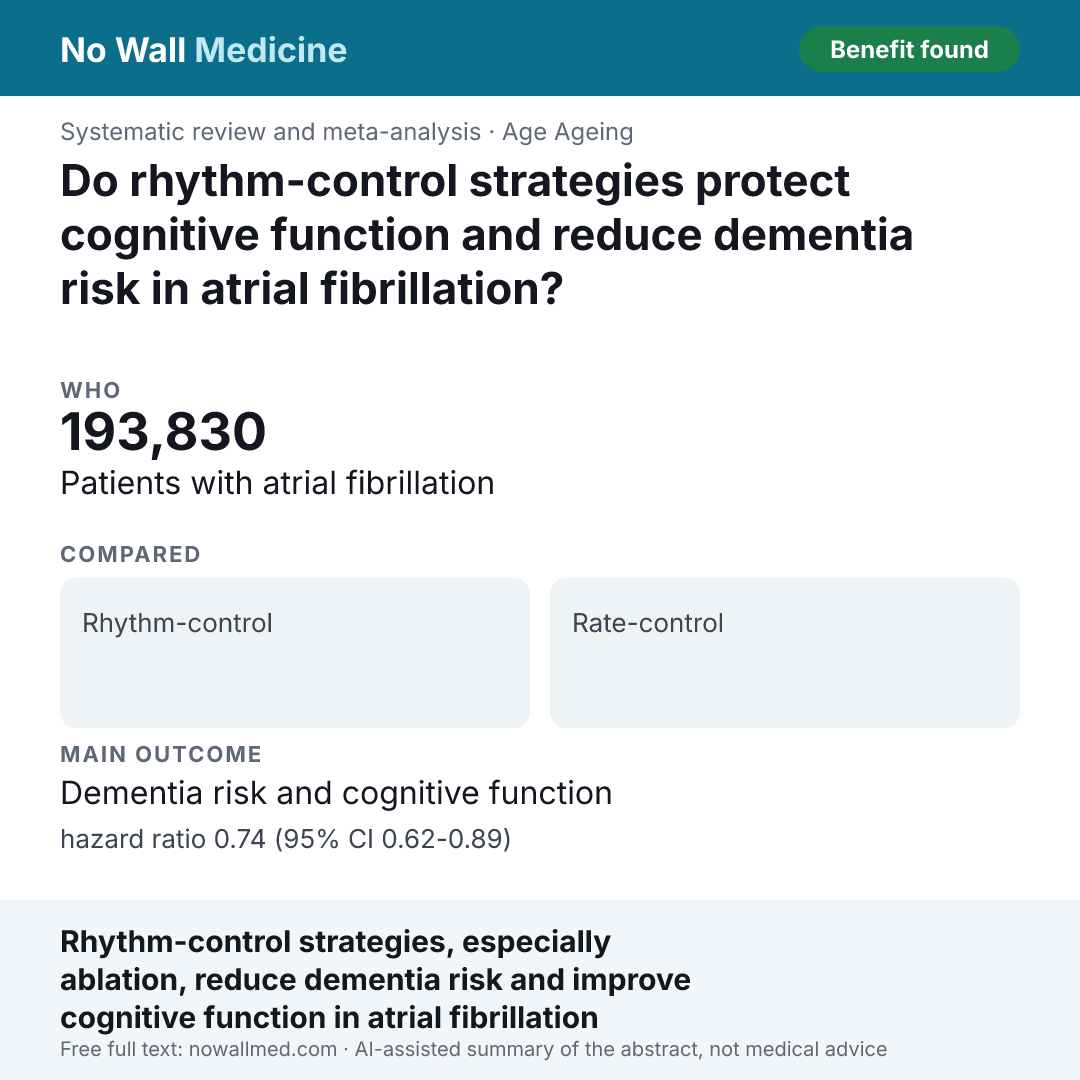
Effects of rhythm-control and rate-control strategies on cognitive function and dementia in atrial fibrillation: a systematic review and meta-analysis
Systematic review and meta-analysisBenefit found
Do rhythm-control strategies protect cognitive function and reduce dementia risk in atrial fibrillation?
Who
193,830
Patients with atrial fibrillation
Compared
Rhythm-control
Rate-control
Main outcome
Dementia risk and cognitive function
Result: hazard ratio 0.74 (95% CI 0.62-0.89)
Bottom line: Rhythm-control strategies, especially ablation, reduce dementia risk and improve cognitive function in atrial fibrillation patients.
Age Ageing · 2024-02-19 · Save PNG
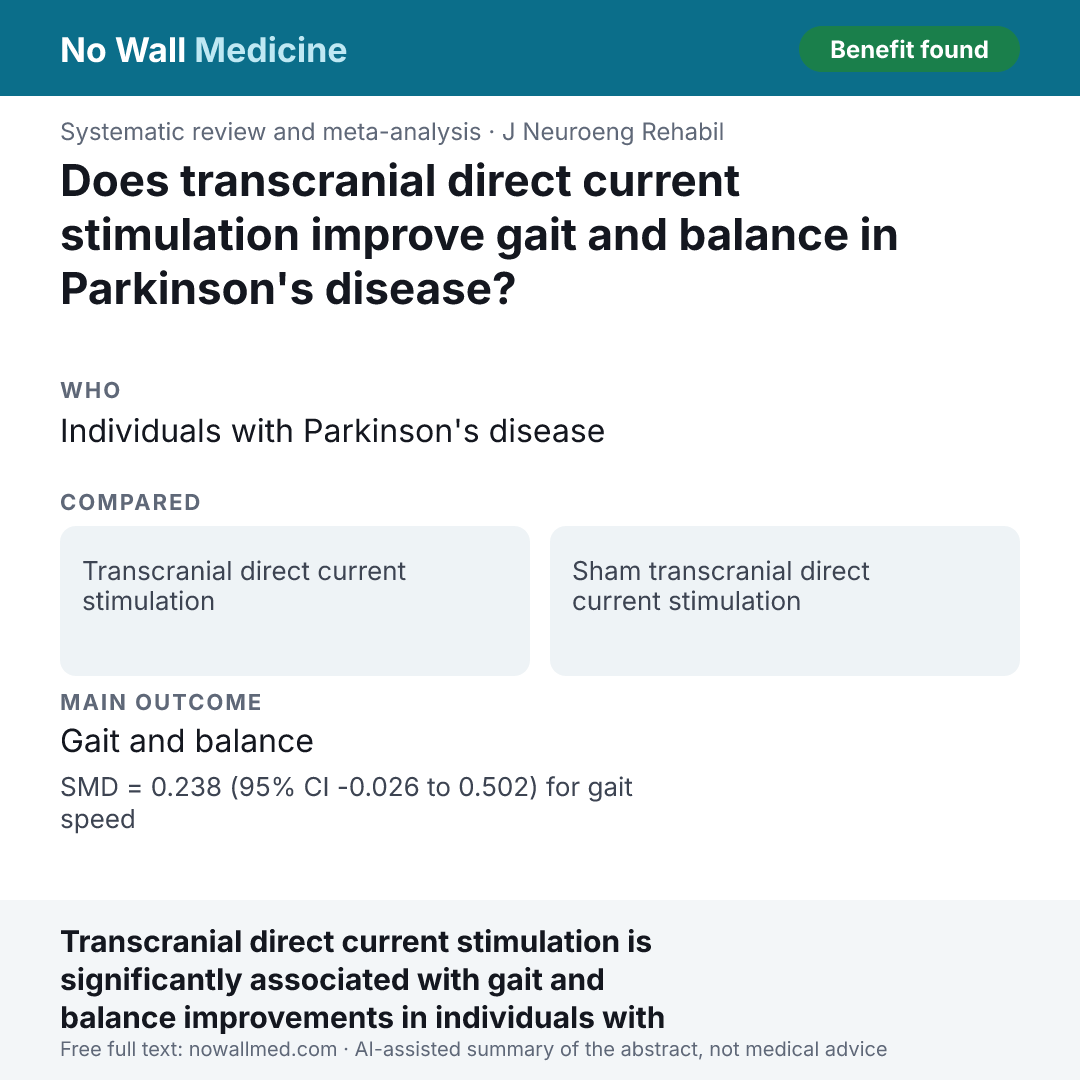
Effects of transcranial direct current stimulation alone and in combination with rehabilitation therapies on gait and balance among individuals with Parkinson's disease: a systematic review and meta-analysis
Systematic review and meta-analysisBenefit found
Does transcranial direct current stimulation improve gait and balance in Parkinson's disease?
Who
Individuals with Parkinson's disease
Compared
Transcranial direct current stimulation
Sham transcranial direct current stimulation
Main outcome
Gait and balance
Result: SMD = 0.238 (95% CI -0.026 to 0.502) for gait speed
Bottom line: Transcranial direct current stimulation is significantly associated with gait and balance improvements in individuals with Parkinson's disease.
J Neuroeng Rehabil · 2024-02-19 · Save PNG
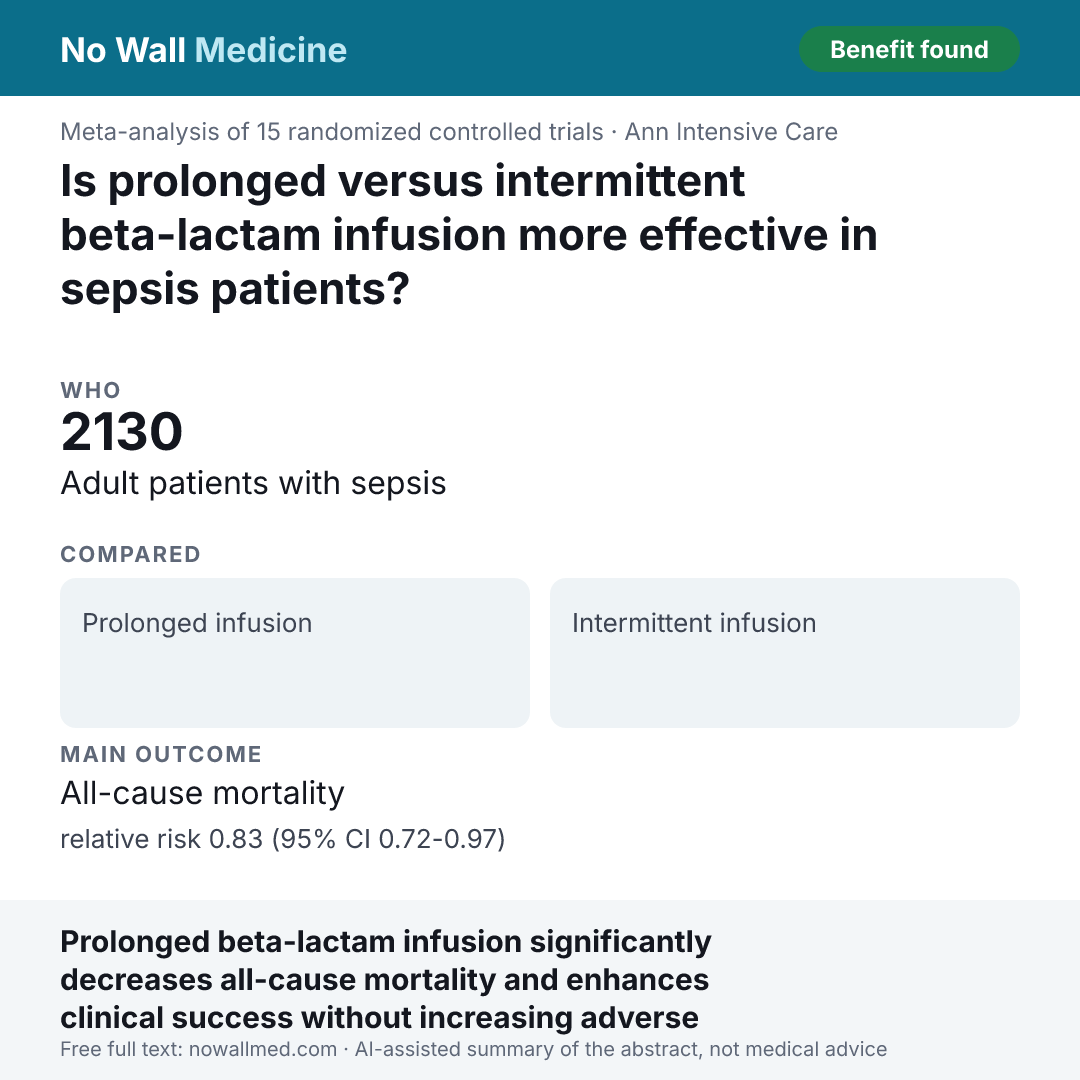
Prolonged versus intermittent β-lactam infusion in sepsis: a systematic review and meta-analysis of randomized controlled trials
Meta-analysis of 15 randomized controlled trialsBenefit found
Is prolonged versus intermittent beta-lactam infusion more effective in sepsis patients?
Who
2130
Adult patients with sepsis
Compared
Prolonged infusion
Intermittent infusion
Main outcome
All-cause mortality
Result: relative risk 0.83 (95% CI 0.72-0.97)
Bottom line: Prolonged beta-lactam infusion significantly decreases all-cause mortality and enhances clinical success without increasing adverse events in sepsis patients.
Ann Intensive Care · 2024-02-18 · Save PNG
Is detection of enteropathogens and human or animal faecal markers in the environment associated with subsequent child enteric infections and growth: an individual participant data meta-analysis
Individual participant data meta-analysisMixed results
Are environmental enteropathogens and faecal markers associated with child enteric infections and growth?
Who
8603
Children younger than 5 years
Compared
Environmental pathogen detection: lower HAZ (ΔHAZ -0·09 [95% CI -0·17 to -0·01])
Microbial source tracking markers: ΔHAZ -0·01 [-0·13 to 0·11] for human markers
Main outcome
Diarrhoea prevalence and height-for-age Z-scores
Result: ΔHAZ -0·09 (95% CI -0·17 to -0·01)
Bottom line: Environmental pathogen detection was associated with lower height-for-age Z-scores and increased infection prevalence, but not diarrhoea.
Funded by: Bill & Melinda Gates Foundation and UK FCDO
Lancet Glob Health · 2024-02-17 · Save PNG

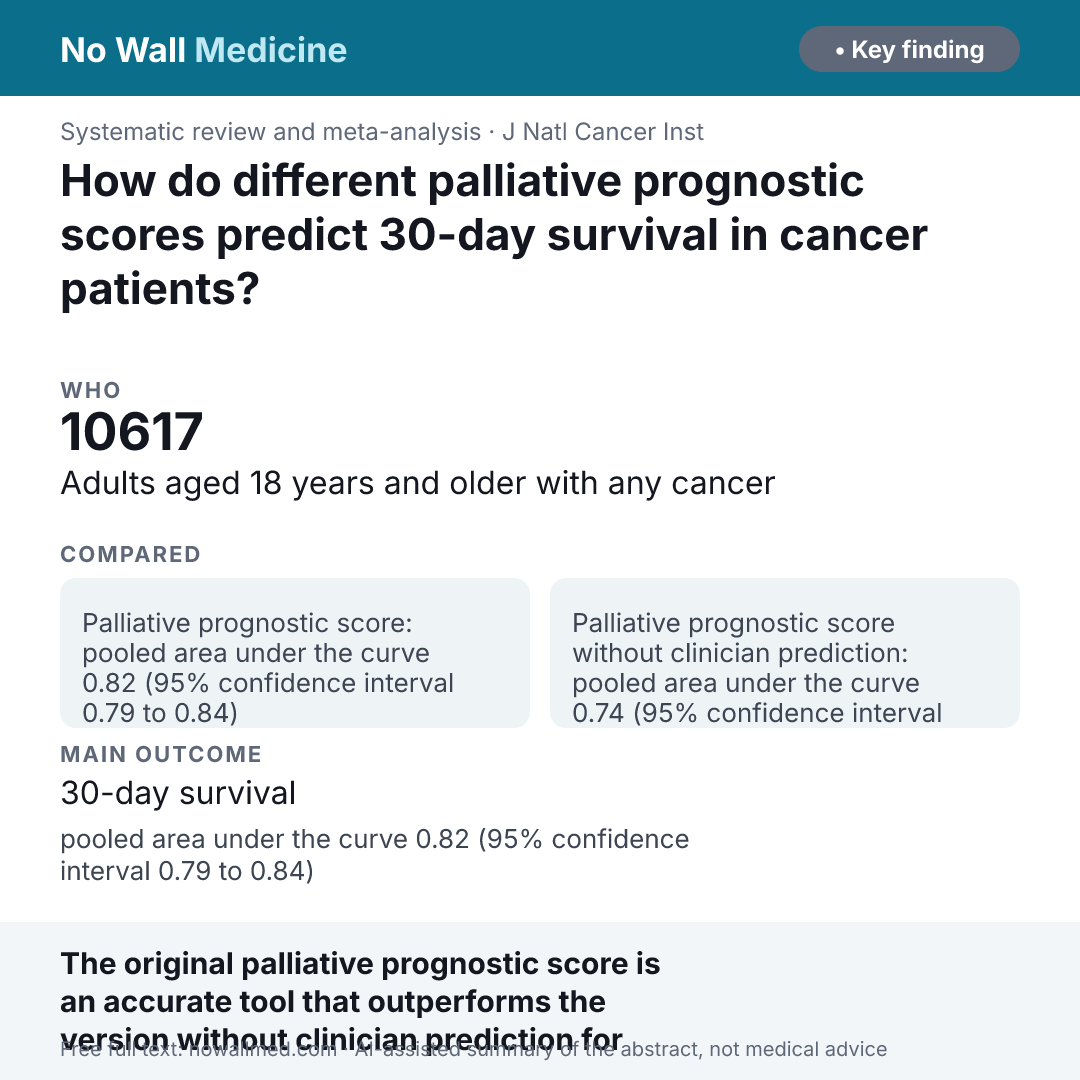
Palliative prognostic scores for survival prediction of cancer patients: a systematic review and meta-analysis
Systematic review and meta-analysisKey finding
How do different palliative prognostic scores predict 30-day survival in cancer patients?
Who
10617
Adults aged 18 years and older with any cancer
Compared
Palliative prognostic score: pooled area under the curve 0.82 (95% confidence interval 0.79 to 0.84)
Palliative prognostic score without clinician prediction: pooled area under the curve 0.74 (95% confidence interval 0.71 to 0.78)
Main outcome
30-day survival
Result: pooled area under the curve 0.82 (95% confidence interval 0.79 to 0.84)
Bottom line: The original palliative prognostic score is an accurate tool that outperforms the version without clinician prediction for predicting survival.
Limitation: Most studies were at high risk of bias because calibration was not assessed.
J Natl Cancer Inst · 2024-02-17 · Save PNG
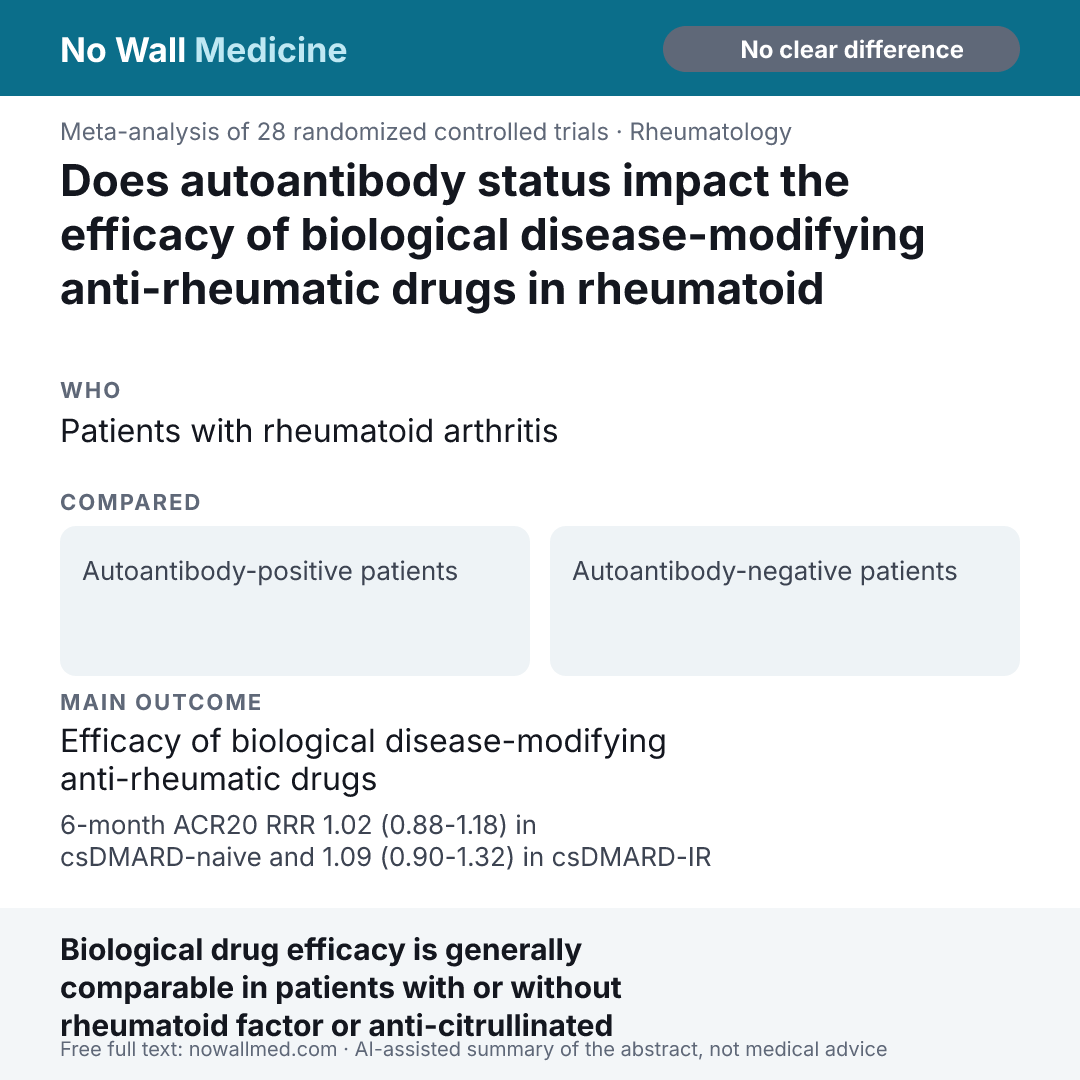
The impact of autoantibodies on the efficacy of biological disease-modifying anti-rheumatic drugs in rheumatoid arthritis: meta-analysis of randomized controlled trials
Meta-analysis of 28 randomized controlled trialsNo clear difference
Does autoantibody status impact the efficacy of biological disease-modifying anti-rheumatic drugs in rheumatoid arthritis?
Who
Patients with rheumatoid arthritis
Compared
Autoantibody-positive patients
Autoantibody-negative patients
Main outcome
Efficacy of biological disease-modifying anti-rheumatic drugs
Result: 6-month ACR20 RRR 1.02 (0.88-1.18) in csDMARD-naive and 1.09 (0.90-1.32) in csDMARD-IR
Bottom line: Biological drug efficacy is generally comparable in patients with or without rheumatoid factor or anti-citrullinated protein antibodies.
Rheumatology · 2024-02-17 · Save PNG
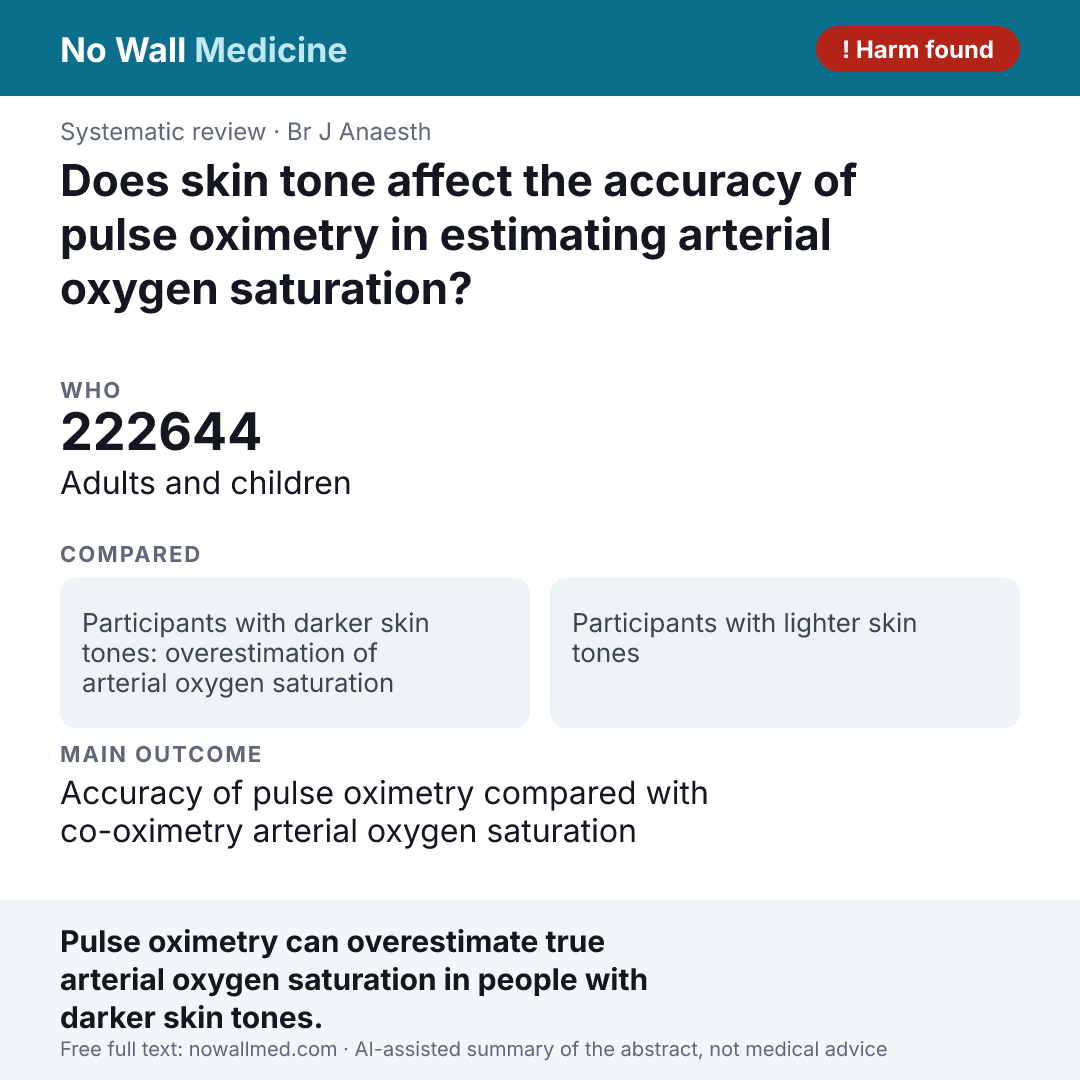
Effect of skin tone on the accuracy of the estimation of arterial oxygen saturation by pulse oximetry: a systematic review
Systematic reviewHarm found
Does skin tone affect the accuracy of pulse oximetry in estimating arterial oxygen saturation?
Who
222644
Adults and children
Compared
Participants with darker skin tones: overestimation of arterial oxygen saturation
Participants with lighter skin tones
Main outcome
Accuracy of pulse oximetry compared with co-oximetry arterial oxygen saturation
Bottom line: Pulse oximetry can overestimate true arterial oxygen saturation in people with darker skin tones.
Limitation: High risk of bias in 64% of studies and considerable heterogeneity.
Br J Anaesth · 2024-02-17 · Save PNG
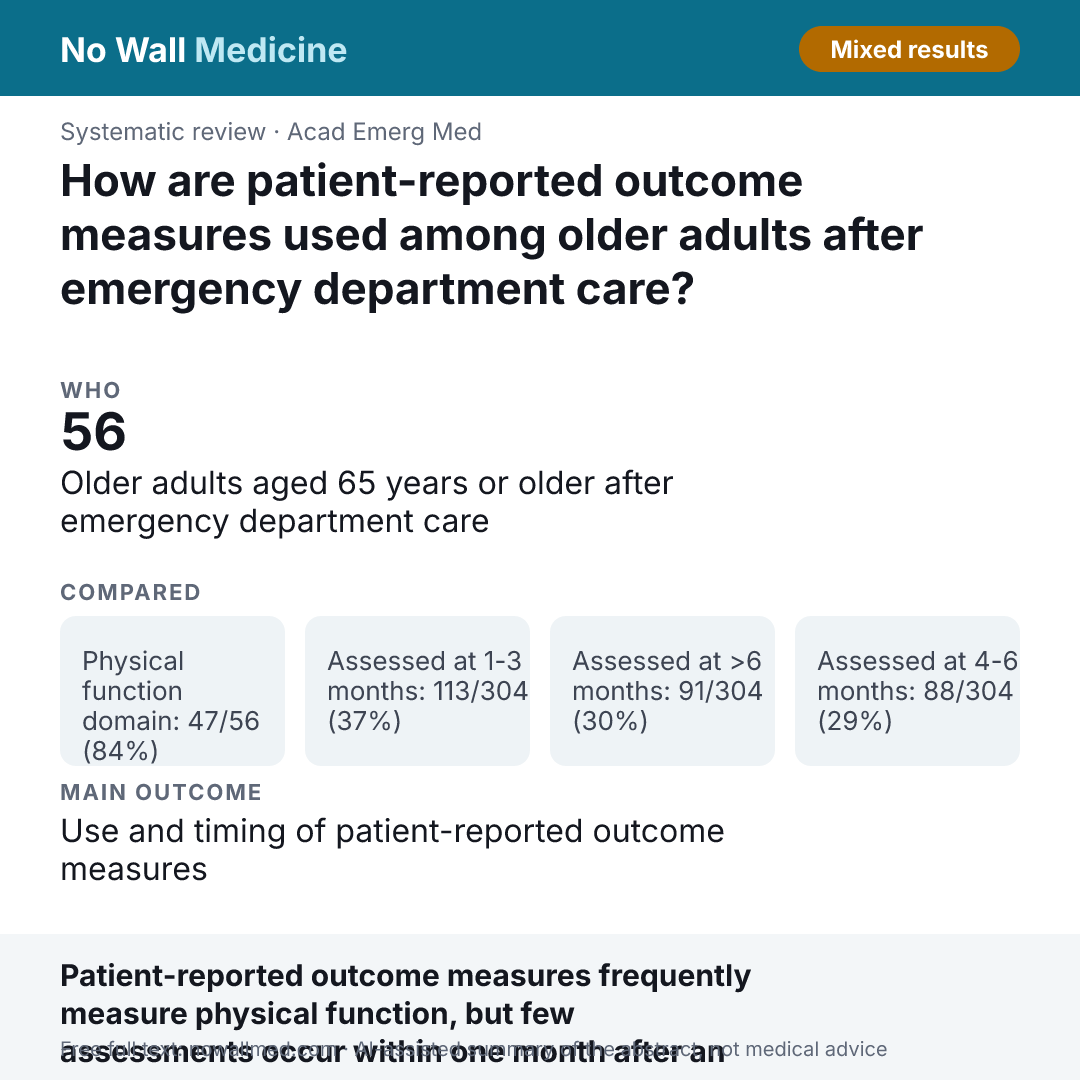
Patient-reported outcome measure use among older adults after emergency department care: A systematic review
Systematic reviewMixed results
How are patient-reported outcome measures used among older adults after emergency department care?
Who
56
Older adults aged 65 years or older after emergency department care
Compared
Physical function domain: 47/56 (84%)
Assessed at 1-3 months: 113/304 (37%)
Assessed at >6 months: 91/304 (30%)
Assessed at 4-6 months: 88/304 (29%)
Main outcome
Use and timing of patient-reported outcome measures
Bottom line: Patient-reported outcome measures frequently measure physical function, but few assessments occur within one month after an emergency department visit.
Limitation: Interventional studies had varying risk of bias, with nine studies having high risk of bias.
Acad Emerg Med · 2024-02-17 · Save PNG
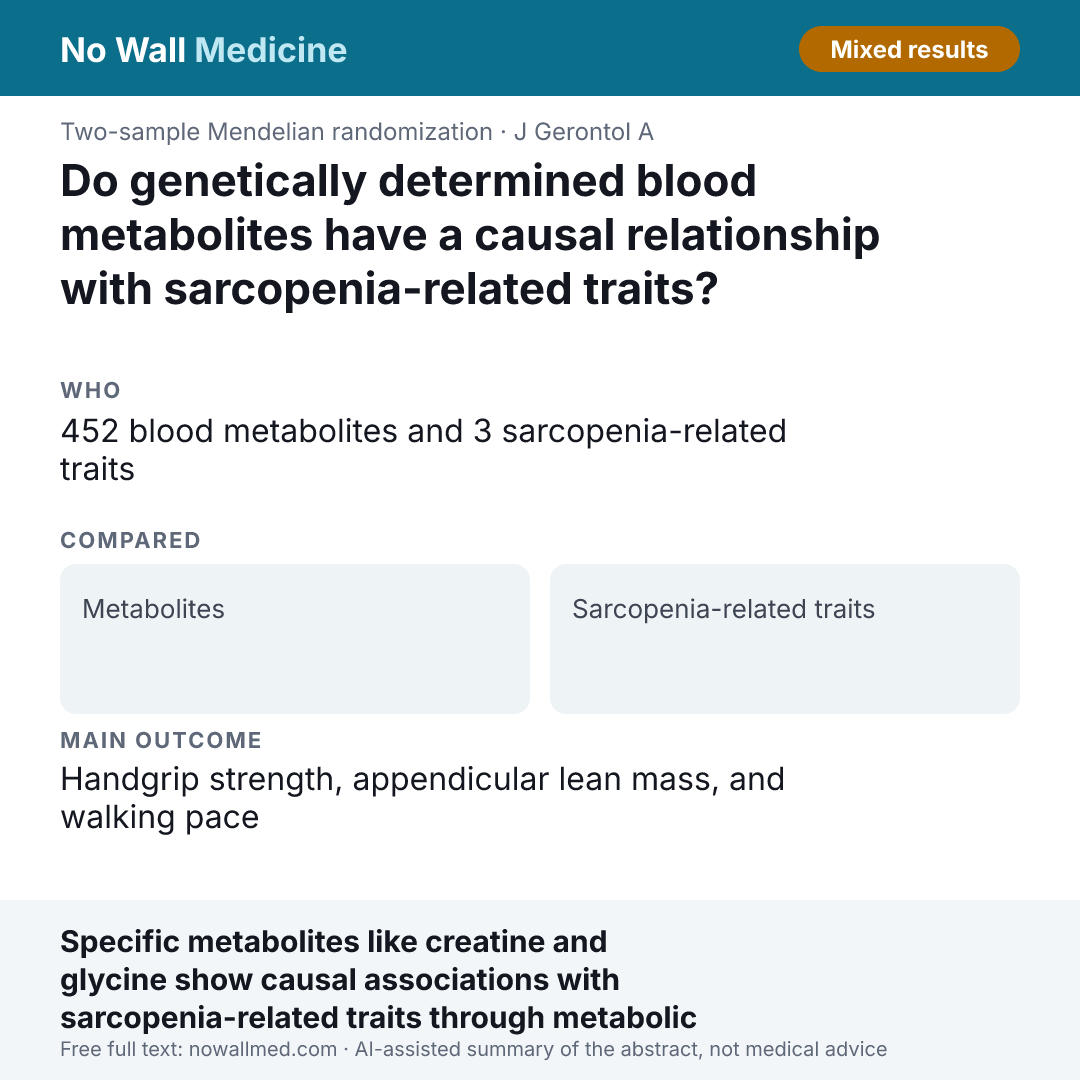
Metabolome-Wide Mendelian Randomization Assessing the Causal Relationship Between Blood Metabolites and Sarcopenia-Related Traits
Two-sample Mendelian randomizationMixed results
Do genetically determined blood metabolites have a causal relationship with sarcopenia-related traits?
Who
452 blood metabolites and 3 sarcopenia-related traits
Compared
Metabolites
Sarcopenia-related traits
Main outcome
Handgrip strength, appendicular lean mass, and walking pace
Bottom line: Specific metabolites like creatine and glycine show causal associations with sarcopenia-related traits through metabolic pathways.
J Gerontol A · 2024-02-17 · Save PNG
Question answering systems for health professionals at the point of care-a systematic review
Systematic review and narrative synthesisMixed results
What are the characteristics and suitability of biomedical question answering systems for healthcare?
Who
Biomedical question answering systems described in peer-reviewed literature
Compared
Systems meeting clinical utility criteria: 8 studies
Systems reporting user evaluations: 7 studies
Main outcome
Suitability and utility of biomedical question answering systems
Bottom line: Most biomedical question answering systems lack clinical utility, user evaluations, and realistic healthcare information needs.
Limitation: Many studies suffered from high risks of bias and applicability concerns.
J Am Med Inform Assoc · 2024-02-17 · Save PNG

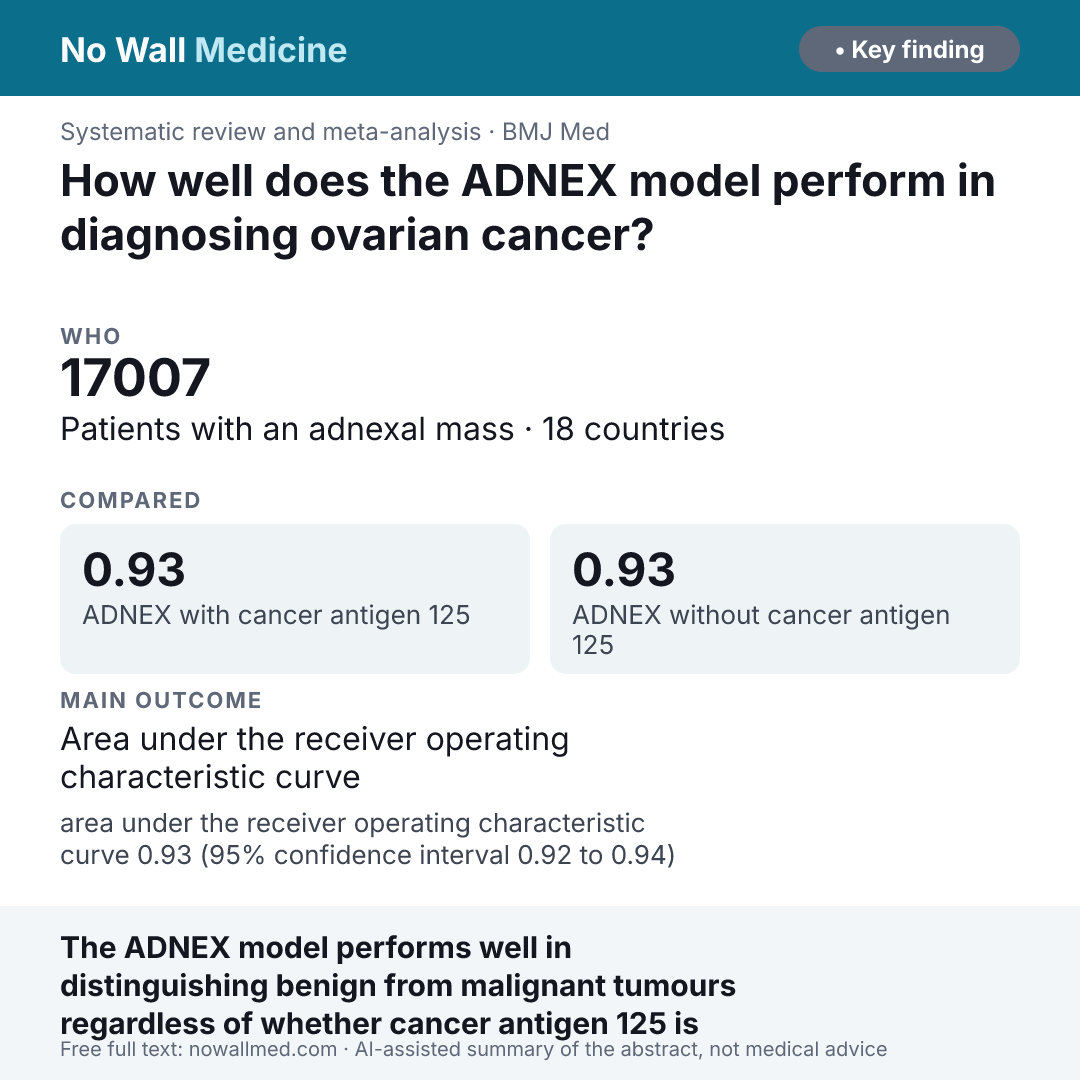
ADNEX risk prediction model for diagnosis of ovarian cancer: systematic review and meta-analysis of external validation studies
Systematic review and meta-analysisKey finding
How well does the ADNEX model perform in diagnosing ovarian cancer?
Who
17007
Patients with an adnexal mass · 18 countries
Compared
0.93ADNEX with cancer antigen 125
0.93ADNEX without cancer antigen 125
Main outcome
Area under the receiver operating characteristic curve
Result: area under the receiver operating characteristic curve 0.93 (95% confidence interval 0.92 to 0.94)
Bottom line: The ADNEX model performs well in distinguishing benign from malignant tumours regardless of whether cancer antigen 125 is used.
Limitation: Calibration was rarely assessed and most validations were at high risk of bias.
BMJ Med · 2024-02-17 · Save PNG
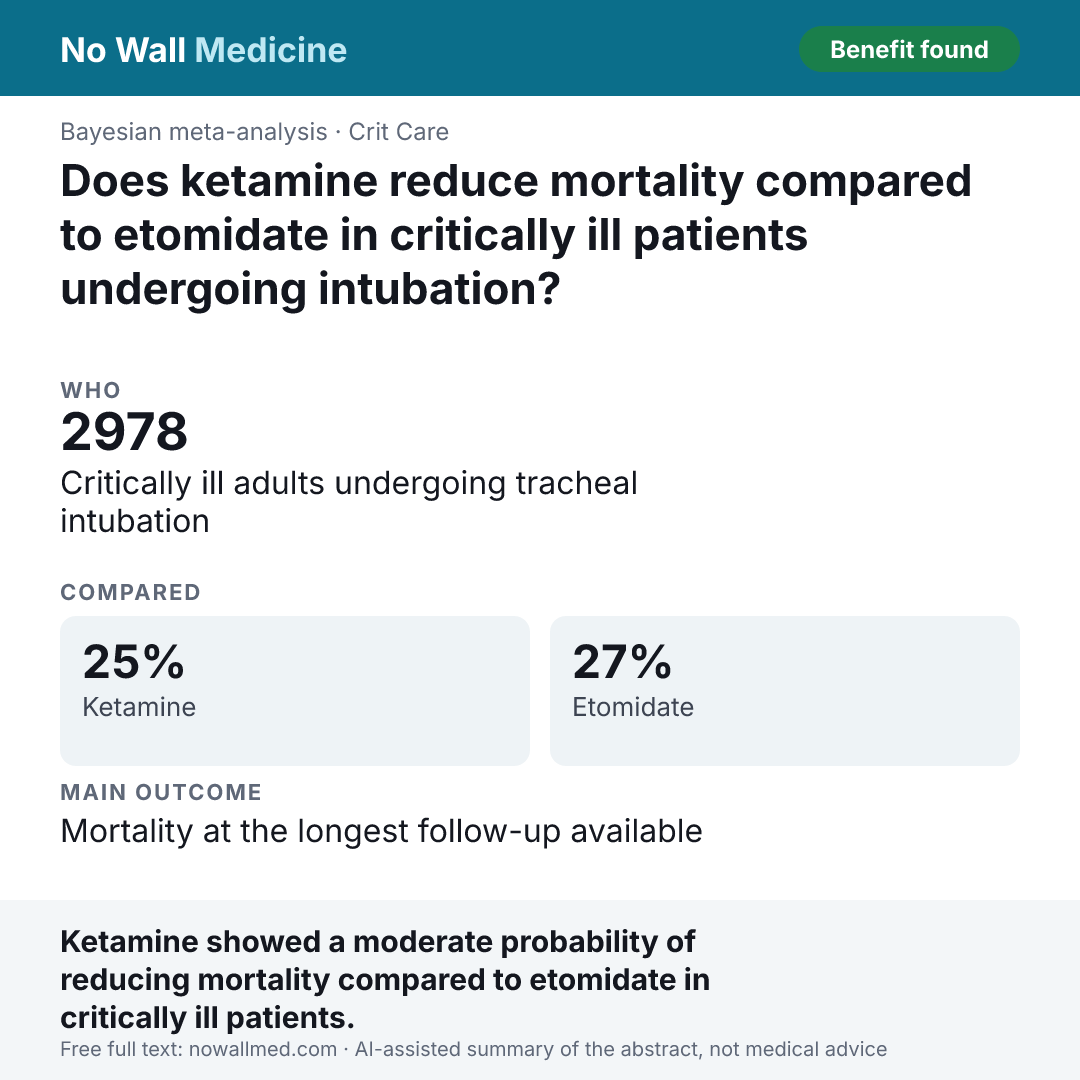
Ketamine versus etomidate as an induction agent for tracheal intubation in critically ill adults: a Bayesian meta-analysis
Bayesian meta-analysisBenefit found
Does ketamine reduce mortality compared to etomidate in critically ill patients undergoing intubation?
Who
2978
Critically ill adults undergoing tracheal intubation
Compared
25%Ketamine (376/1475)
27%Etomidate (411/1503)
Main outcome
Mortality at the longest follow-up available
Result: risk ratio 0.93 (95% CrI 0.79-1.08)
Bottom line: Ketamine showed a moderate probability of reducing mortality compared to etomidate in critically ill patients.
Crit Care · 2024-02-17 · Save PNG
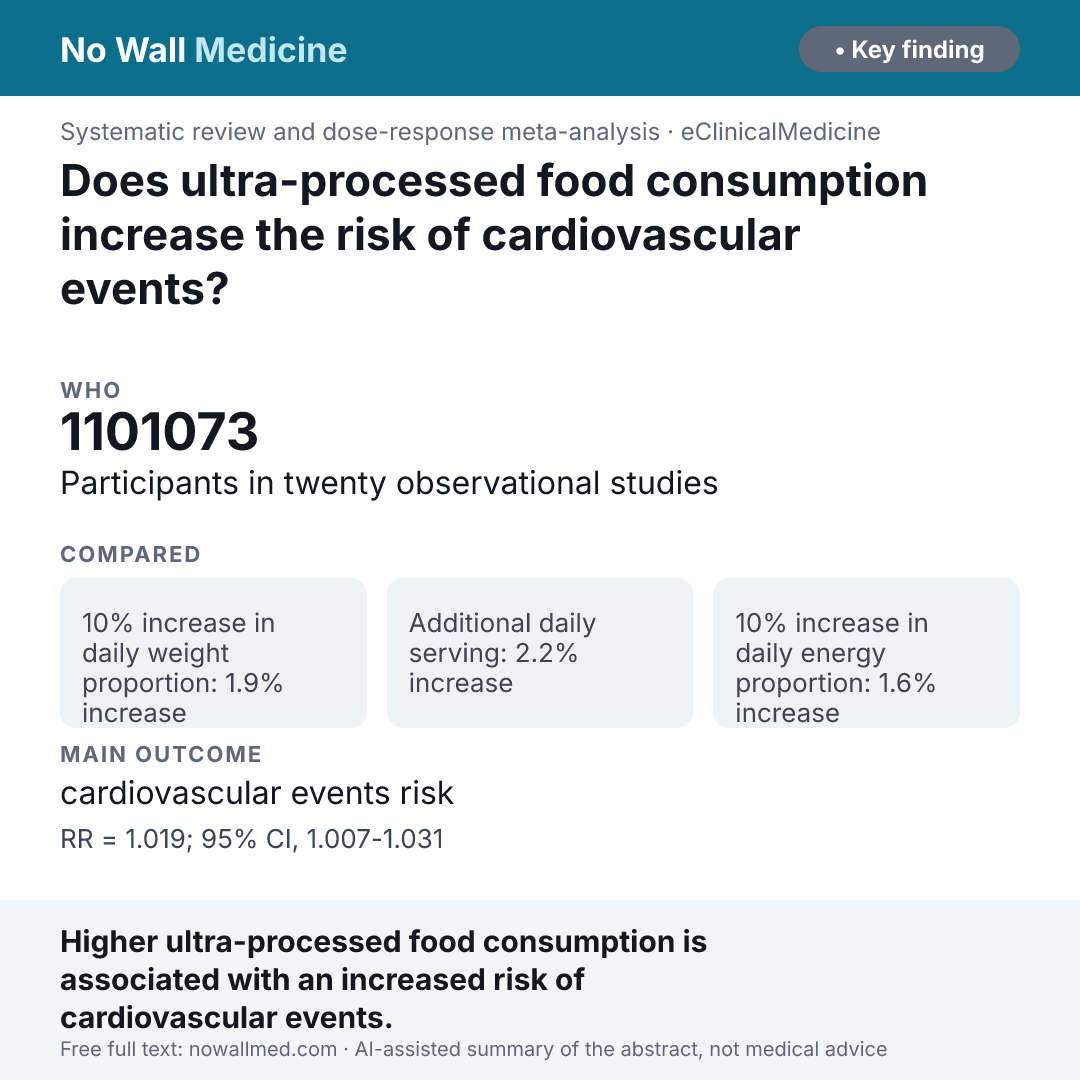
Ultra-processed food consumption and risk of cardiovascular events: a systematic review and dose-response meta-analysis
Systematic review and dose-response meta-analysisKey finding
Does ultra-processed food consumption increase the risk of cardiovascular events?
Who
1101073
Participants in twenty observational studies
Compared
10% increase in daily weight proportion: 1.9% increase
Additional daily serving: 2.2% increase
10% increase in daily energy proportion: 1.6% increase
Main outcome
cardiovascular events risk
Result: RR = 1.019; 95% CI, 1.007-1.031
Bottom line: Higher ultra-processed food consumption is associated with an increased risk of cardiovascular events.
Funded by: Key Research and Development Program of Shaanxi Province
eClinicalMedicine · 2024-02-16 · Save PNG
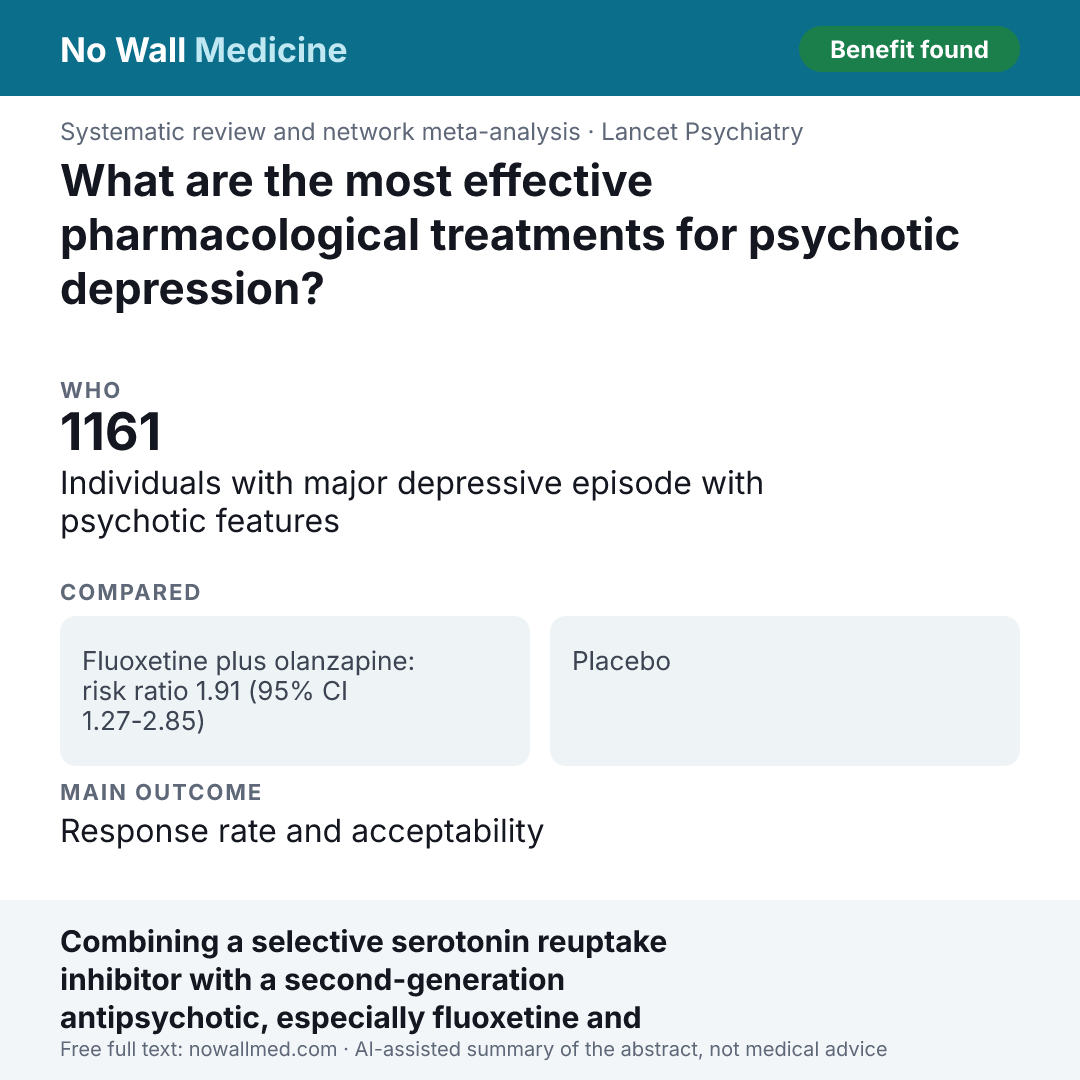
Pharmacological treatments for psychotic depression: a systematic review and network meta-analysis
Systematic review and network meta-analysisBenefit found
What are the most effective pharmacological treatments for psychotic depression?
Who
1161
Individuals with major depressive episode with psychotic features
Compared
Fluoxetine plus olanzapine: risk ratio 1.91 (95% CI 1.27-2.85)
Placebo
Main outcome
Response rate and acceptability
Result: risk ratio 1.91 (95% CI 1.27-2.85)
Bottom line: Combining a selective serotonin reuptake inhibitor with a second-generation antipsychotic, especially fluoxetine and olanzapine, may be optimal for psychotic depression.
Limitation: the conclusions should be interpreted cautiously
Lancet Psychiatry · 2024-02-16 · Save PNG
Continuous glucose monitoring in adults with type 2 diabetes: a systematic review and meta-analysis
Systematic review and meta-analysis of 12 randomized controlled trialsBenefit found
Does continuous glucose monitoring improve glycaemic control in adults with type 2 diabetes?
Who
1248
Adults with type 2 diabetes
Compared
Continuous glucose monitoring
Self-monitoring of blood glucose
Main outcome
Change in HbA1c
Result: mean difference -3.43 mmol/mol (-0.31%; 95% CI -4.75, -2.11)
Bottom line: Continuous glucose monitoring improves glycaemic control in adults with type 2 diabetes compared to self-monitoring of blood glucose.
Limitation: All studies were open label and data on complications were scarce.
Diabetologia · 2024-02-16 · Save PNG
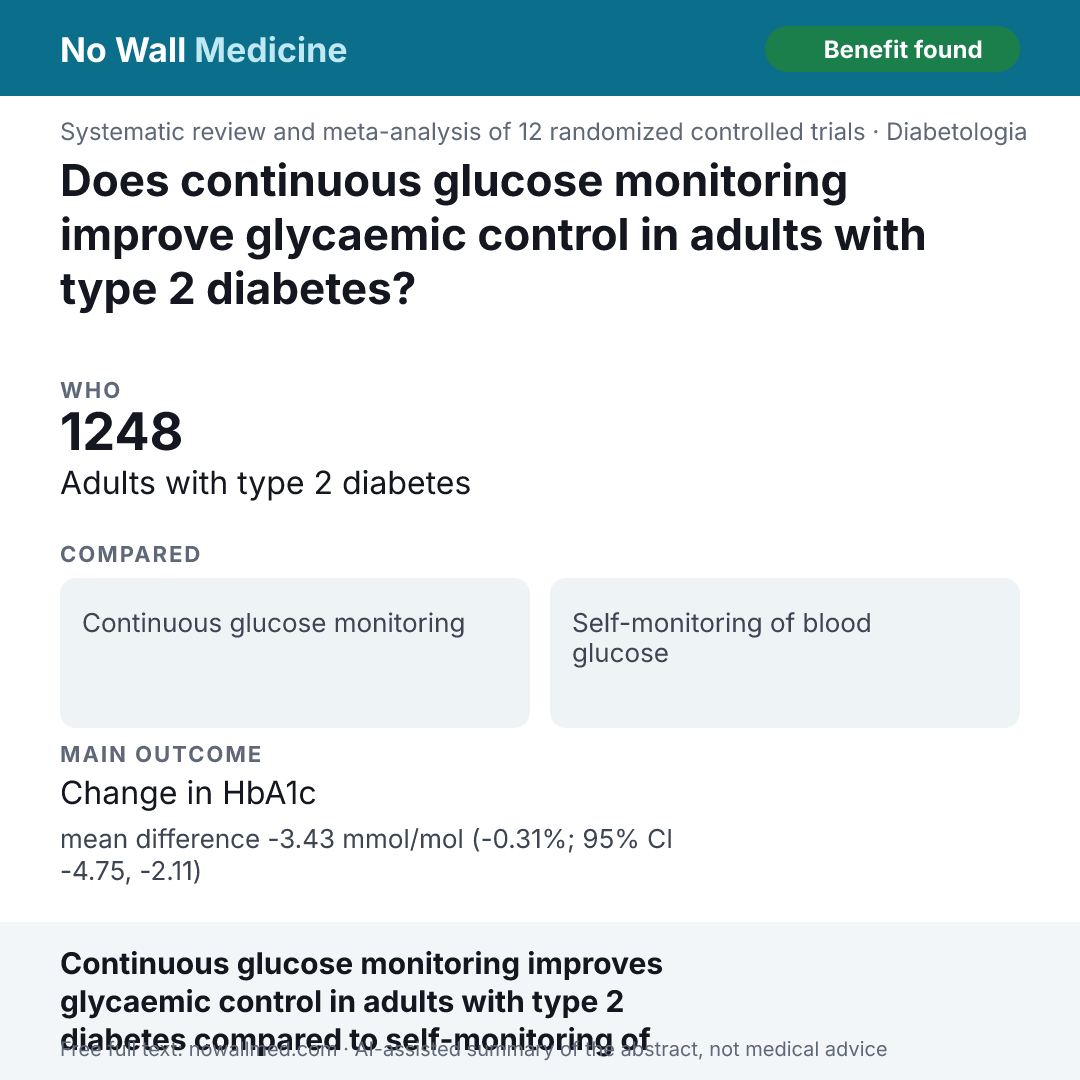
Selenium Supplementation in Patients with Hashimoto Thyroiditis: A Systematic Review and Meta-Analysis of Randomized Clinical Trials
Meta-analysis of 35 trialsBenefit found
Selenium for Hashimoto thyroiditis
Who
869
Patients with Hashimoto thyroiditis
Compared
Selenium
Control
Main outcome
Thyroid function and antibodies
Result: hazard ratio is not applicable, but SMD -0.21 (CI -0.43 to -0.02) for TSH
Bottom line: Selenium lowers TSH and antibodies
Thyroid · 2024-02-16 · Save PNG
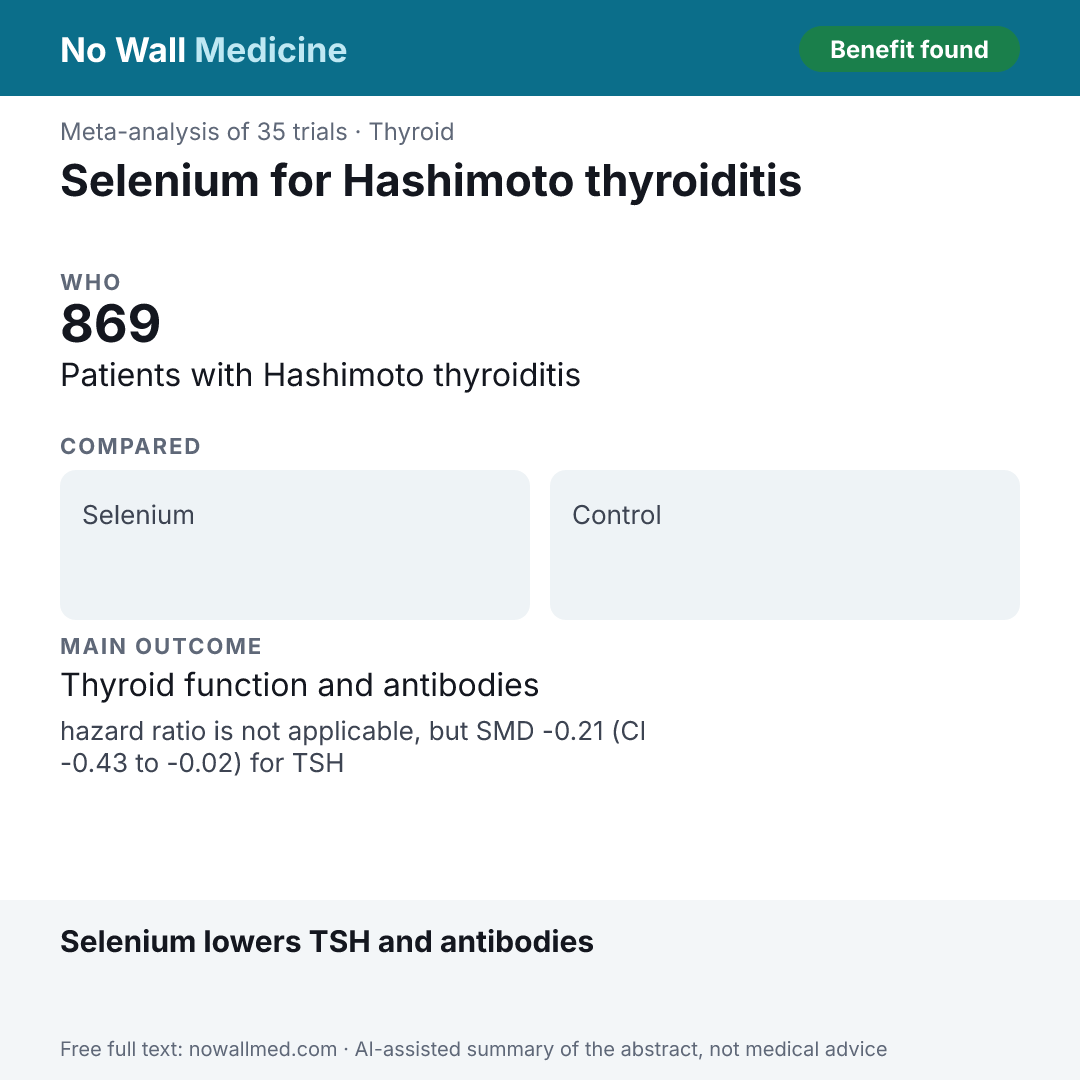
Potential Mediators for Treatment Effects of Novel Diabetes Medications on Cardiovascular and Renal Outcomes: A Meta-Regression Analysis
Meta-regression analysisMixed results
What mediates the treatment effects of GLP-1 receptor agonists and SGLT2 inhibitors?
Who
Patients in 9 GLP-1 receptor agonist and 13 SGLT2 inhibitor trials
Compared
Glucagon-like peptide-1 receptor agonists: major adverse cardiovascular events ΔHR, 23%
Sodium-glucose cotransporter-2 inhibitors: major adverse cardiovascular events ΔHR, -15% to -34%
Main outcome
cardiovascular, renal, and mortality outcomes
Bottom line: Glycated hemoglobin reduction mediates GLP-1 receptor agonist benefits, but SGLT2 inhibitor benefits may decrease with weight loss.
J Am Heart Assoc · 2024-02-16 · Save PNG
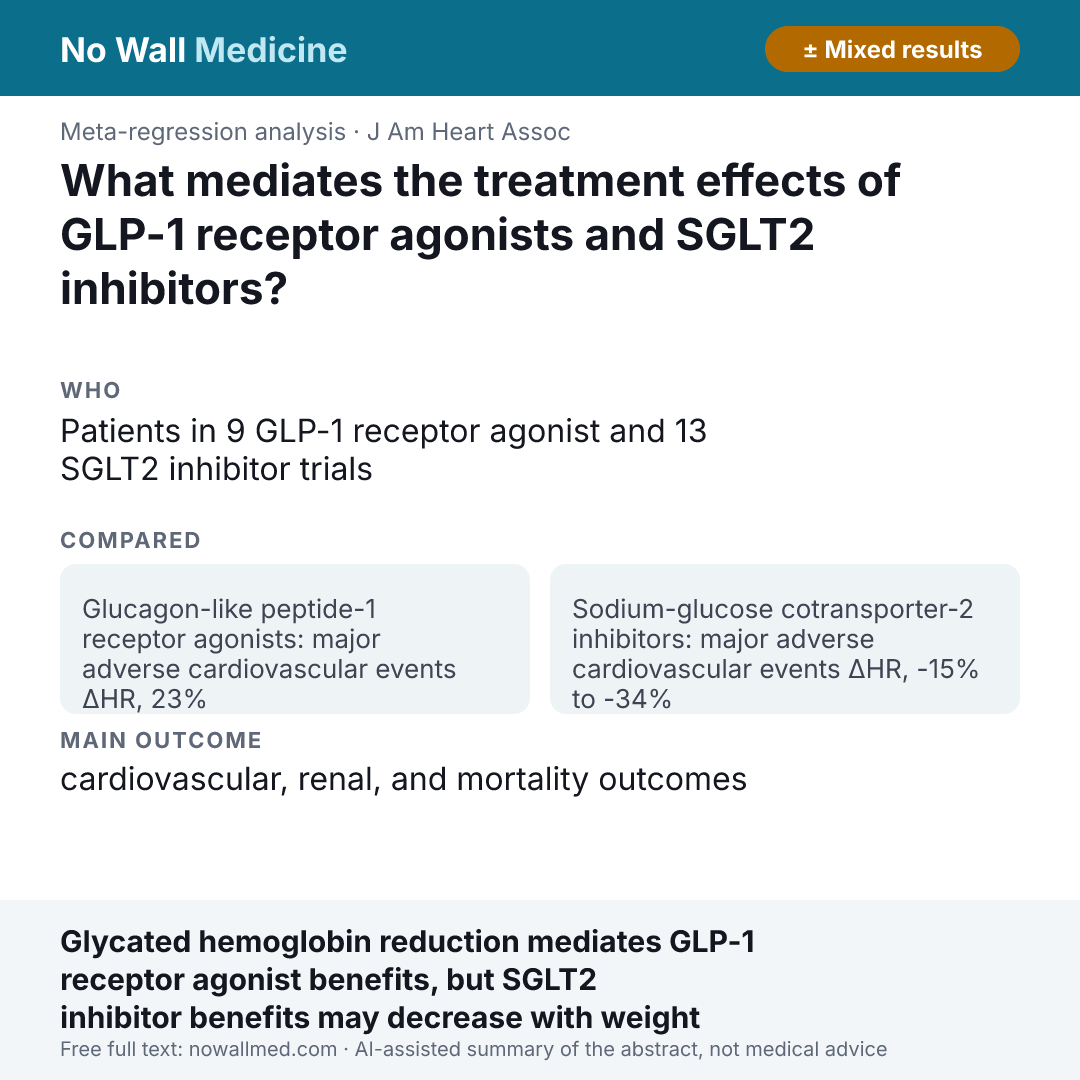
Effectiveness and Feasibility of Telehealth-Based Dietary Interventions Targeting Cardiovascular Disease Risk Factors: Systematic Review and Meta-Analysis
Systematic review and meta-analysis of randomized controlled trialsBenefit found
Are telehealth-based dietary interventions effective for improving cardiovascular disease risk factors?
Who
3013
Individuals with cardiovascular disease · Not specified; approximately one-third in the United States
Compared
Telehealth-based dietary interventions
Usual care
Main outcome
Clinical cardiovascular disease risk factors
Result: systolic blood pressure MD -2.74 (95% CI -4.93 to -0.56); low-density lipoprotein cholesterol standardized MD -0.11 (95% CI -0.19 to -0.03)
Bottom line: Telehealth-based dietary interventions significantly improve systolic blood pressure and low-density lipoprotein cholesterol in individuals with cardiovascular disease.
Limitation: Significant I2 indicated moderate to considerable heterogeneity.
J Med Internet Res · 2024-02-16 · Save PNG
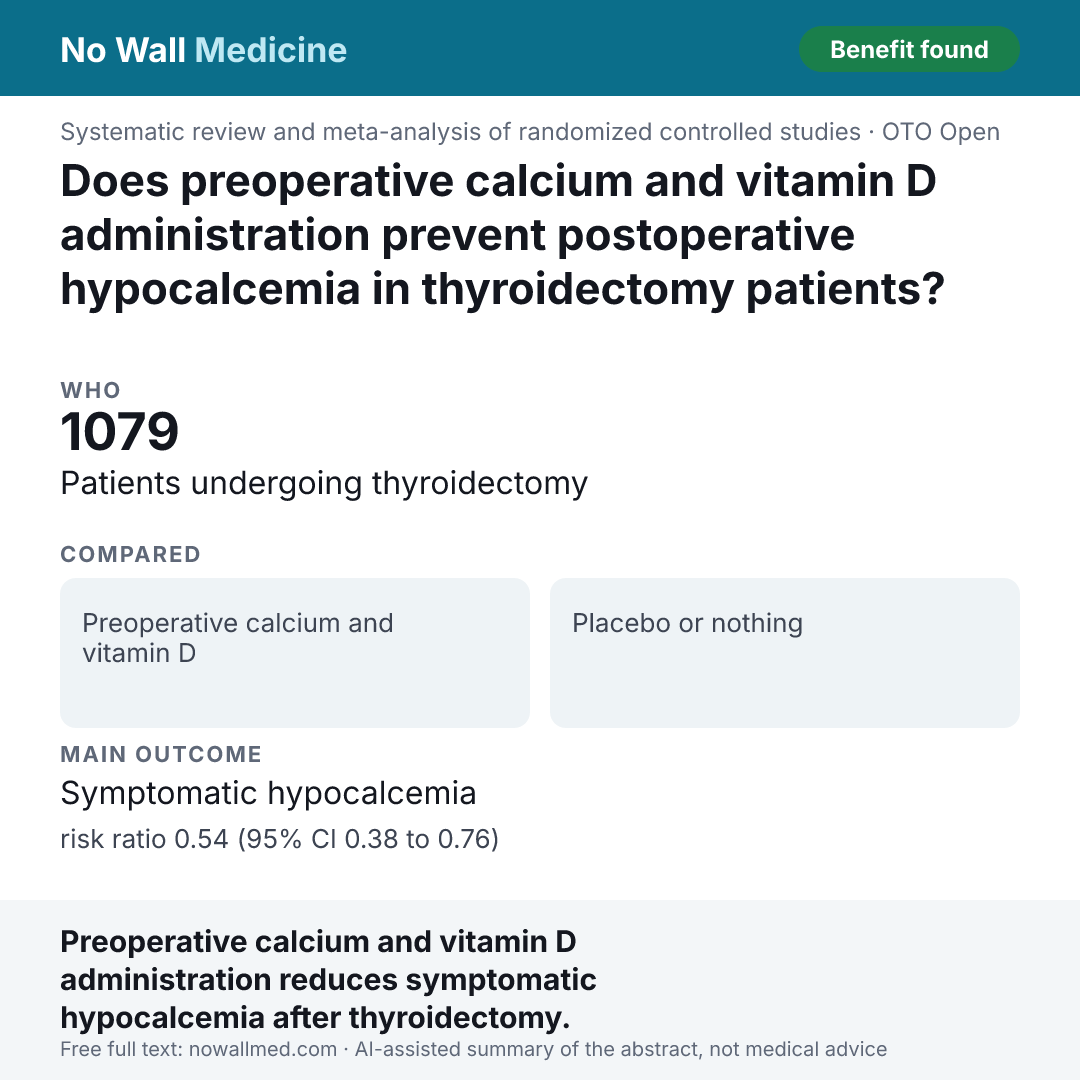
Preoperative Vitamin D and Calcium Administration in Patients Undergoing Thyroidectomy: A Systematic Review and Meta-analysis of Randomized Controlled Trials
Systematic review and meta-analysis of randomized controlled studiesBenefit found
Does preoperative calcium and vitamin D administration prevent postoperative hypocalcemia in thyroidectomy patients?
Who
1079
Patients undergoing thyroidectomy
Compared
Preoperative calcium and vitamin D
Placebo or nothing
Main outcome
Symptomatic hypocalcemia
Result: risk ratio 0.54 (95% CI 0.38 to 0.76)
Bottom line: Preoperative calcium and vitamin D administration reduces symptomatic hypocalcemia after thyroidectomy.
OTO Open · 2024-02-16 · Save PNG
Are custodial-based mothers and children's units evaluated, effective and aligned with a human rights-based approach? - A systematic review of the evidence
Systematic reviewUnclear result
Are custody-based units effective
Who
incarcerated mothers and children
Compared
Mothers and children
Control
Main outcome
effectiveness of units
Bottom line: Evidence gaps found in custody-based units
Funded by: Corrective Services NSW
eClinicalMedicine · 2024-02-15 · Save PNG