Visual abstracts
New randomized trials and meta-analyses from leading journals at a glance: who was studied, what was compared, and what was found. Every paper is free to read in full.
All specialtiesCardiology 4765Oncology 4048Gastroenterology & Hepatology 1906Infectious Disease 3759Neurology 1874Psychiatry & Mental Health 2217Pulmonology 2046Critical Care 1323Endocrinology & Diabetes 2545Pediatrics 2891Surgery 2482Orthopedics & Sports Medicine 917Neurosurgery 526Cardiothoracic & Vascular Surgery 657Plastic & Reconstructive Surgery 574Nephrology 1108Rheumatology 810Hematology 1090Dermatology 611Ophthalmology 532Obstetrics & Gynecology 1646Public & Global Health 1037Radiology & Imaging 620Anesthesiology 958Urology 745ENT (Otolaryngology) 494Emergency Medicine 481Allergy & Immunology 309Geriatrics 973Family Medicine & Primary Care 534Medical Genetics & Genomics 659Pathology & Laboratory Medicine 156Physical Medicine & Rehabilitation 736Palliative Care 421Nutrition 1561Digital Health & AI 2136General Medicine 316
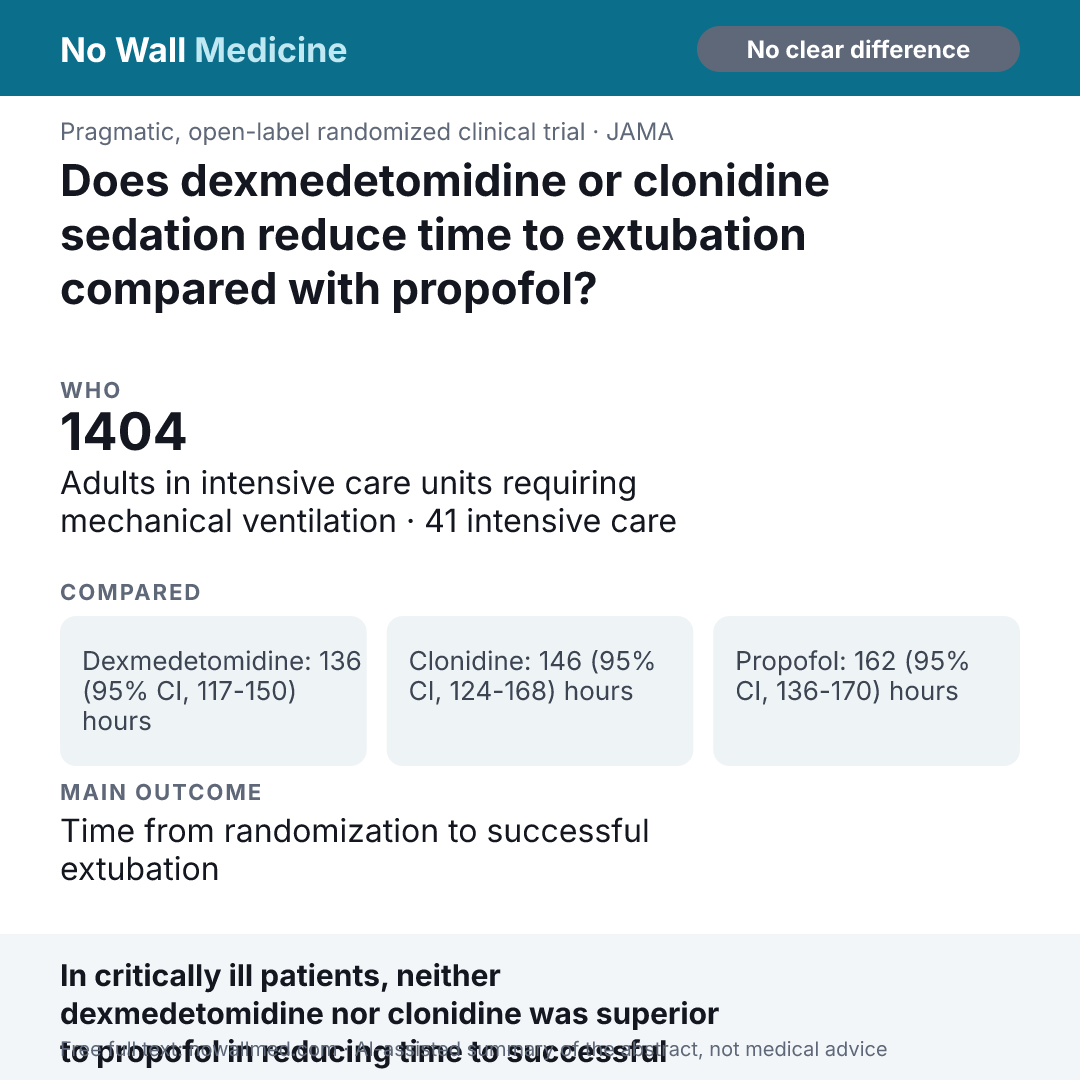
Dexmedetomidine- or Clonidine-Based Sedation Compared With Propofol in Critically Ill Patients: The A2B Randomized Clinical Trial
Pragmatic, open-label randomized clinical trialNo clear difference
Does dexmedetomidine or clonidine sedation reduce time to extubation compared with propofol?
Who
1404
Adults in intensive care units requiring mechanical ventilation · 41 intensive care units in the United Kingdom
Compared
Dexmedetomidine: 136 (95% CI, 117-150) hours
Clonidine: 146 (95% CI, 124-168) hours
Propofol: 162 (95% CI, 136-170) hours
Main outcome
Time from randomization to successful extubation
Result: subdistribution hazard ratio 1.09 (95% CI, 0.96-1.25) for dexmedetomidine vs propofol
Bottom line: In critically ill patients, neither dexmedetomidine nor clonidine was superior to propofol in reducing time to successful extubation.
JAMA · 2025-05-20 · Save PNG
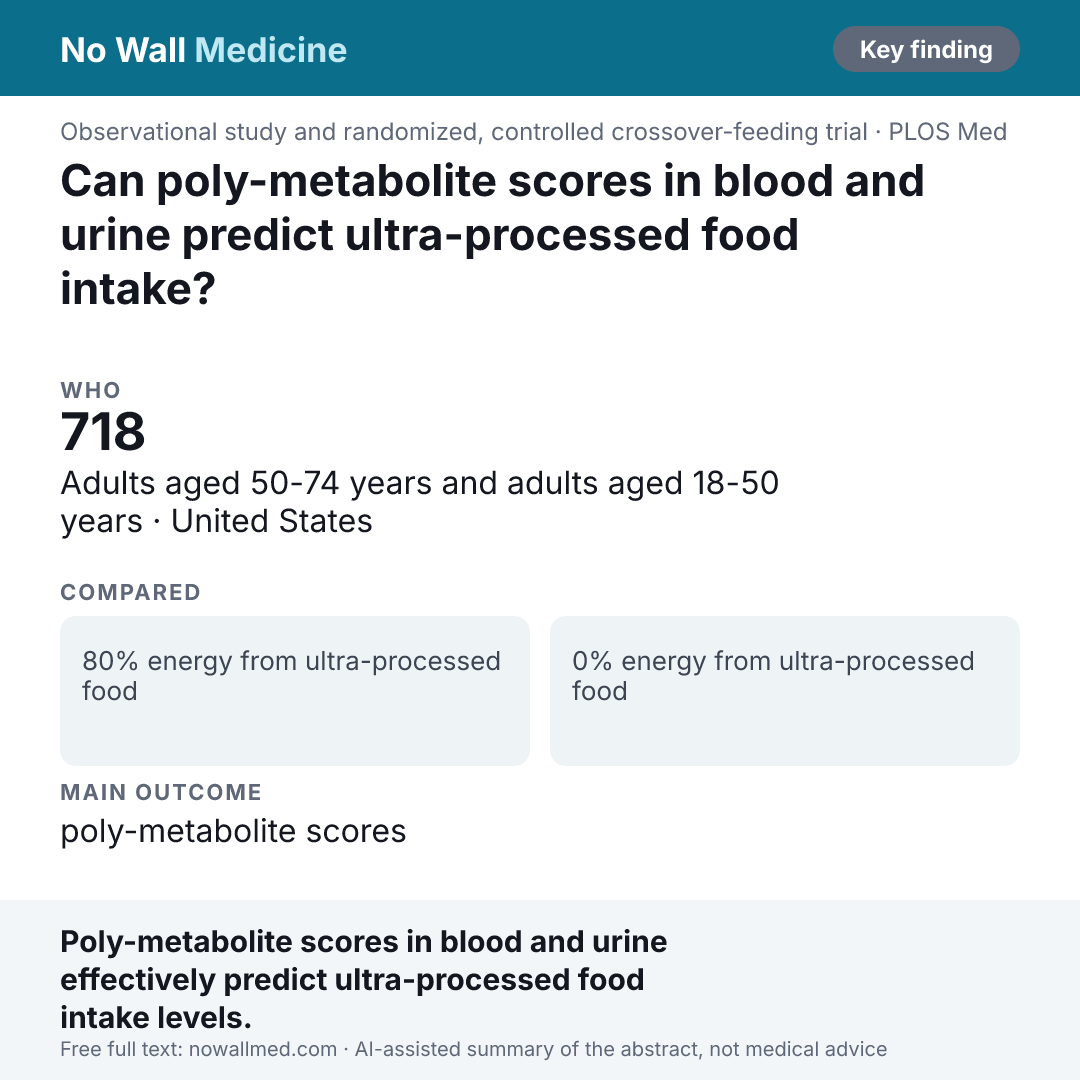
Identification and validation of poly-metabolite scores for diets high in ultra-processed food: An observational study and post-hoc randomized controlled crossover-feeding trial
Observational study and randomized, controlled crossover-feeding trialKey finding
Can poly-metabolite scores in blood and urine predict ultra-processed food intake?
Who
718
Adults aged 50-74 years and adults aged 18-50 years · United States
Compared
80% energy from ultra-processed food
0% energy from ultra-processed food
Main outcome
poly-metabolite scores
Bottom line: Poly-metabolite scores in blood and urine effectively predict ultra-processed food intake levels.
PLOS Med · 2025-05-20 · Save PNG
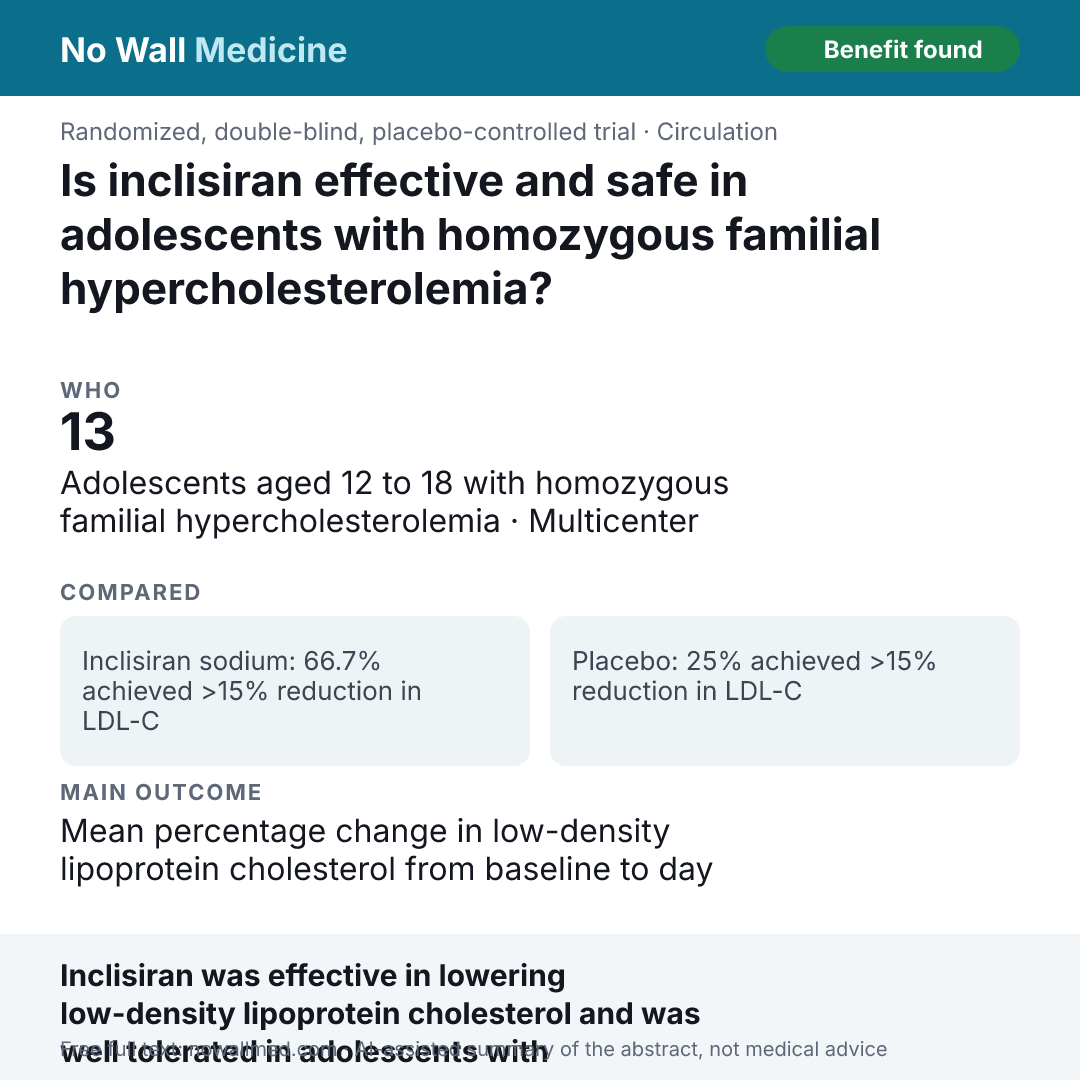
Efficacy and Safety of Inclisiran in Adolescents With Genetically Confirmed Homozygous Familial Hypercholesterolemia: Results From the Double-Blind, Placebo-Controlled Part of the ORION-13 Randomized Trial
Randomized, double-blind, placebo-controlled trialBenefit found
Is inclisiran effective and safe in adolescents with homozygous familial hypercholesterolemia?
Who
13
Adolescents aged 12 to 18 with homozygous familial hypercholesterolemia · Multicenter study
Compared
Inclisiran sodium: 66.7% achieved >15% reduction in LDL-C
Placebo: 25% achieved >15% reduction in LDL-C
Main outcome
Mean percentage change in low-density lipoprotein cholesterol from baseline to day 330
Result: -33.3% (-59.2% to -7.3%)
Bottom line: Inclisiran was effective in lowering low-density lipoprotein cholesterol and was well tolerated in adolescents with homozygous familial hypercholesterolemia.
Circulation · 2025-05-20 · Save PNG
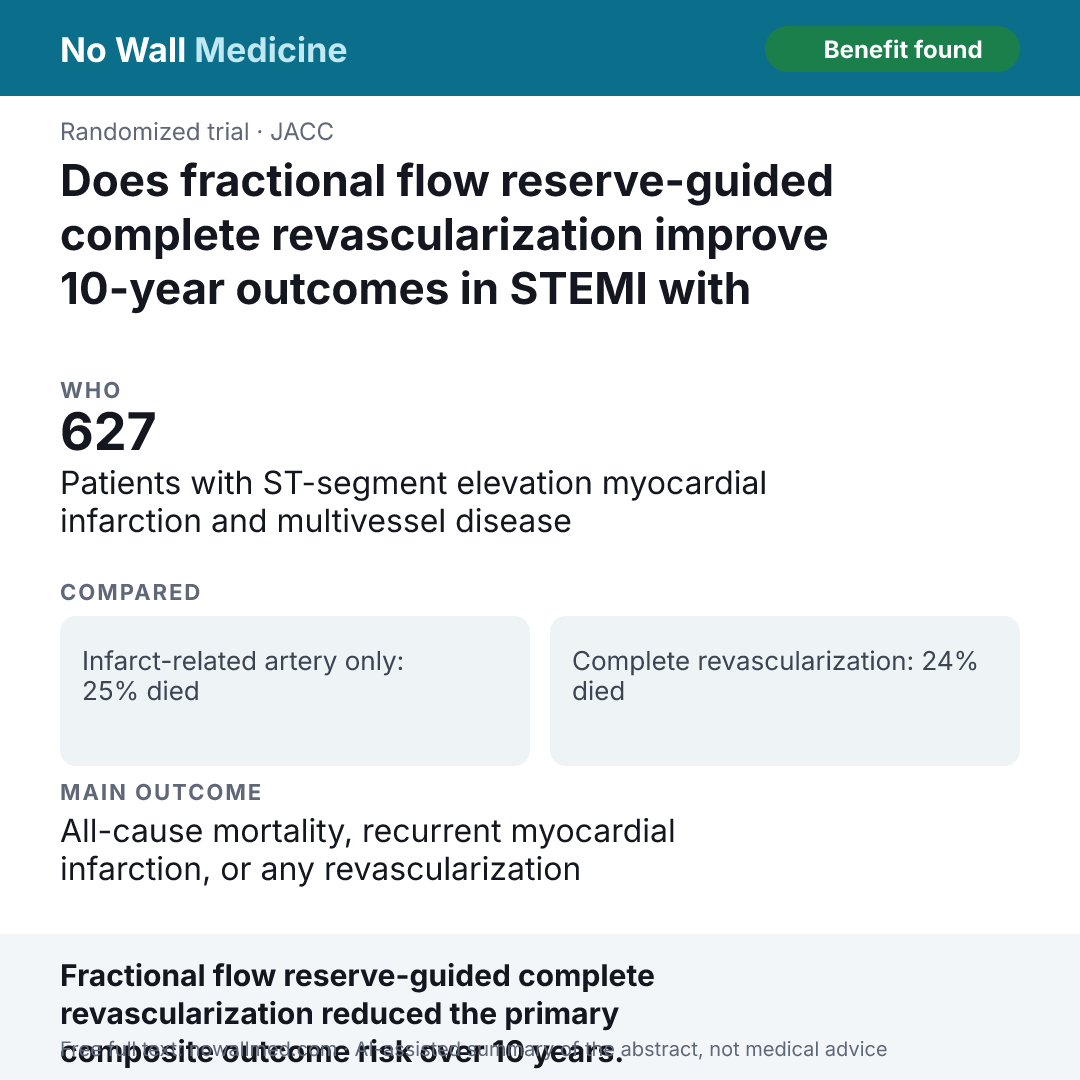
10-Year Outcome of Complete or Infarct Artery-Only Revascularization in STEMI With Multivessel Disease: The DANAMI-3-PRIMULTI Study
Randomized trialBenefit found
Does fractional flow reserve-guided complete revascularization improve 10-year outcomes in STEMI with multivessel disease?
Who
627
Patients with ST-segment elevation myocardial infarction and multivessel disease
Compared
Infarct-related artery only: 25% died
Complete revascularization: 24% died
Main outcome
All-cause mortality, recurrent myocardial infarction, or any revascularization
Result: hazard ratio 0.76 (95% CI 0.60-0.94)
Bottom line: Fractional flow reserve-guided complete revascularization reduced the primary composite outcome risk over 10 years.
JACC · 2025-05-20 · Save PNG
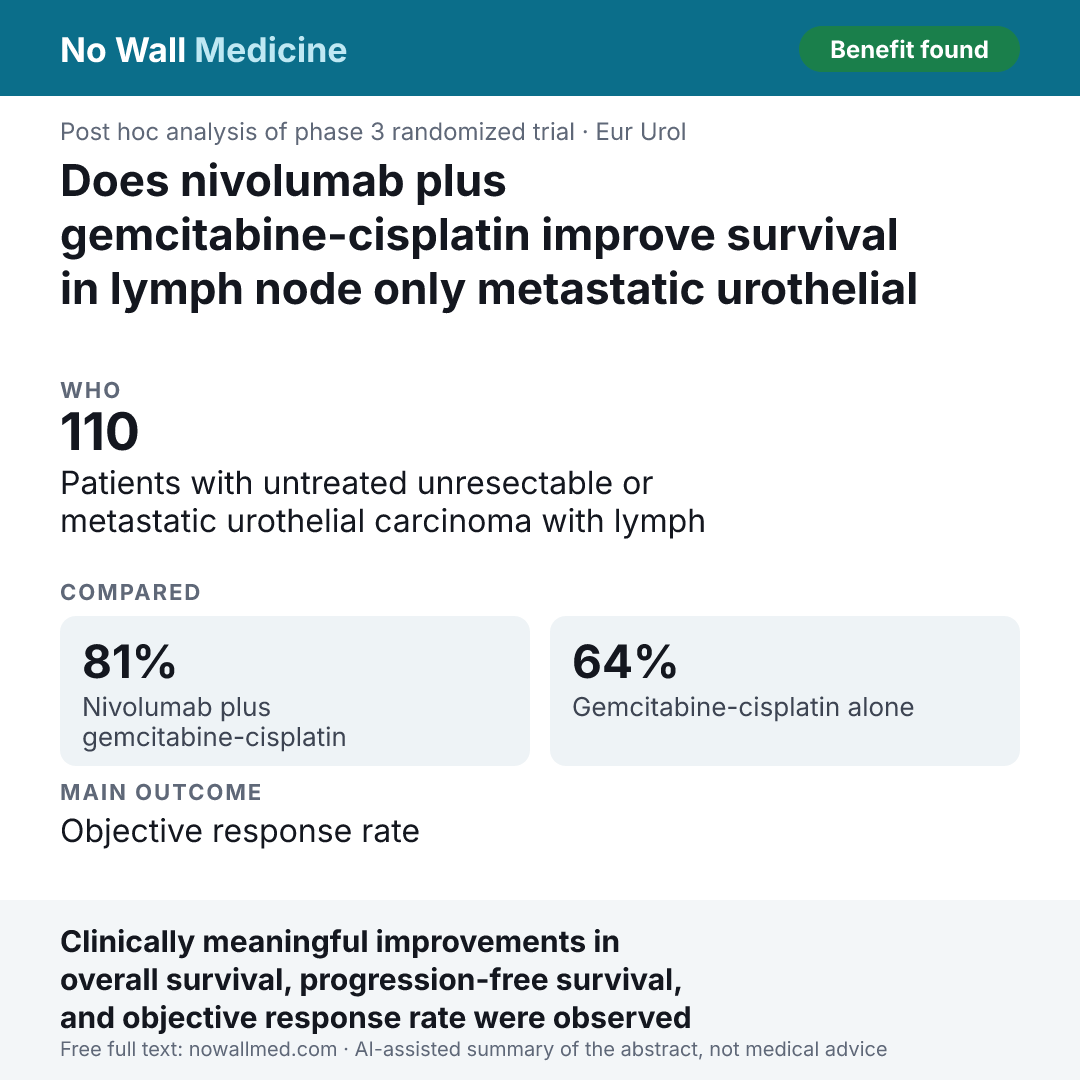
Characterization of Patients with Lymph Node Only Metastatic Urothelial Carcinoma Treated with Nivolumab Plus Gemcitabine-Cisplatin Versus Gemcitabine-Cisplatin Alone from the CheckMate 901 Trial
Post hoc analysis of phase 3 randomized trialBenefit found
Does nivolumab plus gemcitabine-cisplatin improve survival in lymph node only metastatic urothelial carcinoma?
Who
110
Patients with untreated unresectable or metastatic urothelial carcinoma with lymph node only disease
Compared
81%Nivolumab plus gemcitabine-cisplatin
64%Gemcitabine-cisplatin alone
Main outcome
Objective response rate
Result: hazard ratio [HR], 0.58; 95% confidence interval [CI] 0.34-1.00
Bottom line: Clinically meaningful improvements in overall survival, progression-free survival, and objective response rate were observed with nivolumab plus gemcitabine-cisplatin.
Eur Urol · 2025-05-20 · Save PNG
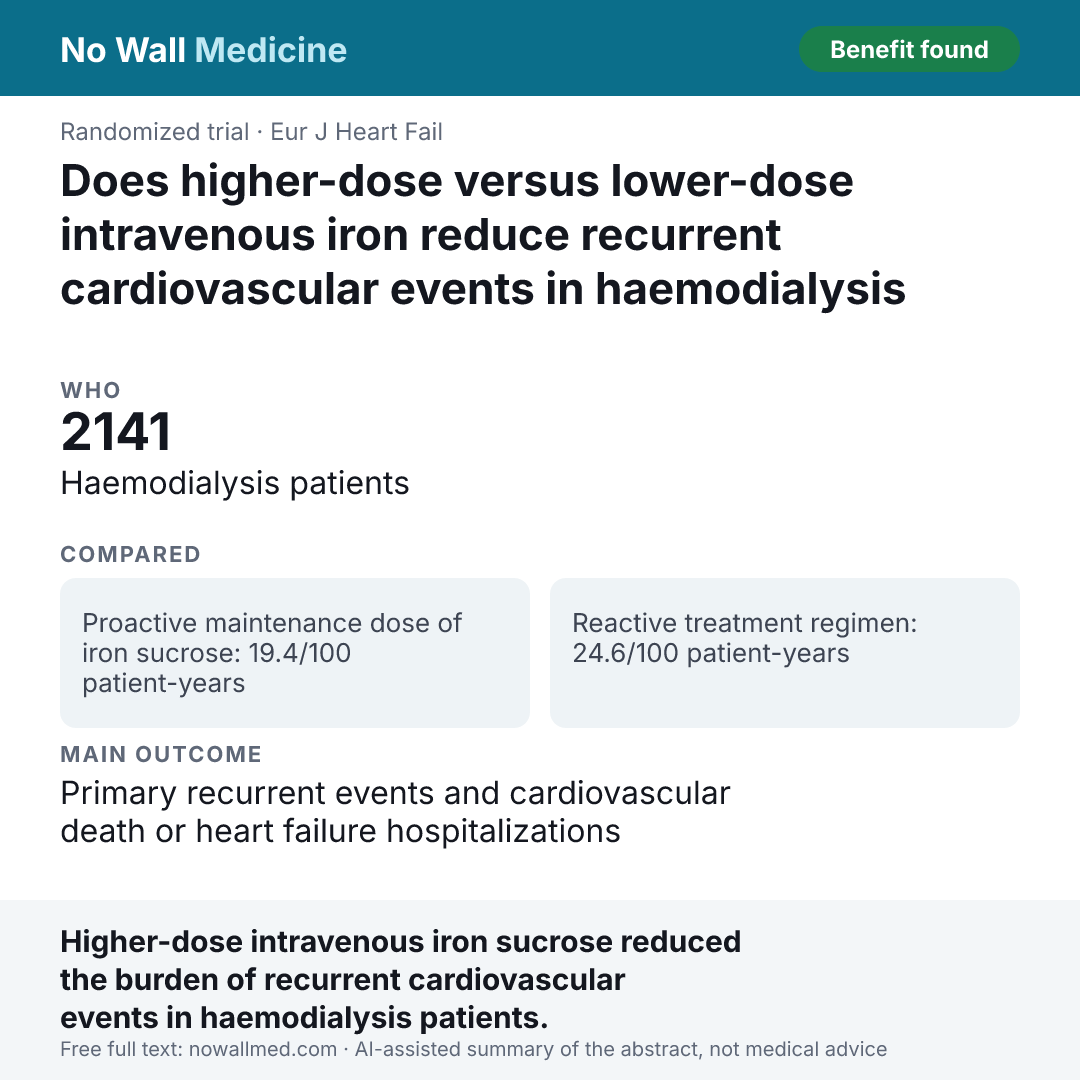
Recurrent event analyses in patients receiving maintenance dialysis and the effect of higher- versus lower-dose chronic intravenous iron therapy: A report focusing on heart failure events from the PIVOTAL trial
Randomized trialBenefit found
Does higher-dose versus lower-dose intravenous iron reduce recurrent cardiovascular events in haemodialysis patients?
Who
2141
Haemodialysis patients
Compared
Proactive maintenance dose of iron sucrose: 19.4/100 patient-years
Reactive treatment regimen: 24.6/100 patient-years
Main outcome
Primary recurrent events and cardiovascular death or heart failure hospitalizations
Result: rate ratio 0.77 (95% CI 0.66-0.92)
Bottom line: Higher-dose intravenous iron sucrose reduced the burden of recurrent cardiovascular events in haemodialysis patients.
Eur J Heart Fail · 2025-05-20 · Save PNG
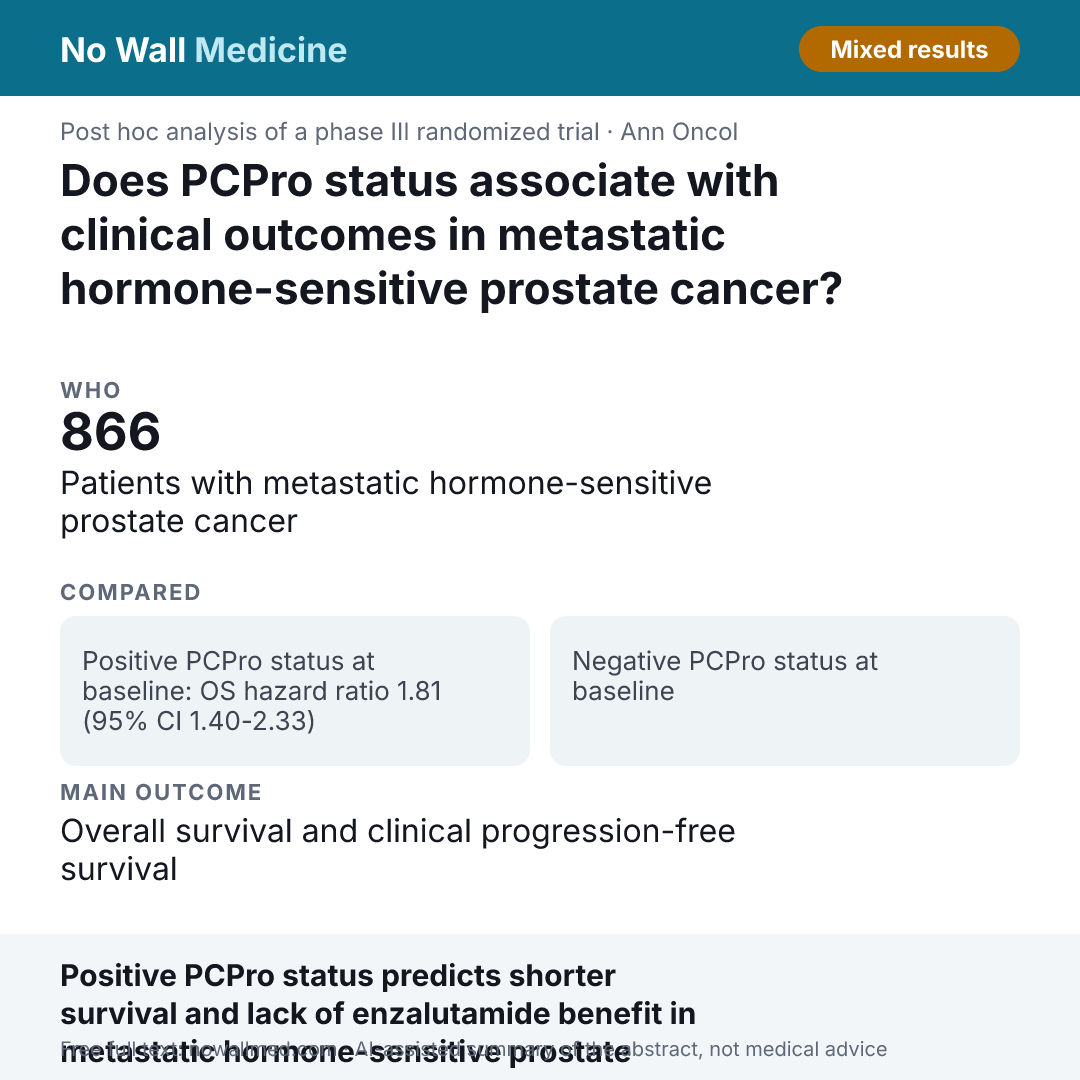
Association of the circulating lipid panel, PCPro, with clinical outcomes in metastatic hormone-sensitive prostate cancer: post hoc analysis of the ENZAMET phase III randomised trial (ANZUP 1304)
Post hoc analysis of a phase III randomized trialMixed results
Does PCPro status associate with clinical outcomes in metastatic hormone-sensitive prostate cancer?
Who
866
Patients with metastatic hormone-sensitive prostate cancer
Compared
Positive PCPro status at baseline: OS hazard ratio 1.81 (95% CI 1.40-2.33)
Negative PCPro status at baseline
Main outcome
Overall survival and clinical progression-free survival
Result: hazard ratio 1.81 (95% CI 1.40-2.33)
Bottom line: Positive PCPro status predicts shorter survival and lack of enzalutamide benefit in metastatic hormone-sensitive prostate cancer.
Limitation: This was a post hoc analysis of the ENZAMET trial.
Ann Oncol · 2025-05-20 · Save PNG
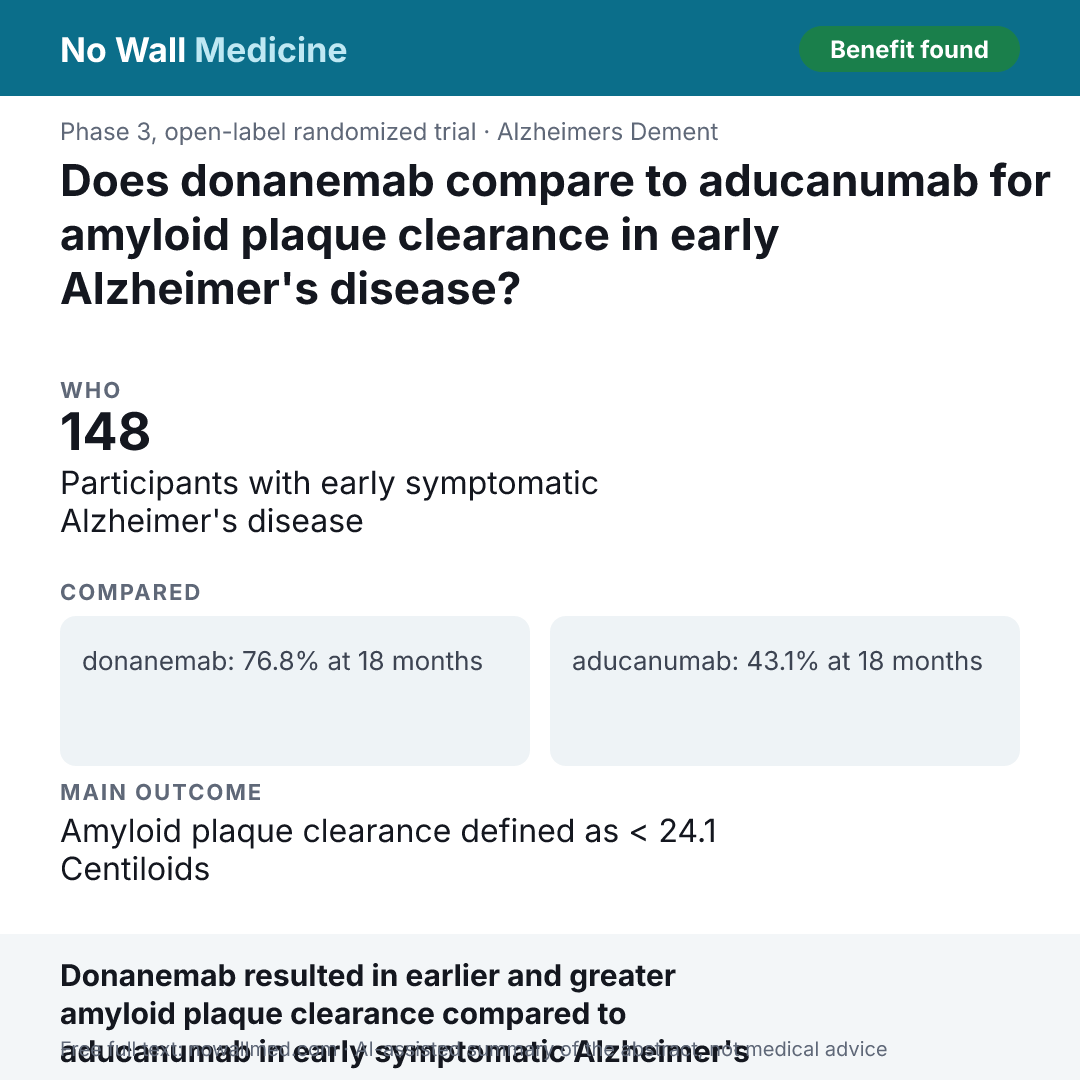
TRAILBLAZER-ALZ 4: A phase 3 trial comparing donanemab with aducanumab on amyloid plaque clearance in early, symptomatic Alzheimer's disease
Phase 3, open-label randomized trialBenefit found
Does donanemab compare to aducanumab for amyloid plaque clearance in early Alzheimer's disease?
Who
148
Participants with early symptomatic Alzheimer's disease
Compared
donanemab: 76.8% at 18 months
aducanumab: 43.1% at 18 months
Main outcome
Amyloid plaque clearance defined as < 24.1 Centiloids
Bottom line: Donanemab resulted in earlier and greater amyloid plaque clearance compared to aducanumab in early symptomatic Alzheimer's disease.
Alzheimers Dement · 2025-05-20 · Save PNG
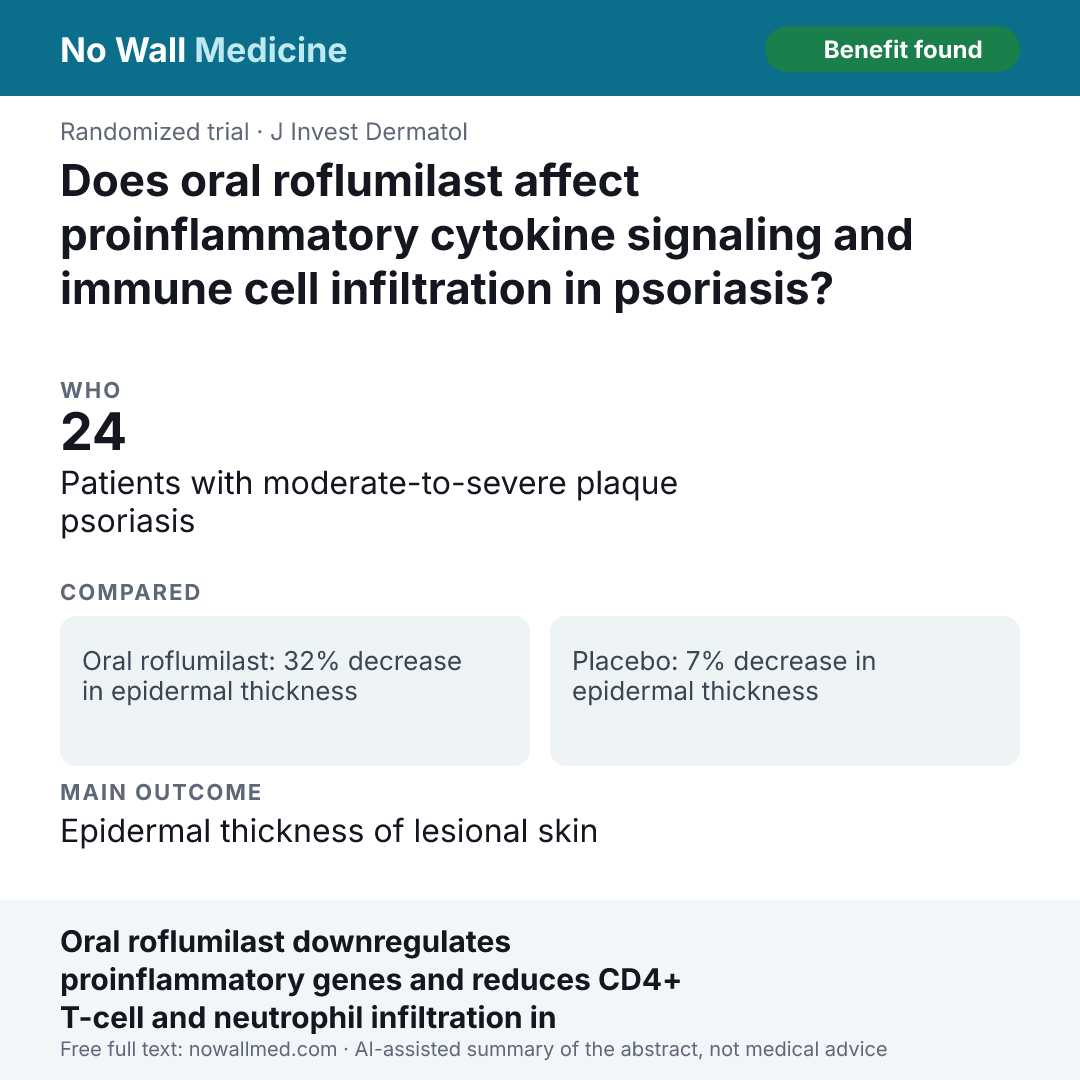
Oral Roflumilast Suppresses Proinflammatory Cytokine Signaling and Reduces CD4+ T-Cell and Neutrophil Infiltration in Psoriasis
Randomized trialBenefit found
Does oral roflumilast affect proinflammatory cytokine signaling and immune cell infiltration in psoriasis?
Who
24
Patients with moderate-to-severe plaque psoriasis
Compared
Oral roflumilast: 32% decrease in epidermal thickness
Placebo: 7% decrease in epidermal thickness
Main outcome
Epidermal thickness of lesional skin
Bottom line: Oral roflumilast downregulates proinflammatory genes and reduces CD4+ T-cell and neutrophil infiltration in psoriasis.
J Invest Dermatol · 2025-05-20 · Save PNG
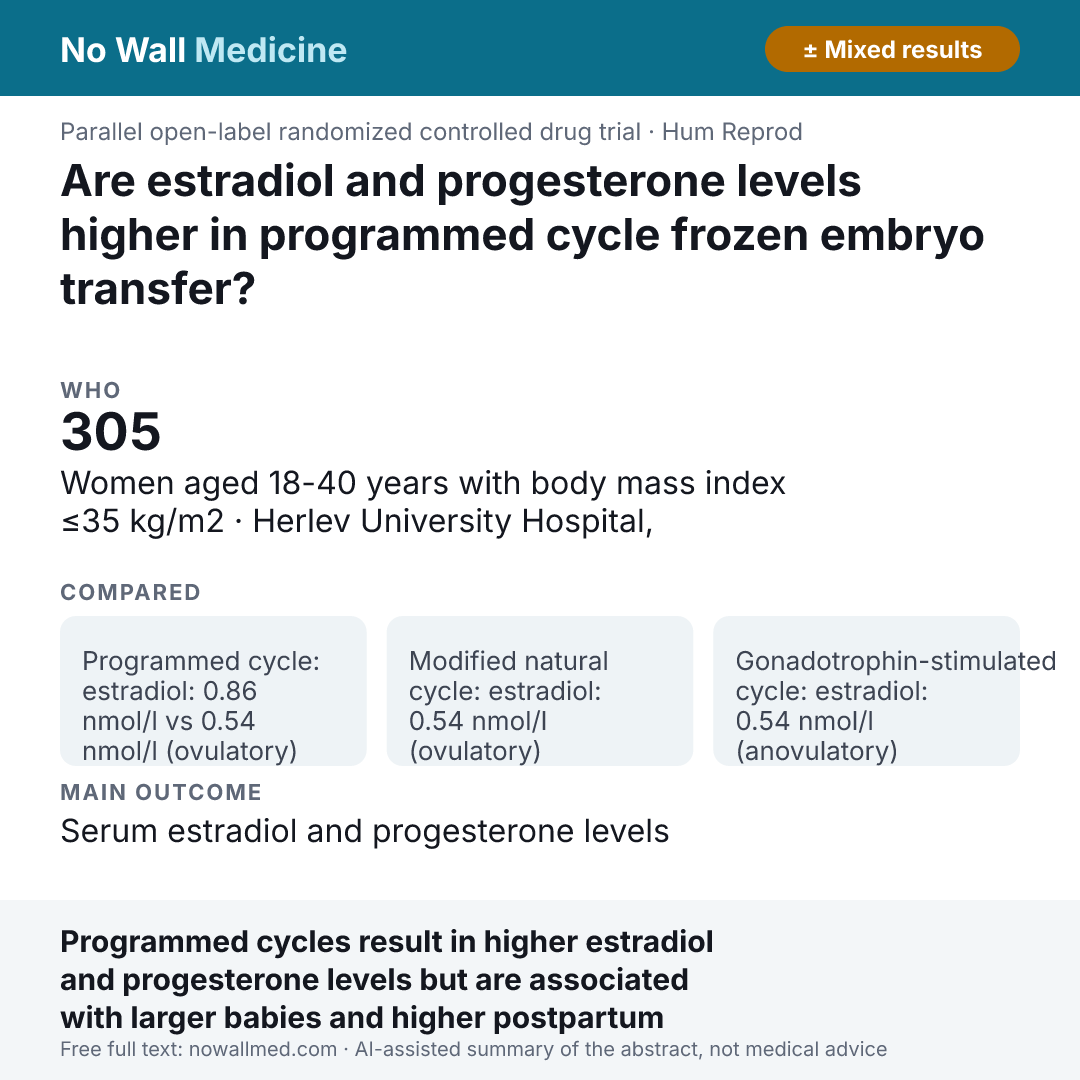
Estradiol and progesterone levels in early pregnancy after modified natural, programmed, and gonadotrophin-stimulated frozen embryo transfer cycles: a randomized controlled trial
Parallel open-label randomized controlled drug trialMixed results
Are estradiol and progesterone levels higher in programmed cycle frozen embryo transfer?
Who
305
Women aged 18-40 years with body mass index ≤35 kg/m2 · Herlev University Hospital, Denmark
Compared
Programmed cycle: estradiol: 0.86 nmol/l vs 0.54 nmol/l (ovulatory)
Modified natural cycle: estradiol: 0.54 nmol/l (ovulatory)
Gonadotrophin-stimulated cycle: estradiol: 0.54 nmol/l (anovulatory)
Main outcome
Serum estradiol and progesterone levels
Bottom line: Programmed cycles result in higher estradiol and progesterone levels but are associated with larger babies and higher postpartum hemorrhage risk.
Limitation: The target sample size of 100 cycles was not achieved in either anovulatory arm.
Funded by: Gedeon Richter Nordics AB, Gangsted-Rasmussen Foundation, Herlev University Hospital
Hum Reprod · 2025-05-20 · Save PNG
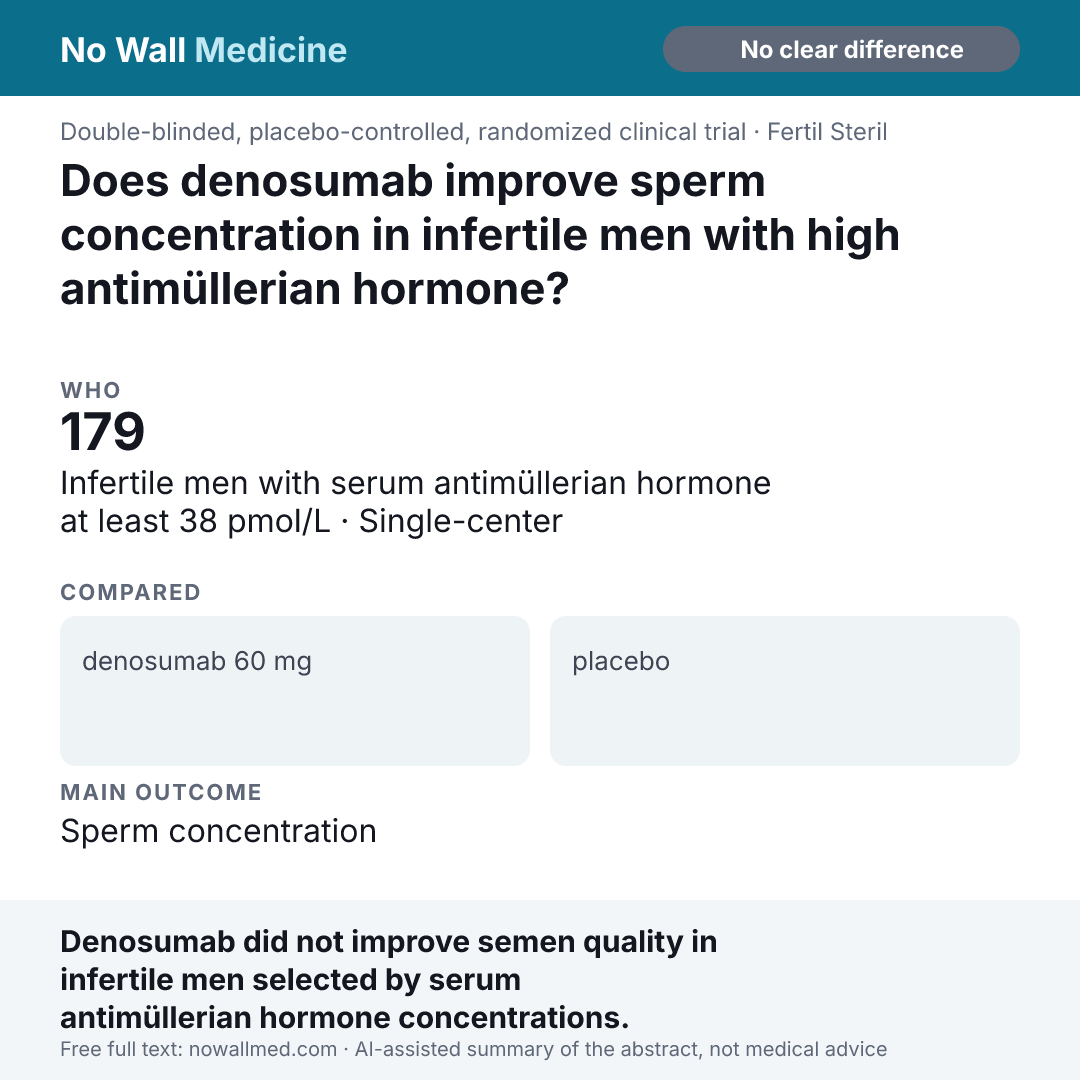
Effect of denosumab on semen quality in infertile men selected by serum level of antimüllerian hormone: a randomized controlled trial
Double-blinded, placebo-controlled, randomized clinical trialNo clear difference
Does denosumab improve sperm concentration in infertile men with high antimüllerian hormone?
Who
179
Infertile men with serum antimüllerian hormone at least 38 pmol/L · Single-center
Compared
denosumab 60 mg
placebo
Main outcome
Sperm concentration
Result: difference of -1.0 million/mL (95% CI -2.7, 1.1)
Bottom line: Denosumab did not improve semen quality in infertile men selected by serum antimüllerian hormone concentrations.
Fertil Steril · 2025-05-20 · Save PNG
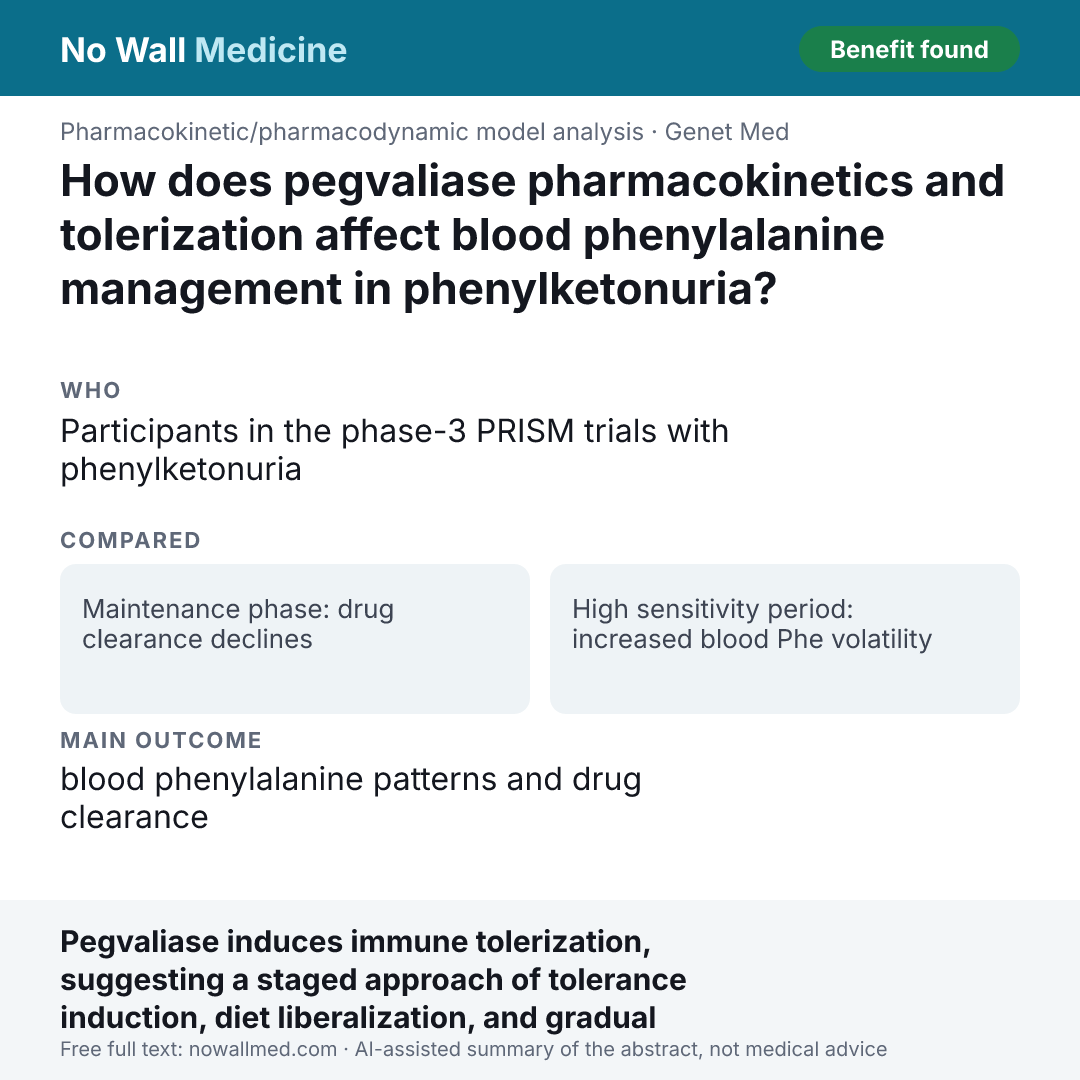
Long-term management strategies for pegvaliase use in phenylketonuria: Lessons learned from the phase-3 PRISM open-label extension study
Pharmacokinetic/pharmacodynamic model analysisBenefit found
How does pegvaliase pharmacokinetics and tolerization affect blood phenylalanine management in phenylketonuria?
Who
Participants in the phase-3 PRISM trials with phenylketonuria
Compared
Maintenance phase: drug clearance declines
High sensitivity period: increased blood Phe volatility
Main outcome
blood phenylalanine patterns and drug clearance
Bottom line: Pegvaliase induces immune tolerization, suggesting a staged approach of tolerance induction, diet liberalization, and gradual dose adjustment.
Genet Med · 2025-05-20 · Save PNG
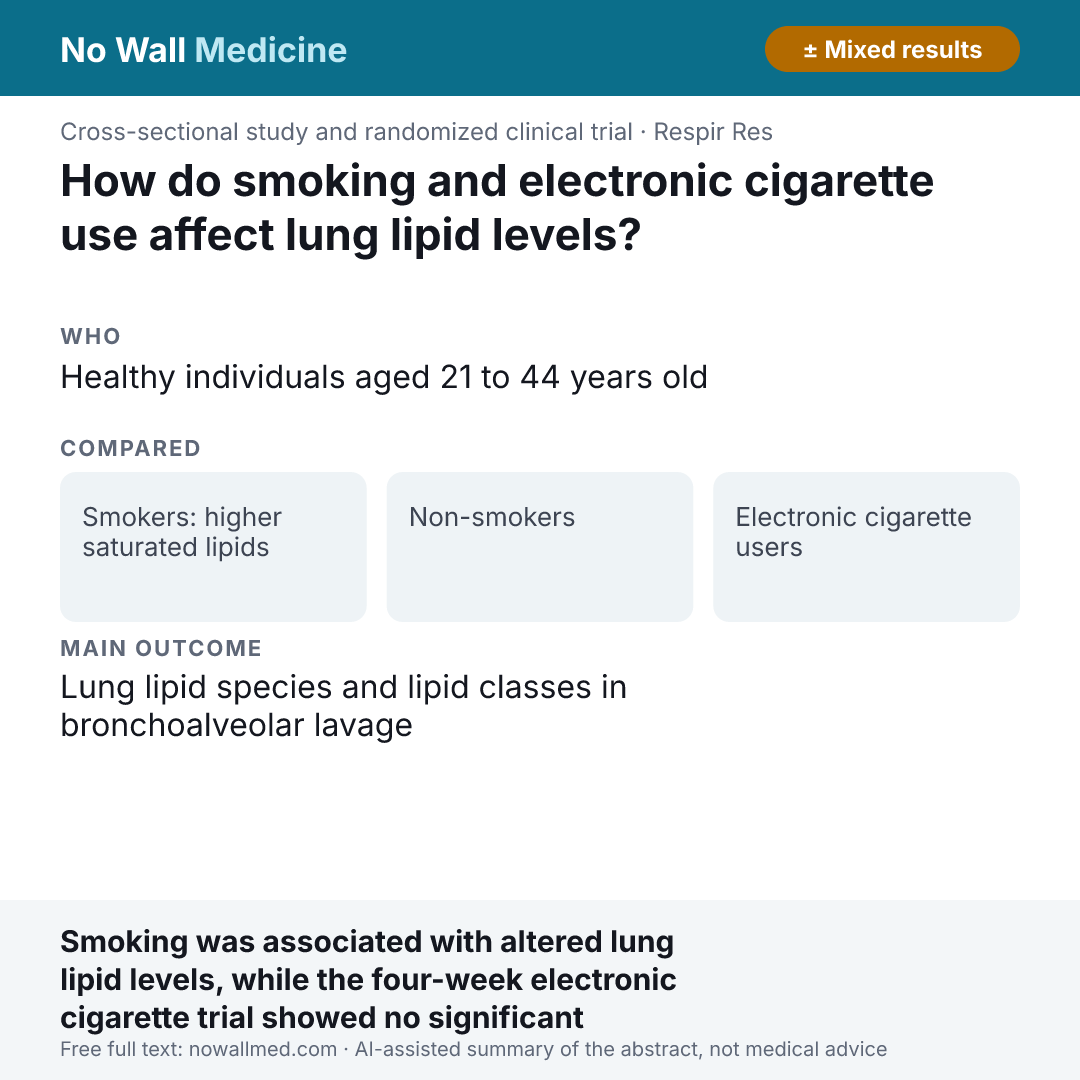
Lung lipids associated with smoking and ECIG use in a cross-sectional study and clinical trial
Cross-sectional study and randomized clinical trialMixed results
How do smoking and electronic cigarette use affect lung lipid levels?
Who
Healthy individuals aged 21 to 44 years old
Compared
Smokers: higher saturated lipids
Non-smokers
Electronic cigarette users
Main outcome
Lung lipid species and lipid classes in bronchoalveolar lavage
Bottom line: Smoking was associated with altered lung lipid levels, while the four-week electronic cigarette trial showed no significant associations.
Respir Res · 2025-05-20 · Save PNG
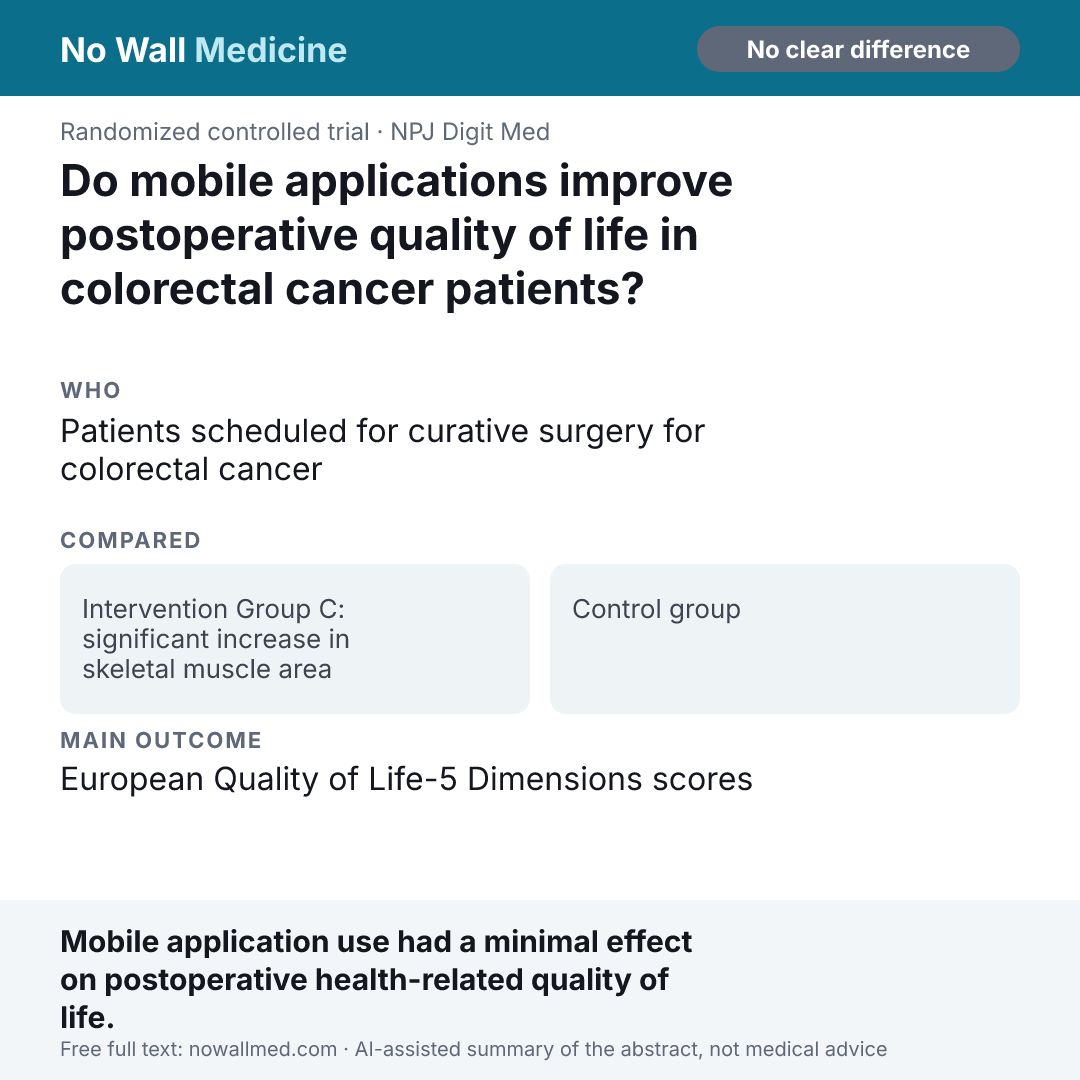
A randomized controlled trial of a digital lifestyle intervention involving postoperative patients with colorectal cancer
Randomized controlled trialNo clear difference
Do mobile applications improve postoperative quality of life in colorectal cancer patients?
Who
Patients scheduled for curative surgery for colorectal cancer
Compared
Intervention Group C: significant increase in skeletal muscle area
Control group
Main outcome
European Quality of Life-5 Dimensions scores
Bottom line: Mobile application use had a minimal effect on postoperative health-related quality of life.
NPJ Digit Med · 2025-05-20 · Save PNG
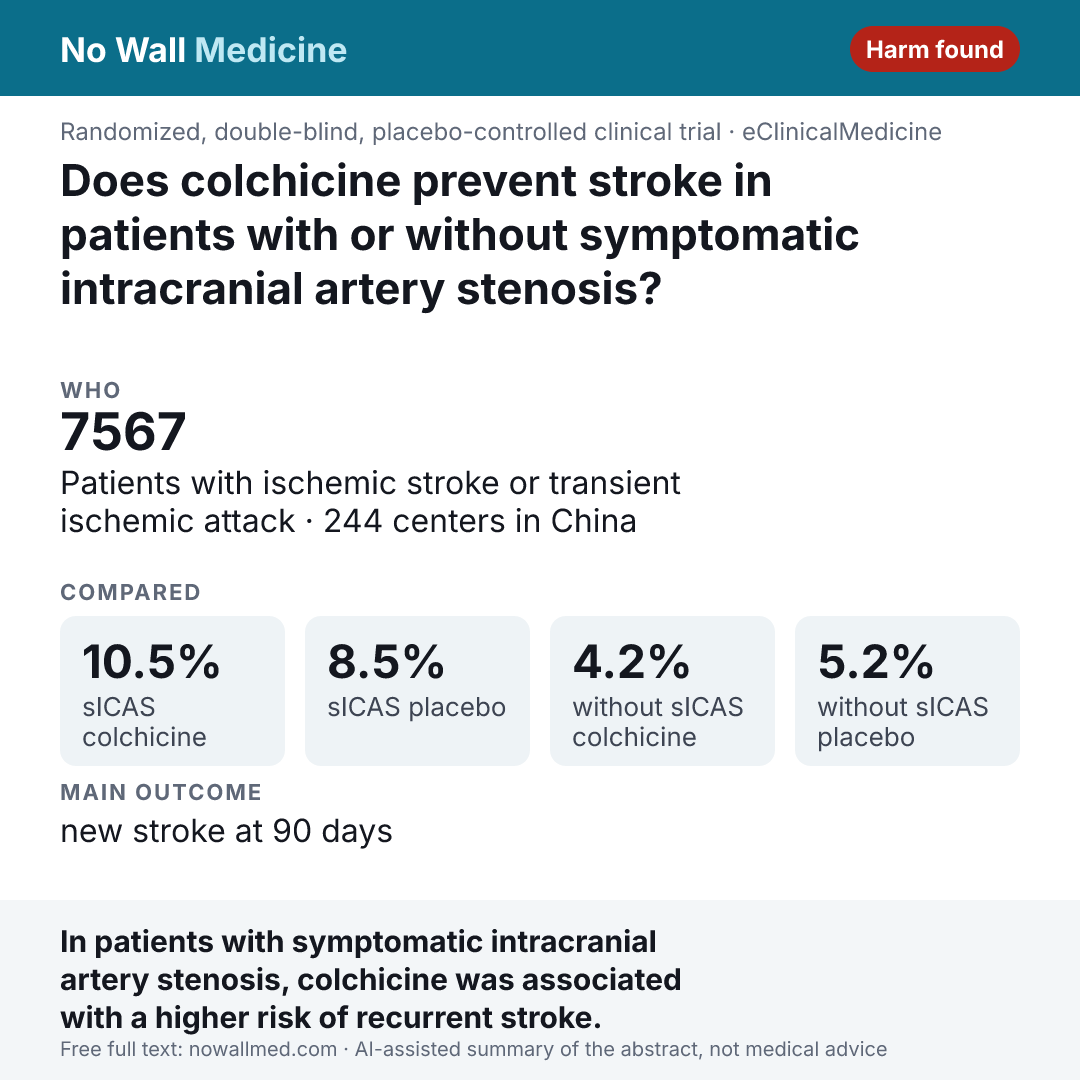
Colchicine for preventing stroke in patients with and without intracranial atherosclerotic stenosis: a prespecified analysis of a randomized clinical trial
Randomized, double-blind, placebo-controlled clinical trialHarm found
Does colchicine prevent stroke in patients with or without symptomatic intracranial artery stenosis?
Who
7567
Patients with ischemic stroke or transient ischemic attack · 244 centers in China
Compared
10.5%sICAS colchicine
8.5%sICAS placebo
4.2%without sICAS colchicine
5.2%without sICAS placebo
Main outcome
new stroke at 90 days
Result: adjusted HR 1.30 (95% CI 1.01-1.69) for sICAS
Bottom line: In patients with symptomatic intracranial artery stenosis, colchicine was associated with a higher risk of recurrent stroke.
Funded by: National Key R&D Program of China and others
eClinicalMedicine · 2025-05-19 · Save PNG
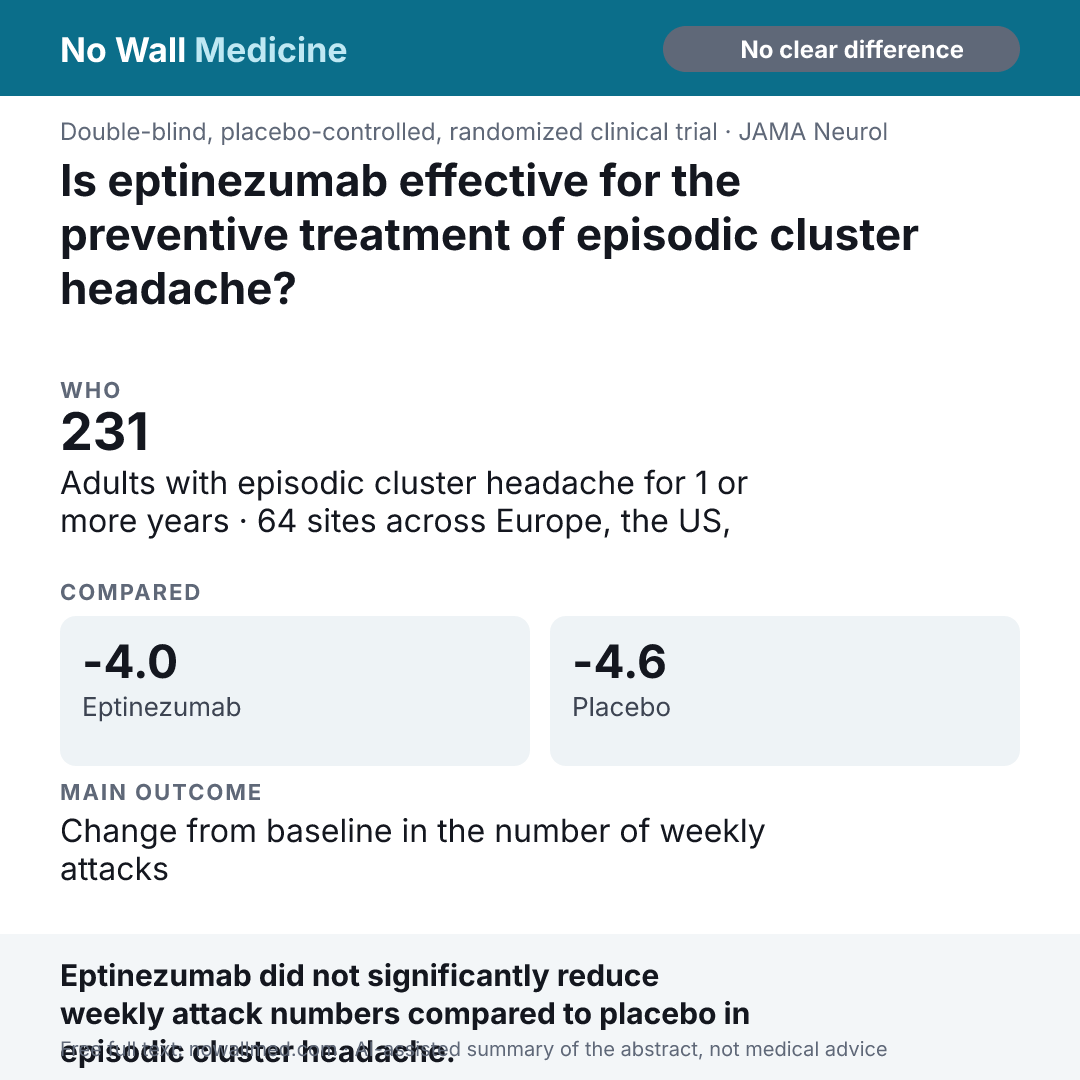
Efficacy and Safety of Eptinezumab in Episodic Cluster Headache: A Randomized Clinical Trial
Double-blind, placebo-controlled, randomized clinical trialNo clear difference
Is eptinezumab effective for the preventive treatment of episodic cluster headache?
Who
231
Adults with episodic cluster headache for 1 or more years · 64 sites across Europe, the US, and Japan
Compared
-4.0Eptinezumab (SD 0.93)
-4.6Placebo (SD 0.89)
Main outcome
Change from baseline in the number of weekly attacks
Result: between-group difference 0.7 (95% CI -1.3 to 2.6)
Bottom line: Eptinezumab did not significantly reduce weekly attack numbers compared to placebo in episodic cluster headache.
JAMA Neurol · 2025-05-19 · Save PNG
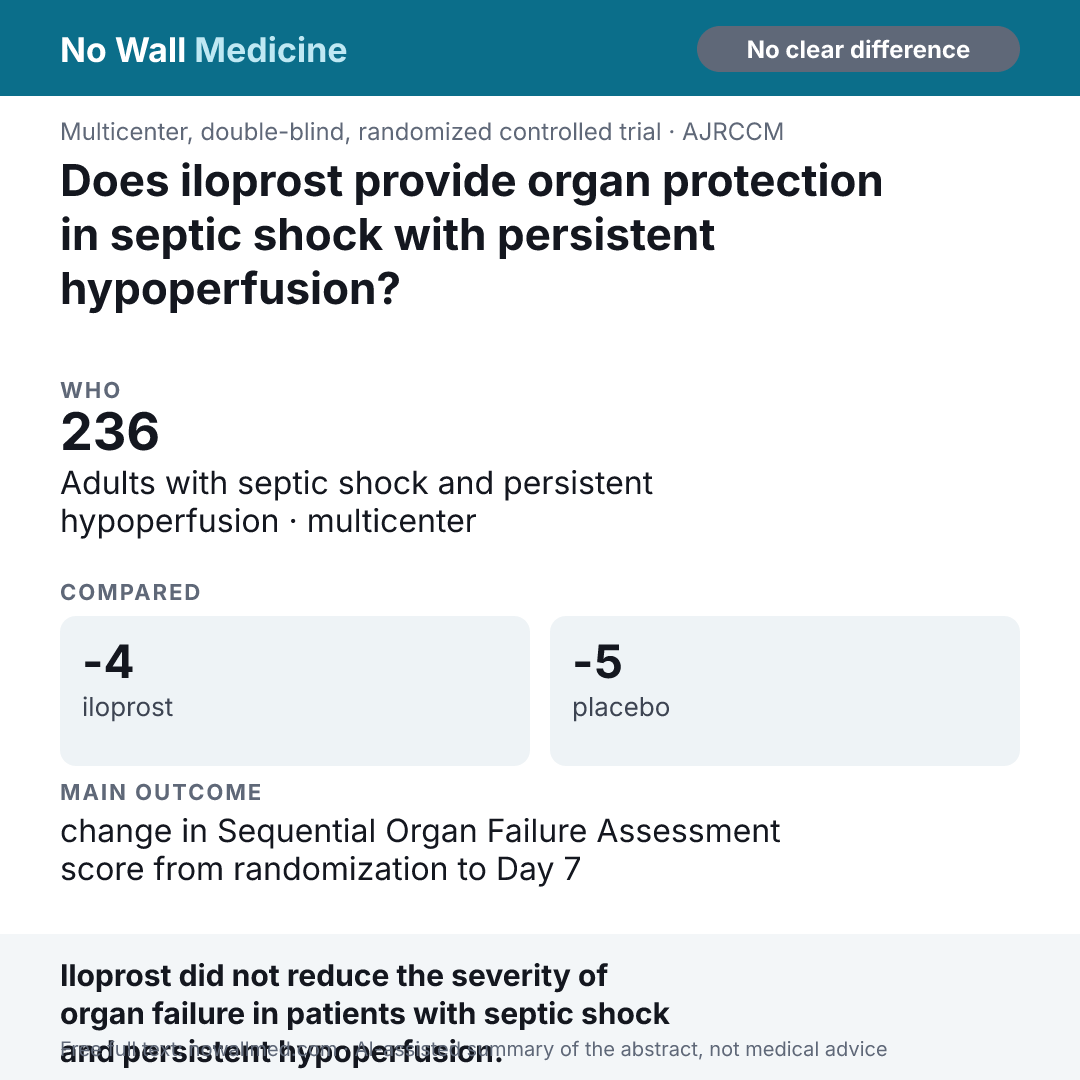
Iloprost for the Treatment of Severe Septic Shock with Persistent Hypoperfusion: A Double-Blind, Randomized Controlled Trial
Multicenter, double-blind, randomized controlled trialNo clear difference
Does iloprost provide organ protection in septic shock with persistent hypoperfusion?
Who
236
Adults with septic shock and persistent hypoperfusion · multicenter
Compared
-4iloprost (-7 to 7)
-5placebo (-8 to 5)
Main outcome
change in Sequential Organ Failure Assessment score from randomization to Day 7
Result: median difference, 1; 95% CI, 0-3
Bottom line: Iloprost did not reduce the severity of organ failure in patients with septic shock and persistent hypoperfusion.
AJRCCM · 2025-05-19 · Save PNG
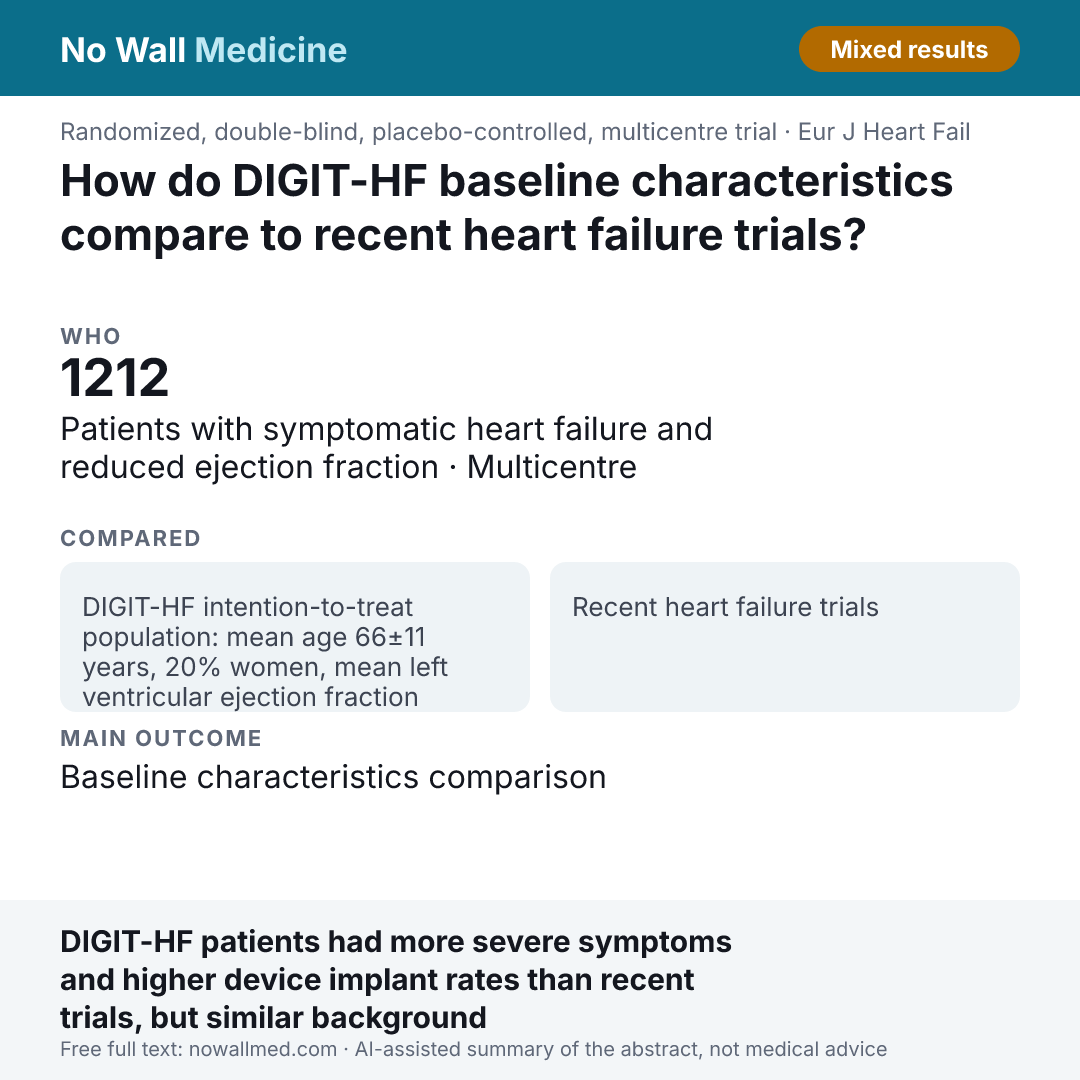
DIGitoxin to Improve ouTcomes in patients with advanced chronic Heart Failure (DIGIT-HF): Baseline characteristics compared to recent randomized controlled heart failure trials
Randomized, double-blind, placebo-controlled, multicentre trialMixed results
How do DIGIT-HF baseline characteristics compare to recent heart failure trials?
Who
1212
Patients with symptomatic heart failure and reduced ejection fraction · Multicentre
Compared
DIGIT-HF intention-to-treat population: mean age 66±11 years, 20% women, mean left ventricular ejection fraction 29±7%
Recent heart failure trials
Main outcome
Baseline characteristics comparison
Bottom line: DIGIT-HF patients had more severe symptoms and higher device implant rates than recent trials, but similar background pharmacotherapy.
Eur J Heart Fail · 2025-05-19 · Save PNG
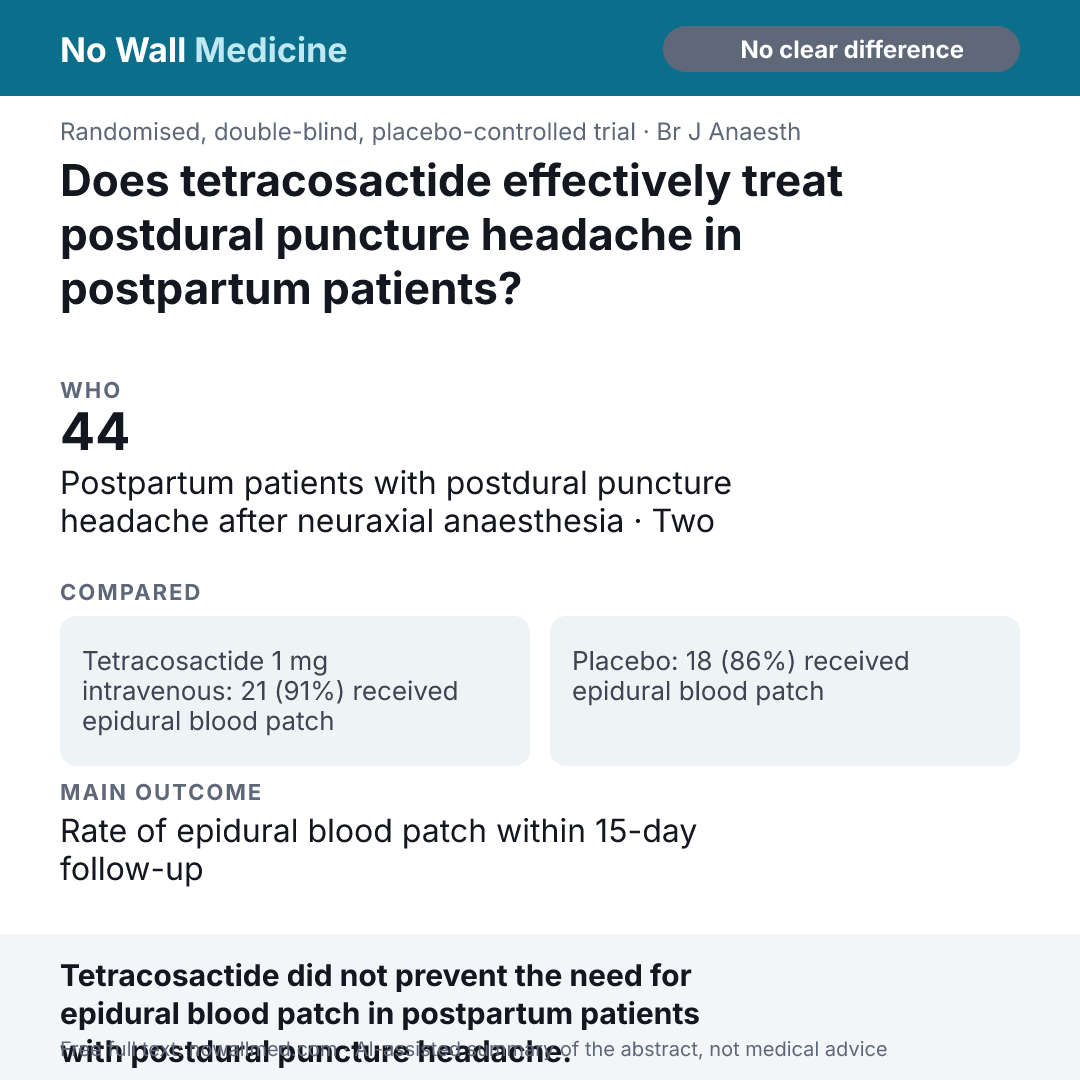
No effect of tetracosactide for treatment of postdural puncture headaches in parturient women: a double-blind randomised controlled clinical trial
Randomised, double-blind, placebo-controlled trialNo clear difference
Does tetracosactide effectively treat postdural puncture headache in postpartum patients?
Who
44
Postpartum patients with postdural puncture headache after neuraxial anaesthesia · Two tertiary care maternal hospitals
Compared
Tetracosactide 1 mg intravenous: 21 (91%) received epidural blood patch
Placebo: 18 (86%) received epidural blood patch
Main outcome
Rate of epidural blood patch within 15-day follow-up
Bottom line: Tetracosactide did not prevent the need for epidural blood patch in postpartum patients with postdural puncture headache.
Limitation: The study was terminated because of futility.
Br J Anaesth · 2025-05-19 · Save PNG
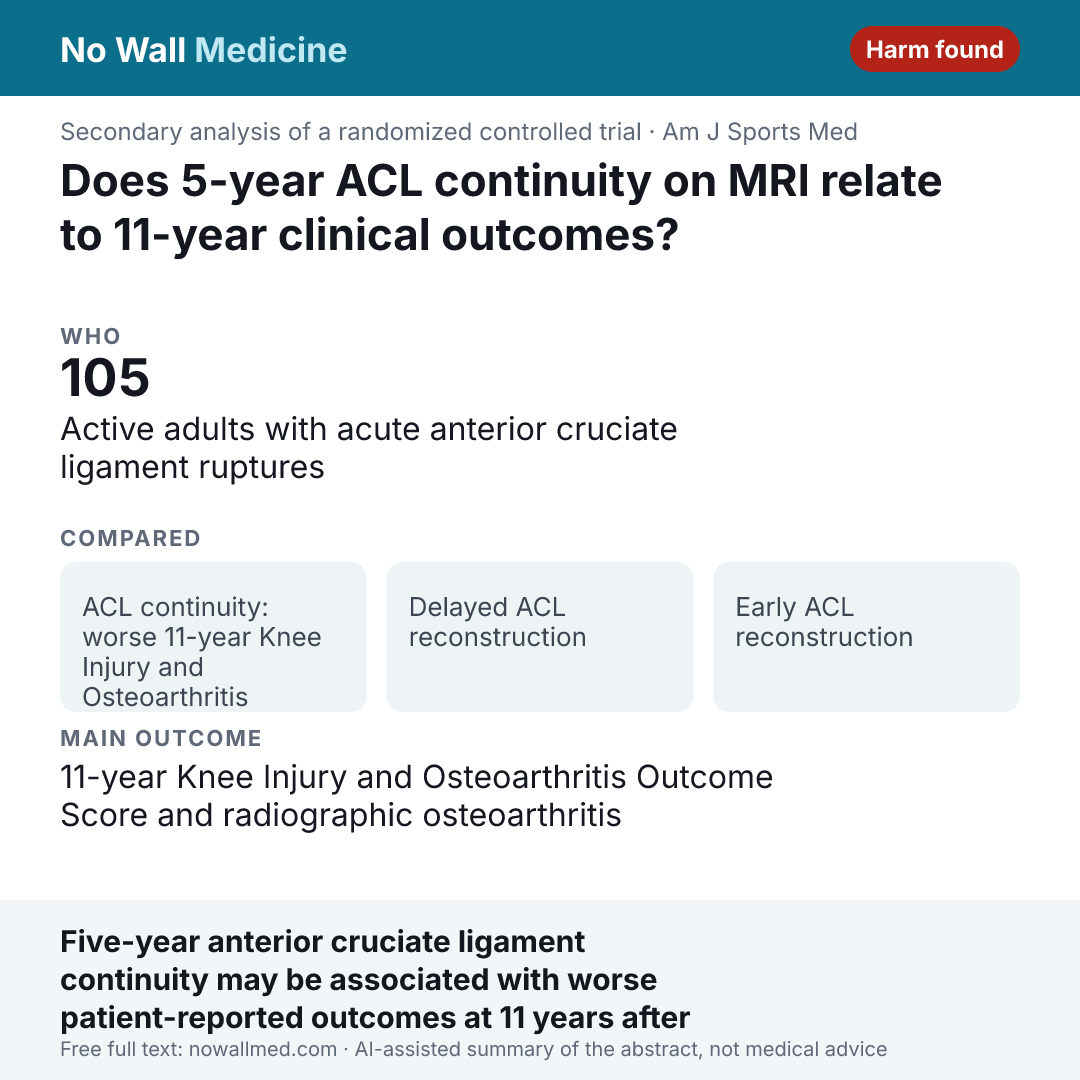
Association Between ACL Continuity on Magnetic Resonance Imaging at 5 Years After an Acute ACL Rupture and 11-Year Outcomes: A Secondary Analysis From the KANON Trial
Secondary analysis of a randomized controlled trialHarm found
Does 5-year ACL continuity on MRI relate to 11-year clinical outcomes?
Who
105
Active adults with acute anterior cruciate ligament ruptures
Compared
ACL continuity: worse 11-year Knee Injury and Osteoarthritis Outcome Score
Delayed ACL reconstruction
Early ACL reconstruction
Main outcome
11-year Knee Injury and Osteoarthritis Outcome Score and radiographic osteoarthritis
Result: adjusted mean difference, -20.2 (95% CI, -31.9 to -8.6) vs delayed ACLR
Bottom line: Five-year anterior cruciate ligament continuity may be associated with worse patient-reported outcomes at 11 years after injury.
Am J Sports Med · 2025-05-19 · Save PNG