Visual abstracts
New randomized trials and meta-analyses from leading journals at a glance: who was studied, what was compared, and what was found. Every paper is free to read in full.
All specialtiesCardiology 4877Oncology 4138Gastroenterology & Hepatology 1942Infectious Disease 3837Neurology 1905Psychiatry & Mental Health 2273Pulmonology 2143Critical Care 1365Endocrinology & Diabetes 2580Pediatrics 2980Surgery 2559Orthopedics & Sports Medicine 931Neurosurgery 537Cardiothoracic & Vascular Surgery 674Plastic & Reconstructive Surgery 591Nephrology 1133Rheumatology 823Hematology 1109Dermatology 621Ophthalmology 543Obstetrics & Gynecology 1686Public & Global Health 1058Radiology & Imaging 648Anesthesiology 986Urology 764ENT (Otolaryngology) 503Emergency Medicine 511Allergy & Immunology 313Geriatrics 981Family Medicine & Primary Care 562Medical Genetics & Genomics 676Pathology & Laboratory Medicine 159Physical Medicine & Rehabilitation 757Palliative Care 444Nutrition 1588Digital Health & AI 2201General Medicine 321
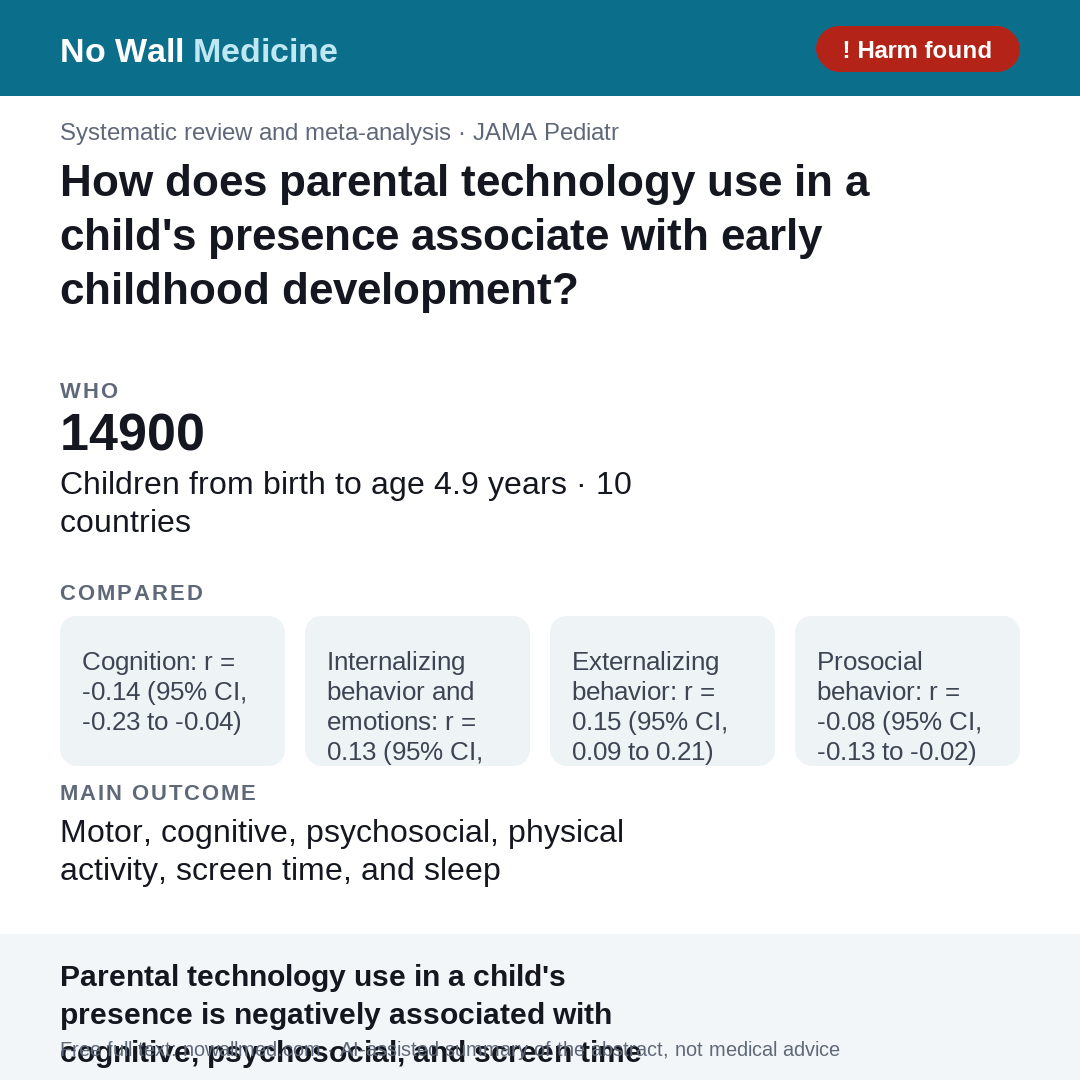
Parental Technology Use in a Child's Presence and Health and Development in the Early Years: A Systematic Review and Meta-Analysis
Systematic review and meta-analysisHarm found
How does parental technology use in a child's presence associate with early childhood development?
Who
14900
Children from birth to age 4.9 years · 10 countries
Compared
Cognition: r = -0.14 (95% CI, -0.23 to -0.04)
Internalizing behavior and emotions: r = 0.13 (95% CI, 0.08 to 0.19)
Externalizing behavior: r = 0.15 (95% CI, 0.09 to 0.21)
Prosocial behavior: r = -0.08 (95% CI, -0.13 to -0.02)
Main outcome
Motor, cognitive, psychosocial, physical activity, screen time, and sleep
Bottom line: Parental technology use in a child's presence is negatively associated with cognitive, psychosocial, and screen time outcomes.
Limitation: No study examined motor development, physical activity, or sleep.
JAMA Pediatr · 2025-05-05Download image
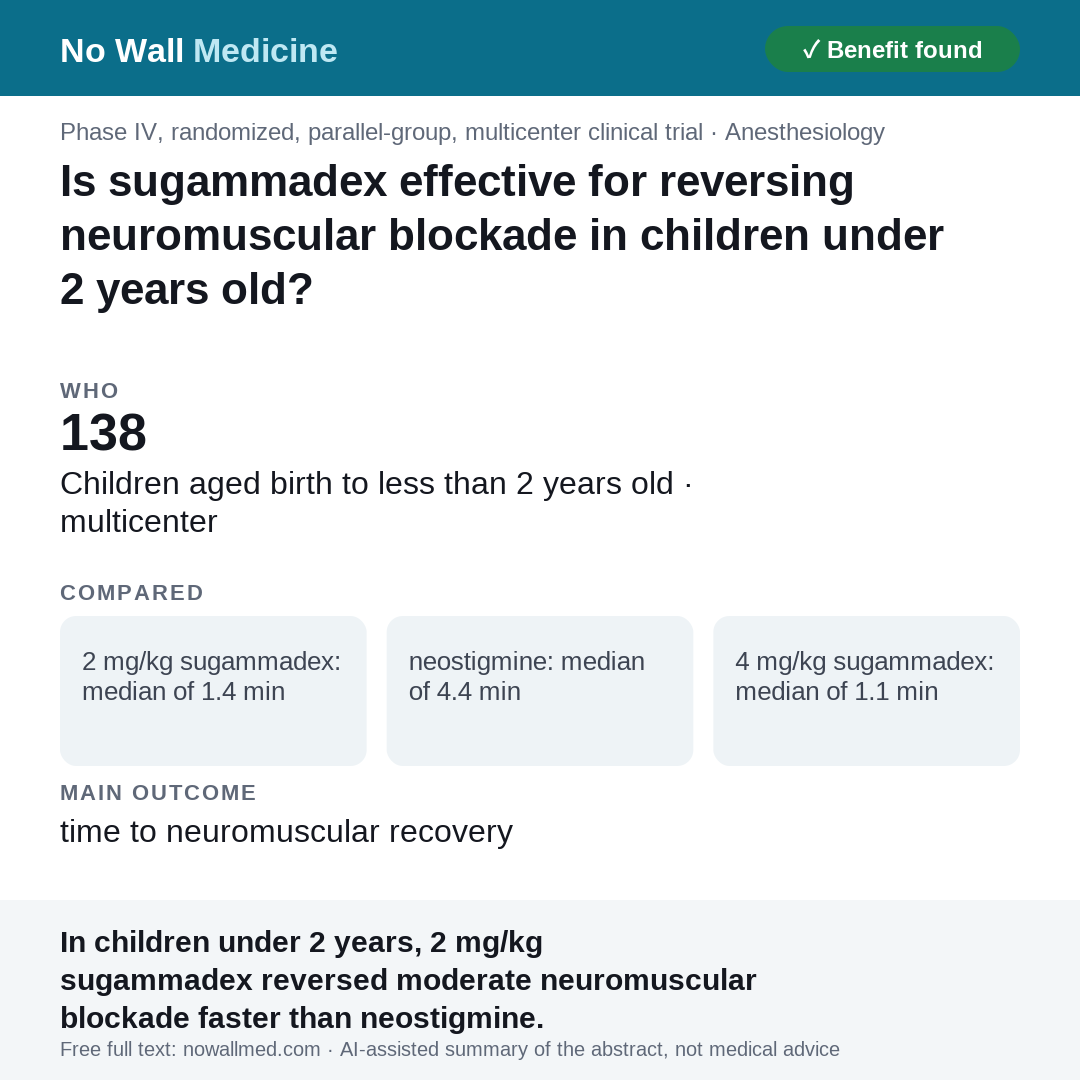
Sugammadex for Reversal of Neuromuscular Blockade in Neonates and Infants Less than 2 Years Old: Results from a Phase IV Randomized Clinical Trial
Phase IV, randomized, parallel-group, multicenter clinical trialBenefit found
Is sugammadex effective for reversing neuromuscular blockade in children under 2 years old?
Who
138
Children aged birth to less than 2 years old · multicenter
Compared
2 mg/kg sugammadex: median of 1.4 min
neostigmine: median of 4.4 min
4 mg/kg sugammadex: median of 1.1 min
Main outcome
time to neuromuscular recovery
Result: hazard ratio 2.40 (95% CI 1.37 to 4.18)
Bottom line: In children under 2 years, 2 mg/kg sugammadex reversed moderate neuromuscular blockade faster than neostigmine.
Anesthesiology · 2025-05-05Download image
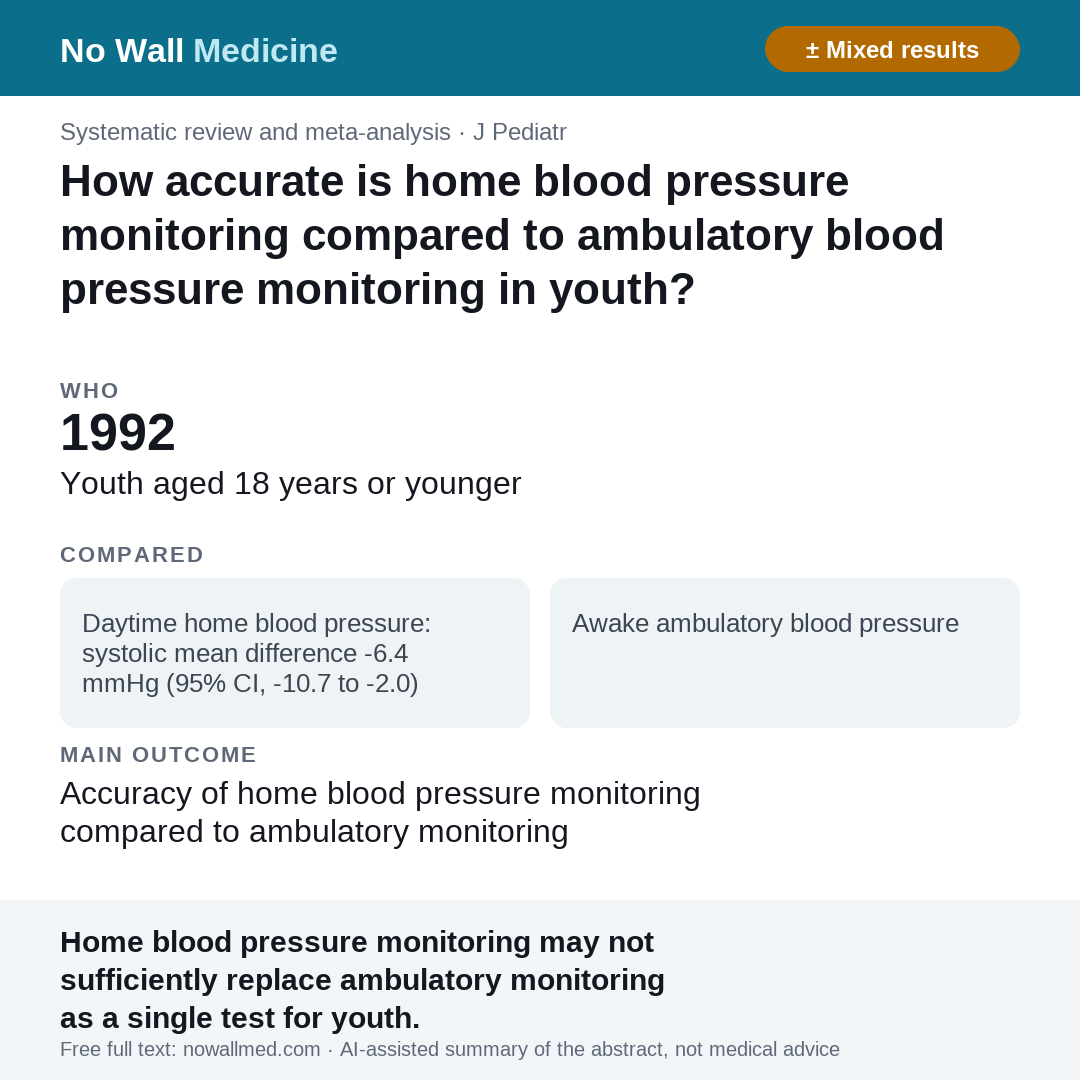
Accuracy of Home Blood Pressure Monitoring in Youth: A Systematic Review and Meta-Analysis
Systematic review and meta-analysisMixed results
How accurate is home blood pressure monitoring compared to ambulatory blood pressure monitoring in youth?
Who
1992
Youth aged 18 years or younger
Compared
Daytime home blood pressure: systolic mean difference -6.4 mmHg (95% CI, -10.7 to -2.0)
Awake ambulatory blood pressure
Main outcome
Accuracy of home blood pressure monitoring compared to ambulatory monitoring
Result: systolic MD, -6.4 mmHg [95% CI, -10.7 to -2.0]
Bottom line: Home blood pressure monitoring may not sufficiently replace ambulatory monitoring as a single test for youth.
Limitation: Different hypertension thresholds and home blood pressure monitoring protocols.
J Pediatr · 2025-05-05Download image
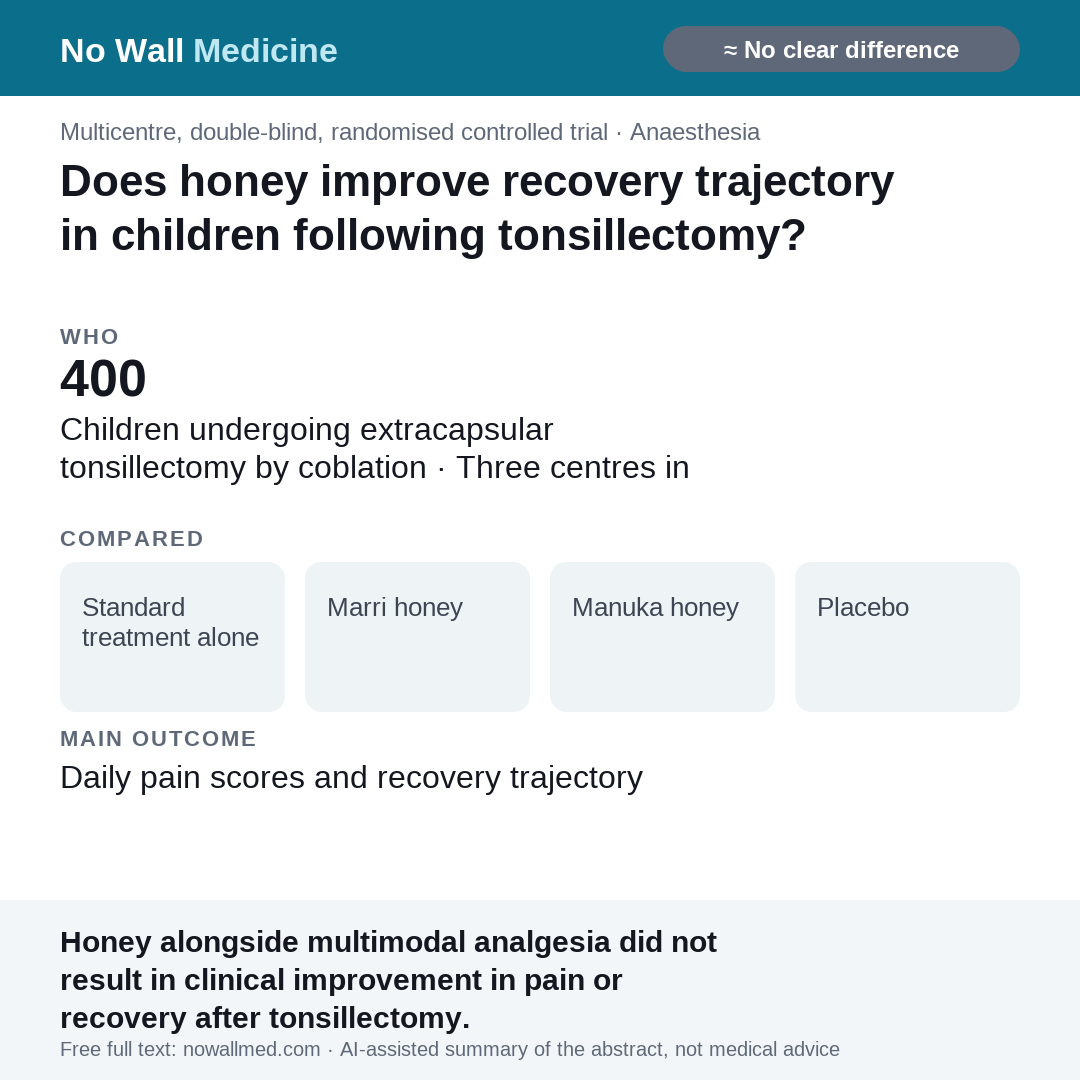
Impact of honey on post-tonsillectomy pain in children (BEE PAIN FREE Trial): a multicentre, double-blind, randomised controlled trial
Multicentre, double-blind, randomised controlled trialNo clear difference
Does honey improve recovery trajectory in children following tonsillectomy?
Who
400
Children undergoing extracapsular tonsillectomy by coblation · Three centres in Western Australia
Compared
Standard treatment alone
Marri honey
Manuka honey
Placebo
Main outcome
Daily pain scores and recovery trajectory
Bottom line: Honey alongside multimodal analgesia did not result in clinical improvement in pain or recovery after tonsillectomy.
Anaesthesia · 2025-05-05Download image
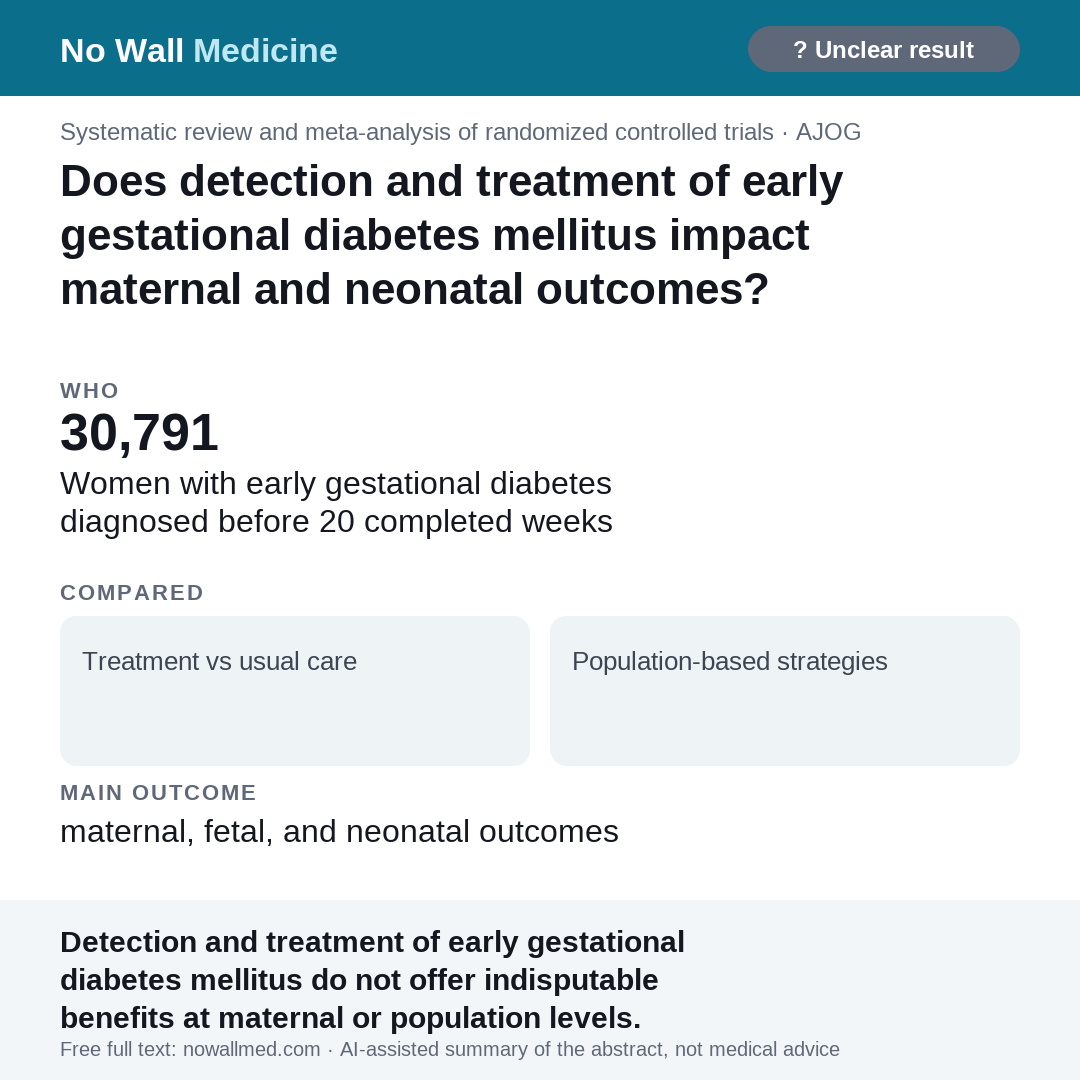
Detection and treatment of early gestational diabetes mellitus: a systematic review and meta-analysis of randomized controlled trials
Systematic review and meta-analysis of randomized controlled trialsUnclear result
Does detection and treatment of early gestational diabetes mellitus impact maternal and neonatal outcomes?
Who
30,791
Women with early gestational diabetes diagnosed before 20 completed weeks
Compared
Treatment vs usual care
Population-based strategies
Main outcome
maternal, fetal, and neonatal outcomes
Bottom line: Detection and treatment of early gestational diabetes mellitus do not offer indisputable benefits at maternal or population levels.
Limitation: The quality of evidence for most outcomes was low/very low.
AJOG · 2025-05-02Download image
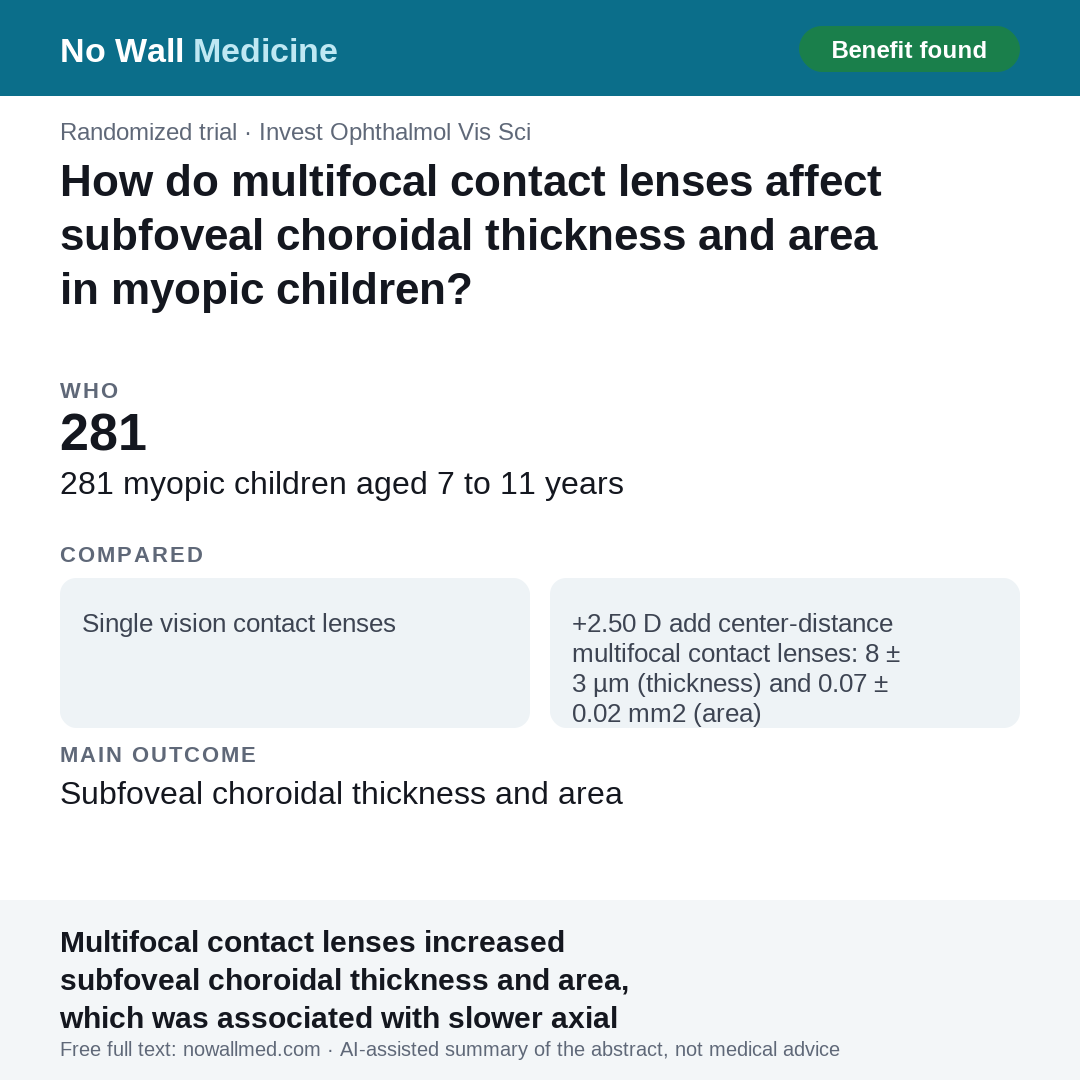
Three-Year Change in Subfoveal Choroidal Thickness and Area With Multifocal Contact Lens Wear in the Bifocal Lenses in Nearsighted Kids (BLINK) Study
Randomized trialBenefit found
How do multifocal contact lenses affect subfoveal choroidal thickness and area in myopic children?
Who
281
281 myopic children aged 7 to 11 years
Compared
Single vision contact lenses
+2.50 D add center-distance multifocal contact lenses: 8 ± 3 µm (thickness) and 0.07 ± 0.02 mm2 (area)
Main outcome
Subfoveal choroidal thickness and area
Bottom line: Multifocal contact lenses increased subfoveal choroidal thickness and area, which was associated with slower axial elongation.
Limitation: Only a portion of the treatment effect can be accounted for by choroidal parameters.
Invest Ophthalmol Vis Sci · 2025-05-02Download image
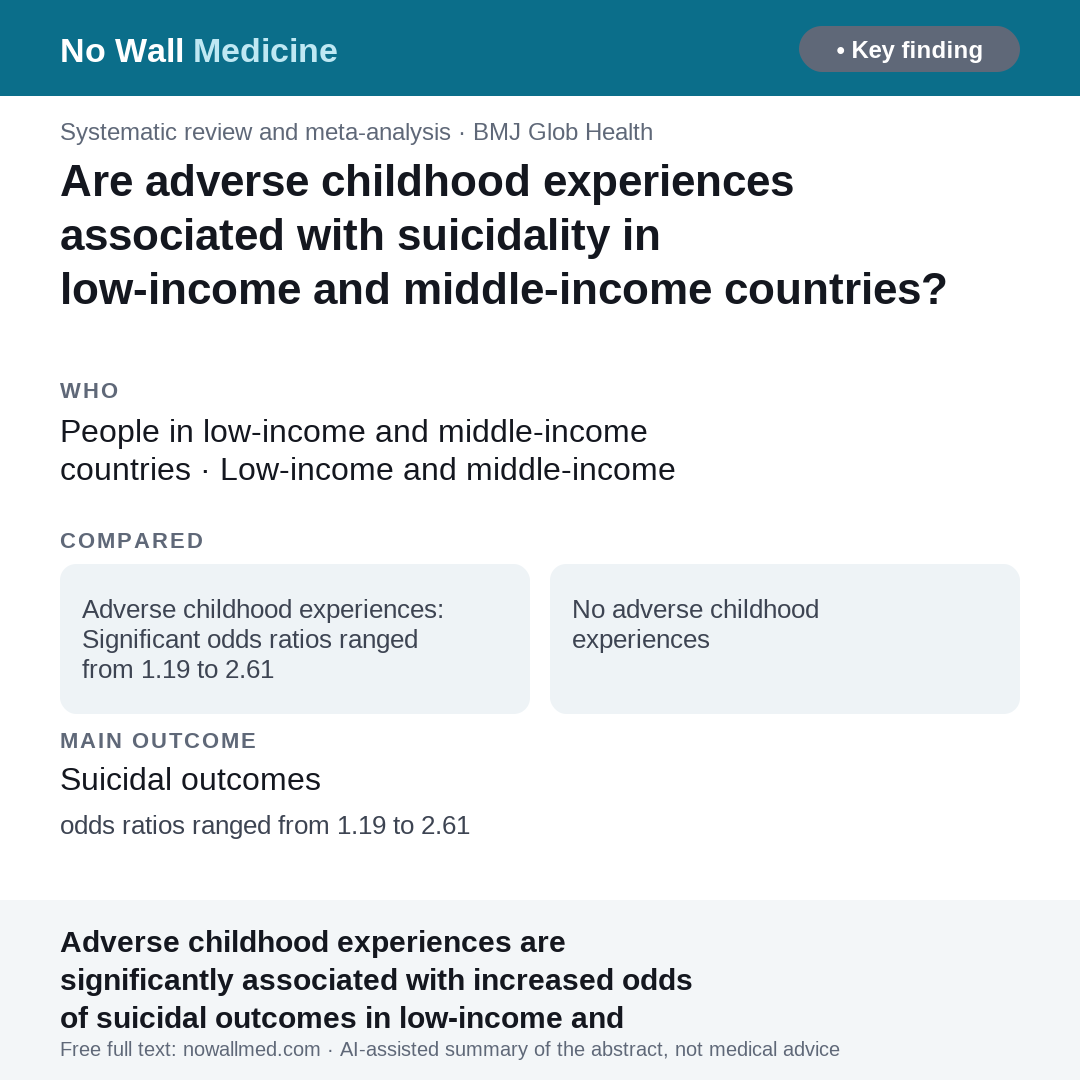
Adverse childhood experiences and suicidality in low-income and middle-income countries: a systematic review and meta-analysis
Systematic review and meta-analysisBenefit found
Are adverse childhood experiences associated with suicidality in low-income and middle-income countries?
Who
People in low-income and middle-income countries · Low-income and middle-income countries
Compared
Adverse childhood experiences: Significant odds ratios ranged from 1.19 to 2.61
No adverse childhood experiences
Main outcome
Suicidal outcomes
Result: odds ratios ranged from 1.19 to 2.61
Bottom line: Adverse childhood experiences are significantly associated with increased odds of suicidal outcomes in low-income and middle-income countries.
Limitation: None of the included articles reported on suicide mortality.
BMJ Glob Health · 2025-05-02Download image
Infant mental health services for birth and foster families of maltreated pre-school children in foster care (BeST?): a cluster-randomized phase 3 clinical effectiveness trial
Single-blind, cluster-randomized phase 3 trialNo clear difference
Does the New Orleans Intervention Model improve child mental health in foster care?
Who
488
Birth and foster families of maltreated 0-5-year-old children entering foster care
Compared
New Orleans Intervention Model: mean (s.d.) 11.5 (7.6)
social work services as usual: mean (s.d.) 11.1 (7.2)
Main outcome
child mental health measured by Strengths and Difficulties Questionnaire Total Difficulties scale
Result: adjusted mean difference 1.4 (95% CI -0.63, 3.53)
Bottom line: The New Orleans Intervention Model showed no significant effect on child mental health compared to usual social work services.
Nat Med · 2025-05-01Download image

Organ Donation for Research Biobanking Among Historically Marginalized Racial and Ethnic Groups: A Systematic Review
Systematic review and thematic analysisMixed results
What are the barriers and facilitators to postmortem brain donation for research among marginalized groups?
Who
12124
Adults from historically marginalized races and ethnicities
Compared
Barriers: Mistrust and religious and cultural beliefs
Facilitators: Altruism and family involvement
Main outcome
Barriers and facilitators to postmortem brain donation for research
Bottom line: Mistrust and religious beliefs are barriers, while altruism and family involvement can facilitate postmortem organ donation for research.
JAMA Netw Open · 2025-05-01Download image

Preoxygenation With and Without Positive End-Expiratory Pressure in Lung-Healthy Volunteers: A Randomized Clinical Trial
Crossover randomized clinical trialBenefit found
Are nonrebreather mask, bag-valve mask, or bag-valve mask with positive end-expiratory pressure more effective?
Who
53
Lung-healthy adults and children · Eurac Research, Bolzano, Italy
Compared
Nonrebreather mask
Bag-valve mask
Bag-valve mask plus positive end-expiratory pressure
Main outcome
Expiratory oxygen concentration at the end of preoxygenation
Bottom line: Bag-valve mask with positive end-expiratory pressure resulted in higher expiratory oxygen concentration and improved ventilation compared to other devices.
JAMA Netw Open · 2025-05-01Download image
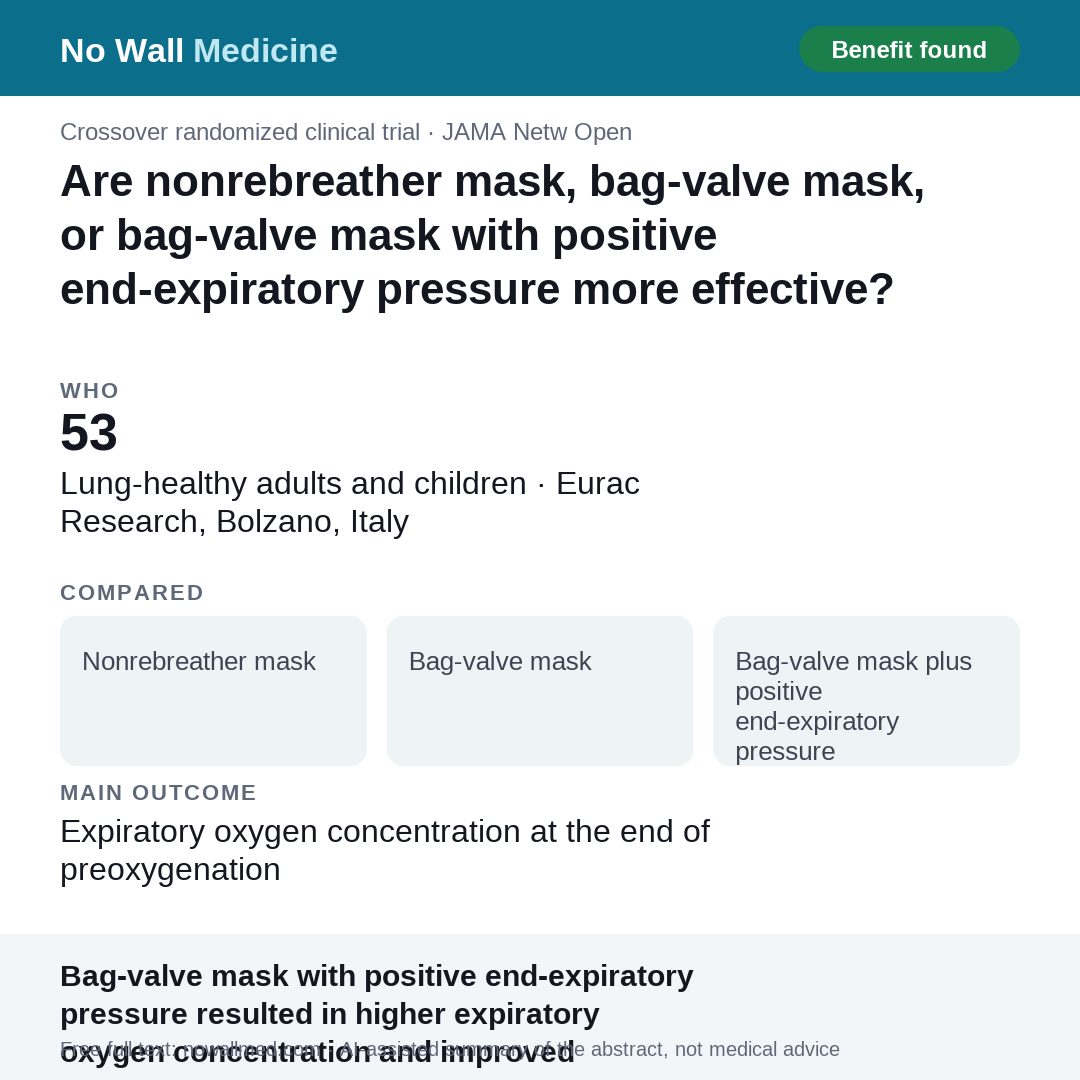
Integrated Collaborative Care for Youths With Mental Health and Substance Use Challenges: A Randomized Clinical Trial
Randomized clinical trialNo clear difference
Does integrated care improve youth mental health?
Who
247
Youths with mental health and substance use challenges · Canada
Compared
Integrated care: Cohen d = -3.59 (95% CI -4.99 to -2.20)
Treatment as usual: Cohen d = -2.59 (95% CI -4.01 to -1.18)
Main outcome
Mental health functioning
Result: No significant difference
Bottom line: Integrated care showed no clinical difference
JAMA Netw Open · 2025-05-01Download image
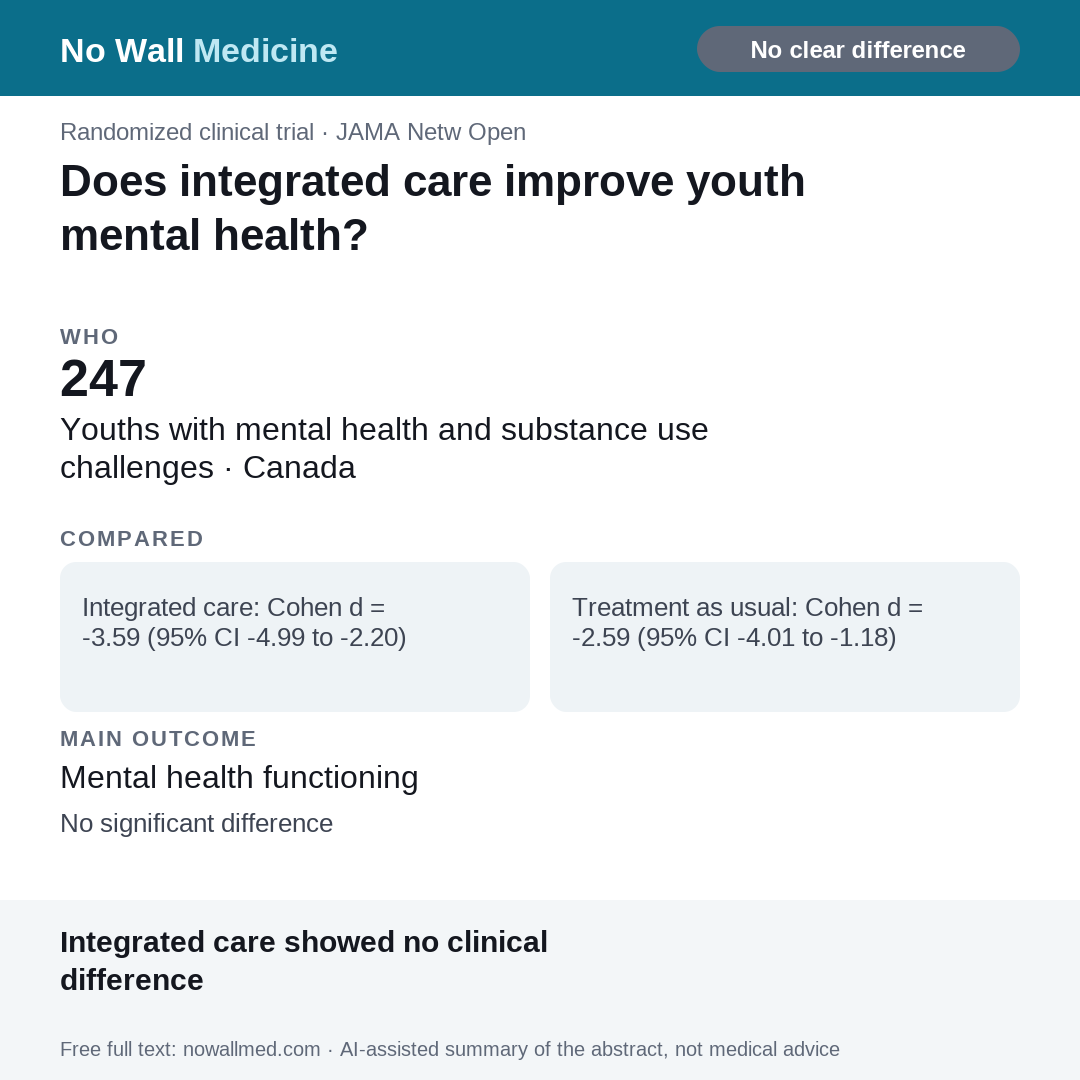
Parenting Training Plus Behavioral Treatment for Children With Obesity: A Randomized Clinical Trial
2-arm randomized clinical trialMixed results
Does adding intensive parenting training to family-based behavioral treatment improve child weight loss outcomes?
Who
140
children aged 7 to 12 years with overweight or obesity and one parent · academic center in San Diego, California
Compared
48.6%Family-based behavioral treatment plus parenting training
31.4%Family-based behavioral treatment alone
Main outcome
proportion of children attaining clinically meaningful weight loss
Result: adjusted odds ratio, 2.10 (95% CI 1.01-4.47)
Bottom line: Adding intensive parenting training did not significantly change BMI z score but increased clinically meaningful weight loss.
Limitation: Further work is needed to determine factors associated with treatment response and changes in parenting skills.
JAMA Netw Open · 2025-05-01Download image
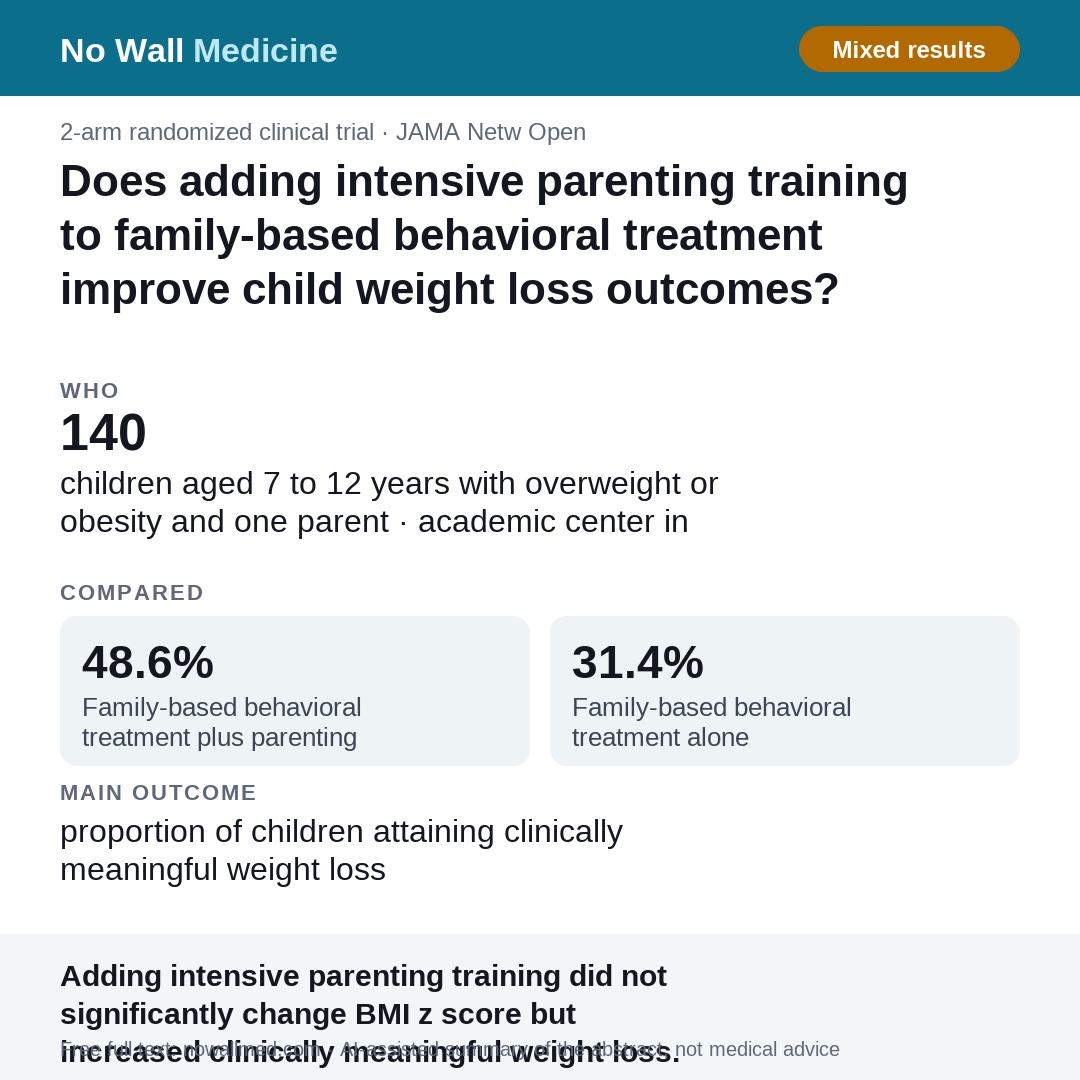
Is It Cost-Effective to Induce Labour Early to Prevent Shoulder Dystocia? Evidence From the Big Baby Trial
Within-trial economic evaluationNo clear difference
Is early induction of labour cost-effective to prevent shoulder dystocia in suspected large-for-gestational-age foetuses?
Who
Suspected large-for-gestational-age foetuses
Compared
Induction arm: £89 (95% confidence interval: -£79, £257) higher costs
Standard care arm
Main outcome
Incremental cost per shoulder dystocia prevented and maternal quality-adjusted life year gained
Result: £11 879 per shoulder dystocia prevented; £39 518 per maternal quality-adjusted life year gained
Bottom line: Early induction of labour is not cost-effective when effects are restricted to maternal quality-adjusted life years gained.
BJOG · 2025-05-01Download image
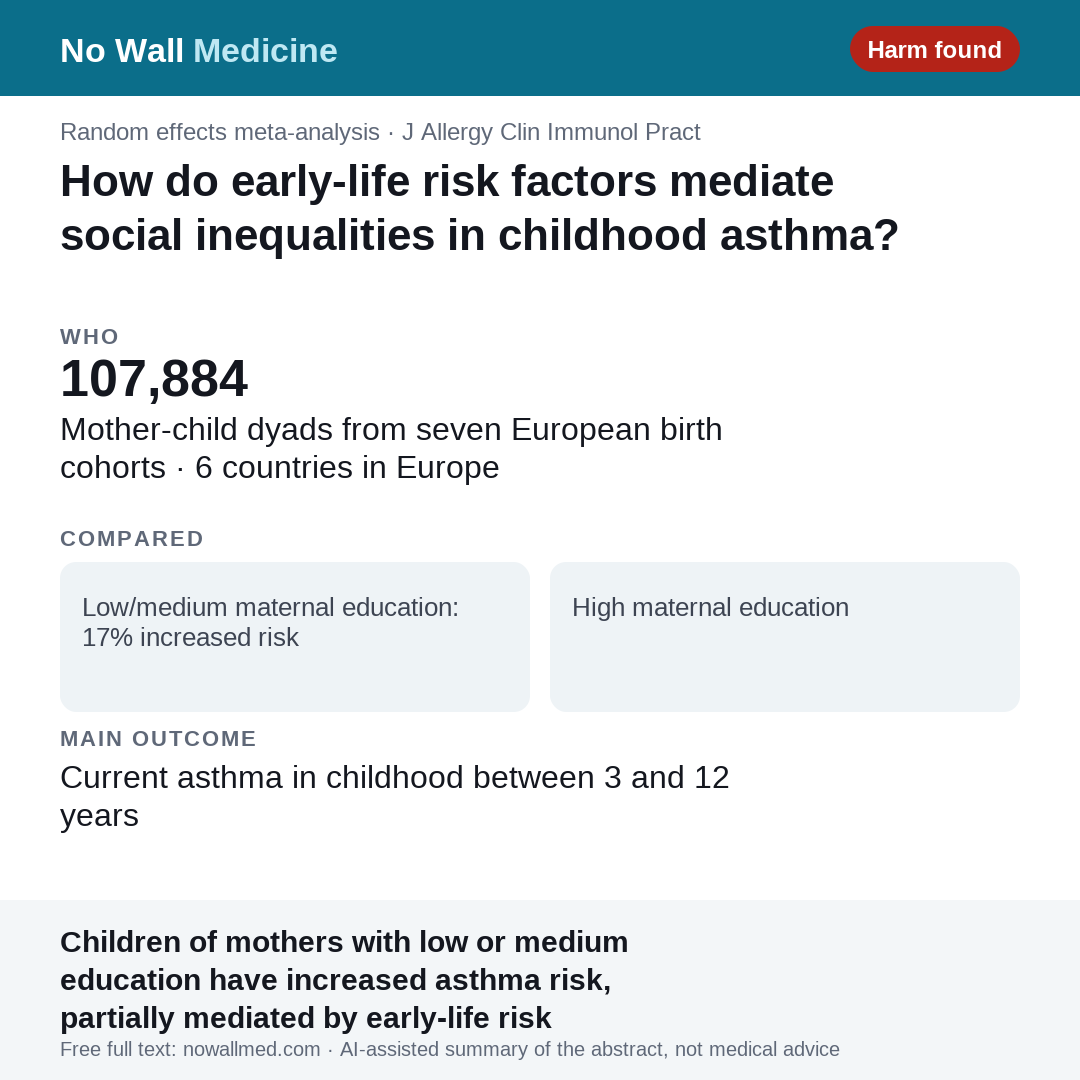
Understanding Social Inequalities in Childhood Asthma: Quantifying the Mediating Role of Modifiable Early-Life Risk Factors in Seven European Birth Cohorts
Random effects meta-analysisHarm found
How do early-life risk factors mediate social inequalities in childhood asthma?
Who
107,884
Mother-child dyads from seven European birth cohorts · 6 countries in Europe
Compared
Low/medium maternal education: 17% increased risk
High maternal education
Main outcome
Current asthma in childhood between 3 and 12 years
Result: 17% (95% confidence interval: 8%-27%)
Bottom line: Children of mothers with low or medium education have increased asthma risk, partially mediated by early-life risk factors.
J Allergy Clin Immunol Pract · 2025-05-01Download image
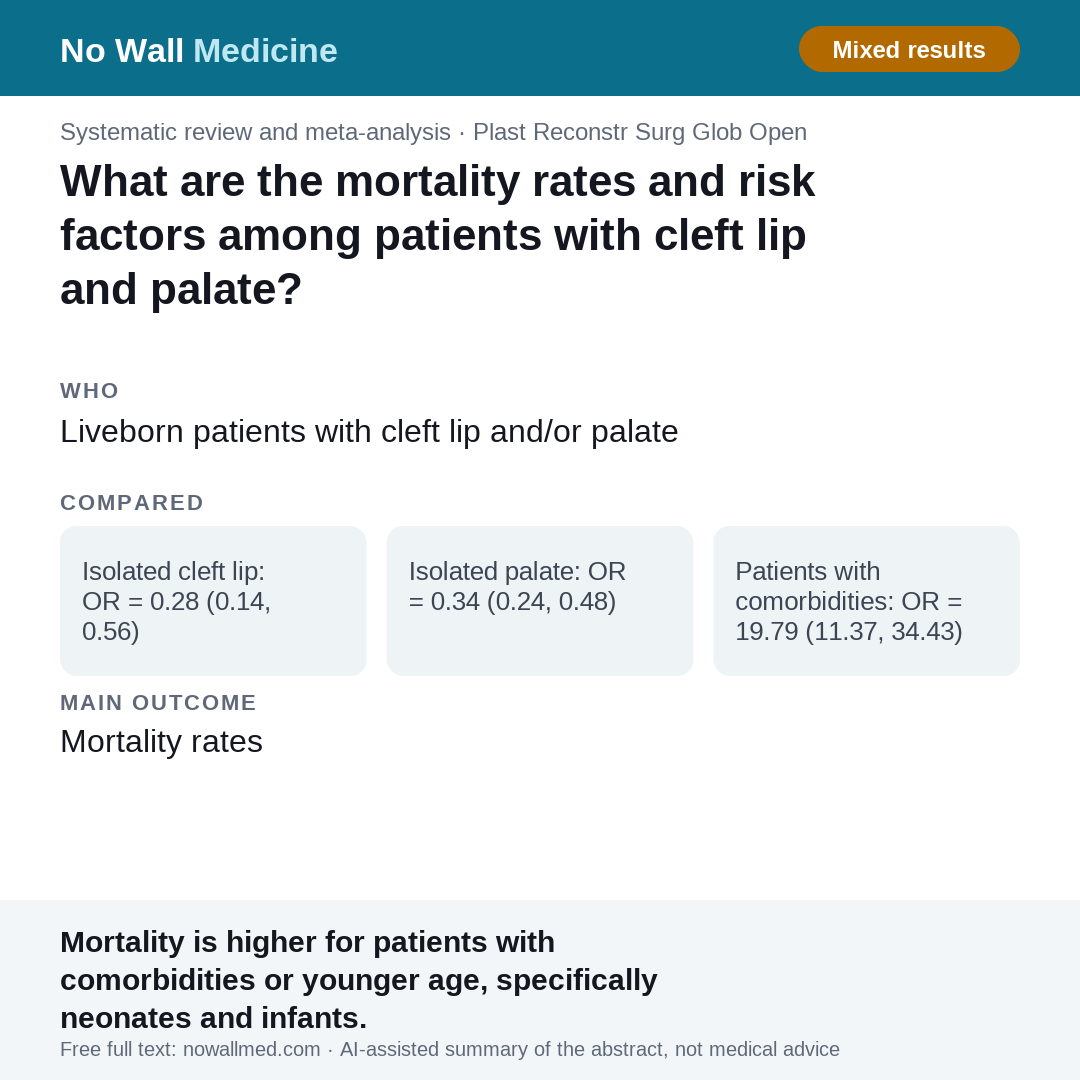
Mortality in Cleft Lip and Palate Patients: A Systematic Review and Meta-analysis
Systematic review and meta-analysisMixed results
What are the mortality rates and risk factors among patients with cleft lip and palate?
Who
Liveborn patients with cleft lip and/or palate
Compared
Isolated cleft lip: OR = 0.28 (0.14, 0.56)
Isolated palate: OR = 0.34 (0.24, 0.48)
Patients with comorbidities: OR = 19.79 (11.37, 34.43)
Main outcome
Mortality rates
Bottom line: Mortality is higher for patients with comorbidities or younger age, specifically neonates and infants.
Limitation: Further studies stratifying data by cleft phenotype and age are required.
Plast Reconstr Surg Glob Open · 2025-05-01Download image
Ivarmacitinib for Moderate to Severe Atopic Dermatitis in Adults and Adolescents: A Phase 3 Randomized Clinical Trial
Multicenter, double-blind, placebo-controlled phase 3 randomized clinical trialBenefit found
Is ivarmacitinib effective for moderate to severe atopic dermatitis in adolescents and adults?
Who
336
Adolescents and adults aged 12 to 75 years with moderate to severe atopic dermatitis · 53 sites in Canada and China
Compared
4-mg ivarmacitinib: 36.3% (41/113) achieved IGA 0 or 1
8-mg ivarmacitinib: 42.0% (47/112) achieved IGA 0 or 1
Placebo: 9.0% (10/111) achieved IGA 0 or 1
Main outcome
Proportion of patients achieving IGA 0 or 1 and EASI-75 at week 16
Bottom line: Once-daily ivarmacitinib at 4-mg or 8-mg doses significantly improved skin clearance in patients with moderate to severe atopic dermatitis.
JAMA Dermatol · 2025-04-30Download image

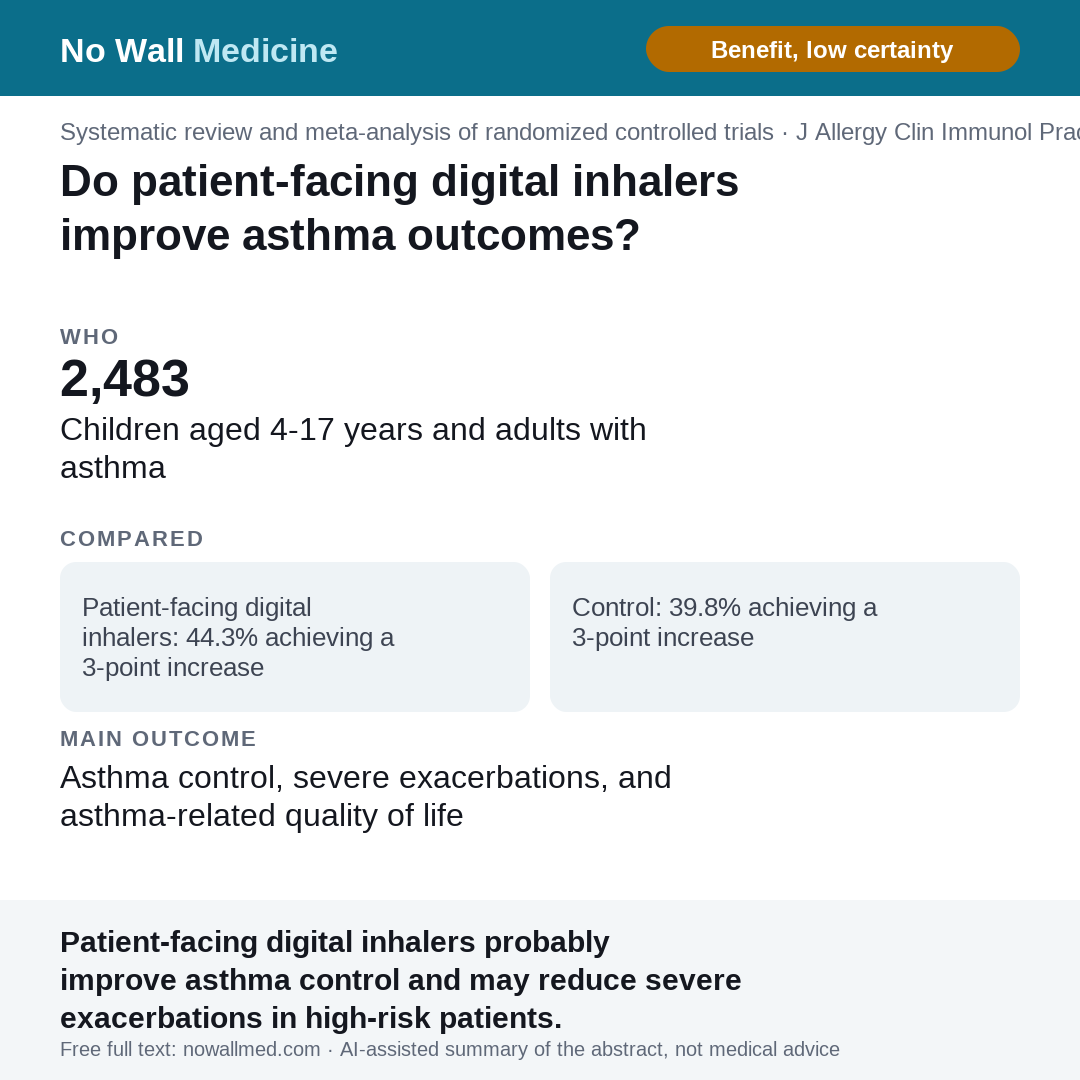
Patient-Facing Digital Inhalers for Asthma: A Systematic Review and Meta-Analysis
Systematic review and meta-analysis of randomized controlled trialsBenefit found
Do patient-facing digital inhalers improve asthma outcomes?
Who
2,483
Children aged 4-17 years and adults with asthma
Compared
Patient-facing digital inhalers: 44.3% achieving a 3-point increase
Control: 39.8% achieving a 3-point increase
Main outcome
Asthma control, severe exacerbations, and asthma-related quality of life
Result: mean difference 0.63 (95% CI 0.29-0.96)
Bottom line: Patient-facing digital inhalers probably improve asthma control and may reduce severe exacerbations in high-risk patients.
J Allergy Clin Immunol Pract · 2025-04-30Download image
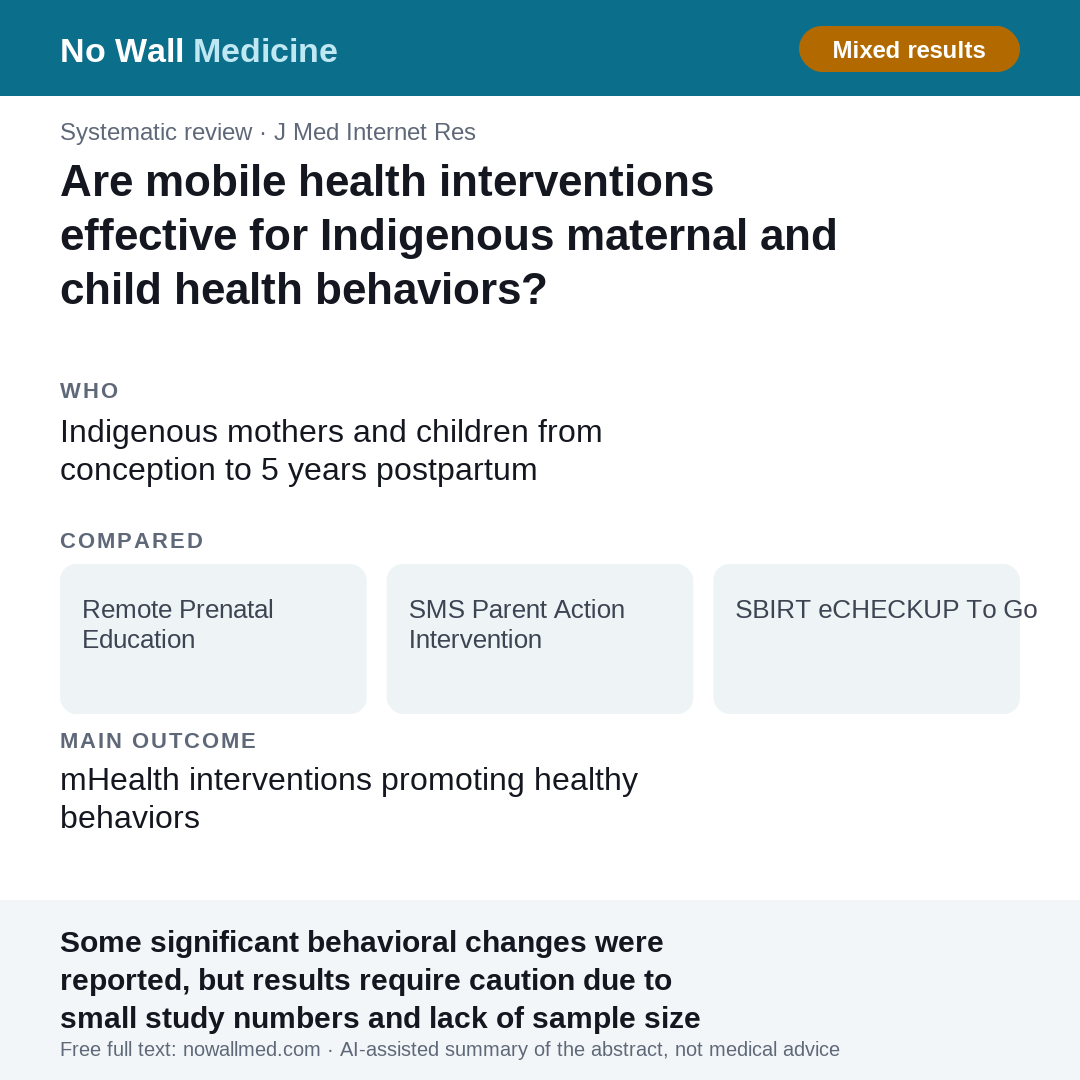
Mobile Health Interventions for Modifying Indigenous Maternal and Child-Health Related Behaviors: Systematic Review
Systematic reviewMixed results
Are mobile health interventions effective for Indigenous maternal and child health behaviors?
Who
Indigenous mothers and children from conception to 5 years postpartum
Compared
Remote Prenatal Education
SMS Parent Action Intervention
SBIRT eCHECKUP To Go
Main outcome
mHealth interventions promoting healthy behaviors
Bottom line: Some significant behavioral changes were reported, but results require caution due to small study numbers and lack of sample size calculations.
Limitation: Small number of studies and lack of sample size calculations for reported significant outcomes.
J Med Internet Res · 2025-04-30Download image
Effects of Virtual Reality-Based Interventions on Preoperative Anxiety in Patients Undergoing Elective Surgery With Anesthesia: Systematic Review and Meta-Analysis
Systematic review and meta-analysis of 29 randomized controlled trialsBenefit found
Do virtual reality-based interventions reduce preoperative anxiety in patients undergoing elective surgery?
Who
3341
Patients undergoing elective surgery with anesthesia
Compared
Virtual reality-based interventions
Usual care
Main outcome
Preoperative anxiety
Result: standardized mean difference 0.65 (95% CI 0.37 to 0.92)
Bottom line: Virtual reality-based interventions significantly decrease preoperative anxiety in patients undergoing elective surgery, especially pediatric patients using distraction.
Limitation: More rigorous research is needed to confirm effectiveness.
J Med Internet Res · 2025-04-30Download image

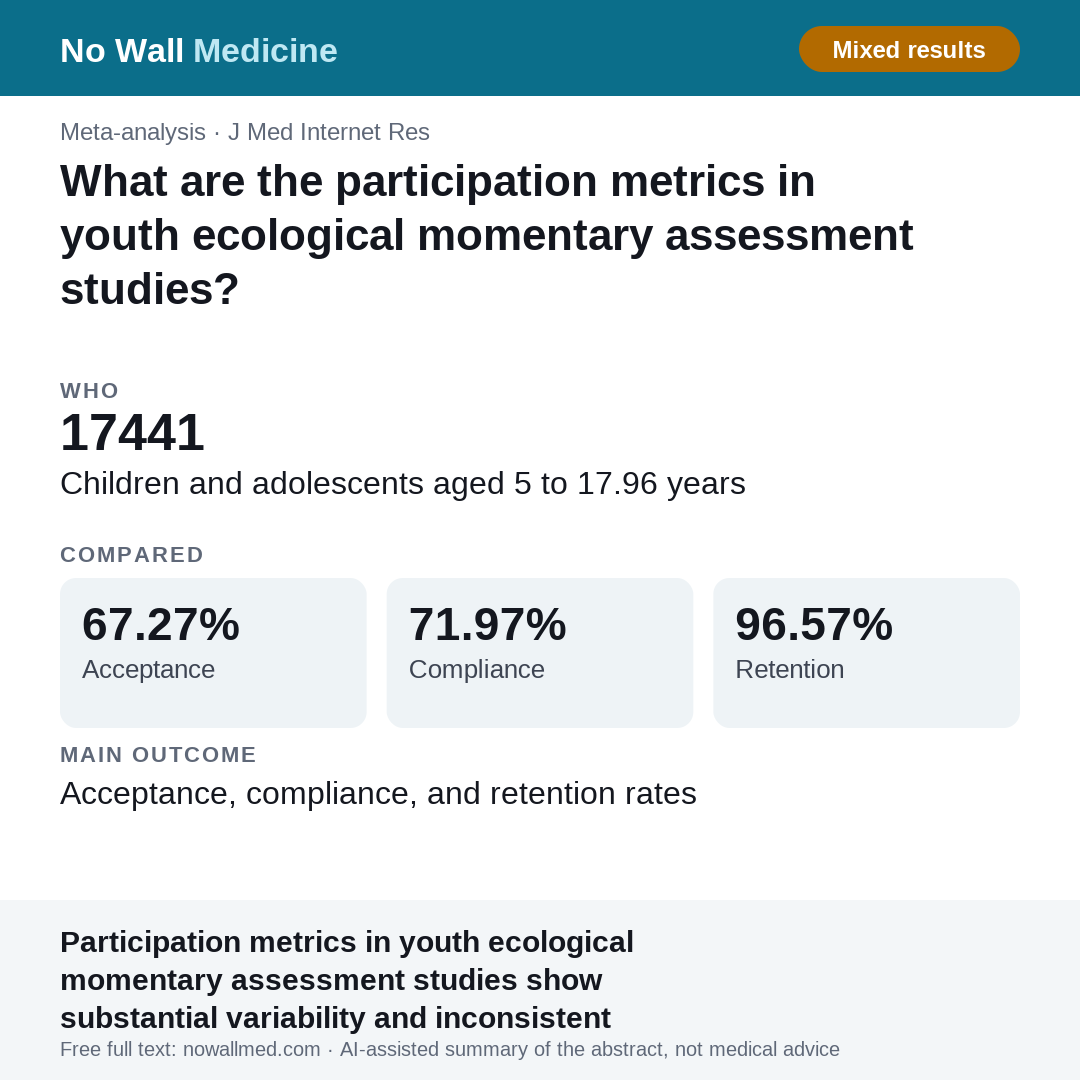
Readdressing the Ongoing Challenge of Missing Data in Youth Ecological Momentary Assessment Studies: Meta-Analysis Update
Meta-analysisMixed results
What are the participation metrics in youth ecological momentary assessment studies?
Who
17441
Children and adolescents aged 5 to 17.96 years
Compared
67.27%Acceptance (k=88, 95% CI 62.39-71.96)
71.97%Compliance (k=216, 95% CI 69.83-74.11)
96.57%Retention (k=169, 95% CI 95.42-97.56)
Main outcome
Acceptance, compliance, and retention rates
Bottom line: Participation metrics in youth ecological momentary assessment studies show substantial variability and inconsistent moderators for missing data.
Limitation: The inconsistency in identifying robust moderators highlights the need for greater attention to missing data.
J Med Internet Res · 2025-04-30Download image