Visual abstracts
New randomized trials and meta-analyses from leading journals at a glance: who was studied, what was compared, and what was found. Every paper is free to read in full.
All specialtiesCardiology 4877Oncology 4138Gastroenterology & Hepatology 1942Infectious Disease 3837Neurology 1905Psychiatry & Mental Health 2273Pulmonology 2143Critical Care 1365Endocrinology & Diabetes 2580Pediatrics 2980Surgery 2559Orthopedics & Sports Medicine 931Neurosurgery 537Cardiothoracic & Vascular Surgery 674Plastic & Reconstructive Surgery 591Nephrology 1133Rheumatology 823Hematology 1109Dermatology 621Ophthalmology 543Obstetrics & Gynecology 1686Public & Global Health 1058Radiology & Imaging 648Anesthesiology 986Urology 764ENT (Otolaryngology) 503Emergency Medicine 511Allergy & Immunology 313Geriatrics 981Family Medicine & Primary Care 562Medical Genetics & Genomics 676Pathology & Laboratory Medicine 159Physical Medicine & Rehabilitation 757Palliative Care 444Nutrition 1588Digital Health & AI 2201General Medicine 321
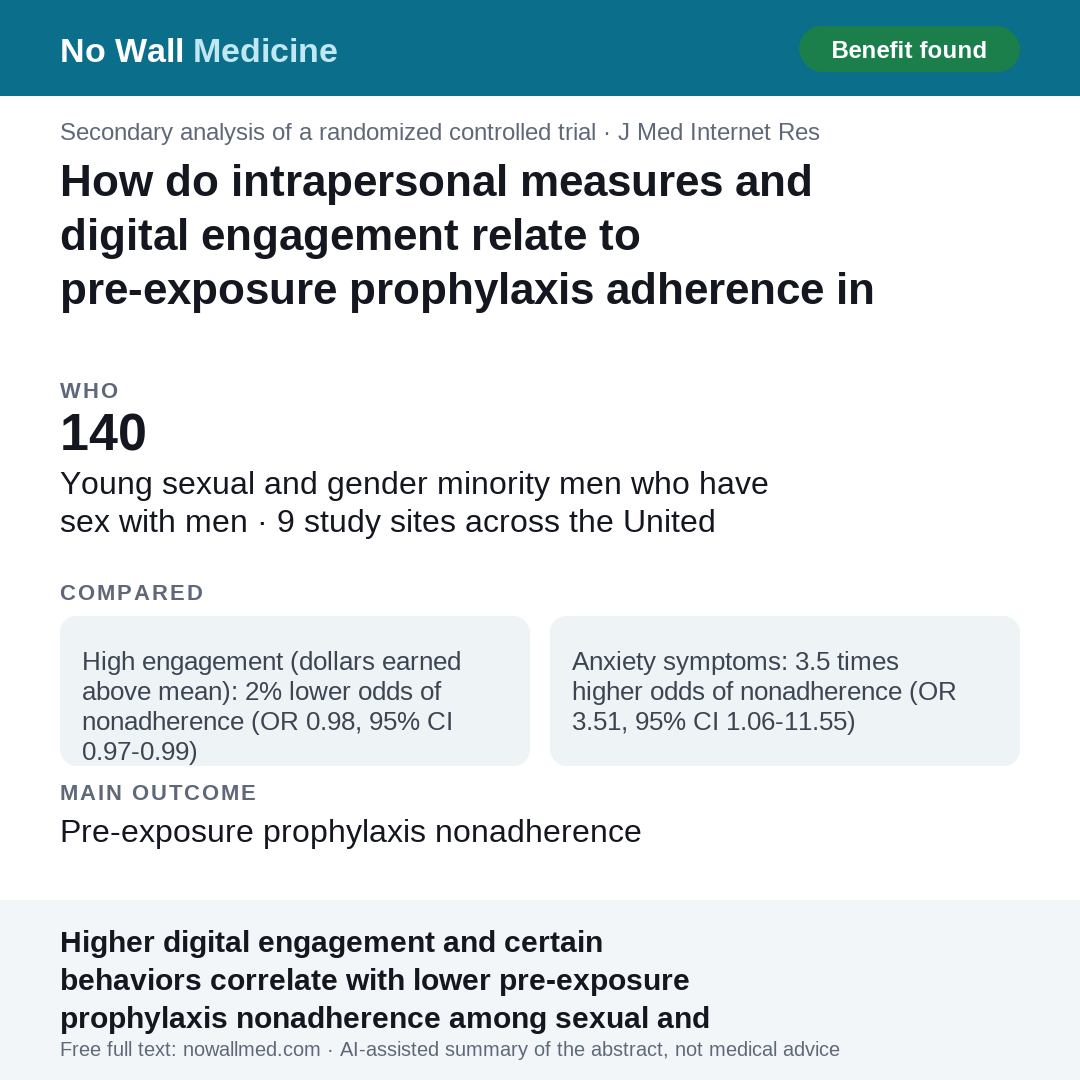
Studying the Digital Intervention Engagement-Mediated Relationship Between Intrapersonal Measures and Pre-Exposure Prophylaxis Adherence in Sexual and Gender Minority Youth: Secondary Analysis of a Randomized Controlled Trial
Secondary analysis of a randomized controlled trialBenefit found
How do intrapersonal measures and digital engagement relate to pre-exposure prophylaxis adherence in youth?
Who
140
Young sexual and gender minority men who have sex with men · 9 study sites across the United States
Compared
High engagement (dollars earned above mean): 2% lower odds of nonadherence (OR 0.98, 95% CI 0.97-0.99)
Anxiety symptoms: 3.5 times higher odds of nonadherence (OR 3.51, 95% CI 1.06-11.55)
Main outcome
Pre-exposure prophylaxis nonadherence
Result: OR 3.51 (95% CI 1.06-11.55) for anxiety symptoms
Bottom line: Higher digital engagement and certain behaviors correlate with lower pre-exposure prophylaxis nonadherence among sexual and gender minority youth.
J Med Internet Res · 2025-01-13Download image
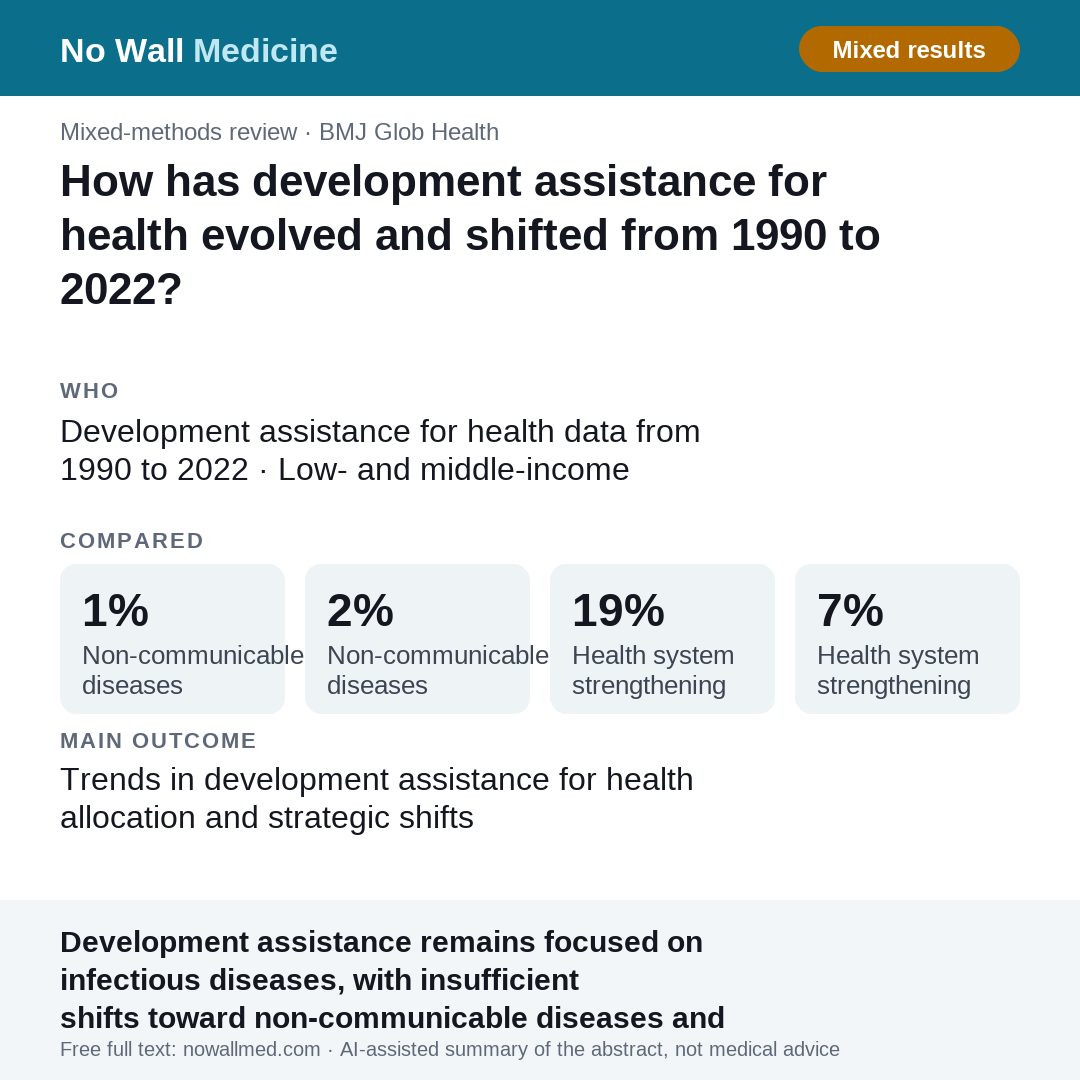
Evolution and effectiveness of bilateral and multilateral development assistance for health: a mixed-methods review of trends and strategic shifts (1990-2022)
Mixed-methods reviewMixed results
How has development assistance for health evolved and shifted from 1990 to 2022?
Who
Development assistance for health data from 1990 to 2022 · Low- and middle-income countries
Compared
1%Non-communicable diseases funding in 1990
2%Non-communicable diseases funding in 2022
19%Health system strengthening funding in 1990
7%Health system strengthening funding in 2022
Main outcome
Trends in development assistance for health allocation and strategic shifts
Bottom line: Development assistance remains focused on infectious diseases, with insufficient shifts toward non-communicable diseases and health system strengthening.
Limitation: Establishing causality is challenging due to multiple influencing factors.
BMJ Glob Health · 2025-01-11Download image
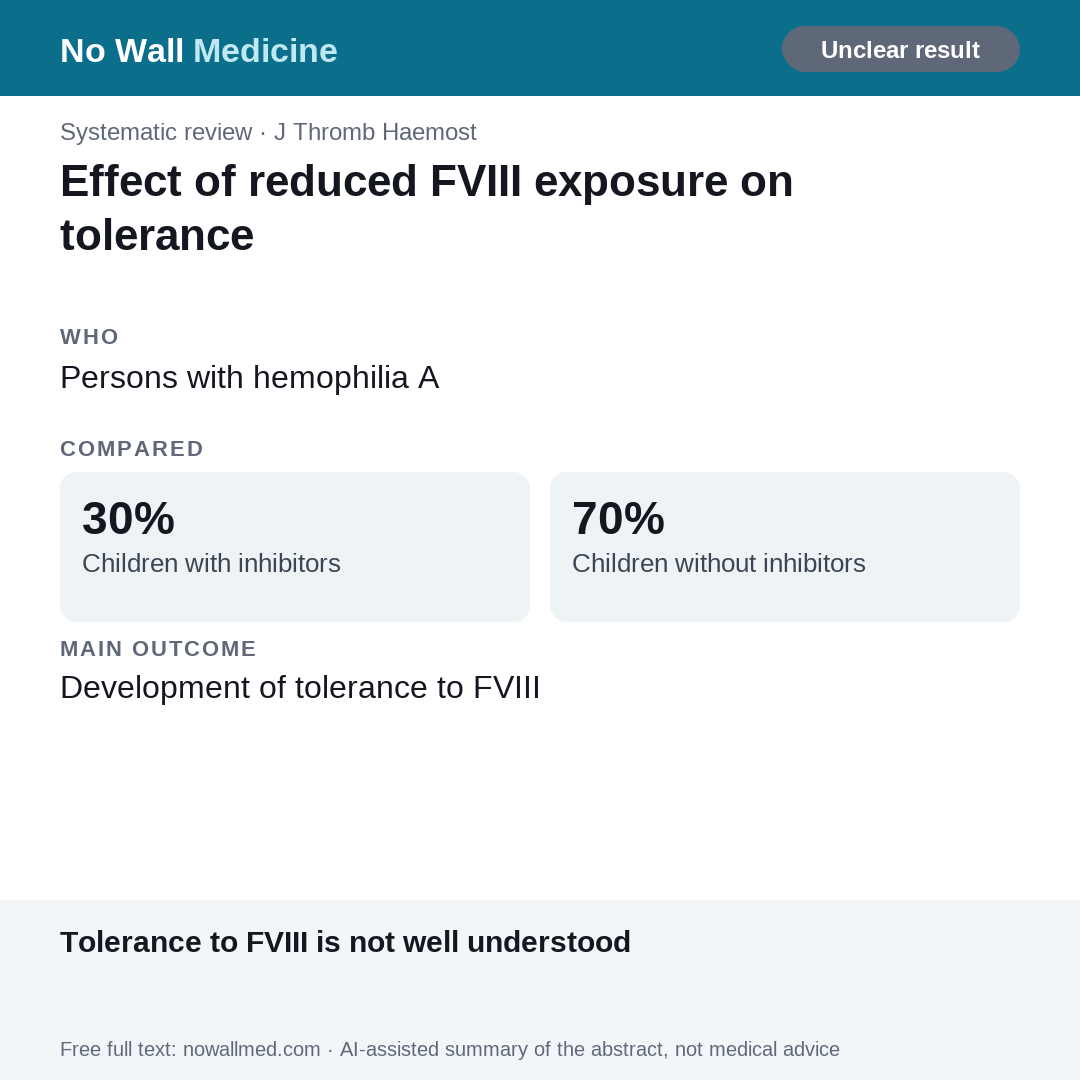
Tolerance to factor VIII in the era of nonfactor therapies: immunologic perspectives and a systematic review of the literature
Systematic reviewUnclear result
Effect of reduced FVIII exposure on tolerance
Who
Persons with hemophilia A
Compared
30%Children with inhibitors
70%Children without inhibitors
Main outcome
Development of tolerance to FVIII
Bottom line: Tolerance to FVIII is not well understood
J Thromb Haemost · 2025-01-10Download image
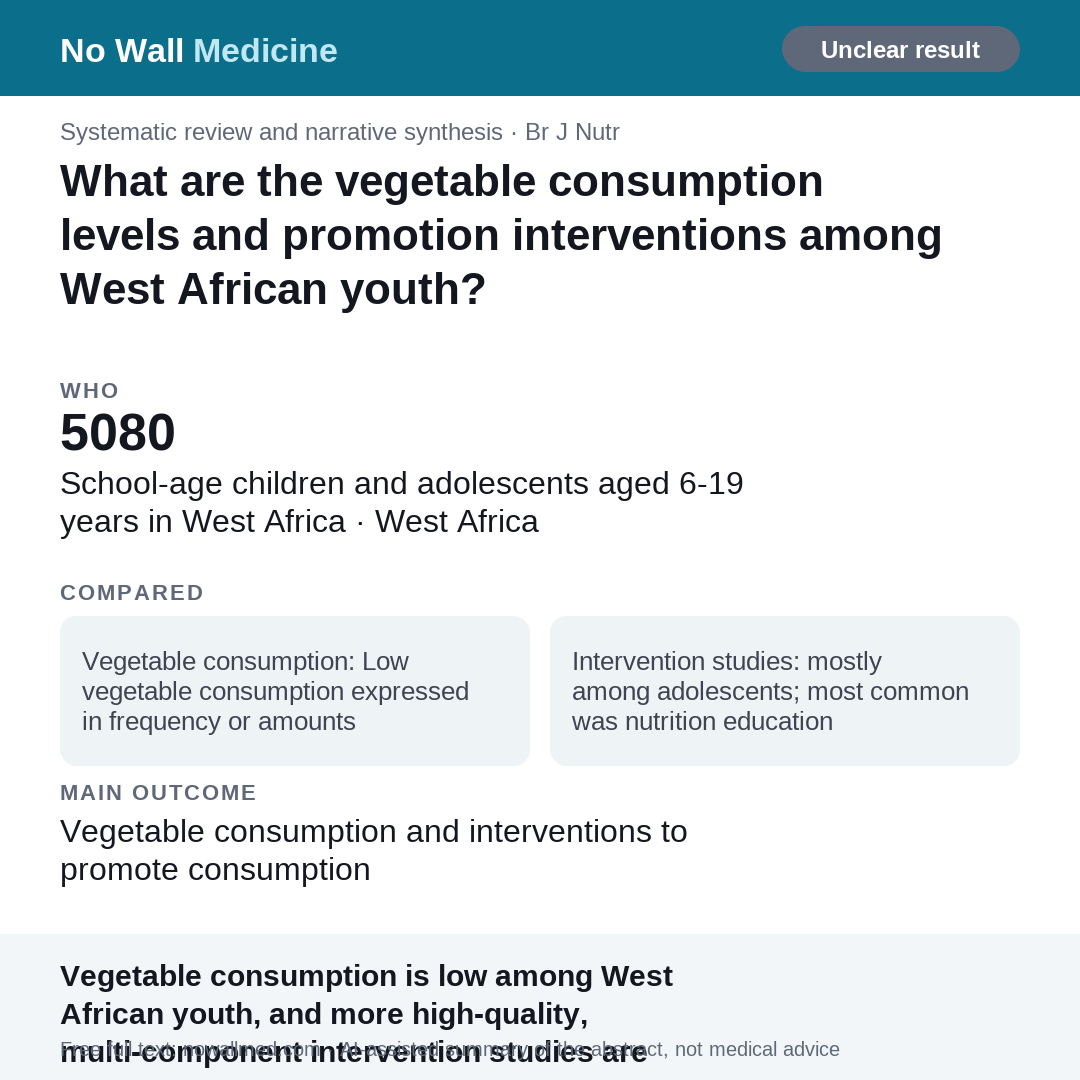
Vegetable consumption and promotion among school-age children and adolescents in West Africa: a systematic review and narrative synthesis
Systematic review and narrative synthesisUnclear result
What are the vegetable consumption levels and promotion interventions among West African youth?
Who
5080
School-age children and adolescents aged 6-19 years in West Africa · West Africa
Compared
Vegetable consumption: Low vegetable consumption expressed in frequency or amounts
Intervention studies: mostly among adolescents; most common was nutrition education
Main outcome
Vegetable consumption and interventions to promote consumption
Bottom line: Vegetable consumption is low among West African youth, and more high-quality, multi-component intervention studies are needed.
Br J Nutr · 2025-01-10Download image
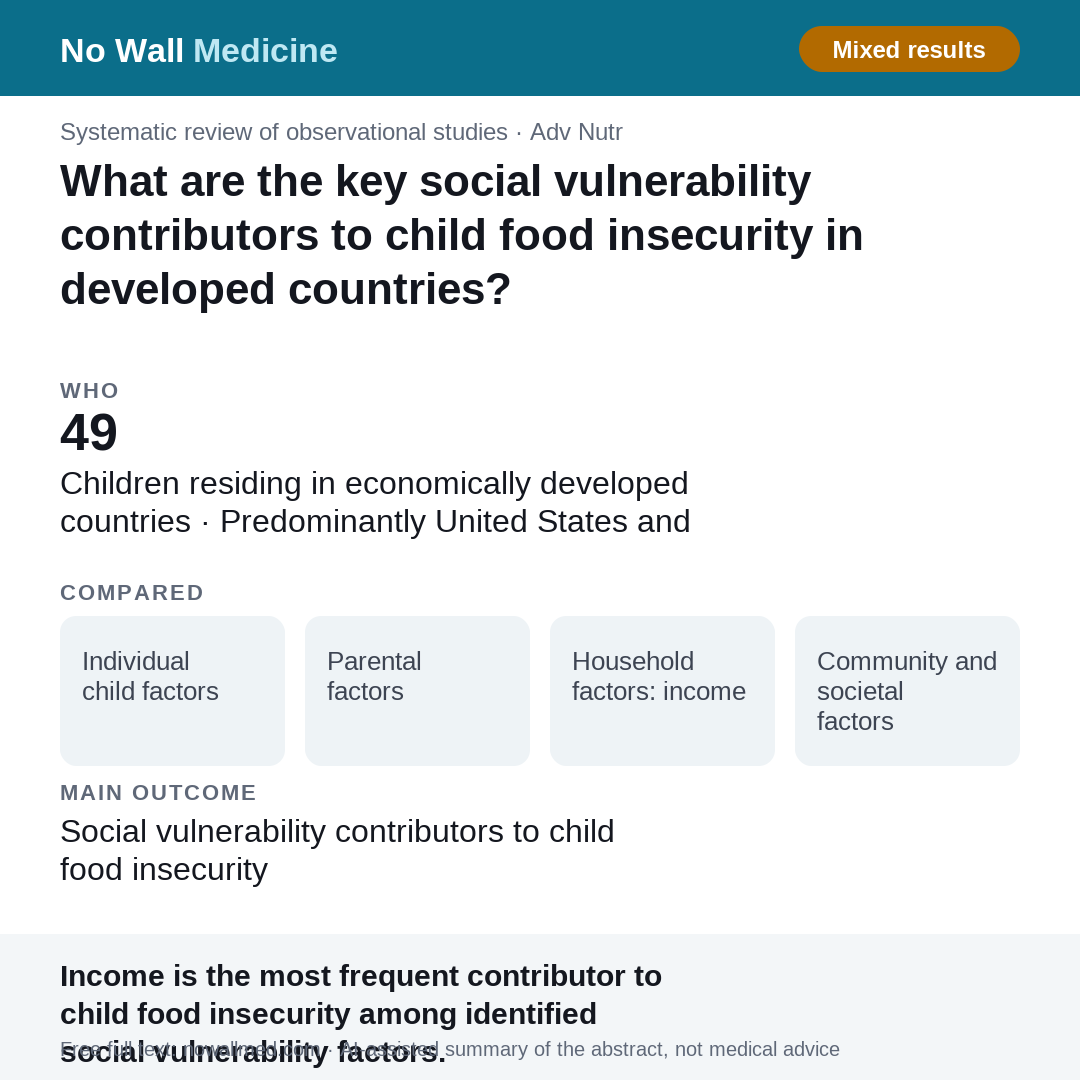
Social Vulnerability and Child Food Insecurity in Developed Countries: A Systematic Review
Systematic review of observational studiesMixed results
What are the key social vulnerability contributors to child food insecurity in developed countries?
Who
49
Children residing in economically developed countries · Predominantly United States and Canada
Compared
Individual child factors
Parental factors
Household factors: income
Community and societal factors
Main outcome
Social vulnerability contributors to child food insecurity
Bottom line: Income is the most frequent contributor to child food insecurity among identified social vulnerability factors.
Limitation: Lack of consistent measures to define social vulnerability and food insecurity impeded meaningful pooling.
Adv Nutr · 2025-01-10Download image
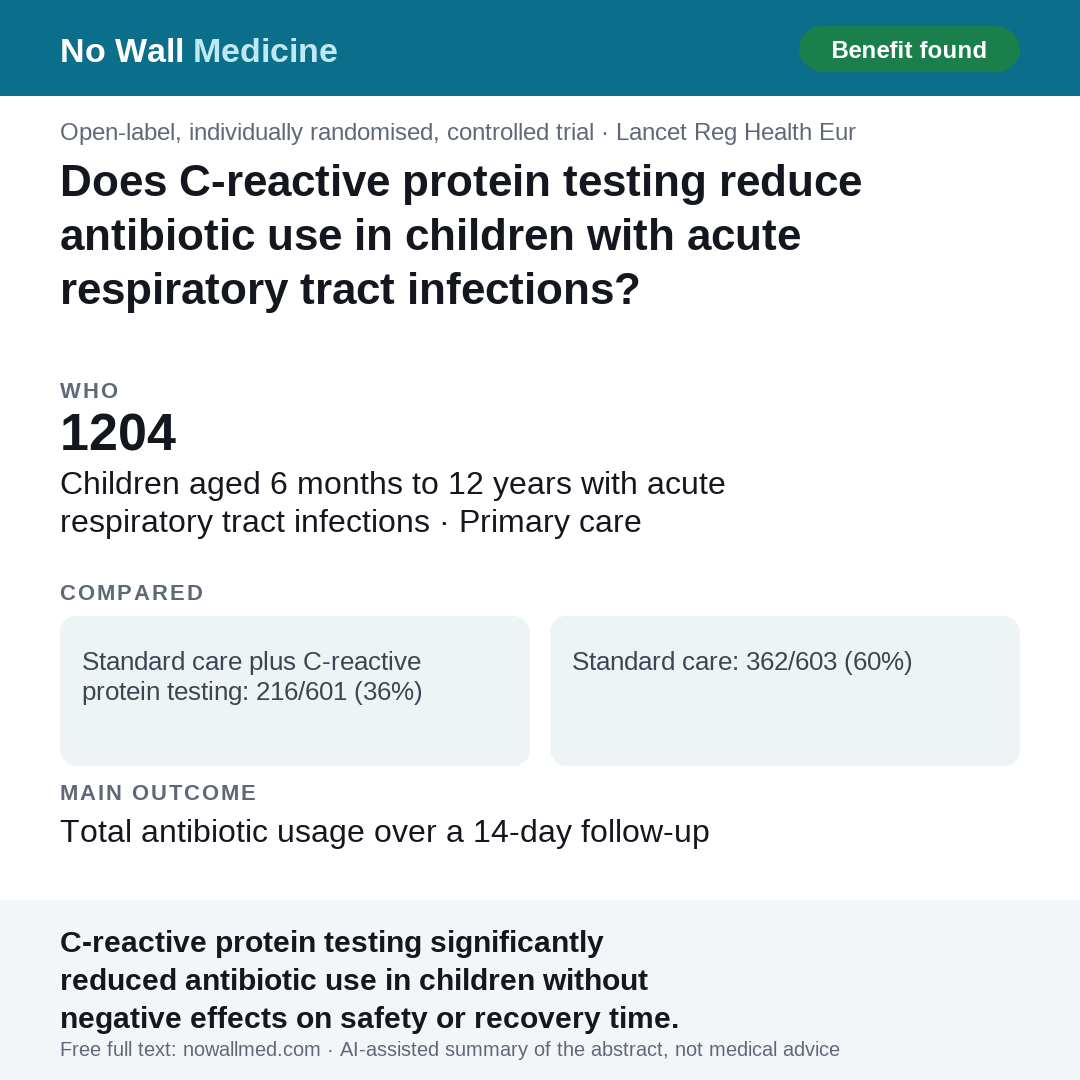
C-reactive protein testing in primary care and antibiotic use in children with acute respiratory tract infections in Kyrgyzstan: an open-label, individually randomised, controlled trial
Open-label, individually randomised, controlled trialBenefit found
Does C-reactive protein testing reduce antibiotic use in children with acute respiratory tract infections?
Who
1204
Children aged 6 months to 12 years with acute respiratory tract infections · Primary care settings in Kyrgyzstan
Compared
Standard care plus C-reactive protein testing: 216/601 (36%)
Standard care: 362/603 (60%)
Main outcome
Total antibiotic usage over a 14-day follow-up
Result: Risk difference: 24 percentage points (95% CI: 15-34)
Bottom line: C-reactive protein testing significantly reduced antibiotic use in children without negative effects on safety or recovery time.
Funded by: International Centre for Antimicrobial Resistance Solutions
Lancet Reg Health Eur · 2025-01-10Download image
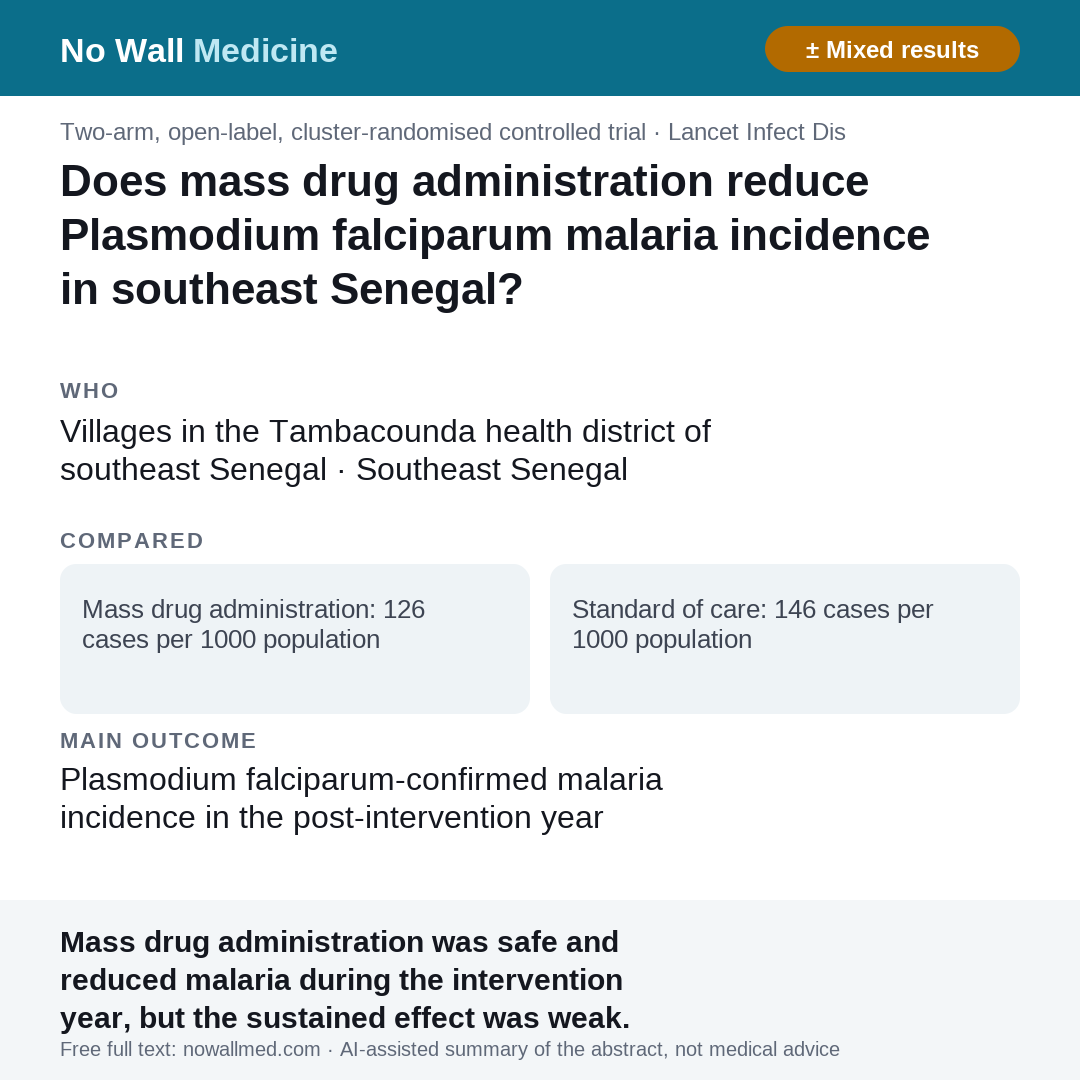
Effect of mass drug administration on malaria incidence in southeast Senegal during 2020-22: a two-arm, open-label, cluster-randomised controlled trial
Two-arm, open-label, cluster-randomised controlled trialMixed results
Does mass drug administration reduce Plasmodium falciparum malaria incidence in southeast Senegal?
Who
Villages in the Tambacounda health district of southeast Senegal · Southeast Senegal
Compared
Mass drug administration: 126 cases per 1000 population
Standard of care: 146 cases per 1000 population
Main outcome
Plasmodium falciparum-confirmed malaria incidence in the post-intervention year
Result: adjusted MDA effect was 26% (-17 to 53)
Bottom line: Mass drug administration was safe and reduced malaria during the intervention year, but the sustained effect was weak.
Limitation: The sustained effect of mass drug administration was weak.
Funded by: US President's Malaria Initiative
Lancet Infect Dis · 2025-01-09Download image
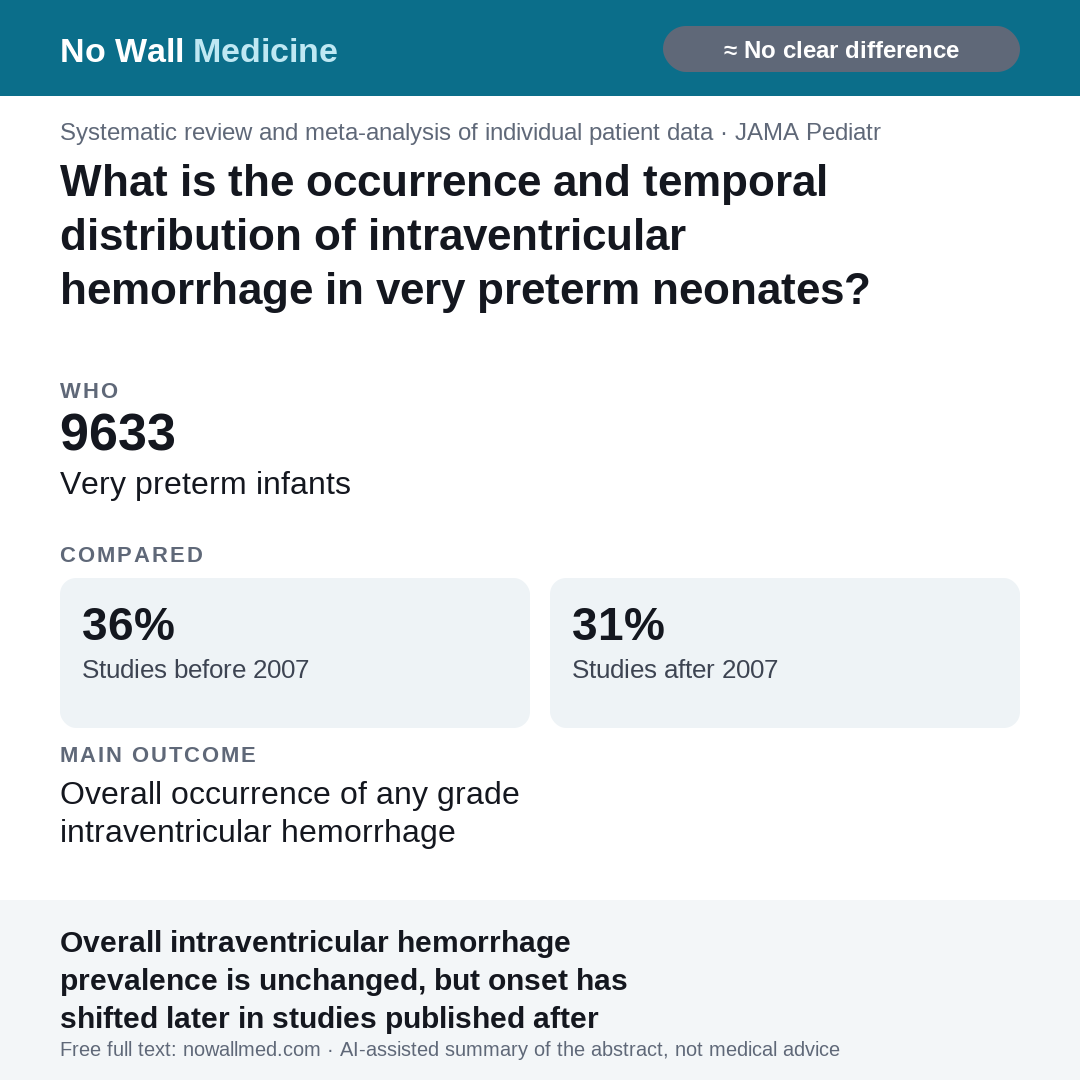
Occurrence and Time of Onset of Intraventricular Hemorrhage in Preterm Neonates: A Systematic Review and Meta-Analysis of Individual Patient Data
Systematic review and meta-analysis of individual patient dataNo clear difference
What is the occurrence and temporal distribution of intraventricular hemorrhage in very preterm neonates?
Who
9633
Very preterm infants
Compared
36%Studies before 2007 (95% CI, 30%-42%)
31%Studies after 2007 (95% CI, 25%-36%)
Main outcome
Overall occurrence of any grade intraventricular hemorrhage
Bottom line: Overall intraventricular hemorrhage prevalence is unchanged, but onset has shifted later in studies published after 2007.
JAMA Pediatr · 2025-01-09Download image
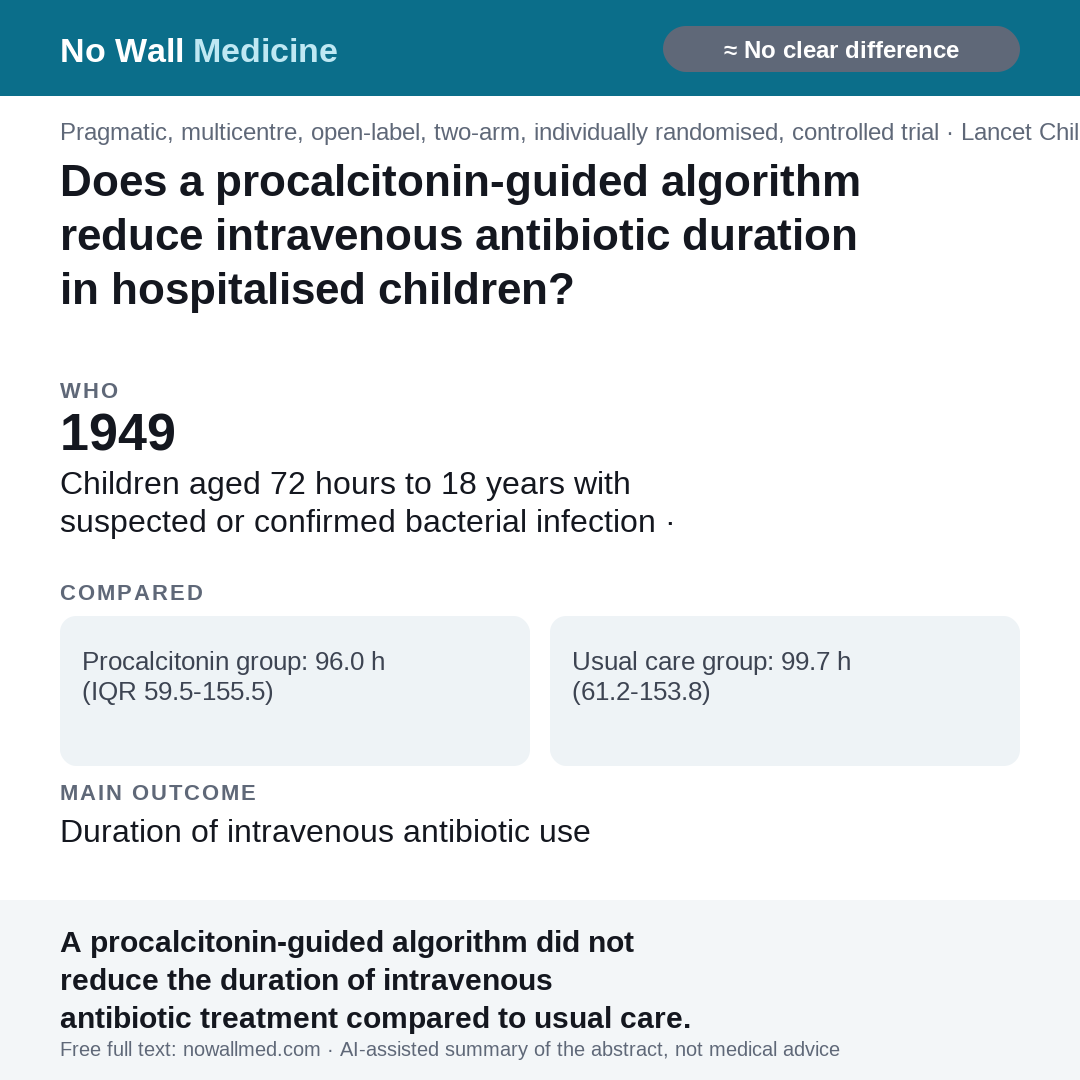
Procalcitonin-guided duration of antibiotic treatment in children hospitalised with confirmed or suspected bacterial infection in the UK (BATCH): a pragmatic, multicentre, open-label, two-arm, individually randomised, controlled trial
Pragmatic, multicentre, open-label, two-arm, individually randomised, controlled trialNo clear difference
Does a procalcitonin-guided algorithm reduce intravenous antibiotic duration in hospitalised children?
Who
1949
Children aged 72 hours to 18 years with suspected or confirmed bacterial infection · 15 hospitals in England and Wales
Compared
Procalcitonin group: 96.0 h (IQR 59.5-155.5)
Usual care group: 99.7 h (61.2-153.8)
Main outcome
Duration of intravenous antibiotic use
Result: hazard ratio 0.96 (95% CI 0.87-1.05)
Bottom line: A procalcitonin-guided algorithm did not reduce the duration of intravenous antibiotic treatment compared to usual care.
Funded by: National Institute for Health and Care Research
Lancet Child Adolesc Health · 2025-01-09Download image
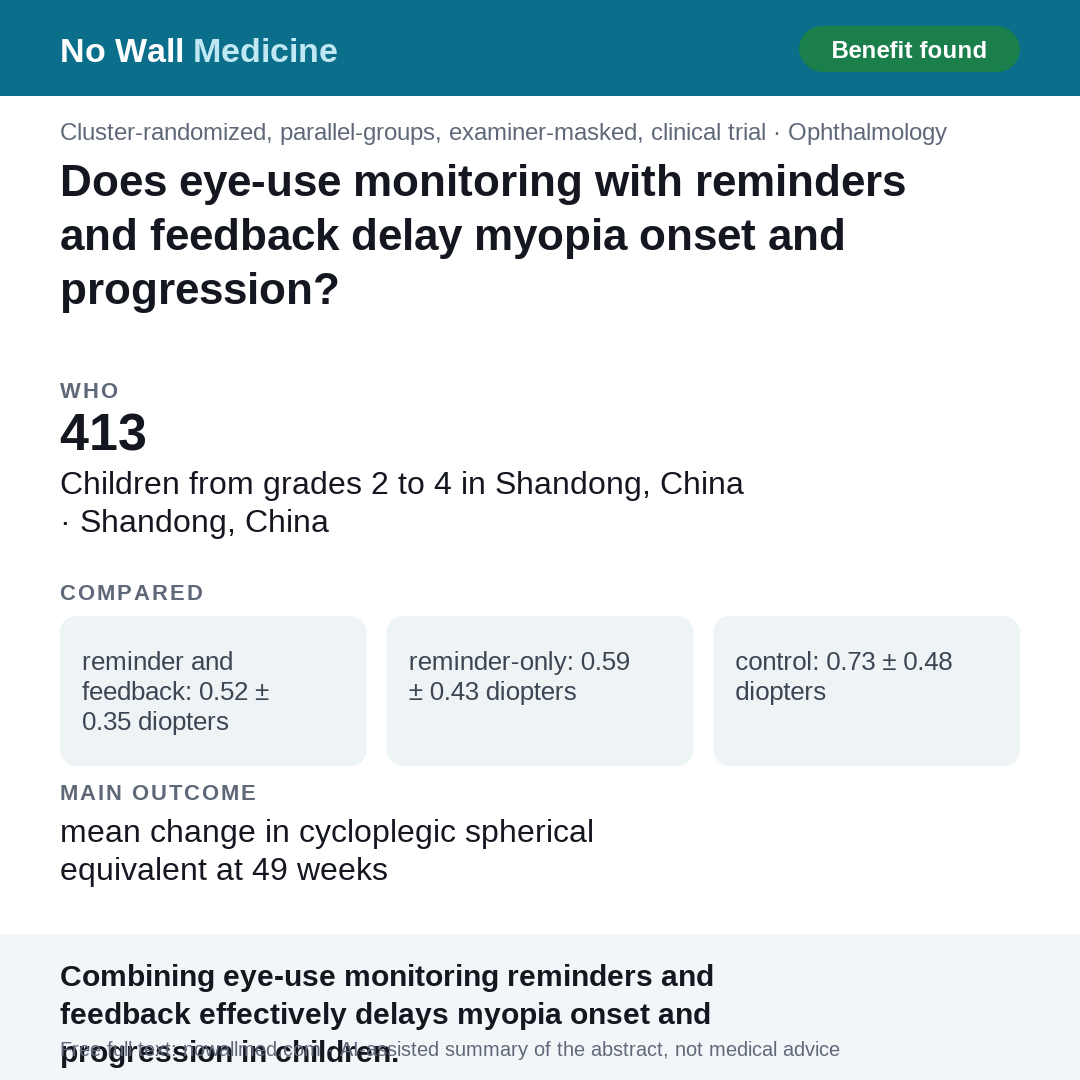
Behavioral Intervention with Eye-Use Monitoring to Delay Myopia Onset and Progression in Children: A Cluster Randomized Trial
Cluster-randomized, parallel-groups, examiner-masked, clinical trialBenefit found
Does eye-use monitoring with reminders and feedback delay myopia onset and progression?
Who
413
Children from grades 2 to 4 in Shandong, China · Shandong, China
Compared
reminder and feedback: 0.52 ± 0.35 diopters
reminder-only: 0.59 ± 0.43 diopters
control: 0.73 ± 0.48 diopters
Main outcome
mean change in cycloplegic spherical equivalent at 49 weeks
Bottom line: Combining eye-use monitoring reminders and feedback effectively delays myopia onset and progression in children.
Limitation: differences diminished by the 98-week follow-up
Ophthalmology · 2025-01-09Download image
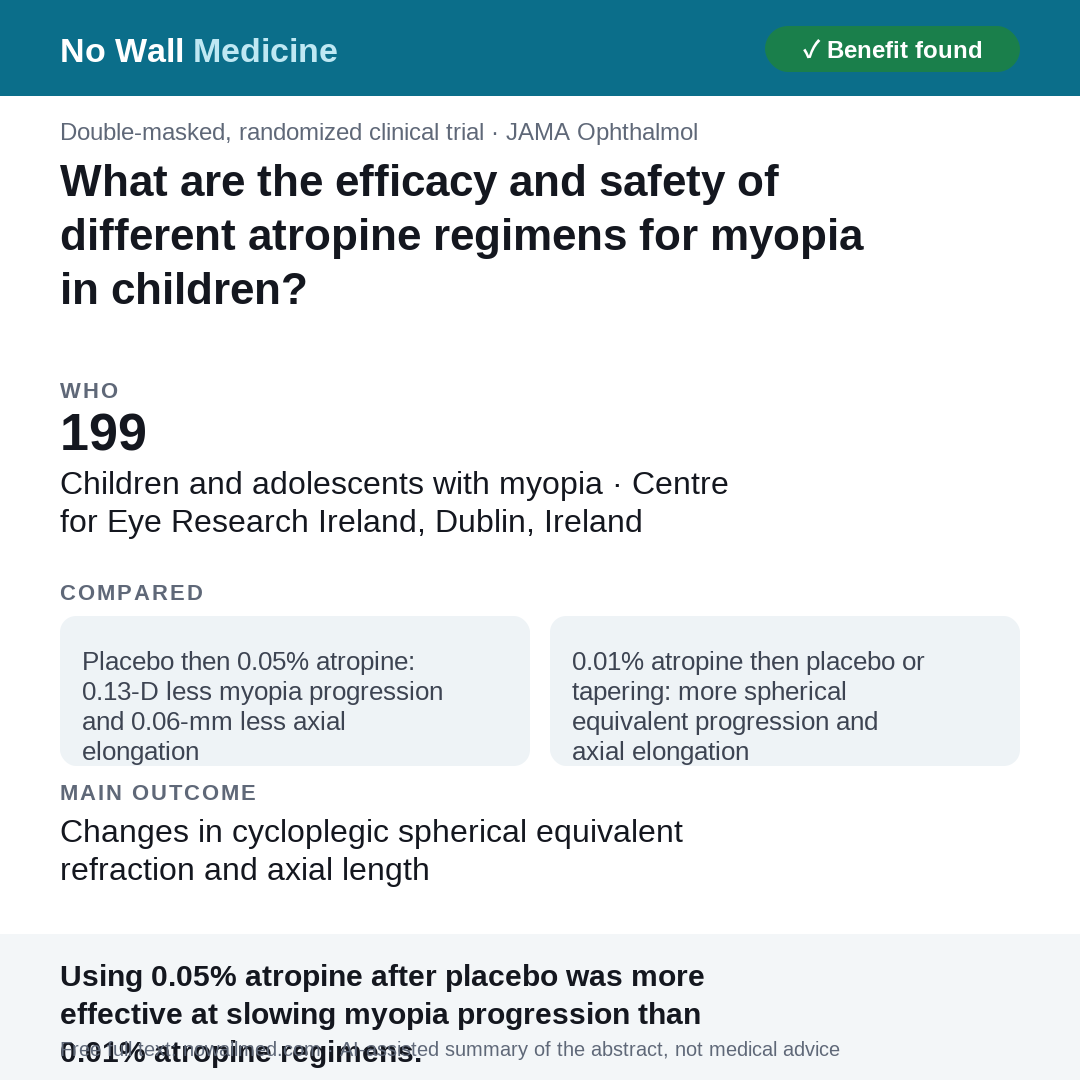
Efficacy and Safety of Different Atropine Regimens for the Treatment of Myopia in Children: Three-Year Results of the MOSAIC Randomized Clinical Trial
Double-masked, randomized clinical trialBenefit found
What are the efficacy and safety of different atropine regimens for myopia in children?
Who
199
Children and adolescents with myopia · Centre for Eye Research Ireland, Dublin, Ireland
Compared
Placebo then 0.05% atropine: 0.13-D less myopia progression and 0.06-mm less axial elongation
0.01% atropine then placebo or tapering: more spherical equivalent progression and axial elongation
Main outcome
Changes in cycloplegic spherical equivalent refraction and axial length
Result: adjusted difference, -0.13 diopters (95% CI, -0.22 to -0.04 D)
Bottom line: Using 0.05% atropine after placebo was more effective at slowing myopia progression than 0.01% atropine regimens.
JAMA Ophthalmol · 2025-01-09Download image
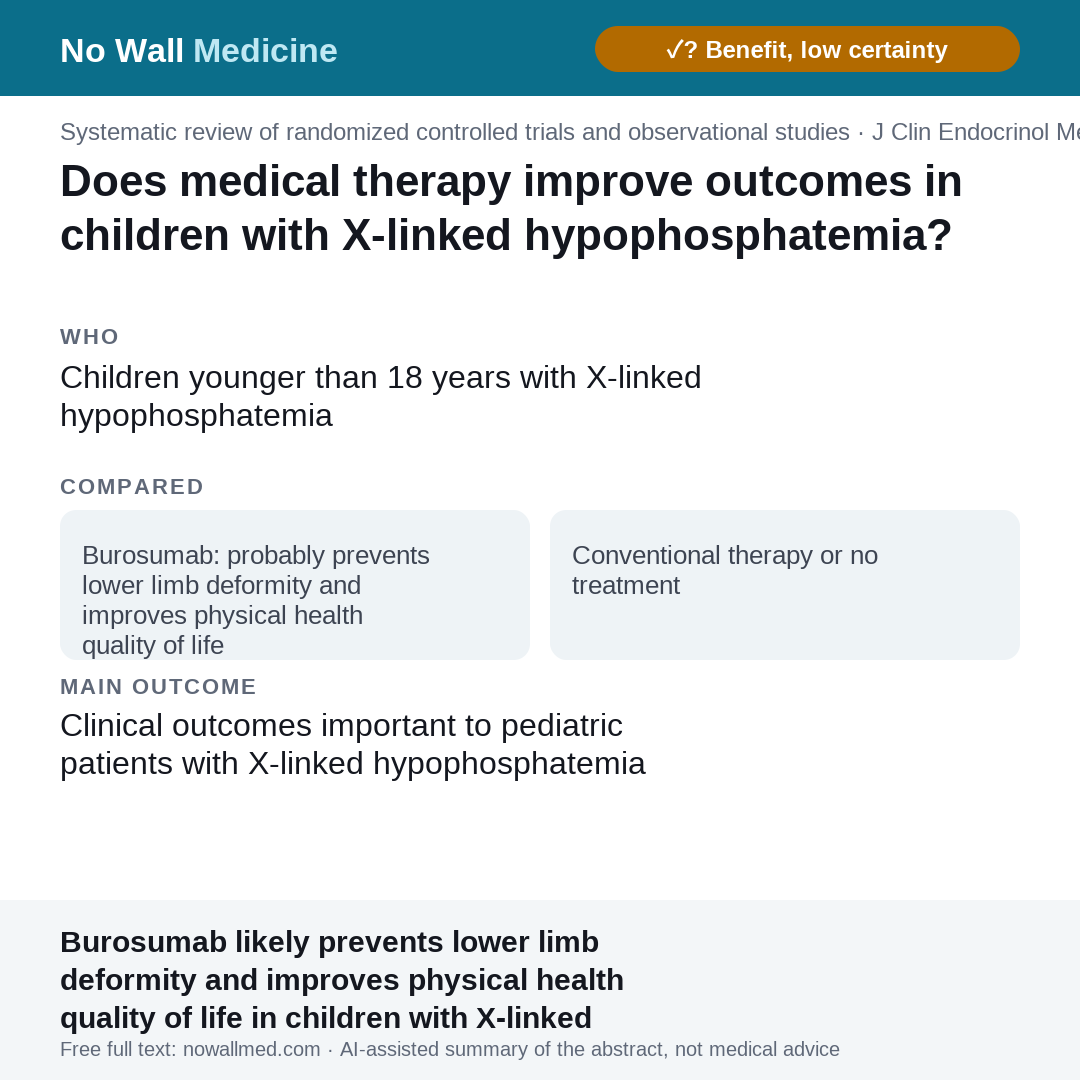
Systematic Review: Efficacy of Medical Therapy on Outcomes Important to Pediatric Patients With X-Linked Hypophosphatemia
Systematic review of randomized controlled trials and observational studiesBenefit found
Does medical therapy improve outcomes in children with X-linked hypophosphatemia?
Who
Children younger than 18 years with X-linked hypophosphatemia
Compared
Burosumab: probably prevents lower limb deformity and improves physical health quality of life
Conventional therapy or no treatment
Main outcome
Clinical outcomes important to pediatric patients with X-linked hypophosphatemia
Bottom line: Burosumab likely prevents lower limb deformity and improves physical health quality of life in children with X-linked hypophosphatemia.
Limitation: High risk of bias in included studies and low certainty of evidence.
J Clin Endocrinol Metab · 2025-01-09Download image
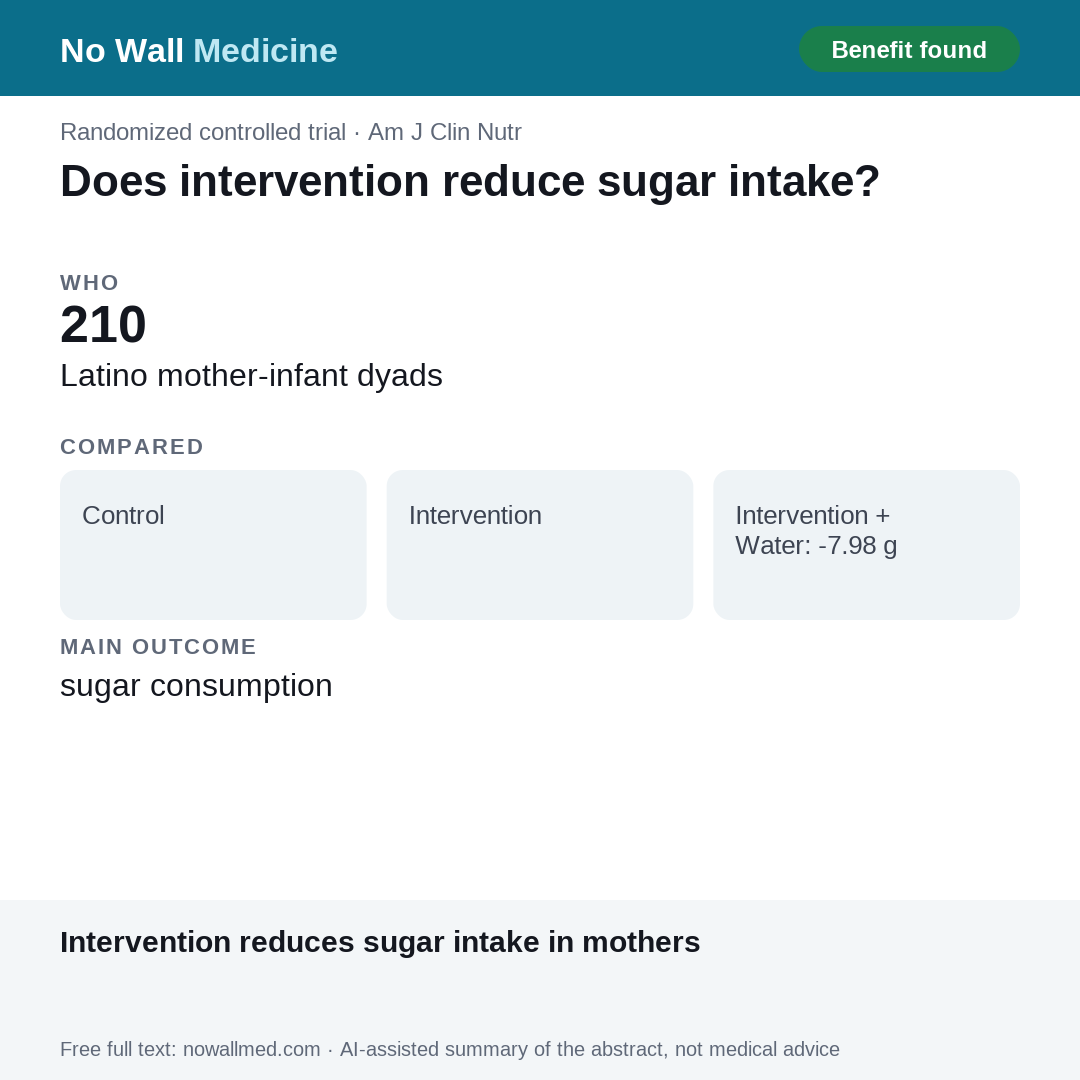
Efficacy of a 24-month behavioral intervention focused on sugary beverage reduction for Latino mother-infant dyads: evidence from a randomized controlled trial
Randomized controlled trialBenefit found
Does intervention reduce sugar intake?
Who
210
Latino mother-infant dyads
Compared
Control
Intervention
Intervention + Water: -7.98 g
Main outcome
sugar consumption
Bottom line: Intervention reduces sugar intake in mothers
Limitation: effect not maintained
Am J Clin Nutr · 2025-01-09Download image
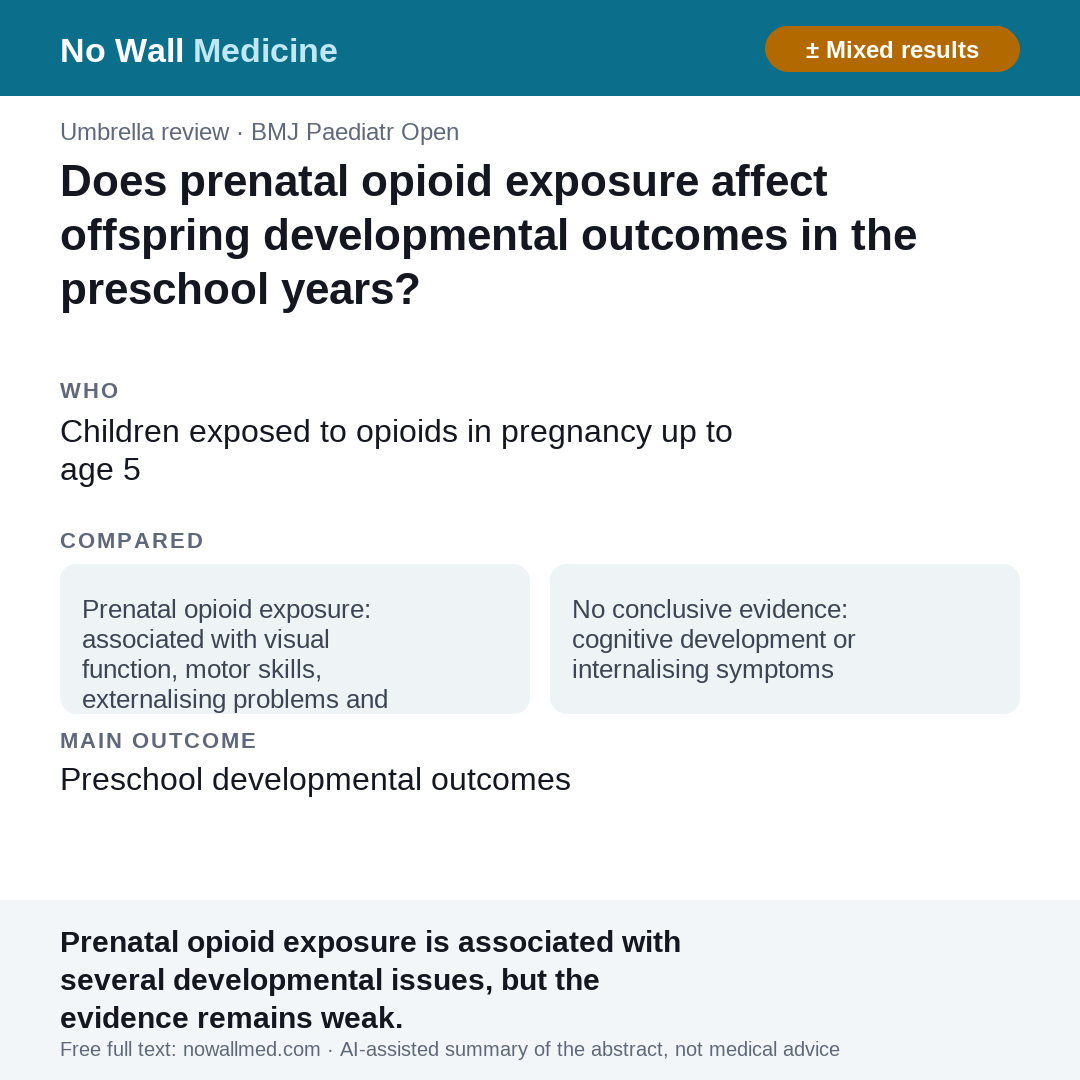
Impact of exposure to opioids in pregnancy on offspring developmental outcomes in the preschool years: an umbrella review
Umbrella reviewMixed results
Does prenatal opioid exposure affect offspring developmental outcomes in the preschool years?
Who
Children exposed to opioids in pregnancy up to age 5
Compared
Prenatal opioid exposure: associated with visual function, motor skills, externalising problems and language difficulties
No conclusive evidence: cognitive development or internalising symptoms
Main outcome
Preschool developmental outcomes
Bottom line: Prenatal opioid exposure is associated with several developmental issues, but the evidence remains weak.
Limitation: Poor quality research in original studies, small sample sizes, and lack of controlling for confounding.
BMJ Paediatr Open · 2025-01-09Download image
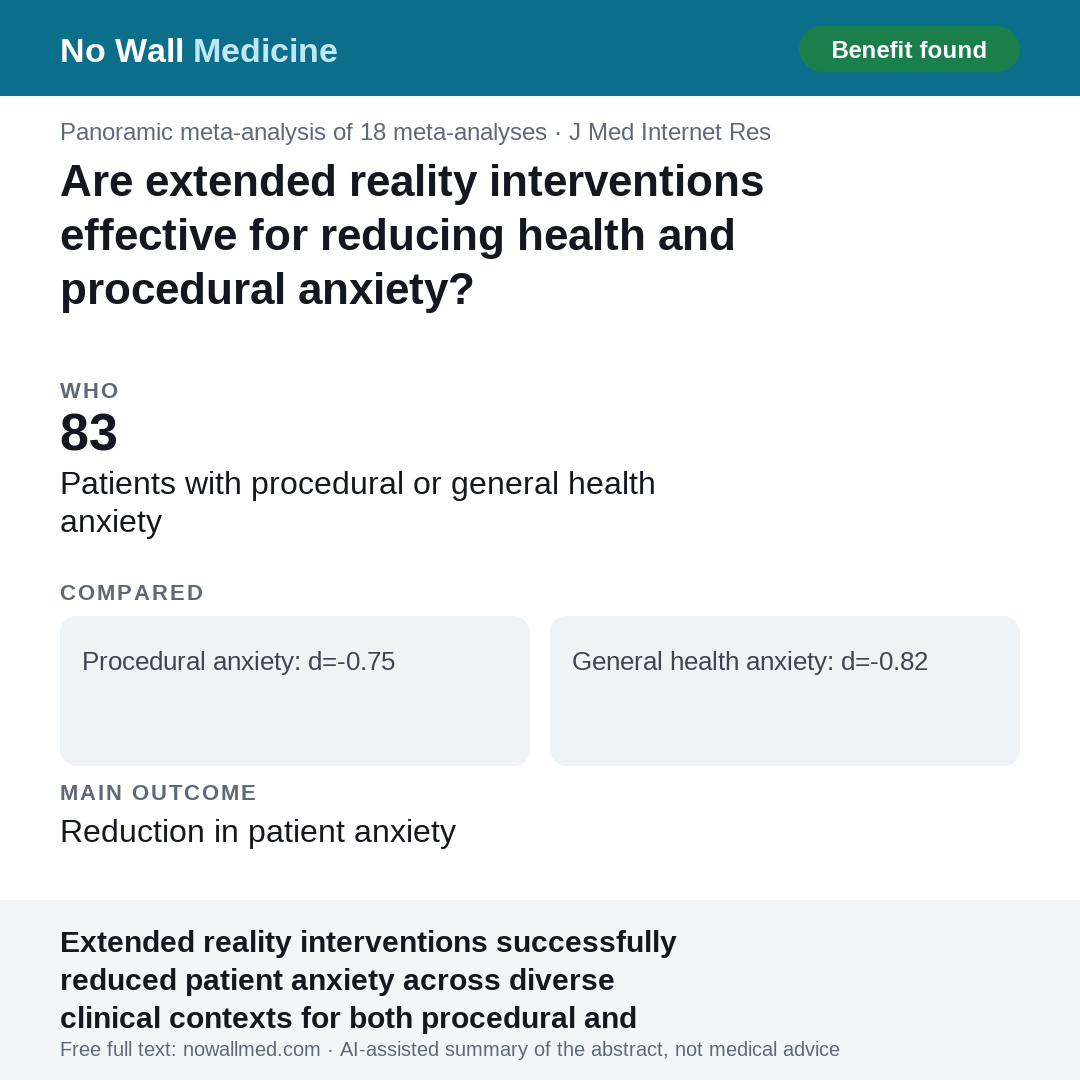
Extended Reality Interventions for Health and Procedural Anxiety: Panoramic Meta-Analysis Based on Overviews of Reviews
Panoramic meta-analysis of 18 meta-analysesBenefit found
Are extended reality interventions effective for reducing health and procedural anxiety?
Who
83
Patients with procedural or general health anxiety
Compared
Procedural anxiety: d=-0.75
General health anxiety: d=-0.82
Main outcome
Reduction in patient anxiety
Result: procedural d=-0.75 (95% CI -0.95 to -0.54), general health d=-0.82 (95% CI -1.20 to -0.45)
Bottom line: Extended reality interventions successfully reduced patient anxiety across diverse clinical contexts for both procedural and general health indications.
Limitation: Existing evidence is limited in methodological quality and generalizability remains uncertain.
J Med Internet Res · 2025-01-08Download image
Cardiopulmonary resuscitation coaching for resuscitation teams: A systematic review
Systematic review of 7 studiesBenefit found
Does a cardiopulmonary resuscitation coach improve teamwork, quality of care, and patient outcomes?
Who
Resuscitation teams in simulated and clinical cardiac arrest settings
Compared
With cardiopulmonary resuscitation coach: improved cardiopulmonary resuscitation quality and guideline adherence
Without cardiopulmonary resuscitation coach
Main outcome
cardiopulmonary resuscitation quality, teamwork, and patient outcomes
Bottom line: A cardiopulmonary resuscitation coach may improve quality and guideline adherence, but evidence certainty is low or very low.
Limitation: The certainty of evidence across outcomes was low or very low.
Resusc Plus · 2025-01-08Download image

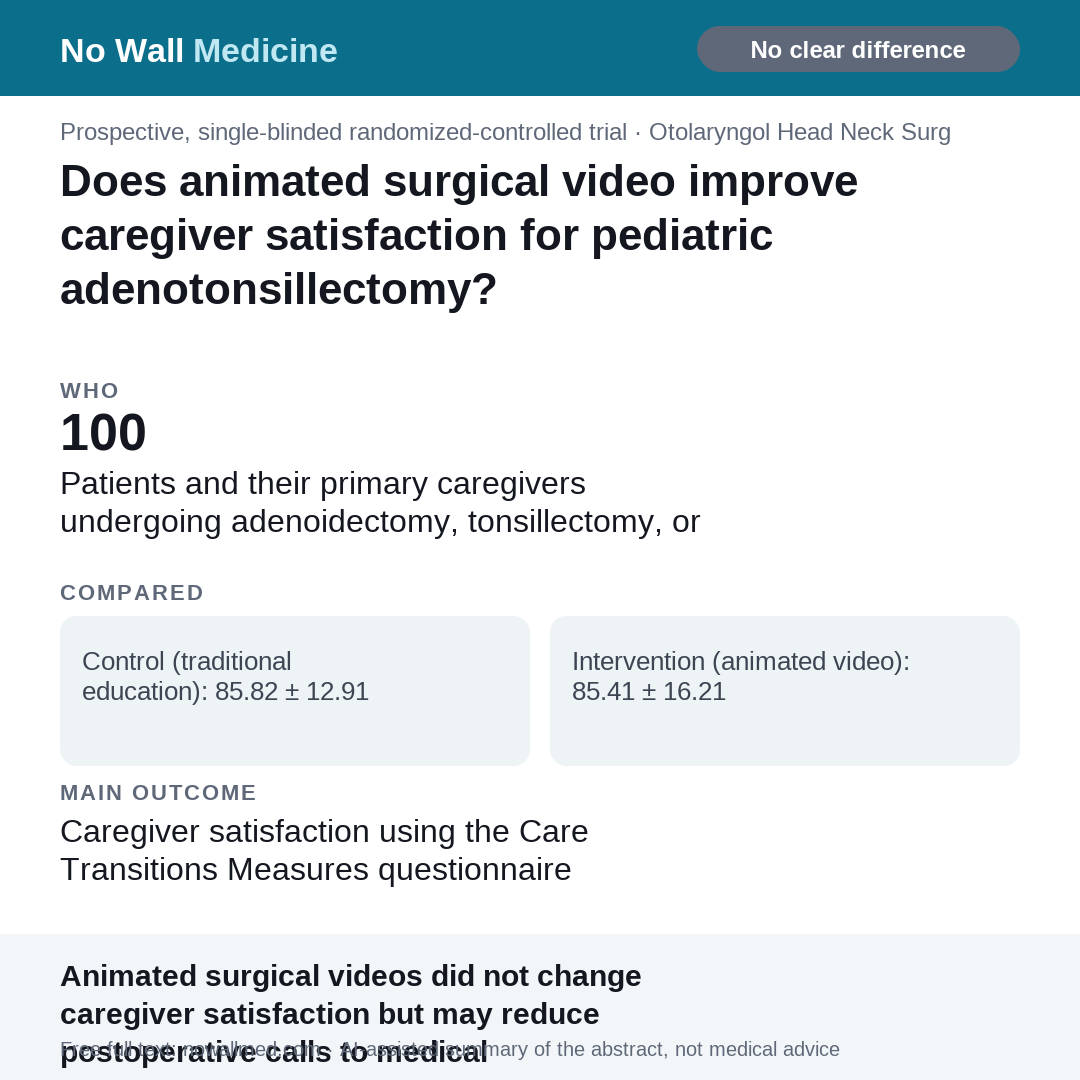
Perioperative Caregiver Education Using Animated Videos for Pediatric Tonsillectomy: A Randomized Controlled Study
Prospective, single-blinded randomized-controlled trialNo clear difference
Does animated surgical video improve caregiver satisfaction for pediatric adenotonsillectomy?
Who
100
Patients and their primary caregivers undergoing adenoidectomy, tonsillectomy, or both · Tertiary care academic pediatric hospital
Compared
Control (traditional education): 85.82 ± 12.91
Intervention (animated video): 85.41 ± 16.21
Main outcome
Caregiver satisfaction using the Care Transitions Measures questionnaire
Bottom line: Animated surgical videos did not change caregiver satisfaction but may reduce postoperative calls to medical professionals.
Otolaryngol Head Neck Surg · 2025-01-07Download image
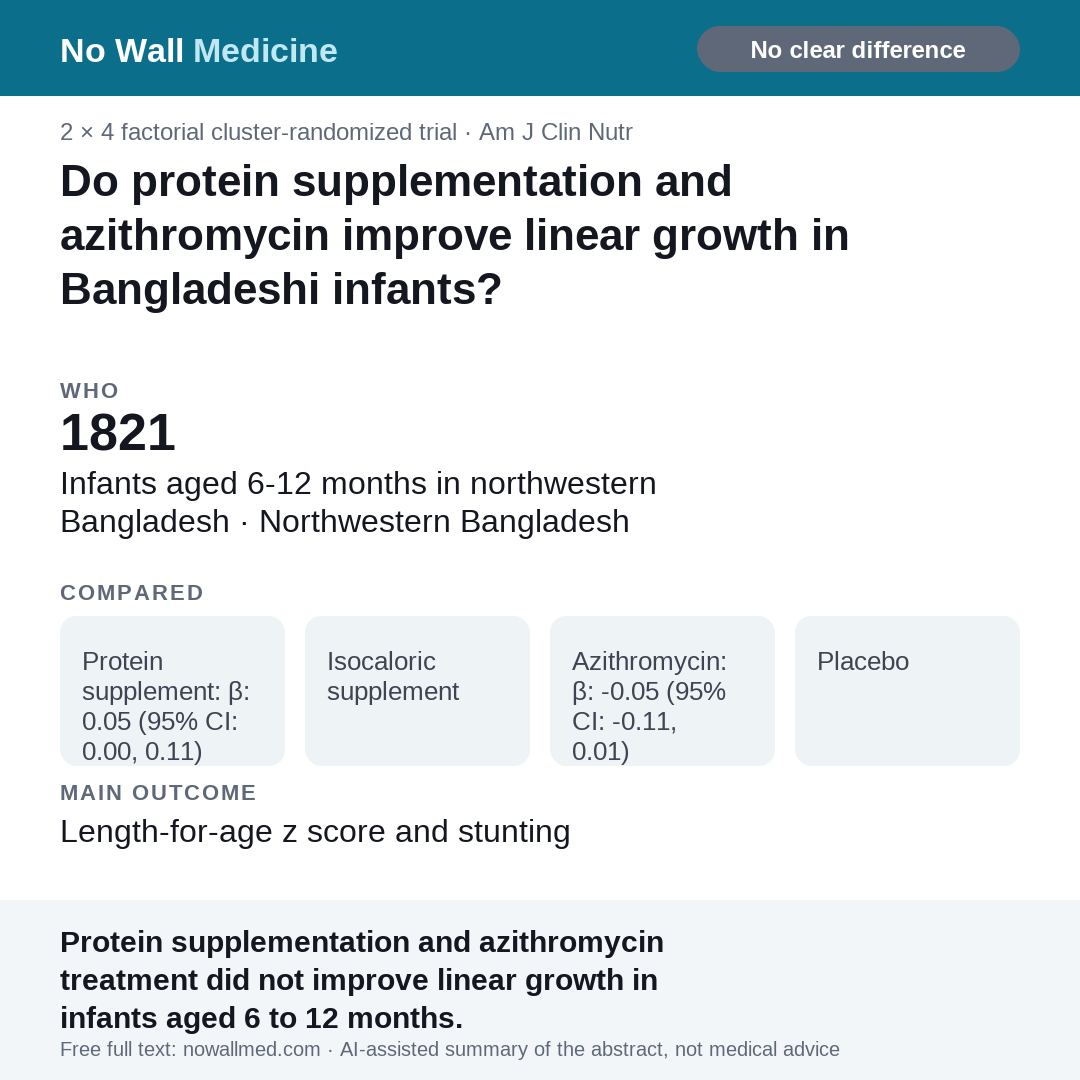
Protein supplementation delivered alone or in combination with presumptive azithromycin treatment for enteric pathogens did not improve linear growth in Bangladeshi infants: results of a cluster-randomized controlled trial
2 × 4 factorial cluster-randomized trialNo clear difference
Do protein supplementation and azithromycin improve linear growth in Bangladeshi infants?
Who
1821
Infants aged 6-12 months in northwestern Bangladesh · Northwestern Bangladesh
Compared
Protein supplement: β: 0.05 (95% CI: 0.00, 0.11)
Isocaloric supplement
Azithromycin: β: -0.05 (95% CI: -0.11, 0.01)
Placebo
Main outcome
Length-for-age z score and stunting
Bottom line: Protein supplementation and azithromycin treatment did not improve linear growth in infants aged 6 to 12 months.
Am J Clin Nutr · 2025-01-07Download image
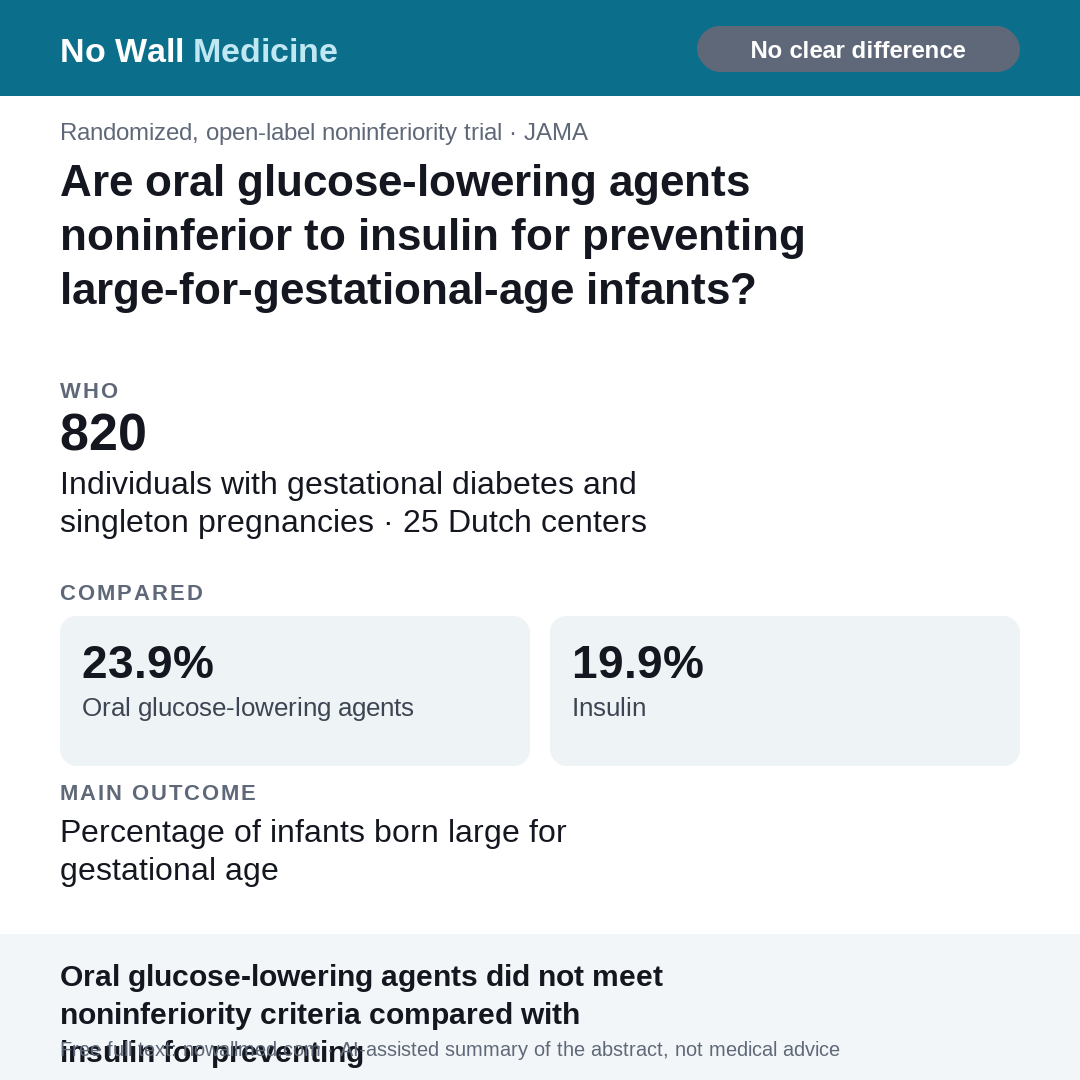
Oral Glucose-Lowering Agents vs Insulin for Gestational Diabetes: A Randomized Clinical Trial
Randomized, open-label noninferiority trialNo clear difference
Are oral glucose-lowering agents noninferior to insulin for preventing large-for-gestational-age infants?
Who
820
Individuals with gestational diabetes and singleton pregnancies · 25 Dutch centers
Compared
23.9%Oral glucose-lowering agents (n = 97)
19.9%Insulin (n = 79)
Main outcome
Percentage of infants born large for gestational age
Result: absolute risk difference, 4.0%; 95% CI, -1.7% to 9.8%
Bottom line: Oral glucose-lowering agents did not meet noninferiority criteria compared with insulin for preventing large-for-gestational-age infants.
JAMA · 2025-01-06Download image
Fluoride Exposure and Children's IQ Scores: A Systematic Review and Meta-Analysis
Systematic review and meta-analysisHarm found
Is fluoride exposure associated with children's intelligence quotient scores?
Who
20932
Children in various epidemiological studies · Multicountry including China, Canada, Denmark, India, Iran, Mexico, New Zealand, Pakistan, Spain, and Taiwan
Compared
Fluoride exposure
Reference groups
Main outcome
Children's intelligence quotient scores
Result: pooled standardized mean difference -0.45 (95% CI -0.57 to -0.33)
Bottom line: Fluoride exposure from drinking water and urine is inversely associated with children's intelligence quotient scores.
Limitation: Limited data and uncertainty in dose-response association when drinking water fluoride is less than 1.5 mg/L.
JAMA Pediatr · 2025-01-06Download image