Visual abstracts
New randomized trials and meta-analyses from leading journals at a glance: who was studied, what was compared, and what was found. Every paper is free to read in full.
All specialtiesCardiology 265Oncology 207Gastroenterology & Hepatology 117Infectious Disease 220Neurology 124Psychiatry & Mental Health 178Pulmonology 126Critical Care 80Endocrinology & Diabetes 176Pediatrics 116Surgery 80Orthopedics & Sports Medicine 48Neurosurgery 16Cardiothoracic & Vascular Surgery 30Plastic & Reconstructive Surgery 59Nephrology 54Rheumatology 53Hematology 64Dermatology 27Ophthalmology 48Obstetrics & Gynecology 77Public & Global Health 80Radiology & Imaging 21Anesthesiology 43Urology 58ENT (Otolaryngology) 36Emergency Medicine 28Allergy & Immunology 27Geriatrics 81Family Medicine & Primary Care 39Medical Genetics & Genomics 27Pathology & Laboratory Medicine 5Physical Medicine & Rehabilitation 67Palliative Care 40Nutrition 99Digital Health & AI 239General Medicine 39
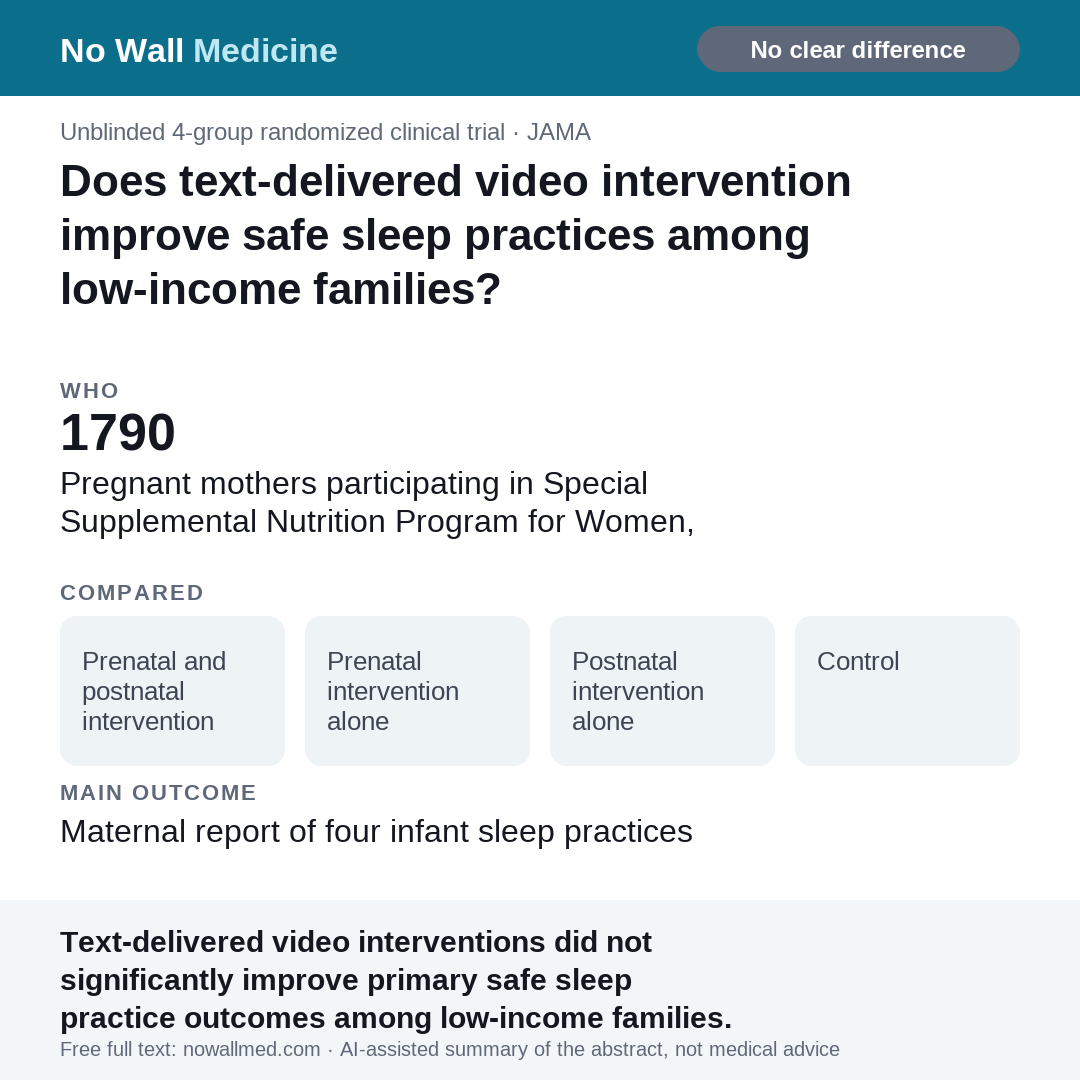
Safe Sleep Video Intervention via Text Messaging to Low-Income Families: The SMARTER Randomized Clinical Trial
Unblinded 4-group randomized clinical trialNo clear difference
Does text-delivered video intervention improve safe sleep practices among low-income families?
Who
1790
Pregnant mothers participating in Special Supplemental Nutrition Program for Women, Infants, and Children · WIC and Federally Qualified Health Centers in 18 states
Compared
Prenatal and postnatal intervention
Prenatal intervention alone
Postnatal intervention alone
Control
Main outcome
Maternal report of four infant sleep practices
Bottom line: Text-delivered video interventions did not significantly improve primary safe sleep practice outcomes among low-income families.
JAMA · 2026-07-23Download image
Tolerability, safety, and efficacy of atogepant versus topiramate in adults with migraine (TEMPLE): a randomised, head-to-head, phase 3b trial
Randomised, double-dummy, active-controlled trialBenefit found
Is atogepant more tolerable and effective than topiramate in adults with migraine?
Who
540
Adults with migraine and at least 4 migraine days per month · 12 countries
Compared
atogepant: 33 [12%] of 273
topiramate: 79 [30%] of 267
Main outcome
Discontinuation owing to treatment-emergent adverse events
Result: relative risk 0·4 (95% CI 0·3 to 0·6)
Bottom line: Atogepant 60 mg once daily showed better tolerability and efficacy compared with topiramate over 24 weeks.
Limitation: the double-blind period is completed and the open-label period is ongoing
Funded by: AbbVie
Lancet Neurol · 2026-07-23Download image

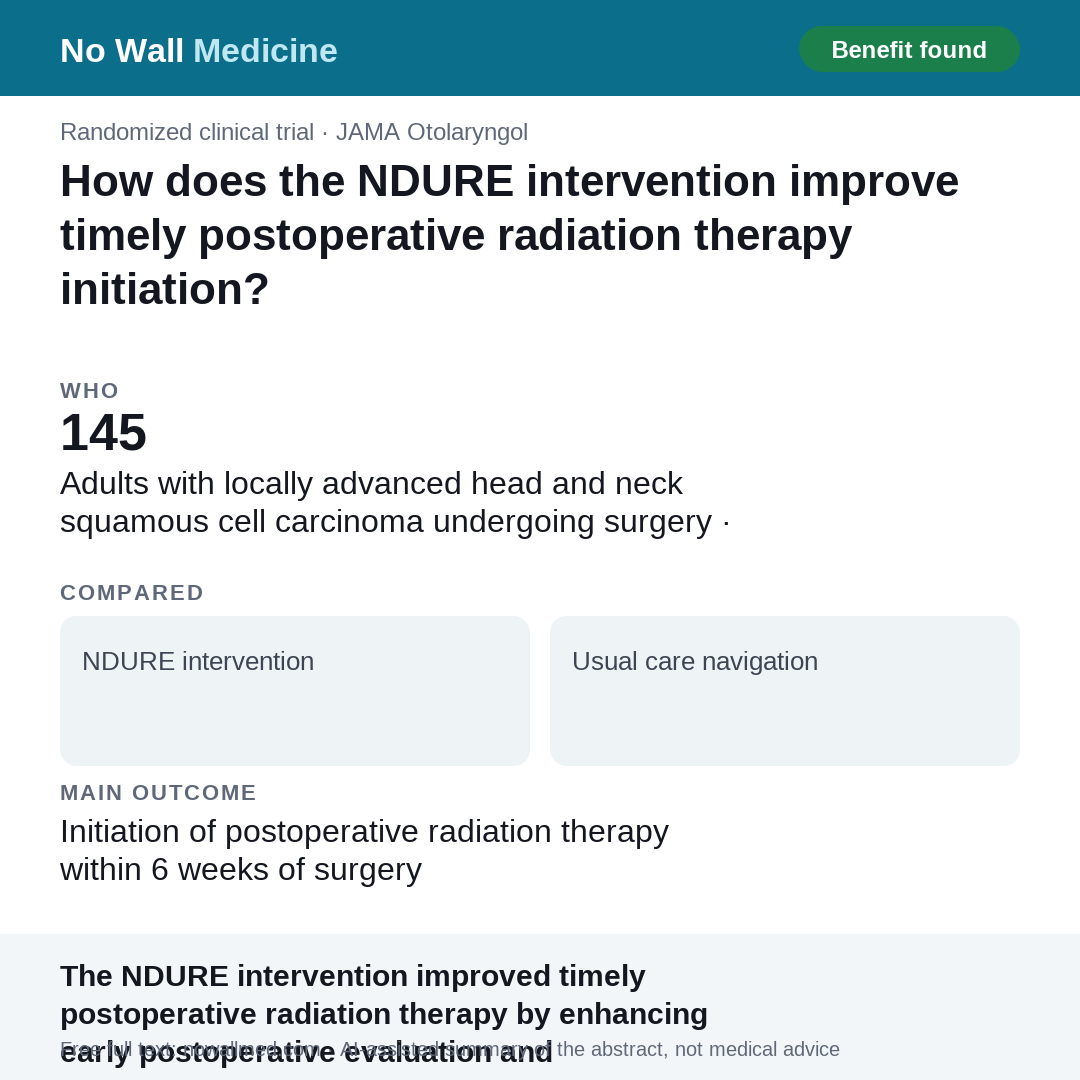
Mechanisms Underlying an Enhanced Navigation-Based Intervention to Improve Timely Adjuvant Therapy: A Secondary Analysis of the NDURE Randomized Clinical Trial
Randomized clinical trialBenefit found
How does the NDURE intervention improve timely postoperative radiation therapy initiation?
Who
145
Adults with locally advanced head and neck squamous cell carcinoma undergoing surgery · Single US academic medical center
Compared
NDURE intervention
Usual care navigation
Main outcome
Initiation of postoperative radiation therapy within 6 weeks of surgery
Bottom line: The NDURE intervention improved timely postoperative radiation therapy by enhancing early postoperative evaluation and completion of care steps.
JAMA Otolaryngol · 2026-07-23Download image
Clinical Trial: Multi-Strain Probiotic Improves Bile Acid Profile, Microbiome, and Metabolomic Parameters in Patients With History of Bile Acid Malabsorption-A Randomized, Controlled Trial
Randomized, double-blind, placebo-controlled trialBenefit found
Does a multi-strain probiotic improve bile acid profile and microbiome in bile acid malabsorption patients?
Who
22
Patients previously diagnosed with bile acid malabsorption
Compared
De Simone formulation 8-strain probiotic: median change from baseline -5.7 [IQR -10.3, 0.9]%
Placebo: 9.8 [IQR 0.2, 20.6]%
Main outcome
percentage of faecal primary bile acids
Result: p = 0.012
Bottom line: The probiotic induced microbiome changes and decreased faecal primary bile acids in patients with bile acid malabsorption.
Aliment Pharmacol Ther · 2026-07-23Download image

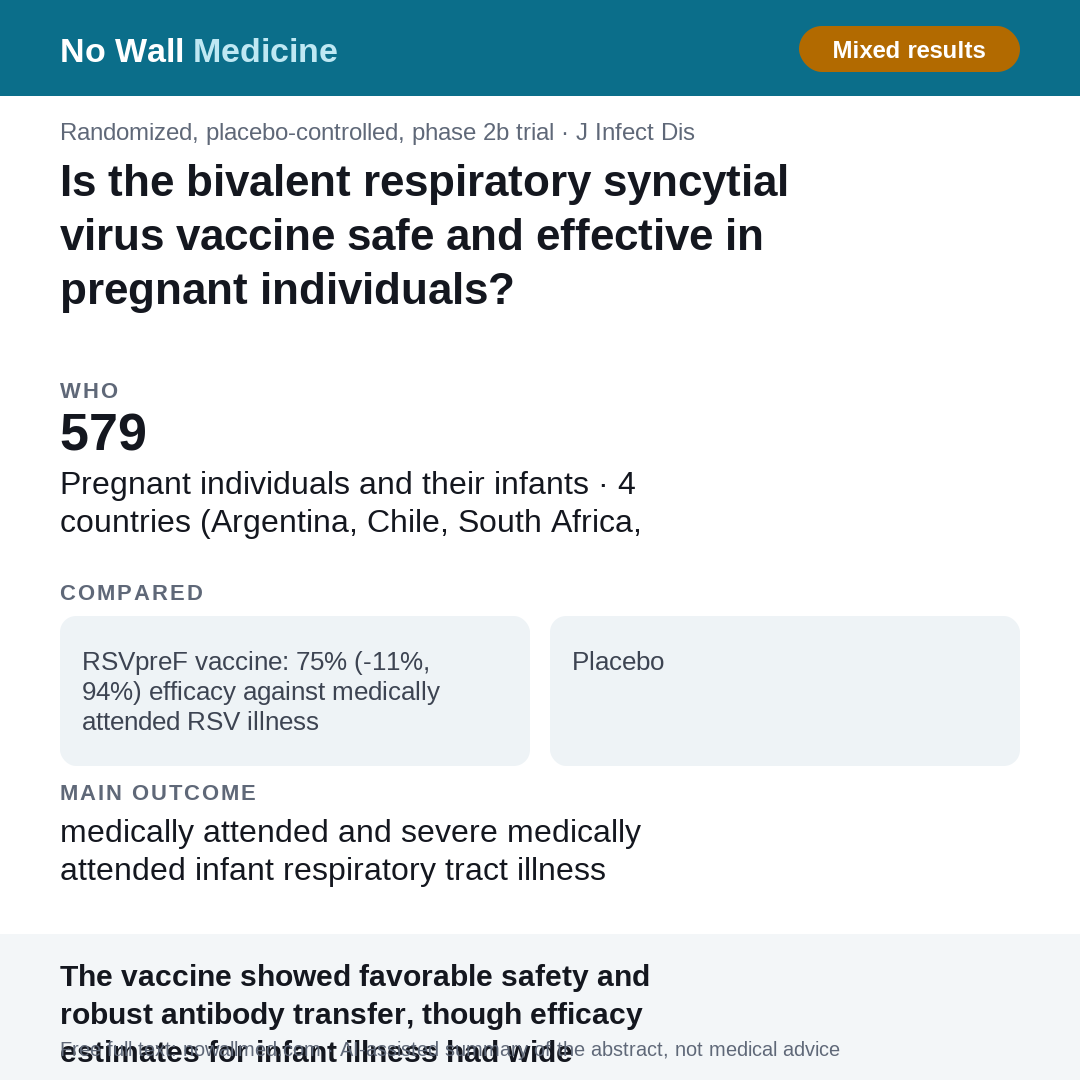
Phase 2 Randomized Bivalent RSVpreF Maternal Vaccine Trial: Final Safety, Antibody Persistence and Efficacy
Randomized, placebo-controlled, phase 2b trialMixed results
Is the bivalent respiratory syncytial virus vaccine safe and effective in pregnant individuals?
Who
579
Pregnant individuals and their infants · 4 countries (Argentina, Chile, South Africa, United States)
Compared
RSVpreF vaccine: 75% (-11%, 94%) efficacy against medically attended RSV illness
Placebo
Main outcome
medically attended and severe medically attended infant respiratory tract illness
Result: 75% (-11%, 94%) for medically attended; 83% (-48%, 99%) for severe
Bottom line: The vaccine showed favorable safety and robust antibody transfer, though efficacy estimates for infant illness had wide confidence intervals.
J Infect Dis · 2026-07-23Download image
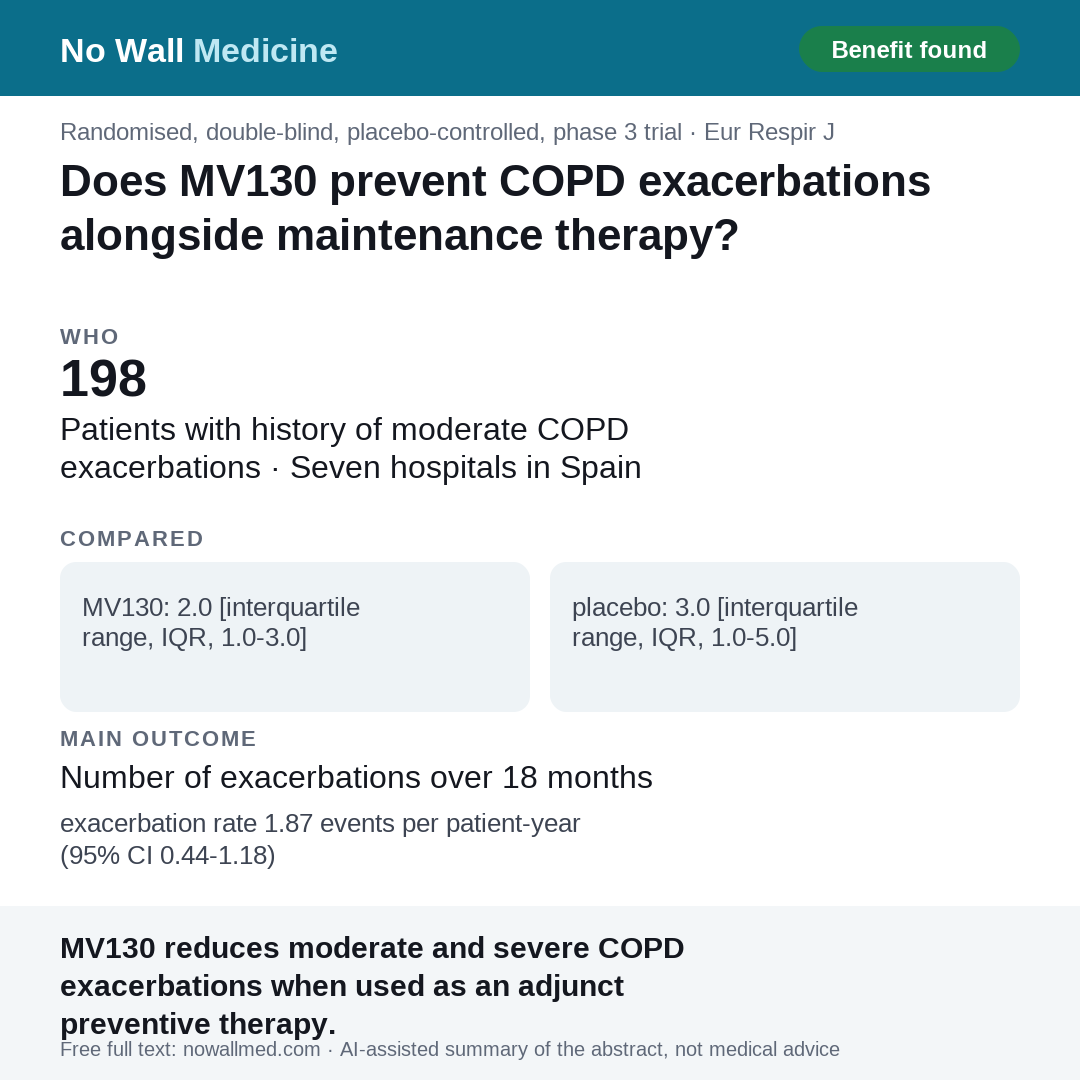
Prevention of COPD exacerbations with a mucosal trained immunity-based vaccine (MV130): a randomised phase 3 trial
Randomised, double-blind, placebo-controlled, phase 3 trialBenefit found
Does MV130 prevent COPD exacerbations alongside maintenance therapy?
Who
198
Patients with history of moderate COPD exacerbations · Seven hospitals in Spain
Compared
MV130: 2.0 [interquartile range, IQR, 1.0-3.0]
placebo: 3.0 [interquartile range, IQR, 1.0-5.0]
Main outcome
Number of exacerbations over 18 months
Result: 1.87 events per patient-year (95% CI 0.44-1.18)
Bottom line: MV130 reduces moderate and severe COPD exacerbations as an adjunct preventive therapy.
Eur Respir J · 2026-07-23Download image
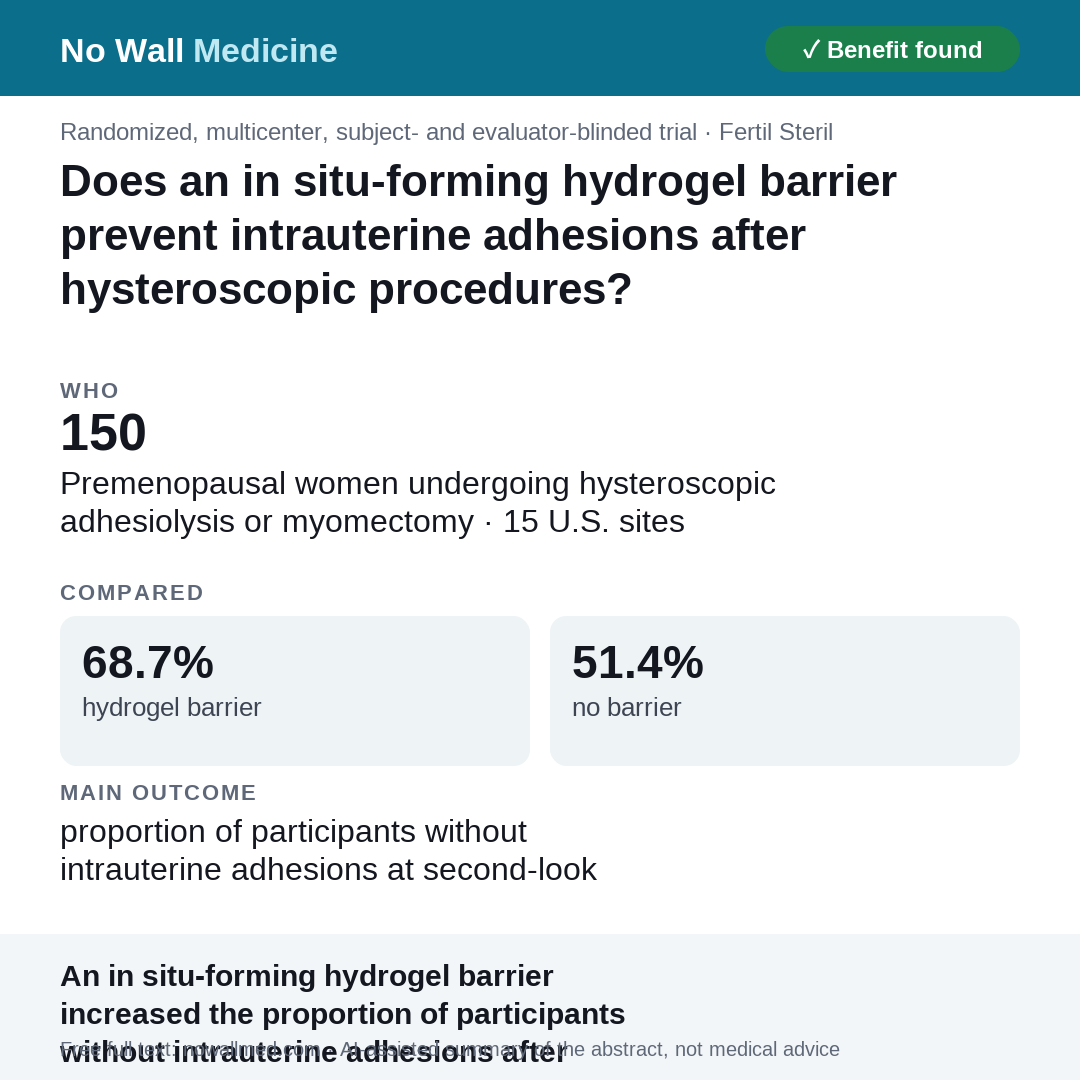
Safety and effectiveness of an in situ-forming hydrogel barrier in preventing intrauterine adhesions after adhesiogenic hysteroscopic procedures: a multicenter, randomized, controlled trial
Randomized, multicenter, subject- and evaluator-blinded trialBenefit found
Does an in situ-forming hydrogel barrier prevent intrauterine adhesions after hysteroscopic procedures?
Who
150
Premenopausal women undergoing hysteroscopic adhesiolysis or myomectomy · 15 U.S. sites
Compared
68.7%hydrogel barrier
51.4%no barrier
Main outcome
proportion of participants without intrauterine adhesions at second-look hysteroscopy
Result: odds ratio 3.19 (95% CI 1.29-7.90) in adhesiolysis subgroup
Bottom line: An in situ-forming hydrogel barrier increased the proportion of participants without intrauterine adhesions after hysteroscopic procedures.
Limitation: The leiomyoma subgroup treatment effect was imprecise due to limited sample size.
Fertil Steril · 2026-07-23Download image
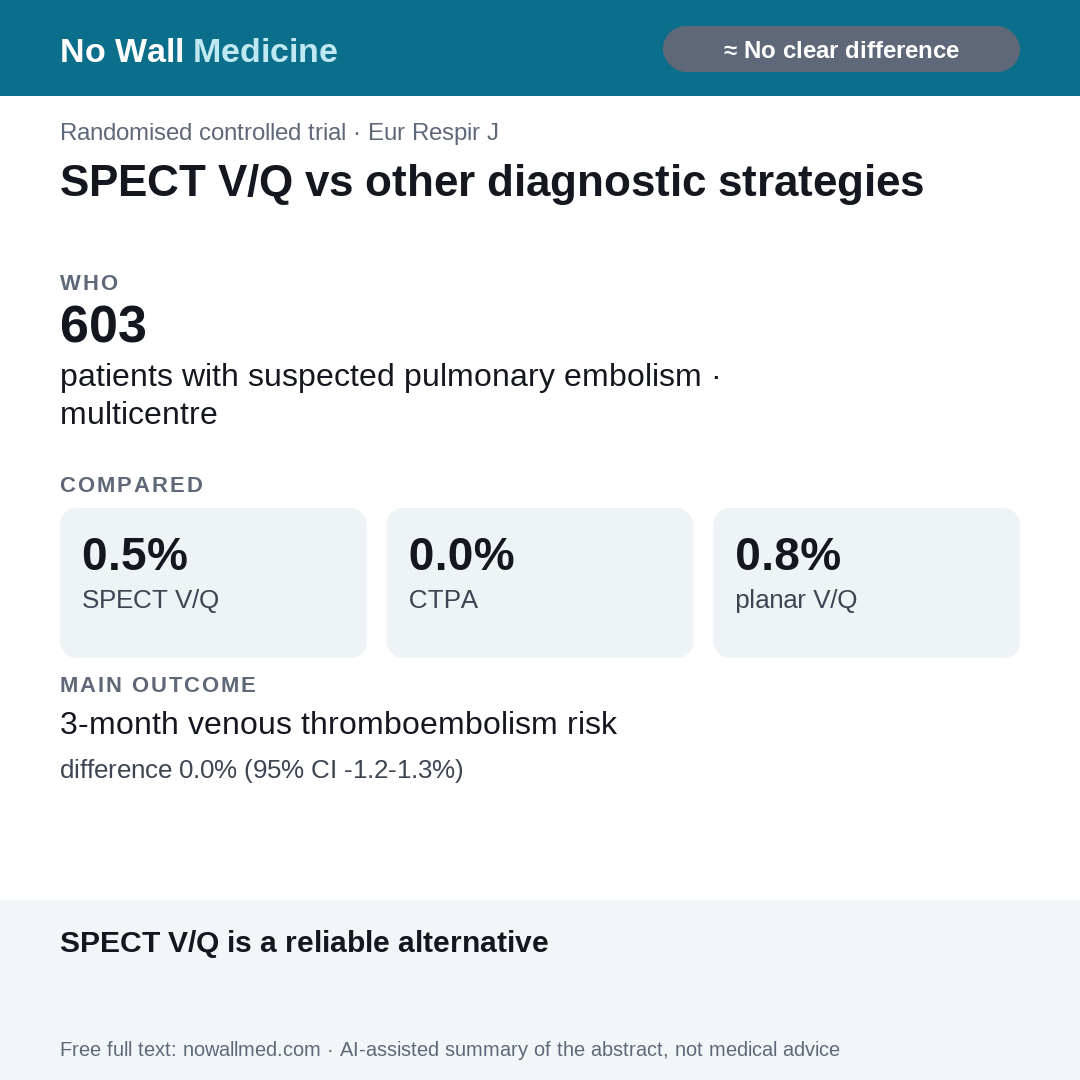
Comparison of three diagnostic strategies for suspicion of pulmonary embolism: planar ventilation/perfusion scan, CT pulmonary angiography and single-photon emission CT ventilation/perfusion scan - a multicentre, non-inferiority randomised controlled trial
Randomised controlled trialNo clear difference
SPECT V/Q vs other diagnostic strategies
Who
603
patients with suspected pulmonary embolism · multicentre
Compared
0.5%SPECT V/Q (1/221)
0.0%CTPA (0/107)
0.8%planar V/Q (1/118)
Main outcome
3-month venous thromboembolism risk
Result: difference 0.0% (95% CI -1.2-1.3%)
Bottom line: SPECT V/Q is a reliable alternative
Limitation: slow recruitment and funding limitations
Eur Respir J · 2026-07-23Download image
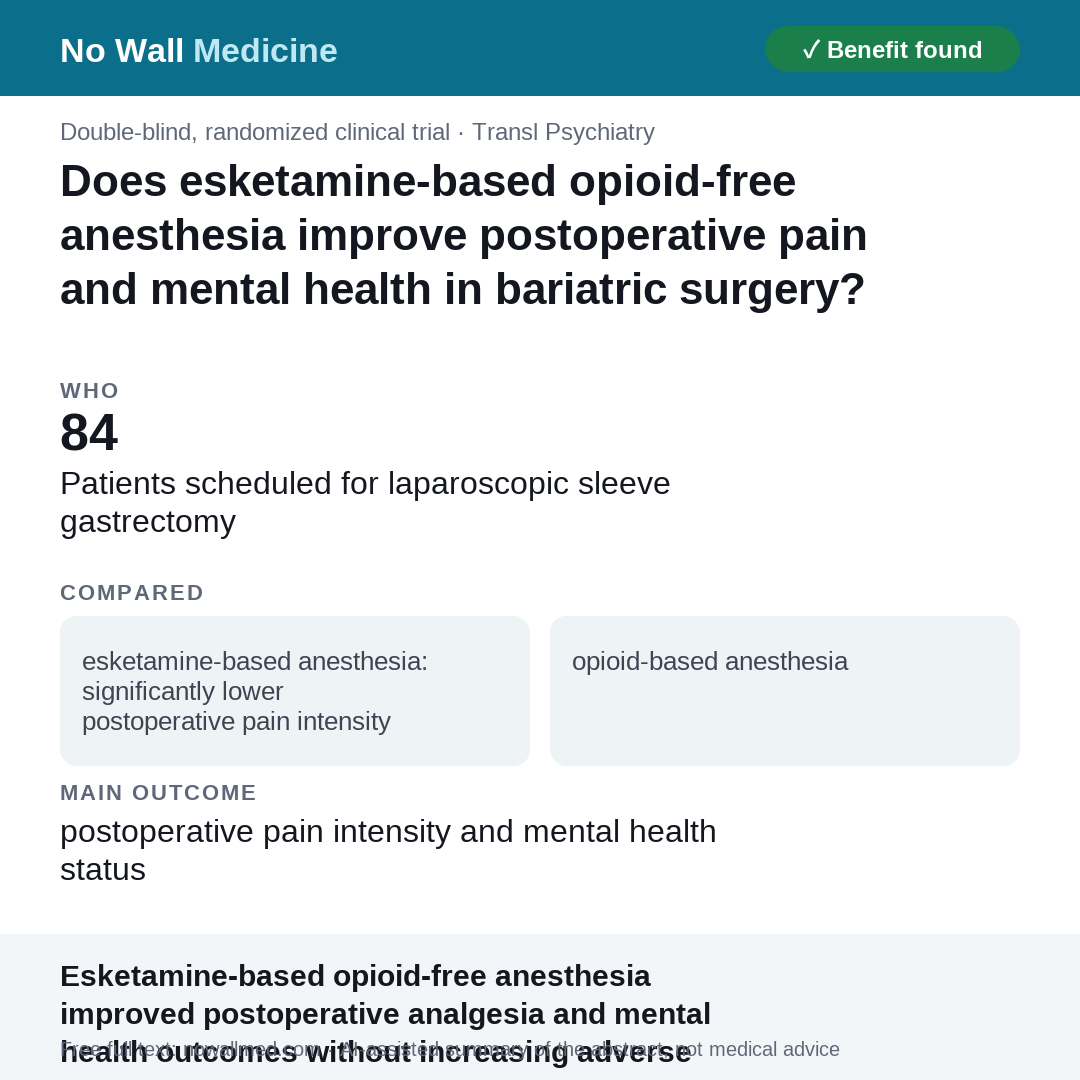
Dual benefit of esketamine-based opioid-free anesthesia on postoperative pain and mental health outcomes in patients undergoing bariatric surgery: a randomized controlled trial
Double-blind, randomized clinical trialBenefit found
Does esketamine-based opioid-free anesthesia improve postoperative pain and mental health in bariatric surgery?
Who
84
Patients scheduled for laparoscopic sleeve gastrectomy
Compared
esketamine-based anesthesia: significantly lower postoperative pain intensity
opioid-based anesthesia
Main outcome
postoperative pain intensity and mental health status
Bottom line: Esketamine-based opioid-free anesthesia improved postoperative analgesia and mental health outcomes without increasing adverse events.
Transl Psychiatry · 2026-07-23Download image
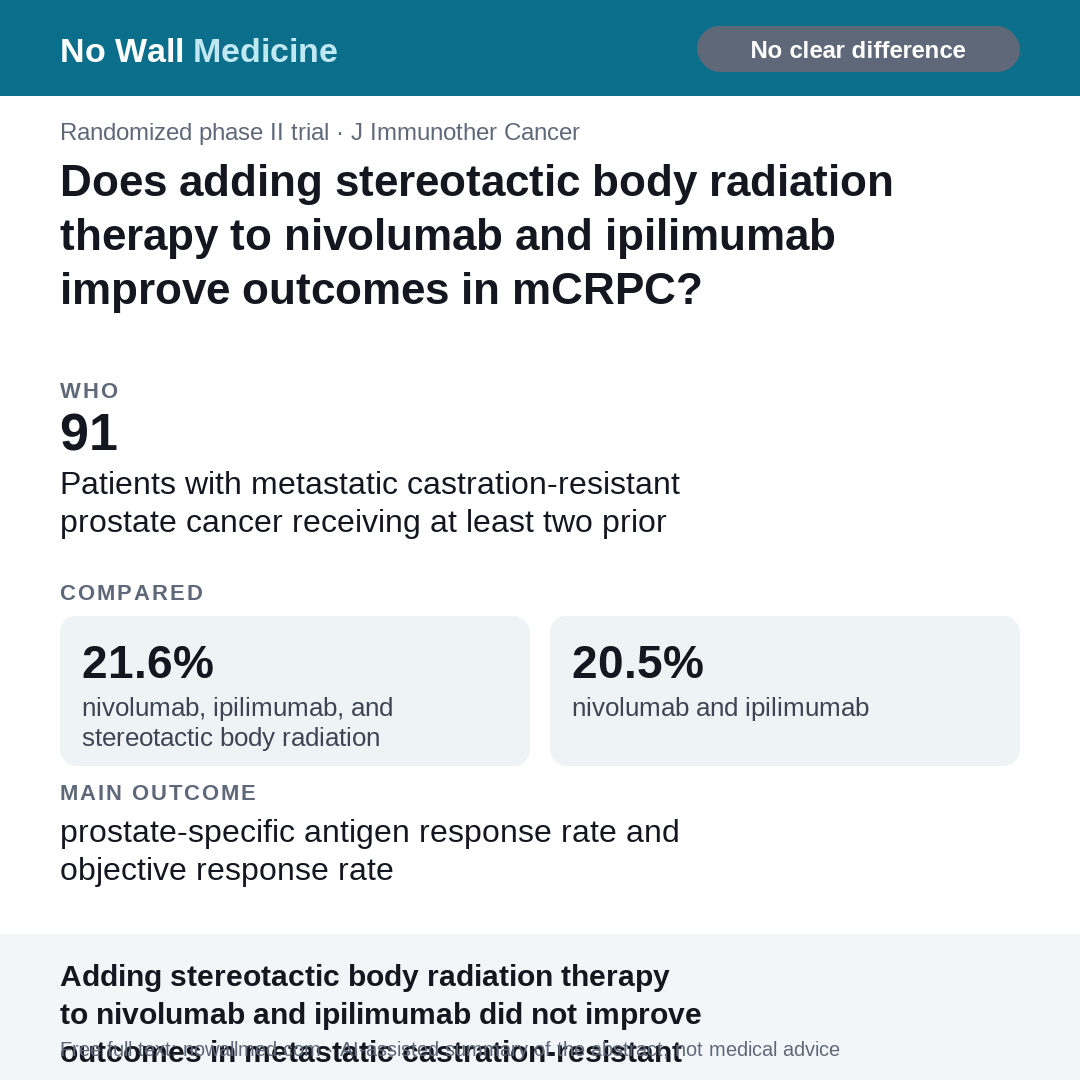
Randomized phase II trial of nivolumab and ipilimumab with or without stereotactic body radiation therapy in patients with metastatic castration-resistant prostate cancer: the CheckPRO, CA209-8TY trial
Randomized phase II trialNo clear difference
Does adding stereotactic body radiation therapy to nivolumab and ipilimumab improve outcomes in mCRPC?
Who
91
Patients with metastatic castration-resistant prostate cancer receiving at least two prior therapies
Compared
21.6%nivolumab, ipilimumab, and stereotactic body radiation therapy (95% CI 9.8% to 38.2%)
20.5%nivolumab and ipilimumab (95% CI 9.8% to 35.3%)
Main outcome
prostate-specific antigen response rate and objective response rate
Bottom line: Adding stereotactic body radiation therapy to nivolumab and ipilimumab did not improve outcomes in metastatic castration-resistant prostate cancer.
Limitation: Explorative translational research is needed to identify possible biomarkers of response.
J Immunother Cancer · 2026-07-23Download image
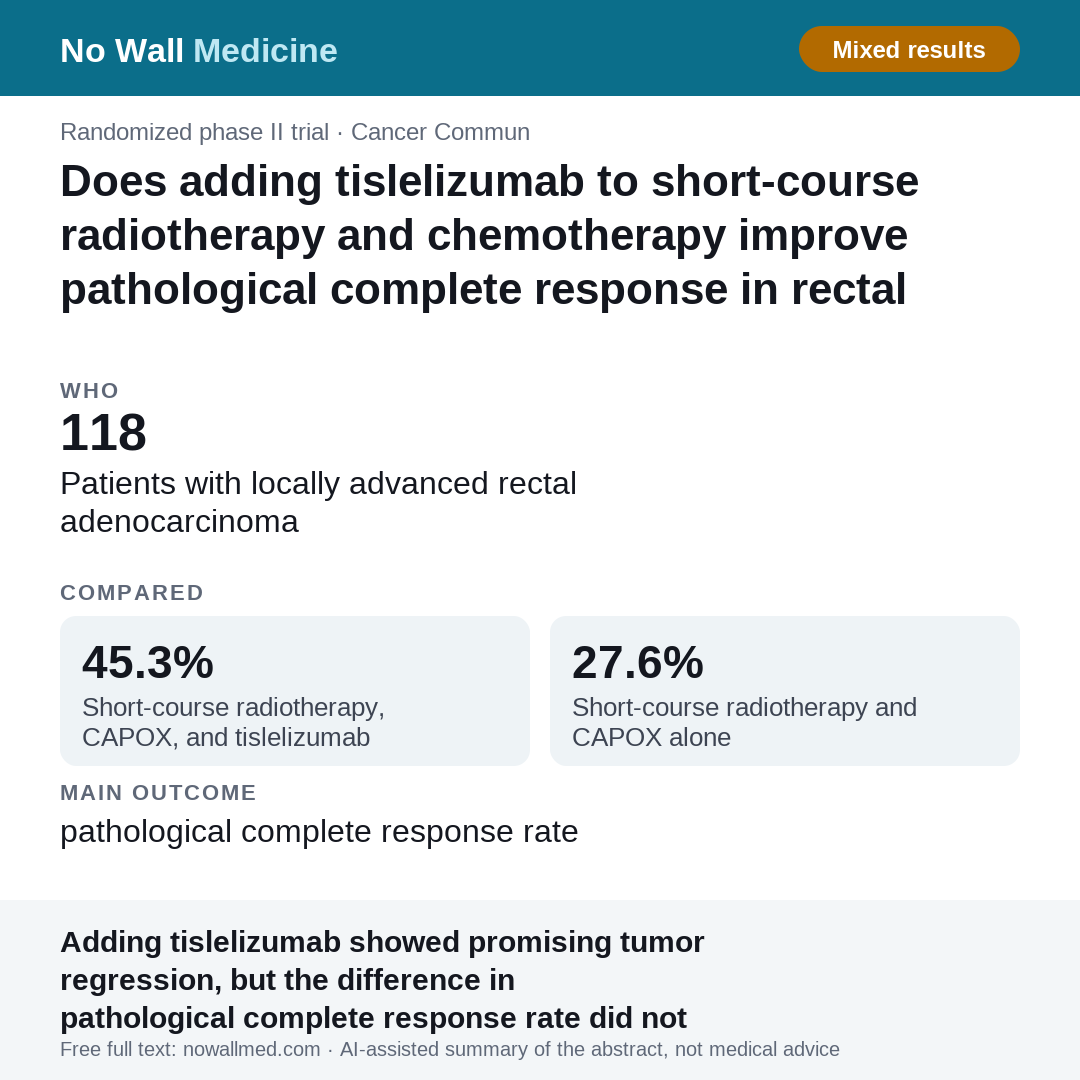
Short-Course Radiotherapy-Based Total Neoadjuvant Therapy plus Tislelizumab for Locally Advanced Rectal Cancer (Neo-STAR): Early Outcomes of a Randomized Phase II Trial
Randomized phase II trialMixed results
Does adding tislelizumab to short-course radiotherapy and chemotherapy improve pathological complete response in rectal cancer?
Who
118
Patients with locally advanced rectal adenocarcinoma
Compared
45.3%Short-course radiotherapy, CAPOX, and tislelizumab (95% CI, 31.5% to 59.8%)
27.6%Short-course radiotherapy and CAPOX alone (95% CI, 16.6% to 40.8%)
Main outcome
pathological complete response rate
Result: odds ratio = 2.17; 95% CI, 0.99 to 4.79
Bottom line: Adding tislelizumab showed promising tumor regression, but the difference in pathological complete response rate did not reach statistical significance.
Limitation: This phase II study provides preliminary evidence warranting further validation in phase III trials.
Cancer Commun · 2026-07-23Download image
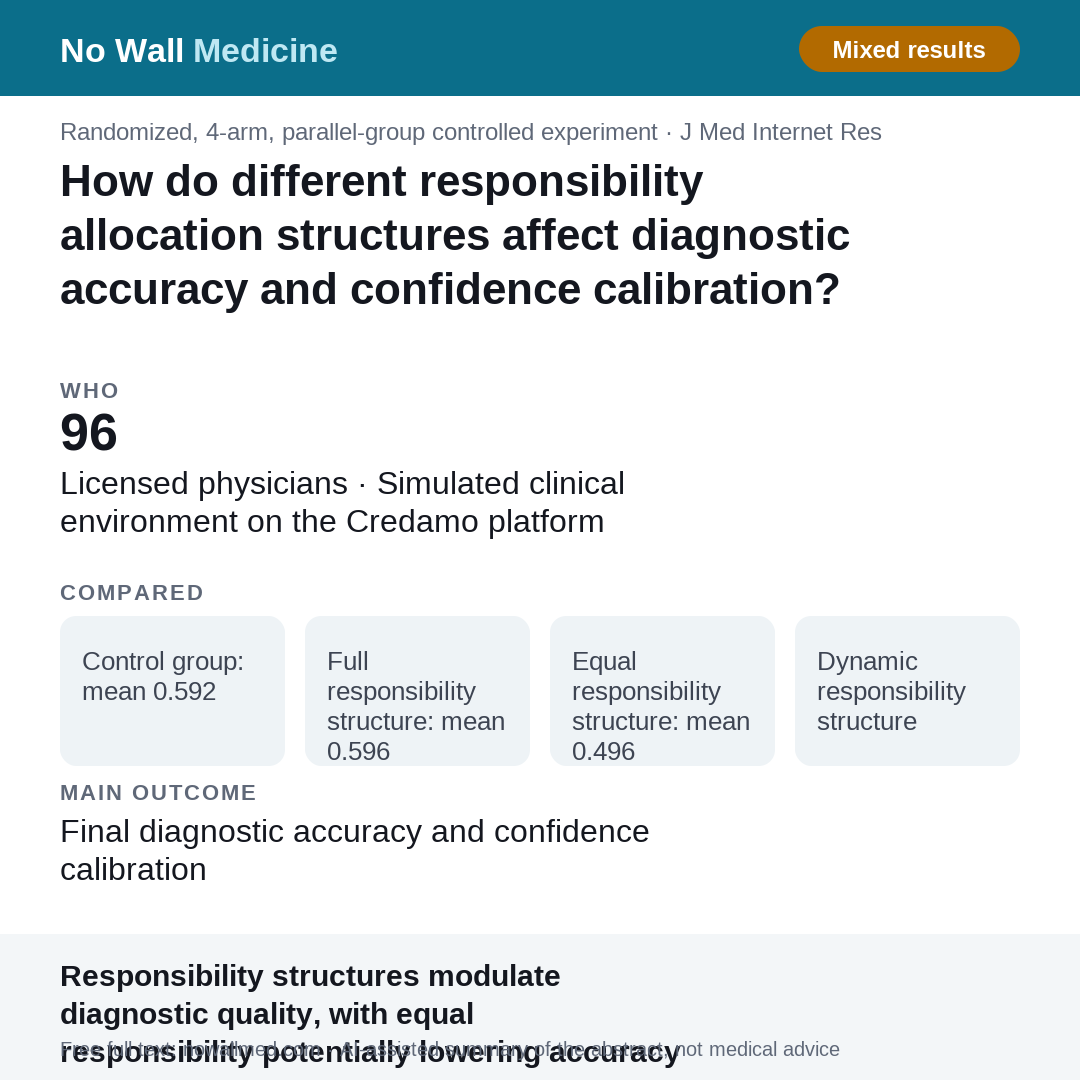
Impact of Responsibility Allocation Structures on Diagnostic Quality in AI-Assisted Diagnosis: Randomized Controlled Experiment
Randomized, 4-arm, parallel-group controlled experimentMixed results
How do different responsibility allocation structures affect diagnostic accuracy and confidence calibration?
Who
96
Licensed physicians · Simulated clinical environment on the Credamo platform
Compared
Control group: mean 0.592
Full responsibility structure: mean 0.596
Equal responsibility structure: mean 0.496
Dynamic responsibility structure
Main outcome
Final diagnostic accuracy and confidence calibration
Bottom line: Responsibility structures modulate diagnostic quality, with equal responsibility potentially lowering accuracy and confidence calibration compared to control.
J Med Internet Res · 2026-07-23Download image
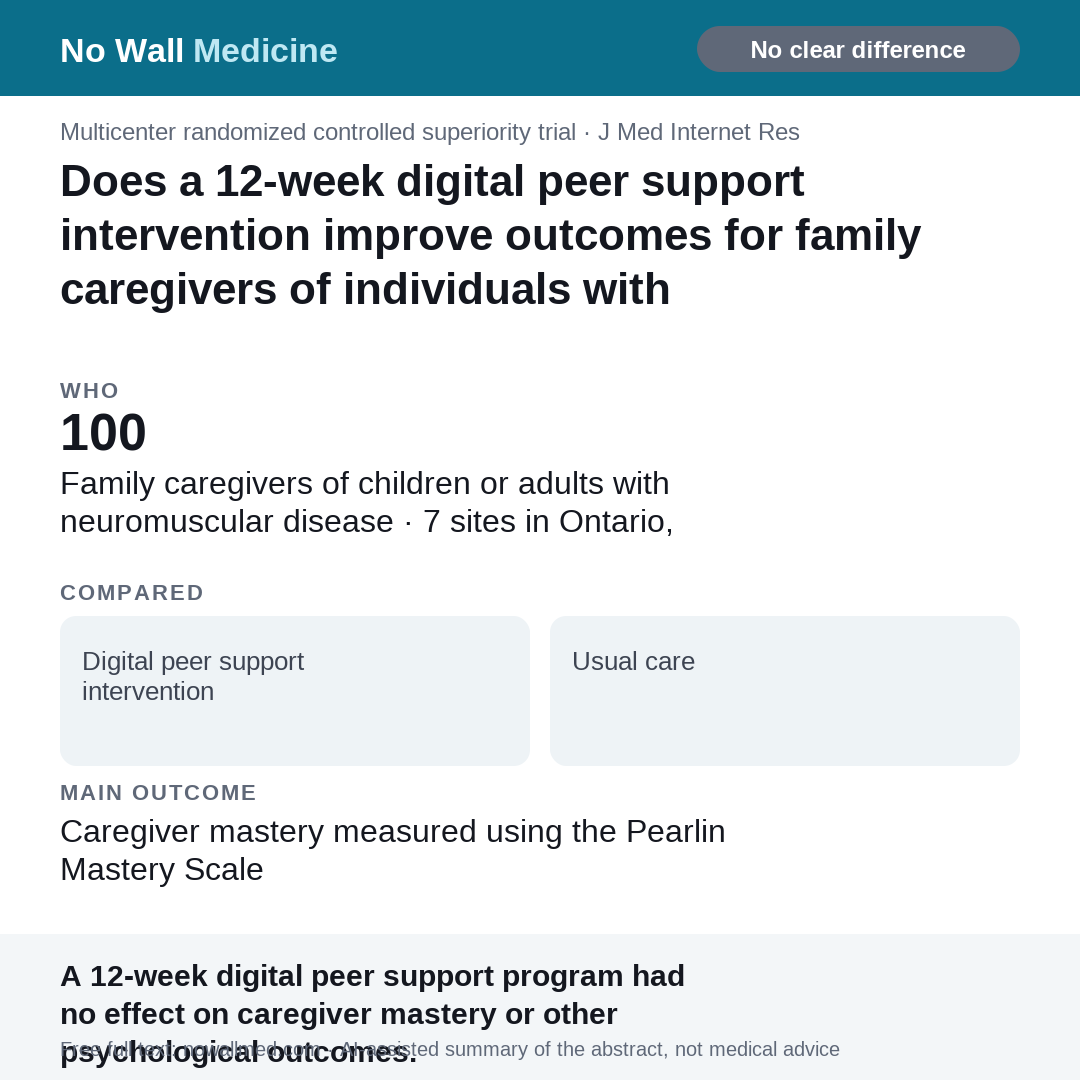
Digital Peer Support Intervention for Family Caregivers of Individuals With Neuromuscular Disease: Randomized Controlled Trial
Multicenter randomized controlled superiority trialNo clear difference
Does a 12-week digital peer support intervention improve outcomes for family caregivers of individuals with neuromuscular disease?
Who
100
Family caregivers of children or adults with neuromuscular disease · 7 sites in Ontario, Canada
Compared
Digital peer support intervention
Usual care
Main outcome
Caregiver mastery measured using the Pearlin Mastery Scale
Result: adjusted mean difference 0.67, 95% CI -1.7 to 3.1
Bottom line: A 12-week digital peer support program had no effect on caregiver mastery or other psychological outcomes.
Limitation: Moderate fidelity and variability in participant engagement.
J Med Internet Res · 2026-07-23Download image
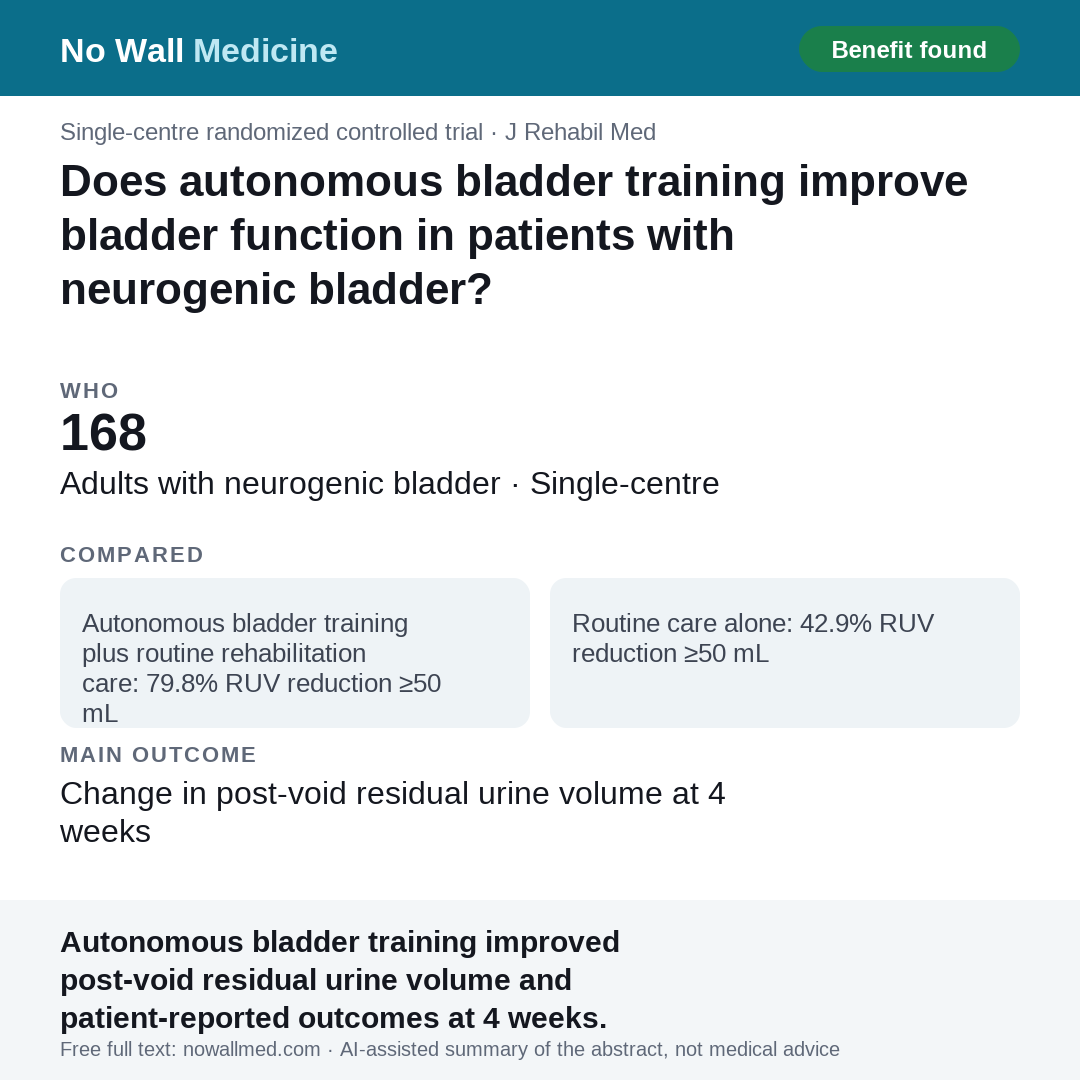
Autonomous bladder training for neurogenic bladder: a randomized controlled trial
Single-centre randomized controlled trialBenefit found
Does autonomous bladder training improve bladder function in patients with neurogenic bladder?
Who
168
Adults with neurogenic bladder · Single-centre
Compared
Autonomous bladder training plus routine rehabilitation care: 79.8% RUV reduction ≥50 mL
Routine care alone: 42.9% RUV reduction ≥50 mL
Main outcome
Change in post-void residual urine volume at 4 weeks
Result: adjusted mean difference in change, -55.8 mL (95% CI, -64.7 to -46.9)
Bottom line: Autonomous bladder training improved post-void residual urine volume and patient-reported outcomes at 4 weeks.
J Rehabil Med · 2026-07-23Download image
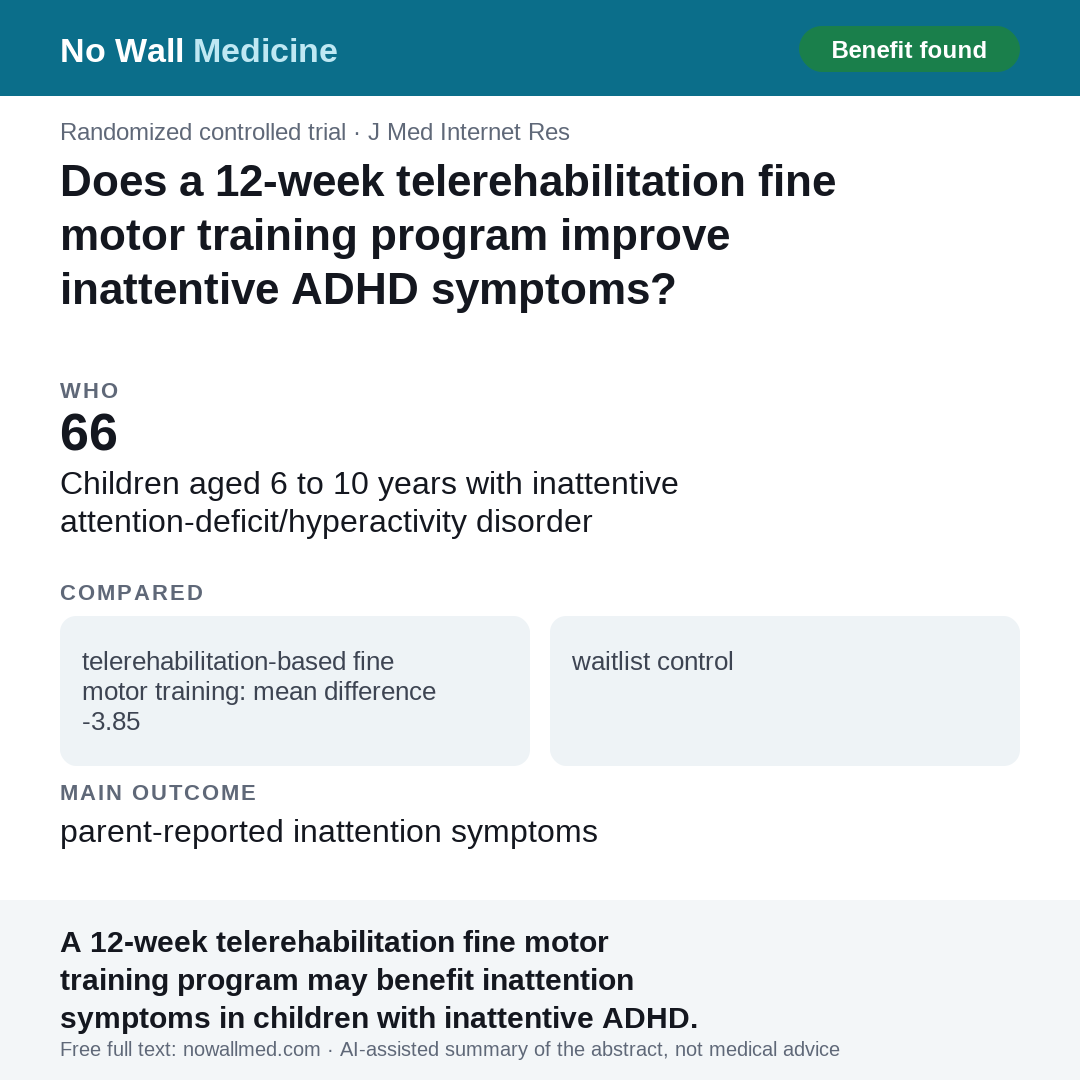
A Telerehabilitation-Based Fine Motor Training Program for Children With Inattentive Attention-Deficit/Hyperactivity Disorder: Randomized Controlled Trial
Randomized controlled trialBenefit found
Does a 12-week telerehabilitation fine motor training program improve inattentive ADHD symptoms?
Who
66
Children aged 6 to 10 years with inattentive attention-deficit/hyperactivity disorder
Compared
telerehabilitation-based fine motor training: mean difference -3.85
waitlist control
Main outcome
parent-reported inattention symptoms
Result: mean difference -3.85 (95% CI -5.01 to -2.68)
Bottom line: A 12-week telerehabilitation fine motor training program may benefit inattention symptoms in children with inattentive ADHD.
Limitation: waitlist control design, parent-reported symptom outcome, and exploratory mediation analysis
J Med Internet Res · 2026-07-23Download image
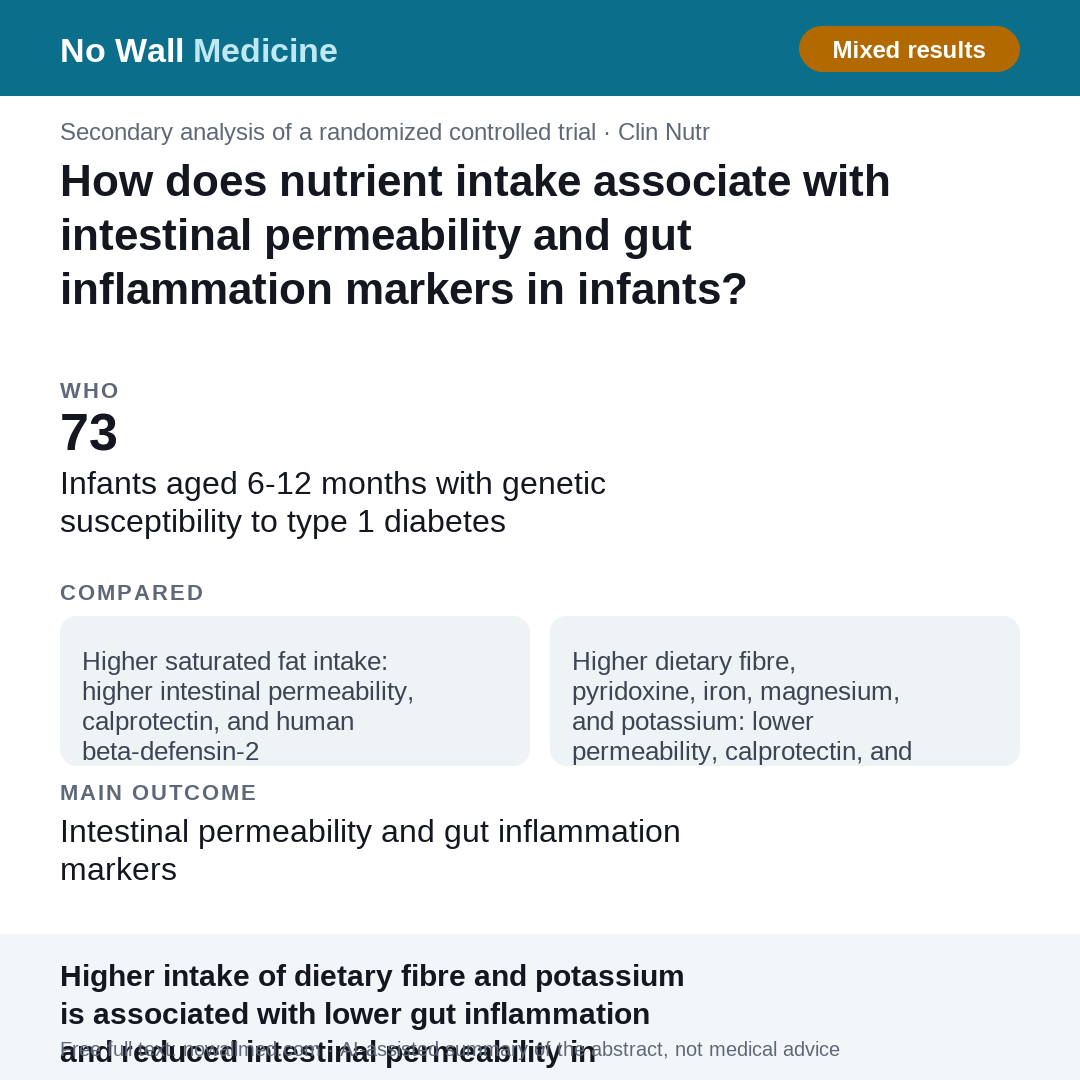
Nutrient intake, gut inflammation markers, and intestinal permeability in infants aged 6-12 months
Secondary analysis of a randomized controlled trialMixed results
How does nutrient intake associate with intestinal permeability and gut inflammation markers in infants?
Who
73
Infants aged 6-12 months with genetic susceptibility to type 1 diabetes
Compared
Higher saturated fat intake: higher intestinal permeability, calprotectin, and human beta-defensin-2
Higher dietary fibre, pyridoxine, iron, magnesium, and potassium: lower permeability, calprotectin, and human beta-defensin-2
Main outcome
Intestinal permeability and gut inflammation markers
Bottom line: Higher intake of dietary fibre and potassium is associated with lower gut inflammation and reduced intestinal permeability in infants.
Limitation: Adjusting for breast milk energy proportion attenuated many nutrient associations.
Clin Nutr · 2026-07-22Download image
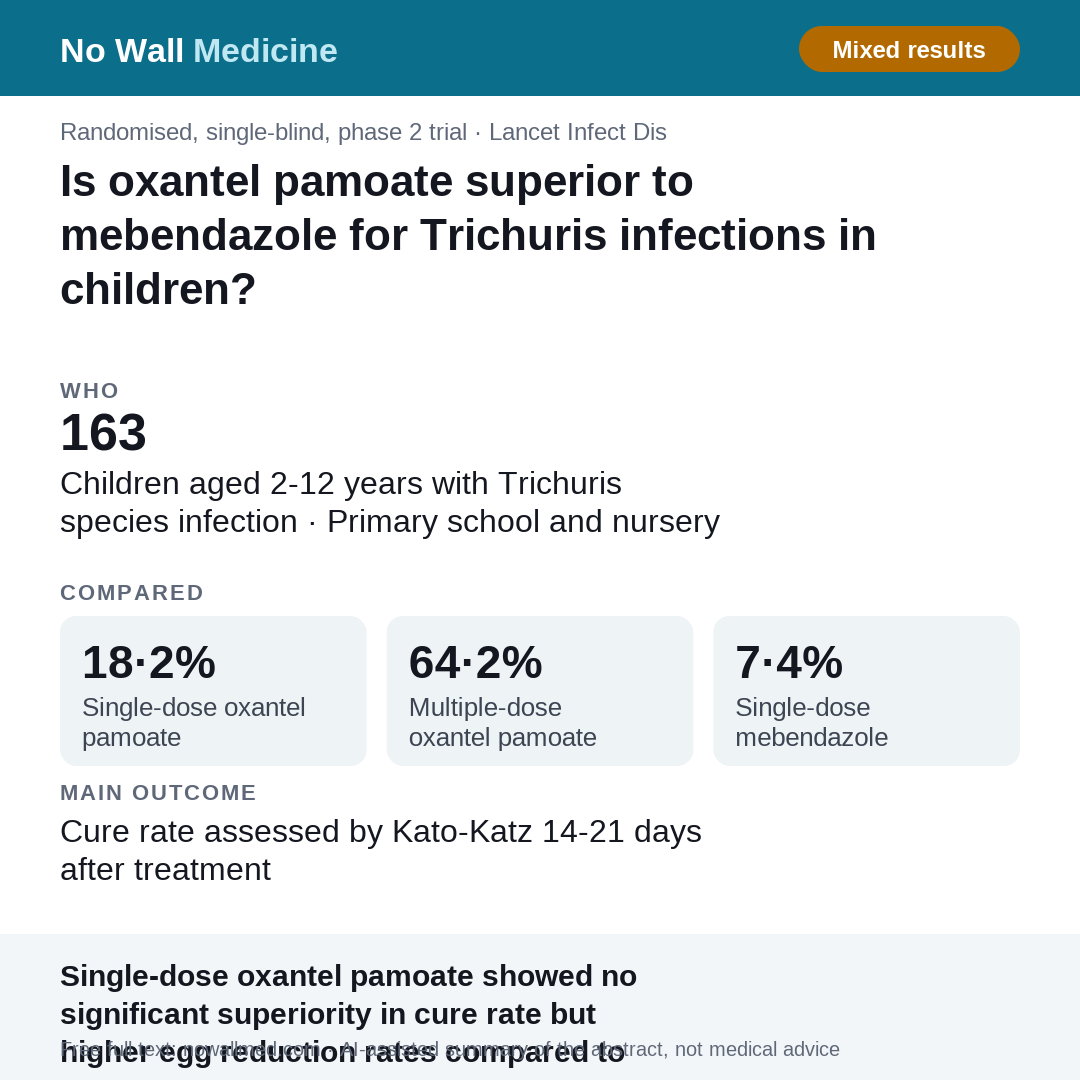
Efficacy, safety, and acceptability of a child-friendly, chewable formulation of oxantel pamoate versus mebendazole for Trichuris spp infections in children aged 2-12 years in Tanzania: a randomised, single-blind, phase 2 trial
Randomised, single-blind, phase 2 trialMixed results
Is oxantel pamoate superior to mebendazole for Trichuris infections in children?
Who
163
Children aged 2-12 years with Trichuris species infection · Primary school and nursery on Pemba Island, Tanzania
Compared
18·2%Single-dose oxantel pamoate (95% CI 9·1-30·9)
64·2%Multiple-dose oxantel pamoate (49·8-76·9)
7·4%Single-dose mebendazole (2·1-17·9)
Main outcome
Cure rate assessed by Kato-Katz 14-21 days after treatment
Result: odds ratio 0·36, 95% CI 0·09-1·16
Bottom line: Single-dose oxantel pamoate showed no significant superiority in cure rate but higher egg reduction rates compared to mebendazole.
Limitation: The study did not provide sufficient evidence of superiority in terms of cure rate.
Funded by: European Union
Lancet Infect Dis · 2026-07-22Download image
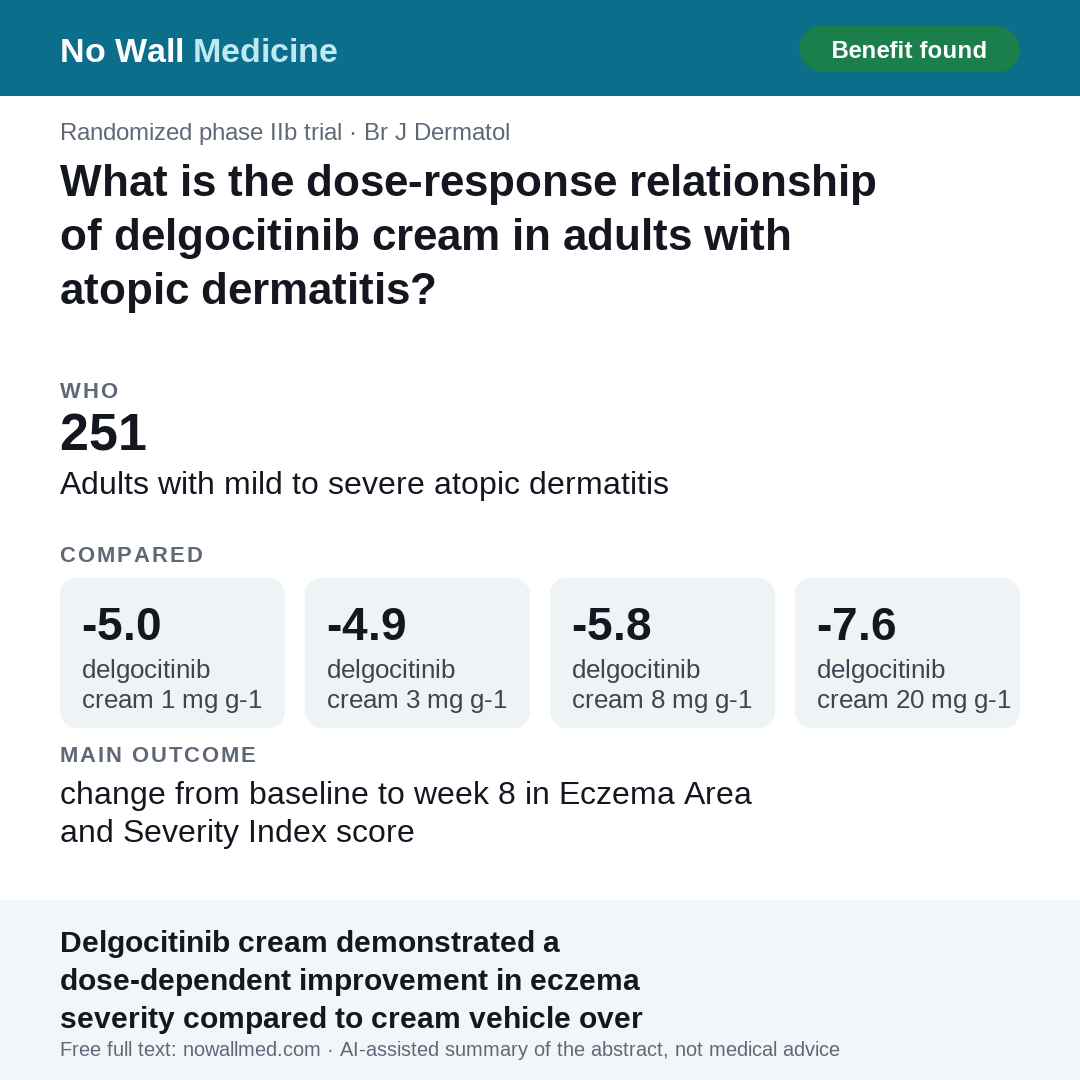
Delgocitinib cream formulation demonstrates a dose-dependent response in adults with mild to severe atopic dermatitis: results from an 8-week randomized phase IIb trial
Randomized phase IIb trialBenefit found
What is the dose-response relationship of delgocitinib cream in adults with atopic dermatitis?
Who
251
Adults with mild to severe atopic dermatitis
Compared
-5.0delgocitinib cream 1 mg g-1
-4.9delgocitinib cream 3 mg g-1
-5.8delgocitinib cream 8 mg g-1
-7.6delgocitinib cream 20 mg g-1
Main outcome
change from baseline to week 8 in Eczema Area and Severity Index score
Bottom line: Delgocitinib cream demonstrated a dose-dependent improvement in eczema severity compared to cream vehicle over eight weeks.
Br J Dermatol · 2026-07-22Download image
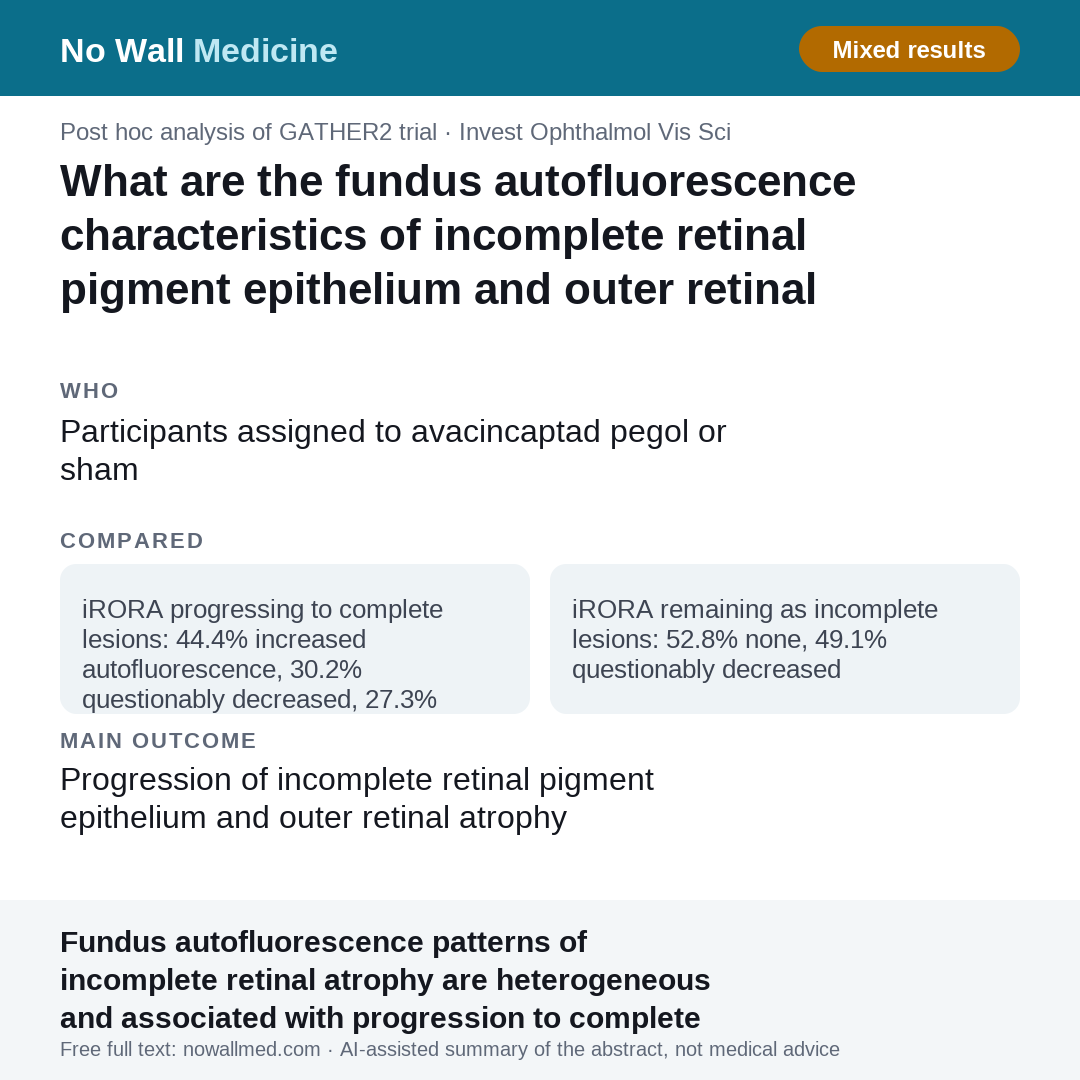
Incomplete Retinal Pigment Epithelium and Outer Retinal Atrophy Characterized Using Fundus Autofluorescence: An 18-Month Post Hoc Analysis of GATHER2
Post hoc analysis of GATHER2 trialMixed results
What are the fundus autofluorescence characteristics of incomplete retinal pigment epithelium and outer retinal atrophy?
Who
Participants assigned to avacincaptad pegol or sham
Compared
iRORA progressing to complete lesions: 44.4% increased autofluorescence, 30.2% questionably decreased, 27.3% definite decreased
iRORA remaining as incomplete lesions: 52.8% none, 49.1% questionably decreased
Main outcome
Progression of incomplete retinal pigment epithelium and outer retinal atrophy
Bottom line: Fundus autofluorescence patterns of incomplete retinal atrophy are heterogeneous and associated with progression to complete lesions.
Invest Ophthalmol Vis Sci · 2026-07-22Download image
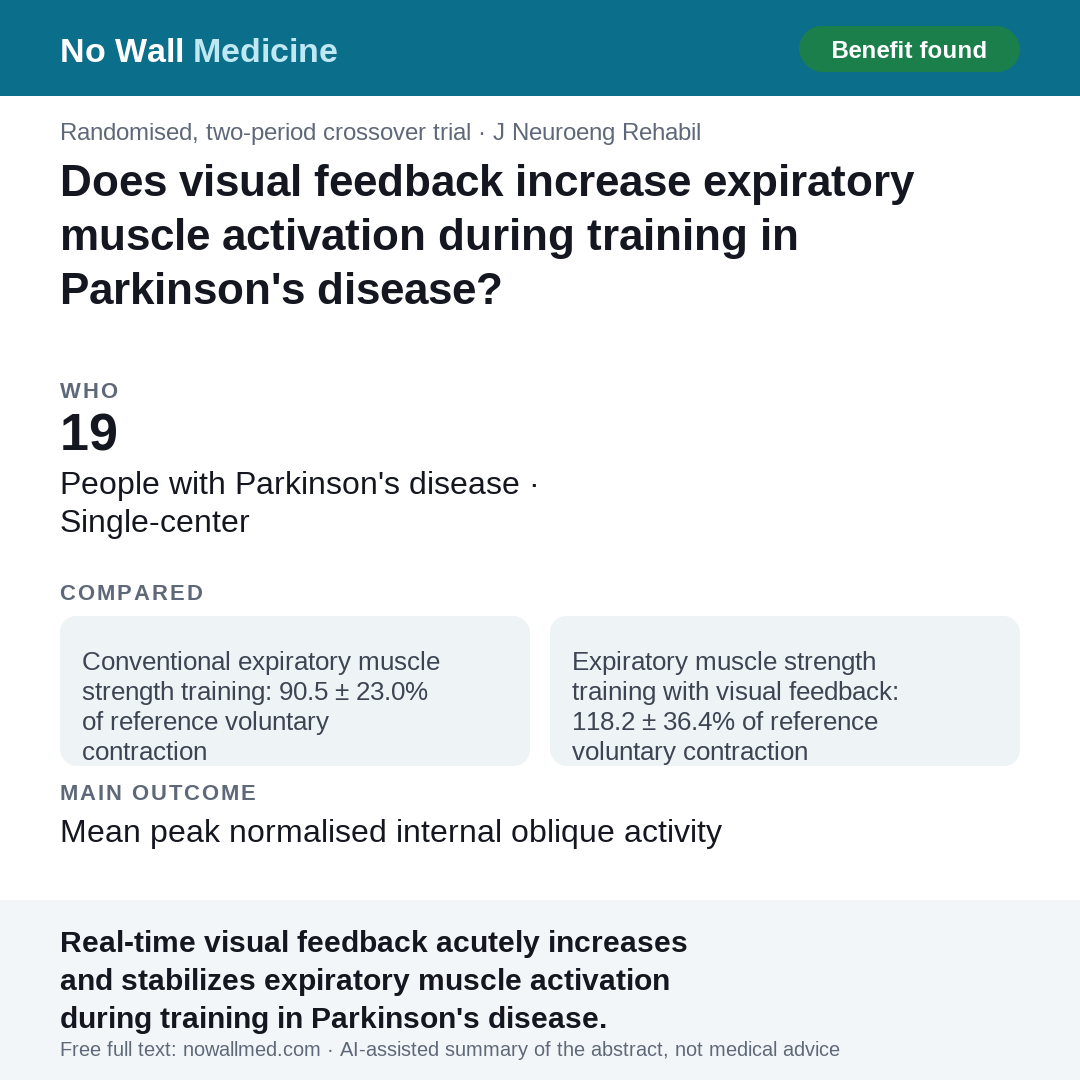
Visual feedback increases expiratory muscle training effort in Parkinson's disease: a randomised crossover trial
Randomised, two-period crossover trialBenefit found
Does visual feedback increase expiratory muscle activation during training in Parkinson's disease?
Who
19
People with Parkinson's disease · Single-center
Compared
Conventional expiratory muscle strength training: 90.5 ± 23.0% of reference voluntary contraction
Expiratory muscle strength training with visual feedback: 118.2 ± 36.4% of reference voluntary contraction
Main outcome
Mean peak normalised internal oblique activity
Bottom line: Real-time visual feedback acutely increases and stabilizes expiratory muscle activation during training in Parkinson's disease.
J Neuroeng Rehabil · 2026-07-22Download image