Visual abstracts
New randomized trials and meta-analyses from leading journals at a glance: who was studied, what was compared, and what was found. Every paper is free to read in full.
All specialtiesCardiology 1740Oncology 1496Gastroenterology & Hepatology 644Infectious Disease 1098Neurology 718Psychiatry & Mental Health 856Pulmonology 741Critical Care 503Endocrinology & Diabetes 939Pediatrics 1028Surgery 853Orthopedics & Sports Medicine 324Neurosurgery 220Cardiothoracic & Vascular Surgery 194Plastic & Reconstructive Surgery 272Nephrology 359Rheumatology 236Hematology 383Dermatology 190Ophthalmology 207Obstetrics & Gynecology 564Public & Global Health 336Radiology & Imaging 235Anesthesiology 348Urology 308ENT (Otolaryngology) 233Emergency Medicine 195Allergy & Immunology 112Geriatrics 372Family Medicine & Primary Care 211Medical Genetics & Genomics 186Pathology & Laboratory Medicine 55Physical Medicine & Rehabilitation 306Palliative Care 154Nutrition 462Digital Health & AI 921General Medicine 135
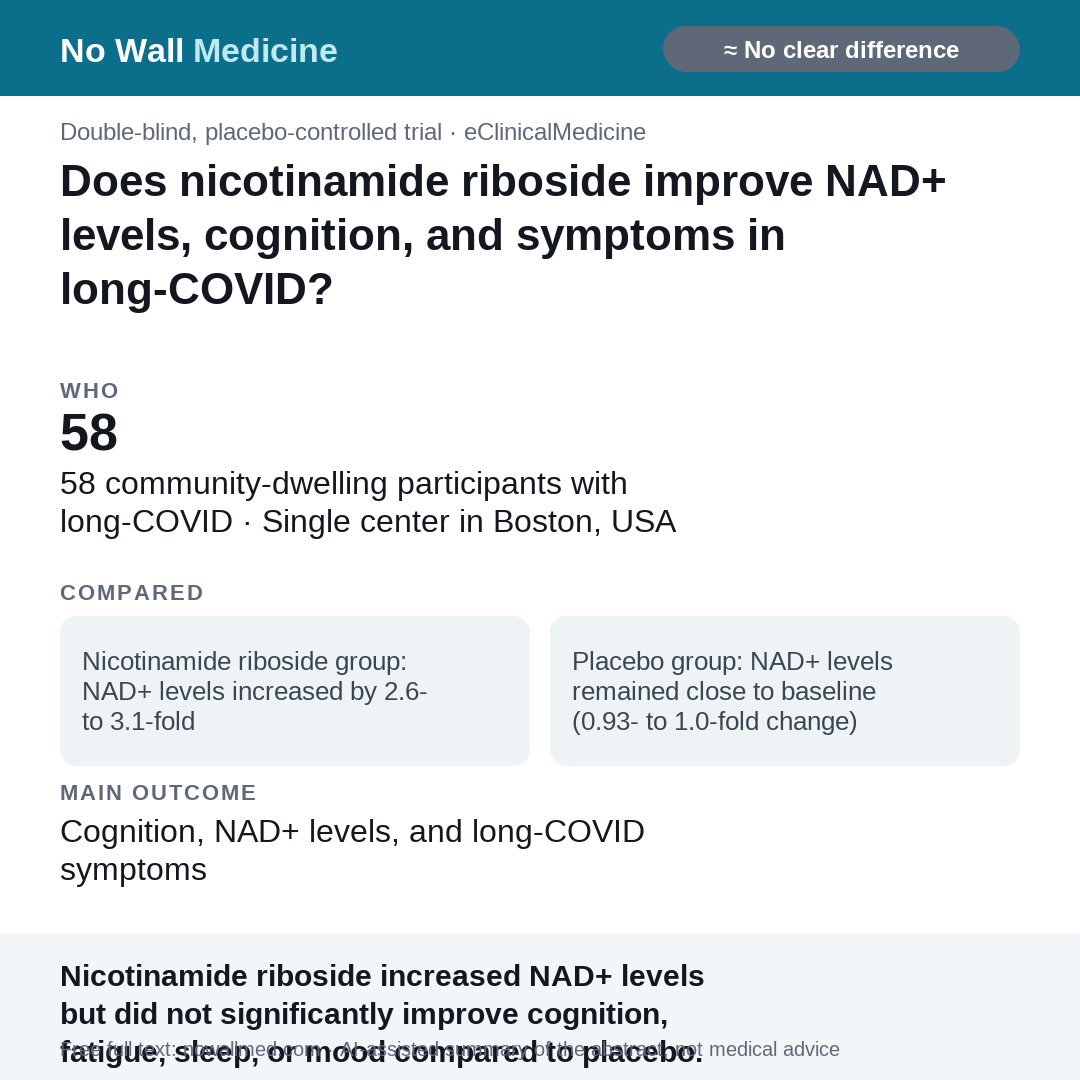
Effects of nicotinamide riboside on NAD+ levels, cognition, and symptom recovery in long-COVID: a randomized controlled trial
Double-blind, placebo-controlled trialNo clear difference
Does nicotinamide riboside improve NAD+ levels, cognition, and symptoms in long-COVID?
Who
58
58 community-dwelling participants with long-COVID · Single center in Boston, USA
Compared
Nicotinamide riboside group: NAD+ levels increased by 2.6- to 3.1-fold
Placebo group: NAD+ levels remained close to baseline (0.93- to 1.0-fold change)
Main outcome
Cognition, NAD+ levels, and long-COVID symptoms
Bottom line: Nicotinamide riboside increased NAD+ levels but did not significantly improve cognition, fatigue, sleep, or mood compared to placebo.
Funded by: Niagen Bioscience, MGH, and Alzheimer's Association
eClinicalMedicine · 2025-11-12Download image
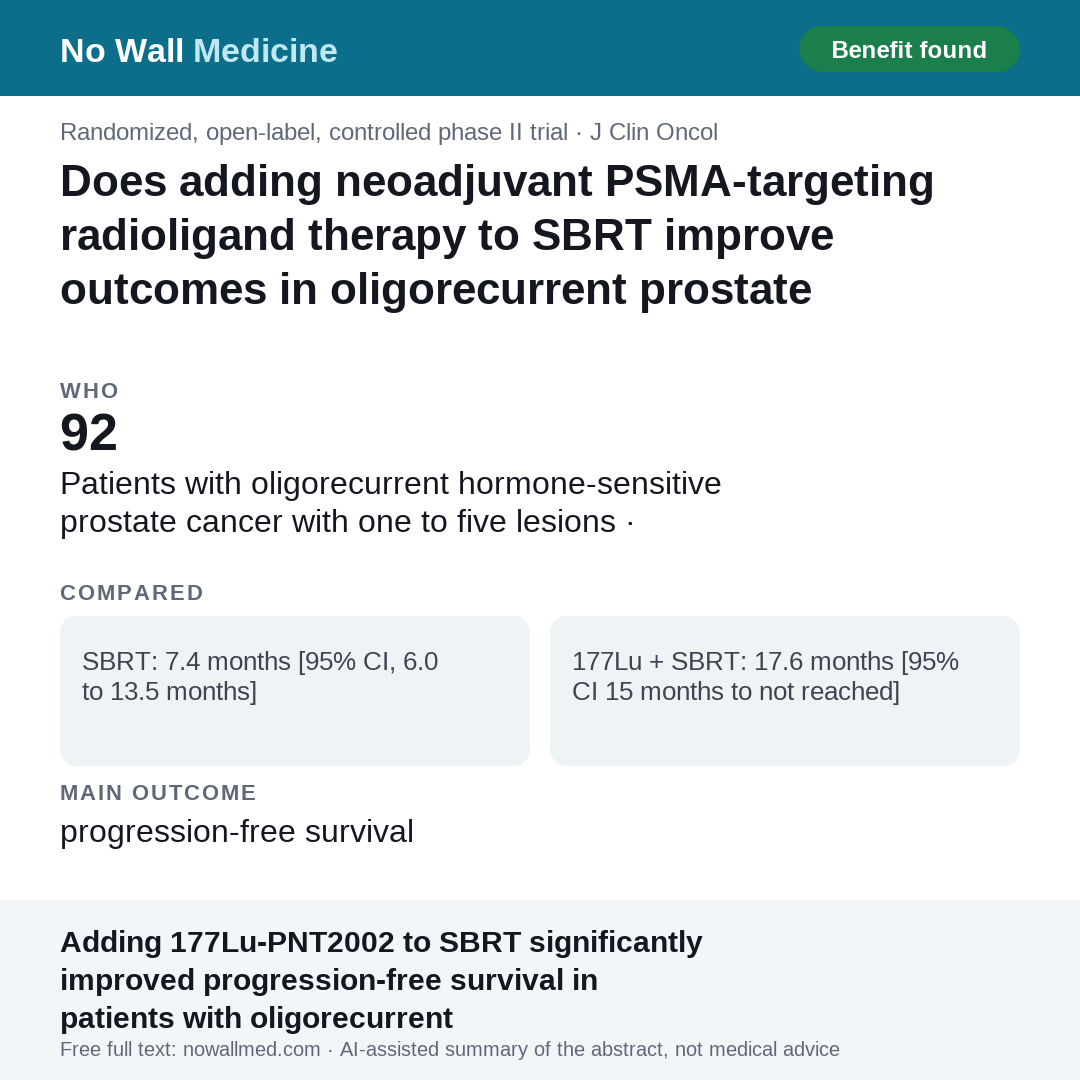
177Lu-Prostate-Specific Membrane Antigen Neoadjuvant to Stereotactic Ablative Radiotherapy for Oligorecurrent Prostate Cancer (LUNAR): An Open-Label, Randomized, Controlled, Phase II Study
Randomized, open-label, controlled phase II trialBenefit found
Does adding neoadjuvant PSMA-targeting radioligand therapy to SBRT improve outcomes in oligorecurrent prostate cancer?
Who
92
Patients with oligorecurrent hormone-sensitive prostate cancer with one to five lesions · Single-center, University of California, Los Angeles
Compared
SBRT: 7.4 months [95% CI, 6.0 to 13.5 months]
177Lu + SBRT: 17.6 months [95% CI 15 months to not reached]
Main outcome
progression-free survival
Result: hazard ratio, 0.37 [95% CI, 0.22 to 0.61]
Bottom line: Adding 177Lu-PNT2002 to SBRT significantly improved progression-free survival in patients with oligorecurrent hormone-sensitive prostate cancer.
J Clin Oncol · 2025-11-12Download image
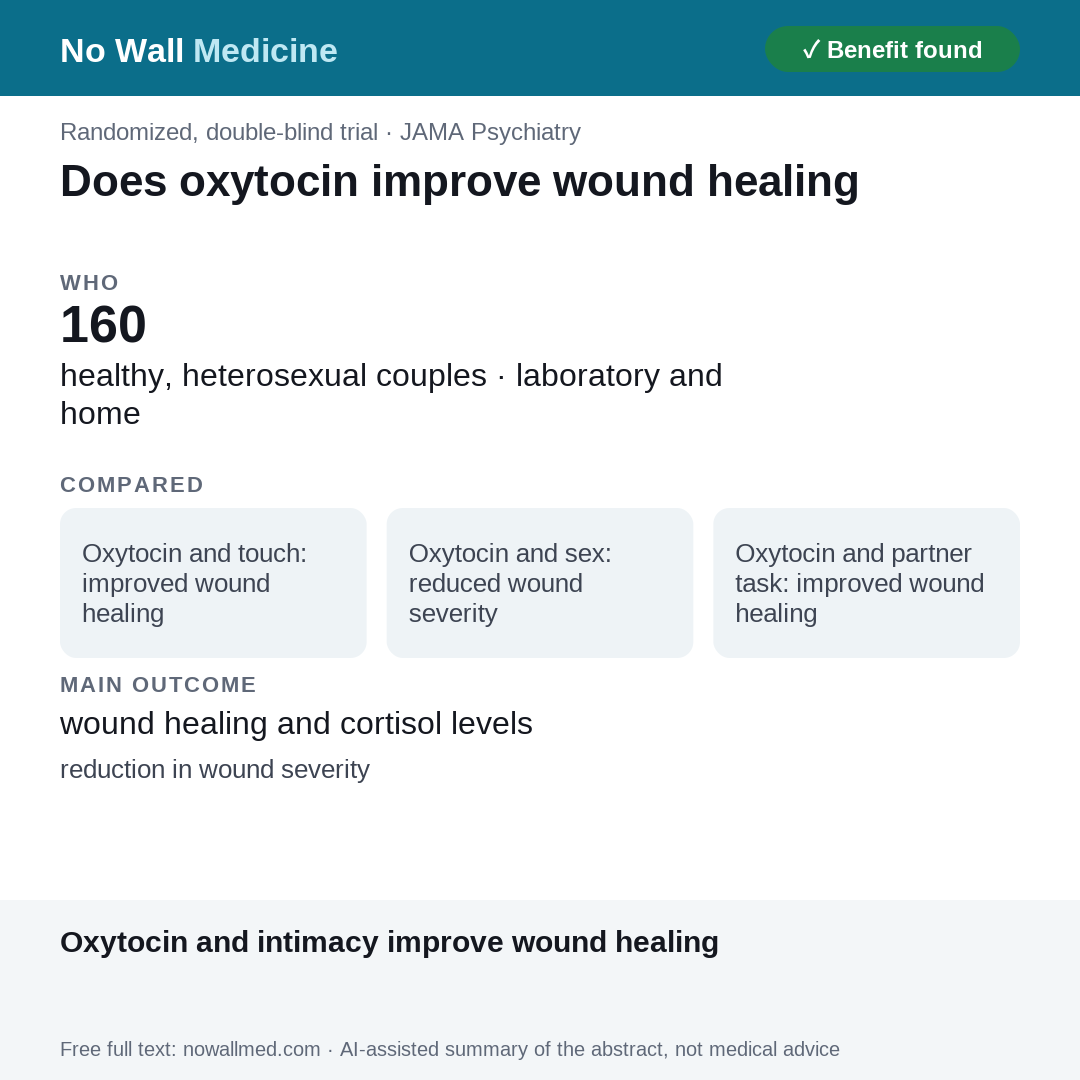
Intranasal Oxytocin and Physical Intimacy for Dermatological Wound Healing and Neuroendocrine Stress: A Randomized Clinical Trial
Randomized, double-blind trialBenefit found
Does oxytocin improve wound healing
Who
160
healthy, heterosexual couples · laboratory and home
Compared
Oxytocin and touch: improved wound healing
Oxytocin and sex: reduced wound severity
Oxytocin and partner task: improved wound healing
Main outcome
wound healing and cortisol levels
Result: reduction in wound severity
Bottom line: Oxytocin and intimacy improve wound healing
Limitation: sensitivity analyses not consistently robust
JAMA Psychiatry · 2025-11-12Download image
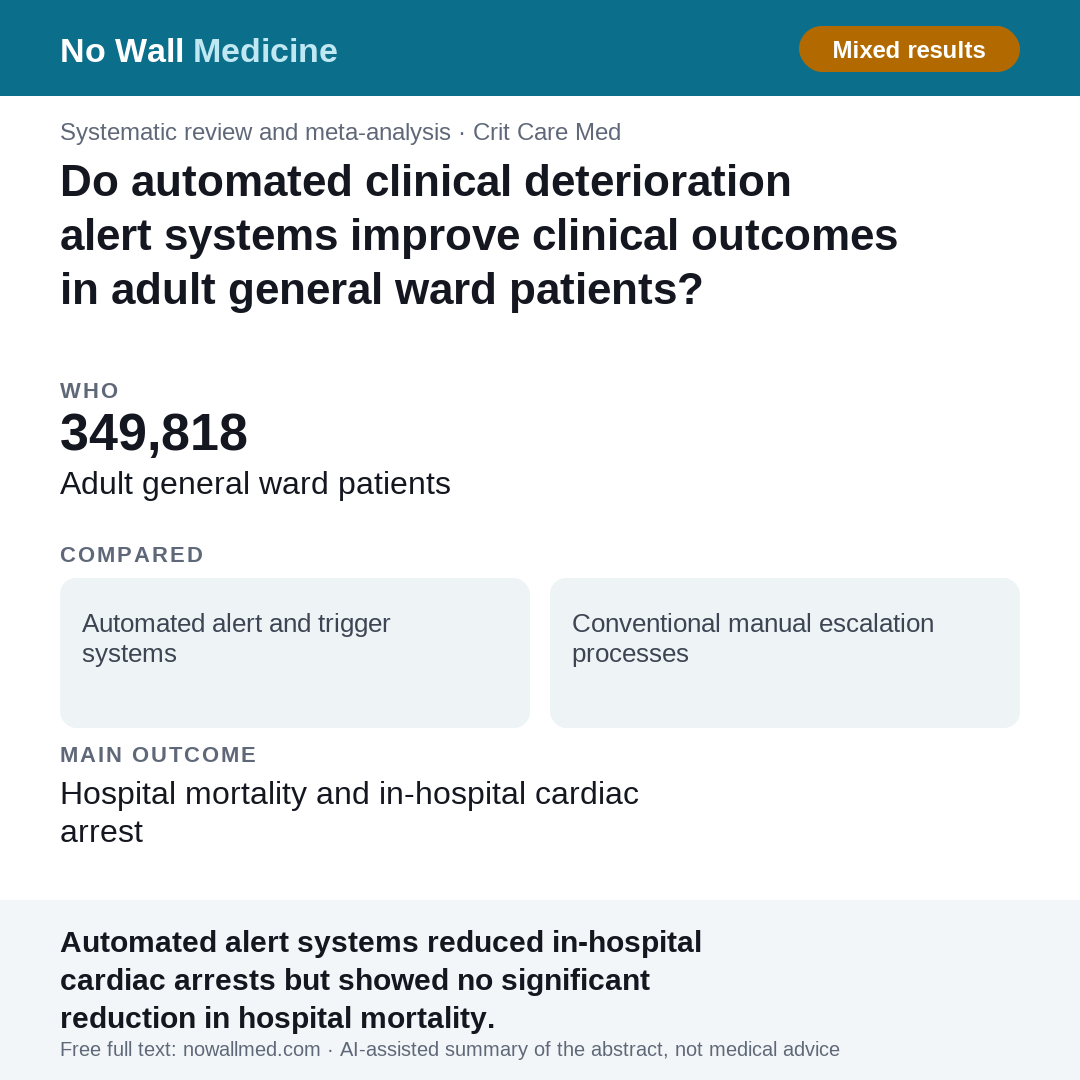
Effects of Real-Time Automated Clinical Deterioration Alert and Trigger Systems on Clinical Outcomes in Adult General Ward Patients: A Systematic Review and Meta-Analysis
Systematic review and meta-analysisMixed results
Do automated clinical deterioration alert systems improve clinical outcomes in adult general ward patients?
Who
349,818
Adult general ward patients
Compared
Automated alert and trigger systems
Conventional manual escalation processes
Main outcome
Hospital mortality and in-hospital cardiac arrest
Result: risk ratio 0.60 (95% CI, 0.43-0.85) for in-hospital cardiac arrest
Bottom line: Automated alert systems reduced in-hospital cardiac arrests but showed no significant reduction in hospital mortality.
Limitation: All studies had at least moderate risk of bias.
Crit Care Med · 2025-11-12Download image
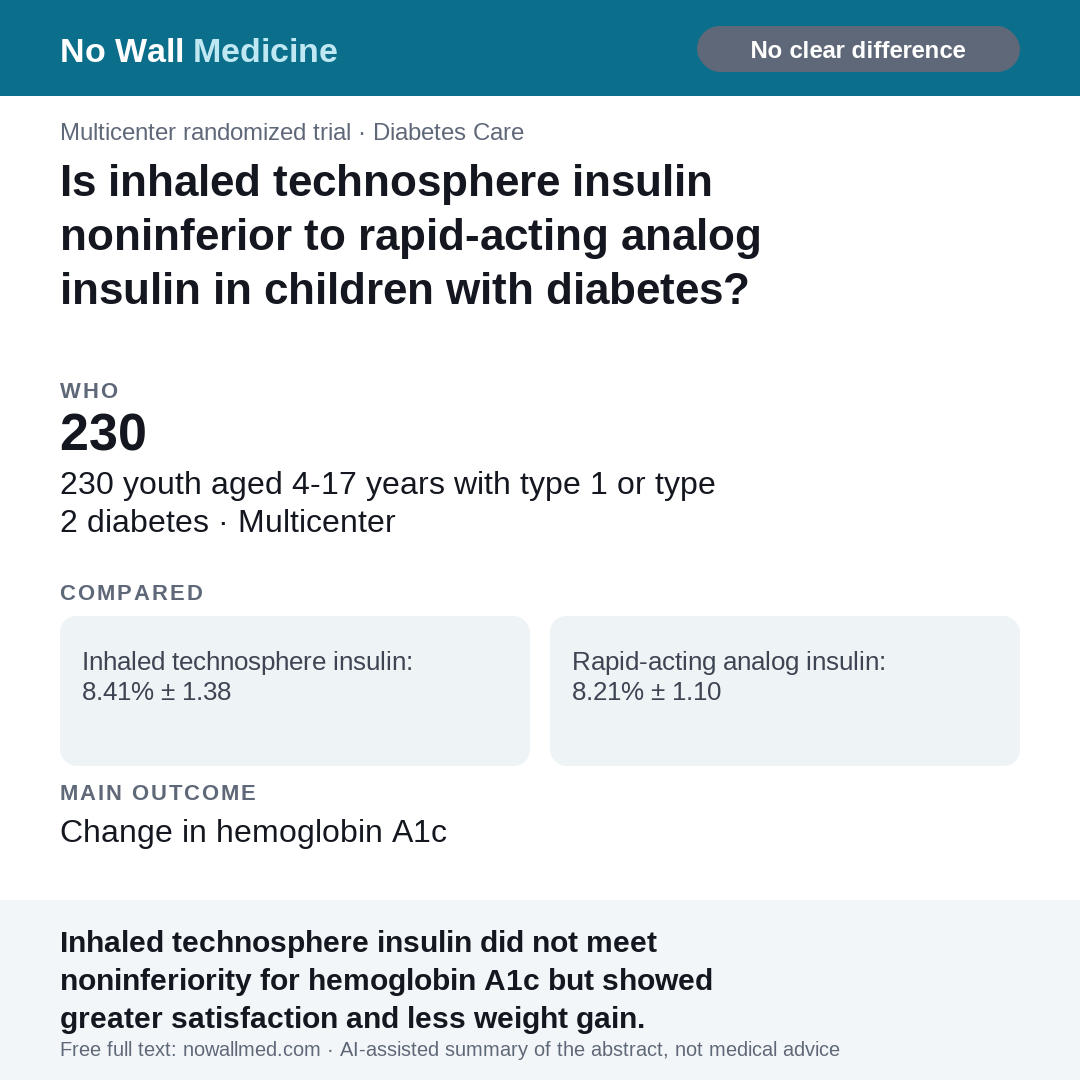
INHALE-1: A Multicenter Randomized Trial of Inhaled Technosphere Insulin in Children With Type 1 Diabetes
Multicenter randomized trialNo clear difference
Is inhaled technosphere insulin noninferior to rapid-acting analog insulin in children with diabetes?
Who
230
230 youth aged 4-17 years with type 1 or type 2 diabetes · Multicenter
Compared
Inhaled technosphere insulin: 8.41% ± 1.38
Rapid-acting analog insulin: 8.21% ± 1.10
Main outcome
Change in hemoglobin A1c
Result: adjusted difference 0.18 (95% CI -0.07, 0.43)
Bottom line: Inhaled technosphere insulin did not meet noninferiority for hemoglobin A1c but showed greater satisfaction and less weight gain.
Diabetes Care · 2025-11-12Download image
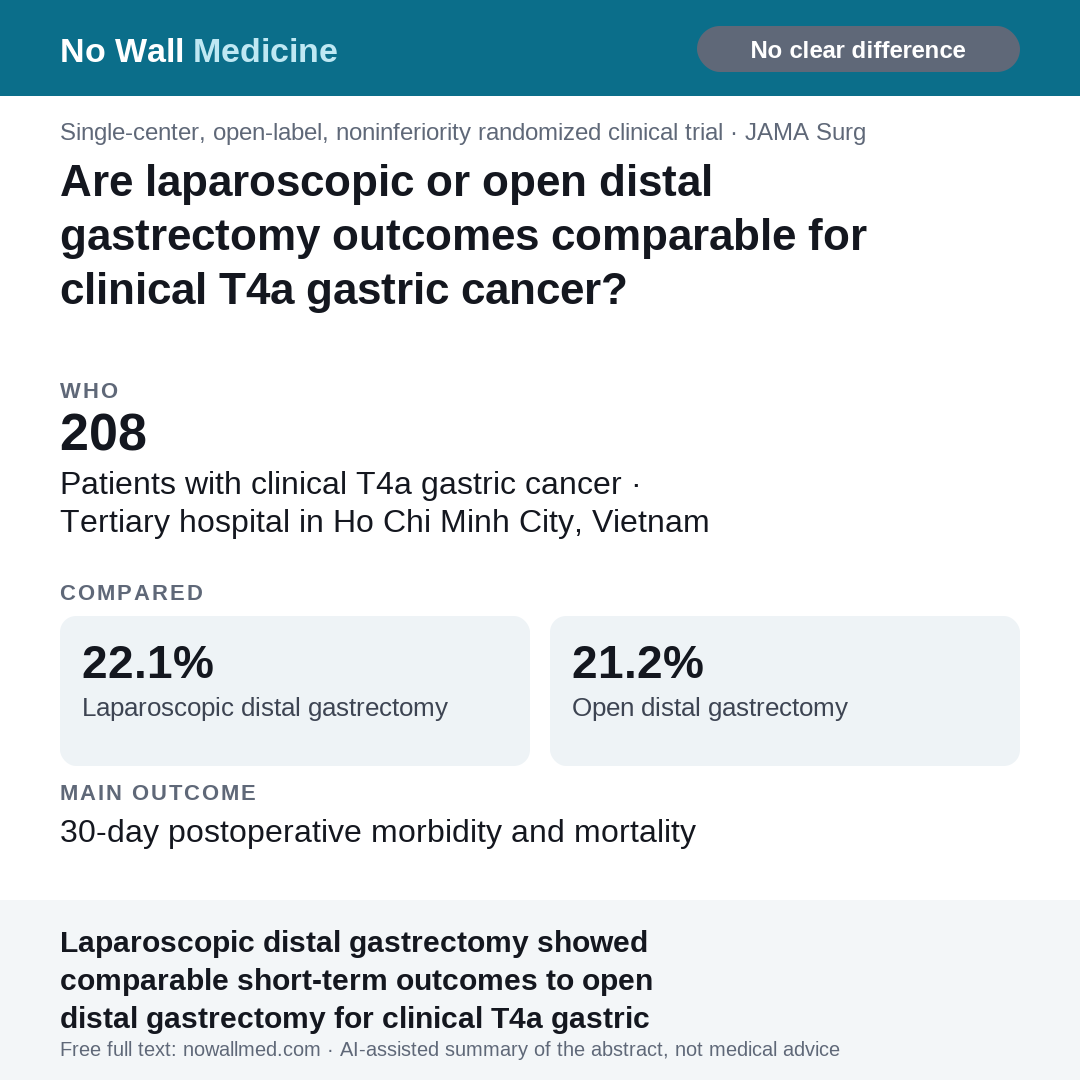
Laparoscopic vs Open Distal Gastrectomy With D2 Lymphadenectomy for Clinical T4a Gastric Cancer: The UMC-UPPERGI-01 Randomized Clinical Trial
Single-center, open-label, noninferiority randomized clinical trialNo clear difference
Are laparoscopic or open distal gastrectomy outcomes comparable for clinical T4a gastric cancer?
Who
208
Patients with clinical T4a gastric cancer · Tertiary hospital in Ho Chi Minh City, Vietnam
Compared
22.1%Laparoscopic distal gastrectomy
21.2%Open distal gastrectomy
Main outcome
30-day postoperative morbidity and mortality
Bottom line: Laparoscopic distal gastrectomy showed comparable short-term outcomes to open distal gastrectomy for clinical T4a gastric cancer.
JAMA Surg · 2025-11-12Download image
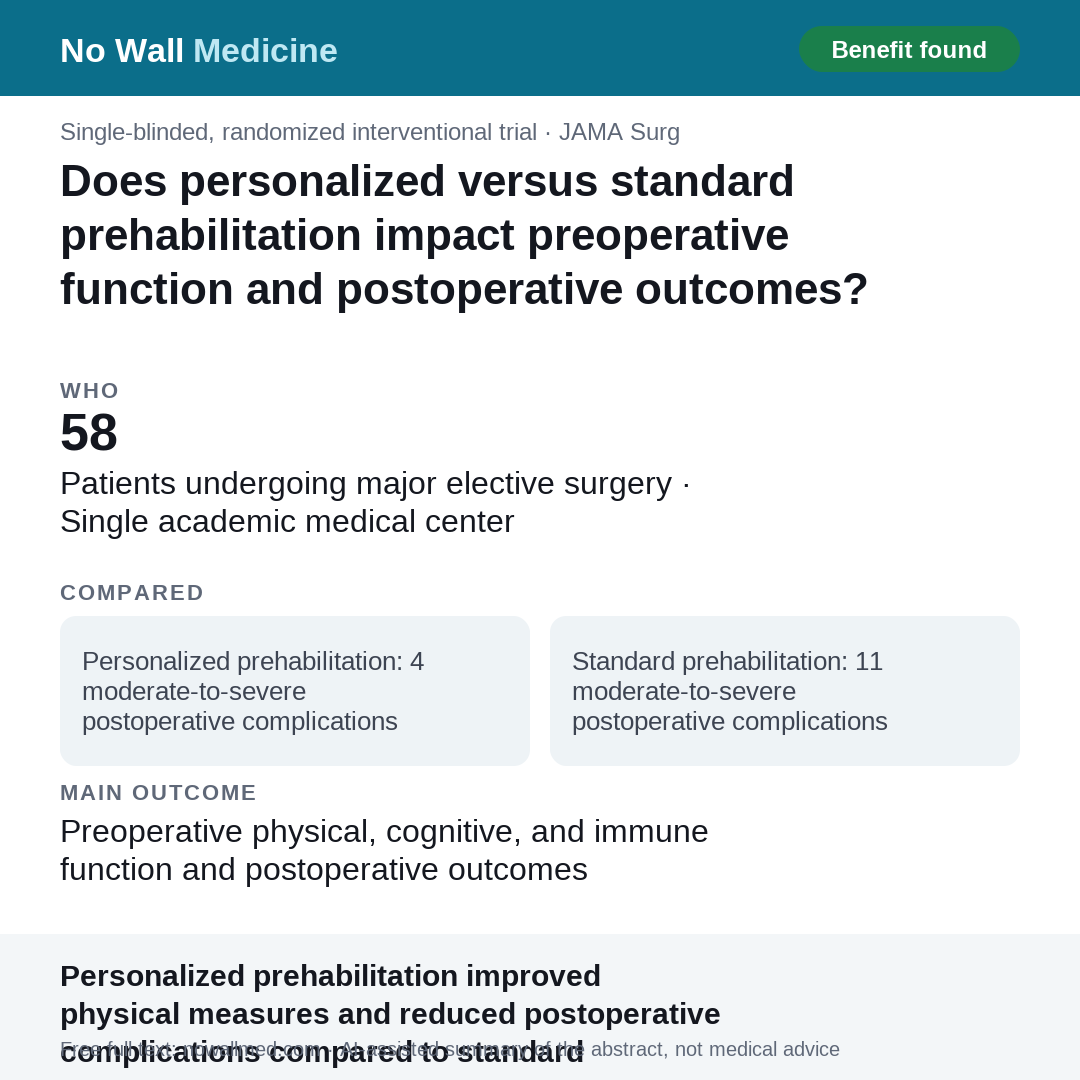
Immune Modulation by Personalized vs Standard Prehabilitation Before Major Surgery: A Randomized Clinical Trial
Single-blinded, randomized interventional trialBenefit found
Does personalized versus standard prehabilitation impact preoperative function and postoperative outcomes?
Who
58
Patients undergoing major elective surgery · Single academic medical center
Compared
Personalized prehabilitation: 4 moderate-to-severe postoperative complications
Standard prehabilitation: 11 moderate-to-severe postoperative complications
Main outcome
Preoperative physical, cognitive, and immune function and postoperative outcomes
Bottom line: Personalized prehabilitation improved physical measures and reduced postoperative complications compared to standard prehabilitation.
JAMA Surg · 2025-11-12Download image
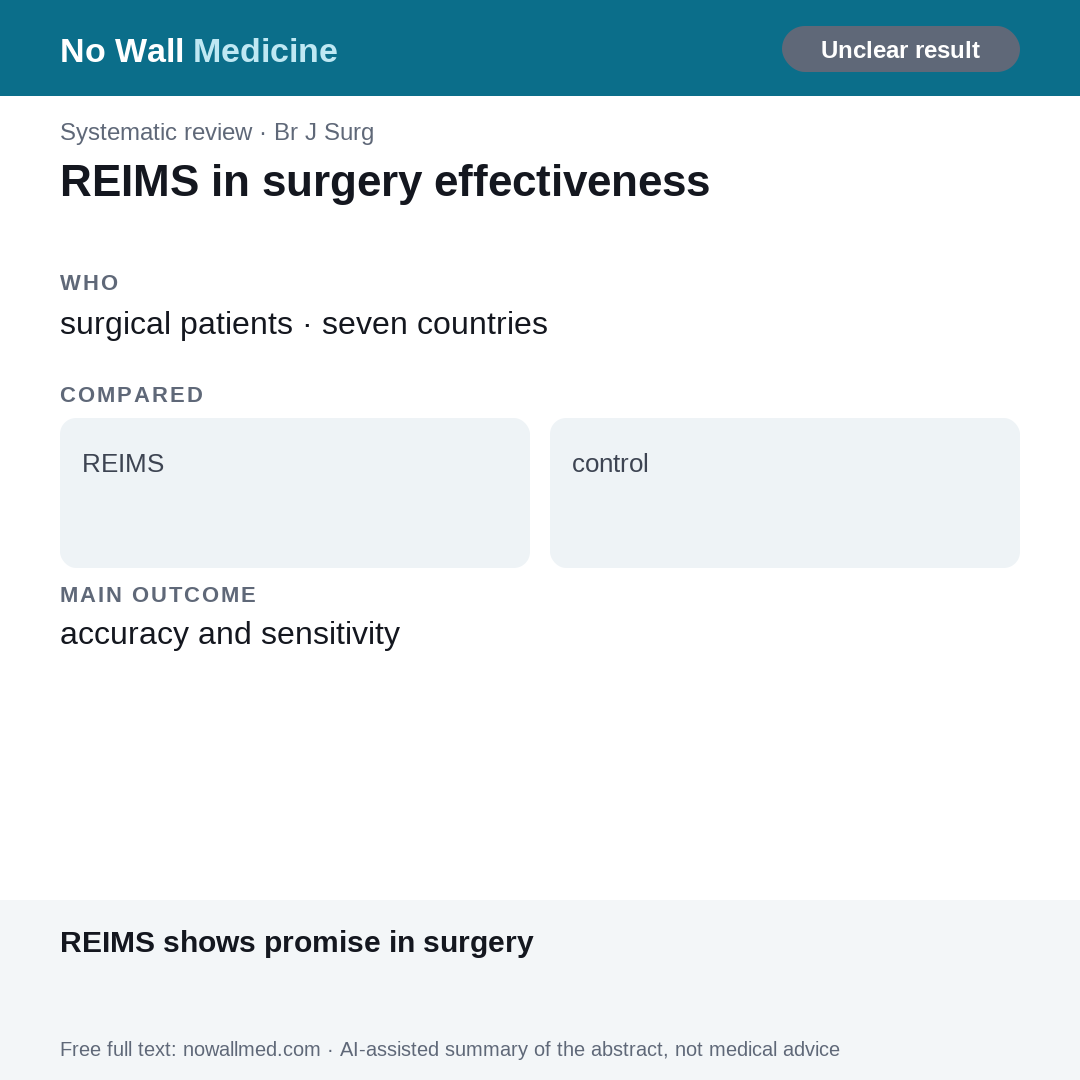
Rapid evaporative ionization mass spectrometry in surgery: a systematic review
Systematic reviewUnclear result
REIMS in surgery effectiveness
Who
surgical patients · seven countries
Compared
REIMS
control
Main outcome
accuracy and sensitivity
Bottom line: REIMS shows promise in surgery
Limitation: logistical limitations and complexity
Br J Surg · 2025-11-12Download image
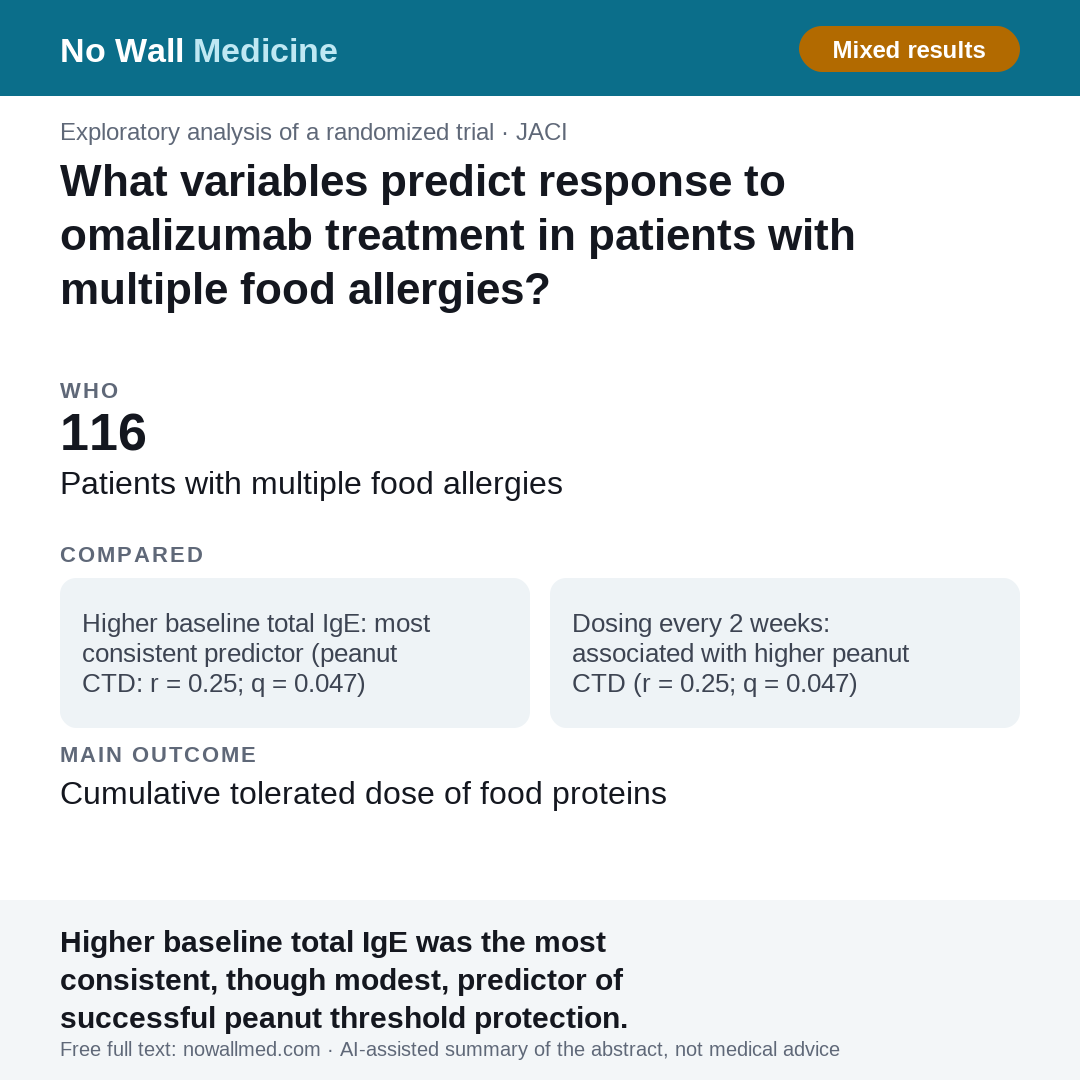
Exploratory analyses of predictors and correlates of response to omalizumab therapy in patients with multiple food allergies
Exploratory analysis of a randomized trialMixed results
What variables predict response to omalizumab treatment in patients with multiple food allergies?
Who
116
Patients with multiple food allergies
Compared
Higher baseline total IgE: most consistent predictor (peanut CTD: r = 0.25; q = 0.047)
Dosing every 2 weeks: associated with higher peanut CTD (r = 0.25; q = 0.047)
Main outcome
Cumulative tolerated dose of food proteins
Bottom line: Higher baseline total IgE was the most consistent, though modest, predictor of successful peanut threshold protection.
Limitation: This exploratory analysis was not definitive
JACI · 2025-11-12Download image
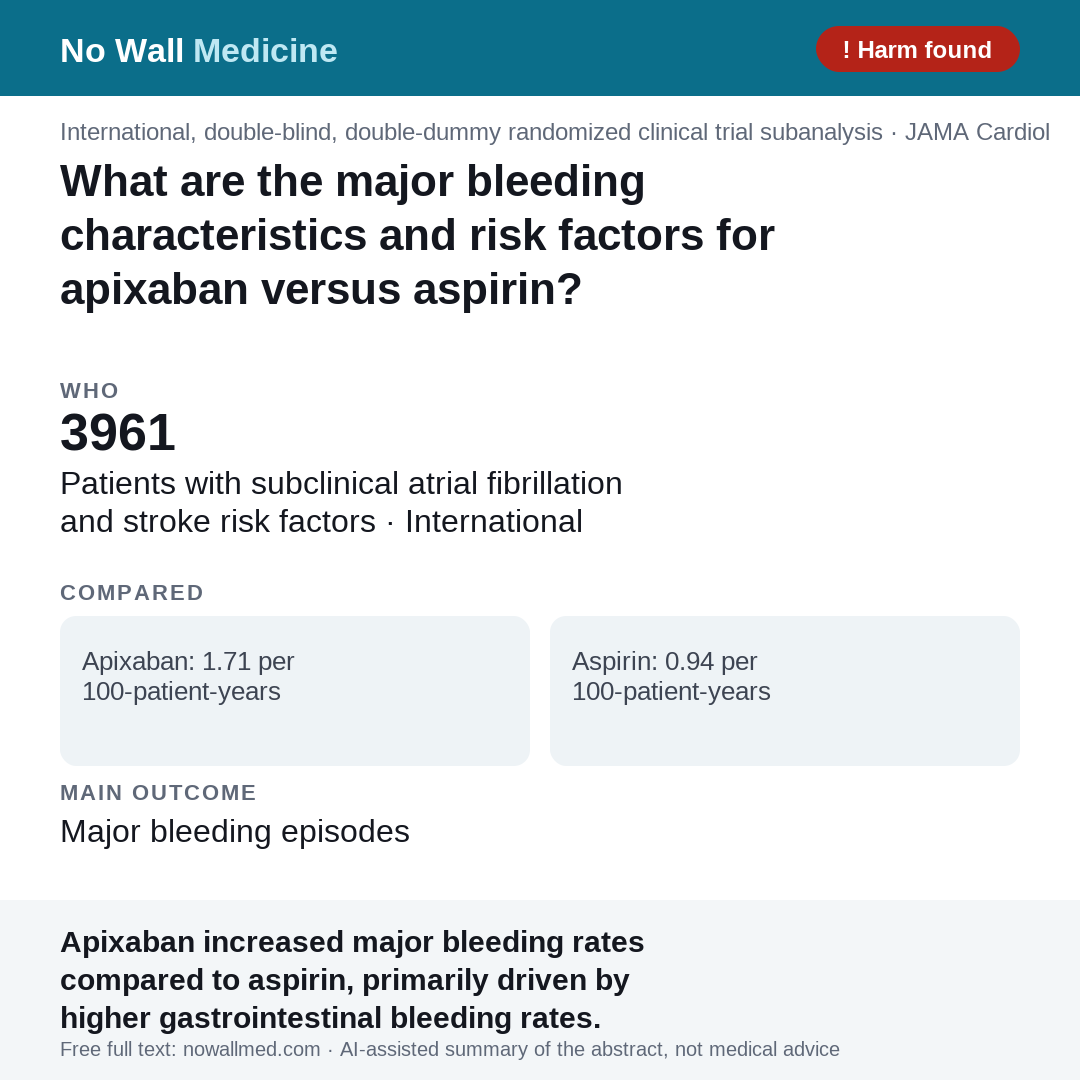
Major Bleeding With Apixaban vs Aspirin: A Subanalysis of the ARTESiA Randomized Clinical Trial
International, double-blind, double-dummy randomized clinical trial subanalysisHarm found
What are the major bleeding characteristics and risk factors for apixaban versus aspirin?
Who
3961
Patients with subclinical atrial fibrillation and stroke risk factors · International
Compared
Apixaban: 1.71 per 100-patient-years
Aspirin: 0.94 per 100-patient-years
Main outcome
Major bleeding episodes
Result: hazard ratio 1.80 (95% CI, 1.26-2.57)
Bottom line: Apixaban increased major bleeding rates compared to aspirin, primarily driven by higher gastrointestinal bleeding rates.
JAMA Cardiol · 2025-11-12Download image
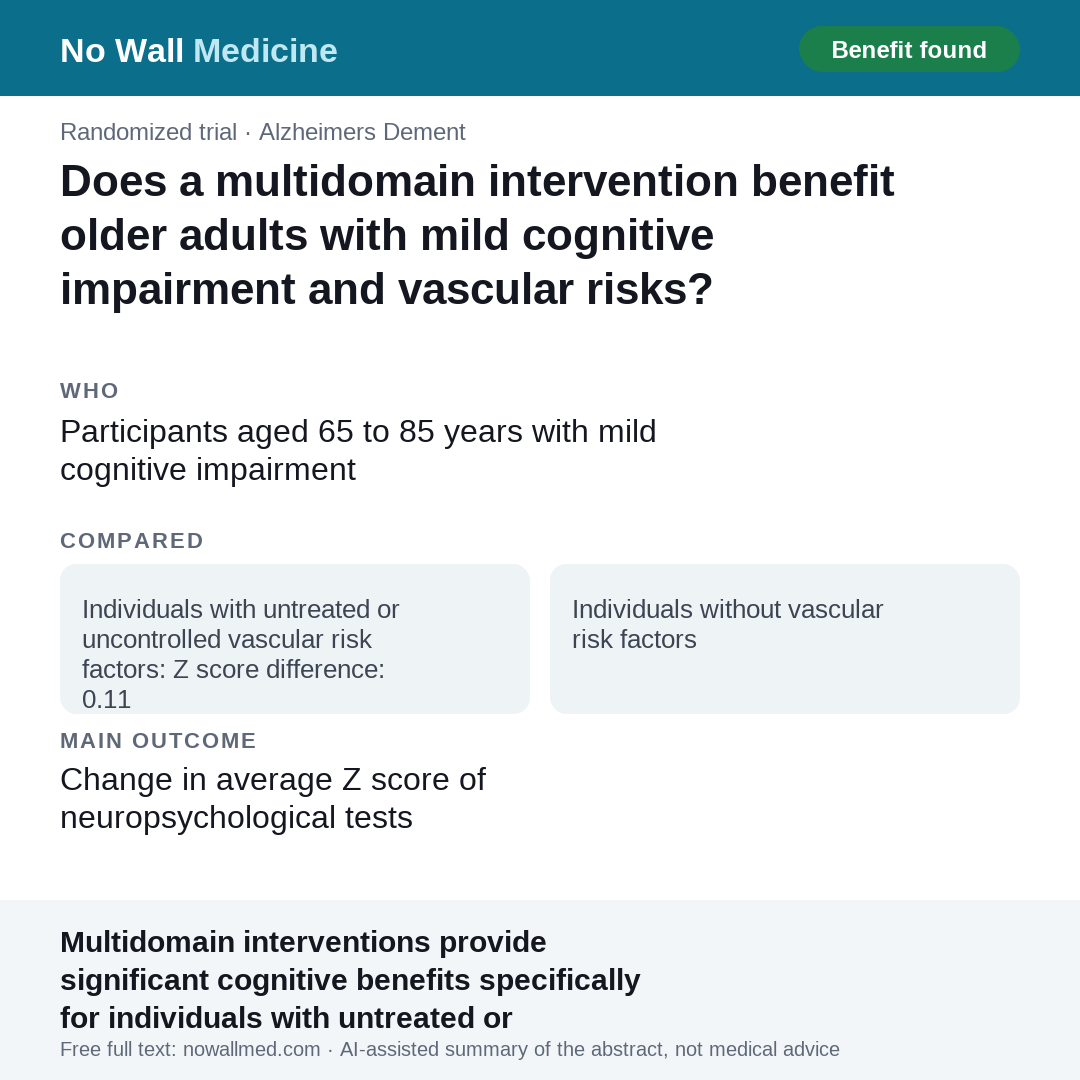
Efficacy of a multidomain intervention in older adults with vascular risks: The Japan-Multimodal Intervention Trial for the Prevention of Dementia (J-MINT)
Randomized trialBenefit found
Does a multidomain intervention benefit older adults with mild cognitive impairment and vascular risks?
Who
Participants aged 65 to 85 years with mild cognitive impairment
Compared
Individuals with untreated or uncontrolled vascular risk factors: Z score difference: 0.11
Individuals without vascular risk factors
Main outcome
Change in average Z score of neuropsychological tests
Result: Z score difference: 0.11 (95% confidence interval: 0.02-0.20)
Bottom line: Multidomain interventions provide significant cognitive benefits specifically for individuals with untreated or uncontrolled vascular risk factors.
Alzheimers Dement · 2025-11-12Download image
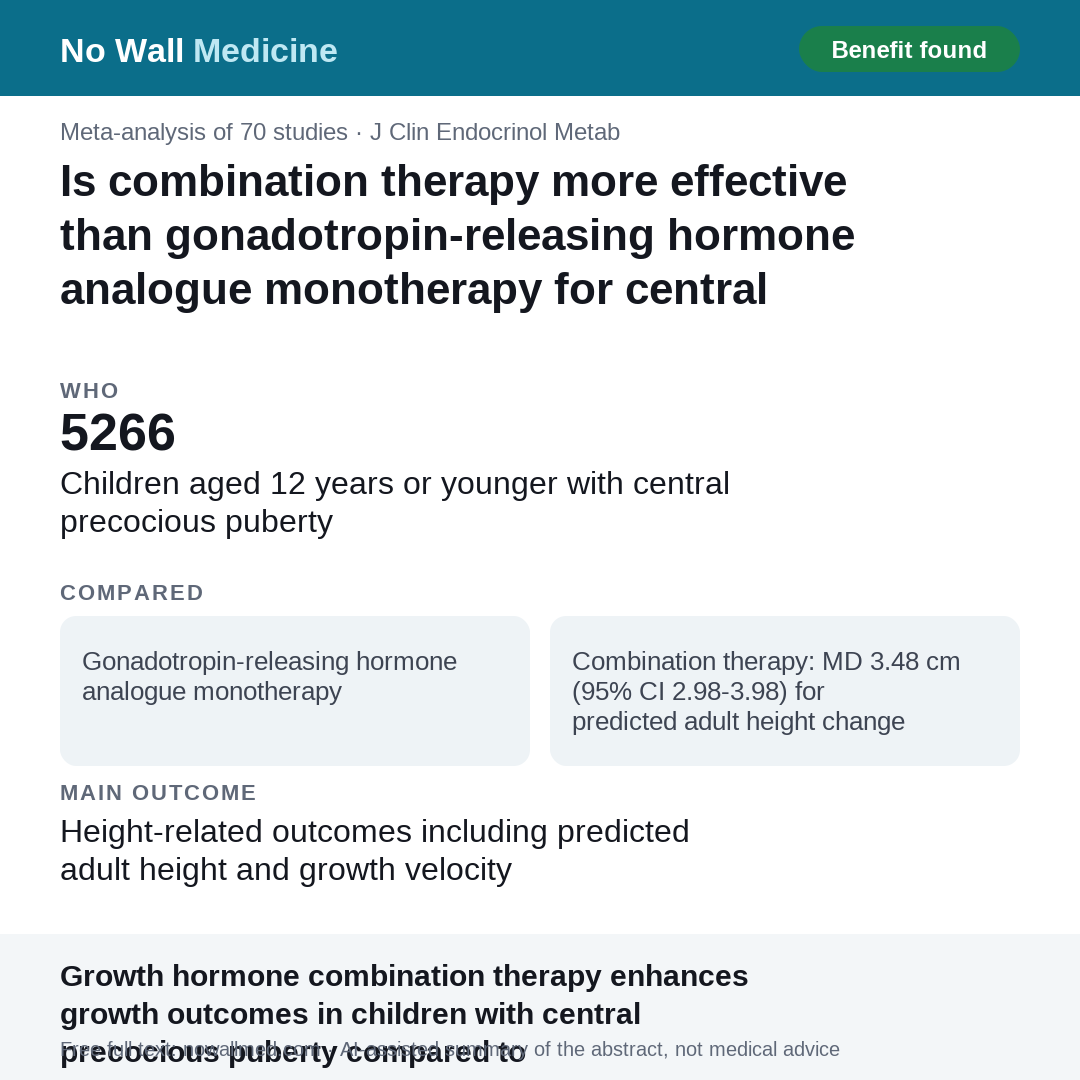
Comparative Efficacy of GnRHa Monotherapy vs Combination Therapy for Central Precocious Puberty
Meta-analysis of 70 studiesBenefit found
Is combination therapy more effective than gonadotropin-releasing hormone analogue monotherapy for central precocious puberty?
Who
5266
Children aged 12 years or younger with central precocious puberty
Compared
Gonadotropin-releasing hormone analogue monotherapy
Combination therapy: MD 3.48 cm (95% CI 2.98-3.98) for predicted adult height change
Main outcome
Height-related outcomes including predicted adult height and growth velocity
Result: MD 3.48 cm (95% CI 2.98-3.98) for predicted adult height change
Bottom line: Growth hormone combination therapy enhances growth outcomes in children with central precocious puberty compared to gonadotropin-releasing hormone analogue monotherapy.
Limitation: High heterogeneity remains across outcomes, which limits the certainty of these findings.
J Clin Endocrinol Metab · 2025-11-12Download image
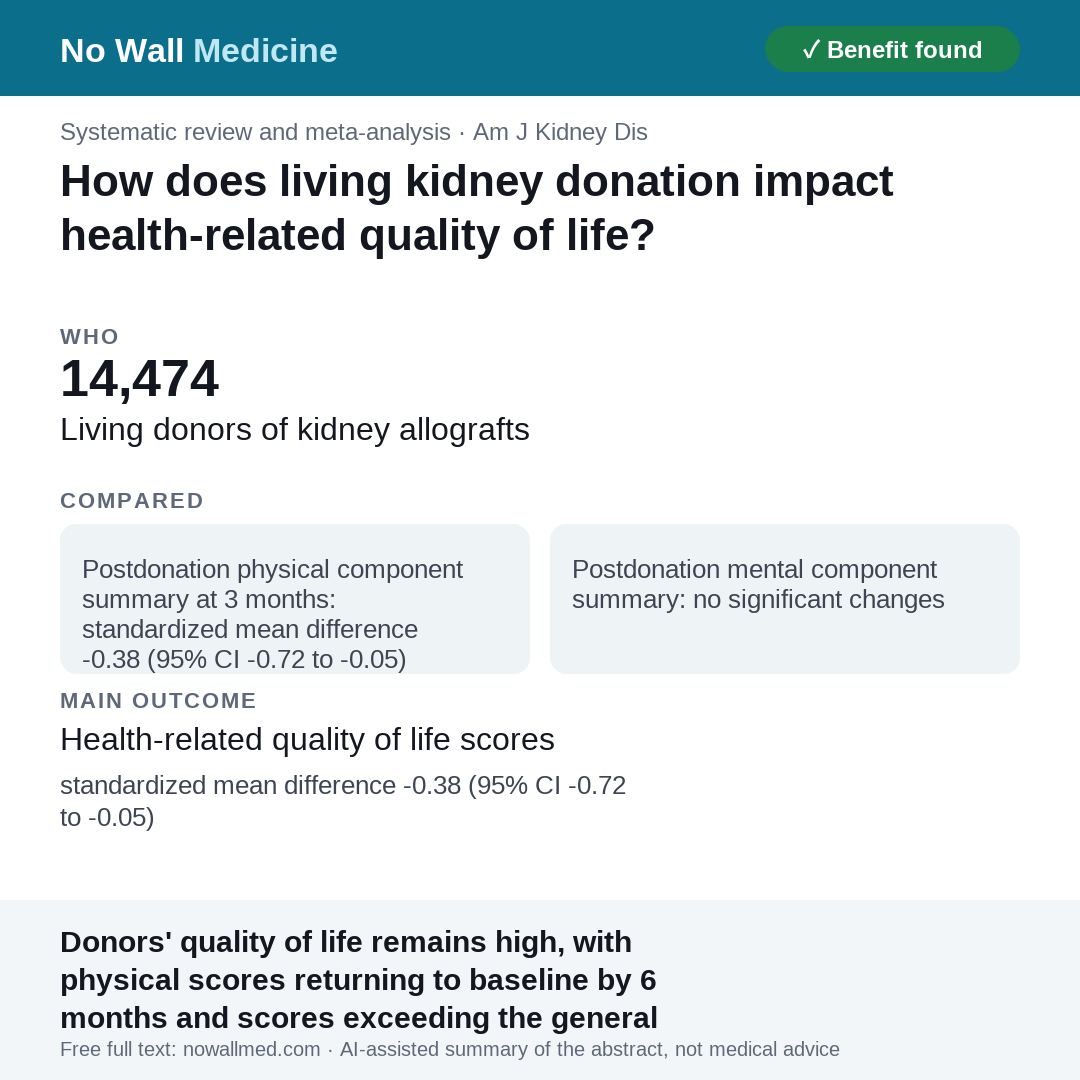
Health-Related Quality of Life After Living Kidney Donation: A Systematic Review and Meta-Analysis
Systematic review and meta-analysisBenefit found
How does living kidney donation impact health-related quality of life?
Who
14,474
Living donors of kidney allografts
Compared
Postdonation physical component summary at 3 months: standardized mean difference -0.38 (95% CI -0.72 to -0.05)
Postdonation mental component summary: no significant changes
Main outcome
Health-related quality of life scores
Result: standardized mean difference -0.38 (95% CI -0.72 to -0.05)
Bottom line: Donors' quality of life remains high, with physical scores returning to baseline by 6 months and scores exceeding the general population.
Limitation: Heterogeneity in study populations, outcomes, and methodological weaknesses of older studies.
Am J Kidney Dis · 2025-11-12Download image
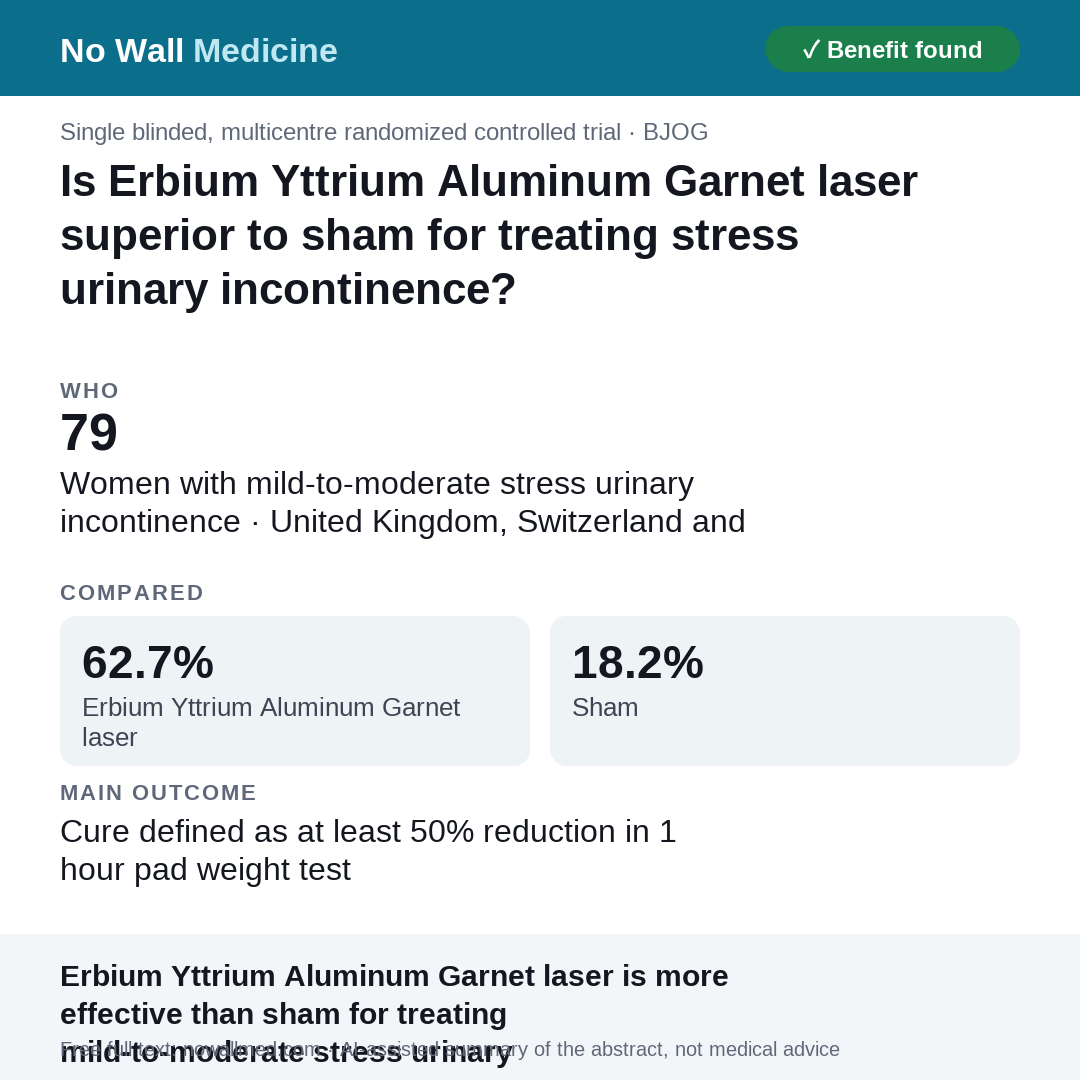
Vaginal Erbium Laser for the Treatment of Mild-to-Moderate Stress Urinary Incontinence: A Multicentre Randomised Sham-Controlled Trial
Single blinded, multicentre randomized controlled trialBenefit found
Is Erbium Yttrium Aluminum Garnet laser superior to sham for treating stress urinary incontinence?
Who
79
Women with mild-to-moderate stress urinary incontinence · United Kingdom, Switzerland and Germany
Compared
62.7%Erbium Yttrium Aluminum Garnet laser
18.2%Sham
Main outcome
Cure defined as at least 50% reduction in 1 hour pad weight test
Result: odds ratio 7.6 (95% CI 2.2-25.8)
Bottom line: Erbium Yttrium Aluminum Garnet laser is more effective than sham for treating mild-to-moderate stress urinary incontinence.
BJOG · 2025-11-12Download image
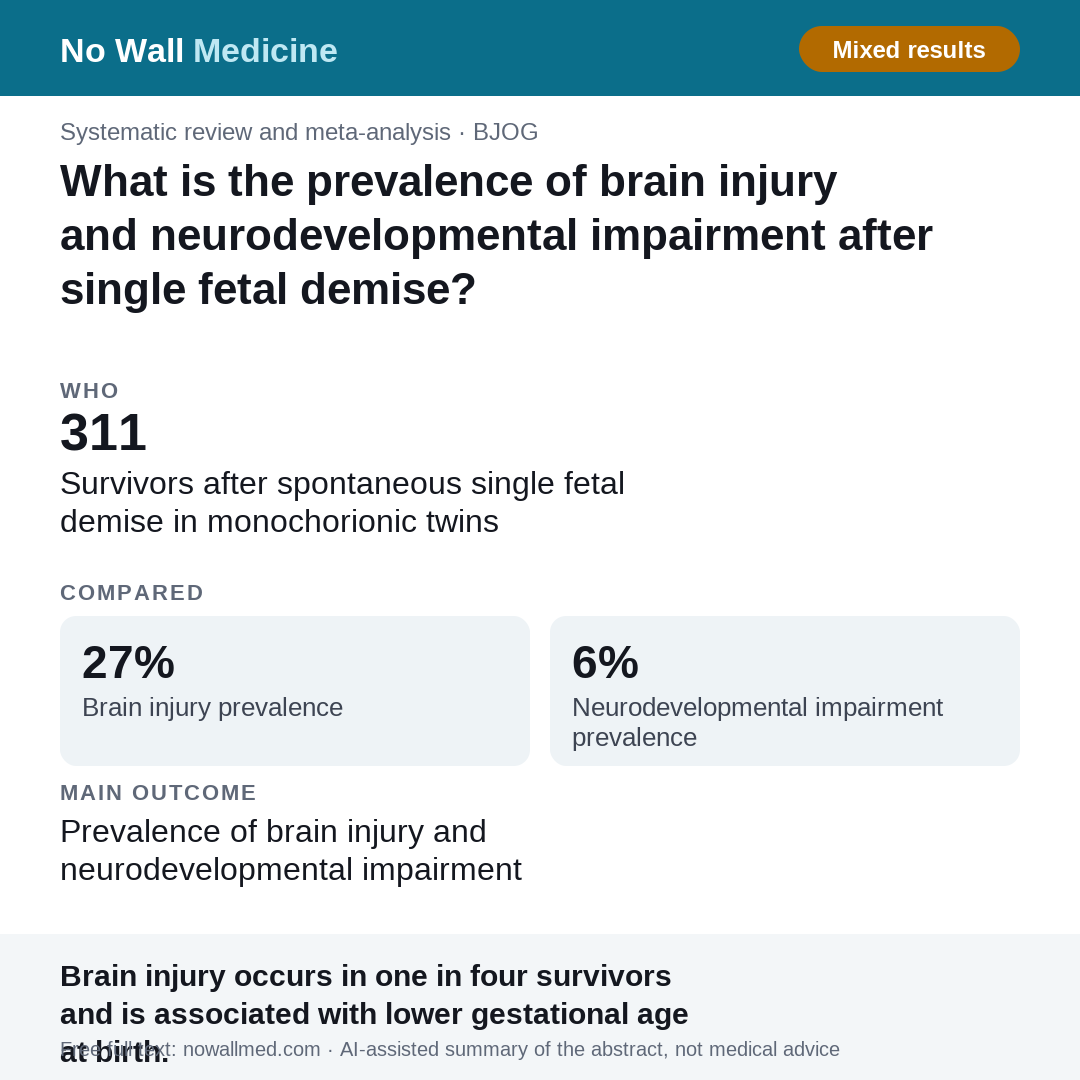
Brain Injury and Neurodevelopmental Outcome in Survivors After Spontaneous Single Fetal Demise in Monochorionic Twins: A Systematic Review and Meta-Analysis
Systematic review and meta-analysisMixed results
What is the prevalence of brain injury and neurodevelopmental impairment after single fetal demise?
Who
311
Survivors after spontaneous single fetal demise in monochorionic twins
Compared
27%Brain injury prevalence (95% CI: 18%-37%)
6%Neurodevelopmental impairment prevalence (95% CI: 3%-11%)
Main outcome
Prevalence of brain injury and neurodevelopmental impairment
Bottom line: Brain injury occurs in one in four survivors and is associated with lower gestational age at birth.
BJOG · 2025-11-12Download image
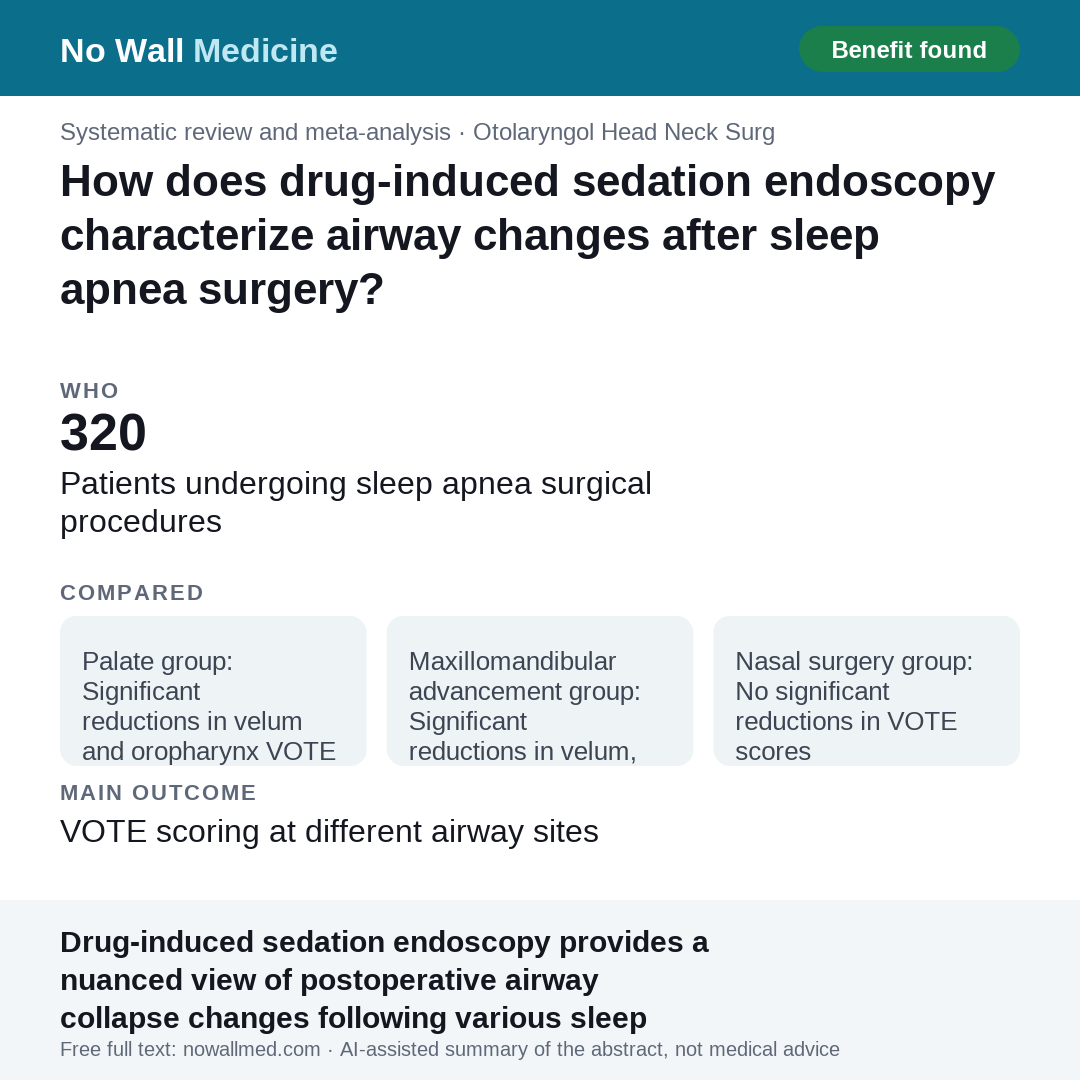
Airway Changes After Sleep Apnea Surgery Using Drug-Induced Sedation Endoscopy: A Systematic Review and Meta-analysis
Systematic review and meta-analysisBenefit found
How does drug-induced sedation endoscopy characterize airway changes after sleep apnea surgery?
Who
320
Patients undergoing sleep apnea surgical procedures
Compared
Palate group: Significant reductions in velum and oropharynx VOTE scoring
Maxillomandibular advancement group: Significant reductions in velum, oropharynx, and tongue VOTE scoring
Nasal surgery group: No significant reductions in VOTE scores
Main outcome
VOTE scoring at different airway sites
Bottom line: Drug-induced sedation endoscopy provides a nuanced view of postoperative airway collapse changes following various sleep apnea surgeries.
Limitation: Further research is needed to correlate these findings to existing outcome measures.
Otolaryngol Head Neck Surg · 2025-11-12Download image
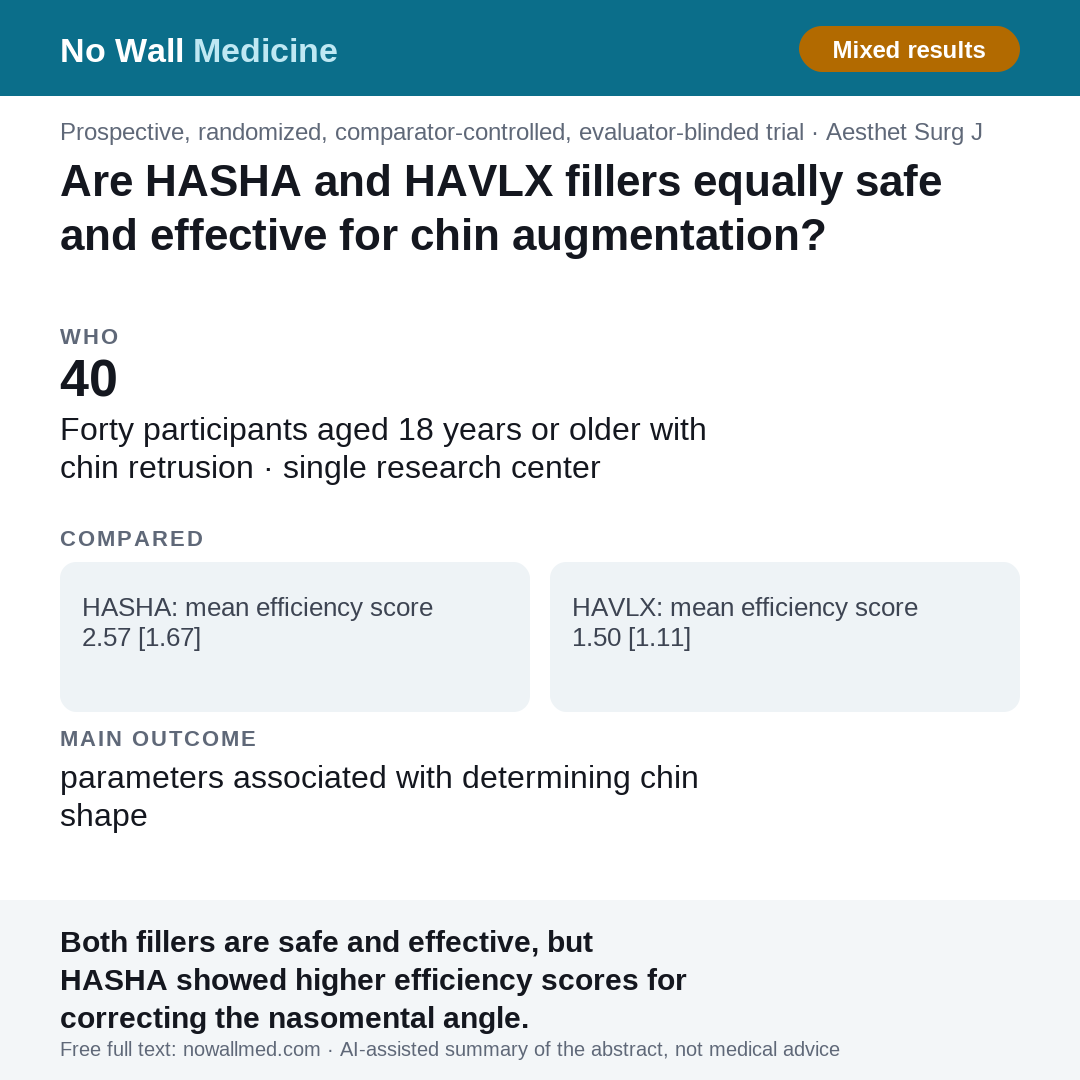
Safety and Effectiveness of Two High-G' Soft Tissue Fillers for Chin Augmentation: A Prospective, Randomized, Comparator-Controlled, Evaluator-Blinded Trial
Prospective, randomized, comparator-controlled, evaluator-blinded trialMixed results
Are HASHA and HAVLX fillers equally safe and effective for chin augmentation?
Who
40
Forty participants aged 18 years or older with chin retrusion · single research center
Compared
HASHA: mean efficiency score 2.57 [1.67]
HAVLX: mean efficiency score 1.50 [1.11]
Main outcome
parameters associated with determining chin shape
Bottom line: Both fillers are safe and effective, but HASHA showed higher efficiency scores for correcting the nasomental angle.
Aesthet Surg J · 2025-11-12Download image
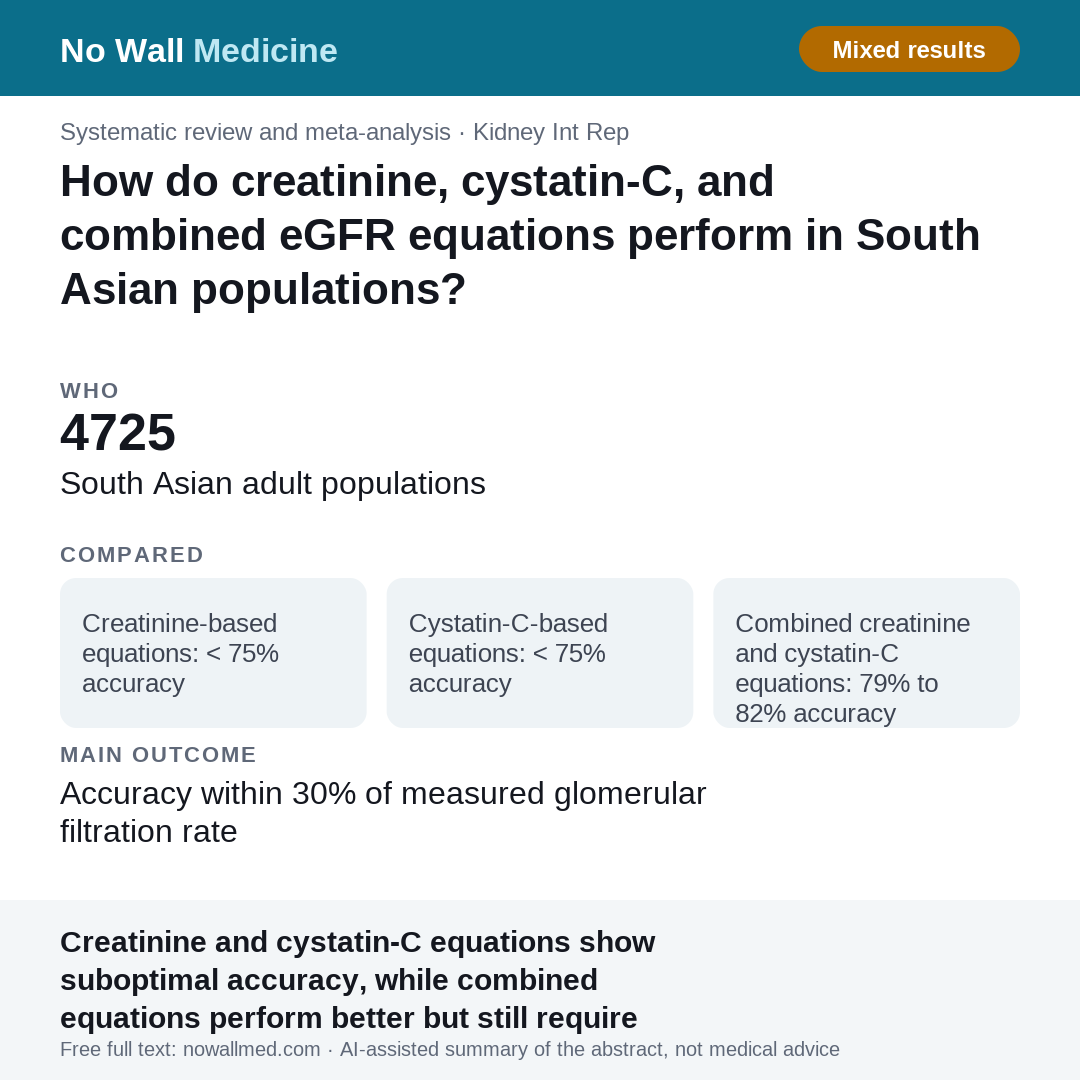
A Systematic Review Evaluating Estimated GFR Performance in South Asian Populations
Systematic review and meta-analysisMixed results
How do creatinine, cystatin-C, and combined eGFR equations perform in South Asian populations?
Who
4725
South Asian adult populations
Compared
Creatinine-based equations: < 75% accuracy
Cystatin-C-based equations: < 75% accuracy
Combined creatinine and cystatin-C equations: 79% to 82% accuracy
Main outcome
Accuracy within 30% of measured glomerular filtration rate
Bottom line: Creatinine and cystatin-C equations show suboptimal accuracy, while combined equations perform better but still require population-specific calibration.
Kidney Int Rep · 2025-11-12Download image
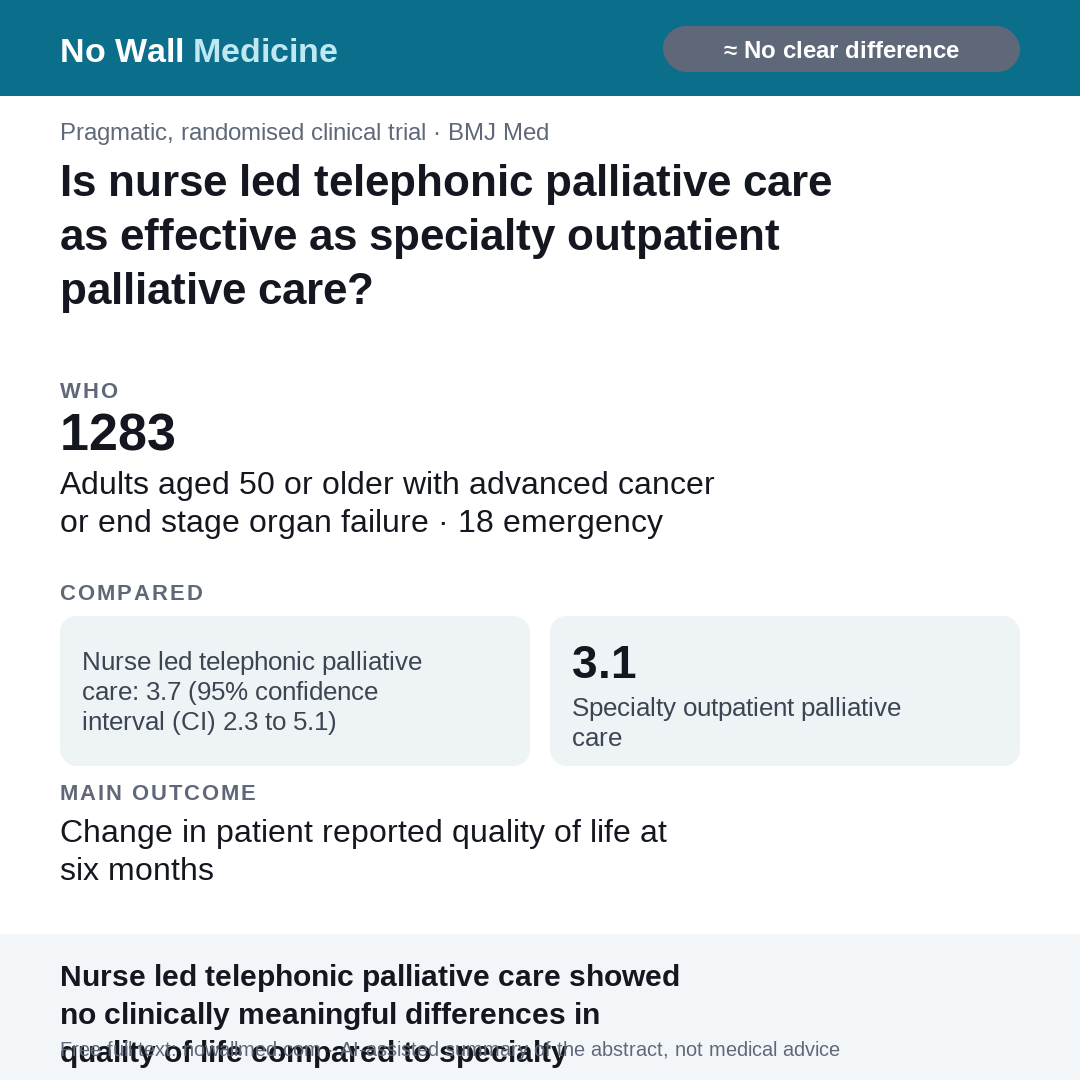
Nurse led telephonic palliative care versus specialty outpatient palliative care: pragmatic, randomised clinical trial
Pragmatic, randomised clinical trialNo clear difference
Is nurse led telephonic palliative care as effective as specialty outpatient palliative care?
Who
1283
Adults aged 50 or older with advanced cancer or end stage organ failure · 18 emergency departments in 15 US healthcare systems
Compared
Nurse led telephonic palliative care: 3.7 (95% confidence interval (CI) 2.3 to 5.1)
3.1Specialty outpatient palliative care (1.6 to 4.6)
Main outcome
Change in patient reported quality of life at six months
Result: 0.71 (95% CI -1.19 to 2.61) points higher in nurse led telephonic arm
Bottom line: Nurse led telephonic palliative care showed no clinically meaningful differences in quality of life compared to specialty outpatient palliative care.
BMJ Med · 2025-11-12Download image
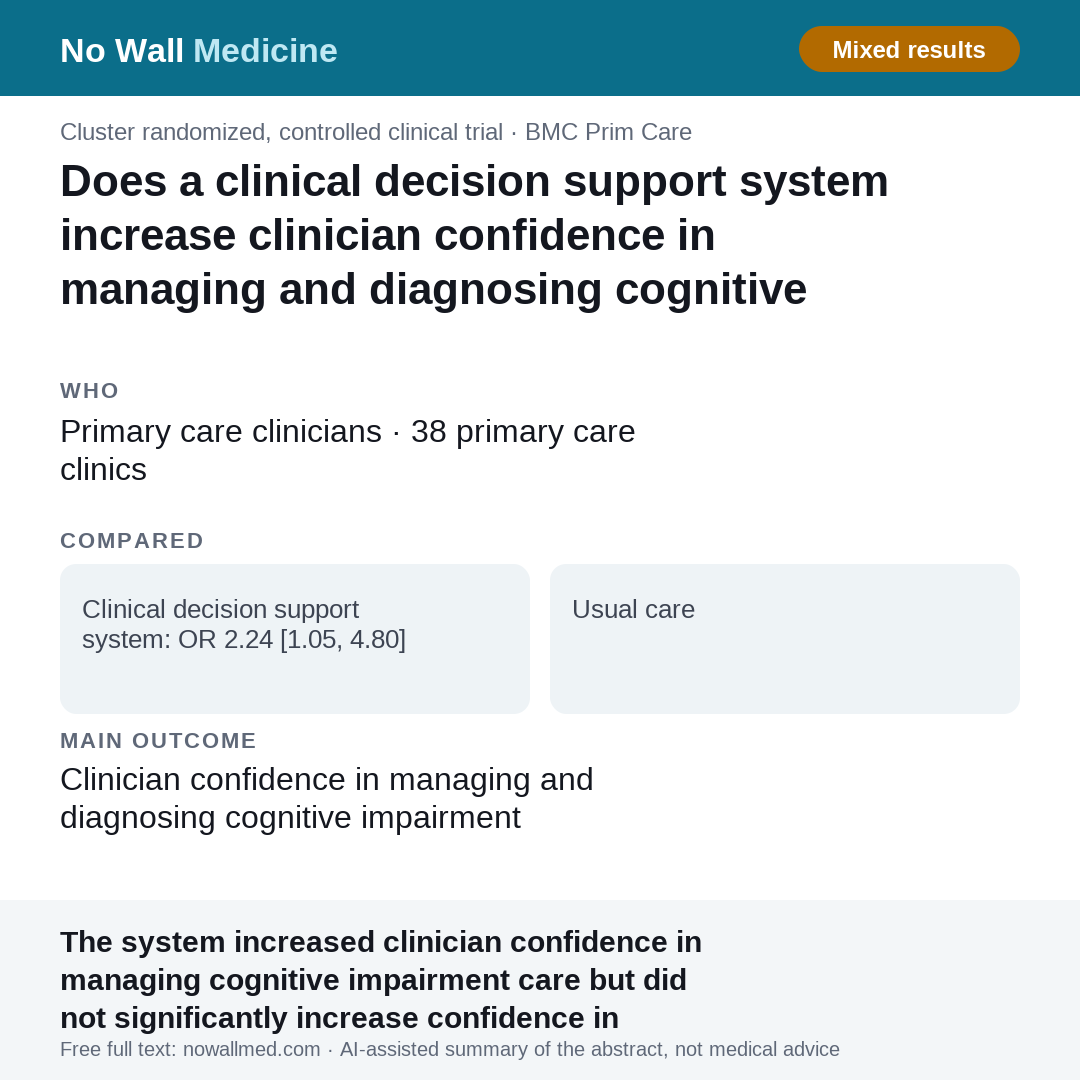
Exposure to clinical decision support and training increases primary care clinician confidence in managing cognitive impairment care but not confidence to diagnose
Cluster randomized, controlled clinical trialMixed results
Does a clinical decision support system increase clinician confidence in managing and diagnosing cognitive impairment?
Who
Primary care clinicians · 38 primary care clinics
Compared
Clinical decision support system: OR 2.24 [1.05, 4.80]
Usual care
Main outcome
Clinician confidence in managing and diagnosing cognitive impairment
Result: OR 2.24 [1.05, 4.80]
Bottom line: The system increased clinician confidence in managing cognitive impairment care but did not significantly increase confidence in diagnosing it.
Limitation: Self-reported use of the clinical decision support system was modest.
BMC Prim Care · 2025-11-12Download image